
You’ve got a bit of money to spend and you consider yourself a car enthusiast. You’ve bought a new car with some performance cred such as a Toyota 86, Volkswagen Golf GTI or Mazda MX-5, but what now?
Speed limits are rigidly enforced these days, and going all-out on a public road carries many risks – not just to your shiny new car, but to yourself and other road users as well. The safest way to enjoy a performance car is at a race track, but many may find driving on a circuit to be a daunting experience.
It need not be, however. Follow a few simple rules and your first track outing should be an enjoyable – and safe – one. Here’s the WhichCar guidebook to surviving your first track day
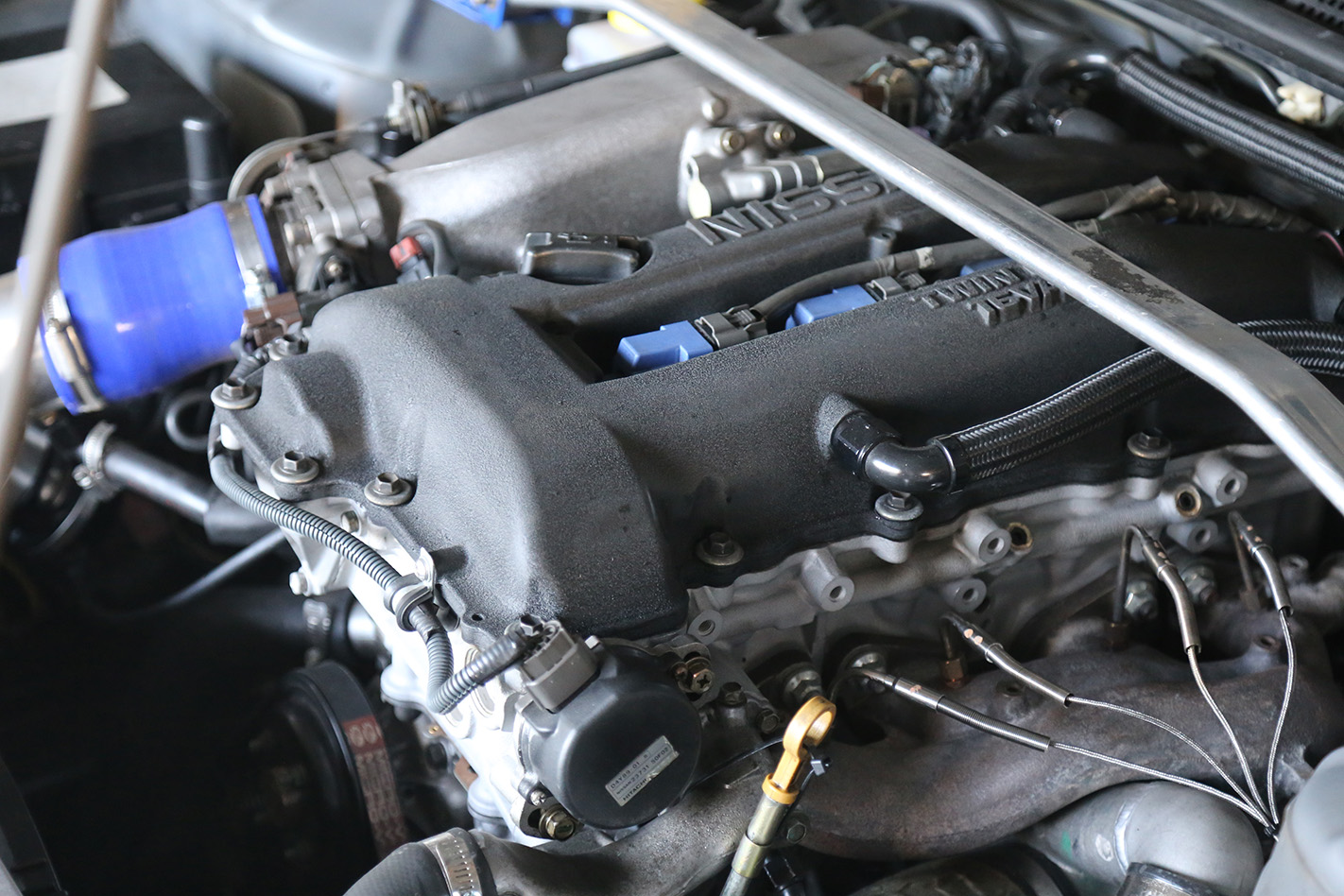
MAINTENANCE
- This is the most important aspect of track day preparation. Not modifications, not sticky tyres, not fancy harnesses or power-adders – all of those are meaningless if your car won’t last the day due to poor maintenance.
- Make sure your car is in good roadworthy condition before you hit the track. It shouldn’t leak coolant, oil, power steering fluid or brake fluid, and all hoses should be in good condition and pliable – old rubber has a nasty habit of rupturing once a bit of heat and pressure is put into it.
- Religiously adhering to the manufacturer’s servicing schedule is good practice, and if your car isn’t extensively modified it should virtually guarantee that you won’t encounter any mechanical headaches out on the track. Ensure timing belts have been changed if required, and that the oil in your engine is not only fresh, but of the grade and type specified by the manufacturer.
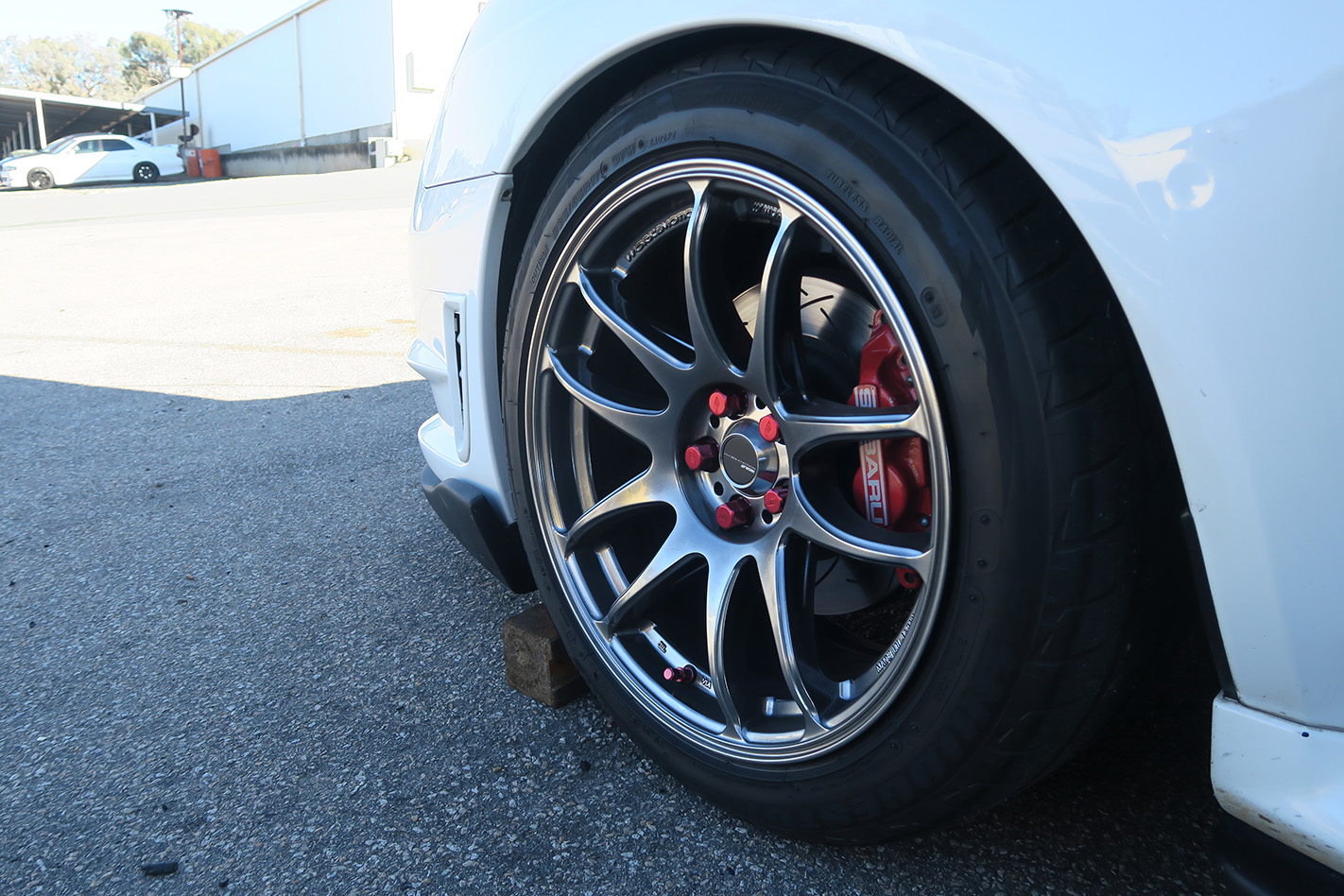
BRAKES AND TYRES
- Driving your car aggressively on a race track will tax your brakes and tyres more than anything else – it’s important that these components are in peak condition not only to ensure you’re able to drive as fast as you want, but so that you don’t lose grip or braking power when you need it most.
- Don’t cheap out on your tyres. Go for the tyre with the best reputation that you can afford. Yes, driving on a track will chew them up much faster than just driving on the street, but the trade-off is exceptional grip and safety at speed. Do some research about the best performance tyre for your car’s wheel sizes and go from there.
- The same applies to brakes. Brake pads designed for street cars often crumble when subjected to the heat of fast driving, so it’d be wise to upgrade to higher-performance pads that will be more durable and last a full day of hard laps.
- If it hasn’t been done in the past couple of years, it’s also a good idea to flush and replace your brake fluid. Brake fluid tends to absorb water from the air, which can boil when your brakes get hot and turn to vapour in your car’s brake lines. Vapour is compressible, and leads to a spongy, ineffective brake pedal or complete failure in the worst cases. This is the last thing you want as you’re barrelling toward a tight corner. As with your brake pads, opting for high-performance brake fluid with a higher boiling point is a smart strategy. Remember – your brakes can easily reach hundreds of degrees with hard use!
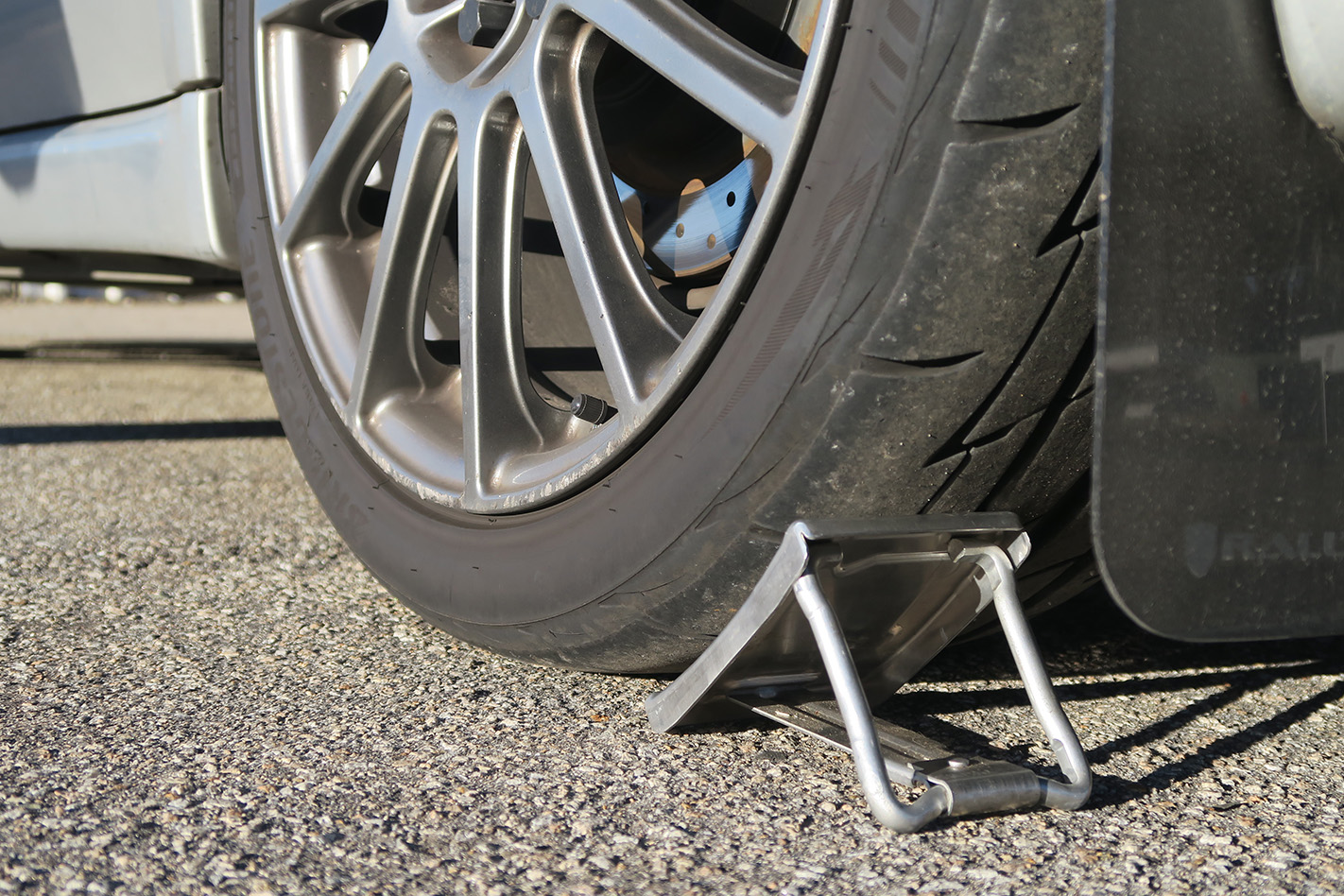
- Remember to chock your wheels and leave the handbrake off when you’re parked in the pits. Leaving the handbrake on can see your car’s brake pads fuse to the hot rotor, which can be hard to fix and results not only in wrecked pads, but ruined rotors as well. An expensive mistake.
- Bring an accurate tyre pressure gauge with you. Tyres heat up considerably at race track speed which raises the air pressure inside them and deforms the tyre’s contact patch. Bleed some air out of the valves to reduce your hot tyre pressures to a level that doesn’t compromise grip, but do it in stages with a pressure gauge so that you can keep them consistent. Don’t forget to put air back in after you exit the track!
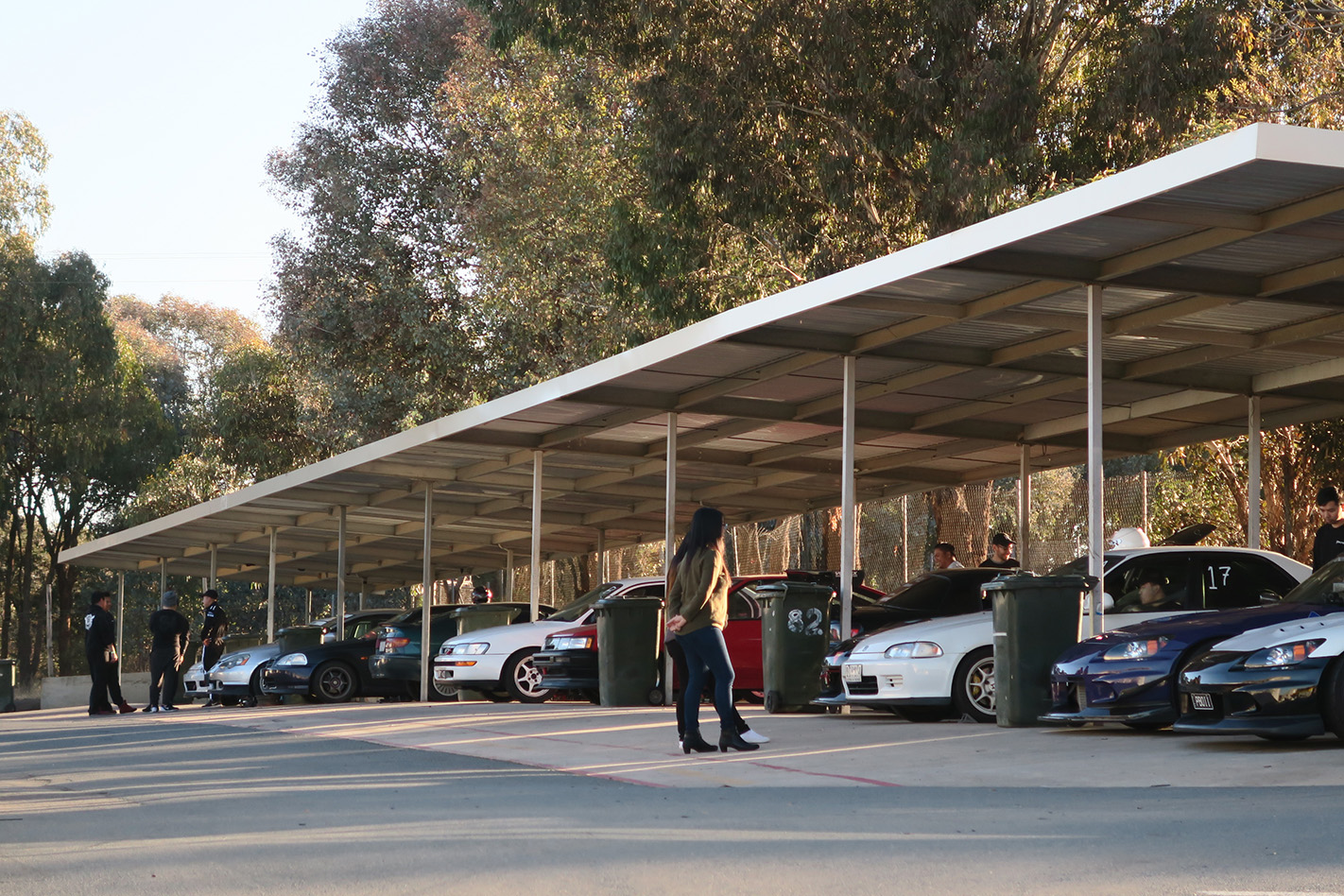
FRAME OF MIND
- This is vital if you want to be able to drive your own car home from your first track day. It can be tempting to get excited and go all-out on a circuit, but remember that you’re new to the experience. Keep your speeds down initially, and slowly ratchet them up as you gain familiarity with the circuit, your car and your own ability. That will minimise the chances of you spearing off the track into a gravel trap or tyre wall.
- Many track events will have set rules regarding overtaking other drivers. Keep an eye on your mirrors – especially if you’re driving slower than everyone else – and use the proper signals to tell others when they can overtake.
- Be cautious and polite on the track. Don’t take it personally if a faster car is sniffing up the backside of yours – if they’re clearly faster than you, just let them pass. It’s not a race after all, and you’re not risking anything by being polite.
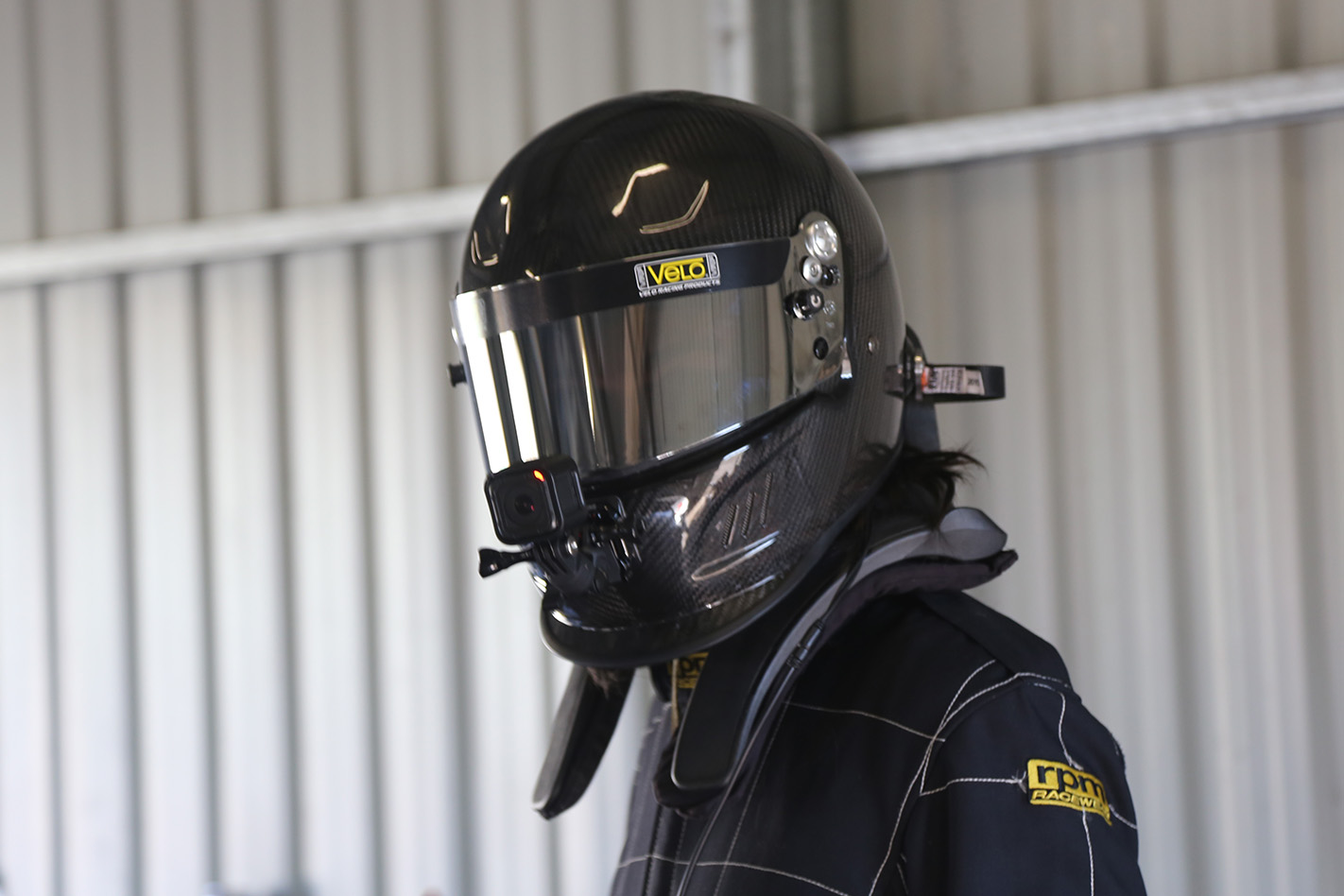
CLOTHING
- Make sure your helmet is of an approved type. Generally speaking, a motorcycle helmet should be fine, but check the rules that apply to your event as they may stipulate something specific, like full-face helmets or helmets designed specifically for car racing.
- Rocking up in a full race suit isn’t exactly necessary, but it’s worth remembering that some fabrics are more flammable than others. Wear long-sleeved clothing and closed shoes (driving shoes may be more comfortable), and avoid synthetic fabrics – if your car catches fire, materials like nylon will melt onto your skin rather than simply charring like cotton, wool or denim would.
- Driving/racing gloves can be a good idea, even if only to absorb sweat. If your car has a grippy Alcantara or suede-covered steering wheel, proper suede-faced driving gloves will give you an excellent grip on the wheel too.
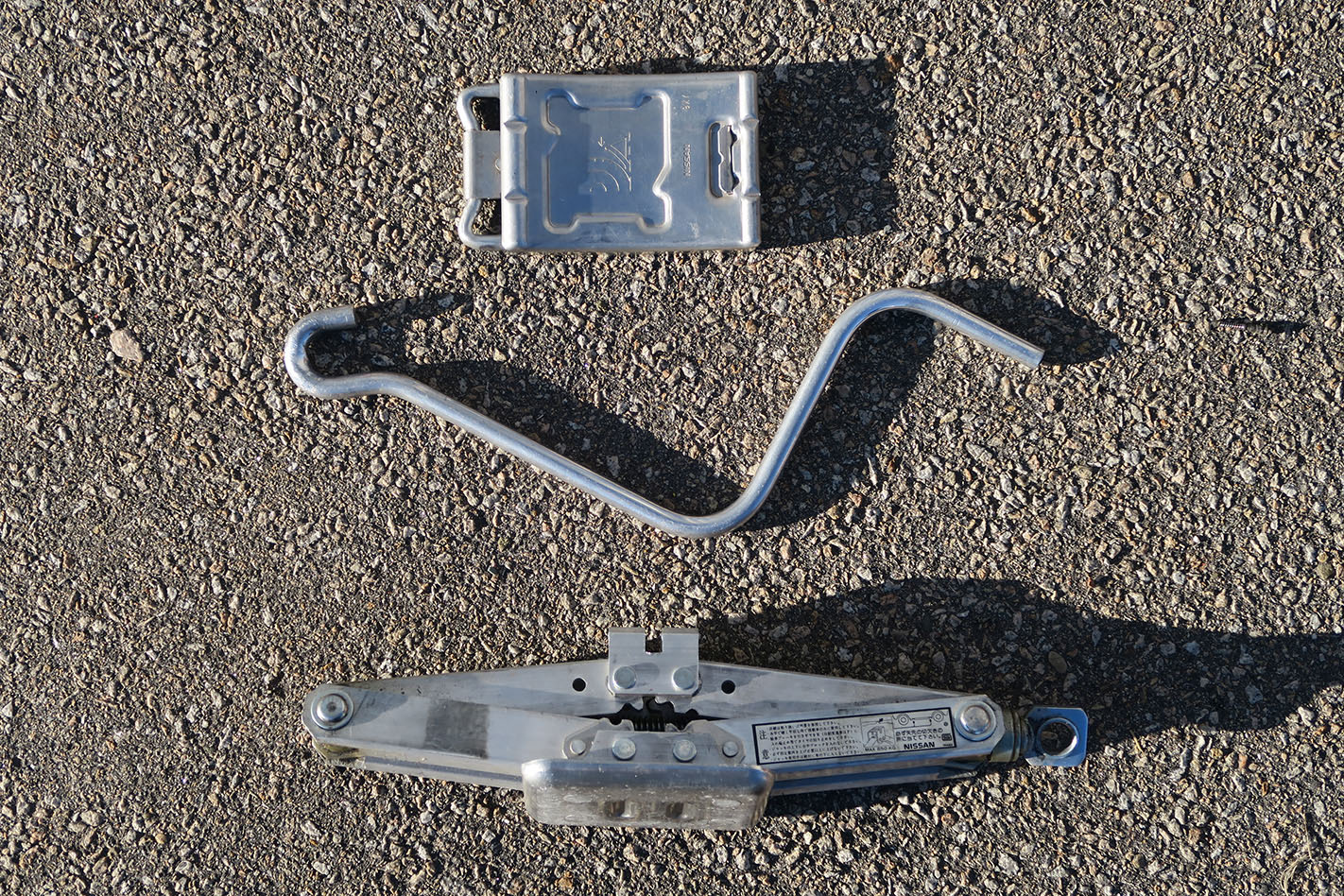
TOOLS
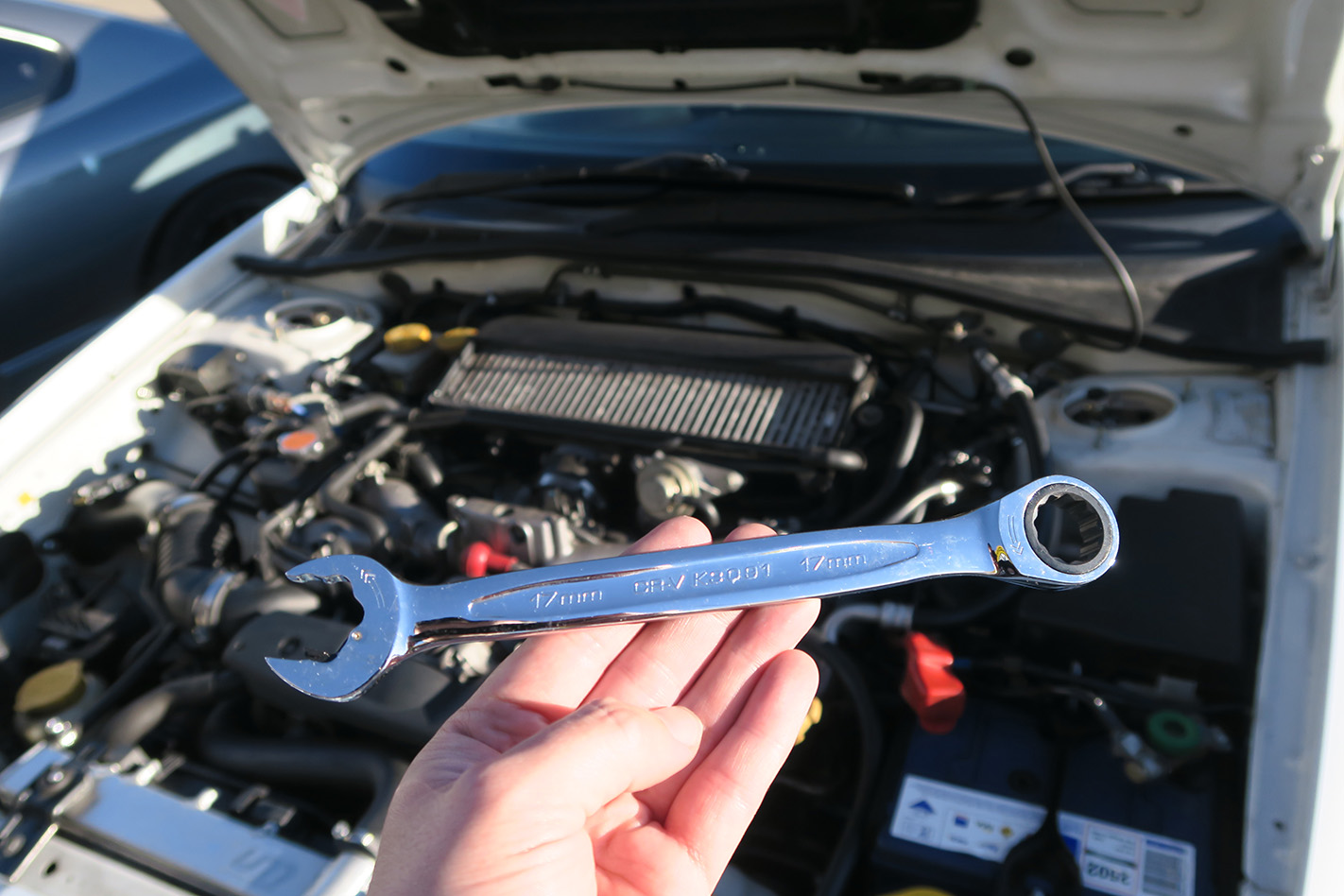
- Bring a set of basic tools with you, just in case something minor needs fixing while you’re away from home. A socket set, screwdrivers, pliers, scissor jack and wheel brace should be the bare minimum.
- Even if your car is in excellent health, bring along some extra engine oil and a funnel. Even brand new engines can consume oil if asked to work hard, so check your oil levels after every couple of sessions and add more if required.
- A hand-held fire extinguisher is cheap insurance, and some events may mandate your car has one. Most auto parts stores will stock them, along with a bracket to keep them secure in your car.
CLEAR THE CLUTTER
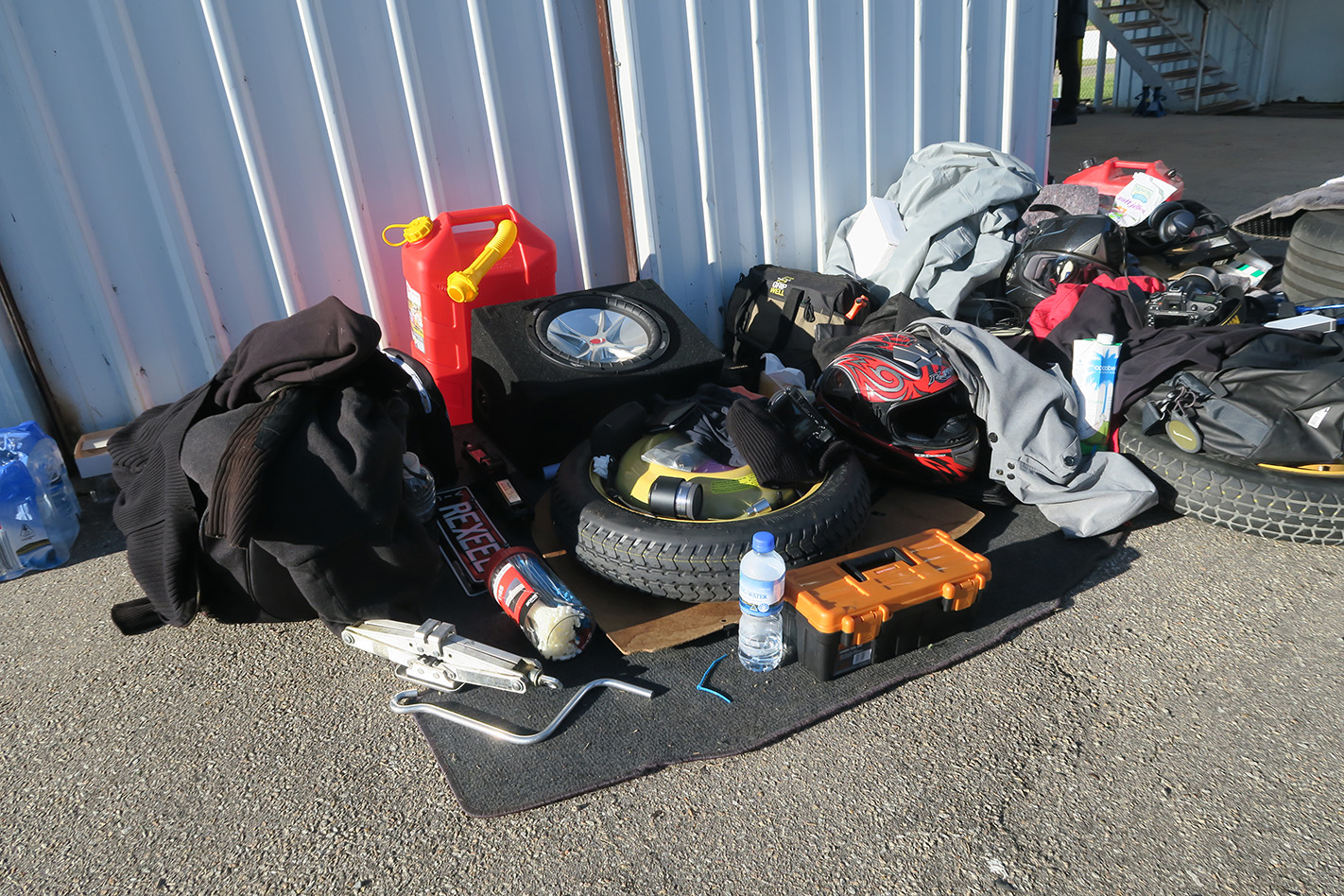
- All of that junk in your boot and back seat won’t do you any good on the track. If anything, it’s dead weight and will only slow you down. Take it out and leave it at your pit area – scrutineers will likely demand you empty your car of loose items anyway.
- The same applies to items like your car’s toolkit, spare tyre and removable cargo blinds. You won’t need them on a circuit, and if you’re unlucky enough to collide with something at high speed they could become airborne and cause injury.
CHECK THE RULES
- Not every track event will require you to hold a special licence, but make sure you check ahead of time. You don’t want to be sent home before you’ve done a single lap, just because you forgot to arrange the necessary licence or permit beforehand.
- Make sure you understand all of the rules and regulations that apply to the event – what your obligations are when certain flags are waved by the marshals, how passing is to be conducted and so on.
INSURANCE
- Believe it or not, you can actually insure your car for a track day. If it’s not a competition event you may be able to get insurance cover for your vehicle, but the total payout isn’t likely to be big, the premium and excess will be high and even specialist insurers may only offer track insurance if the car satisfies special criteria – like if it’s a rare or vintage car.
- Even if you do manage to secure insurance coverage, the policy likely won’t cover third-party damage, leaving you exposed if you run into another car.
- Generally, it’s understood that if you drive at speed on a circuit, there’s a risk you’ll damage or destroy your car and you won’t be able to claim it under your insurance policy. Only participate if you’re comfortable with that risk.
WARRANTY
- As a general rule, driving your car at a track day shouldn’t necessarily compromise your new car warranty. If the car isn’t modified and is driven within its mechanical limits (not revved beyond its redline, for example), your warranty shouldn’t be voided by participating in a track day.
- That said, it pays to check with the manufacturer of your car – some don’t mind their customers hitting the circuit, but other car makers have specific clauses that list racing and other competition usage as warranty-killers. Modifying your car for track use can also increase the likelihood of mechanical failure – even in seemingly unrelated components – so tread carefully if you want your warranty to remain intact.
I’ve been thinking about generational stuff because I’ve just been giving my daughters some more driving lessons.
First published in the June 2017 issue of Wheels Magazine, Australia’s most experienced and most trusted car magazine since 1953.
They’re aged 12 and 11. For the past couple of years, on visits to my in-laws’ farm, I’ve bundled the Stahlettes into the trusty Hilux 4WD and set off on the well-graded dirt roads of the property.
At first I’d sit in the driver’s seat, legs splayed, and work the pedals while a Stahlette steered. We’ve progressed to using lounge cushions, and they can drive themselves.
Swap the 1990s-vintage Hilux for my mum’s Fiat 500 or a borrowed (and usually BMC) product, the cushions for a stack of Yellow Pages, and the farm for a motorkhana ground, and the grinning 10-year-old at the wheel was me.
Both my parents competed in and organised motorsport, Pop later becoming editor of Racing Car News magazine for more than 20 years. Peter Wherrett was a contributing writer and family friend and when, in the late-1960s, he set up Australia’s first advanced driving school, my parents were closely involved.
Wherrett’s curiosity extended to an experiment under psychology Professor Sid Lovibond, of the University of NSW, wherein a club member’s car was fitted with a crude sideways-sliding seat with a catch mechanism. Driven around Oran Park, it was designed to establish whether visual or seat-of-the-pants cues told the driver the car was out of control.
And so, from the age of seven – possibly earlier – I’d sit in Pop’s lap, steering around a grassy field or dirt access road while he operated the pedals. Minis, Mokes and small Morrises were most manageable, particularly when I could solo by age 10.
The first car I remember driving by myself was a purple Mini Marcos coupe. I can clearly remember an earlier steering lesson, in the just-launched Morris 1500 Nomad (1969, making me six or seven). Pop drove to the Windsor Speedway, outside Sydney, which had not long closed down. We got onto the track, me steering from Pop’s lap, when he yanked on the handbrake mid-turn. As the tail shot out, I wound on correction.
“Tell me, why did you do that?” Pop asked. He’d simply been wondering if correcting a slide was instinctual or otherwise. “Well, because I wanted to go that way,” I said.
I guess I can now say that the wheel has turned. Even to the point where Stahlette #1 is asking if I can borrow a new Mini for our next trip to the farm. You read it here first. Unless you’re the Mini press fleet manager, in which case, you never saw this.
Copping stick from the kids
Back when I were a lad, one could gain a NSW driving licence in either an automatic or manual car.
The only thing standing in the way of the former was the thoroughly deserved shaming and ridicule from schoolmates.
Transmissions have moved on, with automated dual-clutch manuals now common, and so have the official rules: in NSW, a P1 licence gained in a two-pedal car is now thus restricted, until the driver graduates to P2 status or tests separately in a manual.
But can anyone tell me the new schoolyard rules on paddle-shifts?
The MOTOR team doesn’t need much of an excuse to go for a decent drive, but if we have a decent excuse it makes the decision even easier.
So when a friend invited us along to the first Drive Against Depression, aimed at raising awareness about mental health issues, it seemed like the perfect opportunity to not just hang out with like-minded enthusiasts and raise some coin for charity, but also stretch the Octavia’s legs along some of MOTOR’s favourite test roads.
The route will be familiar to keen Melbourne drivers, and if it’s not, it should be. Starting at Gembrook, we would head north to Launching Place, chuck a right and continue through Warburton to climb the sinuous twists and turns of Reefton Spur, glance longingly at Lake Mountain (another time) and continue on to lunch at Marysville. Suitably fed, it’s then back through the Black Spur to Melbourne.

The Skoda Octavia RS230 is quite soft in its setup, resulting in substantial body roll as DC pitches it in to bends, the tail edging out just slightly on entry. It’s a fine line to tread, as even in Sport mode the Skoda’s ESP is quite conservative and quickly reins in any movements it deems over-exuberant.
The sight of an outwardly conservative family wagon being driven with enthusiasm is equal parts odd and amusing, but that’s the beauty of the Octavia RS package. In fact, our long-termer isn’t the only white Octavia RS wagon taking part today, and strange as it may seem, the RS230 scores plenty of admiring glances for its appealing mix of practicality and performance.
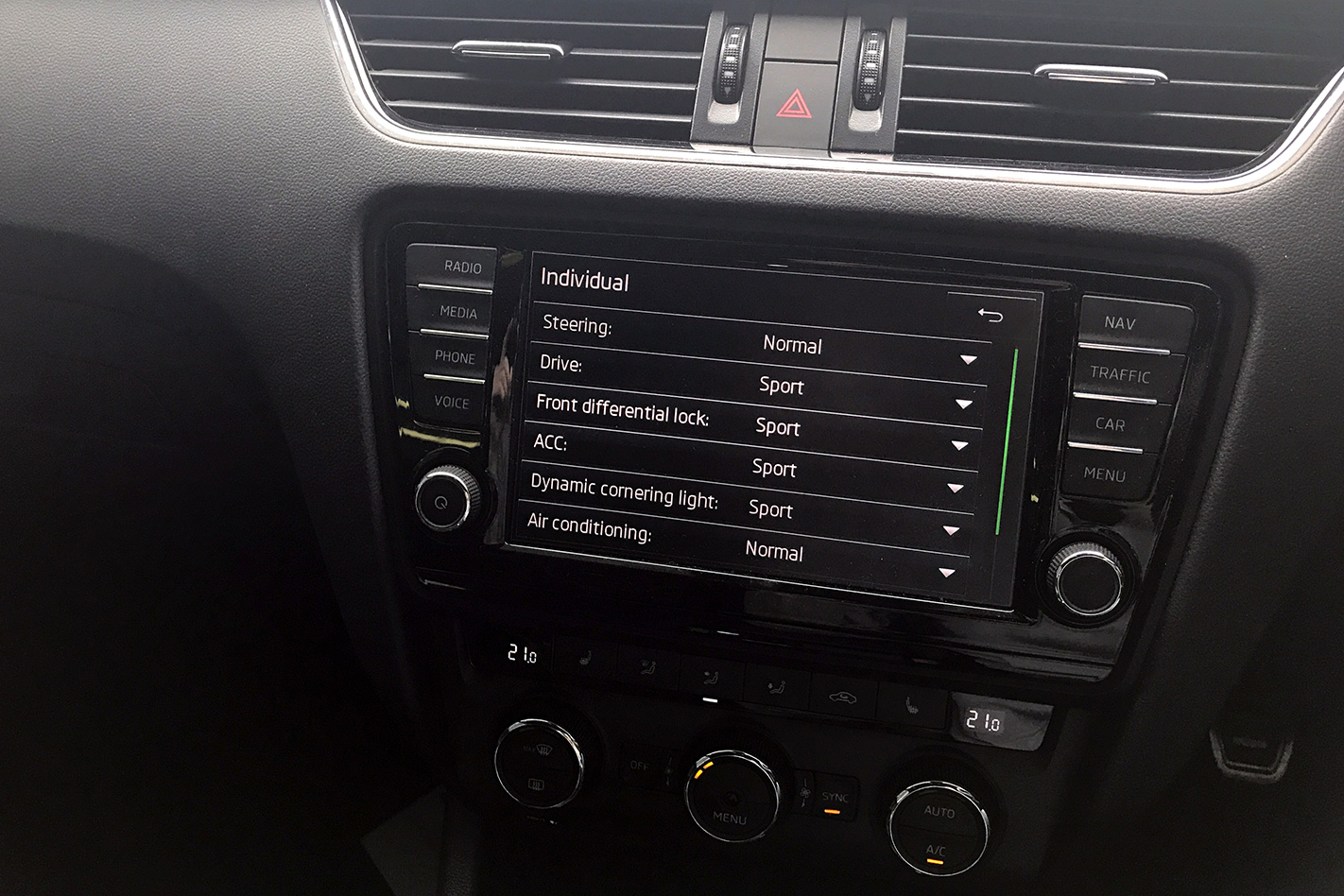
It’s a problem the smaller, lighter, adaptive damper-equipped Golf GTI Performance, from which the Octavia RS230 nicks its mechanicals, doesn’t have, but if that’s the price that must be paid for wagon practicality, it’s not too steep. The manual gearbox adds an extra layer of interactivity and with familiarity even the variable-ratio steering – which initially can feel at odds with the Skoda’s quite large steering wheel – even begins to feel like second-nature.
So far the Skoda has ticked every box and answered every question asked of it. It’s practical and easy to drive day-to-day but plenty entertaining when the red mist descends. But is a track session asking too much of this family wagon? We’ll find out next month.
LIKE: There’s nothing like a good drive DISLIKE: Intrusive traction control FAVOURITE MOMENT: Seeing the Skoda being driven hard Km this month: 1014km Km Total: 1918km Fuel this month: 8.76L/100km Fuel Total: 9.44L/100km
WHILE the internet loses its collective mind over the auction prices of classic Porsches, there seems to be another automotive niche hitting a purple patch.
Rare ‘90s Subarus, that is. The most recent example to highlight demand is a 1997 WRC-spec Subaru Impreza, which has sold at auction in the UK for a whopping $387,000 Australian dollarydoos.
That six-figure sum reportedly resets the price record for any Subaru sold at auction. Before the ’97 race car went under the hammer, The Sun in the UK reported the most expensive Subaru ever auctioned changed hands for more than A$252,000.
It doesn’t seem to be a completely isolated incident either, with an example of the WRC97’s road-going sibling fetching an equally staggering sale price at a Japanese auction.
The 22B is, in layman’s, the street-legal version of Subaru’s WRC Impreza. Around 400 were built in 1998 and they’re revered today as a sort of unicorn by the Subaru community. So when an example with just 2,138km on the clock came up for sale in its motherland, international attention was guaranteed.
Frenetic bidding ended with a final sale price of ¥15.1 million, or a hair over A$181,000 at today’s exchange rate. It’s unclear where the winning bidder will move the car to, or whether it will remain in Japan.
While the WRC Impreza at the top of this story was tested by the legendary Colin McRae, it was never raced by him, and only used to acclimatise factory Subaru drivers to new regulations that were introduced in ’97.
It does however bear the chassis number 001, making it the first of its kind, despite never officially competing in the WRC as a factory car.
It did however compete in a number of rallies with privateers, and was put through its paces in testing for numerous hours, before going into retirement in 2007 – tragically coinciding with the passing of McRae.
Legendary MotoGP racer Valentino Rossi even got some seat time in the car, competing as a privateer in Italy in 1999.
Despite all that, having a pristine car to look at in such an iconic livery, would alone almost be worth the price of admission.
Question: Floss
I have always driven diesel manual vehicles, the most recent cars being a Peugeot and Mazda 6. I need to buy a new vehicle in the next couple months. What diesel vehicle is recommended which isn’t a ute or large four-wheel-drive model?
My daily driving is a minimum of 80kms per day on highway/country roads, some of it gravel. I require something bigger than a hatchback to fit four adults comfortably and mid-size luggage space.
Budget: $50,000
Answer: Byron
Hi Floss,
While there are still plenty of diesel options available, unfortunately most of the vehicles we would recommend are now only offered with an automatic transmission because that is the gearbox of choice for the vast majority of Australian buyers. But the good news is that the auto diesel wagons and SUVs are nowadays much more fun and efficient than in the old days, so you are not likely to be at a disadvantage.
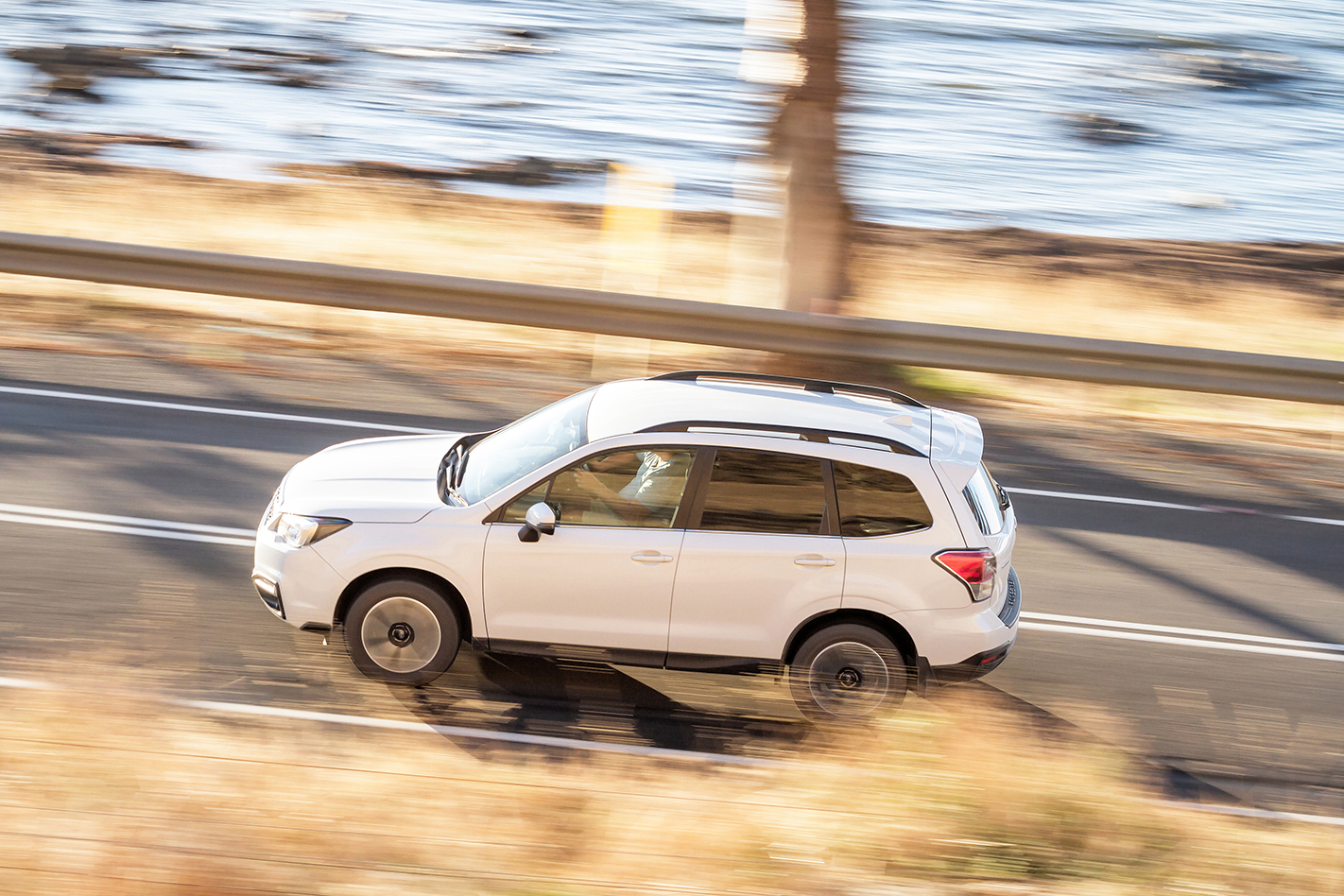
If you are only in the market for a diesel manual, then the Subaru Forester 2.0D manual or larger Outback 2.0D manual are the ones for you, and come with the added bonus of all-wheel drive for better traction.
Yes, the Forester is regarded as a medium-sized SUV, but it is based on a car and not a truck or 4×4, and so is very car-like to drive. The Outback, meanwhile, is a slightly raised Liberty wagon in the more conventional sense.

In the same medium SUV vein as the Forester is the new Mazda CX-5 AWD diesel auto, which is actually based on the front-drive Mazda 6 wagon but improved with lots more refinement and noise-reduction technology. It is a cracking drive and lovely to sit inside as well.
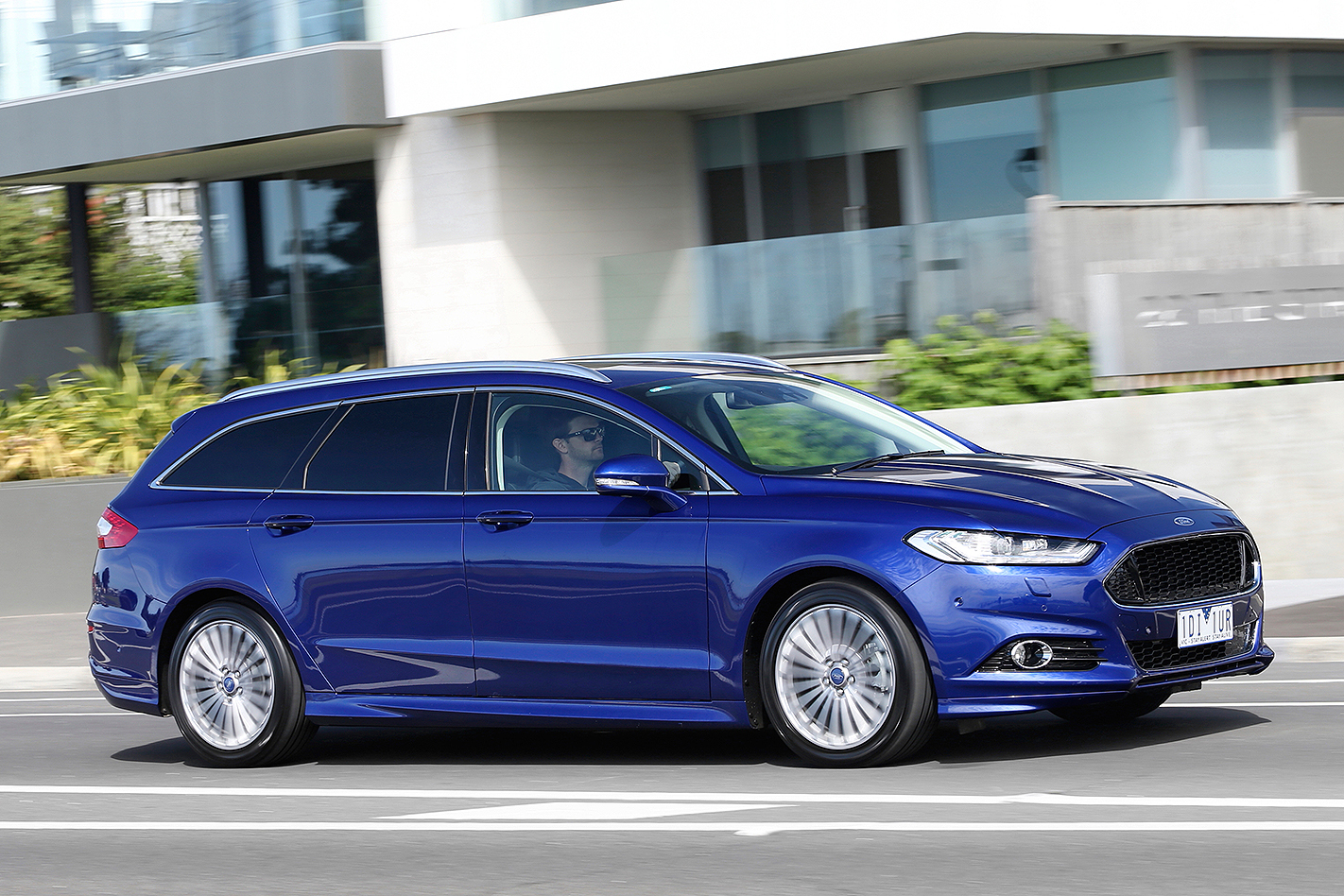
Of the more conventional wagon types, the Ford Mondeo TDCi front-drive is both great to drive and very quiet and comfortable, so that also gets our vote.
And the Volkswagen Passat front-drive or its Subaru Outback-style slightly raised Passat Alltrack AWD sister come highly recommended too, though there might be higher European vehicle maintenance costs over time.
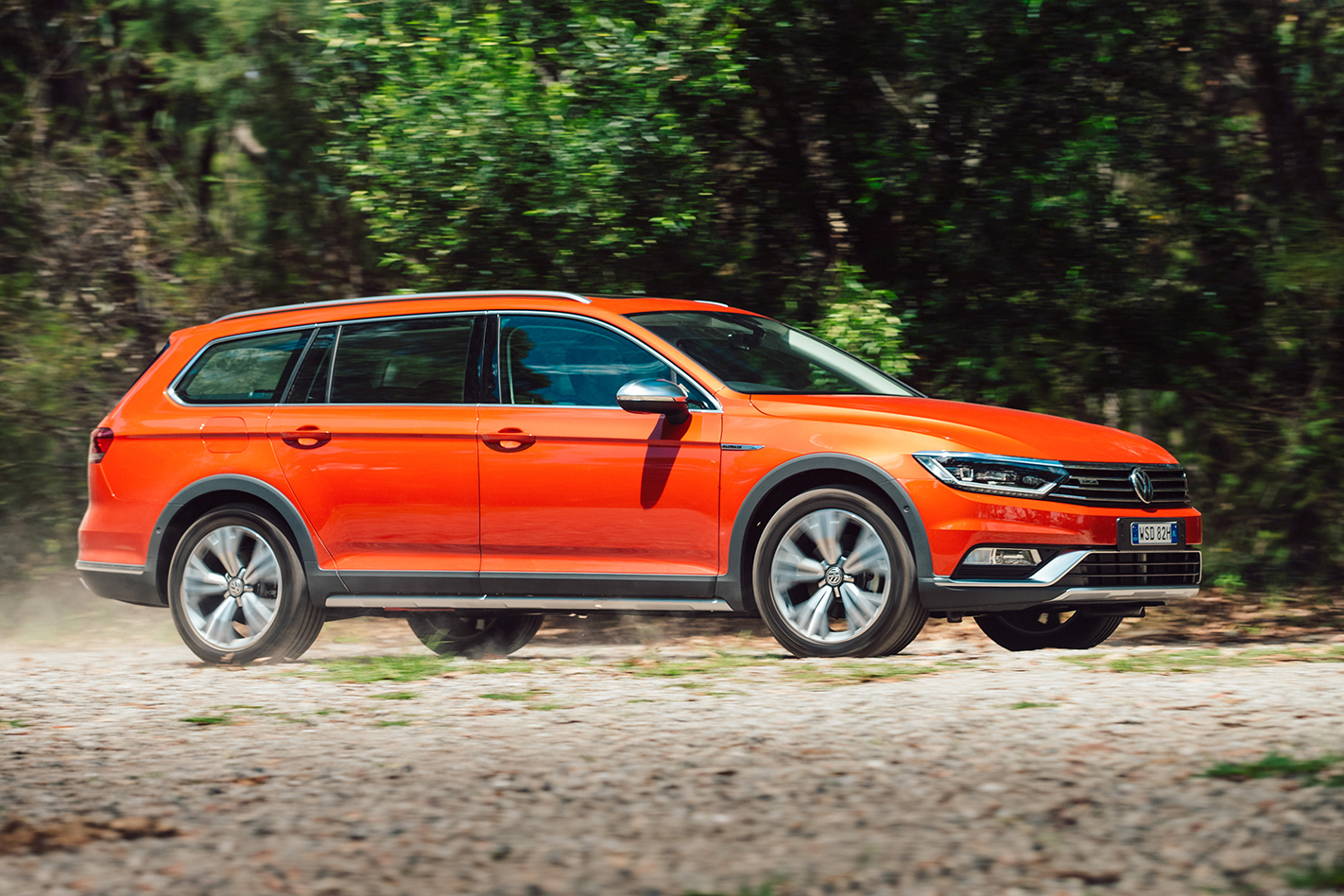
Note that like the Mazda CX-5, these too are auto only.
We hope this helps.
Question: Peter
Hi, I’m a sales rep now covering 800km per week. I need to move away from my VW station wagon to an SUV. I need to sit high up in an ergonomic position and prefer diesel as economy is also a must. I don’t want a commercial van, although the sitting position would be ideal. Preferably I’d get a mid-sized SUV that’s easy to park.
Budget: $50,000
Answer: Samantha
Hi Peter,
The 2WD SUV versions give you a more affordable price option if you are not going off-road, meaning you can step up in spec instead of being saddled with a drivetrain you don’t necessarily need.
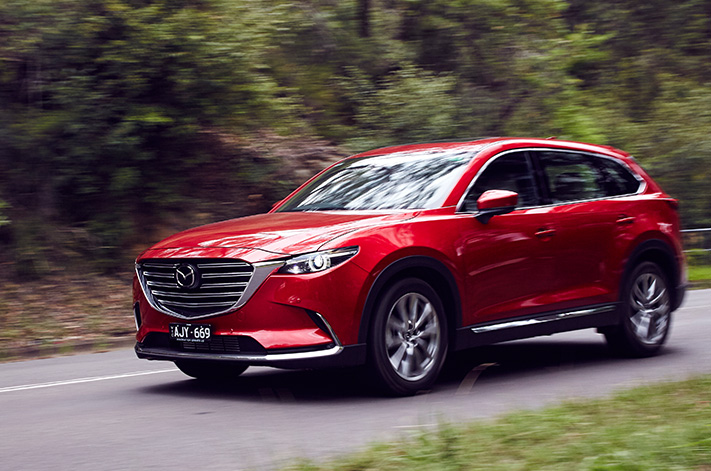
The Mazda CX-5 is a fabulous package, with a solid drivetrain, lovely dynamics and handling characteristics and excellent safety. If you don’t need a lot of room in the boot then it’s a great all-round package.
The CX-5 Maxx Sport specification is best value, but for the long hours you spend in the car, look at the GT, though it is 4×4. The 2.2-litre diesel is smooth and punchy, and the cabin is ergonomic with nice features.
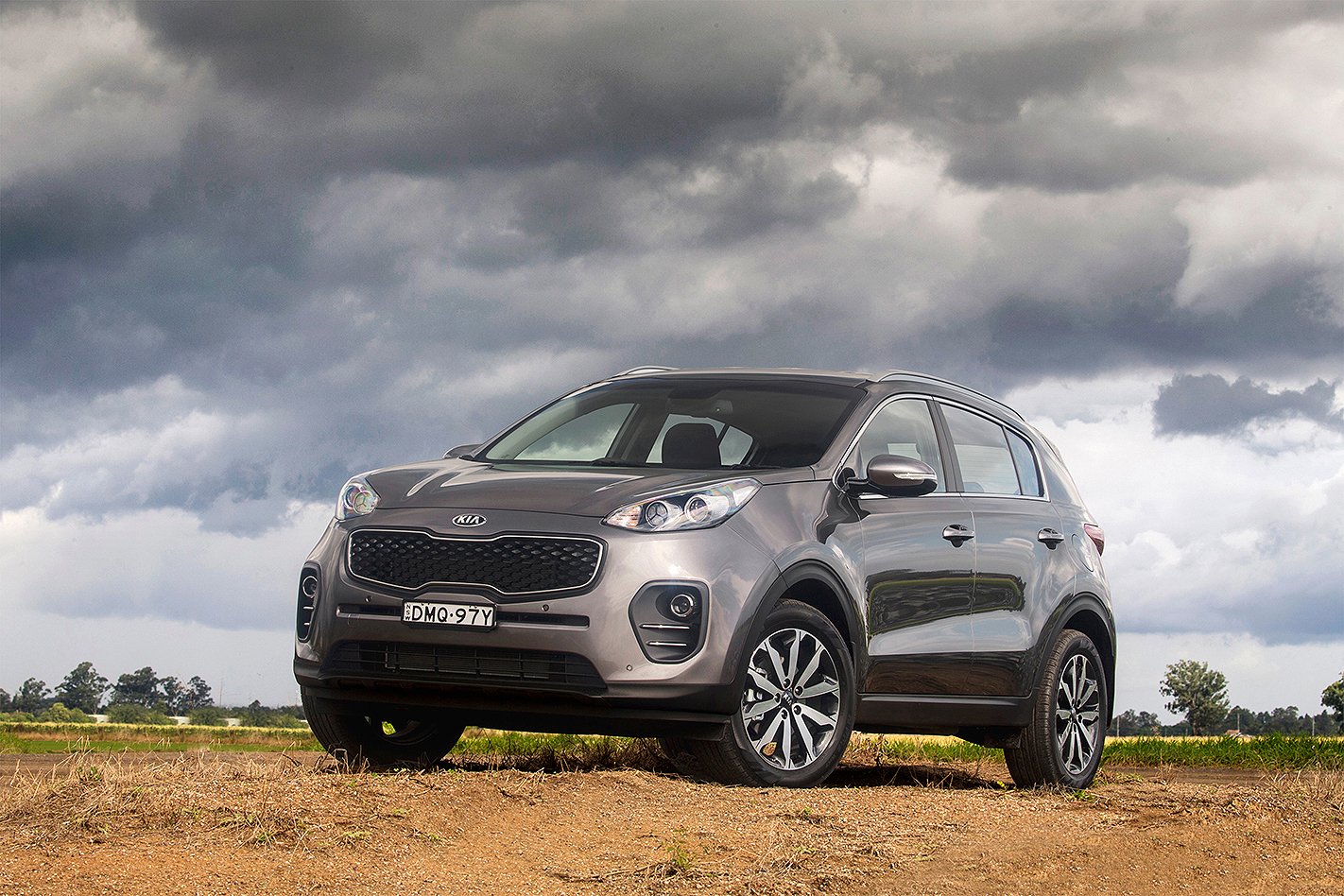
From a value for money and warranty standpoint, the Kia Sportage GT Line and the larger Kia Sorento are hard to beat. The $45,990 top-shelf Sportage’s 2.0-litre diesel is relatively frugal and very eager, and the interior is surprisingly slick. The seats are well bolstered, and it is an agile compact SUV with great featured for the price – plus you cannot beat its seven-year warranty and capped servicing.
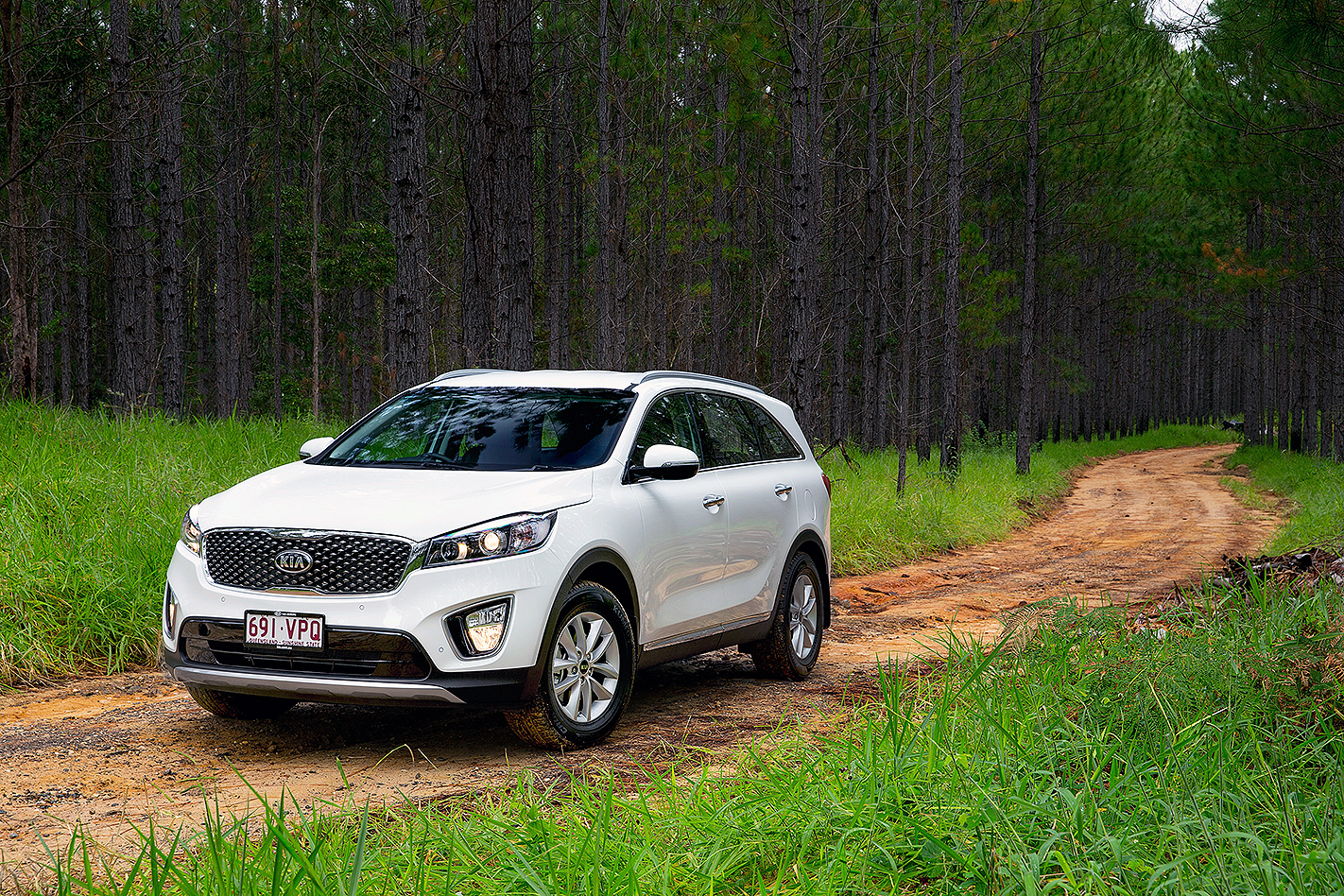
At $55,990, the Sorento Platinum diesel is loaded with inclusive spec and excellent safety features (including supportive leather heated front and rear seats, radar cruise, lane departure system, adaptive headlights and all the airbags). But it’s a bit over your budget new, so you may want to look at a demonstrator.
TELL ME ABOUT THIS CAR
The Mazda 2 provides a mix of good value and driver enjoyment. It looks good and has a premium feel inside while delivering plenty of power, and is equipped with smart city braking as standard. It comes in four main model grades and five-door hatch and sedan body styles with prices starting at $14,990 for the entry-level Neo with six-speed manual transmission.
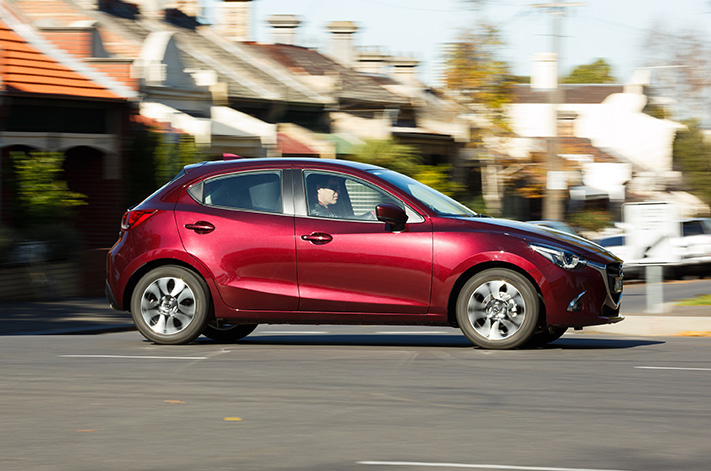
The second-from top Genki hatch is well equipped and comes with manual and automatic transmissions prices at $20,690 and $22,690 respectively.
STRENGTHS
- The April 2017 upgrade brought an advanced driver assistance pack to the Mazda 2 range, which gave the Genki automatic city braking which prevents a collision at speeds up to 30km/h, rear-cross traffic alert and blind-spot monitoring.
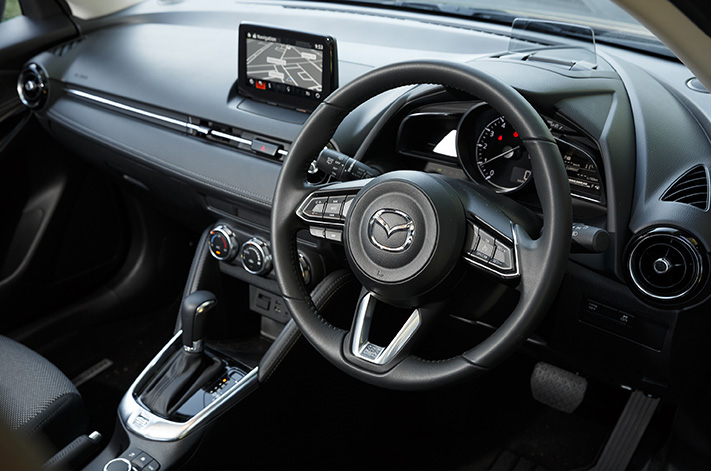
- A head-up display comes as standard which features speed, sat-nav directions and current speed limit displays via a camera that reads road signs.
- Other standard equipment includes automatic LED headlights, LED daytime running lights, LED fog lights, auto folding power mirrors, rain-sensing wipers, 7-inch floating touchscreen, DAB+ digital radio, satellite navigation.
- Another addition to the latest model is G-Vectoring Control, which helps the car handle better with torque vectoring.
- While not as fun as the H-pattern manual shifter, the five-speed automatic works nicely with the 1.5-litre petrol engine with smooth gear changes. If you feel like being hands on there’s a manual mode where you push the gearstick forward to downshift, which is a nod to driving enthusiasts.
- The interior is finished well with an attention to detail that makes it look more premium than it actually is.
WEAKNESSES
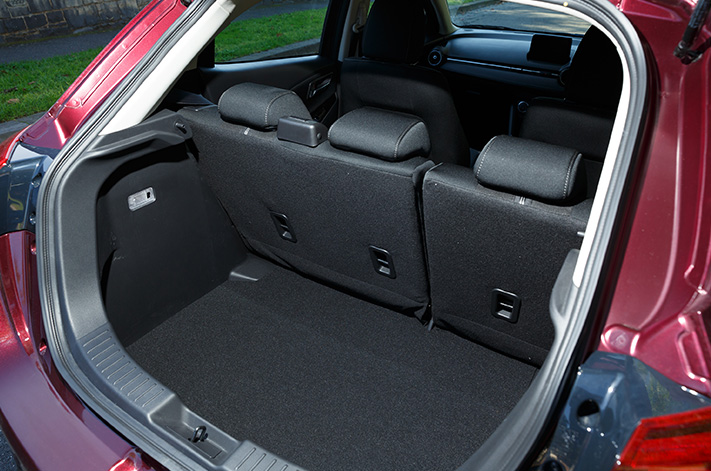
- At 250-litres, boot space is tight especially and narrow rear opening seems to be more about function than form. If you want more space it’s worth looking at the Mazda 2 sedan which has a 440-litre boot, however it’s not available in Genki spec.
- The rear doors have no bins or cup holders and the high window line limits vision for children in the back seat.
- Rear seat leg room is tight compared to other light cars such as the Kia Rio and Toyota Yaris.
ANY RIVALS I SHOULD CONSIDER
The Mazda 2 stands up well amongst all its light car competitors including the Ford Fiesta, Holden Barina, Honda Jazz, Hyundai Accent, Kia Rio, Mitsubishi Mirage, Renault Clio, Toyota Yaris and Volkswagen Polo.
Holden has confirmed the next generation of Supercars will run with V8s for the 2018 season, with twin-turbo V6 engines to appear in 2019.
“The next-gen Commodore will be homologated with the current, successful V8 engine for the 2018 season only,” a Holden statement says.
The next engine is currently being developed to fit Gen 2 regulations, with Holden partnering with partnership with the General Motors Performance and Racing Center for the project.
This comes as Holden release the design concept for the next generation Commodore race car, created by GM designer Peter Huges.
The real thing is currently undergoing design and development work, being undertaken in partnership between Holden and Triple Eight Racing.
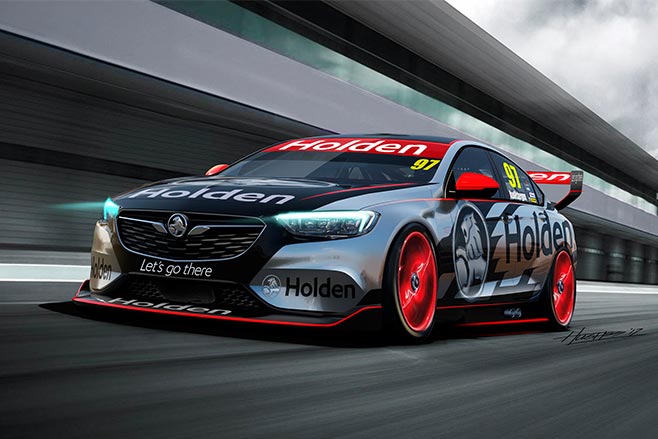
In addition, Triple Eight will seek approval to begin testing the twin-turbo V6 car as a wildcard entry into the 2018 supercars competition.
Holden says the staggered introduction ensures a greater ease in transition to the new model Commodore bodywork for all Holden teams.
Supercars CEO James Warburton applauded Holden on the new Commodore and the V6 development program for Gen 2.
“It is a pragmatic and sensible approach by Holden and Triple Eight Race Engineering in introducing the new Commodore and a twin-turbocharged V6 powered engine to the sport,” he says.
“Importantly it is a win for all the current Teams in terms of the simplicity and market relevance for an easy transition to the new Commodore in 2018.
“This phased introduction sets a clear path forward for not only Holden but existing and new manufacturers in the sport.”
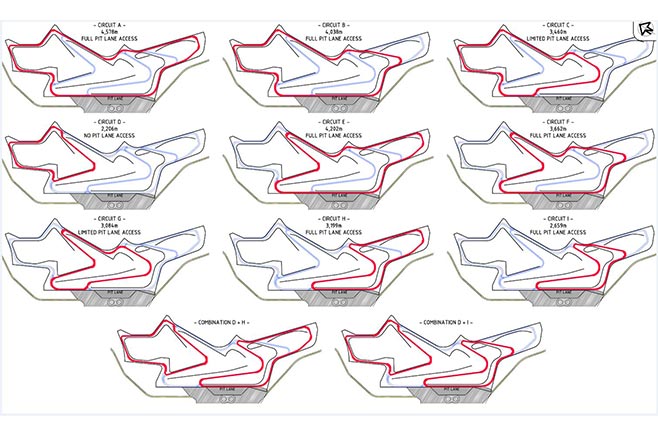
A second circuit alongside Bathurst’s iconic Mount Panorama is a step closer to being built, with the NSW Government adding funds to boost the motorsport expansion project.
The project is called Velocity Park but it has nothing to do with a certain airline’s frequent flyer program. Bathurst Regional Council instead identified issues surrounding the existing 6.213km circuit that doubles as public road, restricting access for residents when closed.
Expressions of interest opened on April 1, 2017, and called for companies to design and build the second racetrack within preliminary guidelines.
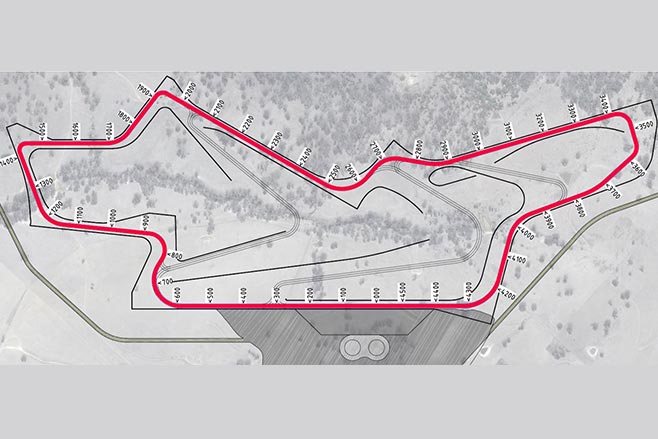
Velocity Park will cost an estimated $52.4 million and take two years to build following final sign off. The project has now edged closer to that point, with the NSW Government having this week announced it would triple state funds from the previous $5 million to a fuller $15m, adding to Bathurst Regional Council’s $27.4m spend. Both state government and local council have applied for Commonwealth support for the remaining $10m required.
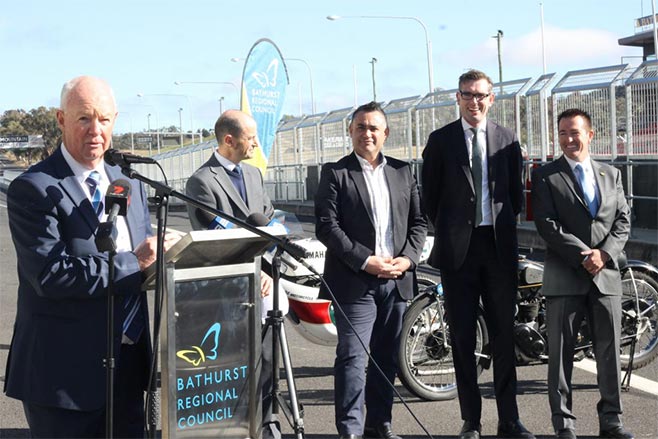
“All levels of government have shown strong support for Velocity Park and most importantly, the project has the backing of the motorsport industry,” claimed Member for Bathurst, Paul Toole MP, at this week’s announcement held at Mount Panorama.
Meanwhile, car brands launching new sports cars in Australia would welcome a second option beyond the notoriously expensive existing Mount Panorama circuit. Given the need to restrict resident access, it currently makes the Bathurst track less affordable to use for new car events than Phillip Island in Victoria.
Illustrations supplied by Bathurst Regional Council.
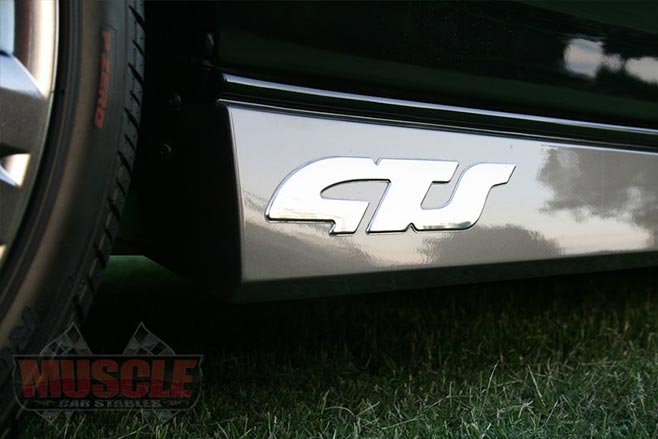
HSV didn’t make the Series II VX into a GTS… except for that one time they did.
While the changes between series were minimal, this is still technically a VX II and therefore a one-of-one. Word is one of HSV’s top brass commissioned the build, hence the ability to push it through.
It’s in Sydney and the owner is asking $74,990. That’s a lot of money for an early 2000s Commodore, but it’s immaculate, and only has 18,316km on the odometer.
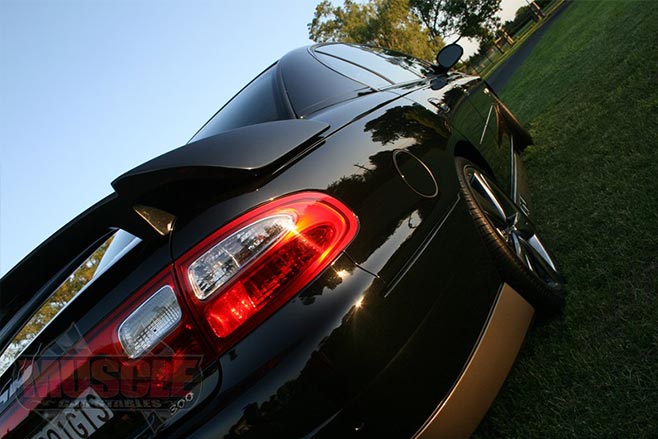
Different indicator stalks also feature, with more modern stalks taking over from the very chunky things that had been around since the ‘90s.
The other main difference is the addition of an adjustable control link in the rear suspension of the car, which aimed to reduce uneven tyre wear.
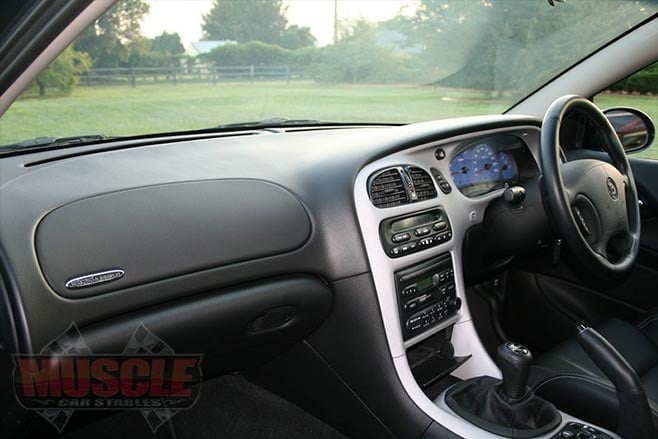
At the other end of those pedals is the Callaway C4B V8, capable of 300kW and 510Nm, with a 6-speed manual gearbox bringing with it pure driving joy.

It’s been babied to the point where it travels to shows on a tilt-tray truck.
If you’re interested, you can find the ad here – but keep in mind the price tag isn’t small, and you’ll then be responsible for part of HSV’s history…
