
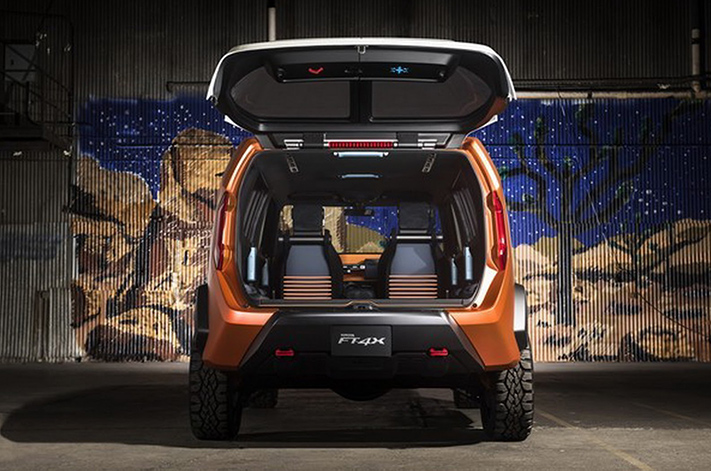
TOYOTA has chosen the New York International Auto Show to debut a radical FX-4X concept that borrows retro reflections of the FJ Cruiser, wrapped up in a boxy Tonka toy package that could steal attention from the Jeep Renegade – if it makes it into production form.
At this stage however, it appears there is no express ticket from show floor to showroom, with the FT-4X confined to design studies and customer evaluation at this stage.
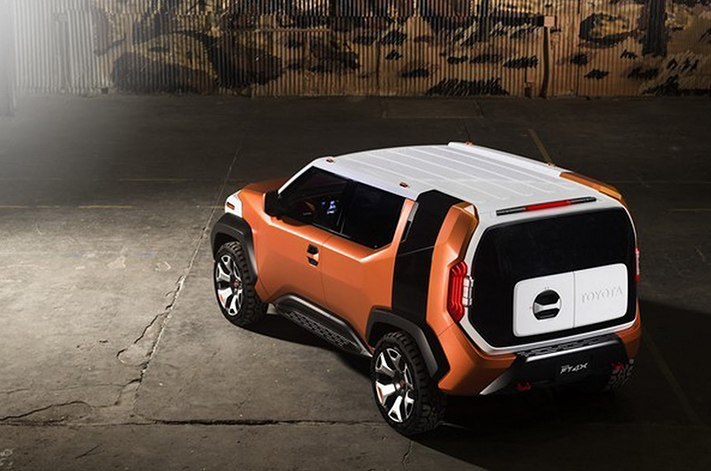
According to Kelley Blue Book, the concept is smaller than the large FJ Cruiser that was discontinued in Australia last year and uses the same platform as the recently launched CH-R, which would likely slot the concept into the compact or small segments.
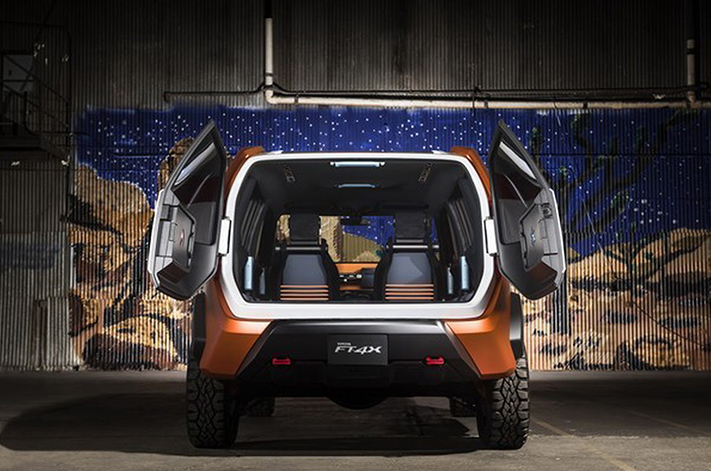
The only official word from the Japanese car maker at this stage is a tantalising release that chalks the world debut for 9:10am in the United States, accompanied by the headline: ‘Four Wheeling. Scene Stealing’.
In typical knobbly-tyred, pumped-arch fashion, the Toyota is aimed at youthful outdoorsy types or at least those who aspire to be, and packs a number of features to appeal to those who fantasise about hitting unbeaten trails on the weekend.
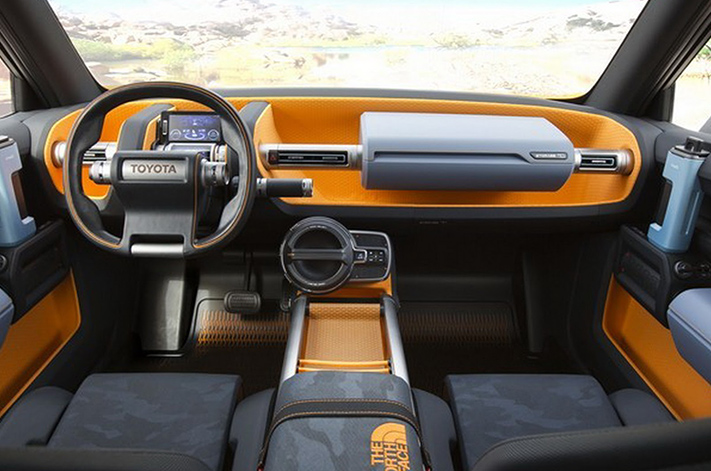
The car maker teamed up with apparel and outdoor lifestyle brand The North Face for added wilderness appeal and resulted in a branded sleeping bag, which shares the same camo pattern as the upholstery and doubles as an arm rest between the two front seats.
Having already debuted in regular LS 500 form at the Detroit Motor Show in January, Lexus’ large sedan flagship is once again set to roll under the spotlight at an American auto event – this time in performance-oriented F Sport form at New York.
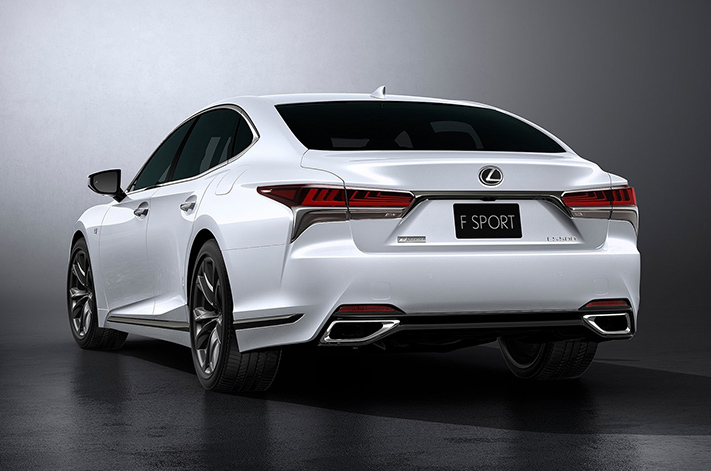
Available on both the twin-turbo six-cylinder LS 500 and the hybrid LS 500h, the F Sport treatment brings a black mesh grille, more prominent side vents in the front bumper, accent stripes along the side skirts and boot mouldings, along with 20-inch alloys in a dark silver finish, wearing 245-section tyres at the front and 275-section at the rear.
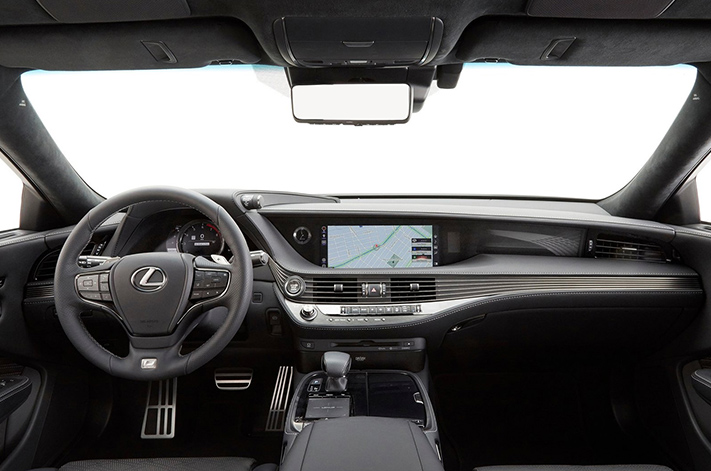
Inside, the F Sport features more deeply bolstered front seats for better support in hard cornering, perforated leather upholstery, unique aluminium trim and a reconfigurable instrument panel similar to that employed by the IS 350 F Sport. Alloy pedals and a dark ultrasuede headliner round out the rest of the interior changes.
Straight-line performance is nevertheless stout, with the LS 500 hitting 96km/h from standstill in a brisk 4.5 seconds.
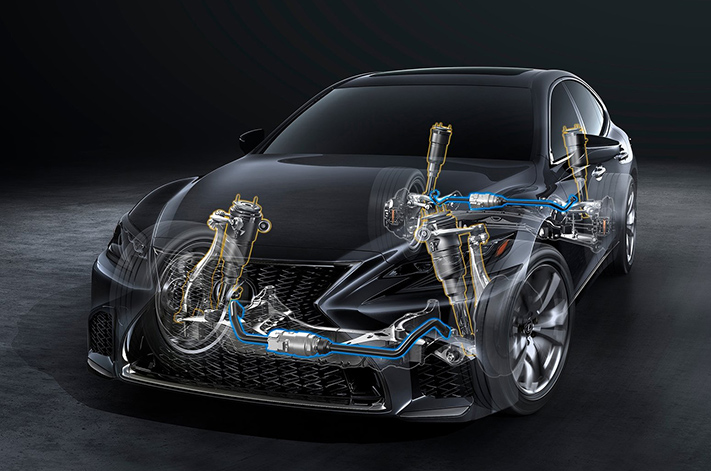
Expect to see the latest-generation Lexus LS launch in Australia around this time next year, with the F Sport variants likely arriving at the same time.
AUDI will have a rival to the Mercedes-Benz GLC Coupe and the BMW X4 on the market by 2019 as it ramps up plans to expand its growing SUV line-up.
The Audi Q4 will be built in Hungary from 2019, the first compact, coupe-silhouette SUV from the brand that will slot in between the smaller Q3 and the slightly larger Q5. Giving a hint at its origins, Audi will also move production of the Q3 from Spain to Hungary.
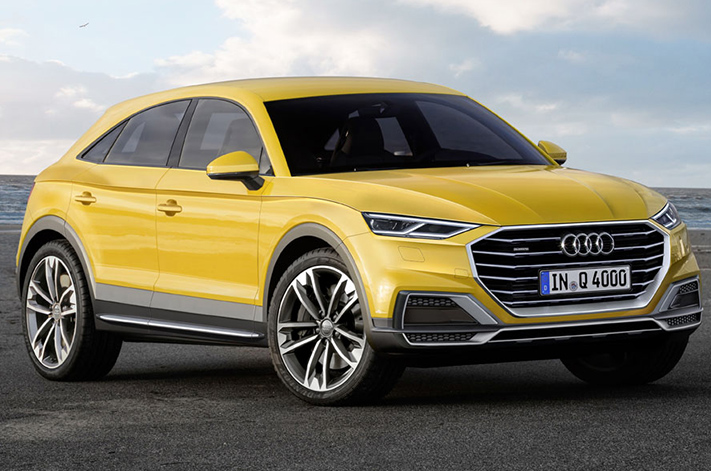
“The premium SUV in a coupe style combines great spaciousness with emotive design and offers the latest technologies in assistance and infotainment systems,” it said.
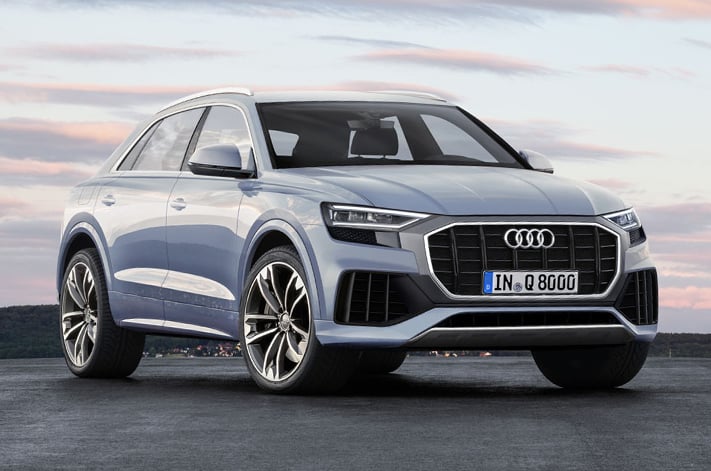
The two SUVs are part of a big SUV push expected from Audi in the next few years. Other high-riding spin-offs are expected to include a 2.0-litre turbocharged Q2 S and more potent RS, a new Q5 RS featuring a turbocharged V6, and potentially an SQ8 featuring the same hybrid drivetrain as under the SQ7’s skin.
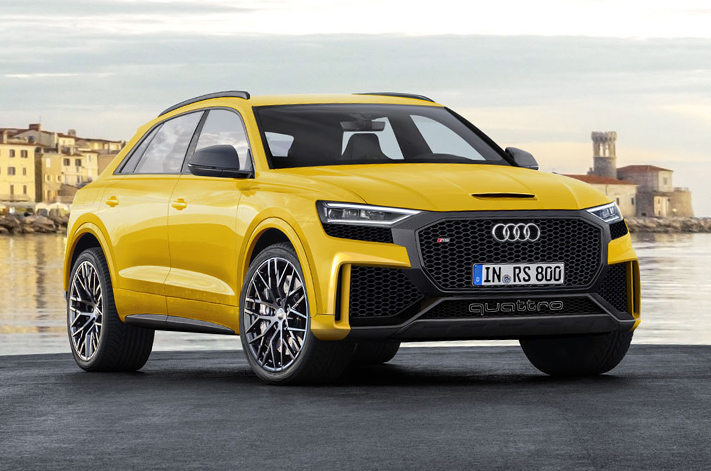
It is also close to revealing a fifth generation of its A6 large sedan and wagon range, including potentially another generation of its A6 Allroad, a jacked-up, SUV-styled version of the wagon.
Kia has stepped away from the standard cruisy highway shots and elected to show off the new Stinger GT in a slightly brasher manner.
During winter testing in Sweden, Kia filmed both RWD and AWD variants of its anticipated fastback getting sideways and kicking up a 272kW snowstorm.
With the demise of the rear-driven Commodore looming, eyes have been on the Stinger GT to provide a semblance of RWD fun at a reasonable price.
Even if Kia’s a bit late to the power-slide video party, it’s almost certainly done a better job of making its car look a bit wild than GM did with the Insignia.

In a phrase that sounds like it’s straight out of one of our PM’s speeches, Kia says the AWD version will be as “agile and exciting” to drive as possible, acknowledging that an all-wheel-drive system will probably not provide as much ‘slidey’ fun as its RWD counterpart.
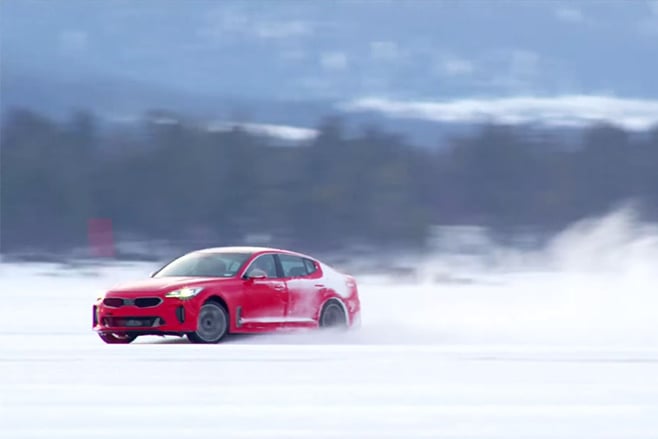
The really good news for enthusiasts is that the electronic systems will be able to be completely deactivated when the opportunity of opposite lock presents itself.
We’ll see the Stinger in September, with a price tag of around $50,000 plus on-road costs for the 272kW flagship.
The Mazda 2 has received an upgrade that’s short on aesthetic changes but brings class-leading technology across the range that could be just enough to make a good little car great.
Autonomous emergency braking in the form of Mazda’s Smart City Brake Support (SCBS) has trickled down from the range-topping model as standard across all levels.
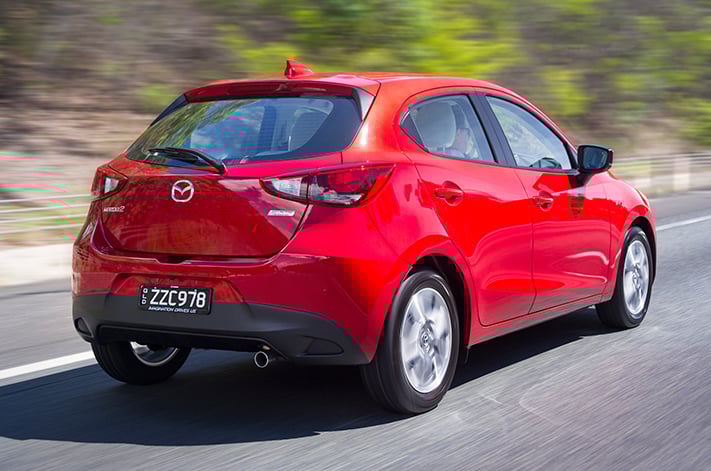
SCBC works in both directions, with SCBS-F (front) working at low speeds up to 30km/h with an infrared sensor used to detect a collision with a slower or stationary object. When this occurs it automatically applies the brakes to prevent a collision or limit the impact.
SCBS-R (rear) prevents reversing bingles by stopping the car if it senses you’re about to back into something at up to 8km/h.
The new Mazda 2 range also features handling-enhancing G-Vectoring Control (GVC) which adjusts torque delivery to the front wheels to sharpen turn-in response for a more stable ride. This is further improved by new dampers which absorb bumps and potholes to make sitting in the rear seats a more pleasant experience.
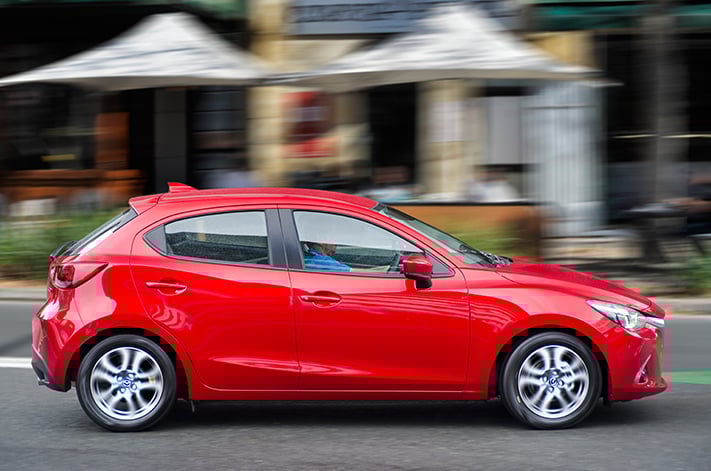
Mazda has also addressed one of the few bugbears of the Mazda 2, road noise, with improved Noise Vibration and Harshness (NVH) suppression.
The Mazda 2 range has been extended to four main variants including the entry-level Neo, Maxx, hatch-only Genki and the new GT range topper.
The GT’s points of difference are mostly inside with a series of bold style enhancements over the Genki plus unique 16-inch alloy wheels. Both models share premium features including daytime running lights, auto folding power mirrors, rain-sensing front wipers and blind spot monitoring.
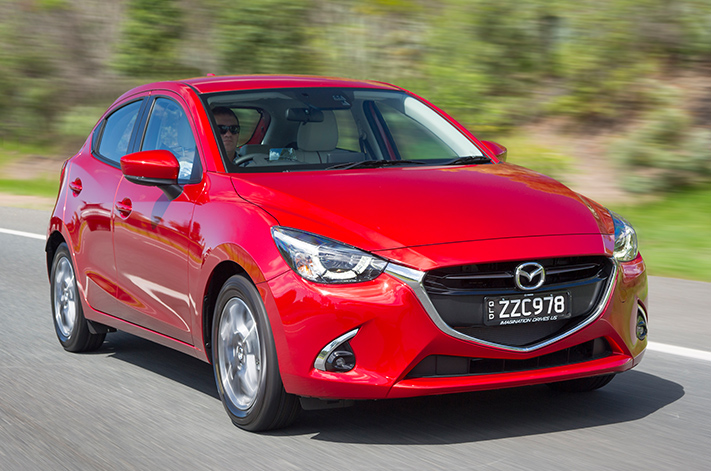
The word facelift would be an exaggeration for the subtle exterior changes, most of which have been applied to the two upper-spec models including the addition of shark fin antenna, LED foglamps surrounded by chrome-plated bezels and grey metallic grille garnish.
Interior changes across the range include colours and materials and a redesigned steering wheel with more intuitive switch layout.
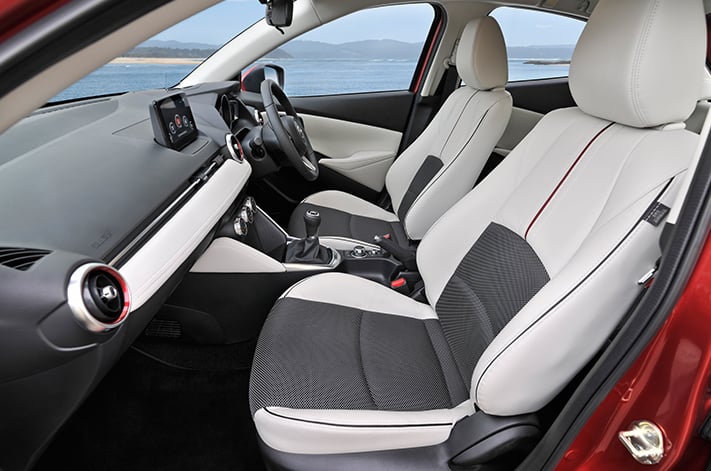
The active driving display in the upper-spec models, which includes the trip computer, is now easier to see than the previous monochrome version particularly in bright sunlight.
The Neo and Maxx now have electric folding mirrors with the latter also gaining DAB+ radio. Reversing camera is still optional in the Neo.
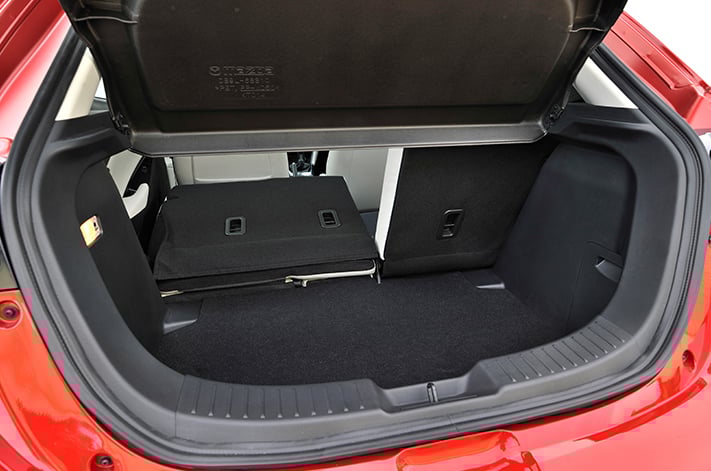
Other additions across the range include rear grab handles and rear heater vents located under the front seats.
All Mazda 2 variants are powered by same 1.5-litre four-cylinder petrol engine in one of two states of tune; 79kW/139Nm for the Neo, and 81kW/141Nm for all other variants with a choice of six-speed manual and six-speed automatic transmissions which both make for a pleasurable ride.
2017 MAZDA 2 PRICING
Neo manual hatch/sedan – $14990 Neo auto hatch/sedan – $16,990 Maxx manual hatch/sedan – $17,690 Maxx auto hatch/sedan – $19690 Genki manual hatch only – $20,690 Genki auto hatch only – $22,690 GT manual hatch/sedan – $21,690 GT auto hatch/sedan – $23,690
THE hunt for Australia’s greatest home-brewed muscle car continues, this time for the 1980s.
With the 1970s in our rear-view mirror, (and a controversial result), it’s time for the era of synths and short shorts.
1988 Holden Commodore SL road trip remembered
Aussie muscle cars in the ’80s shrunk considerably, largely due to the global fuel crisis. It’s for this reason that only a single V8 Falcon was produced in that decade.
What we lost in cubic size, was made up with homologation specials.
The Australian Touring Car Championship of that era was run under regulations which meant race cars had to have mechanically similar road-going siblings.
This resulted in homologation specials rolling off factory floors, which were the Kings of the road back in the day.
1985 HDT Director: Driving velvet thunder
So get your vote in below on which Aussie-built Muscle Car from that era is top of the pops.
A STOVE-HOT version of the Hyundai Kona appears to be in the works as the Korean carmaker ramps up for both the arrival of its small SUV and the release of its N-badged performance sub-brand.
The Kona is due on sale in Australia in September as a potentially sharp riding, and driving, rival to the likes of other compact SUVs including the Mazda CX-3, Mitsubishi ASX, Nissan Juke and Toyota C-HR – only the Juke, we note, has a more sporty version in the form of the Juke Nismo.
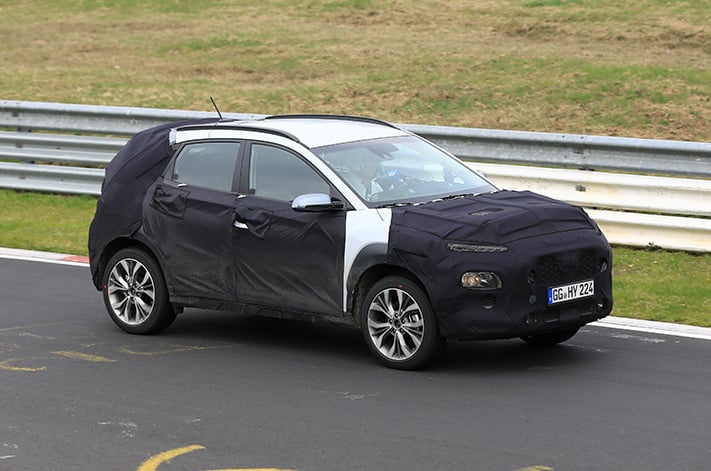
But as these pictures of the Kona’s high-speed workout at the infamous Nurburgring racing circuit in Germany suggest, Hyundai appears confident enough in the vehicle’s dynamics to one day allow it to wear an N badge alongside the larger Tucson version – something that would be extremely appealing for performance-addicted buyers in Australia.
“It could just be a general dynamics sign-off that they’re doing on the Nurburgring,” Hyundai Australia spokesman Bill Thomas said. “It is possible the Kona could one day wear an N badge, but that’s not yet been worked out.

“We’re not going into it in too much detail yet, but we’ve seen the i30 N and we could branch out from there,” he said. “Various other brands have shown that they can make an SUV handle.”
Few other details are known about the Kona. It’s likely to get either a turbocharged 1.6-litre diesel or petrol engine under its shapely bonnet when it arrives here: a long way from the 202kW 2.0-litre turbocharged four-cylinder used for the Hyundai i30 N. An all-wheel-drive version of the Kona is yet to be confirmed.

If rumours are anything to go by, the Kona could also become the carmaker’s first all-electric SUV, due next year. Hyundai is ramping up to launch its Ioniq, a small car built on a unique platform, here as early as this year with the choice of a petrol-electric hybrid, plug-in hybrid and full electric drivetrains, a line-up the Kona could one day mirror.
HYUNDAI’S hot hatch hero has hit the track ahead of its arrival in showrooms, with the Korean carmaker announcing that a “close to production” i30 prototype successfully completed the second round of the VLN Endurance Race at the Nurburgring this weekend.
The VLN series races, which all take place on the full Nurburgring circuit (which includes both the GP circuit and the fearsome 20.8km Nordschleife loop) last between four and six hours, and are a prelude to the gruelling Nurburgring 24-hour race at the end of May.
With several hours of full-throttle, wheel-to-wheel racing, it also happens to be a good testing ground for performance cars.
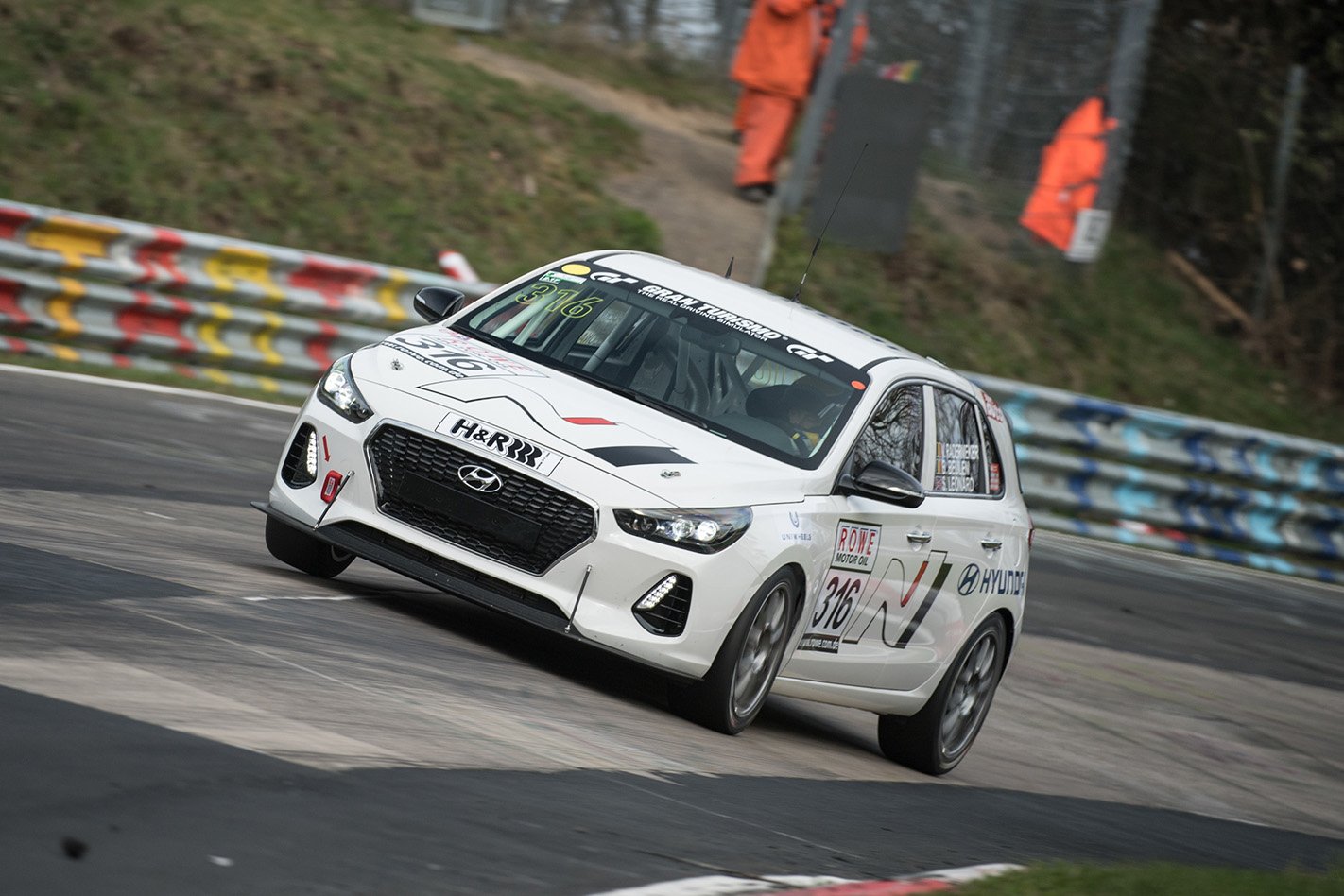
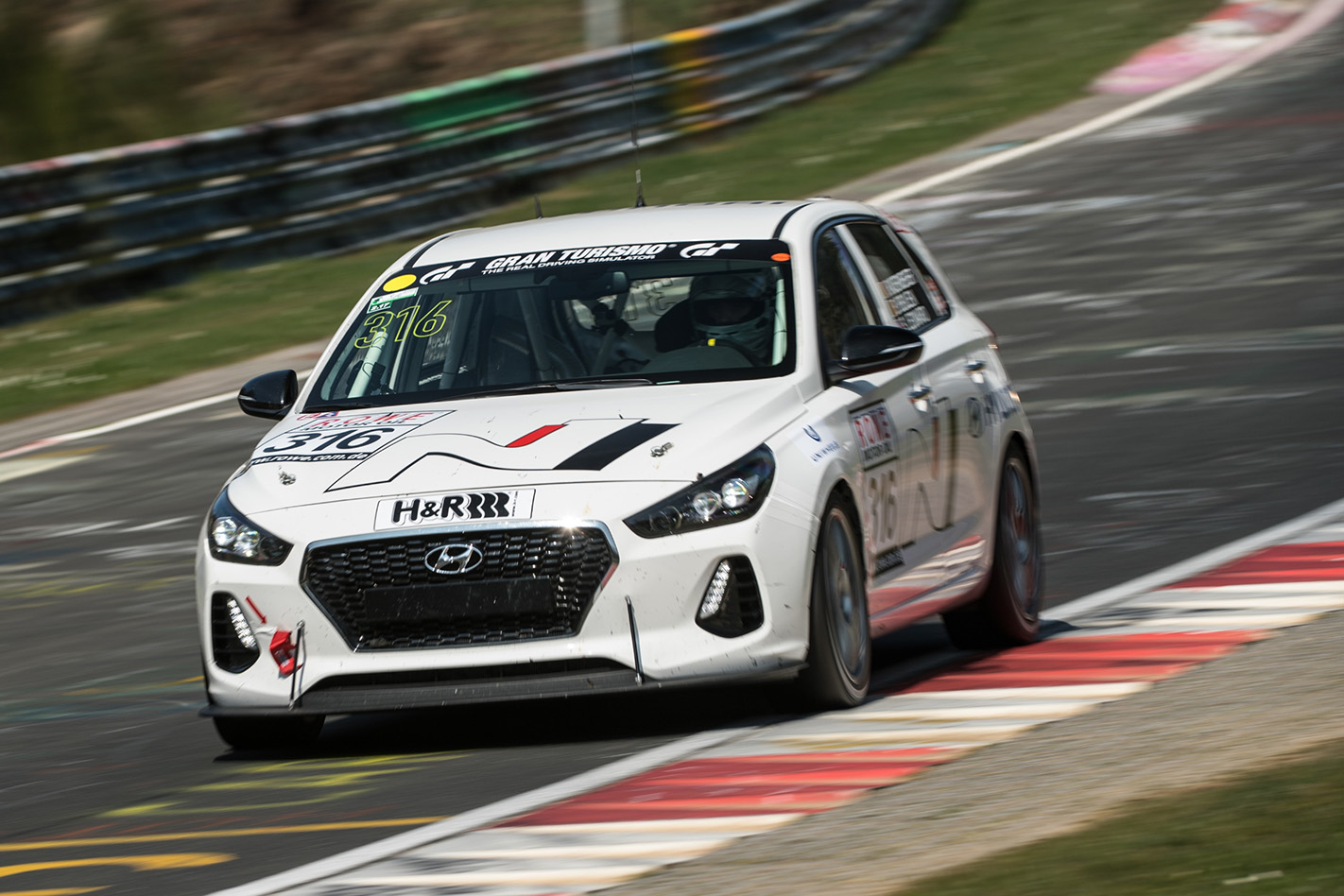
Crossing the line in a respectable 75th place out of 136 finishers, the i30 N prototype took four hours and six minutes to complete the race, with a fastest lap of 9:22. Equipped with the same 2.0-litre turbo inline four and six-speed manual gearbox as the production car, the i30 N racer was entered to help engineers “identify areas for further refinement and potential performance enhancements” for the i30 N.
It’s unclear whether the race car boasted the regular 184kW version of the i30 N’s 2.0-litre engine or the high-output 202kW variant of the same powerplant, but the vanilla-spec i30 bodywork is not representative of what will clothe the i30 N when it’s revealed later this year.
Nor is the stripped-out interior and full roll cage. There’s no word from Hyundai about chassis details, but motorsport-spec tyres and brake pads are a given.
Rather, expect a front bumper with more air vents and a deeper air dam for enhanced cooling and aerodynamics, as well as lower side skirts and a dual exhaust framed by a recontoured rear bumper. It won’t be as wild as the widebody RN30 concept revealed at last year’s Paris Motor Show, sadly.
Initially available with only a six-speed manual, a 2019 update will see an eight-speed dual-clutch automatic join the range. A mechanical limited-slip differential will help the FWD i30 N take its power to the ground cleanly. A sizable brake package will help rein it all in.
This isn’t the first time the i30 N has found itself in a race, however. Last year Hyundai campaigned a fat-fendered development mule based on the previous-generation i30 3-door at the Nurburgring 24-hour, however that car was substantially different to what will enter showrooms.
You’ve got to admire a manufacturer sticking to its guns. Specifically, if it ain’t broke, don’t fix it.
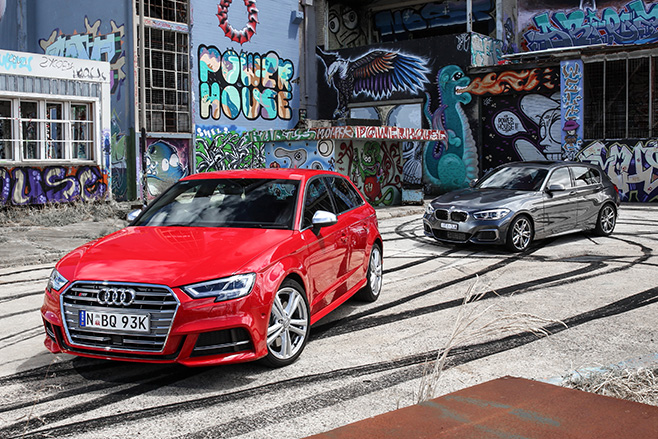
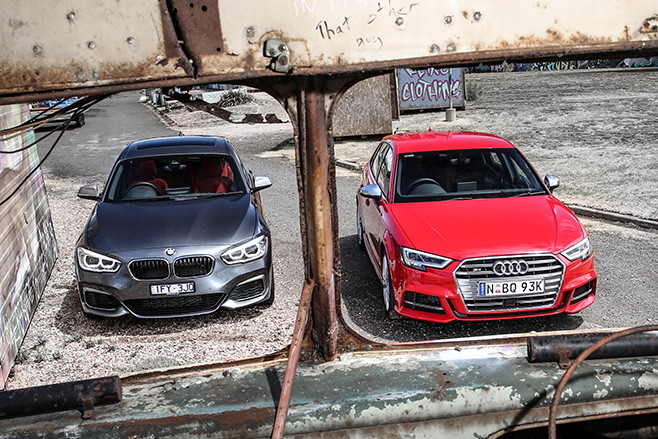
And that’s precisely the approach both Audi and BMW have taken with their compact five-door scorchers, the S3 Sportback and MY17 M140i respectively. When they’re selling well and giving the customers precisely the experience they’re after, why monkey with the formula? Why indeed.
Of course, keeping one step ahead of the competition is what car-making is all about, so nothing stays the same forever. In the case of this pair of rip-snorting little Euros, that equates to some very carefully chosen tweaks and fiddles here and there, but nothing that was going to fundamentally alter a successful end result.
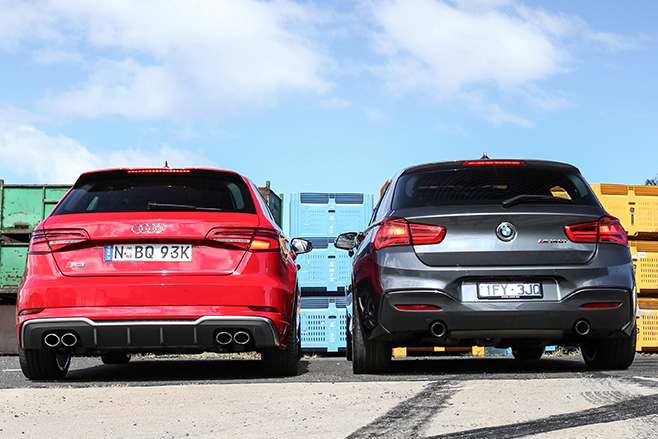
There are some new graphics and a new set of lights at either end, new alloys (still 18-inch on the S3) and inside, you’ll find a leather-wrapped tiller and Audi’s rather brilliant virtual cockpit dashboard display. As a result of all this, the price has, like the kilowatt count, snuck up slightly (by $1800) to $62,900.
BMW, meanwhile, has made bigger changes (a new generation of engines, for instance) but has been very careful to ensure that the end result is utterly recognisable. So, for 2017, the M140i that replaces the M135i gets the latest, B58, version of the turbocharged inline six, still measuring 3.0 litres while feeling and sounding familiar. There’s new tech on board mainly on the boost side of things, and power is now up to 250kW with torque a full 500Nm (see breakout below).
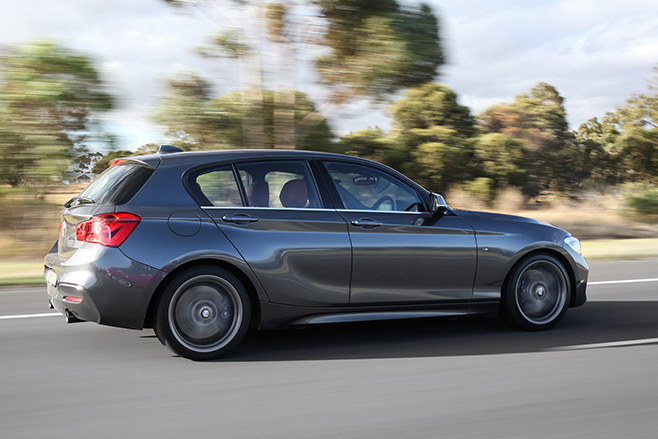
I don’t know about you, but neither of these hot-shots gives me the visual tingles. The Sportback falls short (well short) of being dumpy, but neither is it particularly slinky. Now, I know hatchbacks, particularly five-door ones, aim to be practical before sexy, but still… The BMW, meanwhile, is even more unfathomable. There’s still a bit of the ‘clown’s shoe’ going on with that Baz Manilow nose and the upswept sill-line and it just never says sporty to me.
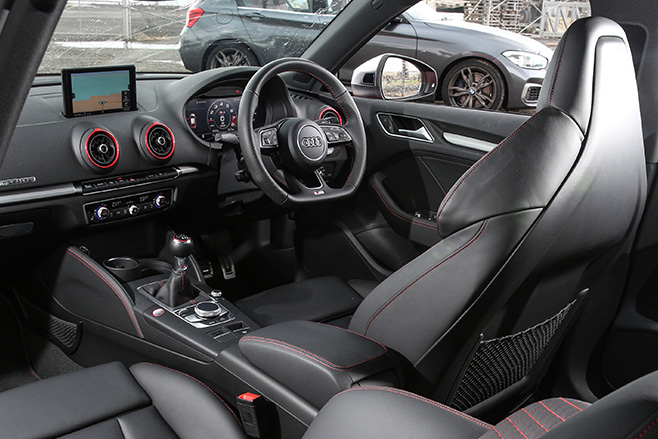
Inside, things are less polarising although the overall layout of the BMW’s dashboard is starting to look pretty familiar. Audi had the same problem a couple of years ago, but a big refresh fixed that and is reflected in the new S3.
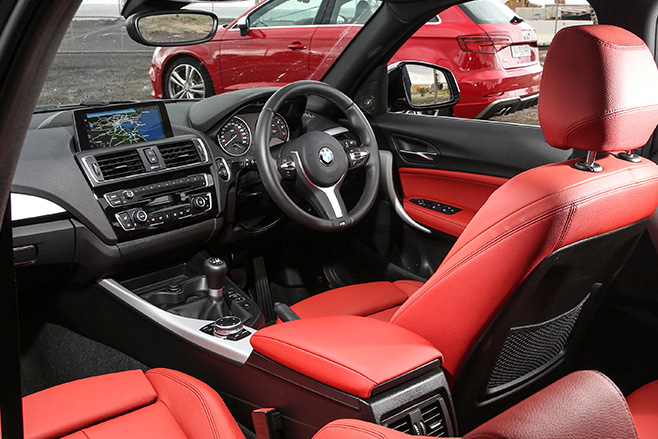
With the driver’s seat where I’d set it, I couldn’t get my knees or feet into the back of the BMW. A shorter driver and shorter rear-seat passengers would be a different story, but the Audi will always be bigger in the back. I also found the front door opening pretty short in the Bimmer as well, meaning I had to climb around the B-pillar.
Interestingly, both these cars are manuals. In the case of the BMW, that amounts to a special order and probably the same for the Audi.
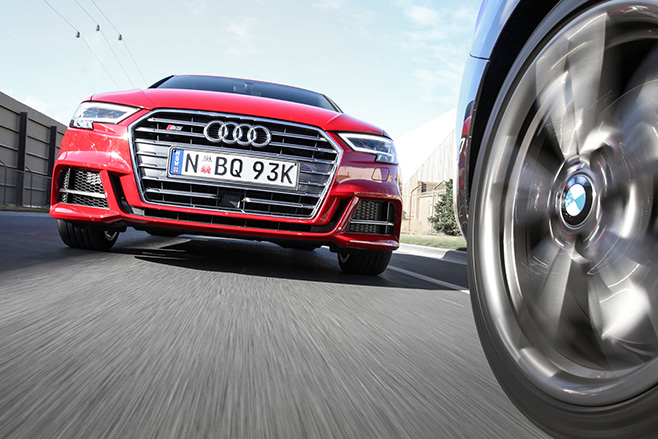
The point being that by ticking the manual box, you’re giving up a heap of urban convenience and unlike the old days, opting for the third pedal won’t save you a single penny this time around. Not only that, but you’ll also be adding a few tenths to your time across the first 400m of hotmix.
The fact remains, too, that both these cars could do with a well-tailored form of launch control, because they both have their limitations in different ways. The BMW is the simpler of the two to launch hard, partly because it has an old-fashioned park-brake to lean on, but mainly because you’ve got a choice of either spinning the bags or bogging it down.
Maybe there’s that perfect point at which it scuttles off down the strip with just enough wheelspin, but in reality, it builds boost so fast that no matter what you do, it’s going to lay chalkies in first and possibly second.
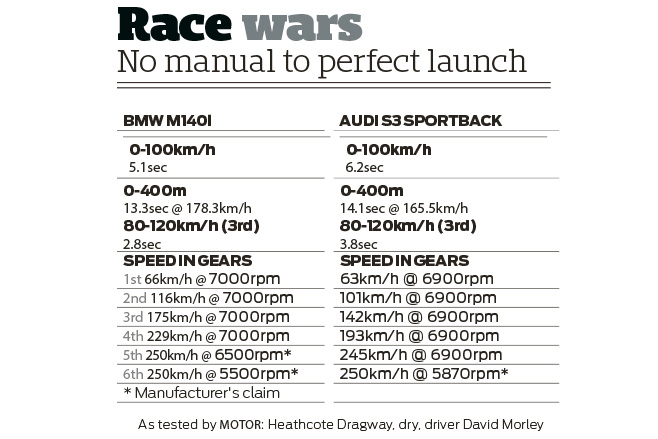
Speaking of which, for an engine that allegedly has its peak power at 5500rpm, this thing sure wants to hit 7000rpm pretty eagerly. It’s not a rushy top-end, but it’s there and it’s strong just the same.
Really quick shifts can beat the synchro into second, although judging by the state of the tyres on this one (testing was done, err, before photography), it’s had a hard life. And even then, you’ll be hauling through the traps in 13.3 at 178.3 kliks. One-hundred will have arrived at 5.1 and 80 to 120 consumes just 2.8 seconds. Based on the previous model, this proves that the auto is quicker.
Call it 14.1 at 165.5 and 6.2 with 80 to 120 taking a full second longer than the M140i. Again, previous experience tells us the DSG will be quicker, but there’s more to it than just the tranny.
For a start, the engine is very obviously boost-indexed. That is, it makes different boost pressures in different gears and over different rev ranges. In first and second, for instance, there was absolutely no point aiming for the 6500rpm redline, because the boost was done and dusted by the 6000 mark.
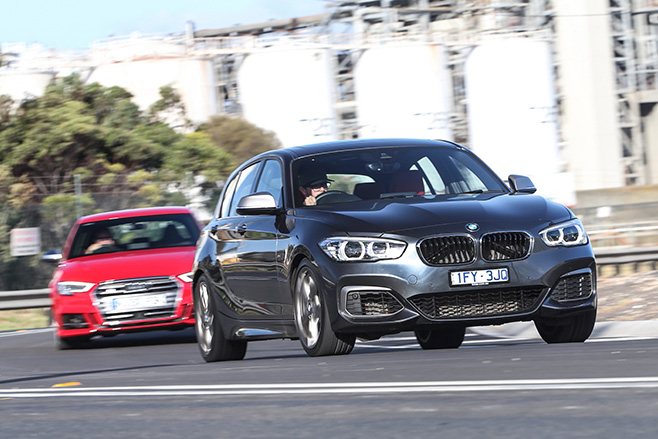
In fact, that slight lagginess (and I mean slight) to the way the Audi produces its thrust is felt on the road, too. Okay, so the BMW is a torque monster, and in any other comparison, the S3 would feel entirely lag-free, I’m sure.
If the engine in the BMW is quick, so is the steering ratio. It’s very keen to leave dead-centre, but without being flighty. The problem is that once you do knock it off the straight-ahead, the feel becomes a bit artificial and at odds with the otherwise natural feel, and there’s some reluctance to self-centre.
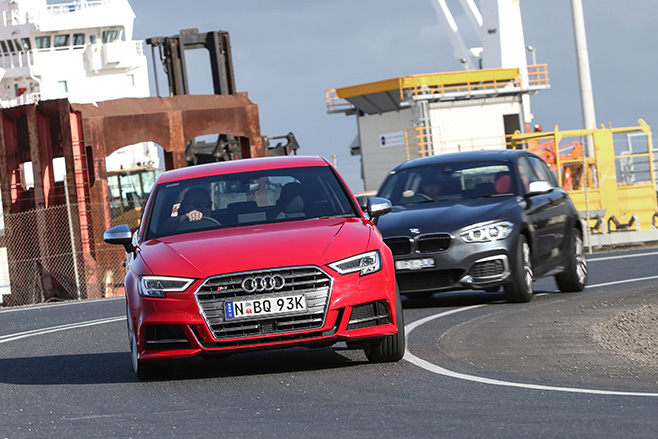
By contrast the Audi is a more flowing thing to pilot. It’s lighter overall and, in fact, every control from the clutch, to the tiller to the gearshift requires less muscle. And despite that lighter steering, it’s actually nicer to use with what feels like a more linear relationship with what you’re putting in and what the car is giving back.
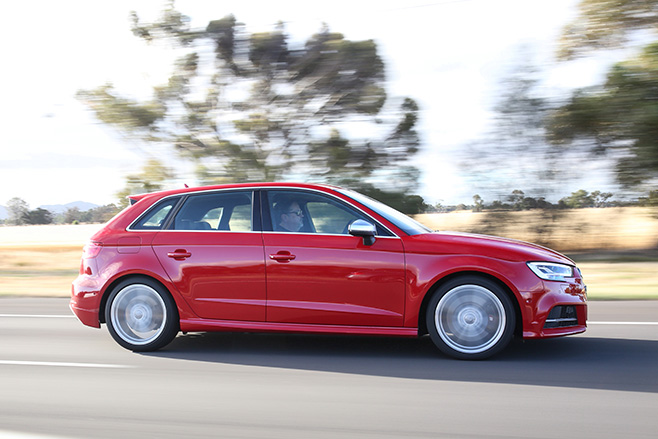
The BMW, meanwhile, was j-u-s-t acceptable in Comfort mode and way too stiff in Sport to be either comfortable or composed. No, it never lost grip but every now and then when you pile in a bit quick, you can just start to feel the beginnings of a little push. I’d be inclined to blame those stuffed tyres mostly.
The Audi, on the other hand, is doing that Quattro-limpet thing regardless of where or how you drive it and despite the urge it gives away to the BMW, there wouldn’t be much in it in a point-to-point race. Chuck the S3 away on a public road and you could fairly consider yourself a prize pelican.
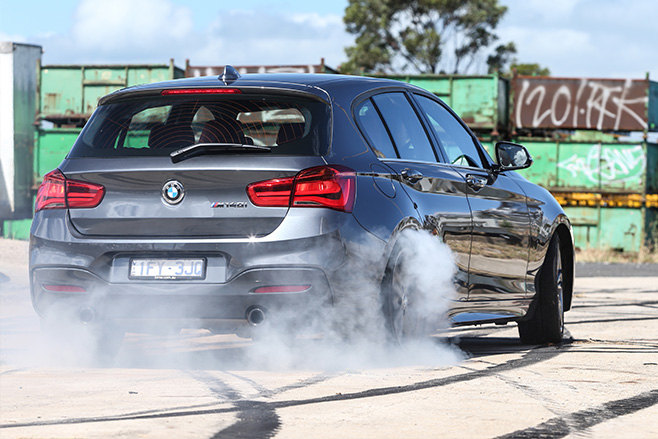
The M140i, meanwhile, seems to be following that current BMW trend of offering lots of inherent talent, but throwing up a computer-generated fence between you and it, mainly in the way it steers. But then, you floor the Bimmer away from a standing start and feel 500Nm pressing you into that lovely red leather and you might just be convinced to change your mind.
Me, I wouldn’t buy either of them… not enough visual attraction. I’d stretch the lease by another ten grand and buy an M240i. And I’d get the eight-speed auto. And, yes, I know that’s not the question you asked.
SPECS
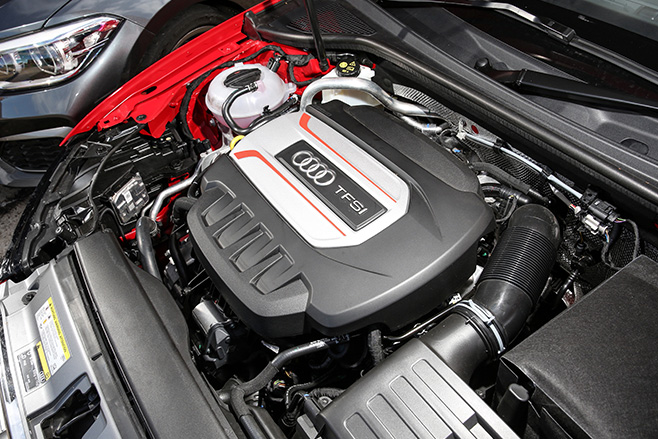
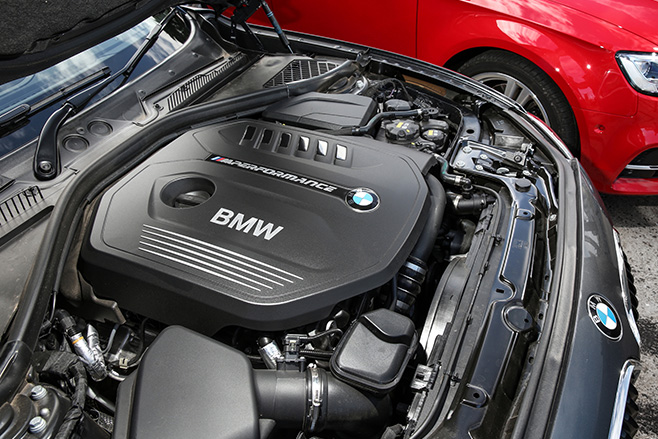
Meet the B58
BMW’s new 3.0-litre inline-6
The new engine-tech contained within BMW’s B58 includes moving the twin-scroll turbocharger closer to the manifold for better response and for shorter cat light-off times. The old air-to-air intercooler of the previous model has been replaced with a water-to-air intercooler and, cleverly in a packaging sense, the ‘cooler lives in the inlet manifold.=
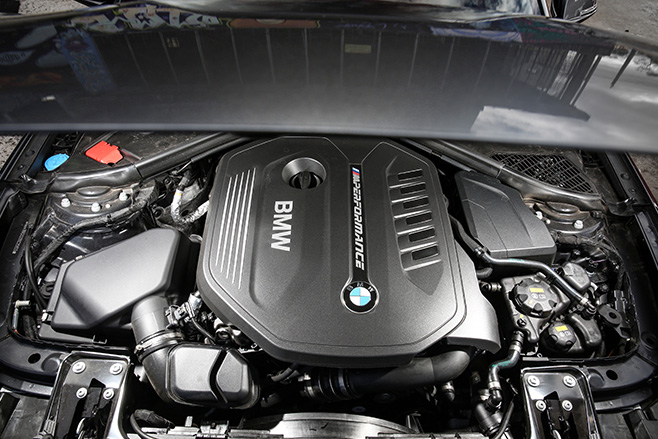
And there’s more to it than that. The whole thing has been designed for strength and durability, suggesting that there’s plenty of headroom in the design. The old engine’s iron cylinder sleeves have been replaced by a process called electric arc wire spraying, also known as plasma coating. This leaves a thin, but tough, coating on the raw aluminium block, mitigating the need for separate sleeves.
The B58 also features a ‘closed deck’ design in which the top of each cylinder is completely supported by the rest of the block, rather than just in a couple of places. Even though that makes the engine more expensive to make and a little heavier, the closed deck gives the block more rigidity and the capacity to handle high boost pressures with distortion.
And probably just as well, since the B58 is said to produce 20 per cent more boost than its forebear and runs a high 11:1 compression ratio.
AUDI has started rewarding even more of its rusted-on punters with invitations to track days, and sporting and cultural events, as part of an expansion of its customer loyalty program.
However, to experience the full red carpet treatment, customers will need to qualify for the top tier of the two-level Audi Experience program – reserved for those who spend the most money with the brand.
Audi Australia corporate communications manager Anna Burgdorf said the program was expanded to include more owners after the brand’s most loyal customers responded well to the special treatment
“A lot of what we do as a business is our customer relationship management piece,” Burgdorf said. “We’ve recently launched a new loyalty program to work even more closely with those customers who are repeat purchasers.
“We just launched six weeks ago. It’s a continuation of the Audi Lifestyle experiences programs that we launched in 2012 where we work with and host our high-net worth customers; now we have a couple of tiers.”
Audi customers who spend $150,000 or more are invited to the highest level of the German luxury carmaker’s rewards program. Those who spend $80,000 or more will be invited to join up as second-tier reward customers.
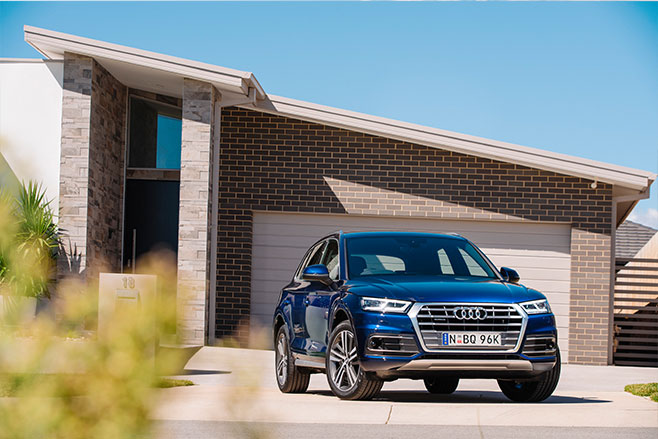
It’s an expansion of the Lifestyle program introduced in 2012 to reward Audi’s most well-heeled customers with exclusive invitations to various events sponsored by the carmaker, as well as the Drive Experience series of track days.
It would also make the ownership experience easier for customers, Burgdorf said.
“It depends on your lifetime spend with Audi,” she said. “It’s about offering access to loan cars when you’re having a vehicle service and it’s also our customer experience events that we host with our brand ambassadors.
“It’s a way for us to connect more closely with our owners.”
Burgdorf said the loyalty program would also encourage customers to stick with Audi the next time they bought a car.
“Loyalty for us as a brand is important because it means we are doing a good job from a customer service perspective,” she said.
“We want people to come back to the brand not only for the vehicles that we sell and the product, which we know is good as are a number of other brands but we want it to be about that experience – part of the Audi lifestyle, part of the Audi family.
“So we do put a lot of stock into being able to welcome customers back and move them through the range”.
