
QUESTION – SID
I currently drive a 2008 Holden Astra and while it’s a great little car, I am tempted by something that is a bit sportier but fuel efficient at the same time. I drive usually 200km per week; all of it is in the city. I usually do not have more than one or two passengers and storage and boot space are not particularly important to me. I am a tech geek and would like to have Android Auto on board. Cars I have considered are: Ford Focus Sport (2016), VW Golf 92TSI, Honda Civic 10th gen VTI-L (which pushes my budget) and Renault Clio GT (which does not come with Android Auto). I am open to more suggestions or comments about why one of these cars would be a better pick over the others. Thanks.
BUDGET
$30,000
ANSWER – ALEX INWOOD
The good news is you’re shopping in a highly competitive and highly saturated part of the market, so there are plenty of cars to choose from. Of the cars you’ve mentioned, the Golf 92 TSI is the most complete all-rounder and the one I’d recommend. Its dynamics are polished, the interior roomy and well made, and it has plenty of equipment. It remains one of the best all-round new-car buys. The Focus is still a strong performer however and while it mightn’t be a polished as the Golf, especially inside, it makes up for it with a strong dynamic focus and sorted handling.
Other cars worth considering are the Fiesta ST and VW Polo GTI. Both of these cars are smaller than the Golf and Focus, but have an even greater emphasis on performance and sit atop their respective ranges. The Fiesta has long been a favourite among motoring journalists and is a lot of fun to drive. The Polo has Android Auto, plus a premium-feel interior and a brilliant 1.8-litre engine. Like the Fiesta, it’s also available with a manual gearbox which helps to increase the fun factor.
FORD has given a tantalising hint of the technology likely to sit beneath a hybrid version of the Mustang.
However, while Ford’s pursuit-hardened 2.0-litre petrol-electric hybrid drivetrain will sit under the skin of a Mondeo-badged police car due on sale in the US next year, it will be a while before we see any of it adopted to the iconic US muscle car – the next Mustang isn’t due until 2020.
What Ford’s cop car does tell us, though, is that the carmaker is already thinking about ways to harden its hybrid system up for a performance bent – in order to sell the hybrid cop car to US police forces, the duotone Mondeo will need to meet a strict set of performance benchmarks – covering acceleration, braking and dynamics that should translate to whatever hybrid system is proposed for the Mustang.
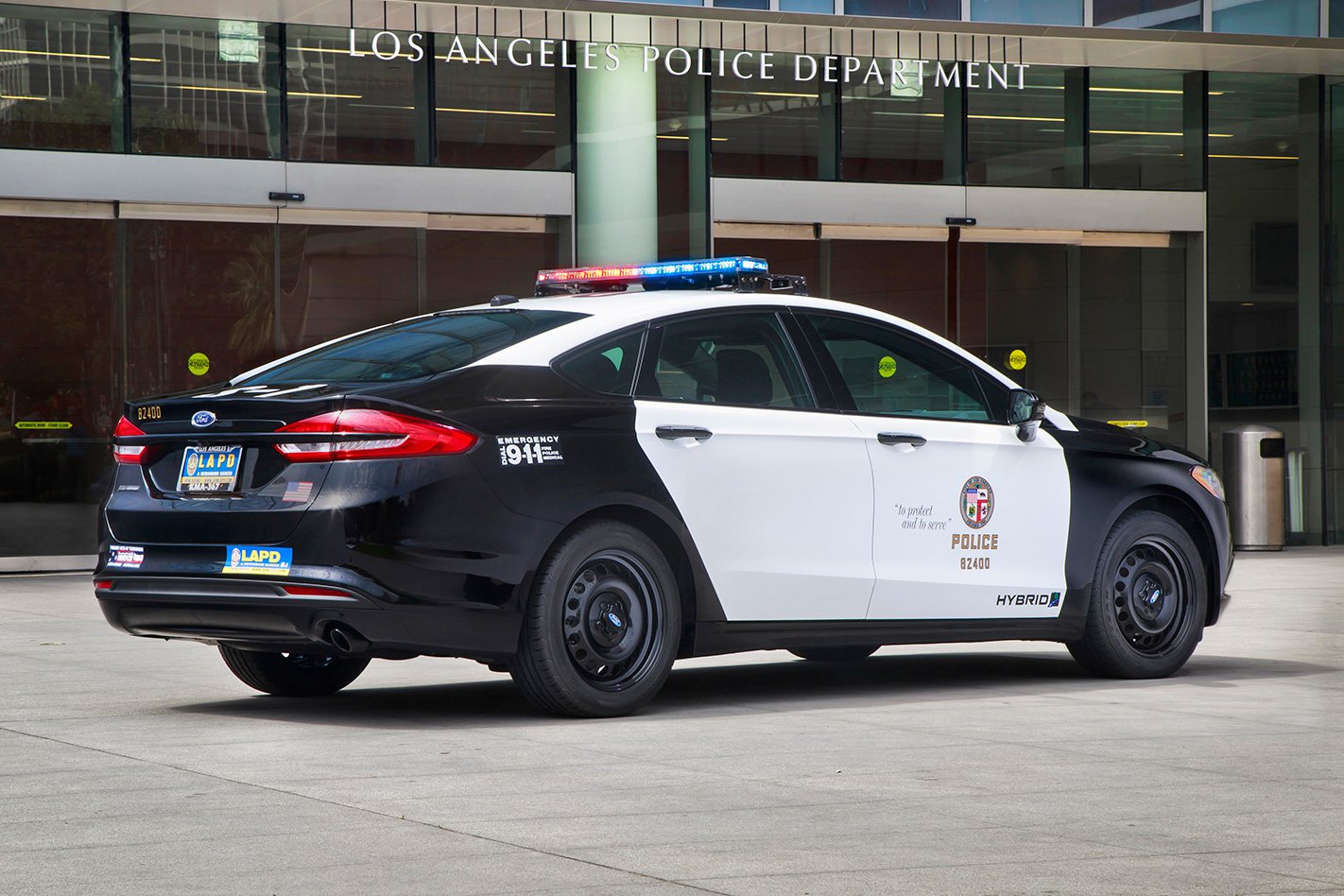
The black-and-white’s engine runs on the Atkinson cycle – the same fuel-sipping engine tune that’s used for the 2.5-litre four-pot fitted to the locally built Toyota Camry hybrid. However, while the thinking on engine tune is similar, the Ford’s fast hybrid will go one better than the Camry by using a more expensive, but lighter and more compact lithium-ion battery to power its electric motor rather than the cheaper, more bulky nickel metal hydride ones that Toyota favours.
Search for new police highway patrol cars begins
Making the hybrid system bulletproof in the Mondeo is important for Ford. It has flagged that the 2021 Mustang’s new hybrid system will deliver “V8 power and even more low-end torque” when it makes its way under the next-gen ’Stang’s bonnet.
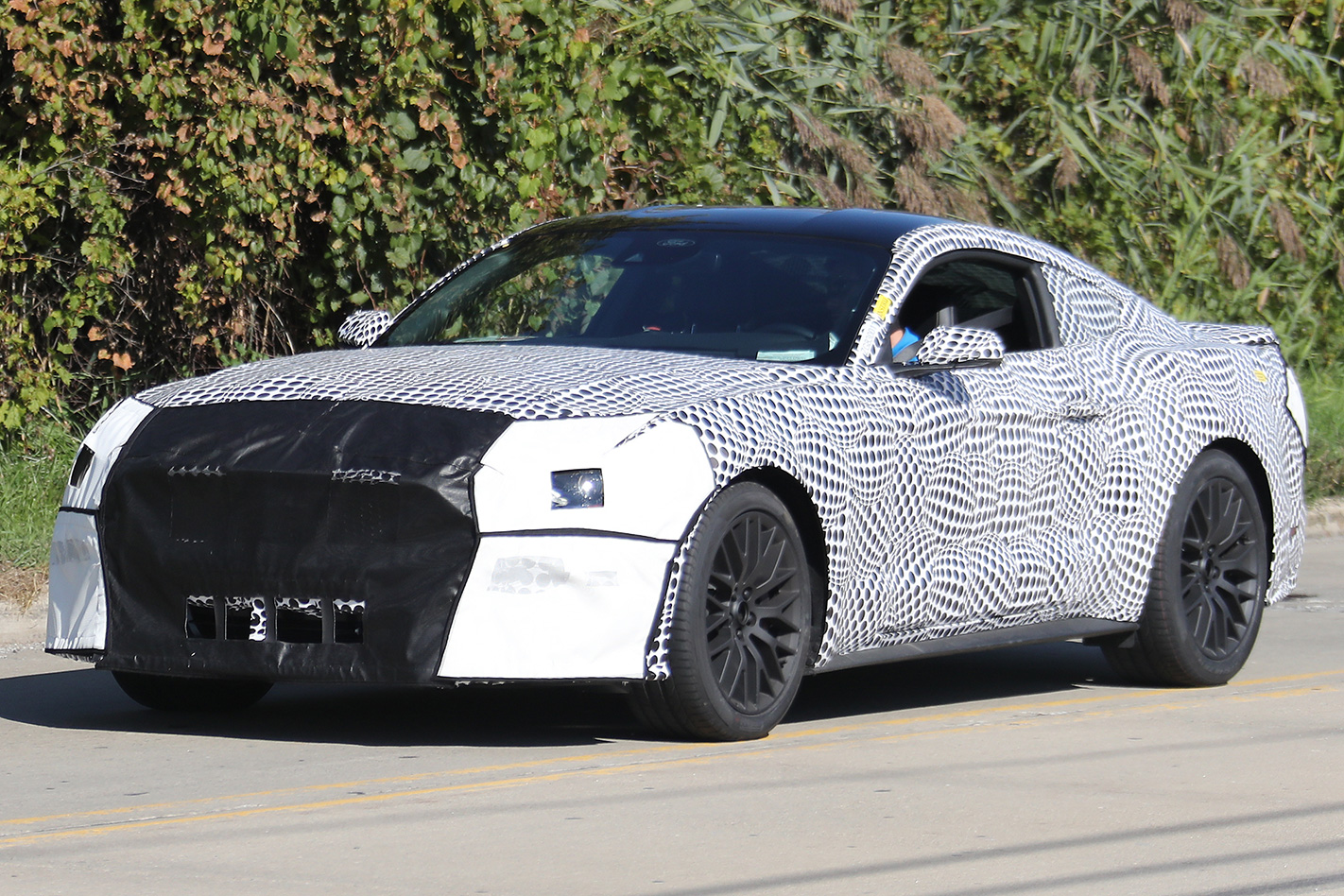
Ford’s hybrid tech is being developed in conjunction with German car components specialist Continental. This includes a new generation of hybrid systems for turbocharged cars.
According to Ford, it sells the most police vehicles in the US, so can save police forces on a significant chunk of their fuel bill each year.
The hybrid cop car is officially rated at about 6.2L/100km compared with the 13.0L/100km average of a 3.7-litre V6 version.
ASTON MARTIN’S first-ever SUV model is slowly revealing its final form, with the boutique British automaker releasing a teaser sketch of the DBX crossover’s profile.
Revealed at the handover ceremony of Aston’s new production facility, a former Royal Air Force super-hangar in St Athan, Wales (below), the DBX sketch indicates the Aston Martin SUV will boast a slightly more traditional profile than the DBX concept that was revealed at the 2015 Geneva Motor Show.
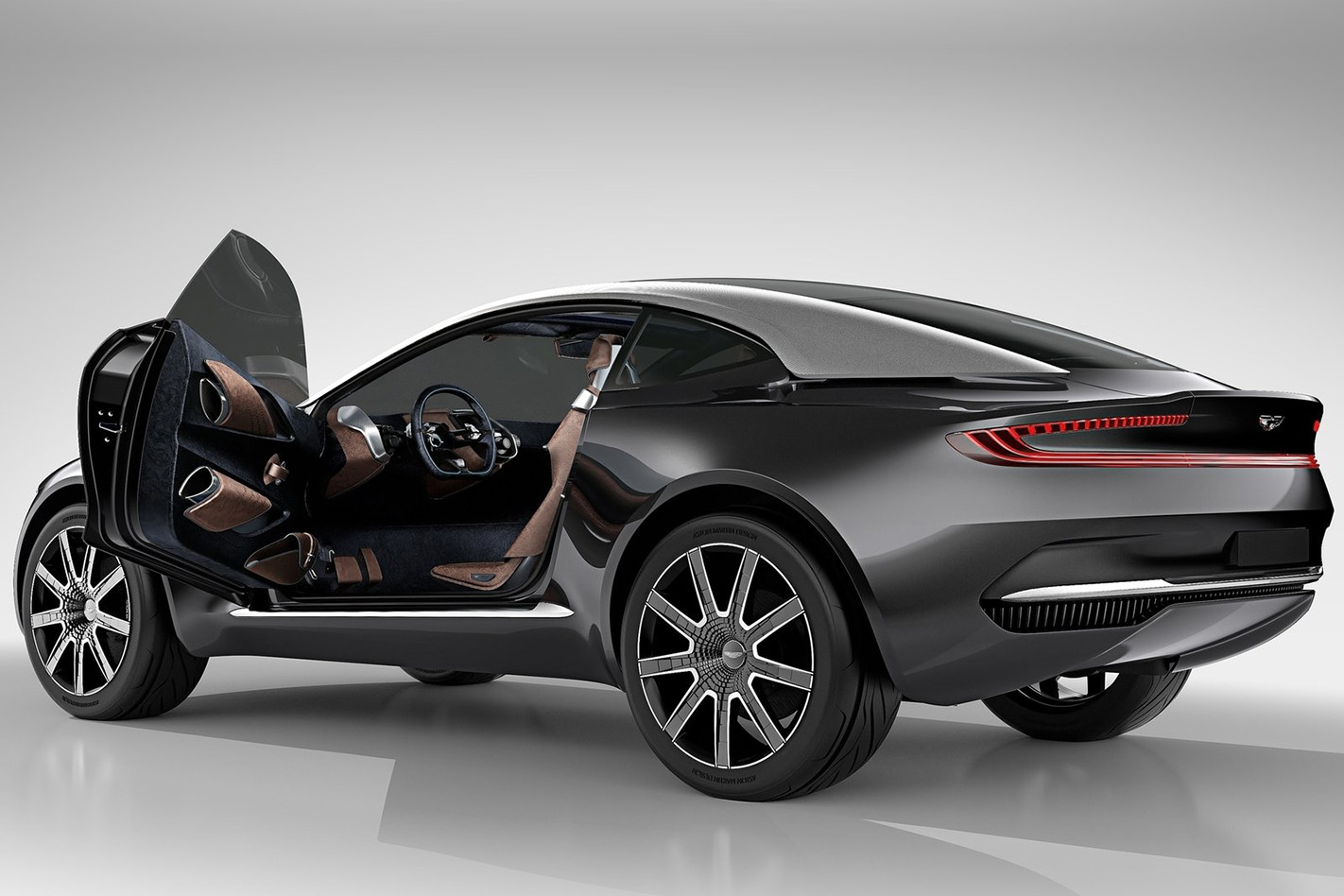
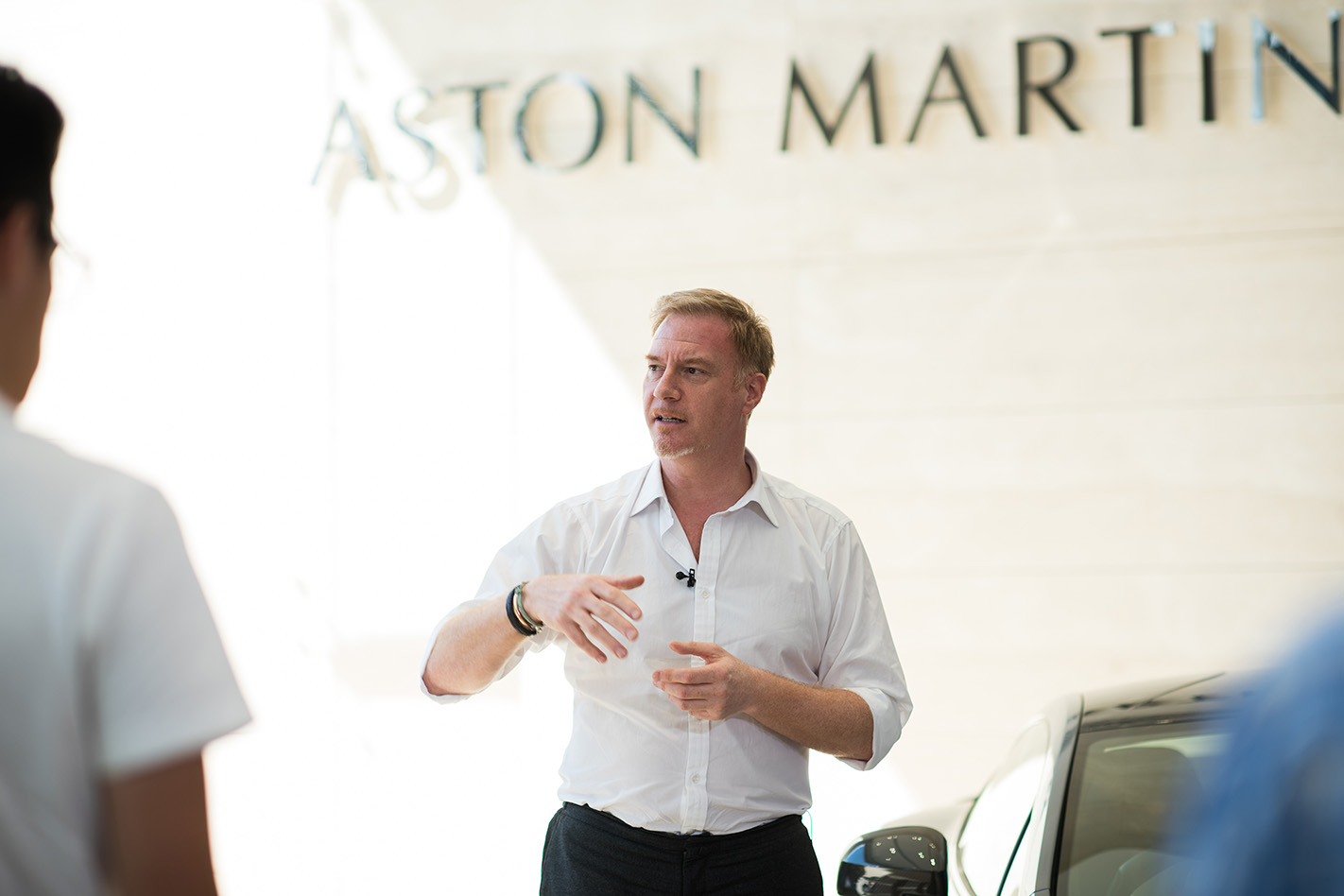
This teaser sketch, on the other hand, gives us a better idea of what to expect. Aston’s design chief Marek Reichman (below) told Wheels last month that the DBX will boast more interior space than a Porsche Cayenne and be built on an enlarged version of Aston’s aluminium chassis architecture, and promised that it would be “the world’s first beautiful SUV”.
Unlike the 2015 DBX Concept, this one will definitely have more than two doors.
As for what will power it, it wouldn’t be unreasonable to expect twin-turbo V12 and V8 options similar to the Aston Martin DB11, with a hybrid variant also within the realm of possibility. The current Rapide is set to transition to an all-electric powertrain in 2019 to cover that end of the luxury market, so a DBX EV may not be available from the get-go.
Watch this space.
If there’s one thing worse than the constant calls of ‘are we there yet’ from the back seats on a road trip it’s the words ‘I feel sick’.
Car sickness is nothing new, with stop-start traffic and winding roads afflicting at least 60 percent of us at some point, however it’s even more likely when children and teenagers choose to sit in the back seat with their heads down playing games or watching movies.
New research carried out by Ford, with the help of motion sickness experts, has found passengers who stared at screens for the duration of a short journey fell ill after an average of just 10 minutes.
The research is looking at ways to alleviate motion sickness in cars such as the location of screens and visual cues to help passengers, particularly young people who are most susceptible.
Initial testing found that when screens were mounted higher, and the road ahead could be seen on either side, volunteers were less likely to feel sick.
Further experiments will explore alternative ways that journeys could be displayed in the cabin so that passengers can be warned of stomach churning events, such as twisty roads or hump backed bridges.
“Car sickness can turn an eagerly awaited family trip into a nightmare, with mum and dad nervously looking over their shoulders and fearing the worse,” said Eike Schmidt, research engineer at the Ford Research and Innovation Center, in Aachen, Germany.
“Comfort is a huge focus for the way we design the cars of the future – and we want to do everything we can to reduce car sickness.”
But Prof. Dr. Jelte Bos, of TNO, Perceptual and Cognitive Systems in the Netherlands, who is working with Ford, said the easiest way to prevent passengers getting sick is to drive more smoothly.
“For many drivers who think their child has a problem with car sickness it might simply be that their child has a problem with their driving,” he said.
“Adopting a smoother driving style goes a long way towards reducing feelings of nausea – and it reduces fuel costs too.”
Here are some ways Prof. Bos suggests car sickness can be eased:
- Move to the middle in the back seats, or preferably the front, to see the road ahead.
- Drive smoothly and where possible avoid sudden braking, harsh acceleration, or potholes.
- Distract sufferers – even a family sing-a-long could help.
- Drink cola, eat ginger biscuits, but avoid coffee.
- Use a pillow or head support to keep your head as still as possible.
- Operate air-con to keep fresh air circulating.
The 2018 Dodge Challenger SRT Demon has been leaked in the above image, and will make 1023hp (763kW) in its most aggressive mode, if leaked specifications are accurate.
While unconfirmed until the Demon’s official release at the New York Motor Show on Wednesday, there’s enough substance behind the speculation to give it credence.
A YouTube video from NEO Auto references Facebook and Instagram posts by LX & Beyond Nationals and user TheDarkestRide respectively, claiming to have discovered three power modes which pump out 757hp (565kW), 815hp (608kW), and 1023hp (763kW).
Both posts state that for the third and most powerful mode to be initiated, three requirements must be met:
1. The Demon must be using 100 octane fuel or better
2. Crate PCM must be installed (purchased separately for approximately USD$3,000)
3. Drag Mode must be initiated, allowing higher RPM
And these rumours aren’t too far-fetched.
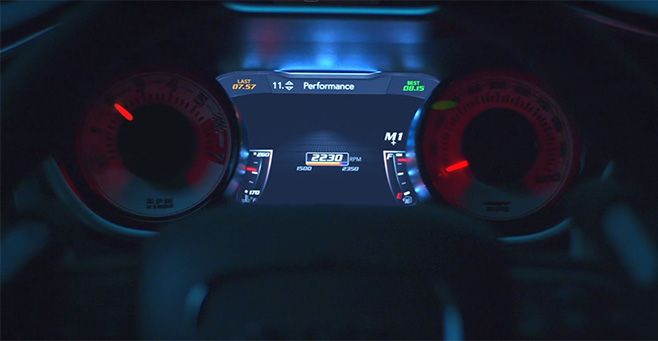
Additionally, the Demon’s younger brother Hellcat puts out a power figure of 527kW, not too far below the ‘low’ 565kW the Demon has in the first of its three modes.
And, as the above video points out, there are the coincidental numbers peppered throughout the official teasers.
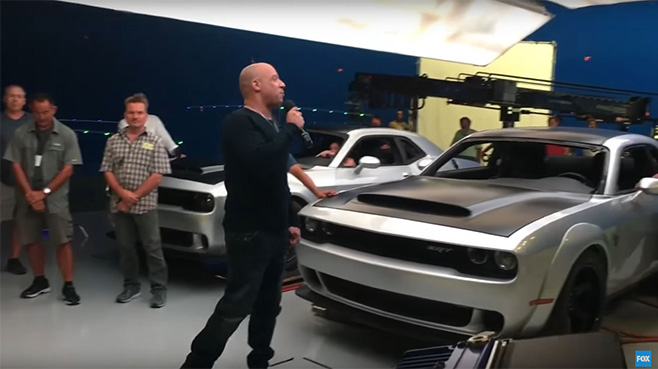
So, is it a real leak? Has Dodge deliberately given us these numbers to build hype? Or are we being led on a wild goose chase?
Keep in mind that FCA hasn’t even given us a whisper of the Demon’s power in any official capacity, beside the numbers appearing in the teasers.
Max Verstappen has once again proved he is a Harry Potter-like wizard behind the wheel of a racing car at the weekend’s Chinese Grand Prix.
His drive from 16th to third (see below) should be evidence enough, but one of his most remarkable moments went uncaptured by the race broadcast. A drying track forced every driver to swap to slicks when Antonio Giovinazzi’s accident brought out the safety car, however cold conditions meant retaining tyre temperature was a real struggle.
Aggressively lighting up the rears to build temperature, Verstappen’s RB13 snaps instantly sideways, demanding the teenager instantly apply full lock, which is no mean feat in the cramped confines of a Formula 1 car. Mercedes driver Valtteri Bottas threw away a possible podium when he lost control of his car during a similar manoeuvre shortly afterwards.
Verstappen’s save was reminiscent of an even more spectacular effort from last year’s sodden Brazilian Grand Prix (see below). In both circumstances there was an element of luck but Verstappen’s lightning-quick reactions and unbelievable feel for what his car is doing played an equally large role in him being able to continue unscathed.
The higher grip levels of this year’s F1 cars, combined with the massive torque of the 1.6-litre turbo hybrid power units, are making them extremely hard to catch when they spit sideways, with a number of drivers in both Australia (Ricciardo, Palmer) and China (Giovinazzi) being caught out by the rapid loss of adhesion.
Hopefully the season continues to offer action like that seen in the exciting Chinese race.
Toyota has introduced a limited edition variant to the middle of its LandCruiser 200 Series range that bridges the gap between the GLX and VX twin-turbo-diesel models.
Like the recently announced LandCruiser Prado Altitude, the LC200 Altitude is based on the GLX but features premium trim and equipment as found in higher-spec variants.
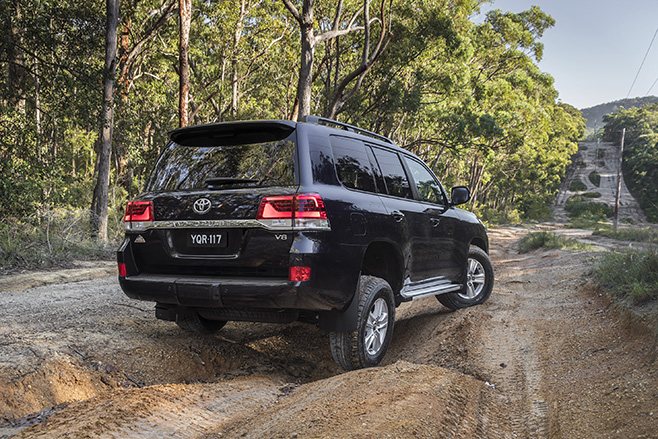
Just 600 will be available priced at $93,460, which represents a $4630 premium over the GXL.
For that money, you get leather-accented upholstery, power-adjusted front seats a handy refrigerated cool box and aesthetic touches including chrome-tipped front air vents.
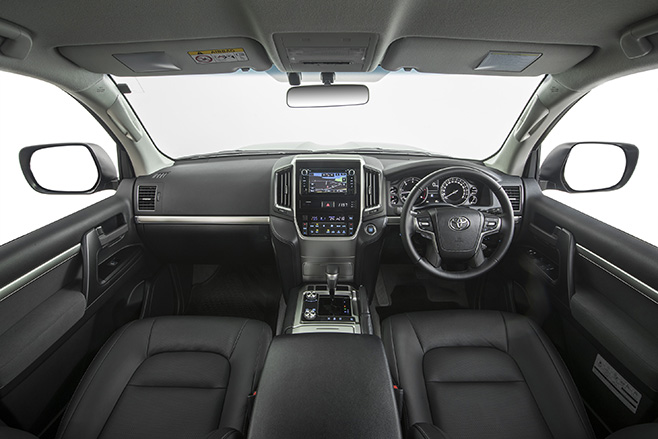
The dashboard gains high-quality LED Optitron meters (instrument backlighting) and a 4.2-inch multi-information display accessible through a new steering-wheel switch.
Externally, the Altitude special edition is distinguished by LED foglights, rain-sensing wipers and Altitude badging.
The eight-seat Altitude also comes equipped with GLX standard features including reversing camera, multi-terrain anti-skid brakes, hill-start assist control, trailer sway control, 17-inch alloy wheels, aluminium side steps, keyless “smart” entry and ignition, dual-zone climate-control air-conditioning, roof rails, a 6.1-inch touchscreen display and a six-speaker audio system that includes DAB+ radio.
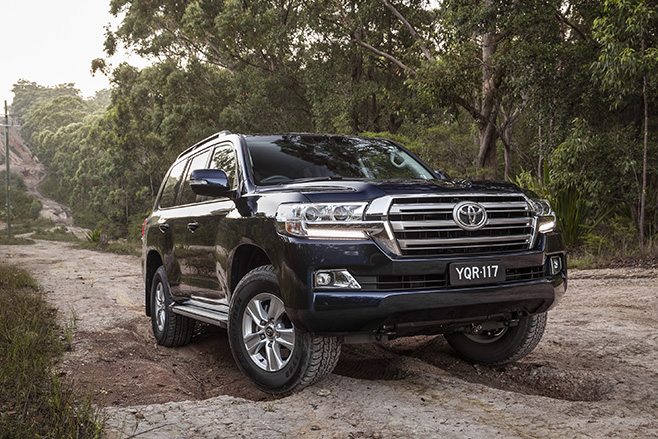
It’s powered by a 200kW/650Nm 4.5-litre twin-turbo diesel engine with six-speed automatic transmission as found across the range.
Five exterior colours are available – black (no extra cost) and premium white, silver, graphite and blue shades for an extra $550.
Remember the excitement of the first time your mum or dad threw you the keys to their car?
The thrill of driving something a bit flasher than normal mixed with the terror of having to explain yourself should anything go wrong. Now imagine you’re just 15 years old and that that car is a 447kW Citroen DS3 capable of hitting 100km/h in just two seconds.
Oh, and it’s a car your dad has won two world championships in, so it has a fair bit of sentimental value. This is not a normal scenario, but then the Solbergs aren’t your normal family.
Petter Solberg is the 2003 WRC champion and 2014-15 World RallyX champion, so it’s possibly not surprising that his son would be an early convert to motorsport. Oliver has acquitted himself well in Cross Kart competitions and will shortly make his debut in Norwegian RallyX.
To help get his eye in, Petter let Oliver loose in his Citroen DS3 supercar, which has now been retired with Solberg Snr switching to a factory-backed VW Polo for the 2017 season. Oliver seemed unperturbed, throwing the DS3 like a veteran.
Oliver Solberg is one of a number of Scandinavian child prodigies appearing on the rallying scene at the moment. Oliver’s cousin Oscar, son of Petter’s fellow WRC-driving brother Henning, is competing in the British Rally Championship this year, while 16-year-old whizkid Kalle Rovanpera, son of former WRC factory driver Harri, is being fast-tracked into the WRC, despite not currently being old enough to hold a civil driving licence.
BATHURST 1000 winners Chaz Mostert and John Bowe head a massive, and diverse, 66-car field for next weekend’s annual Bathurst Six-Hour production car enduro at Mount Panorama.
At the other end of the age and experience scale to Bowe in the 152-driver line-up is 15-year-old Tyson Harvey from Adelaide who, due to licensing requirements, won’t be able to take to Mount Panorama until he turns 16 on Easter Saturday.
Mostert, who won the race in a BMW last year with Nathan Morcom, returns with the same co-driver but a new car, a Ford Focus RS.
2016 HSV Clubsport R8 Track Edition to the Bathurst 1000
Tim Slade is the other full-time Supercar driver in the field, whilst David Wall, Karl Reindler and Jack Perkins represent those from endurance co-driver ranks.
Four Bathurst 12-Hour winners are lining up on Sunday – Bowe, Paul Morris, Rod Salmon and current Supercars driving standards officer Craig Baird.
Several teams have chosen the Mercedes-Benz A45 AMG in the belief it can take the fight to the BMWs and Mitsubishis that have dominated in recent times.
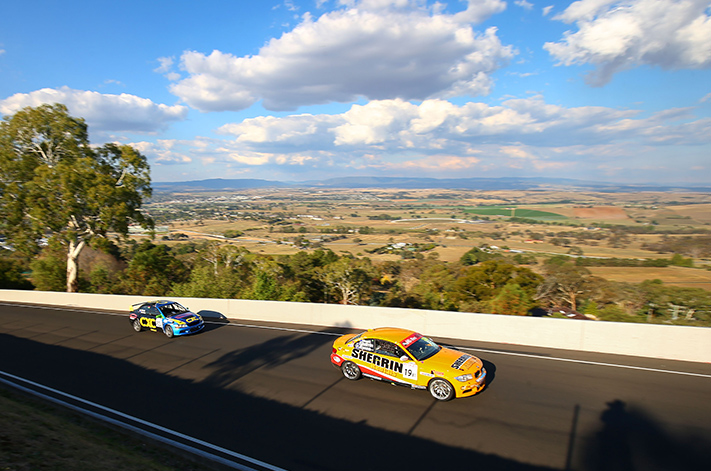
The 66-car field includes 35 different models of vehicle, representing 18 different brands.
BMW is the most popular marque with 13 entries representing different eight models, with Holden/HSV next with nine cars. Toyota, Ford and Mitsubishi each have eight starters.
Making the author feel a little old is the entry of David Callaghan in a Honda Integra. Callaghan, 21, is the grandson of Brian Callaghan, the bloke with which I made my Bathurst 1000 debut in an XD Falcon in 1981.
Archive: Godzilla Skyline GT-R at 1992 Bathurst 1000
Grandpa has prepped the Integra for the Six-Hour. “I swore I’d never go back to Bathurst and rip up 50 dollar bills again,” Brian told me. “But here I am.”
Ex speedway champ Brian Callaghan raced in 11 consecutive Bathurst 1000s until 1991.
The 2017 Hi-Tec Oils Bathurst Six-Hour starts at 11.30am on Sunday
The race will be streamed on the Bathurst Six-Hour website, which will also feature live timing and scoring throughout the weekend.
AUSTRALIA’S insatiable appetite for SUVs continues to grow beyond the significant milestone it chalked up in February, when high-riders and crossovers outsold passenger vehicles for the first time.
Driving demand for the growing number of jacked-up off- and soft-roaders are their compelling equation of easy entry and egress, large load capacity and enhanced view of the surroundings. But what if you want a boosted boot without compromising on the driving dynamics delivered by a high-performance car?
Here is our top-five mean wagon picks to serve as a reminder that you don’t have to give up your love of the open road just because you have to take a baby and a Labrador along for the ride.
BMW M5 Touring (E34 – 1995)
Long before BMW’s iconic M5 ultra sedan went from eight cylinders, to 10 and then back to eight again, the straight-six 24-valve version was offered in its final iteration with a 250kW 3.8-litre donk and as a more practical Touring model. It also introduced a six-speed manual gearbox.
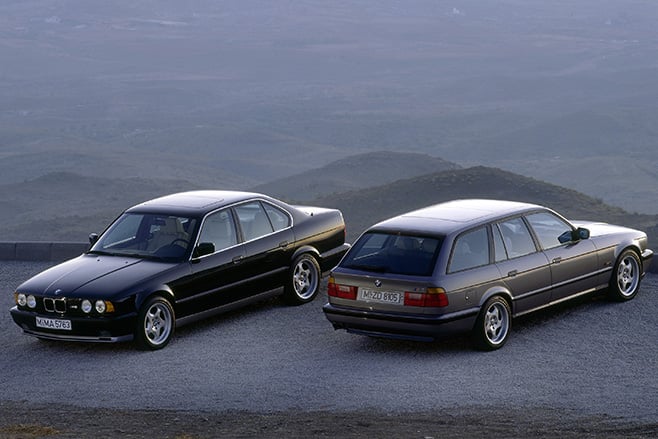
Speed was limited to 250km/h but the system was primitive by today’s technological standards and a simple process of disconnecting a cable under the bonnet allowed owners to explore the true autobahn potential.
Sadly, the Touring was never sold here.
Audi RS4 Avant (B5 – 2000)
Audi had already established itself as an authority in hot wagons with its S4 Avant, but when it launched a new A4-based Avant that dropped an R into the name and a twin-turbocharged 2.7-litre V6 under the bonnet, everyone else went home.

Unlike the four-cylinder turbo S4 of a couple of years prior, which was available in sedan and Avant wagon, Audi made the bold statement of only offering the RS4 in slick boot-boosted form. We like that.
Only 30 of the B5-based RS4 Avants were imported to Australia late in 2000; all were black and each was fitted with a six-speed manual gearbox.
Nissan Stagea 260RS (WC34 Series 1 – 1996)
The sledgehammer performance of Nissan’s 1990s-era R33 Skyline GT-R left the automotive world reeling when it launched, quite figuratively, into history. The hype was so focused that we hardly noticed that the Japanese carmaker had also wheeled out a more conservatively styled wagon that hid the same drivetrain under its more practical facade.

Take on a Stagea at the lights and you had better be able to crack 0-100km/h in 6.1s or better, lest the load-lugging Nissan give you a very red face.
It was never sold here.
Volvo 850 T-5R (2.5 20v – 1995)
Until the 850 came along, Volvo was regarded as a somewhat stuffy carmaker more concerned with saving the planet and safety than driving enjoyment and good looks. A T5-badged version of the boxy 850 changed all that.

When Volvo decided to take part in the British Touring Car Championships (BTCC) the wagon was chosen over its sedan sibling because the wagon body provided better aerodynamics. It was also a pleasure to watch an angular Volvo wearing wagon clothing hustle some serious competition.
HSV ClubSport R8 Tourer (E3 – 2010)
If you want maximum bang from an Australian-built wagon then you could dash down to your local HSV dealer. You’ll be slapping a cheque on the counter for a 30th Anniversary special edition of the Gen-F II ClubSport R8 Tourer with almost as much power as the flagship GTS. So why do we lean to the previous version?

You still get a mighty LS3 V8 under the bonnet, and 325kW to do whatever you like with, including one of the most impressive smoke screens available to the wonderful world of wagons.
