Alright, $20K might seem a few thou’ too many for a VT SS, but you might reconsider when you discover its first owner is none other than The Enforcer… and he’s made a few tweaks.
When it was relatively new in the late-’90s, MOTOR took a close look at Russell Ingall’s slightly customised VT SS. Now that the car has re-surfaced, we decided it deserved a bit of attention.
Back when he was driving with Larry (in a slightly faster VT), Russell picked himself up a shiny new road-going SS. It was probably about as close to his racecar as a road car could get. At least, it was once he was finished with it.
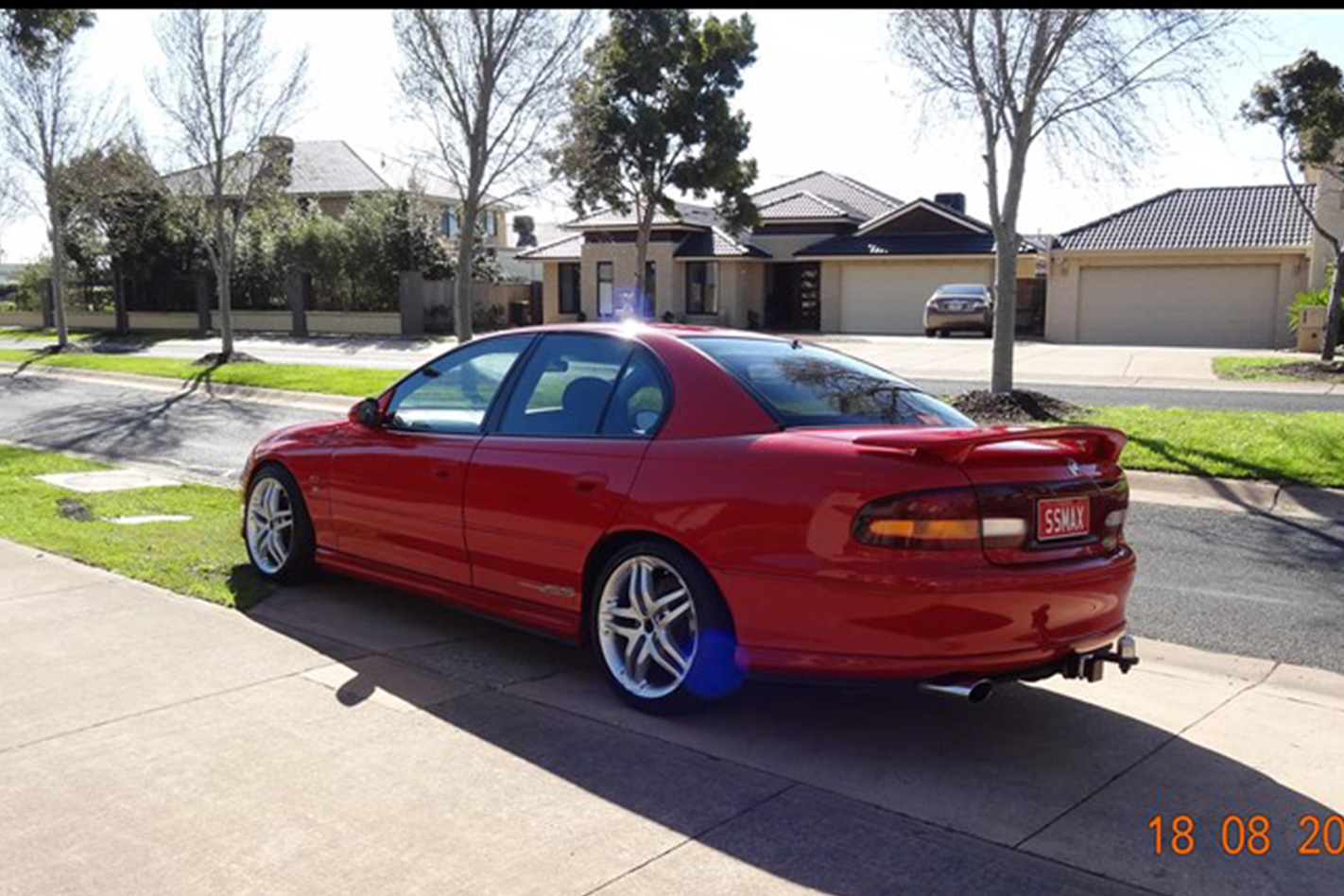
Among the changes the Enforcer originally made to his VT were a HM Header big bore exhaust, massive Harrop discs with six-piston AP callipers, slightly lower, variable rate King Springs, and some chip-fiddling.
The shocks remained stock because Holden’s original parts were up to the task, as Ingall told MOTOR in the ’90s, but Max has upgraded those to Pedders Gas Ryders, which he says has “improved the ride and phenomenal handling even more”.
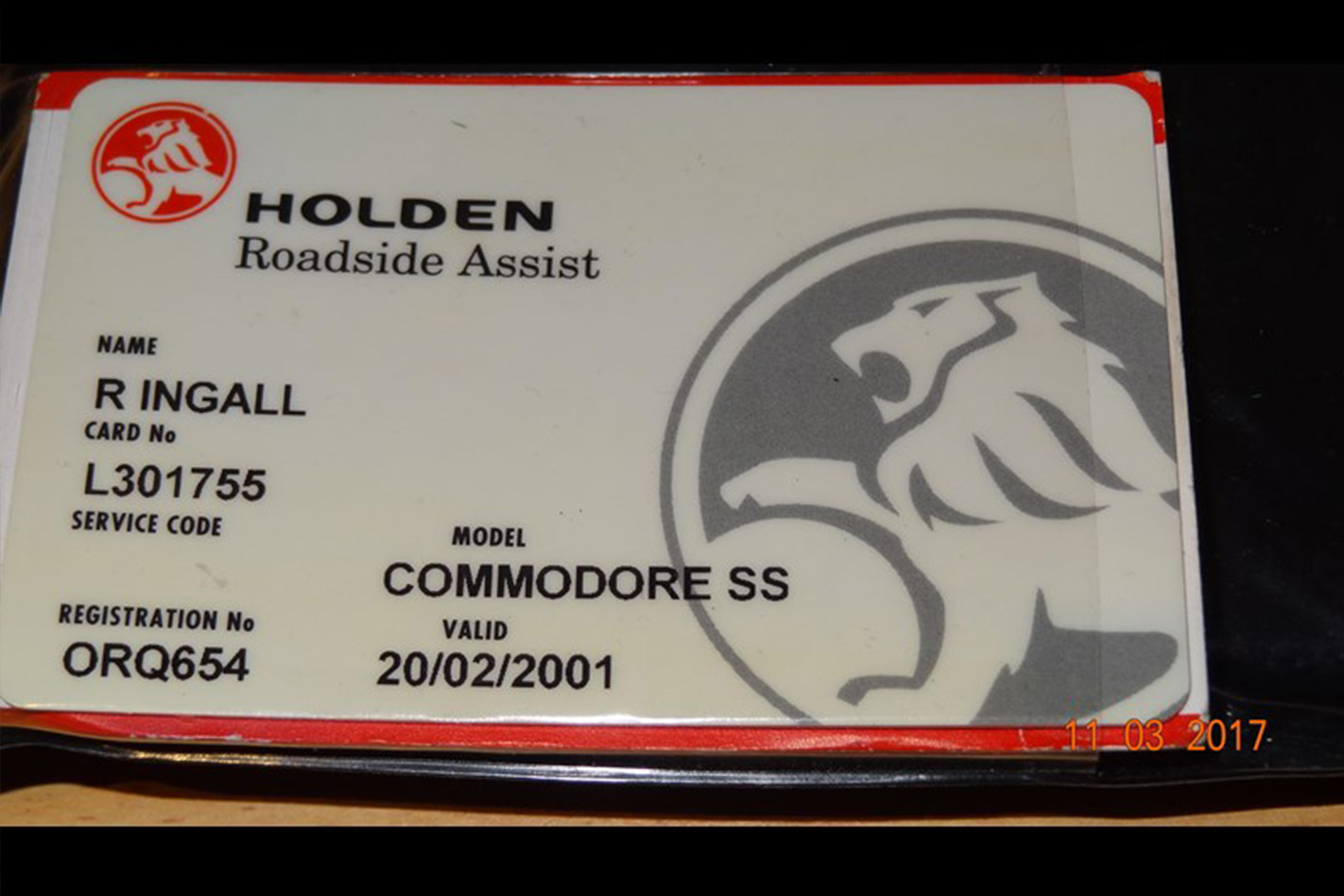
If you reckon you could give the Enforcer’s old girl a good home, you can see the original ad here.
In no particular order, the moments that have wowed us the most from Formula One’s time at the Australian Grand Prix.
Ralf Schumacher launches his own airline
Pictures of this shunt are some of the most iconic in Formula One. The first corner of the first lap of the 2002 Australian Grand Prix resulted in Ralf Schumacher (brother to legend Michael) ramming his Williams BMW into the rear of Rubens Barrichello’s Ferrari. The German was catapulted into the sky, sending carbon fibre flying. Eight cars were caught up in the melee, and the footage remains some of the most spectacular in modern F1 history.
Daniel Ricciardo gets disqualified
Daniel Ricciardo used the 2014 Australian Grand Prix to put the rest of the field on notice with his fierce tenacity and fighting spirit. Unfortunately, it won’t be remembered for that. Instead, the race still leaves a sour taste in the mouths of Aussie fans, with our home hero disqualified post-race for a fuel-flow issue after finishing an impressive second. It was Ricciardo’s first race with the senior Red Bull Racing team, replacing compatriot Mark Webber. The Honey Badger started on the front row after a mega qualifying performance in the wet, and fought through the race to finish behind Mercedes-Benz’s Nico Rosberg. Here’s hoping Ricciardo can repeat the feat, or better, this year – minus the disqualification.
Mark Webber stuns on debut
Australian Formula One drivers have had a mixed bag at our home grand prix. However, Mark Webber stunned the paddock with his debut on home soil. Racing for the mid-pack-at-best Minardi squad, the man who earned the nickname Aussie Grit survived the high-attrition race and a sustained attack from Mika Salo to claim a shocking fifth place. So impressive was Webbers effort that he was invited to the podium following the top three celebrations to celebrate in front of an adoring Melbourne crowd.
Ayrton Senna the qualifying master
Ayrton Senna was a master at qualifying, quickly earning a reputation for being fearsomely quick over a single flying lap. The Brazilian driver is viewed by many as the most talented racer to ever sit in a Formula One car. In 1986 he was only in his second grand prix season, driving for Lotus. Back then the Australian Grand Prix, held in Adelaide, was the season closer, and Senna once again displayed his immense talent by placing his Lotus on pole. Even more impressive is that he outclassed the faster Williams, McLaren and Ferrari cars by a huge margin. He bested Nigel Mansell in the Williams by seven-tenths of a second, and eventual race-winner Keke Rosberg by more than two seconds. Oh, and it was the first time he’d ever seen the track.
Pastor Maldonado bins it with two laps remaining
Oh, poor Pastor Maldonado. Possibly the most maligned driver in modern history. Mention his name, and most fans automatically think of his predilection for crashing. In the 2012 Australian Grand Prix the Venezuelan driver was hunting down Ferrari’s Fernando Alonso for fifth place, and catching fast. There were two laps remaining and Maldonado had a serious chance at a solid haul of points. Then it all went wrong, overcooking the exit of a turn for a DNF with a crumpled Williams.
AN ADELAIDE connected car specialist has won a $2 million South Australian government grant that will help it buy two self-driving cars it will train to drive in places other autonomous cars won’t.
Cohda Wireless, the company that is also developing car-to-car off-road convoy software for British mud-plugging specialists Land Rover, said today it would fit the cars with its Connected Autonomous Vehicle (CAV) software applications.
The technology will allow them to do something the current crop of self-driving cars fall flat on – the ability to drive themselves even after they’ve lost where they are in the world.
“We haven’t decided yet what cars we’re going to buy,” Cohda Wireless spokesman Paul Campese told Wheels. “We hope to make that decision in the next couple of months.”
“We’re going to be trying to get the cars into those hard-to-get-to places for autonomous cars,”
According to Campese, to date self-driving systems have relied heavily on GPS technology to work out where they are, and where they need to go.
However, they need to operate in GPS shadows, such as urban canyons and multi-storey car parks, where the sky is not visible. This is where Cohda, with technology that can piggyback off the mobile phone network, believes it can help.
Once modified, the Cohda cars will be able to paint a 360-degree picture of what’s around the vehicle that they can then use to work out where they can, and can’t drive.
“We want to rely less on the things that are holding back autonomous vehicles, basically those based on cameras, radars and lidars – the ones that rely on line-of-sight,” he said.
This will become even more important once autonomous vehicles stop using steering wheels, meaning there would be no way for passengers to take back control if a vehicle could not work out where it needed to go, Campese said.
South Australia is pushing to become Australia’s autonomous car development hub. Last year it held Australia’s first self-driving car trial, and has already changed its road rules to allow limited testing of self-driving cars to take place.
Cohda Wireless is not alone in its ambition to have a self-driving car on Australian roads. Automotive electronics specialist Bosch Australia has a heavily modified Tesla Model S it is using to test self-driving capabilities in Victoria, while Mercedes-Benz is about to start trials of a highly autonomous E-Class in the state.
The facelifted Toyota Yaris has arrived in Australia with sharp new looks and advanced safety features.
The advanced safety package, which includes pre-collision system with autonomous emergency braking, lane departure alert and automatic high beam, is a $650 option in the entry-level Ascent and SX models, while coming standard in the range-topping ZR, whose price has increased accordingly.
Prices are otherwise unchanged for the Ascent and SX manuals, though upgrading to the four-speed automatic transmission will now cost $1530, up from $1200.
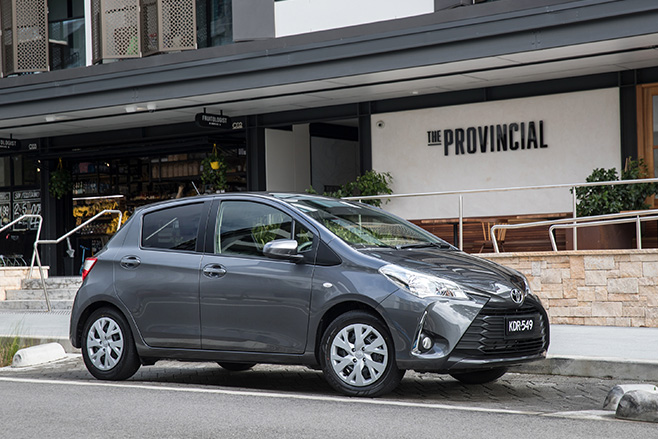
As well as the new tech, the 2017 Toyota Yaris also comes with new exterior styling, with significant changes to the front and rear and a greater emphasis on horizontal lines to express a wider stance.
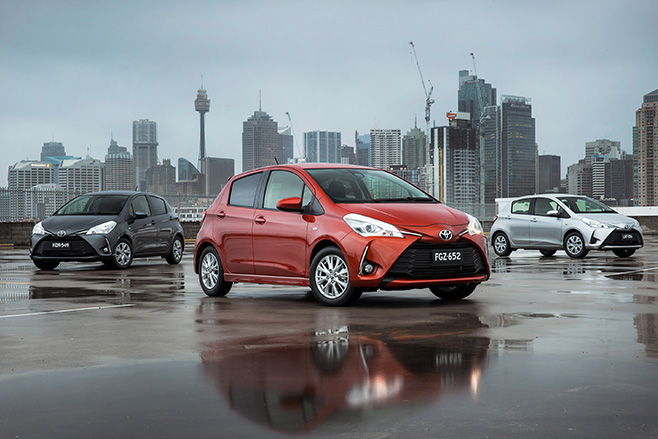
The revised front end follows latest Toyota design language and creates a “catamaran” shape with broad sections flowing down from new headlamp and fog light units, flanking the wide, more aggressive-looking trapezoid grille.
A new lower door moulding adds a sportier look, complemented by newly designed wheels – 15-inch steel with a silver cover for Ascent and SX and new 16-inch alloy with a silver-metallic finish on ZR.
At the rear, the new tailgate design emphasises width with redesigned light clusters that extend from the wings onto the tailgate.
A new colour, Azure Blue, has been added to the 10-colour range, replacing Aura, a lighter blue.
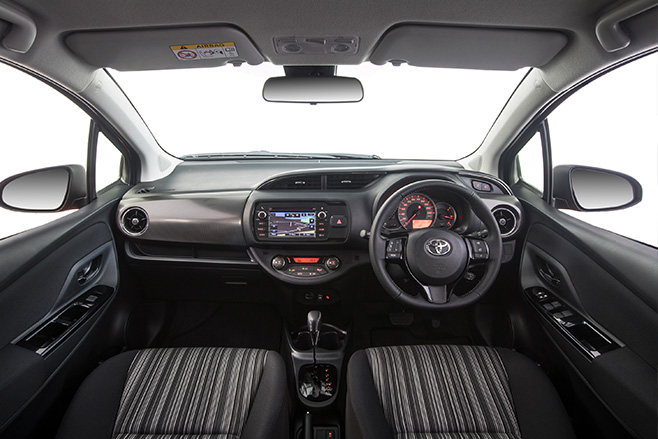
Inside, the cabin has been refreshed with silver finishes replaced by more modern gloss black inserts on the steering wheel, audio unit surround and around the gear-knob base.
Engine options remain the same, with a 1.3-litre four-cylinder engine in Ascent grade or a 1.5-litre engine for SX and ZR, though they now meet Euro 5 emission standards.
New Yaris hatches are all equipped cruise control, reversing camera, a display audio system with controls on the steering wheel spokes, a multi-information display, air-conditioning, electric power steering, power windows and mirrors and a 12-volt accessory socket.
SX variants, in addition to the bigger engine, come with front fog lamps, rear and rear side privacy glass, and a premium steering wheel and gear-shifter.
Premium features fitted to ZR variants include automatic climate control for the air-conditioning, satellite navigation, Toyota Link connected mobility, a rear spoiler and auto-levelling headlamps, and the new pre-collision safety system, lane departure alert and automatic high beam.
2017 Toyota Yaris pricing
- Ascent manual $15,290
- Ascent auto $16,820
- SX manual $17,330
- SX auto $18,860
- ZR (auto only, safety pack included) $22,470
- Safety package (Ascent and SX only) $650
- Premium paint $450
For most of us, spending hours stuck in traffic is as painful as watching grass grow, and until autonomous cars come in to full effect and we can sit comfortably in lounge-like seat, catching up on emails while being robotically chauffeured to our destination, traffic will remain a monotonous part of daily life.
It’s for that reason we were pretty excited to see this reinvention of the Jeep Grand Cherokee.
Watching the video above, the Jeep, called the Hum Rider, has been modified to widen its wheelbase while raising the body above traffic and drive straight over other cars stuck in gridlock.
No need to go all “Marge Simpson in a Canyonero”.
The Hum River has 300 feet of hydraulic lines, powering the steering and braking, mated with a gas Honda generator which produced the electricity needed to power the hydraulic pumps which push the Jeep nine feet above the ground.
Truck tyres are fitted to the bottom of the stilts that carry the 3855kg Jeep (the standard Grand Cherokee weights 2191kg).
It clears any standard car’s roof and sides, and is fitted with cameras, which send vision to a video screen inside the car to ensure its clearance and avoid damaging other cars.
| Want more? Check out our 2017 Jeep Cherokee Review
The video shows a driver pulling up to traffic, simply pressing a button on the dash and driving straight over other cars to the front of the line, with a visibly confused looking public.
We should point out that sadly, this concept car is purely a marketing stunt created by Thinkmodo.
But still, we think it’s a brilliant idea and would take this traffic-avoidance method over a robot-controlled car, any day.
| What a Jeep Grand Cherokee taught me about stereotypes
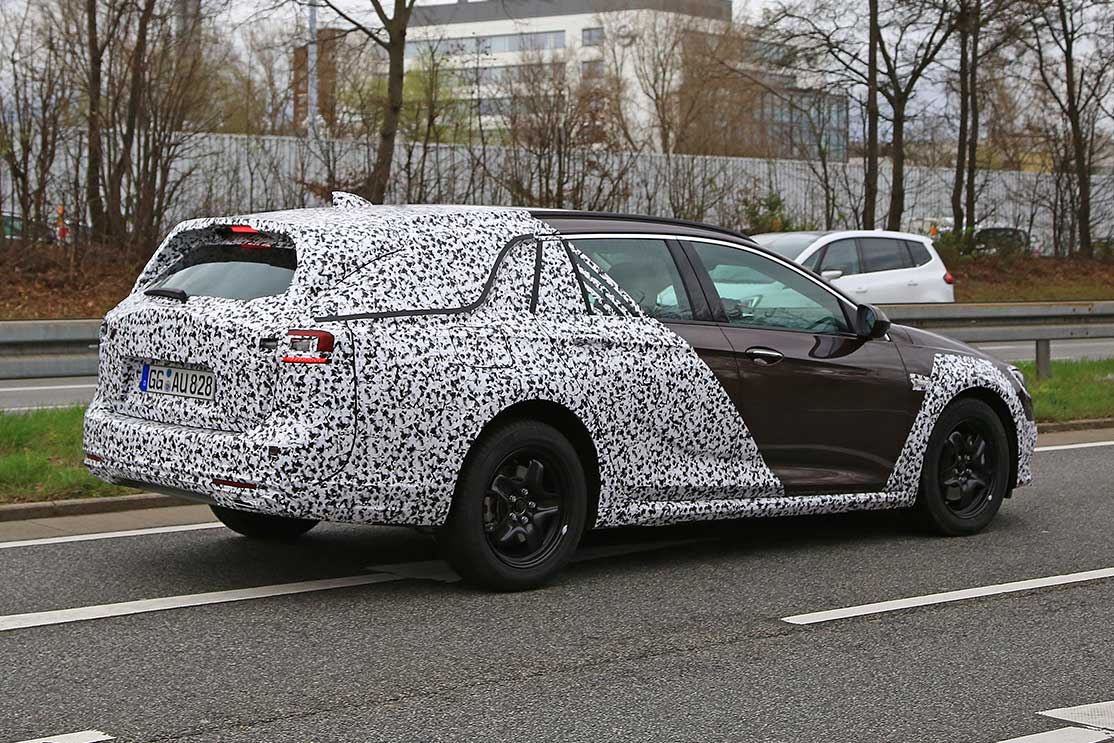
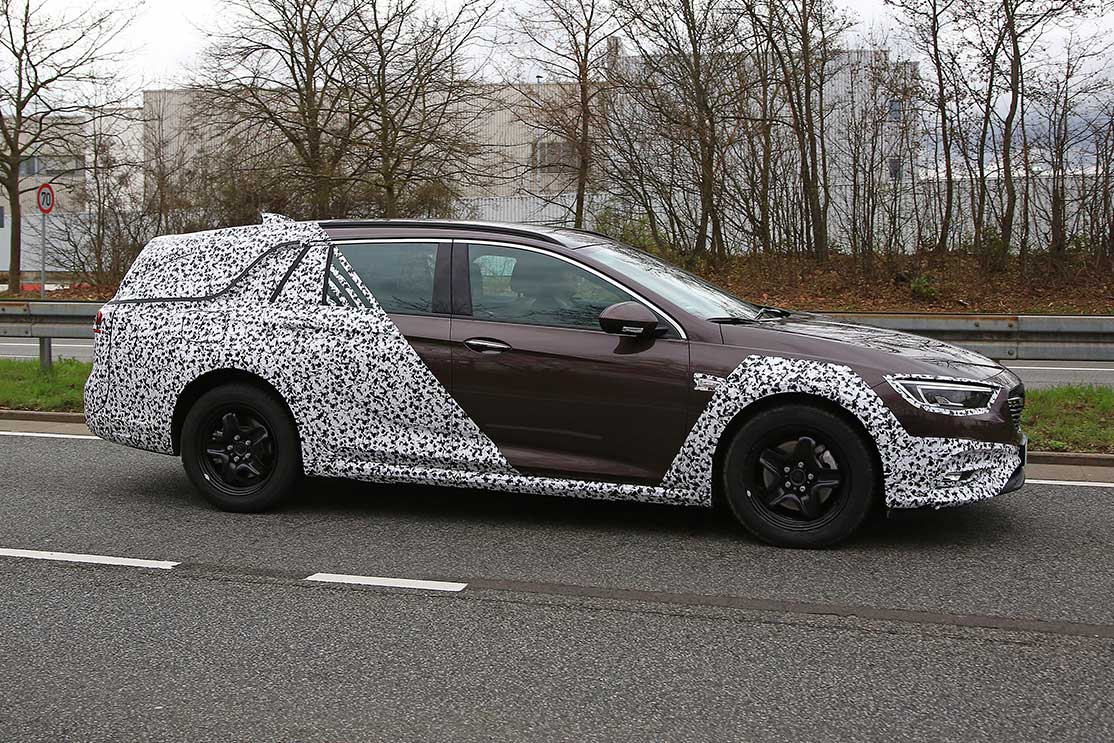
A prototype of the car likely to become a jacked-up soft-roader version of the 2018 Commodore Sportwagon has been spotted testing in Germany.
The 2018 Insignia Country Tourer is essentially an outdoorsy sibling of the Sportwagon (called Sports Tourer in the UK and Europe) but with enhanced ride height, bigger wheels and an accessory pack to give it a more rugged off-road going appearance.
While Holden hasn’t formally announced it will be part of the NG Commodore lineup, a spokesman told WhichCar the company is “taking an extremely close look at” it.
While such wagons are pretty common in Europe it will be the first time Holden has dabbled with the concept since the Holden Adventra, based on the VYII-VZ Commodore wagon between 2003 and 2006.
The Adventra, rushed into the Holden line-up in the face of the then fledgling SUV market, wasn’t exactly a success. Despite having AWD it wasn’t treated seriously by a public and the 5.7-litre V8 engine combined with the all-paw drivetrain had a thirst beyond 15L/100km that made the SS Commodore look like a teetotaller.
But a lot has changed in the decade-and-half since, with the SUV boom giving rise to crossover wagons such as the Subaru Outback, Audi A4 Allroad, Volvo V60 Cross Country, Skoda Superb 4×4 and current model Opel Country Tourer that provide an excellent compromise in terms of practicality and handling.
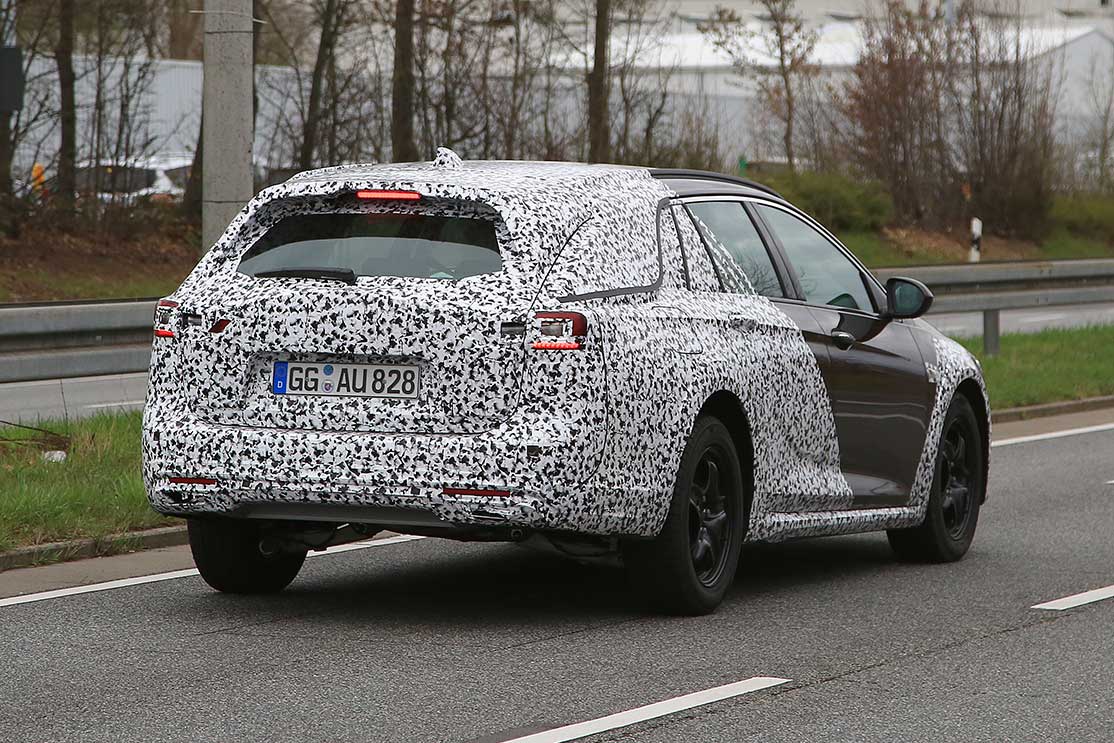
The 2018 Country Tourer will be far superior to the Adventra in terms of performance and fuel economy.
Powered by 3.6-litre engine, its handling in the rough stuff will be assisted bv the ‘Twinster’ all-wheel-drive system, which is primarily front-wheel drive but uses a pair of clutches to constantly control and distribute wheel torque and speed to the rear when needed.
It’s more efficient than all-wheel-drive systems which use a rear differential and uses far less fuel than permanent all-paw drive-trains.
THE Honda Civic Type R could slip in at less than $50,000 when it arrives in Australia late this year, taking the fight to the likes of the Ford Focus RS and the Volkswagen Golf R.
The hot hatch was officially revealed in Australia today by Honda-McLaren F1 pilot Stoffel Vandoorne ahead of this weekend’s season opener, the Australian Grand Prix. It’s the first time the Type R has been seen in open daylight after its reveal at this month’s Geneva Motor Show.
The big news, though, is that instead of waiting until next year for the 235kW/400Nm turbo 2.0-litre to arrive, it will slip in just before Christmas, and be priced to sell.
“With Civic Type R, we’re trying to make it very competitive in that hot hatch segment, and honestly it needs to be around the $50K mark,” Honda Australia director Stephen Collins told Wheels. “Hopefully it’s starting with a ‘4’, but that’s yet to be determined.”
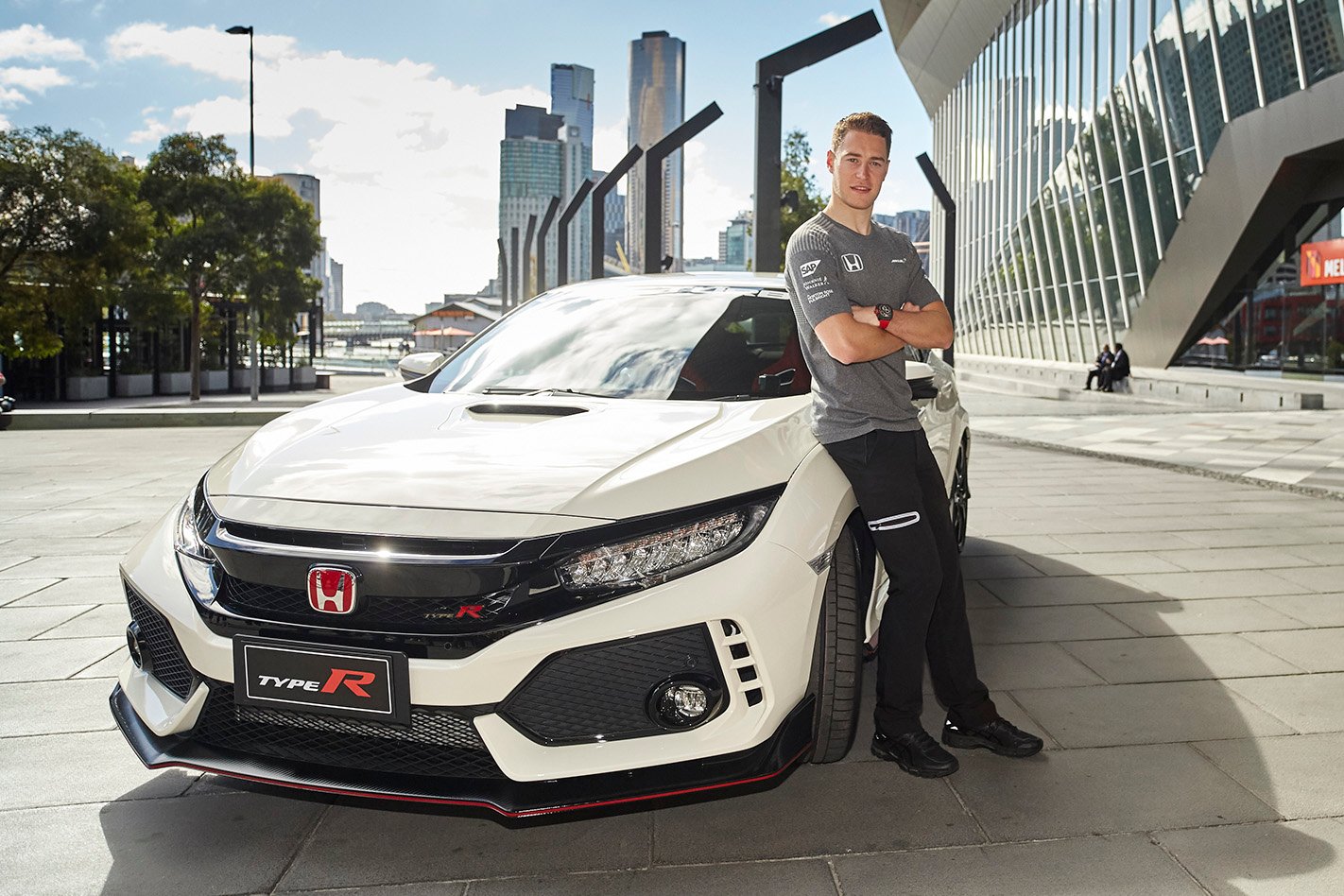
However, while a sub-$50,000 price tag will help the front-drive, six-speed manual Type R against its slightly more expensive, $50K-plus all-wheel-drive Ford and VW rivals, Collins has warned that supply of the Civic Type R may be tight to start with.
“They [supplies] will be tight,” he said. “It’s quite a select sort of market, so we’re still yet to land on a figure. So I do think it will be tight supply.
“We also want it to be a model that you see on the road, so I think we’re wanting pretty good numbers.”
The previous-generation Civic Type R won over about 2000 buyers over its four-year run to 2011.
Collins said Honda Australia would take a single version of the Type R. “We wanted it to be the full package, and we think that we’re basically going to bring the one spec, the top spec, with the top performance.”
A version of the Type R sold in Europe comes with an extra GT badge for some markets, denoting a more richly equipped version of the five-door hatch.
If that translates directly, that means Aussie-delivered cars are likely to come equipped with sat-nav, eight-speaker audio, dual-zone climate control, alloy pedals, front and rear parking sensors hooked up to a reversing camera, red ambient interior lighting and safety add-ons including blind spot and front collision warning, and even the ability to recognise traffic signs.
But passenger cars are slowly losing favour with buyers – last month, sales of the high-riding hatches and wagons outstripped those for traditional passenger cars. So what does Honda make of the success of SUVs in Australia and the likelihood of the red Honda badge appearing on a vehicle in one of the fastest growing new car segments any time soon.
“If something was to become available, I’ve said before many times whatever we can do in terms of more sportiness in our range we will try and do that,” Collins said. “But there’s currently no plan to do that.
“[There’s been no talks with Honda] about Type R SUVs. There have been some discussions about dialling up the sportiness of the brand; that’s the main discussion we have with the factory,” he said.
Ever seen Russell ‘The Enforcer’ Ingall at the race track when his car is handling badly? You don’t want to, it’s not a pretty sight. He’s like Dirty Harry with a migraine.
This article was originally published in the November 1999 issue of MOTOR.
And before you waltz into his garage and say “How’s it going Rusty?” it’s always better to ask yourself this question: “Is he on the front row, or back in the pack?” If he’s mid-grid (hey, it happens) you’re dust, punk.
Want to buy The Enforcer’s SS? Find out more here!
The Enforcer’s fame and fortune are based on his ability to extract maximum performance from his Castrol Perkins Racing VT. That means the fine art of fine tuning a 600hp, 1350kg projectile to go fast – 300km/h fast.
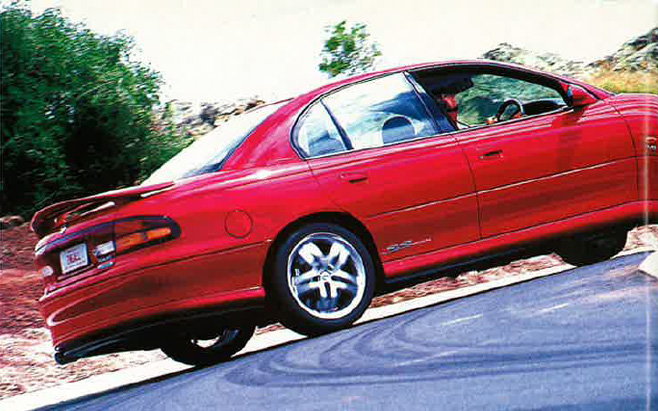
Any wonder when he picked up his shiny new VT SS road car he instinctively noticed shortcomings in its suspension, braking and engine performance. The stock VT’s limits might be far higher than Joe Average’s but they barely begin to tax Ingall’s skill. Enter the Enforcer VT, his version of Holden’s budget blaster.
“The stocker wasn’t fast enough!” he laughs. “You jump out of a touring car to drive home at night and, no offence to the SS, you feel the difference. I drive home in my VT and feel like I’m in the ‘office’.”
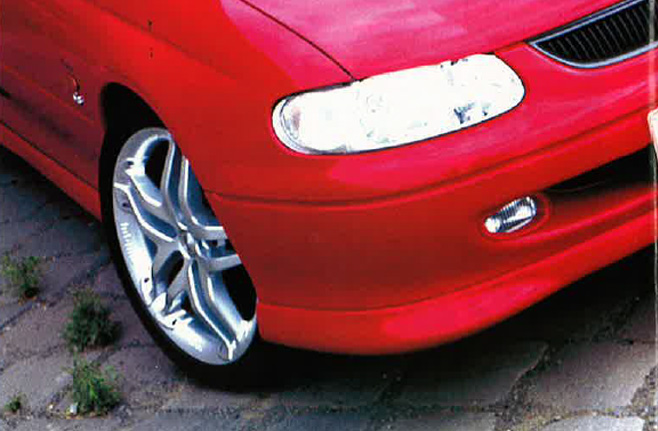
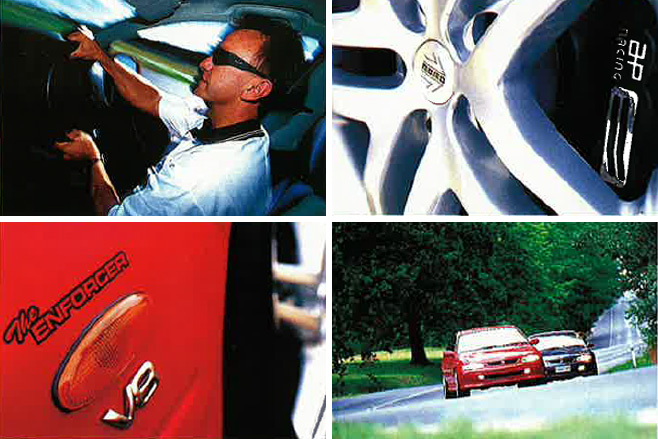
When it comes to active safety, the most fundamental component is brakes and here lngall did not compromise. A peek through the massive 18 x 8.5-inch Momo rims reveals stoppers almost identical to those on his race car.
Pizza tray-sized Harrop Engineering discs (14-inch fronts, 13.5-inch rears), on specially machined Harrop hubs are vice-gripped by six piston AP callipers (four piston rears). With the fat contact patch provided by grippy 235 x 40 Dunlop W10s, the braking is breathtaking – literally. With such huge rear rotors, Ingall knew there would be too much braking at the rear and fitted an under bonnet bias adjuster.
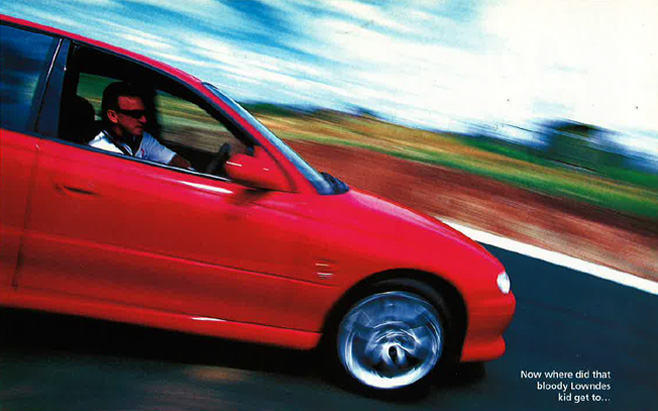
The Enforcer VT had barely turned a lap in anger when we strapped the Correvit on at Calder Park to compare it with a standard issue SS, and Ingall had not dialled in the right amount of bias. As a result his first full-blooded stop resulted in rear wheel lockup and cloud of blue smoke.
A fiddle with the bias knob and presto! the optimum balance between front and rear. His best stop sans ABS was 40 metres. Reactivating the anti-lockers cut that distance to 35. ABS is a must for Joe Average, says Ingall, who found fade after only two hard stops in the standard SS very unpleasant.
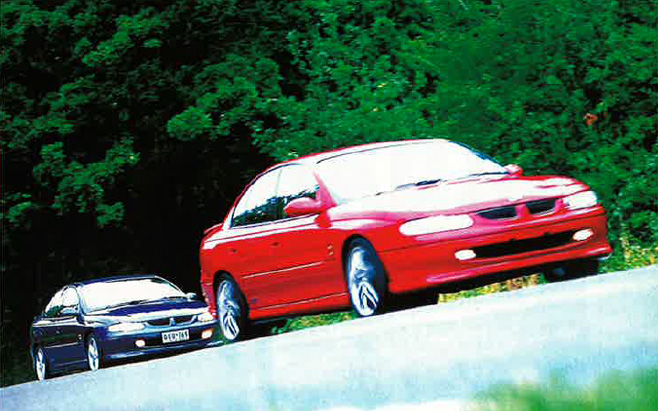
The Enforcer VT is lowered 42mm at the front and 30mm at the rear and retains some rake. That was deliberate, rake helps combat understeer.
“The rear of any car, including a race car, rolls more than the front, so you’ve got to jack it up and that gives you more steering, it puts more weight on the front. So I’ve kept a fair amount of rake and it makes the car very well balanced.”
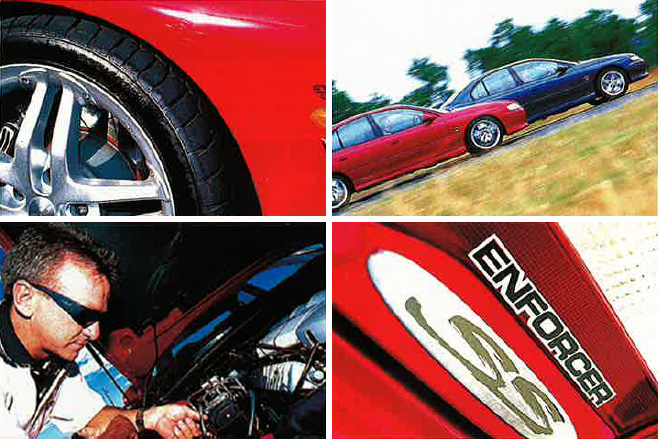
“Normally, when you put heavier springs in the shocks bounce a lot, because they can’t control the spring. But the standard shocks are pretty good and have fairly heavy damping. It’s a cost thing, too. If it doesn’t need $800-1000 worth of shocks why put them in?” The right spring rates are the key to good handling, Ingall reckons.
“These King Springs are progressive rate, they don’t hinder the ride too much because they are soft initially then go hard. As you lean into a corner the spring rate goes up and holds the car up. The balance is really nice. You can throw it into the corner and get the tail out if you want, or get all four tyres sliding and just use the power to steer it through. It’s very controllable. I nearly speared off at turn one in the stocker. There’s a massive difference.”
“Rear traction is easy to get, the front is harder. Because the SS has so much weight over the front, if you push it hard it will understeer. “This off-set kit is worth its weight in gold. I still run more neg, about one degree more on the rear than specified with standard toe-in and it’s perfect.”
The off-set of the Momos (which increase track 15 mm) and stiff sidewalls of the Dunlops also help stability and turn in. “But expensive tyres won’t help if the car is rolling around and the suspension is not controlled,” Ingall cautions.
“I relate it to a race car: you can have the grippiest tyres in the world, but if the car is not handling properly, you can’t make use of it. Unfortunately you compromise a little bit on ride.”
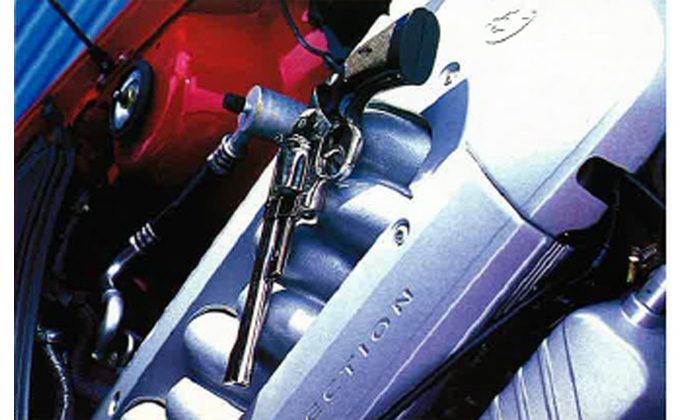
“The stock exhaust is really strangled,” lngall said. “Initially I put a set of headers on first – a lot get trapped into this- and it didn’t make a scrap of difference. “But as soon as I put on HM Header’s full VT system there was a big change, mainly at the top of the rev range.
“Standard, the engine runs out of puff around 4000rpm, but mine will rev right through to 6500 pretty comfortably and get a damn sight better fuel economy. It makes 13kW more at the rear wheels.”
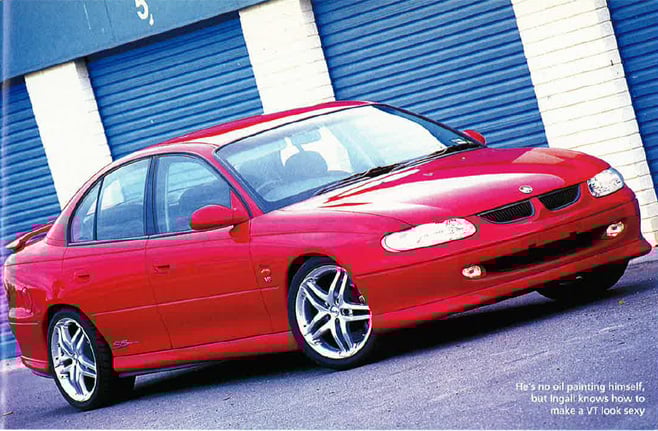
“Most people don’t need a lot more power, but you can use braking and handling and I’ve arrowed in on these aspects.” It’s hard to separate lngall the racer from lngall the road user, but he applied the same principles he uses at the track to his Enforcer VT and came up with an ideal car.
“Because Holden has done such a good job styling the VT SS, with the right wheels, good suspension, better brakes and a bit more grunt, you can build a bloody good car. I did.” And you don’t argue with The Enforcer, do ya punk.
NOT content to sit on its laurels and let the world admire its new 720S revealed at the Geneva Motor Show, McLaren has also released a teaser rendering of its next hypercar.
Codenamed BP23 and due to hit the streets in 2019, the new super-sports is the logical successor to the P1 and F1 before it.
Its development is the responsibility of McLaren Special Operations division that sits above the normal road car operation and produces what the company calls its Ultimate Series product family.
The BP23 tag refers to it being McLaren’s second bespoke project, and like its F1 predecessor has a 2+1 seating arrangement.
Also like the F1, only 106 will be made and all are already sold.
The latest drawing doesn’t give away a whole lot, other than to show a right rear-quarter view with a sloping tail and not the usual blunt rear end of a mid-engined supercar.
That’s possibly a clue to the BP23’s intended function that is as much to be a high-speed grand tourer and not a track-day special. McLaren in fact refer to it as it “luxurious new addition”.
That’s not to say the BP23 in production guise is likely to be slow, with McLaren touting it as being “the most powerful and aerodynamic road-going McLaren ever.”
The company is developing a new platform to take the hybrid drivetrain, the petrol-powered component of which looks set to be a version of the 720S’s 4.0-litre twin-turbo V8.
Given the P1 produced a whopping 674kW from its hybrid system and its successor will be more powerful, there’s every chance its 0-100km/h time of 2.8 seconds will be eclipsed.
Whether McLaren will exploit its new baby’s claimed aerodynamic efficiency and remove the P1’s 350km/h speed limiter remains to be seen.
A power package is now available across the Porsche 911 Carrera S and 4S range, endowing its 3.0-litre six-cylinder engine with a larger pair of turbos for a 22kW boost.
Timed to coincide with Model Year 2018 (MY18) updates across the Porsche range, the $24,580 Carrera S power pack takes power from 309kW to 331kW – now matching the Carrera GTS – while torque remains at 500Nm.
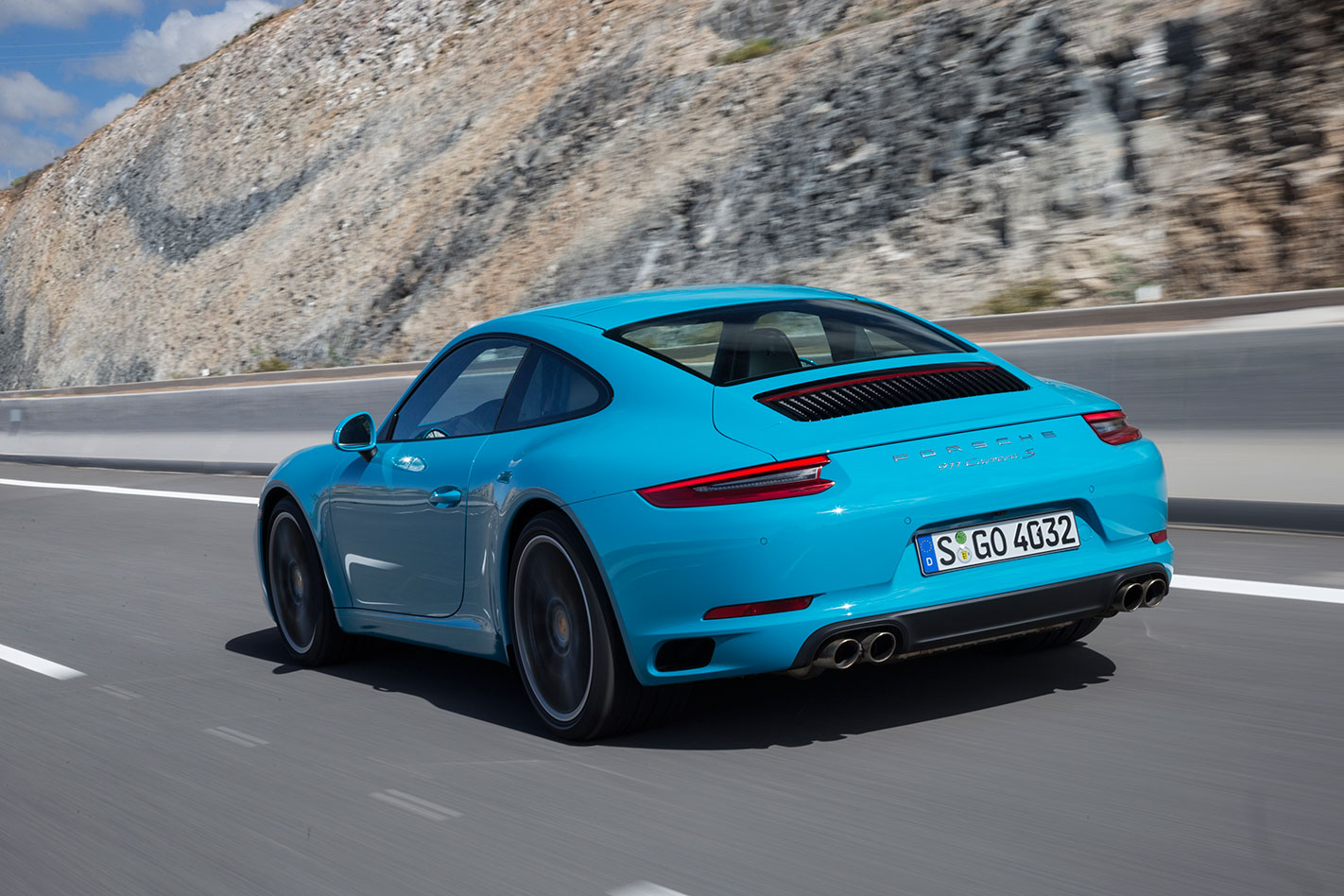
Picking the power pack also brings an added brake cooling system, unique twin-central sports exhaust and a Sport Chrono package normally priced at $3890 alone – incorporating dynamic engine mounts, launch control, analogue and digital stopwatch, an extra steering wheel dial with additional Sport Plus mode, throttle-blip downshifting in Sport and Sport Plus, and a performance display with shift indicator.
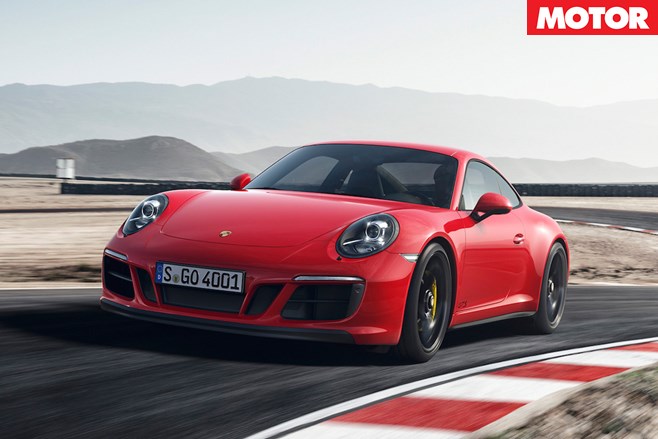
Meanwhile other price rises accompany Porsche’s MY18 changes, with new exterior and interior colours, and added features to the Porsche Connect suite.