
If Ferrari hasn’t been worried by McLaren’s turbocharged model development programme so far, this might be a good time to start. It’s only six years since McLaren Automotive introduced its first car, the MP4-12C. That got a heavy facelift two years later, as well as a less clunky name, becoming the 650S. And now the new 720S is being unveiled at the Geneva motor show, moving the game on even further with a dramatic hike in power, a more advanced carbon structure and what we’re promised will be a step change in performance.
As the name suggests, the McLaren 720S gets a turned-up version of McLaren’s mid-mounted V8 engine, with capacity increased to 4.0-litres and with new turbos, cylinder heads, crankshaft and pistons. McLaren says, with the sort of exactitude we’ve come to expect from the British company, that this new M840T engine features 41 percent new parts when compared to the old one. Output rises to 530kW, accompanied by a peak 770Nm of torque, both channeled to the rear wheels through a seven-speed twin-clutch gearbox with changes sharpened by punchier software.
Performance numbers build on those of the 650S, with the 720S set to be very nearly as quick as the 675LT track special. McLaren says that the new car’s 0-100km/h time has only improved by a tenth– falling to 2.9-seconds – but beyond that, where traction ceases to be an issue, the 720 becomes massively quicker. On McLaren’s numbers its 8.4-second 0-200km/h time is 0.6-seconds inside the 650S, and its 21.4-second 0-300km/h time is a whole 4.0-seconds faster. The official top speed is 340km/h.
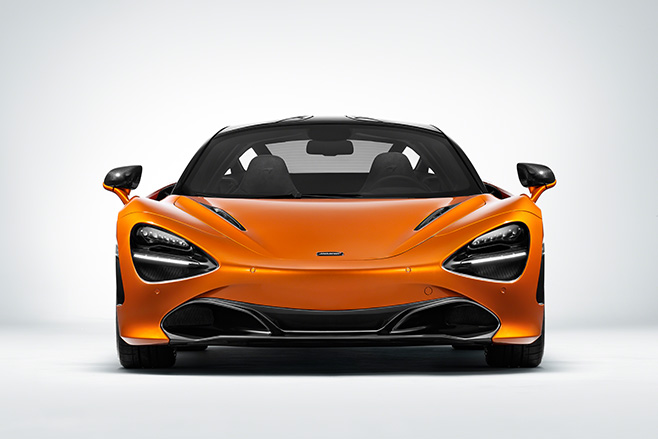
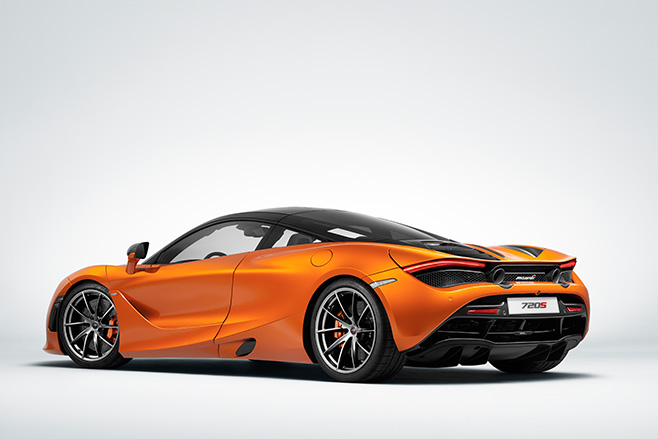
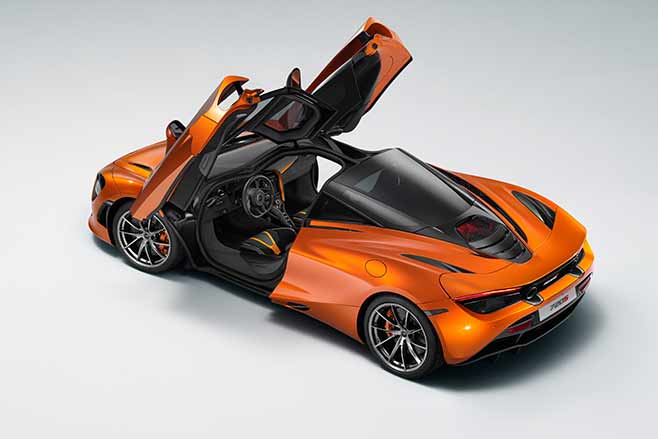
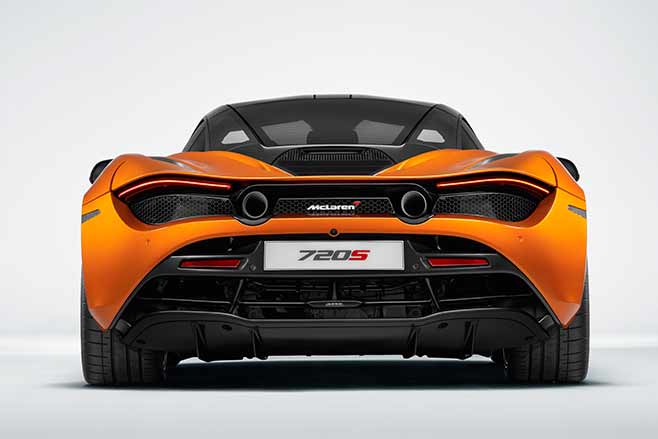
Visually the 720S is very different from the 650S, or indeed any other recent mid-engined supercar. It lacks a side air intake behind the door, with air getting channeled to the engine and rear radiators through a barely visible gap between the body side and rear side glass. Other drag-cheating aero features include door “blades” that shape the flow of air leaving the front diffuser and small “eyeball” intakes built into the front headlights. At the back the full length active wing can deploy as an airbrake in just half a second. McLaren says the 720S has twice the peak downforce of its predecessor, but with less drag and improved cooling efficiency.
We’ll have to wait until closer to the 720S’s on-sale date later this year to get word on price. A roadster version will follow in 2019 and an even-higher-performance LT variant is also a racing certainty.
View our full coverage of the Geneva Motor Show 2017.
The Big Mac has morphed into a Whopper. McLaren has revealed the replacement for its 650S Super Series model at the Geneva motor show.
Dubbed the 720S, it’s lighter, faster, more powerful and yet more efficient than its predecessor, with McLaren claiming it’s “a car that sets new benchmarks for supercar excellence.”
A bold claim, but the 720S certainly has the performance to back up its boast. A new 4.0-litre twin-turbocharged V8 engine produces a staggering 530kW at 7000rpm, backed by a maximum of 770Nm from 5500-6500rpm. Installed in a car that weighs just 1283kg (dry), the result is a power-to-weight ratio of 413kW/tonne, a number that is difficult to comprehend.
The result is shattering performance, McLaren claiming 0-100km/h in 2.9sec, 0-200km/h in 7.8sec and a top speed of 341km/h. The standing quarter mile is said to take just 10.3sec, assisted by the ‘seamless-shift’ seven-speed dual-clutch gearbox.
Despite the increase in displacement and power, fuel consumption has improved by almost 10 per cent to 10.7L/100km, though it’s unlikely to be a figure too many owners will be familiar with.
Deceleration is equally impressive. Six-piston calipers grab carbon-ceramic discs measuring 390mm front and 380mm rear, which bring the 720S to a halt from 100km/h in 29.7m. Taking up the strain are Pirelli P Zero Corsa tyres measuring 245/35 ZR19 front and 305/30 ZR20 rear.
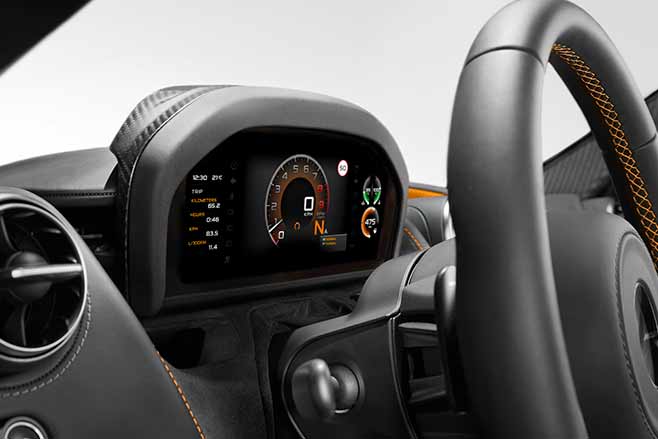
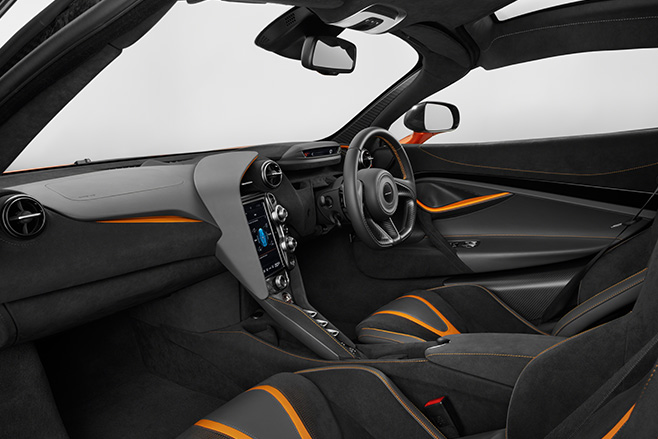
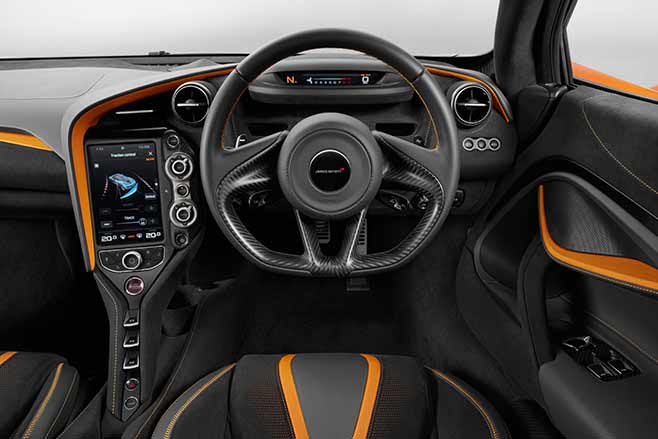
McLaren is also a non-believer in conventional limited-slip differentials, using its Brake Steer function to transfer power to the wheel with more traction. The 720S also debuts McLaren’s Variable Drift Control, which allows the driver to determine the level of traction control assistance and allowable oversteer angle using a finger-tip slider on the infotainment screen.
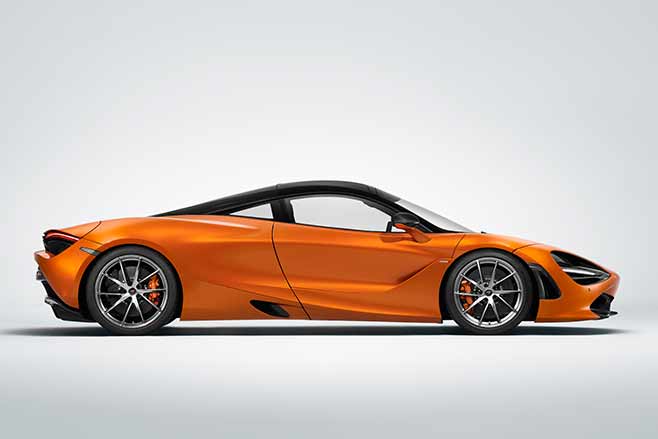
Perhaps stung by criticism of the early 12C’s conservative exterior design, McLaren has been much bolder with the 720S. Most striking are the unbroken side flanks, the engine instead fed air through inlets mounted in the sills behind the doors.
Australian pricing is not yet confirmed, however McLaren expects prices to rise around five per cent over those of the 650S, which means its latest supercar should cost around $490,000 when it lands locally towards the end of 2017.
THE president of General Motors says Holden will have more choices regarding sourcing of future models following the company’s shock $3.1 billion sale of the Opel/Vauxhall division planned to provide one third of Holden’s vehicles in the next few years.
For now, GM president Dan Ammann (pictured, left) says it is business as usual for Holden, despite the sale of the division that will produce the 2018 Commodore and already supplies the Astra hatch.

Speaking candidly to Australian media at the opening of the 2017 Geneva motor show – he kicked off by joking “you’re going to ask a lot of questions, I’m not going to answer them” – Ammann said the company was “100 percent committed to the business in Australian and New Zealand”.
He said product plans for the Astra, Commodore and at least two crossover models would not be impacted by the sale of the struggling European arm of the GM business to Peugeot/Citroen owner PSA.
However, Ammann, who confirmed Holden was only made aware of the imminent sale in recent weeks, refused to detail where Holden may source its vehicles from once the current models reach the end of their lives, likely to happen from 2022 and beyond.
“No specific decisions have been taken on that front,” he said. “We have, I’d say, as a result of yesterday’s announcement, there’s more opportunity [of where Holden sources future models from] not less.
“Clearly the current models that are just launching will run through their full life cycle and then what we do beyond that is yet to be determined.”
Ammann also confirmed that future Opel models planned as part of the 24 new or updated models Holden has slated by 2020 would continue.
“For the overall [Opel] Vauxhall product plan it will either stay intact or actually expand,” he said.
When pressed on whether – longer term – it was more likely Holden would source cars from GM factories Ammann refused to go into more details. To be fair, the company has time up its sleeve to make those decisions.
He also declined to go into details about future model names; given the Astra is part of the Opel portfolio it stands to reason that nameplate was included in the sale to Opel, so does that mean Holden will eventually have to relinquish the Astra name?
“I’m not going to get into future naming strategy but we’re going to stick with what’s working,” Ammann said, adding that people were “overthinking this a little bit at this point in time”.
But he did say that there was a commitment from GM to ensure right-hand drive markets had access to new models, something that has not regularly happened in the past.
Ammann said that removing the right-hand-drive Vauxhall brand – a UK-specific brand – from the General Motors portfolio would impact that commitment.
“As we have been developing the next generation of all of our architectures globally we’ve increased, not decreased, the flexibility for right-hand drive and made that a much easier thing to do, so we remain totally committed to that,” said Ammann.
Ammann also ruled out a sale of the Holden brand. He said the company valued its potential for GM. “We’ve got a strong brand, we’ve got a lot of history, we’ve got a lot of work today,” said Ammann. “My perspective is we’re doing all the work we need to, we’re starting to see some of the early results, we’ve just got to stick to it and get where we need to go.”
He also said there was a commitment to building Holden and helping it recover from record low market share in a year when it is planning to shut down local manufacturing (the end date for the Elizabeth plant in South Australia is October 20) after 69 years.
“We’re 100 percent committed to the business in Australia and New Zealand. There’s nothing we want to see more for the business to be really successful and prosper down there and we’re totally committed to making that happen.”
As for the possibility of Chevrolet returning to Europe or Opel expanding to other countries, Ammann said that was all theoretically possible.
PORSCHE has caved into widespread criticism by re-introducing the manual gearbox to its racecar-bred 911 GT3.
As part of the 991.2 overhaul, the high-performance two-seater flagship also scores an all-new and naturally aspirated 368kW 4.0-litre flat six-cylinder engine.
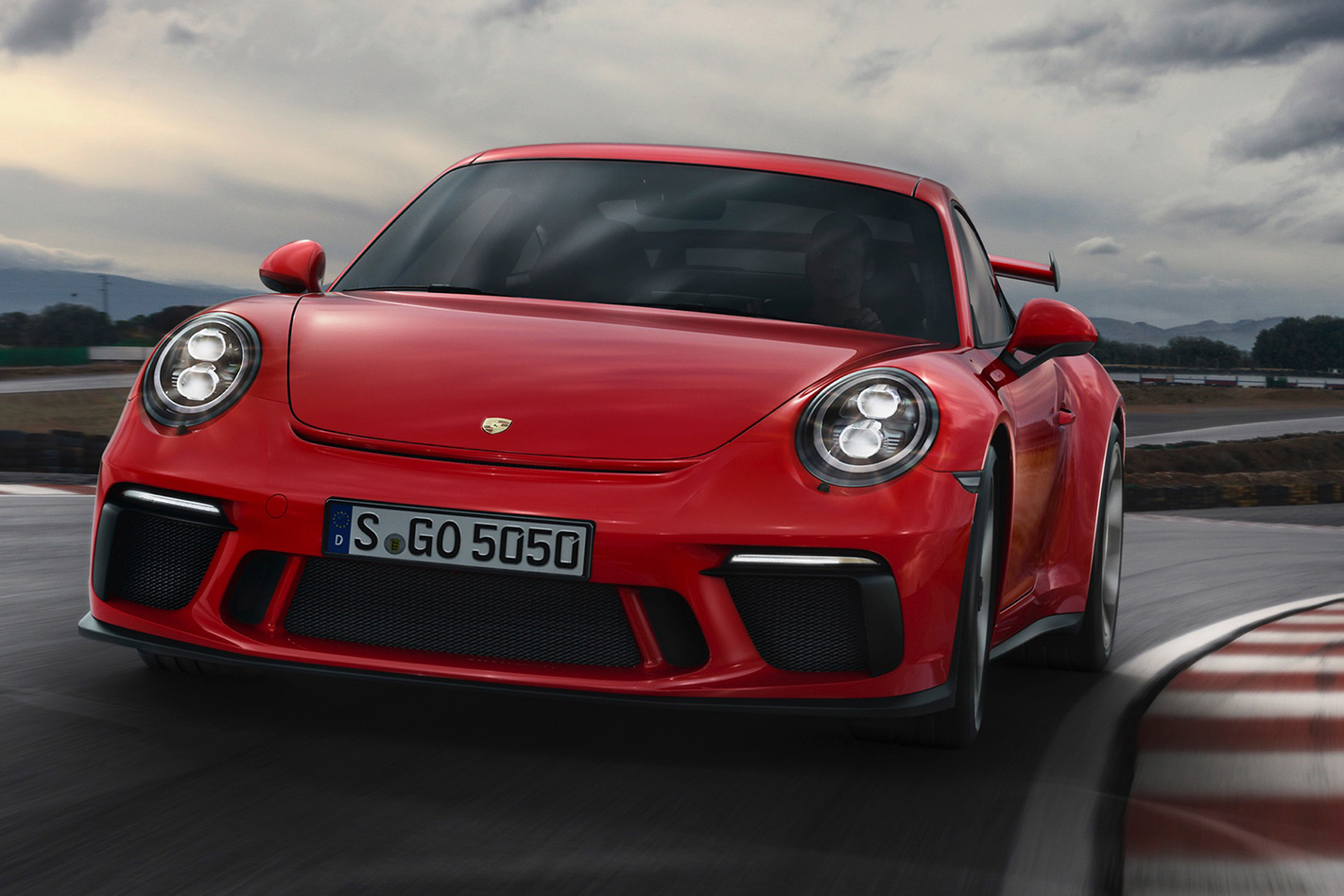
Replacing the old 350kW/400Nm 3.8-litre unit, it can rev out to a stratospheric 9000rpm, and is “virtually unchanged from the thoroughbred 911 GT3 Cup racing car competing in the 2017 Porsche Carrera Cup Australia championship”, according to Porsche.
The new powerplant includes a stiffer crank, lower-friction cylinder liners, and upgrades to the valve train. Since the lightest version tips the scales at just 1430kg, the ensuing power-to-weight ratio is a staggering 257kW per tonne.
Result? At 3.9 seconds, the no-cost option six-speed manual is half a second slower to 100km/h compared to the standard seven-speed dual-clutch PDK’s whiplash-like 3.4s outcome, but changing your own gears does net you a 2km/h higher top speed at 320km/h.
Said to be honed in motor racing, the GT3’s other changes for 2017 include what Porsche calls a redesigned chassis, which sits some 25mm lower to the ground compared to the bread-and-butter 911 Carrera S.
It features active four-wheel steering that can provide either enhanced high-speed stability or tighter manoeuvrability where required, as well as dynamic engine mounts and a trick new rear differential lock.
Visually, look for a redesigned carbon rear spoiler, a fresh ground-effect front-end aero aid, and revised rear diffuser with different outlets for that howling exhaust note.
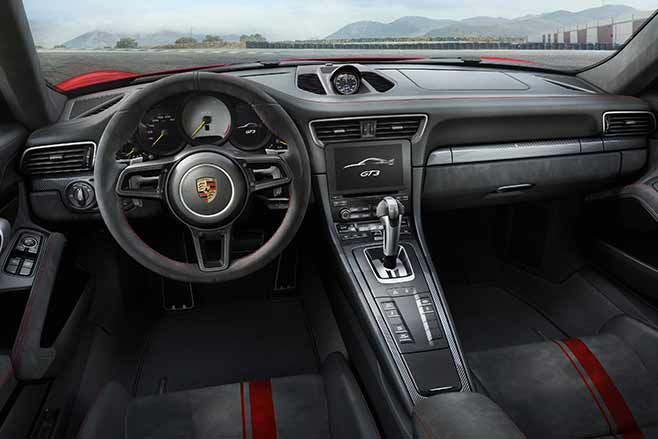
Meanwhile the 918 Spyder donates its unique 360mm steering wheel for that extra special tactile experience, bespoke Porsche Sports Seats Plus with extra bolstering and adjustability, and an up-to-the-minute multimedia system featuring all the usual Wi-Fi hotspot and telecommunications stuff found in other luxury vehicles, as well as a new Track Precision app that enables the GT3 pilot to display, record and analyse driving data in insufferable detail.
Yet all this pales into insignificance for true Porsche purists who have been denied a manual gearbox since the previous 991-generation GT3 lobbed in four years ago. The gear lever and clutch live on!
The first lot of cars should lob into Australia by the final quarter of this year, kicking off from a cool $327,100 (plus on-road costs).
View our full coverage of the Geneva Motor Show 2017.
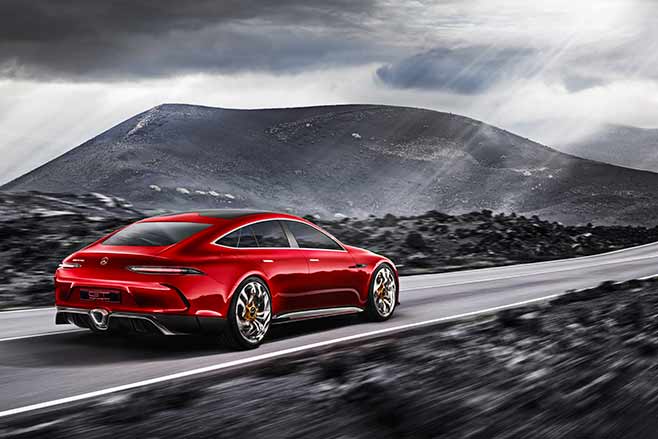
MERCEDES-AMG has flagged its intention to build a 600kW, Panamera-bashing V8 hybrid super sedan with the unveiling of the GT Concept at the 2017 Geneva motor show.
The svelte four-door uses AMG’s familiar 4.0-litre twin-turbo V8 and mates it to a lightweight battery pack and 150kW electric motor that uses the same “operating strategy” as Mercedes-Benz’s championship dominating Formula One cars.
Sitting on a modified version of the W213 Mercedes-Benz E-Class architecture, power is sent to all four wheels via the V8 engine, with the electric motor given a direct drive link only to the rear axle.
Mercedes-Benz hasn’t outlined details of the hybrid drivetrain, however Wheels has learned it uses the 450kW version of the V8 initially developed for the soon-to-arrive Mercedes-AMG E63 S.
Marketed as EQ Power+, the innovative hybrid drivetrain strategy is likely to filter its way through future AMG models as a way to boost performance while maintaining a 500km-plus driving range and throaty sound, the latter a core component of AMG’s go-fast image.
In the GT Concept the hybrid system is claimed to deliver 600kW of power, enough to propel the sleek four-door to 100km/h in “less than three seconds”.
While Porsche’s Panamera is an obvious target for the four-door version of the GT, it’s also likely to line up neatly against the all-electric Tesla Model S, which has stolen the green performance high ground with its ballistic acceleration and all-paw performance.
The GT Concept can run purely on electricity for shorter trips – there are no details on the electric range, but best guesses suggest about 50km – or as a hybrid, relying on both methods of drive for the full 600kW hit.
In a twist on the traditional hybrid setup engineers have created a driver-selectable mode that temporarily cuts out the electric motor, relying solely on the V8, presumably for those wanting the full drama of the engine.
Despite being referred to as a coupe by its makers, like the Porsche Panamera the GT Concept gets a hatchback-like liftgate for added practicality and a distinctive look.
Its grille picks up the toothy Panamericana grille used on some two-door GTs, but it’s flanked by more air intakes to cool the batteries and feed that potent V8.
There are also numerous hints of the AMG GT two-door, from the slimline tail lights to the powerful wheel arches.
While it’s officially a concept, the media statement that accompanied the GT Concept hinted it was very close to the production car likely to lob in 2018.
“The show car gives a sneak preview of the exterior design of the coming series production model,” the statement read.
While an easy option for Mercedes would have been to stuff the new super hybrid drivetrain into an existing Merc, Daimler design chief Gorden Wagener said the GT Concept is about cementing AMG as a maker of bespoke models rather than just a modifier of Mercedes-Benzes.
“The GT Concept embodies the most extreme expression of our design idiom and underlines anew the autonomous profile of AMG as a performance brand”, said Wagener. “Through perfect proportions it creates a puristic design with the emphasis on its surfaces, featuring sensuous shapes and is hot and cool at the same time.”
Proving it’s about practicality and liveability as much as performance and excitement, occupants can choose from a trade-off between rear seat legroom and boot space, with the seats able to slide back and forward.
The GT Concept also debuts a new “nano active fibre technology” for its lights, allowing for a 3D effect and increased integration of lighting functions into a single unit.
Traditional wing mirrors have been replaced with small “mirror cams” just behind the front wheels. They are claimed to bring aerodynamic benefits, though they won’t initially make it to the production car.
Given the Mercedes-AMG GT Concept is headed into production next year, there are two ways to look at this: firstly, the E63 and CLS63 are under threat from the most unlikely of enemies, or that the creeping tide of electrification has at last washed over the belligerent dam wall that has been AMG.
Where the current range of “proper” AMG cars is all 4.0-litre, bi-turbo V8 powered, this one will be the first to be electrified (but it won’t be the last).
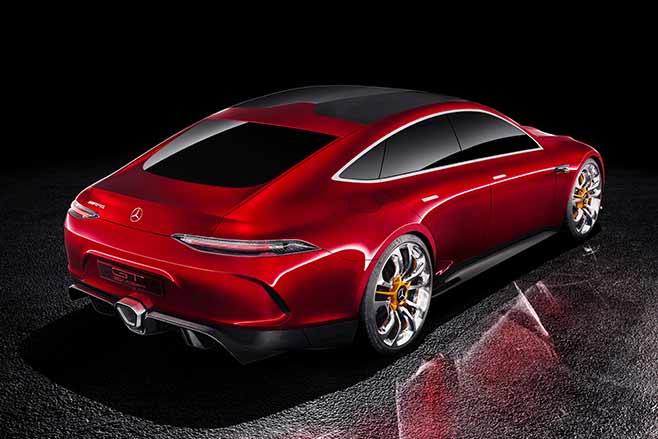
It will be followed at September’s Frankfurt Motor Show by the Project One, AMG’s 1000-horse hypercar, and will even be able to be driven as a zero-emission pure electric car for short distances.
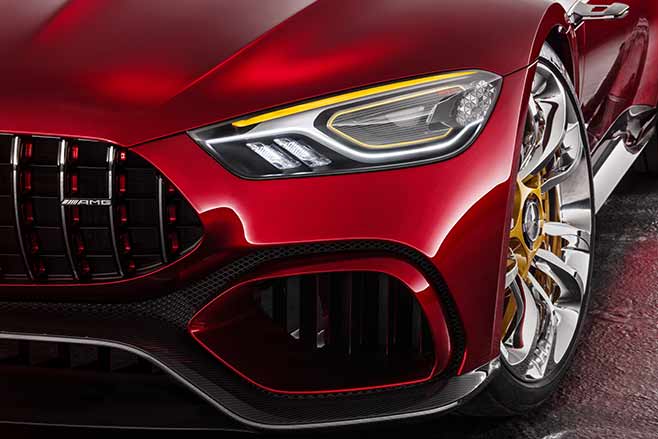
The sleek four-door shape harks immediately to the GT Coupe and GT C roadster model, giving AMG an instant three-model family. The big difference between the GT Concept and the current production sports cars is that this one is a four-door, four-seater.
It’s also going to wear the EQ Power+ badge, which has only just emerged on the hybrid-powered 2017 Mercedes-AMG Formula 1 car, and it will take aim at Porsche’s upcoming Panamera Turbo S E-Hybrid, which combines biturbo, 4.0-litre V8 power with a 100kW electric motor. So they overlap pretty neatly.
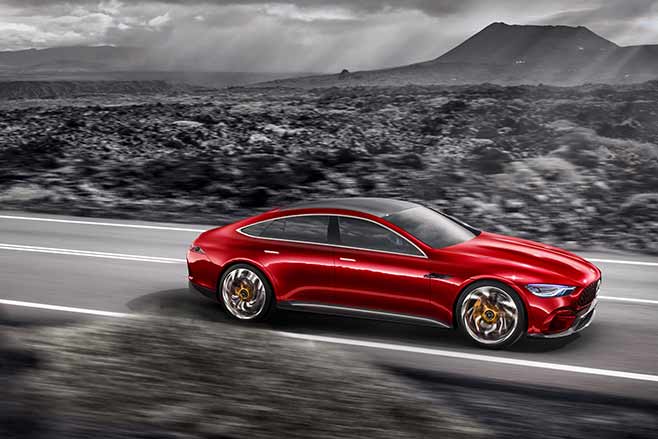
“This performance hybrid powertrain offers an impressive electric range and the opportunity to generate a system output of up to 600kW in its last level of development,” AMG boss Tobias Moers insisted.
It could be argued that the GT Concept is the most significant AMG in the last 20 years, pointing a way to sustainable high performance from a brand whose two-pillared foundations have been straight-line speed and interior luxury.
The layout has the electric motor’s power funneled only to the rear axle, specifically to help with torque vectoring. The car itself runs the E 63’s 4Matic+ high-performance all-wheel drive system, which offers a drift mode and the usual launch control.
There are plenty of detail changes to Porsche’s new 911 GT3, some of them significant, but the most important thing is yes, it is now available with a six-speed manual gearbox.

It drops the GT3’s weight to 1420kg (down 10kg), which combined with outputs increasing from 350kW/440Nm to 368kW/460Nm means the new GT3 matches the power-to-weight ratio of the previous 911 GT3 RS.
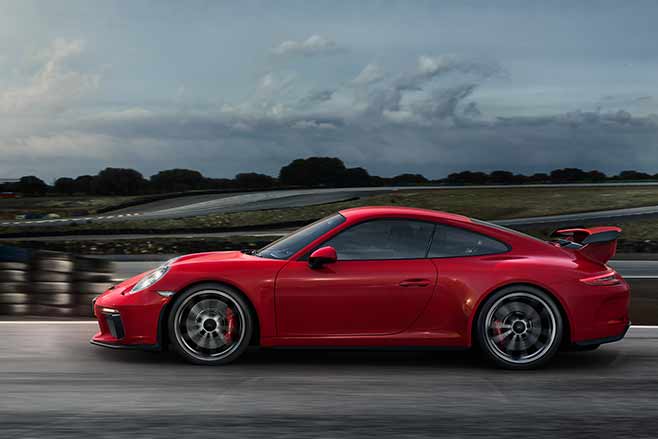
Acceleration to 100km/h improves by 0.1sec for the PDK model to 3.4sec, with the manual 0.5sec slower at 3.9sec. Top speed for both variants nudges 320km/h.
Ride height has been dropped 25mm, but while the standard steel brakes are still 380mm rotors clamped by six-piston calipers front and four-piston rears, the optional carbon-ceramic stoppers now measure a whopping 410mm up front and 390mm at the back.
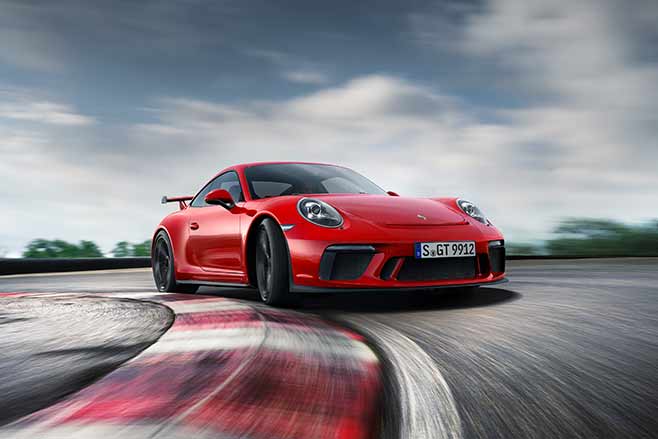
The new Porsche GT3 is scheduled to land in Australia in Q4 2017 at a price of $327,100.
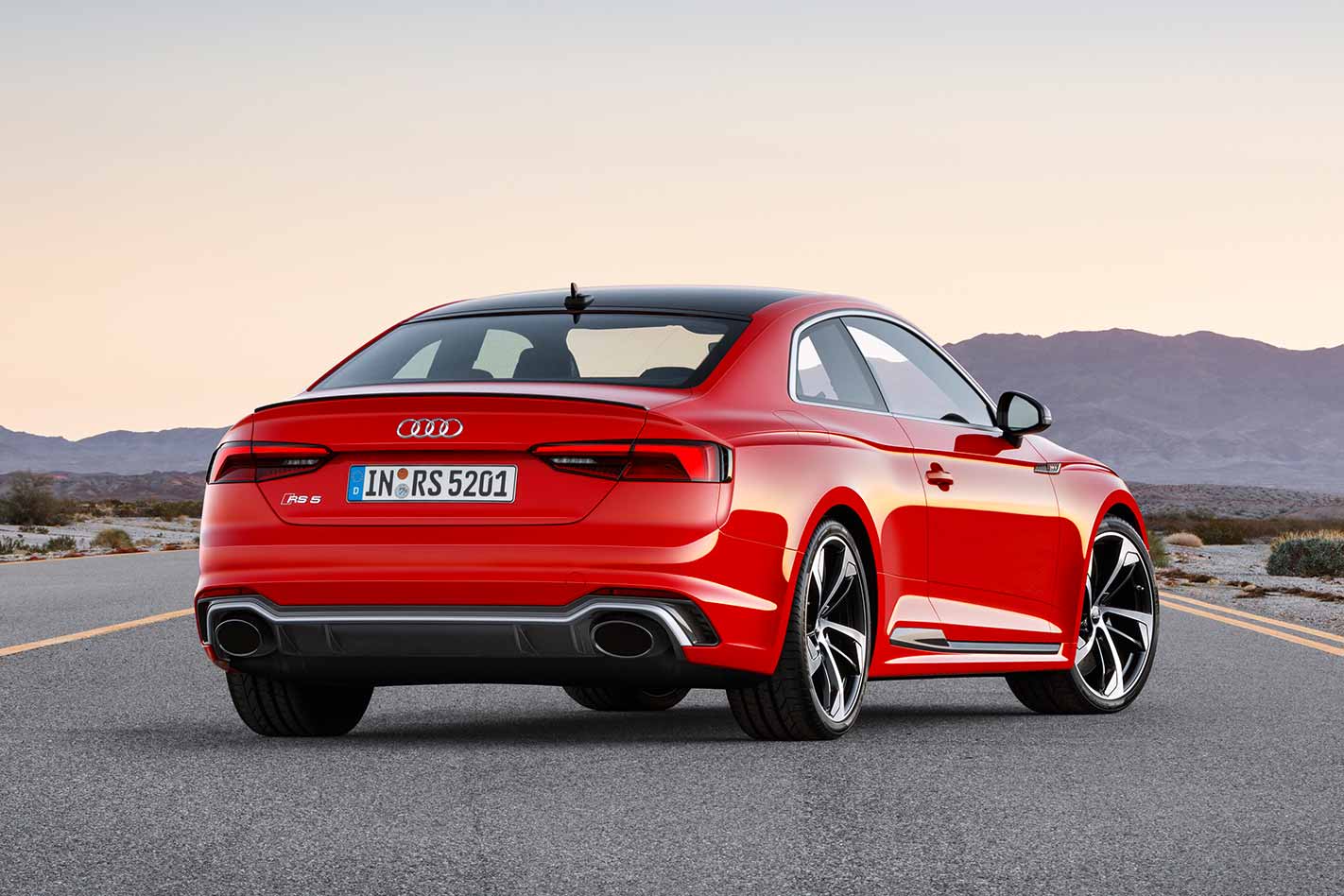
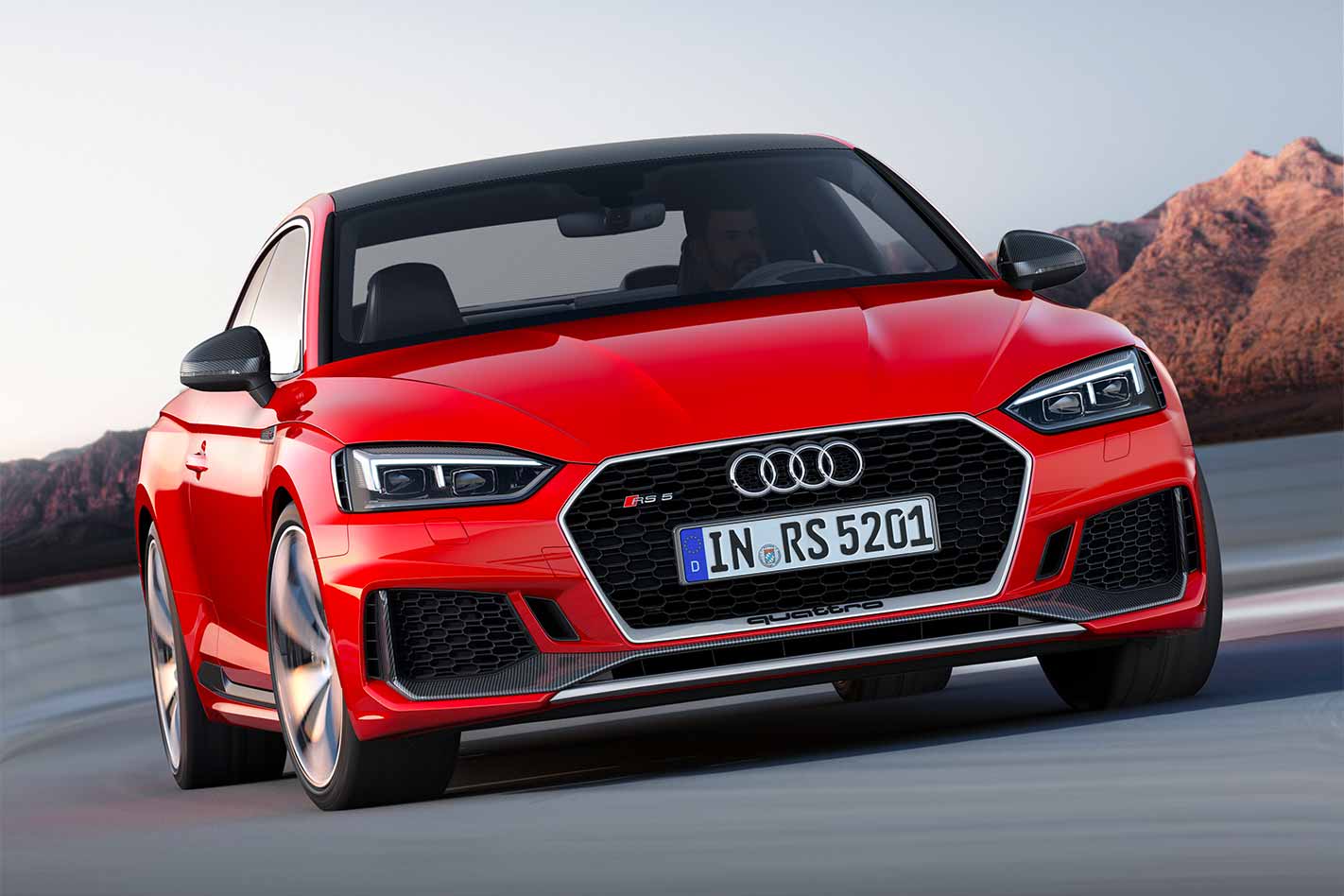
Menace has always been one of the keys to Audi’s RS5 coupe, from the fat wheel arches to the rumbling evocative exhaust to the brutal straight-line performance.
That’s not going to change with the new model, but Audi is talking loudly and proudly about the RS5 debuting the new RS design language, partly in the hope that people don’t labour on the disappearance of its V8 engine.
Yes, the all-new RS5 Coupe uses the same KoVoMo Porsche-engineered bi-turbo V6 as the Porsche Panamera, and uses it to such effect that it extracts 331kW of power and 600Nm of torque from its 2.9 litres.
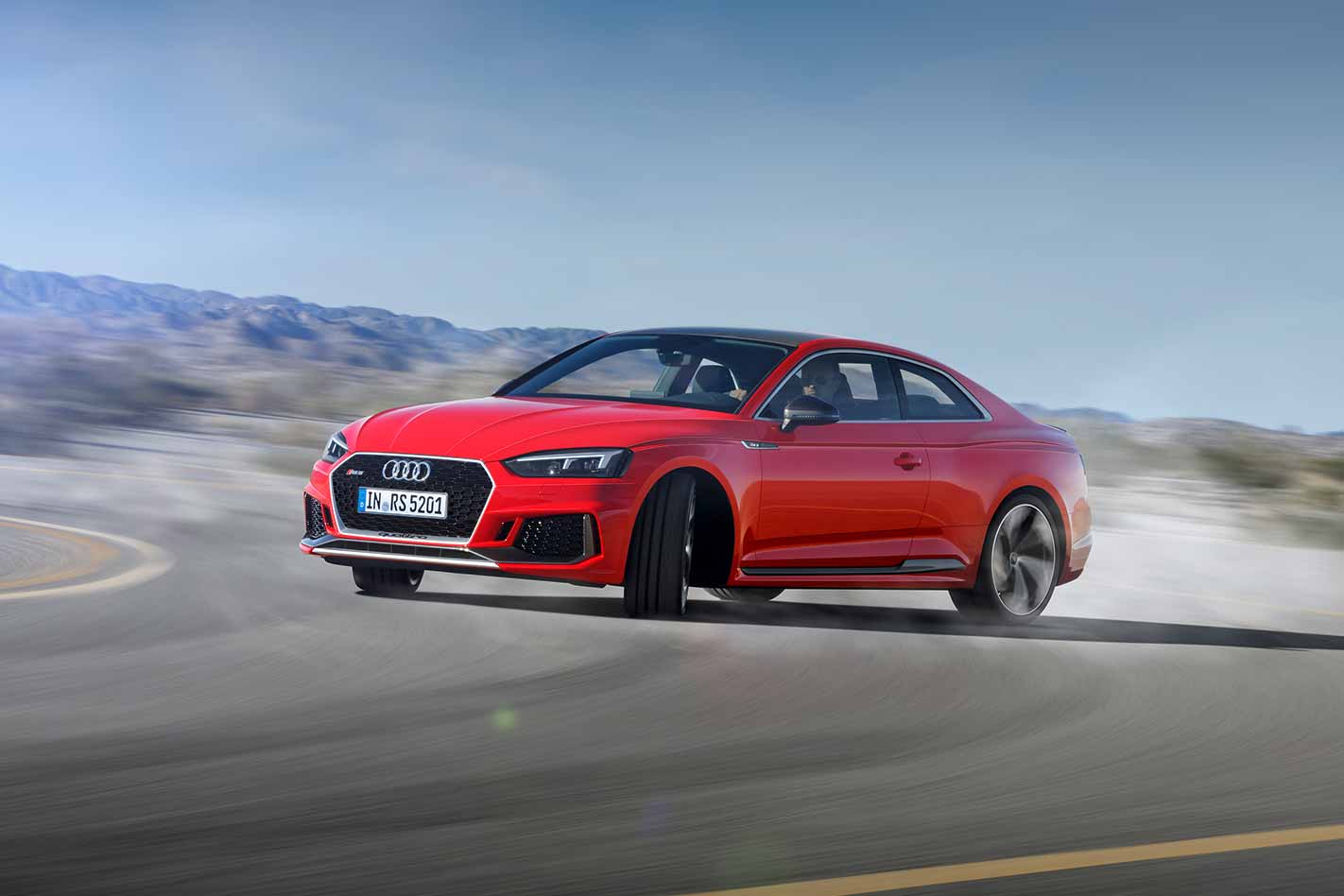
Its 600Nm of torque is a full 170Nm more than the V8 could ever muster, and it’s available from 1900rpm to 5000rpm, while its 331kW of power pushes it to 100km/h in 3.9 seconds on the way to a limited 250km/h top speed (there’s an optional 280km/h limiter, too).
At 4723mm, it’s 74mm longer than the outgoing RS5, with its bulging wheel arches pushed out 15mm compared to the standard S5 Coupe’s bodyshell.
“The high-performance Coupé combines elegant aesthetics with high everyday usability. The car’s V6 bi-turbo has been developed from the ground up and provides significantly more performance coupled with higher efficiency,” he said.
Winkelmann claimed its designers drew their inspiration from the wild and wicked 90 quattro IMSA GTO racers, which dominated the US racing circuits in the post Group B era.
There are also tinted bezels for the LED (and optional Matrix LED) headlights, while the car rides on 19- or 20-inch forged alloy rims and punches its emissions out of unique oval tailpipes.
The Porsche-sourced engine continues the current trend of “hot vee” engines, siting both of its turbochargers inside the vee-angle of the engine, and combines centrally-mounted direct fuel injectors with a short stroke to boost power and improve economy.
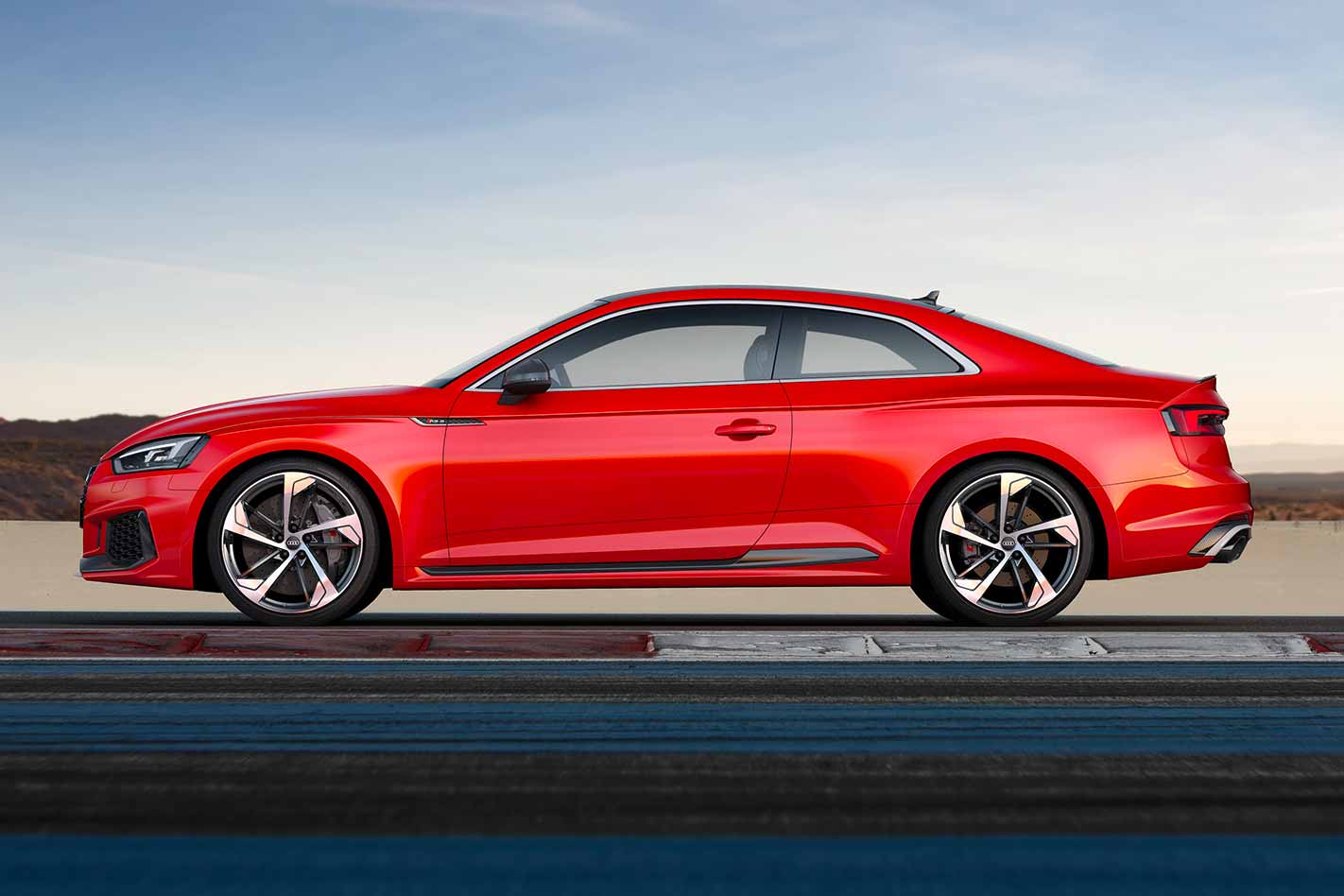
It’s also significantly lighter, pulling 60kg from the V8’s mass with the help of a BMW M4-style carbon-fibre roof, despite all the turbo plumbing, to weigh 1655kg.
Audi feeds its new-found V6 power through an eight-speed automatic transmission and permanent all-wheel drive, with 60 percent of the drive nominally headed to the rear end. The hard-turning sport differential is an option.
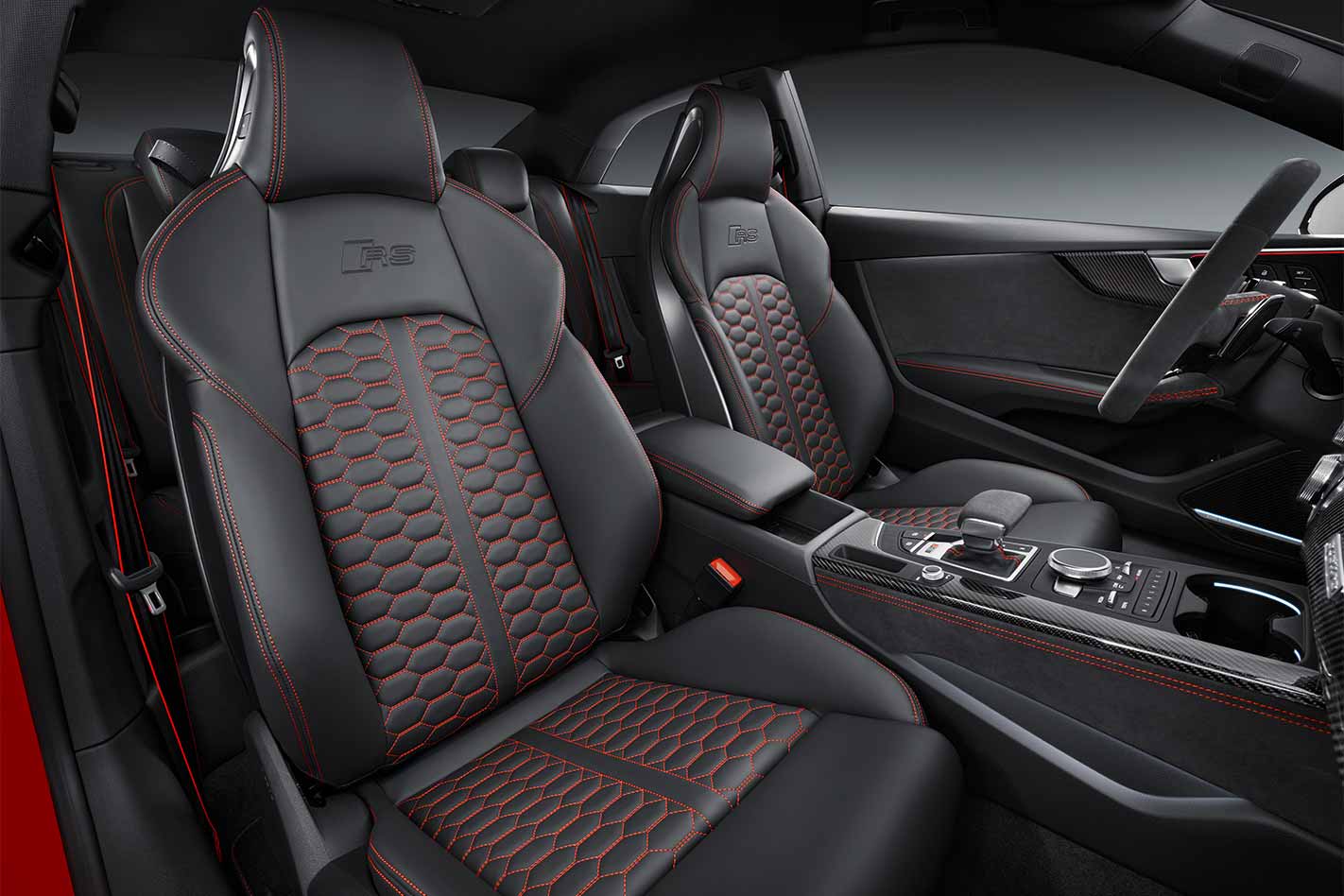
It has the usual Audi Sport array of go-faster options for its go-fastest front-engined coupe, including the more aggressive Dynamic Ride Control damping system, carbon-ceramic brakes and sharper steering ratios.
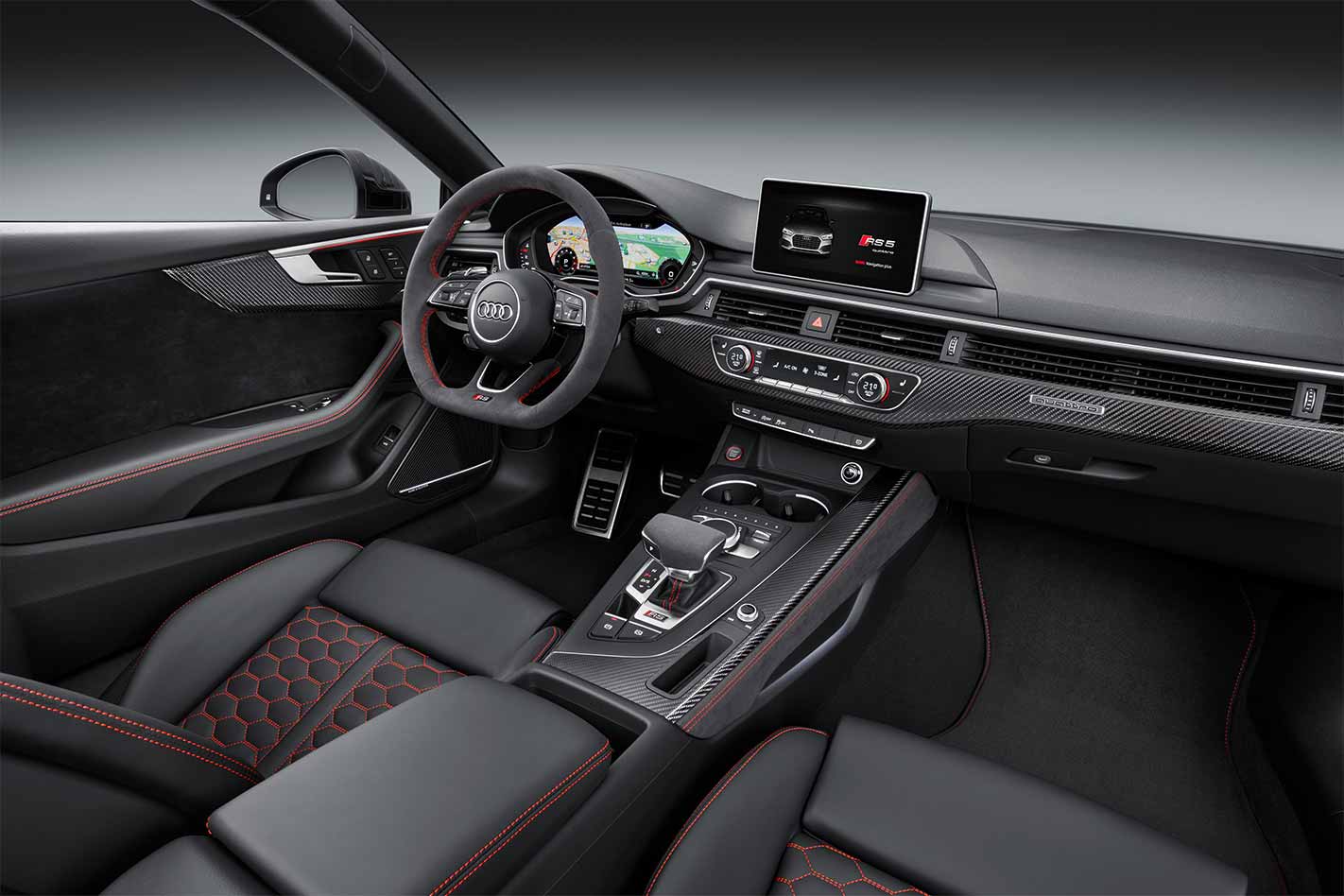
Inside, the RS5 Coupe continues the Audi Sport (nee Quattro GmbH) love affair with black and diamond stitching. It introduces new bits to the A5/S5 Coupe’s cabin, including an upgrade to the Virtual Cockpit digital instrument cluster to include feedback on torque, g-forces and tyre pressures.
The interior also delivers permanent internet connectivity via LTE and a wifi hotspot option. It also links smartphones via CarPlay and Android Auto.
Motorshows, like casualty clearing stations, are usually divided by triage into three categories: cars that are definitely going to make it into production, those that might, and those with precisely zero chance.
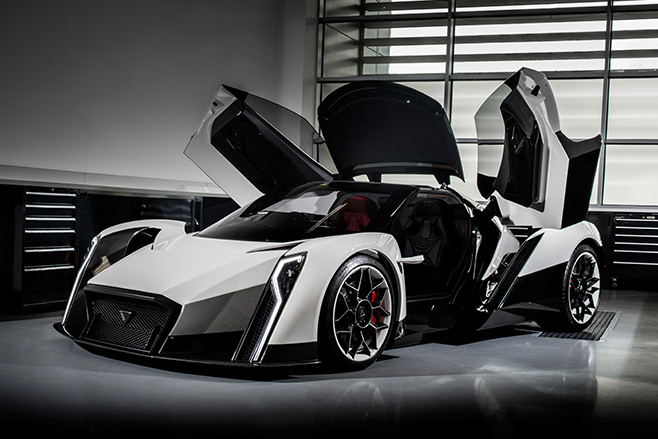
We’ll understand if the idea of a 1500hp EV hypercar from a Singaporean company you’ve never heard of sounds like it should fall into the last of these categories. Yet the Vanda Dendrobium, which has just been introduced in Geneva, really does seem to stand a chance of becoming Singapore’s first ever hypercar.
The important element her is the involvement of Williams, more precisely the Advanced Engineering subsidiary of the famous British Formula One team.
This is the consultancy that previously created the CX-75 hybrid Jaguar hypercar that came within a big cat’s whisker of being produced, as well as the battery pack that powers the current Formula E grid.
While the show Dendrobium is indeed a one-off, we’re assured that serious consideration is being given to producing a limited run.
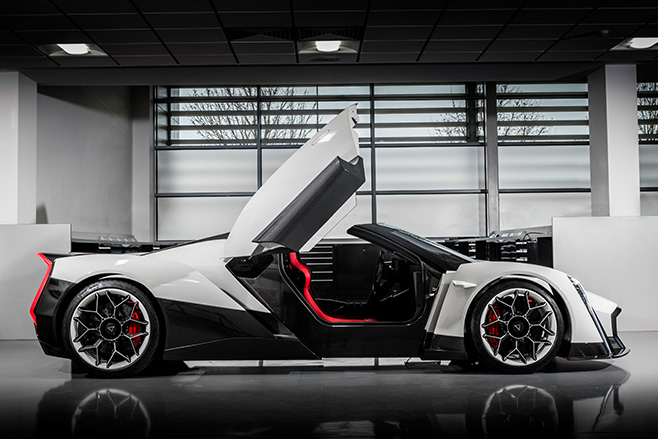
The Dendrobium name comes from a Singapore-native orchid, the opening of which apparently inspired the show car’s synchronized unlatching of both rear-hinged doors and its powered roof panel.
We’re told that, if produced, the production version would have all-wheel drive, a two-speed transmission, total power output of around 1500hp, a 200mph top speed and a 0-100km/h time of around 2.6-seconds.
Sadly the concept can’t deliver on those numbers, with Ian Cluett, who led development for Williams, admitting that it uses a far more timid single-motor set-up with rear-wheel drive and is powered by a modified Formula E battery pack.
The striking design is the work of a Singapore-based team and we’re told that it could easily translate to production. It’s built around a carbonfibre tub with metal front and rear subframes carrying dual wishbone suspension at each corner.
It hasn’t been in a wind tunnel, but Cluett says the wedgy shape has been subjected to intensive CFD modelling to confirm it should indeed work at speed.
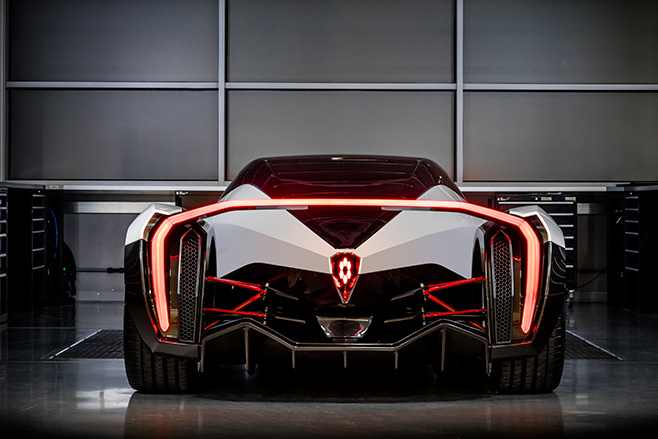
While the rear-hinged doors and roof offer plenty of theatre, getting into the tight-fitting cabin means squeezing past the substantial A pillar, and the seating position feels too high for a supercar at the moment.
Most of the cockpit is finished in carbon, with six-sided switchgear reflecting the same honeycomb design motif as the outside of the car. There’s a digital instrument display and twin video screens for a functioning camera-based rear mirror system.
Vanda will make a decision on production later this year, with interest being gauged at the Geneva Motor Show and other events.
We’re told that a finished car would probably carry a seven figure US dollar pricetag, which would certainly help to ensure exclusivity, with the Dendrobium’s toughest challenge likely to come from pure electric hypercars from established players like McLaren.
LAMBORGHINI has revealed the Huracan Perfomante special edition in all its glory at the 2017 Geneva Motor Show, a week since a test version controversially claimed the Nürburgring Nordschleife production car lap record.
The track-focused Huracan Performante has most powerful V10 ever used in a Lamborghini, with the mid-mounted 5.2-litre engine tweaked to produce 470kW/600Nm.
That’s 20kW/40Nm more than the LP610-4 Huracan coupe, and enough to drop its 0-100km/h time to 2.9sec, which is 0.3sec quicker than the regular Huracan and matches the 544kW/690Nm V12 Lamborghini Aventador S.
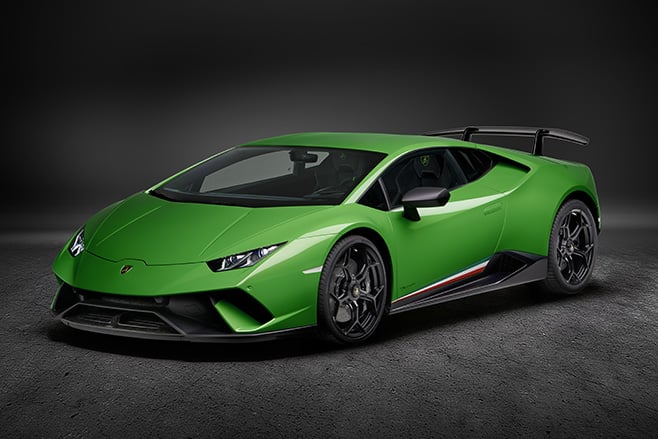
A revised engine tune optimises the Performante’s torque curve to deliver 70 percent of total torque from just 1000rpm. That force is transferred to all four wheels via a recalibrated seven-speed dual clutch automatic transmission.
Further improving acceleration is a 40kg weight reduction, thanks to liberal doses of carbonfibre, and an active aerodynamics package – or “Aerodinamica Lamborghini Attiva” (ALA) – specifically engineered for the Performante model.
Aero development for Performante included lightweight engineering for the bodywork, using a hybrid aluminium-carbonfibre, and an ultra-lightweight forged carbonfibre for key ‘ALA’ aerodynamic components.
Body parts unique to the high performance model include the front spoiler and huge one-piece rear wing that house air ducts and flaps that can close for maximum downforce and open for maximum cooling.
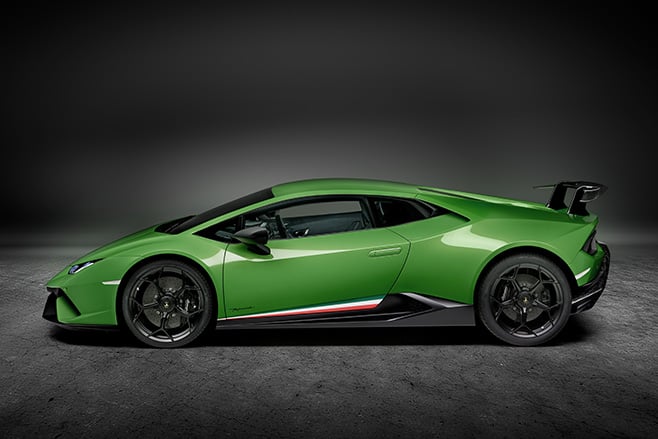
When the ALA system is activated (via an electro-actuator system that’s 80 percent lighter than a hydraulic set up) drag is drastically reduced for maximum acceleration and top speed. When it’s off the rear flaps close, turning the rear wing into a conventional spoiler that provides 750 percent more downforce than the standard Lamborghini Huracan coupe.
Performante’s suspension is 10 percent stiffer than the normal Huracan coupe, via both springs and swaybars. Roll stiffness is improved by 15 percent.
Lamborghini also says it has significantly retuned the standard electromechanical power steering and optional variable ratio Lamborghini Dynamic Steering (LDS) to provide highly responsive steering with maximum driver feedback in all three driver modes.
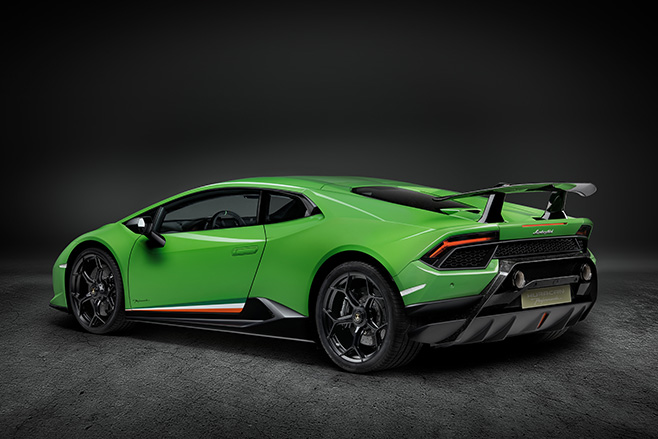
The Huracán Performante sits on specifically designed 20-inch Narvi forged rims in bronze colour, wrapped by specifically developed Pirelli P Zero Corsa tyres designed to optimise road holding with ALA on or off.
Interior refinements includenew digital displays that change depending on driving mode, with a display dedicated to the ALA system detailing data on downforce and drag.
If anyone somehow tires of the engine note, the infortainment system supports Apple CarPlay and iPhone apps including the Lamborghini telemetry system, which allows the driver to record, replay and study his own performance.
Huracán Performante is more than just a sprinter, as demonstrated in a video last week showing a camouflaged model tearing up the Nürburgring in a claimed 6:52.01min – 5.0sec faster than the Porsche 918 Spyder, which had held the record since 2013.
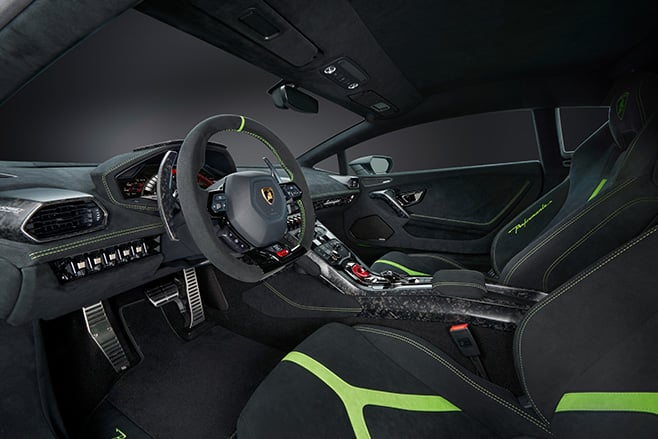
Doubts have been raised about the legitimacy of that Green Hell time by some critics, though Automobili Lamborghini has reinforced its claim to the record, saying the time is owed to “the convergence of technological developments to produce a car delivering perfect performance”.
The Lamborghini Huracan Performante will be available in Australia mid-year priced from $483,866 excluding taxes and on roads.
While it’s the most expensive Huracan it is still around $300,000 cheaper than the Aventador S and should be almost as thrilling.
