
Premium SUV demands you spend up on suspension tech iF you want to avoid struggle-street ride.
PAUL Keating would like the Mercedes-Benz GLC. Just like that famous recession in 1990, the newcomer to the three-pointed-star family is the SUV that Mercedes-Benz had to have. Yet it’s surprising it’s taken so long to get it. Blame that on the international product planning masters, who somehow missed the Down Under surge towards SUVs.
At least the GLC is finally here and it appears there was pent-up demand for the mid-sized Mercedes-Benz SUV because it’s shot to the top of the luxury SUV sales charts.
Inside, the dash treatments between wagon and Coupe are the same – and nearly identical to that employed across the Mercedes-Benz C-Class line-up, a car that provides the underpinnings for the GLC. Simple yet effective, and detailed yet restrained, the only universal sore point was the ‘claw’ that hovers over the circular selector as a secondary means to navigate the 7.0-inch screen (or 8.4-inch with the optional Comand system).
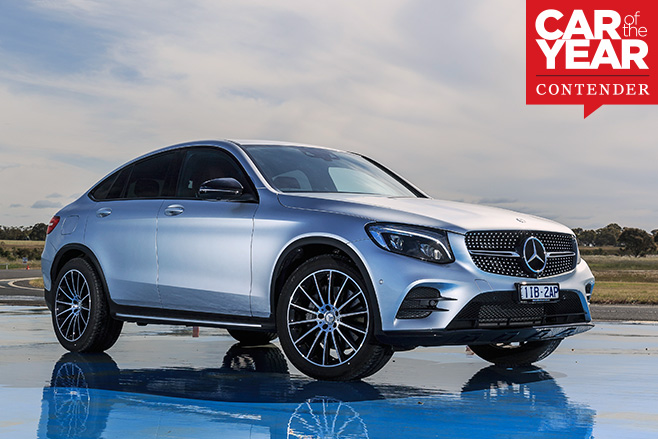
The engines, too, offer a vast selection from the fuel-efficient four-pot diesel engine to the rorty AMG-fettled twin-turbo V6.
The diesel uses as little as 5.6L/100km, although it’s the old-gen 2143cc unit rather than the sweeter, more refined 1950cc diesel now offered in the E. So it’s more about economy than entertainment.
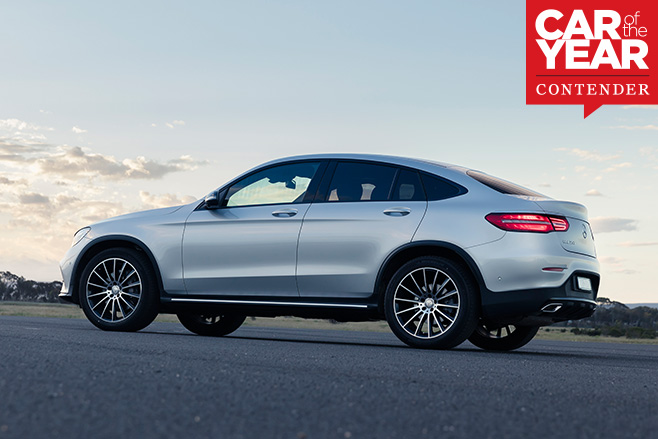
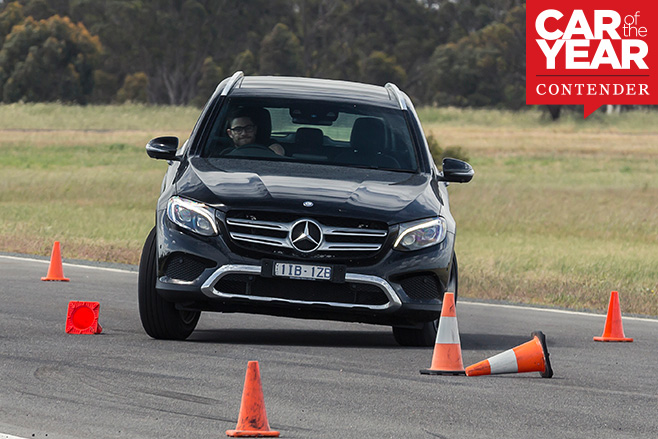
Yet on the road the GLC quickly sheds points – and it all comes down to suspension. Riding on the standard 19-inch tyres, the GLC220d thundered across the You Yangs chatter bumps, prompting judges to question the basic suspension architecture. The equation worsens with the GLC250 riding on 20s.
Yet step up to the 21-inch hoops of the GLC43 and there’s a ride revelation. With standard Air Body Control air suspension and adaptive dampers the 43 is infinitely more relaxed, better controlling rebound and bringing newfound compliance the base cars can’t get close to. Plus, the air suspension – which is optional on lower cars – solves the crashing and bashing issues.
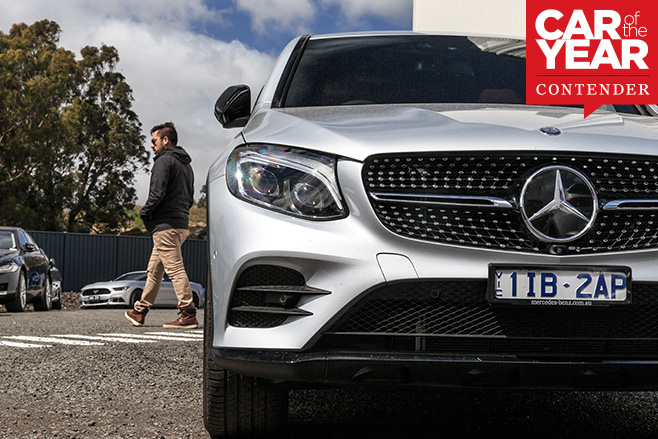
Therein lies the crux of the GLC. Excellent in some areas, let down in others. There is lots to like with the GLC, but its flaws, predominantly the underdone suspension on base wagons, cruelled its chances of progressing.
Specs
BODY Type: 5-door wagon/coupe, 5 seats Boot capacity: 500 – 550 litres Weights: 1735 – 1845kg
DRIVETRAIN Layout: front engine (north-south), AWD Engines: 1991cc 4cyl turbo (155kW/350Nm); 2143cc 4cyl turbo-diesel (125kW/400Nm); 2143cc 4cyl turbo-diesel (150kW/500Nm); 2996cc V6 twin-turbo (270kW/520Nm) Transmissions: 9-speed automatic
CHASSIS Tyres: 235/65R17 – 255/50R19 ADR81 fuel consumption: 5.6L/100km – 8.8L/100km CO2 emissions: 146 – 201g/km Collision mitigation: Yes Crash rating: 5-star (ANCAP) Prices: $65,990 – $108,900
Lots of goodness; it just doesn’t run range-deep
COTY threw up some fascinating contrasts this year, but none as compelling as the familial clash between our pool of Mercedes-Benz C-Class coupe and cabrio variants. The outlying C200 rag-top and C63 S AMG Coupe were separated by nearly $80,000 and 240kW and the personalities were spread just as far.
The basics build on the C-Class sedan, with the usual trade of less practicality for an increase in style and exclusivity. Cabin architecture and design is as impressive as the four-door and wagon – although with an obvious reduction in rear space – but the dynamics have moved up a notch, certainly in the Coupe, which rides and handles with noticeably more polish.
The 375kW C63 S was one of the outright stars at the You Yangs handling course, demolishing it to a V8 soundtrack as hard-edged as anything that’s been developed there, yet also possessing a sensitive side when dialled down for everyday duties. But it also wears a correspondingly serious pricetag, one that we struggled to get our heads around: $162,115 is a serious chunk of change for a C-Class, even one that can almost pace an Audi R8.
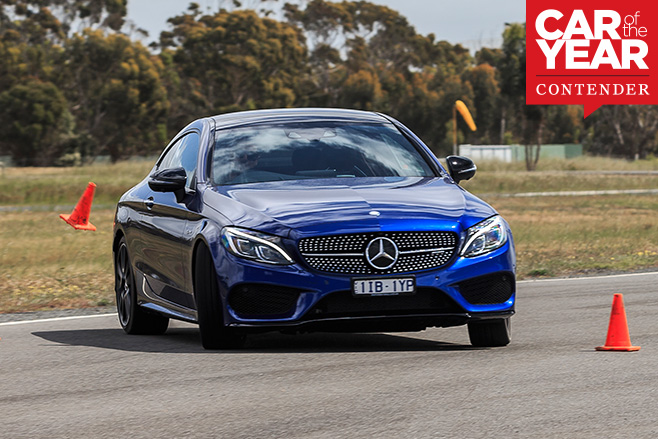
But moving down the range brings more disappointment. The C300’s four-cylinder 2.0-litre turbo manages a respectable 180kW, but turns thrashy when extended. The chassis lacks any go-faster encouragement, firmer than the sedan but despite the standard adaptive dampers, low-speed ride often feels bumpy, and little genuine feel gets past the steering’s electric assistance. It’s a sports-free coupe.
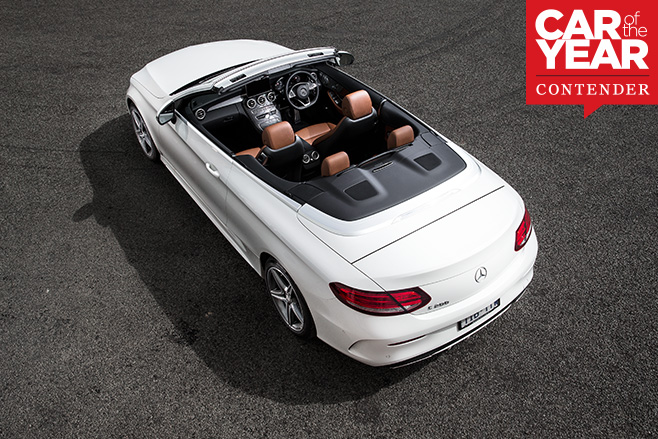
It used to be obvious that Mercedes spent as much time developing the cheap variants as the expensive ones – they’d be slower and have less kit, but the fundamentals would be just as good. These days, and especially with the C-Class Coupe and Cabriolet, that no longer feels like it’s the case.
Specs
BODY Type: 2-door coupe/cabriolet, 4 seats Boot capacity: 285/400 litres Weight: 1558 – 1917kg
DRIVETRAIN Layout: Front engine (north-south), RWD/AWD Engines: 1991cc 4cyl turbo (135kW/300Nm) 1991cc 4cyl turbo (180kW/370kW) 2143cc 4cyl turbo-diesel (150kW/500Nm) 2996cc V6 twin-turbo (270kW/520Nm) 3982cc V8 twin-turbo (375kW/700Nm) Transmissions: 7-speed automatic; 9-speed automatic
CHASSIS Tyres: 225/45R18 – 285/30R20 ADR81 fuel consumption: 4.4 – 9.4L/100km CO2 emissions: 115 – 220g/km Collision mitigation: Yes Crash rating: 5-star (ANCAP) Prices: $65,900 – $179,900
PEUGEOT is back in the small SUV segment race with the revised and restyled 2008, offering a sparkling all-new 1.2-litre turbo powertrain, six-speed auto, more features, and better value, to go with a classier interior and suave dynamics. Look out, Mazda CX-3!
Though it is one of the original modern-era small SUVs, the Peugeot 2008 failed to fire because it simply didn’t have enough fire under the bonnet – whether it was the base 1.2-litre manual or 1.6-litre four-speed auto. Performance-wise at least, the 128 year-old carmaker from Sochaux was outclassed.
So, along with a revised nose and tail, the MY17 Series II version ups the ante with a far-stronger 1.2-litre three-pot turbo engine, driving the front wheels via a new six-speed automatic transmission. The upshot is more urge and less thirst.
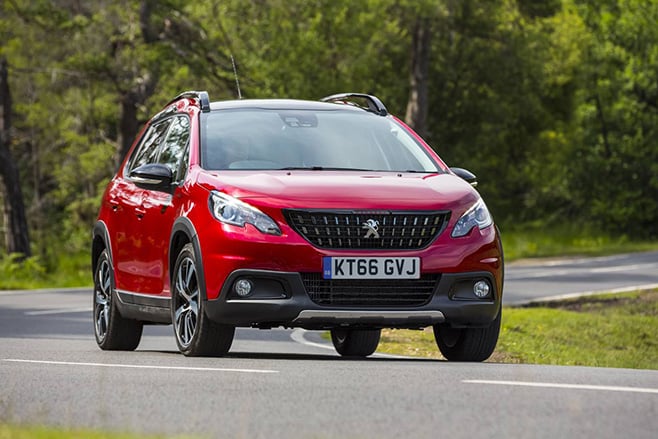
Throw in more standard features, and it is clear that the Peugeot 2008 has the right stuff to come out of the cold.
1. A shared heart. The new 81kW/205Nm 1.2-litre three-cylinder turbo petrol engine is from the same international award-winning family of powertrains that power a number of other models, including the brilliant Peugeot 308 , Citroen Picasso people mover, and – from later this year – the kooky Citroen C4 Cactus.
2. A six from Japan. One of the pre-facelift 2008’s biggest issues concerned the automatic transmission – or, more accurately, the lack of one in the base 1.2-litre and 1.6-litre turbo-diesel variants (they only came with a five-speed manual gearbox). Additionally, the only version that did offer an auto had to rely on an old, outmoded, and comparatively inefficient four-speed torque-converter unit in the volume-selling 1.6-litre Active and Allure iterations. Now, thanks to Toyota’s Aisin EAT6 transmission, it’s one six-speed torque-converter auto for all models, with all driving the front wheels.
3. AWOL diesel engine. A very low customer take-up of the old 1.6-litre turbo-diesel powered Outdoor flagship model means both have been dropped from the Series II range. In its place has come the sporty GT-Line, with a bit more visual glitter and glam, but no extra performance from the same 1.2T powertrain found in all other MY17 2008s. Plus, the latter’s Euro 6 emissions-rated engine’s 4.8L/100km combined average fuel use figure is close enough to the old diesel’s exceptional 4.0L/100km rating to warrant offering both engines redundant.
4. Common ground. As the name implies, the 2008 is related to the smaller 208 supermini. Both vehicles share about 70 percent of their parts by number, including the Groupe PSA Peugeot Citroen PF1 platform, featuring a transverse front-wheel drive layout, MacPherson-style struts up front, a torsion beam rear suspension system, and the 1.2T engine and Aisin six-speed auto powertrain.
5. Light is right. Compared with the previous most popular 2008 variant – the 1.6-litre four-cylinder petrol auto – the 1.2T equivalent has less weight over the front axle, improving agility and response as a result. All up, the difference is 12kg. Compared with the equivalently equipped 208, the 2008 is about 65kg heavier.
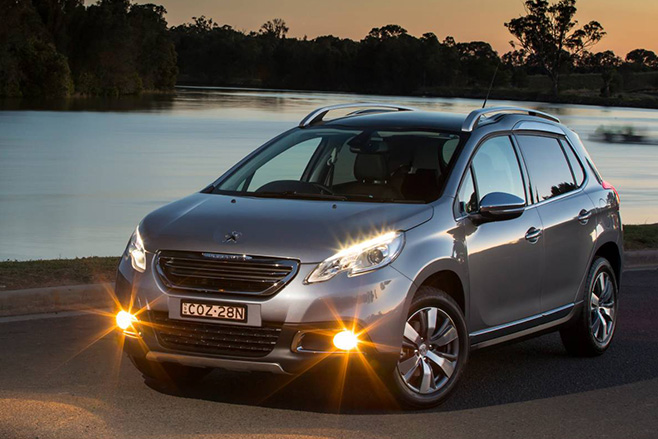
6. On the nose. Peugeot’s research internationally revealed that potential 2008 new car buyers didn’t like the meekness of the original nose and grille treatments, prompting the company to redesign the entire front section with changes to the grille, headlights, bumpers, and bonnet. The result brings a more distinctive and aggressive appearance to the 2017 vehicle. Interestingly, the original vehicle was styled at Groupe PSA’s studio in Paris back in 2010, melding proposals from France and China.
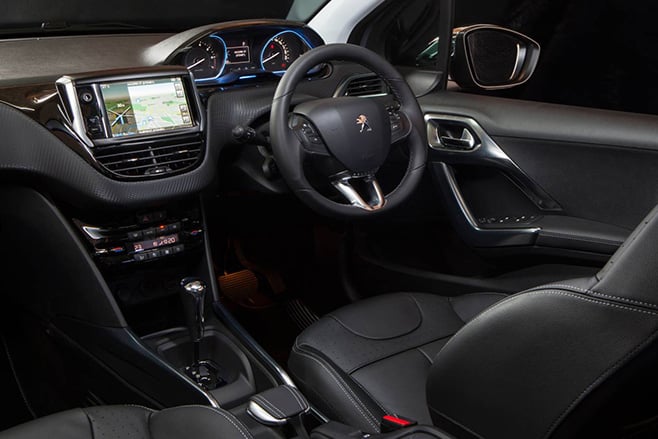
7. Snow job. The 208/2008’s controversial “i-Cockpit” low-wheel/high instrument dashboard layout came about when a senior Peugeot engineer was forced to drive his 207 supermini in a snowstorm in Switzerland with other senior Groupe PSA management on board. The resulting stress caused in near white-out conditions inspired the designer to create a dash with raised instruments so that eyes could stay focussed on the road ahead, while the steering wheel’s lower position cut muscle fatigue and promoted better blood flow since the elbows aren’t raised as high as in normal driving position situations.
THE underperforming Peugeot 2008 has been given a sorely needed heart transplant as part of a facelift designed to improve the small SUV’s fortunes in Australia.
Tell me about this car
When it was launched in late 2013, the Peugeot 2008 was a small SUV segment pioneer, helping to usher in a new era of lightweight and compact urban-friendly crossover wagons. But inadequate engine and transmission choices undermined what was otherwise a stylish, spacious, comfortable, and dynamically capable alternative to a Holden Trax. To the French carmaker’s credit, the 2017 mid-cycle facelift brings with it a bolder face, while the underpowered and outmoded engine choices have made way for an advanced and efficient 1.2-litre three-cylinder turbo. Improved safety and more features also spell better value for money. And, hopefully for Peugeot, many more sales than before.
Strengths
- Stirring performance. The new 81kW/205Nm 1.2-litre three-cylinder turbo provides far livelier acceleration than its tiny capacity suggests, with more than sufficient oomph for quick getaways and effortless highway cruising. Aiding progress is a slick Toyota-sourced six-speed automatic.
- Excellent efficiency. Aided by a new stop-start system designed to save petrol, the 1.2-litre turbo powertrain’s official combined fuel use (using 95 RON premium unleaded or higher) is almost diesel-esque in its thriftiness, returning just 4.8L/100km. That’s just 0.8L/100km shy of the now-discontinued 1.6-litre turbo-diesel.
- Airy cabin. Deep side windows and lofty seating provide a feeling of space and light, backed up by an ergonomically designed driving position that favours a low steering wheel and high instrument set-up to help keep eyes on the road while cutting fatigue. Elegant dials, quality fittings, excellent ventilation and ample storage areas are further interior plus points.
- A keen chassis. The healthy new engine transplant makes the most of the smooth and responsive handling on offer, making the 2008 one of the most fun small SUVs on the market. Just as importantly, the suspension also provides a comfy and quiet ride. For refinement, then, the Peugeot has many rivals licked.
- More standard features than before. While the base Active 1.2T auto, priced from $26,490, is $1000 more expensive than the 1.6 auto it replaces, the newcomer is better equipped. The extra kit includes an overhauled central touchscreen with Apple CarPlay and a reversing camera, along with rear parking sensors, cruise control with speed limiter, folding door mirrors, and 16-inch alloy wheels. Moving up to the $30,990 Allure adds goodies such as satellite navigation, automatic parking, ‘Grip Control’ traction enhancement for driving on mud, snow, and sand, 17-inch alloys, and Autonomous Emergency Braking.
Weaknesses
- No AEB on the base model. 2008 buyers must stretch to the Allure for the auto-braking braking technology, when rivals such as the Mazda CX-3 and Skoda Yeti offer it on every version.
- No more diesel. While we’re happy to see the back of the weedy 60kW/118Nm 1.2 and 88kW/160Nm 1.6 atmo units, the punchy yet parsimonious 68kW/230Nm 1.6 turbo-diesel was a bit of a belter, even if it was a manual-only proposition. That didn’t matter, not least rural folk, since all that extra torque meshed well with the 2008’s eager chassis.
- Auto-only powertrain. That 1.2T/six-speed auto combination is the only model, and while it is undoubtedly the smarter move for most buyers, it means there’s no more manual to sink your teeth into.
- Limited offer on five-year, unlimited kilometre warranty. The 2008 is scheduled to revert to Peugeot’s regular three-year, 100,000km warranty from June 1, 2017, reducing the level of protection on offer by a big margin.
- No AWD availability. Although the Allure and the sporty new GT-Line flagship have ‘Grip Control’ for extra soft-road traction and control, that is no substitute for a good all-wheel-drive system as found in rivals such as some CX-3 and Suzuki Vitara variants.
Any rivals I should consider?
The 2017 Peugeot 2008 is shaping up to be one of the surprises of the year, since it squarely addresses the biggest issues of its lacklustre predecessor.
It is now one of the most rounded small SUVs on the market, meaning it has the potential to muscle in on top competitors such as the spirited and agile Mazda CX-3, brilliantly packaged Honda HR-V, and sporty yet refined Suzuki Vitara.
It might also provide the perfect, subtle, and relaxing tonic for people who might find the Toyota C-HR too brash, though the latter does also offer a smooth and sweet ride.
Whichever way you look at it, the 2008 is now mentioned in the same breath as the small SUV segment stars. You’d never have said that about the pre-facelift version.
Renault’s Alpine revival will officially revive the A110 nameplate, and this is what the production version will look like ahead of its Geneva motor show unveiling on March 7.
France’s Porsche Cayman rival has been a long time – and several concept cars – coming, and it appears the company’s public relations machine will continue the wait even longer. Only two pictures have been released of the production A110, with few technical details.
“[It] features a full aluminium platform and upper body for optimum weight saving and agility,” is all that Renault would reveal.
“Its name is A110, reflecting the timeless principles of compact size, light weight and agility that made the success of the ‘Berlinette’.”
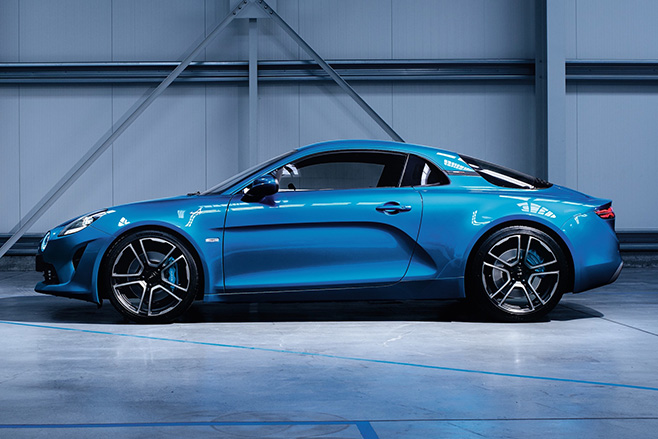
It is likely the Alpine A110 will use a new 1.8-litre turbocharged four-cylinder engine mated to a seven-speed dual-clutch automatic – although we hope a manual is at least optional. It should produce around 200kW to challenge the Alfa Romeo 4C, and given the compact size and all-aluminium construction, will hopefully weigh around 1100kg.
Way back in 2014, Alpine CEO Bernard Ollivier told Australian media that the production Alpine would be positioned “somewhere between a Porsche Cayman and Alfa 4C.”
“Porsche Cayman … it’s very premium especially for the interior design, it’s very easy to be used daily. [But] 4C is very, very frugal, very simple. Alpine will be premium, with a French touch. For France, not for Germany. [We will be] not like a Porsche.”
Renault Australia managing director Justin Hocevar said the production Alpine will be built in right-hand drive and will arrive locally, indicating pricing beyond $60K but less than $90K.
Read how the Alfa Romeo 4C and Porsche Cayman compared against one another
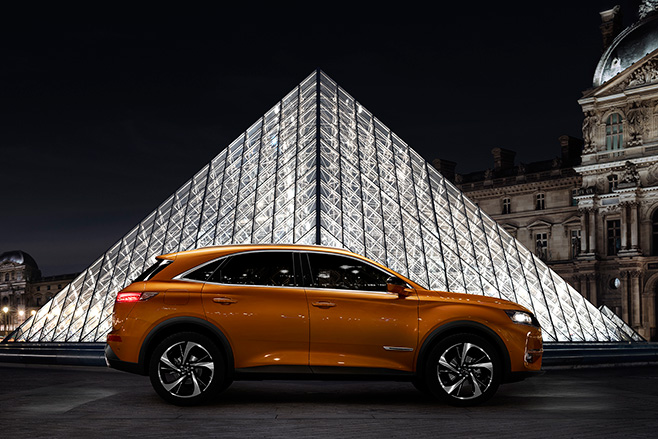
IT’S less than two years since DS became a separate brand within PSA, positioned above both Citroen and Peugeot, and now we’re starting to see the scale of the French company’s ambition for its upmarket subsidiary with the new DS7 Crossback, set to be officially unveiled at next week’s Geneva Motor Show.
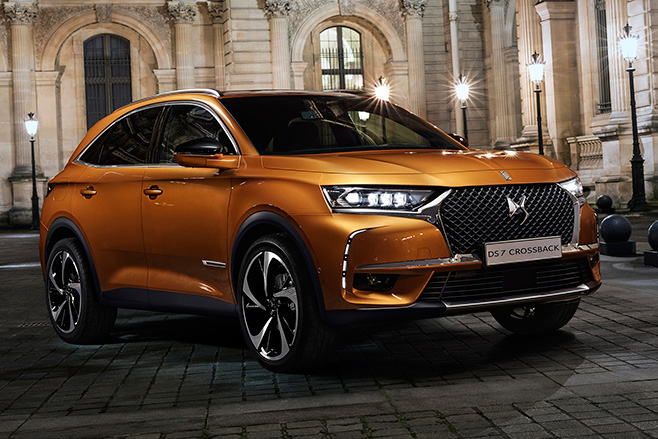
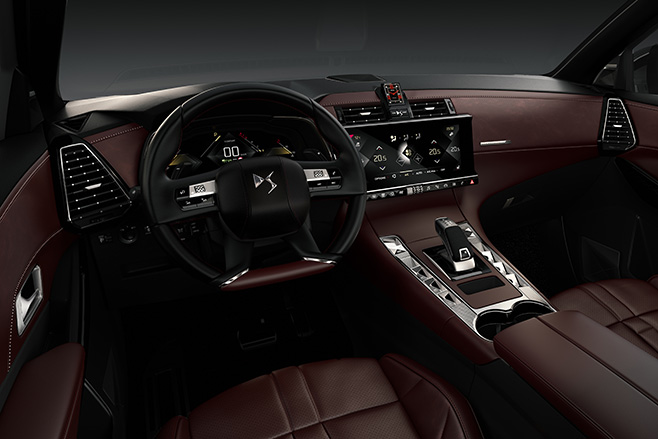
DS is already selling a DS6 crossover in China, but the DS7 is an all-French affair that’s been designed to compete with premium European offerings. It certainly looks the part with a marked resemblance to a Lexus RX at the front, and a very good impression of an Audi Q5 down the back – with a very similar full-width liftback featuring integrated tail-lights. The cabin features a 12-inch central touchscreen and digital instruments as well as power-operated recline on the rear seats. Fit and finish feels good, with stitched leather dashboard and door panels on the cars we saw.
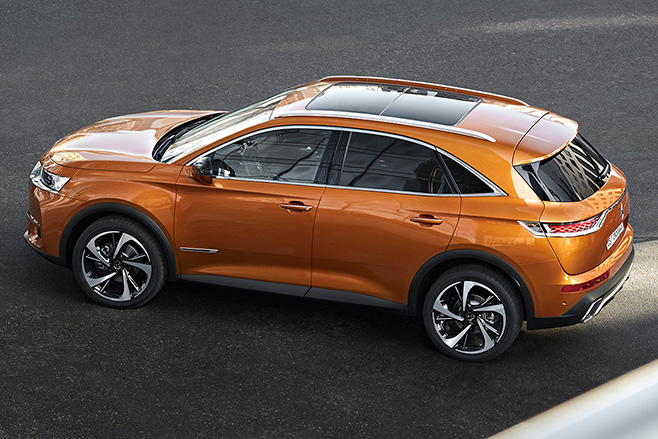
The DS7 is less radical under the surface, sitting on PSA’s EMP2 modular architecture and with power coming from a range of usual suspects. Three petrol engines will be offered in Europe from launch; a 1.2-litre turbocharged three-pot with 95 kW and then two 1.6-litre turbo fours in 133kW and 170kW outputs. There will be two diesels, a new ultra-frugal 95kW 1.5-litre unit and a 133kW 2.0-litre. All barring the base engines will get an eight-speed auto as standard.
All-wheel drive won’t be offered until later, and then only with the forthcoming hybrid powertrain. PSA engineers confirmed there are no plans to offer an all-paw DS7 with a conventional mechanical system; the hybrid will have two 80kW electric motors – one on the rear axle – working with a 1.6 petrol turbo to produce a claimed total output of 222kW.
Tech highlights will include an optional “Active Scan” suspension system that will use a high-mounted camera to read the approaching road surface and pre-set the stiffness of the variable dampers for bumps, in essence a very similar system to Mercedes’s Magic Body Control. Higher-spec versions will also get active LED headlights featuring moving elements that can give five different lighting modes and also turn the DS7’s beams into corners.
European deliveries are confirmed for early 2018; we’ll bring you more on Australian pricing and dates when we have it.
IF EVER there was a difficult exercise in elimination it would be compiling a top 5 list of anything Porsche has produced.
The Stuttgart-based sportscar manufacturer has begun the daunting process with a series of Top 5 videos that are sure to provide lively talking points for Porsche fans while giving the uninitiated an idea of what all the fuss is about.
Videos so far include the ‘Top 5 Rare Porsche Factory Models’, Top 5 Wildest Porsche Spoiler and Rear Wings’ and, our favourite, ‘Top 5 Best Porsche Sounds’ which features a series of biblically epic engine notes.
We won’t spoil things except to say the cars are revved on a dyno in a soundproof room to get the best din possible. The video also doubles as a mini documentary, though the producers kindly drop the narrative and background music when the pedals are put to metal.
Top 5 Rare Porsche Factory Models is nothing less than Porsche porn, with a fella named Dieter ripping the covers off some pristine cars at the company’s historical archives where he has one of the best jobs in the world.
All five are homologation specials, or road going versions of actual racing cars, and were built in very limited numbers. Remember these whenever anyone raises the issue of what the best Porcshe ever sold was.
Top 5 Wildest Porsche Spoiler and Rear Wings shows audacious rear appendages that provide downforce to help transfer as much power through the back wheels as possible. These include the revolutionary ‘Duck Tail’ on the Porsche 911 Carrera RS 2.7 and one car you probably did not expect. It also highlights Porsche’s incredible Weissach wind tunnel where countless tweaks have been made to the 911’s evolutionary design.
HERE are Wheels, we’re all about the stylish aspect of cars. We love a beautifully designed car as much as we love a really fast car.
Naturally, the stylish concepts are one of the most anticipated aspects of any motor show, with Geneva Motor Show being one of the biggest presenters of sexy design concepts. Here are a few we know about so far.
DENDROBIUM ELECTRIC HYPERCAR
Ok, so the Singapore-made Dendrobium coupe isn’t exactly new. It was revealed at the same show last year and as far as we can see, it looks much the same. It’s an electric hypercar, created with Williams Advanced Engineering and Vanda Electrics.
We don’t know much about the car yet, other than it’s an aluminium and carbon fibre two-door hypercar with an electric drivetrain. Its name, Dendrobium, is a Singapore orchid, and designers have considered this in the car’s aesthetics, replicating the flower’s petals in the car’s roof and doors.
In terms of what’s different, however, there’s speculation performance figures could be revealed but we’ll have to wait until the show to know for sure. Still, it’s great to look at.
PEUGEOT INSTINCT
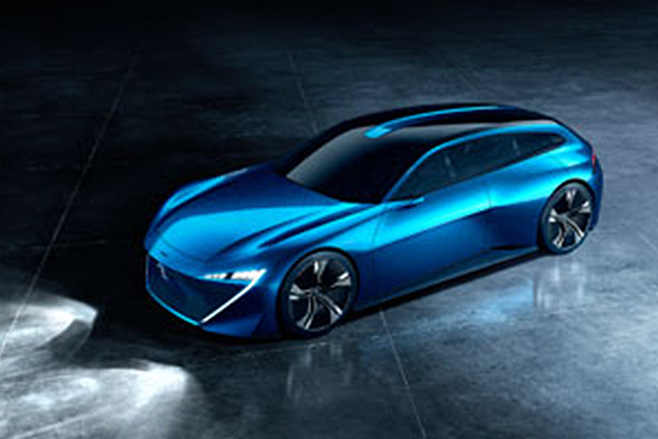
Peugeot says the Instinct is designed with “freedom” in mind, as a vehicle that offers two autonomous driving modes and two driver modes. It includes some cool technologies like connectivity to your smart watch and smart TV, or the ability to alert you to leave earlier for an appointment based on traffic. Or, it can even lock your house door when you start the car.
The shooting brake body takes aerodynamics into account to produce a sophisticated and timeless look. Curves, sculpted lines, a long bonnet and a beautifully curved sunroof adds to the sophistication. Teamed with Peugeot’s Responsive i-Cockpit inside the Instinct has an almost James Bond-esque quality about it.
PININFARINA H600 AND EF7 VISION GRAN TURISMO
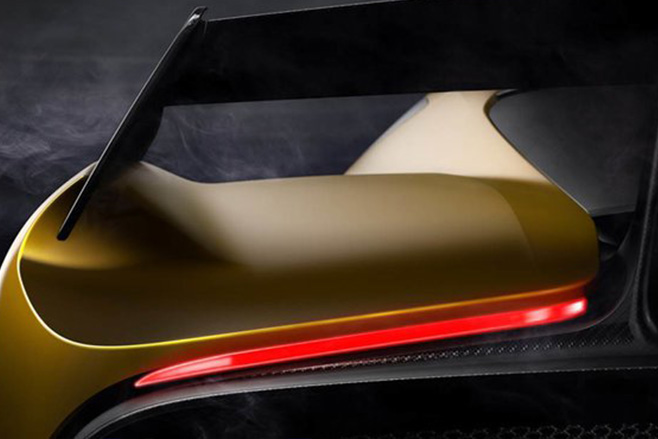
We’ve not many details on either cars, aside from two teaser images.
The H600 will be a luxury sedan which Pininfarina says will be an “elegant and comfortable” combination of “pure design and eco-friendly technology”.
The EF7 will appear in Vision Gran Turismo, a concept designed for a PlayStation game. The production car, however, will be on display at Geneva and again, we’ve only seen some teaser images of the concept so far. The EF7 is made from carbon fibre and weighs less than 1000kg for speed. Inside, it features a V8 engine with about 450kW.
The car is designed by former Formula One and Indycar pilot Emerson Fittipaldi, and is said to be the first of a series.
Aston Martin customers can shake or stir their models in the future with an expanded range of personalisation options from the British brand’s Q division.
The customisation service was established in 2012 to more deeply ingrain Aston’s links with the James Bond movies, and is showcasing its new collection at next week’s 2017 Geneva motor show.
But before you get too excited, the Q by Aston Martin range has more to do with 007’s perfectly tailored suits than his Quartermaster’s goon-busting gadgets.
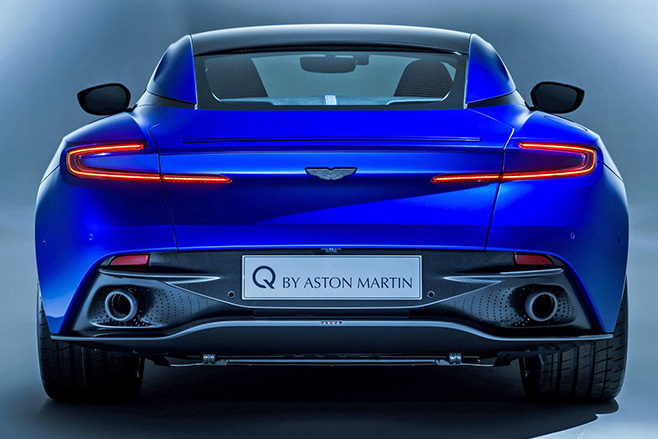
The special Aston Martin DB11’s wheel blades are matched to exclusive Zaffre Blue paint as one of its most striking style features. The exterior also features forged carbon fibre elements – including front splitter, side sills, side mirrors, and strakes on the bonnet and rear diffuser. The black weave is used for the wheel centres and engine cover as well.
Inside, the cabin in cloaked in leather that could take its name from a Bond villain: Obsidian Black. Headrests are embossed with “Q by Aston Martin” logos.
For those drives to exotic destinations, the DB11 Q is available with a colour-matched four-piece luggage set.
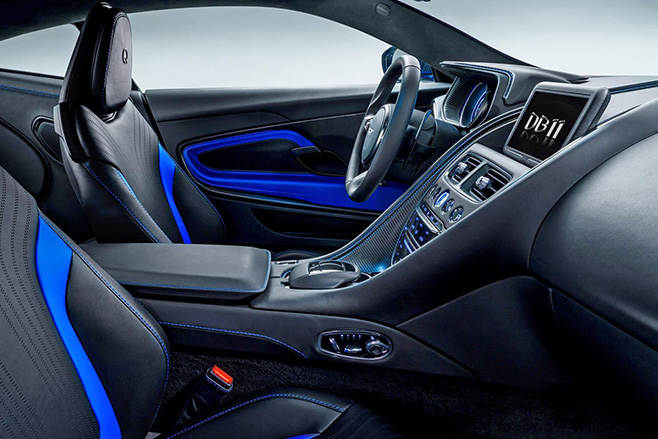
For a truly bespoke service, Aston is also introducing Commission – where the company says it can take a customer’s dream Aston from conversation to reality. “The only limit is your imagination,” says Aston.
Aston is no stranger to limited edition models. It produced the super-exclusive One-77, while the Q division itself has already been busy with two projects in recent years.
It was involved in the CC100 Speedster that marked Aston’s century in 2013, and last year it produced a one-off roof-less version of the company’s GT3-inspired Vantage S GT12 for a wealthy client.
PEUGEOT is serious about turning its once-invisible 2008 small SUV’s fortunes around, with a makeover introducing a tougher-looking nose, a more-desirable powertrain, and longer features list. If it still doesn’t sell then Australians just aren’t ready for a sophisticated and dynamic baby crossover.
WHAT IS IT? Based on the 208 supermini, the front-drive only Peugeot 2008 is basically a jumped-up wagon with an SUV ride height and some soft-road capability in higher-spec variants. A streamlined range sees one all-new 1.2-litre three-pot turbo auto powertrain replace three unfit older engine choices, to help the Peugeot finally make a splash.
WHY WE’RE TESTING IT Peugeot isn’t regarded as a being at the cutting edge, but the outgoing 2008 was indeed at the pointy end of things when launched in 2013, helping to usher in a new era of small SUVs defined by the Mazda CX-3. The problem was, despite sparkling dynamics, a smooth ride, classy dash and roomy interior, its powertrain options were at odds with Aussie tastes. The facelift’s 1.2-turbo auto fixes all that – and more besides.
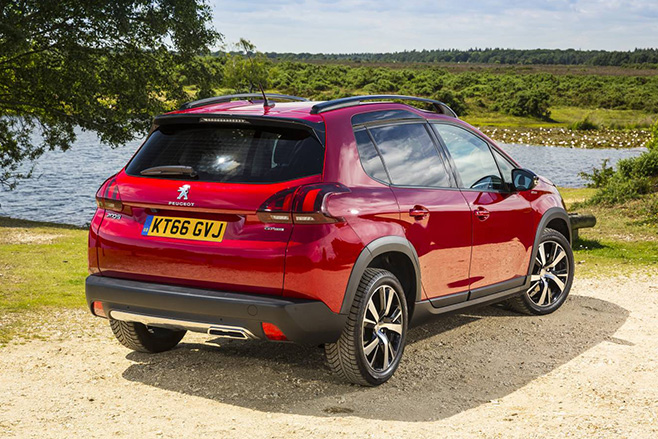
THE WHEELS VERDICT Believe it or not, one of the oldest small SUVs on the market – the Peugeot 2008 – might have gone from being amongst the least to most competitive in one fell swoop. Gone are the inadequate engine and transmission choices, for a glowing 1.2-litre three-pot petrol turbo, mated to a responsive six-speed auto. The insipid nose has been remoulded to look more butch, and spec levels rise. We’ve always rated the previous 2008’s sweet handling and ride qualities, so now that the French have fixed everything else, we are looking at one of the better – and more enjoyable – small SUV contenders out there. Who’d have thought that!PLUS: Performance, efficiency, interior, styling, comfort, ride, vision, handling MINUS: No manual option, no AEB availability on base car, limited-run five-year warranty
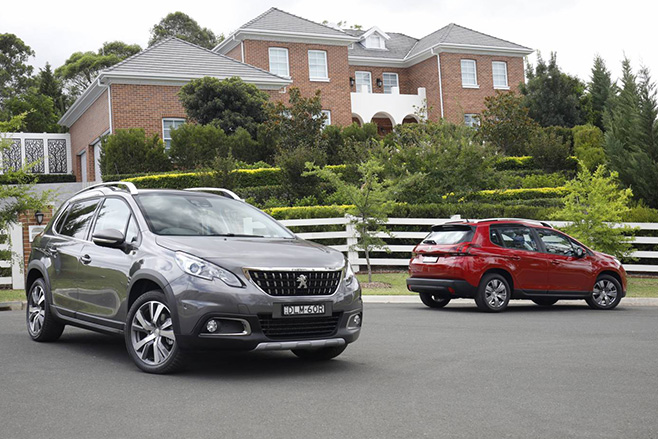
THE WHEELS REVIEW SEQUELS. Most pale against their original, but as with Andy Murray’s latter Wimbledon campaigns, the Morris Minor 1000 and Star Trek II – The Wrath of Khan, sometimes a subsequent attempt works a charm.
Enter the Peugeot 2008 facelift. Not an epic generational change, granted, since the visual makeover is limited to a more butch nose cone, beefier cladding, lion’s claw-like LED tail-lights, chunkier alloys, and the obligatory touchscreen multimedia update.
However, what has been upgraded has turned a sweet handling, comfy riding, and classily-packaged small SUV into an unexpectedly complete mid-spec Mazda CX-3 agitator.
The first move involved ousting two completely unsuitable atmo petrol powertrain choices. We’re talking about the 60kW/118Nm 1.2-litre triple manual (willing but weedy) and 88kW/160Nm 1.6 four-pot/four-speed auto (gutsy but woefully dated). Both give way to a sparkling 81kW/205Nm 1.2 turbo triple/six-speed auto combo also servicing the closely related Peugeot 208 supermini.
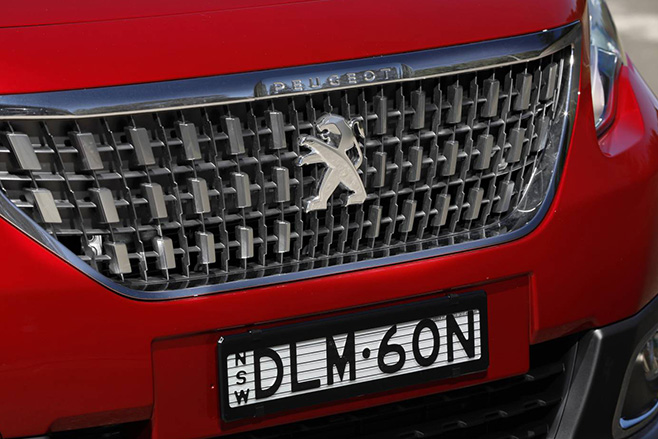
A correspondingly lighter (by 12kg) front axle compared to the previous 1.6/auto mainstay seems to enable even greater steering agility. Backed up by the same supple suspension tune as before, this 2008 is set-up for a keen driver. Don’t you just love a virtuous circle!
Deep side windows and a commanding view ahead thanks to Peugeot’s controversial ‘i-Cockpit’ low-wheel/high instrument driving position set-up further engender a sense of confidence.
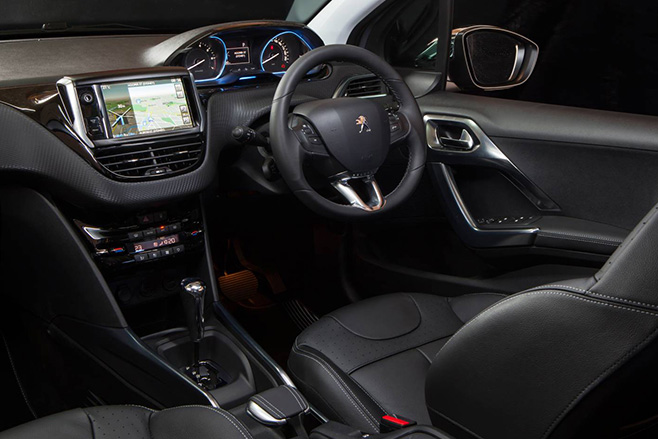
All models score more gear than before, including a reverse camera, rear parking sensors, Apple CarPlay, cruise control with speed limiter, electrically foldable mirrors, and alloy wheels.
With no more manuals (or atmo engines) available, membership into the now all-turbo 2008 club jumps $4000, but even at $26,490, the base Active 1.2T auto represents value.
In fact, apart from non-manual, occasional road noise, and no AEB on Active, Peugeot’s one-time small SUV underachiever is now a likeably complete package. It deserves to be a blockbuster.
SPECS Model: Peugeot 2008 Active 1.2T Engine: 1190cc 3-cyl, dohc, 12v turbo Max power: 81kW @ 5500rpm Max torque: 205Nm @ 1500rpm Transmission: 6-speed auto Weight: 1305kg 0-100km/h: 11.3sec Fuel economy: 4.8L/100km Price: $26,490 On sale: Now
