
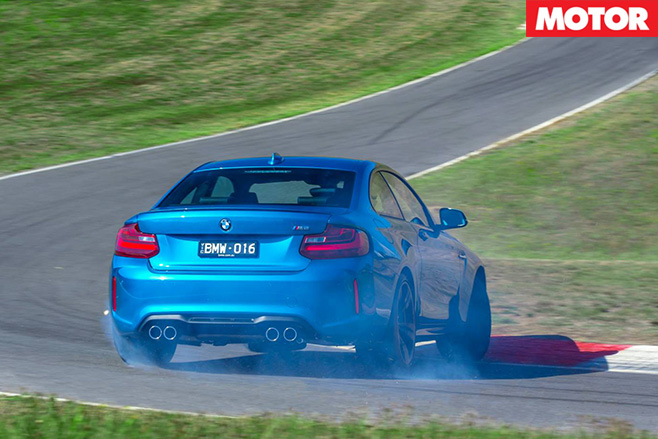
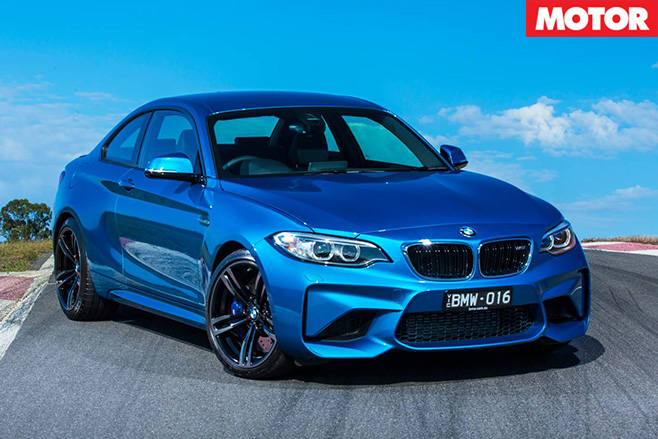
The BMW M2 is already popular at MOTOR HQ, narrowly missing a 2017 Performance Car of the Year podium finish, and it seems it’s equally popular with the punters.
Interest for the M2 has taken the German marque by surprise and demand is outweighing supply in Australia, a fact BMW Group Australia CEO, Marc Werner is keen to address.
“At the moment the demand for the M2 is extraordinary. We are actually overwhelmed by the success and we’re in daily discussion with our production partners back in Europe saying that we want to get hold of more production”.
“As a matter of fact, with the M3s and the M4s, in terms of enquiries, it actually went up – and not only enquiry, but also sales volume. The launch of the M2 actually had a positive effect for our M3 and M4 sales”.

“At the moment we are fighting for additional production in order to meet the local demand. You’re currently looking at a couple of months [wait]. [Correcting] that is what we are currently focusing on … whatever comes next, that remains to be seen”.
“M Sales are a fantastic success in my opinion. Two or three years ago we sold 500 cars, then from 500 to 1000, and last year to 1500 off the back of a very strong M2 introduction. This does not include M Performance, it’s the diehard cars,” Werner said.
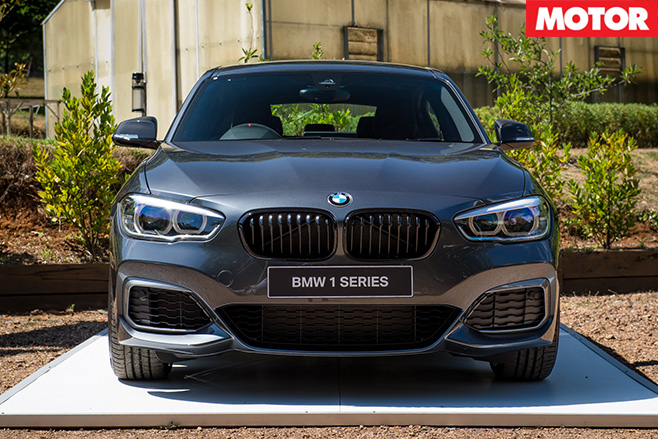
The newly revised BMW M140i will gain a limited-run Performance Edition to up the ante on the already impressive rear-drive, straight-six-turbo package.
Slated for launch in the second half of 2017, the $71,900 M140i Performance Edition will be restricted to just 60 units, each fitted with M Performance gear and a special ‘1 of 60’ plaque to signify its build status and rarity.
While the 250kW/500Nm outputs of the new B58 engine remain the same, the key mechanical change resides with the 15 manual examples, which gain a mechanical limited-slip differential as standard.
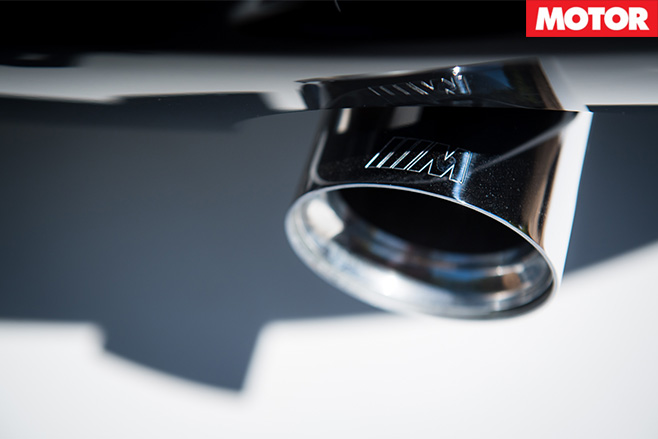
The remaining 45 units utilising the eight-speed ZF automatic will miss out on the LSD, but like the manual, gain the new M Performance exhaust system with chrome tips for extra acoustic and visual appeal.
“We’re excited about this car as it fills a bit of a gap for us in terms of being able to have an M140i that’s got some customisation. As far as a mini M-car goes, this is our local nod to those cars”.
The exterior enhancements of the M-fettled 1 Series extend to BMW M Performance 19-inch alloys finished in bi-colour Orbit grey, hand-crafted, carbon fibre exterior mirror covers and a high-gloss black kidney grille, while the rear fins and roof-mounted spoiler receive a matte-black finish.
Other additions include Aluminium pedal covers, sports seats wrapped in Alcantara (Dakota leather optional), M Performance LED door sills and a bespoke carbon-fibre shift knob with an Alcantara shift boot for the manual.
When asked why the decision was taken to allocate the smaller build number to the LSD-equipped manual, Begg explained that it was simply down to customer take-up rates.
“Australia is quite a small manual market and although there are enthusiasts out there who would choose a manual, most of the people buying a car of this nature are going to choose an automatic. As much as you want to disagree with that rationality as an enthusiast, that’s the reality of our market in Australia”.
“In my opinion it looks brilliant, but we also said we need to keep it at low numbers and we want to make it exclusive. When those cars are sold then we can decide what else to do”.
Begg added that the aim from the outset was never to sell the car in high volume. “We wanted to make a car that was exciting for us as well. This is what our customers like, which is performance-orientated cars. And it’s what we like too,” he said.
A number of Supercars stars have hit out at the exemption, though some preferred not to publicly criticise the ruling body of the sport.
One who did was go public in the Fairfax press was 2015 champion Mark Winterbottom, who while supporting the introduction of the Superlicence, added pointedly that the licence is “in place not only for performance, but for safety.”
Rullo’s results in other forms of racing are not strong enough to automatically qualify him for the recently introduced Superlicence which is typically granted to drivers of experience who have been successful in lesser categories.
The exemption means that Rullo, a Dunlop series competitor last year, is poised at 16 to become the youngest driver to race in the Supercars championship series.
CAMS has granted the Superlicence to the Perth youngster on a provisional basis until he turns 17 on June 15 2017. So although he can’t drive himself to the races, he can race in Supercars once he’s there.
CAMS has also emphasised that the status of Rullo’s Superlicence will be reviewed after each round of the championship throughout the provisional period.
At the expiry of the provisional period, CAMS will determine whether the teenager has suitably demonstrated that he qualifies for a Superlicence for the remainder of the championship, and whether the Superlicence will be granted on a round by round basis, or whether it is withdrawn altogether.
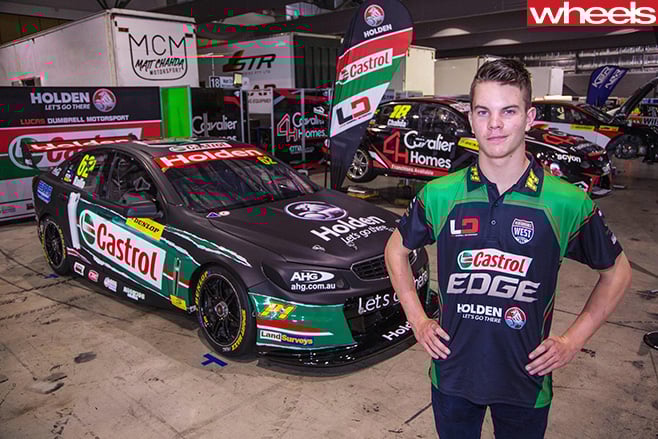
Rullo, who was mentored by Nick Percat last year, is due to make his main-game Supercars debut with LDM in the tough Clipsal 500 in Adelaide on March 2-5.
The other LDM signing for 2017, 23-year-old Matt Chahda, was denied dispensation for a Superlicence by CAMS for the 2017 Supercars Championship season. Chahda finished 20th in the Dunlop series last year.
The Superlicence was introduced to mandate a reasonably high eligibility standard for the Supercars series.
Albury’s Chahda met the age requirements but didn’t accrue the required minimum of 13 points from championship finishes in national categories over a five-year period.
It’s believed his exclusion from the Sandown meeting in Melbourne last September after being blamed for a multi-car Dunlop series shunt would not have helped his case.
By considering whether to grant the dispensation, CAMS is required to satisfy itself that there are exceptional circumstances to support a decision to waive the minimum requirements. CAMS has determined there were exceptional circumstances with regards to Rullo, but not Chahda. A CAMS statement said the latter had not demonstrated the necessary driving skill and competency to support the dispensation.
While conceding the Superlicence system is a welcome move on safety grounds, Supercars CEO James Warburton has urged CAMS to amend the points structure on which eligibility is based. Calling for a review, Warburton suggests the system is too reliant on results of CAMS’s favoured category, Formula 4.
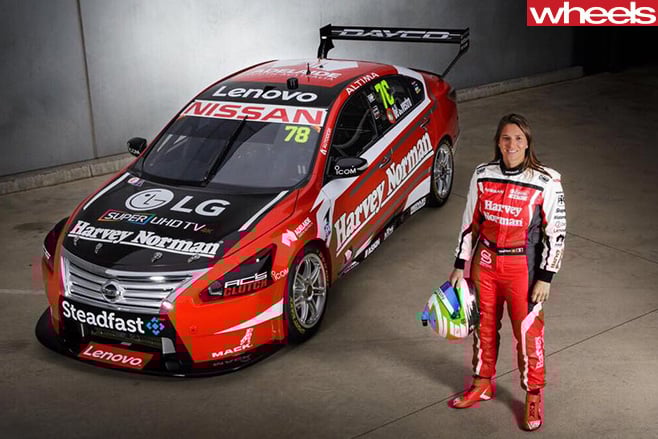
She’ll be at the official Supercars test prior to the opening round of 2017, the Clipsal 500 in Adelaide.
The Swiss driver will become the first of her gender to contest the Australian championship since Christine Gibson bowed out of touring cars in 1975.
De Silvestro, whose experience of Australian racing is limited to the last two Bathurst 1000s where she shared cars with local racer Renee Gracie, is pumped to get her season underway.
“The car looks fantastic – red goes faster, right?” said de Silvestro, a former Indycar and Formula E racer. “It’s great to show off the Altima I will be racing this year, as well as announcing that Harvey Norman will be supporting me. Harvey Norman was with me at the last two Bathurst 1000s, so it’s great to have them on board again.”
She is cautious about making predictions about how she may fare. “This is going to be my first full-time year with a closed top car and there a lot of new things for me to learn and adapt to.”
Her two biggest challenges will be adapting to the high levels of aggression that is part and parcel of Supercars’ sprint racing, and the fact that nearly all tracks will be unfamiliar to her ‑ the exceptions being Mount Panorama and, after the compulsory pre-season test on Tuesday February 21, Sydney Motor Sport Park.
At least she won’t be disadvantaged learning about the new construction Dunlop tyres used this year – all drivers and teams are similarly placed.
VERY few – among them the man himself – expected the new combination of the mercurial Jari Matti Latvala and the still-developing works Toyota Yaris would be a stunning World Rally Championship winner so soon into 2017.
But Latvala seized his chances after early Rally Sweden dominator Thierry Neuville inexplicably crashed out of a handy lead on the last stage of the day on Saturday.
Latvala’s victory was his 17th in the WRC and perhaps his most emotional and satisfying.
Consider his awful 2016 when he was psychologically whipped into the metaphoric foetal position by rampant VW teammate Sébastien Ogier. He then faced the prospect of a year spectating after VW withdrew from the sport at the end of last season, finally picking up a drive with the returning Toyota in a late deal (after Ogier had tested the new Toyota Yaris in November and rejected an offer from the Japanese manufacturer).
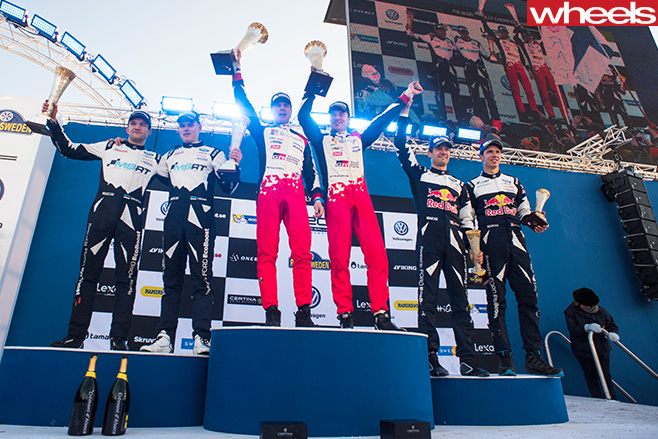
Now, Jari Matti Latvala is a winner again. And after a 17-year absence from the FIA World Rally Championship, Toyota is back on the top step of the podium, remarkably just two rallies into its return and likely just as surprised as some of more fancied rivals.
Hyundai, in particular, will be asking its drivers why it has such poor results when its i20 is, on most evidence, the fastest car in the 2017 WRC.
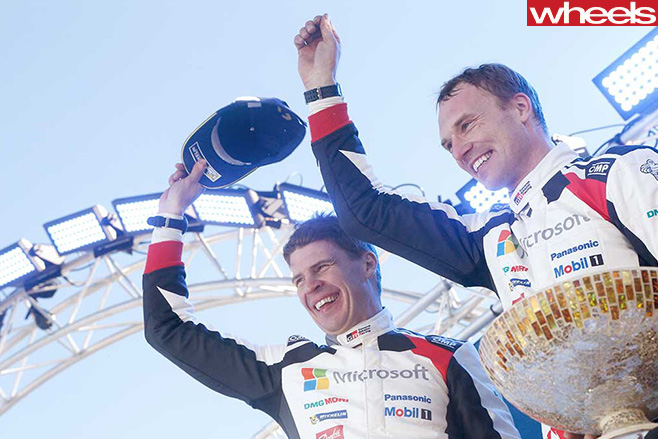
The Estonian was expected to really challenge J-ML, who has been known to doubt himself under pressure.
Instead, the Toyota driver won all three of Sunday’s snow and ice-covered speed tests in his Yaris World Rally Car to extend the margin to 29.2sec.
Such was Latvala’s confidence that he whipped old nemesis Sébastien Ogier and the re-joining Neuville on the final Power Stage to claim five maximum bonus points.
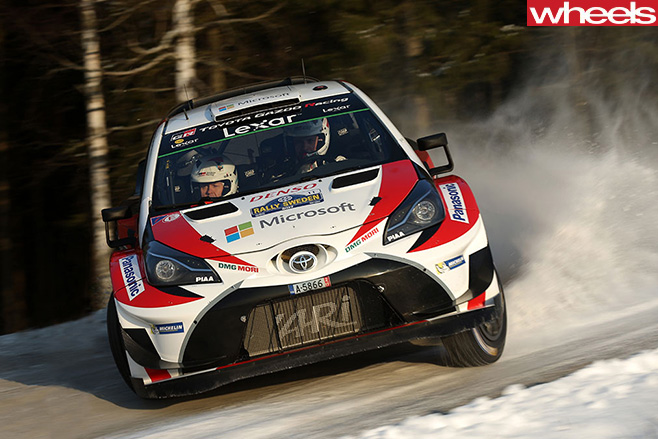
Latvala now holds a four-point advantage over Ogier in the overall drivers’ standings. It is the first time any driver other than four-time champion Ogier has led the championship since February 2014.
It was also the first Toyota win of this century, the last being in China in 1999.
“We’re at a good level but now we go forward and it gets more difficult. Mexico is next up and I’m really motivated for the championship,” J-M L said.
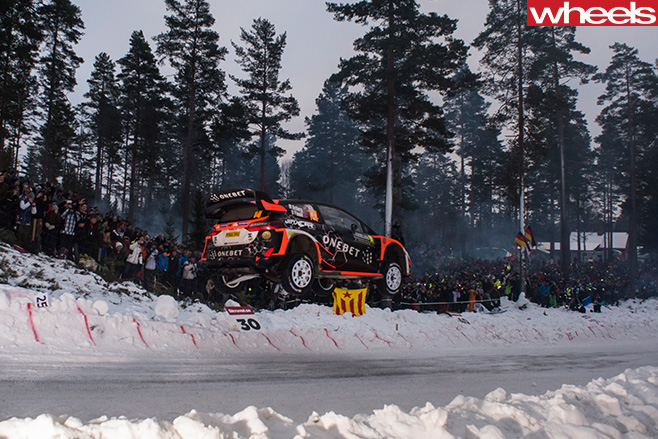
Tänak had the upper hand on Latvala on Saturday when he closed in and looks set to pounce. Then with his Fiesta not handling to his liking and after dropping seven seconds in the opening special stage, the improving Estonian settled for second, matching his career-best result.
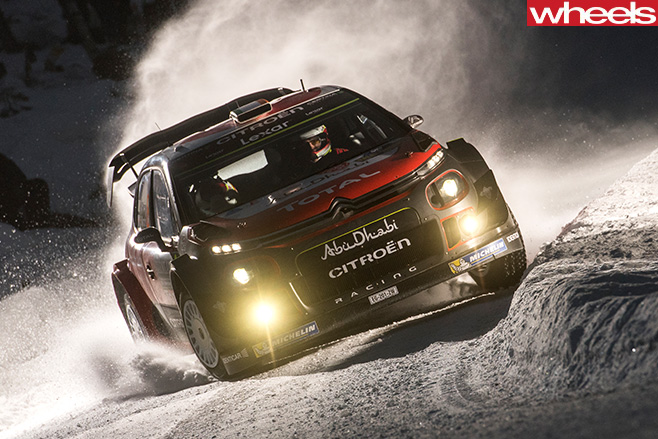
Dani Sordo was the top Hyundai finisher in fourth following Neuville’s shunt. The Spaniard finished 39.7sec ahead of Craig Breen, who struggled to refine his Citroën C3’s set-up but banked good points from a solid debut in the car.
Kiwi Hayden Paddon was seventh in another i20, but still struggling to learn his way on snow and ice. He also lost his power steering on Saturday, comparing driving the car to “wrestling a 400-pound lion” . He’ll be more at home when the new-era World Rally Cars take on the challenge of high temperatures and rough and rock dirt roads at Rally Guanajuato Mexico, March 9-12.
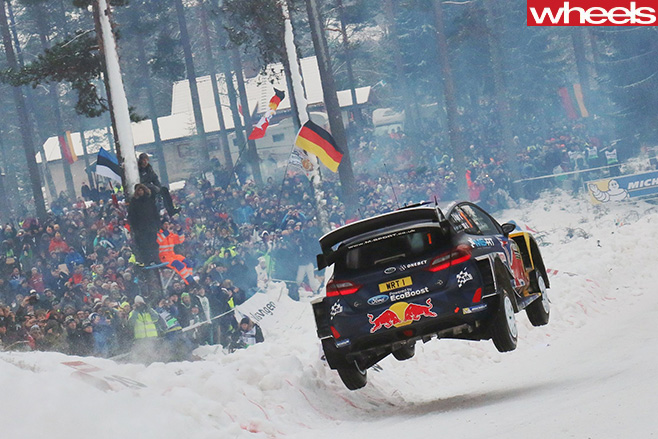
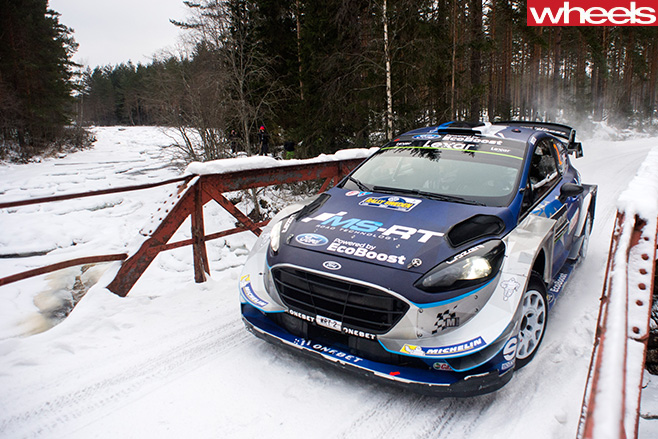
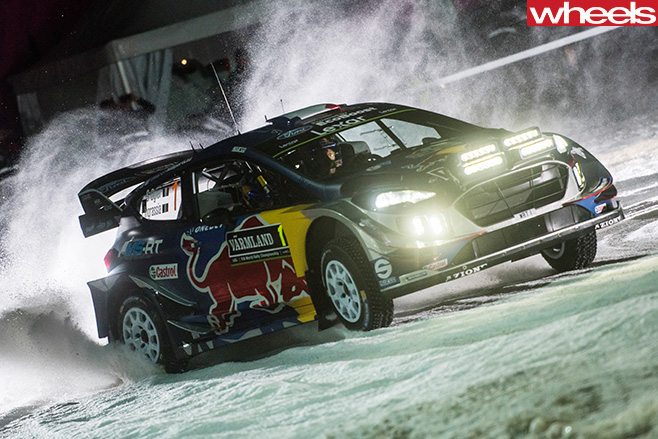
That will be the next big serious test for the new Yaris And the reborn Latvala.
FIA World Rally Championship points after two rounds of 13: 1. J-M Latvala 48; 2. S Ogier 44; 3. O Tänak 33.
Bathurst Six Hour entry nears capacity
Production-based motor sport continues to show impressive competitor support with, at last count, 67 cars locked and loaded for the Hi-Tec Oils Bathurst Six Hour this Easter.
The entry list is just five from its 72-car capacity, reminding us of the huge fields the Bathurst 1000 attracted back in the good old days.
A capacity grid is now expected with the race on amongst would-be entrants to secure a start.
“We have more entry forms in front of us than grid positions so it is up to the next five cars to commit and the grid will be full,” said event director James O’Brien.
Unlike the Bathurst 12 Hour where the emphasis is on exotic GT poster cars, the Six Hour race is for more mainstream brands and affordable models.
There is depth in every class throughout the field. However, the 22 cars in the Extreme Performance/Forced Induction Class A are set to do battle up front.
Entries from Mitsubishi, Audi, Ford, Subaru, Mercedes-Benz, BMW and Holden/HSV in class A and B underline the depth of the outright fight.
Two Mercedes-AMG A45 hot hatches are entered along with several competitive BMWs and a host of the enduring Mitsubishi Lancer EVO models, including a two-car team from Pollicina Motorsports and three from Dylan Thomas’ successful CXC Global Racing outfit.
Supercars regular Tim Slade is set to drive alongside Thomas in the lead entry.
Conroy Motorsport will make the debut of the KIA Proceed GT in this year’s race, boosting an already fiercely competitive class D battle that includes the usual host of Toyota 86 competitors, a Honda Integra, and a Mini Cooper.
The Hi-Tec Oils Bathurst Six Hour doubles as the opening round of the 2017 Australian Production Car Series.
Visit www.bathurst6hour.com.au for more information.
THE fresh-for-2017 Isuzu D-Max range features a heavily revised Euro 5-compliant 3.0-litre common-rail turbo-diesel, exclusive to the Australian market.
WHAT IS IT? A Japanese 4WD ute that has been something of a sales success in the ultra-competitive dual-cab 4WD ute market. It’s a one-tonne workhorse that can do double-duty as family transport and outback tourer.
WHY WE’RE TESTING IT Isuzu UTE Australia fought hard to keep a 3.0-litre turbo-diesel in a buyer market that still views ‘big,’ in terms of engine capacity, as better, rather than opt for already available small-capacity (2.5-litre or 1.9-litre) options. With 430Nm (up 50Nm from the previous-gen model) of torque, the new donk and six-speed gearboxes add more performance, economy and driving refinement.
MAIN RIVALS Toyota HiLux, Ford Ranger, Nissan Navara, Mitsubishi Triton
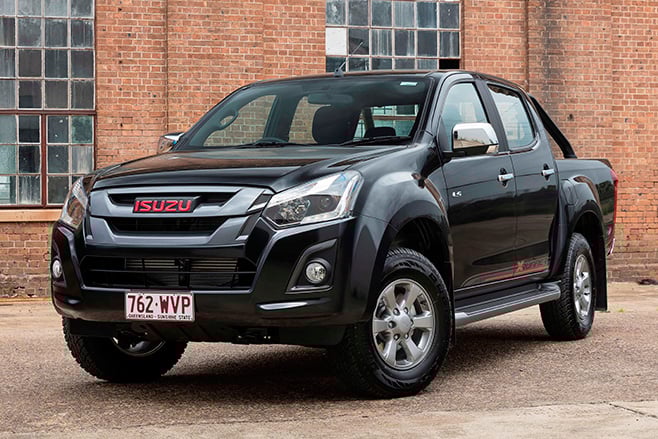
PLUS: Euro5-compliant 3.0 turbo-diesel; six-speed auto and manual; off-road performance; versatility; fatter torque band; bang for your bucks MINUS: Firm ride when unladen; no LSD or rear diff-lock option; short seat-base cushions in lower-spec models; no reach adjustment for steering wheel
THE WHEELS REVIEW THE Isuzu D-Max has been the quiet achiever in Australia’s burgeoning dual-cab 4WD ute market, steadily – and with little fanfare – making its way up its segment’s sales charts, with its tough, no-nonsense design and performance viewed as a serious option for both adventurous families and tradies.
Isuzu has ridden a wave of sales success with the D-Max (and even more so now with its MU-X wagon sibling) and it is confident this major update of the load-lugger will see it grab even more of the 4WD ute segment; the D-Max finished sixth on the sales charts – beating Mazda’s BT-50 and VW’s Amarok comfortably – and came very, very close to toppling former market big-gun, Nissan’s Navara (only 400 sales separated the two vehicles).
The D-Max is still, first and foremost, a utility vehicle capable of carrying up to one tonne or more in its tray. Balancing the workhorse with the family wanderer has seen substantial work on the suspension, as well as that all-new drivetrain.
The engine is quite well muted (unless you boot it, then the rattle of a pressed diesel engine is evident), thanks to the addition of more soundproofing in the bulkhead and under the guards, and also feels incredibly under-stressed. The smooth-shifting six-speed auto works very well with the engine; the wider torque band, with a juicy 380Nm (the old engine’s max torque figure) now available from 1700-3500rpm, is matched perfectly with the auto’s ratios.
Isuzu also tweaked the six-speed manual to offer closer ratios as well, aimed at improving driveability by keeping the oiler in its torque band.
The interior is a mix of hard plastics, big audio touch screens (seven- or eight-inch, model-dependent), well-bolstered (but short in the base) seats, and good fore and aft vision.
For off-road tourers, the D-Max is a mix of (mostly) good and bad news. The good: all models (even 4X2) now come standard with hill descent control and the switch-on-the-fly 2WD to Hi-4WD is brilliant. The bad(ish): the D-Max relies solely on electronic traction control for off-road driving – there’s no LSD or rear diff-lock available, both of which are now standard or a factory option on its competitors. Still, decent wheel articulation and the traction control do enable the D-Max to clamber over most obstacles, and the hill descent control is intuitive in operation.
Reverse camera is standard only on top-end LS-U – it’s optional on all other models. We reckon it should be standard across the range.
Running out the door
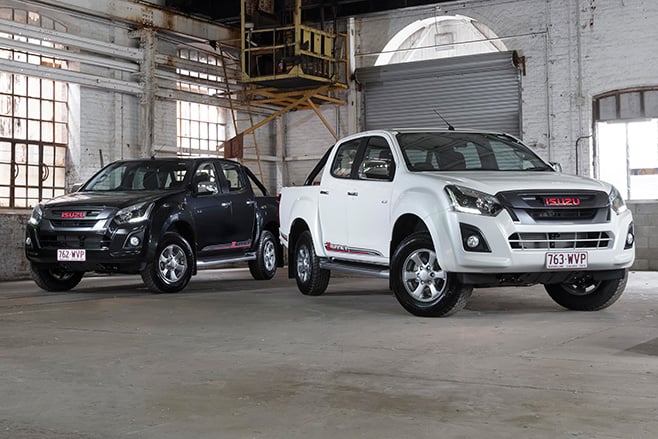
Isuzu is celebrating its 100th anniversary in 2017 and to honour this achievement has released a limited edition D-Max, dubbed the X-Runner. Available in two colour schemes – Cosmic Black and Silky White Pearl, both with red accents – the X-Runner is $46,990 drive away.
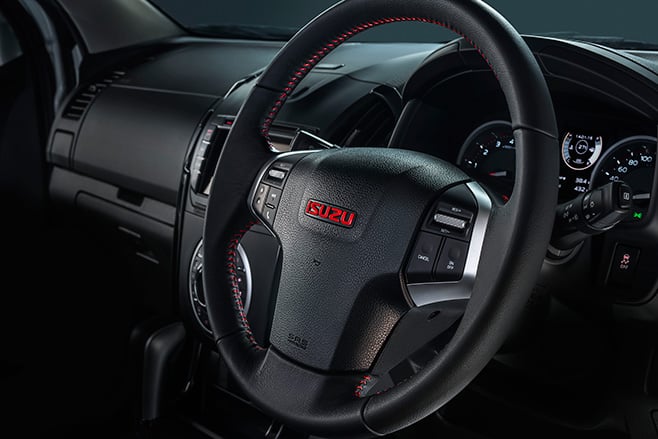
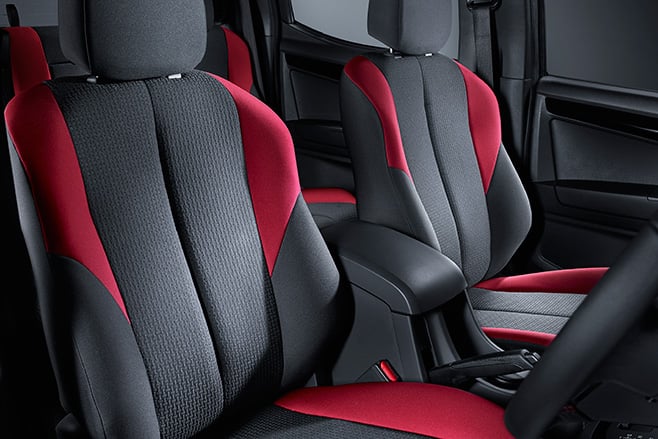
The X-Runner’s styling is unique; as well as the model-specific colour scheme, the limited edition rig features different-styled alloy wheels, numerous but subtle X-Runner decals along the lower sills, a black sports bar and tub liner, , colour-coded black and red seats, and schmick 100th Year Anniversary badge.
The X-Runner is available only with the six-speed auto and should appeal to the younger adventurous buyer Isuzu is targeting. Only bummer is the seats; it would have been nice to see the six-way powered leather jobbies (with their longer base) in this otherwise stylish limited-run D-Max.
SPECS Model: Isuzu D-MAX Crew Cab LS-M Engine: 2999cc 4cyl, DOHC, turbo-diesel Max power: 130kW @ 3600rpm Max torque: 430Nm @ 2000-2200rpm Transmission: 6-speed automatic Weight: 2001kg 0-100km/h: N/A Fuel economy: 7.7L/100km Price: $48,500
Lotus is continually rolling out improvements to its sports cars, making them lighter and faster in the process.
It’s a fine strategy that has made its models better than ever. The Lotus that was brilliant to drive, but required you to excuse just about everything else, is no more.
Last year’s Exige Sport 350 is one of the poster childs for this new Lotus era. But in line with the new strategy, Lotus has used it as a base on which to improve, made it faster and lighter and created the Exige Sport 380.
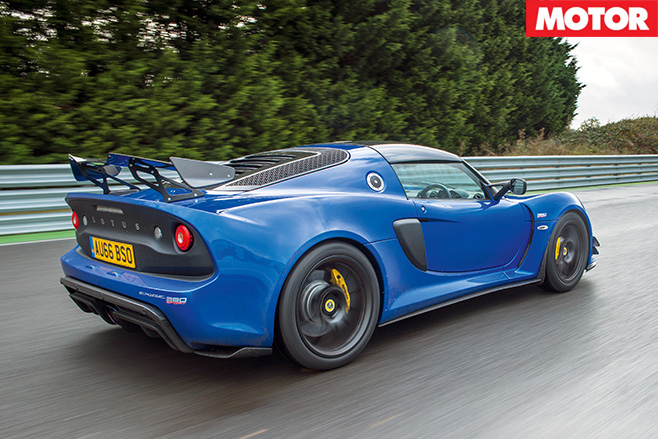
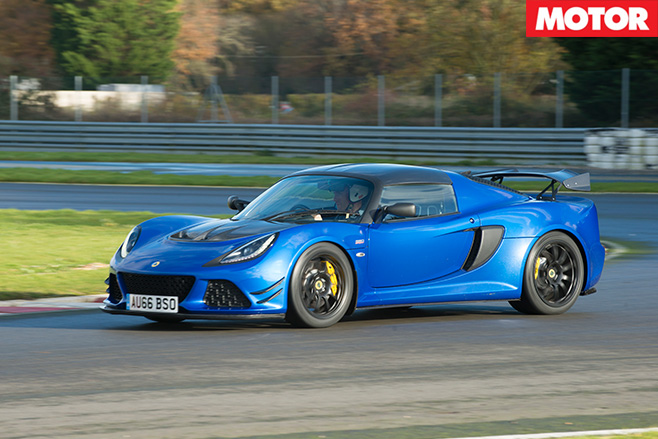
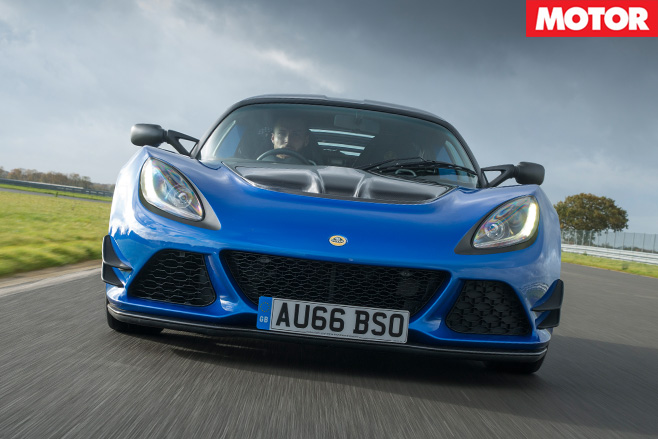
It looks great, for starters. The basic body and chassis remain the same, but the body has been dressed with lashings of carbon fibre. Lip spoiler, front splitter, front access panel, removable hardtop, diffuser and its airblades are all made of the stuff, and there’s a fixed rear wing, too.
That new aero package also helps to create lots of downforce – perfect for taking corners on track at speeds that feel barely plausible. Those who do head to the track with their car are able to spec the optional Track Pack and its adjustable Nitron two-way dampers and Eibach anti-roll bars.
Even without them, you have a car that is as fast, fun and involving. No one would have stepped out of an Exige Sport 350 and been crying out for more performance, but the Exige Sport 380 has an extra 22kW and 10Nm of torque. The revised delivery of the torque allows the Exige to punch harder and for longer up the rev range, yet still in a linear manner.
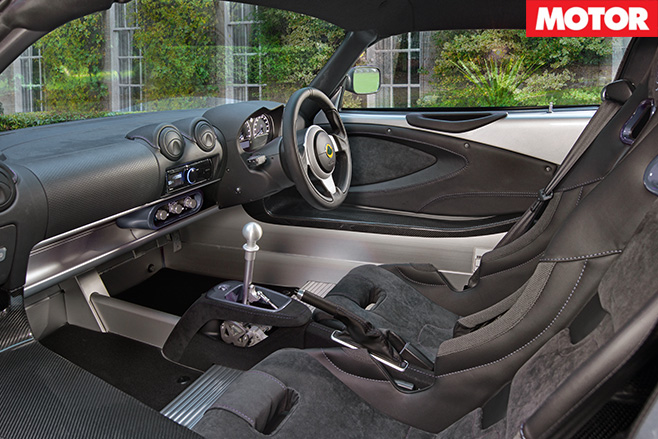
Even the lightweight carbon-fibre backed sports seats are comfortable enough for longer journeys and you’ll find it easier to get in and out of the car thanks to the lower sills. It’s easier getting in than out, but both are better than before.
Lotus has switched to Michelin Pilot Sport Cup 2 rubber for this car, the front tyres being 10mm wider for even more grip and keener turn-in. They combine with the downforce to provide some major grip on circuits, yet still with adjustability in the handling and the ability to select Normal, Sport and Race modes on the electronic control systems for lurid slide potential and extra play (or security, if you prefer) in the chassis.
4.5 OUT OF 5 STARS
LIKE: Brilliant dynamics; great performance DISLIKE: Road noise; still very focused
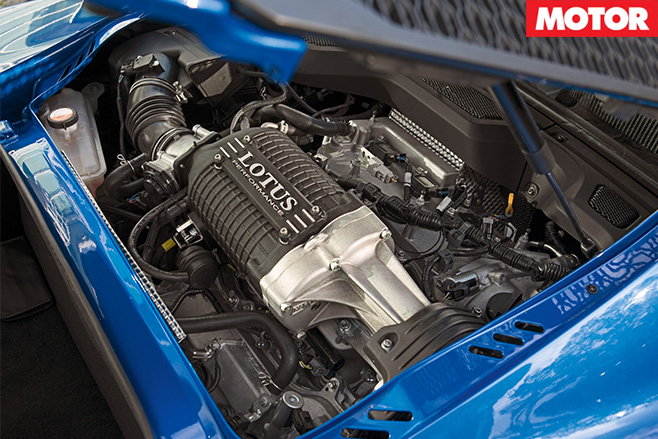
SPECS Engine: 3456cc V6, DOHC, 24v, supercharger Power: 280kW @ 6700rpm Torque: 410Nm @ 5000rpm Weight: 1100kg 0-100km/h: 3.7sec Price: $150,000 (est)
The Isuzu MU-X has tweaked its engine and gearbox to make it more user-friendly and eke out even more fuel savings as part of a mild makeover of the Toyota Fortuner, Holden Trailblazer and Ford Everest fighter.
The revisions, which include adjusting the 3.0-litre four-cylinder diesel engine to meet more strict Euro V emissions standards introduced late last year, also make the off-road wagon more family-friendly.
The big change under the bonnet, though, makes the Isuzu MU-X a better tow vehicle. Torque jumps by 50Nm to 430Nm, moving the MU-X more in line with its competitors’ load-lugging performance, while an all-new six-speed manual gearbox and a significantly different six-speed automatic transmission either match, or even better, rivals. The manual gearbox is linked to a dash-mounted gear shift indicator that shows the driver when to select a higher, or lower, gear.
The automatic gearbox is smarter, locking the torque converter above certain speeds to make the drivetrain more fuel-efficient. It can also adapt, via a “learning” function, to adjust gear changes to suit both the driver’s driving style and the circumstances such as towing, climbing hills or cruising on the highway.
The revisions, classed by Isuzu as a MY16.5 update and suggesting a more significant mid-life change is yet to come, include the addition of a hill descent control function that helps with crawling down long, slippery slopes, but no locking rear diff.
No changes have been made to the MU-X’s exterior. Likewise, the interior carries over from last year’s model but a reversing camera now extends to the entry-level LS-M model. The wagon also gets more soundproofing with insulation added to the firewall and front guards.
Inside, the Isuzu MU-X moves to three USB slots: two on the dash, and one in the rear. The entry-level LS-M model uses a seven-inch screen, while more costly models jump up to an eight-inch unit.
The MU-X wagon is the only other model that Isuzu sells in Australia alongside the Isuzu D-Max ute. The Japanese carmaker’s products, which trade largely on value for money, have been surprisingly popular, with Isuzu regularly featuring in the list of Australia’s top 20 best-selling brands.
The loss of the locally made Ford Territory – the US carmaker pulled out of Australian manufacturing in October last year – opens up even more potential for the brand.
The Isuzu MU-X, introduced to Australia in 2013, was the fifth best-selling large seven-seat SUV in its segment in 2016, outsold only by the Toyota Prado off-roader and Kluger SUV, the Holden Captiva, and the Hyundai Santa Fe.
Isuzu MU-X pricing*
| LS-M manual | $47,000 |
| LS-M auto | $49,100 |
| LS-U manual | $49,000 |
| LS-U auto | $51,100 |
| LS-T auto | $54,800 |
*Before on-road costs
For such a small car, the Suzuki Swift GTi has played a surprisingly large role in the Australian performance car landscape.
Sadly, a large part of that role was a never-ending stream of over-the-top show cars in the mid-1990s, with modifications as daft as wheelie bars, parachutes and intercoolers that weren’t hooked up to anything.
It gained plenty of serious performance cred too, however, thanks to the successful one-make racing series, while it was also a handy rally car, campaigned by none other than Monster Tajima of Pikes Peak fame.
It might not have been the most sophisticated handler, but with a screaming 75kW 1.3-litre four and very light kerb weight it had the potential to be a giant killer.
The latest Swift Sport was never quite as popular, though it was a fun and engaging, if a little pricey, warm hatch. With the Swift Sport having recently ended production, it’s time for Suzuki to up the ante once again by reviving a famous nameplate and giving the likes of the Ford Fiesta ST and VW Polo GTI some proper competition.
Here’s how we’d do it
FEATHER WEIGHT Suzuki is doing great work at the moment in building light cars; it’s Vitara light SUV weighs just 1075kg in its basic form. This trend is set to continue with the new Swift, with base models expected to weigh just 900kg, ensuring a Swift GTi should easily break the 1000kg barrier. Even at 970kg, it’ll undercut the Fiesta ST by a hefty 200kg.
TURBO TERROR The Swift Sport was the last naturally-aspirated sporty hatch available, however the new GTi would have to embrace progress and switch to a 1.4-litre turbocharged engine. With the Swift Sport expected to pack 103kW/220Nm, the GTi needs a boost to 125kW/250Nm.
TICKING BOXES While that will make it the least powerful of the baby hot hatch brigade, its lack of mass will ensure its acceleration is more than competitive, with 0-100km/h taking 6.8sec for the six-speed manual and 6.9sec for the six-speed auto.
KISS PRINCIPLE Suzuki is a small company without the R&D budgets of larger manufacturers so we’re keeping things simple and it’ll be all the better for it. Just a basic stiffer and lower suspension setup with particular attention paid to having good tyres and strong brakes.
PRICE IS RIGHT One area the current Swift Sport struggled was its price tag. At $24,490, it wasn’t that much cheaper than much faster opposition. If Suzuki can drop that by $1000 for the new Sport, the GTi could land at $26,990 (auto $28,990), making it a real contender at Bang For Your Bucks.
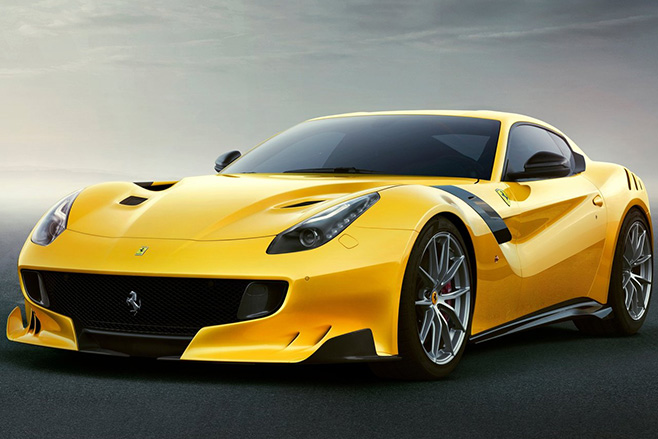
1. Ferrari F12 tdf
Power: 574kW
Tyre-shredding performance from superb 6.3-litre V12 makes for one extremely fast Fezza. That it revs to 8900rpm and provides 80 percent of its torque from 2500rpm is testament to its flexibility.
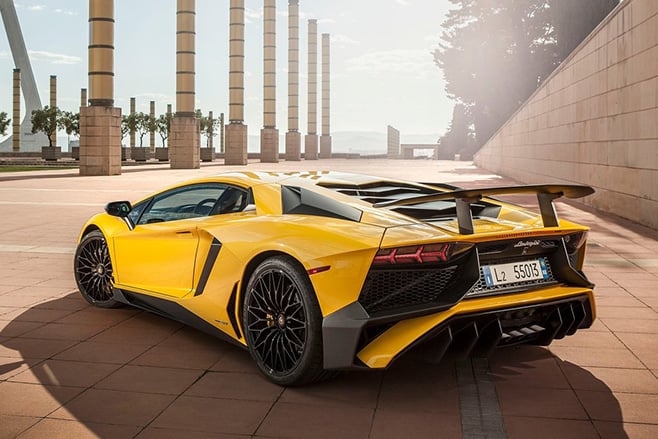
2. Lamborghini Aventador SV
Power: 552kW
Ballistic 6.5-litre naturally-aspirated V12 defines the carbonfibre Lambo supercar. Soon-to-arrive S update brings four-wheel steering and facelifted styling.
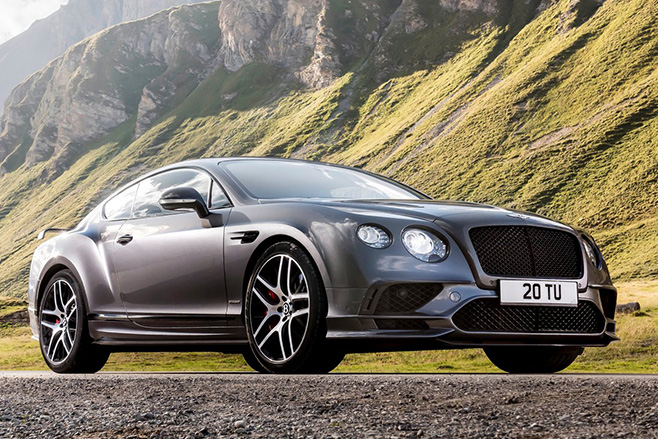
3. Bentley Continental Supersports
Power: 522kW
Unique W12 layout (combining two VW V6s on a common crank) is a talking point, but it’s the twin-turbocharged grunt across the rev range that makes the Conti such a (thirsty) delight.
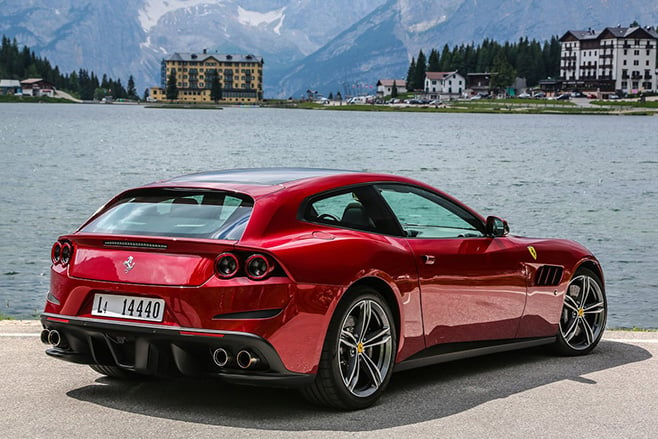
4. Ferrari GTC4Lusso
Power: 507kW
All-paw V12 fun translates to fantastic off-the-line acceleration in what is the replacement for the FF. V8 model coming soon, but the V12 is the power leader in Ferrari’s grand tourer.
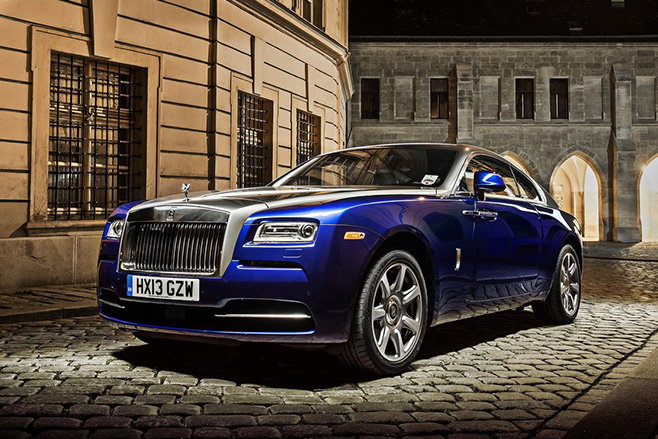
5. Rolls-Royce Wraith
Power: 465kW
Fastest and most dynamic car to wear the Rolls-Royce badge delivers on effortless urge courtesy of a tweaked version of BMW’s 6.6-litre twin-turbo V12.
A sales downturn didn’t stop Jaguar producing this four-door classic.
First published in the December 2016 issue of Wheels magazine, Australia’s best car mag since 1953.
IN THE latter half of the 1960s, if you wanted a Jaguar sedan (sorry, “saloon”) you had plenty of choice. The pride of Britain offered the compact Mk2 (later dubbed 240/340), the king-size Mark X and, in between, the Jaguar S-Type and the 4.2-litre 420. Even the gorgeous Jaguar E-Type was available as a 2+2 from 1966.
But nobody wanted Jaguar’s saloons. They were selling slowly and ageing rapidly. By 1968, Jaguar was ready to drop a four-door bombshell, on the scale of the E-Type five years earlier.
The XJ6 sedan was developed over four years as Project XJ4 (XJ for “experimental Jaguar”). This period included Jaguar’s merging with British Motor Corporation (July 1966) and Leyland (January 1968).
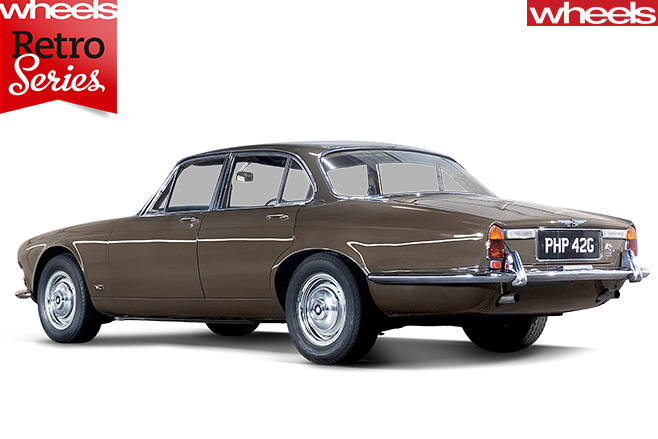
The Jaguar XJ6’s styling was deservedly praised, though many overlook that it’s a four-door interpretation of Bertone/Giugiaro’s Alfa Romeo 105/115 and 106 coupes. An odd identifier from outside was the twin fuel fillers, accessing twin tanks.
Rear cabin space soon came in for criticism, but road tests raved about the XJ6’s handling, ride and noise suppression. The tax-dodging 2.8 was a slug, but the 4.2 auto was swift and the four-speed manual even more so. There was talk of a modular V8/V12 engine; the latter, previewed in the stillborn XJ13 racer, would arrive in 1972.
However, the best car in the world in 1969 coincided with the worst era in British manufacturing. Strikes around the country constantly crippled output and quality; at one point, XJ6s were delivered with temporary wire-mesh grilles.
A Series II facelift and uprated auto transmission came in ’73, followed by a handsome coupe (1975) and a 3.4-litre engine. But the Series II bore the worst of British labour. Series III, refreshed by Pininfarina, enjoyed a long run from 1979-92, when the all-new and cheaper to build XJ40 replaced it.
In total, about 318,000 XJ6, XJ12 and Daimler variants were built over three series and 24 years.
The styling elements laid down in 1968 would remain very much (too much?) in evidence until Jaguar design chief Ian Callum’s dramatically different X351 generation of 2009.
Monocoque chassis had an initially compact 2764mm wheelbase (a 100mm-longer wheelbase came in ’72, made standard in ’74) and broad, squat track widths of the big MkX. Rubber-mounted subframes for the double-wishbone front and E-Type-derived trailing-arm rear suspensions helped top-notch ride and quietness. Brakes were naturally discs all-round. Kerb weights ranged from around 1600-1740kg.
Rockers star
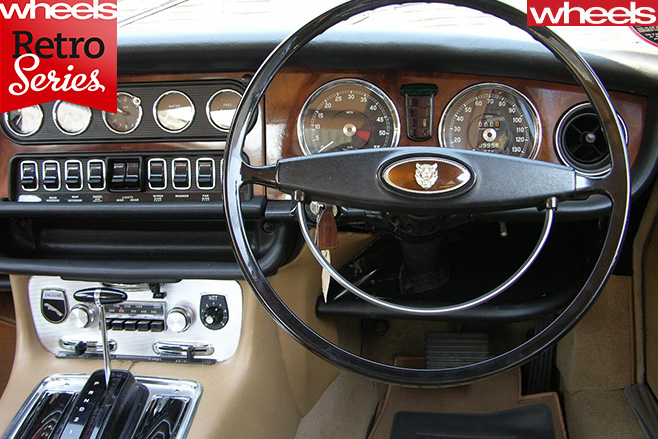
Interior reflected a disappearing era of traditional British coachbuilding, with lots of leather, chrome and genuine burr-walnut veneer trim. Conservatively styled dash had comprehensive instrumentation (or large, central vents on cheapie 2.8) and a distinctive row of 10 rocker switches.
Six appeal
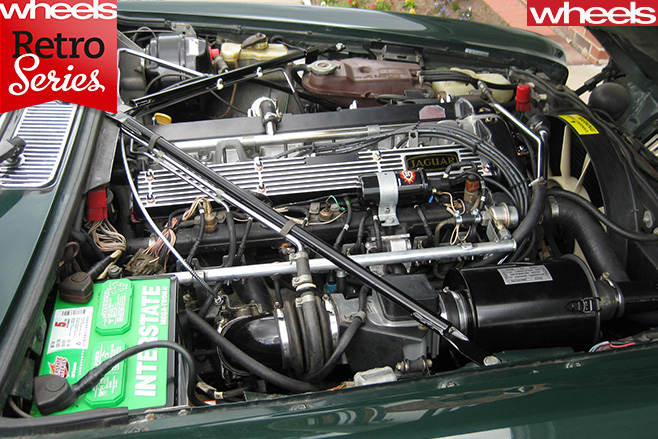
Jag’s legendary dohc six had its roots in 1949, but the 4.2-litre introduced in ’64 was highly evolved. With twin SU carbs at launch, it made 182kW/384Nm, good for 0-100km/h in 10.0sec (8.8sec for the rare four-speed manual). Late-arriving (1972) 5.3-litre sohc V12 made 220kW/433Nm.
Fast and Factual
1.Bill’s finale
The XJ6 was the last new Jaguar launched under Sir William Lyons, who retired as MD at the end of 1967
2.Show buddies
Fellow 1968 British Motor Show debutantes were the Ford Escort, Morgan Plus-8, Reliant Scimitar GTE and Rover P5B (3500 V8)
3. Cylinder twins
The 4.2-litre XK engine has strangely unevenly spaced bore centres, a result of boring out the earlier 3.8’s cylinders in siamesed pairs
4. Leave it out!
“Entrepreneur” Arthur Daley most often drove an XJ6 Series II and a Daimler Sovereign Series III in the TV series Minder
5. Brain-teaser
While the project XJ4 turned into the car named XJ6, the project that developed the V12 engine was confusingly also called XJ6
