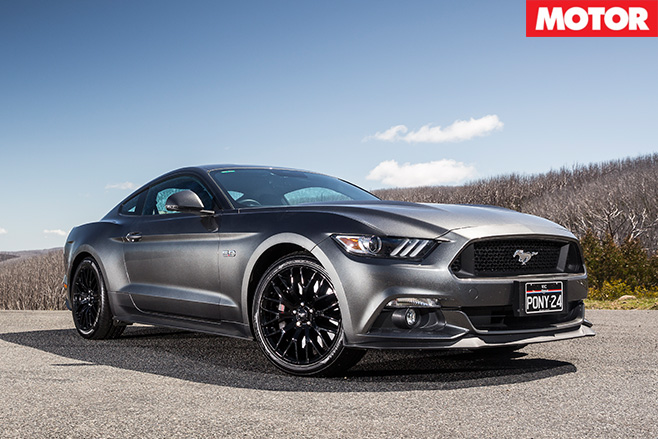
THE Ford Mustang GT has been labelled unsafe following a dismal two-star independent crash test result that determined occupants could suffer serious injuries in a collision.
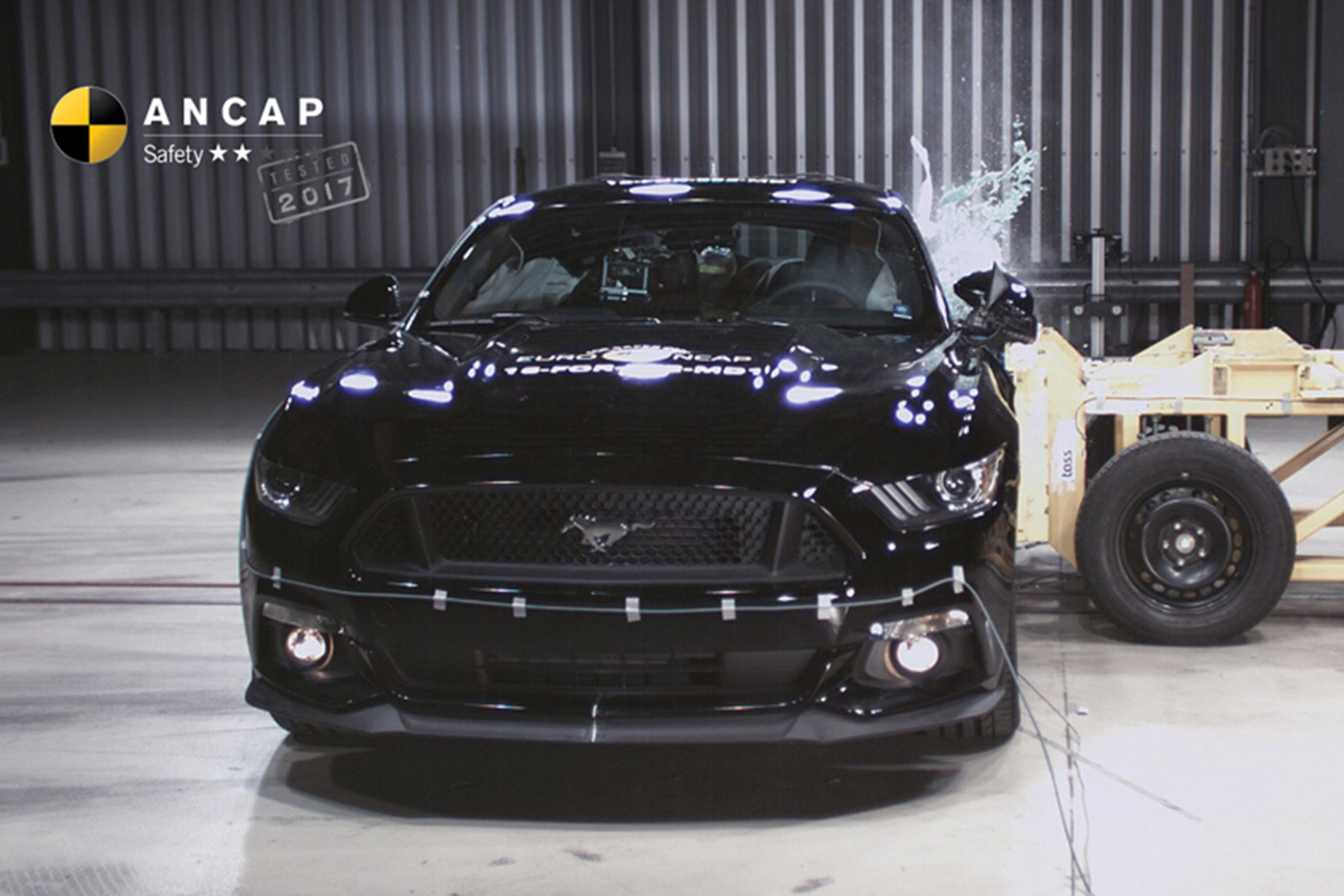
In a test conducted in conjunction with Euro NCAP, Australia’s leading independent crash test authority, the Australasian New Car Assessment Program (ANCAP) found the V8-powered, US-made sports car had poor occupant protection for both adults and children due to incorrectly inflating airbags, a sub-standard crash structure that included a door that came open in a side pole test, and a deficiency of crash avoidance technologies that are becoming increasingly common in new cars.
ANCAP chief executive James Goodwin slammed the safety of the V8-powered two-door coupe – the result doesn’t apply to four-cylinder Mustang because it wasn’t tested and may perform differently – that has been an unexpected sales hit for Ford.
RELATED OPINION: ANCAP might be flawed, but it’s also vital
“This result is simply shocking for such a newly designed and popular model,” Goodwin told Wheels, adding that the Mustang performed “below the expectations of what consumers would expect and, frankly, it’s not as safe as it should be”.
In a carefully worded statement Ford defended its muscle car and repeatedly described the ANCAP result as “disappointing”, suggesting that what it describes as a “rigorous new [testing] protocol” was introduced by ANCAP last year, well after development of the current Mustang had taken place.
The statement also asserted that the ANCAP tests were now “more tailored to family cars and people movers” than sports cars such as the Mustang.
Ford said the Mustang meets all applicable safety standards – many of which are embarrassingly low – and said it was competitive among sports cars, also performing well in overseas crash results, including those conducted by the US National Highway Traffic Safety Administration (NHTSA) and the Insurance Institute for Highway Safety (IIHS).
“The overall Euro NCAP rating is based on four pillars, with a very strong focus on family car safety characteristics and specific safety assist features, which are usually not part of the standard equipment of cars in the Mustang category,” the Ford statement read.
But Goodwin said the poor result was unacceptable for any car, especially one costing upwards of $45,990.
“I don’t think safety should be compromised, whatever car you’re buying. This is an expensive vehicle, it’s a newly designed vehicle and safety should never be compromised.”
ANCAP also stressed the combined Euro NCAP and ANCAP result was not because the vehicle was missing minor “safety assist” systems, which could be as simple as daytime running lights, a fatigue reminder or “hill launch assist”.
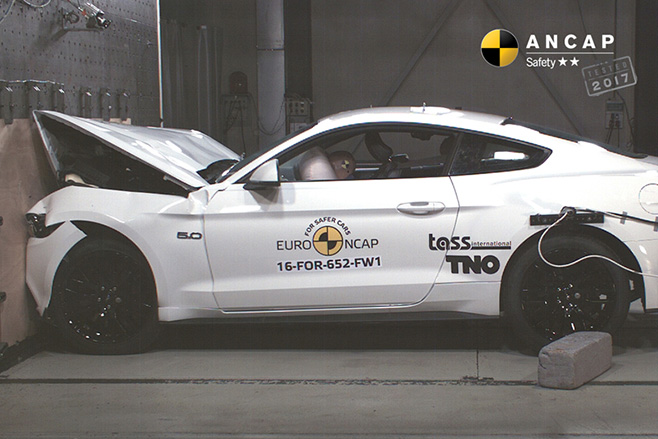
“This isn’t a score because it’s missing rear seatbelt reminders,” said Goodwin. “Fundamentally it also hasn’t performed well structurally. There is serious risk of head, leg and chest injuries for rear passengers. There was also insufficient inflation of both driver and passenger airbags in frontal offset test, which allowed the driver’s head to contact the steering wheel and the passenger’s head to contact the dashboard. The driver’s door opened in the pole test and the whiplash protection for rear-end collisions was only rated as marginal.”
The Mustang performed worst in the “Safety Assist” part of the NCAP test, one of four assessed areas, with just 16 percent, or 2 out of 12. Child occupant protection was marginally better but still poor at 32 percent, while adult occupant protection was 72 percent, let down by a score of 4.67 out of 8 in the frontal offset test.
Pedestrian protection was rated at 64 percent, although the official ANCAP report noted the front edge of the bonnet “posed a high injury risk for pedestrians”. The Mustang’s active bonnet is designed to pop up to help protect pedestrians from injuring themselves on hard parts such as the engine or suspension towers.
The Mustang’s two-star rating – which ANCAP described as “concerning” and “poor” – is the worst crash test result for a new model since the Chinese-made LDV V80 van of 2013 achieved a similar two-star rating. The only other passenger cars – as opposed to commercial vehicles – to have scored a two-star ANCAP rating were much older vehicles: the 2006 Chrysler Voyager, 2005 Holden Barina and 1998 Hyundai Sonata.
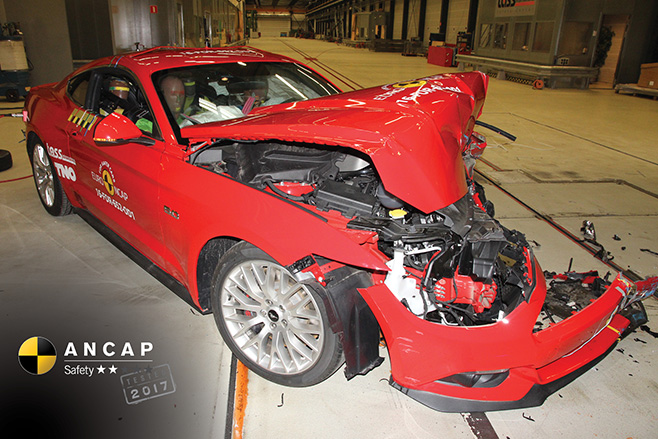
It’s unlikely the apparent crash structure issues with the Mustang can be addressed as part of a recall or service campaign and Ford appears to have no plans to do so – other than adding some active safety features as part of an update in 2018.
“The Mustang is a safe vehicle, equipped with advanced safety features and a structure designed to manage crash energy under a variety of crash modes,” Ford said.
“The Mustang has already proven its safety performance in NHTSA NCAP and IIHS test programs. We are committed to continued improvement in vehicle safety, and the 2018 Mustang in Australia will be equipped with driver assistance features such as AEB and Lane Keeping Aid.”
But Goodwin called on Ford to make changes on the production line to address the safety concerns raised.
“I’m encouraging Ford to introduce design and production changes to improve the vehicle’s safety performance as quickly as possible,” he said.
Goodwin also warned police forces around the country from considering the Mustang as a pursuit vehicle, suggesting the car was unsafe.
“The car has fallen down in lots of areas of its assessment and we would really expect that emergency services personnel would be in the safest car that they can be in.”
The Mustang, built for the first time in right-hand drive, has been a runaway hit for Ford Australia. The carmaker originally estimated it would sell 1000 of the coupes and convertibles in 2016, and instead it sold more than 6000.
See below for our questions and answers from Ford, unedited.
WHEELS: Is the Euro NCAP/ANCAP result a surprise to Ford?
FORD: We are disappointed by the Ford Mustang Euro NCAP rating. Mustang is a safe vehicle meeting, or exceeding, all applicable safety standards globally.
W: Does Ford agree with the NCAP result? If not, why not?
F: We are disappointed by the Ford Mustang ANCAP rating. Mustang is a safe car meeting, or exceeding, all applicable safety standards globally. Mustang’s safety credentials are further demonstrated by the five-star NHTSA NCAP rating awarded in the US as well as a ‘good’ IIHS rating.The overall Euro NCAP rating is based on four pillars, with a very strong focus on family car safety characteristics and specific safety assist features, which are usually not part of the standard equipment of cars in the Mustang category. Mustang delivered a four-star result for the front occupants and a five-star result for pedestrian safety. However, the two-star result in the Active Safety Assist pillar determined the overall result of a two-star rating.
W: Did Ford’s internal crash testing show issues similar to those which arose in the NCAP test?
F: The disappointing result from Euro-NCAP relates mainly to specific driver assistance technologies such as Autonomous Emergency Braking. We are committed to continued improvement in vehicle safety, and the 2018 Mustang in Australia will be equipped with driver assistance features such as AEB and Lane Keeping Aid. Mustang delivered a four-star result for the front occupants and a five-star result for pedestrian safety. However, the two-star result in the Active Safety Assist pillar determined the overall result of a two-star rating.
W: ANCAP suggests there are structural issues and airbag deployment issues that could result in serious injuries to occupants. Can these issues be addressed with cars already on the road or cars yet to be produced?
F: The ANCAP Injury Outcomes for Full Frontal scored ‘Good’ and for Frontal Offset ‘Acceptable’ for both drive and passenger head/neck.
W: Did Ford anticipate NCAP testing of the Mustang? If not, was the car developed only for other tests (NHTSA, etc)? If yes, why has it performed so poorly?
F: The most recent test protocol wasn’t in place at the time the current Ford Mustang was developed. The rigorous new protocol update, which was introduced in 2016/2017, is even more tailored to family cars and people movers.
W: Will Ford make any changes to the Mustang to address issues raised by NCAP testing?
F: The Mustang is a safe vehicle, equipped with advanced safety features and a structure designed to manage crash energy under a variety of crash modes. The Mustang has already proven its safety performance in NHTSA NCAP and IIHS test programs. We are committed to continued improvement in vehicle safety, and the 2018 Mustang in Australia will be equipped with driver assistance features such as AEB and Lane Keeping Aid.
W: Does Ford expect the NCAP result to affect Mustang sales in Australia?
F: The Mustang is a safe vehicle, equipped with advanced safety features and a structure designed to manage crash energy under a variety of crash modes. Mustang delivered a good four-star result for the front occupants, and a five-star result for pedestrian safety. We anticipate continued demand from Australian customers for this great vehicle.
W: Will Ford consider refunding any owners who don’t want to drive a car rated as having two-star safety?
F: Mustang is a safe vehicle. Customers can continue to enjoy their Mustang knowing that it features advanced safety features and a structure designed to manage crash energy under a variety of crash modes. Mustang delivered a four-star result for the front occupants and a five-star result for pedestrian safety.
W: Any other comments or points you feel are worth making.
F: The Mustang features a suite of advanced safety features including an ‘active’ pop-up bonnet, as well as driver and front passenger airbags, front and passenger knee airbags. It also offers front driver and passenger airbags, curtain airbags, knee airbags as well as driver/passenger side impact airbags. A Driver and front passenger seatbelt reminder system is standard.
SYNC 3, standard on Mustang, includes voice-enabled sat-nav for hands-free operation, as well as a rear-view camera and MyKey technology. MyKey gives parents of younger driver’s peace of mind by reducing distractions and limiting speed. It enables vehicle owners to limit stereo volume, increase the frequency of Mustang’s front seat belt reminders, and block incoming phone calls and text messages while other drivers are behind the wheel.
SYNC 3 also offers Emergency Assistance as standard on Mustang, which automatically calls the emergency services in the event.
Here’s one way to arrive at the alps this winter.
Jon Olsson, Red Bull athlete and professional freestyle skier, is offering for sale his Lamborghini Huracan.
Dubbed the ‘Winter Transporter’, Olsson announced the car for sale on Instagram last week for 250,000 Euro (AU$353K).
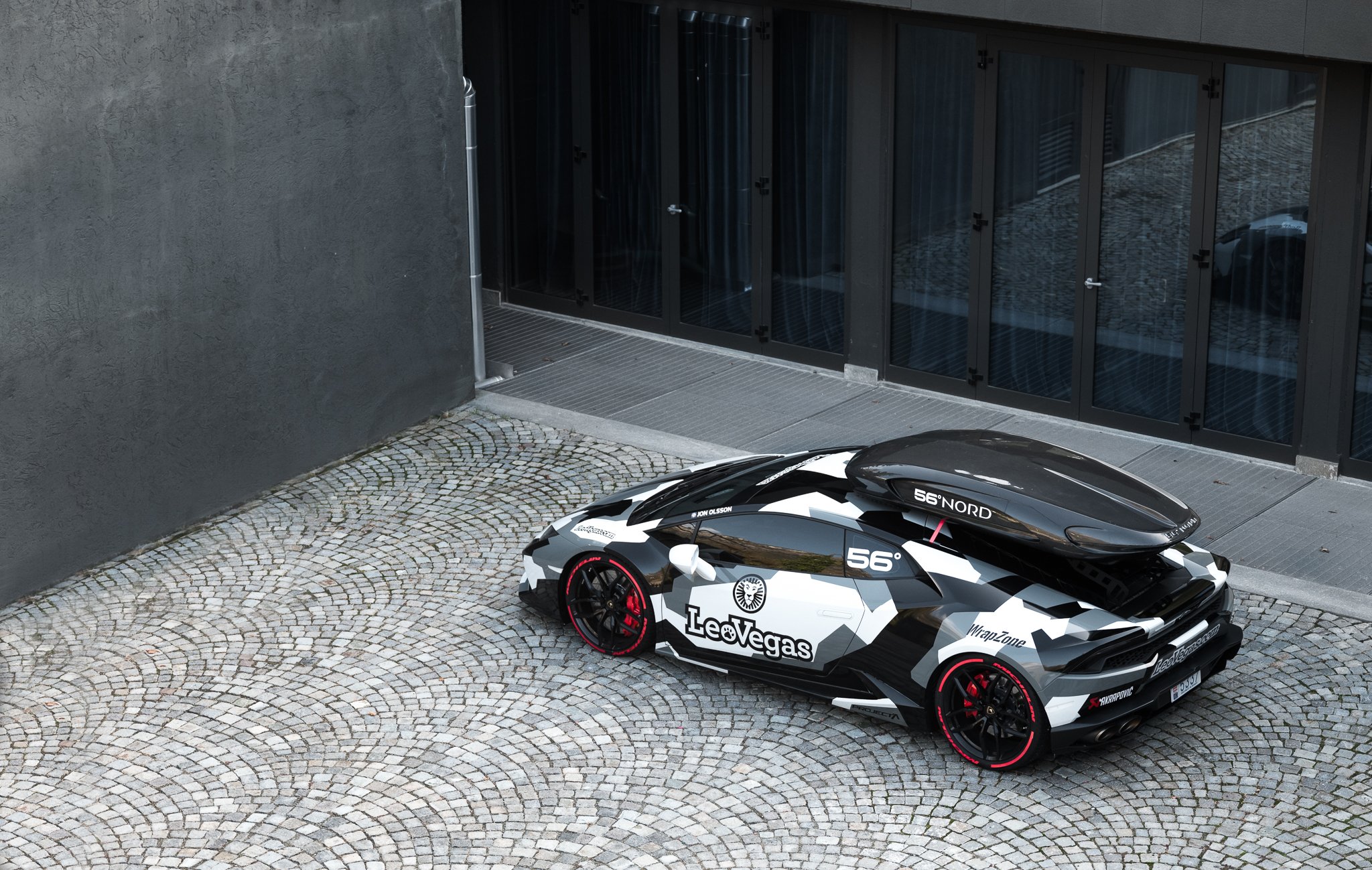
After less than a week with the Huracan LP640-4 the self-confessed car nut tore it down so he could build it from the ground-up to ski-lugging spec.
The car’s 5.2-litre V10 was married to a custom supercharger, while carbon intakes and titanium exhaust accompanied the upgrade. Power jumped to over 588kW.
During its build the car was tested to cut 100km/h to 200km/h in 5.3seconds. But that was before it produced ‘over’ 588kW, so expect quicker numbers now.
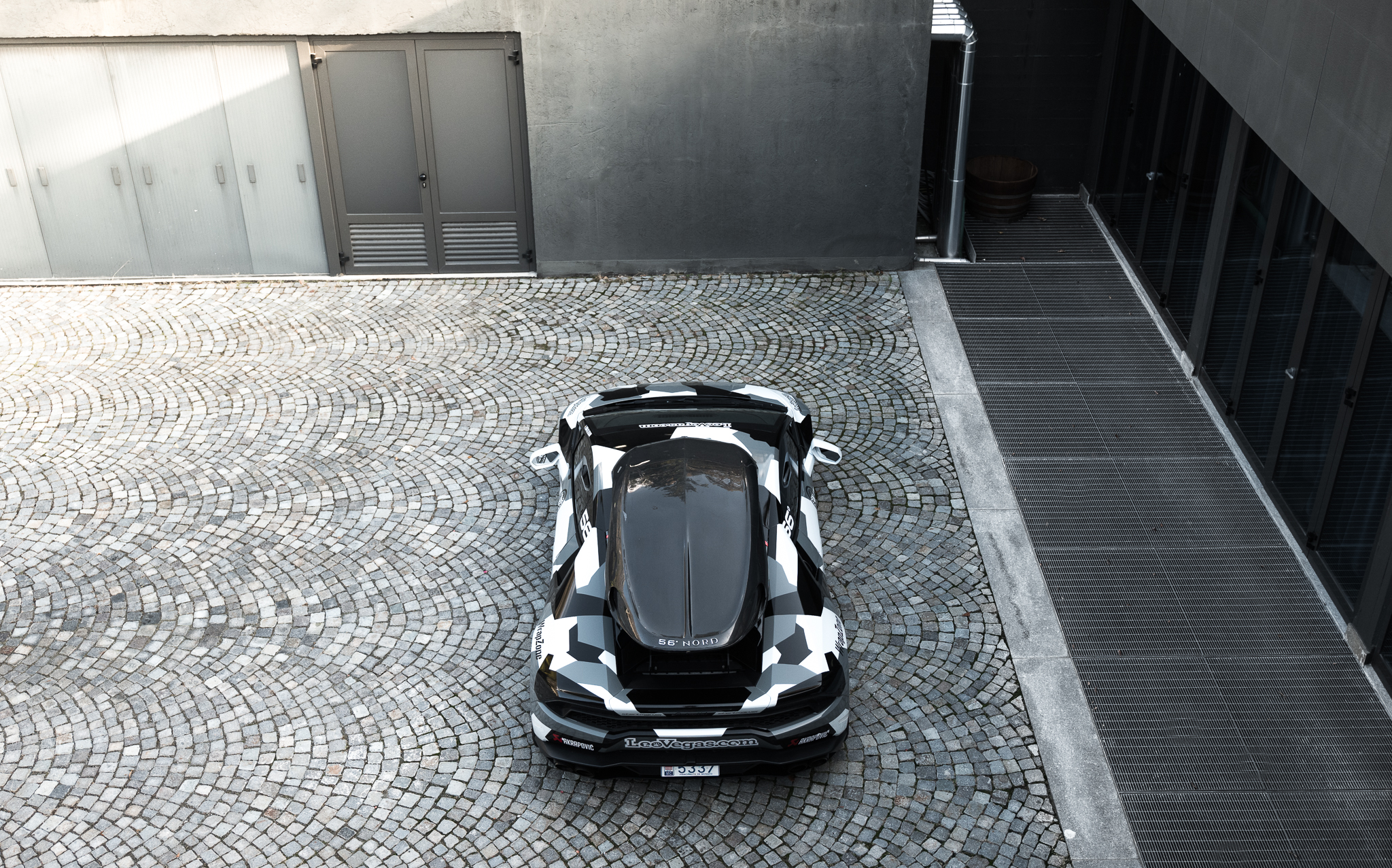
Nine months later on went a custom designed carbon-fibre ski box from Nord 56, mounted on custom rails, before being wrapped in trademark camouflage design.
The car still rides on the wheels it was delivered with, but has also been lowered with a K&W kit carefully chosen to not spoil the stock handling package.

But that seems to be the point. Apparently he’s looking for a more practical car, something with four seats, to modify to the same level of crazy.
So what do you think he’ll surprise us with? A Mercedes-AMG E63, RS7 Peformance, Ferrari GTC4Lusso? Either way, judging by this one it’ll be good.
On the evening of February 1, our performance car champion for the next 12 months will be revealed.
Before then, however, you have the chance to have your say on which one of these talented dozen hotties deserves the prize.
We’ve assembled arguably the best – certainly the fastest and most expensive – field in Performance Car of the Year history, so whichever car wins can rightly claim to be the best performance car on sale today.
Vote at the bottom of the article, and check back on February 1 for the winner.
The performance car of the year will be announced at the Australian Motoring Awards on February 1, 2017.
Watch this space and stay tuned for more Performance Car Of The Year action!
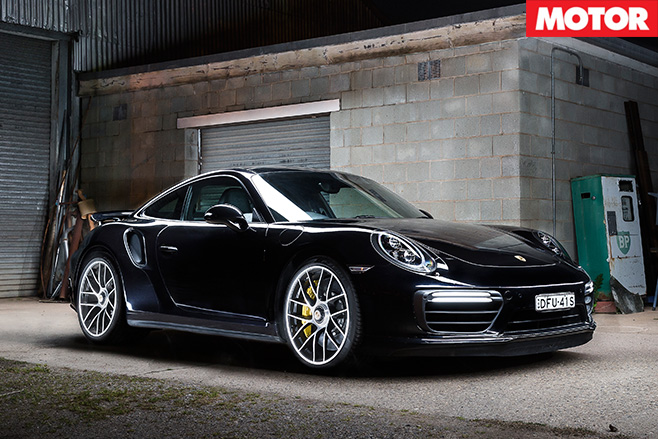
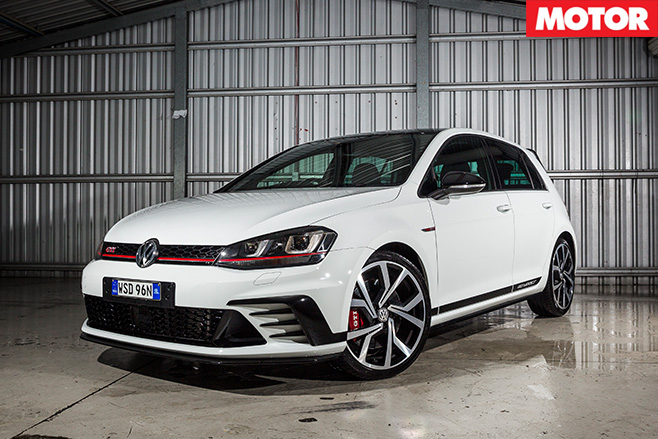
Ford promised us a 440kW-plus supercar and it’s delivered, big time.
The company has just revealed full specs on its incoming GT and the figures prove it’s ready to get stuck into key rivals from Europe.
Even with two cylinders less than a Ferrari 488 GTB or McLaren 675LT, the GT’s 3.5-litre twin-turbo V6 makes no excuses in the power department.
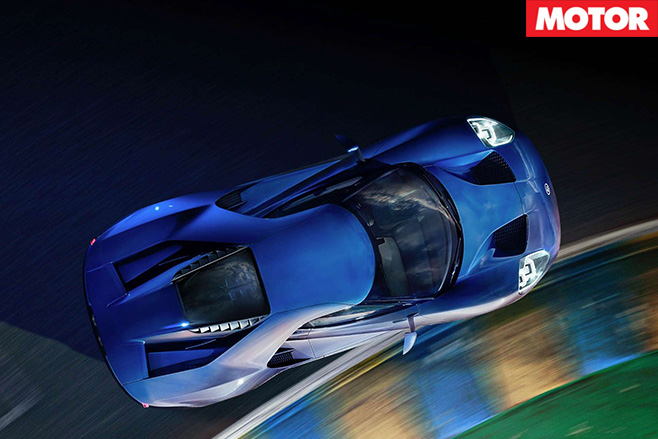
The engine produces a sizeable 482kW at 6250rpm on American 93 octane fuel, while torque builds to a 746Nm peak at 5900rpm.
Such figures make it the least powerful of the McLaren/Ferrari/Ford trio, but only just. The 488 sports only 6kW and 14Nm more, while the McLaren’s actually 46Nm down on the GT.
The Ford’s stonk is channelled by a new Getrag developed seven-speed dual clutch gearbox, codenamed ‘7DCL750’, to an LSD equipped rear axle.
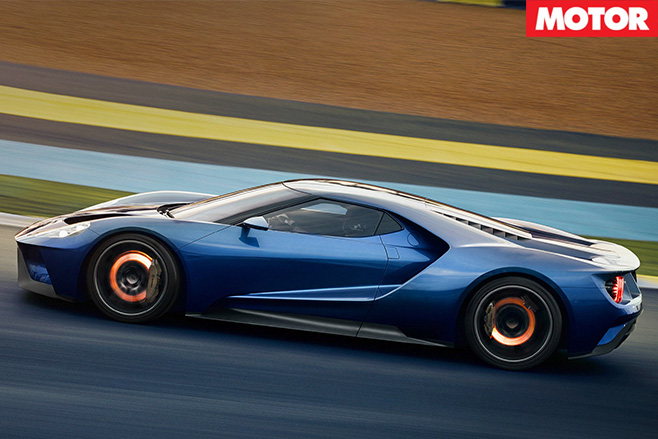
And while there’s no mention of a 0-100km/h time, the GT cruises past both rivals on the Autobahn. It comfortably trumps their 330km/h top-speeds with a 346km/h Vmax.
Ford’s clever ‘active dynamics systems’ allows the dizzying top speed, which changes suspension, ride height, and aerodynamic settings based on what drive mode’s selected on the steering wheel.
In ‘Vmax’ mode a 50mm ride height drop hunkers down the GT on its 20-inch wheels and stows away the rear wing. Multimatic DSSV dampers are also electronically adjusted to their firmest settings.
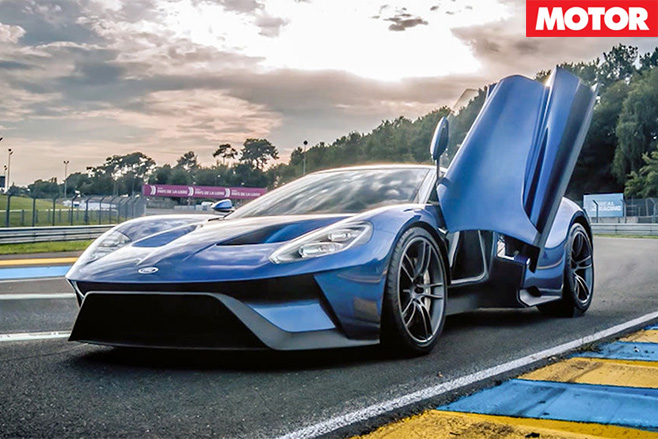
Speaking of wheels, the GT’s 20-inch items measure 8.5-inches wide up front and 11.5-inches out back, and will come wrapped exclusively in Michelin Pilot Sport Cup 2 rubber.
The GT will rely on a carbon-ceramic brake system for slow, with 394mm and 360mm discs front to rear.
Dry weight comes in at 1363kg, some 163kg heavier than a 675LT but 7kg lighter than the Fezza.
It all amounts to one second around Calabogie Motorsports Park in Canada, according to Ford, where the McLaren clocked a 2:10.8 laptime against the GT’s 2:09.8 during testing.
As for the Ferrari’s time? Ford curiously only quotes lap data on Ferrari’s 458 Speciale and not its successor, the 488 GTB, which it challenged and beat at Le Mans last year.
The atmo V8 engined supercar was the slowest with a 2:12.9.
The Volkswagen Tiguan launched late last year with a four-model range encompassing two petrol and two diesel engine options. A fifth engine has now joined the Tiguan family in the form of the Tiguan 162TSI, and is positioned as a performance-oriented flagship for the range.
TELL ME ABOUT THIS CAR
The Tiguan 162TSI takes the turbocharged 2.0-litre petrol four-cylinder engine of the Volkswagen Golf GTI hot hatch and combines it with a seven-speed automatic and all-wheel drive. Peak power and torque figures are identical to the GTI, making the 162TSI the most powerful version of the Tiguan to date.
Taking over from the outgoing Tiguan 155TSI, the 162TSI boasts 7kW more power and a huge 70Nm more torque than its predecessor and can zip to 100km/h from standstill in just 6.5 seconds. That’s not only 0.8 seconds faster than the superseded 155TSI, but it equals the 0-100km/h stat of the much lighter Golf GTI as well.
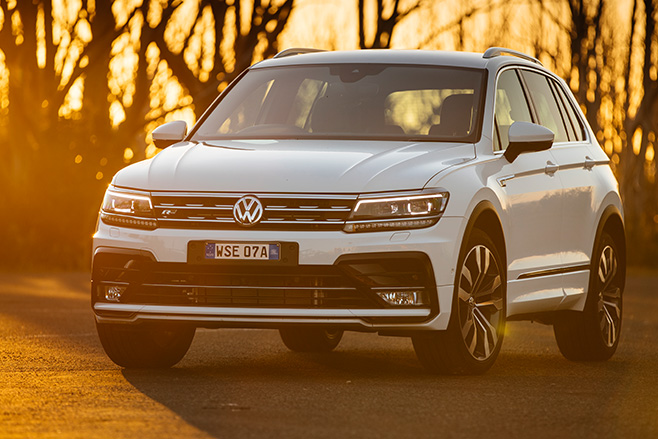
Priced at $48,490, the Tiguan 162TSI is equipped to the same Highline specification as the existing Tiguan 140TDI, which includes a bright and clear 8.0-inch infotainment display, power-adjustable driver’s seat, heated front seats, leather upholstery, LED headlamps, keyless entry and ignition, powered tailgate and dark tinted privacy glass.
Two option packages are available: a $4000 R-Line pack that brings a sports bodykit, variable-ratio steering, adjustable suspension and 20-inch alloy wheels; and a $2000 Driver’s Assistance pack that bundles adaptive cruise control, blind spot monitoring, rear traffic alert, an electronic instrument panel and 360-degree camera view.
A panoramic glass sunroof is also optional, costing $2000.
STRENGTHS
Performance. For a mid-sized SUV, the Tiguan 162TSI can really move. Stomp the throttle and it responds keenly, with powerful mid-range thrust from its turbocharged engine. The seven-speed automatic also responds quickly when the Tiguan is being driven hard.
Handling. The Tiguan’s on-road manners are impressive, with excellent resistance to body roll and a fairly well-balanced chassis that is surprisingly adept at handling twisting roads.
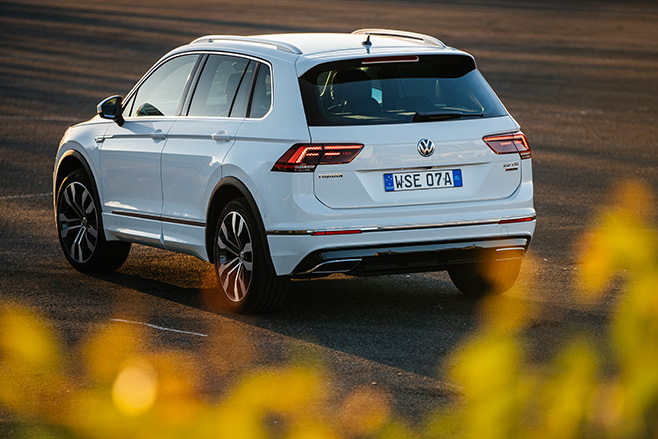
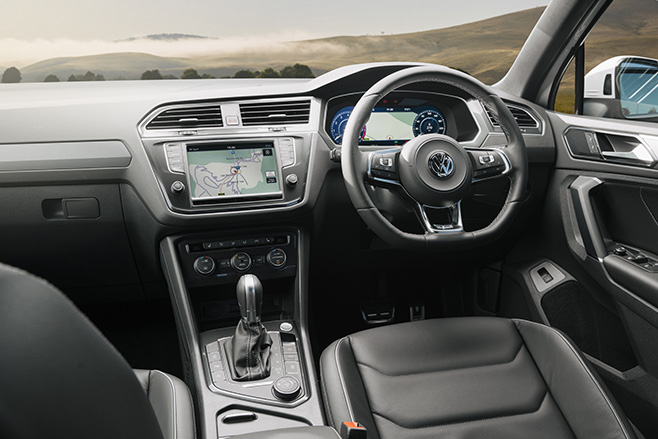
Standard equipment. At $48.5k the Tiguan 162TSI is not what most would consider cheap, but it does come with a healthy list of standard equipment. An 8-inch colour infotainment display packs a great deal of functionality (including satellite navigation and a plethora of performance-monitoring displays) and is complemented by keyless entry, heated front seats, a power-adjustable driver’s seat, leather upholstery, interior ambient lighting, and a powered tailgate.
Interior. Cabin quality and design is one of the Tiguan’s highlights, with clean presentation married with top-shelf materials and switchgear. It easily outdoes the majority of its mainstream competitors in this area, and imparts a premium flavour to the Tiguan experience.
Safety. The Tiguan range boasts autonomous emergency braking as standard across the range – 162TSI included – which is a crucial piece of accident-avoidance technology that is still relatively rare in the segment. On top of that there’s also lane-departure warning, driver fatigue warning, seven airbags and an active bonnet for pedestrian protection as standard.
WEAKNESSES
Ride quality. On the standard Highline suspension, the Tiguan’s ride can be brittle and unforgiving. However the optional adaptive suspension brings multi-mode dampers that allow the Tiguan to cycle through Comfort, Normal and Sport configurations. The first two offer a greatly-improved ride, while the Sport mode is best suited to smoother roads.
Price. The adaptive suspension greatly improves the Tiguan 162TSI, but the only way to get it is to option the $4000 R-Line package. That takes the retail price above the $50k mark, making an already expensive car an even pricier proposition.
Transmission. The dual-clutch automatic might boast ultra-crisp gearchanges when in motion, but it suffers from the occasional stumble when travelling at low speeds. Transmission refinement could also use some work, as there is some driveline shunt in heavy traffic when coming on and off the accelerator, and moving away from a standstill can be jerky at times.
ANY RIVALS I SHOULD CONSIDER?
The Subaru Forester XT Premium comes awfully close to the Tiguan 162TSI in terms of pricing, equipment, power and torque, with its 2.0-litre turbocharged flat-four actually eclipsing the Tiguan’s power output by 15kW.
However, it’s a full second slower to 100km/h and can’t match the Tiguan for interior quality. Its slushy CVT automatic transmission is also a less appealing gearbox than the Tiguan’s crisp dual-clutch.
Another option is the Ford Escape Titanium 2.0 turbo. It’s an even more powerful option with 178kW from a 2.0-litre turbo four-cylinder, but has slightly less torque at 345Nm. It drives well and is reasonably well-equipped, but cannot quite equal the Tiguan’s sumptuous cabin.
Australia’s peak motoring body has called on the federal government remove tariffs and car taxes and commit to funding safety programs such as ANCAP to arrest the country’s worsening road toll.
The Australian Automobile Association (AAA) has also called on the government to fund an inquiry in to road fatalities, with figures showing little has been made in reducing deaths since the National Road Safety Strategy was agreed by all Australian governments in 2011.
The figures were released in the AAA’s Benchmarking the Performance of the National Road Safety Strategy report, which tracks progress against the strategy’s target of reducing road deaths by at least 30 percent by 2020.
The report finds no real progress has been made since the strategy was agreed more than five years ago, with the 2016 national road toll rising 7.9 percent to 1300.
“At a time when new vehicles and roads have never been safer, we need to understand why 40 years of improvement is being so dramatically reversed,” AAA chief executive Michael Bradley said.
“More than one thousand Australian families lost a loved one on our roads last year, while a further 30,000 are now dealing with the consequences of a life-changing serious injury. The human cost is immense, however road trauma is also costing our economy around $34 billion every year.
“This level of death, injury, and cost should not be accepted on our roads and it’s time the Australian Government sought to clarify why our national road safety strategy has stalled, so that efforts to reduce road trauma can be re-focussed.”
As part of its pre-budget submission to the Federal Treasury, the AAA called for safety-related funding and policy, including:
- Removal of remaining tariffs and car taxes designed to protect the Australian automotive sector, which would “greatly enhance the affordability of newer, safer vehicles”.
- Continued funding for the Government’s keys2drive program, which delivers a free lesson with a professional driving instructor to learners and their supervising driver. There is currently no Government funding beyond 30 June 2017.
- Continued funding for ANCAP, which provides consumers with vehicle safety ratings. There is currently no Government funding beyond 2017-18.
- A requirement for all governments to use risk assessment tools such as AusRAP to prioritise investment and incorporate safety improvements as part of infrastructure upgrades.
Many motorsport fans never thought it would happen, but Formula One’s supreme overlord Bernie Ecclestone has been booted from the big chair.
F1’s new owners, Liberty Media, have shuffled Bernie along after 40 years of work, in which he turned the sport into the giant it is today.
Along the way, Mr Ecclestone earned a reputation for his no-nonsense approach, and scathingly brutal remarks. In honour of his departure from the top job, we have collated some of his wildest here for you now.
- “I had to do something at the time that upset me. I had to give her away. I’d rather have sold her,” he said of seeing his daughter being married.
- “The publicity generated by his death was so much… it was good for F1.” Ecclestone told a Brazilian newspaper regarding the death of the legendary Ayrton Senna.
- “If I did take away Silverstone and a British Grand Prix I’d be seen as a bad guy, but that wouldn’t bother me,” he said in 2004.
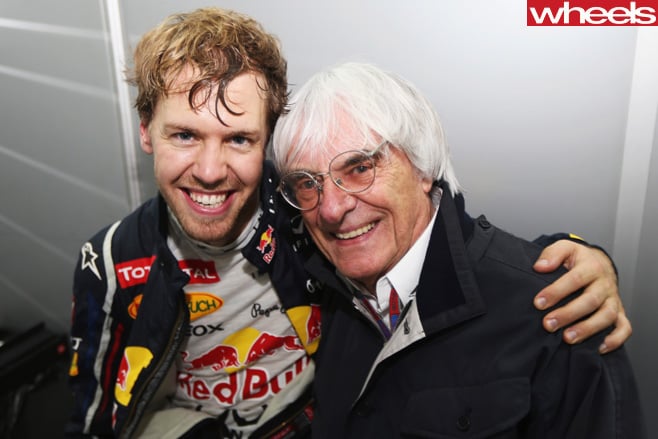
- “My organisation starts after the race, when I collect the money bag!” he said in response to Ron Dennis remembering a race in Mexico starting two hours late, compared to the efficient machine Ecclestone has now created.
- “You know I’ve got one of those wonderful ideas… women should be dressed in white like all the other domestic appliances.”
- When three new teams joined Formula One in 2010, Bernie wasn’t exactly a fan. “We need to get rid of a few of those cripples,” he said at the time.
- “I think the change that is currently taking place is very short-lived, as these social media people are starting to think it is not as good as they thought,” he once famously quipped about the rise of social media. I think 800 million daily Facebook users might disagree, Mr E.
- “What I would really like to see happen is to find the right girl, perhaps a black girl with super looks, preferably Jewish or Muslim, who speaks Spanish,” he once told Autosport when discussing female drivers in F1.
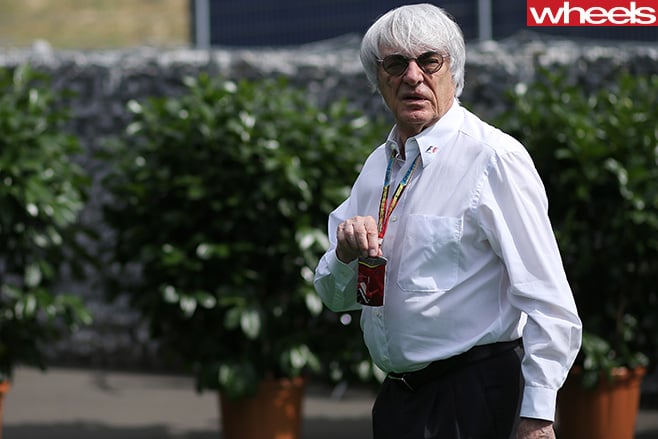
- “In a lot of ways, terrible to say this I suppose,” he began, “but apart from the fact that Hitler got taken away and persuaded to do things that I have no idea whether he wanted to do or not, he was in the way that he could command a lot of people, able to get things done. In the end he got lost, so he wasn’t a very good dictator because either he had all these things and knew what was going on and insisted, or he just went along with it… so either way he wasn’t a dictator.”
Asked to elaborate, Ecclestone said, “They have a lot of influence everywhere.”
Oh, Bernie…how we will miss you.
Volkswagen’s slipped a little GTI DNA into its family-sized softroader wagon.
WHAT IS IT? Volkswagen’s Golf GTI-engined Tiguan 162TSI injects some athletic ability into the German auto giant’s mainstay medium SUV, while also bringing it within cooee of proper luxury metal in terms of equipment, finish, drive … and price.
WHY ARE WE TESTING IT? Because not only is the Tiguan 162TSI a fresh arrival, but it’s also the fastest mainstream SUV on the market right now. Priced from $48,490 (plus $4000 for the almost mandatory R-Line package), it also knocks on the door of luxury segment rivals like the BMW X1 xDrive25i and Mercedes GLA 250.
MAIN RIVALS Subaru Forester XT, Ford Escape Titanium 2.0
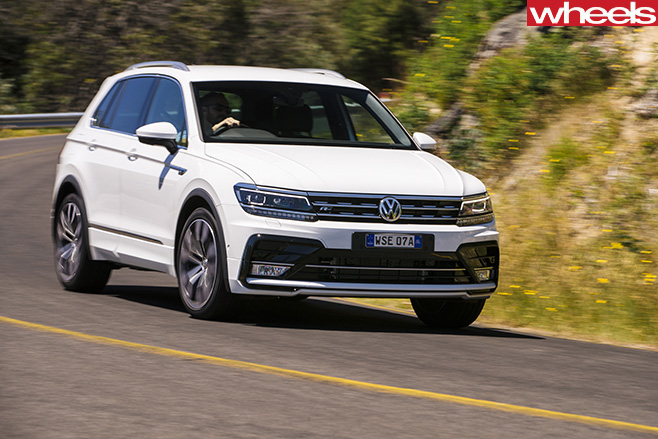
It comes achingly close to fulfilling that brief though, and with a turn of speed that eclipses those of its closest rivals (namely the Subaru Forester XT Premium and Ford Escape Titanium) coupled with segment-leading cabin quality, the 162TSI sits head and shoulders above the competition.
PLUS: Speed, agility, excellent interior, smart design, loaded with tech MINUS: Flat-sounding engine note, not quite the “Tiguan GTI” we were hoping for, extra spend required to get adaptive dampers
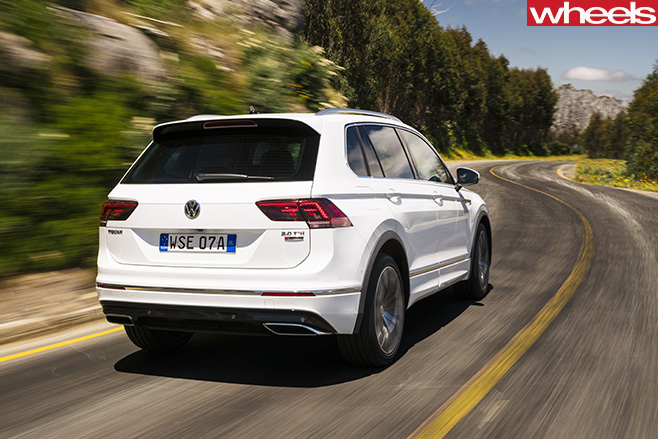
With the 162kW turbo four-pot of the Golf GTI hot hatch slipped between the Tiguan’s front wheels and hooked up to a seven-speed dual-clutch trans and all-wheel drive, Volkswagen has created a medium SUV that, on paper at least, looks like it should be a touch more athletic than the average grocery-getting softroader.
And the numbers are promising. Though it weighs over 300kg heavier than a Golf GTI, the Tiguan 162TSI manages to equal the 6.5 second 0-100km/h sprint time of its hatchback cousin. How? Thank the off-the-line traction of the 162TSI’s 4Motion AWD driveline and its extra gear ratio for its GTI-grade standing start performance.
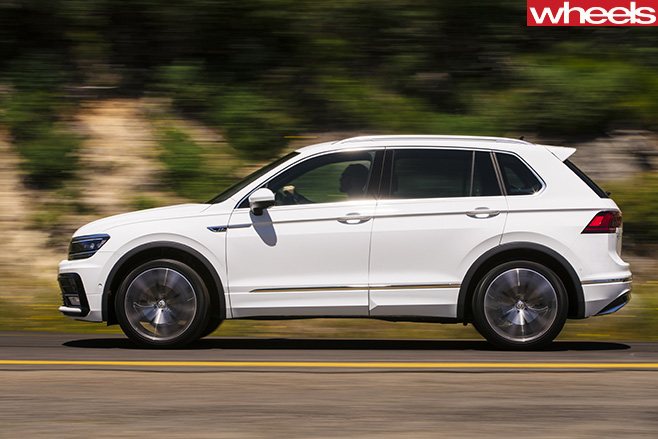
It doesn’t sound like GTI should either. There are hints of a rorty turbo four coming through the firewall, but most of the time that noise is drowned out by a diesel-like grumble that only disappears from the middle of the tacho and up.
The 162TSI’s handling, however, is definitely up to snuff. Accurate steering and excellent body control combine with a well-sorted chassis to make the Tiguan 162TSI an SUV you can properly hustle. We only wish there was a little more grip from the Pirelli Scorpion rubber.
Electronically-adjustable dampers come with the optional R-Line package (along with 20-inch alloys, a bodykit, flat-bottomed steering wheel and more), and they alone make R-Line a box worth ticking.
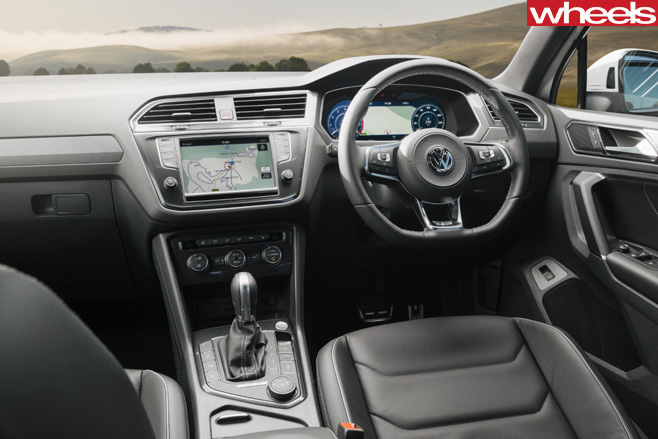
Variable-ratio steering is another key feature of the R-Line pack, and reduces the amount of lock-to-lock travel to a twirl-minimising two turns. Progressively decreasing in ratio the further you turn from centre, this variable ratio steering is precise, well-weighted (in Normal mode anyway) and does indeed impart an agile feel to the 162TSI driving experience.
All in all, this is a better-sorted, faster and more broadly-appealing SUV than the similarly-priced Subaru Forester XT and Ford Kuga Titanium – the only other non-luxury SUV offerings that have vague aspirations of sportiness.
SPECS Model: Volkswagen Tiguan 162TSI Highline Engine: 1984cc 4cyl, dohc, 16v, turbo petrol Max power: 162kW @ 4500-6200rpm Max torque: 350Nm @ 1500-4400rpm Transmission: 7-speed dual-clutch Weight: 1637kg 0-100km/h: 6.5sec (claimed) Fuel economy: 8.1L/100km Price: $48,490 On sale: Now
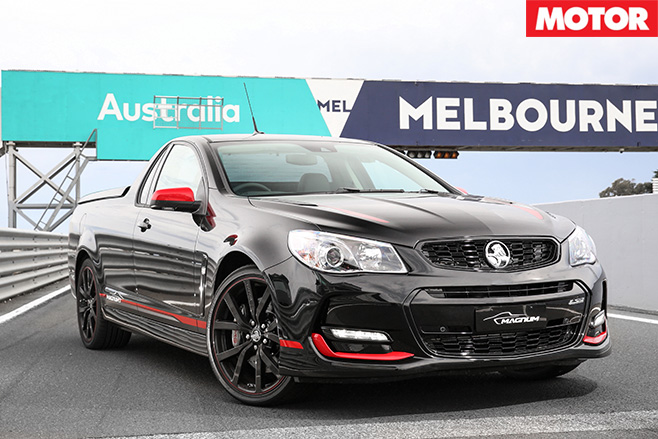
Well, they didn’t last long. Less than a week after Holden’s Commodore ‘Special Editions’ were publically revealed it has been confirmed they have more or less sold out.
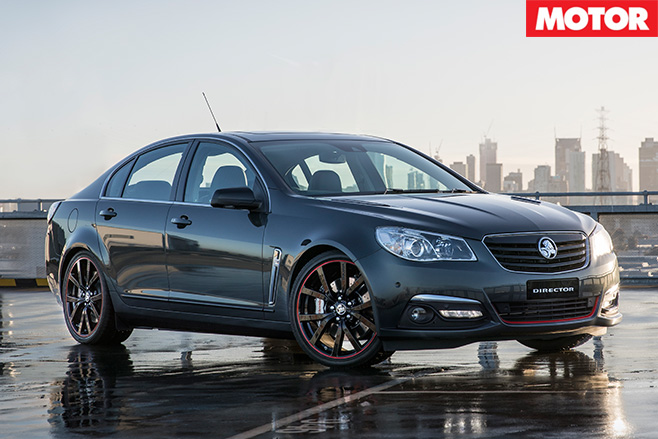
Known as the Motorsport Edition, Director and Magnum, the special editions were based on the SS-V Redline, Director and Magnum respectively and were intended to celebrate the end of V8 Commodore production after almost 40 years.
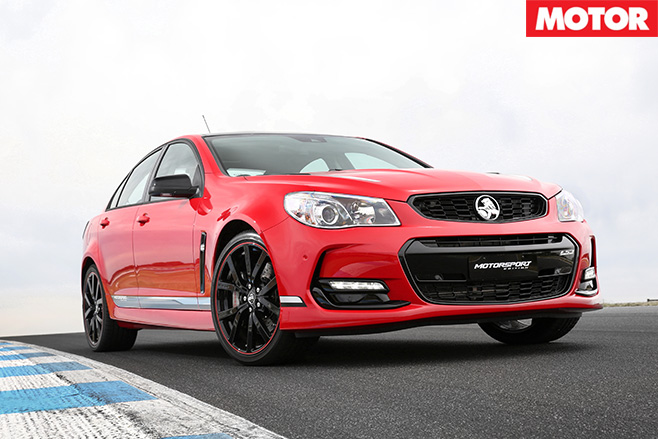
Just 1200 Motorsport Editions, 360 Directors and 240 Magnums were offered for the Australian market, with a further 151, 51 and 51 respectively heading to New Zealand, and it appears that demand has vastly outstripped supply.
Poppitt had further words of warning for potential 2017 Commodore buyers: get in quick, or risk missing out. All remaining Commodores have been allocated to individual dealerships and a significant number – particularly in the case of V8s – already have customers’ names against them.
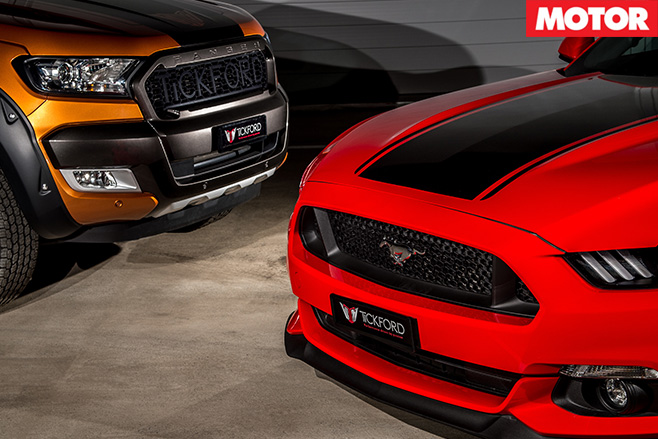
Tickford bowed out from Ford Performance Vehicles (FPV) five years ago, but the company is now back powering up the Ford Mustang.
While no longer a part of the Ford empire, the outfit is run by Prodrive Racing Australia, the former factory Ford Supercar team, and is headed by former Walkinshaw boss Tony Harris. The debut product was based on a Ford Ranger, but attention has now turned to Ford’s smash-hit new muscle car
There are two packages, one each for the GT and Ecoboost listed at $6990 each. Add that price to the $54,990 (plus on-road costs) Mustang GT and its 5.0-litre naturally aspirated V8 engine will shift from its standard 306kW/530Nm outputs to 360kW/585Nm.
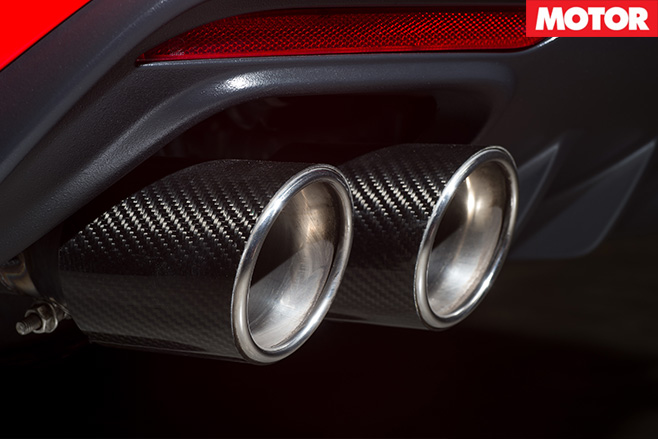
Dubbed the 360 Power Pack by Tickford, the changes are courtesy of a new cold air intake, recalibrated ECU and quad-catback exhaust, while a new rear diffuser, Tickford badging and individual build plates are also included in a pricetag inclusive of fitment.
Called the 270 Power Pack for obvious reasons, the same component set as the V8 is used but with specific ECU calibration for the four-banger and it wears the same $6990 pricetag.
However, buyers who want the diffuser and exhaust – a Tickford-developed stainless-steel, mandrel-bent catback 3.0-inch GT or 2.5-inch EcoBoost unit with carbon-wrapped quad tips – can also purchase that combination for $3990 without the engine modifications.
“Our aim was to not only deliver generous increases in power and torque, but also create a unique exhaust note which was strong and deep, yet was suitable to daily driving as well.”
Harris says while the changes to the V8 “really unleashes the performance of the GT” the company also expects the four-cylinder package “will also attract customers to the EcoBoost variant who like the idea of a smaller capacity and more efficient engine, but have been waiting for a performance boost.”