People movers have become the go-to choice for Australian families who need more than just a practical set of wheels – they need space, comfort and versatility.
In 2023, the People Mover segment totalled 2.4 per cent of total vehicle sales, with more than 14,000 units sold across the country. While seven-seat SUVs like the Kia Sorento dominate the family car market, there’s still a strong demand for people movers, particularly among large families, businesses and chauffeur services.
Australians have always loved people movers for their versatile storage options and ability to comfortably transport up to eight passengers. Whether it’s for the school or sport run or weekend road trips, these vehicles tick all the boxes for practicality. And now with a range of options – from the futuristic Hyundai Staria to the ever-popular Kia Carnival – buyers now have a wide model range to choose from that suits their style, needs and budget.
1
Let’s take a closer look at some of the top contenders in this segment. From diesel and hybrid engines to cutting-edge technology and safety features, here are six popular choices help narrow your choice ?
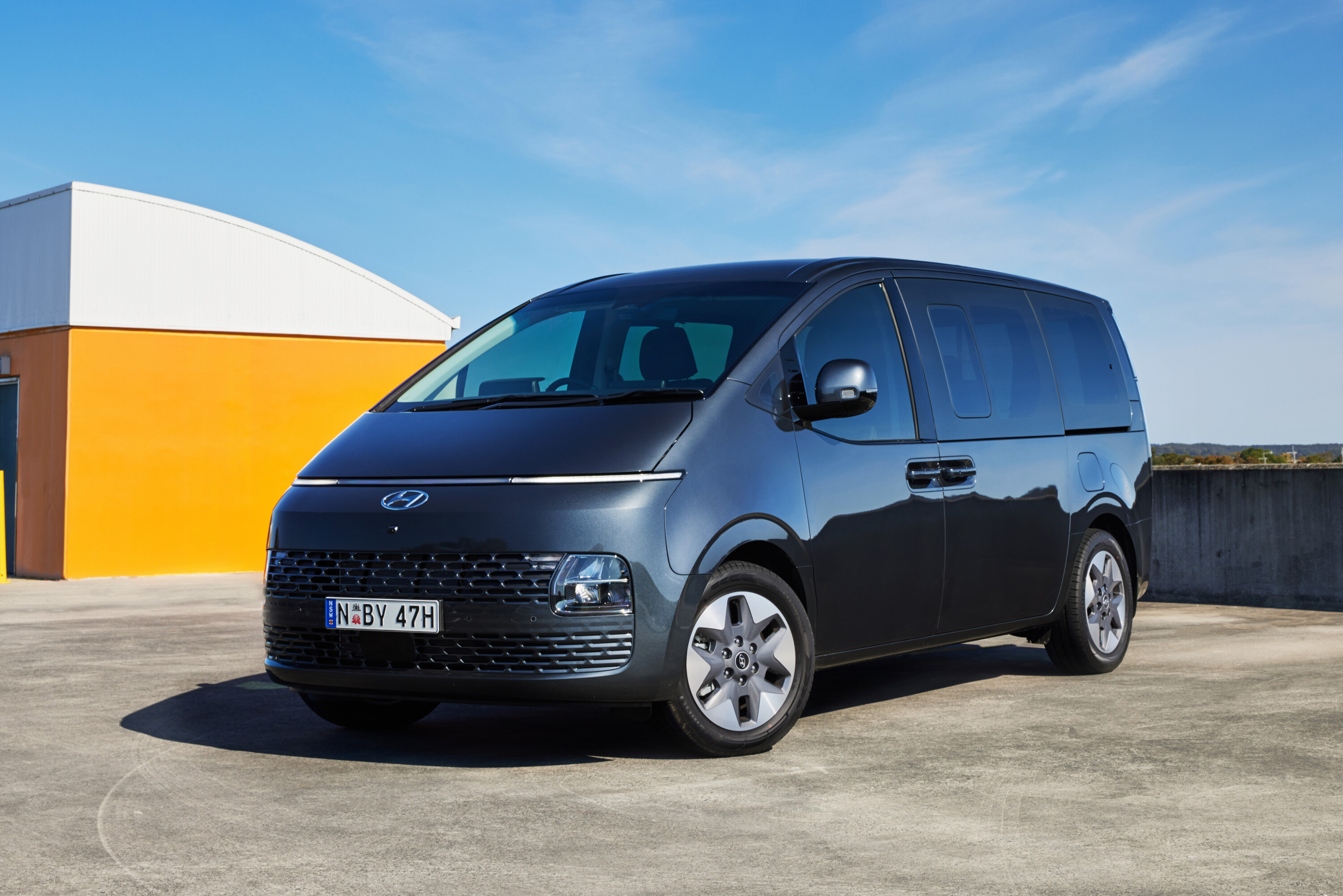
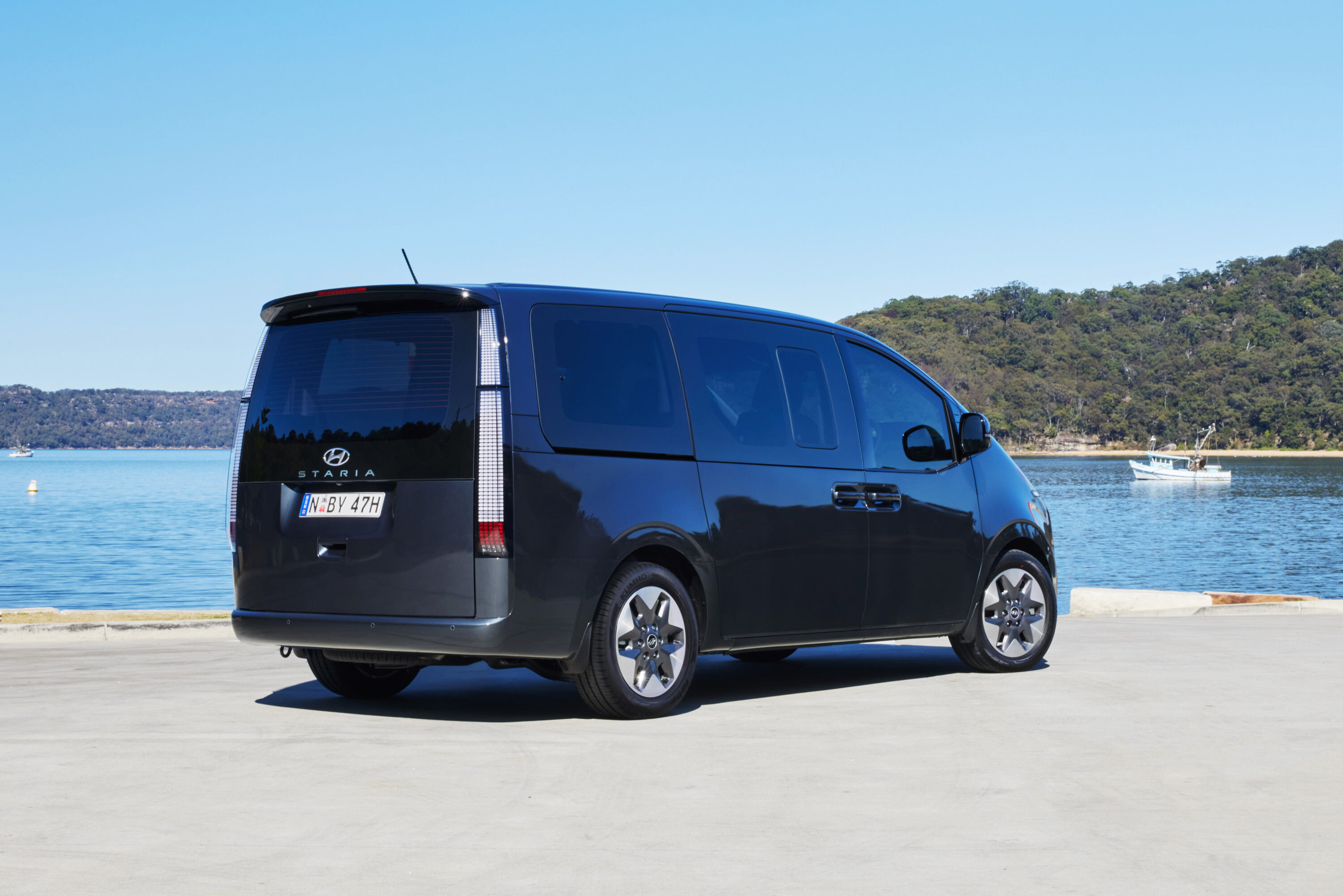
Letu2019s start with the Hyundai Staria, a van-based people mover that can seat eight passengers. It has futuristic styling and carryover engines from the Kia Carnival. It measures 1990mm (height), by 1970mm (width), by 5253mm (length).
Model range and pricing
Staria 3.5 FWD
$49,500
Staria 2.2D AWD
$52,500
Staria Elite 3.5 FWD
$57,500
Staria Elite 2.2D AWD
$60,500
Staria Highlander 3.5 FWD
$64,500
Staria Highlander 2.2D AWD
$67,500
1
Practicality and storage
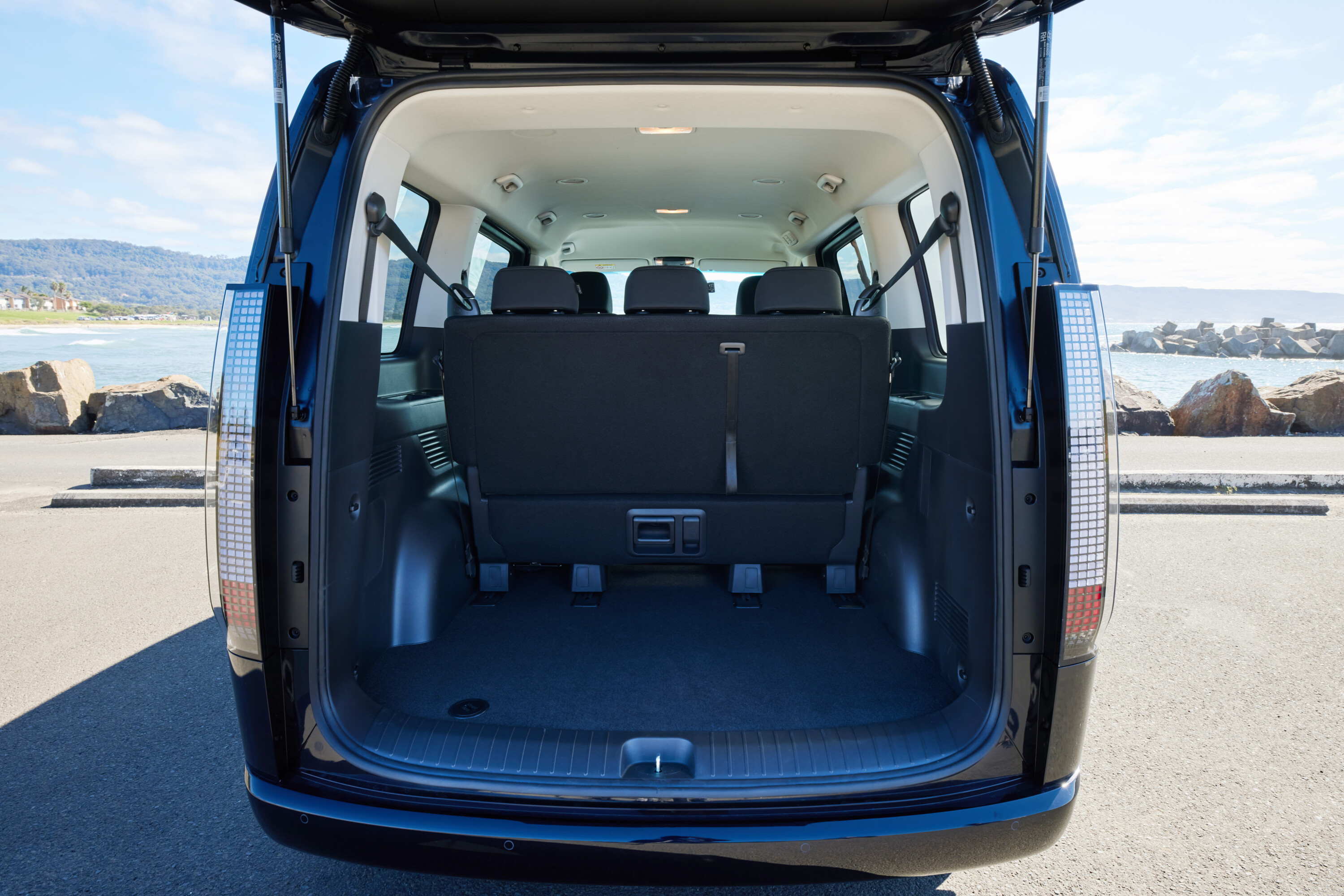
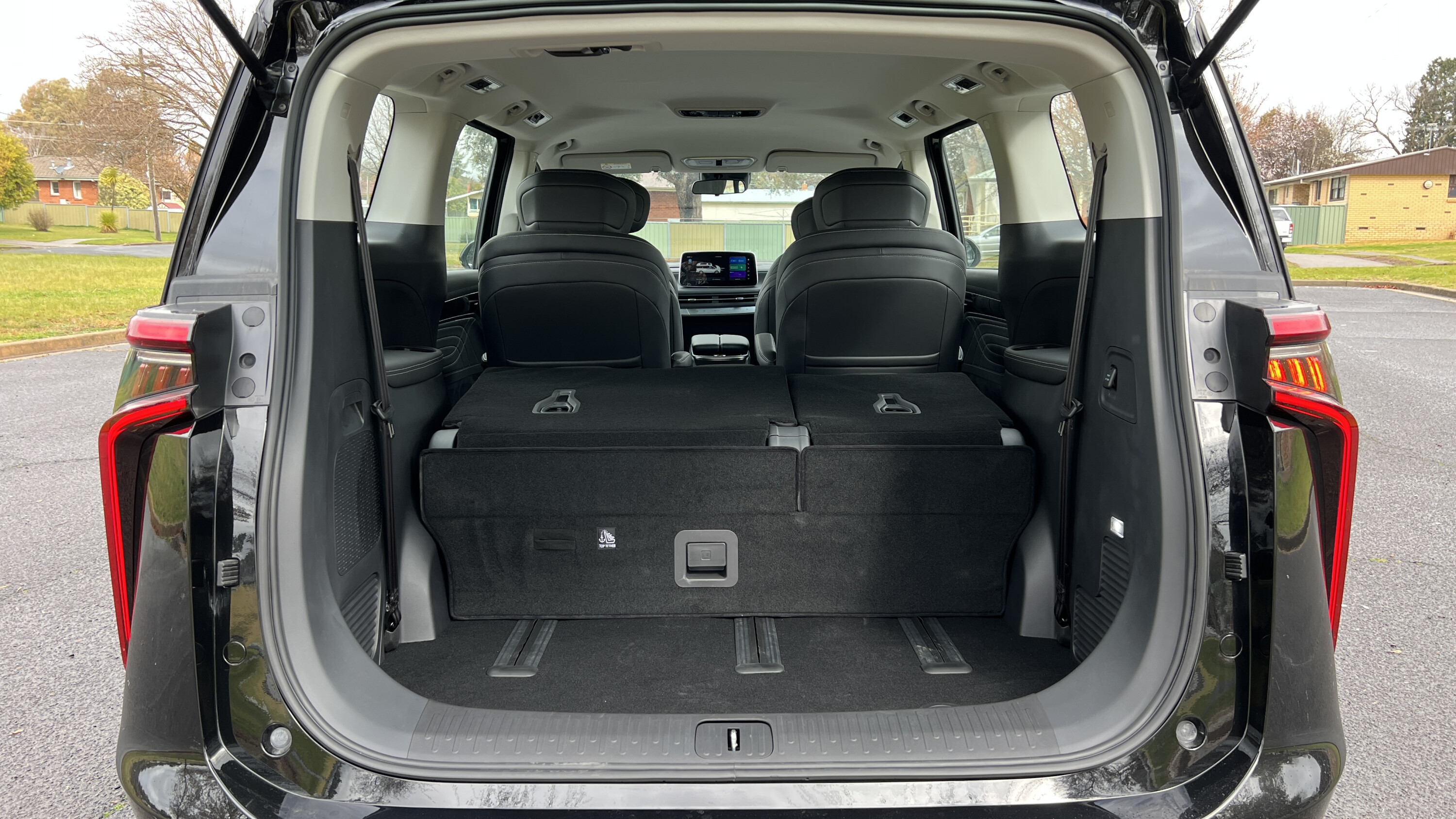
Thanks to the van-sized interior, there is plenty of space. The boot is large with all seats up and there are eight seats in total. There are two ISOFIX points and three top tether points in the second row, but the Staria does not have any anchor points in the third row. So, for a young family with more than three kids, this might not be the best option.
Hyundai Staria boot space
Seven seats up
831 litres
Rear seats up
1303 litres
36
Powertrain choices and fuel consumption
Under the bonnet is a 2.2-litre four-cylinder turbo-diesel engine producing 130kW and 430Nm. This is paired to an eight-speed automatic transmission and an all-wheel drive system.
The second engine choice is a 3.5-litre six-cylinder petrol, which is paired to an eight-speed automatic that sends power to the front wheels and pushes out 200kW and 331Nm. For towing, the Staria has a 2500kg braked towing capacity and an unbraked figure of 750kg.
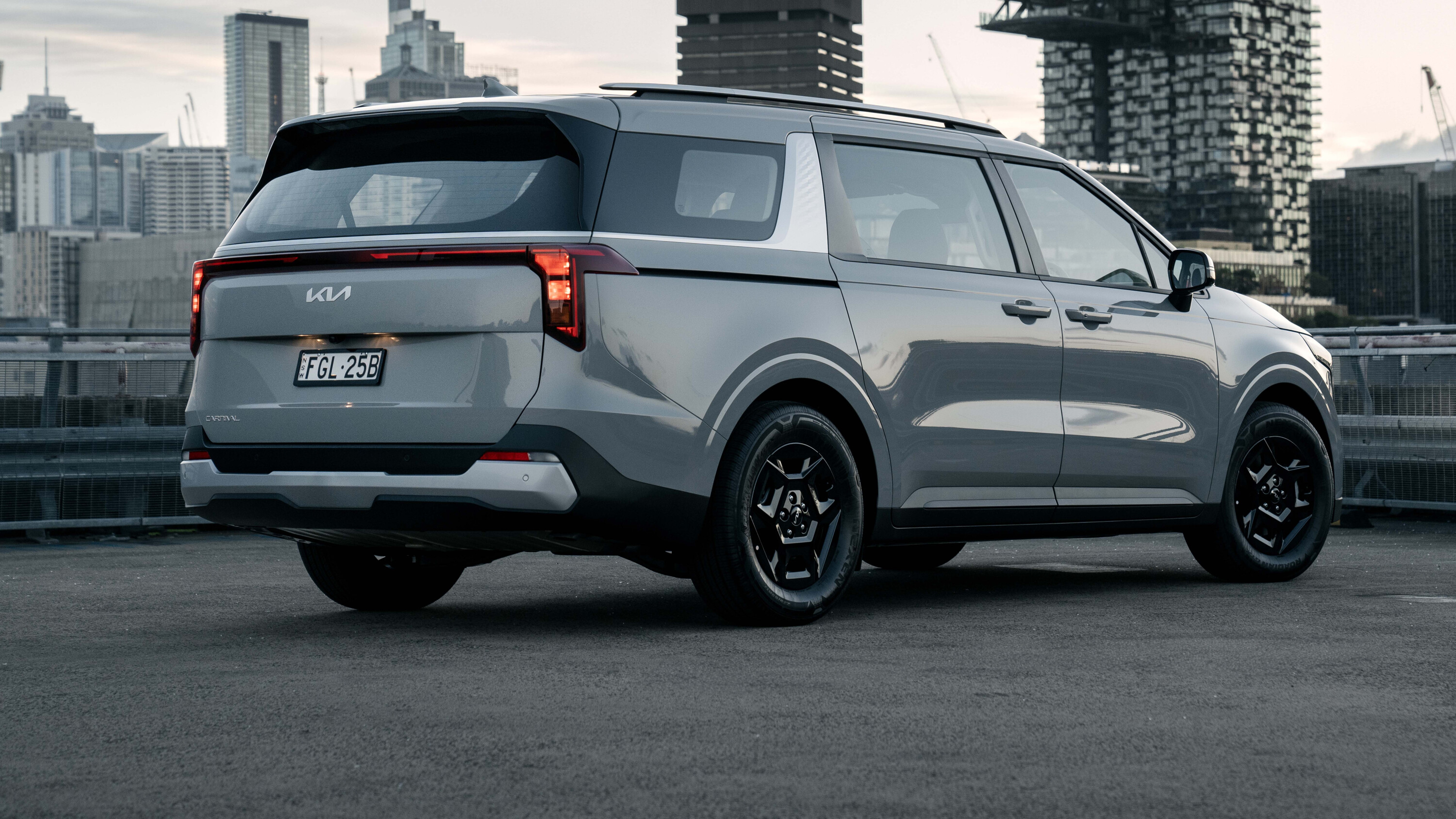
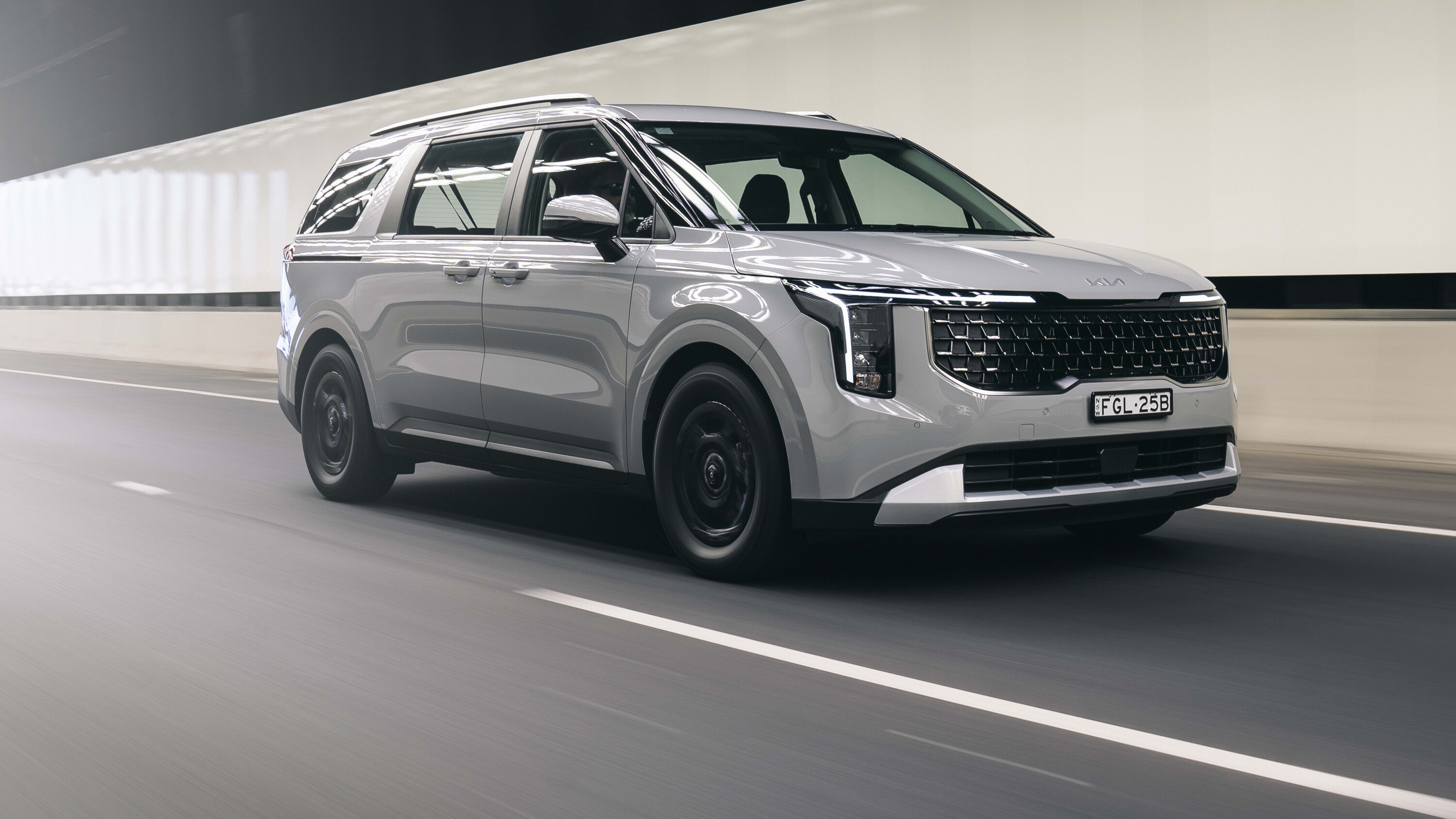
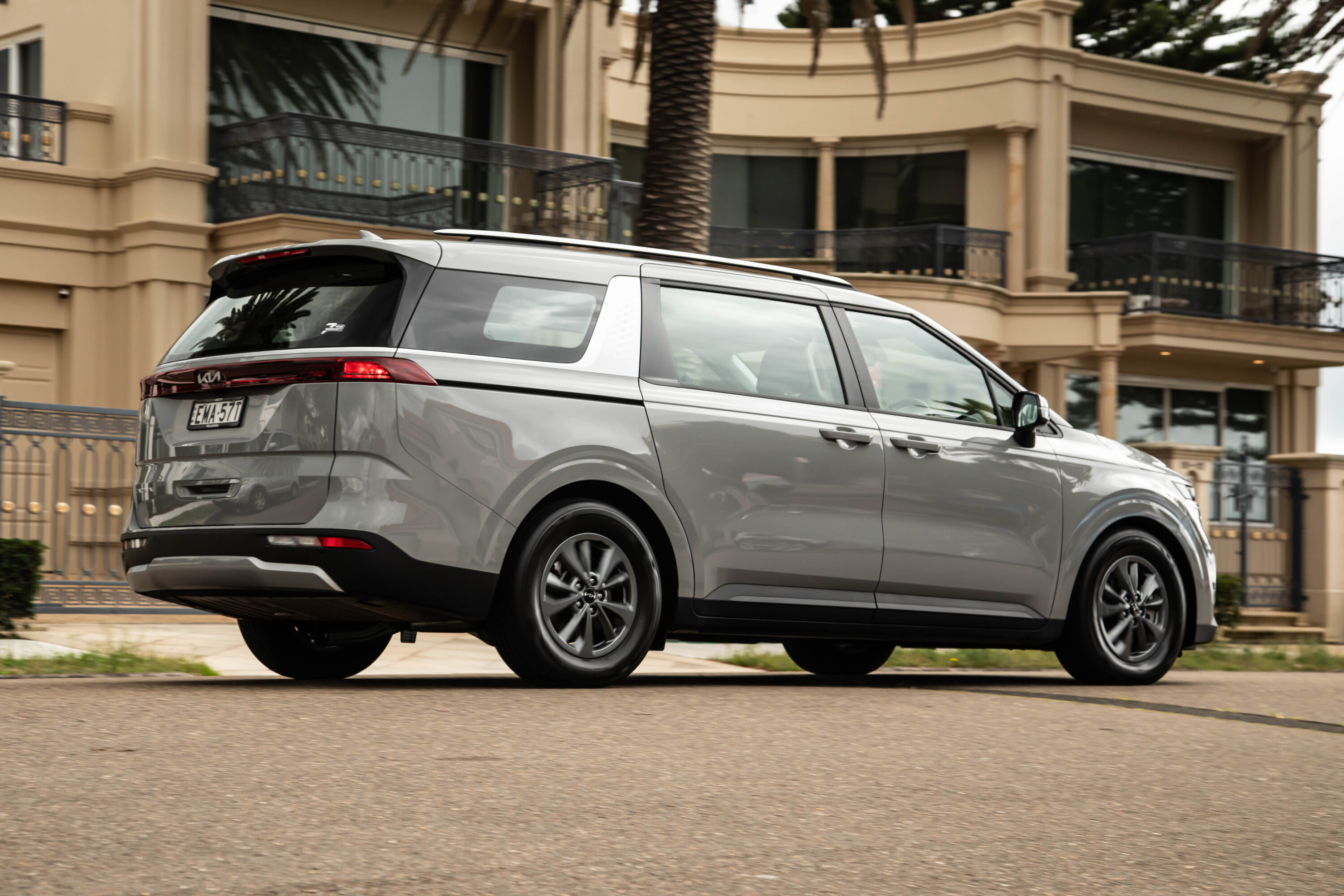
The Carnival is Australiau2019s most popular people mover, and also the best-selling in the segment. It has also just received a facelift for 2024, which means you now get dual digital 12.3-inch screens, as well as revised styling and updated tech and safety systems. Plus, it gets Kiau2019s renowned Aussie ride and handling tune. It measures 1775mm (height), by 1995mm (width), by 5155mm (length).
1
Model range and pricing
Carnival S (V6)
$50,150
Carnival S (diesel)
$52,380
Carnival Sport (V6)
$56,050
Carnival Sport (diesel)
$58,280
Carnival Sport + (V6)
$62,380
Carnival Sport + (diesel)
$64,610
Carnival GT-Line Lite (V6)
$66,350
Carnival GT-Line Lite (diesel)
$68,580
Carnival GT-Line (V6)
$70,680
Carnival GT-Line (diesel)
$72,910
Carnival GT-Line (hybrid)
$76,210
1
Practicality and storage
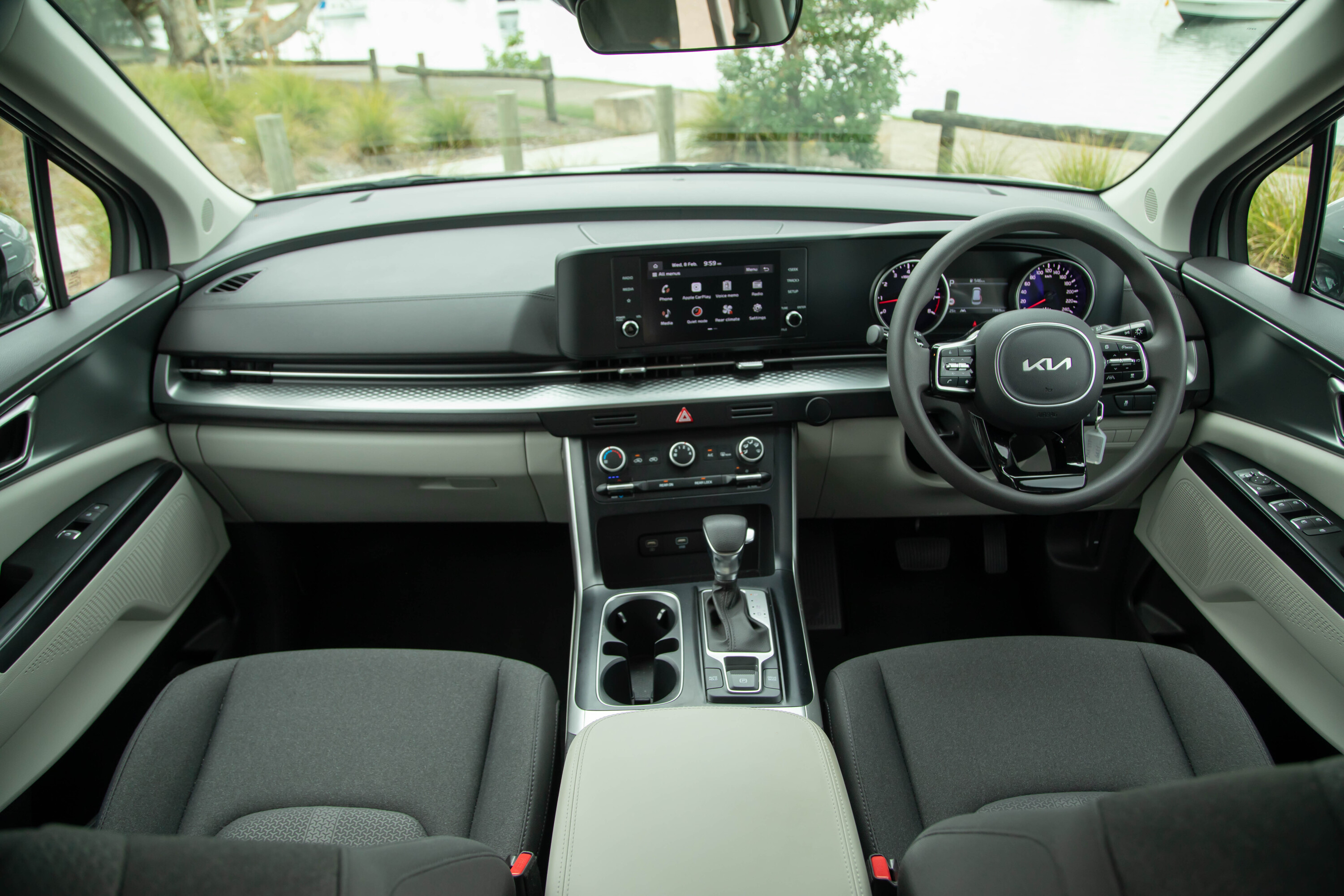
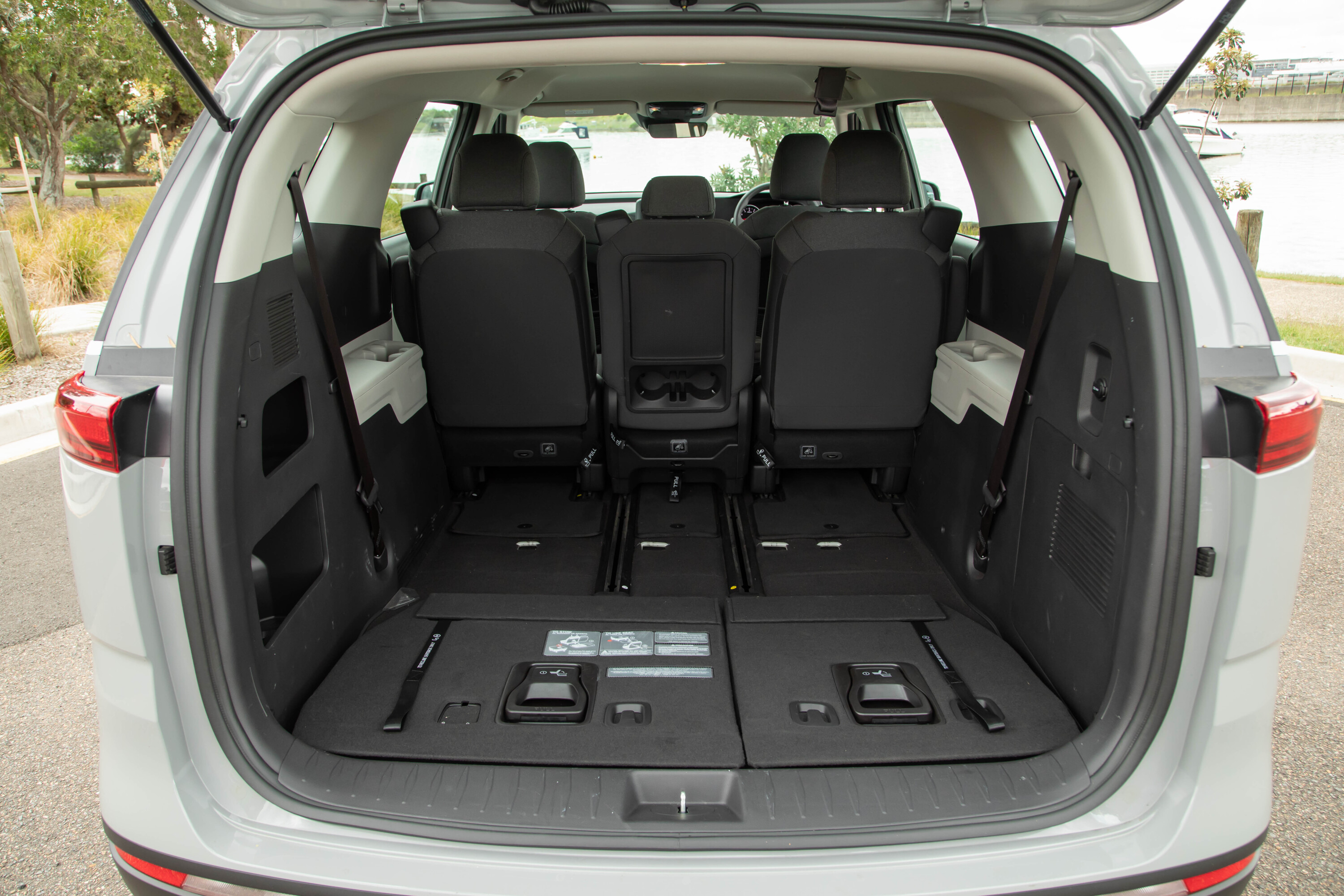
There are plenty of nice features in the cabin including adjustable second- and third-row seating, copious USB ports, electric seats, and lumbar adjustment for the front row. For children, the Carnival has a total of five ISOFIX and five top tether points. There is also a space saver fitted on all models, except the GT-Line HEV-Hybrid.
The Carnival is often judged the best people mover in the segment as there is a model variant for everyone. Plus, it is reliably cheaper than most rivals in this category; it’s loaded with equipment; and it has a stacked safety spec list. Above all else, it is a very family-friendly vehicle, whether you have three or more kids.
Kia Carnival boot space
Eight seats up
627 litres
Five seats up
2827 litres
1
Powertrain choices and fuel consumption
There are three powertrains to choose from, starting with a punchy 3.5-litre six-cylinder petrol. This is paired to an eight-speed automatic that sends power to the front wheels.
Then there’s a 2.2-litre four-cylinder turbo-diesel, mated to the same eight-speed automatic but with an all-wheel drive system for added traction. Taking price into consideration, the diesel is the best option.
There’s also a 1.6-litre four-cylinder turbo-hybrid that’s exclusively paired to a six-speed automatic sending power to the front wheels. This powertrain is only available on the GT-Line, which is the most expensive variant.
Both the diesel and petrol variants can tow 750kg unbraked and 2000kg braked. The hybrid’s unbraked capacity remains at 750kg, but its braked towing capacity is just 1000kg.
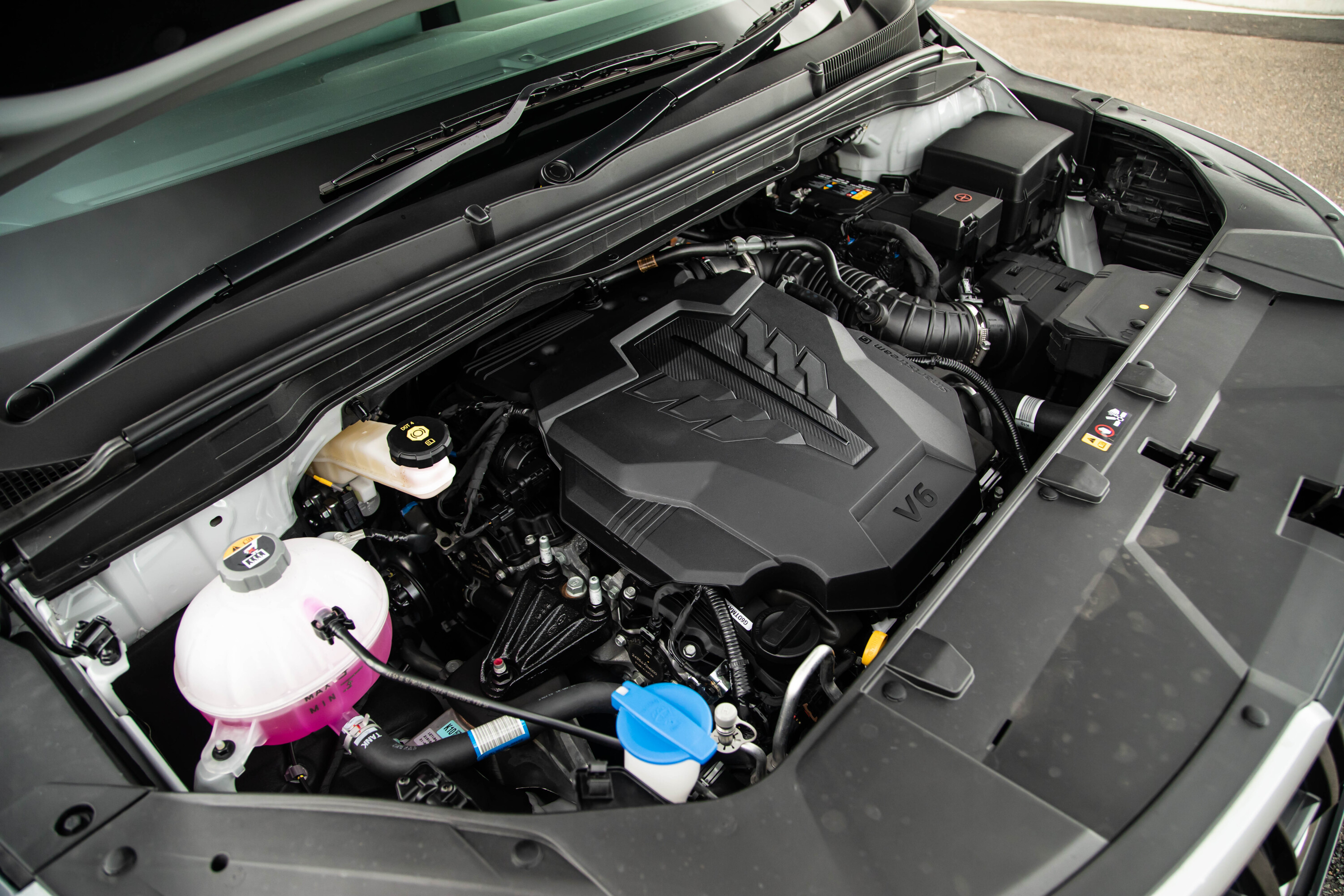
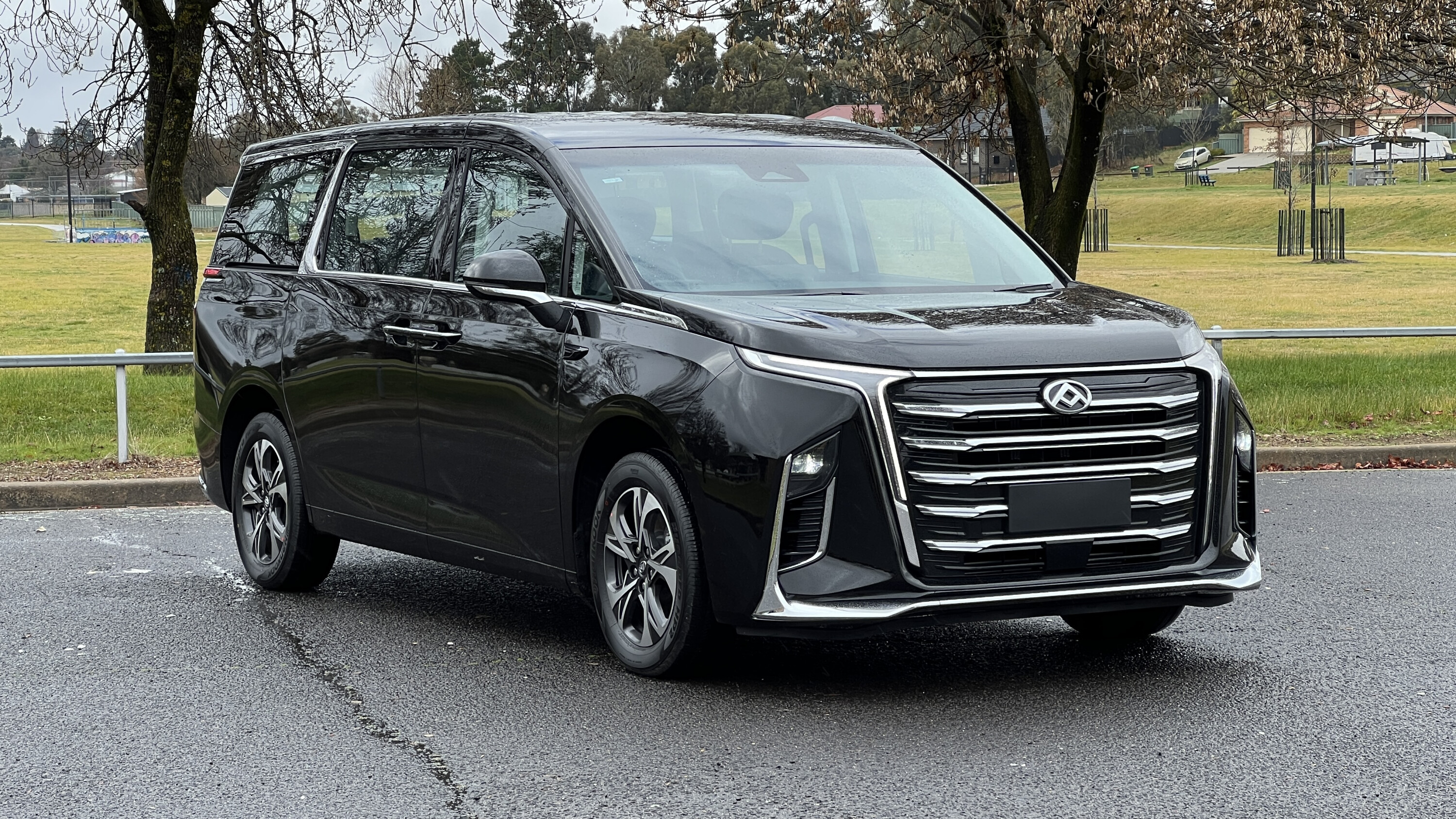
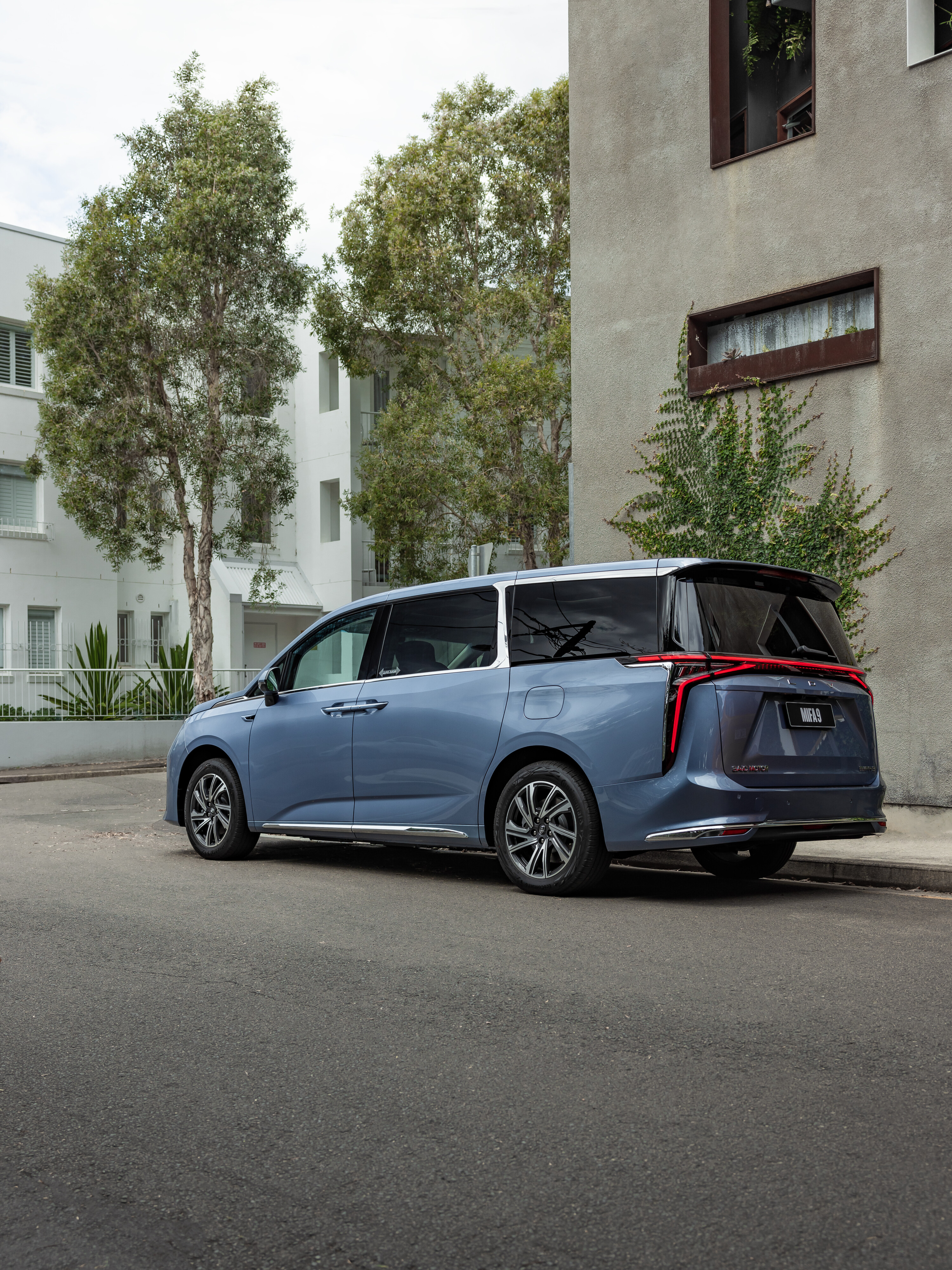
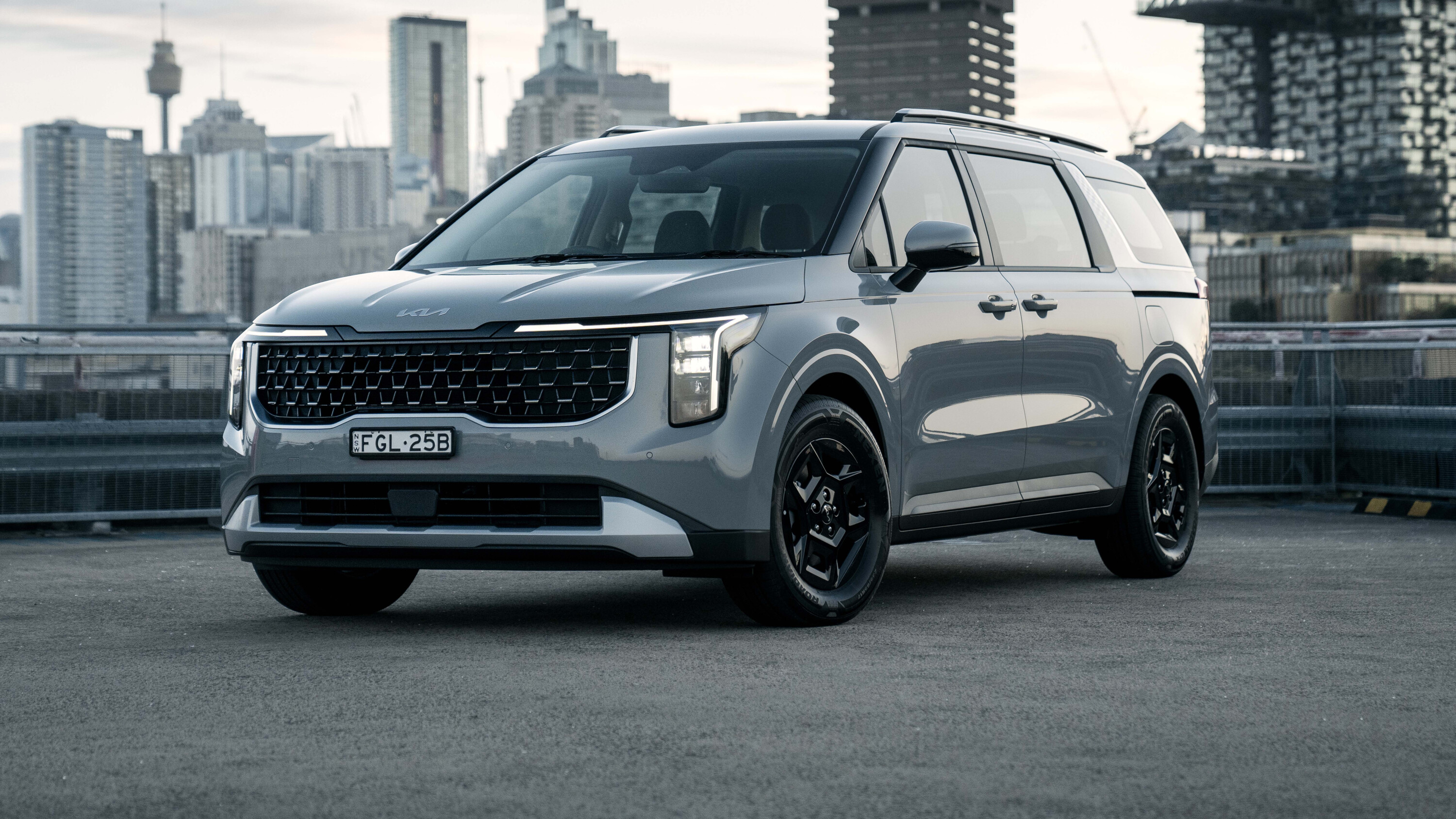
There are three models to pick from with a seven-seat configuration (a captain’s chair, 2-2-3 seating set-up). There is also a fully electric version that has 440km of driving range and additional luxury features to justify the premium price tag.
However, the third row isn’t as practical as the Kia Carnival and there is no eight seat option. It measures 1845mm (height), 1998mm (width) and 5280mm (length).
1
MIFA Mode
$53,990
MIFA Executive
$63,990
MIFA Luxe
$72,990
MIFA 9 Mode (electric)
$106,000
MIFA 9 Executive (electric)
$117,000
MIFA 9 Luxe (electric)
$131,000
Practicality and storage
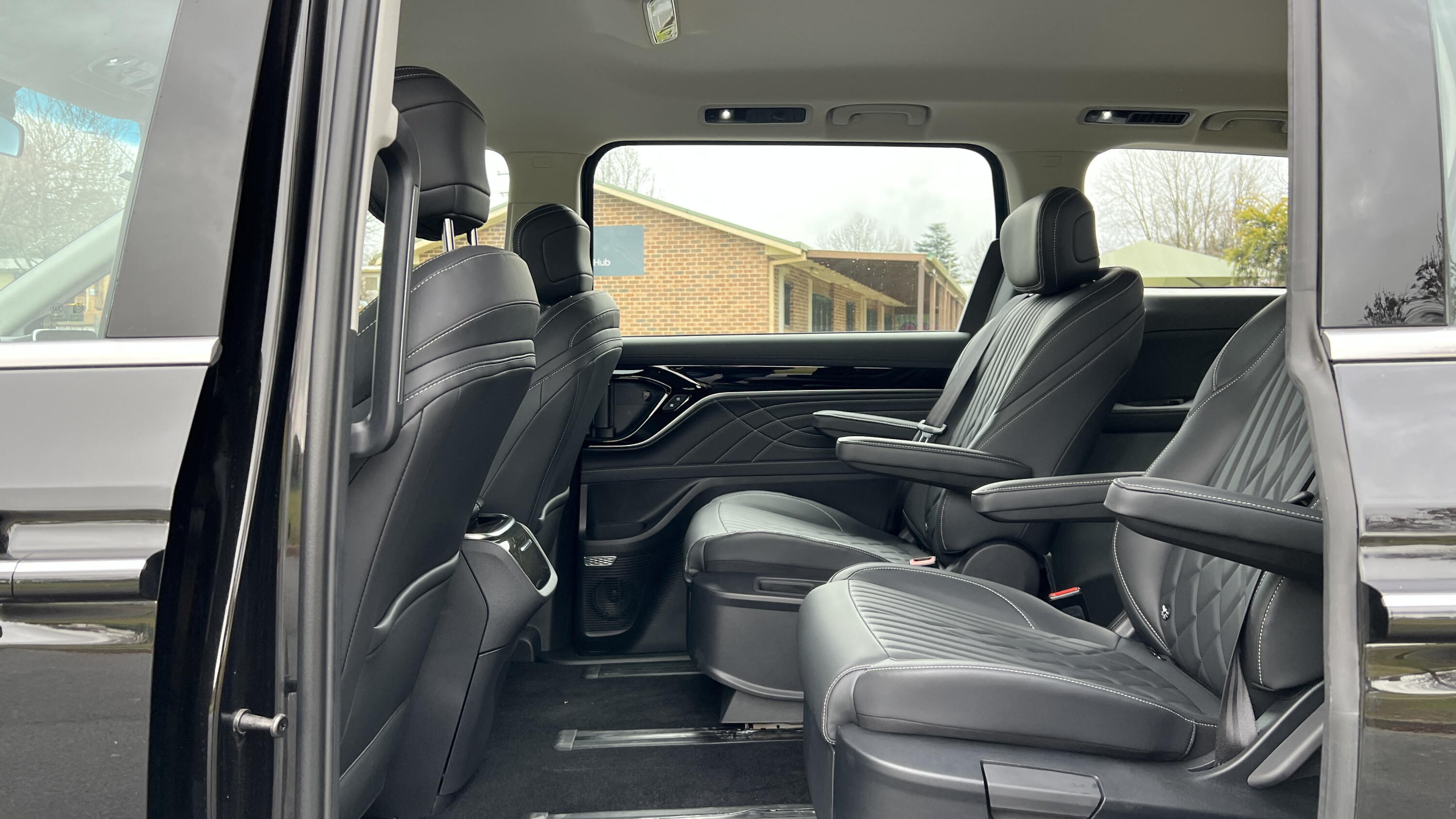
Interior features include individual touchscreen controls, fold-out tables, and a dual panoramic sunroof.
For children, the MIFA only has one ISOFIX point in the third row and two in the second row. For a chauffeur business, the MIFA Luxe trim is worth considering, but for similar money the Carnival is the recommended people mover for young families and commercial businesses.
1
LDV MIFA boot space
Rear seats up
446 litres
Second row folded
1702 litres
All seats folded
2017 litres
33
Powertrain choices and fuel consumption
Under the bonnet is a 2.0-litre turbo-petrol four-cylinder engine producing 160kW and 360Nm. It is paired to an eight-speed automatic transmission that sends power to the front wheels. Towing is rated at 750kg unbraked and 3000kg braked for the standard version – and the MIFA 9 has a braked capacity of 1000kg.
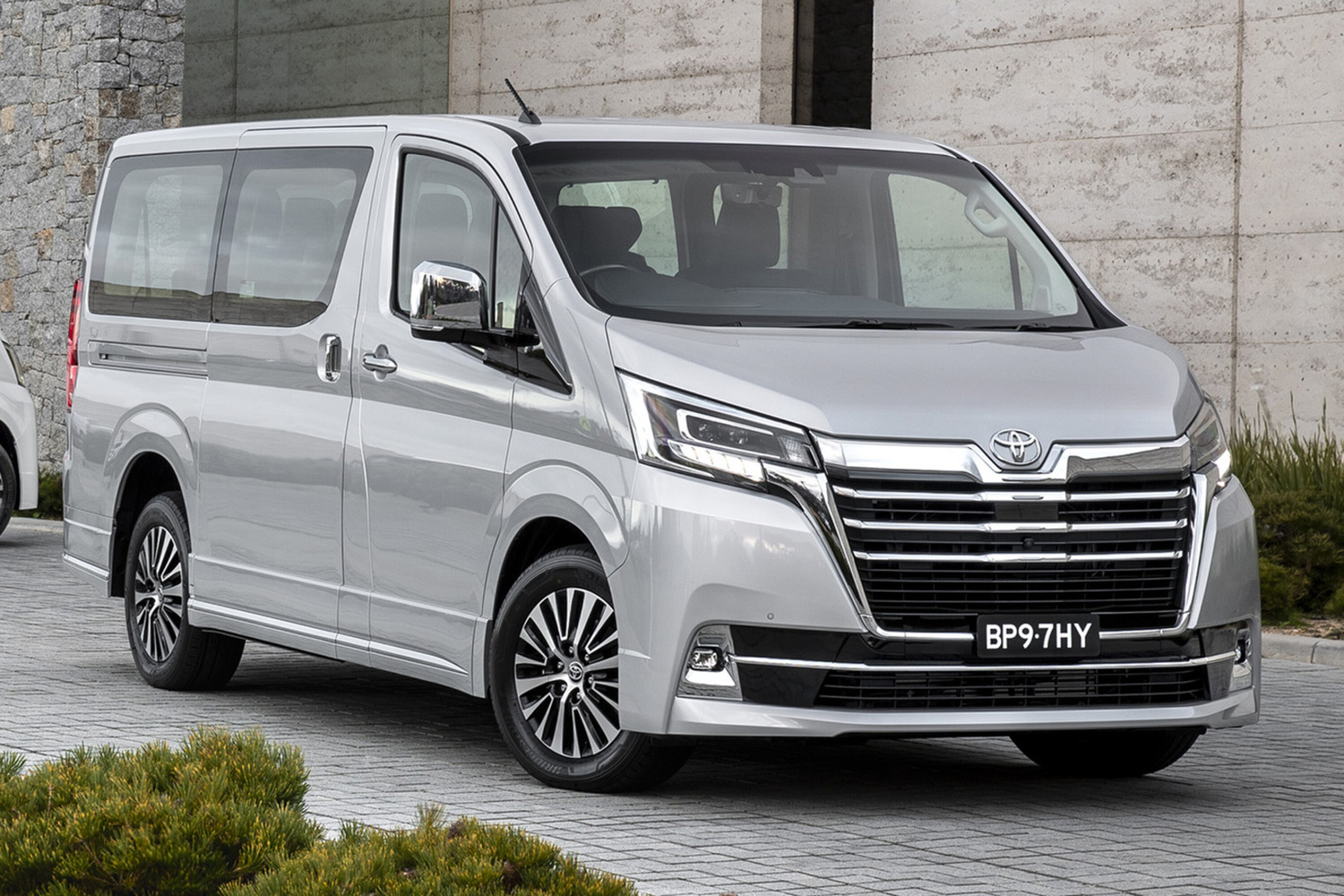
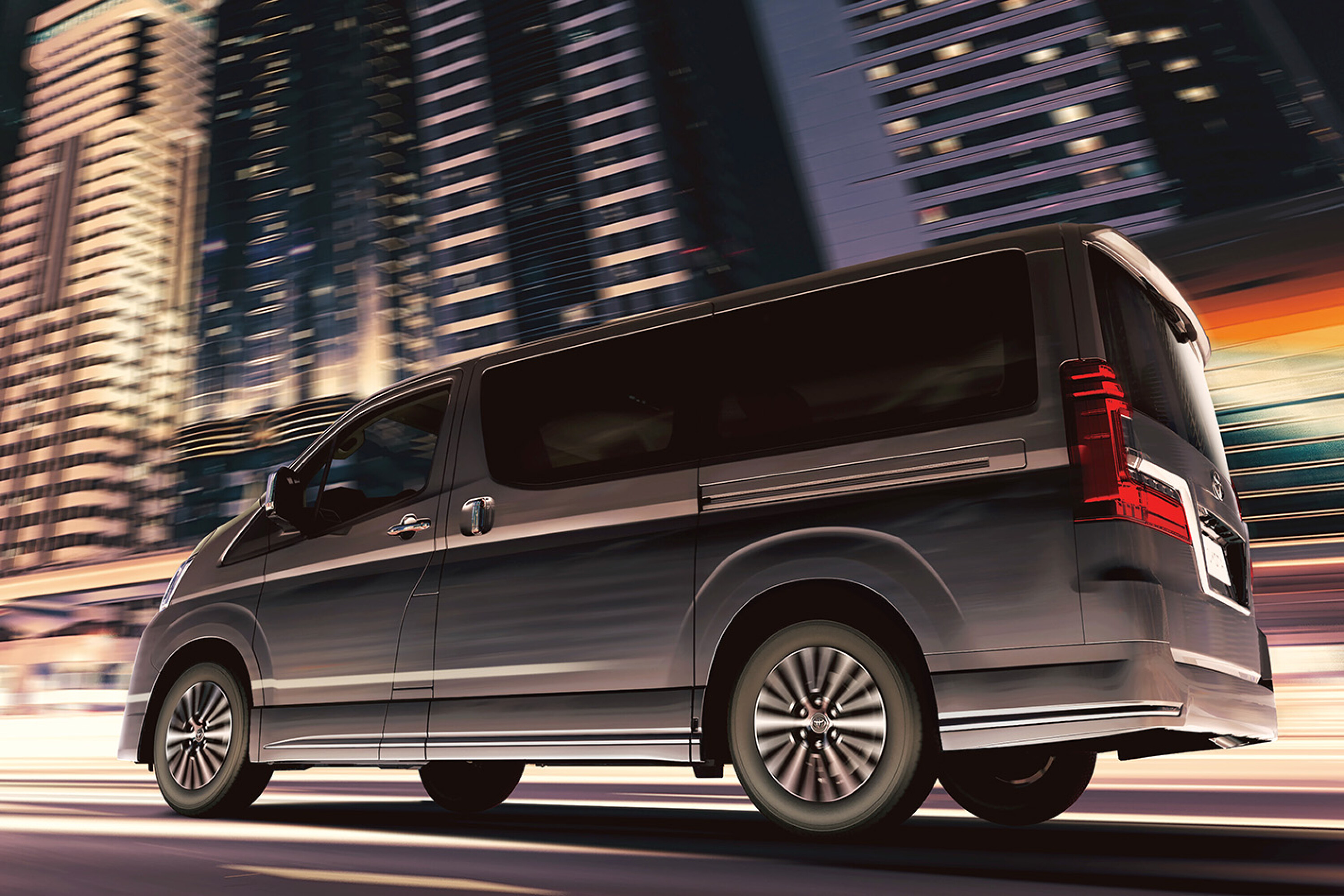
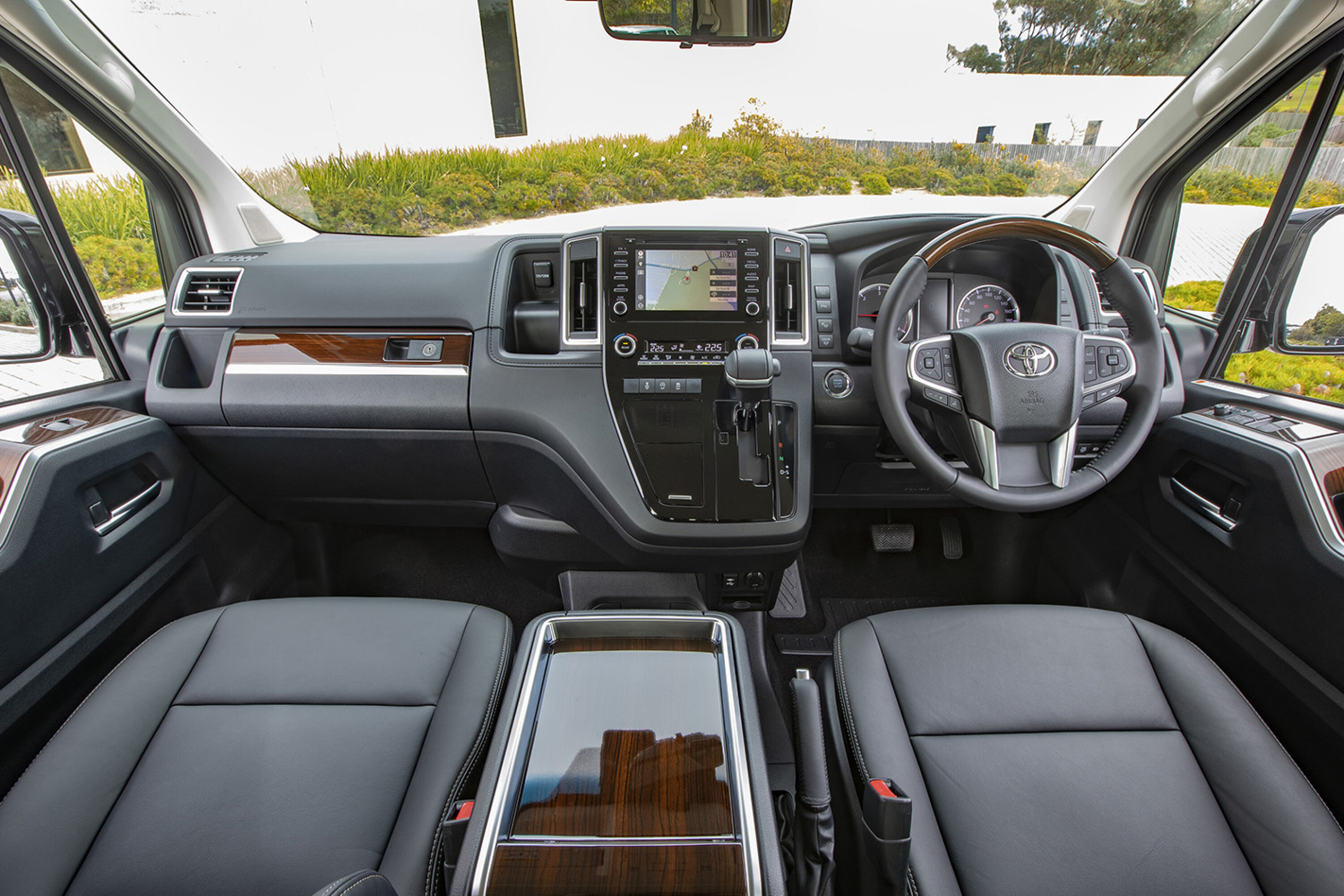
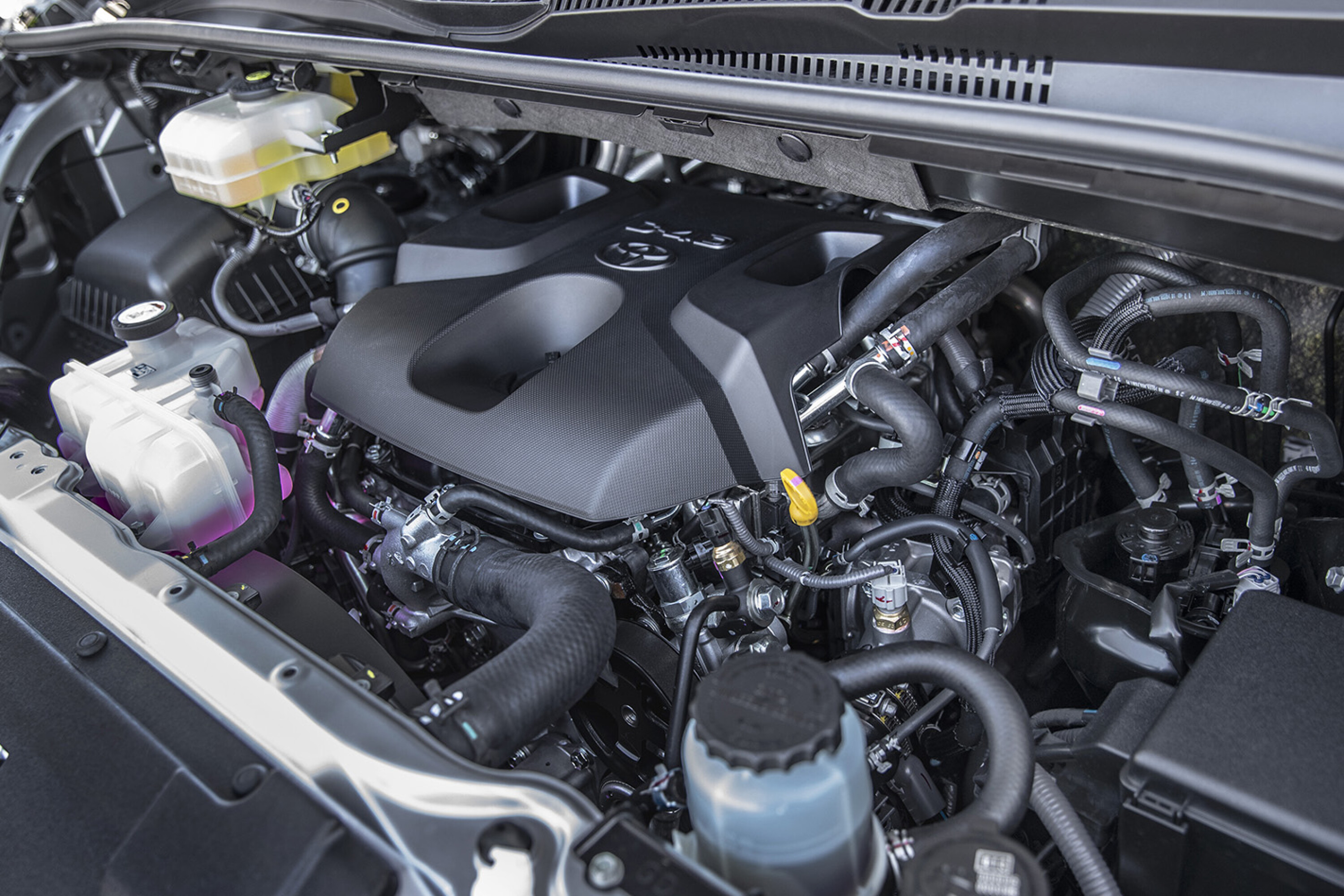
The Toyota Granvia is a eight-seat people mover based on the current-generation HiAce cargo van, with extra seats and amenities. This is essentially a successor to the Toyota Tarago.
The Granvia carries over the ultra-reliable 2.8-litre four-cylinder turbo-diesel engine from the HiLux and HiAce. It’s a sensible choice for a family buyer with a solid powertrain package, but it does have limitations with its seating arrangement and on-road ability. It measures 1990mm (height), 1970mm (width) and 5300mm (length).
1
Model range and pricing
There are two trim levels to pick from, with the choice of six or eight seats and one powertrain choice only. There is space for small bags and you can transport eight people in comfort, but this may not be the best alternative if you’re loading large suitcases as well.
For children, the middle rows have three ISOFIX points, but nothing at the rear. If you step up to the VX with the captain’s chairs, then putting a baby capsule in the seat might be a challenge.
Climbing into the second and third row is also a challenge, as the floor is quite high and not all body types will fit into the snug VIP-style pews. This is also a downfall on both the LDV MIFA 9 and Lexus LM.
Granvia 6 Seater
$68,306
Granvia 8 Seater
$70,306
Granvia VX 6 Seater
$77,355
Granvia VX 8 Seater
$77,355
1
Powertrain choices and fuel consumption
The Granvia is powered by a 2.8-litre turbo-diesel four-cylinder engine that produces 130kW and 450Nm. Power is sent to the rear wheels through an eight-speed automatic transmission. There is a downside to this powerplant, as it feels like a Toyota HiAce to drive. Braked towing capacity is 1500kg, with an unbraked towing capacity of 750kg.
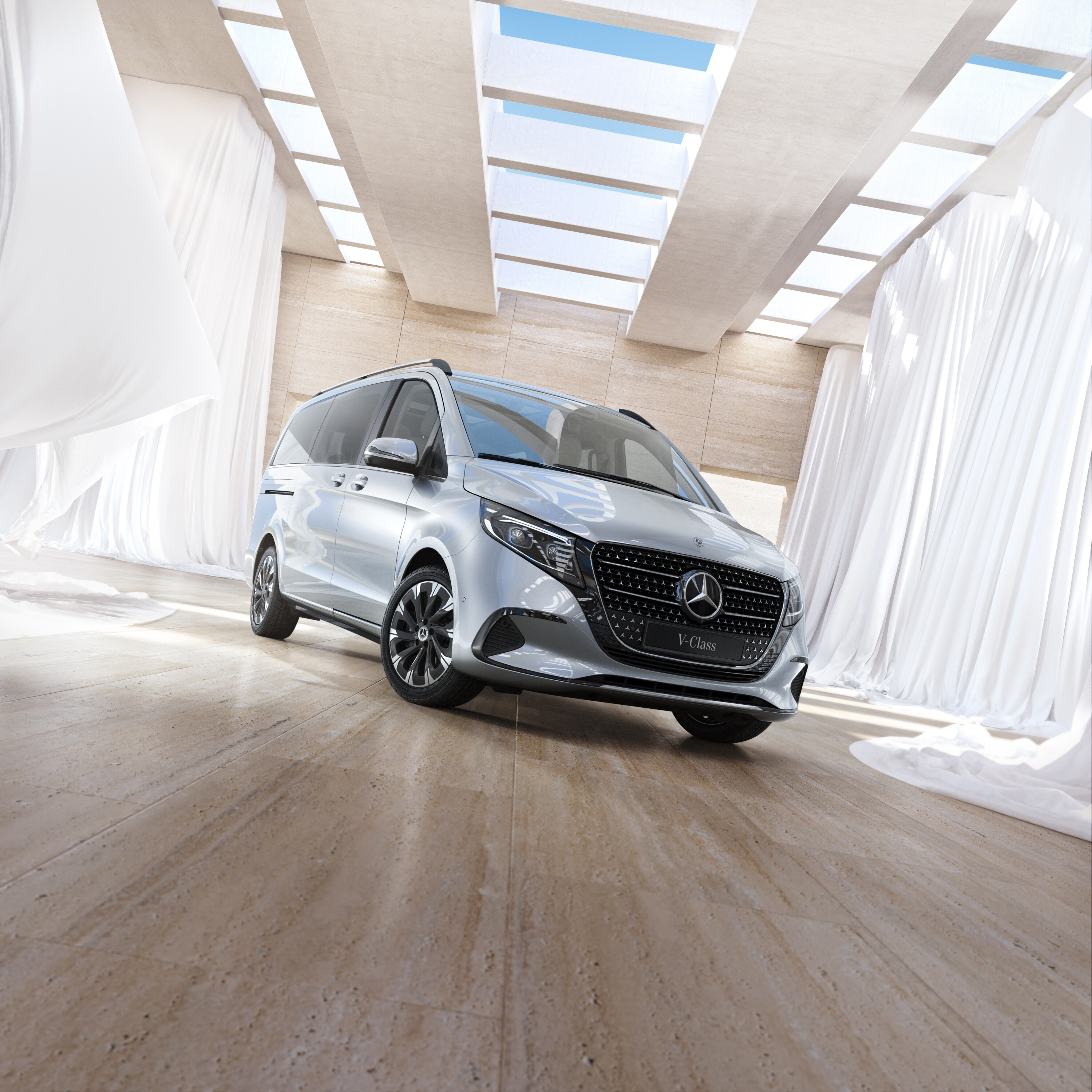
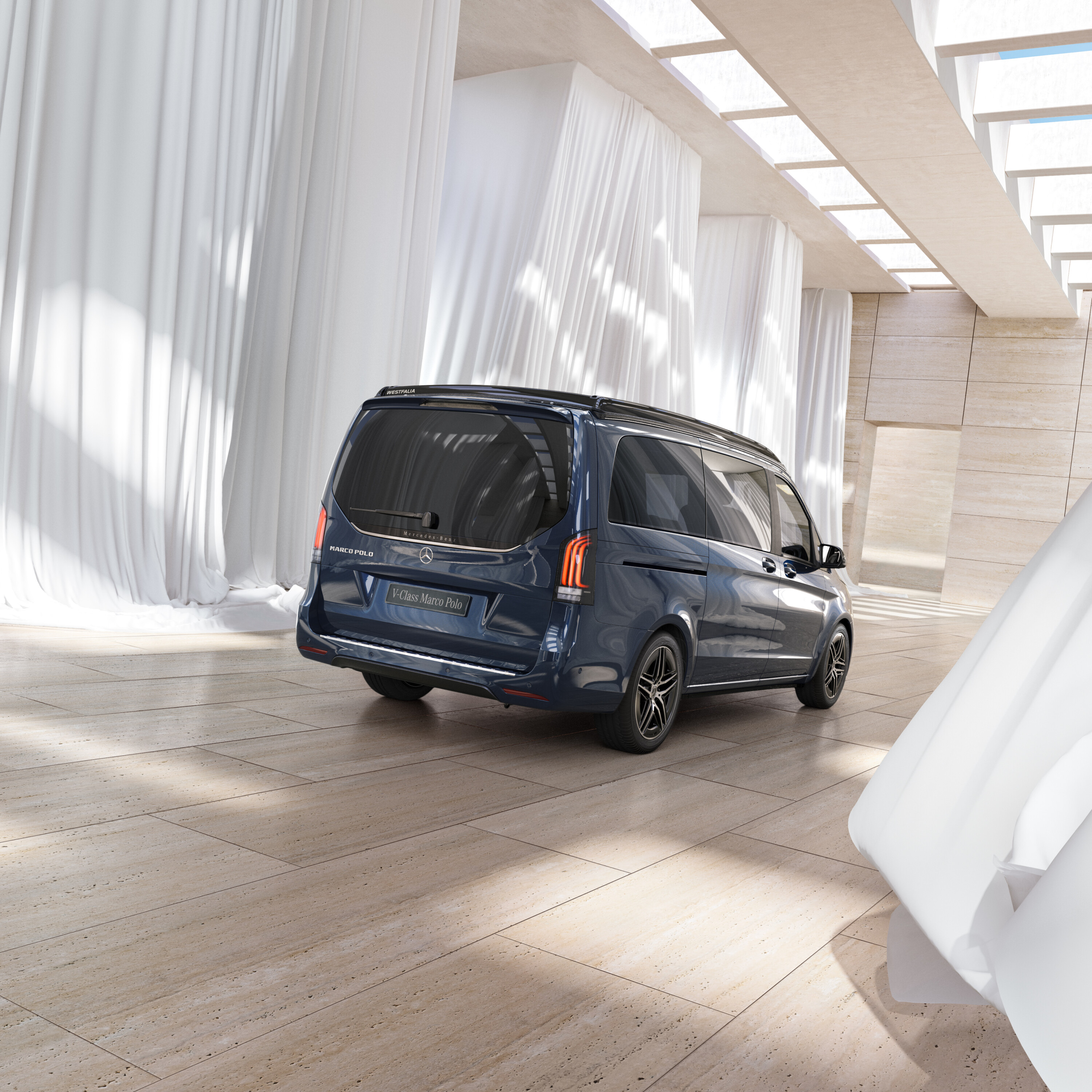
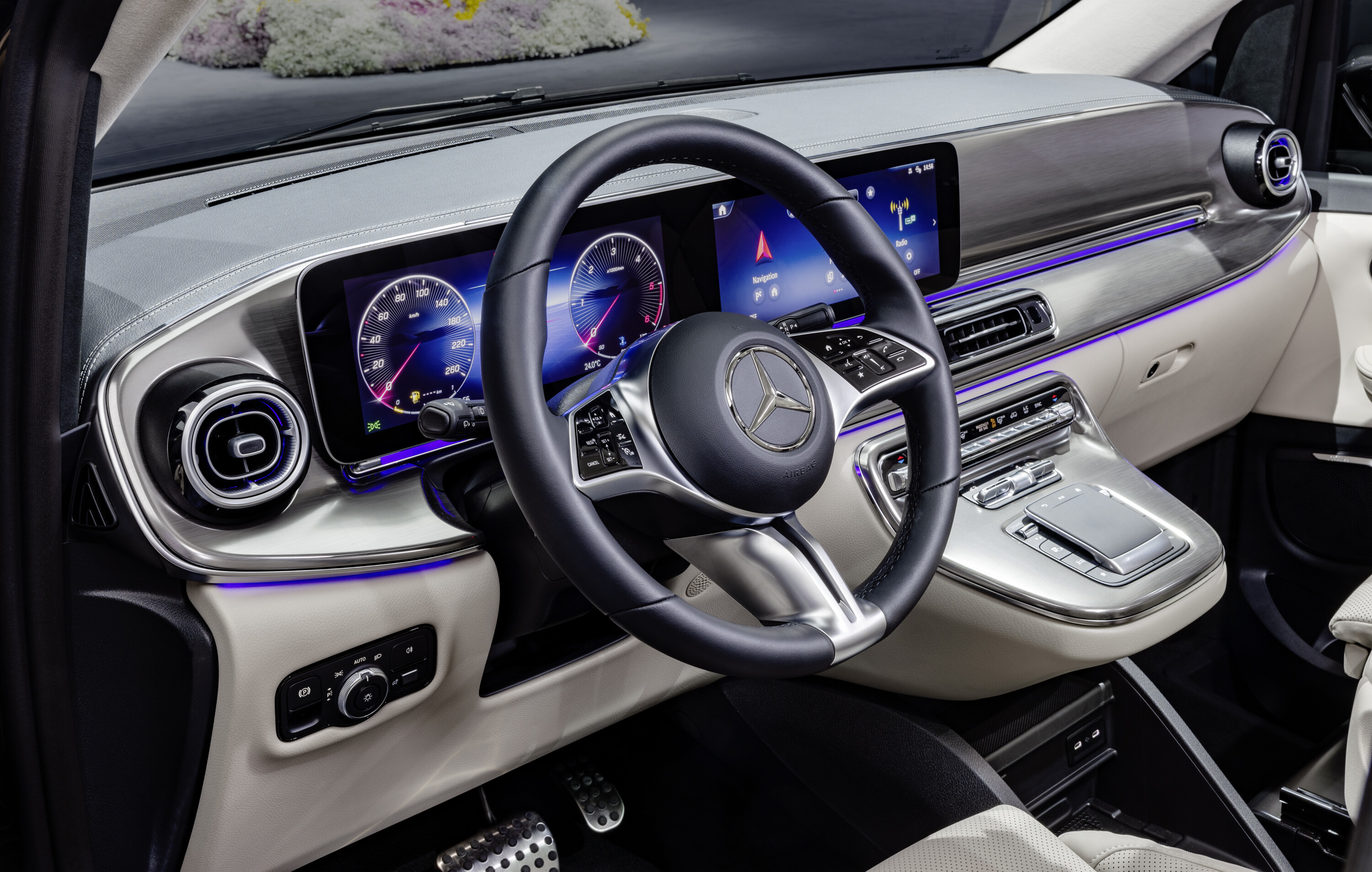
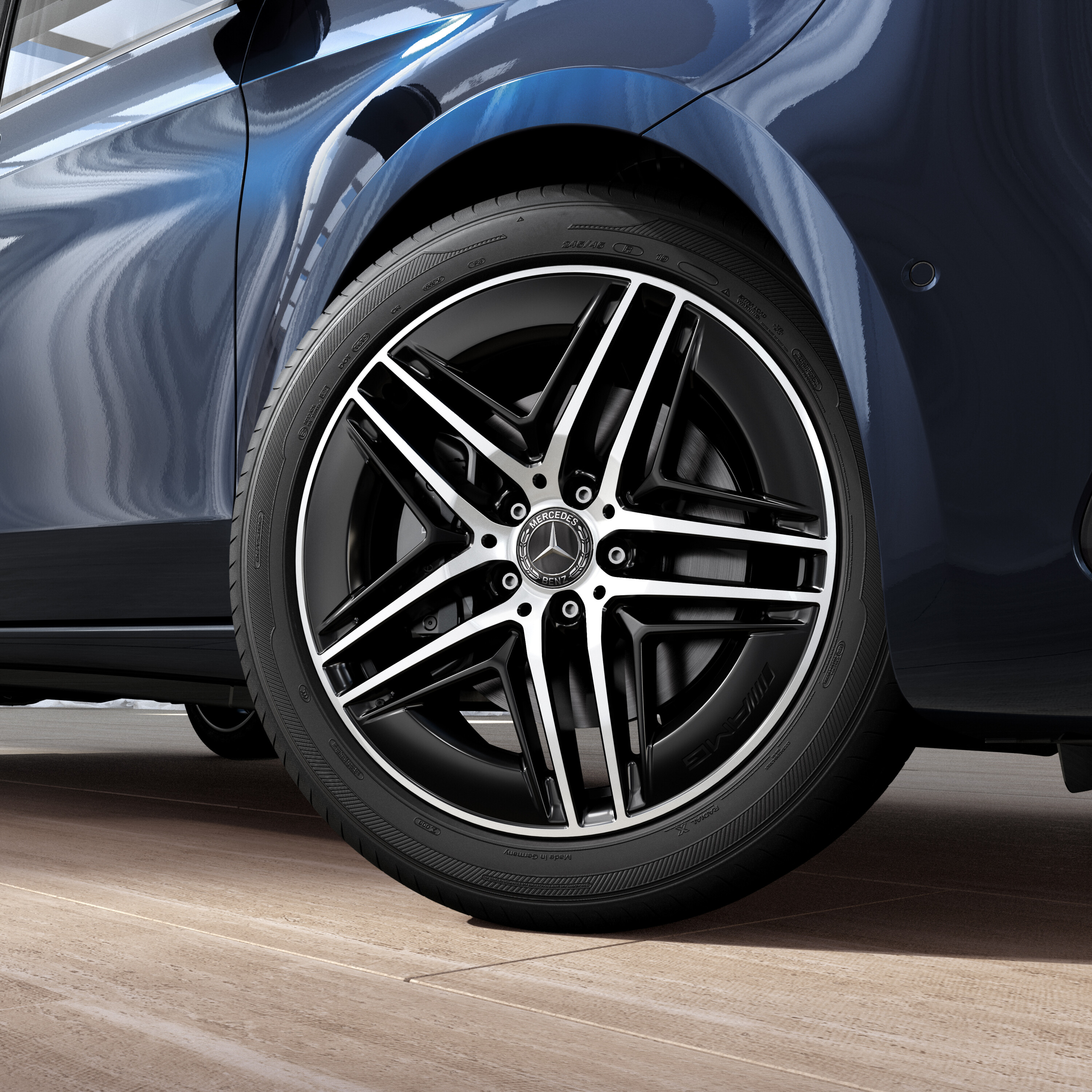
This model has been on sale in Australia since 2015, but the V-Class has now received a facelift with new styling and a revised cabin. Compared to its main rivals, the V-Class the best to drive and provides a very similar car-like experience to a W205.
If you’re trying to stick to a budget, this might not make sense as a family car, but it makes sense as a prestigious transport option as it has the brand image high-profile corporate VIPs would appreciate.
It’s also one of the more practical options in terms of boot space, flexible seating arrangements, and it is proven to be very reliable and durable – no wonder limousine and private hire car companies like love having them on fleet. It measures 1880mm (height), by 1928mm (width), by 5140mm (height).
1
Model range and pricing
The V-Class range is offered in three different models, with the choice of eight seats or a six-seat configuration on the V300 Exclusive.
V250 Avantgarde
$113,832
V300 AMG Line
$139,927
V300 Exclusive
$143,193
1
Practicality and storage
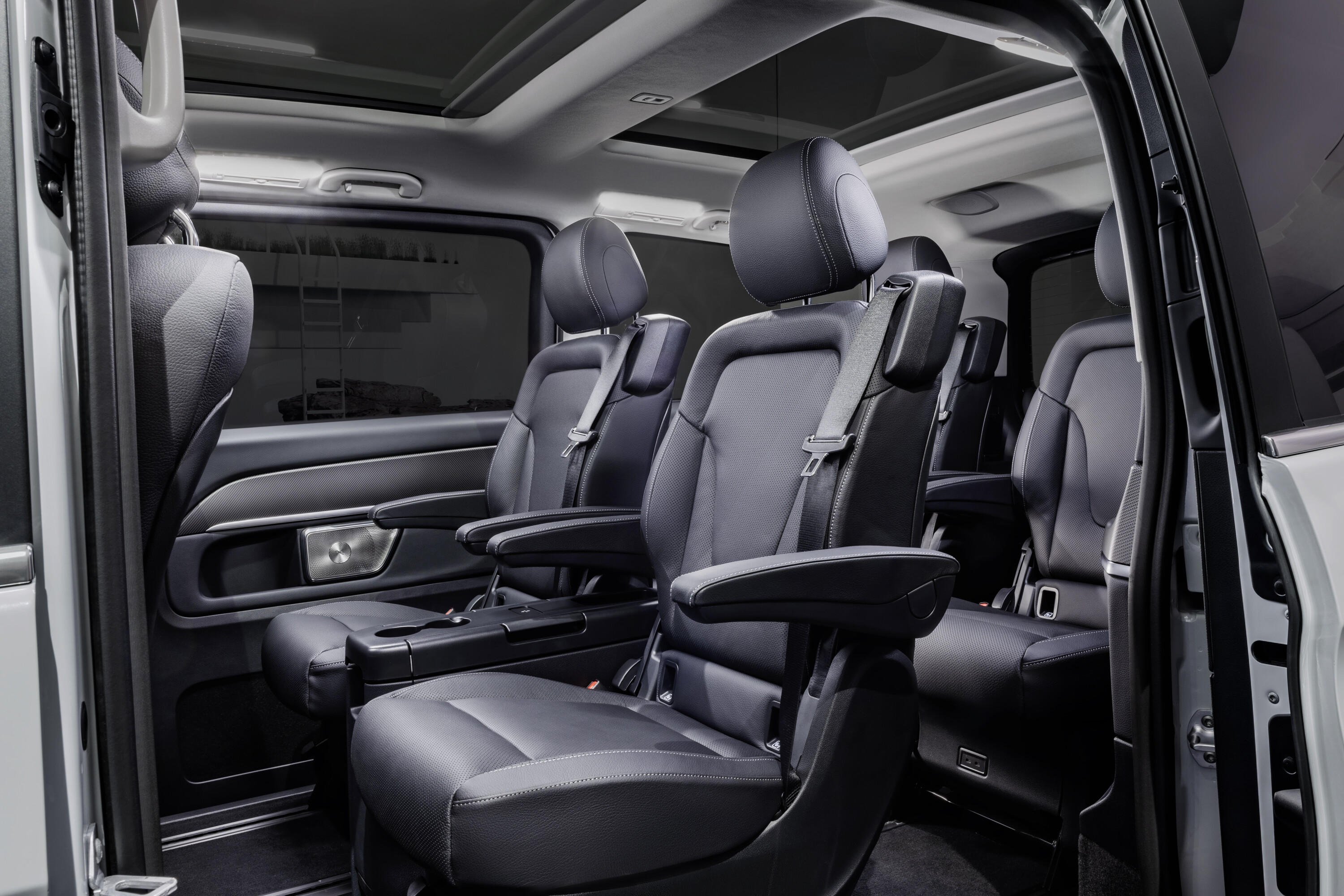
The eight-seat version is the best option for a family or a passenger transfer vehicle. Inside you’ll find dual-zone climate control, heated front-row electric seats with lumbar support, air vents throughout the cabin, and decent storage.
The V-Class might come across as a little plain compared to the back seat of the Lexus LM, but compared to most luxury rivals in this segment, the seats are more supportive for all passenger sizes – unlike the Lexus LM.
1
There are also plenty of ways to alter the seat configuration to your requirements. The V-Class might be a bit expensive as a family people mover, but for an airport transfer mover or even a luxury hire car alternative, this wins for that purpose.
For children, the V-Class has six top teacher points and six ISOFIX points; plus, there’s room for two large suitcases in the boot when all the seats are in place.
Mercedes-Benz V Class boot space
Rear seats up
1030 litres
All seats folded
4630 litres
1
Powertrain choices and fuel consumption
Buyers have the option of either the V250d which gets 140kW and 440Nm, or the V300d which delivers 174kW and 500Nm. Both engines are paired with a nine-speed automatic transmission. The V-Class also has a braked towing capacity of 2500kg and an unbraked towing capacity of 750kg.
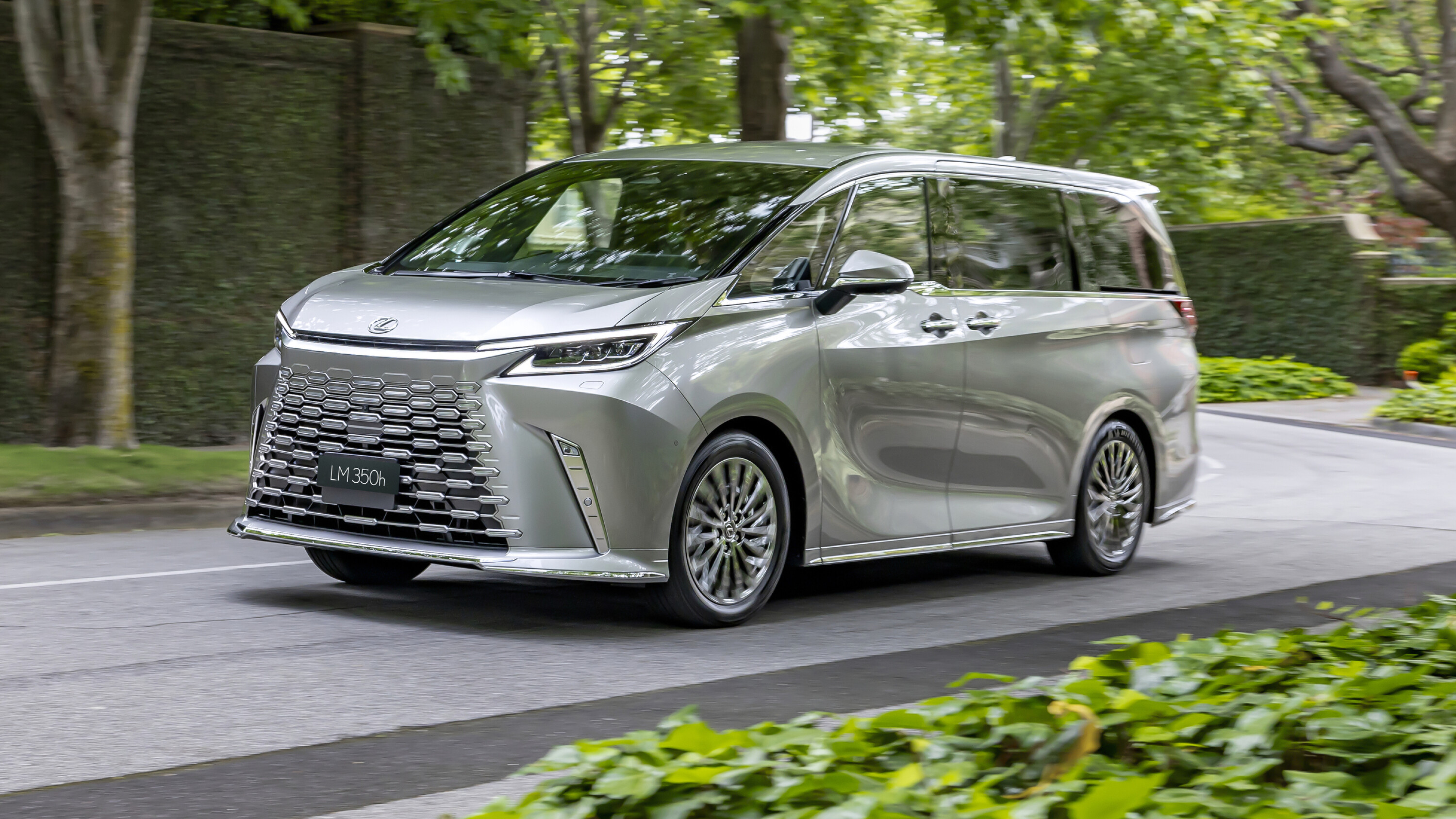
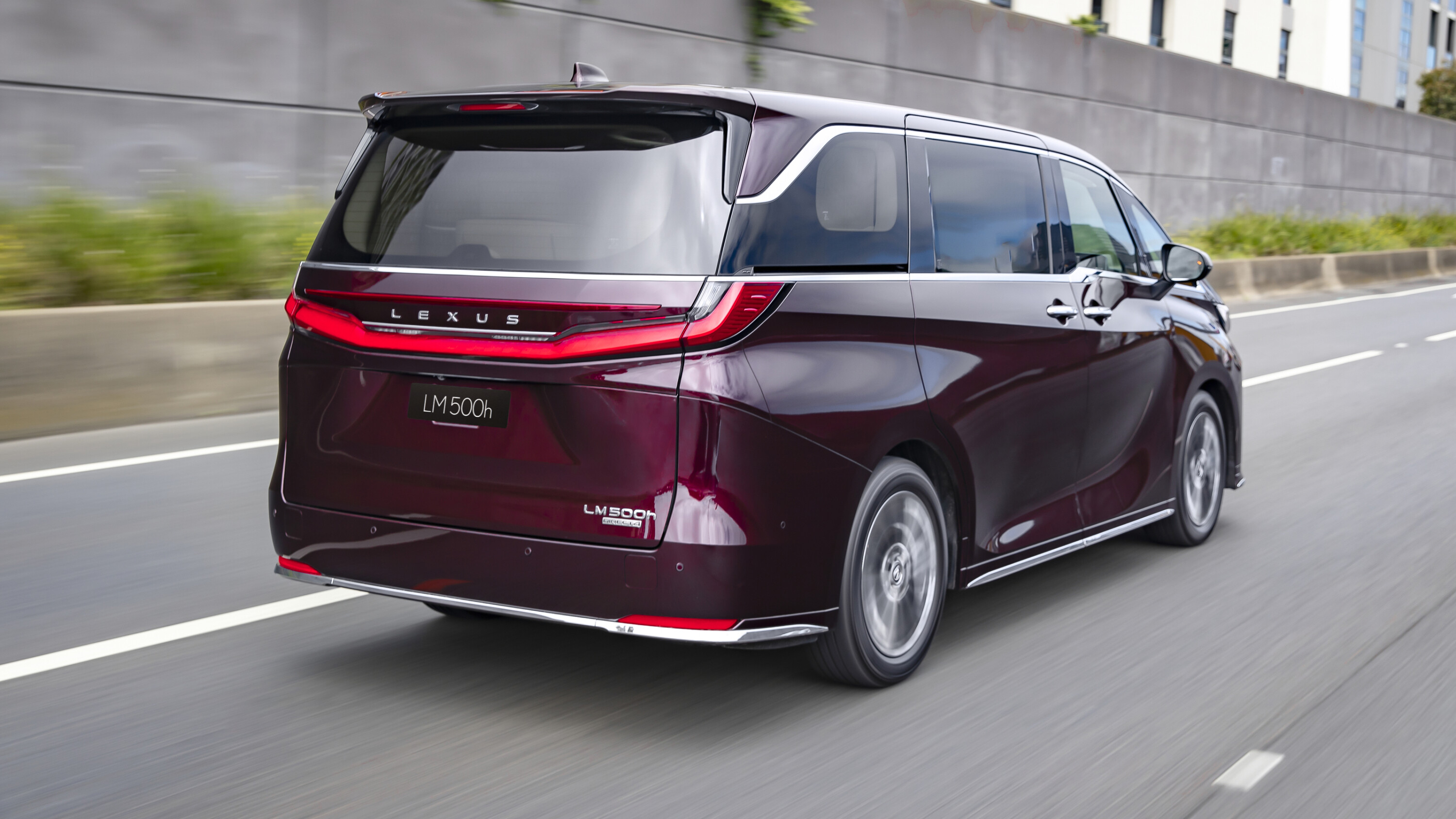
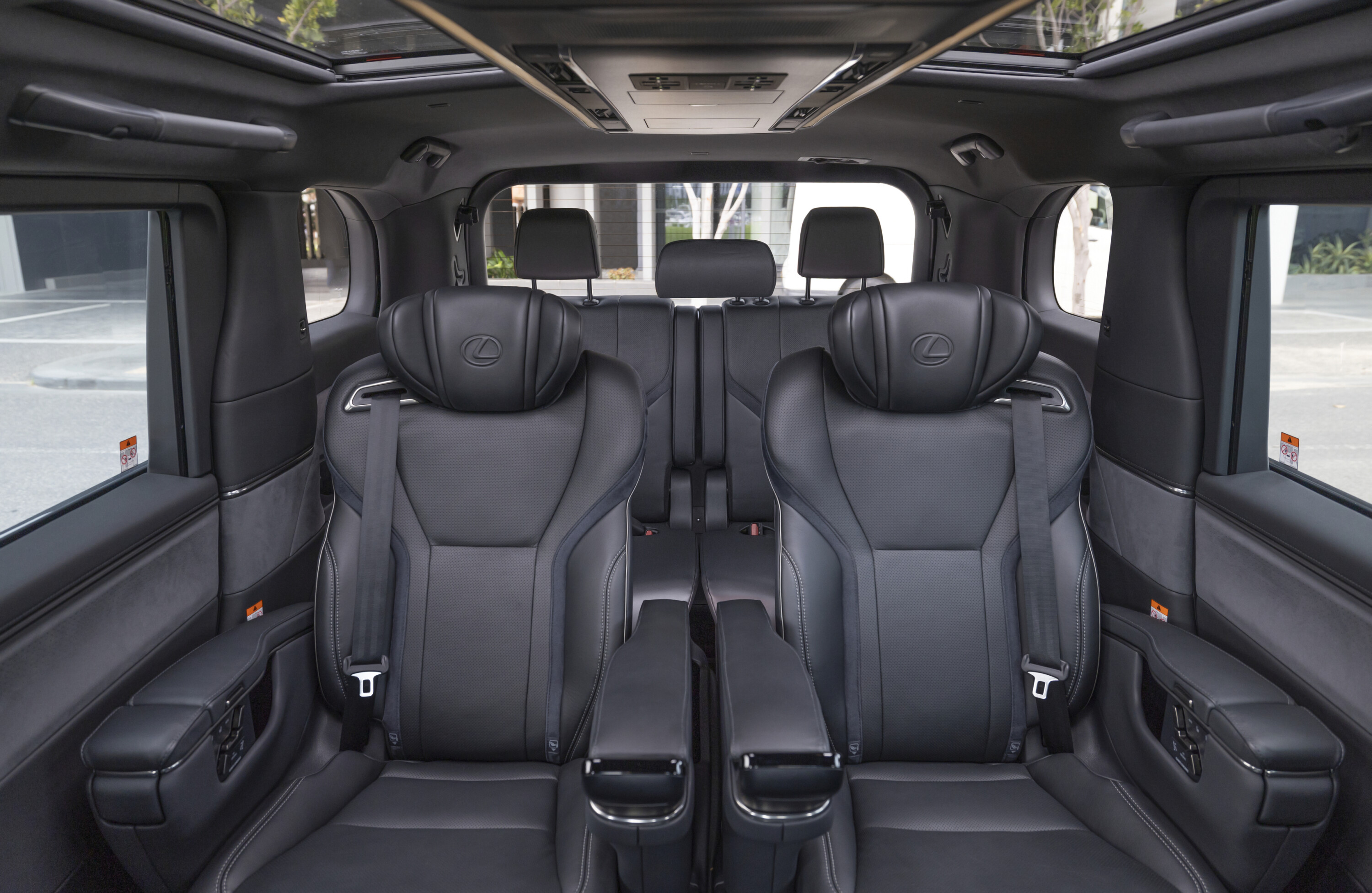
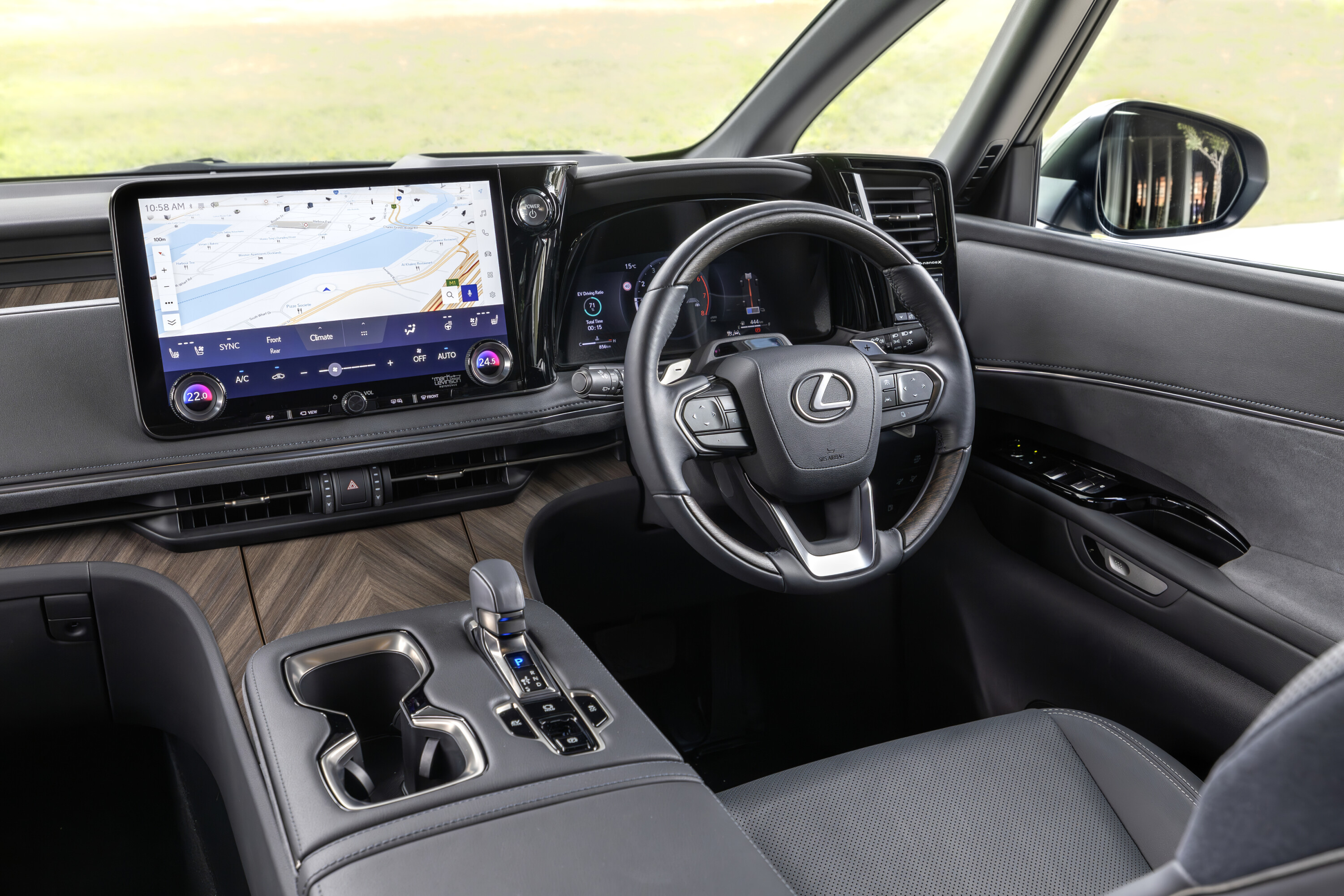
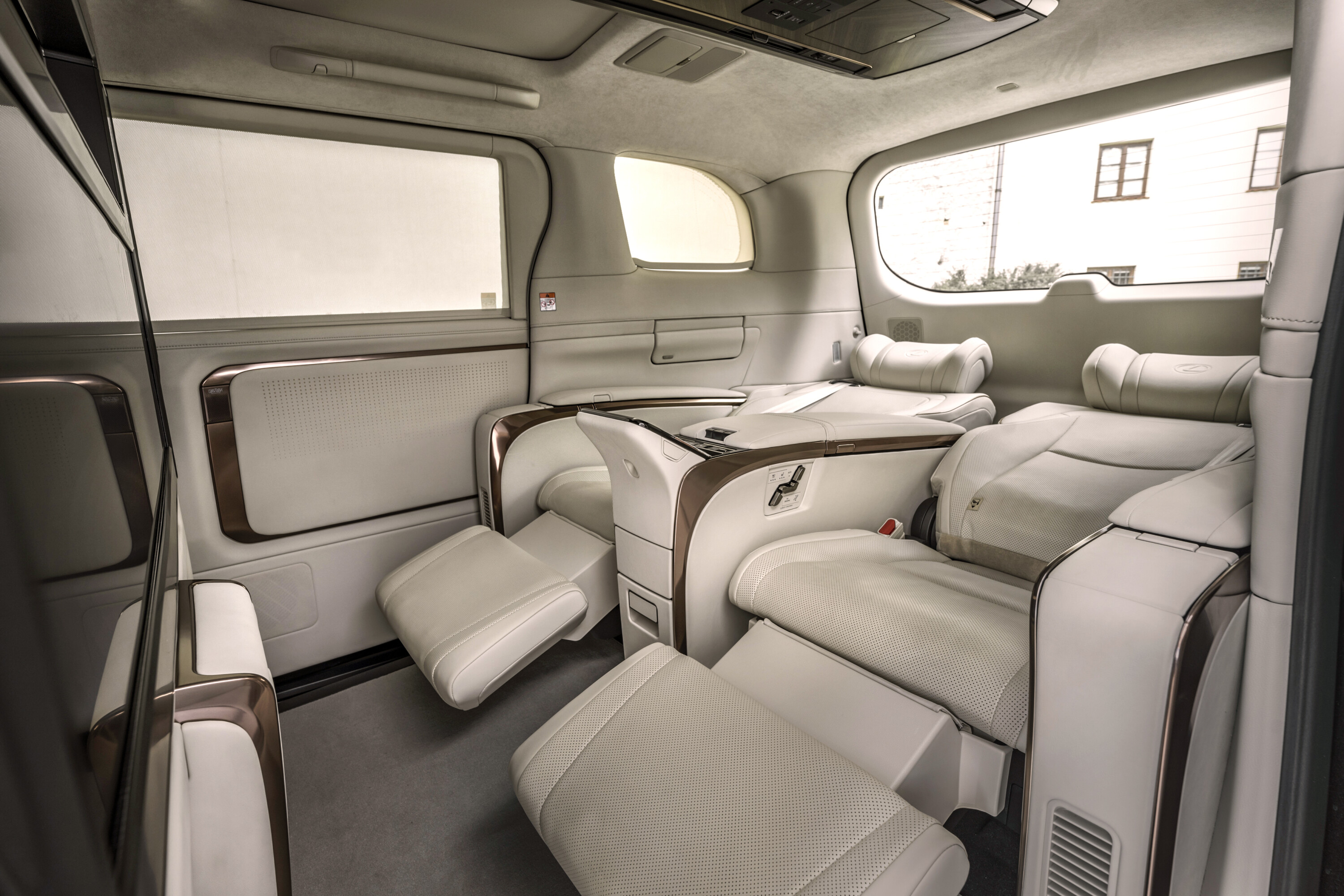
This is the most expensive Lexus model you can buy. It’s a people mover, but the further you move up the range the more comparable it is a luxury private jet in the second row. However, as a passenger-friendly option, there are limitations. It measures 1775mm (height), 1950mm (width) and 5130mm (length).
1
Model range and pricing
LM 350h Sports Luxury
$160,888
LM350h Sports Luxury AWD
$165,888
LM500h Ultra Luxury AWD
$220,888
Practicality and storage
Both the LM350h FWD and AWD Sports Luxury include a seven-seat configuration (2+2+3), which is the more sensible choice for a passenger-friendly alternative. The LM also includes a lot of luxury such as electrically adjustable seats that can be both heated and ventilated, sunshades, a remote control to turn on the massage seats, and HDMI ports for the rear screen.
For children, the LM includes ISOFIX points and top tether points for the two second-row seats but no child placement for the third row, which might limit its practicality for a growing family.
1
The LM500 can only seat four passengers, which rules it out for a family with more than two children – as does its price point. As a limousine service vehicle, its boot space for luggage is impaired and the top-spec 500h Ultra only has a two-seat setup in the back. For a little less money, a Lexus LS saloon with a more refined twin-turbo V6 combined with air suspension would make more sense.
Ultimately if you’re looking for the best option, the less expensive and more passenger-friendly Mercedes V-Class is a better choice for both growing families and as a luxury transfer vehicle.
1
Lexus LM boot space
Seven seats up
110 litres (LS350h)
All seats folded
1191 litres (LS350h)
Rear seats up
752 litres (LS500h)
19
Powertrain choices and fuel consumption
Under the bonnet is a 2.5-litre four-cylinder engine with a series-parallel hybrid system, which is similar to what is found in a Kluger Hybrid. Buyers have the choice between front- and all-wheel drive.
The second choice is a 2.4-litre four-cylinder turbocharged engine that is paired with a six-speed gearbox and an All-Wheel Drive system. Lexus Australia has not released any towing figures.
It’s easy to see why people movers remain a popular option for families, given they provide many practical advantages compared to any seven-seat SUV.
As the most affordable all-rounder, we would recommend the Kia Carnival, as it seats up to eight passengers and features all the premium features and technology most buyers in this segment would require. Thanks to the improved ride and handling tune for local conditions, the Carnival is also one of the most refined people movers to drive in this segment.
The Carnival is also backed by a seven-year unlimited warranty, along with eight years of roadside assistance and a comprehensive serving plan across the range.
1
The petrol V6 FWD can be a bit thirsty, and the Hybrid version is only available in top-spec GT-Line guise that is priced from $76K. This leaves the 2.2-litre diesel AWD as the recommended, affordable option.
In terms of trim level, the Sport+ grade features all of the premium comfort additions like seat heating in the front and second row, a power tailgate with automatic side door entry, electric front seats with artificial leather, and a surround view monitor. Otherwise, standard equipment is generous and includes autonomous emergency braking, a reversing camera with front and rear parking sensors, and adaptive cruise control.
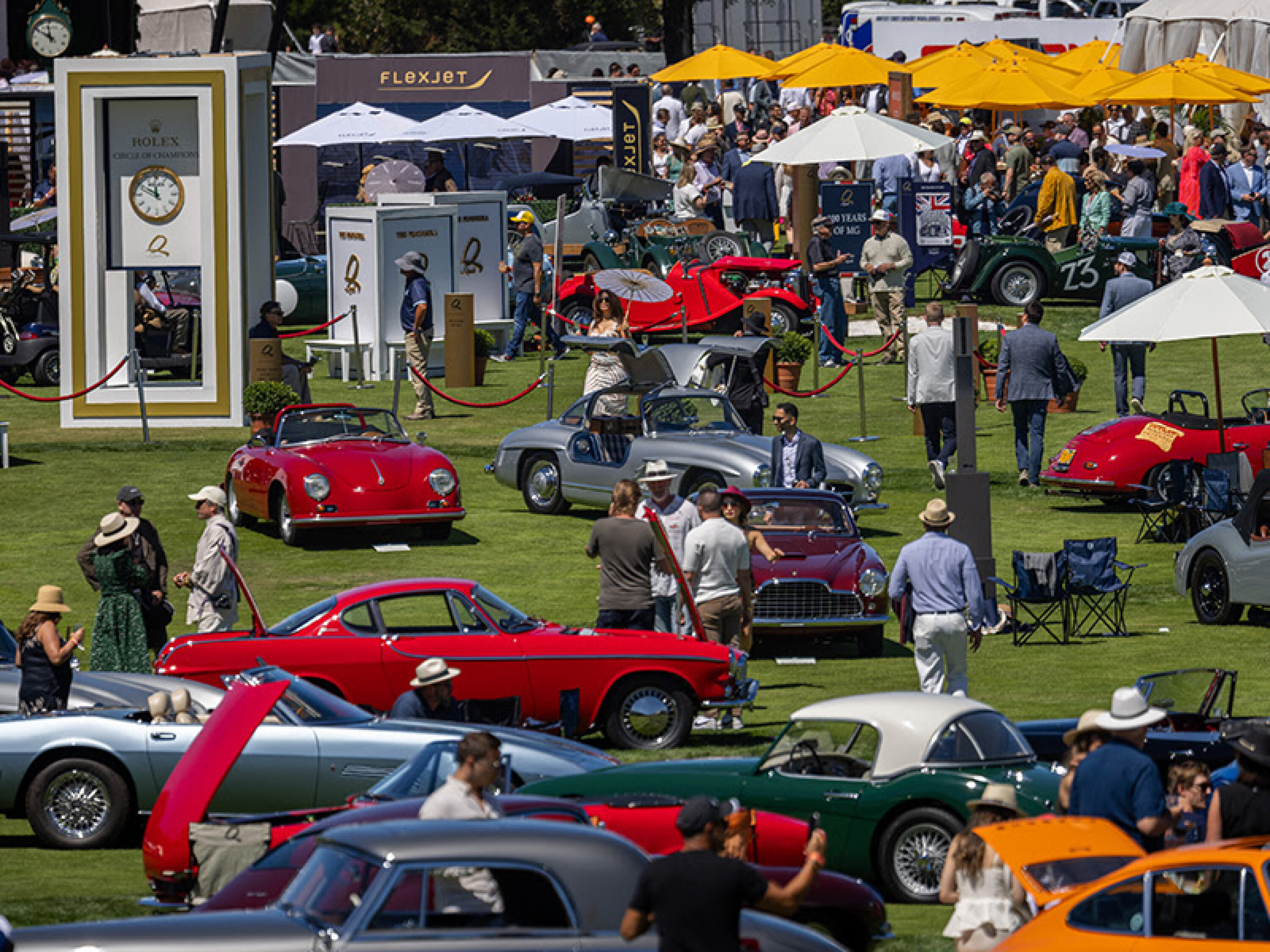
For more than 70 years car lovers have gathered on the Monterey coast in California to celebrate some of the finest automobiles ever made.
In a series of event staged over a memorable week, attendees enjoy classic cars, motorsports heritage, a grand parade and coming innovations in motoring technology.
This year’s event was no exception. Supported by Rolex for over 25 years – since it first partnered with the Pebble Beach Concours d’Elegance in 1997 – this year’s gathering again saw the Rolex Monterey Motorsports Reunion, The Quail, A Motorsports Gathering and the Pebble Beach Tour d’Elegance.
‘The great thing about Monterey Car Week is that it offers everything you could ever want, including the fabulous events at Pebble Beach, The Quail and of course the four days of historic racing at Laguna Seca,’ said Rolex Testimonee and 2009 FIA Formula 1® Drivers’ World Champion Jenson Button, who is a regular attendee of the event.
1
‘It’s rare that you can be in one place for a week and do something completely different each day, which is what I love about these events. We are also in a wonderful part of the world – California really embraces car culture.’
One of the annual highlights is the Pebble Beach Concours d’Elegance held on the greens of the legendary Pebble Beach Golf Links. The event allows the knowledgeable crowd to appreciate new categories and celebrate exceptional cars.
The highlight of this year’s Concours d’Elegance was the surprise unveiling of Her Majesty Queen Elizabeth II’s special collection of 10 Royal Land Rover Classic vehicles, marking the first time they have been showcased outside the United Kingdom.
As ever the event culminates with the awarding of one of the automotive world’s highest accolades, the Pebble Beach Concours d’Elegance Best of Show.
1
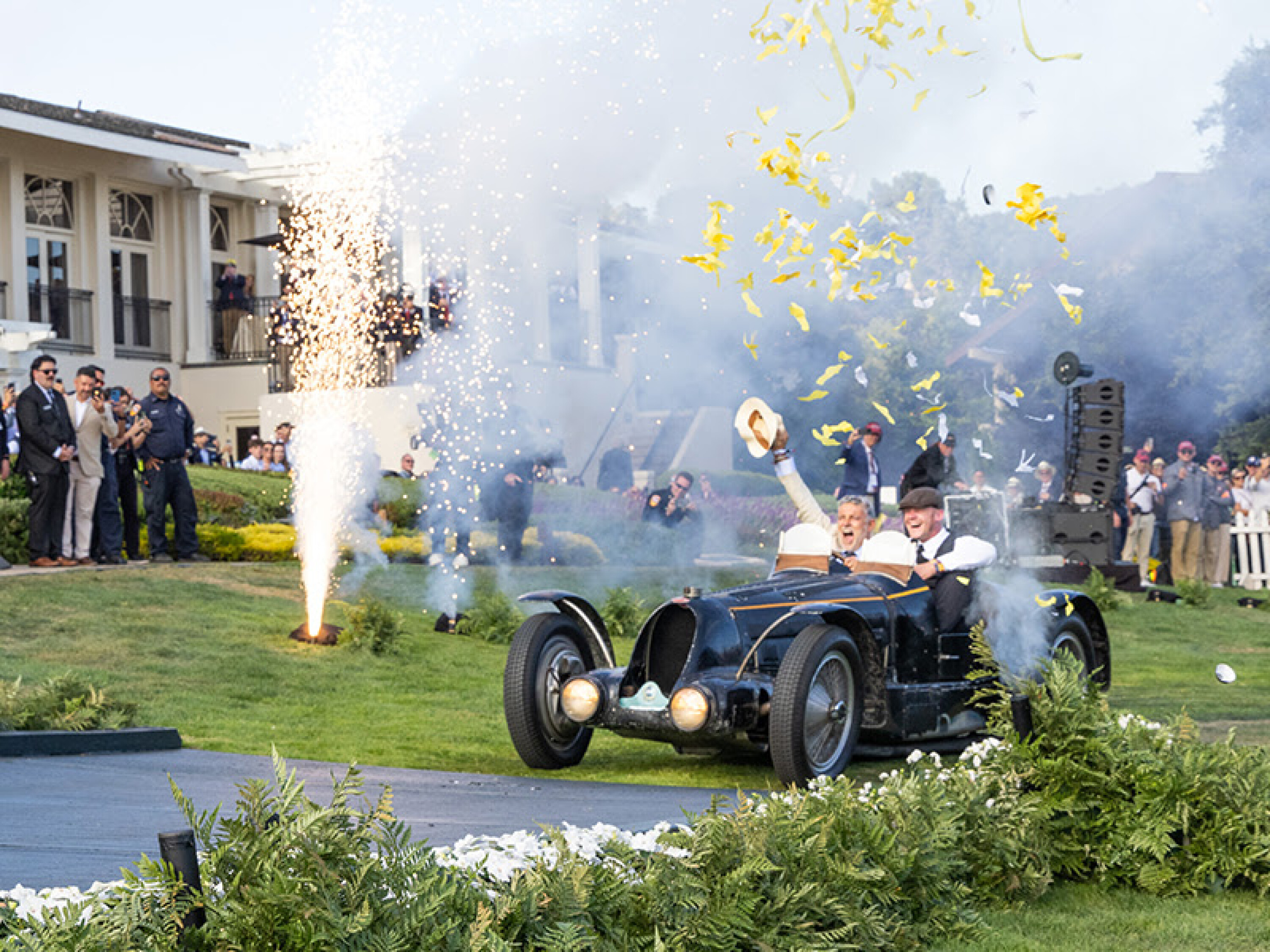
This year’s prestigious recipient was the 1934 Bugatti Type 59 Sports – the first preservation car in the event’s history to win Best of Show. In recognition of the classic car’s significance, owner Fritz Burkard was awarded a specially engraved Rolex Perpetual 1908.
‘What is most beautiful about this moment is that, for first time, someone from Switzerland has won the Concours and to win a Swiss watch makes it extra special – the Rolex 1908 is exquisite,’ said Burkard.
Meanwhile, this year’s Rolex Monterey Motorsports Reunion marked 50 years by paying homage to the racing marques that have graced its history for five decades – from saloon cars to Formula 1® powerhouses from yesteryear – rumbling around the WeatherTech Raceway Laguna Seca and its famous Corkscrew turn. Button took to the track to compete in his striking 1952 Jaguar C-Type in the Briggs S.
3
On the Friday of the celebratory week, 5000 fans turned up at the Quail Lodge & Golf Club to honour automotive history and the future of design.
A perfectly preserved 1937 Delahaye Type 145, 12-Cylinder Competition was honoured as the Rolex Best of Show winner and welcomed into the 2024 Rolex Circle of Champions, alongside coveted supercars and remarkable machines. Rolex presented the owners of the 1937 Delahaye, Sam and Emily Mann, with a specially engraved Oyster Perpetual Datejust.
The day before a convoy of historic vehicles rumbled along the Pacific Coast passing Big Sur and Bixby Bridge on Highway 1 for the annual Pebble Beach Tour d’Elegance, which has been presented by Rolex since 2007.And so ended another edition of one of the most enduring and popular classic car meetings in the world – as planning immediately started on next year’s event.
October: 2025 Leapmotor C10 pricing confirmed for Australia
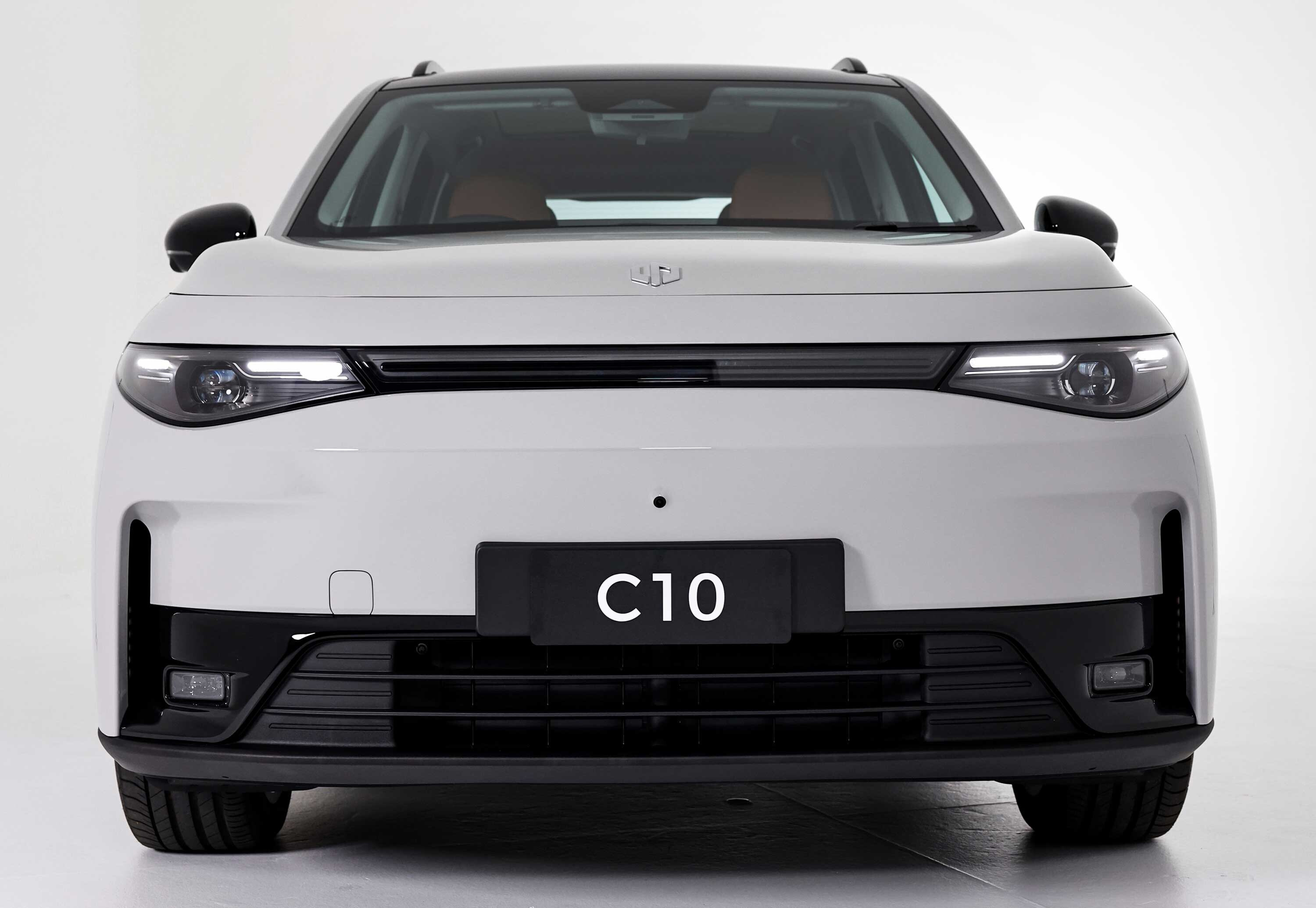
Just weeks after revealing key technical details of its first Australian-delivered model, China’s Leapmotor has now confirmed pricing and equipment for the 2025 C10 electric SUV.
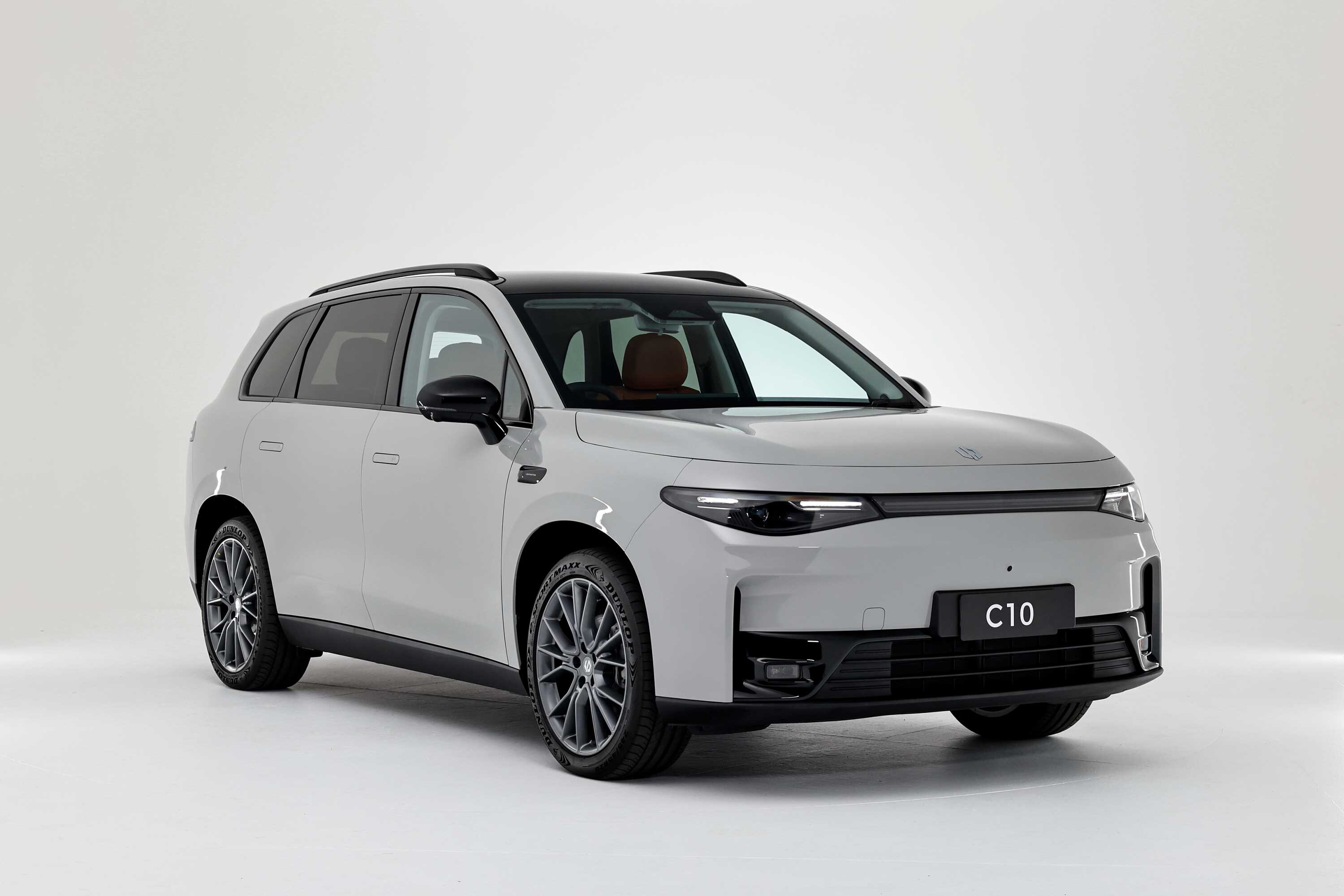
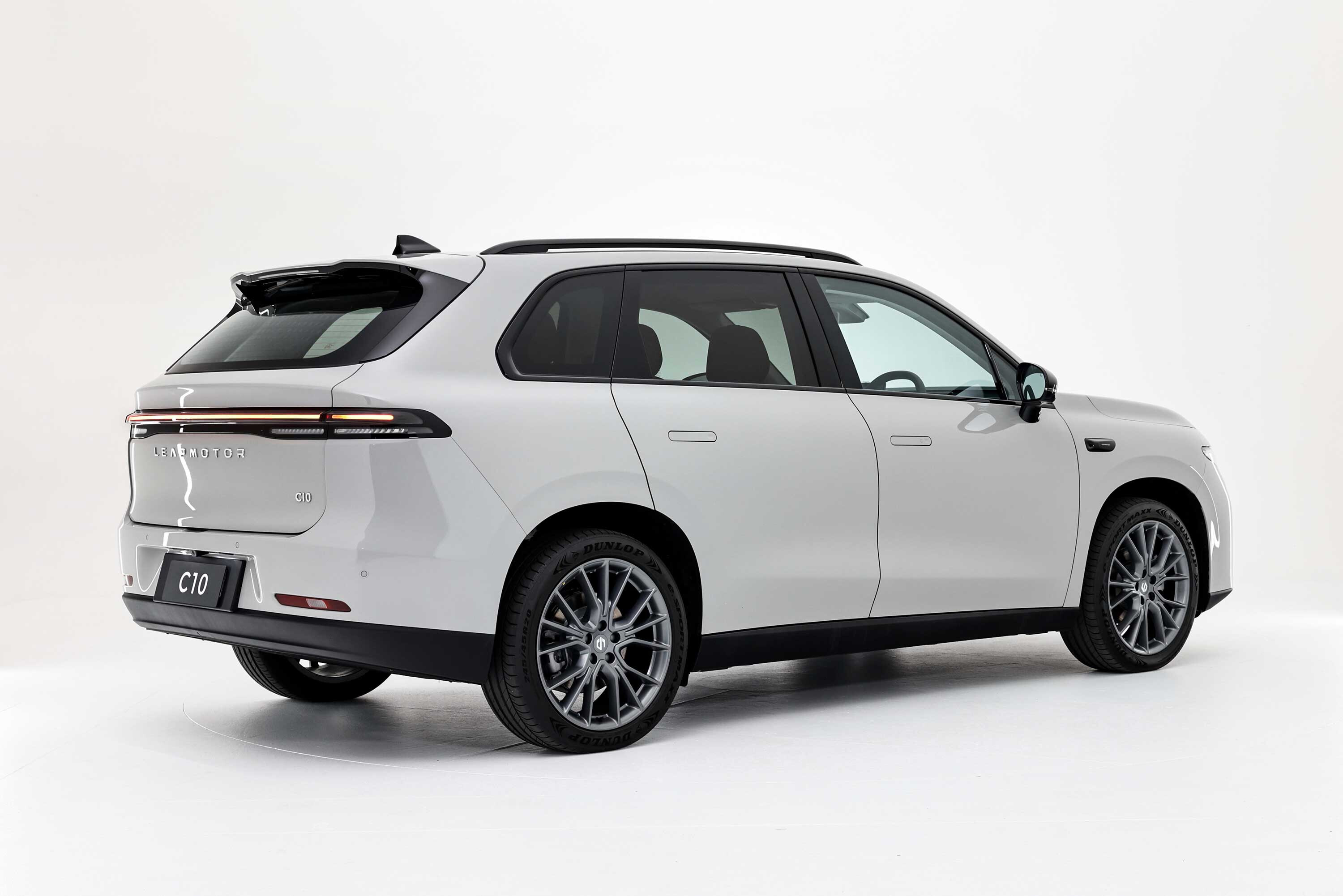
Confirmed this week, the Leapmotor C10 arrives in Australia next month with two variants priced to compete at the affordable end of EVs – and with more than a few popular combustion models.
The all-electric midsize SUV will be available in Australia from November 2024, with two variants: the Style from $45,888 plus on-road costs, and the Design from $49,888 plus on-road costs.
1
That pricing positions the C10 right in the middle of our Affordable EVs list, and at the sharpest end of electric midsizers – of which there are still very few on offer, and only one other in this price range.
MG4 – from $30,990 drive-away (incentive price until end of October, 2024) (small)
Both versions of the C10 are rear-wheel drive, powered by a single electric motor delivering 160kW and 320Nm.
According to Leapmotor, the vehicle offers a maximum range of up to 420 kilometres under the modern WLTP testing cycle (or 477km according to the older NEDC standards).
The charging time from 30% to 80% using a DC fast charger is claimed to take approximately 30 minutes.
The C10 is built on Leapmotor’s Cell-to-Chassis (CTC) system, which integrates the battery directly into the vehicle’s structure to improve energy efficiency and vehicle stability. This approach is not unique, however, and is now becoming increasingly common in the latest generation of EVs.
1
Interior and features
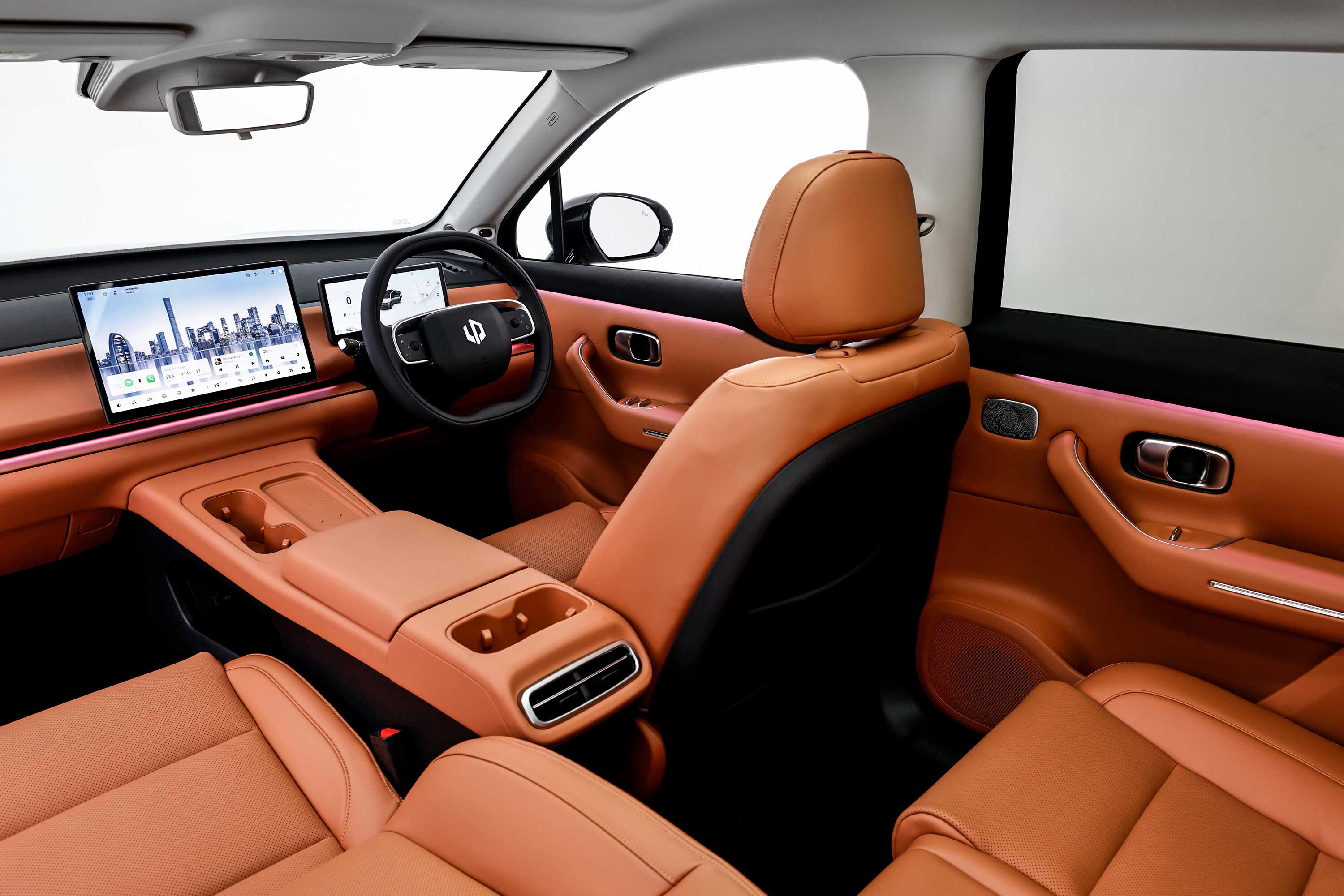
Inside, the C10 features a 10.25-inch driver instrument display and a 14.6-inch central high-definition touchscreen.
There’s also NFC and Bluetooth functionality for keyless entry and driving, allowing remote connectivity through your phone. Over-the-air (OTA) updates also allow for ongoing software improvements.
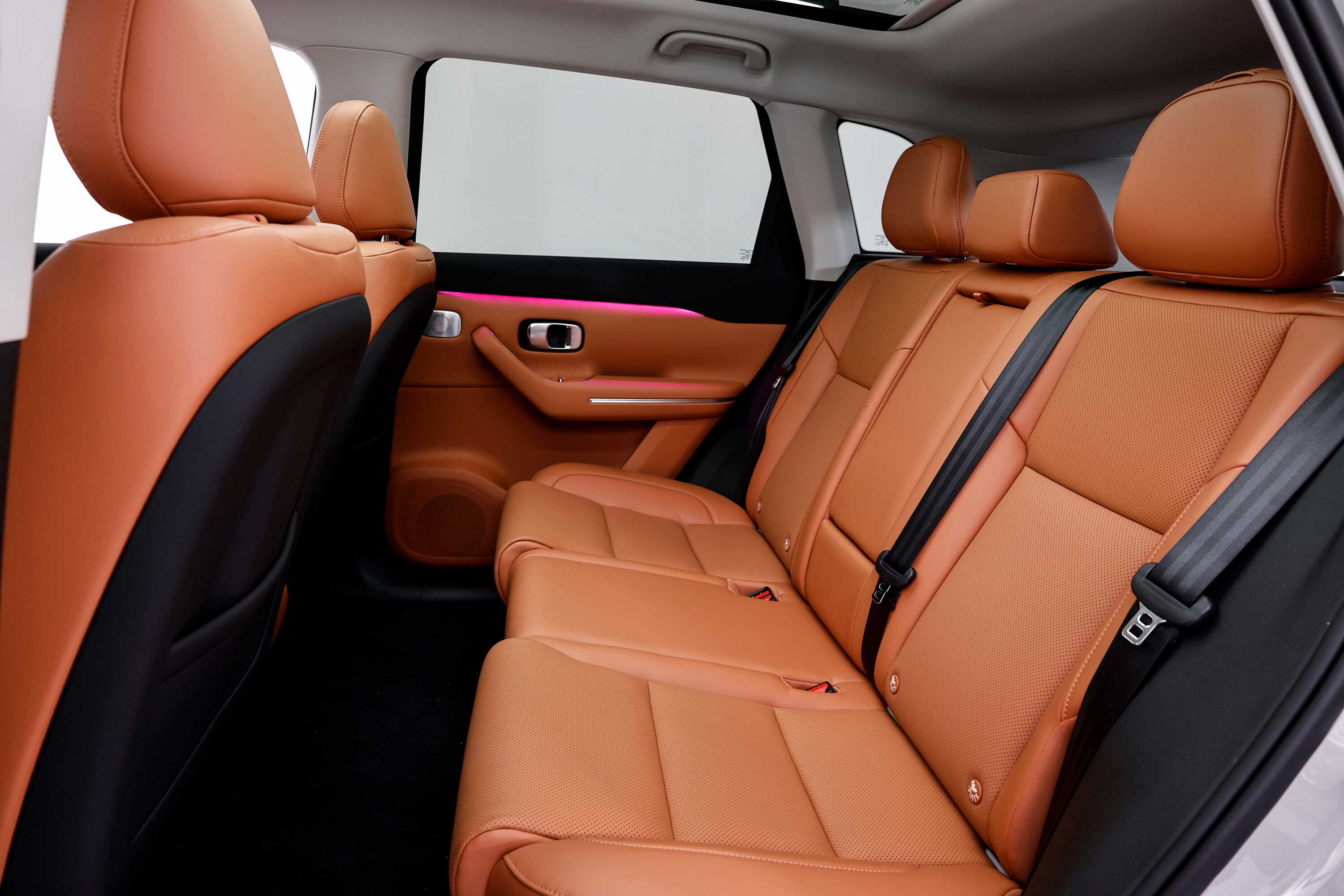
A fixed panoramic glass roof is standard, along with an electric sunshade, and 26 separate storage spaces.
With rivals like Kia and Hyundai in its sights, the C10 also supports Vehicle-to-Load (V2L) connectivity, enabling users to power external devices using the car’s battery.
2
Safety and driver assistance
Leapmotor has equipped the C10 with its LEAP Pilot system, offering a suite of modern driver assistance functions.
These include 12 ADAS sensors and 17 driver assistance functions, aimed at enhancing safety and automation. The vehicle also features materials certified to Oeko-Tex Standard 100, promising textiles free of harmful substances.
2
Warranty and charging incentives
The Leapmotor C10 will be sold in Australia with a 7-year, 160,000km vehicle warranty and an 8-year, 160,000km warranty on the high-voltage battery.
For ‘early adopters’, a one-year free charging offer is available via the Chargefox network for customers who take delivery of the vehicle before 31 March 2025.
2025 Leapmotor C10 electric SUV pricing
Variant
Fuel
Drive
Power
Battery
BVP*
Style
Electric
RWD
160kW
69.9kWh
$45,888
Design
Electric
RWD
160kW
69.9kWh
$49,888
*Base Vehicle Price includes GST and LCT (if applicable), excludes all on-road costs and dealer delivery.
1
September: C10 Australian specs confirmed
The Australian new car market is not wanting for challenger brands right now, and the latest arrival is Leapmotor.
Founded in 2015 and hailing from China, Leapmotor is coming to Australia under the aegis of Jeep and Fiat’s parent company Stellantis, and will initially only offer one model: the C10.
Landing squarely in the midsize SUV class, the C10 will also arrive with all-electric power. There’s a plug-in hybrid version available in its home market of China, but at its local launch in November the Aussie-market Leapmotor C10 will be exclusively battery-powered. Despite that, with sharp pricing expected to be announced closer to launch, Toyota’s popular RAV4 hybrid may have some competition in the midsize SUV space.
And so will the Tesla Model Y. With a 420km range from its 69.9kWh LFP battery and a modest 160kW/320Nm from its single rear-mounted electric drive motor, the Leapmotor C10 lines up favourably with Tesla’s entry-level standard range RWD Model Y, which currently retails for $55,900.
Australian pricing for the C10 has yet to be confirmed, but it’s understood that a sub-$50K retail sticker is being targeted for all variants in the C10 range.
1
At launch, the C10 will be offered in two flavours: base Style, and the up-spec Design. With only one battery and motor choice across the lineup, the differences between the two largely boil down to trim, seating, and wheel size.
As standard, the entry-level C10 Style comes with 18-inch alloy wheels, LED headlamps, a panoramic glass sunroof (with a retractable shade), dual-zone climate control with an efficiency-boosting heat pump, power-adjustable front seats (6-way for the driver, 4-way for the passenger), a360-degree parking camera, rear parking sensors and heated wing mirrors.
1
Infotainment hardware is comprised of a 10.25-inch digi-dash display for the driver, and a massive 14.6-inch touchscreen as the main interface, running Leapmotor’s own operating system and featuring built-in satnav.
A wireless charge pad also equips the C10 Style, and the infotainment system allows the ability to log into embedded apps like Spotify, TikTok and Zoom, as well as control functions like cabin ventilation remotely via the built-in 4G internet connection.
1
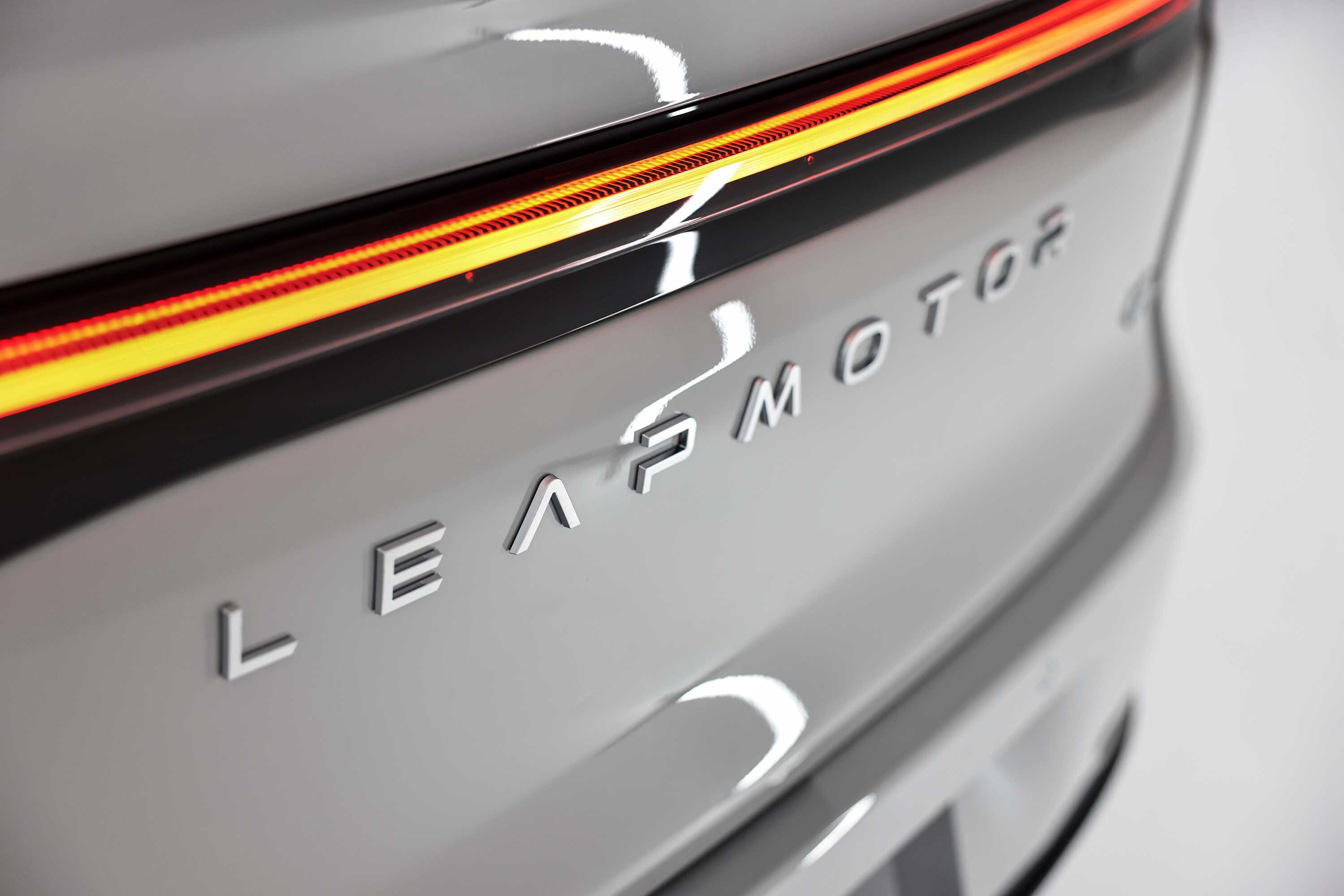
Moving up into the C10 Design brings a powered tailgate, 20-inch alloys, rear privacy glass, heated and ventilated front seats, a heated steering wheel, animated LED rear lights, air quality monitoring, customizable ambient interior lighting, and ‘silicone leather’ seat upholstery, replacing the ‘TechnoLeather’ of the Style. Both upholstery materials can be had in either black or tan colourways.
3
The cabin layout doesn’t deviate much from the midsize SUV playbook, with two rows of seating with space for five adults. Leapmotor claims legroom metrics of 937mm for the front row and 951mm for the rear row, with more than 1009mm of headroom in both front and back.
However, the C10 does have one party trick: with the front seats slid all the way forward and the headrests detached, the backrests can be folded flush with the rear seat base to form a bed.
1
Behind the rear seats is a 581-litre boot space, which expands to 1410 litres when the rear seatbacks are folded. Unlike many EVs, however, there’s no under-bonnet storage in the C10.
Five exterior colours will be offered for both variants, with pearl white, metallic black, two shades of grey and dark green.
Standard safety equipment includes adaptive cruise control, lane keep assist (with lane centering control), front and rear collision warning, rear cross traffic alert/braking, driver fatigue monitoring, and blind spot monitoring, plus a suite of seven airbags.
The C10 will be covered by a 7-year, 160,000km vehicle warranty, with a separate 8-year, 160,000km for the high-voltage battery. For customers taking delivery before 31 March 2025, Leapmotor will throw in a year’s worth of free charging on the Chargefox network.
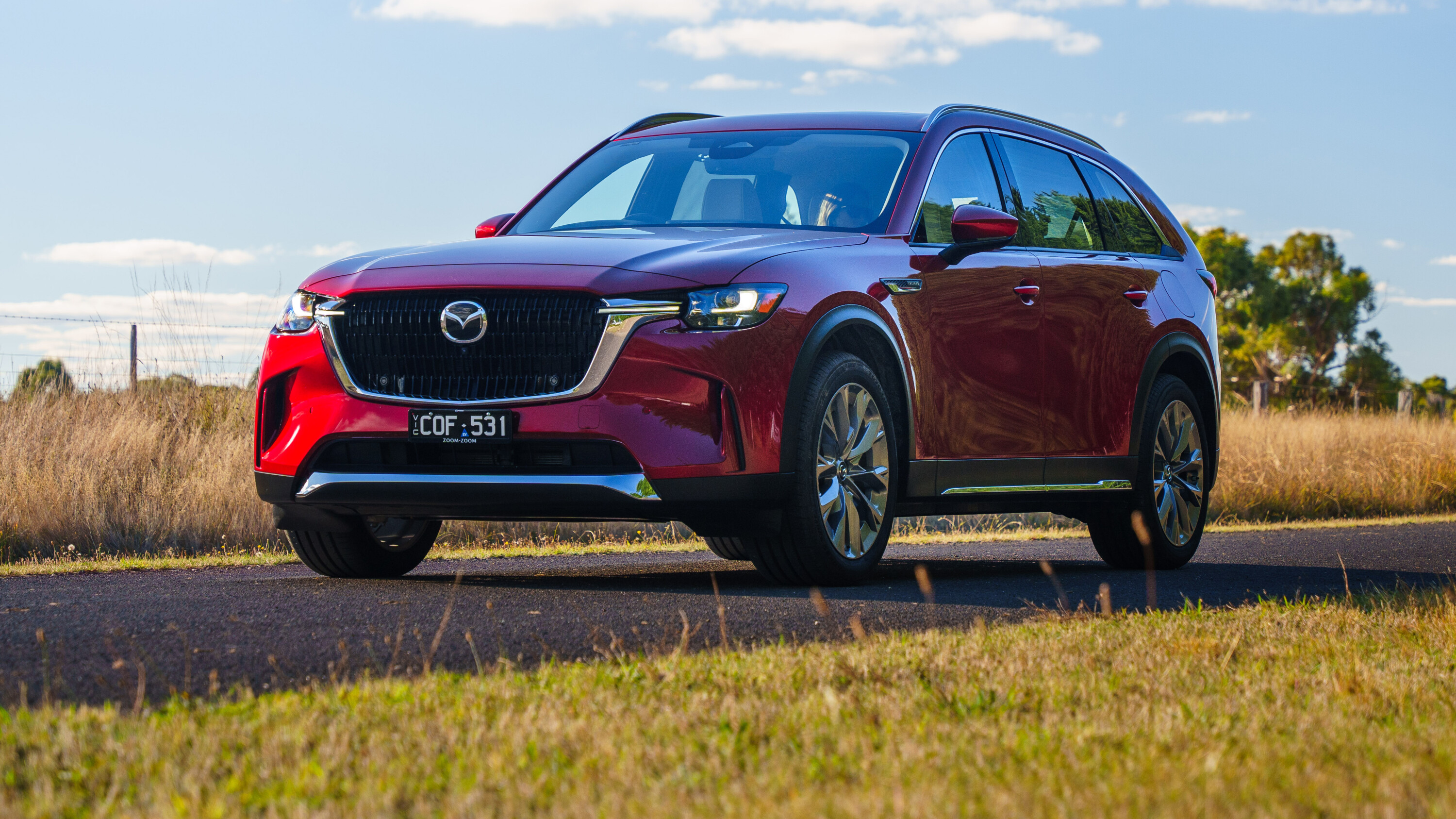
Model: Mazda CX-90 D50e GT
Price as tested: $85,550 + on-road costs
This month: 798km @ 6.5L/100km
Things we like so far
Big boost in space over CX-60
Bigger dimensions deliver an even more handsome exterior design
Great efficiency and big cruising range from the 3.3L turbo diesel
Not so much…
Hefty price premium over an equivalent CX-60
Extra size and weight dulls engine performance
The ride and transmissions niggles that plague CX-60 are still present
Amazing, isn’t it, how quickly your priorities can shift.
Not so long ago, in the relaxing, carefree and golden-hued dreamland before children, shopping for a new car was wonderfully selfish. How does it steer?, what does it sound like? and how worn are the sticky Pilot Spot tyres? were all genuine concerns.
Having kids, however, sends all of that tumbling into the ether of irrelevance faster than an ousted opposition leader.
Suddenly, instead of calling up mates to discuss steering feel and whether the 1.6L or 1.9L engine is the one to go for, you find yourself creating spreadsheets that compare boot space litreage, rear knee-room, crash test percentages and whether or not the middle row is on rails.
So here’s a reality check for anyone about to cross the threshold into parenthood: no matter what your significant other might tell you elsewhere, when it comes to the domain of sprogs, prams and travel cots, size does matter.
4
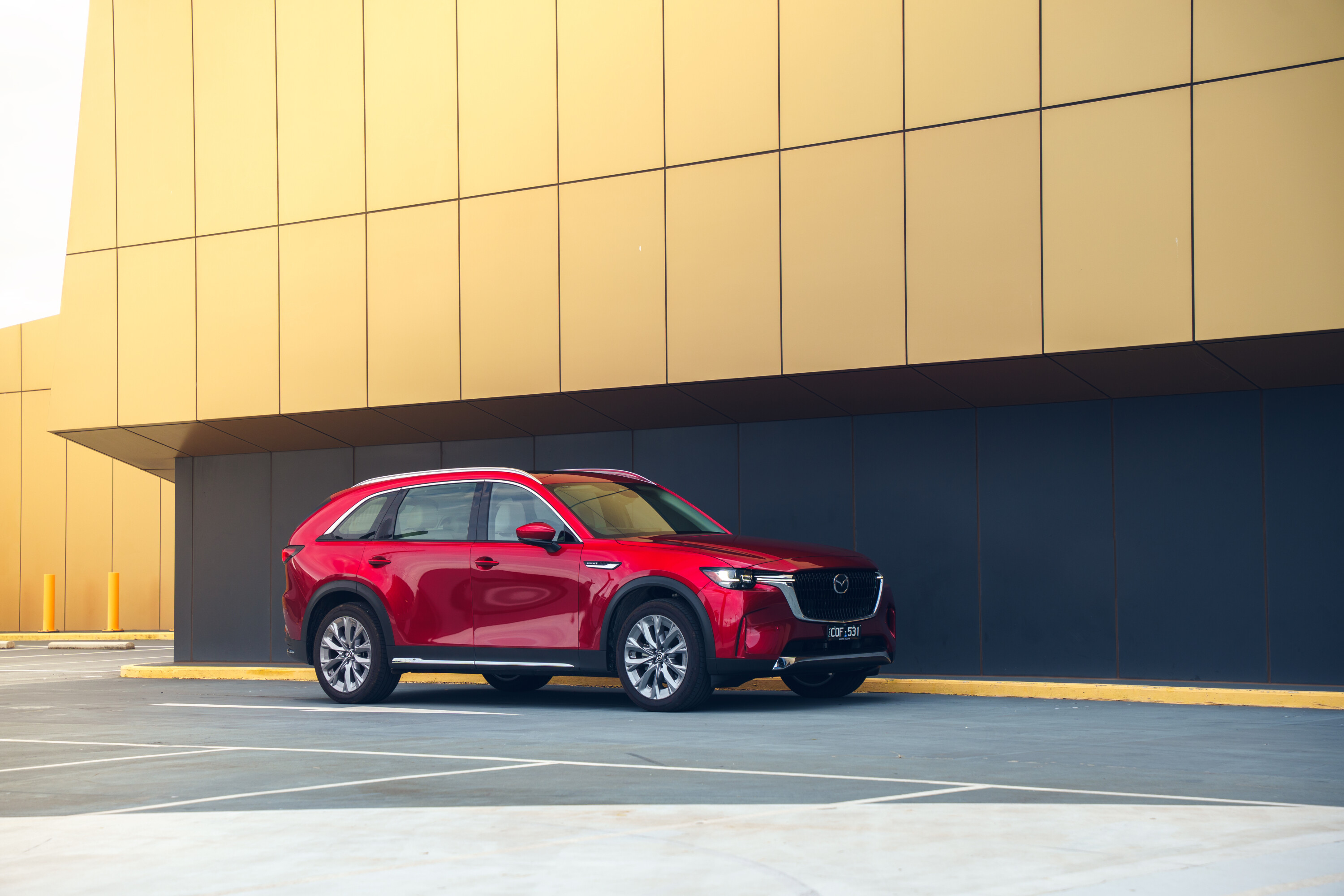
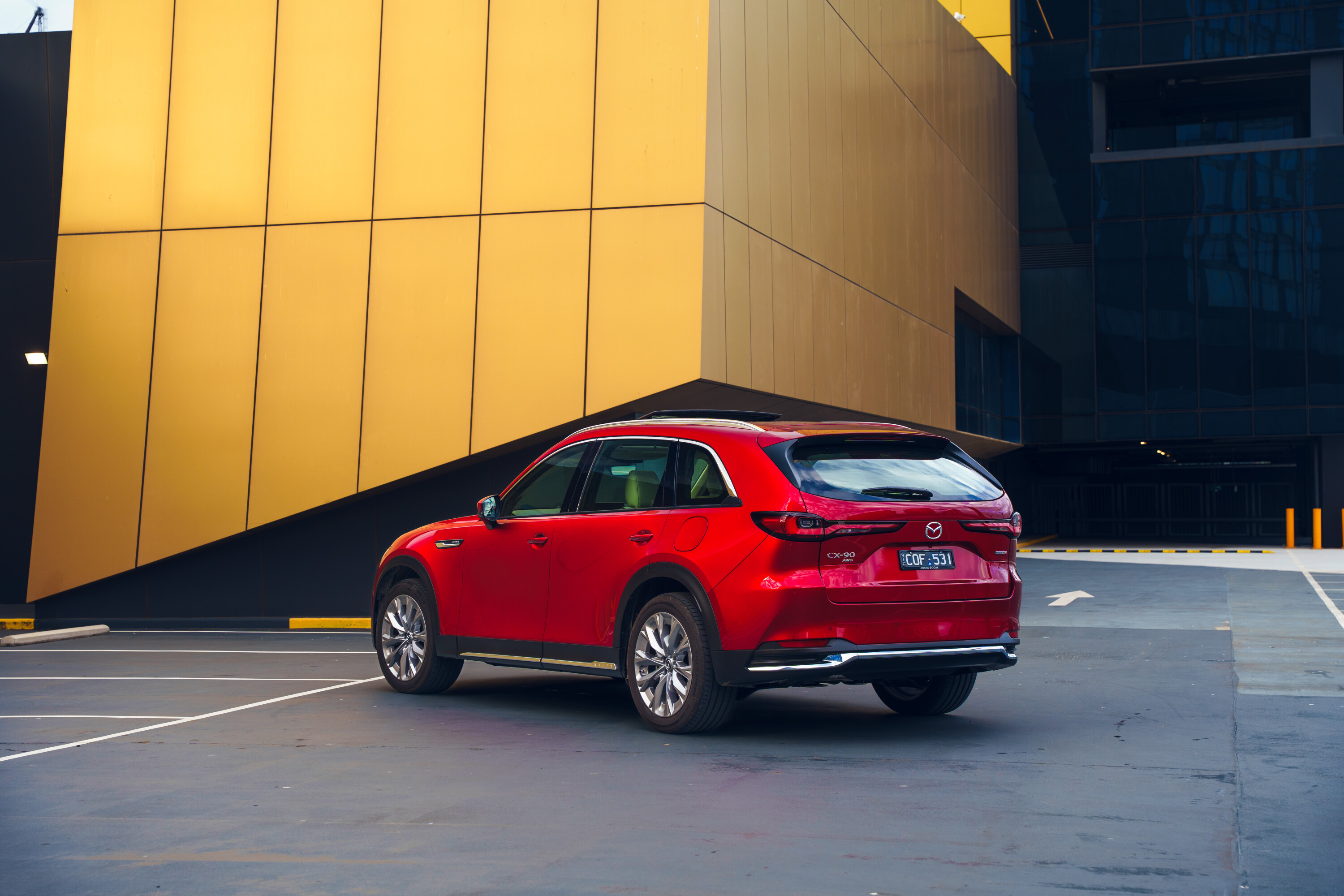
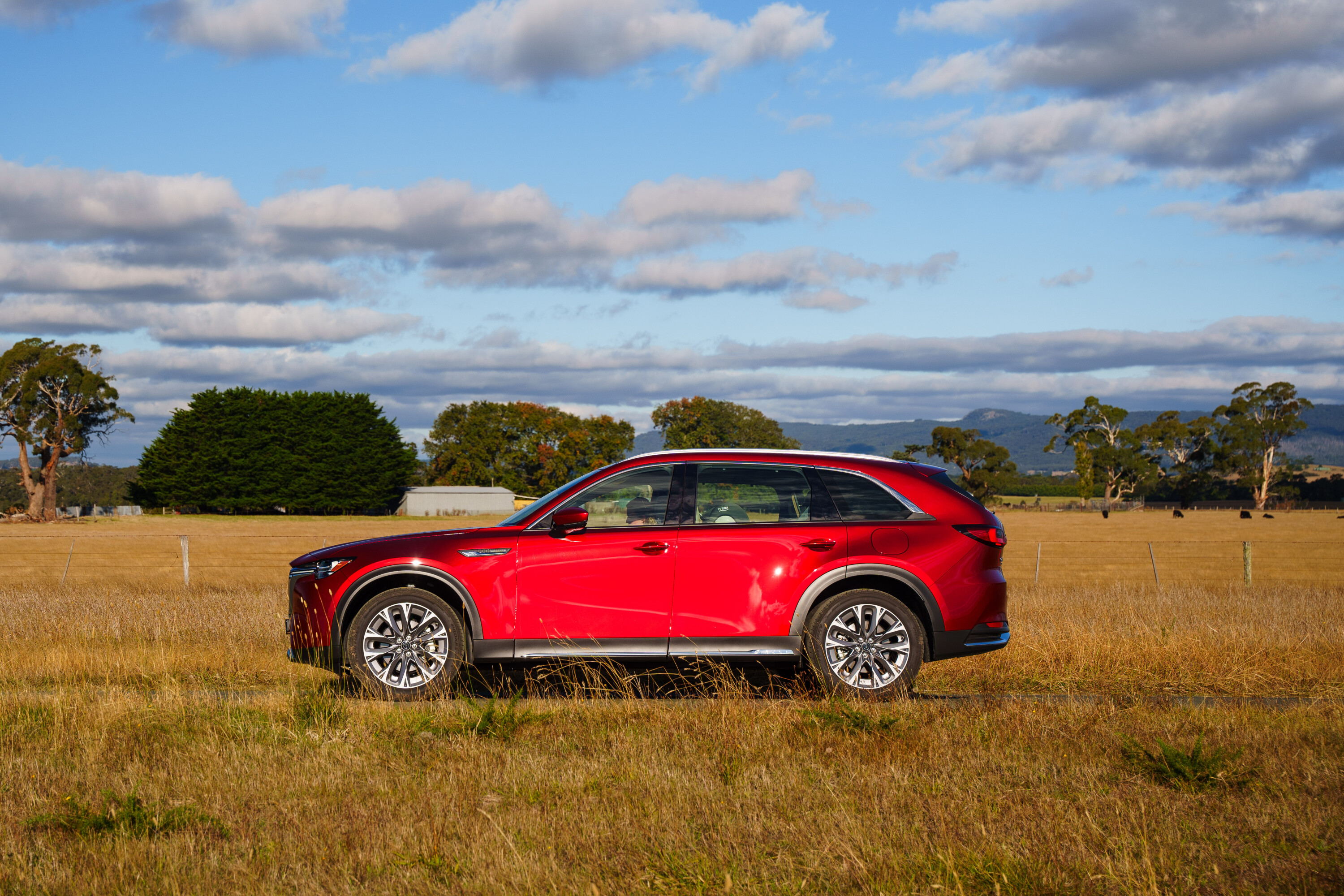
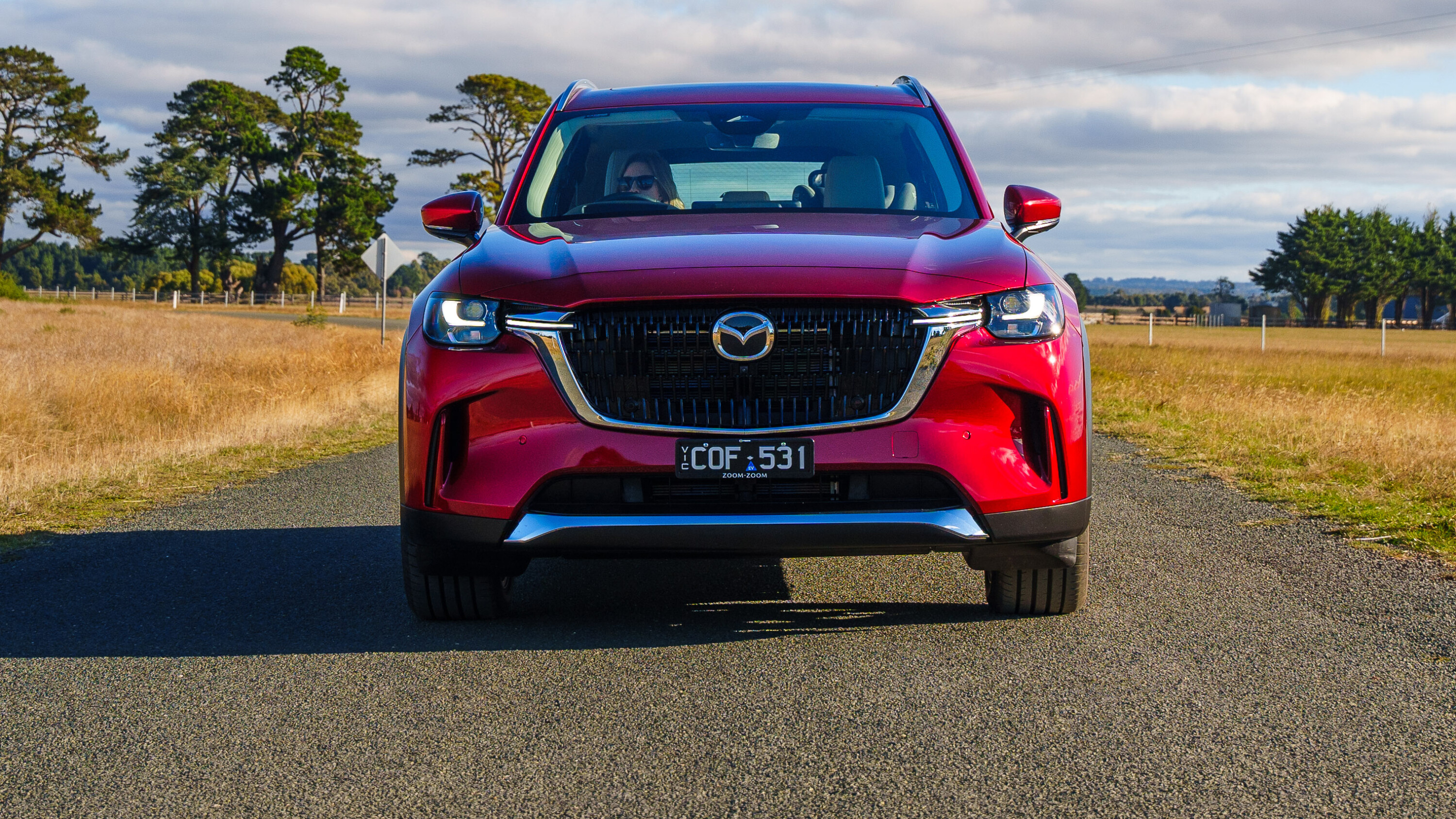
Which is perhaps why the Mazda CX-90 you see pictured here is looking so smug. A biggun’ isn’t it?
If this were a rugby match, you’d slot the CX-90 in as a replacement for the mighty John Eales. Or perhaps, given it weighs a gargantuan 2241kg, as a super-sub for the legendary All Black winger Jonah Lomu.
6
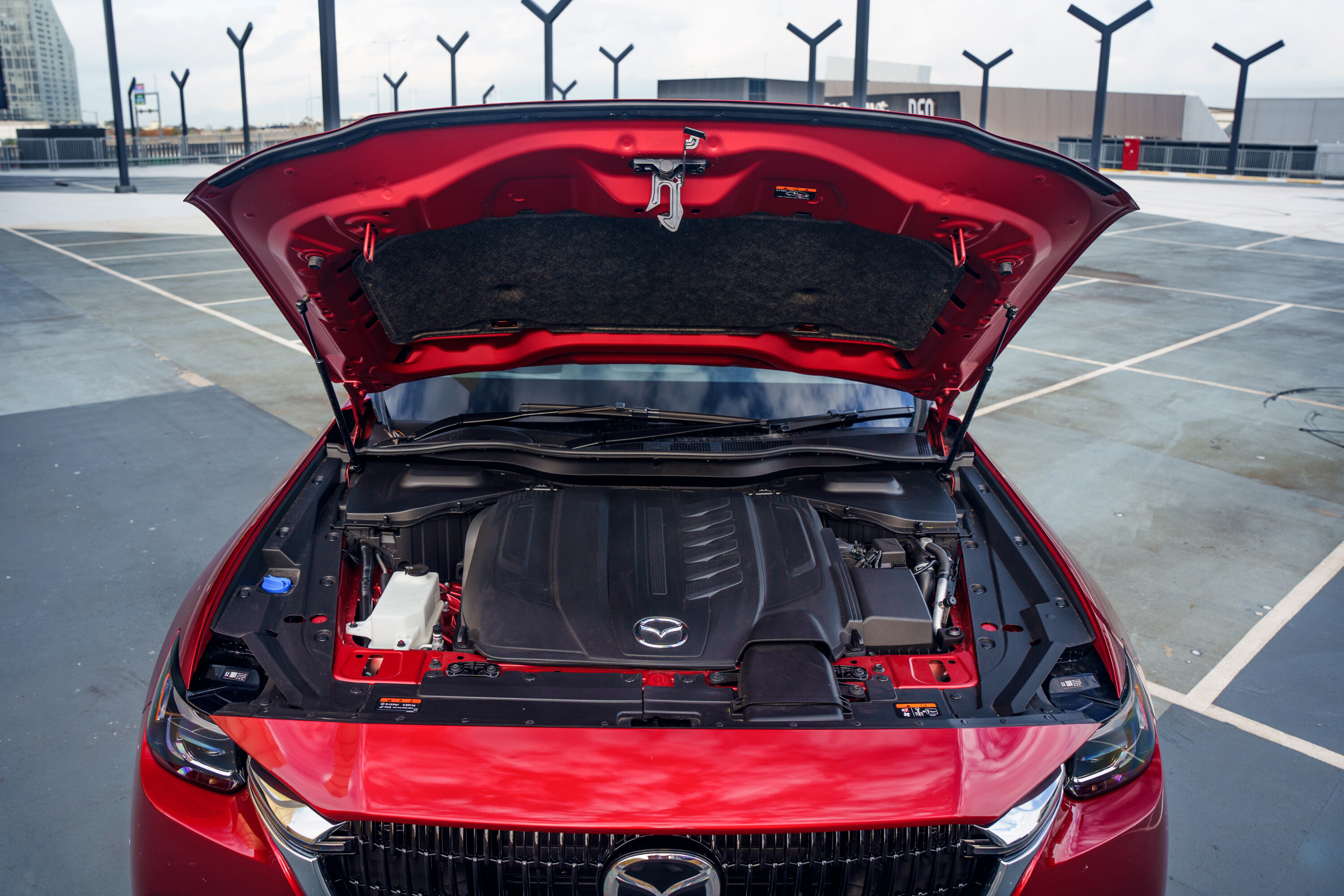
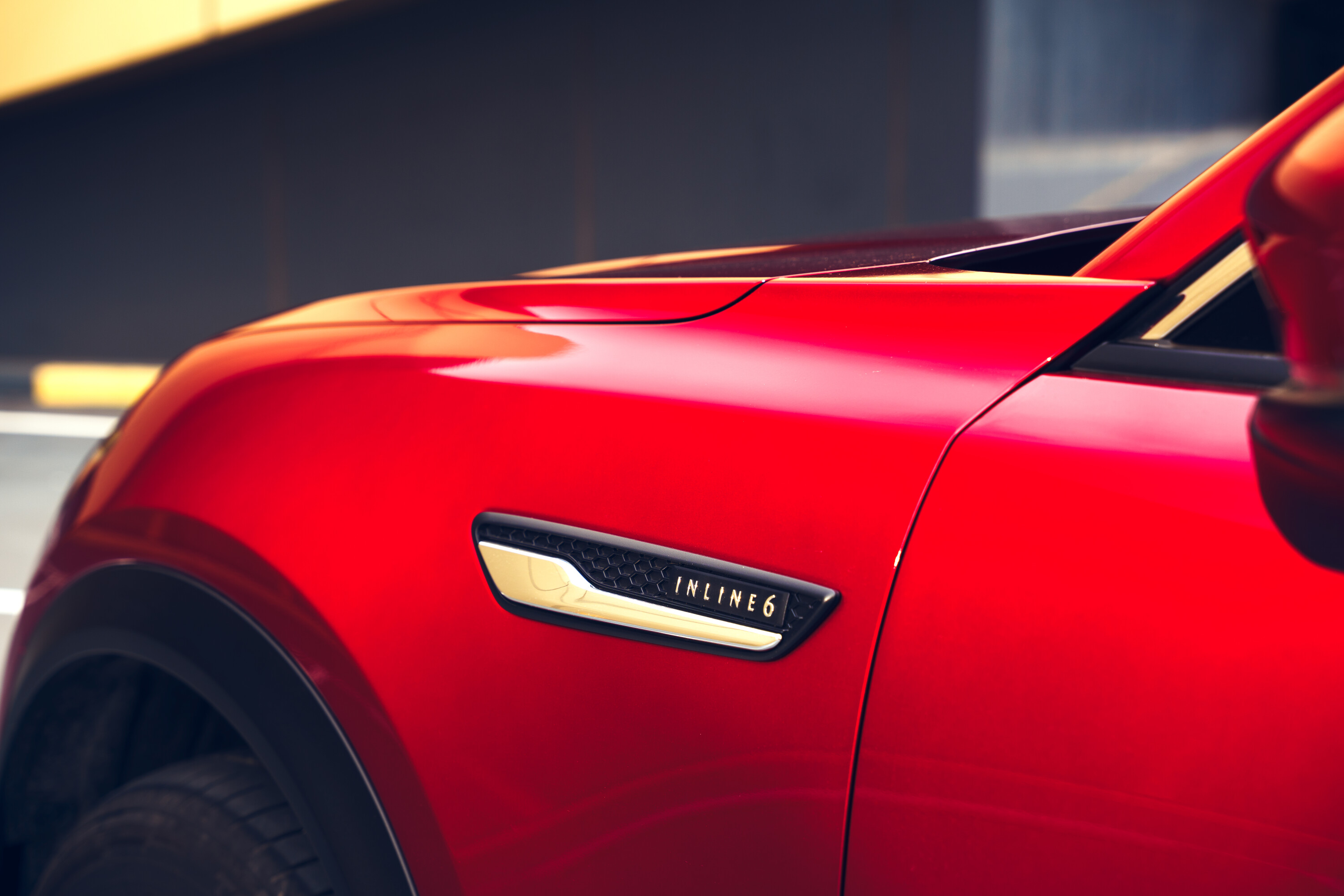
It’s certainly a decent wedge bigger than Mazda’s other new family SUV, the mid-size CX-60, which we’ve also recently run as a long-termer. Both cars are spun off Mazda’s all-new Large Platform and they share the same engine line-up, meaning the choice of either a 3.3L inline six cylinder petrol or diesel, or a more powerful and efficient 2.5L plug-in hybrid. For now it’s six-cylinders only, though, as the PHEV will join the CX-90 line-up later in 2024.
3
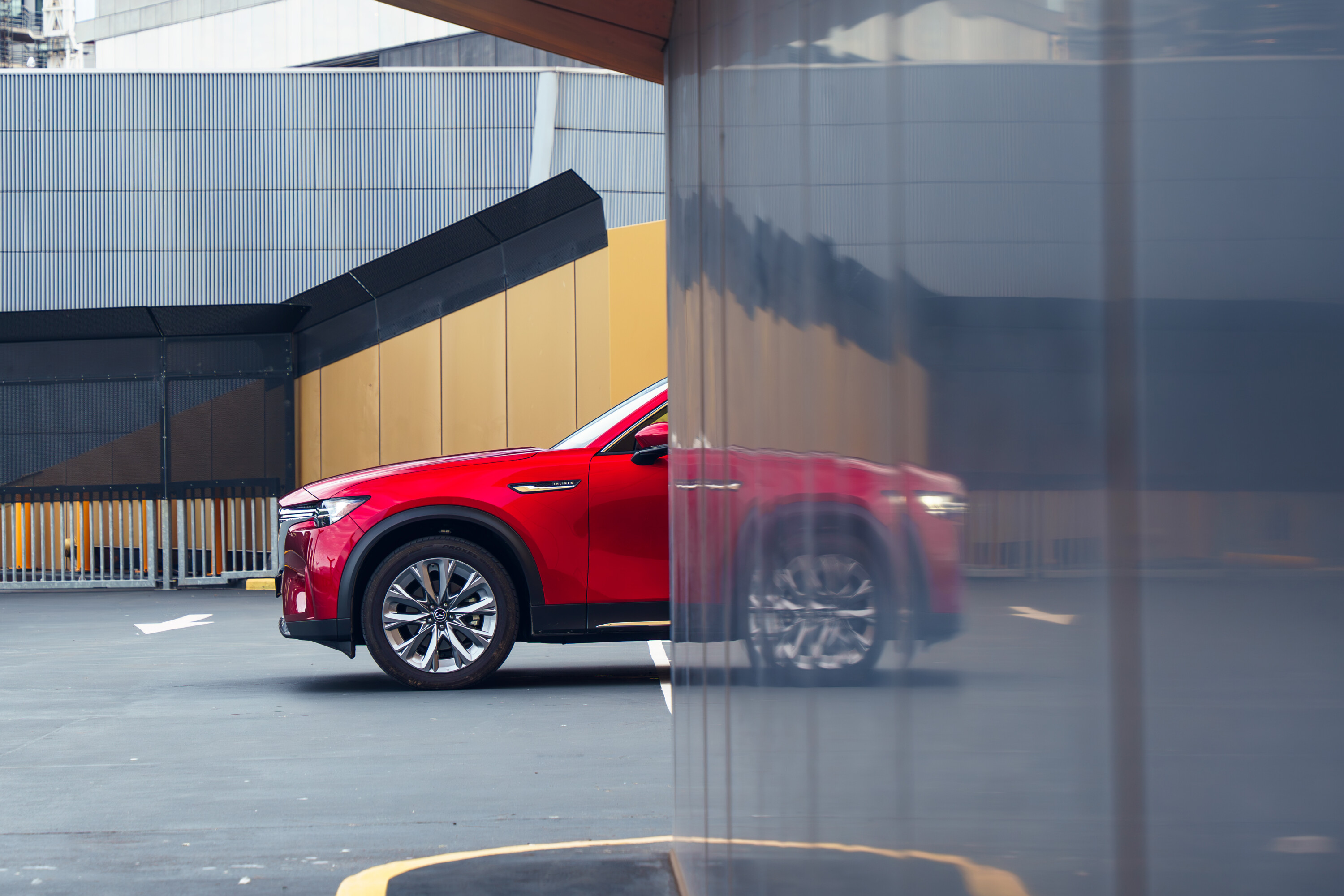
The CX-60 and 90 even look remarkably similar — so much so it’s easy to confuse them with a cursory glance — however there are some important differences.
The 90 rolls on larger 21-inch wheels, the profile of the rear glass is more ballooned to better accomodate an extra row of seats, and the wheelbase has been stretched by a hefty 250mm.
2
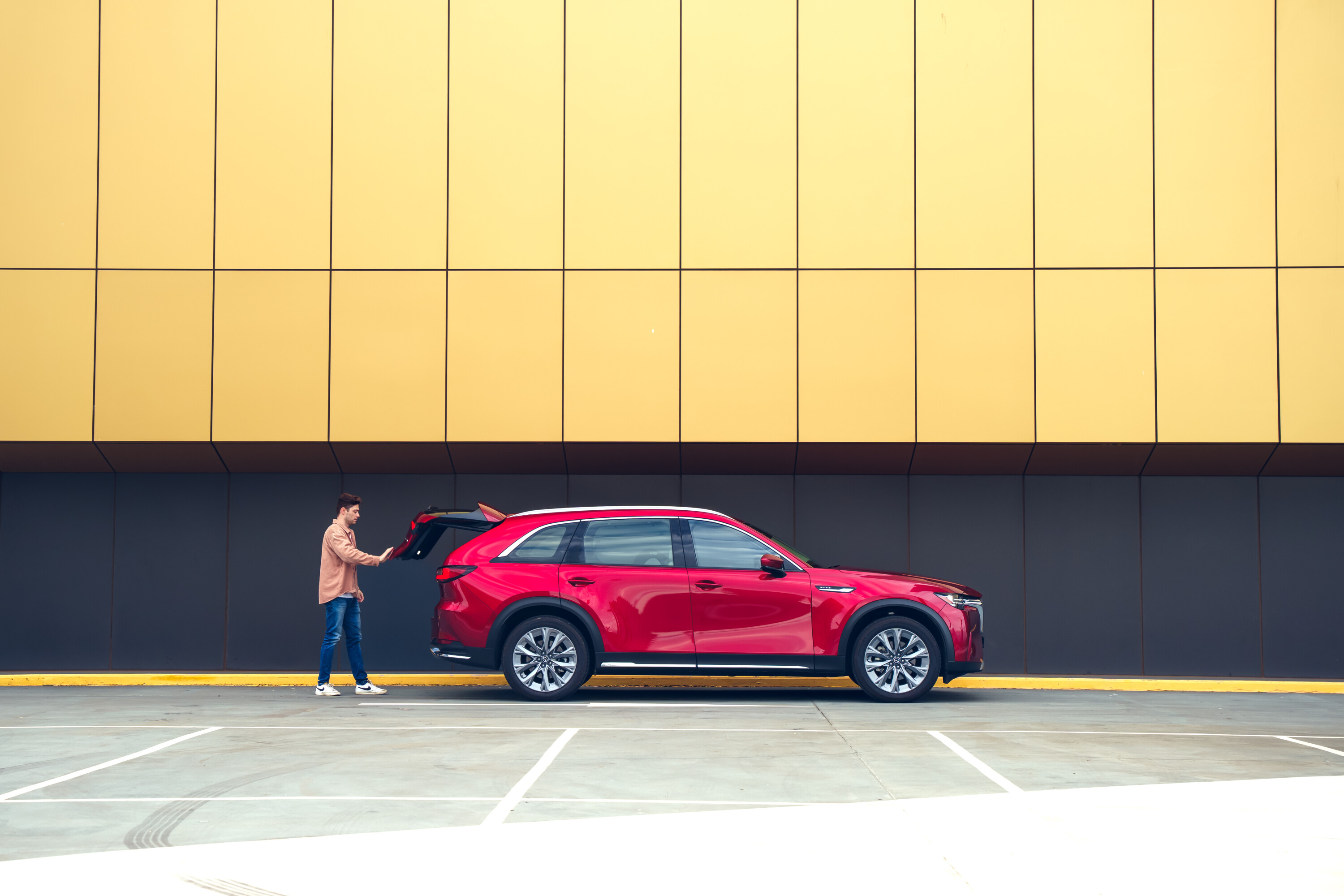
Overall length is up by 360mm to 5100mm and the CX-90 is also 104mm wider and 65mm taller than its smaller sibling.
It makes good use of the extra space, too. Ahead of the B-pillar, the CX-90 and 60 are virtually identical inside, but the 90’s middle row slides and is noticeably more commodious.
You also get a big boost in luggage space. Officially Mazda says you score 608L behind the second row, which is 131L more than the CX-60 (though still far less than the van-like Hyundai Palisade) and that grows to 2025L if you lay the seats flat.
4
Even with all seven seats in use, boot space remains a useful 257L, or 40L more than you get in the boot of a hybrid Toyota Corolla.
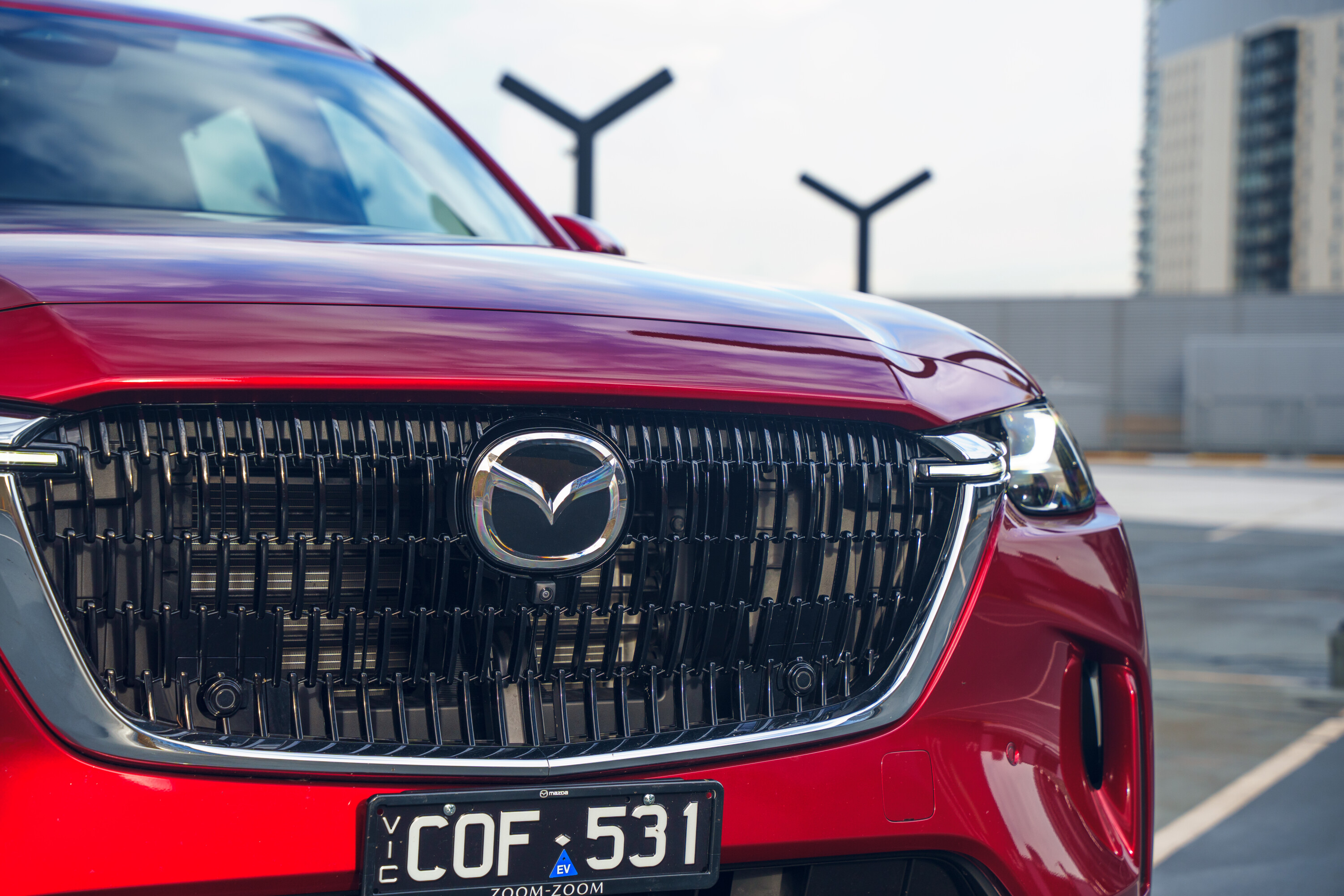
We’ll test the third row out in greater detail in future updates — COF531 is down for a six-month stint in the Wheels garage — but initial inspection reveals it’s a place for adults, not just kids. And importantly the third row has top-tether mounts so you can fit kiddy seats back there, unlike some rivals.
The trade off to all of this extra space is more weight (about 250kg+) and a big uptick in price. The CX-90 is the biggest and most expensive Mazda ever, so much so that the flagship Azami PHEV will tip into six figures once you get it on the road.
Our test car is slightly more palatable. It’s the mid-spec GT diesel, which retails for $85,550 before on-road costs, and it’s bursting with so much standard equipment that it might be the sweet spot in the range.
It’s still a hefty $15,150 more than an equivalent diesel CX-60, mind, which is a lot when you consider the only key difference between them is size.
2
So is the 90 worth the extra outlay? That’s one of the pressing questions to address over the next six months.
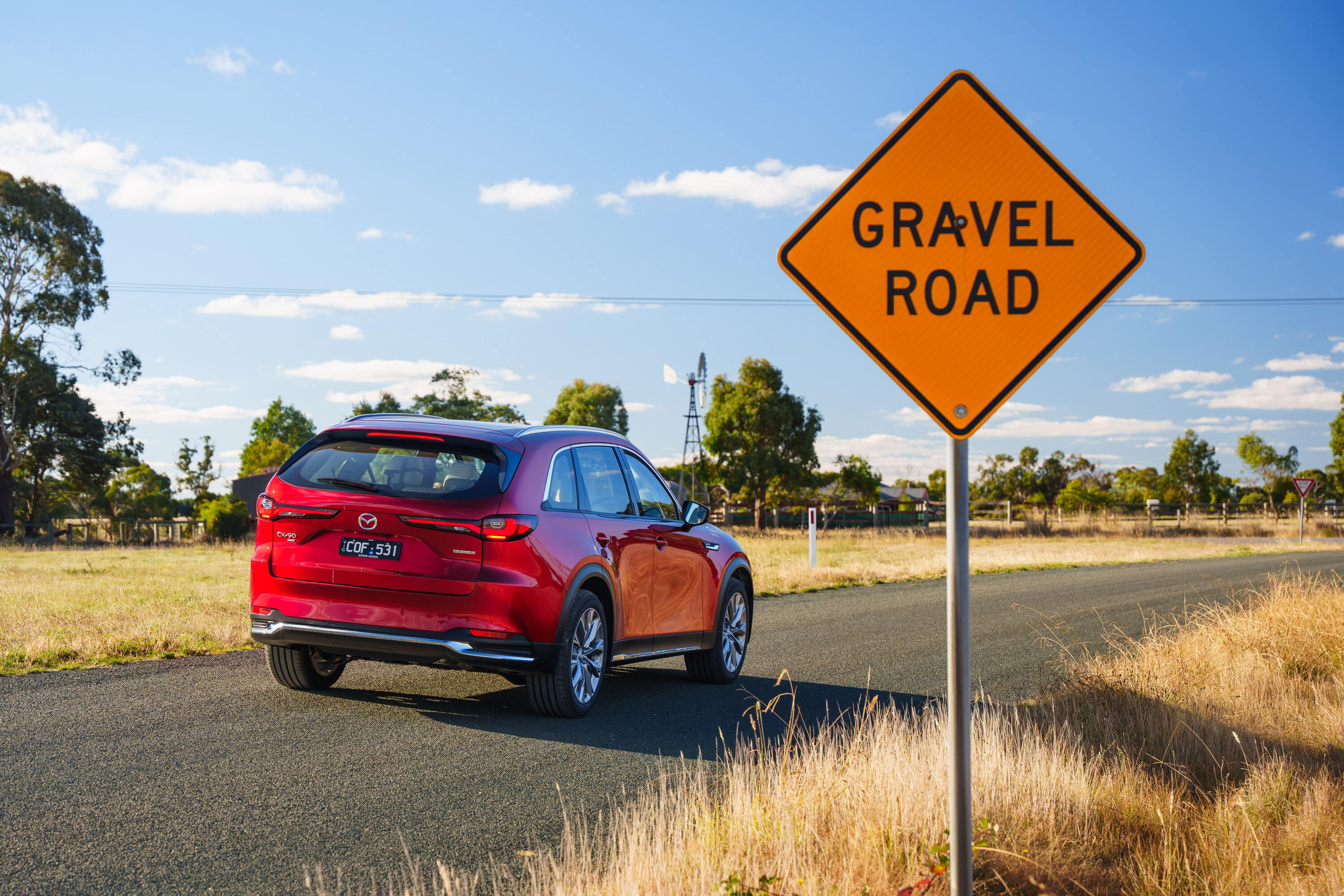
Another is exploring whether the CX-90 falls victim to the same ride and laggy gearbox issues that plague the smaller CX-60. Initial impressions are both bugbears remain, however we have an interstate road-trip planned next month to properly see how the 90 performs on the road.
The bigger question facing the CX-90, however, regards its flagship status. At close to $100,000 (and more than that in the flagship Azami PHEV!), is it a very expensive Mazda or a genuine alternative to proven luxe players like Lexus, BMW, Mercedes and Audi? Or both? All of these questions and more will be answered over the coming months, so strap in.
CX-90 faces its sternest challenge yet: a 2000km road trip and a huge amount of luggage
Price as tested: $85,550 + on-road costs
This month: 2262km @ 6.4L/100km
Overall: 3060km @ 6.4L/100km
It’s easy to romanticise the great Aussie road trip. Big days, big kays and a big brown land to explore are as deeply sown into our cultural DNA as Akubras and meat pies.
But as much as road trips are about car games and creating family memories, they’re also about something else. And that is packing.
Few families take this as seriously as we do, or pass it down from generation to generation so steadfastly as the Inwoods. Get it right and packing a car delivers the same sense of deep satisfaction as dropping in the final piece of a jigsaw puzzle or nailing that final move in Tetris.
1
Get it wrong, as I once witnessed my father do when I was a young boy, and it can mean the spectacular turfing of a late arriving esky into the backyard and then six hours of stony silence before he uttered “why wasn’t it in the packing pile?”
To avoid such mishaps, my strategy is to stack absolutely everything in front of the car before a single thing is packed. This is followed by a long period of visualisation — or “blankly staring” as the wife kindly puts it — before items are placed in the boot and then arranged and rearranged to ensure no square inch of space is wasted.
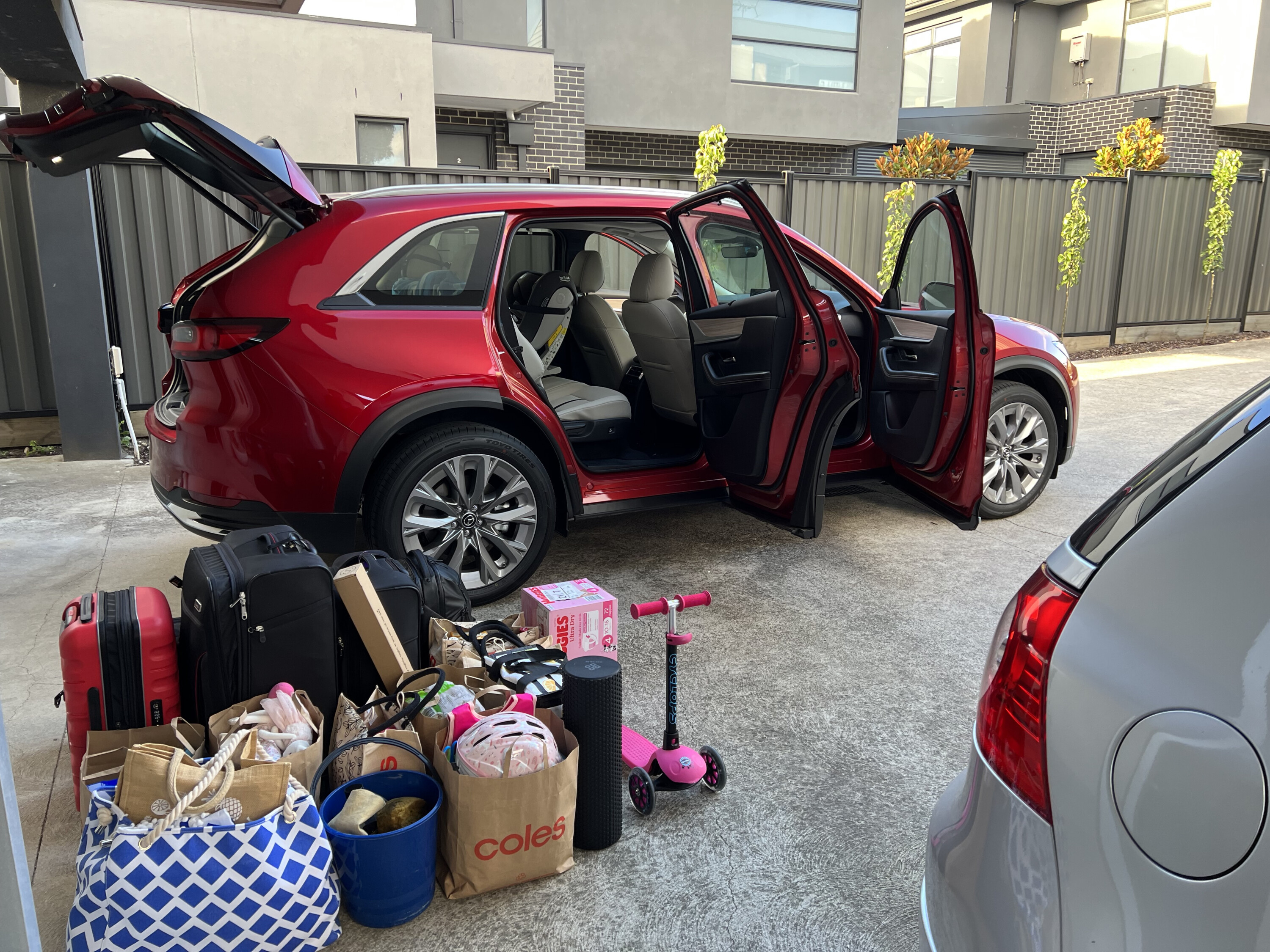
In one of those quirks of the universe, we always seem to pack enough stuff so that it just fits, no matter what car or SUV we’re taking along to test. Except in the CX-90. With the boot starting to fill, I turned around to grab another bag and grasped nothing but air — we had no more to pack. And the boot had room to spare.
1
Far from needing to put a well-timed shoulder onto the tailgate as it closed, we could have thrown the BBQ on top if we’d wanted to. I felt cheated, unsatisfied, discontented, unfulfilled, disgruntled — and just a little disbelieving.
Officially Mazda says the CX-90 has 608L of luggage space behind the second row. On paper that figure is good but not outstanding. A Hyundai Palisade, for example, has 740L, and the CX-90’s boot is exactly the same size as a Kia Sorento’s, despite the Kia being considerably smaller and more wieldy to drive.
Yet like the budget for a state infrastructure project, the CX-90’s boot seemed to keep expanding. Credit that to a deep and wide loading bay, a good amount of underfloor storage and a second row than can slide forward to liberate even more luggage litreage.
1
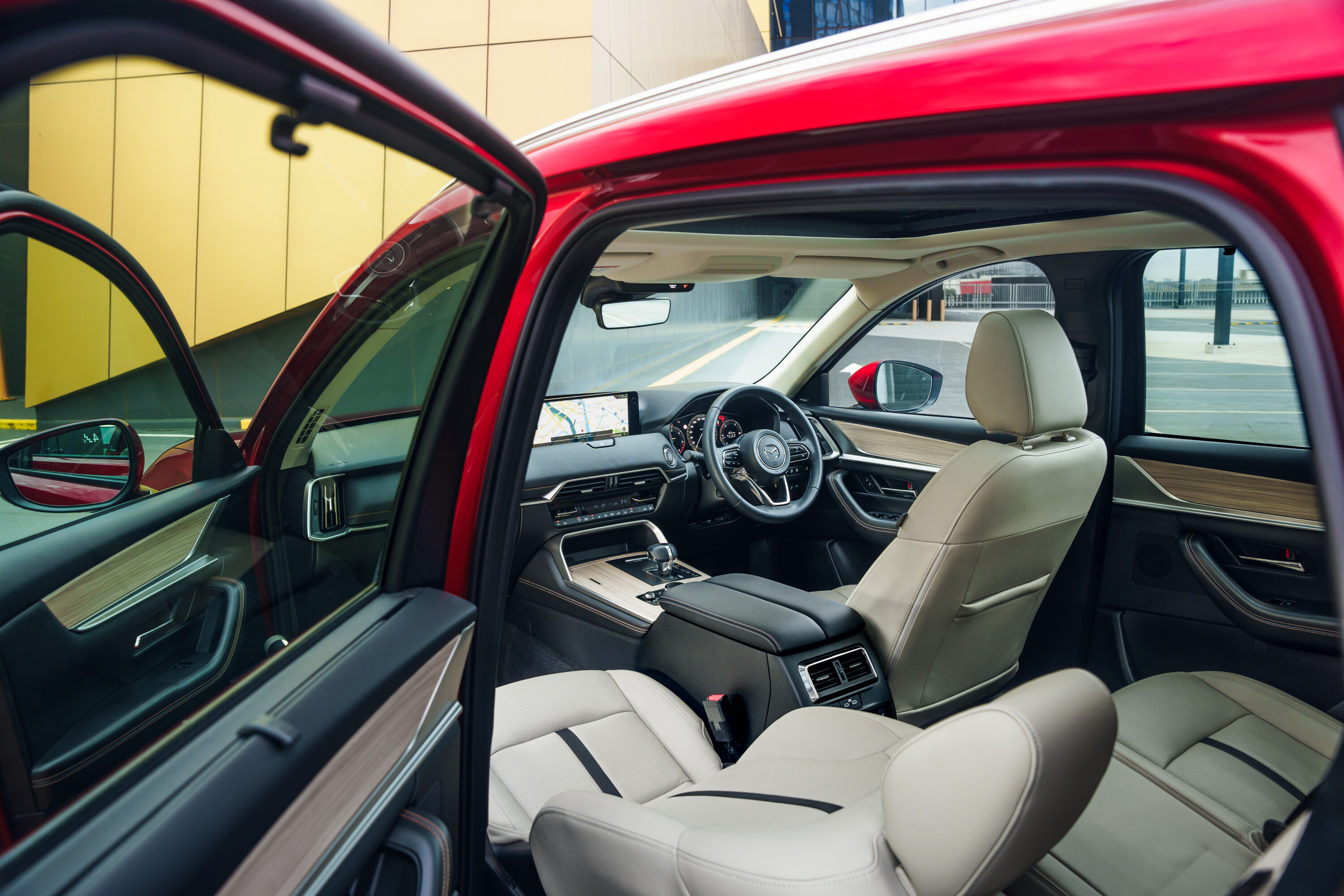
The positives keep coming once we’re on the road. Unlike other CX-90 and CX-60s we’ve driven, our test car has light coloured upholstery and the impact is transformational.
With dark seats, the cabin can feel sombre and unremarkable to the point that you really need the optional SP or Takumi packs for it to feel properly luxurious.
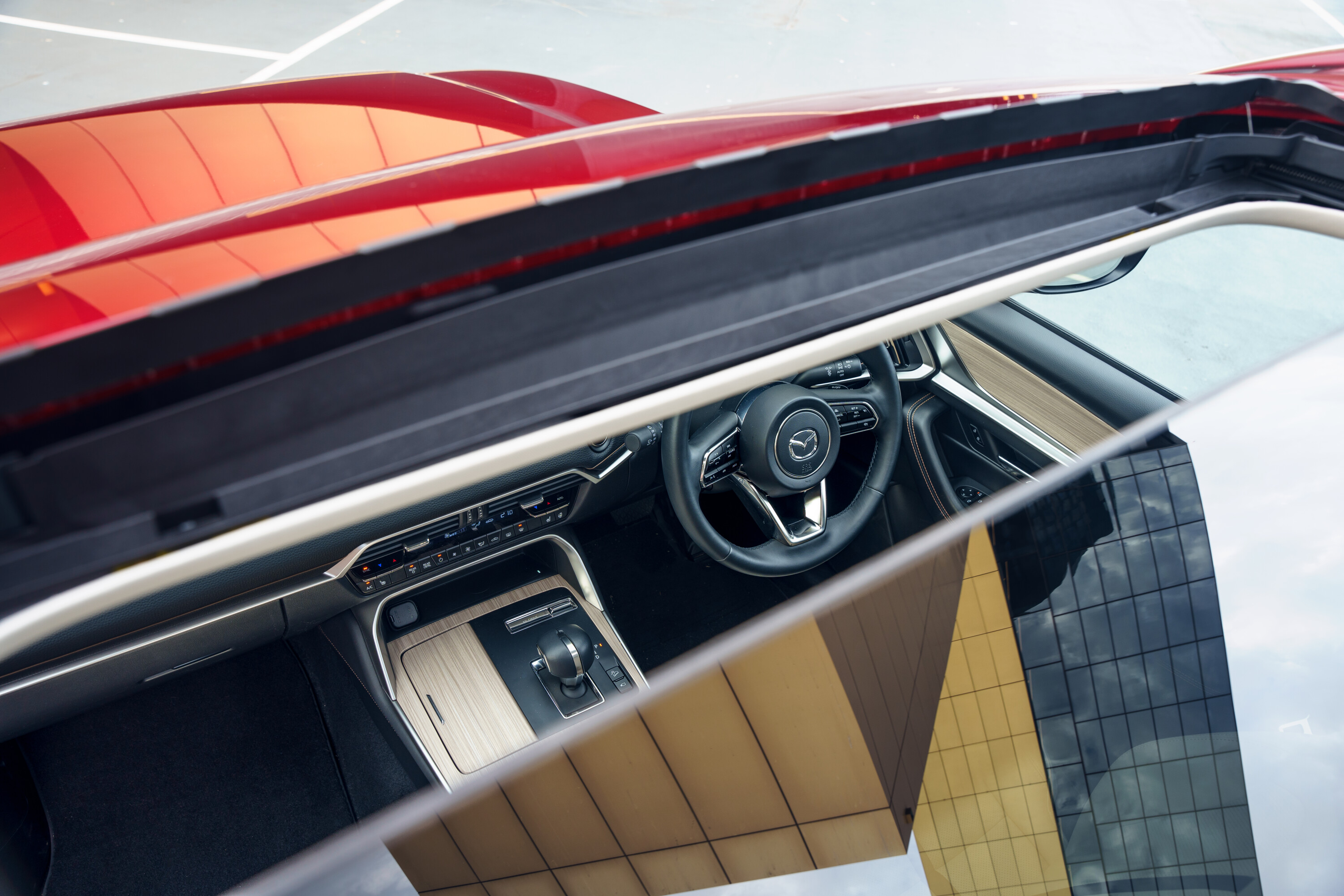
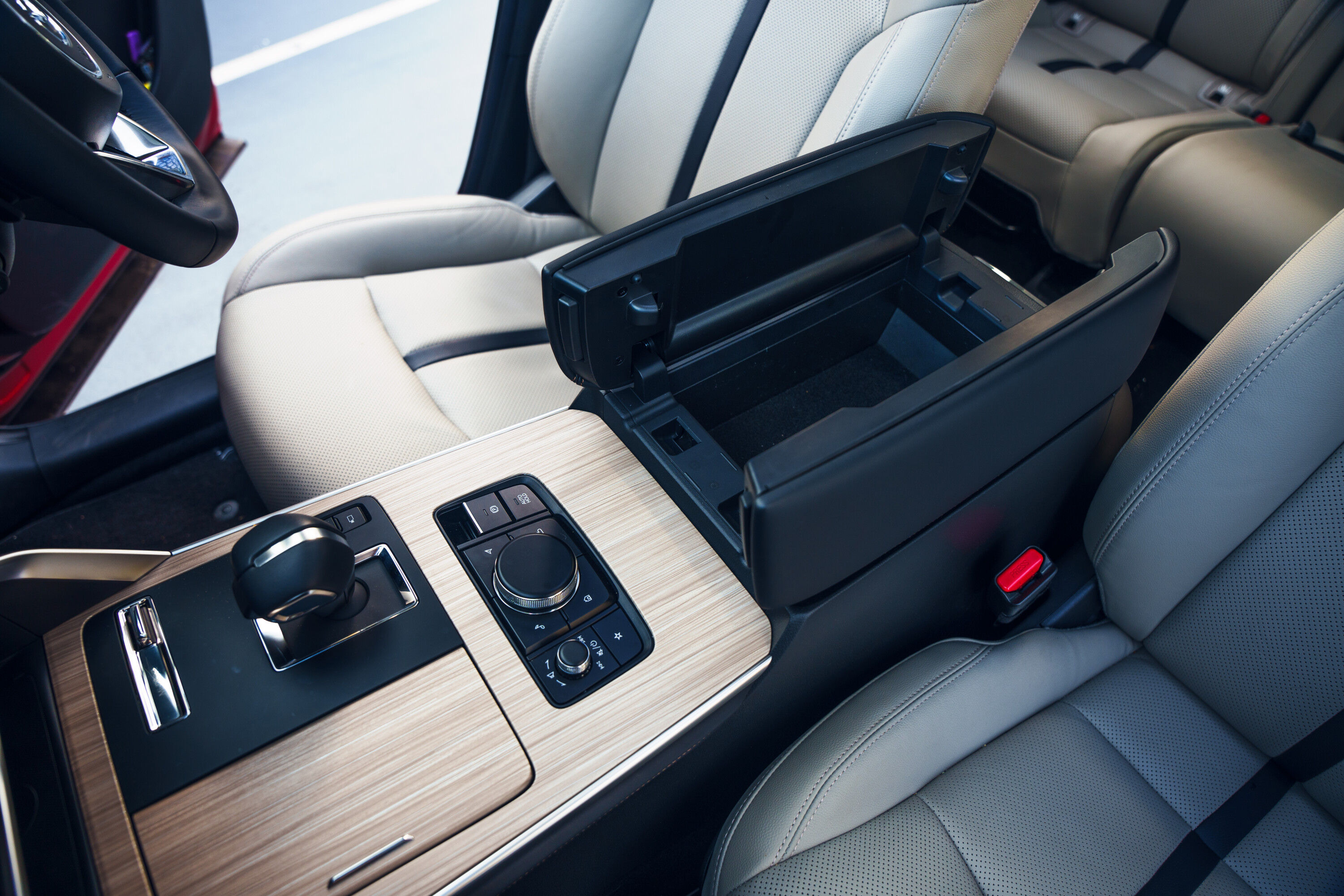
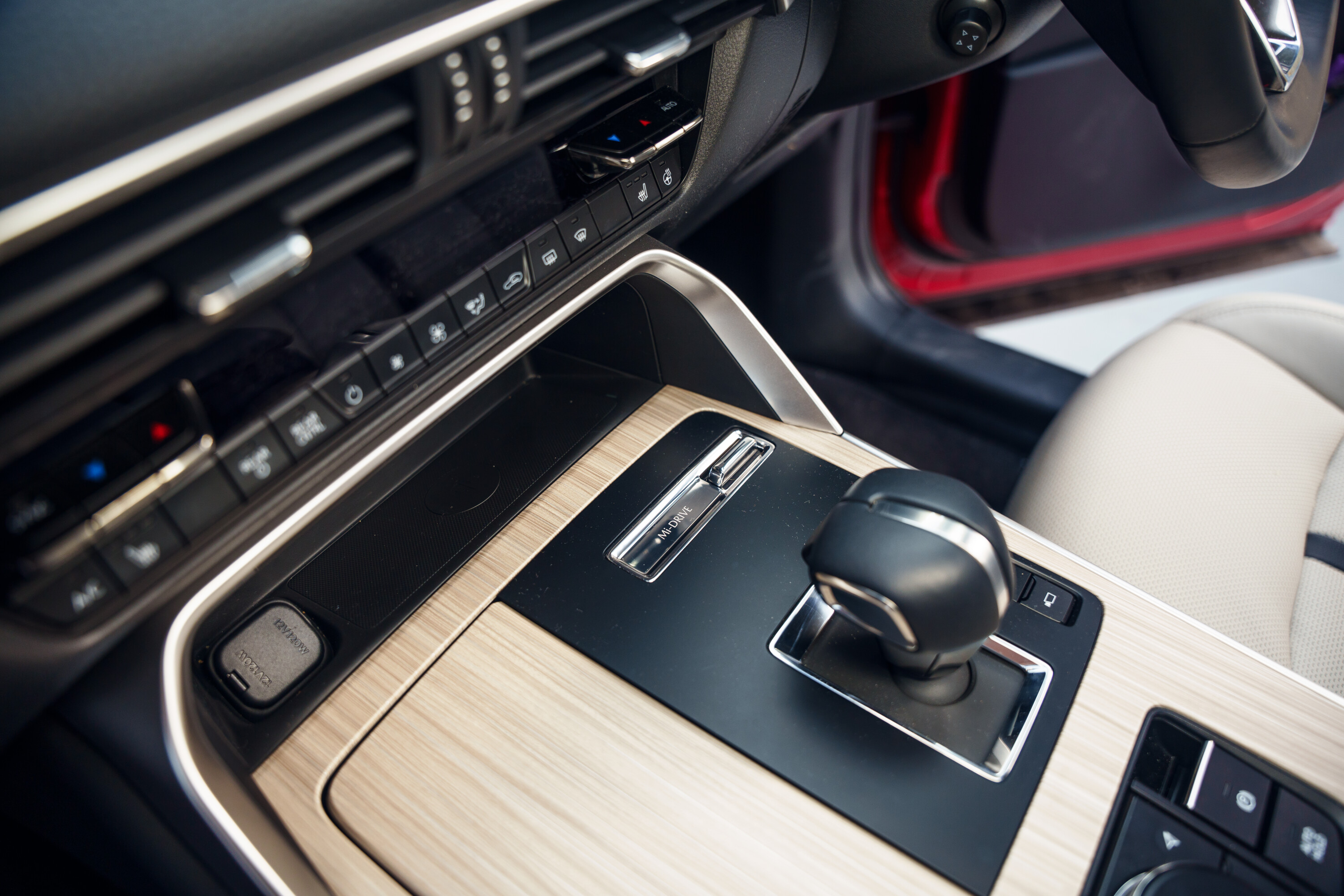
The light grey leather, however, which Mazda calls stone, lifts the ambience considerably and pairs it nicely with pale, fake-wood inserts on the doors and console. The result is an airy and pleasant place to spend long periods of time, aided by a big panoramic sunroof, an excellent driving position and good seat comfort in both front rows.
2
Cabin storage is average, though, due to a bulky centre console that really only offers two cupholders as space to put things. Other items end up being balanced on the console itself and things can quickly pile up and become cluttered.
Freeway cruising is a CX-90 strength. In the city, the big Mazda’s sheer size and relatively heavy steering mean it can feel cumbersome — keeping those big 21s clear of kerbs in tight backstreets and carparks is a full-time job — but away from such confines, the CX-90 is quiet and relaxing.
Adaptive cruise control, a great stereo and the big, smooth 3.3L diesel also help to make short work of big distances. And talk about economical. Even fully loaded and with some big hills to tackle over the Great Alpine Road, the diesel CX-90 returned an economy figure of 6.4L/100km.
2
Trouble is, those same mountain roads saw some familiar issues bubble to the surface. The ride quality on big 21-inch alloys is overly firm and on some of the Great Alone Roads bumpier sections it even verged on terse.
Road joins slap home, ruts shudder and skip unpleasantly and pot holes are felt keenly enough to wake sleeping children. And that’s enough to put it on The Wife’s blacklist. A stint in the backseat — to placate the now awake infant — revealed the ride is even more jostling in the second row.
The hilly terrain also placed the engine under the microscope. Unlike the 3.3 petrol which was gifted some extra kW and Nm compared to its application in the CX-60 to counteract the CX-90’s extra heft, Mazda left the diesel’s outputs unchanged and at times it felt underbaked.
1
It’s really only noticeable when overtaking where, after a gratifying initial surge the big oiler doesn’t pile on speed as urgently as expected. Switching to Sport mode helps but the powertrain certainly doesn’t feel as muscular as in the smaller CX-60.
So there are some wrinkles to iron out — adaptive dampers and some extra herbs for the diesel would make a huge difference — but the measure of a good road-trip hauler is how you feel after a long day in the saddle.
By the time we pull up, the twisty, bumpy mountain roads have long ago been replaced by stretches of smooth tarmac and it’s hard not to give COF531 a good-hearted tap on the tailgate. It’s not perfect but the CX-90 is certainly a worthy long-distance cruiser.
Mazda’s boldest SUV yet waves goodbye, but is it a hit or a miss?
Price as tested: $85,550 + on-road costs
This month: 1519km @ 7.2L/100km
Overall: 4579km @ 6.5L/100km
Here we are then: crunch time for Mazda’s biggest, grandest and boldest SUV yet. After four months and 4500km, the CX-90 is heading back to company HQ, which means we now have to answer the questions we posed at the beginning: is it a worthy flagship? And more crucially, is it worth its near-$90K asking price?
1
I wish the answers were more clear cut but unlike most farewell reports, which sign off with either a cheery “Yep, it’s a goodun’ or a cautious “maybe give this one a miss”, the CX-90’s verdict is more complex.
On the one hand, there’s so much to like. Mazda’s big 7-seater has real presence in the metal thanks to its sheer size, elegant detailing, and sporty proportions that come from its long bonnet and short overhangs. The interior is beautiful. The boot is big. And the all-new six-cylinder diesel engine fitted to our test car is smooth and freakishly frugal.
It takes real effort to get the average fuel economy reading to go beyond 6.4L/100km, such is its incredible efficiency in everyday and open-road driving. So in many ways, the CX-90 is everything we hoped it would be from a brand looking to push into the luxury space.
1
But then there’s the ride quality, which is just too firm and niggly on big 21-inch alloys, especially for a car hoping to deliver a driving experience on par with legacy posh brands like BMW and Lexus. Like its smaller CX-60 sibling, this is an SUV crying out for adaptive dampers.
The 8-speed gearbox is a frustrating weak link, too, and its low-speed clunks and clumsy relationship with the 48-volt sub-system don’t only make the CX-90 feel jerky and cumbersome, but its tendency to grind and vibrate as you roll through intersections further undermines the CX-90’s sense of luxury and refinement.
Why Mazda decided to use a healthy chunk of its R&D budget on designing and building its own gearbox, when it could have bought a tried and tested unit from Aisin or ZF will forever be a mystery. It’s a niggle that permeates the entire driving experience and because the drivetrain isn’t silky smooth, it never fades into the background. Which can cause your mind to ask challenging questions like: “would this SUV actually be better if it had a fizzy four-cylinder turbo?”.
1
That might sound like blasphemy but while Mazda’s new inline six cylinder engines are good and give the CX-60 and 90 a personality that’s muscular and barrel-chested, they fall short of being truly great. You only need to drive a Volvo XC90 to know how well a modern turbo four can work in a big premium SUV.
So the CX-90 hasn’t quite knocked it out of the park, has it? Objectively it has some issues but here’s the thing: I can totally understand someone wanting to buy one. And then being fiercely loyal of it.
Much of that comes down to its ability to get under your skin. You smile when you walk up to the CX-90 and because the interior is so elegantly designed, spacious and tightly screwed together, you relax when you slip into the comfy, leather-trimmed seats.
1
I also reckon this near-top GT model grade is the one to go for. It’s superbly equipped and, at $85K before on-roads, it feels better value than the $8000 pricier flagship Azami. Just be sure to select a light interior trim colour. Dark seats can make the cabin feel overly somber.
Sales figures are the real arbiter of success, of course, and on that front Mazda’s shift upmarket is off to a slow start. Some green shoots are starting to appear but overall sales are down and Mazda has relinquished its longstanding spot as Australia’s #2 brand to Ford. Will it pay off in the long run? Just like our assessment, it seems the verdict is still out on that one.
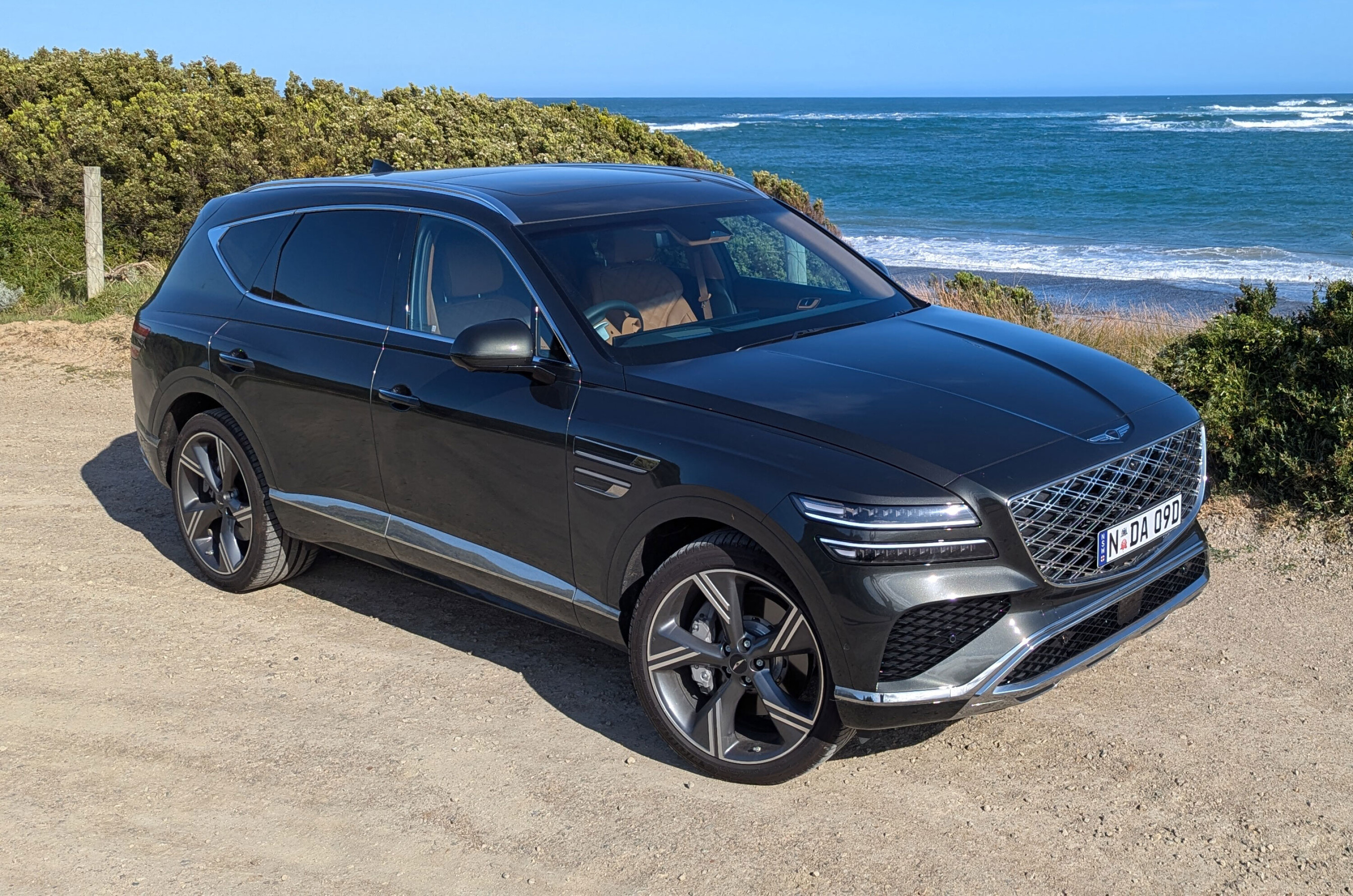
I suppose it had to happen at some point. Despite having held a driving licence for 37 years, I had somehow escaped – and is there any delicate way of phrasing this? – being rear-ended in a car. Well that run of luck came to an end on Wellington Road in Melbourne last month, mere days after collecting my new Genesis GV80 long termer.
It all seems so banal, of course. The snatch of locked brakes on the wet road and then the impact from behind. I pulled to the side of the road and there was an old Mercedes-Benz C-Class looking distinctly the worse for wear. Expecting a corresponding amount of damage to the Genesis, I was pleasantly surprised to see just a bit of cracking of the plastics and trims on the lower valance, and that seemed about it. Insurance has done its thing and it has an appointment with a local repairer, which isn’t an ideal start to its tenure in the Wheels garage, but otherwise I think it got off rather lightly, all things considered.
1
Prior to being shunted rudely in the chuff, the GV80 had been making a very good impression. I might merely be projecting here, but you’re forgiven if you’re somewhat bamboozled by Genesis’s nomenclature. The GV80 is the range-topping SUV, a kind of BMW X5 rival. It’s now only available with one engine choice, a meaty 3.5-litre twin-turbo V6, and the sole option is a choice of six or seven seats. Otherwise it’s as if it’s had the entire options list shoehorned into it.
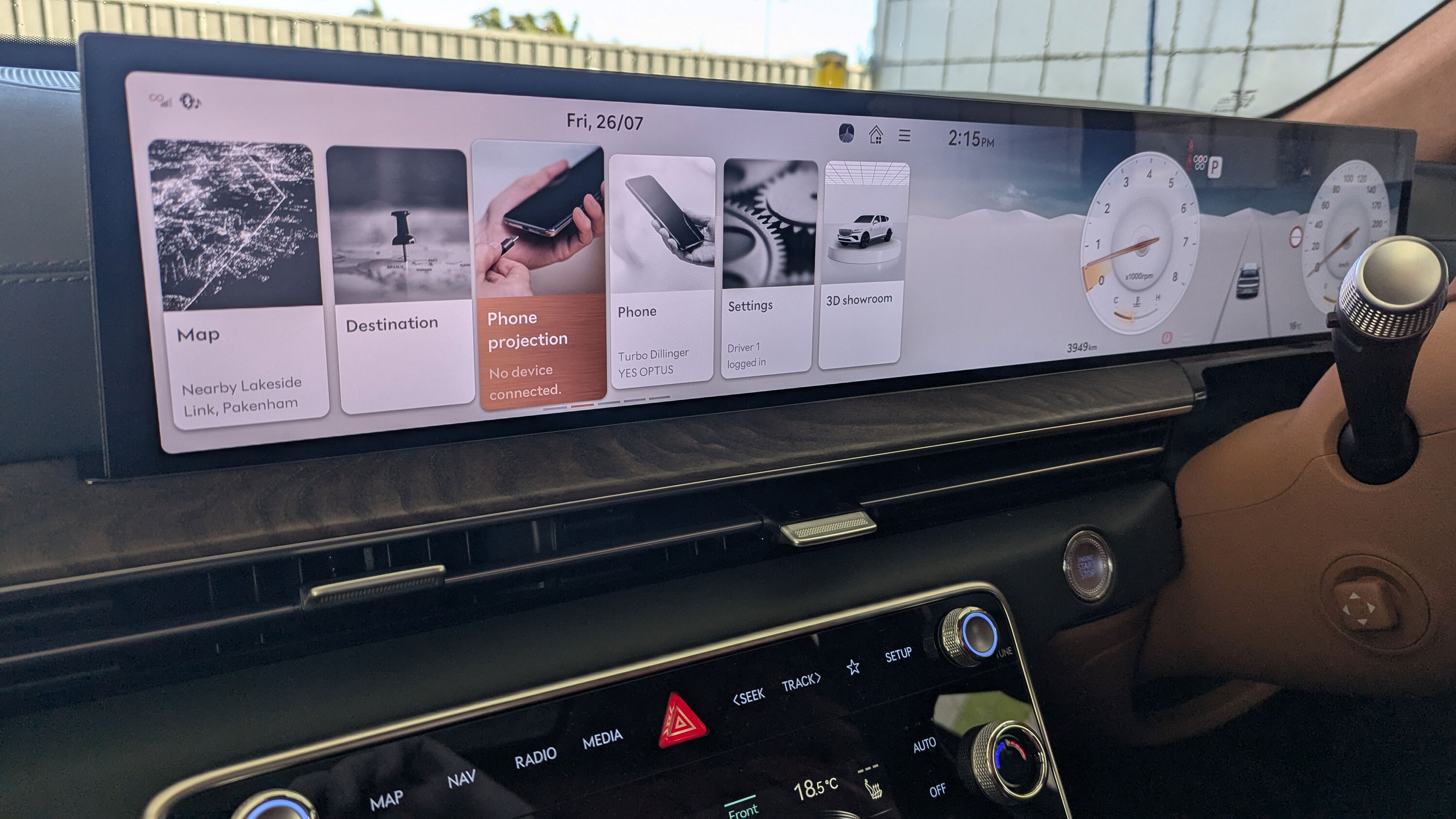
It retails for $130,000, which looks decent value against the BMW X5 40i M Sport, which carries a $138,900 sticker price, doesn’t come with anything like the kit list of the Genesis and is also some way down on outright grunt. To whit, the BMW’s 3.0-litre straight-six develops 250kW and 450Nm, where the Korean is good for 279kW and 530Nm. What’s more, the Genesis has been recently updated. The most obvious difference is the old dash binnacle has been replaced by a stunning widescreen 27-inch OLED that includes both the dash clocks and the infotainment system. That’s not all though.
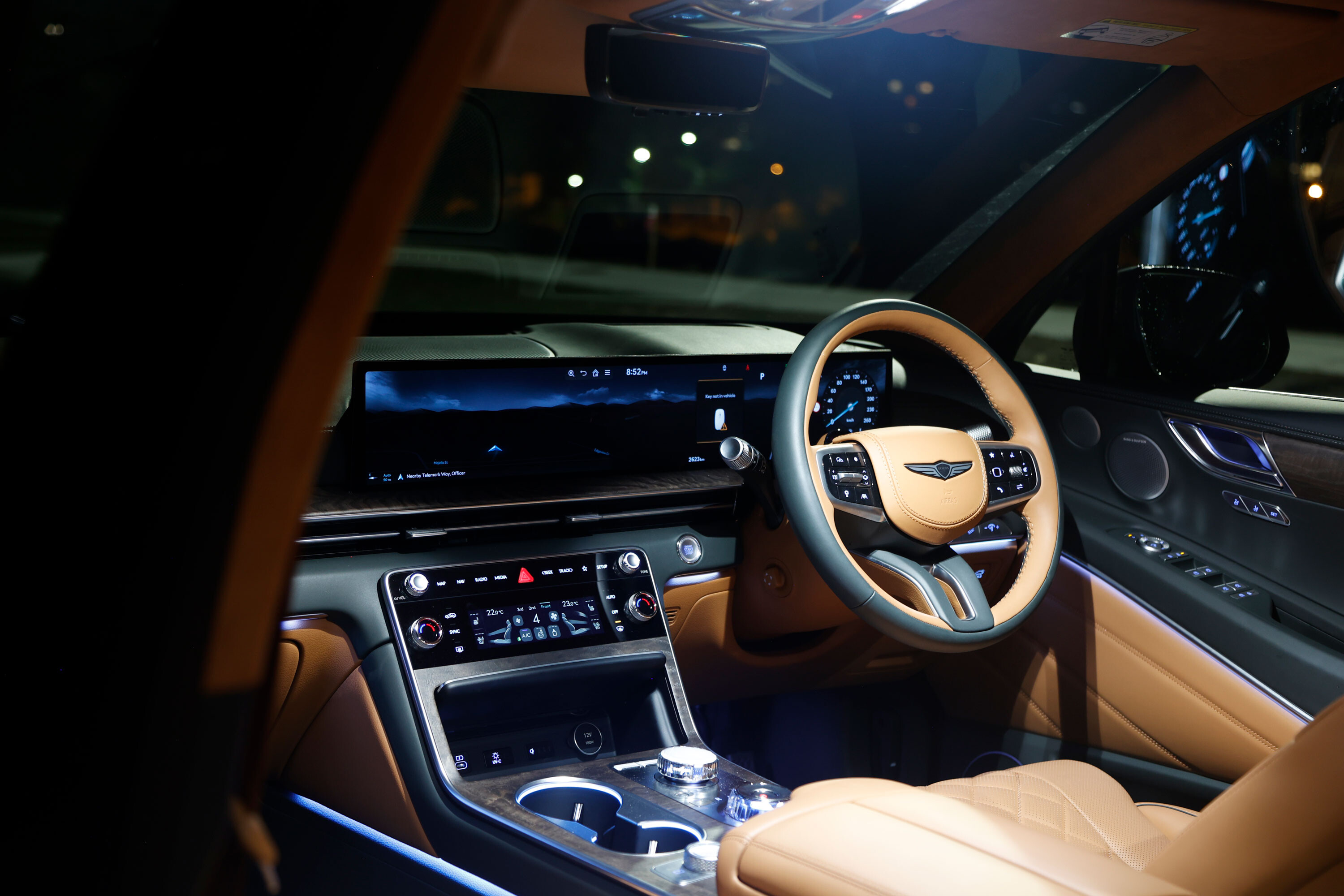
Genesis has also added new colours, tweaked the styling, added a bunch of safety and convenience kit, and the car now features all of the gear that was in the previously optional Luxury pack. You sit on beautiful quilted Nappa leather seats with suede trim elsewhere. There really is a feel of ‘baby Bentayga’ about the cabin execution, with high-quality touch points, an 18-speaker Bang and Olufsen stereo and, in this car at least, a smoky green/earth brown two-tone cabin that works well with the olive ash wood dash and centre console finish.
1
We’ll get into the nuts and bolts of how it drives in a later report, but first impressions are promising. The engine certainly delivers in terms of acceleration, scoring a 0-100km/h time of 5.6 seconds, but I’m more than mindful of its fuel thirst.
The spec sheet reckons on 11.7L/100km, well up on the 9.2L/100km of that X5. I’m generally quite gentle with the loud pedal in normal driving, and over 1243km this month, I’ve averaged 11.72L/100km – bullseye on the WLTP fuel figure.
The cosmetic damage on the back of the car is going to be fixed next month. Shouldn’t be an issue, but I’ll let you know how that goes.
Or how the Genesis GV80 still manages to knot the brows of the uninitiated.
“WHAT IS IT?” Despite having been on sale here in Australia since 2020, it’s fair to say that the Genesis GV80 still has the capacity to befuddle a good proportion of onlookers. Some have commented that Genesis is the luxury arm of Nissan, that it’s an Aston Martin, and one reckoned it was a Chinese brand. Clearly Genesis needs to work a little on its brand recognition.
We’re doing our bit. We featured the ‘old’ Genesis GV80 in the Wheels garage back in 2021, so when the opportunity came to do a bit of a compare and contrast with the previous model, I was all for it.
It didn’t quite do enough to merit a podium spot at that year’s COTY. Judge Byron Mathioudakis described it as dynamically confused, not rating its body control particularly highly. It also scored poorly on the efficiency criterion, as it lacked either an idle stop function or a hybrid version. It still lacks both, and the efficiency thing would be one of the key impediments to me putting my hand in my pocket for a GV80. The first month’s average of 11.7L/100km slipped a little to 12L/100km this month, largely due to a larger proportion of urban driving.
1
While the 2024MY update introduced a whole heap of comfort, convenience and safety improvements, there’s been nothing done to the oily bits underneath to materially change the way the GV80 goes up a road. It’s not at the top of the class in terms of chassis dynamics, but I don’t take great issue with the compromises that Genesis’ chassis engineers have had to accommodate.
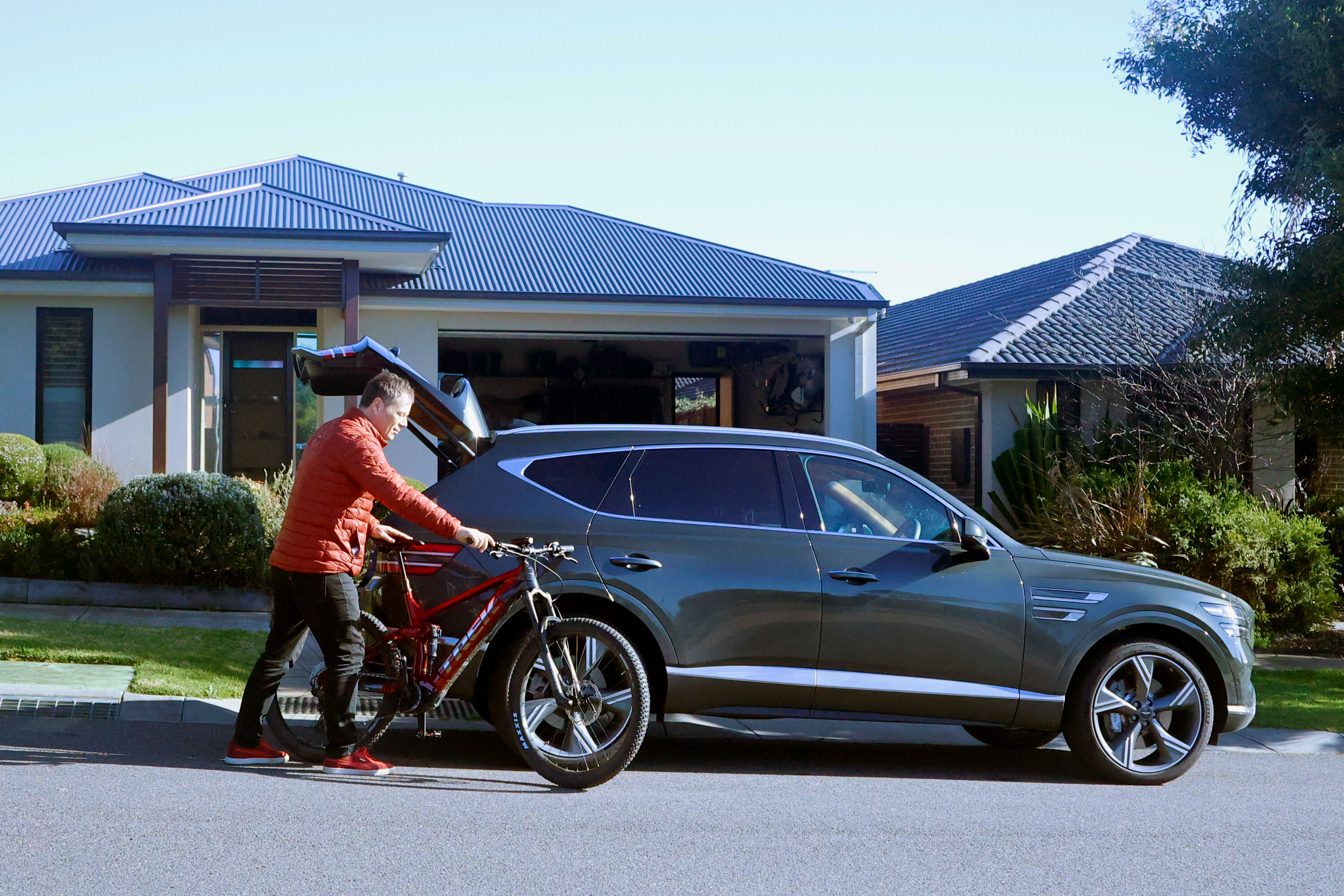
Talking of accommodation, I’ve discovered that even with the seats fully folded and the front passenger seat slid forward on its rails, the wheel still needs to come off my mountain bike in order to fit into the back of the Genesis.
That didn’t prove an issue in my old Subaru Outback, despite their respective maximum luggage capacities being 2144 litres versus a mere 1783 litres. I’ll put that down to the GV80’s loading bay being shorter but taller.
Meanwhile, on the subject of the accident repair to the Genesis, largely due to me being overseas for a fair bit this past month, the process has dragged a bit. I dropped the vehicle off for repair, only to be told that this would be an initial damage assessment. When the bill arrived, it totalled a surprisingly modest $1877 for the parts less labour, which was then passed on to the insurer of the chap who kindly saw fit to rearrange the back of the GV80. The downside? The bits are on backorder and will take 4-6 weeks to arrive.
Reassuringly, the GV80 is proving a popular part of the family. It’s always a bit awkward when you get a long termer that you adore but your partner abhors – hello Subaru BRZ – but I’ve had difficulty prising the Genesis key fob from my partner’s grasp. She’ll love it even more when the car’s rear trims are all back in one piece.
Enright is in a set of temporary wheels after suffering from screen burn.
1
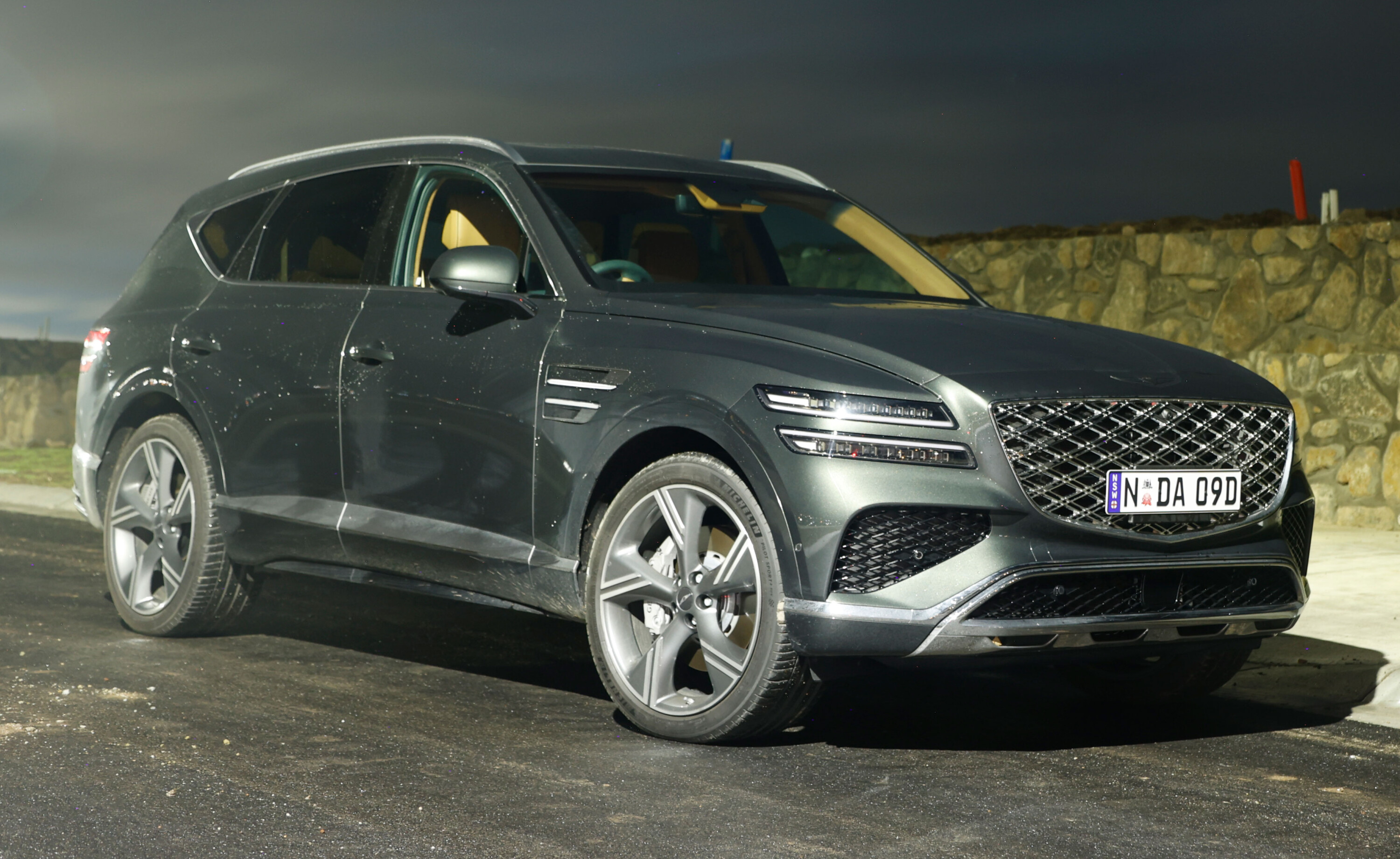
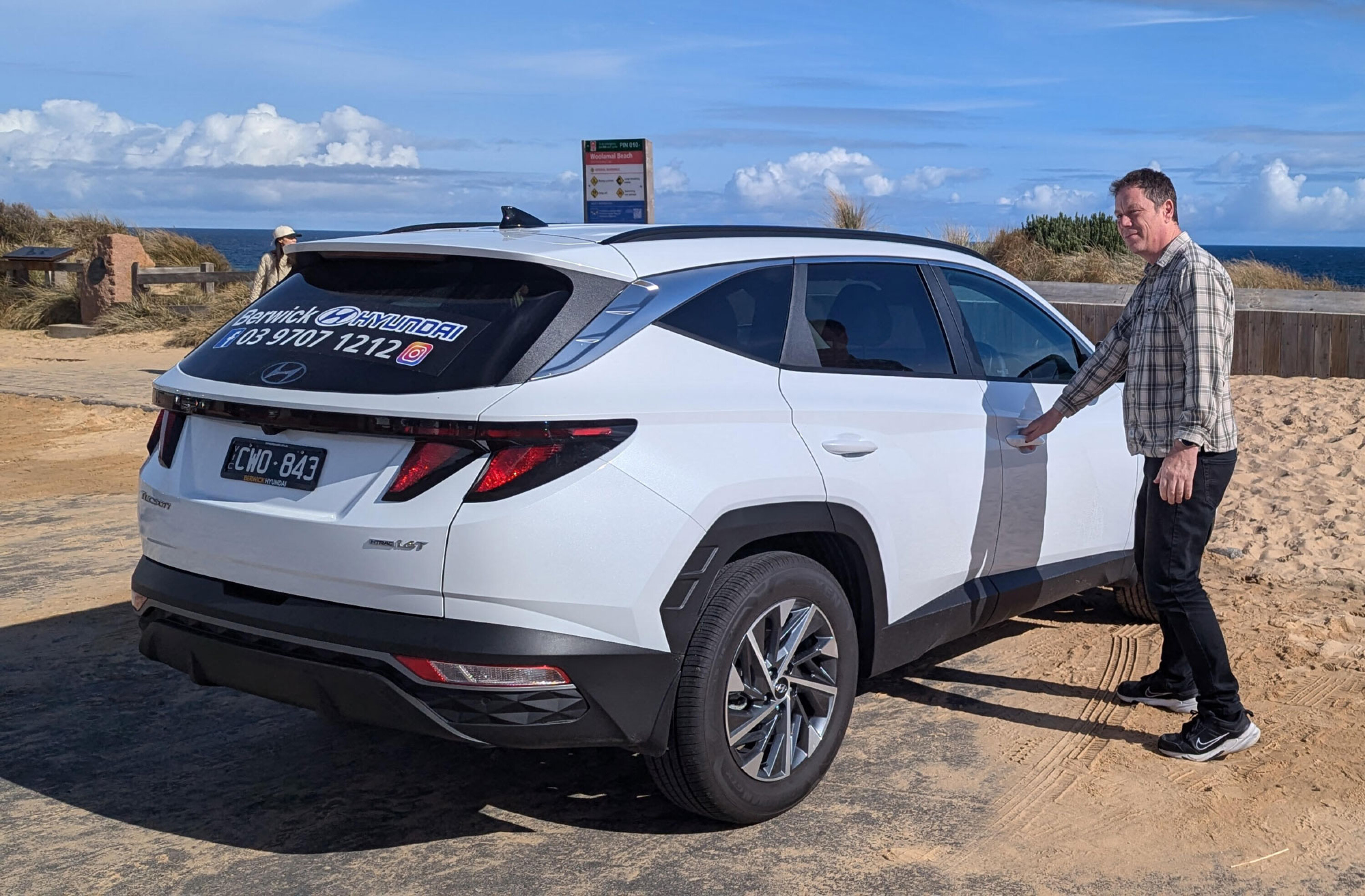
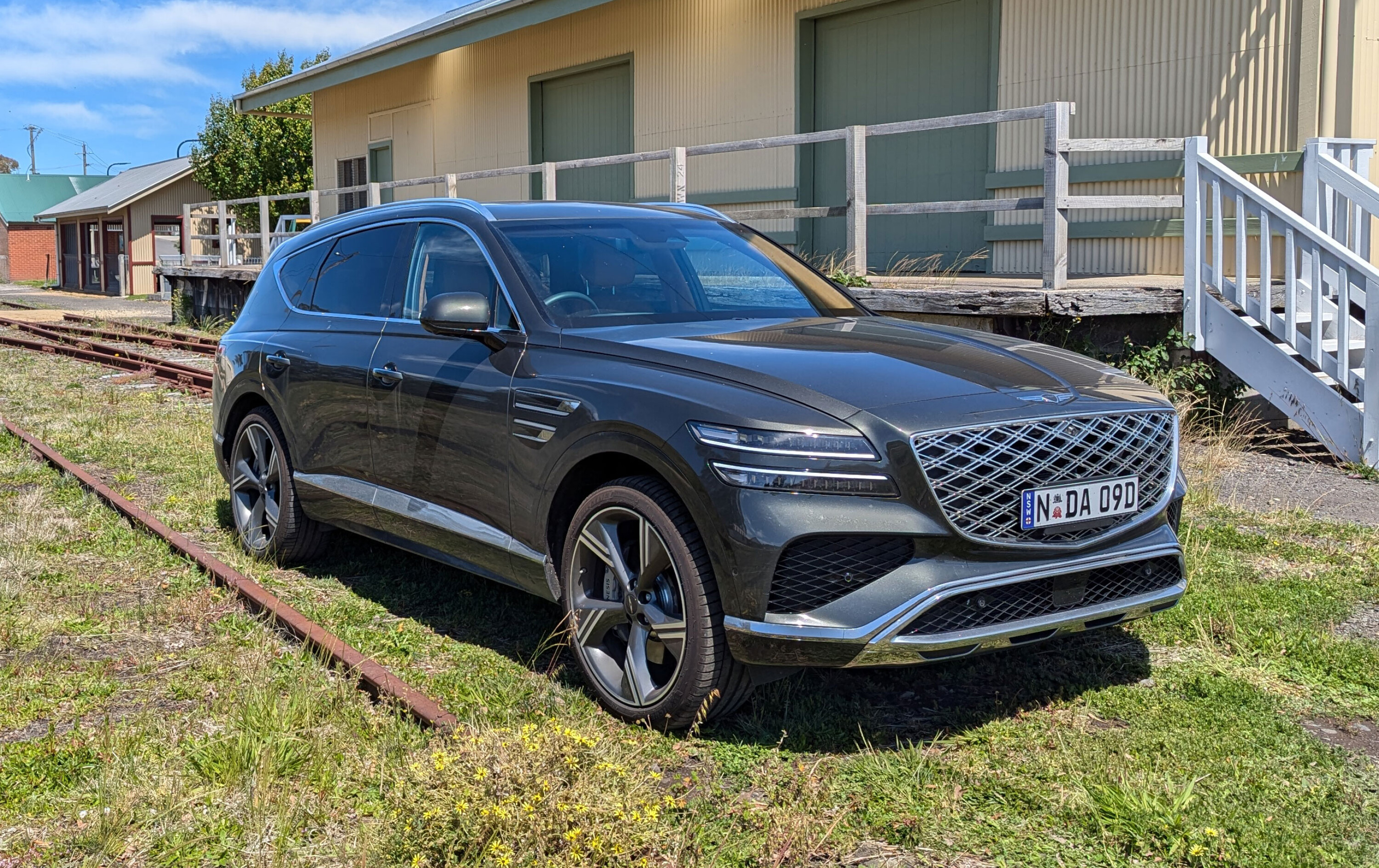
Even to the untrained eye, the Genesis GV80 in this image looks suspiciously like a Hyundai Tucson and there are reasons for that. Firstly, it is a Hyundai Tucson. Secondly, the Berwick Hyundai courtesy car decals will clue you in to the fact that not all is happy in the book of Genesis.
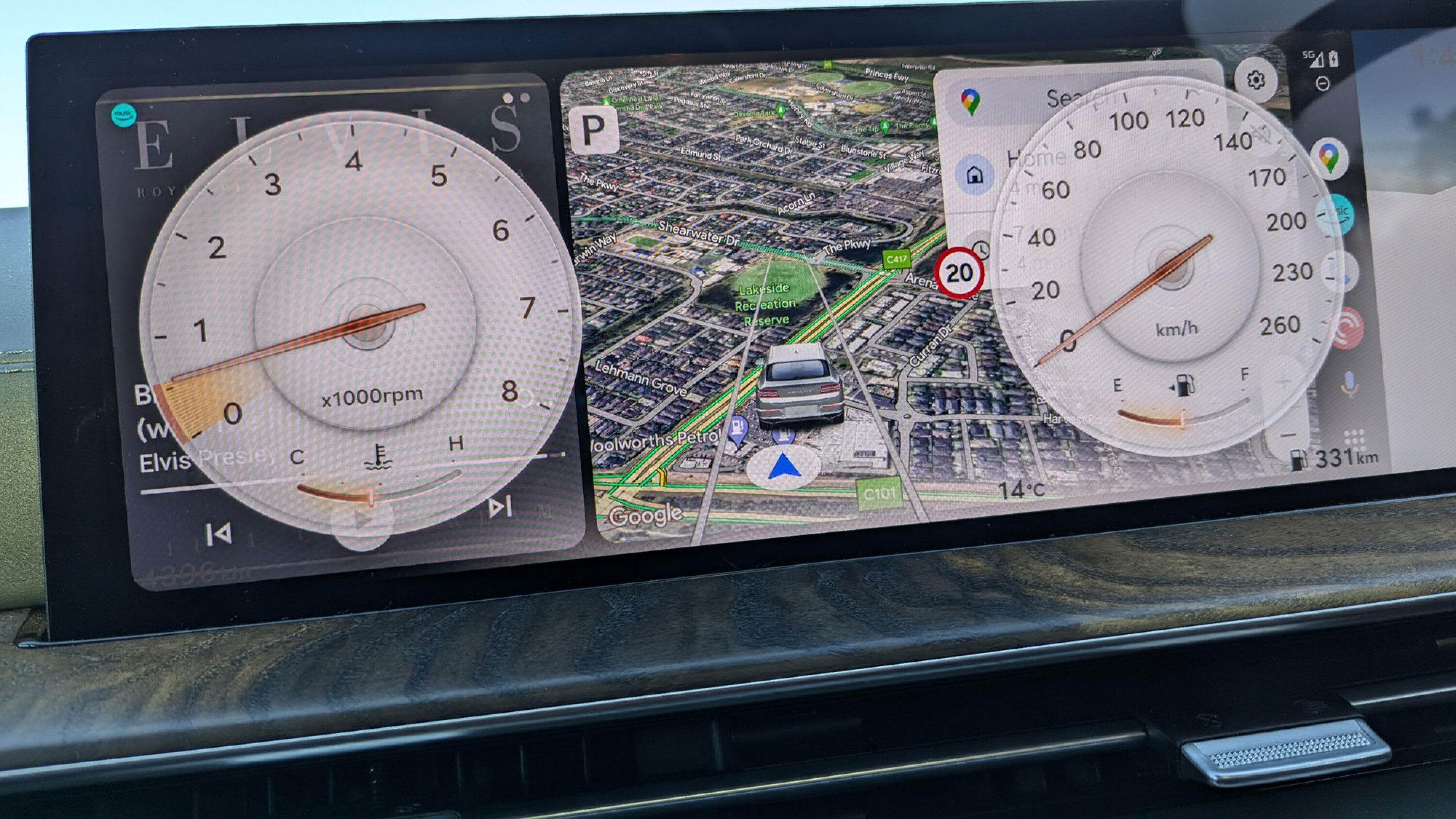
A few weeks ago, the car had what I can only describe as an electrical brainfart. It started projecting images of the instrument cluster’s dials over the Android Auto information in the centre screen. I figured that this was something that would clear down once I keyed the car off and ‘rebooted’ it, and so it proved. But it was clear that not all was 100 percent with the GV80’s software.
A week or so later, as I left the vehicle, a message flashed up on the screen, suggesting that the car was updating its navigation system. This was a bit of a head scratcher for me, as I hadn’t subscribed to Genesis Connected Services. By the time I’d registered the message, the installation had failed. It was to prove fatal for the infotainment system.
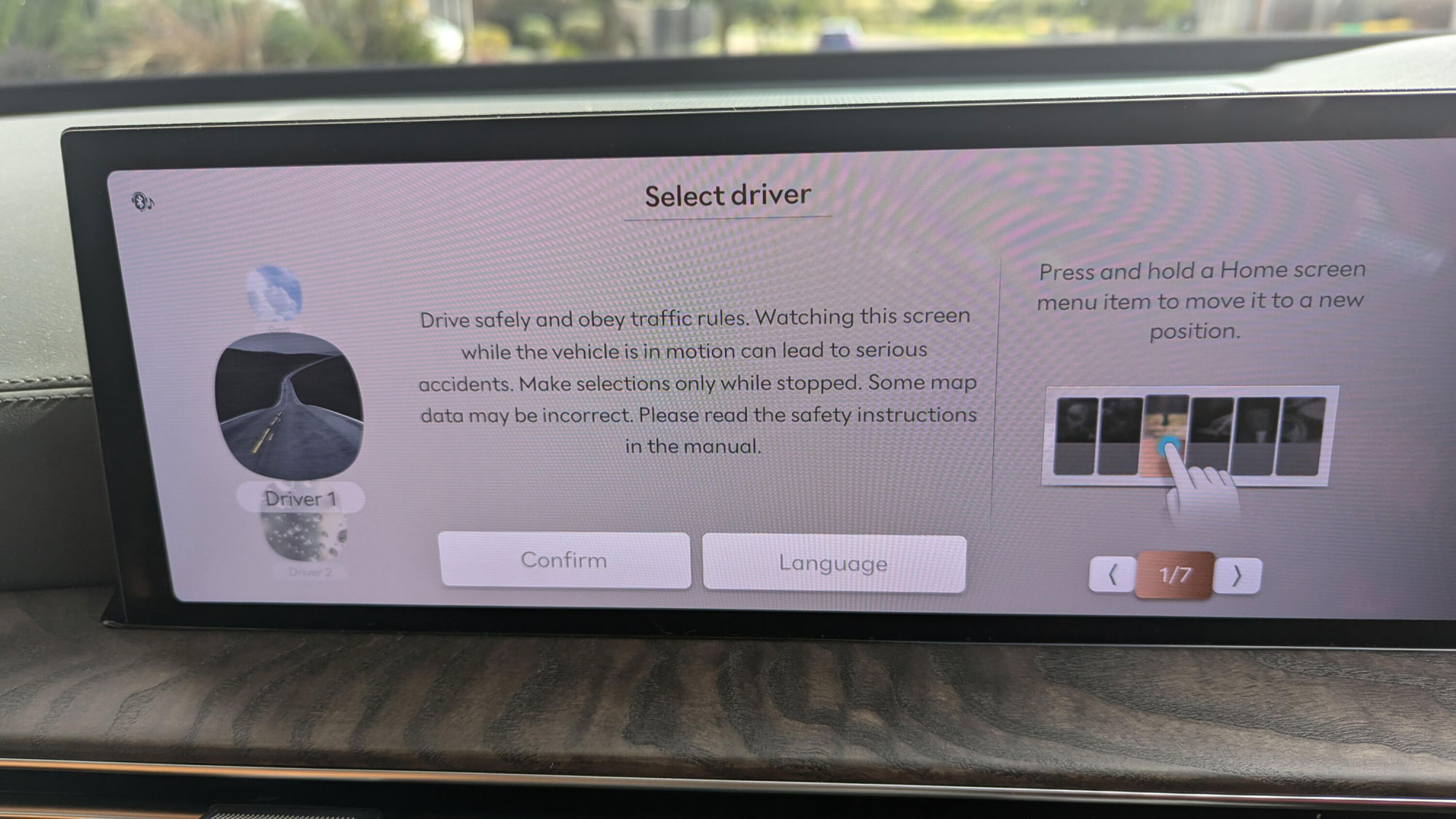
The next time I turned the car on, the first screen encountered – the User Agreement Screen – had both of its options greyed out. There was no way to enter a choice. Normally, this screen times out if no response is entered and the infotainment home screen appears. This time round, the whole system blinked out, rebooted itself, and continued in this endless loop of failure.
1
That meant no navigation, no Android Auto, no podcasts, no music and no phone calls but, equally annoyingly, there was no way to switch off the speed limit warnings, the first thing I always did when getting into the GV80. So rather than listening to something entertaining when driving, the GV80 exits servos bonging furiously at me as it retains the forecourt’s 10km/h speed limit until its beady eye latches onto another speed limit sign which, as I discovered on the South Gippsland highway, can be quite a long time.
I dropped it into the dealership to see if they could fix it. Their first attempt drew a complete blank, so it seems to be quite the technical challenge to overcome. The techs then tried to reflash the software, only for the same problem to instantly recur.
I was then told it would require a whole new infotainment system and there was zero stock on hand. On the return drive home, the system stopped rebooting itself and instead set the head-up display speedometer to zero km/h instead. Troubleshooting was like trying to hit a moving target.
While this all sounds a bit of a screed of woe for a man who has been given a free $130,000 car, it’s something to consider if you’re buying a very new vehicle of any type. As it stands, the plastics for the GV80’s rear end damaged by a dozy man at the wheel of his C-Class are still on back order and this box-fresh ccIC27 navigation system is bricked.
1
I want my ‘old’ Genesis GV80 back. I really liked that car. As it stands, I’m getting to know a Hyundai Tucson instead. Hardly up there in the realm of first-world problems, and I’ve been assured by Genesis that were I a paying customer that the vehicle would be returned and replaced. I was loaned a GV80 Coupe and, lo and behold, it did exactly the same thing within minutes, with a bad batch of head units blamed.
So, at present, I’m waiting for a head unit to be pulled out of another vehicle and fitted to ‘my’ original GV80. I’d be interested in hearing if any other Genesis owners have experienced similar issues.
A new head unit and a key software update have transformed the GV80.
Last month, I was moaning about schlepping about in a Hyundai Tucson because ‘my’ Genesis GV80 had a terminal problem with its head unit. Thankfully, Genesis has sourced another head unit, installed it into NDA-09D and, crucially, installed the latest software update which transforms the Genesis’s utility.
I’d entirely understand if you think that’s a bit of a reach, but bear with me here. Not only do you now get wireless Apple CarPlay and Android Auto where you had to faff about plugging a cable into your phone before, but an uncabled phone now sits nicely in the wireless charger. It’s all a whole lot neater, and the phone boots faultlessly to your chosen smartphone mirroring provider each and every time.
The other key update brought by this software revision is that you can now hold down a wheel-mounted metallic dial for a few seconds and it instantly mutes the speed limit warnings. It’ll show speed limit information in the main dial pack, but no longer will the car chime at you when it thinks (often incorrectly) you’re exceeding a posted speed limit. That is a game changer, saving you wading through on-screen menus. I’ve had a think about why this is such a significant improvement, and I think it just comes down to it boosting the GV80’s inherent likeability. If your car feels onside and some thought has clearly gone into not annoying you, that’s a major boost to its appeal.
While I’ve been given to musing on the GV80, there are some bigger picture things to cover. I’m not particularly enamoured of the GV80’s fuel economy. It’s mainly been driven quite gently, but the twin-turbo V6 still sups fuel at or near 12 litres per 100km which, I feel, is excessive. There’s little about this vehicle that couldn’t be improved by an equally powerful but far more economical hybrid four. I find profligacy to be an unappealing trait in production cars and, for me, this would be the biggest impediment to a potential purchase.
1
I’m also vexed by certain practical elements of the GV80. There’s no space in any of the door pockets or cupholders for a 600ml bottle, and the centre console storage is a shallow tray rather than a deep bin. The boot offers few clever storage tricks and because of the comfort-access front seats sliding back, there’s rarely even space to jam a bag in the rear footwells, so shopping often ends up flopping around, bags disgorging their contents about the cabin. It’s also worth bearing in mind that if you put fragile and expensive items (like cameras and lenses) into bags in the rear footwell, that the comfort-access front seats can then motor back and squash them.
Fortunately, the Genesis GV80 has many qualities that impress. A friend, who owns a BMW X5 40i, was forced to grudgingly admit that the Korean car’s interior was a far more special place to sit than the German’s. When asked why, he listed the quality of the leather upholstery, the functionality of the main screen, the quality of the stereo system and the general fi nish. After driving the Genesis, he preferred the agility, crisper acceleration and better fuel economy of the BMW and made his case – as a driving enthusiast – that he’d bought the better premium SUV.
His arguments have some merits, but then I’m not interested in driving this GV80 hard. I prefer to laze around on its 530Nm of torque, and take my time. Driven this way, it’s a lovely, if thirsty, thing.
It’s been on a few journeys this month, including to the snow at Mount Donna Buang, where I made the somewhat predictable discovery that all-wheel drive is great, but if you have performance-car Michelin Pilot Sport 4 rubber between you and the snow/slush, it only gets you so far up the hill.
I’m just glad to have the GV80 back. The fact that it’s better than it’s ever been is the icing on that particular cake.
Still not completely healed, but the GV80’s goodness transcends life’s mishaps.
Five months after arriving at the Wheels office, it’s time to bid farewell to the Genesis GV80. It’s been eventful, not always for the right reasons. Almost as soon as it arrived, it was shunted in the rear while in stationary traffic and, ever since that occurred, it’s been waiting for the parts to repair the rear valance, parts which have, as yet, failed to appear.
It’s also required an entirely new head unit after a software update bricked the original, so life with the Genesis has included a fair few trips back and forth to both dealers and crash repairers, a spell in two different temporary replacement vehicles and lots of wondering what might have been.
It’s that last point that gnaws at me, because aside from these two issues, the Genesis has been a wonderful vehicle to live with. Thirsty, yes, and its appetite for 95RON comes despite the car being used fairly gently, but some will argue that this comes with the territory when spending over $130K on a luxury SUV with a 3.5-litre twin-turbo petrol V6 beneath the bonnet.
1
We’re assured that the head unit issue only applied to the very first batch of facelifted cars to make it to Australia and is not a common ailment. The delay in body parts availability was only highlighted by the fact that this is the first long termer where someone’s driven into it, so I don’t have any representative sample size of comparable vehicles with which to measure the GV80’s parts availability hiatus.
On that basis, let’s assume you’re one of the vast majority of prospective GV80 owners who have neither a faulty head unit or a galoot in a Mercedes ramming them in the chuff. It’s hard to see how you’d be disappointed with this SUV. It’s striking looking, the cabin is beautifully finished, it’s packed with genuinely thoughtful touches, it drives well and it’s far from the default, boring option in its class.
I’ve mentioned the fuel thirst, and the other financial issue that’s worth considering is depreciation. Three-year-old, pre-facelift GV80s are currently changing hands at around $85K, down from the $108,600 they used to cost in 2021, which represents a three-year retained value of 78 percent. By any normal measure that’d be excellent, but the world isn’t quite normal, and when we look at a BMW X5 40i, these are trading at $100K against a $124,900 sticker in 2021, which shakes out at… 78 percent. So, same same. But now that the GV80 is within $4K of the BMW’s current $138,900 cost, I wouldn’t be quite as confident in the Genesis retaining that sort of residual parity with the BMW.
In other words, go into GV80 ownership with your eyes open. Yes, you will have to take a realistic view of running costs or, by extension, leasing rates, but you’ll be rewarded with a hugely enjoyable and luxurious big SUV that never fails to feel special. Hard-hearted journos rarely give a look over the shoulder as we offload test vehicles, but this is one that I’m certainly going to miss.
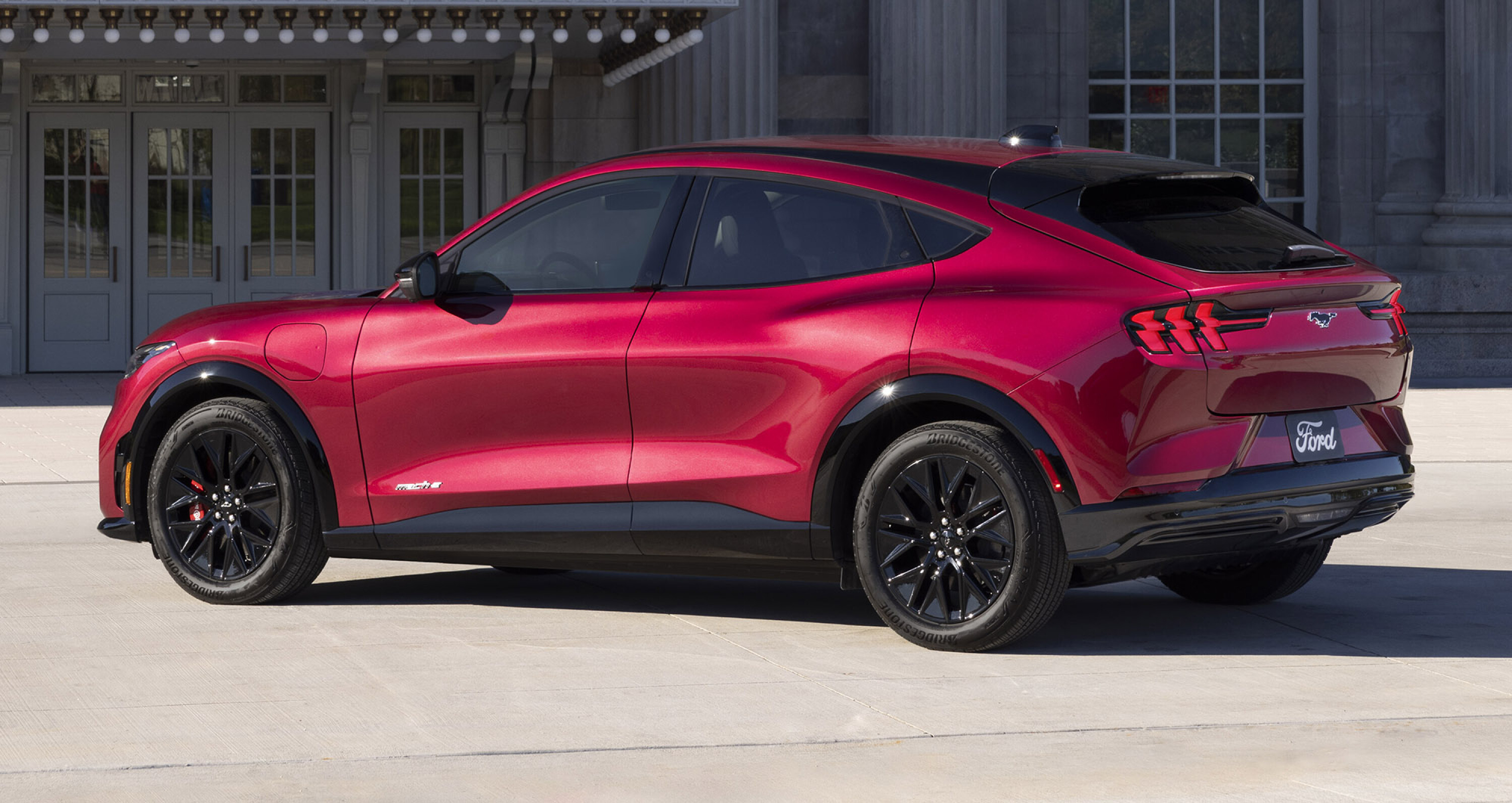
The refreshed 2025 Ford Mustang Mach-E electric SUV has been unveiled, ahead of an Australian debut confirmed for the second half of next year.
Arriving as a mid-life update some five years after its American-market launch, the revised Mustang Mach-E gains an important cold-climates feature: a heat pump.
Designed to help keep the vehicle’s battery system at optimal temperatures during the colder months, the addition of a heat pump should help limit the ‘phantom drain’ that can occur when batteries are left too long in the cold.
1
Ford says it has added the new feature after monitoring customer feedback.
It also brings the Mustang Mach-E in line with a growing number of EVs equipped with heat pumps, including the Tesla range, the BYD Atto 3, and those from Hyundai and Kia.
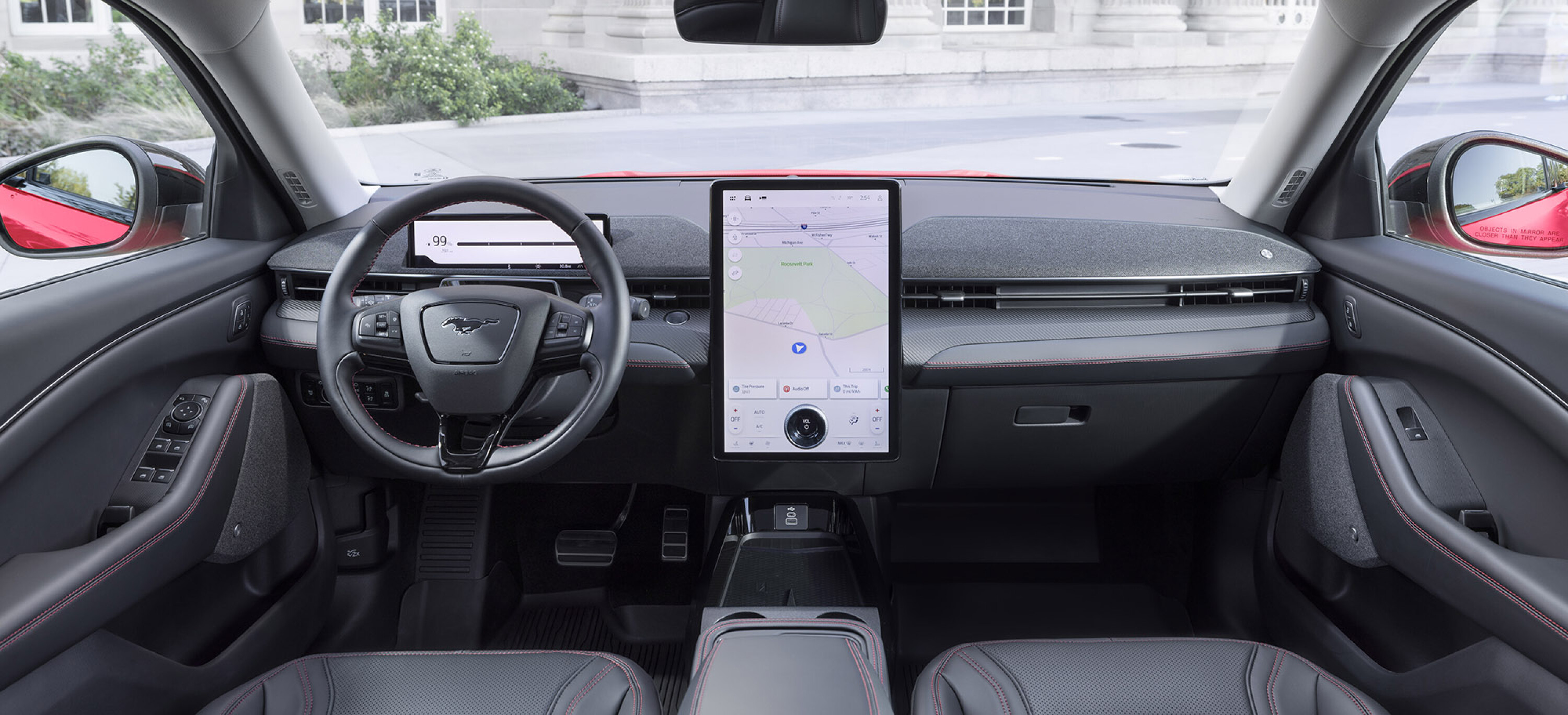
Lastly on standout MY25 updates, the Mach-E gains a new column-mounted gear shifter to free up space in the centre console, where a rotary shifter had previously lived.
FAQs for heat pumps
In simple terms, a heat pump is a highly efficient way to transfer heat from one place to another. In electric vehicles (EVs), it’s used to warm the cabin by drawing heat from the battery or other components. It can also help regulate the battery’s temperature to enhance performance, extend driving range, and improve the battery’s lifespan—particularly in cold conditions, where lithium-ion batteries are less efficient.
A heat pump operates by circulating a refrigerant through a system of compressors and tubing. The refrigerant absorbs heat from the surroundings and converts from liquid to gas. As it releases heat, it condenses back into a liquid. This cycle efficiently moves heat to where it’s needed, allowing the car to heat the cabin or maintain the battery at an optimal temperature.
Heat pumps haven’t been necessary in traditional vehicles because internal combustion engines generate a lot of excess heat as part of the combustion process. This waste heat can be easily repurposed to warm the cabin. In electric vehicles, however, there’s no engine producing that level of heat, which makes heat pumps ideal for maximising energy efficiency by managing both cabin heating and battery temperature. It’s only with the rise of electric cars that heat pumps can be fully utilised.
A new Sport Appearance Package has also been added to the Mach-E range, borrowing styling cues from the top-shelf GT variant.
Features for the SAP include a new front bar and gloss black grille panel, along with Brembo brakes finished in a strong red hue.
Holding up each corner are 19-inch Monochromatic high-glass black wheels, while gloss black door accents and wheel arches round out the exterior tweaks.
Highlights in the cabin with the Sport Appearance Package include red stitching and red pedals, while Premium models gain ventilated front seats.
1
On the technology front, Ford’s BlueCruise 1.5 is on-board for US owners, adding Automatic Lane Change to its capabilities.
Ford says the lane change system will automate “up to 45% of lane changes on an average drive, based on internal testing”.
Not merely dependent on hand-actioned lane change requests from the driver, the system will also automatically change lanes – when safe – if a vehicle in front is driving slower than the set or signposted speed.
It’s not a free system, however, available only as a monthly subscription. And, as noted, BlueCruise is not yet available to Australian buyers, due to regulations against any hands-free operations.
When will the 2025 Ford Mustang Mach-E go on sale in Australia?
The 2025 Mustang Mach-E is confirmed for the second half of next year in Australia.
October, 2024: Model Y facelift hints at new design features
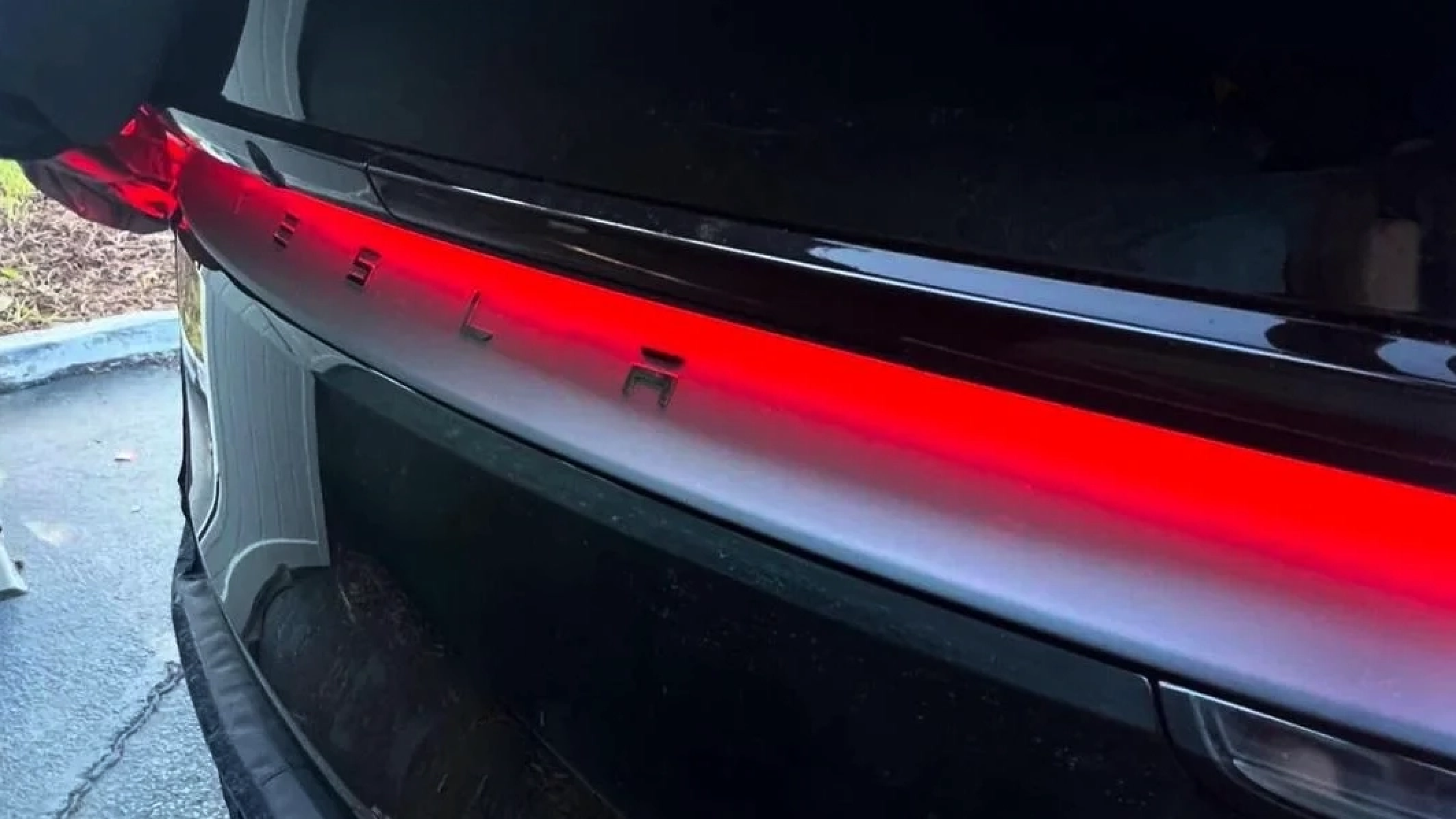
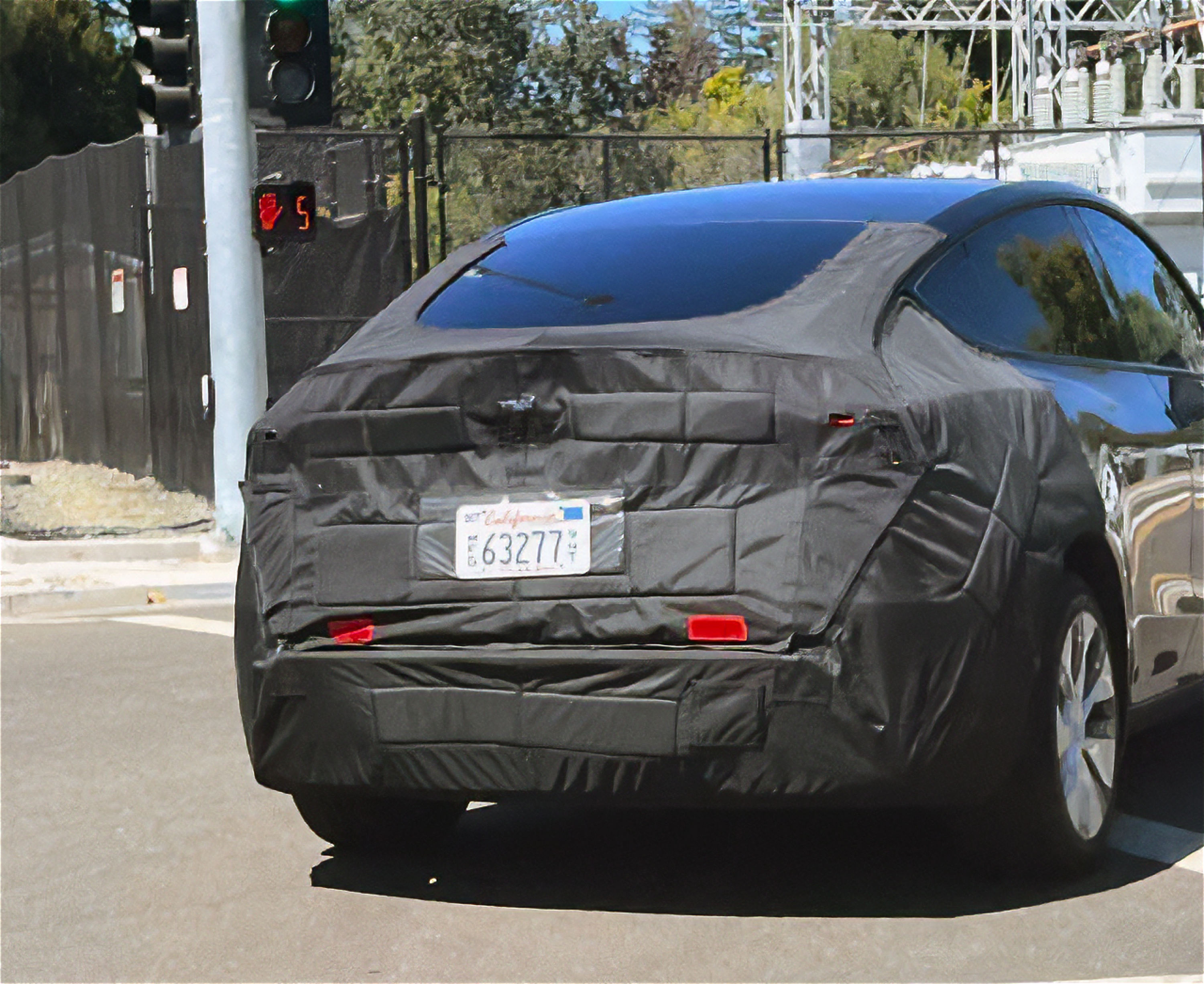
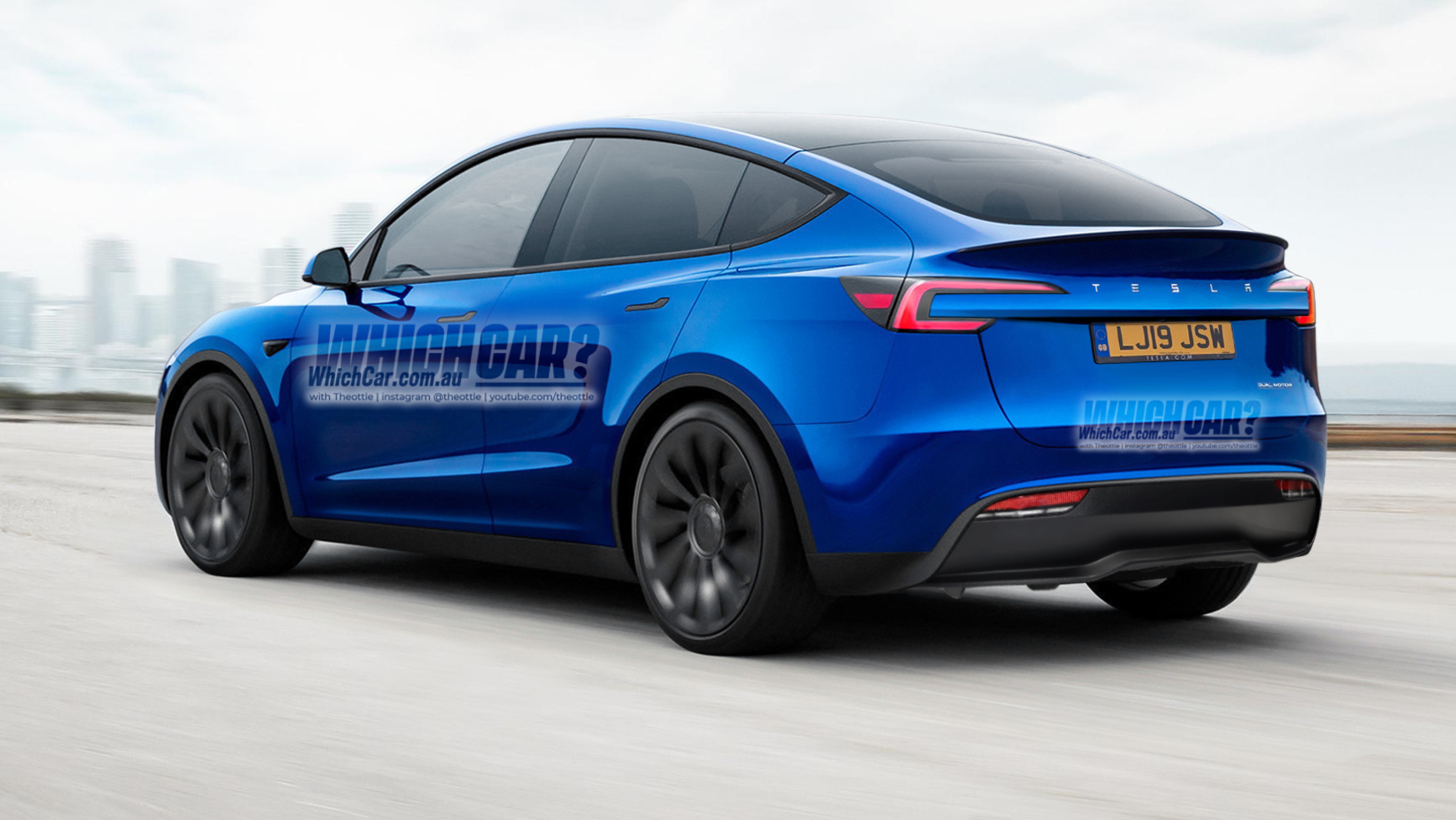
New photos of the so-called ‘Juniper’ update to the popular Tesla Model Y reveal at least one key exterior change: a new full-width light bar across the rear, recessed inside the hand rail.
1
1
The new design sets the Y apart from the recently updated Model 3 sedan, which received a new hooked tail-lamp design but no connection across the centre of the boot lid.
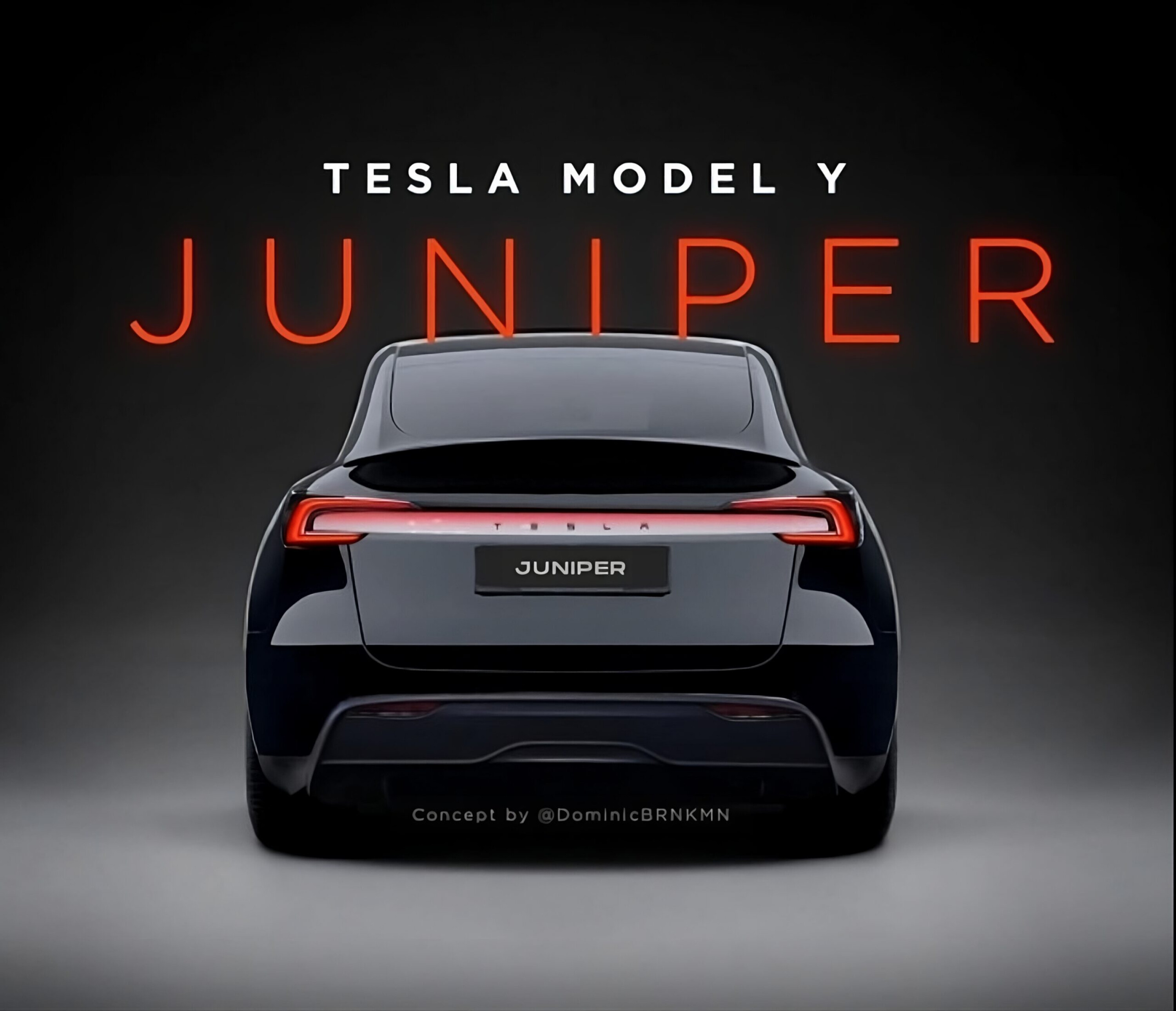
No other views of the exterior could be seen without disguise, but the speculative rendering above offers one look at how its design might still incorporate the Model 3’s new tail lamps.
1
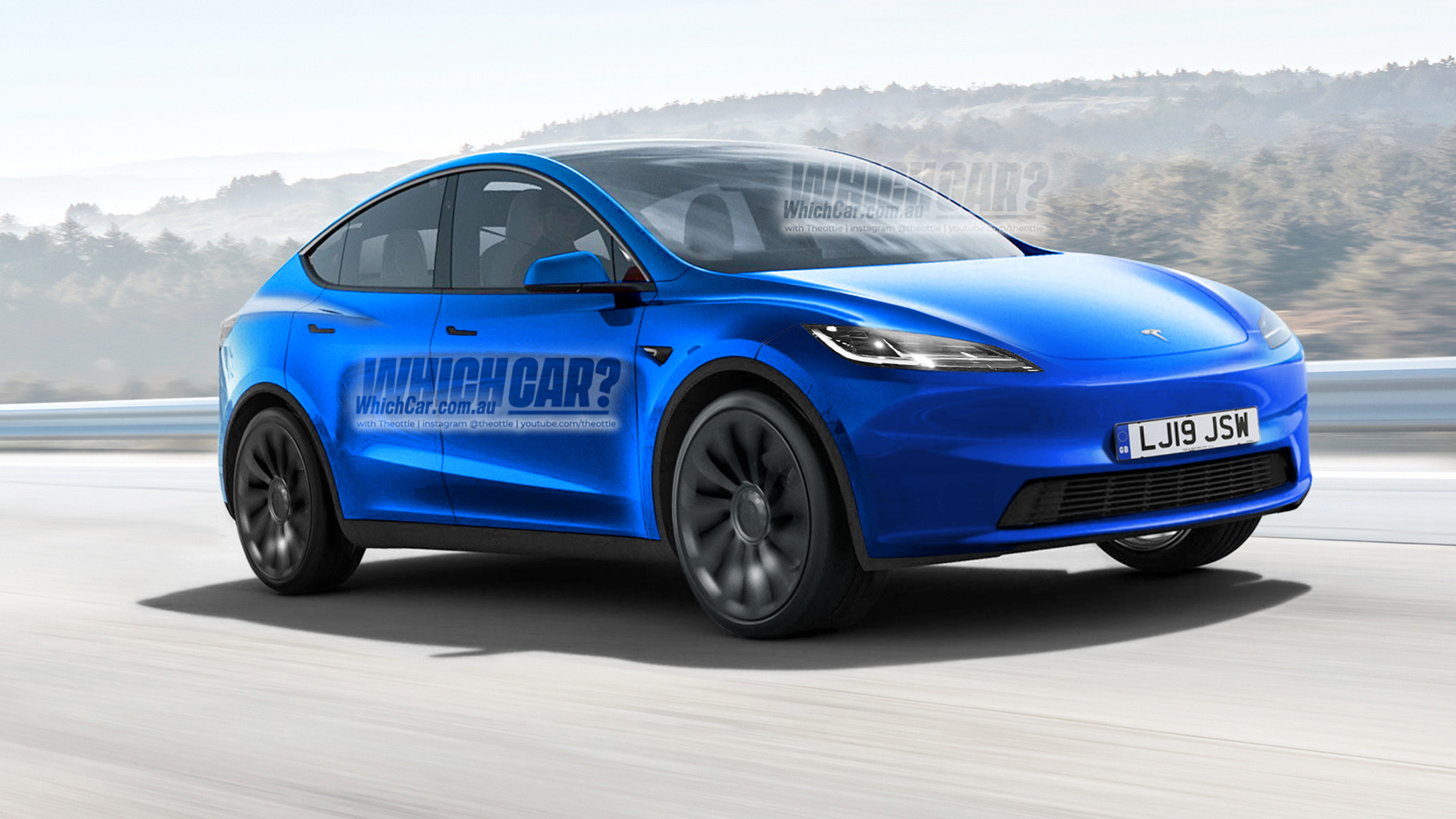
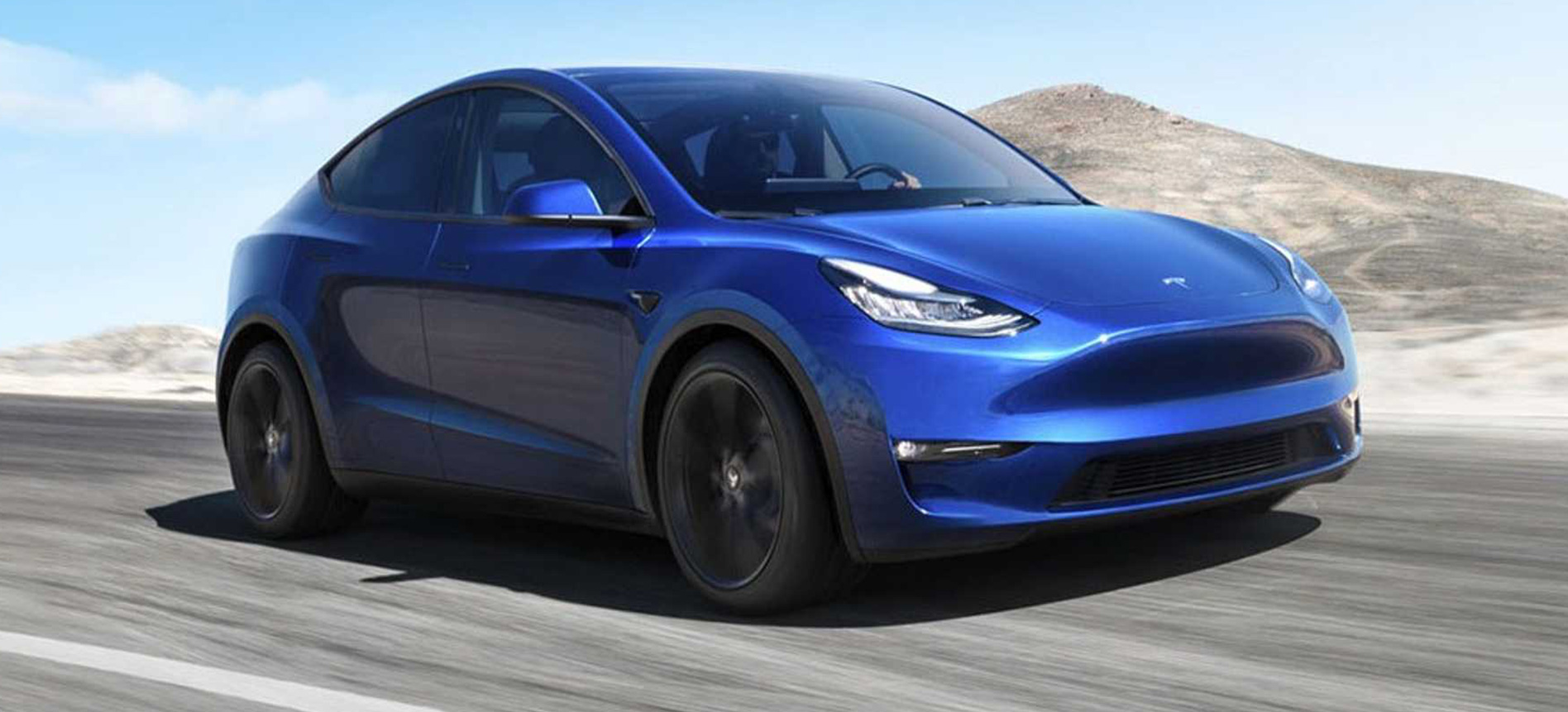
As our renderings below suggest, the new Model Y is expected to wear the same slim new headlights that debuted with the refreshed Model 3.
What do you think of the new look? Tell us in the comments below!
1
September: Model Y facelift imagined from Model 3 base
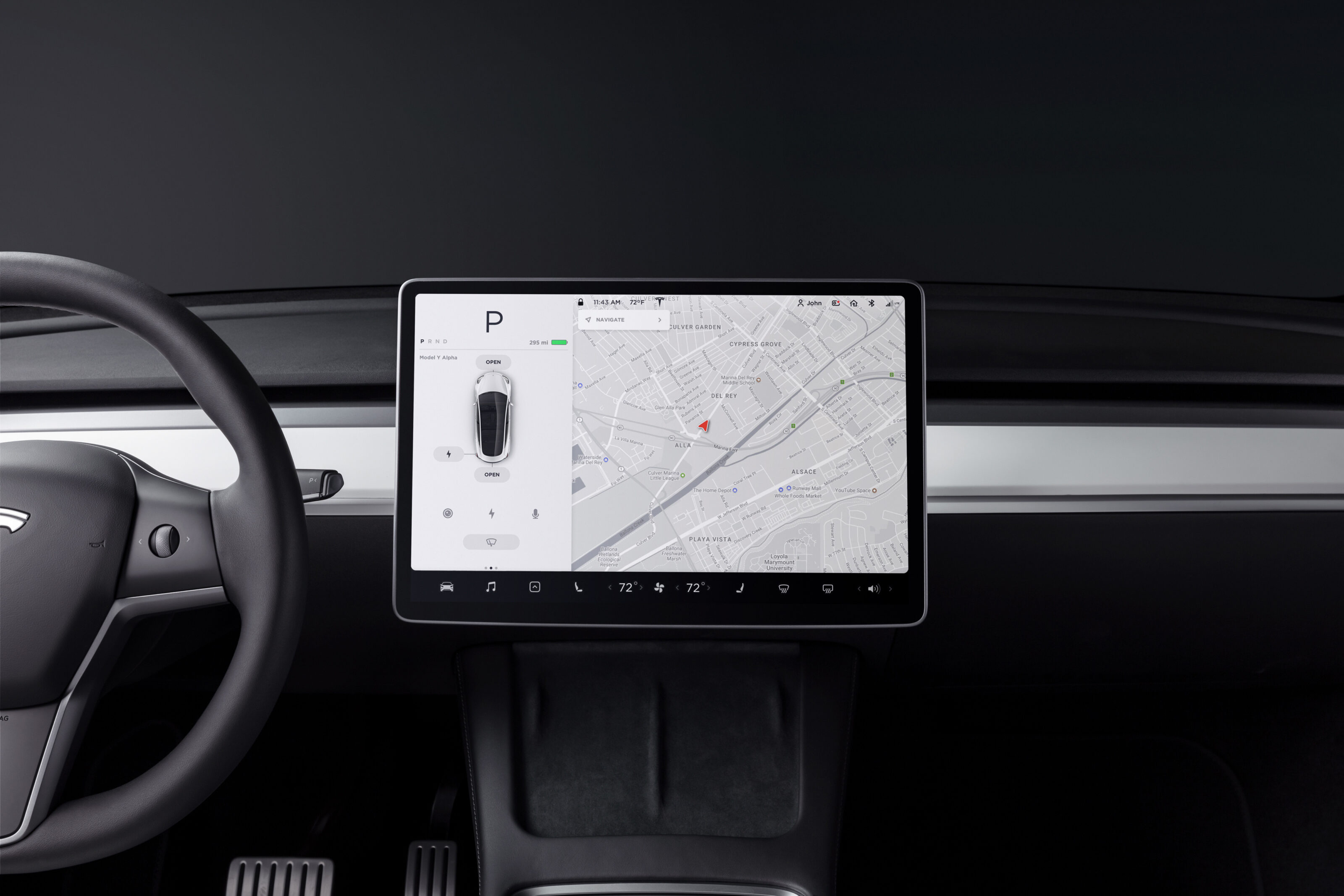
The two cars are largely identical at the front and rear, and in the cabin – so the Model Y adopting the refreshed Model 3’s styling and interior updates is surely right on the horizon.
For its part, Tesla has yet to comment on official timing, but insiders have hinted at an October 2024 production start – suggesting a reveal could occur in about a year.
Tesla is rumoured to be updating its popular Model Y medium electric SUV in 2024, following the purported Model 3 refresh later this year.
Snapshot
Rumours firming for 2025 Model Y update
Exterior and interior design tweaks mooted
Will reportedly follow a year later from 2024 Model 3 refresh
Inside sources told Reuters that the 2025 Model Y, codenamed project ‘Juniper’, will gain exterior and interior tweaks with a targeted production start date of October 2024.
While Tesla didn’t disclose any changes to the Model 3 and Model Y at its Investor Day event and ‘Master Plan’, it did emphasise on bringing down its supply chain and manufacturing costs, with the Model 3 seeing a 30 per cent reduction from 2018 to 2022.
The automaker also teased more of its upcoming third-generation EV, which is projected to be its highest volume model yet – almost double the Model 3 and Model Y – thanks to a 50 per cent reduction in production costs, and is rumoured to undercut the $50,000 price mark to rival fierce Chinese rivals such as the GWM Ora, BYD Atto 3 and MG ZS EV.
The Tesla Model Y was launched in 2020, before making it to Australia in mid-2022.
1
Despite only being on sale for five months, it quickly rose to the top of the EV sales charts as the second-best selling electric model Down Under last year with 8717 examples sold insole base rear-wheel-drive variant only.
Deliveries of the hotter Model Y Performance are due later this year.
The Model Y adopts the same underpinnings and most of the sheetwork as the smaller Model 3, but in a more in-demand medium SUV body style. It currently starts from $69,300 to $95,300 before on-road costs in Australia following a series of recent price increases and cuts.
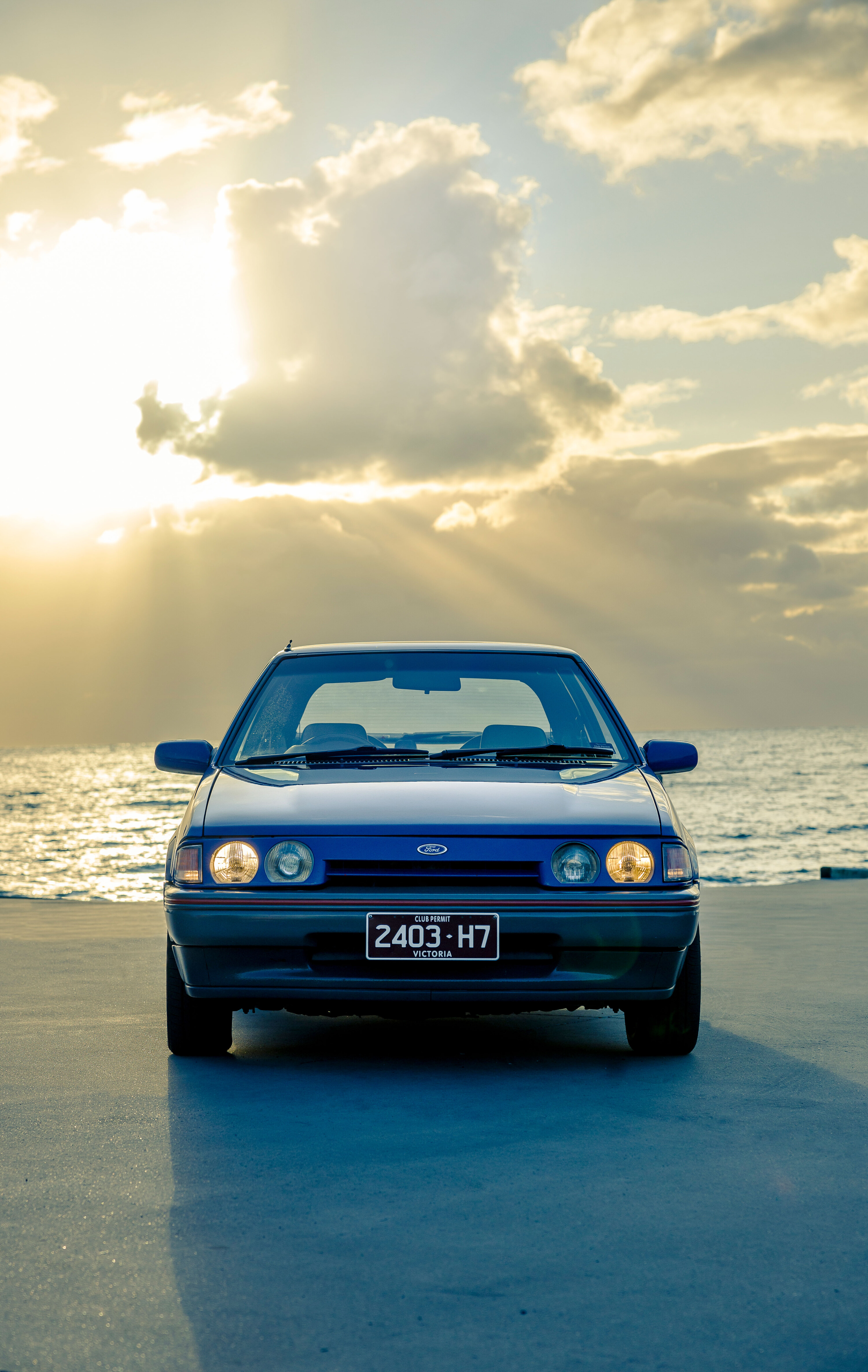
What do you reckon is the most obscure Ford Laser ever made? The mind-your-heels Carla Zampatti editions? The long-lived but mostly ignored Laser wagon? Or the boosted, all-paw KE Laser poster child, fully imported directly from Mazda in Japan rather than assembled by Ford in Sydney?
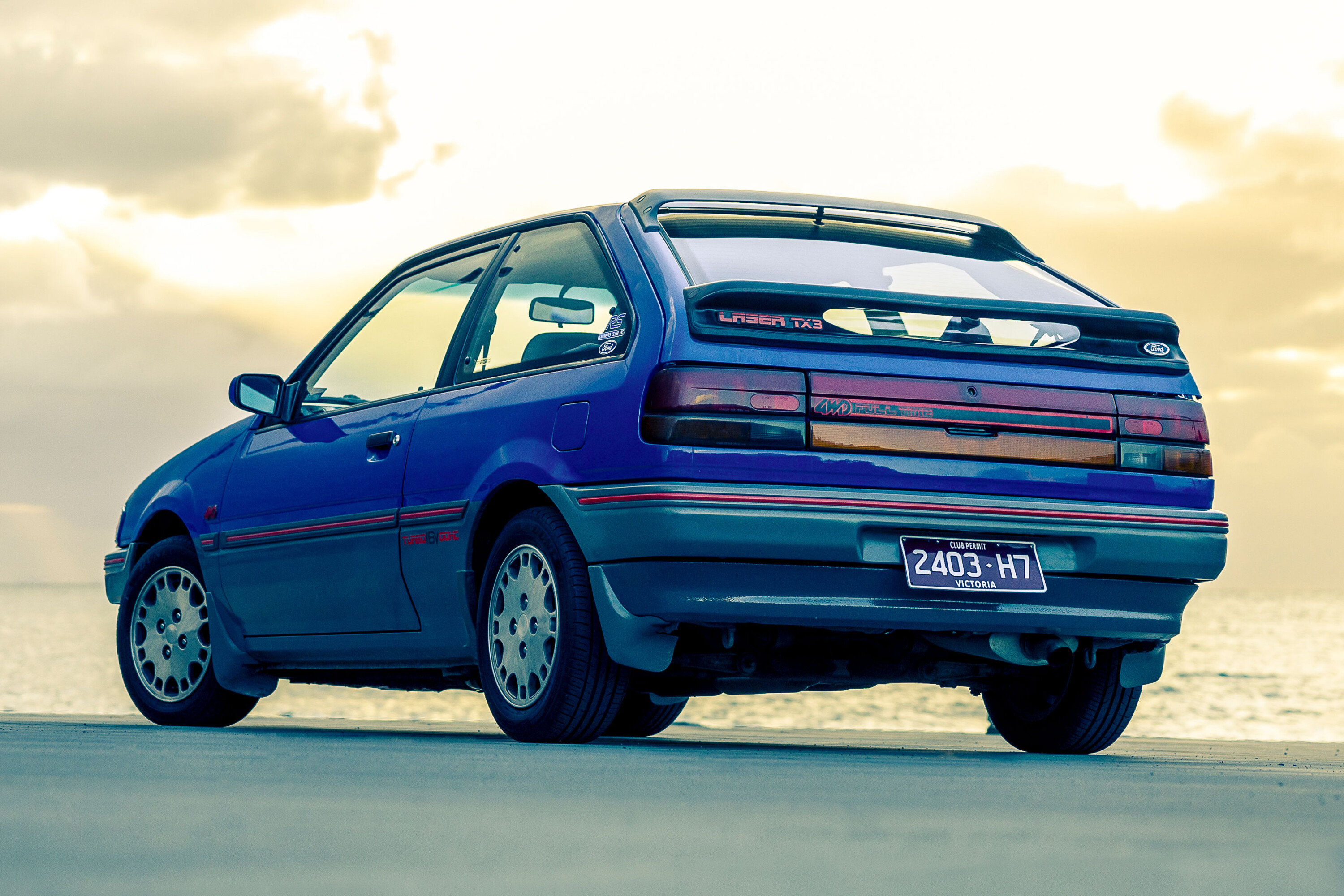
I reckon you’d be pretty accurate, at least recognition-wise, if your instinct said option number three – the 1987-90 TX3 4WD Turbo, the most expensive ’80s Laser ever sold in Australia. But how has the greater populous managed to forget the hardest-charging, most technology-packed four-cylinder Ford up to that point?
First, some background. The Laser (and its Meteor sedan sister) was born out of an economically driven desire by Ford Australia to expand its small-car market penetration via a cultural shift away from European-derived Fords to Japan. The Ford Motor Company had begun a model-sharing arrangement with Mazda in 1971 and, in 1979, it acquired a 24.5-percent stake in Mazda’s parent company, Toyo Kogyo.
1
By this time, Ford Australia’s styling and engineering input into the first frontdrive Mazda 323/Familia program was already well-progressed, so when the KA Laser launched here in early 1981 – six months after the Mazda version – it sported locally penned styling revisions (including a unique side-window treatment for the five-door hatch), a three-door Laser Sport and a different suspension tune and tyres.
Unlike the Escort models that had preceded it, the Laser was an instant sales smash hit – so much so that when people look back on the Laser’s dominating presence among the burgeoning ’80s front-drive scene, it’s the everypersons’ GL – particularly the second-generation ‘bubbleback’ version (launched in late-’85) – that people remember most. Indeed, the KC/KE Laser hatch shared only its windscreen, door handles and exterior mirrors with the related BF 323 hatch, emphasising the Laser’s distinctly youthful image – a phenomenon unique to Australia.
While Ford’s Homebush plant in Sydney was extensively (and successfully) refurbished for the Laser/Meteor to achieve a Japanese level of build quality, the Laser was also produced in Japan, alongside the 323, and sold through a unique Mazda dealership channel called Autorama that also flogged the Australian-restyled, Mazda-626-based Ford Telstar.
1
Laser’s Australian range was relatively simple (three engines, three transmissions, four trim levels in the KA/KB), but the Japanese-manufactured line-up spanned an array of drivetrain types – with fuel injection and turbocharging as early as 1983 – and bodystyles that, by the 1985 secondgen Laser, included a cabriolet, wagon, commercial van and, pertinently, high-tech turbocharged and all-wheel-drive variants. Australia’s adoption of a mandatory unleaded petrol diet in 1986 finally opened the door for these hot-shot Japanese Lasers to be marketed locally.
Ford already knew how to produce great small performance cars, starting with the Cortina GT500 in the 1960s and continuing with the Escort Twin Cam and GT1600, Escort RS2000, and even the Laser Sport.
When the twin-carburettor version of the KA Sport launched in 1982, its only small-car rival was Mazda’s equivalent twin-carb 323. And Ford Australia remained focused on amping its small hatch’s sporting appeal, starting with the much-improved ’83 KB Sport (featuring near-identical four-leaf-clover alloys to the European Escort XR3) and the limited-edition 78kW KB Laser Turbo (1985), offered in both three- and five-door form.
1
But from a contemporary perspective, these were essentially ‘warm’ hatches – much like Nissan’s five-door N12 Pulsar ET Turbo (1984-87) – rather than something that could rival a properly hot, European-market Escort RS Turbo or Mk2 Volkswagen Golf GTI 16V – each only offered in three-door form (because pukka hot hatches were never five-door!).
In that context, the ’87 KE Laser TX3 Turbo was every inch a hot-hatch. Three-door-only body? Check. Double overhead-camshaft , 16-valve, fuel-injected, turbocharged and intercooled engine? Check. Searing 15.8-sec standing 400m time – making it the fastest accelerating front-drive car ever sold in Australia at the time? Check. Serious torque-steer? Um, check.
Like the turbocharged Mazda 323 SS introduced just before it, the front-drive Laser TX3 Turbo was quickly joined by a much grippier ‘4WD Full Time’ variant for $4000 extra, matching the price premium the front-drive Turbo commanded over the regular TX3. But while the front-driver was assembled in Homebush using an imported drivetrain, the 4WD Turbo arrived fully built-up from Hiroshima.
1
So, years before Subaru’s Liberty RS Turbo and Impreza WRX, and Mitsubishi’s Galant VR-4 and Lancer GSR, Ford (as well as Mazda) was already sporting a swaggering, technology-crammed, all-wheel-drive flag-bearer with the ability to slay, regardless of the surface. Most of the new-millennium Ford faithful don’t recall its existence, yet the KE Laser TX3 4WD Turbo is absolutely worth remembering.
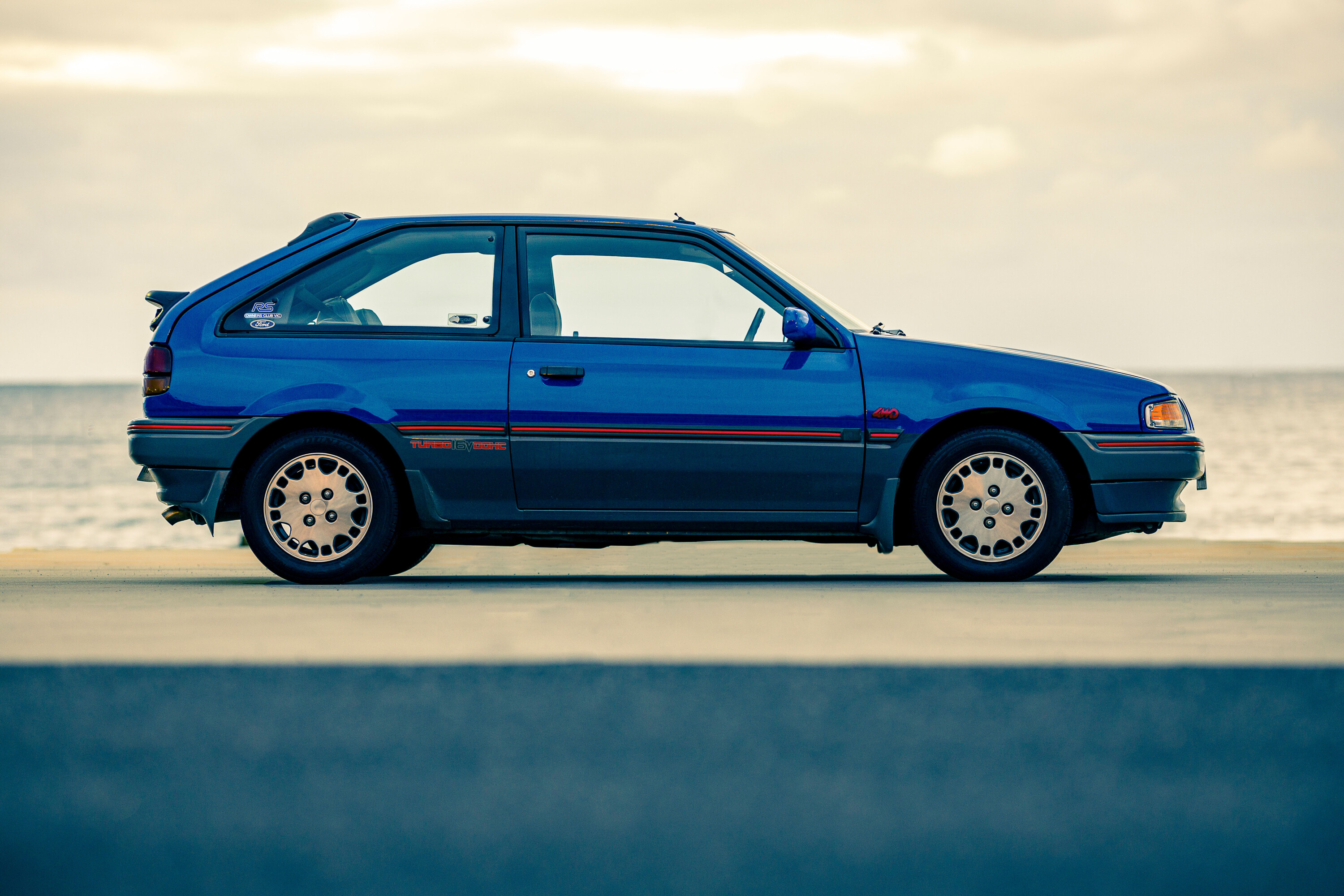
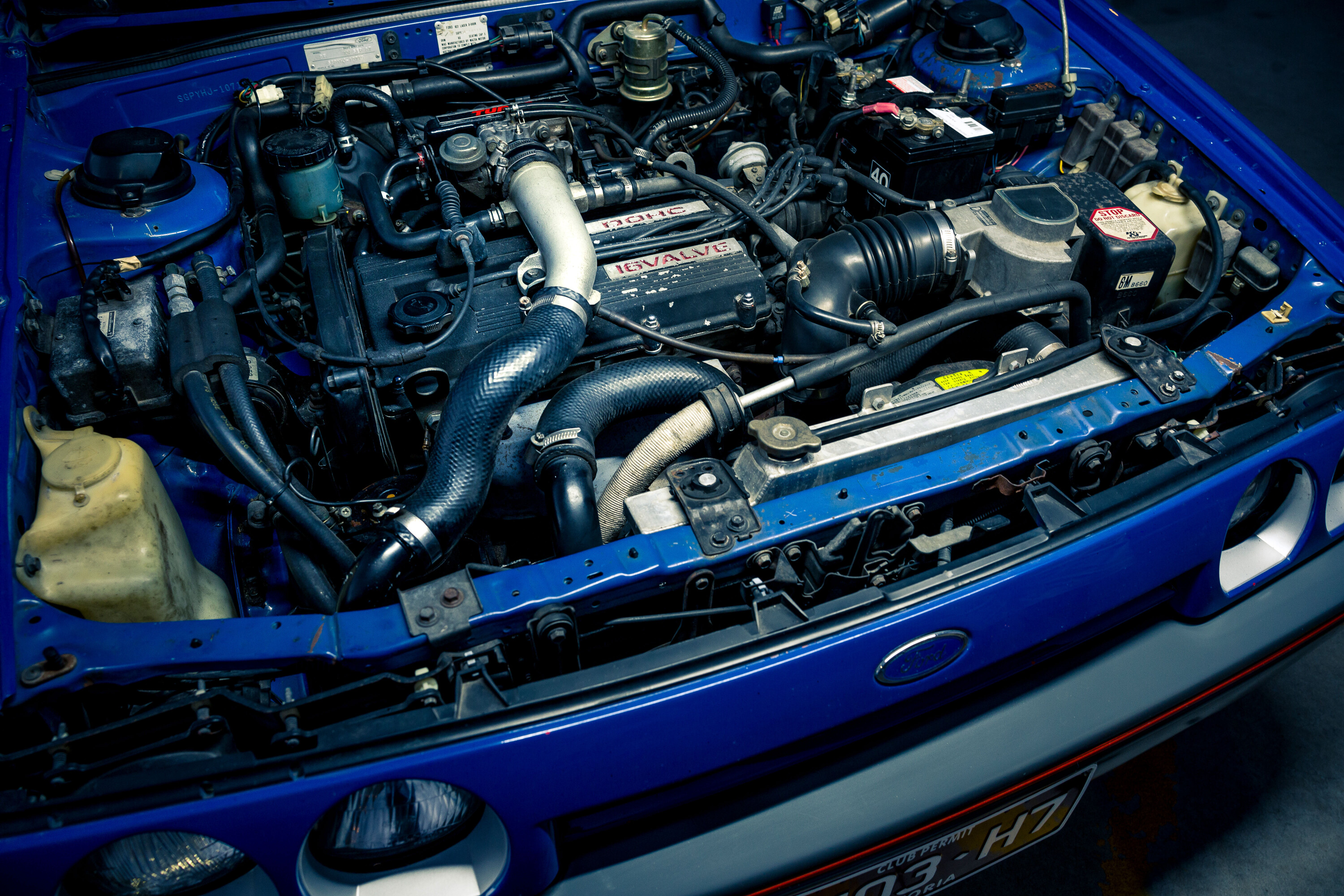
For its $25,910 sticker (almost $3K cheaper than its Mazda equivalent), the TX3 4WD Turbo featured the same 1597cc boosted B16 engine as the front-driver, producing 100kW at 5000rpm and 184Nm at 3000rpm, with a reputed 90 percent of that torque peak available from 2500rpm. But it also featured a ‘heavy-duty’ five-speed manual transmission derived from the 2.2-litre Telstar TX5 Turbo’s gearbox, as well as 15mm-wider front and rear tracks, permanent all-wheel drive with a 50/50 torque split and a manually locking centre diff , and pneumatically height-adjustable, self-levelling suspension. That’s deeply impressive for 1987.
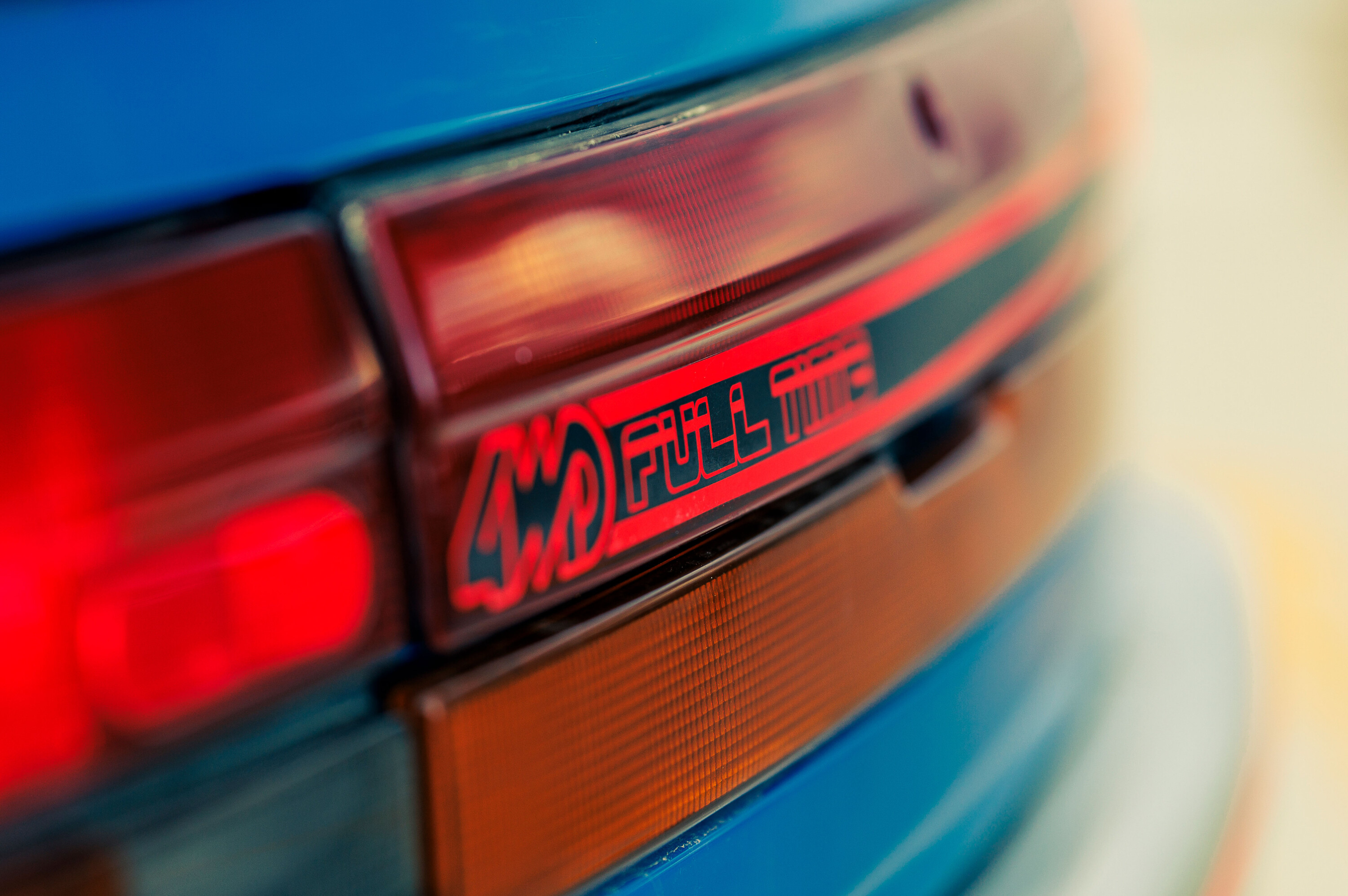
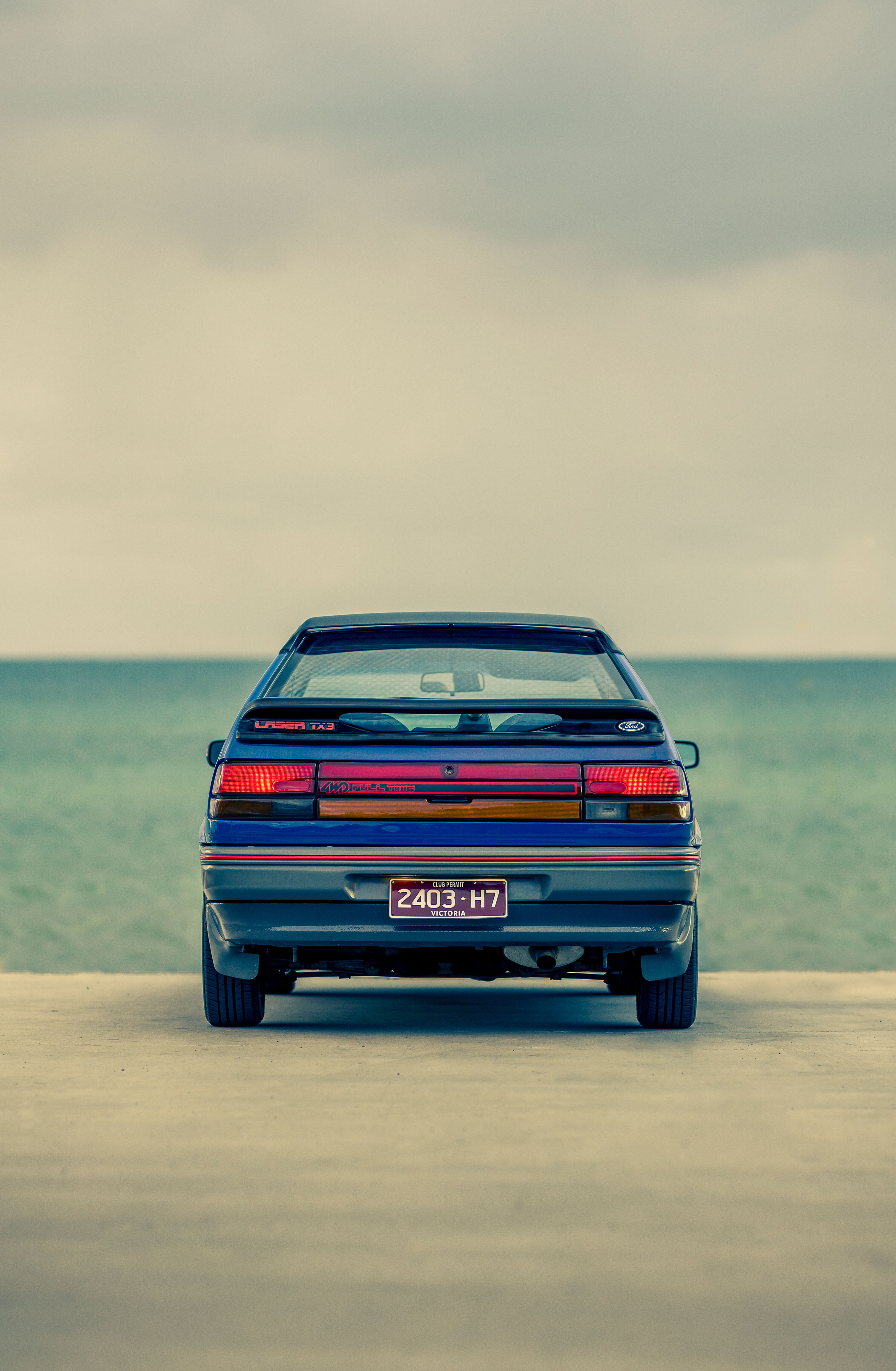
Buyers paid handsomely for this technology privilege, however. The TX3 4WD Turbo included air conditioning in its price, yet it still only had manual windows and it featured the same 14-inch alloy-wheel design as a base TX3. Apart from what lurked underneath, the only signifiers that you’d spent almost 45 percent more on your grippy, boosted Laser hot-hatch was a red 4WD badge on each front guard, ‘TURBO 16V DOHC’ decals ahead of the rear wheels, and a ‘4WD FULL TIME’ decal on the bootlid garnish between the KE’s restyled tail-lights.
1
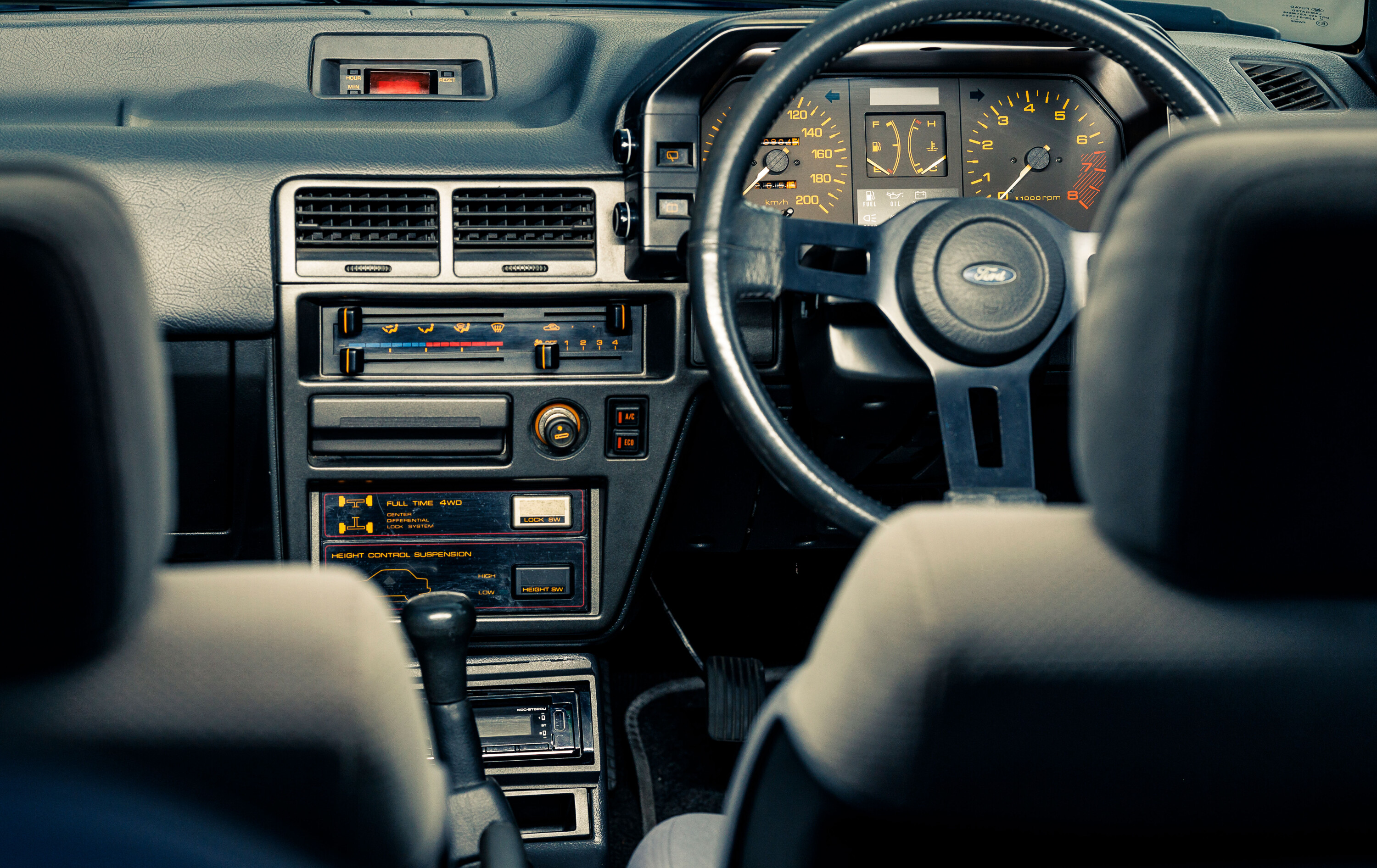
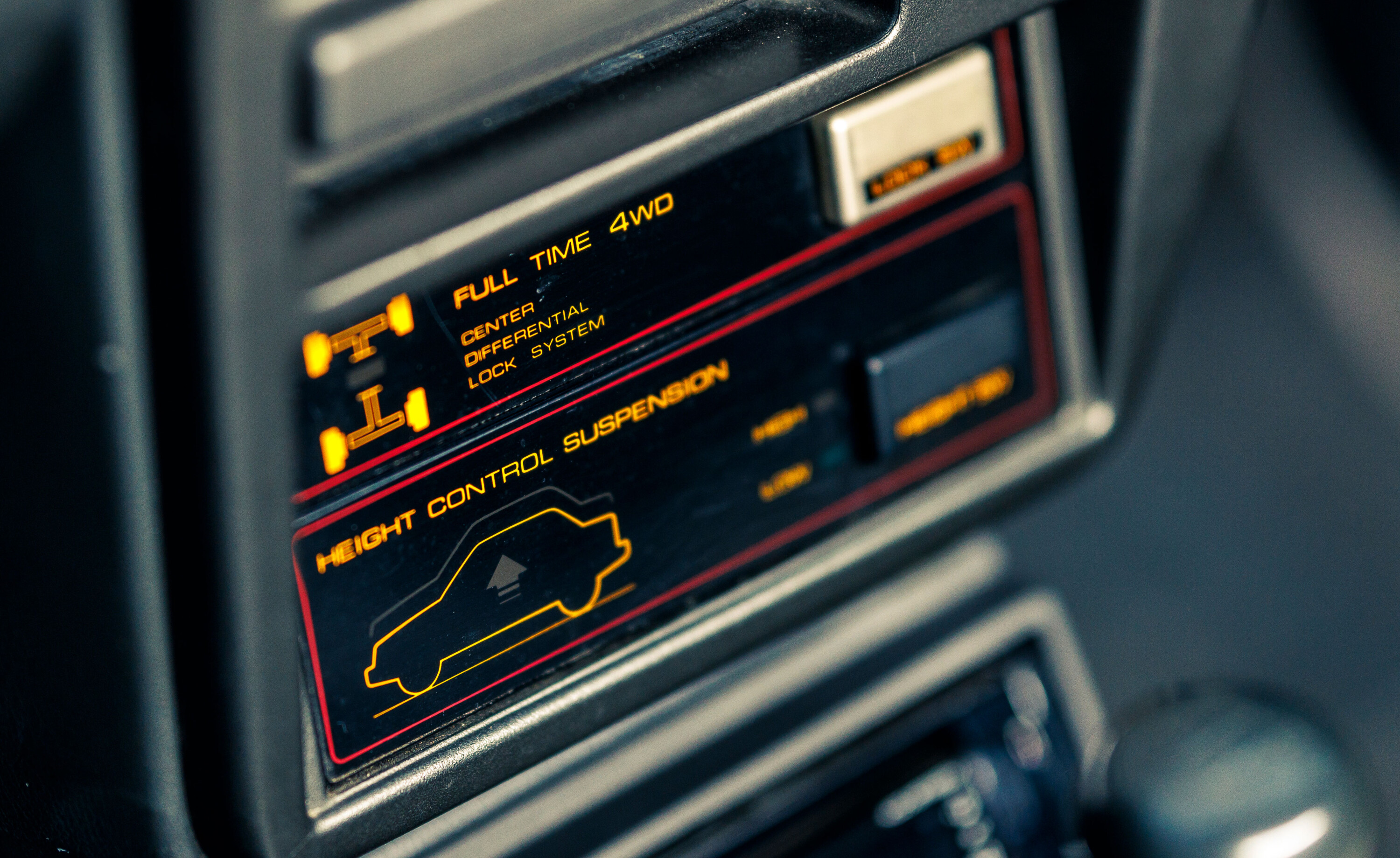
Inside, the sole difference between the front-driver and the 4WD Turbo could be found in the centre console. In lieu of the front-driver’s radio-cassette deck (which was repositioned below, replacing a flip-out console cubby) sat two panels, each with red-banded edging and supremely ’80s egg-yolk-yellow font. The top panel featured a driveline schematic with an indicator light in the middle and a button to the right to activate the ‘center differential lock system’ (in US spelling). And below it sat the ‘height control system’ with two settings – high or low.
While talking about the KE Laser TX3 4WD Turbo in past tense very much applies to the number that have been rallied or stacked over the years, it also refers to the car’s fancy damping and suspension system, which is allegedly cost-prohibitive to replace in 2024 … if you can find the componentry. But back in 1987, it worked surprisingly well – especially compared to the flawed multi-setting dampers that Mazda/Ford offered on some larger Japanese-sourced models.
Set to ‘high’, the 4WD’s ride height offered 10mm more clearance than the front-driver, while on ‘low’ it sat 20mm lower for a ground clearance of just 130mm – enhancing its centre of gravity. And the system also offered automatic self-levelling to maintain these ride heights in all conditions.
1
Period Wheels road tests highlighted the 4WD Turbo’s resistance to understeer in all but really tight corners, as well as its overall grip and neutrality, though they also mentioned a degree of numbness in the power steering and the poor dirt-road grip of the Japanese-made 185/60R14 Bridgestone Potenzas. Back in ’87, anything with ‘4WD’ in its title was presumed to have some kind of loose-surface predilection, and to that end the Laser’s locking centre diff was all about delivering the best traction once the bitumen ran out.
Adding 110kg to the front-drive Turbo’s waistline failed to make too much of a dent in the Laser’s performance. We recorded a standing 400m time of 16.2sec (0.4sec slower) while Ford claimed 0-100km/h in 8.5sec, which was pretty quick given that Holden’s VL Commodore Turbo – the police highway-pursuit vehicle of choice – was recording high-7s. But it was the TX3 Turbo’s mid-range acceleration that made it feel rapid. An undersquare engine design combined with a relatively modest 8psi of boost pressure made the TX3 Turbo extremely driveable – without the serious turbo-lag that blighted many performance cars well into the ’90s – and even today, the smoothness and effortlessness of its response makes it a quick little sleeper.
The TX3 4WD Turbo’s all-independent suspension – struts up front, with another pair of struts and dual lower links at the rear – received a number of hardware upgrades (including stiffer front mounting bushes and lengthened lower lateral links at the rear) to enhance its control in press-on driving.
According to the owner of the blue car you see here, Chris Fox, there’s little reason to question Ford/Mazda’s engineering decisions of the time given how competently the TX3 4WD Turbo still drives today – in particular its mid-corner pace. And while the 4WD version clearly gained a few kegs in its transition to powering all four wheels, an 1175kg kerb weight seems laughably fl ab-free today, and its 3995mm overall length (riding on a dinky 2400mm wheelbase) seems incredibly compact.
1
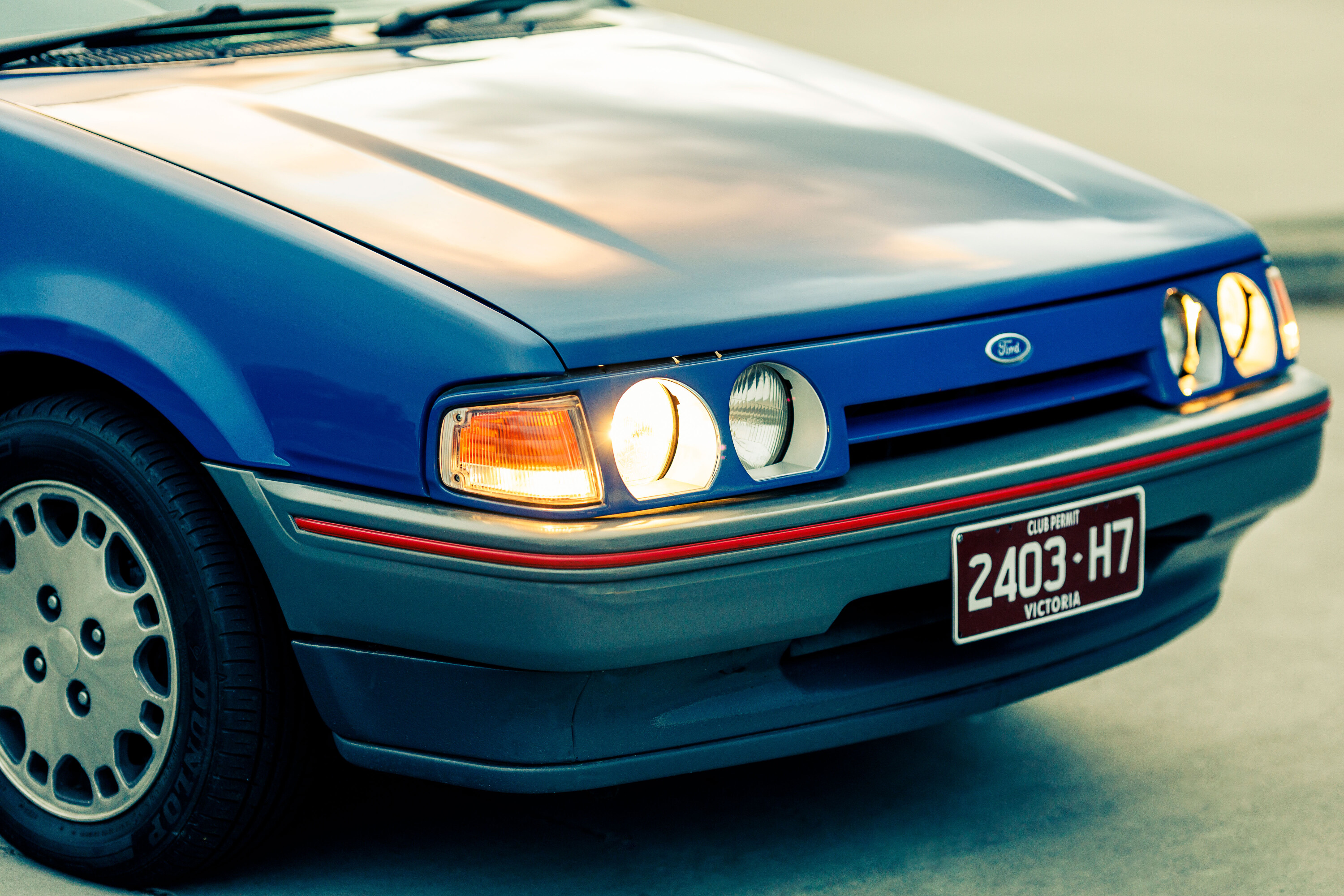
One aspect that has stood the test of time better than anyone could’ve predicted is the KE Laser TX3’s four-headlight styling. At launch, detractors described this front-end treatment as ‘tacked-on’ but it actually prefigured a styling trend that would proliferate throughout Ford’s XR-branded model line-up in the ’90s – starting with the ED Falcon XR6 and XR8 in 1993. And while the TX3 4WD Turbo’s understated overall styling appears relatively clean and tasteful when viewed through a contemporary lens, perhaps it’s this lack of visual drama – and differentiation from a base 61kW TX3 – that made this $26K all-paw slingshot such a rare sight on our roads, even then.
According to our correspondence with Ford Australia, just 412 TX3 4WD Turbos were sold across a two-and-a-half-year period – 60 of them painted Cobalt Blue. Compared to the huge numbers of regular Laser/Meteors sold each year – sometimes nudging 40,000 units – that average of barely 200 a year makes the TX3 4WD Turbo a very rare thing almost 40 years hence.
Park a KE TX3 4WD Turbo alongside any 1980s European Ford Escort RS Turbo and you can see why Aussie buyers failed to appreciate the value in paying $8000 more for mainly stuff you couldn’t see. The Japanese creation almost cowers in its demureness alongside the overtly masculine, UK-developed hot Escort. But while the Escort RS Turbo is undoubtedly tough to look at and rapid in a straight line, it lacks the mechanical sophistication of the Laser’s Mazda developed hardware, which continues to shine in 2024.
1
As I write this, a white 250,000km-old KE TX3 4WD Turbo sold in Sydney in less than a week, asking $18K with ice-cold air-conditioning. That’s around double what its naturally aspirated TX3 cousin might be capable of achieving, meaning those in the know definitely know.
That’s surely a significant part of the Ford Laser TX3 4WD Turbo’s ongoing allure – the most obscure 1980s Laser ever produced also happens to be the best, by a huge margin. But if that doesn’t make a Modern Classic by very clear definition, then perhaps a Zampatti Collection Ford Meteor in Moroccan Beige might be more fitting.
1987 Ford Laser TX3 4WD Turbo Specifications
Engine: 1597cc 4cyl, dohc, 16v, turbo
Max Power: 100kW @ 5000rpm
Max Torque: 184Nm @ 3000rpm
Transmission: 5-speed manual
Weight: 1175kg
0-400m: 16.2sec (tested)
Top speed: 190km/h
Price: $15,000-$20,000
1
The infamous Zampattis
Rarer in terms of build numbers than the TX3 4WD Turbo, but more widely recognised, Ford Australia produced two series’ of Carla Zampatti Lasers – special editions outfitted by the well-known fashion designer to appeal directly to women. A two-tone KB Carla Zampatti Laser appeared in early 1985 (pictured), based on a GL auto, with an embellished brown interior and ‘Carla Zampatti’- emblazoned upholstery, while another round two years later saw Zampatti Collection KC Lasers in Stark White or Jonquil (pastel) Yellow, each with colour-coded alloy wheels, as well as a Zampatti GC Meteor sedan in Moroccan (pastel) beige. All super rare. And so ’87.
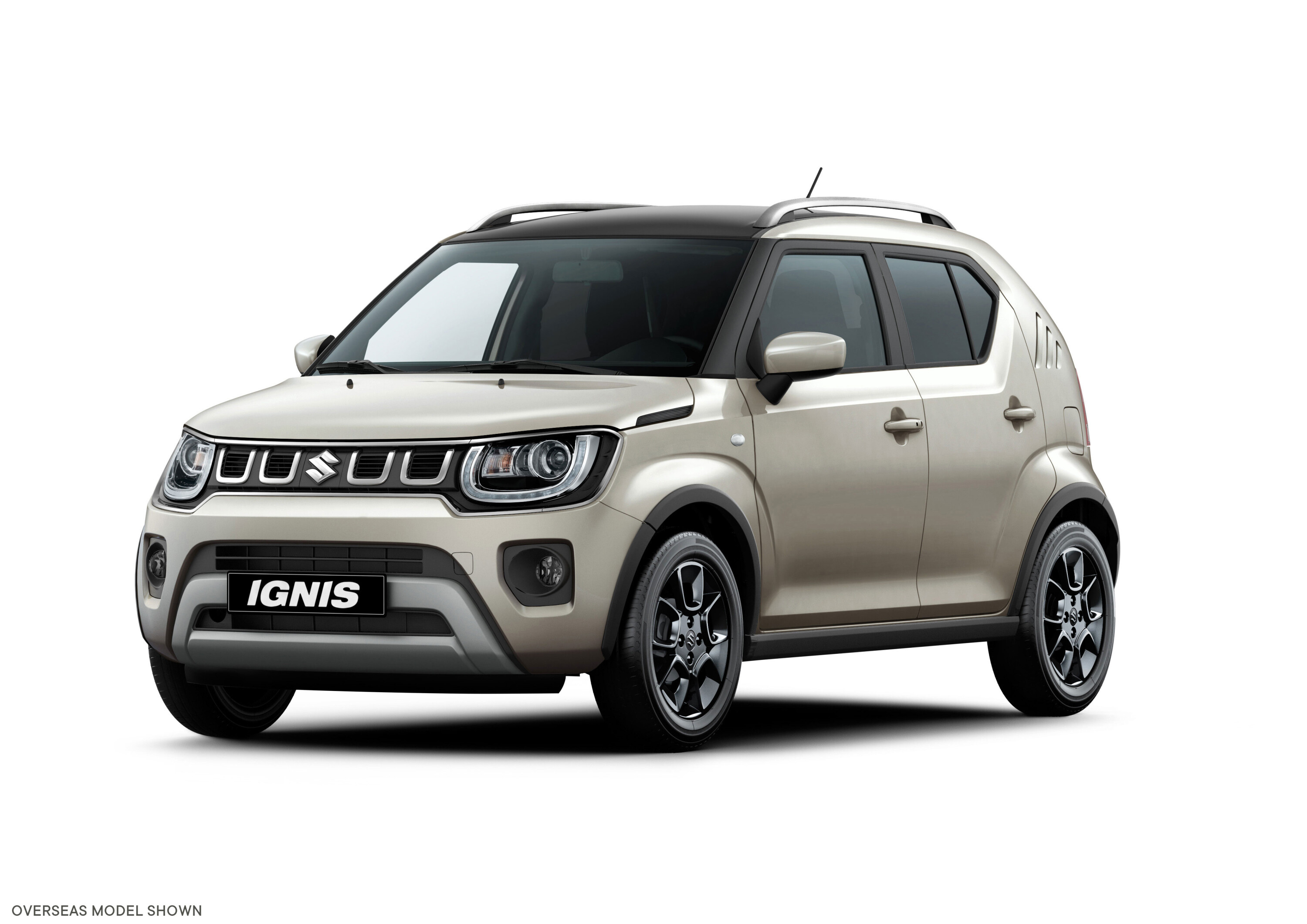
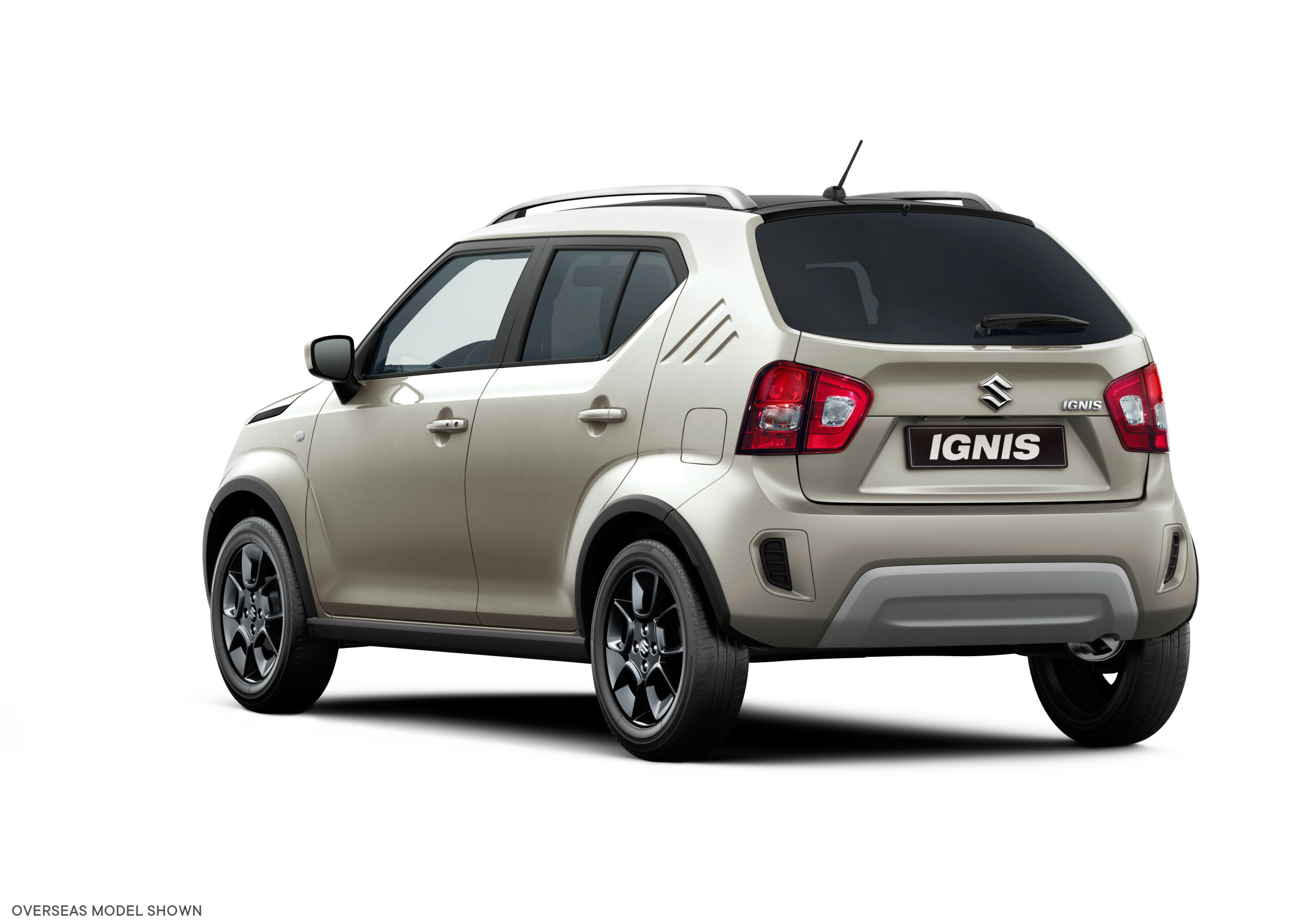
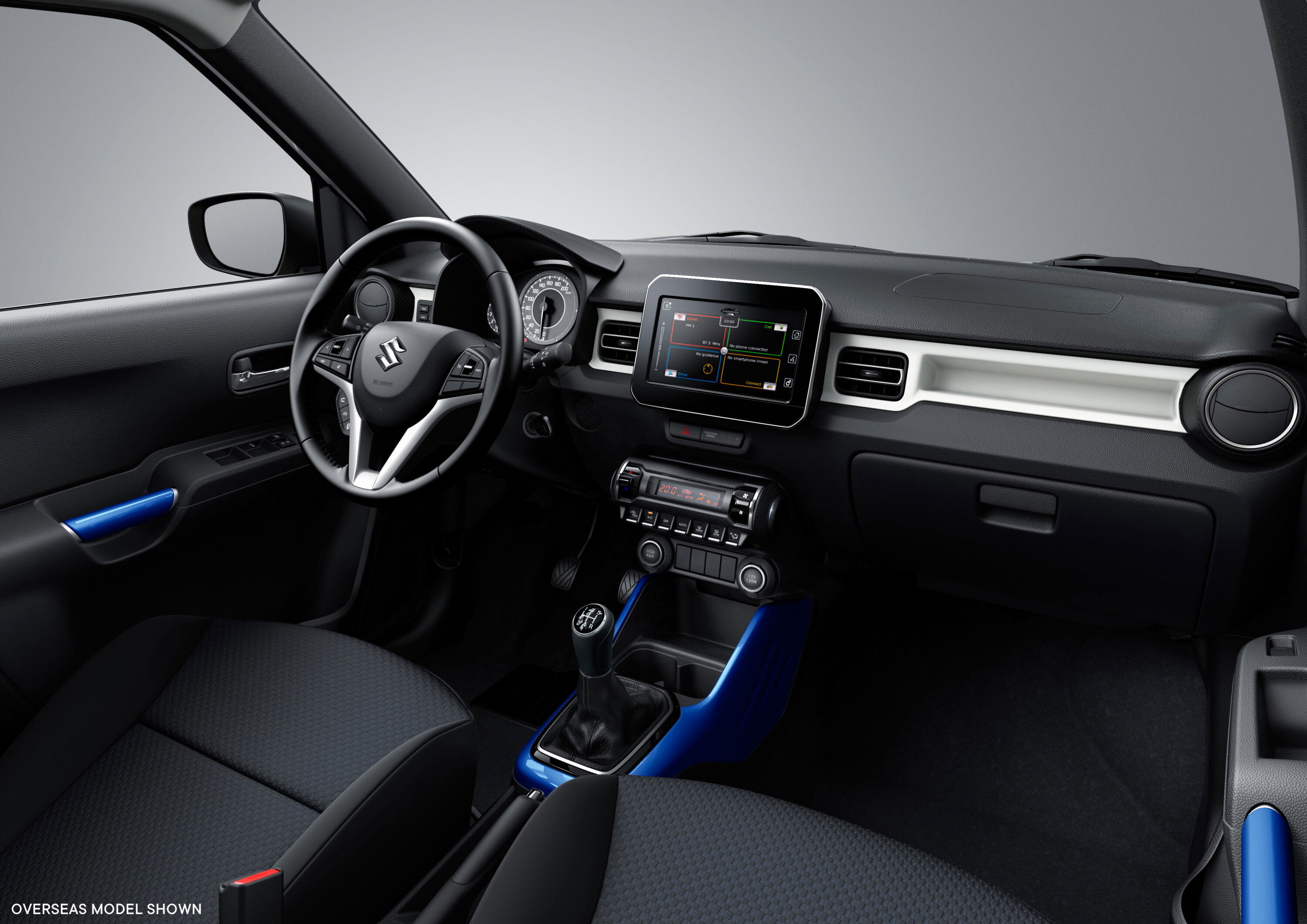
There are certain constructs that really aren’t all that to boast about. In Victoria, I once chanced upon the world’s tallest moss. Likewise, the smallest SUV sounds likely to leave you overwhelmingly underwhelmed.
To that end, we bid sayonara to the MF-generation Suzuki Ignis. It had been predicted for some time, with reports from November of last year quoting dealers who were adamant that the Ignis was about to be given the hoof due to its lack of Autonomous Emergency Braking function. Suzuki’s Australian arm denied it, in a kind of mealy-mouthed manner, and yet here we are.
“Ignis is at the end of its lifecycle,” said Suzuki Australia’s general manager Michael Pachota at the new Swift launch. The reason? Something something AEB. Which is strange because UK cars get a camera-based safety system that includes, among other features, AEB.
1
True, AEB is set to become a compulsory fitment here for all new passenger vehicles in rules that come into force from March 2025. It’s already required on new models introduced since March 2023, but Suzuki has had some legacy vehicles sitting in showrooms that sidestepped that requirement. The Ignis is one, the outgoing Swift another, and the base atmo Vitara is another Suzuki that will soon run afoul of the regs.
As unexciting as a tiny SUV sounds, the Ignis found itself doing rather well of late. That’s largely due to the migration of its former rival set to more expensive price points. Cash-strapped buyers who want a new-car warranty and an elevated driving position had virtually nothing else to throw their money at and, at $22,490 driveaway, the outgoing model still looks good value.
It has, rather inevitably, stepped up from the $15,990 price tag it arrived with in 2016, and a 2020 facelift saw the baby crossover receive a welcome uptick in Aussie orders, with sales rising by 27 percent year-on-year. Undercutting base versions of the Kia Stonic, the Mitsubishi ASX, the Hyundai Venue and the larger MG ZS, the Ignis carved a niche for itself via the simple expedient of low pricing coupled with the fact that it was actually pretty good fun to drive, especially with the five-speed manual ’box.
1
It had its quirks. The base Ignis GL could seat five, but if you stepped up to the ritzier GLX, you only got a four-seat capacity. That was offset by better headlights, a sliding rear bench and 16-inch alloys rather than 15-inch steel wheels. Further savings can be realised by avoiding being tempted to splash another $1000 on the CVT transmission. It’s a dud. With no turbocharger to help things along, the 1.2-litre engine needs to be kept on the boil and the manual helps here. You feel in control, rather than the CVT’s random thrashings. You know the auto ’box is trying to deliver the optimum torque, but it’s not a wholly satisfying experience.
Any small, cheap car that departs our market is a miss. The Suzuki Ignis wasn’t perfect but it had its charms. An SUV that can carry next to nothing nor offer any off-road ability never seemed much of a recipe, but some things are more endearing than they have any right to be. Count the Ignis among ’em.
1
Aussie sales
2016: 41
2017: 2408
2018: 1435
2019: 1074
2020: 851
2021: 1979
2022: 1878
2023: 2280
2024 (YTD): 997
The inside line on ride
Obviously the 16-inch alloys look a good deal better than the povvo 15-inch steelies with wheel covers. But herein lies the rub. The bigger wheels may have had the edge in aesthetics but because they also rode on lower-profile tyres, they tended to introduce an unwelcome nibbliness to the Ignis’s ride. Our advice? If you’re going cheap, stick to your guns and get the base manual GL.
The trajectories of TAG Heuer and Porsche have crossed and re-crossed over the decades as both brands have evolved into major names in their respective fields.
The roots of that bond – re-established once again by the collaborative release of the new TAG Heuer Carrera Chronograph x Porsche 963 – can be found at the legendary Carrera Panamericana race, the famously thrilling and dangerous motoring event which delivered Porsche one of its first major victories in 1954.
That victory led Porsche to attach the Carrera name to its most powerful engine variants. At the same time, Jack Heuer chose to name his iconic new 1963 chronograph the Carrera, after hearing about the race’s highly evocative name from the racing driver Rodriguez brothers at the side of the famous US racetrack Sebring in 1962.
1
The two brands also share deep connections to the world-famous 24 Hours of Le Mans race. Porsche is the most successful manufacturer in the history of the race with 19 overall wins.
The demands of the famous endurance race have heavily influenced the development of the Porsche 963, considered the pinnacle of Porsche’s engineering expertise which has notched victories on famous racetracks across the globe.
It’s that famous car TAG Heuer now celebrates with its most famous model of chronograph – a tribute to the spirit of endurance racing and technological innovation. A limited edition in distinctive white, red and black colour scheme, fittingly restricted to 963 pieces worldwide, the TAG Heuer Carrera Chronograph x Porsche 963 expertly combines state-of-the-art horological technology with Porsche-inspired design elements and the sporty functionality and performance for which this model is renowned.
The truly collaborative nature of this timepiece is immediately apparent from its striking minimalist, skeleton dial with tubular shapes which evoke Porsche’s racing car chassis.
1
The forged carbon bezel featuring a luminescent Porsche logo is inspired by the lightweight, high-performance components of the Porsche 963 while the logo also appears on the 44mm diameter, steel fine-brushed and polished case.
Lumed blocks on the chronograph sub-dials are inspired by Porsche’s innovative LED light design on the modern-day icon, the Porsche 911. These luminescent elements on the dial, including the date revealer, ensure exceptional legibility in all conditions – a nod to the practicality and usefulness of such readability during the night stretch of 24- hour endurance races
TAG Heuer’s in-house TH20-00 movement powers this special watch – the vertical clutch chronograph movement highlighted by a personalized red column wheel.
1
The positioning of the mechanism’s coupling is reminiscent of systems found in cars connecting the engine’s flywheel with the transmission – here it facilitates a smooth, ‘jump free’ engagement of the stopping function when timing.
High-end motoring tech extends to the timepiece’s rubber strap, inspired by the NACA-style low-drag air inlets sometimes featured on Porsche race cars all the way back to the record-breaking Porsche 917. It features ‘963’ engraved on a fine brushed, polished steel central link and is enclosed by a folding clasp with double safety push-buttons.
There’s a seamlessness and coherence about this striking limited edition, a by-product of the deep shared heritage between these two famous brands and their hard-earned reputations for technical and design excellence.
The essentials
TAG Heuer Carrera Chronograph x Porsche 963
Case: 44mm diameter; steel fine brushed, polished case; black PVD fine grained hollowed side and ‘PORSCHE’ logo
Dial: ‘Tubular’ skeleton dial with NAC finishing; black flange with 60 second/minute scale; with white, red & grey markings