
A Toyota executive has reiterated the company’s commitment to building a replacement for its Toyota 86 sports car.
The affordable compact, rear-wheel-drive coupe has been a transformational model for the Japanese brand, putting it back on the map with keen drivers.
Toyota 86 sales have slowed predictably more recently, but Toyota Europe boss Karl Schlicht told UK’s Autocar that the model known as the GT86 in Britain “will carry on”. “The car serves a big purpose,” Schlicht told the magazine.
“We are not getting out of that business. Sporty cars go through their phases.
It’s our intention to continue with that car.”
Toyota’s partnership with Subaru, which produces the twin Subaru BRZ, is highly likely to continue, even though Schlicht said he was unable to confirm.
Subaru provided the fundamental architecture and 2.0-litre four-cylinder boxer engine – the latter a significant contributor to the sports car’s excellent dynamics thanks to its low centre of gravity.
Both cars have just received an update, and Schlicht said Toyota was only now focusing on the next 86.
That’s likely to mean a release date sometime in 2019.
“The GT86 is at the stage where it’s being decided on the next one. Then a chief engineer will be assigned and away we go.”
The 86’s ‘father’, Tetsuya Tada, this year suggested the follow-up model could be slightly smaller, though key influencers from both Toyota and Subaru have cautioned against customer demand for more power than the current 152kW.
The car makers continue to stress that balance of power is vital for the sports car.In mid-2016, Toyota Australia created a hatchback-style Sportbrake concept version of the 86 – showcasing the potential for a spin-off variant.
Toyota, however, is unlikely to revisit the convertible 86 it had planned for the original before deciding the business case didn’t work.
Toyota’s next sports car will be a revival of the Supra as part of another joint development – this time with BMW, which is producing the Z4 roadster replacement.
Luxury car makers seem to be in a continual battle of one-upmanship with the number of LEDs on their cars, but it’s going to be hard to beat this Lexus’s 41,999 light-emitting diodes.
The one-off Lexus IS, dubbed the LIT IS, was produced to star in a music video by a UK artist, Dua Lipa.
Lexus’s programmable mobile light show can broadcast graphics and video, and features three modes.
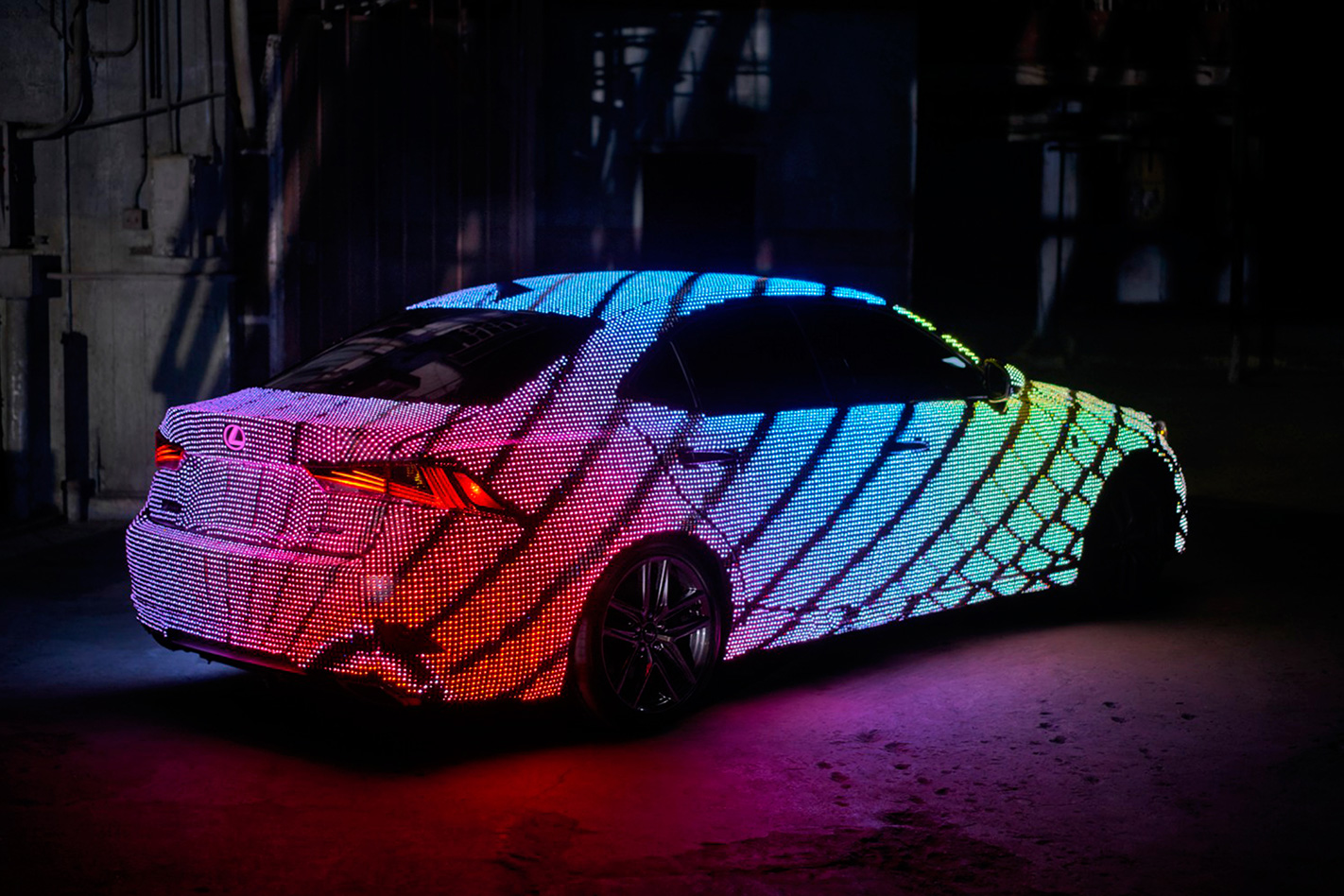
Attract mode runs a loop of psychedelically colourful graphics, Music Viz responds to songs, and Gesture mode allows people to manipulate animations with their hands.
Lexus says the LIT IS produces 175,000 lumens when fully illuminated, which you can interpret as incredibly bright, while the hand-applied LED strips would stretch for half a mile (about 800 metres) if placed end to end.
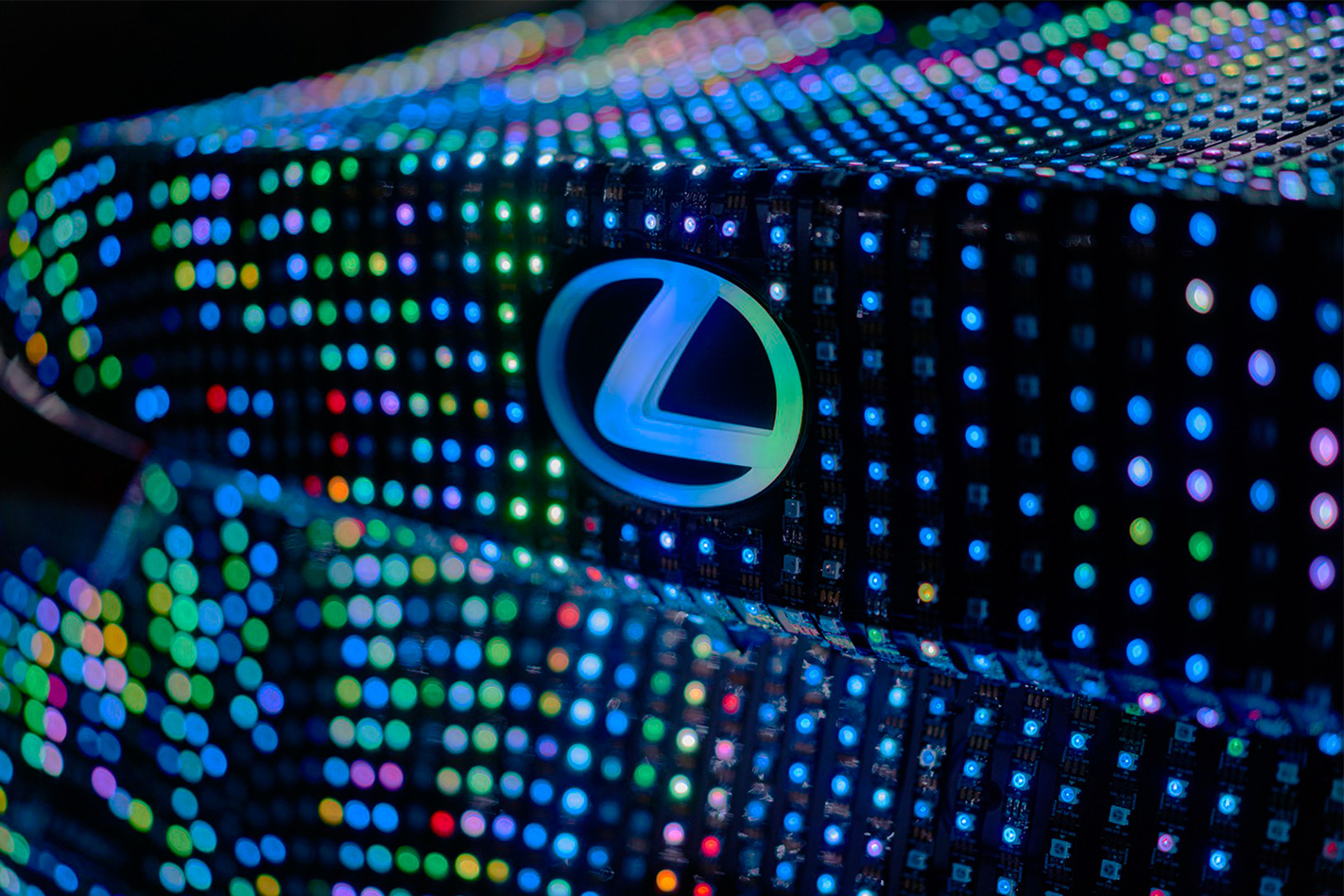
“A car as visually striking as the LIT IS required an equally dramatic debut,” said Lexus US’s general manager of product and consumer marketing, Brian Bolain. “A music video was a perfect place to launch the LIT IS and working with Dua Lipa allowed the concept to come to life, putting a spotlight on the Lexus IS in an entirely new way.”
The LIT IS is the second leftfield promotion of Lexus’s BMW 3 Series and Mercedes-Benz C-Class rival, following its unusual collaboration with the makers of spicy sauce Sriracha for a unique LA motor show model. The IS Sriracha featured a chili-style exterior combining red paint work and green-accented grille, brake calipers, exhaust pipes and side mirrors.
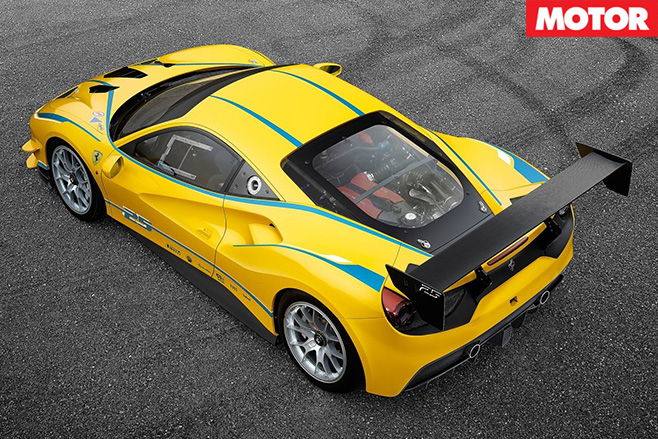
As one-make racers go Ferrari’s new 488 Challenge is pretty special.
The stats are quite mind blowing. Ferrari says it’ll lap its Fiorano test track a second faster than the 458 Challenge Evo it replaces.
But It’ll also beat a road-going LaFerrari by four seconds, a 488 GTB by seven and a half seconds, and a 458 Speciale by eight seconds.
Its spec-racer was unveiled at this year’s final Challenge series race to preview what will fill grids from next year.
The powertrain has shed 19.7kg, while the exhaust system finds another 8.5 kilograms. It’s also be remapped to suit the seven-speed dual-clutch’s shorter ratios.
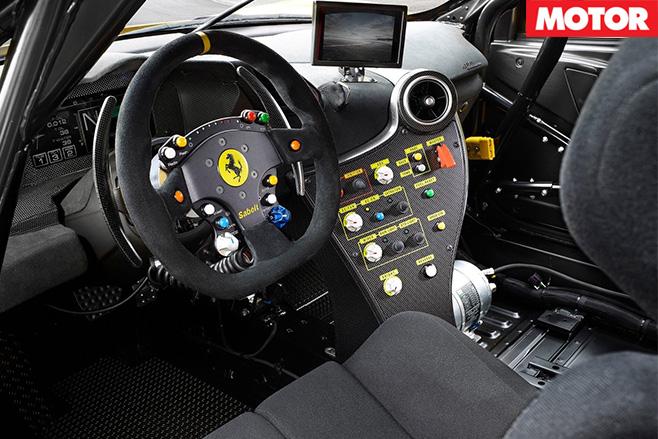
Driver electronics have been retuned to help tame the Challenge’s grunt. You can set not only when the traction control intervenes, but how also aggressively it blends out power with two Mannetino dials.
Exterior-wise, the front radiator has been inverted to keep coolant temps chilly and cut drag. The front bumper’s also claimed to be seven per cent more efficient.
At the rear Ferrari’s pinched the wing from its World Endurance Championship GTE car to boost grip.
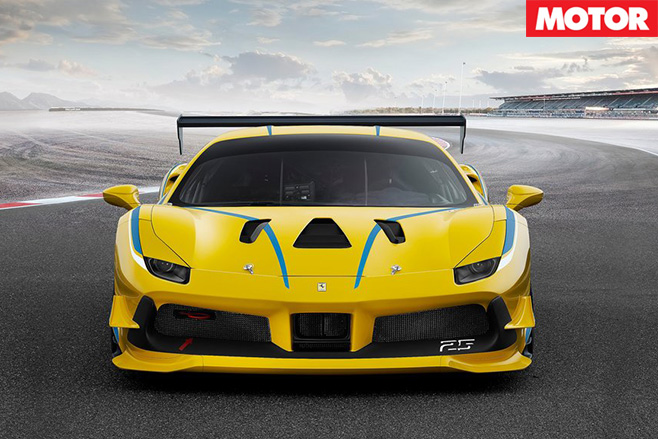
Ferrari’s newest one-make wonder will be the sixth successor to the original and is the first to be turbocharged.
Next year will be the 25th running of the Challenge series, which started in 1992 with the 348.
Interstate removalist vehicles don’t come more unlikely than the 404kW Audi R8 V10 Plus.
First published in the June 2013 issue of Wheels magazine, Australia’s most experienced and most trusted car magazine since 1953.
MOVING HOUSE normally sits right at the top of most people’s ‘hate’ list. The culling, the packing, the explosion of boxes – it’s an OCD sufferer’s worst nightmare. I’d rather have several root canals and a brutal prostate examination than have to move again. And if that sounds extreme (or maybe even perverted), consider this fact – I’ve moved five times in less than three years. No wonder I flinch every time I hear packing tape.
Shifting states in an Audi R8 V10 Plus, on the other hand, somehow eases the pain. “Oh, you need an R8 transported up to Sydney do you? I think I’m free… You wouldn’t have a wagon that could tag along as well would you? Just in case the R8 gets a flat, or is attacked by Wildebeest.” Cue an A4 Allroad as backup.

The brief is to meet at Tullamarine at 10am so snapper Brunelli can dump his ride somewhere, then trace the scenic route to Sydney. What seems like it will be a leisurely start, however, turns out to be the beginning of a long, arduous day.
I wake at sparrows, make myself a tea, and start packing the A4, piece by piece, channelling how much I loved playing Tetris on Super Nintendo in the ’90s in order to make everything fit. Two hours later, the puzzle is complete, with barely a centimetre of room to spare, including the entire front passenger’s seat – even though three of us are making the journey…
At Tulla’, after more than an hour of additional shuffling, the packhorses are loaded. I lower my tired arse into the Sepang Blue R8 V10 Plus and wonder how in hell I thought this could work. Behind me sits a box, a stereo, and my laptop. Beside me are several bags, Brunelli’s camera case, a washing basket full of clothes, a pot plant I’ve somehow managed not to kill, and a plastic seagull. I can’t see anything through the left mirror, but it’s the plant I’m concerned about. What happens if the bloody thing tips over while I’m hard-up the R8 mid-corner?

As I squeeze in some throttle and open the V10’s pipes, the pot plant wilts under the strain and lolls about like a drunken teenager. It’s irritating the bejesus out of me and I’ve been driving for five minutes. Never mind – the R8’s new dual-clutch gearbox is magic, sneaking from gear to gear like a jewel thief, virtually oblivious to the driver, in a way the old E-gear/R-tronic sequential ’box could only dream of. Great as an open-gate manual would be, I can see why the vast majority of R8 buyers are going to choose the dual-clutcher over actuating a single clutch themselves.
Thing is, the V10 sounds relatively quiet – especially over coarser road surfaces beyond Melbourne’s outer fringe. Tyre rumble is ever-present, and while it isn’t to the almost deafening level of a 997 Porsche 911 Turbo, it’s still intrusive enough to be one of the few things that betrays the R8’s age.
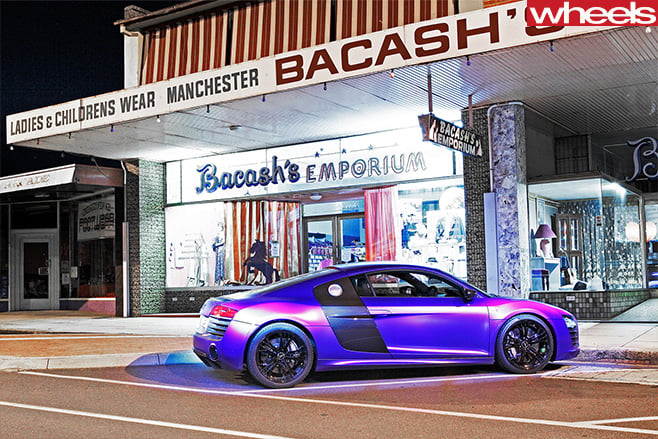
We dawdle up the Hume for the first 75 kays until the Broadford exit, then peel off to the right and feed into Strath Creek Road, then King Parrot Creek Road (I’m not joking…) until the Goulburn Valley Highway feeding into Yea. After Cathkin, the road’s name changes to Maroondah Highway and threads through serene Bonnie Doooon before reaching Mansfield and snaking up and down the scrum-delicious Mansfield-Whitfield Road (those Victorians went all-out thinking of road names didn’t they?). It’s a sensational 62km chunk of mountain that we’ve raved about before (Wheels, June 2012), but it’s also the last piece of really great, challenging road for the next 200-plus kays. May as well enjoy it.
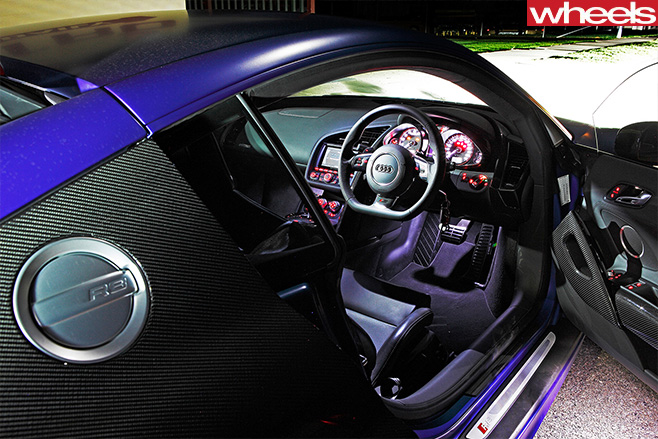
Listening to the R8 wail its lungs out on an uphill straight is a great reminder of how magnificent a highly tuned, naturally aspirated engine can feel at full noise. The R8’s tacho turns red at 8250rpm, but the V10 will stretch to 8700, if you’re committed, before snagging the rev cut-out and abruptly falling back to eight-five. But you don’t need to have it screaming its lungs out to create music. From just above 4000rpm, the V10 has this bassy snarl that builds until it becomes wail central at six grand. And holding a higher gear means there’s ample opportunity for the R8 to create this rising and falling symphony. I haven’t even touched the pricey Bang and Olufsen stereo because, seriously, why would you when there’s an empty road ahead and you’re in an R8 V10 Plus?
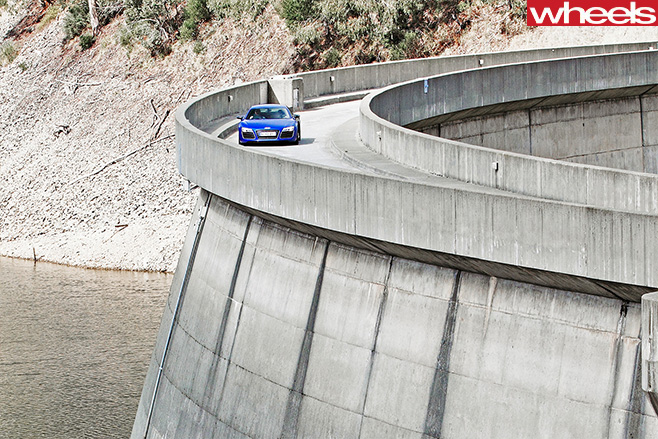
Overnight, we stay in Corryong, just south of the NSW border … in a caravan park. After a humungous Parma and two Cascade Lights at the pub (I couldn’t do VB or XXXX), we creep into the caravan park, the R8’s Sport mode turned off, and the tradies snoring in other cabins are none the wiser. It’s 9pm, but we’re as buggered as they sound. We park the R8 next to our pre-fab box on bricks, and slot the Audi A4 behind a Landcruiser ute, then play rock-paper-scissors to determine who scores the double bed.
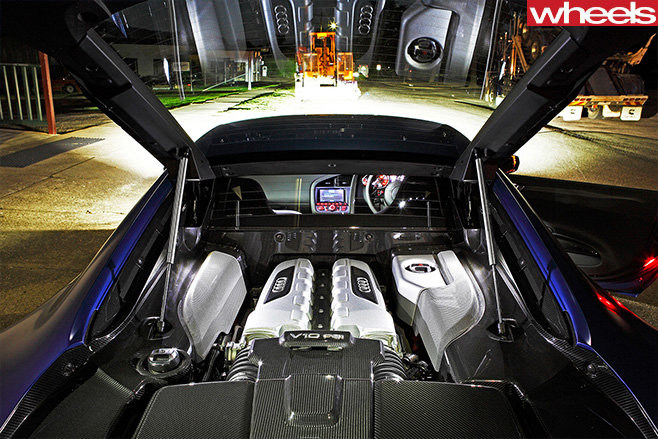
Perfect weather and mid-week traffic (or the lack of it) mean it’s almost open slather. The distance from Corryong to Cooma, via Tooma road and the Snowy Mountains Highway, is nearly 200km, but you’d be happy if it was 400 kays because the road is fantastic. Smoothly resurfaced, with the yellow road markers redrawn, you couldn’t ask for a better stage to demonstrate the V10 Plus’s enhanced thrill factor.
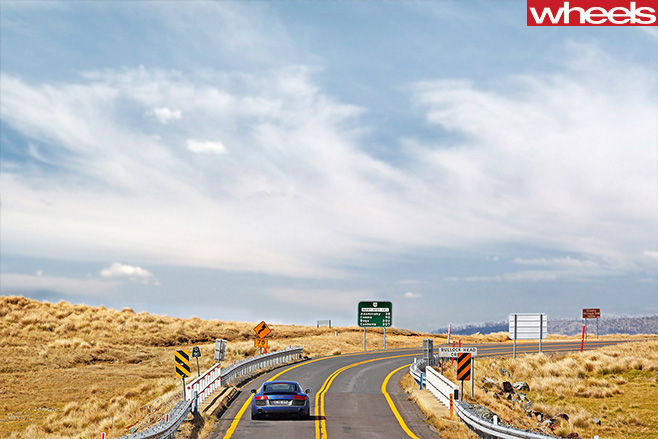
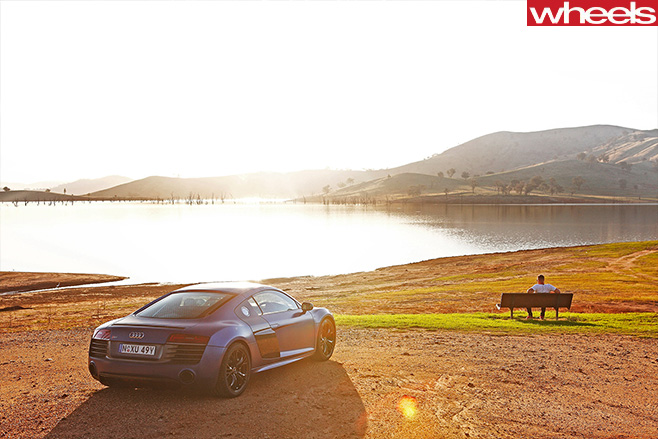
Back out on the Hume, we gas up the R8 and hard-driven A4, and point them towards the dread of roadwork chaos on Sydney’s horrendous M5 Motorway. What should be a final 110km/h blast into town ends up being a crawl. In fact, I hate the M5 tunnel almost as much as I hate moving. But the R8’s dual-clutch ’box makes the whole affair relatively painless. And no one could ever tire of listening to that glorious engine.
From Marvellous Melbourne to the Emerald City. It’s good to be back, and even better to be back in the Wheels office. And what a great way to move.
The Route
A. Melbourne Airport B. Bonnie Doon C. Tallangatta D. Corryong E. Cabramurra NSW F. Cooma NSW G. Newtown NSW
R8 consumption
Tank 1: 13.4L/100km Tank 2: 15.0L/100km
A4 consumption
Tank 1: 7.4L/100km Tank 2: 8.3L/100km
Total Distance
1154km
Cars could increasingly join clothes, groceries and gadgets with Mazda planning an expansion of its pop-up stores in major shopping centres around the country.
Aimed at informing and introducing people to new vehicles rather than getting them to sign up on the spot, the company is planning to roll out more temporary shopping centre stores with the aim of spreading the message about new models.
The second bestselling brand in Australia trialled more than a dozen pop-up stores at various Westfield shopping centres throughout 2016 in Melbourne, Sydney, Brisbane and the Gold Coast.
“Rather than getting the customers coming to us we went to them, so it was a much more relaxing environment,” says Mazda Australia marketing director Alastair Doak. “It was a zero-pressure environment; that’s why we had, in particular, a lot of women coming in spending time chatting about a car … they were very comfortable to do that.”
That lack of pressure is key to the shopping centre appeal. It also means car makers can appeal to people not actively shopping for cars.
“When you’re in that kind of environment sometimes people don’t even think they’re in the market for the car and they see it and think ‘oh, that’s interesting’,” said Doak.
The very different automotive environment comes about partly because such set-ups are not dealerships, but marketing displays of new models. If people want to buy a car, they still have to visit a traditional dealership.
Doak says there are plans to expand the pop-up dealerships to more shopping centres and for longer throughout 2017.
“It’s something we’ll do again next year. We’re already in the planning stages and in fact we’ll expand it to be across the country, including South Australia and WA.”
Of course it’s not the first time cars have been in dealerships. It’s a reasonably common sight for everything from raffle promotions or fancy new models to a local dealer trying to convince more people to look at their models.
But the shopping centre displays are becoming more popular, with Holden considering expanding its footprint to some highly trafficked shopping strips. Even Porsche is doing some displays as a way to introduce people to a brand that now gets the majority of its sales from a range of SUVs rather than sports cars.
However, Doak says there are no plans to change the traditional dealership model or put permanent dealerships in shopping centres.
“It’s a bit of the newness factor and the unusual factor,” he said. “We’re not interested in permanent stores … our dealers do an excellent job. If you have the same store there for a period of months you end up seeing the same people going past … so for us it was in and out.”
Toyota has announced a new family of global modular powertrains for a variety of upcoming models, including the completely redesigned and fully imported 2018 Toyota Camry coming to Australia late next year to take on the 2018 Holden Commodore.
Dubbed the ‘Dynamic Force Engines’ (DFE) family, they will comprise of nine internal combustion units offered in 17 versions, four transmissions in 10 versions (including eight and 10-speed varieties as well as the now-staple CVT Continuously Variable Transmissions), and 10 versions of six hybrid systems known as the Toyota Hybrid System II (THS II).
Lighter and cleaner than their predecessors, DFE heralds higher-speed combustion, more advanced variable control systems, better thermal properties, improved exhaust management, and lower friction operation.
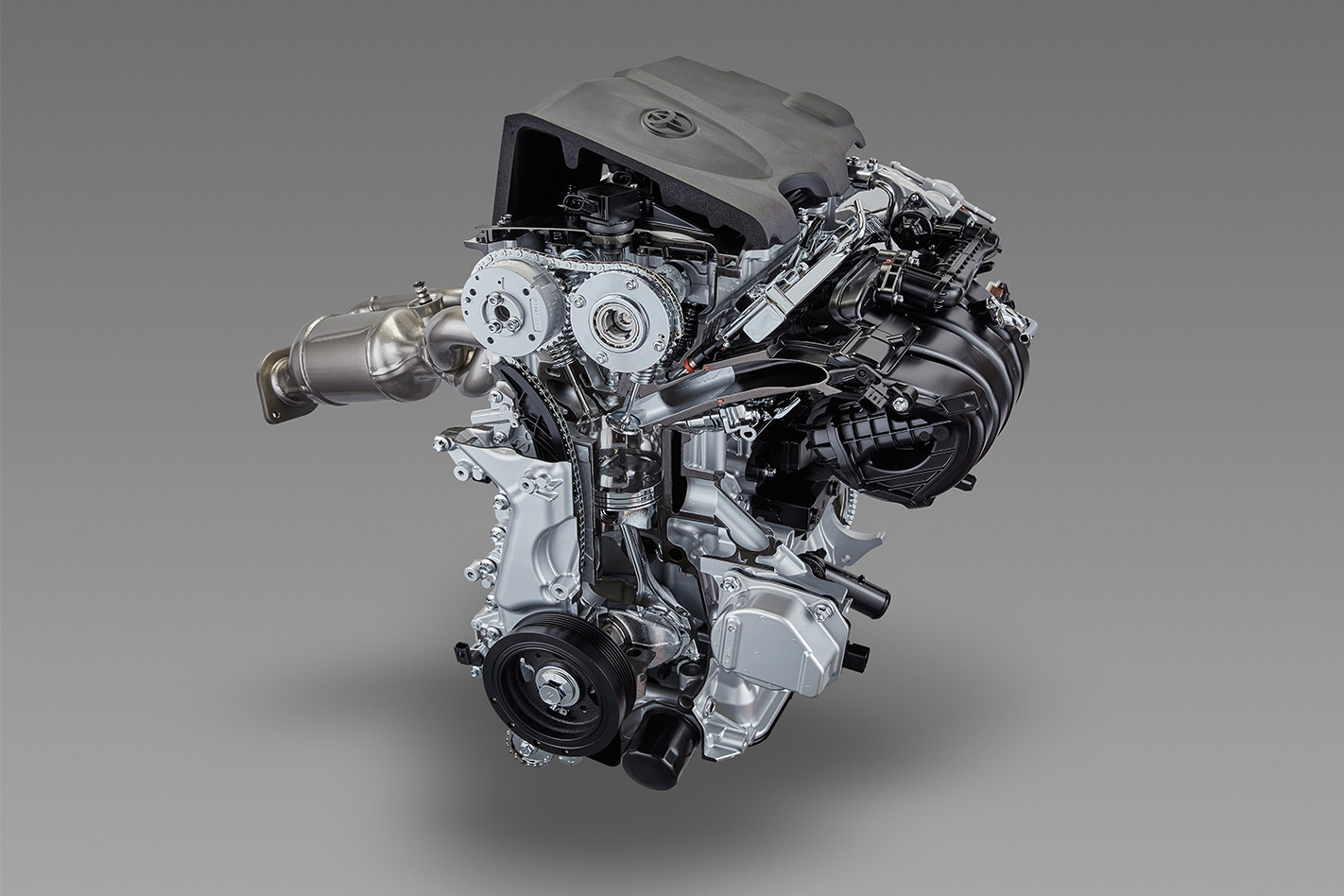
One of the key characteristics of the DFE family is a lower centre of gravity to go with the drop in overall mass, meaning that, along with fuel consumption and carbon dioxide emissions cuts of up to 20 percent and 15 percent respectively, they also promise to deliver improved dynamics and response.
In other words, future mainstream Toyotas will be more fun to drive, the Japanese brand claims.
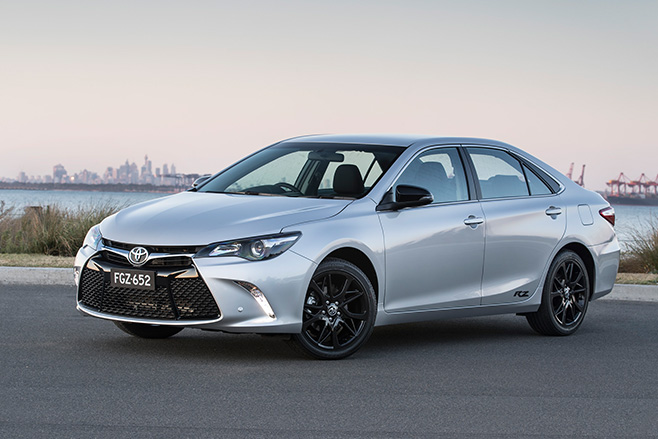
“The starting point of making cars is ‘fun to drive’ – the feeling of joy that comes when behind the wheel,” Toyota stated.
“Toyota aims to make cars with driving performance that responds to the will of the driver and are, at the same time, highly fuel efficient, among having other environment-friendly attributes.”
To that end, there is also a 10 percent jump in power and an as-yet undisclosed rise in torque across a broader rev range.
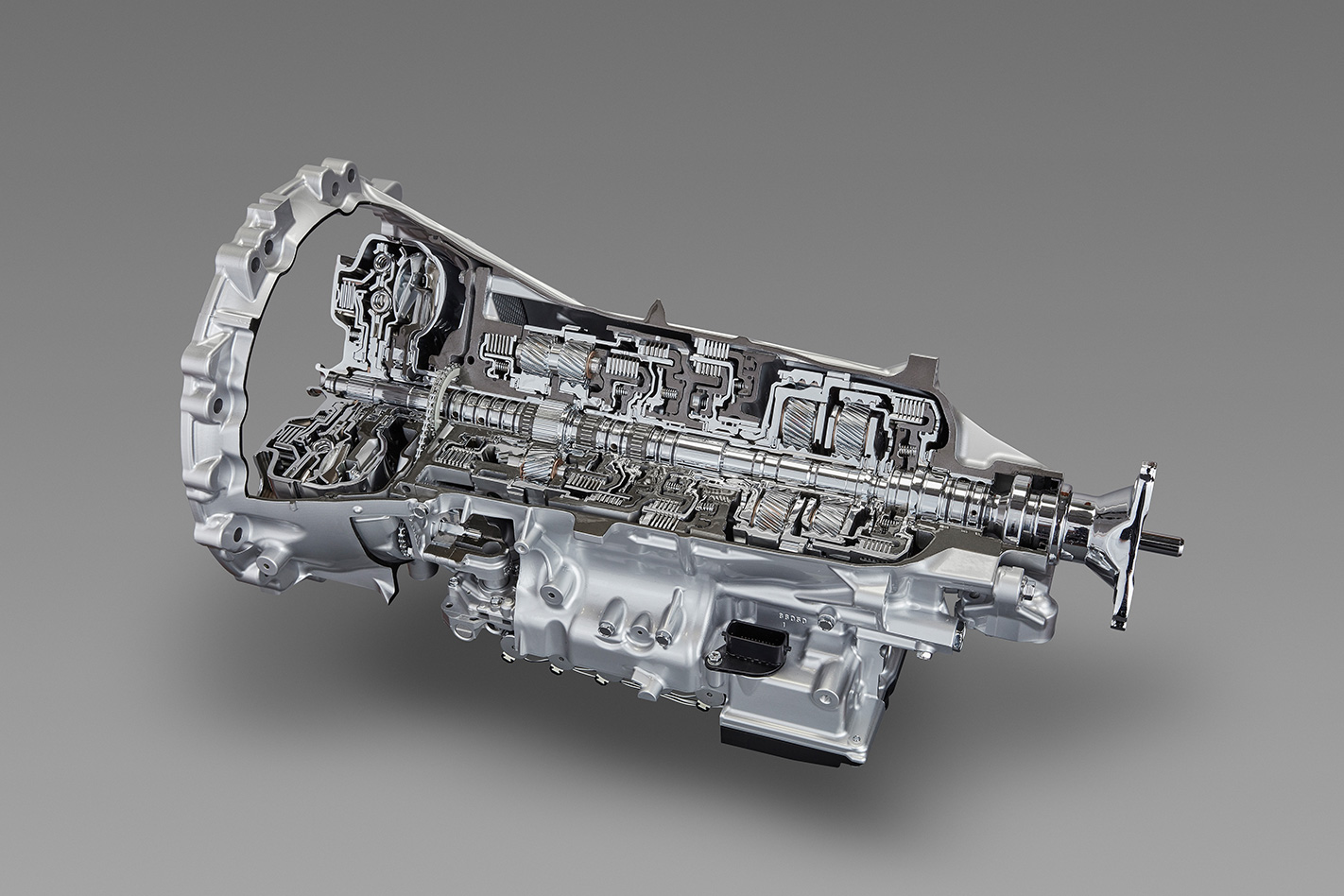
Speaking of range, besides debuting as the heavily revamped (rather than all-new) 2.5-litre direct-injection four-cylinder engine in both normal and hybrid guises in the 2018 Camry (which premieres at next month’s Detroit Auto Show), the box-fresh fun ‘n frugal DFE family will find their way into a host of Australian-bound models, including the next-gen Toyota Corolla small car, Toyota RAV4 medium SUV, and Toyota Yaris supermini. They will also migrate to corresponding Lexus offshoots like the future CT hatch and NX medium luxury SUV.
Meanwhile, making the new hybrid and plug-in hybrid systems compatible with rear-drive vehicles is one of the hallmarks of DFE THS II.
Advancements include the intermittent employment of the engine at high speeds to improve highway/freeway economy (a bugbear in the current system), while a new dual-mode drive system allows the electric motor to provide direct driving power (and not just act as a generator), for stronger performance.
For Toyota’s plug-in hybrids (not yet available in Australia), a larger-capacity lithium-ion battery will allow up to 60km of pure electric-vehicle driving range; the previous-gen unit only offered 18km.
In case you were planning to name your baby ‘Commodore’ in honour of the ill-fated locally built, rear-wheel-drive Holden Commodore, you’re out of luck – at least in Victoria.
The Victorian State Government has reportedly issued a list of banned baby names, with Commodore among the 46.
Premier is also on the list to rule out inspiration from another, classic Holden, while unfortunately for fans of Holden’s parent company, General [Motors] is also disallowed.
We’re figuring the state government’s intentions are related more to titles than vehicles as the list also includes the likes of Lieutenant, President, Prime Minister, Corporal and Captain – perhaps it was inspired by Catch 22’s hapless Major Major.
Other banned names with automotive associations include Cadet (by UK’s Vauxhall), Prince (a brand now extinct after merging with Nissan in 1966), [Austin] Princess, and [Morris] Major (produced locally between 1958 and 1964 by British Motor Company Australia).
Commodore may not be the most apt choice for [presumably] a boy, though Holden would be acceptable. You’ll find it in most baby names books, though its origins are English rather than Australian.
And there are plenty of other names inspired by or shared with cars and car brands, including:
- Aston: after the UK sports car brand Aston Martin.
- Bentley: inspired by another British brand.
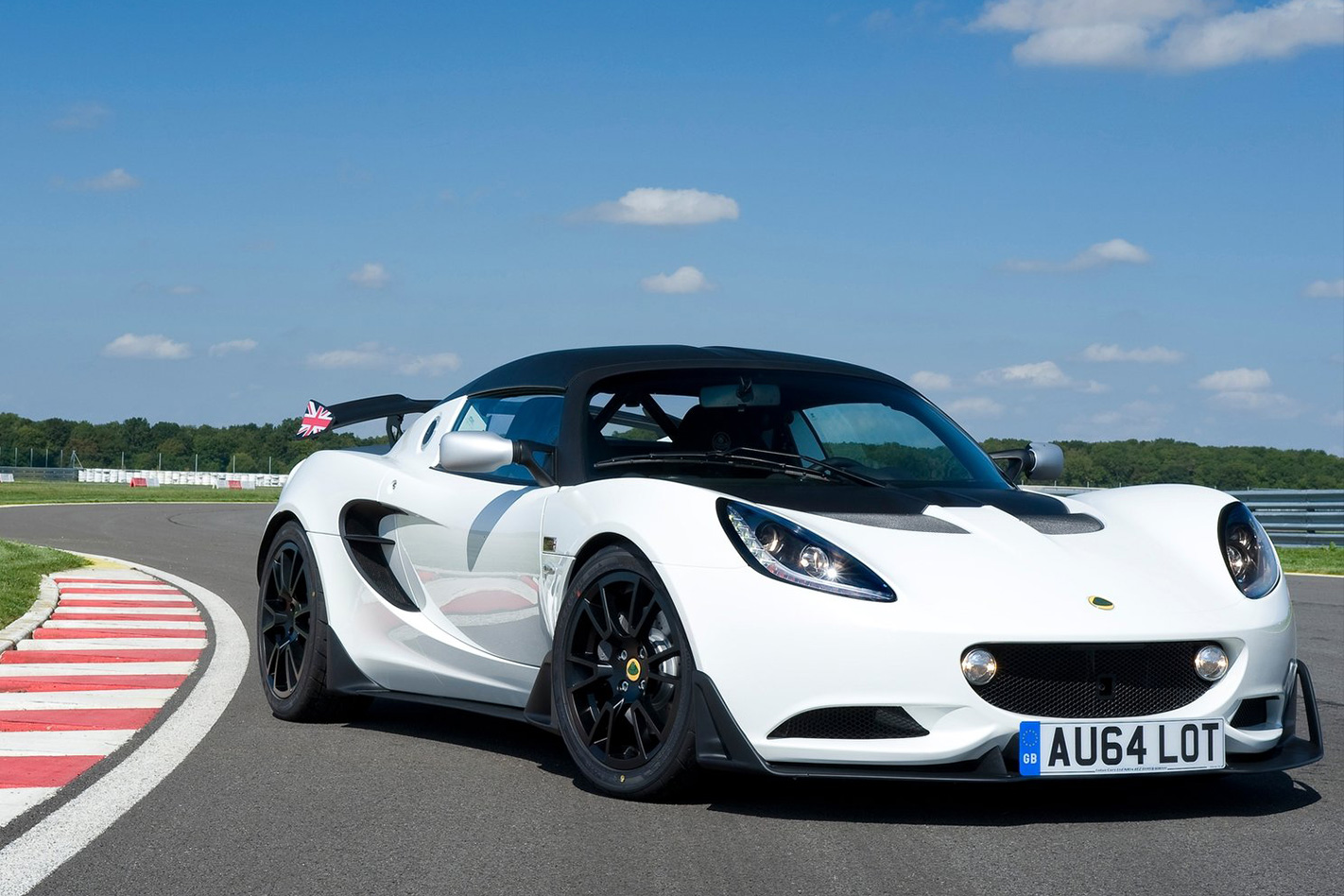
- Elise: shared with the Lotus, though technically of French origin.
- Mercedes: the brand itself was named after the daughter of German businessman-cum-racing driver Emil Jellinek who had a special relationship with Gottlieb Daimler, Wilhelm Maybach and Carl Benz.
- Freeman.
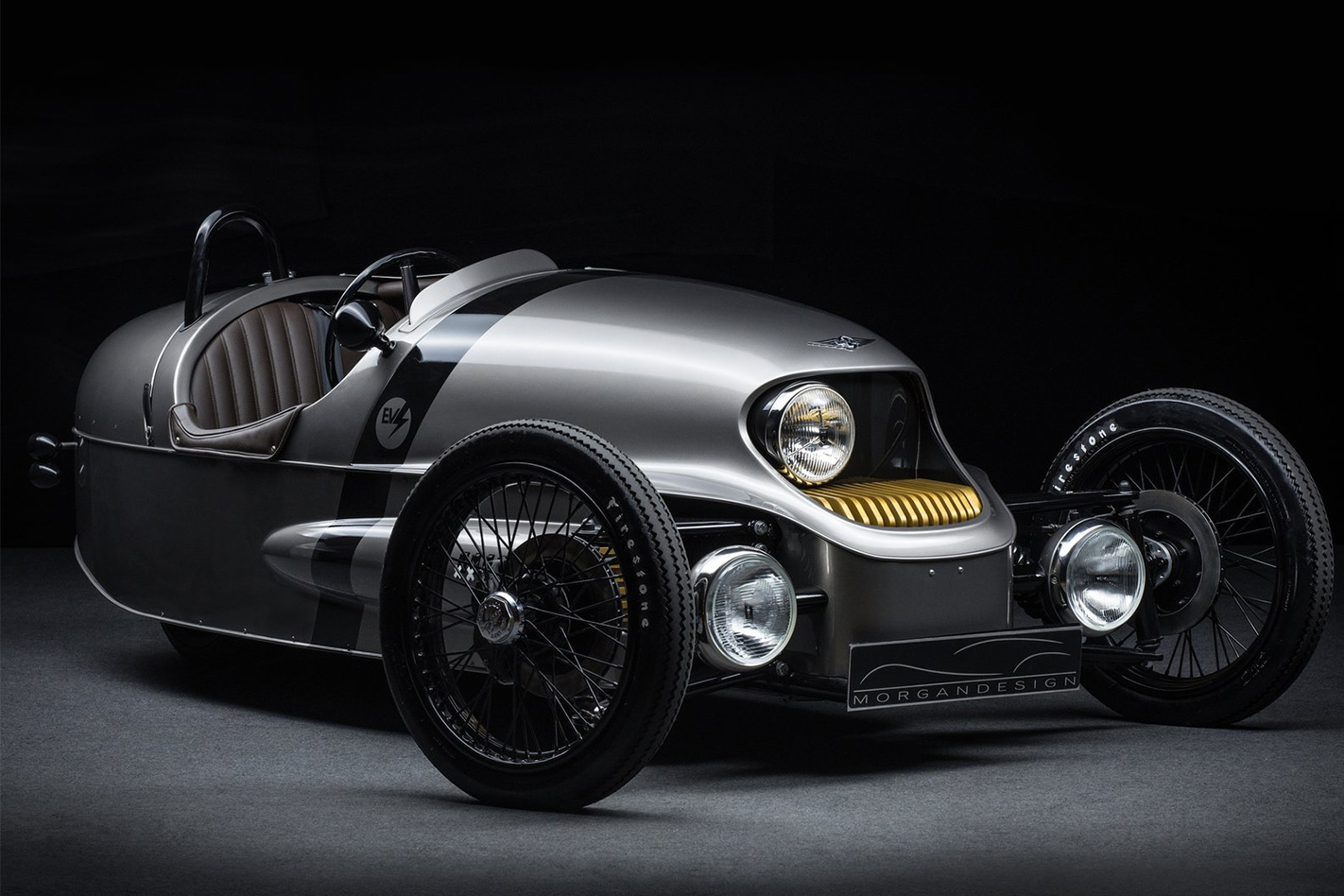
- Morgan: shared with the quirky English manufacturer of wooden-chassis sports cars, and arguably most famously the Christian name of legendary actor
- Lola: a Spanish name for “sorrows” shared with an English racing car engineering firm.
- Lincoln: in the US it’s more likely to be inspired by former president Abraham Lincoln than Ford’s luxury car brand, while in England its meaning is ‘lake colony’.
A MERCEDES-AMG GT4 will become a new option for amateur racers in Europe’s growing GT series.
Benz’s performance division has previewed its new racing car with sketches, though has provided few details apart from confirming the GT4 is based on the upcoming GT R road car.
The GT4 series sits below GT3 in the GT pecking order, providing manufacturers and privateer teams with a more affordable form of motor racing. Cars are closer to their production model donors than GT3, and the sketches indeed suggest the AMG GT4 will look essentially like a Mercedes-AMG GT R with a bigger, flatter rear wing and more cooling ducts incorporated into the bodywork.
The Mercedes-AMG GT3 is vastly different to the GT supercar, most notably its extravagantly broadened bodywork that’s made of carbon fibre rather than aluminium and the normally aspirated 6.2-litre V8 carried over from the SLS (for durability) rather than the road model’s twin-turbo 4.0-litre V8.

Timing has yet to be confirmed, but the GT4 would be eligible for a future staging of the Bathurst 12-hour. In 2017, the B12 will increase its GT4 entrants with the likes of Pro Sport’s two Porsche Cayman GT4s and Miedecke Stone Motorsport’s Aston Martin Vantage GT4.
In Europe, BMW runs an M3 GT4 which will be replaced with an M4 GT4 in 2018.
The GT4 series is approved by world governing body FIA and uses the same ‘balance of performance’ regulations as GT3 to ensure a level playing field for close, exciting racing.
“The development of the Mercedes-AMG GT4 is another important step in the continuing expansion of our Mercedes-AMG motorsport program,” said Mercedes-AMG boss Tobias Moers.
“The excellent feedback [from] our Customer Sports teams concerning the AMG GT3 and the increasing interest for GT4 race cars strengthened our decision. We are delighted to address an even larger target group of amateur and professional drivers and teams in the future with it.”
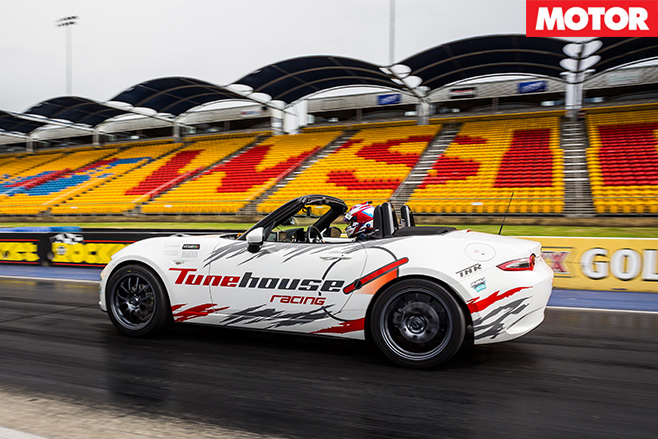
Lined up on the Sydney Dragway strip for our 0-100km/h and 0-400m runs, Tunehouse’s diminutive MX-5 fired off the line with a flurry of wheelspin, achieving 5.8sec to 100km/h and 13.86sec at 164.7km/h for the 400m.
Hot Tuner 2016 is brought to you by Valvoline SynPower
Useful gains over the standard model, but with the car running only a handful of psi, Tunehouse boss Jim Ghelis admits there is plenty more to come from this package.
“It’s definitely not a finished product,” he explains. “We need to refine the tune, but our focus so far has been making the hardware fit into the car – we’re not doing this just once; it needs to be made ready for production. We really wanted it here to show what’s coming from us.”
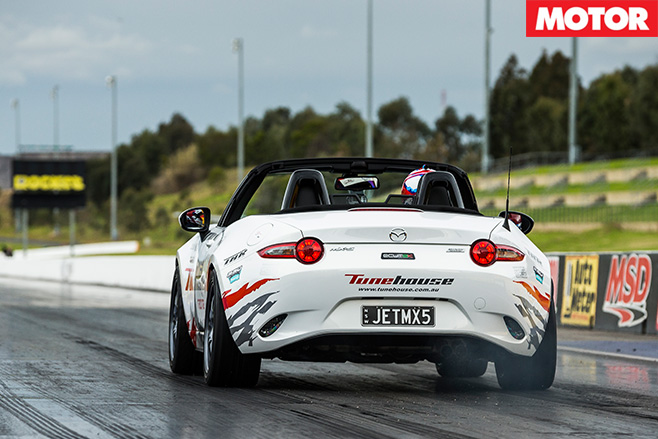
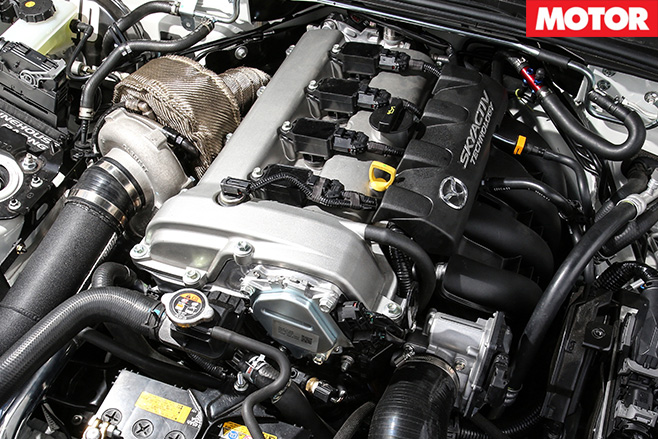
And how much power is the current-spec turbo set-up actually worth? On the day, the MX-5 spat out 122.5kW at the treads though it was the same old story with the fuel. Tunehouse had seen 158rwkW back in the workshop immediately prior to the event. Either way, pretty good given the stock 2.0-litre ND MX-5 makes 118kW at the donk.
Firstly – and this is nothing to do with Tunehouse – the MX-5 doesn’t really have space for a person in a helmet with the lid up. For me, the driving position felt a little too legs-forward, low and laid-back, and with a skid lid under the convertible top, I had to snuggle down into the seat and lean back a smidgen more. So, wet track and all, I wasn’t quite plugged into the car the way I like – and I had, like, five minutes to get a holistic impression.
I always play brakes before I play throttle, and these ones have a great confidence-supporting combination of feel and force. It’s a featherweight flyer on wide rubber, so I expected the car to feel over-tyred, with something of a floaty feel on turn-in, but Tunehouse’s enhancements to the Mazda’s suspension obviously work.
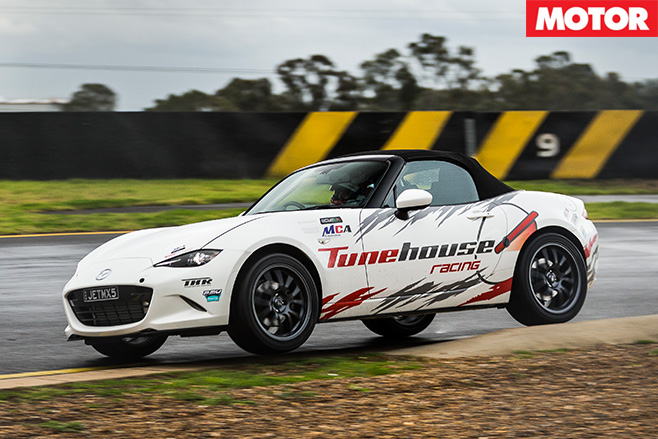
Overall, Tunehouse’s Mazda oozed potential, lifting the grip and grunt levels in harmony to prevent the standard car’s balance being destroyed. We certainly look forward to having another crack at it once all the development work is done and dusted.
OVERALL RANKING: 9th
DISCIPLINE RANKING 9th | Lap time: N/A 9th | Lap V-Max: N/A 9th | Lap V-Max: N/A 9th | Lap V-Max: N/A
WHEN Holden introduced the Commodore in 1978 it was marketed as Australia’s first world car, and a generational leap from the much-loved H-models.
Forty years on, an all-new Commodore won’t be rolling out of Australian plants. However it represents an even greater leap forward with advanced technology – some of which is yet to make its way into more expensive luxury cars.
While there’s plenty of focus on what the Opel-built Commodore won’t have – such as a V8 option, rear-wheel drive, and SS variants – it’s hard to ignore what it will be bringing to Holden showrooms in early 2018.
Holden is yet to announce variants and equipment levels of the lift-back sedan and Sportwagon models, but we know the range topper will come with a modified version of the current 3.6-litre V6 engine, state-of-the-art all-wheel-drive system, adaptive suspension, LED matrix headlights and advanced driver assist technology.
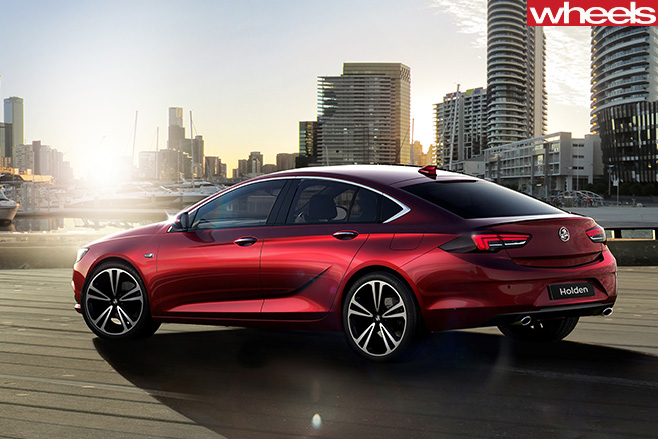
It will deliver this power to all four corners via a nine-speed automatic transmission (another Holden first).
Other engine options will include 2.0-litre, four-cylinder turbo petrol and turbo diesels. Holden is yet to release more information about these, but it’s believed the petrol version will push out 184kW, which is about the same as the current 3.0-litre V6 in the Evoke models but with about 300kg less lard to push around.
Advanced AWD
The AWD variant will feature GM’s new Twinster system that ditches the rear differential for a pair of clutches, enabling finite control of individual wheel torque and speed. Those lamenting the lack of a rear diff will be pleased to know the system features a Sport mode that includes torque vectoring and Dynamic Wheel Torque Brake (DWT-B) to create a proper rear-drive feel.
Sport mode also changes the dampers to reduce brake dive, providing flatter and more responsive chassis control at high speeds.
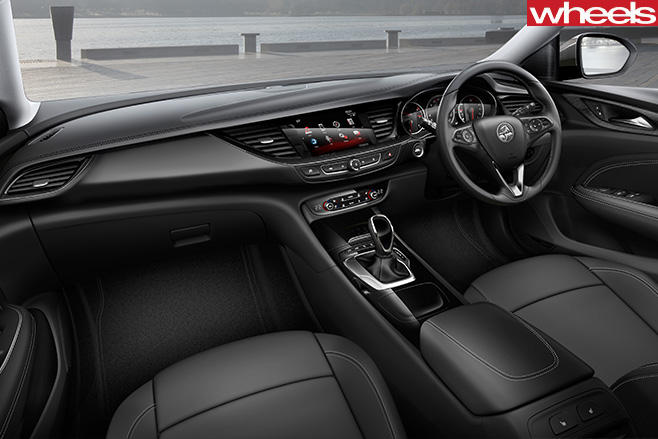
It does this using the ‘FlexRide’ suspension system that continuously adapts the dampers to the road and the driving conditions 500 times a second, or 30,000 times a minute if you like bigger numbers.
It works in conjunction with ‘Drive Mode Control’ software that continuously analyses the information provided by the sensors and settings and recognises the individual driving style to provide the best traction and road position.
“Next level driving”
Jeremy Tassone, Holden’s engineering group manager for vehicle development, said the technical underpinnings take the Commodore’s reputation as a driver’s car to the next level.
“From its cutting-edge all-wheel-drive system, to nine-speed transmission and adaptive suspension, this is a true driver’s car in the way Commodore has always been. We’re taking the best of Europe and making it even better for our Australian customers,” he said.
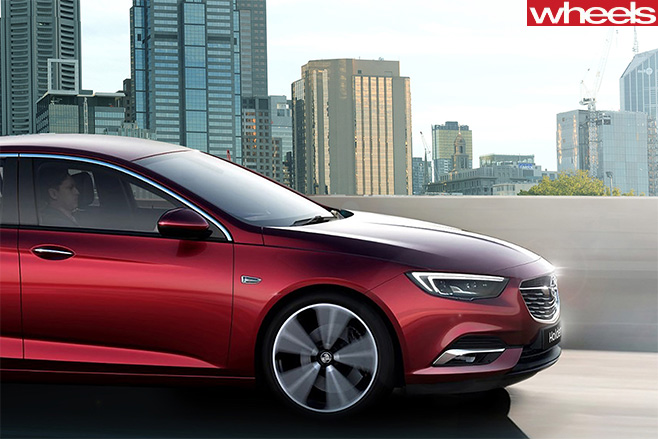
Premium options
There will also be a range of creature comforts available including: massage seats, rear one-touch folding seats, heated front and rear seats, ventilated front seats, express up/down all windows, wagon power lift-gate and active noise cancellation.
This is a lot of kit, which puts the top-spec Commodore in executive saloon territory against the likes of the Mercedes-Benz C-Class, BMW 3 Series and Lexus ES and other luxury contenders such as the upcoming Kia GT and Hyundai G80 – the Commodore v Falcon war already seems a distant memory.
While not elaborating on which features will be standard, Holden’s executive director of sales, Peter Keley, said the Commodore would “combine technology across a number of areas in a way that you would usually only find in high-end prestige vehicles, and makes it available for everyday Australians”.
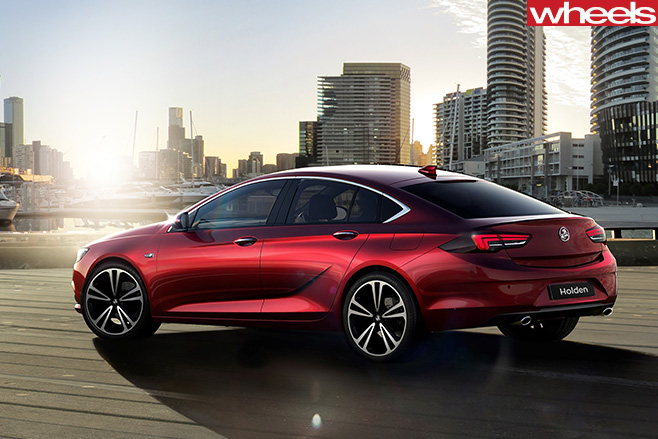
Inside, this translates to 58mm less shoulder room than the VF with 44mm less hip room. The sweeping roofline of the sedan cuts rear headroom by 13mm but the extra glass means rear passengers will have a better view – and there will significantly more boot space.
It remains to be seen how Australia will receive the first fully imported Commodore. There is bound to be a sentimental backlash, however, when looked at in isolation the new generation model looks, on paper at least, like it could win Holden plenty of new fans.
