
SHOWROOM remains one of the most popular sections of Wheels since a list of new-car prices was first included in magazine in the early 1960s.
Over time, the idea behind it has changed little but has showcased the growth in the Australian car market since the magazine’s early days.
Back then, other than make, model and price, the only information supplied was the number of cylinders, their capacity, horsepower and transmission.

You can search for a make and model to get all the regular Showroom specifications, ranging from price and engine type, to weight and resale.
What’s more, if you want to find out more information on the latest new car, links are provided to our sister site at WhichCar.com.au, where more features are listed including the standard and optional equipment for each car.
Showroom includes our warts-and-all, no-pulled-punches assessment of each model, as well as Wheels’ recommended pick.
Just visit the WheelsMag.com.au website, hover your mouse over “CAR REVIEWS”, and click on “SHOWROOM” when it pops up.
Don’t delay! Visit the Wheels Showroom here. Don’t forget to bookmark it!
Oops, that’s not gone well. A VW Group employee has suffered the ignominy of being the first person to publically crash the new Bugatti Chiron.
Worse still, according to a statement given by Bugatti to German newspaper Bild, they weren’t wrestling with all 1103kW/1600Nm in a third-gear drift, rather: “The drive was unfortunately a little inattentive, which is why the car landed in the road ditch.”
We’re guessing here, but it seems like in a rush to Snapchat the fact that they were cruising in a prototype of the world’s fastest car, the driver managed to plant the A$3.5m hypercar into roadside drainage.
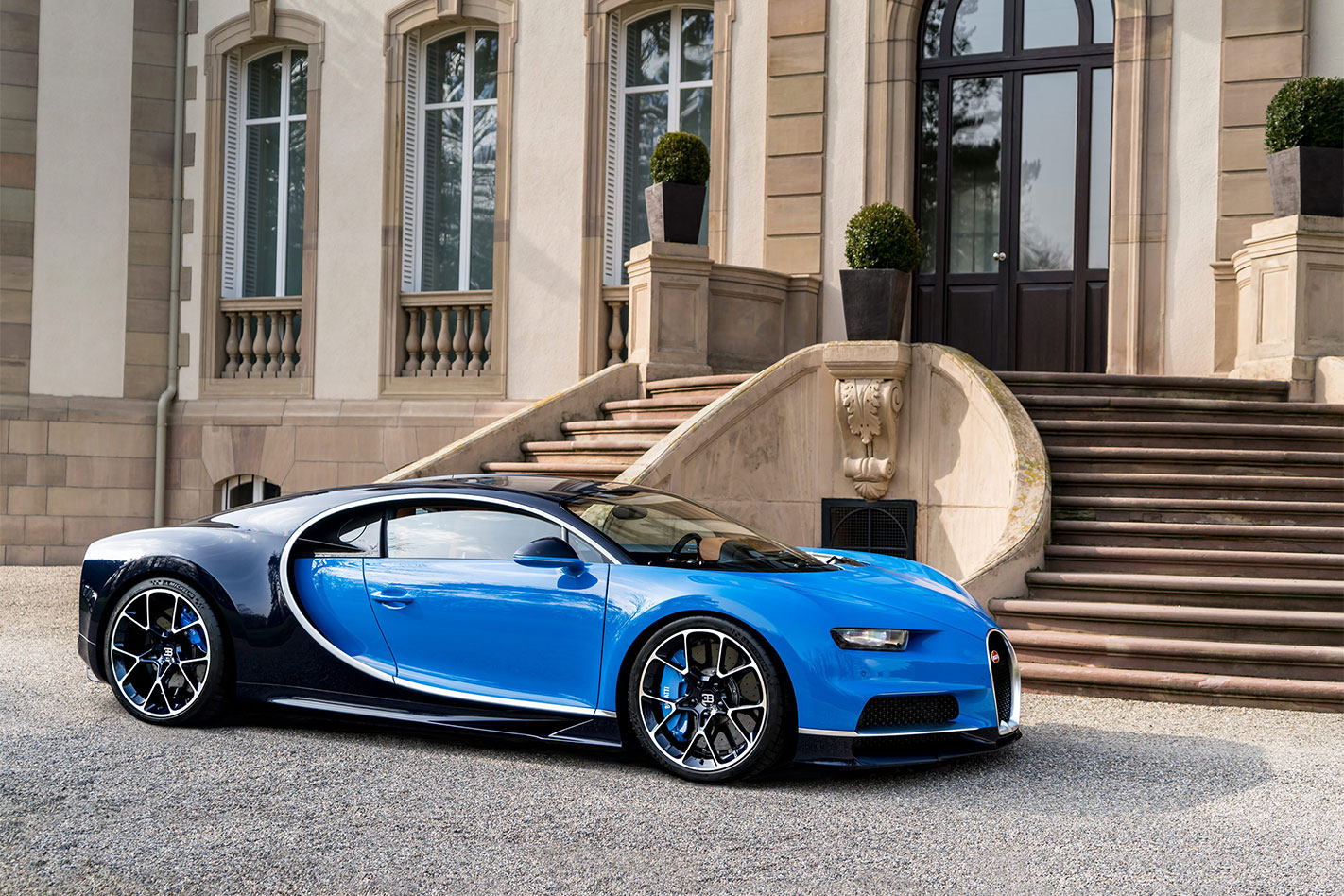
The Chiron is currently in the final stages of its development, with MOTOR getting its first taste of the 420km/h missile alongside Bugatti boss Wolfgang Durheimer recently ahead of its launch early in 2017.
It’s not the first time a Bugatti’s crashed, and with the Chiron capable of 0-300km/h in around 13 seconds, it’s unlikely to be the last either.
The most infamous Bug bingle was the case of a US man who drove his Veyron into a Texan lake in an ill-conceived attempt at insurance fraud.
Unfortunately, the video above poured cold water (pardon the pun) on his claims that a pelican jumped out in front of him and he was subsequently sentenced to 366 days in federal prison. Crime doesn’t pay, folks, but paying attention does.
First published in the October 2016 issue of Wheels magazine, Australia’s best car mag since 1953.
Quirkiness meets cool to deliver a mostly warm embrace.
Can’t wait to see the final score? Jump to the verdict now.
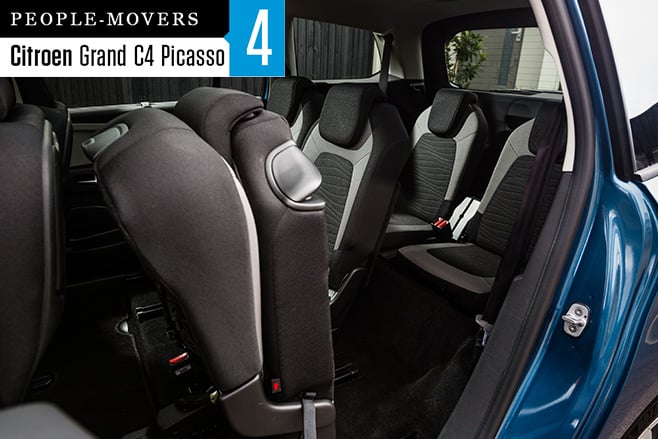
IT’S KIND of refreshing to see that, in the case of the Citroen Grand C4 Picasso, Citroen is back doing what it does best; hurling the rule book into the nearest dumpster. The Picasso is weird but also wonderful in many ways, and it’s a breath of fresh air to sit in a car made in 2016 that is so bright and open feeling. Of course, that’s a function of the fact that most of the bodywork is made from glass (or so it seems) and the panoramic sunroof fitted to our test car makes the Citroen feel light and bright regardless of which row you’re sitting in.
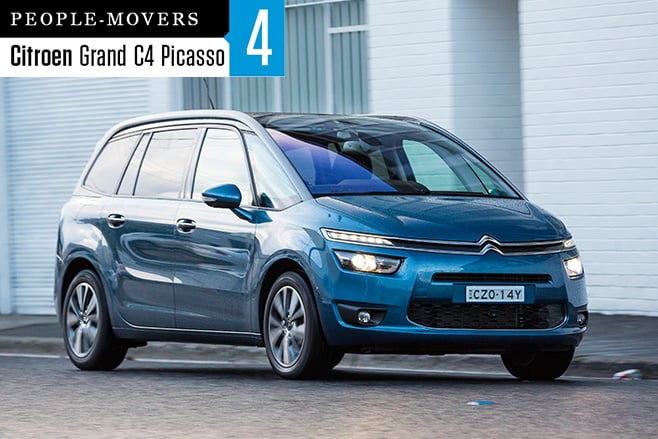
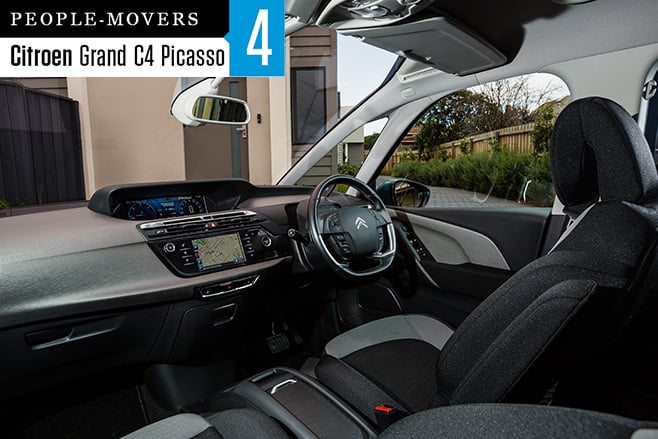
But cool is as cool does and in other ways the Picasso’s quirkiness requires you to relearn how to operate a car. The column gearshift, for instance, is on the wrong side of the wheel and Park is confusing to find at first. The central gauge layout is odd on first acquaintances, too. But the big head-scratcher is the interface between you and the audio, climate, sat-nav and phone controls. As in the Cactus (and Pugeot 308), they all share a single screen so you need to flip between the various pages to access them. Want to adjust the temperature while the passenger tunes the radio? Forget it.
The turbo-diesel engine lacks the refinement of the petrol units in some of these cars, and it can feel a little wholegrain at low revs. Thanks to the tall gearing and an auto designed to hold higher gears longer, that is quite a bit of the time. Up and rolling, though, the diesel is sweet and smooth, and the excellent transmission calibration keeps it trundling along with relaxed vigour.
Painting with … petrol
Since it launched here in February 2014, the Grand C4 Picasso has been offered solely in top-spec Exclusive trim with turbo-diesel power. But when the facelifted model lobs in the first quarter of next year, a turbo-petrol will be added to the line-up.
Likely to be positioned as a price leader, running the same 121kW/240Nm 1.6-litre turbo-petrol as the Picasso five-seat, the refreshed Grand C4 Picasso swaps the diesel’s space-saver spare for a 15-inch steelie, due to the absence of ‘Blue HDi’ exhaust treatment. We sampled an early example following this Megatest and, while it lacks the diesel’s outstanding low-rev tractability, the petrol engine’s refined sweetness and switched-on transmission calibration makes light work of challenging hills, both urban and country.
 SPECS
SPECS
Price as tested: $49,990* includes tech pack ($5000)
Engine: 1997cc 4cyl, dohc, 16v, TD
Power: 110kW @ 4000rpm
Torque: 370Nm @ 2000rpm
Transmission: 6-speed automatic
Dimensions (L/W/H/W-B): 4597/1826/1644/2840mm
Weight: 1440kg
Cargo capacity: 632-793 litres
Tyres: Michelin Primacy HP 205/55R17 95V
Test fuel cons: 6.0L/100km
0-100km/h: 9.6sec
0-400m: 16.9sec @ 133.1km/h
80-120km/h: 6.9sec
3yr resale: 50%
Plus: Quirky can be good; great styling; exceptional efficiency
Minus: Not instantly familiar to use; small and firm seats
Verdict: 6.5/10

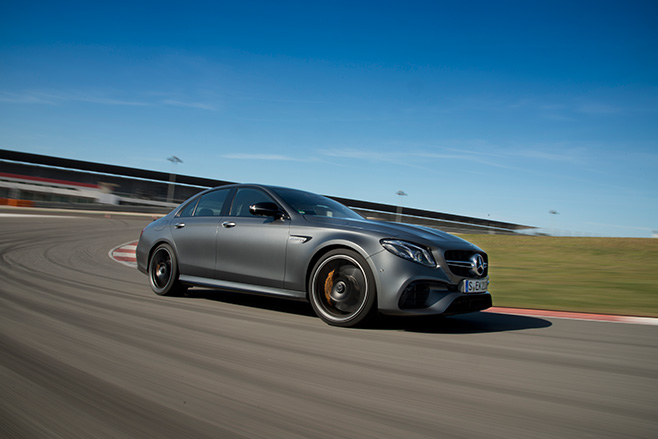
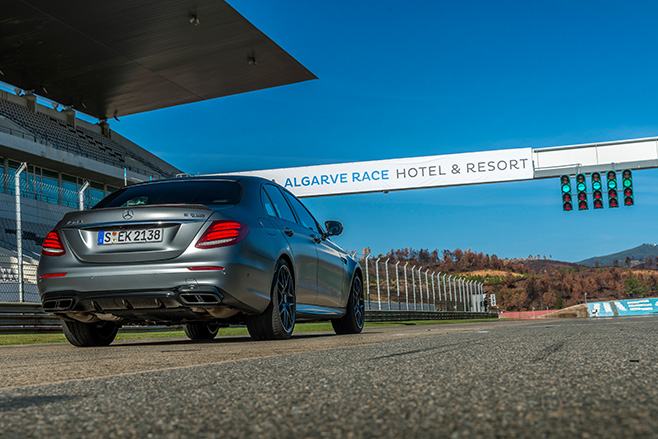
THE new Mercedes-AMG E63 S carries on where its predecessor left off, with a 450kW turbocharged V8 giving it a huge serve of performance. There’s one crucial difference, though – the arrival of standard all-wheel drive, making this car both quicker and more stable than the last one.
TELL ME ABOUT THIS CAR
The Mercedes-AMG E63 is one of the fastest sedans on the planet, powered – in its brawniest “S” guise – by a 450kW twin-turbocharged 4.0-litre V8 and finding traction through a new all-wheel-drive system. Mercedes claims it is capable of dispatching the 0-100km/h benchmark in just 3.4 seconds – this really is a four-door alternative to a supercar. Being based on the Mercedes E-Class gives the E63 the best possible start, with strong design and a long list of standard equipment. However, although pricing is yet to be finalised, we can already tell you that it’s set to be seriously expensive. Expect to have to pay at least $250,000 for the E63 S when it goes on sale next July.
STRENGTHS
The engine. AMG models have always had charismatic engines and the new E63 is no exception. The twin-turbo V8 is a virtuoso, happy to trundle around at low speeds projecting burble, or mount a full redline mission and show off its supercar-humbling performance. It’s enormously fast when you want it to be, but it’s also a relaxed cruiser when operating at barely a tenth of its full potential. Built for autobahn speeds, the biggest challenge in Australia is always going to be holding it back.

Its handling. While previous versions of AMG’s big saloons have struggled to find traction to match their enormous power outputs, the arrival of a new 4Matic all-wheel-drive system on this generation of E63 means it feels far more dynamically secure with huge grip and a well-weighted chassis that keeps things calm even when you’re pressing on. While it’s not quite as involving as its rear-drive predecessors we reckon most potential buyers will gladly trade some of the old engagement for the extra confidence of the new car.
A high level of refinement. Despite the huge performance on offer, the E63 never feels harsh. Air suspension and switchable dynamic modes come as standard, and in its softest Comfort mode it is almost as pliant as the regular E-Class. The bigger tyres kick up more road noise, especially on poor quality surfaces, but overall refinement levels are exceptional for what is a serious performance car.
The cabin. As you’d expect given its position at the top of the range, the E63 builds on the strengths of the standard E-Class cabin, adding huge amounts of standard equipment. The interior is brilliantly designed and a great place to spend time, with the AMG getting kitchen sink specification and a full battery of driver assistance systems, including the semi-autonomous Drive Pilot.
Fuel economy. No one is going to buy the E63 to save on their fuel bills, but AMG has given it several clever eco-features including selective cylinder deactivation that shuts down four cylinders in the engine under light use. The official 9.1L/ 100km EU fuel rating is impressive for something like this.
WEAKNESSES
Its high cost. Mercedes says that this E63 will cost about the same as the outgoing model, with a much higher level of standard equipment. You’re still looking at what’s likely to be a quarter-million-dollar E-Class though, and it’s worth mentioning that the new V6-powered E43 AMG gives a fair approximation of the experience for just two thirds the price.
Deflated involvement. The E63 is meant as more of an executive express than an out-and-out sportscar, but although the new all-wheel-drive system means it has much more grip and traction than its predecessor, something of that car’s involvement is lost in translation.
Drift mode. The inclusion of such a system on the Ford Focus RS triggered a tabloid frenzy in Australia earlier this year, so it’s worth mentioning that the E63 has a similar system. For track use only, it disengages drive to the front wheels and turns off stability control, allowing the car to steer via the rear wheels. We don’t reckon most buyers will use it that often…
The new nine-speed gearbox. It’s just a niggle. The automatic gearbox works extremely well when left to its own devices, but if you’re tempted to take control of it in manual mode it feels like you’re upshifting and downshifting the whole time because there are so many ratios.
ANY COMPETITORS I SHOULD CONSIDER?
The Mercedes-AMG E63 S arrives as its most obvious rival, the BMW M5, is retiring, so we’ll have to wait a while to see how it copes with the next-generation M5 due in 2017, which will also shift to all-wheel drive. That said, the stripped-and-whipped M5 Pure ($184,715) does look like a bargain compared with the AMG’s likely price tag. The other bitter German rival is the Audi RS7 Performance, costing $258,000 and with 445kW from its twin-turbocharged V8 engine, meaning it pretty much matches the E63 on power. The Maserati Quattroporte is a left-field alternative, although only the 390kW V8 GTS gets close to the Merc on power, and it costs $331,000. Alternatively, try waiting for the forthcoming second-generation Porsche Panamera.
Brake pedal firmly pressed, accelerator pedal mashed to the floor, ‘Performance start activated’ flashes up in the right-hand screen of Porsche’s signature five-dial instrument binnacle.
It’s an unusual phrase to read when, in motoring terms, I’m sitting three floors up, but it’s what happens next which is even more improbable.
With the brake pedal released, the Cayenne Turbo S rears like a startled animal, the front wheels spinning slightly as they drag the nose sideways across the track. First gear disappears in a flash, the automatic gearbox engaging second with a slight jolt at 60km/h and third at 110km/h.
Despite packing eight ratios, the Turbo S is tall-geared and fourth isn’t required until 170km/h, the quarter-mile mark flashing by moments later. The data is scarcely believable. This 2235kg behemoth has just completed 0-100km/h in 3.98sec and the quarter mile in 12.15sec at 185.08km/h, making it the fastest production SUV in the world.
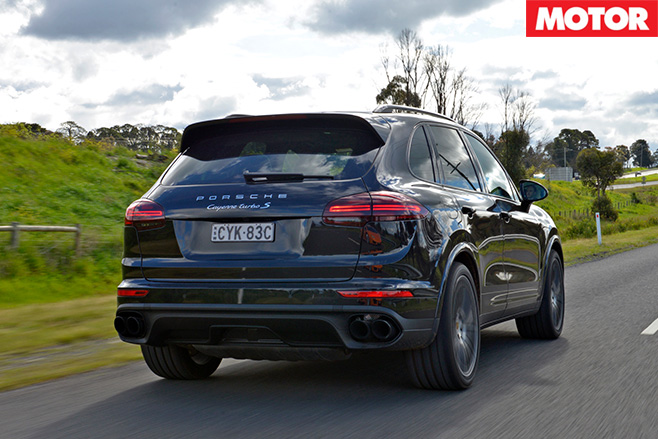
The biggest number of all, however, is the price. In standard form it’s $287,200 but a handful of options such as a sports exhaust ($6390), panoramic sunroof ($1190) and, unusually, 5mm wheel spacers ($870) lift our test car to $299,870. While in a post-Bentayga world that figure doesn’t seem so otherworldly, it is a good $60K north of the Range Rover Sport SVR and almost $100,000 more than similarly powerful German rivals such as the Mercedes-AMG GLE63 S and BMW X5M.
So the Cayenne Turbo S scores highly for pub (or, more likely, sailing club) bragging rights, but how does all this impressive hardware translate to the road? Pretty damn well. As you might expect from its performance figures, the acceleration is extraordinary – it requires physical effort to keep your head upright. Opportunities to use full throttle are rare, as by the time you reach it you’re usually rapidly approaching the highway speed limit.
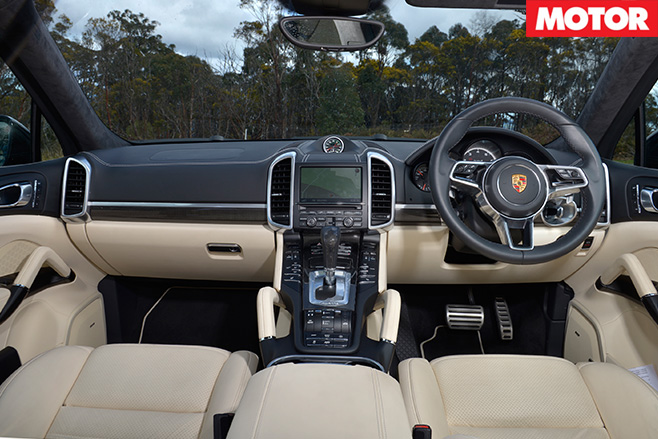
Unfortunately, the Turbo S doesn’t stop as well as it goes. There’s nothing wrong with the brakes – though in true carbon-ceramic style they’re a little soft at the top of the pedal travel – the tyres simply can’t handle the amount of braking force applied. In our 100-0km/h emergency stop test the ABS triggered heavily and extended the braking distance to a poor 39.5m with subsequent attempts no better.
It’s in the corners that the true extent of Porsche’s engineering wizardry is most evident. To be honest, bar the X5M, few of these high-performance SUVs are very enjoyable to drive fast, but the Turbo S does raise the bar another notch. It’s a slightly surreal experience, like a Cayenne that’s eaten a 911 Turbo. The steering wheel, the way the nose tramlines slightly and the rear-biased all-wheel drive system (yes, this is an SUV that will power oversteer) are familiar from the 911, but its size, weight and speed mean you need to be extremely careful in how you place it, as there’s an awful lot of momentum at play.
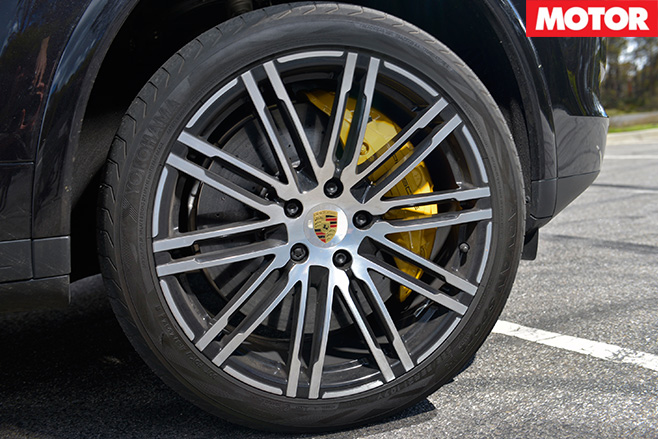
However, as impressive as the engineering is, the Cayenne Turbo S is the ultimate example of diminishing returns. Its performance advantage over the regular Turbo is utterly irrelevant and, to be honest, a well-specced Cayenne GTS offers all the comfort and practicality and most of the performance (minus the lovely V8 soundtrack) for more than $100K less.
But no one is going to objectively decide they need a Cayenne Turbo S. It will be bought by those who have to have the biggest and the best and on that basis, it delivers as the ultimate performance SUV.
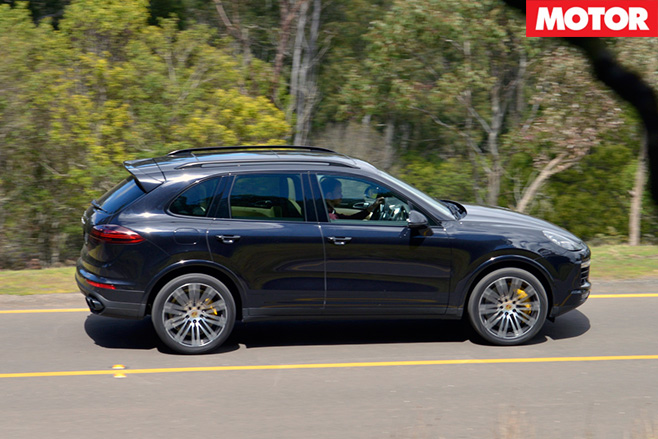
LIKE: Insane pace; handling; V8 soundtrack DISLIKE: Regular Turbo more than enough and $52K less
SPECS Engine 4806cc V8, DOHC, 32v, twin-turbo / Power 419kW @ 6000rpm / Torque 800Nm @ 2500rpm / Weight 2235kg / 0-100km/h 3.98sec (tested) / Price $287,200
Mercedes-Benz has launched its G-Professional brand in Australia, offering a military-hardened, rugged ute-backed version of its Mercedes-Benz G-Class station wagon.
The G-Professional 300 CDI cab chassis, similar in looks and build to the tray back that forms part of the fleet of G-Wagen military vehicles that have replaced the Australian Army’s Land Rover-based Parenties, beats the upcoming X-Class ute into Mercedes-Benz showrooms.
But before you look to trade in your Toyota Hilux or Ford Ranger – both are currently locked in a fierce battle for the title as Australia’s best-selling trade ute – you’d better check the bank account. The mining industry-proof G-Professional comes with a price tag as impressive as its more than two-tonne payload capacity – Mercedes-Benz will hit you up for $119,900 before on-road, or should that be off-road, costs.
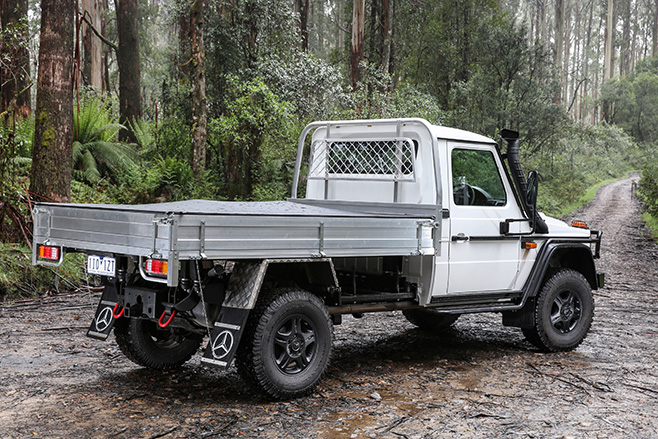
To put that in perspective, that’s in the same price range as an all-wheel-drive Mercedes-AMG C43 and a bag full of change. Toyota will sell you a G-Professional rivalling 4.5-litre V8-engined Landcruiser 70 Series GXL cab chassis with a five-speed manual gearbox, six airbags and part-time all-wheel-drive for $61,990, but air-conditioning isn’t standard and a centre diff lock is not available. The 70 Series also has a relatively diminutive 1225kg payload capacity.
The G-Professional gets a permanent all-wheel-drive system combined with three differential locks and a low-range gearbox – it will be more comfortable crossing mountains than carving their corners.
The standard fit-out of the G-Professional ute includes a snorkel and bull bar; protective grilles over the headlights and indicators; radiator and sump shields; and 16-inch alloy wheels fitted with all-terrain tyres.
It’s tough, too. The cabin, fitted with harder-wearing rubber floor mats, gets two floor-mounted drain holes so you can hose out the interior if needed. Speaking of water, it can wade through rivers up to 650mm deep, with the reinforced chassis sitting 245mm off the ground, more than 50mm higher than a Mercedes-Benz GLE-Class SUV.
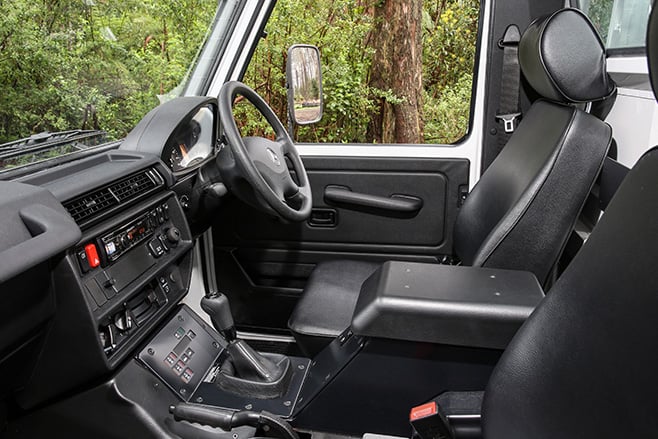
You also get a pair of 12-volt batteries so one always acts as a backup, storage boxes under both seats, standard air-conditioning, central locking, an immobiliser for parking in the big smoke, a centre armrest and a lockable glovebox. Dusty arses sit on hardwearing vinyl seats.
Under the bonnet – if needed, you can order one that is load-rated to 100kg to double up as a walk-on platform – is a 300 CDI 3.0-litre V6 turbo diesel engine producing 135kW at 3800rpm, and 400Nm from 1600 to 2000 rpm, and paired with a five-speed automatic transmission.
Safety isn’t to the usual Mercedes-Benz standards, with only two airbags, but this isn’t what you’d consider a traditional Merc-badged passenger car. You also get a guardian angel in the form of electronic stability control with a switchable off-road mode, and anti-lock brakes.
The G-Professional cab chassis is basically a version of the Australian Army’s Geländewagen, but wearing civilian clothes coloured white, Desert Sand, Deep Orange, Flame Red or Fir Green as a no-cost option.
The German carmaker recently won the contract to supply the Army as part of a multibillion-dollar replacement of about 7500 vehicles across the defence force, including 2268 G-Wagens.
The Army contract includes cab chassis, wagon and 6×6 versions of the G-Wagen. However, Mercedes-Benz says only the 4×4 cab chassis version of the G-Professional will sell for now.
Rob Herrod is a man who knows how to build wild, tyre-shredding custom cars that can blot the sun from the sky and get to feature on the cover of our sister title, Street Machine.
Hot Tuner 2016 is brought to you by Valvoline SynPower
But his entry for Hot Tuner 2016 is so far from his days building V10 burnout cars you almost wouldn’t believe the same company, Herrod Performance, is responsible.
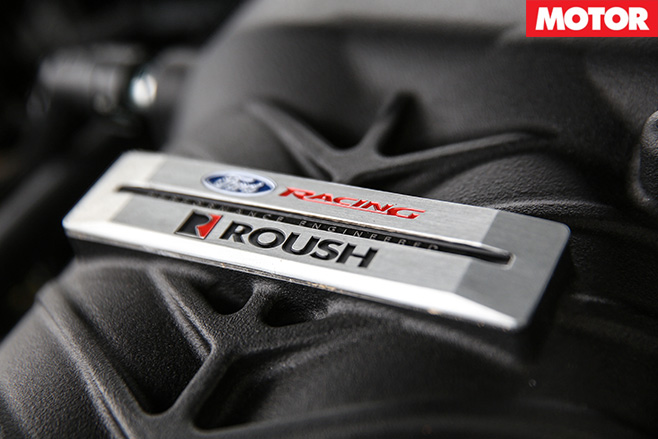
That’s not to say his 2016 Mustang GT is bereft of power – quite the opposite, thanks to the 2.3-litre Ford Performance Parts-supplied twin-rotor supercharger perched on top of the Coyote 5.0-litre V8, but it is a car crafted with a different mindset. This is a tuner vehicle built to have an OEM level of fit, finish and refinement, yet it’s fully ADR-compliant and wears its government-issued chassis plate to prove it.
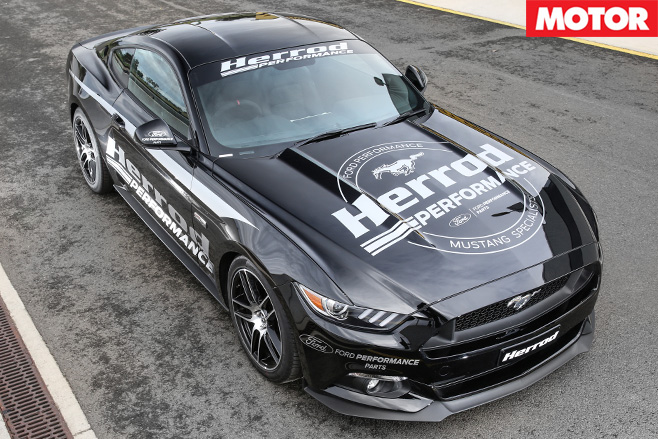
What Herrod brought to Hot Tuner 2016 is a new automatic GT Mustang, kitted out with the Ford Performance Parts supercharger kit, their Track Handling upgrades, SVT 19-inch wheels, and the Ford Performance Parts tail panel infill.
These parts are all contained in the massive catalogue the hop-up arm of the Blue Oval issues every year for a huge range of past and present models, but Herrod Performance is the only Australian outfit to seek official compliance to fit them to Australian-delivered Mustangs.
“I’ve worked closely with Detroit for several years and then our local government departments to put this all together, and there was a lot of work to do,” explains Herrod. “We made our own unique, Australian-spec exhaust to pass noise tests, plus fitted special heat shielding underneath just to pass the very stringent requirements that all new cars have to go through in Australia, but the car still sounds like a strong V8 and handles incredibly well.”
The Track Handling pack is similarly comprehensive, with springs, dampers and swaybars upgraded, along with Performance Pack upper strut mounts, new rear toe links and toe link-to-knuckle bearings to ensure the car retains proper geometry even when under massive loads.
All this sees the GT’s rear-wheel power rise from around 255rwkW to approximately 438rwkW, with tractive effort jumping from 530Nm to nearly 900Nm. Best of all, the fat mid-range is picture-perfect for on-road performance.
Herrod has sold more than 30 of these packs and sees his target customer as the driver who wants a higher performance Mustang than the base GT but also seeks OEM-style fit and finish. “We can’t get the Shelby GT350 in Australia,” he lamented, “so there are limited options if you want a Mustang that is faster than the base GT but still drives like a Ford factory product.”
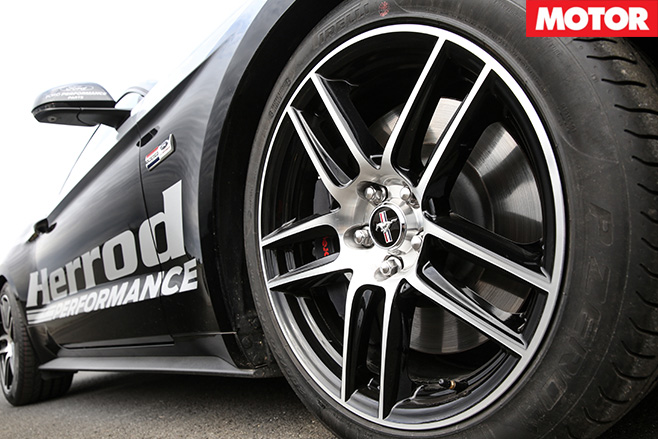
SPECIFICATIONS Drive: rear-wheel Engine: 4951cc V8, DOHC, 32v, supercharger Gearbox: 6-speed automatic Suspension: struts, anti-roll bar(f); multi-links, anti-roll bar(r) Brakes: 380mm ventilated discs, 6-piston calipers(f); 330mm ventilated discs, single-piston calipers(r) Wheels: 19 x 9.0-inch(f); 19 x 9.5-inch(r) Tyres: 255/40 R19(f); 275/40 R19(r) Pirelli P Zero
PARTS AND PRICES Compliance kit $21,500 Suspension $2000 Steering wheel $900 Wheels $2800 Total mods cost: $27,200 Vehicle cost (msrp): $59,990 Total cost: $87,190
Ford Australia has blamed Australian buyers for its decision not to import the spiritual replacement for the Falcon XR6 Turbo, a 2.7-litre twin-turbo V6 sedan called the Fusion.
Speaking at a media event this week in Melbourne, Ford Australia president and CEO Graeme Whickman confessed that the Michigan, US-made version of our European-built Mondeo was not considered due to projected low demand.
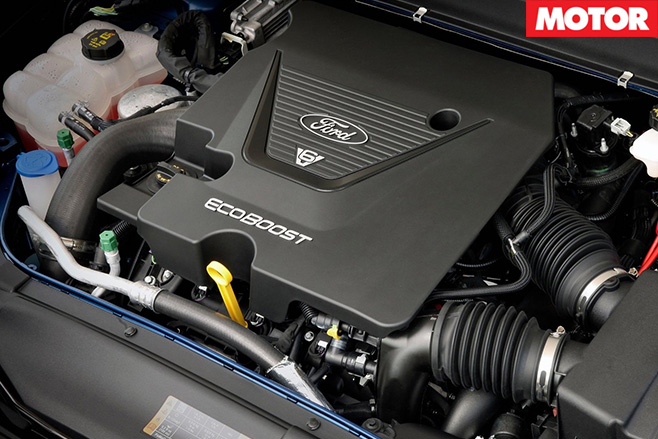
The forced six-cylinder produces 242kW of power and 475Nm of torque, which closes in on the discontinued 270kW/533Nm 4.0-litre turbo Falcon and could eclipse it for outright performance thanks to its all-wheel drive traction.
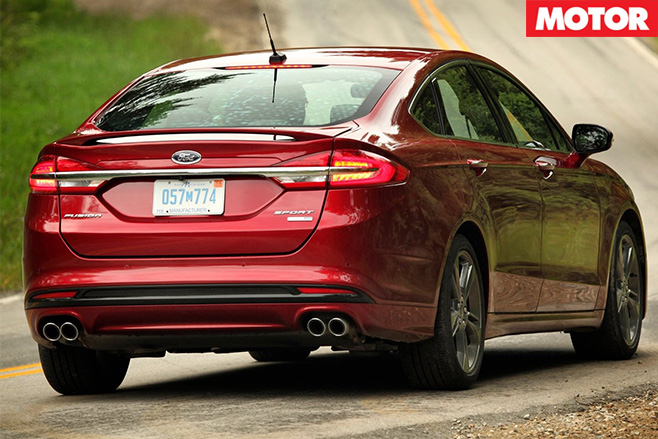
He further called the twin-turbo V6 performance version “a tough business proposition.”
“You have to make sure you have the demand to support the business proposition, and the demand is quite small,” he added, before comparing demand for a performance four-door sedan to that of Ford’s iconic two-door coupe.
“As opposed to the Ford Mustang where we will be number one or two in the world for right-hand drive in the world. I understand [Mondeo] is not a V6, it’s an I4 [inline four-cylinder], and maybe that’s something that they’re searching there.
When it was indicated that V8-engined Commodores now represent over one-third of the Holden’s volume, and that might suggest there is interest from buyers for a fast four-door, Whickman explained that the large car segment now represents around 3.0 per cent of the market. The four-cylinder medium class Mondeo is in represents 7.0 per cent.
“One-third potentially of that [large car] segment, at most, so 1.0 per cent … think about the viability,” he said.
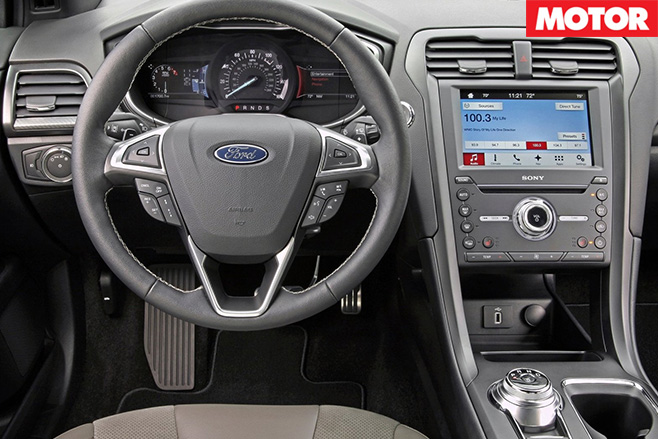
“When we thought about this we didn’t think the Mondeo versus the Fusion was going to be a polarising positive or negative,” he added.
Only the US-built Fusion is available with all-wheel drive and the twin-turbo V6. Our European-sourced Mondeo continues to be a 2.0-litre four-cylinder turbo petrol or diesel proposition, as is available in Australia.
WHY, oh why do modern cars not come equipped with missile launchers?
If that were the case, I, and I presume any other motorist with half an understanding of traffic rules, would be firing missiles with glee.
This isn’t a desire to fulfil some Grand Theft Auto video game-fuelled fantasy. No, I want to rid our roads of right-hand lane hogs.
For those unfamiliar with exaggeration, that is clearly a joke. But few things behind the wheel can make my blood boil like a driver who sits in the right-hand lane on a highway; blissfully unaware of the traffic queued behind, or faster-moving drivers sailing past on the left with steam pouring from their ears.
I am loath to underpass. It’s dangerous and puts me in people’s blind spots. But so endemic is the plague of people that don’t understand the concept of Keep Left Unless Overtaking that it has become a genuine alternative if I want to get anywhere with any reasonable haste.
A recent trip across Melbourne in a convoy with a co-worker highlighted how bad right-hand road hogs have become. Upon joining the freeway (at the speed limit, because apparently that is something people haven’t figured out yet!) my co-worker dived straight towards the fast lane, and promptly found himself stuck behind a car that wanted to see if it could pass the other traffic at a rate slower than the movement of tectonic plates. Meanwhile, I stayed in the far left lane, and entered an alternate universe where the road ahead was devoid of traffic.
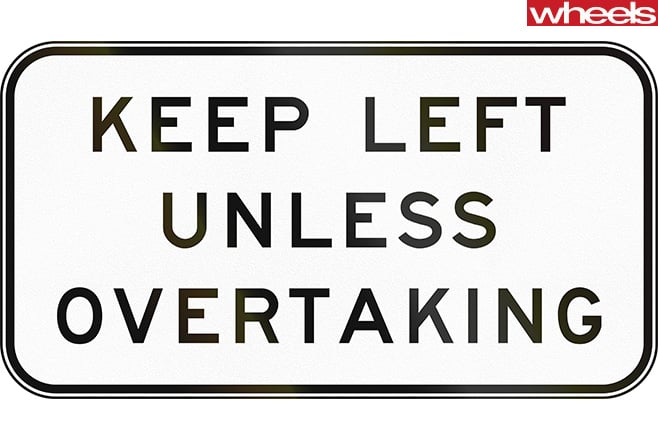
Move the hell over! Keep Left Unless Overtaking is four, very simple words; it shouldn’t be this hard.
When the passing lane hog does eventually come across other traffic, they overtake at a glacial pace. In some instances it can take minutes for the car in the right-hand lane to completely clear the ever-so-slightly slower car. It sure wouldn’t be too much hassle to turn off your cruise control, get the pass done, and get back in line to let other motorists past that wish to travel at a faster rate past. But the fear of being done for any speed over the speed limit stops this happening in an efficient manner.
Oh, and sitting bang on 110km/h doesn’t give you a right to sit out in the right-hand lane, either. Speeding isn’t even an excuse. Unless you are moving past other traffic at a decent rate, get back in the other lanes. It is Keep Left Unless Overtaking, not keep left unless doing the speed limit.
This issue is one that generates unnecessary congestion on our roads, and makes other drivers frustrated and angry. But come the summer break, will anyone be reminding drivers to stay left during their road trip? Oh no. Make sure you all stay nice and slow, and screw anyone behind you! That’ll keep the police happy.
Fix it. Or for the love of all that is sacred, just give me missiles to sort this mess out myself.
If you thought wheel clamps were bad, imagine not being to drive your car because some parking officer attached a giant immovable plastic panel across your windscreen?
Called the Barnacle because of the way it adheres to the car’s windscreen, the invention from New York company Ideas That Stick is placed on the windscreen of illegally parked cars to impair the driver’s view to such an extent that they cannot drive away.
It is secured by two large, commercial grade suction cups and can only be removed after a code is entered into the device.
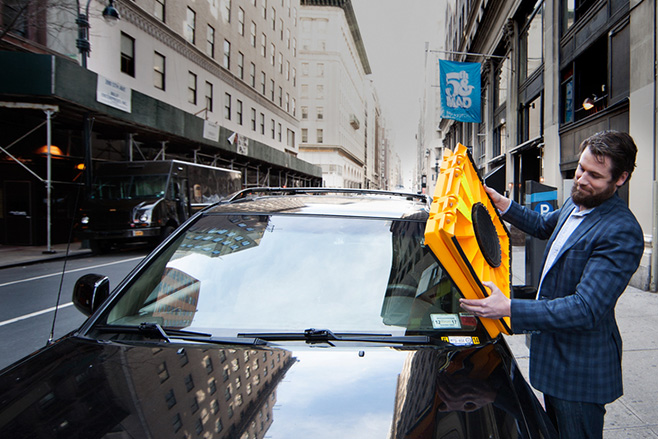
This code can be accessed when the driver calls or goes online to pay the illegal-parking fine, allowing them to simply remove the barnacle and drive away. The offender then must return the device to a designated area within a certain period of time, or risk picking up an additional fine.
Should the motorist attempt to remove the Barnacle without receiving the code, an alarm will sound off as a deterrent. The alarm will also sound if they’re stupid enough to try driving away with it and it has GPS tracking.
Ideas that Stick spruiks the device as having a major advantage over traditional car immobilizers such as boot and wheel clamps, in that it is light and easily deployable, as well as not requiring the wait for someone to come and remove it.
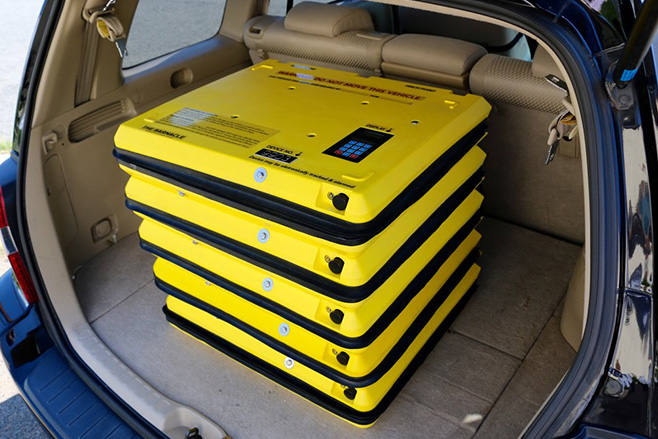
The bright yellow Barnacle is purposely conspicuous to deter other motorists from making decisions that could see them suffer the same fate.
The company goes as far as to say that lives can be saved through its quick kerbside application, as opposed to clamping which often need to be installed from the side of the car facing the road.
It’s now patented in the US and while there’s no word if any Australian authorities have obtained any, it’s surely only a matter of time.
