
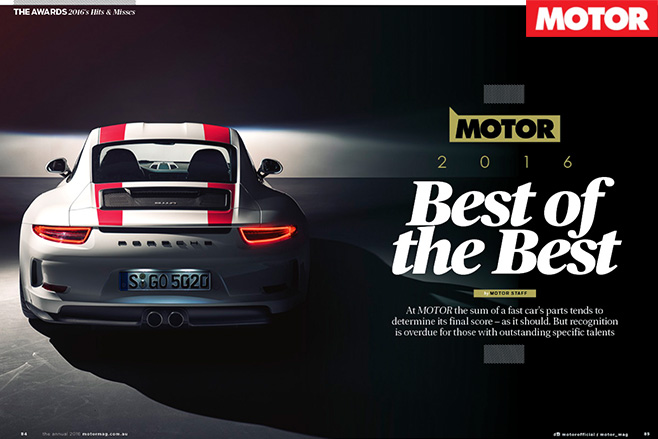
TO drive a manual 911 is one of the defining points in a carhead’s life.
Imagine the most precise, perfectly weighted and utterly engaging mechanical action you’ve ever encountered, double it, and that’s a 911 manual shifter.
And then Porsche all but ditched it from the 911 range. It’s a travesty only made bearable by the laugh-out-loud effectiveness and efficiency of the PDK double-clutch set up.
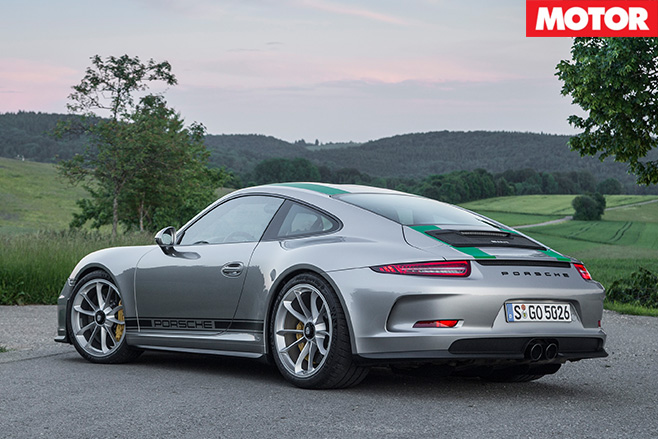
The motor in question is the 4.0-litre naturally aspirated flat-six that’s also going to be used in the new Carrera Cup version of the GT3, and which debuted in the wild RSR of last year. No word on exact power for the road car, but the Cup car – which debuted at the Paris motor show earlier this year – makes 357kW.
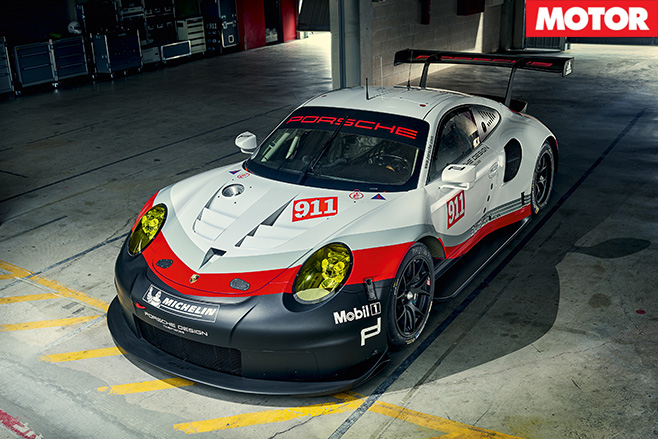
First published in the October 2016 issue of Wheels magazine, Australia’s best car mag since 1953.
The Hyundai Santa Fe better at pleasing its driver, rather than shifting a tribe of seven
Can’t wait to see the final score? Jump to the verdict now.
IF THERE’S one vehicle that clearly stands out as a driver’s express among this motley crew, it’s Hyundai’s Santa Fe.
Tuned in Australia to deliver precise handling and some enthusiast appeal, this limited-edition ‘30’ (see sidebar) introduces Hyundai’s punchy 3.3-litre petrol V6 to the Series II Santa Fe line-up for best-in-class acceleration to back up its sporting claims.
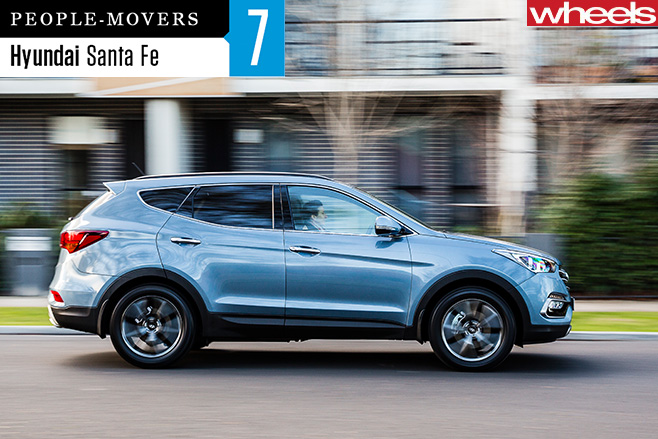
On its lonesome, the sharp-looking Hyundai has enough sex appeal to reel in surfing and adventure types looking for an SUV not hindered by any ‘old codger’ stigma. Handsome, masculine Mineral Blue paint and charcoal 19s are supported by hot-hatch-rivalling 7.6sec 0-100km/h ability and a chassis that’s quite chuckable and decently grippy, negating any concerns that the front-drive Santa Fe might struggle for traction (on bitumen, at least).
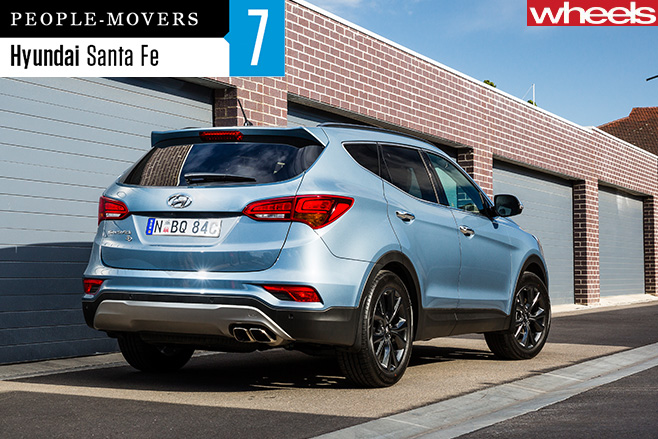
The other downside is Santa Fe’s ride. Regardless of the surface, its suspension is constantly busy, jostling away underneath like a massage function, though it recovers beautifully from the big hits that country Australia can still deliver, and it’s reasonably quiet. Yet despite leather facings in this tricked-out variant, Santa Fe’s front seats rate only average for comfort, beaten by the middle row for under-thigh support (if not lumbar support), and trounced by the Kia pews for generosity of padding.
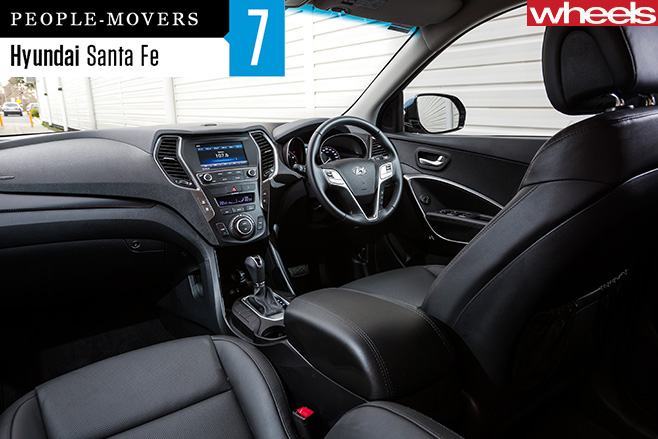
The rest of the Santa Fe’s interior is quite liveable. Nothing class-leading, mind, but a distinctive (if plasticky) dash design with functional controls and neatly symmetrical his-and-hers switch blanks. It lacks the colour and design flair of the better cabins here, but even when drenched in sombre charcoal tones, the Santa Fe feels far more cheerful and upmarket than the Captiva or Pathfinder.
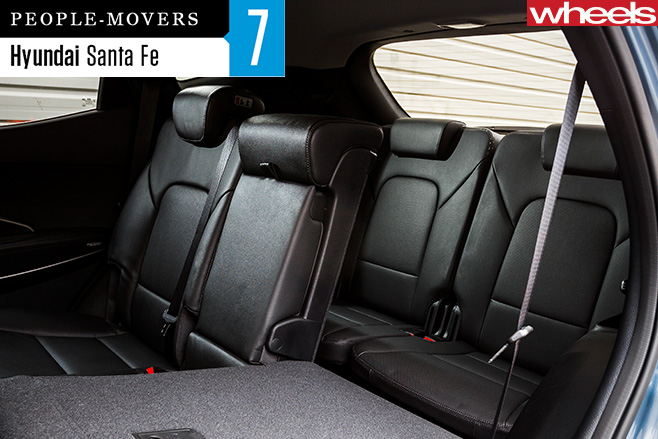
But as an appealing, double-income-no-kids SUV, where fur babies and Ikea visits might take preference, the Santa Fe 30 is bloody good value and a good drive to boot.
Dirty thirties
To celebrate three decades since Alan Bond invited us to say “Hi to Hi-un-die”, Hyundai has launched two Special Edition ’30’ models – an all-wheel-drive Tucson 30 with a 1.6-litre turbo donk for $37,750 and this front-drive V6 Santa Fe 30 for a razor-sharp $40,790. Among its inclusions are unique paint, 19-inch wheels, heated mirrors, chrome door handles, tyre-pressure monitors, leather-appointed seats, dual-zone climate control and a chilled glovebox, adding to an already extensive list of standard Santa Fe kit.
Specifications
- Price as tested: $40,790
- Engine: 3342cc V6 (60u00b0), dohc, 24v
- Power: 199kW @ 6400rpm
- Torque: 318Nm @ 5300rpm
- Transmission: 6-speed automatic
- Dimensions (L/W/H/W-B): 4700/1880/1690/2700mm
- Weight: 1844kg
- Cargo capacity: 516 litres
- Tyres: Hankook Ventus Prime 2 235/55R19 101H
- Test fuel cons: 13.8L/100km
- 0-100km/h: 7.6sec
- 0-400m: 15.5sec @ 147.9km/h
- 80-120km/h: 5.0sec
- 3yr resale: n/a
- Plus: Sharp handling; strong brakes; performance; value
- Minus: Unsettled ride; compromised vision
- Verdict: 6.0
Other seven seater options
Holden Captiva LT AWD
The Holden Captiva LT AWD fails to make a captivating argument for why you’d bother over other, more composed competitors.
Nissan Pathfinder ST AWD
Opportunity knocked, but Nissan didn’t fully open the door. We find the Nissan Pathfinder, while smooth and likeable, falls short of the competition.
Honda Odyssey VTi
An odyssey is an ‘epic journey’. Unfortunately for the Japanese carmaker, the story of the Honda Odyssey has been one of a downward slide.
Toyota Kluger GX AWD
The Toyota Kluger offends no one by sticking to the middle of the road. There’s no escaping that the Toyota offers plenty for the money.
Volkswagen Multivan
The Volkswagen Multivan is certainly the leader of the space race, if not quite the final frontier. Commercial vehicle origins let it down against more sophisticated competition.
The Ford Mustang will adopt a 10-speed auto and magnetically adjustable dampers as options for its 2017 update, according to a US dealership insider.
The employee posted the apparent changes on the Mustang6G forum after discovering them on a dealer ordering system.
A 10-speeder for the Mustang is likely to be the ‘SelectShift’ auto offered as an option on some of Ford’s F-150 ute range, and would be expected to at least improve fuel efficiency over the current six-speed auto.
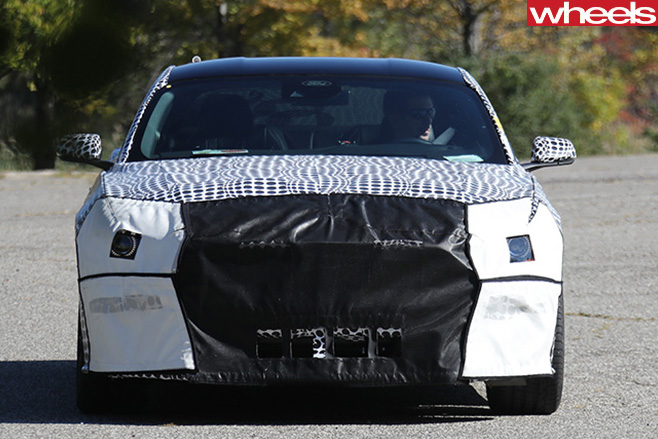
A V6 variant also not imported here looks set to be dropped by Ford, after the dealership employee noted that the computer system produced an “invalid” response against the former codes used for that engine.
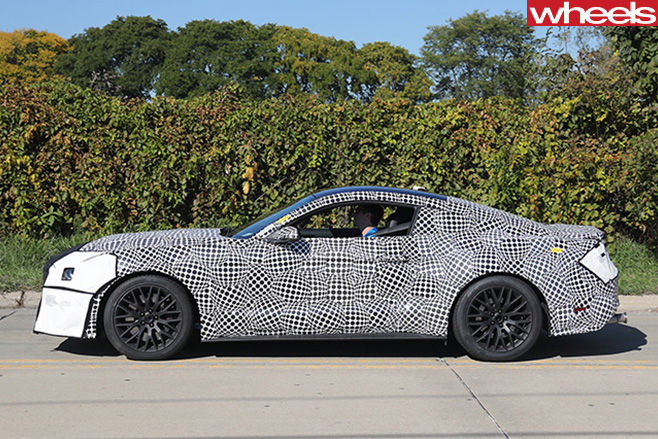
Also detailed are a dual exhaust option, a Carbon Sport package that hints at a possible carbon fibre exterior trim, and two Performance Packages – one general, one specific to GT – and likely to comprise a mixture of the various options.
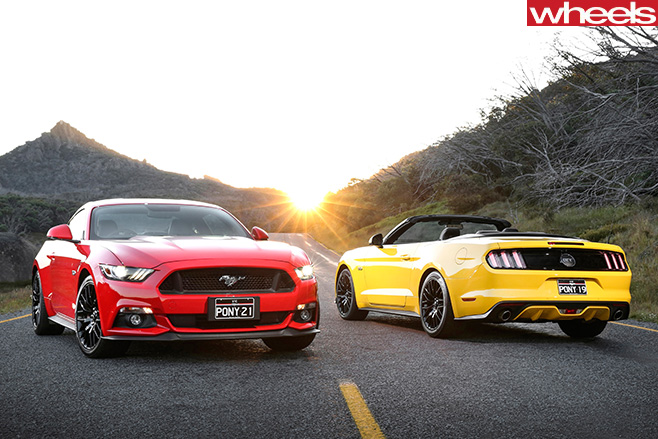
Ford has sold more than 5000 Mustangs in Australia to the end of October to easily displace the Toyota 86 as the country’s most popular sports car.
Here’s what to expect in MOTOR’s latest issue, The Annual, now on ‘shelves’ in digital and news stores.
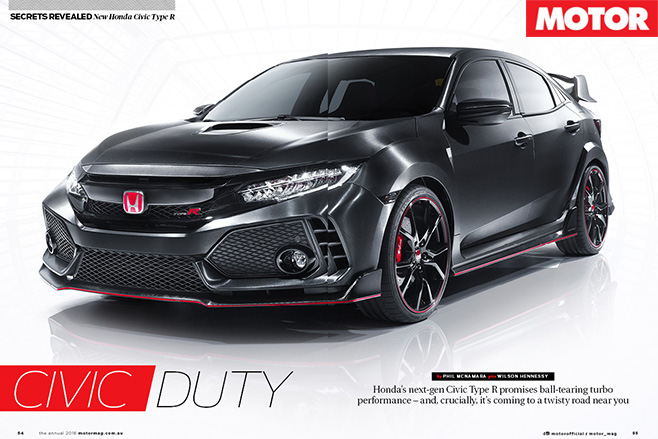
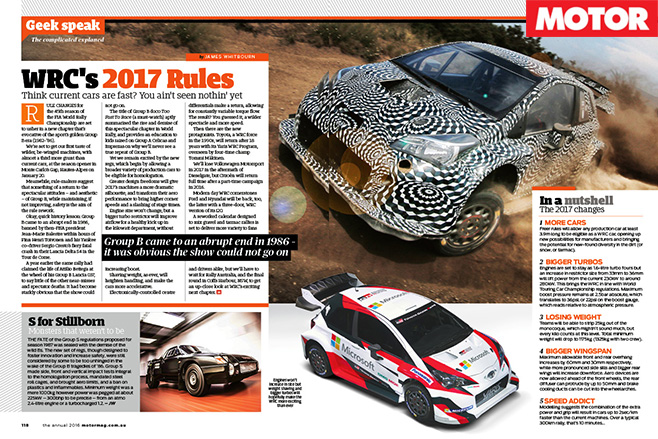
R-RATED: As Honda’s deadly Civic Type R takes aim at Aussie shores we speak to its architects to find out what makes it tick.
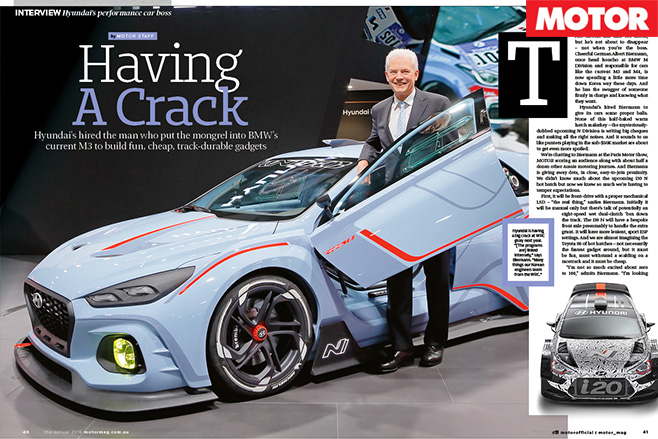
LENO’S GARAGE: One of the world’s most famous petrolheads offers a tour of his weird and wonderful auto collection.
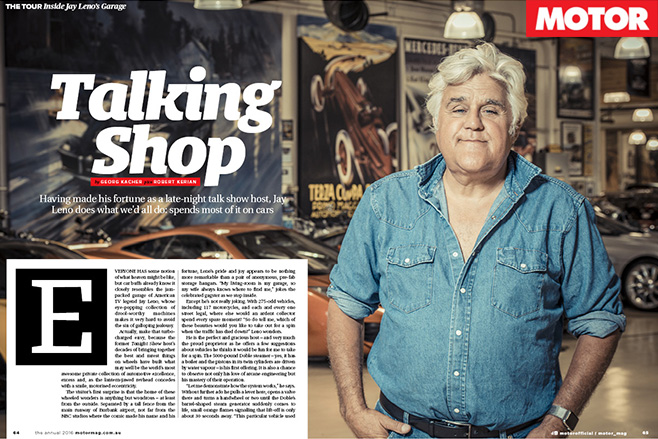
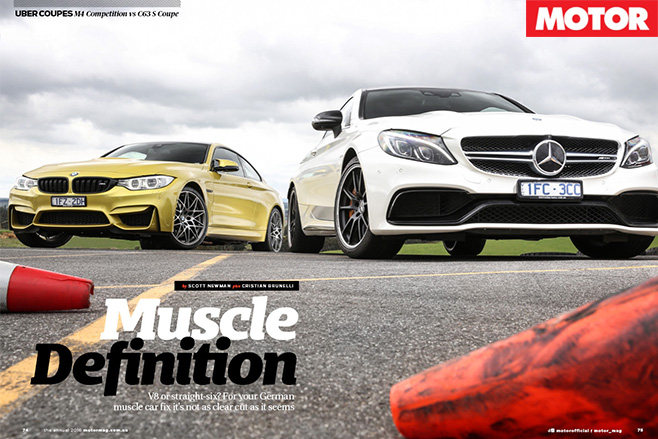
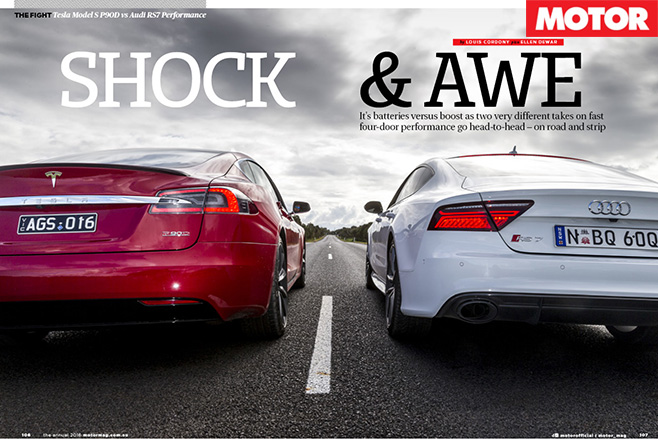
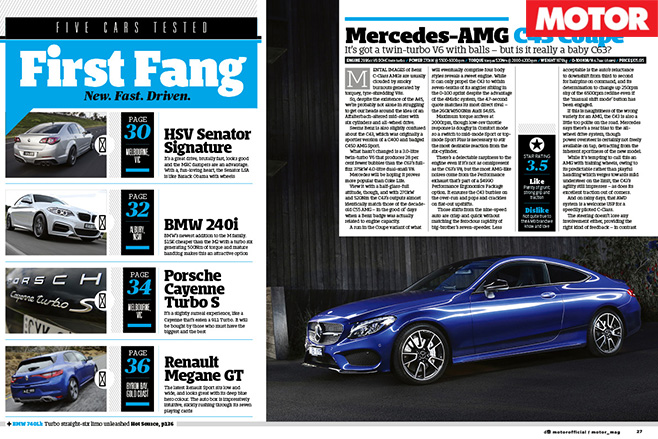
AND MORE: We dive into the tech changes of next year’s WRC regulations; opinion column from the country’s best motoring writers; and much more.
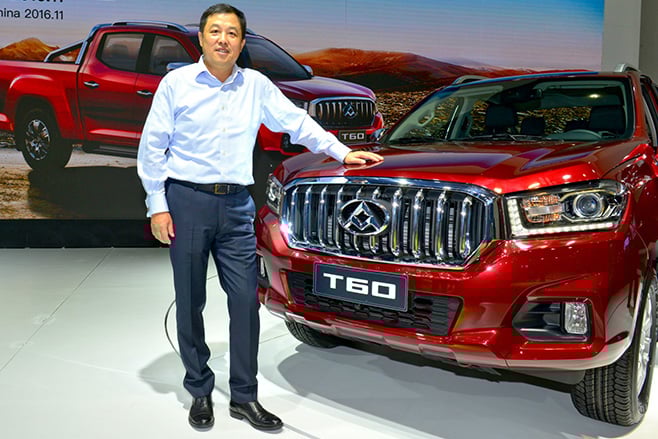
Chinese manufacturer LDV has unveiled its T60 trade ute at the Guangzhou International Motor Show ahead of its Australian debut in the second half of next year.
The T60 will arrive Down Under with a choice of double cab, extended-double cab and single cab variants in both rear- and four-wheel drive.
These will come with petrol and diesel engine options coupled to a choice of three manual and three automatic transmissions.
LDV is targeting Australia heavily with its T60 trade ute, which is built on a steel chassis with a 10-year rust warranty.
The company is expecting the T60 to receive a five-star ANCAP rating. It will be tested in Australia with six air bags, double pretensioning seatbelts, and a full range of electronic safety systems including parking sensors, a rear-view camera, 360-degree cameras and driver fatigue alarm.
Local pricing and specifications will be announced once the LDV T60 closer to its Australian debut.
LDV is a division of SAIC (Shanghai Automobile and Industrial Corporation), the largest and oldest automotive manufacturer in China.
SAIC acquired LDV in 2009, with the light commercial vehicle division born from the Anglo Dutch commercial vehicle company Leyland DAF and recently relaunched the MG brand.
It currently sells the G10 people-mover and van and V80 van in Australia.
Ahhh, Ring vids. They’ve been around for quite a while, and it’s still a good way to while away a few minutes, dreaming of talent you’ll never possess. Sigh.
There is, of course, something better than watching a Ring vid, and that’s making your own. While us poor saps at Chez MOTOR make do with a dodgy PS3 and a roadside-find telly to get our Nurburgring fix, the chaps at German mag Sport Auto actually get to fling their pressers around one of the world’s fastest, most fearsome and unforgiving ribbons of tar. And get paid for it, too.
Its most recent victim is the Ferrari 488 GTB, in the hands of the mag’s test editor Christian Gebhardt, who hustles the car – fitted with Michelin Pilot Sport Cup 2s – around a late arvo sortie in a pretty handy time; 7min 21.63sec, to be exact.
Christian knows his way around, by the looks, and interestingly he short-shifts the 488 in taller gears quite often to dig into that well of twin-turbo torque. There’s a couple of fair old moments when he takes a little too much pace into a corner – a second or more fell out of his pocket through the Karussell, for one – but otherwise it’s a clean, quick lap in a ferociously fast road car.
And if you’re wondering where that lap time puts the Fezza, it currently sits 14th in the top 100, four seconds better than an Enzo and seven in front of the 458 Italia. The fastest, if you’re wondering, is the Radical SRT8LM from 2009, recording a 6min 48sec screamer.
One of the most anticipated models of next year – the Honda Civic Type R – has been caught in Australian testing ahead of its expected Geneva motor show debut in March.
A duo of camouflaged next-generation Civic Type R examples were caught being tested in Melbourne, and Honda Australia confirmed that both were also scheduled to be driven in Sydney in a program that would cover both urban and country roads.
“As you know we do a lot of validation testing in various countries, Australia included, so Honda is often bringing in vehicles for hot weather testing and the Civic Type R is part of that,” Honda Australia group public relations manager Neil McDonald told MOTOR.
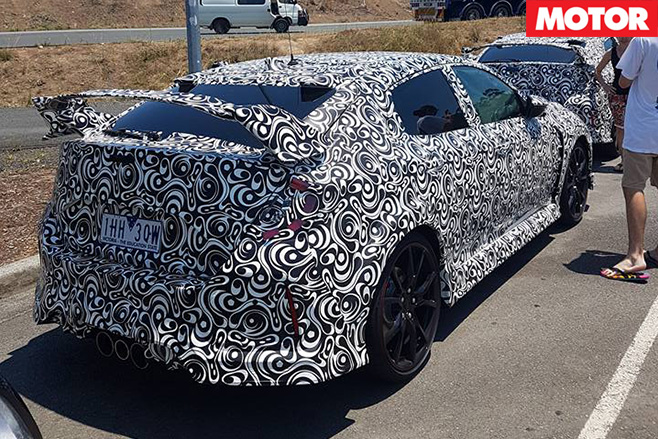
Honda Australia exclusively revealed to MOTOR that the Civic Type R will arrive here in manual-only format with a price tag below $50,000 with late-2017 timing expected.
The production version will look similar to the wild Civic Type R Prototype revealed at September’s Paris motor show, and it will retain a 2.0-litre turbocharged four-cylinder that in the outgoing model produced 228kW and 400Nm.
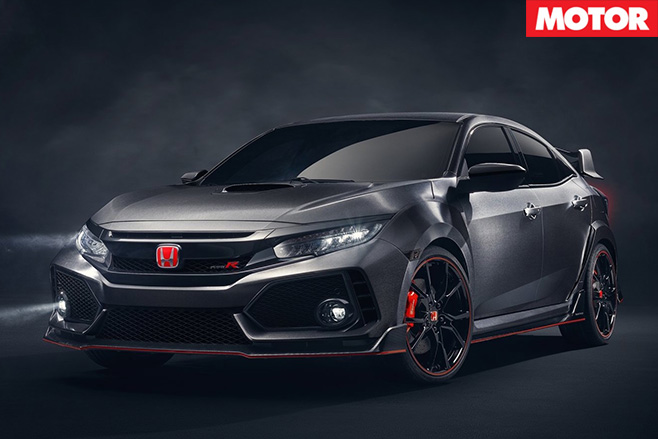
Although the Honda Civic Type R is expected to make its official public debut at the Geneva motor show in March, MOTOR has scored an inside line on the design and performance make-up of the Japanese mega-hot-hatchback in The Annual 2016 issue on-sale now.
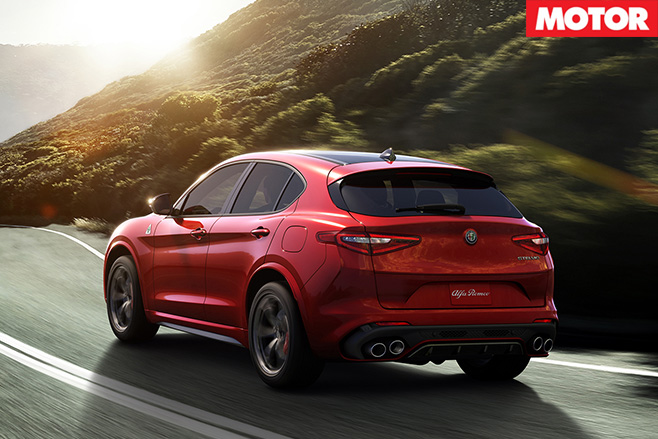
THE worm has turned. Hell has frozen over etc. Alfa Romeo, once portrayed as the ultimate petrolhead brand, has knelt at the altar of the Sports Utility Vehicle.
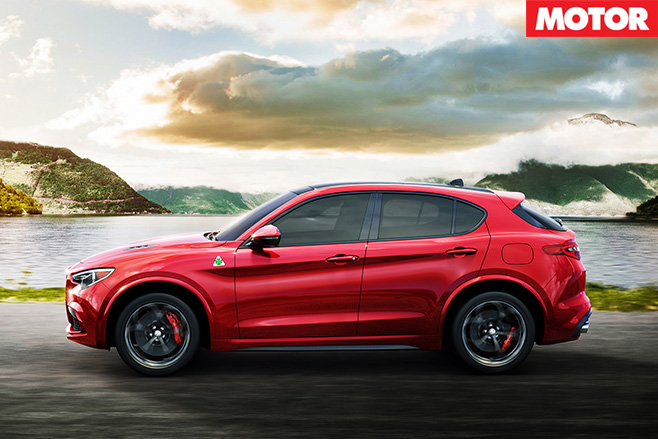
Dubbed the Stelvio – and ain’t THAT an irony – it’s based on the same underpinnings that grace the Giulia sedan, which was designed in part by men in coats with ‘Ferrari’ stitched on them.
There’s no escaping the fact that this particular Alfa is perched up high on large diameter wheels and high-riding suspension and has a huge tailgate for loading calfskin leather-lined baby prams into. And it is going to sell every single one it makes.
There are reports, though, that Alfa has trademarked the name in the US and may use it for yet another SUV.
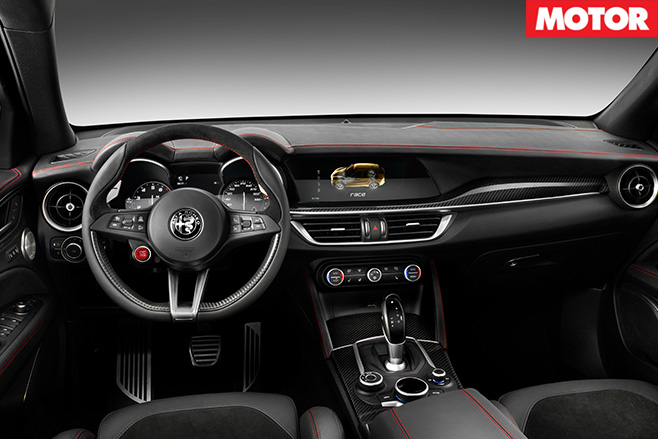
A Fezza-developed 2.9-litre alloy V6 with two turbos strapped to it will make 375kW and 600Nm, pumped out to all four wheels via an eight-speed auto box.
Despite the fact that Alfa have been banging on about SUVs for the better part of fifteen years, this one is still a couple of years away at best, with a best guess debut down under – and probably in 2.0-litre turbocharged four-potter form – in 2018.
Toyota’s long-awaited compact SUV has arrived, offering cutting-edge design that’s, well, so un-Toyota.
WHAT IS IT Toyota’s excitement quota for several years. The new Toyota C-HR is every bit as radical as most of the company’s offerings are conservative, and although it’s primarily designed to appeal to European buyers falling out of love with conventional hatchbacks it, will goon sale in Australia in February. Only one powerplant will make it here, an 85kW 1.2-litre turbocharged four-cylinder, which will be offered as a front-drive manual, a front-drive CVT, or an all-wheel-drive CVT.
WHY ARE WE TESTING IT? To see if the world is ready for such a radical-looking Toyota. The C-HR does a better job than most when it comes to combining the once-contradictory design themes of crossover and coupe. Underneath it sits on the same next-generation GA-C platform as under the new Toyota Prius, and which will go onto underpin almost all of Toyota’s mid-sized models. The Nissan Qashqai has proved that crossovers can become mainstream models rather than niche players, and Toyota dearly hopes to enjoy similar success.
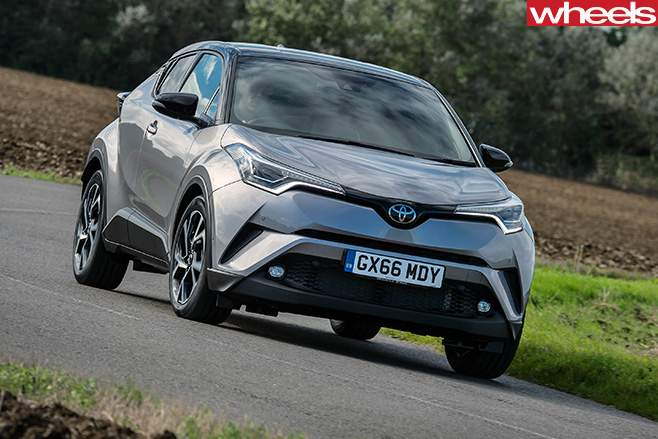
THE WHEELS VERDICT We’ll fully understand if the C-HR isn’t your thing; it’s probably the most daring thing that Toyota has launched in living memory. Under the radical styling lies an impressively competent alternative to a mainstream hatchback, and one that won’t require buyers to make too many compromises. The 1.2 turbo can’t deliver a huge amount of performance, and the handling doesn’t quite live up to the promises made by the design, but overall it’s a welcome new direction for the brand.
PLUS: Advanced style; decent boot; competent ride and handling; useable interior space MINUS: Interior smacks of conservatism; closed-in rear seats; drive lacks sense of fun suggested by design
THE WHEELS REVIEW WE SHOULDN’T see the new Toyota C-HR as just a car. It’s also an apology, recognition from Toyota that it’s been trying to sell some very dull mid-sized cars in parts of the world that are no longer interested in them. As such gestures tend to be, it’s close to being over-blown, try-too-hard; yet if you’re prepared to accept something so visually radical wearing a Toyota badge the result is pretty impressive.
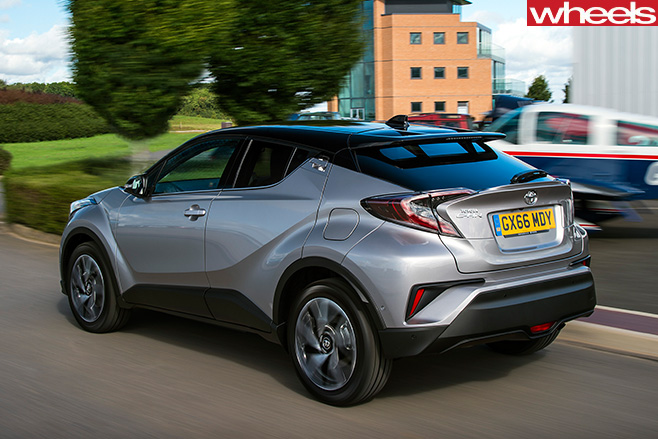
The C-HR sits on the same GA-C platform that underpins the Prius and was designed for Europe, where Toyota’s dealers have struggled to shift the Corolla-twin Auris for years. Response from other markets to the project was positive enough to see it given wider distribution, with Australian sales set to start in February.
Our cars will be built in Japan and will come exclusively with a 85kW 1.2-litre turbocharged petrol engine; other markets will have the option of a hybrid using the Prius’s running gear or – in parts of Eastern Europe and the U.S. – a 2.0-litre atmo donk.
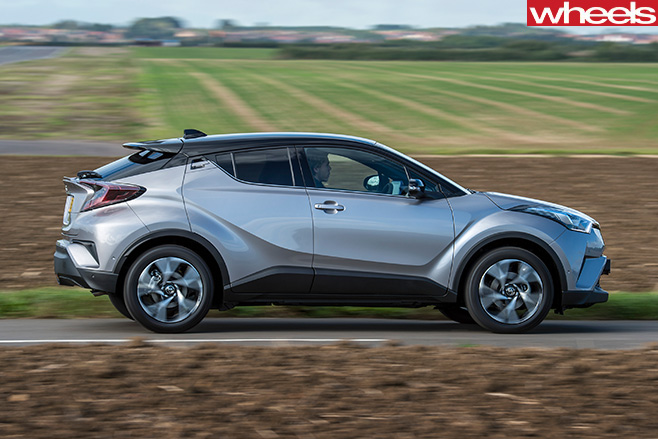
In design terms coupe and SUV are never going to be easily combined, but the Toyota pulls it off about as successfully as it’s possible, and with far more grace than the vastly more expensive Mercedes GLE Concept.
Things aren’t much less radical inside the cabin. There’s still some familiar Toyota switchgear – and the separate LED digital clock that the company has put in everything it has built for the last three decades – but everything else is swoopy and sleek, with a diamond theme that carries from the shape of the HVAC buttons to the door cards and even the headlining. Materials mostly feel reassuringly expensive, although wandering fingers can find some lower-rent plastics lower down.
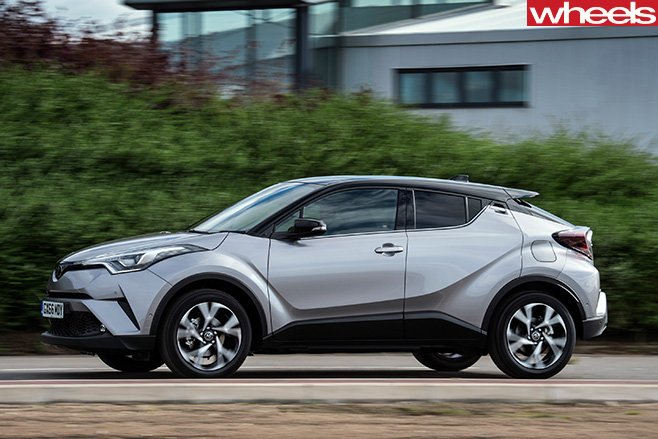
The 1.2-litre turbo is new to Australia and, for the most part, impresses. Like most small capacity turbo petrols it is tuned to deliver a convincing diesel impression, churning out its peak 185Nm on a flat plateau from 1500rpm to 4000rpm and revving out at just 5600rpm. It feels tight at the top end but works happily in its brawny mid-range, which delivers enough shove for a respectable real-world pace.
The basic front-wheel-drive version will come with either a six-speed manual (with rev-matching on downchanges) or a CVT, with the more expensive all-paw version being CVT only. As tends to be the case this works well under low intensity use, keeping the engine around the 2000rpm mark where it’s happiest, but requests for get-me-out-of-here acceleration come at the expense of the engine putting on a convincing impression of a food blender. At least, unlike many modern systems, it doesn’t pretend to have gears when left in “Drive”, although the virtual ratios accessed by sliding the selector into its manual mode are every bit as slurry.
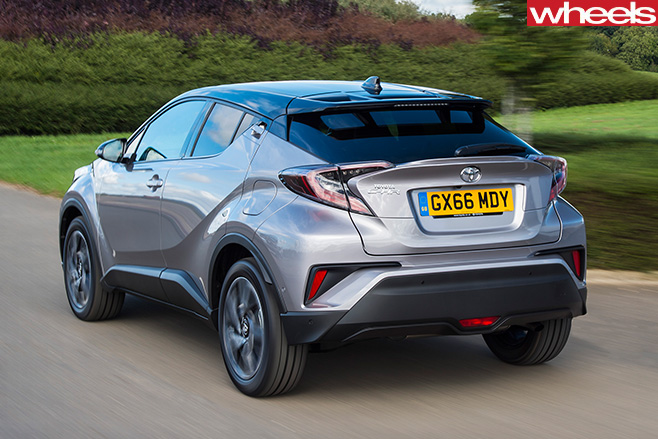
Project leader Hiruyuki Koba is a keen racer – happily showing journos an in-car video of a big spin at Suzuka as he fought for the lead in a recent race – and says he fought hard to be allowed to partially develop the C-HR on the Nurburgring Nordschliefe in Germany. Indeed, he drove a prototype version with a tuned 120kW engine in a four-hour race there earlier this year.
The C-HR has certainly been able to exploit the extra torsional rigidity of the GA-C platform, with well-chosen spring and damper settings allowing it to feel both taut and pliant when digesting a three-dimensional road at speed. Steering is less impressive – direct and proportional, but with little more than a digital impression of feel reaching the helm. Try too hard in a slower turn and it understeers, but not excessively so, and although it will tighten its line on an eased throttle it does so without the sense of fun you’d expect from a true hot hatch.
But then, the C-HR does cover a lot of bases and on-the-limit handling is probably unlikely to be at the top of the wishlist of too many potential buyers. We’re promised that Australian specification will be generous, with autonomous emergency braking, adaptive cruise, automatic high beam, a reversing camera and lane departure warning coming as standard on the circa $26,000 entry model, with a higher-speced C-HR “Koba” – named after the car’s engineering father – getting 18-inch alloys, part-leather seats and keyless entry.
We’ll have to wait longer for pricing details, with Toyota predicting it will slot behind the Toyota RAV4’s 15,000 units in terms of sales volumes.
With details of the new BMW joint venture that will lead to the Supra set to drop soon, let’s hope Toyota hasn’t used all its quota of excitement in this one model.
SPECS Model: Toyota C-HR Kobu Multidrive S Engine: 1197cc 4cyl, dohc, 16v, turbocharged Max power: 85kW @ 5200rpm Max torque: 185Nm @ 1500rpm – 4000rpm Transmission: CVT, all-wheel drive Weight: 1510kg 0-100km/h: 11.4 sec (claimed) Fuel economy: 6.3L/100km (est) Price: $35,000 (est) On sale: February 2017
JEEP will muscle in Australia’s booming 4×4 Pick-Up market with a four-door utility based on the next-generation JL Wrangler.
Championed for almost a decade by Fiat Chrysler Automobiles group chief operating officer for Asia/Pacific, Michael Manley, the JT Wrangler Pick-Up will enter production in the third quarter of 2018, about nine months after the three-door hardtop and five-door Unlimited wagon versions arrive.
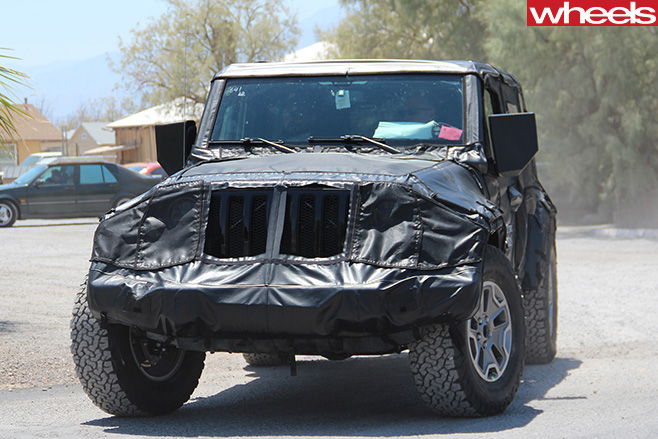
“The first production will be August or September 2018, so by the time that gets into our international markets, we’re probably looking at very early 2019.
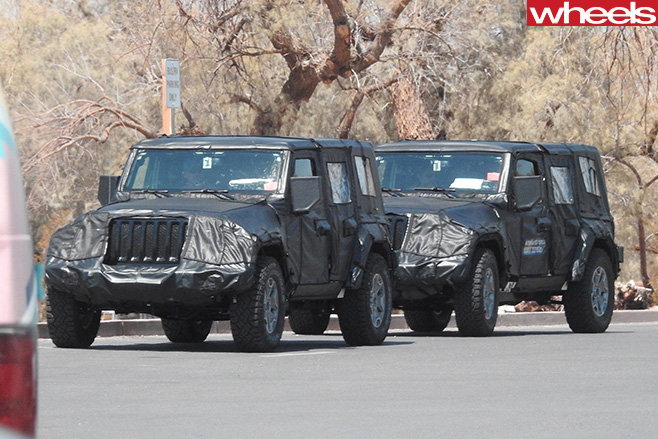
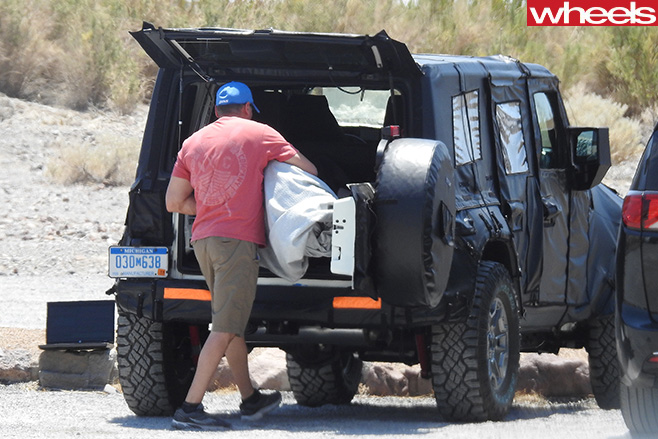
Spy shots reveal a four-door dual-cab utility body, integrated neatly behind the future Jeep Wrangler front. As a rugged 4×4 vehicle it will retain a body-on-frame construction, but we hear that the newcomer’s doors and front mudguards will switch to aluminium to cut weight.
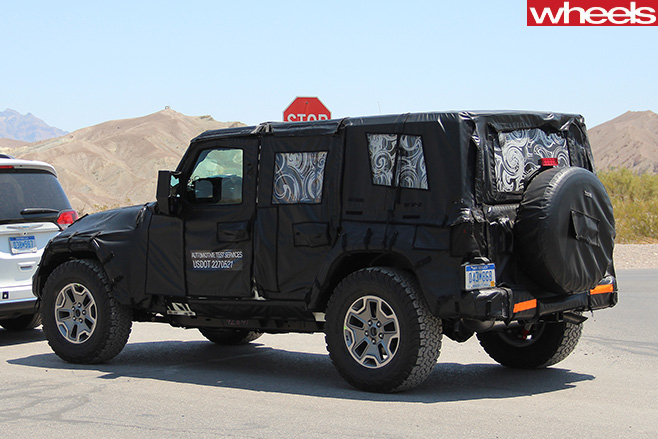
While the next-gen Wrangler’s styling is a gentle evolution of an eight-decade-old design, there are many detailed changes, including larger circular headlights with LED inserts, a more angled grille, longer bonnet, and a slightly more raked windscreen.
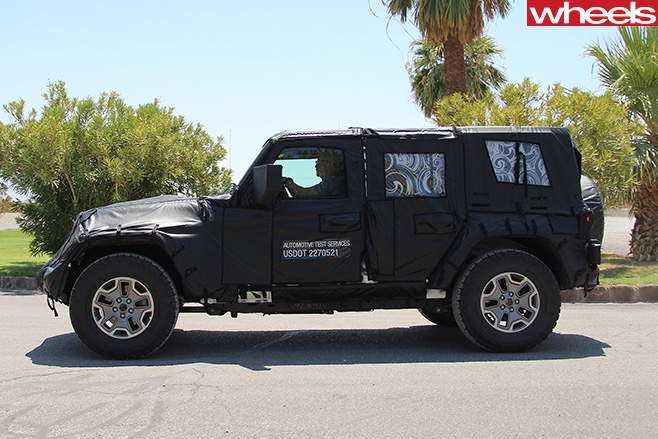
Jeep has been on the Wrangler ute scent since it displayed the Gladiator Concept at the 2005 Detroit Auto Show – though nothing came of that.
The Ford Ranger and Toyota Hilux are locked in battle for leadership with around 25,000 registrations apiece, with the Mitsubishi Triton third with almost 15,000 sales.
