
LAKE MOUNTAIN ROAD
This brief 10.5-kilometre stretch of road is used as the access point to Lake Mountain Ski Resort, so is heavily trafficked in winter. However, come the warmer months, when the snow fields are long gone, it becomes a joyous playground for thrilling driving experiences. The trip from base to summit takes just 13 minutes, but Lake Mountain Road is well worth multiple passes. The road offers a great combination of turns and views. Make a day of it, by combining the trip with other Dandenong staples such as Reefton Spur, Black Spur, Chum Creek Road, and Marysville-Woods Point Road. After you are done with Lake Mountain Road, make sure to stop off at Marysville for a Hot Chocolate or bite to eat.
GREAT OCEAN ROAD
No driving road list would be complete without the Great Ocean Road. However, its popularity is a double-edged sword, as the road is as busy as most inner-city roads particularly on weekends. That is all forgiven once you get a taste of the breathtaking views. With multiple seaside towns to stop for food, the Great Ocean Road makes a fantastic route for day trips or weekend getaways in the car.
GREAT ALPINE ROAD
Say hello to arguably one of the greatest driving experiences in Australia. If you enjoy a good drive, then make sure you put the Great Alpine Road high on your to do list. The 339-kilometre route winds from Wangaratta in the state’s north-east, all the way to Metung and the beautiful Gippsland Lakes. The Great Alpine Road is butter smooth, with fantastic flowing sweepers, combined with ruggedly handsome and typically Australian scenery. Taking about 5 hours to transverse, it is well worth setting aside a weekend for this route.
ARTHUR’S SEAT ROAD
This hair-raising combination of switchback hairpins and spectacular views is great for a short blast. Rising from Dromana, this twisting road provides a great payoff for those which reach the summit with a breathtaking view. Arthur’s seat is one of the highest peaks in the relatively flat Mornington Peninsula, giving you a great vantage point of the surrounding areas.
BOGONG HIGH PLAINS ROAD
If the Great Alpine Road is too mainstream for you, the Bogong High Plains Road should be right up your alley. Taking in mountainous landscapes, this alpine road is smooth, flowing, relatively traffic free, and lacking the sticks and other green debris that can hamper most mountain passes. This driving road would make a great addition to a weekend venture to the Great Alpine Road.
The Skoda Kodiaq – Skoda’s first full-sized SUV – could be a big seller in Australia, so we got in early to get a taste.
WHAT IS IT? Skoda’s first full-sized SUV – the mostly hatchback Yeti not really counting here – which will arrive in Australia next year complete with standard all-wheel drive and pop-up third row seats. Underneath it’s another remix of the familiar VW Group MQB architecture. Australia will get a simplified model line-up with just the 132kW 2.0-litre TSI available from launch, and a 140kW 2.0-litre TDI diesel following some way behind. All our versions will also come with both seven seats, all-wheel drive through a part-time Haldex system and a seven-speed DSG twin-clutch gearbox.
WHY WE’RE TESTING IT This is new ground for Skoda, and a car particularly well suited to Australian tastes – this could be the brand’s first big hit down under. Although spun from the same familiar MQB model architecture as the Octavia and Superb – and indeed most stuff that VW Group makes these days – the Kodiaq has the neat USP of those pop-up third-row seats. It’s set to launch in a market segment filled with tough competitors, but if Skoda can price (and equip) the Kodiaq well, it stands an excellent chance.

THE WHEELS VERDICT Much about the Kodiaq is familiar – it’s as sensible and well-built as pretty much everything else that Skoda produces. But it also offers a brave new direction for the Czech brand thanks to the combination of its crossover design and seven-seat practicality. The Kodiaq is definitely a ramped wagon rather than a rugged off-roader, but it works extremely well on-road and – on the basis of our first impressions – is set to put up a stern challenge to the segment’s established leaders.

Skoda is definitely pitching the Kodiaq at the lifestyle market, and it’s fair to see it as a bigger alternative for the Volkwagen Tiguan – size wise it pretty much splits the difference between that car and the Touareg. The Kodiaq is another stirring of the pot which is VW Group’s MQB product matrix, but with the neat USP of a pop-up third row of seats. This will be optional in most markets, but standard in Australia. Similarly we’re not going to get any of the smaller capacity engines or the option of front-wheel drive, with all cars coming here having either 2.0-litre petrol or diesel turbo donks, all-wheel drive and the familiar seven-speed DSG twin-clutcher.
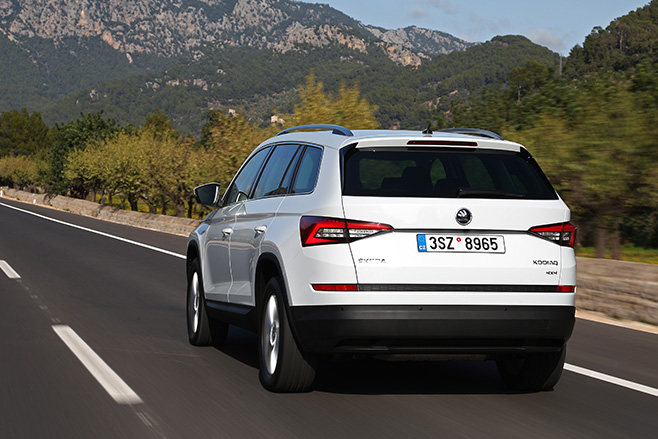


Australian sales of the Kodiaq start in the middle of next year. We’ll only have the TSI available from launch, with the official hope being that the TDI will join the line-up within a year. On first impressions it’s a fine all-rounder rather than the sort of car to set pulses racing, but it definitely puts ticks next to a lot of boxes.
SPECS Model: Skoda Kodiaq 2.0 TSI 4×4 Engine: 1984cc 4cyl, dohc, 16v Max power: 132kW @ 3900rpm – 6000rpm Max torque: 320Nm @ 1400rpm – 3940rpm Transmission: Seven-speed twin-clutch, four wheel drive. Weight: 1738kg 0-100km/h: 8.2 sec (manufacturer) Fuel economy: 7.3L/100km (EUDC) Price: c$45,000 (estimate) On sale: Summer 2017
Nissan has heralded the GT-R’s 2017 update as its biggest yet, but its focus has been primarily on improving the R35’s refinement and day-to-day useability – making it a little more ‘GT’ and a little less ‘R’.
The latter role will be filled by the forthcoming GT-R NISMO, due to land in February 2017, but if you still want your GT-R to be a hardcore performance car and don’t have $299K, Nissan now has you covered with the Track Edition.
Not to be confused with the HSV of the same name, the Track Edition shares the same 419kW/632Nm 3.8-litre twin-turbo V6 as the ‘regular’ GT-R but scores a black and red interior treatment and carbon fibre rear spoiler from the superseded Black Edition and a number of chassis upgrades from its hardcore NISMO twin.
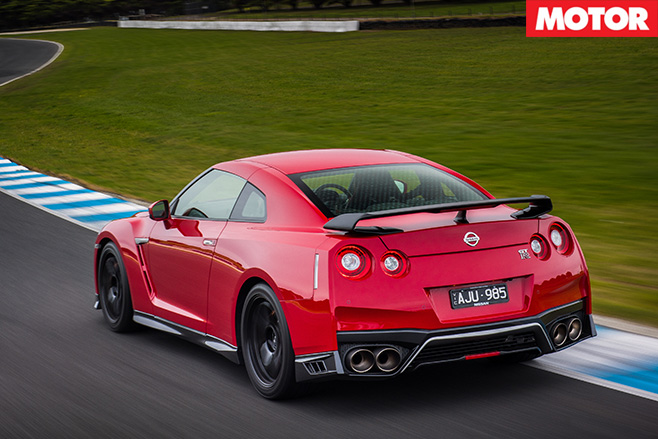
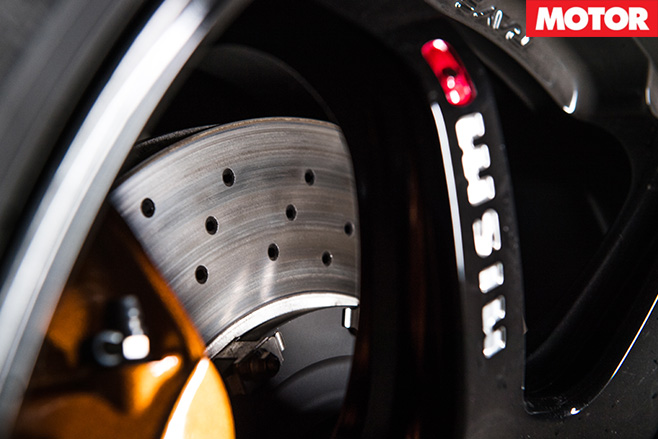
The suspension is lifted directly from the NISMO, with new springs, dampers, anti-roll bars and upper links, while wider front guards allow the lightweight forged RAYS aluminium wheels to be a half-inch wider at the front (now 20 x 10-inch; rears remain 20 x 10.5-inch). These contribute to a 5kg weight drop and 10mm of extra front track.
Instantly, the front end feels much more positive, to the point that we’re warned against turning too sharply until the tyres are up to temperature, lest we disappear backwards off the track.
Whereas the standard GT-R can feel its weight and require some patience on track, the Track Edition seems to dig further into the tarmac, feeling sharper in slow corners and more stable in fast ones. And of course in a straight line it still borders on unhinged.
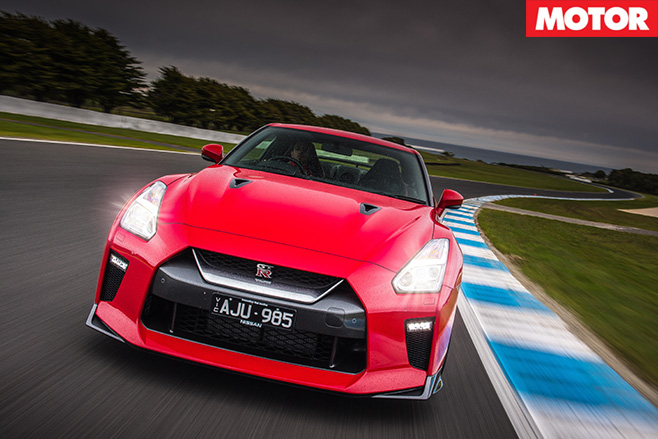
As the name suggests, the Track Edition upgrades are aimed at improving circuit performance, so if you’re only an occasional track day attendee they are possibly of marginal relevance, however if you regularly venture beyond the pit wall, this could be an ideal compromise between the regular GT-R and the hardcore NISMO.
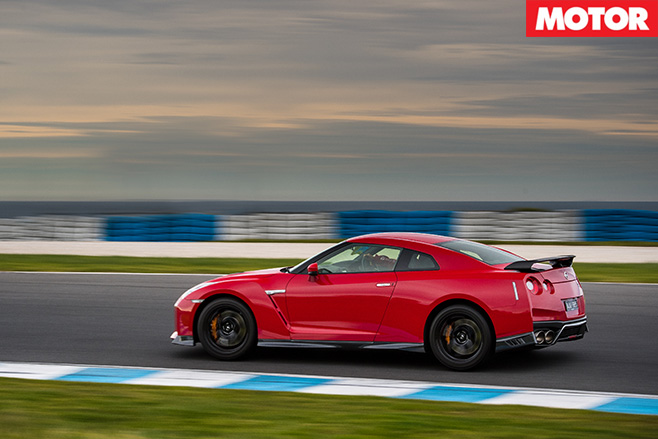
LIKE: Sharper suspension setup; carbon wing DISLIKE: Lots of money; haven’t driven it on road yet
SPECS Engine: 3799cc V6, DOHC, 24v, twin-turbo Power: 419kW @ 6800rpm Torque: 632Nm @ 3300rpm | Weight: 1760kg 0-100km/h: 2.7sec (claimed) Price: $227,000
What stands out?
The Volvo S60 is a crisp looking Scandinavian sedan from a brand with an enviable safety reputation and rising cool credentials. It has a comfortable, minimalist-look interior, handles well, and comes with punchy petrol and diesel engines.
What might bug me?
Trying out a friend’s similar BMW, Audi, Mercedes or Jaguar and finding it feels even better to steer. The S60 is very good, however – it just has some tough competition.Trying to squeeze the whole family’s holiday luggage into the boot. For a mid-sized sedan, the boot on an S60 is not very big.Driving under 80km/h on your space-saver spare tyre until you can fix your full-sized flat.
What body styles are there?
Four-door, five-seat sedan only. (The Volvo V60 is the wagon equivalent).Most Volvo S60s drive their front wheels, but the S60 R-Design T6 drives all four wheels.The S60 is classed as a medium car, higher priced.
What features do all versions have?
Cruise control. Dual-zone climate-control (which lets you set different temperatures for each side of the cabin). A reversing camera, and rear parking sensors.Windscreen wipers that operate automatically when it rains.Daytime running lights, and turn indicators, illuminated by long-lasting LEDs.A multimedia system with a seven-inch colour screen, an AM/FM radio, a CD/DVD player, and internet connectivity. Bluetooth connectivity for phone calls and audio streaming, and Auxiliary and USB input sockets. Satellite navigation.Connected Service Booking, which can transmit vehicle information to a service centre for scheduling routine maintenance.Controls for the multimedia system on a leather-trimmed steering wheel that is adjustable for height and reach. Leather trimmed seats, with a power-adjustable seat for the driver that can remember your setting (making it easy to restore after a companion has driven the car).Wheels made from aluminium alloy, which are usually lighter and better looking than the steel wheels with plastic covers found on some lower priced cars. A skinny space-saver spare wheel and tyre.Low-speed autonomous emergency braking. Called City Safety, the laser-based system works at speeds up to 50km/h to alert you, and if necessary brake the car automatically, should you be in danger of rear-ending a car in front.Six airbags: two directly in front of the driver and passenger; one on the outer side of each front occupant to protect the upper body; and airbags on each side to protect the heads of front and outer-rear occupants.Electronic stability control, which can help you control a skidding car. All new cars must have this feature.Every Volvo S60 carries a three-year, unlimited kilometre warranty.
Which engine uses least fuel, and why wouldn’t I choose it?
You can choose from four engines in an S60: an excellent turbo-diesel four cylinder, two smooth turbo-petrol four cylinders, and a quick supercharged turbo-petrol four cylinder.The 2.0-litre D4 diesel uses the least fuel, consuming just 4.2 litres/100km on the official test (city and country combined). The main reason you might not choose this effortless diesel is that you are seeking a sportier, more powerful drive.The 2.0-litre turbo-petrol engine comes in T4, T5 and T6 forms, each more powerful than the one before. The T4 feels less powerful than the turbo diesel, particularly from low speeds or when you first press the accelerator to overtake on the highway, but it is a nice, smooth engine. It uses 6.8 litres/100km.The T5 engine nearly matches the diesel for effortless shove from low speeds, and builds up about 35 percent more oomph than the oil burner can offer if you hold down the accelerator pedal. It uses 6.4 litres/100km on the official test – less fuel than the less powerful T4.The T6 engine adds a supercharger to the T5’s turbocharger to take performance to a much higher level. It has at least as much grunt as the diesel from any speed, and about 60 per cent more if you hold your foot down. The extra go comes with modestly increased thirst: 7.2 litres/100km.Every S60 engine has an automatic stop-start system, which saves fuel in urban driving. It shuts down the engine when you stop, and starts it again when you take your foot off the brake pedal to drive away.The T4 petrol engine comes only with a six-speed automatic gearbox. The D4 diesel, and the T5 and T6 petrols, are paired only with eight-speed automatics. Both auto gearboxes are conventional designs that work smoothly in all conditions.
What key features do I get if I spend more?
The least costly S60s are the Kinetic T4 and D4, which come with the features common to all S60s and wheels of 17 inches diameter. Engines are the least powerful petrol or the diesel, respectively.Spending more for an S60 Luxury adds a third engine option: the more powerful petrol T5. It also gets you smart-key entry and start, which lets you open the doors and drive away with the key kept safety in a pocket or bag. You can control the satellite navigation with your voice, and the very bright bi-xenon headlights dip automatically for oncoming drivers. Powered seat adjustment is added for the front passenger. Wheel diameter is 18 inches, and tyres of a correspondingly lower profile make the S60 Luxury look sportier and sharpen the steering a bit.Spending more again for an S60 R-Design brings you the option of the very powerful T6 engine and accompanying all-wheel drive, firmer suspension (for more stability when cornering hard), and a much sportier look inside and out. You also get perforated leather trim on all seats, and in front there are sports seats that hold you in place better around corners. A better infotainment system brings Harman Kardon brand audio. Wheels are 19-inchers, with tyres of a lower profile again.Available at extra cost – about $4000 – is a Driver Support Pack, which bundles adaptive cruise control and highway-speed auto braking with a blind spot warning, lane-departure warning, and rear cross traffic alert. (For more on these systems, please open the Safety section below.)
Does any upgrade have a down side?
The 19-inch wheels on the T6 R-Design ride a bit more roughly than the 17- and 18-inch wheels and tyres worn by an S60 Kinetic or Luxury. That’s because the lower-profile tyres on the bigger wheels have less rubber and air cushioning you from the road.The sports suspension that underpins S60 R-Design versions detracts from ride smoothness also.Of 14 colours available on a Volvo S60, three – black, white and red – are non-metallic and come without extra cost. Other colours cost about $1500 extra.
How comfortable is it?
The S60’s interior doesn’t possess the cocktail-bar-cool of an Audi, the stylised slickness of a Benz or the austere ambience of a BMW. Its Scandinavian minimalist cabin treatment isn’t like anything else, but it is bound to please on first acquaintance, with clean lines, rich materials and a fine finish.The front seats are comfortably cushioned – with extra side-to-side support in the R-Design – and you’re well placed in relation to the steering wheel, pedals and minor controls.The vibe goes in a subtly classier direction in Luxury versions, and takes on a sporty slant in the R-Design thanks to different trim colours and finishes.The S60 rides with controlled absorbency, and handles bad country roads very well. The firmer sports suspension that underpins R-Design versions makes the ride a bit busier, and at urban speeds its low-profile tyres thump over sharp edged bumps.The S60’s body feels strong and solid, and the suppression of wind and tyre noise is excellent.
What about safety?
Electronic stability control, a low-speed (sub-50km/h) autonomous emergency braking system, six airbags, a reversing camera, and rear parking sensors are solid safety fundamentals in all Volvo S60s.The standard safety package can be enhanced with a Driver Support Pack that is optional on any S60 for about $4000.This option pack brings adaptive cruise control, which will match the speed of a slower vehicle in front on the highway, maintaining a time-gap that you set. It also brings a more sophisticated, radar and camera based, automatic emergency braking system (called Collision Warning with Full Auto Brake) that is effective at highway speeds. A blind spot indicator warns when a vehicle is travelling next to you but out of view, and a lane departure warning monitors lane markings and sounds an alarm if you are drifting into an adjacent lane (perhaps because you are falling asleep). When reversing out of a parking spot, a rear cross-traffic alert warns if something behind is about to cross your path.The Australasian New Car Assessment Program (ANCAP) has not rated the current, four-cylinder, range of S60s.However, in 2012 ANCAP awarded the very similar five-cylinder diesel Volvo S60 its maximum five stars for safety.
I like driving – will I enjoy this car?
The Volvo S60 is composed, capable and enjoyable in isolation. It is an easy car to feel happy in, even if there are more engaging alternatives.The S60 has assured and linear steering. It turns in eagerly and holds its cornering line with authority.Its engines are a satisfying bunch. The turbo petrol T4 is a modest performer by S60 standards and its gearbox is short two ratios compared with the rest, but it still performs very comfortably on the highway. The turbo-diesel D4 is stronger, and is the engine of choice if a long touring range and low fuel costs are high on your priority list.The T5 offers performance in the realm of a hot-hatch – a Volkswagen Golf GTI, for example – with all the effortless everyday responsiveness that brings. The supercharged and turbocharged T6 offers substantially more, so it’s quite quick.The addition of all-wheel-drive in the T6 R-Design adds to already trustworthy and generously grippy handling in the S60, and helps it deploy the extra power without tyre slip, especially on slippery surfaces such as on wet roads or gravel.Each engine and gearbox pairing is smooth and co-operative, and the addition of manual shift paddles in Luxury and R-Design versions adds to drivability and enjoyment.
How is life in the rear seats?
The S60’s rear compartment offers passengers a comfortable cushion, a well-judged backrest angle, and generous knee and head room. It’s a nice place to ride.From this luxurious vantage point, back-seaters have a good view forward and out of the side windows, and are well placed to enjoy the S60’s solid feel, ride quality and refinement. They also get their own air-conditioning outlets on the roof pillars, at about the height of the front-seat headrest.
How is it for carrying stuff?
The S60 has a relatively small boot for a medium-sized car – at 380 litres, it’s not much bigger than that of a hatchback. In its defence, the Volvo’s boot has a fair sized opening, and gooseneck hinges that won’t crush your luggage.A 40-60 split-folding backrest – the smaller side behind the front passenger – gives the S60 good luggage flexibility, because you can stow long items along the left side of the cabin, leaving room for two in the back.There is also a ski port to let you lug long, skinny items.
Where is it made?
The Volvo S60 is built in Belgium.
What might I miss that similar cars have?
Mainly, better dynamics. An S60 is nice to drive, but some key alternatives feel even better. A BMW 3 Series, an Audi A4, a Jaguar XE or a Mercedes-Benz C-Class will offer more steering feel, greater handling involvement, or both.If you expect to use your mid-size sedan a lot for running around town, possibly the option of a petrol-electric hybrid powertrain, for quieter running and reduced fuel use. Examples include the BMW 330e, Lexus IS300h, and Mercedes C350e.Perhaps a longer warranty: the Lexus IS series is covered for four years.
I like this car, but I can’t choose which version. Can you help?
Our reviewers think the Volvo S60 T5 Luxury offers the most persuasive blend of power, economy, driver appeal, equipment and value.
Are there plans to update this model soon?
The current, second-generation, Volvo S60 arrived in 2011. An update for 2016 brought new four-cylinder engines, styling changes and price reductions. The six-cylinder engine and the high-performance Polestar versions were dropped from the range at this time.The next-generation S60 model and its V60 wagon counterpart are expected in 2017. All will have four-cylinder engines, and a plug-in hybrid version is a possibility.
HOLDEN is here to stay. Despite being set to pull out of local manufacturing late next year, the carmaker is still in the new-car sales game, and is on the record saying it wants 24 new or refreshed models on the Australian market by 2020.
That means the Holden showroom you see today will be very different to the one you see in three years’ time. In fact, it’s already different; so far, nine all-new or significantly made-over vehicles have joined the Holden horde.
So what will Holden’s new-car line-up look like? There’s some familiar names, a lot of new ones, and yet more that have, or will, fall by the wayside. This is part one of what we know so far, starting with the newest Holdens we already have.
HOLDENS HERE NOW
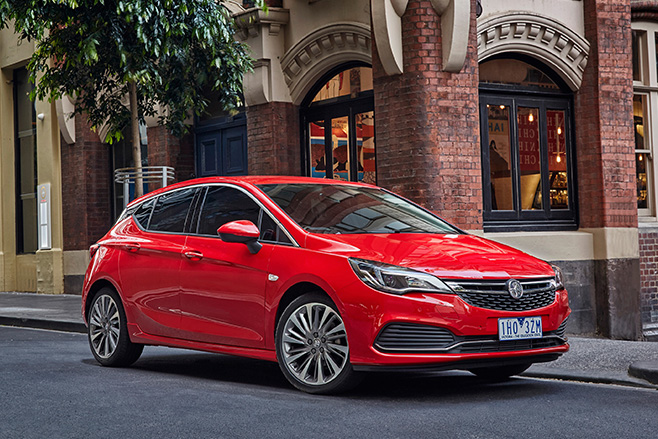
The European-sourced Opel Astra has only just returned to Australia, but this time it wears a Holden badge. This is the fifth generation of the hatchback, replacing the formerly Australian assembled Holden Cruze version that never really struck a chord with buyers. The new Astra is a big improvement – it impressed Wheels so much that it was nominated to take part in the 2017 Wheels Car of the Year awards, the winner of which will be announced in February. Three-door versions of the Astra, including the GTC and VXR, are still a number of months away.
Competitors: Ford Focus, Hyundai i30, Mazda 3, Volkswagen Golf, Honda Civic, Toyota Corolla
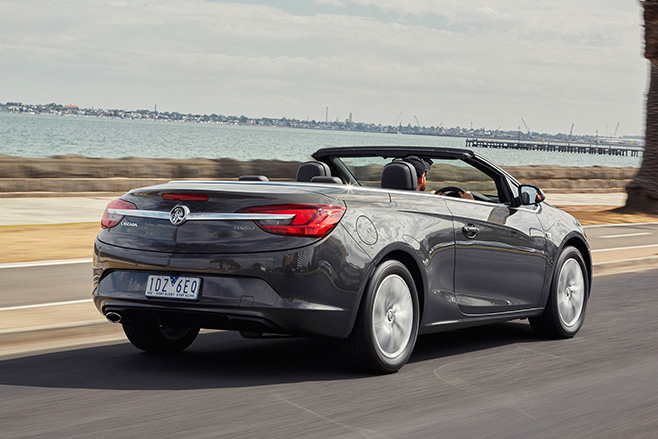
There’s no soft-top version of the Astra. Instead, we have the Cascada, a two-door convertible. It’s a roomy and fun-to-drive sun-loving four-seater, and uses Opel’s cracking turbocharged 1.6-litre four-cylinder engine under the bonnet. However, the engine is depowered to protect the Cascada’s six-speed automatic transmission, which means it struggles to move the car’s rather portly kerb weight.
Competitors: Volkswagen Golf Cabriolet, Renault Megane CC
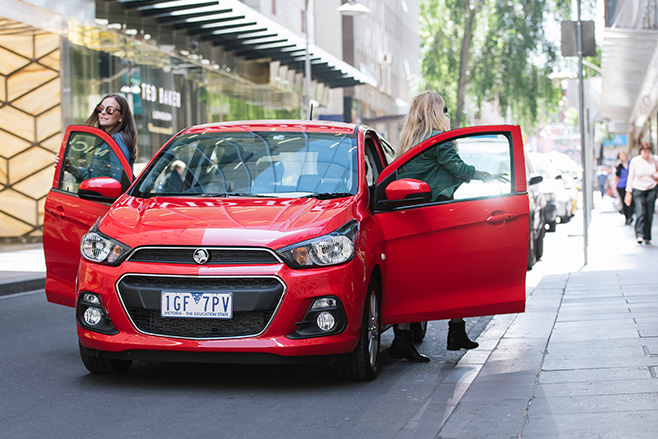
City runabouts – the cheapest cars on the market – have traditionally been built down to a budget as they trade on price cutting and shortcuts. Holden bucked the trend with its new Spark, plumping up a package that’s rich on the bits that first-car buyers want – although at a slightly higher price than rivals. Like the Astra, the much improved Spark has again impressed Wheels so much that it also has a crack at the 2017 Wheels car of the Year award.
Competitors: Mitsubishi Mirage, Suzuki Celerio, Fiat 500
About one in five new cars sold on the Australian market is a high-riding trade ute. Not all of them visit worksites; the higher-priced and more richly equipped dual cab ones are more at home in the office car park than lugging bags of cement to the latest job. Holden has recognised this and greatly improved its Colorado ute via a recent, significant facelift so that it is less brickie’s labourer and more an office junior, even though it still wears Blundstones.
Competitors: Toyota Hilux, Ford Ranger, Nissan Navara, Mazda BT-50, Mitsubishi Triton, Volkswagen Amarok
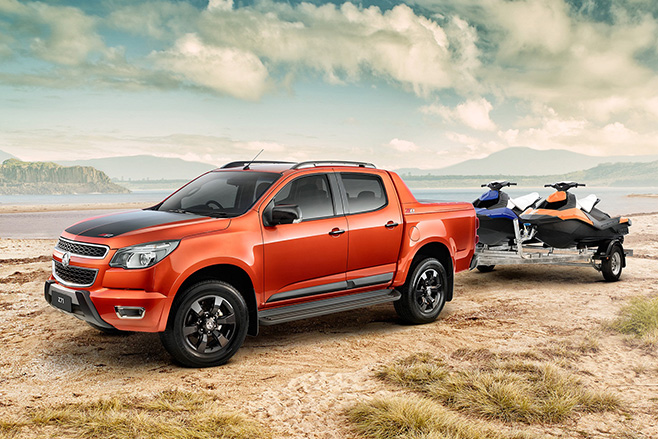
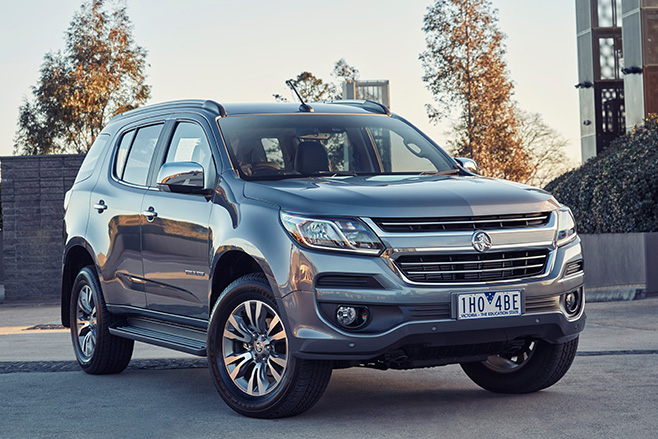
The same facelift that vastly improved the everyday liveability of the Colorado has extended to its seven-seat spin-off, the Trailblazer. This large, off-road capable SUV used to be called the Colorado 7, but the significant makeover of the car this year was a chance for Holden to swap the name over to the global branding its parent company, General Motors, uses – Trailblazer. It adds new-found comfort and refinement alongside the new name.
Competitors: Isuzu MU-X,Ford Everest, Toyota Fortuner, Mitsubishi Pajero Sport
NEXT: New Holdens making their way to showrooms
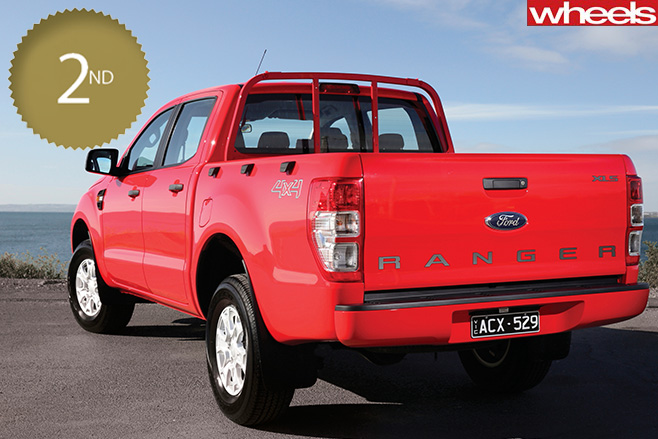
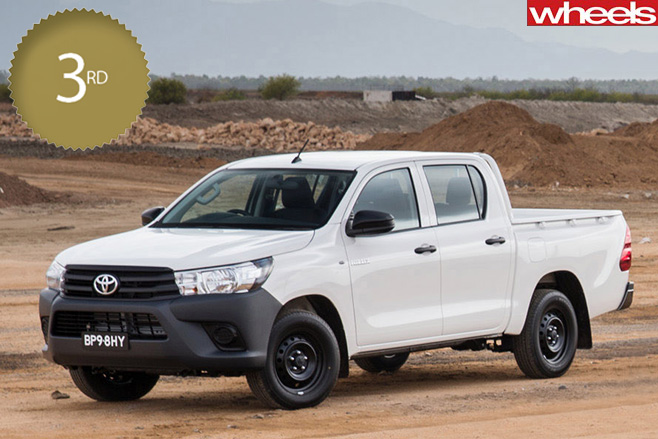
A ute for the frugal tradie. Here we have the Mitsubishi Triton GLX, Ford Ranger XLS, and Toyota Hilux Workmate.
Mitsubishi Triton GLX
Mitsubishi’s Triton may not be the most capable 4×4 ute off-road, nor the most refined dual-cab on-road, but we don’t need a spreadsheet to tell you it’s well ahead of the competition in value-for-money. For starters, at $39,490 it’s $10K less than the Ford Ranger in second and this, with resale similar to the immediate alternatives at 52 percent, is enough to put it on the top spot. The Triton is also more economical than the bigger-engined Ford and the Toyota Hilux (which has a similar 2.4-litre turbo-diesel). It benefits from a five-year warranty, while other brands settle for three.
Ford Ranger XLS
Toyota Hilux Workmate
MORE GOLD STAR COVERAGE
WHEELS GOLD STAR VALUE AWARDS
What if someone could expose the hidden costs, crunch the numbers, present the data, and draw conclusions about how to best spend your hard-earned on a brand new car? Enter Wheels’ annual Gold Star Value Awards.
Find out more
BEST LARGE SUV/4WD
A large SUV or 4WD is a great solution for those with a sense of adventure.
View the results
Toyota has released pricing details for its updated 86 coupe range, featuring slightly improved performance across the board for a minor increase in price.
Price rises across the range vary from an increase of $800 for the entry-level, $30,790 GT manual, to $300 for the top of the range $38,790 GTS auto. A small impost, but one that takes the 86 above the $30,000 barrier for the first time since it launched in 2012.
The update has targeted a sharper driving feel for the everyman’s sports car, including a stiffer chassis, retuned suspension and improved aerodynamics.
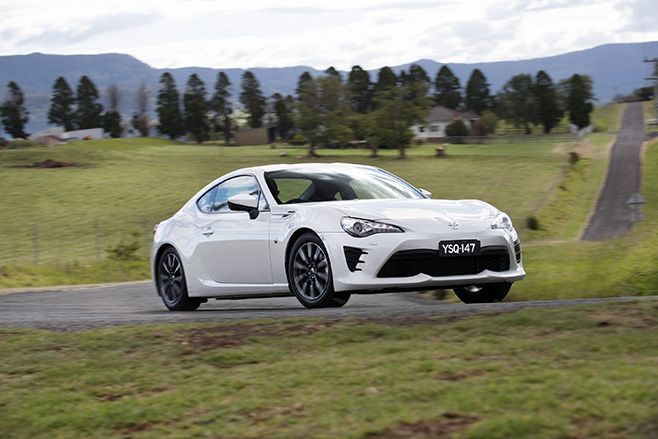
These updates also see the Toyota 86 increase its power through revised intake and exhaust systems, modified pistons, a more rigid cylinder block as well as changes to gear ratios.
All this means when mated with a six speed manual gearbox the coupe produces 5kW more power and 7Nm more torque, lifting total output to 152kW and 212Nm. A minor increase, though Toyota claims the torque curve has been fattened up to improve low- and mid-range driveability.
The auto meanwhile retains its output of 147kW and 205 Nm of torque.
The electronic control systems have also been tweaked, with a new ‘track mode’ now available that allows greater control of car stability and traction systems – including the ability to turn the electronic aids completely off. Hill-start assist is also now standard across the range.
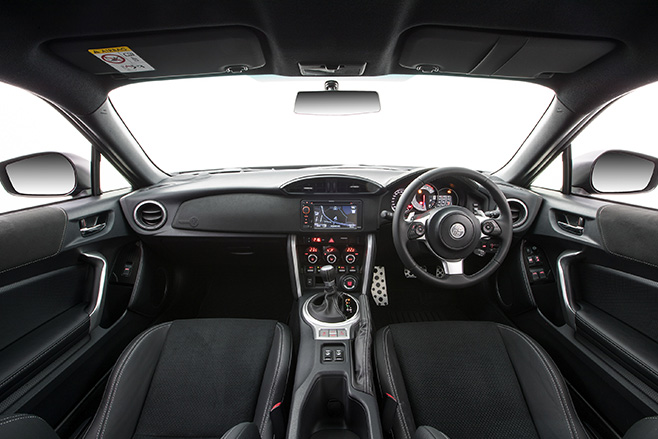
Additional spot welds in the rear part of the 86’s steel bodyshell and thicker reinforcement panels increase rigidity, helping the 86 get the most out of its retuned spring and damper package.
Perhaps the main talking-point of the car though will be front end styling, with a dramatically reprofiled bumper designed to deliver more air flow to the 86’s cooling package.
As a result the 86 has a wider grille than before, with a smoother, more organic form.
The new-look front is complemented by tweaked rear bumper plastics, fresh alloy wheel designs, new headlamp jewellery and LED daytime running lamps. Peek under the bonnet, and a red-painted cast aluminium intake manifold replaces the outgoing model’s all-plastic item.
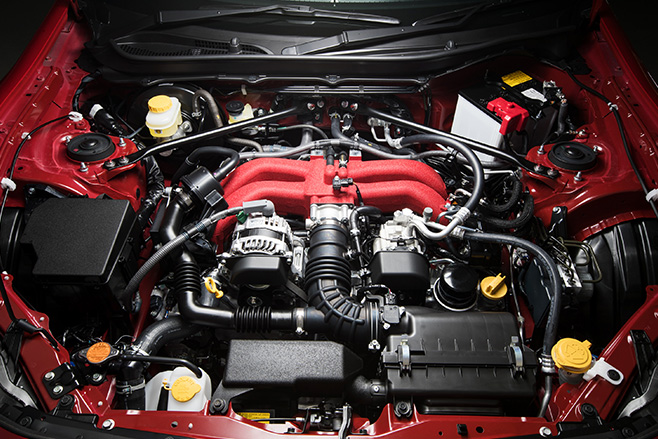
On the inside, the 86 has been fitted with the smallest-ever steering wheel in a Toyota, which the company says is aimed to provide the driver with optimal grip and feel. The horn pad and button layout has been updated for 2017 as well.
The 86 is offered in two grades, with both the GT and GTS available in either auto or manual configuration. The top of the line GTS gains a rear spoiler, new 17 inch alloy wheels, a 4.2 inch info display with performance read-outs, and a new ‘Grandlux’ material applied to the instrument panel.
The updated 86 is on sale now.
PRICING
86 GT manual – $30,790 86 GT automatic – $33,090 86 GTS manual – $36,490 86 GTS automatic – $38,790 Metallic paint – $450
Click here to read the full review on the current-generation Toyota 86 range.
Engineers rarely enjoy celebrity status.
But BMW engineer Paul Rosche – who passed away this week aged 82 – is known for producing some of the greatest production and motorsport engines we’ve ever seen.
Munich-born Rosche worked for BMW from 1957 to 1999, credited with some of the brand’s most renowned mills that lived in McLaren’s F1, BMW’s Formula One cars, and also its most iconic M Machines.
We salute the man with a roll-call on some of his finest achievements…
1. Brabham BT52 1.5-litre turbocharged four-cylinder
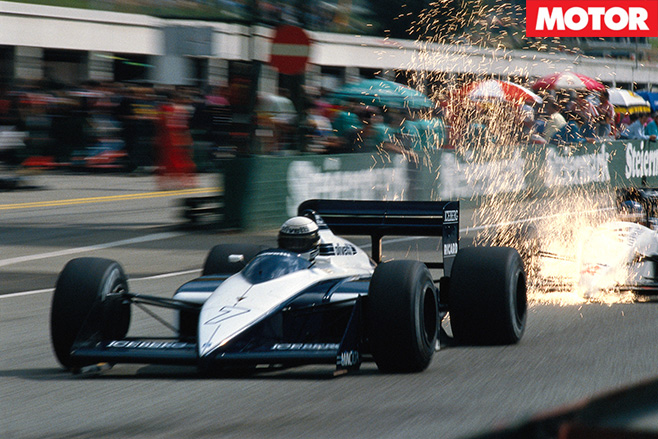
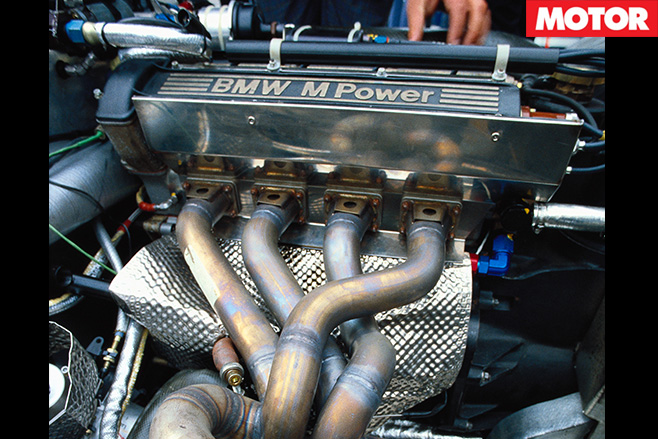
Of the maximum output potential of this hi-po four, Rosche said: “It must have been around 1400hp [1044kW]; we don’t know for sure because the dyno didn’t go beyond 1280hp [955kW].”
2. McLaren F1 6.1-litre V12
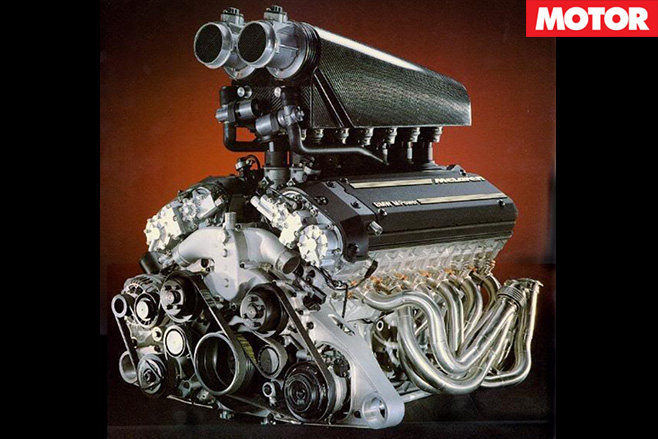
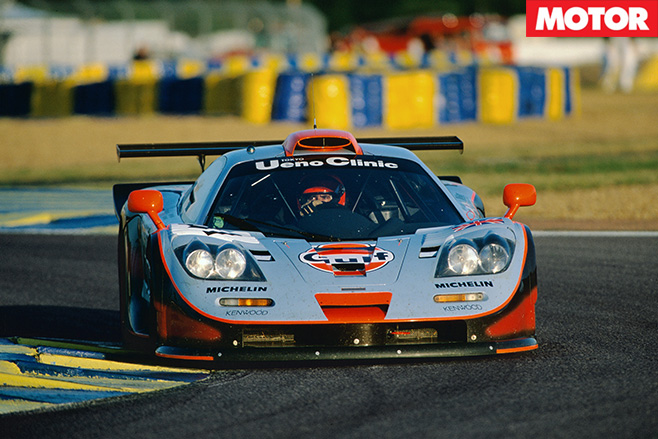
This was 1993 – but the V12 went on to win LeMans for McLaren in 1995 and BMW in 1999; the latter Rosche’s retirement year.
3. BMW E30 M3 S14 four-cylinder
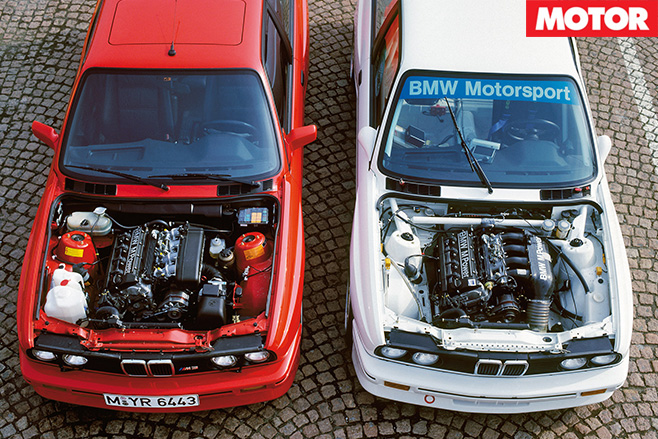
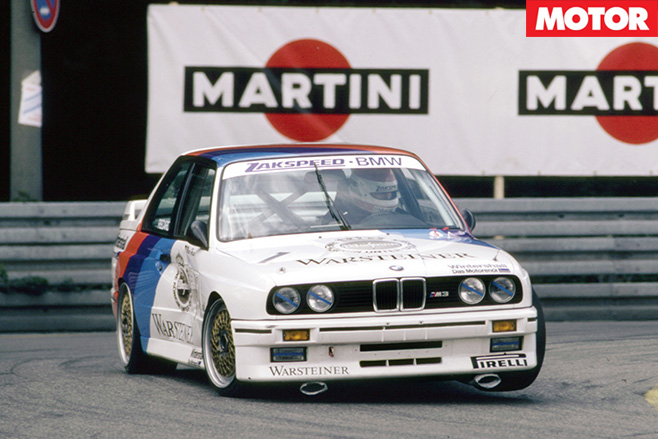
From its 2.3-litre capacity the 1986 M3 produced 143kW at 6750rpm and 240Nm at 4750rpm – the latter more than 100Nm per litre, and this from 30 years ago.
Before finishing production in 1990, the final M3 Evo was enlarged to 2.5 litres and produced 175kW at a heady 7000rpm.
Vale Paul Rosche, April 1 1934 – November 15 2016.
It’s now cheaper to own a Lamborghini roadster, with the Italian supercar maker unveiling a two-wheel-drive version of the Lamborghini V-10 Huracán Spyder at the LA Auto Show.
The LP580-2 Huracán Spyder will be priced from $429,000 when it arrives here in January – $50,000 less than the AWD LP610-4 Huracán Spyder and $366,000 cheaper than the Lamborghini Aventador Roadster.
And unlike the LP610-4 coupe, the 426kW generated by the LP580-2’s naturally aspirated V10 engine is only transferred to the rear axle instead of all four paws. Not that’s anything wrong that, especially when you consider its 0-100km/h time of 3.6secs is just 0.2secs slower than the AWD Spyder and it has a toupee-destroying top speed of 319km/h.
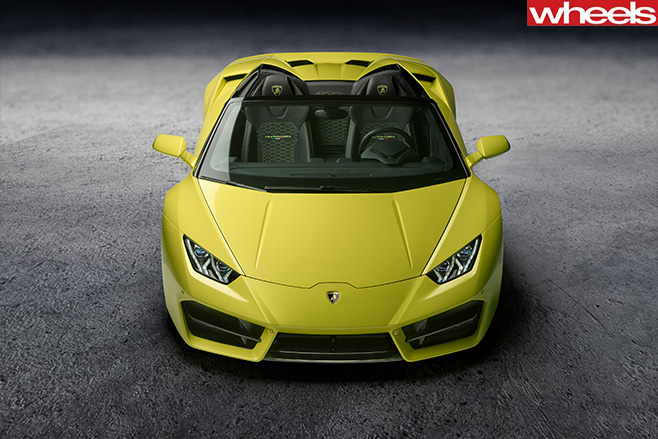
The decision to produce a rear-wheel-drive Spyder is good news for the purists and not just because of the 50-grand saving – something that Automobili Lamborghini Chairman and Chief Executive Stefano Domenicali seems happy to acknowledge.
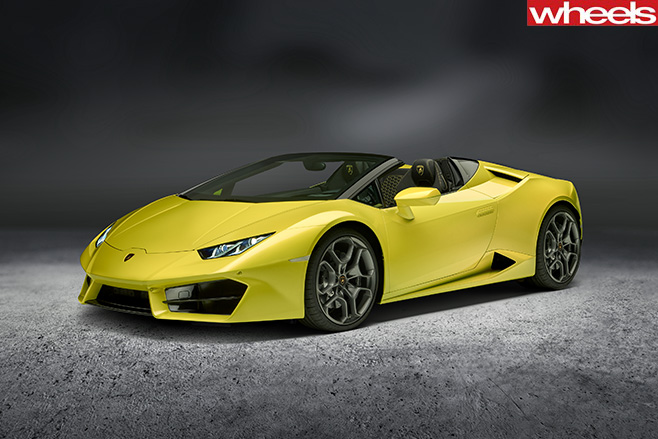
“It’s also a Huracán for those entering the Lamborghini family, wanting a true Spyder experience without compromising on the performance and dynamic handling of a rear-wheel drive car.”
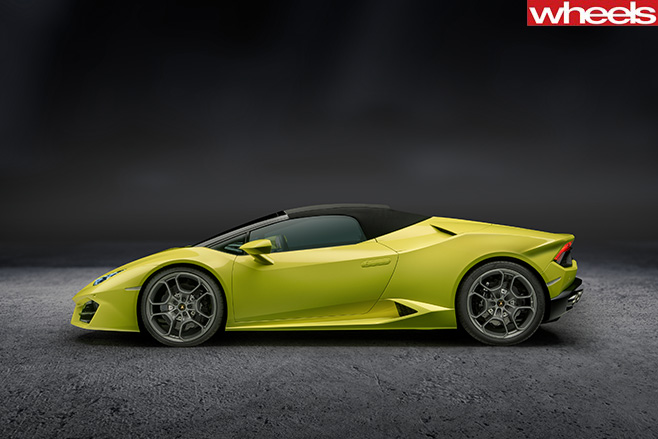
The soft-top can be opened and closed in 17 seconds at speeds up to 50km/h and rear windshield can be electronically opened to let in that sweet V10 din when you have the roof up.
THE Subaru Tribeca, the Japanese brand’s seven-seat SUV, appears set for a return in 2017 to take on the likes of the Mazda CX-9. However, it could bypass Australia altogether.
The reason? Its likely low production volume and the fact it won’t be built in Japan mean a right-hand-drive version of the full-sized three-row crossover due in 2018 is unlikely to ever pay its way.
According to Subaru, the next-generation Tribeca’s likely sole source of production – Lafayette, Indiana – and the low volumes and high costs associated with making the engineering changes to suit markets such as Australia both count against it.
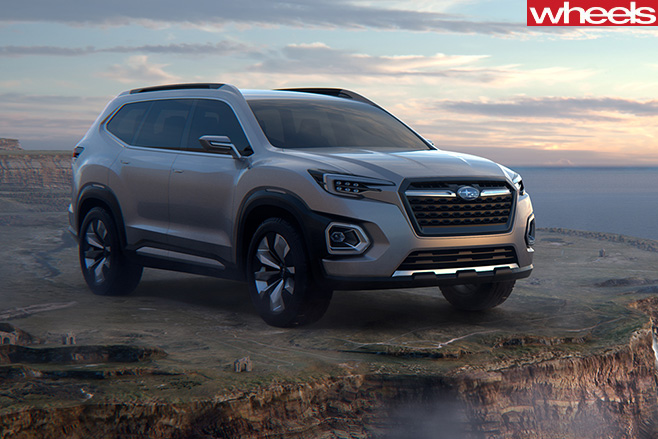
“You must understand we do 600,000 units in the USA plus another 50,000 units in Canada, while in Australia it’s just 50,000 annually.
“So developing right-hand drive … we are not sure if it is viable. There are no immediate plans for right-hand drive.”
That’s a shame, because the Subaru Viziv 7 concept vehicle shown at the Los Angeles Auto Show seems to right all the wrongs of the B9 Tribeca sold in Australia for about seven years from 2006. (Before you get too confused about the concept’s name, “Viziv 7” stands for “Vision Innovative seven-seater” – that’s just what the show-car is called; the 2018 production version’s name remains a tightly held secret.)
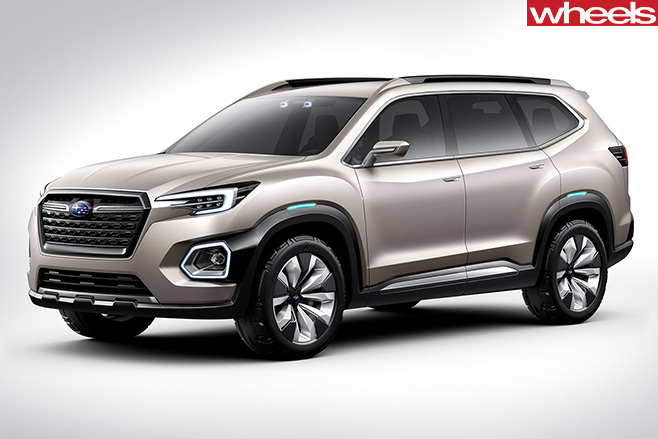
Cabin space, naturally, is the welcome upshot, addressing the Tribeca’s tight third row seats and lack of luggage capacity.
Interestingly, the production Viziv 7 will be built on the all-new (and much improved) 2017 Subaru Impreza’s platform, so expect to see a variety of horizontally opposed four-cylinder turbo petrol engines. Whether there will also be a ‘boxer’ six remains to be seen.
This new architecture was engineered for electrification, so we’ll be betting our bottom dollar that a petrol-electric hybrid is also in the works.
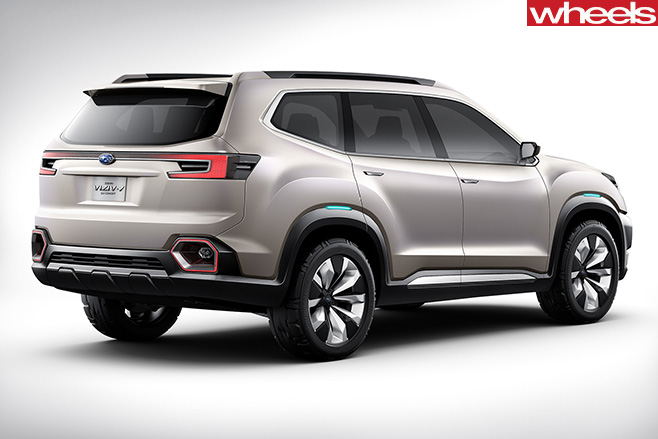
“The concept expresses our core brand values; safety, dependability, capability for outdoor activities and a forward looking attitude,” Tachimori said.
“We know customers in this segment want a full-sized vehicle, and the next three-row from Subaru will be the biggest Subaru vehicle ever.”
The previous version of the Tribeca, sold here between 2006-13 was also built in the US and exported to Australia.
