
Haute Couture and Rolls-Royce embody the same philosophy – they’re both luxury items that very few can afford, but almost every admires.
So it comes as no surprise that a team of designers at Rolls-Royce has drawn inspiration from the 2017 Spring/Summer catwalks to create the special edition of Rolls-Royce Dawn convertible, insipidly named Inspired by Fashion.
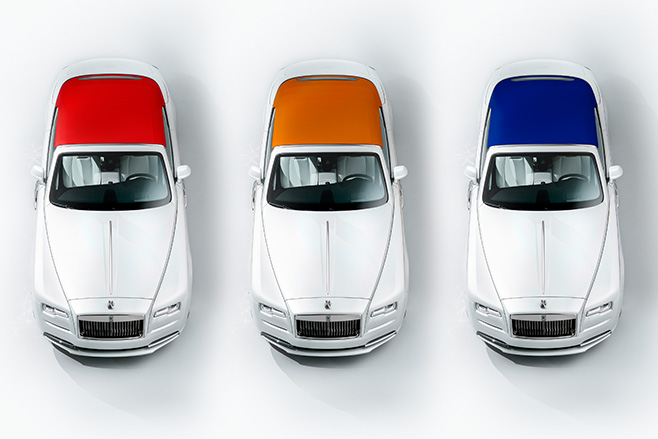
Rolls-Royce Design Director, Giles Taylor, gathered a team of fashion, fine textile and luxury accessory designers who decided on a white canvas, adorned with three vibrant colours from the 2017 Spring/Summer collection: Mugello Red, Cobalto Blue and Mandarin.
The car’s exterior is white, contrasted by the block red, blue or orange used on the Ghost-based convertible’s fabric roof.
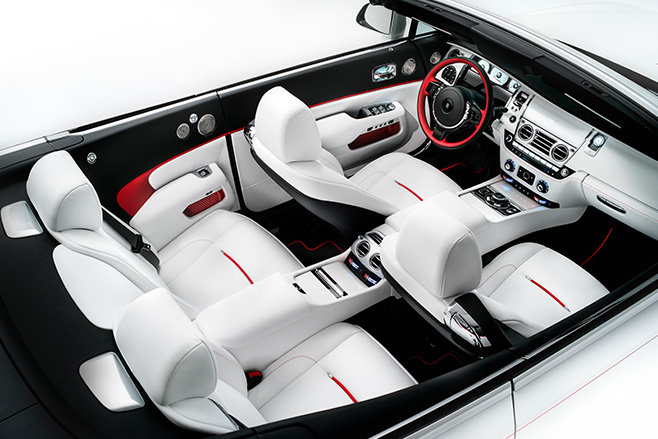
While white and black dominate the interior, the three colours were used as accents throughout the Dawn on the embroidered headrests, stitching and piping of the seats, and the ‘seamless stitching’ of the leather-wrapped steering wheel which, according to Rolls-Royce, is “a highly-complex craft technique from the world of fine tailoring”.

Piano White adorns that dashboard with aluminium particles giving it a silk-like appearance – a process that requires nine days of a meticulous lacquering process.
“Our clients are the very arbiters of fashion, tastemakers who sit in the front row of the Couture shows, themselves influencing evolving trends,” said Taylor.
“To them, the commissioning of fine luxury objects represents a deeply-involving curatorial process …”
The Rolls-Royce Dawn is available in Australia for $749,000. The British car-maker has given no indication of the price of the Dawn – Inspired by Fashion edition, stating only: “Clients are invited to commission their personal style statement from this November to ensure they appear wrapped in the latest couture offering from the world’s leading luxury goods house for the new seasons next year”.
We’re predicting this runway-inspiration isn’t going to come cheap.
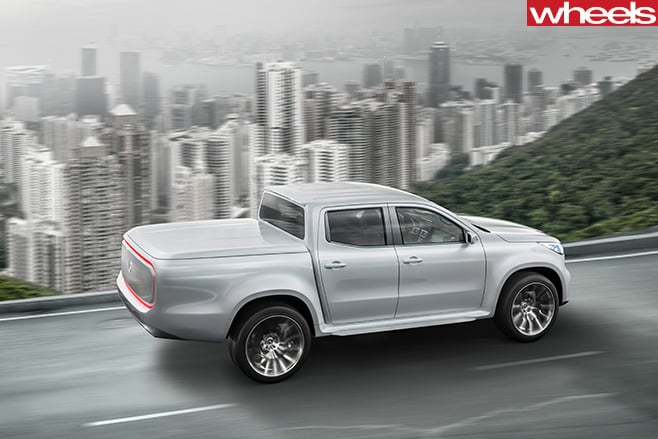
The Mercedes-Benz X-Class has been revealed in concept form – ahead of its late-2017 debut as the world’s first luxury ute.
With a combination of three-pointed-star attributes and one-tonne-carrying capability it’s not surprising Australia has been named as one of four key continents for the model, along with Europe, South America and South Africa.
Mercedes-Benz is investing about a billion Euros ($1.4b) on a model that might have been viewed as an April fool’s joke not so many years ago but is now a smart move into a serious, fast-growing market.
They include active families, commercial users, and landowners.
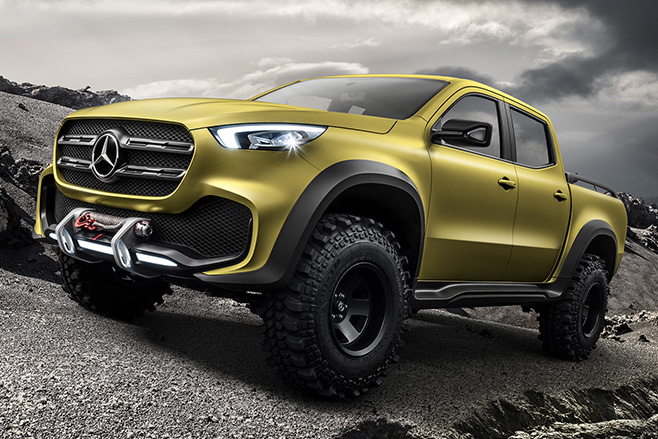
A yellow ‘Powerful adventurer’ with black body-cladding is designed to appeal to the traditional ute buyer, with tougher looks and all-terrain capability highlighted by massive 35-inch off-road tyres, higher ground clearance, and winches front and rear.

The production Mercedes-Benz X-Class is not expected to look radically different when it reaches Australia in early 2018, even if the varied LED tailgate light designs are purely conceptual.
The X-Class ladder-frame chassis is a modified version of the underpinnings found beneath a Nissan Navara (and upcoming Renault Alaskan). The Mercedes adopts the company’s 4Matic all-wheel-drive system, and features a dual-range transfer case.

Mercedes is quoting a payload capacity of 1.1 tonnes and a braked towing capacity of 3500kg, which will make the X-Class more than competitive in a busy segment.
Volker Mornhinweg, the boss of Mercedes-Benz Vans, the division under which the X-Class will sit, said Mercedes characteristics would broaden the appeal of a ute.

“Our future X-Class will be a pickup that knows no compromise. We will thus appeal to new customers who have not considered owning a pickup before.”
THE most powerful E-Class Mercedes ever will combine sledgehammer performance with new levels of technology and styling when it arrives Down Under in mid-2017.
Described by AMG boss Tobias Moers as “the biggest step we’ve ever made in a generation change”, the Mercedes-AMG E63S will not only be the most powerful E-Class Mercedes to date, it will also feature all-wheel drive for the first time, linked to a nine-speed automatic transmission.
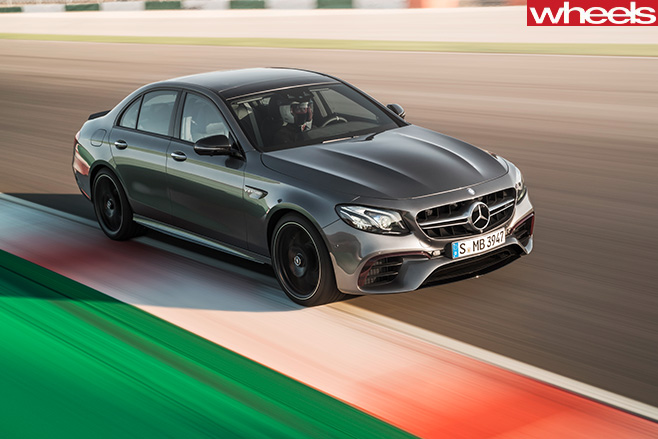
How fast will the E63S be? Moers says it will be “faster on the Nordschleife [Nurburgring] than ever. It’s going to be under 7m50sec”. To put it in perspective, remember that ’Ring-burning 2008 spat between Nissan and Porsche over whether the GT-R or the Porsche 911 Turbo was the fastest production car around the circuit? They were posting similar times.
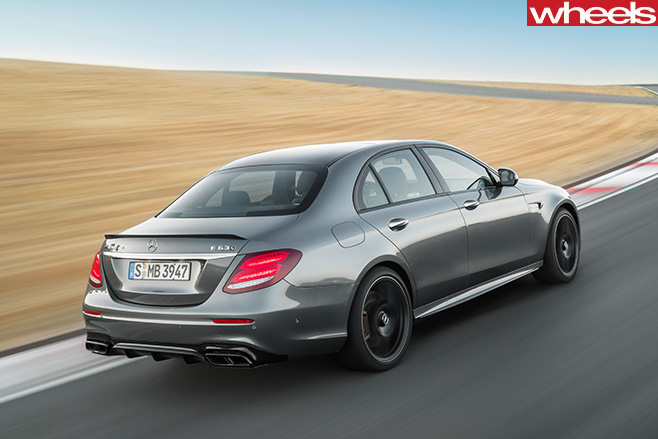
Mercedes is claiming the new E63S will rocket from 0-100km/h in just 3.4 seconds, more than 0.5sec quicker than the outgoing E63 S. That improved acceleration is attributed to the twin-scroll turbochargers being mounted in the vee of the V8, making the engine more responsive, and all-wheel grip from Mercedes’ 4MATIC system, which will enable the E63 S to put every kilowatt to the tarmac via a 20-inch wheel and tyre package.
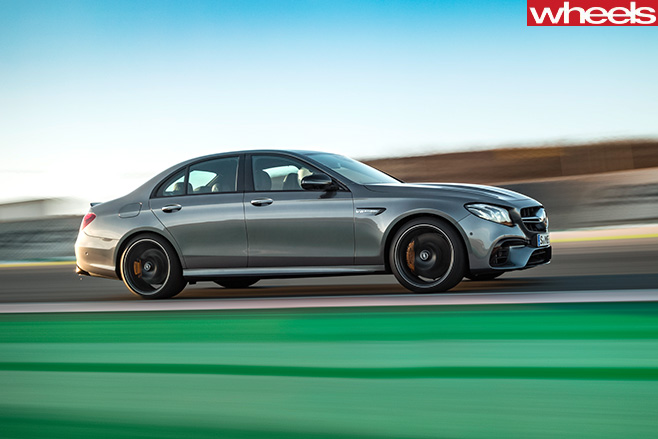
Benz’s Air Body Control suspension is standard but AMG has tweaked it for even higher levels of stability and cornering speeds and it now combines dynamics, steering precision and comfort.
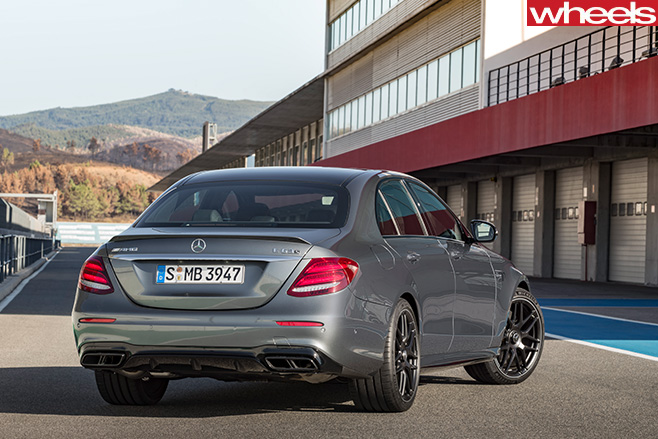
It’s estimated the wildest Mercedes-Benz E-Class yet will set you back around $250,000 when it lands here next year but don’t hold your breath for the wagon version that will be available overseas.
WE’VE said it elsewhere, but it remains a fact that when local car-making finally falls over, it’ll be cars like the Chrysler 300 Core that will be the logical void-fillers. While the big 300 seems to do the job on the road, how does it stack up against the BFYB formula?
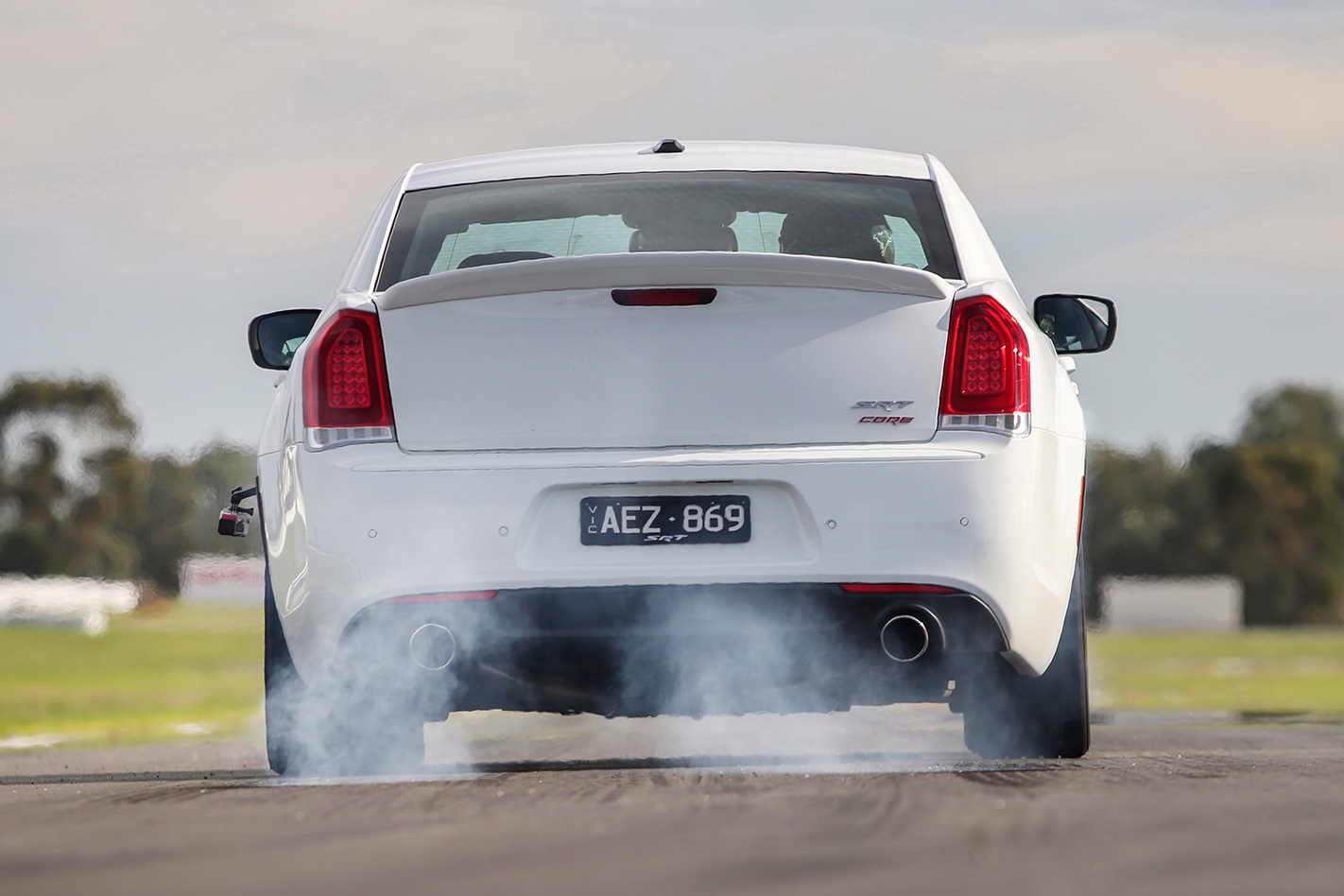
Well, it’s fast, no doubt about that. It comfortably out-powers and out-twists the SS Commodore and those extra numbers play out on the strip despite the monster 1965kg weighbridge ticket. End of the day, you can’t really argue with a sub-five 0-100 and a sub-13 400m on the drag strip.
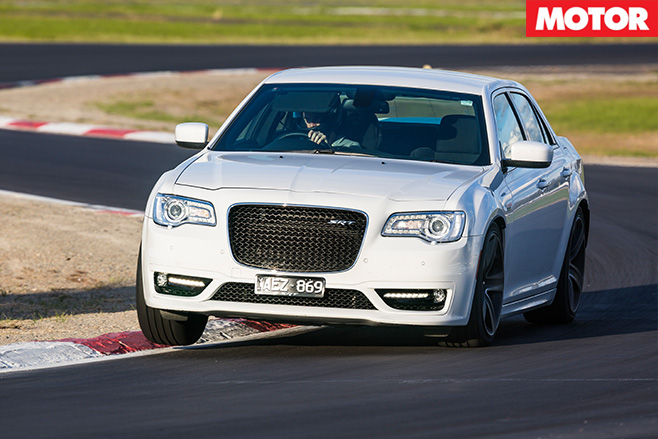
But you’re thinking that surely all those kilograms must play against it on the track, right? Well, not so much. In fact, it was just as fleet around Winton as the SS-V Redline (well, within a tenth anyway) even if its slow-corner speeds were much further up the ladder than its fast-corner peaks. You get the impression Luffy was trying pretty damn hard to get a good time in the bank, but that’s exactly what he did and you can’t argue with that for a second.
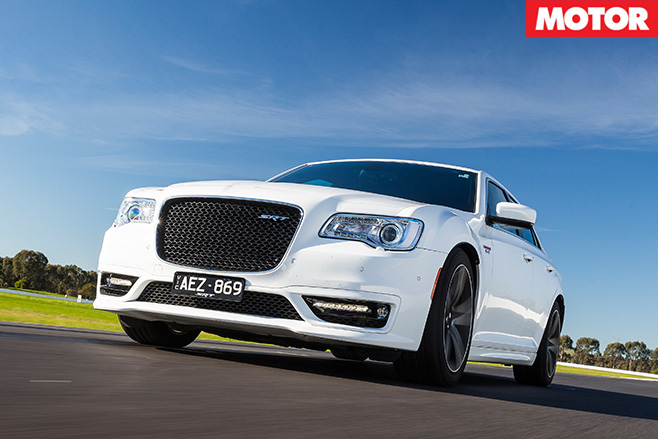
Then you go and throw it into a corner, expecting the worst and the worst doesn’t happen. In fact, not too much at all happens, unless you count the front end pointing more or less where you had in mind and the rest of the plot following the same line pretty faithfully.
Along the way you discover a great soundtrack and the fact that the 300’s big numbers add up to a big heart. It’s not just bulk bottom-end torque either, there’s also a ripping old top-end surge up its sleeve to keep your interest.
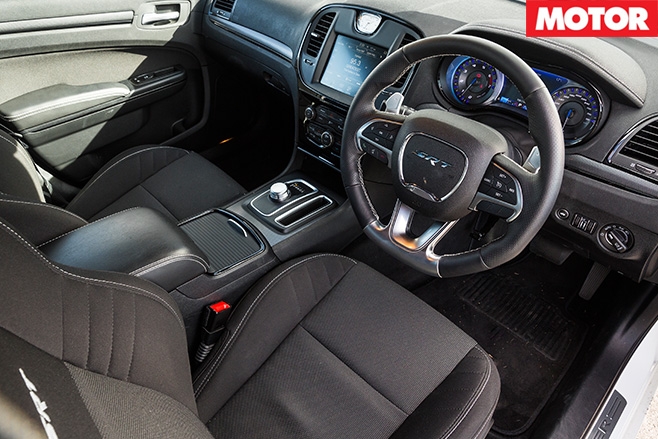
The eight-speed gearbox, which is such a treat on the road, is also found wanting on the race-track. For reasons known only to itself, the ’box often seemed to be in a gear too high, sometimes ignoring your paddle-down commands. That was especially noticeable when exiting corners, which is, of course, the precise point at which you need it to be following your commands exactly.
Throw that lot together, and you can see why the judges scored the Chrysler pretty low, while its bald numbers and price-tag dragged it back up the order, though it only scraped ahead of the Sprint twins by the barest of margins.
JUDGES’ COMMENTS 08. David Morley “Worked better on track than it had any right to.”
08. Dylan Campbell “Makes a rude noise and goes sideways easily. What’s not to like?”
10. Louis Cordony “Feels like a V8-powered lounge room. Fast and comfortable. ”
09. Scott Newman “Like a hammer. Blunt, effective and surprisingly fun to wield.”
SCORES Price: $65,000 Bang Index: 97.6 Bucks Index: 108.8 BFYB Index: 154.3
WARREN LUFF SAYS 08. “You just can’t get away from the size of the thing”
“IT was very surprising how fast the 300 Core was out there, but you can feel on the limit it’s a big car.
“More than anything it struggles with mid-corner to exit understeer, It turns in really good but it can’t keep maintaining that level of grip. Brakes are okay, if anything the ABS is a little sensitive on the limit.
“Probably one of the biggest let downs would be the gearbox. When trying to downshift for a corner you have to over-slow it for it to accept the gear. Engine is great, loads of torque – as you’d expect. Probably not a car I’d want to do an endurance race in, but it certainly opened a few eyes.”
Want more? Check out the rest of 2016 Bang For Your Bucks.
Australia was given a peek into its driving future last week with a “65 percent” prototype of the German-built 2018 Holden Commodore making a veiled appearance at Holden’s Lang Lang Proving Ground, south east of Melbourne.
Based on the new Opel Insignia, the next Commodore is built on GM’s all-new E2XX platform which can accommodate front- and all-wheel-drive powertrains instead of the rear-wheel turners we’ve become accustomed to since Holden began manufacturing large sedans in 1948.
The big V8s are gone too. Entry and mid-range models will be powered by four-cylinder 2.0-litre turbocharged petrol and diesel engines with FWD, while the range-topper will be a 3.6-litre V6 with AWD. All variants will come with automatic transmissions.
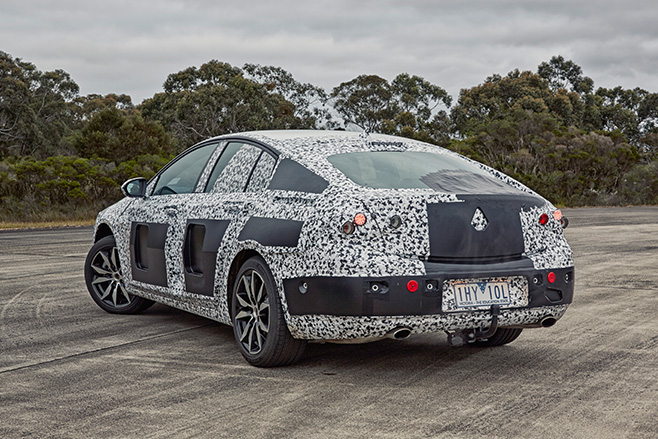
While Commodore’s past association with four-cylinder engines was not a happy one, Holden says the new the four-pot petrol turbo variants will be faster and more powerful than the current V6 Commodore.
That remains to be seen, with the V6 AWD variant on show under camouflage and its drivetrain and suspension not yet fully tuned. Much of the AWD tuning is to be done for Australian conditions and Holden insists Commodore won’t be a simple rebadging exercise.
The AWD system will help to appease Commodore drivers used to power going to the rear wheels, and replaces the rear differential with a pair of individual ‘Twinster’ clutches that constantly control and distribute torque and speed to “generate a rear-drive feel”.
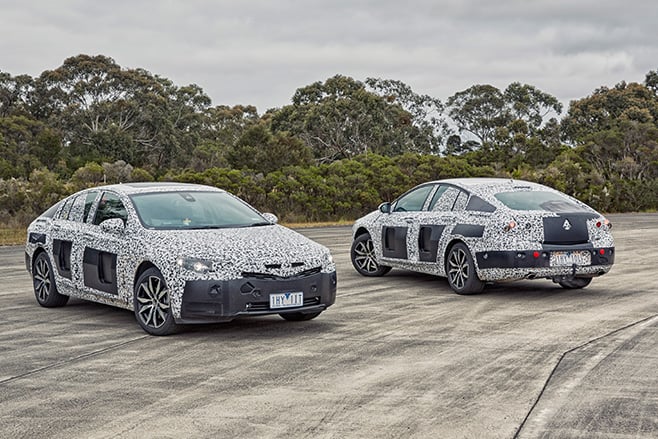
Putting national sentiment and the work-in-progress refinement aside, there seems to be a lot to like about the new ‘hero’ Commodore including the all-paw drivetrain, nine-speed automatic transmission, and Euro-styled interior similar to the new Holden Astra. It will also be big on technology with the latest infotainment systems including Apple CarPlay and Android Auto connectivity and driver-assist and passenger comfort features intended to match the best Europe and Japan can offer
A major styling difference is the sweeping ‘Sportback’ roofline that ends in a hatch-like boot which provides way more space than the VF sedan, despite the car’s slightly smaller footprint. But the new Commodore will be narrower than the current VF, with 58mm less shoulder room which will make the back seat a little cosier for three people.
Holden has justified its decision to retain the iconic Holden Commodore badge for its all-new, imported model. But is that the right decision?
WHAT is in a name? For car companies, quite a lot.
Holden and Ford have each agonised over what to do with their most iconic nameplates, the Commodore and Falcon. Both names stir up strong emotions in car enthusiasts, and the decision to either continue or retire the badges are controversial either way.
Ford’s decision to lay the Ford Falcon to rest has been well documented, however Holden is pushing forward, and keeping the Commodore name alive on a fully imported model. But was that the right move?
Holden has provided some valuable insights into why it decided to retain the iconic Commodore name, rather than retire the badge to coincide with the death of the locally made model.
Director of sales Peter Keley says there were strong discussions internally at Holden regarding what to do with the nameplate.
“We had a big debate about the Commodore name,” he said.
Keley explained the Commodore ‘DNA’ was distilled into four key areas: design, technology, space and dynamics.
Holden is confident the all-new, imported model fulfils each of the categories and will live up to the Commodore’s core DNA. Holden also cited heavy consumer research that showed they’d be mad to ditch the Commodore name plate, despite the new car’s switch to front- and all-wheel drive, plus a significant reduction in size when compared to today’s car.
“We are absolutely confident FWD can deliver the driveability and handling you expect from a Commodore,” added Keley.
Wheels understands Holden did consider dropping the Commodore nameplate, but after extensive consumer and market research, decided it should continue on.
However the company isn’t blindly following the decision, and recognises the next generation Commodore has compromises from the traditional ethos of the nameplate.
“Commodore was originally designed to seat three blokes across the back comfortably and regularly. This new car is narrower. It’s not as comfortable,” Keley admitted.
But at the end of the day, the company sees this next rendition of the Commodore as a reflection of the development of the company.
“Commodore name carries weight, respect, heritage. Commodore’s evolution mirrors Holden’s evolution,” Keley concluded.
Whether the move to keep the Commodore nameplate is a smart one remains to be seen. However, if reaction on social media is anything to go by, the enthusiast fan base certainly isn’t happy to see the heritage of the Commodore sullied. Here’s hoping it won’t be.
WhichCar sat down with wheeler-dealer Trev (not his real name) who told us the best way to get the a great deal on your next car is to be confident but realistic when it comes to negotiating a price.
1. DO YOUR HOMEWORK AND DECLARE YOUR PRICE
“The biggest mistake people make is asking a salesperson ‘what’s your best price?’, Trev stresses. “When you ask for the best price he’ll just take a $1000 off. The best way to do it is offer them a price.
“Say something like ‘your car’s advertised for $38,000, we’ll pay $35,000 and give you a deposit right now’ and then they’ll come back with $36,000 or $35,500 or give you the nod. You’ll be very surprised how sometimes they just want the deal done.”
“Their objective is to keep as much margin in it, but when a deal’s on the table that’s when they make a decision, that’s how you get the best out of a deal.
“If you’re not confident in putting a price just tell them ‘we’re here to buy the car today, we’re prepared to give you a deposit on the car right now’, that gets the salesperson’s ears up.”
“They have people coming in every day wanting this and that, so know what you’re buying and go in there and negotiate a price.”
2. BE REALISTIC ABOUT THE PRICE AND AVOID STRESS
“People will try and bloody string the last absolute bargain-arsed deal and when the deal’s done they’ll want a tank of petrol and free car washes for the next 10 years,” says Trev.
“You can’t have a car advertised for $25,000 and you offer them 10 or 15 grand, that’s just ridiculous. Everything’s got a commercial value, and with cars you’ve just got to work out what it’s worth.”
“You have to think of the price over the period that you’ll own the car. If you want to pay $22,000 but end up paying $23,200, that’s 1200 bucks over four years, which is a dollar a day or something. It’s not even worth sweating about. People put so much effort into haggling then they’ll go spend 400 bucks on a dinner. You can just absolutely get yourself into a spin.”
3. END OF MONTH/FINANCIAL YEAR BARGAINS ARE A THING
“You’ll do a better deal at the end of the month,” admits Trev. “And definitely at the end of the financial year. It’s sell, sell, sell then, particularly on new cars.
“You can go to a car dealer, a lot of whom get rebates from manufacturers when they sell X amount. When I was working for a prestige dealer there was a factory bonus on certain model and they had to sell two more for the month, so it was in their interest to almost give them away. They might have lost $1000-2000 on the whole deal but the rebate would be worth thousands.
“Getting a good deal is not so much based on the car on the day, it’s how the dealer is situated. They might be having a really lean month so they’ll settle for anything or if they’re having a really good month they might not be as obliging.”
Trev adds that you should haggle over the full on-road price so there are no surprises after you sign, but don’t expect things like taxes and registration to be waived.
“They’re pretty fixed those prices, but if they want to sell a car they’ll waive things like the delivery fee, believe me. Everything is negotiable.”
4. ONLY ENTER INTO A NEGOTIATION IF YOU’RE GENUINELY INTERESTED IN THE CAR
“There’s a process to it, if you tell the dealer you’re just there to look at the car they’ll put the pressure on you. You have to be quite clear that you’re not buying today you’re just looking at the car. Otherwise they’ll start putting the pills on you to buy the car and that’s when the problems happen. That’s what they’re there for but it’s all about the way you handle it.”
5. DON’T FEIGN DISINTEREST DURING THE NEGOTIATION
Trev says it’s no use playing hard to get once you’ve made an offer, such as pretending to want to shop around more while they consider your price.
“When you offer the salesperson a price they’ll usually speak with their manager. Don’t pretend to go elsewhere and ask them to get back to you. You might as well get a price out of them while you’re there. That makes you look serious.
“When you say you’re leaving they’ll just wait for you, they won’t call or text you a price. They’re not too keen on that because you could show that price to someone else. Just say ‘we’re here in store and want to buy’.”
6. DON’T BE INTIMIDATED BY CAR SALESPEOPLE
“They’re just bloody people,” says Trev. “I know it’s a big purchase and you’ve got to be a bit careful but in general terms you can’t really make a mistake buying a new car.
“It’s not like you can go and pay 28 grand and someone’s going to go and buy the same thing for $22,000. You’re gonna pay $25,000 or you’re gonna pay $24,200 and if you get an absolute bargain you might get a grand or $1500 extra off it. The expensive cars might have a little bit more in them.”
7. DON’T UNDERMINE YOUR BARGAIN BY GETTING SLUGGED WITH AFTERMARKET PRODUCTS
“Buying the car is one thing but getting the money to pay for it, particularly on finance, that’s where the dealer makes all the money these days. That’s what they literally do, they shut the guts out of the sale and then they walk you into the aftermarket person who’ll want to sell you paint protection and window tints and all this sort of stuff.
“To be truthful you don’t need one bit of it and that’s where they make all their money. They sell you an extended warranty and get a bit of money out of finance and suddenly they’ve got a couple of grand out of you.”
To help prepare before visiting a car dealership, read our new car buyer’s glossary.
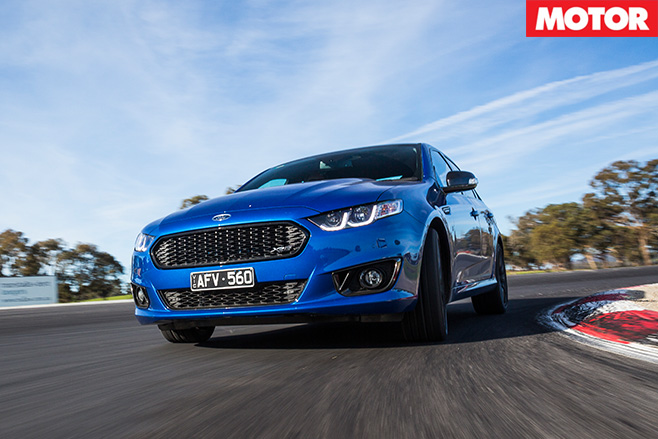
There were such high hopes for this car.
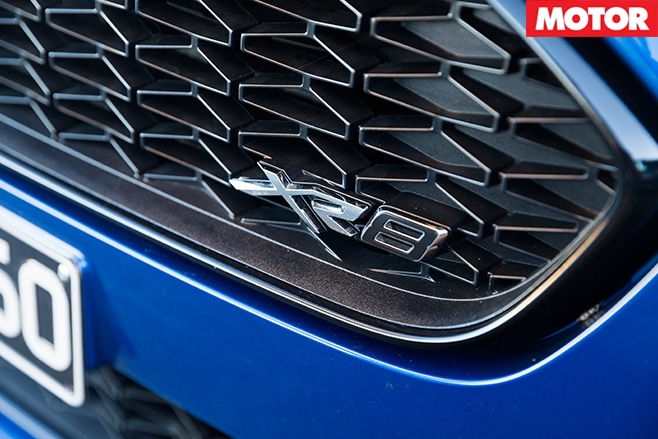
Not just because plainly it has 400kW and costs $60K, but because the ‘base’ FGX XR8 finished second in class at Bang 2015, and for 2016, we nabbed the cheapest and supposedly fastest Sprint around – the manual XR8. And yet here it is, sixth. With some explaining to do.
The short of it is, the XR8 Sprint just converts too many neddies to smoke, heat and noise, than it does forward momentum. Yeah, yeah, a likely story, but truly, we thought things would be different this time around. At Bang last year, the 335kW XR8 – in auto, a few kays on the clock and feeling very healthy – snotted 100km/h in 4.87sec and recorded a 12.86sec quarter at 182.98km/h.
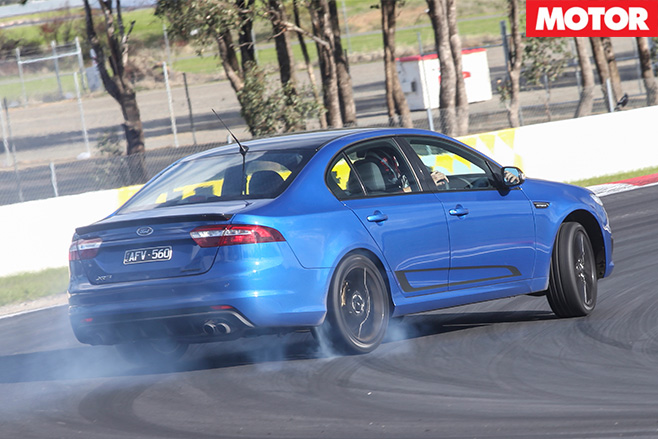
If you thought the auto was difficult to launch, try the manual. With relatively little feel through the clutch and throttle, it’s neurosurgery with numb extremeties. And with 19 cars to get through, we couldn’t do 20 runs. We gave the XR8 Sprint everything we gave every other car, and then some, to get the job done, and for whatever reason, it couldn’t.
That’s not to say it isn’t fast. Once it was out of the barrel, the XR8 Sprint clocked the quickest trap speed and lap v-max of the entire event, showing off seriously potent top-end urge. The best value autobahn missile on the planet? Maybe if Bang was held at Avalon airport.
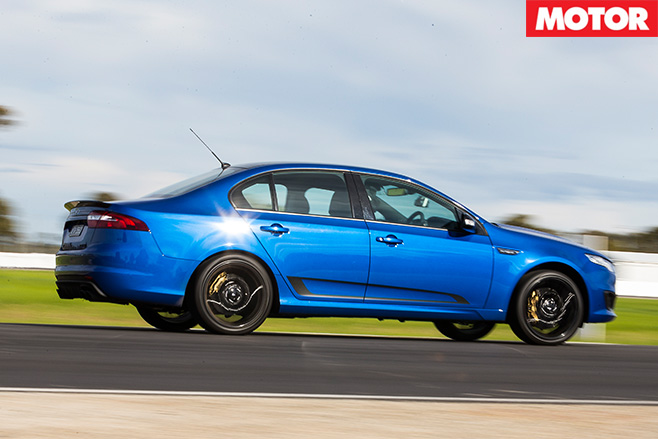
What the data doesn’t show is that, interestingly, we all preferred the XR8 Sprint over the XR6, that delightful V8 burble and blower whine better scratching the itch. We’d take the manual over the auto, too, simply for giving you more to do. And you’d have to be doing something seriously wrong to not have fun in an XR8 Sprint on a track – and not just in terms of going sideways (though it’s very good at that).
Sixth in class is not to say the XR8 Sprint isn’t top value. It’s incredible value. But while 400kW for $60K sounds great in theory, the XR8 Sprint further shows it’s never how much you have, but how you use it.
JUDGES’ COMMENTS 09. David Morley “Memo Ford Oz: Improvement requires development.”
09. Dylan Campbell “I’m grateful it exists, and I love it, but the game has moved on.”
08. Louis Cordony “Great muscle car, but struggles as a true sports sedan.”
08. Scott Newman “Stronger traction and brakes make it enjoyable. To a point.”
SCORES
Price: $59,990 Bang Index: 89.3 Bucks Index: 117.9 BFYB Index: 153.9
WARREN LUFF SAYS
09. “A great engine, but incompetent everything else”
“IT’s like the big muscle guy at the gym that can bench press 300kg, but take him outside and get him to run for 100m and he can’t do it.
“It’s a great engine but it would be nice if they spent some more development money on every other part of the car.
“At least with this car being a manual you’ve got better control over the gears because the automatic gearbox is definitely showing its age, especially at this sort of circuit.
“A lot of fun, lots of torque, very usable, great low-down power, it revs right out, but it shows the inadequacies of the rest of the car.”
Want more? Check out the rest of 2016 Bang For Your Bucks.
- Once-iconic British brand lands with two Chinese-built models
- Priced from $13,990 (plus on roads)
- Class-leading six-year warranty and free roadside assist
These days, the recently-ailing brand has been resuscitated by Chinese automotive giant SAIC, and is now attempting to gain an Australian presence with the launch, initially at least, of two models.
The first is the MG3, a competitor in the light-car class dominated by the likes of the Mazda 2, Ford Fiesta, and Toyota Yaris. On paper, it appears to be a (mostly) competitive offering. The pertly-styled five-door body is designed at MG’s UK-based design centre, and has slightly funky echoes of small Citroens. It boasts a minor space advantage over the aforementioned competitor set, and drives the front wheels via a 1.5-litre four-cylinder, non-turbocharged engine producing 78kW and 137Nm, around the same numbers the Mazda 2 manages from the same capacity engine.
The MG3 is around 10 percent heavier than a Mazda 2, which accounts for a claimed 0-100km/h figure of 12.5 seconds, some two seconds slower than the Mazda. Likewise, the MG3’s fuel consumption, at 5.8L/100km, is on the high side for this class.
Surely the biggest concern about the MG3, however, is the lack of an automatic transmission in a segment where this is the default choice for the overwhelming number of buyers. A five-speed manual is the only offering and the company is not saying if or when an automatic will be made available.
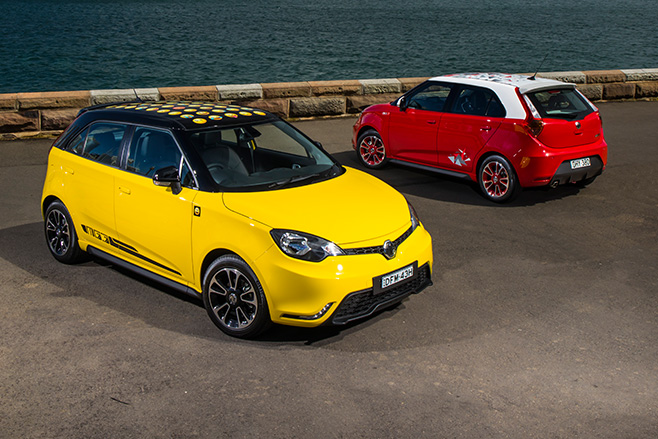
On a brighter note ¬- literally – is the vast array of personalisation options offered for the MG3. A veritable rainbow of colour choices is available, from contrasting roofs and graphics, to brightly coloured wheels. MG has clearly seen the success Mini has enjoyed in this area, and is seeking to emulate it at a much lower price point.
Warranty and roadside assist are other MG strengths: six years for both, against three years for the likes of Mazda, Ford and Toyota.
The MG3 Core is the entry model of the three-tier line-up, and it’s fitted with the standard six airbags, mandatory electronic stability control, 14-inch steel wheels and priced from $13,990 plus on-road costs.
MG3 Soul is the mid-range option, priced at $14,990 plus on-roads, and adds remote central locking, Bluetooth and audio streaming, and steering wheel audio controls over the Core.
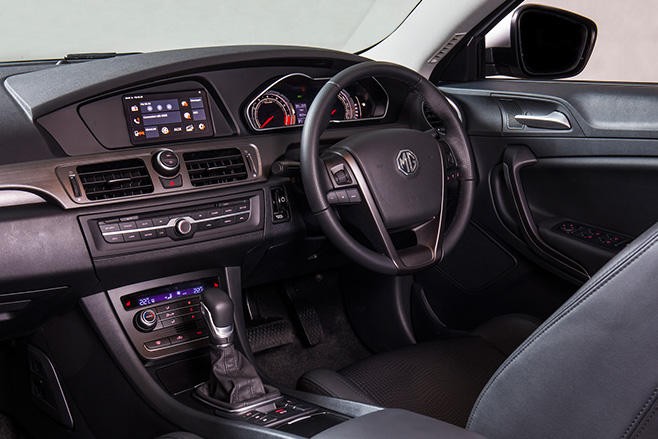
MG3 Essence tops the range, with 16-inch alloy wheels and a sports body styling pack that includes a rear boot spoiler and side sill extensions. It also adds cruise control, automatic lights and windscreen wipers and reverse parking sensors, for $15,990 plus on-roads.
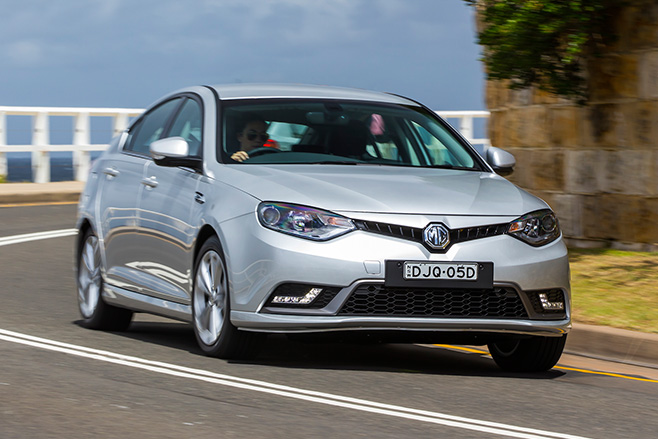
The second of MG’s two-model range is the MG6 Plus, a five-door hatch that drops straight into the hotly contested segment dominated by the Toyota Corolla, Mazda 3 and Hyundai i30. Unlike those cars, the MG6 is turbocharged, and offered only with a six-speed dual-clutch automatic transmission. Its 1.8-litre turbo makes 118kW/215Nm, providing 0-100km/h acceleration in just under 10 seconds, and combined consumption of 7.8L/100km.
Like the MG3, the MG6 Plus is offered in three specification levels. Core opens the line-up at $21,990 (plus on-roads), while Soul sits in the middle and adds an improved audio system with Bluetooth and audio streaming, rain sensors, video-in and remote central locking above the base Core.
Essence is the top of the range, adding Xeon headlamps, front parking sensors, rear view camera, as well as electrically adjustable seats for both driver and passenger. Price is $25,990 plus on-roads.
Much has been made of the suspension tuning of both cars, all done in the UK, and claimed to offer an engaging blend of agile, fun handling, and absorbent ride. We look forward to finding out when test cars become available in the coming weeks.
THE updated Mazda 3 is one of the highest profile examples of a slowdown in sales of diesel passenger cars in Australia.
Despite the 3 being one of the top-selling cars on the market, Mazda has dropped the diesel-powered XD variant due to slow sales, instead focusing on the petrol models that account for thousands of sales each month.
Mazda Australia marketing director Alastair Doak said the price of the diesel 3 – it was the most expensive model and some $4000 dearer than its petrol equivalent – didn’t help, as did the fall in the price of petrol.
“The fuel price fell, so if someone was buying the diesel as a blend of performance and economy, diesel carries a premium, so that didn’t help its cause,” Doak said, adding “it was a bit of a distraction … and hard to make sure you had stock on the ground in the right places”.
BMW, too, has experienced a decline in diesel passenger-car sales, prompting a review that led to the decision to drop the BMW 220d Coupe.
BMW Australia product planning chief Shawn Ticehurst puts the swing away from diesel down to improvements to petrol engines; almost all petrol engines out of Europe now have turbochargers for reduced fuel use and improved performance, particularly torque.
“Petrol engines are now so good,” Ticehurst said. “People got into diesel and loved what they were when there was a bigger difference, and now the petrol engine technology has caught up.”
Despite the shift away from diesel passenger cars, carmakers are still seeing strong sales for diesel SUVs. In large SUVs, in particular, the market is heavily skewed towards diesel.
“Diesel is really strong in SUVs,” said BMW’s Shawn Ticehurst. “X5 30d is our biggest seller, BMW X3 20d is our second biggest seller.”
Mazda’s Alastair Doak said diesel is “a more natural fit” for SUVs, but that it had come off from its highs of a few years ago.
The price of fuel “isn’t as top of mind” as it was when fuel prices were higher, Doak said, “so not as many people are automatically ticking the diesel powertrain box”.
No one Which Car spoke to was prepared to link the diesel slowdown with the Volkswagen Dieselgate scandal.
