
Tuning attention has turned to the Ford Mustang Ecoboost and news for 5.0-litre V8 fans is grim – the 2.3-litre turbocharged four-cylinder can now produce about the same torque for a fraction of the price, and the affordable package is arriving locally early next year.
Ford Performance has officially released an ECU re-flash and cold air intake kit for the Mustang that boosts the Ecoboost engine from 233kW/432Nm to a fuller 252kW/529Nm. It leaves the V8 making only a single extra Nm, although its 306kW of power remains ahead.
Best of all the kit only costs $699 US ($AU900) and Herrod Performance – which currently imports supercharger kits for the V8 – has confirmed its local arrival in the first quarter of 2017.
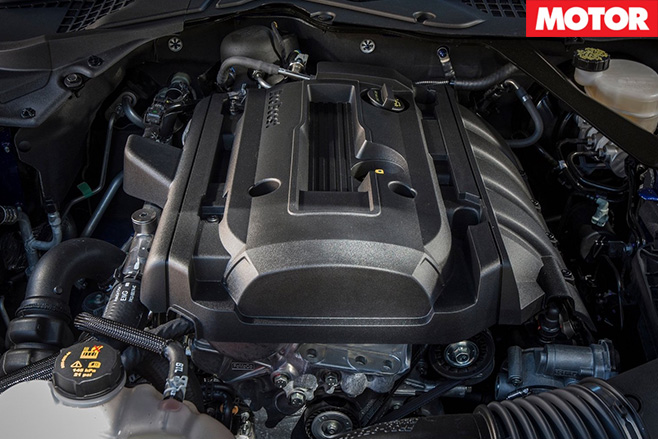
MOTOR has clocked a 6.14sec 0-100km/h for the stock four versus 5.2sec for the atmo model with twice the cylinder count.
Herrod Performance has, however, stressed that outputs may not mirror the US models. The company has been working with Stateside-based Ford Performance for the past four months to finalise the tuning kit for right-hand drive markets, primarily to ensure it’s ADR compliant and able to retain warranty.
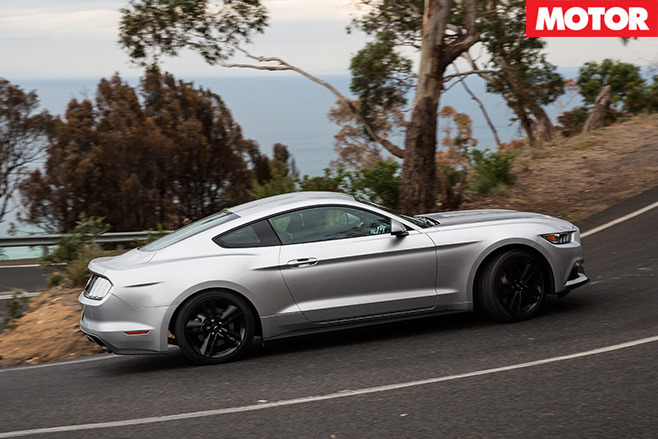
Melbourne-based Herrod Performance has admitted there hasn’t been huge interest in tuning kits for the Ecoboost so far, which is probably a reflection of its minority share of Mustang sales locally against the mighty V8.
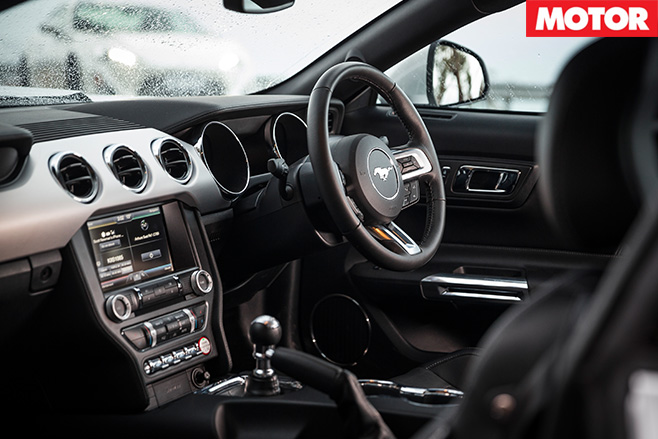
Between four and eight, around 100 entry-level tuner packages are expected to land in Australia within the first three months of next year.
Audi gives the RS Q3 a much-needed steroid infusion.
WHAT IS IT? Audi’s hotted-up small SUV is back for a third time, now with more power and more equipment to justify its added cost. Retailing at $84,216, the 2017 Audi RS Q3 performance might be a couple of grand more than the car it replaces, but that new word on the end of its name – performance – is a clue as to why.
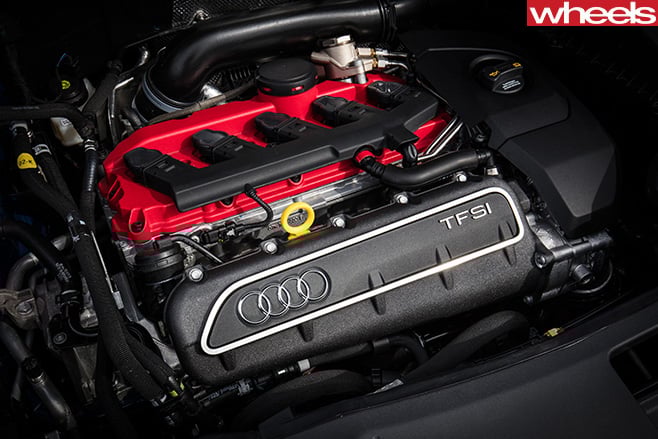
There’s more grunt courtesy of an RS3-spec 2.5-litre turbo inline five, which spits out a healthy 270kW and 465Nm, dropping the 0-100km/h to a mega-brisk 4.4 seconds. Compare that with the 2014 RS Q3’s 228kW output and 5.2-second sprint time and the gains are put into perspective.
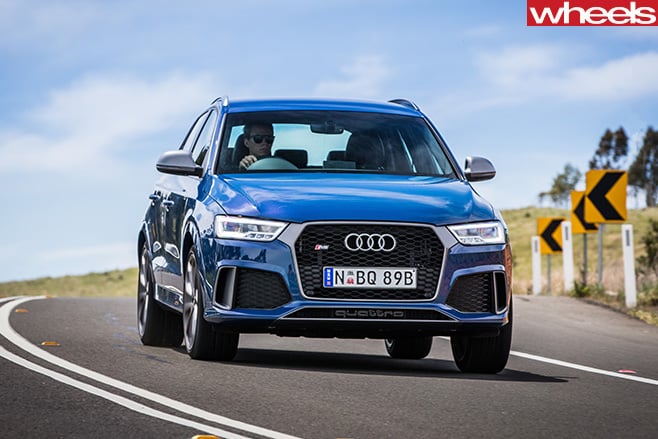
MAIN RIVALS There’s really just one: Mercedes-AMG’s GLA 45. The GLA might make more power (280kW) from its 2.0 litre inline four, but the RS Q3 performance matches its 0-100km/h sprint time of 4.4 seconds.
The GLA has a modest price advantage with its $83,615 sticker price, but the Audi has a roomier cabin.
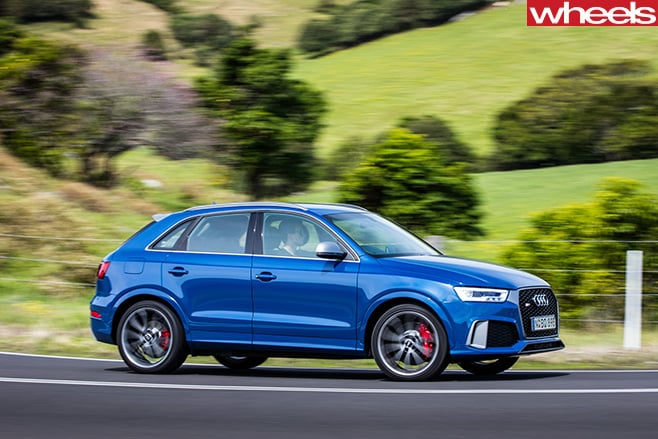
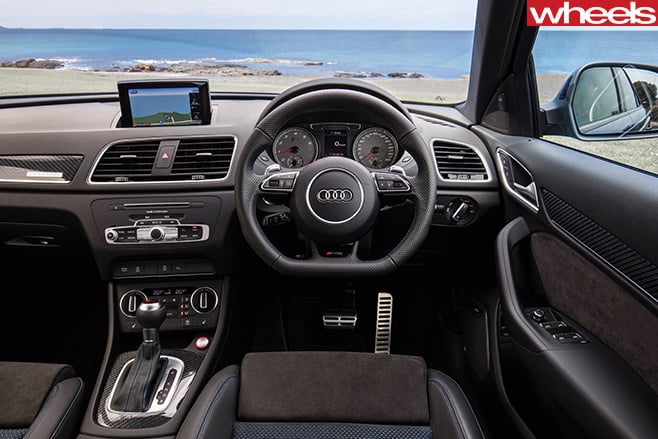
PLUS: More power and torque, the kind of car the RS Q3 should have been from the beginning MINUS: Interior looks old, previous-gen infotainment hardware, no spare wheel, no manual
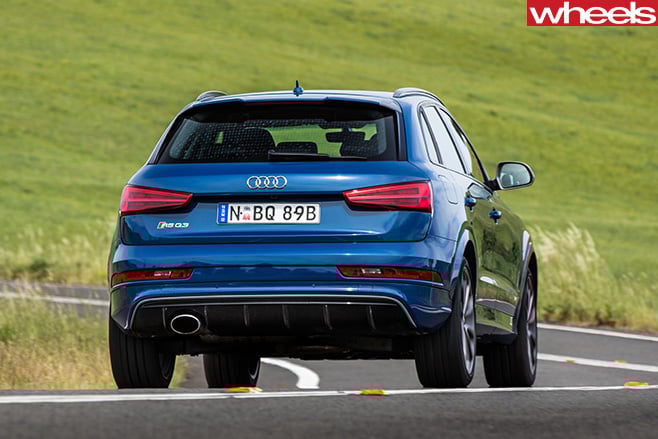
And, while it beat the Mercedes-AMG GLA 45 to market (and only by a couple of months), the RS Q3’s Merc rival made more power and sprinted harder. The RS Q3 has been in the Benz’s shadow ever since, even after an update last year brought new plastics and a power boost to 250kW.
Compared to last year’s model, the RS Q3’s engine makes 20kW more power and 15 more Newtons. Looking back further to the first iteration of the RS Q3, the increase is a significant 42kW and 65Nm.
Audi was sandbagging, though it claims the RS Q3’s cooling package was holding it back from its full potential.
With RS3-equalling power and a clever quattro AWD system that can take up to 100 percent of drive to the rear axles (though is predominantly front-biased most of the time), the RS Q3 grips hard. Torrential conditions at the local launch did reveal its preference for understeer, however.
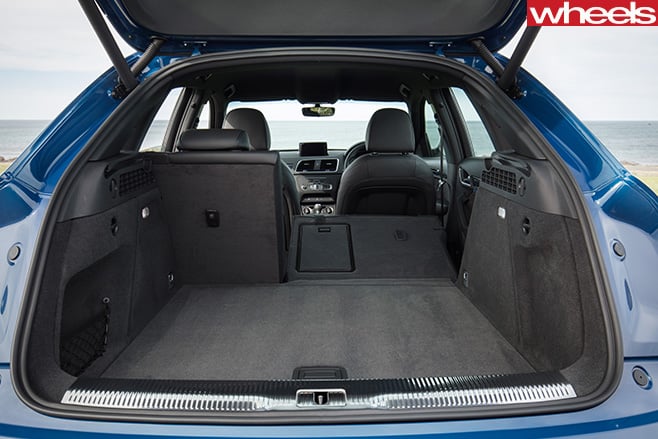
The tall seating position dilutes the sensation of speed and it lacks the scrappy nature of the RS3, but the RS Q3 performance is a still an impressively quick point-to-point machine. The cabin might be showing its years now, but at least it finally has the performance to live up to its badge.
SPECS Model: Audi RS Q3 Performance Engine: 2480cc 5cyl, dohc, 20v Max power: 270kW @ 5550rpm – 6800rpm Max torque: 465Nm @ 1625rpm – 5550rpm Transmission: Seven speed automatic, all-wheel drive Weight: 1655kg 0-100km/h: 4.4 sec (manufacturer) Fuel economy: 8.6/100km Price: $84,216 On sale: Now
First published in the April 2012 issue of Wheels magazine, Australia’s best car mag since 1953.
An epic car deserves an equally sensational road, so Wheels introduces AMG’s SLS Roadster to the best bit of bendy bitumen inland of the NSW mid-north coast.
IT SAYS everything about the SLS AMG Roadster that I’d completely forgotten its value by the time I got it sideways. Sliding half a million bucks’ worth of someone else’s car is no trivial matter. But I was having so much fun that the $500,000 sticker price was the furthest thing from a mind fully occupied with thoughts of speed, balance, grip, steering, throttle, and road.
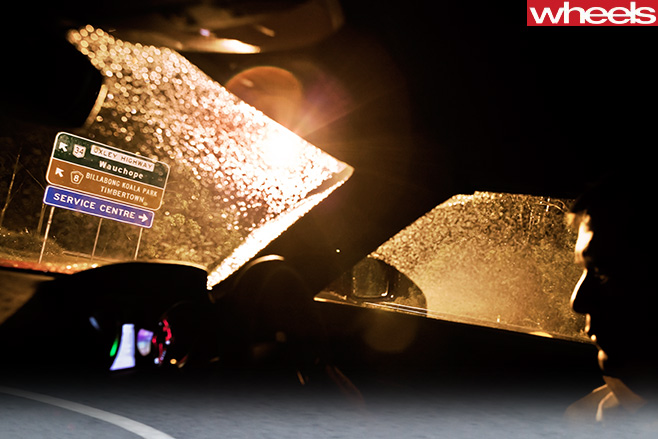
With the keys to an SLS AMG Roadster in my pocket and a couple of days to do the most with it out of Sydney, it seemed the Oxley Highway would present the right kind of challenge. The full length of this road, national route 34, runs for 513km, from Port Macquarie on the coast to its western terminus at the Mitchell Highway in Nevertire. But we’re interested in the stretch that any Aussie biker worth his salt will tell you about, the 161km run from Wauchope to Walcha, up and over the hills.
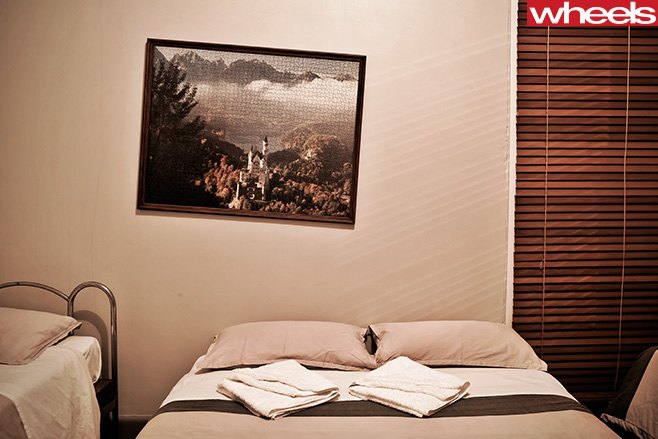
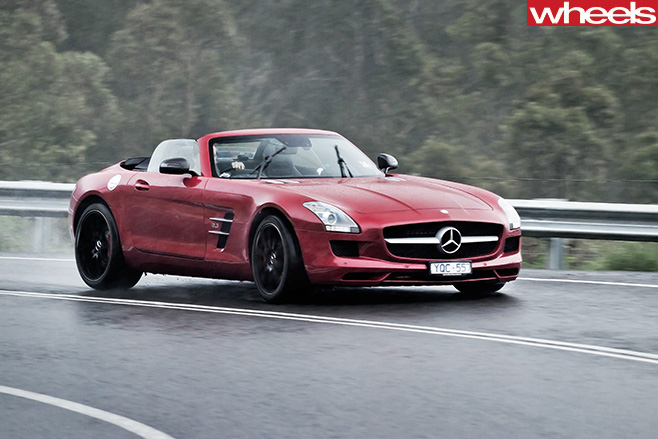
First, the transport leg. For this 375km night run on the Pacific Highway, the SLS just had to be a car, a mode of transportation for two tired heads who’d already spent a full day at work. It performed this menial task well, fairly quiet at cruising speed, its triple-layer lid keeping out even the rowdiest truck roar, the car stable over standing water despite 265/35 Contis up front and 295/30s at the rear. The engine ticks over easily at 2400rpm in seventh at an indicated 120km/h.
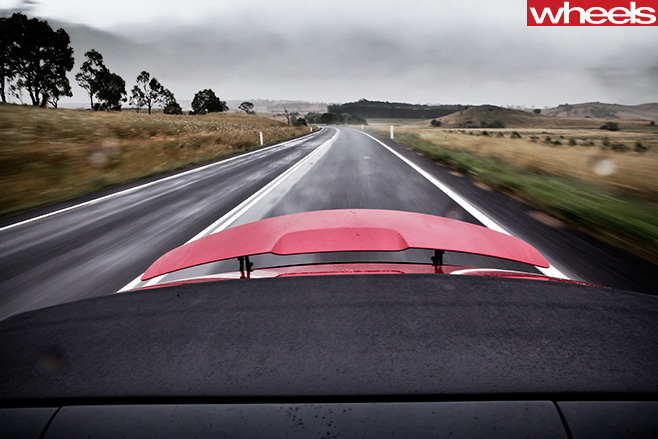
You sit low, the dash and doors high around you, the big wing mirrors at face level, ensconsed in a tiny cabin given the total length. At 4638mm it’s about 100mm shy of a Honda Accord Euro, to pick a random comparison, while its 1938mm width is 100mm more than the Euro. It’s not cramped – you just have no more space than you absolutely need. The seats are firm but comfortable, and multi-adjustable, with fat side bolsters that clamp powerfully into your kidneys. The steering wheel is flat-bottomed, a feature I dislike, but beautifully designed otherwise, its sculpture and ridges locating your hands perfectly at 10-to-two in front of clear silver-backed instruments – the speedo reads to 360km/h. The leathers and plastics and switches and lights and stitching are all top grade – you wouldn’t feel short-changed if you’d just parted with a half a mill for this thing.
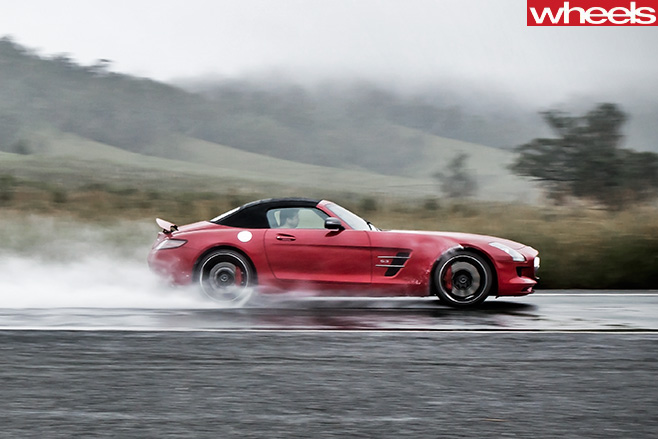
Sitting and admiring the SLS’s long profile as I eat a ‘perfect 10’ bacon sandwich at the Long Flat shop, it’s time to leaf through the car’s spec notes. Weight is 1735kg, split 47 percent front, 53 percent rear. The entire engine sits behind the front axle line, while the seven-speed AMG Speedshift dual-clutch gearbox sits at the rear of the car in a transaxle. Power and torque: 420kW at 6800rpm, 650Nm at 4750rpm. Engine weight is 206kg. That’s light for such a big mill.
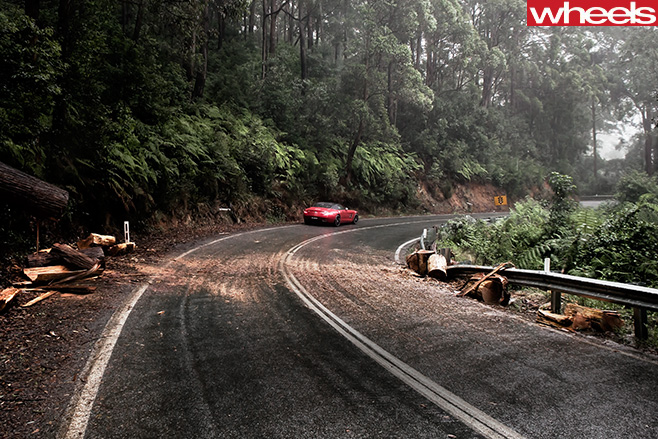
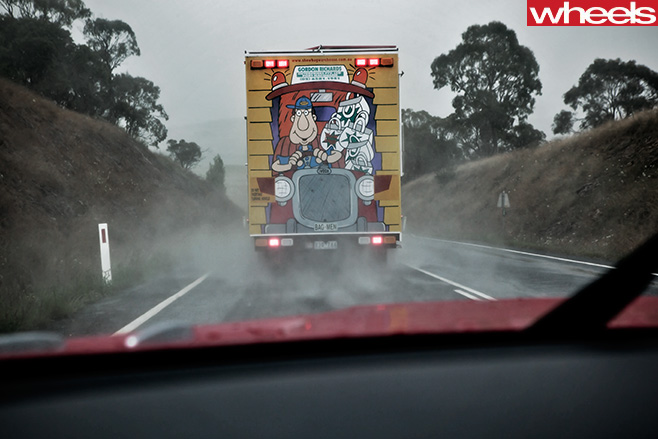
Still it rains. And still it doesn’t matter. Nail the throttle and the car squats and grips, the traction control intervening surprisingly little. It’s fast alright, but this road will be more about point than squirt. More open sections follow Long Flat, the Great Divide looms beyond Yarras, then a little yellow sign appears about 60km from Wauchope, announcing corners ‘next 45km’. We stop and take a photo. This is one of Australia’s truly great road signs.
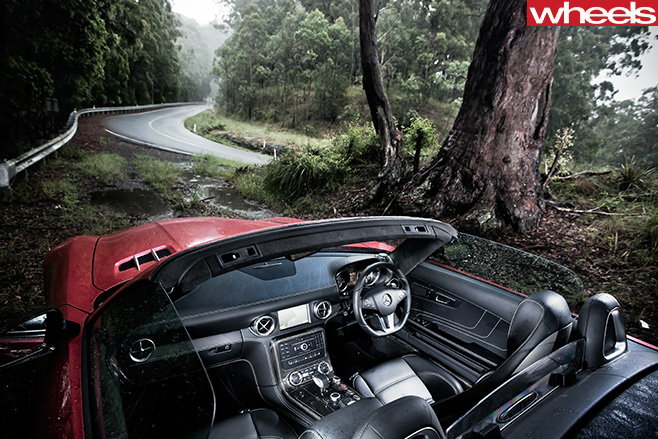
What a road. The surface in the first part of the climb is new and smooth, the excellent drainage and heavy cambering taking care of all standing water. Then the older surface appears and it’s possibly even more fun, with washboard ripples in places and the odd mid-corner bump to keep your mind focused. Only a couple of cut-up fallen trees and the resulting spread of bark and sawdust provide low-grip surprises. Otherwise, it’s all constant and reliable, a roller coaster road.
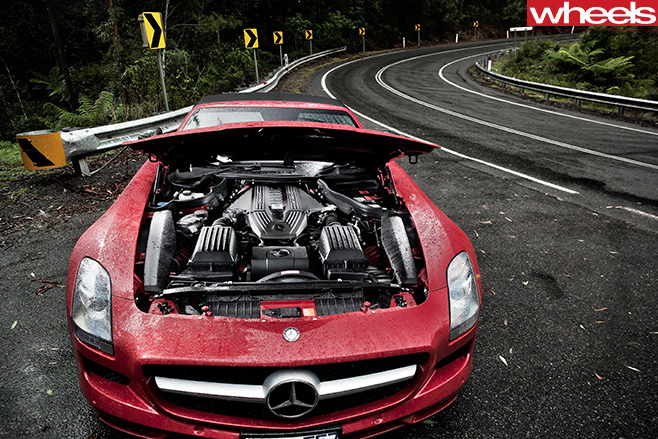
The road throws more and more at us and the SLS eats it. Grip levels are other-worldly. For some reason, I expected understeer to set in earlier with the front wheels so far away. Dumb thought. Again and again, I try and fail to make the car plow, and eventually decide to go the other way and have a half-lift off the throttle. And thus we have our slide.
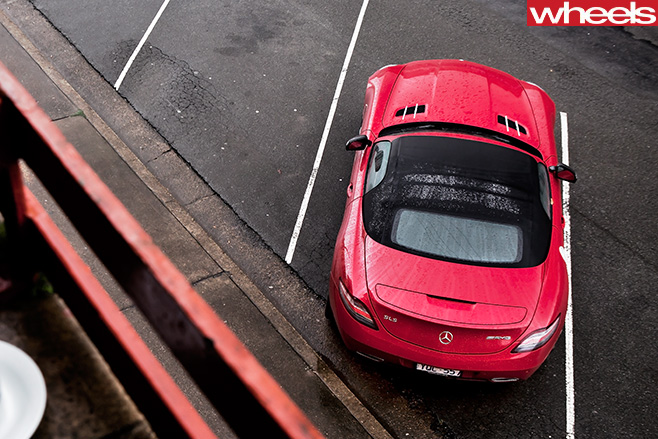
Transmission, brakes, steering all get big ticks from me, especially the latter, which is far better than you expect in a Merc. Only delayed downchanges from the DCT spoil things, but I’m tending to change down late anyway given the wet surface. ‘Sport+’ gives you 50-millisecond-faster changes, but alters nothing else. This car lacks the optional adaptive dampers but when you’re pushing on, you don’t miss them.
We don’t stop at Gingers Creek Road House at the top for long, because there’s more of this road to come. What impresses me most, other than the sheer length of the run, is the way the corners are cambered. The road works with you, not against you, and though there are a few tightening radii, none are harsh. All the while, the mist hangs in the trees and the rain pelts down and the big V8 roars and pops, 1758kg feeling like about 1000. My right shoulder is now soaked through and my face covered in rain, but it doesn’t matter. Driving doesn’t get better than this.
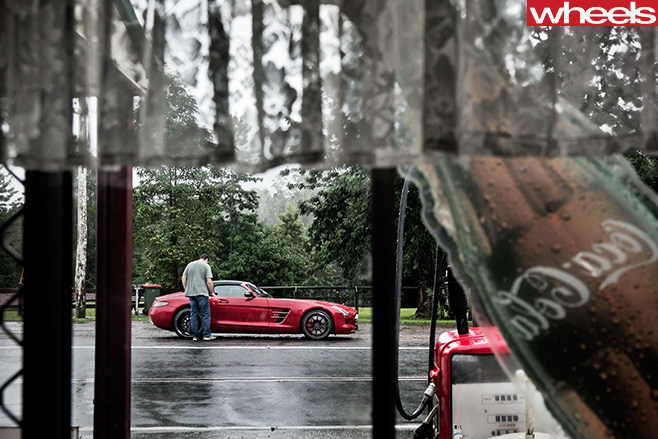
The final section of the Wauchope-to-Walcha run is made up of wide-open hill views and long sweepers and straights. Temptation doesn’t get the better of me and I stick to the limit, roof up again now. When we reach Walcha, we follow our plan and turn south onto Thunderbolt’s Way towards Gloucester, but we only get about five clicks before I make an ABS stop, turn around, and go back. The Oxley’s too good to only be done once in a day.
Big-picture view
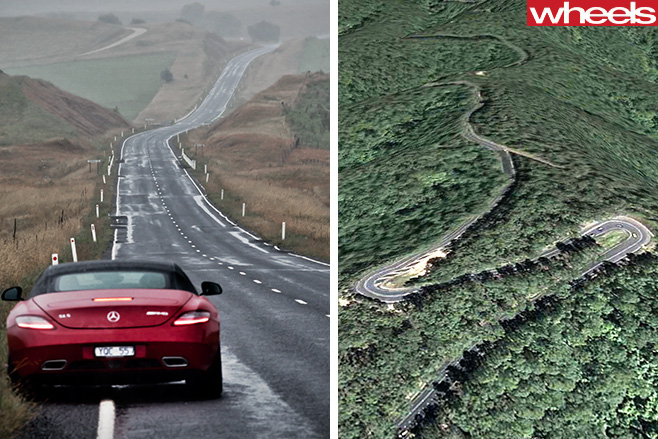
Another week, another crazily awesome drifting video from Red Bull.
Hot on the heels of Shane Van Gisbergen’s effort at Sydney Motorsport Park in a converted V8 Supercar, crazy Kiwi ‘Mad Mike’ Whiddett as laid two black lines all over the Franschhoek Pass in South Africa.
Located outside Cape Town, the 15km stretch of driving nirvana is the perfect playground for Whiddett to unleash his ‘BADBUL’ Mazda RX-8, powered by a 606kW turbocharged 20B triple-rotor.
As you can tell, this isn’t Whiddett’s first rodeo, having drifted his way around the world, including the stunning Crown Range in his New Zealand homeland behind the wheel of his other toy, the ear-shattering quad-rotor Series VI RX-7 ‘MADBUL’.
Proving that too many toys is never enough, Whiddett also competes in the Formula Drift USA championship in his wildest machine of all, a twin-turbo quad-rotor Mazda MX-5 that pumps out around 770kW.
Germany’s parliament wants petrol and diesel cars dead.
In news broken by Der Spiegel, Germany’s upper house (otherwise known as the Bundestrat) last week passed a resolution that asks to ban petrol and diesel vehicles from European roads from 2030.
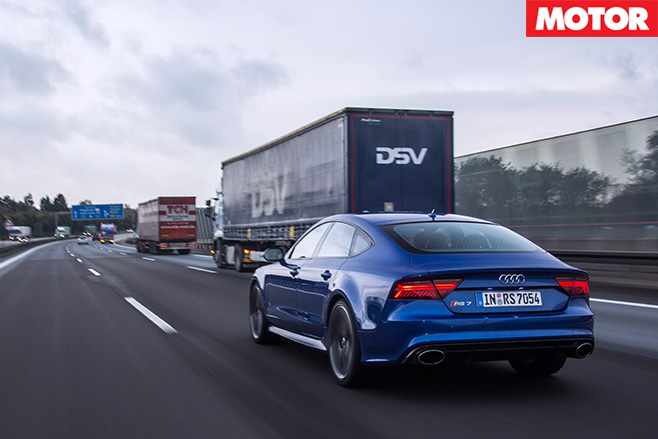
However there’s no confusing the last sentiment, it wants petrol and diesel burning cars gone.
Oliver Krischer, a Greens politician in the Bundestrat, reportedly welcomed the push, agreeing petrol-and-diesel engines must go if the recent Paris climate agreement is to be honoured.
At the core of the Paris Agreement is the goal to keep the global average temperature increase two degrees centigrade below pre-industrial levels. Der Spiegal reports that’ll require Germany to cut its carbon dioxide emissions by 95% by 2050.
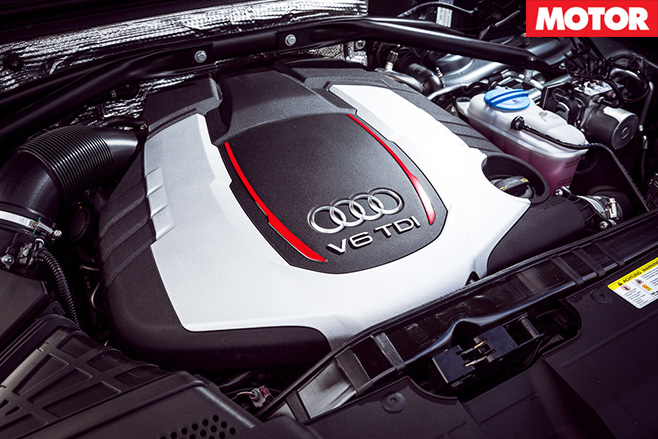
Paris’s Motor Show underlined the industry shift, with emissions-free vehicles outweighing performance metal on show.
However, it’s strange to think Germany’s roads, the home of high-performance petrol cars, and diesel ones, could be fully electric within two decades.
What stands out?
The Holden Colorado offers strong engine performance, a good-sized cabin, and plenty of cargo and towing capacity, along with the option of dual-range four-wheel drive. Like most utes, it comes in a big array of variants, from basic work trucks to family-friendly five-seaters.This review covers Colorados on sale new prior to October 2016, with features as specified from the previous update of November 2014.(Note that for technical reasons, the thumbnails and prices above refer to the upgraded Colorado that arrived for the 2017 model year. We apologise for this discrepancy, and will correct it when possible.)
What might bug me?
Noise from the engine, and unappealing interior trim.If you are not tech-savvy, you might have trouble taking full advantage of the entertainment and navigation functions. Even the satellite navigation relies on a connection with your mobile phone.
What body styles are there?
Single-Cab, Space-Cab and Crew-Cab, and in both cab-chassis and pick-up form.Space-Cab models have fold-down seats behind the front seats, accessed via rear-hinged doors that can open only when the front doors are open. Crew-Cabs have a conventional four-door arrangement, with seating for five.Buyers of cab-chassis models fit trays of their choice at the rear, commonly tailor-made by aftermarket specialists. Pick-ups come with a factory-fitted tub at the back.All cab styles come in cab-chassis versions. Only Space-Cabs and Crew-Cabs come as pick-ups.The Colorado is available as a rear-wheel drive vehicle, or with dual-range four-wheel drive. It is classified as a light commercial pick-up.
What features do all versions have?
Bluetooth phone connectivity, and auxiliary and USB ports for electronic devices. Headlamps that turn off automatically.Electronic stability control, which helps the driver control the vehicle in a skid. This is not mandatory on commercial vehicles.Electronic traction control, which helps prevent wheelspin in slippery conditions and is a great help off-road.Trailer Sway Control, which helps settle a towing vehicle if its trailer is swaying from side-to-side.Four airbags: two in front of the driver and front passenger, and curtain airbags on each side protecting the heads of front- and rear-seat occupants.Holden’s standard 100,000km/three-year warranty applies to the Colorado.
Which engine uses least fuel, and why wouldn’t I choose it?
The Colorado is available with only one engine, a 2.8-litre four-cylinder turbo diesel from Italian diesel specialist VM Motori, which is part of the Fiat group.Given that this engine is a relatively new design, it is surprisingly noisy and does not feel as smooth as the best ute engines. But it’s competitive for power and fuel economy.The engine is available with a six-speed manual gearbox on all models. All except the DX, which is the work truck Colorado, can also be ordered with a more expensive, six-speed automatic.With either gearbox, the engine’s maximum power is quoted at 147kW. Holden says the version supplied with the automatic has more power at low speeds, but it doesn’t feel like that on the road.
What key features do I get if I spend more?
The least costly Colorado is the DX, which comes only as a single-cab-chassis with four-wheel drive. It is a basic work vehicle for farmers, and for tradies who need 4WD for worksite access. It’s the only Colorado with a three-person front bench seat.Step past the DX and all remaining models have front bucket seats and an extra two airbags – side impact airbags to protect the upper body of front passengers – for six airbags in all.All but the DX also have a 7.0-inch touchscreen for controlling the entertainment and satellite navigation systems. And they have a leather-covered steering wheel, with buttons for phone connectivity, the audio system, and the cruise control that is introduced at this point. Parking sensors at the rear of the vehicle warn the driver of obstacles.The Colorado LS – one step up from the DX – has 16-inch steel wheels. Pay more for the LT and you get nicer looking wheels in aluminium alloy, and foglights.The Colorado LTZ also has a reversing camera, air-conditioning that maintains a set temperature, power adjustment for the driver’s seat, and in Crew Cab models the option of leather seats (with heated front seats). LTZs also get superior projector-type self-levelling headlamps, electrically folding external rear-view mirrors, side-steps, a soft tonneau cover, and a chrome sports bar for the rear tub. Wheel diameter grows to 17-inches, and the tyres are slightly wider and lower in profile.For 2015, the LTZ also has softer-riding suspension, designed to be more comfortable for passengers when the ute is not heavily loaded.In the most expensive Colorado, the Z71, leather seats (heated in front) are standard. The wheel diameter increases a further inch to 18 inches. There are roof rails, which make it easier to add roof luggage systems, and several exterior styling enhancements.
Does any upgrade have a down side?
The softer suspension tune on the LTZ and Z71 reduces the weight you can carry by 200kg, or about 20 per cent.White and non-metallic red are the only standard colours: the rest attract an additional charge.
How comfortable is it?
The Colorado’s cabin is comfortable and spacious for driver and passenger, even if some of the plastic surfaces have a rough and hard finish. The LTZ and Z71 use some different materials that help the cabin feel warmer and more inviting.Holden has taken its own approach with connectivity, and satellite navigation and voice-control functions need special apps in brand-specific mobile devices. It will be all too confusing for some buyers, especially older buyers.The Colorado drives as utes generally do. With only passengers on board, the ride can be uncomfortable. Very smooth roads are fine but everywhere else you know you are in a ute.The comfort-tuned suspension on the LTZ and Z71 helps here. Weight in the tub or on the tray also helps settle the ride – that is always the case with utes.Nevertheless the Ford Ranger and Mazda BT-50, and particularly the Volkswagen Amarok, ride better than the Colorado.The Colorado’s diesel engine is noisy but enthusiastic, and is best when mated to the automatic gearbox. The manual is geared too tall, which means the engine struggles in the higher gears on hills.
What about safety?
Compared with utes of even five years ago, the current-generation Colorado, first seen in 2012, is well endowed with safety equipment. In fact its list of safety features would not look out of place in an SUV or passenger car. Even the work-truck DX scores a rating of Very Good, helped by its side-curtain airbags, while the addition of a reversing camera lifts LTZ and Z71 versions to Excellent.(To see a full list of the safety features on any model, select the vehicle and look under the features tab. Safety-related features are listed in red.)The Australasian New Car Assessment Program (ANCAP) has awarded all Colorado Crew-Cabs a maximum five-star safety rating, and even Single-Cab and Space-Cab models get four stars.
I like driving – will I enjoy this car?
Utes aren’t designed as drivers’ cars and the Colorado is only a mid-fielder in driving enjoyment, even by ute standards. The steering lacks precision and the handling does not inspire the confidence you would experience in a Volkswagen Amarok or a Ford Ranger.While the Colorado’s engine is eager, it is not as quiet and smooth-running as competitor designs.Colorado 4WD models have decent off-road ability but won’t go as far as some other utes. That is because they do not have a rear differential lock, either standard or as an option, which can greatly improve drive in low-grip situations.The tall gearing on the manual also means that when off-road, Colorado 4WD models sometimes need you to select low range in conditions where alternative vehicles are happy in high range.
How is life in the rear seats?
Crew-Cab models have a three-person rear seat that is spacious and comfortable for a ute rear seat.Crew-Cabs also come with ISOFIX anchor points for child seats.The Space-Cab models have two small, folding jump seats that are suitable only for children and small adults, and over short distances.
How is it for carrying stuff?
The Colorado is a good working ute with a class-leading 3500kg towing rating and a strong 3150kg Gross Vehicle Mass, or GVM, for all but the LTZ and Z71 (which can carry 200kg less).GVM is the total weight a vehicle can carry, including its own weight.The Colorado also has a good-sized standard tub.
Where is it made?
All Colorados are made in Thailand.
What might I miss that similar cars have?
A rear differential lock. These help four-wheel drive Ford Rangers, Mazda BT-50s and Volkswagen Amaroks, for example, go further off-road.Other utes you might consider include the Toyota Hilux, Nissan Navara, Mitsubishi Triton, and the Isuzu D-Max with which the Colorado shares its basic chassis and bodies.
I like this car, but I can’t choose which version. Can you help?
The LTZ Crew-Cab 4×4 automatic is the stand-out choice for a do-everything family Colorado.
When did Holden update this Colorado?
This RG generation Colorado went on sale in 2012, and was revised for the 2014 model year. A further revision for 2015 included measures to reduce engine noise in the cabin. The Z71 variant was added in mid-2015.The car covered in this review was superseded about October 2016 by a Colorado based on the same RG architecture but extensively modified, with a revised look, a more comfortable cabin, a smoother engine, and better handling. A 7.0-inch or bigger central screen brought better smartphone integration, via support for Apple CarPlay and Android Auto.
A wall of F1 cars is just a small part of a 1000-strong collection of one-offs, motorsport stars and production classics hidden in secret bunkers Mercedes-Benz calls The Holy Halls.
MERCEDES’ temple to the car as a work of art is a dramatic nine-level aluminium and glass building. Designed as three overlapping circles, it houses 160 glistening cars and 1100% exhibits in 16,100% square-metres of floor space, or almost the area of the Sydney Cricket Ground.
By the time this architectural jewel opened in 2006, the museum located just outside the Unterturkheim factory gates at 100 Mercedes St, Stuttgart, cost Mercedes-Benz a cool $230 million. Worth it; since then more than seven million people (40 percent foreigners) have taken the tour through this giant atrium space with no straight walls and no closed rooms.
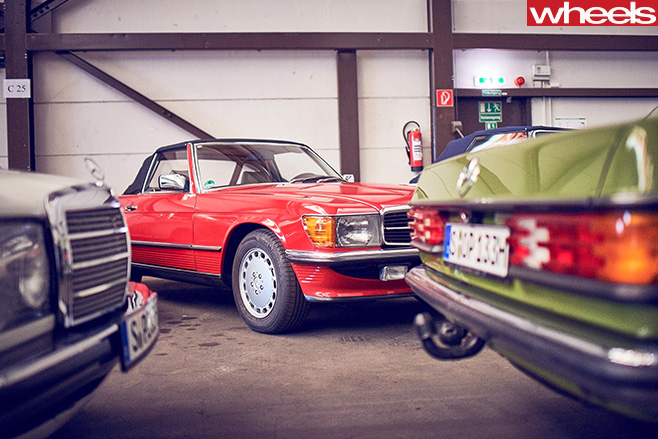
However, only seven kilometres away in Fellbach, a dreary industrial suburb of Stuttgart, is a far more fascinating, unheralded series of 11 warehouses that store an amazing collection of almost 1000 cars, everything from a three-wheel 1888 Benz to Lewis Hamilton’s 2015 championship-winning F1 car.
Mercedes calls them Heilige Hallen, the Holy Halls. They are the heart of the astonishing Mercedes-Benz Classic collection, and this visit by Wheels’ is the first time a media outlet has been allowed in with cameras.
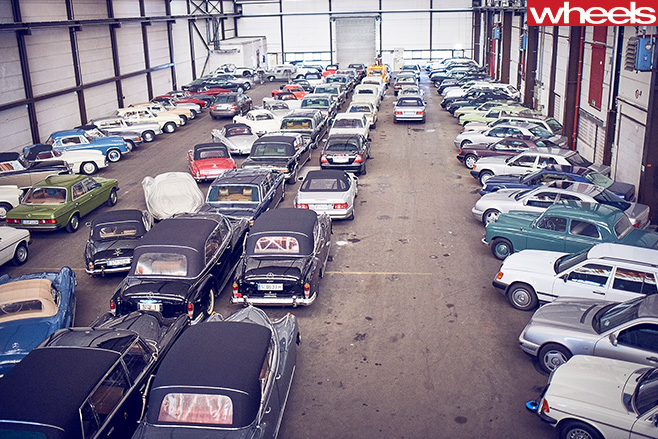
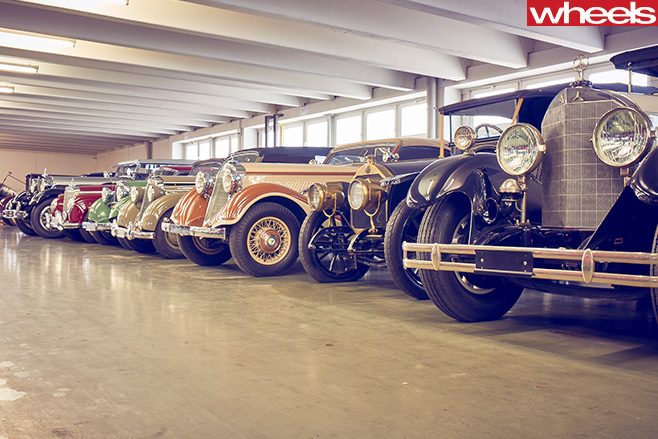
Immediately behind the showroom is the Classic Centre’s workshops, where a team of seven specialist mechanics work on maintaining the collection and especially those legendary models that are sent all over the globe, including Australia, for Old Timer events. Seventy percent of their work is for the collection and definitely not for sale, 30 percent for owners who want the best restoration and service available.
After my eyes adjust to the vast space, my brain begins to absorb the cars. A gullwing 300SL, an earlier 1952 racing SL sits on a hoist, there’s a 190E 2.3-16 Cosworth, a couple of SL Pagodas, an original SL spaceframe, a monster late 1920s SSK roadster and a ‘streamliner’ W196, Fangio’s 1954 French GP-winning car. It’s impossible not to reel in a daze, spellbound. Yet there’s much, much more to come in the Holy Halls.
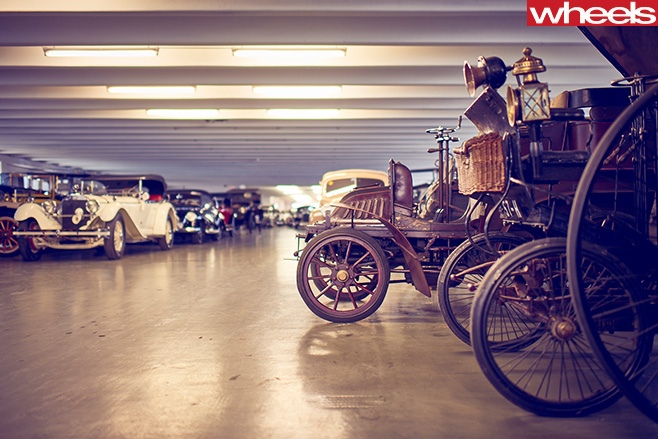
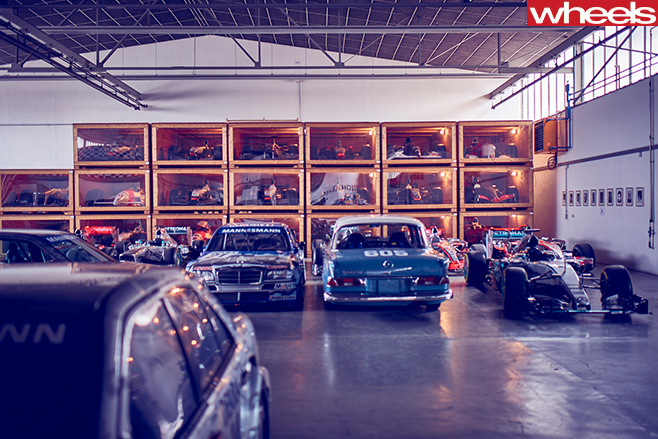
Every car is historically significant, whether it be a race winner, a record-holder, a concept, the last model of any series to come off the production line, or just a one-of-a-kind sample of rolling history. The Holy Halls are the supply chain to the museum, where cars are stored before rotating into the museum or classic car events. Some cars – especially modern F1 racers – are stored in hermetically sealed glass cases, stacked like scale-models until you get up close and see that they really are full-size.
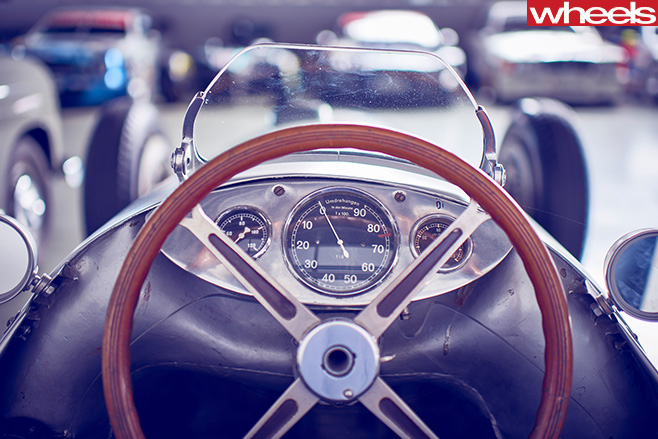
Mercedes-Benz has been saving and storing important cars for more than a century. It’s company policy to keep at least one example of every production car it has sold. Every year, Mercedes adds 30-50 cars to the collection. It is currently looking for AMG models to round out next year’s 50th anniversary AMG celebrations, ideally with an example of every significant AMG model.
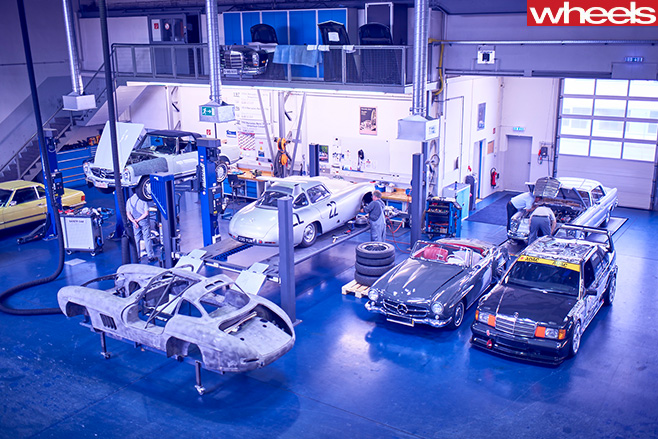
An unmarked door set in a non-descript wall opens to reveal a tiny reception area and a door to a single toilet. There is no clue to what lies beyond the other door. The low hum of air-conditioning is the only noise, though I’m told there is a clever alarm system. The vast space is hangar-like in its floor area. And filled with cars.
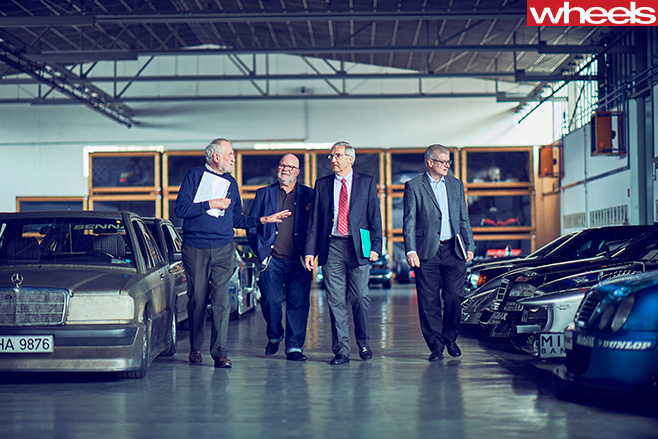
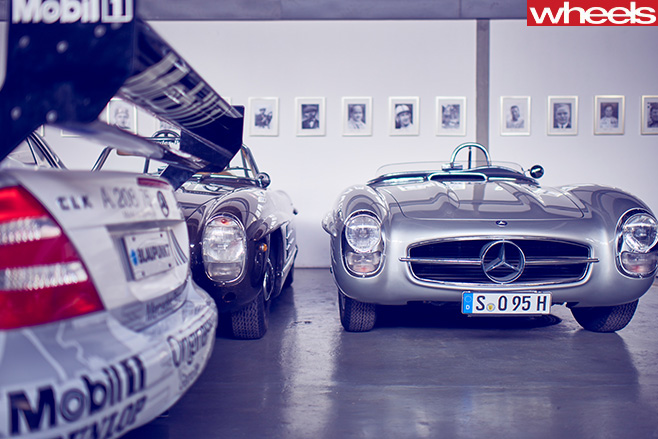
An elegant 1938 320 combination coupe-convertible has a removable hardtop, surely one of the first.
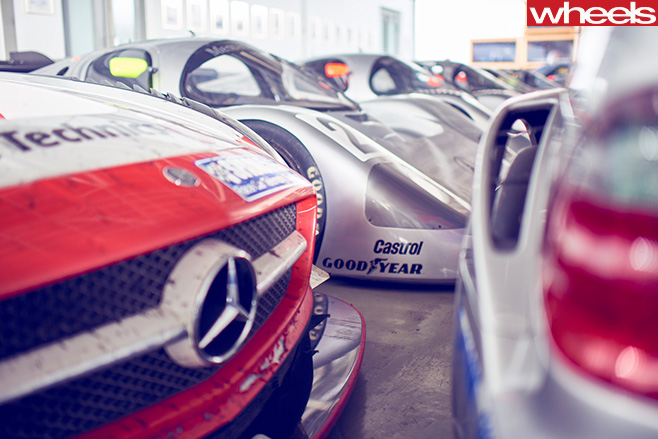
A few hundred metres away we enter a second anonymous hall, this one devoted to racing cars: DTM, Indycars, F1, rallying and sports-racers including the Group C Saubers. At one end there’s a collection of about 30 more recent F1 cars: Petronas-sponsored Silver Arrows and Mercedes-powered Vodafone McLarens, most of them stacked neatly in bespoke, clear-fronted cells. And a row of six orange C111s, the gorgeous rotary-powered gullwing coupes that almost made it to production in the early 1970s.
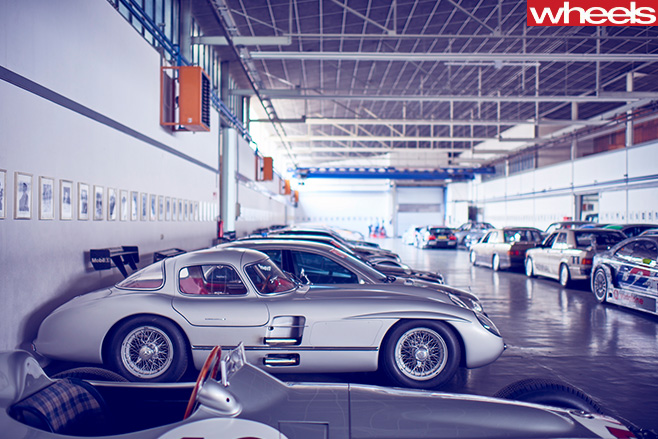

Mercedes’ commitment to the collection, and using it intelligently to promote the brand globally, is obvious. For the recent W213 E-Class international press launch in Portugal, Mercedes provided examples of nine generations of Mercedes-Benz E-Class for the journalists to drive.
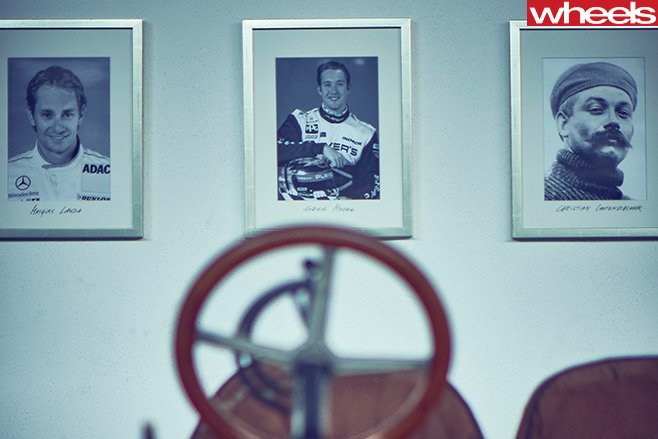
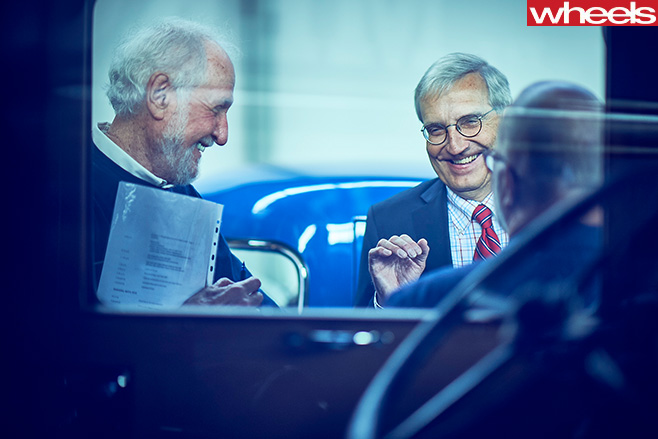
“As long as the guys above appreciate what we do, we are okay,” says Jurgen Wittmann, who manages both the museum and the collection. A couple of days later CEO Dieter Zetsche tells us he is a great fan of the collection and its global work.
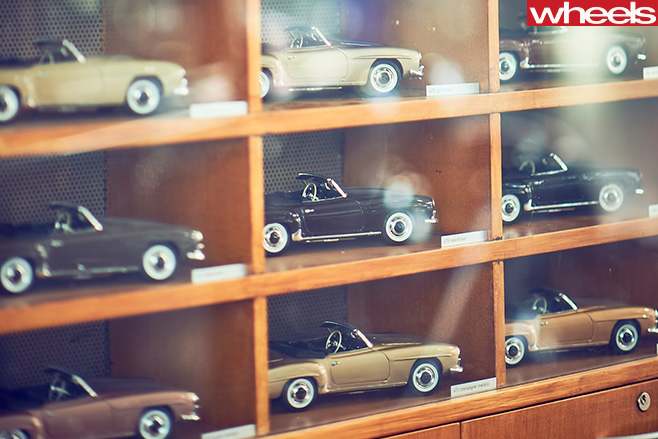
“The whole war was a nightmare,” Wittmann says. “We are aware of our history. We moved cars to various locations, mostly in the East. Some went to Polish and Czech dealers. Cars were hidden in tunnels and caves, some were sent to Dresden along with three million detailed blueprint drawings that miraculously survived unscathed.”
In 1989, after the unification of Germany, the Dresden Technical Auto Museum returned 12 cars. However, some that ended up in Russia have never been returned or even seen again.
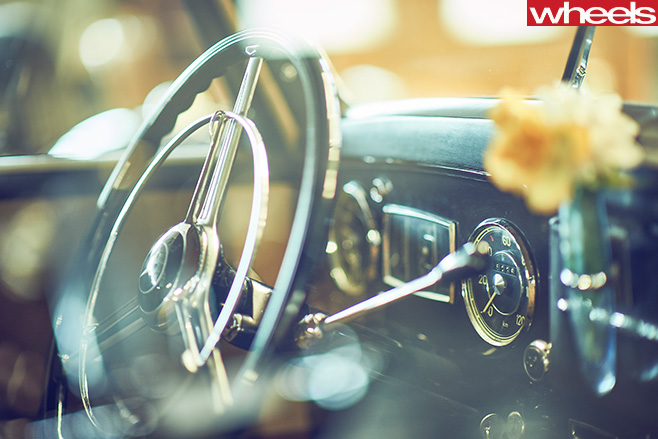
Unlike this priceless and fabulous collection, which deserves to be seen, appreciated, and admired for the treasure that it is.
No other car company celebrates its past quite like Mercedes-Benz. Maybe that’s because none have a history as long, or as lustrous, as Mercedes-Benz.
We still have an iron or two in the fire, but there is a chance this will be the last Australian-made long-termer MOTOR ever runs, so we thought we’d better make it a good one.
The performance ute is a uniquely Aussie creation, and now Ford’s sadly ceased production of its trayback models, Holden’s SS sits in a class of one.
Other nations have adopted the ute concept, but always for utilitarian means – no fun allowed, at least not in a performance driving sense. In Australia we approach things a little differently, which is perfectly encapsulated by the Holden SS ute, particularly in Redline guise. We’re happy to work hard (2064-litre tray, 600kg-plus payload), but need to be able to enjoy ourselves at a moment’s notice (6.2-litre V8, rear-wheel drive, Brembo brakes).
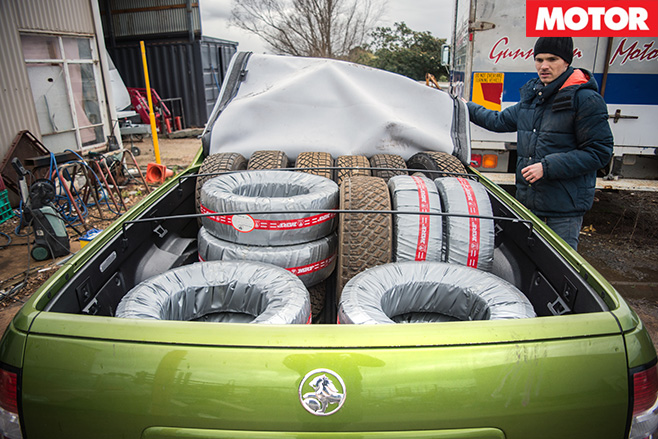
A quick flick to the star ratings in Hot Source will show that we’re big fans of the Redline ute. It’s always handled brilliantly, and now it has a 304kW/570Nm 6.2-lire LS3 V8 it goes like the clappers and sounds like a tropical thunderstorm, hence the 4.5-star rating. As ever with a long-term car, little things pop up, both good and bad, that you don’t always notice on a typical week-long loan.
A bugbear that has raised its head from time to time, ever since the introduction of the VF Commodore, is the simply unfathomable HVAC system. Like all cars, the Commodore has a button to turn the air conditioning on and off and two knobs to adjust the temperature for the left and right-hand side of the cabin. But unlike most cars, these controls seem to have little bearing over the temperature of the air that comes out of the vents.
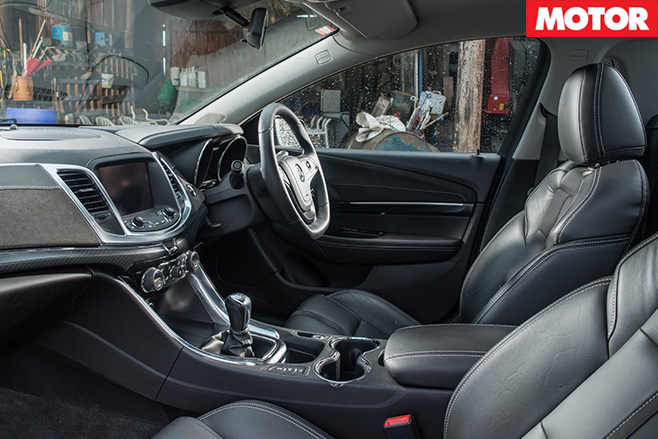
The reverse is also true – the car refusing to emit a cool breeze no matter what you do with the dials. Is there some trick I’m not aware of, some password I don’t know? Answers on a postcard, please. While I’m whinging about the HVAC, the ‘1’ fan speed setting is too strong. However, you can always divert some of the airflow towards the windscreen or floor, so it’s not quite as bad.
The other VF II Commodore annoyance regards the MyLink system or, more specifically, the Bluetooth connection. The problem arises when there is already the maximum of five phones stored in the system. Deleting a stored phone is usually a very quick and painless process. However, for some reason, occasionally the screen freezes and won’t allow you to delete a phone and subsequently pair a new one.
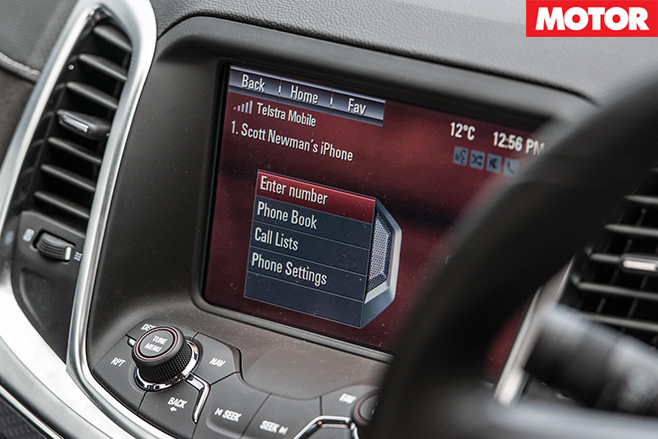
Thankfully, that’s about it in terms of interior complaints. The driving position is excellent and widely adjustable. There’s decent storage behind the seats, the touchscreen sat-nav is a little fiddly but is quick enough to avoid frustration most of the time, while a head-up display is always useful.
Holden should also be commended to providing a raft of active safety kit on the Commodore, though the lane departure warning is irritating, so always switched off, while the forward collision alert can be easily spooked by things you’re in no danger of hitting.
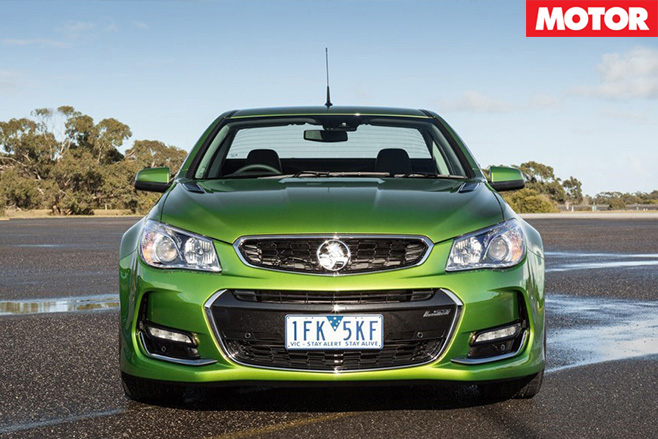
MONTH ONE
LIKED: The vivid green paint job. DISLIKED: Attempting to decipher to HVAC system. FAVOURITE MOMENT: Practicality of having a massive boot!
FUEL THIS MONTH: 13.88l/100km AVERAGE: 13.88L/100km DISTANCE THIS MONTH: 912km TOTAL: 10,912km
Peugeot says it will continue to build and sell diesel engines for as long as customers want them, despite plans to ban diesel-powered cars in Paris and London within four years.
Speaking at the Paris reveal of the new Peugeot 3008 SUV, Peugeot CEO Jean-Philippe Imparato (pictured below) was dismissive of any potential legislation against diesel, instead asserting Peugeot’s commitment to the fuel because that is what its customers want.
“The driver is the final customer. Just in France, we are at 3049 [3008s] ordered – 80 percent of those cars are diesel.”
A ruthless anti-pollution drive from the mayor of Paris has called for diesel cars to be made illegal in the city by 2020. Reports from the UK suggest London could follow suit.
Peugeot’s expanded SUV line-up includes a diesel engine in every top-spec variant. No electrified hybrid drivetrains are offered in Australia, and only one – a diesel hybrid – is available in the manufacturer’s home market.

At the same show, Volkswagen and Mercedes-Benz launched electric vehicle sub-brands aimed at making battery-powered motoring more accessible within the next few years.
“The energy mix will change, yes. But when? We must be ready with electric solutions, zero emission solution, but we will not set our customers aside,” said Imparato.
“We are ready to work with everybody in order to check the [diesel] cars, and to prepare for the future. We consider that we must work, as an OEM, on carbon footprint.”
Meanwhile state governments in Germany passed a resolution this week that would effectively ban new petrol and diesel vehicles on EU roads by 2030.
“If the Paris agreement to curb climate-warming emissions is to be taken seriously, no new combustion engine cars should be allowed on roads after 2030,” said Greens party member Oliver Krische to Spiegal Magazin in Germany.
The resolution suggests a review of current taxation practices, hinting at tax breaks for manufacturers, in order to stimulate emissions-free vehicle production. The resolution must be approved by the EU before it can be instituted.
TELL ME ABOUT THIS CAR
The i3 is BMW’s first fully electric car. It comes in two versions; a fully electric one, and a second fully electric one called the i3 REx that carries an on-board generator. A big change is a $2000, bigger 94Ah battery that means you can squeeze about 70km more range out of the car.
STRENGTHS
- More range – 200 kilometres of it – means less need to plug the i3 into the wall. BMW puts the average commute at 40-odd kilometres, so in theory Joe and Jane Average only need to recharge once a week.
- It also means less range anxiety – the name given to that fear that you’ll run out of charge before you get to where you need to be.
- Giving the battery half as much range again only costs an extra $2000, so it’s pretty good value. It pushes the price of the battery-only i3 up to $65,900
- For an extra $6000 you can add a 660cc two-cylinder motorbike engine hooked up to an alternator, which can recharge the battery on the fly. It uses an average of 0.6L/100km, spits out only 12 grams of globally warming carbon dioxide, and bumps up range to 330km – more than enough for a weekend escape to the country.
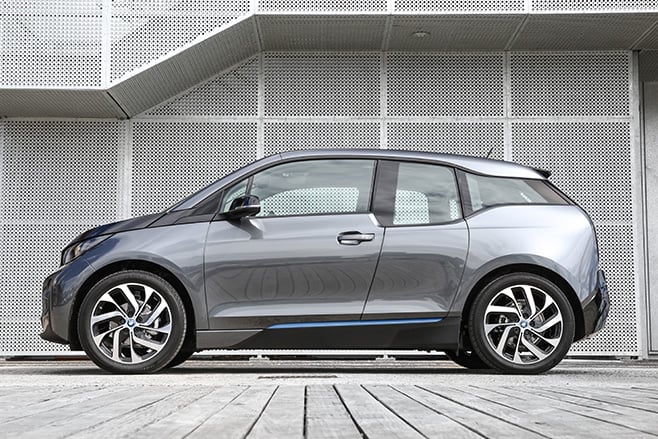
- The i3 has a tiny turning circle, just 9.86m.
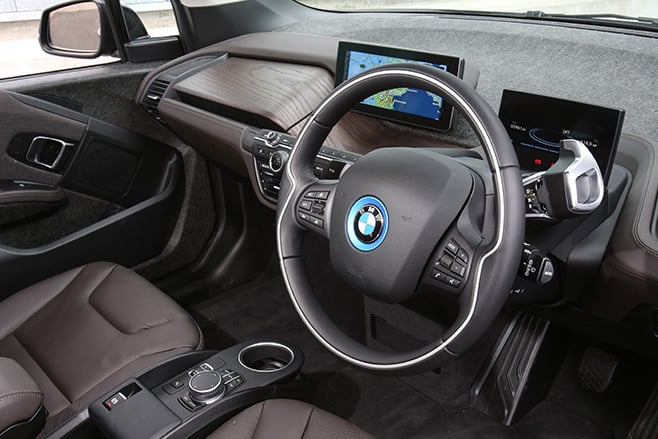
- It’s fun to drive. The bright interior is an interesting mix of enviro-goodness and tech, visibility is excellent, and it sprints away from traffic lights.
- It’s safe. The i3 is built out of new-age materials including carbon fibre reinforced plastics, which is race car-like tech.
- The BMW i3 is the 2014 Wheels Car of the Year, meaning it has received Australia’s top motoring award. Everything Wheels liked about the i3 then is still a part of the car.
- Every 94Ah car comes with a DC charger that was an almost $800 option on the former base car. It feeds electricity directly into the battery rather than having to divert it through an AC convertor, reducing charge time to 80 percent capacity to less than 40 minutes.
- It has clever access to the cabin. The front door opens like a conventional one, but the rear doors are coach, meaning they swing out backwards.
- Each i3 comes with two Chargepoint cards that allow users to access public chargers. BMW picks up the tab where it can, so top-ups at public stations are almost all free.
- You can hook up to the i3 via an app on your smartphone to check driving range, battery charge status, and even heat the seats before you leave the warmth of your home or workplace.
- Maintenance is cheaper than other BMW-badged vehicles because there are fewer moving parts in an electric car. It will cost you $850 for the first five years or 80,000 kilometres, whichever comes first.
- BMW is still selling the 60Ah version of the i3 with a shorter 130km range alongside the new 94Ah one. If you want the extra range, make sure you buy the right one because they look exactly the same.
- If you want a 40-minute top-up, there’s only a single rapid DC charger in Sydney and two in Melbourne. More are coming, but unless one is near you, recharging via a public charger will take about four hours. If you need to use a normal household powerpoint, make that almost eight hours. And that’s only to 80 percent. If you want to top it to 100 percent via the wall plug, put aside 14 hours.
- Those battery ranges are for real-world driving conditions, but we’d still err on the side of optimism. We’re humans, we don’t drive very efficiently by nature, and we like to run air-con systems on hot days and heaters in winter. They all drain power at varying rates that will eat into driving distance.
- Don’t expect drivers who jump in behind the wheel for the first time to know what they’re doing. The steering wheel, brake and accelerator are all conventional, but starting the i3, selecting drive, and then shutting it all down again at the end takes a bit of familiarity.
- Braking is strange. The electrical system will try and scavenge as much braking power as electricity as possible, meaning the i3 will sometimes brake a lot harder than the pressure you put on the pedal. It will also start to slow down markedly if you lift off the accelerator.
- There are only four seats. If you have three kids, shop around for something else.
- It’s somewhat expensive for a four-seat hatchback. The surfaces you see and touch may be made from recycled plastic and reek of quality, but they’re hard, not soft. The front seats are manual-adjust, not electric. You could buy a decent conventional hatchback with more seats and features, and for less money.
- If you have kids and are on the school run, you’ll need to open the front doors to let anyone in the back seats out.
- The ride is fine around town, but the tall, narrow wheels make potholes feel like craters and speed humps feel like planets. Best avoid them.
One: The $39,990 Nissan Leaf. It looks more conventional, is cheaper, has a Tron-like user interface and if you think the i3 steps off the line quickly, the Leaf also feels sharp. But it has a much smaller battery, weighs more and therefore will only go about 100km on an 80 per cent charge.
