
First published in the December 1979 issue of Wheels magazine, Australia’s best car mag since 1953.
In a Wheels exclusive Brocky provided a first-person account about how he claimed his fourth Hardie-Ferodo 1000 victory at Mt Panorama.
The day after he won the Hardie-Ferodo for the fourth time, and the second year in succession, Peter Brock went fishing for a week. Well, almost a week. He had to come back to Sydney on the Wednesday night for the presentation of trophies and prizemoney, and he had to appear in Melbourne on the Friday afternoon to play a role in a GMH film, but his three closest friends, who act as filters and buffers against the demands people make on him, took him into smoke the rest of the time.
The black-eyed Diamond Valley kid had been in the full glare of the spotlight since before the end of the Australian Touring Car Championship, through the Repco, the Sandown Hang Ten 1-2, and now Bathurst. It had been an incredible year, perhaps best expressed by the wife of one of his toughest rivals: “You know, he’s amazingly arsey, but by God he drives like a genius.”
Before he went fishing, the man who is now the hottest property in Australian sport – of any category – a bare 10 years after he first stepped up to stage centre, told Wheels how he did it:
In Brocky’s own words
They reckoned I didn’t have my mind on the job at Adelaide in the last round of the championship, that I was too busy thinking about the Repco, but that wasn’t right.
I’m not like that. I guess the two problems were that our car and Bobby’s car were very close and he got in front and you can’t pass anyone at Adelaide if you don’t have the extra grunt. And he was sort of super-determined to beat us because he hadn’t won a championship before and I had, and halfway through the race I thought: ”Well, I’m not going to get through him unless I do a terrible desperate and that’s not really my style.”
I didn’t get fully caught up in the Repco until George Shepheard arrived down with the cars mid-week and we all got together for a chat. That was the first time the whole team had had a talk. But I was relaxed, because it was all a bit of a game really.
At the start at Melbourne Showgrounds I even brought along my fishing rod and stuck it up on the roof of the car, telling all the press petrol-heads that if I broke down I’d go fishing. It wasn’t until we got to Townsville that I thought we could win – but all along I’d been deadly serious about winning. I always am.
After the Repco I took a long time to come down. I used to have nightmares and wake up at strange times and yell like crazy for someone to get out and change a wheel or open a gate.
A few people had warned me about the anti-climax, but what about getting a one-two-three and me winning it!
John Sheppard got a bit tense about it because he felt that the Repco was over and that was terrific, but he couldn’t really care a stuff now because his job was to win Sandown and then Bathurst. So he wasn’t really 100 percent on me having to do all the appearances and speeches and filming and everything that comes after a big win. There was no lowness, mind you, just a few words to bring me down to the next job in hand.
Sandown? Sandown was a funny race – I don’t mean funny ha-ha, I mean it didn’t go to plan. It was a bit hectic for the first dozen laps or so, you know, having a bit of the old look inside on corners and “Slug” Harvey back behind me was leaning on Gricey a bit, as I heard later.
After Moffat blew up and left oil all down Pitt Straight I decided there was no need to stay involved in the heavy scene up front, and went back to fourth spot.
Then the old kid went off song. If I put the power on hard it would fluff and carry on, so I had to feed the fuel in gently. Then the others had their problems and Slug and I came home one-two. The really interesting thing was that we didn’t change tyres – they changed tyres and wore them out and broke trying to catch us.
A lot of people came up to me afterwards saying things like “Your luck’s in” and “When you’re hot you’re hot” but I don’t subscribe to that. When everything’s running well and everybody is up to the mark you know you feel good and you’re confident and you don’t even think of losing. That’s how we felt when we went to Bathurst.
Sheppo had worries getting the cars there because the new pantech had electrical problems and the floor buckled … things like that. We couldn’t claim sabotage or anything, mind you.
In the first two practice days – Wednesday and Thursday – the cars were spot on … doing it easy. After all this time you get into a routine and you know the things to look for, the things you have to check and test.
Sheppo says it’s making sure that all the little things are done, and I think he’s right. Anyway, we had no worries.

It started to drizzle on about the second lap. I was up in the first four or five and I thought: “Brockie, you know your way around here; let’s try and put in a big one before it gets properly wet.”
So I did. Harvey was about eight or 10 cars behind me on the road, and got held up a bit, and didn’t get the same chance. It drizzled away steadily for another few laps and we all had to start tippy-toeing a bit, particularly from Skyline down to the Elbow.
A lot of the press guys came up later and told me that Moffat had done two laps with a lot of smoke coming out the back and his last lap had been entirely on the fast line, even down through the esses. I don’t know if that’s true or not; all I know is that I started seeing rainbows on the bitumen instead of in the sky, and that’s when you get right off it.
If he did do a lap without getting off onto the edge of the circuit then he was deliberately ruining practice for everyone else.
There was a lot of confusion afterwards. I was fastest with a 2:26.8 and Gricey, who was close behind me on the road, 2:27.5. Harves was 2:33.9 and Bobby Morris, who definitely doesn’t fancy the wet at all, was 12th fastest on 2:35 something … tenth when you took out the two duplicate entries.
Moffat’s best was 2:43.0. The organisers used the rule book to say that they accepted the eight fastest for final qualifying and their discretion to put Moffat into the 10, so Harves got bumped out and he went right off.
Mate, he was livid, and so would I have been in his place. I thought it was morally wrong, and I agree with Harves that they did it for the television, not for the race. But Harves copped it sweet.
It fined up for the Saturday top 10 qualifying … who were they? … Oh, they drew us out of the hat and the order we all went off was Cooke, Charlie O’Brien, Colin, Marvin, Perkins, Dick Johnson, Grice, Rogers, Bobby Morris and me.
I was dead happy to get Number 10 marble – of course I was. Who wouldn’t be? You could stand there and listen to the other guys’ times and see how the track was and how hard you had to go.
When I got out there Morris had been quickest on 2:23.8 and the track was gritty and a bit slippery because the rain hadn’t cleaned off the track – it had just spread a film of grit from all the spectator cars driving around it that morning. So I knew I would be quicker than Bobby on that surface, and I felt good all 2:21.2 – and I wasn’t hurting the car I wasn’t using big revs or anything.
Then they all went out again – Bondy had gearbox trouble – and Morris was quickest again with 2:22.4. So I thought: “I’ll have a go at the 100 mph lap – that’s 1:18.8.”
But into the Cutting my foot slipped off the edge of the brake pedal and I had a lose and then down Conrod my packet of Marlboro started slipping up out of my sleeve pocket.
I didn’t want it floating around under the pedals, but you try stuffing a cigarette packet back with thick gloves at 150 mph down Conrod.
Anyway, we got 2:20.5 and pole, which was just a bit slower than last year, and the car was still really strong.
We we got out on the grid the next morning I was feeling really trick, very confident and relaxed. So was Slug. I wanted to drive the old 1969 350 Monaro around on demo laps but they wouldn’t let me, so I didn’t ask anybody again and got in beside Noel Richards, who drove our Repco Commodore around for three laps. He gave it plenty – 200 km/h down the chute and it was like old home week.
I don’t get screwed up before start, just a bit impatient. It took a long while to get us away; maybe it only seemed that way because we started 30 minutes later this year.
I really wanted to do the start right and get out in front because I knew I could run the first laps in around 2:23 and not hurt the car and the others couldn’t.
When I got up to the top of the mountain, with Morris behind me, I could see that the track was just like Saturday – gritty and a bit loose – and I knew then that Bobby couldn’t hang on to me just because doesn’t like the loose stuff. For me it was like a special stage in the Repco.
So I gave the car plenty and told Sheppo over the radio that she was sweet and away we went. If you want the story of the race, that’s it. The car was a dead-set shell. Jim Richards got in it and was there when the little showers came over a few times, but he just ran the laps like clockwork without a moment’s drama.
When he got in the car I went off with Harves to have a shower and a cup of tea and it was then that we heard that Slug’s co-driver Ron Harrop had had a big one going up the mountain.
]Harvey had started getting pad knock-off around about the third lap but worked out a system of giving the pedal two good strokes – like half a hard brake – and he would have plenty of pedal for the corners. He reckoned the car would finish the race and he got up to second behind me doing that.
He told them all about it in the pits but on Harrop’s fourth lap or somewhere the car wouldn’t stop for Ronnie and he really wrote it off.
Nothing much else happened for us. I knew the Camaros were no problem, and we got a good enough early break on Morris and Grice and Moffat to forget about them unless the car had problems and it showed no signs of that.
Then they had all their problems, and we were six laps clear a long way before the finish.
I first knew Gricey was in trouble when I caught him going down Conrod and from behind I could see his right-hand front wheel pointing out about a foot. I got up alongside and started pointing and making signs and he told me the same way that he knew. Moff stopped out on the circuit, so I knew about that.
When I came down for the last lap I decided I wanted the lap record and would have a go. The car was fine, like a Swiss watch, and even if it stopped up at the top I could bloody-near coast to the bottom and push it home and still win.
So I gave it heaps, mate, heaps, and she gave me 2:21.1, as I found out later, which was a good feeling, because I didn’t have to do a desperate to get it.
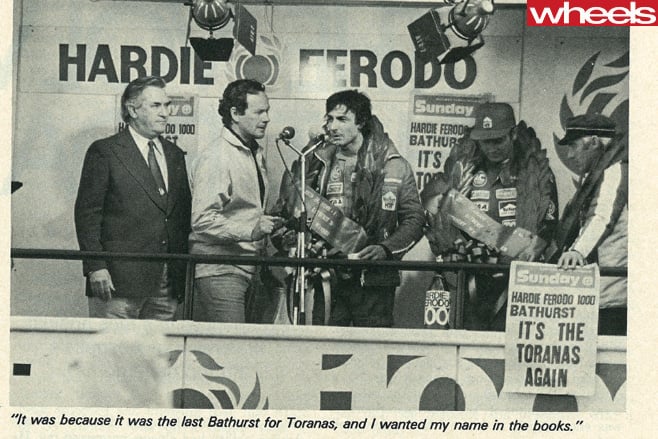
Some journo asked me at the presentation whether that was demonstrating my killer instinct, but even if it looked like I was sticking it up to everybody, I wasn’t. It was because it was the last Bathurst for Toranas and I wanted my name in the books.
When I finally got to the Marlboro tent it was jammed for the disco and every now and then the mob would start singing “Up there Cazaly”. That was a bit of aggro for me because Collingwood lost the day before and they really deserved to win.
We went on to dinner, but around nine o’clock I decided to crash. The mechanics carried on till dawn I think, by the look of them at scrutineering the next day, but they earned it. After the Repco and Bathurst you have nothing but admiration for those guys.
Gets boring, doesn’t it?
The result of the of the 1979 Hardie-Ferodo 1000 was P Brock/J Richards (Marlboro Holden Dealer Team Torana A9X) 6:38.15.8, first.
To commemorate the Ford Falcon in our latest issue we ranked the 10 greatest to ever live and breathe.
However, while that was our view, we really wanted to know yours. So a week ago we compiled a shortlist, spanning the first and last fast Falcons, from which you picked the greatest Falcon.
The poll’s still open, but after 1204 votes we think it’s time to announce how things played out.

What we didn’t expect, however, was the runner up. The Tickford TE50/TS50 racked up 265 votes, or 22 per cent of the total count, making it second most favoured as Oz’s greatest Falcon.
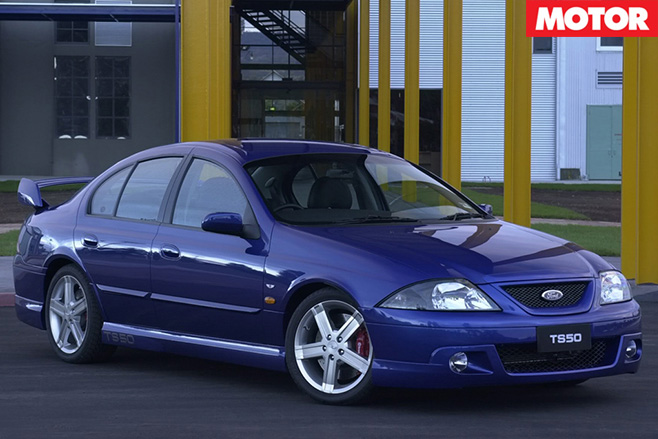
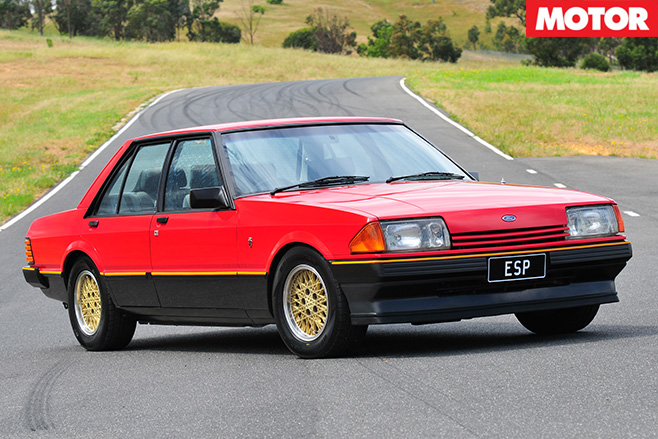
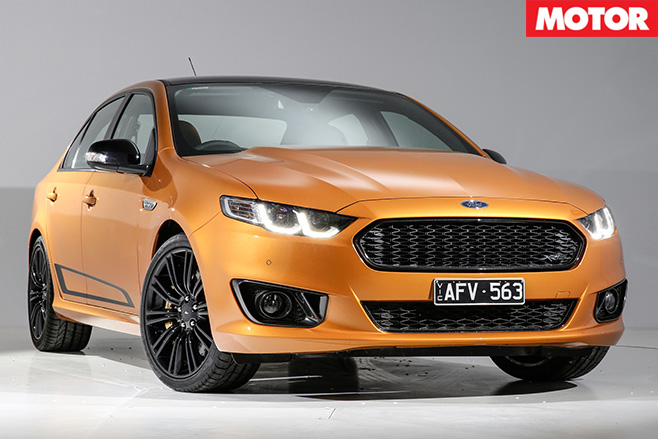
To see how we ranked the 10, and for a more detailed rundown on each car, pick up our special Falcon farewell issue. Find it in newsagents or on iPad and Zinio stores this month.
The Tally
| Ranks | Votes | Percentage (%) |
| 1. XY GT-HO Phase III | 325 | 27 |
| 2. Tickford T3 TE50/TS50 | 265 | 22 |
| 3. FPV BF F6 Typhoon | 181 | 15 |
| 4. BA XR6 Turbo | 108 | 9 |
| 5. XE Fairmount ESP 5.8 | 96 | 8 |
| 6. XA Falcon GT Hardtop | 84 | 7 |
| 7. Falcon XR8 Sprint | 60 | 5 |
| 8. FG II GT | 48 | 4 |
| 9. XR Falcon GT | 24 | 2 |
| 10. EB II Falcon S XR6 | 12 | 1 |
THE BEST weekend of motorsport is upon us! The Bathurst 1000.
While the Great Race stands alone as a mighty spectacle, this year it plays a crucial part in the Supercars championship. To catch you up, here is the one-stop catch-up for everyone who has missed the racing so far this season.
There are a total of 300-points on offer for the winner of the Bathurst 1000, and five drivers which remain in serious contention. These are:
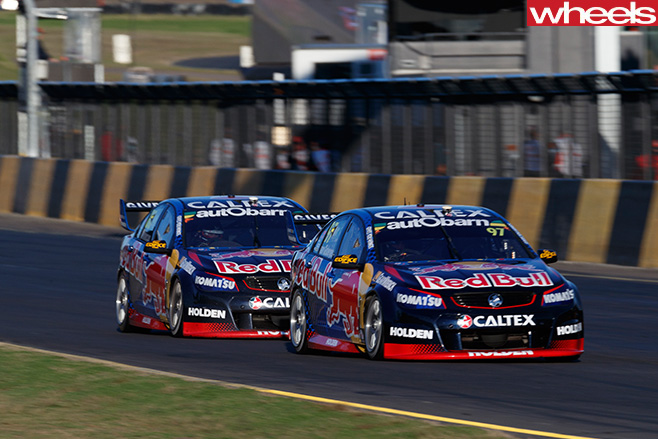
- Shane Van Gisbergen, 97, Red Bull Racing Commodore
- Jamie Whincup, 88, Red Bull Racing Commodore
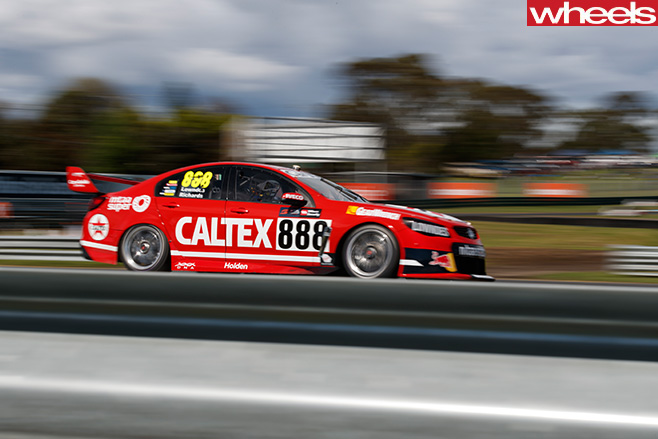
- Craig Lowndes, 888, Team Vortex Commodore
- Scott McLaughlin, 33, Wilson Security Racing GRM Volvo S60
- Mark Winterbottom, 1, Bottle-O Racing Team, Falcon
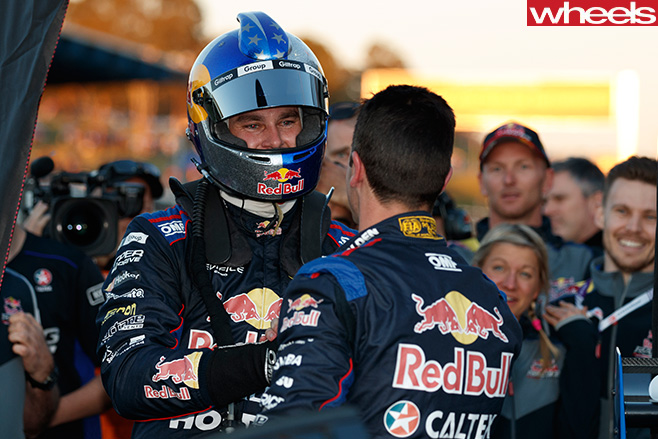
Meanwhile, McLaughlin could mathematically lead the championship if everything falls in his favour by the end of the weekend. The Volvo driver is seriously quick, and has a hunger to win at Bathurst which rivals most in the paddock. McLaughlin, along with co-driver David Wall, is a serious threat for a historic Volvo race victory, and one to watch.
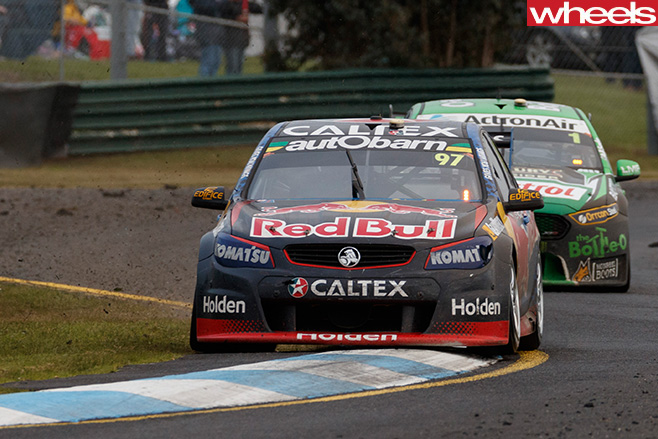
Second is Jamie Whincup, the most successful championship driver in the category’s history. Behind them is the evergreen Craig Lowndes, the winningest driver in Supercar history, and the most successful man at Bathurst in the current field.
Lowndes is 157 points adrift of the leading Red Bull pair, but he is the defending race winner alongside co-driver Steven Richards, and can never be ruled out of contention.
Chaz Mostert (55, Supercheap Auto Racing Falcon) and James Courtney (22, Holden Racing Team Commodore) will both be looking for redemption after missing last year’s Bathurst 1000 through injuries.
Tander has a serious point to prove, finding out he is being dumped from Walkinshaw for next year the week after winning the endure prologue, and looking to leave the Holden Racing Team with arguably the most important trophy of them all.
This Bathurst 1000 is one of the most exciting in recent times in terms of championship implications, so expect all the contenders to go big or go home!
Industry sales for September 2016 reveal the segment expanded by 18 percent compared with the same month last year. In the same year-on-year analysis, passenger cars fell nine percent, SUVs grew by seven percent, and heavy-commercial vehicles barely moved (up less than one percent).
September reflects a year-to-date trend where light-commercials are out-pacing even SUVs, albeit by just a single percent: 11 percent versus 10 percent.
Here, WhichCar focuses on the top 5 best-selling utes in each of the 4×2 and 4×4 segments, as well as the overall battle.
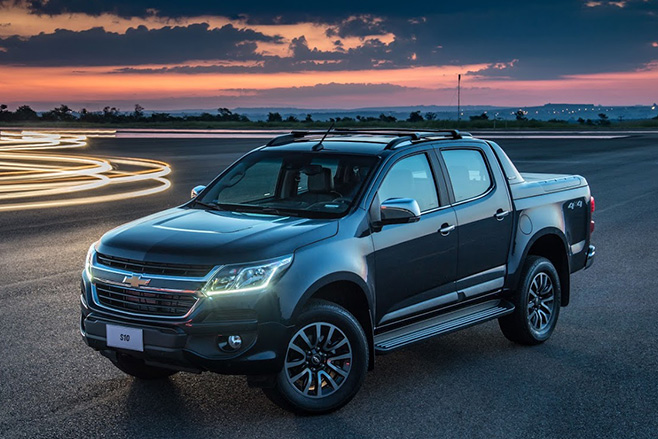
UTES OVERALL
If the Ford Ranger could replicate its 4×4 form in the 4×2 market, the Toyota HiLux’s decades-long reign as Australia’s most popular workhorse ute would be under genuine threat.
The locally developed Ranger took September honours in the four-wheel-drive ute class though had only about half its rival’s sales in the rear-drive class. The HiLux’s combined total of 3209 units last month pushed it past 30,000 sales for 2016, with the Ranger a clear second for both September (2903) and year to date (26,940).
The Mitsubishi Triton totalled 2246 for third, despite a relatively disappointing 4×2 result. In fourth was the Holden Colorado with 1732, and the Isuzu D-Max registered 1400 units to slot into fifth – just ahead of the Mazda BT-50 (1361). The September placements matched overall positions exactly.
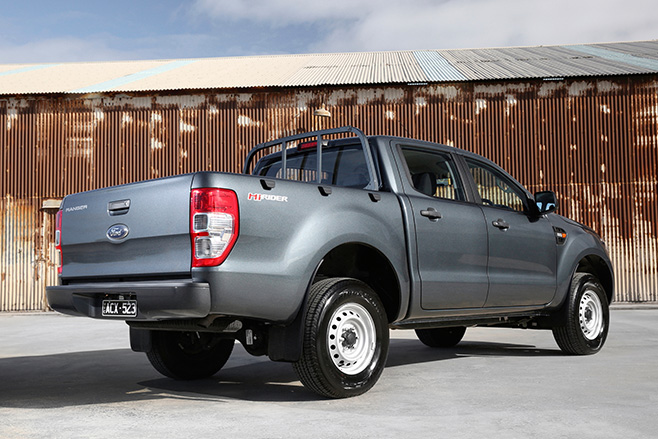
Top 5 September
| Rank | Brand | Sales |
| 1. | Toyota HiLux | 3209 |
| 2. | Ford Ranger | 2903 |
| 3. | Mitsubishi Triton | 2246 |
| 4. | Holden Colorado | 1732 |
| 5. | Isuzu D-Max | 1400 |
Top 5 2016 (to September)
| Rank | Brand | Sales |
| 1. | Toyota HiLux | 30,827 |
| 2. | Ford Ranger | 26,940 |
| 3. | Mitsubishi Triton | 17,338 |
| 4. | Holden Colorado | 14,407 |
| 5. | Isuzu D-Max | 11,806 |
4X2 UTES
The HiLux clearly didn’t have one of its better months in September 2015 as last month’s 898 units marked a quadrupling of sales year-on-year. Neither the Mazda BT-50 nor Isuzu D-Max feature in the 4×4 top 5 but they’re consistently strong performers in the rear-wheel-drive segment.
The Mazda took second, one place higher than where it sits in the overall 2016 race; there was a similar result for the Isuzu, albeit one place further down the table. The Ford Ranger was only four units behind and remains a solid runner-up so far overall.
Holden’s Commodore Ute isn’t a ‘one-tonner’ commercial vehicle, though the car-based utility is still popular with tradies and it again outsold its Colorado stablemate (356 v 204).
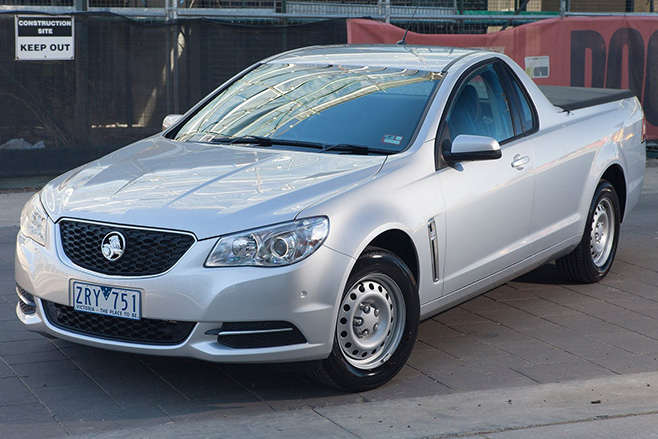
Top 5 4×2 September
| Rank | Brand | Sales |
| 1. | Toyota HiLux | 898 |
| 2. | Mazda BT-50 | 549 |
| 3. | Isuzu D-Max | 456 |
| 4. | Ford Ranger | 452 |
| 5. | Holden Commodore Ute | 356 |
Top 5 4×2 2016 (to September)
| Rank | Brand | Sales |
| 1. | Toyota HiLux | 8303 |
| 2. | Ford Ranger | 4502 |
| 3. | Mazda BT-50 | 3935 |
| 4. | Isuzu D-Max | 3742 |
| 5. | Holden Commodore Ute | 3719 |
4X4 UTES
The four-wheel-drive utility segment is providing a fascinating battle between the HiLux and Ranger. The Ford triumphed in September with 2451 sales to close the year-to-date gap to the Toyota – now just a paltry 86 units.
Even if the HiLux looks unbeatable in the overall race (see above), victory in the 4×4 race would still be a stunning result for the older ute – and particularly important considering 4x4s outsell their 4×2 counterparts by a considerable margin.
While the Triton struggled last month in 4x2s, the 4×4 version jumped 23 percent to break the 2000-unit barrier and take the final place on the podium. Holden’s recently updated Colorado was fourth, rising 15 percent, with the Nissan Navara just edging out the Isuzu D-Max (969 v 944) for fifth.
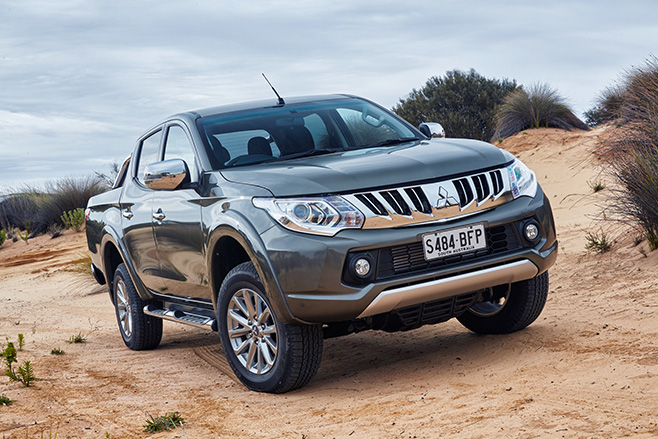
Top 5 4×4 September
| Rank | Brand | Sales |
| 1. | Ford Ranger | 2451 |
| 2. | Toyota HiLux | 2311 |
| 3. | Mitsubishi Triton | 2012 |
| 4. | Holden Colorado | 1528 |
| 5. | Nissan Navara | 969 |
Top 5 4×4 2016 (to September)
| Rank | Brand | Sales |
| 1. | Toyota HiLux | 22,524 |
| 2. | Ford Ranger | 22,438 |
| 3. | Mitsubishi Triton | 14,066 |
| 4. | Holden Colorado | 12,885 |
| 5. | Nissan Navara | 10,673 |
With the Paris motor show now just a glimmer in the French passé, and electric vehicles an obvious part of our technological future, we take a look at some of the more common advancements that have made their way into our cars in 2016.
1. SMARTPHONE CONNECTIVITY
While Bluetooth has become an accepted standard feature in our cars today, a new way of phone connectivity has entered the ranks thanks to Apple CarPlay and Android Auto. This basically allows the car’s infotainment system to duplicate the smartphone’s screen. It prevents drivers touching their phones, resulting in hefty fines, while still being able to use most functions and apps. It’s even available in some of Australia’s most affordable cars, like the Holden Spark.
2. SEMI-AUTONOMOUS DRIVING
We know fully autonomous cars are just around the corner and they’re all anyone’s talking about. But truth be told, autonomy is already here, albeit only in partial form. With technologies like lane-keep assist and adaptive cruise control, we’re halfway there, but now, some cars, like Volvo’s XC90, have introduced self-steering where the car will take over control up to speeds of 40-60km/h providing there is a car in front it can follow and clear lines on the road. Additionally, several cars are now also fitted with self-parking technologies where a car will reverse parallel park at the press of a button, without you having to control its steering.

3. PARKING CAMERAS
Chances are even if you bought a new car last year, it’s likely to have a rear view camera. But reversing cameras have come a long way since the grainy replica of your car’s rear vision mirror. Now, 360 degree cameras and bird’s-eye view systems come fitted to all sorts of cars, with some modern lenses offering image quality and night vision to the standards of a TV.
4. SMARTPHONE MANAGEMENT
Automakers are getting on the front foot in the technology race. Companies like BMW, Tesla, and others, offer car owners the ability to control their vehicles via the touch of a smartphone screen. It can help find your car (try me, Chadstone carpark), start your car so it’s nice and warm when you get inside, and call road-side assistance. While it’s not quite mainstream yet, the technology certainly exists and is making its way into showroom cars. Thank you very much, Batman.
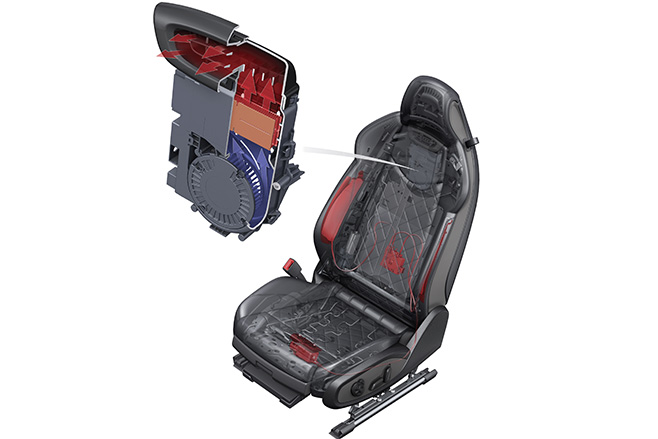
5. HEATED AND COOLED SEATS
Most car buyers know about the luxury of heated seats. Once you go heated, you don’t go back. But did you know that ventilated seats piping cool air to your legs and back are also now a thing? And no, not just in high-priced luxury cars. Even the Hyundai Tucson Highlander comes with them. So now you can keep your backside warm during winter, and cool in the summer.
WHAT NOW FOR FORD IN AUSTRALIA NOW THE FACTORIES ARE CLOSING?
There’s some confusion about Ford’s future in Australia. While the end of Australian production is unfortunate, the good news is the Blue Oval will remain a fixture on Australian roads.
Australia will also continue to be a product development hub for Ford meaning that while cars will no longer be built in Melbourne they will be designed and developed there – as was the case with the Ford Ranger upgrade and Everest SUV.
WILL AUSTRALIANS WANT TO BUY FORDS IF THEY’RE NOT BUILT HERE?
They already are. The Ford Ranger was the third highest selling vehicle in Australia in September after the Mazda 3 and Toyota Corolla. The Focus and Mustang also outsold the Falcon and Territory last month.
A good comparison to Ford’s current situation is Mitsubishi, which ceased Australian production in 2008 but maintained its market share through its popular overseas models such as the Outlander, Pajero and Lancer.
WHAT WILL REPLACE THE FALCON AND TERRITORY?
Despite the long lead up time, Ford doesn’t have any showroom ready cars similar enough to the Falcon or Territory to be considered direct replacements.
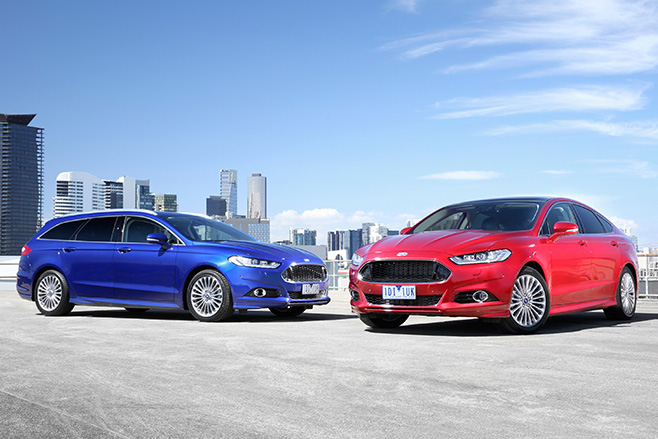
The new Ford Taurus was muted as a Falcon replacement but it’s more likely to be the Mondeo, which, despite being a smaller car, has similar interior space. Whatever it is, don’t expect a big rear-wheel drive family car like we’ve become accustomed to.
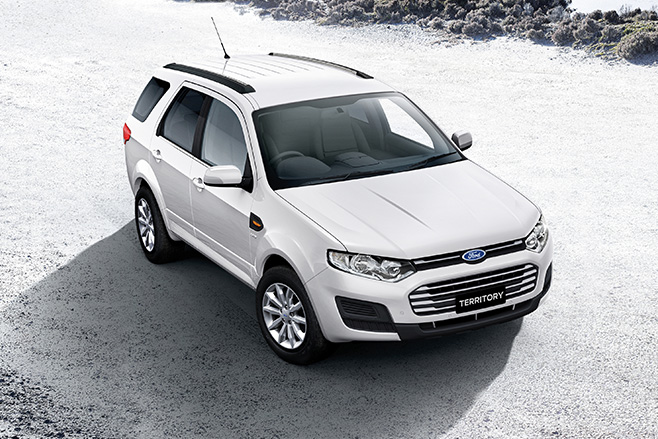
Meanwhile, we won’t see the Territory replacement, the Edge, until early 2018. This will probably leave a bigger hole than Falcon considering how buyers are moving away from big cars to SUVs.
IS THERE ANY RISK IN BUYING A NEW FALCON OR TERRITORY NOW THE FACTORIES ARE CLOSING?
No more than buying any other discontinued model. Ford will still provide servicing and warranty back up and the company has ensured there will be a “decade’s worth of spare parts” including panels. If anything, it might be soon a good time to score a bargain on a piece of history.
IS FORD DOING ANYTHING SPECIAL TO MARK THE END OF FALCON PRODUCTION AFTER 56 YEARS?
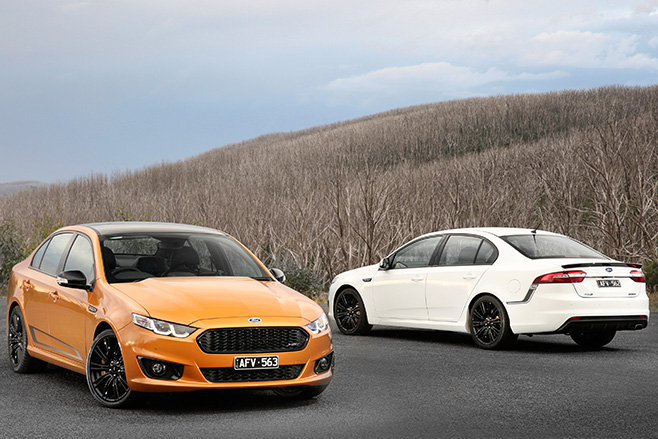
Nope. It seems Ford has moved on well before the rest of us. There will be no events or special edition cars to commemorate the last Falcon despite its icon status. The company says there will just be a private function for staff affected by the closure.
WHAT WILL HAPPEN TO THE LAST FALCONS AND TERRITORIES TO COME OFF THE PRODUCTION LINE?
Ford is keeping the final Falcon, Falcon Ute and Territory, all of which will be fitted with a compliance plate without the Government authority number which will render them un-registrable. They will initially be displayed at events before being loaned to museums in Victoria.
Members of the public will have an opportunity to bid for the final saleable Falcon, Falcon Ute and Territory on an online auction which is running until October 15.
The very last Ford Falcon to ever be built in Australia has begun its solemn journey down the production line.
PICTURES have surfaced of the very last Ford Falcon sedan and Ford Territory being built at Ford Australia’s Broadmeadows plant.
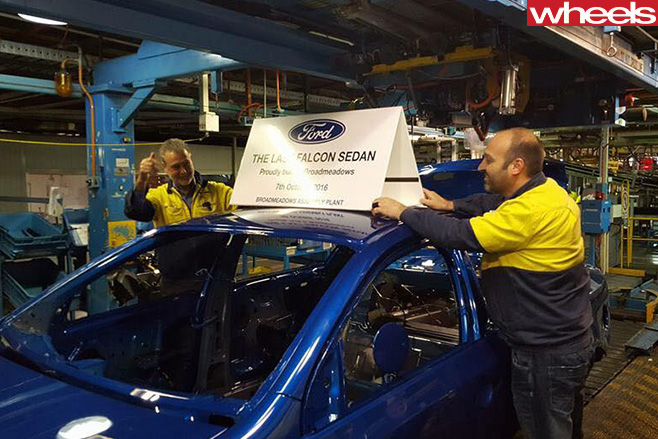
It appears these will be the last cars to roll off the Broadmeadows production line, not the last saleable versions – those cars have already been built and will be put up for auction.
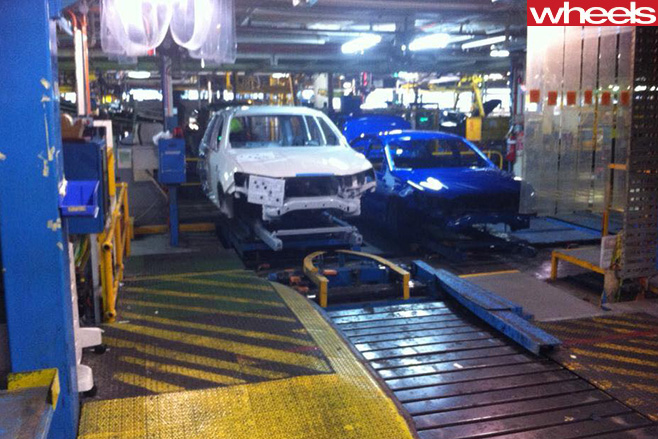
More to come.
The final Ford Falcon has begun its journey down the Broadmeadows production line.
These photos, sourced from the Fans of Falcon Facebook page, show a Kinetic Blue FG X Falcon XR6 being honoured as the final Australian-made Falcon.
Exactly which ‘final Falcon’ it is, however, is unclear. Ford is auctioning off the final Territory, Falcon and Falcon ute able to registered and driven on the road with the proceeds going to schools in the Broadmeadows and Geelong areas.
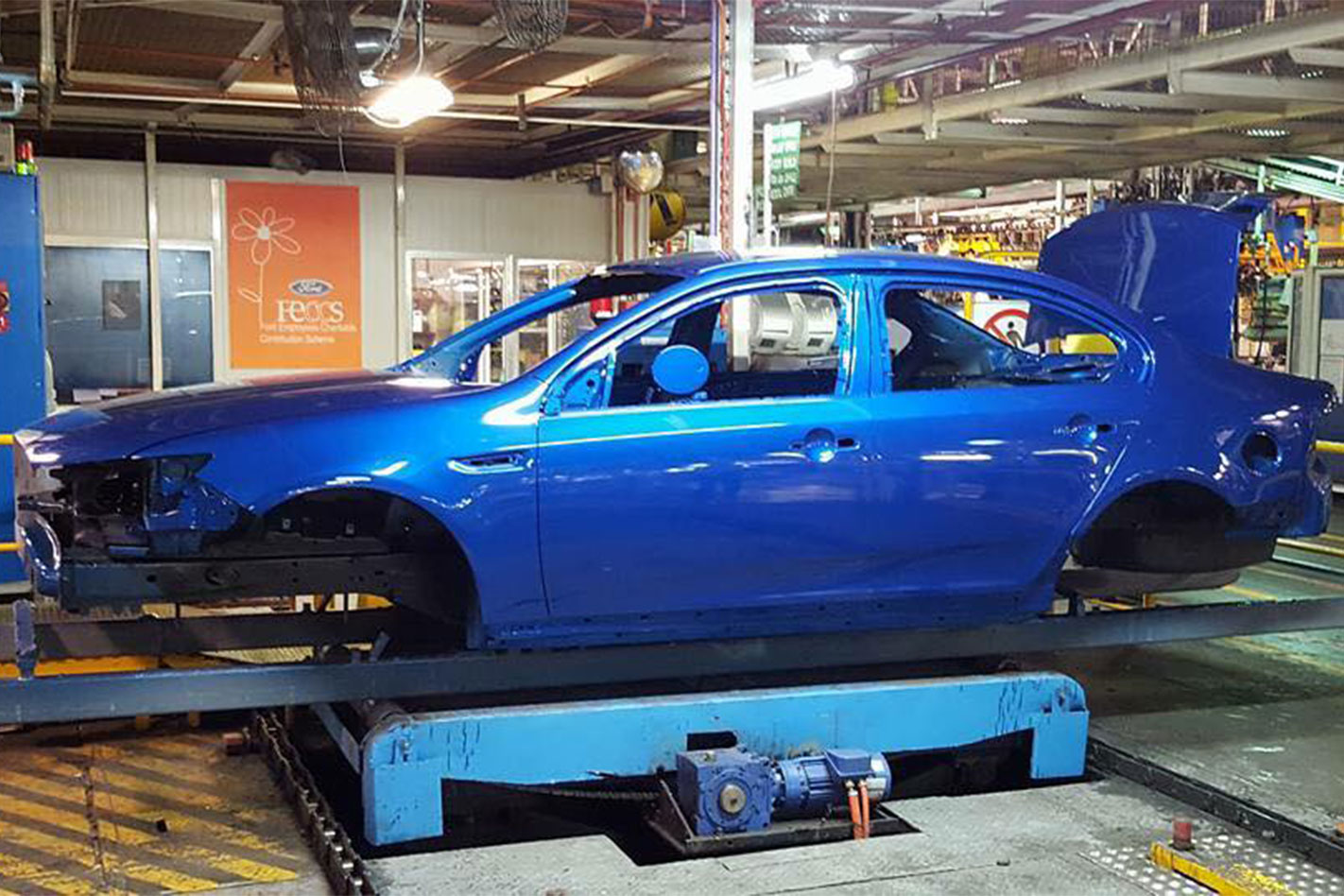
There is a slight twist to the story, though, as the very final Falcon sedan (as well as ute and Territory) will be fitted with a compliance plate without the government authority number, which means it cannot be registered.
These very last vehicles will be kept by Ford to be shown as display vehicles at enthusiast events and also loaned to museums.
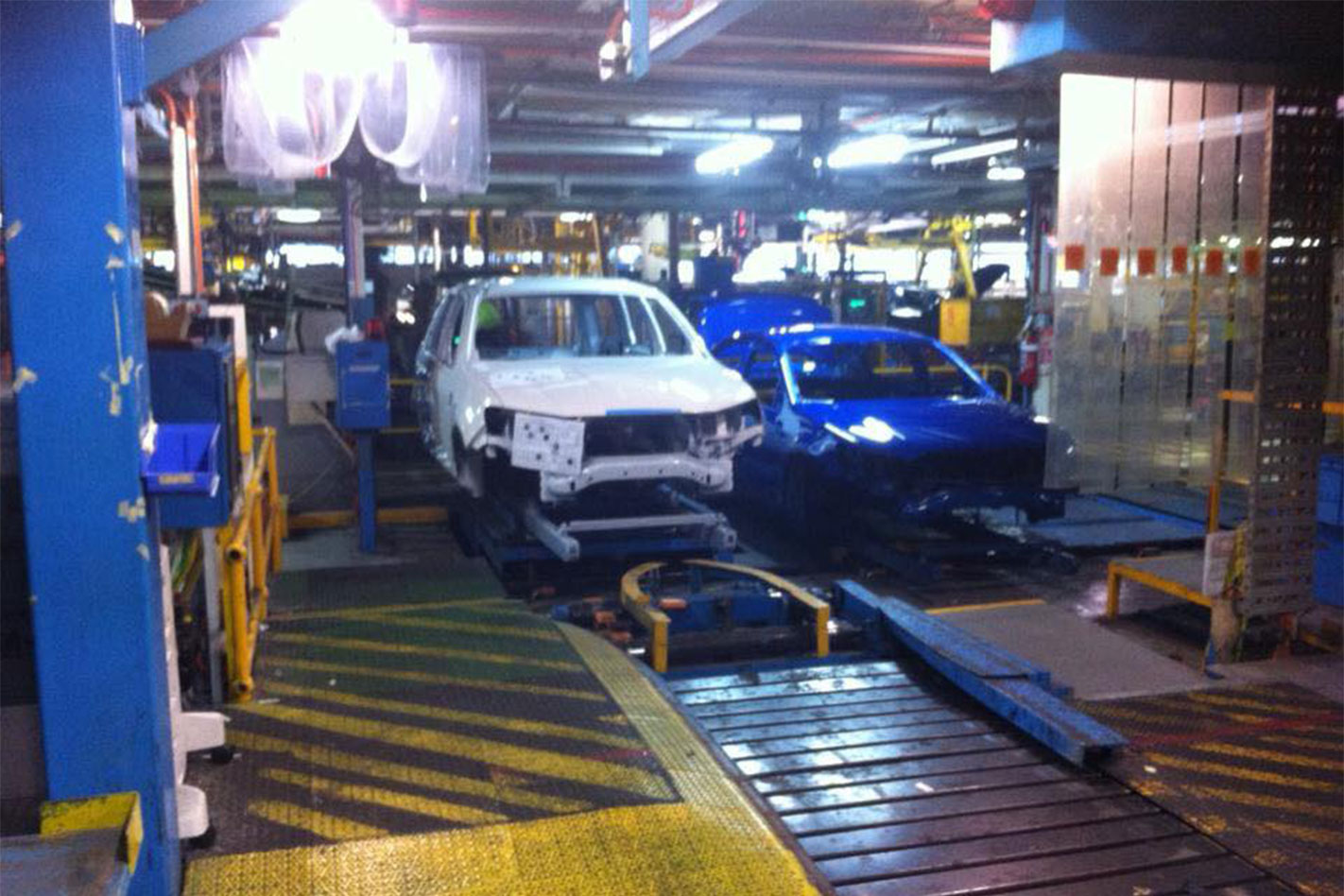
The Ford production line closes on Friday, October 7. To learn more about the Final Ford auction or to register to bid visit www.fordfinal4.com.au.
WINNERS
Winner: Mazda
The Japanese brand’s annual M Day sale extravaganza helped it set a new monthly record: 12,009 sales. Sharp sticker prices applied to various models included an extra year of factory warranty, three years of roadside assistance and free accessories up to $500 in value.
Result: after a few five-figure results earlier in the year, Mazda is now averaging more than 10,000 sales per month – significant for the relatively small and fiercely independent Japanese automaker.
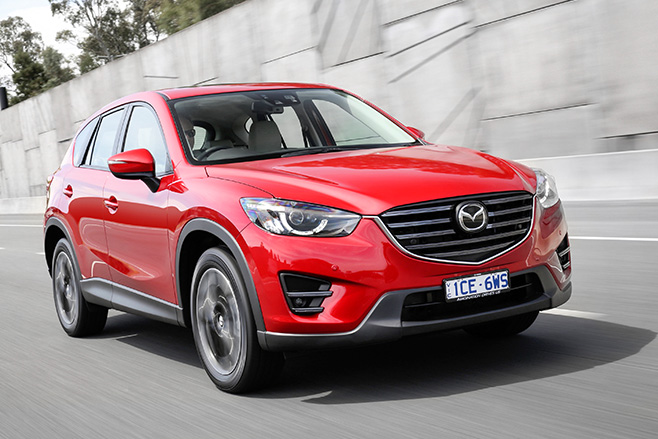
The CX-5, featured in the M Day for the first time, also notching up its own record month with 2662 units sold. There were notable lifts for the 4×2 BT50 (+51 percent), Mazda CX-3 (+27 percent), CX-5 (+15 percent), CX-9 (+122 percent), and MX-5 (+53 percent). The 2, 3 and 6 passenger cars were the only models to register negative figures compared with September 2015.
Winners: Honda Civic and Ford FocusSmall cars remain Australia’s favourite vehicle type by a wide margin, though the segment took a hit in September as buyers continue to flock to SUVs and even utes in increasing volume.
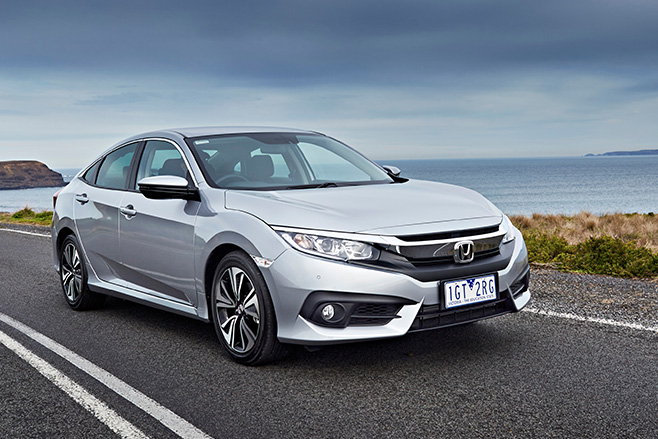
Two models bucked the trend, however. The new Honda Civic isn’t yet available with the alternative hatch bodystyle but nevertheless recorded a 171 percent jump over last September with units rising from 367 to 996. Year-to-date sales are up 30 percent. The older Focus wasn’t far off, with a 167 percent increase for the month to 866 sales – nudging the Ford into the black in the year-to-date column by a single per cent.
Winner: Subaru WRXThe sporty car affectionately known as the ‘Rex’ scored a coup in September – outselling the regular Impreza on which it is based. Nearly 400 (390) of the turbocharged sedan – also available in a higher-power STI guise – were shifted last month compared with 192 Imprezas.
A new-generation Impreza, however, is due in late December. There was also another strong result for the new Levorg wagon, which is powered by the same engine as the regular Subaru WRX. It again outsold the Liberty sedan.
Winner: $200K sports carsSupercars continue to accelerate out of showrooms, with September bringing another strong month of sales.
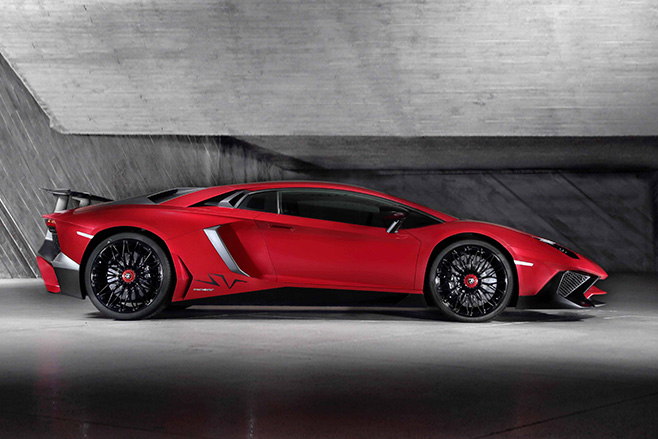
Audi tripled R8 sales to 9 with its newly released second-generation version, Lamborghini hit double figures with a 67 per cent year-on-year increase, McLaren jumped 25 per cent, and Porsche sold 17 more 911s than it did this time last year. The biggest increase – relatively speaking due to the low volumes – was reserved for the Mercedes-AMG GT: up from 3 to 11 units (+267 percent).
Winner: Utes4×2 utilities had a particularly good month, with a 19.5 per cent year on year increase bigger than the 15 percent jump for 4×4 versions.
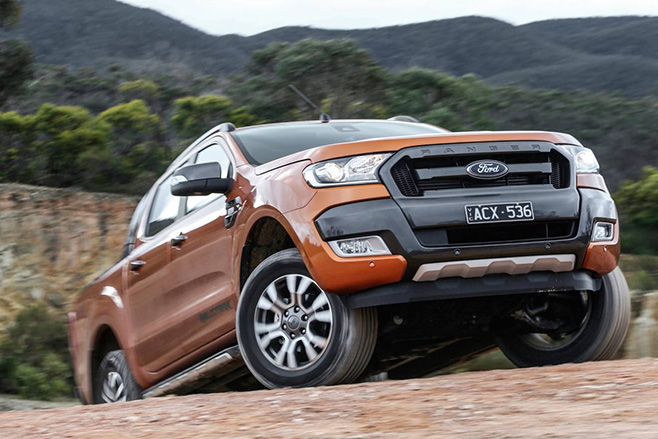
For the rear-wheel-drive-only segment the Toyota HiLux quadrupled sales to 898, while other notable nameplates were the Isuzu D-Max (+33 percent) and Mazda BT-50 (+51 percent). In the 4×4 category, the Toyota HiLux (+30 percent) again featured among the big winners, as did the Mitsubishi Triton (+23 percent), Ford Ranger (+20 percent), Holden Colorado (+15 percent) and VW Amarok (+10 percent).
LOSERS
Losers: Large SUVs
The overall SUV segment increased seven percent compared with the same period last year, though large SUVs were the only micro-segment to register in the negative for September.
While compact SUVs (+4 percent), mid-sized SUVs (+22 percent) and upper-large SUVs (+39 percent) enjoyed a good month, large SUVs fell nine percent.
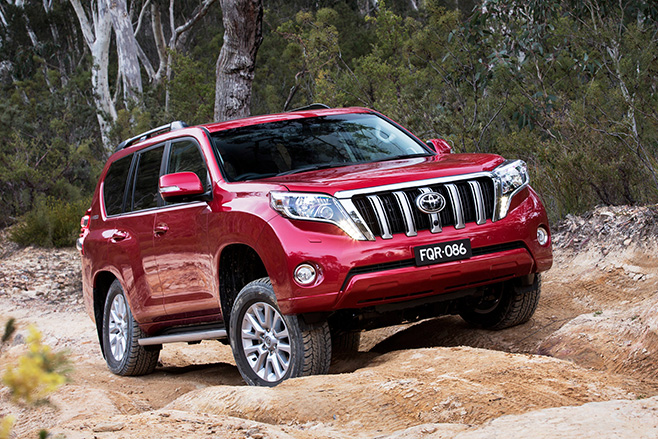
Big-name scalps in the Under-$70K class, which all decreased by larger percentages compared with year-to-date figures, included the Nissan Pathfinder (-44 percent), Mitsubishi Pajero (-38 percent), Toyota Prado (-30 percent) and Toyota Kluger (-25 percent). Large luxury SUVs fell by a similar 10 percent margin.
Loser: Small carsSmall cars were the biggest losers of the key passenger-car segments in September, falling 13 per cent compared with this time last year.
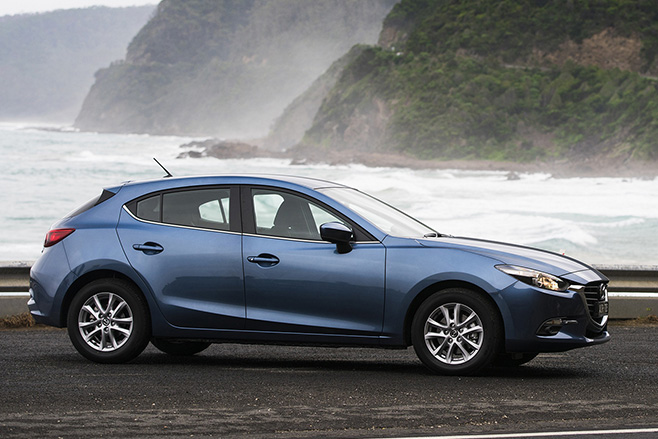
A number of models registered decreases of 50 per cent or more, including the Hyundai Elantra, Mitsubishi Lancer, Nissan Pulsar, Subaru Impreza and Volkswagen Jetta. Even big-guns the Toyota Corolla and Mazda 3 were in minus figures, albeit only three per cent. Defying the trend along with the aforementioned Civic and Focus were the new Renault Megane (+27 percent), Skoda Rapid (+26 percent) and Toyota Prius (+48 percent). In September 2015, the closest segment to small cars was 8581 sales behind. Last month that same class – medium SUVs – was only 2801 sales away.
Loser: Premium mediumThere were few shiny results in the ‘volume’ luxury-car battleground of mid-sized executives. The segment dropped 18 percent – with those buyers seemingly migrating to mid-sized luxury SUVs (up 34 percent in the same month).
The new Audi A4 fared impressively (+161 percent), otherwise its traditional rivals struggled: BMW 3 Series, down 20 per cent; Mercedes C-Class, down 37 per cent; Lexus IS, down 30 percent; Volvo S60, down 33 per cent. The Benz is also down 33 per cent year to date, yet it still holds a significant lead in the segment with a 27 per cent market share.
Losers: BMW passenger carsIt’s hardly news that luxury SUVs are outselling luxury cars in most instances, though BMW’s passenger cars took a notable 25 per cent downturn in September – or in vehicles, down from 1547 to 1162.
The figure compared with 11 per cent drops for Jaguar and Mercedes-Benz, and a four per cent fall for Lexus, while Audi actually increased passenger car sales by 26 percent courtesy of the A3 and A4. The 1 Series (-29 percent), 3 Series (-20 percent), 4 Series (-43 percent) and 5 Series (-49 percent) all fell, with only the new 7 Series limo (+350 percent) bucking the trend.
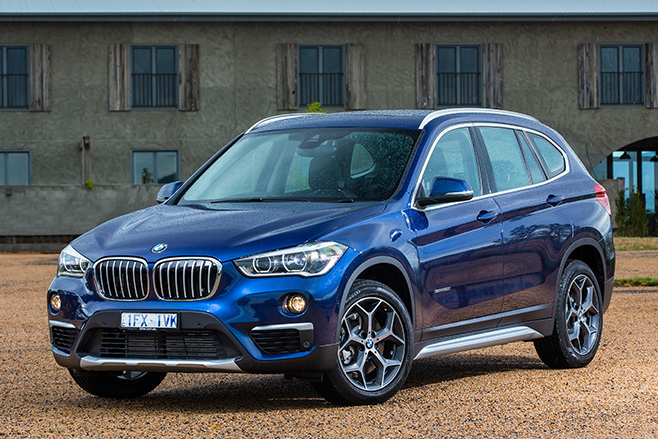
BMW’s SUVs accounted for 52 percent of the brand’s September sales, boosted by the X1, X3 and X4. While BMW had a disappointing September with less than one per cent growth compared to this time last year, its year to date sales are climbing healthily at 17 per cent.
Loser: Alfa Romeo
A great brand is in need of a great deal more models, so 2017’s Giulia sedan and (yet to be unveiled) Stelvio SUV can’t get here quick enough for Alfa Romeo. With the pint-sized MiTo dropped earlier this year, Alfa has only the Giuletta hatch and 4C sports car to sustain – both of which were down markedly on September 2015, by 64 percent and 62 percent respectively.
There is a perverse irony in the timing of the Falcon’s farewell.
Production will end at Broadmeadows on the same day as qualifying for the Bathurst 1000. Talk about adding insult to injury. For the closure to be scheduled just ahead of the race that added so much to Falcon folklore seemed, at best, insensitive; at worst, disrespectful.
To enthusiasts, the decision was typical of the disregard for racing that infected Ford Australia’s senior management in recent years and, indeed, the disinterest in the company’s local performance car heritage.
Ford maintains that sending the last Falcon down the line on Friday, October 7, when the diminished Ford ranks in Supercars will be battling for places in the Top 10 Shootout at Mount Panorama, is a coincidence dictated by the logistical requirements of the Campbellfield factory’s closure.
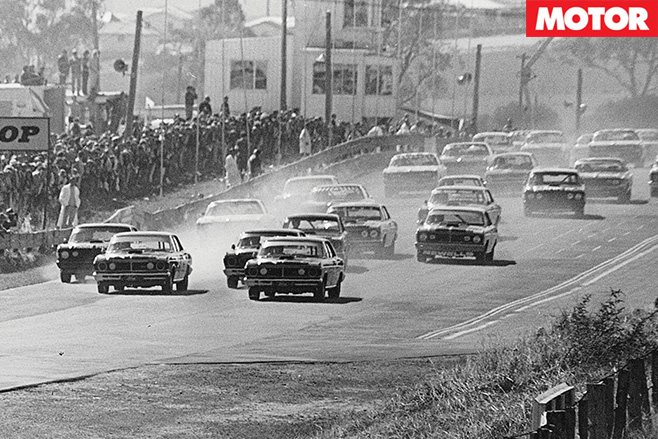
While neither as continuous nor as successful as Holden’s involvement, Ford’s presence throughout much of the past 50 years helped maintain Falcon’s street cred, even in the near-decade when there were no road-going V8 Falcons.
That Falcons continued to race in between Ford Australia’s official and covert participations was mainly due to the persistence of Allan Moffat and Dick Johnson. They kept the Falcon flame burning in the second half of the 1970s and the early ’80s respectively.
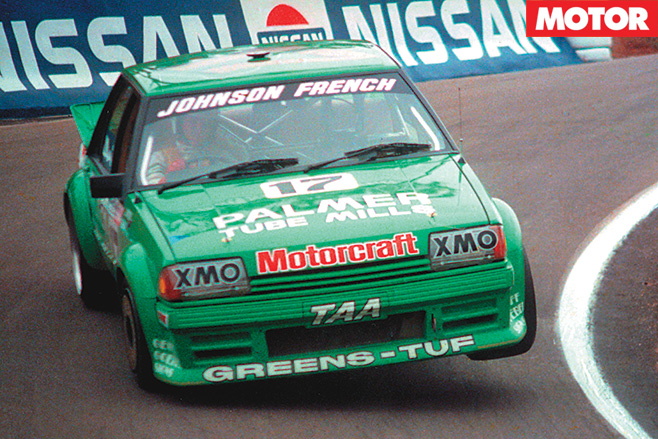
Broadmeadows has always had an inconsistent involvement, coming and going at various levels. In touring cars, it ran full factory Falcon teams in series production racing, including the then Bathurst 500, from ’67-72; then under the post-supercar scare Group C regulations (more liberal rules allowing more modifications that were supposed to bring an end to road-going homologation specials – but didn’t) in ’73-74.
Ford withdrew at the end of ’74 and didn’t return with an officially factory-backed team until the late Geoff Polites orchestrated Craig Lowndes’ defection from Holden to join a new Ford-funded team run by Fred Gibson. During Polites’ reign as president of Ford Australia in the late ’90s/early 2000s, the company’s racing and performance car traditions were re-embraced with a vengeance.
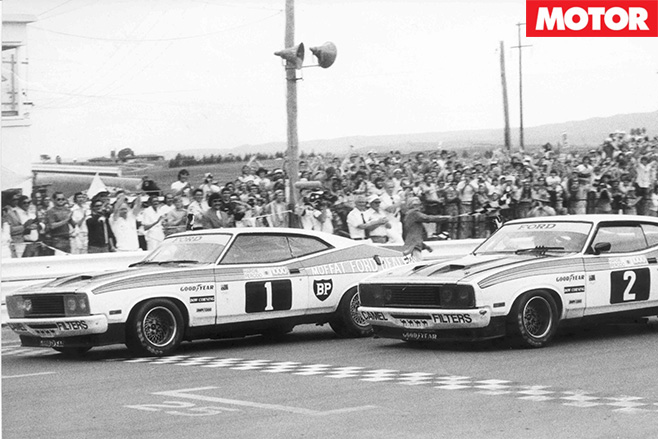
The apogee of illicit support was in 1977, when the Moffat Ford Dealer Team XCs of Moffat and original Holden defector Colin Bond swept all before them, including their immortal 1-2 form finish at Bathurst.
Johnson developed a Group C version of the XD Falcon, despite Ford Oz’s efforts to discourage the model’s participation in racing. His Ford fame – and encouragement and limited support from Broadmeadows – was cemented when he famously hit ‘The Rock’ while leading on lap 17 of the 1980 Bathurst 1000.
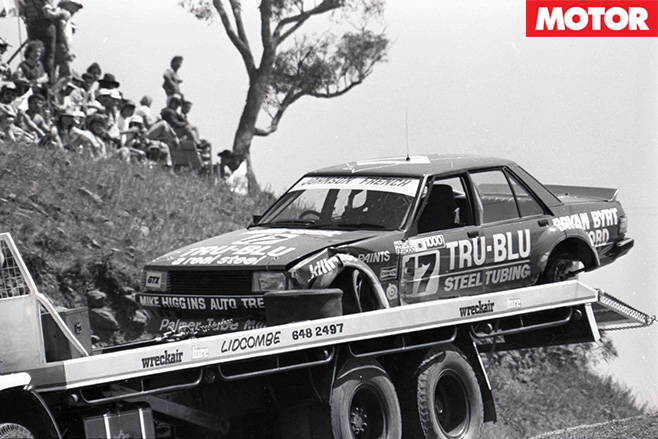
Little did Edsel expect the response. A legend was born and donations arrived in the mail by the sacks full at Johnson’s Shell service station in Daisy Hill in Brisbane’s southern suburbs.
With Ford’s matching contribution, the appeal raised more than $70,000 – big money and a substantial annual racing budget in those days – and allowed Johnson to build a new car and keep his ‘renegade’ XD racing program alive to win the ATCC and the crash-shortened Bathurst 1000 in ’81.
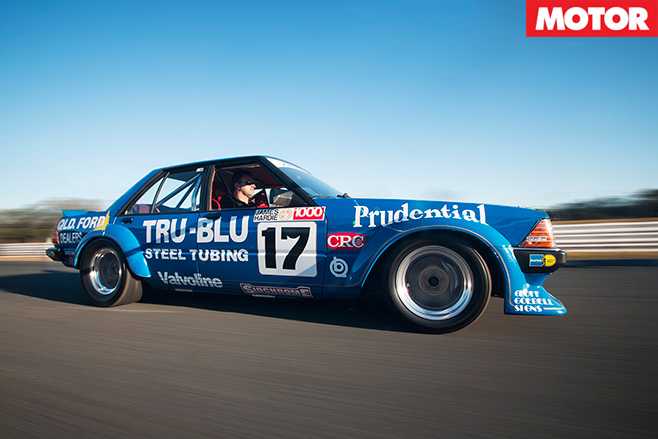
Ford’s flirtations ended with committed technical and financial backing initiated by the late Howard Marsden, who reprised his early ’70s role as Ford Australia’s competitions manager at the start of the 21st century.
After the Gibson Motorsport/00 Motorsport debacle, aggravated by Holden Racing Team’s continued domination from 2000-02, increased support was spread across leading Ford teams, headed by Ford Performance Racing.
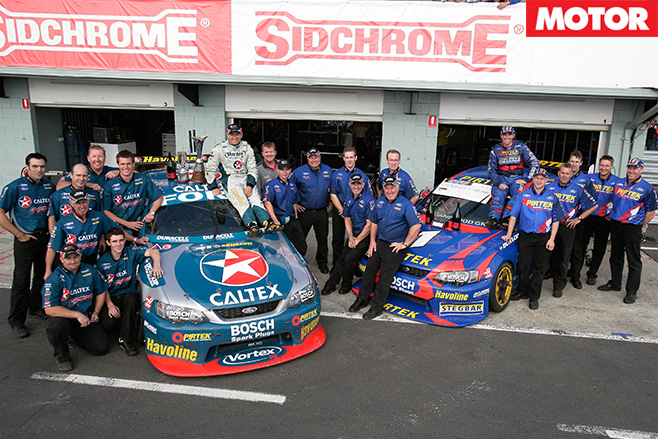
There was also substantial funding of Stone Brothers Racing and Triple Eight Race Engineering, along with significant support for Dick Johnson Racing, and despite FPR’s serial under-achievement for the rest of the decade, the noughties were golden years for Falcon on the track.
It also coincided with the switch from the recalcitrant AU Falcon racer to the front-running BA model, which was still identifiably production-based under the skin. From the FG in ’09, any relationship with the road cars – like its Commodore counterpart – became little more than cosmetic and all pretence disappeared in Supercars with the control chassis-based Car Of The Future (now New Generation) rules introduced in 2013.
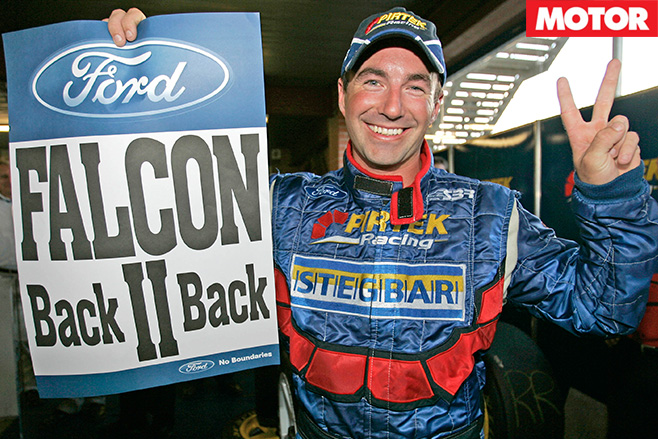
SBR won the 2003-04 V8 titles with Marcos Ambrose and the ’05 crown with Russell Ingall in BA Falcons.
Lowndes’ escape from FPR to Triple Eight in ’05 immediately restored his race-winning fortunes and coincided with the team’s emergence under Anglo-Irish entrepreneur Roland Dane as a front-runner.
Triple Eight won three Bathurst 1000s in a row for Ford. Lowndes and then new teammate Jamie Whincup scored an emotional victory in their BA Falcon at Mount Panorama in 2006, claiming the inaugural Peter Brock Trophy just weeks after The King Of The Mountain’s death.
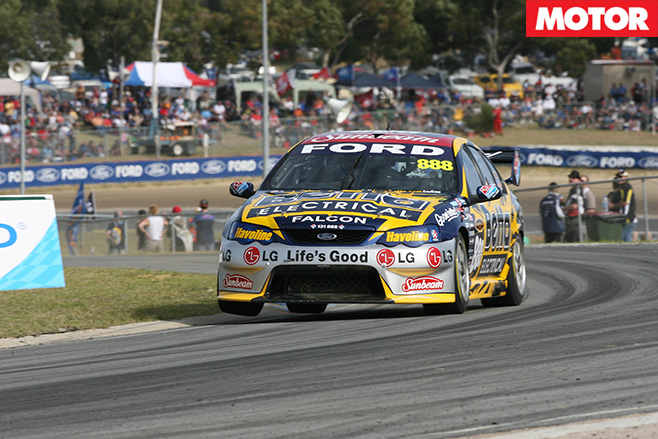
It was in the middle of ’08 that Ford’s commitment to racing started to waver once again. Broadmeadows announced that from 2009, it was restricting financial support to FPR and SBR, dropping Triple Eight and DJR.
The snub prompted Dane to remove Ford badging from T8’s FGs in ’09 – replaced by a feral pig motif in honour of minor team sponsor Hog’s Breath Café – and sent him into the welcoming arms of Holden from 2010.
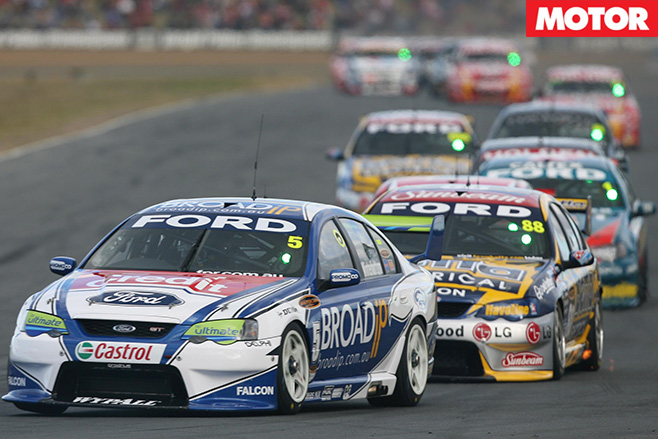
Triple Eight’s Holden hegemony has been interrupted by DJR’s defiant driver’s title win with James Courtney in 2010, without Ford support. Mark Winterbottom’s championship breakthrough in ’15 came with barely any factory backing and FPR was renamed Prodrive Racing Australia in anticipation of Ford’s full withdrawal this year.
FPR/Prodrive, which finally got its act together early this decade and improved in inverse proportion to Ford’s shrinking contribution, also denied Triple Eight victories at Bathurst in 2013/14 when Winterbottom and Chaz Mostert respectively triumphed in dramatic finishes.
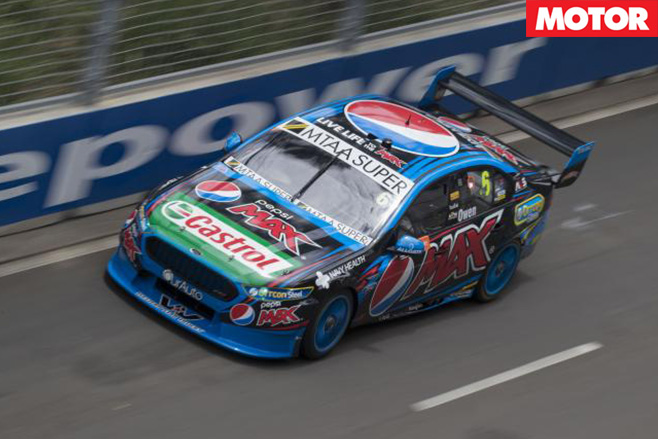
SBR’s funding would have been cut even if the team hadn’t been bought by Betty Klimenko and transformed into Erebus Motorsport and her privately funded Mercedes AMG folly, while FPR’s backing was slashed in 2014 and reduced to nominal support last year.
In yet another irony, Ford Australia’s final substantial contribution financed the development of the FG X aero kit, which tipped the balance in PRA’s favour in the 2015 V8 Supercars driver’s championship.
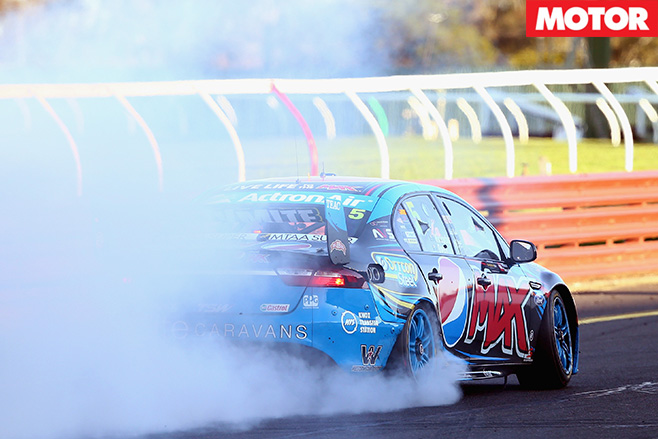
The October 9 Bathurst 1000 won’t be the Falcon’s final fling at Mount Panorama, nor is this year its swansong in Supercars. PRA and DJRTP will continue fielding FG Xs next year at least.
In fact, Falcons could continue in Supercars until well after final stocks are cleared from dealers next year, as the FG X remains eligible until Gen2’s scheduled expiration at the end of 2020.
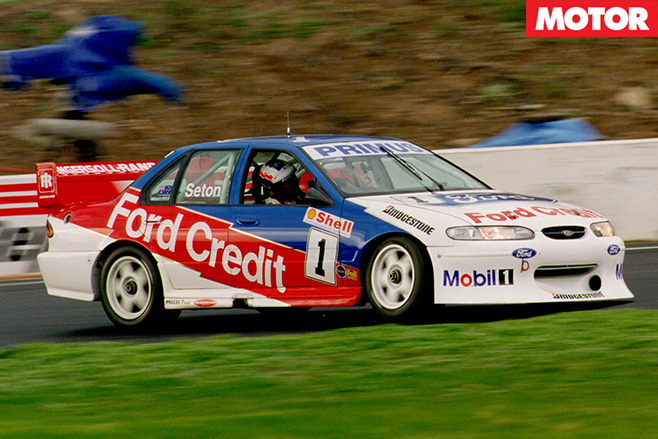
At Bathurst, Falcons have won 14 times since the original XR GT’s success in ’67, compared with 22 Commodore victories since 1980.
Falcons had scored 262 ATCC/Supercars race wins up until the Sydney SuperSprint at the end of August – a far cry from the 459 race successes achieved by Commodores.
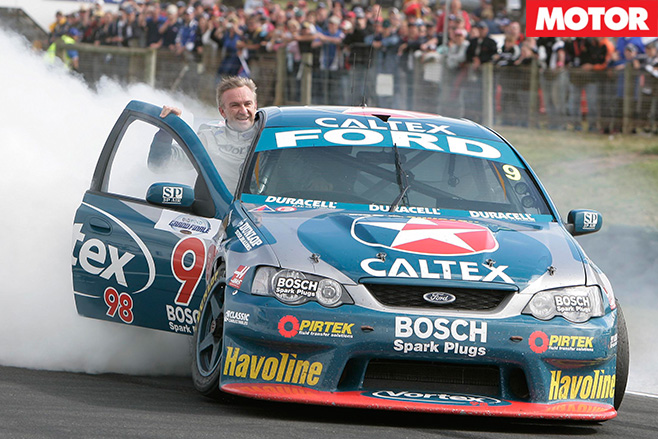
The Falcon legacy will live on in racing for at least another year, a reminder of the glory years when Ford and Holden went head-to-head on the track and in the market place.
Sadly, it will never happen again.
