
Here are five from the show that aren’t just a designer’s dream, however, but also set for production.
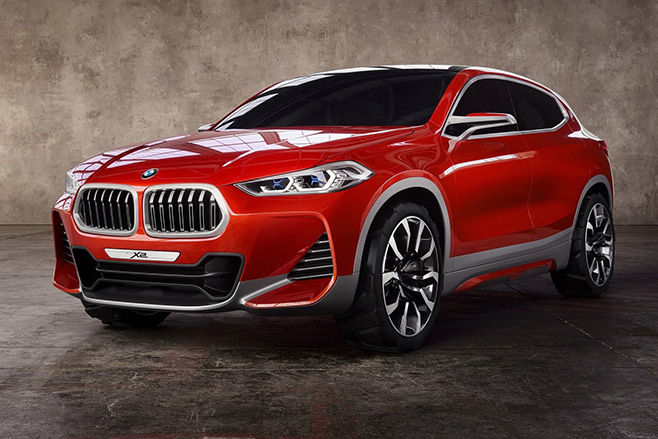
BMW X2
The Bavarian Motor Works started the coupe-style SUV trend in 2008 with the BMW X6, and this concept previews its sportier version of the compact X1. BMW’s sixth SUV is due in 2018, sitting on the same ‘UKL’ front-wheel-drive platform as the X1 and 2 Series GT (plus Mini models). As with the X6 and X4, related to the X5 and X3 respectively, the X2 will not only look sportier than the X1 but will be engineered for a more dynamic driving experience. BMW concepts are traditionally very close to what you will actually see in showrooms.
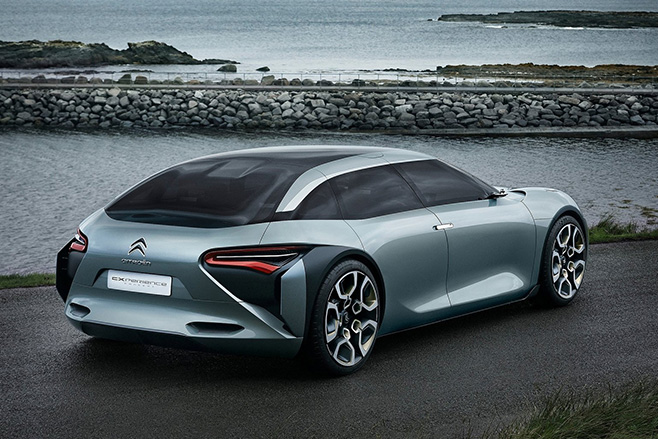
CITROEN CXPERIENCE
The last big sedan from this French brand was the C6 that cost about $100,000 in Australia. This 4.85-metre-long concept points to a successor, though also promotes plug-in hybrid technology, future interior design possibilities, and comfort-focused engineering. A 200kW combined power output is derived from an electric motor and a conventional petrol engine. An electric-only range of 60km is quoted. The Cxperience also features Citroen’s Advanced Comfort hydraulic suspension, which aims to place Citroens among the best-riding cars in the world. The design is striking inside and out. The cabin features citrus-yellow upholstery and trim, with a 19-inch horizontal display protruding out of a wraparound wooden dash.
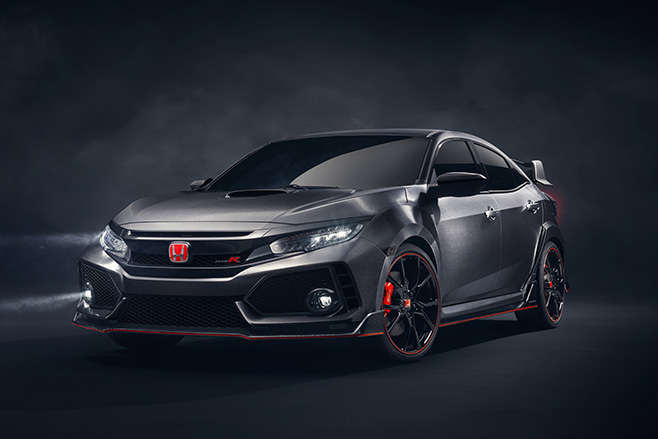
HONDA CIVIC TYPE R PROTOTYPE
The last Honda Civic Type R looked set to come to Australia before the plan was aborted. The production version of this Prototype will make it, though – expected for the second half of 2017. This more aggressive take on the Honda Civic five-door hatch includes 20-inch wheels sitting in chunky wheel arches, and a front splitter and side skirts made from carbon fibre. There’s also a huge rear hatch spoiler. On the grille is a red ‘H’ Honda logo that’s a trademark for Type R models. Honda didn’t reveal engine or performance details for the Prototype, though the production version is tipped to use the previous model’s 228kW turbocharged 2.0-litre four-cylinder.
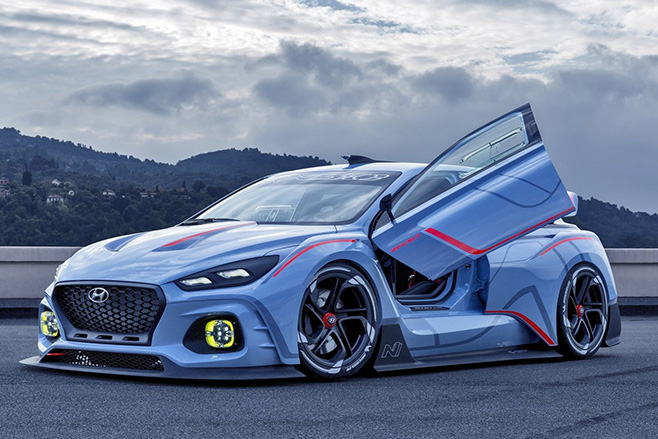
HYUNDAI RN30
Korean brand Hyundai will take its first bold step into performance territory in 2017 with the i30 N hot-hatch. It’s previewed in the most extreme manner by the track-focused RN30, which includes weight-reduction measures to enhance speed. More relevant to the i30 N that will rival cars such as the VW Golf GTI, Renault Megane RS, Ford Focus RS and aforementioned Honda Civic Type R is the drivetrain. It features a 2.0-litre turbocharged four-cylinder engine sending 280kW and 451Nm to all four wheels, with an electric limited slip differential also employed to help get that power and torque to the ground. A range of Hyundai N models are planned, with the division headed by a former BMW performance chief.
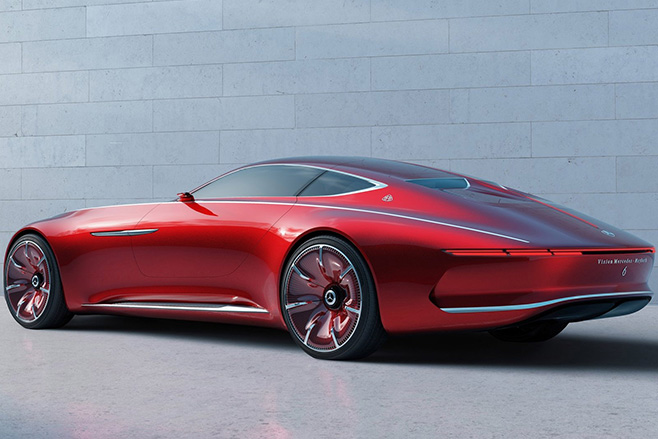
VISION MERCEDES-MAYBACH 6
Benz’s super-sleek super-coupe was first seen in August at the US’s Pebble Beach Concourse but made its motor show debut in Paris – ahead of a 2017 production version. At nearly six metres long, the second Mercedes-Maybach model will take on the Rolls-Royce Wraith. The long-wheelbase, two-plus-two-seater two-door concept sits on massive 24-inch wheels, features gullwing doors, and its grille is inspired by the pinstripe suit. An electric drivetrain produces 550kW and a 500km range.
Can’t get enough? Now read our article on Top 5 Electric Vehicles.
New and updated SUVs of all sizes and price points were revealed at the Paris motor show including some which will be making their way into Australian showrooms. Here’s five of the best.
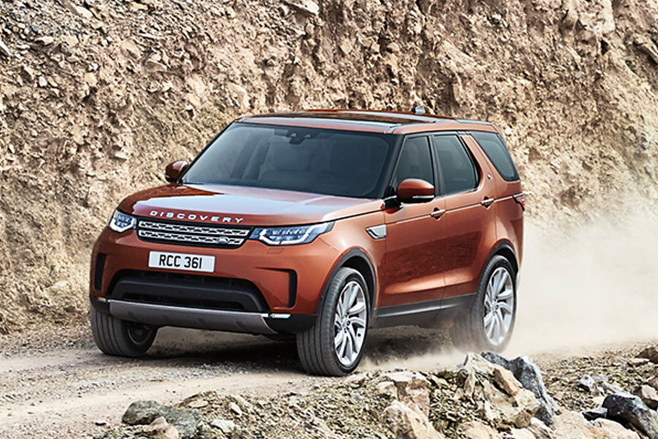
LAND ROVER DISCOVERY
The long-awaited fifth-generation Land Rover Discovery’s launch coincided with the Paris Motor Show amid fanfare that included the world’s largest Lego structure, Bear Grylls lobbing in on a rope from a helicopter and a horse.
While less utilitarian in appearance than all four predecessors, Land Rover assures us its off-road capability hasn’t been compromised. It still boasts its signature full-sized seven seat cabin, but has shed a significant 480kg thanks to an aluminium monocoque frame which, for the first time, has allowed a four-cylinder turbo diesel power plant added to the list of available engines, joining two larger six-cylinder options in the Aussie line-up.
Price: from $81,590 Aussie availability: July, 2017 Coolest feature: Intelligent seats which let you electronically fold the second- and third-row from either buttons in the rear of the cabin, via the infotainment touchscreen or from an app on your smartphone before you even get to the car!
PEUGEOT 3008
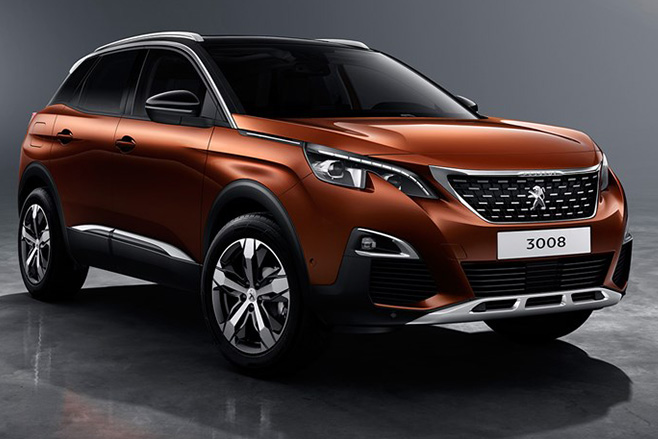
Goodbye drab people mover, hello chic SUV. Despite the car’s external dimensions being more compact than the frumpy outgoing model, the newly unveiled French-made five-seat SUV is citing more interior space than the MPV model it replaces and up to 1580-litres of boot space.
Powered by either a 1.6L turbocharged petrol engine or a 2.0L turbo diesel variant, the mid-sized SUV will be the firm’s first production car to employ the new-generation i-cockpit digital instrument display and infotainment system. It rolls on 18-inch wheels and is adorned with a unique mix of shiny chrome and black plastic highlights.
Price: TBA Aussie availability: First quarter of 2017 Coolest feature: There’s a foldable electric scooter in the long list of optional accessories. It’ll take you a distance of 12km at a top speed of 24km/h.
SUZUKI IGNIS
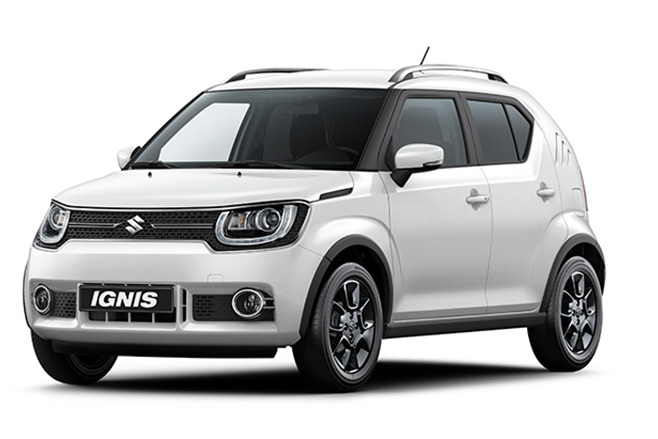
By far the smallest SUV to be launched in Paris, Suzuki’s new Ignis measures just 3700mm in length. The mini SUV is powered by either a 1.0L or 1.2L petrol engine complemented by either two- or four-wheel drive.
It boasts all the mod-cons like a touchscreen actuated infotainment system and a handful of electronic driver safety aids, but the list-topping news that Suzuki will offer a hybrid version, using the firm’s SHSV technology.
Instead of being a full plug-in Hybrid, the system harnesses energy during braking and redirects it to top-end acceleration when the little car will need it most.
Price: TBA Aussie availability: If it happens, mid- to late-2017 Coolest feature: The Ignis will be available in some lairy colour schemes and decals including a 1970s-inspired livery.
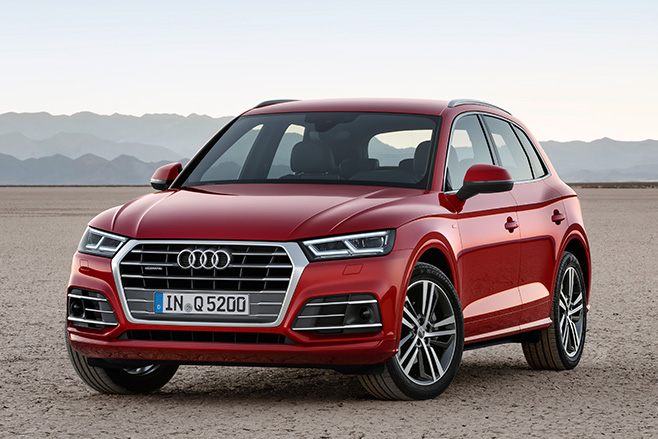
AUDI Q5
The second-generation of Audi’s Q5 soft-roader was unveiled in Paris sporting a minor styling update, more engine and gearbox options and, for the first time in the mid-sized SUV segment, air suspension.
It’s Audi’s best-selling vehicle globally so in terms of radical changes, less is more for the German carmaker.
Despite its now larger rear-end, it’s 90kg lighter than its predecessor, it boasts 30 driver-assist features (yes, 30!) and has a cargo capacity of 550 litres. A longer wheelbase means more legroom and an interior makeover sees better materials and a wider choice of finishes for more personalisation.
Price: TBA Aussie availability: Second half of 2017 Coolest feature: The car will collect information about your environment — road conditions, traffic jams, etc — and distribute it to other Audi owners in your area via the cloud.
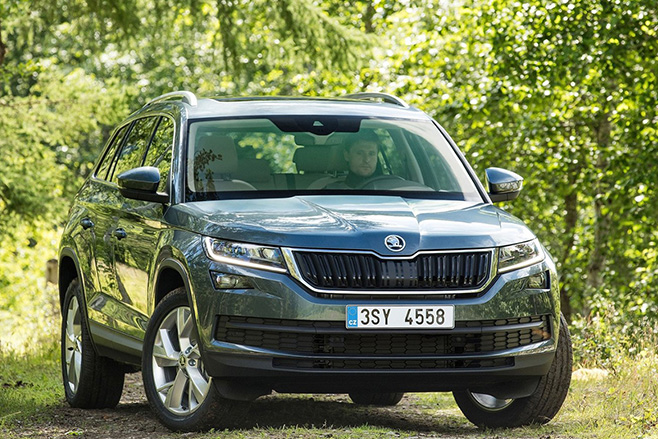
SKODA KODIAQ
Skoda whipped the covers off its new five- or seven-seat Kodiaq SUV in Paris this week, unveiling what appears on paper to be the firm’s most capable SUV to date offered in both two- or four-wheel drive.
Engine options are three diesel variants and two petrol-powered options, while transmissions are a six-speed manual or a seven-speed dual-clutch option dependent on the chosen power plant.
It boasts all the latest electronic driver aids, even the option of in-car communication that lets you talk to the kids through their bluetooth headsets in the back seat.
The second- (and third-row seats) fold away into the floor to offer a significant 2065-litres of storage.
Price: July-August, 2017 Aussie availability: TBA Coolest feature: Tow Assist, which takes over the steering wheel when you’re reversing a trailer to make you look like a trailer-reversing god
Batteries were most definitely included at this week’s 2016 Paris Motor Show.
Mercedes-Benz and Volkswagen unveiled the most significant concepts, with the Generation EQ and ID, respectively, which preview a major electric-car showroom onslaught from both German brands.
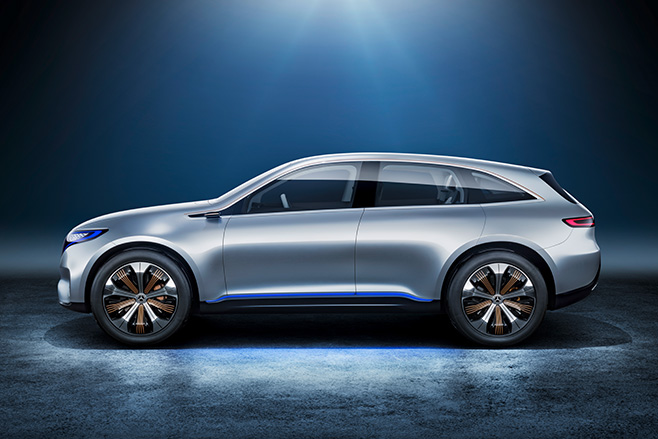
MERCEDES-BENZ GENERATION EQ
The German brand’s concept looks radical with its blue exterior illumination elements, though a production version will start an electric-car fightback against Tesla.
EQ stands for Electric Intelligence and will join AMG, Smart and AMG as a Daimler sub-brand. The Generation EQ sits on a flexible architecture that can be adapted for different vehicle sizes, with Mercedes saying all segments from the A-Class hatch upwards will be covered.
Performance and range are also scalable depending on the size of the battery pack, with up to 300kW of power and a distance of up to 500km possible.
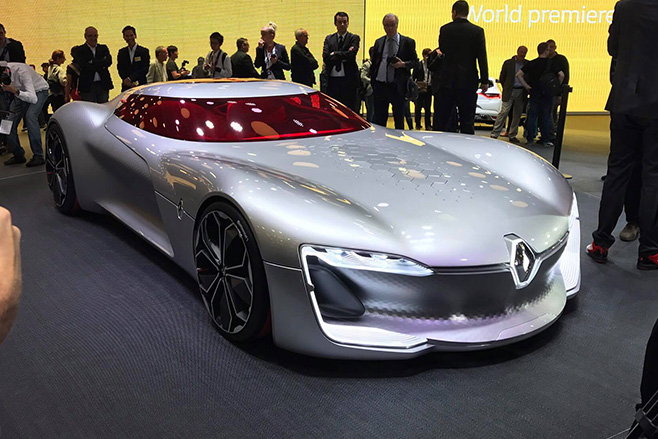
RENAULT TREZOR
Renault’s stunning, 4.7-metre-long sports car concept is powered by a 260kW drivetrain from the company’s Formula E racing car entrant.
The electric motor is powered by two batteries featuring individual cooling systems, and a regenerative braking system helps to recharge the batteries.
An acceleration time of less than four seconds is quoted for the Trezor, which is French for ‘treasure’.
It looks like a car begging to be driven, though it also features self-driving capability. The Trezor is purely a dream concept that won’t make reality, though it’s most significant role is to hint at Renault’s future design direction.
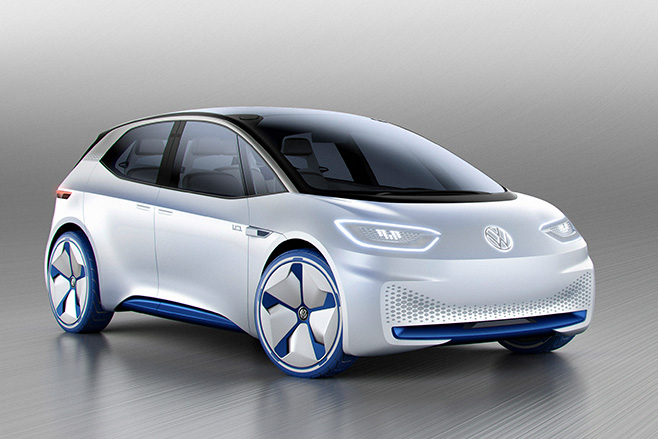
VOLKSWAGEN ID
The People’s Car is going electric. Volkswagen is aiming to sell a million electric vehicles by 2025, and the ID points to what is likely to be one of the biggest sellers – a Golf-sized hatch. VW even says the electric ID will cost the same as a diesel-powered Golf, meaning a price tag of about $36,000.
The car is formed from the company’s new Modular Electric Drive kit, featuring a 125kW electric motor. VW is quoting a driving range of between 400 and 600km. A self-driving version is also planned for 2025.
The ID’s styling points to a distinctive look for VW’s electric vehicle range.
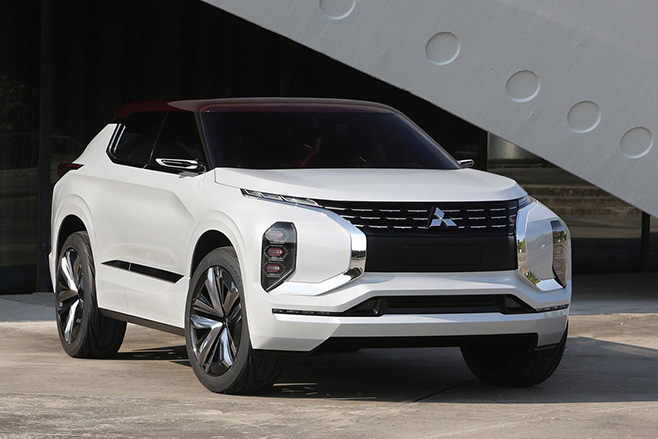
MITSUBISHI GT-PHEV
Japanese brand Mitsubishi is clearly quite fond of plug-in SUV concepts. The GT-PHEV is the latest in a line of hybrid show cars, with this one comparable in size to its popular Outlander.
There’s 90kW of electric power delivered to each axle, with a single 90kW electric motor up front and two 45kW motors at the back.
The 120km battery-only range is more than double the 52km range of the Outlander PHEV production SUV.
A 2.5-litre petrol engine is ready to act once the battery charge is depleted. Mitsubishi says a 1200km range is possible when both battery charge and fuel tank start full.
Production status is unclear as the current-generation Outlander still has a few years to run.
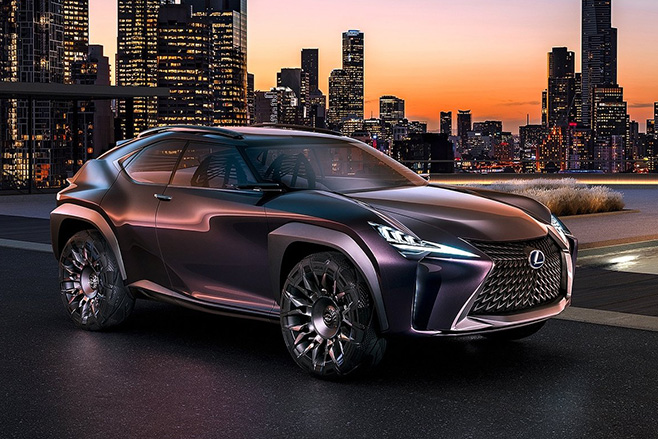
LEXUS UX
Toyota’s luxury brand hasn’t actually revealed any powertrain details for its baby SUV concept, though a production version would invariably feature a petrol-electric combination.
The UX is at Paris to preview Lexus’s belated rival to the likes of the Audi Q3, BMW X1 and Mercedes GLA. At 4400mm long, it is notably shorter than Lexus’s current smallest SUV, the NX.
UX’s styling continues the dramatic sharped-edged styling introduced by that model. The four-seater concept also showcases a new user-interface approach for the brand – an area where it has been consistently criticised.
The UX was created in Lexus’s ED2 design studio in the south of France.
BMW gives us a sneak peek at its next segment-busting SUV.
THE BMW Concept X2, the latest SUV derivative from BMW, has made its debut at the Paris Motor Show. Looking like a jacked-up 1 Series hatchback, the X2 is a possible preview of an X1-based compact SUV that trades some of the practicality of the wagon-bodied X1 for a sharper visual style.
With a set of huge 21-inch wheels at each corner, the Concept X2 boasts extra ground clearance and rugged black plastic lower panels to give it a whiff of off-road capability. Meanwhile, hidden door handles keep its sides clean and uncluttered, and the BMW roundels on each C-pillar are a nod to classic BMWs such as the late 1960s-era E9 coupe.
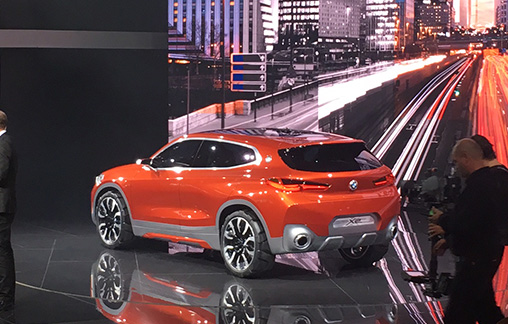
The X2 wears an imposing face that’s dominated by a supersized interpretation of BMW’s kidney grille and bookended by laser-emitting headlamps. The rear features a pair of prominent tailpipes and a shrunken boot opening with a high loading lip – real-world practicality is rarely a factor when it comes to car show concepts.
BMW kickstarted the coupe-like SUV trend when it revealed the X6 in 2008, but while other luxury marques are now catching up with fastback SUVs of their own, BMW still has plenty in store when it comes to niche crossovers.
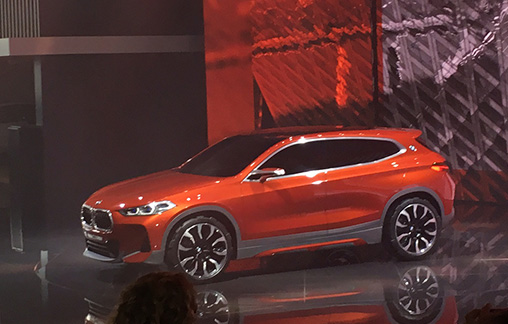
Pre-production prototypes have already been spotted undergoing in Europe, and while those cars wore plenty of camouflage, the absence of a D-pillar plus a shallow glasshouse and rising beltline give the game away – an X2 companion to the X1 is already in the pipeline.
Built on the same transverse-engined UKL platform that sits under the BMW X1 and 2 Series Active Tourer (as well as the entire new-gen Mini range), the X2 is expected to arrive with a range of turbo three- and four-cylinder petrol and diesel engines – with a hot M-Sport derivative also potentially coming.
An Australian market arrival is anticipated in late 2017.
Last week Nissan and Harvey Norman unveiled the livery for Simona de Silvestro and Renee Gracie’s Bathurst Wildcard. And it made me bloody furious.
Now, there’s nothing wrong with the lick of paint the team has applied to their Nissan Altima Supercar. In fact, the black and white with yellow lettering is a perfectly adequate modern livery (even if it doesn’t hold a candle to the epic retro schemes we were treated to at Sandown). It is certainly a relief that last year’s pink stickers have been thrown into the bin where they belong.
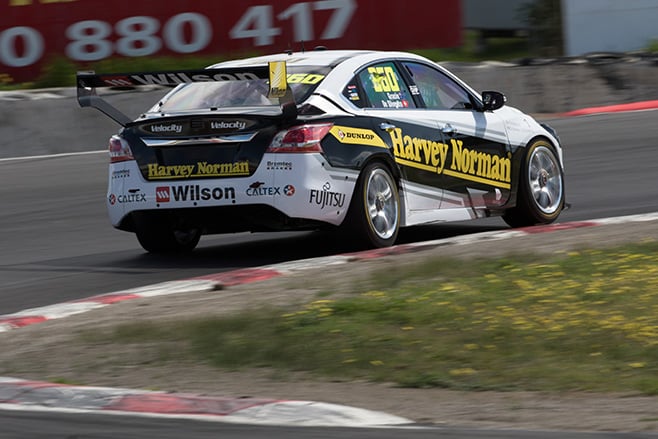
No, the reason I am feeling the rage is the fact Harvey Norman, Supercars, Nissan, and anyone involved insists on calling the pairing the “Supergirls”. I mean, really? Is that the best name they could think of for the wildcard entry? I will get to why it is regressive, demeaning, and condescending later, but first and foremost it is boring and unoriginal. If Supergirls was the best thing the marketing boffins could scratch together, then that is just sad. You can almost picture the meeting when the idea was formulated: “So we have two racers entering in a wildcard at Bathurst… they are both females… they will be racing a V8 SUPERcar… hmmmm… I’ve got it! Supergirls!”
What a bloody genius that numpty was.
We’ve already had one tasteless team name for female racers: the Castrol Cougars. We don’t really need another to blot Supercars’ history books.
But beyond the sheer unoriginality is the fact it’s degenerating. I don’t use that wording lightly, either. But there is so much more to Simona De Silvestro and Renee Gracie than the gender on their racing license. We don’t call Jamie Whincup the male six-time champion, so why we need to single out the gender of this pairing, from their very own team, beggars belief.
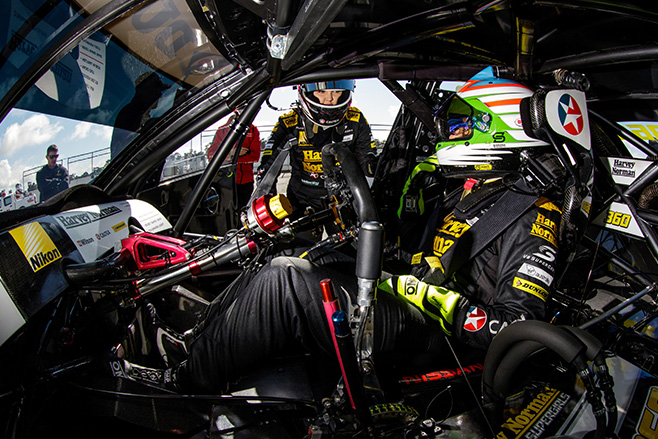
Yes, their gender does play a part in what makes this wildcard entry more important, but do we really want history remembering them as the Supergirls? It is naff, and results in people thinking it is okay to use sexist terms to describe the duo, as we infamously saw last year. I have little doubt that those who can’t wrap their outdated brains around the concept of an all-female driver pairing see the Supergirls’ name as reason why the duo are nothing more than a marketing exercise, and free reign for their misguided bile.
Also, come on, “girls”? Don’t be condescending. These are women who train hard, and one is an internationally respected professional. If we expect the media and punters to treat them with respect, wording is important – and using “girls” is demeaning of the pair’s talent.
So please, for the good of bringing Australian motorsport out of the dark ages, can we not refer to the team as the Supergirls. Supercars, Nissan, and the Harvey Norman team, I am looking at you. Call it Harvey Norman Racing, or the Whiz-bang Whitegoods Mega Squad. I don’t care; just not the Supergirls. You are undermining yourselves, and two very talented racers.
The world could have an electric supercar by 2019 if a fledgling Japanese tech company can bring a radical concept car to showrooms.
Japanese upstart GLM is planning a 400kW/1000Nm four-door powered purely by batteries. It is claimed to reach 100km/h in 3.7 seconds.
The largely unheard-of company has supplied EV components and has experience working through homologation issues in various countries. It plans to expand, using the GLM G4 concept that was unveiled at the 2016 motor show as a brochure for its wares.
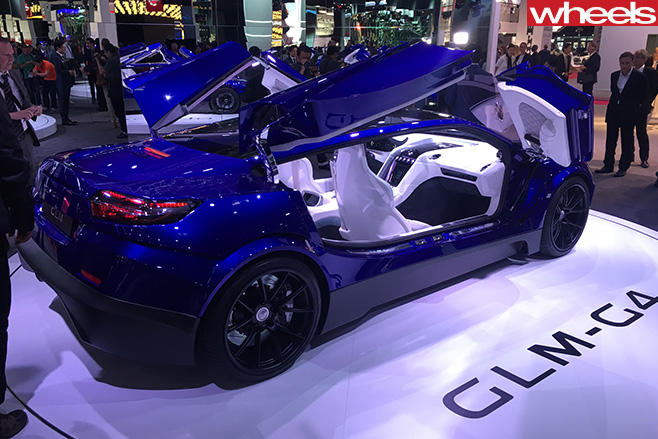
GLM – an acronym for Great Lord Motors, which is supposed to signify “nature controls everything” – revealed the low slung four-seater concept as a precursor to a planned production model that could arrive within a few years.
The Japanese company, which was formed by a professor at the Kyoto University, says it will build only about 1000 of the G4s, with the likes of Porsche and Ferrari the target.

The GLM G4 has two electric motors driving all four wheels.
Wheels spoke to a GLM board director at the Paris motor show who suggested the GLM G4 would cost more than a Porsche 911 Turbo, indicating a price tag north of $400,000.
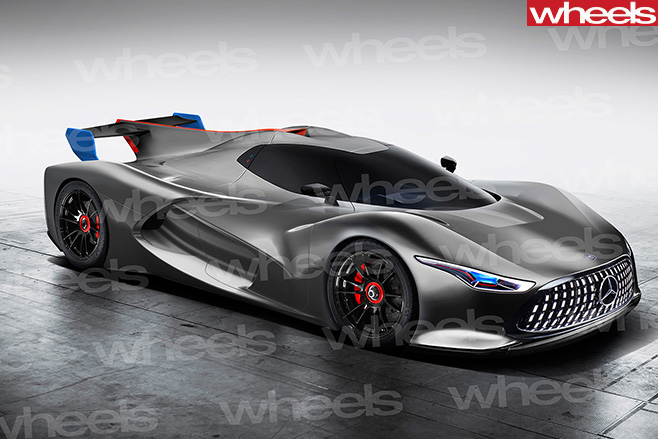
AMG’s Formula One powered Hypercar will be sold in Australia!
Tobias Moers, head of Mercedes-AMG, has disclosed further information at the Paris motor show about the company’s most ambitious ever project, the AMG hypercar.
A five-digit rev-limiter, active aerodynamics and hybrid electric grunt are all in. This is the real deal, and it’s in development right now.
Referred to as R50, the mid-engined two-seater will use exactly the same engine and much of the componentry as found in the Mercedes-AMG W07 Formula One car.
Previous speculation suggested the power unit would be similar, but not identical to F1. Speaking to Australian media today, Moers took the chance to quash any doubt.
“What’s in Formula One? It is [the same]. We are not talking about [F1] ‘inspired.’”
There is one piece of bad news. R50 will be left-hand drive only so you’ll never see one on the street in Oz. However, one well-heeled Australian is already in line to get one.
“We already have an order and a deposit for one. I think it’s the first in the world,” said Mercedes-Benz Australia spokesman, David McCarthy. “It will come to Australia.”
Moers specifically acknowledged plans to use Merc’s current 1.6-litre 90-degree V6 engine, running on 98 octane fuel and using the same turbocharger and energy recovery systems (ERS) as Formula One, with an even more potent hybrid setup likely.
Brakes and turbocharger will generate battery-charging electricity. Removing the packaging restraints of an F1 car should allow for larger battery cells to be used, and increase the potential for more electric oomph.
“We have to change some things there. [In F1] we run the engine to maybe 15,000rpm, maybe we reduce that a little bit, but still five digits.
“This is not a problem for the electric motors because we use the ones from Formula One as well.”
What will be different is the delivery of power. R50 will not be rear-drive only like the Formula One car. Moers confirmed an all-wheel drive system will be used, though variable torque split between front and rear axles is expected.
Moers would not be drawn on power targets or the type of gearbox that will be implemented. Information will be drip-fed once the calendar flips to 2017 and AMG’s 50th anniversary celebrations begin.
“AMG is going to be 50 next year. [R50] is not an accident, it’s a strategy. You’ll see something more in Geneva, and something in Frankfurt.”
Lewis Hamilton and Nico Rosberg’s Formula One cars are speculated to race with an engine tune of around 715kW, which can be cranked up to over 745kW in qualifying trim.
The R50 project is likely to result in one of the most expensive production road cars ever built.
This is not only a challenger to the McLaren P1, Porsche 918 and LaFerrari. R50 looks set to stretch the hypercar demographic into another level of performance, and Moers is determined to be the best.
“If AMG steps into a new segment, that’s our target.”
“I don’t know how many times I had discussions about a potential hypercar within our company. Two years ago, I thought brand-wise we were not on the way. I changed my mind. We changed our minds.”
Lewis Hamilton has expressed interest in working on an AMG road car, and Moers confirmed Hamilton and Rosberg as part of the development process.
Perhaps one of them could make a suggestion on the name. The R50 moniker has not been adopted officially at this stage.
The Audi RS3 sedan has been revealed in Paris, featuring an even more powerful version of Audi’s 2.5-litre turbocharged five-cylinder engine.
The RS3 Sedan’s 2.5 TFSI aluminium engine, which is shared with the Audi TT RS in this tune, produces 294kW of power and 480Nm of torque to push it from 0-100km/h in just 4.1 seconds. By comparison, the same engine in the five-door version, the RS3 Sportback hatch, produces 270kW and 465Nm and, despite being less powerful, sprints from 0-100km/h in exactly the same time.
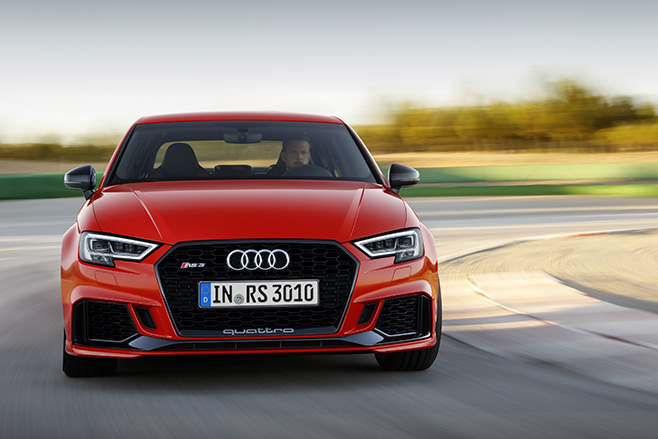
The engine, which is mated to a seven-speed dual-clutch transmission and sends power to all four wheels, can be tuned by Audi Drive Select system’s modes: comfort, auto and dynamic. Drivers also have the choice of controlling the suspension on the optional RS “sport suspension plus” with adaptive damper control.
Sport mode in the RS’s specially tuned ESC can be used for controlled driving, or it can be deactivated.
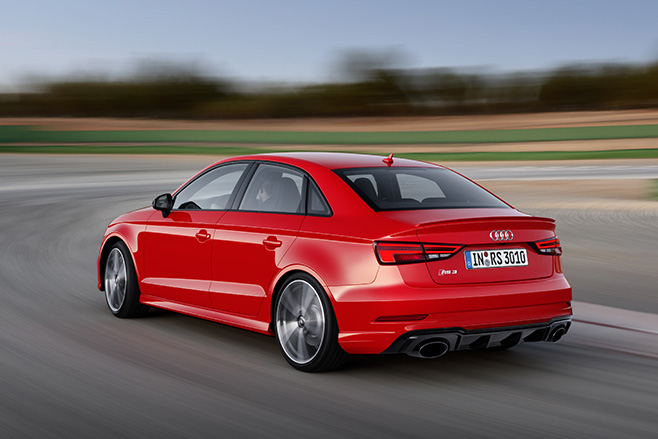
Cosmetically, the RS gets a slight makeover to its front and rear fascia. Measuring 20mm wider than the A3 with the rear wheels 14mm further apart, the RS 3 Sedan features flared wheel arches, while a fixed lip spoiler garnishes the boot lid.
Inside, the illuminated door sills sport RS3 logos. Nappa leather sport seats come as standard, as are the 19-inch wheels.
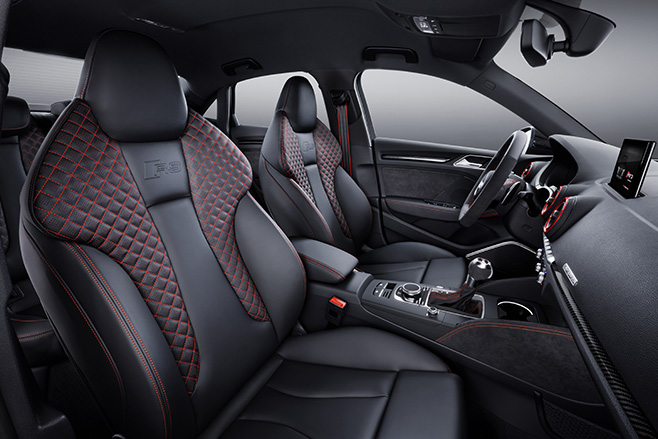
A seven-inch electrically extending infotainment system sits in the centre of the dash and includes satellite navigation. Analogue instruments are used for the driver’s dash, while an optional fully digital cockpit is available. Other options include Qi smartphone charging, and a Bang & Olufsen 14-speaker sound system.
In terms of safety, the RS 3 comes with driver assistance systems such as collision warning, blind-spot monitoring and traffic sign detection, while new technologies include semi-autonomous traffic jam assist that works at speeds of up to 60km/h, autonomous emergency braking and cross traffic assistance.
The Audi RS3 Sedan is due to go on sale overseas in 2017, but we’re yet to get word on an Australian sales date.
X590 electric SUV to spearhead EV push for British brand.
After months of speculation, Jaguar has given the clearest indication yet it is working on an all-electric SUV that could rival the Tesla Model X.
Speaking at the 2016 Paris Motor Show, Jaguar Land Rover CEO Ralf Speth announced that the imminent entry of the I-Type electric open wheeler into the Formula E race series would lead to production cars.
“Jaguar is back on track in Formula E. It’s our first step towards electrification,” said Speth. “More to come soon, watch this space.”
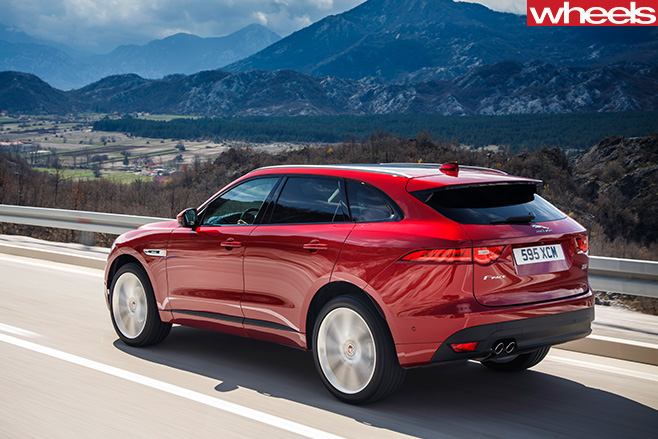
Speth said the race program was crucial to the development of the yet-to-be-revealed road going electric car.
“It will be a huge academy for all our young engineers to learn, to learn fast… it’s not only a new electronic architecture… at the end of the day it’s a completely new powertrain system combined with traditional elements.”
Speth admitted Jaguar is late to the hybrid and electric scene – key rivals Mercedes-Benz, BMW and Audi all now sell plug-in hybrid electric vehicles – but that it was “pioneering” with its application of electric propulsion.
The 70 unique trim and colour combinations across five model ranges – Ferrari 488 GTB (coupe), 488 Spider, F12berlinetta, California T and the just-revealed LaFerrari Aperta – will be limited to one of each car.
That means only 350 people around the world were lucky enough to snap one up, with Ferrari confirming every car has an order against it.

Many of the 70 anniversary liveries based on race cars so feature race numbers worn in the day and include:
- “The Stirling”, which includes a deep blue finish, celebrates the 1961 Tourist Trophy win by Stirling Moss in a 250 GT Berlinetta.
- “The Steve McQueen”, with a polarising brown exterior hue and camel interior as a homage to the 1963 250 GT Berlinetta Lusso given to the legendary actor by his first wife.
- “The Schumacher” based on the 2003 Formula One car raced to a world championship by Michael Schumacher, who was severely injured in a skiing accident late in 2013 and has not been seen in public since.
- The White Spider, a tribute to the 375 MM Pinin Farina Spider.
- The Green Jewel, a green scheme based on the 365 P2 from Le Mans competition.

View all 70 liveries at the Ferrari 70 website.
