
Holden fans, it’s not the end of the world. Just a redrawing of empire boundaries.
Ok…everyone take a pill and lie down.
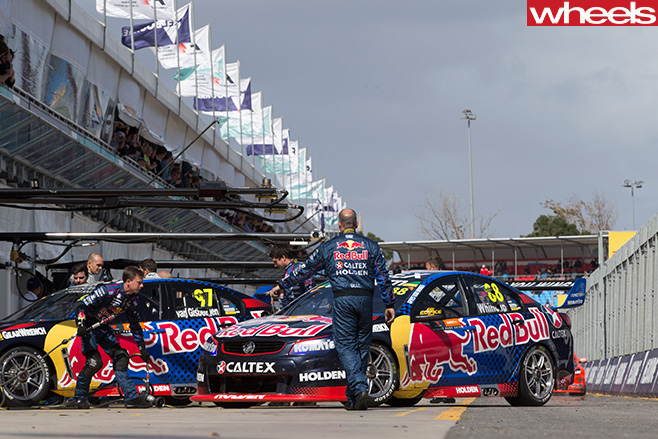
Social media has gone feral with aggrieved Holden Racing Team fans crying foul since the not unexpected move by Holden to consolidate its efforts in Supercars by handing Triple Eight Race Engineering exclusive factory status (and ending direct works support of the HRT after 26 years).
C’mon, it shouldn’t have come as a huge surprise, not after HRT’s mediocre performance in recent seasons.
Possibly what was a bit of a jolt was Holden’s decision to pluck the very HRT name off the Walkinshaw-owned team and instead use it to meld into the sole works squad nomenclature, to be known from next year as Red Bull Holden Racing Team. Given Craig Lowndes’ unassailable position as the most popular driver on the grid, it is strange that he will remain outside the rebranded official Holden factory squad next year and onwards, though integral to Triple Eight’s campaign.
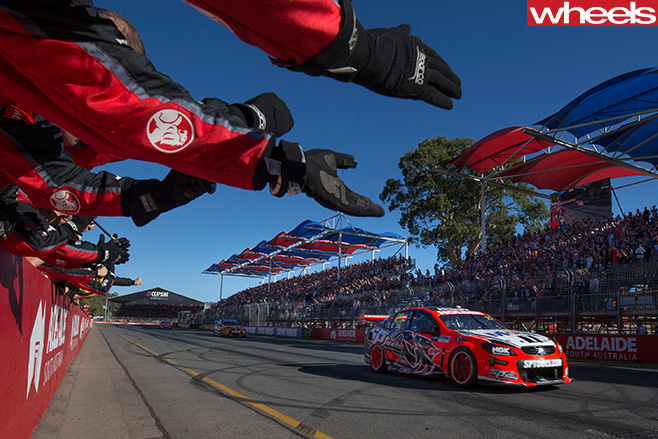
The punters have a right to be confused and many of the HRT loyalist fans are mightily angry too. They feel HRT’s very identity has been stolen.
Berry Klimenko could be right; maybe it might have been smarter of Holden to retire the HRT name permanently rather than upset those who’ve supported the red mob through thick and thin.
Sentiment in motor sport is a scarce commodity, especially on the business side of the wall. Maybe the first two decades of HRT, and the success it landed for the brand, don’t mean much at Fishermans Bend.
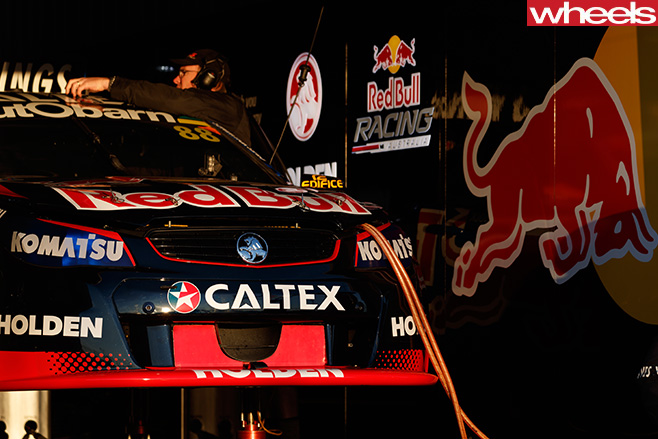
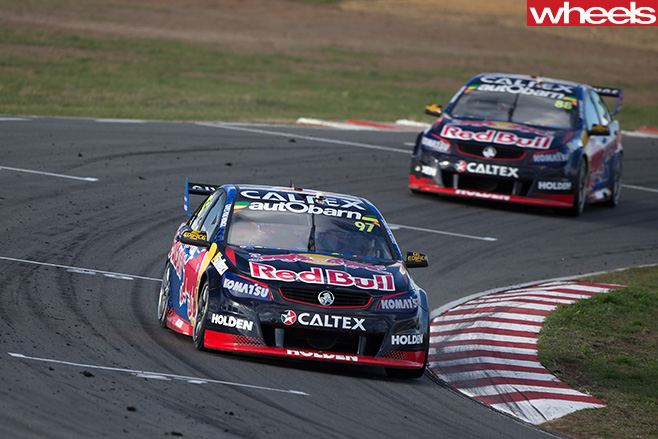
But major wins have been sporadic through the last few seasons as the T8 powerhouse greedily grabbed most of the championships and blue ribbon race wins. Six titles in the past eight years tell the T8 tale.
Inarguably, in a results-driven world, Triple Eight is worthy of its sole official factory status.
Walkinshaw Racing, relegated to receiving a technical and marketing support package offered to all other Holden teams, is putting on a brave face. This despite being left with a couple of out-of-contract drivers who won’t be thrilled by the loss of factory money, and a trailer full of soon-to-be-redundant merchandise.
Owner Ryan Walkinshaw has made the point that his links with Holden are strong and will continue, on track and with the HSV road car operation. But with Holden to source imports from Europe and South Korea, it’s anyone’s guess how many GM products Walkinshaw might have to play with into the future.
The other big news is that as the sole factory team T8 has exclusive rights to develop and build the next-gen Holden Commodore-badged Supercar to debut in the series in 2018.
Quotes attributed to Holden’s long-time motor sports manager Simon McNamara suggesting the smaller teams could simply call (T8 boss) Roland Dane and send him a cheque did have alarm bells ringing among other outfits that prefer to do their own in-house chassis and engine work.
T8’s exclusive Holden works deal will extend to the still-to-be-confirmed engine for 2018, expected to be a turbocharged V6 engine (a marketing match with the Opel Insignia that is to replace the current VF Commodore at the end of 2017).
This raises another fascinating loomingl scenario too…how the hard-bitten V8 tribal nutters might react to a V6 turbo in the next Commodore Supercar. The uproar may match the Eureka Stockade conflict of 1854.
The Lion may be the only stayer, although there is optimism that Nissan will elect to continue its involvement. As yet though it hasn’t indicated whether it’s going or sticking. Ford withdrew officially at the end of last year, and Volvo is out at the end of 2016.
Those crazy Swedes. Volvo has released a teaser video ahead of its attempt to break speed records for trucks later this week.
To accomplish this its built a crazy custom-built semi dubbed ‘The Iron Knight’ powered by a highly modifed version of its D13 turbo diesel engine. In standard form, this produces 373kW/2507Nm however Volvo has boosted this to 1790kW/5996Nm. No, that’s not a typo.
Volvo’s last attempt at setting truck speed records was in 2012 with the bybrid ‘Mean Green’, which managed 153.252km/h over the standing kilometre and 236.577km/h over the flying kilometre, however we suspect The Iron Knight might manage a bit better than that.
Volvo is attempting the record on August 24 and we’ll let you know how it goes.
JULY was a multicultural month in new-car buyer land. It was the first time ever that cars imported from Thailand outnumbered those imported from Australia’s previous long-standing port of choice: Japan.
Thailand is a cheap place for carmakers to build vehicles. And places that have a free trade agreement with the kingdom – such as Australia – can have vehicles delivered without having to pay tariffs.
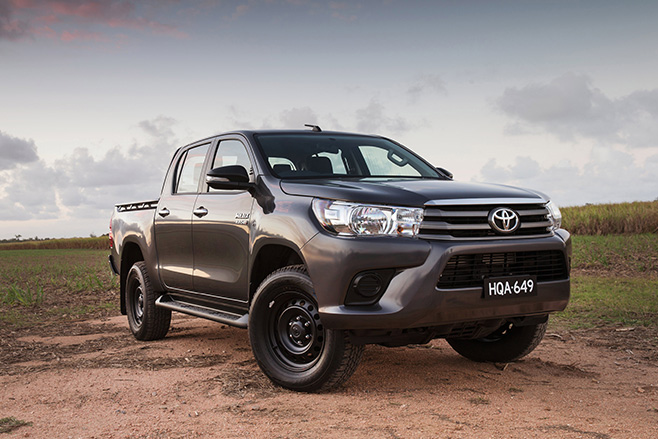
Thai-built vehicles are big business in Australia. To the end of July, we’ve brought in almost 170,000 vehicles that have been made there – or the equivalent of one in four sales.
Most of them are trade utes. Worksite load luggers such as the Toyota HiLux – one of Australia’s best-selling vehicles – the Ford Ranger, Mitsubishi Triton, Holden Colorado, Nissan Navara and Isuzu D-Max all come from there.
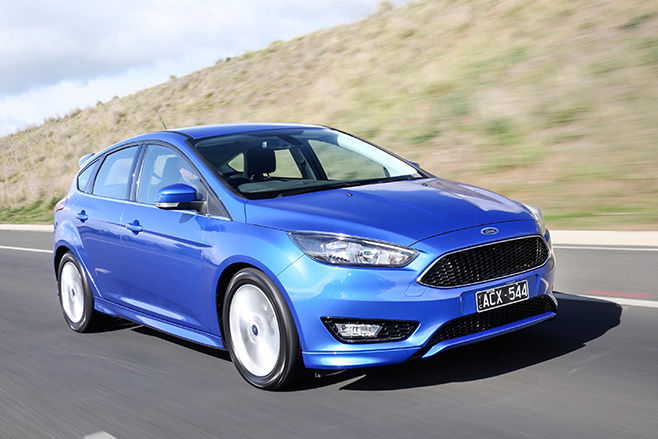
Thailand also does big trade in passenger cars. Names you’ll recognise include the Mazda 2 city car and CX-3 compact SUV, the Honda HR-V compact SUV, CR-X small SUV and the Jazz hatch – and its booted equivalent, the City – all have their origins there.
The Toyota Corolla small sedan – alongside the Japan-built hatch, it is Australia’s reigning best-selling car – is Thai-built, as are the similarly sized Ford Focus and the Nissan Pulsar that will soon sell as a sedan only after the carmaker earlier this year shook up its showroom, killing off several models.
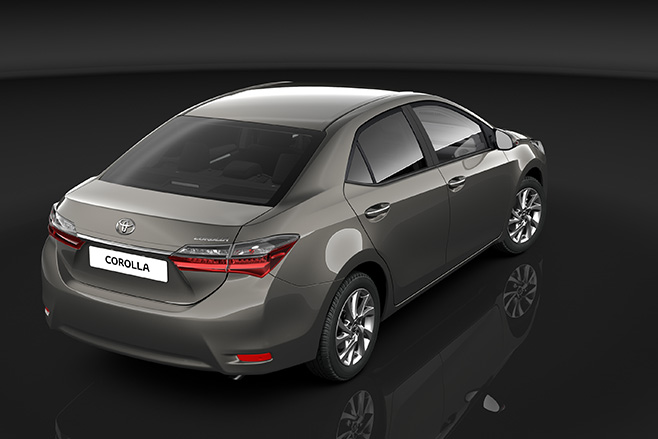
We can go on, with the Ford Fiesta, Honda Accord, Civic and City sedans, the Suzuki Celerio, and the Nissan Altima.
Larger seven-seat SUVs, which often share the trade ute platform built in Thailand, also share their origins. That includes the Ford Everest, Holden Colorado 7, Isuzu MU-X, the Mitsubishi Pajero Sport and the Toyota Fortuner.
November Three is the date for the facelifted Falcons, with bigger six cylinder engines and a horny new GT at the top of the range.
First published in the November 1970 issue of Wheels magazine, Australia’s best car mag since 1953.
lt will probably be called the Shaker and it will be knockout pose-gear. lt will cost big brass, but the rest of the range will see only marginal increases … Special scoop report by ROB LUCK.
THE big news in the 1971 Falcon range is new engines — not new bodies.
Ford has boosted its 188 and 221 engines to 200 and 250 cu in. with appropriate power gains. The V8s stay the same-302 and 351 Cleveland (Falcon GT) and Windsor (Fairlane ZC).
And Bill Bourke’s now-famous GT show-car has actually gone into production as the top-of-the-line fully optioned Falcon GT! (Bourke was Managing Director of Ford Australia – he is now President of Ford Asia, Pacific and South Africa Incorporated).
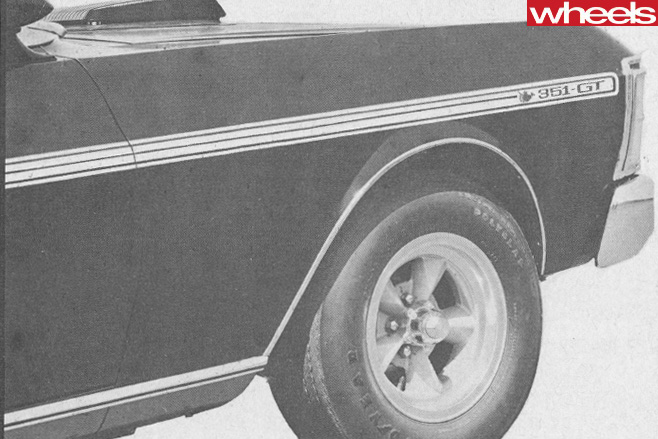
As these photos clearly show, the XY Falcon has a new full-width divided vertical-slat grille, replacing the open-mouth Mustang-type grille that marked the XW. The GT retains the Mustang-type grille.
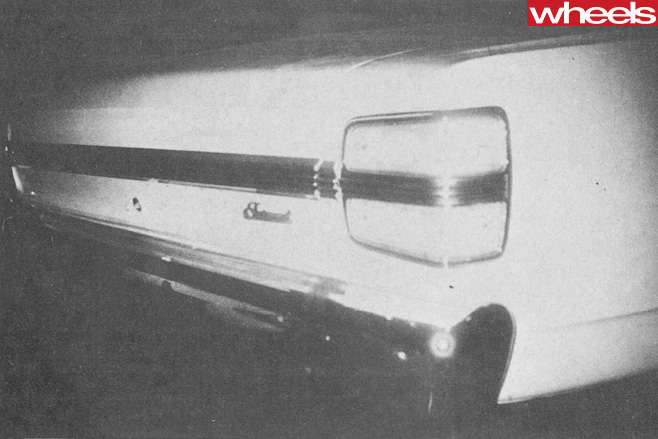
Tail-lamp treatment has been revised from a three-sector to two sector wrap-around assembly with centre chrome strip. On Fairmonts, this strip extends the full width of the rear panel on both sedans and wagons.
Undergear is little-changed, but includes minor revisions to brakes, spring and damper rates and gear ratios.
Trim change is detail only – and chiefly in upholstery.
The engine range has been extended to the new ZC Fairlane line which will be seen in this body shape (detail re-styling) for the last time this year.
Ford now has the biggest-capacity base-line engines of the Big Three manufacturers, although GM is already engaged in a race to catch up. Ford’s new engines are achieved by stroking the engines replaced in the XW range.
Curiously, the GM-H attack will be similar – I believe the capacities are 176 cu in. and 202 cu in. for the sixes — both achieved by stroking the respective 161 (or 138) and 186 mills.
These engines will be applied to the next Holden and Torana ranges, which will also see the Brougham replaced by a new Statesman.
Ford will stick with its current “litre” designations for the engine badgework. The 3.1 litre now becomes the 3.3 litre and the 3.6 litre gets bumped to 4.1 litre.
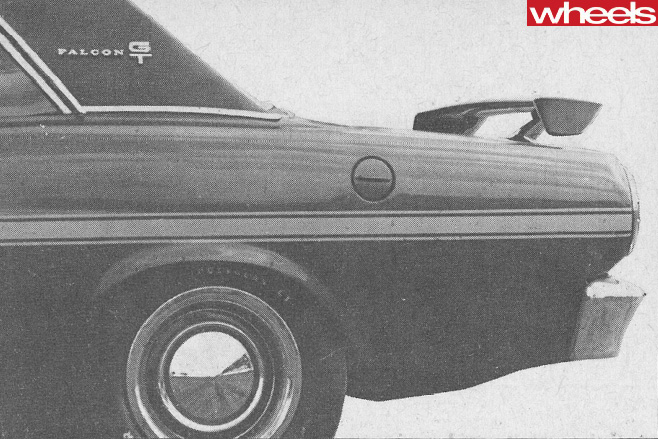
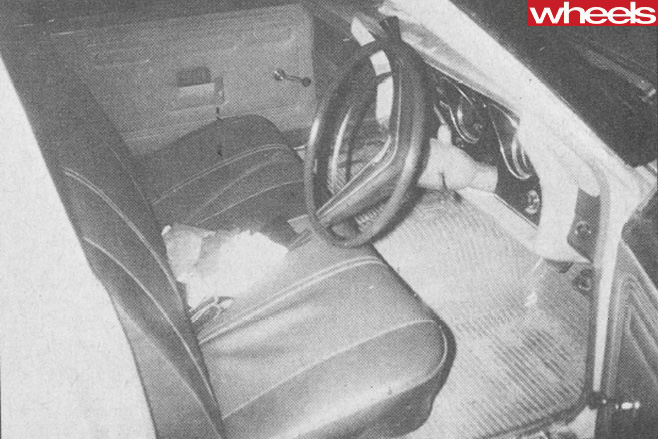
The new Falcon GT special is so far unnamed, but could borrow its performance pack name — Shaker. It uses the same 351 Cleveland engine that has been fitted since the end of the Ford Falcon XT model run, and it will not be modified. This is not a HO-type GT, but a boulevarde special, featuring the Shaker engine scoop pack, standard US-magnesium type alloy wheels, new body striping, bonnet locking pins and engine badgework. The interior is stock Fairmont and a sunroof will be optional – the price is around $4800.
Although the new GT uses many of the Bill Bourke special bits, it avoids the controversial spoiler. This is not even available from options lists. The engine scoop is for real, protruding some 31/2 in. high out of the bonnet, it links up to the carburettor intake for a ram-air induction effect.
Ford is caught in the wedge of a giant model-change program and 1970 has to be the year of the mark time. The Falcon has been discontinued in the United States, and although model lead-time suggests the car couldn’t be replaced for another couple of years, Ford Australia, of course, knew of the impending demise of its American father-car and has been planning the all-new local Ford for nearly three years. Using many proven components from the current series, the al!-Australian designed Falcon will go on the market this time next year.
At the same time, we may see drastic changes in the Fairlane. Last year (1969) was the last year of the current Australian shape on the US market (we’re one year behind) and the current 1970 and 1971 Fairlanes are based on the Ford Torino. These are basically coupes in two and four door versions, and could well represent Ford’s coupe attack on the Australian market (there may never be a Falcon-sized coupe).
Ford is also experimenting with the Maverick, an illogical choice for local coupe production since cost of production for relatively limited volume production could not be spread over a basic sedan range.
However, Fomoco could have something special up its sleeve.
The turbocharged idea was dropped in favor of a completely reliable injection system developed entirely by Ford Australia through its Special Vehicles Department under the direction of AI Turner.
The cars are ready for racing, and will probably have seen their first meeting by the time you read this.
They are also scheduled for a progressive development program which includes the lightweight panelling we suggested in an earlier article. At a cost estimated at $60,000 Ford has already commissioned fibreglass panelling for its HOs and placed an order for a little over 200 sets — just enough to get homologated for Series Production racing.
The panelling envisaged is front guards, doors, bonnet and decklid.
For its 1970-71 range, Ford may be just running on the spot, but next year you can bet it’ll be in full flight.
Meet the Centenario Roadster, the latest ‘money can’t buy’ offering from Lamborghini.
You do need money to buy it of course, and lots of it, what with a price of €2m plus taxes, which equates to around A$3m. However, all 20 examples have long been sold to Lamborghini’s favoured clientele, so unless your order is already in, tough luck.
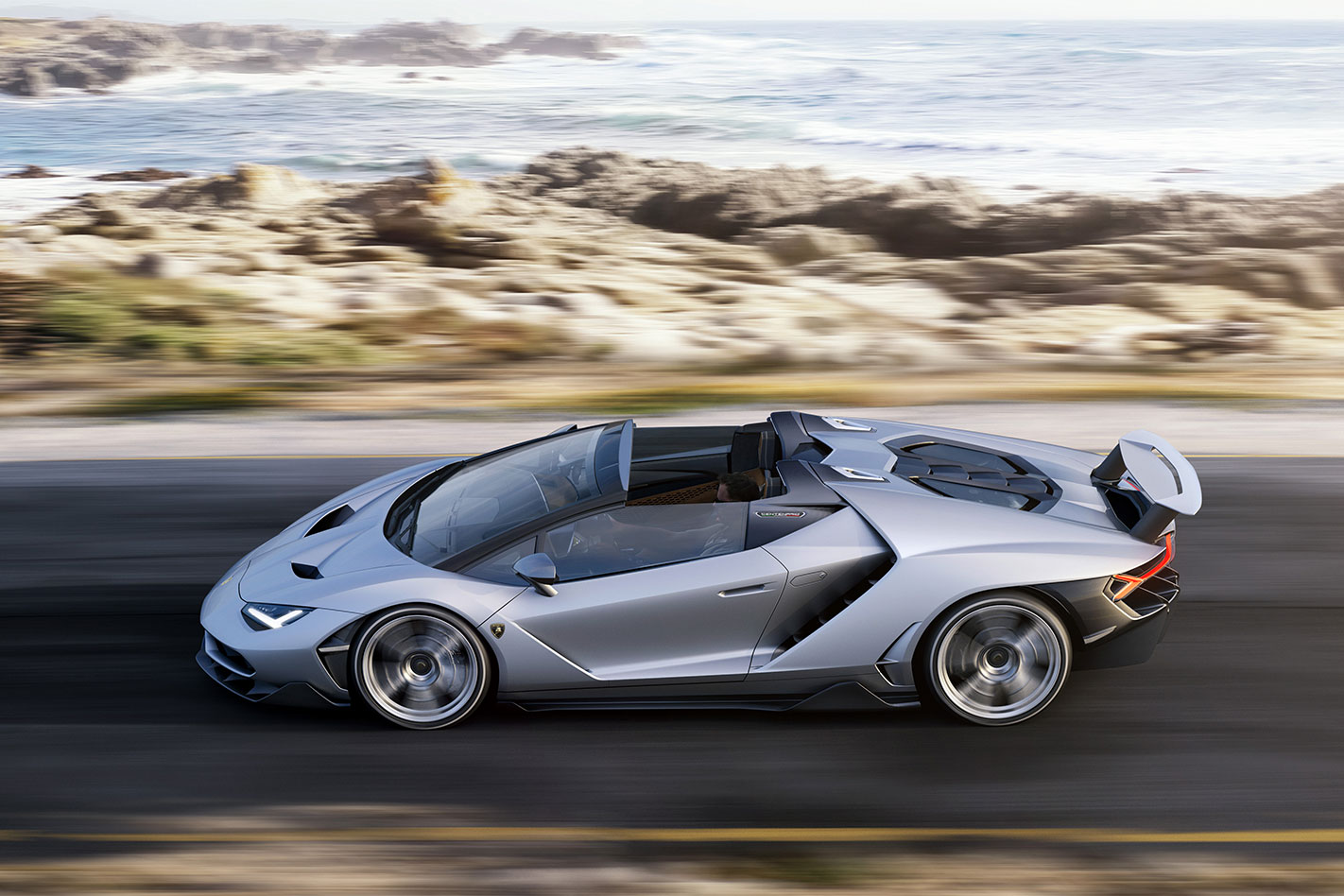
The Centenario is essentially a rebodied Aventador, but includes Lamborghini’s full bag of mechanical tricks as well as a few hints as to what we’re likely to see in future Lamborghinis.
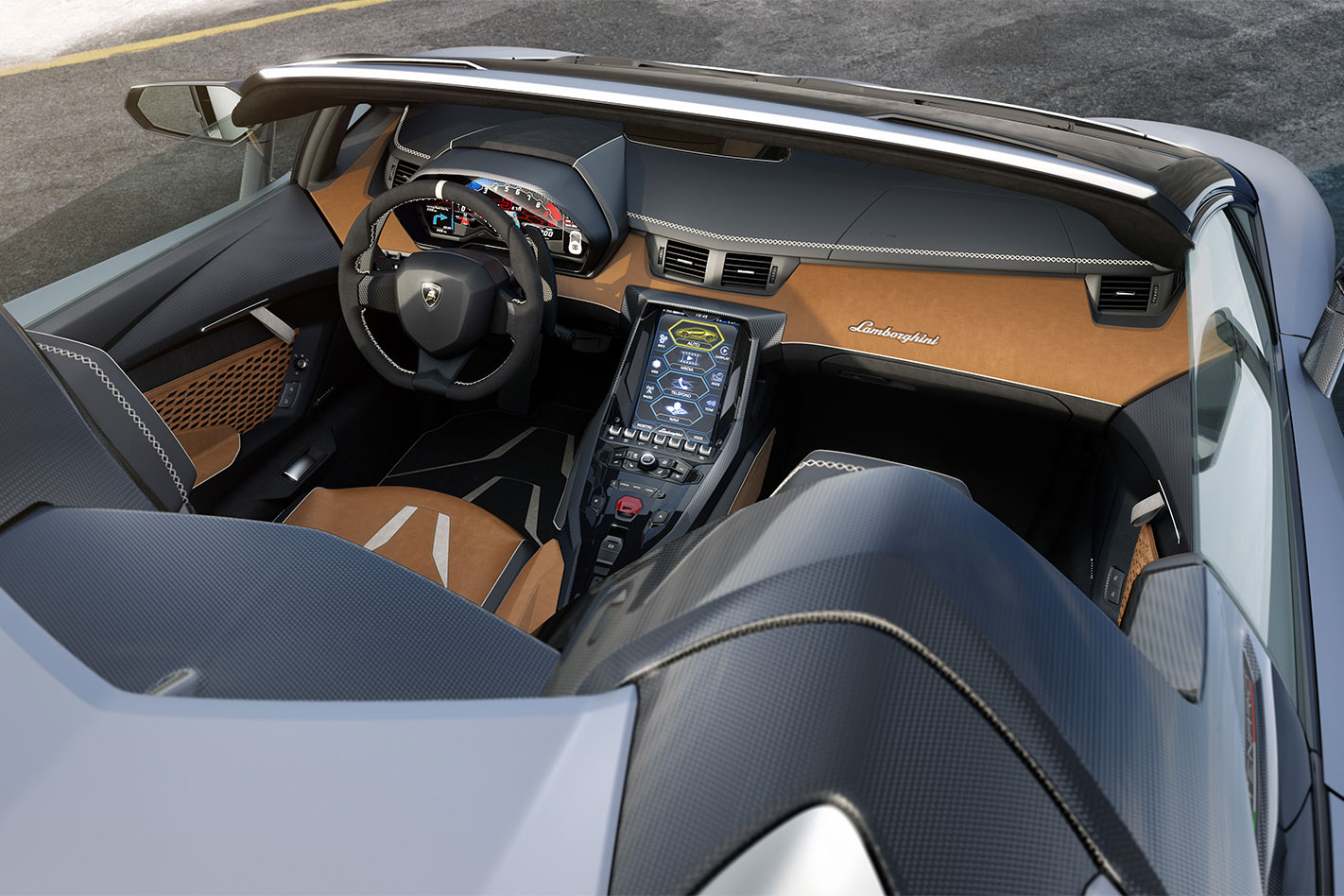
Arguably the most relevant change is the giant touchscreen infotainment system that dominates the centre console, which includes Apple CarPlay, a telemetry system and will make its way into all future Lamborghinis.
Top speed is claimed to be over 350km/h, at which point the Centenario’s other party piece comes into play – active aerodynamics. This includes a McLaren P1-style active rear wing, which can extend up to 150mm and rotate up to 15 degrees.
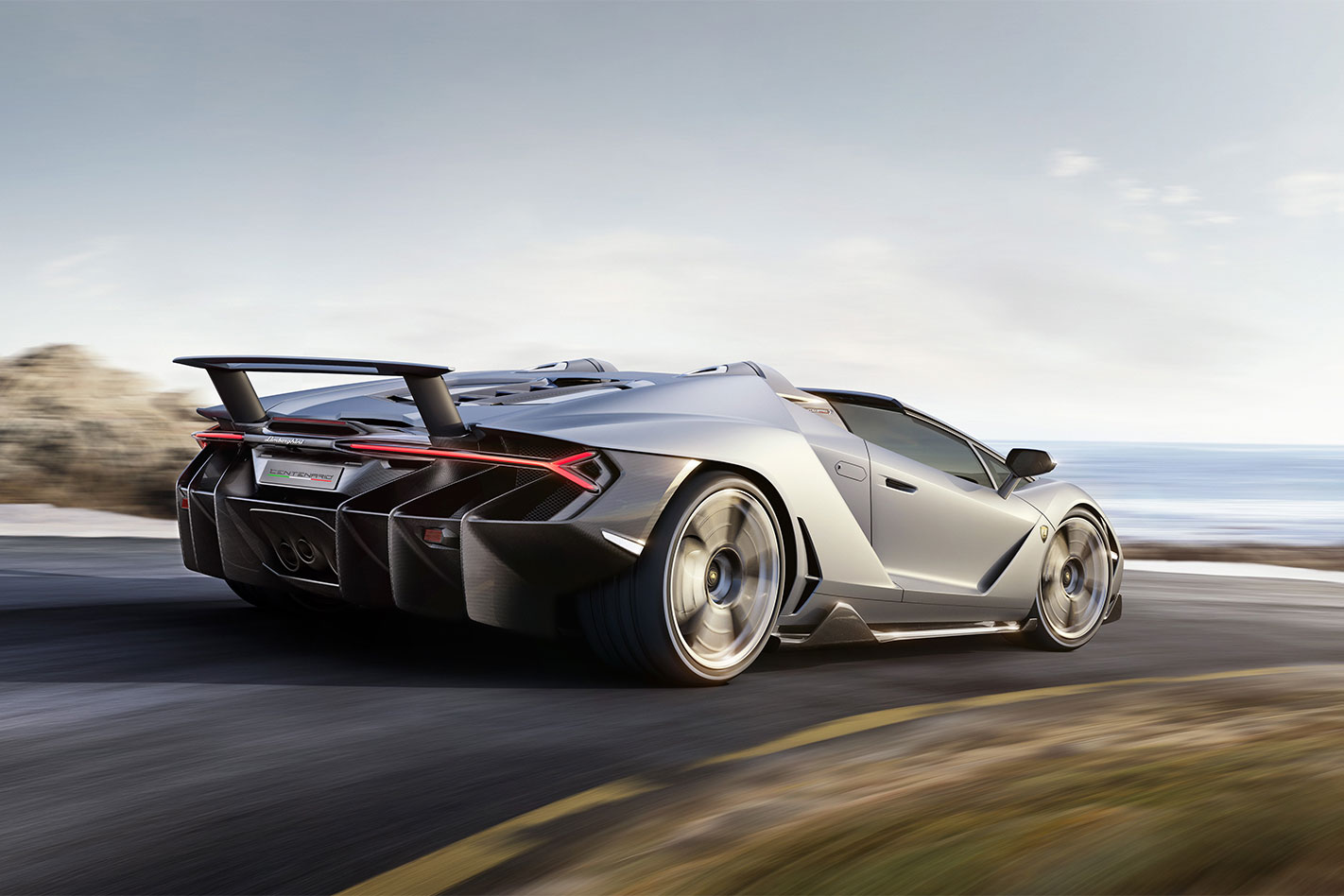
Expect rear-wheel steering and the SV’s 552kW V12 tune to migrate into the regular Aventador when it receives a mid-life update in 2017.
Lamborghini a new colour, Argento Centenario, for the Roadster’s unveiling at Monterey Car Week, however as you’d expect at this price point, any colour or finish is available through Lamborghini’s Ad Personam personalisation program.
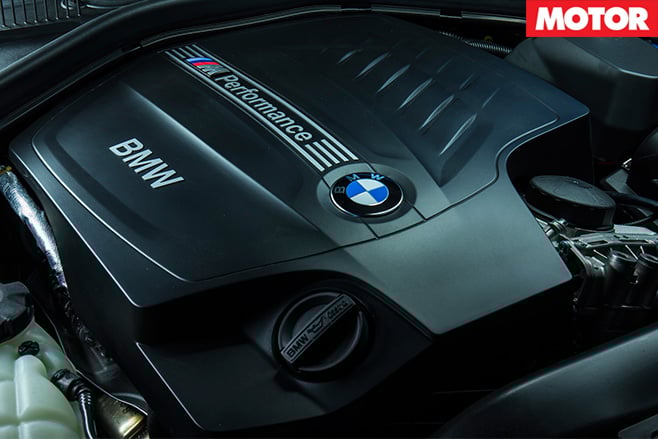
BMW has taken its existing M235i compact coupe and lifted outputs by 10kW and 50Nm, while adding equipment and lowering the price to create its M240i replacement.
Mirroring the M135i to M140i hatchback changeover, the new M240i now produces from its 3.0-litre turbo six-cylinder a fuller 250kW and M2-beating 500Nm to claim a 4.6-second 0-100km/h.
That’s both two-tenths quicker than before and now only three-tenths off the BMW M2, which gets a standard 465Nm (and 500Nm only on overboost).
Kit highlights include adaptive LED headlights, 12-speaker Harman Kardon audio, keyless auto-entry and electrically adjustable front seats with heating – all unavailable on M2 Pure.
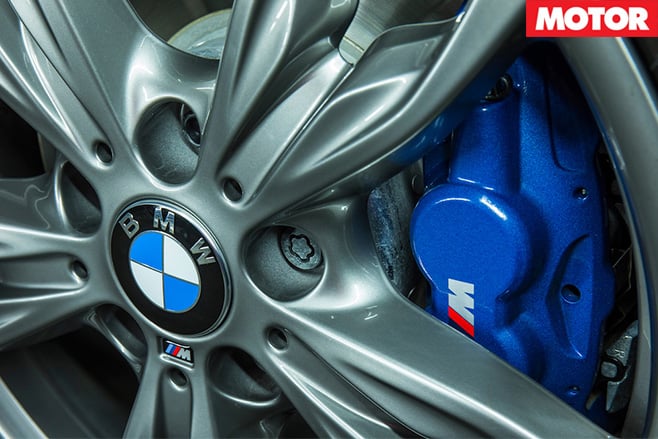
Other 2 Series models cop a power hike, too, including the 228i that becomes the 230i courtesy of a 5kW lift for its 2.0-litre turbocharged four-cylinder, to 185kW and 350Nm.
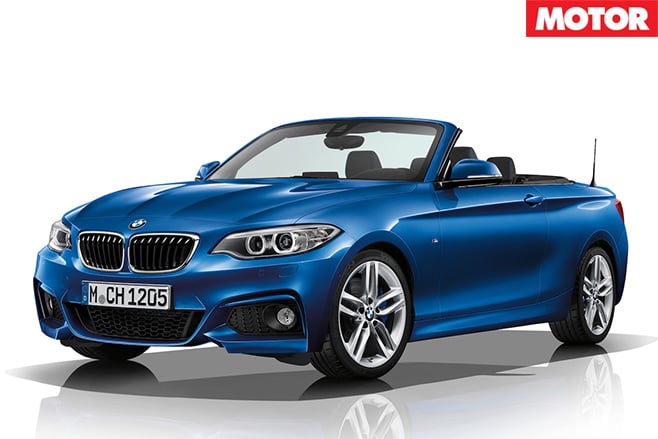
Convertible versions also follow the coupe changeover, with the 230i priced from $71,900 and the M240i from $83,900.
TELL ME ABOUT THIS CAR
The Toyota RAV4 is one of the original cross-over SUVs and provides a good balance between fun and practicality. The RAV4 Cruiser AWD is at the top of the current range and is available with a 2.5-litre four-cylinder petrol or 2.2-litre diesel.
STRENGTHS
- It finally looks good. The RAV4 has been around since the mid-90s and started off with long wheelbase and dune-buggy lookalike short wheelbase versions, which looked good at the time, but didn’t really date well. Subsequent versions went down blandsville, but it received a much needed aesthetic boost with the fourth-generation XA40 model released in 2013. Its sharp looks and contemporary angles received a mid-life facelift for the 2016 model.
- The baby of Toyota’s expansive SUV line-up is pretty roomy now. It’s nimbler than its bigger Toyota Kluger sibling but still roomy for a family of five and a fair bit of luggage.
- The Cruiser comes with plenty of active safety equipment including active cruise control, automatic emergency braking, front parking sensors, blind spot monitor and rear cross traffic alert.
- The interior fitout is Lexus like, with leather accents and an entertainment system centred around a 6.1-inch multi-media screen and in-built satnav with traffic alerts. The power-adjusted, heated leather front seats are nice and firm with terrific back support. The back seats are also comfortable for two adults and offer plenty of leg and headroom. The middle seat would be tight for another adult but is fine for kids.
- At 506 litres the cargo area is reasonably big, though a little smaller than other RAV4 variants because of the full-sized spare tyre under the floor. The rear seats fold completely flat in a 60/40 split to provide a cargo floor space of 1.8 metres – enough for most of us to sleep outstretched. The Cruiser comes with a powered tailgate.
- The RAV4 doesn’t tow as much as most other medium SUVs, though this 2.5-litre petrol version has the highest towing capacity of 1500kg.
- One issue with the interior is some buttons being obscured by a lip that runs across the middle of the dashboard.
- At around $50,000 it’s in esteemed company which might sway your choice of which dotted line to sign on.
At the $50,000 price range it’s up against other top-spec SUVs with similar features and in some cases seven seats, while also nudging prestigious brand territory. Main rivals include the Nissan X-Trail TL 4WD, Mazda CX-5 Akera, Ford Kuga Titanium, Hyundai Santa Fe Highlander and Lexus NX 200t Luxury.
David and Goliath battle it out in Finland.
IN AN era of sanitised race tracks with eons of run-off, and processional racing, Dakar and the WRC are two bastions of a time when motorsport was dangerous, exciting, and fast.
In the WRC you have arguably the most skilled drivers in the world, pushing to the absolute limit with zero margin of error. One centimetre off-line could result in a heap of twisted metal wrapped around a tree. WRC cars are small, based on hatches like the Volkswagen Polo, and pack a serious punch from their 1.6-litre turbo engines.
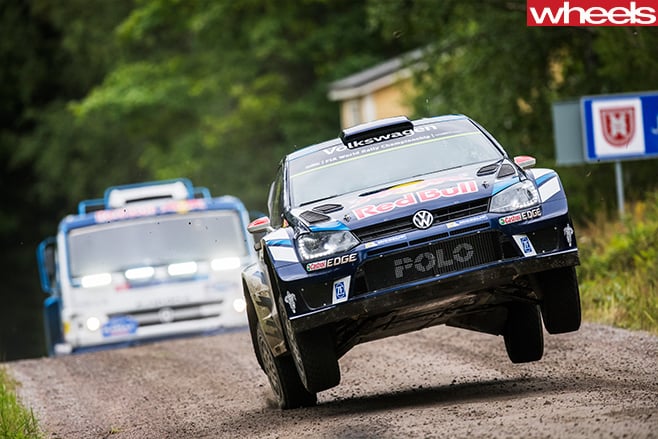
So when these two worlds collide, on the most fearsome stage of the WRC’s fastest rally no less, the action is awe-inspiring.
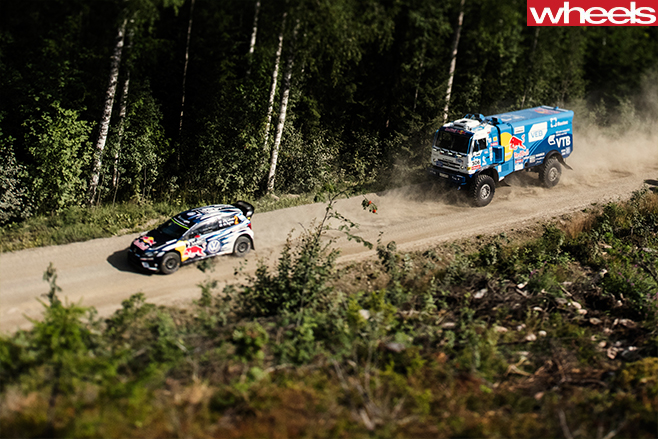
Watch as the towering beast that is the Kamaz hunts down the diminutive Polo through the Finnish forest.
While the site of WRC cars flying through the air is nothing new, watching a 9-tonne truck soar with all four wheels off the deck is incredible.
In the clip, the pair launch themselves over the stages most famous jump (one of countless which line the stage) near an iconic yellow house. The record distance leap off this jump is 57-metres set by Markko Martin in 2003. Phwoar!
Luxury car makers would prefer not to think of any of their vehicles as “volume cars”, yet the mid-sized premium segment is immensely popular.
Famous nameplates here include the Audi A4, BMW 3 Series and Mercedes-Benz C-Class, which frequently outsell cheaper mainstream models of equivalent size.
The 3 Series was once untouchable in the sales race, though the C-Class is now the dominant player. A slightly smaller Mercedes four-door, called the CLA, is also performing well in showrooms.
Here, WhichCar provides a guide to any changes planned or expected for these models during the next 18 months – to help you pick the perfect timing for buying one.
AUDI A4The latest all-new A4 was released only in 2015 so don’t expect any significant activity in terms of updates for the regular model over the next 18 months. However, faster variants are coming.

An S4 sedan and wagon are due in October – powered by a new turbocharged 3.0-litre V6 that puts 260kW of power and 500Nm of torque to the road via all four wheels. The slightly-quicker sedan can reach 100km/h from standstill in 4.7 seconds. Pricing is expected to start in the vicinity of $110,000.
For 2017, the flagship RS4 is also expected to materialise. No official details are available yet, though speculation on the engine suggests a twin-turbo V6. There’s also potential for the RS version of the A4 to adopt an electric compressor, as used in the Audi SQ7, to help eliminate turbo lag.
BMW 3 SERIESThe Munich brand’s signature model received a major update in 2015 that brought significantly revised suspension, new steering, a new modular engine family, and equipment/pricing tweaks.
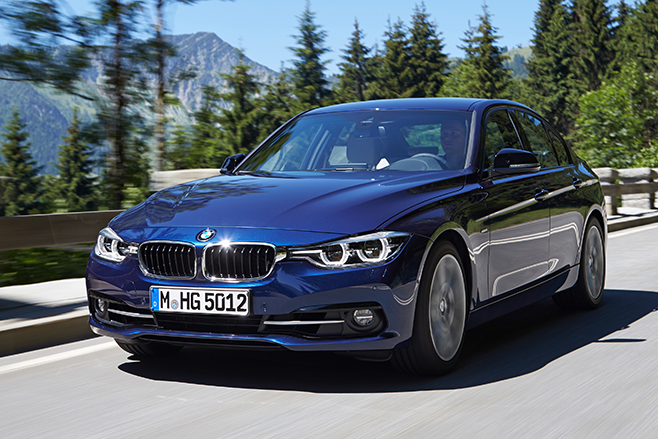
A minor update or further specification adjustments for the current (F30) generation can’t be ruled out for 2017, though BMW is busy developing its all-new (G20) generation for 2018.
The next 3 Series will be aiming to close some gaps to the A4 and C-Class in terms of interior experience and technology, while BMW will no doubt want its sedan to retake its place as the benchmark for dynamics after the crown it had held for decades was lost to the new Jaguar XE.
BMW consistently leads the way on performance and efficiency, so don’t be surprised to see further improvement to fuel consumption figures from its range of three-, four- and six-cylinder engines.
At least two plug-in hybrid 3 Series models are also strongly rumoured, in addition to the 330e plug-in that’s already on the market.
MERCEDES-BENZ C-CLASSBenz’s mid-sizer has been a phenomenal sales success in Australia in recent years, and the latest iteration impressed on its debut in 2014. A spin-off Coupe joined this year and a Cabriolet arrives in November.
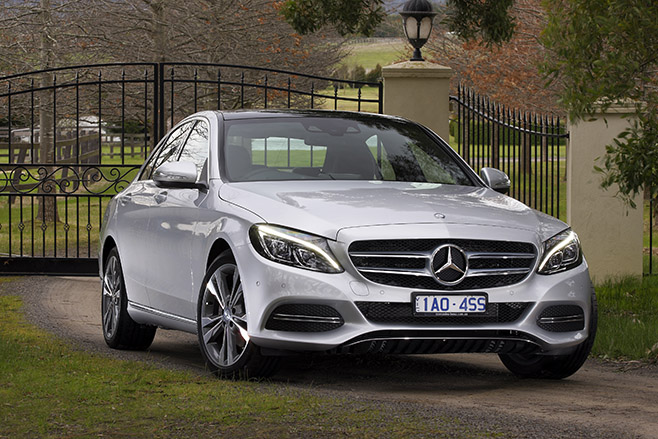
The sedan will receive its first major upgrade in 2017.
While no official information has been provided yet, as would be expected, a number of updates can be anticipated.
The styling will be tweaked, with revised bumpers, headlights and tail-lights all set to be part of the visual changes. C-Class’s already-excellent cabin is sure to receive some form of upgrade as well.
Also likely are some hand-me-downs from the bigger, brand new E-Class. The new 2.0-litre four-cylinder diesel from the E220d is all but guaranteed; possible is the E-Class’s standard twin-screen dash – though as an option if it were to become available.
MERCEDES-BENZ CLATechnically a sedan version of the Mercedes-Benz A-Class hatchback, though officially classed by industry sales records (VFACTS) as a mid-size car.

In August, the CLA will gain a facelift that follows in line with updates made to the A-Class earlier in 2016.
Apart from some minor design alterations, there will be optional LED headlights, revised trim, and a new, slimmer version of the 8.0-inch iPad-style tablet display. Apple CarPlay and Android Auto smartphone integration will also be standard.
Under the bonnet, the CLA45 will benefit from the same upgraded (now 280kW) 2.0-litre turbo four-cylinder that has already made the A45 hatch even madder than before.
Newer is a CLA220d variant that positions itself as a performance diesel with 130kW of power and 380Nm of torque, with optional 4Matic all-wheel drive.
Eight rounds and 17 races into a hard-fought and tight Supercars Championship – with six hectic weekends to come – it’s very clear that Triple Eight’s expansion to three cars has not impacted negatively in any obvious ways.
In the five-week winter break between the Queensland Raceway and Sydney Motorsport Park rounds, the Triple Eight drivers Jamie Whincup (1821 points), Shane van Gisbergen (1711) and Craig Lowndes (1671) sit first, second and fourth in the championships, an otherwise neat sequence broken only by defending champ Mark Winterbottom in third with 1701. It’s tight at the top.
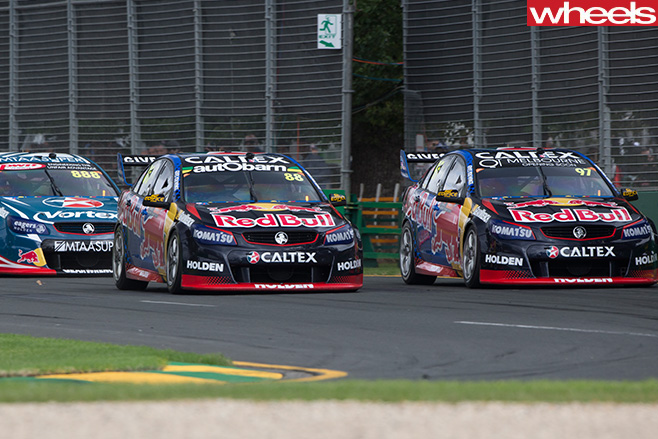
Some inconsistency in the early races was quickly swept aside and the T8 driving triumvirate has been the almost unstoppable force of the past three rounds, winning five of the six races.
The highlight was that the Saturday race at Ipswich brought a T8 podium lockout. That’s frightening dominance.
But whilst he is the driver against which all others have been judged in recent seasons, Whincup says there’s still room for improvement – certainly with car 88.
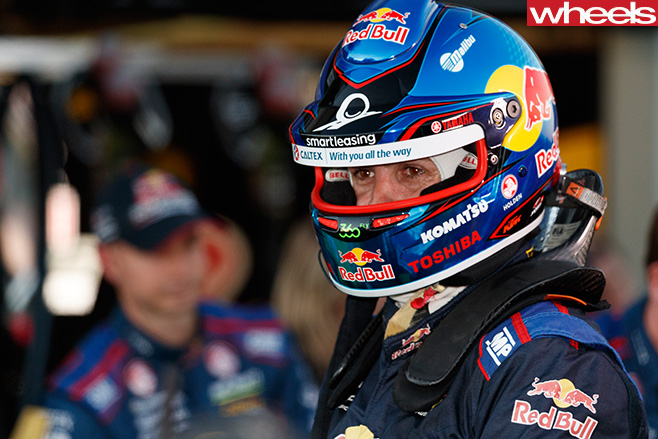
But he has certainly fallen short of dominating in the manner we’ve seen in other title campaigns.
His Red Bull Racing Australia colleague and T8 newbie van Gisbergen has emerged as his nearest rival, the flamboyant Kiwi claiming four wins so far – at Symmons, Darwin, Townsville and Ipswich. Obviously, his heavy programme of racing in other categories including sports cars in Europe has honed his driving rather than distracted him.
Lowndes has scored twice: that stunner in Perth and the other in Sunday’s race at Queensland Raceway.
Winterbottom hasn’t been the powerhouse we saw in 2015, but has been hanging in tenaciously, winning in Perth and often converting poor qualifying into reasonable results. He’ll continue to be a thorn in T8’s saddle blankets.
Other wins have come from HRT’s James Courtney in race two in Adelaide, LDR’s Nick Percat in race three in Adelaide, Will Davison’s fortuitous steal on Sunday at Symmons, Scott McLaughlin’s sizzling pair for Volvo at Phillip Island, Tim Slade’s breakthrough at Winton where he won both races for BJR, and Michael Caruso’s race 12 triumph in Darwin for Nissan.
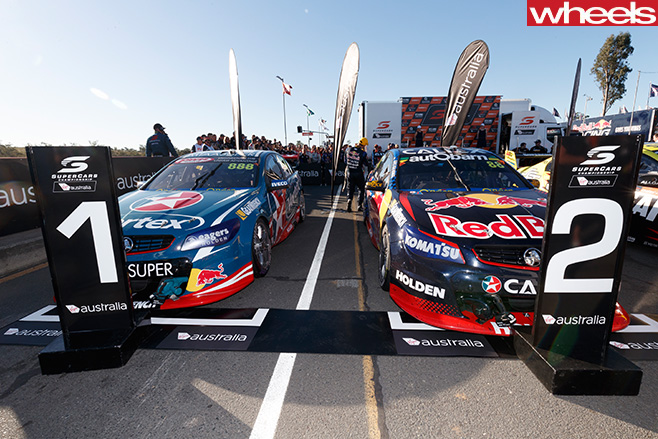
With van Gisbergen joining the Red Bull squad, Wheels asked Whincup if this season feels any differently in the way of heightened pressure, “No, not at all. The dynamic hasn’t changed. It felt like a three-car team last year with Shane’s car up the road at [customer team] Tekno. It’s disrespectful to say that Shane and Tekno weren’t competitive last year.
“There has been no change in the intensity.
“The big one this year is that everyone [in the media] is trying to suggest that Shane and I are fierce rivals, and suggesting it’s getting to us. This is far from the case. We’re all working together to ensure T8 wins the championship. We’re certainly not hiding anything from each other. Lowndsey might have a different paint scheme and sponsor but is still a T8 team-mate and still very much in the championship mix. ”
Whincup agrees that each of the three T8 drivers is fiercely competitive and more than keen to come out on top of their often torrid intra-team battles.
But he refutes any suggestion that the team atmosphere is anything but co-operative and civil, and the rivalry never remotely approaches the bitterness some have painted. It’s competitive, sure, but a million miles from the craziness between Lewis Hamilton and Nico Rosberg at Mercedes F1.
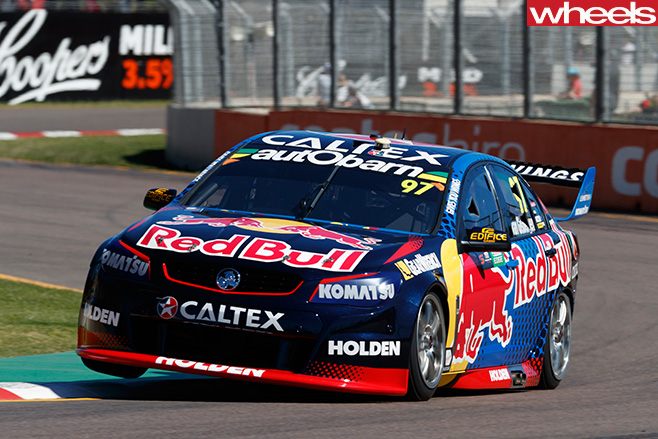
Whincup has the two wins to SVG’s four, but the six-times champ still has his nose in front in the points by dint of consistency.
But he suggests he is short of pure car pace. “Yes, absolutely, we’re lacking car pace. But, to explain, my car is physically the same as Shane’s and Craig’s.
“What I’m saying is we are not performing at a level we’re capable of, and I know I’ve done poorly communicating with my engineers. I’m more disappointed with myself than anyone else.
“I know I’m a tough critic. I’m with the best team with three number one mechanics on my car, a better line-up than in previous years.
“My core job is to drive as fast and as hard as I can, and I feel I’ve done that well. Communicating the right info with my engineers is what I haven’t managed as effectively.”
So the mid-year report card might read…?
“Overall…fair job with room for improvement,” suggests Whincup.
“I wouldn’t be leading the championship if I had done a bad job.”
