TELL ME ABOUT THIS CAR
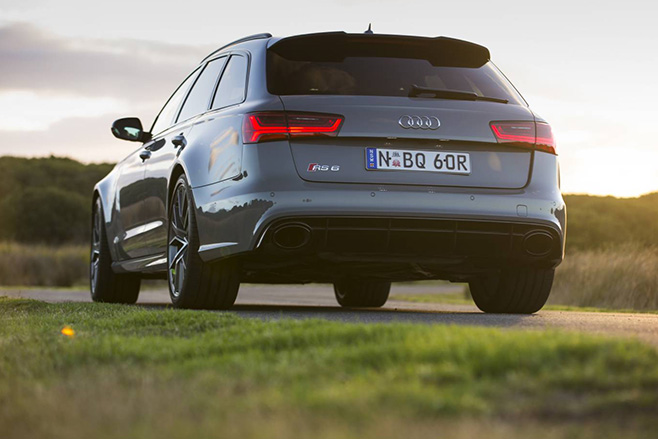
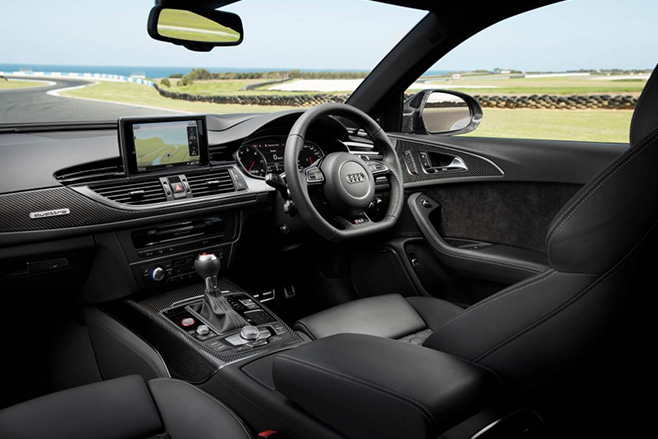
It’s the mid-cycle update of one of the world’s fastest wagons that unleashes even more power, torque and speed from the twin-turbocharged 4.0 V8. Audi RS 6 Avant Performance combines vast load carrying ability and daily practicality with near-supercar-rivalling performance.
STRENGTHS
- Stunning, epic performance: even more so than the already stellar Audi RS 6 Avant. Audi claims a reduction of 0.2 sec for 0-100km/h, bringing it down to a brutal 3.7sec.
- The engine responds with even more eagerness and aggressiveness than in the ‘regular’ previous RS 6, meaning ferocious acceleration and top-end firepower for keen drivers, along with a belching, burbling soundtrack
- Additional interior styling elements and equipment make the cabin even more stylish and desirable, bringing many bits that were optional on the regular RS 6.
- Despite the seemingly huge price, this Performance variant actually represents reasonable value when you consider the old RS Design package (many elements of which are incorporated here) was $13,900. It means buyers get the additional 33kW/50Nm and a crackling exhaust for about $2000.
- Quattro drivetrain means all four wheels receive optimum allocations of the engine’s vast outputs, meaning massive traction and no wasteful wheelspin. Huge performance remains accessible even on wet or slippery roads.
WEAKNESSESS
- It’s still a large, heavy vehicle, so it’s at its best in open, sweeping country. You’ll feel the mass when pushing the RS 6 hard in tight traffic.
- The ‘Performance’ suffix suggests full inclusion of everything needed for a complete ultra-high-performance vehicle, but this is not the case. For maximum spec, buyers still need to add expensive carbon-ceramic brakes and even the firmer dynamic suspension package.
Logical rivals would be wagon variants of the BMW M5 and Mercedes-Benz AMG E63, however neither of these are offered in Australia at this time. So in terms of vast engine outputs with load-carrying ability, you’re left looking at the dynamically inferior SUV pair from BMW, the X5 M or X6 M. Porsche’s all-new Panamera Turbo arrives early next year, offering similar levels of firepower as the RS 6, but without the same huge load space or ease of access.
A pair of British Bobbies (that’s what they call their coppers, apparently) have found themselves on the wrong side of the law after going for a blast in a wrongfully impounded Lamborghini.
It is the stuff of urban legends: Police officers impound a shiny, new piece of Italian exotica from a driver they believe has fallen foul of the law, and then take it on a high-speed joyride.
But this time it isn’t a myth. That exact scenario has played out in the UK after a pair of rozzers treated themselves to a speed limit-shattering blast in a Lamborghini Huracan – all after wrongfully impounding the supercar.
The story, first published in The Telegraph in June, alleges the officers pulled over the driver of the $428,000 Lamborghini, owned by rental company City Supercars, after their police computer showed the car as being uninsured.
It goes on, saying the rental company’s owner, Erwyn Mackee, spoke to the officers via phone, telling them the insurance had been recently renewed and the details had probably not yet updated on the database.
He even emailed documents and an invoice supporting his claims to police. However, this was dismissed, and the car –due at a wedding the next day – was impounded.
The officers then decided to have some fun in the car, taking it on a high-speed joyride through London.
Little did they know, the car had an on-board tracker recording their shenanigans. It clocked the officers doing 63mph (101km/h) on a road restricted to 30mph (48km/h). The officers were also pinged at 53mph (85km/h), and 47mph (75km/h) in similar speed-limit zones.
Mackee was swift to call out the officers, posting proof of the joyride on Twitter.
“Your officers unlawfully impounded our Lamborghini tonight and went for joy ride at over double speed limit,” he tweeted, with a picture of the car’s data log.
Thankfully, the higher-ups took the claims seriously, and the offending officers were disciplined this week.
“After becoming aware of the car owner’s concerns, an internal investigation was conducted,” the Met Police said in a statement.
“The police officer who drove the car was given three penalty points on his police driving record. A second officer was subject to management action.
“We are in the process of reimbursing the owner of the car the statutory £150 removal fee.”
We aren’t going to get into whether that is reasonable punishment for taking someone’s property for a joyride after unlawfully impounding it, but Mackee, who is also a lawyer, was pleased with the outcome.
The rental firm owner said the situation was resolved “amicably” and the Metropolitan Police were “very embarrassed and sorry that it happened because it makes them look so bad.”
However, he wasn’t so kind when talking about the two cops which impounded the Italian supercar.
“The officer was just being unreasonable and out of hand on the phone to me, and I was just trying to explain the facts calmly,” Mackee said.
“He was just off his head, completely bonkers – it was very frustrating.
“All the other officers I dealt with throughout the process were very reasonable and could understand basic logic.
“As an officer who has the power to do lots of things, the officer must have reason and ability and common sense and intuition and be able to listen to arguments and respond accordingly. If he doesn’t have those qualities he shouldn’t be an officer.”
The whole process is confirmation of fears held by some owners of high-end cars, who are anxious they will be unfairly targeted by police.
So remember kids, if your supercar is impounded by the police, it pays to have a tracker in your car. After all, who will police the police?
The cat’s out of the bag now. Thanks to US website Jalopnik, the lid has been lifted on McLaren’s top-secret MSO HS hypercar – the ultimate evolution of McLaren’s Super Series range (which until now has been headed by the McLaren 675LT) and what promises to be one of the fastest McLaren road cars ever.
Initially leaked via a handful of Instagram posts, the MSO HS – the HS standing for High Sport, the MSO indicating it’s a product of McLaren Special Operations – is a low-volume special that bridges the gap between the road-going 650S and 675LT and the race-winning 650S GT3 race car.
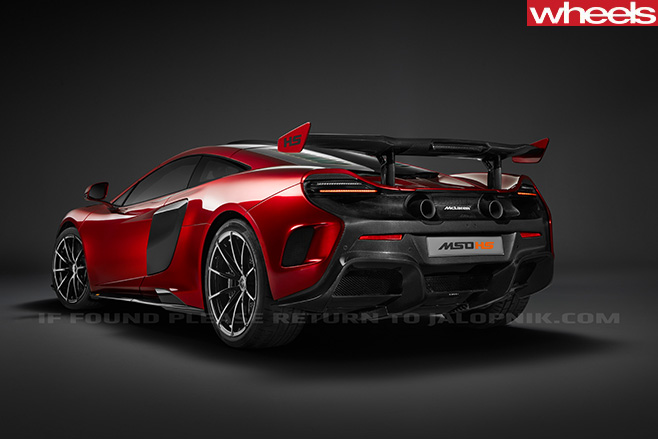
Though the bodywork is similar, MSO has cleaved roughly 40kg of mass from the 675LT’s frame to give the HS a power-to-weight ratio of 1 kilowatt per 2.55 kilograms. To put that into context, a Ferrari F12 tdf has a power-to-weight of 1kW per 2.64kg.
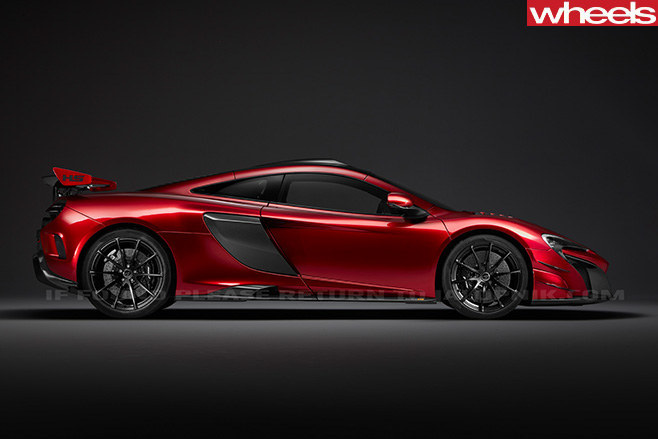
Thinner glass helps shed more kilos, as do a set of ultra-lightweight wheels and motorsport-grade carbon ceramic brakes.
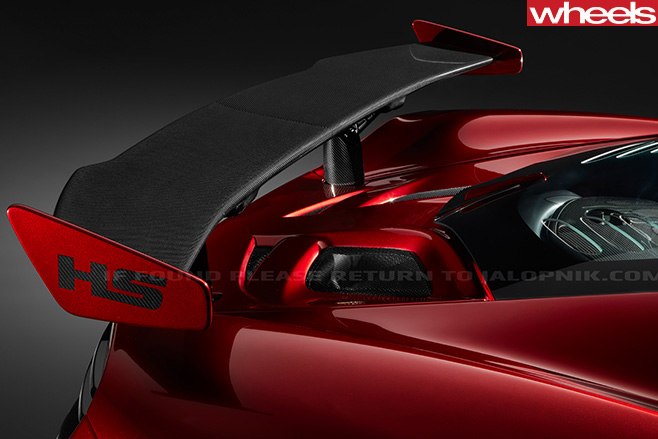
The MSO HS also features the same integrated datalogging and camera system that’s offered on the 675LT. With a camera in the front and rear bumpers, plus a forward-facing in-cabin cam, MSO HS owners won’t need to festoon their cars with GoPros at their next track meet.
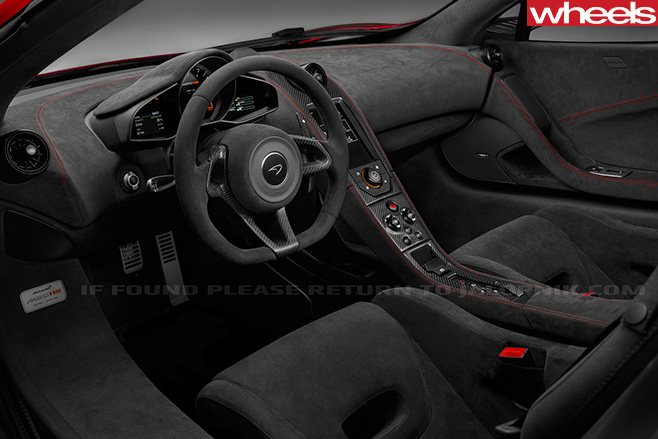
Only 25 will be built, and all are reportedly accounted for. Why 25? The HS was originally commissioned by just one passionate (and presumably very wealthy) McLaren customer, but the engineering work involved in creating it would have lost McLaren money had the production run been confined to a single example.
Freelance cab drivers of the world are on to a good thing – what job could be better than driving around your city, listening to people’s whacky stories, and getting paid to do it… well, except for being a motoring journalist.
But what would be the perfect car to get around in if you were taking up the job as a casual chauffeur?
First, it would have to meet the criteria, starting with the four wheel rule a necessity – this isn’t Foodora or Deliveroo!
Uber, for example, has a list of criteria all drivers and vehicles have to meet before they’re able to start working.
Drivers must be at least 21 years of age, and have a criminal and driver history checks. Cars need to be less than nine years, in good condition and have four doors (sorry guys, that Mazda MX-5 isn’t going to cut it). You also have to have the car inspected prior to getting an Uber accreditation, and then have it checked at least once a year.
No Taxi-license is required, which is obviously why the company is so popular, but also the cause of plenty of controversy over the last few years.
So sticking to Uber’s criteria, we sorted through the caryards to find Australia’s best freelance-cabbie cars.
IT’S AN INVESTMENT
If you were buying a business, you’d want to find a place you loved that didn’t cost a fortune to buy or rent. Given in this case your car is your office, it’d need to be a car that doesn’t involve major costs to buy or run.
On the flipside, though, you could always use this job as a chance to make some extra pocket money to counterbalance the budget-blowout on your dream car. We’re all in for this one.
- Suzuki Celerio – 4.7L/100km, $12,990
- Nissan Micra ST – 5.9L/100km, $13,490
- Mitsubishi Mirage ES – 4.6L/100km, $14,250
- Hyundai Accent Active – 5.7L/100km, $14,990
If you’re going to be driving people around all day, using tank after tank of fuel, you want something fuel efficient, right? Sure, you’ll be able to claim the fuel use on tax, but the less you have to spend, the more profit you get to make. Pure electric would be good, but way too inconvenient, so plug-in hybrids or diesel cars would take the gold here.
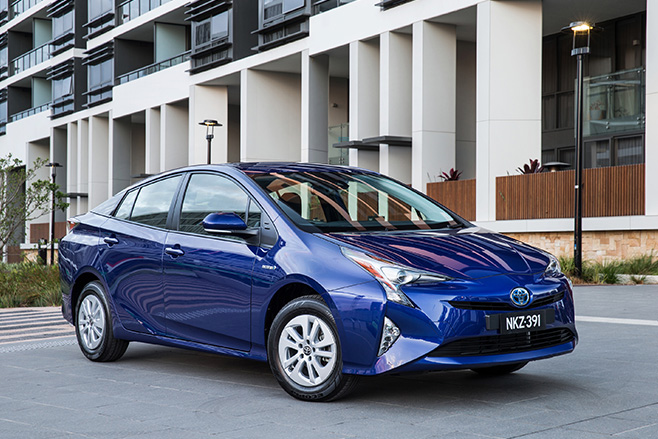
- Toyota Prius Hybrid – 3.4L/100km, $34,990
- Toyota Corolla Hybrid – 4.1L/100km, $26,990
- Audi A3 Sportback 1.6 TDI – 3.9L/100km, $37,800
- Peugeot 308 GT, diesel – 4L/100km, $42,990
The more people your car can fit, the more chance you’ll have to pick up big groups and reach a pool of business your colleagues cannot.
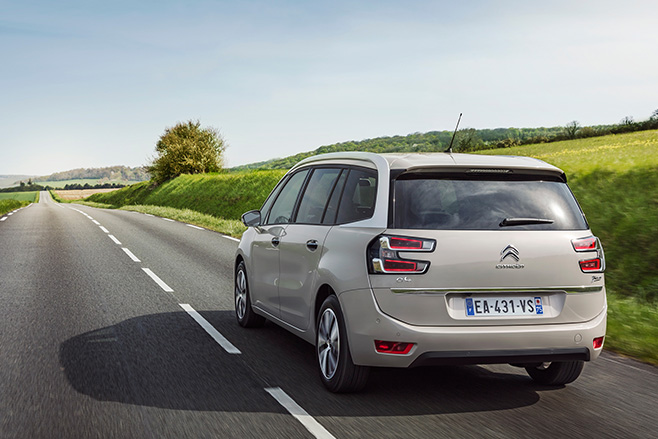
Your kids are at school or playing weekend sport and you’ve got a few hours to kill – that big family car could start making you money. On Saturday night while the family are home getting ready for board games and smores, you’ve just scored yourself a few hours’ work driving tipsy groups from pre-drinks to bars.
- Citroen Grand C4 Picasso – 4.5L/100km, $47,490
- Hyundai Santa FE Active CRDi – 6.3L/100km, $42,350
- KIA Carnival S – 7.7L/100km, $43,990
- Toyota Fortuner GXL – 7.8L/100km, $47,990
- Mitsubishi Outlander PHEV Hybrid – 1.9L/100km, $47,490
But most importantly, if you’re becoming a driver because you love to drive, then you may as well do it in a car you love. Forget the fuel consumption and make performance a priority. As the Confucius saying goes, “Choose a job you love, and you will never have to work a day in your life.” Cheers to that.
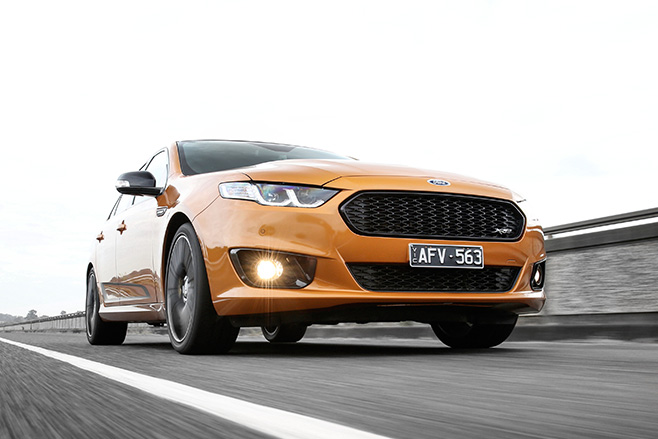
- Holden Commodore SS-V Redline – 11.8L/100km, $54,490
- Ford Falcon XR8 Sprint – 14L/100km, $59,990
- Ford Focus RS – 8.1L/100km, $50,990
- BMW 220d Sport Line – 4.4L/100km, $50,900
- Renault Clio RS Sport – 6.3L/100km, $35,000
TELL ME ABOUT THIS CAR
The Nissan X-Trail ST 4WD Auto five seater, tested here, comes with CVT only. It’s priced at $33,980 (not including on roads). Fuel consumption is a reported 8.3L/100km. This model, launched in 2014, is far more stylish and sophisticated than its boxy predecessors. It has the makings of the ideal cross-over: equally comfortable at both the school pick-up and a weekend away in the snow.
STRENGTHS
• Talk about bootylicious. The X-Trail’s Divide-N-Hide configurable cargo system – available in every model bar the seven-seater – is pure genius. The boot floor lifts up and splits in two to reveal two separate, hidden compartments – perfect for storing wet ski gear/ sandy towels/mouldy wetsuits. One of the false floor panels can be raised to create a second shelf ideal for luggage or weekly shopping. This model’s rear storage area is an impressive 550L rising to 1520L with the second row seats folded down.
• In keeping with Nissan’s off-road roots, the X-Trail 4WD models allow the driver to select either 2- or 4WD – refreshing in an era of electronic robotic nannies that threaten to remove both choice and control for drivers.
• The X-Trail ST 4WD is spacious. It has a big cabin and comfortably seats five adults with heaps of leg room in the front and back.
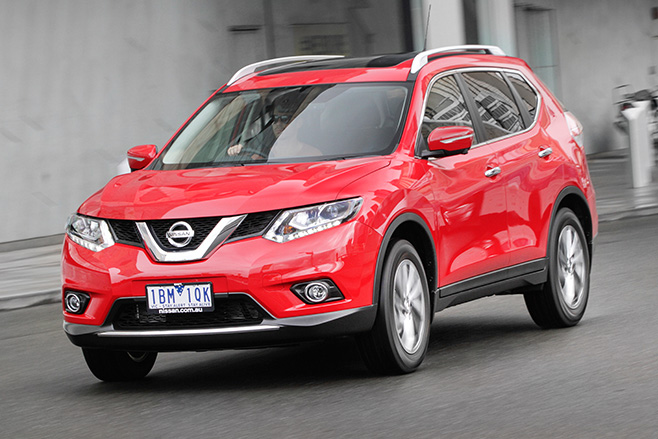
• All models come with rear air vents which are important on long family trips.
• The reversing camera image and warning lights are clear, making parallel parking less traumatic on the school run.
• This model looks less boxy and rugged than its pre-2014 predecessors. It’s not quite what you’d call sleek, but the latest X-Trail has moved well beyond its utilitarian roots.
• At $33,980 it’s good value for a mid-size crossover.
WEAKNESSES
• The X-Trail ST 4WD is powered by a 2.5-litre petrol engine that generates 126kW of power combined with a relatively anaemic 226Nm of torque. It’s a naturally aspirated donk crying out for turbocharging. The X-Trail suffers from slow acceleration in city driving. This medium-sized SUV also struggles up hills, and is frequently overtaken by frustrated drivers on the inside lane.• Fuel consumption is a reported 8.3L/100km. Our test was closer to 9.3L/100km over 100km of mostly urban driving. If you want a less thirsty option go for one of the X-Trail’s fuel efficient diesel models which consume just 5.3L/100km on the official test.• While the X-Trail gets a gold medal in the boot department, it bombs out when it comes to interior storage. While the bin between the front seats is not as impractical or narrow as that of smaller sibling Qashqai, it’s too far back and insufficiently deep to hold anything of worth. The side door bottle holders are also little more than perfunctory.
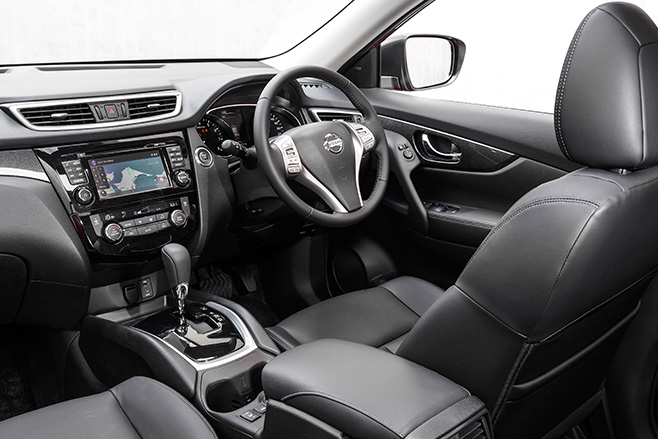
• Rear passengers may be blessed with seat back pockets, but there is no central storage area for little tykes to deposit their toys. While the middle seat folds forward to create an armrest with drink holders, this converts the practical five-seat layout into just four pews.
• Urban warriors will find the X-Trail’s suspension a tad disappointing. When confronted by speed humps, the SUV tends to amplify rather than absorb tarmac hurdles.• Infotainment is delivered via a five-inch LCD display with a basic CD player, MP3 capability, AM/FM Radio, and Aux/USB capabilities. My biggest gripe, however, is the confusing and cumbersome proprietary app-driven NissanConnect system. It makes connectivity a real chore.• The cloth trim, standard on all base models, absorbs all manner of nasty kiddie stains, smart buyers should opt for leather trim in the ST-L or Ti 4WD models.
RIVALS TO CONSIDER
The popular Mazda CX-5. Toyota’s RAV4. The Ford Kuga with its punchy 178kW 2.0-litre turbo petrol engine is also worth a look.
Click here to read the full review of the Nissan X-Trail range.
Ford’s new XR Falcon has stolen a march on the opposition in the biggest possible way; we could be looking at the most influential new passenger car in Australia for years.
First published in the November 1966 issue of Wheels magazine, Australia’s best car mag since 1953.
THE new XR Falcon is undoubtedly one of the most important single steps ever in Australian automotive design. It is a huge pace forward, a dramatic new turn in our car development which puts us up there with the big ones in the world. The new model range is exciting, stimulating and different. For Australia it spells the start of a new size of car, and is the first car with which the V8 engine is available cheaply. If we’re any judge, Ford will soon be selling about 35 percent of Falcons with the V8 option.
The Ford Falcon XR, both in styling and engineering, is the product of all-Australian thinking for Australia’s unique problems. Its designers have tackled with resourcefulness and imagination the task of producing a car that out-thinks the Holden. They have come up with a beautiful mixture of bright new thought, advanced engineering, a wide option list and acceptable conventionality. It comes in the greatest variety of different forms of any Australian car so far and introduces some entirely new ideas to family motoring.
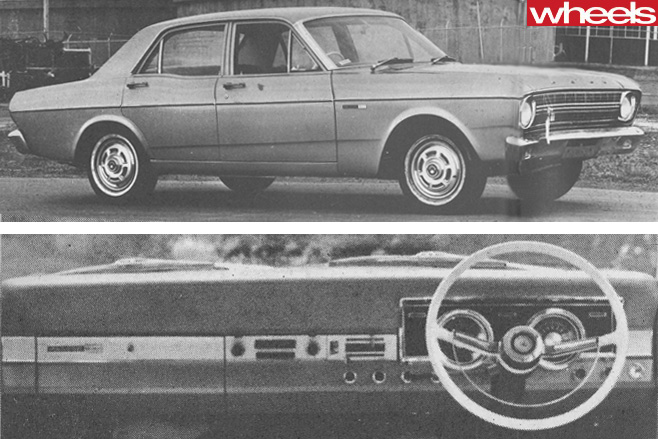
• All-new styling; with touches of Mustang and Zephyr.
• Three engine options, including new 2S9 cu in. V8.
• Three transmissions – one manual (optional all-synchromesh) and single and dual range automatics.
• Revised ride control by adjusted spring/damper rates.
• Bigger standard drum brakes, optional discs for all models, with optional servo assistance.
• Power steering on Fairmont models.
• Increased length, width, wheelbase, track, interior and boot room.
• Extended torque-box chassis design.
• Five-stud 14-inch wheels with low-profile tyres. Radial ply option.
• Decreased turning circle.
• Reduced driving effort through ·seating, steering, braking improvements.
• Bigger fuel tank (now 16.4 gallons) giving long cruising range.
• All-new interior trims and seating.
• Huge new option list (stereo tape is top of the list).
At least the first thing Australians will notice about the new Falcons is the very attractive styling. It is strongly similar to the American Falcon but actually features a better balanced line, using the Ford Mustang‘s Coke-bottle hip but abolishing the rear bias. The local Ford design engineers have achieved this simply and effectively in two steps: they increased the cabin size and extended the boot.
But there are important style changes in other respects. Chrome is kept to a minimum, and instead thin-line sheet metal mouldings are featured, although they are less pronounced than on the XP. The body mouldings actually bear a striking resemblance to those of the Galaxie and the whole formation of sheet metal on the car is done with an eye to strength and rigidity.
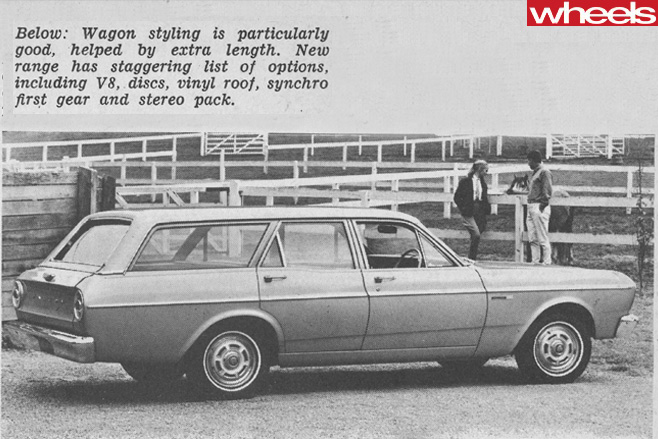
Ford’s aesthetics department set all the cars off with a neat slotted hub cap and added white-walls and a sill chrome moulding for the Fairmont. The 500 series – as the Deluxe is called – is decorated with a fine-line rubbing strip full length and the distinctive Falcon 500 bezel.
But the big news is engines. Falcon has really flung down the gauntlet by offering a V8 engine right through the range. Before, the cheapest V8 in Australia was Chrysler’s luxury Valiant, at $3550. The Falcon V8 is far cheaper. Ford’s 200 bhp 289 V8 engine is cheap to operate and is newer, lighter and more efficient than Chrysler’s 273. Chrysler will start building its engine here next year, but the Ford V8 will be imported for quite a while. But make no mistake – this country is now going V8!
At the other end of the scale Ford dropped the smallest engine of the old three-option range, the 144. This leaves the engine options at the 170, 200 and the V8. On the surface this is to enhance the power image but actually it goes deeper than that: the new XR is 300 lbs heavier than the XP. We feel Ford was worried that the combination of weight increase with the small engine would leave this combination underpowered. So Ford dropped it altogether, and made marginal alterations to the larger engines to compensate for the weight increase. The compression ratio is bumped up from 8.7 to 9.0 to 1, and the sixes also get seven main bearings and hydraulic tappets for smoother running and vibration and noise reduction.
The hydraulic tappets are new to the 170 only – the 200 had them last year. The only other change in this department is to revert to manual choke on both engines. The 289, however, keeps its American automatic choke. All engine compartments are now lockable, opened by an under-dash pull lever.
Ford took the improvement right down through the power train. The clutch for the manuals has grown from 8 1/2 ins. to a huge 9 1/4 ins. with a 14 percent frictional area increase from 68.1 ins. to 77.8 ins., AND it is now hydraulic. With the improved linkages this all adds up to smoother, more positive throws at the grarshift lever (still column mounted with no floor shift option). You can now get manual transmission with the 200 engine. There is a hint of that rattly change but it is not nearly as bad.
The gearbox has been beefed up right through. All the improvements are around the increased shaft centre design distance, enlarged from 2.7 to 3.0 ins., and this has brought the introduction of larger diameter gears, wider gear faces, bigger, sturdier shafts and bearings and a heavier casing. Built to order the manual gearbox is a snchromesh-on-first option.
The gearbox ratios have also been changed considerably, although the overall effect at the rear wheels is actually little different. On the manual shift first has been raised from 3.29 to 2.95 to 1 and the final drive ratio dropped from 3.2 to 3.50 to 1. The overall result is an increase at the differential from 9.528 to 10.325. The effect? Because of the increase in weight, it has slightly less acceleration through the gears, but the top speed is on a par with the old XP.
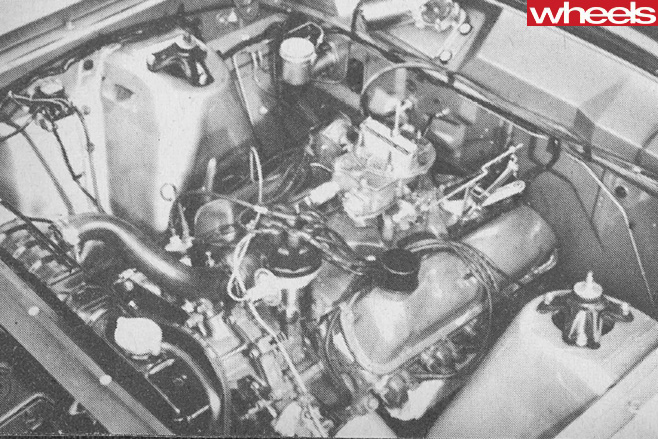
The same changes have been applied to the Fordomatic 38 three-speed single range automatic: slightly higher gearbox ratios with a lower tail ratio. The third gearbox is new to the Falcon range but not new to Australia. It is the dual-range Ford Cruise-o-matic box as used on the Galaxie. Fully imported, it is standard with the 289 cu in. V8 and optional on the 200.
The obvious question is what holds down all the power of the big V8? The answer contains the secret of success of the high torsional stiffness of the new Falcon XR. The torque box construction, introduced first with the 260 Fairlane and then the XP, has been extended drastically to cope with the XR’s increasing weight: the car has been built around the V8 engine.
There is a new torque box behind the gearbox mounting and the forward tubes extend right down the side of the gearbox to this point. They combine with the road shock-absorbing steel boxes at each wheel which are now insulated from the floor to give better isolation. Together they combine with the perimeter frame torque boxes to form an unusually rigid and torsionally stiff construction. Ford naturally didn’t want a separate production line just for the V8 option so all the sixes get the benefit of this new rigidity – designed to cope with the far greater torsional demands of the V8.
The legacies for all the models are ultra smooth operating conditions (the car feels much firmer) and for the sixes the old problems of gear linkage flexing are gone.
Getting all this power down onto the road wasn’t an easy task, but the engineering team came up with a near-perfect solution. Wheel size has gone up from 13 ins. to 14 on a five-stud construction. Low-profile tyres are fitted as standard and on the new safety rims they provide an additional variance to the overall gearing. Radial ply tyres are optional. There are three tyre size options. The six-cylinder cars can be ordered with either 6.45 by 14 or 6.95 by 14 tyres.
The V8 starts at 6.95 by 14 and has a 7.35 option. The wagons can also be ordered with the 7.35 tyre, so for the first time we have a “popular six” that isn’t under-tyred. Like the torque-box chassis design the whole suspension has been redesigned and beefed up to take the added power of the V8. Again this applies to all models, so you can say the new Falcon six is even sturdier than its predecessor. The main strength at the front comes from the box-section apron reinforcement but the wishbone gauge is heavier and the spindles are all much stronger. Coil spring weight has been increased. At the rear the leaf springs are longer, wider and have a higher load rating. In addition the rubber insulated spring-to-body mountings they feature the IsoClamp – a block of tensioned steel clamped to the spring to eliminate harmonics and vibration from the larger eyes used in the spring-to-body mounting.
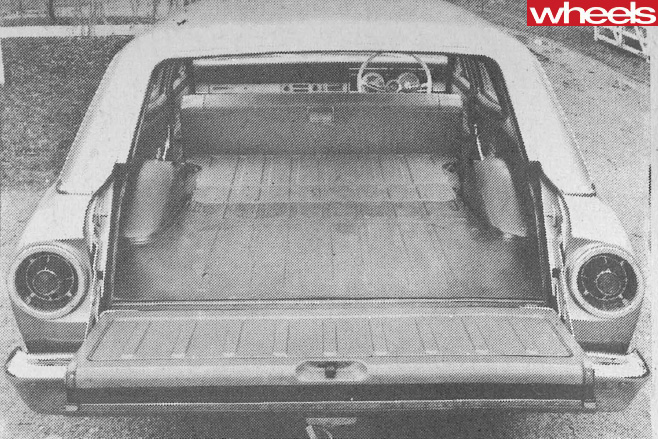
This adds up to new dimensions in interior room. Shoulder room is increased by a massive 3 ins. to 57.1 ins. and hip room by nearly 3 ins. to 59.6 ins: Leg room stays the same (no increase in cockpit overall length) but head room in the front is decreased slightly by the higher seating position. The usable boot capacity also gets a big lift from 24.7 to 26.0 cu ft – mainly by moving the spare wheel from an upright position in the well, to a recess in the fuel tank under the floor mat. The fuel tank itself is increased by more than 40 percent to 16.4 gallons.
Obviously this is mainly to cater for the increased consumption of the V8, but like all the other improvements it stays for the sixes too, so you can expect a 300-odd mile cruising range out of these.
The brakes deserve a mention. Basic layout and design is unchanged but there are two important improvements: the disc brake option for all cars (previously standard Fairmont only), and the increased dimensions of the drums. For the sixes Ford offers a 10 3/4 in. disc of 1/2 in. thickness, but the V8 has its own special brakes – 11 in. diameter and ⅝ in. thick. Power assist is still standard on the discs.
Drum size has gone up from 9 in. diameter to 10 in., increasing friction area by almost 10 percent to 154.4 ins. We feel Ford has also made a slight alteration to the grade of bonded linings used as the brakes seem less prone to lock-up under severe conditions and the pedal action smoother and more and more positive, although pedal pressures are still too high. There is a notable increase in fade resistance, of course.
Steering ratio is virtually unchanged although the turning circle has a useful reduction from 38 ft to 36.6 ft. Actually the steering box internal ratio has been increased from 19.88 to 20.0 to 1 but overall ratio at the steering wheel stays at 27 to 1. We thought it would have been made more direct, and were very disappointed that it hasn’t. Power steering is an option.
One most noticeable feature of the XR is the concentration on interior quiet. The Falcon is now easily the quietest of the sixes and Ford is clearly trying to paint another Galaxie image in the medium class in this way. Apart from the normal sound absorbing material lavished on the roof, floors, doors and front wheels and rear compartments Ford hunted around for every likely vibration or sound trouble area.
Ford has described its interior as all-new, but this could be misleading. The basic layout of bench seats (reclining front buckets on Fairmont) is retained but a new trim and color range is offered. The dashboard is re-designed with smart new fine-line letter dials (the speedo still reads 120). However there are traces of the XP visible and all the controls stay in virtually the same places. The Deluxe cars – or where a heater is fitted – the temperature control selector is lit like the dashboard dials and automatic selector quadrant – quite a neat touch. Seating is better sprung with softer foam padding.
REMOTE CONTROL BOOT RELEASE
The option list is most impressive and carries some all-new devices for an Australian car. Top of the list must be the stereophonic tape system which turns your Falcon into a mobile sound lounge for a modest (we think) $136.32 including twin speakers. This unit is of the cassette type – and the whole tape comes ready-to-play in a tiny cartridge that can be changed blindfold. Another neat gimmick sure to be popular with Sydney’s taxi drivers is the remote control boot release. Operated by a small lever on the floor between the driver’s seat and door, this option costs $7.98. There are others of course – such as laminated and tinted windscreens, a shoulder sash option for the seat belts and dust deflectors for the station wagon tailgate, but there are three nifty gadgets we rather like. A stop lamp warning light installed on the dash tells the driver towing a caravan whether his stop lights are working properly; a woven nylon insect screen to combat the radiator clogging with insects is so small it can be rolled up and stored in the glovebox; and a special plexiglas windscreen protector is attached by only two points and makes a remarkably good seal with the windscreen surround to prevent internal misting.
HANDLING IS MUCH BETTER
Understanding-start acceleration on a variety of surfaces (and we even tried corrugations) the rear wheels spin briefly and then settle down to smooth take-up. There is little tail sway, axle-hop or wheel patter and no vibration transmitted through the car. This also applies to normal handling conditions. You can throw the car at the apex of any corner quite a bit too fast and scramble through with a controlled tail slide and an occasional fiddle with the throttle. This applies no less for the V8, though with the increased forward weight a heavier initial understeer tendency must be carefully controlled with the brakes, steering correction and throttle on exit. Neither car is vicious; though with the steering ratio some loss of sense of direction of the front wheels is possible in on-the-limit motoring. Back in reality the car behaves perfectly under normal conditions and on the V8 the average driver will note only a slightly heavier nose attitude, with pronounced weight transfer under braking. However, we would have preferred a more direct steering ratio. When you start working the car hard this lack of feel in the system starts to rear its ugly head.
Performance of the sixes is down a lot on the XP series – mainly due to the weight penalty. Even careful choice of gear and final drive ratios couldn’t remedy that. But right at the top end of the scale speeds are little different.
The V8 is little short of shattering. The get-up-and-go acceleration is instant and effortless, without tossing the occupants around unduly. The car winds smoothly and quickly right to 110 mph. Under high-speed cornering the understeer tendency is pronounced, but on medium or low speed corners the car behaves little differently from the sixes.
For outright performance we would pick a V8 fitted with four speed all-synchromesh manual shift. But maybe we want too much.
NEW FORDS: SIX MONTHS AGO
WE peeled the covers off the XR Falcon in April WHEELS. This detailed the true inside information on the new Australian Falcon.
Here’s how we saw it then – exactly as released on the Australian market today just six months later.
For a start we nominated the exact styling from random photographs of dosely counterfeited models, the release date, the number of engines (including the new V8), alterations to suspension, chassis and dimensions and an almost complete list of options. We said the car would closely resemble the American Falcon with the only major alteration to the concept being an extended boot to suit the demands of the Australian motorist. We summed up the external differences as being wider, and longer (both in suspension and body) and lower.
We also said the main dimensional difference between the Australian Falcon XR and the American Falcon and Mustang from which it is derived would be increased boot capacity.
The relative figures are 7.7 cu ft for the Mustang, 12.5 for the US Falcon, and 26 for the XR.
Here is a list of other points we predicted accurately:
- Manual shift for 200 six engine.
- Minimum of body brightwork.
- Seven bearings for the sixes.
- Change to 14 in. wheels. Use of low profile tyres.
- Basic tyre size up from 6.50 to 6.95.
- All new interiors.
- Vinyl roof option.
- Full width facia padding, swept-away dash.
- Laminated screen, tinted glass options.
We also said the steering would be geared up from 5.5 turns lock to lock to about 4.25 turns. This hasn’t happened; but the box ratio itself has been altered.
After this one, it is harder to imagine a better Falcon – but that is already being planned. Watch for the first news in WHEELS. As usual.
Check out Wheels Archive online now for other great Ford Falcon features and more from decades past!
Simply log in here using your existing MagShop account or create a FREE account and select this article from the homepage.
Don’t have a MagShop account?

Have a MagShop account?

HYPER HOLDEN! The inside scoop on Australia’s Super Ute; farewell to the Falcon ute; BMW moots a ute. Merc-AMG C63 S Coupe driven; Porsche 718 Cayman tracked
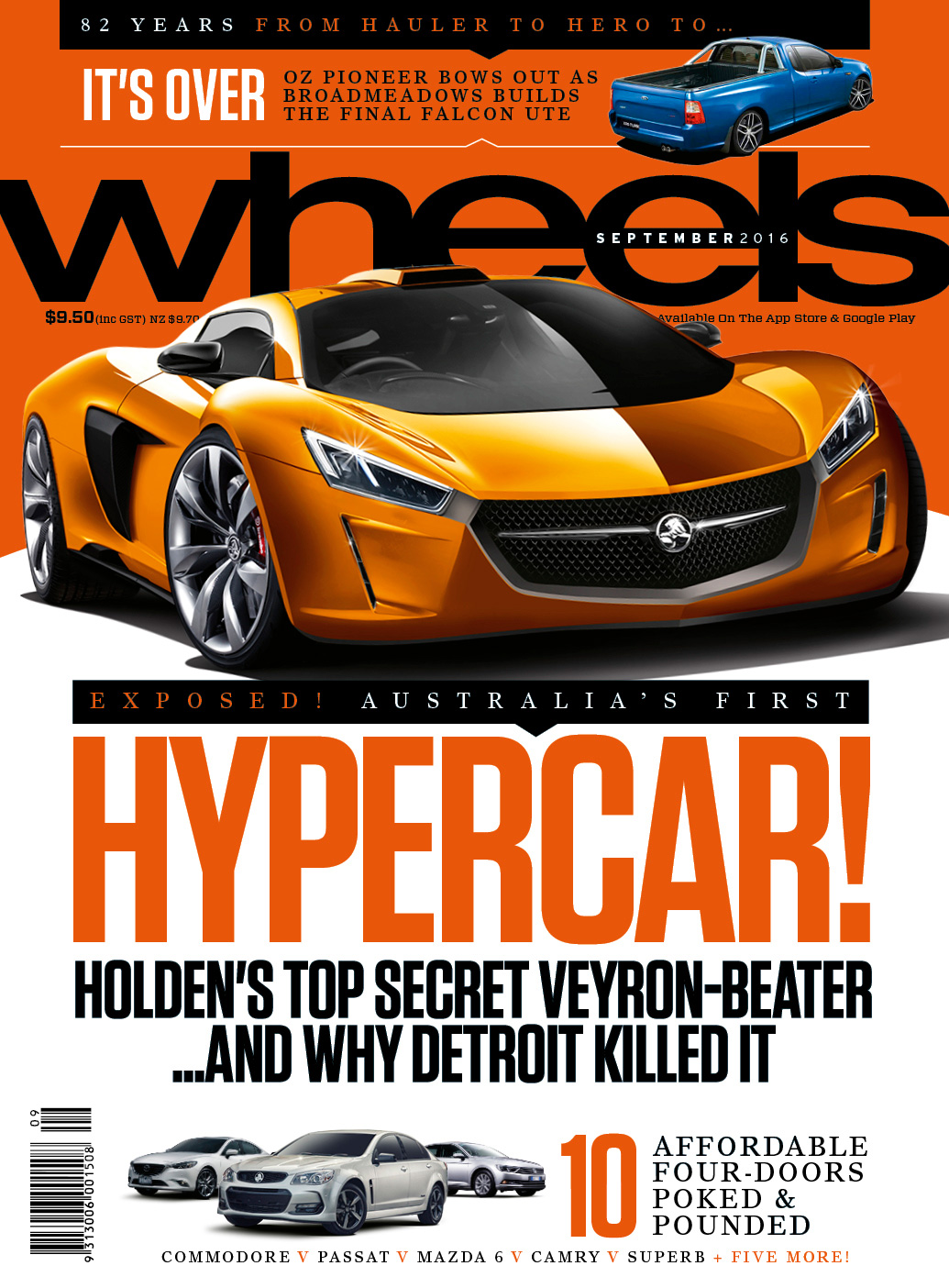
ALSO INSIDE THIS EDITION:
- First drives of the Jaguar F-Pace; Suzuki Baleno; BMW M4 Competition Pack; VW Golf 40 Years; Audi Q2
- Early form in the 2016 Wheels Car of the Year run-up
- Ian Callum’s designs on Jaguar’s future
- Follow the Norse star: The illuminating Volvo S90
- Sedan megatest: Who’s king of the mid-sizers?
- An Aussie prince meets the prince of SUVS
- Ferrari design boss Flavio Manzoni
BMW has doubled the number of BMW i3 offerings for Australia, with two new models joining the lineup toting bigger batteries to boost range to a maximum of 390km.
With 34Ah more capacity than the existing i3, the i3 94Ah battery-electric and i3 94Ah Range Extender can travel for up to 300km and 390km respectively before running out of juice. Those numbers fall to 200km and 320km in real-world driving (where air conditioning and the infotainment system remain in use), but that still represents a handy increase over the 60Ah models.
The standard i3 60Ah can travel up to 190km on a single charge. The Range Extender models add a two-cylinder engine and generator to provide additional travel distance (and some degree of redundancy should the battery run flat in the middle of nowhere), and both 60Ah and 94Ah Range Extenders have an average fuel consumption of just 0.6L/100km.
Retail prices for the 94Ah variants will be $65,900 for the i3 94Ah and $71,900 for i3 94Ah REx. The i3 and i3 REx prices will remain unchanged at $63,900 and $69,900.
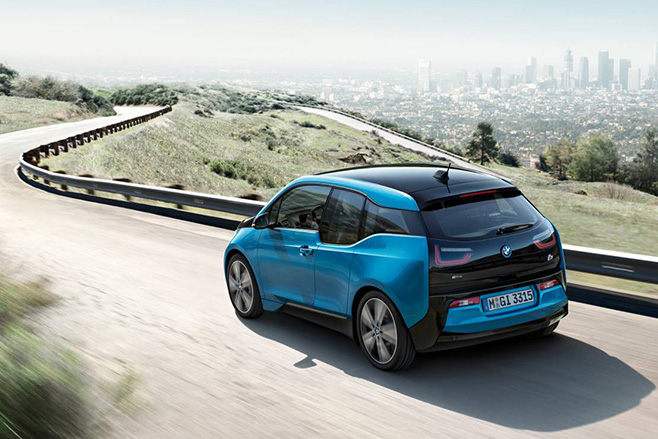
BMW managed to increase battery capacity for the 94Ah models without changing the car’s dimensions, meaning interior space hasn’t been compromised. The only downside is increased weight, meaning a slight drop in performance that will be barely noticeable without a stopwatch – the i3 94A does 0-100km in 7.3secs compared to the i3 60Ah’s 7.2secs. Meanwhile, 80-120km/h in-gear acceleration takes 5.1 rather than 4.9 seconds.
The 94Ah variants have a common Type 1 AC charging connector that’s compatible with public charging stations around the country, which take around four hours for an 80 per cent charge. Owners can also purchase a BMW iWall Box for home charging which takes the battery to 80 per cent in around eight hours.
New colours for 2017 include a Protonic Blue exterior paint option featured on the BMW i8 hybrid sports car along with five other colours – non-metallic Capparis White and Fluid Black, and metallic Mineral Grey, Platinum Silver and Iconic Silver.
There are also three interior designs, representing wholly different character traits. Loft, which is the white, clean architectural choice; Lodge, which looks like a Scandinavian retreat with light grey wool fabrics, tan leather trim and light-coloured wood accents; and Suite complete with elegant full dark brown leather seats. Each are adorned with a mix of naturally-treated leathers, wood, wool and other renewable raw materials.
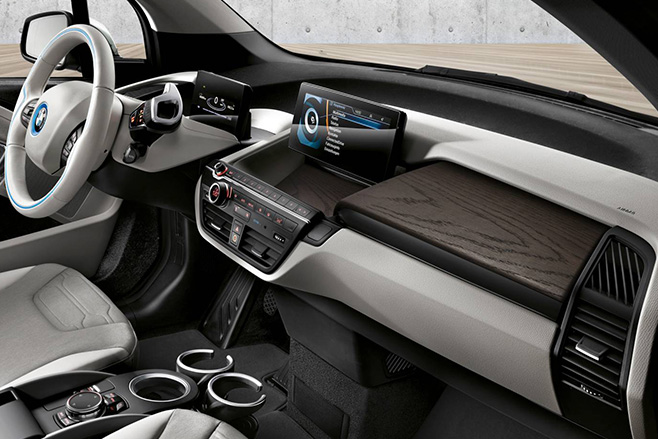
Standard features include BMW Connected Drive system that informs the driver of the battery charging status and provides directions to nearby charging stations while also displaying real-time traffic information.
Certain i3 functions can also be controlled with the BMW i Remote App, which lets owners use their smart phones to check if the car is charged or turn on the heating or air-conditioning as desired without even getting out of bed. The app also provides remote locking functions, efficiency history, current range and a ‘destination send’ navigational capability, which of course you do have to be in the car for.
All BMW i3 variants feature the iDrive operation system, to easily control entertainment, information, communication and navigation functions, LED daytime driving lights, active cruise control, front and rear park distance control (PDC) with rear sensors, and economy and comfort driving modes,
The i3 94Ah and i3 94Ah Range Extender will be available at BMW dealerships in October.
Updated BMW i3 range pricing (before on-road costs)
BMW i3: $63,900 BMW i3 with Range Extender: $69,900 BMW i3 94Ah Electric Vehicle: $65,900 BMW i3 94Ah with Range Extender: $71,900
THE days of cheap Volkswagens are over, in Australia at least.
While in recent years Volkswagen had competed heavily on price with its Polo, Volkswagen Golf and Tiguan models, the brand has shifted away from its pitch at growing market share off the back of discount deals, and will instead focus on the core engineering of its vehicles.
Approaching his one-year anniversary as the head of the German brand in Australia, Volkswagen’s local managing director, Michael Bartsch, said the brand had entered a new phase where it would focus on substance and engineering excellence more than price.
“We will never be the cheapest car on the market, that simply won’t happen,” said Bartsch in outlining the brand’s local positioning.
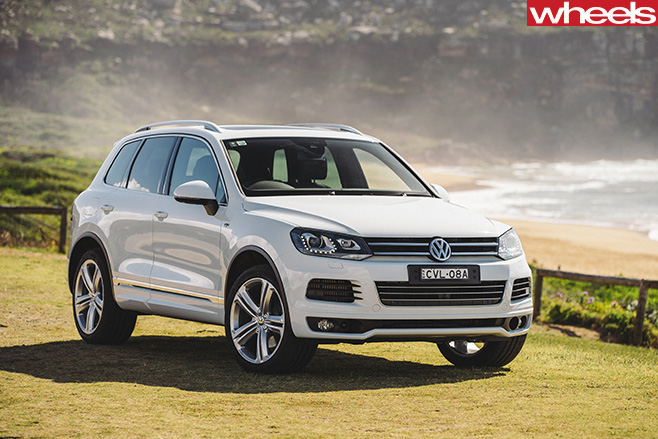
Bartsch acknowledged the brand had work to do, particularly with its aftersales service, hit hard by the much publicised diesel emissions scandal, and problems with DSG automatic transmissions that were failing and costing thousands to repair.
He said he was focusing on increasing the training and skills of technicians in workshops and on improving VW’s service experience.
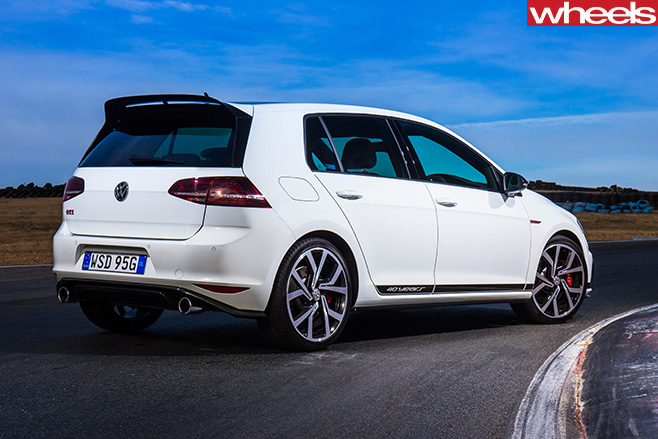
“But we will always remain an extremely made value proposition for … premium engineering, premium quality,” Bartsch said.
“We have to have a brand position that people can rely on. There has to be predictability and substance in residual values.
“In the segment we are in, and the price points we have, people have to have a very, very clear understanding of what the brands stand for. You don’t get that by just always looking at the price point.”
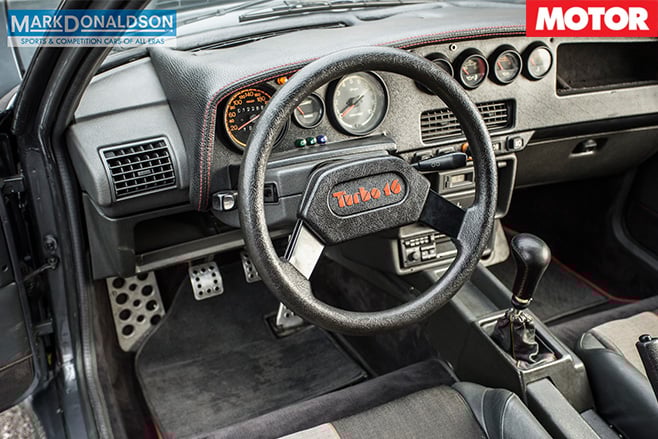
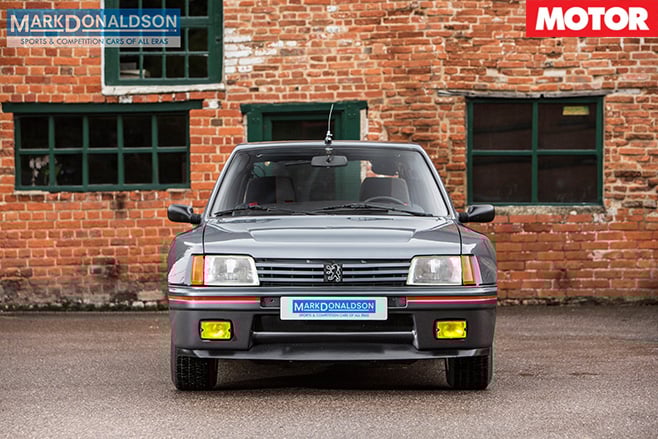
Group B rally fans have the chance to wrap driving gloves around a Peugeot 205 T16 now available for sale in the UK – after a small moment parting with £175,000 (AU $300K).
One of 200 homologation specials produced, the mid-engined 1.8-litre four-cylinder 205 Turbo 16 also scored a front/rear adjustable all-wheel-drive system and a five-speed manual transmission together capable of a claimed 6.0-second 0-100km/h.
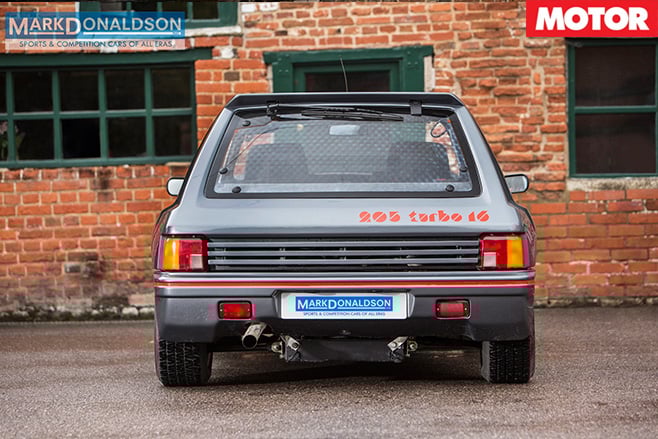
Advertised on the MarkDonaldson website, the 205 T16 is described as being in “lovely condition” and “accompanied by an original owners’ handbook.”
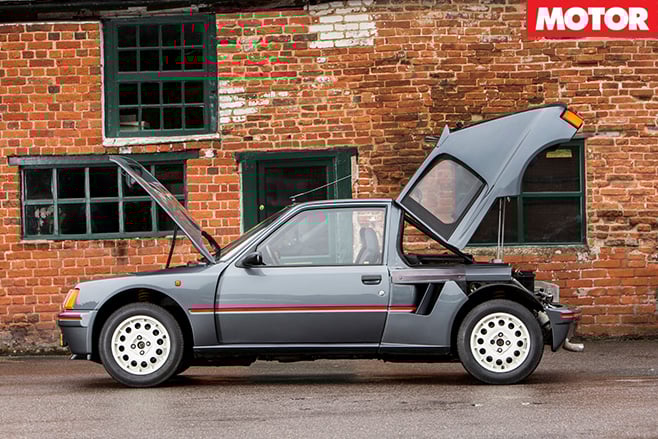
Peugeot pinched both the 1985 and 1986 Group B rally championships with the proper racing version driven by Timo Salonen and Juha Kankkunen.