
Chery Australia is ambitious, and that ambition has led the brand to all-but confirm two new models are set to join the ranks in the next 12-18 months.
First off the rank is the Chery Tiggo 4, a small crossover SUV that is set to open proceedings for the brand with an expected sub-$30k starting price.
It is due here possibly by the end of the year, and Chery Australia chief operating officer, Lucas Harris, said the Tiggo 4 compact SUV – which measures 4318mm long, about the same as the MG ZS – is expected to slot in as the entry point for Chery in Australia.
“I can’t think of a really good reason why that wouldn’t happen,” he said. “Tiggo 4 is fairly well progressed in its discussions and we’re just working through the finer nuts and bolts of that at the moment but hopefully we will be able to share some information with you sooner rather than later.”
The Tiggo 4 Pro is smaller than the Chery Omoda 5, but shares a powertrain similar to that model – a 1.5-litre turbo four-cylinder with 108kW/210Nm.
“The Tiggo 4 is a bit smaller than Omoda 5 – particularly boot space, it’s a bit smaller. And I think the price point position of that car is also likely to be a bit different to where Omoda 5 is,” Mr Harris said. “That’s me speculating a little bit at this stage, and so general logic is the smaller the car, the more affordable it becomes.”
The Omoda 5 has an official drive-away price of $34,490 drive-away for the base model BX, but the brand has been doing some sharp deals on that vehicle, including a current offer for MY23 models at $32,990 drive-away with a further $3000 ‘factory bonus’.
So, essentially, the brand is playing in the sub-$30K segment with Omoda 5, which means it stands to reason that the Tiggo 4 could well go up against the aforementioned MG ZS (or ZST) and Kia Stonic in the sub-$30K SUV segment.
1
The brand also has another smaller model, the Tiggo 2 (also known as Tiggo 3x, confusingly!), which in its current-generation guise isn’t likely to make it here – but Mr Harris all-but confirmed that the brand would offer the replacement new-gen model.
“It’s actually quite a small car – that model has been around for quite a while, so it’s highly unlikely that we would take that version of the Tiggo 2,” he said. “But for inner-city driving and as people are looking for more and more affordable options, we certainly wouldn’t say no if an option became available in right-hand drive, to look at a car like. But it’s currently not in the product plan.”
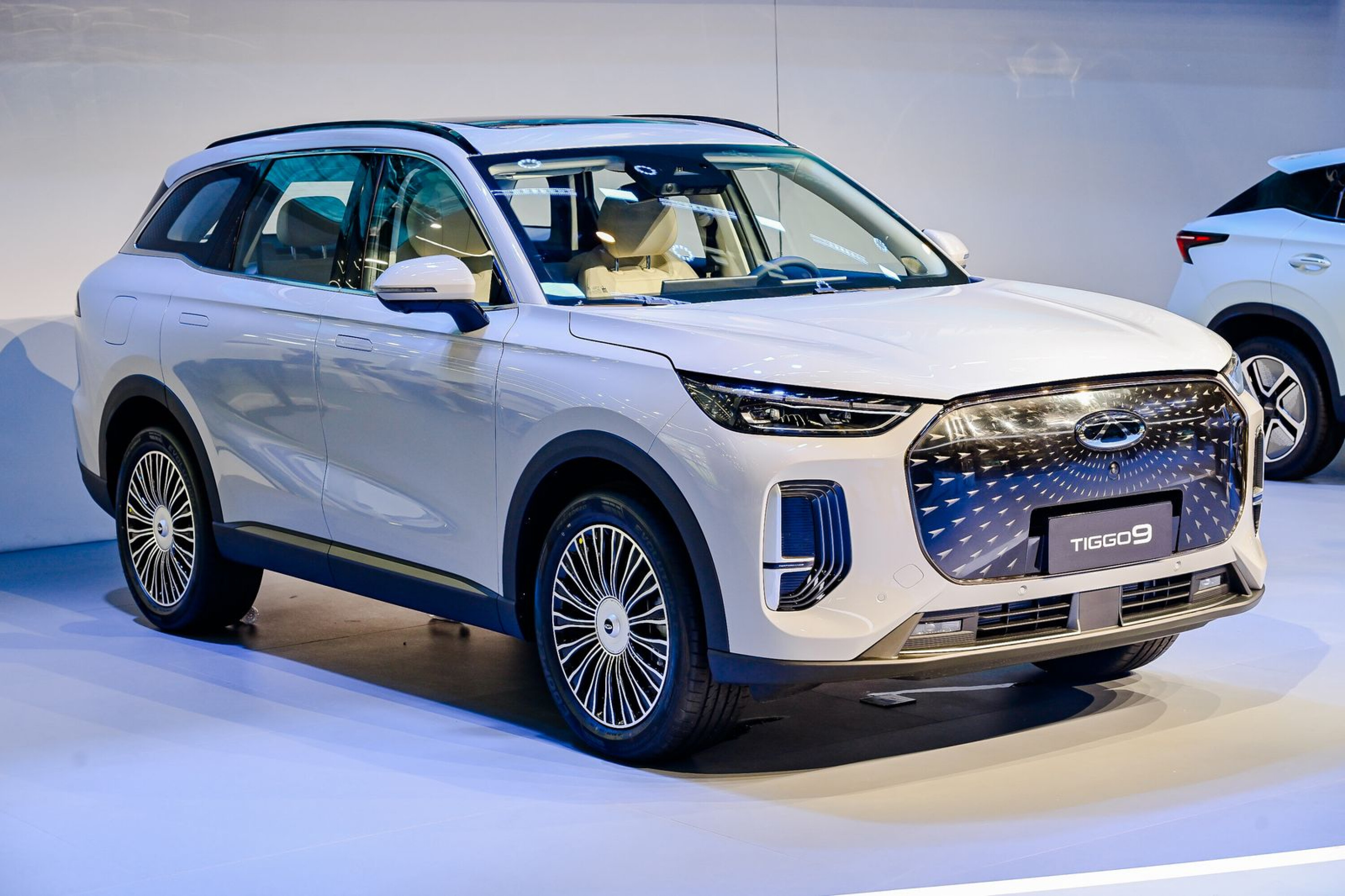
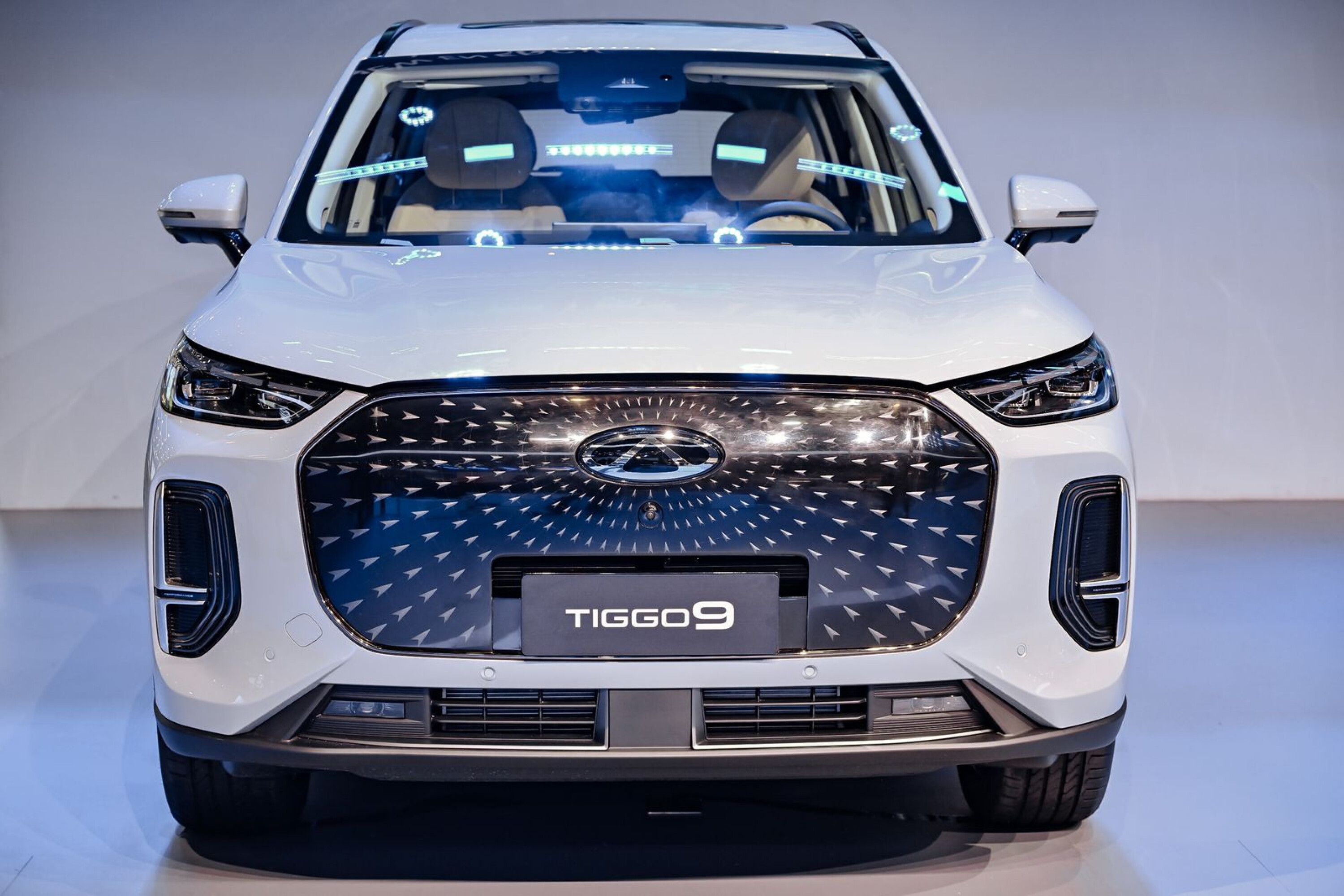
The just-launched Tiggo 8 Pro Max seven-seater is currently the largest model available from the brand, but Mr Harris made it clear the company is planning to expand its line-up above the current ranks with a larger, more prestige-focused SUV in the Tiggo 9, which will in theory compete with the Kia Sorento, Skoda Kodiaq and Volkswagen Tiguan Allspace.
3
“We are currently looking at some of those smaller cars and where they will fit for us, but also, you know, the new Tiggo 9 – I think it’s a pretty exciting car, and fitted out really well so we certainly wouldn’t turn our noses up at bringing that in as well,” Mr Harris confirmed.
Mark Vukoja, Chery Australia brand and marketing director, said the customers who buy Tiggo models are currently – and will continue to be – different to those who consider an Omoda variant.
“The Tiggo family of cars, that’s a particular style. It’s function, it’s technology and safety. It appeals to one demographic,” he said.
“Omoda is a completely different set of vehicles, it’s like its own brand – its own style, its fashion, its technology, avant-garde. So we feel the Omoda range will have a completely different appeal to the Tiggo range.”
Stay tuned for our Chery Tiggo 8 Pro Max review soon.
MORE
Everything Chery
One in every five people-movers under $70K sold in Australia is not a Kia Carnival.
The Korean family transporter almost single-handedly drove sales in its segment by 25 per cent last year, again trouncing its (admittedly limited) rivals.
A nearly 40 per cent fall in Carnival deliveries so far in 2024 might have given the likes of the Hyundai Staria and Volkswagen Caddy Maxi (and Multivan) a glimmer of hope, but this was merely Kia managing stock levels in preparation for the vehicle you see here – the facelifted 2025 Carnival.
1
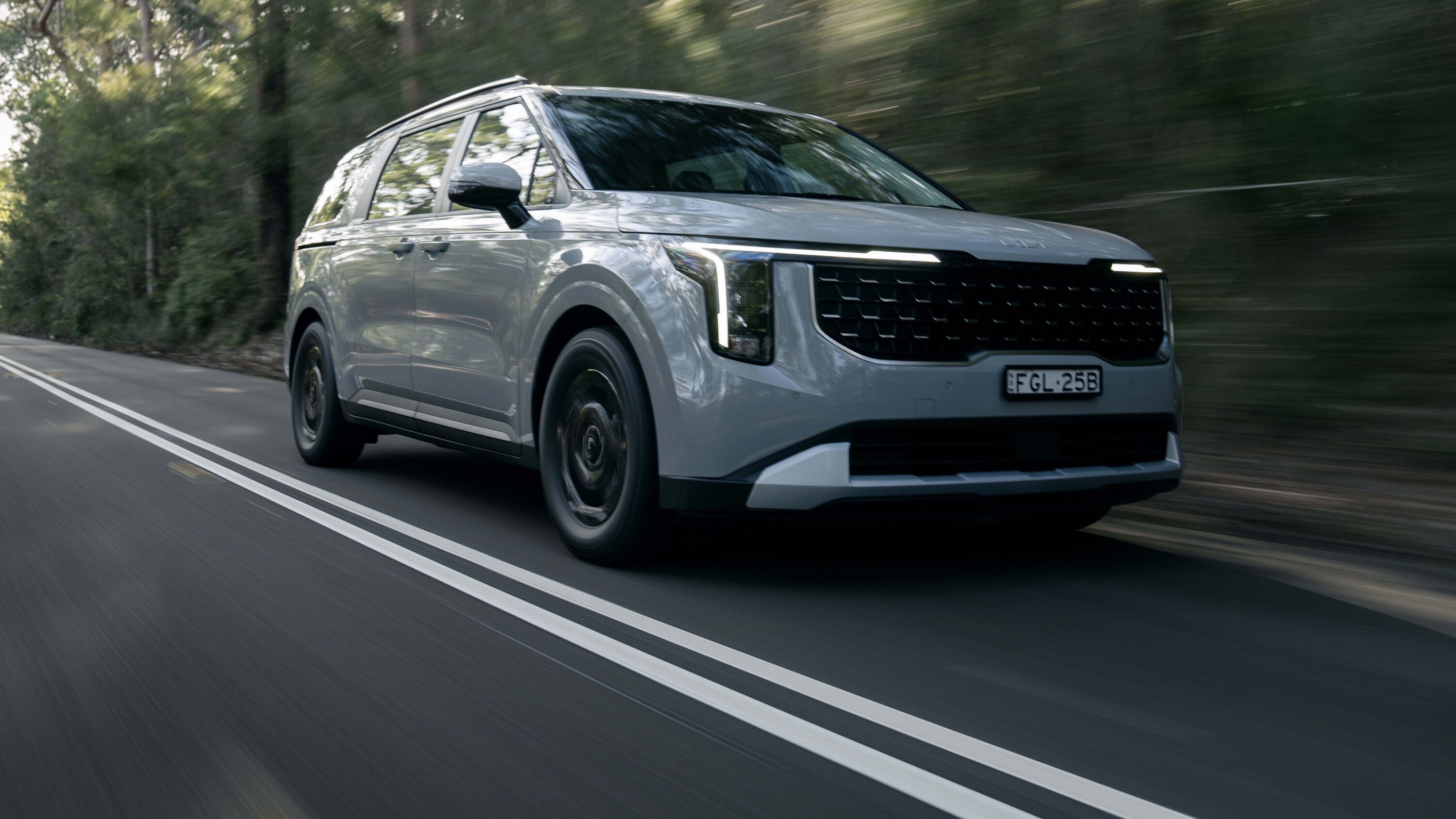
Commendably avoiding an air of complacency that could almost be forgiven such is the model’s market dominance, Kia’s updated Carnival eight-seater brings revisions to several areas, including styling, technology, and powertrains.
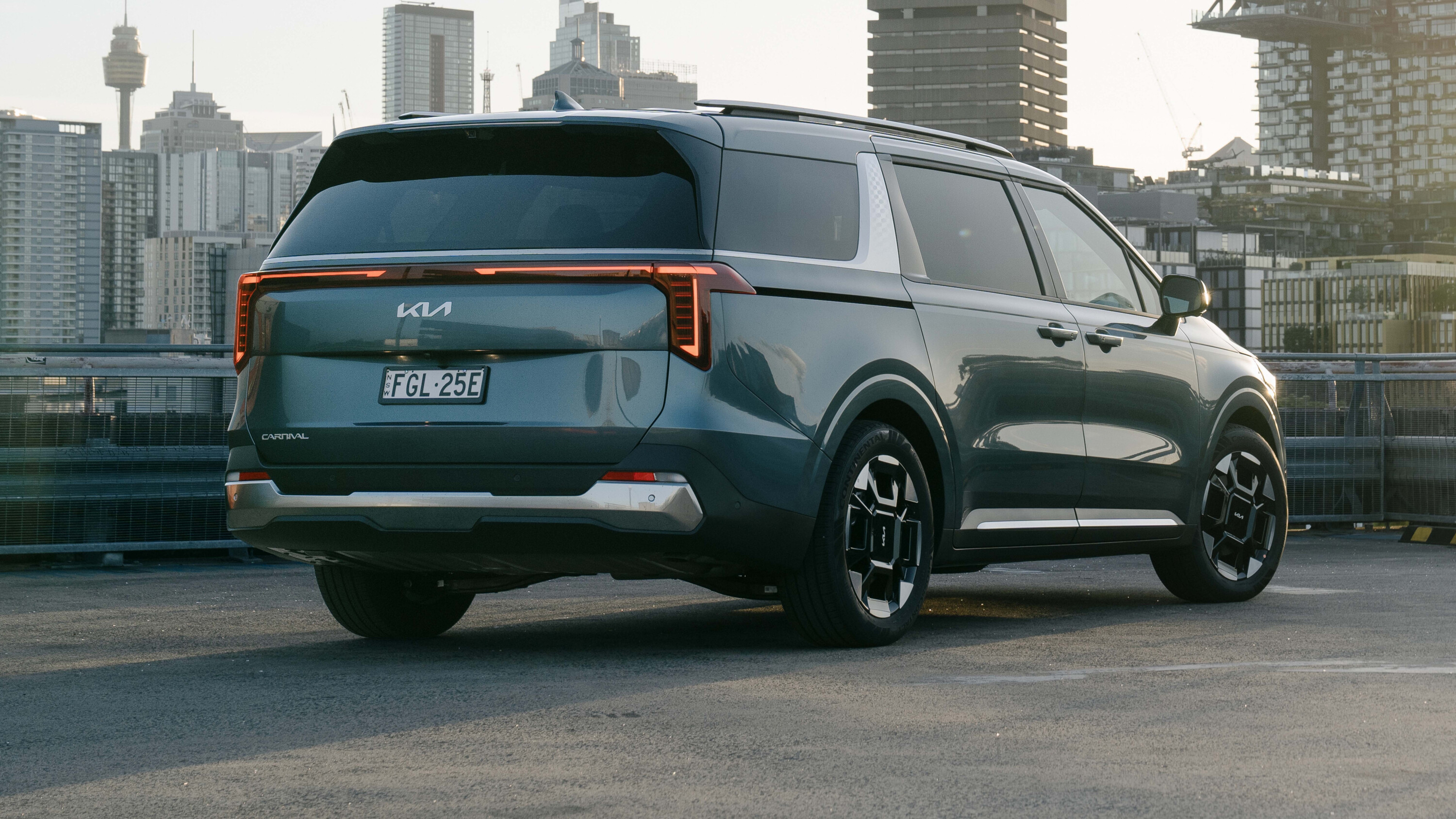
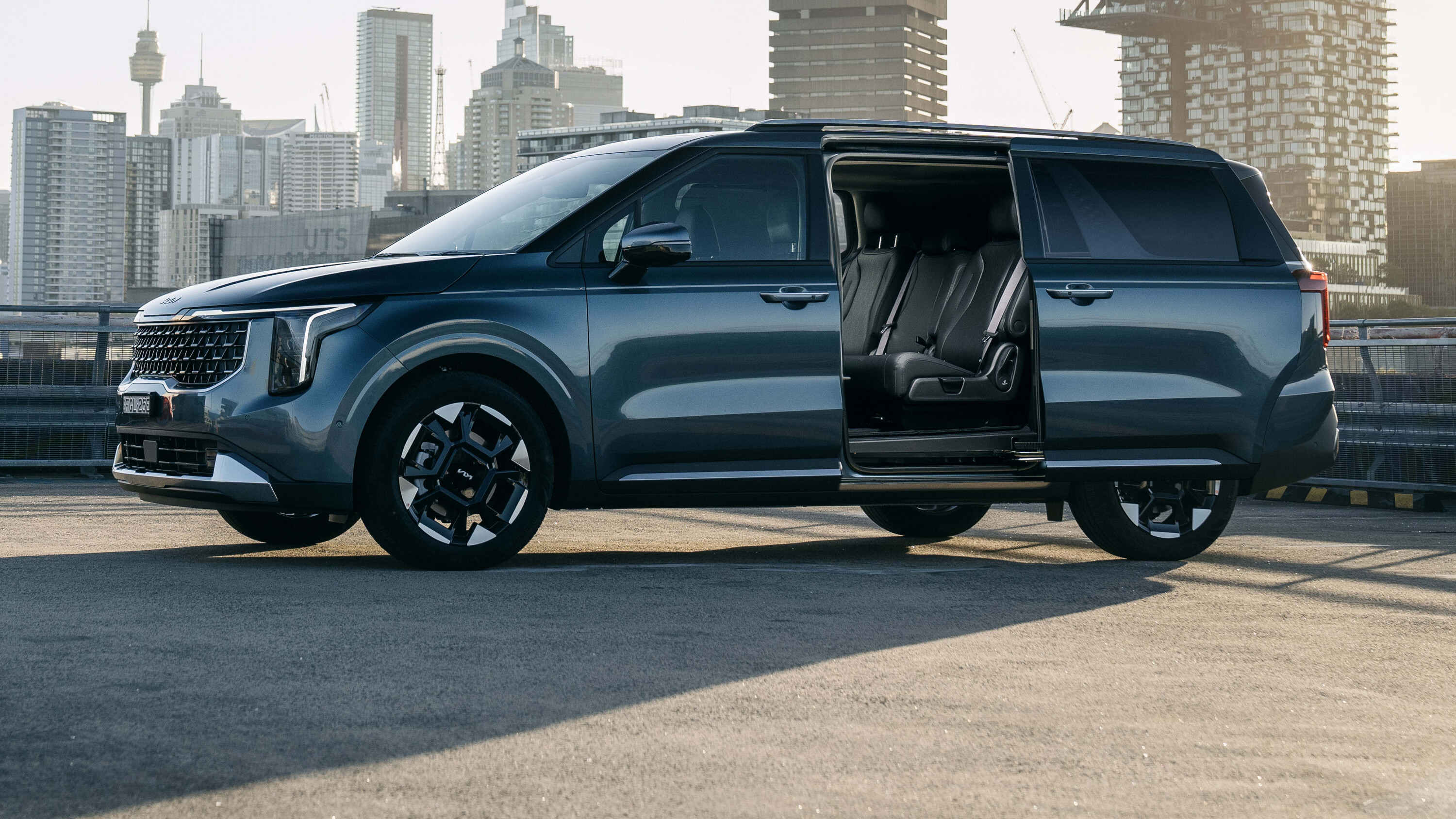
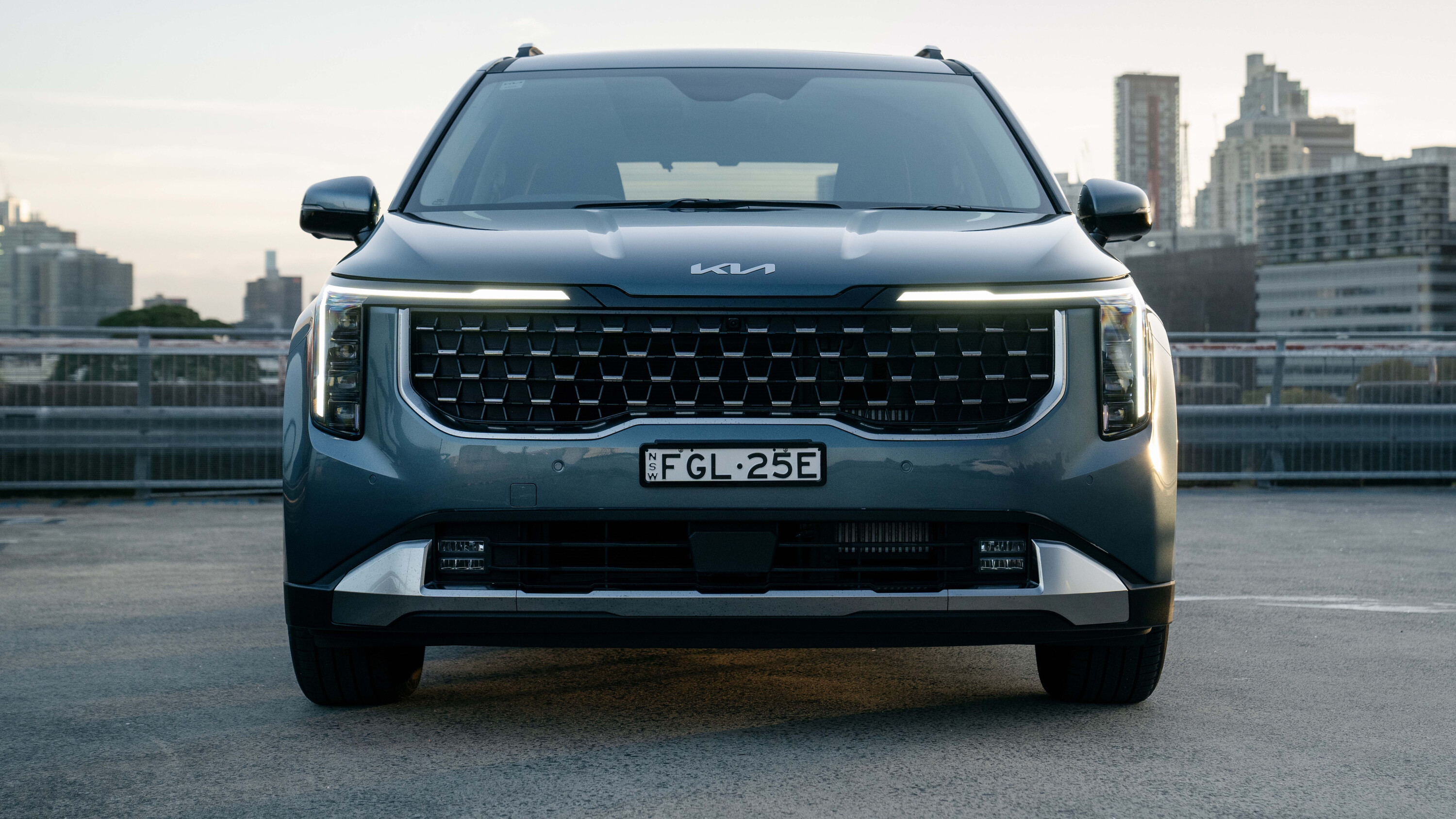
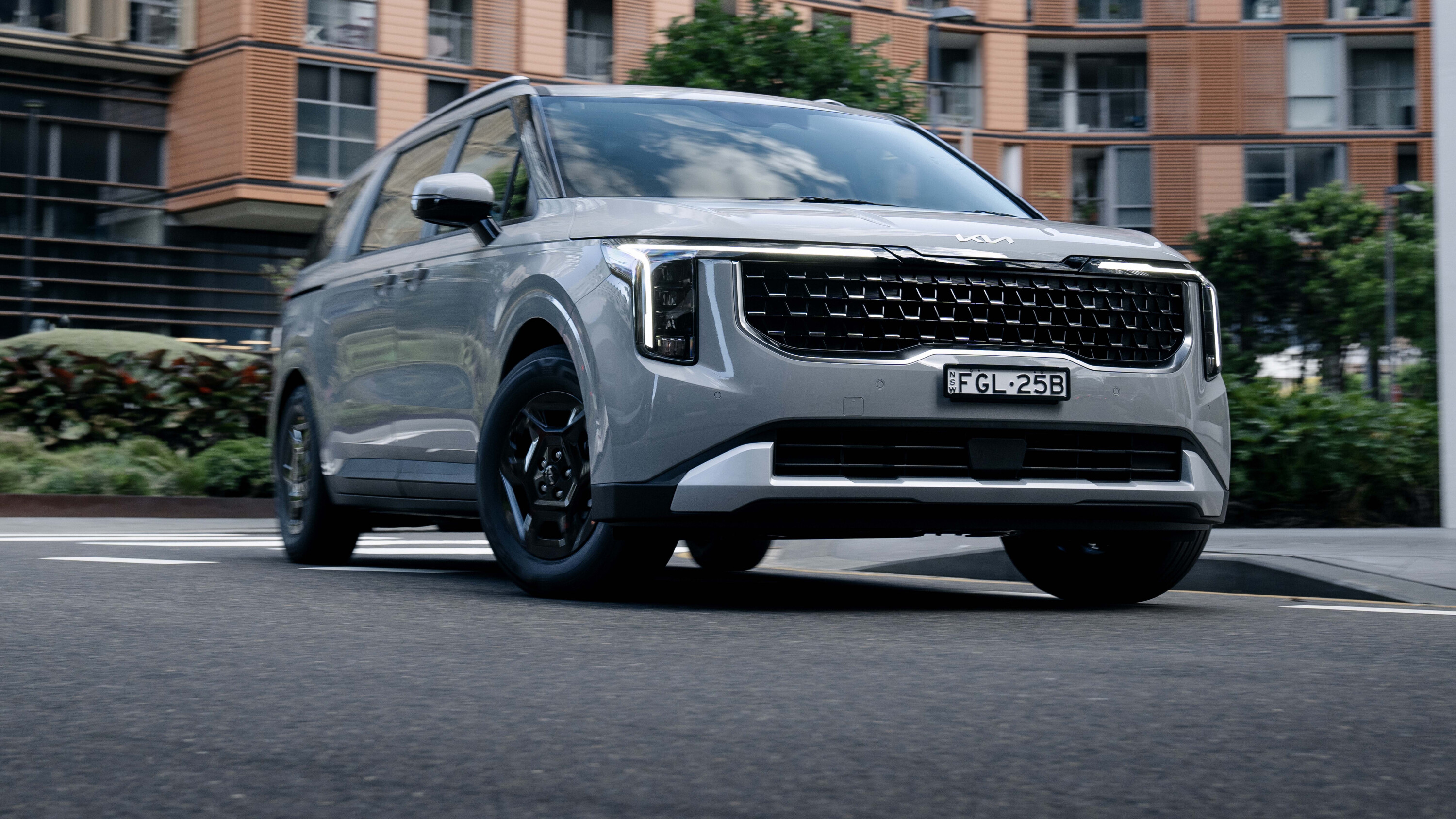
The frontal design adopts vertical headlights, ‘Star map’ LED running lights, and a wider grille to give it greater visual commonality with its two large SUV siblings, the electric EV9 and combustion-engined Sorento. New wheel designs also include a nod to the futuristic rims found on the EV9.
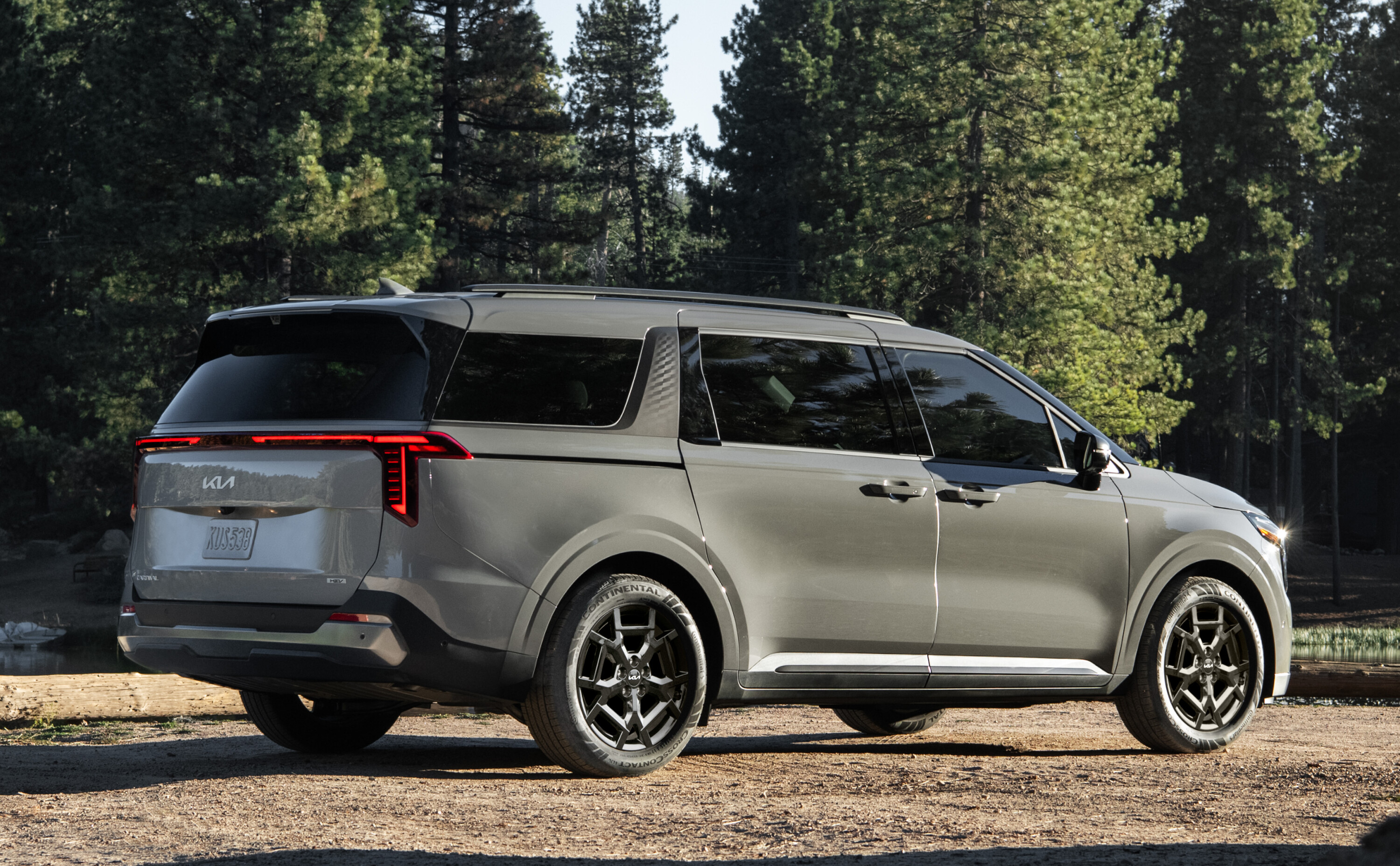
At the rear, there’s a cleaner look contrived by a full-width LED strip and a tailgate release that’s now concealed.
1
If there’s a ‘Hold the front page’ headline feature of the 2025 Carnival, it must be the first hybrid powertrain to be offered.
Sadly, the petrol-electric Carnival is slightly delayed (due late June at this stage), so our testing was kept to the carryover V6 petrol and four-cylinder diesel engines.
The diesel accounts for 90 per cent of the Carniva’s powertrain mix and its dominance isn’t expected to change dramatically, at least not before the availability of hybrids extends to offer cheaper alternatives.
Initially, petrol-electric power will be exclusive to the GT-Line Hybrid which becomes the most expensive Carnival to date, priced from $76,210 before on-road costs.
1
JUMP AHEAD
Pricing and Features
There are multiple Carnival options below that range-topping hybrid, starting from a far more attainable $50,150 (excluding on-road costs) – though pricing has increased across the range by as much as $5390.
Naming for each trim grade now aligns with other Kia models, changing from S/Si/SLi/SE/Platinum to S, Sport, Sport+, GT-Line Lite (a rebranded Special Edition), and GT-Line.
Each grade is available with either V6 petrol power or, for a $2230 premium, diesel grunt. (The GT-Line, as mentioned earlier, will also be available with the hybrid option.)
For a more detailed guide to the 2025 Kia Carnival’s pricing and features, click on the feature link below.
The Interior
Technology is the primary upgrade for the latest Carnival.
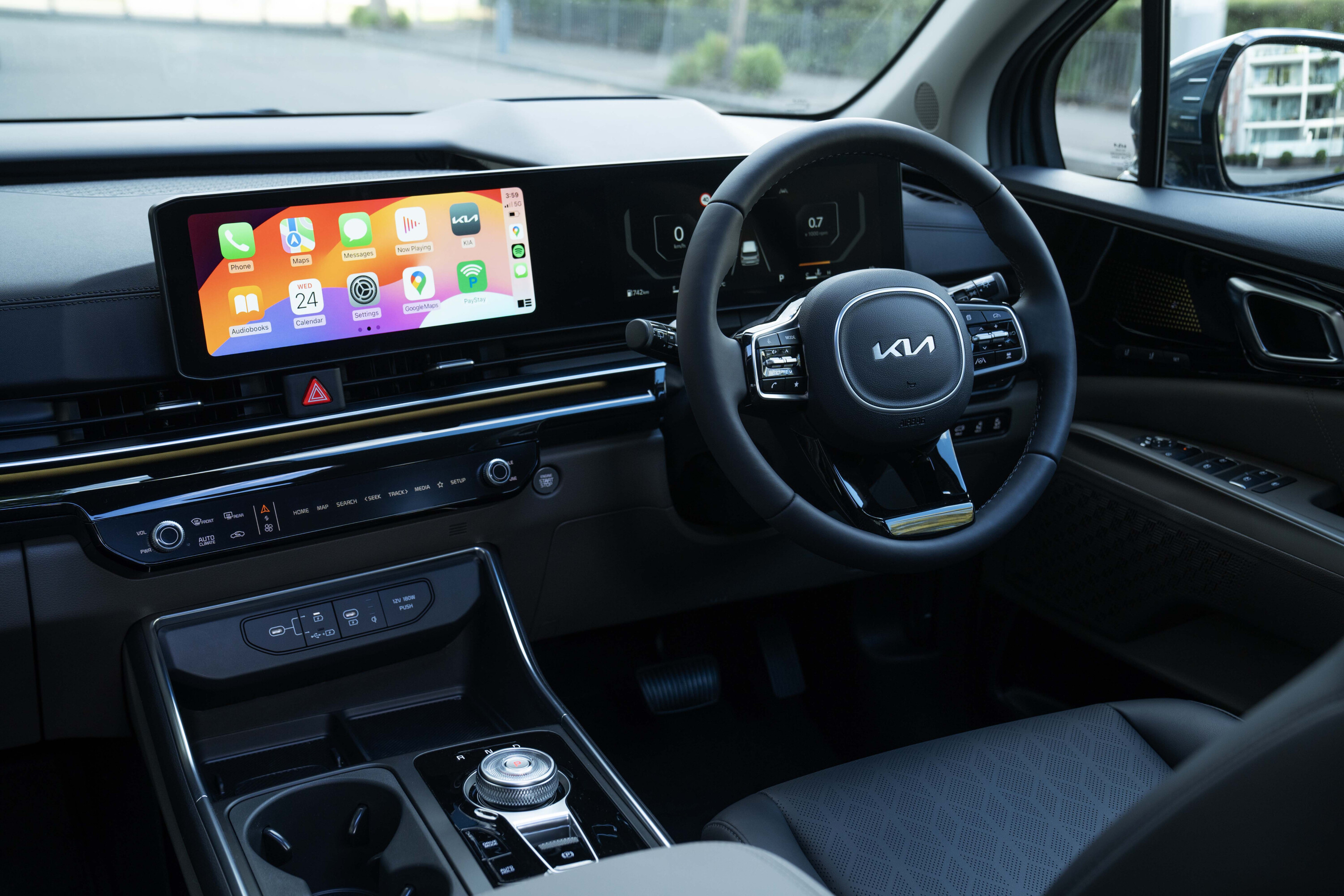
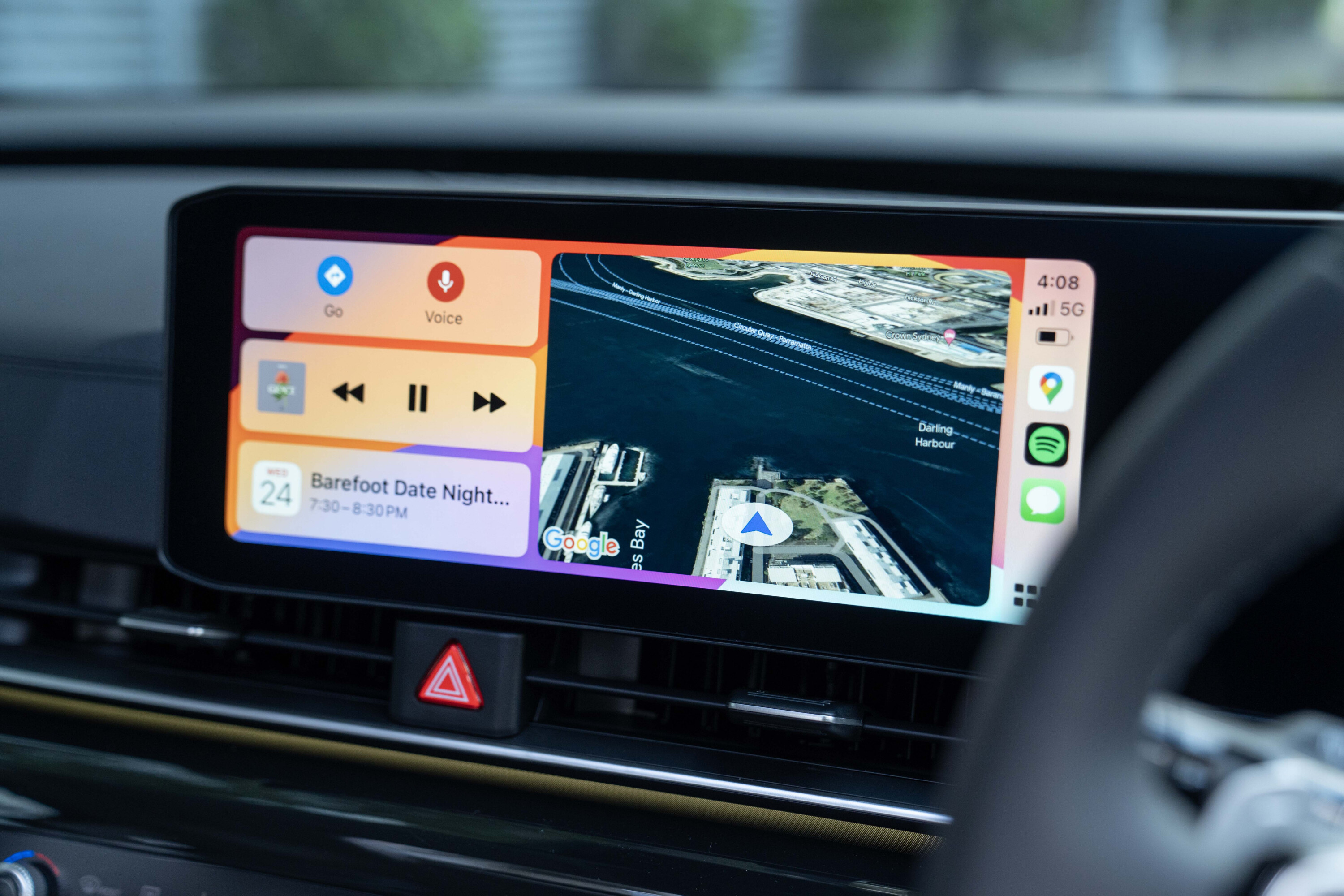
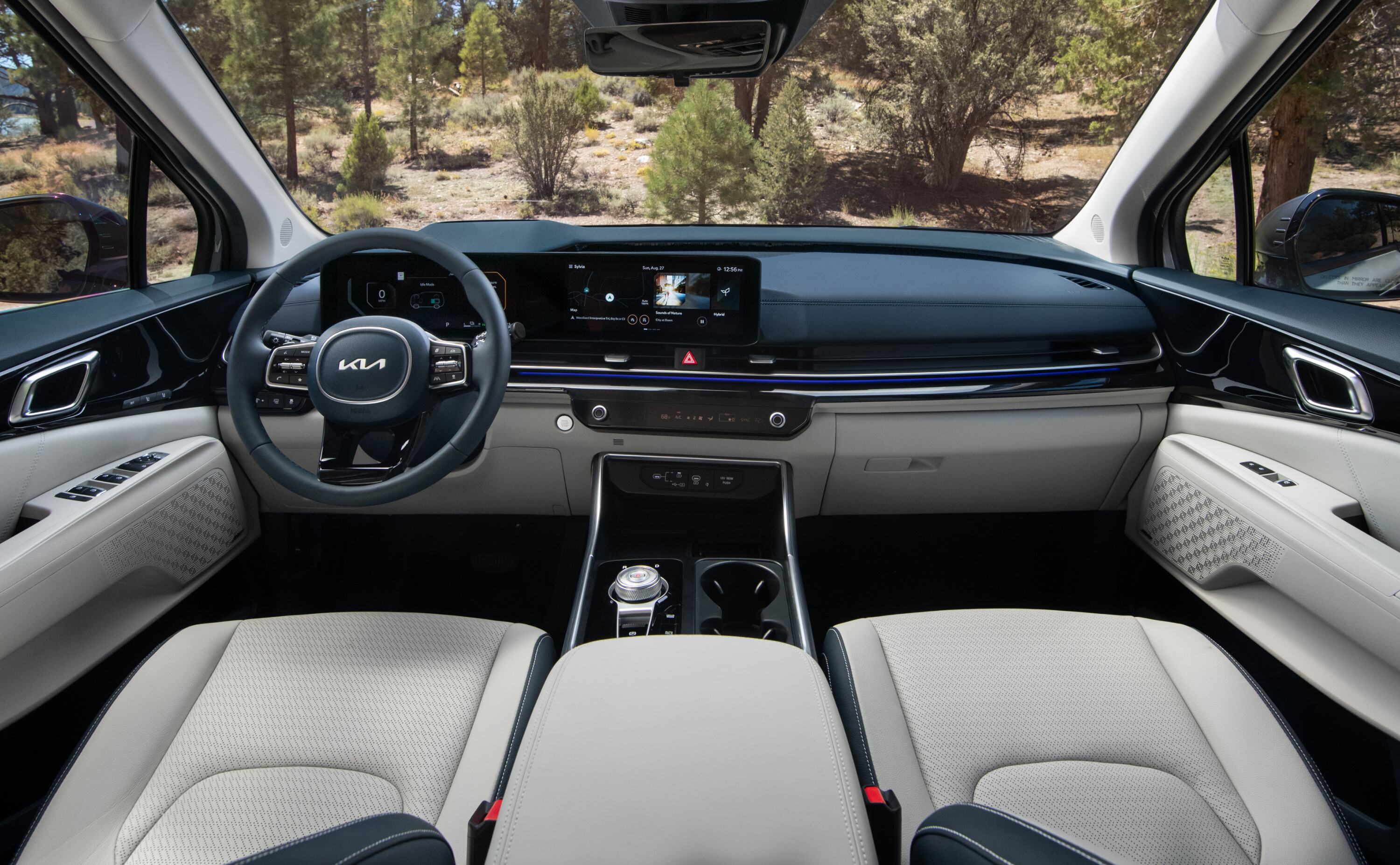
Every model now joins the list of Kias featuring a curved (or rather kinked) dual digital display, though S and Sport models have a smaller and more simplistic instrument display whereas Sport+, GT-Line Lite and GT-Line grades have a more expansive and more sophisticated 12.3-inch cluster.
All models have a 12.3-inch infotainment touchscreen, now also benefiting from over-the-air updates and a ‘Streaming Plus’ entertainment service, while there’s a complimentary seven-year Kia Connect telematics service.
1
The clever, switchable climate/audio touch panel from the likes of the EV6 and Sportage completes the revised dash layout.
Kia’s ‘ccNC’ infotainment system is plenty intuitive, fast-responding, and on the money graphically. Just note the ‘Full’ version isn’t available on the base S, meaning it omits built-in nav. The option to switch to Apple CarPlay or Android Auto is on all models, though.
Wireless phone charging is now available on more than just the flagship Carnival, with only the base S now missing out.
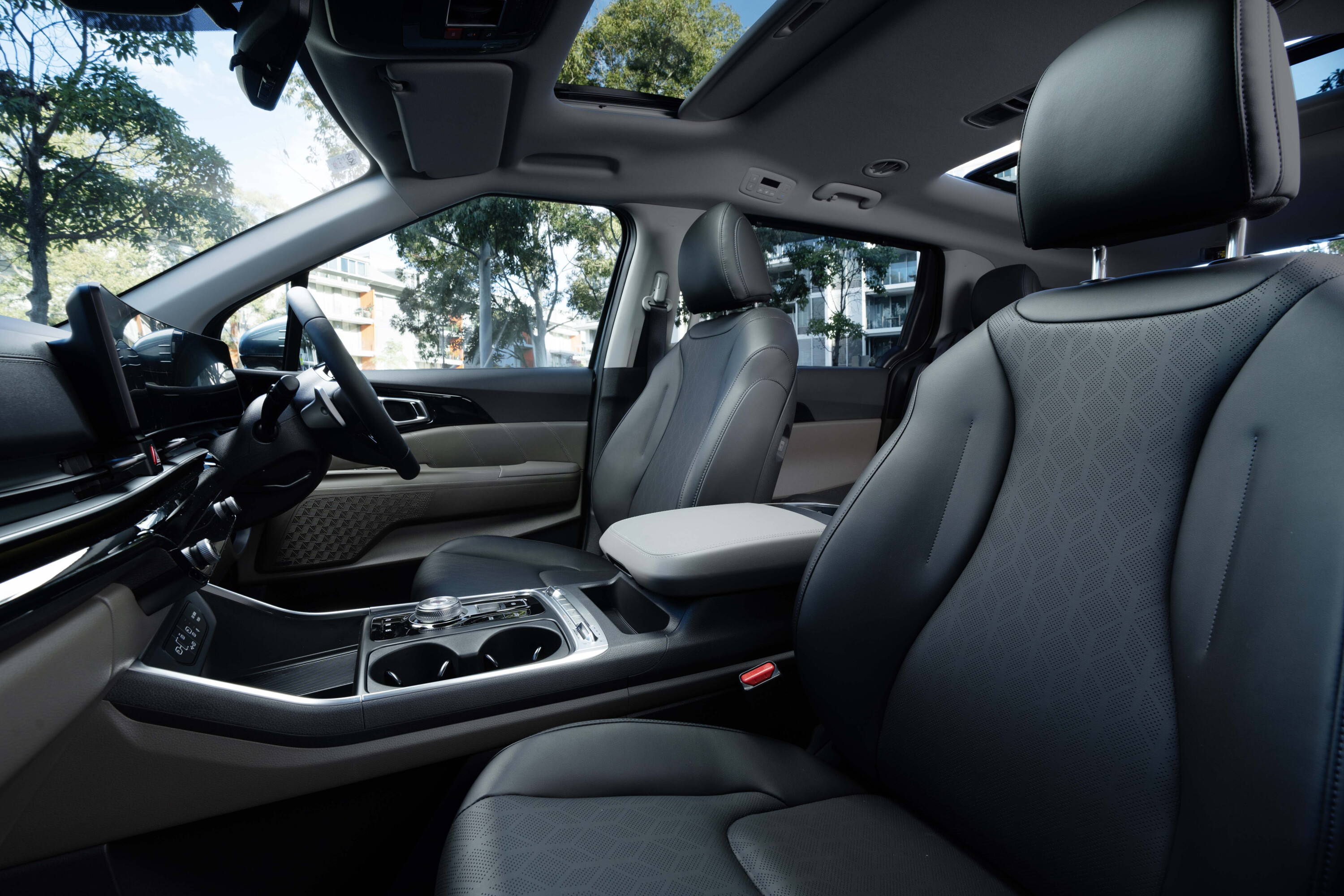
No changes to the 2-3-3 seating layout, which continues to be a marvel of interior space, storage, and comfort.
1
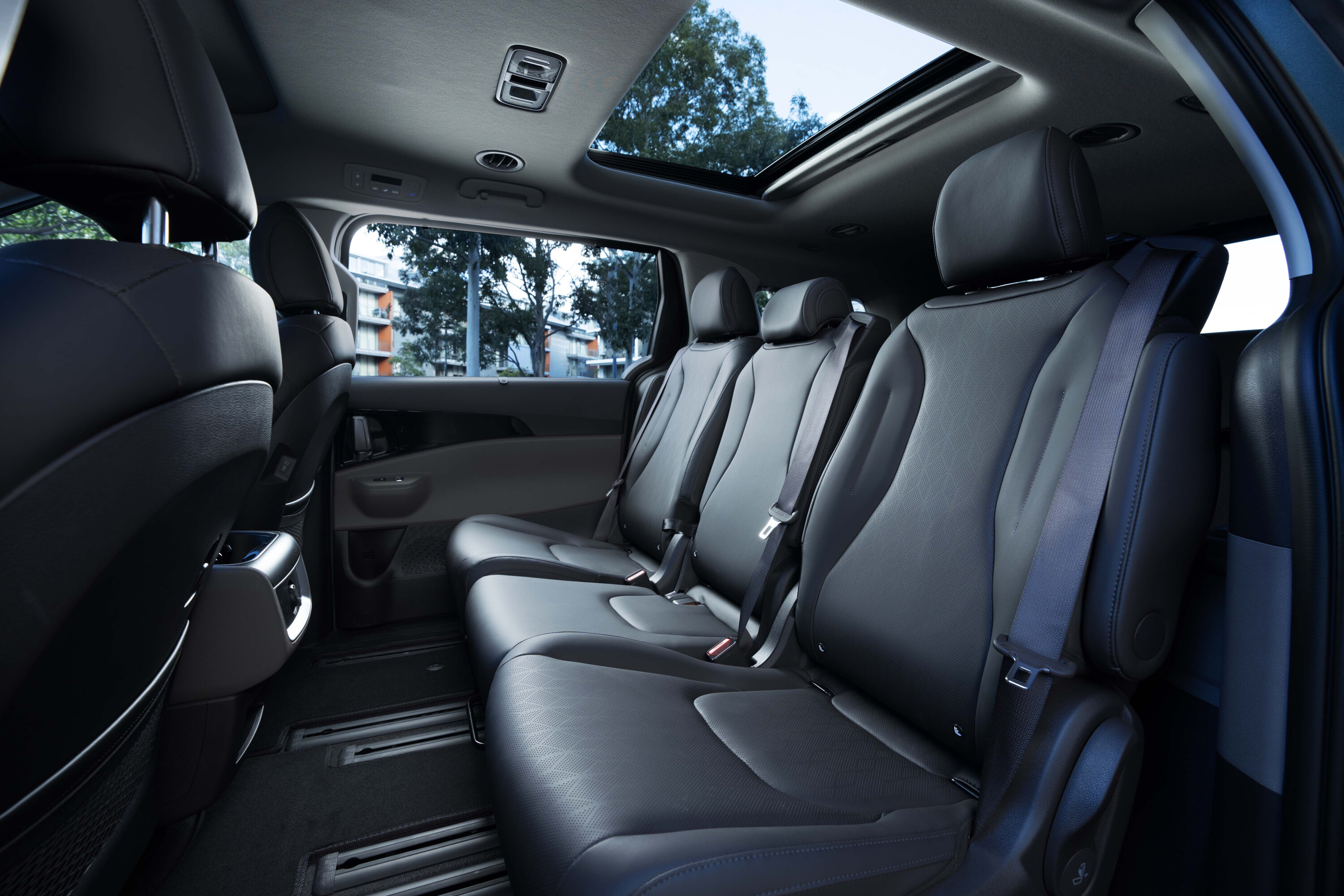
Three adults can sit across both the second and third rows with sufficient comfort, with abundant legroom in the second row and more in the last row than you’ll find in your average seven-seater SUV.
All Carnival variants offer parents the wonderful flexibility of putting younger kids in the rearmost seats thanks to ISOFIX points and top-tether anchors for the outboard positions.
The amount of convenience then simply comes down to the grade you choose. Sport+ and above, for example, come with electric sliding rear doors (that kids also love to use).
2
Boot space
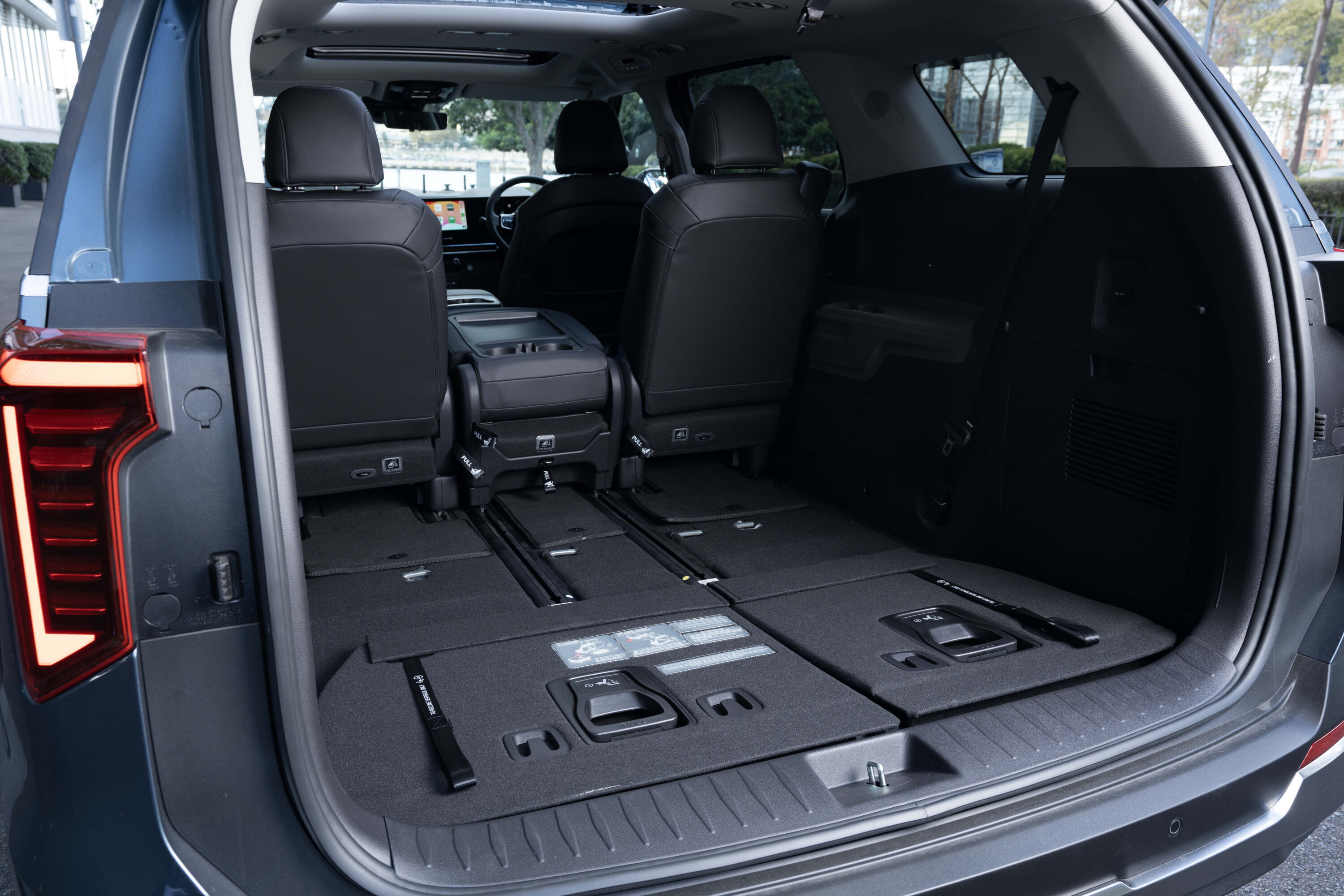
The Kia’s brilliantly deep boot provides a quoted capacity of 627 litres when the rear seats are in play. You won’t find many multi-seater large SUVs capable of swallowing as much luggage while seating seven (or more) occupants.
Push-fold the third-row seats (divided into a 50:50 arrangement) to create a cavernous volume of 2827 litres.
A spare wheel remains stowed under the vehicle floor, around halfway along and on the driver’s side.
3
On the road
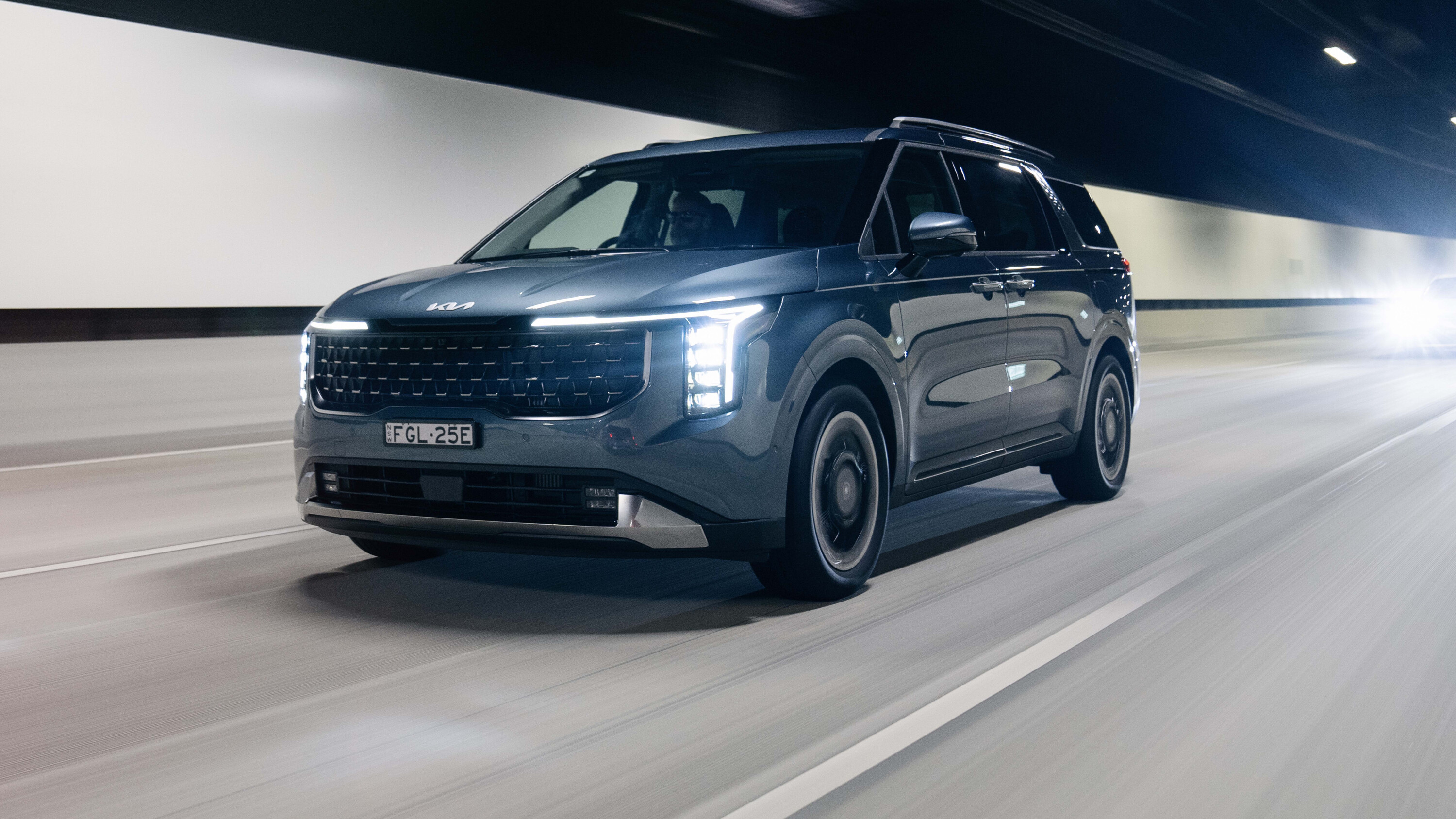
While it’s a shame we’re not able to test the hybrid Carnival, the non-electrified carry-over combustion options remain likeable and appealing for different reasons.
The V6 petrol lacks low-down torque but revs sweetly and is quieter than the four-cylinder turbo-diesel, even if the latter’s traditional clatter is far from offensively noisy.
Chunky torque (440Nm) and lower fuel consumption (6.5L/100km v 9.6L/100km) are undoubtedly what draw the vast majority of Carnival buyers to the diesel.
It will be interesting to see how the powertrain mix evolves once there are more hybrid variants offered. The turbo-petrol/electric motor combination has decent outputs on paper – 183kW/367Nm – and, with official consumption of 5.8L/100km, undercuts the existing engines for efficiency.
1
Hybrid Carnivals will make do with a six-speed auto where the petrol and diesel motors pair with an eight-speed auto that continues to impress with its ability to pick gears decisively and in a timely manner.
There wasn’t a great deal wrong with the way the Carnival previously drove, yet Kia Australia’s local chassis tuning team says it focused on further improving the people-mover’s dynamics on country roads, with particular attention paid to reducing pitch and improving cabin isolation on rougher surfaces.
Suspension tweaks include the introduction of faster-rate Nando dampers and stiffened front springs. There’s also a full recalibration for the power steering.
1
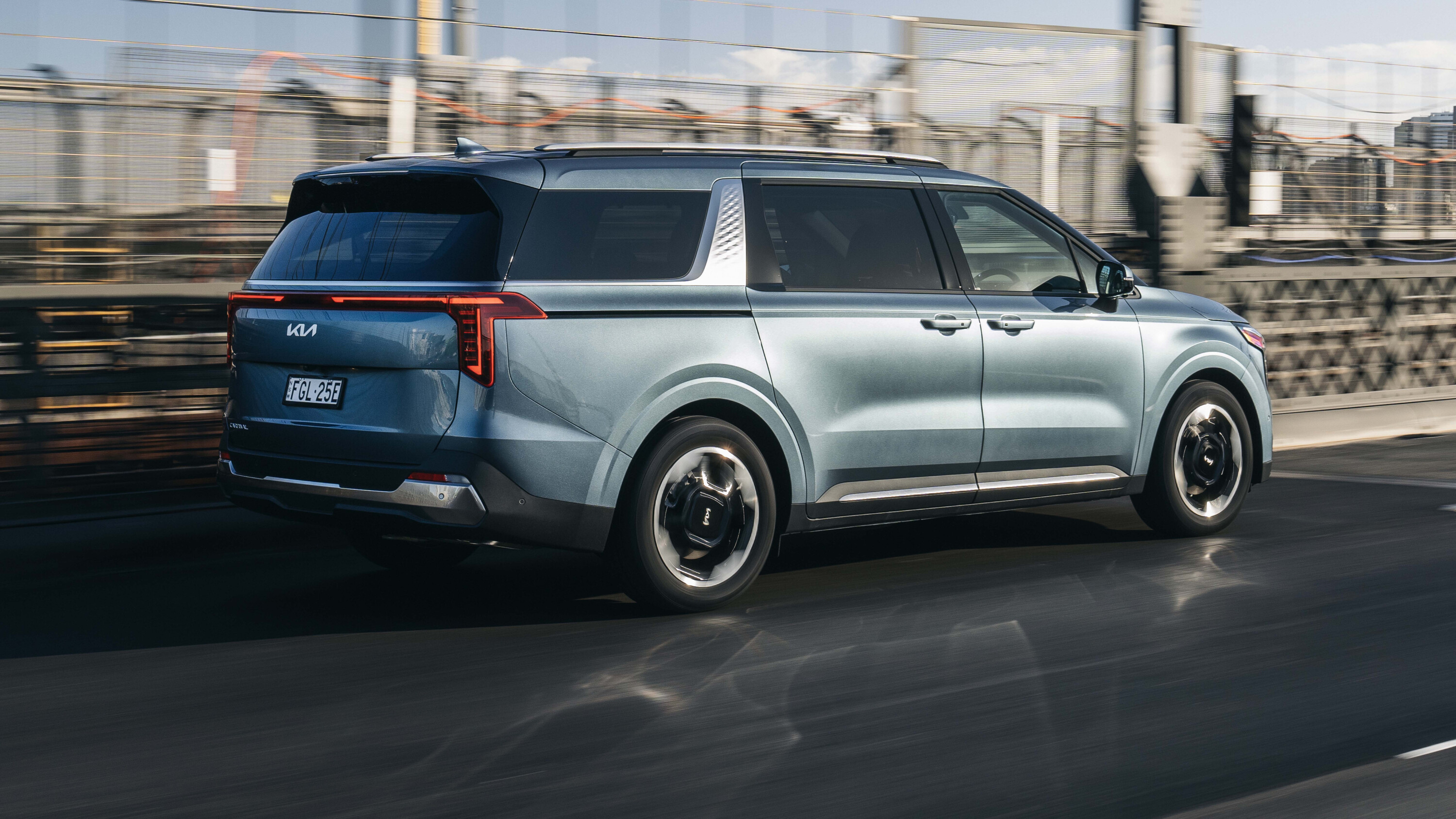
I must admit I noticed the steering change less than I did the Carnival’s step-change body control, its long, 5.3-metre body now remaining flatter through corners and under braking – transitioning from what had been a competent-handling people-mover to being one that is genuinely enjoyable to steer.
While there’s a caveat that our first test car of the day was the lightest (and smallest-wheeled) Carnival, it’s not often that we’ll consciously choose to do an extra ride-handling loop in a people-mover. It was a challenging course, too, just north of Sydney and popular with not only the Hyundai and Kia local testing teams but also the WhichCar test team.
The 2025 Carnival’s handling is reminiscent of the Honda Odyssey, a driver’s people-mover before it was ruined by a terrible ride with the last generation.
If there are any downsides to the suspension changes, there’s perhaps been a slight reduction in the Carnival’s low-speed bump absorption, but it generally remains a comfortable ride – at its best, naturally, on the 17s of the base S.

1
The 19s of a GT-Line Lite diesel we also drove made for a slightly fussier ride.
Our biggest disappointment in terms of driving experience, however, is Kia’s incessantly annoying warning chimes and beeps, especially the speed limit notification that ‘chastises’ the driver every time they stray slightly over a posted speed limit. It’s compounded by a road-sign-spotting camera that sometimes misses a change of limit or can’t recognise when a school zone is out of hours.
The lane-keep system also remains too sensitive, trying to correct the steering even when the Carnival is well clear of any lane markings.
It is simple enough to turn off the latter via a button on the steering wheel, but switching off the speed limit warning requires delving into the central touchscreen. Both are default settings, however, so the process must be repeated every time you start the vehicle.
2
- What is a Powertrain or Drivetrain?
- Power vs torque
- Car suspension explained
- Automatic transmissions (‘gearboxes’) explained
- Chassis control systems explained
- Car vs Ute vs SUV: How the vehicle you buy should guide the way you drive
- What is the WLTP emissions and range test?
The Carnival’s airbag count expands with the addition of a front-centre airbag to match the Staria.
And as with the Hyundai, curtain airbags fully extend to the third row – unlike Kia’s seven-seater large SUV, the Sorento, which covers the third-row glass only.
Safe exit warning and assist are standard, which not only flash if the rear doors are about to open with traffic approaching but auto-lock them, too.
1
Adaptive cruise control with stop-and-go functionality is standard from the base model, with a lane-following steering feature on Sport and above. Sport Plus grade and higher add lane-change assistance.
Flagship GT-Line models bring a head-up display, digital rear-view mirror, and key-fob-controlled out-of-vehicle parking for tight spaces.
The Carnival has a five-star maximum crash rating from ANCAP, tested in 2021 and with strong scores for both adult and child occupants.
2
VERDICT
Frustratingly persistent yet unwarranted driver ‘aids’ take some of the gloss away – and indeed marks – from the 2025 Carnival.
Yet you still don’t need to spend long in this people-mover to understand its immense popularity.
That it now looks more contemporary with its styling revisions and tech-enhanced dash and is even more appealing for keen motorists, brings added bonuses.
We just won’t know the absolute best version to buy until the hybrid arrives.
MORE
Everything Kia
| 2024 Kia Carnival specifications | 3.5-litre petrol | 2.2-litre diesel | 1.6-litre petrol hybrid |
|---|---|---|---|
| Engine | V6 DOHC GDi | In-line 4-cylinder, 16 valve CRDI | 4-cylinder petrol-electric hybrid |
| Capacity | 3.5 litres | 2.2 litres | 1.6 litres |
| Max power | 216kW | 148kW | 183kW |
| Max torque | 355Nm | 440Nm | 367Nm |
| Transmission | 8-speed automatic | 6-speed automatic | |
| Length | 5155mm | ||
| Width | 1995mm | ||
| Height (with roofrails) | 1775mm | ||
| Wheelbase | 3090mm | ||
| Ground clearance | 162mm | ||
| Boot (all seats up) | 627 litres | ||
| Boot (3rd row folded) | 2827 litres | ||
| Fuel consumption (combined) | 9.6L/100km | 6.5L/100km | 5.8L/100km |
| Kerb weight | 2206kg | 2245kg | 2253kg |
| Towing capacity (braked) | 2000kg | 1134kg | |
| Front brakes | 325mm ventilated disc | ||
| Rear brakes | 325mm solid disc | ||
| Front suspension | McPherson Strut | ||
| Rear suspension | Multi-link | ||
| Wheel size | 17-inch (base) | ||
| Tyres | 235/65 R17 | ||
| Price (before on-road costs) | $50,150 | $52,380 | $76,210 |
The updated 2025 Kia Carnival has introduced the people-mover’s first hybrid powertrain – a model that is both the most fuel-efficient but also the most expensive.
Kia Australia says supply issues have prompted it to offer the petrol-electric Carnival as a $76,210 flagship GT-Line.
More affordable hybrid models are in the pipeline, but for now the sole Hybrid GT-Line sits atop a range dominated by the carry-over V6 petrol and four-cylinder diesel – offered in all five trim grades.
1
Trim-grade names now align with other Kia models, changing from S/Si/SLi/SE/Platinum to S, Sport, Sport+, GT-Line Lite (a rebranded Special Edition), and GT-Line.
Diesel models carry a $2230 premium over the petrol.
Kia has yet to officially release the Hybrid’s fuel consumption, though confirmed to WhichCar the accuracy of the 5.8 litres per 100km figure on the federal government’s Green Vehicle Guide website.
This betters the 6.5L/100km of the four-cylinder turbo diesel model that has traditionally been the most frugal (and most popular) Carnival, while it’s 40 percent more efficient than the petrol V6’s 9.6L/100km.
1
The Kia Carnival Hybrid powertrain combines a 1.6-litre turbocharged petrol four-cylinder with an electric motor, with 183kW/367Nm sent to the front wheels via a six-speed auto.
The 3.5-litre V6 petrol is the most powerful Carnival engine with 216kW, while the diesel is the least powerful at 148kW but offers the most torque, rated at 440Nm (V6 petrol 355Nm). All Carnivals are front-wheel drive.
Government approval documents have revealed the Hybrid will have a 1000kg braked towing capacity – half the figure of the petrol and diesel models.
Click below for our full Kia Carnival Pricing and Specifications story as well as our first local drive of the updated 2025 model.
MORE
Everything Kia
The 2024 GWM Haval Jolion, a small SUV, is slated for a facelift this year according to recent documents filed by China’s GWM in the Federal Government’s new-vehicle approval database.
The documents unveil two new Haval Jolion variants, labeled ‘A01 FL [facelift],’ showcasing a refreshed design compared to the current model.
Currently, the Haval Jolion is available in five options, including two hybrid variants.
Let’s explore what the top-spec Ultra Hybrid variant has to offer.
Pricing & Features
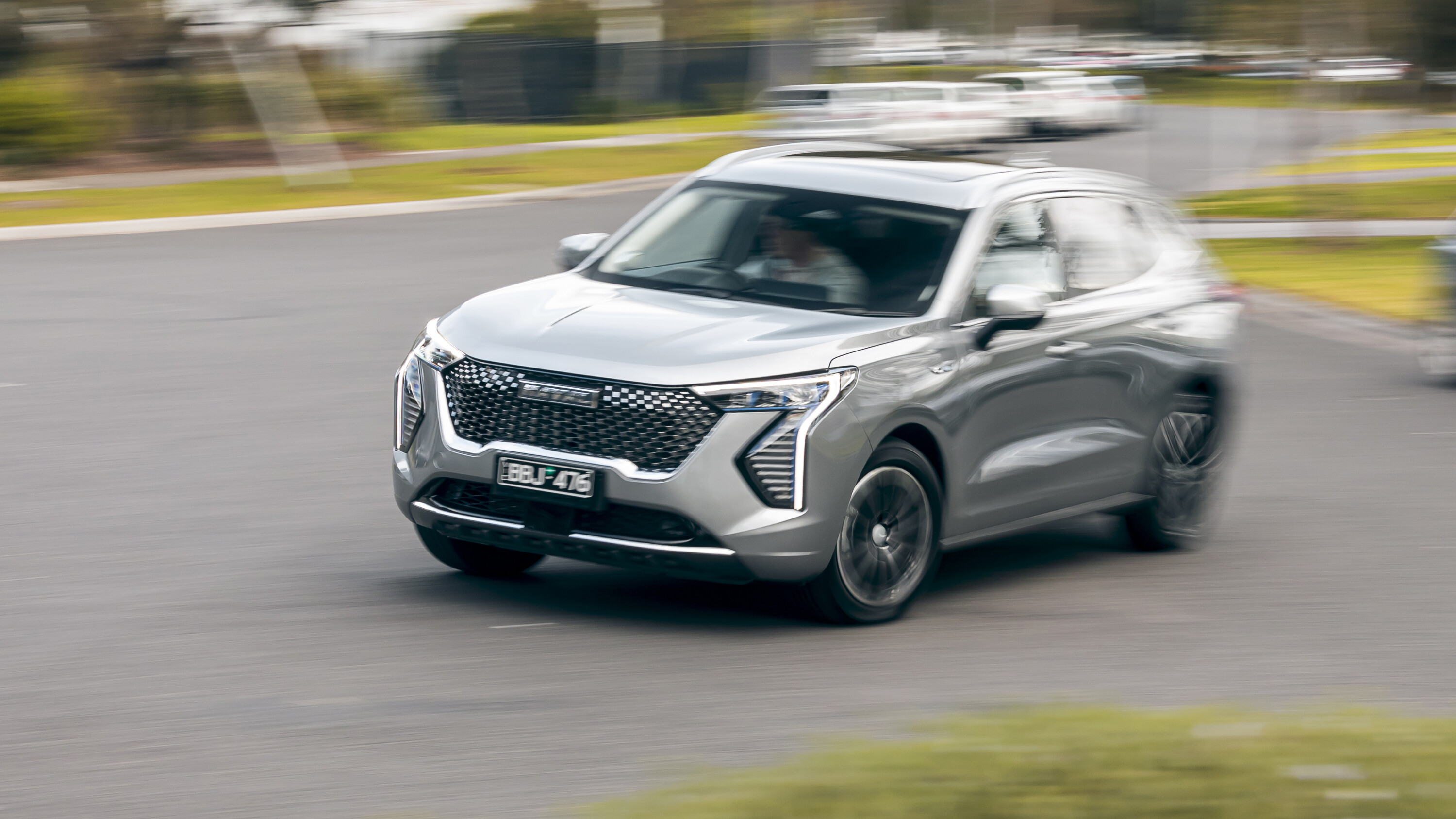
At $37,990 drive-away, the Ultra Hybrid tops the Jolion range as the model that offers the most in the line-up.
Hybrid versions of the Jolion are equipped with a 1.5-liter naturally aspirated four-cylinder petrol engine producing 70kW and 125Nm, paired with a 110kW electric motor. Together, they deliver a combined output of 139kW of power and 375Nm of torque.
1
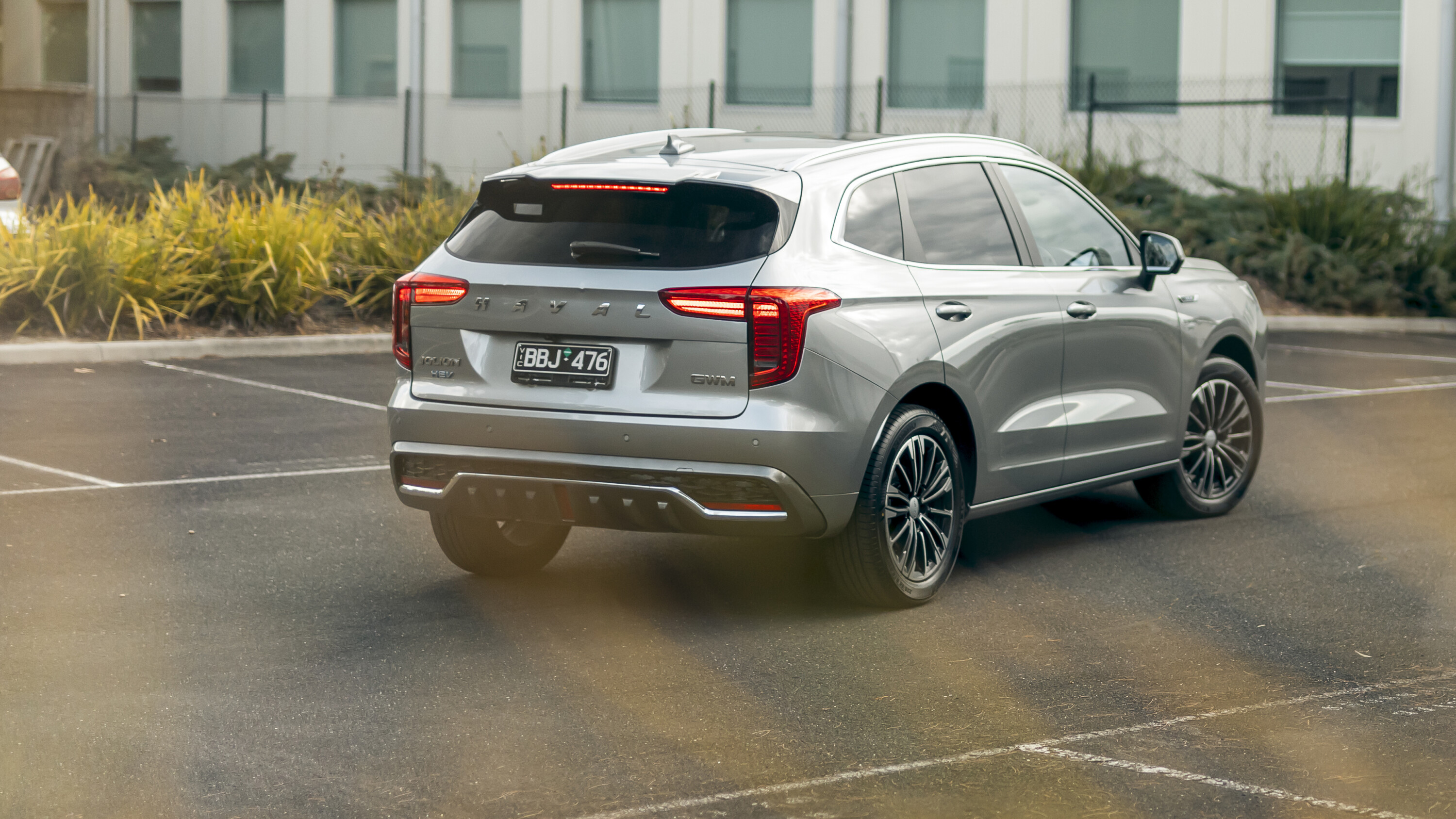
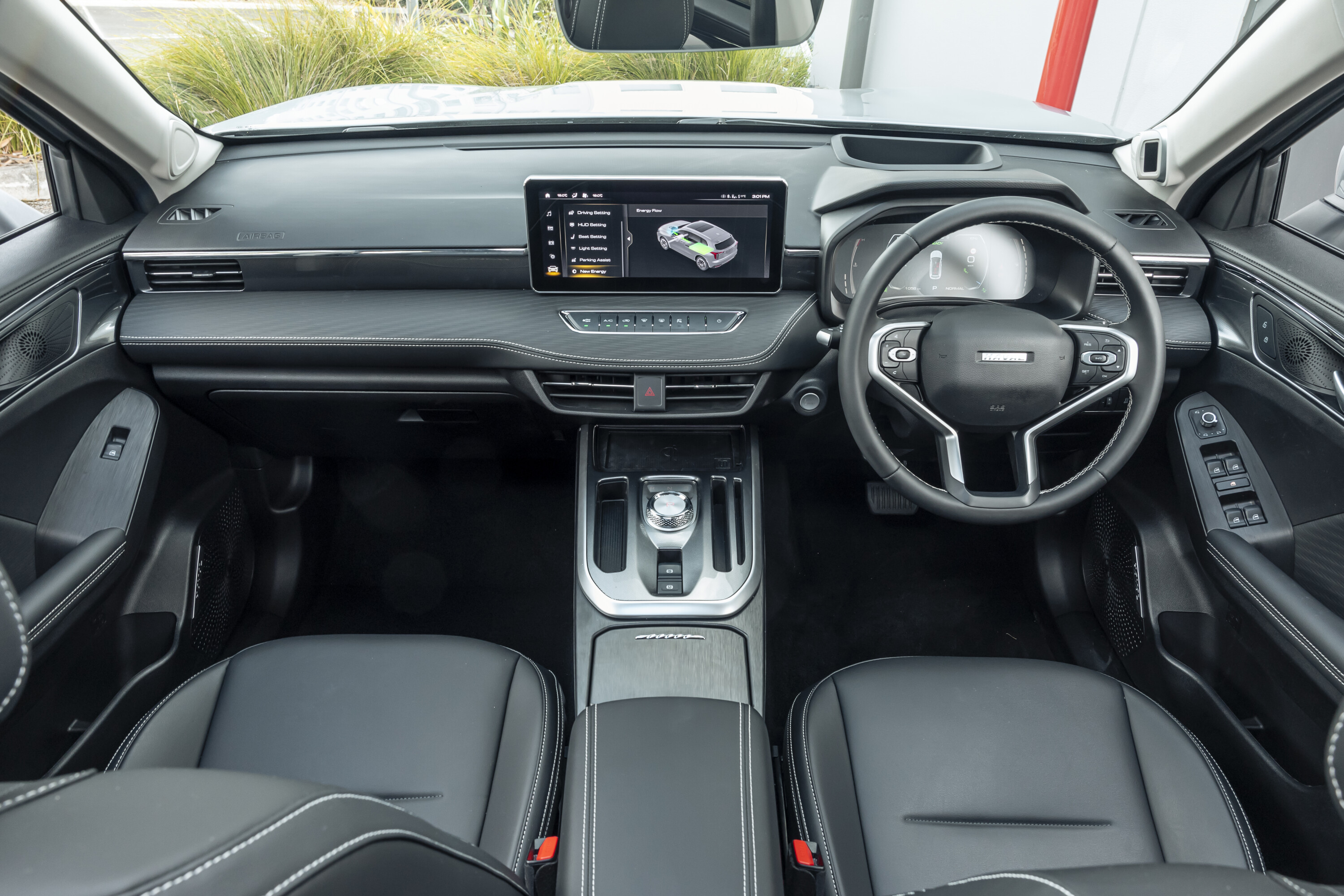
The vehicle boasts a range of premium features including LED headlights with sequential daytime running lights, 18-inch alloy wheels, and a panoramic sunroof. Inside, you’ll find a head-up display, a 7.0-inch digital instrument cluster and a 12.3-inch central touchscreen with smartphone mirroring, and Bluetooth. Additional amenities include keyless entry with push-button start, tinted windows, and heated front seats.
1
Safety
The Haval Jolion achieved a five-star ANCAP test rating, encompassing both petrol and hybrid variants.
In the safety assessments, the SUV earned a 90% score for adult occupant protection and 84% for child occupant protection.
All models come standard with seven airbags and are equipped with Automatic Emergency Braking (AEB), rear cross traffic alert and braking, lane keep assist, blind spot monitors, and rear parking sensors.
1
Key Rivals
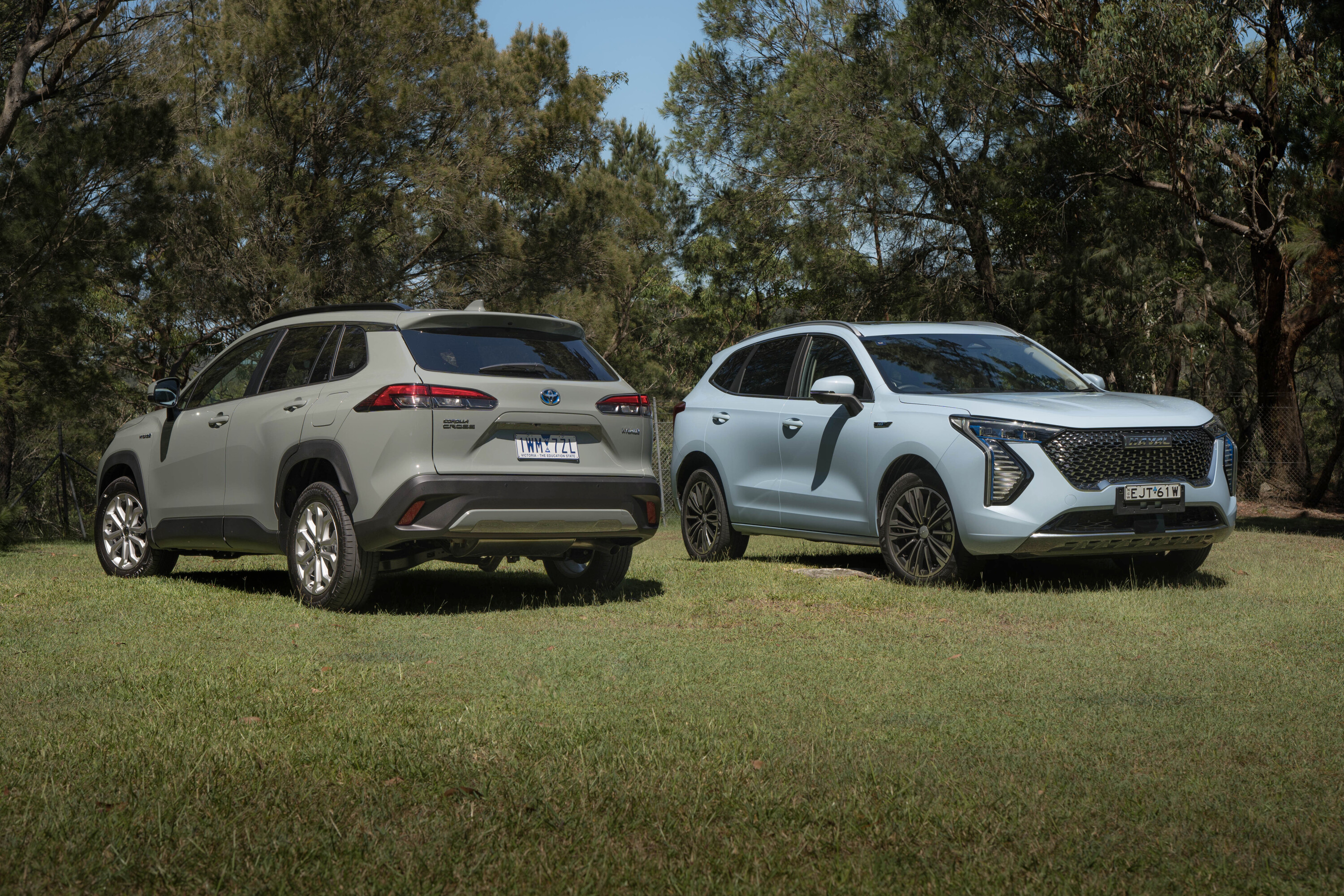
The small and compact SUV segment has become one of the most popular categories for new cars in Australia. Finding key competitors that are hybrid is easy, including:
1
Should I put it on my shortlist?
The 2024 GWM Haval Jolion Ultra Hybrid stands out as an impressive compact SUV. It offers affordability, ample space, a pleasant driving experience, and excellent fuel economy around town.
In addition to being relatively inexpensive to purchase, it is also cost-effective to service and maintain. The SUV is backed by GWM’s generous seven-year/unlimited-kilometre warranty, with the battery covered for eight years/unlimited. While it has its quirks, the Jolion Ultra Hybrid offers great value for money for those who can accommodate them.
MORE
Everything Haval
The 2024 GWM Haval Jolion is a small SUV that is set to receive a facelift this year according to new documents filed by China’s GWM with the Federal Government’s new-vehicle approval database.
The images reveal two new Haval Jolion variants, labeled as the ‘A01 FL [facelift],’ featuring a new design compared to the current model.
But ahead of the face-lifted model the Haval Jolion is today available in five options, including two hybrid variants.
Let’s take a look into what the entry-level Premium variant brings to the table.
Pricing & Features
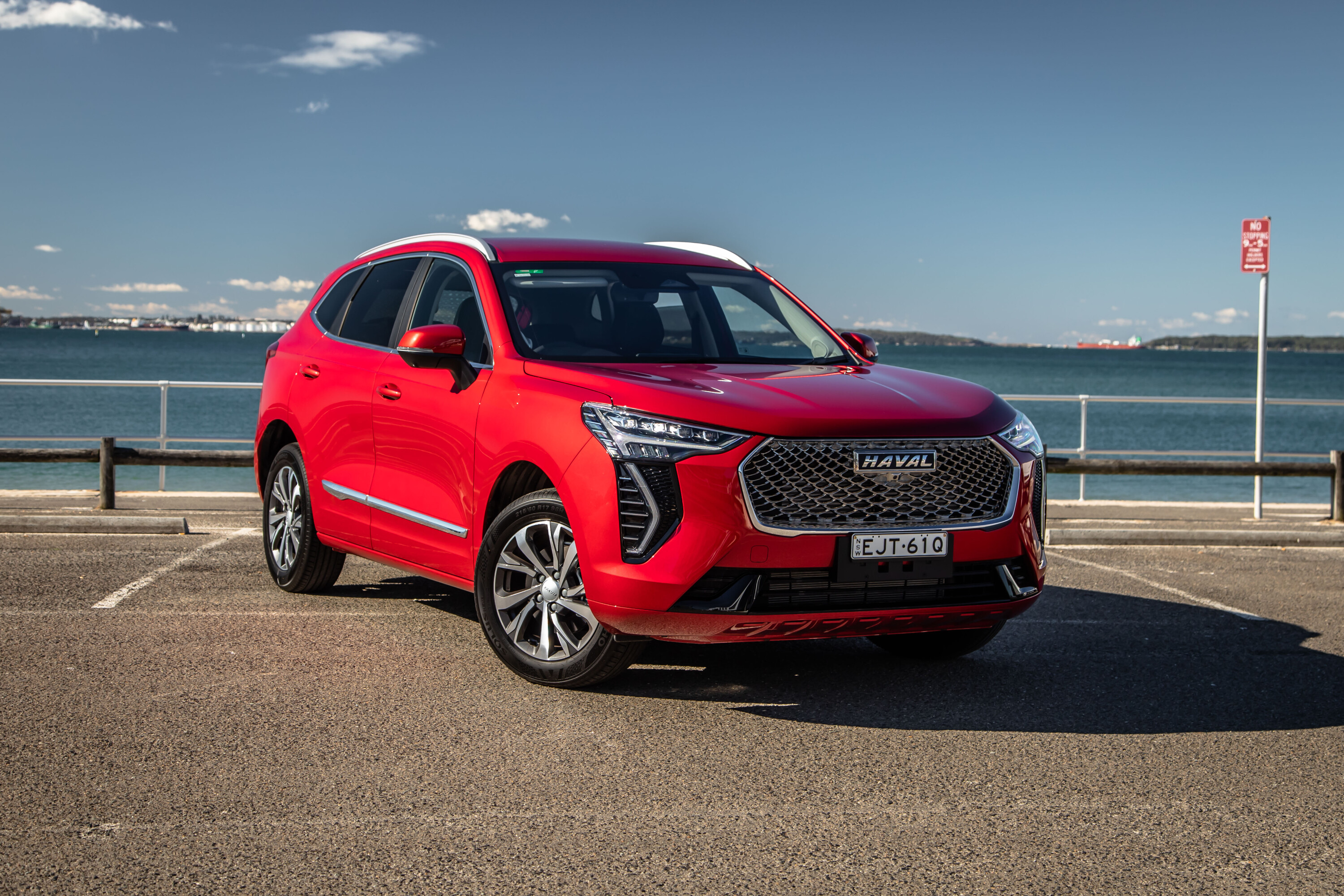
Starting from the very low price of $25,990 drive-away, the Haval Jolion Premium is the most affordable variant in the line-up.
It’s powered by a 1.5-litre turbocharged petrol engine producing 110kW of power and 220Nm of torque and uses 91RON fuel.
1
The entry-level Premium comes standard with 17-inch alloys, roof rails, automatic windscreen wipers, cloth seat trim and power adjustable door mirrors.
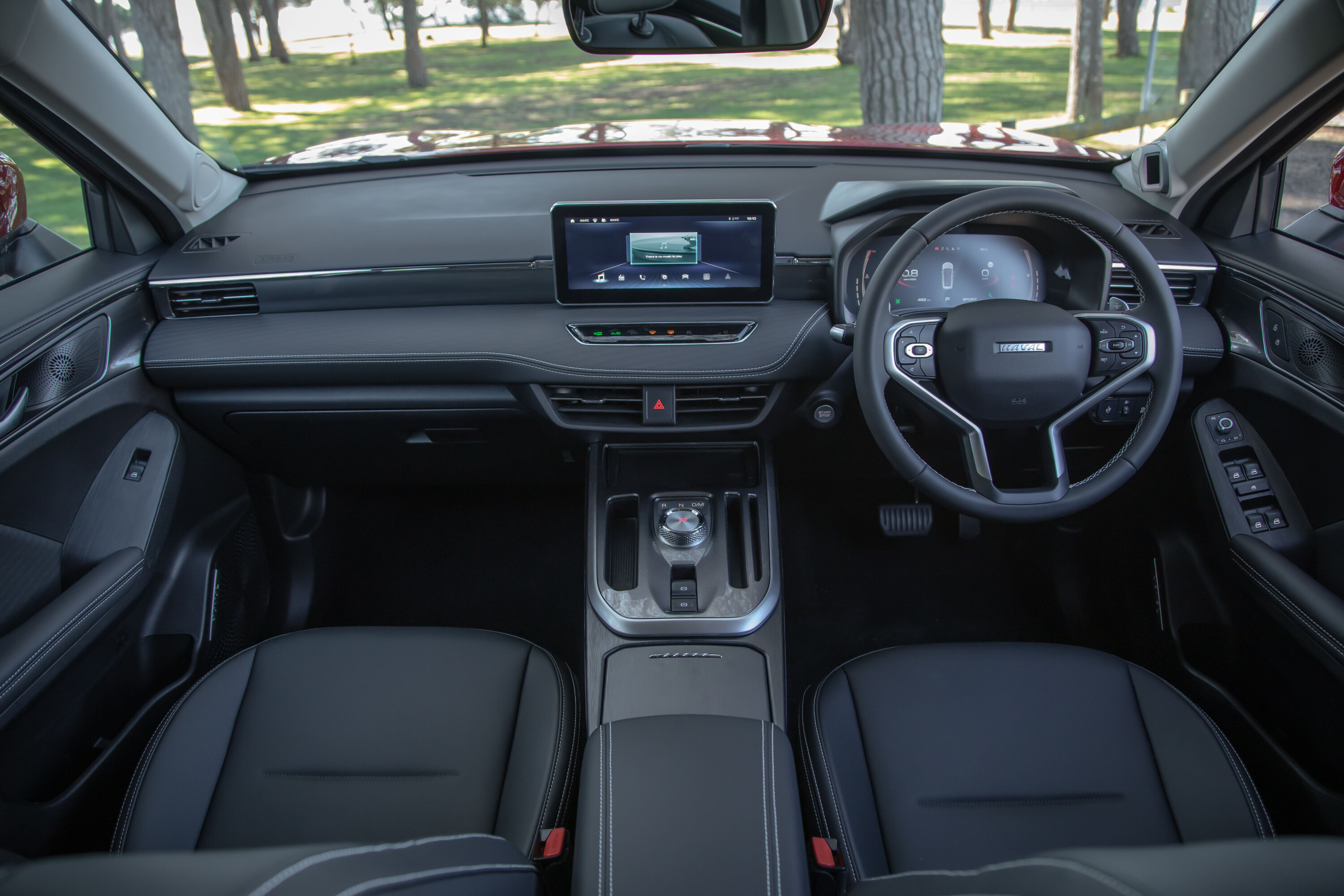
Inside drivers are treated to an array of tech such as a 10.25-inch infotainment screen, a 3.5-inch driver display, four speakers, Apple CarPlay and Android Auto connectivity.
1
Safety
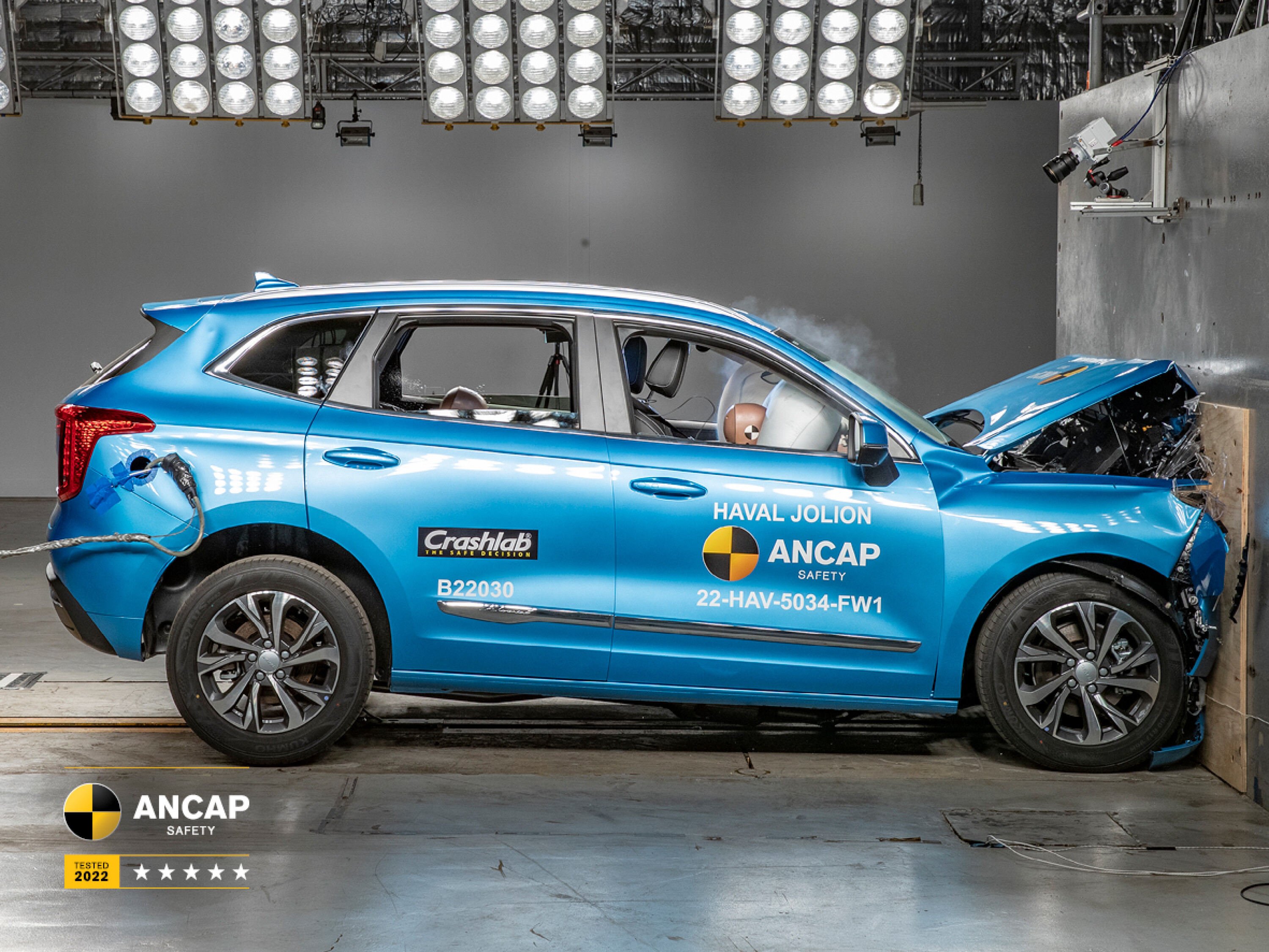
The Haval Jolion received a five-star ANCAP test rating covering all it’s petrol and hybrid variants.
The SUV scored 90% in the adult occupant protection category, as well as 84% for child occupant protection.
All models receive seven airbags and come equipped with AEB (Automatic Emergency Braking), Rear cross traffic alert and braking, lane keep assist, blind spot monitors and rear parking sensors.
1
Key Rivals
The small and compact SUV segment in Australia has become one of this countries most popular for new cars. Key competitors aren’t hard to find, such as:
1
Should I put it on my shortlist?
The GWM/Haval brand have popped up on Australian shores offering vehicles that scream value. And that shines through via the Haval Jolion Premium that sits at a price-point akin to hatchbacks.
If you’re after a good all-round small SUV that misses out on some niceties of higher grades, and also of competitors, but puts about $5k back in your pocket then you’re looking at your perfect car.
MORE
Everything Haval
Chery is aiming to be the pick for large families on a budget after announcing sharp pricing for its new Tiggo 8 seven-seater SUV.
The Tiggo 8 is priced from $41,990 drive-away, remaining comfortably under $50,000 for the flagship model that’s $47,990 with all on-road charges included.
The mid-spec Tiggo 8 Elite costs $43,990 drive-away.
Chery’s pricing structure means two of the three Tiggo 8 grades – mid-range Elite and top-spec Ultimate – carry just a $2000 premium over its Tiggo 7 medium SUV despite key advantages including larger size, more powerful turbo-petrol engine, and a pair of extra seats.
The Tiggo 8 Urban is priced $5000 above the Tiggo 7 Urban.
The majority of large SUVs cost in excess of $50,000 before on-road costs are added, though the 4.7-metre Tiggo 8 is on the smaller scale of the segment – similar to the related Skoda Kodiaq and Volkswagen Tiguan Allspace.
There are two cheaper seven-seater SUVs in Australia – LDV’s D90 costs $38,937 drive-away while Mahindra’s XUV700 is even more affordable at $36,990 drive-away.
This story, first published in February, has been updated to include these new details – including the new launch window of May, out from the April date previously announced.
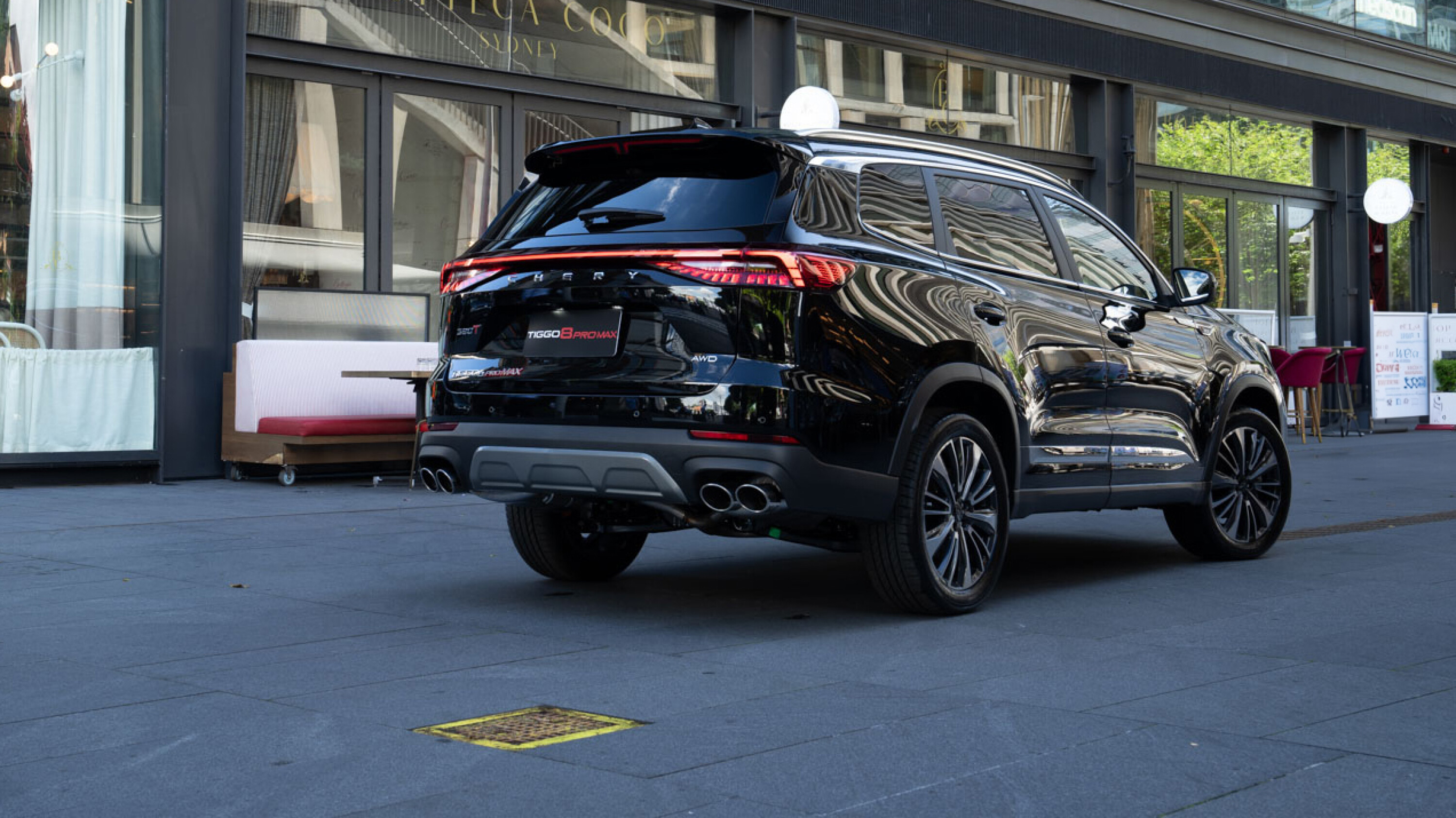
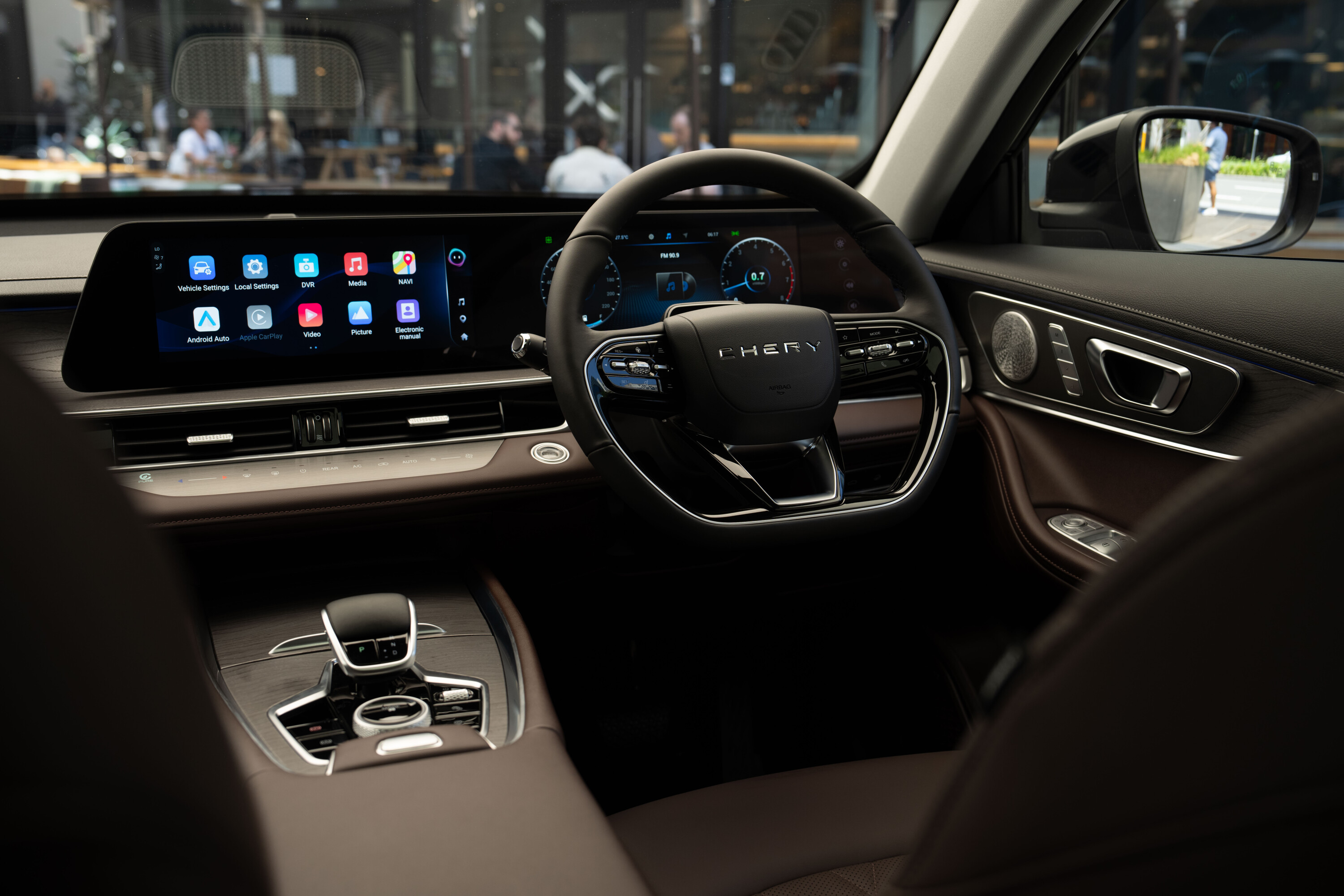
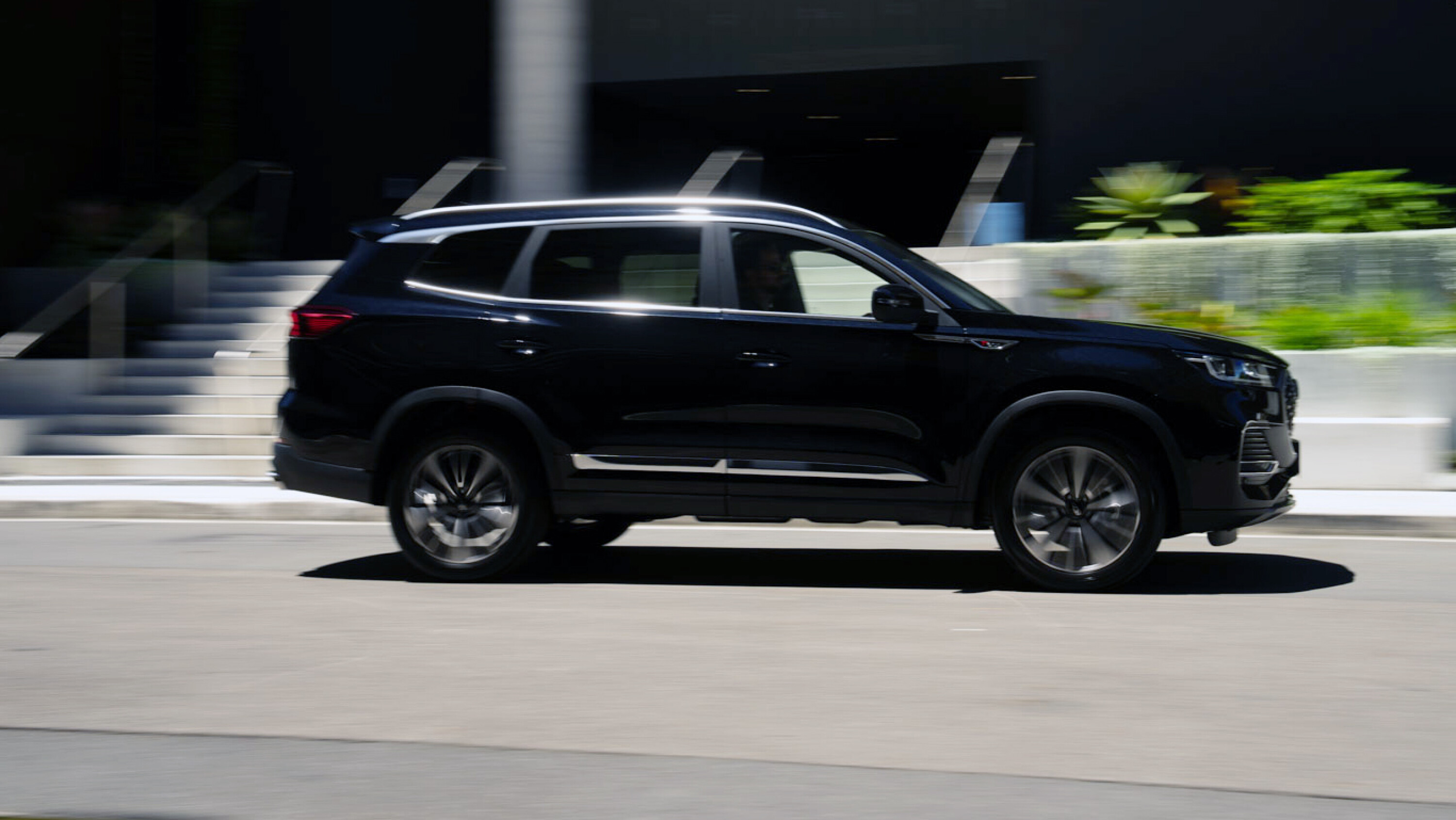
As though taking a cue from Apple’s iPhone naming conventions, the Tiggo 8 Pro Max will arrive as Chery’s largest and most powerful model, with space for seven and a bigger 2.0-litre turbo petrol engine.
1
How big is the Chery Tiggo 8 Pro Max?
At 4722mm long with a 2710mm wheelbase, the Tiggo 8 is 210 / 40mm longer than the two-row Tiggo 7 – which should make it a more compelling option for families with three-or-more children.
In sharing its platform with the 7, the bigger of the Tiggo SUVs will still be among the smaller in Australia’s large-SUV class. The Kia Sorento measures 4180mm long (2815mm wheelbase), while the outgoing first-gen Skoda Kodiaq is shorter at 4697mm (2791mm wheelbase) – although the new second-gen Kodiaq is a touch longer at 4758mm.
Boot space
Boot space in the Chery Tiggo 8 Pro Max is listed at 117 litres (VDA) with all seven seats upright, growing to 479 litres with the third row lowered.
1
Powertrain
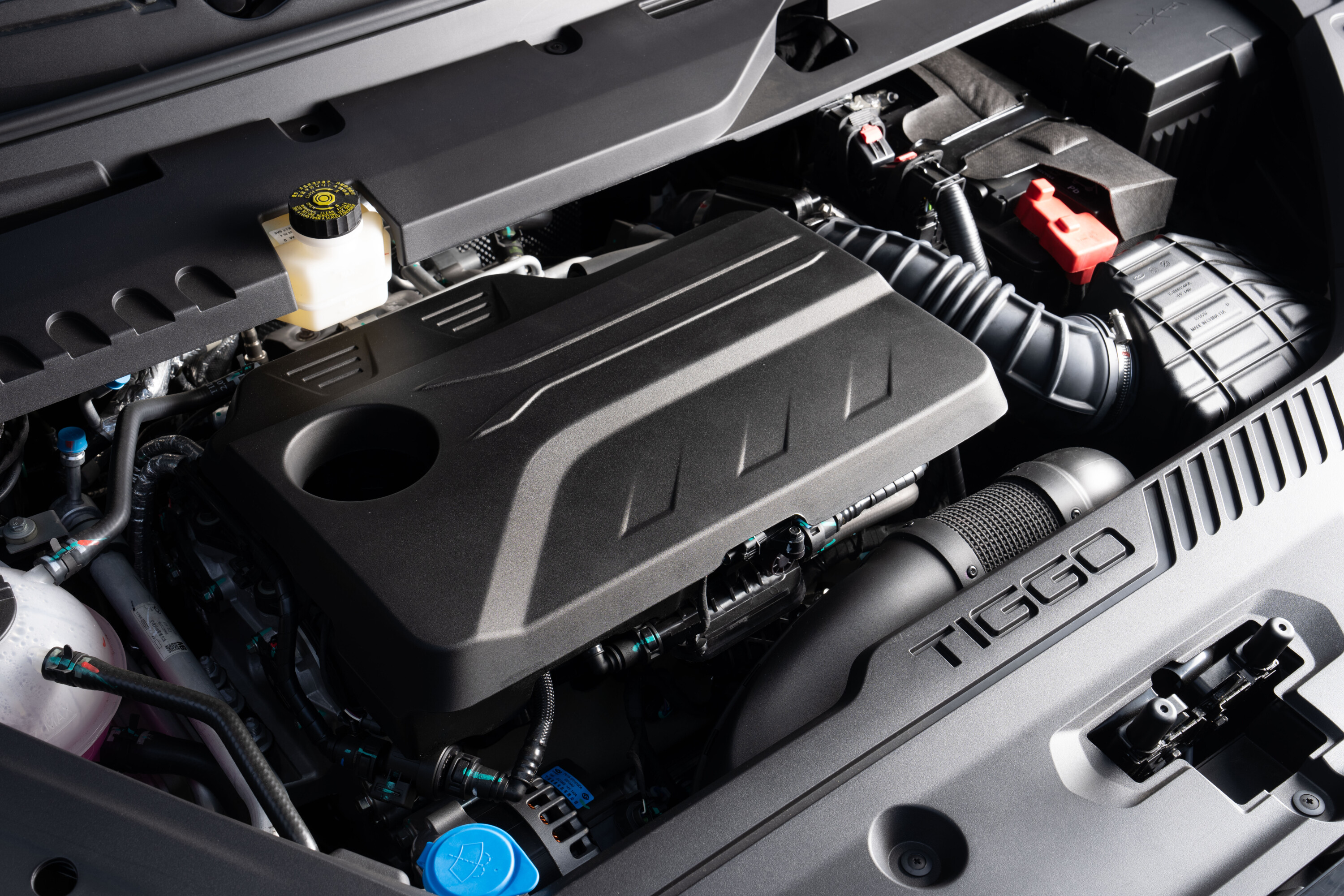
All Tiggo 8 models are powered by a Euro 6 2.0L turbo petrol four-cylinder engine producing 180kW and 375Nm – up from the smaller Tiggo 7’s 137kW/275Nm 1.6-litre unit.
A seven-speed automatic transmission is standard across the range, joined by the option of either front- or all-wheel drive depending on the variant chosen.
Fuel consumption is rated at 8.1L/100km, with CO2 emissions listed at 191g/km for the Urban and Elite 2WD models.
Features
Three trim grades are offered, with the entry Urban and mid-spec Elite models both configured with front-wheel drive, while the top-shelf Ultimate gains all-wheel drive.
| 2024 Chery Tiggo 8 Pro Max Urban | |
|---|---|
| 18-inchu200b alloy wheels | u2018Hello Cheryu2019 voice command |
| 18 advanced driver assistance systems | 8 speaker Sony sound system |
| Heated and ventilated front seats | Apple CarPlay and Android Auto |
| Dual 12.3-inch instrument and Multimedia screens | Wireless charging |
| Inbuilt sat-nav | 360-degree camera |
| Air quality Management system | Ambient interior lighting |
| Black synthetic leather seats | LED headlights and tail-lights |
| Three drive modes | |
| 2024 Chery Tiggo 8 Pro Max Elite adds: | |
|---|---|
| Power tailgate | Third row air vents with fan speed control |
| Heated exterior mirrors | Illuminated u201cTiggou201d door sills |
| Built-in dashcam | Retractable Cargo blind |
| 2024 Chery Tiggo 8 Pro Max Ultimate AWD adds: | |
|---|---|
| All Wheel Drive System | Panoramic sunroof |
| 19-inchu200b alloy wheels | Optional Brown synthetic leather seats |
| Fragrance system | 10 speaker Sony sound system |
| Puddle laps | Privacy glass |
Safety
Full safety specifications are still to come, but the Chery Tiggo 8 Pro Max is currently confirmed to feature “18 kinds of advanced driving assistance functions”, including adaptive cruise control (ACC), autonomous emergency braking (AEB) and lane keeping assistance (LKA) “to mention a few”.
An integrated ‘dashcam’ (officially “driver view recorder”) is also built into the Tiggo 8 Pro Max’s windscreen area.
1
Warranty
As with the Tiggo 7 Pro, the Tiggo 8 Pro Max will be backed by Chery’s seven-year / unlimited km warranty, seven-year capped-price servicing and up to seven years of roadside assistance.
Watch for more details to come in the weeks ahead.
1
Snapshot
- 2024 BYD Sealion 6: Australian details confirmed
- First non-electric vehicle from BYD in Australia
- Positioned in RAV4 Hybrid territory with start price below $50,000
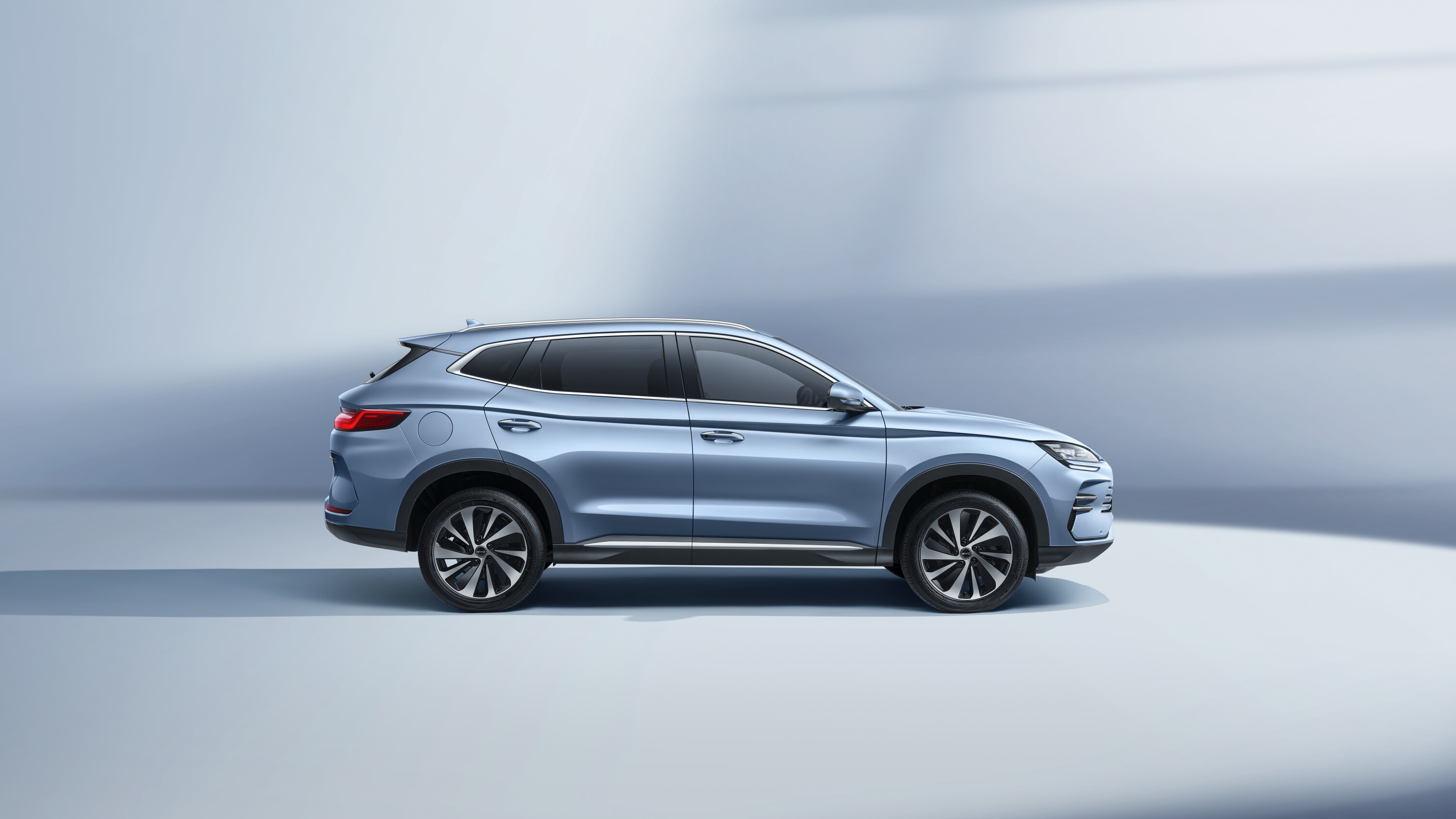
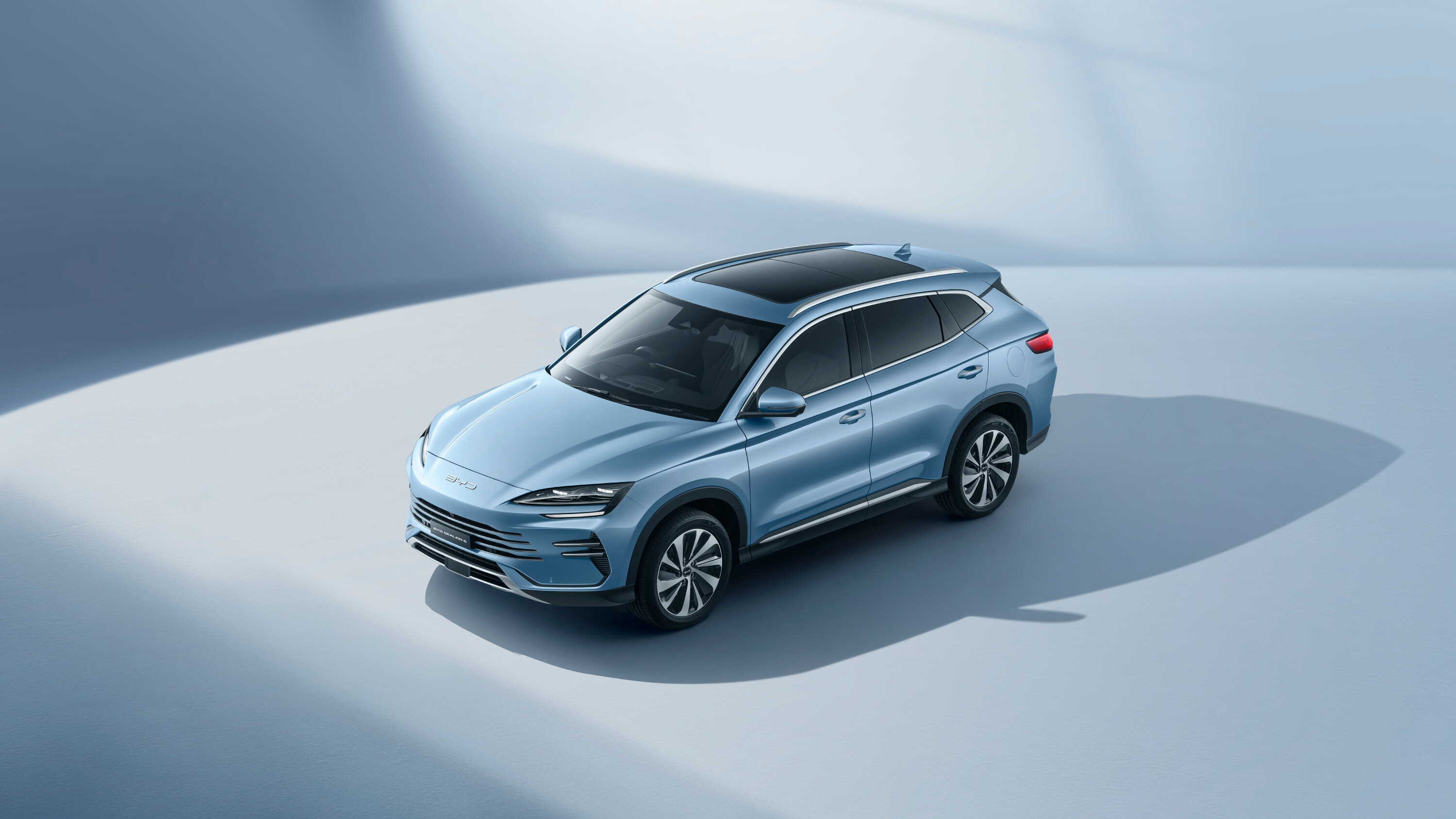
The 2024 BYD Sealion 6 midsize plug-in hybrid SUV has arrived in Australia with the Toyota RAV4 in its sights.
Formerly titled Seal U (it’s still called that in Europe), the Sealion 6 has likely been renamed to avoid confusion with the existing Seal electric sedan and tie it in with the similarly-sized but otherwise unrelated Sea Lion 07 EV unveiled in November 2023.
All versions sold in Australia will be fitted with BYD’s ‘Dual-Motor Intelligent’ (DM-I) petrol-electric plug-in hybrid (PHEV) powertrain, becoming the first non-electric vehicle from the Chinese carmaker. It’ll be joined by the Shark PHEV ute in the coming months.
1
The Sealion 6 is a rival to plug-in hybrid Mitsubishi Outlander, Mazda CX-60 and MG HS models, but it’s priced closer to Australia’s top-selling conventional hybrid car, the RAV4.
Priced from $48,990 before on-road costs, the entry-level, front-wheel-drive Sealion 6 Dynamic almost matches the Toyota RAV4 XSE FWD ($48,910), while the top-of-the-range Sealion 6 Premium AWD is available for $52,990 – undercutting the RAV4 Cruiser AWD ($54,410).
A Mitsubishi Outlander PHEV is between $57,290 and $73,790 before on-road costs, while a Mazda CX-60 PHEV is even dearer at between $73,600 and $86,800 plus on-road costs.
The MG HS PHEV – marketed as the HS Plus EV – is cheaper than the BYD Sealion 6 at between $43,690 and $46,690 drive-away, but there is an all-new HS due later this year with price rises likely.
1
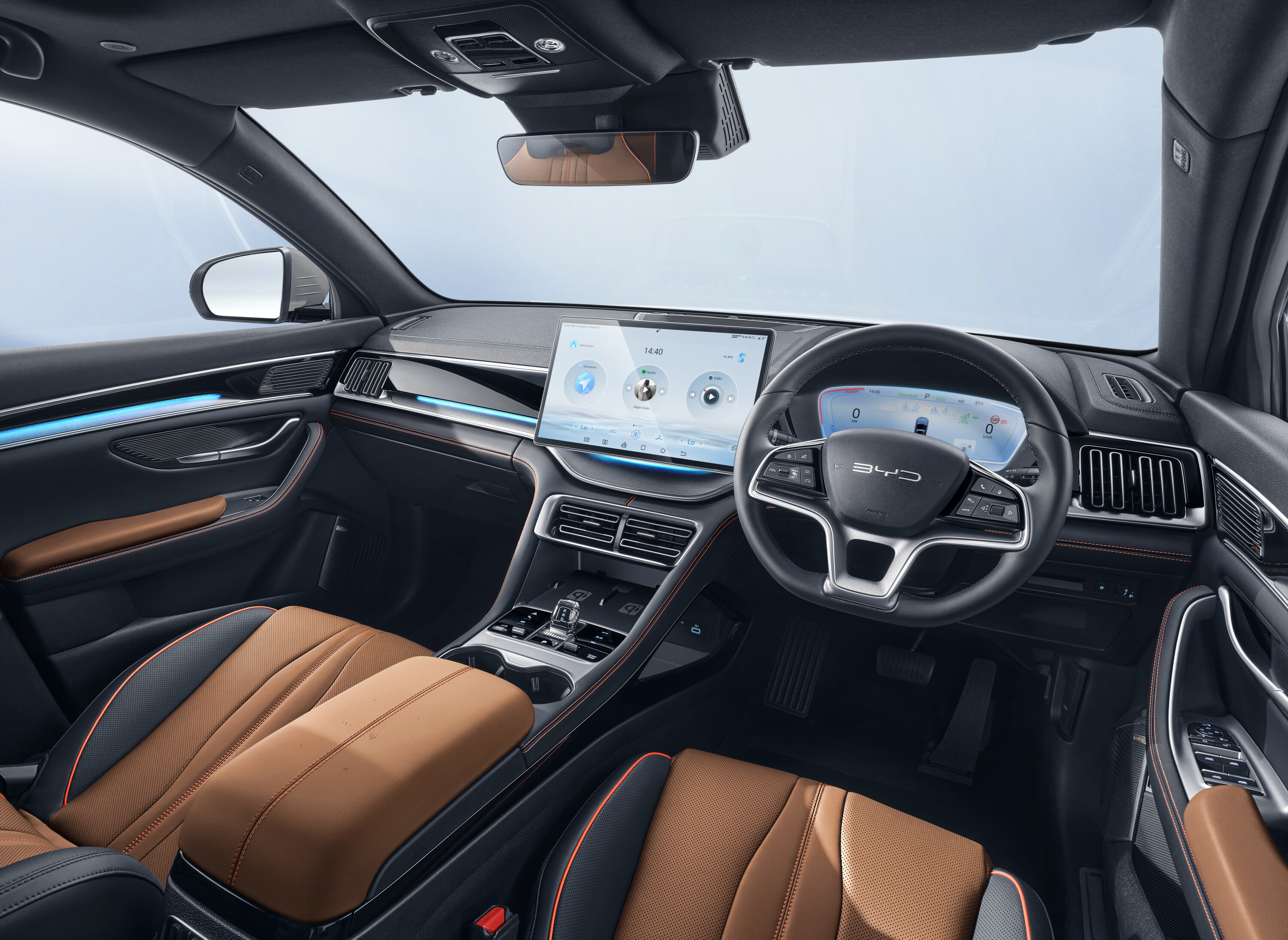
The 2024 BYD Sealion 6 Dynamic FWD delivers a 160kW/300Nm total system output from a 72kW/135Nm 1.5-litre non-turbo four-cylinder petrol engine and a 145kW/300Nm front-mounted electric motor. It has an 8.5-second 0-100km/h acceleration time.
The 2024 BYD Sealion 6 Premium AWD swaps in a 96kW/220Nm 1.5-litre turbo-petrol, along with a 150kW/300Nm front electric motor and a 120kW/250Nm rear electric motor, for a 238kW/550Nm total system output and a lower 5.9-second 0-100km/h time.
Combined fuel consumption for the Dynamic FWD is 1.1 litres per 100 kilometres and 24 grams of carbon dioxide per kilometre driven, while the Premium AWD is rated at 1.4L/100km and 32g/km.
All versions have an 18.3kWh lithium-iron-phosphate ‘blade’ battery – compared to 20kWh in the Outlander, 17.8kWh in the CX-60 and 16.6kWh in the HS – allowing for a 30 to 80 per cent top-up in 35 minutes on an 18kW DC fast-charger. It also has vehicle-to-load functionality.
1
Combined with a 60-litre fuel tank, there is a maximum combined driving range of around 1100 kilometres in ideal conditions – enough to drive from Melbourne to Sydney (and beyond) on one tank.
Measuring 4775mm long, 1890mm wide and 1670mm tall, with a 2765mm wheelbase, the five-seat Sealion 6 is similar in size to the Outlander and CX-60, and slightly larger than the RAV4.
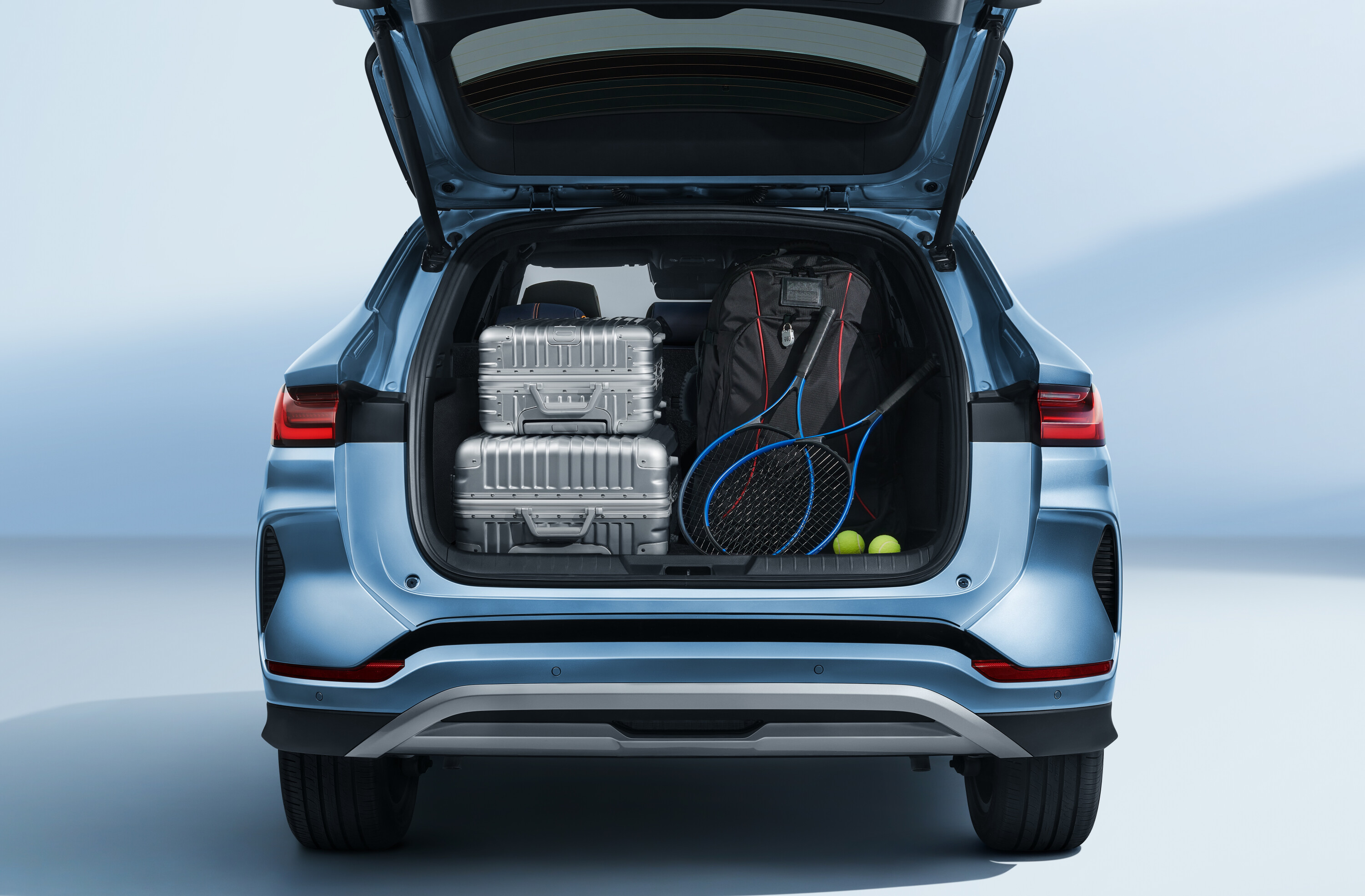
Boot space is rated at 574 litres with the second-row in place or 1440L with the rear seats folded down.
1
2024 BYD Sealion 6 pricing
| Model | Pricing |
|---|---|
| Dynamic FWD | $48,990 |
| Premium AWD | $52,990 |
| Prices exclude on-road costs.u00a0 |
1
2024 BYD Sealion 6 features
| 2024 BYD Sealion 6 Dynamic features | |
|---|---|
| 19-inch alloy wheels | Heated and ventilated front seats |
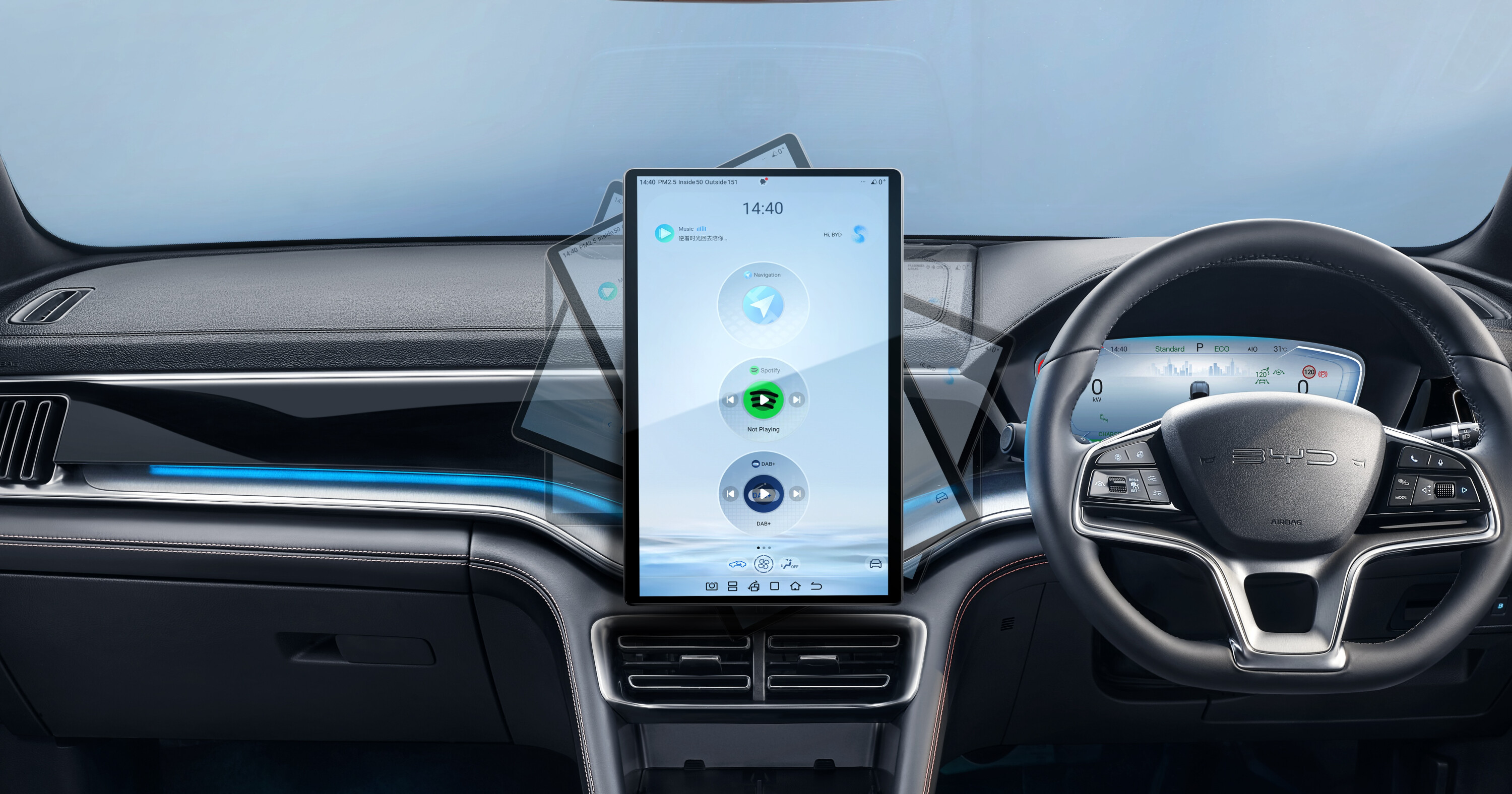
| 15.6-inch rotating infotainment system | Leather-wrapped steering wheel |
| Apple CarPlay and Android Auto | Dual-zone climate control |
| DAB+ digital radio | PM2.5 air purification system |
| 15-speaker Infinity audio system | Keyless entry and start with NFC card |
| Built-in satellite navigation | Rear privacy glass |
| 12.3-inch digital instrument cluster | Auto-dimming rear-view mirror |
| Dual 15-watt wireless phone chargers | Power-folding heated side mirrors |
| Front and rear 18-watt USB-C charge portsu00a0 | Panoramic sunroof |
| Interior mood lighting | Electric tailgate |
| LED exterior lighting | Rain-sensing wipers |
| Sequential rear indicators | Front and rear parking sensors |
| Puddle lamps | 360-degree camera system |
| Black and brown leather-accented upholstery | Snow terrain mode |
| Eight-way power-adjustable driveru2019s seat | Selectable drive modes: Eco/normal/sport |
| Four-way power-adjustable passenger seat | Tyre repair kit |
2024 BYD Sealion 6 Premium features
| In addition to Dynamic | |
|---|---|
| All-wheel drive | Optional blue and grey interior colour |
| Head-up display | Additional terrain modes: Mud and sand |
| 2024 BYD Sealion 6 available colours | |
|---|---|
| Arctic white | Stone grey |
| Harbour grey | Delan black |
| Azure blue | |
MORE
Everything BYD
MORE
PHEV and Hybrid Cars
Snapshot
- Dramatic reductions eight months after pricing first released
- Increased standard features for the mid-range Eletre S
- Production brought forward for entry level Eletre
- Orders now being taken – first Australian cars due by June 2024
Lotus Cars Australia has slashed the price of its upcoming Eletre electric SUV by up to nearly $50,000.
The British sports car brand’s first sports utility vehicle and first electric car now starts from $189,990, a reduction of $49,000 on the entry model’s original price.
For the mid-range Eletre S, the price drops by $39,010 to $269,000 and the flagship makes a $35,010 shift downwards to $279,990. All prices are RRPs before on-road charges are added.
Standard equipment has also been increased, with the mid-range Eletre S benefiting most from the changes.
The Eletre S will now receive a glass roof, comfort seat pack (5 seat), and ‘Akoya White’ paint as standard for MY25 cars onwards.
Although standard equipment has generally increased across the 2025 Eletre range, the formerly standard LiDAR hardware has been removed from the standard build for MY25 cars onwards and will now be included within a Highway Assist Pack option.
According to Lotus Cars Australia, Australian consumers placed little value in the inclusion of the LiDAR hardware owing to doubt over the ability to use autonomous driving functions anytime in the near future.
Eletre S and Eletre R production commenced in April with MY24 cars due to ship in May for an expected arrival in Australian towards the end of June 2024. The MY25 price revision will be applied to customer cars already built.
Production of the entry-level Eletre, previously scheduled to commence in 2025, has been brought forward to Q3 2024. Base Eletres ordered now may arrive on Australian shores this year.
Australian customers will soon be able to configure their vehicle and place a refundable reservation deposit to secure a slot in the build queue on the Lotus Cars Australia website (https://www.lotuscars.com/en-AU).
Australia will not be adopting the factory-direct to consumer sales model (aka agency).
Customers who order online will be contacted by their local Lotus retailer, who will help them complete their order and make submission to the factory via Lotus Cars Australia.
More traditional, walk-in showroom based configuration and ordering is still supported across the Australian network of Lotus Retailers (Adelaide, Brisbane, Melbourne, Perth and Sydney).
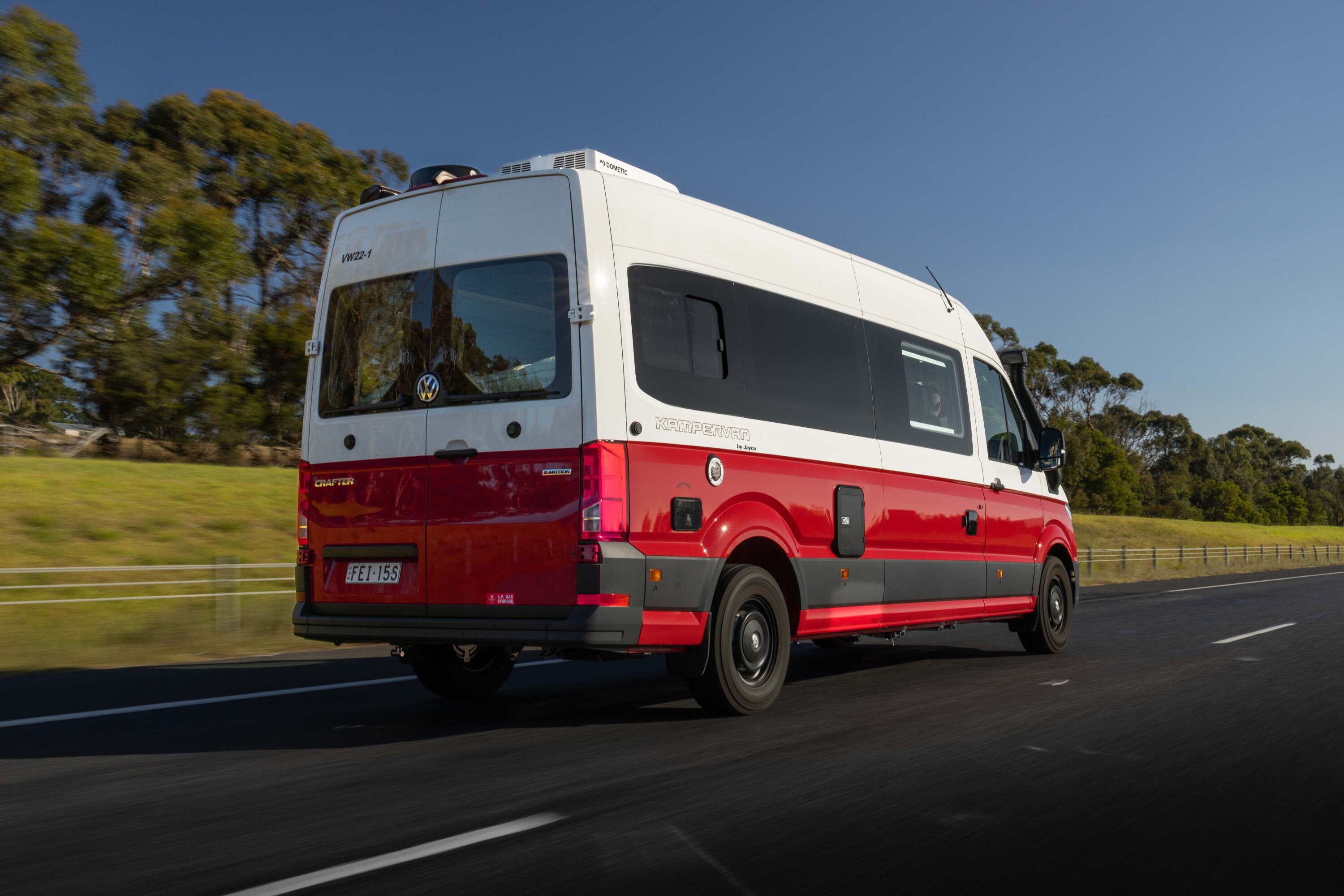
The Volkswagen Crafter Kampervan is a diesel-powered, all-wheel-drive mega van, with an amazing features list and comfort that promises to make it a great getaway bus for a couple, or a young family.
| 2024 Volkswagen Crafter Kampervan specifications | |
|---|---|
| Powertrain | 2.0-litre turbo-diesel 4-cylinder |
| Max power | 130kW |
| Max torque | 410Nm |
| Drivetrain | 8-speed auto, permanent four-wheel drive |
| Fuel consumption | As tested – 11.0L/100km (Style), 11.7L/100km (All-Terrain) |
| Price (MSRP) | Style from $157,990, All-Terrain from $165,490 |
1
JUMP AHEAD
Pricing and features
It would almost be easier to tell you what’s not included in terms of campervan fitout stuff, but let’s cover off some of the important stuff.
You get a toilet, shower, hot and cold water, air-con, a removable TV, picnic set, and a seriously impressive power management system with a dedicated 400Ah house battery, 3000W inverter and 60A DC charger, a 200W solar panel and an additional solar blanket with Anderson plug to juice things up.
All told, VW reckons that’s enough to go off-grid for up to three days if you’re not running the air-con.
1
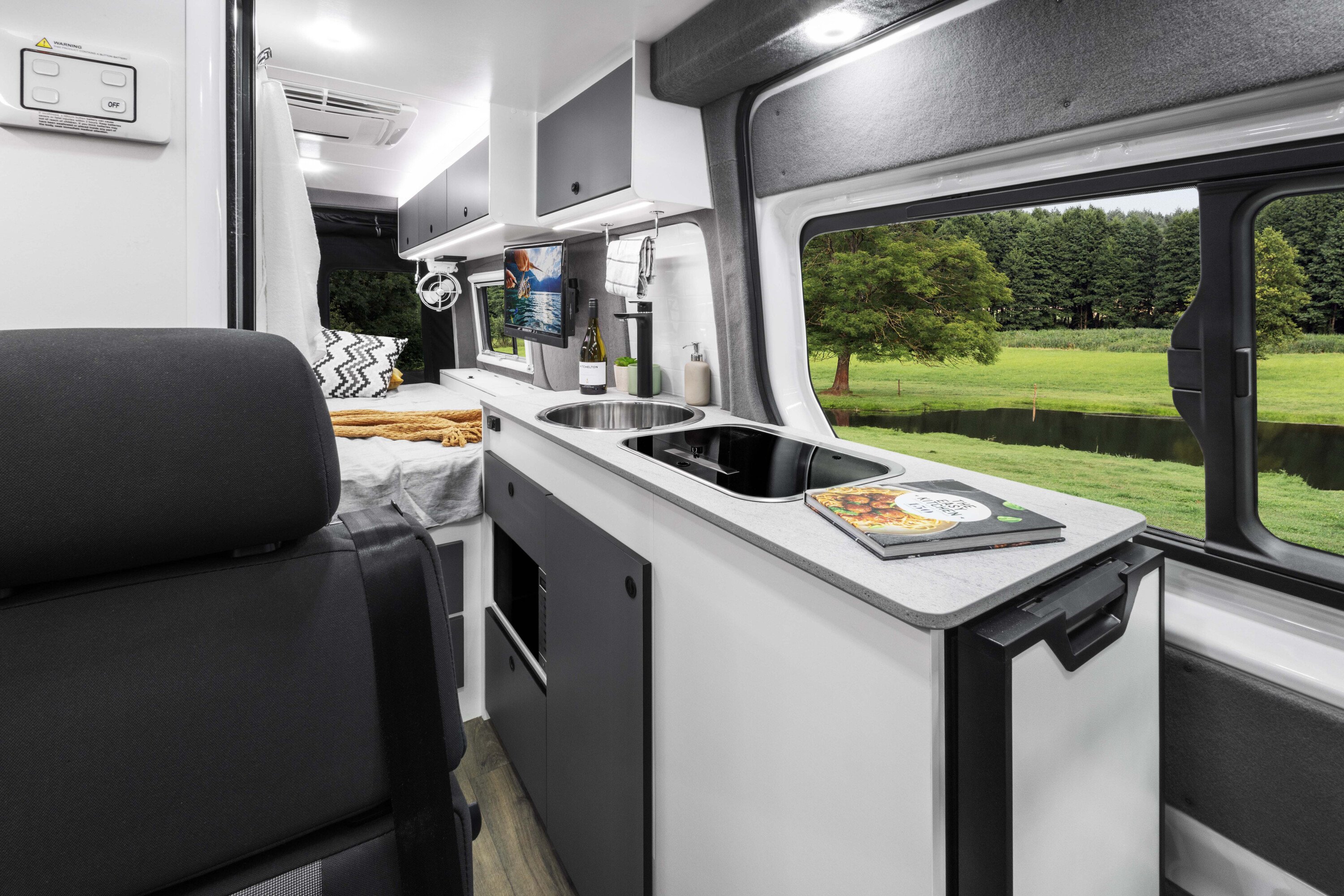
The kitchen area is well fitted out, with a sliding drawer-style fridge for access inside and out, a microwave, two-burner gas cooktop fed by a 9kg bottle at the rear of the van, and a sink with cutting board cover, and a heap of loose item storage under and above the workbench.
Storage is a big consideration in the habitat area, with overhead boxes and a pair of long cupboard areas nearby the bed, while under the fixed sleeping area is a trundle drawer and plenty of additional storage. Under the body of the vehicle at the rear there’s a spare wheel, too.
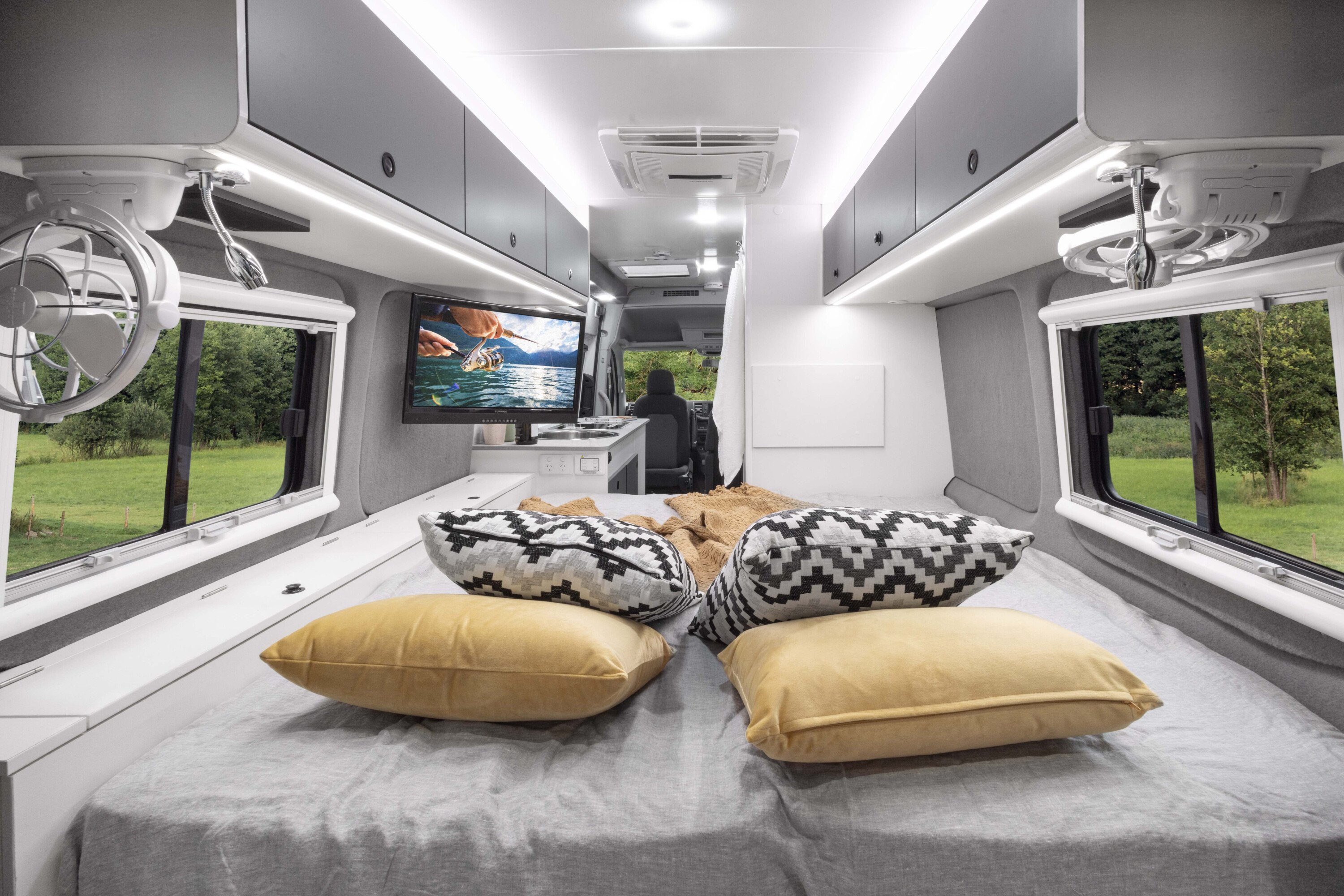
And the bed itself is a queen-width (but 180cm long) inner-spring mattress, which is different to the first take on the Kampervan-for-Aus theme, which had a configurable seating/sleeping area. This apparently is made to be more comfortable as a permanent option for bedding down.
1
Living with it
I spent the night in the Kampervan … and I slept well.
I mean, not as good as those who had the glamping tents and king-size beds as part of the launch, but, still, I was “camping” and “roughing it”, after all.
What was great about the setup is the blockout blinds at the rear of the van and on the side window, which can be left open if you prefer to just have flyscreens zippered. There are shaded or screened windows in the rear quarters, too, which you can open for cross-ventilation. Also offered is a set of window blockouts for the front cabin area, which suction onto the glass.
1
Furthermore, there is a pair of fans and positionable reading lights in the back, and charging ports are nearby for your devices.
Plus the diesel heater system, which I needed parked by the chilly shoreline of Phillip Island, worked a treat, with the controller positioned close to the bed, and the outlet pointed out from below the sleeping area and blowing warmth around the cabin. If it’s warmer outside, there’s an air-con system dedicated to the living space.
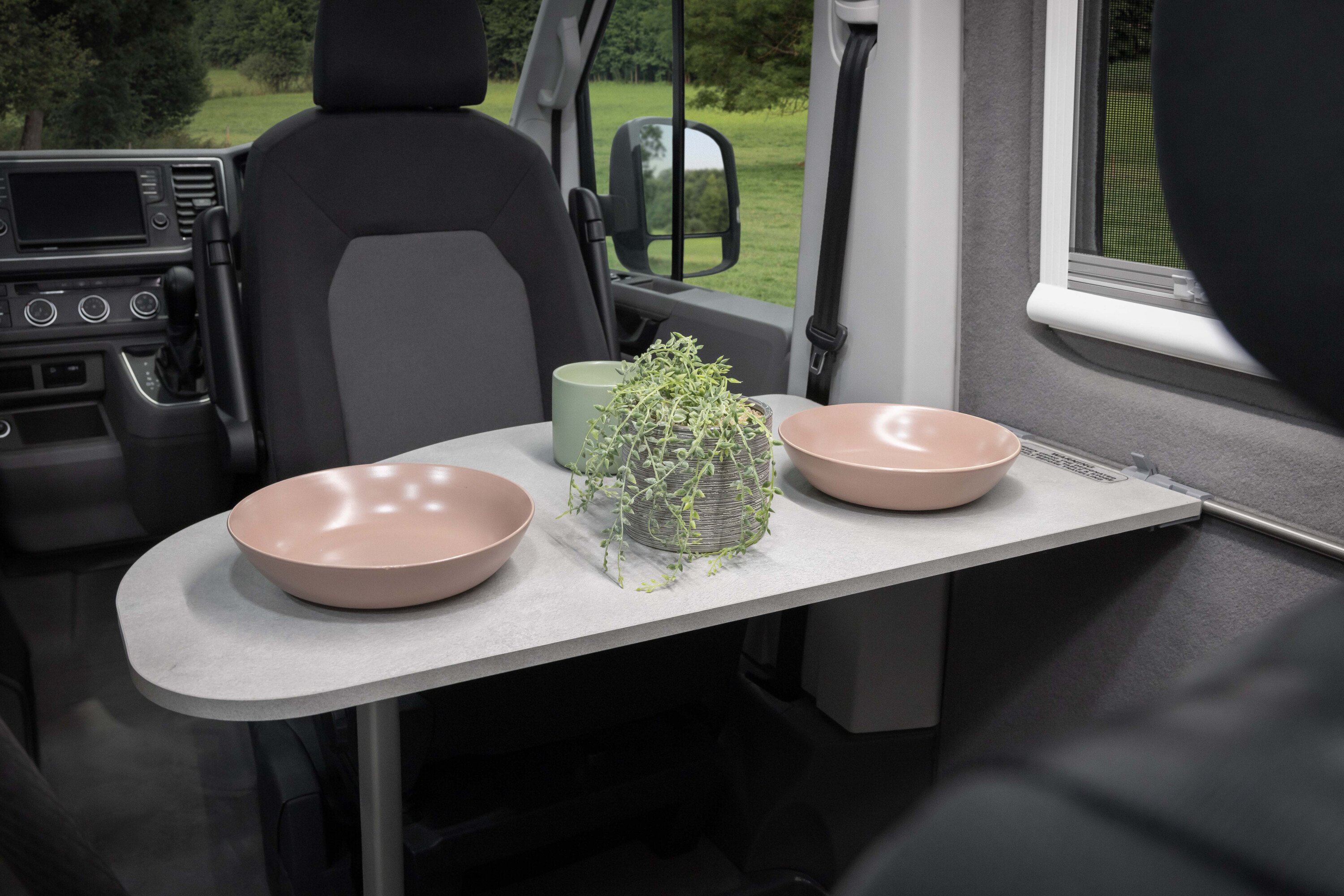
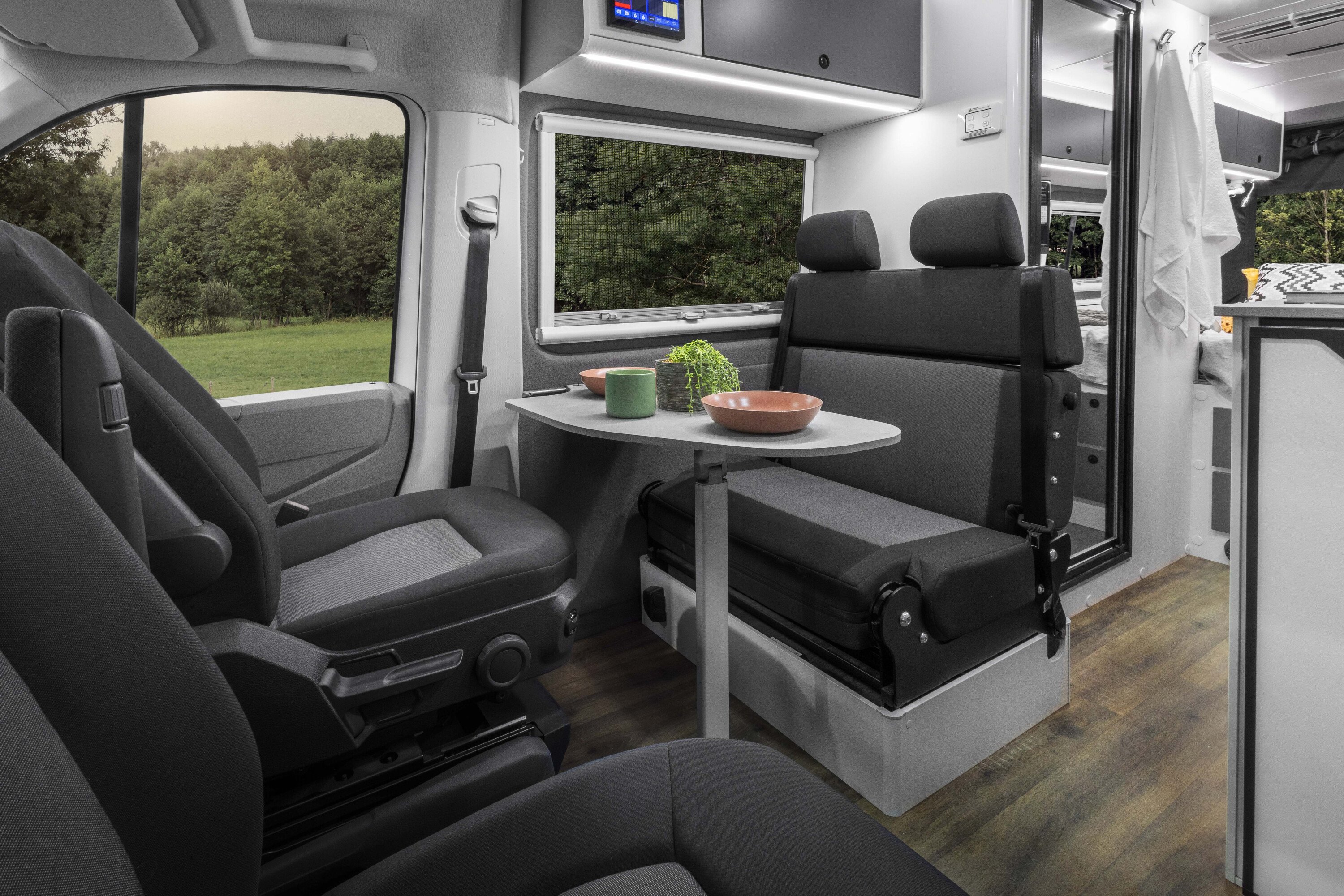
There’s a bench seat in the back with two seatbelts for additional riders, and it can be used as a dining bench with the removable table in place (and front seats swivelled around). It has two top-tether points to fit kid seats, too.
Plus if you really need to, you can turn that bench into an additional berth for another sleeper by flattening it out and using the driver’s seat base as part of it, but it’s better left for littlies.
1
Amenities
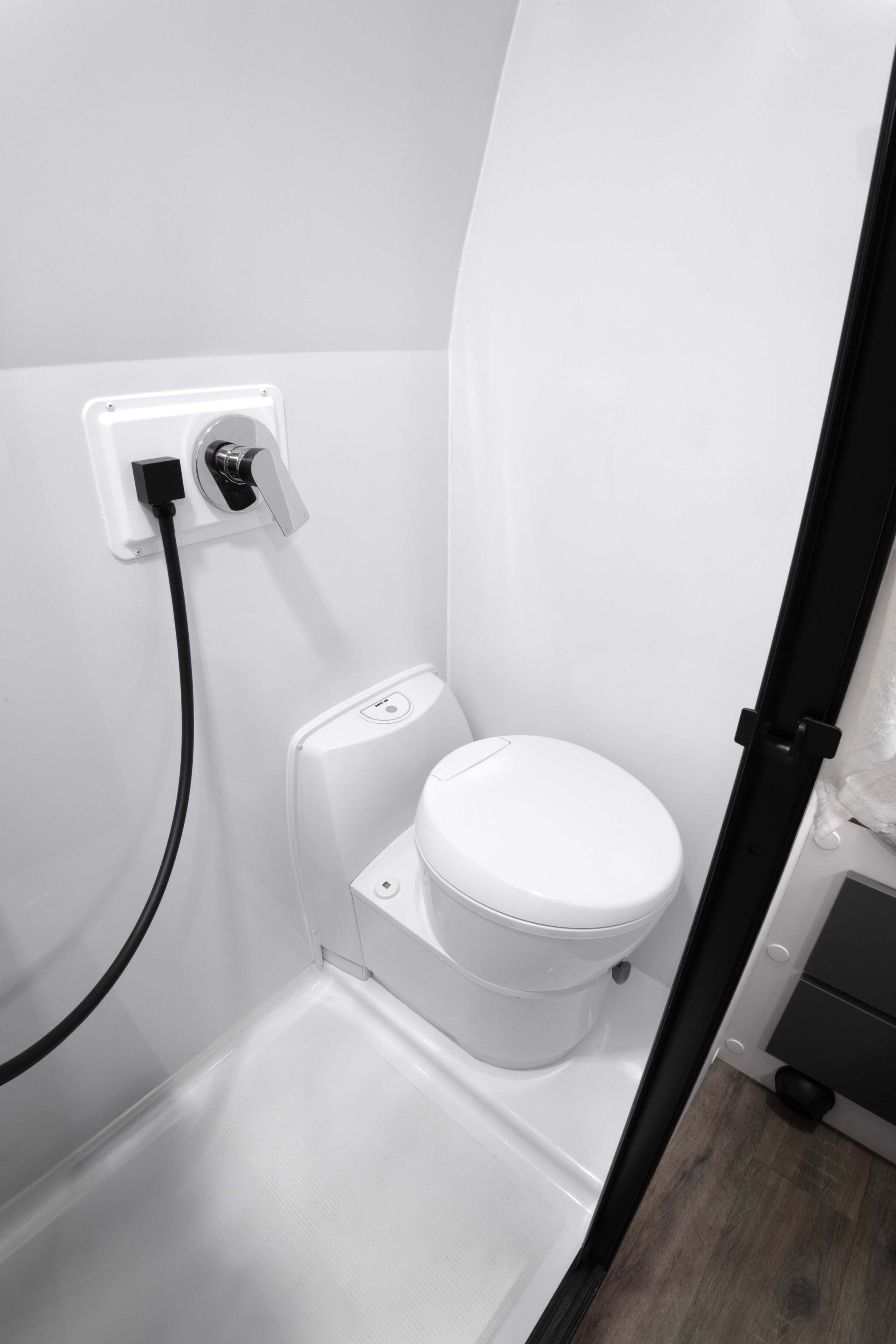
Yes, if you need it, there’s a cassette-type toilet system, and a shower in that bathroom zone as well, but it does take up a lot of space in the middle of the van.
I didn’t dare, er, partake in a full-blown test of those elements of this test vehicle – I didn’t want to be the one to christen it.
It has a 120-litre fresh water tank and an 80-litre grey water setup, too.
1
Driving
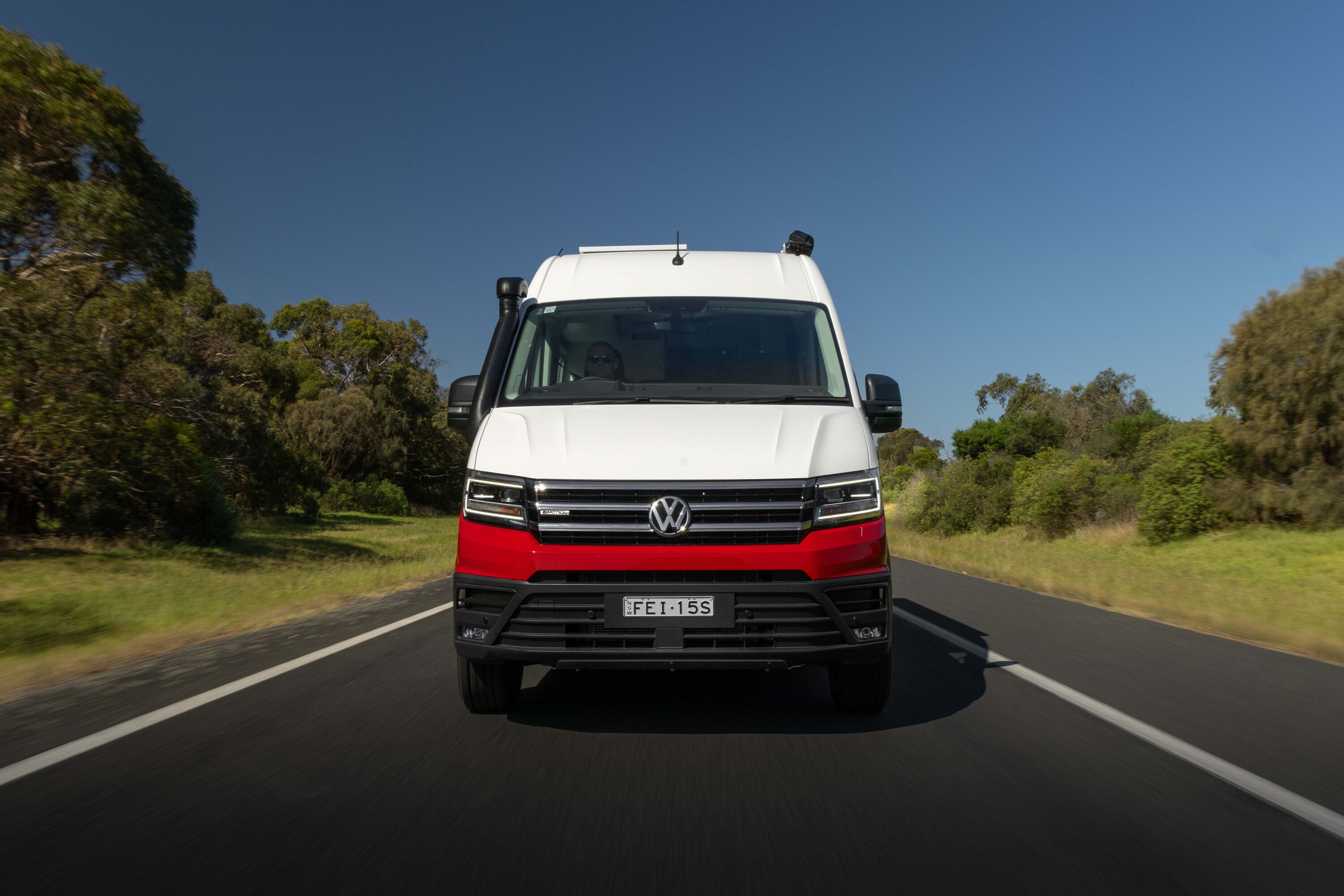
It drives way smaller than it is. At about 6.8 metres long, more than 2.0m wide and more than 2.9m tall, it isn’t going to fit in any underground car parks, but it does shrink around you when you’re on the road. With a GVMass of 4300kg and towing capability up to 2500kg, that’s impressive.
What’s great about it is the diesel powertrain, which offers easy progress and smooth shifts, with a clever logic to the transmission when you’re descending steep hills, using engine braking to take the burden off the brakes a bit.
The steering is excellent, with the same leather-lined steering wheel as a Golf and easy drivability in the bends, so long as you’re mindful of the huge 4490mm wheelbase.
1
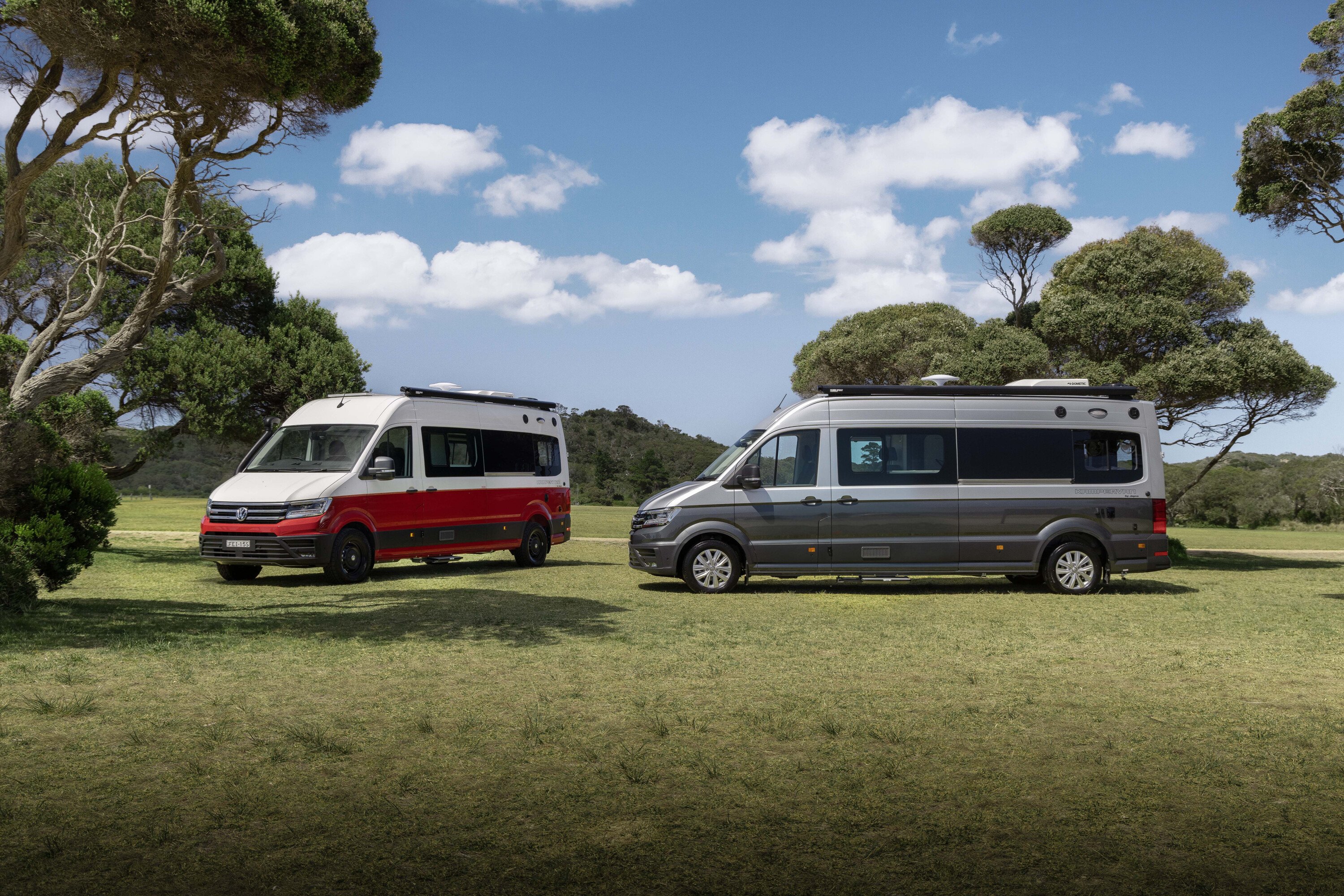
I drove both the Style grade and the All-Terrain, which gets a different wheel and tyre package and raised suspension, plus underbody protection, and for me, the Style made more sense as it’s easier to clamber in and out of, and has a more settled ride on the road.
However, if you’re heading out into the great unknown, the All-Terrain might make more sense.
Plus the cabin usability is brilliant, with a touchscreen, smartphone mirroring, digital speedo and heaps of storage, and armrests for those longer days on the road.
1
Should I put it on my shortlist?
If you can justify it, and if you can secure one, it could well be worth the money. You’re getting a five-year/unlimited kilometre warranty and roadside assistance, and the backing of the VW and Jayco networks nationwide.
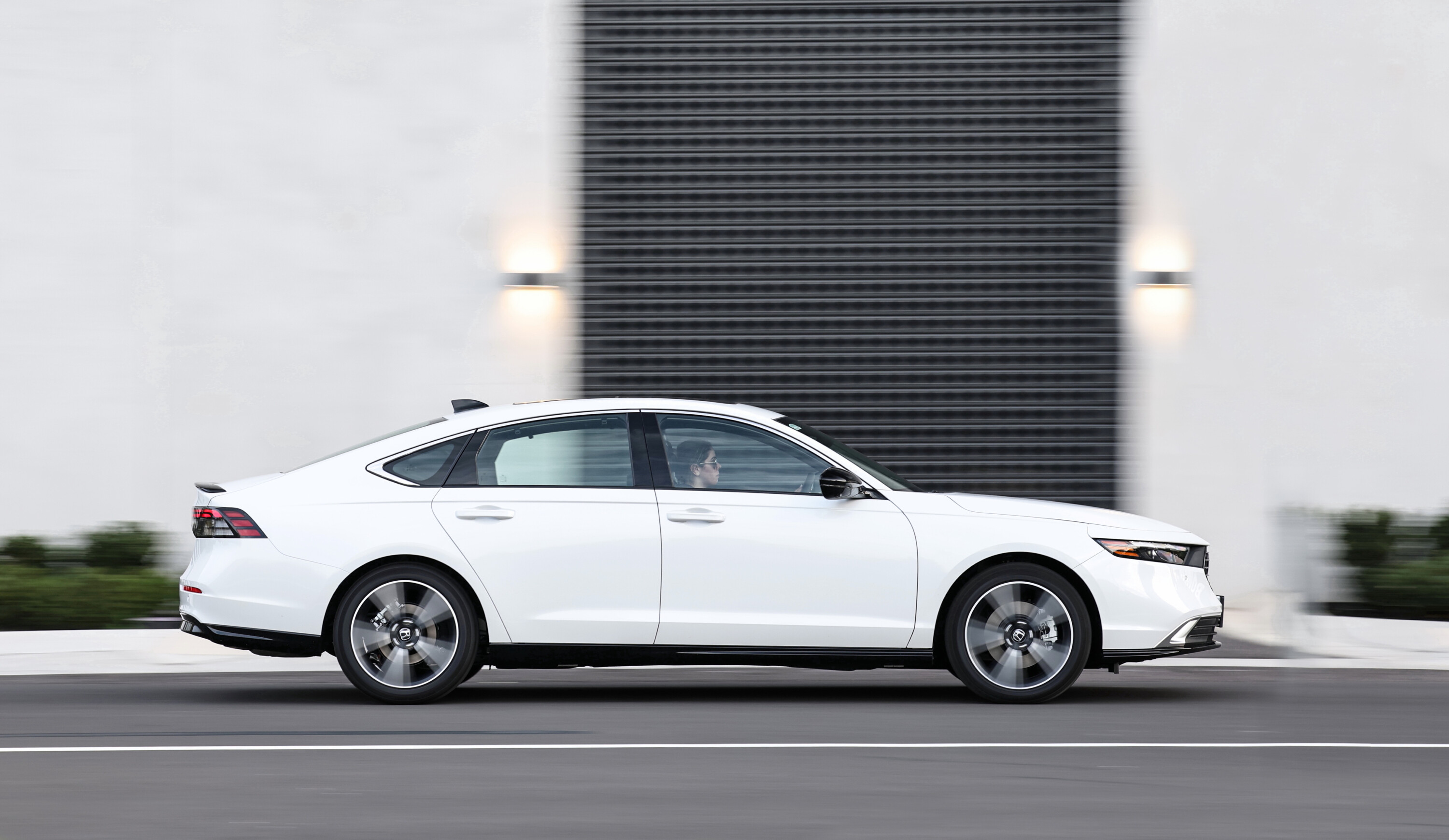
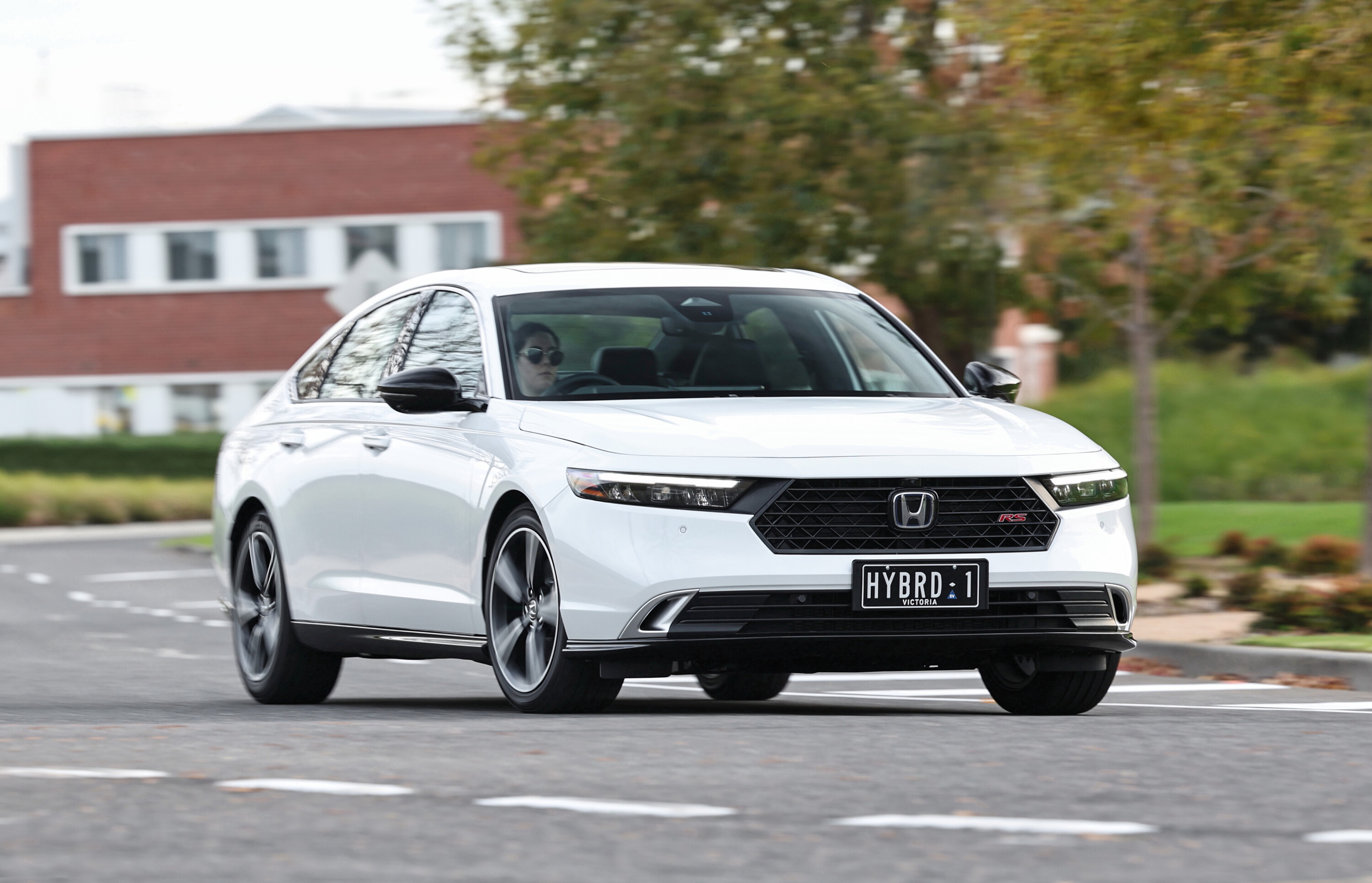
The 11th-generation 2024 Honda Accord sedan has arrived in Australia 18 months after it debuted, continuing a legacy that started in 1977 despite dwindling sales in recent years.
An oft-forgotten rival to the Toyota Camry, Mazda 6, Skoda Superb and Hyundai Sonata, the latest Accord is now available in a sole hybrid E:HEV RS variant with the 1.5-litre turbo-petrol option deleted.
It costs $64,900 drive-away – a $3000 increase over the previous Accord VTi-LX Hybrid and far dearer than the medium sedan of choice (the Camry).

1
The Accord’s target audience continues to be older buyers and rideshare drivers standing out from the Camry status quo, with otherwise limited sales potential due to continued demand for SUVs and utes in Australia.
How limited? Honda Australia sold just 144 units of the Accord in 2023 – less than the Lamborghini or Bentley line-ups and equivalent to a day’s worth of Ford Ranger or Toyota HiLux sales – and it admits there won’t be much improvement for the new model.
This is despite Toyota selling more than 10,000 units of the Camry – showing demand is still there when a brand ticks the right boxes – while 1528 Mazda 6s, 338 Hyundai Sonatas and 278 Skoda Superbs were also delivered in 2023.
1
JUMP AHEAD
- How much is it, and what do you get?
- Where is this model in its lifecycle?
- How do rivals compare on value?
- Interior quality, comfort, space and storage
- Technology in the cabin
- What is it like to drive?
- How is it on fuel?
- How safe is it?
- Warranty and running costs
- VERDICT
- Specifications
How much is it, and what do you get?
| 2024 Honda Accord E:HEV RS features | |
|---|---|
| 18-inch alloy wheels | LED exterior lighting |
| 12.3-inch infotainment systemu00a0 | 10.2-inch digital instrument cluster touchscreen |
| Google built-in (Maps, Assistant, Play Store) | Dual-zone climate control |
| Wireless Apple CarPlay and Android Auto | Wireless phone charger |
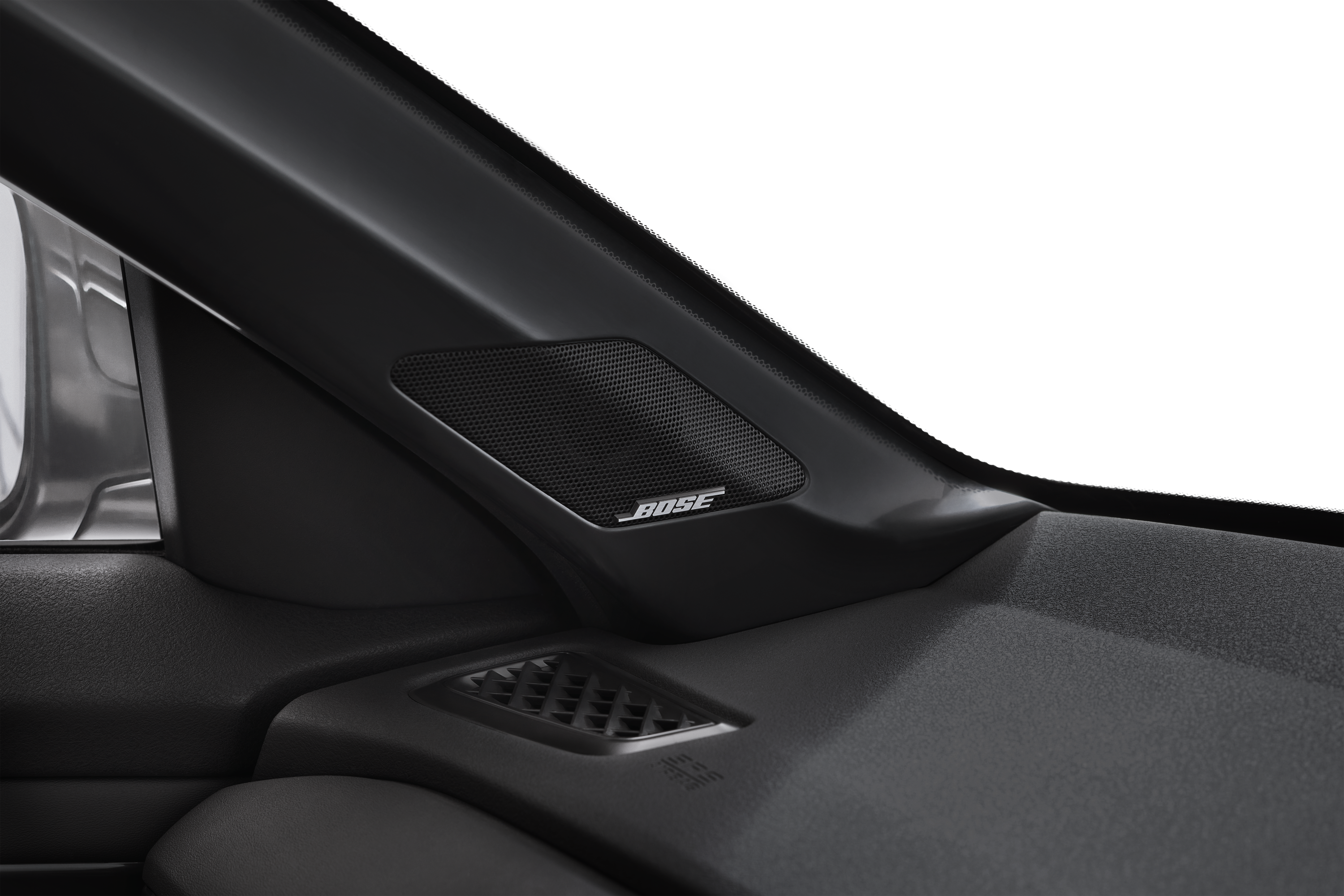
| 12-speaker Bose audio system | Active noise cancellation |
| Honda Connect telematics system | 10-colour configurable ambient lighting |
| 11.7-inch head-up display | Black leather upholstery with red stitching |
1
The 2024 Honda Accord E:HEV RS continues with a higher-than-usual price for a hybrid medium sedan, now at $64,900 drive-away – up $3000 over its predecessor.
This price includes all on-road costs – as has been the case since Honda’s switch to an agency dealer model in July 2021 – and equipment levels are pretty high, with some highlights shown in the table above.
A full specification run-down is available by clicking here.
While the $65,000 Accord does appear to be loaded with kit, it does lack some features, like heated/ventilated seats, a heated steering wheel, and a spare wheel (it has a tyre repair kit). It also omits the automatic parking feature fitted to the previous Accord.
Honda Australia executives have confirmed no plans for a lower-specced Accord as the car acts as a flagship model for the brand with low sales potential.
1
It’s a sensible decision given the shrinking customer demand in this segment – and we’re not product planners crunching the numbers – but could there still be room for a cheaper variant similar to Thailand’s ‘E’ or ‘EL’ in the low-to-mid $50K region?
Toyota Camry Hybrid order holders who have been waiting in the queue for months on end but can’t stump up the extra cash for the Accord RS come to mind here.
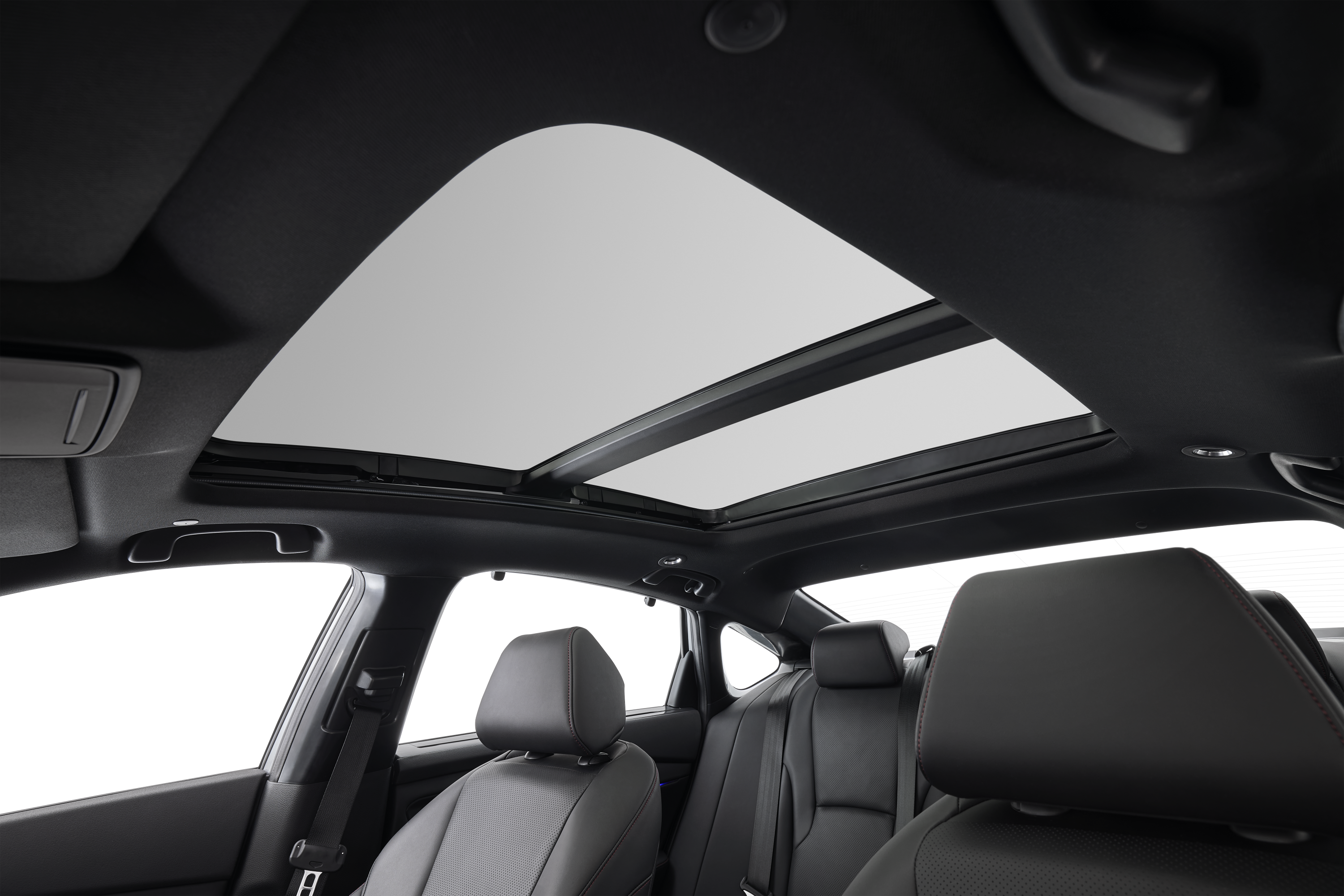
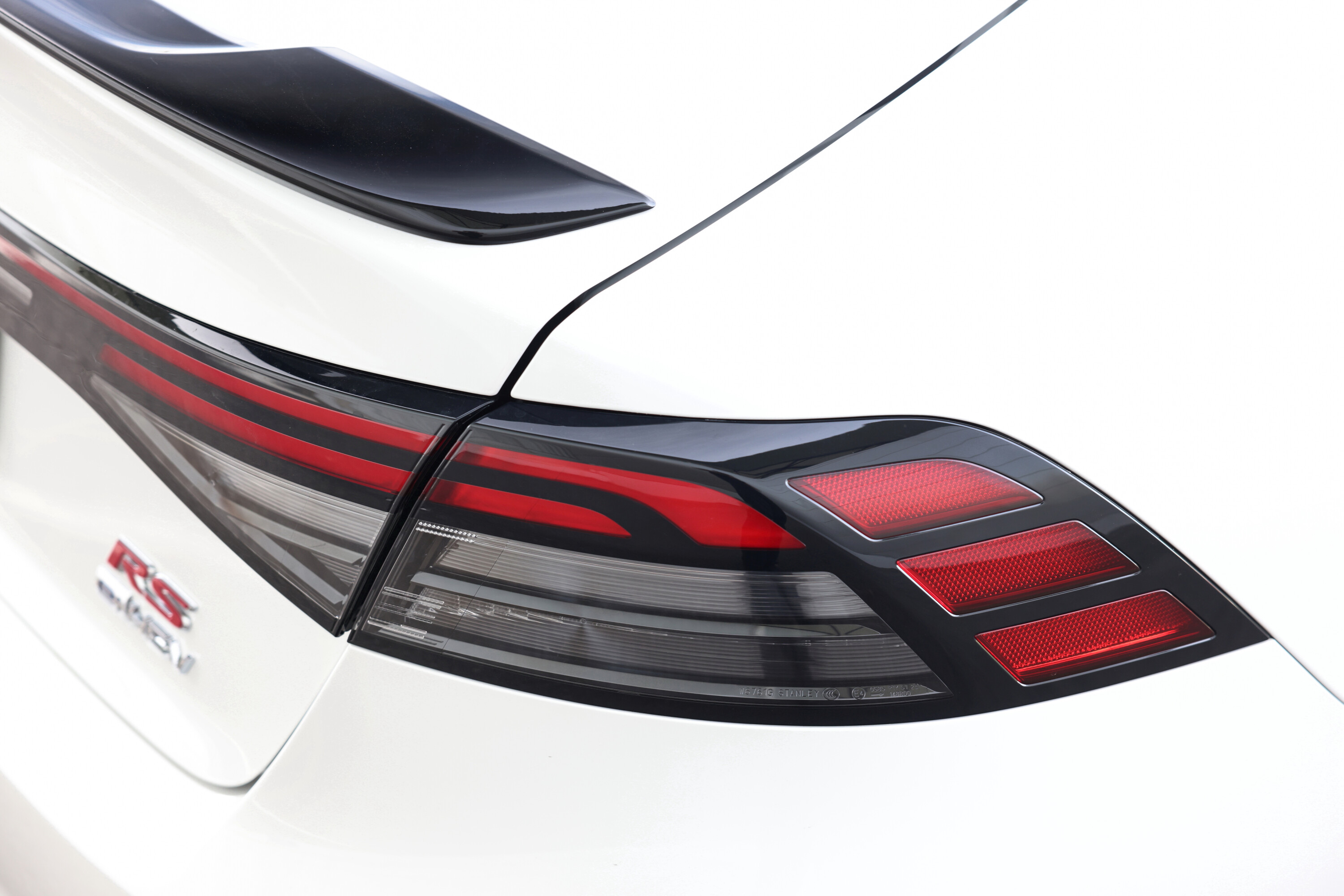
We think most people could live without some of the RS niceties, like the 18-inch alloy wheels (go 17-inch, instead), adaptive high beam, panoramic sunroof, Bose audio system, sequential indicators, door handle illumination, auto tilt-down side mirror, dark headliner and rear lip spoiler.
The Accord is available in four monochrome colours, all at no added cost: Platinum white, lunar silver, meteoroid grey and crystal black.
1
Where is this model in its lifecycle?
The 11th-generation Accord was unveiled for North America in November 2022. Right-hand drive versions continue to be sourced from Honda’s factory in Thailand, which also builds the CR-V midsize SUV for our market.
Honda Australia attributed the delay between North America and the Asia-Pacific to a separate model lifecycle between the two versions, as the last Accord launched in 2017 but didn’t arrive in the Asia-Pacific until 2019.
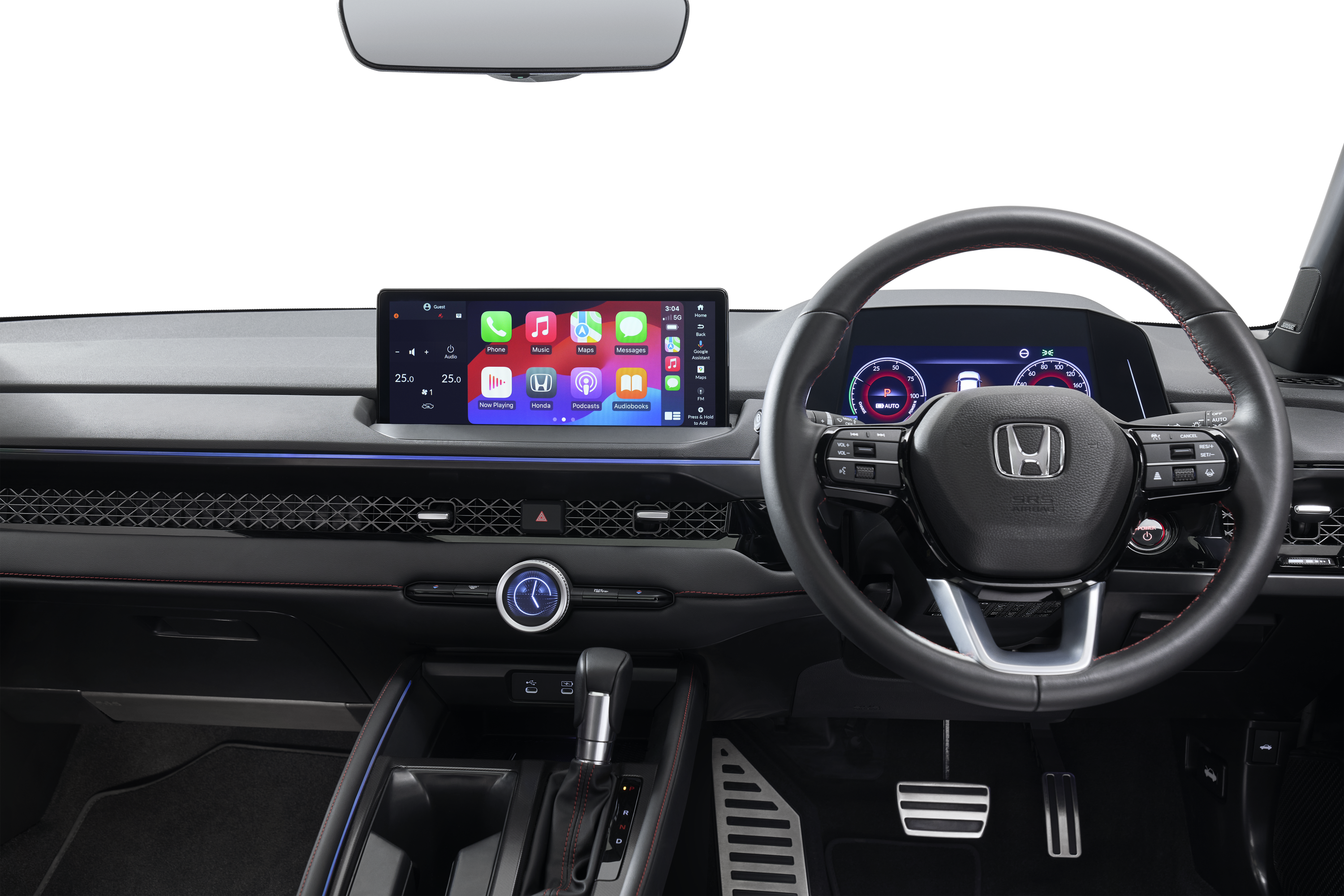
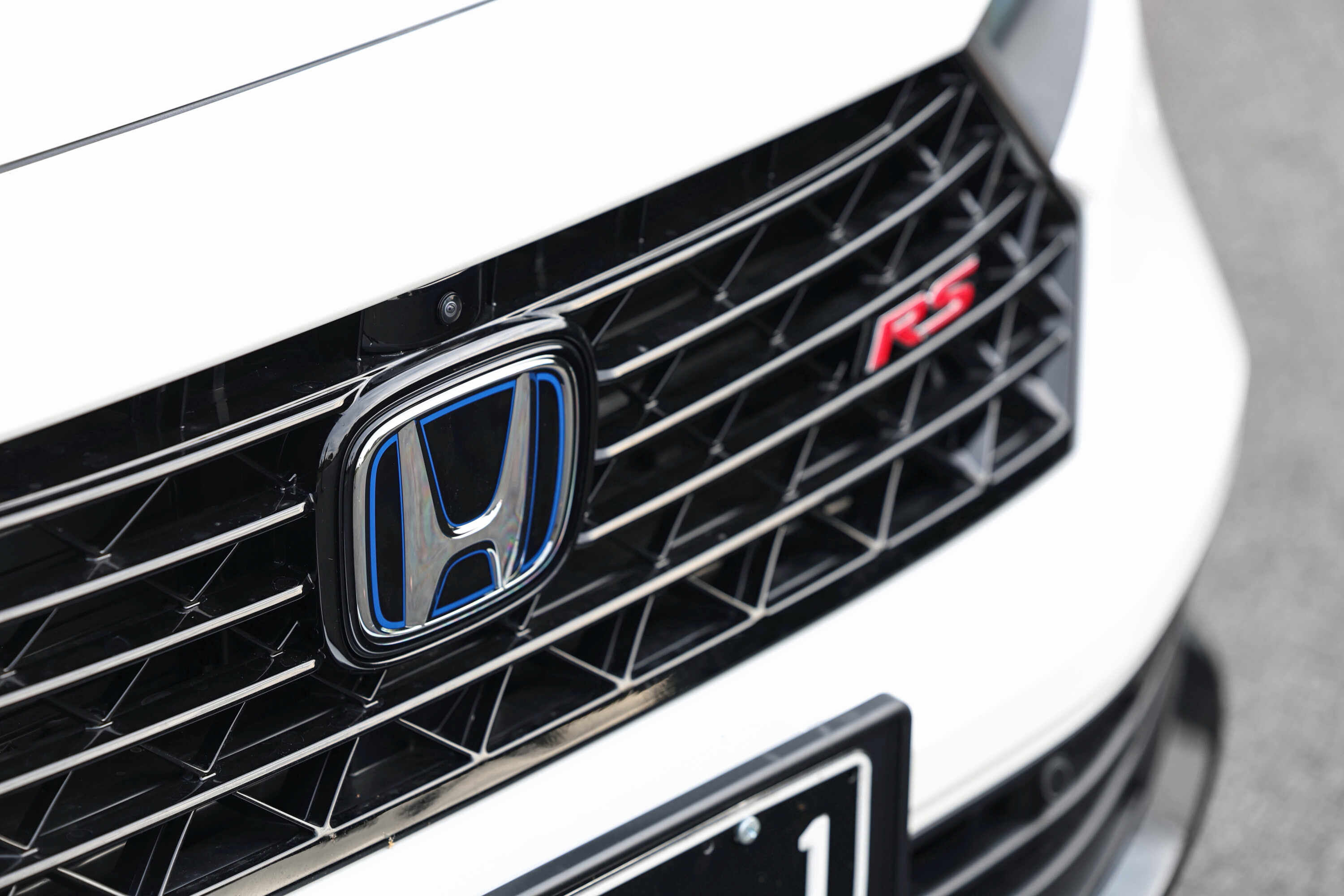
Asia-Pacific versions of the new Accord have a unique dashboard with the ‘Experience Selection Dial’ to control some air-conditioning and audio functions, a more prominent ambient lighting strip, and a floating-look digital instrument cluster.
1
How do rivals compare on value?
Rivals to the Honda Accord include the Toyota Camry, Mazda 6, Skoda Superb and Lexus ES, or electric alternatives like the Tesla Model 3 and BYD Seal.
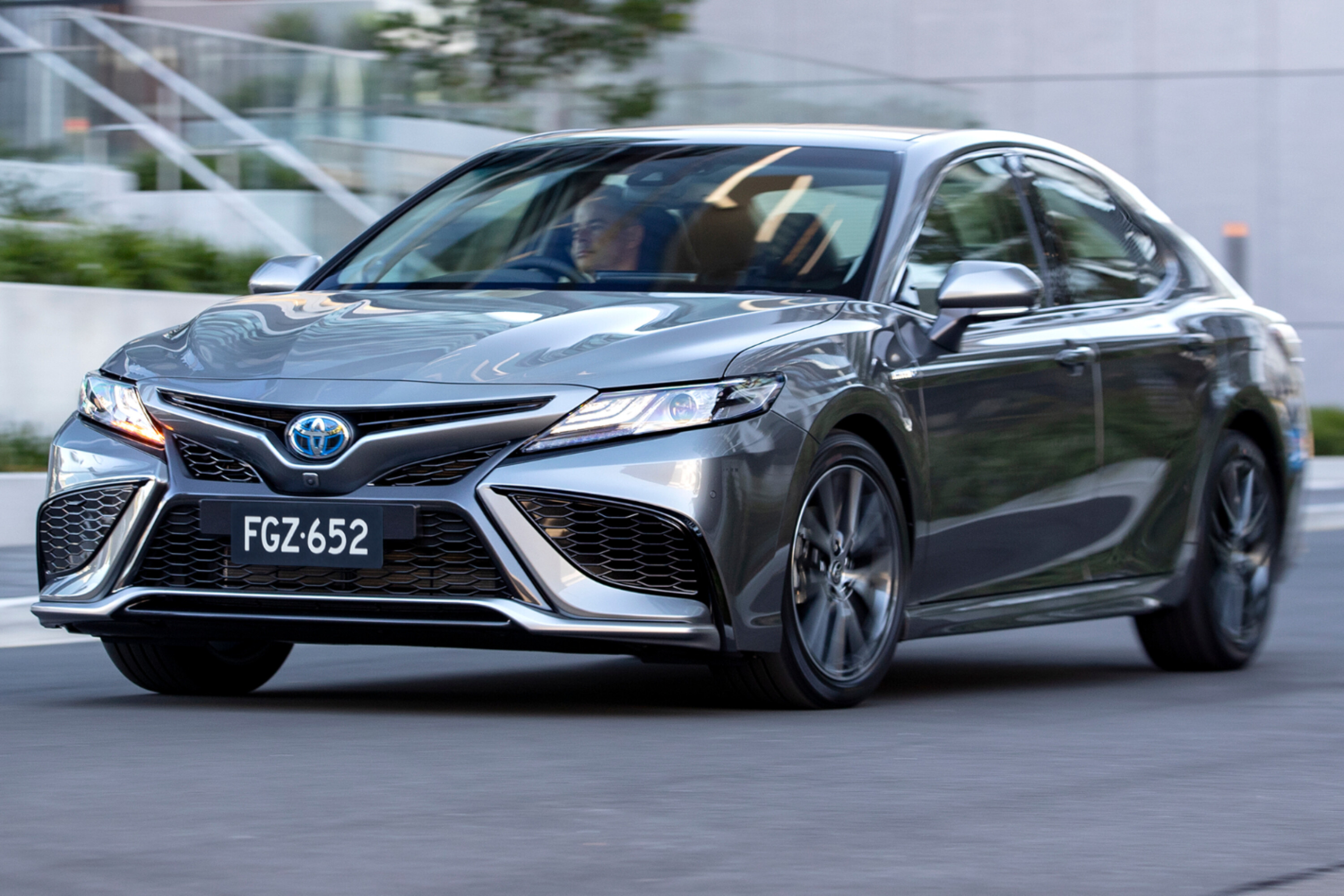
The Camry has long been the Accord’s arch-rival, with the soon-to-be-replaced hybrid line-up – currently unavailable to order due to extended wait times – priced between $37,917 and $51,417 before on-road costs.
A price rise is expected for the 9th-gen Camry due in the second half of the year, so the Accord should stack up a little better on value once Toyota’s newest hybrid sedan lands.
For context, a current top-spec SL costs around $8000 less than the Accord in most states when on-road costs are included, but the Accord’s price gap is widened further as most choose the Ascent or Ascent Sport base models.
1
If you’re looking for a little more performance, the turbocharged Mazda 6 G35 Atenza sedan costs $52,590 before on-roads. It’s nicer to drive, but high fuel consumption and vintage tech let it down.
There’s also the recently-facelifted Hyundai Sonata N Line to consider for $55,500 before on-roads, or the Skoda Superb 206TSI Sportline liftback for $69,990 drive-away.
(VFACTS lists the Superb in the one-size-up large category, but the Accord is longer – even once the bigger next-generation model lands here in 2025. It’s considerably larger than the Skoda Octavia liftback, despite both vehicles sitting in the medium segment.)
1
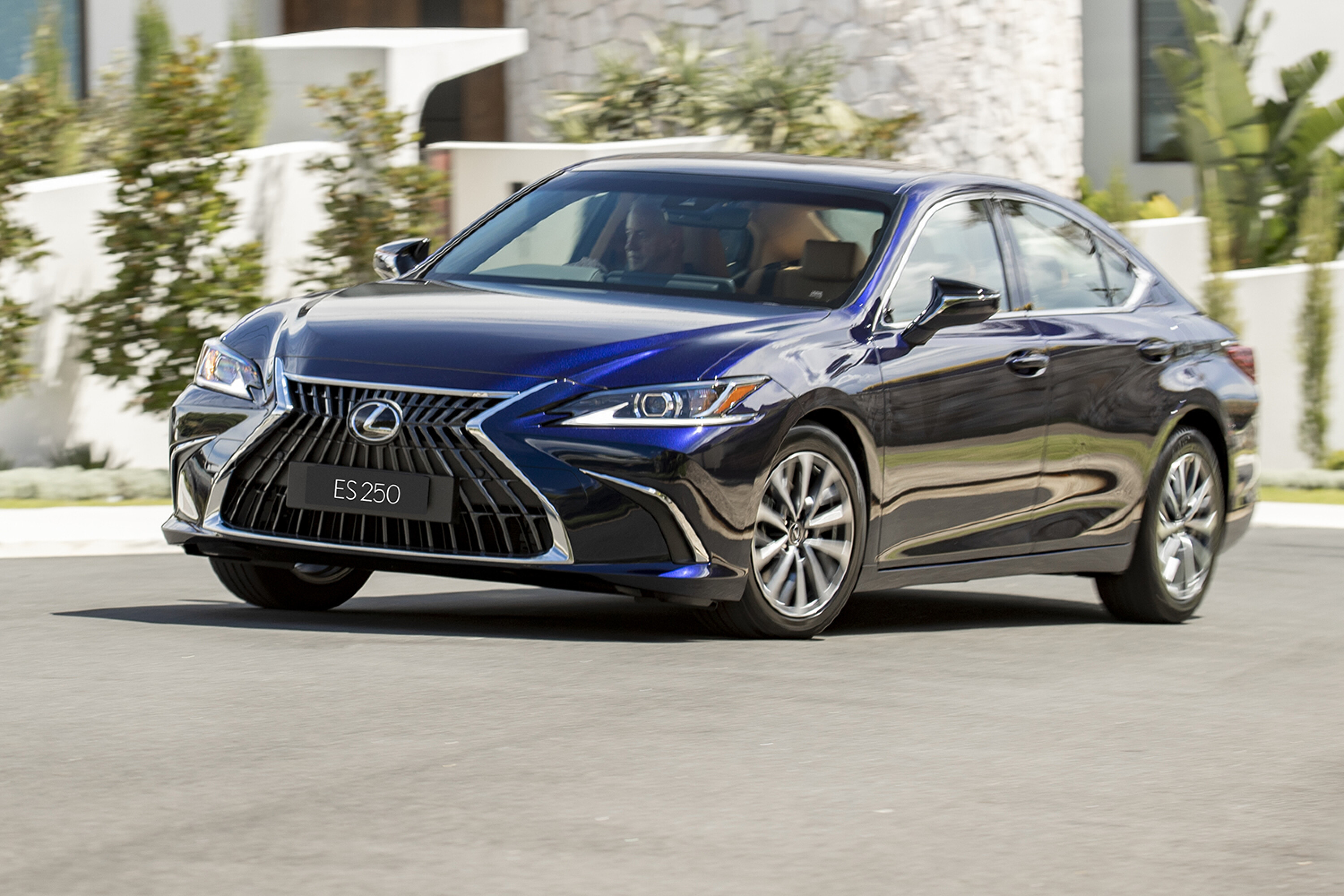
The Lexus ES300h – the Camry’s premium sibling – is available in Luxury form for $65,540 before on-road costs, but you’d need to look at the $80,170 Sports Luxury to match some of the Accord’s features.
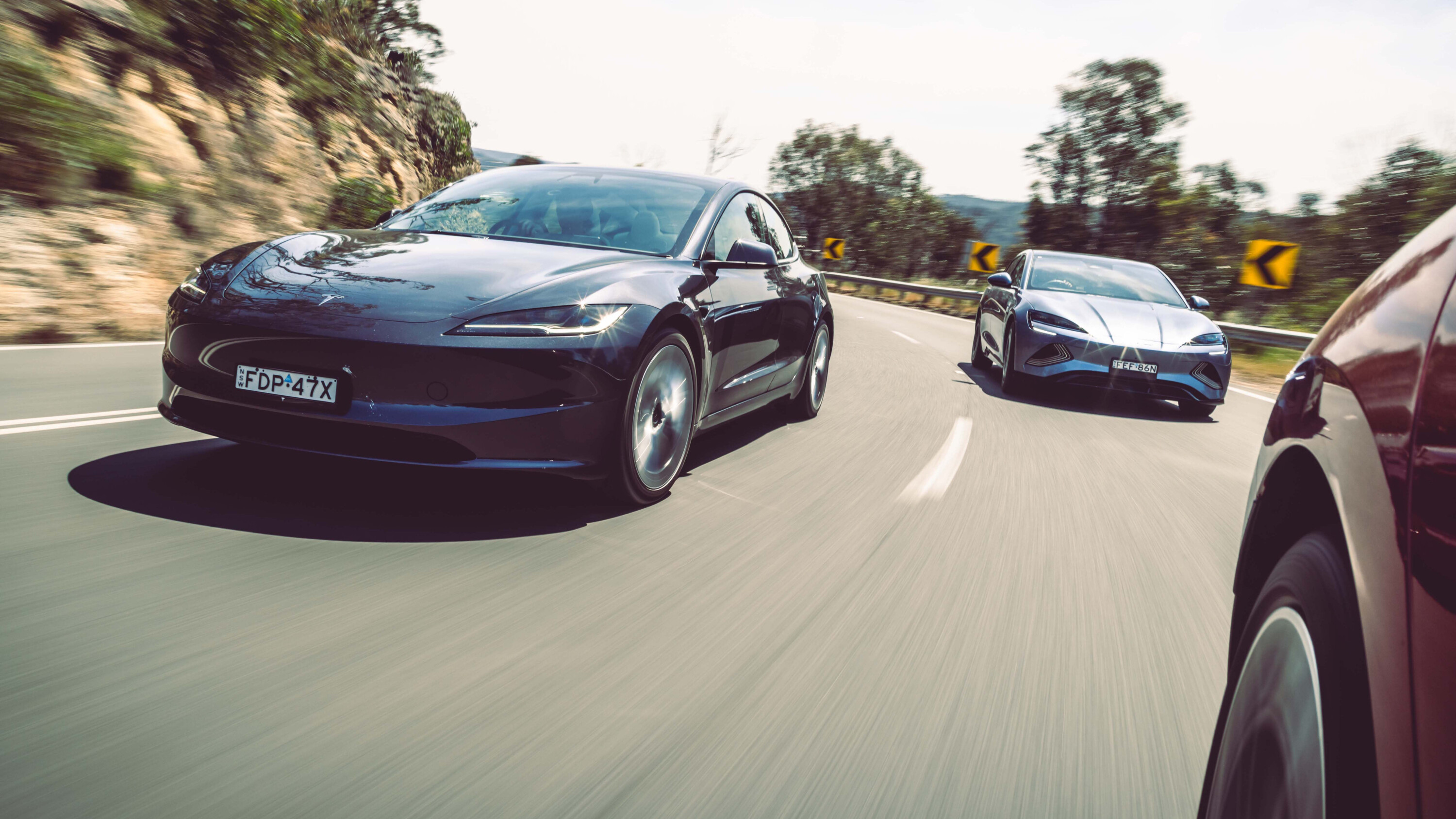
Full-electric cars can be had for the same price as the Accord, with the Tesla Model 3 Rear-Wheel Drive ($58,900 before on-roads; 513km WLTP) and BYD Seal Premium ($58,798 before on-roads; 570km WLTP) logical alternatives for buyers willing to consider making the next step.
1
Interior quality, comfort, space and storage
The interior quality of the Accord feels on par with the Mazda 6, and a step above the Camry, with soft-touch materials in the front and rear, and a sturdy door thunk.
Build quality appeared solid in our short time with the Accord, apart from a rattle between the sunroof and overhead storage box.
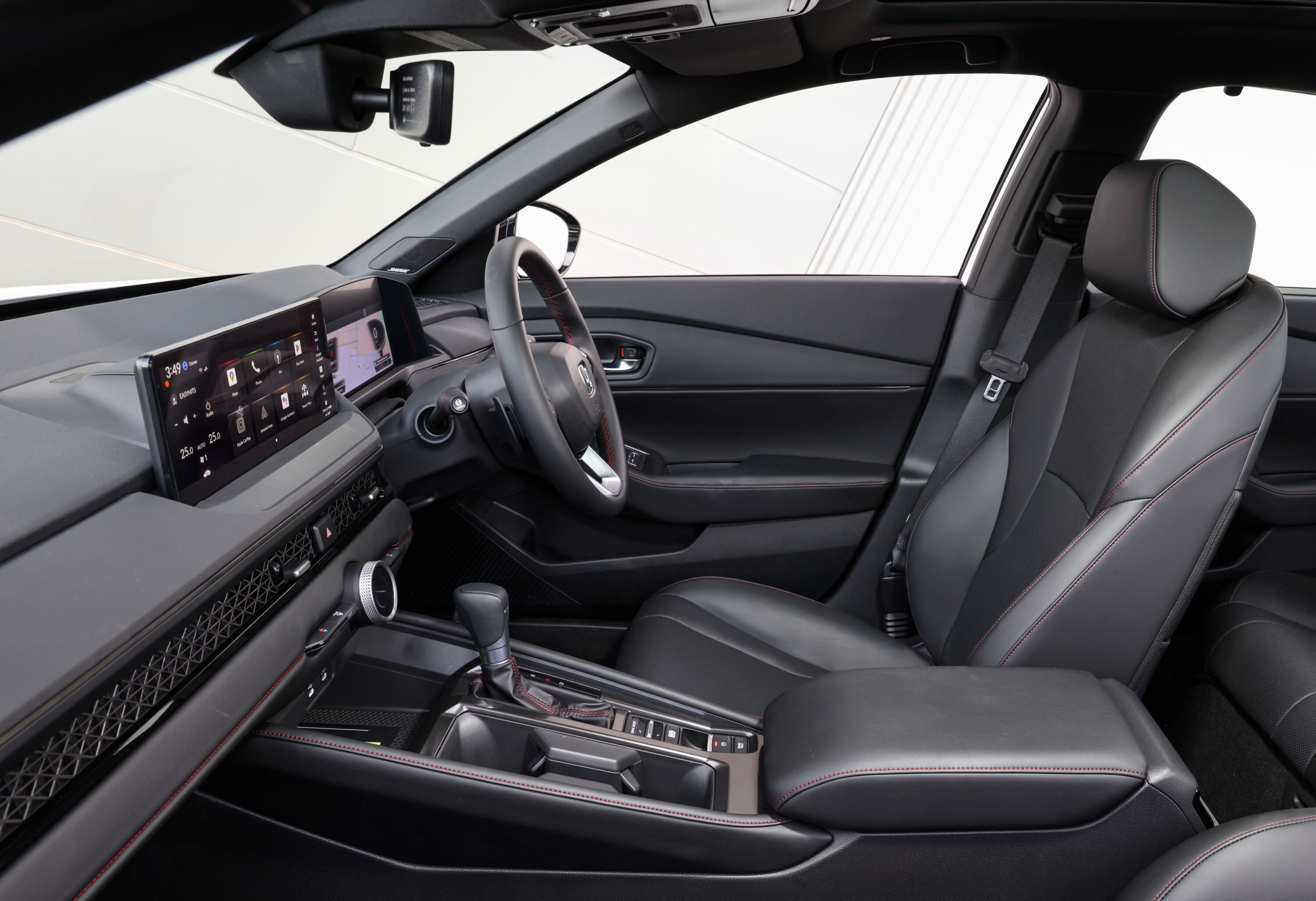
The seats – clad in black leather upholstery with red stitching – were comfortable and supportive on a two-hour test drive, though they could be a little softer and lack heating or cooling functions.
Both front seats offer eight-way power adjustment, with the driver’s seat adding four-way power lumbar support and two-position memory, and rear occupants can control the passenger side for a chauffeur-like experience.
1
There’s a deep centre console storage bin, but the bottom isn’t padded, and there are no dividers, so smaller items like keys or garage door openers can slide around.
A nice touch is Honda’s honeycomb mesh-look air vents, a trend that started with the Civic, which are distinctive and allow for more directional control.
The deep cupholders are large enough to accommodate one-litre bottles, and the twin central holders have teeth to prevent smaller cups from sliding around.
The rear leg and toe room are generous, but headroom is tight for taller occupants due to its panoramic sunroof and sloped roofline. Amenities include manual sunshades, air vents, two seatback pockets, and a fold-down centre armrest with cupholders.
1
Boot space
The 2024 Honda Accord has a 570-litre boot capacity, which can be further extended with the rear backrest folded down. There’s no 60:40 split-fold, unlike most of its rivals.
As with the Camry, the Accord’s gooseneck hinges don’t fold into tunnels like a Sonata, leaving the risk of squishing items when the boot is overpacked.
The boot lid is nicely damped, opening from buttons on the rear, key fob or in the cabin, but it is not equipped with electric hinges to remotely close it.
Mini matchup: Boot space
| MODEL | WHEELBASE | BOOT |
|---|---|---|
| Honda Accord E:HEV RS | 2830mm | 570L |
| Toyota Camry SLu00a0 | 2825mm | 524L |
| Mazda 6 G35 Atenza sedan | 2750mm | 474L |
1
Technology in the cabin
It’s almost as if Honda has skipped a generation of Accord; such is the abrupt technological leap compared to the previous model.
In-car tech is the centrepiece of the new Accord, headlined by the sizeable infotainment system, Google Built-In services, ‘Experience Selection Dial’, and enhanced Honda Connect telematics with an in-car Telstra 4G/5G SIM card.
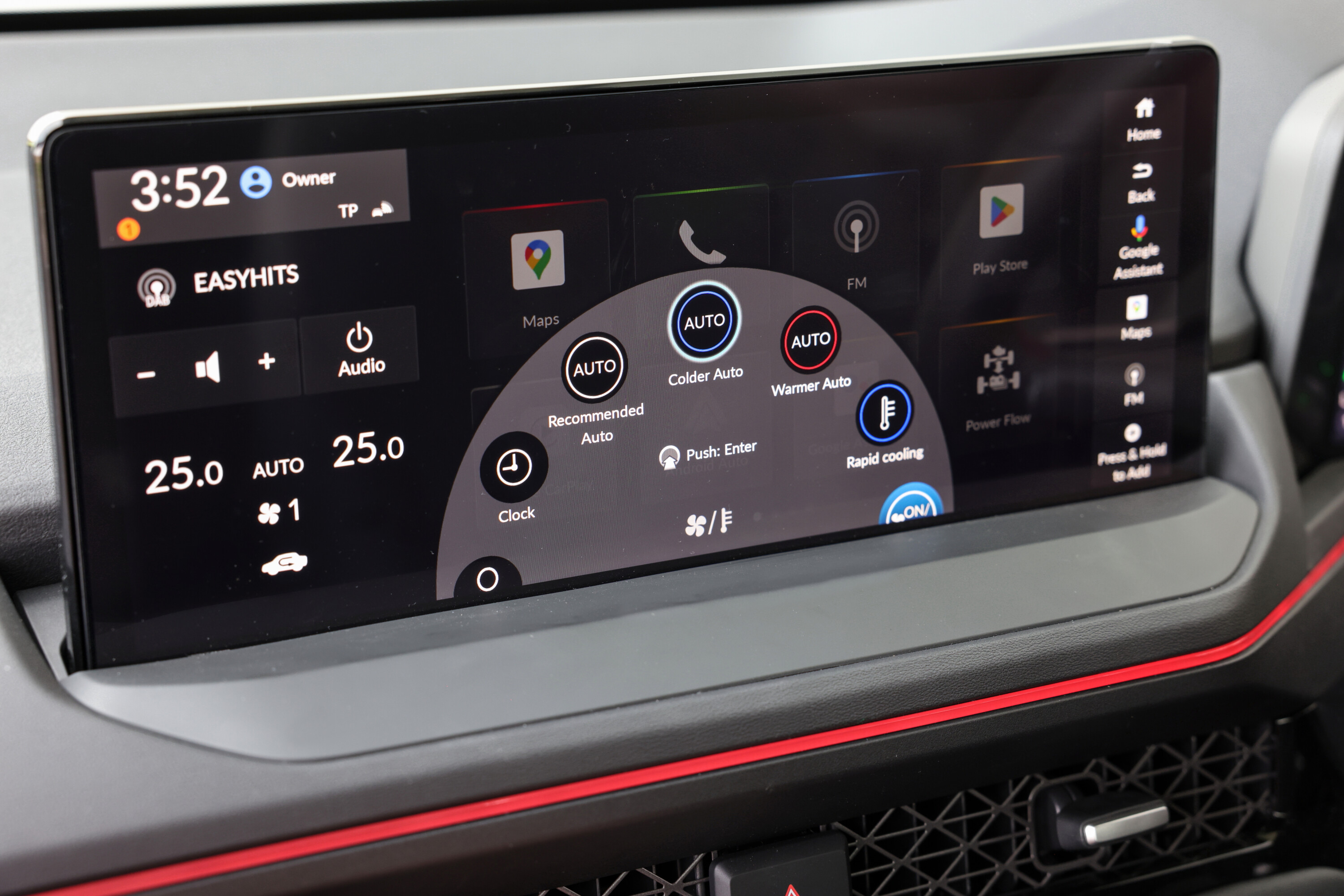
The larger 12.3-inch touchscreen – up from 8 inches – runs on Android Automotive with features like Google Assistant, Google Maps, and third-party app downloads from the Play Store.
Google Assistant works with the car’s hardware and is especially handy for making quick, simple changes like adjusting the climate control, setting a new destination, or even remotely controlling your garage door or lights when paired with an account with linked smart home devices.
1
Wireless or wired Apple CarPlay or Android Auto remain available, but the built-in technology means you could almost live without it, mainly if you use Google Maps and Spotify or YouTube Music.
You’ll need to use CarPlay or Android Auto for other popular services like Apple Music or Waze since you can’t download them onto the car from the Play Store – but more apps are likely to become available soon.
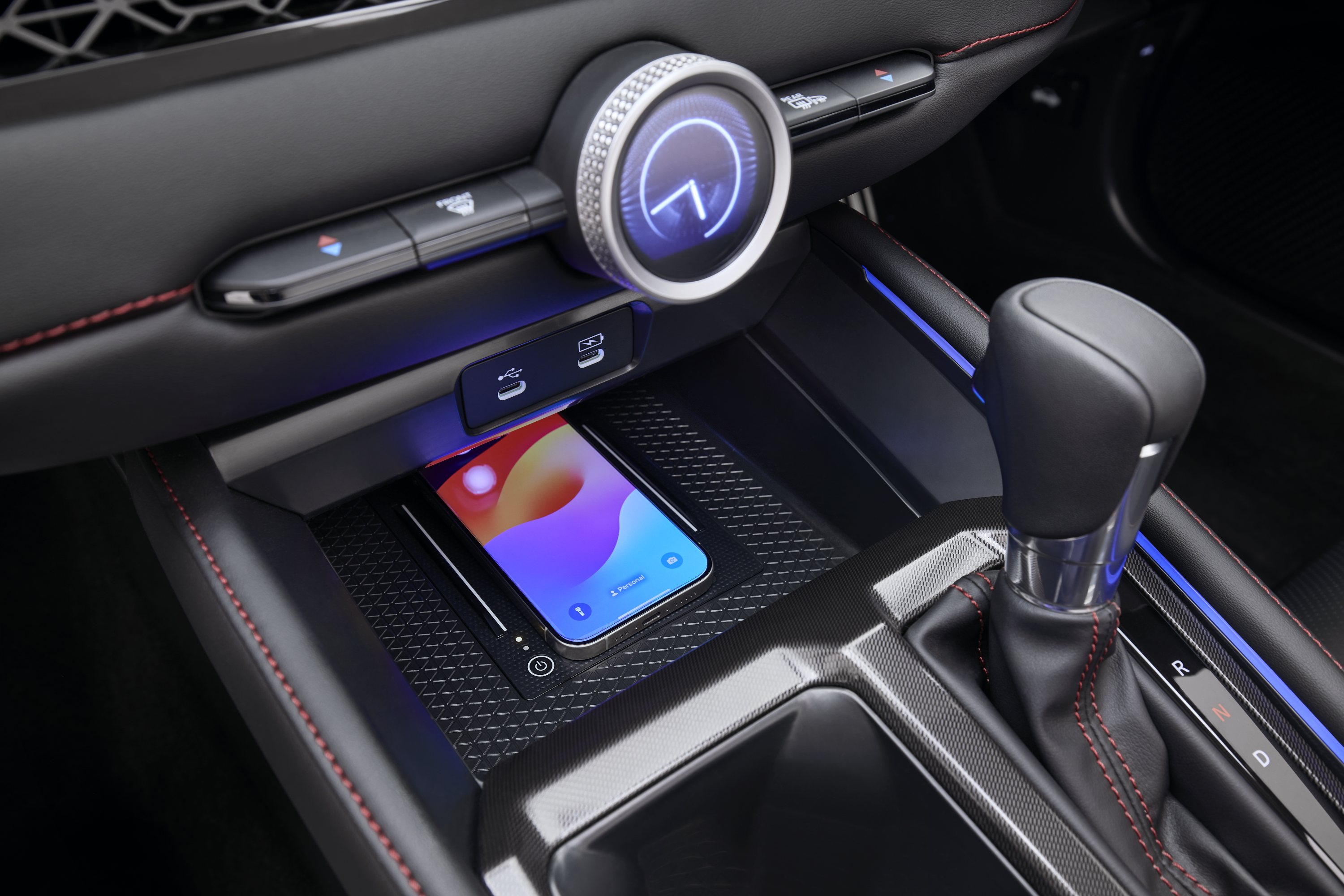
We found the wireless Apple CarPlay connection and inductive charger to work flawlessly paired to an iPhone 15 Pro, albeit with some audio dropout when passing toll road gantries – as seen in nearly every car with wireless phone mirroring.
1
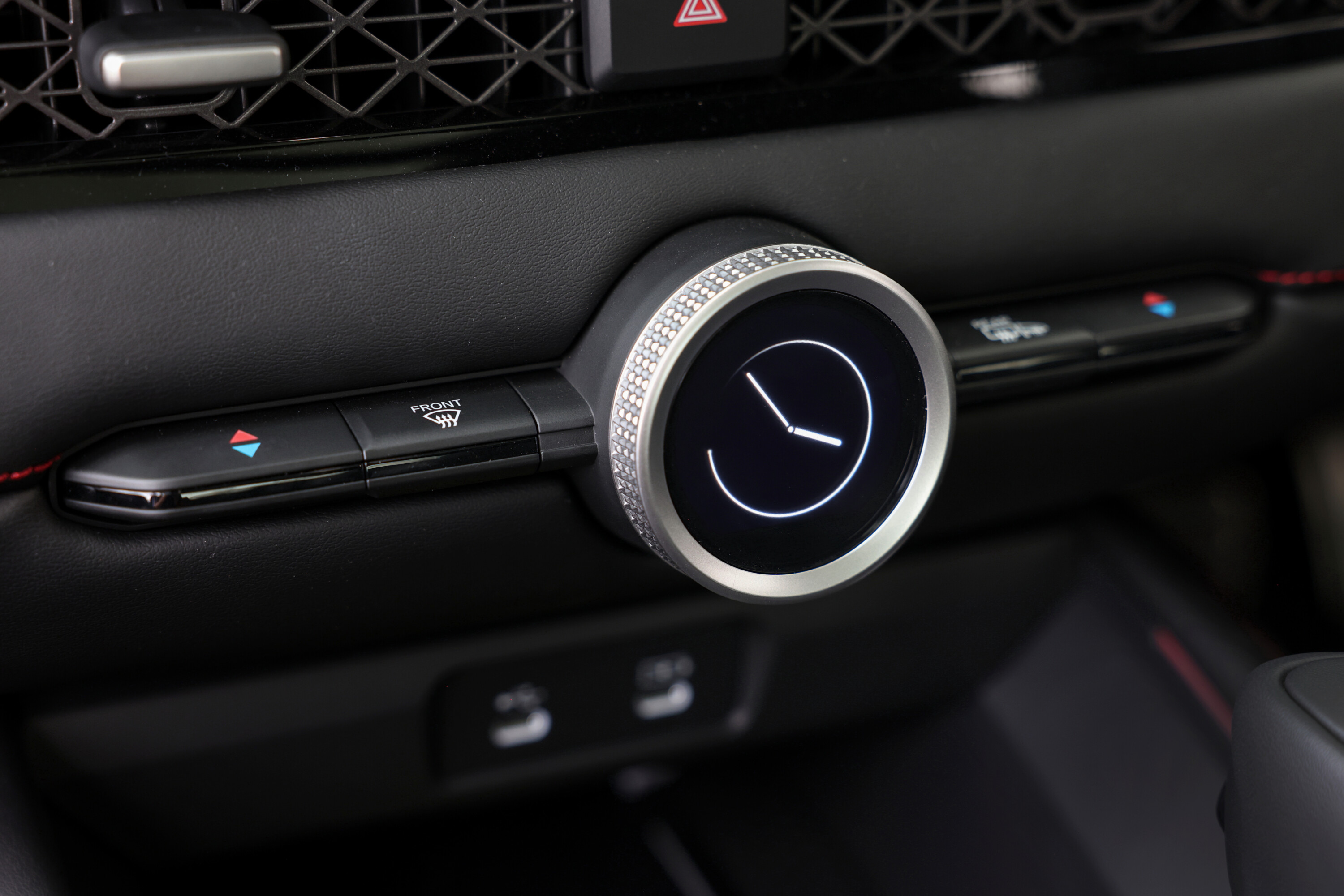
Another highlight is the nifty ‘Experience Selection Dial’ – similar in concept to the ‘Smart Dials’ coming to the new Skoda Superb – which has a circular display with a digital clock as default but provides quick controls for the air-conditioning and driver profiles when turned.
We’d still like to see physical volume and power/tuning knobs retained, as these have moved to the touchscreen without any haptic feedback.
Honda Connect, which is complimentary for the first five years, has been updated for the Accord with a digital key function – requiring its own app, unlike the seamless Tesla or BMW connections – and a remote immobiliser to track the car and prevent the original key from being used if it is stolen.
1
In addition, the time to remote start from the Honda Connect app is almost instantaneous, compared to the circa-30-second wait in other models like the Civic Hybrid and CR-V. You can also remote start from the key fob, as before.
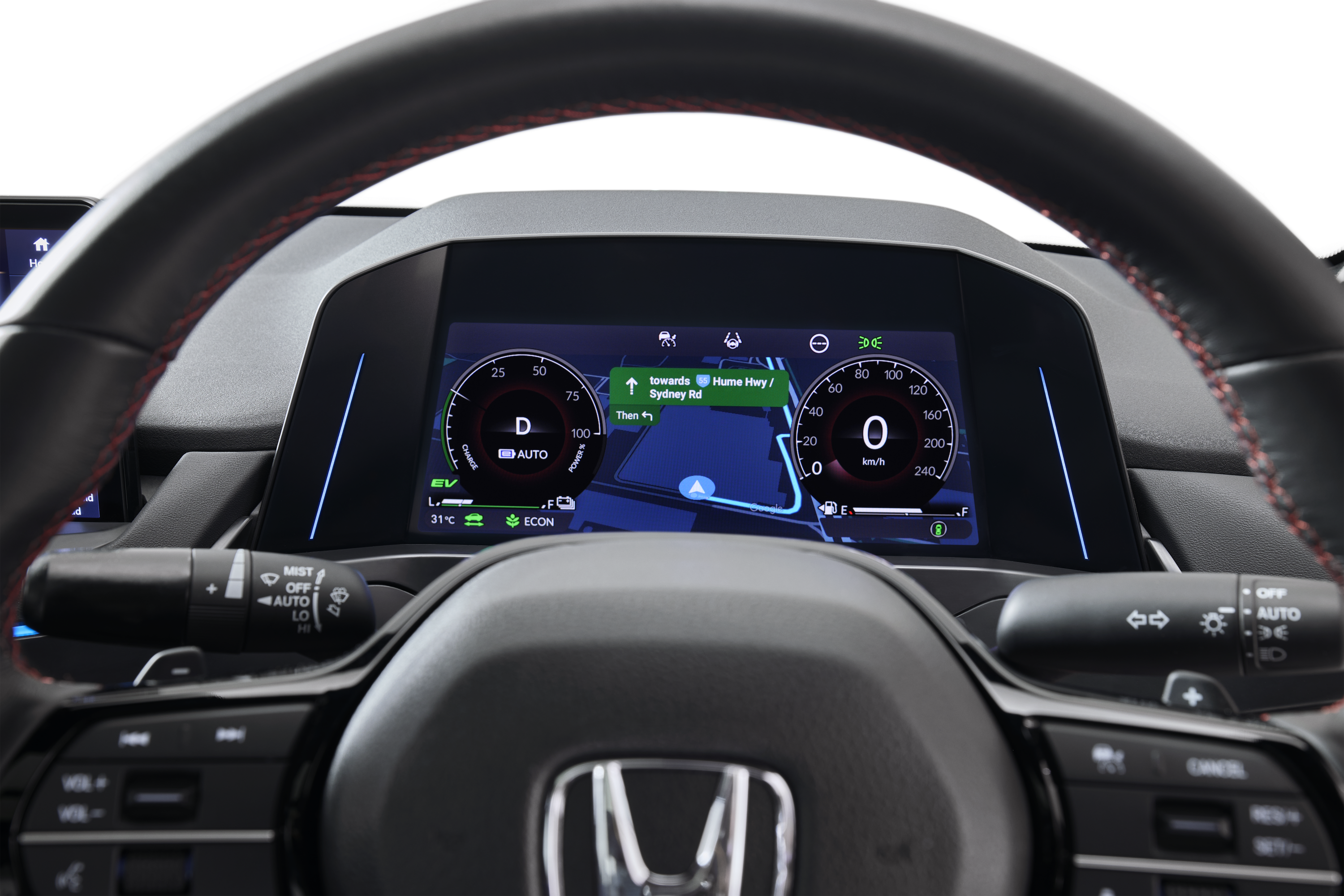
Other features in the Accord’s cabin include an expansive 11.5-inch colour head-up display – more than twice the size of the previous version – and 10-colour configurable ambient lighting that provides a cool ambience at night.
Rear-seat passengers are treated to twin USB-C charge ports, while the ambient lighting extends to the rear doors and footwells.
1
What is it like to drive?
Press the start/stop button and the Accord quietly comes to life, operating in EV mode (unless it’s a cold morning or hot afternoon or the battery is low) and playing a pedestrian alert sound at low speeds.
You’re unlikely to hear much of the internal combustion engine, with the traction motor doing all the work until the battery needs to be recharged, during strong acceleration, or when driving at higher speeds.
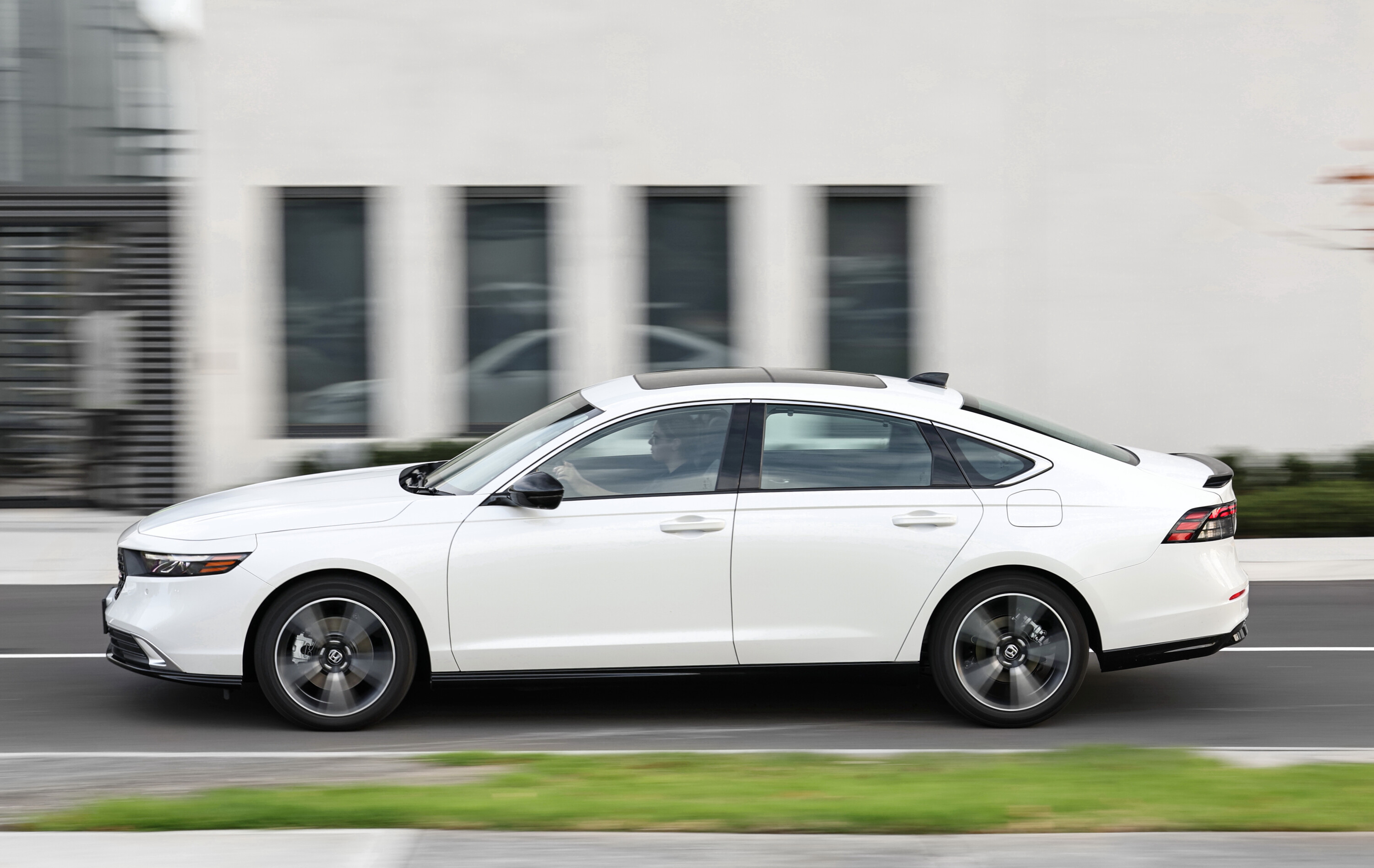
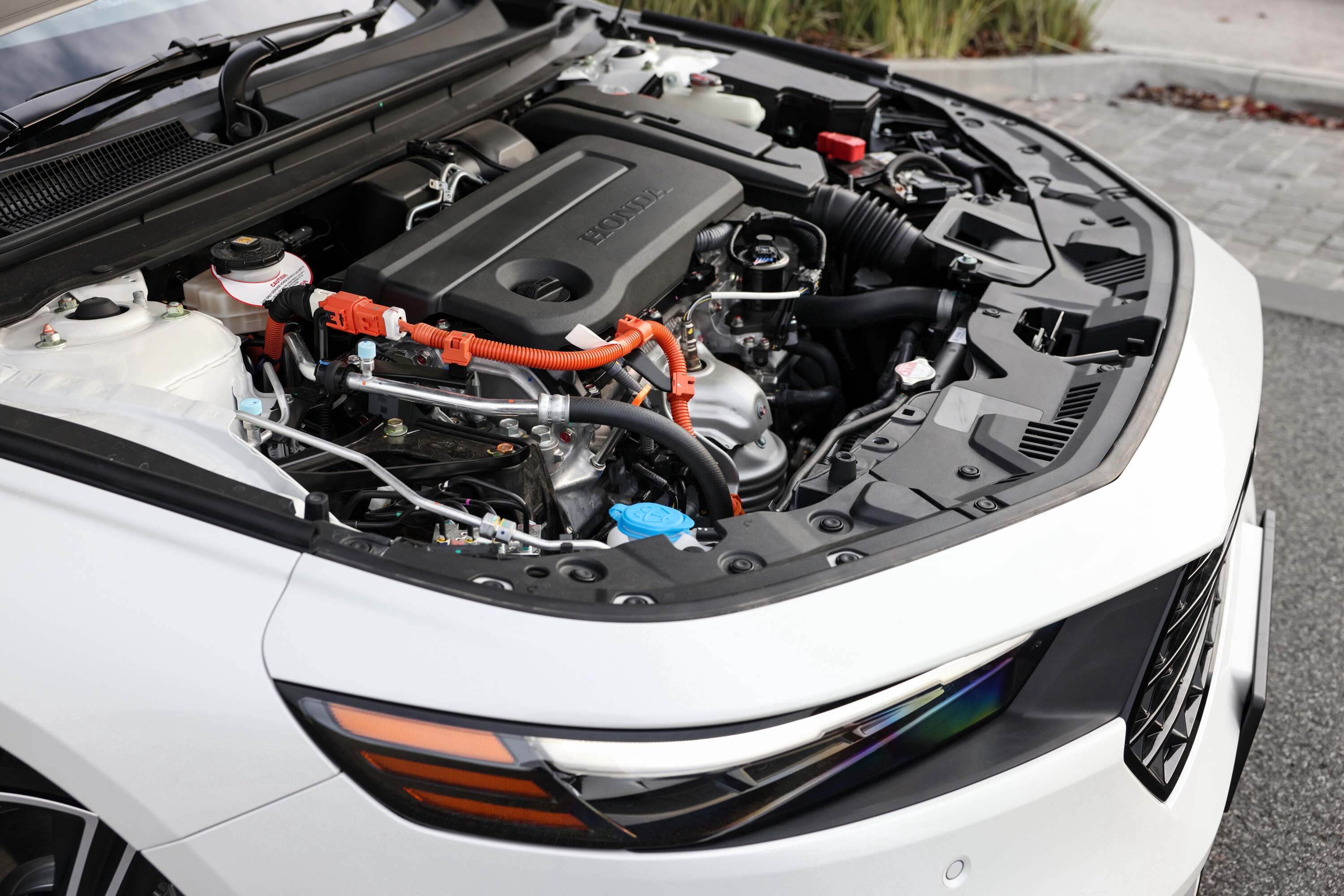
Shared with the CR-V, the Accord’s fourth-generation hybrid system comprises a 108kW/182Nm 2.0-litre Atkinson-cycle naturally-aspirated four-cylinder petrol engine, a lithium-ion battery, and two electric motors – a 135kW/335Nm traction unit and a dedicated generator to charge the battery – now mounted side-by-side.
1
Unlike Toyota vehicles, which mostly operate as a parallel-hybrid, or Nissan E-Power vehicles, which only operate as a series-hybrid, the Honda system can work as either a series or parallel hybrid.
The Accord is usually a series-hybrid – the petrol engine doesn’t power the wheels – but a lock-up clutch can allow additional torque from the petrol motor to be directly sent to the wheels at higher speeds, bypassing the generator motor.
While the 135kW (@ 5000-8000rpm) output appears lower than the old 158kW model, Honda says there is a “refined power calculation method”, claiming it would be identical to the old model using the same calculations but now available across a wider rev band. Torque has increased 20Nm to 335Nm (@ 0-2000rpm).
1
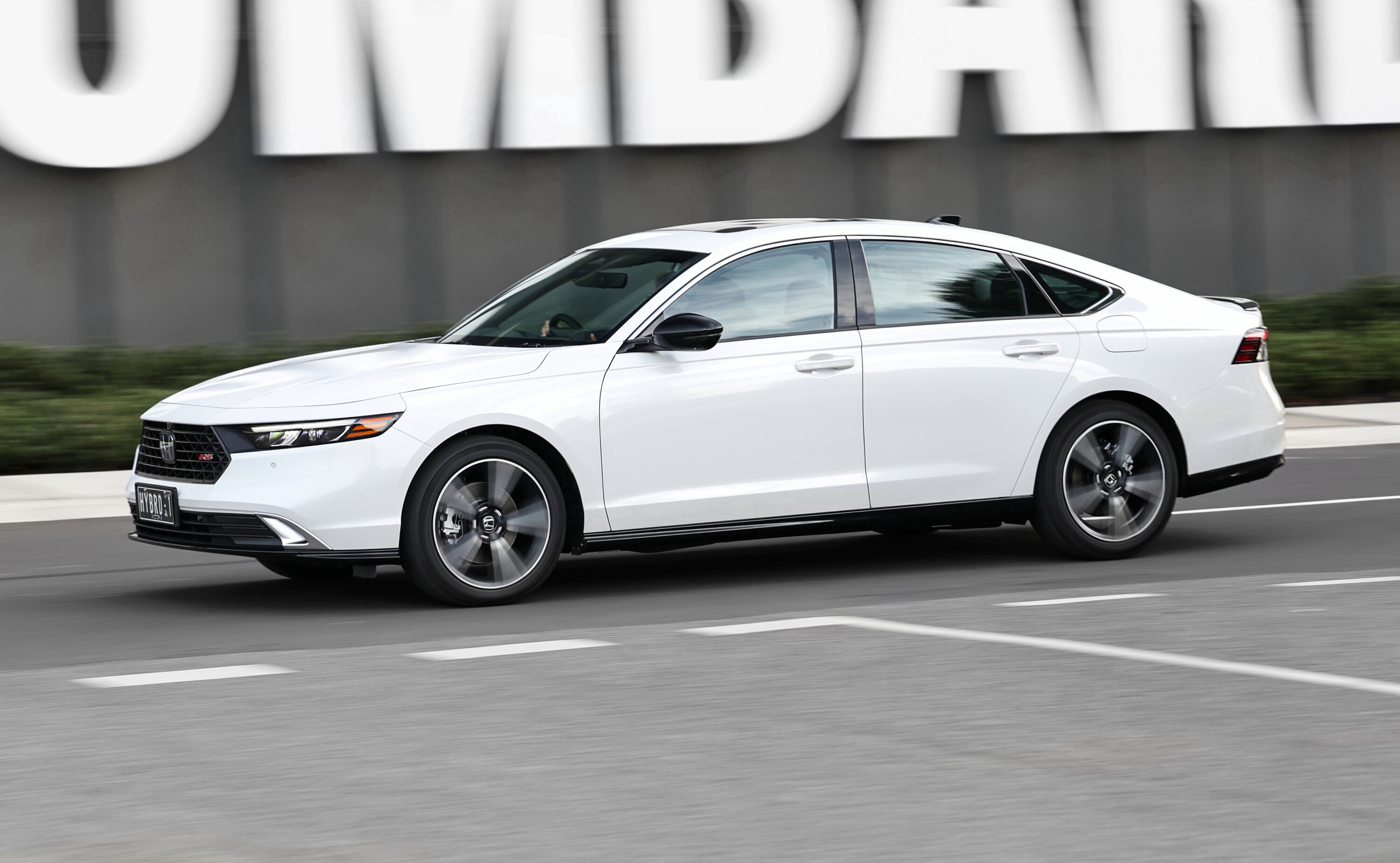
On the road, the Accord E:HEV is a smooth operator. It’s quiet and refined – even when the petrol engine is running – with a well-calibrated electric continuously variable transmission that mimics traditional gear shifts and little road noise.
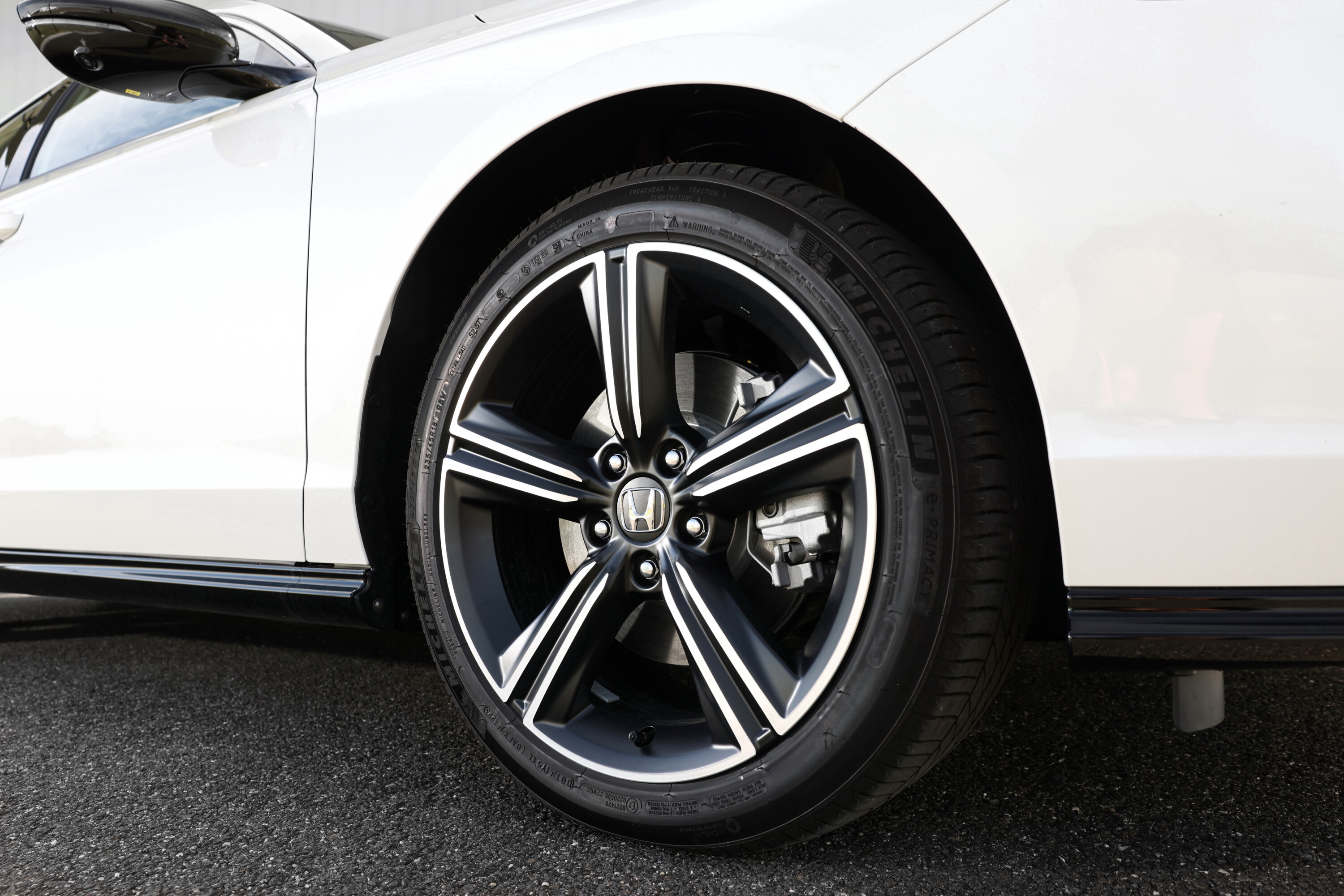
Honda has blended a comfortable ride with a confidence-inspiring steering feel with minimal body roll and a clear turn-in, assisted by the grippy Michelin E-Primacy tyres.
There’s a natural-feeling brake feel in town and at higher speeds, with support for six levels of deceleration using the steering wheel-mounted selector paddles, allowing a one-pedal-like driving experience in the strongest setting.
1
Four drive modes are available – econ, normal, sport or individual – while it’ll automatically switch between ‘EV’, ‘hybrid’ or ‘charge’ depending on the driving condition.
The econ drive mode will limit throttle response and make the air-conditioning more efficient to reduce fuel consumption, while sport mode improves throttle response to reduce acceleration time and sends an artificial engine sound into the cabin.
We found the low-beam and the adaptive high-beam with active cornering function worked well in suburban areas with satisfactory illumination of the road ahead, though we were unable to test it in darker rural areas.
The latest Accord rides on an updated version of Honda’s Global Architecture, with a longer body at 4971mm – up 70mm – and an unchanged 2830mm wheelbase.
If any of the terms in this section have left you scratching your head, these articles will help bring you up to speed!
1
- What is a Powertrain or Drivetrain?
- Power vs torque
- Car suspension explained
- Automatic transmissions (‘gearboxes’) explained
- Chassis control systems explained
- Car vs Ute vs SUV: How the vehicle you buy should guide the way you drive
- What is the WLTP emissions and range test?
Claimed fuel consumption for the Accord E:HEV RS is 4.3L/100km on the combined cycle, 2.4L/100km in urban conditions, or 5.4L/100km in extra-urban environments.
A fuel top-up revealed our Accord averaged an incredible 3.8L/100km after 230 kilometres of driving on mixed roads (suburban, freeway and rural), while the car’s trip computer indicated 4.1L/100km. We only had our test vehicle for a 24-hour loan, so the result could differ if we drove it for a week or two.
With a 48-litre fuel tank and a 4.3L/100km combined consumption, it has a theoretical driving range of over 1000 kilometres. The Accord can be fuelled with 91RON unleaded, while the Camry Hybrid requires premium juice.
Mini matchup: Fuel consumption
| MODEL | MIN RON | COMBINED FUEL CONSUMPTION |
|---|---|---|
| Honda Accord E:HEV RS | 91 RON | 4.3L/100km |
| Toyota Camry SL | 95 RON | 4.5L/100km |
| Mazda 6 G35 Atenza sedan | 91 RON | 7.6L/100km |
1
How safe is it?
Like its predecessor, the 2024 Honda Accord has not been assessed by ANCAP or Euro NCAP.
The Accord did score five stars from ASEAN NCAP (87.44 out of 100 points) and a 2024 Top Safety Pick+ award from the IIHS in the United States. However, both safety organisations operate under different criteria to ANCAP and Euro NCAP.
There is no front-centre airbag, intersection autonomous emergency braking (AEB) detection or driver monitoring camera often seen as features that help to score top marks under ANCAP’s 2023-25 assessment criteria.
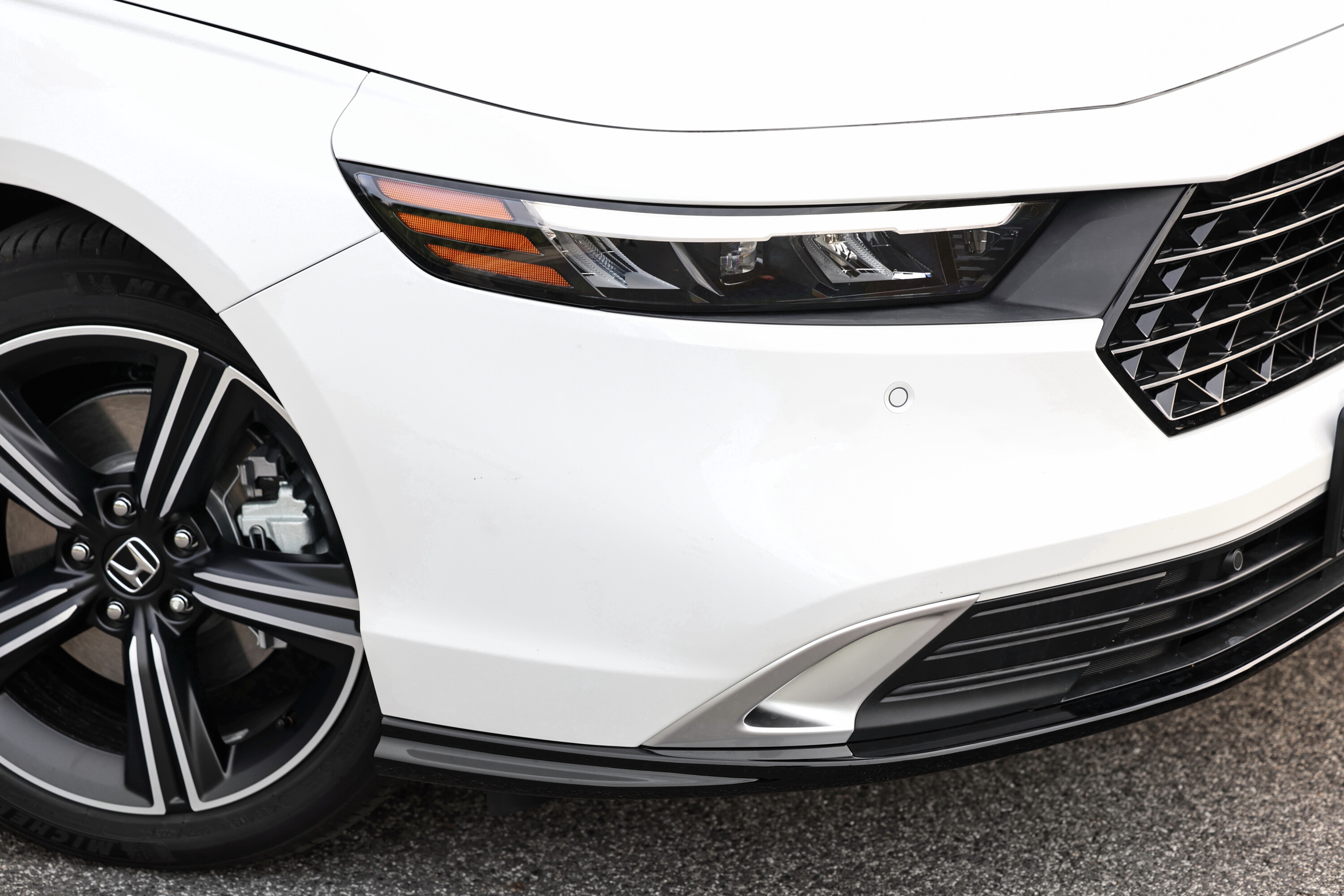
1
It still has plenty of safety inclusions that would likely earn a respectable score if it were tested by ANCAP, including eight airbags (dual front, side front, knee and full-length curtain), vehicle/pedestrian/cyclist/motorcyclist AEB, lane-keep assist, and a new pop-up bonnet for pedestrian protection.
We found the forward collision warning would react to some vehicles parked to the kerb – particularly where there was a slight curve in the road – though it never attempted to apply the brakes.
The traffic sign recognition – which appears in the head-up display – could not detect some visible speed signs, and it does not seem to fall back on data from the built-in maps when a reading is missed.
| 2024 Honda Accord E:HEV RS safety features | |
|---|---|
| Autonomous emergency braking (vehicle, pedestrian, cyclist, motorcyclist) | Traffic jam assist (new) |
| Lane-keep assist | Adaptive high beam (new) |
| Lane departure warning | Traffic sign recognition (new) |
| Blind-spot monitoring (replaces LaneWatch passenger-side camera) | Driver attention monitor |
| Rear cross-traffic alert | Rear seat reminder (new) |
| Adaptive cruise control | Front and rear parking sensors |
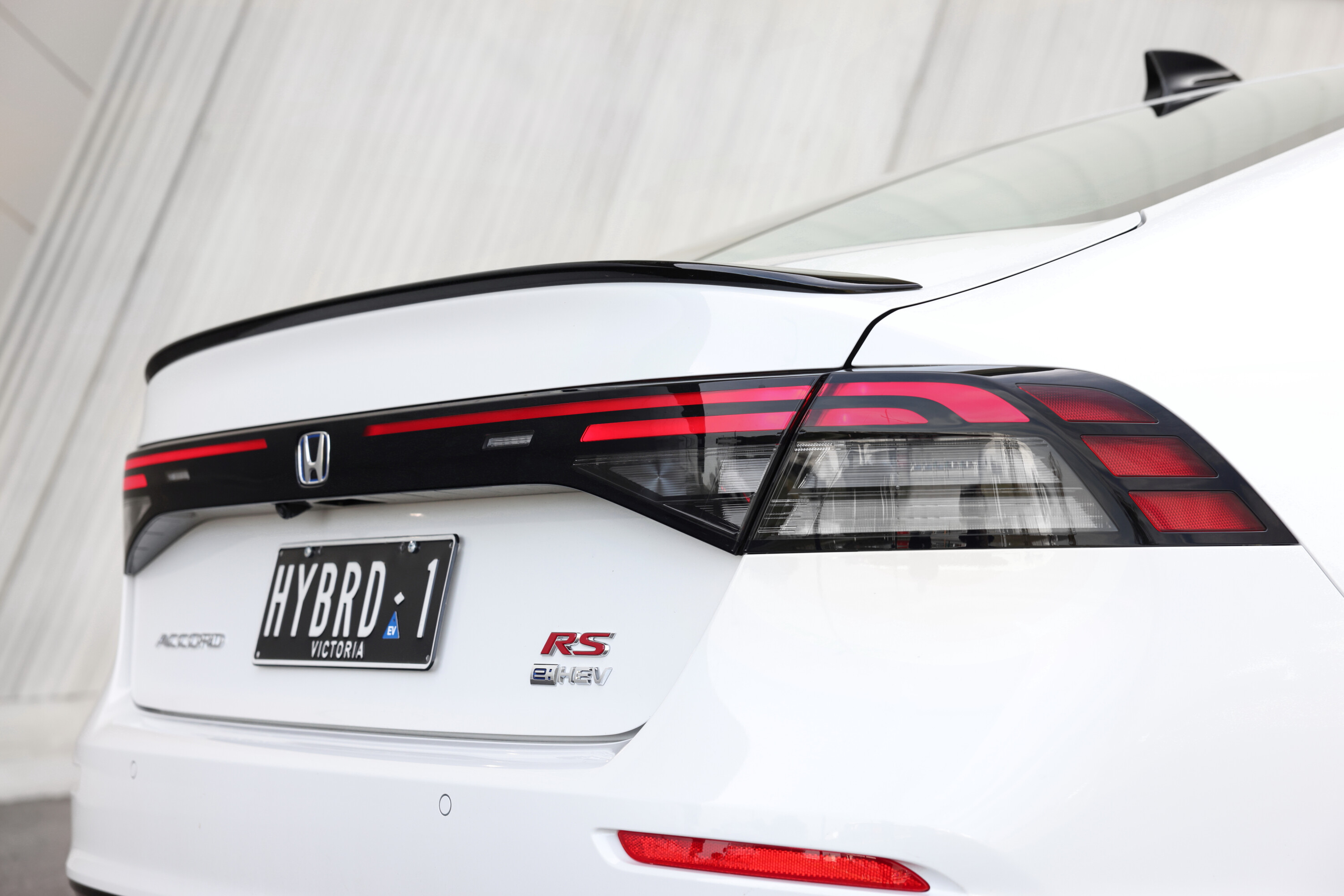
1
Warranty and running costs
Like other Hondas sold in Australia, the Accord is covered by an industry-standard five-year/unlimited-kilometre warranty.
While Honda’s shift to an agency model with fixed, no-haggle drive-away prices has been controversial, one benefit is five years of capped-price servicing at $199 per visit ($995 in total) – making it one of the lowest in the industry.
Over the same period, a Toyota Camry Hybrid would cost $1275 to service at the dealer, $1975 for a Sonata N Line, at least $2576 for a Mazda 6 G35, $2600 for a Skoda Superb 206TSI with a pre-paid package, and $2975 for a Lexus ES300h.
Maintenance is required every 12 months or 10,000 kilometres, whichever occurs first. This is lower than its mentioned rivals (except the Sonata), which allow 15,000 kilometres between each service – potentially impacting the savings if you average more than 10,000 kilometres each year, as most Australians do.
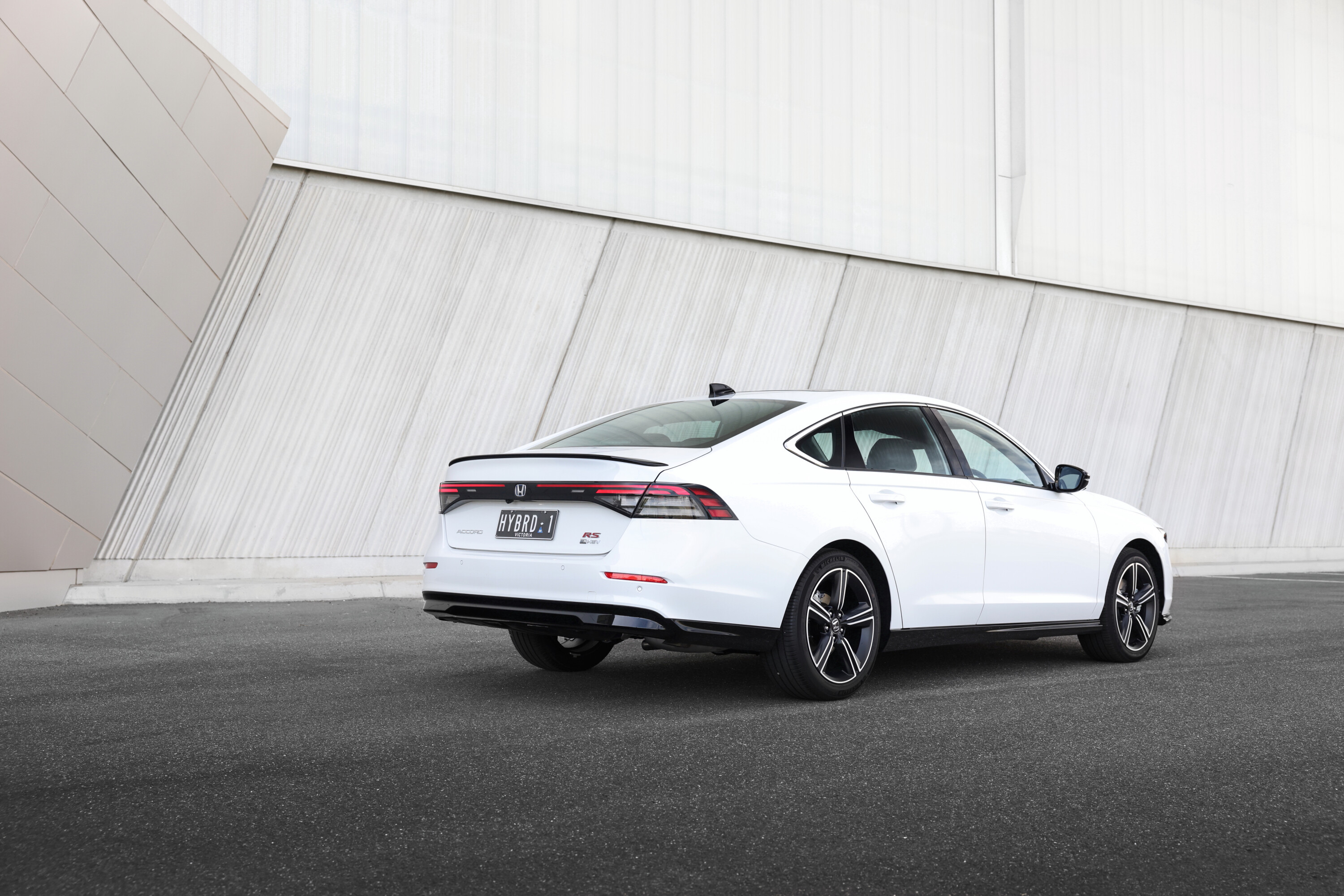
1
VERDICT
Honda’s mature Accord sedan enters its 11th generation still aimed at older buyers or rideshare drivers, but there’s some new-age tech and a fuel-sipping hybrid powertrain to broaden its appeal.
However, it remains let down by its high drive-away price, leaving it out of reach as a competitor for the best-selling versions of the Camry Hybrid – and squaring it up against full-electric alternatives like the Model 3 or Seal available for similar coin.
We’d love to see a more affordable Accord Hybrid in Australia that omits some of the RS’s desirable features, but Honda’s decision to import one variant does make sense, given it’s unlikely to sell more than a dozen units each month.
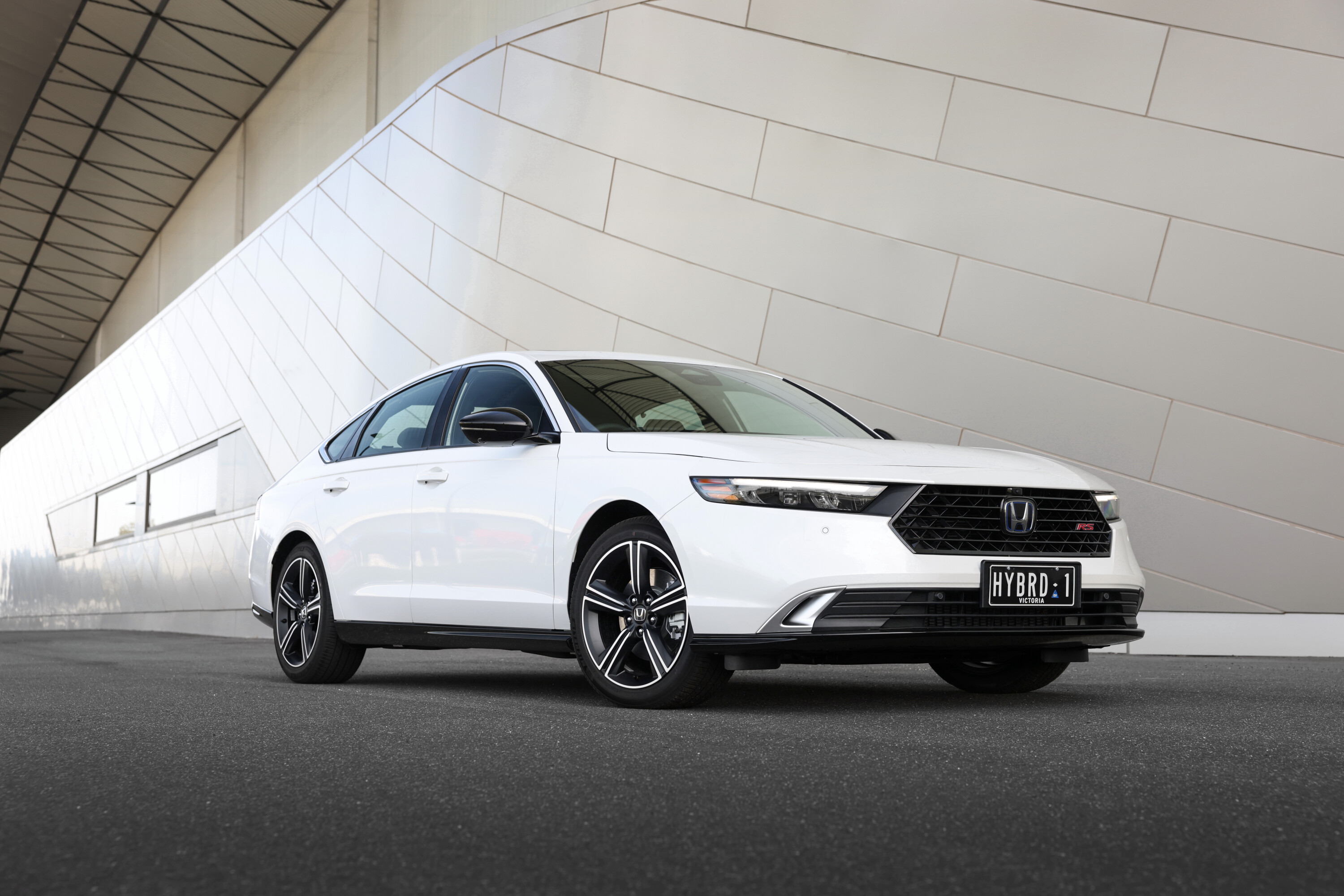
1
With its smooth and efficient hybrid powertrain, up-to-date technology, and strong practicality, the 2024 Honda Accord is worth shortlisting if you’re one of the few people in the market for something that isn’t a ute or SUV.
It’s especially worth considering if you’ve been impatiently waiting for your Camry order to arrive, as the Accord’s low sales volume means there’s every chance a car will become available much sooner.
MORE
Everything Honda
MORE
Sedan Buyers Guide
| 2023 Honda Accord E:HEV RS hybrid | ||
|---|---|---|
| Engine | 2.0-litre naturally-aspirated petrol-electric hybrid | |
| Power @rpm | 135kW @ 5000-8000rpm | |
| Torque @rpm | 335Nm @ 0-2000rpm | |
| Transmission | Electric continuously variable transmission (E-CVT) | |
| Body | Medium sedan, four-door | |
| L/W/H | 4935mm/1862mm/1449mm | |
| Wheelbase | 2830mm | |
| Boot space | 570L | |
| Weight | 1585kg | |
| Fuel / tank | 91 RON / 48 litres | |
| Fuel use L/100km | 4.3L (claimed) | 3.8L (on test) |
| Suspension | Front: struts / Rear: multi-link | |
| Steering | Electric rack-and-pinion | |
| Brakes | Front: ventilated discs / Rear: solid discs | |
| Wheels | 18-inch diameter / 235mm width | |
| Tyres | Michelin E-Primacy | |
| Tyre size & spare | 235/45 R18, no spare (tyre repair kit) | |
