
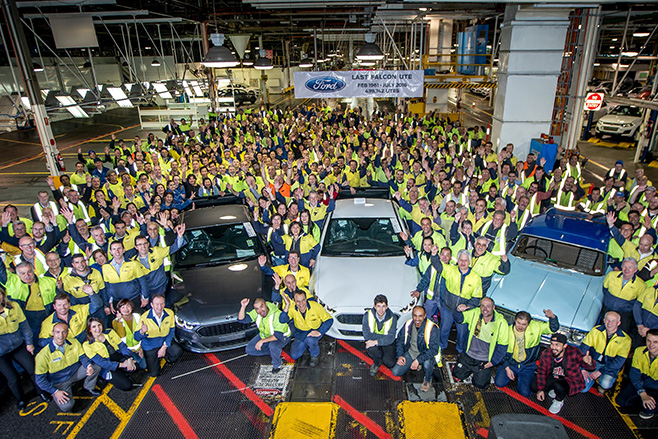
THE LAST-EVER locally built Ford Falcon ute rolled out of the company’s Broadmeadows assembly plant at 2:45pm (EST) today, signalling the end of 82 years of Ford-badged, Australian-built light utilities.
While there are still a few months to go before the plug is permanently pulled on Ford’s Broadmeadows operations on October 7, its high-vis wearing workhorse cousin has now officially ended its historic march down an Australian Ford production line for good.
Fans of The Blue Oval – and even, dare we say it, some Holden-lovers – have been steeling themselves for a sad goodbye to the ute, given that Ford created the first “coupe utility” in 1934 in response to a farmer’s wife’s request for a car that could be “[driven] to church on a Sunday and take the pigs to market on a Monday.”
The resulting design, penned by young Ford designer Lew Bandt, featured a single steel side pressing that merged a two-seat cabin with a deep tub and a drop-down tailgate. Ford set the template, which was subsequently mimicked not only by chief rival Holden, but cars like the Chevrolet El Camino, the Subaru Brumby, Suzuki Mighty Boy and Proton Jumbuck.
Even Toyota got in on the ute game with the 1960s-vintage Crown and Corona pickups. Compatriot Nissan decided they couldn’t out-ute Ford, and sold a rebadged version of the XF utility as the ‘Nissan Ute’ between 1988 and 1991.
In more recent times the humble ute has steadily lost market share to ladder-framed dual-cab pick-ups, with models like the Ford Ranger, Volkswagen Amarok and Toyota HiLux winning over buyers with the availability of 4WD, rugged go-anywhere capabilities and roomy two-row cabins.
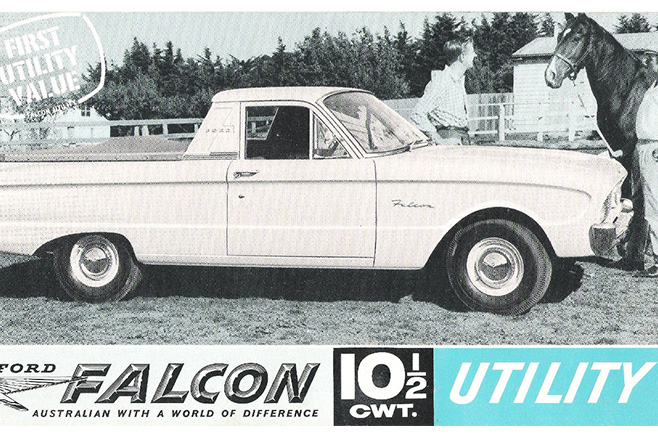
The 439,742th ute to be built by Ford Australia – a white XR6 manual – will make a beeline for Ford’s collection of museum pieces, where it will spend the majority of its life at the Ford Heritage Centre in Geelong. It will most likely never be driven on public roads, let alone take pigs to market.
But while that car is destined for the white-glove treatment, Ford still has plenty of utes stockpiled for sale. If you’ve ever wanted to own a piece of Ford history, now is your chance.
RENAULT Australia has announced full prices and specifications for its Koleos SUV range, which is set to make its global sales debut in Australia next Monday. Prices range from $29,990 for the entry-level Koleos Life to $43,490 for the flagship Koleos Intens.
The mid-grade Koleos Zen sits between them, priced at $33,990 in front-wheel drive form and $36,490 in AWD guise.
“We are the first market to sell the all-new Koleos”, said Renault Australia Managing Director Justin Hocevar.
“Coupled with the vehicle’s outstanding specification levels and value for money, this demonstrates not only how important the Koleos is for Australia, but also Renault’s global commitment to this market and our region.”
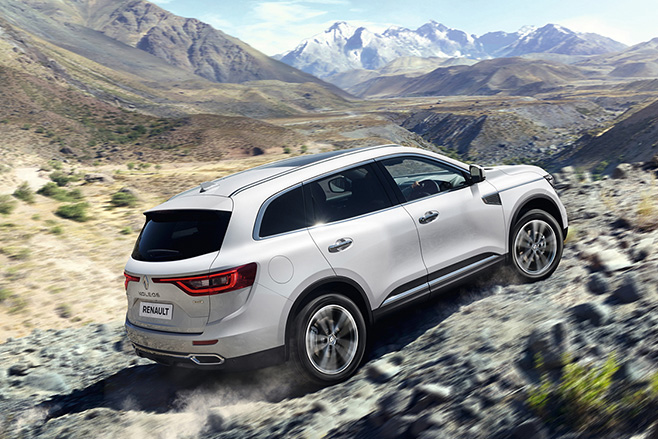
Compared to the previous-generation Koleos (which has soldiered on as Renault’s biggest SUV for nine years), the new model is priced slightly higher, with an increase in base pricing of $1500 and the range-topper costing $1000 more than before. Balancing that out, however, is a roomier cabin, improved cabin quality and substantially fatter standard equipment levels
The most noticeable improvement is in size. Measuring 4670mm long and sitting across a 2710mm wheelbase, the new 2016 Renault Koleos is bigger than before with more space inside for passengers and cargo.
Second-row passengers enjoy 289mm of knee room (a number that Renault says is class-leading), while the boot can take up to 624 litres of cargo. The 60/40 split rear seatbacks can be dropped from the boot area too, using a pair of convenient handles. With the rear seats down, maximum luggage capacity measures over 1900 litres.
All variants will be powered by a 2.5 litre naturally-aspirated petrol engine, producing 126kW of power at 6000rpm and 226Nm of torque at 4400rpm. A CVT automatic is the sole transmission on offer, with drive going to either the front wheels or all four depending on spec.
Fuel consumption is a claimed 8.1 L/100km on the combined cycle for 2WD models, and 8.3 L/100km for AWD.
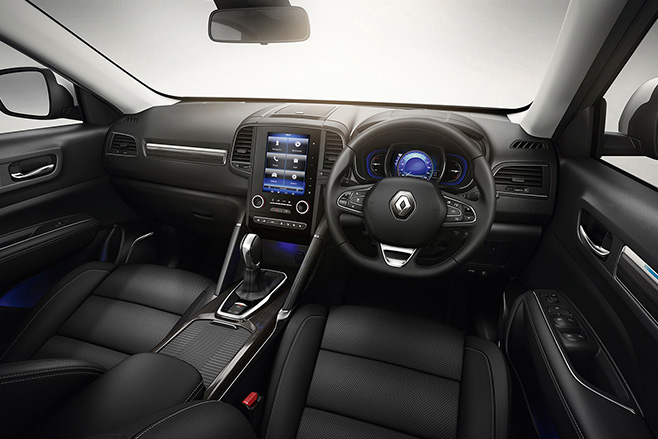
The base model Koleos Life is front-drive only, and comes equipped with dual-zone climate control; dusk-sensing headlamps; rain-sensing wipers; foglamps; 17-inch alloys; cloth upholstery with a leather-wrapped steering wheel; a reversing camera and rear parking sensors; 2 USB ports; Bluetooth telephony and a 7.0-inch touchscreen display running Renault’s RLINK2 infotainment system.
Moving up into the Zen variant nets you the choice of an AWD driveline; a power-adjustable driver’s seat; heated front seats; keyless entry; an electronic parking brake; faux-leather upholstery; rear privacy glass; the addition of satellite navigation for the RLINK2 system; and a set of 18-inch alloy wheels.
The top grade Koleos Intens is only available in AWD form, and adds LED headlamps; park assist; a powered tailgate; a tablet-style 8.7-inch capacitive touchscreen infotainment system; leather trim; heated and ventilated front seats; remote engine starter; ambient cabin lighting; a panoramic glass sunroof; and a premium 12-speaker Bose audio system.
The Intens also comes with an upgraded safety suite, featuring blind spot warning, lane departure warning, low-speed autonomous emergency braking and forward collision warning. Those safety features (minus lane departure warning) are also available on the Koleos Zen as a cost option – as is the panoramic glass sunroof.
Though expensive at the lower end of the range compared to segment leaders like the Mazda CX-5, Hyundai Tucson and Toyota RAV4, the 2016 Koleos should give Renault’s local division a substantial shot in the arm.
Last year Renault sold just 1419 Koleos models, well behind its mainstream rivals. To put that into context, over 25,000 CX-5s were sold over the same period. Meanwhile the aging Captiva 5 managed 5600-odd sales.
Having a larger, fresher and more attractively-specced product in its showroom should boost Renault’s fortunes in the increasingly popular midsize SUV segment.
Want more? Check out what other cars arrive in Australia in August and September.
THE JUST-LAUNCHED Mazda 3 Series II is making history by being the first mainstream bestseller to drop a CD player across its range.
Replaced by digital radio in models from the Maxx upwards, the area in the lower centre console that used to house the CD slot and controls is now occupied by a USB output plug, reflecting the changing ways society now interacts with multimedia in general and personal music in particular.
It is a sure bet that every subsequent Mazda will probably follow in the latest 3’s footsteps too.

“Our internal research has shown that people just aren’t using CDs,” according to the sales and marketing manager of Mazda Australia, Alastair Doak.
“Most people now carry digital files either on their smartphones or on USB sticks. The world’s changing and so our cars have too.”
Doak said the inexorable march of technology has allowed Mazda to better package the latest 3, since the removal of the CD slot and controls from the fascia presented an opportunity for the USB and other output plugs to migrate there from their relatively inconvenient place inside the centre armrest.
“It’s easier now for people to use them on the dashboard rather than inside the armrest where they took up some space, so buyers get the double bonus of better convenience and more storage.”
Still on progress, the two lowest-line 3s – the base Neo and bestselling Maxx – are now the only two variants left to feature an old-fashioned handbrake. Every other model from the Touring upwards now boasts an electronic park brake, operated via a toggle switch which is just a fraction of the size of the previous lever.
The upshot of this is more lower-console real estate opportunities for Mazda’s packaging gurus to exploit; in this case, a new slider (or jalousie) has been fitted, covering the cupholders for a more upmarket appearance and greater out-of-sight small-object storage.
Meanwhile, the Neo remains one of an increasingly fewer number of models in the C-segment not to offer an integrated reverse camera.
Doak says this is because the base car carries the smaller multimedia head unit, rather than the MZD touchscreen found in everything from the Maxx onwards. Installing the latter feature would also drive the price of the entry-level variant up too much.
“We simply don’t have a technical solution for it,” he explained.
“We have to put MZD Connect in to house a camera, otherwise customers can order a $650 mirror camera instead.
“Anyway, fitting a camera puts it very close to the Maxx, so what do you do, get rid of Neo altogether?
For $650, a dealer-fit rear-vision mirror-mounted item is available.
Want more? Check out our Mazda 3 review.
MAZDA has updated its bestselling 3 small car for model year 2017, offering newly-standardised driver-assist safety; a lightly remodelled nose; updated interior; improved driveability; reduced noise; and – in the top SP25 Astina version – a $1500 price cut.
On sale from August 1, it follows Volkswagen Group Australia’s lead with the revamped Skoda Octavia range back in June by including Autonomous Emergency Braking – known as Smart City Brake Support in Mazda-speak – in every model. Previously this was part of a $1500 safety pack, which has now been deleted.
The base Neo will remain at $20,490 plus on-road costs despite the spec boost, which also includes a fresh handling and stability enhancing technology known as G-force Vectoring Control.
However, to accommodate the extra features, the popular Maxx (from $22,890), Touring ($25,290), and SP25 ($25,690) variants’ prices have all risen by $500 apiece and the SP25 GT now costs $200 more at $29,990. The slow-selling XD turbo-diesel has been discontinued, while a CD player will no longer be offered.
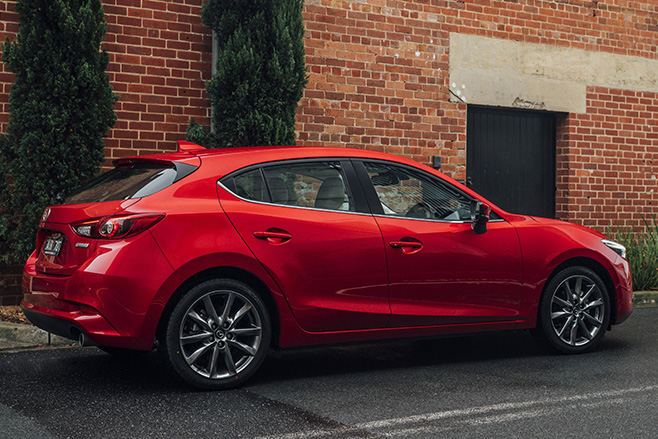
Additionally, from Maxx upwards, AEB-reverse (for when driving backwards obviously), blind-spot monitoring, and Rear Cross Traffic Alert are now part of the deal, the SP25 GT scores Driver Attention Alert (when drowsiness is detected) and Mazda-first Traffic Sign Recognition, while the SP25 Astina range-topper from $33,490 ushers in Lane-Keep Assist and Adaptive LEDs.
Rounding out the changes, revised steering, shock absorber, anti-roll bar, and rear suspension components lift handling and ride qualities, while significantly more sound deadening aim to eliminate known noise paths.
The blink-and-you’ll-miss-it visual makeover sees revised headlights, a reshaped grille, more horizontal-looking bumpers, and a repositioned front numberplate holder. All are meant to provide a more upmarket appearance – important considerations when one of your main competitors is Germany’s Volkswagen Golf.
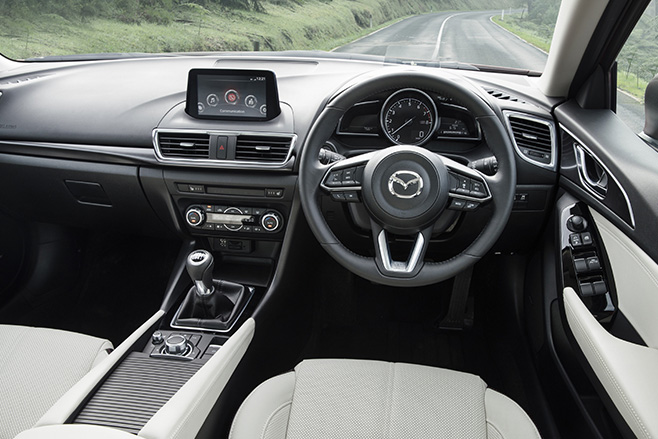
Inside, the changes are more obvious – with larger door pockets; the inclusion of an electronic parking brake instead of a good old levered handbrake (from the Touring upwards); cleaner and better matching instrumentation markings with more comprehensive information in the improved head-up display unit; a redesigned and more user-friendly steering wheel nicked from the CX-9 seven-seater SUV; and repositioned USB charger ports from the centre console to – you’ve guessed it – where the CD player used to be.
Note: due to the smaller multimedia head unit it receives rather than the MZD touchscreen, there is still no integrated rear camera for Neo. However, for $650, a dealer-fit rear-vision mirror-mounted item can be fitted.
On the driveability front, the G-force Vectoring Control system uses the engine to enhance chassis performance by adjusting torque delivery in response to steering inputs, for more stable and relaxed driving.
Engine response, meanwhile, improves in the continuing six-speed torque-converter auto models (that account for 80 percent of volume) with a new Sport mode that adapts the change-up points according to the operator’s style and inputs.
A revised electric steering tune promises more linear and natural responses; new ‘dynamic’ dampers with different oil and stronger structures are fitted, along with softer anti-roll bar mount bushings to reduce ride harshness, backed up by a new rear suspension crossmember and an additional trailing link that increases the lateral grip of the tyres.
Finally, the Astina GT’s adaptive cruise control now works up to 160km/h – the upshot of a request from Europe for broader functionality.
Mazda expects to shift around 3200 3s per month, with the Maxx taking the lion’s share with 40 percent over next 12 month, followed by the Neo (20 percent) and Touring (10 percent); 70 percent will be powered by the unchanged 114kW/200Nm 2.0-litre engine, the other 30 percent will be the 138kW/250Nm 2.5-litre unit in the sportier SP25, while the auto should snare about four out of five buyers. Both powertrains are tuned to run on standard 91 RON unleaded.
On sale since February 2014, the third-generation BM-series hatch and sedan have actually proven to be the most popular, averaging 19.2 percent compared to 18.8 percent for the 2008 BL and 17.7 percent for the original BK from 2004.
More importantly, this series 3 has the richest (and therefore more profitable) model mix ever, with the entry variant accounting for less than 20 percent of total sales – a rarity for such a mainstream model in this segment. Mazda says it reflects the predominantly private (rather than fleet) buyer demographic.
Lastly, three new colours have been added.
2016 Mazda 3 Series II prices
Neo $20,490
Neo auto $22,490
Maxx $22,890
Maxx auto $24,890
Touring $25,290
Touring auto $27,290
SP25 $25,690
SP25 auto $27,690
SP25 GT $29,990
SP25 GT auto $31,990
SP25 Astina $33,490
SP25 Astina auto $35,490
It’s all about the technology and comfort in the fifth generation of Mercedes-Benz’s large sedan.
WHAT IS IT? The most advanced Mercedes-Benz passenger car ever produced. As well as a new body, the latest version of the big sedan gets advanced crash avoidance technology and new safety features as part of a tech onslaught.
WHY WE’RE TESTING IT The new E-Class has just gone on sale in Australia. We’ve driven it overseas but wanted to see how it translated to Australian roads.
MAIN RIVALS BMW 5-Series; Audi A6; Jaguar XF; Lexus GS.
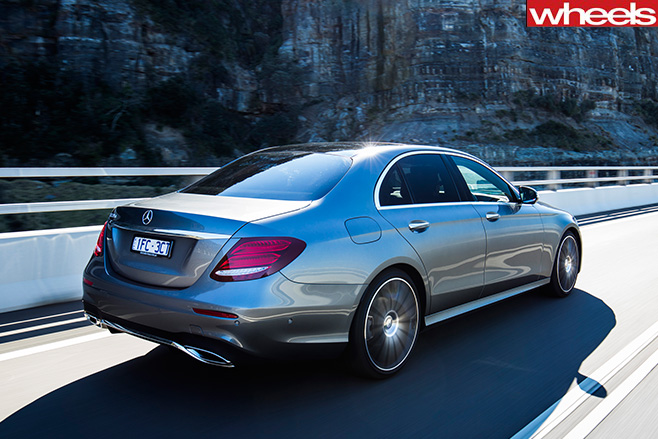
PLUS: Elegant cabin; excellent body control and comfortable ride; frugal four-cylinders; safety tech MINUS: Price of entry has jumped $10K; Comand menus require familiarisation; Parking Pilot doesn’t spot all spaces
THE WHEELS REVIEW IT DOESN’T take long to establish that the new Mercedes-Benz E-Class is more about the driver than the technology. The focus on the car hyped as the most intelligent Merc ever has been its self-steering functionality, its ability to park itself and some of the safety tech that makes it harder than ever to die behind the wheel.
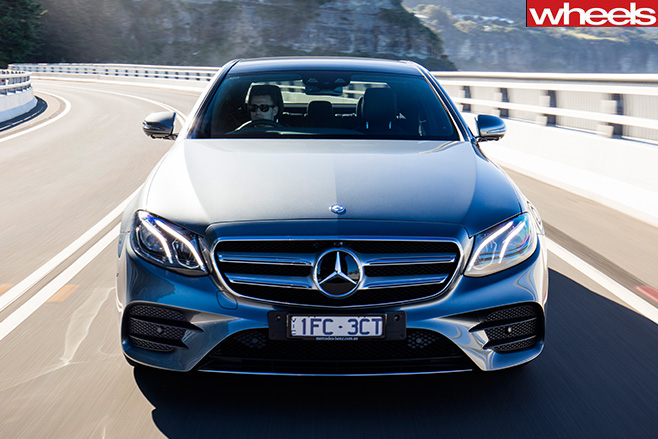
But its brain is nowhere near as astute as a human’s. My E200 sometimes accelerates up to slowing cars before launching on the brakes harder than it may have needed to. And lane keeping can involve multiple dives at the tiller.
On a country road – despite claims of being able to spot road edges, guard rails and sign posts – the E is not a patch (sorry) on the human eye. My attempts at testing it are short-lived once I realise we’ll be spearing off into the sticks if I leave it up to the computer to decide.
So, now we’ve established the driver really is in control, what’s the E-Class like in traditional driving terms?
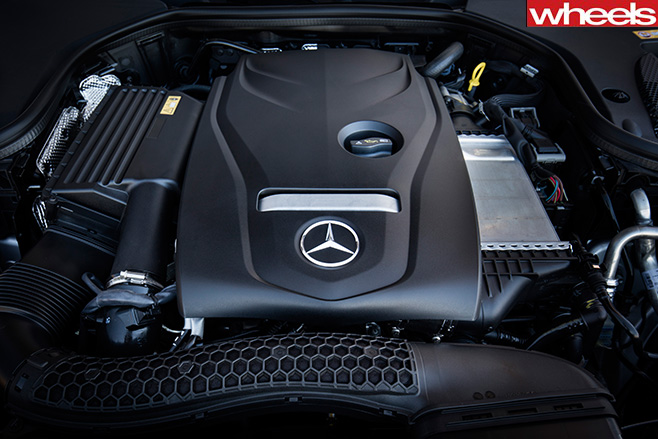
The 2.0-litre four-cylinder petrol in the E200 is unchanged, its turbo huffing nicely for agreeable mid-rev meat. Spin it out, something it has no reluctance doing, and it taps into its modest 135kW for decent acceleration.
Step up to the diesel – it’s almost $3000 more – and the E220d gets fresh metal in the form of a new aluminium block 2.0-litre turbo. Its 400Nm is identical to what the old 2.1 offered in its lower 220 output, although the new engine has a narrower torque spread.
Not that it’s undernourished. The peak kicks in at 1600rpm, but even from 1400 there’s useable pull. And rev the engine out to its 4600rpm and it’s cleaner and quieter than any four-cylinder Benz diesel before it.
The short-geared nine-speed auto blends in well too, with seamless upshifts in all but the Sport+ mode that seems out of step with the tranquil nature of the vehicle. The occasional downshift is less elegant.
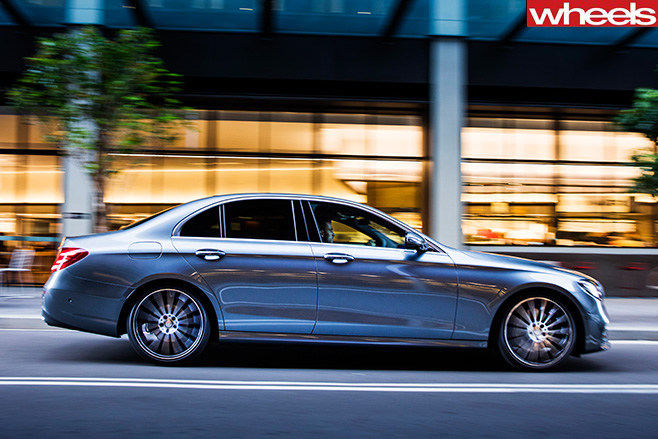
True to form, there’s some sharpness over patchy road, but the ride is otherwise compliant and beautifully controlled. It’s as comfortable poking through peak hour traffic as it is diving at some corners, at which point the hearty grip chimes in. Sweeping corners are its forte, with tighter radii teasing understeer sooner.
The step up to air suspension is a worthy one, with added plushness in the softest Comfort setting – albeit at the expense of high speed body control. Sport mode is a great middle ground, adding excellent weight to the steering in the process.
That such a sizeable, multi-talented sedan matches its accomplished nature with such an inviting interior is testament to the effort that’s been injected into the E. Despite the C-Class-esque interior, the dash also has splashes of S-Class, down to the elegant sweep and quartet of circular air vents in its centre.
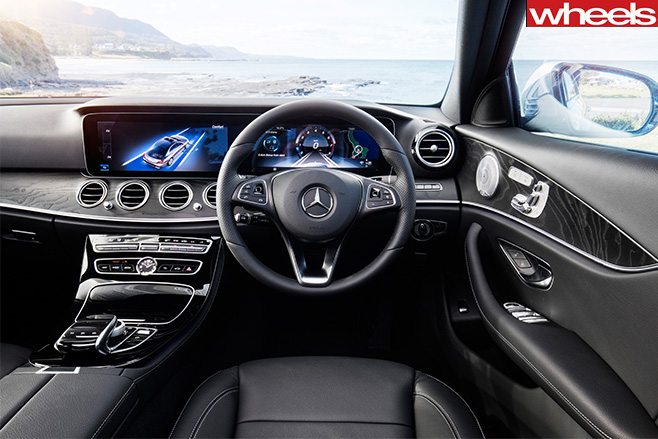
Despite the tech and fresh thinking, there’s plenty of familiar switchgear, from the central Comand controller to the dual clusters in the centre stack. But the steering wheel introduces new thinking with smartphone-inspired touchpads; one for the left screen, one for the right.
Those in the back aren’t forgotten, either, with twin circular air vents and respectable leg room, although head room will catch out the lofty if they use the headrests, at which point the tapering roof is more noticeable.
SPECS Model: Mercedes-Benz E 220 d Engine: 1950cc 4cyl turbo diesel Max power: 143kW @ 3800rpm Max torque: 400Nm @ 1600-2800rpm Transmission: 9-speed auto Kerb weight: 1605kg Fuel economy: 4.1L/100km 0-100km/h: 7.3sec (claimed) Price: $92,900 On sale: Now
THE AVAILABILITY of a six-speed manual gearbox is a headline feature in the newly released Golf GTI 40 Years edition, but you can’t get one yet, and almost all of the 100 manual ‘boxed units allocated to Australia are already sold.
The high-powered, 500-only limited edition Golf is available in dealers now, but manual versions won’t arrive until September. By then, it’s expected that every one of them will have a buyer’s name and a deposit against it.

This makes the 40 Years, which features the same electronically controlled mechanical LSD, big brakes and other track-focussed features as the GTI Performance – but with a superior power-to-weight than even the R – a uniquely appealing proposition.
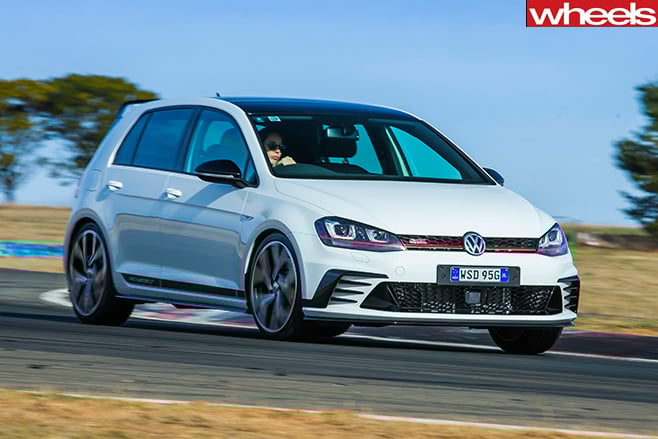
If you want one, says Volkswagen Group Australia spokesperson Paul Pottinger, “get in now.”
WEIGHT issues and a perceived lack of demand are behind Porsche’s decision not to proceed with the development of a hybrid 911.
Porsche 911 project director August Achleitner told Wheels his preference is for cars to either have a combustion engine, or be fully electric in line with the company’s Mission E concept.
“Of course we could install a hybrid system in a sports car, 911 for example, but it’s not an easy job.
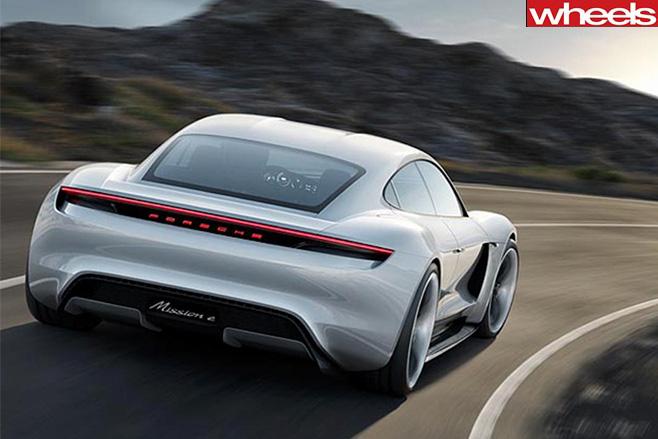
“So (hybrid) sales numbers would be quite low, and they would have no effect on the CO2 emissions of the whole fleet, so from this point of view, it doesn’t make sense to offer it. Not today.
“Of course we have a look at all these developments all over the world and maybe we come to another decision next year, or in the next two years. Right now, we do not plan it.
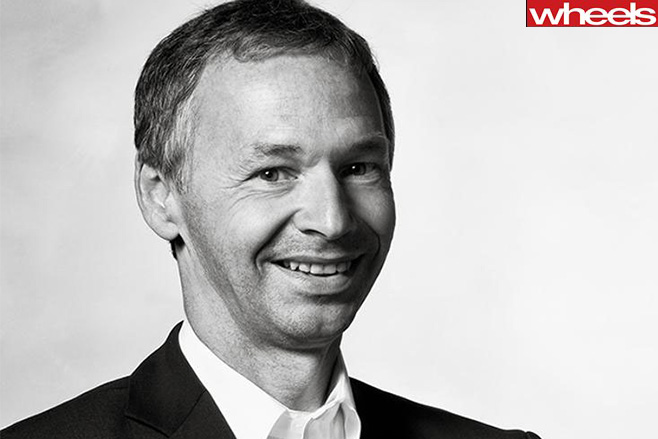
He reckons the Mission E concept will achieve this, but holds his cards close to his chest when pushed for detail, particularly on comparisons with Tesla.
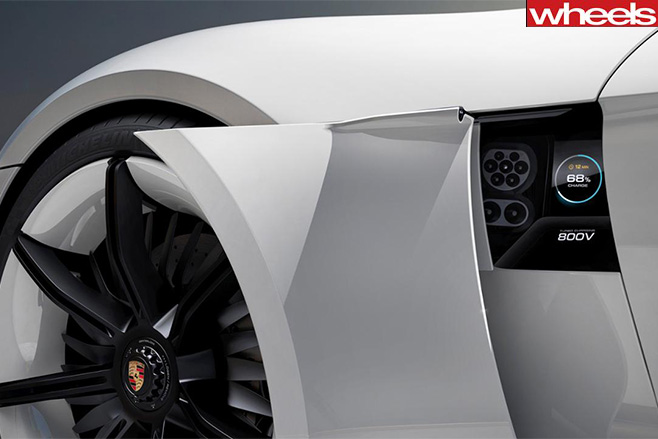
“There’s a lot of development taking place right now with Volkswagen and Audi, so we look for synergy effects between these different brands, which makes sense. But we look also, of course, for differentiation so that the customer, when he buys a Porsche, knows what he buys.”
FIVE billion euro is a lot of money to develop a car.
Mercedes-Benz, for example, spent ¤2bn on the W212 E-Class launched in 2009, and a further ¤1bn on the new-generation E-Class arriving here later this year, a car it claims is the company’s most advanced production vehicle ever.
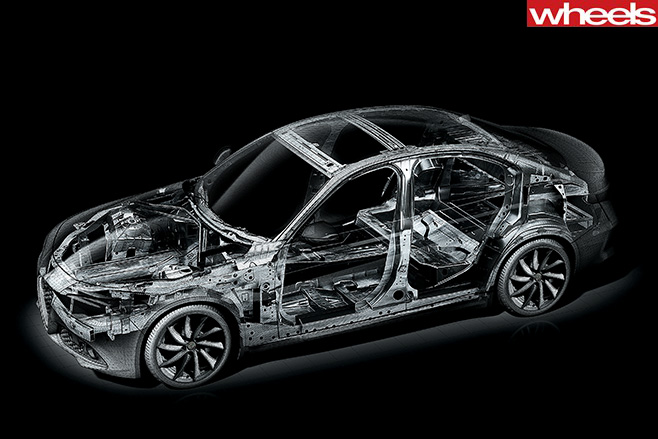
Five billion euro is a lot for just one car. But the Giulia is not just one car. It debuts a platform, a flexible architecture dubbed ‘Giorgio’ that will underpin a range of new-generation Alfa Romeo models, including two SUVs and possibly a rear-drive Giulietta replacement, within the next six years. A successor to the larger 166 sedan is also under consideration, but further out.
Five billion euro also paid for the development of three new engine families – a 2.0-litre petrol and 2.2-litre diesel, and a 2.9-litre twin-turbo V6 – that will power Giulia and the SUVs.
Five billion euro, then, is not a lot to spend on five completely new cars and three completely new engines.
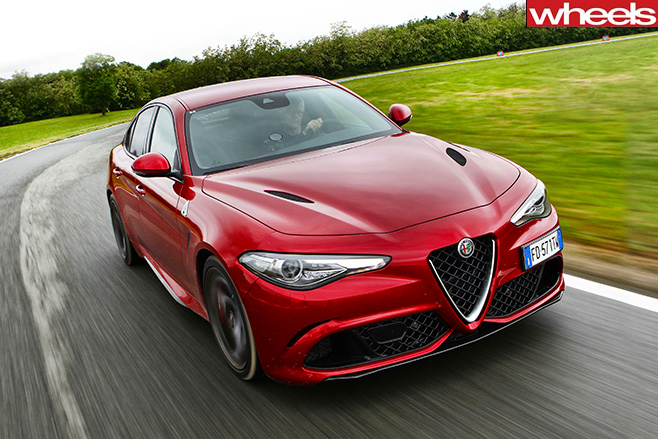
Wheels flew to Balocco in northern Italy to drive the Alfa Romeo Giulia. This is what we learned.
“April 29, 2013,” Krief says. “That’s when work started on the Giulia. I got a call just the week before from [Fiat-Chrysler Automotive CEO Sergio] Marchionne and was told we want to do a completely new thing… rear-wheel drive… new Alfa Romeo… so we start from scratch.”
Krief, formerly a Ferrari engineer, heads product development for Alfa Romeo. Since that day three years ago, the Giorgio platform, and the first two models it will deliver – the Giulia sedan and 2017 Stelvio SUV, a rival for the Jaguar F-Pace and BMW X3 – have been his life.
But life began much earlier for the project that was meant to succeed the 159 sedan way back in 2010.
Plans for a 159 successor were almost signed off by Marchionne in 2007 as one of many models to be co-developed in a joint-venture with BMW. Both sedan and wagon would share the 3 Series’ rear-drive platform. A replacement for the 166 would be built on 5 Series architecture.
In return, Alfa would develop a new rear-drive platform for B- and C-segment cars for both brands. This would, of course, throw up packaging compromises, especially in rear-seat legroom, but a Wheels source involved in the JV business case says that was of little concern, to Alfa at least.
“For sure we knew this… we didn’t worry,” our source revealed. “Driving dynamics came before comfort. We wanted rear-drive for all Alfa Romeo models. And we had a very good positioning plan, too: [Alfa Romeo models] would be lighter and more powerful than the BMW ones, and more affordable.”
Rear-drive, light weight, better power-to-weight, more affordable, and Italian. What’s not to like?
But instead of going into partnership with BMW, Fiat Group saw an opportunity in struggling Chrysler. Development plans were put on hold, and eventually cancelled when Fiat bought a controlling stake from investment firm Cerberus in early 2009.
Another Ferrari alumni, Roberto Fedeli, now chief technical officer for Alfa Romeo and Maserati, explains further.
“The plan three years ago was to relaunch completely the Alfa Romeo brand. Obviously Mr Marchionne had this thought before. But he decided to enact this kind of plan when the conditions of the company were much better … when the money was there in order to be spent doing this kind of model.
“It was a choice of FCA’s to concentrate during the last years in doing something that let the group grow up; to restart the program, to make the integration with Chrysler and so on.”
Fedeli’s nickname at Ferrari, where his credits include the F12 Berlinetta and La Ferrari hybrid supercar, is The Prince. While at Ferrari, Fedeli was instrumental in the Giulia program’s genesis before leaving FCA for a 16-month stint with BMW’s i Division. He was poached back by Marchionne in February this year.
“Three years ago I was in Ferrari. And I remember at the end of April, Mr Marchionne came to Maranello and spoke to Montezemolo, who asked me to give a couple of guys – one for chassis and one for engine – because he had in mind to relaunch Alfa and [he wanted] experience from Ferrari guys. I told him, ‘No, it’s not possible. I have a limited number of people and I have to develop Ferrari models’.
“You can imagine the discussion that ensued and what the final decision was… I gave him two guys.
“The first one was Philippe Krief, and the other was head of gasoline engines Gianluca Pivetti, responsible for Ferrari engines. He became immediately the boss of Alfa Romeo engines… but without engines, without anything.”
Fedeli says Krief and Pivetti moved to Modena the very next day to start the Giorgio project.
“Then in a couple of days more, [they asked me for a] third guy from FCA human resources department. His job was to help these two guys build the team. In one year they hired 400 people, and in another six months another 200 people. The team eventually became 800 people. And they were working day and night.”
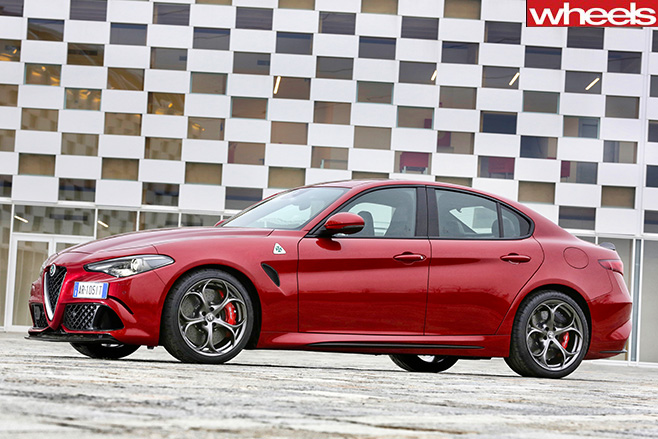
Two skunkworks were established, confirms chief exterior designer Alessandro Maccolini, the man who penned the Alfa Romeo 4C and current Giulietta. One in Modena for engineers, the other at FCA’s Centro Stile design home in Turin.
“Yes, really the team was divided,” says Maccolini. “In Modena there was this skunk team for all the technicians. For style it was a skunk team in Turin, in Centro Stile. This team was absolutely divided from the other brands in Centro Stile. This was absolutely a priority from the beginning of the project, to maintain a strong identity with no contamination.
“We stopped transfer within the brands, making sure the team was only Alfa Romeo because it was absolutely top secret. It was a closed shop. A special [security] badge [was required] even inside Centro Stile.”
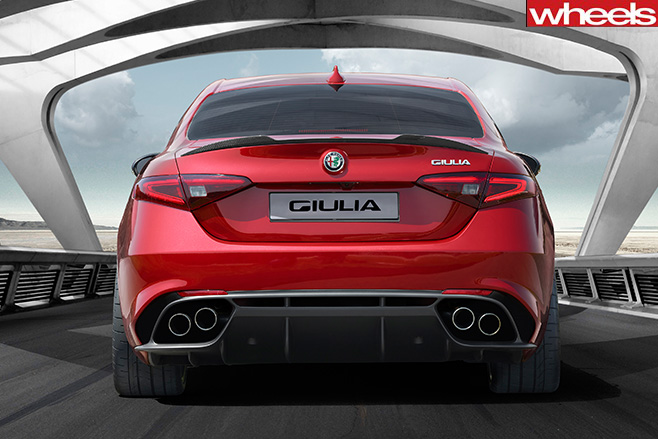
Maccolini tells us the Giulia design challenge was twofold: firstly, to evolve Alfa’s design language for a new generation while respecting the brand’s 106-year heritage; secondly, to exude ‘Italian-ness’.
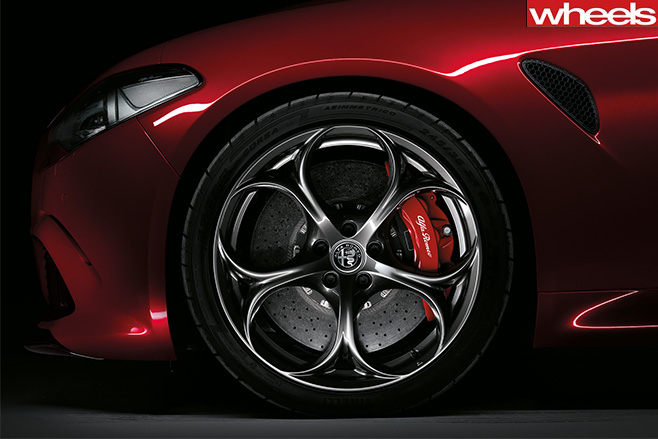
“Maybe looking at the car you don’t see an Alfa Romeo from the past, but you feel something… The front, the rear treatment, the [side] section of the car. I think it’s more important to have the feeling of an Alfa Romeo, not the copy of an Alfa Romeo from the past.”
And Italian-ness?
“I know it’s not [always] easy to understand the difference between an Alfa Romeo design and a competitor’s. In this segment, for example, take a competitor’s greenhouse and look at the transition from the side to the back. You will see differences. On the back we needed this round shape because we like to emphasise this treatment, the beauty and the elegance of the car.
“[At the same time] we have to strike a balance between what we need for style, what is required for aerodynamics and handling, etc. Without compromise for Philippe’s team, but again a good combination for the car, for the complete product… not only style. When you see the Giulia, you can see that it’s enabled the team to work with those in a way that still allows that sculpture to come through. That to me is the Alfa Italian-ness, that pure sculpture. Clean but expressive qualities, and it still maintains an amazing proportion.”
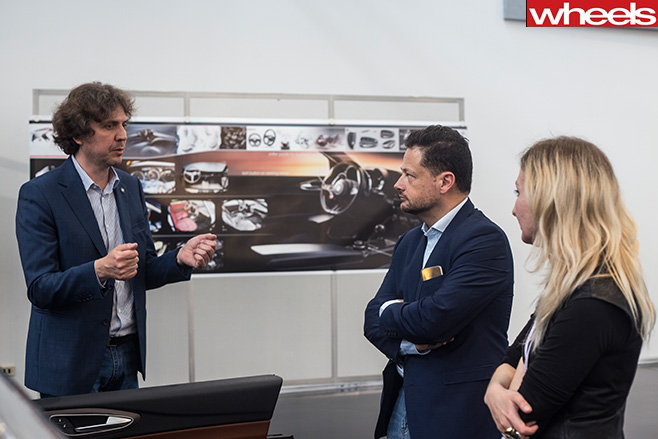
Both Maccolini and Krief cite the ‘creative tension’ that existed between Giulia designers and engineers.
“That creative tension… the best products come out of that,” explains Maccolini. “It’s a healthy tension. There are trade-offs that you have to deal with. We [designers] are not here to make our car, and engineering another car. Look at the Quadrifoglio’s diffuser, it’s 97 percent aerodynamic. The ‘style’ is only to understand where we need the separation between the bumper and the diffuser. The rest is designed in a windtunnel. And we accept this. Because if we overdesign this piece, it can be only wrong.”
Krief says the platform’s hard-points were laid down, and targets set, within the first month.
“Just one month after we started, we set ambitious targets for everything. For Giulia we knew we needed to have the old 156 kerb weight of the diesel – 1350kg. We needed a car that is five-star [safety], and a car that is able to do less than 7min 47sec at the Nurburgring. We also wanted to be best in class for fuel consumption. We want an aerodynamic Cd of 0.25. We wanted certain downforce… We had many targets, all sorts of targets.”
Though they missed that weight target by 24kg – the Giulia turbo-diesel is still 130kg lighter than its BMW and Mercedes equivalents – in some cases they exceeded them. In September 2015 a production-spec Giulia Quadrifoglio lapped the Nurburgring in 7min 39sec.
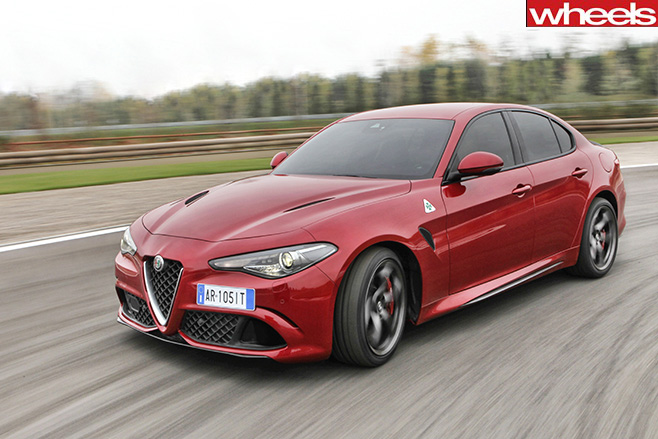
“What is Alfa Romeo? What numbers define us as a brand? Usually you don’t do it like that. You find some trade-off. But not this time,” Krief says.
They refused to compromise their overarching goal “to achieve ultimate driving satisfaction”. And while all those numerical targets speak to that, they are outcomes, he says, of sound core principles.
“We wanted to stay true to Alfa Romeo DNA. To focus on principles that made Alfa the king for many years. Alfa has always had extremely light products with good power-to-weight. Good balance and 50/50 weight distribution is also important. This leads to spontaneous, natural, dynamic….”
Dimensions were established early on. The 2820mm wheelbase is 8mm longer than BMW’s M3, and carries a body 15mm longer but with a 3mm-lower roofline. Aluminium double-wishbone front and multi-link rear suspension follow the lead of the 159 and 156 before it, with an increased focus on controlling wheel travel to maximise each tyre’s contact patch.
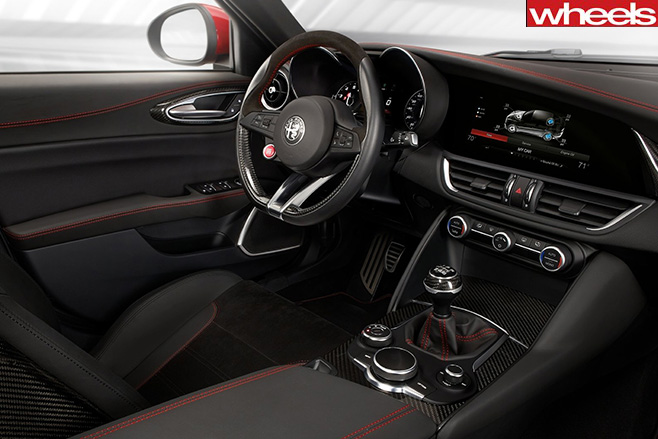
Once the driving position was set – and I can report it is spot-on, but more on that later – tactile elements were next: “You cannot have quick steering and long pedal stroke. You cannot have quick steering, quick pedal and long throw of gearlever. You need to have every component respond harmoniously, and progressively.”
Meanwhile, Pivetti’s team was working on three new engine families, each with strict targets around outputs, real-world performance and fuel efficiency.
Krief says a V8 was never seriously considered for the Quadrifoglio performance model: “No. We didn’t think about it because we were looking for power-to-weight ratio. To have in this platform a V8 would need it to be bigger [and therefore] too heavy. We would need to make it wider to accommodate a V8.
A 2.9-litre twin-turbo V6 was developed instead, and contrary to other reports it’s not the Ferrari 488’s 3.9-litre V8 with two fewer cylinders.
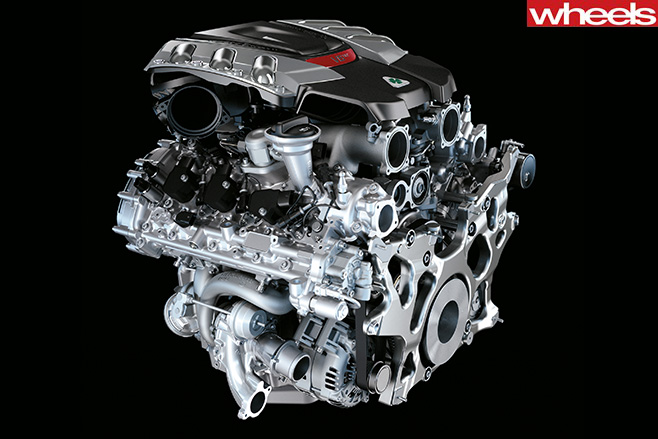
“No, no, no, no,” says Krief. “The only thing this engine has to do with Ferrari is the guy coming from Ferrari, Gianluca Pivetti. He was responsible for the V8 Ferrari development. This engine has cylinder deactivation. I don’t know a Ferrari that has cylinder deactivation. It has the culture of Ferrari, but it is not a Ferrari engine.”
Krief says the Quadrifoglio’s 375kW twin-turbo V6 has more to give if needed: “Today this engine is about 170-180 horsepower per litre. We can achieve more if we need to.” Mainstream Giulia models will be driven by either 2.0-litre turbo-petrol or 2.2-litre turbo-diesel fours. Both engines are available in Europe in several tunes, and with an eight-speed auto or six-speed manual. The Australian range, due in February, will be auto-only, kicking off with the 147kW petrol at about $60K.
Two more-expensive but also better-equipped Giulia Super models come next, one with the 147kW petrol engine, the other with a 132kW diesel. Wheels understands a higher-output 205kW version of the 2.0-litre turbo-petrol will power a Veloce model priced around $85-90K.
The Quadrifoglio performance flagship, which Alfa Romeo claims is capable of 0-100km/h in 3.9sec and a top speed of 307km/h, will go head to head with the BMW M3 and Mercedes-AMG C63 S sedan – but not on price. We’re told it will undercut the M3’s $139,900 tag. “We’ll have a sharp price,” said our Alfa Romeo Australia source.
Fabrizio Curci, Alfa Romeo’s European boss, says the Giorgio platform and the Giulia lead “a technical and cultural revolution for Alfa Romeo”.
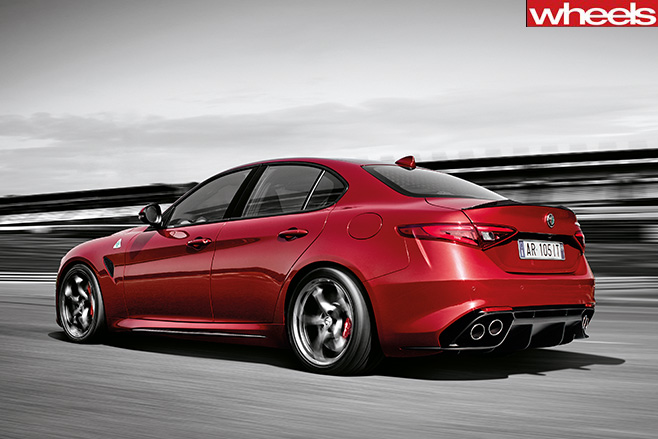
“This is a platform created with global appeal,” he adds. “It has potential everywhere in the world. The plan is to hit 400,000 units running.
“This is just the first part of a much wider project.”
And all models on this platform will set benchmarks for Alfa Romeo, and possibly their respective classes, says the platform’s creator, Krief.
“The SUV will be the sportiest in that class. [As will] every car. The Quadrifoglio [version] has to be the most sporty version in its segment.”
Based on our first drive of the Giulia Quadrifoglio at Balocco, which starts overleaf, Alfa Romeo’s five billion euro bet is looking like a sure thing.
A question of quality
“Now it is completely different. Now we are relaunching everything. Doing completely new investment, new culture in the cars.
“For a long time I told [Marchionne], ‘No, I don’t want to join’. Because I had some doubts, the same doubts a customer may have. I changed my mind completely when I visited Cassino [the factory where the new Giulia is being produced].
“The assembly line, the body shop, and so on… I can assure you that the kind of investment that Marchionne did in Cassino is something unique. It’s completely up to date, with the best technology you can find in automation, robots, and in quality.”
40TH BIRTHDAYS are worth celebrating – a fact not lost on Volkswagen as they mark an important milestone for its enduring hot hatch; the Golf GTI. With a limited edition version about to hit showrooms, here’s seven things worth knowing about the Golf GTI Mk7 GTI 40 Years.
1. The tartan trim in the MkVI GTI was called Jacky, perhaps after Le Mans (and Bathurst) winner Jacky Ickx, though when we asked him in 2013 he said he had “no idea”. We didn’t get to the bottom of whether the ‘Clark’ trim tartan in the MkVII GTI is named after the late Jim, but we know for sure the 40 Years edition’s unique honeycomb fabric isn’t named after anyone.
2. Despite our excitement about a manual gearbox version in the 40 Years edition, global sales statistics suggest we Australians are among the most likely to choose a dual-clutch version.
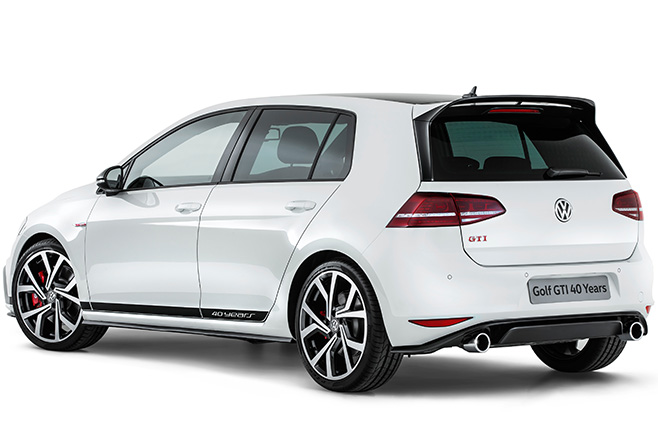
3. The 40 Years edition is based on the GTI Clubsport offered in Europe. We get a unique name to keep local muscle outfit HSV sweet.
4. The original Golf GTI, which was conceived by a covert team of performance-obsessed engineers, was originally planned as a 5000-unit limited edition. Today, Volkswagen Australia sells more than 5000 Golfs in a quarter – a good chunk of them GTIs.
5. The unique 19-inch alloy wheels worn by the GTI 40 Years are called ‘Ruby’ in Australia, rather than ‘Brescia’ as they are known elsewhere. They were named by GTI fans via a Facebook campaign – the gemstone marks a 40th anniversary, and is the birthstone for the month of July, when the 40 Years edition was launched.
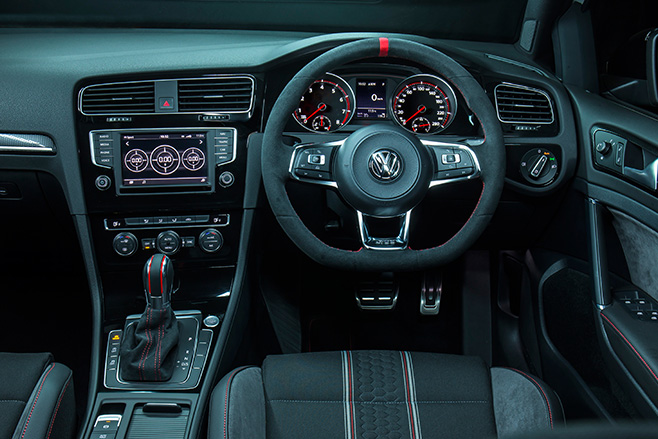
6. The overseas-market GTI Clubsport is offered as a three-door, though it’s possible to order a five-door. Conversely, the Aussie version comes as a five-door, but you can’t order a three door.
7. An overboost function takes outputs to 213kW and 380Nm, to make the 40 Years the most powerful GTI ever and the most potent MkVII, but only with the accelerator flat, in third, fourth, fifth or sixth, and for 10 seconds at a time.
Just like death and taxes, people are going to tinker on performance cars. And right on cue for BMW’s new M2, Manhart Performance has gone ballistic on the coupe.
Using its 30th birthday as an excuse, the German-tuner cooked up a new carbon aero package and power upgrade that sees outputs tower over a Ferrari California T’s.
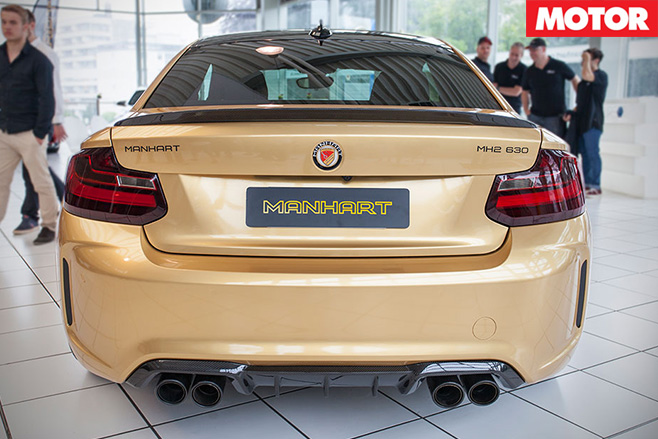
Hold on, that’s 463kW from, wait, two turbochargers? To hit its lofty power goals, Manhart Performance stole the M4’s inline-six and snuck it into the M2’s nose.
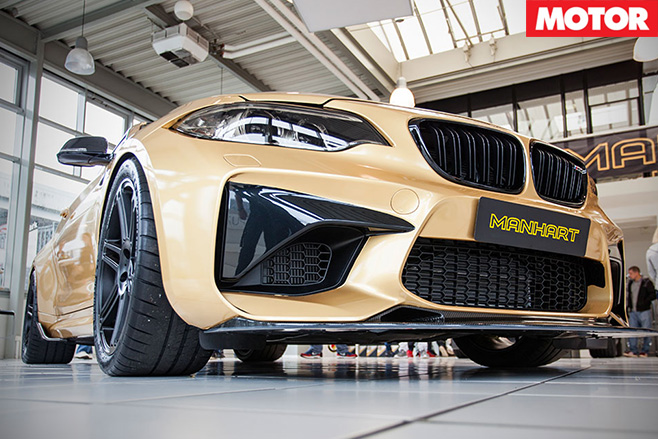
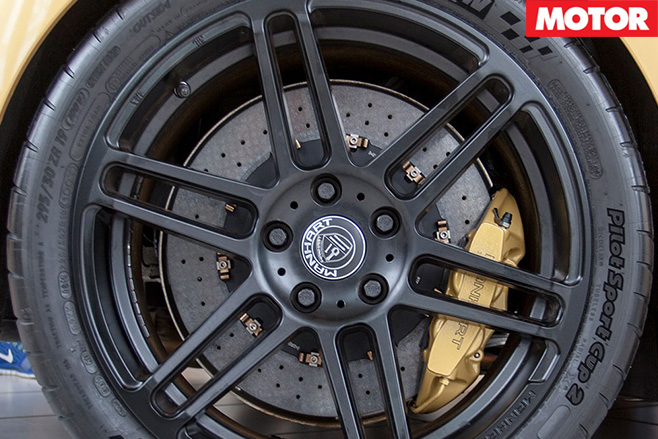
But it’s the brakes we’re more concerned for. You’re gonna need good ones to haul up all that stonk. Thankfully, huge carbon jobbies have been stuffed under the 630’s guards, with 380mm/370mm sized discs matching dinner plates for size.
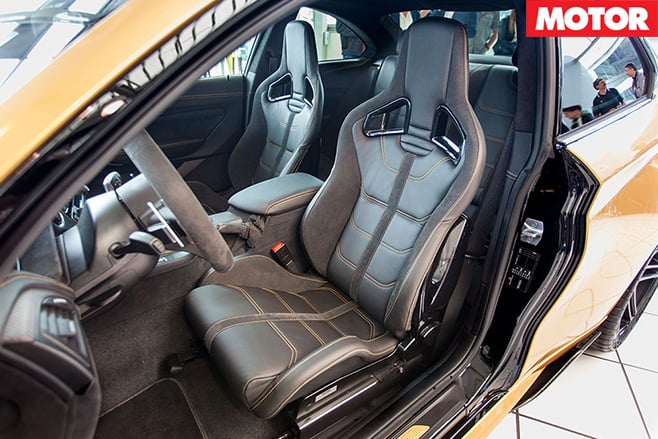
Currently there’s little word on pricing, or availability. But we’ve dropped them an email for details. Stay tuned.
