
TELL ME ABOUT THIS CAR
The Skoda Octavia’s 2014 Wheels Car of the Year campaign was torpedoed early by judges who were surprised at how mean Skoda was with the entry-level Ambition’s fit-out. Among other things it sat on 16-inch steel wheels with plastic hubcaps, lacked cruise control, and even lost the armrest that sits in between the driver and front-seat passenger. It’s of no surprise, then, that few bought it, and little surprise that Skoda has used this facelift to reset its entry-level model and add genuine showroom appeal. And set a safety benchmark, to boot.
STRENGTHS
- The Octavia is cutting-edge motoring. It shares the same DNA as the Volkswagen Golf (VW owns Skoda) and it will sit under the all-new Skoda Kodiaq (a seven-seat SUV due next year) and Audi A2 (a compact luxury SUV).
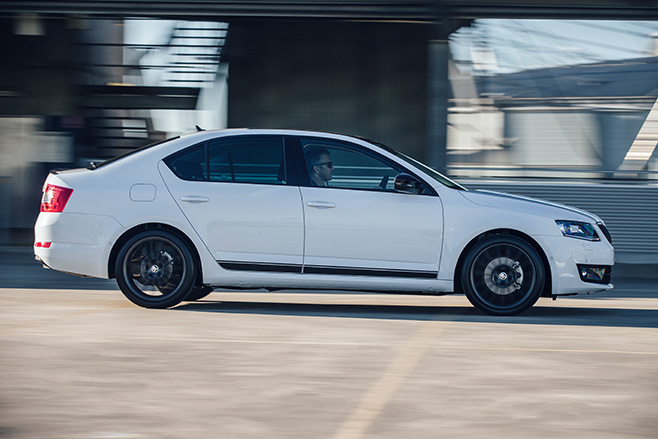
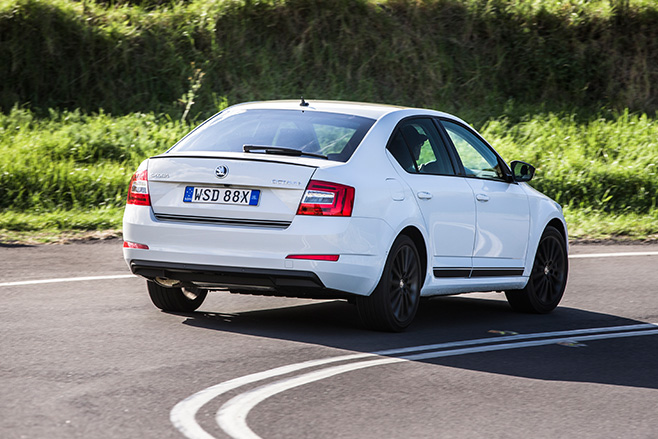
- The facelifted Skoda Octavia Ambition now looks pretty good in the driveway. Handsome to start with, it now sits in 17-inch alloy wheels that add to the aura of ownership.
- It gets active cruise control. It’s just like normal cruise control, but even the entry-level Octavia throws radio waves out the front of the car that measure its distance to the car in front. The car in front slows, and your Octavia slows with it, keeping a set distance behind while you just cover the brake pedal. It will even pull the car up from highway speeds to a complete stop if needed.
- It can save you from a low-speed crash. Because it has active cruise control, the Octavia also has a guardian angel called autonomous emergency braking. Those same radio waves that work the cruise control also watch out for the car in front in heavy traffic, even if you’re not using cruise control. If you’re distracted, and about to run into the boot of the car in front, the Octavia can automatically jump on the brakes and prevent a crash. If there is a crash, it will be a little one, not a biggie.
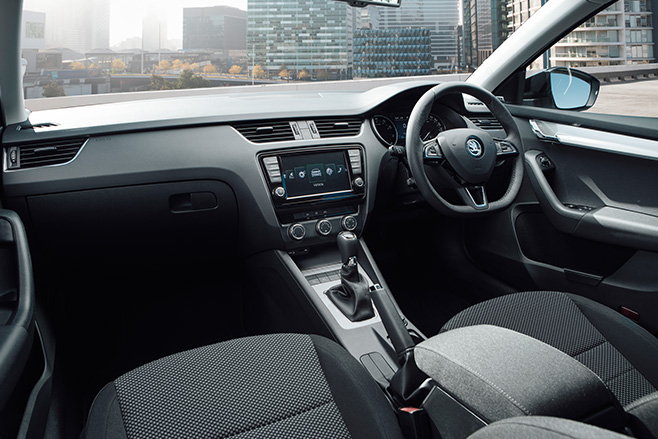
- The price is $22,990. Okay, that’s $500 dearer than the model it replaces, but when you consider it now has more expensive alloy wheels, a colour touchscreen display high on the dash, a reversing camera, reversing sensors and a centre armrest between the front seats, it’s good value.
- Engine. The 110TSI – Skoda’s way of describing the 1.6-litre turbocharged four-cylinder engine – is a perky thing, works well in the city, and isn’t scared of loping along the freeway, either. It’s economical, too, officially using only 5.2L/100km.
- Boot space. The Octavia is a liftback. It looks like a normal sedan, but the back of it is a hatch that lifts the rear window as well as the bootlid. Crack it open and the space it yields will swallow more school bags than you can put kids on seats. Fold down the rear seats, and you can have wagon-like real estate down back.
WEAKNESSES
- Spending $22,990 on an Octavia Ambition means it comes with a six-speed manual gearbox. Spend $2300 more, and you can have a seven-speed dual clutch automatic transmission instead. While fine at cruising speeds and great when you need an extra bit of zip from the engine, at low speeds the auto can lurch and jerk a bit, which takes some getting used to.
- It uses a torsion beam rear suspension. Despite updates, this suspension system is a throwback to another era, and used today because it’s cheap and saves a lot of space and weight. However, other models in the Octavia line-up use a more expensive and arguably better multi-link suspension rear end.
- It’s still a bit noisy inside. One of the main criticisms of the car this replaces is that the road roar generated when the Octavia’s tyres roll over coarse chip surfaces – of which there are many in Australia – is pretty loud. That said, it appears that the noise level carried to the cabin is better, but it’s still there.
Yes, but check the bank balance first. One of our favourites, the Mazda 6, is about $7000 more expensive than the Skoda. However, we really like the way it drives, and the top-class interior. The Hyundai Sonata is priced the closest to the Octavia, just $6000 wide, but while it looks nice, it can’t compete on fit and finish, fuel economy, or safety tech. The Ford Mondeo is around $8000 more expensive and is hard to match if you’re more interested in how a car drives, but is let down by its interior.
A return of the long tail has been a long time coming but the Porsche 908/04 Vision GT reimagines the 1969 908 LH for a modern, digital world – literally, because this is an unofficial project for the realms of PlayStation’s GranTurismo 6.
It has nothing to do with Porsche, but rather is the work of six modellers and designers, mixing cues from the 918 Spyder hypercar at the front with long tail racer at the rear and wearing an e-hybrid badge on its flanks – although no drivetrain is imagined.
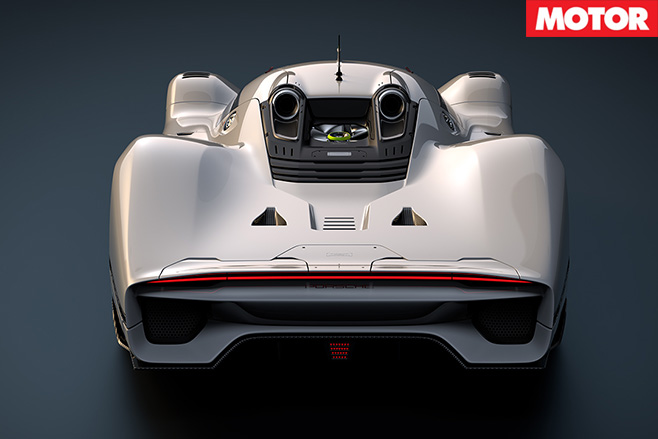
Working around the classic Martini livery are bulbous Michelin tyres wrapped around BBS alloy wheels and – as with 918 – high-mounted split exhausts just behind the two-seater cabin with its ‘sunvisor’ wrap-around windscreen.
“The challenge of the project was to work with real proportions,” explains exterior designer Alan Derosier in a statement.
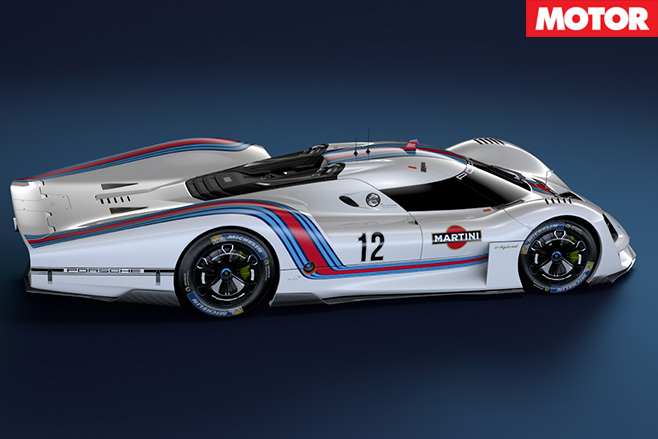
“We wanted to give it an advanced look with a truly mechanical soul, the ‘form follows function’ ideology of Porsche.”
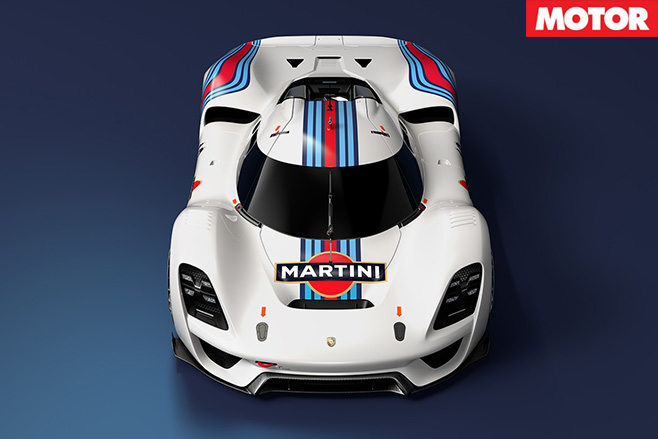
“And until now nobody, as far as I know, has tried to create a modern version of it. In my opinion, it is a bit of a forgotten idea, so I thought it would be a ‘rebirth of an icon’ that would generate nostalgia in car and Porsche enthusiasts alike.”
One of Australia’s best-selling small cars is set to become even more attractive to buyers with Mazda today announcing that an updated Mazda 3 is only weeks away from arrival.
As well as styling tweaks and other improvements, the Mazda 3 will be the first in the range to receive the firm’s innovative but oddly named G-Vectoring Control (GVC), created to improve the experience and ride for drivers and passengers.
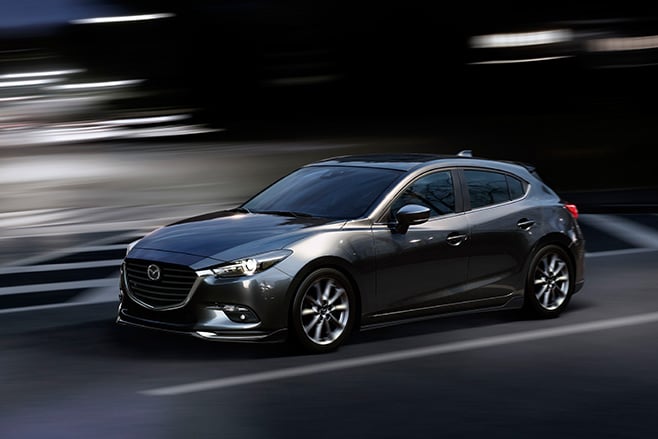
In what Mazda is calling a world first, the new system means the engine’s output and the car’s chassis will both respond directly to what’s happening through the steering wheel. Where passengers would traditionally be swayed from side to side on a particularly twisty piece of road, GVC technology alters the acceleration forces, putting a more balanced load on each wheel through a corner and reducing the gyroscopic forces felt inside.
GVC is the first in a series of newly announced technologies from the Japanese firm which it is calling its Skyactiv-Vehicle Dynamics Series – or to use Mazda’s exact words: Jinba-ittai; a sense of oneness between the car and its driver.
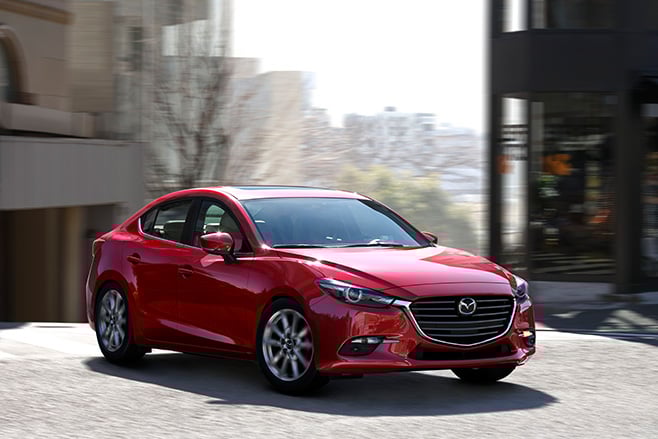
Mazda claims the addition will reduce the need for steering corrections by bringing the car’s movements closer to those intended by the driver, inspiring greater confidence behind the wheel and making the driving experience more engaging.
The updated Mazda 3 will also boast the company’s new road-sign recognition technology, which is designed to identify changing speed limit zones and alert the driver. Equipped also with Mazda’s Smart City Brake Support, the car is now capable of detecting pedestrians and other vehicles. New adaptive headlights round out the improved detection technology.
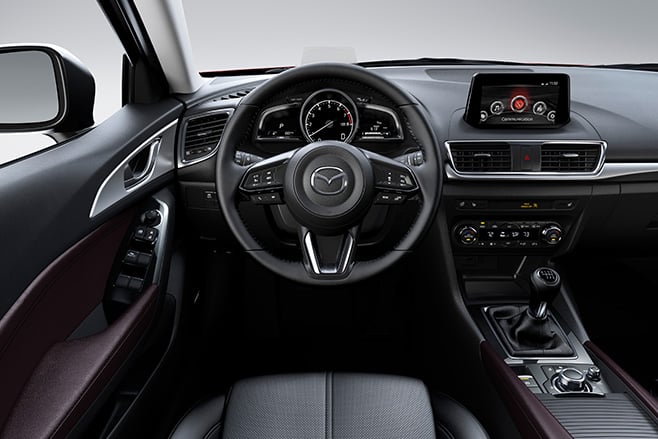
The car was released in Japan today with addition of two new diesel engine options joining the two petrol engined options, but Mazda Australia is keeping tight-lipped on the Aussie-bound specification until its official Australian launch – slated for Thursday, 28 July.
The good news is Australian buyers won’t have long to wait after its official Down Under launch: the updated Mazda 3 is expected to hit dealerships just a few days later, on 1 August.
Given the car’s already strong sales performance, Mazda Australia is excited about the update with spokesperson Karla Leach saying: “It’s about keeping a successful vehicle relevant and fresh without deviating from the recipe. It shows that technology like this doesn’t have to be limited to high-end cars, there’s really advanced technology at a very accessible price point.”
1. BENTLEY MULSANNE Torque: 1020Nm
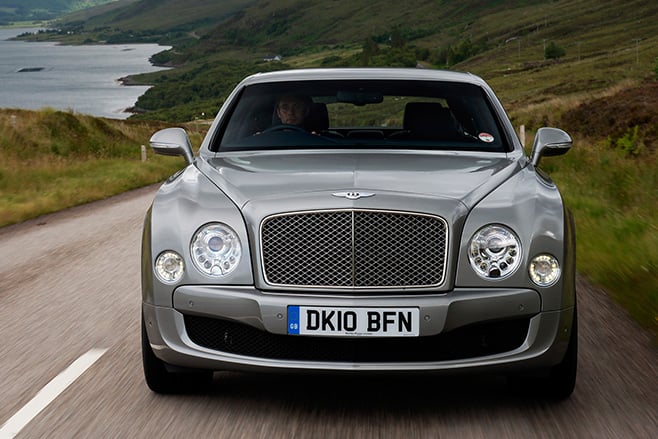
Power ain’t that spectacular from the 6.8-litre blown V8, at 377kW, but it’s a double stump-puller with more than 1000 Newtons. A fair bit of weight to carry, though: 2711kg.
2. MERCEDES-AMG S65 Torque: 1000Nm
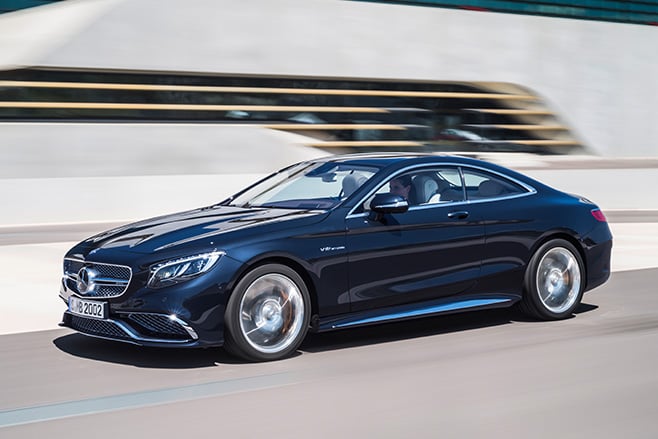
Why muck around with the V8-powered S63 when you can go the whole hog with the S65? Generous 6.0-litre V12 manages 463kW to complement its neat 1000Nm shove.
3. TESLA MODEL S Torque: 967Nm
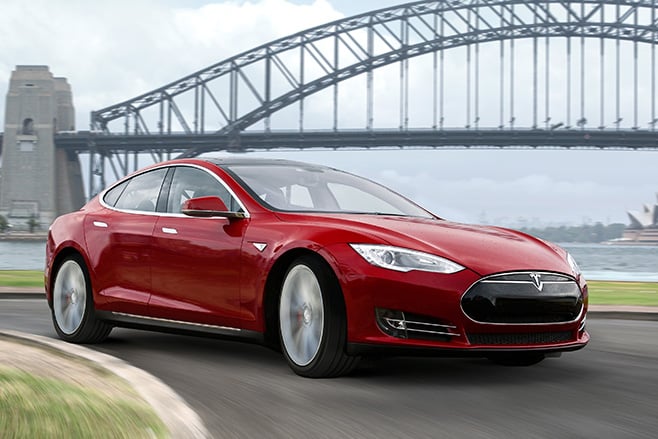
Tesla leads the way when it comes to electric performance, in part thanks to the hefty torque that arrives the second you stand on the throttle. It really is a head-jolting experience.
4. MERCEDES-AMG S63 Torque: 900Nm
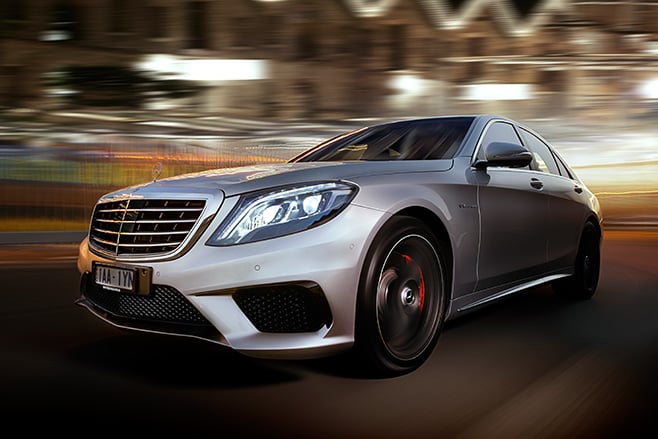
While AMG is wheeling out its new 4.0-litre twin-turbo V8, some models continue with the older-school 5.5-litre twin-turbo V8, which kicks out 430kW and 900Nm.
5. BENTLEY BENTAYGA Torque: 900Nm
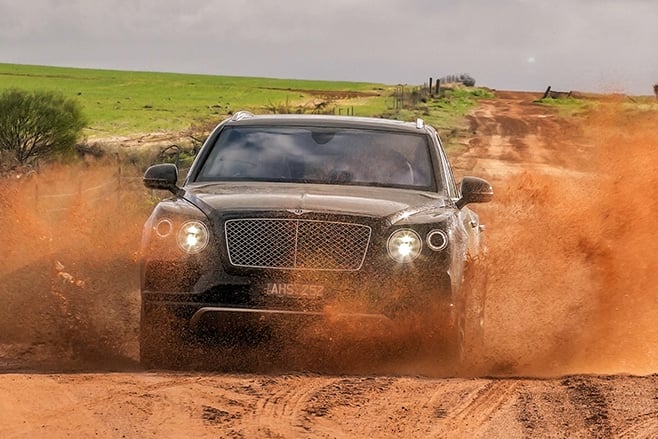
Get past the polarising looks and there’s a handy 6.0-litre twin-turbo W12 to play with. As well as 900Nm, there’s 447kW to help shift the SUV’s substantial body.
A glut of new and exciting models are hitting Aussie roads this August and September, with enough variety to satisfy those looking for a new family SUV or a hardcore sportscar like Nissan’s updated, supercar-beating Nissan GT-R. Leading the list of family orientated arrivals is Jaguar’s eagerly anticipated F-Pace SUV which shares mechanical underpinnings with the excellent Jaguar XE and XF sedans, and starts at $74,340 for the Prestige 20d diesel model. Infiniti’s small QX30 SUV also arrives in late August, while performance car fans have a glut of new metal to choose from including sharper and faster Competition Pack versions of the M3 and M4. Holden is also launching an important new model in the form of its all-new Astra city car.
NEW MODELS ON SALE AUGUST-SEPTEMBER
- Audi A4 Allroad and SQ7
- Bentley Bentayga and Mulsanne
- BMW M3, M4 Competition and M4 GTS
- Ferrari California T HS; Fiat 124 Spider
- Haval H6
- Holden Astra, Colorado facelift, Cruze sedan and Trailblazer
- Hyundai Elantra Sport
- Infiniti QX30
- Jaguar F-Pace
- Maserati Levante
- Mercedes-Benz CLA-Class and S-Class Cabriolet
- MG GS
- Nissan GT-R
- Range Rover Evoque Convertible
- Renault Koleos
- Suzuki Baleno
- Toyota LandCruiser 70 Series
- Volvo V40
Built on the same platform as the Mazda MX-5, Fiat’s 124 Spider is one of this year’s most hotly anticipated arrivals, and comes equipped with a 125kW turbo engine as well as stunning Italian styling front and rear. We can’t wait to see what Fiat does with the hardtop version.
As is the way with car reveals these days, information regarding Ford’s hotly anticipated new GT supercar continues to drip-drip-drip its way into the news.
We know that it’ll look like a road-going fighter jet, be built from carbon fibre and be powered by a 3.5-litre twin-turbo V6 producing around 450kW.
Thanks to the latest video uploaded to Ford Performance’s YouTube channel, we now know it’ll have a crazy McLaren P1-style active wing, that appears to not only provide downforce at high speed but also act as an air brake a la Bugatti Veyron, McLaren SLR et al.
Just 500 Ford GTs are scheduled to be built, but more than 7000 people have completed the online questionnaire necessary to be considered as a customer.
An innocuous printing error in the German manufacturer’s parts catalogue which confused a seatbelt mount screw with a seatbelt reel mount screw has resulted in the firm issuing a voluntary safety recall to its hybrid hypercar; the third one so far.
In a you-can’t-help-but-be-amused way, Porsche issued a mea-culpa statement confessing to the misprint, saying it couldn’t rule out the possibility that technicians who were installing the hypercar’s seatbelts obediently followed the parts catalogue and “might have been led to install the wrong screw in the wrong location.”
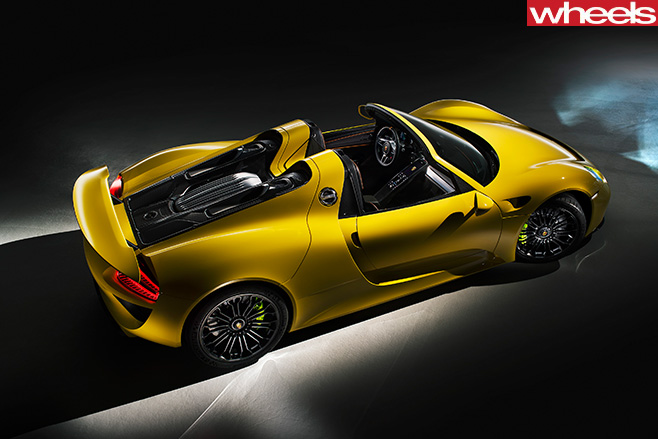
While previous recalls affecting the 2016 918 Spyder only applied to certain models in the limited production run, this new recall has been issued to each and every one of the 918 units produced.
Australian Porsche owners can breathe easy though; the latest 918 Spyder was only built in left-hand drive options and isn’t currently available in Australia.
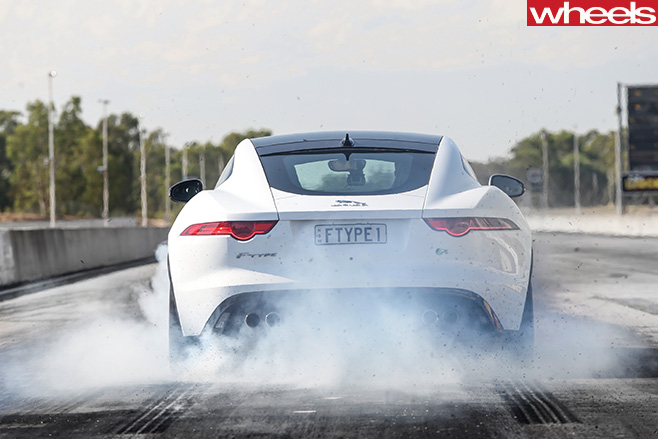
The F-Type will be Jaguar’s only sports car for the foreseeable future, with the British brand confirming it has abandoned plans for an XK successor.
Jaguar ended production of the XK in 2014 after 18 years and two generations. It had been contemplating a replacement once it finished focusing on key models like the Jaguar XE compact sedan and Jaguar F-Type, with the company expected to take a new XK 2+2 further upmarket as a fully fledged luxury GT to take on Bentley and Ferrari.
Ian Callum, the company’s design chief, however, told Wheels there isn’t a sufficient market to justify a four-seater sports car to sit above the two-seater Jaguar F-Type.
“The current thinking [at Jaguar] is that there will only be one sports car,” he says. “I’m personally disappointed; I think there could be room for a two-plus-two in there.
“The market actually fell through the ground; the XK ended up with about 3000 units a year. I’m sure Mercedes will do another SL but you hardly see them [now]. They’re not selling big numbers of them that I know.
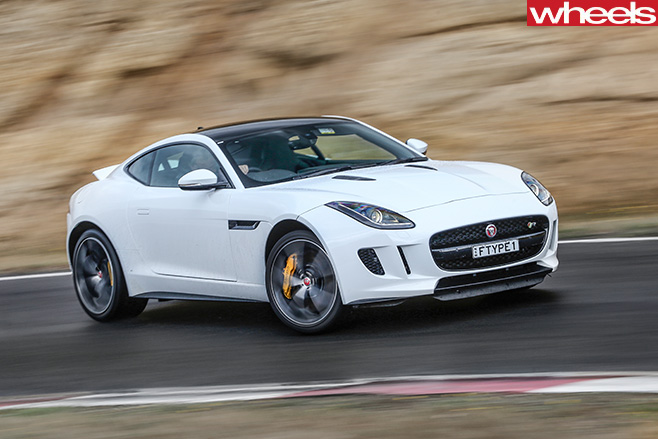
“I bang the drum on doing sports cars a lot [at Jaguar], but we’ve got a business to run, we’ve got to get the volume up, and get economies of scale up, which is starting to work for us with the new [vehicle] architecture.”
It means no supercar to follow the likes of the XJ220, or the C-X75 that was supposed to be built in low volume before being limited dramatically to just a handful of prototypes.
Callum would also love to do a two-door version of the XF but again says the investment required is prohibitive. Jaguar also doesn’t intend to follow its German rivals with their approach to multiple variants, for both philosophical and economical reasons.
“We can’t do the proliferation of models BMW and Audi are doing, and we don’t want to do that,” he says. “That’s not what we’re about. We have to be specific. If you take the XF, it has to cover the sporty field as well as the four-door sedan [segment] in a way a Jaguar can and should do, because it’s always done that.
There’s at least encouraging news on the performance side of things. Callum says there will be more Jaguars coming out of Jaguar-Land Rover’s Special Vehicle Operations, which has been set up to produce either faster or flashier versions of regular models.
Land Rover currently offers three models from SVO versus just the Jaguar F-Type SVR, though the bias will swing the other way.
“With SVR, the R part of it is planned to be dominated by Jaguar ultimately, [because] performance is Jaguar and off-road capability is Land Rover.
“There’s no guarantee we’ll see an SVR version of every Jaguar but there will be some.
Callum says that could include its new SUV, which is launching in Australia this week.
“The F-Pace is a Jaguar,” Callum says simply. And a V8 will fit comfortably under the bonnet, we’re told with a smile.
A SIGNIFICANT mid-life update to the Skoda Octavia brings significant safety advances as well as replacing a spartan, rarely bought entry-level model with a more richly equipped one that buyers should no longer ignore.
WHAT IS IT? The overhaul for the base model Skoda Octavia is a big one. Gone are steel wheels and optional cruise control, replaced with smart-looking alloys and a smart radar system that keeps everything Czech in check from the car in front. Despite the changes, prices have moved only slightly, with the entry-level Ambition sedan starting from $23,990.
WHY WE’RE TESTING IT The Skoda’s Korean car level of pricing never really stacked up in terms of value for money.
MAIN RIVALS Ford Mondeo, Hyundai Sonata Active; Kia Cerato sedan, Nissan Altima, Toyota Camry Altise, Volkswagen Jetta
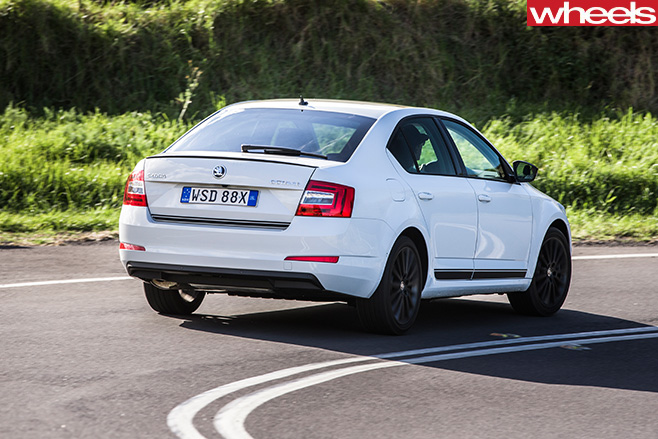
PLUS: Now decent value; sets a class safety benchmark; decent driver involvement; frugal MINUS: Still slightly noisy inside; ride still a bit fussy; DSG’s low-speed shunting
THE WHEELS REVIEW CZECH brand Skoda has had something of an undeservedly a rough time in Australia. Somewhat overlooked despite some innovative products, it sells a similar number of cars here each month as Hino does trucks.
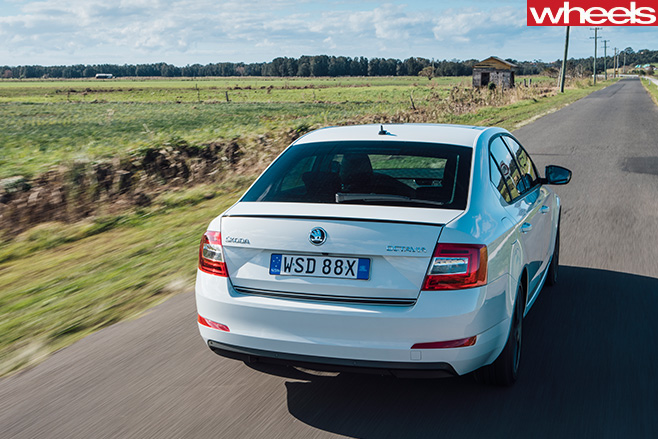
But Skoda has had something of a wake-up call, largely thanks to the Holden Commodore-fighting Skoda Superb. People didn’t buy the cheap version of Skoda’s large hatchback and wagon, instead preferring to fully load a mid- or high-spec model with tech convenience and bling packs.
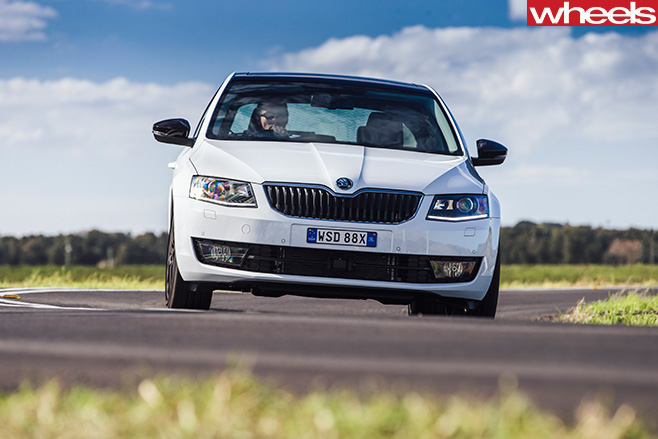
The Skoda Octavia is built on the same MQB platform as the much-lauded Volkswagen Golf, and the one that will spawn future products including the Skoda Kodiaq seven-seat SUV and next-gen Audi Q2. Unlike its VW-badged sibling that uses a multilink rear suspension, the base Octavia sticks with a torsion beam. All other versions of the Octavia get the multilink. It’s the only glaring bit of price-driven cost-cutting that’s carried through to the Ambition.
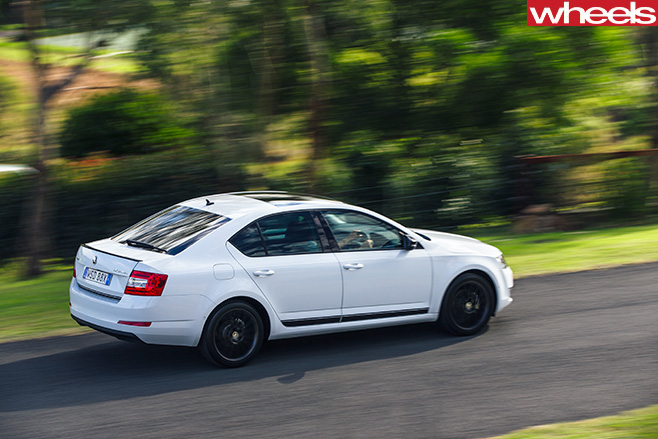
Our test car was also paired with the seven-speed dual-clutch DSG transmission, a $2300 option that replaces the default six-speed manual gearbox.
Apart from the usual low-speed shunting from the DSG – more noticeable in stop-start traffic or while parking – the Octavia Ambition’s cabin ambience is pretty good. The facelift interior is largely unchanged with the same mix of hard and soft surfaces covering high-use areas, ride comfort on the 17-inch Bridgestone rubber is well sorted although the suspension gets a little busy at higher speeds and rides better with more bodies on board, and the electrically assisted steering has enough bite to feel engaging. The previous Octavia’s other main flaw – unacceptably high levels of road roar – appears to have been partly addressed: it seems quieter than we remember.
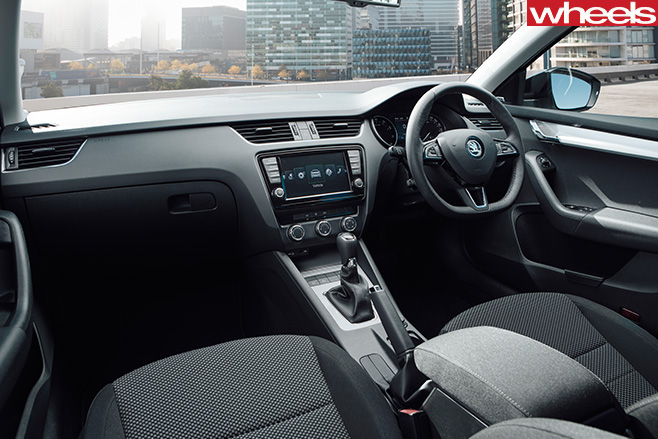
Skoda’s Octavia suddenly has something it has lacked for some time – a real sense of value for money. It also takes the safety game a fair way forward, showing even cars a class below it that oscillate around the same price point, there is no reason to not offer autonomous emergency braking.
All the Czech needs now is a little more polish.
SPECS Model: Skoda Octavia Engine: 1395cc 4cyl, dohc, 24v, turbo Max power: 110kW @ 6000rpm Max torque: 250Nm @ 1500-3500rpm Transmission: 7-speed dual-clutch Weight: 1234kg 0-100km/h: 8.2sec Fuel economy: 5.3L/100km Price: $25,290
TELL ME ABOUT THIS CAR
You’re at a Hyundai dealer to purchase a practical SUV deeply lamenting that you can’t choose something sporty like the Hyundai Veloster. The salesman, pointing to a Hyundai Santa Fe SR channels the little girl from the taco ad and says, “why not have both?”
The Santa Fe SR is Hyundai’s entry into the sports SUV market, which has been dominated by German soft-roaders with far bigger price tags.
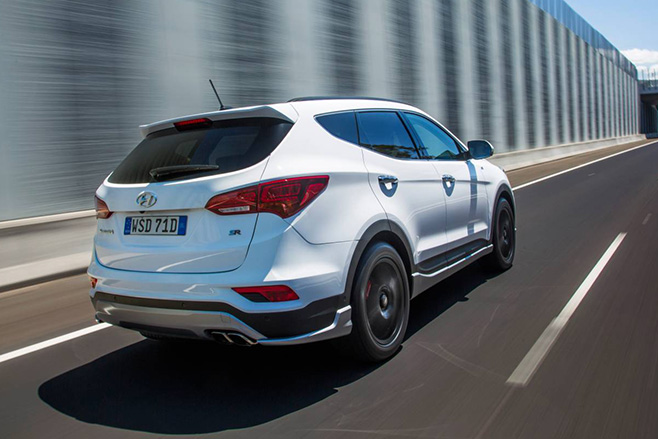
While it does look sportier than the other three models in the Hyundai Santa Fe range, it doesn’t come with a performance boost and is powered by the rather unsporty 2.2-litre four-cylinder diesel turbo engine, which does push it along well.
However it does have a suspension tweak with Tuix Performance Springs, big red Brembo brakes and Michelin Latitude tyres surrounding the very nice looking matte black 19-inch wheels.
Of the four Hyundai Sante Fe variants the SR is the most expensive, coming in at around just over $70,000 drive away.
STRENGTHS
- Braking. Usually it’s how a car goes that influences my thinking but it was the way this comes to a stop that impressed me most. The Brembo brake package – featuring 340 mm x 28 mm Ventilated Disc Brakes at the front, and 302 mm x 22 mm Ventilated Disc Brakes at the rear, with four-piston callipers – brings all 2.5 tonnes of Santa Fe to a stop in no time. It’s not often you can justify buying the sporty model of a family car for safety reasons.
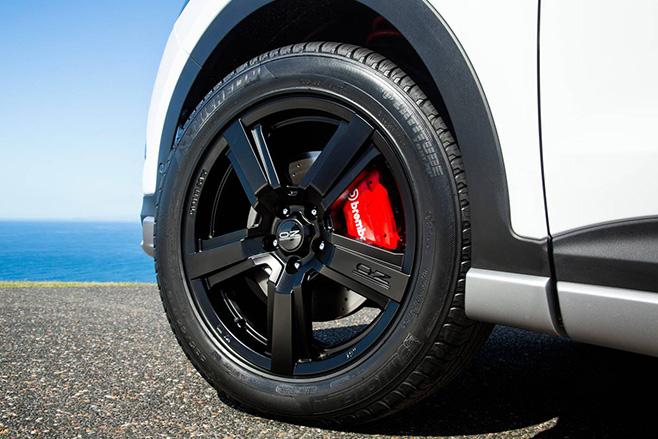
- Handling. The SR’s suspension tweak, which includes the addition of Tuix Performance Springs, makes it handle quite well for an SUV. However it’s still pretty high off the ground, so expect some body roll when negotiating tight curves at speed. The 19-inch Michelin Latitude Tour HP tyres provide extra grip. On top of all that it’s a pretty comfortable ride with the suspension stiffening a little in Sports driving mode.
- Looks. The Series II Santa Fe looks great and the SR is the pick of the bunch. The body kit gives it an aggressive-look that’s complemented by the 19-inch black matt finish wheels with bright red Brembo brake callipers peeking between the spokes.
- Engine. While an unusual choice for a sports model the 2.2-litre turbo diesel pushes out 147kW and 440Nm of torque to provide a pretty nimble ride via the six-speed automatic gearbox. It has three driving modes, Eco, Normal and Sports – the last one getting you up to speed nicely before revving down. It’s pretty fuel efficient – during the week we had this it averaged 7.7L/100km.
- Features. This is a rather luxurious car with a heap of accessories including power operated ventilated/heated front seats, panoramic sunroof, lane departure warning and auto parking. The 8-inch touch screen offers a rear camera and inbuilt satnav, complete with fixed speed camera and speed zone change warnings.

WEAKNESSES
- Interior styling. If I were reviewing the Santa Fe Highlander I’d have this as a strength. This is a rather opulent car with plenty of creature comforts including comfortable leather seats in the front and middle rows and a host of creature comforts. However, being a sports model, it would have been good if it was styled more like a Veloster than a Genesis
- Rear seat. The Santa Fe is one of the smallest seven-seaters and it shows down the back. The rear seats are really only useful for children who will find it pretty tight getting in. Once in there they will find themselves almost under the tailgate window with the d-pillar obstructing their side view. There is also minimal cargo space with the seats up. With the seats folded down there’s plenty of cargo space – but if you’re going to drive around like that all the time, you might as well save some dollars and get the Hyundai Tucson.
The top-spec Kia Sorento Platinum CRDi does seven seats a little better and has similar engine performance without pretending to be sporty. It’s also around $10,000 cheaper, but doesn’t have the suspension improvements and Brembo brakes.
Click here to read the full review on the Hyundai Santa Fe range.
