
The Citroen C5 is being axed in Australia –along with its once-pioneering hydro-pneumatic suspension that has been around for six decades.
Citroen Australia has announced it will offer just 62 more units of the mid-sized car, which was cut from the UK market in May owing to poor sales.
The local importer says 10 BlueHDi editions of the C5, featuring a 133kW/400Nm 2.0-litre turbo diesel, have been allocated to long-time Citroen customers in Australia. The remaining mix of sedans and wagons will be offer a less-powerful 120kW/340Nm version of the engine, priced from $47,990.
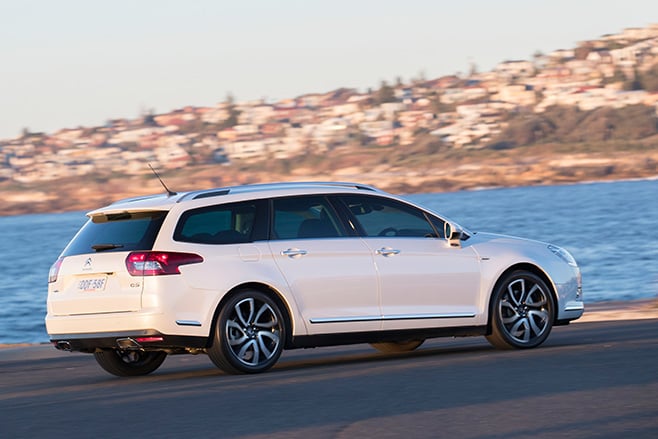
Standard equipment includes 7-inch touchscreen, digital radio, navigation, sunroof (panoramic on the Touring wagon), heated seats, and massage function for the driver’s seat.
Sales of the C5 have dwindled from their modest peak of 410 in 2009 when the second-generation version launched locally, and just 35 units have been sold here so far in 2016.
The global future of the C5 seems doomed, with Citroen expected to discontinue the model in favour of focusing on the SUVs and crossovers today’s buyers seem to prefer over sedans and wagons.
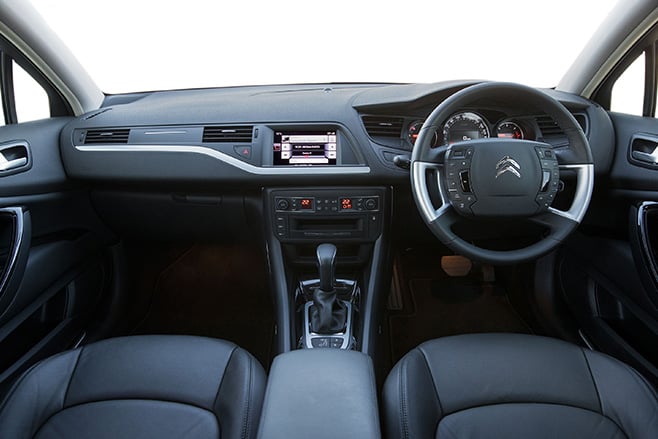
Regardless of whether there’s a new C5, the current model heralds the end of the brand’s renowned hydro-pneumatic suspension – which debuted in 1954 on the Traction Avant (or Big 15) before being popularised across two decades in the famous DS.
The technology incorporated nitrogen-filled pneumatic spheres, and a hydraulic bump to provide near-unrivalled levels of ride comfort.
Citroen has abandoned the clever but expensive suspension system on the grounds of cost-cutting, according to reports. The company this year announced it was developing new in-house suspension systems, based around progressive hydraulic cushions designed to achieve excellent bump absorption and body control.
REMEMBER when Formula One cars both sounded great, and were properly, astonishingly quick?
While the current crop of Formula One cars still manage to get some decent speed on, they aren’t scaring the bejeezus out of drivers, and sound about as exciting as a day-long seminar on the merits of soy milk.
2004 was one of the fastest years in F1 history. With 3.0-litre V10 engines strapped to their backs, drivers blitzed lap records around the world.
Aussie Mark Webber was still our country’s great hope in Formula One at the time, despite driving for the mid-pack Jaguar squad.
However, with a heavy dosing of talent, and some good ol’ fashioned Aussie grit [pardon the Twitter pun], Webber built himself a reputation of ragging the car at speeds it really had no right to be achieving.
In this video, watch as Webber hustles his Jag around the extremely fast Silverstone circuit.
With Martin Brundle in the commentary box, we are given an idea at the kind of commitment carried by Webber as he lays it all on the line in one of his all-or-nothing qualifying laps.
Webber ended up 10th on the grid for the race; 1.7-seconds shy of Kimi Raikkonen’s 1:18.233 pole-setting time.
Even now, 12 years since the lap took place, and with the British Grand Prix upon us this weekend, Webbers lap is awe-inspiring.
The lap is a delight to watch, not only because of the spectacular 10-cylinder soundtrack, but for the way Webber works his magic on track.
Now come on Daniel Ricciardo, do us proud this weekend!
TELL ME ABOUT THIS CAR
This is the second-generation Mazda CX-9 seven-seater SUV. It arrives almost ten years after the first CX-9, and is now wholly revised from top to toe; cheaper, lighter, thriftier, and available in a broader range than before. Mazda has sought to create a good-looking family hauler that uses less fuel and is quieter inside.
STRENGTHS
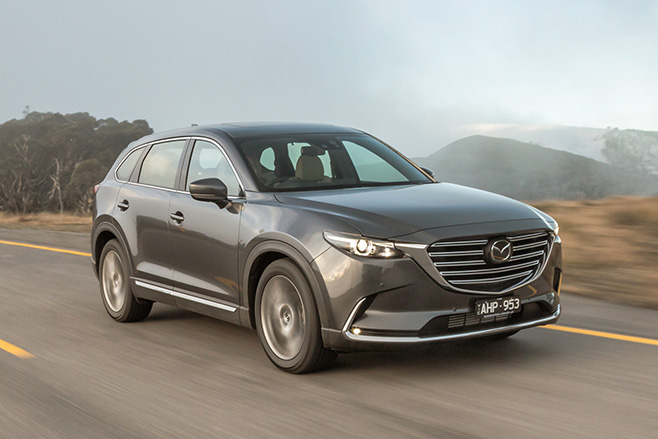
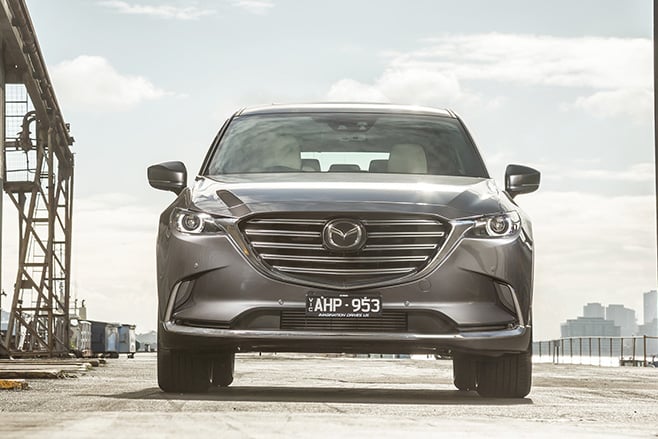
- First of all, the new CX-9 looks great inside and out. It shakes off the drab reputation of the segment and pushes into genuinely attractive territory. Most of its competitors stick to basic functionality and forget about showroom sizzle. Mazda has raised the bar for this end of the large SUV market, and bridged the gap to more premium offerings like the Volvo XC90 and Audi Q7.
- Its brand new 170kW/420Nm engine is a winner. It is the first to combine Mazda’s fuel efficient SkyActiv technology with a turbocharger, making it far less thirsty than the old CX-9 (8.4-8.8L/100km vs 11.0-11.3L/100km) and still able to deliver strong pulling power from low down in the rev range. It’s effective and well-suited to the application.
- Mazda now offers the CX-9 in four model grades, which is one more than before. Every model can be optioned with all-wheel-drive, meaning the cheapest CX-9 that drives all four wheels is now a full $10,000 cheaper than a first-gen CX-9 with AWD. The starting price for a base model CX-9 is cheaper now, as well.
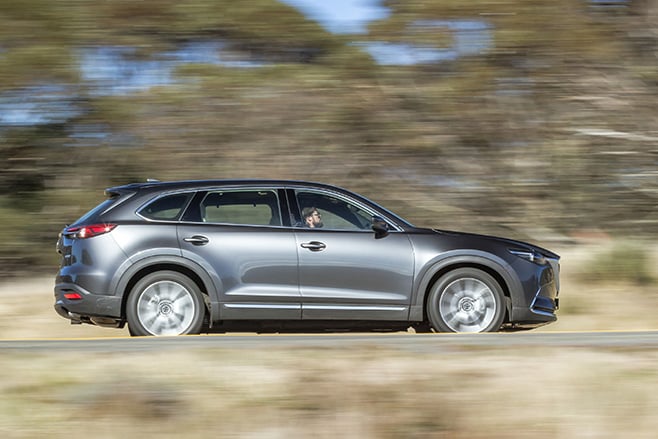
- Engineers from Mazda in Japan travelled to Australia to observe the way families used their old CX-9s. Information from those visits has made the new car better. It is full of smart packaging ideas like storage pockets and bag hooks, and one-touch third row seats that are a cinch to raise and lower.
- A concerted effort into lowering tyre and wind noise inside the CX-9’s cabin has succeeding in making it much quieter and more relaxing to drive. There’s extra sound absorbing material under the carpet and cleverly designed door seals that will keep the peace on long journeys.
- Safety is a major strong suit. Every variant of CX-9 gets six airbags; blind spot monitoring; auto braking; brake-force distribution and cross-traffic alert. The top spec Azami model adds lane departure warning and lane keep assist. CX-9 version has been awarded a five star ANCAP rating.
WEAKNESSES
- The CX-9 is a brilliant car overall, though not without its flaws. The brakes could use more initial bite at the top of the pedal travel. Slowing to a complete stop requires significantly more input on the brake pedal than you first expect, and takes some getting used to.
- Steering is quite weighty and can feel fussy when making sharp turns or quickly changing direction. It maintains Mazda’s direct feel but it doesn’t allow the CX-9 to disguise its large size and mass.
- When accelerating quickly and using the engine’s full rev range it has a harshness to its sound that can be quite intrusive. Thankfully, having the full force of engine torque available from a lowly 2000rpm means you rarely need to string it out to the redline.
ANY RIVALS I SHOULD CONSIDER?
The Kia Sorento won the last Wheels seven-seater SUV comparison test before the CX-9 was released. It earned victory on the strength of its dynamic ability, attractive looks, interior ambiance and equipment level. Mazda CX-9 has these aspects covered, but the Kia offers a diesel engine option, which the CX-9 does not. Toyota’s Kluger is the current sales leader in the segment. It’s roomy and highly practical, though its 3.5-litre V6 is thirstier. It’s also much less inspiring to look at whether viewed from the inside or outside.
THE Northern Territory now has 300-kilometers of unrestricted highway speed-limits after the government approved new changes overnight.
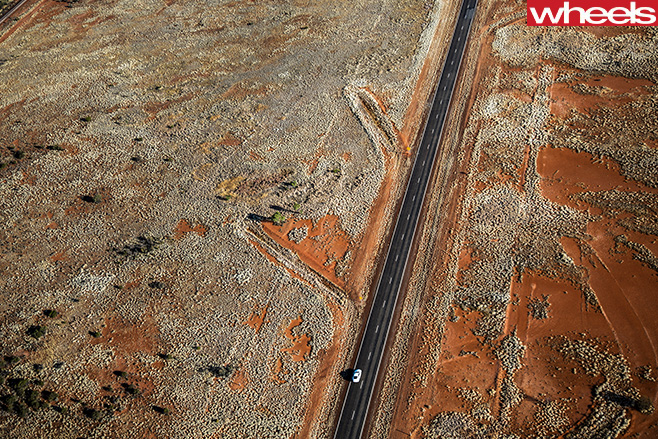
A further 60-kilometre stretch of the Stuart Highway north of Alice Springs will be free of speed limits, allowing those behind the wheel to drive to the conditions.
Northern Territory Chief Minister Adam Giles says there have been upgrades to the condition of the highway to compliment the speed limit changes.
“Pretty much between Alice Springs and Ali Curung now you will be able to see open speed limits,” he said.
“Not only are we widening and strengthening the road we’re improving things such as righting the dips in the roads and putting better signage on the roads and that’s [making it] safer for all drivers.”
The Northern Territory government plans to extend open speed limits further – pending more upgrades – and intends to have unrestricted highway as far as Katherine.
This is the third time the unrestricted section has been extended since it was re-introduced in 2014 as a trial.
Harold Scruby, chief executive officer of the taxpayer-funded Pedestrian Council of Australia, has been an outspoken advocate against unrestricted speed limits in the Northern Territory, calling those behind the decision to lift limits “rednecks”.
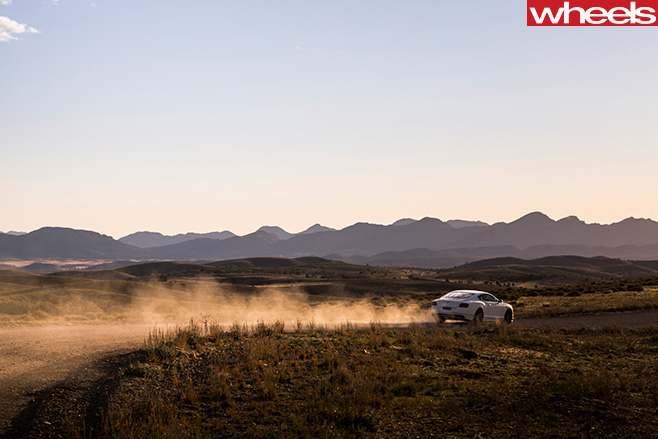
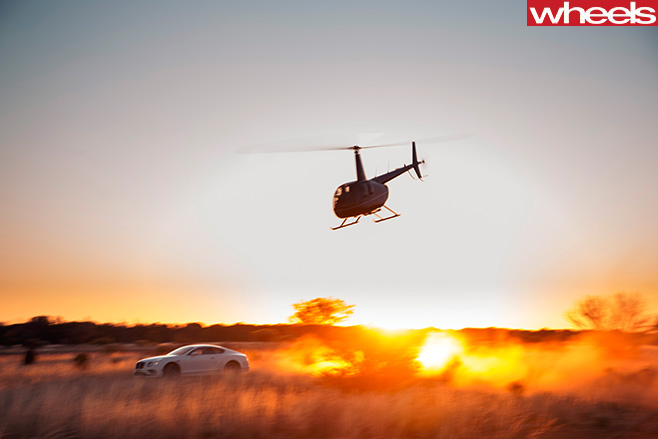
When talking to Scruby regarding his complaint against Bentley’s now banned film which showed a Bentley Continental GT Speed clocking 330km/h on a closed stretch of the Stuart Highway, Wheels asked if he thought his views represented the majority of Australians.
“I think there are between 200,000 and 300,000 in the Northern Territory*.”
“It is the only state or territory where the speed limit is over 110km/h. Isn’t that a fair reflection?
“If we elect our governments democratically, and if they decided that the maximum speed limit in Australia should be 110km/h, then the great minority, the very, very small minority of Australians agree with [unrestricted sections of highway].
“There is no other jurisdiction in Australia where you can go over 110km/h
“That means out of [a population of] 25 million, 24,800,000 people live in democracies where they have agreed that the speed limit shouldn’t be higher than 110km/h.”
“Why do you think that every state and territory other than these rednecks in the Northern Territory have decreed that the maximum speed should be 110km/h? Why do you think that?”
*The population of the Northern Territory is recorded at 243,700 as of 2014 (Source: ABS).
Ford has updated its 2016 mid-sized Ford Mondeo range to include the latest SYNC 3 infotainment system as standard across its six-model line-up, without passing on a rise in the list price to buyers.
Joining other technologies like emergency assist and a Wi-Fi hotspot, the latest SYNC 3 unit boasts an eight-inch full-colour touch screen with swipe and pinch functionality using a system that’s both faster and more intuitive than the outgoing SYNC 2 unit.
Featuring both the Apple CarPlay and Android Auto platforms – which gives the user in-car access to their smartphone apps using Ford’s AppLink technology – other improvements include conversational voice recognition and an easier to understand graphic interface.
Users also now have the option to switch between a day or night-time theme, while an all-new home screen provides a larger interface for controlling audio, climate, phone, navigation and user apps. A settings icon will remain permanently displayed for more user-friendly adjustment.
The car maker believes the addition of the latest infotainment package will bolster the mid-sized passenger vehicle’s popularity which has enjoyed considerable growth during the first six months of 2016.
According to recent VFACTS figures released by the Federal Chamber of Automotive Industries, Ford sold 1464 new Mondeo models in the first six months to the end of June, an increase of over 800 more than it managed for the same period in 2015.
The mid-year update, according to Ford, is the result of the firm’s A$2 billion investment in R&D during the past six years.
The SYNC 3-equipped Mondeos have been available in Australian dealerships since the start of the month and pricing starts at $33,190 for the Ford Mondeo Ambiente Hatch (Ecoboost) through to $49,340 for the Mondeo Titanium Wagon (diesel).
Australian distribution of Lotus has been handed to Sydney’s Simply Sports Cars dealership, with importer Ateco Automotive relinquishing the British brand after five years of flatlining sales.
Simply Sports Cars (SSC) has become the top-selling Lotus dealership in the country since opening its Sydney operations in the north shore suburb of Artarmon in 2003, and its director of sales and strategy Richard Gibbs is primed to get the brand back on the radar of local sports car buyers.
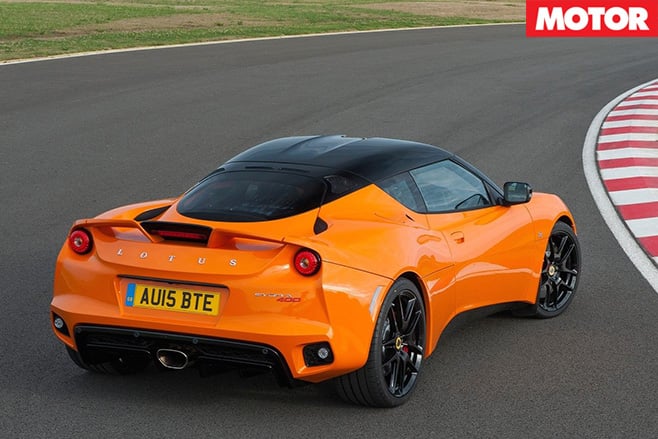
At the local launch of the Lotus Evora 400, Gibbs admitted that, “the market wasn’t thinking about Lotus anymore” but he maintains that with better pricing, increased marketing and a greater number of customer oriented events, Lotus could triple sales in Australia.
“We’re working to a three-year horizon. There is a lot of work to be done to make that brand known again in the market. If we could sustain 120 to 150 cars in the market each year, I would be over the moon.”
Typically the entry Elise and mid-range Lotus Exige each nab 40 per cent of sales, leaving the flagship Evora with the remaining 20 per cent.
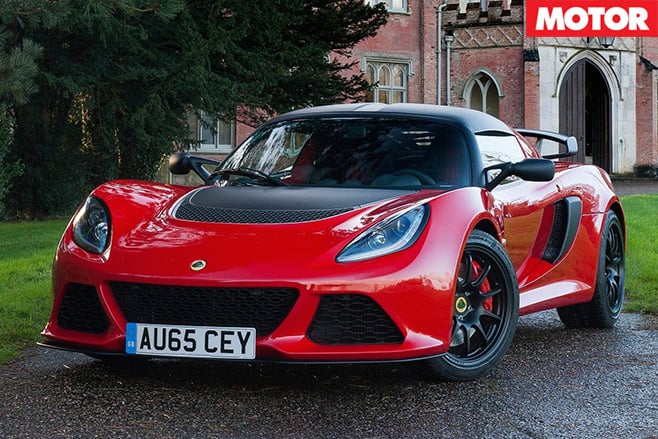
The manual-only Elise continues from $74,990 (plus orc) with a 100kW/160Nm 1.6-litre petrol four-cylinder engine and 6.5-second 0-100km/h.
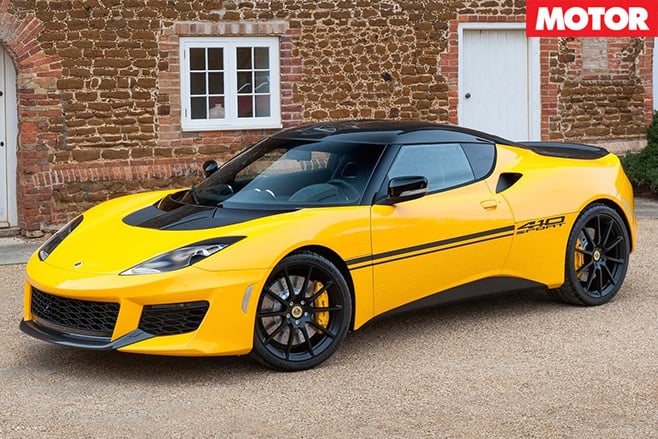
The next step up is the new Exige Sport 350 priced from $134,500 for the six-speed manual or $139,990 for the six-speed automatic.
Now the only Exige available and with a 258kW/400Nm 3.5-litre supercharged V6 teaming with an 1125kg kerb weight, its 0-100km/h claims of 3.9sec (manual) and 3.8sec (auto) make the Sport 350 the fastest Lotus available.
SSC expects the new Evora to take an increasing share of Lotus sales in Australia, however, with the 400 priced from $184,990 plus on-road costs and the hardcore, Cayman GT4-rivalling 410 priced from $199,990 plus orc.
In a statement, Lotus chief executive officer Jean-Marc Gales welcomes SSC to the family: “Lotus has a long history in Australia and New Zealand and our fans and customers in the region understand just what makes a Lotus so special, embracing our ‘light is right’ philosophy.”
“This knowledge and enthusiasm for Lotus is also carried by … Simply Sports Cars who have a well deserved reputation for delivering exceptional customer service and support.”
Given the amount of new engineering the Rolls-Royce Dawn contains, it seems too glib to call it a mere Wraith drophead.
True, it is closely related to the Rolls-Royce Wraith (and the longer-wheelbase Ghost saloon that spawned it), but 80 per cent of the car’s outer panels are new, and the underbody structural work that has gone into substantiating two eye-catching claims Rolls makes for it – that it is “the quietest open-top car ever made” and “the most rigid four-seater convertible available today” – speak of a separate, exhaustive engineering program. And so does the driving experience.
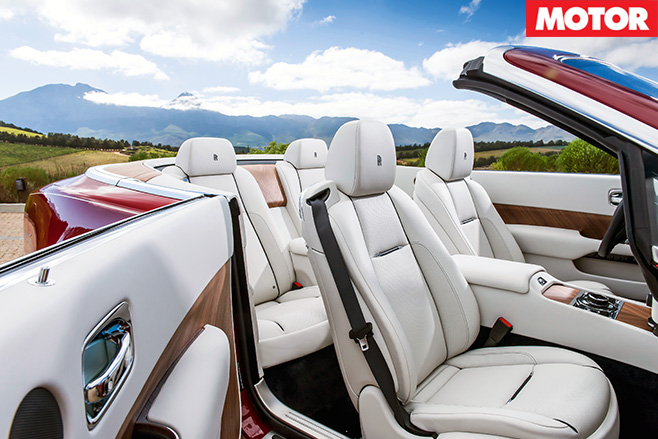
This is a big car, at nearly 5.3 metres long, with the same four-seat accommodation as the Wraith. No cabin space has been lost, despite the fact there is a large, six-layer soft-top in a compartment behind the rear seats. It intrudes instead into boot space, although not disastrously. There is reasonable room for holiday luggage, but possibly not for that of four occupants.
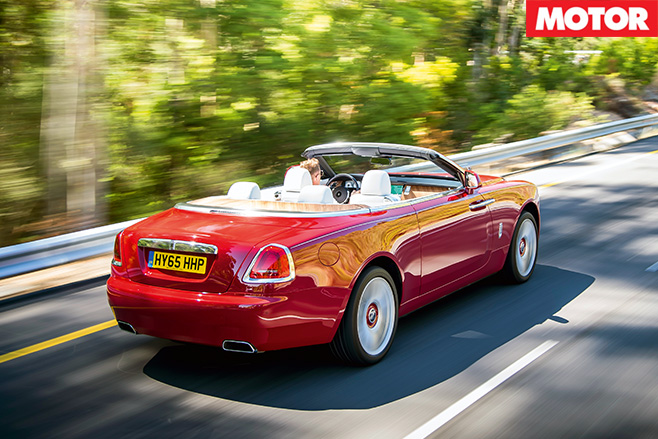
As it is, the extra reinforcing (which, with the weight of the folding roof and its operating mechanism, makes up 200kg of the Dawn’s considerable 2560kg kerb weight) maintains a weight distribution very similar to that of the Wraith.
The twin-turbo 6.6-litre V12 is unchanged from the Wraith, barring some tuning of its drive-by-wire throttle. It still offers 420kW and a torque peak of 780Nm and drives the rear wheels through an eight-speed automatic gearbox.
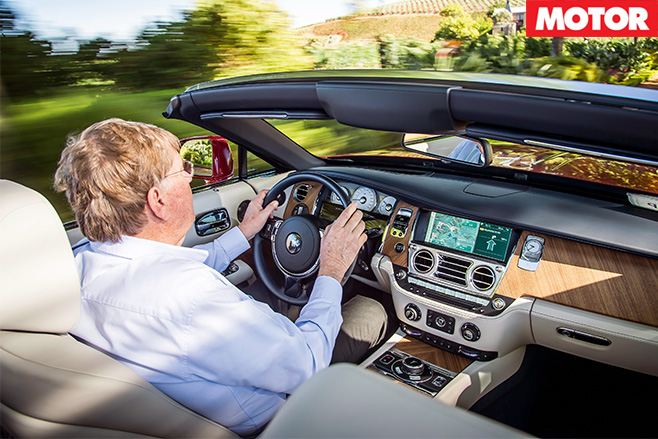
Small wonder its price begins at around $749,000 before you add any of the many bespoke trim items available, or even go up an inch from the standard 20-inch wheels. Many owners, we’re told, will pay much more than that for their cars.
Our red car, with ivory upholstery, might have come straight from Hollywood and was perfectly suited to Cape Town’s strong but not searing sunshine. And we soon proved the car is indeed a comfortable four-seater, with easy access front and rear for its occupants. The stand-out is the car’s dynamics, especially its ride comfort. Over roads that alternated between smooth and abruptly rutted, the Dawn showed impressive body rigidity and control.
It’s a soft car, but its suspension controls big body motions very well while ironing out the ripples in poor road surfaces. And there’s never a tremor from the body. The steering is another fine feature, although the medium-lightness of its rim effort takes a few miles of acclimatisation, as does the fairly weak self-centring action and its refusal to load up as you corner harder.
You soon learn to sit there, guiding it with your fingertips and enjoying its surprising accuracy, which makes manoeuvring easy. The Dawn can be dragged into understeer if you arrive at corners grossly too fast, but mostly it just goes where you point it – aided by the fact that Rolls-Royces always seem to have an effortlessly defined, moderately brisk cruising speed into which you soon settle.
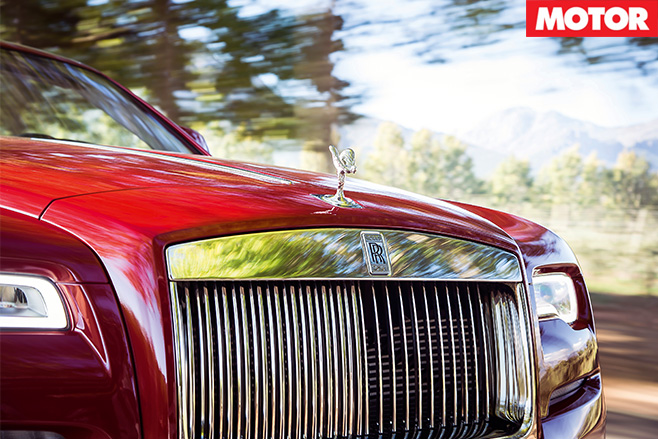
If you’re in the bracket and you like refinement in your big convertibles, this must be the ultimate choice. We’ve never ridden in a car of this layout that is so quiet or smooth, or deals so brilliantly with the slings and arrows of difficult roads, with no handling compromises. In those respects, it simply sets a brand-new standard.
4.5 OUT OF 5 STARS
LIKE: Exquisite drop-top experience, stellar ride quality, those looks DISLIKE: Massive price, hardly the corner carver
SPECS Engine: 6592cc twin-turbo V12, DOHC, 48v, twin-turbo Power: 420kW @ 5250rpm Torque: 780Nm @ 1700rpm Weight: 2560kg 0-100km/h: 4.9sec (claimed) Price: $749,000
The original CX-9 was released in 2007, and by now it’s fallen behind its seven-seater competitors. So this new car arrives prepared with a brand-new engine and just about every bit of safety and efficiency technology that Mazda can make. So let’s see how good it is.
WHAT STANDS OUTMazda knows there are customers out there who have been waiting for this car to arrive and, to cut to the chase, they won’t be disappointed. The new car is cheaper, lighter, more efficient and refined, and there’s a wider range of models to choose from.
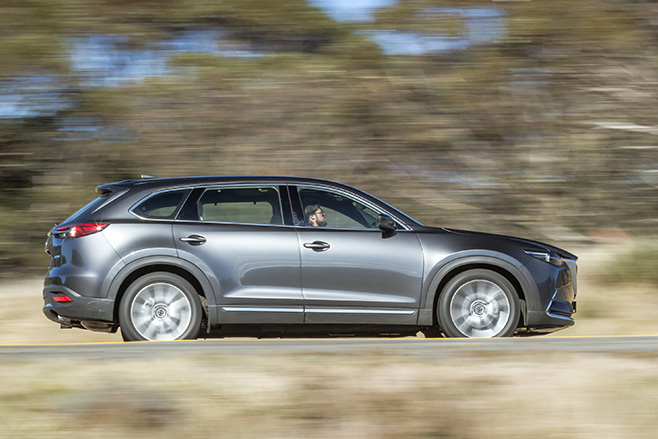
The big standout is the new engine that’s standard across the whole range. It’s a 2.5-litre four cylinder turbocharged petrol engine – much smaller than the old 3.7-litre V6, and that makes it way better on fuel. Mazda rates it at 8.4L/100km, a long way down on the 11L/100km of the old car.
Mazda’s people also say the engine has diesel-like performance, and we can see what they mean. It makes 170kW and 420Nm, so there’s lots of pulling power from down low in the rev range, making it a cinch to cruise around town in without needing to really sink your foot into the carpet.WHAT’S INSIDEMazda sent engineers from Japan to study the way Australian families use their CX-9s. Information from those visits has made the new car better. The third row is extremely easy to raise and lower, even with one hand, and useful things like bag hooks, cup holders and storage compartments are spread around the interior making it a genuinely practical.
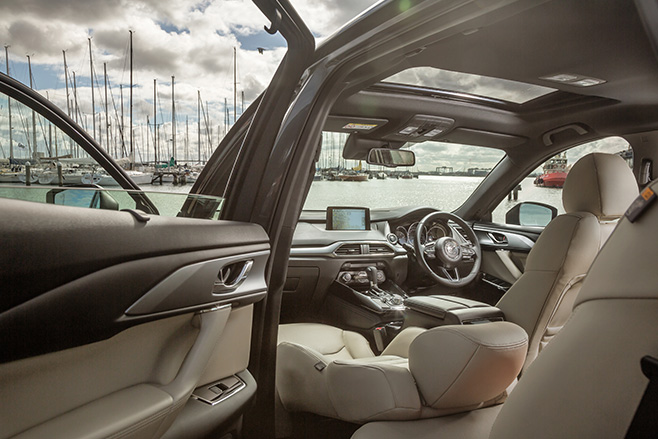
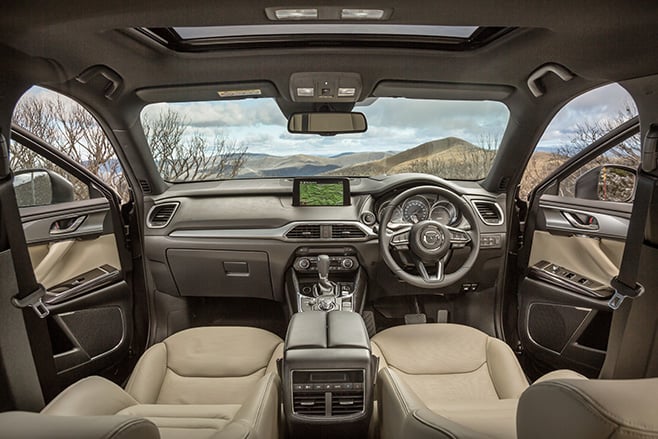
The cabin is sophisticated and quiet, and there’s so much gear in here it may steal buyers of more up-market SUVs. Safety kit includes six airbags, blind spot monitoring, radar cruise control, collision avoidance warnings, auto braking and fatigue alert.
Leg and headroom in the second and third rows is above par, and visibility in the very back is better than most, which is sure to keep the kids happy. There’s a usable amount of boot space even with all the seats in use, and if you fold down the third and second rows and you could just about move house in one trip.
CHOOSING YOURSThe CX-9 now comes in four different model grades, each available in front-wheel drive, or all-wheel drive, for an extra $4,000. The choices are Sport, Touring, GT or Azami, stepping up adds more deluxe features like LED headlights, a head-up display and a Bose sound system. The base model has cloth trim and a smaller display, all the others gets leather and the proper 8-inch screen.
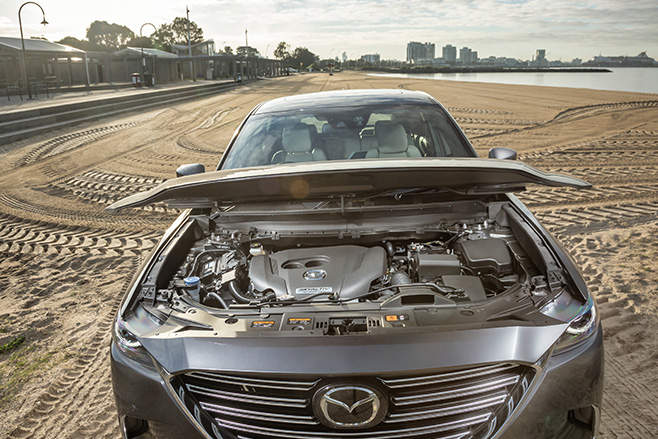
We’d buy the CX-9 Touring. It sits in a sweet spot for the range representing good value without missing out on any must-have luxury and safety extras. Mazda itself expects the Touring model to be its best-seller in the long run.
SUMMING UPThe new Mazda CX-9 really moves the game the forward from the old car, and sits at the pointy end of its class. Mazda has built a classy and effective family hauler that will be loved by parents and kids alike.
The new car is cheaper, lighter, more fuel efficient and refined, and there’s a wider range of models to choose from. Now, find out more about Mazda’s classy and effective family hauler.
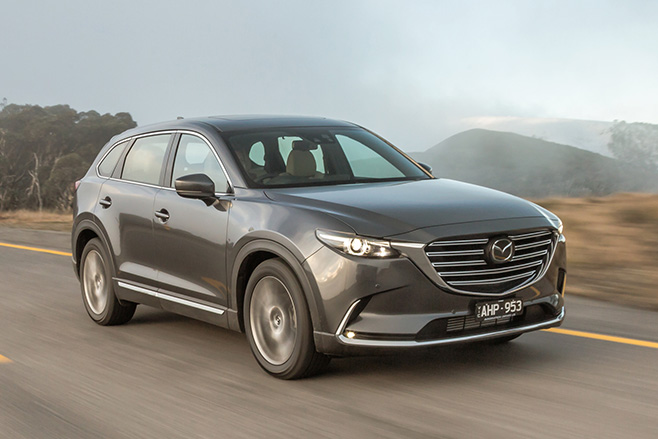
- Mazda involved Aussies in CX-9 development from day one by visiting local families in their homes to study the way they use their cars. It’s an exceptionally well-thought out and useful car as a result.
- The Mazda CX-9’s 2.5-litre four-cylinder petrol engine is the first to combine Mazda’s SkyActiv technology with turbocharging. It has diesel-like performance; meaning lots of pulling power from just above idle and it uses much less fuel than the old CX-9.
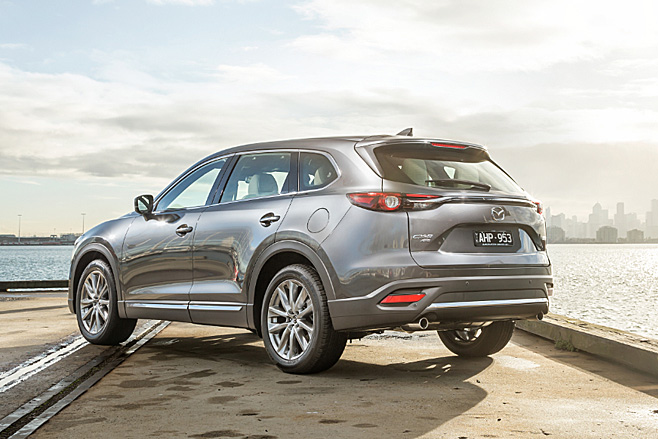
- SkyActiv technology extends to the CX-9’s bodywork which is up to 162kg lighter than before yet stronger and offering better crash protection. It’s also shorter from front to back than the old car, yet has more legroom inside.
- CX-9’s intelligent engine can deliver more power when run on premium fuel. Normal 91RON unleaded produces 170kW, but filling up with high octane 98RON petrol can push power up as high as 186kW.
- Mazda’s start-stop fuel-saving system and energy recovering braking technology were added to the CX-9 at the request of Mazda Australia. It wanted its biggest and most expensive model to have all of Mazda’s technology included.
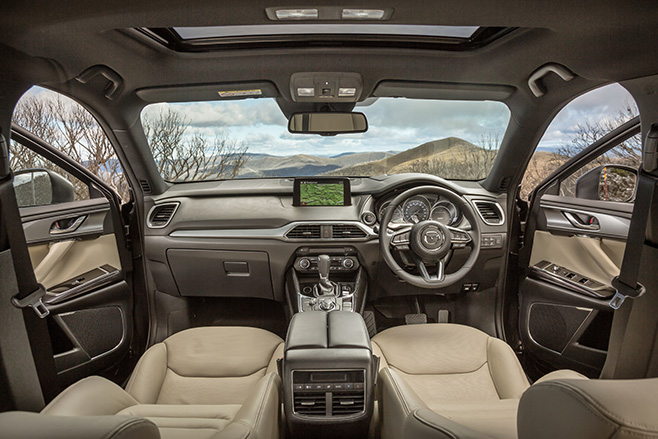
- Lots of steps were taken to make the CX-9 noticeably quieter inside. Extra sound deadening was added to the floor to limit the amount of road noise coming in, and redesigned door seals have reduced wind noise.
- You can now get all-wheel-drive as an optional extra on every model grade, meaning a CX-9 that drives all four wheels is a full $10,000 cheaper than it used to be.
Mazda’s all-new, style-savvy seven-seater SUV wraps the first turbocharged SkyActiv engine.
WHAT IS IT? It’s Mazda’s biggest and most expensive vehicle; a seven-seater SUV designed with Aussie families in mind that boasts a wider range of technology than any other Mazda on sale. It is cheaper, lighter, smaller, and available in a broader model spectrum than before.
WHY WE’RE TESTING IT CX-9 introduces a brand new engine that combines Mazda’s SkyActiv engineering philosophy with forced induction for the first time. The CX-9 also promises to add some sparkle to the otherwise dull cohort of family-friendly, three-row SUVs.
MAIN RIVALS Toyota Kluger, Kia Sorento, Hyundai Santa Fe, Ford Territory, Holden Captiva 7, Nissan Pathfinder

PLUS: Styling elegance; fuel efficiency; practical packaging MINUS: Engine note; dull brakes; demanding steering
THE WHEELS REVIEW AS A rule, purely functional seven-seaters are a snooze-fest. Space-hungry families demanding a third row are often forced to choose between lacklustre high-riders and the coma-inducing boredom of owning a people mover. Driving either is like an early night on New Year’s Eve – there’s a lot you’re missing out on.

CX-9 for 2016 is cheaper, lighter (by up to 162kg), thriftier, quieter, and available in a broader range than before. Four varieties include Sport ($42,490), Touring ($48,490), GT ($57,390) and Azami ($59,390), and for the first time Mazda is making all-wheel drive available on all of them as a $4000 option. That means a new CX-9 Sport AWD costs a full $10K less than the cheapest AWD of the CX-9’s first generation.

Fuel economy is where it excels, sipping 8.4L/100km in FWD models, and 8.8L/100km in AWDs. That’s markedly down from the 11.0-11.3L/100km of the outgoing 3.7-litre V6.
The turbo petrol four-pot is the only engine available across the CX-9 range. Its 34kW deficit to the silky V6 it replaces is made up for by the effectiveness and delivery of its extra 53Nm. Adding a turbo hasn’t muffled the vocal nature of the SkyActiv engine, which has a harsh edge to its note that can be intrusive at higher revs. Thankfully, the full force of its torque is available from a low 2000rpm so there’s little need to drive it near the redline.
Up front, a squinty gaze and huge chrome grille form the latest, and most striking incarnation of Mazda’s Kodo design language. The sheer size of the CX-9’s dramatic bodywork verges on imposing, yet it retains handsome proportions and an athletic form, that when studied closely reveals a level of subtlety and attention to fine detail rivalling the more premium brands.
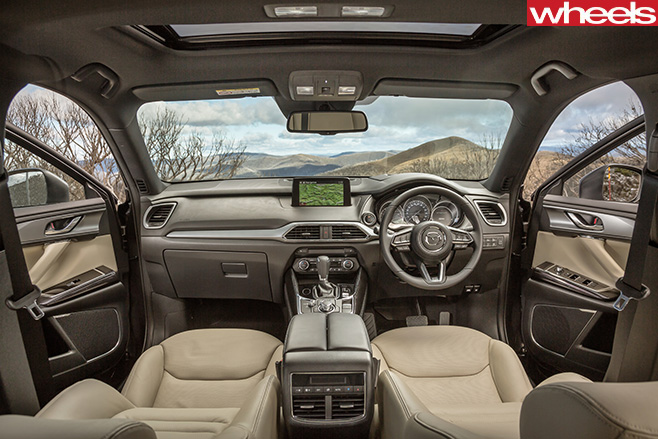
It gets even better once you pull the door handle. The front half of the cabin is a particularly refined composition of textural materials and elegant styling. Mazda has deliberately created a feeling of separation from the two rows behind. Its hushed and well-equipped interior houses a full suite of safety technology as standard. Only the base model misses out on leather trim and a larger, top-mounted touchscreen.

Passengers in the nosebleeds miss out on third-row air vents, but won’t feel short-changed thanks to great visibility through generous window apertures, and head- and leg-room accommodating enough to host adults for short trips.
The CX-9’s ride shows initial polish. Mazda’s trustworthy dynamic competency is felt in its well-controlled tautness, though the 1.9 tonne wagon can’t disguise its heft when thumping over sharper deviations. Braking lacks bite at the top of the pedal travel, and asks for more input than expected, even in stop-start traffic.

Mazda has put a bullet in the customary blandness of seven-seater load-luggers, and delivered an SUV that extends beyond the mundane task of putting bums on seats. Hiroshima has cracked the code.
SPECS Model: Mazda CX-9 Azami AWD Engine: 2488cc 4cyl, dohc, 16v, turbo Max power: 170kW @ 5000rpm Max torque: 420Nm @ 2000rpm Transmission: 6-speed automatic Weight: 1924kg 0-100km/h: 8.5sec (est.) Fuel economy: 8.8L/100km Price: $63,390 On sale: Now
