
Snapshot
- Ford Transit 2024.75 update sees reduced line-up, price rises on diesel variants
- New eight-speed transmission on entry-level model, increased payloads and towing on most models
- Due in Australian showrooms late in 2024
A trimmed-down 2024 Ford Transit line-up is scheduled to arrive in showrooms later this year with yet another price rise.
The three diesel vans and the battery electric E-Transit flagship will be joined by the single-cab cab chassis and the 12-seater bus to make up the Transit line-up going into 2025.
Ford will also take the axe to the manual transmission – currently offered in five variants – and drop the dual-cab chassis model, reducing the number of Transits from eleven to six.
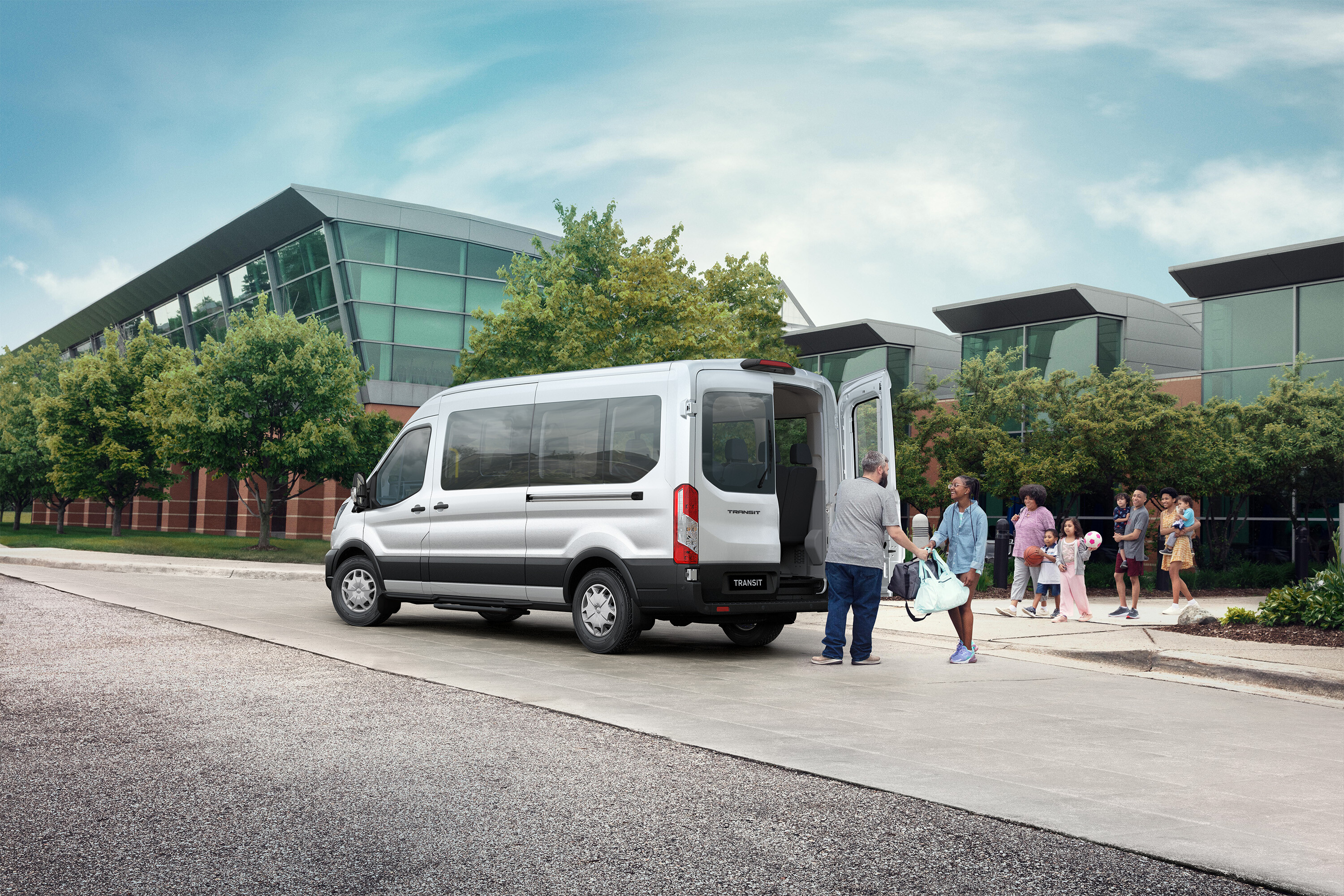
Prices are up between $500 and $3000 – following price rises in September 2023 – averaging $1300 across the range.
The $104,000 before on-road costs E-Transit flagship is the only model to fend off a price increase.
The official ‘2024.75’ update will see the entry-level manual Transit 350 dropped – currently the cheapest variant at $56,990 before on-road costs – with the automatic 350L FWD now kicking the range off at $59,990.
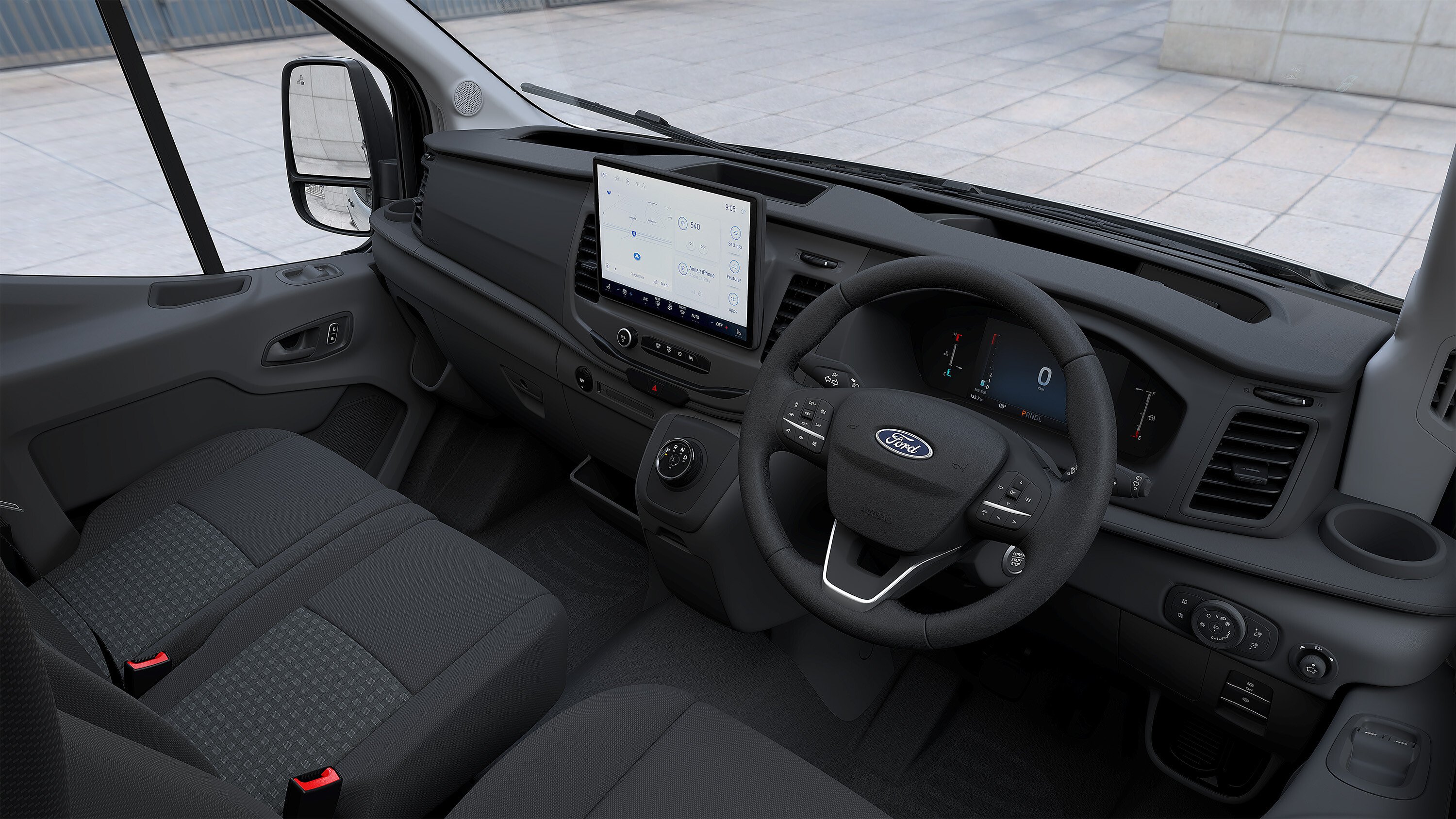
That’s a price rise of $500 over the existing 350L FWD, but it brings a new eight-speed automatic transmission instead of the current model’s six-speed unit.
Ford says the entry-level will come with a higher 2750-kilogram braked tow rating and 6000kg GCM – increases of 950kg and 1750kg, respectively.
There’s no word from Ford Australia on any improvements to fuel economy – which given the vehicle’s size, does not have an official fuel figure to go off, anyway – the eight-speed may bring the entry-level Transit.
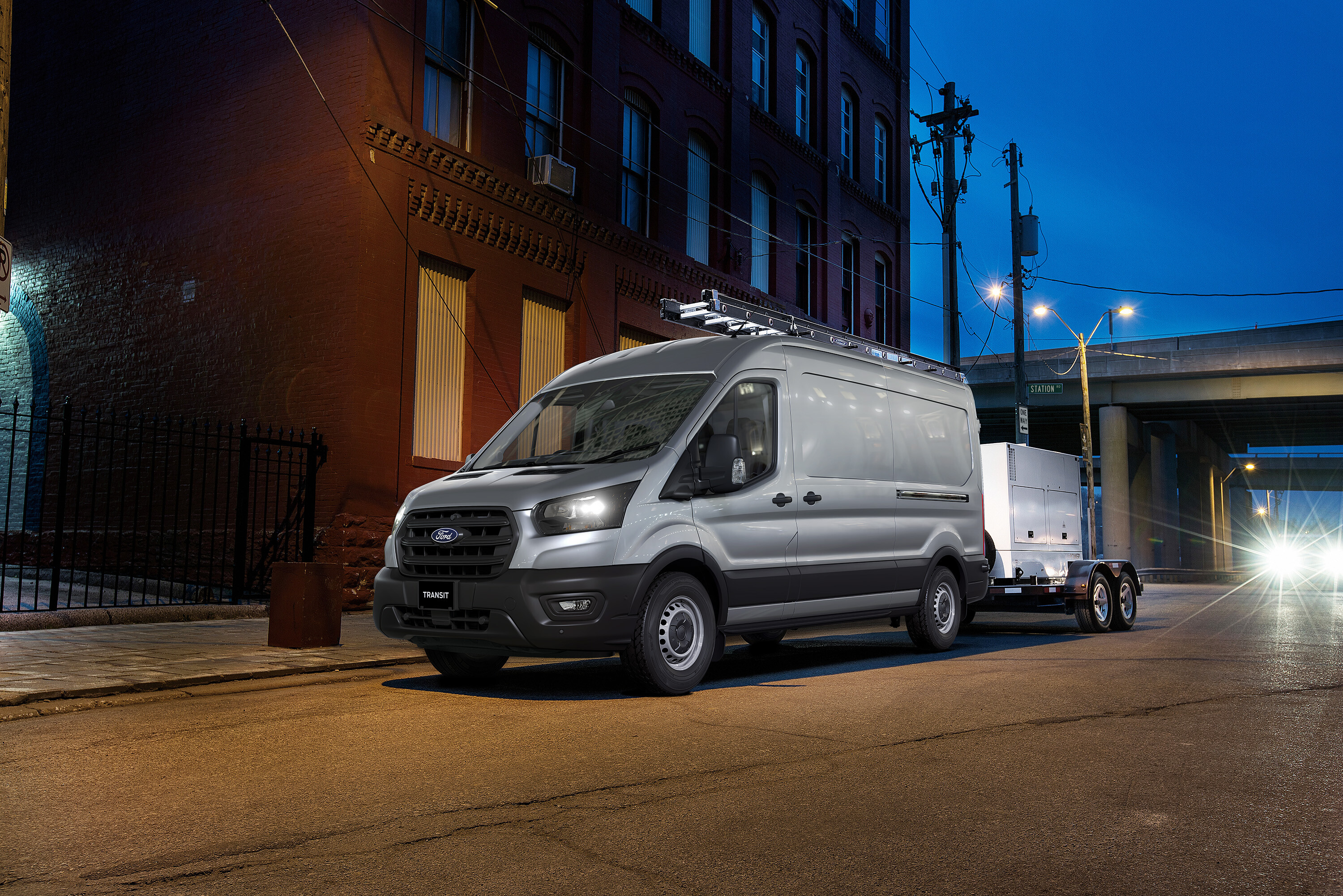
All other Transits continue with the current 10-speed automatic transmission and are rear-wheel drive.
These models carry over the 125kW/390Nm four-cylinder turbo-diesel – a relative of the 2.0-litre bi-turbo engine used in the Ford Ranger – introduced in 2017.
The 350L RWD and 430E Transits see 3500kg tow ratings – again, increases of 900kg and 1100kg – with payloads up on all models bar the E-Transit.

The 2024.75 update also brings black badging and a revised Ford blue oval, among minor changes on the outside.
Key equipment upgrades include standard push-button start, an 8-inch semi-digital instrument cluster, and tyre-pressure monitoring.
Bus and cab chassis Transit will include a 360-degree camera as standard as part of the update.
The all-electric 2023 Peugeot E-2008 has had its price reduced by around $25,000 – but only for a limited time.
Peugeot Australia has announced its end-of-financial year offers, with the largest savings applied to 2023-built examples of the E-2008 GT small SUV until June 30, 2024.
Usually priced from $59,990 before on-road costs, the Spanish-built E-2008 is now available at an all-time low for a European electric car: $39,990 drive-away nationwide.
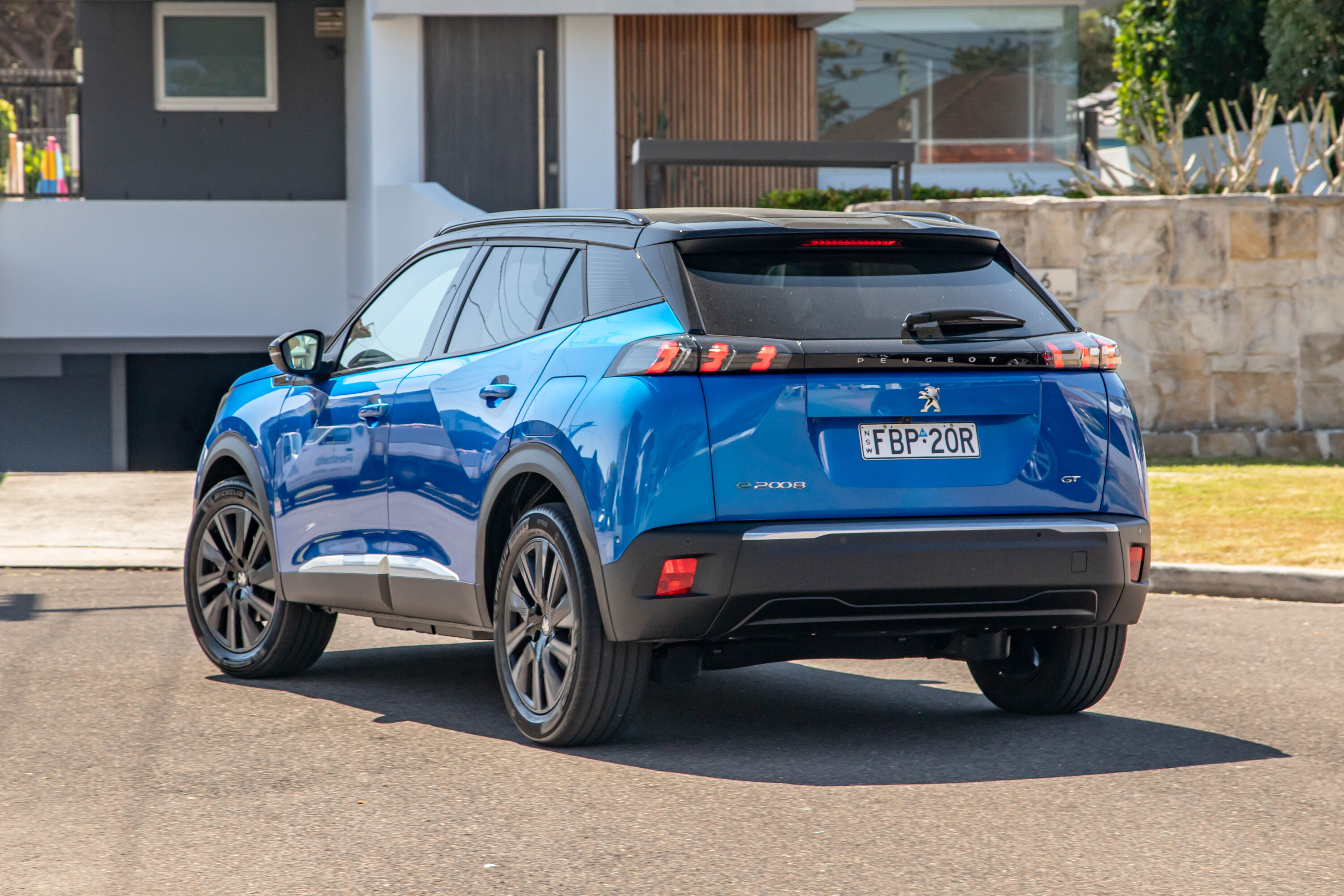
This equates to a significant circa-$25,500 saving over its $64,000 to $67,000 drive-away cost in most states and territories when on-road costs are added to its $59,990 recommended retail price.
Brand-new and demonstrator examples of the E-2008 GT are covered under the deal, which started on May 1.
The E-2008 now priced identically to Australia’s cheapest electric SUV, the MG ZS EV, and joins other Chinese-built electric cars priced below $40,000, including the BYD Dolphin, MG4 and GWM Ora.
Fitted with a 45kWh lithium-ion battery pack and a single 100kW/260Nm electric motor powering the front axle, the E-2008 has a WLTP-rated 328-kilometre driving range.
A facelifted version of the Peugeot E-2008 – unveiled in Europe 12 months ago – is due in Australia in the coming months, likely returning to a higher drive-away cost.
Peugeot’s local division – managed by third-party Inchcape – will further expand its electric car line-up in 2024 with the addition of the E-208 light hatch, E-308 small hatch, E-3008 midsize SUV and E-Partner medium van.
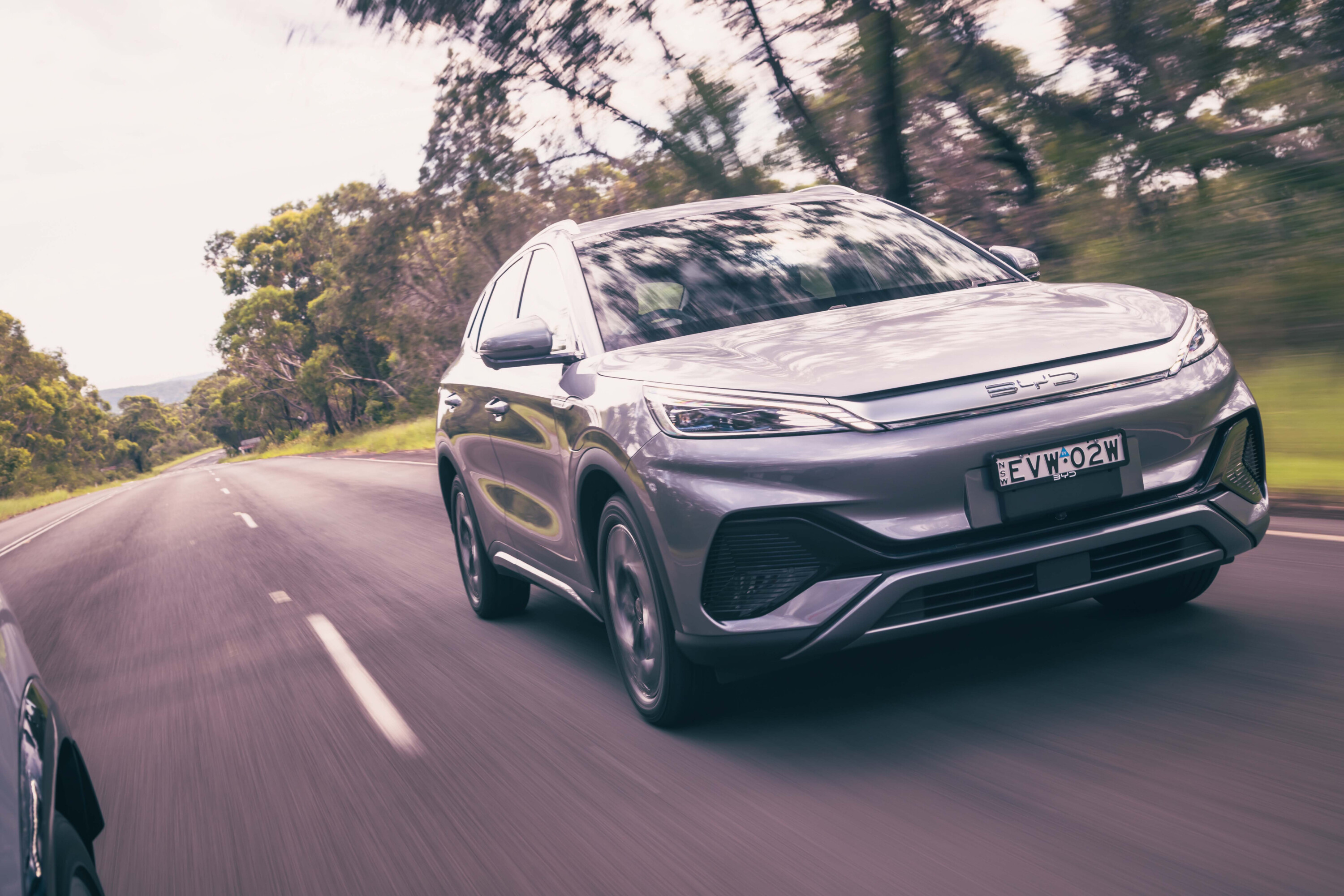
Meanwhile, Chinese brand BYD has introduced a run-out sale for 2023-built examples of its popular Atto 3 ahead of an updated model due in Australia soon.
Demonstrator examples of the 2023 BYD Atto 3 Extended Range are priced from $45,990 drive-away in most states and territories until May 30, 2024 – compared to its usual $51,011 plus on-roads list price.
It costs $47,990 drive-away for buyers in Western Australia.
The drive-away price of an Atto 3 Extended Range is usually between $51,550 and $55,300, depending on the state or territory it is registered in.
The BYD Atto 3 Standard Range continues to be priced from $48,011 before on-road costs – or between $48,550 and $52,000 drive-away.
A minor update for the BYD Atto 3 is due in Australia soon, with new additions likely to include a larger 15.6-inch rotating infotainment system – up from 12.8-inch – and darkened exterior trim.
It is also expected to feature a thicker shade for the panoramic sunroof, Continental Eco Contact 6 tyres, and a new ‘cosmos black’ exterior colour.
Honda has confirmed it will launch more affordable hybrid vehicles in Australia before the end of 2024.
In 2023, the Japanese brand promised to launch additional petrol-electric hybrid variants in Australia once top-spec E:HEV models had arrived with each new full model launch, starting with the latest HR-V in April 2022.
The 11th-generation Accord sedan arrives in Australia this month as the last full model change with an E:HEV hybrid variant, joining electrified flagship versions of the Civic, ZR-V and CR-V also launched in the last 24 months.
Honda Australia director and chief operating officer Carolyn McMahon said the brand had plans to expand its hybrid line-up before Australia’s New Vehicle Efficiency Standard, which requires carmakers to offer more low- and zero-emission cars, was introduced.
“That’s part of our original hybrid expansion strategy. Probably later on this year – essentially now that we’ve launched top variants – you’ll now start to see through different MMCs [minor model changes] or different upgrades [hybrid variants] expanded throughout the range,” said McMahon.
“Our current hybrid take up is around 40 per cent. I think this time last year we said we were expecting around 25 per cent, so we’re actually higher than what we had originally set our goal for. I think industry petrol [sales] is still around 70 per cent; we’re at 60 per cent so we’re quite happy with the take-up [of hybrid].”
McMahon indicated Honda would focus on expanding hybrid options within its SUV range – the HR-V, ZR-V and CR-V – rather than its slower-selling Civic and Accord passenger car line-up.
“We don’t have any plans for a lower-specced Accord,” said McMahon. “Accord is a flagship model – we’ll always use that to introduce the new technology and the new features.”
Available in a sole E:HEV RS variant, the Accord midsize sedan is priced at $64,900 drive-away, while the hybrid version of the Civic small hatch – the E:HEV LX – retails for $55,000 drive-away.
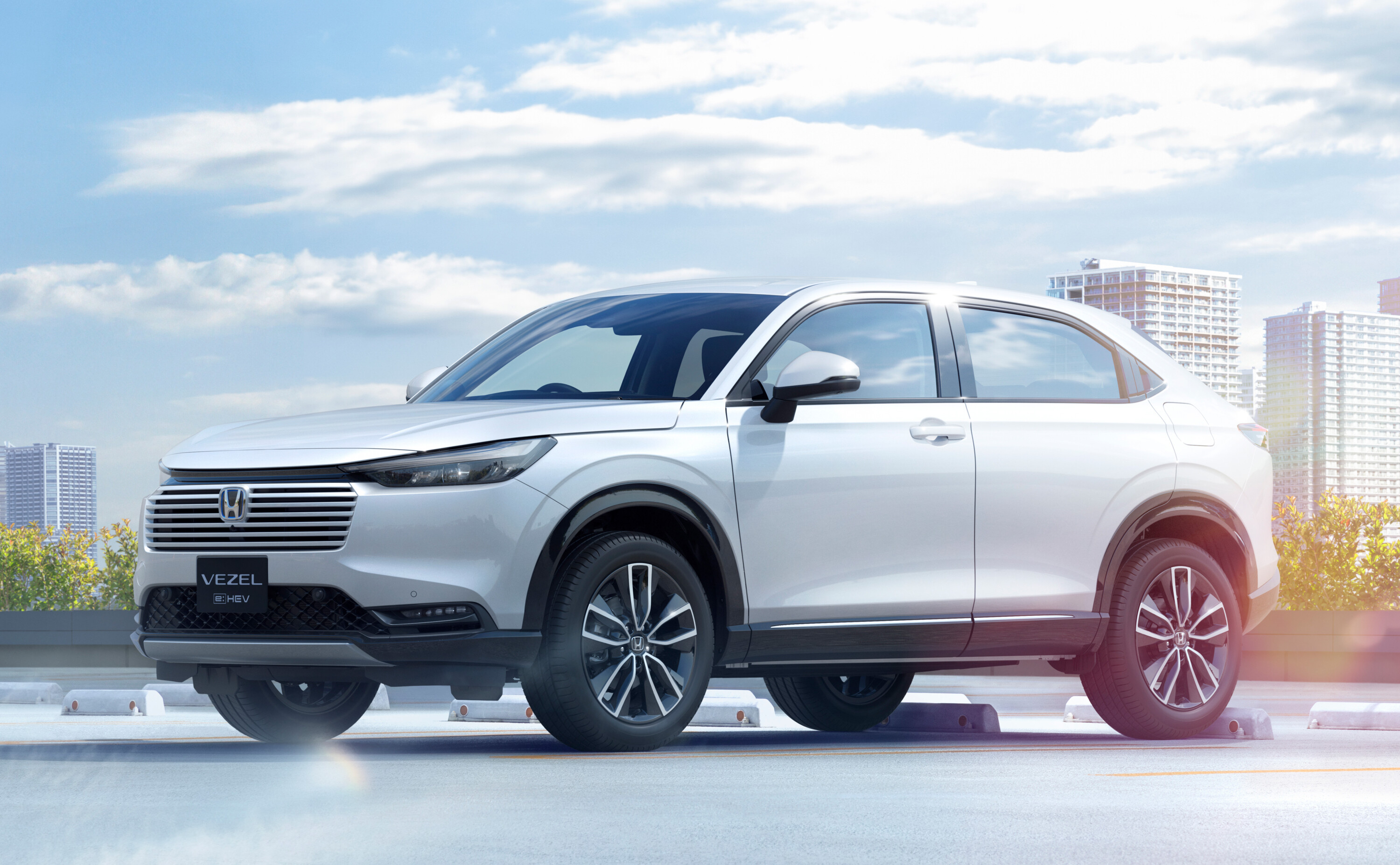
The facelifted Honda HR-V small SUV – set to be marketed as a Model Year 2025 vehicle – is due in Australia soon, likely as the first vehicle from the brand with an additional hybrid variant.
“It is possible that could make sense. I can’t announce anything today formally, but later on this year is probably the time that we start the expansion,” said McMahon.
While McMahon was unable to announce an expanded HR-V line-up, new government approval documents have all but confirmed this.
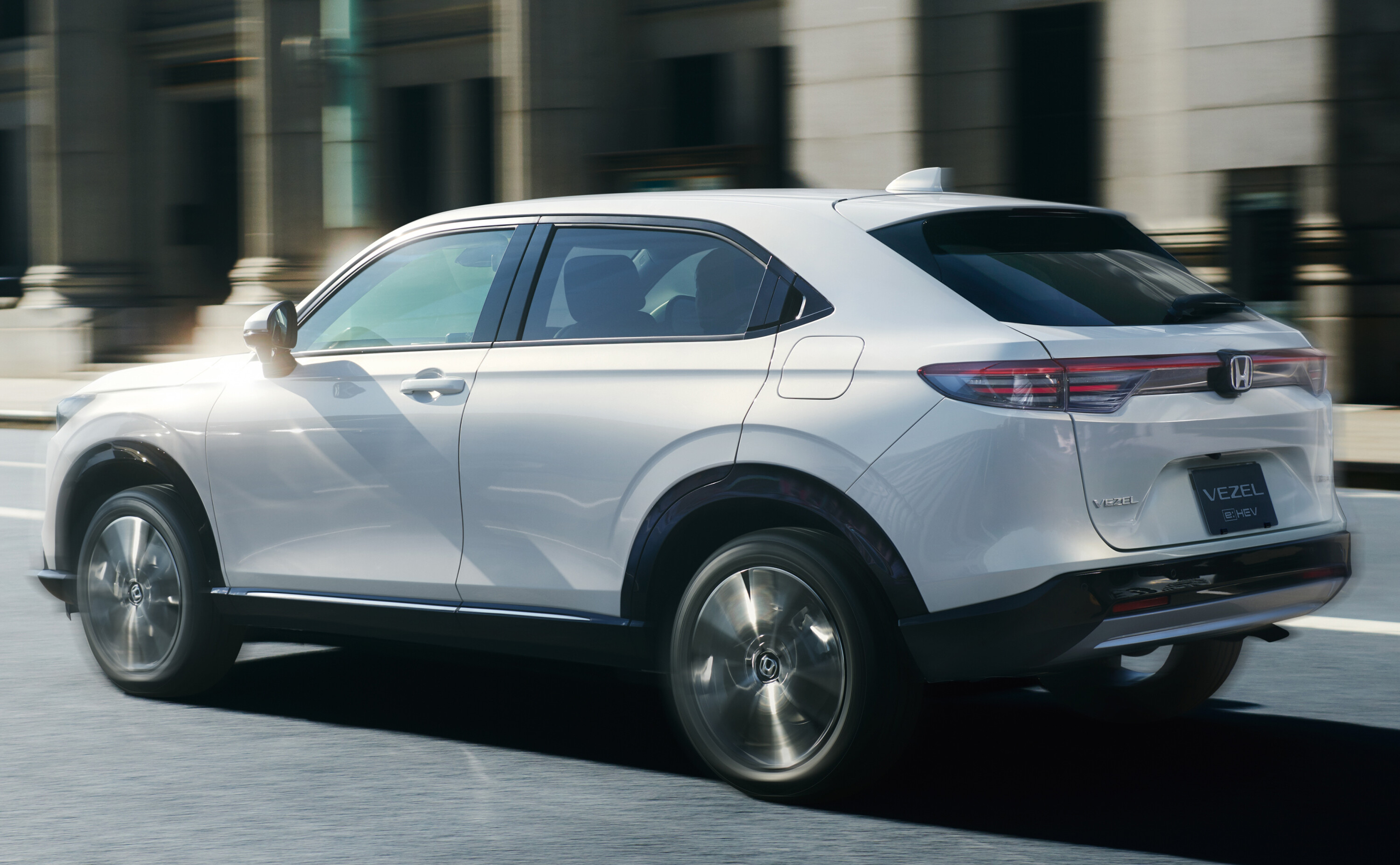
The documents list two hybrid versions of the updated HR-V, rather than one like the current model.
It is unclear how the two hybrid variants could be differentiated, but Honda would likely use the current entry-level petrol HR-V as a base for a cheaper hybrid variant to slot between the existing Vi X and the E:HEV L.
This would see certain features deleted, such as a leather-wrapped steering wheel and gear shifter, leather-accented upholstery, heated front seats and steering wheel, LED fog lights, and a hands-free electric tailgate.
Improvements for the updated HR-V – which launched in Japan last month – include a revised grille and lower front bumper, full-LED two-tier tail-lights, traffic jam assist, adaptive high-beam headlights, and a mis-acceleration prevention assist.
Hybrid models receive thicker sound insulation in the dashboard, roof and floor to reduce engine startup and road noises.
These variants also have revised damper forces for improved ride comfort, and an updated energy management control to reduce the number of internal-combustion engine startups and shutdowns.
The government documents confirm the HR-V will continue to have four seats to comply with Australian Design Rules for rear top-tether anchor points, as Honda elected not to engineer an anchor point for the rear-middle position that would allow it to be certified as a five-seat vehicle.
The current 2023 Honda HR-V is in run-out with discounted pricing of $34,900 drive-away for the Vi X petrol, down from $36,700, and $43,900 drive-away for the E:HEV, down from $47,000.
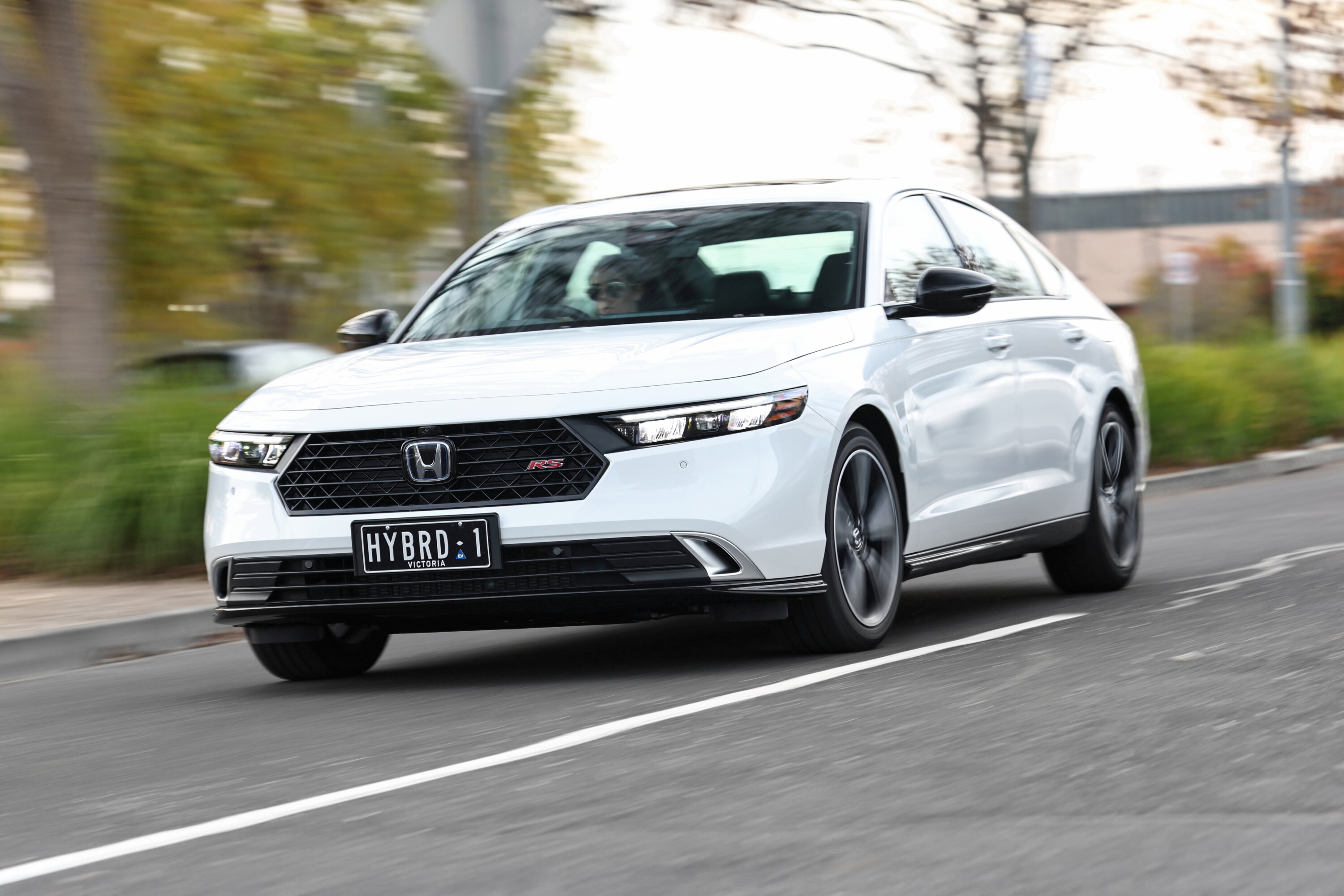
Current Honda hybrid vehicles in Australia
2024 Honda Civic
- E:HEV LX: $55,000 drive-away.
- Toyota hybrid rival: Corolla hatch, $32,110 to $39,100 before on-road costs.
2024 Honda Accord
- E:HEV RS: $64,900 drive-away.
- Toyota hybrid rival: Camry, $37,917 to $51,417 before on-road costs.
2023 Honda HR-V
- E:HEV L: $43,900 drive-away (usually $47,000 drive-away).
- Toyota hybrid rival: Corolla Cross, $36,480 to $50,030 before on-road costs; C-HR, $42,990 to $54,990 before on-road costs.
2024 Honda ZR-V
- E:HEV LX: $54,900 drive-away.
- Toyota hybrid rival: Corolla Cross, $36,480 to $50,030 before on-road costs; RAV4, $42,260 to $58,360 before on-road costs.
2024 Honda CR-V
- E:HEV RS (five-seat FWD): $59,900 drive-away.
- Toyota hybrid rival: RAV4, $42,260 to $58,360 before on-road costs.
Snapshot
- The 30,000th Ram pick-up has rolled off the Melbourne production line
- RAM was the best-selling full-size pick up in Australia in 2023
- Facelift of current generation due in showrooms later in 2024 as V8 engine phased out
Ram (styled RAM) has delivered its 30,000th full-size pick-up in Australia – a Ram1500 Big Horn, according to local importer Ateco.
The milestone Ram was a Billet Silver Crew Cab completed at the company’s Melbourne site, where the US-made pick-ups have been converted from left-hand to right-hand drive since 2016.

Ateco is the only company authorised by Ram – part of the Stellantis conglomerate of automotive brands – to re-manufacture its vehicles to right-hand drive.
“30,000 vehicles is a significant carpark in anyone’s books – that it’s come about in a segment that didn’t exist a few years ago is testament to the hard work of everyone involved,” said Jeff Barber, General Manager of Ram Trucks Australia, in an Ateco statement.
In late 2022, Ram upgraded its Melbourne Manufacturing Facility (MMF) to double production capacity to 20,000 vehicles a year – around 54 a day – with two assembly lines and more than 400 employees.
“From our partners in the US and Melbourne, to our dedicated dealer network in Australia and New Zealand, the RAM Trucks business proves that it’s possible to establish an OEM-level automotive manufacturing capability in Australia despite the closure of local automotive brands.

Ram sold 6833 pick-ups in Australia in 2023, led by the Ram 1500, easily outselling the Chevrolet Silverado which sold a total of 3365 locally.
While facing the Chevrolet Silverado – which is converted to right-hand drive in Melbourne by Walkinshaw Performance – Ram has also faced increased competition from the Ford F-150.
The F-150 arrived in local showrooms last October with Ford Australia tipping around 5000 annual sales, with capacity for around 20 conversions to right-hand drive carried out by RMA Automotive in Melbourne.
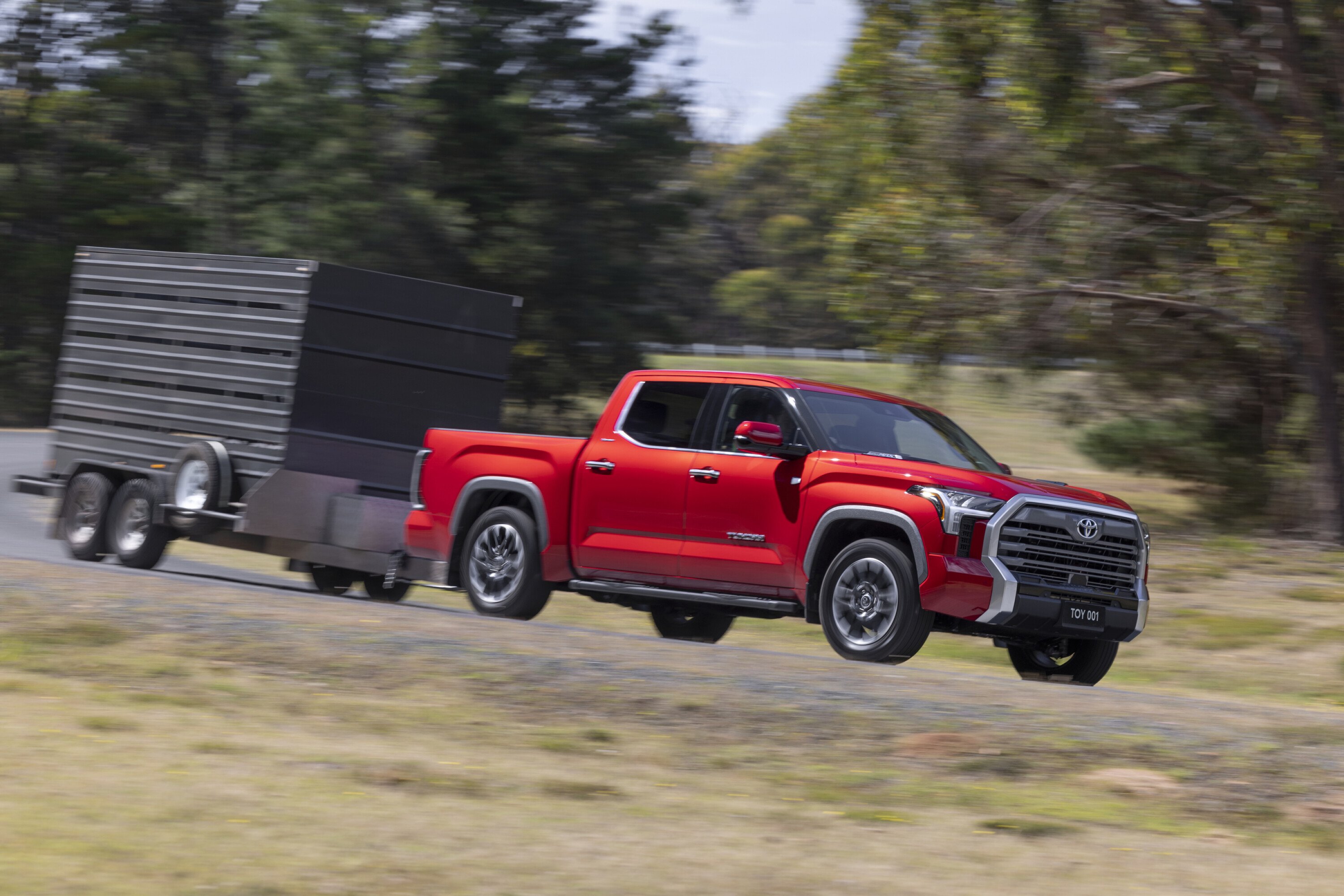
The hybird-powered Toyota Tundra is also on the way to Australia after an evaluation batch of 300 were converted by Walkinshaw Performance.
Production of the current model Ram 1500 wound up at the end of 2023 – including the flagship 1500 TRX powered by a supercharged 6.2L V8 – with its V6-powered ‘RHO’ successor announced in April 2024.
The Ram 1500 RHO will use a 3.0L twin-turbo inline six with V8 models are dropped from the Ram line-up as part of a facelift due in US showrooms mid-year.
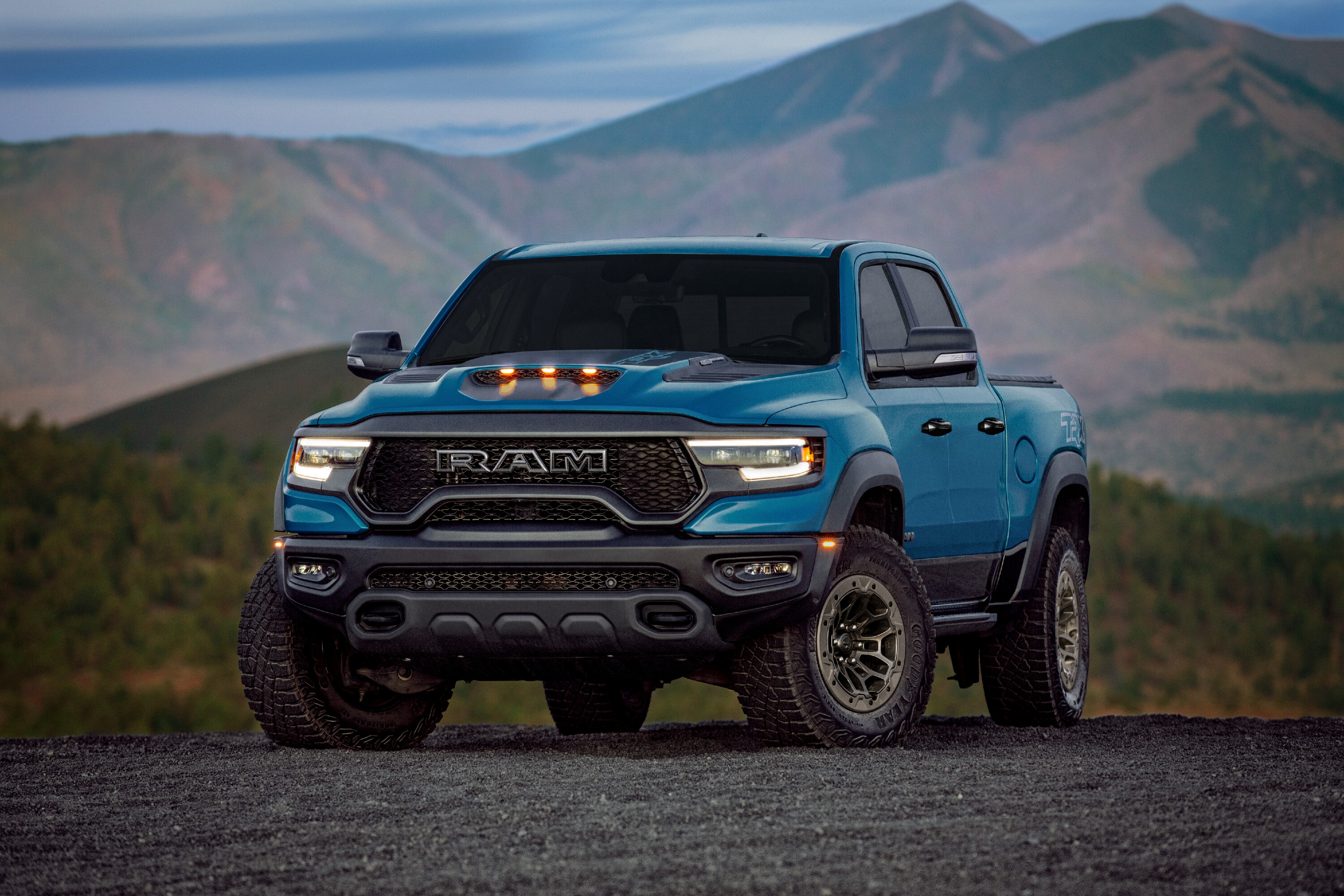
Ateco has imported a batch of 130 Ram 1500 TRX Final Editions which will farewell the V8 from the Australian line-up.
Grays gives us yet more curios for the curious.
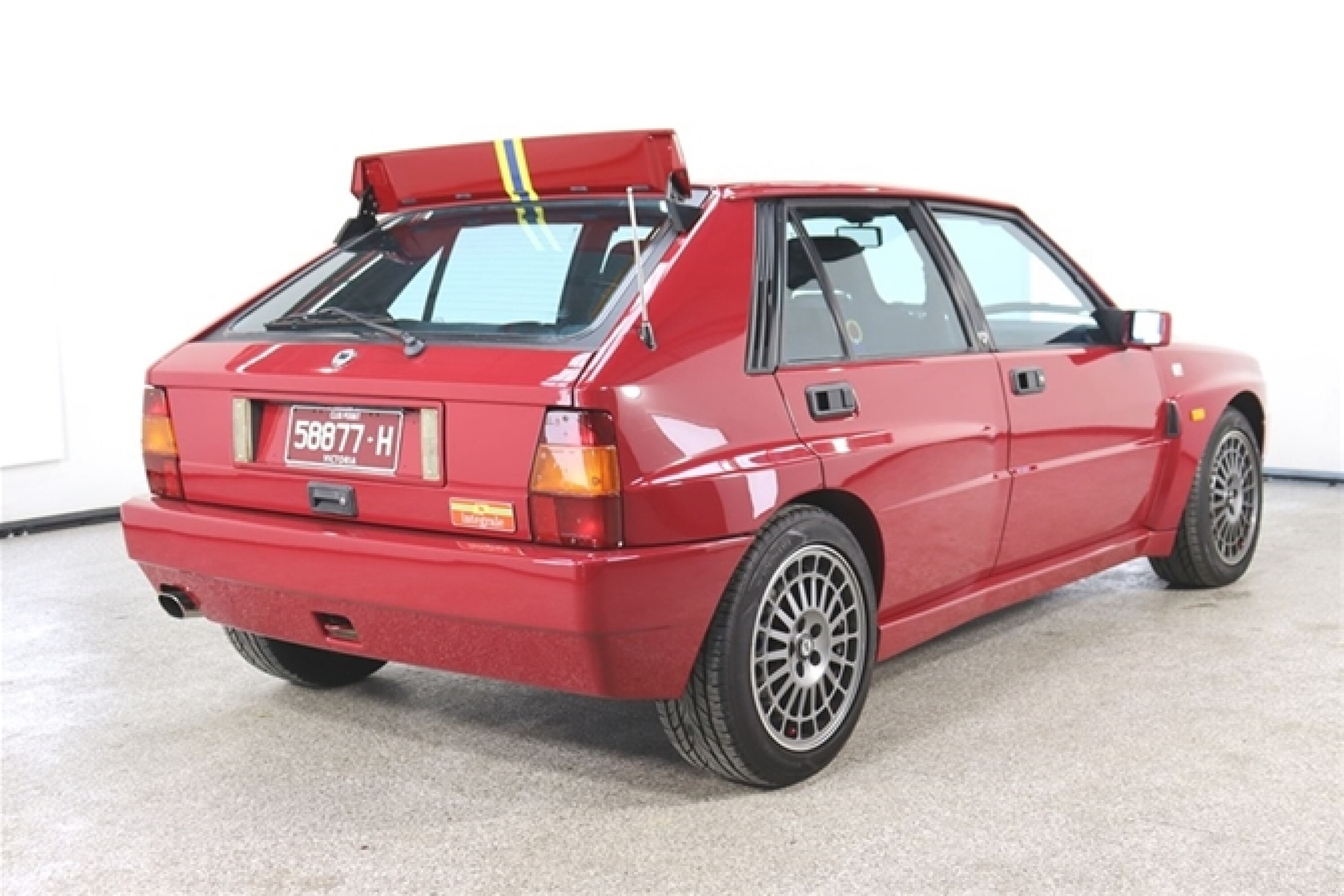
1995 Lancia Delta HF Integrale Evoluzione II Edizione Finale Man
Harking back to the years before the sport was dominated by the WRXes and the Evos, there was the Lancia Delta Integrale.
This left-hand drive import could be one for those wanting to remember those times, or for those who remember the first Sega Rally arcade machines.
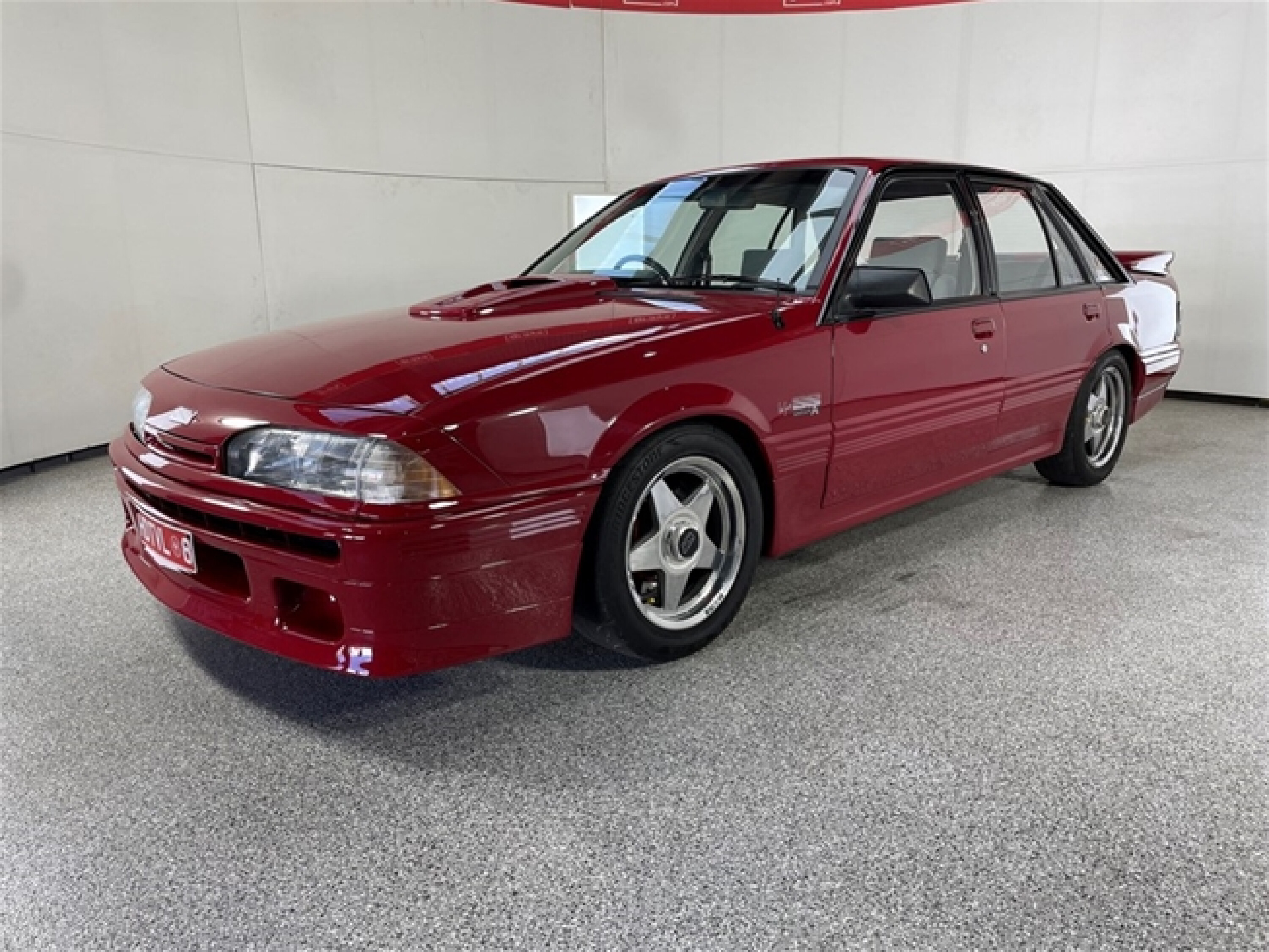
1986 HDT Vl Group A SS Brock Commodore Manual
Off to the very different motorsport of Group A, here’s a classic from the 80’s wearing the name of the legend, Peter Brock.
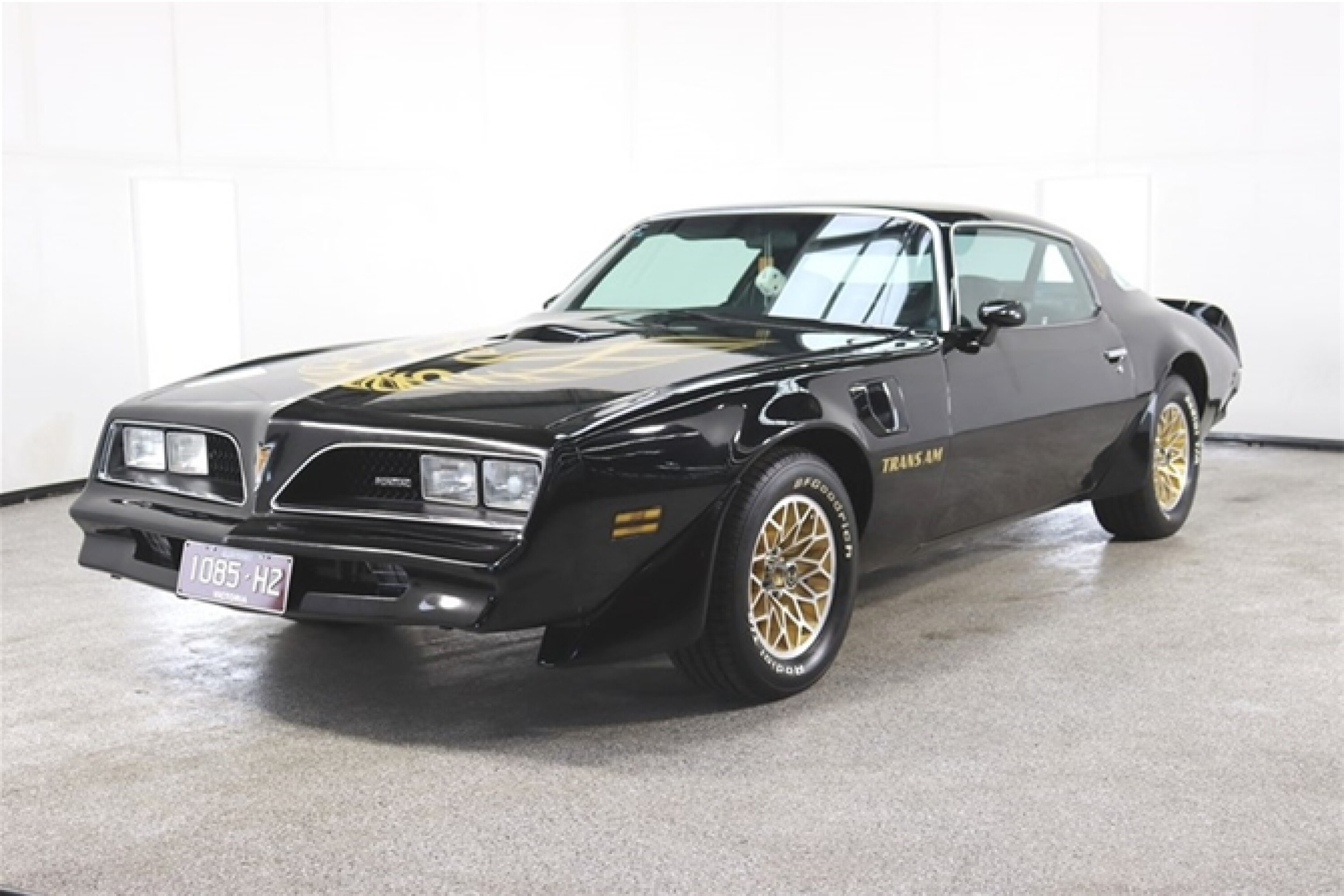
1978 Pontiac Trans Am
And from the world of motorsport we step over to the other nearby land of American muscle with this Pontiac Trans Am. Another left-hand drive example for the classic enthusiast.
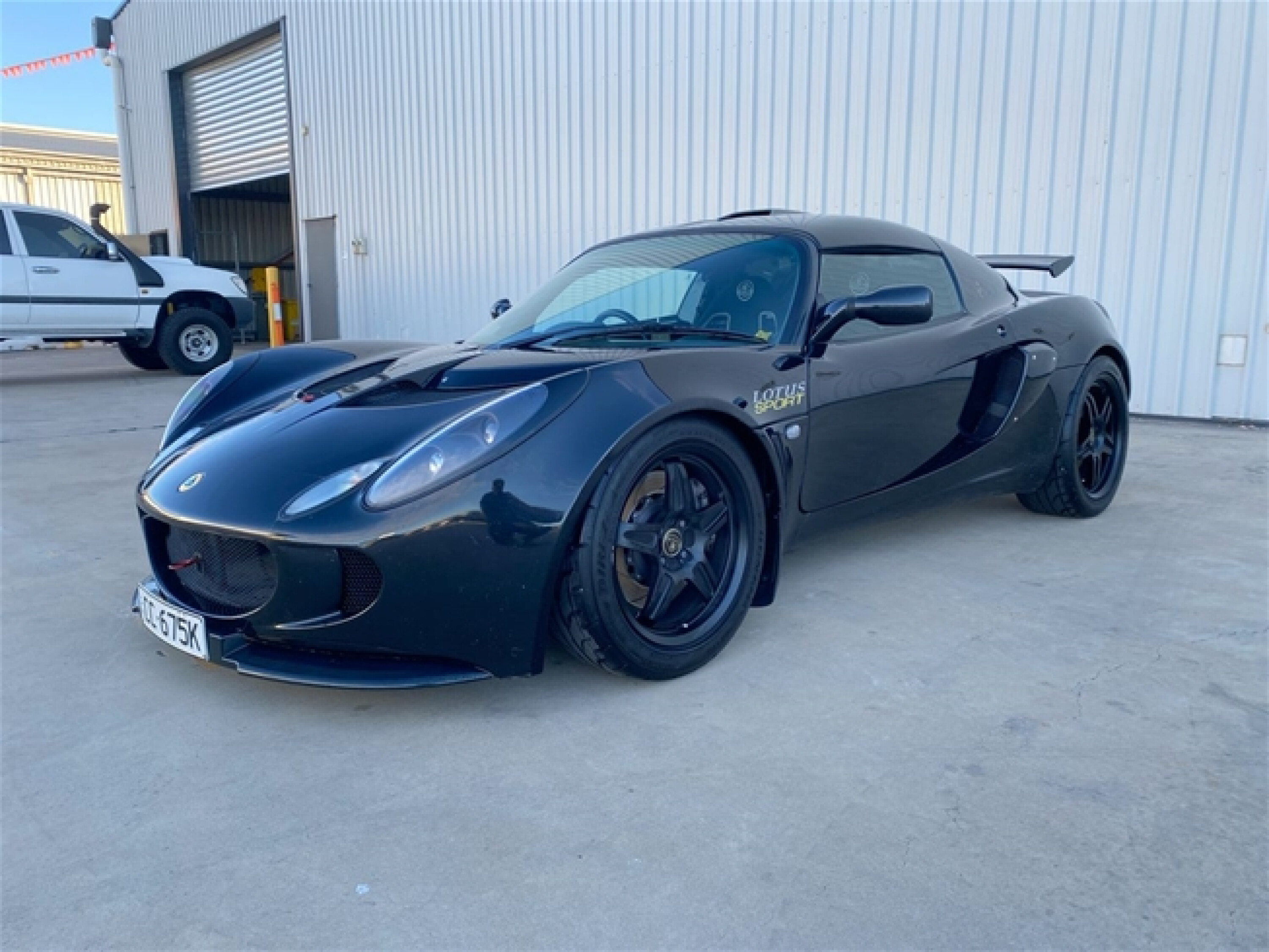
2005 Lotus Exige Manual Coupe
Big donks not your style? Then maybe the Chapman-devout would appreciate Lotus‘ lightweight rocket Exige.
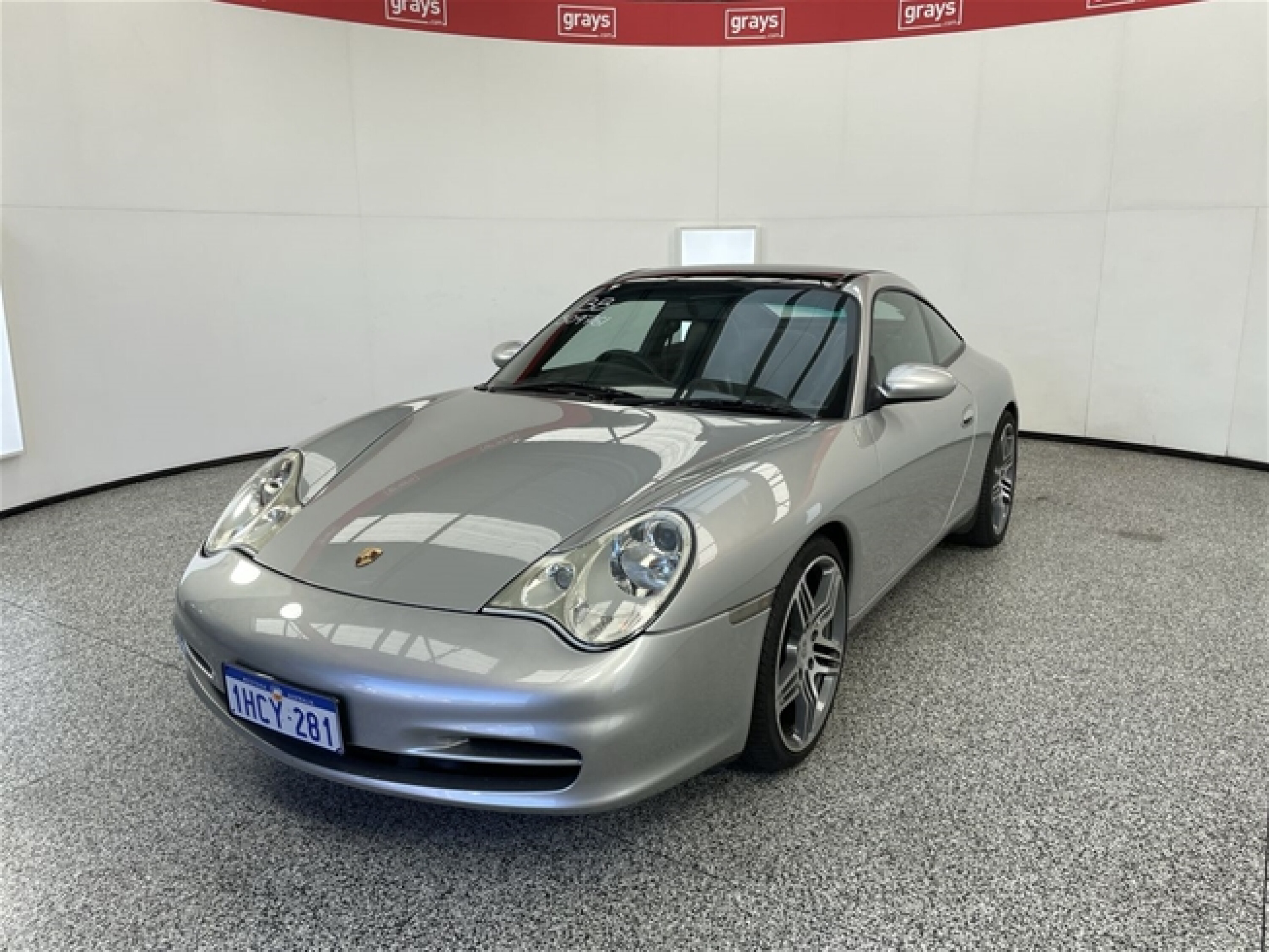
2002 Porsche 911 CARRERA 4S 996
Continuing on with the sports car theme that seems to have dominated this week’s Auction Watch, and we have the 996 Porsche 911 Carrera 4S from 2002: the era that began Porsche’s rebirth as the powerhouse they are today.
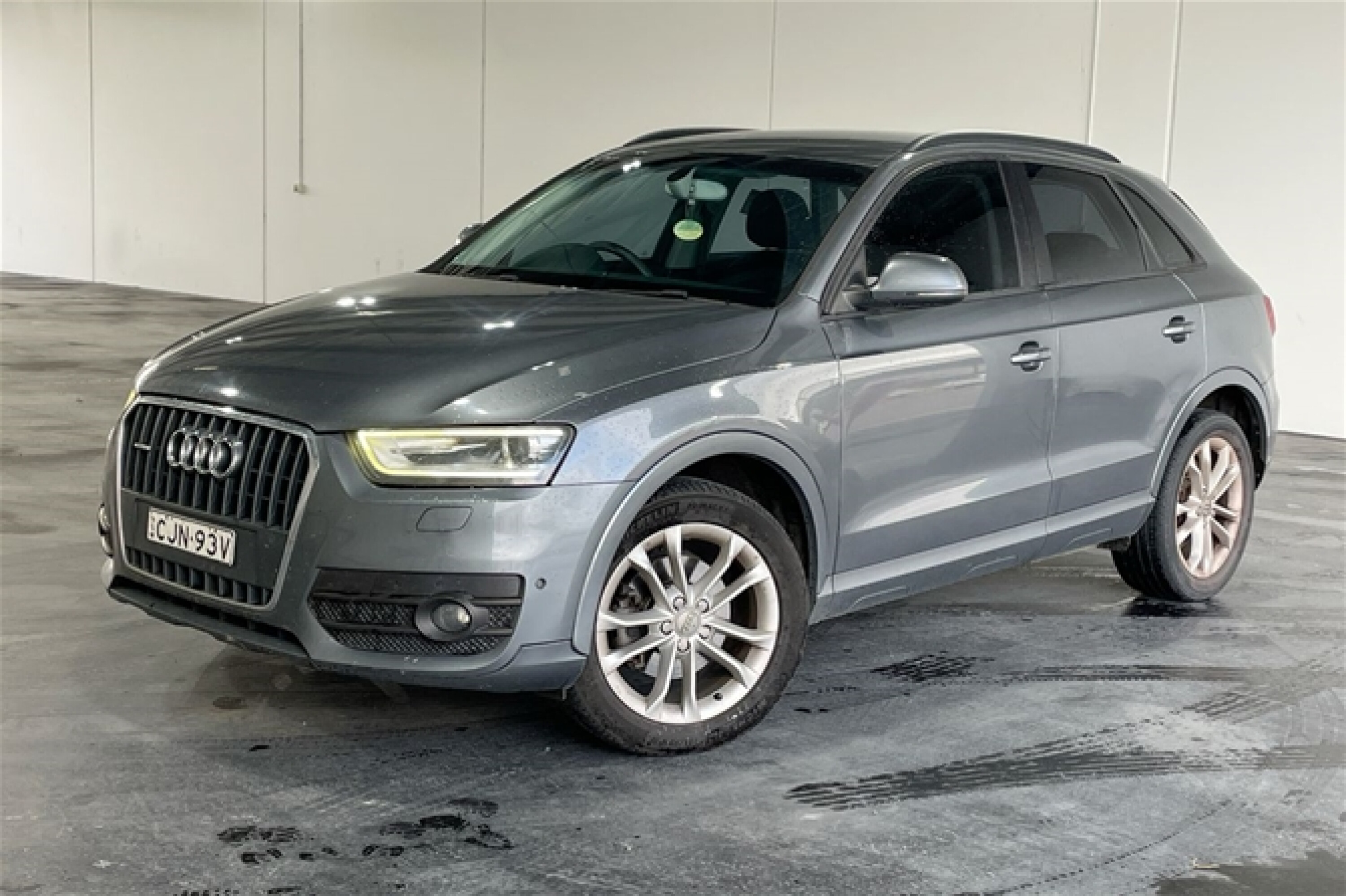
2012 Audi Q3 2.0 TFSI Quattro
And finally we break away from the sports cars and look at the more comfy world of SUVs with this Audi Q3 from 2012.
Take a look at Grays’ entire listings here [↗]
The Subaru Forester has a longstanding history as one of Australia’s family SUVs since it landed almost 30 years ago.
It has developed a strong reputation for reliability and practicality, making it a favourite among families and outdoor enthusiasts.
The Forester’s design smartly integrates comfort and functionality, serving well for daily use and more adventurous activities. It stands out as a compact SUV but offers the spaciousness and driving feel of a larger wagon.
Pricing & Features
The Subaru Forester 2.5i is the entry-level into the line-up, starting at $38,690 before on-road costs.
The base model comes standard with 17-inch alloy wheels, an 8-inch touchscreen with wireless Apple CarPlay and wired Android Auto, leather steering wheel and gear shift and cloth trim seats.
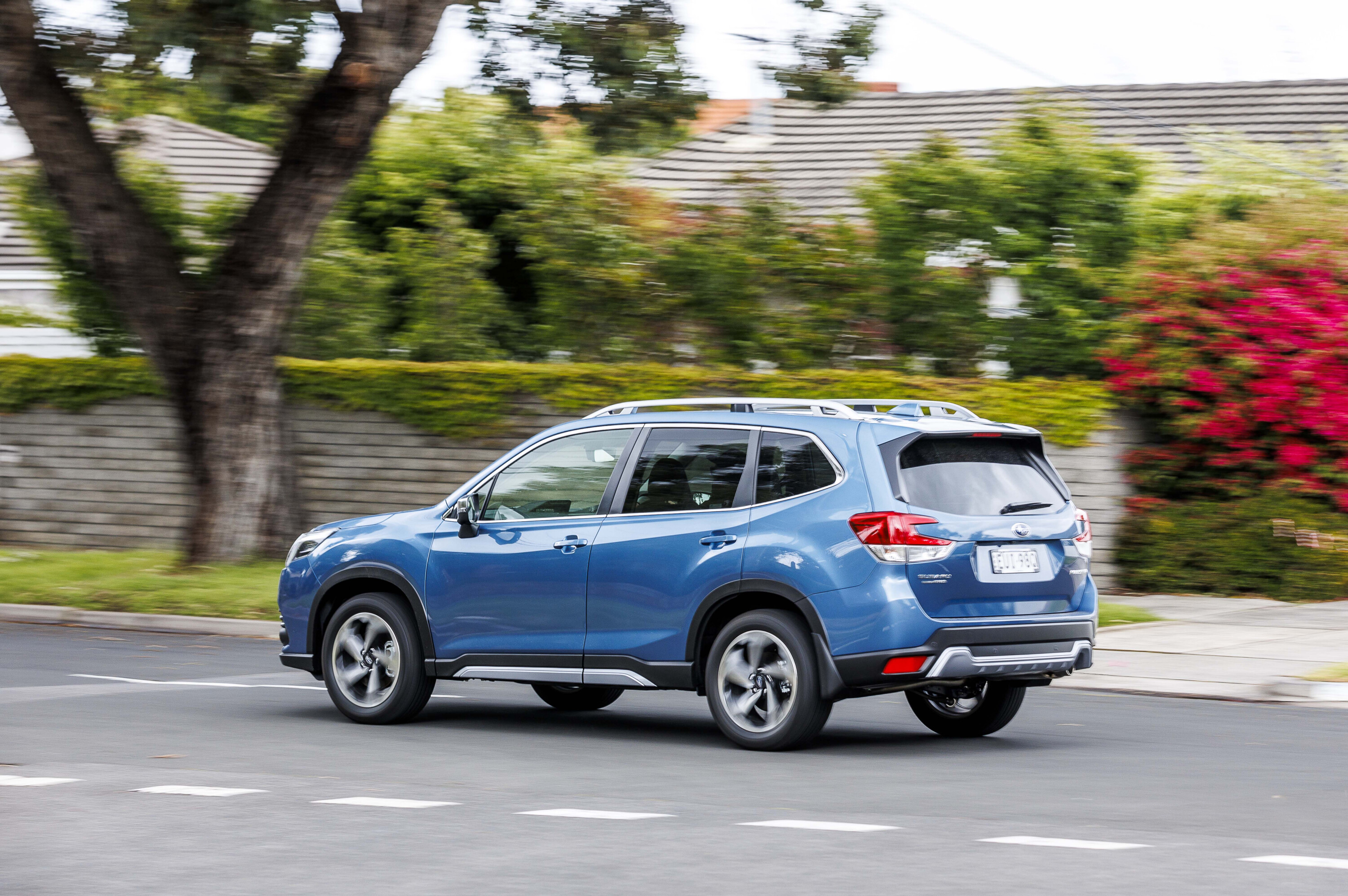
There are also plenty of practical additions like rain-sensing wipers, LED headlights, black roof rails and a tyre pressure monitoring system.
It houses a 2.5-litre e-Boxer four-cylinder engine, delivering 136kW and 239Nm of torque, paired with a CVT and Subaru’s signature all-wheel drive.
Safety
The 2024 Subaru Forester maintains a five-star ANCAP safety rating, thanks to the Subaru EyeSight Driver Assist technology suite of safety features.
The Forester excels in ANCAP safety metrics, achieving an adult occupant protection score of 94% and a child occupant protection score of 86%.
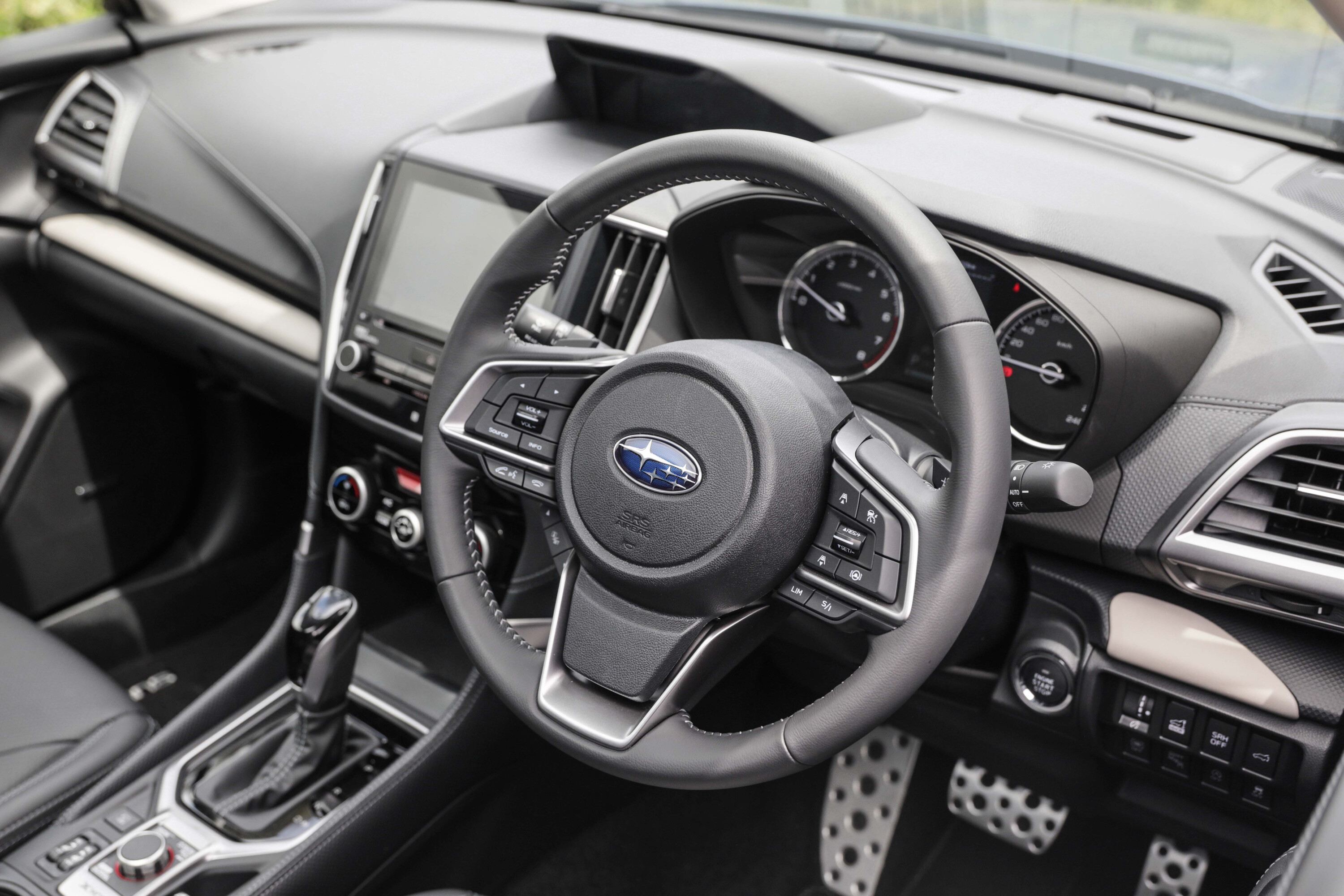
The vehicle comes fully equipped with a wide array of standard safety features, including autonomous emergency braking, blind-spot monitoring, rear cross-traffic alert, driver attention monitoring, lane departure warning and lane-keep assist.
Key Rivals
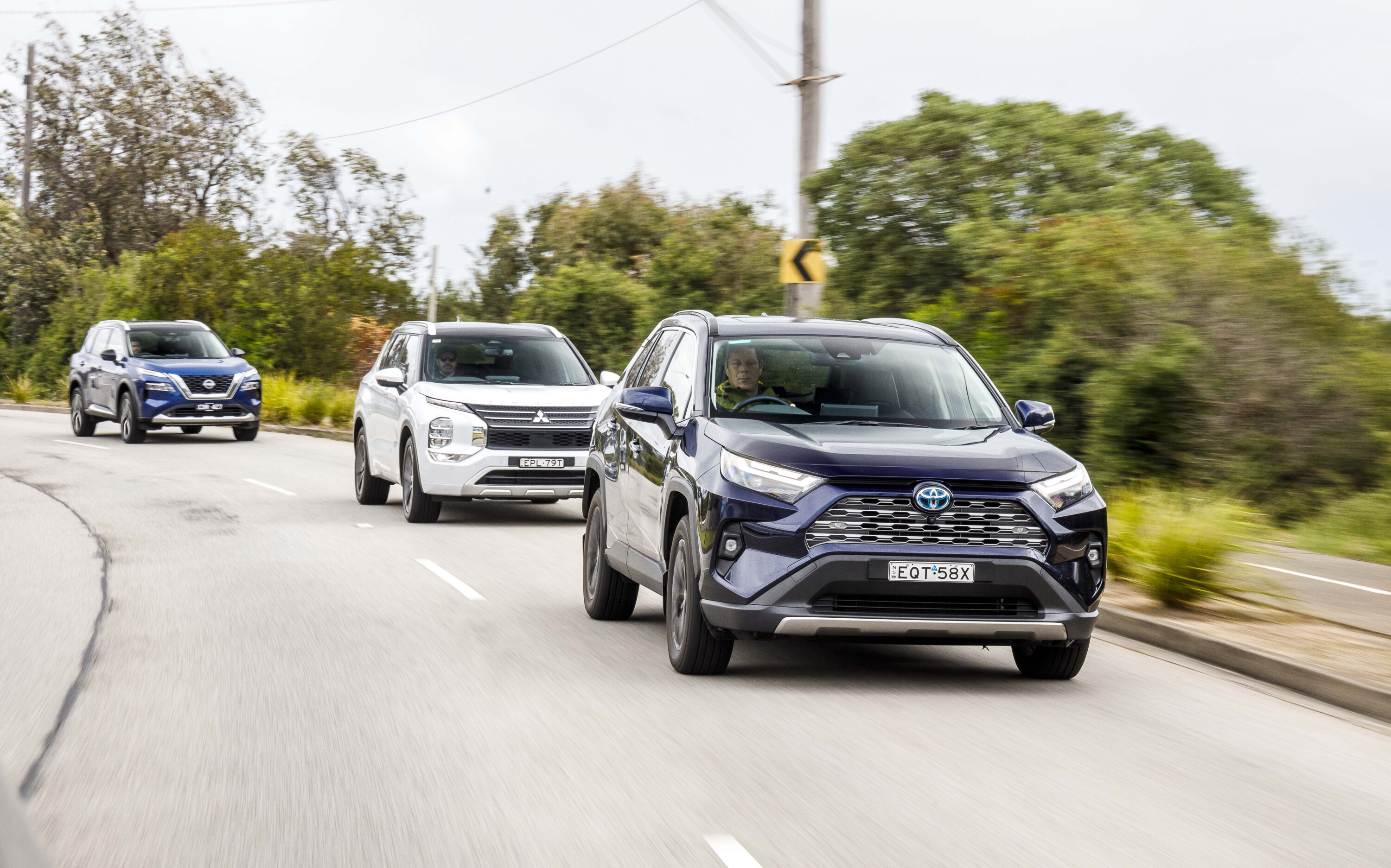
The Subaru Forester faces competition from medium SUVs such as:
Should I put it on my shortlist?
Definitely consider the Subaru Forester if you’re looking for a compact SUV that offers a combination of safety, efficiency and off-road capability.
While it has a robust set of features suitable for adventurous lifestyles, it can also cater to those needing a dependable vehicle for everyday driving.
Its practicality is unrivaled in the segment, which explains why this car continues to enjoy widespread popularity.
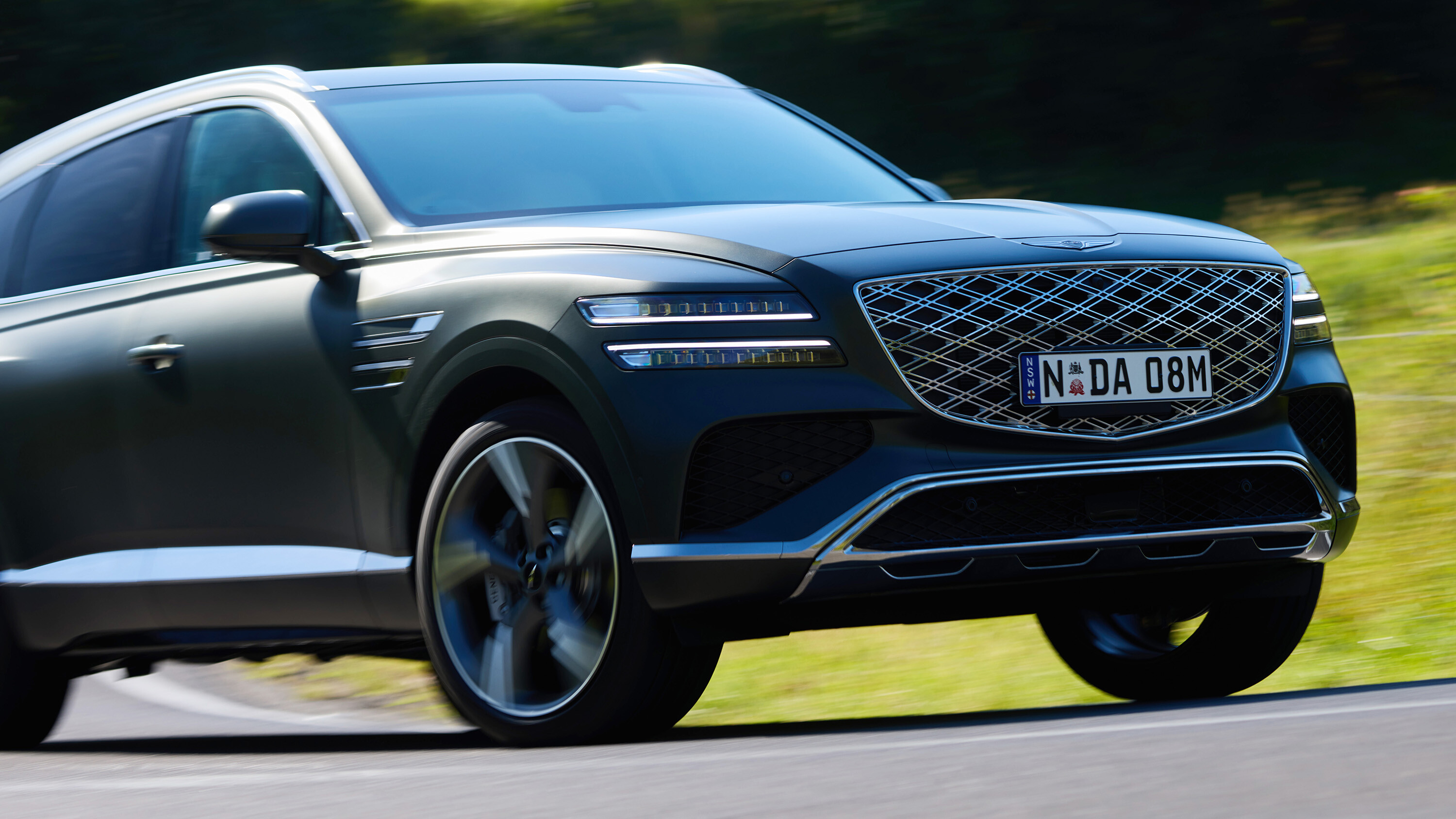
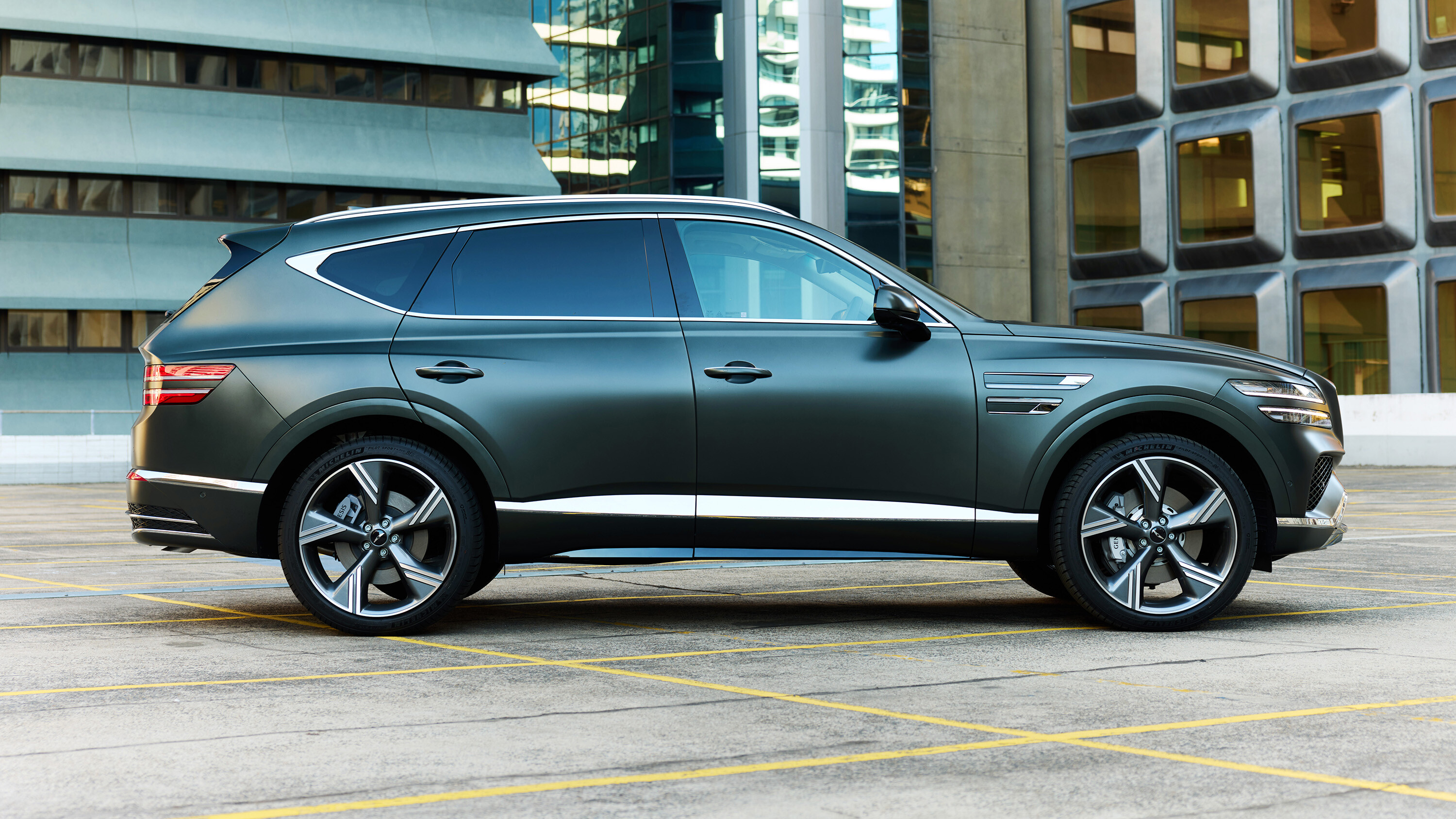
The Genesis GV80 is one of the best-regarded models in its class among the Wheels team, with the pre-update 2023 model finishing third in our recent eight-car large luxury SUV test – outclassed only by the BMW X5 and Volvo XC90. That’s good company.
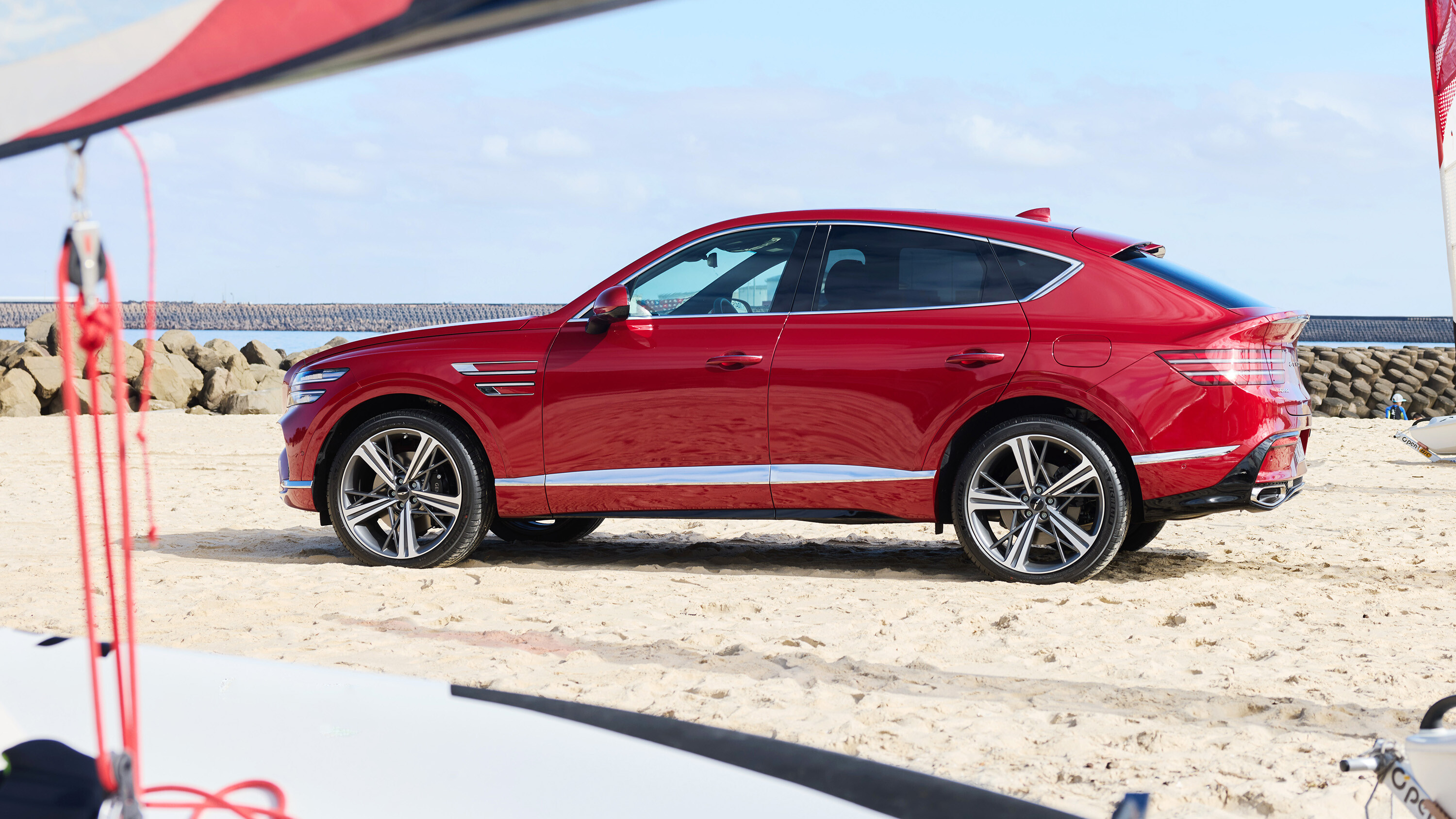
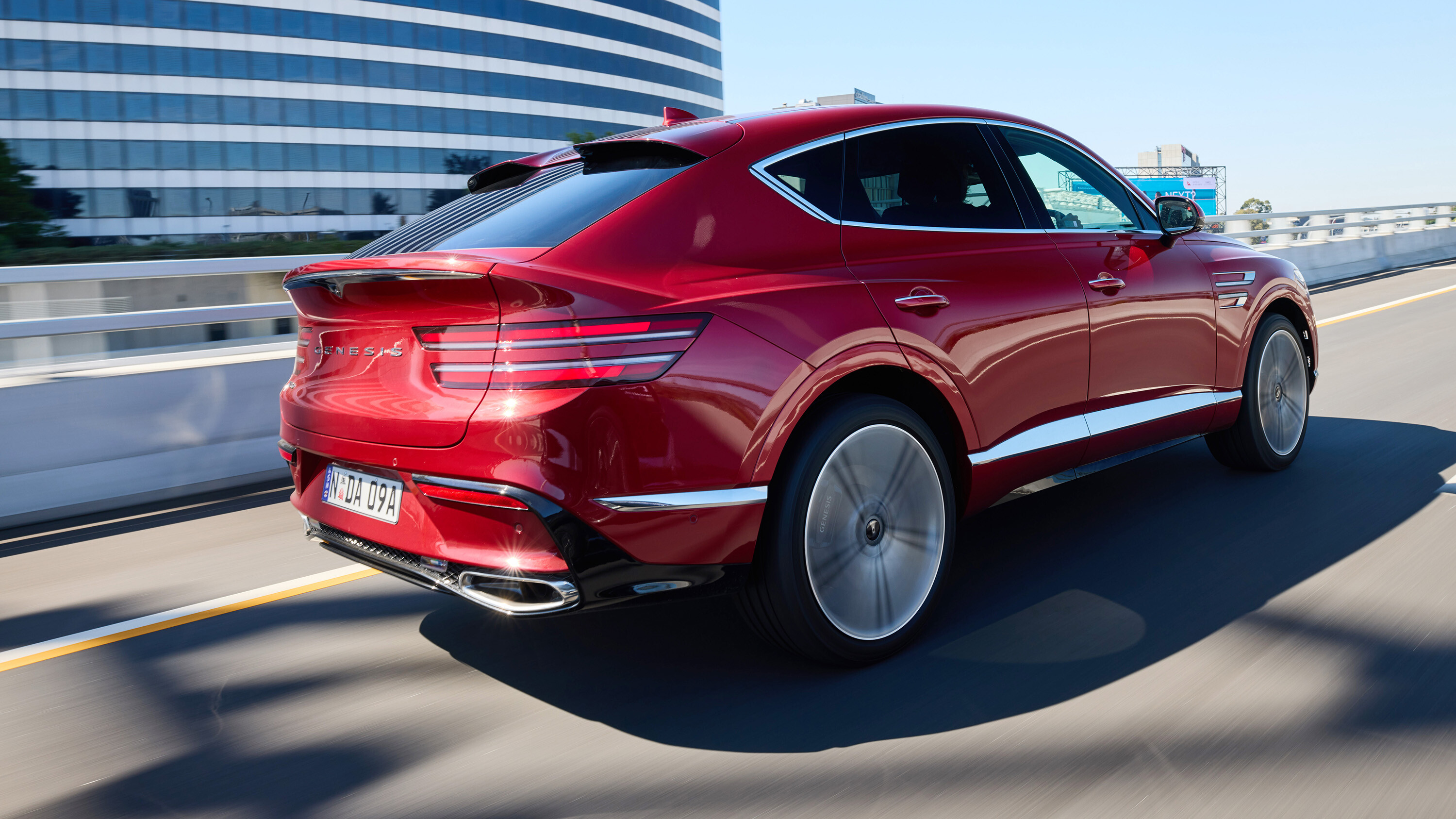
In refreshed 2024 form, the big wagon-style SUV is joined by a new GV80 Coupe body style, at last leaping onto the trend that has seen similar models introduced in other premium line-ups.
Genesis says it expects the Coupe to represent around 30% of GV80 sales in 2024. Last year, GV80 sales topped out at 403.
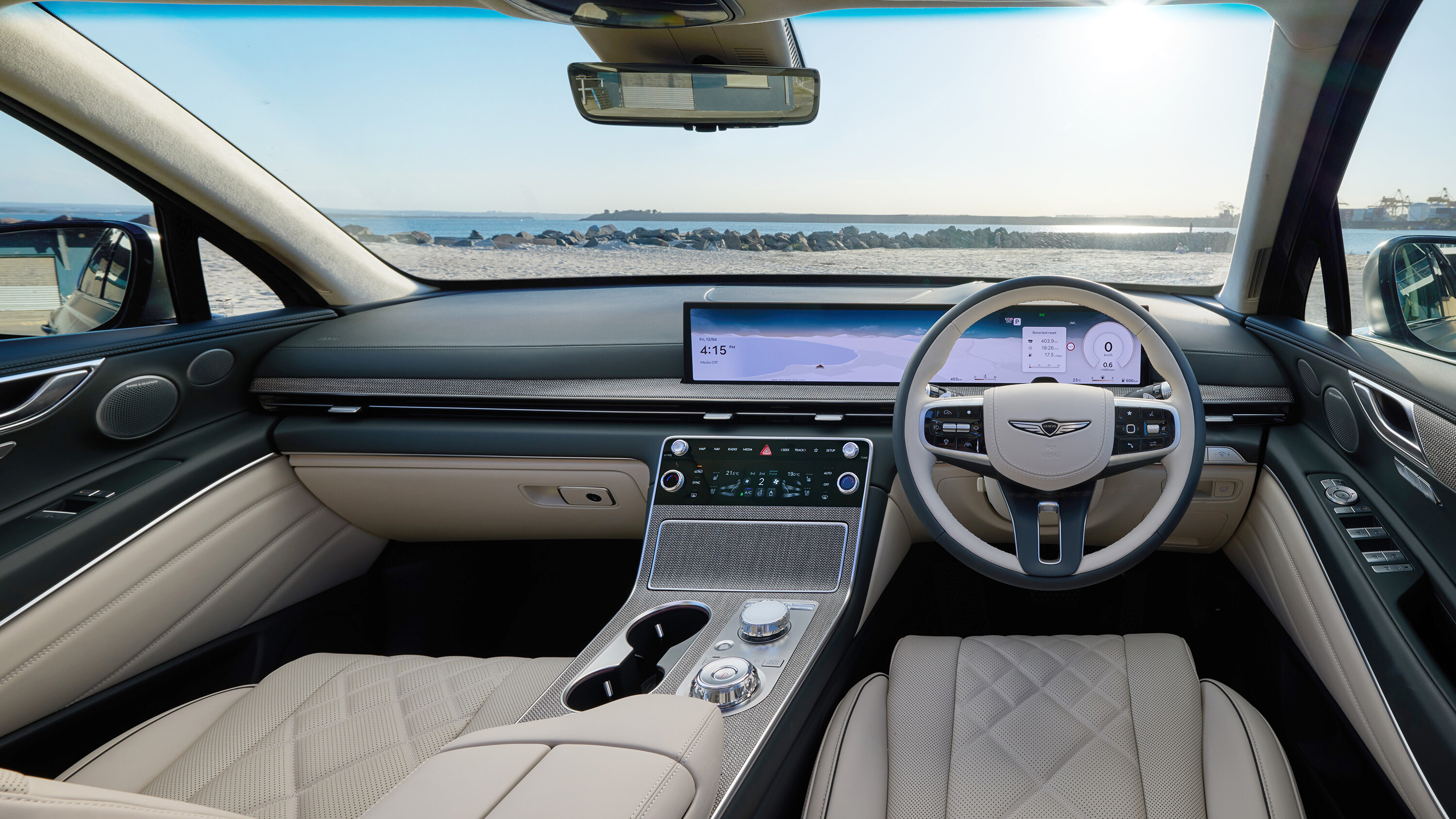
Across the 2024 range, light styling tweaks are on the menu, along with an expansive new screen across the dash – serving as main display and driver’s instrument cluster in one uninterrupted curved panel. A number of comfort and safety upgrades round out the tweaks for 2024.
Sounding good so far? Well, there’s a $30K catch. Read on.
PRICING & FEATURES
Prices have only gone in one direction for the GV80 over the past couple of years, while the number of trim grades and packs has shrunk considerably – although Genesis insists the latter is in keeping with existing buyer preferences.
Some 95% of buyers previously opted for the luxury package, and Genesis says it is “certain that customers would also consider a better powertrain option as well”.
Bye bye baby…
There’s no longer a 2.5-litre turbo petrol RWD or AWD model ($90K and $95K last year), and the 3.0-litre diesel ($105K in 2023) has also recently departed, while the deletion of cheaper trim grades means the 279kW/530Nm 3.5 turbo petrol V6 previously available from $110K is now much more expensive.
For clarity, the diesel is no longer offered anywhere in the GV80, and the 2.5 turbo petrol has simply been deemed unsuitable for Australian tastes, “in a vehicle of that size”. (If your tastes differ, you’ll find engines of this size among the GV80’s German rivals.)
Last powerplant standing
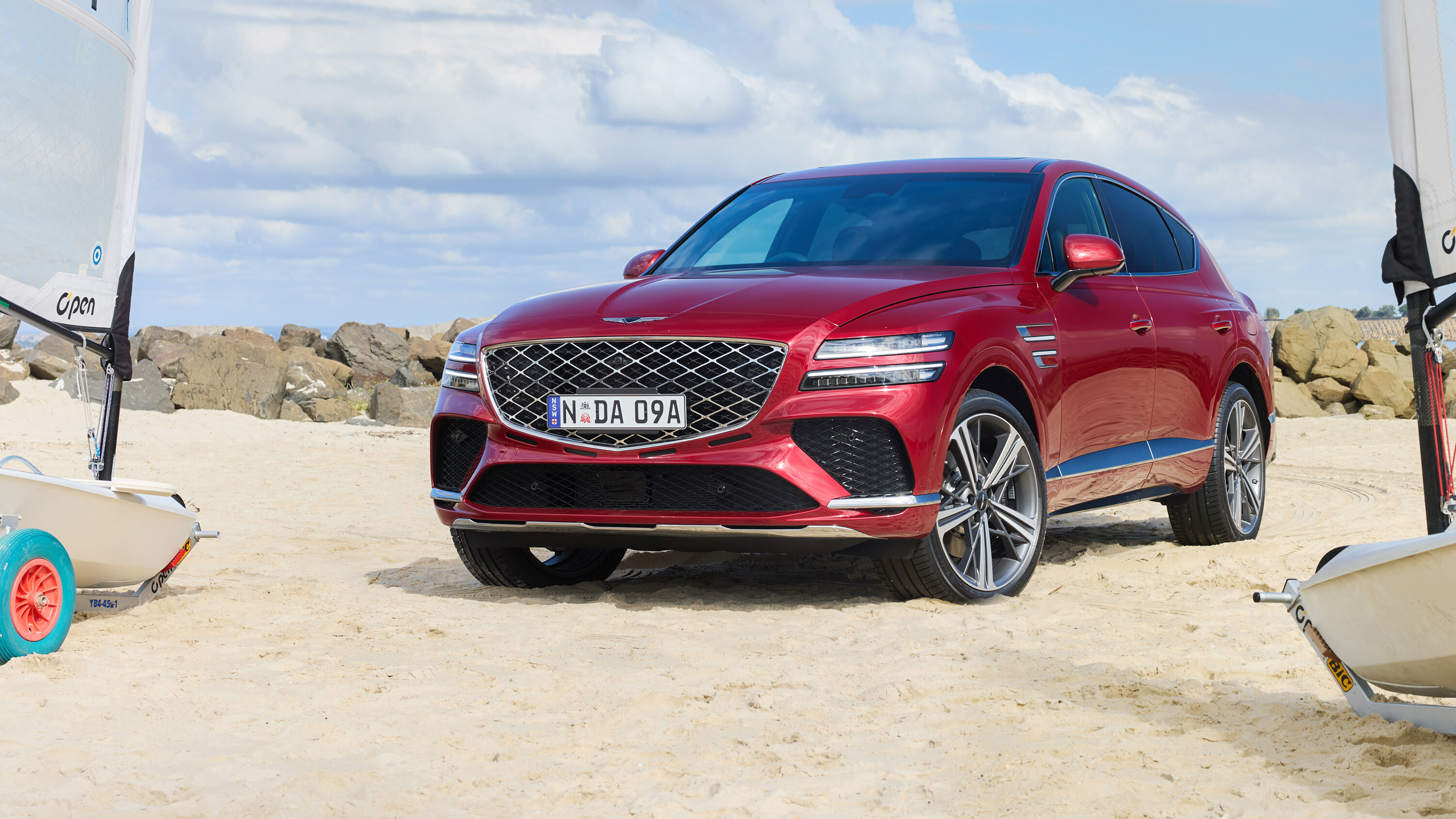
For 2024, the now exclusively V6 petrol-powered AWD (‘3.5T-GDi AWD’) GV80 range is priced from $130,000 for the seven-seat wagon, $133,000 for the six-seat wagon (think business-class vibes in the second row), and $136,000 for the newly introduced five-seat GV80 Coupe.
The updated models aren’t without worthy enhancements, however. In the 7-seater, Genesis has added the Hyundai group’s clever Highway Driving Assist 2 and Remote Smart Parking Assist 2 systems, along with the following key upgrades.
Highlights
| GV80 7-seat u2013 $130,000 | |
|---|---|
| 27-inch OLED integrated cluster + nav | 18 speaker B&O Premium Audio |
| 12-inch Head Up Display | Genesis Connected Services + OTA |
| LED headlights: Multi Lens Array | Dynamic Welcome Light |
| Intelligent Front Lighting System | 22-inch alloy wheels |
| Nappa leather interior | 18-way power front seats with ergo motion |
| GV80 6-seat u2013 $133,000 u2013 adds | |
|---|---|
| 2 x individual second row seats with power sliding seat base | Fixed second row centre console with wireless charger & storage |
| GV80 Coupe 5-seat u2013 $136,000 | |
|---|---|
| Unique 22-inch alloy wheels | Carbon fibre interior trim |
| Dual rear exhaust tips | Exclusive steering wheel |
| Black brake calipers | Alloy pedals |
The technology continues with digital keys, fingerprint detection, UVC disinfection trays, heated seats and armrests, a cabin fragrance system, and a Bang & Olufsen sound system.
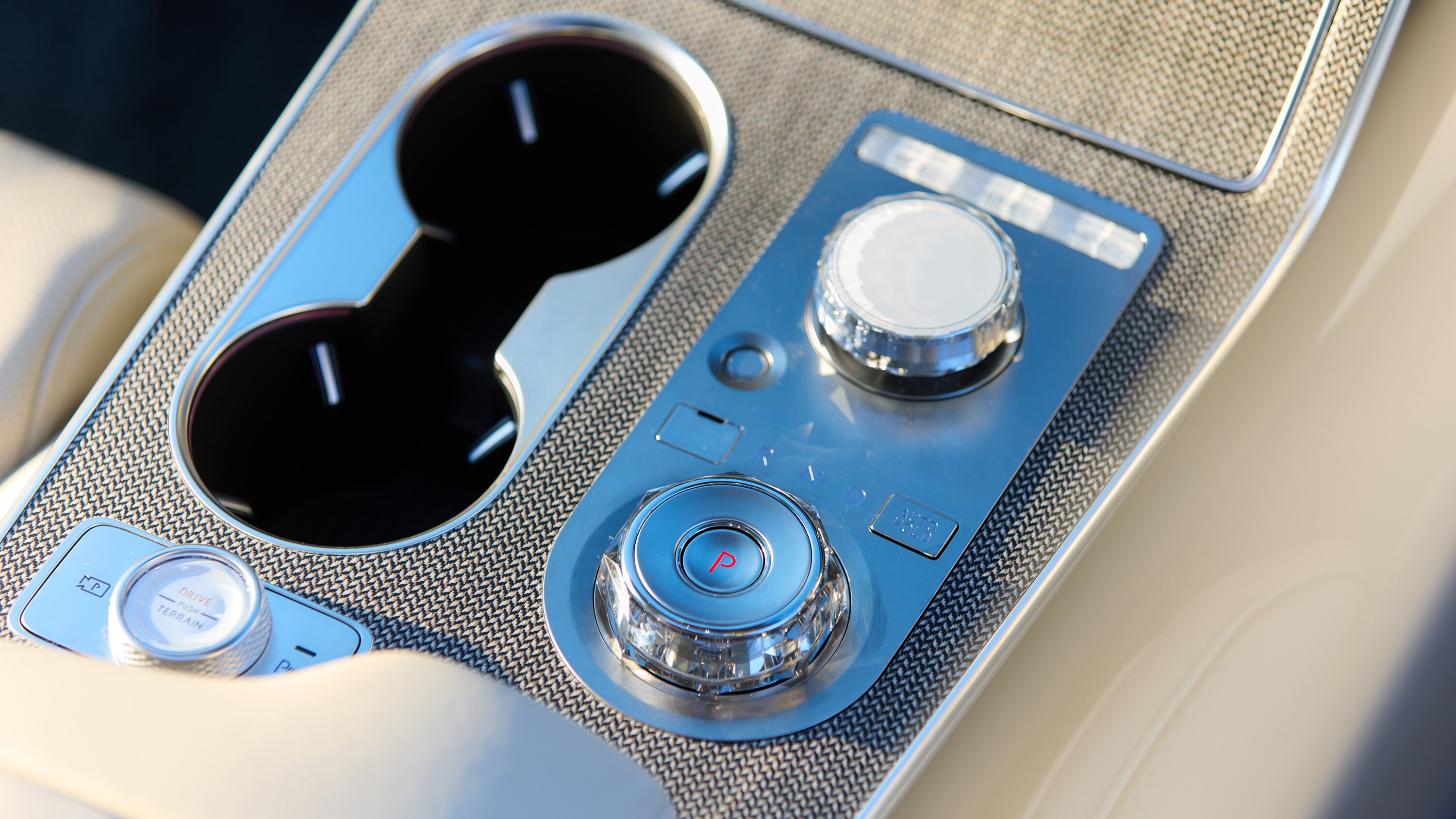
The touch-sensitive heating and air-con controls have been moved up the dash, and the centre console features a redesigned crystal gear shift.
Ergonomic improvements continue with a new wireless smartphone charging pad, bigger cup holders, and a physical volume/tune adjustment knob.
SAFETY
As a premium family hauler, the big GV80 is well-equipped on the safety front.
10 airbags are standard in all models, while active safety systems include second-generation forms of Highway Driving Assist, Lane Keep Assist and Remote Smart Park.
| 2024 Genesis GV80 safety | |
|---|---|
| Anti-lock Braking System (ABS) | SMART Cruise Control (SCC) u2013 including: |
| Brake Assist System (BAS) | Stop & Go function (SCC w/ S&G) |
| Electronic Brake-force Distribution (EBD) | Machine Learning function (SCC w/ ML) – Based on Driving Style |
| Hill-start Assist Control (HAC) | Drive Mode based function |
| Multi Collision Brake (MCB) | Overtaking Acceleration Assist function |
| Traction Control System (TCS) | Surround View Monitor (SVM) including; |
| Vehicle Stability Management (VSM) | 3D Surround View function |
| Dynamic Chassis Control | Driving Rear-View Monitor (DRM) function – Rear view image on command |
| Blind-Spot View Monitor (BVM) | Parking Distance Warning function w/ dynamic guidelines & guidance display |
| Driver Attention Warning (DAW), including; | Car wash entering mode |
| Leading Vehicle Departure Alert | Tailgate guide-line mode / Trailer connection mode |
| Forward Collision-Avoidance Assist (FCA), including; | Parking Distance Warning – Forward/Side/Reverse (PDW-F/S/R); with guidance display |
| Car/Pedestrian/Cyclist detection (FCA – CAR/PED/CYC) | Remote Smart Parking Assist (RSPA), via Smart Key inside or outside of vehicle, including; |
| Junction Turning/Junction Crossing function (FCA – JT/JC) | Perpendicular, Parallel & Diagonal reverse parking and Forward/Rearward parking functions |
| Lane-Change Oncoming/Lane-Change Side function (FCA – LO/LS) | Automatic braking when object is detected in vehilces path |
| Evasive Steering Assist function (FCA w/ ESA) | AIRBAGS: 10 u2013 including:u00a0 |
| Blind-Spot Collision Avoidance-Assist – Rear/Side (BCA-R/S) | Front airbags – Driver & passenger |
| High Beam Assist (HBA) | Front centre side airbag |
| Highway Driving Assist (HDA) including; | Knee airbag – Driver |
| Distance control, Lane following control and Lane Change Assist Control | Side (thorax & pelvis) airbags – Driver and front passenger |
| Intelligent Speed Limit Assist (ISLA) | Side (thorax) airbags – 2nd row outboard passengers |
| Lane Keeping Assist – Line/Road-Edge (LKA-L/R) | Side curtain airbags – All rows |
| Lane Following Assist (LFA) | OTHER FEATURES |
| Pre-active Seat Belt (PSB) – Front seats | Emergency Stop Signal (ESS) |
| Rear Cross-Traffic Collision Avoidance-Assist (RCCA) | Steering wheel with Haptic feedback – Genesis Active Safety Control functions |
| Rear Occupant Alert (ROA) (sensor type) | Manual Speed Limit Assist (MSLA) |
| Safe Exit Assist (SEA) | Tyre Pressure Monitoring System (TPMS) – Individual tyre readout |
IN THE CABIN
Interior options vary for the GV80 line-up, ranging from seven- and six-seat forms in the wagon and a more conventional five-seat configuration with the lifestyle-focused Coupe.
In all three seating configurations, the front row is effectively identical in layout. What’s shared across each is a clear sense of luxury that would comfortably leave any ‘Pepsi Challenge’ contestant deeply confused.
Nappa leather trim and suede headliner do plenty to live up to the premium promise, as do trims like open-pore wood or genuine carbon fibre (Coupe only).
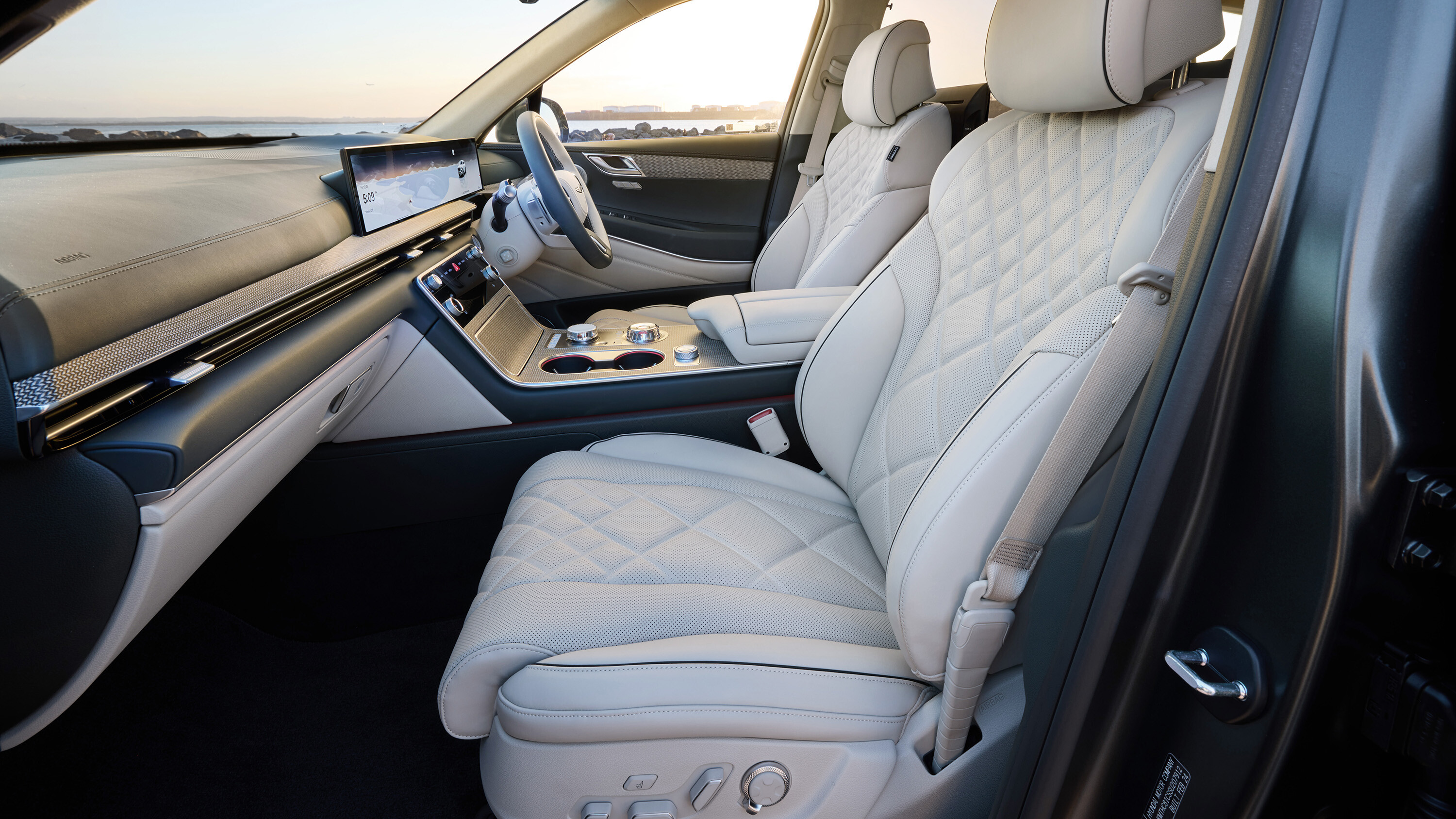
As a seven-seater, the GV80 wagon offers loads of leg and head room in the second row, which also boasts recline and slide functions as needed.
Of course, the two seats in the final row will appreciate the middle row’s ability to slide forward, improving comfort in an otherwise cramped caboose.
Available interior upholstery colours include Slate Grey with Bordeaux Brown, Smoky Green with Earth Brown, Smoky Green with Vanilla Beige, Black Mono, and Ultramarine with Glacier White.
Trim options include two genuine wood options in Olive Ash and Newspaper, along with the woven fabric Basalt and Linen styles.
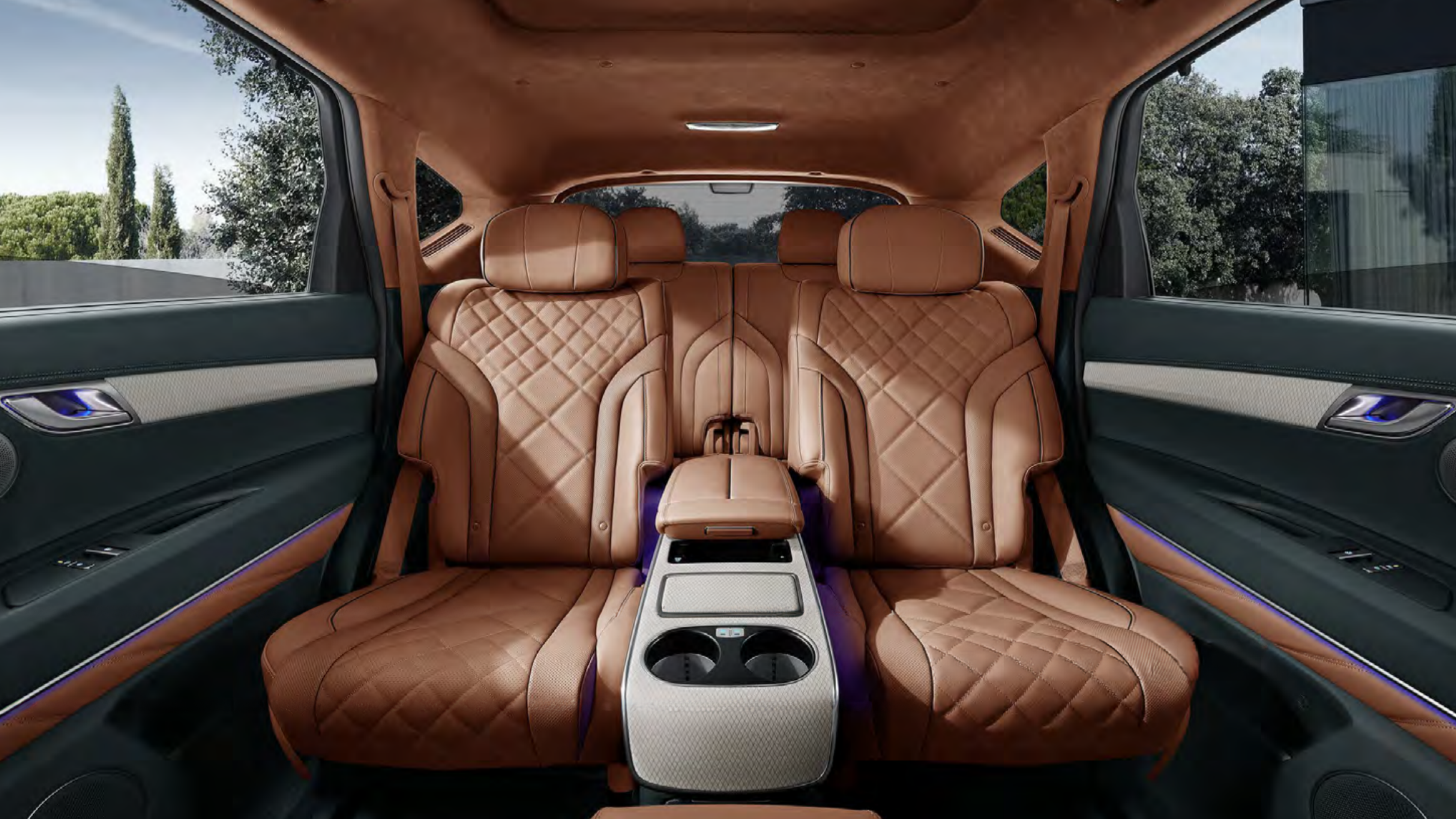
Opting for the six-seater might suggest you’re either planning to spend all your time in that deuce-pew second row – or else you’re simply a very generous pilot.
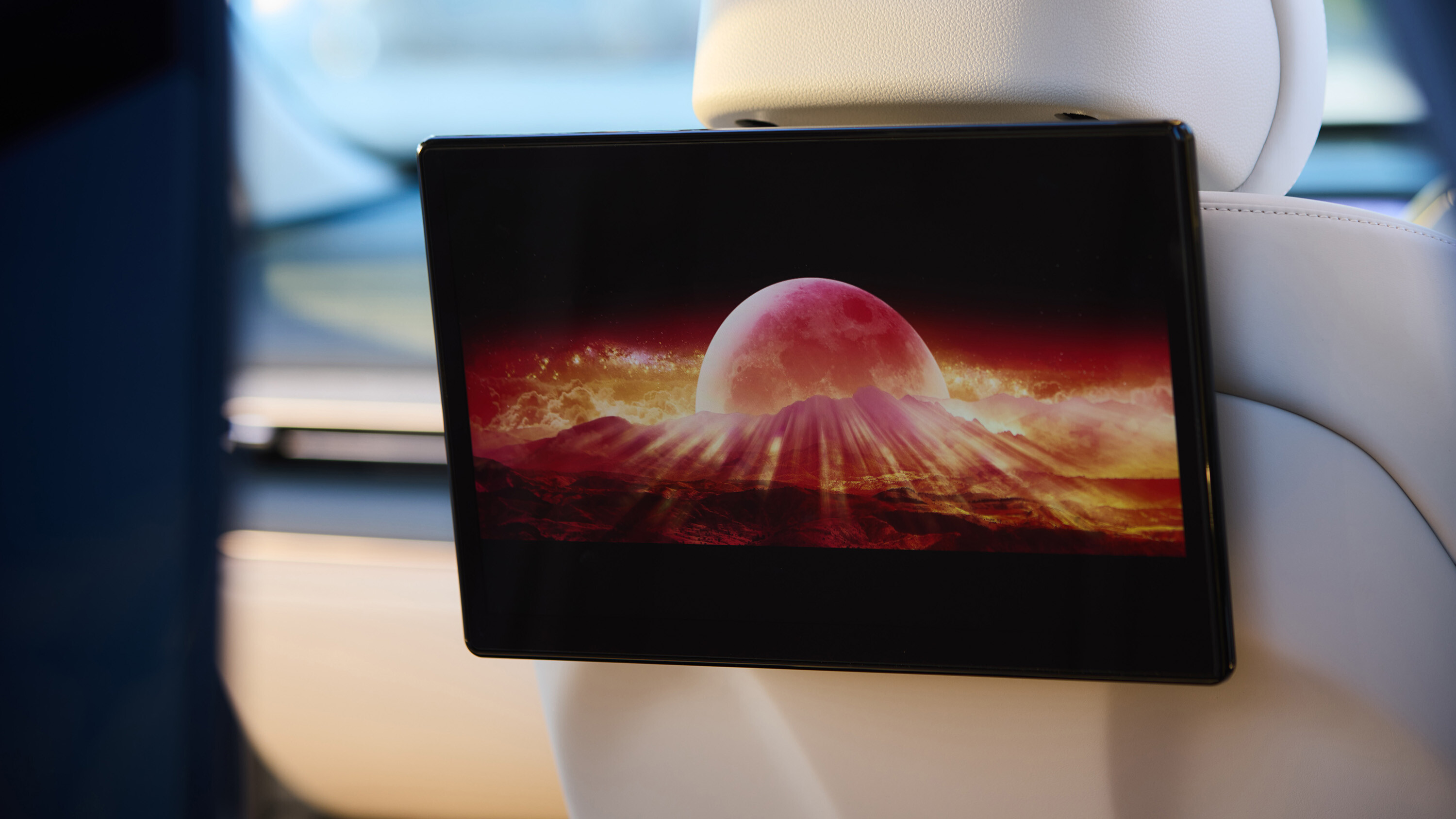
Whatever the case, whomever ends up in business class will be treated to a large entertainment screen in the rear of the front seats, replete with Bluetooth connectivity to enjoy the finest streaming content in silence.
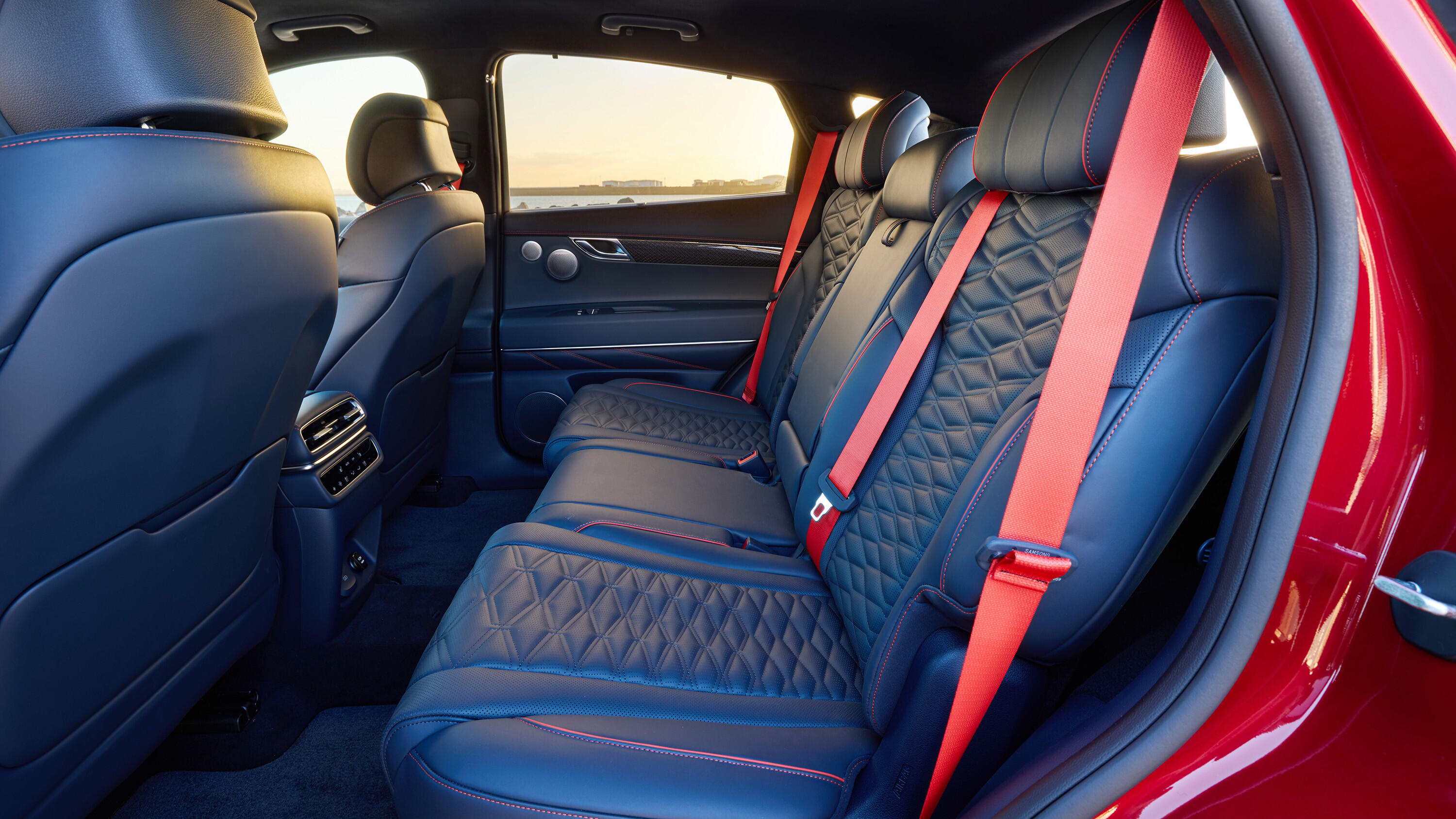
Then there’s the Coupe, entering as the lone five-seater in a newly streamlined line-up.
Think of the seven-seater with its second-row seats pushed right back, and that’s the sort of generous space you can anticipate back there.
Headroom is decent too, despite the tapered look to the roofline when viewed from the roadside.
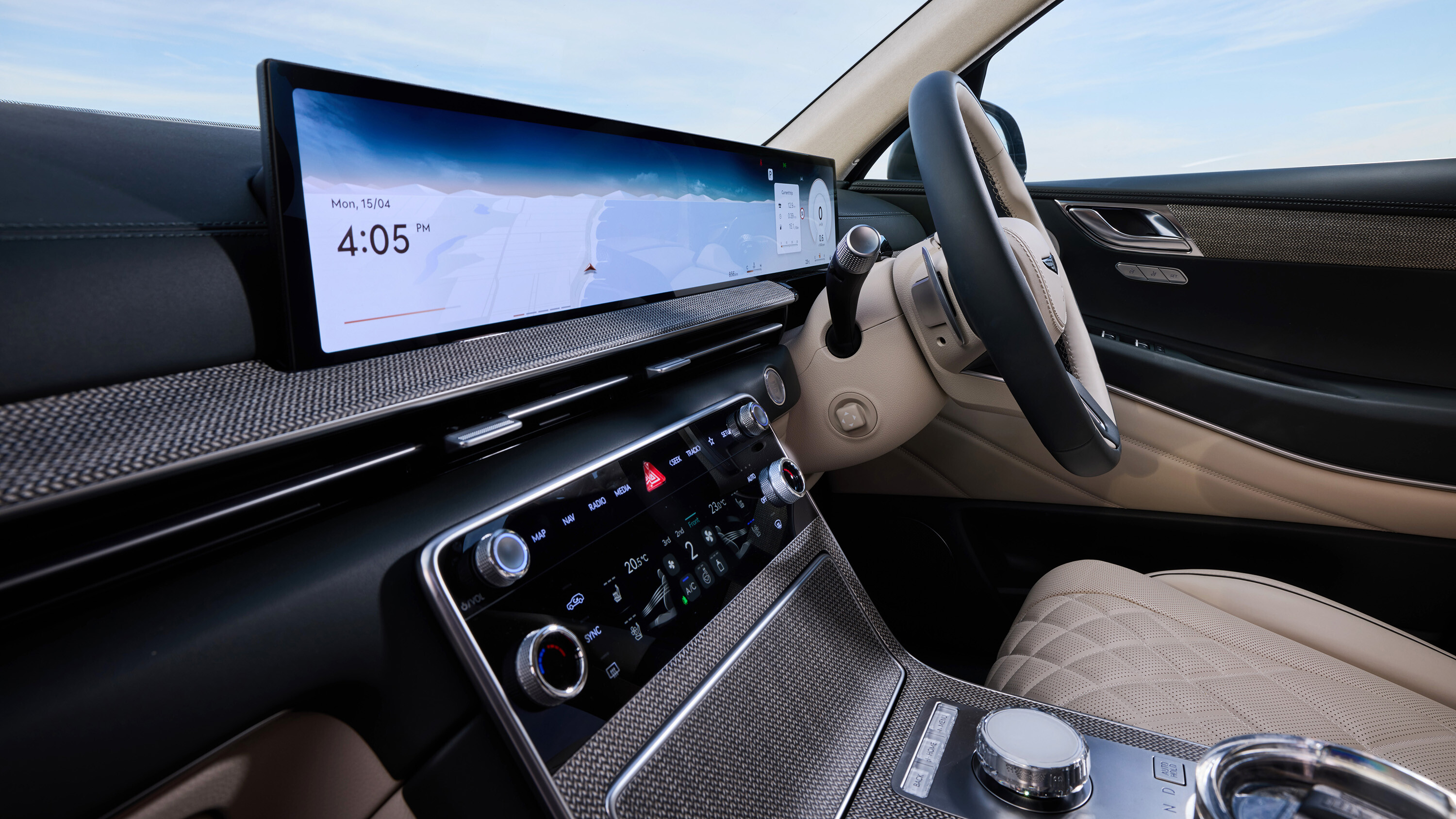
Technology in the cabin
On the tech front, a couple of things to consider: The infotainment system – despite its mature looks, broad feature set and fast response – is already out of date.
Buying a Kia EV9 (or any incoming new Hyundai) would get you a fresher version of the group’s interface, including over-the-air updates and wireless connectivity for Apple Carplay and Android Auto. (You might also, like me, be left bemused at the presence of a wireless charging pad despite having to plug in for the aforementioned phone mirroring systems.)
It’s also worth noting though that the two 14.7-inch screens in the rear of the six-seater are effectively isolated devices, with no option to synchronise services and enjoy a shared experience. Of course, you can always just hover a finger over the play button and count to three…
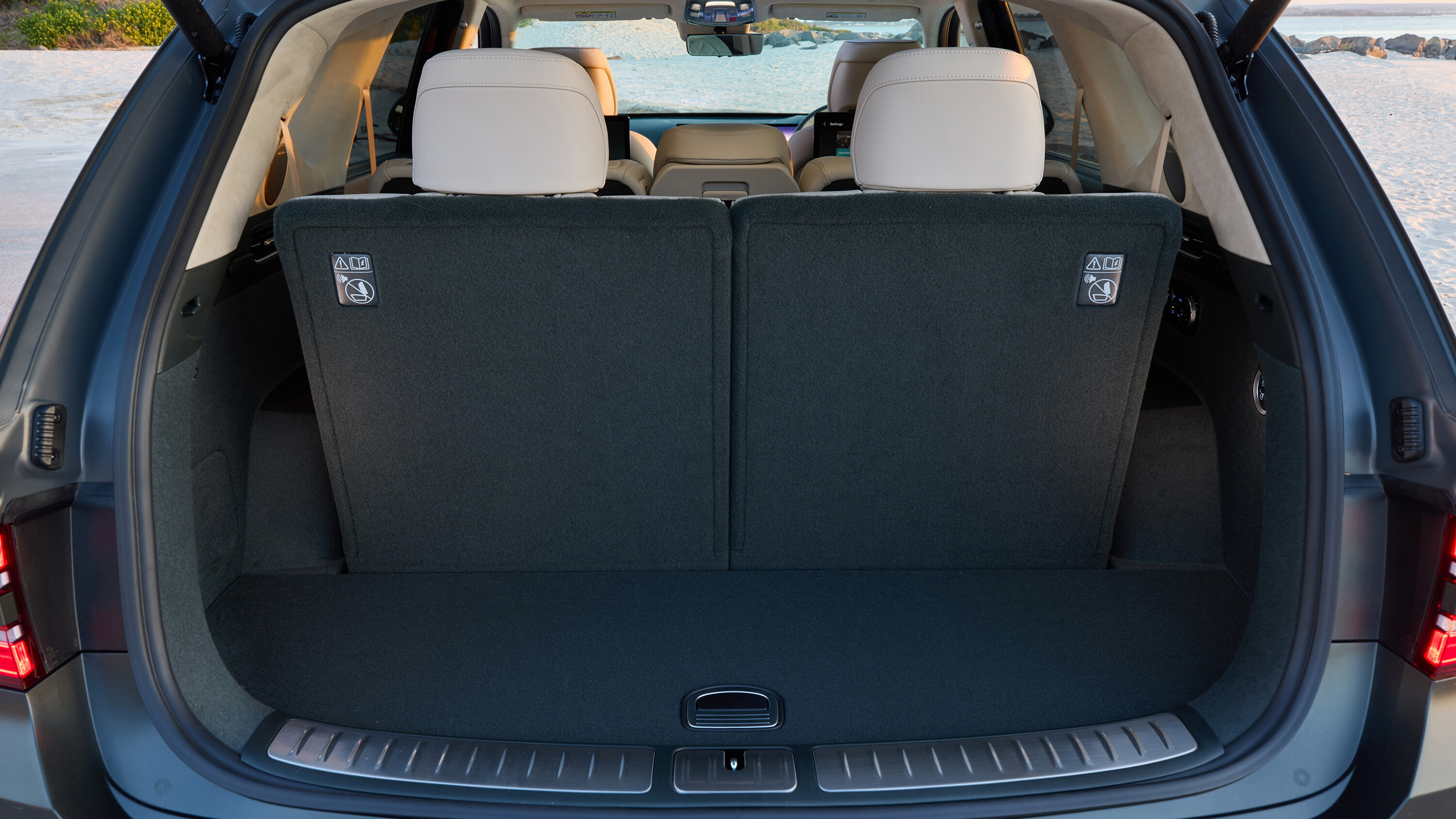
Boot space
The ‘wagon’ GV80 SUV offers 735 litres of boot space in five-seat configuration, while the GV80 Coupe’s tapered roofline sees capacity drops to 644 litres.
ON THE ROAD
The updated GV80 introduces no changes in its driving setup, but that’s no bad thing. At launch, Genesis’s biggest SUV set itself apart as a luxurious offering not only in cabin feel, but also in ride and comfort – thanks in large part to a local suspension tuning program.
Steering feel is confident and communicative, acceleration is eager (in Sport mode you’re looking at peak torque available from a low 1300rpm), braking is smoothly progressive, and body control is impressively planted in corners despite favouring comfort on Australia’s often trashy roads.
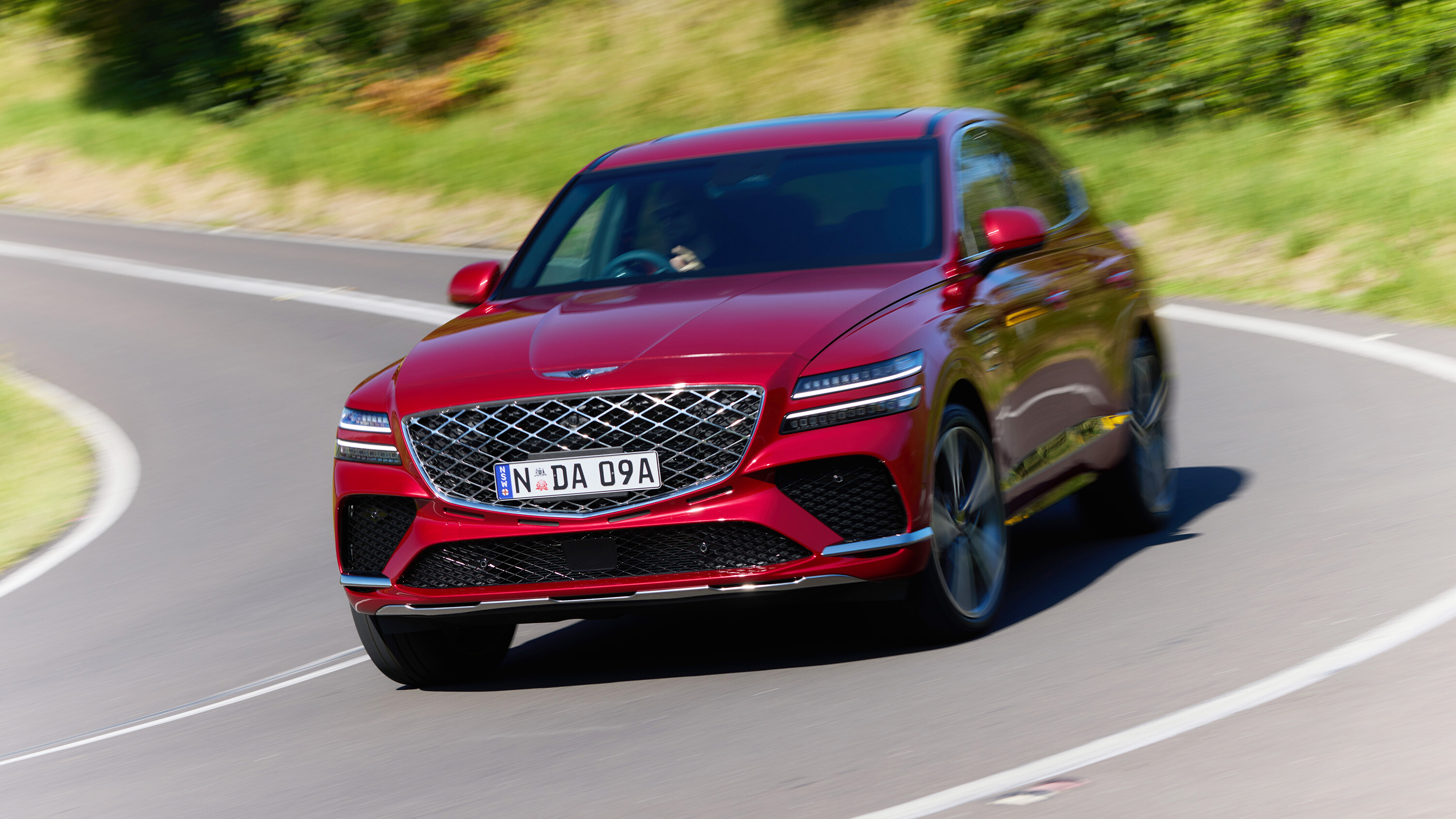
Speaking of the same setup in 2021, Tim Robson said: “It steers with impressive accuracy, tames broken surfaces with aplomb despite its cartoonishly large rim spec and is impressively quiet, thanks in the main to acoustic glass and the SUV-spec Michelin Pilot Sport tyres.”
Helping all of that is an ‘adaptive control suspension’ system that uses a front-facing camera to read the road and prime the adjustable dampers for bumps ahead.
Things we like
- Powerful turbo six and responsive eight-speed auto (torque converter) delivers confidence in every mode, throughout the rev range.
- The wide-screen infotainment system is crisp, fast and feature-rich
- Storage options for knicknacks in the cabin are plentiful
- Big boot!
Not so much
- Big car, big engineu2026 thirsty tank.
- Yes the infotainment is quite good, but itu2019s already old u2013 and wired phone mirroring feels anything but premium
- The irritatingly audible over-speed alert can only be deactivated every trip, rather than permanently, but this is arguably a necessary u2018evilu2019 of ensuring safe driving
Fuel consumption
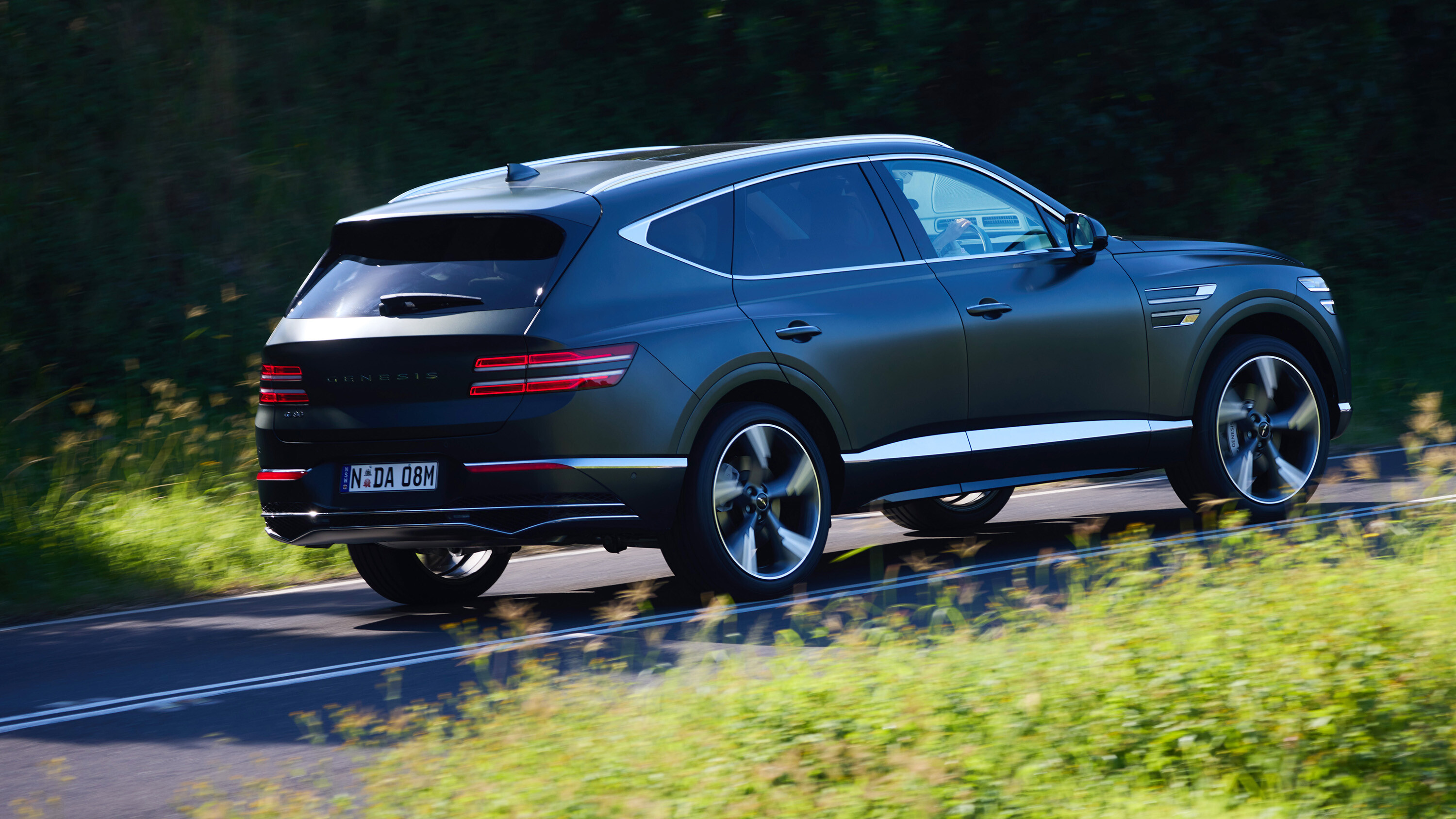
Like all big-chested large cars, the GV80’s petrol six slurps fuel.
In eco mode, I averaged around nearly 14L/100km in mixed driving, achieving no better than 11.2L/100km on a long highway drive.
And, with no V6 diesel or four-cylinder petrol options left in the range, you can like it or lump it. It’s worth noting though that Wheels teammate Alex Inwood averaged around 11-12L/100km in his three months with the V6 petrol GV80 back in 2021. See that story linked below.
Click here for more detailed expert opinions of the Genesis GV80’s on-road qualities.
KEY RIVALS
Options in the large luxury SUV segment are surprisingly plentiful, ranging from the Audi Q7 and Q8 to the BMW X5 and X6, the Mercedes-Benz GLE wagon and Coupe, the Lexus RX, the Jaguar F-Pace and the Volvo XC90.
Spend up and you can add options like the Porsche Cayenne and Maserati Levante, or newer electric alternatives like the BMW iX, Audi Q8 E-Tron, Lexus RZ and the Mercedes EQE SUV. The Volkswagen Touareg can also be considered a rival in its higher-trim forms, and Mazda would like you to view the new CX-90 in the same light.
⬇️ READ: GV80 takes on XC90, CX-90, RX350, and BMW X5
Should I put the GV80 on my shortlist?
Absolutely. Whether new or used, the GV80 is a compelling option among its price and segment rivals – even in its newly streamlined petrol V6-only form.
I do wish the more fuel-efficient options were still on the menu, but as Genesis says, existing buyers for this car are clearly not of the same opinion.
In all, there is a clear sense here that unlike Nissan’s Infiniti offshoot or Honda’s America-only Acura – and perhaps even more so than Lexus in its modern form – Hyundai is out to win with its still new Genesis brand.
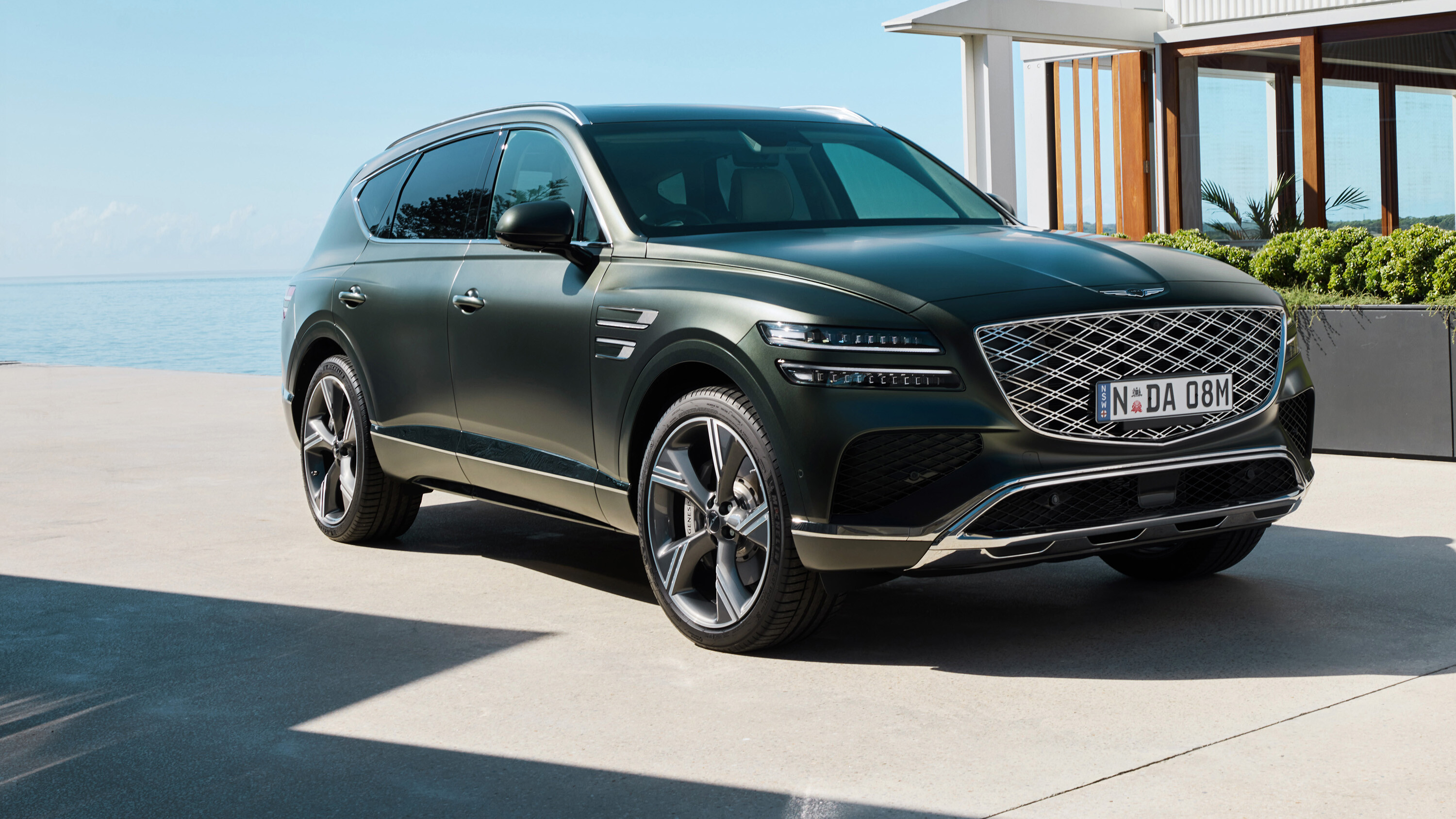
The GV80’s premium specification and feel is largely a match for the traditionally tempting Teutons, although BMW and Mercedes may still be the pick if your tastes lean towards extra clever (if sometimes overly complicated and novelty-like) features and comforts in the cabin.
For luxury in its most pure form, at a comparatively affordable price point, the GV80 deserves a look.
| 2024 Genesis GV80 pricing | |
|---|---|
| GV80 7-seat | $130,000 |
| GV80 6-seat | $133,000 |
| GV80 Coupe 5-seat | $136,000 |
| Prices exclude on-road costs | |
The highest April new vehicle sales on record were led by the Toyota RAV4 SUV, which topped the showroom charts for the first time in almost four years.
Toyota was also the top-selling marque for April, continuing its long-time market dominance.
April 2024 saw 97,202 new vehicle registrations, an increase of 18 percent compared with April 2023, if not matching the 100,000-plus figures of February and March.
The April record combined with the first quarter sales have seen a record for the first four months of the year, with 50,515 more vehicles sold than at the end of April 2023.
Every major segment posted higher year-on-year sales, with SUVs making up 56 percent of sales to be the largest slice of the April pie.
Light commercial made up 22 percent of registrations, passenger cars 18 percent and heavy commercial the final 4.5 percent.
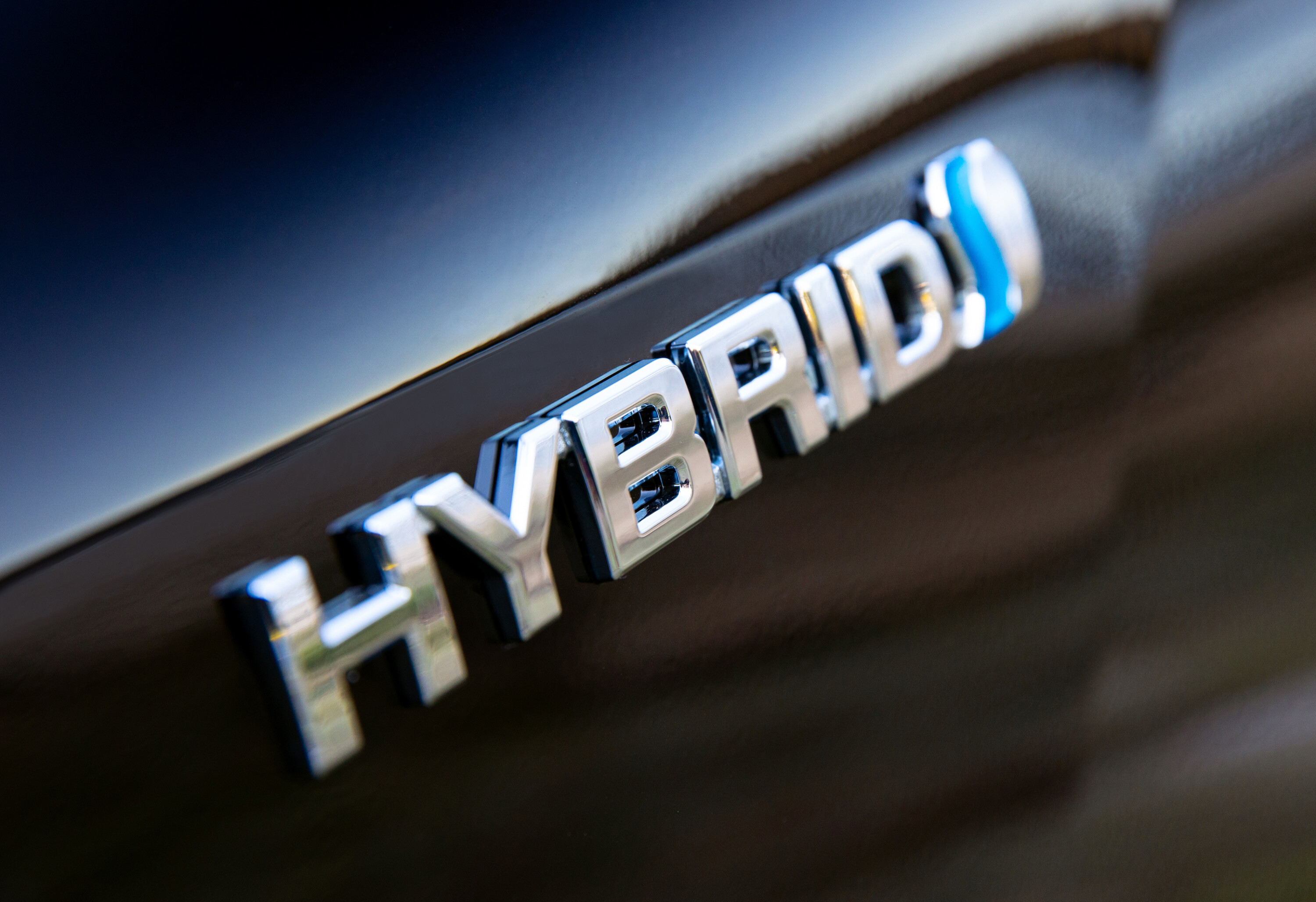
Hybrid sales were up a staggering 195 per cent for the month, with 16,466 sold in April – compared to 5592 in April 2023 – with 29,976 sold year to date to be up 138 percent year-on-year.
“We are witnessing a shift in consumer preferences towards more sustainable and efficient vehicles,” said Federal Chamber of Automotive Industries (FCAI) chief executive Tony Weber.
April’s 1300 plug-in hybrid sales compared to 545 in April 2023, with 2720 sold so far for a 136 percent year-on-year increase.
Sales of electric vehicles decreased compared to April 2023 – down 5 percent with 6194 sold – but year-to-date EVs remain up 32 percent with 31,662 compared to 23,926 at this time last year.
Australia’s Top 10 Vehicles – April 2024
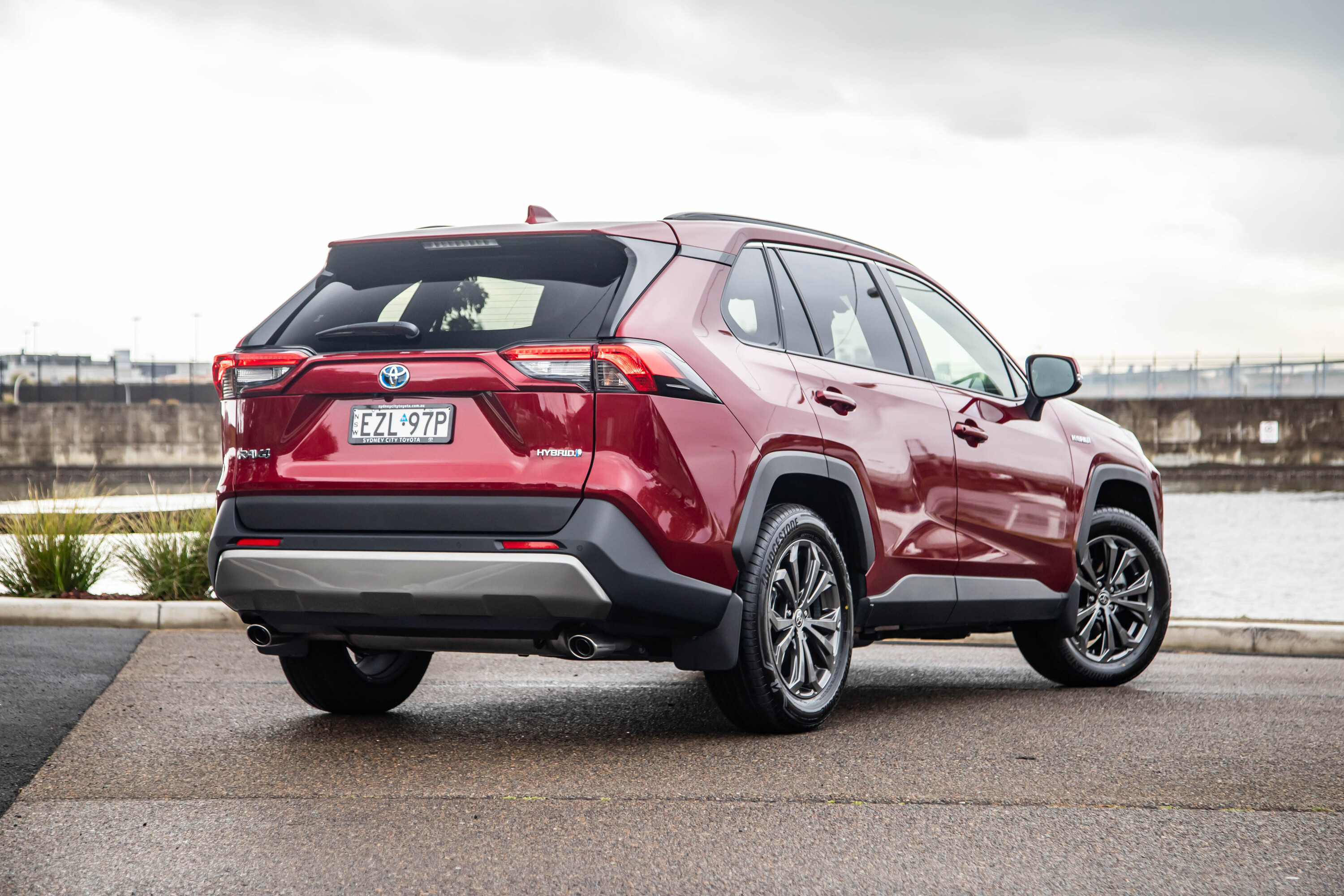
The Toyota RAV4 was the best-selling car, knocking off the Ford Ranger for outright honours in April with 5857 sales against the Ranger’s 5569.
Supply issues again show false dawns and irregular sales performances so far, with the RAV4’s sales up 166 percent against April 2023, the Ranger’s increasing 56 percent.
The Toyota HiLux was third with 4693 sales, ahead of the Ford Everest jumping from seventh to fourth with 2400 sales.
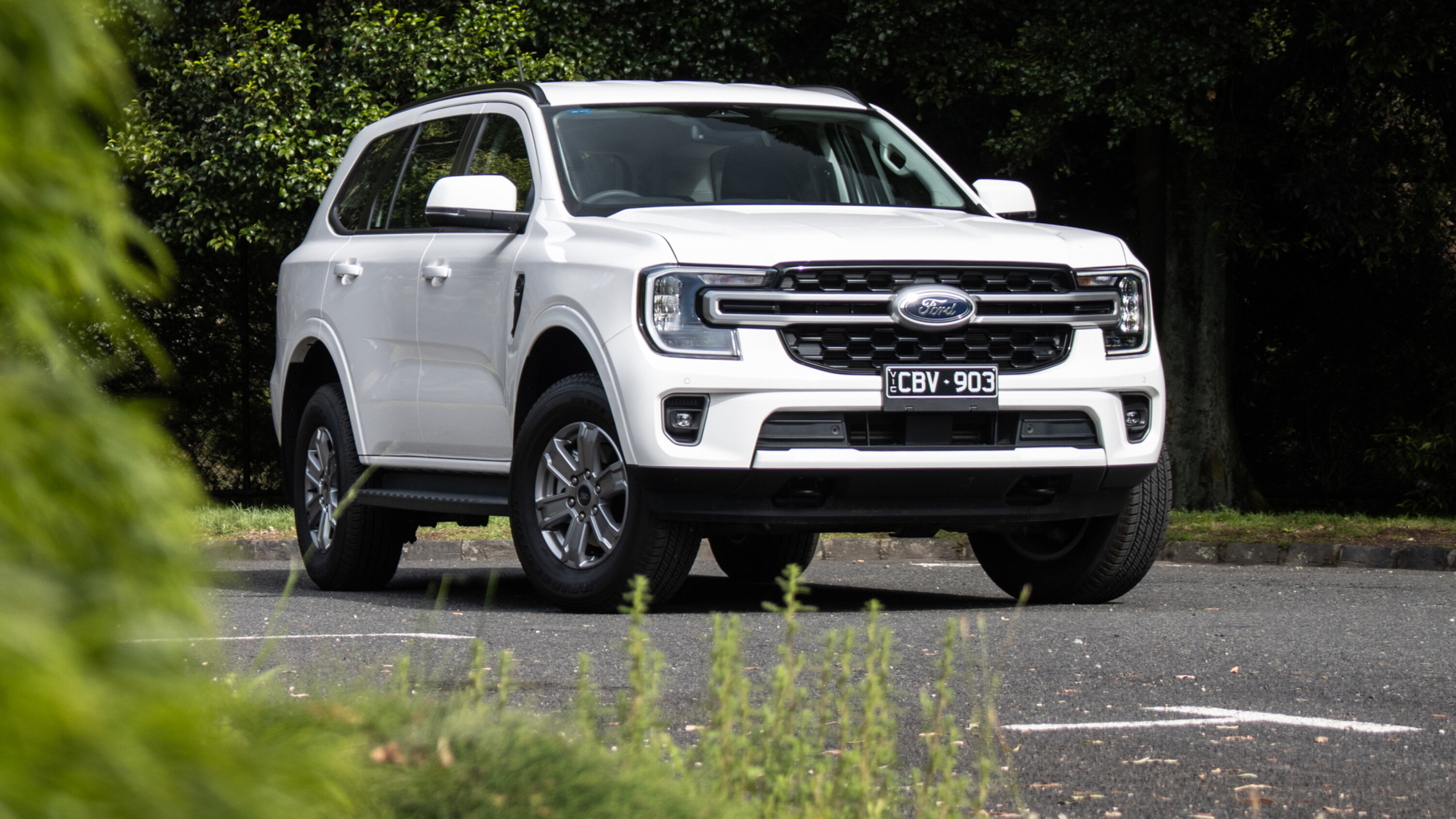
The Isuzu D-Max was only 20 units behind the Everest to place fifth, ahead of the Toyota Corolla (2097), the Toyota LandCruiser (1970) and Isuzu MU-X (1876).The Toyota Camry in eighth (1873 sales) made it two passenger cars in the Top 10, with the Mitsubishi Outlander tenth – after placing fifth in March – with 1848 sales.
Australia’s Top 10 Car Brands – April 2024
Toyota was the most popular brand with 20,771 sales and 21 per cent market share – a staggering 72 percent improvement over April 2023, with a 45 percent jump year-to-date.
The Japanese car maker’s sales were more than double next-best Ford’s 8646 – also a significant 30 percent gain year-to-date – and comfortably beating third-place Mazda’s 7301 result.
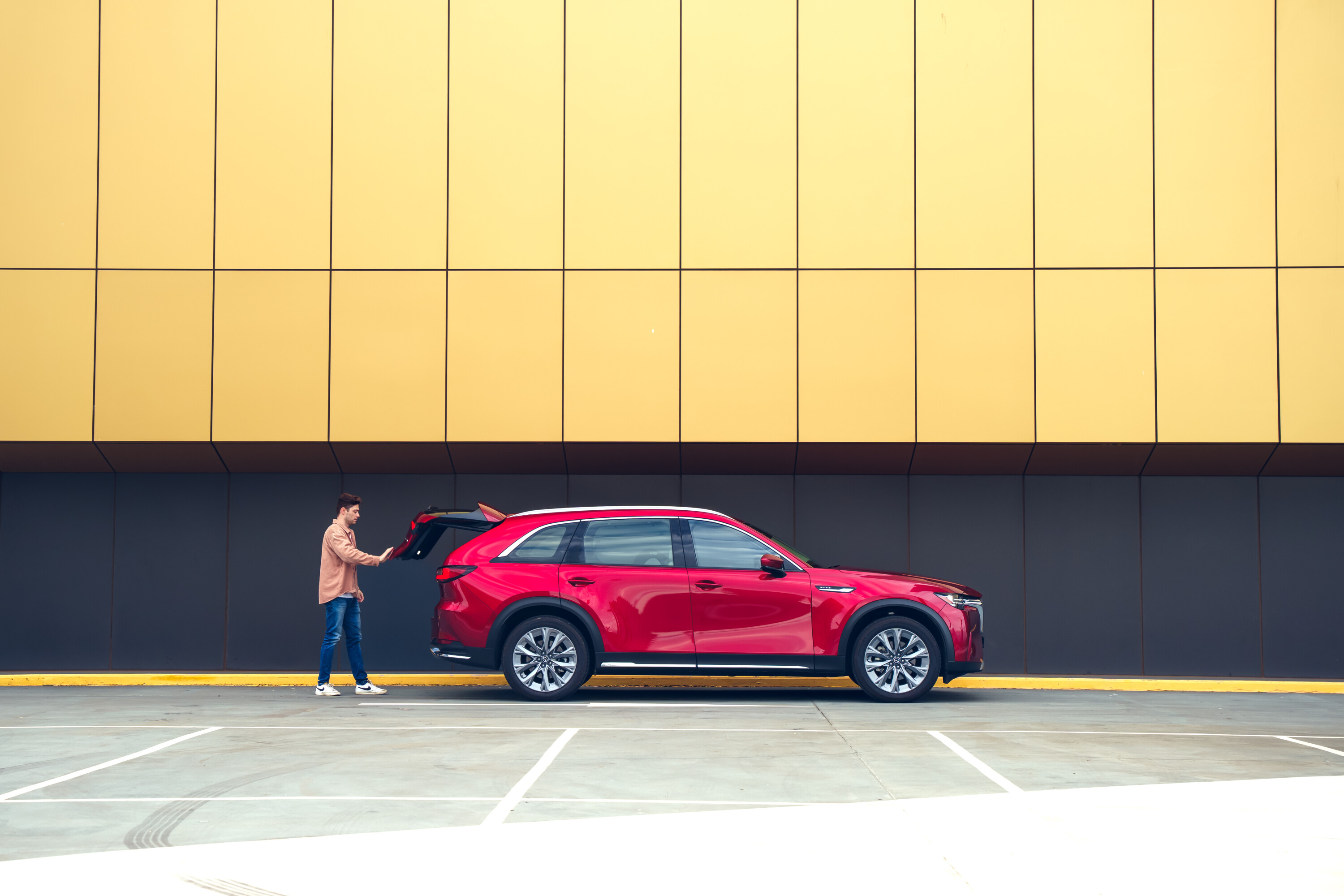
While a 5 percent improvement over April 2023, Mazda was one of four top 10 brands whose sales have fallen – the others being Hyundai, Nissan and Tesla – with a decline of 4 percent year to date over 2023.
That result comes against a 14 percent gain year to date for the total new vehicle market.
Kia fended off Mitsubishi for fourth, the South Korean car maker’s 6653 (+7 percent) for the month against the Japanese brand’s 5314 (+20 percent).
Hyundai posted 5185 sales (-10 percent) for sixth, ahead of Isuzu Ute on 4256 (+47 percent), MG’s 3781 (+9 percent), Nissan on 2905 (-4 percent) and Tesla at 2077 (-44 percent).
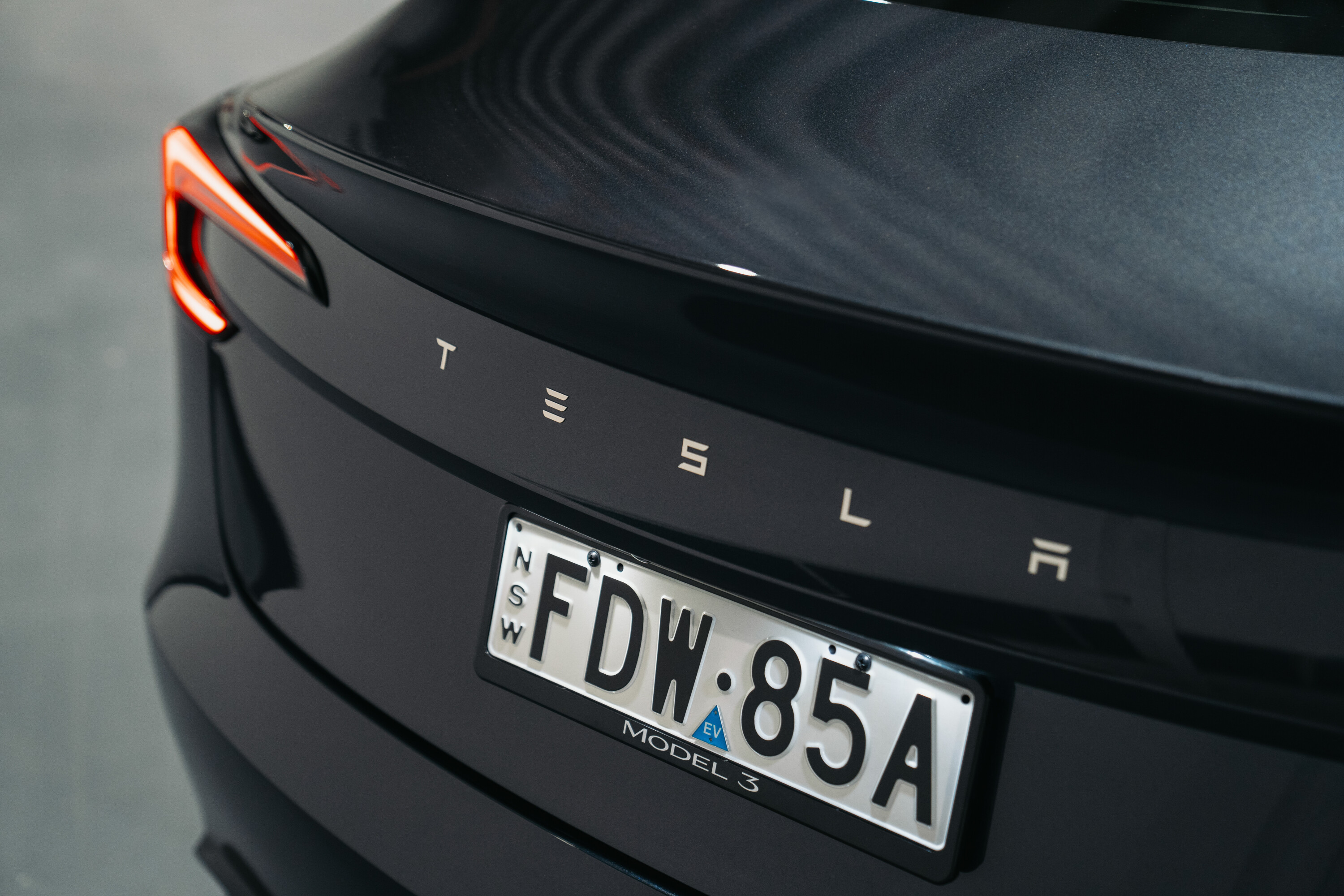
Tesla’s decline for the month reduces its year-to-date growth to six percent, but like Mazda and Nissan its result is underperforming the overall market’s 14 percent growth.
Sales increased in every state and territory across the country, led by New South Wales’s 29,263 – an increase of 17 percent over April 2023 – with Victoria posting an even larger gain of 19 percent on its way to 26,492 sales.
Queensland was the third-largest new vehicle buyer, with 20,872 sales and 14.8 percent annual growth, ahead of Western Australia’s 9806 sales (+18.1 percent).
The state with the biggest increase was South Australia – jumping 34 percent to 6789 – to be fourth behind Queensland, with Tasmania next on 1677 sales for a 32 percent increase.
The Australian Capital Territory followed with 1444 sales (up 15 percent) while 859 new vehicle sales were posted in the Northern Territory (up 13 percent).
The surge in electric vehicle sales in Australia has come to an abrupt end after the segment last month registered its first decline since late 2020.
EV registrations in April were 6194, down five percent on the 6530 units for the same month last year, according to official industry figures released today.
The segment has regularly enjoyed triple-digit year-on-year growth since the start of 2021, and hasn’t posted a negative monthly year-on-year result since November 2020
It’s too early to know if April is a blip or the first sign of Australia following a trend for declining EV sales in other markets such as the US and Europe.
EV sales growth had started to slow in the second half of 2023, with most months recording only double-digit growth. Year-to-date EV sales are now up 32 per cent, having been up 46 percent after the first three months of 2024.
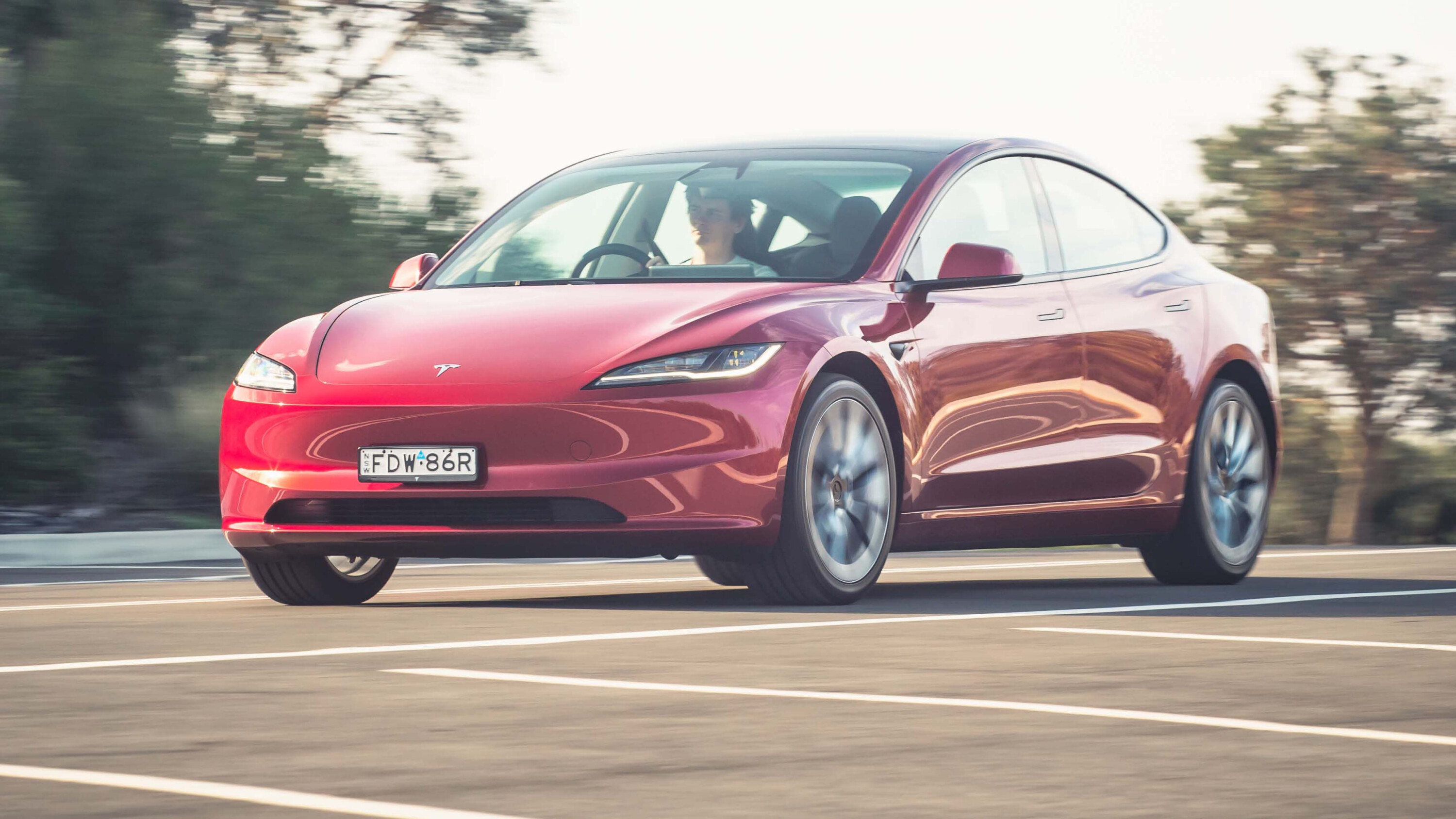
Tesla sales slumped 44 per cent year on year to 2077 units despite remaining the leader for EVs in April. The US electric car brand recently announced further price cuts for its Model 3 sedan and Model Y SUV.
China’s BYD increased year-on-year sales by 26 percent to 1410 units, helped by the Seal sedan (811 registrations), though sales of its Atto 3 SUV dropped by 63 percent.
In year-to-date figures, Tesla sales are still up (by nearly six percent), with BYD growing faster, with 83 percent.
First-time EVs from Ford, Subaru and Toyota are all struggling to make much of an impression in the market at this stage.
Toyota sold only 74 units of its bZ4X midsize SUV last month, 17 ahead of Subaru’s twin, the Solterra. Just 42 Mustang Mach-Es were registered in April.
Lexus and Mercedes EVs also posted low results.
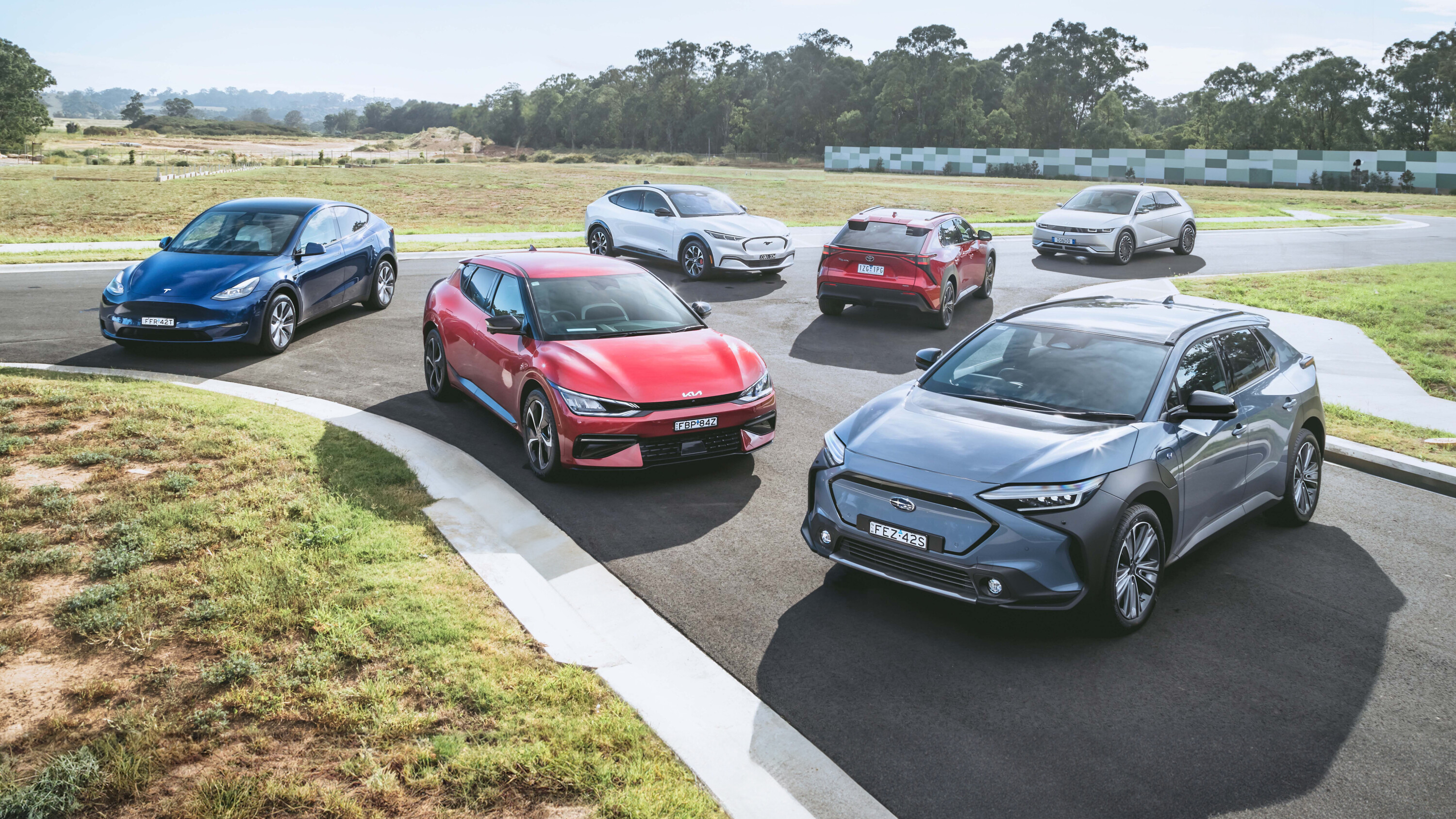
Korean twins the Hyundai Ioniq 5 and Kia EV6 registered year-on-year growth, if from smaller volume bases, a similar story for the Cupra Born that almost doubled sales though just from 21 to 41 units.
Swedish EV brand Polestar has stopped reporting sales to the FCAI after joining Tesla in accusing the lobby group of misleading consumers over the New Fuel Efficiency Standard. Tesla will also stop reporting its sales midyear.
Polestar told WhichCar it registered 100 vehicles in April, which wouldn’t have altered the segment decline.
In contrast, hybrid sales continue to explode, with 195 percent year-on-year growth comparing April 2024 with April 2023. Year to date, combustion-electric sales are up nearly 140 per cent.
Plug-in hybrid sales are also enjoying increased popularity – up nearly 140 percent when comparing year-on-year and year-to-date.
On the pure combustion side, diesel sales are up 14 per cent year to date after 22 per cent growth in April. Petrol vehicle sales were down slightly in April and stagnant year to date.
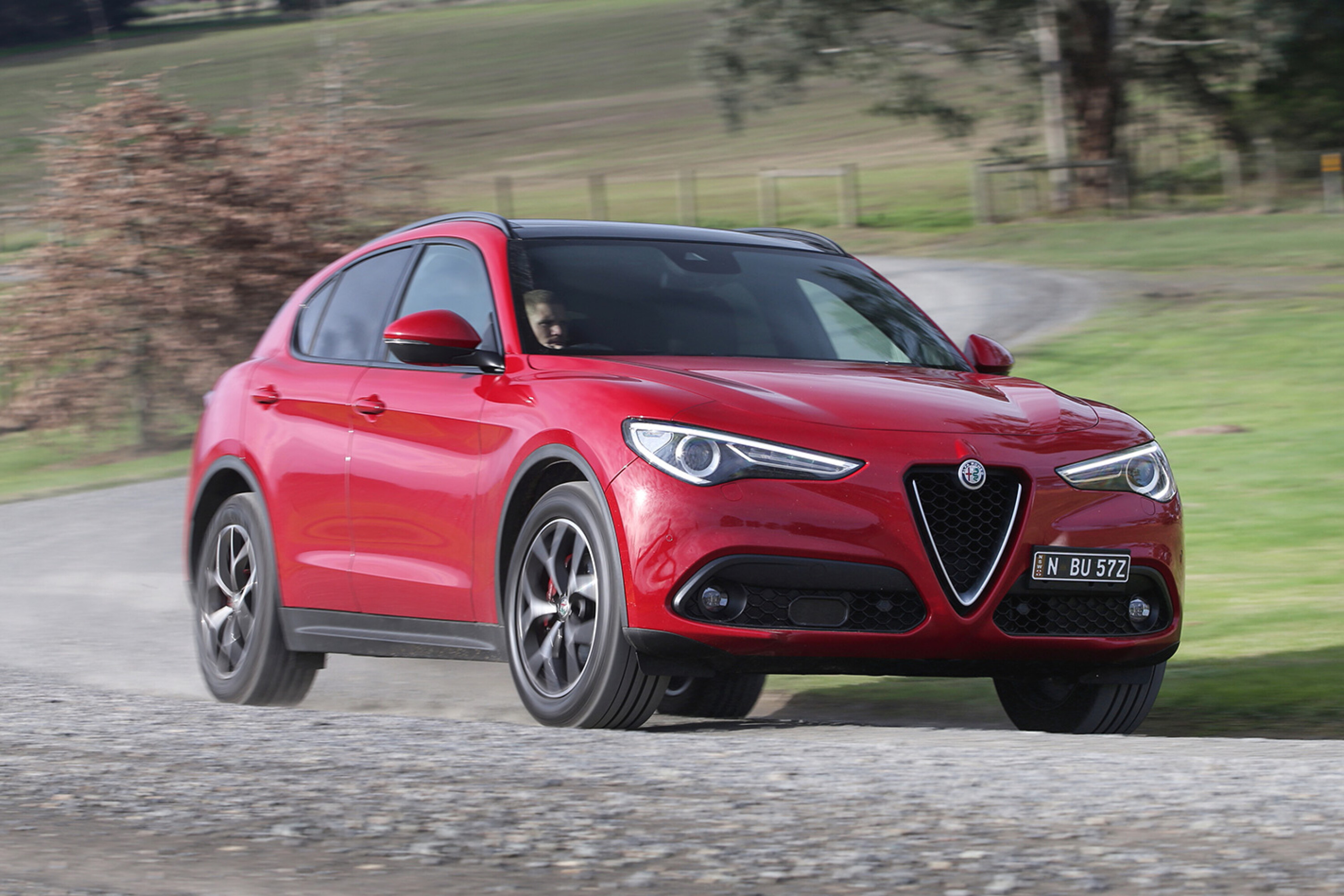
The 2024 Alfa Romeo Stelvio is the kind of car you’ll recognise when you see it– it’s a head turner.
The family car captures the essence of Italian luxury in the SUV market, offering a blend of elegance and invigorating performance.
Anchored in Alfa Romeo’s rich legacy, the Stelvio Ti boasts a commanding presence typical of a luxury SUV.
The Stelvio Ti exemplifies Alfa Romeo’s commitment to blending state-of-the-art technology, powerful performance, and sophisticated styling to create vehicles that resonate with passion and exhilaration.
Pricing and Features
The Alfa Romeo Stelvio Ti kicks off the line-up at $77,950 before on-road costs.
As a flagship of Alfa Romeo’s modern design philosophy, the Stelvio Ti has evolved visually while remaining strikingly attractive through its latest updates.
The model is equipped with a turbocharged 2.0-litre four-cylinder engine, delivering 206 kW of power and 400 Nm of torque. It features an eight-speed automatic transmission and all-wheel drive system.
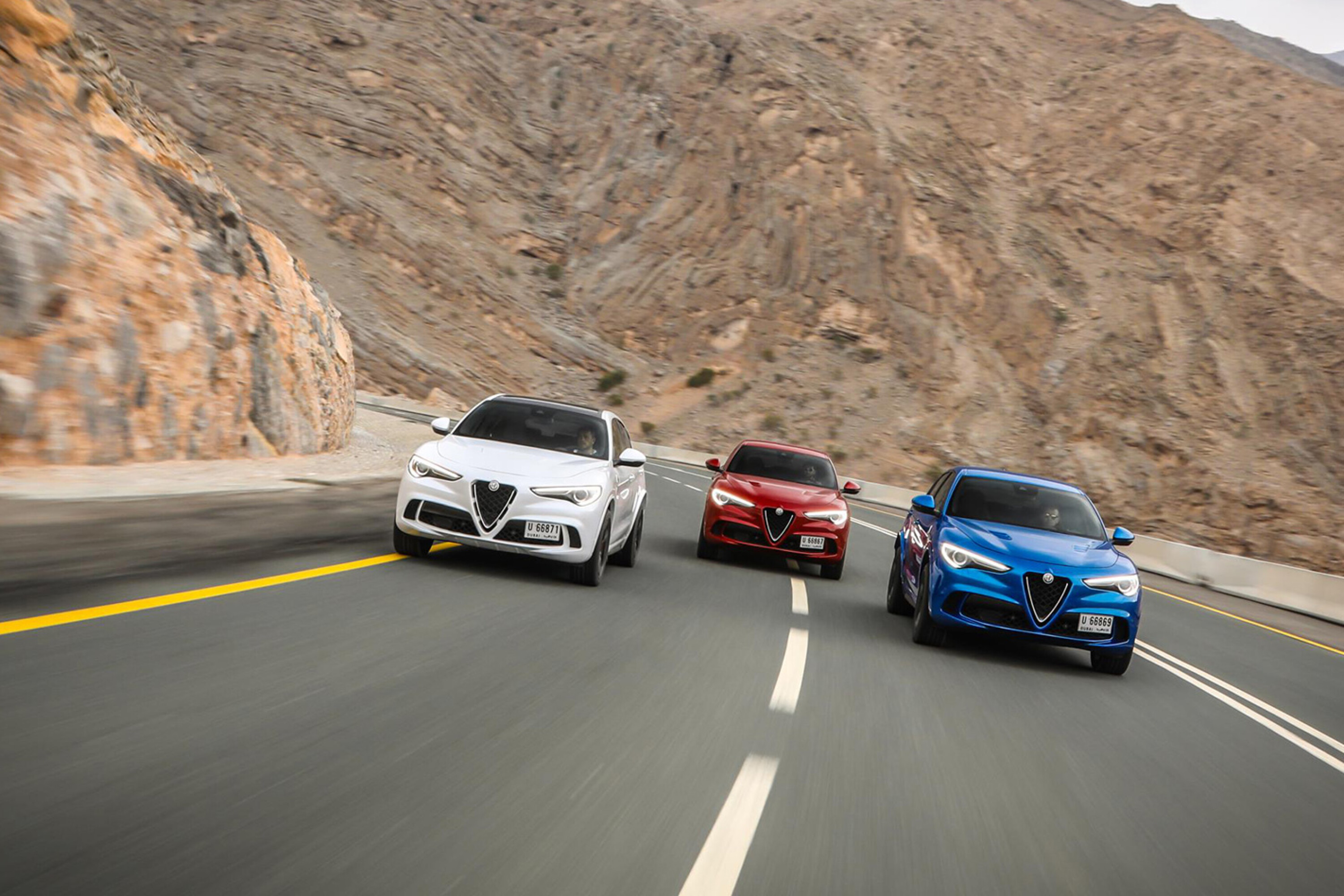
| 2024 Alfa Romeo Stelvio Ti key features | |
|---|---|
| 8.8-inch infortainment screen | Front and rear parking sensors |
| 12.3-inch digital driver display | Hands-free tailgate |
| 19-inch alloy wheels | Heated front seats |
| Adaptive cruise control | Heated leather steering wheel |
| Aluminium sport pedals | LED adaptive matrix headlights |
| Ambient interior lighting | Power adjustable front seats |
| Blind spot monitors | Smart entry and push button start |
| Dual zone climate control | Wireless charger |
| Eletrochromatic auto-dimming rear view mirror | |
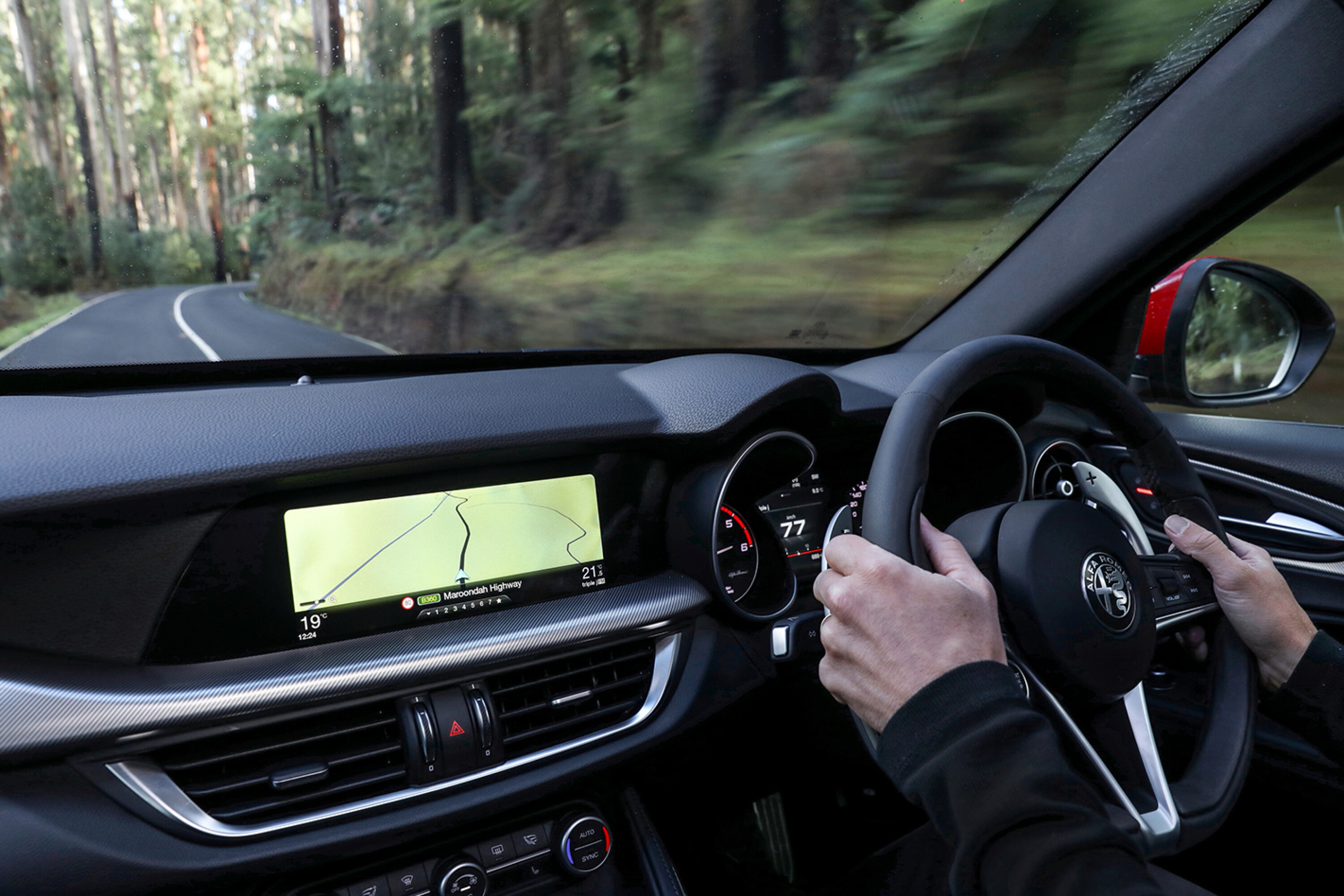
All Stelvio models trims include driver-centric amenities such as an 8.8-inch infotainment system, a 12.3-inch driver display and a wireless charging pad.
For those desiring enhanced features like a premium sound system, larger 20-inch alloy wheels, privacy glass and a slip rear differential, the upgraded Veloce trim is the next step.
Safety
While the 2024 Alfa Romeo Stelvio Ti is currently unrated, earlier models maintain a five-star ANCAP safety rating for versions manufactured before 2023.
The Stelvio Ti is well-equipped for safety, featuring six airbags, blind-spot monitoring, rear-cross traffic alert, traffic sign recognition, autonomous emergency braking, and sensors for both front and rear parking, along with lane-keeping assistance.
Key Rivals
The Stelvio Ti challenges other notable luxury SUVs such as:
In the competitive luxury SUV segment, the Stelvio Ti distinguishes itself with robust performance, elegant Italian design and a comprehensive suite of features.
Should I Put It On My Shortlist?
The 2024 Alfa Romeo Stelvio Ti is a compelling choice for those seeking more than just an SUV. With its refined Italian design, engaging driving dynamics, and extensive feature list, the Stelvio Ti offers a near-luxurious experience at a competitive price.
Ideal for navigating urban environments or enjoying long road trips, the Stelvio Ti promises an unforgettable driving experience with every journey.
