
On the heels of AMG’s ultimate GT – the 430kW AMG GT R due next year – comes more detail on the entry GT coupe – and buyers of the base model won’t have that long to wait.
To date, AMG’s super-coupe has soldiered on solely in 375 kW GT S guise, at $295,000. It will be joined within the next three months by the entry GT which, with less power and torque and a smaller list of standard and optional equipment, will be priced in the region of $265-$270,000.
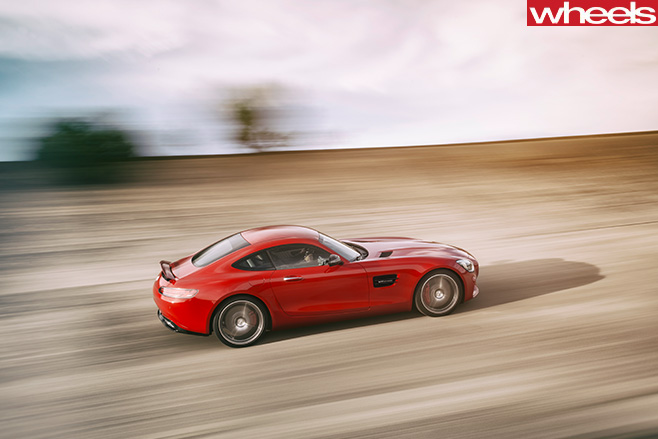
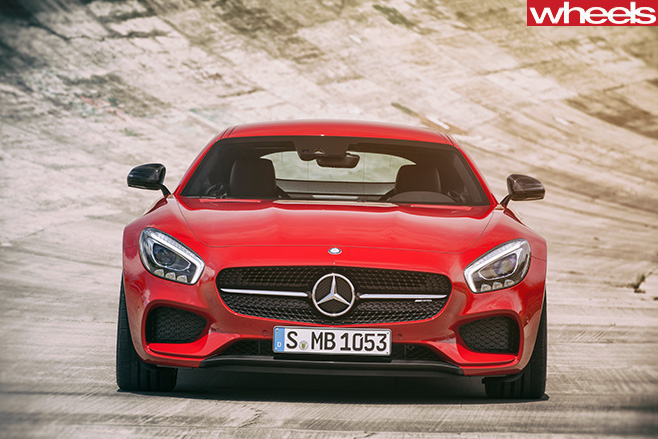
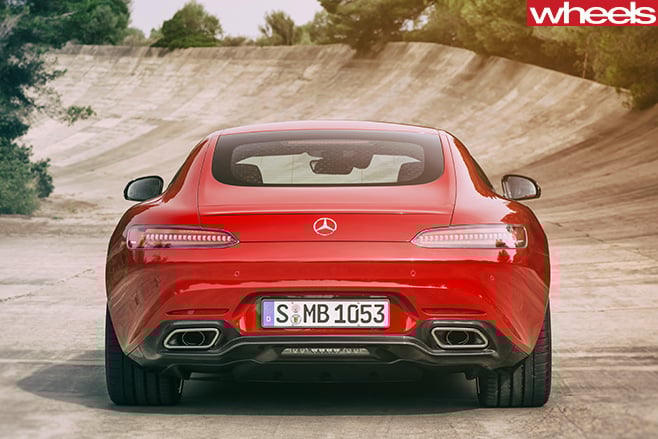
In GT guise, the 4.0-litre, twin-turbo V8 produces 340kW and 640Nm (versus 375kW/650Nm in GT S) and is 0.2 seconds slower to 100 km/h (4.0 vs 3.8 seconds). That’s despite the GT being 30kg lighter, at 1615kg.
The turbocharged six-cylinder engine is mounting a resurgence.
Having spent years in the performance wilderness, the boosted six-pot is back in vogue as manufacturers scramble to downsize.
It began with the latest BMW M3 and M4, and now the Audi S4 (and next RS4), Alfa Romeo Giulia, Cadillac ATS-V, Ford F150 Raptor (and GT supercar) and Mercedes-AMG ’43’ range have all adopted this configuration.
To celebrate, here is our list of the top six snail-fed sixes, though with most of the above set to roll out over the next 12 months, this list could look very different in a year’s time.
Nissan RB26DETT
The RB26DETT 2.6-litre twin-turbo six was a pivotal part of Godzilla’s success. Rated at ‘206kW’ to comply with Japan’s power cap, its ease of tuneability had the likes of Veilside, Top Secret and HKS extracting 900kW and more.
Ford Barra
Australia has a long history of producing great inline sixes, but while some had dabbled with turbocharging (Dick Johnson Grand Prix, Holden’s VL Turbo) Ford nailed it with the 4.0-litre ‘Barra’, introduced in the 2002 BA XR6 Turbo. Smooth and torquey in stock form, yet capable of crazy numbers when modified.
Porsche 911 GT2 RS Metzger
Realistically, any 911 Turbo from the last 40-plus years could appear on this list, but why not use the ultimate? The 911 GT2 RS was the final turbocharged variant of the iconic Mezger engine, and produced an insane 456kW/700Nm, good for over 340km/h (see above).
Buick Grand National
As anyone who’s driven a VN-VY series Commodore will attest, Buick’s 3.8-litre isn’t the most refined or powerful performer around, however in 224kW/569Nm turbocharged form underneath the bonnet of the Buick GNX, it proved to the US that you didn’t need a V8 to deliver drag-strip melting performance.
BMW N55
The twin-turbo S55 installed in the current M3/M4 might be more powerful, but we’re more partial to the single twin-scroll turbo N55 that appeared in ’35i’ Beemers from 2009-2016. It sounds great, revs hard, has masses of power and torque and is a perfect match to the ZF eight-speed automatic gearbox. Sadly, it’s just been replaced by the new B58.
Toyota 2JZ-GTE
Arguably the greatest turbo six-cylinder ever. Despite having ended production more than a decade ago it’s still the go-to engine if you need lots of power delivered reliably – just look at how many are still used in professional drifting. That it sounds incredible is just icing on the cake.
Hyundai is spreading its wings. Just as Toyota has Lexus and Nissan has Infiniti, the Korean brand now has Genesis.
But, wait, there’s more. Just as it’s joining the Japanese in creating a luxury division, it’s also following the Germans’ footsteps by creating a standalone performance division. Mercedes-AMG, BMW M… and now Hyundai N.
The first N product will be a turbo hot hatch, due later this year, based on the new-generation i30. However with its Genesis, Hyundai has the opportunity to a offer big, powerful rear-driver that are becoming all too rare these days, particularly with the next E63 (Benz) and M5 (BMW) switching to all-wheel drive.
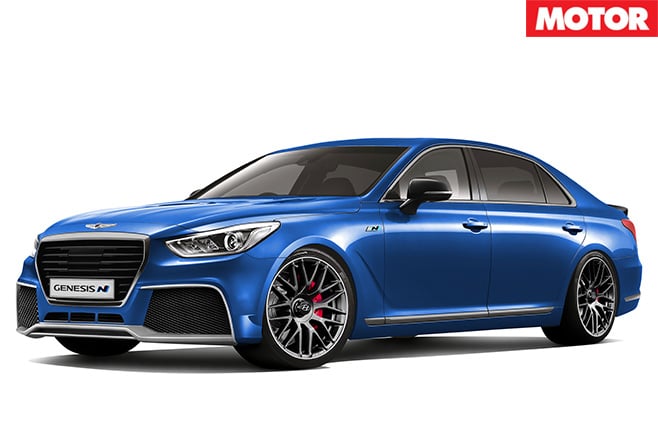
With big power, locally-tuned dynamics and a sharp price tag, a Hyundai Genesis N could plug the hole left by the likes of HSV.
Here’s how we’d do it
1. PARTY PIECE As much as we’d love to slide Hyundai’s 313kW/519Nm 5.0-litre V8 between the front strut towers, that engine doesn’t suit right-hand drive so the smart money would be on Hyundai’s latest 3.3-litre twin-turbo V6.
2. POWER GAMES Currently, the boosted six produces 270kW/510Nm, but we’re assured that there is plenty of upward scope from that, so we’d wind it up to a BMW M4 Competition-matching 331kW/550Nm, backed by an eight-speed automatic. Despite electronically-controlled limited-slip differentials being all the rage, we’d spend the development budget elsewhere and opt for a conventional mechanical unit.
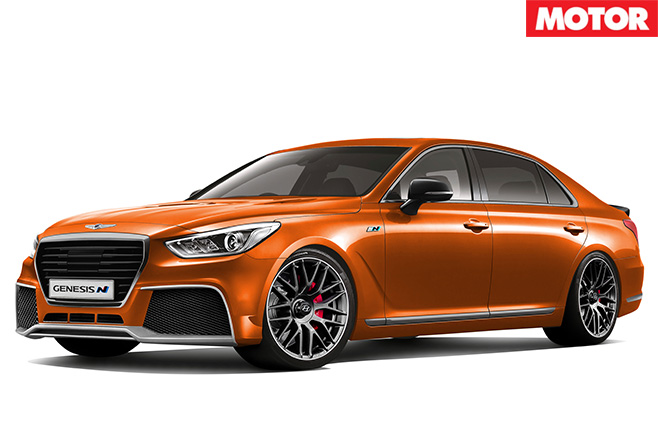
4. KITTED OUT Like many successful sporting sedans, the exterior is a lesson in restrained aggression. The rear carbon lip spoiler is balanced by the front apron, while the front bumper has much larger intakes to handle the cooling requirements of the turbocharged engine. Colour palette much brighter than Hyundai’s traditional offerings.
5. PRICE IS RIGHT Pricing would be key to positioning the Genesis N correctly. It offers a very similar package to the new Lexus GS F, so comparing current Genesis pricing to the GS range, we’d expect a figure of around $110,000 for Hyundai’s new performance flagship.
As you’re probably aware, Subaru and British rally driver Mark Higgins recently smashed the four-wheeled Isle of Man TT course record.
Using a Prodrive-built 450kW WRX STI, Higgins lapped the 60.75km circuit in just 17min35.139sec at an average speed of 207.26km/h.
To see how he did it, ride onboard with Higgins as he talks you around the world’s fastest and most difficult racetrack. This is an incredible film.
Motorsport report: Queensland boys Will Power and Jack Miller shone this weekend, with both putting in stunning performances to win on the global stage.
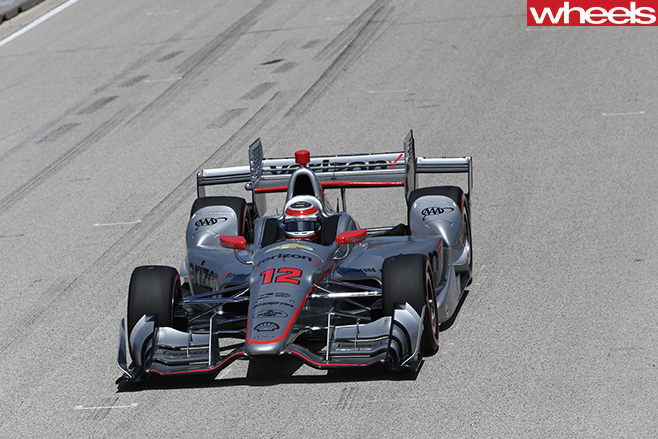
Power wins tense Road America Indy
Our boy seems to have rediscovered his mojo
In front of the largest crowd in Road America history on Sunday, Will Power raced to his second Indycar championship win of the year after a tense fight to the flag with Tony Kanaan.
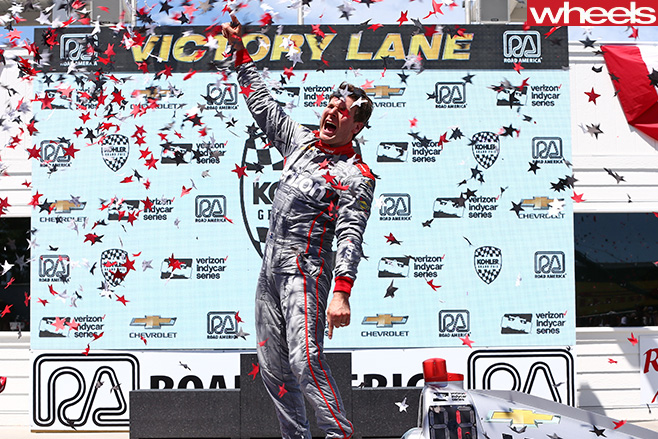
The start featured plenty of action, and early trouble for a pair of four-time series champions. Power led from the get-go, but Sebastien Bourdais suffered damage to the rear of his KVSH Racing Chevrolet and had to pit on the first lap to replace the rear wing assembly.
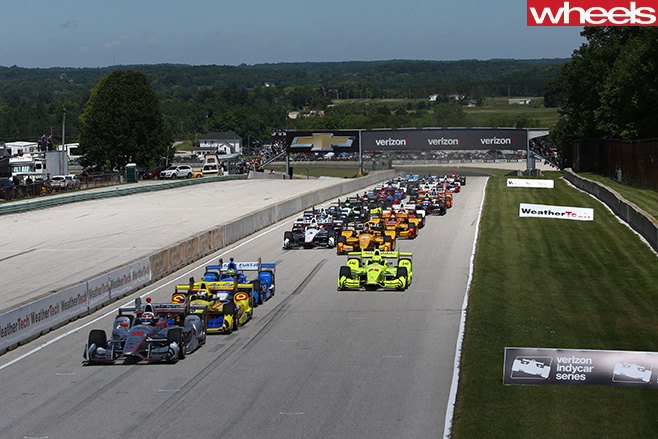
Power controlled the race throughout, dropping the lead only during the cycle of pit stops.
While a plethora of battles erupted in the middle of the top 10, Kanaan slowly cut the 2.5sec deficit to Power to less than half of a second when the white flag flew. But Power had it in the bag, notching his second consecutive win from Kanaan and Graham Rahal.
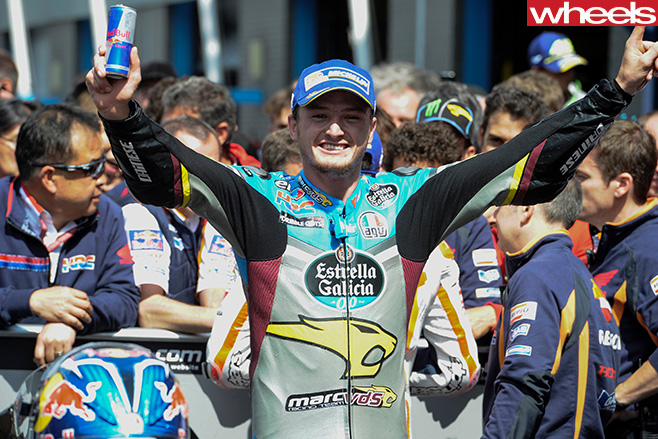
Aussie Miller triumphs in saturated Dutch MotoGP
Rain proves to be happy Jack’s salvation at Assen
Within hours of re-signing with his Marc VDS team for a second year, Queenslander Jack Miller pulled off a remarkable maiden win in the MotoGP class; out-riding all the big names at a saturated Assen, to immediately reward his Belgian team for the faith shown in him.
Miller carried his palpable relief at the contract extension into the Dutch TT, a race run in two parts after heavy rain brought out the red flags after 14 laps with pole man, Ducati’s Andrea Dovizioso leading from Danilo Petrucci (Ducati) and Valentino Rosso (Yamaha).
Miller’s dirt track background and training was an obvious asset in the ensuing 12 laps, the Australian sliding through the damp, from eighth to fourth. Dovizioso took a heavy roll through the gravel and then one lap later Rossi fell too, making Miller’s chase a little easier and the non-factory Honda soon chased down the works Honda of Marc Marquez, who was up front.
Eight laps from the chequer, Miller audaciously ducked underneath the Spaniard, and then quickly pulled a margin which he controlled to the end, stunning the paddock with his first MotoGP success. The triumph comes with perfect timing; Miller has had a tough season with crashes and injury and too few encouraging results. Until the weekend.
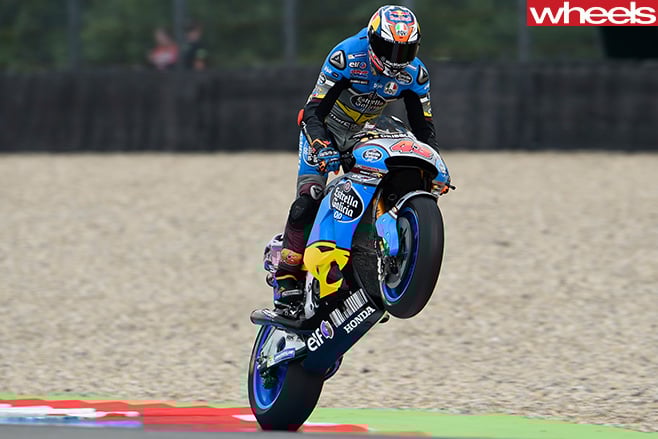
The Cathedral is never an easy venue to master, but Miller showed a mastery of the slippery conditions.
“I don’t know what to feel at the moment,” said the emotional Miller. “A lot of people have badmouthed us and said that this project wouldn’t work.
“I just hope we’ve showed them wrong, and I can ride the bike, and I’m not an idiot.”
“Thank you to Honda for taking this risk on me,” he added.
Marquez took second place to further extend his lead in the 2016 championship, his closest rival Jorge Lorenzo now 24 points adrift after a lack lustre 10th-place finish.
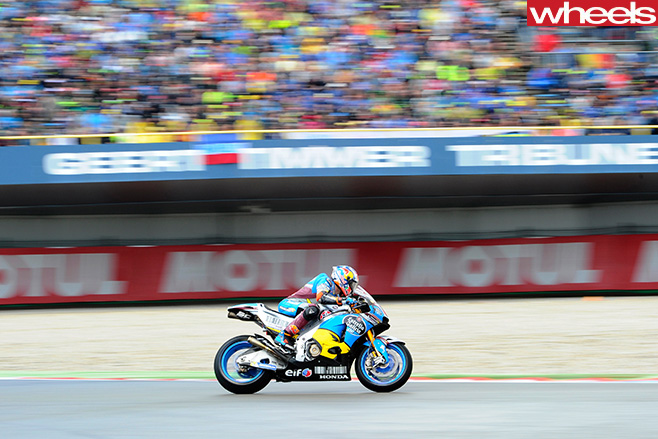
In other bike news, and not wishing to go down the path of aero-doom that has hobbled Formula One for decades, the Grand Prix Commission has unanimously agreed that, with effect from the 2017, the use of aerodynamic wings in the MotoGP class will be banned. The actual regulation will replicate those for the Moto3 and Moto2 classes where the use of wings is already prohibited.
Wings that comply with current technical regulations may continue to be used for the remainder of the 2016 season.
Citroen’s bubble-wrapped Cactus dares to be different, and doesn’t lose touch.
WHAT IS IT? Citroen’s oh-so-Frenchy and chic compact SUV that’s big on X-factor. Its colourful and characterful concept car looks wrap a practical package that urban dwellers should find easy to live with.
WHY WE’RE TESTING IT It’s a brand new car and a bold entry into the baby high-rider segment for Citroen. The French carmaker says its unconventional appearance isn’t different just for the sake of it. We find out whether it’s a step too far, and whether Citroen remembered to build a car that’s good to drive once the quirks are set aside.
MAIN RIVALS Mazda CX-3, Fiat 500X, Mini Clubman, Renault Captur, Jeep Renegade
THE WHEELS VERDICT Its styling will polarise, but if you fall in love with the charisma of the Cactus, you won’t be let down by the way it drives, or its usefulness. A utilitarian nature is part of the Cactus charm, and a result of Citroen’s traditionally French approach, valuing practicality, comfort and fun. There’s polish to its ride and handling, and the 1.2-litre petrol is a triumph of engineering. Sadly, the semi-auto gearbox does spoil the diesel engine option.
PLUS: Cheap to run, fun to look at, genuinely practical, supple ride MINUS: no proper auto gearbox, driving position not good for taller folk
SPECS: Model: 2016 Citroen C4 Cactus Engine: 1199cc 3cyl, dohc, 12v, turbo Max power: 81kW@5500 rpm Max torque: 205Nm@1500rpm Transmission: Five-speed manual Weight: 1020kg 0-100km/h: 9.3sec (claimed) Fuel economy: 4.7L/100km Price: $26,990 On sale: Now
If you tried to run a car engine without oil, it’d run only for a short time before it melted or exploded. Or both. But just having oil inside the engine isn’t enough; it also has to be pressurised, and that pressurised oil is what gives an engine ‘oil pressure’.
Under that pressure, the oil works its way between the various contact surfaces of the moving parts of the engine. So, rather than destructive metal-on-metal contact between the engine parts as they spin several thousand times every minute, you create a layer of lubricating oil separating those metal bits and pieces. The metal parts, therefore, ride on a film of oil rather than each other and suddenly the engine will last many years and hundreds of thousands of kilometres because there’s hardly any friction. And less friction means less heat; the natural enemy of the internal combustion engine.
Oil pressure is created when the oil is pushed through the engine by the oil pump, forcing it in faster than it wants to flow and, thereby, pressurising it. It’s the same as holding your finger over the end of a garden hose; the smaller opening created by your finger pressurises the water flowing through the hose and suddenly it’s squirting high in the air and over the neighbour’s fence. Your engine will lose oil pressure if the pump becomes slack or if there’s wear inside the engine that creates too much of a gap between the metal parts for the oil to fill; much like taking your finger off the end of the hose.
Now find out what DOHC means.
1. The new Audi A5 Coupe has electric-powered belt feeders, which ‘pass’ the seatbelts to the driver and front passenger. The previous version didn’t have them.
2. Also new with this A5 Coupe are standard LED taillights. While the standard headlights are xenon, high-tech LED headlights will be optional or standard throughout the range.
3. The A5 Coupe’s 465-litre boot is big for a two-door. And it’s a 10-litre increase over the old model.
4. One of the reasons Audi’s optional Virtual Cockpit instrument display works so well is that its 12.3-inch screen refreshes 60 times a second. This means the instruments’ needles appear to move as smoothly as if they were, well, real.
5. Audi installs a variety of steering wheels in the A5 Coupe, including one with a flat bottom. What they all have in common – though you can’t see it – is a framework made from lightweight magnesium.
6. A5 Coupe rides 23mm closer to the ground than Audi’s A4 sedan, thanks to shorter and stiffer springs. While this helps make the car look sportier, the downside is a more jiggly ride.
7. Audi is working on a Cabriolet version of the A5 Coupe. It is scheduled to go into production in Europe late in 2017. As usual, it will take its time before reaching Australian showrooms.
Australian-made Alfa-Romeo-in-drag from the decade of excess.
BACK in the extravagant 1980s, Sydney IT recruitment specialist and exotic car enthusiast Paul Halstead spent most days surrounded by Lamborghinis, Ferraris, Porsches and De Tomasos in his fabled car emporium, The Toy Shop.
For a short time, The Toy Shop exported Australian-built 351 Cleveland V8s to Italy and assembled Panteras in Australia. Halstead showcased the De Tomaso product by commissioning Queensland-based former McLaren engineer Barry Lock, constructor of Kaditcha racing cars, to build a ground-effect Pantera for GT racing.
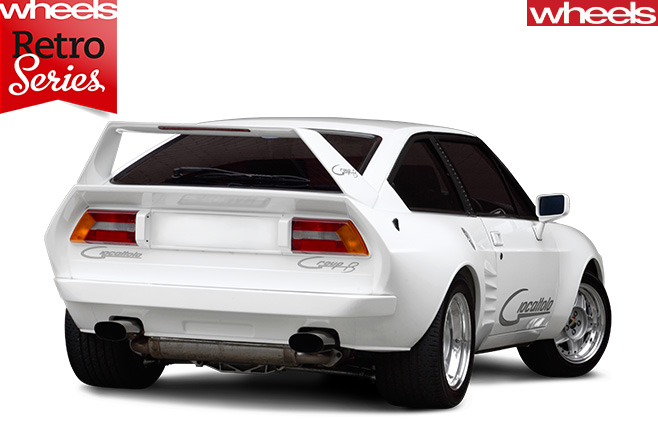
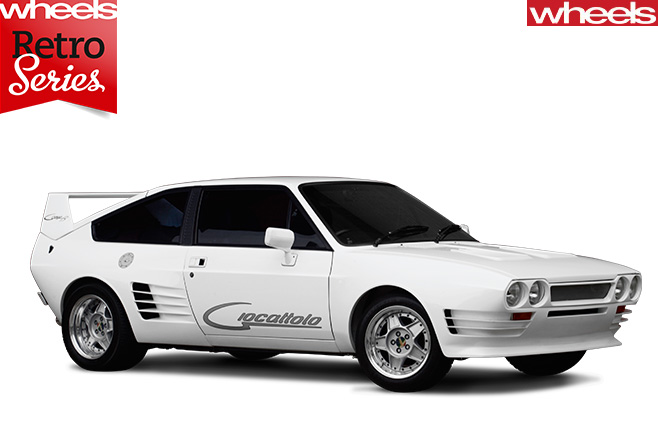
However, all these elements would combine in 1986 to create the Giocattolo, an affordable and uniquely Australian supercar.
Halstead similarly chose the Sprint liftback and Alfa’s 2.5 V6, for which Lock engineered a whole new rear subframe and reinforced body. Kevlar and carbonfibre, still super-exotic in 1986, were used in the structure and body panels.
Group A V8 engine. The Aussie V8 was cheaper and, with a claimed 220kW (versus Walkinshaw’s official 180kW), a lot more powerful. According to Lock, Holden threw open its engine test labs and Lang Lang proving ground.
By the time production began, the Giocattolo’s retail price had crept up to $90,000. Despite a luxury interior, kerb weight remained at a racecar-like 1085kg.
Italy and Australia, however, seemed to be jointly conspiring against the project. Alfa Romeo Australia would not, or could not, sell bare shells; Giocattolo Motori had to strip new, complete Sprints and sell the unused parts second-hand. Compliance proved problematic in some states. And import duties made the German ZF transaxle spectacularly expensive.
Giocattolo Motori had built three prototypes and 12 production cars when its doors closed in 1989.
Alfa parts
The Alfa Sprint’s front suspension remained largely standard via MacPherson struts, with front brakes from a GTV6. The custom rear subframe incorporates double-wishbones and dual coil-over dampers, with inboard Brembo discs. Wheels were 16-inch Simmons composites. The use of Kevlar and carbonfibre kept kerb weight to just 1085kg.
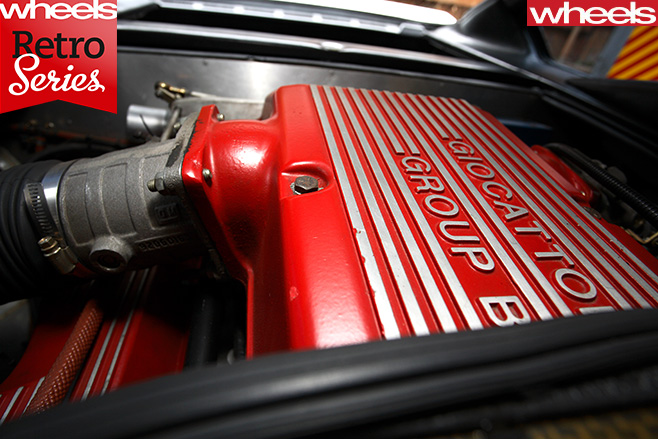
Holden’s 5.0-litre fuel-injected V8 required some reconfiguring of its individual throttle bodies, and the engine compartment itself, to make it fit. HSV VL ‘Walkinshaw’ Group A brochures claimed 180kW/380Nm, though Giocattolos were said to make 220kW/500Nm. Halstead’s Pantera experience steered him towards the five-speed ZF transaxle; there was no local, or cheaper, alternative.
Premium position
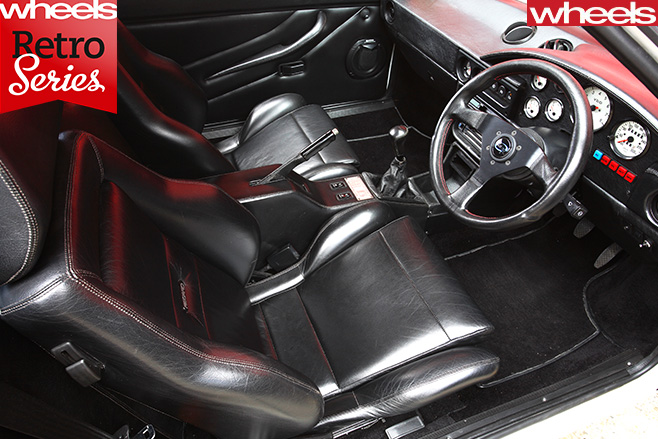
Giocattolo’s interior reflected not only the enforced high price ($90,000 – BMW M535i money) but an eye on Euro-coupe rivals. The two occupants enjoyed top-notch Recaro seats, full leather upholstery, a bespoke instrument panel and premium sound system. An upholstered hatch covered the engine, behind which was a decent boot. The front compartment was taken up with radiators for cooling.
Fast and Factual
Expecting twins
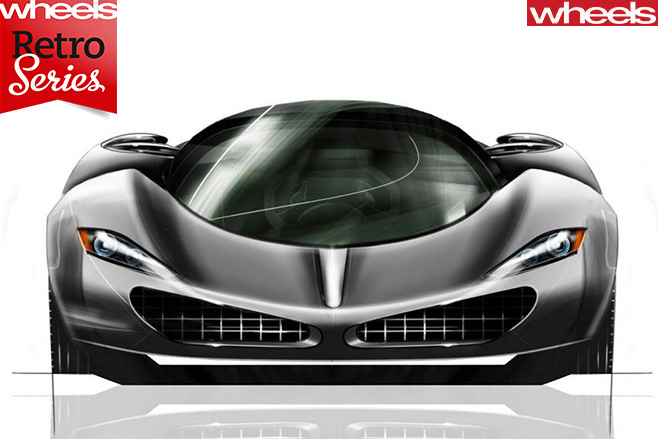
Paul Halstead has recently designed a mid-engined W16 supercar, powered by conjoined Chevrolet LS1 7.0-litre V8s. Yep, really
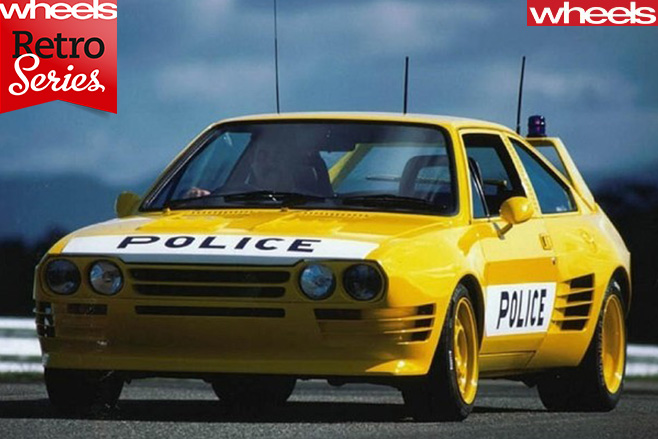
Qld Police evaluated the Giocattolo as a pursuit car, but baulked at its demanding handling (preferring live-axle Commodores…)
The toolkit betrayed the car’s banana-bender roots, containing a minibar-sized bottle of Bundaberg Rum and two shot glasses
Say that again
Giocattolo (juh-cattle-oh) is Italian for “toy”. Never mind that many Aussies ended up calling it “chook lotto”
Ground-breaking
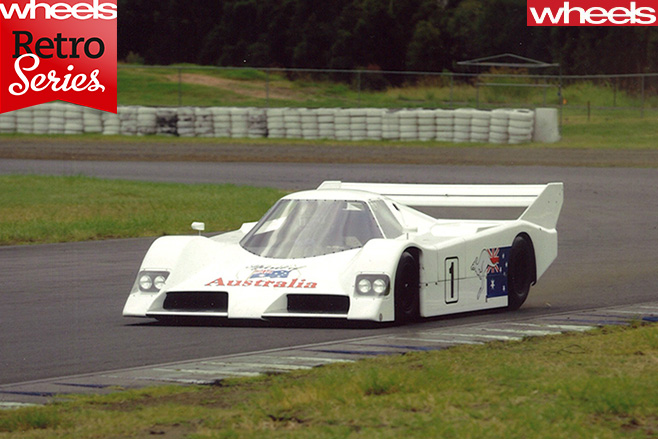
Designer Barry Lock’s CV already included Australia’s first ground-effect sports car, the title-winning Cosworth-powered Kaditcha K583 (1983), aka Romano WE84
Don’t have a MagShop account?

Have a MagShop account?

- Introduction: A return to form
- Update 1: Winning formula
- Update 2: Routing drama
- Update 3: Inflated worth
- Update 4: Conclusion
Introduction: A return to form
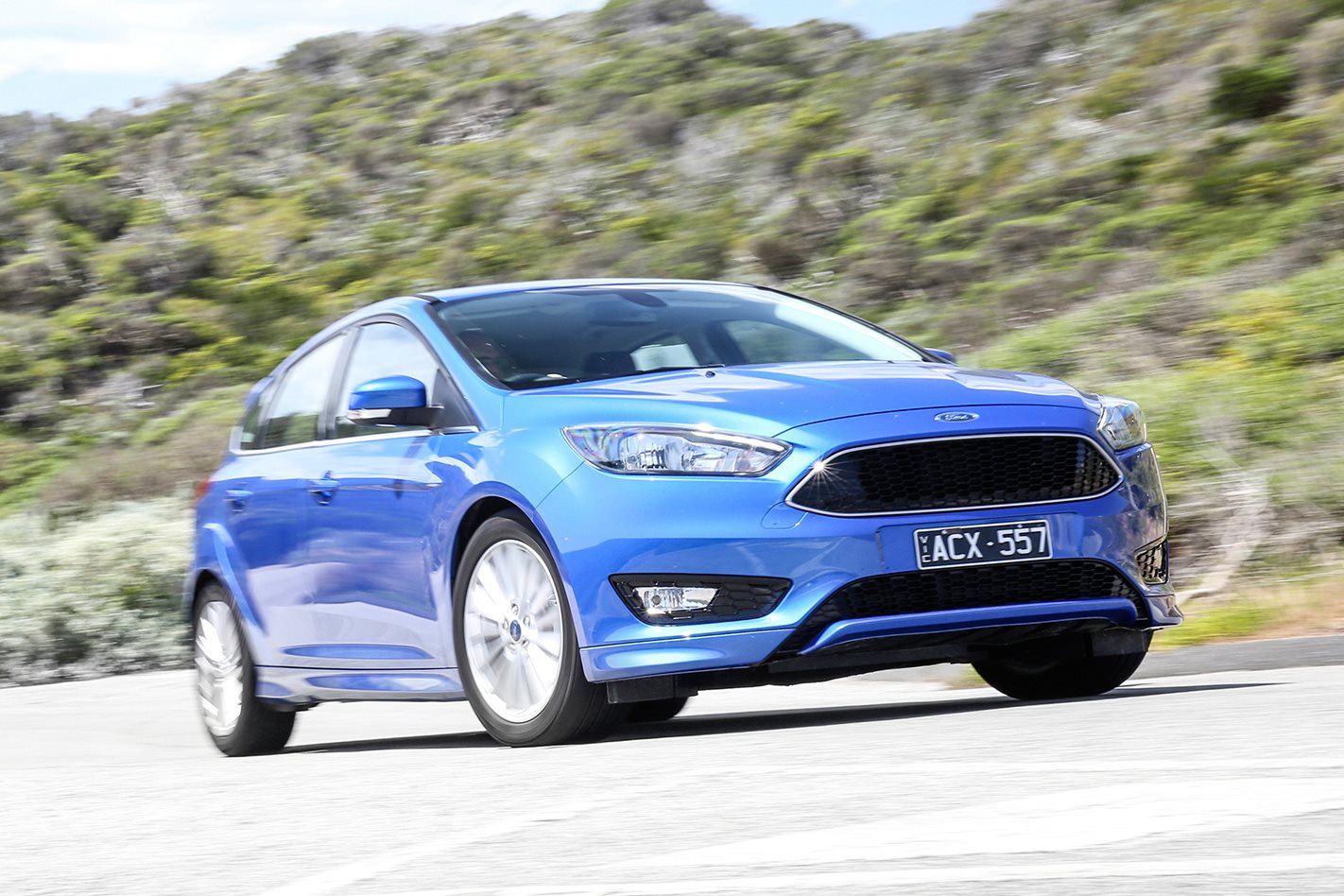
“IT’S a blue Ford Focus,” I say to the lady at the airport parking desk. “Is that the new one?” she asks. “Well, yeah, it’s been updated with a new nose and the inside’s a bit better too.”
I thought Ms Valet was just being polite discussing my new long-termer, but she had a genuine query. “Have they changed the engine?” she said, before adding, “My sister has one, and she’s taken it back twice, and it’s not even one year-old yet.”
Turns out that her sis has the previous LW series Focus, whose problems have been firmly addressed with the late 2015 update to LZ model designation.
The big issue for the Focus was the previous dual-clutch transmission. To summarise, it was rubbish. Recalled, rectified and now written-off, Ford Oz went back to basics with the Thai-built LZ, ditching the dual-clutcher for a conventional automatic. Yet we won’t have that problem: our long-termer has three-pedals and a six-speed manual gearbox (hooray!).
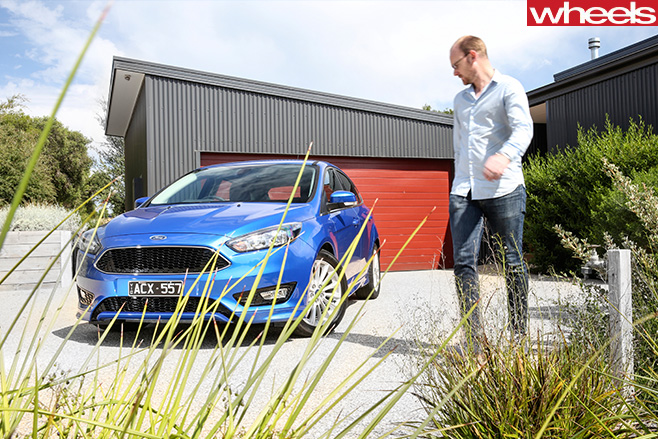
This is the mid-spec Ford Focus Sport hatchback, which at $26,490 sits above the entry-level Ambiente and below the luxed-up Titanium. Not only does my long-termer have the new trapezoidal nose, flanked by LED DRLs, but a smarter, less cluttered interior as well. Standard gear is impressive and includes SYNC2 voice activation for the sat-nav, keyless entry and start, Bluetooth and a crisp colour reversing camera.
Ford used to be the small car kings. Think Cortina, Escort and Laser. Let’s not forget the smaller Fiesta’s skills – especially the current model’s considerable talent. Then there’s the first-gen Focus, which on the cover of one British rag was headlined, ‘Ford is Revolting’. It stuck with me, that cover. So did the car.
Focus, the original, showed a progressive, bold and capable Ford at its absolute best. ‘Kinetic’ design language, high tail-light treatment that kick-started a load of copycat rumps, control-blade suspension and Richard Parry-Jones’ dynamics. That bloke was – is – a legend for making cars like that first Focus push rivals, including the Volkswagen Golf, to up their game.
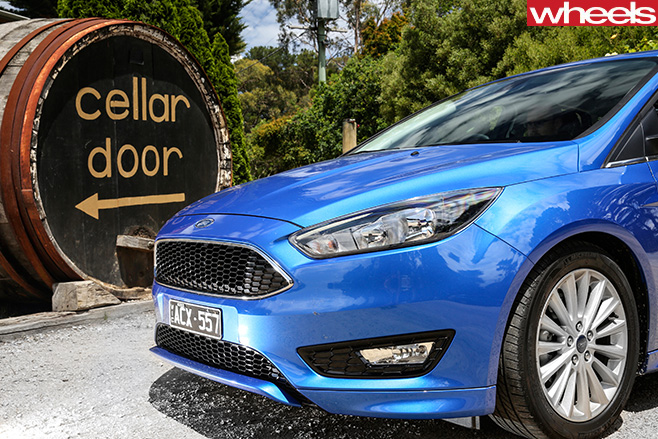
Enter Old Bluey, born on the mean streets of Bangkok. Like any Aussie tourist, my new long-termer may as well be wearing a Bintai singlet. Aussie-Focus supply has been coming from Thailand since 2012, a long way from the quality award-winning German factory for Mk I. That’s what this Sport, now sitting in the valet car park, has to live up to.
My one complaint looking back at the blue Focus is those alloy wheels. I reckon its old-man fuddy-duddy 17s should be on the Titanium, and the Titanium’s hot 18-inch five-spokers should be on the Sport.
There’s little time to explain this to Ms Valet, though. “It’s a cute car, isn’t it,” she chuckles, “and that’s all I care about – not the engine”. Well, Ms Valet, with that new nose and EcoBoost powerplant, my Focus Sport should appeal to you and your sis. Let’s see if it can appeal to the Wheels crew over the coming months more than its predecessor, too.
Third time a charm?
There’s more gear now: paddle shifts are offered for the first time, Active Park Assist now includes ‘Perpendicular Parking’, and a reversing camera is now standard, as is keyless entry and push-button start. Robbo had no complaints about the quality of the Thai-built Focus, and lauded the steering calibration, which has been changed for this LZ model. His only complaint was that sketchy transmission, which won’t be an issue for our manual machine.
Ford Focus Sport hatch Price as tested: $26,910 Part 1: 203km @ 7.4L/100km Overall: 203km @ 7.4L/100km Odometer: 3222km Date acquired: December 2015
Update 1: Winning formula
Taking the alternate choice redefines ‘winning’.
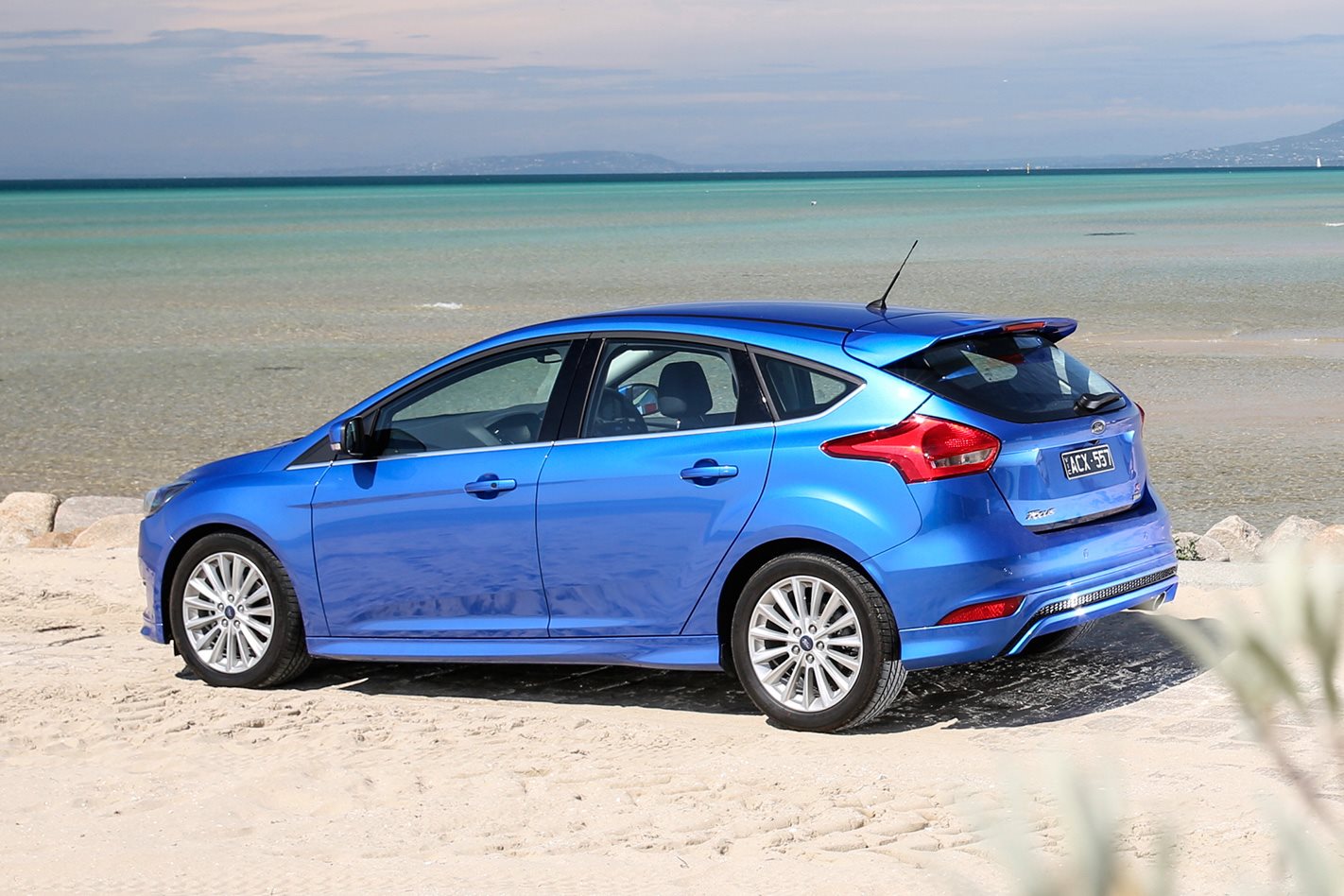
I’LL admit the Focus wasn’t the first choice for our summer beach trip. It wasn’t a lightweight roadster like the luscious red Mazda MX-5 that also sat out the front. But it boasted four fully inflated tyres (the Mazda didn’t) and even a space-saver spare in the boot (again, the MX-5 failed to oblige, but more on that next month when I reveal how the editor’s new long termer started its life at Wheels in my care).
The fact we had a pure driver’s car marooned at home, and one of the world’s most amazing coastlines to explore, had us initially lamenting the more humble hatchback. So we loaded up the ‘Winning Blue’ Ford – feeling far from having won – before the three-hour drive to Port Fairy on Victoria’s glorious Shipwreck Coast.
Immediately, though, the Focus showed its skills as one of the best C-segment hatches. I love driving holidays because there’s no carry-on limit, so I overpack.
On the road, my girlfriend – who comments on cars as much as Donald Trump comments on equality – said, “It’s good that there are two USB slots,” allowing my smartphone to feed while hers spun tunes. We also used something else the MX-5 lacks, a CD player. The Focus stereo, operated via the steering wheel, isn’t outstanding, but it’s far from disappointing.
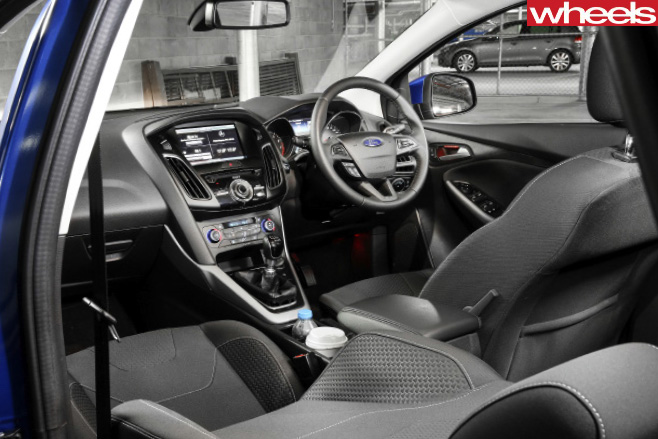
Along the way, the Focus’s seats proved supportive even after several hours, and the air-con blasts cool air to easily deal with 40-degree summer days. Oddly, though, it’s either blasting or doing not much at all; there’s no ‘soft’ setting when you’re after a zephyr. Above the vents, that expansive dashboard proved a great place to dry clothes after a beach swim, but the windscreen reflections wouldn’t budge.
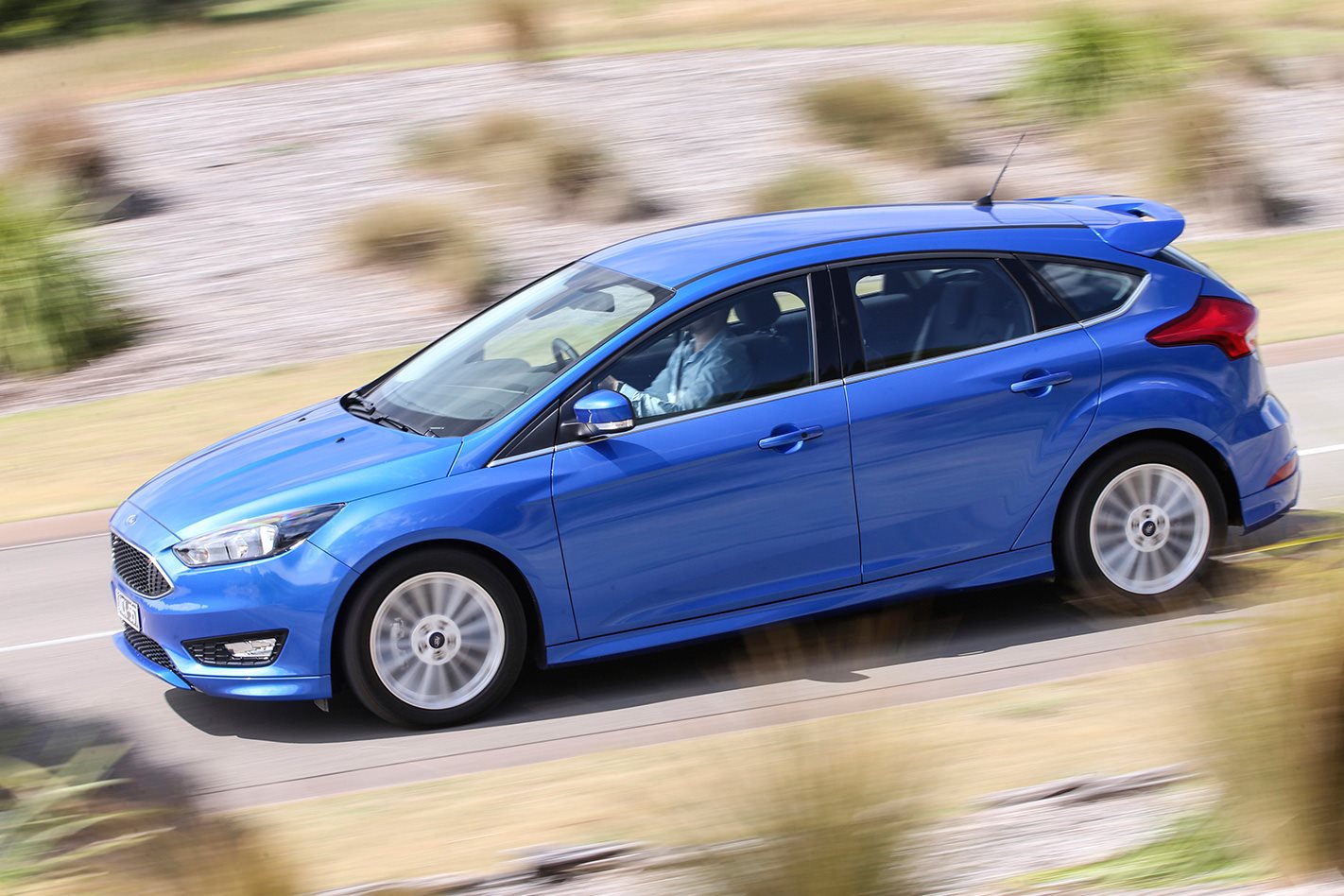
On the winding stuff, where I thought I’d miss the MX-5 most, the Focus didn’t disappoint. Its poise on the sinewy Skenes Creek Road through the Otways, where we’d been diverted after a beautiful trip down the Great Ocean Road because of the Lorne bushfire, was brilliant. The Michelin rubber is the weak link; they’re made more for smooth ride and quietness than out-and-out cornering, the fronts scrubbing easily.
Yet the warbling grunt of that 1.5-litre turbo, slick six-speed manual and overall balance made it a hoot through the forest, where I forgot about the MX-5. Almost.
Summertime, and the living is easy
The Focus proved easy to live with on holiday. The keyless entry – and start – made loading luggage easy, as did the impressive global closing, which winds up all the windows from the key fob as you walk away; a neat party trick. The cloth seat trim cleans up with a mere wipe and the 60/40 split rear seat means easy access to valuables hidden in the boot, which is huge. There’s also loads of space up front for phones, wallets, coffee cups and water bottles, as well as a deep centre console.
Ford Focus Sport Price as tested: $26,910 Part 2: 3096km @ 8.0L/100km Overall: 3299km @ 8.0L/100km Odometer: 6318km Date acquired: December 2015
Update 2: Routing drama
Ignorance is bliss when the traffic warning system doesn’t work in congestion.
FORGET the hot new Ford Focus RS coming this way – it’s the more practical things about the Focus Sport that I’m starting to know well, and most of its systems are truly excellent. Most.
The sat-nav’s traffic alert system is surely intended to save large chunks of time. I haven’t had a lot of faith in these systems, often being stuck in a traffic jam before a robot’s voice says, “There are traffic delays on your route”. If it’s going to state the obvious it may as well say, “You’re driving a car” or “The capital of Peru is Lima”.
So I had to test the Focus’s traffic system for BS. On Melbourne’s Monash Freeway, the Sport’s nav told me to take the Burke Road exit to avoid queues further ahead. Bugger that; I kept on going. About 25 seconds later, stationary traffic. Game over. The nav was right. It’s the first time I’ve ever been glad to see a heavily congested road ahead.
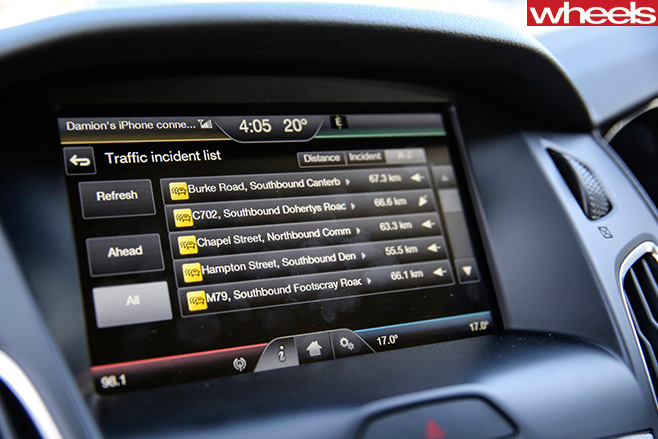
All is well – for about three seconds – before the system reveals that it doesn’t work in a congested city. Just after you’ve hit Start to a new route, the display chimes again – that ‘seatbelt on’ airliner ding – for the process to begin all over again. The first time I was suckered in, but then it popped up instantly again… and again… and again… before I finally hit Ignore All. And it blocks your view of the nav, so you have no choice but to push one of the three options, as ironically you can’t actually ignore it.
So heavy traffic sends it nuts. And, while it’s doing its job, it is distracting and annoying. So hit Ignore All and be done with it. You’ll still be stuck in traffic, but at least you can ditch the damn thing, meaning someone at Ford thought this might happen.
Thai it down, Sport
Ford Focus Sport hatch Price as tested: $26,910 Part 3: 1065km @ 7.1L/100km Overall: 4364km @ 7.8L/100km Odometer: 7383km Date acquired: December 2015
Update 3: Inflated worth
The third leg of the driving enjoyment trifecta.
I’VE been told that I’m sensitive, which is why I don’t read the comments beneath any online story that I’ve written. And perhaps that may be where my Ford Focus Sport and I have a bond and fondness for each other.
The realisation came after I’d been away on several comparison tests (and if you’re reading this as a Blue Oval fan, that included the Mustang GT outmuscling the beloved Holden Commodore SS-V Redline).
I’d left the car at The Brunswick Office (otherwise known as Byron’s house), where it had hardly been driven. And, Your Honour,
I had not checked the tyre pressures for weeks before that…
So after enjoying the Mustang’s torque on brilliant country roads, as well as driving five seriously capable luxury saloons for this month’s comparo, the Focus had lost its edge. Or so I thought.
Instead of its typical eagerness and verve, the Focus felt a little flabby (again, a common point between me and the car).
So I checked how much air was in the Michelins, and it was only 27psi. Impressively, all four were at the same pressure, which was four pounds below the placard’s recommended 31psi.
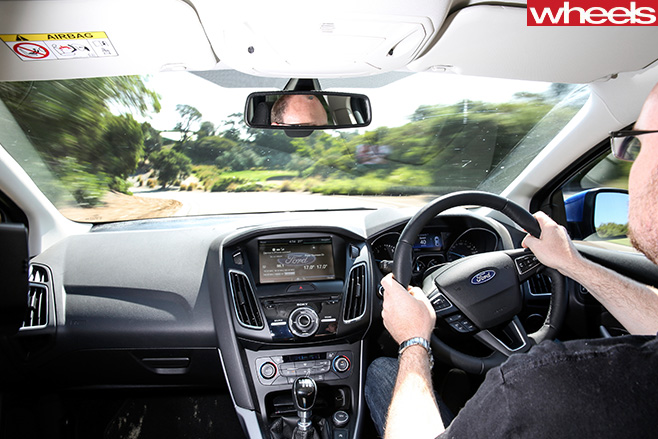
Now we were again carving up corners, settling quickly under brakes and giving excellent purchase off the mark.
I’ve mentioned how much I enjoy the Focus’s poke, and the fact that it requires technique off the mark for a successful launch. If you dump the clutch (ala Mustang) the 1.5-litre Turbo’s relative lack of torque sullies the attack. Get that clutch working spot on – which means a few revs and loading it up to its high bite point – and the take-off is brutal.
That seems to complete the trifecta of getting the most enjoyment from the Focus Sport. It’s super-sensitive to tyre pressures, so keep them in check even more closely than your Facebook account, and then there’s the driving technique.
These are the cornerstones of a car that’s deftly capable, even if it’s not quite as sharp as the previous model. Don’t say that within hearing range, though; we’re all a little sensitive.
Ghosts in the machine
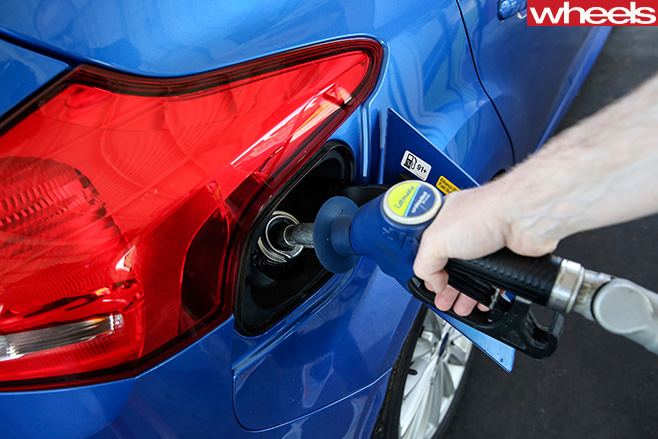
A few months ago some rats must have nibbled into my log book because my fuel figures were up the creek, making the Focus Sport seem implausibly economical. Having traced back a couple of missing tankfuls of premium unleaded, my average consumption over the five months I’ve had the car is actually 10.4L/100km, not the 7.8 I last reported. My most humble apologies. I’ve since been publically flogged outside Bauer Towers and have only just healed sufficiently to ease back into those comfy bucket seats.
Ford Focus Sport hatch Price as tested: $26,910 Part 4: 1910km @ 9.5L/100km Overall: 6274km @ 10.4L/100km Odometer: 9293km Date acquired: December 2015
Update 4: Conclusion
One final weekend away provides an opportunity to make an assessment.
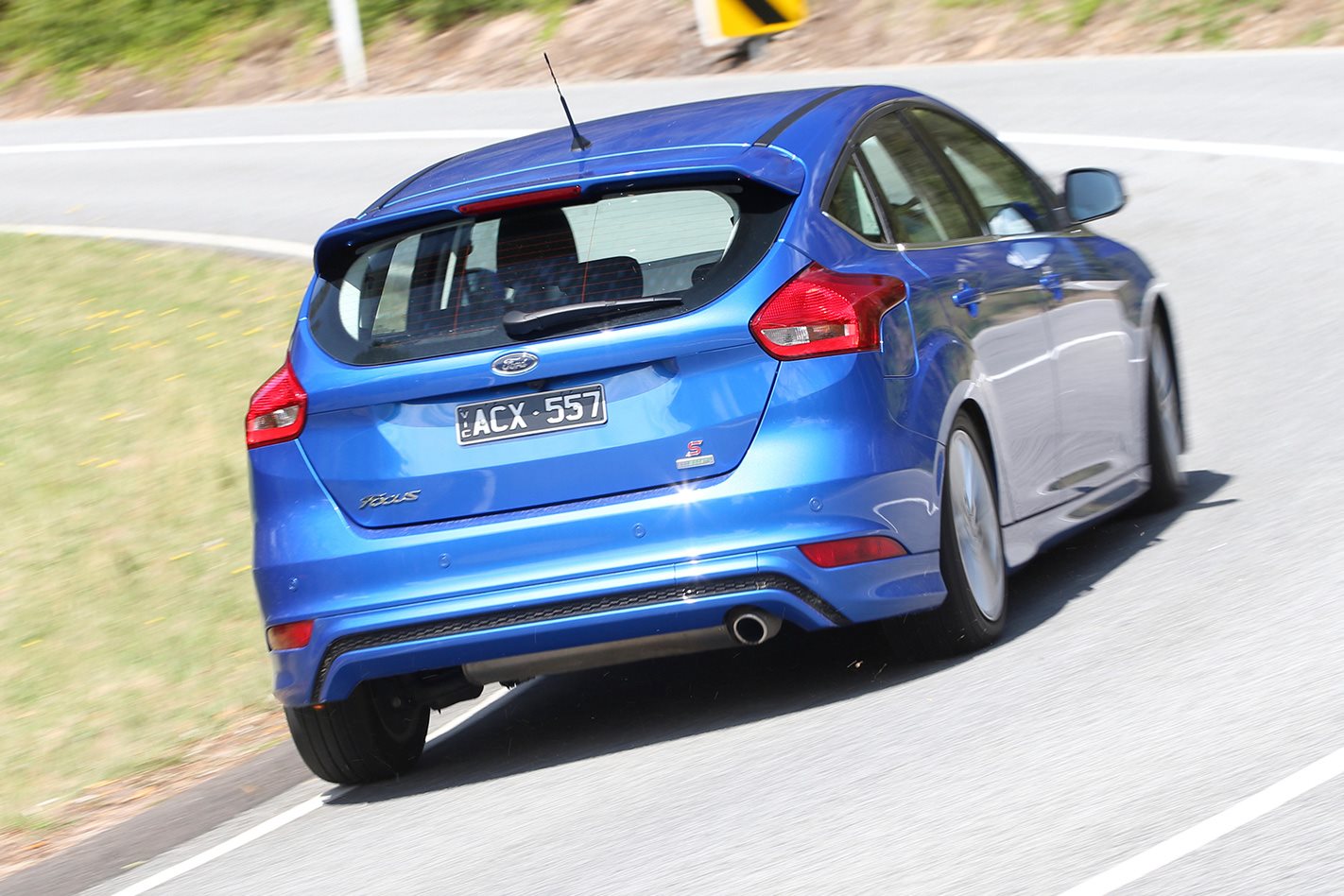
SIX hours. Alone. In the Focus. It was my way of farewelling the LZ Focus Sport manual hatch. It was also a chance to get to a level of intimacy that would reveal if, over the almost six months it had been ‘mine’, there were any skeletons lurking in the closet.
The 300-odd kilometre drive to Seaspray, a beachside town on 90 Mile Beach, for a lazy weekend was likely the last time I’d have the chance to clock so many miles in the Focus, which has proven utterly reliable the entire time – as you’d expect, yet still worth mentioning.
In all that time I hadn’t really sampled the stereo properly. The daily radio chatter in traffic needed to be met by a country road, amped-up rock-fest, with bad singing as I got lost in the music, the drive and the Focus. It’s a good system, especially at this price, but here’s a tip: don’t hit the ‘RDS’ button, which provides extra data but makes it sound tinny and cheap.
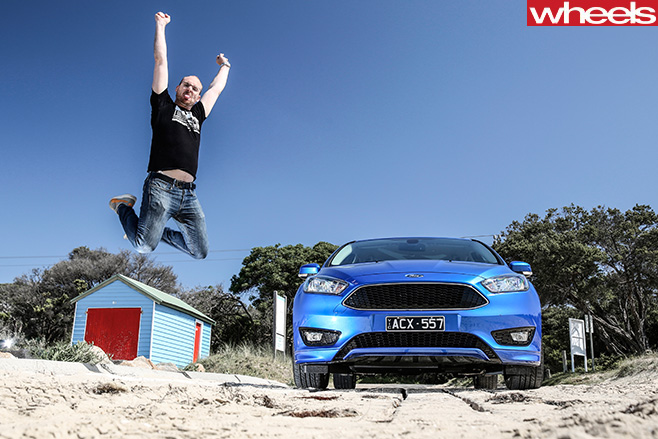
Once at speed, everything settles down; the engine is quiet, there’s little wind noise, and I’d find myself occasionally squeezing the steering wheel because it feels so good. Same goes for the driving position, and the overall agility around corners. The Focus has the talent to be refined yet raucous when needed.
I don’t have kids or even a dog, but the practicality of the back seats – which easily fold – fed my paranoia of not leaving anything visible to tempt passers-by. Up front, I particularly appreciated the massive door bins and centre console storage – though the covered bin is small and I foiled the sat-nav by packing it too tightly and knocking the SD card out (easily pushed back in).
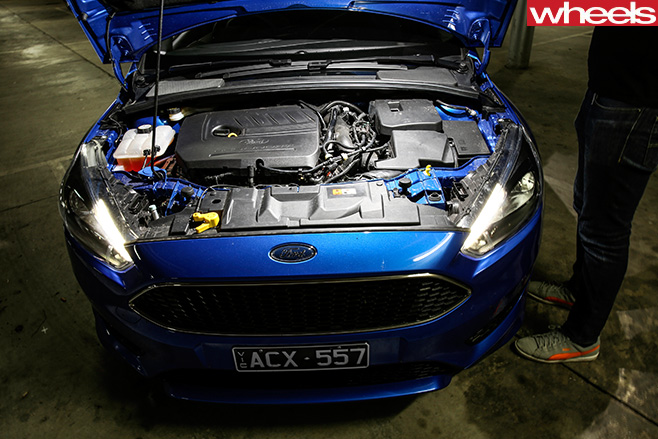
If you’re planning to buy the manual Sport model – or any manual Focus, since this engine does the entire non-performance Focus set – don’t expect class-leading economy, even on 98-octane.
What would I change about this car?
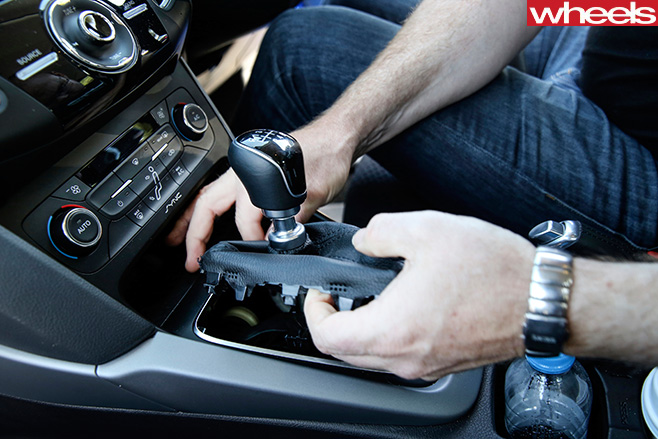
Those wheels are terrible to clean, and look dated. The seat trim is great, but I just don’t like the way it looks; it’s about the only area that makes this car feel cheap (well, that and the repeat offender – the gear lever boot).
And the windscreen wipers didn’t always clear the screen properly, which was especially problematic at night on a roo-infested country road.
Yet the gear this car comes with – reversing camera, sat-nav, keyless entry and start – means you don’t need to tick any of the options boxes. You won’t even need six hours, alone, to convince you that there are no skeletons in its closet.
Ford Focus Sport hatch Price as tested: $26,910 Part 5: 1340km @ 9.4L/100km Overall: 7414km @ 10.2L/100km Odometer: 10,633km Date acquired: December 2015
