
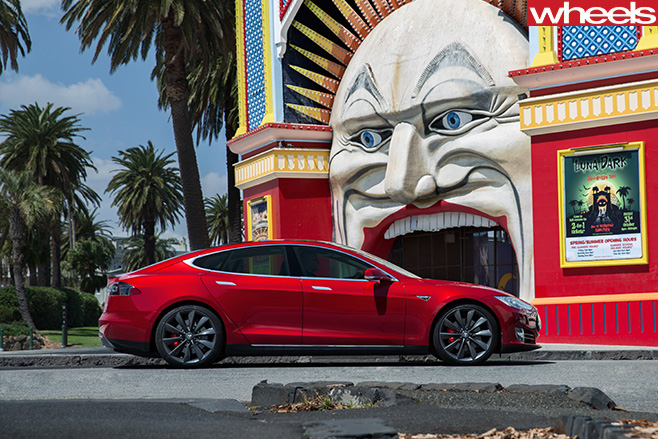
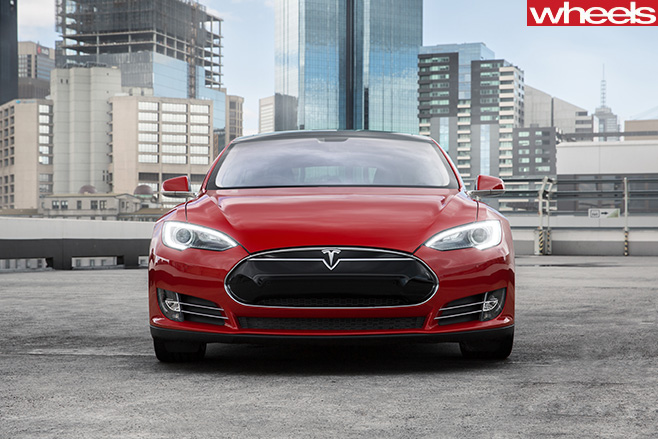
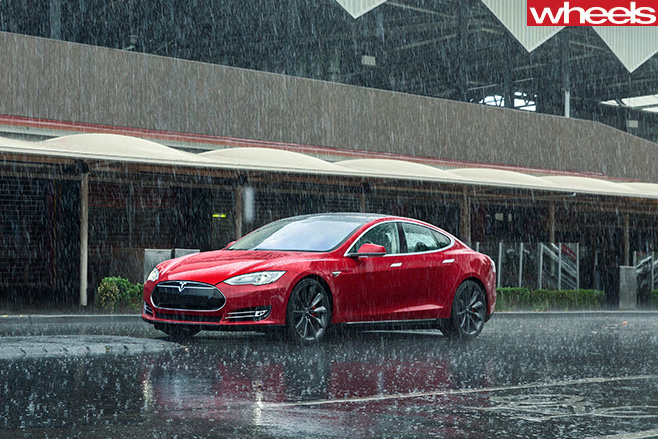
TESLA HAS announced its cheapest vehicle yet, with the Model S 60 and 60D versions lowering the entry costs for the luxury electric vehicle.
Starting at $128,578 for the 75, Teslas are in high-demand, with owners wanting to purchase any of its current models having to wait until September for their cars to be delivered.
Although available for purchase now – with a $100,800 (plus on-roads) price point – buyers of the new 60 and 60Ds will need to wait until October for delivery.
The California-based car company announced its ‘EV for everyman’ – the Model 3 – earlier this year. Expected to land in Australia in 2018, the anticipated cost will be around $55,000.
“There will obviously be a natural drop off from a reservation point of view,” he told Wheels. “I think with any product you will see natural attrition.
“However, I think with the compelling proposition that is in play, and the fact we have been very transparent about the timeline, I think people are willing to wait and signed up accordingly.”
“I think that… those that don’t necessarily want to wait, may transfer into a Model S whilst they are waiting for a Model 3; or may now have the opportunity to say ‘well, now I can afford a Model S, so I will purchase that instead’,” he added.
Tesla says those that purchase the cheaper 60, will be able to upgrade to the $120k 75 at a later date if desired.
“The main motivation [in introducing the 60 and 60D] is price-point,” Walker explained.
“So what we thought we would do is release a 60 and 60D, but essentially with [a de-tuned] 75kWh battery – so people have the opportunity to get in at a lower price point, with still the option to upgrade still to a 75kWh range and battery size at a later date if they need to.”
The $100k price point levels the Model S 60 and 60D squarely against the Mercedes E250 and E300e, Jaguar XF R-Sport 35t and XE S, as well as the BMW 3 Series 340i and 4 Series Grand Coupe 435i.
The technology, called G-Vectoring Control (GVC) has not been confirmed by Mazda, however will reportedly be offered on its volume-selling Mazda3 and Mazda6 ranges before proliferating across the brand’s line-up. It could be in cars in Australian showrooms by 2017.
Part of the company’s SkyActiv approach, which focuses on overall efficiency and dynamics, it works by limiting the amount of drive to each wheel for a more balanced distribution of torque. It monitors steering, accelerator and braking inputs for a smoother corner execution, which reportedly results in enhanced fuel economy while reducing fatigue, as it reduces driver input.GVC is designed to work in conjunction with Mazda’s existing SkyActiv systems, such as its ‘i-eloop’ regenerative braking, as the company continues to pursue its goal of optimising it petrol and diesel engines before it introduces electric and hybrid models to its line-up.
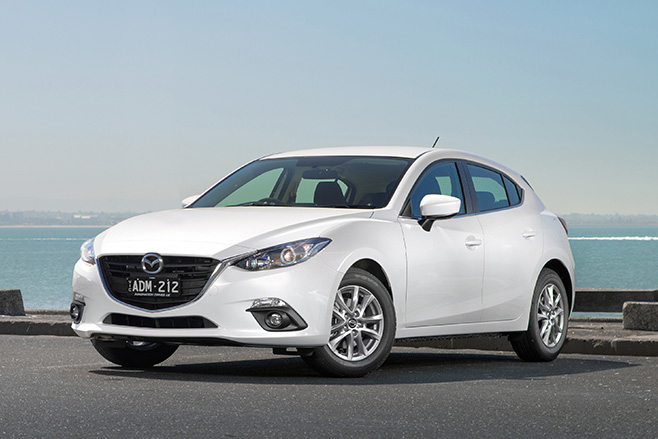
In the meantime, it will continue to optimise its line-up, which currently does not include a single hybrid or electric vehicle, with SkyActiv technology. The all-new 2016 Mazda CX-9 SUVs arrival means that the entire line-up of Mazda vehicles currently in Mazda showrooms are ‘SkyActiv’ models. The seven-seat CX-9 brings with it an all-new turbocharged engine.
While GVC is claimed to improve fuel economy, its fatigue reduction means that it’ll improve safety levels on the 3 and 6, both vehicles that have been awarded five-star crash ratings from ANCAP (Australasian New Car Assessment Program).
Earlier this week, the Mazda MX-5 that won the 2016 Wheels Car of the Year was also awarded a five-star ANCAP rating.
The weather’s fine in the NSW Snowy Mountains for the moment but, in the tradition of Alpine regions everywhere, just give it a minute and it could turn cold, sleeting and icy.
In other words, it’s a great place to wind out a $389,900 all-wheel-drive V10 two-seat supercar with 449kW, 560Nm and carbon ceramic brakes.
Yes, the R8 V10 Plus has finally made it to Oz in right hand drive, and after our blast at Bathurst earlier in 2016, we’re keen to see if the incredible on-track performance can translate to the real world.
Audi Australia reckons that 80 per cent of buyers will plump for the full-fat version of the two R8s offered locally. The ‘standard’ V10 at $354,900 offers 396kW and 540Nm and is a shade slower to the 100km/h (3.5sec versus 3.2 for the Plus). It also misses out on some key spec items that make the Plus a more compelling buy.
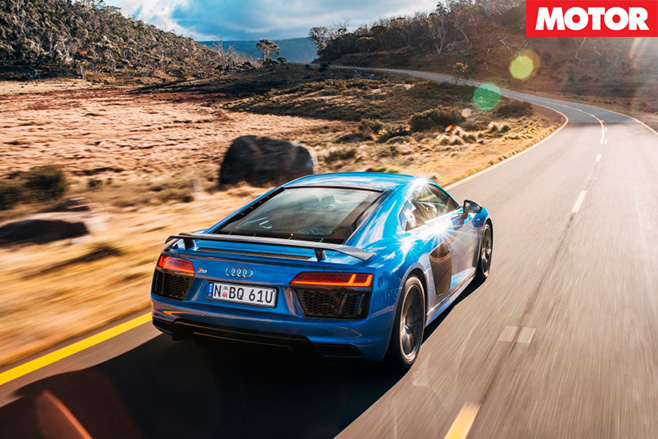
Hit D for Dynamic, though, and things… change. There’s just one excellently perfect damper tune aboard, but the rest of the car sharpens appreciably under both your fingers and feet.
There’s nothing quite like a mid-engined car for chassis balance, and the R8 is on the right side of playful over the tarmac. It will not spook even the most timid of pilots, yet it rewards the more adventurous without punishment. In fact, it’s one of the most accomplished, refined and mature chassis tunes we’ve come across in a long, long time.
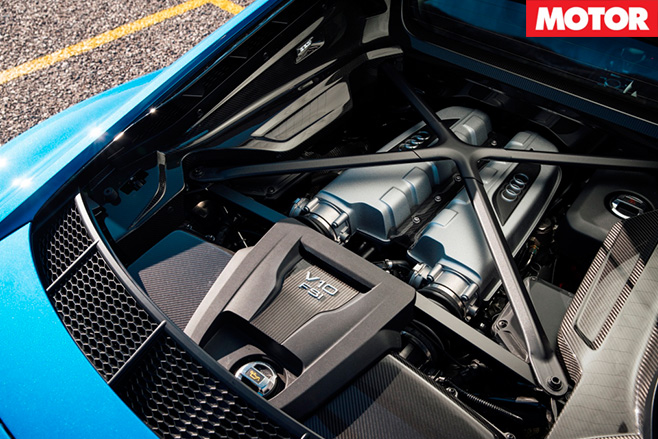
The powerplant is truly something special, too. Born of Audi’s customer GT3 racing program, the 5.2-litre V10 wallops around to its 8250rpm redline in a heartbeat, relentlessly shortening the straight bits between the bends as fast as thought.
The new R8 will be a serious contender for the overall at PCOTY 2016. You read it here first.
4 OUT OF 5 STARS
Like: Astonishing accomplished chassis tune, astounding V10 engine
Dislike: Underdone interior aspects, missing just a smidge of mongrel.
SPECS Engine: 5204cc V10 90-degree, DOHC, 40v Power: 449kW @ 8250rpm Torque: 560Nm @ 6500rpm Weight: 1555kg/ 0-100km/h 3.2sec (claim) Price: $389,900
TELL ME ABOUT THIS CAR
Believe it or not, this is the first time Mercedes has lopped the roof off its venerable C-Class. This cabriolet version is based on the C-Class Coupe, but every panel from the A-Pillar back is different. The result is one of the best-looking four-seat convertibles on the market, backed up by strong engines and nicely judged dynamics. The cloth roof can be opened or closed in 20 seconds and its design is excellent.
STRENGTHS
How a convertible looks is often as important as it drives, and there’s no denying the C-Class Cabriolet is attractive. With the roof down, its high shoulder line and elegant rear end make it one of the best-looking four-seat convertibles you can buy right now.
- The roof. Aussie versions of the C-Class Cabriolet score a thicker version of the cloth roof as standard, which improves the cabin’s refinement and reduces unwanted wind noise. Even better is the open air refinement. There’s very little buffeting when you open the cabin to the elements, even at speeds beyond 120km/h
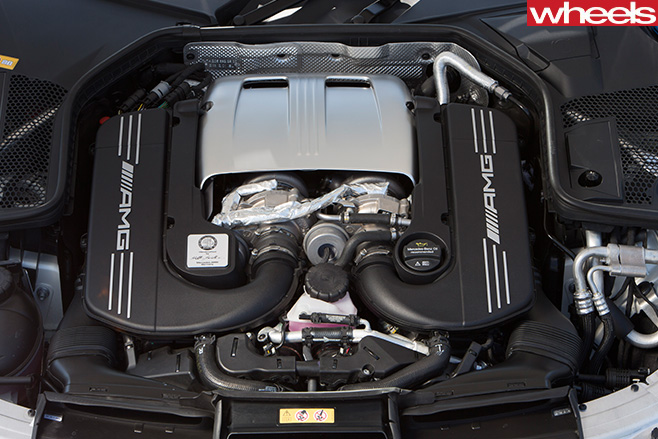
- Engines. There will be four petrol engines to choose from when the Cabriolet arrives Down Under in November, but the highlight is the turbocharged V8 in the range-topping Mercedes-AMG C63 S. It produces 375kW/700Nm which is enough to propel the C63 S from 0-100km/h in just 4.1 seconds. It sounds amazing too, with a menacing exhaust note that only gets better when you drop the roof.
- Typically, chopping the roof off a car is terrible for dynamics, but we’re happy to report the C-Class Cabriolet is a tidy handler. There is some flex in the body over big bumps and you do feel its extra weight during changes of direction and under braking, but these are hardly deal breakers.
- Cabriolet versions weigh around 125kg more than hardtop C-Classes and this negatively impacts everything from handling and acceleration to fuel economy.
- It costs more than the Coupe. Mercedes is yet to reveal official pricing, but expect a price rise of around $5000 over hardtop versions.
- It’s not as good for lugging stuff around. The cloth roof folds into a compartment that eats into the boot space, which has fallen to 360 litres with the roof up, and 285 with the roof down.
- The back seats aren’t exactly roomy either. The seats themselves are comfy enough, but taller passengers will brush their heads on the roof and struggle for knee room.
BMW has a convertible version of its BMW 4 Series which is a worthy rival, and Audi also offers its A5 with a cloth roof, however it will soon be replaced with an all-new model.
BUYING A brand-new Tesla is now cheaper than ever, with the electric vehicle manufacturer announcing a brand-new-for-2016 Model S 60 and Model S 60D.
Starting at $100,800 plus on-roads, the new models aren’t exactly affordable, but for those that just can’t scrounge up the change for a $128,578 Model S 75, it could make all the difference in getting them into a Tesla this year.
Available for purchase today, the 60 and 60D have an expected Australian delivery time of October, while all other current Tesla Models purchased currently are slated to arrive in September.
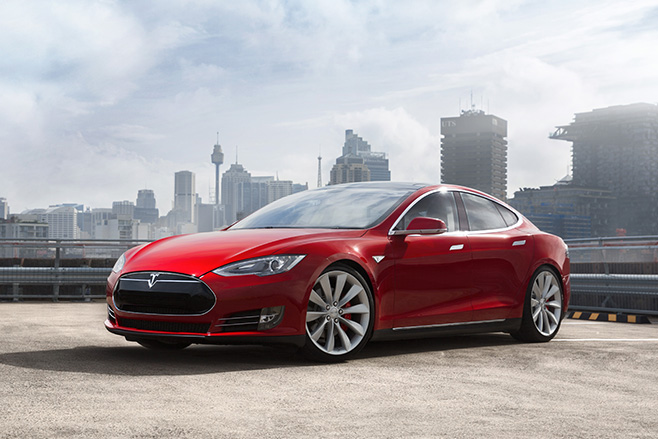
Tesla Australia spokesperson Heath Walker says the 60 and 60D gives consumers an attractive chance to own a Tesla Model S for a smaller outlay, without having to give up too much in terms of performance.
“The nice thing about the new 60 battery pack is there is no real compromise from a speed point of view. It still does the same 0-100km/h time as the 75,” he told Which Car.
“If you were to go from a 60 to a 60D, the main thing that they will see is traction. They will see slightly more range – think it is an eight kilometre range increase and a slight speed increase. It is 0.3 quicker from 0-100km/h.
“But I think the main thing is just the handling element with the four wheel drive, and the ability for torque vectoring at a fraction of a millisecond.
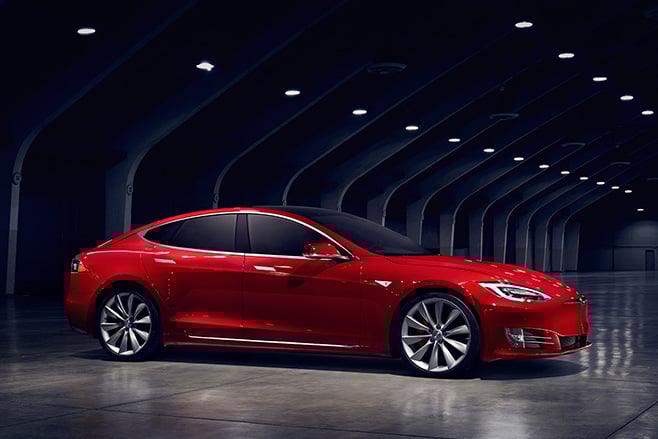
“If they go up [again] to a 75, the main difference will be range. [Buyers] are essentially looking at 20 percent range increase from one to the other.
“The biggest thing then jumping to a 90 is either performance, or range, depending on which option you go with. The P90 is now built and designed for range, and the battery pack’s capacity is delivered to the vehicle for the purpose of range.
“Whereas the P90D is now built with a larger rear motor, a performance motor at the rear, and allows for the battery capacity to be pushed to that motor for performance purposes, which obviously lowers the range in comparison to the 90, but provides a pretty compelling acceleration off the line.”
New owners of the 60 and 60D will be able to upgrade to the 75 at a later date if they wish to unlock the full capabilities of the 75kWh battery pack.
Merc takes the angle grinder to its C-Class Coupe.
WHAT IS IT? The first ever C-Class convertible. Mercedes has taken the angle grinder to its hulking C-Class Coupe, which now sports a rather excellent folding soft-top that can be opened or closed in 20 seconds. It’s a looker too, especially in more aggressive AMG guise.
WHY ARE WE DRIVING IT? To see if lopping off the C-Class Coupe’s roof has heightened the driving experience, or ruined it with sloppier dynamics and a heftier kerb weight.
MAIN RIVALS BMW 4 Series convertible, Audi A5 Cabriolet, Mercedes-Benz E-Class Cabriolet
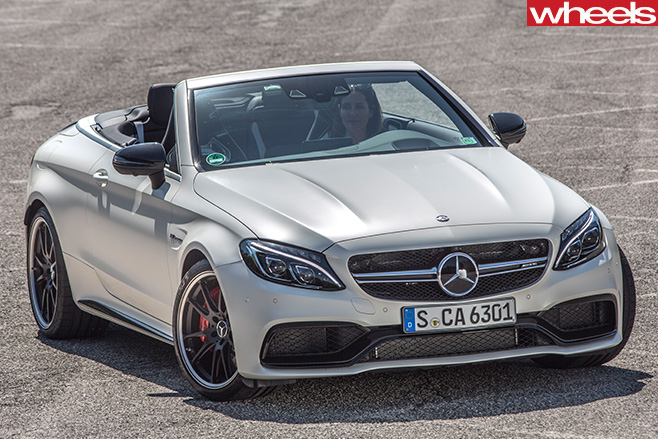
PLUS: styling; performance and sound of AMGs; body strength MINUS: Extra weight dulls handling; price premium over coupe; boot space
THE WHEELS REVIEW IT IS, or I should say, it was, the perfect place to launch a new convertible. I’m in Italy, in the middle of summer on the coast, where the winding roads flirt with the sea and it’s… raining. Like properly, “Noah get your ark!” raining. It’s a shame because before me lies an AMG C63 S Cabriolet, and it looks brilliant. Aggressive, stylish and elegant all at once, it shares the C-Class Coupe’s flared arches, angular nose and tough stance on staggered, deeply dished alloys, but dropping the roof adds an extra splash of class.
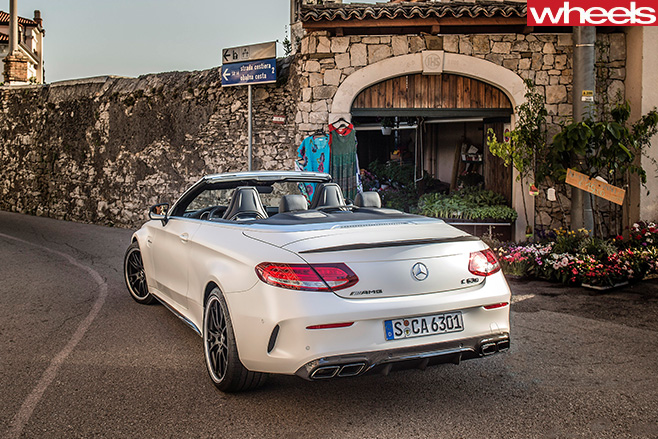
Believe it or not, this is the first time Merc has offered a cabriolet version of its venerable C-Class. The CLK plugged the gap for a while, but no ragtop before this has worn a dedicated C badge.
Like the Coupe on which it’s based, Mercedes is positioning the Cabriolet as a sportier option for younger buyers, with all versions offered with the AMG line as standard in Australia, which brings bigger wheels and a more aggressive body kit.
We also score a thicker ‘acoustic’ version of the cloth roof, which can be opened or closed in 20 seconds at up to 50km/h.
Four variants are coming to Australia, two tweaked by the boffins at AMG. Regular versions include the entry-level 200 and mid-spec 300, both powered by a 2.0-litre turbo four producing 135kW/300Nm and 180kW/370Nm respectively.
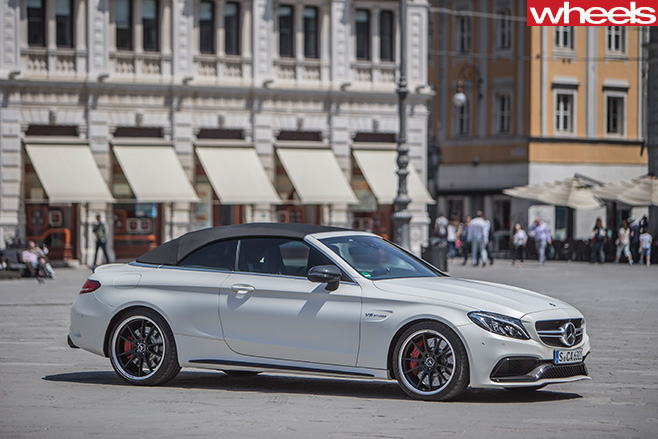
Lopping off the roof has made the cabrio around 125kg heavier than its hardtop sibling, and while the extra heft does blunt the C63’s cornering and braking slightly, it remains a seriously fun car to drive quickly.
Mercifully, the rain eases and I do score some dry running in the C43 and C300 (no 200s were available to test).
The C43 mightn’t score the blistered arches and menacing stance of the C63, but its 270kW/520Nm twin-turbo V6 ensures it feels a proper part of the Affalterbach family.
The most enjoyable drive of the day, though, is delivered by the C300. Our test car rode on optional air suspension and the ride, on smooth Italian roads and 19-inch wheels, is plush and nicely controlled. The 2.0-litre four matches the Cabriolet’s character perfectly too, with a muscular mid-range, rorty note and gutsy performance.
Then there’s the open-air refinement. Drop the roof in any cabrio variant and there’s very little wind noise, even at speeds up to 140km/h.
Inside, the Cabrio’s cabin mirrors the rest of the C-Class range for design and quality materials, as well as Benz’s list of standard safety equipment. The only real interior gripes go to the inevitable loss of luggage space required to fit the folding roof, which drops to 360L with the roof up, or 285L with it down. The rear pews aren’t exactly roomy either, and although the seats themselves are comfy and there’s a good amount of toe room, taller passengers will brush their heads on the cloth roof.
Even so, there’s no denying the Cabriolet mounts a fairly convincing case. The body structure is strong, the styling attractive and no variant feels like an overly compromised or spoiled version of the Coupe. And that’s high praise for a ragtop.
SPECS Model: Mercedes-AMG C63 Cabriolet Engine: 3982cc V8 (90⁰), dohc, 32v, twin-turbo Max power: 375kW @ 5500-6250 Max torque: 700Nm @ 1750-4500 Transmission: 7-speed automatic Kerb weight: 1850kg 0-100km/h: 4.1sec (claimed) Fuel economy: 8.9L/100km (EU) Price: $170,000 (estimate) On sale: November
KEN BLOCK finally has a signature vehicle which mere mortals like you and I can get our hands on, and it’s… a Ford Transit van!
Yup, that’s right! Ford has allowed Block to work his magic on a Transit van, instead of a (more) hardcore Focus RS or Raptor.
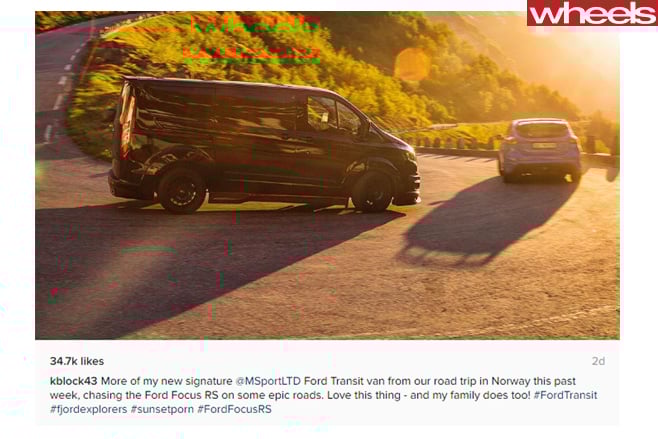
Block – of tyre-frying, internet-breaking, automotive-porn Gymkhana fame – has finally got his own signature production vehicle through Ford and its tuning affiliate M-Sport (The same guys that make Bentley’s monster Continental GT3, and Ford’s array of World Rally Championship cars).
The signature Block Transit Racing model comes rolling a set of OZ racing wheels, and sits on Eibach lowered suspension.
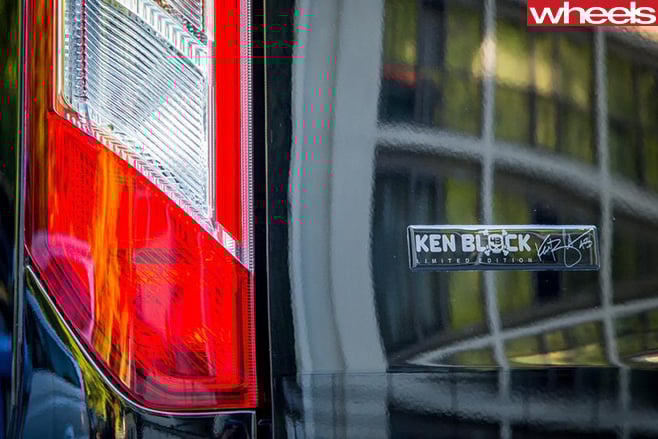
The Van also has a number of visual mods inspired by M-Sport’s WRC cars; a hand-crafted leather interior and additional styling on the vehicle trim that incorporates the livery from Block’s Focus RS RX World RallyCross car to make it stand out in the otherwise benign Transit line-up.
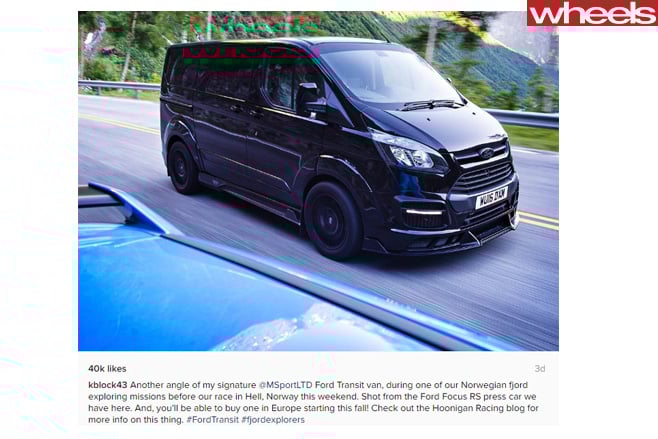
Credit: Instagram
“I’m really stoked with how this collaboration turned out,” said Block. “I always thought that maybe someday I’d have a signature Ford vehicle, but I never thought that it’d be a van!
“I really like this thing though, it’s super practical for me since I have a wife and three kids and we travel a ton. This Ford Transit has the look and styling that I like, is fun to drive and manages to hold us and all of our stuff.
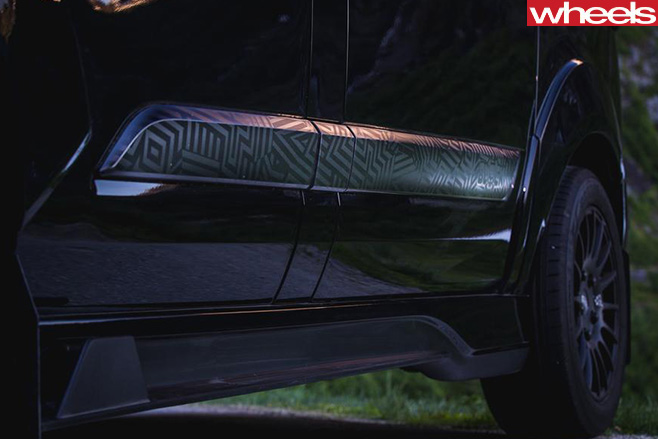
If you want one in Australia, too bad: the signature Van will only be available in Europe.
These automotive sopranos from the last decade make us glad tunnels exist.
1. FERRARI F12TDF
Flying the Ferrari V12 flag is perhaps the loudest, most brash of them all: the 574kW, 13.5:1 compression-ratio, 6.3-litre F12tdf. That’s a lot of engine moving at 8900rpm (redline), and the sound is suitably rich, melodic and utterly heroic.
2. LEXUS LFA
The best-sounding car here? Yamaha called in its music department to fine-tune the noise from the LFA’s 4.8-litre, 412kW V10. At 9000rpm there’s a beautifully crisp, high-pitched banshee note, making modern V6 F1 cars sound like leaf blowers.
3. AUDI R8 V10 PLUS
Perhaps the most musical of our nine-strong choir. An unusual firing order for the 5.2-litre V10 Plus generates a recognisable, rhythmic, medium-pitched warble. One that will have you regularly chasing the 8700rpm redline with windows down.
4. PORSCHE 911 GT3 RS
GT3’s capacity jumped from 3.8 to 4.0 litres, but the RS’s redline dropped 200rpm to 8800. However, power went up to 368kW, and its flat-six bark became more distinctive: a throaty idle revving to what could be a Carrera Cup car.
5. PAGANI ZONDA CINQUE
Its AMG 6.0-litre V12 is high-pitched in a way you mightn’t expect from an engine with a 7000rpm redline. But the Cinque’s wailing, 506kW donk sounds haunting – as if possessed by the ghost (or at least the noise) of a mid-’90s Ferrari V12 F1 car.
6. JAGUAR F-TYPE COUPE R
Sinister and anti-socially loud, the F-Type Coupe R’s is perhaps the laugh-out-loud naughtiest exhaust note on this list. With 404kW and 680Nm exiting via quad pipes, so many V8s could do worse than imitate the burble of this blown 5.0-litre beast.
7. AUDI RS4
With forged crank, rods and pistons, the discontinued RS4’s 4.2-litre V8 meant business, making 331kW/440Nm. Its note is what you’d imagine if Honda built a VTEC V8: induction snarl, lots of revs and a tacho topping out in an 8250rpm crescendo.
8. MERCEDES-BENZ SLS AMG BLACK
It revved to 8000rpm, but the SLS Black Series sounded more high-tech NASCAR than high-pitched, with a serious, guttural V8 thrum from its all-titanium exhaust. Its 6.2-litre V8 made 464kW and 635Nm without a turbo or blower in sight.
9. LAMBORGHINI AVENTADOR SV
It’s no wonder these things drive around stuck in first gear (and tunnels) – they sound truly orchestral. The 552kW SV is the Aventador’s 6.5-litre, revving-to-an-ear-piercing-8500rpm V12 at its best and loudest. A rich, distinctive, very Italian roar.
TELL ME ABOUT THIS CAR
It’s the newest version of one of our favourite supercars, the Audi R8, and it ticks all of the right boxes: evocative styling, neck-snapping acceleration and boasts one of the greatest engines you can buy – Audi’s magical 5.2-litre V10. It’s mounted just behind the driver’s left shoulder and with the throttle buried in the carpet, delivers a howling exhaust note that sounds like an opera from the gods.
This new R8 is lighter and stiffer than before and is also one of the friendliest and most enjoyable supercars to drive quickly.
STRENGTHS
- Did we mention that engine? The big naturally aspirated V10 dominates the entire driving experience and isn’t only rapidly fast and responsive, but sounds phenomenal. Audi offers the R8 in two different outputs: the 397kW/540Nm V10, or the angrier, and faster, 449kW/560Nm V10 Plus. Go for the Plus, we say, it’s worth the extra cash.
- It’s a doddle to drive quickly. The R8 boasts the latest version of Audi’s famous quattro four-wheel drive system, and its handling is agile, sure-footed and predictable. That might sound boring, but the R8 manages to be effective and exciting all at once.
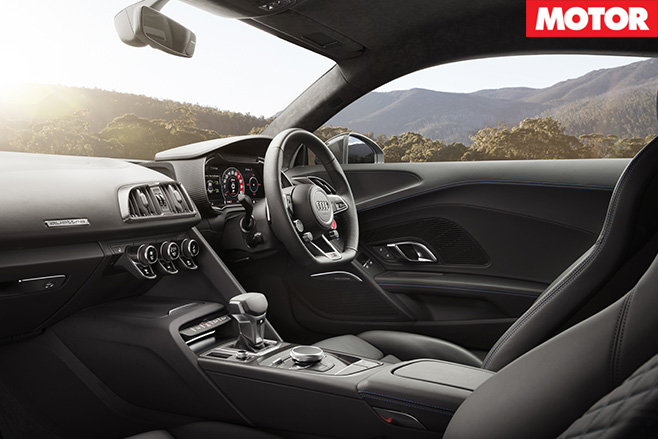
- The cabin is a triumph too. It’s beautifully made, as you’d expect from an Audi, but it’s also comfortable and laden with new technology, like Audi’s virtual cockpit instrument cluster, that can be configured to the driver’s liking.
- The new R8’s exterior styling might be a little too evolutionary for some.
- And while there’s no faulting the interior’s quality or richness, some might think its driver-focused design is too restrained, especially when compared to the over-the-top, hexagon-infused cabin you get in the Lamborghini Huracan.
- The biggest disappointment, though, and we’re getting nitpicky here, goes to the gearshift paddles mounted on the steering. Unlike rivals that use large pieces of beautifully hewn aluminium, the R8’s shift paddles are plastic and feel cheap.
- It’s not what you’d call cheap either. A price tag of $345,900 for the standard V10 and $389,900 for the V10 Plus means the R8 is out of reach for most of us.
If showing off is your thing, then the Lamborghini Huracan might be more your style. It has the same V10 engine as the R8, but flaunts even crazier, “look at me!” styling inside and out. Porsche’s brutally fast 911 Turbo S is also a worthy rival, as is the McLaren 570S and Ferrari 488.
Volkswagen Australia will import the performance Passat 206TSI as a modern successor to the Passat R36 that accrued a sizeable fanbase locally, MOTOR has exclusively learned.
The Passat 206TSI mixes a 5.5-second 0-100km/h claim with the space of a medium sedan or (two-tenths-slower) wagon, and will be priced from an estimated $52,000 before on-road costs when it arrives in September.
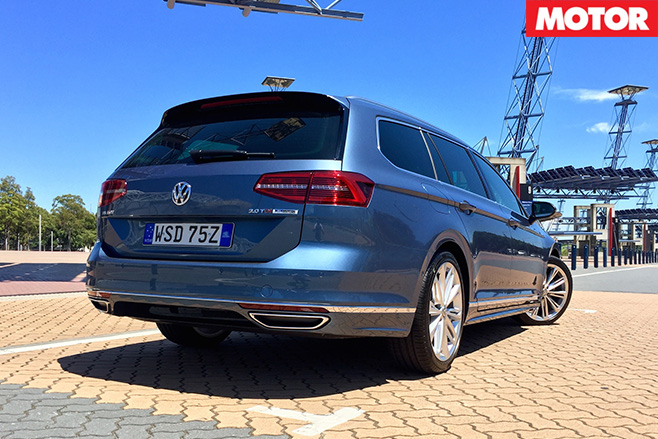
The same DSG six-speed dual-clutch automatic and 4Motion all-wheel-drive system carry over, and the 2.0-litre turbocharged four-cylinder petrol engine makes an identical 206kW though with 30Nm less torque (an R36-matching 350Nm).
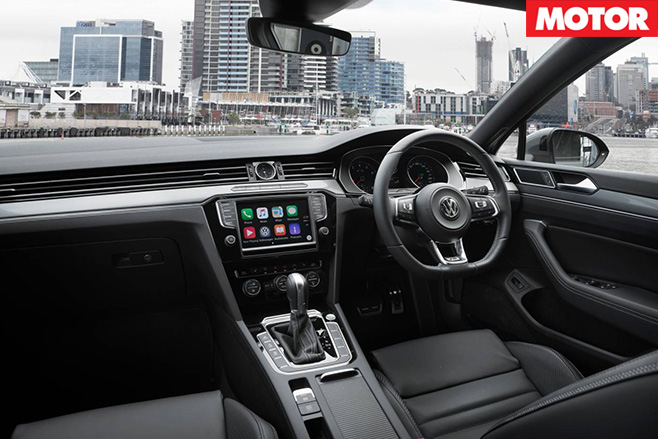
The 206TSI will look similarly athletic to the R36 thanks to an R-Line package featuring sports suspension, 19-inch wheels, bodykit and carbon Nappa leather upholstery, as is optional on the (pictured above) Passat 140TDI model grade.
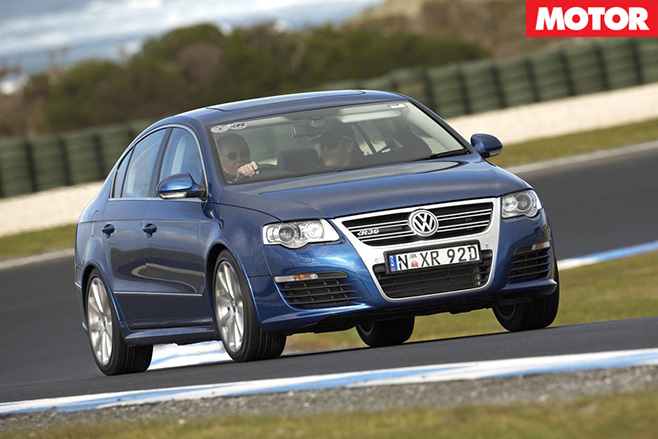
Volkswagen sibling Skoda already offers the Superb 206TSI sedan and wagon with this Golf R drivetrain priced from $50,990 before on-road costs, but it is larger and slower (by three-tenths from 0-100km/h) than the Passat 206TSI.
