
Porsche’s new twin-turbo V8 will raise the stakes on Mercedes-AMG and BMW M with class leading twist and the possibility of hybrid power despite its smaller size.
Porsche’s latest weapon, revealed at the 37th International Motor Symposium, will combat AMG’s and BMW’s small-capacity V8s and succeed the current 4.8-litre twin-huffer V8 serving in the Cayenne Turbo and Panamera Turbo.
The reduction in capacity is believed to allow Porsche’s five-door models to limbo under the tax threshold in China. But even with 800cc less it’s claimed to make 404kW/769Nm, the latter online soon as 1960rpm thanks to the turbos now nestled in the unit’s vee.
That’s 29kW/119Nm more than an AMG GT S and 22kW/69Nm over a current Panamera Turbo, while Wards Auto reports company officials suggest much as 447kW and 813Nm is possible from the engine – which would shade the current Panamera Turbo S.
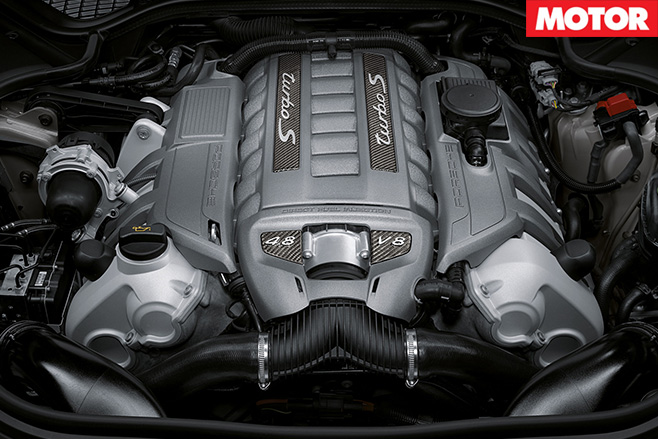
It’ll also be hybrid friendly, laying the path to even more power but also improving its fuel efficiency, which cylinder deactivation technology will improve by 30 per cent.
Destined to find use throughout Volkswagen’s brand empire, the engine’s shares architecture with a 3.0-litre V6 destined for Audi’s new S4. Audi will also drop it into MLB platform cars (A4, A8) where it’ll be married to an eight-speed auto, while it’ll be linked to a dual-clutch eight-speed for Porsche’s MSB platform vehicles.
Expect it to debut in Porsche’s first MSB-based vehicle, the new Panamera, next year.
Toyota’s 2017 World Rally Car has finally hit the gravel ahead of the Japanese firm’s return to the WRC next year.
Unusually, the team boss is handling early development work, but when the boss is four-time WRC champion Tommi Makinen, there are few better qualified for the job. Development work will also be handled by the team’s first signed driver, Finn Juho Hanninen.
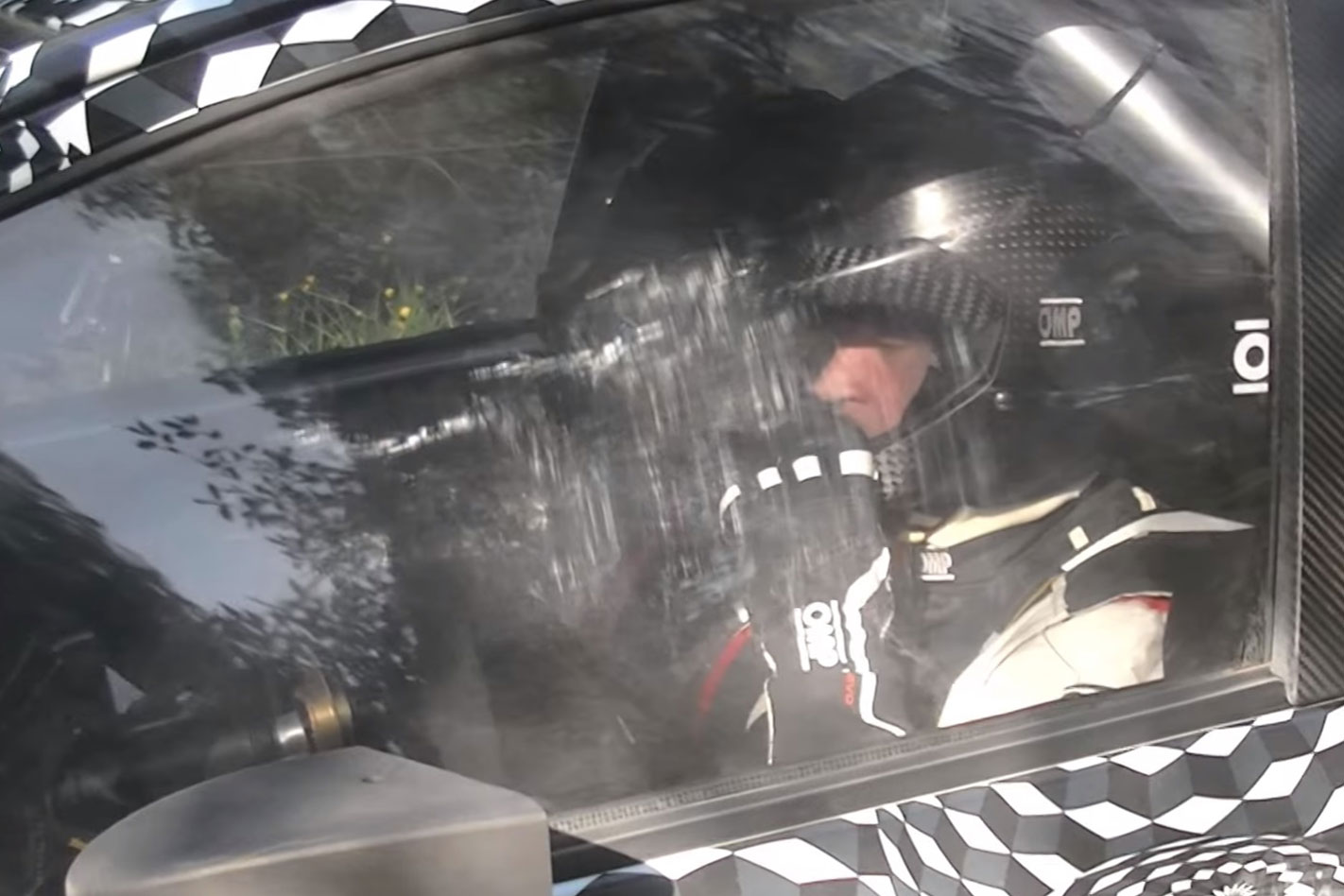
The 2017 regulations also allow much more freedom in the bodywork, evidenced by the huge flares and massive wings adorning Toyota’s development mule. Citroen and VW have also been spotted testing equally wild machinery, suggesting next year’s cars will definitely inject some visual excitement back into the sport.
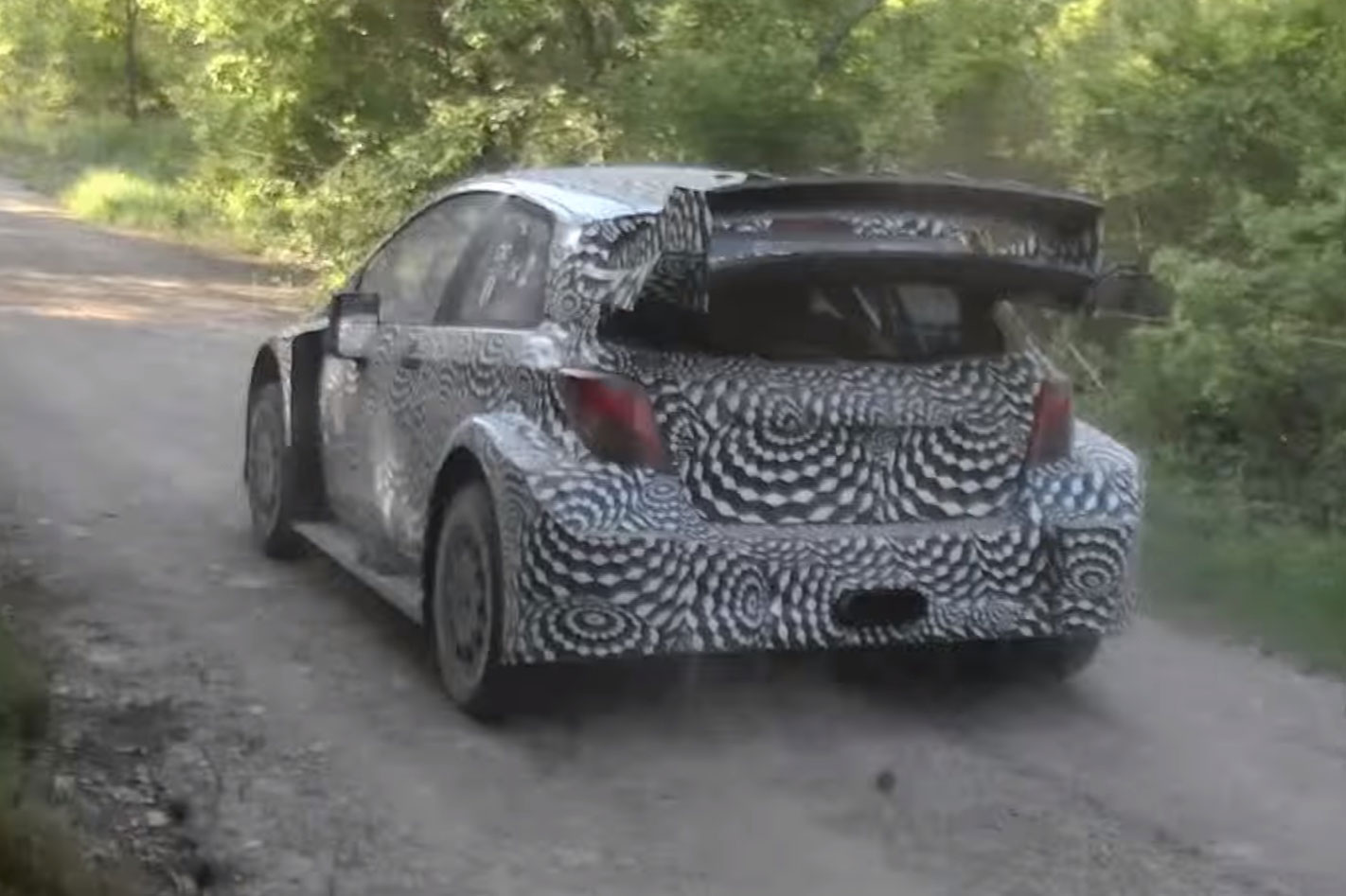
With Toyota re-entering the sport after an 18-year break and Citroen returning after a one-year hiatus, the WRC will play host to five manufacturers in 2017, including three of the top five car makers worldwide.
Ford Performance is watching reaction to the new Focus RS closely before signing off an even quicker limited-run special.
Ford insiders have confirmed an even more hardcore version of the 257kW five-door is under consideration – and it has the potential to be the fastest-accelerating hatchback in history.
Ford’s options for bringing extra grip, performance and excitement to the new RS will be delivered mainly through weight saving and upgrading the RS’s drivetrain. This will be possible in a car with an asking price that could even eclipse the $80,000 of its rivals.
With a higher budget, there’s plenty of potential for improving the car’s power-to-weight ratio by adding lightness to a more expensive version.
However, the car’s 2.3-litre four-cylinder turbo petrol engine is already operating close to its maximum and attempts to conjure more power will be hampered by the lack of room for additional cooling capacity.
But if the potential is there to break the 4.0sec 0-100km/h barrier, expect Ford to seize it.
COLD FRONT Ford could employ a new front bumper to address the current car’s lack of cooling capacity for additional power. Expect ever larger vents and radiators.
AXLE ROSE Expect an electronically controlled limited-slip differential for the front axle, tuned to work with the GKN-supplied rear drive unit. A front LSD is known to improve the RS’s handling and was considered for the standard car.
MASS EXODUS Polycarbonate glazing, carbonfibre-reinforced plastic bodywork, forged aluminium suspension componentry, carbonfibre brakes, less noise insulation and a stripped-out interior could take upwards of 100kg out of the car – even after the drivetrain additions under consideration have been grafted on.
NEW COMPANY Ford’s performance targets for the super-heated RS will be to make it quicker over the benchmark 0-100km/h sprint than the latest Mercedes-AMG A45 and the Audi RS3.
FAST PADDLE The obvious option for a double-clutch automatic would be Ford’s Powershift transmission, supplied by Getrag, but it is currently rated for engines with peak torque of 450Nm, so it would need some modification.
TYRE GAME The regular RS’s claim (4.7sec) would suggest there’s plenty to do to meet the RS3’s 4.3sec, but company insiders have confirmed that even the standard car is much closer to Germany’s big hitters when fitted with optional 19-inch forged wheels and Michelin Pilot Sport Cup 2 tyres.
On a trip to the US, I was recently introduced to a distant in-law.
Now, on paper, this bloke and I shouldn’t have hit it off. See, he’s a church-goin’, God-fearin’, Trump-fancier and by any of those measures, I should have been waiting outside in the car.
But damned if I could help myself but like the geezer. In fact, it was impossible not to like him. He was good company and we parted mates. And I reckon if he was a car, he’d be the long-term Chrysler SRT.
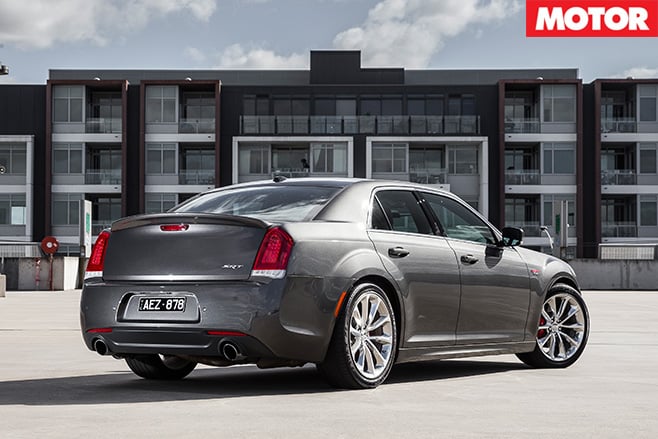
It’s a bit too, you know, obvious and even though the new interior is better than ever, it still looks a bit kitsch to me. But, same thing: Damned if I didn’t find it impossible to dislike.
The engine is a peach, sounds good and makes for super safe overtaking. I also managed to squeak less than nine litres per 100 on a cruisy stretch of highway. The only thing that grates (literally as it turns out) about the driveline is the cylinder deactivation that dumps four pots on a light, steady throttle to save a litre or two.
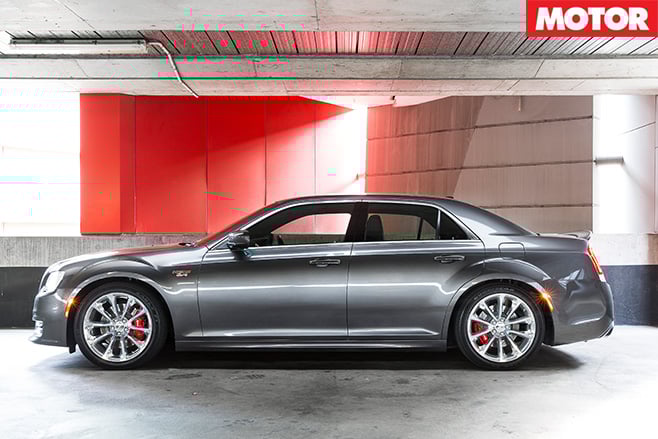
But I’m tipping if the car was mine, I’d find a nerd with a laptop who could disable the four-cylinder mode for me. And who knows, with Holden and Ford about to stop building big V8 sedans, maybe the 300 SRT is where big oafs like me will be heading. Could be worse.
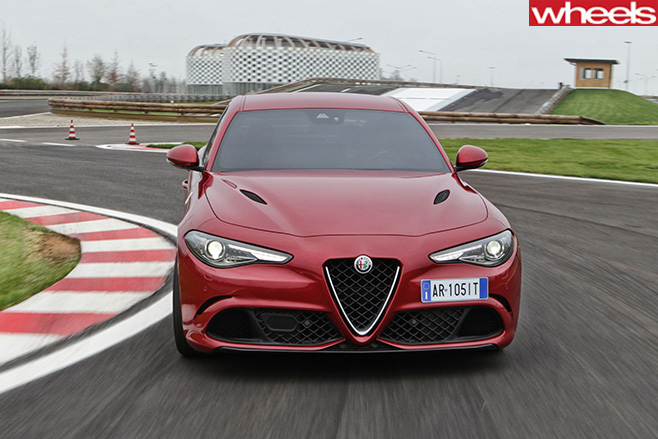
Quadrifoglio is a badge reserved for Alfa Romeo’s fastest, rarest models; Wheels went to drive the latest super-Giulia on home turf.
WHAT IS IT? The Quadrifoglio is the high-performance flagship of Alfa Romeo’s Giulia sedan range, designed and developed to battle BMW M, Mercedes AMG and Audi RS for enthusiasts’ hearts and wallets. The Quadrifoglio employs a Ferrari-inspired twin-turbocharged V6 engine, and takes the rear-drive Giulia platform’s already competent dynamics to new heights. But is it enough to vanquish some very serious German rivals?
WHY WE’RE DRIVING IT? Because we want to find out if this is more than just another Alfa Romeo false dawn – remember the 156 GTA? Is Alfa Romeo finally a serious player at the highest echelon of the premium performance market?
MAIN RIVALS Audi RS4, BMW M3, Jaguar XE S, Lexus IS F, Mercedes-AMG C63
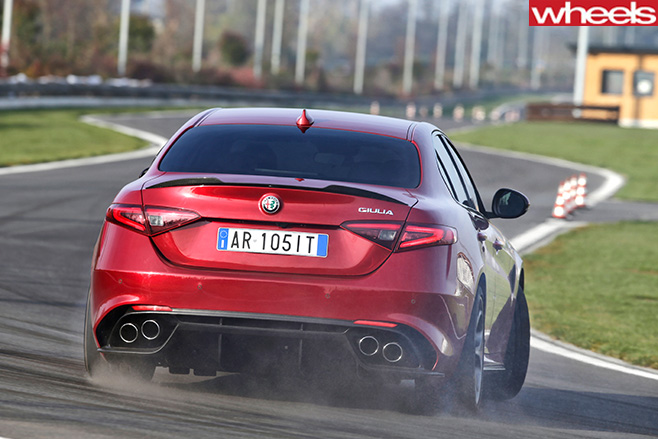
THE WHEELS REVIEW THIS is the most anticipated launch of 2016, no question. It may not be the most important in terms of market relevance or sales volumes, but as far as Alfa Romeo – one of the world’s oldest brands – is concerned, the company’s future depends on the Giulia’s success.
That’s not overstating it. If the Giulia prestige sedan is a flop, Alfa Romeo’s future is in question. The Giulia is essentially a €5 billion gamble, so it’s only fitting that it’s built in Cassino in the north of Italy.
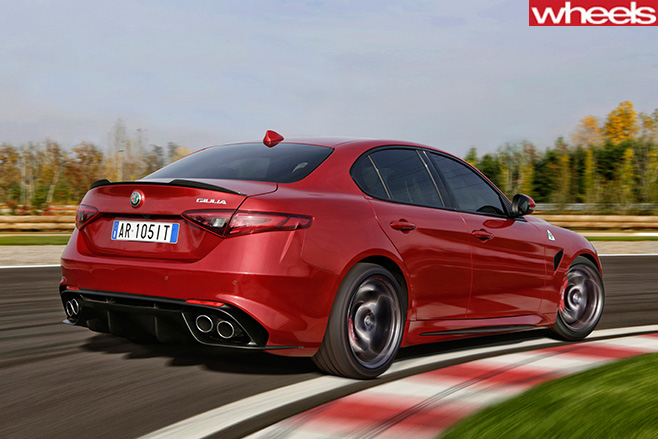
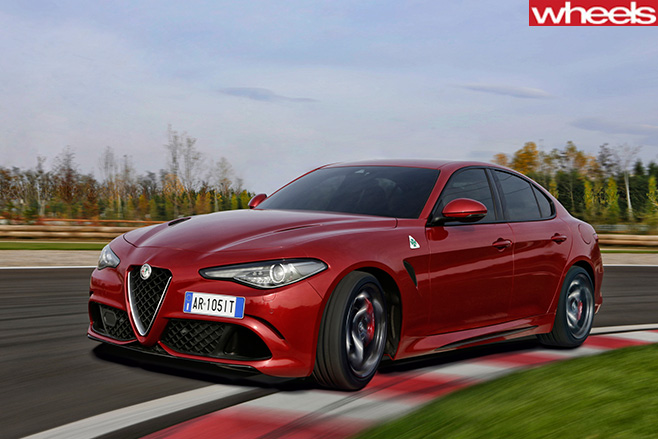
That surprised me too, but it’s right. The Alfa Romeo Giulia Quadrifoglio (cloverleaf, and no Verde any more), is the fastest Alfa Romeo ever. Thanks to a Ferrari-inspired, 375kW 2.9-litre twin-turbo V6, this relatively lithe rear-drive sports sedan scorches to 100km/h in a claimed 3.9 seconds. That’s three-tenths faster than the previous record holder, the V8-powered 8C Competizione coupe. The Giulia’s claimed 307km/h top speed also shades that limited-run coupe, too.
What’s even better than all that is the fact the Giulia Quadrifoglio is an absolute hoot to drive. It’s an exciting, engaging and invigorating performance sedan that’ll give the 317kW BMW M3 and 375kW Mercedes-AMG C63 S a real challenge when we chuck them in the ring together, when the Giulia launches locally in February 2017.
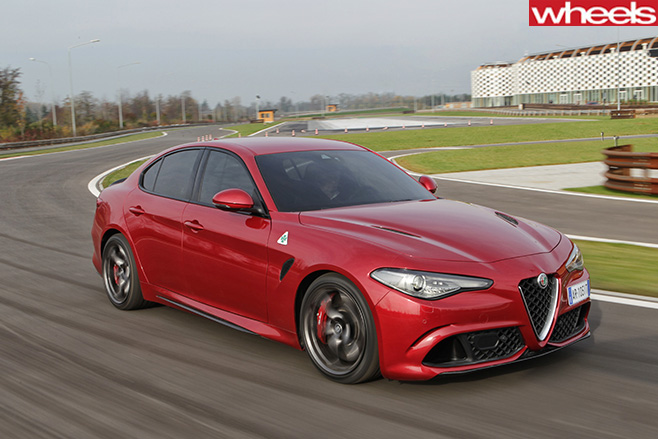
All of that, plus the Giulia’s long 2820mm wheelbase and the compact aluminium engine’s position low in the engine bay and almost behind the front axle line, combine to give this well-balanced car prodigious grip both front and rear. Seriously, the amount of traction the 1524kg Giulia’s aerodynamics and sticky 19-inch Pirelli P-Zero Corsas generate borders on astonishing.
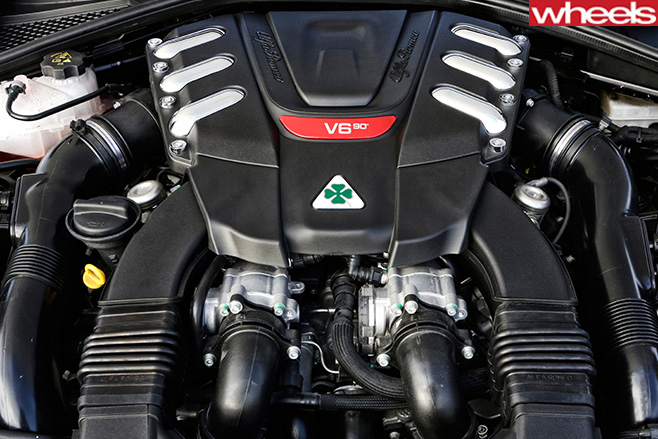
Before we go further into the Giulia’s love of a good rear-end slide, let me explain why I called the Quadrifoglio’s 375kW TTV6 ‘Ferrari-inspired’. Some media are reporting that this 2.9-litre V6 is essentially the Ferrari 488’s 3.9-litre V8 with two cylinders lopped off. That’s not at all true, Giulia development boss Philippe Krief told Wheels at the international launch. And he should know; he joined Alfa Romeo from Ferrari, where he was a senior engineer.
“No, no, no, no. The only thing this engine has to do with Ferrari is that the guy [who oversaw it came] from Ferrari: Gianluca Pivetti. He was responsible for the 488 V8’s development. [The Alfa] engine has cylinder deactivation. I don’t know a Ferrari that has cylinder deactivation.”
One area where Mr Pivetti’s latest engine falls a little short is its soundtrack. Despite extensive effort by engineers to deliver an evocative engine note worthy of the car’s thundering performance, the result is a little tame.
“We wanted to make that engine sound like the old V6 engine, the 147 GTA and 156 GTA, so we targeted this kind of noise. We worked a lot on intake, to overcome the turbos, but we also compensated with exhaust. You can like it or not.”
It’s not that we don’t like it, we’d just like it louder, and more obnoxious. Listen to a well-driven AMG and you’ll hear all kinds of delicious gurgles and burps on overrun, and accompanying every gearchange… the Alfa does none of that. And perhaps it’s a testament to the cabin’s isolating abilities, but the engine note also sounds a bit distant and muted inside the very sporty and well-appointed cabin, despite having a bi-modal exhaust to supposedly offer the best of both worlds.
“It’s not better for car performance, but it’s better for driver feeling. This way the engine feels like it’s always building, giving you more, the more you push. You could have 600Nm from 2000rpm. The engine can do it. We choose not to, so we can heighten the emotional sensation.”
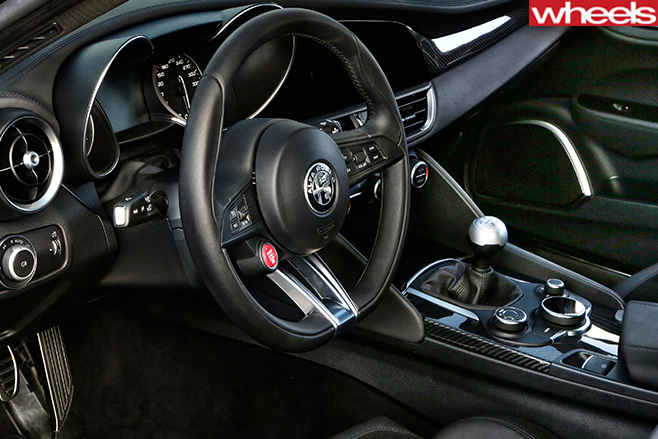
Emotion, it turns out, was one of Alfa Romeo’s key development targets with the Giulia, and especially with the Quadrifoglio. It all starts with a good driving position, says Krief.
“This is very important; the way you sit in the car. This is the first aspect. So we define this position, the space you need. The lower the better. Then after you have to organise everything. You need to have every component – steering, gearbox, brakes, engine – respond harmoniously, and progressively. And then you need also to make a car which is easy to drive. If you do performance which is not easy to drive, your emotion will not be good.”
Now, back to that discussion on the Quadrifoglio’s oversteering ways. No question it loves to wag its tail, and no question that 375kW and 600Nm makes doing so a doddle. But first of all, you’ve got to be in Race mode on the QF’s DNA selector dial. Normal Giulias let the driver adjust throttle response and transmission mapping for Advanced Efficiency, Natural and Dynamic driving situations. The QF’s DNA can also influence the car’s adaptive dampers, and in Race mode, sharpen everything to the max and mostly disable ESC.
But while it’s easy to initiate a smoky drift, the Quadrifoglio’s manners right around the transition from grip to slip aren’t always exemplary. I suspect it has something to do with the torque vectoring rear diff which uses a clutch on each half axle to control torque to each wheel. Get the tail out further and it’s wonderfully easy to hold or to tuck back in as desired.
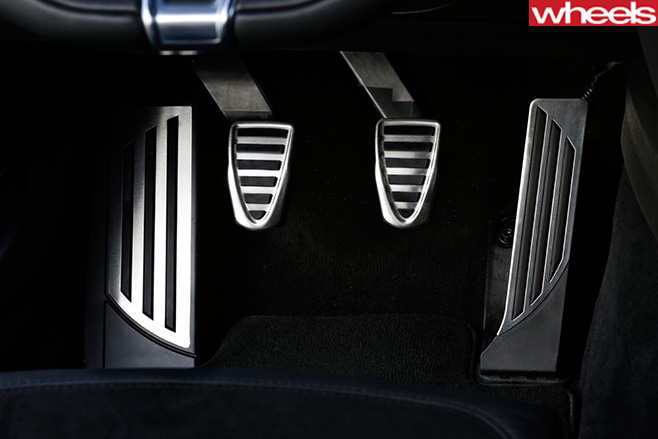
Those questions and more will have to wait for a chance to test the Alfa Romeo Giulia Quadrifoglio more extensively when it arrives in Australia in February 2017. Preferably in the High Country, and with a certain Benz, BMW, Jaguar and Lexus shadowing it. Can’t wait.
SPECS Model: Alfa Romeo Giulia Quadrifoglio Engine: 2.9-litre twin-turbocharged V6 Power: 375kW @ 6500rpm Torque: 600Nm @ 2500-5500rpm Transmission: 8-speed automatic Weight: 1524kg 0-100km/h: 3.9 second Fuel economy: 7.1L/100km (est) Price: $140,000 (est) On sale: February 2017
In reviving the legendary Giulia name-plate, Alfa Romeo is taking on many well- established rivals in the compact performance sedan street-fight.
WHAT IS IT? Ten years in the making and after a couple of false starts, the Giulia marks Alfa Romeo’s return to the premium market, four years after the 159 sedan and wagon were discontinued. The Giulia is much more than just a rival for the BMW 3 Series, Audi A4 and Mercedes-Benz C-Class; it debuts an entirely new platform and range of engines that will also spawn two new SUVs as Alfa Romeo fights to build a future.
WHY WE’RE DRIVING IT Because we want to know if Alfa Romeo has its mojo back. After four decades of lacklustre cars starting with the first AlfaSud in 1971, this is Alfa Romeo’s biggest and best chance to convince a new generation of consumers that the brand consists of more than just fond memories. Plus, we want to know if the dominant Germans – and Jaguar – finally have a serious rear-drive rival from Italy, a country known for its flair, exuberance and passion.
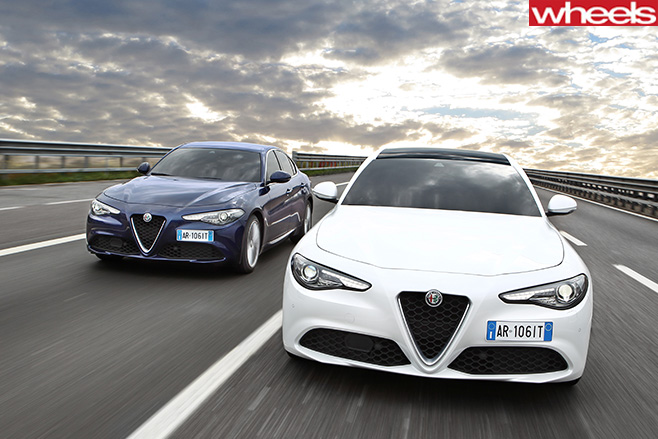
THE WHEELS VERDICT Alfa Romeo is back! Finally, Italy has produced a worthy alternative to the Germans. But while this is a considerable leap forward for Alfa Romeo, it’s not a game changer for the market. The Giulia’s base engine is competent rather than compelling, and the equipment list doesn’t leave its rivals for dead. A lot will depend on the price when the Giulia arrives in Oz in February 2017.
PLUS: Italian style, practicality, ride, steering, dynamics, economy MINUS: Engine performance is adequate at best, uncompetitive active safety suite, no manuals for Oz
THE WHEELS REVIEW AS BETS go, it doesn’t get much bigger or ballsier than Alfa Romeo’s massive Giulia gamble. Would you roll the dice with €5 billion ($A7.7 billion) on the line? More than that… with your existence on the line?
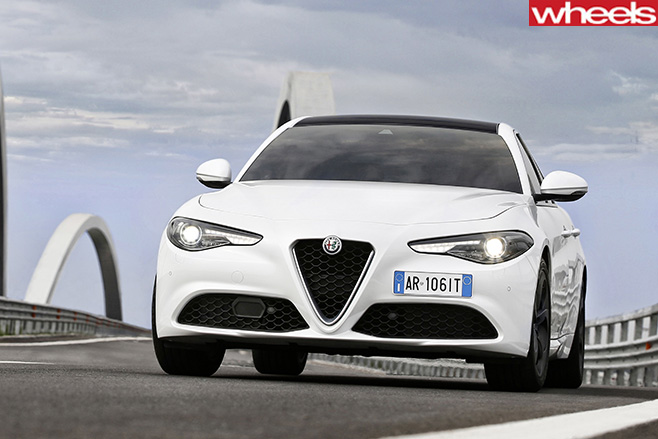
Alfa Romeo has produced little of consequence in the last 30 years, and certainly very little that lives up to the brand’s aura – an aura born in the 1920s and strengthened in the following four decades. Alfisti, the brand’s most ardent loyalists, consider the AlfaSud, the company’s first front-drive car launched in 1972, as the beginning of the end of Alfa’s glory years. Since then it’s been nothing but mediocre models, or passably good models hampered by reliability and quality issues.
Now, Alfa Romeo is back. And how! Wheels has driven the Giulia mid-size sedan eight months ahead of its Australian launch in February 2017, and we were blown away by its competence and capabilities in almost all tangible areas. Typically, after driving a new car only on European roads, we’d reserve the superlatives and temper our praise until we’d driven it on Aussie roads, and against Australian-spec rivals. But based on our experience on the Balocco test track and an extensive road drive in urban and country conditions north of Milan, Alfa Romeo should be justifiably proud of what it has achieved with the Giulia.
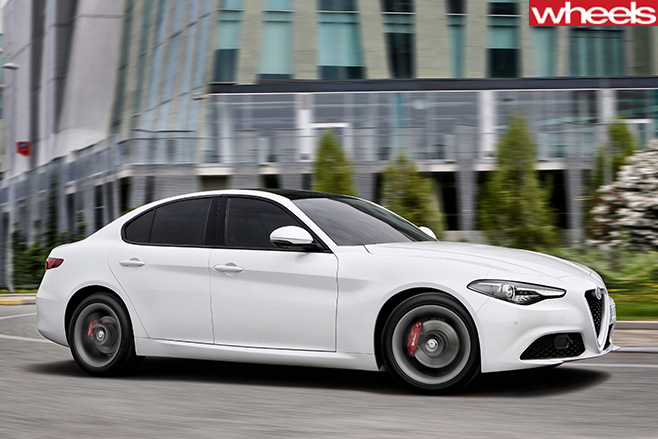
Talk to Giulia project boss Philippe Krief and he’ll tell you work on the project started with a clean sheet on April 29, 2013. That’s only partly true. Work began on a successor to the Giulia’s predecessor, the 159 (2004-11) in 2007. Back then the plan centred on further development of the 159’s front-drive platform, which was subsequently scrapped.
Then Alfa Romeo explored a potential tie-up with BMW, a move that would have allowed Alfa to leverage the 3 Series’ rear-drive platform for its 159 successor, at a cost of just €750 million.
Sadly for us and for Alfa Romeo, that plan bit the dust when Alfa’s owner Fiat Automobiles started to sniff around bankrupt American brand Chrysler, then owned by equity investment company Cerberus. Fiat bought Chrysler in April 2009 and spent the next four years trying to get Fiat Chrysler Automobiles financially stable enough to fund a €5 billion Alfa Romeo rebirth.
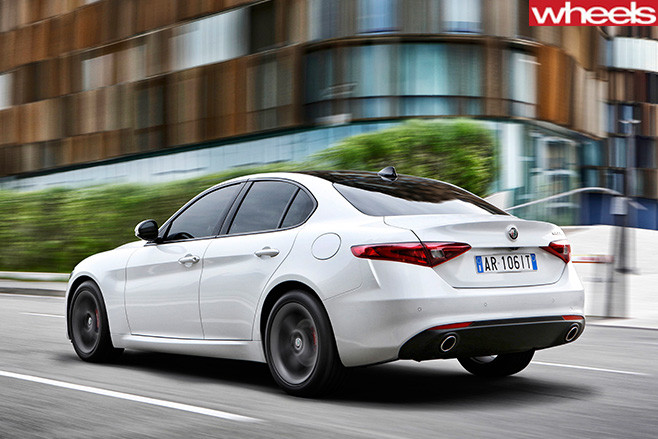
For now, back to the Giulia, which is slated for launch in Australia in February 2017. Three models will be offered initially, from the 147kW 2.0-litre turbo petrol model we’re evaluating here, through a 132kW 2.2-litre turbodiesel right up to the Alfa Romeo Giulia Quadrifoglio, a 375kW/600Nm performance monster intended to take the fight to BMW’s vaunted M3 and the Mercedes-AMG C63, among others.
There’s also talk of a second 2.0-litre turbocharged model with around 205kW to bridge the gap to the Quadrifoglio, but that is yet to be officially confirmed by Alfa Romeo.
What’s also unknown at this stage is pricing, and this could indeed be the Giulia’s biggest weakness. Alfa Romeo’s Australian distributor says pricing has not been finalised, and would only tell us to look to BMW 3 Series pricing for an indication. That suggests a $62K starting price for the Giulia base model (which we’re told will have leather interior, satnav and climate control), rising close to $70K for the turbodiesel (which will have more equipment than the base petrol), and leaping right up to $140K for the Quadrifoglio.
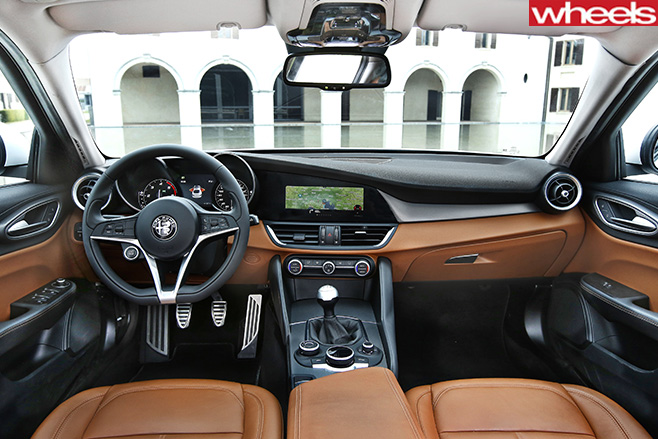
But if Giulia’s European on-road manners translate successfully to Australian conditions, then anyone who drives Alfa Romeo’s stunning new machine will find a lot to like. For starters, the Giulia’s Italian design is distinctive, outside and in. It’s also bigger than a 3 Series sedan: 15mm longer and 62mm wider, but 3mm shorter, so there’s plenty of interior space for four adults. Back seat headroom is plentiful, legroom less so but still good. The 480-litre boot measures up well against the BMW’s and is deep, though not as wide as some rivals.
In-cabin refinement is impressive, both in terms of materials chosen (except for hard plastics on door lowers) and noise isolation. Our only complaint about the base Giulia’s interior is that it’s all black, except for tiny splashes of red and blue on the temperature dials. That said, it’s a classy interior that Jaguar could learn a thing or two from. They all could.
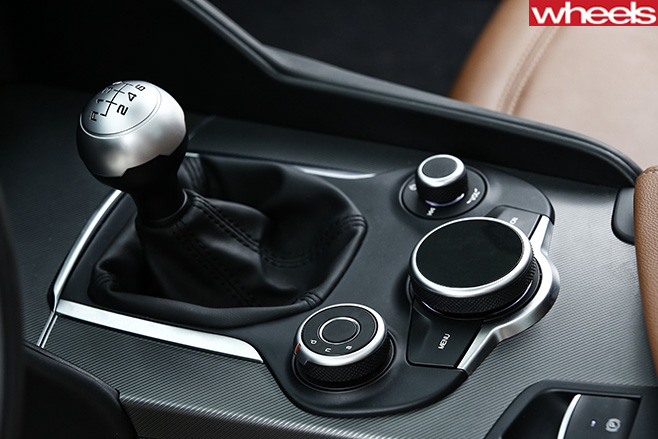
The 2.0-litre turbocharged four-cylinder engine – a completely new engine family, Alfa says – is a sweetie, but it just needs a few more herbs. It revs crisply, is refined, has no discernible turbo lag so it’s responsive, and works well with the Giulia’s eight-speed automatic transmission. The transmission can clunk through the odd gearchange, but it’s a rare occurrence. Overall it’s a decent drivetrain that is enough to make the Alfa competitive in its class but not a standout, though a combined cycle fuel economy average of 5.9L/100km is good.
I went into the Giulia launch with trepidation. I hoped for the best, but feared the worst. I needn’t have worried. Alfa Romeo’s €5 billion gamble appears to have paid off, big time.
And, assuming its European dynamics are equally at home Down Under, and that Alfa Romeo Australia can price Giulia sharply enough, premium sedan buyers now have an Italian worthy of cross-shopping with the Germans, the Japanese and the Brit.
SPECS Model: Alfa Romeo Giulia Engine: 2.0-litre turbocharged 4-cyl petrol Power: 147kW @ 5000rpm Torque: 330Nm @ 1750rpm Transmission: 8-speed automatic Weight: 1429kg 0-100km/h: 6.6 seconds Fuel economy: 5.9 L/100km (est) Price: $62,000 (est) On sale: February 2017
1. Citroen has taken the front passenger airbag from its usual place at the top of the dashboard and moved it to the roof, above the windscreen. This frees up space in the dash to add a top box for extra storage, while still protecting you in a crash.
2. There are 23,184 possible colour, trim and drivetrain combinations for the Cactus: 10 paint colours, four AirBump colours, six interior colours, and choices for the roof bars, wheels, mirrors, and more.
3. Cactus has pop-out rear windows, which save weight and add space in the doors for storage (because the windows don’t slide down into the doors). No wind-down rear windows is a bit of a throwback to quirky French classics like the Citroen 2CV, which had flip windows, and the Renault 8 and 10, which had windows that slid horizontally.
4. Bench-style seats and a tall roof make the Cactus feel spacious inside. The seats may look flat but they’re surprisingly supportive. The split-fold rear seat was developed by Citroen engineers for Australia.
5. The diesel Cactus has a semi-automatic gearbox with no gear selector like a typical car. Instead, it has buttons on the dashboard for drive, neutral and reverse.
6. Citroen gave it the name Cactus because a cactus does not need much water, like this car doesn’t need much fuel. Citroen also says the AirBumps on the side protect it, just like thorns protect a cactus. Cheesy? Maybe. But cars shouldn’t have to be serious all the time.
7. Cactus has a feature called Magic Wash, which uses water jets in the windscreen wiper blades to clean the windscreen rather than using jets on the bonnet. Citroen says it works better than a conventional system and halves the amount of water used.
If you didn’t flunk Physics at school and know a kingpin offset isn’t the line you aim for on a bowling alley, then Infiniti wants to hear from you. Nissan’s luxury car-making arm is again offering brilliant young Australian engineers a chance to work in both the automotive industry and Formula One.
Nissan’s autonomous luxury brand has announced the third annual Infiniti Engineering Academy, which will see six winners from countries on six continents experience a year at the pointy end of automotive and motorsport engineering.
The winners selected from China, Europe, Canada, Mexico and Asia-Oceania – which incorporates Australia – will spend six months at the Infiniti Technical Centre in Europe before joining the Renault Sport F1 team in England.
Infiniti has teamed up with Renault F1 – a natural relationship prompted by the Nissan-Renault alliance – after four years associated with the Red Bull F1 team.
Infiniti Motorsport’s global director Tommaso Volpe said the successful students will focus particularly on the hybrid power systems used across both road and race cars.
“Our Academy engineers will work across both road car and race car hybrid systems, cross-pollenating the application of the mirrored technologies,” said Volpe. “Just as the winners from previous years have done, the six candidates we find in 2016 will play a key role in bridging the gap between us and the race team.”
Volpe said that the company is looking for candidates that “dare to be different” by approaching technical challenges from fresh perspectives.
“‘Game changes’ may sound clichéd, but the automotive industry and F1 have never been more competitive, so we need the best of the best.”
If you think you’re the next top engineer, head to Academy.Infiniti.com for further information and details on how to apply.
The world is changing much faster than we could have anticipated. Queen Elizabeth II has unveiled plans for the UK to legalise autonomous cars by announcing a Bill that will reduce the red tape around autonomous technology.
In the monarch’s annual speech to Parliament, the Queen said; “My ministers will ensure the United Kingdom is at the forefront of technology for new forms of transport, including autonomous and electric vehicles.”
Referring to the anticipated Modern Transport Bill, it means the UK is taking the lead on the introduction of autonomous cars to the transport system. It lays the path to automotive innovations and makes sure insurance is available for driverless cars.
The purpose of the Bill is to put “a framework in place to allow innovation to flourish”. In doing so, the Bill will have a significant impact on the UK. But the Bill extends further than just cars, also outlining changes to space-planes, drones and insurance for drivers.
According to the UK Government’s release, the benefits include:
- Reducing congestion, which has been estimated to cost the UK economy £20 billion every year.
- Modern transportation can make much more efficient use of our roads, railways and airspace, cutting congestion, speeding up journeys for people and goods and boosting the UK’s economy.
- The UK exported 1.2million cars last year. This Bill would put the UK at the forefront of autonomous and driverless vehicle ownership and use.
- Setting the framework for the UK’s first spaceport and autonomous vehicles, paving the way for commercial spaceflight and drone operations in the UK and boosting the country’s world-leading satellite industry.
Autonomous cars are at the forefront of manufacturer innovation. Last month, Volvo revealed its ‘Drive Me London’ scheme which collects data from families using the company’s semi- and fully-autonomous driving systems on public roads. The manufacturer claims that driverless cars can reduce accidents by 30 per cent and made the commitment that “no one will be seriously injured or killed in a new Volvo by the year 2020.”
Unlike Australia, Britain is not a party to the Vienna Convention which includes a law that requires all vehicles to be under the control of a driver, so this new Bill is a little easier for the UK to adopt, as it doesn’t require a legislative overhaul.
So will Australia follow the Queen’s recommendation too? According to a new report from the National Transport Commission, we’re a long way off.
BMW’s compact M Performance range will receive some extra grunt later this year with an upgrade to its 3.0-litre turbocharged six-cylinder engine.
The M135i and M235i will be rebadged M140i and M240i respectively to reflect an increase of 10kW/50Nm, both models now producing an impressive 250kW/500Nm.
The latter figure even outpunches the M2 by 35Nm, though BMW’s new baby M-car can match it on overboost. The extra power drops the 0-100km/h claim to 4.6sec for the standard eight-speed automatic, with the no-cost optional six-speed manual adding an extra 0.2sec.
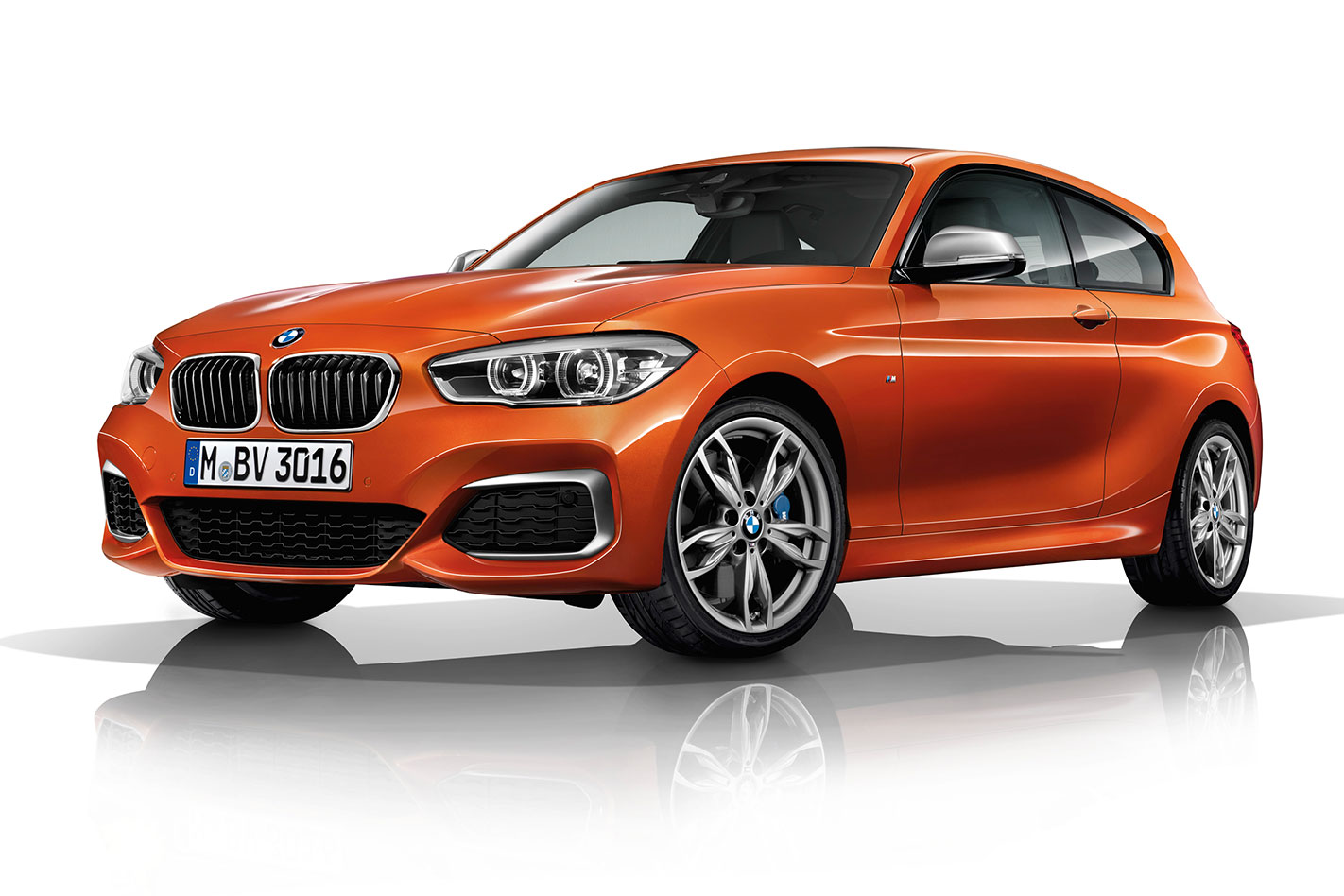
Local pricing is not yet announced, however production begins in July with the updated models set to arrive in Australia shortly after.
