
Plug-in hybrid powertrain technology is flooding into the performance car market as all advanced technologies tend to: from the top down.
It has transformed the modern hypercar into something we wouldn’t have recognised 20 years ago, and has left a big impression on the sportscar scene in the shape of the BMW i8. And while the lukewarm Volkswagen Golf GTE has given it an outing among hot hatches, that’s nothing compared to Peugeot’s 373kW all-wheel drive mega-hatch which is capable of acceleration and responsiveness that’s unmatched in the segment.
The R Hybrid’s primary power comes from Peugeot Sport’s 199kW 1.6-litre turbo four, but it carries 200kg of ballast in the form of an 85kW/201Nm electric motor for each axle and a 3kW/h lithium ion battery. Unlike other performance hybrids, the 308’s front motor drives straight into the Torsen limited-slip front differential, bypassing Peugeot’s six-speed automated manual gearbox. Both motors employ single-speed reduction gearing.
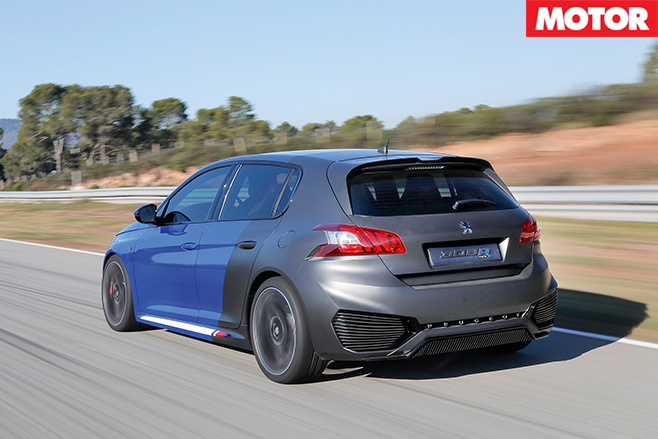
So what does 373kW feel like in a family five-door hatch? I can’t tell you, because the unfinished 308 R Hybrid prototype only develops that much urge in launch control mode, which was off the menu during our brief test drive.
In the other modes – ZEV electric-only running, Hybrid and Hybrid Sport – it delivers a peak of 300kW and just over 540Nm; outputs that the high voltage electrical system can sustain for about five laps, or more unconditionally during road driving. Demand over 300kW for more than a couple of typical straights and you’ll have a very hot, very depleted lithium ion battery to nurse.
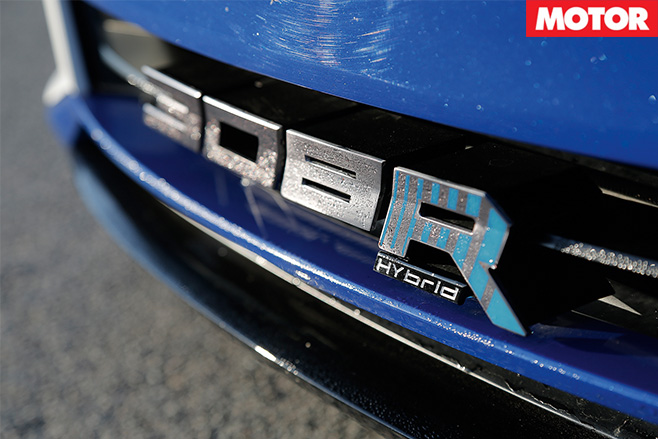
But as usual with electrified cars, it’s not the outright power or performance that takes your breath away, but the flexibility and immediacy. In a high gear at 80km/h, flatten the accelerator and you’re shunted forward on a wave of AC-synchronous torque. Peugeot claims 80-130km/h in just 3.1sec in sixth gear (an RS3 takes three times as long), which makes this one of the most muscular cars of its kind.
Yes, the 308 R Hybrid powertrain has limitations. As well as the car’s fleeting delivery of its full 373kW, there’s its transmission. PSA’s automated manual ’box is cheap and light – I suspect it’s a 308 GTi unit with electronic actuators replacing a clutch and gearlever – but it’s not good enough for PSA’s current HYbrid4 line-up and no better here.
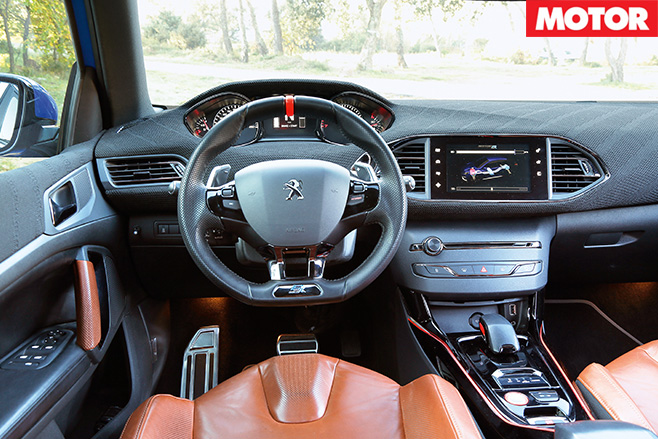
Whether the 308 R makes production and at what price are decisions still to be made. But having demonstrated its enormous and intriguing potential, it seems Peugeot has a duty to see the project through.
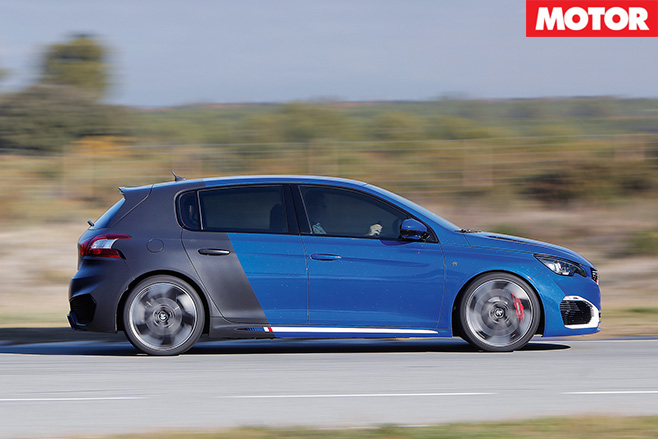
Finally, it should be developed as a performance car, with handling and ride to suit. The car’s hybrid powertrain is much better suited to the demands of fast road driving than flat-out track work, and if customers understand that, they’ll be much happier campers in the end.
3.5 OUT OF 5 STARS
SPECS Engine: 1598cc inline-4, DOHC, 16v (+ two electric motors) Power: 373kW @ 6000rpm Torque: 730Nm @ 1900-5500rpm Weight: 1550kg 0-100km/h: 4.0sec Price: $100,000 (est) Like: Mid-range thrust; unrivalled performance in this segment Dislike: A new gearbox is vital; will it even come to Oz?
TELL ME ABOUT THE CAR
This is Honda’s small SUV – a brand new car and very different to its boxier predecessor of 16 years ago. While Honda has struggled in Australian sales, the stylish HR-V may be the answer as it’s packed with equipment, versatile thanks to Honda’s Magic Seats and more spacious than many of its competitors.
STRENGTHS
- Versatility is what the HR-V is all about. It features those Magic Seats, also available in the Honda Jazz. They’re basically a middle row which folds completely flat but also be put upright to create more floor-to-roof space. The system has four configurations: Tall Mode, Long Mode, Utility Mode and Refresh Mode.
- Honda’s mini SUV comes packed with standard features like a reversing camera, tyre deflation warning system and even an HDMI port. As you up-spec to the VTi-S and VTi-L, the HR-V gets fancier interiors and more safety features.
- The cabin is attractive and Honda has used quality textiles inside. For its price, the finishes are good, albeit simple, but in a good way.
- The cushioning on the front seat is not overly comfortable and can get even less so on long road trips. The flat seats don’t offer a great deal of support, but then this is an individual preference, so make sure you try it out for yourself.
- Unlike some of its competitors, there’s no all-wheel-drive version of the HR-V, which lets the range down a little. It also misses out on the fuel efficiency of a diesel engine, which is also an option available in some rivals in the segment.
- Refinement could be improved. The HR-V has a lack of torque and also high road noise.
If it’s a small SUV you’re after, then the Mazda CX-3 and Mitsubishi ASX are currently the most popular. The Subaru XV and Suzuki Vitara are also worth comparing, with the option of AWD and a turbocharged engine also offered in the Fiat 500X.
Click here to read the full review on the Honda HR-V range.
Subaru is developing a hot STI version of its new Levorg wagon.
That’s the good news. The bad news is the Levorg STI, like the awesome S207 WRX STI, will only be available to the Japanese domestic market.
However, the introduction of new private import laws in 2018 will allow those who mourn the loss of the WRX hatchback to potentially park a Levorg STI on their driveway.

If you’re fluent in Japanese you’ll learn more than we can, but what’s obvious is this hot Levorg will feature Bilstein dampers, 18-inch wheels from the WRX STI and a continuously variable transmission.
Under the bonnet is likely to be the 227kW/422Nm 2.0-litre turbocharged flat-four found in the JDM WRX STI; the same engine in 221kW/400Nm tune powers the current Levorg range-topper, the 2.0GT-S.
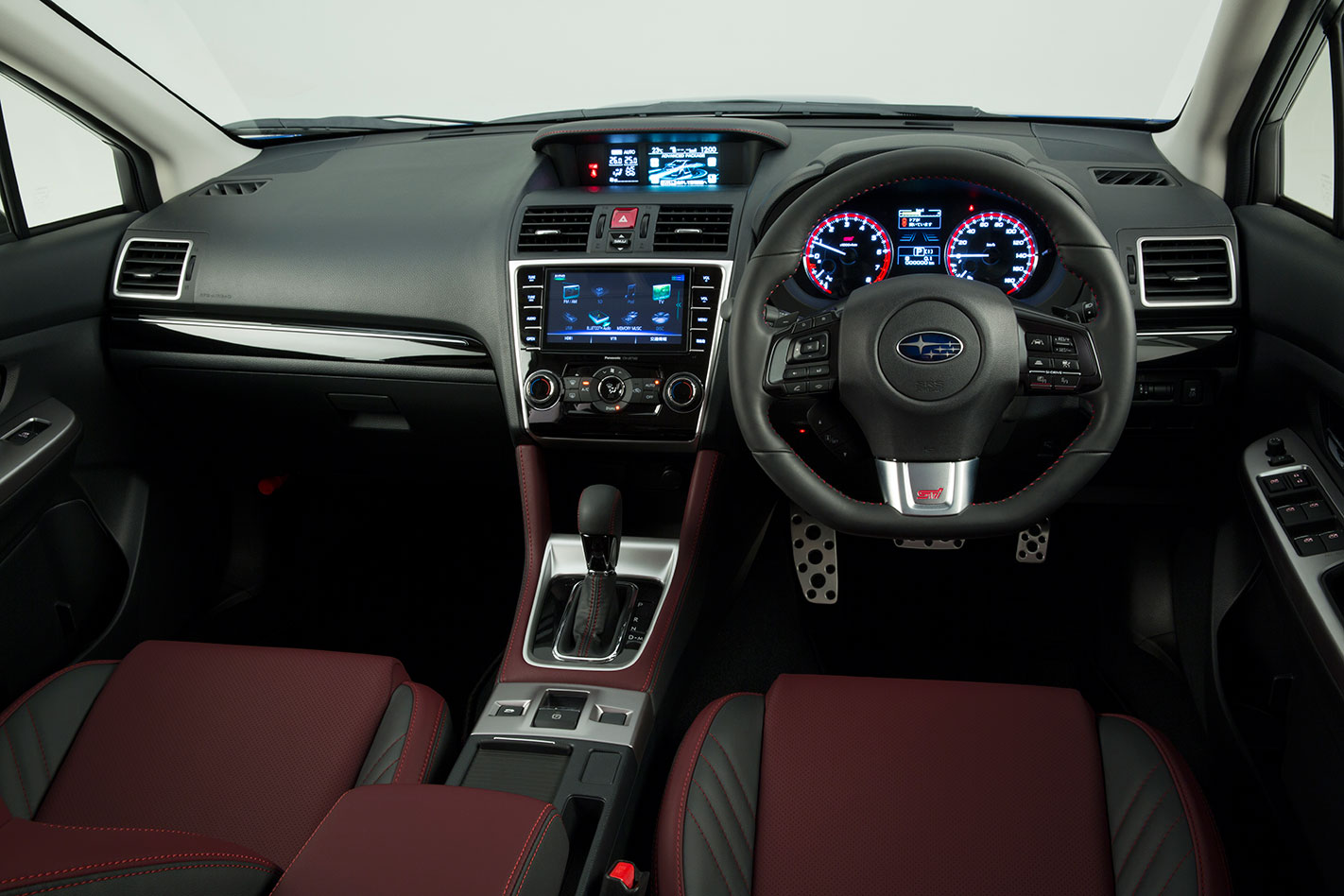
Closer to home, the regular Levorg range launches in Australia towards the end of June and we’ll bring you pricing, specification and a first drive review then.
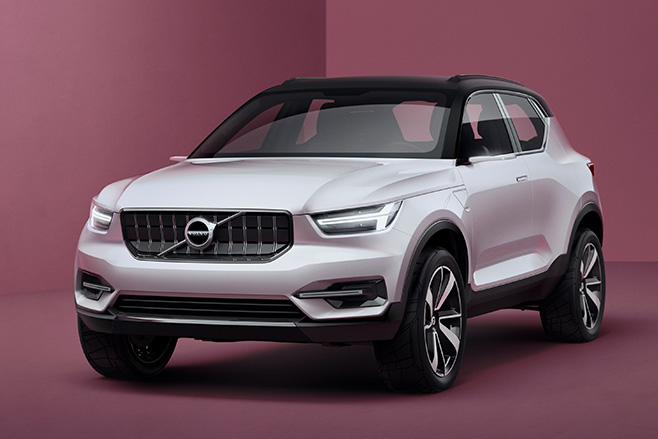
The Volvo XC40 compact SUV due in 2017, plus its high-riding sedan twin, have been previewed by two concept cars from the Swedish brand.
Volvo’s concepts, labelled simply 40.1 and 40.2, sit on the company’s new vehicle platform for small cars, dubbed the Compact Modular Architecture (CMA).
The 40.1 specifically showcases the vision for a long-awaited XC40 that will give Volvo a much-needed rival to the Audi Q3, BMW X1 and Mercedes-Benz GLA. The platform would also underpin the next-generation version of the V40 hatchback and other models.
The 40.2 concept is a high-riding sedan with a ‘liftback’ tailgate, and Volvo describes the vehicle as “a departure for Volvo and something new in the premium small segment”. A production version could revive the S40 nameplate and become a competitor to Audi’s A3 sedan and Mercedes’ CLA.
Volvo claims its CMA-based vehicles will feature the world’s most advanced suite of standard safety features and is targeting class-leading fuel consumption and emissions from new drivetrains.
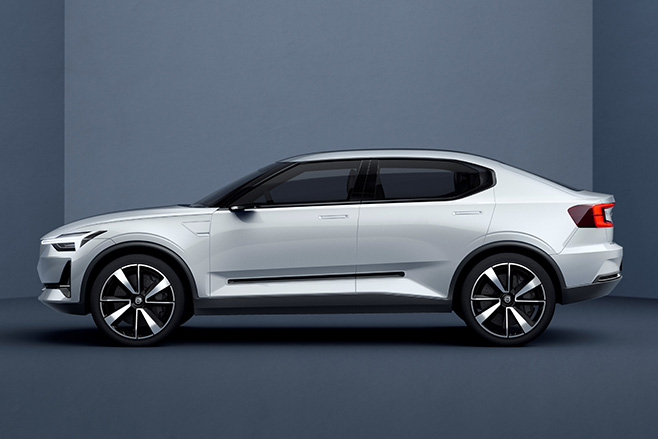
Volvo has also announced a new T5 Twin Engine layout, which teams a turbocharged three-cylinder petrol engine with an electric motor. The combination is believed to be capable of producing up to 225kW and the concept puts its power to the front wheels via a seven-speed dual-clutch auto.
At this stage, that makes the T5 differ from the XC90 T8 Twin Engine, which also combines petrol and electric power but is all-wheel drive.
The T5 turbo petrol engine is expected to be offered in models without electric assistance, reportedly with a power output of up to 150kW. A four-cylinder diesel engine is also anticipated.
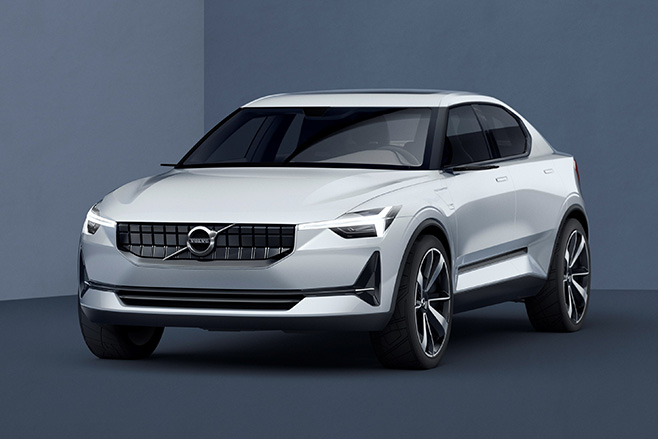
Once in production we expect the XC40 to be offered with all-wheel drive, potentially with the front wheels powered by a conventional engine and the rear wheels powered by an electric motor.
Volvo will also produce all-electric small cars as part of its global plan to sell one million electrified vehicles by 2025.
The first of Volvo’s new small cars will go into production in 2017 and is set to be the XC40. Volvo Australia says the first of the new compact Volvos will arrive here either in late 2017 or early 2018.
If you’re lucky enough to be shopping for a new car, the salesperson will be sure to point out the marvellous rain-sensing wipers. So try an experiment: Ask him or her how these marvels work.
You’ll probably be told they work via a sensor. Tremendous; that’s like telling you that your refrigerator works by keeping stuff cold.
So here’s how rain-sensing wipers REALLY work: The dingbat salesperson is right inasmuch as there’s a sensor involved. It’s usually mounted up near the interior mirror (where it doesn’t get in your sightline) and is aimed at the windscreen. This sensor sends out an infra-red beam which, when it hits the dry windscreen, is reflected back almost completely.
But as rain-drops fall on the windscreen, they act as prisms, scattering the light so that only some of the infra-red gets back to the sensor. And when that happens, the car’s on-board computer switches on the wipers. As the wipers clear the screen, infra-red reflection is restored and the wipers shut down until the next drops fall on the windscreen. Beautiful.
Manual gearbox no longer key to a bargain basement showroom price.
THE Honda Civic will be the latest new entrant to confirm a worrying trend for driving enthusiasts: small cars, one of the last bastions of the manual gearbox, are moving away from what has long been the favoured choice of transmissions.
The upcoming Civic won’t be available here with even the option of a manual transmission as part of a simplified dealer strategy designed to streamline advertising and reduce inventory complexity.
Similarly, the new Kia Picanto, the cheapest Kia on the market, is ditching a DIY-shifter in favour of an auto-only range.
While most other market segments have moved away from manual transmissions – even sports cars – carmakers have traditionally used manual models at the budget end of the market to set a sharp starting price.
Not any more.
In 2013, 15 percent of passenger cars and SUVs sold were manuals, according to Federal Chamber of Automotive Industries figures supplied to Wheels. But by 2015 that figure had dropped to nine percent, and for the first three months of 2016 it was just eight percent.
If this trend continues, 2016 will be the first year in which fewer than 100,000 manuals will be sold in a calendar year.
Kia Australia COO Damien Meredith says the auto-only move for Picanto is about appealing to the target market. “Our research shows that up to 80 percent of buyers in this class prefer an automatic, so we thought why not offer a car that appeals to the majority of buyers,” he says.
Mazda Australia MD Martin Benders says the trend towards automatics is continuing. He lists increased traffic and smarter auto transmissions as key reasons buyers overlook manuals, while many novice drivers opt for an auto-only licence.
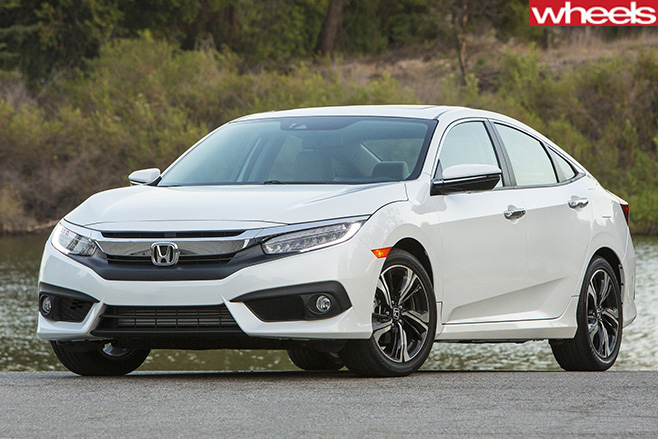
In Honda’s case, the Civic range’s $22,390 kickoff point is thousands more than some key rivals. Even though most buyers will pay a similar price for a rival small car with an auto, Honda runs the risk of some buyers shunning its crucial new model because it appears more expensive.
But Honda Australia director Stephen Collins is unfazed, believing the brand will capitalise on having a more substantial offering in what is still the single biggest segment of the market.
Collins says the upcoming Civic Type R – the fastest Civic ever – will have a manual. “Type R will tick the sporty box,” he said.
Kia’s move is equally surprising given the price sensitivity of micro cars, which fluctuate wildly in monthly sales volumes depending on who’s crunching the best deal.
Porsche mulls manual
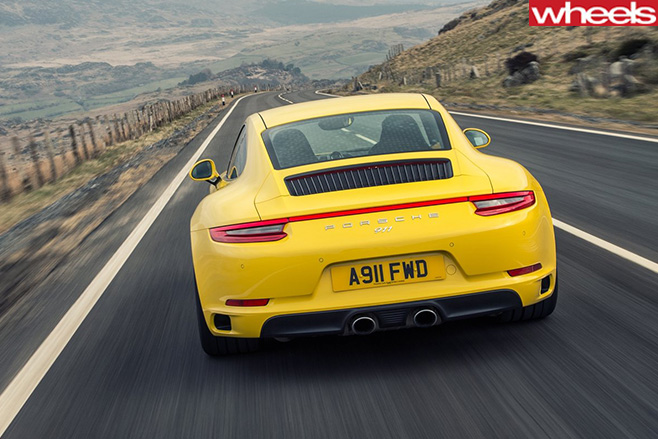
Product development head for the 911, August Achleitner, told Wheels the carmaker would decide the self-shifter’s fate “soon”.
“Porsche is the last sports car manufacturer which offers a manual transmission,” Achleitner told us.
“It’s a real advantage for us right now, but of course we have to look at how this development takes place in the next years.”
Only 15 percent of 911 Carreras sold have a manual, Achleitner said.
Porsche’s manuals have long been lauded – and the latest 911 R is manual-only – but fast-changing buying habits are doing nothing to help the self-shifting cause.
The fastest Porsches produced, the 911 Turbos, have been all-auto since the 991 series arrived in 2013.
“There have been absolutely no complaints about it from customers,” says Achleitner.
Manual labour
The bottom end of the ute market, for example, is popular with those looking to save a few bucks, predominantly tradies.
Some sports cars, too, work best with a manual. The Toyota 86 and Subaru BRZ spring to mind, as does Wheels’ current COTY champ, the Mazda MX-5. Mazda Australia boss Martin Benders says the manual MX-5 – with one of the sweetest gearshifts around – is crucial, with it accounting for more than two-thirds of the fourth-generation sports car’s sales.
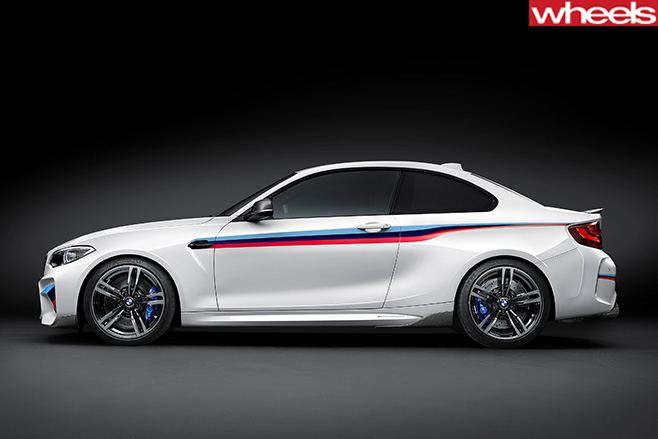
The recently launched BMW M2 (above) has had the highest take-up for manuals of any BMW for years, with one in four owners choosing to self-shift.
“It’s to have a car there for the enthusiasts who love driving manual cars,” says BMW Australia product planning boss Shawn Ticehurst.
Mercedes-Benz’s new SLC will sell here with a manual, testing the market with a view to importing more self-shifters.
Lexus’s incoming LC500 is set to blow away the company’s ‘boring’ stereotype with a thundering 5.0-litre V8 exhaust note.
Desperate to peel away the cardigan and slippers image that’s wrapped Lexus of late, video of the firm’s next flagship coupe clearing its lungs reveals the 351kW engine’s song hasn’t been muffled one bit.
With the car still in pre-production stages we can’t fully trust this will be the LC500’s exact tune. And admittedly it’s no more savage than the RC F’s wonderful timbre, but at least it indicates Lexus is serious about giving the LC500 enough flair to match its rivals – which will include the raucous Maserati GranTurismo and BMW 650i.
If you’re keen to know more than what the LC500 will sound like we’ve also peeled back the juiciest details on the coupe here.
https://www.instagram.com/p/BFIjoIZqwS8/
Track legend warns it won’t be easy for the invited gun professionals against a bunch of youngsters with pace and attitude…
Dual Australian touring car champion and Hall of Famer Glenn Seton doesn’t expect his many credentials in motor sport to be much help when he and fellow pro drivers Steve Johnson and Leanne Tander take on a huge grid of determined rivals in the opening skirmish of the Toyota 86 Racing Series at Winton Raceway this weekend.
With an overflow entry of 35 drivers cars committed, including some prominent names, it’s clear that competitor interest in one-make series in Australia is at an all-time high.
Given the massive entry, organisers must be relieved that the first of five rounds on the 2016 calendar will happen not at a demanding street course but at the slightly more benign Winton. Yes, there are still some solid concrete walls, but fewer of them.
The pros will line up against a roll-call of ambitious drivers ranging from 16-year-old schoolkid kart whiz Calum Jones through to experienced production-car hand Garry Holt, who is 58. Eight of the competitors are 18 or younger.
Sons-of-guns Aaron Seton, Ben Grice and Cameron Crick are starters.
The response has even exceeded the healthy expectations of Toyota Australia. With the addition of the invited pros, 38 cars should be on the grid for the opening round.

“I know many people may not have heard of some of these kids, but I’ve seen many of them in karts and Formula Ford from the ages of seven and they’re terrific prospects,” says Seton. “They learn so quickly and are exceptionally good race drivers.”
Seton says spectators should not be surprised if the pros are running in the middle of the field, rather than up front. He expects the racing to be occasionally wild and typical of one-make contests.
“I realise our experience with standing starts will be a help because many of the youngsters who’ve come from karts only know rolling starts,” says Seton.
Seton hopes the race rookies don’t get too carried away being on the Supercars bill in front of a big crowd. “If some get a rush of blood, about half the field could potentially knock themselves out of contention.”
So who should be strong at Winton?
“Jon McCorkindale is a hard driver with speedway experience. The kids who have been strong in Formula Ford, Cameron Hill and Will Brown are great racers. Watch out for Tim Brook from Formula Vee, too. Ben Grice will definitely be a front runner and so will be Adam Gowans. They’ve been quick in other series. And the kart goers Damon Strongman and Jake Klein…”
Game on, then.
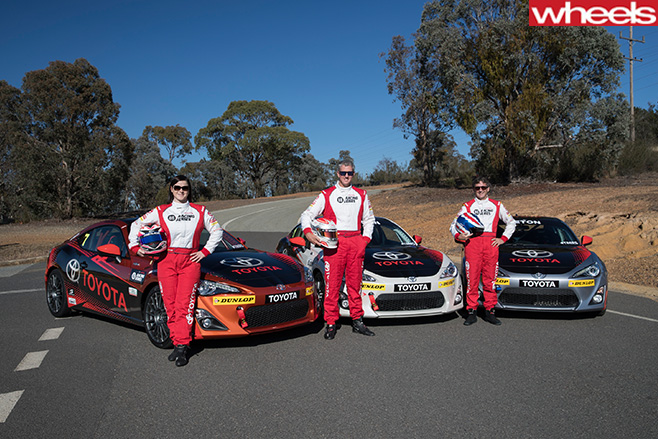
Underpinned by a straightforward and relatively affordable technical spec, the Toyota 86 Racing Series provides a perfect platform for budding competitors to develop their skills and gain exposure in the hope of progressing up the motorsport ladder to V8 Supercars, GT3 racing or an international career.
The entry fee of $1500 per round (including Bathurst), is the lowest for any mainstream national series and the prize pool is a generous $125,000.
Different pro drivers will be introduced across the five rounds, the intention being that they mentor the young competitors whilst also setting a high speed benchmark.
The series is managed by AirTime Autosport under the leadership of Neil Crompton, and commercial support has been building steadily in the lead-up to the opening event.
The series is open to all Australian-delivered manual variants of Toyota’s cult-classic coupe.
The calendar for 2016: May 20-22 (Winton SuperSprint), August 26-28 (Sydney Motorsport Park SuperSprint), September 16-18 (Sandown 500), October 6-9 (Bathurst 1000) and December 2-4 (Sydney 500).
HOW can the striking Jaguar F-Type already be four years old?
Come September, that’s exactly what it will be, so the brand from Brown’s Lane is preparing the option of a four-pot turbo screamer, spearheading a sizeable nip-and-tuck to keep the German wolves like Porsche’s new 718 Boxster and Cayman twins, upcoming BMW Z5, and just launched Mercedes-Benz SLC, at bay.
Due to debut either at the Geneva salon next March or the New York Motor Show a few weeks after that, the 2018 F-Type facelift is expected to usher in a fresh front fascia, complete with new LED headlights, reprofiled bumper and different air intakes.
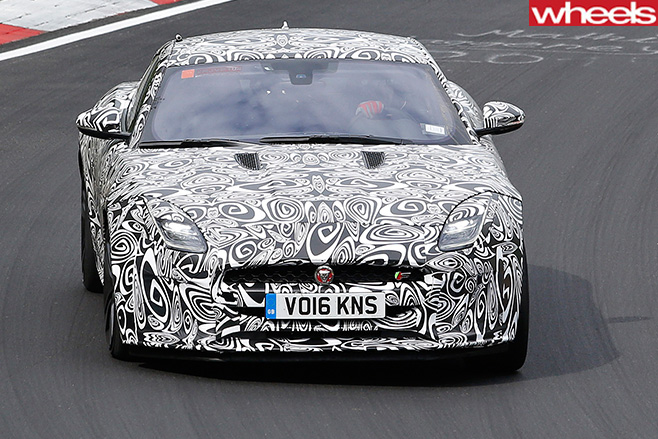
This, of course, could really only mean Jaguar Land Rover’s all-new 2.0-litre four-cylinder “Ingenium” engine.
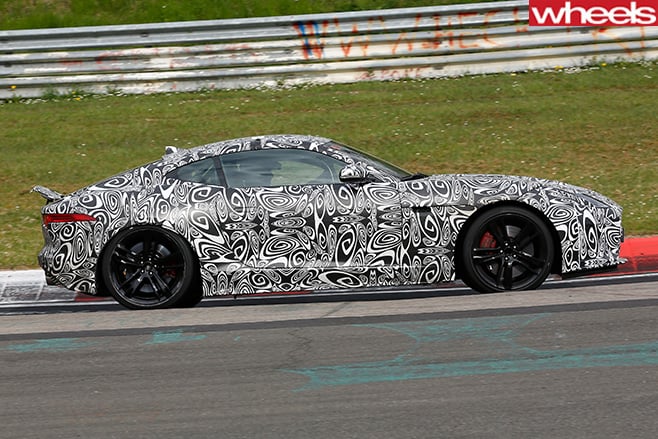
Count on the F-Type’s Ingenium delivering around 200kW of power and 400Nm of torque, and will likely drive the rear wheels via a six-speed manual or eight-speed automatic transmission. Clutch pedal-equipped models should please the purists no end, and might make the 2.0-lite turbo the best version yet. We’ll know soon enough.
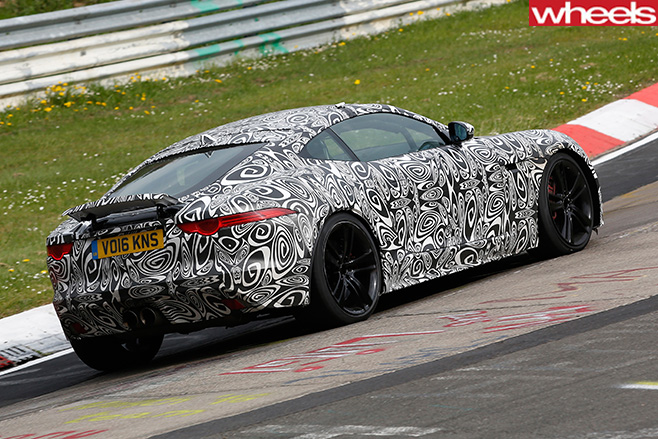
Look for significant changes to the supercharged V6s and similarly blown V8 too, though what these might be is still anybody’s guess right now.
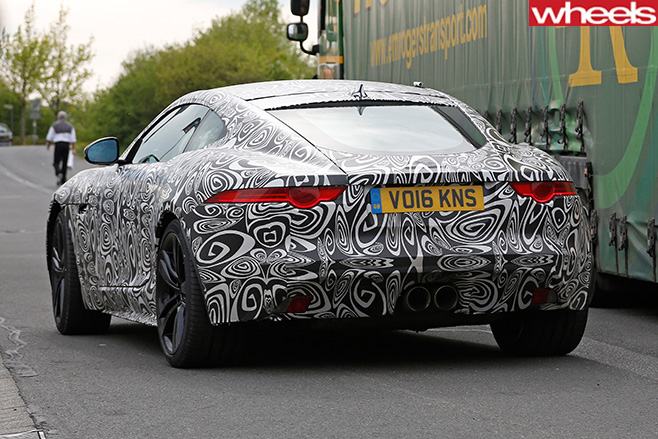
Finally, will the 2018 F-Type four-pot turbo sound as tantalising as its supercharged six and eight cylinder siblings? We hope so. Watch (and listen to) this space…
Have spy pics of your own? We’d love to see them. Just email them to [email protected]
WHAT makes a fitting send-off for one of the most significant models in Australia’s all-too-brief carmaking history?
Our cover story this month is a heartwarming salute to the Aussie-made Ford Falcon. Writer Nathan Ponchard and photographer Thomas Wielecki take the Ford Falcon Sprint XR8 on one last three-day, octane-fuelled tribute to a half-century of Falcon heritage. We’ve caught the XR8 at its playful best; sideways, in a freshly ploughed paddock just outside Mullalley in central NSW. Says Wielecki: “I love photographing cars in the outback; I just love the dirt, the dust. It’s much better than photographing cars on a race track.”
In news, we take an in-depth look at the new Holden Commodore hatchback. Yep, that’s right, the fully imported replacement for the Aussie-made Commodore will ditch a traditional boot for a liftback. Before you choke on your Chiko Roll, though, it’s worth remembering it’s not the first time Holden has tried the idea.
We also take a deep dive into Maserati’s bid to woo a new class of SUV buyers, with the Maserati Levante setting the go-fast luxury brand’s sights directly on the V8-powered Porsche Cayenne, investigate who Mercedes-Benz reckons is evolving as its most feared rival in the luxury car game, and wonder why buyers are switching off manual gearboxes.
We’ve had our first drive, too, of Jaguar’s SUV-led future. The Brit brand reckons the F-Pace will be at home devouring challenging roads, and we’re not about to disagree. We also have our first steer of the turbo-four Porsche 718 Boxster – with mixed feelings – experience a much-improved second-generation Tiguan, and fang a harder, faster Ferrari California.
Journalist Bruce Newton features prominently in this issue. First, he talks with Mike Simcoe, the former Holden designer now in charge of shaping GM’s entire suite of future products. Then he turns up the heat, taking a Land Rover Discovery Sport to the eerie, deserted epicentre of Australia’s nuclear tests.
Jez Spinks, meanwhile, gets to punt the BMW M2 around Targa Tasmania’s challenging roads. Is it a better all-round performance BMW than the BMW M3/M4? We then chuck the bent-eight Lexus GS-F straight into the lion’s den, benchmarking it against the blown HSV Clubsport as well as a few others.
Missed out on this month’s great content? Our next edition will go on sale on June 16.
