
OWNERS who claim Ford Australia has sold them cars fitted with dodgy transmissions have asked for their money back via a class action launched in the Federal Court yesterday.
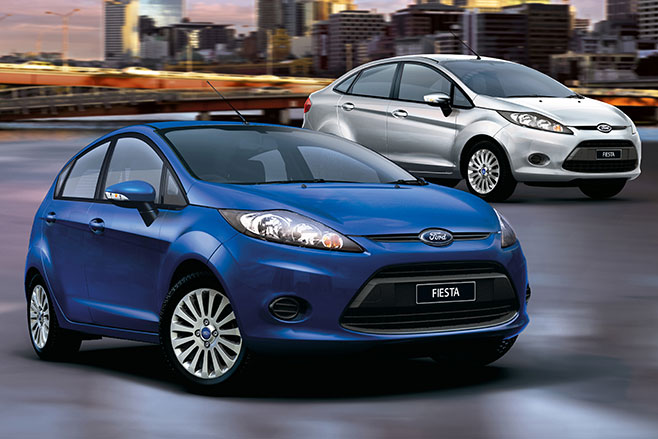
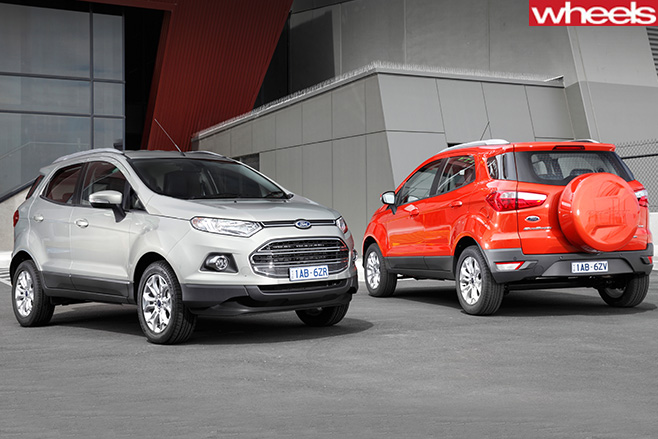
The claim, lodged in Sydney yesterday on behalf of “thousands” of affected owners, alleges Ford’s PowerShift six-speed dual-clutch transmissions fitted to Ford Fiesta, Focus and EcoSport models sold between 2011-14 had suffered “a clear pattern of problems”.
It was lodged by Bannister Law, the same legal firm that in October last year filed a class action to the Federal Court on behalf of Australian Volkswagen owners hit by emissions scandal recalls.
The claim alleges Ford Australia has failed to comply with the “statutory guarantee as set out by Australian consumer law” by selling cars equipped with the gearboxes.
According to Bannister Law, reported problems include that the dual-clutch six-speed transmission slips, bucks, jerks and harshly engages when driven.
“Some drivers also report that, without warning, they have experienced sudden acceleration, delay in downshifts, delayed acceleration, and difficulty in stopping whilst braking,” it said.
Ford Australia declined to comment. A spokesman said the carmaker was aware of a plan to file a class action relating to the gearbox, but it had not yet received any lawsuit.
The class action seeks a number of outcomes for affected owners, including a full refund for their car’s purchase price, a range of damages ensuing from repair costs and out of pocket expenses, and aggravated damages for having caused stress, inconvenience and humiliation.
Bannister Law is also seeking legal and expert costs from Ford.
“Ford’s marketing made bold claims, that ‘the sensation of PowerShift is smooth acceleration – much smoother than a conventional automatic’ and that it ‘delivers fast and sporty shifts while maintaining high degrees of shift smoothness’,” Bannister Law principal Charles Bannister said.
A spokesman for the law firm said some affected owners had already received compensation from Ford Australia after “months-long” disputes with the carmaker.
He said some affected owners had also taken advantage of the Ford Australia service program’s offer of a free loan car, using them as replacement vehicles for up to weeks at a time while the carmaker attempted to fix the problems.
In 2014, Ford Australia extended the warranties on almost 50,000 Powershift-equipped Fiesta, Focus and EcoSport models to cover what it said was a “customer satisfaction program” for the vehicles.
Ford is facing similar complaints about its PowerShift transmission in the US, where a number of separate class actions were launched on behalf of affected owners late last year.
They’re annoying, aren’t they? It takes longer to remove and replace each valve cap than it does to actually check your tyre pressures. And they make your fingers black. In fact, there’s an argument that people would be more likely to make those important tyre-pressure checks if valve caps weren’t involved in the process. But they are important.
The caps keep road dirt, spider-webs and general crud out of the valve opening, so that when you attach the air hose and blow air into the tyre, that rubbish doesn’t get blown in with the air and potentially get fouled up in the valve mechanism where it’ll cause a leak. Plenty of people who’ve thrown their valve caps away have topped up the air in their tyres, only to discover a flat tyre the next morning.
The best valve caps are the metal ones which are less likely to crack or come off than the plastic ones (although they’re more likely to bounce and roll under the car when you drop them). And one last tip: When you’re checking the tyre pressures, don’t hold the valve cap between your lips – you know what dogs do to car wheels…
Parents should move infants into rear-facing convertible car seats before babies turn a year old, according to a new study by Consumer Reports.
The findings suggest leaving children in infant carriers until they are one could put your precious cargo at risk of head injury or even death.
According to the most recent statistics from the Australian Bureau of Statistics, motor accidents are the most common cause of fatal injury to children in Australia. Last year, approximately 35 children under 14 died as a result of a car crash, according to the Australian Road Deaths Database.
Consumer Reports, a US-based not-for-profit organisation, tested rear-facing capsules and rear-facing convertible seats using a dummy which weighed the same as the average one-year-old.
Based on the results, it found more than 50 per cent of one-year-olds in a capsule were likely to suffer impact to the head. The rear-facing convertible seats, however, protected all dummies from head trauma, except one.
According to the organisation, “head contact for children in crashes is a major cause of injuries and death”.
For parents, child safety is paramount in car and car-seat purchases and despite a common perception that a child can remain in an infant capsule until its first birthday, Consumer Reports said, “based on Consumer Choice’s recent car seat testing, we’re now urging parents to move older babies from their rear-facing infant carrier to a rear-facing convertible seat sooner rather than later.”
A video released by the organisation states, “a child is technically too tall for their infant seat when they exceed its height limits or their head is less than one inch from the top of the carrier shell.”
Australian laws state children over six months can be moved into a forward-facing restraint but the Child Accident Prevention Foundation of Australia recommends infants remain in a rear-facing restraint for as long as possible and should only be moved to a forward-facing seat when they’ve outgrown the rear-facing restraint. In its ‘Best Practice Child Restraint Guidelines’, it says once a child’s shoulders are above the height marker, or if their shoulders sit above the top shoulder harness strap slot in the absence of a marker, the child is too tall and should move to a larger restraint system.
Looking for information? Now read our Australian guide to child car seats.
IN REAL years, the outgoing Renault Megane is about nine years old; if it were a human, it would be learning about fractions, if it were a dog, it’d be starting to think about superannuation. In car years, however, it’s old enough to apply for a pension.
Built on the Renault Nissan Alliance’s CFM architecture, the new five-door Megane is bigger in almost every measurement, and for the first time it will feature dual-clutch gearboxes and rear-wheel steering on some models.
Locally, the new Megane is due to arrive halfway through 2016, in a range that, according to Renault Australia, will largely mimic the current line-up. One key addition will be the Megane GT, which will replace the GT220 range.
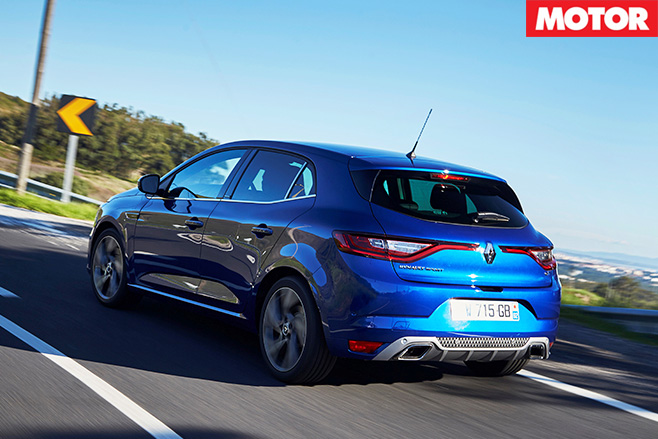
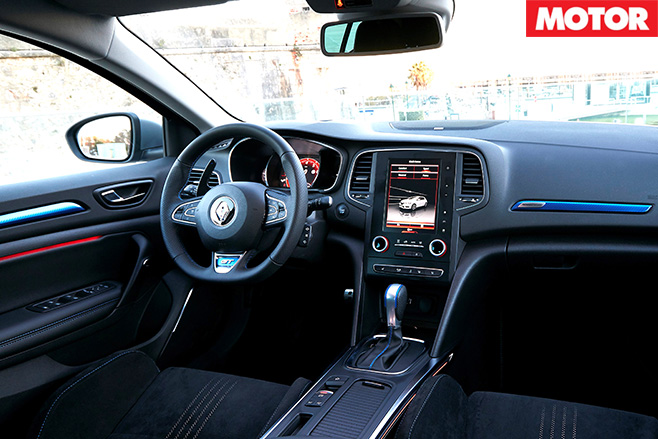
A blast around the rough, narrow roads of Lisbon, Portugal, revealed a car with a more mature character than the current car. The interior, especially, is a huge step forward; a large central TFT screen in front of the driver replaces the traditional dials, with speed limit, gear position and distance to the car in front all displayed.
The large vertical centre console screen houses satellite navigation, climate control, car adjustments and more, and is simple to use, if a bit laggy.
The Megane GT rides very well in most situations, though it can crash across sharp breaks in the road thanks to the stock 18-inch wheels. At first blush, at least, the MacPherson strut/torsion beam suspension package is well resolved.
The clever rear-steer function adds a layer of seamless ability, allowing more direct inputs with less adjustment at the wheel. Steering feel from the electric system is very accomplished, too, with a decent amount of resistance.
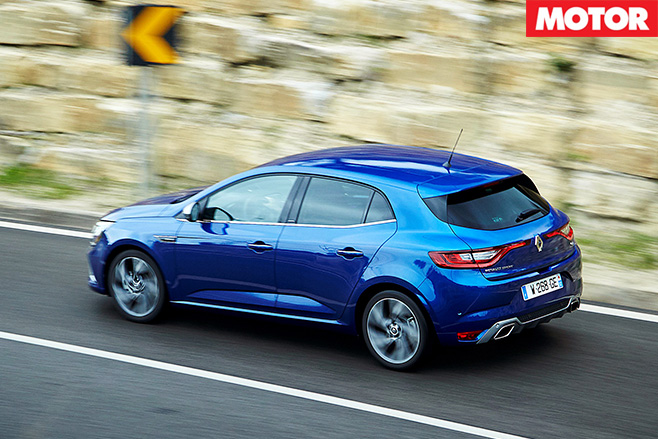
If Renault can price the Megane GT keenly – and that’s an extremely crucial element – then it deserves a place on people’s warm hatch shopping lists.
3.5 OUT OF 5 STARS
SPECS Engine: 1616cc inline-4, DOHC, 16v, turbo Power: 151kW @ 6000rpm Torque: 280Nm @ 2400rpm Weight: 1392kg 0-100km/h: 7.1sec (claimed) Price: $37,500 (est) Like: Steering feel; torquey engine; interior refinement Dislike: Stock rubber; early gear ratios feel too short
Anyone who has spent time with me knows I love nothing more than spending time working on my cars in the garage.
Getting greasy lying under one of my pride and joys, skinning knuckles and cursing that bolt some flamin’ galah had over-tightened might not sound like fun, but it ensures my cars are kept in tip-top mechanical condition.
I trust my cars, but I have to admit I no longer trust most other cars out there on Aussie roads, because there is an increasing number of people who don’t maintain their cars and don’t even know they need to.
Watch a busy street for any extended period of time and you’ll see more than a few poorly maintained vehicles drive past. Any mechanic will tell you the horror stories of badly maintained cars they’ve seen: belts hanging out of the tyres, brake pads and rotors worn to nothing at all, and engines that have never had an oil-change. And these people, who are symptomatic of our increasingly disposable society, are on the roads with you.
We hear about the perils of driving 2km/h over the speed limit, of using your phone, or even modifying your car from factory specifications. But there is almost no attention paid to educating people on how to live with this potentially lethal piece of equipment.
To me, giving people a rundown on basic vehicle maintenance goes hand-in-hand with teaching them how to drive. It doesn’t need to involve delving into compression ratios and quench heights; just cover the basics, like why it is important to check tyre pressure and fluid levels weekly, and knowing when to take the car to the mechanic for new brakes, a service or even a wheel alignment.
Car enthusiasts often take this mechanical aptitude for granted, as we normally have someone teach us when we’re starting out. So what happens if you come from a family of people who don’t drive, or who don’t know a spanner from a piece of smoked salmon?
Drivers should not only have a basic understanding of how to check their vehicle is in good mechanical condition, but also why it is so important to keep on top of it. Speed may well kill, but so could a tyre worn down to the canvas bursting at freeway speeds.
Additionally, and in a concerning trend, the number of people killed on the side of the freeway has risen of late. Part of driving on our roads, especially in a country as large and remote as Australia, should be knowing what to do if you have a mechanical problem. Knowing how to get your car off the side of the freeway might save your life.
This is also the case if you need to help a fellow motorist. Unfortunately, the trend for good Samaritans being killed going to rescue stranded vehicles is also on the rise. We need widespread dialogue educating people on how to safely get off a busy road if your ‘widget’ goes ‘bang’, , because it’s obvious that people aren’t thinking about this stuff when it happens.
A bit of basic knowledge and some public focus on this topic could save senseless deaths from happening, which is really what we all want. Who knows, maybe they’ll even start to love skinning their knuckles, getting covered in grease and learning new curse words.
In a style similar to Art Attack host Neil Buchanan, Aston Martin has used offcuts of leather from its upholstery department to make a giant mural depicting a Vanquish, and caught the whole thing on video.
The leftover material is often recycled into small brand-themed accessories and merchandise, but some waste pieces aren’t suitable for that. So what do you do with them?
Starting with a white canvas on the atrium floor at Aston Martin’s head office, a crew of artists spent a day turning a mountain of scraps, in four different colours, into an all-leather Vanquish representation.
Aston Martin hasn’t said what it plans to do with the artwork, but hopefully it’s framed and displayed somewhere. Whatever the case, we’re sure Neil would be proud.
Can’t get enough car art? Check out the Bentley Continential GT pop art special edition by Sir Peter Blake.
Wheels joins Australia’s premier tarmac rally to discover it’s not just about the competition.
IT’S fitting that a group of nutters has congregated at the base of The Nut, an extinct volcano that overshadows the Tasmanian fishing village of Stanley.
Assembled are the hardcore racers, wannabe Ricciardos and diehard car enthusiasts, all turning the usually quaint and quiet village into a bedlam of idling engines and flat-out chatter.
This is a street party without the dining tables and chairs associated with royal silver jubilees, though this year is a 25th-anniversary celebration.
Targa Tasmania was born in 1992. It was inspired by Sicily’s Targa Florio, and has grown to become Australia’s – and one of the world’s – premier tarmac rallies.
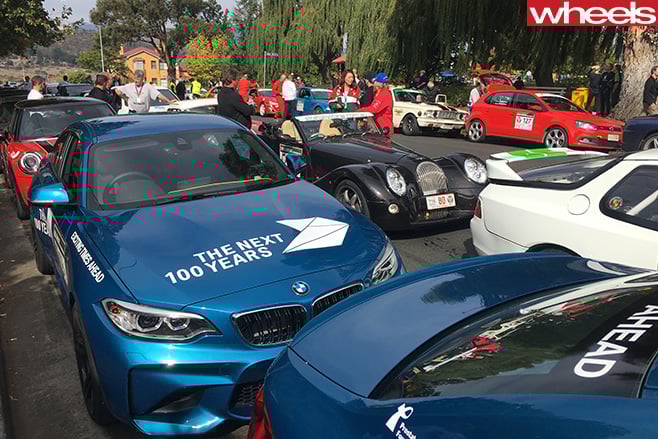
Maximum speed limits are applied, though – enforced either by the installation of the same Rallysafe GPS systems used in the competitor vehicles, or by course observers.
The 2016 field is the largest yet, with 382 entries spread across 13 competitive and non-competitive categories. Categories are further divided into the likes of Vintage, Classic, and Early Modern to help create a semblance of parity for vehicles of a certain age, with a relatively small group typically comprising the very latest performance cars aiming for outright honours.
Overall, it makes for a wonderfully eclectic field of automobiles.
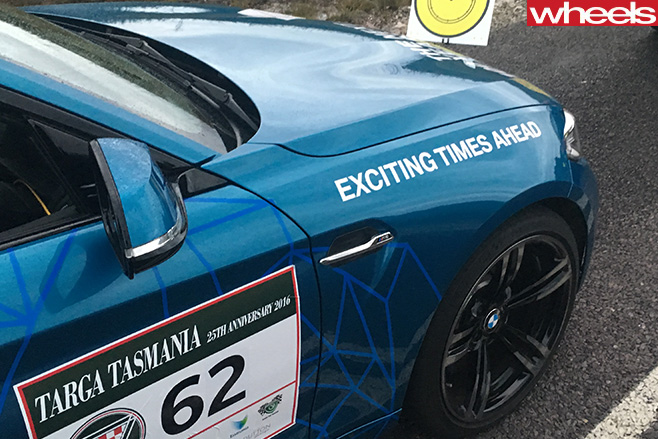
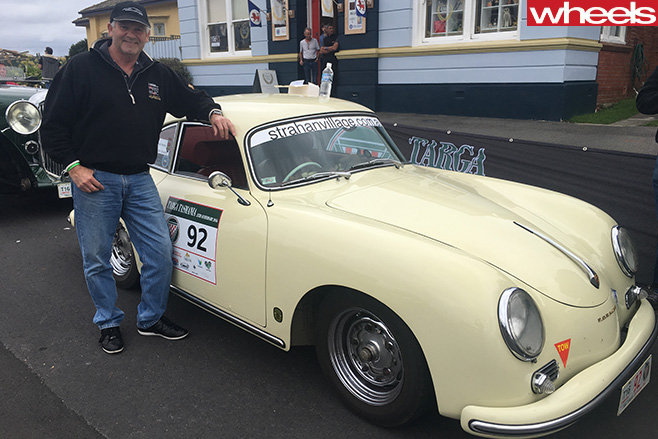
There’s almost countless Porsche 911s, but standing out is one of their forefathers: a beautiful, ivory-coloured 1958 356 A Coupe.
Owner/driver Wayne Hevey bought it 10 years ago, adding to an already slightly obsessive collection of Porsches that includes or has included a 1955 Speedster, a Boxster, and a couple of 911s.
Hevey, who was president of the Porsche 356 Australia Club for 15 years, has done four Targas with his Porsches, but this is his first Targa Tasmania.
“It’s a very well-organised event, the roads are fantastic here, the countryside is beautiful, and the camaraderie is fantastic,” he says. “I drive the 356 hard, though it’s very agricultural – no power power steering, no power brakes, no ABS – so you have to drive it on the brakes and on the gears.
“The most restrictive things are the drum brakes – they do start to overheat and fade down steep hills, and we missed a corner yesterday as we couldn’t brake in time. All good fun.”
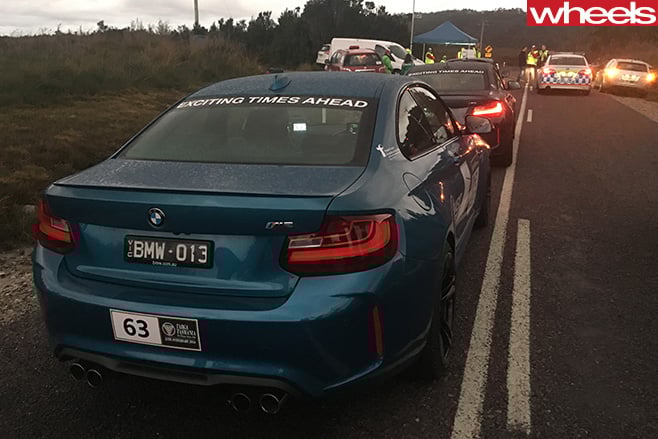
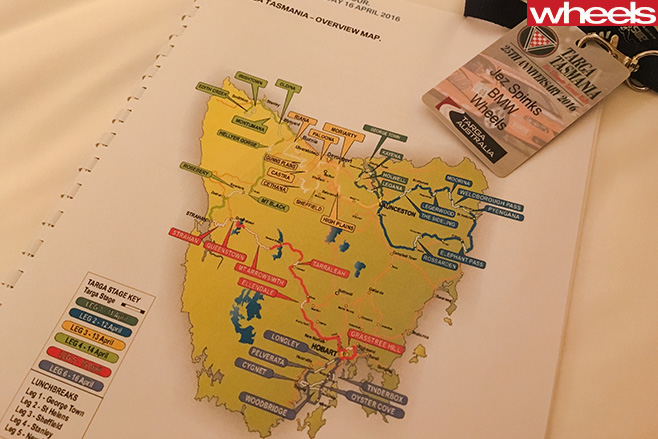
We’re taking part in the second half of the event, which started at Symmons Plains Raceway before focusing on Launceston and its surrounds before reaching Stanley.
As we ‘race’ through day four’s stages, it’s clear the community embraces the spirit of the Targa. Tasmanians young and old are intermittently spread throughout the courses, standing on grassy banks, on top of utes, or just simply outside their houses – waving and cheering enthusiastically to competitors as they speed past.
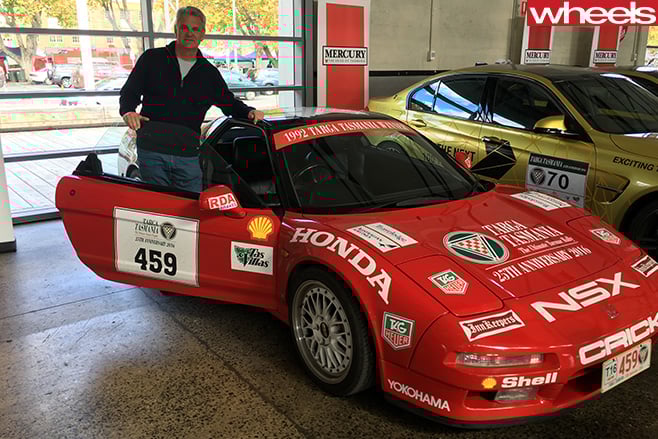
The winning driver of the first ever Targa Tasmania, Greg Crick, has returned as an event ‘flag bearer’ with his victorious Honda NSX. As a proud Tasmanian, he’s well placed to comment on its importance to his state.
“There’s maybe two per cent of the community that doesn’t support the event, because they don’t want the interruption to their life. But I think it’s a bit short-sighted and selfish as it gives huge benefits to our state,” says Crick.
“It brings a lot of revenue and a lot of media attention to Tasmania. And as a spin-off from that, you get the car clubs that want to come over and drive the Targa roads [at other times of the year].”
“It’s like a mini enduro … the challenge of getting up and doing six little races every day, and doing it over six days and [maintaining] a level of concentration needed to get through it all without making a single mistake. Those trees don’t move far, and there are all sorts of conditions, all sorts of surfaces. It’s a very challenging event.”
An overnight stop in Strahan is another chance to experience the automotive allsorts, with the Targa fleet gathering en masse once again – this time in the waterside car park.
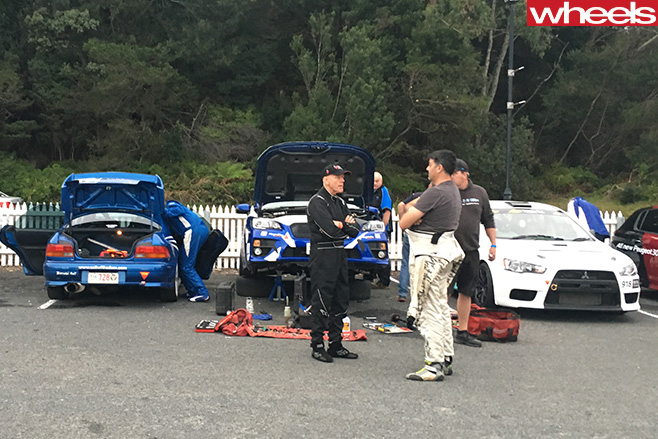
The smell of fuel and hot brakes pervades the air as drivers and co-drivers lift bonnets, jack-up cars and remove wheels to check various essential mechanicals and liquids.
Teachers, parents and kids raise money for their local school by hosing down the cars, getting their assorted liveries shining once more.
We’re also drawn to a yellow and black 1972 Ford Escort Mexico. We learn it’s not only the car inspired by the Escort’s win in the 1970 London to Mexico World Cup Rally, but also features the bigger, pushrod 1850cc Kent engine (rather than the twin-cam 1.6-litre borrowed from the RS1600) that powered the famous endurance victory.
“The engine in this car is so rare; I can’t find another one in the world,” says driver-owner Gerry Bashford, who’s onto his third Targa having participated in his first as a co-driver for Jim Richards.
“The Mexico’s got about 160hp and really motors. We blotted our copybook today, though, by messing up the last stage and dropping a place. We’re still first in the Classic [category] but we also want to beat some of the more modern cars.”
Strahan harbour is thriving in the evening as its visitors enjoy the fine food of Tasmania, though it’s generally another early night for those who have yet another pre-dawn rise.
Targa officials step up the fancy dress for Mount Arrowsmith – the longest stage at 52km, and also one of the most scenic, especially when the stunning, jagged ridgeline of Cradle Mountain comes into view.
En route to Hobart, more transport stages allow us to take a breather from the blur of the competition stages to marvel at Tasmania’s remarkably diverse landscape of rolling hills, sprawling forests, steep gorges, and rugged mountains.
It’s almost a shock to exit the wilderness and return to civilisation in the form of the state’s most populous area, Hobart.
The Targa field brings another dimension of colour to Tasmania’s capital, the palette of differently hued vehicles merging once more at the Princes Wharf shed.
For Targa’s final pre-comp evening, the shed effectively transforms into a motorsport motorshow called TargaFest, where both locals and tourists are encouraged to ogle.
The growl of Porsche flat-sixes, the burble of Aussie V8s, and the throb of Subaru boxers fill the air next morning, as the field makes a relatively short trip to the first of the final day’s stages.
And Targa claims a few more scalps, including 997 911 Turbo and Cayman GT4 Porsches.
They’re further reminders that, above all the fun, Tasmania’s roads can bite. Hard.
Two competitors have died racing in Targa, the most recent in 2013 when NSW driver John Mansell crashed his Porsche.
Steve Richards went off the road in a V8 Monaro (before managing to resume) during his first Targa in 2002 – the year dad Jim recorded the sixth of what would become a record eight victories.
This year Richo was driving a regular M6 as part of BMW’s Tour group, and says he’d rather be driving such a modern performance car than an older sporty car like his replica 1970s Ford Escort.
“It’s noisy, has no ABS, and I wouldn’t have wanted to be doing some of those slippery stages in it. It’s amazing how far safety has come even in the past 10 years.
“I was having fun in the M6, and the electronic diff was incredible. If you got a bit sideways, it would direct torque to the inside wheel to pull you straight.”
Jim was back pedalling another Porsche – this time a Cayman GT4 rather than a 911 Turbo, GT3 or GT2. He made into onto the last step of the podium, with Matt Close taking outright victory – in a current GT3 – at his 12th attempt.
Targa is clearly not an easy nut to crack.
WORRIED the luxury car world was marching towards a small-capacity turbo future?
Well, with blokes like Toyota boss Akio Toyoda in the hot seat, you need not be concerned. Case in point? Lexus’s new LC 500 coupe is Toyoda-san’s own personal pet project, designed to propel Toyota’s luxury arm back to the top of the pecking order.
The LC 500 is intended to go after BMW’s 6 Series and Merc’s S-Class Coupe, and has already been confirmed for a start in Australia by Lexus Oz boss Peter McGregor, calling the LC 500 “a lighthouse model for our expanding range”. No specs or prices have been confirmed, but expect to see it lob locally towards the end of 2016.
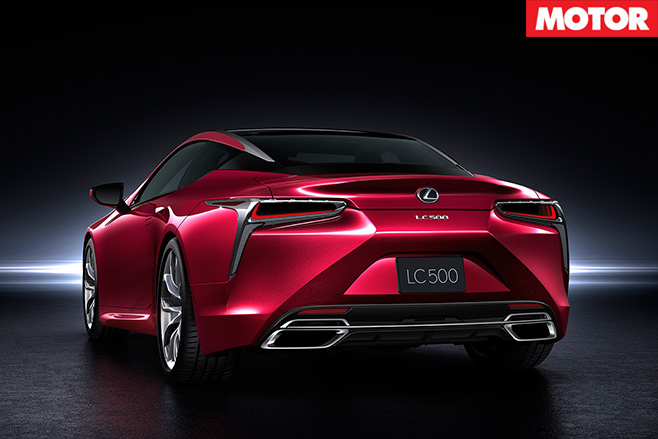
The ’box might be a traditional torque-converter style auto with flappy paddles, but Lexus boasts shift times close to those of a more performance-oriented dual-clutch.
You will already know the 2UR-GSE V8 from such performance models as the RC F and GS F. Lexus is already waxing lyrical about an augmented exhaust track, but you can judge for yourself here.
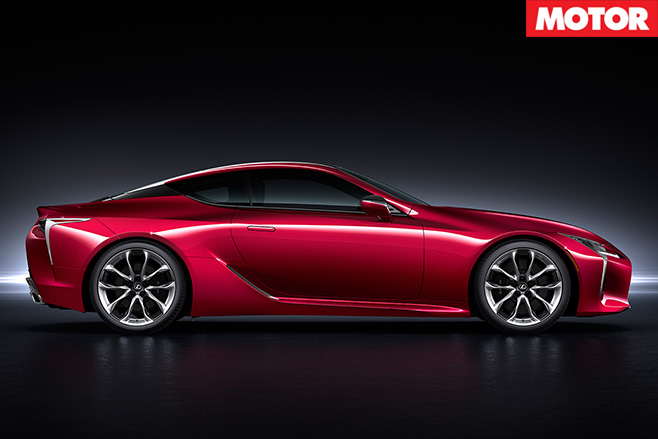
Lexus – and indeed Toyota – will roll the rear-drive GA-L platform out across several new models going forward, including the new Lexus LS limo – and possibly even a successor to the Toyota Supra.
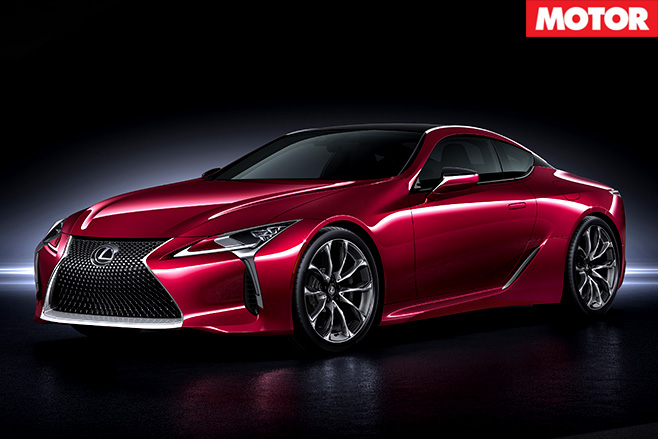
Suspension meanwhile is multi-link all ’round, with forged alloy control arms to reduce unsprung mass. Front brakes are rather large, too, with six-piston forged calipers bringing a halt to proceedings.
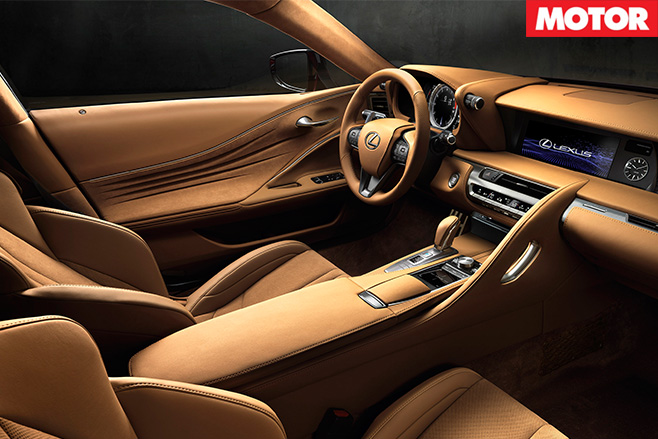
FULL POWER LC 500 point of difference its 351kW/530Nm 5.0-litre atmo V8; lacks power of German rivals, but new 10-speed auto should help.
MASTERPIECE Stunning exterior styled by Tadao Mori, Lexus’s Design manager, who originally treated it as a design exercise – it’s remarkably similar to the LF-LC Concept car.
TAIL END It’s understood Lexus will offer rear-steering as an option on the LC 500, along with Bridgstone’s latest run-flats.
MOTLEY CREW To ensure the LC departs from past models, Lexus used race drivers and selected journalists – company outsiders – to develop the car
BMW says the lack of incentives for hybrid ownership in Australia is “distressing”, but more electrified BMWs are coming anyway.
For many months, BMW Australia has been lobbying government to introduce legislation encouraging the purchase of low-emissions vehicles, according to Lenore Fletcher, the company’s manager of corporate communications.
“We’ve been extremely active for at least 18 months in terms of speaking to government departments – federal, state, local. It’s something that’s an ongoing and very strong activity within BMW.
“We’re not asking for huge incentives, but if you look at European or USA models, the fact that Australia has nothing in place is quite distressing.”
In Australia last year, hybrid and electric vehicles accounted for just 1.15 per cent of the 1,155,406 new cars sold. So far in 2016 that figure is 1.04 per cent.
“Europe stands at an average of 124 grams per kilometre. Australia stood at 177; so we currently rank at 31st in the world, alongside Mexico,” says Shawn Ticehurst, head of product and market planning at BMW Australia. “As a first-world country, we’ve still got quite some way to go.”
The company believes awareness is the key to improving that statistic.
“We need to see the government have some say in what is going to happen going forward, to encourage consumer awareness,” says Fletcher. “If we can get the government on board, talking about this outwardly, saying that it’s a good thing to be sustainable, it will definitely grow.”
“The technology is here and it’s available and we’re bringing it into place. It’s coming anyway.”
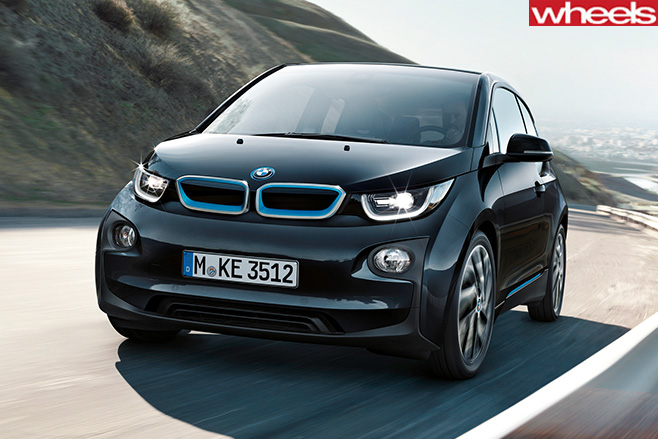
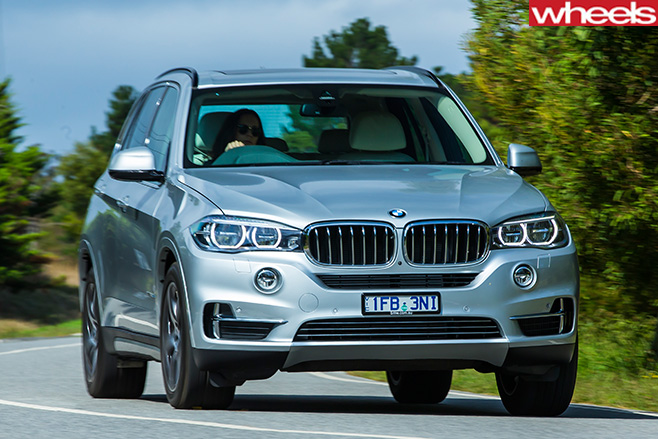
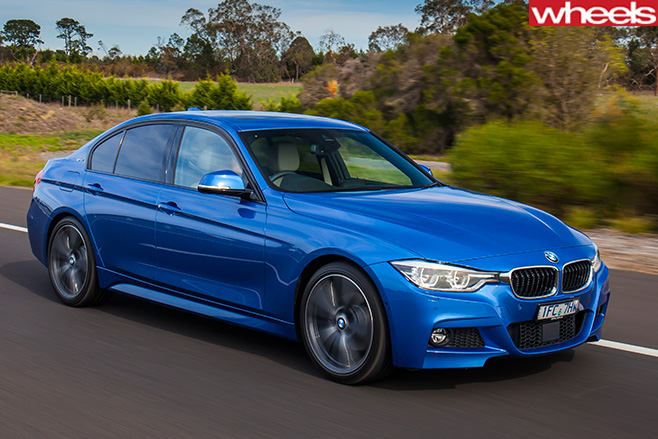
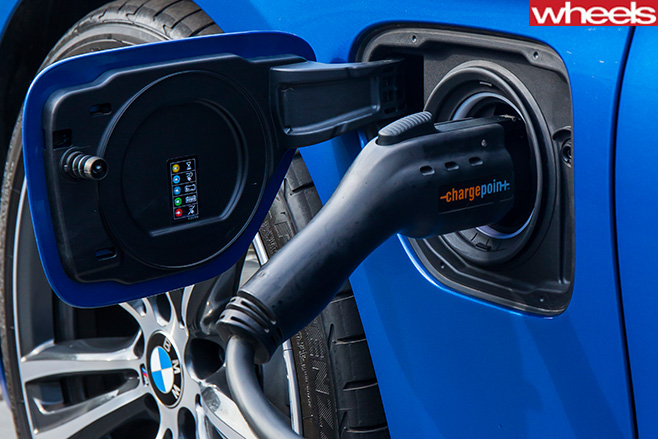
BMW Australia’s newest charged-up hopefuls sit within its two best-selling model ranges. The BMW 330e and BMW X5 xDrive 40e plug-in hybrids went on sale this month.
BMW in Germany has revealed plans to manufacturer a hybrid 7 Series model, and it is currently under evaluation for Australia.
“There’s no firm plans on which models, but we can certainly say other models in the BMW range will get plug-in hybrid technology in the near future,” said Ticehurst
“I think the most important thing for us is to have from the government some set targets in place. We need to see from the government some endorsement or validation of this technology,” says Fletcher.
Pricing these hybrid vehicles with their higher production costs and lack of government subsidies has been a challenge for BMW locally.
“The cost of producing hybrid cars is expensive. There’s no doubt about it,” says Ticehurst.
The newly added BMW 330e plug-in hybrid is listed at $71,900, a $2000 premium over the most popular 3 Series model – the 330i – which it matches for specification and trim.
“We definitely make money on [the 330e]. There’s a margin, but it’s narrower. It has been a real struggle, to be honest, to find that point where we know the market will accept it, and we’re making a satisfactory margin,” explains Ticehurst. “To be blunt, it is lower. But we felt we’ve got to do something with these prices to make these cars relevant.”
The 330e’s rivals are similarly priced. Mercedes-Benz sells its C300e hybrid for $74,900. Lexus wants $68,000 for the IS300h F Sport, and the Infiniti Q50 Hybrid S costs $67,900.
“The point here is we’re going ahead with it,” concludes Fletcher. “We’ve gone ahead with i3, we’ve gone ahead with the i8 as the halo car for the brand and now we’re going ahead with these [330e and X5 40e].”
Sydneysider Brad Prout knows how tough it is to win the Northern Territory’s annual Finke Desert Race (FDR).
Last year was Prout’s seventh shot at the Outback endurance event they call “The Bathurst of off-road racing.” He finished second in 2007 and third in 2008, so he has the skill to win. And for 2009 he had a brand-new Jimco buggy powered by a locally-prepared Chevrolet V8 small-block.
The three-day event started well. Prout tore up the 8km Prologue track on Saturday and grabbed pole, giving himself a clear track for Day One’s 230km run south from Alice Springs to the Aboriginal settlement of Finke. His rivals would not only have to catch him on the tricky, treacherous track that once served as a service road for the Old Ghan railway line, but do so through thick dust kicked up by his 550kW rear-drive buggy.
There’s a jump popular with spectators at a dune 35km south of Alice. And, even though Prout had pre-run the track in a road car, the jump would be something of an unknown because spectators ‘reprofile’ its lip on race day to catapult buggies higher than their drivers otherwise intended.
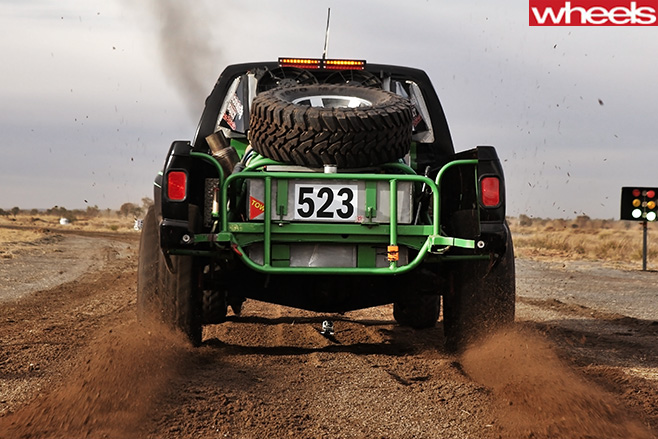
It was another 100km before the chopper trailing him radioed that the rear of his buggy was on fire. Prout kept driving, probably hoping his 170kmlh-plus speed would extinguish the flames. It didn’t, and the chopper radioed again: ‘Get out. Get out now.’ Prout pulled over and bailed out just as the inferno took hold. He could do nothing as a $300,000 buggy bought with his own money, and his dreams of a maiden win, went up in smoke.
The exact cause was never found, but Prout thinks the legs of that demolished camp chair may have ruptured a fuel hose. This year he’s back with a brand-new buggy, and fresh dreams of victory.
Brad Prout is not comfortable sitting still. He’s always doing something. Perhaps it’s a by-product of an itinerant childhood following his sheep-shearing father around country WA. The travelling theme also prevailed in his career in finance and investment banking, from Perth to Melbourne to Sydney to New York before returning to Sydney, where he now lives.
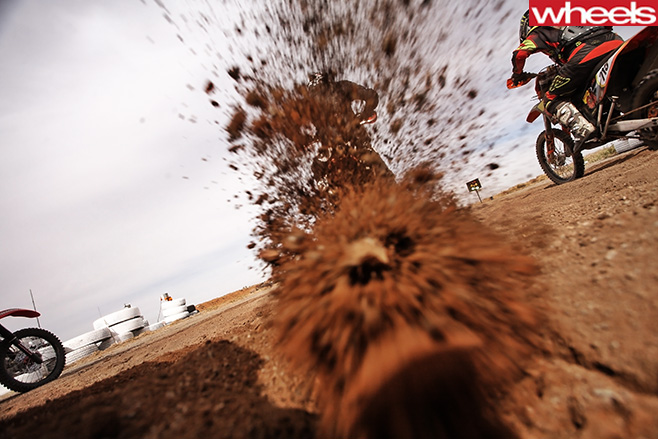
The second time around Brad chose four wheels over two. The AORC is the motorsport antithesis of the carefully choreographed, exclusive clique cultivated by F1, and even makes Australia’s homegrown V8 Supercar Championship appear aloof and pretentious.
There are no crowd barriers and no PR minders separating drivers from avid fans or inquisitive media, no VIP hospitality suites or overbearing driver egos, no multi-million dollar motorhomes or supermodel girlfriends.
And, though the 2010 FDR competitor list includes Peter Costello, Richard Pratt, James Patterson and Wayne Carey, there are no ex-federal treasurers, deceased cardboard billionaires or world-famous authors running, and the only AFL legend is Tony Lockett, who had entered his third FDR but injured his arm on a recce and left before the weekend. Scrutineering on Friday night is the first and best chance for fans to get close to the 500kW-plus buggies and trophy trucks, and almost 500 dirt bikes that will shatter the Simpson Desert silence over the next three days.
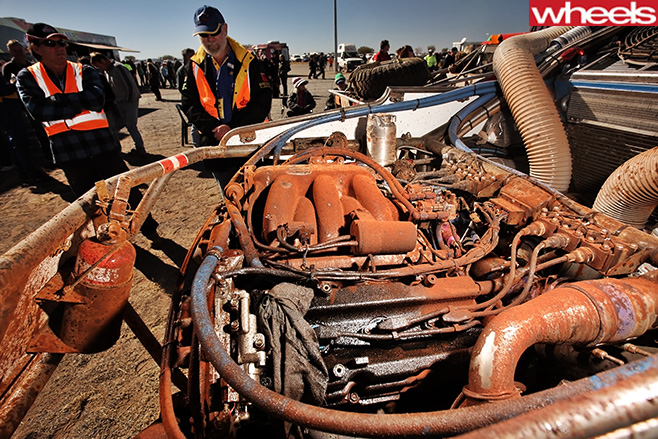
As Prout explains, “[Off-road racing] is an affordable way into top-level motorsport. It costs [me] $75,000 – $100,000 to run a one buggy team for a season in the Australian Off-Road Racing Championship, not including a race car and transporter.”
Prout does have sponsors, but they’re component-suppliers like Bilstein (dampers) and Albins (gearboxes) rather than financial backers. His own money covers the rest, including big-ticket items like airfares for the team and diesel for the transporter taking his race car to the five events across the country. Labour costs are limited to food and drink, and a case of beer or three to keep his team of keen volunteers happy.
Yes; the purchase price and build-up of a top-level Jimco Pro buggy can run to $300K. But, says Prout, the real cost, factoring in resale, is more like $100,000 and usually amortised over three to five years.
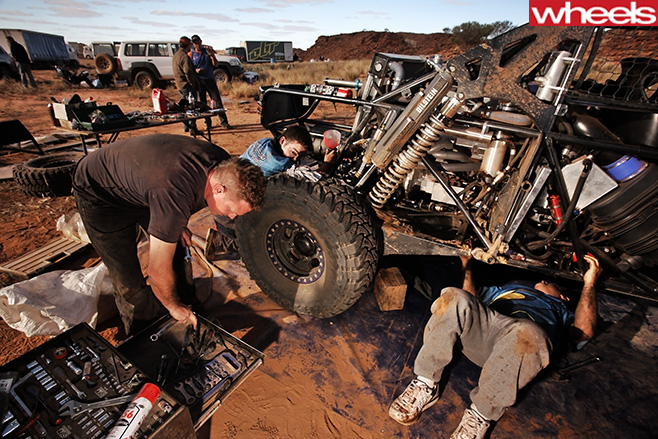
Brad Prout’s new buggy is typical of those that will dominate the FDR and the AORC. The purpose-built desert racer evolved from speedway machines to look like the bizarre arachnoid offspring of a Formula Ford and a Lunar Lander.
The Jimco Aussie Special sits on a 3100mm wheelbase and 2300mm track front and rear. At the end of each spindly tubular alloy limb sits a highly-adjustable, triple-chamber Bilstein shock absorber and two variable-rate springs stacked in sequence; adjustability is key to controlling that 530mm of wheel travel.
Prout runs cutting-edge disc brakes all round. They have a wave-cut and scalloped edge to increase surface area and aid cooling. “Off-road racing hasn’t paid a lot of attention to brakes yet,” he says. “I think these are the best you can reasonably afford. We ran them for the first time in Round One at Hyden [WA] and already I’ve seen two other teams with them this weekend.”
The buggies’ biggest area of individuality is the engine. Instead of the twin-turbo Nissan V6s favoured by the Robinsons, or the 600kW, twin-turbo Toyota V6 of reigning champ David Fellows, Prout chose a 6.0-litre Chev tuned for around SOOkW. During each 230km race leg, the small-block V8 will suck 155 litres of premium unleaded. That’s 67L/100km for those without a Casio calculator watch …
