
NO car of the year award will be made by Wheels for 1972. Wheels makes this announcement with a deep feeling of responsibility—and real regret.
First published in the January 1973 issue of Wheels magazine, Australia’s most experienced and most trusted car magazine since 1953.
The most coveted award in Australian motor industry has been withheld because, in the opinion of Wheels, no car during 1972 came up to the standard required.
It is the first time in the 10-year history of the Car Of The Year that an award had been put through an exhaustive series of tests during the year.
For the full reasons behind this important decision, read below:
- Reduced glass area on FALCON HARDTOP plus added width over rear wheels makes it a nightmare to park.
- Considering overall length of car rear seat leg and knee room in FALCON is poor. This is not a problem restricted only to the Falcon but typical of local Big Three cars.
- Boot of XA FALCON shows lack of practical detail design. Long petrol filler pipe takes valuable space and lower lip of boot, protrudes from floor. Spare wheel is under rubber mat so luggage must be removed if car gets a flat.
- Body panels on CORTINA SIX still fail to match perfectly. Area between rear door and body is worst example.
- MARINA is not for the twisty sections, especially if the road is bumpy. The 1948 Morris Minor suspension is hardly good enough in 1972.
- Styling of MARINA COUPE fails because it uses same front doors as four-door sedan. Lack of length makes rear side windows seem too long.
- DATSUN 180B engine produces plenty of power but is noisy by modern standards and harsh at top end.
- High lid and petrol tank between boot and rear seat means DATSUN 180B boot is too small for most Australians.
WHY NO CAR OF THE YEAR WAS MADE
Wheels, in making its announcement on The Car of The Year, wants to make one point clear — not all the Australian cars released during 1972 were poorly designed vehicles.
Some of them were good, others better than good. But being a GOOD car is simply not enough to win the award.
The guidelines laid down for the award require that the car must present a significant product advance. None of the cars released really achieved this criterion.
The award is based on engineering excellence and includes considerations of innovation in design, fulfilment of the car’s design concept, road behaviour and performance — plus the contribution it makes to standards of engineering and safety. The standard of quality and the manufacturer’s attitude to marketing and service and finally the way the car compares in its relative market are also taken into account.
A tough set of requirements — and sadly no new car assembled or wholly manufactured in Australia in 1972 fulfilled all the conditions to a sufficiently high standard to merit receiving the award.
In retrospect, 1972 was a year of marking time, a year in which there were plenty of new models. But it was also a year which reflected the uncertainty produced by the first waves of safety and government controls which began in 1968.
In the intervening years, the influence of Governments in car design has become clearer and now there is communication between manufacturers and legislators. But back in 1968, when most of the new cars released in 1972 were being designed, rumours and conflicting statements were rife.
Obviously most manufacturers preferred to sit tight and develop existing themes, to work with the engineering concepts which were simple and easily understood, both by the public and in terms of tooling and monetary outlay.
The role of the styling and marketing departments were particularly obvious in deciding how the final product finally came out and shaped up. Today, while marketing is particularly important, the styling departments have to consider all sorts of physical limitations imposed by the safety requirements and this has tended to restrict their work
For the past few years the engineers, too, have been forced to spend many millions of man hours working out feasible answers to the safety requirements instead of working on advanced technical concepts.
The result, of course, is a series of cars which are conservative in their engineering and lacking in any worthwhile innovation. There will be plenty more in the same vein in the years to come — but 1972 seemed to mark the coming together of all these problems.
It was significant, perhaps, that 1972 was a year in which GMH had little that was new apart from the face-lifted Torana and the marketing exercises based on the HQ – the SS and Vacationer — HQ was all new in 1971 and it will not be until late 1973 or early 1974 that we see another new car — the Torana replacement — from Australia’s biggest manufacturer.
There is still hope for the future. In 1973, we will see the long-awaited Leyland P-76 with its — by local standards — advanced concept and refreshing styling and with many small but practical features which could take it beyond the normal equipment and development level of the Big Three.
Chrysler has its Torana Six challenger and there are a couple of surprises from the other manufacturers as well. It should be an interesting year — with, we hope, a COTY at the end of it for one deserving company.
A rundown of the leading candidates shows why none of them is the Wheels Car Of The Year in 1972.
Morris Marina
The local version of Leyland’s fortune-saving Marina is much better than the English model, if only for the fitting of the ohc engines. However, in terms of suspension — in other words ride, roadholding and handling — it is at least 10 years out of date. The vagueness in the steering, the excessive understeer, axle-hop under hard braking and general lack of refinement mark it down as a car for people who drive at 40 mph on perfectly smooth roads. In these areas it is a whole league behind the front-wheel drive 1500.
Datsun 180B
Until Wheels drove the 180B, we felt this car would be the strongest contender — which just goes to show how wrong you can be. There is no denying it is outstanding value for money, but it is not the advance over the 1600 it should be, except in terms of seat design and dashboard layout.
The lack of mechanical refinement, the noise level and failings in the steering and front suspension design are carried over from the 180B and in many ways are exaggerated by the new body.
Ford Cortina Six
If Ford’s quality control improved 100 percent — and there were no rough roads — the Cortina Six would probably have won. Following, and improving upon, the Torana Six concept, the Cortina is certain to be a very popular car because its combination of performance and size are almost ideal for Australia. But the edge has gone from the four cylinders handling, and the steering is heavier in general driving.
The biggest problem is still the dreadful rough road ride. The knocking and bottoming and general lack of absorption by the Cortina suspension leads us to the belief that an expensive re-think is the only positive answer. The finish, too, is still suspect after more than 12 months production of the virtually identical (body-wise) fours. The Cortina Six is a much better car than the Torana — but it is not good enough.
Ford Falcon XA
Perhaps the most obvious choice in 1972, the Falcon XA turned out to be a fine car in many areas — just so long as you paid extra for the right set of options. Given the wide wheels, radial ply tyres, bucket seats, automatic transmission and at least the 250 engine (but preferably one of the V8s), it became a marvellous touring car. The interior control and dashboard layout, too, is by far the best on one of the Big Three cars.
But — and it is a big bit — under the rather dull and in many ways already dated styling, the running gear is virtually unchanged from the old XR-XY models.
The Falcon Hardtop failed because of its abysmal lack of visibility. It is a hard, almost dangerous car to drive in traffic and especially to park. It is, in fact, no more than an exercise in marketing and styling.
Other candidates…
Ford Fairlane ZF… for the same reasons as the Falcon XA, but also because it lost the distinctive appearance of the previous models.
Holden SS… GMH is getting the HQ all together now, but the SS points up the basic suspension deficiencies of the suspension.
Austin Tasman/Kimberley Mk. II… Getting better all the time but the whole concept is now on the chopping block in Australia.
Torana LJ… Better than the LC certainly but the poor road-holding and confined interior are still major problems.
Rambler Matador… As an example of American engineering it comes over very well but the mechanicals are out-dated and the shape old hat.
Charger SE 340… Last year’s winner in a more luxurious form with an even bigger V8 engine but still essentially the same car.
THE NATURE versus nurture debate rages among psychologists, but there might be fewer fisticuffs over the notion that geography can influence an individual’s driving preferences.
Most Aussies I know grew up driving some form of Falcon or Commodore – or a ute. After all, it would be un-Australian not to embrace the rear-drive-or-nothing mentality.
But I’m non-Australian, and can confess to something of a predilection for front-drivers. As a Pom, my early experiences were rooted in front-drivers – learning in a Renault 5, spending my first few licensed months in a mate’s 1977 Datsun 120A FII Coupe, before owning of a couple of Ford Fiestas. This was followed by the superb Ford Puma you all sadly missed out on.
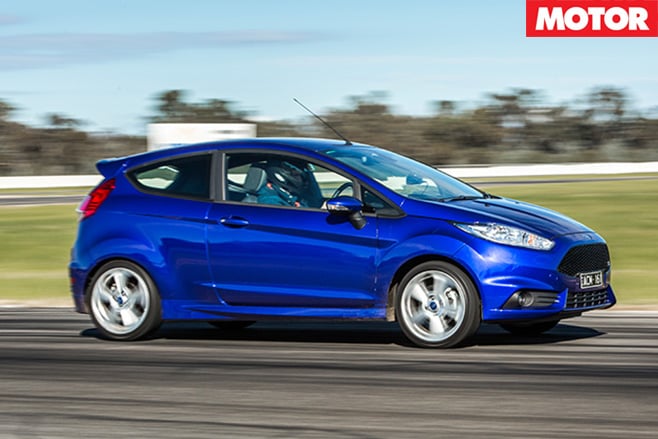
Before you inundate MOTOR with penned hate-mail or protests on social media, I’m not suggesting we should all be embracing vehicles that cruel momentum by pushing their noses towards the other side of the bitumen in plough-on undie-steer, booking you on a one-way ticket to Armco and a change of trousers.
The ability to pitch a car sideways through a bend – accurately and quickly balancing throttle and steering inputs – will always be the highest of skills in the art of car control, not to mention a riot of immense satisfaction. And neutrality is the holy grail of handling if you’re looking to go from point A to point B as quickly as possible, or to set lap records.
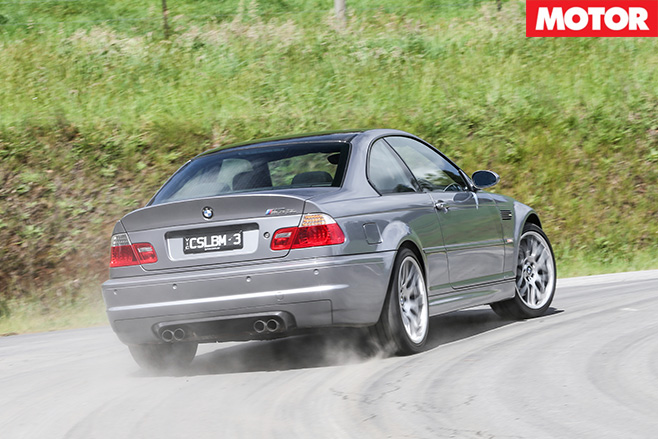
But I will argue that understeer isn’t necessarily the antithesis of driving entertainment – you just need to be in a good front-wheel-drive car.
Understeer is simply a party-pooper in a car that powers its back axle only (despite the fact I once had some fun of the perverse type trying to keep a Smart Fortwo out of the bushes).
And satisfaction is best derived from an all-paw car when on the limit it’s capable of being returned from understeer to a more neutral, or even oversteery, attitude by pressing on rather than lifting off the throttle (a cross for the A45 AMG, but a tick for the WRX, then).
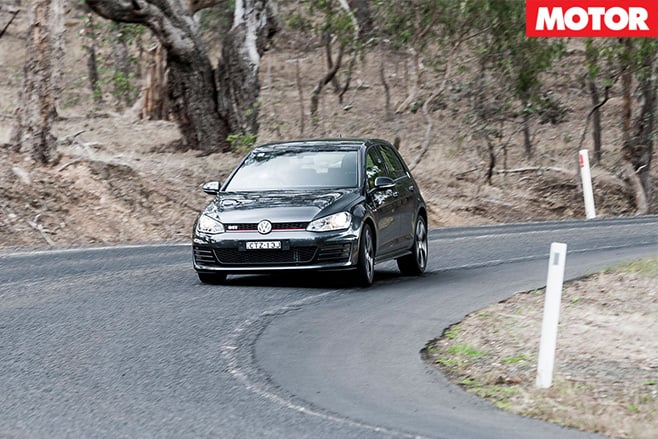
The Frenchie is notably quicker than the German, deploying its mechanical limited-slip diff to amazing effect to extract itself from apexes with speed bordering on black magic. Yet the GTI is arguably as much fun, because it’s less capable of flattering an average driver. To pull speed out of the VW’s hat, a greater onus is placed on the driver – even with Golf’s electronic interpretation of an LSD – to more perfectly judge corner entry speed before balancing tyre grip as you complete the radius.

Preferences are even found among the world’s fastest drivers. Lewis Hamilton savours some oversteer, yet Fernando Alonso is renowned for inducing some understeer to achieve his stunning pace (though a change of F1 teams might prove more effective for the Spaniard).
If you are more of a Hamilton, I’m not going to tell you oversteer is over-rated, but I will insist that understeer shouldn’t be under-rated.
IT may look evolutionary, but the next-generation Jeep Wrangler due out in 2018 takes a revolutionary road, reportedly shedding hundreds of kilos thanks to the use of lightweight steel and even some aluminium body panels.
Set to debut later this year or at the Detroit auto show in January, the American 4×4 icon will nonetheless focus on enhancing its go-anywhere reputation.
This JL-series Wangler is expected to score a development of the same ladder-frame chassis, solid front and rear axles, and low/high-range four-wheel-drive underpinnings found in the existing nine-year old JK series.
Through the camouflage, it’s clear the prototype shown here photographed in Michigan also retains the famous square-rigged design cues of the previous four generations.
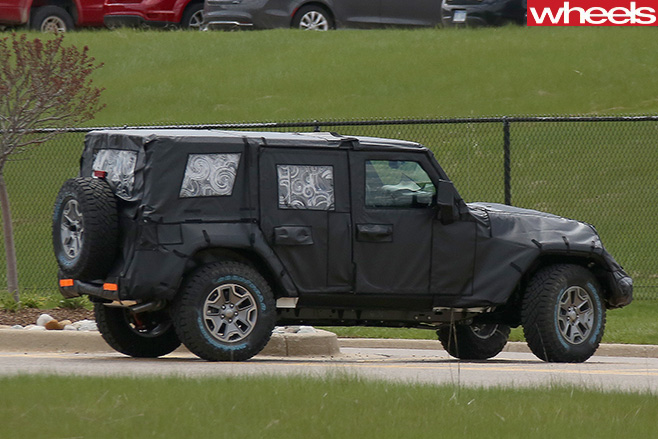
A pick-up utility version is also in the development pipeline, to sit alongside the classic short-wheelbase two-door and popular Unlimited long-wheelbase four-door wagon bodystyle variants of the current series.
If the rumours turn out to be true, the soft-top might even see the return of a folding windscreen for a full alfresco feel.
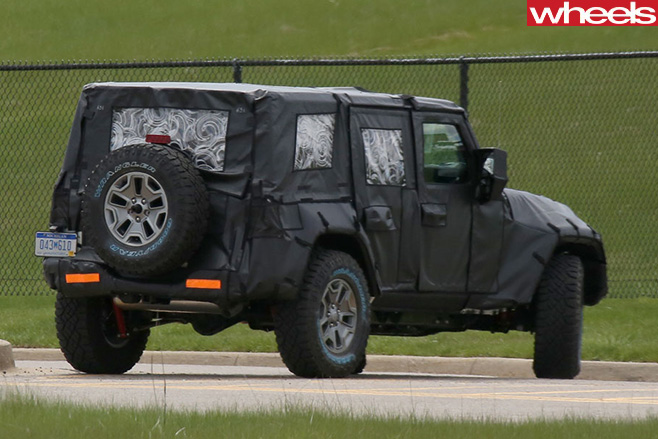
The new Wrangler is expected to be powered by a revised version of the existing 3.6-litre Pentastar V6 petrol engine – linked to an eight-speed automatic instead of the current five-speed unit – and a 3.0-litre V6 turbo-diesel from the Ram truck division.
Hybrids are also mooted, though maybe not from launch.
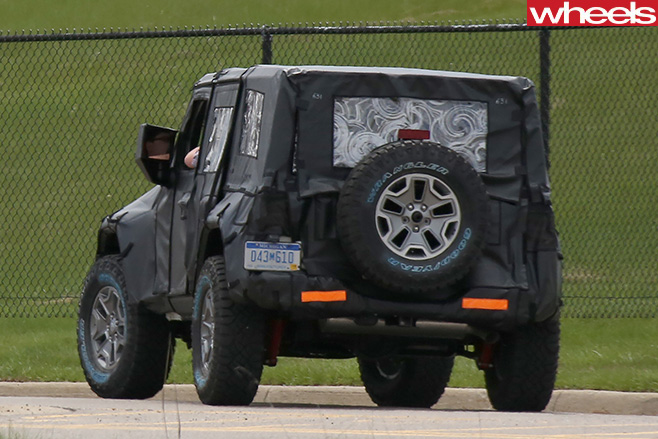
When the new model lobs sometime in 2018, expect similar pricing to the existing Wrangler, which stretches from just under $38,000 for the two-door SWB manual to about $55,000 for a loaded LWB wagon diesel.
Have spy pics of your own? We’d love to see them. Just email them to [email protected]
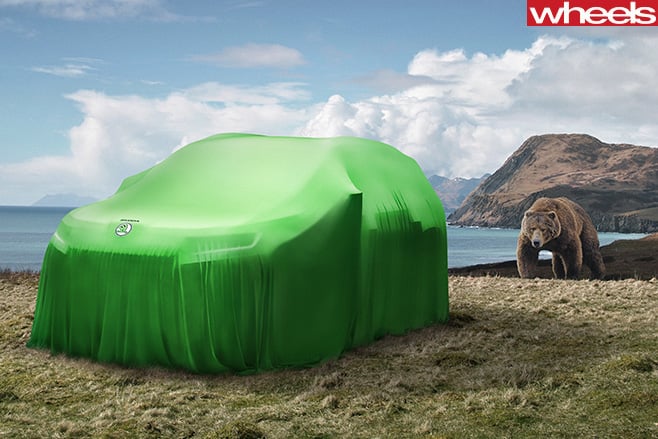
Skoda’s new seven-seater, due for its global launch in the second half of 2016, is called the Kodiaq.
The name comes from a bear native to Kodiak Island which is positioned off the southern coast of Alaska. The Volkswagen-owned brand chose this name as a nod to the car’s ‘size, strength’ and ‘family spirit’.
The Kodiaq is spelt with the letter q — rather than k — acknowledging the language of the Altuiiq people that live on Kodiak Island. Altuiiq men and women refer to their native bear as Taq uka ‘aq, but is known to the rest of the world as the Kodiak bear.
Entry-level: It’s the ultimate back-handed comment, it’s supposed to be a good thing (hey, it’s cheaper) but the interpretation is never so charitable (You, Sir, are a tight-arse).
But without the usual social baggage that afflicts other high-end brands, you might just be able to get away with your reputation intact with an entry-level McLaren under the Stratco.
And the more you learn about the new McLaren 540C (and 570S which we’ve already briefly sampled) the more you realise that entry-level translates as slightly more attainable, rather than actually cheap. It’ll still be a rare sight in the Costco car-park, for instance.
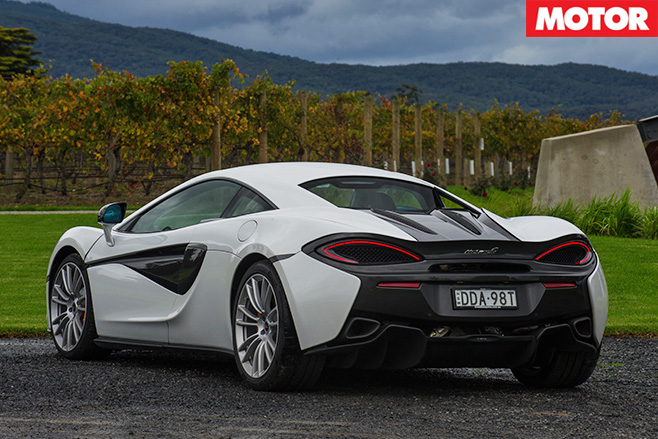
The seven-speed twin-clutch tranny remains and so does the rear-wheel-drive layout. The engine is fundamentally the same, too, as the powerplant in the 650S. It’s the same twin-turbo, 3.8-litre flat-plane-crank V8 but with a different tune to produce less power and torque. So, power drops to 397kW at 7500rpm and there’s 540Nm anywhere from 3500rpm to 6500rpm, 22kW and 60Nm shy of the 570S.
Doesn’t sound like a huge distinction? Clearly, it’s still mumbo aplenty, but it’s also one of the big differentiators from the 540C to the other McLarens. The other difference, of course, is that the 540C (and the 570) misses out on McLaren’s celebrated hydraulically linked suspension system that does away with sway bars and – more or less – body roll.
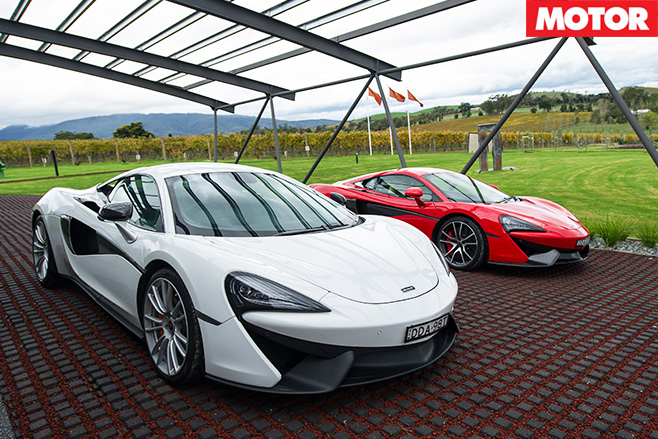
So let’s get this straight: This is a McLaren 650S with a few less trinkets and less bunga bunga (although there’s still plenty)? In a nutshell, yes, even though McLaren will hate us presenting it that way. And the best news is that the 540C will save you a lazy $120,000 or so over the cheapest 650S ($350,000 drive-away versus $459,250 plus on-roads) it’ll still get to 100km/h in a claimed 3.4 seconds and, according to McLaren, will top 320km/h should you be somewhere near an autobahn.
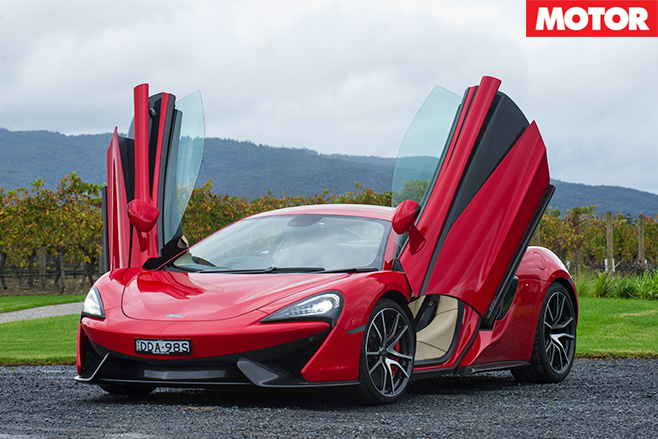
Hit the starter button and where the 650S’ engine has a collection of snorts and whistles and the 570S sounds a little gruff and rowdy, the 540C’s V8 is more muffled but the nicer for it when you’re poking about at low speed (where the flat-plane crank engine is least tuneful).
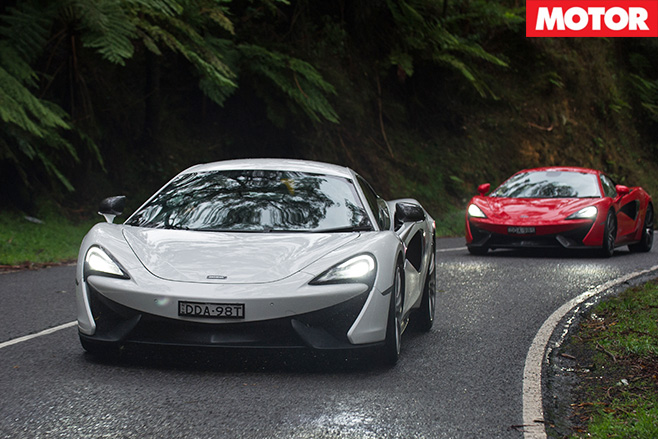
The electronic speedo can’t keep up in the lower gears, leaving you with two blurred `8’s and pretty soon, three of them showing on the display. The gearbox can be tailored through three settings ending with `Track’, as can the suspension, but, frankly, that’s best left in `Sport’ or `Normal’.
But even once you’ve started to get used to the urgency of the V8, you’ll continue to be open-mouthed at how damn well this car rides. Sure, it’s low (the 540 loses the lift-kit for driveways) and the travel is relatively short, but it handles big lumps no worries and is crazy-supple for something with such balance and control. The dampers, too, are spot on and allow for that plush ride but counter any tendency to a secondary jounce or wobble.
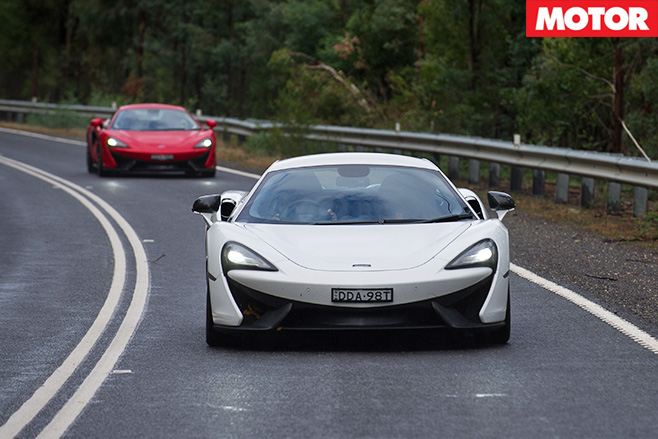
What’s that skip? PCOTY’s just a few months away? Ooh.
SPECS
ENGINE: 3799cc V8, DOHC, 32-valve, twin-turbo POWER: 397kW @ 7500rpm TORQUE: 540Nm @ 3500-6500rpm WEIGHT: 1350kg/ 0-100km/h 3.4sec (claim) PRICE: $350,000 drive-away
1. It’s currently only available in one colour combination – bright red with a black roof. Suzuki has said other colours will become available in the future.
2. It’s the only Vitara in the range that comes with an all-wheel drive system.
3. Suzuki Vitara badge was launched in Australia just six months before the addition of the S Turbo.
4. The S Turbo is more fuel-efficient than other Vitara models due to its more refined engine with Suzuki claiming 5.9L/100km.
5. The AWD spec comes with Suzuki’s on-demand AllGrip system which offers four off-road modes. Though it’ll only cope on moderate off-road tracks and costs an extra $4000.
6. For a small SUV, it’s light and a lot of fun to drive.
Click here to read the full review on the Suzuki Vitara range.
1. The Clubman is the largest Mini you can currently buy, offering more space and practicality. It’s 27cm longer and 9cm wider.
2. It has no spare tyres. Instead, Mini has put in a run-flat tyre, which means if you get a flat, you can keep driving but only up to speeds of 80km/h for 80km. Not ideal if you’re out on country roads, a long way from home.
3. There are four ways to open the impractical but stylish barn-like boot doors: the old fashioned way with your hands; via your key; using a button in the car above the bonnet release; or using the clunky foot sensors that don’t always work.
4. True to Mini’s reputation, the Clubman is a lot of fun to drive thanks to its sharp steering and balanced chassis.
5. The light-ring around the circular infotainment screen changes colours as you select different driving modes and change the volume. Just one of the many quirky design features of this Mini.
6. The Clubman is the only Mini that could practically serve as a family car.
7. Fun fact: According to Guinness World Records, the most people to ever fit inside a Mini (the new model, to be exact) is 29 and was recorded in China in September 2014. With the release of the larger Clubman, we wonder if someone will attempt to beat this record.
Read the full review on the Mini Clubman here.
Volkswagen-owned Skoda recently confirmed the name of its new large SUV. As we’ve suspected for some time, the German seven-seater is called the Kodiaq.
The name refers to the Kodiak bear that lives near the southern coast of Alaska, in a place called Kodiak Island. Those who live on Kodiak Island, the Altuiiq people, refer to the Kodiak bear as Taq uka ‘aq. To keep in line with the Altuiiq language, Skoda spelt the name of its new car with a q, rather than a k.
Skoda announced that the car will be 4.7 metres long and will ‘comfortably’ sit four people. It’s probably safe to assume, as Skoda have hinted, that the name of the car will reflect its nature; big dimensions, muscular lines and hopefully, some off-road competence. The car is scheduled for its global launch in the second half of 2016 and is likely to land down-under sometime in 2017.
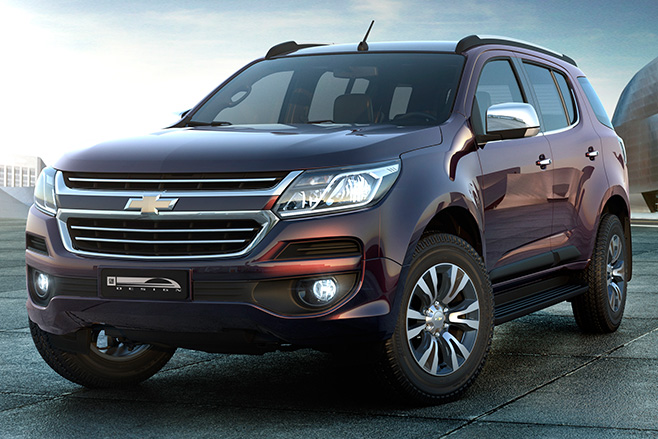
The Holden Colorado 7 large SUV will become the Holden Trailblazer as the brand attempts to shift itself into a more premium part of the market ahead of next year’s exit from Australian manufacturing.
A facelifted version of the large seven-seat off-roader — wearing a face lifted from US carmaking giant General Motors’ Chevrolet sub-brand – will importantly still feature a Holden badge when it arrives here. It’s due on sale in Australia in September.
Shortly after, Holden is expected to make an announcement about bringing more variants of the Astra – a European-designed city-friendly hatchback – to Australia in a move clearly designed to replace the Australian-built Holden Cruze with a more premium model.
In 2017 comes the big move, with the European-designed Opel Insignia due to take over from the Holden Commodore large car as what the brand hopes will follow in the Commodore’s shadow to become Australia’s favourite Holden.
The Colorado ute-based Trailblazer, though, will be the first taste of what is to come from what is shaping up to be a much more premium feel to Holden’s showroom.
“Any car we bring into the portfolio we work hard to make sure it’s a winning product,” Holden managing director Mark Bernhard said.
“When you have a chance to get in the [facelifted] Colorado you’ll understand just how good that product is.
“It’s has certainly had great reviews, particularly from Brazil already (where the SUV was overhauled for this facelift) and all the feedback we’re getting is that it’s a fantastic product.”
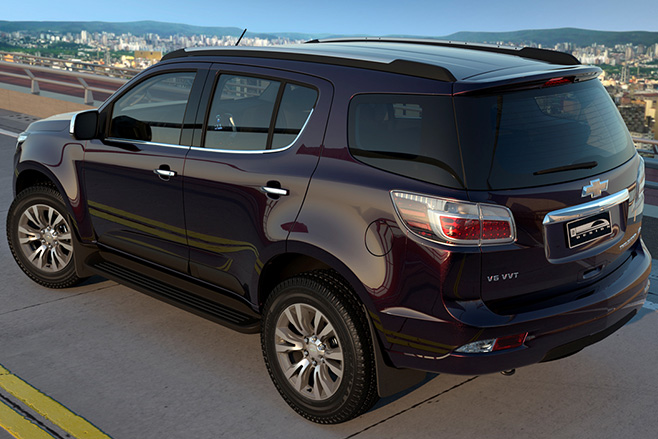
According to Holden, the Thai-built Trailblazer will be “a significantly different vehicle” to the Colorado 7.
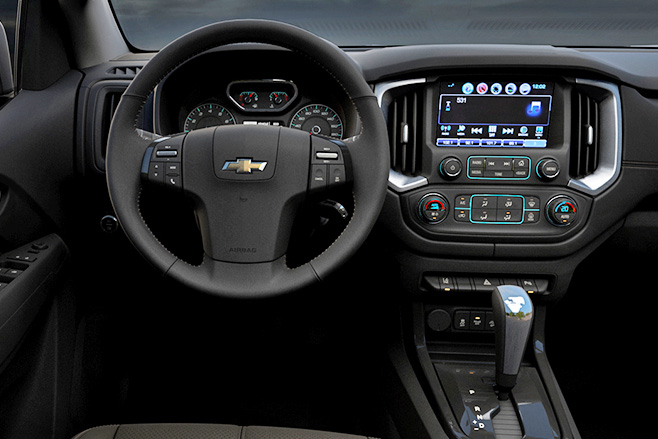
Apart from the new Chev-styled look that gives Holden’s design a more international edge – you shouldn’t have too much trouble recognising the car in any of the international markets in which it will sell – Holden says the facelift makes the Trailblazer more “luxurious”.
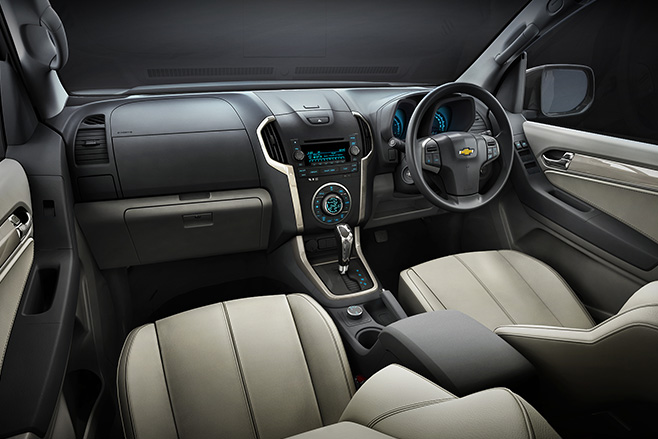
That runs to more chrome trim, LED daytime running lights that make the Trailblazer more visible to oncoming traffic, different “dual-grained” plastics on the dash, as well as a shift to contrasting leather trim used for the seats.
Holden has also revealed the Trailblazer will add more smartphone-friendly functions, featuring Apple CarPlay and Android Auto to integrate devices with the car’s multimedia system.
As well, Holden says the Trailblazer will have “significant improvements to driving comfort” while keeping plenty of off-road ability.
Under the bonnet, Holden is expected to use an upgraded version of its 2.8-litre four-cylinder turbo diesel engine, however, on-paper performance falls from 147kW to 132kW, and torque from 500Nm to 470Nm for versions of the Trailblazer fitted with a six-speed automatic gearbox.
If Holden decides to introduce a five-speed manual gearbox version – the carmaker did add a handful to its Colorado 7 fleet when the vehicle was introduced in 2014 but quickly dropped it in favour of an auto-only line-up – torque will drop to 440Nm.
The big question for prospective Trailblazer buyers, though, will be price. Holden’s all-wheel-drive only Colorado 7 range currently kicks off from $47,990, compared with $41,740 for the 3.0-litre V6 diesel-engined, rear-wheel-drive Ford Territory that will disappear from showrooms in October as the US-owned brand winds up its Australian carmaking business.
The seven-seat Isuzu MU-X, a wagon version of the D-Max trade ute powered by a larger 3.0-litre four-cylinder diesel, starts from $40,500 for a rear-drive model, and the Ford Ranger trade ute-based Everest, powered by a 3.2-litre five-cylinder diesel engine, starts from $54,990 with AWD.
Toyota, meanwhile, prices its Hilux-based Fortuner seven-seat off-roader – powered by a new-generation 2.8-litre four-cylinder diesel – from $47,990.
Nissan don’t offer a diesel version of its off-road friendly seven-seater. Instead, it has a petrol-electric hybrid version of its Pathfinder, priced from $42,990, reflecting the reality that some buyers will never take their rugged off-roader down anything more challenging than a winery’s gravel driveway.
We’ve already had a glimpse of what added technology has done to Holden’s ability to price its cars competitively, with the new-generation Holden Spark pricing at the higher end of the city-friendly hatchback segment, based on the cost of making it one of the most technologically advanced cars in the segment.
Holden can get around this problem by introducing cheaper rear-wheel-drive versions of the Trailblazer to woo those buyers who like wineries more than they like the great outdoors.
Is the Kuala Lumpur City Grand Prix Supercars championship race on this year? Or not?
Depends what you read and who you talk to.
Malaysian media is reporting that the street race, where Australia’s Supercars are booked to hold a round of the championship in August on a tight circuit in the heart of Malaysia’s capital, Kuala Lumpur, “won’t be held” this year as different parties squabble over ownership of the event.
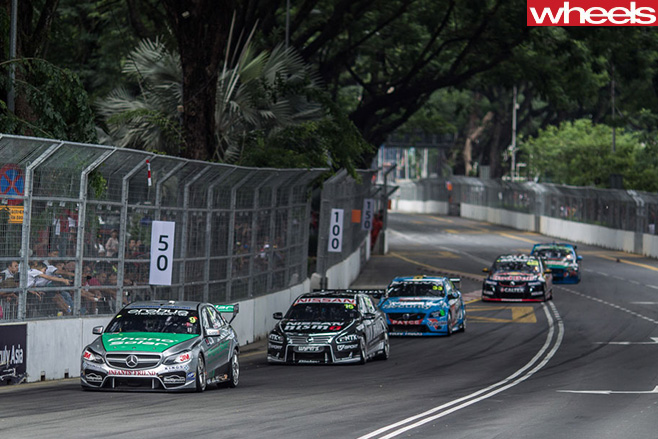
It’s the latest, risky move to turn Supercars into something more than a strong domestic attraction, with appeal beyond Australia and New Zealand.
So the event is on, for now.
