
What do you think would happen if Wheels brought in a Subaru Outback from the US and drove it in the Aussie outback?
“It was an obvious idea, really. But not ours.” Deputy editor John Carey happily credited US magazine Automobile with an idea that would see Subaru America ship an early, left-hand-drive Subaru Outback to Australia, almost a year before the taller-than-normal Liberty wagon went on sale here.
Read John Carey’s classic story, as published in the December 1995 edition of Wheels.
Carey’s December 1995 story explained that during an editorial planning meeting, Automobile associate editor Mark Schirmer had wondered aloud if the right place to test the new Legacy Outback wasn’t, well, the Outback. Schirmer’s idea quickly became his assignment.
So it came to pass that Carey, Schirmer (on his first visit to Australia) and Alice Springs-based photographer Steve Strike left Sydney to drive through the Outback to Alice Springs via Broken Hill, then across the Flinders Ranges to Arkaroola and Uluru. Which Schirmer insisted on climbing.
In four and a half days and 4000km of high-speed driving, Carey only admitted to cruising at 160km/h in the speed limit-free Northern Territory, though Schirmer happily recorded they sat the Subaru at 130km/h on dirt roads and cruised between 150 and 170km/h for much of the time, the 2.5-litre flat-four returning a range-spoiling 16.5L/100km at these speeds. They must have slowed down for a good part of the journey, though, because Carey recorded an overall average of 13.1L/100km.
Carey wrote that he was mostly pleased with the Outback’s performance, though he did find the rear suspension too soft when the road undulated. “The Outback remembers direct road irregularities for some time afterwards in several diminishing oscillations before eventually settling,” he noted.
Does a year pass without Wheels going outback for a story? I doubt it, though to do so in an Indiana-built LHD Subaru in company with an American journalist certainly created a unique opportunity.
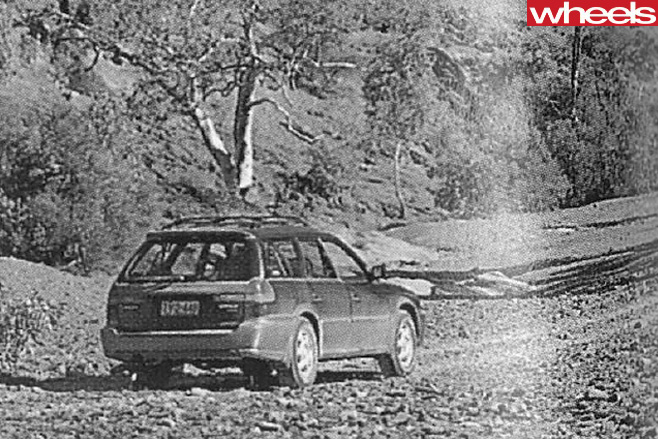
Subaru America claimed it was “The World’s First Sport Utility Wagon”, not knowing that two decades later we’d be calling this new class Crossovers.
For the Australian market launch, Subaru elected against not only the Legacy badge – the international model name dropped in deference to the war veterans’ group of the same name – but also the Australia-only Liberty name, instead promoting the high-riding wagon purely as Outback. So successful has the concept proved that Outback is now fundamentally a standalone model globally.
The Americans had a problem: Where should they test their new Subaru Legacy Outback? John Carey was part of the obvious solution.
First published in the December 1995 issue of Wheels magazine, Australia’s most experienced and most trusted car magazine since 1953.
It was an obvious idea, really. But not ours; that credit belongs to another, faraway magazine. Here’s the scene: Subaru of America has announced a new model. A Legacy- Liberty to us – with extra ground clearance and, in automatic transmission form at least, a new, larger 2.5 litre 16v engine. It is to be called the Legacy Outback. Paul Hogan has been hired to deliver the sales pitch and the Outback duly becomes an item for discussion at US magazine Automobile.
Read former Wheels editor Peter Robinson’s story of how John Carey came to write this classic tale.
So the Automobile people are gathered in their office in Ann Arbor, Michigan, a northern satellite of Motown, where associate editor Mark Schirmer wonders aloud if the right place to test the Outback isn’t, well, the Outback. Though there seems little likelihood Subaru of America will go along with Schirmer’s idea, it’s considered worth running up the flagpole.
Subaru of America doesn’t snap to attention and salute immediately but soon agrees to ship an early model to Australia. From there, Automobile is on its own.
Which is why the phone on Angus MacKenzie’s desk rings one evening. Schirmer’s idea has become his assignment.
Might Wheels be able to suggest a photogenic route · from Sydney to, say, Ayers Rock, he asks? One that will · take about three days. And could we organise accommodation and a local photographer to shoot the assignment?
Hands across the water and all that, so a flurry of faxes follows as the tour begins to take form. Four and a half days. Sydney to Alice Springs, with a side trip to see Uluru. Steve Strike, Alice Springs-based photographer, will record it all.
Strike, for those of you who haven’t had the pleasure, is very bloody Australian indeed. Tall, tanned and whippet- thin, with a droopy moustache and drawling delivery to conceal a quick wit. And not a The American learns that Strike’s infectious chortling is a sign he’s driving on the wrong side hint of political correctness. · out to be short, tocky and clean-shaven. He’s never visited Australia before, but has clearly done some research before leaving Michigan.
Sydney is cool and calm shortly after dawn on the Friday of depature. The Outback is left-hand drive – Subaru’s plant in East Liberty, Ohio, doesn’t make Legacys any other way. I’m the one with local knowledge, so I steer through Sydney’s sprawling west and on to the Blue Mountains.
On the far side of the Great Dividing Range we make a all detour to Mount Panorama. Shirmer is first surprised it’s public road then duly awed by the elevation change on Australia’s favourite circuit.
Bathurst is the high point of the day. The Outback is so damn far away, and that means a long, long drive if there’s to be time to linger later. So from Bathurst it’s relentless push; through Dubbo, Nyngan, Cobar and Wilcannia to Broken Hill. The only excitement comes when Schirmer leaves a fuel stop in Cobar and casually steers up the righthand side of the main street.
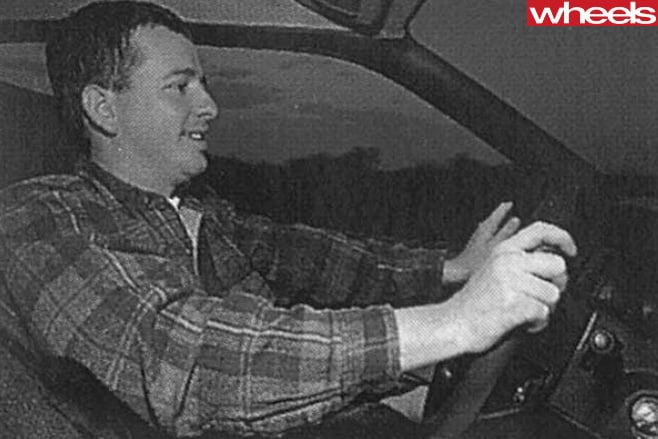
“That side of the road, Mark,” I remind him calmly, pointing. The slow-driving farmer in the oncoming 4WD ute is concerned, but not panicked.
It’s a habit Schirmer finds hard to shake, but at least his later moments of forgetfulness come in remote, untrafficked places. The American learns that Strike’s infectious chortling is a sign he’s driving on the wrong side.
We roll into Broken Hill well after sundown. After almost 1200km, sleep is easy. We’ve reached the Outback’s edge. Genuine isolation and emptiness are now close by. Next morning we drive to nearby Silverton, an almost ghost town whose pub has starred in many a movie and countless commercials. The place seems to be turning into a remote artists’ colony. A three-legged dog wanders over. ‘Do Not Feed’ has been spray-painted on its back. The message is for visitors; the locals know it’s on a special diet.
From Broken Hill it’s a run of around 270km along the Barrier Highway and into South Australia to our chosen jumping off point at Yunta. After fuelling, the Subaru Outback gets its first taste of dirt. The road runs straight and fast across the rolling, treeless countryside towards the Flinders Ranges.
In the early afternoon we detour into Chambers Gorge to eat the sandwiches we’d bought in Broken Hill. We are the only people here. Brilliant Port Lincoln parrots flit in the trees growing along the dry bed of the creek.
Schirmer flails furiously at the flies, of which there are many. “These are nothing,” mutters Strike, munching his roll. “Just wait till summer…”
As we drive back towards the main track, Schirmer, who’s learned that Australians know who’s to blame for introduced pests like rabbits and foxes, inquires: “So did the Pommies bring the flies too?”
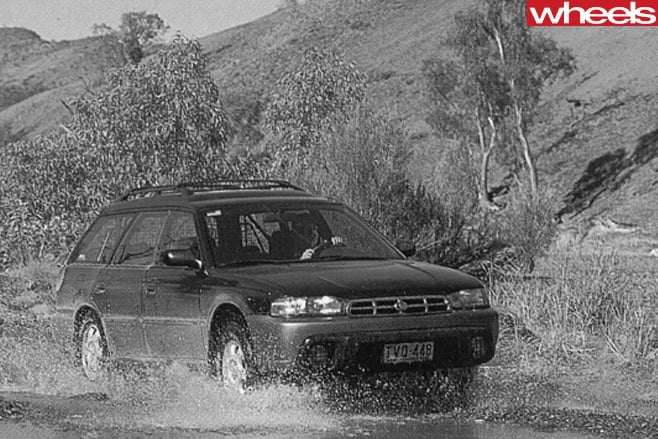
With the North Flinders Ranges looming ever larger on our left it’s northward to Arkaroola, our second overnight stop. We reach the place at well before sundown. After consultation with Marg Sprigg – daughter of Reg Sprigg, the geologist and prospector who founded the place – Strike and Schirmer are allowed onto the ridgetop trails to photograph the Outback. There’s some concern they’ll meet one of Arkaroola’s Ridgetop Tours – conducted in LandCruiser utes with sturdy roll cages and central, outward facing seats – as it’s returning to base. The tracks are steep and narrow.
As we’re checking in, the young woman at the desk, curiosity pricked by the accent, asks about Schirmer’s nationality. He tells her then hears she’s from Manchester.
“So you’re one of these Poms I’ve been hearing about,” he exclaims with mock delight. She flashes back a polite, quizzical smile.
Arkaroola is set in rugged red ranges. On the after dusk return from shooting, Schirmer is pacing a roo along the twisting track back to the village, when it stumbles and falls in front of the car. A stab on the brakes prevents an accident. It’s the closest the Outback gets to hitting one, though Schirmer by now has seen ample evidence that many aren’t so lucky.
Leaving Arkaroola means some backtracking to reach the road which heads due west for Leigh Creek. We turn right and north on a bitumen road. The blacktop lasts 33km, past the huge hole in the ground which is the Leigh Creek coal mine, as far as Lyndhurst.
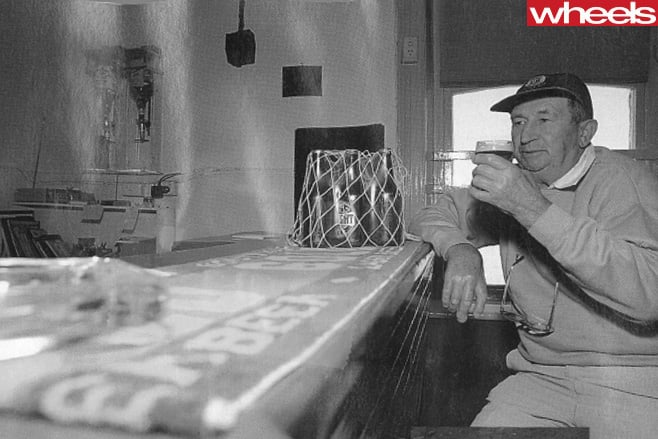
Lunch in the pub at Maree, 80km further north. It’s Sunday afternoon but the bar’s almost empty. Strike coaxes a local to pose. He’s a Czech immigrant who became a Displaced Person when WW2 ended. The barman makes jokes about the “dud Czech” as he serves good sandwiches.
Maree is desolate, its light hard and clean. Abandoned diesel locomotives are parked on the rusting rails which divide the tiny town. We’re running beside the old Ghan Railway now.
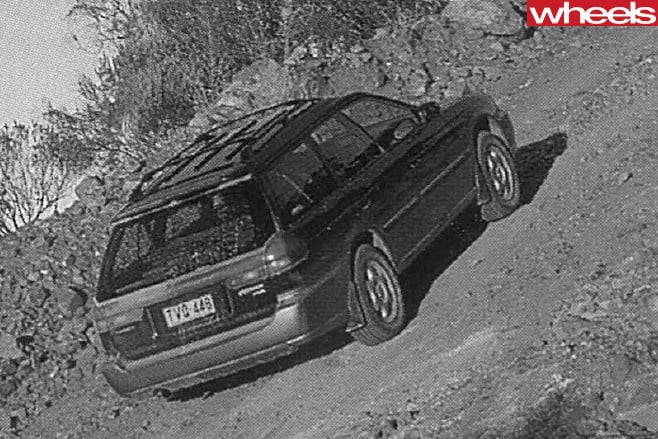
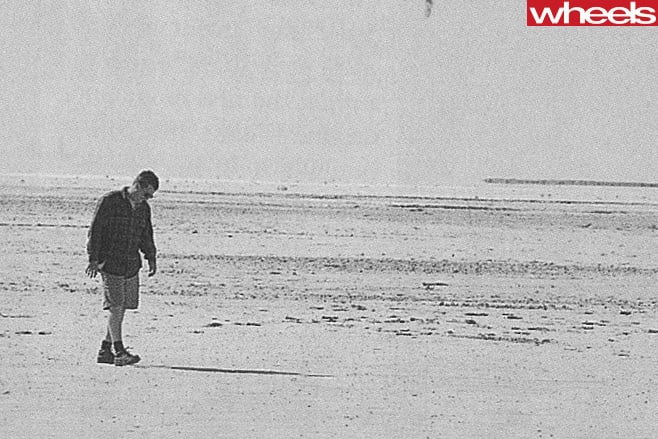
Lake Eyre South, the small southern part of Australia’s biggest salt lake, looms on the right. It’s vast. A shimmering mirage makes it hard to tell where lake and sky meet. We drive to the edge and walk out on the salt in stifling silence.
“And this is the small one?” says Schirmer, not expecting an answer. Next stop is Beresford, a ruined railway station. The bore still yields water. Nearby there’s a waterhole, surrounded by trees. There are cormorants in the water, corellas in the surrounding trees and swallows feeding on the wing. It’s an oasis.
Schirmer climbs the derelict desalination tower, usedto make the bore water suitable for steam engines. “There ain’t nothing out there,” he shouts down.
But beyond the horizon lies William Creek Hotel. Planes are parked beside the main street and the bar is full.
Beyond William Creek we leave the Oodnadatta Track and turn left and west for Coober Pedy, opal town. We’re looking forward to the luxury of the Desert Sands Motel.
From Coober Pedy the remainder of the drive to uluru is a flog along the bitumen of the Stuart and Lasseter Highways. For the first 100km or so there are incredible numbers of wedge-tailed eagles feasting on the road trains’ overnight kill. They’re big birds and very slow to accelerate. We get a very close view of one’s backside as it flaps along the road, slowly gathering speed. It’s a very, very near miss.
You can see The Rock from 50km away. Your imagination can’t prepare you for the up-close reality. It’s simply awe-inspiring.
As the sun falls we retire to the official Ayers Rock Sunset Viewing Point. It’s nearly full. On one side there’s a small tour bus full of Japanese sipping campers and chewing tidbits.
Schirmer sits on the bonnet of the Outback, having what he later describes as a “religious experience” as the sun sets on Uluru. Even the cheerfully chattering crowd can’t spoil the moment. Schirmer proclaims he must climb it.
He rises before dawn the next morning to make the ascent. Strike and I sleep in. Schirmer is among the first to set out on the climb. It’s hard but worth it, he tells us over breakfast. “In the States, you wouldn’t be allowed to climb it,” he adds. “It’s so dangerous….”
There’s little danger, though, in averaging 160 km/h on the Northern Territory’s unrestricted roads. Schirmer and I have planes to catch in Alice. Strike has a home to go to.
We’ve driven 4000km and seen but a fraction of the Outback. But we’re grown to know, trust and respect and even like the other Outback as we’ve done it.
What is the American Outback?
Simply put, Legacy Outback equals rough-ready Subaru Liberty 4WD wagon. Built in left-hand drive at Subaru of America’s plant in East Liberty, Ohio, the Outback’s prime task is to broaden the Legacy/Liberty’s market appeal in North America. Badged as the Grand Wagon, it’s also being sold in Europe where Japanese-made right-hand drive variants recently went on sale. This will be the source of the Australian Outback when it goes on sale here next year.
Outback is, the North American advertising campaign claims, ‘The World’s First Sport Utility Wagon’. Utility, in this case, obviously doesn’t translate into the Australian idiom. It plainly isn’t a ute. What it means is that the Legacy Outback is a competitor for more conventional 4WDs, generically known in the US as sport utes. For this new role, the Outback is made stronger, taller and more muscular than other Legacys. It’s sharply priced at around US$20,000.
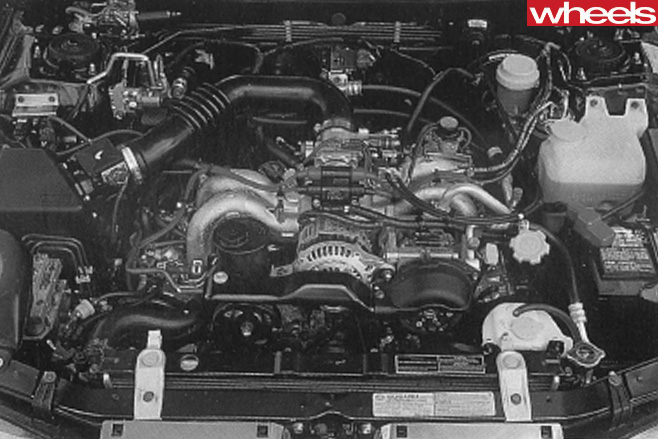
Strength is increased by stamping certain key elements of the Outback’s platform from thicker than standard steel. The Outback has ground clearance of 185mm – 30mm greater than other US-market Legacys – provided by a combination of spacers between body and suspension sub-frames and larger diameter wheels and tyres. Shock absorber piston rod diameters are also increased. The 15in alloys wear Mud and Snow 205/70 Michelins.
Power, in the case of Outbacks with automatic transmission like the one seen on these pages, comes from a 2.5 litre 16v dohc version of Subaru’s flat four. manual models make do with the 2.2 litre 16v sohc from the current Australian Liberty until late ’96 when the 2.5 takes over.
The dohc 2.5 is enlarged through increases to both bore and stroke; 2.4mm and 4.0mm respectively. The engine produces 115kW and 210Nm, 22 percent and 11 percent more than the 2.2 litre. More important, peak torque arrives at 2800rpm versus 4400rpm.
Chunky bumpers make it clear this is no ordinary Legacy. After 4000km it’s clear the new plastic, at least at the rear, hasn’t been designed for truly tough conditions. The barrage of stones thrown up on gravel roads has torn all but one of the bumper’s bottom-edge fasteners adrift. And the plastic has begun to split.
Generally the Outback does most things pretty damn well. Though capable of sustained running near its 180km/h cut-out the 2.5’s extra punch is most noticeable at lower speeds.
The Outback jumps from a standing start and conquers hills with greater eagerness than a 2.2 litre Liberty. Any increase in fuel consumption is negligible; the Outback averaged 13.1L/100km over 4000km, despite being laden to near capacity and driven hard. The auto gearbox, however doesn’t show the engine at its best. The electronically controlled four-speeder is sluggish in its responses and not a particularly smooth shifter.
The Outback’s suspension is a mixed bag, too. On smooth-ish bitumen roads it handles very much like a normal Liberty 4WD wagon. The higher centre of gravity is barely noticeable and the ride is, if anything, more absorbant. But when the road undulates, the softness of the Subaru’s rear springs and dampers combine to bob the tail. The Outback remembers dirt road irregularities for some time afterwards in several diminishing oscillations before eventually settling. This also means rear-end grip isn’t always reliable.
It copes admirably with rough, slow tracks. There’s ground clearance enough to straddle rocks and ruts confidently and sufficient wheel travel to keep all four Michelins grounded most of the time. Steep climbs are easy work. The permanent 4WD system distributes drive intelligently and the automatic’s torque converter translate delicate throttle work into steady, lurch-free progress. But there’s no engine braking worth a damn in descents, and constant braking is necessary.
The Outback is capable of what most would consider four-wheel driving, for a lower price, with greater comfort and using less fuel.
It makes perfect sense, especially if it can be priced around $40,000.
1. The Elantra is Hyundai’s longest running model, and it’s now in its sixth generation.
2. It’s essentially the same car as the popular Hyundai i30 hatch but with a bigger boot added on the back.
3. There’s only one engine in the Elantra range. A 2.0-litre four-cylinder petrol and it’s surprisingly good to drive.
4. The Elantra’s suspension was extensively tuned in Australia for Aussie conditions, and you can really tell the difference.
5. There’s a good level of standard equipment including the cool new Apple CarPlay and Android Auto systems.
6. Hyundai offer a five year unlimited kilometre warranty and a capped price service plan.
MORE: Hyundai Elantra Range Review MORE: Hyundai Elantra Specs, Range & Price
Volkswagen is continuing to celebrate the 40th anniversary of the Golf GTI with a Clubsport S special edition packing an R-beating 228kW of power.
Even through its dieselgate woes it seems the beleaguered German brand still knows how to party because the most powerful Golf GTI ever built will eclipse the 221kW Golf R and power-match the recently facelifted Audi S3.
Unlike those more expensive hot-hatchbacks, however, the 228kW party underneath the bonnet of the Golf GTI Clubsport S will dance only through the front wheels.
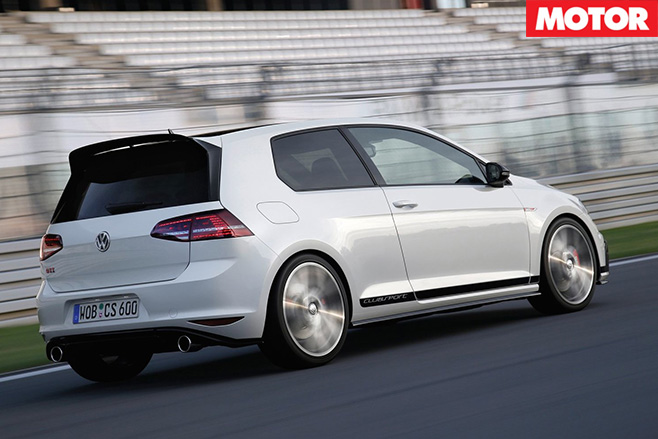
It is unclear if the Clubsport S will take a torque hike to 400Nm, which would also match the latest S3 and eclipse the Golf R and regular Clubsport by 20Nm.
“Volkswagen is bringing all seven generations of the Golf GTI and the new Golf GTI Clubsport along to the [Wörthersee] festival,” the brand announced in a statement.
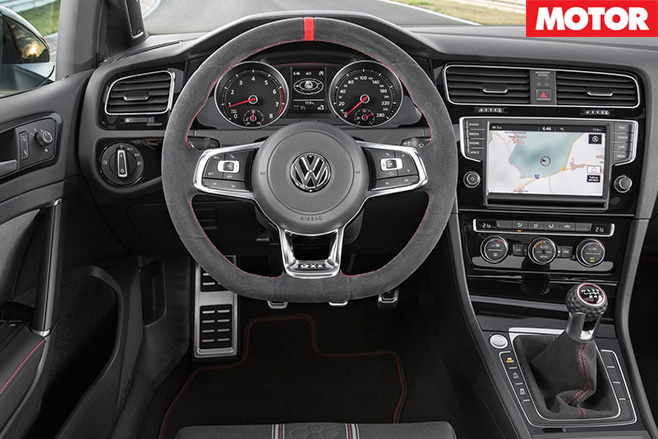
“Engineers and racing drivers have created with this GTI one of the fastest front-wheel drive cars of our time.
“Two facts for now: 228 kW and a driving profile set up for the Nürburgring.”
The regular Golf GTI Clubsport claims 0-100km/h in 5.9 seconds, nine-tenths adrift of the Golf R – and a gap the Golf GTI Clubsport S will aim to close.
The Ford Mustang’s unexpected popularity in Australia is costing owners more.
Wheels has learnt the real reason the American muscle car was subjected to price increases of up to $2500 before it went on sale – and it has little to do with currency, as claimed by Ford.
Wheels understands the Ford Mustang’s price hike – diluting some of the “sharp pricing” spruiked in a March 2015 press release – was predominantly to improve profitability for the company’s head office in Detroit.
A person close to the positioning and pricing of the Mustang told Wheels Australian executives crunched “a really sweet deal on the price” when negotiating on Mustang two years ago.
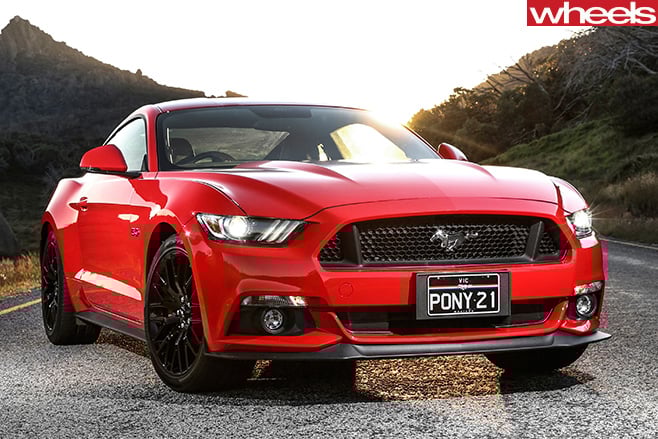
But our insider says the popularity of the car caught Ford Australia executives out, with orders for 6000 cars by the time the Mustang arrived late in 2015.
When Ford Australia went back to head office to requesting more cars it met resistance – and all because that “sweet deal” meant the overstressed factory was better served supplying vehicles to markets that were paying more.
So the decision was made to increase prices – by $1000 on four-cylinder models and $2500 on V8 Mustangs – which suddenly opened more supply.
Ford Australia communications director Wes Sherwood refused to confirm whether Australia had increased its US dollar payments for the Mustang.
“It was currency related,” said Sherwood. “We’re not going to comment on speculation.”
As such he said there are no plans to readjust pricing.
“We don’t have anything at the moment but we’re always watching the market,” said Sherwood. “We’re not out to be the biggest discounter but we think we’ve got a really good sweet spot for Mustang.
“At the end of the day we think the vehicles are very fairly priced; if anything people said they’re lower than they expected.”
For the first time in two decades V8 Supercars will be renamed ‘Supercars’ as manufacturers with other engine configurations are courted to the local racing series.
Rebranding will begin on July 1 when the V8 Supercars Championship will adopt a new naming rights sponsor and become known as the Virgin Australia Supercars Championship until at least 2020.
The move to drop an eight-cylinder reference comes as no surprise given a previous announcement that manufacturers will be permitted to use turbocharged four- and six-cylinder engines from the 2017 season.
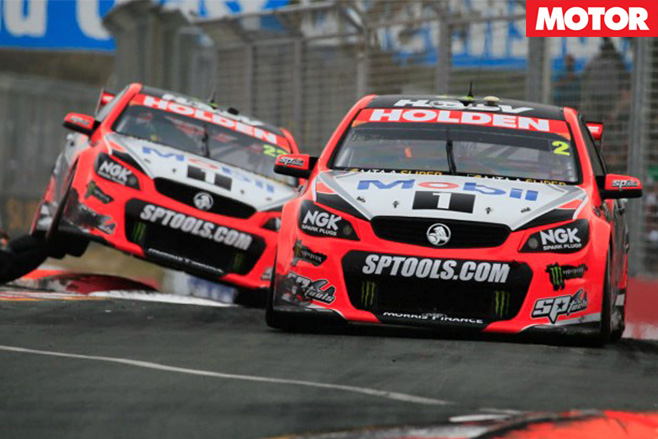
A brief expansion of manufacturers racing in V8 Supercars has more recently been followed by a contraction, with the Mercedes-Benz E-Class no longer racing in the championship following Erebus’ deflection to racing Holden Commodores.
Volvo is expected to make an announcement on its future in the series, with global executives previously stating motor racing is not a current focus for the Swedish brand.

Supercars CEO James Warburton maintains that, “Supercars generate $250 million in economic and tourism benefits to the cities and regions we visit in every state and territory.”
An agreement until 2020 with Foxtel and Network Ten will deliver a 360 per cent increase in Supercars television content to 1140 hours per year. The $241 million deal has been touted as a record broadcasting investment for the fourth most watched sport in Australia.
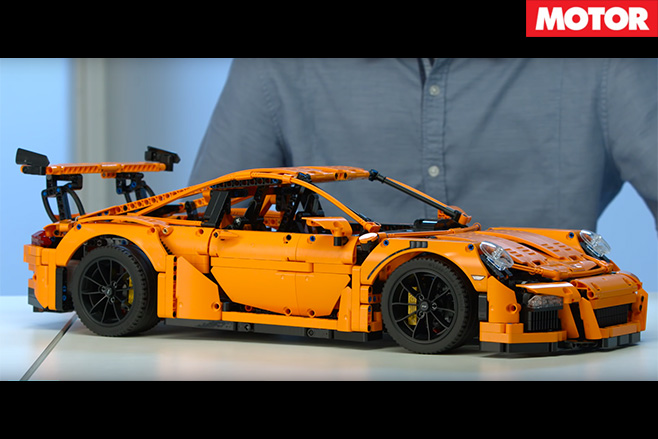
Forget bedroom posters. You can now immortalise Porsche’s 911 GT3 RS into a brick sculpture.
Lego today officially revealed its new 911 GT3 RS kit after teasing fans with a camouflage example at this past January’s Nuremburg Toy Fair.
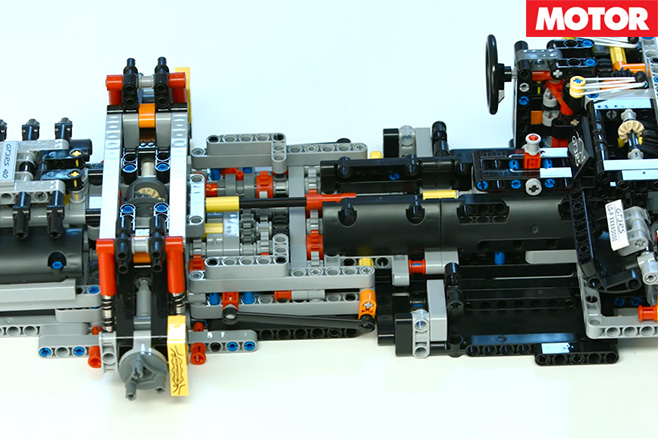
The four-speed ‘dual-clutcher’ is linked with working gearshift paddles behind the steering wheel, while the moving pistons in the flat-six can be set in forward and reverse with a console positioned lever.
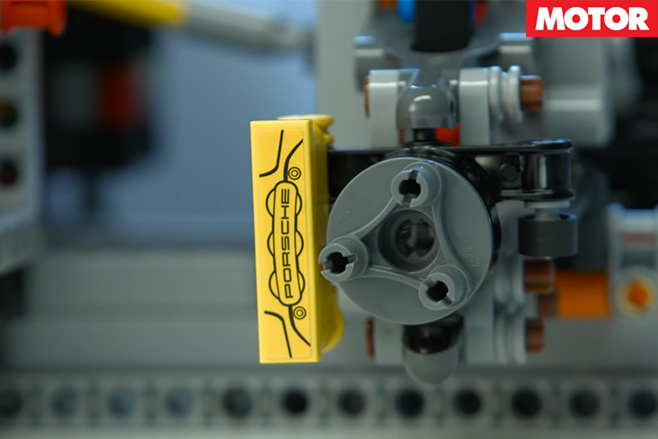
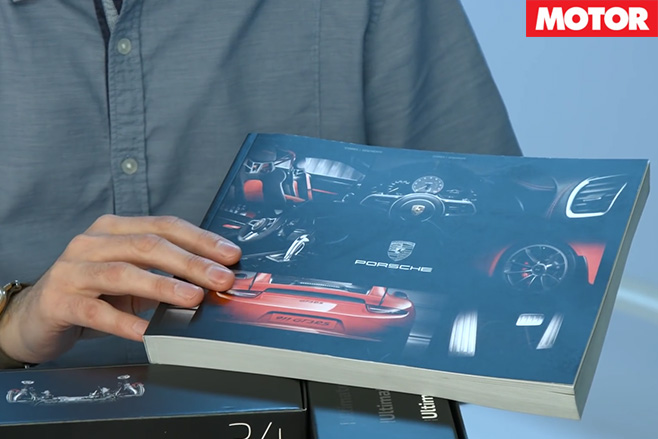
Porsche was integral to the two-year long development of the 1:10th scale 911 GT3 RS, Lego Senior Design Manager Andrew Woodman told Brothers-Brick.com, which kicked off in 2013 as top-secret and was signed off by Porsche in 2015.
MARCOS Ambrose isn’t thinking much about his old life in motorsport as he embarks on a new business life establishing a Tasmanian eco-friendly wilderness experience.
A story in the Launceston Examiner reveals that Ambrose, who announced his shock retirement from motorsport last year, is now project managing the rejuvenation of Bernacchi Lodge near Lake Augusta, in the scenic Central Highlands of his home state.
The Examiner story says the 10-bedroom lodge will be a base for guests to enjoy outdoor activities in the world heritage area.
Ambrose indicated he couldn’t be happier with his career change and said he found he was really missing Tasmania during his racing career.
Returning to Launceston, where he and his wife have family ties, was the priority for Marcos.
He told the Examiner his sudden retirement from racing in 2015 at the youngish age of 39 was a decision he did not regret, and was influenced by considering the realities of his profession.
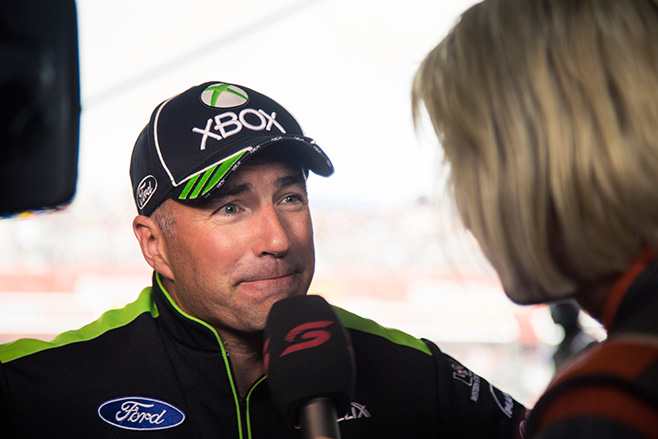
“Having a family and having responsibilities certainly makes you think twice about going 350 kilometres an hour, five days a week,” Ambrose said.
“I just decided it was time, and I’d lost the motivation to compete.”
“For 10 years in NASCAR in America, I was either on an expressway, on a racetrack or in a jet flying around the country,” he said.
“It was a very fast-paced life and it was a very high-risk life.”
Ambrose said although he missed parts of racing, especially the adrenalin rush, he firmly ruled out ever racing again on a professional level.
“Maybe I might have an alias … and go and race at Carrick [speedway] a few times,” he laughed.
Ambrose said he feels very invigorated by the new phase of his life, being part of the group breathing life into the old lodge.
The refurbishment is about six weeks from completion with the crew racing to beat the first of the winter snowfalls.
Wife Sonja and daughters Adelaide, 8, and Tabitha, 10, are based in Launceston.
The lodge is a labour of love for Ambrose, who like Casey Stoner is a very keen angler.
AUDI TT RS
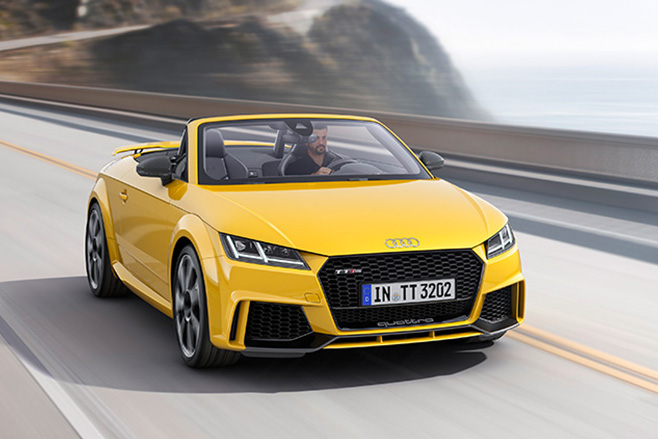
Audi showed the world its hypo new Audi TT RS and released a set of staggering performance figures to go with it. Its 2.5-litre five-cylinder engine produces a whopping 294kW and 480Nm and lots of wooshy turbo noises, no doubt. It comes as a hardtop coupe or drop-top roadster, both cars rocketing to 100km/h from rest in 3.7-seconds. Monstrous.
PORSCHE 718 CAYMAN
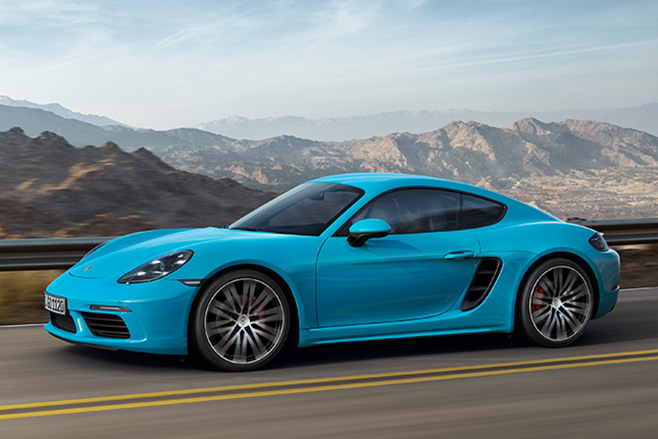
Porsche’s most affordable sports car switches to four-cylinder turbocharged power for the first time ever. The Porsche Cayman coupe and its drop-top relative the Boxster have both received downsized power units but upgraded power outputs and increased fuel efficiency. Pundits may criticise the difference in character and sound between the old and new engines, but there’s no denying the effectiveness of the smaller power plants.
MAZDA CX-4
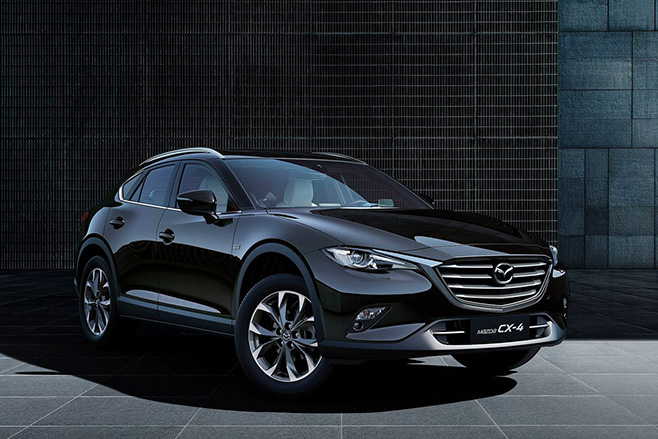
The Mazda CX-4 is finally here, but try not to get too excited about it. For now this sleek SUV is available exclusively to the Chinese market. The CX-4 is essentially a less practical Mazda CX-5. Its coupe roofline is sportier and more elegant, though it cuts down rear seat headroom and cargo space. To some buyers that won’t matter and the CX-4’s form will win out over its (lack of) function.
INFINITI QX SPORT
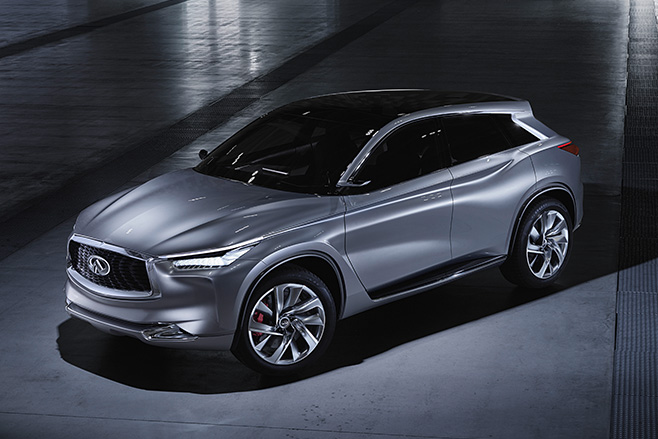
What you’re looking at here is basically the new Infiniti QX50. It’s not called that because car companies like to tease us with concepts and prototypes rather than coming clean at the start. For all intents and purposes this is what we can expect the QX50 production car to look like, albeit with a few of the more daring elements (like those crazy headlights) toned down a bit.
HONDA AVANCIER

Honda showed a new, large SUV at the Beijing motor show called Avancier. It’s a flagship vehicle for Honda that, like the CX-4, is only for sale in China, but does preview a lot of new tech and design features that we can reasonably expect will trickle down to Honda’s core models in the not too distant future.
VOLKSWAGEN T-PRIME CONCEPT GTE
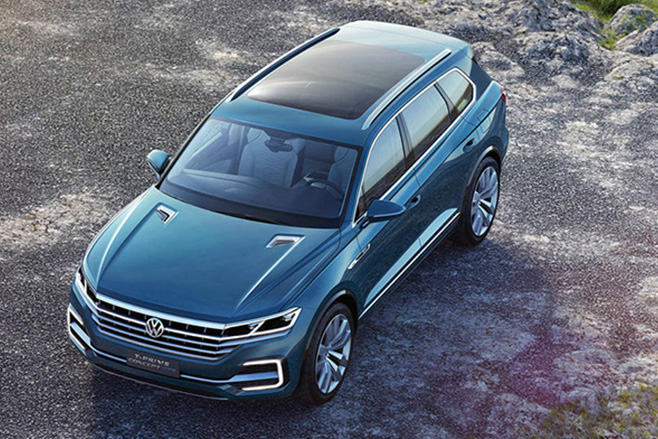
Volkswagen has a fleet of new SUVs waiting in the wings, and the T-Prime Concept GTE gives us a clear picture of what the next-generation Volkswagen Touareg will look like. It’s Volkswagen’s premiere SUV and as such the concept introduces cutting edge tech in the form of a new plug-in hybrid system.
When car makers grace us with something ‘all new’, more often than not there’s a lot of carry over, whether it’s the drivetrain or even the platform.
The 2016 Chevrolet Camaro, however, really is all new, right from the ground up, which makes it a remarkable departure from the outgoing fifth-gen model which had its roots grounded in the 2006 Holden VE Commodore.
Starting with the state-of-the-art platform that underpins the upscale Cadillac ATS and CTS models, including their formidable V-branded performance variants, this new Camaro has got the fundamentals right. Suspension is MacPherson struts up front with a sophisticated five-link setup at the rear. Ford has made plenty of noise about the new Mustang’s independent rear-end, but the Camaro has had such an arrangement since 2010.
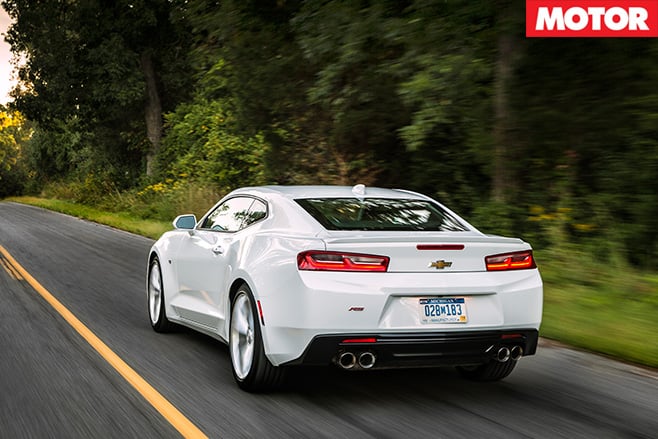
This Camaro is smaller in every dimension – height by 28mm, width by 20mm, and length by 57mm – and looks comparably more athletic and lithe, like a 15/16ths scale version of its former self. In addition, the chassis is 28 per cent stiffer than the old car, according to Chevrolet. Perhaps its design is not as iconic as the new Mustang’s styling, but the look is unmistakably Camaro.
Its smaller proportions, combined with an aggressive mass-cutting program, result in a much lighter car than before. In RS trim, the overall package is 133kg lighter than the old car, and in SS trim with the monstrous V8, the Camaro rolls over the scales at 101kg less.
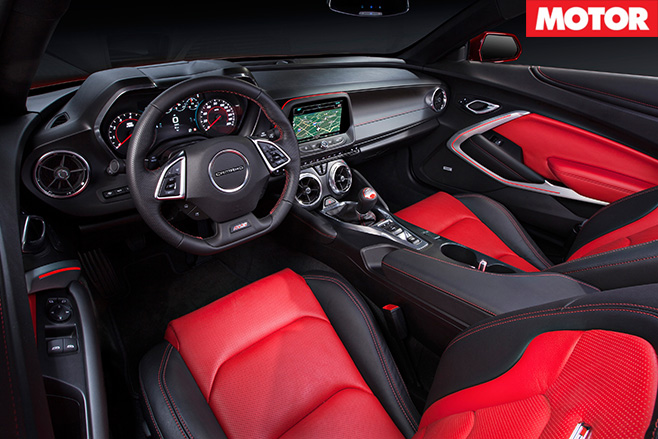
The smaller dimensions take their toll on the interior, however, as front seat occupants now sit closer to one another, and the rear seats have changed from barely usable to accommodating shopping bags only.
The three engine and two transmission choices are all brand new, too. The base powerplant in the LT model is a 205kW/400Nm 2.0-litre turbocharged four cylinder, while the volume RS model is the most high-tech of the lot – a 250kW/385Nm 3.6-litre V6 which is an excellent all-’round mill. The show stopper of the range is the 6.2-litre LT1 small-block V8 that makes a stonking 339kW and 617Nm, fitted exclusively to the SS.
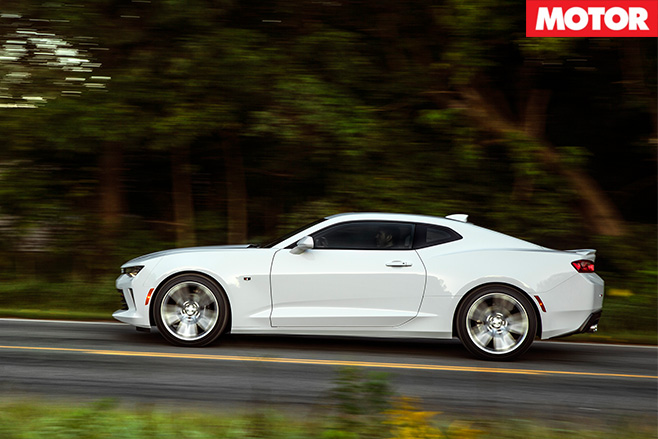
Best of all, the shifter feels precise and durable, in stark contrast to the fragile feel of the Mustang’s gear lever.
Large 345mm front and 338mm rear brake rotors, clamped by four-piston Brembo calipers, are optionally available on LT and RS models and standard on SS. Brake feel is exceptional for a pony car, lending absolute confidence and control to the driver. Steering assist is electric, of course, and while both turn-in response and control are excellent, feel and feedback are slightly muted.
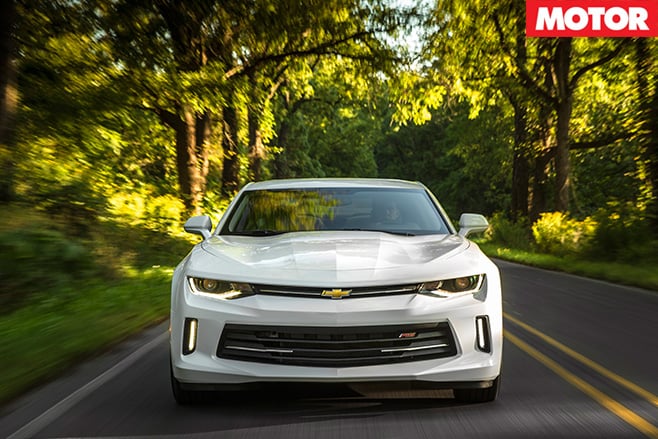
Grip is remarkably high and the chassis does an excellent job of communicating the finer details of each contact patch. Clearly this chassis is the reason that the new SS is faster around a circuit than the outgoing, factory-tuned track special 1LE variant.
Unfortunately, Chevrolet has categorically denied any plans for a right-hand drive Camaro, despite the fact the platform is being converted for Cadillac exports. We can only hope that Holden’s promised new V8 sportscar offers the same dynamic talent and muscle appeal on its release in 2017.
4.5 OUT OF 5 STARS
SPECS
Engine: 6162cc V8, OHV, 32v Power: 339kW @ 6000rpm Torque: 617Nm @ 4400rpm Weight: 1645kg / 0-97km/h 4.0sec (auto, claimed) Price: US$37,295 (manual) Like: Lovely V8; excellent auto; much improved dynamics Dislike: Terrible vision; cramped interior; not coming to Oz
