
Welcome to the best V8 performance Falcon ever.
But the best performance Falcon ever? We’re not actually sure. Could be the XR6 Turbo Sprint – and what a problem to have.
For the Ford Falcon XR8 Sprint the Aussie engineers banded together to make the best car they possibly could with the resources they had.
As such it misses out on new-age performance gear like brake torque vectoring, shift paddles, heads-up display and a modern electric steering system (never thought we’d be singing the praises of that) but Ford will counter that you’re getting a 400kW muscle car for $61K. And fair call to that.
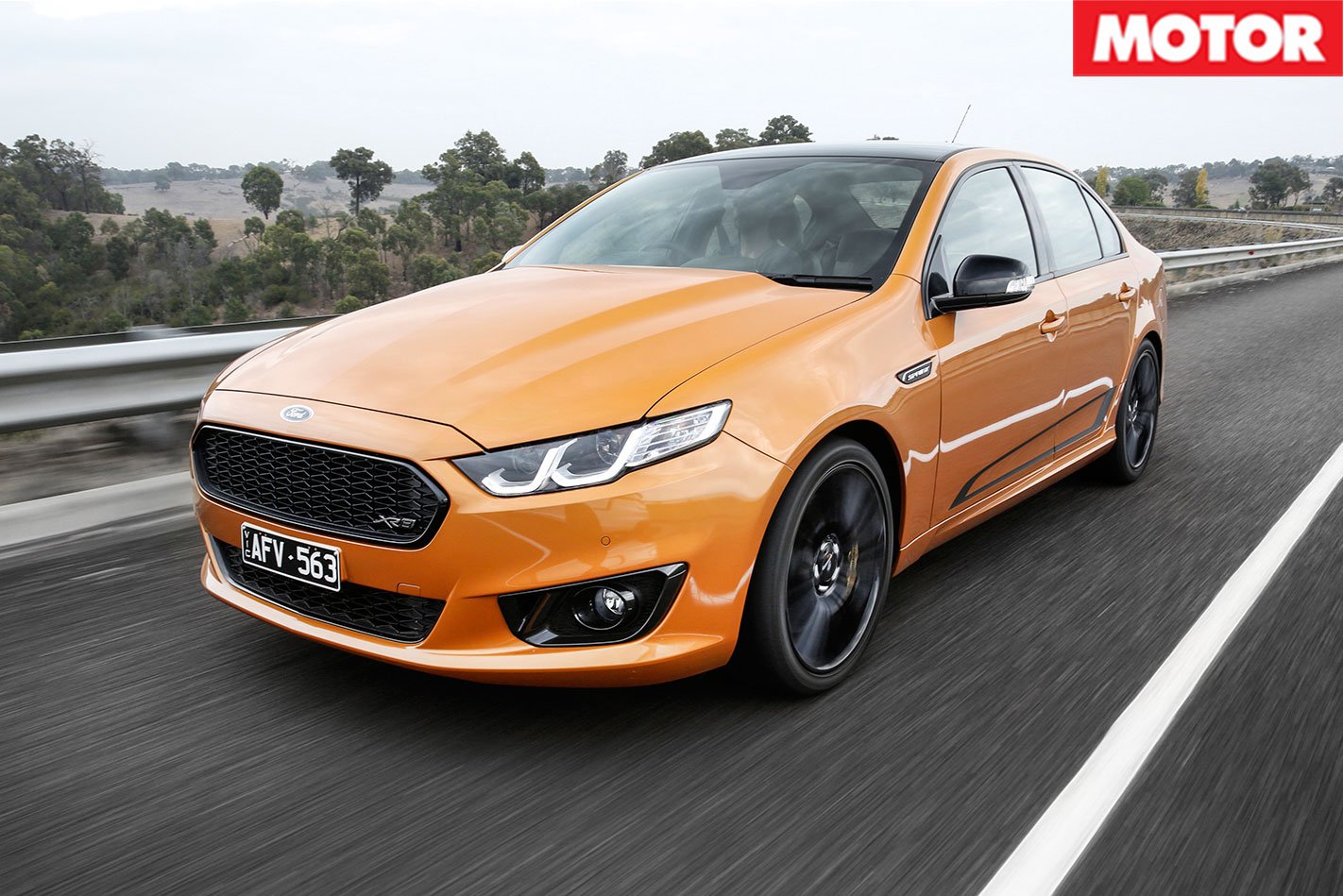
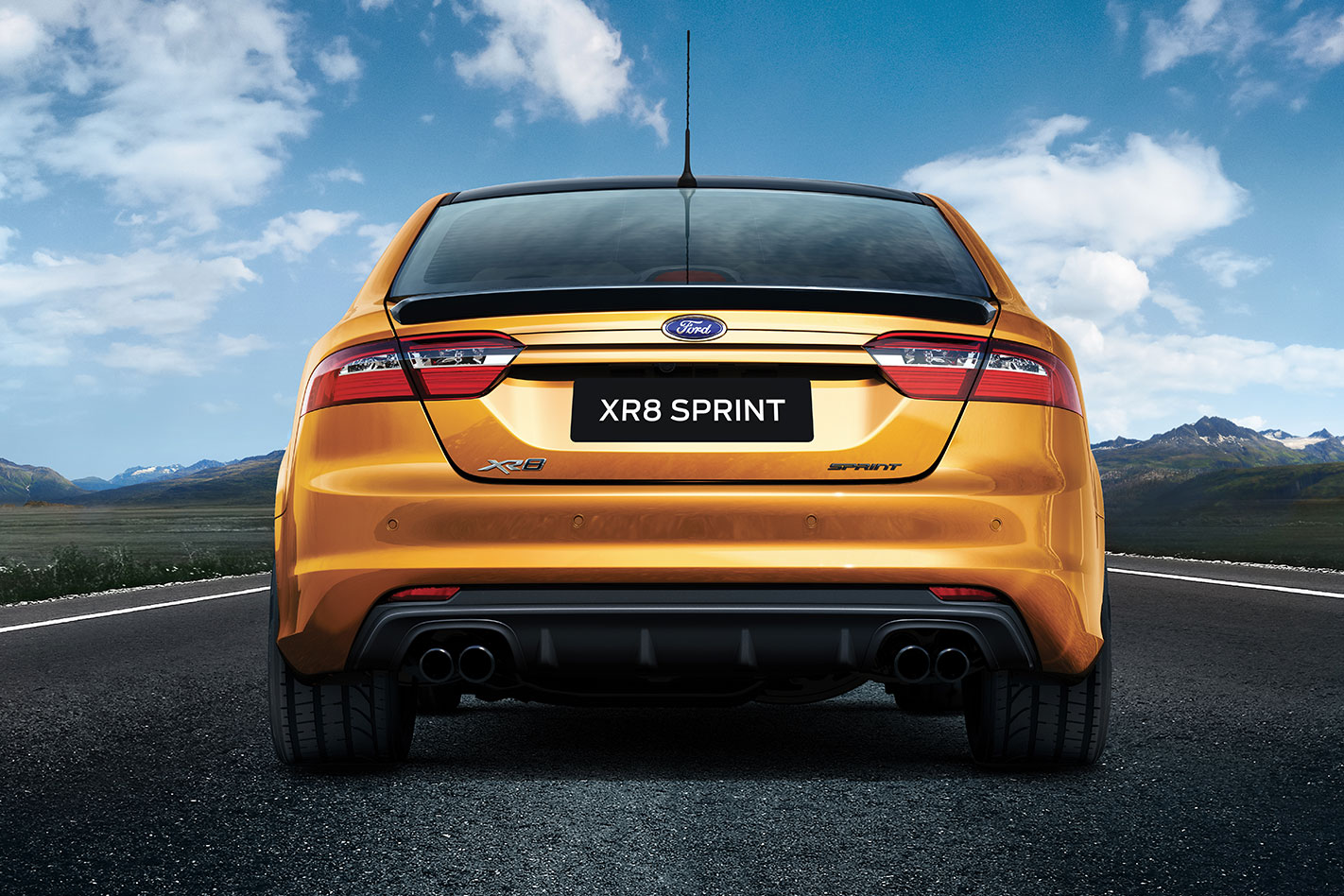
Design-wise they’ve painted the roof black (as opposed to a wrap, Ford will keenly point out – it has to go through the paint shop twice) and same, too, for several other exterior parts. A stealthy new lip wing is fitted to the bootlid and the XR8 Sprint, like XR6, scores smoked 19-inch wheels first seen on FPV GT-E.
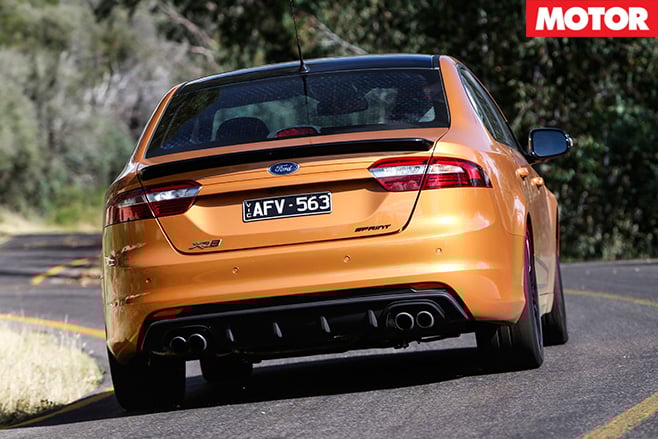
But while the cosmetic changes might hint at a parts bin exercise, don’t dare call it that, otherwise quite a few Ford engineers might have something to say to you.
Next to the XR6 Sprint, the XR8 Sprints’ mechanical changes have been comparatively minor, mostly because the XR8 has simply enjoyed more of the R&D attention the last few years where the XR6 hadn’t.
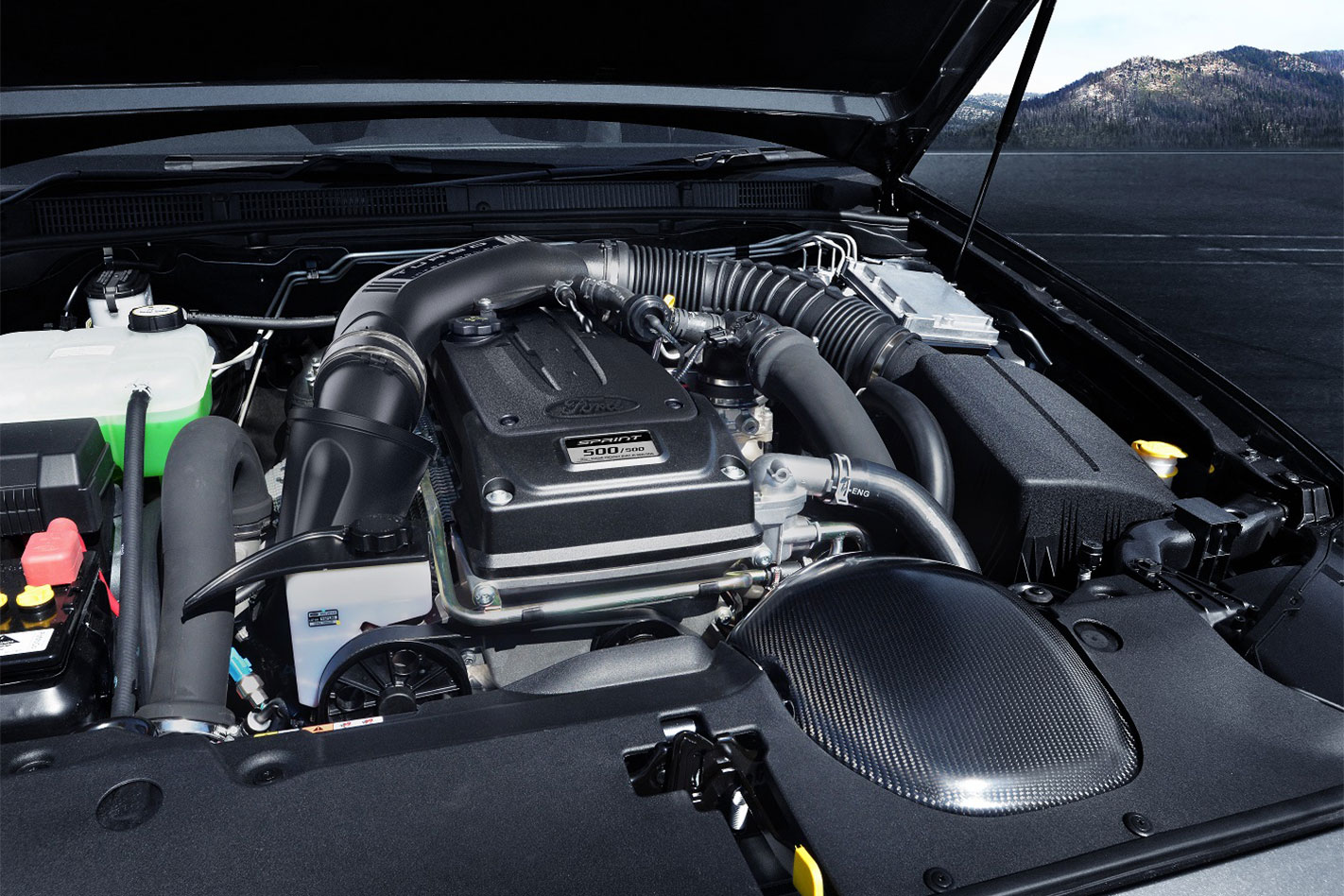
Power is up from the base FGX XR8’s 335kW/570Nm, now 345kW and 575Nm. But Ford is almost proud to refer to these official figures more as minimums, the real numbers being closer to 400kW and 650Nm, limited only by the ZF transmission. (The engine could safely belt out much more, we’re told.)
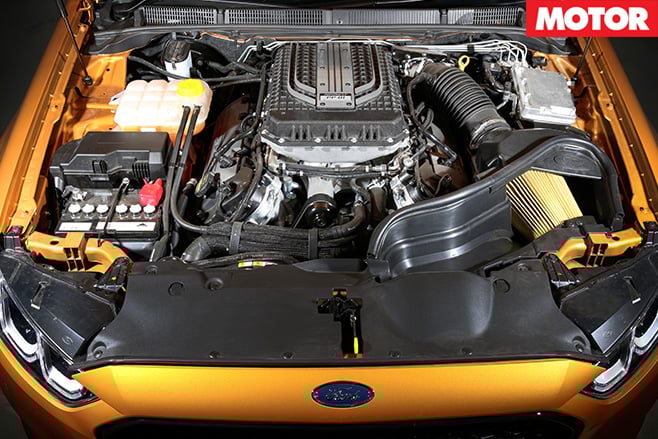
So the only time you might see 345kW and 575Nm is after 10 flat-out laps of a track, or a v-max attempt on the Stuart Highway in the height of summer.
The transient overboost lasts only 10 seconds but the grunt counter resets whenever you lift off, and get back on, the throttle. And you’ll rarely be full throttle in any gear for 10 seconds straight, Ford will remind.
The bigger news, and that which Ford is clearly most proud, are the suspension changes, which we’ve documented at length in this separate story. And they’ve had a profound effect on the XR8’s ride, now significantly improved.
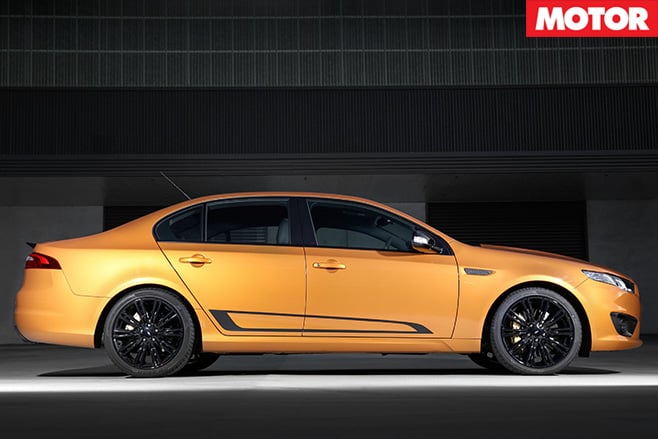
It feels stable and cool in the high speed stuff and in bumpy corners, expertly works undulations letting you get on with the business of attacking. Importantly, the suspension now feels as modern as the powertrain.
Obviously, the grunt is spectacular. And from any rpm, down-low to redline, it pulls hard, all the while making the most satisfying racket. Sweet, loud supercharger whine under load transitions to a throaty V8 exhaust note, roaring purposefully before its 6000rpm redline. It sounds awesome.
And it can put its power down with a cleanliness and effectiveness unmatched by V8 Falcons past. Even with ESP off, stall the auto XR8 Sprint up to about 2000rpm (we need to double check this rpm – stay tuned) on its brake, let off and the rear 265/35s will hardly wheelspin as the power is put to the ground, even at full throttle.
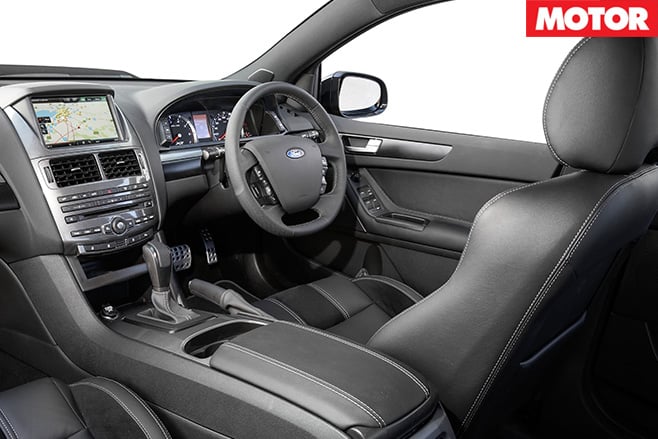
We’re keen to test the in-gear acceleration because on the road, it feels almost brutal. Overtakes are dispensed with hilarious ease, sometimes the car opting to stick in, say, third gear even at 2000rpm as you give it full throttle, rather than kick down, simply because It Can. The torque just smushes you into the seat.
With a clunky change and heavy-ish clutch, the XR8 Sprint is not the greatest manual in the world so perhaps it’s more suited to auto. Gearchanges in the automatic’s manual mode are hardly twin-clutch quick and the down-changes are pretty average with some mean lurching and no rev-matching, but up-changes are quicker than ever and accompanied by a cool spark-cut brap. Grabbing a new gear just before redline, the acceleration uninterrupted, is terrific fun.
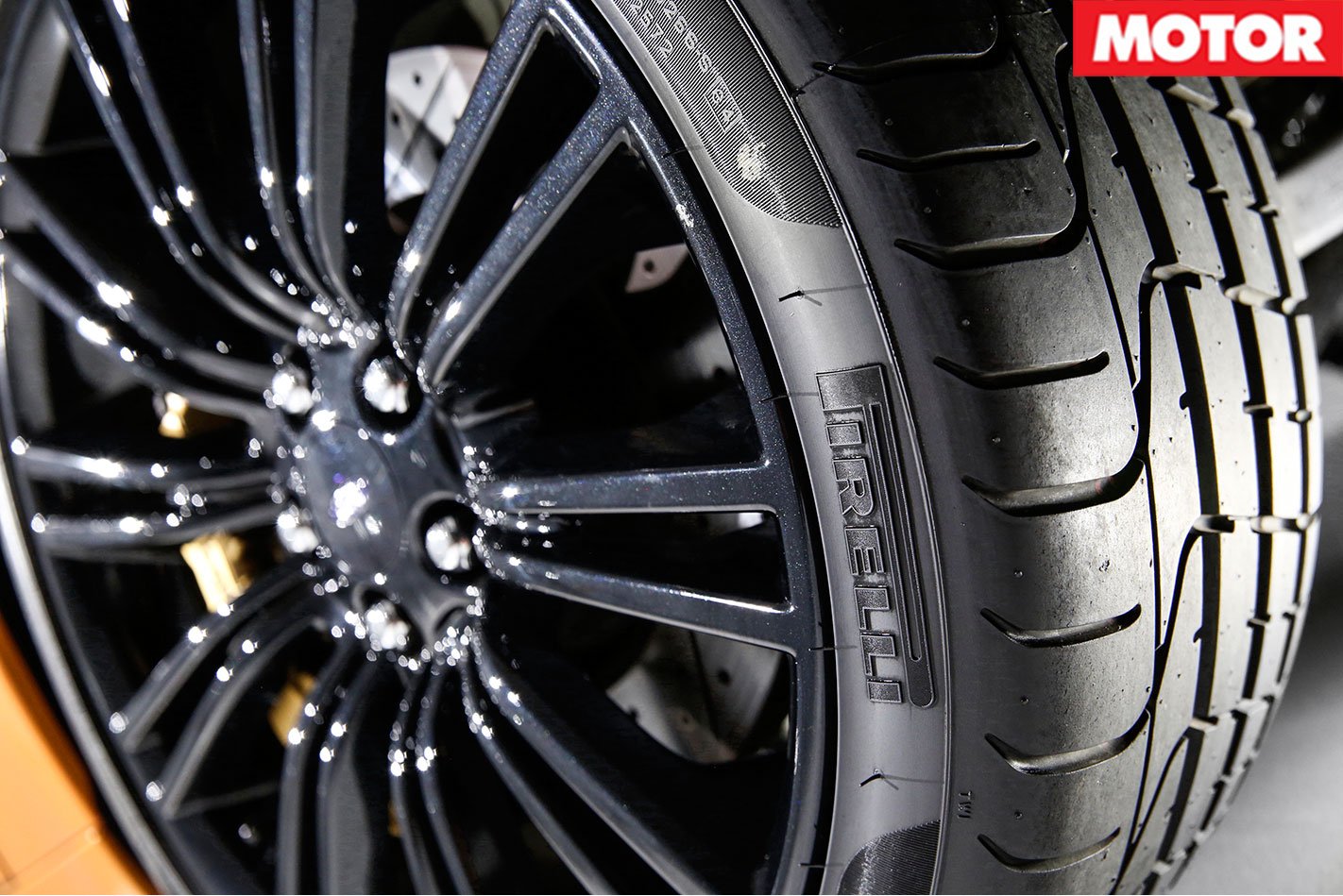
Ford has hyped this change up to the max, the suspension being refined around this carefully-selected new tyre. (Previously V8 Falcons have run Dunlop Sportmaxxes.) And we’re keen to push the front end in some tighter stuff – it seems to sit flatter when you turn now, but still a concern as it’s the chink in the FG X XR8’s armour, especially on track.
Ford showed us some impressive graphs that suggested the XR8 Sprint’s pivot point has been moved much further back in the car, hopefully helping to get rid of some of that unwelcome front-end vagueness.
Initial impressions seem to be they’ve had success, although how much we can’t be sure, our Tassie test route very reliable for faster corners that played well to the Sprint’s strengths.
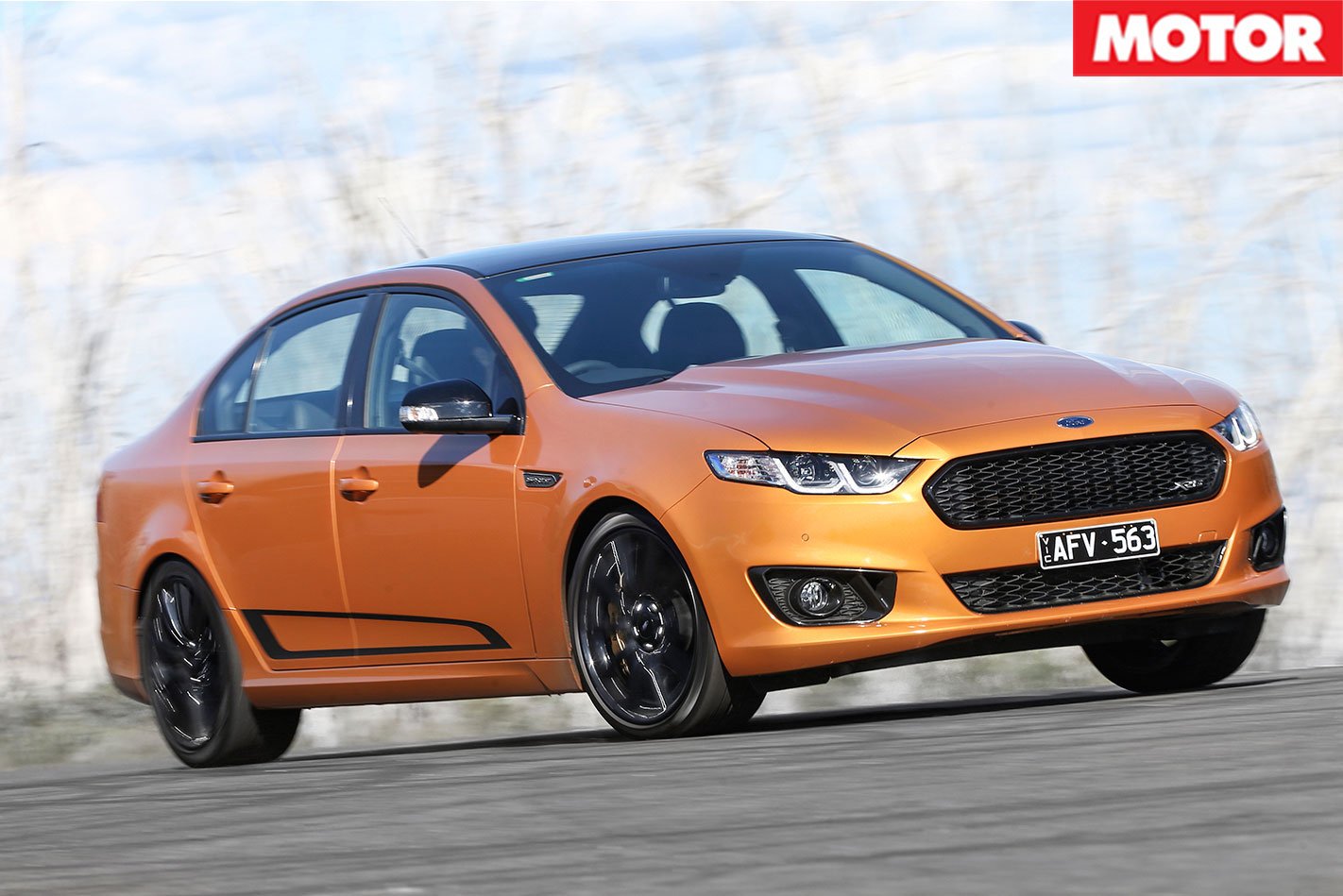
Forgive us, but there’s absolutely no doubting the Sprint will be a world champion drift car – the FGX XR8 is practically that already, so with more power and better poise, with ESP off and an empty track the Sprint should be one of the funnest Falcons ever. One would do well to purchase their 265s in bulk.
Yeah, the XR8 Sprint is still no BMW M5-eater, it will get utterly smoked by a new C63 and the HSV GTS is probably still more polished in corners (owing much to a more modern steering system), but the XR8 costs significantly less than all of them and even if it was $100K we’d still love it.
Ford knows there’ll still be the haters, those wondering why it doesn’t have this or why didn’t they do that. Of course they could’ve done more. But how much do you want the thing to cost?
Those clued in, who see the bigger picture and the forces at play, will applaud Ford for this car. They didn’t have to do it, and who knows if they’ll make their money on this exercise. Who cares, in some respects.
Certainly the sales suggest it should be a success. Ford expects a near fifty-fifty split for manual and auto sales of the XR8 Sprint, the former $59,990 and the auto $62,190. Production kicks off at Broadmeadows after Easter, with cars on-sale May.
The XR6 is sold out, so is the XR8 manual, and there were just a “handful” of auto XR8s available as MOTOR went to press with this story. And who knows how long they’ll last.
Falcons selling left, right and centre – Ford doesn’t know what to do with itself. And so it should be the case: the XR8 Sprint will go down as one of the greats.
3.5 out of 5 stars
Specifications
Engine: 4951cc V8, DOHC, 32v, supercharger Power: 345kW @ 5750rpm Torque: 575Nm @ 2300rpm-6200rp Weight: 1869kg (manual), 1872kg (auto) 0-100km/h: 4.6sec (estimate) Price: $59,990 (manual), $62,190 (auto)
Priced from $96,300, the Audi Q7 is now slightly more accessible to those looking for an excellent seven-seater SUV.
Audi has brought the price down by trimming back the standard spec level. Most notably missing is Audi’s own Virtual Cockpit digital instrument display. Audi believes buyers will be willing to do without top tier tech for the cheaper asking price.
Power comes from the same 3.0-litre turbo diesel V6 as seen in the 200kW Q7 released earlier, however power has dropped to create a further point of difference between the variants.
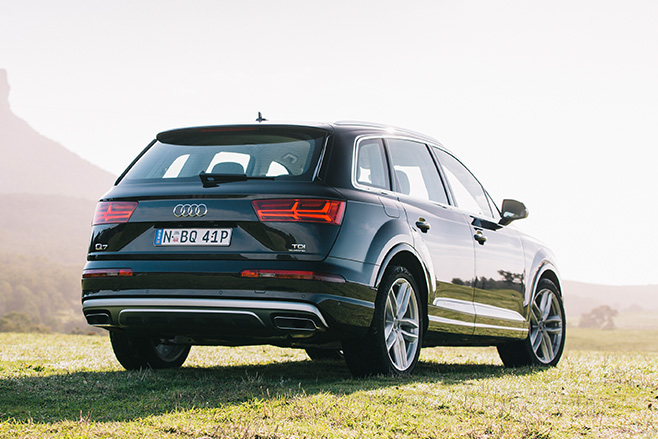
The new entry-level model still provides 160kW and 500Nm which should still be plenty for most buyers. It is paired to an eight-speed automatic transmission and quattro all-wheel drive. Fuel economy improves just slightly to 5.8L/100km. The ‘regular’ Q7 produces 200kW and 600Nm with fuel consumption at 5.9L/100km.
As with all Audis, plenty of optional extras are available. Q7 buyers who don’t want all standard equipment found in the 200kW model may decide to start with the 160kW and option in only their desired extras.
Options packages include: S Line Exterior Package for a sportier appearance, bigger wheels and LED headlights costs $8760; Assistance Package for adaptive cruise control and other traffic assists will set you back $4075; and Parking Assistance Package provides surround view cameras for the sum of $1300.
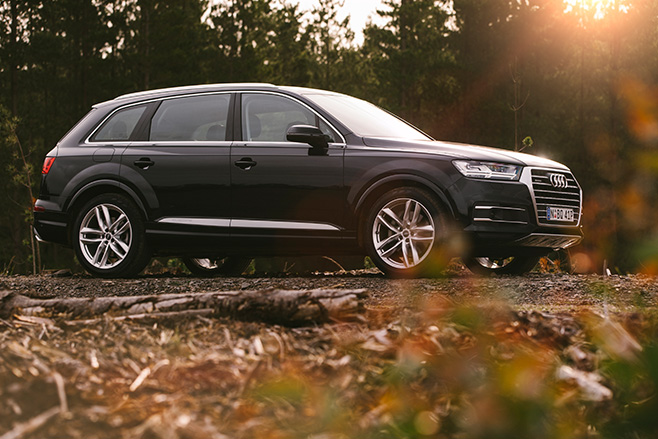
Other individual extras include a head-up display for $3400, Night Vision Assist to help drivers identify pedestrians and hazards in the dark for $5100 and Audi’s LED headlights on their own cost $5500.
Standard equipment in the 160kW model includes 19-inch alloy wheels, Audi’s multimedia interface with a motorised 7-inch screen, parking assistance with reversing camera, electrically adjustable seats, digital radio, and collision warning systems.
Jerry Seinfeld is known for his funny jokes, so when we found out he planned on selling 16 Porsches from his million dollar car collection, plus a few Volkswagens, we were waiting for the punch line. But this week we discovered his decision to clear space in his garage and let some other car-nuts enjoy his possessions actually happened over the weekend at Amelia Island, Gooding & Co auction. It was no joke.
18 cars were rolled out at the auction, of which 17 sold for a grand total of US$22,244,500, falling below the estimated US$30 million.
Seinfeld’s Porsche 550 Spyder had the highest selling value of US$5,335,000, while his 2000 Porsche Carrera GT Prototype remained unsold.
Also included in the list were two Volkswagens including a Beetle and Camper – both of which sold for a lot more than we’d have expected at US$121,000 and US$99,000 respectively.
See, jaw dropping!
1. 2000 Porsche Carrera GT Prototype – not sold
2. 1964 Volkswagen Camper – $99,000
3. 1960 Volkswagen Beetle – $121,000
4. 1966 Porsche 911 – $275,000
5. 1958 Porsche 597 Jagdwagen – $330,000
6. 1989 Porsche 911 Carrera Speedster – $363,000
7. 2011 Porsche 997 Speedster – $440,000
8. 2012 Porsche 997 GT3 Cup 4.0 Brumos Commemorative Edition – $462,00
9. 1957 Porsche 356 A Speedster – $682,000
10. 1963 Porsche 356 B 2000 GS/GT Carrera 2 Coupe – $825,000
11. 1997 Porsche 993 Cup 3.8 RSR – $935,000
12. 1994 Porsche 964 Turbo 3.6 S Flachbau – $1,017,500
13. 1958 Porsche 356 A 1500 GS/GT Carrera Speedster – $1,540,000
14. 1990 Porsche 962C – $1,650,000
15. 1959 Porsche 718 RSK – $2,860,000
16. 1973 Porsche 917/30 Can-Am Spyder – $3,000,000
17. 1955 Porsche 550 Spyder – $5,335,000
18. 1974 Porsche 911 Carrera 3.0 IROC RSR – $2,310,000
(Above prices are listed as US$)
Lewis Hamilton has been spending some time in New Zealand on the way to attend the Australian Formula 1 Grand Prix in Melbourne this weekend and has been causing all sorts of trouble.
Where do we start?
Casino Criticism
First off, the 31 year old publicly criticised an Auckland Casino, telling a potential 3.2 million people (that’s how many Twitter followers he has) “Don’t ever go to sky city casino in Auckland, they treated me like dirt. Can’t believe how rude they were. Worst casino experience ever.”

Hamilton, who drives for Mercedes, soon deleted the tweet. It was reported Hamilton was violating casino rules by wearing a hat and sunglasses inside, which was where the tension stemmed from.
Snapchat Selfies
From there the 31 year old F1 World Champion driver posted videos to Snapchat showing him driving down the Auckland highway on a motorbike. Cool? Yes. Safe? not really.
New Zealand police didn’t seem concerned by how famous Hamilton is, or his driving credentials.
“Police will be reviewing the footage and taking any appropriate action it deems necessary,” a spokesperson said.
“Police take a strong stance on any activity which places undue risk on the lives on any person on the road. The use of mobile phones is a significant distraction, especially on a motorcycle, and can cause serious crashes on our roads.”
He has since been cleared – “The video footage available does not provide us with sufficient enough evidence that an offence has occurred,” an Auckland City Police statement said.
Racist Remarks
But the fun didn’t end there. Hamilton seemed to think he hadn’t quite made enough trouble for himself yet.
Flying domestically in New Zealand, he complained about having to sit with the plebs in economy on his Snapchat.
“Man, I’m loving these commercial flights, we’re flying in economy, yep, that’s how we do. Saving so much money. I’m loving it.”
And then said this in yet another very ill advised and strange Snapchat message.
“So we don’t know where we’re going, we think we’re going to one place but we might be going to China ’cause there are a lot of Chinese people on this flight.”
Since then he’s possibly trying to make-up for it by saying “Yip this is the most beautiful place I’ve seen” whilst on a helicopter ride in Queenstown.
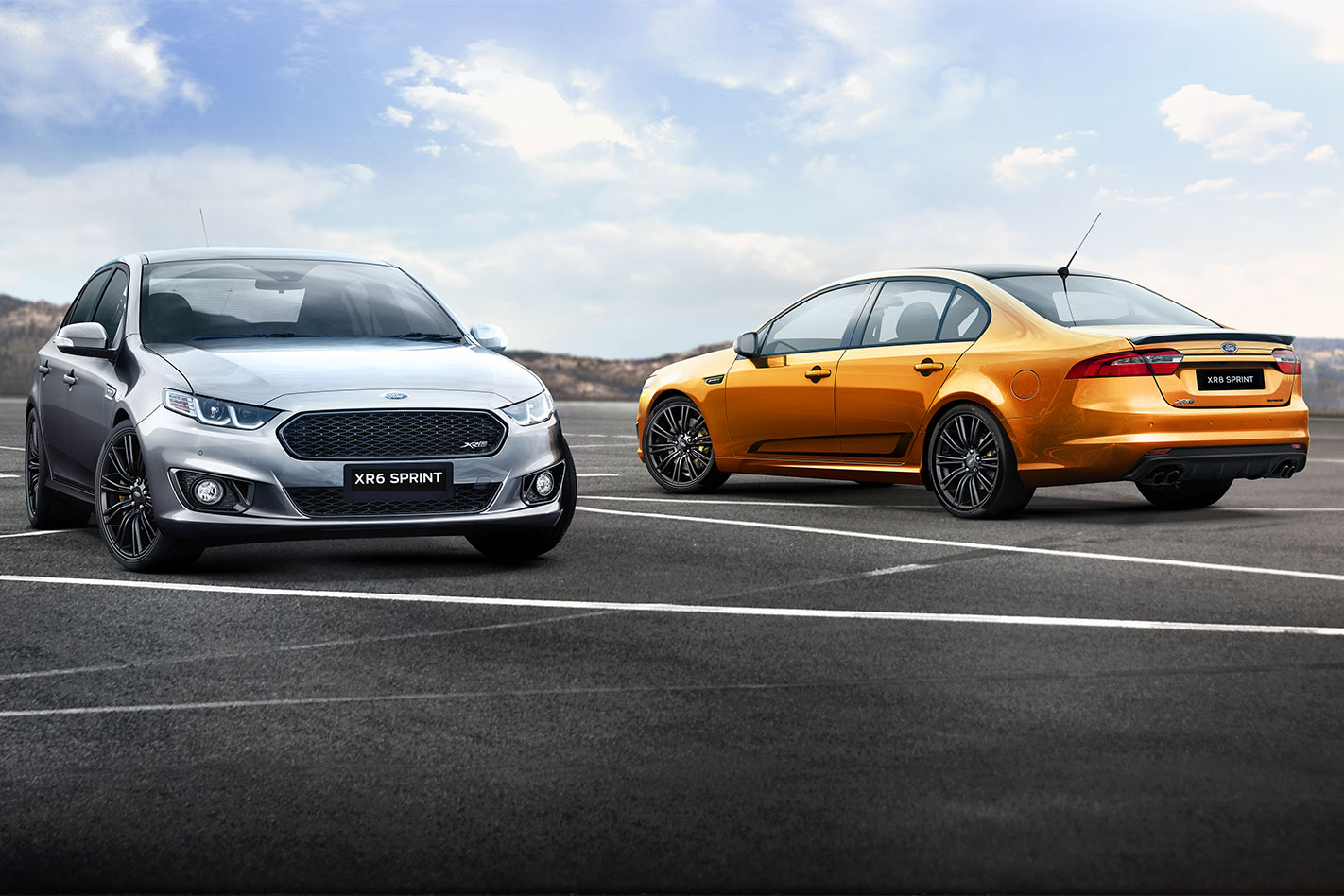
It took one hearty rev of the new 345kW Ford Falcon XR8 Sprint for us to realise, yep, we’re sort of wasting our time here.
In isolation its little sibling, the 325kW/576Nm XR6 Turbo Sprint, sounds fantastic, a burly and characterful straight-six growl full of turbo whistle under load – and a tasteful, and sensible, blow-off valve flutter when you roll out.
We had the chance to find out for ourselves at Tasmania’s Baskerville Raceway during the cars’ official launch today.
However, put them side by side for a bit of a rev and there is, sadly, no comparison. You can’t argue the blokes doing the revving don’t know what they were doing, either, given they’re the ones who led the Sprint program. Program manager Justin Capicchiano is in the six and chief program engineer David Burn the eight.
Our pick is the bellowing XR8. But judge for yourself.
It is a completely redesigned Honda Civic model and the start of a new chapter for Honda. More than four years of local research and input from Australian dealers and Honda staff has been incorporated into the car.
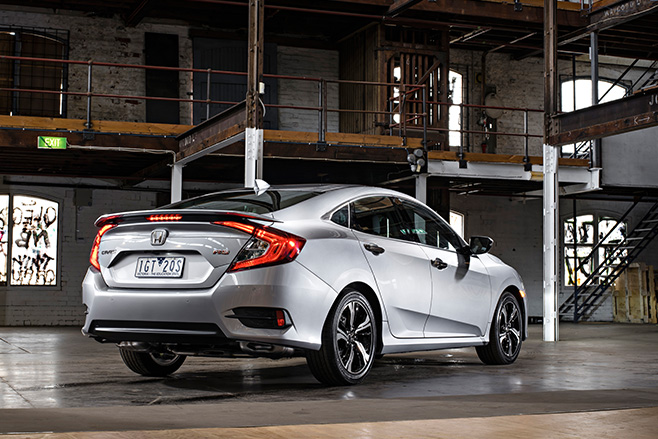
“It is the most important model in our history in Australia,” said Stephen Collins, Honda Australia Director. “We’re confident the customers who have been looking for the original sporty DNA that Honda was known for are going to find it in this new Civic.”
Two drivetrains will be offered when the Civic arrives – a brand new 1.5-litre turbo petrol making 127kW/220Nm, and an updated 1.8-litre petrol engine producing 104kW/174Nm.
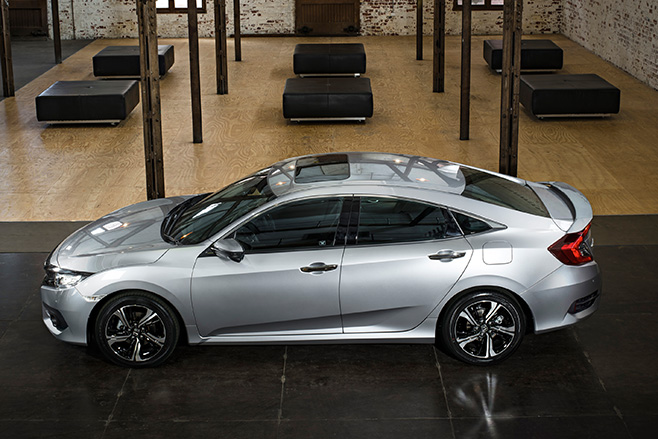
The new 1.5-litre engine has been developed using Honda’s own Earth Dreams Technology for exceptional fuel economy. It will be matched to a new CVT transmission and together Honda says the combo epitomises the brand’s fun-to-drive nature.
A new RS grade has been added to the range of five variants. It’s the first time an RS badge has been placed on a Civic. It is being touted as the “style statement” of the line-up featuring a unique body kit, blacked out front grille, LED headlights and foglights, and a sunroof.
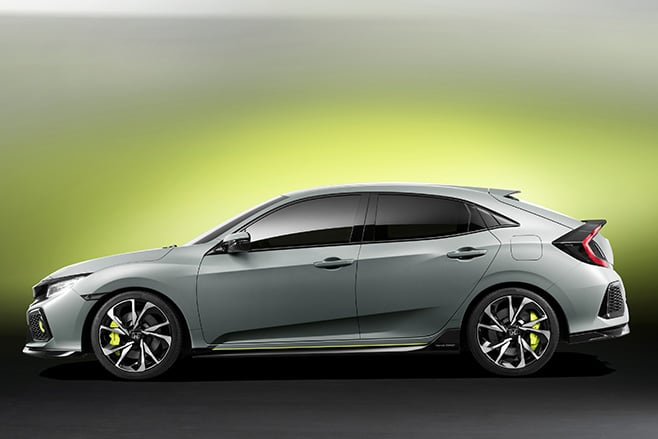
The Civic sedan is the first in a three-stage release for the new Civic range. The Civic hatch we saw in prototype form at the Geneva Motor Show will arrive in the first half of next year followed by the exciting Civic Type R before the end of 2017.
Click here to read the full review on the current generation Honda Civic.
If you suddenly found $8800, what would you do with it? That’s the cost, it seems, to be different – the gap between the new X5M and new X6M.
Aside from the fact its C-pillars look like they’ve caved in, the X6M is practically identical to the X5M. It’s got the same 423kW and 750Nm from a 4.4-litre twin-turbo V8 and though the X6M weighs 10kg less (it’s still a hefty 2265kg) the 0-100km/h sprint is the same: a mildly berserk 4.2 seconds.
The driving experience is the same, too, as we discovered during an extended blast through Tasmania. Like the X5M, the X6M feels physically huge. You’re aware you’re inside a huge mass of a car.
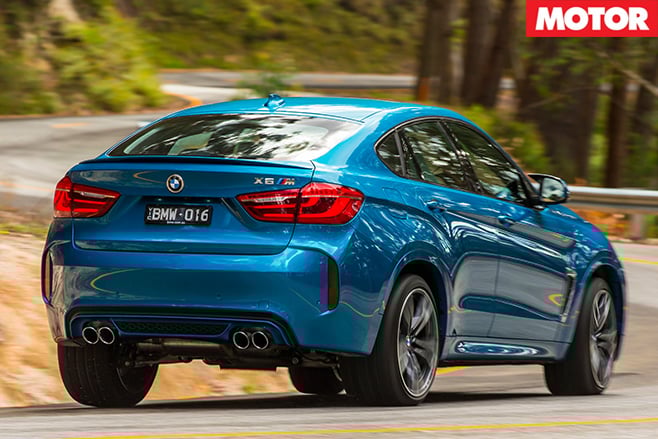
Unfortunately, while the thrust is manic and tirelessly addictive, the engine noise could be disappointing to an enthusiast’s ear. Like the M3 and M4, BMW artificially sweetens the noise and perhaps some will find it a little too PlayStation-like.
Tip into your first corner and you’ll notice there’s not much coming through the steering wheel. True, the ratio is spot on, and the resistance is about right, but there is a distinct silence of information coming into your hands. It’s all numb, even in the hardcore Sport Plus mode.
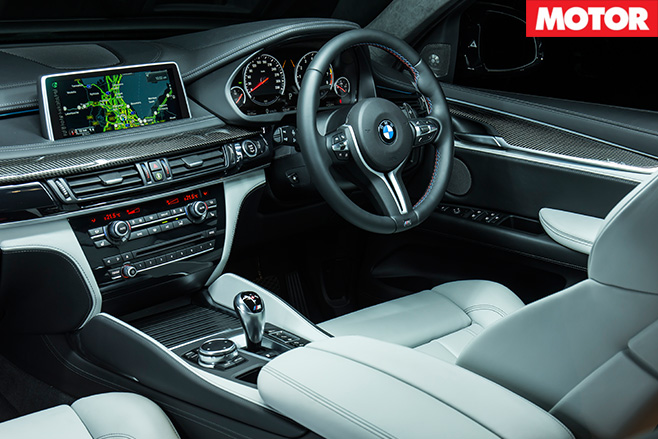
The X6M has a slightly lower centre of gravity than the X5M, but driving both cars closely back-to-back reveals little. Perhaps the X6M feels a poofteenth more willing to change direction.
BMW says the X6M can direct 100 per cent power to the rear axle and that turning the electronics off is “an open door to controlled drifts”, although such shenanigans in a car this heavy, with this much grip, are perhaps best saved for a track. Certainly in the ESP half-off mode (MDM) it felt like the gripped-up X6M would need serious provocation to wriggle its bum with the throttle.
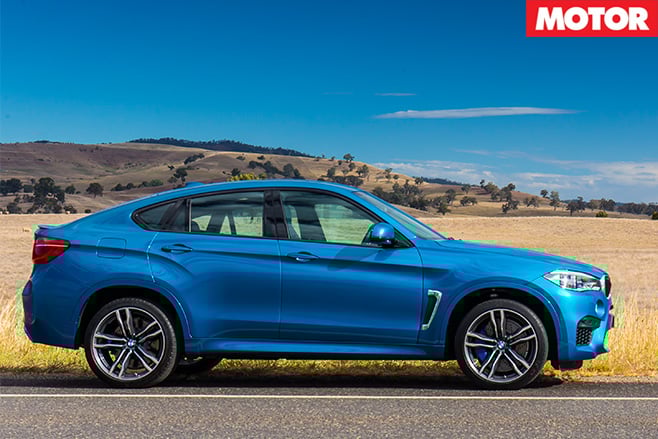
By god it’s fast. And should you find yourself on a bendy road, you’ll discover just a big, heavy car with lots of grip, and grunt, and while there’s not much scope for play, its cornering ability is peculiarly well polished.
Is it worth $8800 over the X5M which does literally the exact same thing? What’s the price you put on being a bit different?
4 out of 5 stars
Specs Engine: 4395cc V8, DOHC, 32v, twin-turbo Power: 423kW @ 6000rpm Torque: 750Nm @ 2200-5000rpm Weight: 2265kg 0-100km/h: 4.2sec (claimed) Price: $194,700
On display at the 2016 Australian F1 Grand Prix this weekend, the Victorian Police have announced they will be using a Mercedes-AMG GLE63 Coupe for highway patrol.
The vehicle, which costs close to $200,000, is on trial while Australia’s police force search for a replacement for the almost redundant Ford Falcon and Holden Commodore.
But taxpayers needn’t worry about how their money is being invested; the GLE63 is on-loan from Mercedes-Benz for a 12-month trial period.
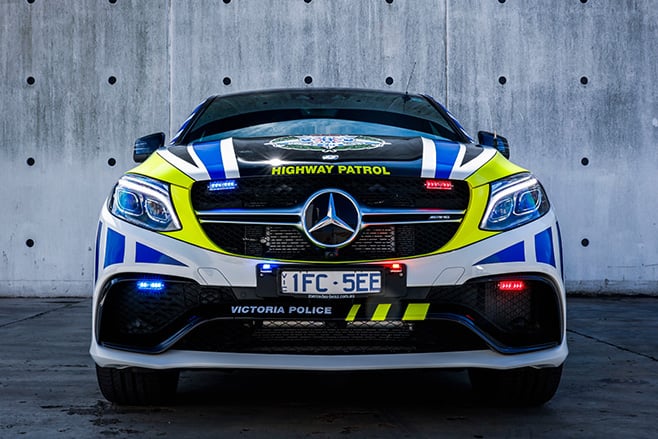
The 5.5-litre twin turbo V8 in the GLE63 can push the vehicle to 100km/h in 4.2 seconds, making it the fastest police car in Australia. This seems almost irrelevant here in Victoria given the no pursuit law introduced in 2015 that prohibits a cop car initiating a chase.
But Victoria Police Assistant Commissioner, Doug Fryer, insists the German-made SUV is being used to promote the importance of in-car safety features.
“Death and serious injuries on Victorian roads could be reduced by a third overnight if everyone was driving the safest cars they can afford. We’re not saying that everyone needs to rush out and buy the latest and greatest but we need people to prioritise safety over leather seats and shiny wheels,” he said.
“Police have a responsibility to do more than just catch unsafe drivers and we can do this by promoting safer vehicles and encouraging business to play its part.”
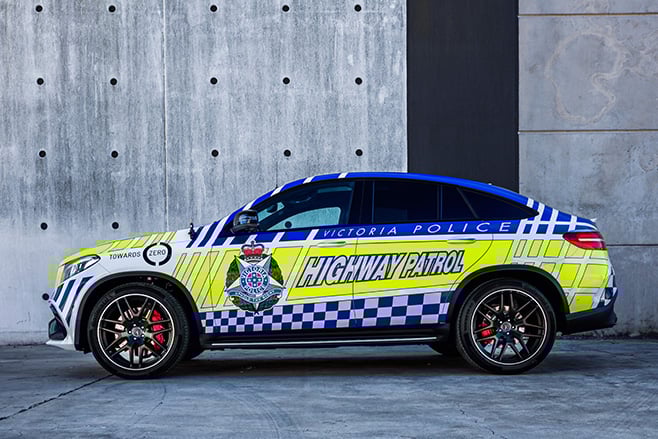
But if the point is safety over shiny wheels, we wonder if the $198,900 GLE63 is the best vehicle to get the point across? Granted this car, dubbed the Road Guardian by Vic Police, does have an extensive list of safety features and doesn’t actually have shiny wheels, opting for trendy black wheels instead.
While it’s unlikely the organisation will replace its fleet with this Mercedes, we know how easy it is to get attached. So here are some fast, safe, and more realistically priced vehicles that just might do the job and still attract attention.
Volvo V40 T5 R-Design – $50,990
BMW 225i Active Tourer Luxury Line – $54,900
Volkswagen Golf R Wolfsburg Edition – $56,990
Citroen DS3 DSport Cabriolet – $36,590
Jaguar XE 25t Prestige – $64,900
The Mercedes-AMG GLE63S Coupe will be on display for the duration of the 2016 Australian F1 Grand Prix.
If you want a comprehensive review on the new Sprint twins, we’re afraid you’ll have to wait until tomorrow, but we can offer you an early taste on what the last fast Falcons are like.
UPDATE: You can now find our launch review of the XR8 Sprint here.
When MOTOR met Ford engineers David Burn and Justin Capicchiano to chat all things Sprint (you can read it all in the next issue) they brought along a couple of hard-working prototypes for a chance to sample what they’ve been up to over the past 18 months.
To the casual observer they just look like a regular XR8 and XR6 Turbo (though the Turbo has recently been put on G6E-style rims which would’ve raised an eyebrow or two) as any giveaway parts such as the massive Brembo brakes and F6 intercooler have been painted black.
Likewise the extra power, but then again, power has never been a Miami shortcoming. There’s grunt a-plenty from more or less idle but the way it rips through the final 1500rpm to the 6250rpm cutout is nothing short of savage.
This test car is a manual, which still apparently accounts for 50 per cent of V8 sales, but we’d choose the auto as it just suits the car’s character a bit better.
It’s still firm, but it bobs along smoothly rather than fidgeting constantly like the standard car, and as such the Sprint restores one of the Falcon’s greatest strengths, its long-distance touring capabilities.
The XR6 Sprint displays similar characteristics and with a few corners in our way also has a chance to show off the new car’s handling chops. This prototype has fairly terrible rack rattle thanks to a hand-assembled intermediate shaft that won’t make production – and no other Falcon I’ve ever driven has had rack rattle, so I believe that – but the extra weight in the XR6’s steering is obvious, though it’s still lighter than the XR8.

Into second and then to third and the acceleration barely abates; individual torque maps for each gear are a clever way of maximising traction, but does lead to the initially strange – but addictive – sensation of linear acceleration. It’s safe to say, like the XR8, few will have any issues with how the XR6 Sprint goes in a straight line.
What’s particularly impressive is its extra responsiveness. Part-throttle overtaking is now made much easier thanks to much more power being available earlier in the rev range than the previous FPV F6.
That said, there’s the impression of greater grip underneath than we’ve felt from a Falcon before, which gives you the confidence to push rather than tiptoe around the edges of adhesion.
Obviously this is a fairly limited road test, but at least offers a glimpse into the talents of the new Sprints. We’ll have a full review of both cars from the launch in the next day or two and be sampling the car on road and track at the first available opportunity.
LEXUS IS300h LUXURY Score: 80/100
Price & Equipment | 15/20
You get the entry-level IS300h Luxury for $60K, which has less fruit than the $59K Honda. The Lexus has powered, ventilated front seats, sat-nav, dual-zone climate control, Bluetooth and a reversing camera like the Honda, but no lane-departure warning or automatic high beam systems. Digital radio and eight airbags are plusses.
Interior & Versatility | 17/20
It’s nice to have a powered steering column, but the brand’s Remote Touch multimedia interface can’t quite match the user-friendliness of other systems. Despite being 205mm shorter than the Honda, a longer wheelbase helps give the IS superior rear legroom. The 450-litre boot is 30L down on non-hybrid versions.
Performance & Economy | 16/20
Lexus’s 8.5sec 0-100km/h claim is spot-on based on our tests. The 2.5-litre four-cylinder produces 133kW, which translates to 164kW in total with help from a 105kW AC synchronous electric motor. In practice it has great initial throttle response, but not quite the low-rev thrust of a good 2.0 turbo-diesel. The Honda sounds better.
Ride & Refinement | 17/20
Despite a firm suspension and run-flat tyres (though they’re only 225/45R17s), the Lexus offers a smooth ride in the city and absorbency in the country – provided the road isn’t too bad. CVT-induced rev drone is the only bugbear, and perhaps more noticeable because of the excellent suppression of tyre, wind and suspension noise.
Steering & Handling | 15/20
If the ride and refinement equation marked a big fork in the road, the pair depart entirely on a twisty one. There’s more to it than rear- versus front-drive. The Lexus is well balanced with precise steering. Perhaps it’s due to the IS’s more advanced double A-arm front suspension, but it probably has more to do with good tuning.
HONDA ACCORD SPORT HYBRID Score: 74/100
Price & Equipment | 16/20
To help what is fundamentally a Camry Hybrid rival take the fight to premium cars, the Accord Sport Hybrid is loaded, including a powered sunroof, LED projector headlights, active cornering lights, collision-mitigation braking, lane-keeping assist and blind-spot monitoring systems. There’s little the Honda lacks.
Interior & Versatility | 14/20
Well-built, comfy and spacious, but there’s a lack of class headlined by an untidy dash design. It’s easy to get comfortable in eight-way power-adjustable front pews. The rear seat is comfortable despite offering less legroom than its rival. Electric rear window sunshades are a nice touch. Boot holds 415 in total, with 34L underfloor.
Performance & Economy | 17/20
The Honda is smooth and potent, with an unusual, but not unpleasant, deep note. Its 2.0-litre Atkinson-cycle (like the Lexus) four produces 105kW and the electric motor musters 124kW, which results in a total of 146kW. It does 4.6L/100km on the official combined cycle, compared with 4.9L/100km for its rival.
Ride & Refinement | 14/20
The Honda betrays its American-market origins by being the polar opposite of the Jap-luxe Lexus. The brand’s new-gen hybrid drivetrain is refined, but that hardly helps in a cabin that remains relatively noisy courtesy of wind rustle and tyre and suspension intrusion. Meanwhile, the ride quality isn’t especially good in isolation.
Steering & Handling | 13/20
The Accord ‘Sport’ Hybrid is much better than lower-spec versions, but it’s not brilliant, and it isn’t as enjoyable as its rival. It’s also great to have grippy Michelins. However, the chassis disappoints, with disconnected steering and non-cohesive dynamics, despite bigger anti-roll bars among changes compared with lesser variants.
VERDICT
It’s a noble – or maybe foolish – pursuit to take on a genuine Euro-hunting premium with a car that’d be more at home playing a high-spec Toyota Camry Hybrid. But by loading its US-market Accord with luxury, convenience and safety equipment, and giving it a polished new hybrid powertrain, Honda has created a $58,990 semi-luxo car with its sights on no-man’s land. However, you will want for nothing in the way of gear in the Sport Hybrid. The engine and motor combination is slick and reasonably satisfying and the cabin is comfy and roomy. But unfortunately for the Honda, that’s about where the appeal ends. The Lexus IS300h is classier outside and in, more refined and surprisingly good fun to punt for a hybrid. It’s also got a longer four- versus three-year warranty and will hold its value better.
This article was originally published in Wheels February 2016.
