
Despite the enticing ‘M’ in its badge the M235i Convertible isn’t a 2-series chop-top that’s been fettled by Munich’s proper tuning division.
Instead it joins BMW’s second-tier halo range, where the 1 Series, 2 Series (until the imminent 2M), and X5/X6 tri-turbo diesels benefit from a sort of M-lite tuning philosophy.
That means BMW matches its single-turbo N55 3.0-litre straight-six – that’s recently been fiddled to 240kW and 450Nm – to gluey Michelin Pilot Sport tyres, bigger brakes, variable steering and ‘adaptive M dampers’ for the compact 2-Series convertible.
Then there are 18-inch twin-spoke alloys, and ‘black chrome’ exhaust tips to help you spot an M235i from its blander siblings. And with its exclusive silver mirror caps and gloss kidney grille, it looks pleasingly higher-rent than a 228i.

The engine’s free-revving down low, and its mid-range generates serious toupee-threatening speed before it arrives at redline a little breathless.
And if you wanted something to blame for the death of manuals, you could point the finger at BMW’s eight-speed torque converter auto. Its tendency to select higher cogs ’round town can be frustrating if you’re not an eco-mentalist, but we love its buttery upshifts, blink-quick downshifts and well-spaced gears.
Better yet, as a convertible the drivetrain’s aural signature can be bathed in after a pull of the roof button. The cloth roof takes a while to peel away, but you’re treated to all sorts of sonic treats you’re normally insulated from.
They’re mainly from the turbocharger: a suck as it builds boost, a quiet sneeze as it dispels it, both punctuate the sonorous growl from the inline-six that’s the centrepiece of the experience.

The chassis, however, tells a different story. It’s a substantial 250kg heavier than the coupe, but it feels just as playful, balanced, and composed. Provoke it even, and the Michelins Pilot Super Sports break away progressively enough that you’re given ample warning to catch the car with its accurate and direct electric steering rack.
Thanks to non-run-flat tyres, there’s even a bearable ride. There are downsides. With its top up over ugly roads you can hear the chassis fidget where its A-pillars meet the roof. Nether is the damping completely sorted as the car needs a moment to settle after bumps.
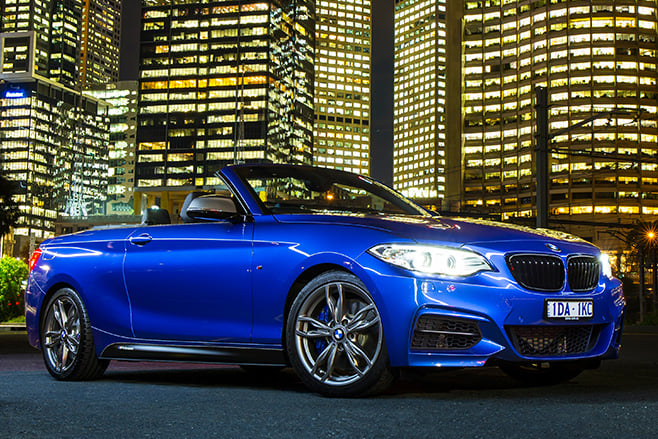
On the upside, the interior’s quiet and comfortable, so you can’t say its cloth roof takes anything away in terms of liveability.
Sure, for the same amount of money you could have the M235i with a $4300 M-differential, but if you want a roof it’s hard to argue against having the just-as-quick M135i for so much less.
So, if you’re eyeing the cabrio in the showroom, we’ll assume you’re planning on cruising at speed rather than crushing corners. And for that, on the road, it’s pretty good. Even if it’s not a full fat M car.
4/5
Specs:
Engine: 2979cc, DOHC, 24v, twin-turbo Power: 240kW @ 6000rpm Torque: 450Nm @ 1300rpm Weight: 1620kg 0-100km/h: 5.0sec
Get your free weekly report from the world of fast cars – subscribe to the MOTOR newsletter!
PERFORMANCE car specialist HSV is working on a secret project to deliver the fastest and most powerful Holden ever – a GTS-R with at least 476kW and 819Nm.
Wheels has learnt the car would be powered by the same supercharged LS9 V8 found in the Chevrolet Corvette ZR1, and that HSV could revive the legendary GTS-R badge it last used on 85 special editions sold in 1995 and 1996.
The high-powered hot-rod would be a strict limited edition – Wheels understands HSV has been offered a discount on about 100 of the LS9 engines. It is likely to be priced well north of $100,000.
Pricing will be crucial, as history shows Australians are reluctant to pay six figure sums for local performance cars.
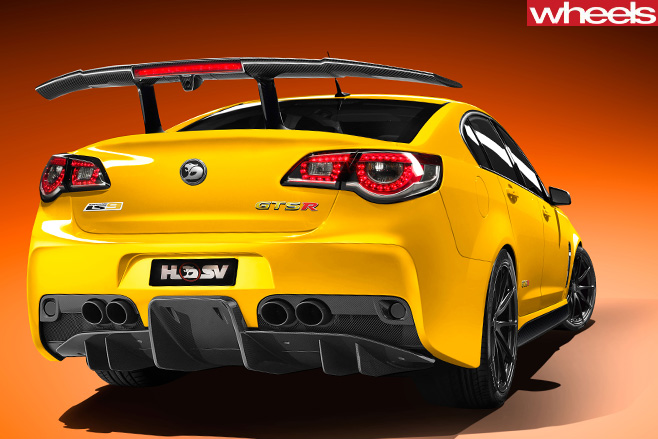
If given the green light, a modern GTS-R will go down in history as the most powerful Australian muscle car ever.
The LS9 engine’s 476kW/819Nm output easily trumps the 351kW/570Nm of the FPV GT-F, and would bring a significant 46kW/79Nm jump over the current HSV GTS flagship.
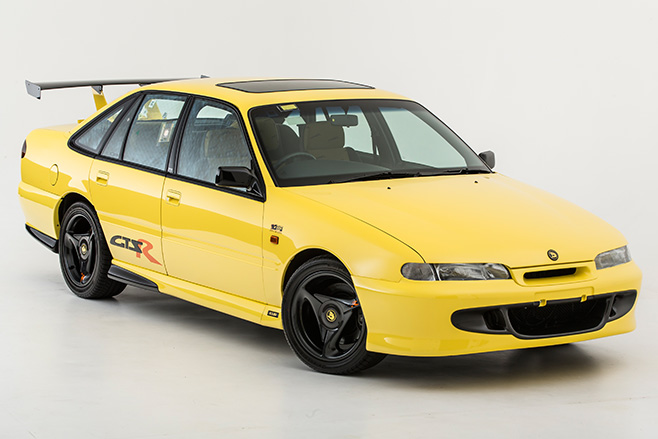
Shoehorning the hand-built 6.2-litre V8 under a Commodore bonnet should be easy as the LS9 shares the same aluminium block and cylinder head as the supercharged LSA engine used in the GTS. However the LS9 has a bigger supercharger to produce the extra grunt.
The LS9 also has forged pistons, lighter valves, and a unique crankshaft and conrods. And it runs a dry sump, rather than the wet sump in the GTS.
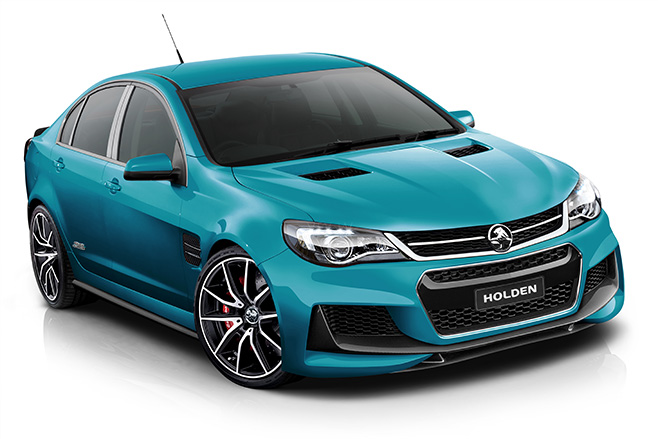
Artist’s impression of the Holden VF Series II on which the HSV GTS-R will be based.
It is also understood HSV will fit larger brakes (the Corvette ZR1’s carbon-ceramics could be an option). While body changes will be minimal, the GTS-R will wear a unique body kit.
HSV is yet to sign off on the project, but if it does, a GTS-R will be one of the most affordable 450kW-plus performance cars on sale.
It would also up the ante in HSV’s brawl with the $250,000 Mercedes-Benz E63 AMG S and $230,000 BMW M5.
RANGE ROVER EVOQUE DYNAMIC SD4 – Score: 78/100
PRICE AND EQUIPMENT THE $73,715 mid-spec Evoque 5dr is a mere $315 pricier than its rival, though the entry cost can be reduced because a six-speed manual is available for $2500 less. Like the Bee-Em, it has idle-stop, paddle shifters, cruise, 19s, auto wipers, auto xenon headlights, climate control, hill-start assist and Bluetooth phone/audio. 15/20
INTERIOR AND VERSATILITY PREMIUM cabin is trimmed in grained leather with perforated inserts. An 8.0-inch colour touchscreen headlines, while 380-watt, 11-speaker audio trumps the X4’s 100 watts and six speakers. Rear headroom compromised in both, but still adequate. Evoque’s 575L boot is bigger, and can be expanded to 1445L. 17/20
PERFORMANCE AND ECONOMY EVOQUE’S slightly bigger 2.2-litre turbo-diesel four makes the same power (140kW) but a bit more torque (420Nm) than the BMW. At 1685kg, the Evoque is 60kg lighter than the X4, and the nine-speed auto has one more ratio, but it’s a bit thirstier at an official 6.0L/100km, and slightly slower at a claimed 8.5sec for 0-100km/h. 14/20
RIDE AND REFINEMENT THE Evoque possesses that magic mix of hushed refinement and cushy ride comfort. The well sorted spring and damper set-up works to deliver pliancy on 19-inch wheels and tyres. Meanwhile, obvious attention to noise cancellation means that, away from the gnarliest of coarse chip, a sense of calm prevails. 17/20
STEERING AND HANDLING WHILE the Evoque feels almost like a high-riding hot hatch in turbo-petrol three-door form, some of the fun is diluted as an oil-burning five-door that carries a bit more weight, mostly over the front wheels. It’s not as sharp a steer as the frumpier BMW X3, let alone an X4, but will still satisfy most SUV tastes. 15/20
VERDICT RANGE Rover’s Evoque was the compact SUV-coupe pioneer and remains text book in terms of how to mass-produce a concept car, though it’s hottest as a three-door rather than a five-door. It’s a trademark Rangie, however, with an absorbent ride, enviable refinement and off-road ability (for what it is). The cabin grows genuine class in Dynamic trim and is gorgeous in top-spec.
BMW X4 xDRIVE 20d – Score: 76/100
PRICE AND EQUIPMENT
THE $73,400 base X4 diesel matches its rival for most key equipment. While it misses the Evoque’s knee airbag and powered passenger seat, it counters with front and rear parking sensors (rear-only for Rangie) and a reversing camera. Three-year retained value, according to Redbook, is 64 percent versus 67 percent for the Evoque. 15/20
INTERIOR AND VERSATILITY THE comparatively austere BMW mounts a counter-attack with its 8.8-inch screen and intuitive iDrive interface, which taps the infotainment. Both have leather multi-function wheels, but the X4 adds voice control. Its cargo bay is slightly smaller at 500L (1400L seats folded), though the rear seat usefully folds 40/20/40. 15/20
PERFORMANCE AND ECONOMY COMMON-RAIL direct-injected 2.0-litre diesel uses a variable geometry turbo to deliver a flexible 140kW and 400Nm. It makes the same torque as BMW’s storming turbo-petrol 3.0-litre six. Still, the 20d averages 5.2L/100km with help from a brake energy regeneration system and remains swift enough, at 8.0sec for 0-100km/h. 15/20
RIDE AND REFINEMENT THE X4, on sports suspension, isn’t as soothing as its rival. A character split emerges; while they’re both SUVs, not genuine 4x4s, the BMW has a tarmac-handling slant, which is sensed via its sharper ride and a slight ramping up of road noise. Evoque, meanwhile, brings off-road tech in the form of its Terrain Response system. 15/20
STEERING AND HANDLING LIKE its rival, the X4 has electric power steering, but the BMW’s is a sportier variable ratio set-up designed to balance urban effortlessness with back-road enthusiasm. Turn-in quickens as lock is dialled on and it can take time to adjust. Once familiar, it points with authority, allowing confident, effortless switchback attacks. 16/20
VERDICT BMW’s X4 takes the dynamic X3 and adds wider tracks and a lower centre of gravity. With variable steering and adaptive dampers, it’s as good a drive as you get in this slice of the market. That’s its most compelling strength. Both strike a fine blend of effortlessness and efficiency, but the Evoque nails the balance of ‘sports’ and ‘utility’ to remain the superior stylised SUV.
Sign up here to receive the latest round-up of Wheels news, reviews and video highlights straight to your inbox each week.
JAGUAR says its brand DNA would stretch to building compact hatchback that would rival the popular Mercedes-Benz A-Class and Audi A3, but says it is not a priority.
Jaguar’s goal to grow sales globally is being driven primarily by its new Jaguar XE sedan and wagon, and its plans to launch SUVs.
The Jaguar F-Pace SUV will go head to head with the BMW X5 and Mercedes-Benz GLE when it launches in 2016.
A smaller SUV, possibly called the E-Pace, is believed to be under development for a launch in 2018. It may be based on Jaguar’s versatile, aluminium intensive iQ-AL architecture that underpins the new XE, XF and F-Pace.
In contrast, a rival for the hot-selling Mercedes A-Class and Audi A3 is not part of Jaguar’s attack just yet, design chief Ian Callum says.
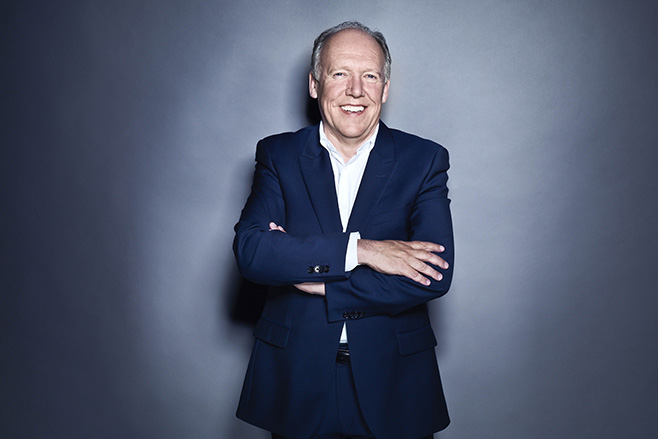
“The DNA would do it, but I don’t know,” he said.
“When you get into that lower sector, the business case becomes hugely challenging.
“You have to get a small car down to a price, no matter how luxurious it is. People don’t expect to pay the same for a car half the size… there may be exceptions.”
The Mercedes A-Class and its spin-offs made up almost half a million sales in 2014, to be the German maker’s most prolific models.
Audi’s A3 is its best-selling model globally, and at Lexus even the ageing CT200h is one of the Japanese maker’s best performers.
Callum said the design language that had proliferated across the new Jaguar XE, XF and F-Pace SUV could easily be applied to a smaller model.
But he said says Jaguar’s smaller production numbers limited its ability to offer as many models as some rivals in a cost-effective way.
“The DNA would do it … [but] the reality is, [if] we get back to my previous comments about volume, our entitlement in the market is not the same entitlement that BMW and Mercedes have,” he said.
That means that for the near future, the smallest Jaguar on sale will be the Jaguar XE that enters the battlefront against the BMW 3 Series and Mercedes-Benz E-Class.
While the XE will provide a clear shot in the arm for Jaguar, it leaves a gaping hole in the line-up below it.
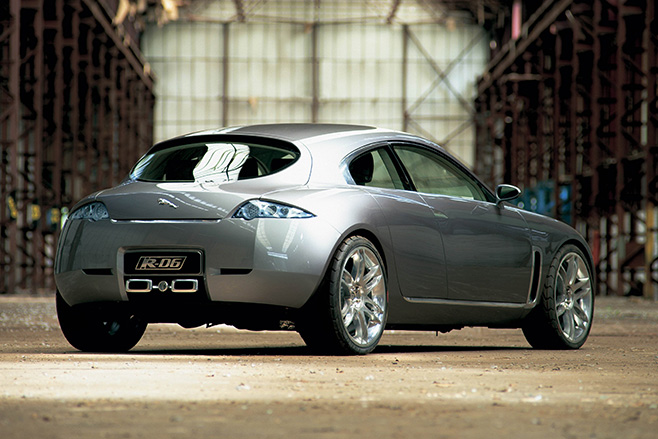
Jaguar has repeatedly shown smaller ideas in the metal as far back as the R-D6 Concept of 2003.
Shown at the Frankfurt show that year, it was an aluminium-intensive five-door hatch that would go head-to-head with the A3, A-Class and BMW 1 Series.
It, too, was designed by Callum and his team.
In Australia, the luxury small-car segment where the Mercedes-Benz A-Class, Audi A3 and BMW 1-Series reside has grown by 4.9 percent year-to-date, outperforming the overall market’s 3.2 percent rise. It has avoided the slump felt in the cheaper (below $40K) small-car segment, which has fallen a massive 8.9 percent.
Jaguar sales in Australia for the first seven months of the year have declined 22.4 percent, while Mercedes, BMW, Audi and Lexus have all seen strong increases in sales.
Yet the British brand will be boosted by the new Jaguar XE, while the second-generation XF will arrive Down Under in December.
Globally, sales are down 1 percent year-on-year, with 272,451 Jaguars sold by the end of July.
This puts the JLR brand on track to sell just over 1 million cars, well behind the likes of BMW Group, which sold 1.8 million cars in 2014, and Mercedes, which has surpassed 1 million cars already this year after repeatedly setting monthly sales records.
JLR intends to introduce at least two models per year until 2020. Last week it announced a 300,000 capacity factory in Slovakia, expected to be used for Land Rover production.
“We’ve gone from three cars to five in the space of less than 18 months,” said Callum, referring to the XE and F-Pace SUV joining the XF, F-Type sports car and XJ.
“That’s almost doubling our car line. But more than that, it’s probably more than doubling our volume … Jaguar’s certainly not standing still.”
Sign up here to receive the latest round-up of Wheels news, reviews and video highlights straight to your inbox each week.
Jaguar’s new XE S will be powered by the 250kW/450Nm 3.0-litre supercharged V6 from the F-Type sports car and aim to take the fight to the forthcoming BMW 340i and Mercedes-Benz C450 AMG.
Landing at $104,200, Jaguar’s range-topping (for now) small sedan is the first of a wave of new models arriving at a similar price and performance point.
BMW’s facelifted 3-Series is expected to arrive before year’s end, the 240kW/450Nm twin-turbo 3.0-litre six-cylinder 335i rebadged as a 340i.
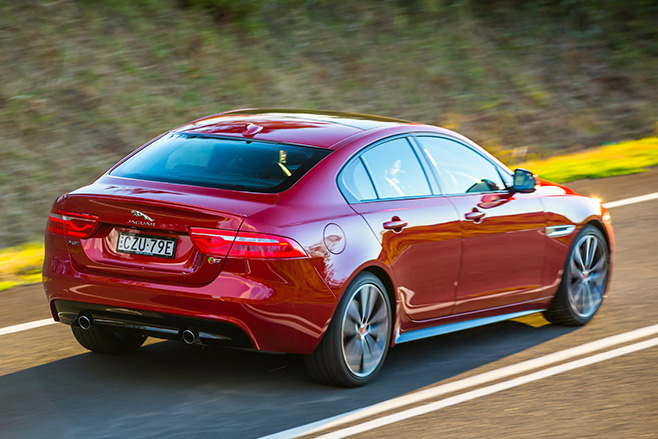
All three will present stiff competition to Jaguar’s important new model, as well as the Volvo S60 Polestar, which currently occupies this strange no man’s land between your cooking models and the hi-po stuff like the BMW M3, Mercedes-AMG C63 and Audi RS4.
Like the F-Type it steals its engine from, the XE S will receive an eight-speed automatic gearbox and claims 0-100km/h takes 5.1sec.
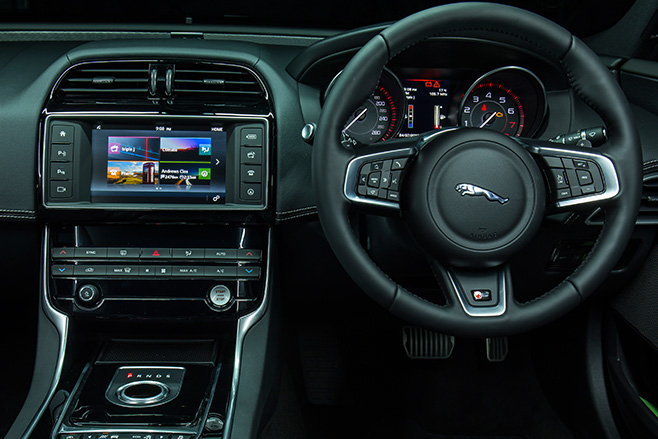
Just how successful it’s been we’ll discover when we get behind the wheel in the very near future.
Get your free weekly report from the world of fast cars – subscribe to the MOTOR newsletter!
Two wildcard entries have been accepted for this year’s Bathurst 1000, and one combo is certain to attract more attention than the other – which arguably is a more competitive pairing.
Let’s discuss the attention grabber first, an all-female combination of IndyCar and Formula E driver Simona De Silvestro and Australian driver Renee Gracie. Gracie has done some Porsche Carrera Cup and second-tier V8 Supercar racing.
It is exciting for the category to have a rare all-female pairing racing at Bathurst. It’s the first all-girl line-up since Melinda Price and Kerryn Brewer drove a Commodore to 11th outright in 1998.
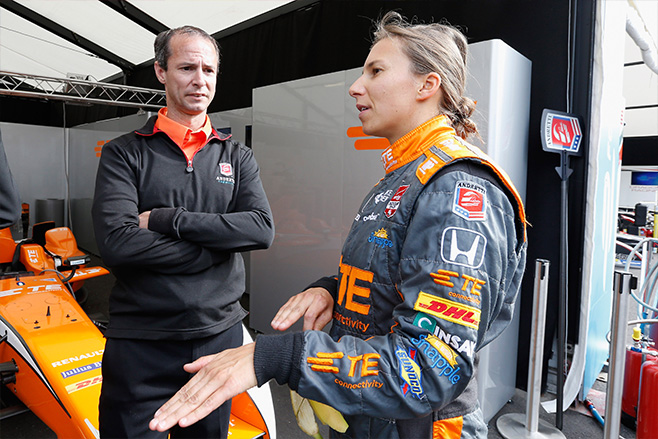
Gracie, who is 20, has a genuine passion for racing and says she’s there for the long haul. Though her results in the Carrera Cup and development series are undistinguished, she is steadily improving under the guidance of Paul Morris.
Gracie currently sits 19th in the development series.
One mystery is how the girls’ two-year Bathurst campaign will be funded.
But the mainstream media has already responded enthusiastically to the announcement, and the ladies will find themselves under increasing scrutiny during practice, qualifying and the race.
De Silvestro is unlikely to be intimidated by Mount Panorama but will need time to familiarise herself with a big, imprecise lump of a Prodrive Ford Falcon with the steering wheel on the right (make that wrong) side.
Gracie has raced at Bathurst previously, if not auspiciously. It will be up to Morris to bring her up to speed in the small amount of practice time now scheduled during the Thursday and Friday before the 1000.

There is no reason why females can’t be as competitive as males, and we’ve seen some great performances from lady racers in the past, all the way to Lella Lombardi in F1.
Locally, Christine Gibson, Sue Ransom and Robyn Hamilton have all been seriously quick, as has Leanne Tander, the last female to compete in the Bathurst 1000 (in 2009, when she drove with David Wall to 18th).
Thirty one females have competed in The Great Race, for a best finish of sixth (Christine Gibson and Marie-Claude Beaumont).
Now to the second wildcard.
Newcastle-based brothers Aaren and Drew Russell have been regulars in the V8 Supercars development series for many years. They fall into the battlers’ category.
The team will use a Commodore VF originally built by Garry Rogers Motorsport, with the family-operated Russell team running the car once it arrives at the mountain.
Aaren Russell, 23, has posted some podium finishes so he’s raring to make his debut in the 1000.
It is the opportunity he’s been working towards for years.
“To do with it with my family and our own team makes it even more special,” the younger Russell said.
“We have huge respect for all of the V8 Supercars Championship teams competing at Bathurst. We’d like to simply stay out of trouble, fly the flag, complete the race and be happy with our day’s work.”
That sounds like a terrific target.
Brother Drew Russell, 27, is the fourth-most experienced driver in the history of the development series, having made his debut in 2007.
While he will be making his Bathurst 1000 debut, Drew has amassed seven second-tier round starts at the famous circuit until 2013.
But there is not a lot of fanfare for the understated Russells. Then again they don’t have breasts.
We were sitting in the MOTOR kitchen the other day when an argument erupted.
What’s the best M3 ever? Is it the deep-voiced, V8 E90? Is it the nimble, legendary little E30? Or is it the stripped-out E46 CSL?
It’s a hard one and an argument we’ll extend to our Facebookers as well. Until then, the MOTOR staff agreed, after some hair-pulling, the E46 CSL is the ultimate M3.
It bows to the lightweight ethos of the E30, has perhaps the best engine that’s ever sat under an M3’s bonnet (the glorious, 3.2-litre naturally aspirated S54 straight six) and, well, it looked tits.
Not to mention, while the SMG II gearbox made a lot of people cranky back in the day, today it’s winning hearts for being a little more interactive and characterful than the ever-ubiquitous, modern dual-clutch.
Now, there’s nothing wrong with the new M4 but, as we’ve already alluded, it doesn’t quite have enough tabasco sauce for us.
Yes, it has 317kW and, at 1497kg, you wouldn’t call it obese. But imagine cutting 100kg out of it and adding a handful extra herbs (the E46 sported an extra 13kW and 5Nm) and suddenly, you’ve got one deliciously sweet dream on your hands.
BMW itself has its own vision with the forthcoming M4 GTS, but we’re not sure it goes far enough.
Engine: Thanks to the original S54 engine being of such high calibre, the E46 CSL managed to only extract a small amount of extra power. Given the F82 M4 has, sadly, ditched natural aspiration, at least twin turbos mean it could be easily wicked-up for some serious power outputs beyond its stock 317kW and 550Nm.
Gearbox: The M4 CSL should come in manual for a better driving experience. The E46 CSL had the SMG II, which was basically a manual gearbox that changed gears itself, but a manual would bring the tech-heavy M4 back to earth. Plus, it weighs less.
Brakes: You can option carbon ceramic brakes on your M4 but for the CSL we reckon pinch the brakes from the F10 M5 – six-pot calipers munching 400mm discs. Carbon ceramic, of course. It worked for the E46 CSL, which used the bigger brakes off the E39 M5.
Interior: The E46 ditched sound deadening, sat-nav and electric seats. It didn’t even have air con or a stereo, though both were no-cost options. The M4 CSL could score a similar treatment and drop 100kg after a Biggest Loser-esque makeover. Weight drops to 1397kg.
Exterior: The E46 CSL had special, carbon-dripping front and rear diffusers which improved downforce over the stock M3 by 50 per cent. It also had this distinctive, Marilyn Monroe mole-esque hole to feed a cold air intake. Bring it back for M4 CSL.
Get your free weekly report from the world of fast cars – subscribe to the MOTOR newsletter!
INDYCAR: Wilson hurt in crash at tricky triangle
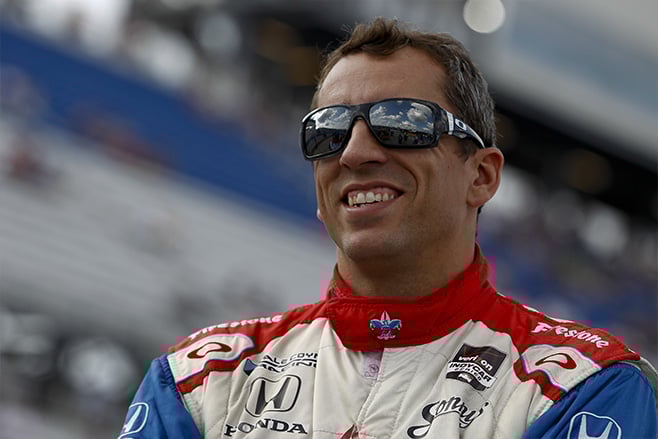
With 21 laps remaining, the young and adventurous Sage Karam spun in turn one while leading at the track known as the “tricky triangle”.
Debris from his car hit Wilson.
Wilson, who seemed to be unconscious, then fired into a heavy collision with the inside wall.
Ryan Hunter-Reay went on to win the race, which finished under the caution flag.
In the title hunt, the major beneficiary from a race of significant attrition was Juan Pablo Montoya, who extended his points lead.
From 19th on the grid, Colombian Montoya finished third, behind Josef Newgarden.
There were 12 different lap leaders – half of the field – in the 200-lap race, and 12 cars retired because of contact or mechanical issues.
There are six contenders with one race left in the season, and with the GoPro Grand Prix of Sonoma on August 30 carrying double base points the title remains up for grabs.
Montoya, who has stood atop the standings since winning the season opener on the streets of St Petersburg, Florida, in March, entered the third 500-mile race of the season with a nine-point lead over the surging Graham Rahal.
Montoya heads to the Sonoma Raceway road course double-points finale with a 34-point advantage over Graham Rahal, whose car retired in the first half of the Pocono race. Scott Dixon, Helio Castroneves, Will Power and Newgarden are also mathematical possibilities.
Power, the reigning series champion, finished fourth at Pocono.
Update: Indycar organisers announced on Tuesday that Justin Wilson had died from the injuries he received on August 23.
FORMULA ONE: Hamilton Spa bath
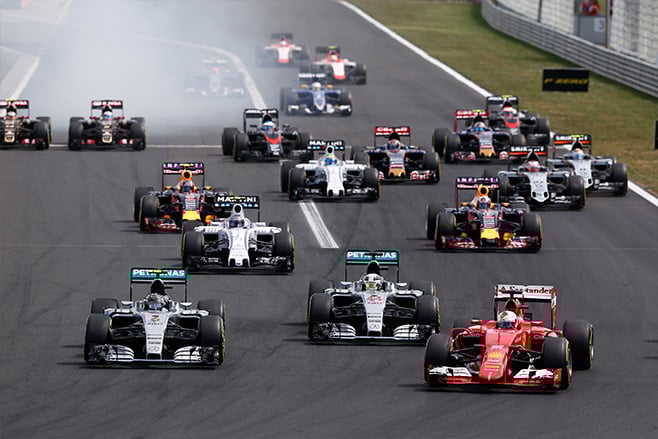
Hamilton took his second Belgian Grand Prix win, the 39th of his F1 career and sixth of his spectacular 2015, while team-mate Nico Rosberg fluffed the start but fought back to complete a seventh Silver Arrows one-two crush of their rivals.
Hamilton has eased out to a sizeable 28-point lead over Rosberg in the world championship.
Ignoring prospects of a bailiff knocking on the door after the grand prix, Romain Grosjean and the Lotus F1 Team returned to the F1 podium for the first time since 2013 after a superb drive from the Frenchman.
Despite a five-place grid penalty, Grosjean delivered a measured performance, including some special overtaking moves. He also set the race’s fastest lap.
Daniel Riccardo, whose starts this year have been Webber-like in their tardiness, this time made a slick jump from fifth to third. But his race was over right on half distance.
“It’s disappointing not to finish; we are not sure what the issue is but the team are investigating,” Ricciardo said.
“I lost power going into the chicane. Everything switched off, including the dash. It looks like it’s electrical but we’ll see what the investigation brings.”
Ricciardo will surely be hoping the rumours of a Red Bull switch to Mercedes power are accurate.
Williams’ Valtteri Bottas was the victim of an amateurish tyre mix up when the team incorrectly and illegally fitted a medium compound tyre to the right rear among a batch of softs. It cost the Finn a possible fourth place.
But Sebastian Vettel just missed out on having a frightening crash when his right rear Pirelli exploded in the closing stages as he fought off Grosjean for third, while attempting a challenging one-stop strategy.
Vettel gave Pirelli a savage verballing afterwards, saying the failure was unacceptable. Two hundred metres earlier, Vettel would have been dealing with the rubber explosion at Eau Rouge, the most demanding corner in F1. That scenario doesn’t bear thinking about.
V8 SUPERCARS: Mostert puts the blowtorch to Frosty at home
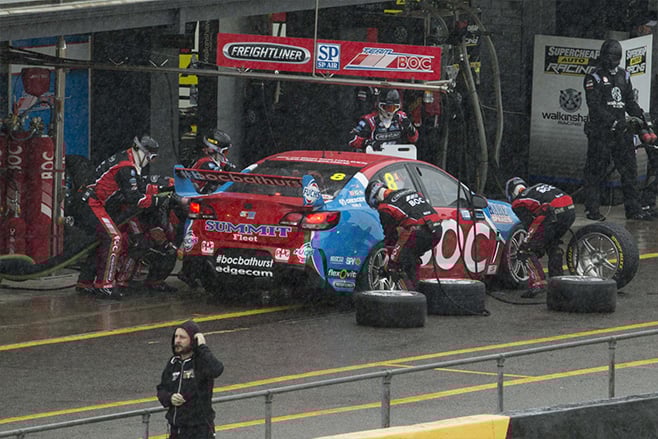
The young Prodrive Ford racer brought home two race victories and a third place as the title fight moves into the crucial endurance race phase.
Mostert’s spectacular two days has elevated him to second in the series, with the gap to his team-mate and championship leader Mark Winterbottom now a less imposing 174 points.
It was Mostert’s best weeks of 2015 – and Winterbottom’s worst.
Coming up are three endurance races, where co-drivers share a heavy burden for the championship front-runners.
Mostert, who on Saturday collected his ninth and 10th pole position cheques of the season, showed his pace in variable conditions, in two short races in the sunshine on Saturday and then coming out on top in a manic, rain-interrupted race on Sunday.
“It’s been a fantastic weekend… I finished all the races, got a pretty good bank of points and we’re second in the championship. It’s good that our team is one-two at the moment but we need to try and maintain that through to the end of the year,” said Mostert, who nevertheless is not admitting to getting his title hopes elevated. Not yet anyway, with a sway of points to play for across three enduros.
“The enduros are a big part of the championship so we need to be just as solid there. I’ve got a good co-driver in Cam (Waters) so can’t wait to get to Sandown – it’s one of my favourite tracks, Mostert said.
“At the moment I just have to do my thing and keep tracking along and see what we do.”
Winterbottom’s hopes of some glory just a few kilometres from where he was raised in Doonside were dashed with a struggle to 16th on Sunday – after a second and eighth the previous afternoon.
Craig Lowndes, who went into the weekend second in the standings, toughed it out after not nailing the set up in qualifying. His 10th in the wet, from 19th, in the third race pushed him to third in the points.
Defending champ Jamie Whincup’s fortunes also fell away on Sunday after a promising revivalist Saturday which brought a third place and a victory – his first for five months. The consistency the Red Bull Holden team so desperately needs continues to be evasive.
The wet part of Sunday’s race was much enlivened by a number of individual duels but most memorably by Shane van Gisbergen’s ambitious attempted pass on Jason Bright, which ended with the cars touching and gyrating on to the infield. Bright took the shortcut back on to the tarmac, ahead of the Kiwi, and was provisionally classified third.
Giz owned up to the miscue in his usual country-boy, honest way. “That was my mistake – I went up the inside. It was a bit too wet still, I locked the brake and understeered a bit,” Van Gisbergen said.
Bright believed he shouldn’t be penalised for the short cut. Driving Standards Observer Jason Bargwanna was reviewing the incident yesterday evening.
The Sydney Motorsport Park visit was a whole lot worse for James Courtney, the victim of a bizarre incident involving a helicopter on Friday.

The HRT driver was belted in the chest by a piece of debris sent flying by the downdraft of a military helicopter, leaving him with two fractured ribs and pneumothorax.
Courtney was hospitalised and is in doubt for the Sandown enduro, set for September 13.
HRT has been talking to several possible stand-in drivers should Courtney not be fit. American Patrick Long is the man most likely.
Back for the Sandown 500 too is Marcos Ambrose, who will be sharing the ever-improving DJR Team Penske Falcon with Scott Pye.
The former V8 Supercars champ was succinct when asked if he was ready for the race return. “Yep!” he declared emphatically and unambiguously.
WORLD RALLY: VW breaks its home duck

But that was put right in a stunning way along the narrow, dusty and sometimes kerbed lanes among the vines in wine country, as defending world champ Sebastien Ogier led a smashing VW shutout of the podium.
The first real asphalt event of the 2015 WRC, Rally Germany is regarded as the “beast” of the WRC, with dramas never far away.
But Ogier, Jari-Matti Latvala and Andreas Mikkelsen stayed away from trouble, and now head to the next event, Rally Australia, leading the championship.
Ogier and co-driver Julien Ingrassia now have a realistic chance of wrapping up their third title in a row with the Polo R WRC at the Rally Australia (September 10 to 13).
Dani Sordo claimed his best result for almost 12 months after securing fourth after an inter-team fight with Hyundai i20 colleague Thierry Neuville. Welshman Elfyn Evans was the leading Ford, finishing sixth and winning a stage on Sunday.
Continuing his steep tarmac learning curve, kiwi Hayden Paddon was a frustrated ninth following turbo problems in his Hyundai i20.
RALLY AUSTRALIA: Entry list
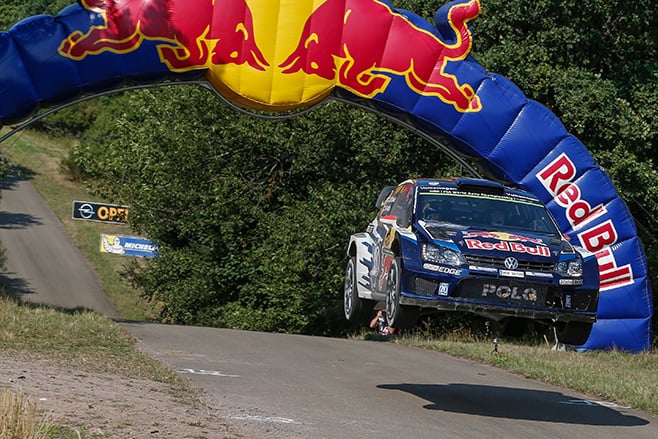
Ogier will lead the cars away from the start ramp in downtown Coffs Harbour on the afternoon of Thursday September 10, followed by his Volkswagen teammates Jari-Matti Latvala and Andreas Mikkelsen.
Not only is the VW Polo trio favoured to lead the charge on the no-grip gravel tracks through the forests on the NSW north coast, but the three combos are also currently one-two-three in the world championship.
Citroen has entered Kris Meeke and Mads Ostberg, M-Sport have Ford Fiestas for Elfyn Evans and Ott Tanak, Hyundai will bring out three i20s (for Thierry Neuville, Dani Sordo and Kiwi flyer Hayden Paddon), while there is also single privateer Ford Fiesta entry for Italian Lorzeno Bertelli.
In the fiercely fought out WRC2 category, reigning Australian Rally Champion Scott Pedder will be the big local chance along with returnee Nathan Quinn. But both face the against stiff international competition from WRC regulars Yazeed Al Rajhi, Yurii Protasov, Dakar hero Nasser Al-Attiyah, Abdulaziz Al-Kuwari and Gianluca Linari.
Loading the Rally Australia field are the big names in the Australian Rally Championship including Eli Evans, Molly Taylor, Tony Sullens, Adrian Coppin, Mark Pedder and Ashlea James, with Peter Dunn, Rhys Pinter and Stephen Raymond rounding out the entry list.
Sign up here to receive the latest round-up of Wheels news, reviews and video highlights straight to your inbox each week.
Perhaps this is what Bill Murray felt like in Groundhog Day? Let me explain.
Around two years ago I was driving around in a just-launched Sunny Melon Yellow (try saying that 10 times fast) Astra GTC Sport. Fast forward to June 2015, and once again I’m driving around in a just-launched Astra GTC Sport painted in the same happy hue.
Were it not for the fact that the badge looking back at me from the steering wheel depicts Holden’s lion rather than Opel’s lightning, it could be the same car. I feel like putting on the Rocky Horror Picture Show soundtrack and doing the Time Warp again.
Mechanically, little has changed in the model’s two-year hiatus from the Australian market bar a welcome hike in power from 132kW/230Nm to 147kW/280Nm when equipped with a six-speed manual. The optional six-speed automatic not only drops outputs to just 125kW/260Nm, it’ll also lighten your wallet by an extra $2200.
Helping put this power to the ground is GM’s clever HiPerStrut front suspension, lifted from the hi-po Astra VXR, which separates the damper unit from the steering axis to reduce torque steer, though it’s unlikely the GTC would be a wheelspinning monster without it.
The engine is willing enough, though the chassis could still easily handle more power, and it’s attached to a gearbox that isn’t the last word in shift quality, but pleasant enough to use. Shorter ratios than the VXR also help make the most of the GTC’s lower power output.
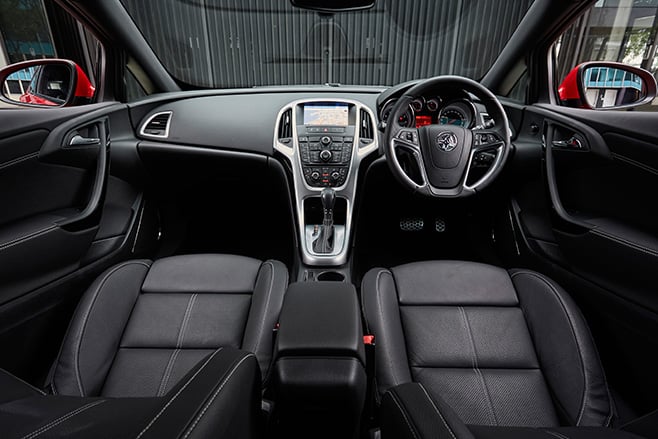
It’s not a particularly exhilarating drive, but there’s plenty of grip and the balance is nice and neutral. Push too hard and it’ll eventually understeer, but trail the brakes or lift-off sharply in an off-camber corner and you’ll need a dab of opposite lock to catch the subtly-sliding rear.
Where the Astra really brings itself into play, however, is price. The base GTC is just $26,990 and comes packed with kit, including sat-nav, front and rear parking sensors (though no camera), auto headlights and wipers and DAB radio. The GTC Sport asks for $3000 extra and adds 19s, body kit, LED tail-lights, electrically adjustable driver’s seat, heated leather front seats and dual-zone climate control.
That’s a hefty $5000 less than when it was here as an Opel and means the Astra now offers real value for money. Loaded with kit and reasonably entertaining to drive, the ‘new’ Astra might be a left-field alternative to those that mourn the loss of the three-door Volkswagen GTI, especially in stylish GTC Sport guise.
I don’t know what Bill Murray was complaining about, this Groundhog Day thing ain’t so bad after all.
3.5/5
Specs:
Engine: 1598cc inline-4, DOHC, 16v, turbo Power: 147kW @ 4750-6000rpm Torque: 280Nm @ 1650-5000rpm Weight: 1498kg 0-100km/h: 7.5sec (estimated) Price: $29,990
Get your free weekly report from the world of fast cars – subscribe to the MOTOR newsletter!
AUSTRALIA’S best-selling car – in Corolla hatchback guise at least – has undergone a raft of improvements designed to keep the hard-charging Mazda 3 and Hyundai i30 at bay. The changes aren’t massive, but they certainly lift the Toyota’s appeal.
WHAT IS IT The Toyota Corolla is not only Australia’s most popular car, it’s also one of the longest continuing nameplates. The Japanese-made five-door Corolla hatch – which is almost 1.5 years older than the larger, Thai-built sedan – arrives in four grades, each powered by a 103kW, 1.8-litre four-cylinder petrol engine.
WHY WE’RE TESTING IT The small-car class is one of the largest, and with big names like the Mazda 3 and Volkswagen Golf, it’s also extremely cutthroat. Of course, fleet sales help keep the Corolla at number one, but that doesn’t mean it can fall too far behind. That’s why this E180 Series II makeover is so important. Has Toyota done enough?
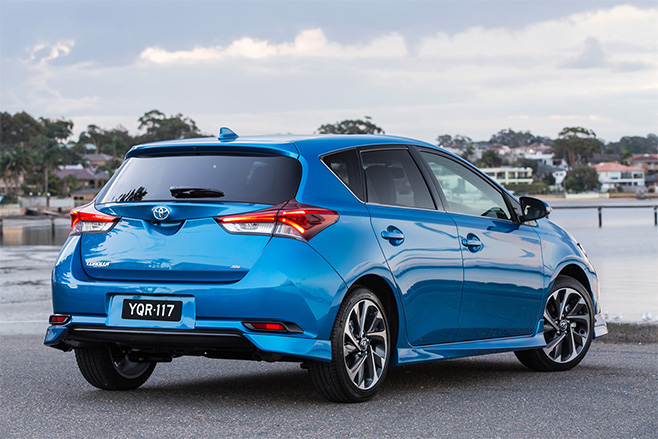
THE WHEELS VERDICT As a C-segment hatchback proposition, the latest Corolla is neither haute couture nor fast food, falling somewhere between in terms of space, performance, economy, dynamics, refinement, comfort, practicality, and value. In fact, Australia’s bestseller does very little wrong. Where it does shine brightest is in resale value, reliability, low-cost servicing, dependability, and the convenience of Toyota’s massive dealership network. These more than any other factors have built and sustained Corolla’s reputation over 48 years. If you desire something more than comfort food, however…
PLUS:Design, ease, low costs, durability, reliability, resale, practicality, ubiquity MINUS:Firm ride, engine harsh at higher revs, lots of monochromatic plastics inside
THE WHEELS REVIEW FACT: in all of its 11 forms over 48 years, there has never been a bad Corolla. While at worst, several have been dull, or sluggish, or cramped (and occasionally all at once – hello KE55 auto), they’re always dependable.
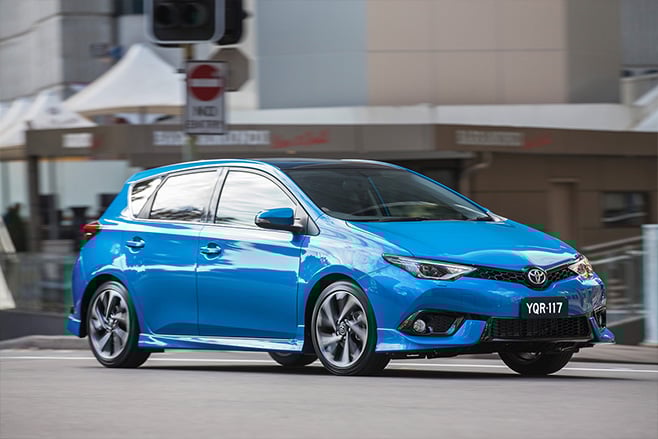
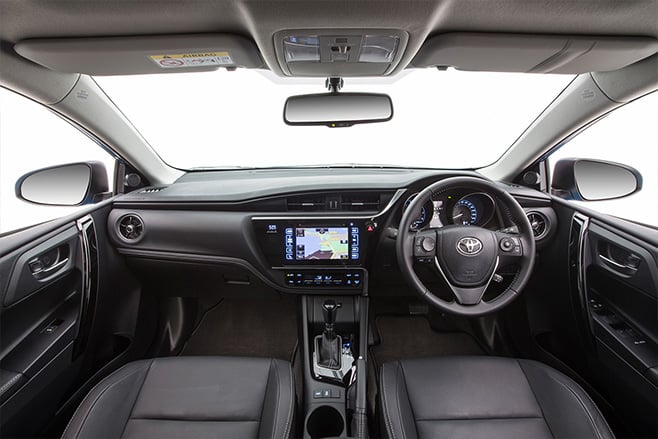
Enter the Series II hatch facelift. A sleeker nose and tail-light design, remodelled dashboard with better and brighter materials, updated touchscreen multimedia with standard reversing camera, and restyled instruments, attempt to titivate the Corolla visually. Underlining this model’s Euro focus (it’s sold there as the Auris), retuned steering and suspension tweaks promise improved handling and a more supple, quieter ride, while fuel consumption drops in the newly more efficient auto versions.
The (unchanged) 103kW 1.8-litre twin-cam unit is surprisingly effective around town, bringing eager yet conspicuously smooth off-the-line acceleration, backed up by strong on-the-go responses, with the flaring normally associated with continuously variable-ratio trannies thankfully contained. It’s easy to understand why many Corolla sales are sealed after a brief test drive.
But, when extended, that 2ZR-FE engine defaults to its old loud and strained ways. The ZR’s ride takes a turn for the worse over bumpier roads, and tyre roar over coarse bitumen can obliterate the peace. A Golf or latest Peugeot 308 seems miles quieter and more refined.
That’s why the pick of the range is probably the $20,790 Ascent Sport, since it packs sufficient kit without the Orwellian fleet-car ambience of the only-$1K-cheaper Ascent opener. That kit includes seven airbags, cruise, fog lights, voice control, leather wheel, privacy glass, alloys, and a far nicer touchscreen interface than before with – somewhat tinny – Bluetooth phone and audio streaming.
So that’s the state of play for Australia’s bestselling car. Sharper to look at, sit inside and drive (though too much so over rougher roads), the middle-of-the-pack Corolla is now treading water more effectively than ever.
SPECS Model: Toyota E180 Corolla Hatch Ascent Series II Engine: 1798cc 4cyl, dohc, 16v Max power: 103kW @ 6400rpm Max torque: 173Nm @ 4000rpm Transmission: 7-speed CVT Weight: 1275kg 0-100km/h: N/A Economy: 6.1L/100km Price: $21,790 On sale: Now
Click here to read the full range review of the Toyota Corolla.
