
FIGURING out the form guide ahead of the green lights in Melbourne is a punt at the best of times, but this year the usual Formula One sandbagging and chicanery is further masked under another level of opacity thanks to some staggering incompetence on the part of its organisers. Put simply, the playing field isn’t anything like level.
The FIA’s intention was for the engine manufacturers to have completed their changes for the 2015 season before the first race in Melbourne.
Ferrari and Renault were struggling to do that, and with the rules allowing less than half the engine to be changed anyway, Mercedes was feeling pretty confident that its engine advantage in 2014 was in no danger of being chased down.
But then Ferrari spotted that the FIA hadn’t actually written down when the final engine designs had to be submitted.
“We just kind of thought that everyone knew,” a dopey spokesman said. (I’m paraphrasing.) The result is that the relative performance we see in the first few races is unlikely to stay the same through the season.
It is far more likely that Mercedes’ closest rivals will extract the maximum possible benefit from the limited changes they can make, even if that means making them later and foregoing some power in the first few races. So Albert Park won’t be a wholly accurate barometer.
And they need all the help they can get. Mercedes is believed to have had a near-40kW advantage last season, and to have added the same to its output over the off-season.
It is hard to imagine the others improving by that margin, but not impossible. Many commentators are writing Ferrari off again in 2015 as it restructures. But it is rumoured to have added 60kW to its engine over the winter, with possibly more to come.
The arrival of Vettel and of Sergio Marchionne as a more hands-on boss, and the effective sacking of yet another team boss and of Luca di Montezemolo, Ferrari’s once-talismanic leader, might have shocked the Gestione Sportivo into transformation.
Honda’s return to F1 is hugely exciting, but most pundits’ scepticism about its ability to challenge Merc in its first season back was reinforced by reliability issues in early testing.
More importantly, as a new engine maker, the FIA has decided that Honda can’t develop its engines during the season, as the others now can, and will have to freeze the design of the engine it ran in Melbourne.
All of which must make it doubly galling for Honda to see the car they bequeathed to Brawn – and which was then bought by Mercedes – dominate pre-season testing.
The likelihood is that the Mercedes will drive away with it again this year, though perhaps not by such an imperious margin. Senior team members acknowledge that if the world championship is contested entirely within their garage again, they have an obligation to the fans and the sport to put on a good show, and manage Lewis and Nico better than last year.
“I think that we saw what ‘bad’ looks like last season,” technical director Paddy Lowe told us, “and nobody wants to go there again.”
FORD is set to expand the use of lightweight materials – including aluminium and carbon fibre – as part of an extensive fuel-saving program.
The company will use its upcoming Ford GT supercar (a car that won’t be sold in Australia because it has the steering wheel only on the left) as a test bed to learn about working with carbon fibre.
Carbon-fibre has typically been reserved for low-volume sports cars, such as the Lamborghini Aventador and McLaren 650S. More recently it’s been used in the BMW i3 and i8 electric and plug-in hybrid cars and is becoming more accepted for mass production applications.
“We are really focused on light weighting,” said Ford’s group vice-president and chief technical officer, Raj Nair.
“I think you’ll see an increased use of use of all the lightweight materials [on future Fords] – aluminium, high strength steel, boron steels, magnesium and carbon fibre. Carbon fibre probably has applications that are higher volume than [the GT] going forward.”
Ford surprised the automotive industry in 2014 when it confirmed its F-Series pick-up truck – a car now on sale in the US – would use a largely aluminium body, reducing weight and fuel use and allowing for the use of smaller engines.
Lightweight materials – which are generally more expensive to produce and often cost more to repair – will also play a role in the development of future performance models, including the Focus RS hot hatch revealed at the 2015 Geneva motor show.
Powering all four wheels for the first time, the new RS – which goes on sale in Australia early in 2016 – produces 235kW from its 2.3-litre four-cylinder turbo.
However, it could be the only sporty RS model in the Ford range.
“We’d never say never, but typically RS has been exclusive to a single vehicle in the line-up,” said Mr Nair.
“If you were to look at our [performance car] pyramid, you have the Focus ST, the Mustang GT, the next level of that pyramid we would have the Shelby GT350, the Mustang, the Focus RS … and even perhaps the [F-Series] Raptor. And obviously the pinnacle of the pyramid is the Ford GT.”
Big names, bold claims, wild production and concept cars.
This year’s Geneva show was a veritable nirvana for fans of horsepower and performance. Here’s MOTOR’s pick of the best of show.
Audi R8 e-tron
While the second-gen all-V10 R8 range stretched Audi’s sportscar ambitions to new heights, the all-electric e-tron version is a revolutionary game changer.
Unlike rivals from Tesla and BMW’s i8, the flagship e-tron model brings dedicated electrification to a familiar and established series production hero car. It’s as mainstream as hi-po EVs come.
And the numbers stack up favorably for Audi’s sole rear-driver, too: 340kW, 920Nm, 0-100km/h in 3.9sec and a range of 450 kilometres.
Aston Martin Vulcan
Boasting over 600kW from its 7.0-litre V12 and circuit-only focus, the Vulcan joins Ferrari’s FXX K, McLaren P1 GTR and the like in the super-elite club reserved for the world’s most well-heeled petrolheads.
Absolutely bespoke in spec and construction, it’s the new heroic poster boy that overshadowed another pair of exotic stunners at the Geneva show in the Vantage GT3 and the wild DBX cross-over SUV concept.
Bentley EXP 10 Speed 6
While Brit luxury carmaker Bentley kept the technical spec of its Geneva showstopper close to its chest, the EXP 10 Speed 6 packed enough wallop as a design concept to steal global media headlines.
The two-seater, two-door coupe looks to be Bentley’s more performance-oriented pitch at the hyper-luxury market while tipping its hat to the marque’s racing heritage of the 1920s and 1930s.
Indeed, the ‘Speed 6’ nomenclature suggests six-cylinder power, potentially boosted with forced induction and electrification if the wild concept gets a production green light.
Ferrari 488 GTB
While the Prancing Horse’s latest mid-engine V8-powered sportscar was revealed weeks ahead of its public Geneva debut, the arrive of the 488 GTB is milestone in Maranello’s road car linage.
By adopting turbocharging for the 3.9-litre bent eight, the 488 marks the swan song for Ferrari’s great naturally-aspirated road car heritage.
However, the seachange isn’t without its benefits-as-justification: a whopping 492kW and 760Nm translates to a significant hike in go-faster credentials and prowess over the outgoing 458.
The feisty berlinetta is also burgeoning with cutting-edged, allegedly F1-derived tech set to push the performance envelope of the ‘everyman’ Ferrari sportscar as hard as possible.
Glickenhaus SCG 003
This pair of road-going Stradale and race-spec Competizione customer cars is the upshot when a billionaire petrolhead thinks Ferrari, Porsche and McLaren are doing it wrong.
While the SCG 003 certainly packs a long list of heroic specifications, the minor revolution is its modular engine cradle design that allows a variety of plug-and-play engine opinions – from a twin-turbo V6 ‘race’ to turbocharged V12 ‘street’ unit – in a single vehicle.
Priced from $AU3.2million, it’s a hyper-exclusive car by a billionaire for billionaires.
Honda Civic Type R
Among the army of Geneva giants, the humble Japanese hot hatch might seem like an odd Geneva motor show highlight.
But Honda self-proclaiming honours of offering the quickest front-driver money can buy is a return to form for a marque that, in recent times, seemed lost in a sea called Mediocrity.
While turbocharging shuns the Big H’s naturally aspirated Type R traditions, the red-hot Civic arrived – finally – with a refreshingly bullish set of performance claims and a record-breaking Nurburgring Nordschleife video clip aimed at belting the hot hatch beehive.
Americanized NSX or not, its great to see a Japanese carmaker get its mojo back.
Koenigsegg Regera
If performance isn’t all about all-dominating number crunching, someone forgot to tell Swedish concern Koenigsegg.
With the combination of its 820kW and 1280Nm 5.0-litre twin-turbo V8 plus around 500kW and 900Nm from a trio of electric motors, the Regera produces a combined claim of over 1100kW and 2000Nm.
The big acceleration boast is that the Regera can hit 400km/h from a standstill in under 20 seconds.
Unlike the emerging raft of new-school track-only specials, the Regera is road going, lays on the luxury appointments, and approaches the hyper-hybrid powertrain format with focus on electric rather than petrol-fed motivation.
Lamborghini Aventador SV
As predictable as a SuperVeloce treatment is to a Raging Bull flagship breed, the most hard-core series production car in the Sant’Agata stable is still mana from supercar Heaven.
The Aventador LP750-4 SV foregoes trendy hybrid tech for tradition large-capacity petrol-fed pleasure: 552kW and 690Nm from 6.5 litres of bent twelve-cylinder fury.
Acceleration is a ridiculous 2.8sec for the 0-100km/h sprint.
While slightly more attainable than many of Geneva’s superstar attractions, the rawest Lambo wearing rego plates will list for a frosty $AU882,650.
McLaren P1 GTR
Creating a pure race-spec version of what is arguably the mostly ferocious road car money can buy, the P1, is McLaren’s latest stake at world motoring domination.
With an outrageous 735kW-odd from its petrol-electric-hybrid powertrain equipped with a 3.8-litre twin-turbo V8, the P1 GTR could well deliver on its maker’s bold “best driver’s car in the world” claim.
The P1 GTR also stole the limelight from McLaren’s other exotic debut, the 675 LT ‘Longtail’ race-infused road car.
Porsche GT3 RS
While the halls of the Geneva motor show were packed with pricier, more-powerful and more outlandish exotica, the hardest-core RS version of Porsche’s hallowed head-kicking GT3 remains the purist touchstone for driving enjoyment.
The latest version might pack just 368kW and 480Nm from its naturally aspirated flat-six, and its PDK-only format might rub traditionalists the wrong way, but no other car on Earth translates relatively modest spec into such a ferocious and satisfying road or track experience.
The rawest and most transcendental driver’s 911 yet? You bet.
Porsche Cayman GT4
Finally, Stuttgart waves its ultra-focused ‘GT’ wand over its brilliant ‘affordable’ Cayman sports car range.
While purists maintain (wrongly) that the Cayman isn’t a ‘real’ Porsche, the GT4 offers, for the first time, the marque’s finest motorsport-massaged experience in a sub-$200K package.
Finally, it seems, Porsche has delivered to the Cayman the sorts of robust output its wonderfully resolved chassis has always promised it could take in strides.
Get your free weekly report from the world of fast cars – subscribe to the MOTOR newsletter!
I’m sure you agree that Mansory’s Lamborghini Huracan is a good looking car. A slightly modified front splitter here, a large-but-not-ludicrous spoiler there; Mansory’s bodykit managed to frame SantAgata’s Huracan with just the right amount of aggression.
But creations from this German tuner aren’t always as cool as this force-fed Lambo.
This article was updated in April 2020 to reflect further atrocities carried out by Mansory.
Armed with a healthy disregard for preservation, Mansory likes to demonstrate what exactly not to do to your exotic. Many a Bugatti, McLaren and Mercedes-Benz have had their panache buried under layers of garish paint and chrome-finished surfaces.
But it’s not always horror, Mansory has got it right before. And to illustrate the tuning firm’s hit-and-miss history, we’ve chosen nine examples that illustrate the good, bad and ugly this company is capable of.
01 | HIT: Lamborghini Huracan

With a turbocharger addition that see outputs taken from 449kW to 625kW, the Mansory Huracan was always going to grab headlines even if it didn’t turn out to look so satisfying.
02 | MISS: Ferrari F12 La Revoluzione

One of the F12 Berlinetta’s defining qualities is its subtlety. Mansory of course had to see to that, and leave it looking as if it was styled to look like Hellboy.
03 | MISS: Bentley Vitesse Rose

Mansory put a carbon fibre bonnet on a Continental GT, painted it pink and named it the Vitesse Rose. It not only looks like a Paris Hilton special order, but its happy hue was a thorn through everything Bentley stood for. Sadly, or fortunately, only three were made.
04 | HIT: Bugatti Veyron 16.4 Vincero

The Veyron’s certainly not a pretty car, and Mansory kept that in mind for the Vincero. Rather than highlight its bloated shape with gaudy add-ons, Mansory enhanced it with restrained use of carbon fibre. The wheels looked right, too.
05 | MISS: Mercedes-Benz Benz G63 AMG Gronos

We don’t know who might think the G63 AMG needs more presence by painting its 2.5-tonne mass bright yellow. But we’re sure we wouldn’t want to.
06| HIT: McLaren MP4-12C
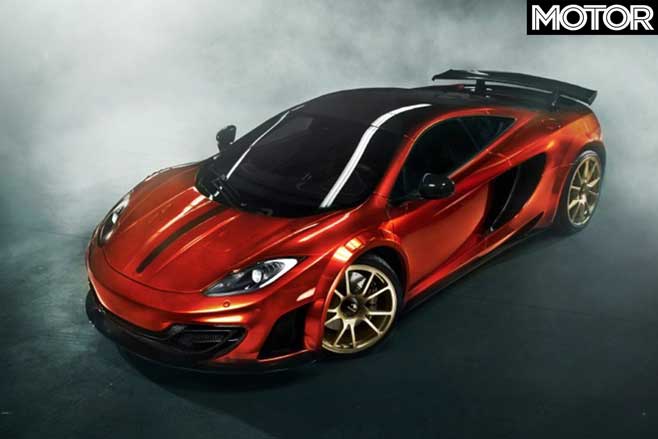
Keeping to a more cohesive design, Mansory didn’t ruin the McLaren 12C. It instead pumped the car’s guards, fattened its wheels and added a front-splitter and rear wing to help the 12C channel its inner GT3.
07 | MISS: Mercedes-AMG G63 ‘Star Trooper Pickup Edition’
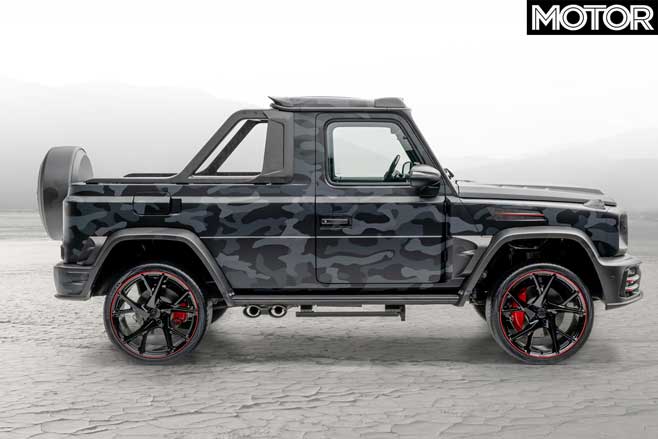
In urban camo, with a tray in ‘forged carbon fibre’, and wheels that look as far from offroad-friendly as we can imagine, the G63 worked by Mansory looks… well, pretty much what you’d expect a modified G-Wagon to look like in the hands of someone with an abundance of wealth and unchecked imagination.
08 | MISS: Lamborgini Urus ‘Venatus’
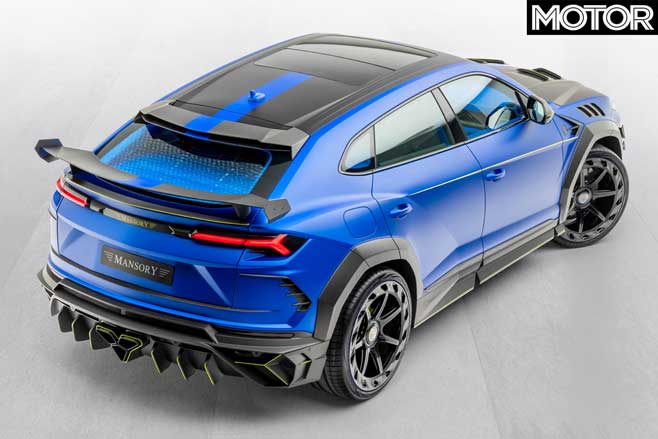
The twin-turbo V8-powered Urus was already bumptious, so adding a wing, massive aggro wheels, and a glut of lines and vents was hardly necessary.
All of the carbon fibre parts here are available with or without clear coat, but we wish we could clear our memories after seeing that interior.
09 | HIT: Audi RS6
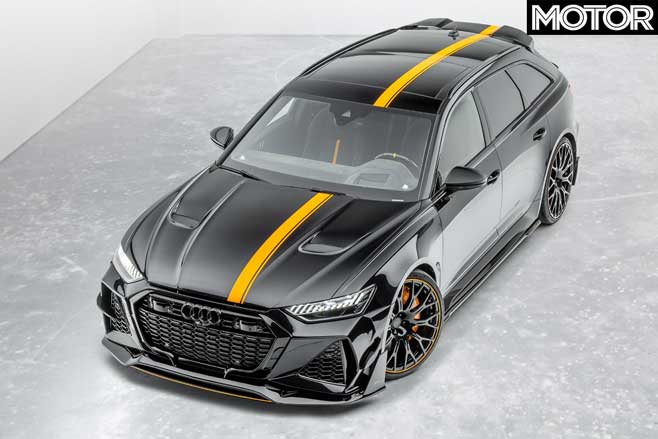
While the RS6 is normally a sleeper-type performance car, preying on unsuspecting drivers thanks to its twin-turbo V8, here it’s seen in the hostile guise Mansory saw fit to bestow it.
While we can abide the exterior treatment, some of its interior elements leave much to be desired.
Get your free weekly report from the world of fast cars – subscribe to the MOTOR newsletter!
HOLDEN will have a voice with future European-sourced Opel models, which will make up at least a third of the brand’s future sales.
Speaking at the 2015 Geneva motor show, Opel board member and vice-president of communications, Johan Willems, said Holden would have a say on future model development.
“I am sure that Holden will play a key role … for the products that are coming there,” said Mr Willems.
“There is [currently] input – I know that for a fact.”
He said Opel was keen to capitalise on the interest from global expansion markets such as Australia by listening and producing more appealing vehicles.
“On engines, Holden wants certain, specific things and we will see what we can accommodate, within the portfolio and within what is reasonable,” said Willems.
“We won’t be successful [growing sales and expanding into new markets] if we don’t allow a say.”
No doubt a high performance model of the Insignia – widely tipped to be the first imported car that wears a Commodore badge in Australia – will be high on Holden’s wish list. However, it’s understood a V8 is not available for that model, leaving a twin-turbo V6 as the most likely hero model.
GM regional boss Stefan Jacoby confirmed at January’s Detroit motor show that the next-generation Commodore – expected to be a rebadged version of the European-sourced Opel Insignia – was already being partially developed in Australia.
“We are driving this car already in Lang Lang,” said Jacoby at the time.
“We understand what Commodore is and we understand that better than anybody else and it is very obvious that the Commodore successor needs to be stronger than today’s model – and we will do everything to do that, with modern technology.”
Last week, Holden chief designer Richard Ferlazzo confirmed the imported Commodore was in the final months of its Australian design overhaul, with only minor tweaks to the locally made car’s replacement remaining.
Commodore production is set to finish by the end of 2017 as the Australian car manufacturing industry winds down.
THE Abbott Government has announced it will reverse a decision to cut $500 million in funds earmarked to help prop up the Australian car industry over the next two years.
The funds were to be trimmed from the Automotive Transformation Scheme (ATS) after Holden late last year announced it would follow Ford and Toyota in shuttering its Australian car manufacturing operations by the end of 2017. The $1.6 billion scheme was set up in 2011 to help Australian car manufacturers and the parts makers that supply them adapt to a fast-changing automotive market.
“A decision has been made, primarily to ensure that the industry goes the full distance in terms of its already slated closure at the end of 2017,” Industry Minister Ian Macfarlane said at a press conference in Adelaide this morning, announcing the government’s rethink of the planned funding cuts.
“Whilst the decision of people like Holden to cease manufacture was a decision they made separate to anything the government did – and they are their words, not ours – we don’t want anything to jeopardise the survival of the industry until Holden finally closes.”
The decision had prompted fears among government backbenchers that carving up to $900 million out of industry support programs could lead to an early shut-down. Concern about the cuts ramped up after Independent South Australian senator Nick Xenophon warned of a “jobs avalanche” if the cuts went ahead as planned.
If the bill to cut ATS funding had passed, it would have removed $500 million in support between now and 2017 – as well as cutting another $400 million by closing the scheme early.
Mr Macfarlane said the coalition government had worked on the decision to reverse the funding cuts since August last year, a month before the amended ATS bill that would have carved up car industry funding was introduced to parliament and only three months after Treasurer Joe Hockey announced that to balance the federal budget, it would have to be wound up.
The Australian Manufacturing Workers’ Union (AMWU) welcomed today’s decision, saying it was a “huge win” for car sector workers despite coming 18 months too late to help the industry.
“This government delay means that the industry has stagnated further, and thousands more jobs are at risk in the components sector,” AMWU national vehicle secretary Dave Smith said.
“Without this delay, right now we’d be watching the industry transform, change and grow.
“The decline in the Australian dollar would be supporting the components sector to diversify and transform, saving thousands of jobs and growing the economy in Victoria and South Australia,” he said.
Richard Reilly, the chief executive of the Federation of Automotive Products Manufacturers also welcomed the move.
Mr Reilly said the industry lobby group that represents the small- and mid-size businesses that supply parts to Ford, Holden and Toyota, would make a statement in response to the announcement later today.
More than half of the original ATS funding was earmarked for Ford, Holden and Toyota to help them develop new products for local and export markets. However, it was tied to the car makers submitting business plans that would sustain Australian production for at least five years.
The government is expected to consider even more changes for the Australian automotive sector once a senate economics inquiry hands down a separate set of recommendations for the future of the industry by November.
Up to 50,000 workers, mainly in South Australia and Victoria, are expected to be affected by the factory closures that start with Ford next year, and Holden and Toyota in 2017.
AUSTRALIA is poised to have a huge dose of alternative-fuel technology flood into the market – and it’s not one of the more costly car brands you’d expect making the charge.
Indian ute and SUV specialist Mahindra says it wants to use Australia as a proving ground for a renewed EV push worldwide, believing that if you can make a go of it in the crowded market here, it will work overseas.
Mahindra managing director Anand Mahindra told Wheels the carmaker’s electric vehicles had “huge potential” in Australia, and the sub-continental company was already sounding out the market – and seeking all the help it could get along the way.
“We’ve done some joint projects with Victoria, the government of Victoria, the universities for some development, and had some really interesting discussions with the CSIRO – and they have other technologies which could be relevant,” Mr Mahindra said.
“So I see Australia not just as a market, but also as an area where one could work together on technologies as they evolve.”
He said Mahindra was keen to test the consumer appeal of battery-fuelled vehicles in Australia because if they could sell in the tough market here, they could sell anywhere.
“It is so brutally competitive that our market people say, very correctly, that we need to be here, simply because if you want compete in the 21st century, Australia teaches you how,” Mr Mahindra said.
“You have to be super-efficient here, super-productive, you have to be cutting-edge with your technology and so on, so this is the place that will drag us into the 21st century.”
However, he said government support to help drive down the price of electric cars was vital for the carmaker’s success in Australia.
Mahindra has only the Reva, a modified city hatchback, and the e2o, a tiny four-seat battery-powered hatchback launched in 2013 and with a range limited to about 100km. In early 2104 the carmaker unveiled a two-door coupe called the Halo, which it hinted could one day be destined for right-hand-drive markets outside India.
The fibreglass-bodied Halo should travel up to 200km on a single charge, sprint from 0-100 in around eight seconds, and hit a top speed of about 160km/h.
Mahindra has flagged that it will soon add a battery-powered sedan and compact delivery van to its showrooms.
The Indian brand is so confident in the platform it created for its EVs that it now says it will offer the package to other carmakers.
Rival Indian carmaker Tata, meanwhile, is gearing up to potentially introduce its Nexon hybrid compact SUV to markets as early as next year.
Shown early last year in India as a concept, the Tata featured cutting-edge LED headlights and a hybrid system that uses an electric motor to drive the rear wheels for AWD versions – a similar set-up to the $55,000-plus Lexus NX300h hybrid.
Australia’s new-car market is one of the most diverse on the world, with more than 40 brands competing for around 1.1 million sales a year – an average of little more than 25,000 sales per brand a year.
Toyota is the top-selling brand in Australia, last year tallying more than 200,000 sales for an 18.3 percent slice of the market.
V8 SUPERCARS: Why Triple Eight grabbed The Giz
V8 SUPERCARS’ fast and expressive young talent Shane van Gisbergen’s move to Triple Eight Race Engineering on a three-year deal from 2016 is a decisive and early move to counter the emerging threat of the Penske team in the category.
Those with lots of nous on pit lane, and that includes Triple Eight boss Roland Dane, understand that while Penske’s entry into V8 Supercars has been quite measured, the American motor sporting giant has the potential to dominate.
Grabbing V8 Supercars’ big talent Van Gisbergen, who is just 25, before anyone else can woo him is a prime example of Dane’s attention to detail and clever medium-term planning, which now includes boosting the team to three cars.
With last year’s championship runner-up Van Gisbergen joining Jamie Whincup and Craig Lowndes, there can be no argument that T8 will have an unmatched team of drivers in 2016.
Whincup, who may or may not have been talking to Penske, recently extended his T8 deal to the end of 2018.
And Lowndes has extended his contract for a further two years, ensuring a three-car T8 attack. Lowndes may have lost a little of his speed, but is still generating more merchandising sales than anyone in V8 Supercars.
The best team on the V8 Supercars grid will soon look even more threatening. And it now has a solid succession plan for Lowndes, who is now 40 and the second-oldest driver in the category.
Six-time series champion Whincup and five-time Bathurst 1000 winner Lowndes were a formidable enough combination in recent years and now Van Gisbergen will bring his own blend of blinding natural speed and exuberance to the T8 attack.
“Given the growing trend of larger teams and the intense competition that this brings, we felt that this is the ideal time to add another entry to our championship campaign to enhance the competitive depth of the team,” said Triple Eight managing director Dane.
Dane has cleverly put the two fastest blokes in pit lane together. Whincup and Van Gisbergen will fight spectacularly in the championship with the ageing but still quick Lowndes there to hound them both.
It will be intriguing to watch how Van Gisbergen, who has no great regard for corporate duties, deals with those chores at T8, as well as the demands of noted hard taskmaster Dane.
A big salary jump will certainly be one benefit of moving to T8.
Dane might also keep Van Gisbergen happy by giving him the freedom to tackle some major international GT races outside of his V8 obligations.
Some fans will question the loyalty of Van Gisbergen, particularly after his controversial departure from the Stone Brothers operation at the end of 2012, citing he was weary of racing, and then bobbing up at Tekno for the start of the 2013 season.
But the Kiwi’s move to Triple Eight appears to have the endorsement of Tekno boss Jonathon Webb: “Obviously we are sorry to be losing Shane at the end of the year; we have shared a lot of success over the past two years and we are looking forward to another fantastic year together in 2015.
“I have had a long relationship with Roland and Triple Eight Race Engineering and we look forward to working together into the foreseeable future with a new face behind the wheel of our race car.”
So all happy and smiley….at least publicly.
And Triple Eight looks the goods for 2016.
WRC: Tanak survives scary ‘off’ and dunking
OTT Tanak and co-driver Raigo Molder on Friday escaped wet and shocked but otherwise unhurt after a terrifying few moments on Rally Mexico when their Ford Fiesta fired over a drop and into a deep, murky lake.
The M-Sport World Rally Team car rolled down a bank and into the water, momentarily floating on the surface the right way up. Horrified onlookers watched Tanak and Molder wriggle from their sinking car seconds before it disappeared to the bottom of the lake.
“Luckily the car landed on its wheels, but the water was so deep that the car sank really fast,” said Tanak. “As soon as we opened the doors the car was gone in just a few seconds.
“I also had a problem with my intercom wire because it didn’t come loose and was dragging me under the water. We were really lucky. It was not a nice moment to have.
“When we started to swim to the edge, it was quite a bit of work with helmets on. I’m not sure if I’m a good swimmer, but I survived so I’m good enough.”
The 27-year-old Estonian blamed himself for the slam-dunk.
“It was a downhill braking in the compression and something broke in the front right. The wheel was turning out and it dragged us to the edge of the road.”
Divers were dispatched to locate the “TiTanak” in the deep and dirty water but the Fiesta remained immersed for almost 10 hours.
Impressively, Molder’s mobile phone was still working after the lengthy spell underwater.
Though disturbed by the near-death experience, Tanak supported M Sport’s decision to try to repair the Fiesta and get back into the rally, he and Molder working alongside the mechanics into the night.
The team changed the gearbox, fuel tank, turbocharger, cooling system, boost control valves, electronics, brakes, front and rear suspension and a number of cosmetic components. They repaired the engine block and drained it of lake water.
The re-start was made less complicated by the quick thinking of Molder, who kept hold of his vital pace notes as the car slipped below the surface and dried them later in his hotel room.
“It was something mega what the guys did [the repairs],” said Tanak. “That’s why I had to be there with them.
“There was crazy emotion, and when the baby’s engine started to roar it was an absolutely amazing feeling!”
Though the efforts were not in vain, Tanak’s Fiesta did not run fault-free on Saturday, when the effects of the dousing again re-appeared.
More components were dried in the Mexican sunshine – a faulty sensor was found to be the culprit – before the TiTanak was ready for the last three stages held on the final day.
F1: Alonso rumours fly
WITH some mind-blowing rumours flying relating to Fernando Alonso’s health and driving future buzzing around the motor sports media, the FIA needs to act swiftly to clarify the exact reason why the Spanish superstar won’t be on the starting grid in Melbourne.
The significant discussion point surrounding Alonso’s testing crash and injuries are about doctors not ruling out the possibility that the two-time world champ may have blacked out in his McLaren-Honda before it left the track and collided with a barrier at Barcelona.
The official story is that a gust of wind blew Alonso’s car off the track.
Sky Italia, the F1 broadcaster, claims Alonso told close friends and family that he suffered a “major shock in his spine” before losing control of his car and striking the wall.
Fabrizio Barbazza, who had a brief F1 career, weighed in with a suggestion that Alonso took a 600-watt zap in the cockpit.
Another former GP driver, Rene Arnoux, declared he is “convinced that Fernando had a physical problem before the accident”.
Yet another report alleges that there was no sign of anything amiss with the car in the moments before the crash and that it simply headed off the track.
McLaren ruled out a car or engine failure.
Some conjecture seems based on Alonso being unconscious when crash crew and medics reached him, even though the impact was not considered severe.
Spanish newspaper El Pais reported Alonso “woke up in 1995”, having forgotten the last 20 years of his life.
Though Alonso looked well when he left hospital and recorded a video message for his followers, sources close to the Spaniard say he remembers everything except the crash itself.
Some say fears are growing that Alonso may never drive again, though this seems a little too lurid to accept.
Dane Kevin Magnussen, the McLaren test driver, will replace Alonso in the Australian Grand Prix.
WRC: VW’s Ogier makes it three from three
WHILE there were dramas plentiful for many rivals, defending FIA world rally champions Sebastien Ogier and Julien Ingrassia cruised to a comfortable victory in the 12th Rally Mexico on Sunday.
Despite an unfavourable starting position for day one – he was first on the road and acting as sweeper – Ogier was in masterly form and controlled his pace perfectly over the 21 special stages.
His third WRC win of the season, by more than a minute, gives the Frenchman a 34-point lead in the drivers’ championship after three rounds.
The all-Norwegian battle for second overall swung in favour of Citroen’s Mads Ostberg in the 55km Guanajuatito stage when VW’s Andreas Mikkelsen spun and lost a handful of seconds and was not able to regain the time over the closing two stages.
Welshman Elfyn Evans repeated his effort of last year with another fourth in the M-Sport World Rally Team Fiesta.
A puncture cost Hyundai works driver Dani Sordo valuable time on Saturday afternoon, and ongoing brake issues and shoulder pain hampered the Spaniard on Sunday. He finished fifth
The Formula One season kicks off in Melbourne next weekend and these are the things you need to know about the coming season
1. It will take an almighty effort to topple Mercedes-Benz
Of course we desperately want Daniel Ricciardo and Red Bull to win races in 2015. And our boy snaring the title would be nice, too.
Not gonna happen. Not the title, although a race win will not shock, not after his stellar 2014.
This year, as was the case in 2014, will be a Merc romp.
The Silver Arrows breezed through the 12 days of pre-season testing completing the most laps – a solid indicator of reliability – and setting the fastest times. Speed is always handy.
World champion Lewis Hamilton has indicated the Mercedes’ W06 2015 car feels much the same to drive as last year’s dominant machine.
“I’m even using the same seat from last year, the steering wheel is the same, the cockpit is the same… just have a little more downforce,” said the Brit. “The characteristics of the car feel pretty much the same, too.” So no acclimatisation needed for Hamilton and Rosberg.
Best of the rest across the 12 days was Williams-Mercedes, looking even more competitive than last year, with both Valtteri Bottas and Felipe Massa going quick.
On the basis of what we’ve seen to date – before the teams lob in Melbourne – Red Bull might be in catch-up mode, chasing Williams, a much improved Ferrari, a very busy Sauber and even, embarrassingly if it happens, junior team Toro Rosso.
2. Honda won’t have it as easy rediscovering winning ways
Past glories are nice, but don’t ever think they will automatically be repeated. Honda knows this as it takes another shot at the F1 world championship, again as an engine supplier.
In previous spells in F1, variously as an entrant, constructor and engine supplier between 1964 and 2008, Honda basked in celebrated success. In the mid-1980s, Honda power was the ticket to the podium. Honda engines powered six consecutive constructor champions (two with Williams and four with McLaren), as well as five consecutive driver titles (one by Nelson Piquet, three by Ayrton Senna, and one by Alain Prost).
Less successfully, Honda returned in 2000, providing engines for the underperforming BAR, which the Japanese manufacturer subsequently purchased in 2005 and, when the global financial crisis hit, flogged off to Ross Brawn and his mates. From 2009, the team raced successfully as Brawn GP using Mercedes power.
Back this year as a supplier to old partner McLaren, Honda faces a tough task to become competitive with tricky hybrid power unit technology.
Honda’s most devastating weakness in testing has been ERS seals, forcing engineers to run the engine in a detuned state just to get laps onto the car. Supporters hold hope that, like Red Bull last year, Honda can turn testing misery into smiles on Sunday at Albert Park.
The brutal truth is that Honda’s power unit managed just 1751km of pre-season testing, while Renault – the next worst – covered 9886km.
3. Questions whether Bernie lasts another year
At 84, F1 supremo Bernie Ecclestone is the great survivor.
Eternal tabloid fodder, bribery allegations, admissions that he understands what’s wrong with F1 but doesn’t know how to fix it, German state bank BayernLB suing him and his family holding Bambino for about €345 million over the sale of its stake in F1, regular attacks of foot-in-mouth disease…
Praising Hitler in 2009 for his ability to “get things done” and admitting he preferred totalitarian regimes to democracies also brought Ecclestone under savage fire, and he later suggested he was an idiot for saying such things.
The newest tabloid tale is that a letter sent to the now-defunct Caterham in 2013 – apparently genuine – reminds the team that “where possible, grid access passes should be used for celebrities or people of note or, as always, really glamorous ladies”. Bad news for fuglies everywhere.
There was also his humiliating about-face following pressure from teams and fans to not keep his controversial double points rule for the final race of the season. “The teams have not accepted it because they are bloody idiots. They are all mechanics. They think of their team in the short term,” Bernie ranted, when caving.
But the big teams in F1 don’t seem to mind these slips and barbs, as long as Bernie continues to make them money.
4. Chance of a female driver in an Grand Prix this year: close to zip
A female on the F1 grid would be so positive for the sport. There is no physical impediment, especially with power steering and other driver assistance.
We’ve seen it before, of course, although only two women racing drivers ever started a grand prix – Maria Teresa de Filippis (three races in the 1950s) and Lella Lombardi (12 races in 1974-76).
Williams named Scotswoman Susie Wolff as its official test driver in 2014 and again this year, bringing a welter of attention to the team. She may get a chance should one of the regulars be unable to race.
IndyCar racer Simona de Silvestro was last year appointed an “affiliated driver” by Sauber, but that might not lead anywhere, despite her obvious talent.
Now, amid much debate, Lotus F1 has signed comely Spanish racer Carmen Jorda as a development driver, despite a record of more than 150 race starts and no wins. The 26-year-old has spent the last three seasons in GP3, where her best race finish is 13th.
She dismissed criticism from former rivals as “jealousy”. The glass ceiling doubles as a make-up mirror.
5. Survival is an ongoing issue for the minnows on the grid
Marussia and Caterham went into administration last October and missed the end-of-season races. It wasn’t a good look for the premier form of motor sport.
There has been a knock-on effect, too. Suppliers to struggling teams are now demanding payment up front.
During the northern winter, Force India, Sauber and Lotus went public with their financial struggles, and only a week ago Bernie Ecclestone reportedly offered each a $US10 million advance to help ease cash-flow problems and to quell fears that just 12 cars would be on the grid at the opening race in Melbourne, which would have been devastating for the reputation of F1.
While Caterham seems to be a basket case, with its assets expected to be liquidated this month, Marussia has fought back from the brink and entered the 2015 championship as the Manor Marussia F1 team.
The problem will not go away until the smaller teams succeed in their quest for a greater share of the revenues and a more level financial playing field.
Self-made Ecclestone, whose personal wealth is estimated at $US3.9 billion, is a tough little sucker.
6. The gamble with the rookies
Toro Rosso’s super-cool Dutch recruit Max Verstappen goes into the first GP of 2015 with the spotlight firmly on him as the youngest driver ever in F1, and with the right genes – his dad is former F1 racer Jos.
Max will be just 17 years, 5 months and 14 days when the lights go at Albert Park on March 15.
He has shown his class, but F1 is a huge leap into the unknown. The wonderkid won 10 European F3 championship races last year (though he didn’t take the title).
Red Bull motor sport mentor Helmut Marko says Max reminds him of a young Ayrton Senna. Luckily, Verstappen wears the pressure and expectations lightly.
The second Toro Rosso driver is another son of a gun, the poised Carlos Sainz Jr, who arrives on the F1 grid via the traditional route after winning the Formula Renault 3.5 championship last year. Sainz Jr looked to have dipped out on his F1 chance but got the nod after Sebastian Vettel made his late call to head to Ferrari.
Both Toro Rosso rookies will need to perform because the team has a history of not being big on patience; perform or depart seems to be the theme. Ask Jean-Eric Vergne or Jaime Alguersuari.
Sauber’s Felipe Nasr was quick in testing, but the big examination of his ability starts on Sunday afternoon. Dismissing him as a ‘pay driver’ is too harsh, although the Brazillian brings money to the team. But he beat Kevin Magnussen in British F3 in 2011 and was runner-up in the Macau Grand Prix the same year. He was a test driver with Williams last year but opted for a full-time role with Sauber, and should outshine team-mate Marcus Ericsson.
Reinvented and (hopefully) returning Manor F1 – formerly Marussia – hasn’t announced the name of its second driver to partner Will Stevens, who has just one GP (Abu Dhabi last year) to his name. If it’s rich kid Jordan King, as is rumoured, four rookies will be on the grid in Melbourne.
7. Missing Melbourne a smart move for Alonso
Even accounting for health safeguards that have forced Fernando Alonso to miss the Australian Grand Prix as he recovers from the knock on his head suffered in a testing crash on February 22, the Spaniard will have other reasons to give the opening race a swerve.
He will probably avoid the ignominy of struggling to avoid a rear-of-grid start, then duelling with cellar-dwellers, followed by a non-finish. This appears to be McLaren-Honda’s fate next weekend.
Instead, Fernando can concentrate on being fit for race two in Malaysia. Doctors see no evidence of any injury in Alonso, whose condition was described as ‘asymptomatic’, but they want to dispel any possible risk factors.
They describe him as entirely healthy from neurological and cardiac perspectives. But, as we’ve seen from footballers who have been concussed, there is a risk of long-term issues if they don’t take a rest.
Believing that more is hardly enough, Mercedes-Benz has upped the power and torque of its twin-turbo V8 two-seat luxury SL 63 AMG two-door roadster while still managing a very reasonable 9.9L/100km.
WHAT IS IT Desirable high performance German roadster available in four models – a six, two V8s and a V12. All bi turbocharged. We’re concentrating on the 430kW V8 SL 63 AMG version with its extra performance and impressive fuel thriftiness despite size and weight.
WHY WE’RE TESTING IT The 2015 update brings more features including an upgraded 430kW V8 and rear axle locking rear diff. For the sporty inclined, this car also has the optional firmer AMG Performance Suspension to play with. Nothing comes for nothing, though and there is a price leap.
MAIN RIVALS Bentley Continental Convertible GT V8, Aston Martin DB9 Volante Convertible, Audi R8 5.2 Cabriolet
THE WHEELS VERDICT Unearthly melding of stunning performance, encased in uber luxury and strong styling, yet with sobering real-world desirables of passive safety features galore.
PLUS: So blindingly quick, so comfortable and, so smart, so safe with huge look-at-me factor MINUS: Limbo-low entry and exit, price hike, reputed sometimes a choice of for drug barons and kept women
THE WHEELS REVIEW With its undeniable kerbside presence, Mercedes-Benz’s menacing SL 63 AMG Roadster is one of those dream cars that many people would kill to own, and yet it sells in tiny numbers. Maybe the $399,000 price tag has some play there.
Certainly Mercedes puts a high value on its SL customers, who from tracking research, have a marvellous habit of returning again and again to trade on the latest and greatest. Gotta love that loyalty.
Anecdotally, many SLs are seen driven by women even though not many are bought by women. Draw your own conclusions from that.
As part of a move to streamline production and the model offerings of some of its high-end products, Mercedes-Benz Australia now offers this upgraded 430kW bi turbo 5.5-litre V8 SL 63 AMG to sell alongside the entry 3.0-litre SL 400 and 4.7-litre SL 500 and the second AMG-tuned SL, the 6.0-litre 65 AMG V12. Something for everyone, if we were all mega wealthy.
The revised 2015 SL 63 AMG packs 35kW more than the old version. There is also the hardly inconsequential matter of the 900Nm it produces – 100Nm up on the last engine. Put the throttle down and it moves the 1845kg aluminium-bodied SL along with almost playful abandon.
The chameleon-like SL 63 AMG is a luxury cruiser that easily transitions into an outrageously quick sports car. Remarkably for a luxury convertible, er roadster – even one with a vario-roof hardtop that folds away swiftly – the result is genuinely unruly performance, underscored by a zero-100km/h acceleration time of 4.2 seconds, a little faster than the last iteration. Keep the hammer down in the right environment, and 200 km/h is reached in in 12.6 seconds. Scenery is a bewildering blur.
In addition, to cope with the extra power, the AMG locking diff is now standard.
Our test car was also somewhat bizarrely equipped with what AMG calls its AMG Performance Suspension. We say “bizarrely” because the standard SL 63 suspension is firm and sporty anyway. Now, with the performance suspension, damping stiffness is up 30 per cent.
Younger customers tend to opt for AMG versions, and sportier handling, even if this ventures into extreme territory. Optional only on the SL 63 ($1750 MLP), the firmer suspension and damping of Active Body Control allows a sportier style of driving but not necessarily suitable for our lumpy roads. Wheels’ drive to Bathurst and back was mainly negotiated in the softer and impressively tuned Comfort setting, with just an occasional flick into the tauter Sport mode to feel the differences.
On the twisty bends, it changed direction without a feeling of heft, the only negative being a slight numbness in the steering.
The standard eye-blink-quick paddle shifting AMG Speedshift MCT seven-speed sports transmission has, among other things, a double-clutch function.
Switchable drive modes alter transmission, suspension and engine characteristics to suit driver whims.
The SL 63’s appeal is its ability to change its demeanour in a flash. One moment it is a quiet and smooth urban cruiser; the next, a very quick and ferocious sports roader with a guttural growl from the exhausts.
Yet the SL 63s fuel number is an impressive 9.9L/100km average.
It looks aggressive without being remotely cartoonish, with distinctive AMG body additions front, side and rear. Love the AMG-specific LED daytime running lamps. The SL 63 AMG rides on 19-inch alloys with 255/35 R 19 tyres at front, 285/30 R 19 tyres at rear, gripping the tarmac with noticeable negative camber.
AMG versions of the SL get their own cabin decor – this one was in red nappa leather – and there are sports bucket seats with, AMG multifunction display, with AMG identification and touches – carbonfibre is a given. All four variants in the SL line-up now have tyre-pressure monitoring and the Harmon Kardon 14-speaker sound system with DAB radio as standard.
The electro-hydraulically retractable roof, transforms the SL into a roadster or back to a coupe in under 20 seconds.
The latest SL 63 AMG is hit with a $14,000 price jump to $399,000, still a long way short of the 6.0-litre turbo V12 SL65 AMG, which is $481,000.
SPECS Model: Mercedes-Benz SL 63 AMG Roadster MY15 Engine: 5461cc 8cyl, bi turbo Max power: 430kW @ 5500rpm Max torque: 900Nm @ 2250-3750rpm Transmission: 7-speed automatic Weight: 1845kg 0-100km/h: 4.2sec Fuel economy: 9.9L/100km Price: $399,000 MLP
