
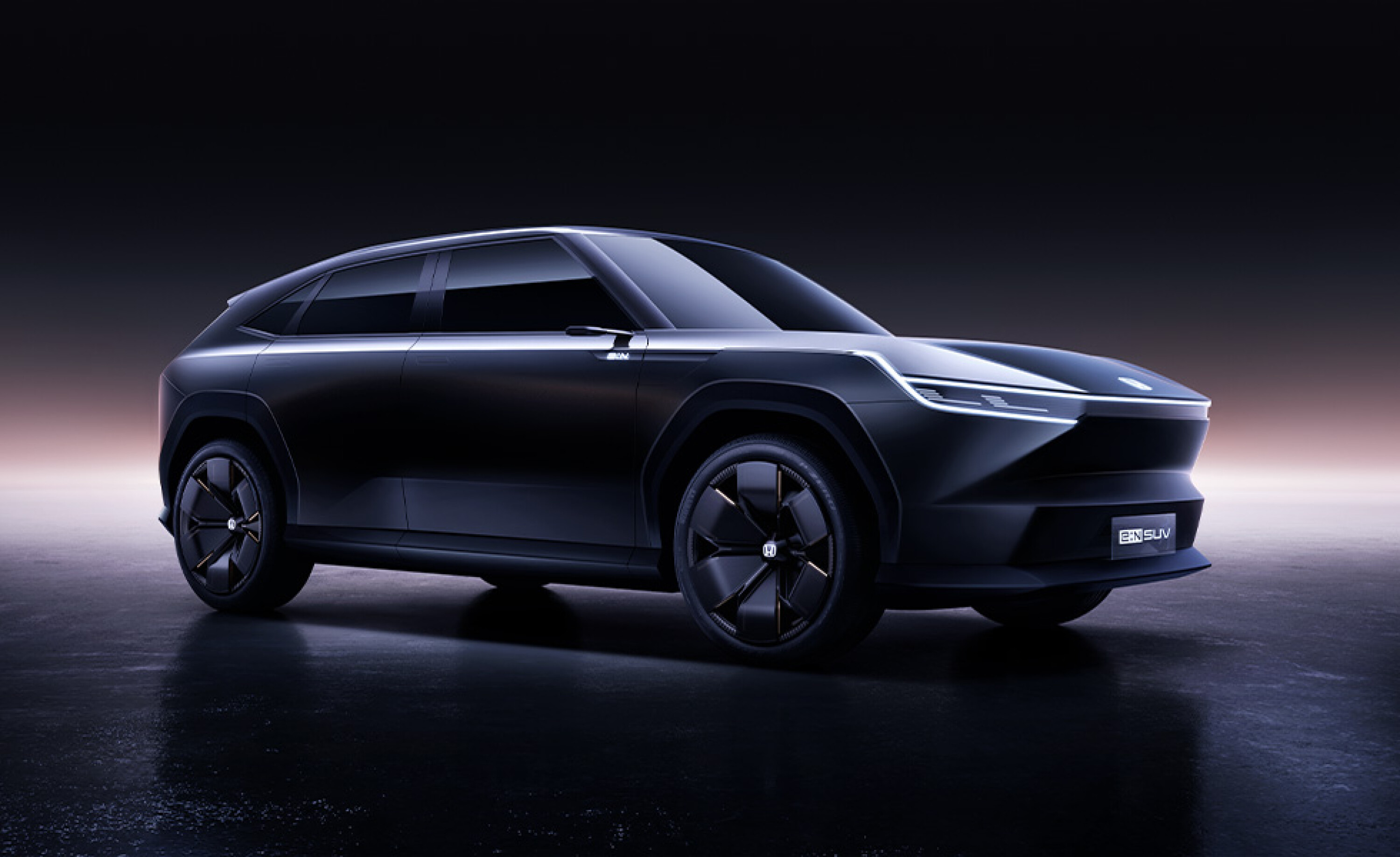
序 (xù) means ‘prologue’ in Chinese, which indicates the E:N SUV 序 will be the first model for Honda’s ‘third-set’ new-generation E:N Series EVs.
The Shanghai motor show, known officially as Auto Shanghai, has been growing into one of the world’s most important and influential events on the automotive calendar since it first opened in 1985.
Snapshot
- Confirmed for Oz: Polestar 4, Porsche Cayenne, MG Cyberster, Lexus LM, EQS 680 SUV
- TBC: Haval B07 (H6 successor?)
- Not for us: VW ID.7, BYD Seagull
Recent decades have seen deeper partnerships between legacy Western car brands and China’s powerful car manufacturers – first to be allowed access to the increasingly wealthy Chinese domestic market, and more recently to take advantage of manufacturing capability and capacity for global export.
This year’s show has seen significant reveals from China’s popular Haval brand and the adopted MG marque (purchased by China in 2005), along with key debuts from Volkswagen, Polestar, Mercedes-Benz, Lexus and more.
Here are the five that we reckon are the most interesting and important for Australian buyers.
JUMP AHEAD
And a few more…
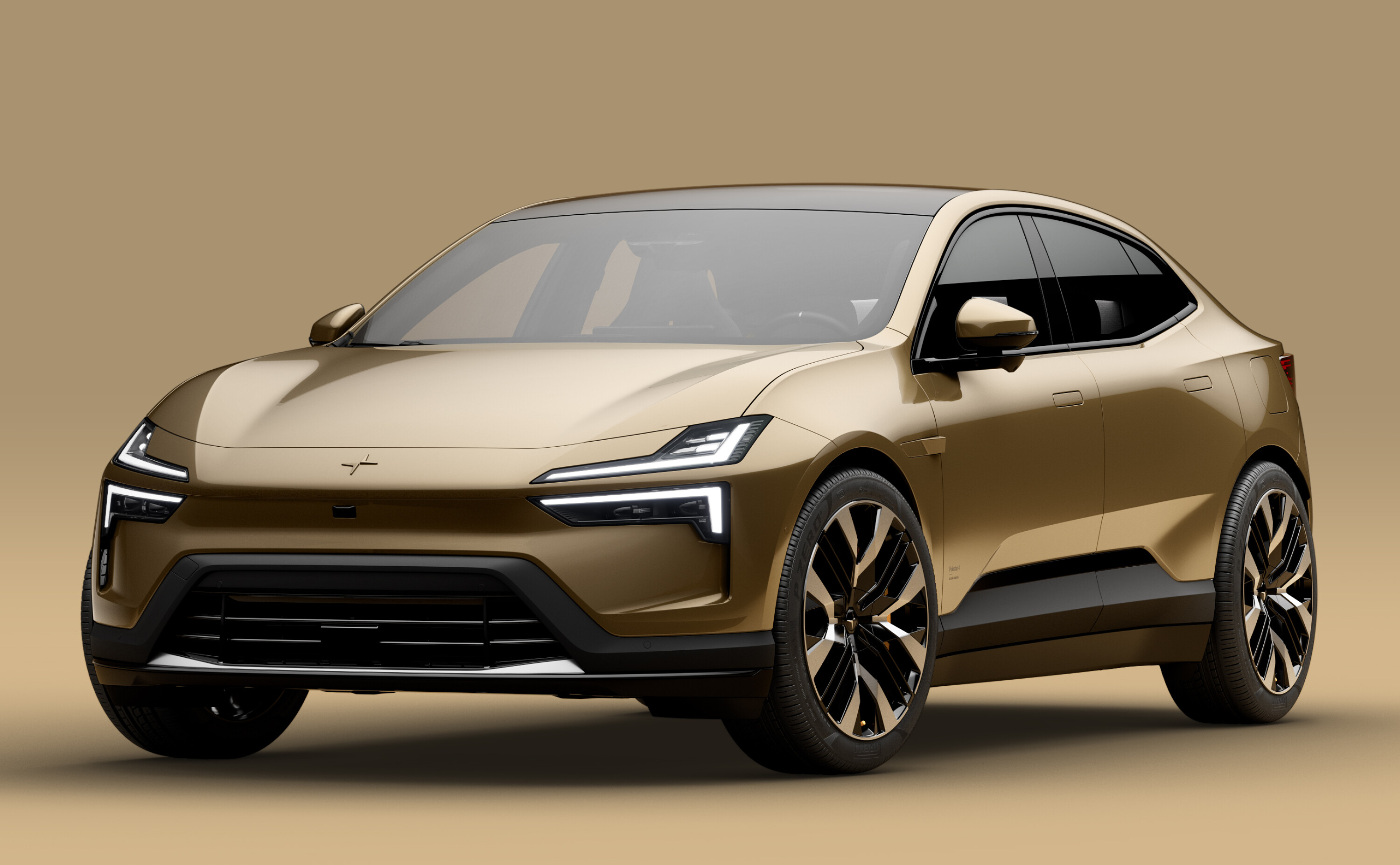
1. Polestar 4
Coming to Australia? Early 2024
1
Key Points
- Polestaru2019s most-powerful production vehicle to date
- Similar in size to the large Polestar 3
- Australian pricing & details still to come
The Polestar 4 is the Chinese-owned Volvo spinoff’s third mass-production offering, joining the small Polestar 2 available in Australia now and the large Polestar 3 due here next year. Why is it called the 4? There’s a Polestar 1, but it was a limited-production coupe.
Key figures: 400kW, 686Nm, 3.8 seconds to 100km/h, 600km driving range and similar dimensions to the Polestar 3. Australian launch confirmed, due sometime in early 2024. Local pricing likely to be upwards of $100,000.
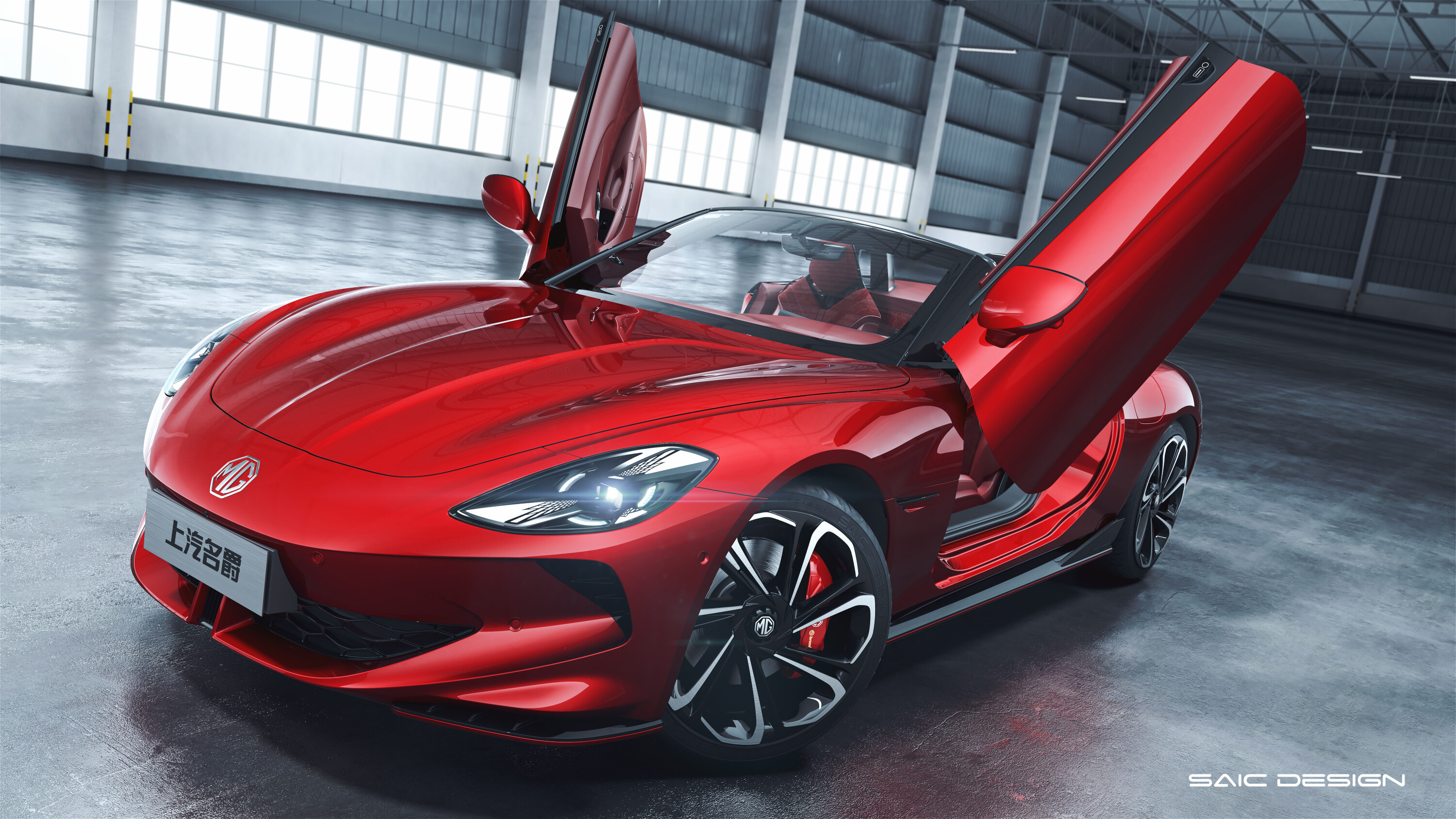
2. MG Cyberster
Coming to Australia? Yes, but timing not confirmed
1
Key Points
- Likely rear- or all-wheel drive with 231-400kW
- Lambo-esque scissor doors, bigger than MX-5
- Australian release confirmed
This is a turn up for the books. Not only has the now Chinese-owned MG brand finally got a new roadster on the way, but it’s also gorgeous – and hugely powerful, thanks to an all-electric architecture.
The best part, and perhaps surprising if not for the fact MG has proven it’s keen to dominate every market it plays in, is that it’ll come to Australia.
3. Porsche Cayenne
Coming to Australia? Of course.
1
Key Points
- Taycan-inspired front, refreshed interior
- Simplified model line-up in Australia
- Twin-turbo V8 replaces V6 in Cayenne S
- E-Hybrid gets 45% bigger battery pack
Unveiled in Shanghai today, the facelifted Cayenne gets a Taycan-inspired headlight redesign, and a significantly overhauled cabin.
There are some key spec changes too, Porsche calling it “one of the most extensive product upgrades in the history of Porsche”.
No surprises, the facelifted Cayenne is bound for Australia – and Porsche has already given out all the local pricing and details. Get it at the link below.
4. Lexus LM
Coming to Australia? Perhaps unexpectedly, but yes!
1
Key Points
- New model likely to be based again on Toyota Alphard
- Not yet confirmed as H6 successor
- Australian launch confirmed, timing and details TBC
Lexus is about to launch its first people-mover in Australia, in the form of the second-generation Lexus LM.
Like the previous model, the new LM is based on the Toyota Alphard, which will be unveiled in its new-generation form in the near future.
The Alphard has been a popular model for grey-market importers to bring to Australia, so the LM could prove a handy niche offering to take on the Mercedes-Benz V-Class.
In Australia, the LM will be offered in a two-row, four-seat VIP format, or a three-row setup with six or seven seats in Australia.
MORE
Everything Lexus
5. Haval B07 PHEV
Coming to Australia? Not confirmed, but likely a successor to the H6
1
Key Points
- Sized to contend with X-Trail, but no third row
- Not yet confirmed as H6 successor
- 5.5L/100km, 105km EV range, 0-100km/h in 6.4S
Known as the Xiaolong Max in China, the B07 (probably not a name it’d wear in Australia) is a new midsized SUV with a plug-in hybrid EV (PHEV) powertrain and space to rival popular models like the new Nissan X-Trail and Mitsubishi Outlander.
A spokesperson for GWM Australia told Wheels that, although the B07 is another new medium SUV from Haval, it’s not yet confirmed as the H6’s successor. The B07 will go on sale next month in China, with an Australian release still under consideration.
What else?a
Mercedes-Maybach EQS 680 SUV
Coming to Australia? Mid 2024.
1
Key Points
- Special Maybach drive mode
- Extreme NVH suppression in second row
- First Mercedes product with sustainable leather
Introducing the first-ever electric Maybach, the EQS 680 SUV. Its key numbers include 484kW, 950Nm, and a circa-600km driving range.
An especially niche model for Australian buyers (thus not in the top-5 above), the all-electric Mercedes-Maybach EQS 680 SUV is expected to arrive in mid-2024.
As you can imagine, the Maybach EQS SUV is as luxurious as a car gets, and you can read all about it at the link below.
Hyundai i30 Sedan N facelift
Coming to Australia? Late 2023
1
Key Points
- Revised looks for the new model year, but…
- No mechanical changes expected
- Australian arrival due in late 2023
Following the earlier reveal of the facelifted i30 Sedan in its regular guise (still known overseas as the Elantra), the new-look i30 Sedan N debuted in Shanghai this week.
Reshaped headlights and a slimmer grille are the standout design changes, along with new wheels and a more prominent rear valance with red highlights.
Mechanical changes? Nope, or at least, Hyundai isn’t saying yet.
Get all the details at the links below.
BMW i7 M70
Coming to Australia? Late 2023
1
Key Points
- 485kW/1100Nm outputs from two e-motors
- Australia release confirmed Q4 2023
- Pricing starts from $344,900
The i7 M70 is BMW’s most powerful sedan ever, its electric motors and huge battery pack delivering 485kW and 1100Nm.
Get all the details at the links below.
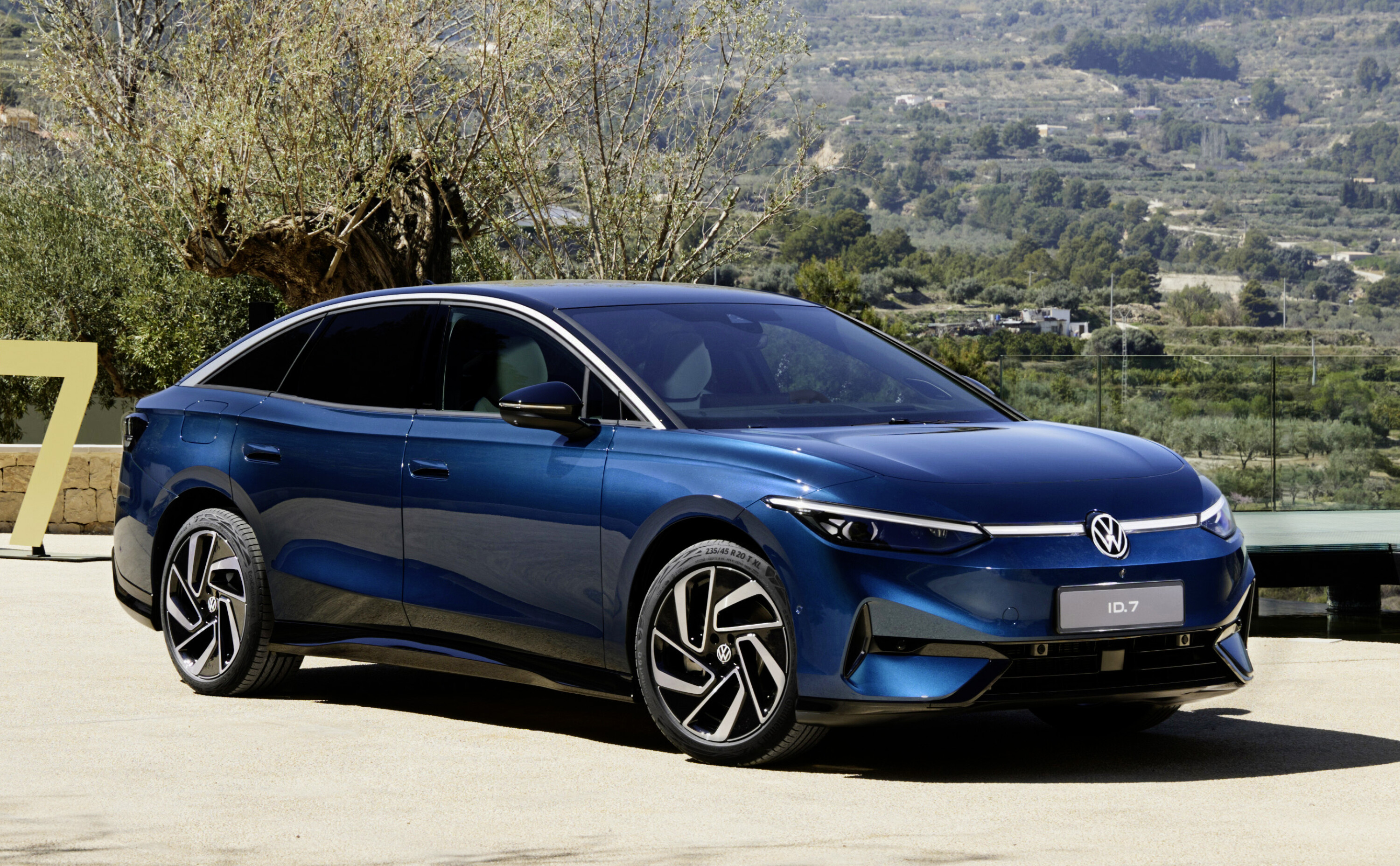
Volkswagen ID.7
Coming to Australia? Nope.
1
Key Points
- Aerodynamic focus allows for 700-kilometre range
- Passat-sized, but not a direct successor
- Not coming to Australia u201cat this pointu201d
There are a number of Volkswagen’s electric ID models coming to Australia over the next couple of years, but this sleek new ID.7 won’t be among them. At least, not anytime soon: the brand hasn’t specifically ruled it out, but it has said it’s not planned for Australia “at this point”.
“Volkswagen Australia is planning for several new electric vehicles to follow the ID.3, ID.4, ID.5, ID.Buzz and ID.Buzz Cargo. At this point, the ID.7 is not for our market as our focus will be on our electric SUV range,” said a spokesperson for the brand.
Watch for more Shanghai reveals to be published this week.
New Car Calendar
Honda has unveiled a trio of electric vehicle concepts at the 2023 Shanghai Auto Show, but they’re destined for the Chinese market only.
Snapshot
- Two Honda EV prototypes, concept revealed
- Sleek crossover SUV design and lighting elements
- For China only, despite lagging global electric push
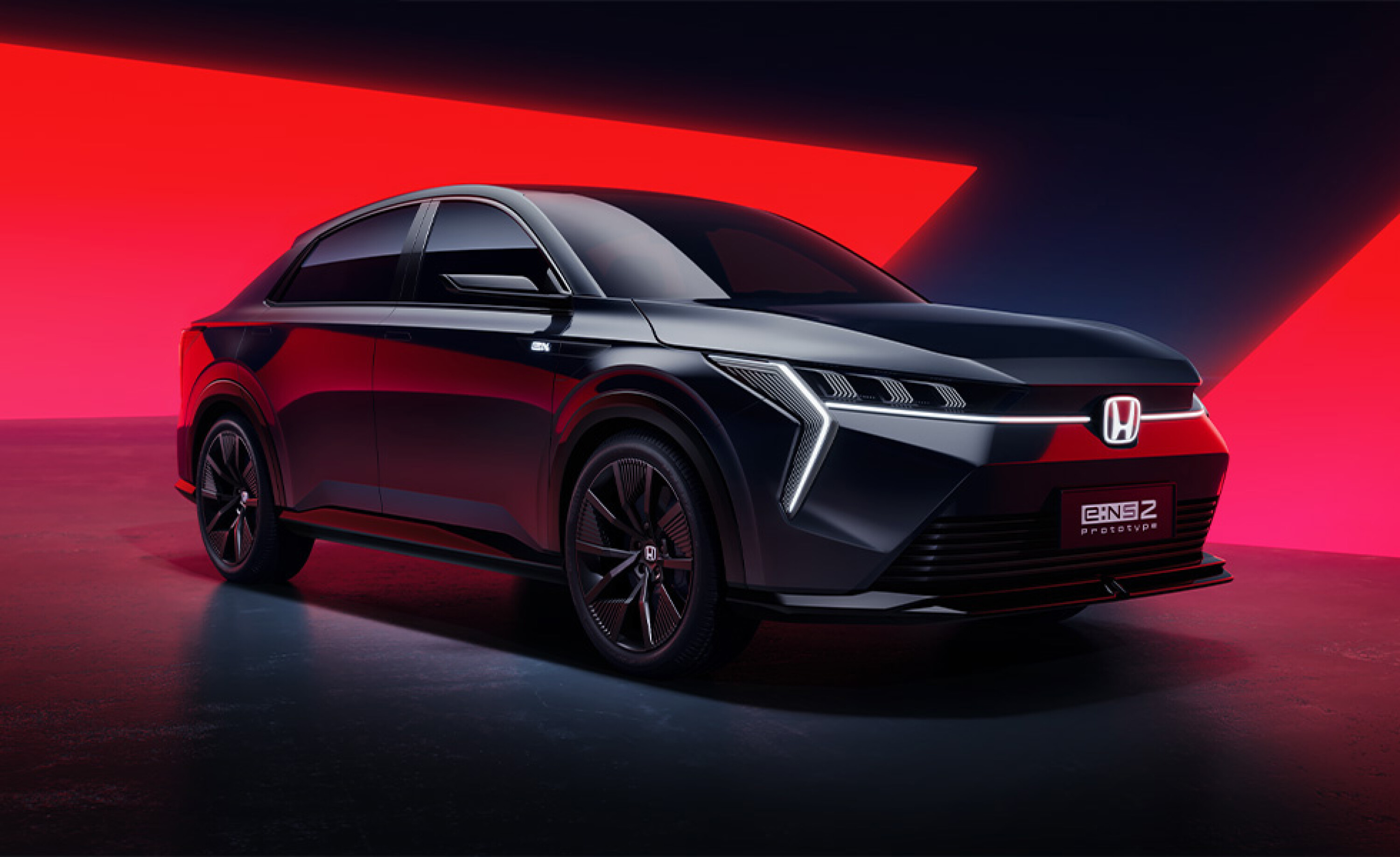
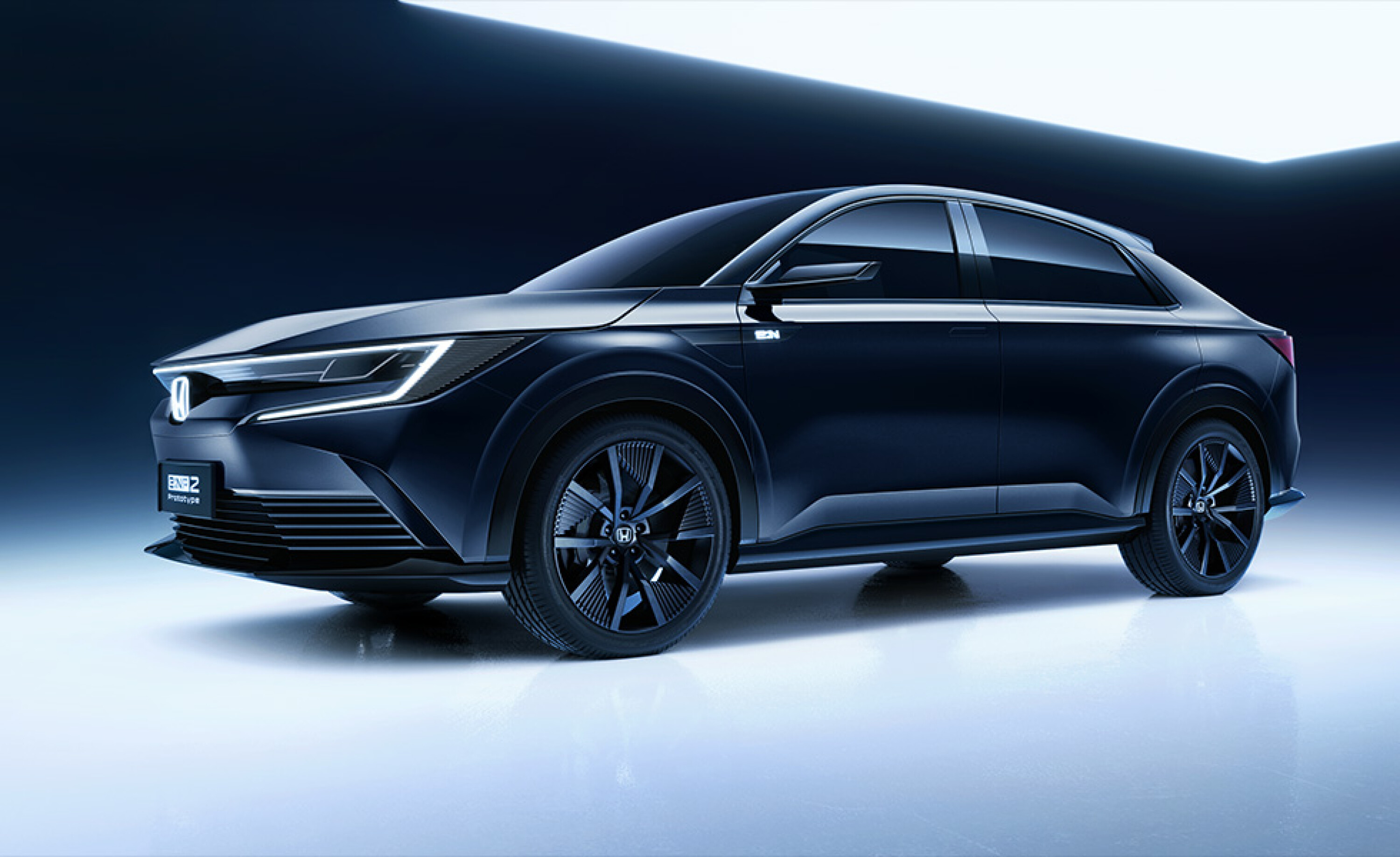
The Honda E:NP2 and E:NS2 are ‘second-set’ prototype electric models crossing between SUV and sedan body styles, destined for production in early 2024.
Judging by the pictures, both incorporate distinctly different thin LED lighting signatures at the front, with illuminated badging, slim camera-based wing mirrors, and dark-finished alloy wheels.
While interior pictures weren’t published, the Japanese carmaker boasts of a “clean, uncluttered, yet pleasantly rounded” design.
- What is Honda doing about EVs in Australia? Jump ahead…
1
In the cabin, there’s a new touchscreen powered by the Honda Connect 4.0 operating system, connected services, and latest safety assistance suite. Again, though, no images of the interior have been released.
Meanwhile, the Honda E:N SUV 序 (xù) is a concept model using the brand’s ‘E:N Architecture W’ for the first time with a focus on driving performance.
prologue
It’s worth noting that the E:N SUV 序 concept is a different vehicle to the forthcoming North American Honda Prologue electric SUV, which adopts General Motors’ Ultium battery packs and a co-developed platform.
A Honda Australia spokesperson re-confirmed to Wheels that there are “no current plans to bring these vehicles to the Australian market”.
1
Honda: An electric health check
In Australia, the carmaker launched series-parallel hybrid versions of its new Civic hatch and HR-V SUV last year, and aims to have hybridisation across its vehicle line-up.
However, Honda Australia director Carolyn McMahon recently admitted to Wheels that it won’t sell a pure battery-electric car Down Under until at least 2028.
1
Honda introduced the dedicated E:N sub-brand back in 2021 for China with SUV, GT and coupe concepts.
It already sells the E:NP1 and E:NS1 small SUVs in China – which are essentially an all-electric HR-V with a smoother grille – and are produced by its Dongfeng Honda and GAC Honda joint ventures.
The automaker aims to introduce 10 Honda-badged EV models by 2027, with an all-electric line-up by 2035 in the world’s largest and rapidly growing car market.
Meanwhile, besides the upcoming Prologue EV in North America, the Fiat 500e-rivalling Honda E electric city car remains the only western-market full-electric Honda today – albeit as a Europe-only proposition.
MORE
Everything Honda
Volkswagen brand CEO Thomas Schäfer has outlined what the future holds for its current model line-up, as the automaker transitions into a battery-electric only era.
Snapshot
- VW Polo may not live on due to emissions regulations
- Mk9 Golf will be EV-only with all-new platform
- Claims VW didnu2019t lobby for 2035 EU ICE ban exemption
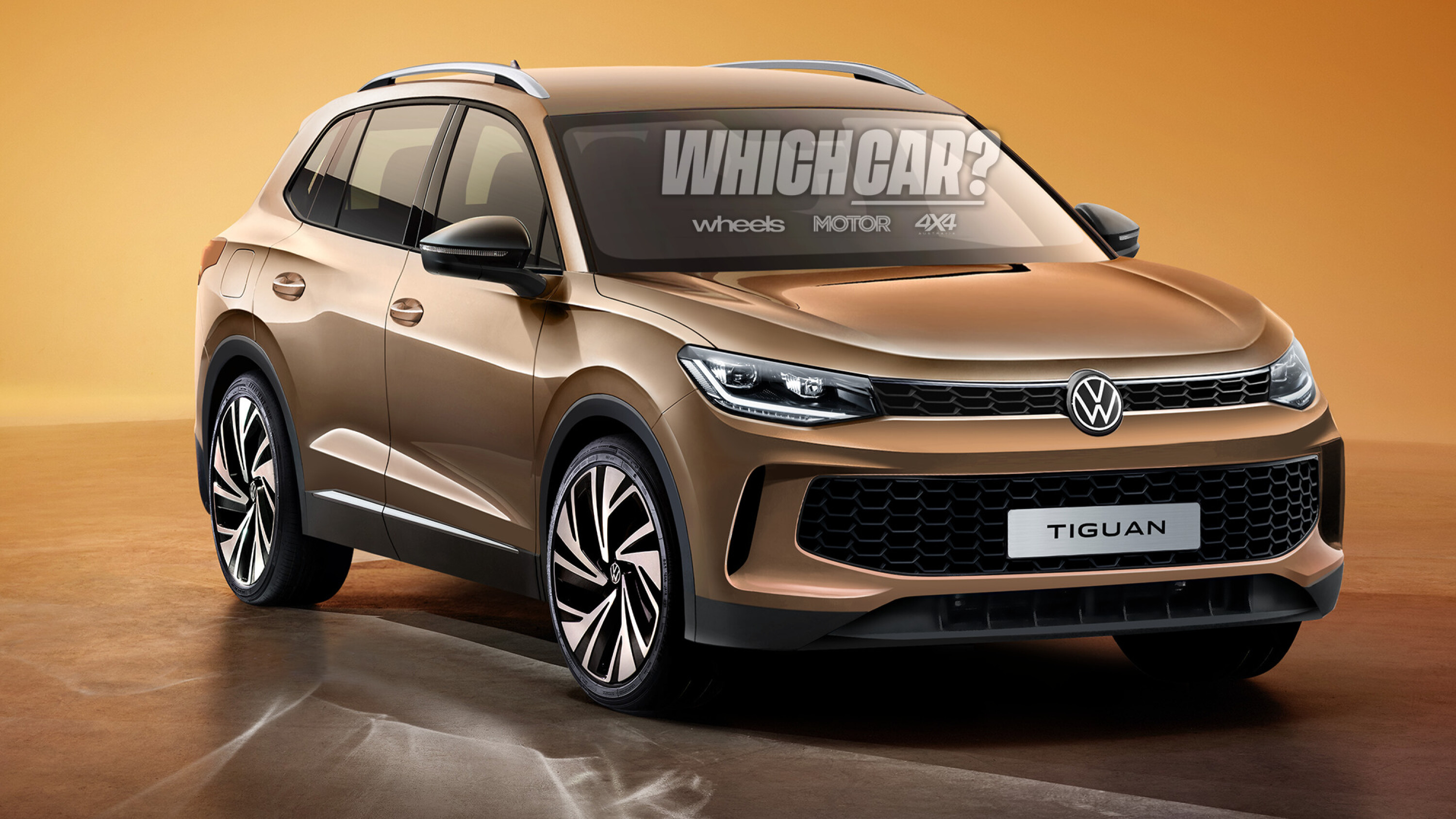
Speaking with Automotive News Europe this week, Schäfer confirmed an all-new Tiguan medium SUV and Passat wagon will debut later this year – but the future of the venerable Polo city car remains uncertain for now.
1
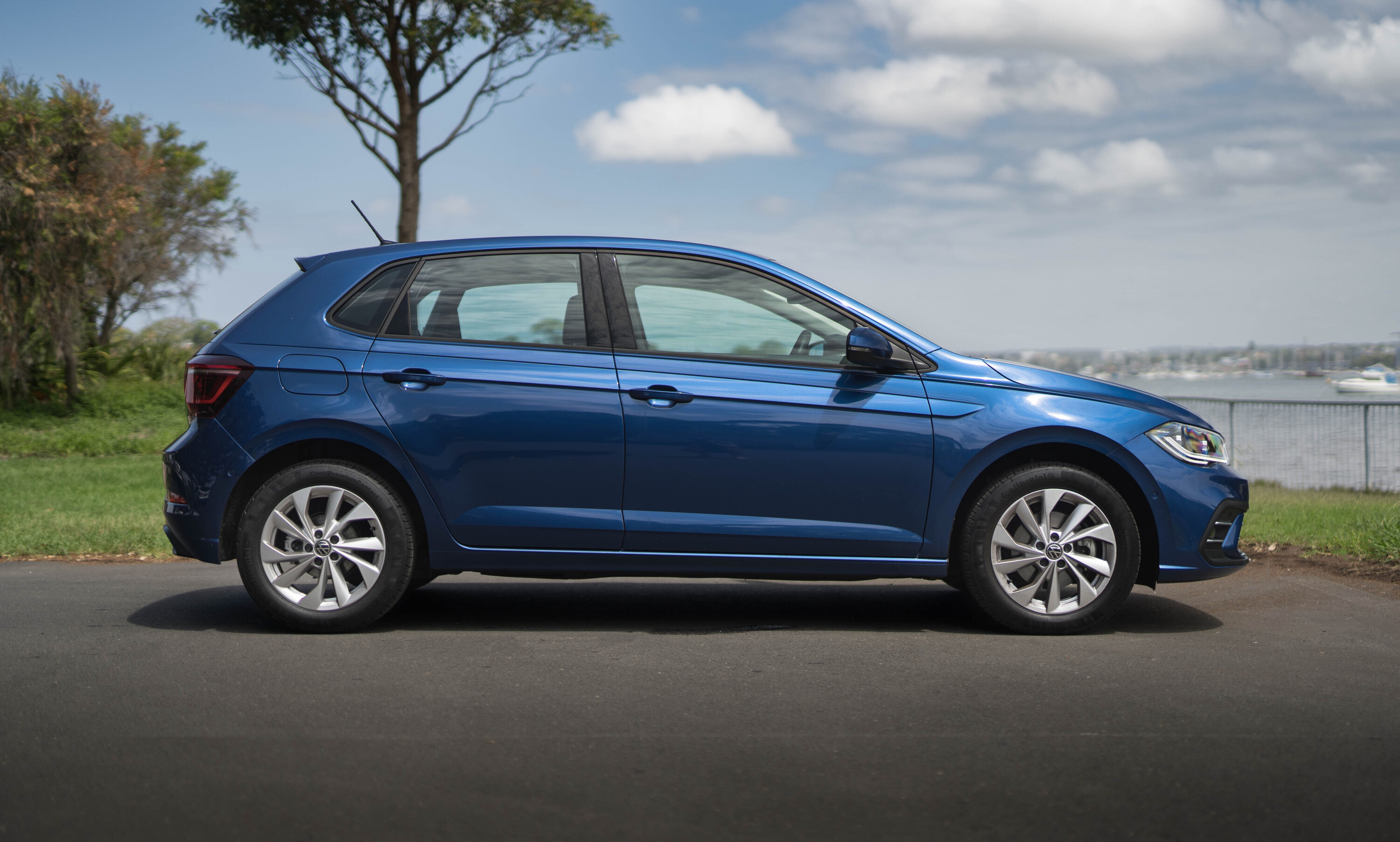
Will there be another VW Polo?
Key Points
- Likely too expensive to produce to the right price
- Future unclear without more insight on Euro 7 rules
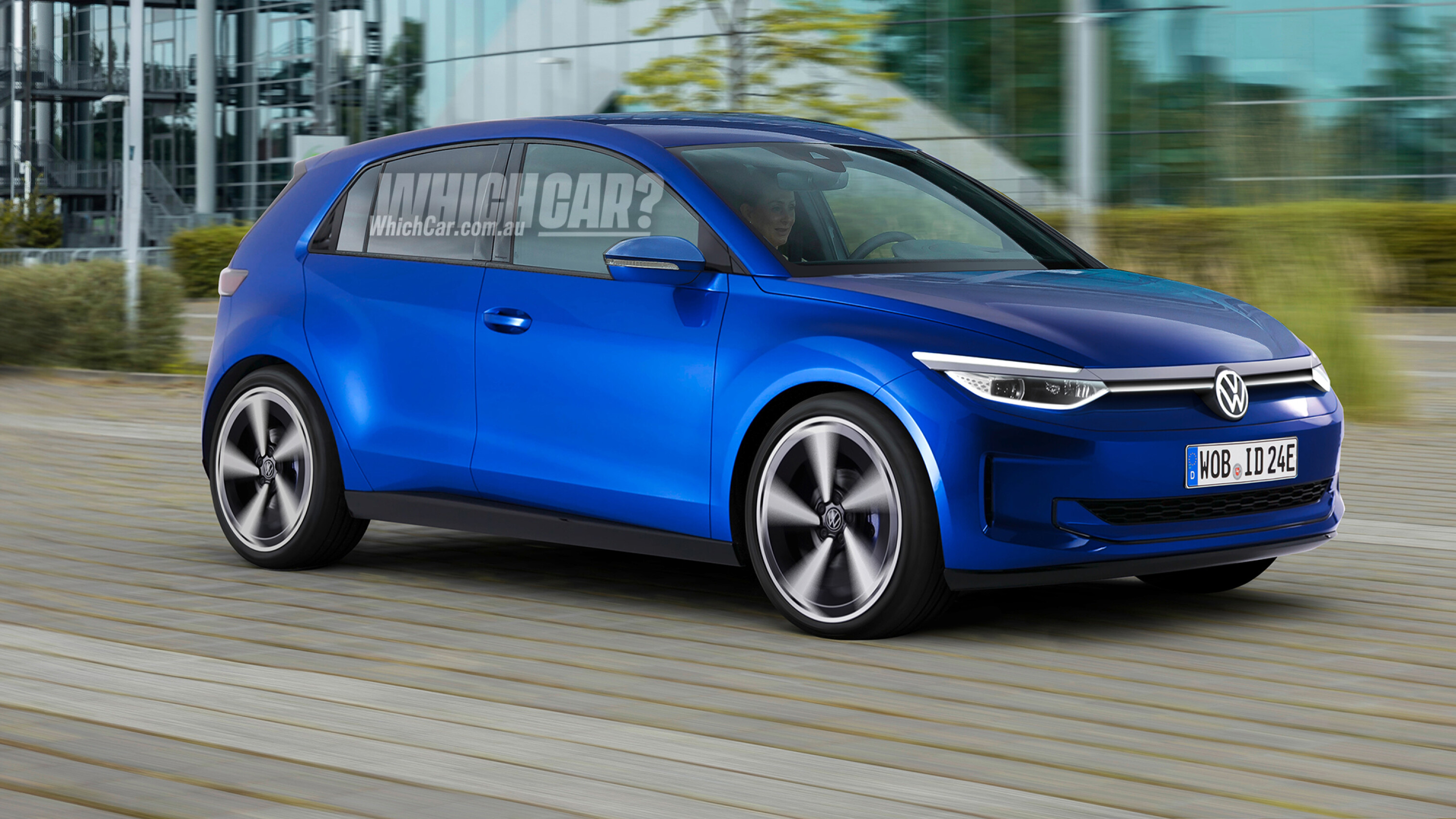
- ID.2 electric hatch could replace the Polo
Schäfer reinforced the uncertain outlook for the iconic Volkswagen Polo city car amid Euro 7 emissions regulations that make producing budget-friendly cars expensive due to costs to hybridise and cut emissions on older power plants. Compact volume-selling cars have always had tiny margins, so the business case for a new Polo is shrinking.
The strict mandate is set to be enforced in mid-2025 and the German automaker has already pushed for a delay of slightly more than a year.
But, the Volkswagen boss wouldn’t rule out whether the anticipated ID.2 EV is the replacement for the Polo.
“I wouldn’t categorically say no, but at the moment it’s not the preferred choice,” Schäfer said.
“The question is: What will the Polo cost after Euro 7 takes effect? We don’t know yet.”
1
1
New Golf, T-Roc, Tiguan, Passat coming
Key Points
- New Tiguan to be revealed this year
- Current Golf due for major facelift soon
- The next Golf will be electric only ud83dude31
This year, Volkswagen is also set to introduce the next-generation Tiguan medium SUV – which is rumoured to have a full EV version – and all-new Passat wagon.
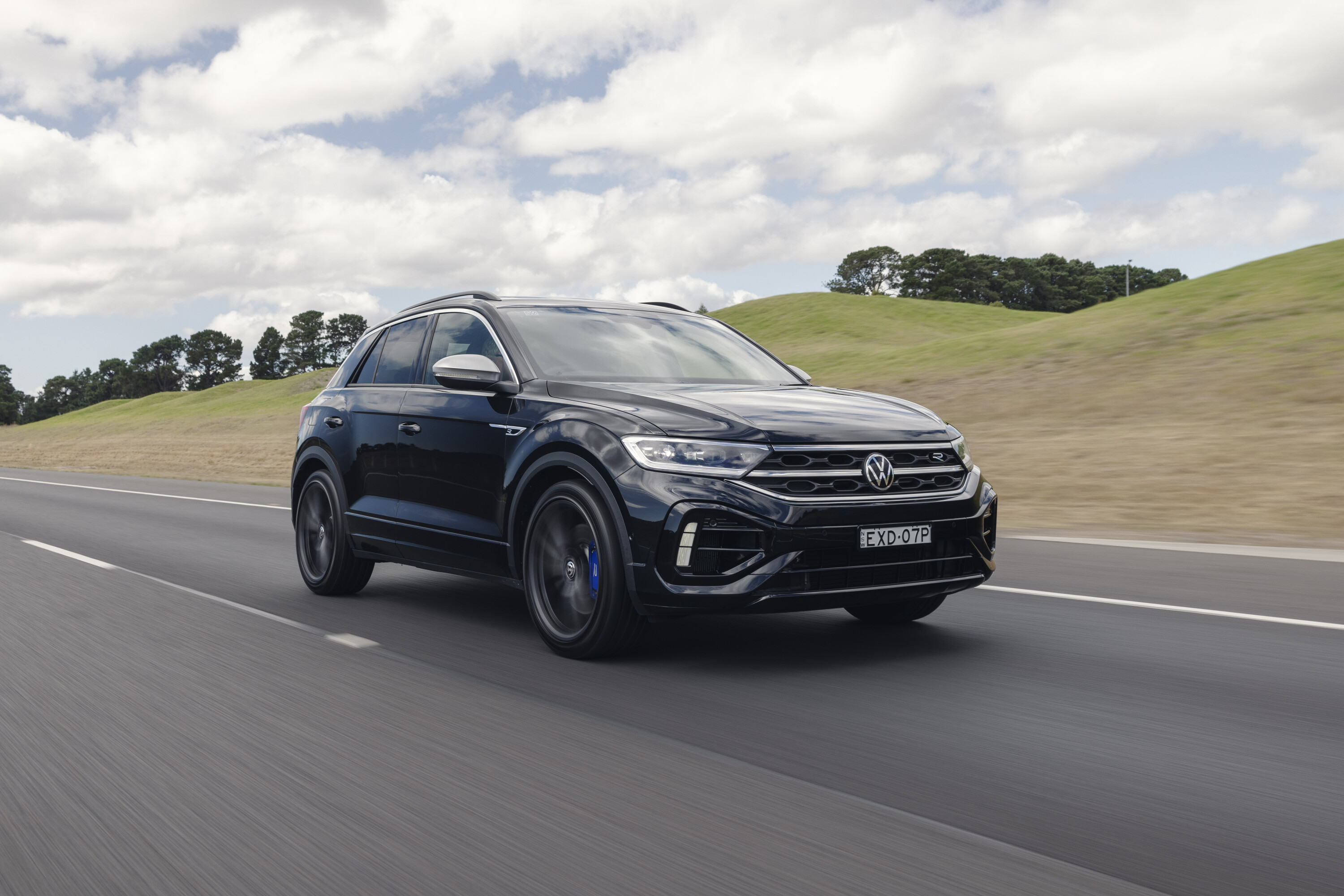
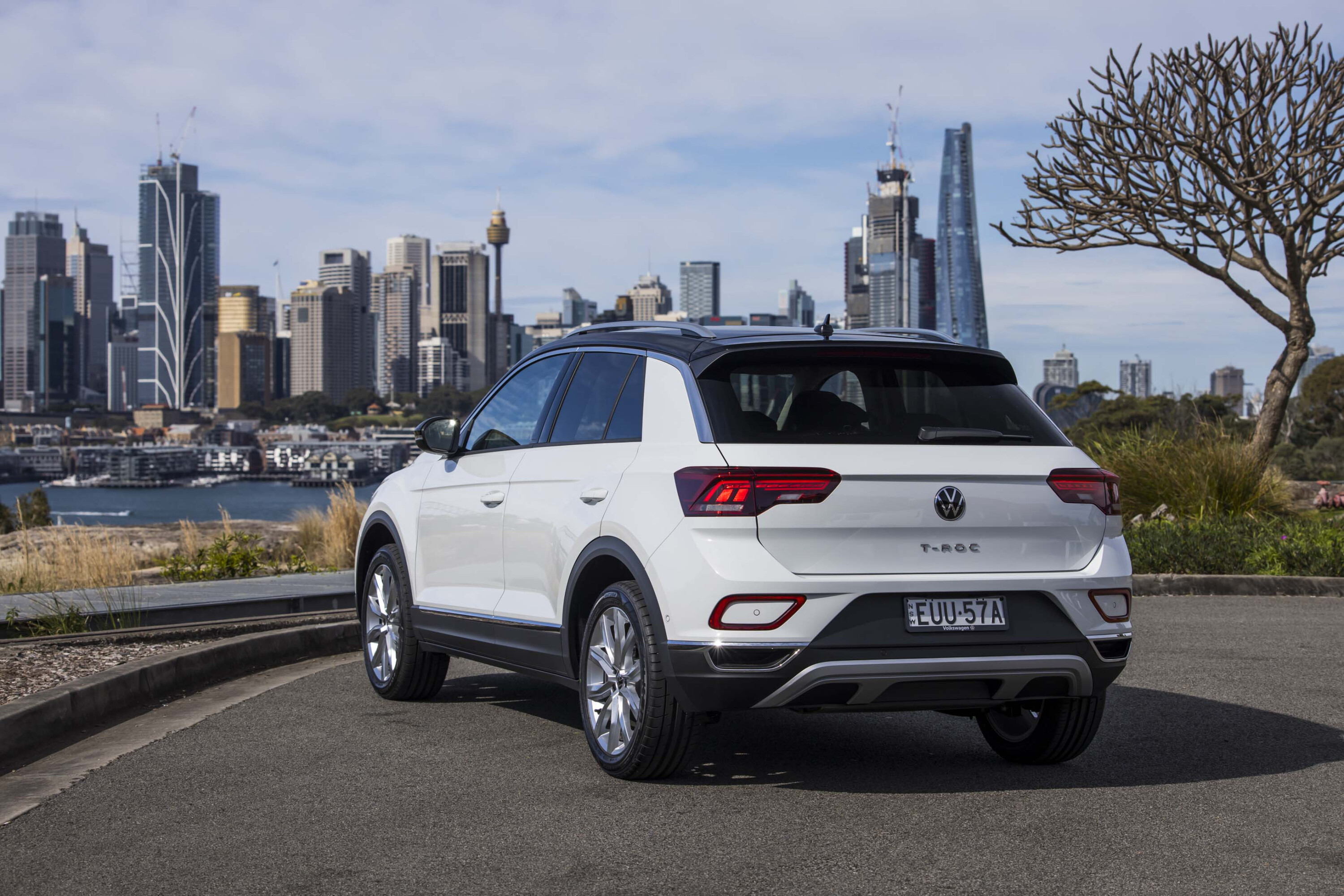
The successor to the T-Roc small SUV will follow, along with a “major product upgrade” facelift for the current Mk8 Golf small car.
“Combustion engines continue to play an important role. This is how we earn the money that we need for the transformation,” Schäfer told Automotive News Europe.
1
“Combustion engines continue to play an important role. This is how we earn the money that we need for the transformation.”
“From today’s perspective, we will carry these vehicles well into the 2030s. That will give us a good line-up.
“As we phase out combustion engines in Europe in 2033, it no longer makes sense to launch vehicles with completely new combustion engines.”
The next-generation Volkswagen T-Roc crossover, due to debut in 2025, has been confirmed as the last model with a newly-developed combustion engine in Europe, while other engines will continue to only receive updates.
1
Mk9 Golf confirmed as EV-only
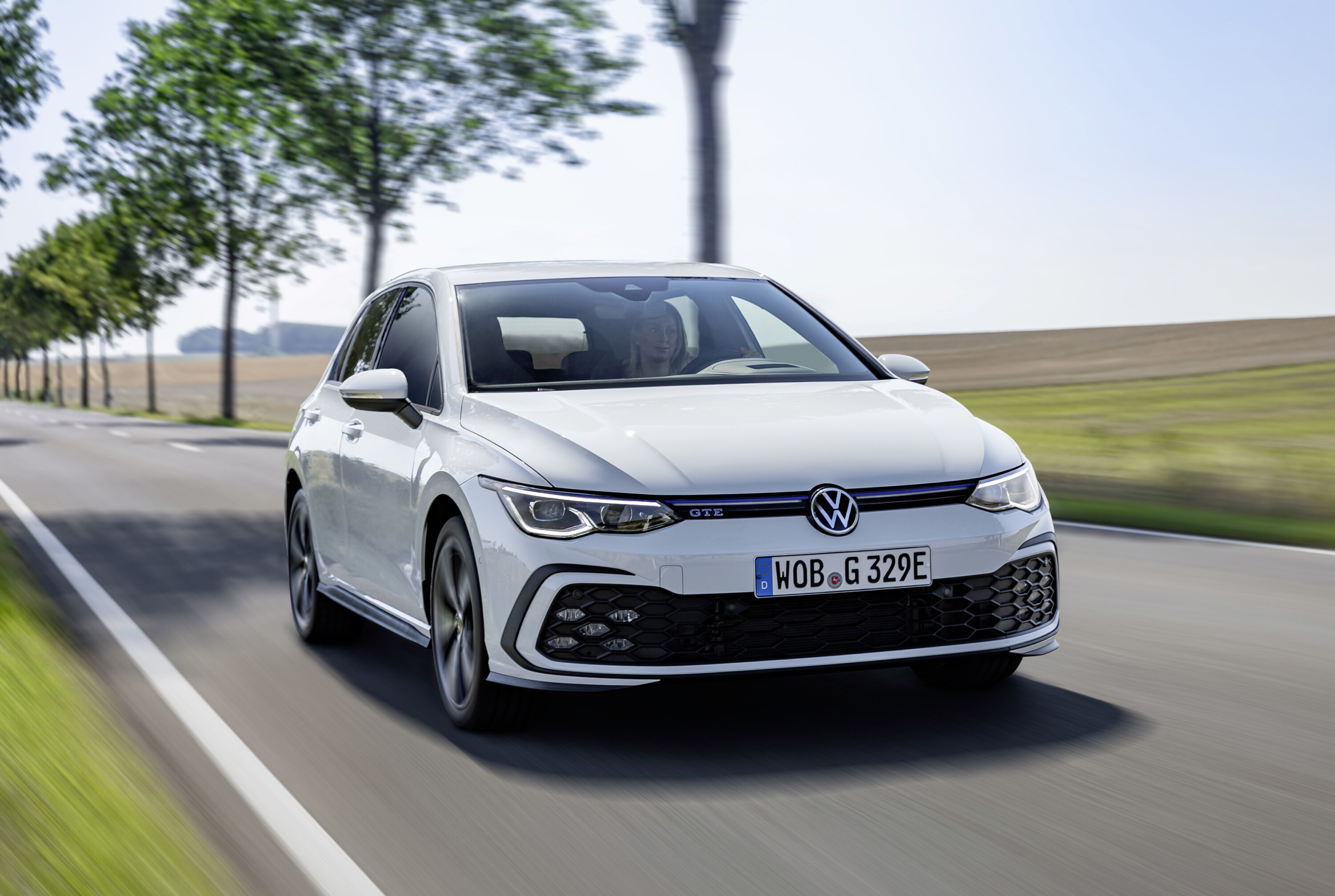
The rumoured next-gen electric Golf will only be based on the new unified Scalable Systems Platform (SSP) – which will ‘probably’ debut in early 2028 on its Project Trinity flagship EV.
“It’s clear that we won’t give up iconic names such as the Golf, Tiguan and GTI, instead we will transfer them into the electric era,” Schäfer said.
1
Wondering what sets an electric Golf apart from the ID.3? Mostly styling and dynamics, it seems.
“Especially with the Golf, the future model has to have the correct DNA. Simply naming another vehicle that way won’t happen. We don’t make the mistake,” Schäfer said.
“That’s why we’re only launching the electric Golf when it really has Golf genes. That will include a flatter roof compared with the ID.3.”
⚡ More EV stories to help you choose the best car for your needs
Chinese carmaker Great Wall Motors (GWM) has announced a more-affordable hybrid variant for its Haval H6 mid-size SUV range.
Snapshot
- 2023 GWM Haval H6: Everything you need to know
- More-affordable Lux Hybrid joins H6 line-up
- H6 range priced from $33,990 drive-away; eight variants
The 2023 GWM Haval H6 Lux Hybrid is on sale now, priced from $42,490 drive-away.
With the range-topping Ultra Hybrid variant accounting for approximately 30 per cent of H6 sales, GWM is seeking to boost popularity with the cheaper variant, which is $3500 less than the Ultra Hybrid, but $5500 more than the equivalent petrol variant.
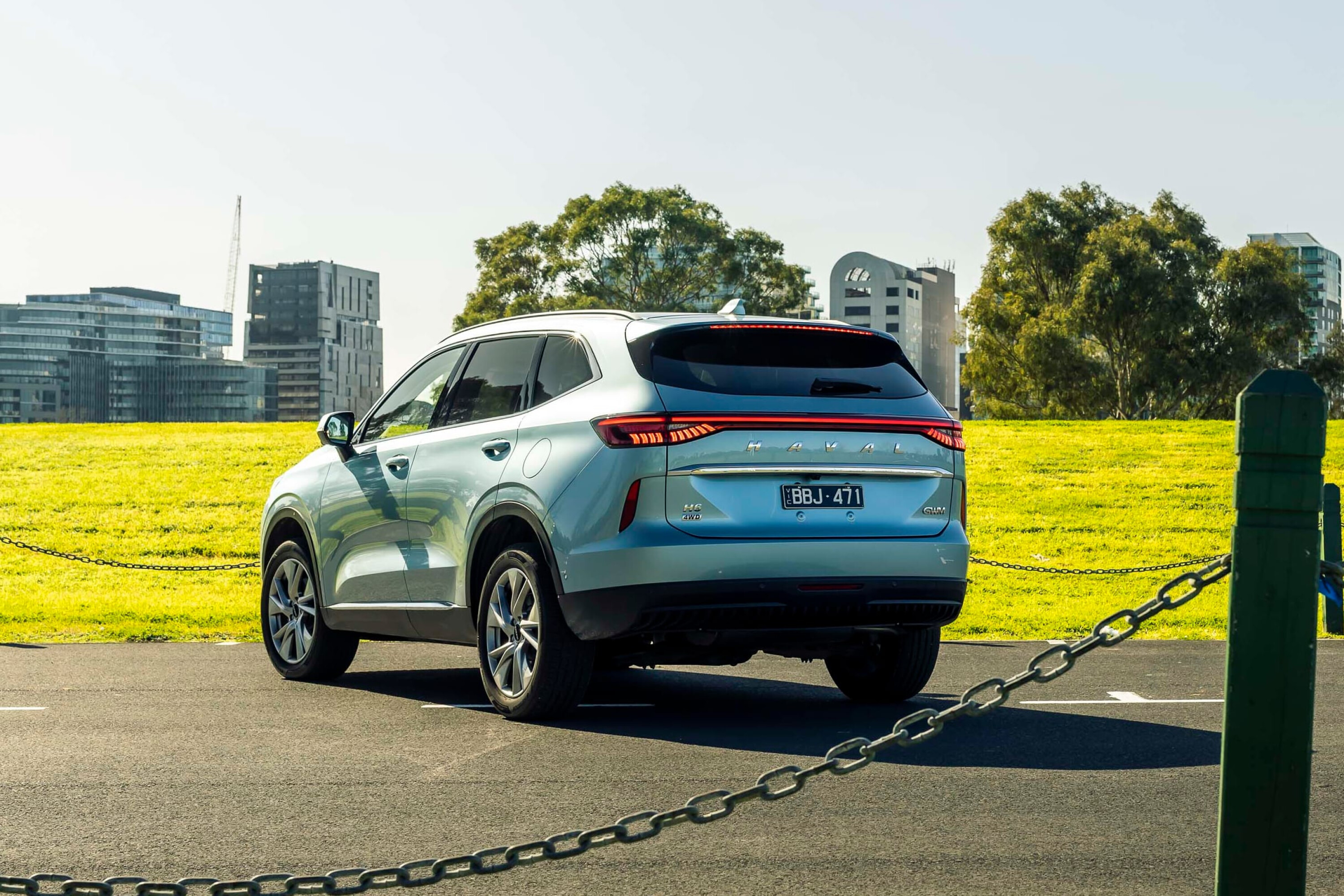
It retains the H6 Hybrid’s features – including the electrified powertrain and unique exterior design – but with a specification list matching the mid-spec Lux.
1
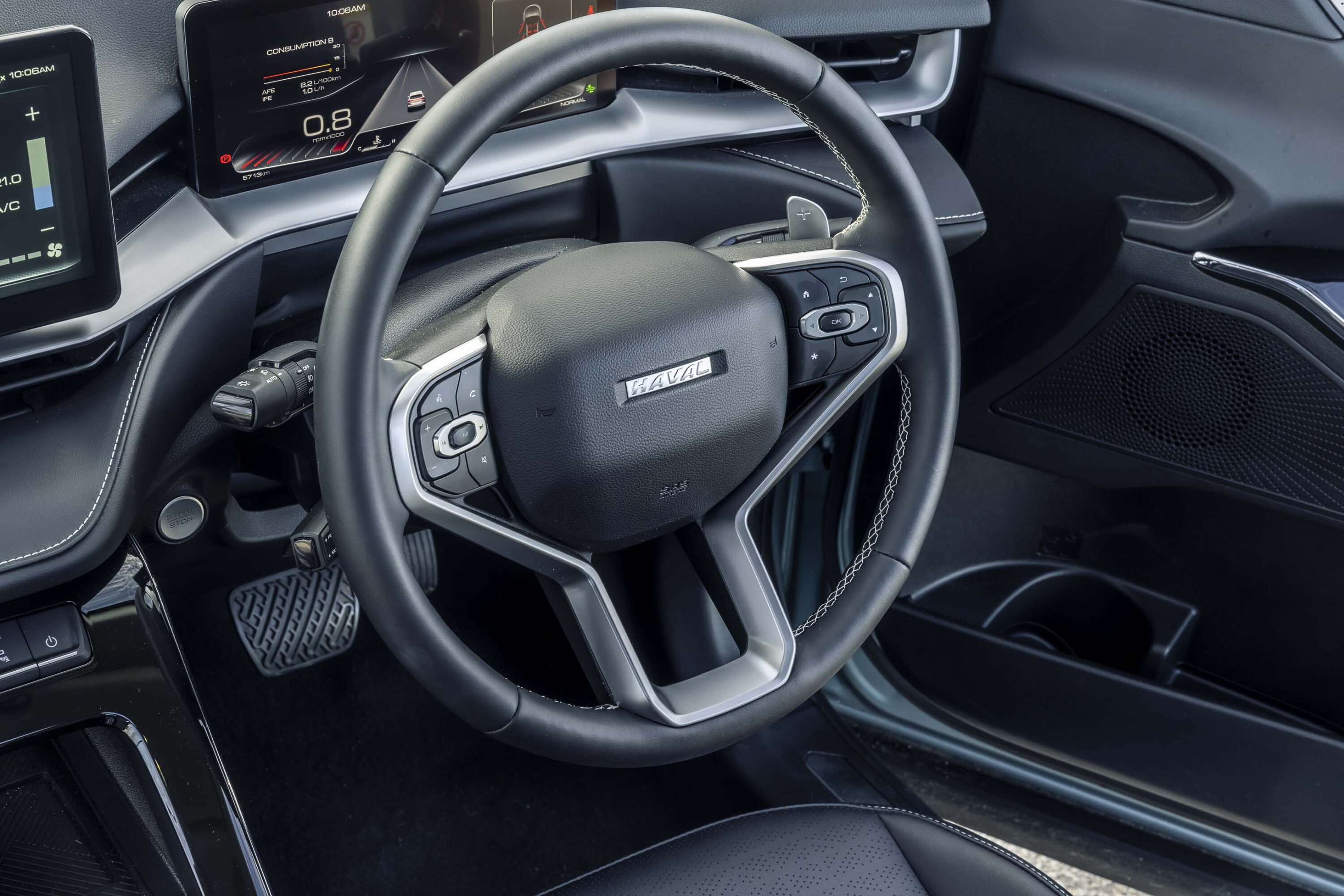
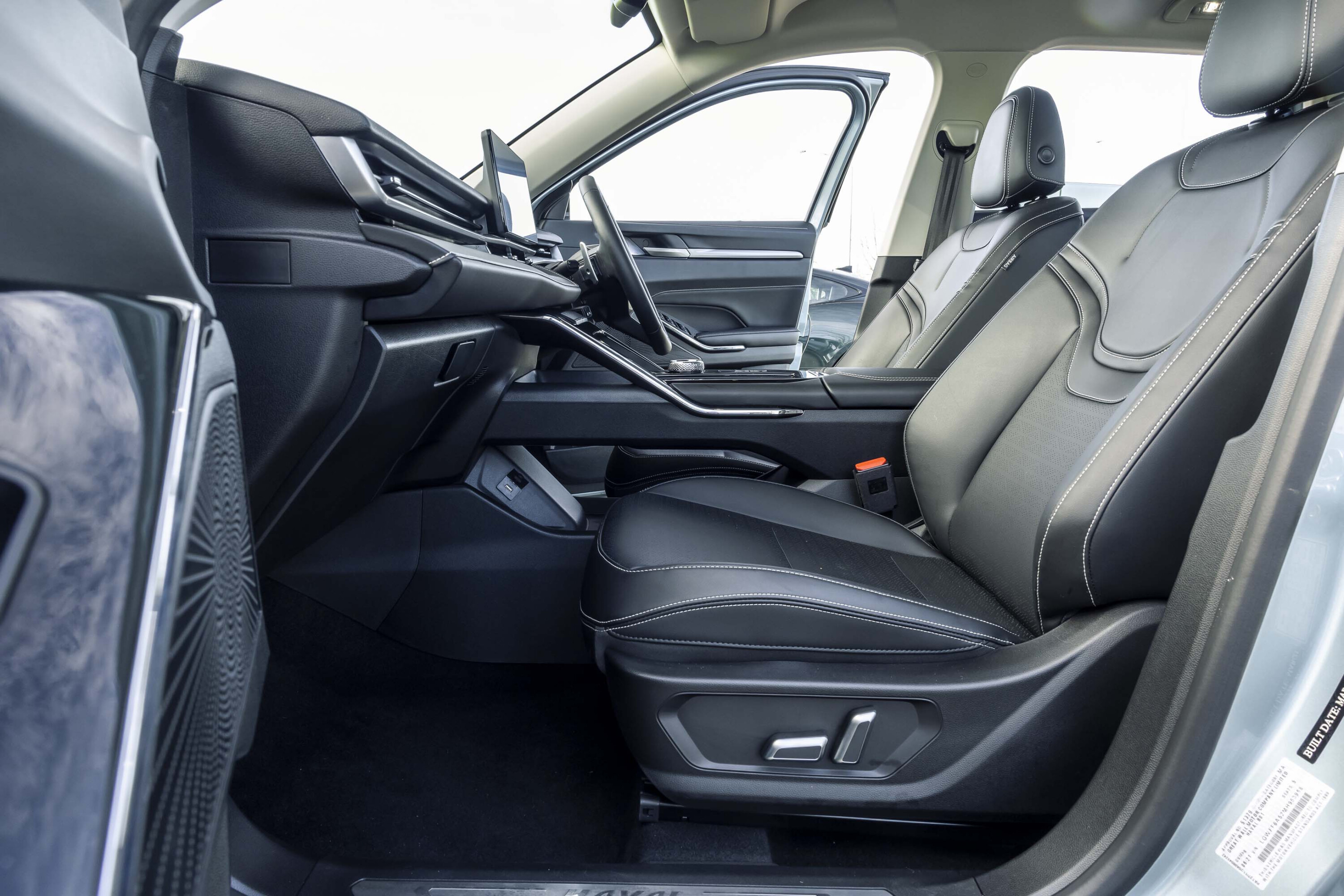
As such, it misses out on the Ultra’s larger 19-inch alloy wheels, 12.3-inch infotainment system, electric tailgate, wireless phone charger, ventilated front seats, heated steering wheel and side mirrors, a power-adjustable passenger seat, a head-up display, and rear cross-traffic alert with braking.
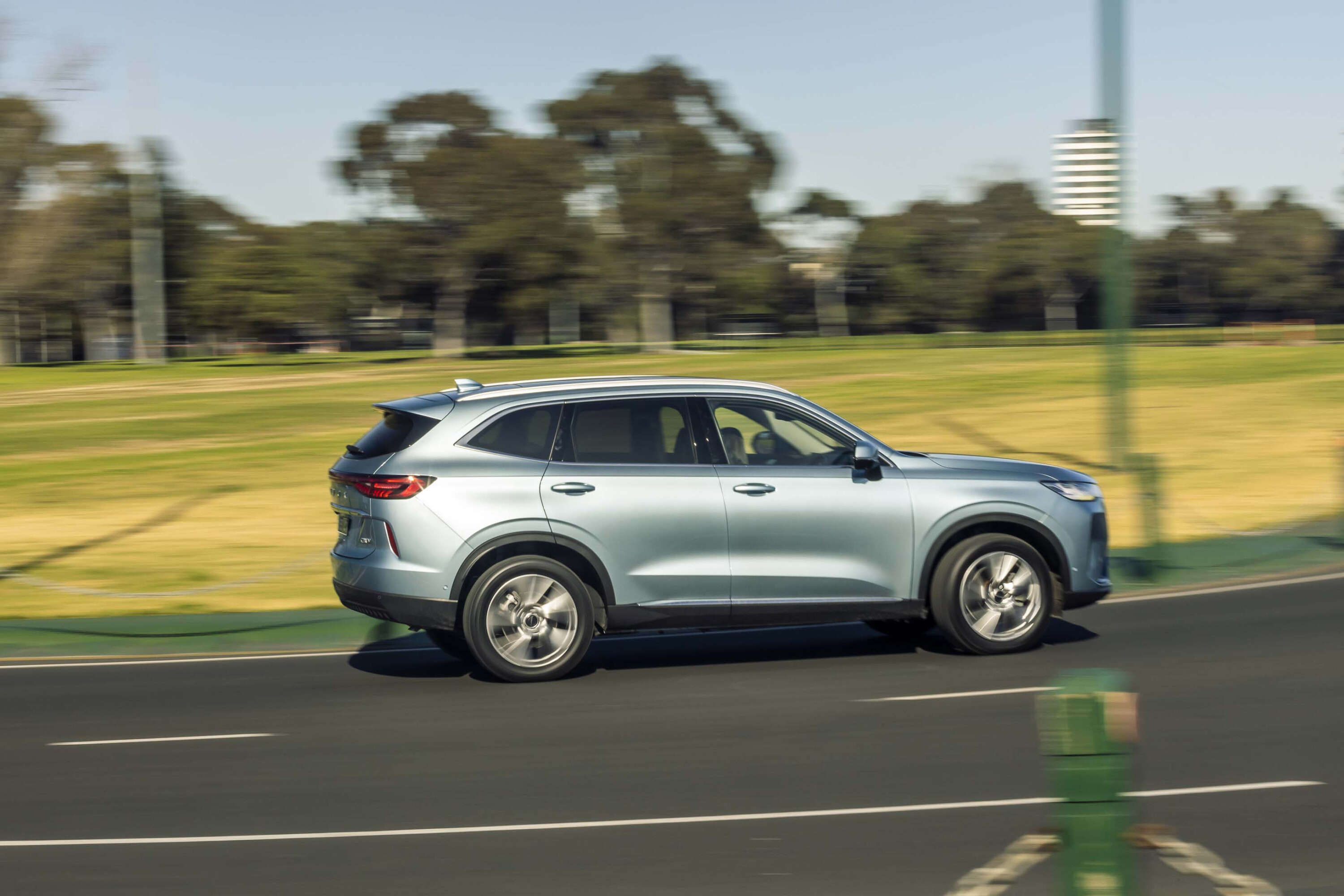
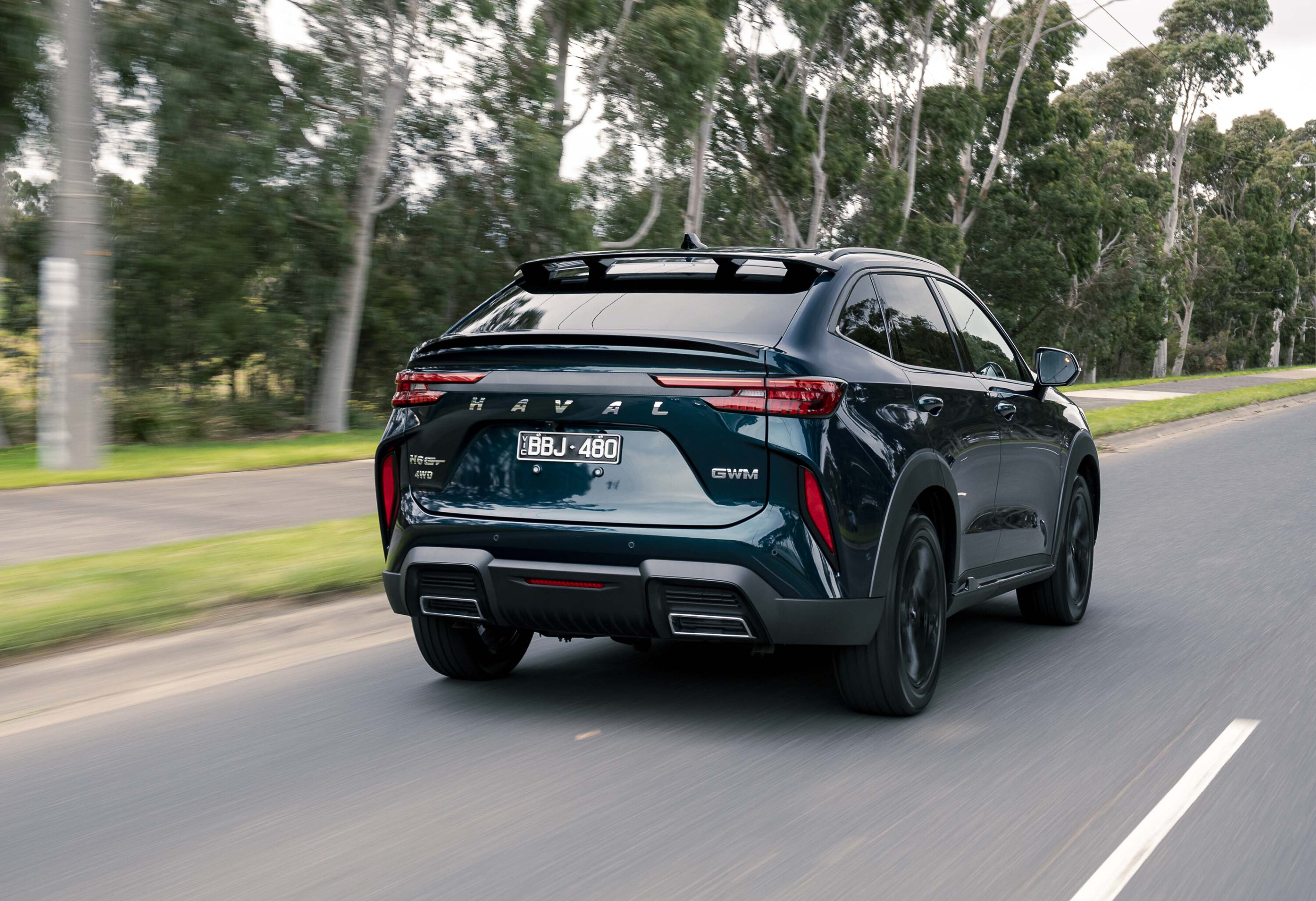
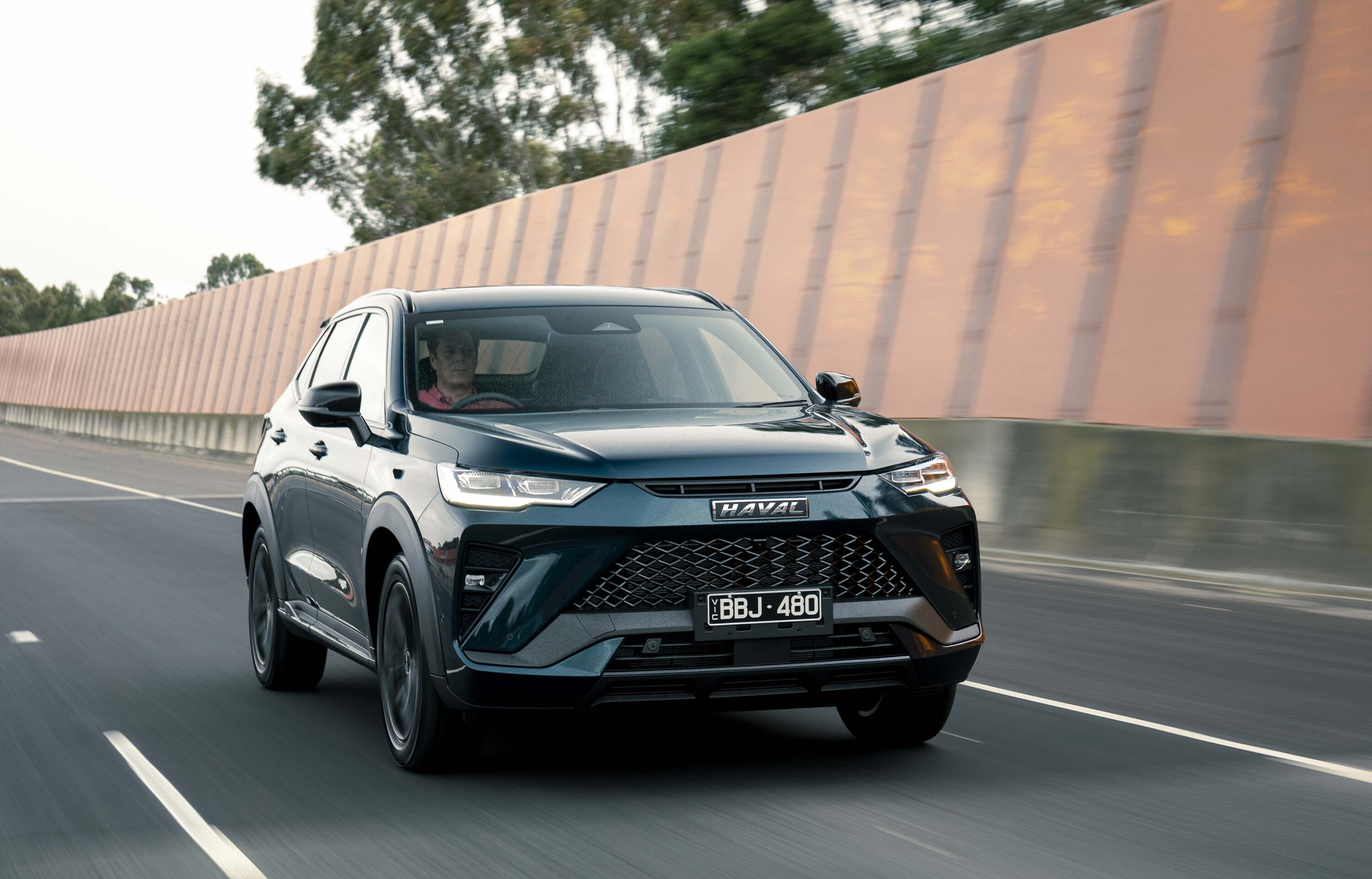
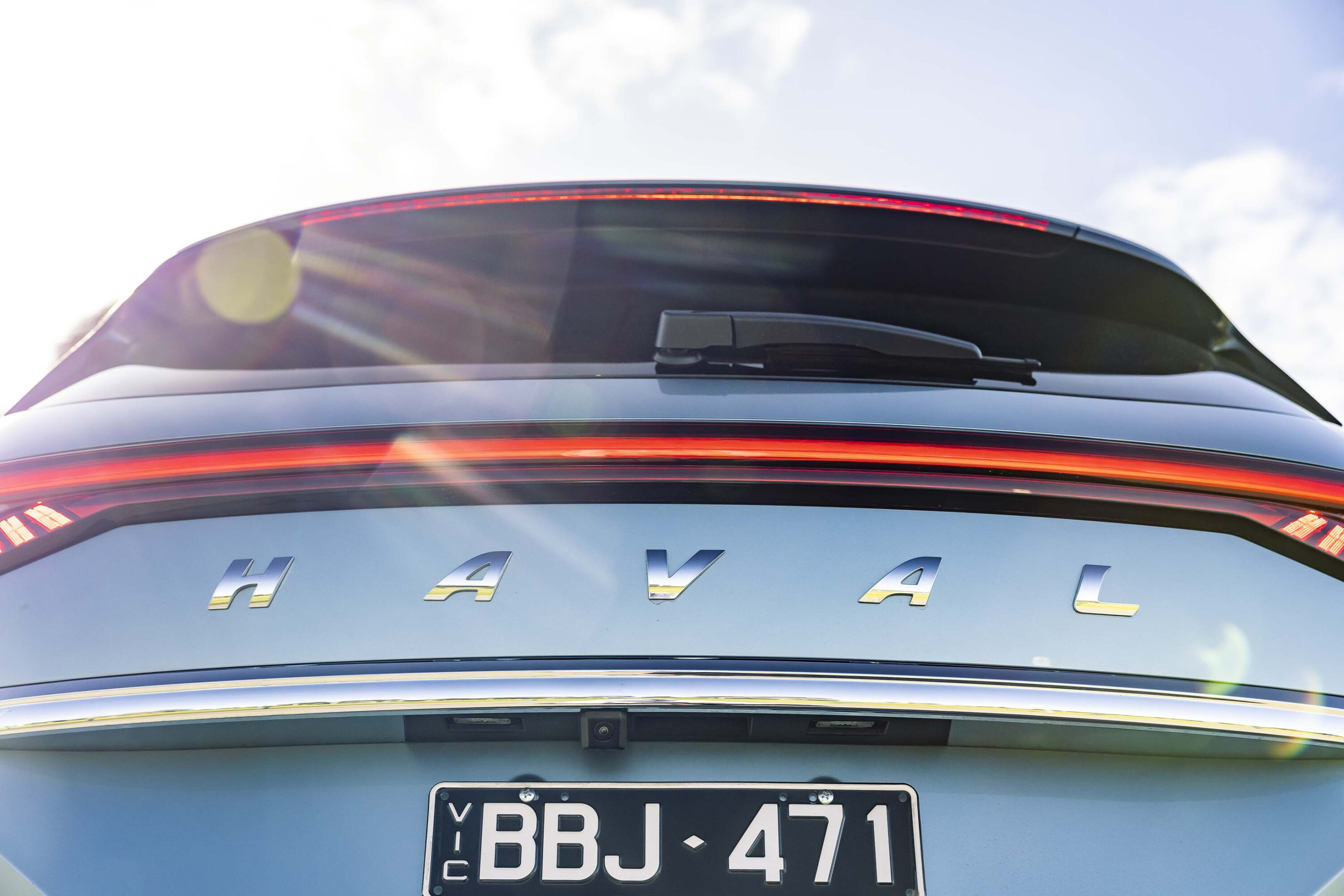
Visually, the H6 Hybrid is differentiated from the current H6 with a new front grille, added door trims, and rear centre brake lights. It has a tyre repair kit in lieu of a space-saver spare.
For everything you need to know about the 2023 GWM Haval H6 medium SUV range, continue below.
1
JUMP AHEAD
- 2023 GWM Haval H6 pricing
- 2023 GWM Haval H6 features
- Colours
- Engine, drivetrain, and fuel economy
- Safety
- Dimensions
- Warranty and servicing
2023 GWM Haval H6 pricing
All prices are drive-away.
| Model | Pricing |
|---|---|
| Premium FWD | $33,990 |
| Lux FWD | $36,990 |
| Ultra FWD | $39,990 |
| GT Lux FWD | $40,990 |
| Lux Hybrid FWD | $42,490 |
| Ultra AWD | $42,990 |
| Ultra Hybrid FWD | $45,990 |
| GT Ultra AWD | $46,490 |
1
Features
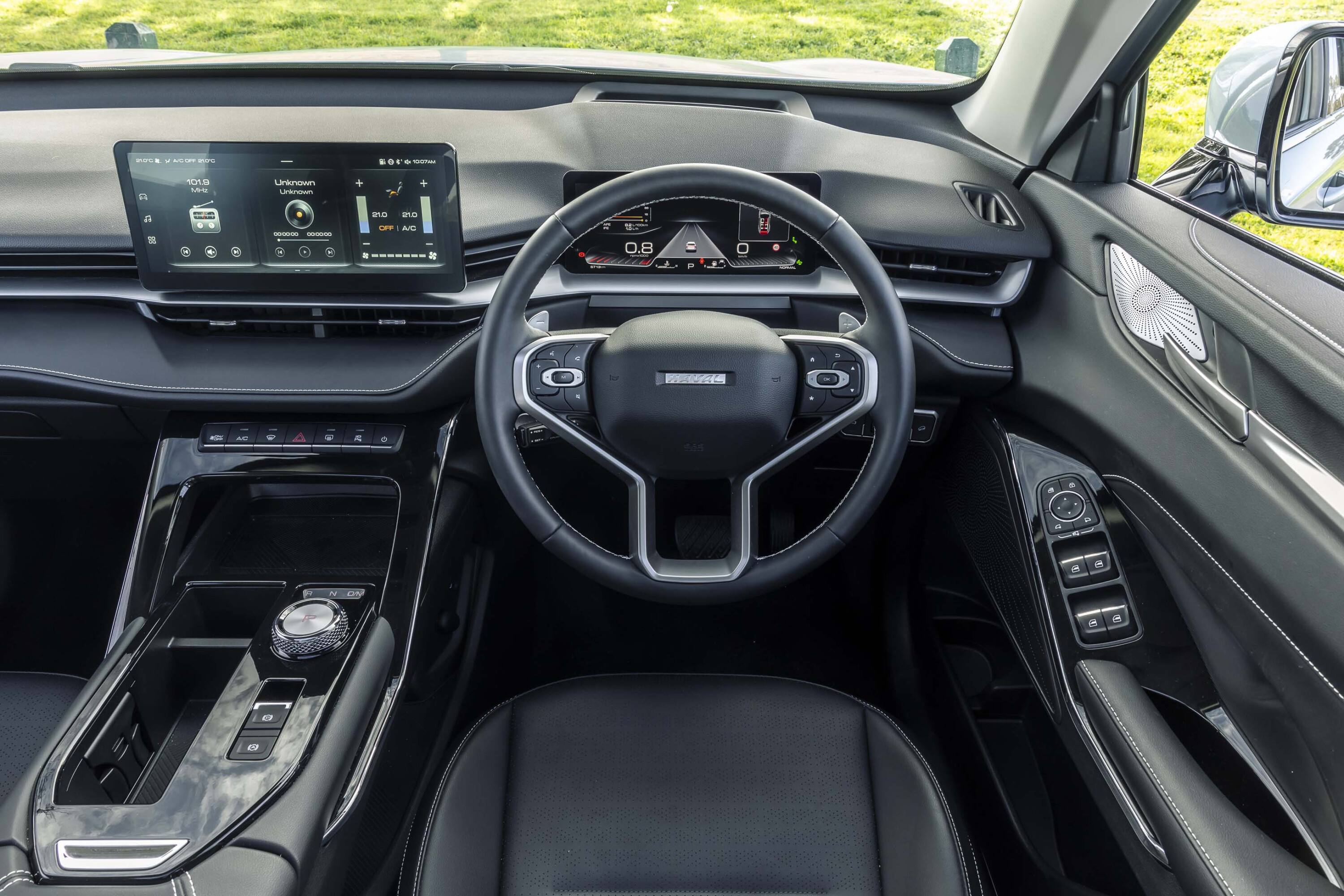
2023 GWM Haval H6 Premium features
| 2023 GWM Haval H6 Premium features | |
|---|---|
| 18-inch alloy wheels | Tyre pressure monitoring |
| 10.25-inch infotainment system | Keyless entry and push-button start |
| Wired Apple CarPlay and Android Auto | Six-way manual driveru2019s seat |
| Six-speaker audio system | Four-way manual passenger seat |
| 10.25-inch digital instrument cluster | Rain-sensing wipers |
| LED headlights, tail-lights and DRLs | Cloth upholstery |
| Single-zone climate control | Paddle shifters. |
| Rear parking sensors | |
1
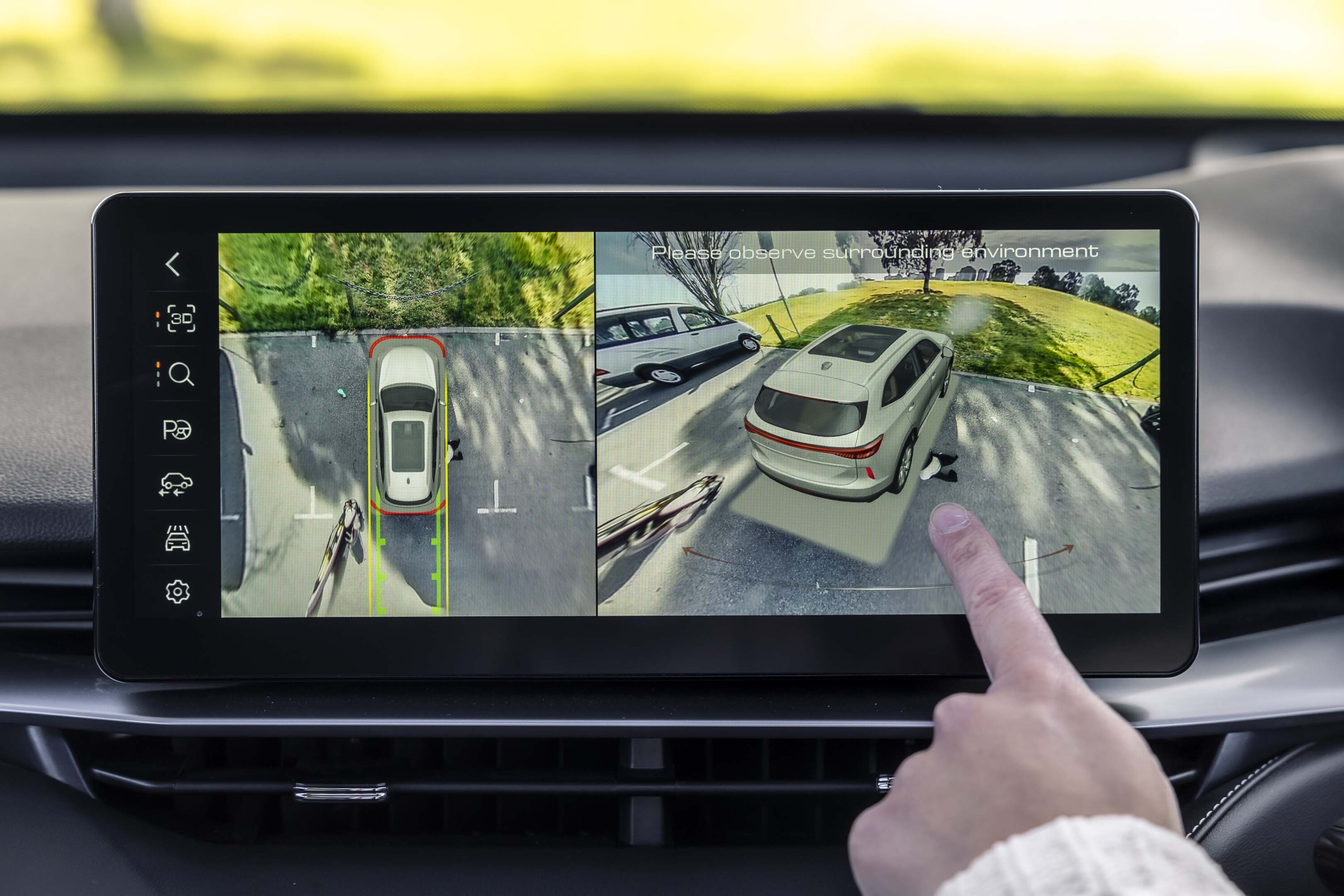
2023 GWM Haval H6 Lux features
| In addition to Premium | |
|---|---|
| Leather-accented upholstery | Front parking sensors |
| Leather-wrapped steering wheel | Traffic jam assist |
| Eight-way power-adjustable driveru2019s seat | Rear privacy glass |
| Heated front seats | Auto-dimming rear-view mirror |
| Dual-zone climate control | Auto up/down for all four windows w/ key fob function |
| 360-degree camera system | Auto-folding side mirrors |
| Adaptive cruise control | LED fog lights. |
| Roof rails | |

1
2023 GWM Haval H6 Ultra features
| In addition to Lux | |
|---|---|
| 19-inch alloy wheels | Rear cross-traffic alert with braking |
| 12.3-inch infotainment system | Four-way power-adjustable passenger seat |
| Wireless phone charger | Ventilated front seats |
| Eight-speaker audio system | Heated steering wheel |
| Ambient interior lighting | Heated side mirrors |
| Head-up display | 12-volt power outlet in boot |
| Automatic parking | Panoramic sunroof. |
1
2023 GWM Haval H6 GT Lux features
| In addition to Lux | |
|---|---|
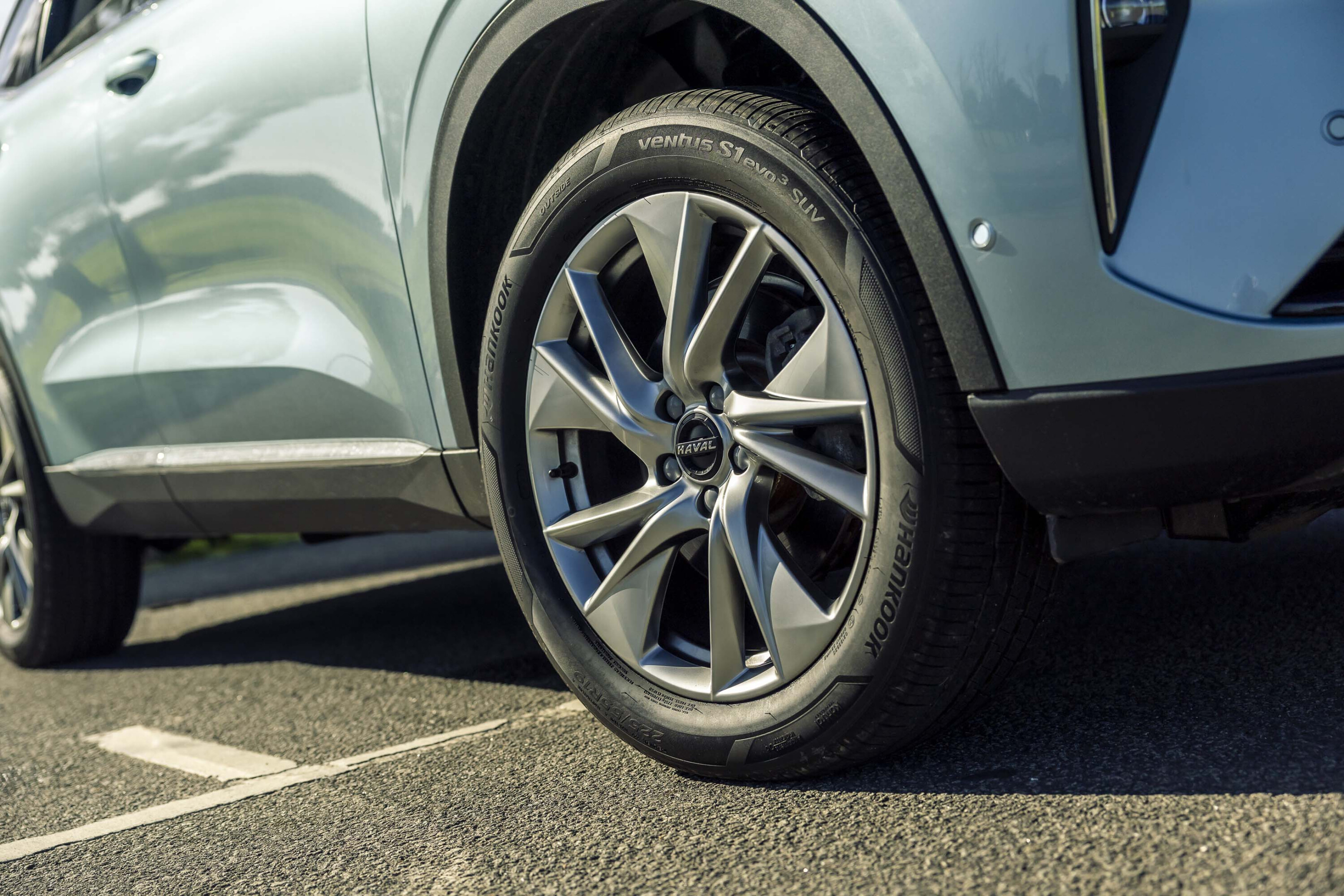
| 19-inch black alloy wheels | Grey leather-accented and suede upholstery |
| Electric tailgate | Wireless phone charger. |
Dual-zone climate control is deleted from the GT Lux, for single-zone climate control shared with the base H6 Premium.
1
2023 GWM Haval H6 GT Ultra features
| In addition to GT Lux | |
|---|---|
| 12.3-inch infotainment system | Head-up display |
| Eight-speaker audio system | Ventilated front seats |
| Hands-free power tailgate | Heated steering wheel |
| Panoramic sunroof | Heated side mirrors. |
| Ambient interior lighting | |
1
Colours
| Hamilton white | Golden black |
| Sapphire blue | Ayers grey |
| Burgundy red | Energy green (excl. GT). |
| Crayon grey (hybrid and GT only) |
1
Engine, drivetrain, and fuel economy
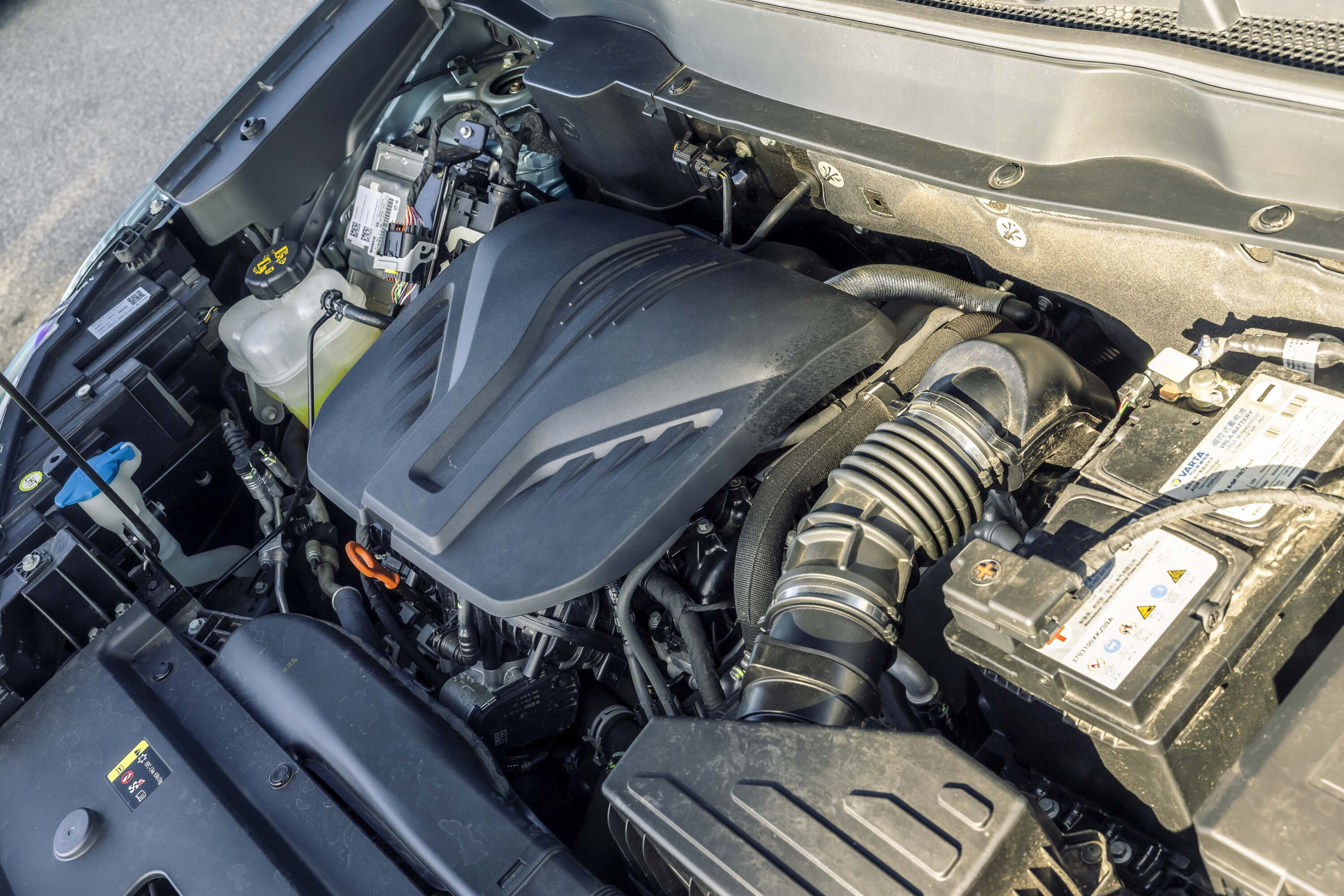
The Haval H6 and H6 GT have a 2.0-litre turbocharged four-cylinder petrol engine that produces 150kW and 320Nm. It is matched with a seven-speed dual-clutch automatic transmission.
While the top-of-the-line Ultra and GT Ultra variants are available with all-wheel-drive, all other models are front-drive only.
The hybrid version of the H6 combines a 1.5-litre turbo-petrol engine with a 130kW electric motor, providing a total system output of 179kW and 530Nm. It features four drive modes: EV, Series, Parallel and Regeneration.
The regular Haval H6 and H6 GT are rated to tow up to 2000kg braked and 750kg unbraked, while the H6 Hybrid has a lower 1500kg braked towing capacity.
1
| 2023 GWM Haval H6 fuel economy | ||
|---|---|---|
| 1.5-litre turbo-petrol hybrid FWD (H6 Hybrid) | 5.2L/100km | 120g/km |
| 2.0-litre turbo-petrol FWD (H6) | 7.4L/100km | 169g/km |
| 2.0-litre turbo-petrol FWD (H6 GT) | 7.5L/100km | 173g/km |
| 2.0-litre turbo-petrol AWD (H6) | 8.3L/100km | 190g/km |
| 2.0-litre turbo-petrol AWD (H6 GT) | 8.4L/100km | 193g/km |
Petrol variants have a 61-litre fuel tank, with support for 91RON unleaded.
The hybrid has a 60-litre tank and requires 95RON premium unleaded or higher.
1
Safety
The Haval H6 is covered by a five-star ANCAP safety rating, based on testing conducted in 2022. This score applies to all variants, including the GT and hybrid.
It scored 90 per cent for adult occupant protection, 88 per cent for child occupant protection, 73 per cent for vulnerable road user protection, and 81 per cent for safety assist.
For a full run-down, click here.
Seven airbags (dual front, side, curtain, and front-centre) are fitted across the range.
1
| 2023 GWM Haval H6 active safety features | |
|---|---|
| Autonomous emergency braking (vehicle, pedestrian, cyclist, junction-turning, reverse) | Traffic sign recognition |
| Lane-keep assist | Adaptive cruise control |
| Lane departure warning | Driver fatigue monitoring |
| Blind-spot alert | Multi-collision braking. |
1
Dimensions
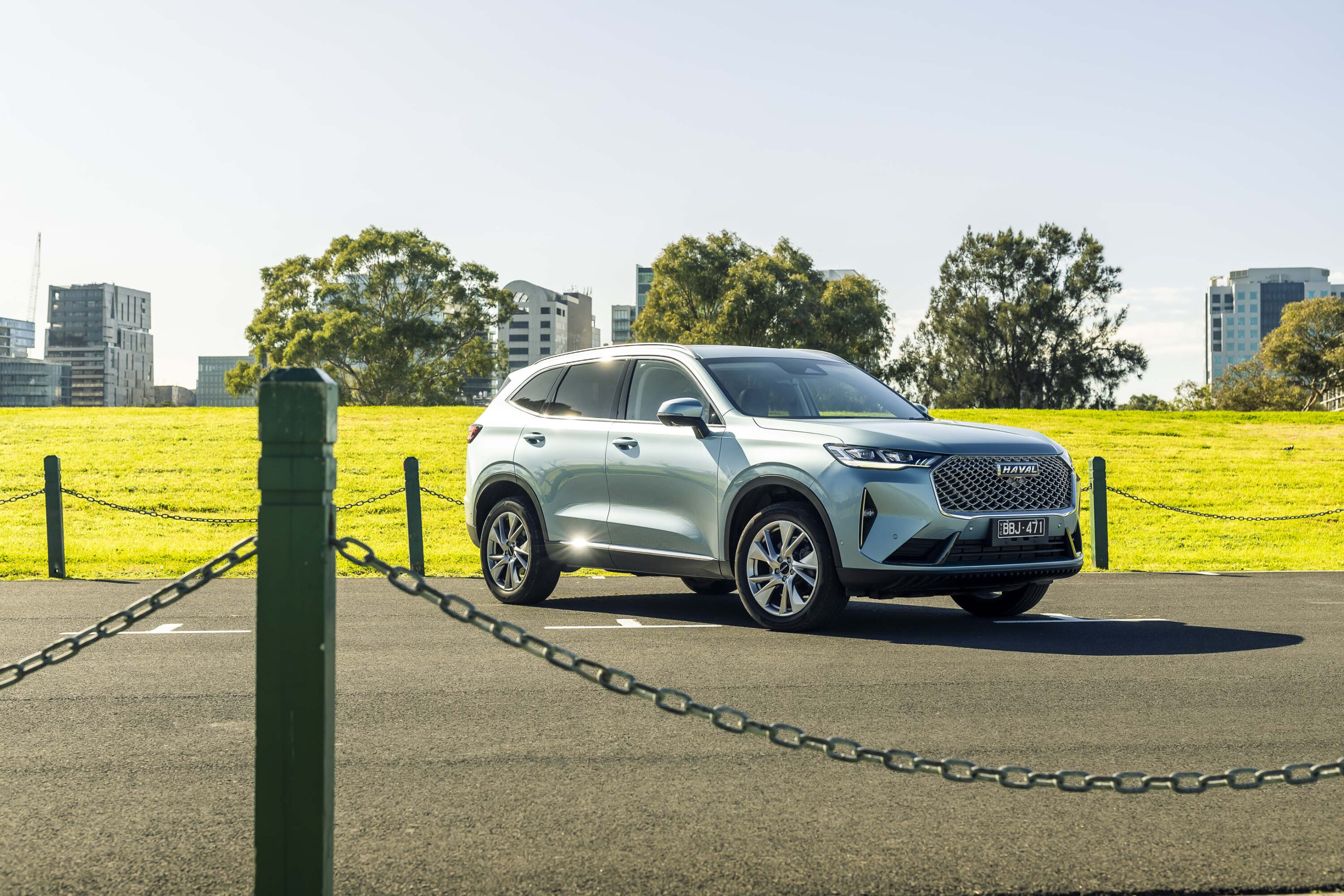
The GWM Haval H6 measures 4653 millimetres long, 1886mm wide and 1724mm tall, with a 2738mm wheelbase.
Meanwhile, the swooped-back H6 GT measures 4727mm long, 1940mm wide and 1729mm tall, with an identical 2738mm wheelbase.
Comparisons
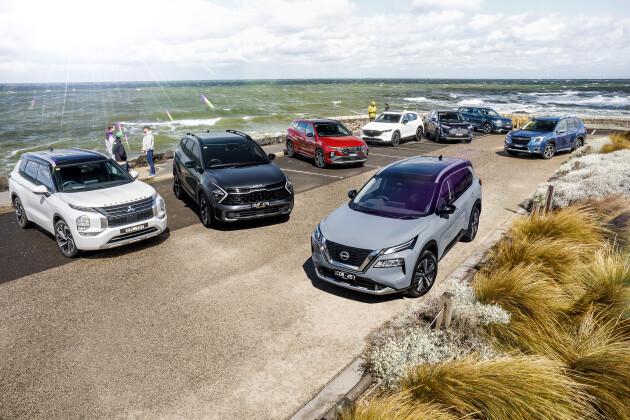
Medium SUV comparison: 2023 Mega Test
Thinking of buying a new mid-size SUV this year? We test eight of the best and most popular contenders to see where you should spend your money
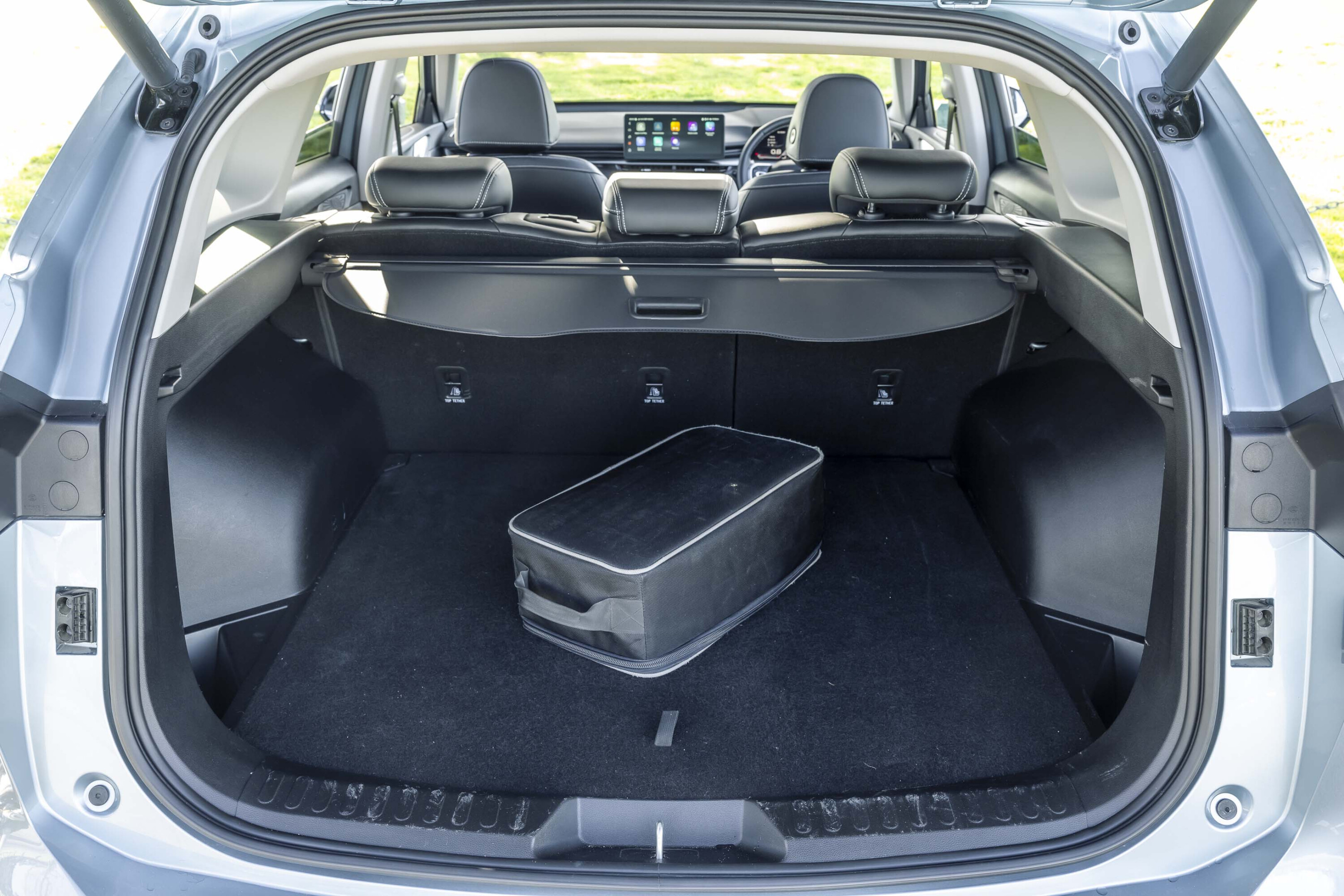
2023 GWM Haval H6 boot space
The regular H6 petrol and hybrid have a 600-litre boot capacity, while the H6 GT has a 392-litre capacity.
Folding the second row expands space to 1485L for the H6 petrol and hybrid, and 1390L for the H6 GT.
1
Warranty and servicing
As per the wider GWM range, the Haval H6 is covered by the brand’s seven-year, unlimited-kilometre warranty. It has a complimentary roadside assistance program for the first five years of ownership.
Following an initial 12-month/10,000-kilometre service, maintenance for the Haval H6 is required every 12 months or 15,000 kilometres, whichever comes first.
Capped-price servicing is available for the first five years or 70,000 kilometres.
1
| Service interval | H6 FWD | H6 AWD | H6 GT/Hybrid FWD | H6 GT AWD |
|---|---|---|---|---|
| 12 months/10,000km | $210 | $210 | $225 | $225 |
| 24 months/25,000km | $280 | $280 | $250 | $280 |
| 36 months/40,000km | $380 | $480 | $400 | $500 |
| 48 months/55,000km | $480 | $580 | $550 | $550 |
| 60 months/70,000km | $210 | $210 | $225 | $225 |
MORE
Everything Haval
MORE
Everything GWM
MORE
SUV Buyers Guide
Hankook Tyre’s iON range, regarded as the world’s first tyre developed specifically for electric vehicles, has launched in Australia.
Snapshot
- Hankook says tyres offer 25% more life on EVs than regular tyres
- Increased rigidity on iON evo AS tyres improves cornering by 20%
- Available for rim diameters between 19 and 22 inches
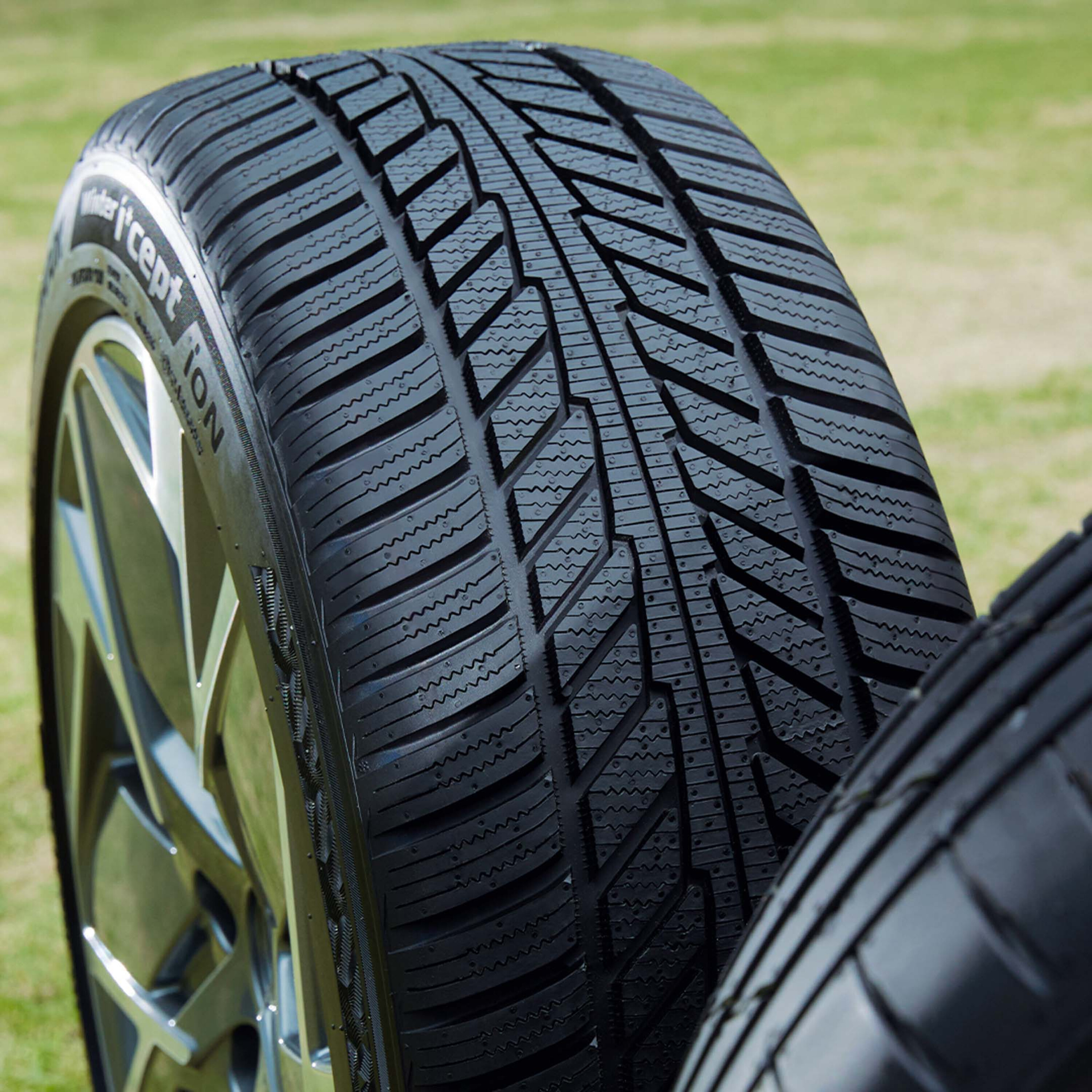
The iON Evo AS and iON Evo AS SUV are the first tyres from the tyre maker, and will be available in Australia in 20 sizes for rim diameters between 19 and 22 inches.
Up to now, electric car makers have adopted many different features to deliver maximum efficiency through lowering resistance, from using cameras instead of drag-inducing rearview mirrors, wheel designs to minimise turbulence around the wheels, and significant weight-reducing efforts.
1
No surprise, Hankook says its EV-specific iON range is designed to address another contributor to inefficiency: rolling resistance.
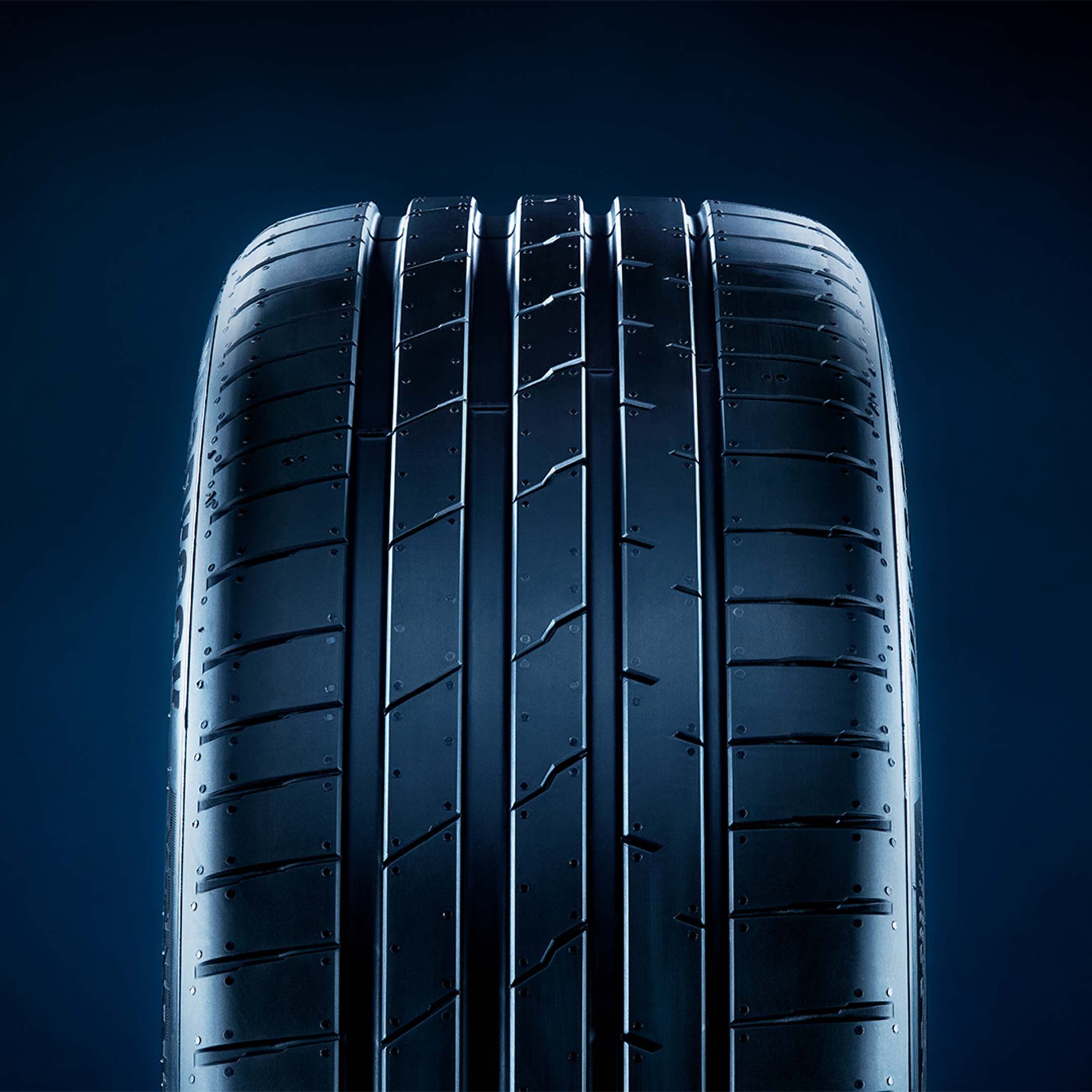
Hankook says the iON evo range [↗] contains the brand’s “EVolution compound” – made from high-concentration silica – and is “designed to evenly spread road pressure and extend tyre life”, while also reducing resistance.
The company claims a resulting increase to an EV’s range, while the hard-wearing compound has proved 25 per cent more durable for carrying much heavier EVs (when compared with Hankook’s Ventus S2 AS X tyre).
Advice
Australia’s best electric cars for 2023
We’ve tested nearly every EV below six figures in Australia to rank the best on sale today
It’s not just efficiency that Hankook is seeking to address, however, with road noise and grip being other factors of concern.
While electric cars can be eerily quiet when in motion, road noise still makes up to 40 per cent of cabin noise, which can then increase by a further 30 per cent at highway speeds. With the iON Evo AS range, Hankook has incorporated a knurling inside the tyre grooves to assist with reducing noise.
Batteries increase an EV’s mass substantially – an additional 10-20 per cent more weight over an internal combustion engine (ICE) – which ultimately affects a vehicle’s cornering. Hankook claims its EV Contour technology remedies this through an increase in lateral rigidity by 25 per cent, and cornering rigidity by as much as 20 per cent when compared with all-season tyres.
1
“With advanced technology and innovative materials, iON tyres provide superior performance and sustainable driving experience by offering lower noise, higher load support, response to a higher torque, and lower rolling resistance,” said Junghee Cho, Managing Director of Hankook Australia.
“iON tyres are developed combining Formula E technology and Hankook Evolution technology so you can be rest assured of their performance.”
The iON Evo racing tyre made its debut in the ABB FIA Formula E World Championship in January 2023, with all teams being supplied with Hankook tyres for the season.
1
MORE
Electric Cars
⚡ More EV stories to help you choose the best car for your needs
The Australian Government has today committed to introducing fuel efficiency standards to boost the supply and choice of electric vehicles as part of its National Electric Vehicle Strategy.
Snapshot
- Federal government commits to fuel-efficiency standard
- Finalising details in u201ccoming monthsu201d, possible introduction before 2023 end
- A number of vehicle types will be excluded
- Industry groups welcome mandate to grow the local EV market
We’re not there yet, however. Despite releasing a public consultation paper last year, Canberra says it still needs to work with “industry and the community to finalise details in coming months”.
While the Commonwealth legislation is designed to accelerate EV adoption in Australia with more models and lower price tags, it will only apply to light vehicles (i.e. excludes heavy vehicles, law enforcement and emergency services vehicles, agricultural equipment and motorcycles).
Note
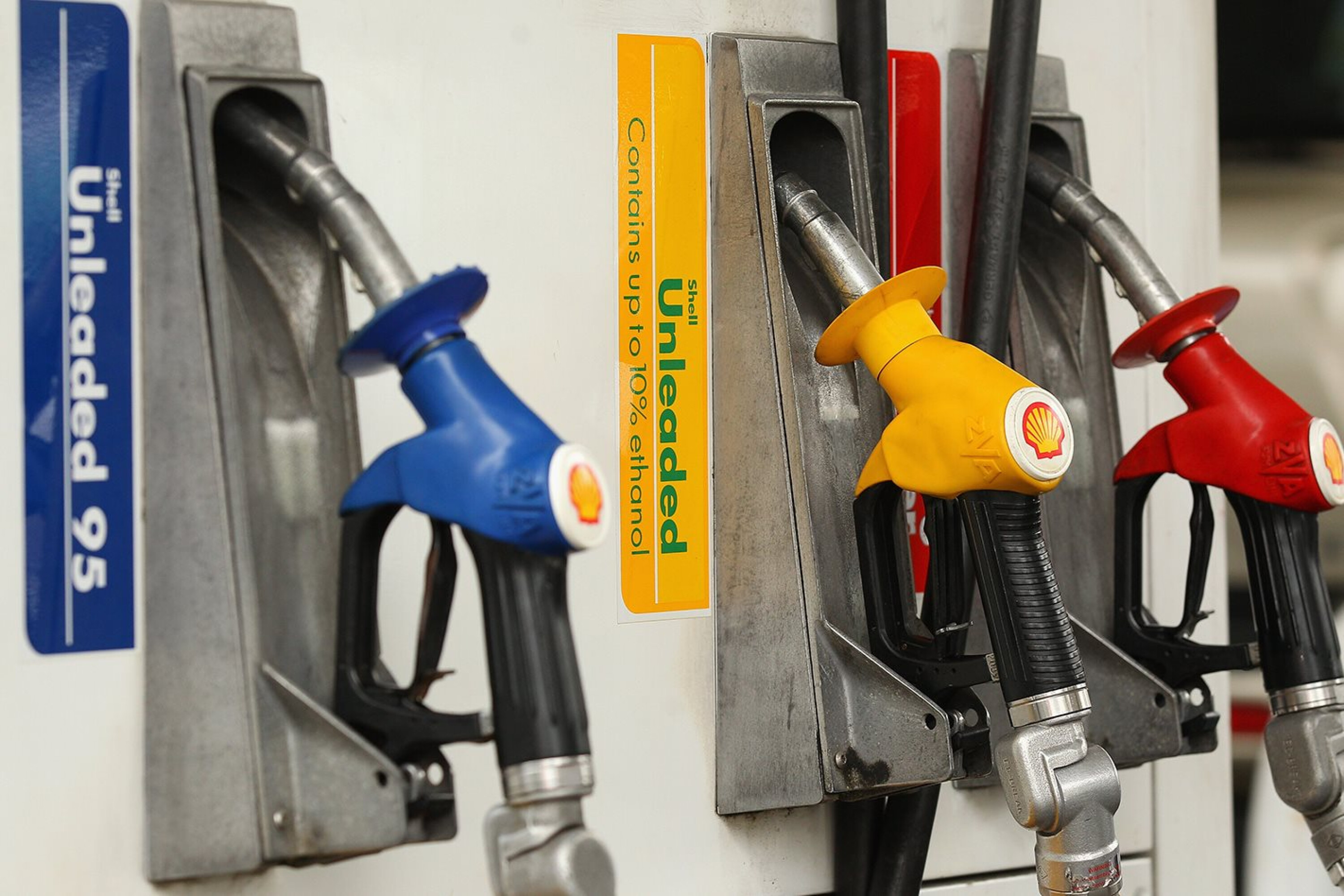
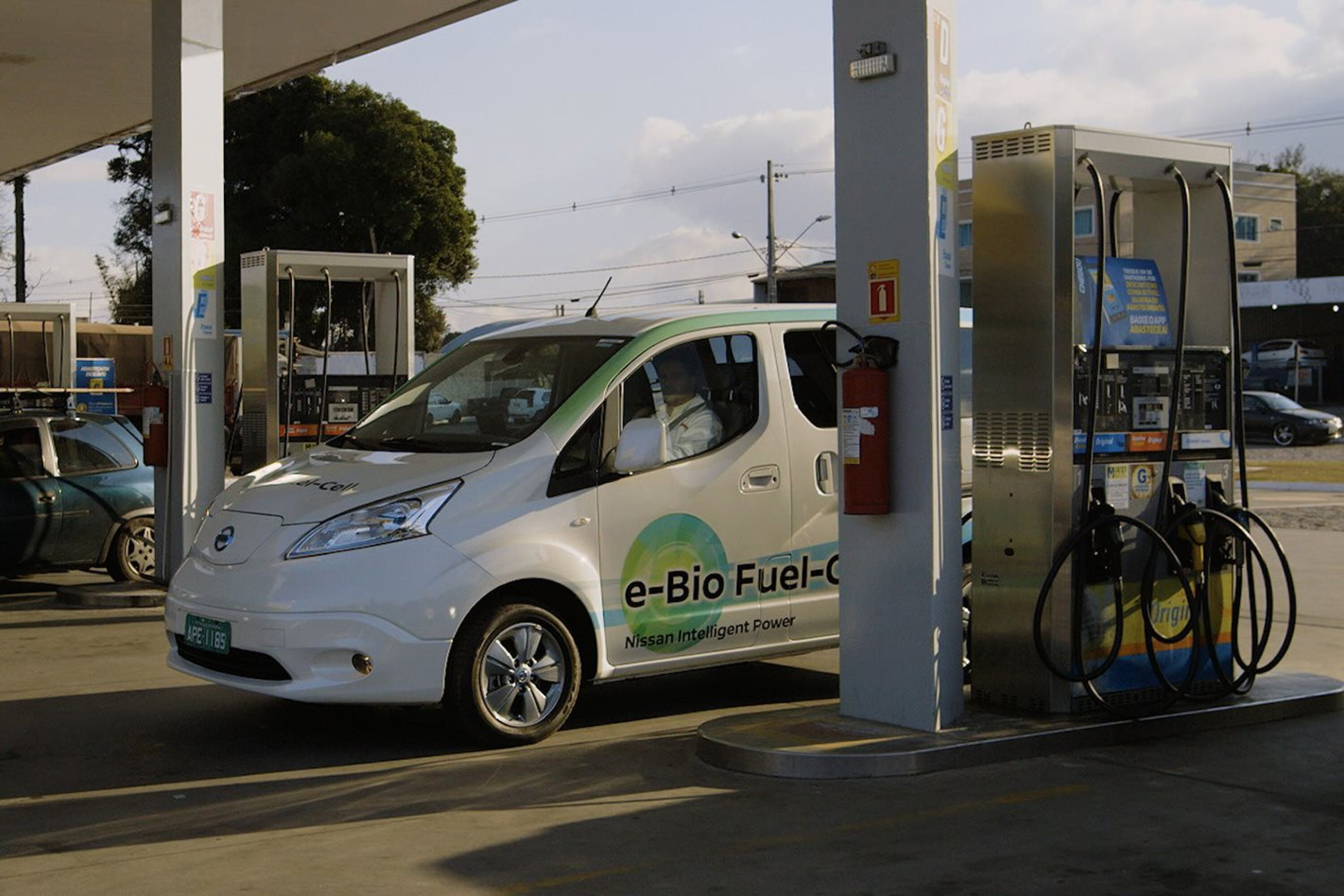
The fuel-efficiency standard will mandate a set carbon emissions (CO2) per kilometre exhaust target for the average of all new vehicles sold by each car manufacturer, otherwise financial penalties will apply. The links below show how this compares with rules in other markets.
The Albanese government’s latest consultation paper claims it will:
“…protect the continued sale of vehicles Australians love, including utes and 4-wheel drives … provide good incentives for suppliers to provide more efficient internal combustion engine technology, including hybrids, and bring popular and more affordable [zero-emission vehicles] … to reduce the average emissions of new vehicle sales.”
1
Federal minister for infrastructure, transport, regional development and local government, Catherine King, said the government would introduce standards that ‘work for Australia’s market’.
“This strategy offers an historic opportunity to develop fuel efficiency standards that learn from international best practice, while recognising the unique needs of Australians,” King said.
“It will send a strong message to the global car industry that when it comes to transport technology, Australia will no longer settle for less.”
The federal government has also opened a feedback consultation form [↗], which closes by May 31.
1
AADA: ‘Don’t go too hard too fast’
The Australian Automotive Dealer Association (AADA), which is the peak body representing franchise new car dealers, welcomed the commitment to a fuel-efficiency standard.
But, AADA CEO James Voortman warned the government to not be overly ambitious.
“The automotive industry is in fierce agreement that we need such a standard, but the detail that emerges out of the consultation will be critical. If we go too hard too fast, we risk undermining vehicle affordability and choice,” Voortman said.
1
“We need a policy tailored for Australia’s unique circumstances as a small, right-hand drive vehicle, full import market… The standard also needs to be considered alongside other EV policy initiatives [such as purchasing incentives].
“The AADA are keen to work with the Federal Government and other participants in the automotive supply chain to ensure the fuel efficiency standard is ambitious, but achievable, allowing Australians to access state of the art fuel-efficient vehicles, without reducing vehicle affordability or choice.”
Advice
Australia’s best electric cars for 2023
We’ve tested nearly every EV below six figures in Australia to rank the best on sale today
Solar Citizens: “We’ve become a dumping ground for crappy, inefficient vehicles”
However, clean transport campaigner, Ajaya Haikerwal, from the environmental advocacy group Solar Citizens, said it’s vital the fuel-efficiency standard is ambitious – since Australia already lags behind other countries with the mandate.
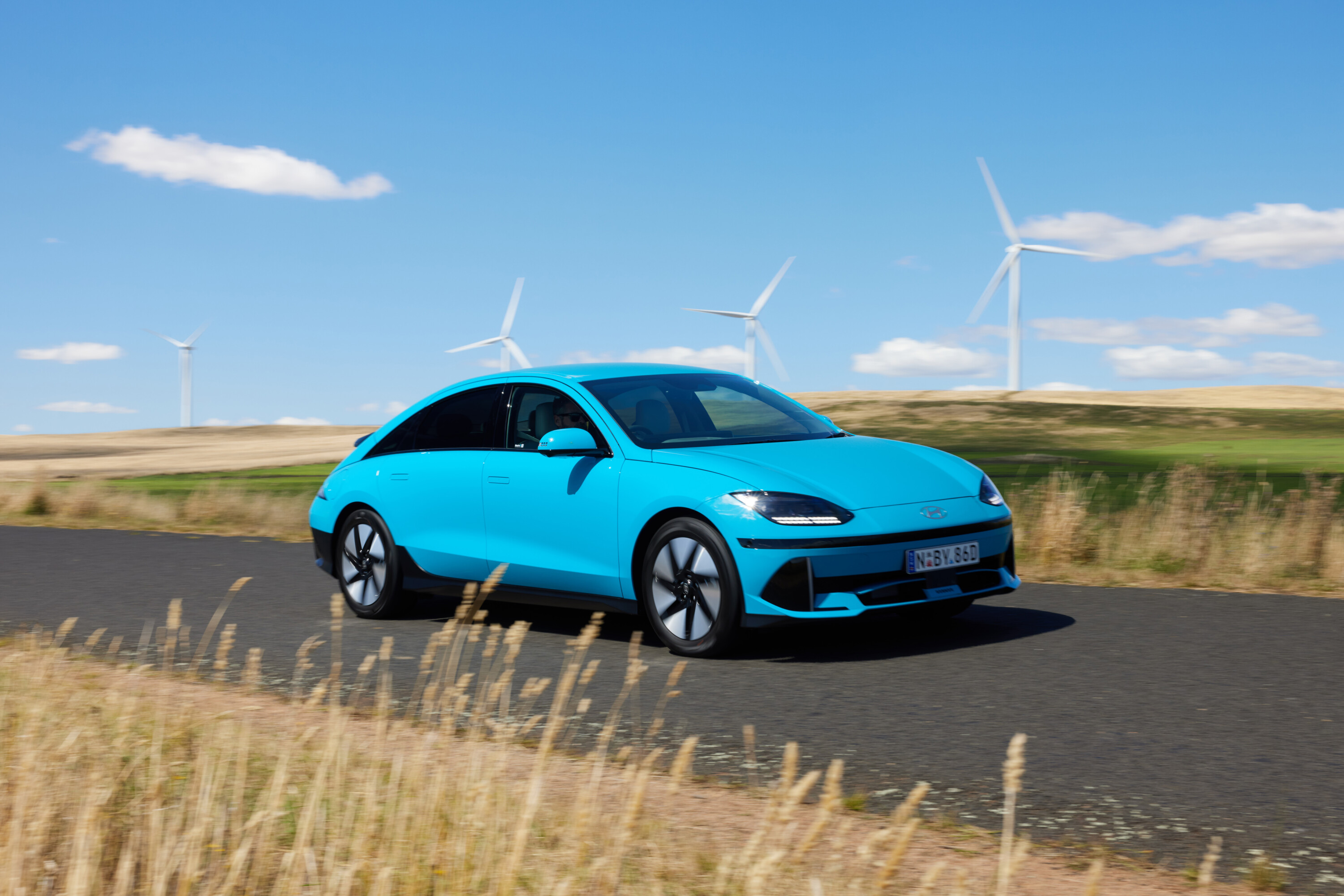
“Australia is already at the back of the global queue when it comes to access to electric vehicles – we’ve become a dumping ground for crappy, inefficient vehicles that aren’t accepted in other countries,” Haikerwal said.
1
“What we’ve needed for a long time is a world-class standard that is at least as ambitious as Europe or New Zealand, without loopholes or dodgy super credits that create perverse climate outcomes, and that give all Australians a fair go and reduce spending on petrol. It’s an easy rule change with a minimal cost to the Government.”
The organisation published a report last week highlighting that regional Australians would most benefit from the EV switch since they typically own a vehicle and drive longer distances.
Therefore, regional drivers are hardest hit with the rising cost of fuel – even though the driving range capabilities of EV models and patchy public charging infrastructure today means it doesn’t suit everyone (for now).
Solar Citizens also urged the government to reduce the average emissions target at a faster rate every year to achieve zero-emissions by 2035, with watchdogs to ensure any penalties aren’t passed onto consumers and regular enforcement reviews every two years.
Why is an emissions standard needed?
The transportation sector is the third-largest emitter of greenhouse gas emissions in Australia.
The Bureau of Infrastructure, Transport and Regional Economics estimates that new vehicles sold in Australia in 2021 have a CO2 intensity of around 174g of CO2 per kilometre.
By contrast, 29 European countries averaged 115g of CO2/km and in the US 169g of CO2/km in 2022, according to the National Transport Commission.
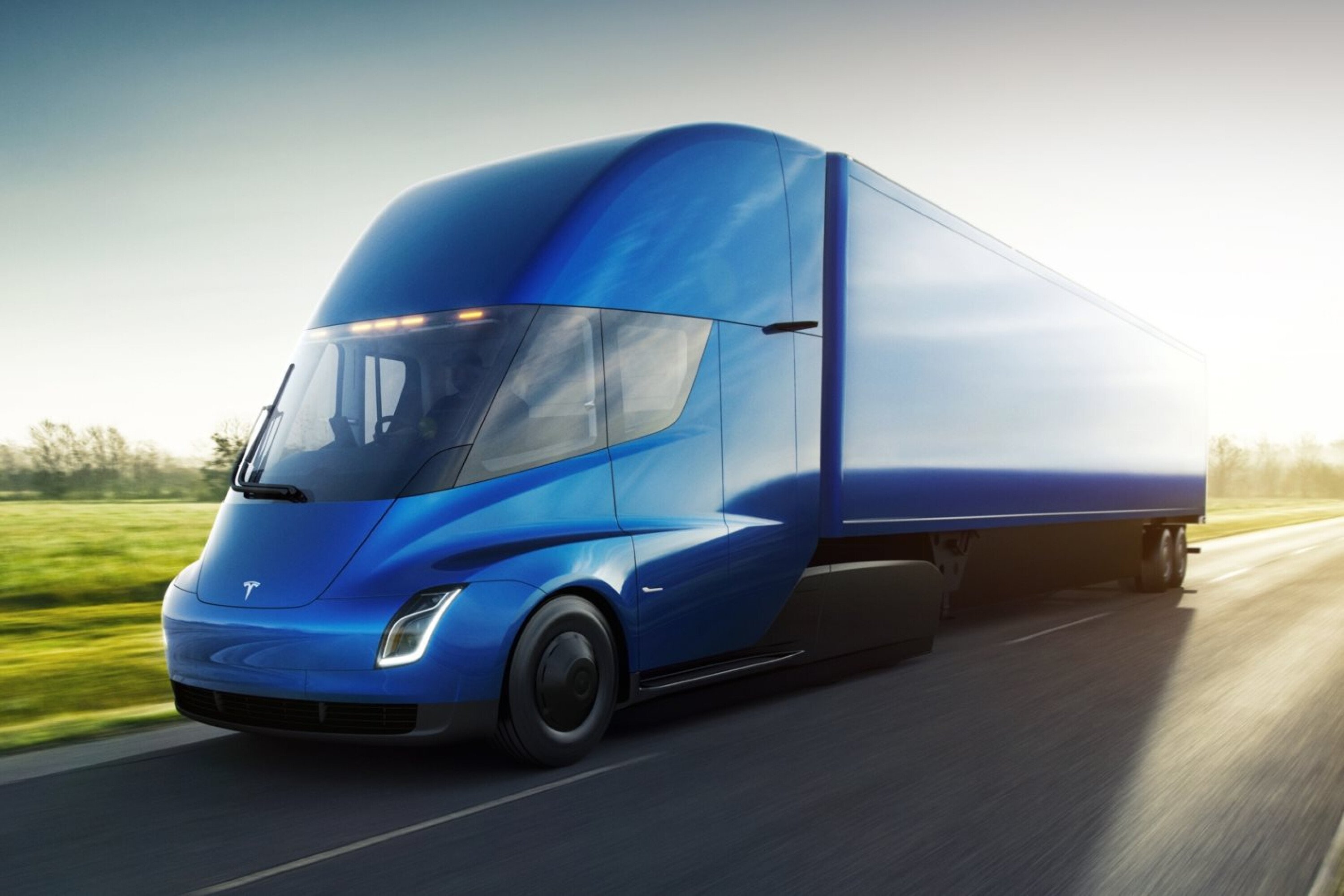
Along with Russia, Australia remains one of the last developed countries globally to not adopt a fuel-efficiency standard, which has had the effect of disadvantaging local EV uptake.
1
This has resulted in car manufacturers prioritising other markets to bring more supply and sell more low- or zero-emission vehicles, where there are hefty financial penalties for not meeting low average emissions thresholds.
Models such as the Kia EV6, Hyundai Ioniq 5 and Volvo XC40 Recharge remain limited in supply – more than a year after their releases – and the Volkswagen Group, Toyota, Peugeot, Fiat, and Renault are only starting to bring their electric cars years out from their launches overseas.
Currently, the Australian car market can only be impacted by the flow-on effects from global mandates, with Euro 7 set to be enforced in Europe from mid-2025. And Thailand, our biggest source of utes, aims to have 50 per cent of its vehicle production focused on electric vehicles by 2030.
MORE
Electric Cars
⚡ More EV stories to help you choose the best car for your needs
UPDATE: The 2023 Citroen C5 Aircross hits Australia in single Sport trim from $54,990 before on-road costs.
Snapshot
- Single C5 Aircross Sport variant arrives in Oz
- Priced at $54,990 + ORCs
- More powerful 133kW engine
Available to order now, the C5 Aircross Sport gets a new 133kW/250Nm 1.6-litre turbo-petrol four-cylinder paired with an eight-speed automatic transmission.
There are also updates to the C5 Aircross Sport’s safety systems, a larger 10-inch touchscreen and more, which are detailed below. Reflecting the added features, the new Sport is $2690 dearer than the Outgoing C5 Aircross Shine.
8
The C5 Aircross is classified as a medium SUV in Australia. Some key C5 Aircross rivals include the Toyota RAV4, Hyundai Tucson, Skoda Karoq, and Volkswagen Tiguan
“We are delighted to welcome the refreshed C5 Aircross Sport to our local range. We are confident C5 Aircross Sport will appeal to both existing and new Citroën customers in Australia who have a keen eye for style and French flair,” said Kate Gillis, managing director Citroen Australia.
| 2023 Citroen C5 Aicross pricing | |
|---|---|
| C5 Aircross Sport 131kW PureTech: | $54,990 (before on-road costs) |
Our original article, below, continues unchanged
February 14: Citroen C5 Aircross specifications confirmed
Snapshot
- Coming in the first half of the year
- Available in a single, highly specified Sport variant
- Follows recent additions of C5 X and C4
The 2023 Citroën C5 Aircross Sport will arrive in Australia in the first half of this year, the brand has announced today.
Available in a single, highly-specified Sport variant, the C5 Aircross Sport will come with an upgraded engine and transmission compared to its predecessor, with more additional features included as standard.
The C5 Aircross Sport will now utilise a 1.6-litre turbo-petrol engine making 133kW and 250Nm when paired with the brand’s EAT8 eight-speed automatic transmission, compared to the previous model’s 121kW engine and six-speed automatic transmission.
1
This engine is found in the recently-launched C5 X, and the related Peugeot 3008 and 5008.
A plug-in hybrid, which produces 165kW of total system power, is available overseas.
The PHEV is believed to be under consideration for Australia, with the powertrain currently available on the Peugeot 508, and soon to be offered on the C5 X and Peugeot 308 hatch.
1
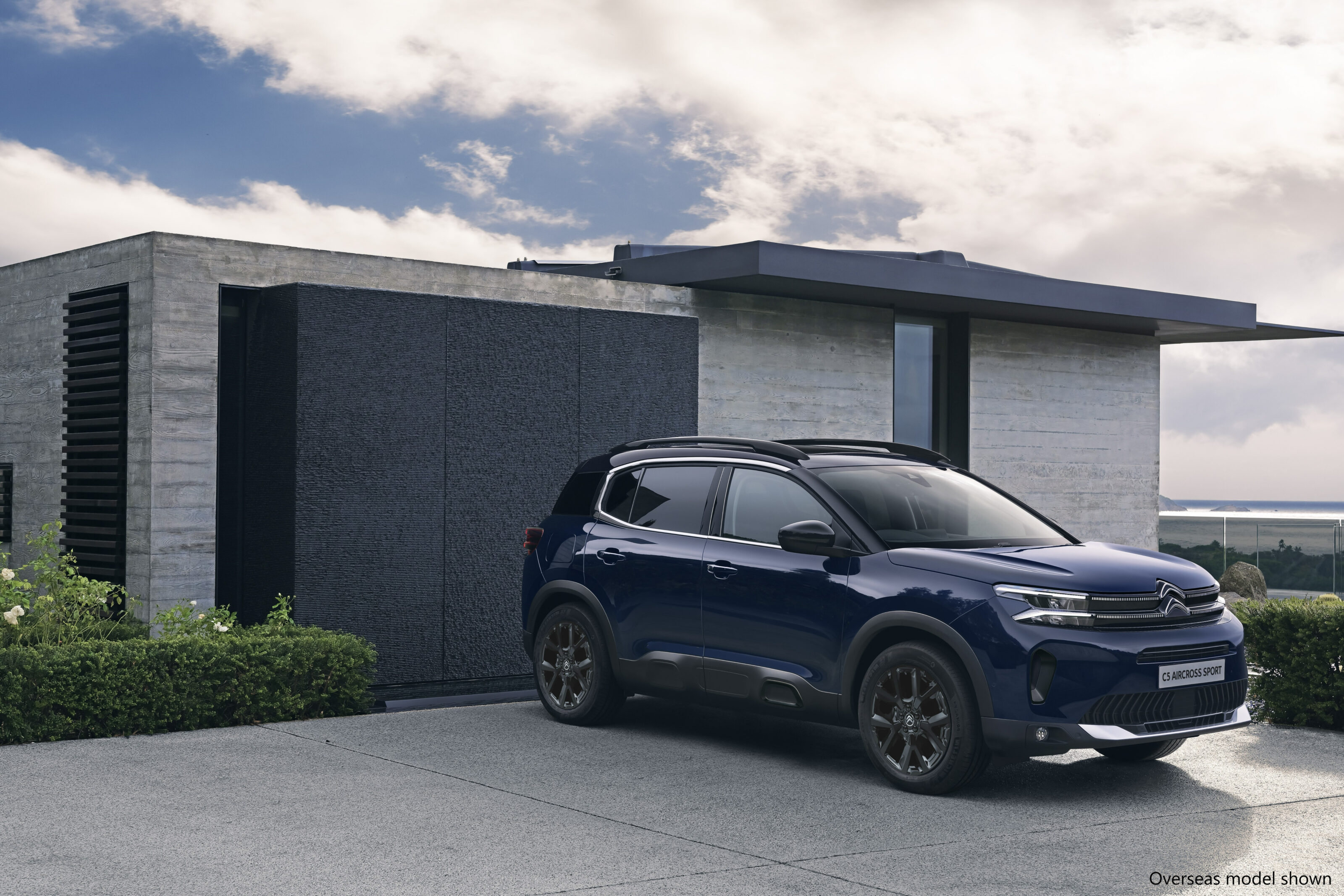
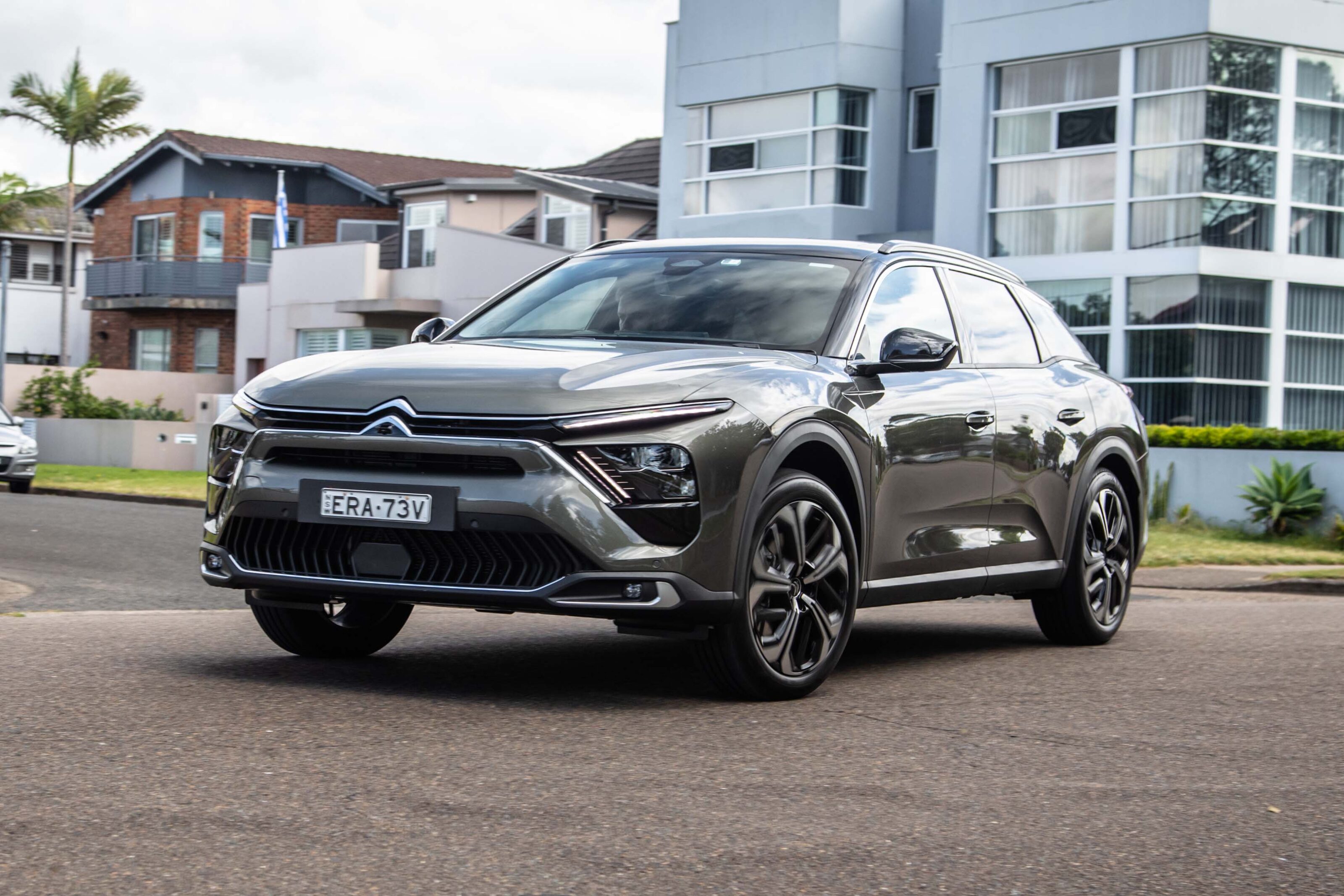
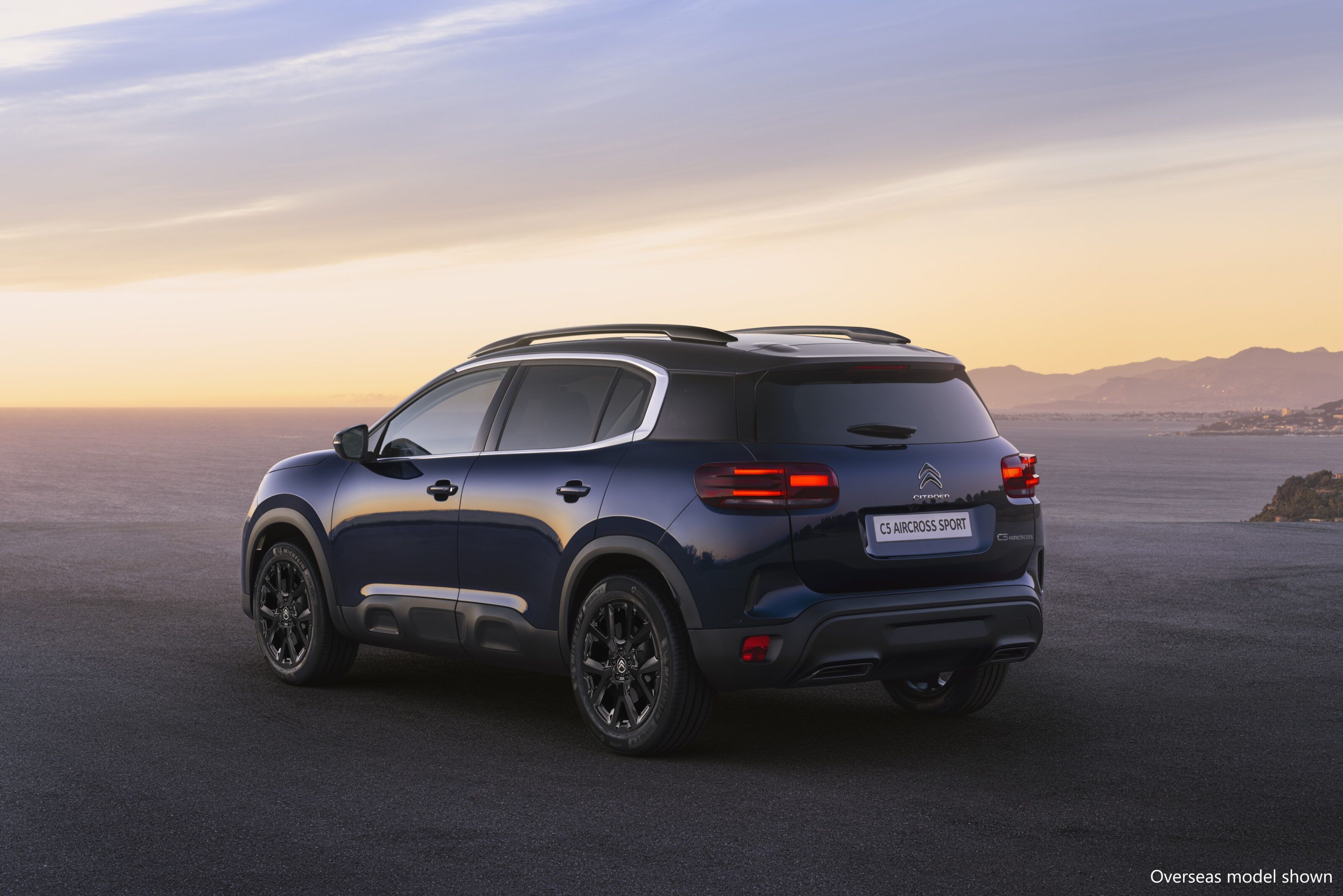
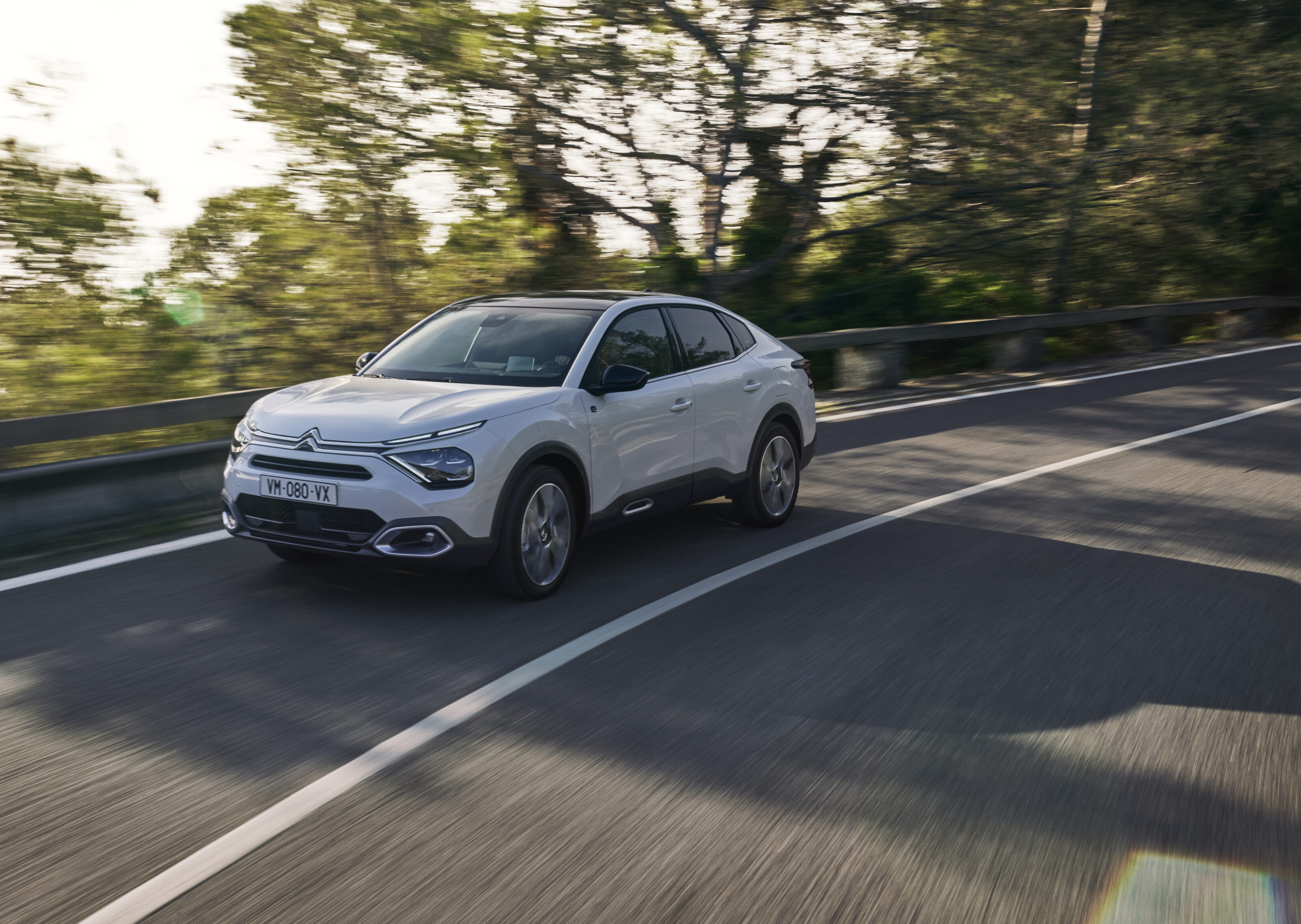
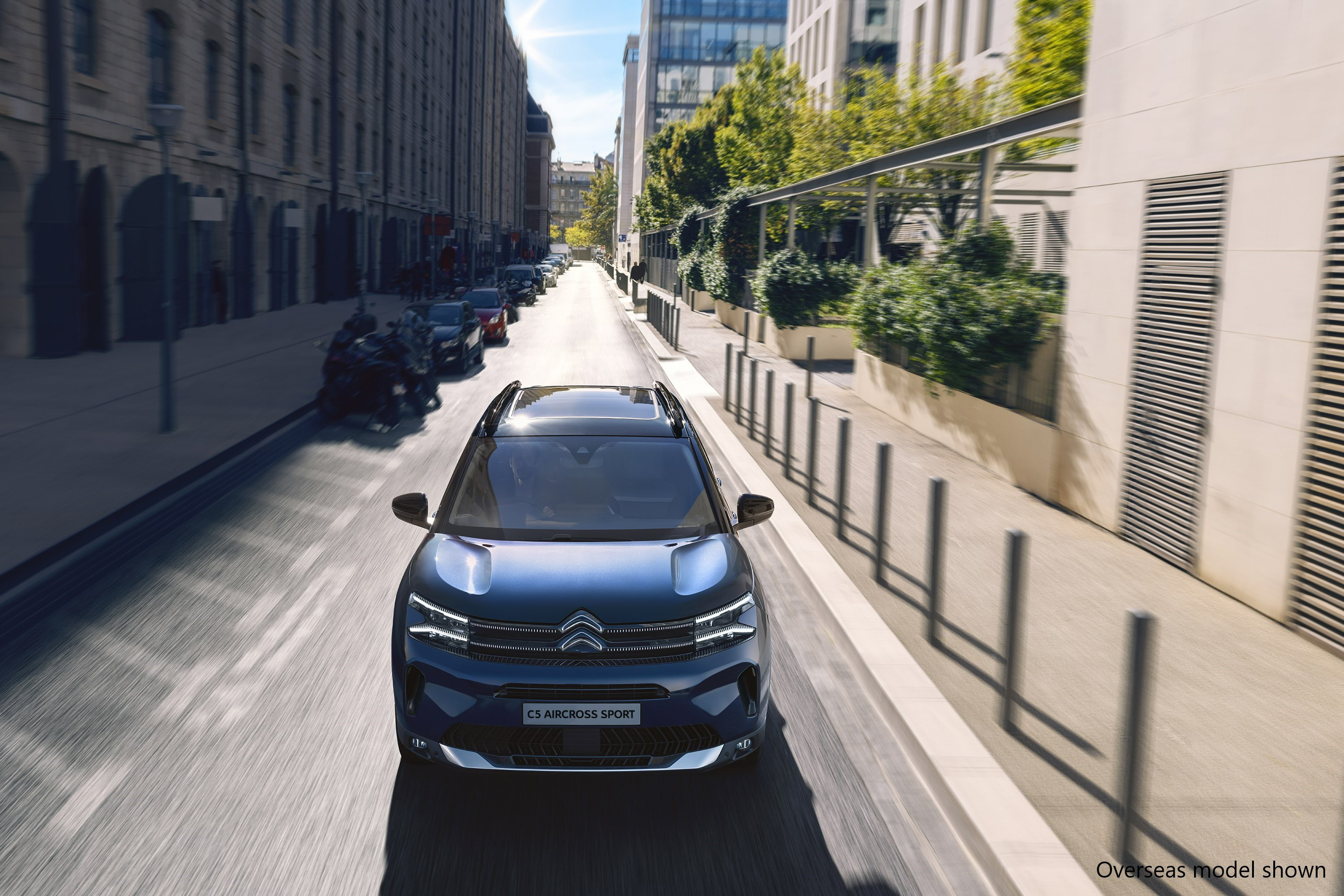
According to Citroën, the C5 Aircross Sport is larger than before and introduces a new design language transforming to from curvy to featuring more structured lines.
Additionally, it says, it has upped its game on the inside too, with colours and materials refined for a more premium product offering greater comfort and quality.
The seats wear a new Paloma Nappa leather perforated trim, the armrests and the central console are made of a new black leather effect fabric and the dashboard has a new structured black leather effect insert.
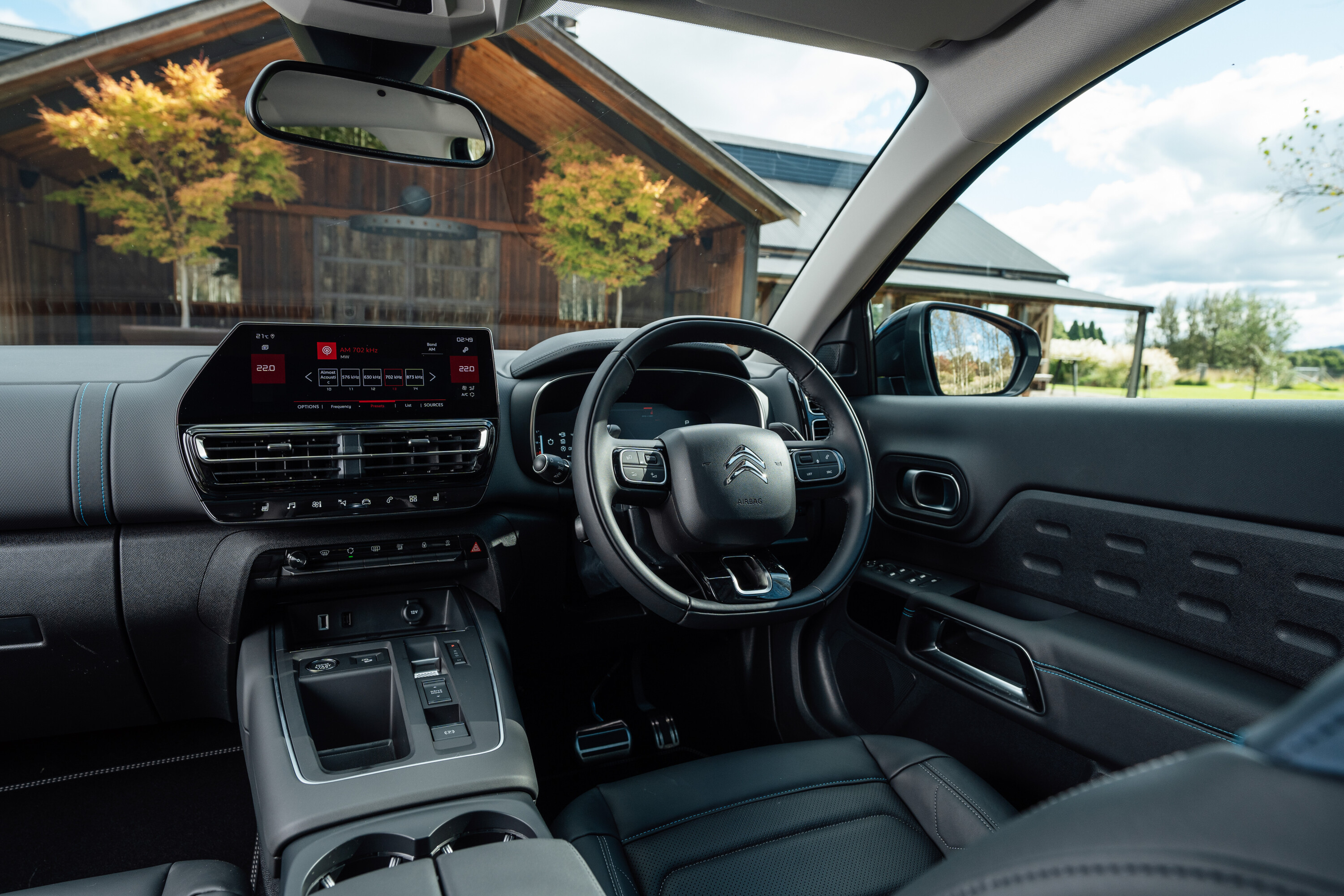
The central console has also been modernised with a black leather-effect-fabric with chrome lines to give more prominence to the layout of the controls, which include a new, elegant hi-tech e-Toggle style gear selector and new driving mode selection button with Grip Control function.
1
“We are looking forward to introducing the refreshed C5 Aircross Sport later this year to a revitalised local range alongside the recent addition of the C5 X and the C4, offering greater choice for Australian consumers,” said Kate Gillis, Managing Director for Citroën Australia.
“Appealing to the discerning Citroën customer in Australia, C5 Aircross Sport offers a compelling package with Citroën’s signature Advanced Comfort philosophy influencing all aspects of the vehicle, a distinctive and modern exterior design and a comfortable and stylish interior, coupled with important safety and convenience features.”
1
Features
As standard the C5 Aircross Sport gets:
For 2023 six colours are available, including:
| Polar white |
| Perla nera black |
| Platinum grey |
| Steel grey |
| Eclipse blue |
| Pearlescent white |
1
Safety
The new C5 Aircross has yet to be rated by ANCAP, but the previous model was giving four stars by the authority in crash testing back in 2019.
This model offers a wide range of latest-generation technologies, including:
| C5 Aircross Sport safety features | |
|---|---|
| Highway driver assist | Anti-lock braking system with electronic braking distribution and emergency braking assistance |
| Autonomous emergency braking | Automatic hazard light activation upon heavy brake application |
| Blind-spot detection | Dynamic stability control |
| Speed limit recognition and recommendation | Electronic anti-skid system |
| Grip control terrain management system with hill descent assist | Adaptive cruise control with stop and go function |
| Tyre pressure monitoring system | Active lane departure warning system. |
Availability
The Citroën C5 Aircross Sport is anticipated to arrive in Australian showrooms later in the first half of 2023.
MORE
Everything Citroen
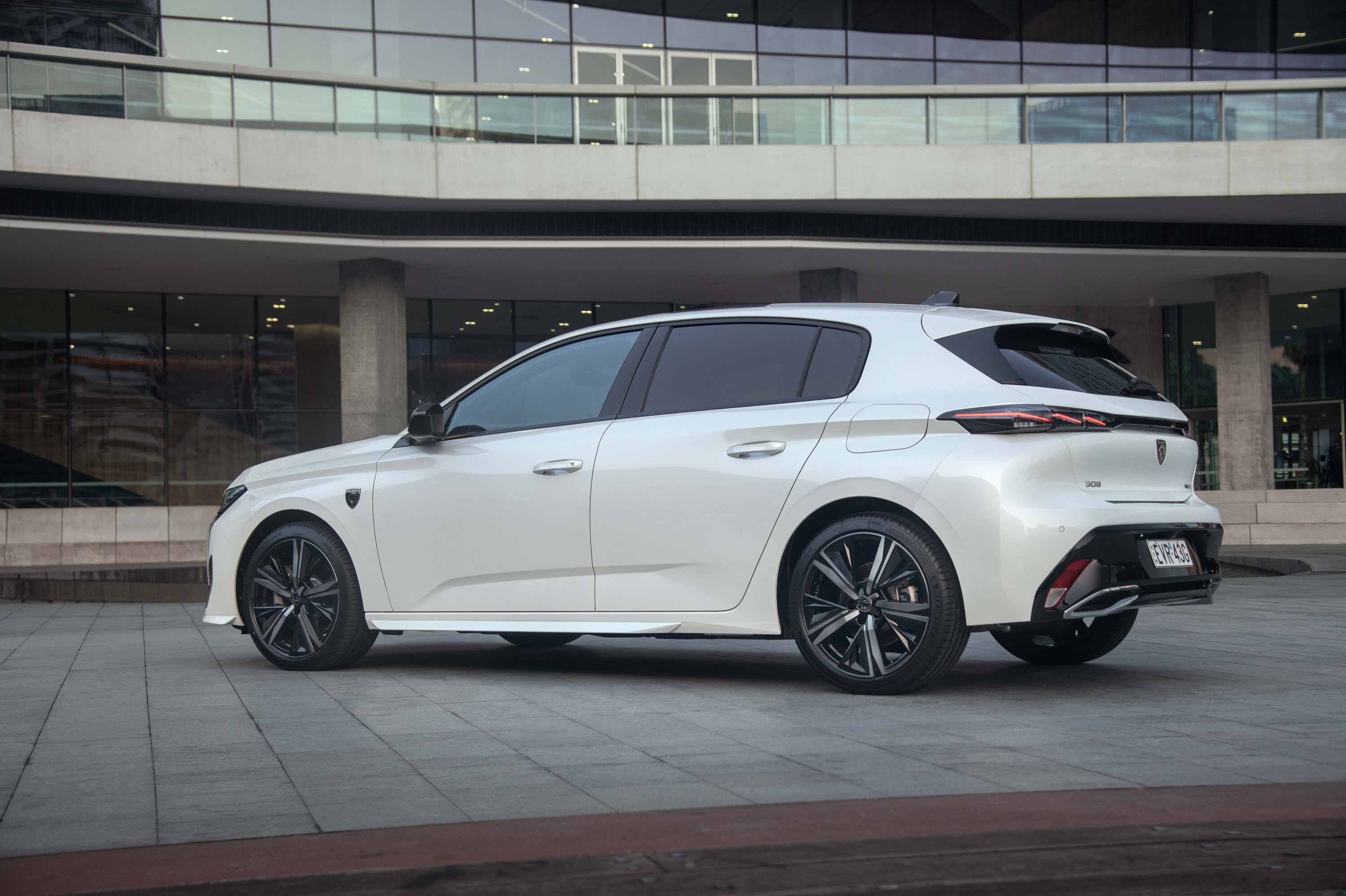
The new Peugeot 308 arrived on our shores in 2022. In cliched French fashion, it is stylish, doesn’t much care what you think of it, and was fashionably late.
In the well-established French tradition, it is commendably quirky, rides well and handles nicely.
Thing is, though, nobody buys hatchbacks anymore. But Peugeot’s local distributors have done quite nicely with this segment of car over the years. The Pininfarina-designed 306 with its whacky-but-effective passive rear-wheel steer was very successful. The 307 and 308 slowly floated out of the consciousness of buyers, despite the previous-generation 308 being quite good, especially in wagon and GTI form.
1
So Peugeot turned to SUVs, first with Mitsubishi’s help and then struck out on its own with the second-generation 3008, the 5008 and more recently the 2008.
Is there room in the market for a small hatchback? Sure there is – Toyota sells plenty of Corollas, Hyundai tons of i30s and Mazda lots of 3s.
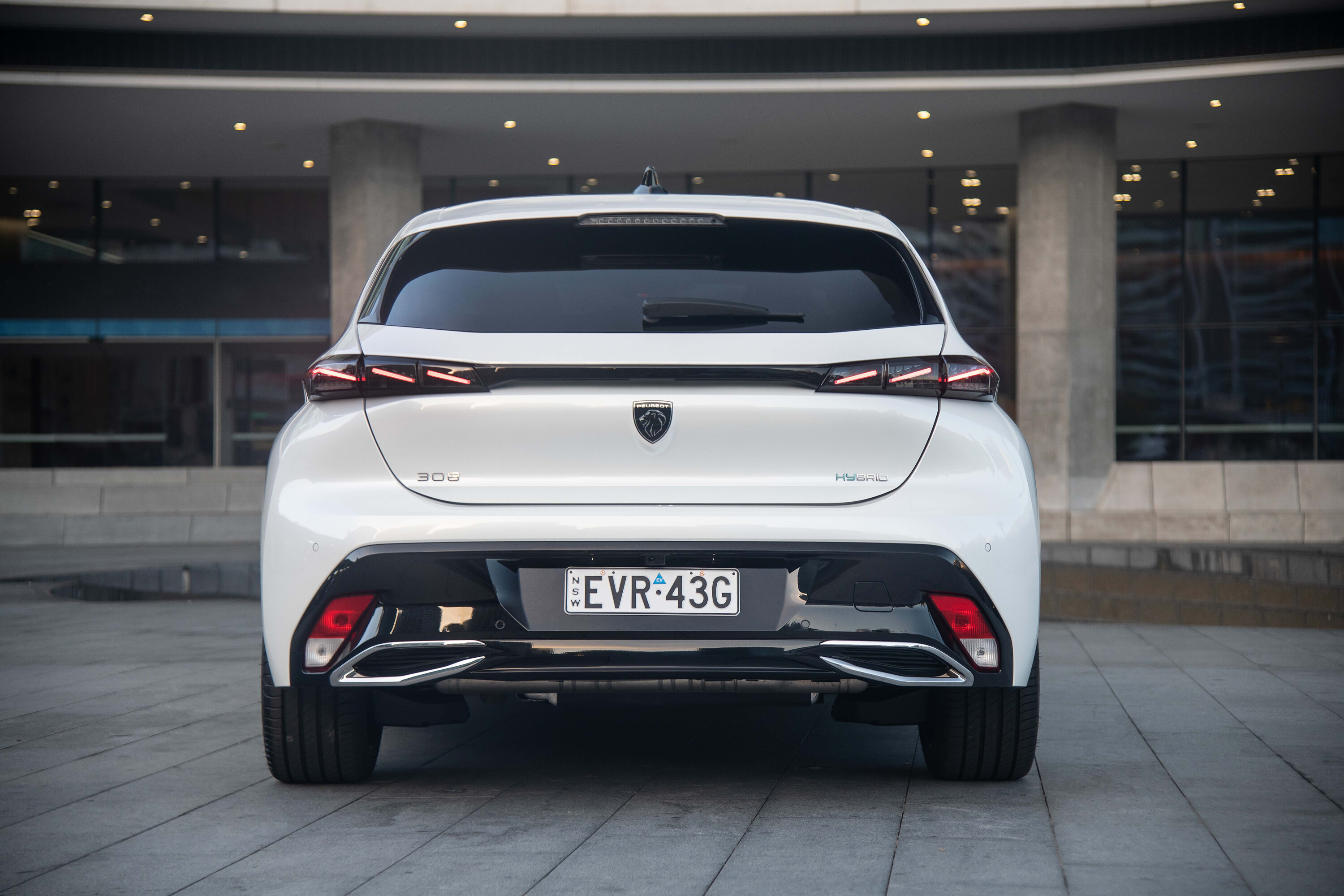
The 308 is pitched and priced as a premium product, which is fair enough. But this new plug-in hybrid is a de facto replacement for the previous model’s GTI hot hatch as well as an appeal to green motorists alongside the all-electric E-2008.
However, that might prove a bridge too far and for just one important reason. See if you can spot it.
1
JUMP AHEAD
- How much is it, and what do you get?
- How do rivals compare on value?
- Interior comfort, space and storage
- Battery and charging
- What is it like to drive?
- How is it on fuel?
- How safe is it?
- Warranty and running costs
- VERDICT
- Specifications
How much is it, and what do you get?
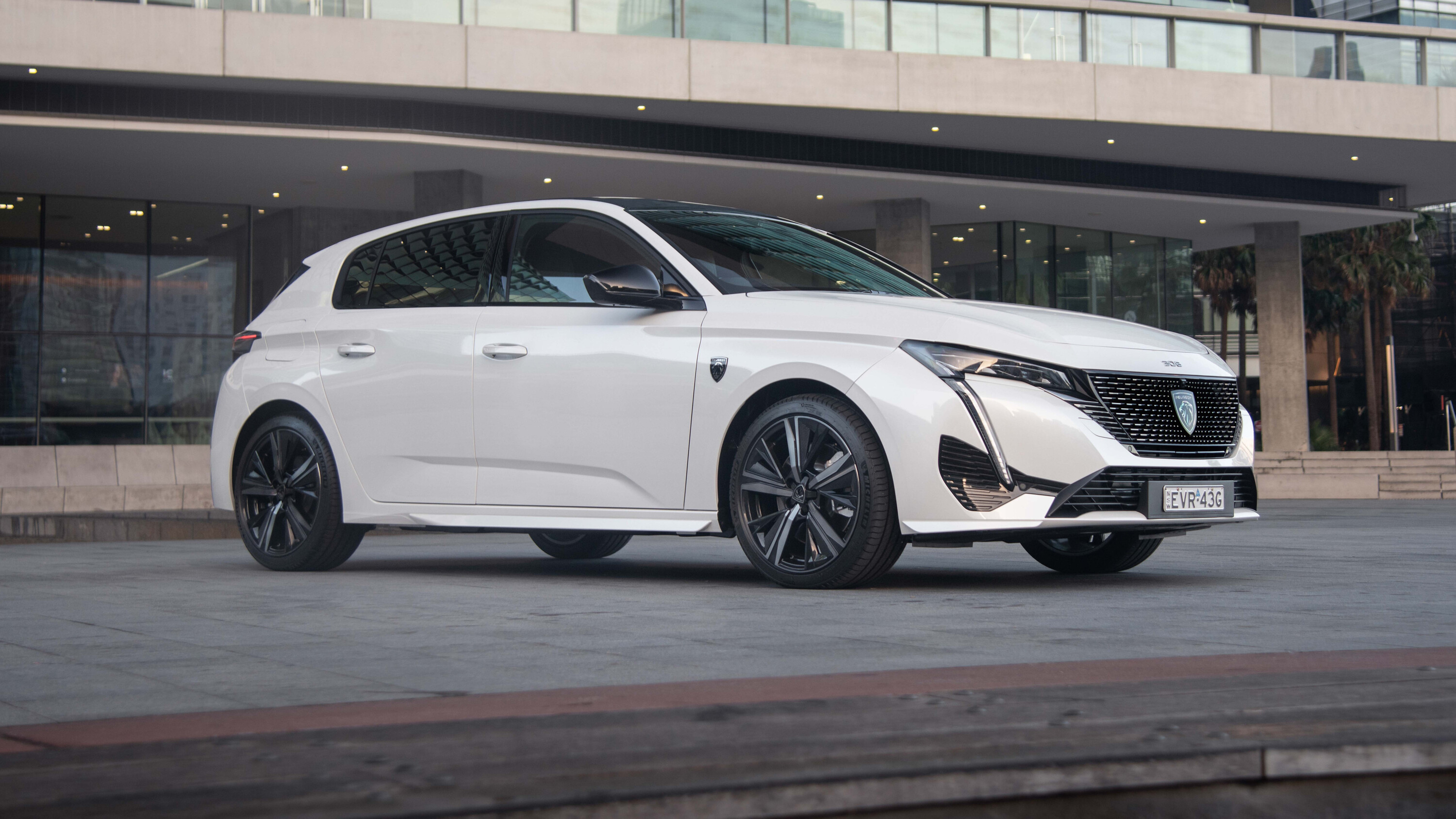
The Peugeot 308 GT Sport PHEV is a small five-door hatchback priced at $64,990 plus on-road costs.
I mean nobody outside of BMW or Mercedes has the front to charge this kind of money for a hatchback and even when they do, you get a fair bit for your money. That’s not to say you don’t do well with the 308, because it’s generously if not lavishly specified:
| 2023 Peugeot 308 GT Sport PHEV features | |
|---|---|
| 10-speaker Focal audio | Interior ambient lighting |
| 18-inch alloy wheels | Keyless entry and start |
| 360-degree cameras | Massaging and heated front seats |
| Auto LED headlights | Nappa leather and Alcantara upholstery |
| Auto wipers | Reversing camera |
| DAB+ digital radio | Sunroof |
| Digital instrument panel | Tyre repair kit |
| Dual-zone climate control | Wireless Android Auto |
| Front and rear parking sensors | Wireless Apple CarPlay |
| Heated steering wheel | Wireless phone charger |
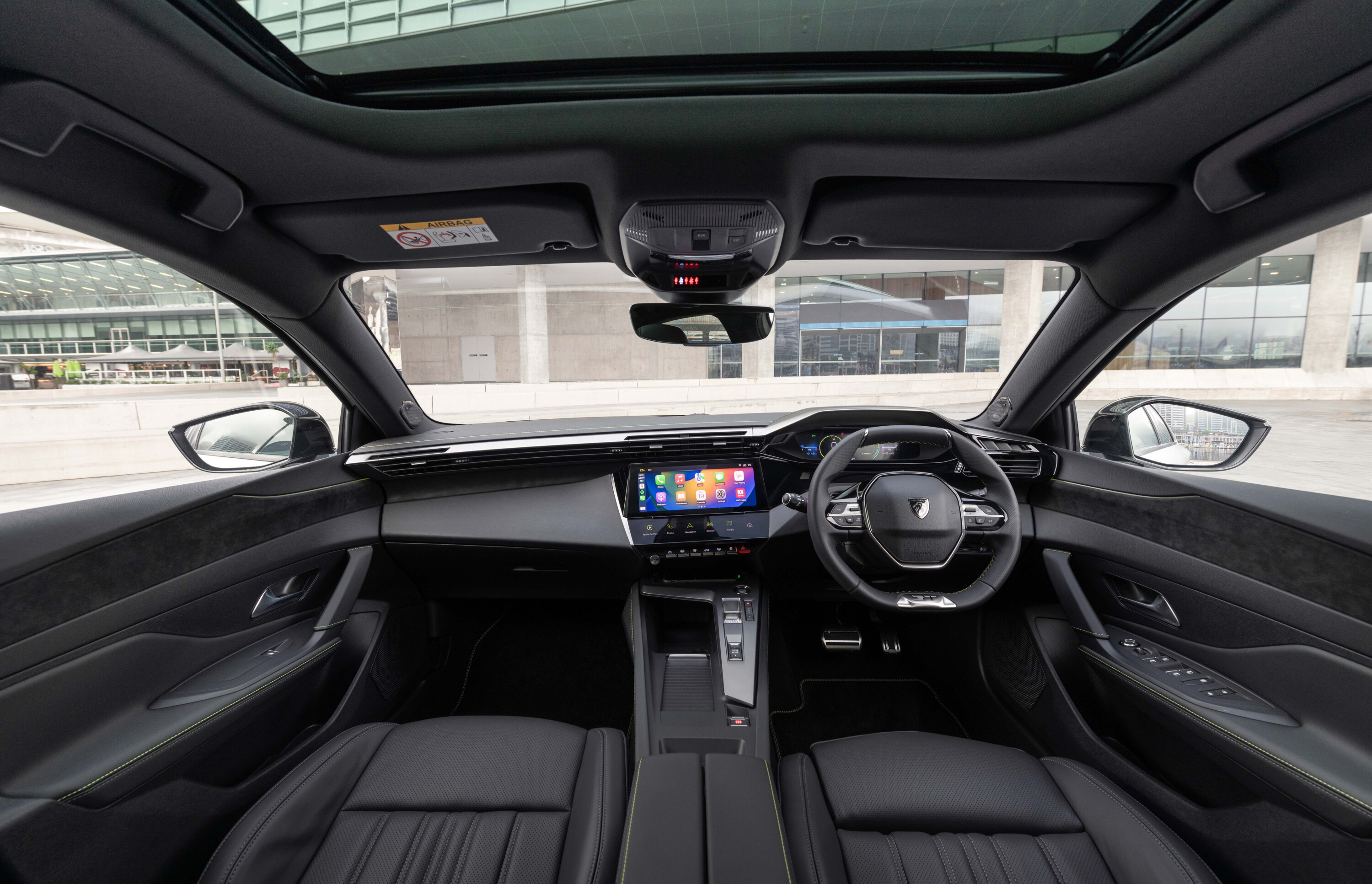
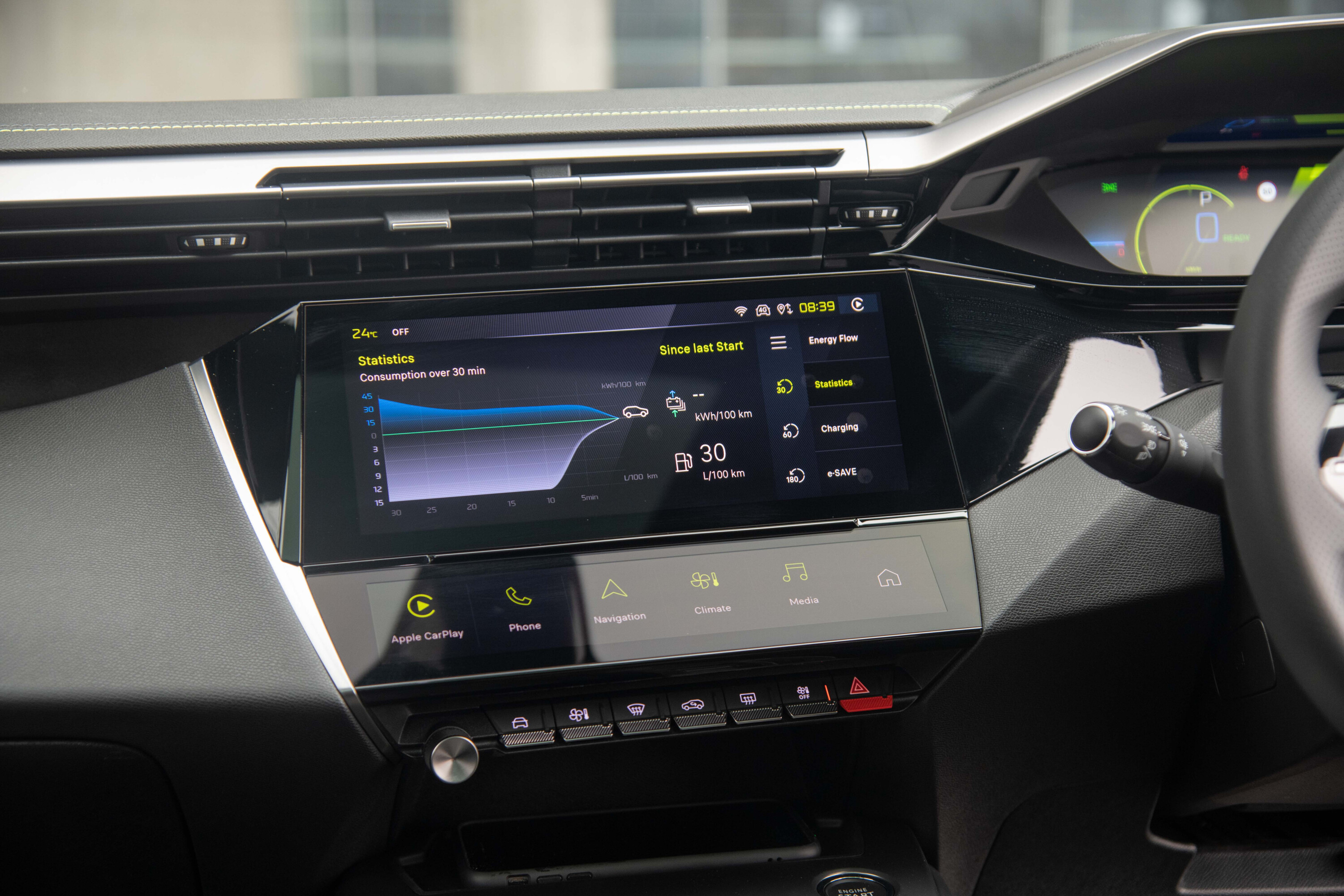
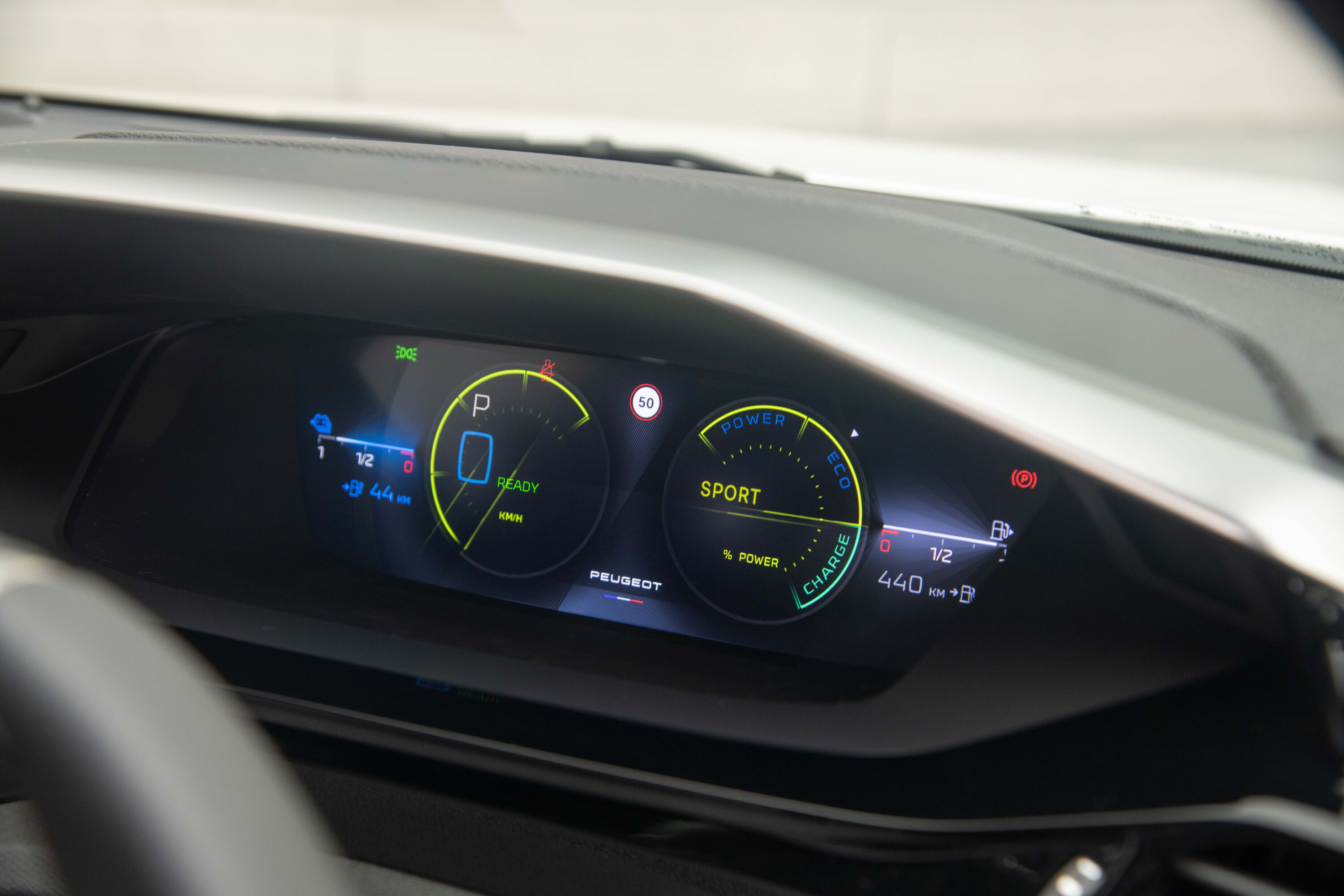
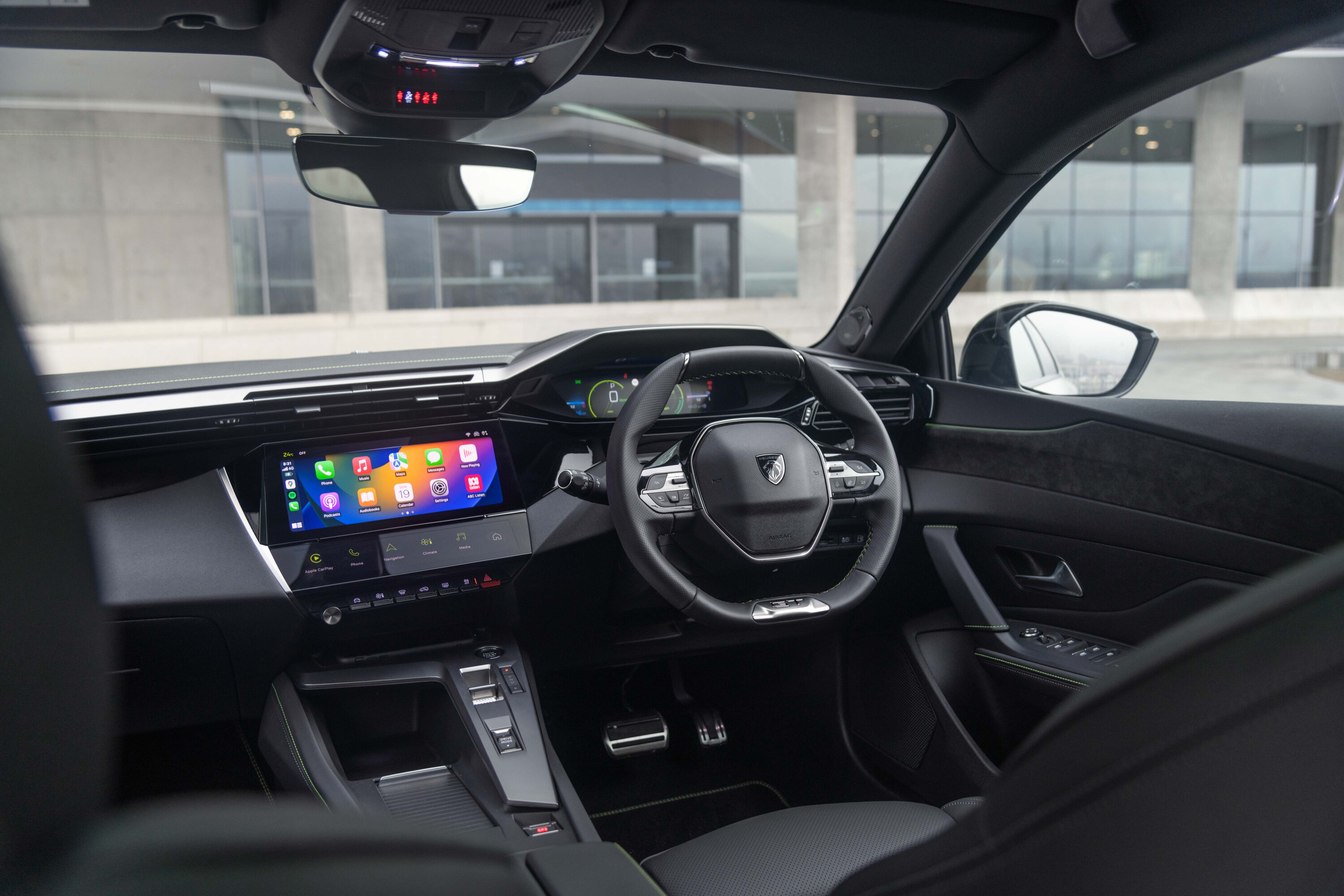
The 10-inch 3D digital dashboard is very cool and presents information on a configurable and/or need-to-know basis that is entirely likeable. It integrates with Apple CarPlay to project map-app directions from your phone and it’s a rare moment of genuine if mild innovation in dashboard presentation. The three-dimensional effects are really quite lovely, with a bit of a sci-fi flavour.
1
It is worth considering that the value proposition of this car is vastly better if you’re buying it on a lease. Until 2025, the federal government is rather generously – and unexpectedly – handing the same FBT tax concessions to plug-in hybrids as battery electric vehicles.
While you’re not paying less on the sticker price, the advantages of financing and running this car essentially tax-free are undeniable and render it – in a practical sense – cheaper than some petrol cars costing thousands less.
I’d be interested to see the lease numbers on a 308 GT petrol against the PHEV … plus you get to run the thing on electrons if you’ve got handy access to a plug at home or work.
1
Few buttons feature in the new 308 interior, where the excellent ‘i-Toggles’ provide a configurable strip of soft switches laid out underneath the screen to act as shortcuts. Beneath those is a row of switches that are also shortcuts to avoid menu diving.
The Focal-branded 10-speaker stereo is a belter, too. Its maker went to a lot of trouble to model the way sound bounces around the car’s interior to make it sound good and it’s a huge step up on the base model’s six-speaker arrangement.
On the poor side of the ledger is a manually adjusted front passenger seat, which smacks of corner-cutting that shouldn’t happen on such a pricey car.
1
How do rivals compare on value?
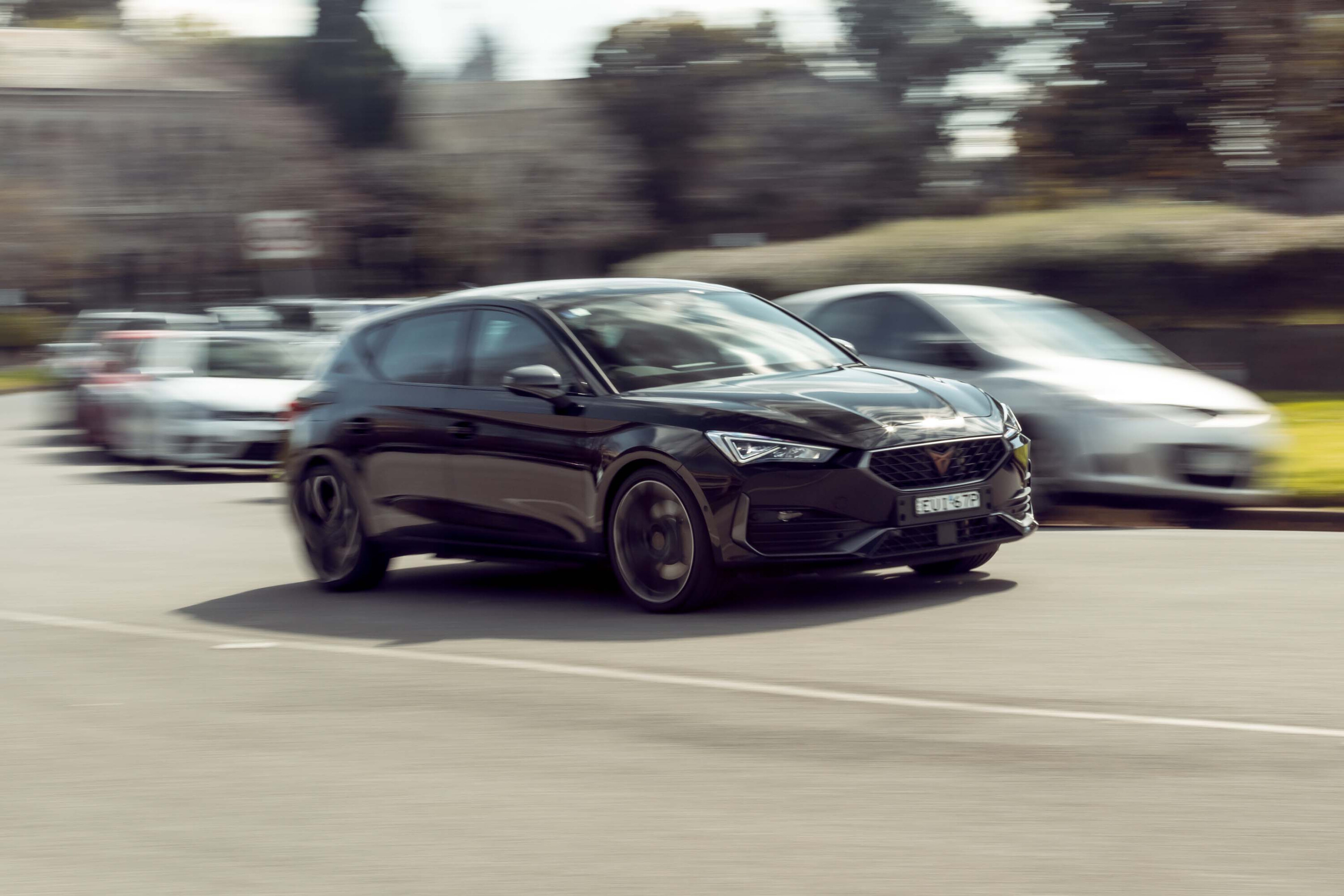
Cupra’s recent arrivals include the Leon VZe, a Golf-related hatchback with a hybrid powertrain for $59,990 before on-road costs, which is stretching the friendship of this new-to-Australia nameplate before it even begins.
Looking elsewhere for cars with a plug, you can get a Polestar 2 for a couple of grand more than a 308 PHEV and it does without the engine and all the extra weight and carbon dioxide associated with it. Well, when I say “you can get” I mean “you can buy and wait a while”.
Sticking with electric-only options, both the Tesla Model 3 and Model Y share a price ballpark with this Peugeot. Neither has anything like the style or interior of the 308, but they both have better rear space and big boots.
For a lot less coin – as in around $17K less – you could also roll the dice on a similarly-sized BYD Atto 3 with its clever Blade battery tech, roomy-if-weird interior and slightly chaotic corporate presence in Australia.
1
Interior comfort, space and storage
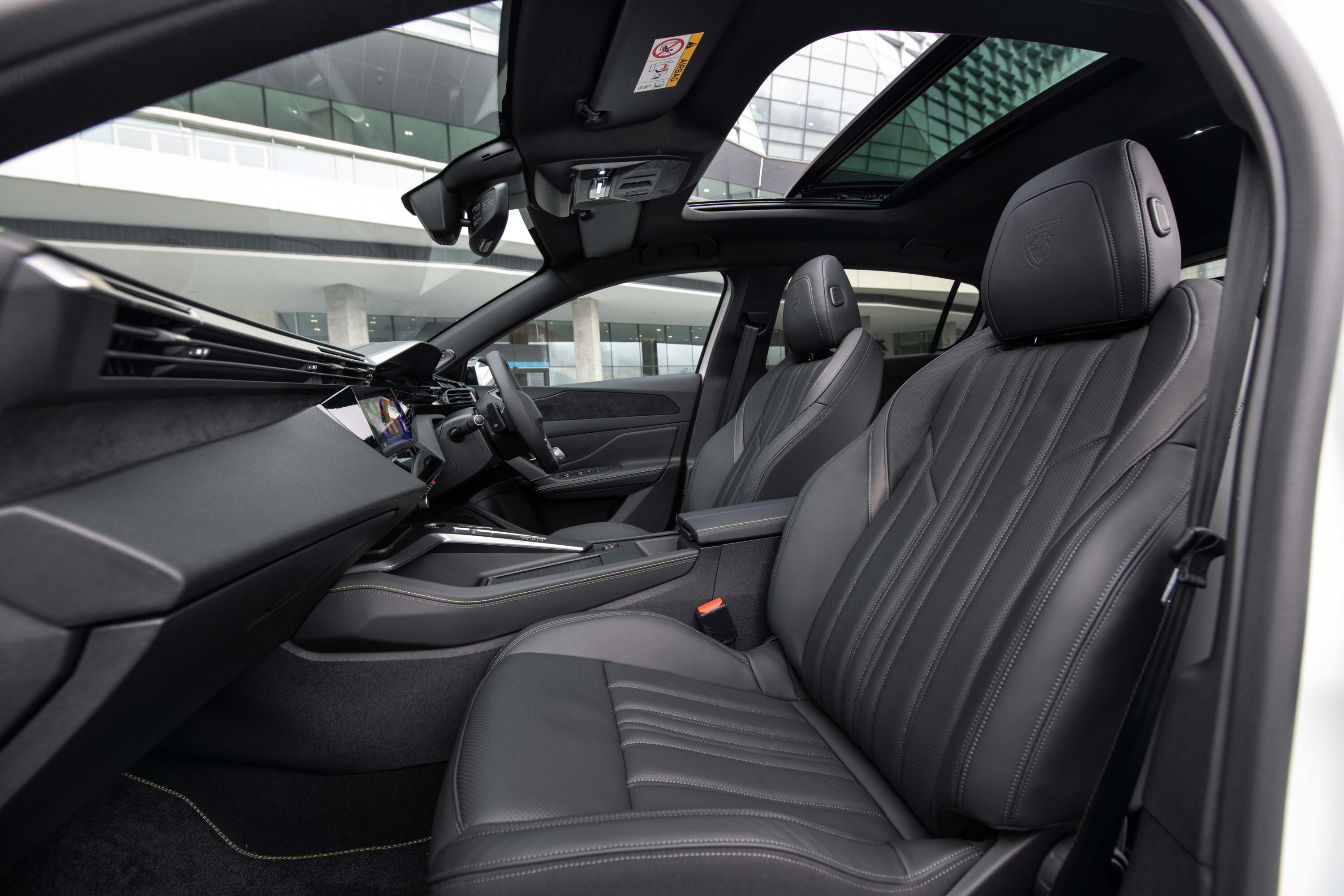
Peugeots have long had excellent front seats and these are no different. Comfortable and with plenty of adjustment, they also have a massage function for both driver and passenger.
That said, the passenger seat is otherwise unpowered, one of a few mystifying specification choices. You might also find the seats automatically start using the air pockets of the massage feature to stretch your back when you’ve been on the road for over two hours.
Seat heating is also thrown into the bargain, which is useful for saving battery while running in electric-only mode. As with all other Peugeots, you are presented with the polarising i-Cockpit setup which features a high-set dashboard and a low-set – and very small – squared-off steering wheel.
1
I personally think it doesn’t work as well in hatchbacks as it does in taller Peugeots, like the SUVs and commercial vans, but I don’t mind it in the 308.
You get a wireless charging pad for your phone, two USB-C ports, a pair of cup holders that live up to the name (not always a guarantee in French cars, looking at you, Renault) and door pockets that took our absurdly large water bottles on our regular trip up to Katoomba for lunch.
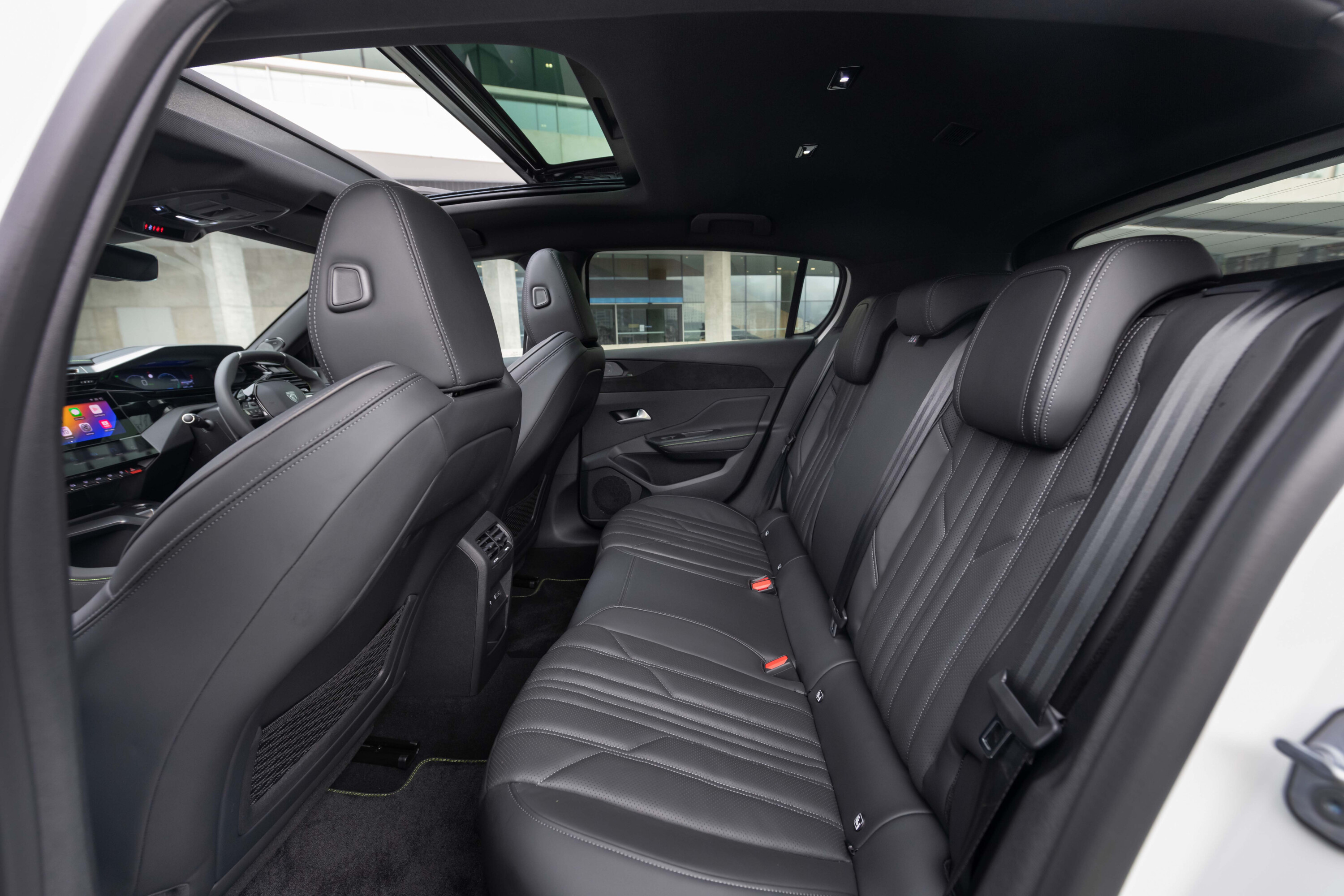
The rear seat is sadly not a super comfortable place to be for an adult. I just fit in behind my driving position which is not uncommon in the segment (yes that’s you, Mazda 3 and Toyota Corolla) but the thick C-pillar and shallow-ish glass make it a bit claustrophobic. Kids will be fine and the middle seat is a real last-resort proposition.
1
You do get rear air vents (big tick) and two USB-C ports plus a little storage slot for which I couldn’t quite determine the intended purpose. There are no cup holders and, scandalously, no rear armrest. At least the door pockets will take cans or small bottles.
In the boot – where you’ll find the charging cable bag – is 361 litres of space, which is not bad going and comfortably beats the Corolla and Mazda 3 hatchbacks while not being far off the VW Golf’s 374L seats-up capacity.
You will have to lift things over the load lip and there is a small meshed storage section for loose items on the left-hand side. Seats down, Peugeot says you’ll get a whopping 1271 litres. Both figures are down on the petrol-only car’s 412L/1323L.
1
Battery and charging
Charge overnight on a time-of-use plan and you’re (theoretically) getting 60km for about $3 or about a third of what a petrol 308 would cost over the same distance burning 7.0L/100km.
Even if you only get the 44km I got for my $3, it’s still well under half the price of running it on petrol.
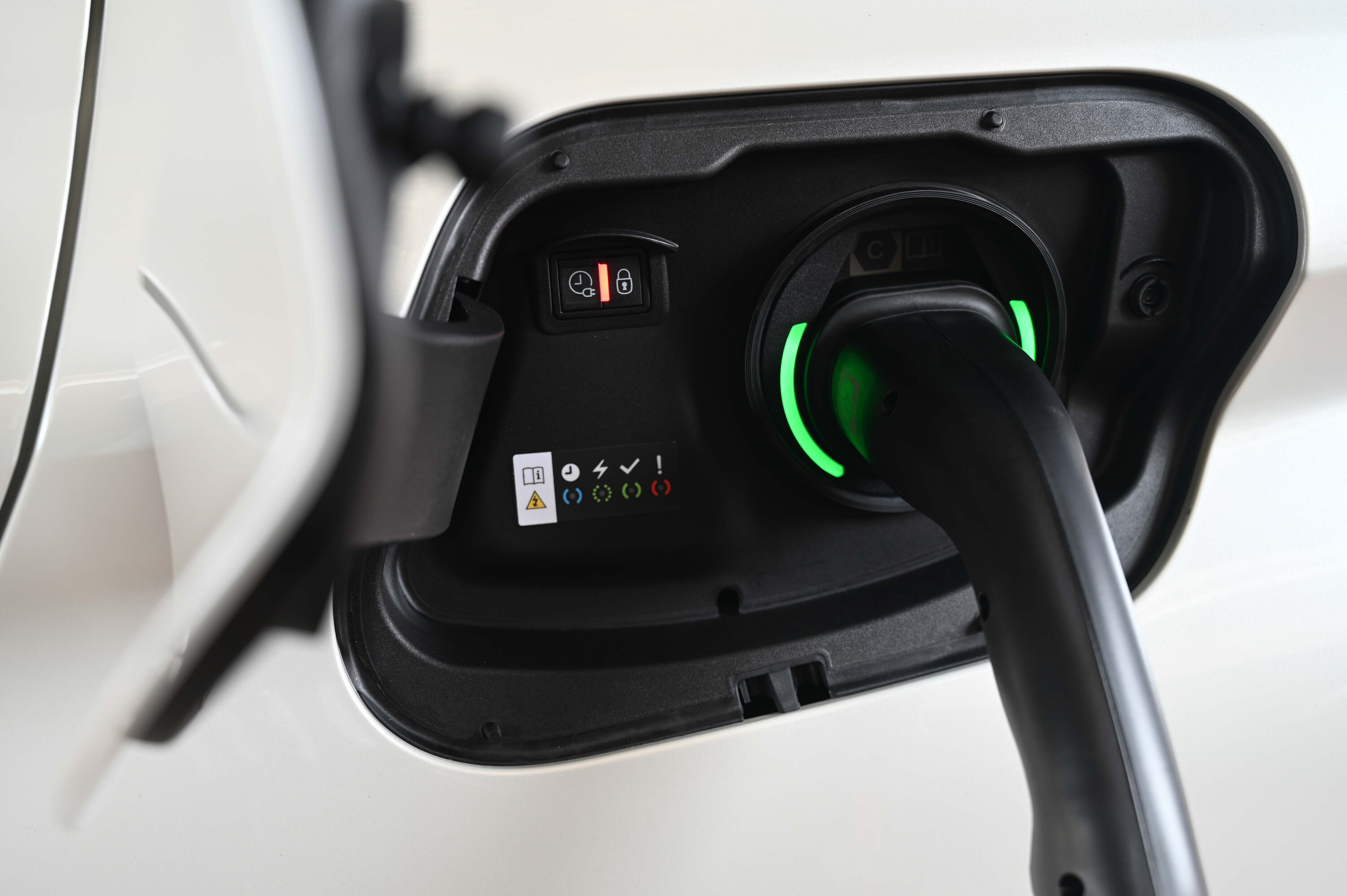
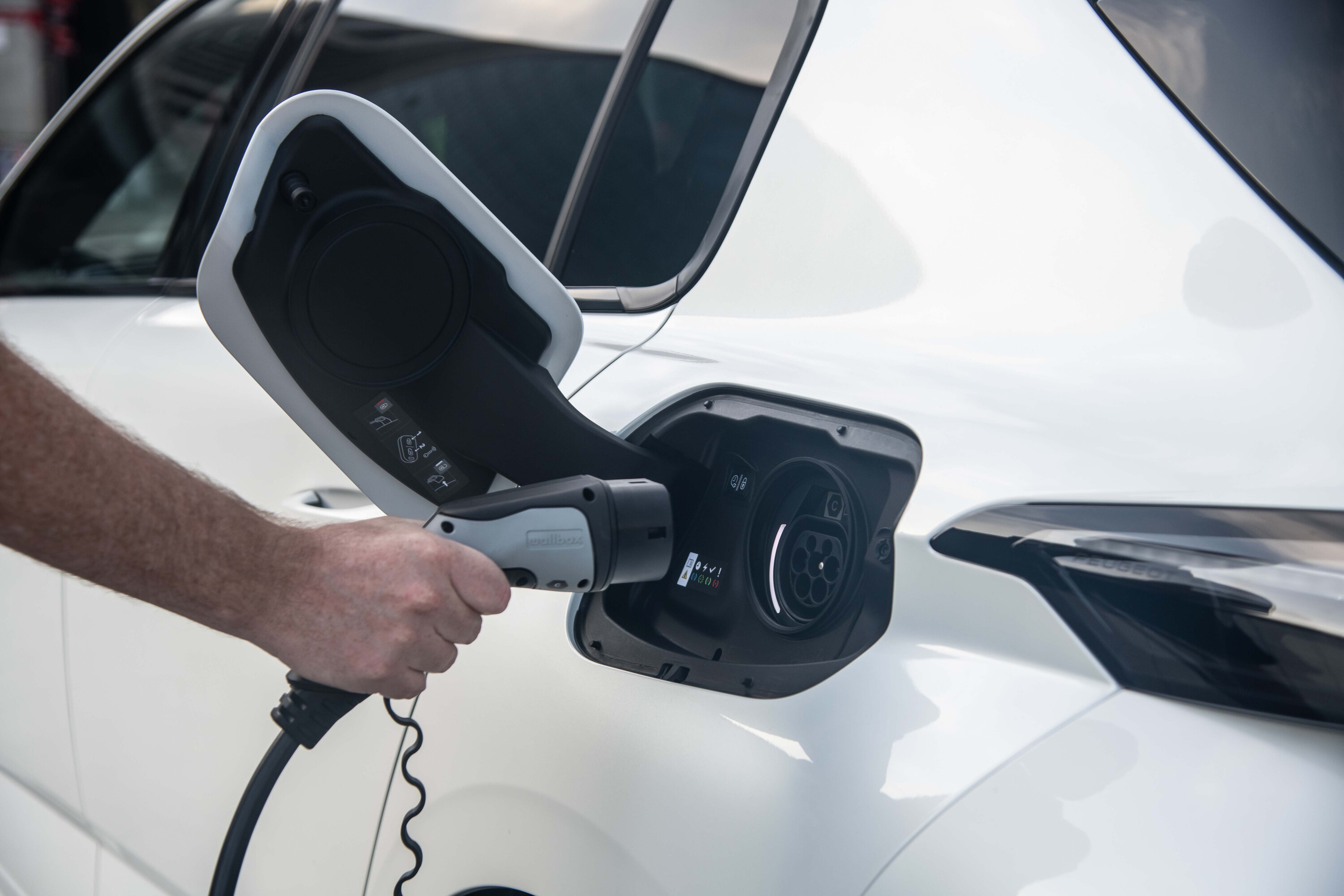
A Type 2 240-volt charger is supplied with the car and plugs into a domestic socket, which can take the battery from empty to full in five hours. It’s never completely dead, of course, as the car acts as a hybrid when the battery reaches a certain reserve point, which I’m guessing is around 10 per cent.
1
Getting a wall charger seems a waste of money with such a short charge time (assuming you get the promised 3.7kW, which you may not, depending on a variety of external factors) and the 40-60km range covers a whacking great proportion of daily urban and suburban driving.
Public charging will likely be quite frustrating as most chargers in Australia are CCS2 DC plugs, which won’t fit the Peugeot’s Mennekes-type connector. Many chargers are broken anyway or have CHAdeMo connectors that are increasingly rare on cars you can buy new.
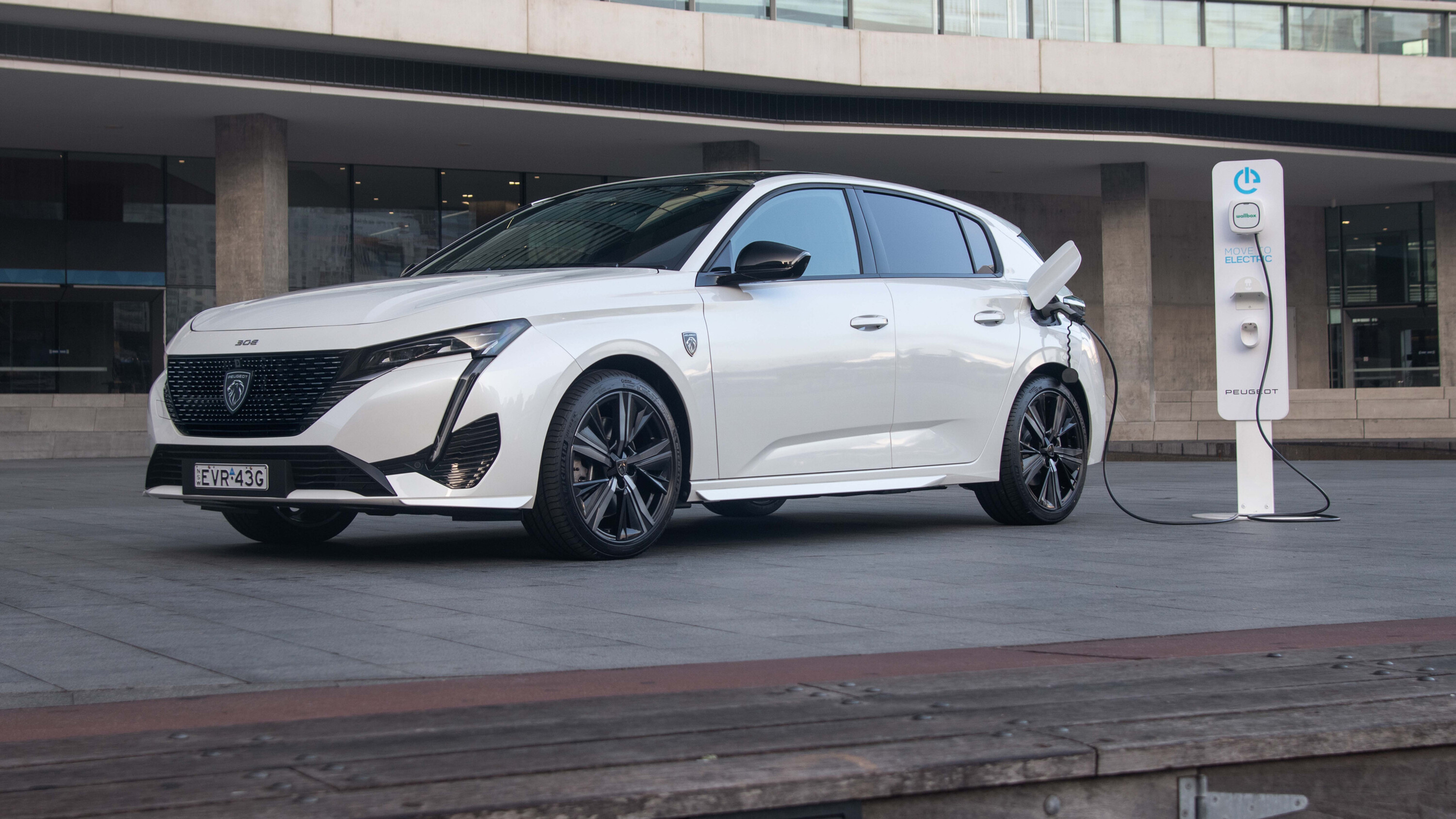
The charge port is on the right-hand side of the car and mirrors the petrol cover on the other side.
1
What is it like to drive?
With few exceptions, Peugeot hatchbacks are good fun to drive and ride around in.
The new 308 is not one of the exceptions and even with just 93kW, the GT petrol is one of the nicest cars to drive in the segment. Probably the nicest.
| 2023 Peugeot 308 GT Sport PHEV drivetrain | |
|---|---|
| Engine | 1.6-litre four-cylinder petrol |
| ICE power | 132kW @ 6000rpm |
| ICE torque | 250Nm @ 1750rpm |
| Electric power | 81kW |
| Electric torque | 250Nm |
| Combined power | 165kW |
| Combined torque | 360Nm |
| Transmission | 8-speed automatic |
| 0-100km/h | 7.5 seconds (claimed) |
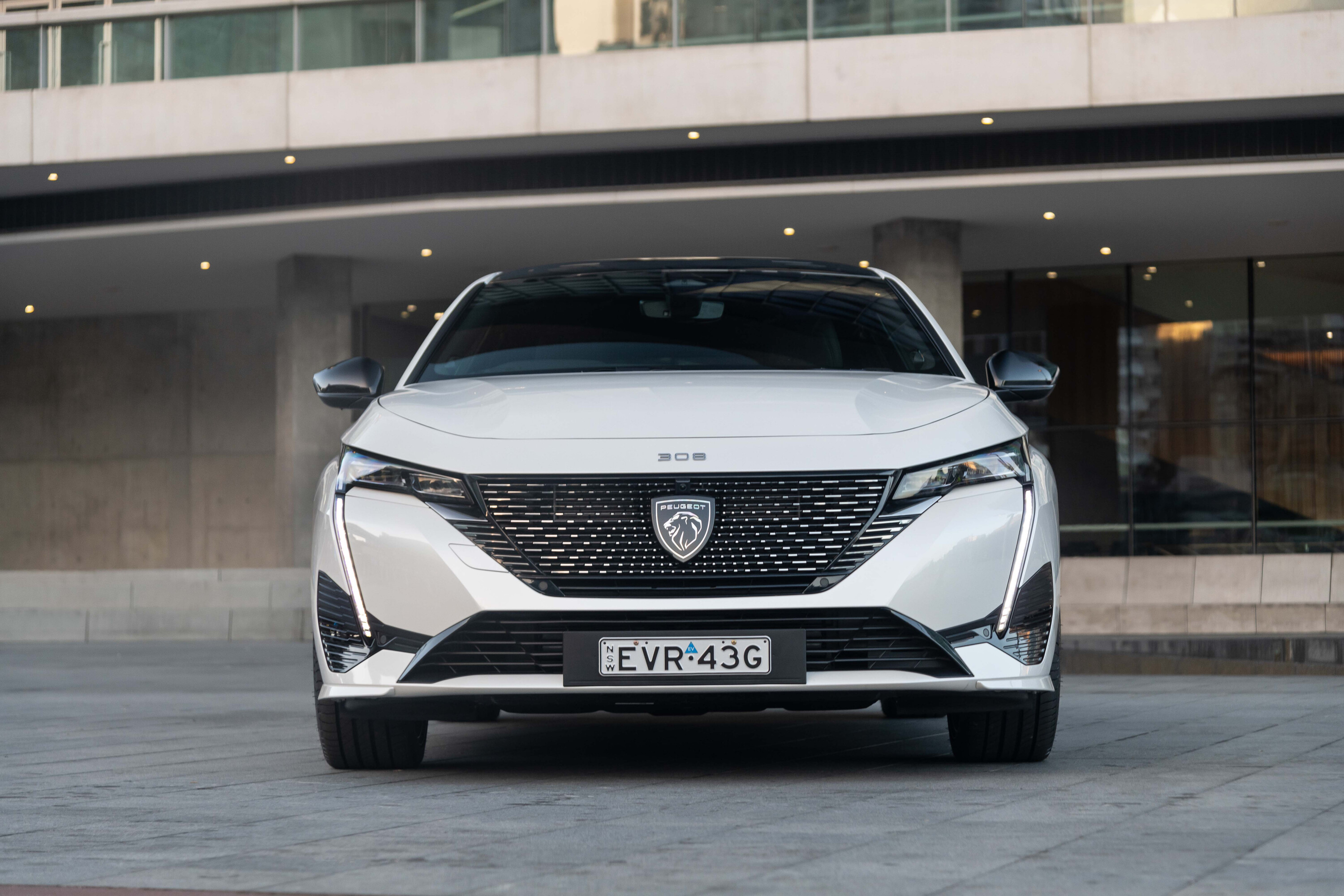
A lot more power and torque is on offer in the GT Sport PHEV, with a combined total of 165kW and 360Nm, significantly up on the 1.2-litre turbo-petrol of the standard cars. I guess that’s where a lot of your money goes, as well as on the battery and motor to deliver that kind of grunt.
1
The old GTI was up around these figures and it went like a Star Wars fan who thinks Mark Hamill is having coffee around the corner from the office.
No such luck with the portlier PHEV, but it isn’t slow either. It’s far smoother than the similarly powerful GTI and very much built for comfort. It’s still terrific fun to thread through the corners or more mundane pleasures like launching out of a side street without having to worry about the truck coming your way. Or carving up a roundabout.
It allies a handy, fluid chassis with quick steering and plenty of torque from the combined efforts of the petrol and electric motors. It’s quite remarkable that the 308 handles as well as it does. Despite its price tag, it still carries the rather basic torsion beam rear suspension of lesser machines.
1
The French seem to be able to work some serious black magic with that type of suspension and it’s only when you hit a nasty rubber speed bump that you remember you’re not floating along on a well-sorted multi-link setup.
When run solely in EV mode, the 81kW and 260Nm are perfectly agreeable in traffic, with the engine cutting in when you put your foot too close to the firewall. There is a decent amount of shove off the line to keep up with traffic without fossil-fuelled intervention and is very quiet while it does so. I had no trouble running the battery dry in EV mode.
Once the battery hits its predetermined limit, it reverts to a hybrid mode, which is also perfectly agreeable.
2
One thing I found puzzling was the lack of regenerative effect in any drive mode. Irritatingly, to activate something approaching strong regen, you have to press the B button on the console next to the toddler-tongue gear selector (very Golf, but better executed).
Having hit that, you find yourself in much better shape; getting more charge on lift-off, under braking and coasting downhill. That will explain the 44km I got from the battery, too, as I wasn’t always driving and forgot to inform my wife of the B button’s existence. Just don’t press the nearby P button.
I would have liked this chassis to be a bit sharper and live up to the GT Sport name and corresponding power output but given the old 308 GTI hardly flew out the door (a second-hand bargain if ever there was one; get on it if you’re keen), that’s probably for the best.
1
How is it on fuel?
I keep finding myself asking two questions about PHEVs.
Are people that invested in the idea that they’ll keep their battery topped up? According to Mitsubishi, 90 per cent of Outlander PHEV owners do. So maybe, I guess?
You can dismiss the 1.4L/100km claimed economy figure because official testing just isn’t equipped to get an accurate figure from plug-in hybrids.
| 2023 Peugeot 308 GT Sport PHEV fuel economy | |
|---|---|
| Combined fuel economy (claimed) | 1.4L/100km |
| Indicated fuel economy | 4.5L/100km |
| Claimed EV range | 60km |
| EV range on test | 44km |
My time with the car was an even split of highway running as well as suburban stuff over about 540km. The trip computer result of 4.5L/100km lines up with a hybrid Corolla but that was without regular recharging of the battery, which would have seen a considerable drop in the consumption figure.
However, I don’t think this is terrible going at all given I was rather enjoying myself while driving the 308. As good as the Corolla is, the Peugeot is way more fun.
1
How safe is it?
The 308 scored four ANCAP stars.
In itself that is not a terrible thing – some far more expensive cars are (or would be) the same. It has a lot to do with a missing centre-front airbag that is all but mandatory to score the top number.
| 2023 Peugeot 308 GT Sport PHEV safety features | |
|---|---|
| 6 airbags | Lane-keep assist |
| ABS | Post-collision braking |
| Active lane positioning | Reverse cross-traffic alert |
| Blind-spot monitoring | Reversing camera |
| Driver attention warning | Speed sign recognition |
| Forward auto emerency braking | Stability and traction controls |
What is annoying is the lack of reverse auto emergency braking. That should be present and correct on a car of this cost and positioning.
Kids and baby seats are held in place with two lots of ISOFIX points plus three top tether anchors.
1
Warranty and running costs
Peugeot offers a five-year, unlimited-kilometre warranty, now de rigeur in our market. And that’s a good thing.
The battery warranty runs for eight years or 160,000km, guaranteeing a degradation level of no more than 30 per cent.
Servicing comes around every 12 months or 15,000km. You can pre-purchase a three-service pack for $1200 or a five-service pack for $2000. That’s not bad going for a Euro hatchback and is even comparable to some Korean competition. The five-year plan saves $690 over pay-as-you pricing.
1
VERDICT
The car itself is a ripper. The 308 GT Sport PHEV should be on every pricier-end-of-the-market hatchback buyer’s list.
But at $64,990 before on-road costs, it’s not justifiable for a private buyer although may be bearable as a salary sacrifice lease deal for someone who can’t go fully electric.
1
It’s just too expensive for a five-door hatchback. Yes, it has some great standard features, drives beautifully and smoothly, looks the business… I could go on and on. But dropping $70K to get a hatchback on the road that isn’t that much better than its excellent 1.2-litre brethren – which are already on the pricey side – well, it’s a bridge too far for me.
And it hurts to say that because this truly is a good car.
MORE
Everything Peugeot
MORE
PHEV and Hybrid Cars
| 2023 Peugeot 308 GT Sport PHEV specifications | |
|---|---|
| Body | 5-door, 5-seat small hatchback |
| Drive | front-wheel |
| Engine | 1.6-litre four-cylinder petrol |
| ICE power | 132kW @ 6000rpm |
| ICE torque | 250Nm @ 1750rpm |
| Electric power | 81kW |
| Electric torque | 250Nm |
| Combined power | 165kW |
| Combined torque | 360Nm |
| Transmission | 8-speed automatic |
| 0-100km/h | 7.5 seconds (claimed) |
| Bore stroke (mm) | 77 x 85.8 |
| Fuel consumption | 1.4L/100km (combined) |
| Weight | 1665kg |
| Suspension | MacPherson struts front/torsion beams rear |
| L/W/H | 4365mm/1859mm/1465mm |
| Wheelbase | 2675mmmm |
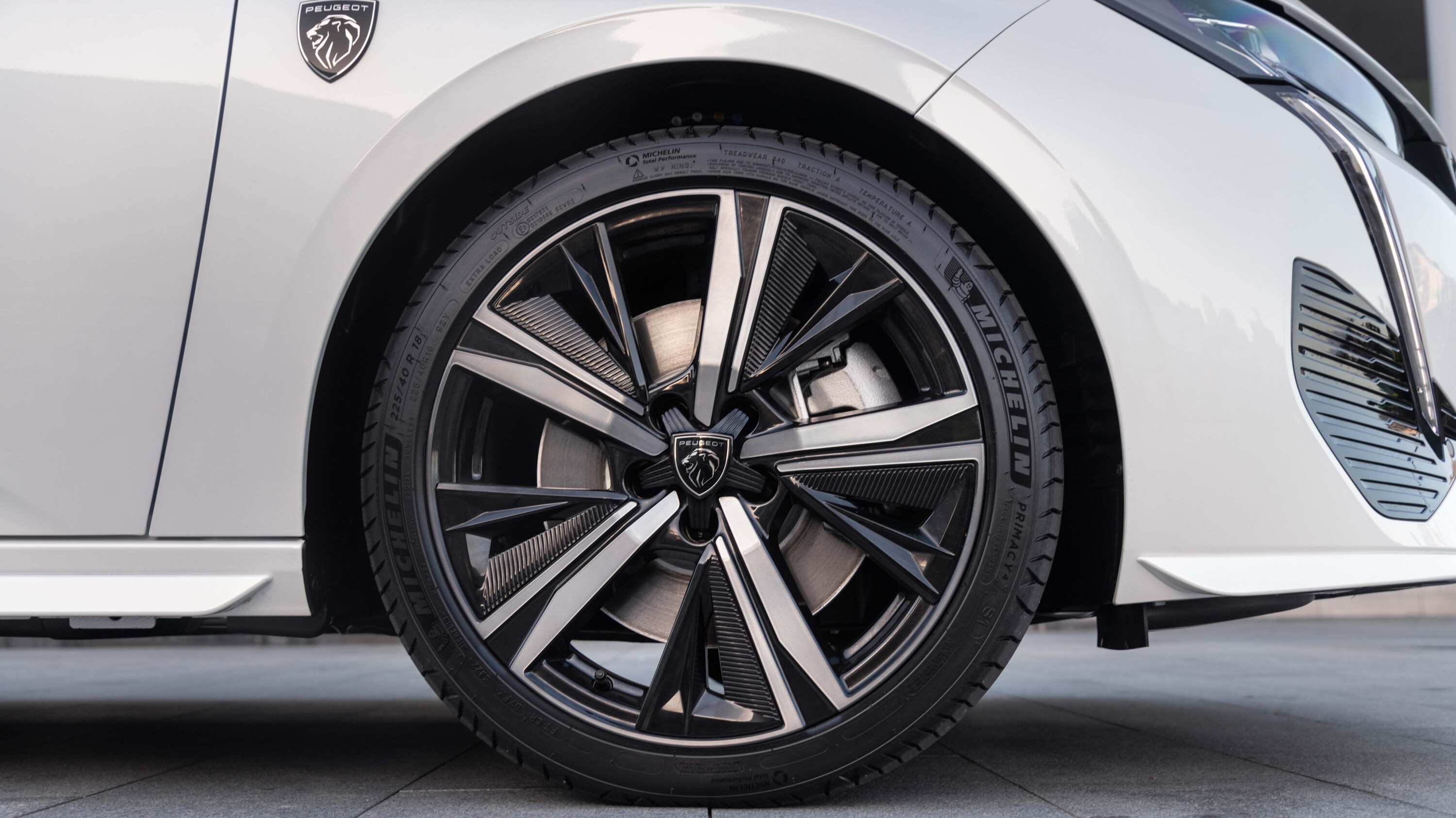
| Tyres | 225/40 R18 |
| Wheels | 18-inch alloy (no spare) |
| Price | $64,990 + on-road costs |
Banks offering EV loans in 2023
There are now at least 20 banking institutions in Australia offering special deals on low-emission vehicles.
Our article has been updated with the latest information available below. Have we missed anyone? Let us know in the comments.
Snapshot
- Westpac offers loan for prospective hybrid and electric vehicle buyers
- RACQ also has a Green Car Loan for EVs
- Latest to come to the party is CBA
JUMP AHEAD
UPDATED April 18, 2023
- CBA introduces rate discounts for EVs and renewable equipment
- Bank Australia calls an end to ICE car loans
- Westpac offers favourable rates for EVs
- Full list of EV-specific finance options
This story has been updated to include the latest new bank offering, from CBA.
1
April 2023: CBA introduces rate discounts for EVs and renewable equipment
The Commonwealth Bank of Australia (CBA) now discounts up to one per cent off the standard rate for new and used hydrogen vehicles valued up to $250,000.
Additionally, assets such as EV charging equipment, battery storage systems, LED lighting upgrade projects and solar, wind and hydro-powered hardware are eligible for a 0.5 per cent discount.
It’s targeted for businesses to improve their environmental, social and governance (ESG), and cut running expenses.
August 22: Bank Australia to stop ICE car loans
Bank Australia has joined the growing number of financial institutions offering deals for electric vehicle owners – or in this case, ending its offers for those looking for cash to buy a petrol or diesel car.
As part of its aim to reach net-zero by 2035, it has announced it is no longer funding loans for new fossil-fuel vehicles from 2025.
The bank says the move will help provide momentum for Australia to transition to EVs, as well as ensuring that its vehicle lending doesn’t lock in customers to those which produce higher carbon emissions.
Bank Australia Managing Director Damien Walsh said that now is a critical time for business to take decisive action and commit to deeper and more rapid decarbonisation of the economy.
“Climate change is the most urgent challenge of our time. At Bank Australia, we’ve been listening to our customers and we know it’s their number one concern, and it’s one we share,” he said.
“Our 2035 net-zero target is the most ambitious of any bank in the country and one of the most globally. We hope our stance encourages other banks and financial institutions to accelerate their climate objectives as well.”
Comparisons
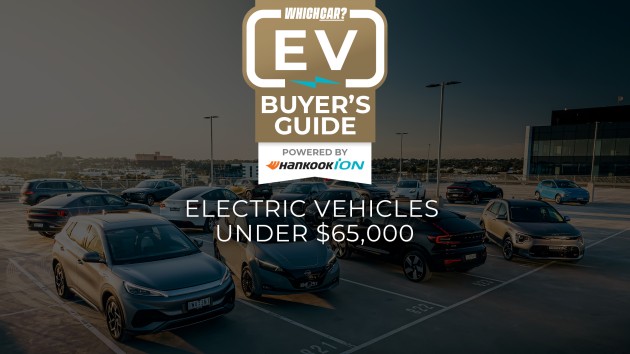
Best Electric Cars Under $65k: Affordable EVs Rated
Welcome to part one of three price-based EV buying guides, this one focused on the most affordable electric cars available in Australia today
June 12: Westpac offers lower interest rates on EV loans
As the popularity of electrified vehicles grows in Australia, more and more banks are offering loans catered to helping new car buyers go green.
While Westpac has recently become the first of Australia’s ‘big four’ banks to offer lower interest rates on car loans for electrified vehicles, it’s far from the first financial provider to offer such an incentive – nor are its rates the best on offer for potential hybrid and EV buyers.
For instance, Pepper Money’s electric vehicle loan was rated as the best in the 2022 Canstar Green Excellence Awards, with buyers benefitting from fixed and comparison rates of 3.99 per cent while also being able to borrow up to $300,000 – enough to purchase any EV on the market other than the Porsche Taycan Turbo S.
Prior to Westpac, Macquarie was the biggest bank offering EV loans, with its rates mirroring those of Pepper Money, but with the added ability for buyers to take out up to $500,000 for their purchase.
Peter van der Westhuyzen, Head of Institutional and Direct for Macquarie’s Personal Banking, said being a part of reducing the carbon footprint of its customers was an important part of the business’s operations.
“We know that one of the most tangible things people can do to reduce their carbon footprint is to reduce emissions from their personal transport,” said van der Westhuyzen. “For many Australians who are considering buying an EV, wanting to make a positive impact on the planet is where the decision start.
“At Macquarie we’re committed to helping our customers reduce their carbon footprint and by transitioning to an EV. We know purchasing an EV is an exciting step, but it’s also a new landscape to navigate for many Australians.
“We want to help with on that journey which is why we offer a car loan with a discounted interest rate and no fees, as well as a specialist EV buying service to support that shift.”
1
The Royal Automotive Club of Queensland (RACQ) also offers a Green Car Loan for EVs, plug-in hybrids (PHEVs) and hydrogen fuel-cell vehicles (FCEV), albeit at a slightly higher fixed rate, but lower comparison rate to Westpac’s offer – also with the lowest minimum amount for a loan.
Every Australian state and territory currently provides incentives for EV ownership through either rebates or lower taxation, with prospective buyers encouraged to check out what their local area provides before purchasing.
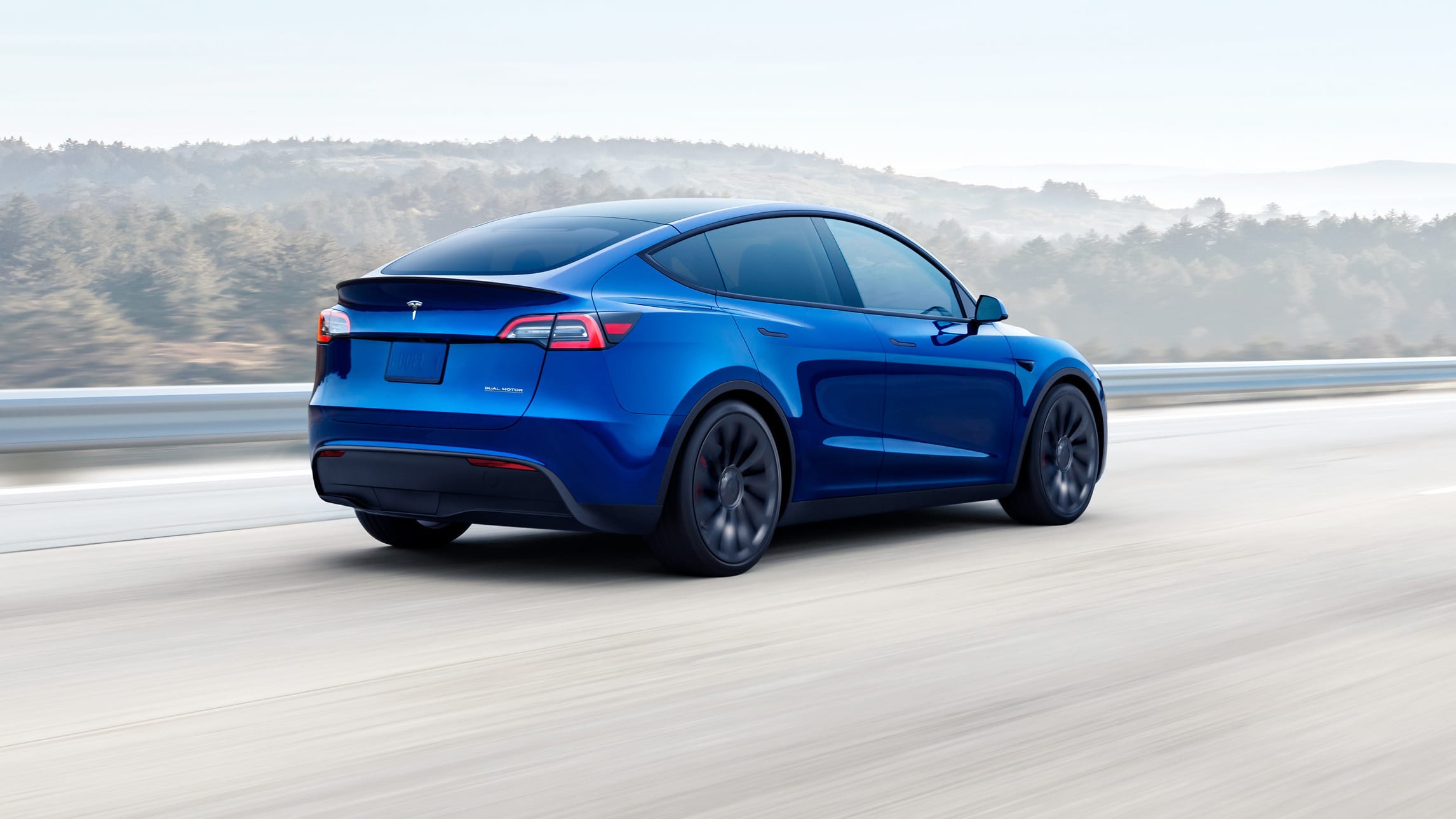
Beating its main rivals in ANZ, Commonwealth and NAB to the punch, Westpac’s reduced interest loans can be taken out on new or used hybrid and electric vehicles, offering a fixed rate of 4.99 per cent per annum and a comparison rate of 6.21 per cent per annum – far lower than its usual respective rates of 6.49 per cent and 7.69 per cent for conventional vehicles.
Consumer research conducted by the bank showed seven out of 10 Australians plan to buy an electrified vehicle in the future, with 34 per cent of current petrol or diesel owners aiming to do so for their next automotive purchase.
1
Chief Executive Chris de Bruin believes the bank’s lower rates will encourage more consumers to move over to green vehicles, helping Australia reach net zero emissions in the future.
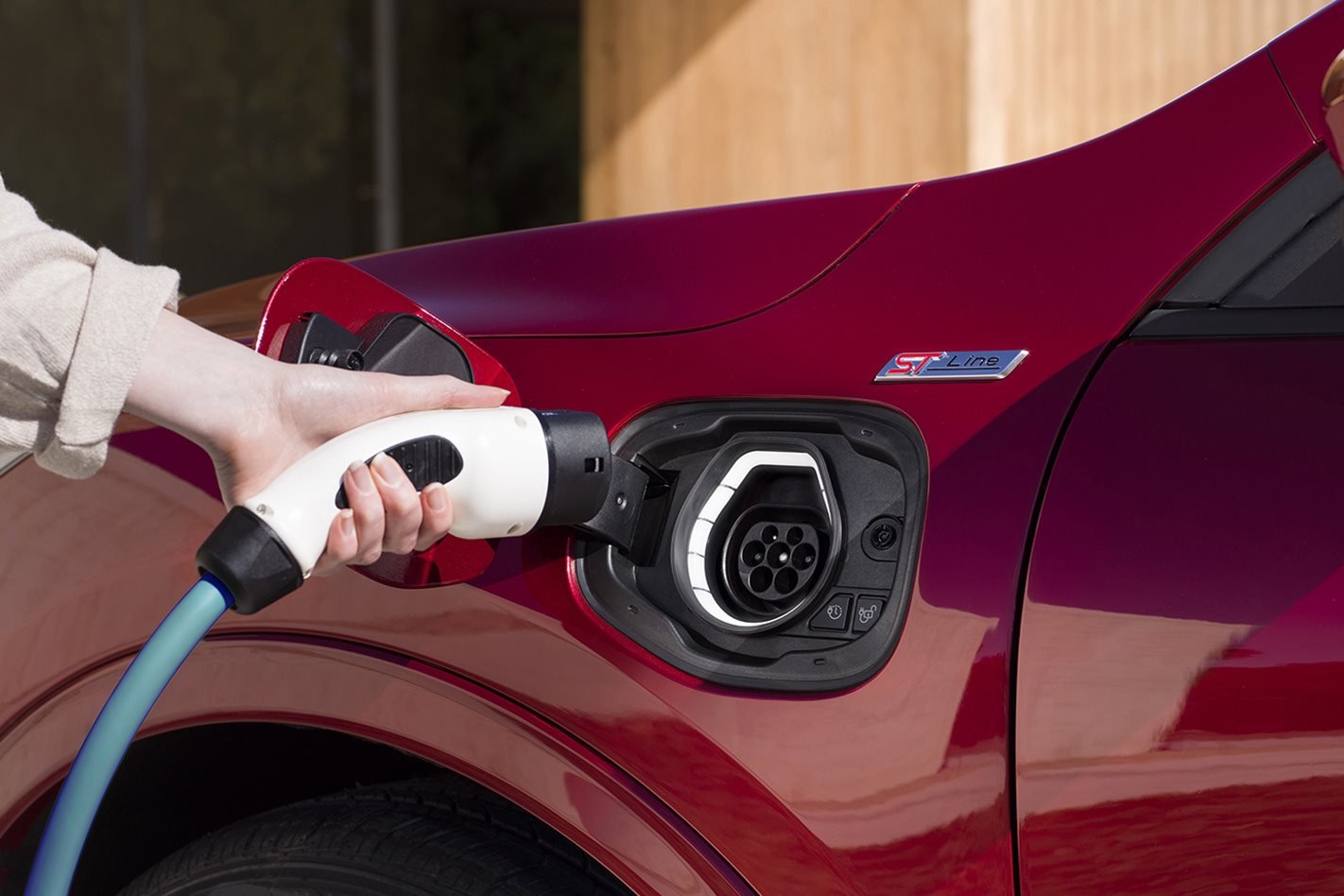
“We all have a part to play in helping Australia move toward net zero. We know that cost is one of the biggest barriers to hybrid and electric vehicle uptake, so this offer can help more customers transition to a greener vehicle,” de Bruin said.
“Given the recent increase in petrol prices, electric and hybrid vehicles appeal to the environmentally conscious, and the financially conscious too. We expect demand for these vehicles will continue to rise, with many Australians already planning to make the change.
“We’re also seeing new Government incentives, improved access to charging stations, and more manufacturers offering hybrid and electric vehicles, which will help accelerate the transition.”
1
Below is a list of data compiled from RateCity regarding green car loans.
Remember to always assess your financial situation and seek professional advice before applying for a loan.
Information correct as of February 26, 2023.
| Supplier | Fixed interest rate | Comparison rate | Loan amount |
|---|---|---|---|
| Loans.com.au (fixed) | 5.99% | 6.54% | $5000-$100,000 |
| Macquarie (variable) | 5.84% | 6.39% | $5000-$100,000 |
| Macquarie (fixed) | 6.09% | 6.64% | $5000-$100,000 |
| Move Bank | 5.99% | 6.26% | $10,000-$150,000 |
| Community First Credit Union | 4.99% | 5.62% | $10,000-$100,000 |
| RACQ | 5.59% | 5.59% | $3000-$150,000 |
| Plenti | 6.49% | 7.04% | $10,000-$100,000 |
| Queensland Country Bank | 4.79% | 5.07% | $1000-$75,000 |
| Driva | 4.84% | 5.73% | $5000-$65,000 |
| People’s Choice | 4.89% | 5.24% | $20,000-$120,000 |
| Horizon Bank | 4.99% | 5.20% | $5000-$100,000 |
| Bank First (special) | 5.29% | 5.56% | From $10,000 |
| Bank First (fixed) | 6.29% | 6.56% | From $10,000 |
| Transport Mutual Credit Union | 5.74% | 6.02% | From $5000 |
| Bank Australia | 5.95% | 5.95% | From $1000 |
| LCU | 8.75% | 8.78% | $1000-$50,000 |
| RACV | 5.09% | 6.94% | $5000-$500,000 |
| NRMA | 5.09% | 5.78% | From $5000 |
| Westpac | 4.99% | 6.21% | $10,000-$100,000 |
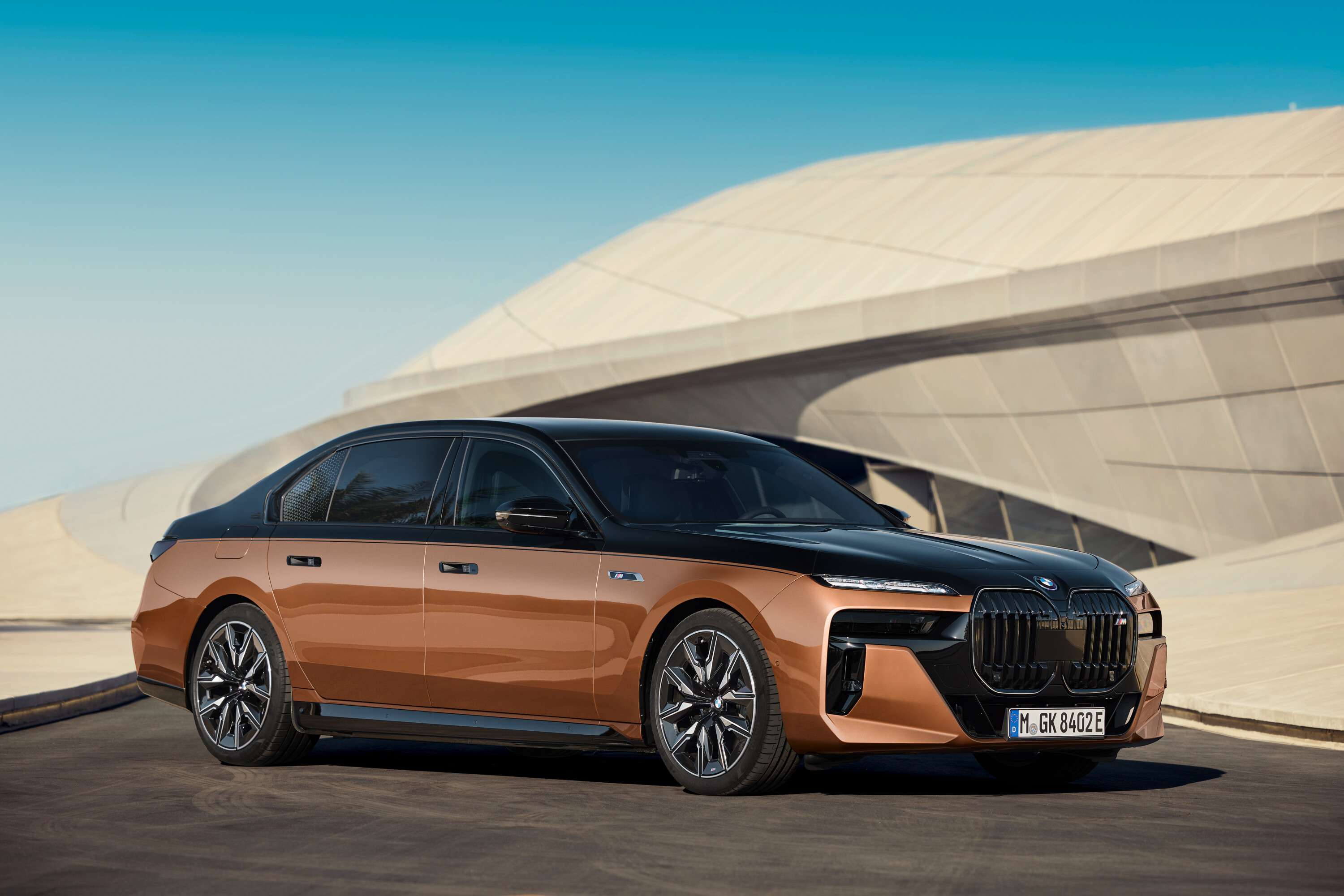
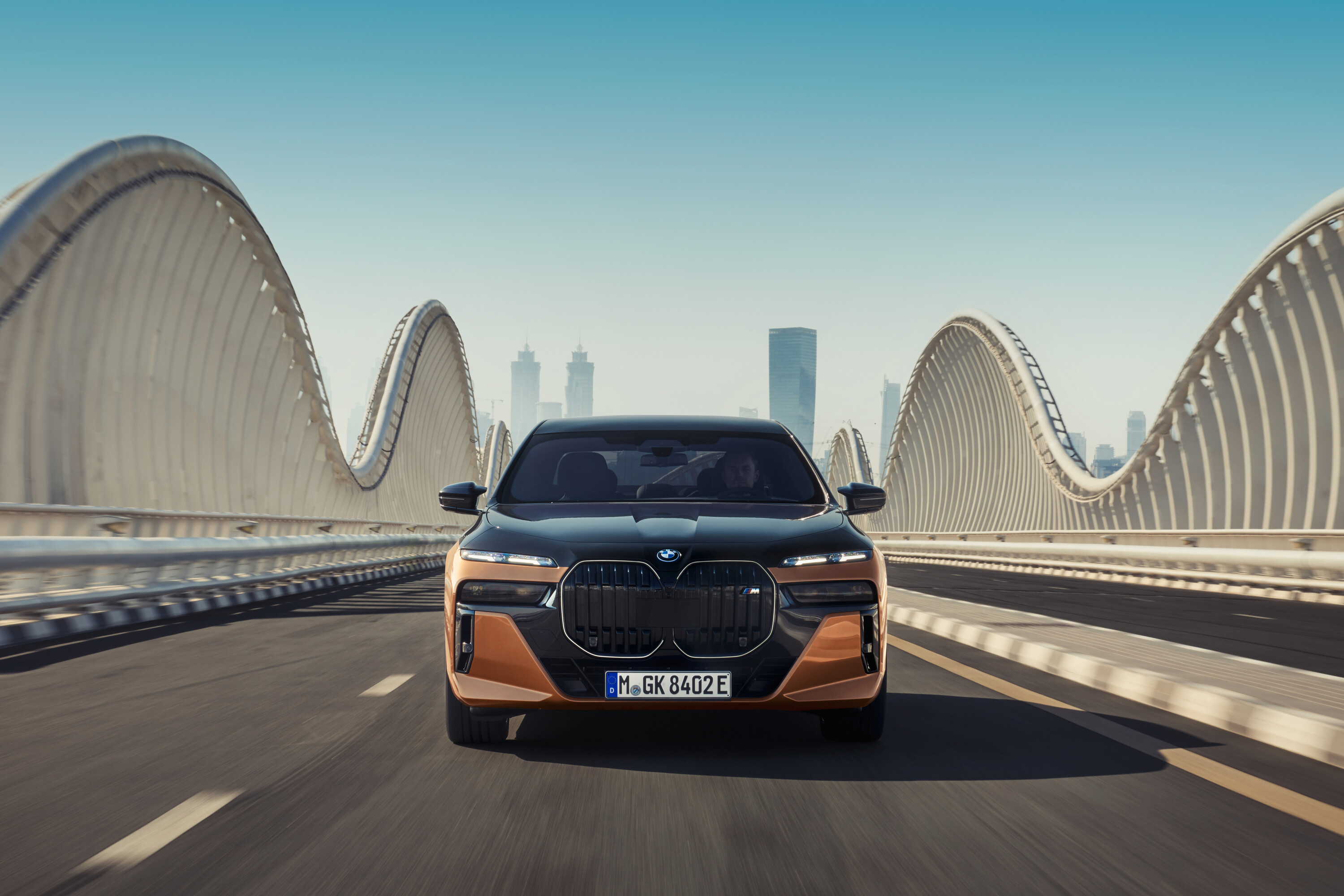
BMW has unveiled its most powerful sedan ever at Auto Shanghai, the i7 M70. The new variant headlines the i7 luxury electric sedan range boasting 485kW/1100Nm outputs.
Snapshot
- 485kW/1100Nm outputs from two e-motors
- Australia release confirmed Q4 2023
- Pricing starts at $344,900 + ORCs
The i7 M70’s Australian release is locked in for the fourth quarter of this year when it will be priced from $344,900 before on-road costs and options.
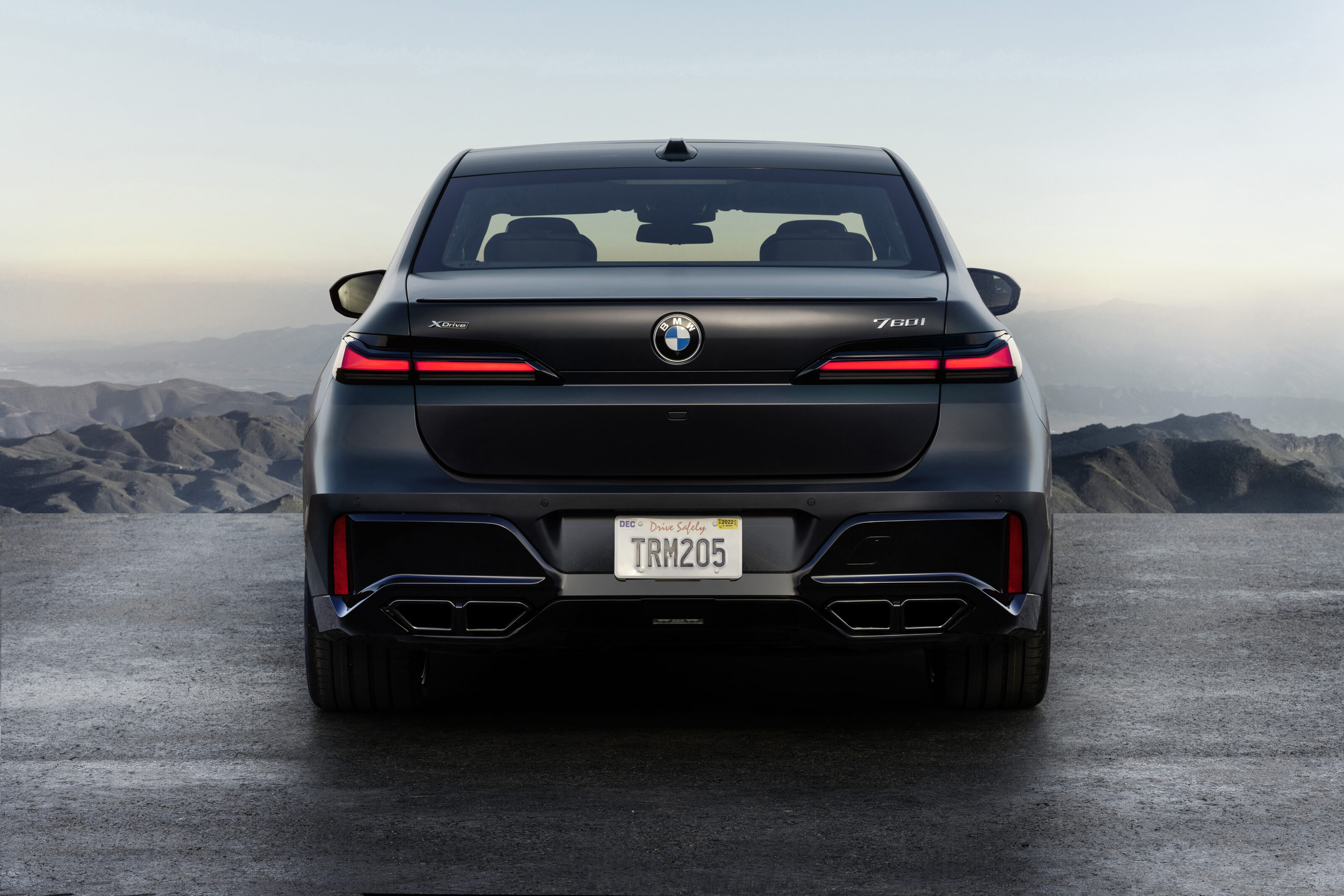
Differentiated by an M-specific body kit and standard iconic glow kidney grilles (standard in Australia), bigger brakes, and M alloy wheels.
1
The i7 M70’s twin electric motors bestow it a 0-100km/h sprint of 3.7 seconds and an electronically-limited 250km/h top speed. Using a 101.7kWh battery pack, the M70’s driving range is 560km in WLTP combined testing.
Full grunt is accessed in ‘M Sport Boost’ mode; to activate this you hold the left paddle until the digital driver’s display changes graphics and the Hans Zimmer-composed sound track kicks in.
The M70 badge is new for BMW (though the numbers have previously referred to a single overhead cam V12), and eclipses the iX M60’s outputs by 30kW. It also represents an 85kW boost over the existing i7 xDrive60.
Comparisons
Best Electric Cars, $80k-100k: Luxury EVs tested
This is part three of our price-based EV buying guide, comparing Australia’s electric cars priced between $80,000 and $100,000
1
Compared to rivals, the M70’s numbers are impressive without setting a new benchmark, measuring up against the Mercedes-AMG EQS 53 which develops 560kW/1020Nm, and the Tesla Model S Plaid (not sold in Australia) at an estimated 760kW.
AC charging maxes out at 22kW, and DC fast-charging at 195kW. Hooked up to an ultra-rapid charger, the M70 will replenish 10-80 per cent in 28 minutes – just like the xDrive60.
A ‘Max Range’ mode scales back power, limits the top speed to 90km/h, and disable climate control functions to eke out an extra 15-25 per cent driving range.
1
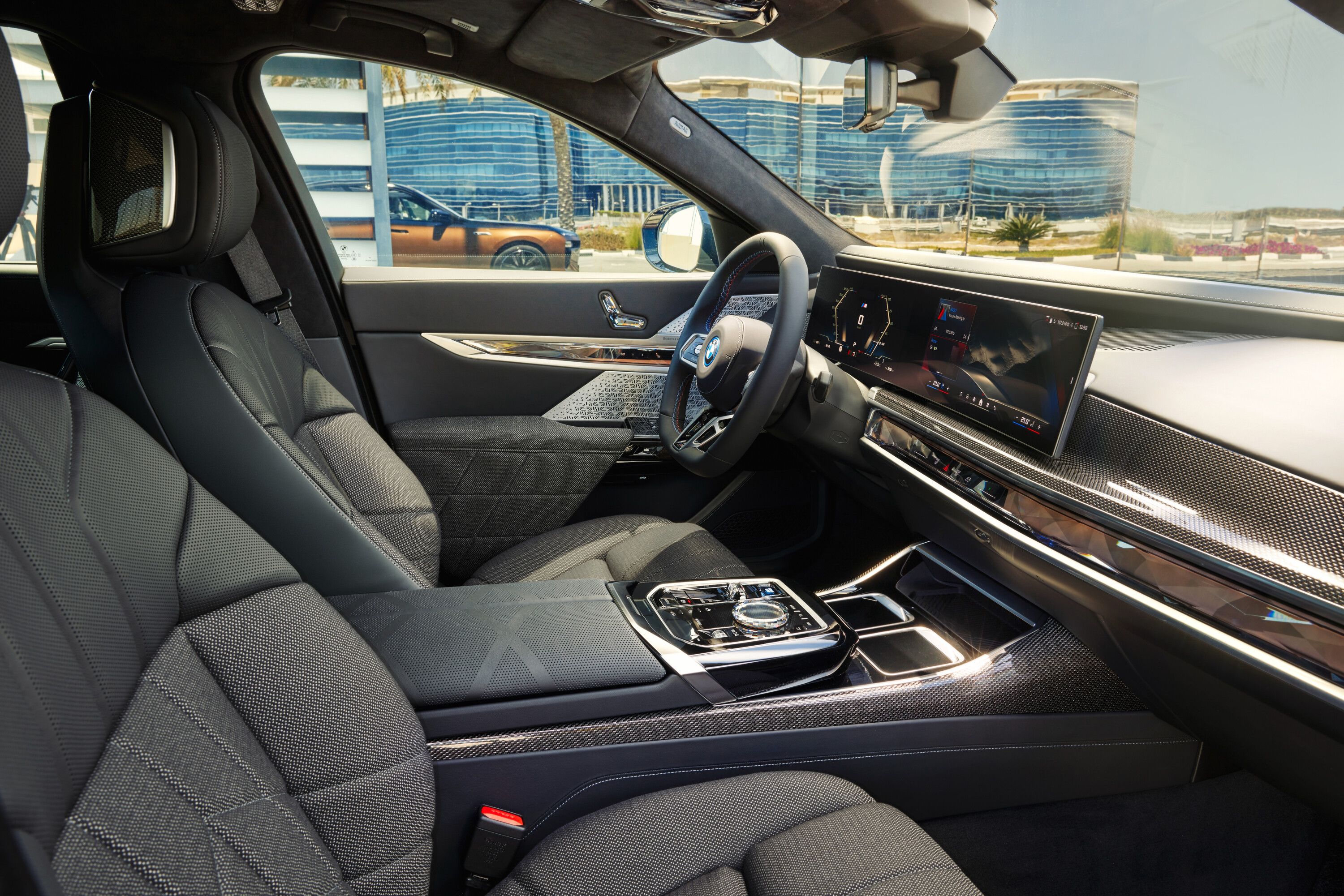
Keeping the M70’s 21-inch light alloy wheels in contact with the road is standard M-fettled air suspension with active anti-roll measures and adaptive dampers. The i7 M70’s body has been stiffened to deal with the extra grunt, too.
After getting into the standard remote-openable doors, you’ll be greeted with M specific details, including illuminated M door sills, an M leather steering wheel and M-specific content in the software.
Our original story, below, continues unchanged
UPDATE, April 22: BMW confirms local spec
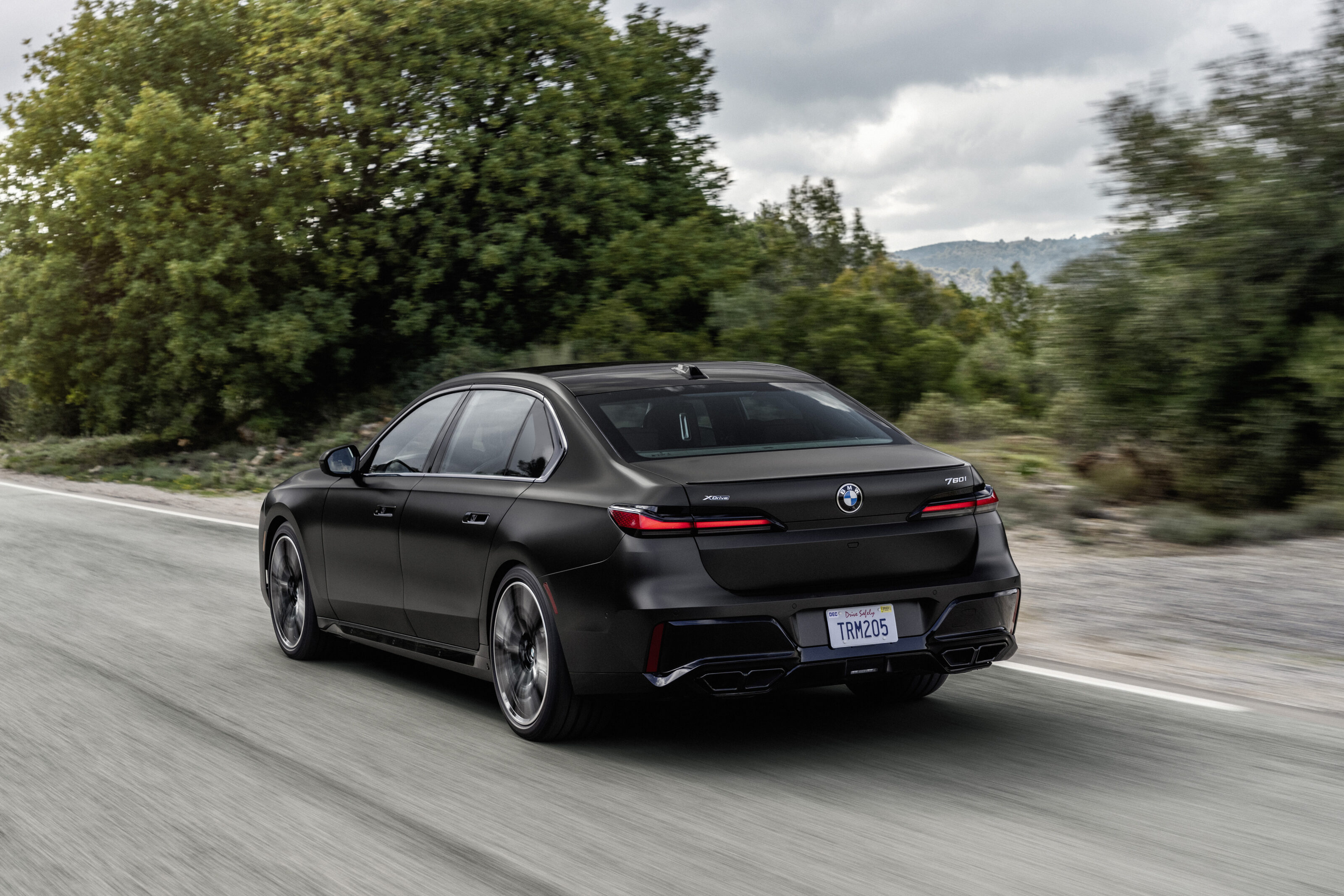
The new 2023 BMW 7 Series and i7 will arrive in Australia towards the end of the year, with the brand’s local arm confirming launch variants of each model.
Recently revealed as the latest iteration of BMW’s flagship limousine, the new 7 Series and the all-electric i7 will arrive here in the fourth quarter of 2022.
For the internal combustion engine-powered 7 Series, the 740i will be BMW’s sole offering at launch, powered by a 3.0-litre, turbocharged inline-six engine which produces 280kW and 540Nm with 48-volt mild-hybrid assistance.
The fully-electric i7 will also become available for local buyers in its “entry-level” xDrive60 guise, with the dual-motor powertrain pushing out up to 400kW and 745Nm, powered by a 101.7kWh battery pack which allows the luxury sedan to boast a driving range of up to 625km.
BMW Australia says it will provide further details on local pricing and features closer to the model’s launch later this year.
1
The story to here
April 21: 2023 BMW 7 Series and i7 revealed
Snapshot
- 2023 BMW 7 Series revealed ahead of Australian launch in late 2022
- All-electric i7 debuts alongside internal-combustion variant
- New technology includes Level 3 autonomous driving
1
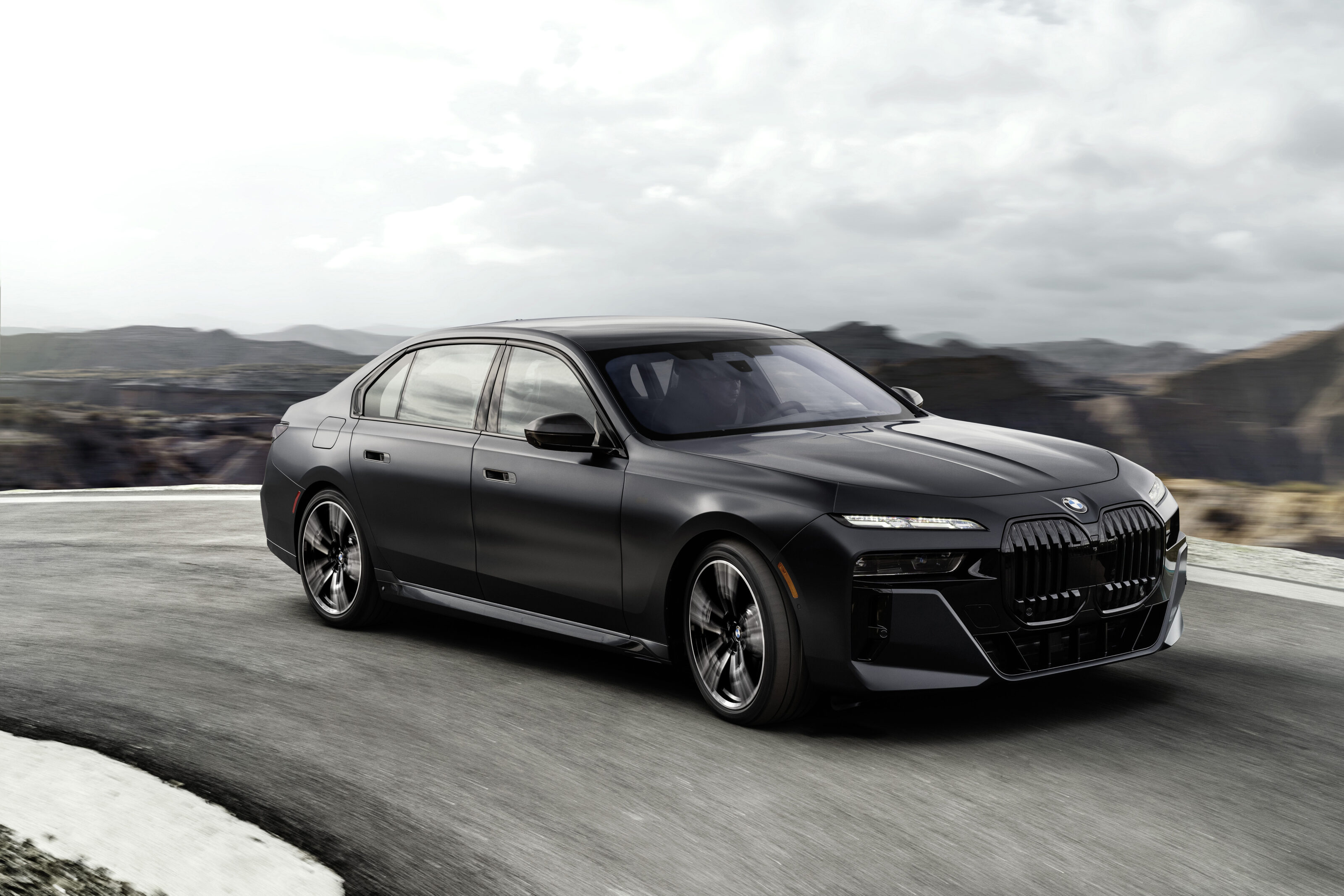
Following months of teasers, spy photos and leaks, the seventh-generation 2023 BMW 7 Series has made its debut.
In a first for the 45-year-old nameplate, the model showcased to the world is the all-electric i7.
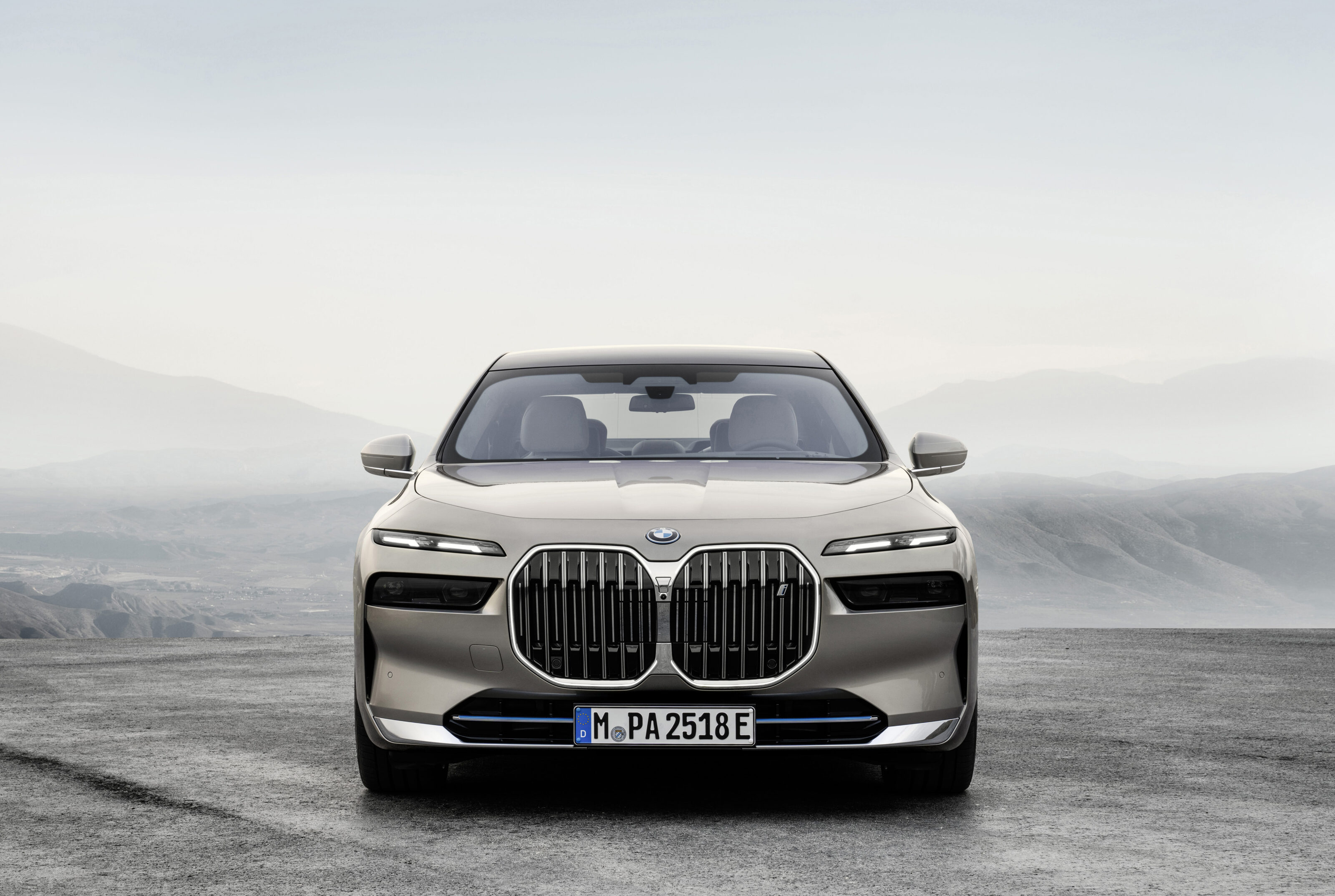
The flagship i7 M70 xDrive is one of the most powerful series-production vehicles ever produced by BMW, providing the heat to battle against the Mercedes-AMG EQS 53.
1
Featuring a dual-motor setup, the performance variant has a substantial 485kW of power and more than 1000Nm of torque, with a 0-100km/h sprint in less than four seconds. It will go on sale later in 2023, with additional information to be released in the coming months.
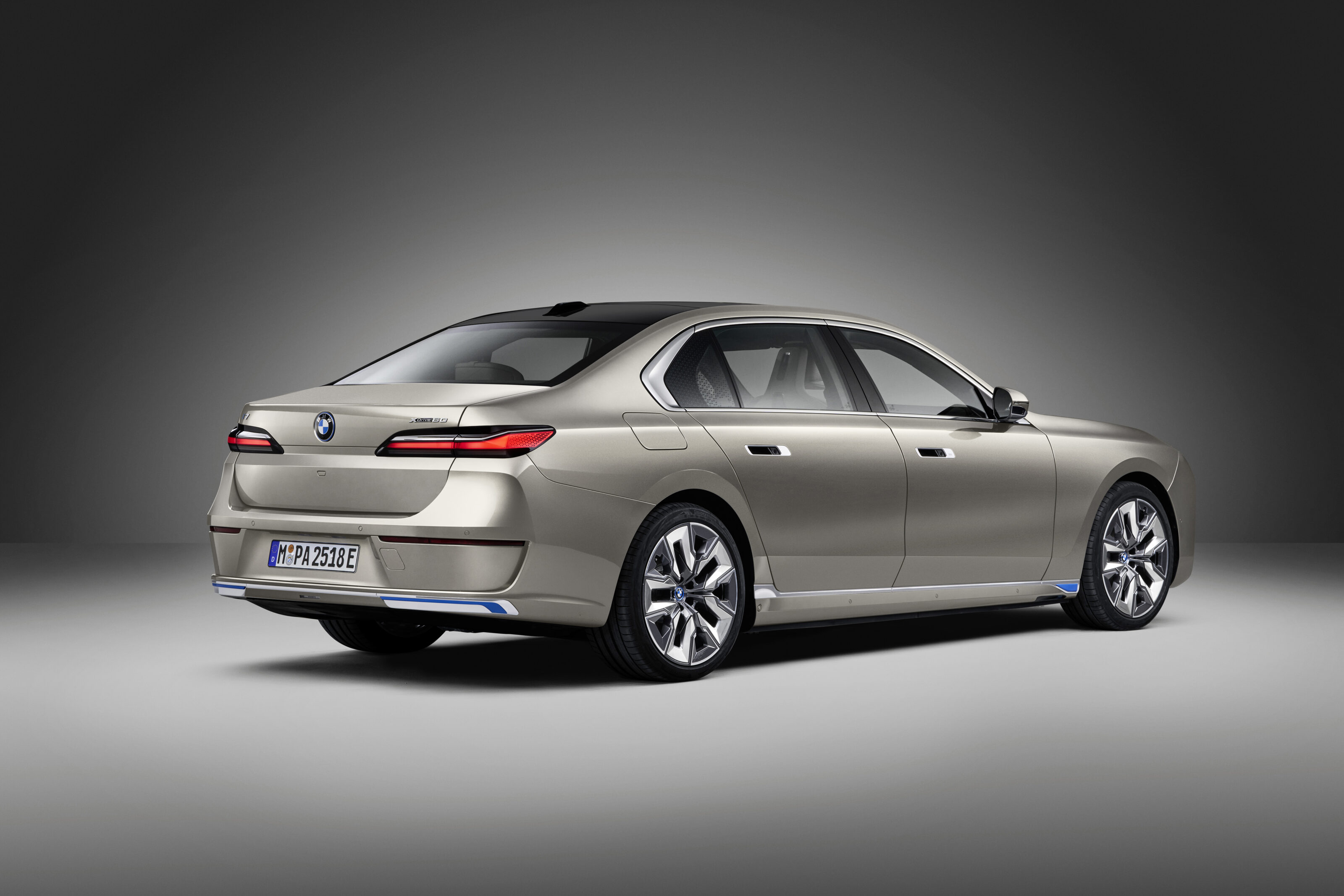
A less potent dual-motor xDrive60 will kickstart the i7 line-up, featuring 400kW/745Nm with a 101.7kWh lithium-ion battery pack and a claimed 625km driving range.
1
It can surge to 100km/h in 4.5 seconds, with a recharge rate of up to 195kW allowing 10 minutes of electric juice to add a claimed 170km of range.
While the iconic 7 Series might be going electric, BMW will still offer the latest generation range – codenamed G70 – with inline-six petrol, diesel and plug-in hybrid, and petrol V8 drivetrains.
Exterior
1
BMW claims it has reduced the carbon footprint of its Mercedes-Benz S-Class and Audi A8 rival by approximately 39 per cent, although it has grown physically.
Measuring in at 5391mm long, 1950mm wide and 1544mm high, with 3.2m between the wheels, the 7 Series is closer in size to the previous long-wheelbase iteration.
First seen on the updated X7 large SUV, the 7 Series adopts BMW’s latest split headlight design – in addition to a large, illuminated double-kidney waterfall grille with vertical chrome bars.
1
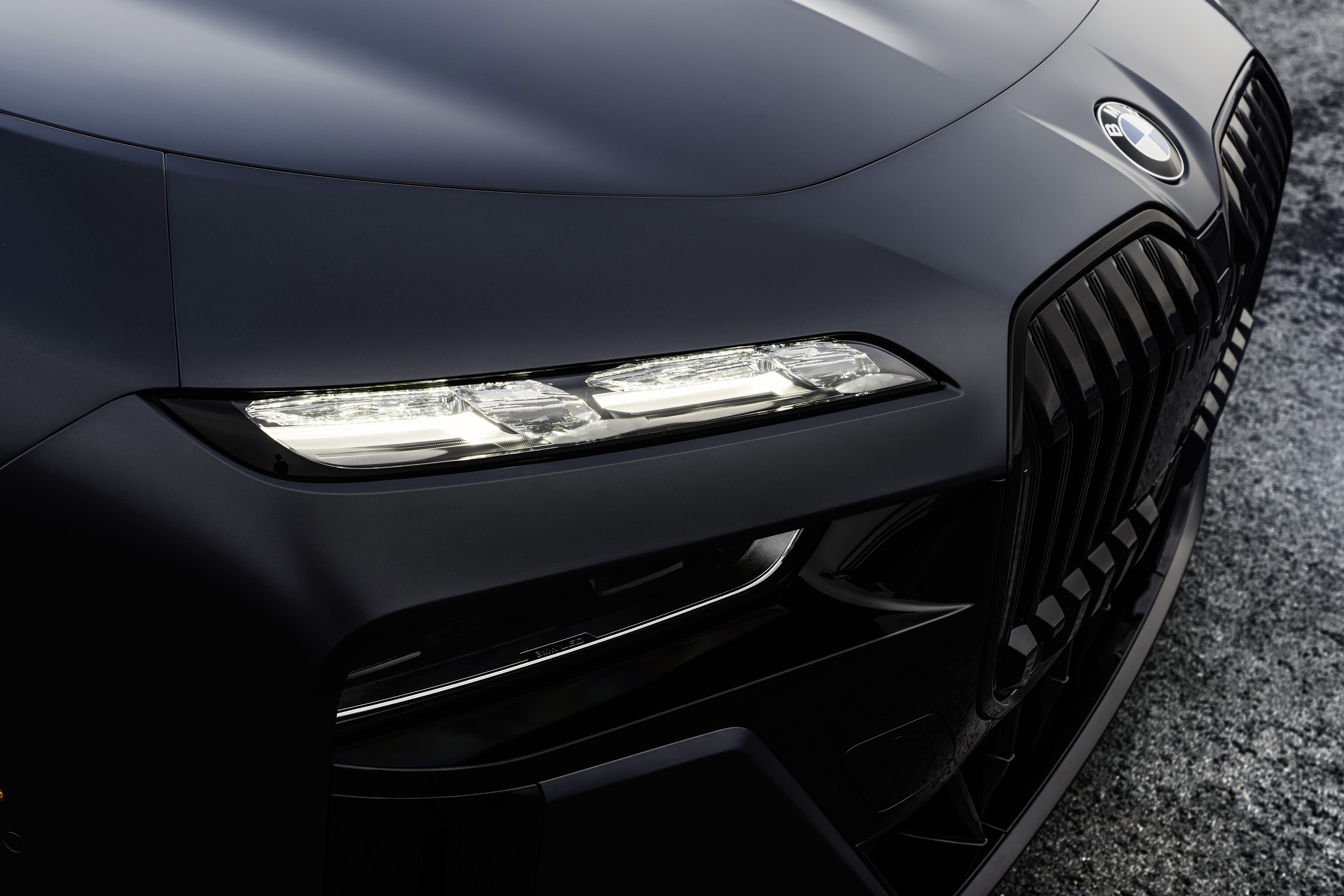
The controversial stacked lighting configuration includes a thin upper daytime running light strip and partially hidden adaptive matrix LED headlights.
Buyers will be able to option the daytime light unit with crystals from Swarovski arranged in L-shapes, with each backlit by 14 LED units.
The marque has developed a welcome and goodbye scenario to showcase the lighting, with the crystal unit following the illuminated ‘Iconic Glow’ surround of the kidney grille when the vehicle is approached.
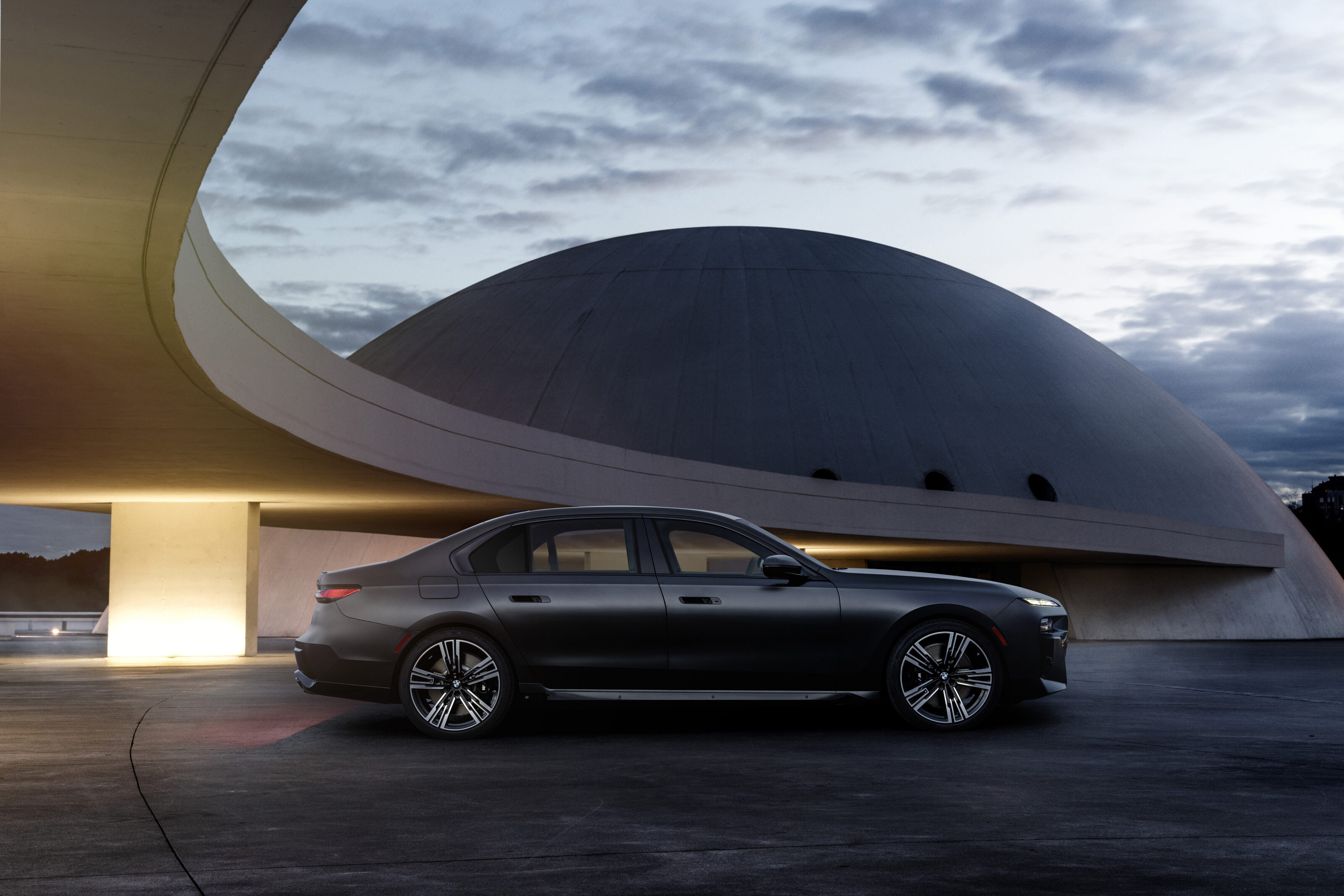
1
Along the side, the 7 Series includes fewer creases with flush door handles from the electric iX crossover and thick chrome on the C-pillar to accentuate BMW’s famous Hofmeister kink.
For the first time, a two-tone paint finish by BMW Individual will become available to compete against the avant-garde Mercedes-Maybach S-Class.
A range of 19- to 22-inch alloy wheels will be offered.
Interior
1
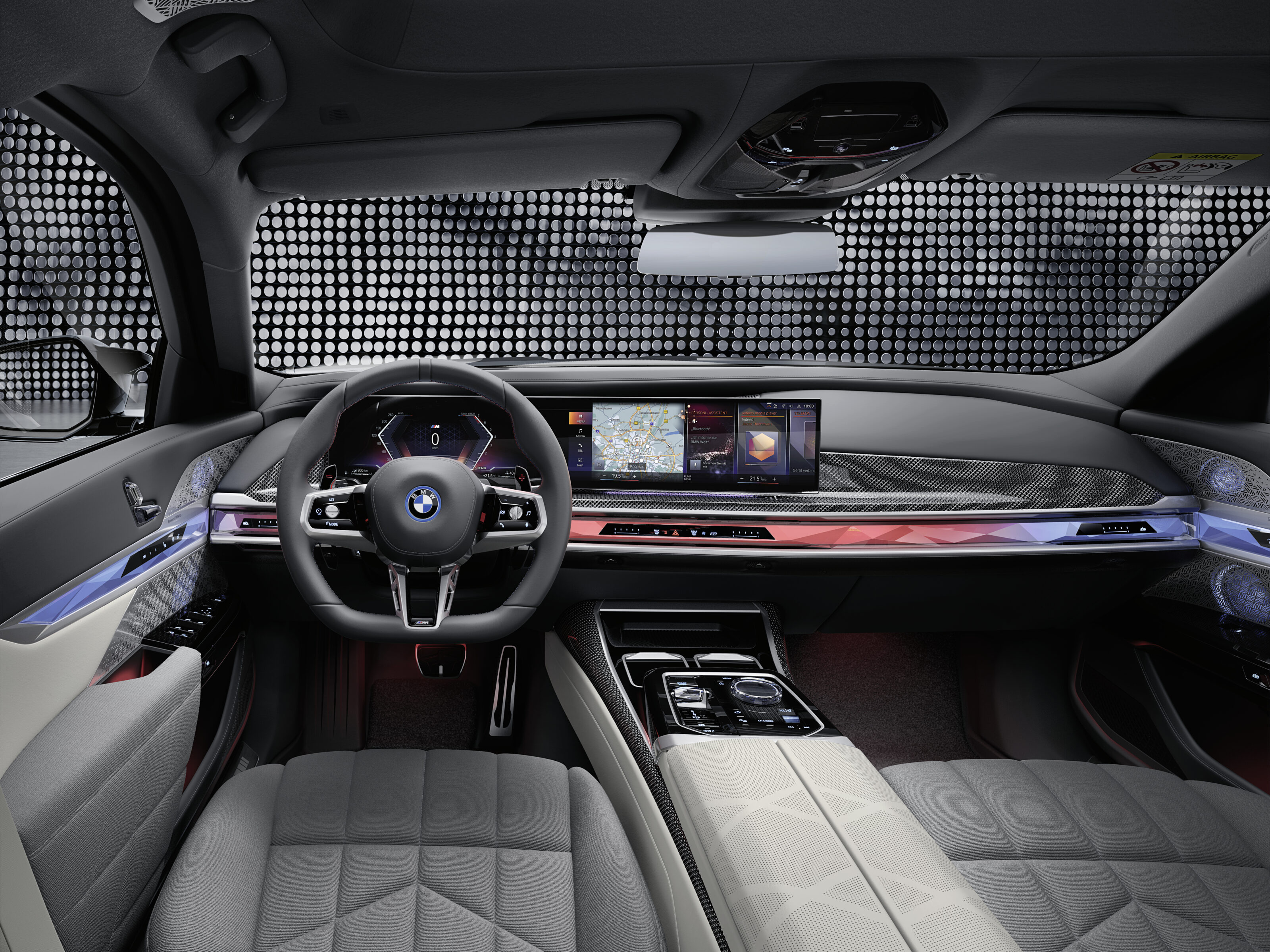

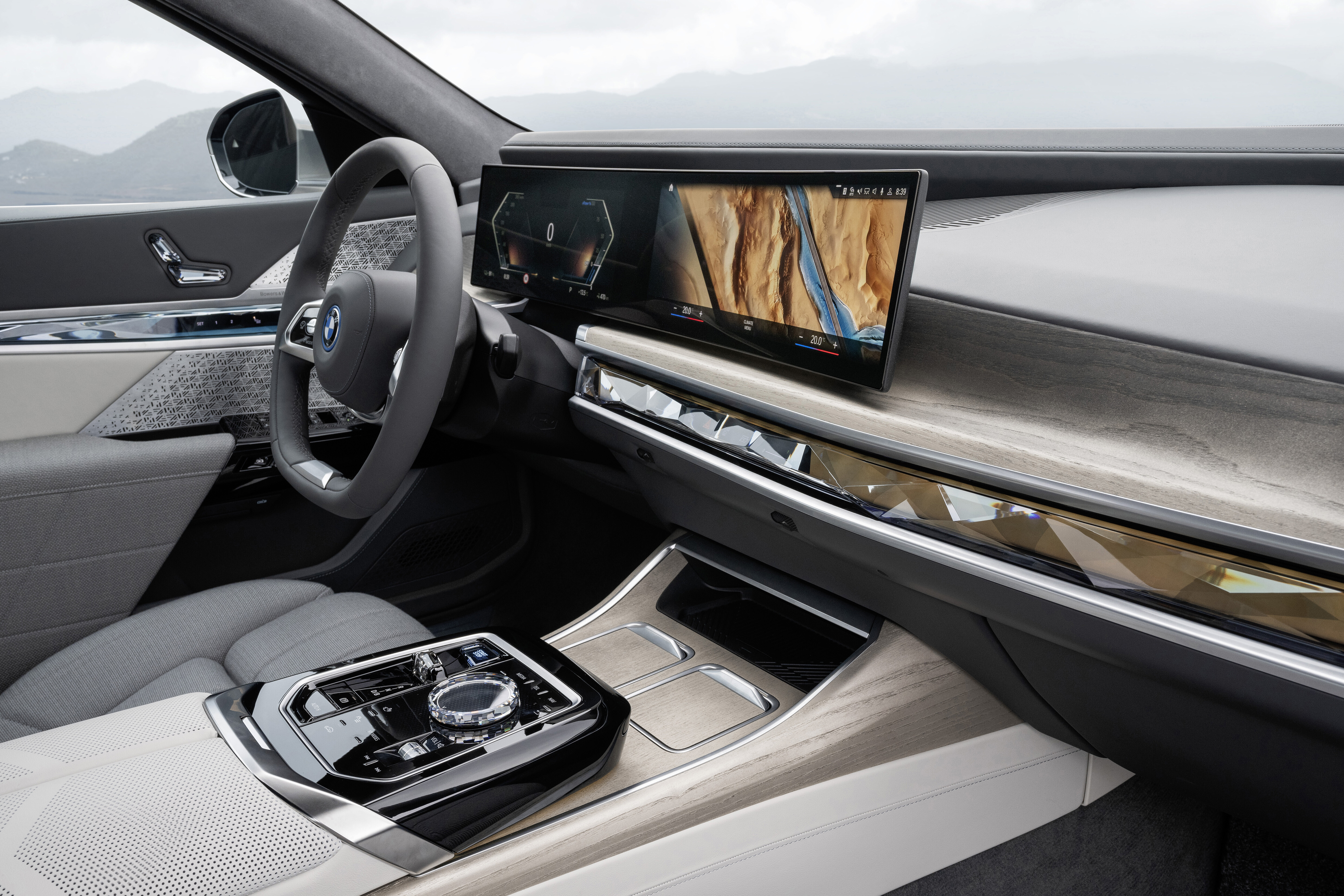
Inside, the 7 Series picks up the latest BMW design cues, including a broad curved display running the modern iDrive 8 operating system.
This consists of a 12.3-inch digital instrument cluster and 14.9-inch touchscreen, as seen on the iX and facelifted X7.
BMW has also introduced the Interaction Bar, which comprises a crystalline strip running across the entire dashboard to house an ambient lighting system and touch-sensitive controls for various functions.
1
The infotainment system features 5G connectivity, allowing passengers to enjoy video-on-demand services such as YouTube – but only when the vehicle is stationary – while augmented reality satellite navigation is new to the 7 Series.
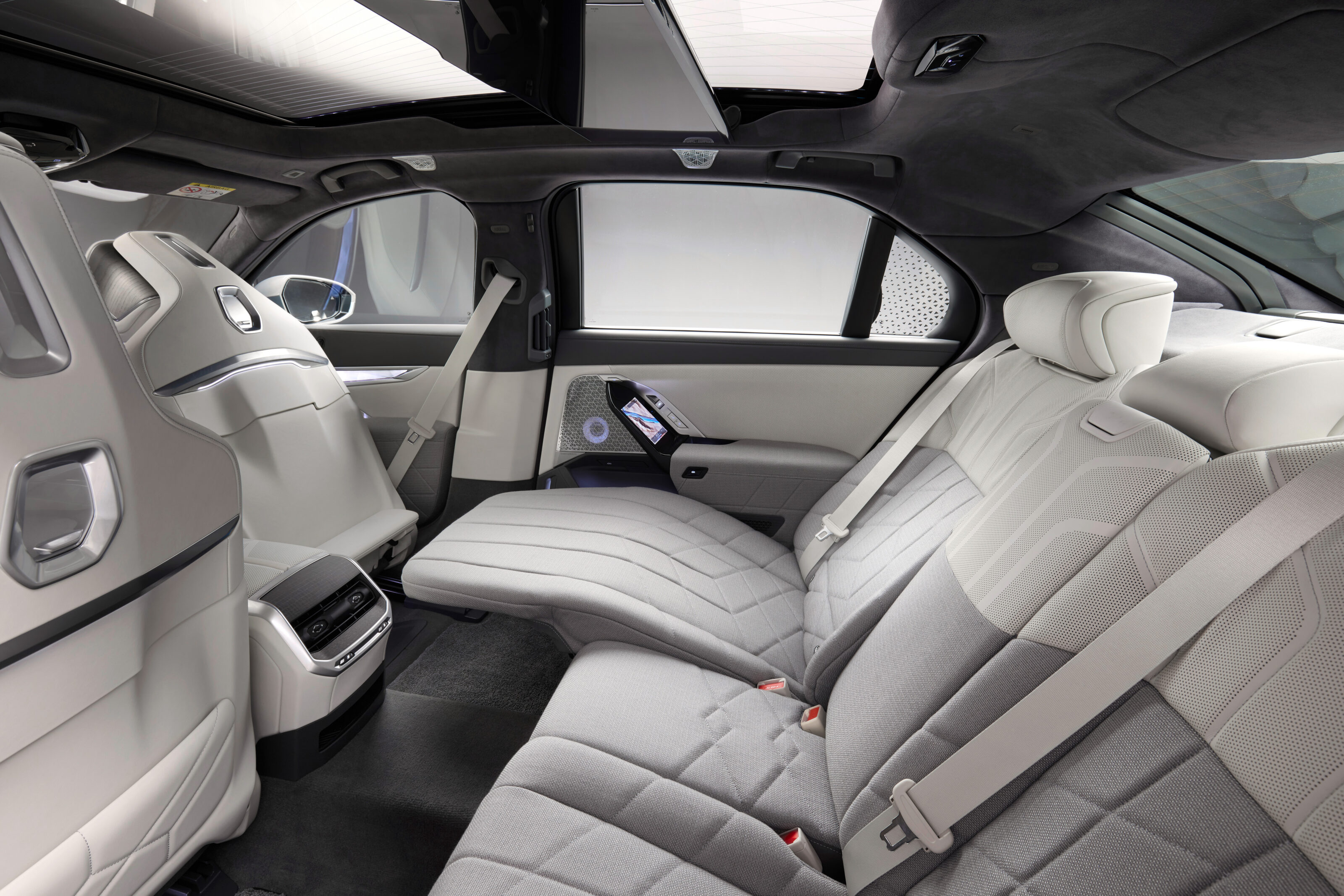
Rear passengers are treated to the large theatre screen that extends downwards from the roof to provide a 31.3-inch 8K panoramic display equipped with Amazon Fire TV, in a 32:9 two-in-one panoramic display format.
The in-house BMW personal assistant has been expanded to the second-row, allowing rear passengers to control a slew of functions by voice, while the rear seats can now be reclined 42.5 degrees.

1
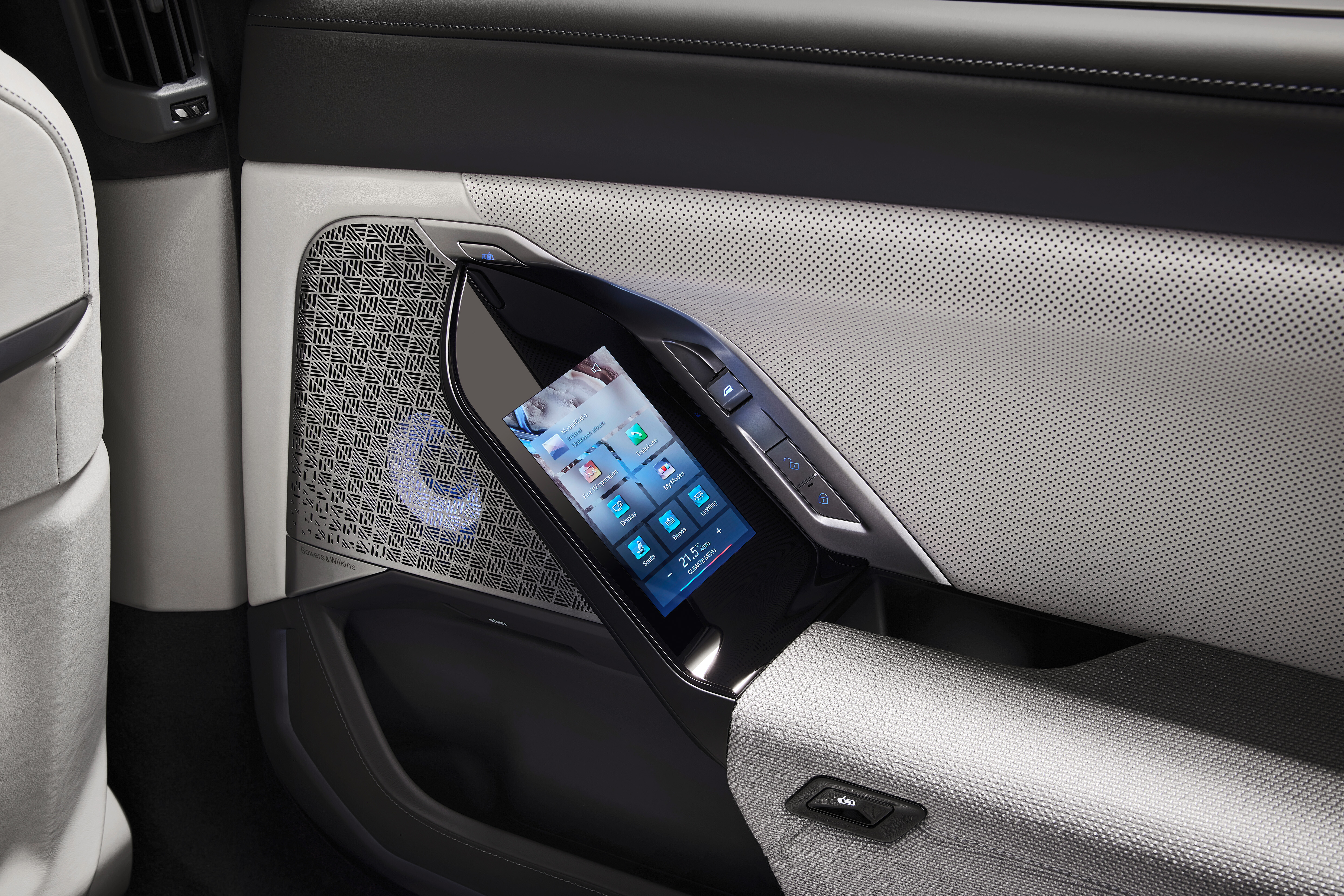
A 5.5-inch digital screen is integrated into each rear side door, with occupants able to operate the cinema display, make phone calls and adjust comfort-orientated features.
As standard, 18 in-car 655-watt speakers will be offered in the 7 Series, however, the available Bowers & Wilkins Diamond Surround Sound System includes 36, 1965-watt high-quality speakers with a 4D audio experience and magnetically controlled vibrations to improve bass.
Cloth seats also make a return, with stain-resistant cashmere wool trim joined by a number of synthetic leather and real leather options.
1
Autonomous driving
As expected, each model will include a full suite of active safety technology, with the latest additions including an exit warning function and an improved autonomous emergency braking system.
However, the big news is the autonomous driving capabilities of the new 7 Series.
When equipped with the optional Driving Assistance Professional Package, BMW claims the latest-generation vehicle is capable of Level 3 autonomous hands-free driving at speeds of up to 130km/h on select North American highways.
1
Powertrains
BMW will offer six internal-combustion options at launch, all fitted with an eight-speed automatic transmission and some form of electrification.
Petrol-powered versions consist of the rear-wheel-drive six-cylinder 735i, more powerful 740i, and the flagship 760i with a twin-turbo V8 and all-wheel drive.
The brand’s 3.0-litre turbocharged inline-six is found under the bonnet of the 735i and 740i, both matched with a 48-volt mild-hybrid system.
Destined for China, the entry-level 735i produces 210kW of power and 425Nm of torque, while the global 740i increases power to 280kW/540Nm.
Meanwhile, the 760i sports a 400kW/750Nm 4.4-litre twin-turbo V8. This is a decrease in power over the outgoing M760Li, which featured a 6.6-litre twin-turbo V12 producing 448kW/850Nm.
Instead, BMW will offer a plug-in hybrid to succeed the previous M Performance version of the 7 Series.
1
The M760e xDrive will become available in early 2023, pairing the 280kW turbocharged inline-six from the 740i with a 145kW electric motor for a total system output of 420kW/800Nm (with temporary boost).
It has a WLTP-rated electric driving range of 84-kilometres and will complete the 0-100km/h sprint in 4.3 seconds, on the way to a top speed of 250km/h.
A less-powerful 750e xDrive is also available, with 360kW/700Nm, an electric driving range of 89-kilometres and 0-100km/h in 4.9s.
The sole diesel option at launch is the 740d, featuring a 220kW/670Nm mild-hybrid 3.0-litre turbocharged inline-six.
19
Availability
BMW expects approximately 50 per cent of all 7 Series sales to originate from China, with an additional 20 per cent across Asia.
The 2023 BMW 7 Series and i7 will launch in Australia in the fourth quarter of 2022 (October to December inclusive), with local pricing and specification to be announced at a later date.
MORE
i7 news & reviews
MORE
All BMW stories
