
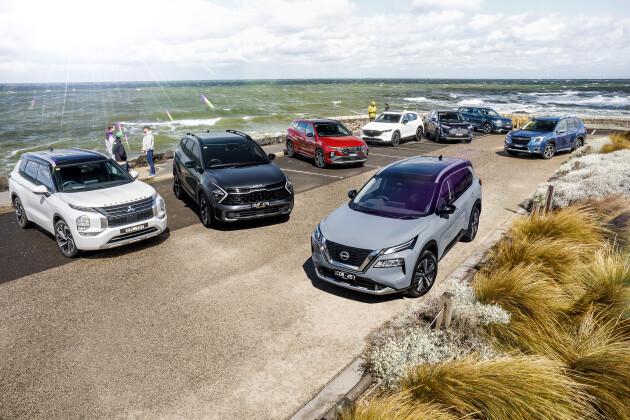
A note on the above: Our small SUV comparison is coming, but our medium SUV test is compelling reading in the meantime!
Hyundai wants to revive at least one aspect of the golden days of motoring, unveiling a new automated charging robot that will approach your EV on its own and kick off the charging process.
Apart from the convenience factor, the new system could prove heaven-sent for motorists with reduced personal mobility.
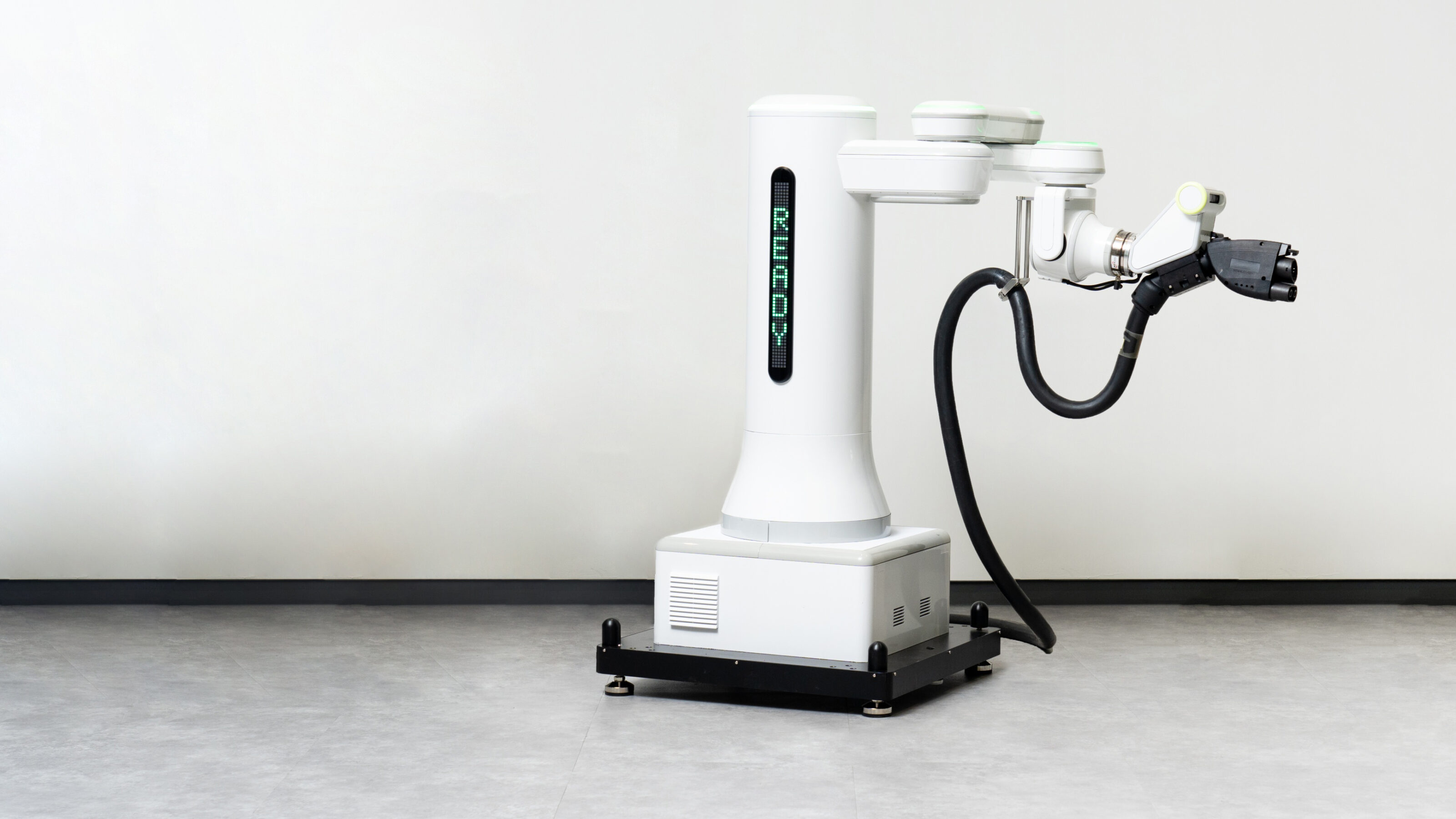
The ‘does what it says on the label’ Automatic Charging Robot (ACR) is a one-armed contraption capable of plugging a cable into an EV’s charging port and removing it again once charging is complete.
A new video demonstrates the ACR’s capabilities and how it overcomes accessibility issues and inconvenience for some EV drivers.
In the video, the ACR communicates with the Hyundai IONIQ 6 EV to open the charging port, accurately plugging the charger into the port with control technology applied by a 3D camera-based system.
Hyundai says the ACR was developed to operate reliably in all environments, regardless of charger location, weather and potential obstacles.
Importantly, the ACR also has the benefit of looking less creepy than the snake-like Tesla prototype revealed seven years ago – looking for all the world like it’d been lopped off Doctor Octopus’s tentacle suit.
Hyundai’s ACR is designed to increase convenience for EV drivers, particularly those with mobility barriers, as charging cables become thicker and heavier to enable high-speed charging.
The company says its team has considered diverse variables in developing the ACR, such as the parking location of the vehicle, the shape of the charging port, the weather, potential obstacles, and weight of the charging cable.
1
Further pointing to its production plans, Hyundai has secured an official waterproof and dustproof grade of IP65 for the ACR, which makes it possible to be stably operated even in extreme environments.
The ACR is an example of the Group’s developing robot tech – bolstered by its acquisition of Boston Dynamics.
Hyundai predicts robots will support humans with EV charging in the near future, and that automatic charging robots will significantly increase the convenience of EV charging, potentially leading to even better utilisation by sequentially charging several parked vehicles.
MORE
Everything Hyundai
You wait ages for a new Nissan and then four come along.
Within the space of a year, Nissan dealers, once starved of fresh stock, have seen the Z sports coupe arrive alongside a broadside of new SUVs in the shape of the Pathfinder, the X-Trail and, arguably the most important of the lot, the Qashqai.
Aussies genuinely can’t get enough of the Qashqai. The last J11 version was on sale here for nearly a decade, but that’s largely because we’ve been a little behind the curve in finally getting our hands on this British-built J12 successor. It first had its reveal way back in February 2021 but it’s been late making landfall Down Under. Has the wait been worth it?
In order to assess what real people will be buying, we’ve selected the ST+ version to test. All Qashqais use the same 110kW 1.3-litre turbo-petrol engine that sends drive to the front wheels via a continuously variable transmission (CVT), and the ST+ sits second in a four-model hierarchy that runs ST, ST+, ST-L and Ti. In other words, it’s a model that is in the absolute heartland of Nissan’s big Qashqai sales push.
JUMP AHEAD
- How much is it, and what do you get?
- How do rivals compare on value?
- Interior comfort, space and storage
- Technology in the cabin
- What is it like to drive?
- How is it on fuel?
- How safe is it?
- Warranty and running costs
- VERDICT
- Specifications
How much is it, and what do you get?
| 2023 Nissan Qashqai ST+ features | |
|---|---|
| 10.25-inch touchscreen | Adaptive cruise control |
| 12.3-inch touch screen | High-beam assist |
| 18-inch alloy wheels | Rain-sensing wipers |
| 360-degree cameras | Satellite navigation |
| 6-speaker stereo | Wireless Apple CarPlay/Wired Android Auto |
The bad news? Qashqai prices have taken a fairly steep uptick over the last model. But that much you were probably expecting. It’s the way of the car market at large right now.
At the base level, prices have risen by $3100 over its predecessor while at the pointy end of the range you’ll pay $8300 more. Nissan naturally points to vastly improved equipment lists and the company has a point, but just be prepared to dig deep if you really want a new Qashqai.
The ST+ opens at $37,890 before on-road costs, which is a solid $4K premium over the entry-level ST. That doesn’t net you any real changes to the oily bits, but you will notice a far plusher infotainment system, bigger alloy wheels, wireless Apple CarPlay and front fog lights.
1
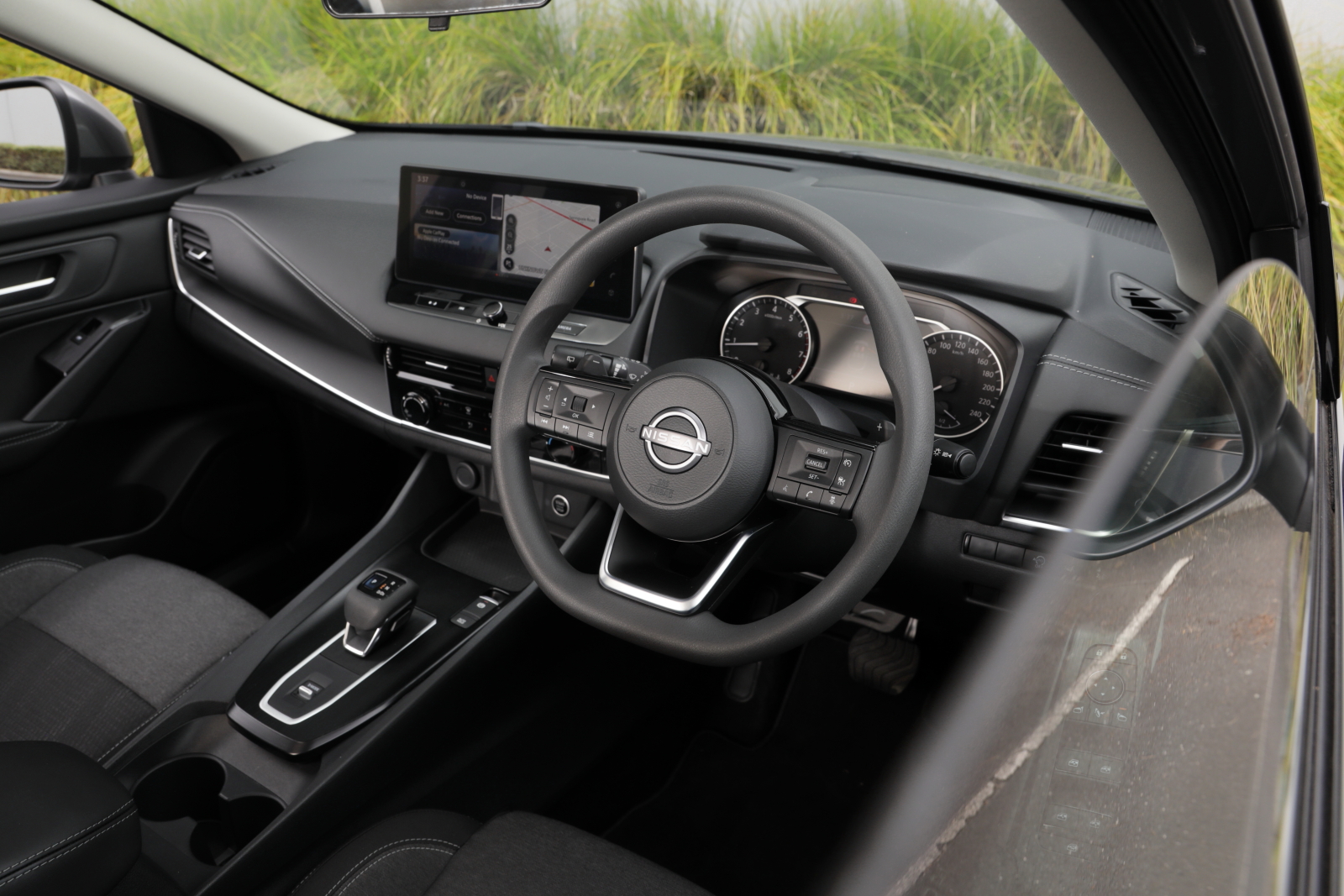
You’ll still get a polyurethane steering wheel, but at least it’s nicely textured and contoured rather than the typical greasy-feeling rim that many car brands inflict on customers whose budget doesn’t run to leather.
Otherwise, materials quality is relatively impressive and the cabin adheres to much the same design language that you’ll see through the X-Trail and Pathfinder hierarchy. The ST+ only gets single-zone air-conditioning which feels a little basic, but at least it gets chunky, physical knobs for fan speed and temperature.
We’d take that over a complex system that’s buried within the touchscreen any day. One equipment pick that’s missing from the ST+ is a set of roof rails; you’ll need to choose an ST-L for that.
1
How do rivals compare on value?
If you thought of the Qashqai as one of the cheaper options in its class, perhaps you need to think again.
That said, it’s not hard to see value here. The Qashqai as a model range has taken a huge step forward in terms of quality and sophistication. Communicating that to buyers is going to be Nissan’s challenge. This ST+ version is pitched at $37,890, while an automatic Mazda CX-30 that’s one up from entry-level – the G20 Evolve – is $35,740 and packs more power but less torque.
Opt instead for a Toyota Corolla Cross and the price differential is even starker. Here you can buy a GX Hybrid for $35,500 which nets you a 2.0-litre 146kW engine or, if you want a grade higher, a GXL at $36,750. All the above prices exclude on-road costs.

1
In terms of metal for your money, the Toyota is a solid bet, but jump behind the wheel and clock the Corolla’s dull cabin finishes and smaller 8.0-inch display and you’ll soon appreciate where savings have been made.
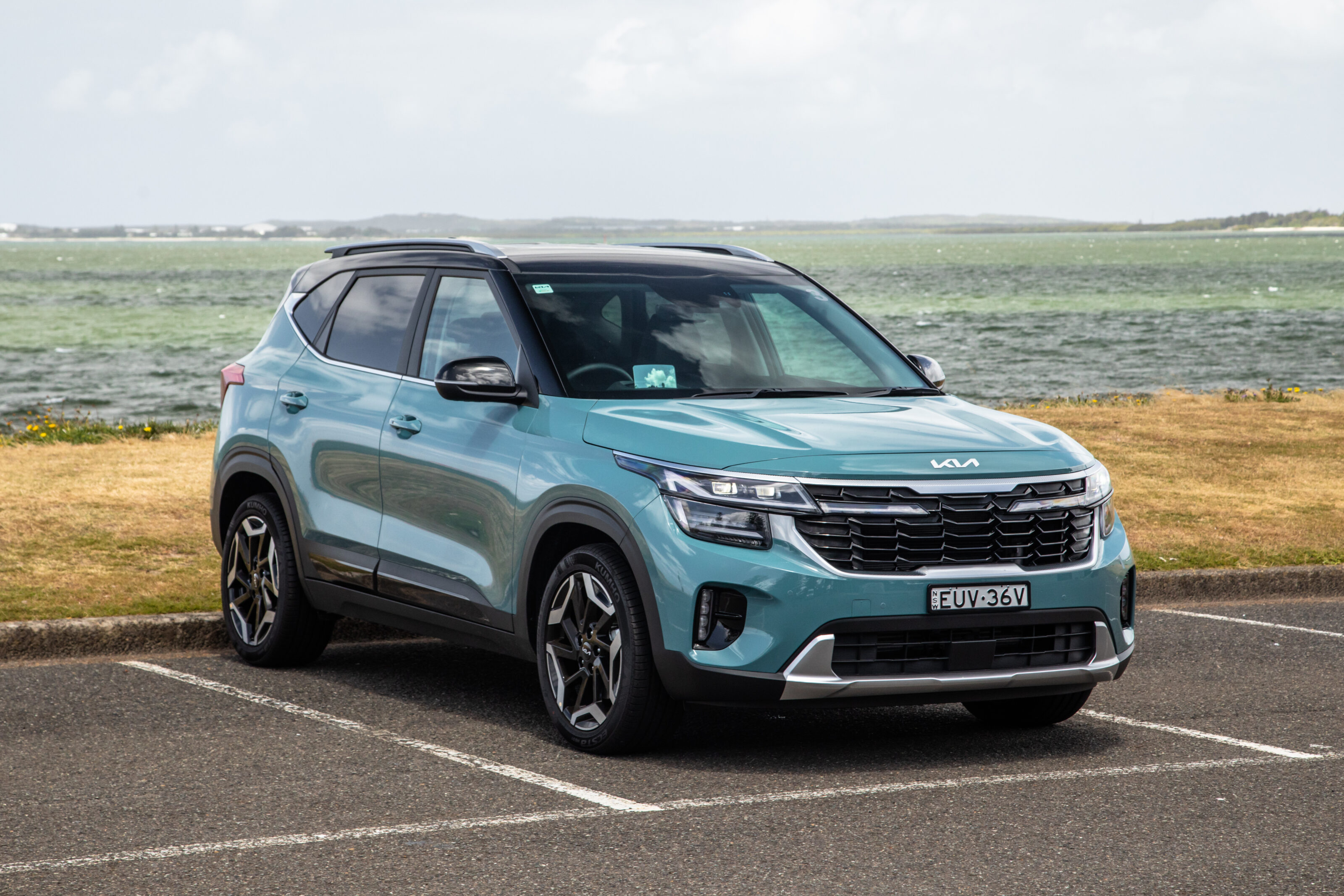
Kia’s Seltos (and for that matter many variants of the bigger Sportage) – with a seven-year warranty – comes in cheaper, likewise the Hyundai Kona.
Neither Seltos nor Kona feels anything like as modern as the Qashqai and it’s likely the price and perceived quality differential between the Koreans and the British-built Qashqai will close significantly when the next generation models arrive (mid-2023 for Kona, 2025 for Seltos).
It’s also worth bearing in mind that any money you might save on a runout version of these cars may well be cancelled out by heavier depreciation when the new models arrive. For now, however, the Seltos benefits from a recent facelift, offers a lot of car for the money and will deliver an all-wheel drive Sport+ variant with 146kW for around $1500 more than the Qashqai ST+.
1
Interior quality, comfort, space and storage
Admit it. You expected the Qashqai’s cabin to be a little bit dull. Practical, but dull. So kudos to Nissan for adding a little styling pizzazz.
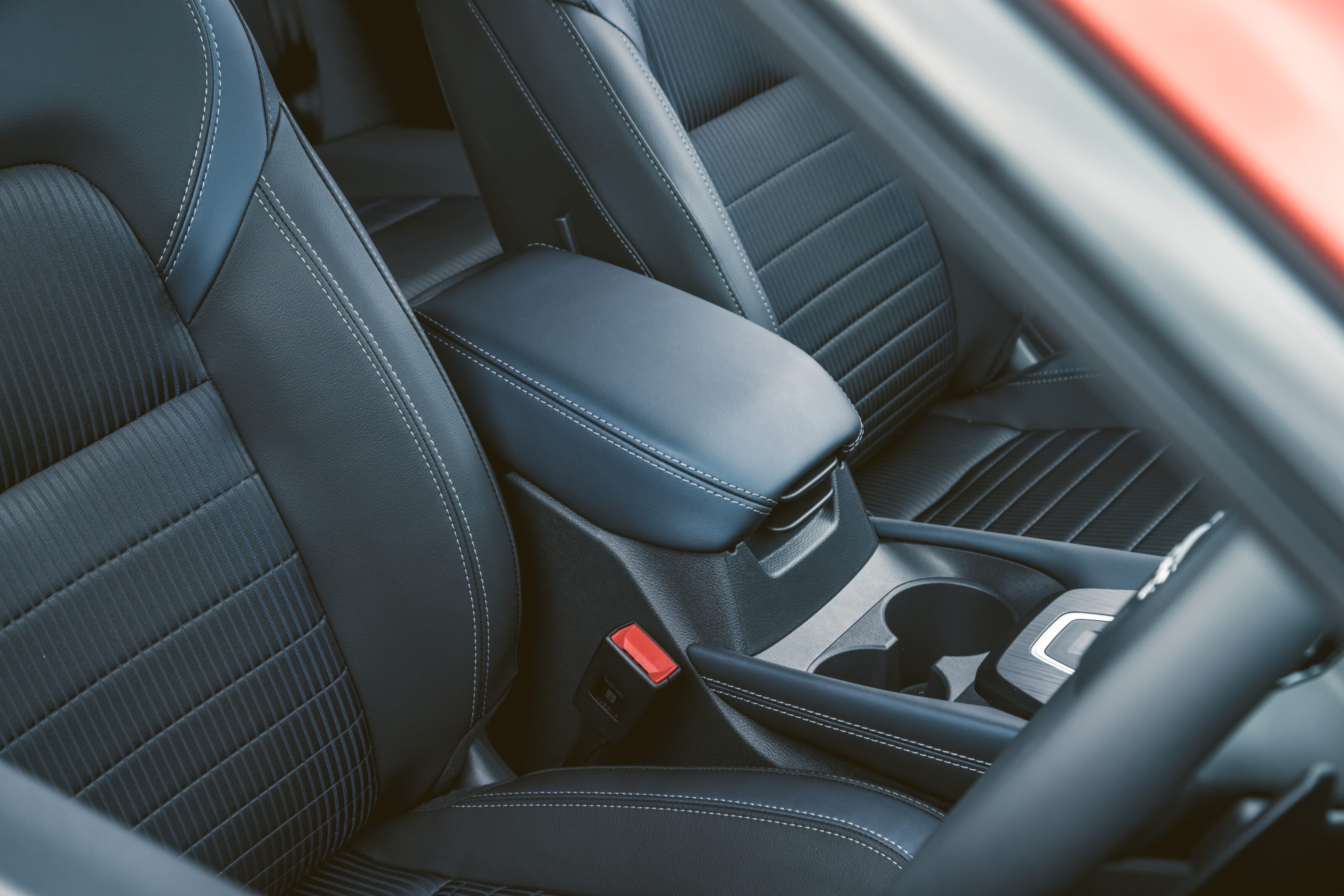
Break out the tape measure and you’ll realise that the Qashqai’s wheelbase is only 40mm shorter than that of the seven-seat X-Trail. Nissan has cleverly teased out the dimensions of this J12 generation model to deliver a bit more room for occupants.
At 2666mm, it’s 20mm longer than its predecessor between the hubs, and while it runs on much the same CMF-CD platform as before, it’s 35mm longer, 32mm wider and 25mm taller.
1
Visibility out of the vehicle has been improved thanks to a thinner but stronger A-pillar design, while you’re far less likely to kerb a wheel on a curving multi-storey down ramp thanks to mirrors that are now mounted on the doors rather than blocking your view past the A-pillar.
Rear passengers enjoy an additional 28mm knee room (608mm in total), while headroom has increased by 15mm. Nissan has listened to owner feedback and has made getting in and out of the Qashqai easy with doors that open to a 70-degree angle up front and a massive 85 degrees at the rear, easing the loading of children.
The rear seats are generously sized, with more than acceptable headroom and reasonable knee room. There’s also the benefit of rear air vents plus USB-A and USB-C ports.
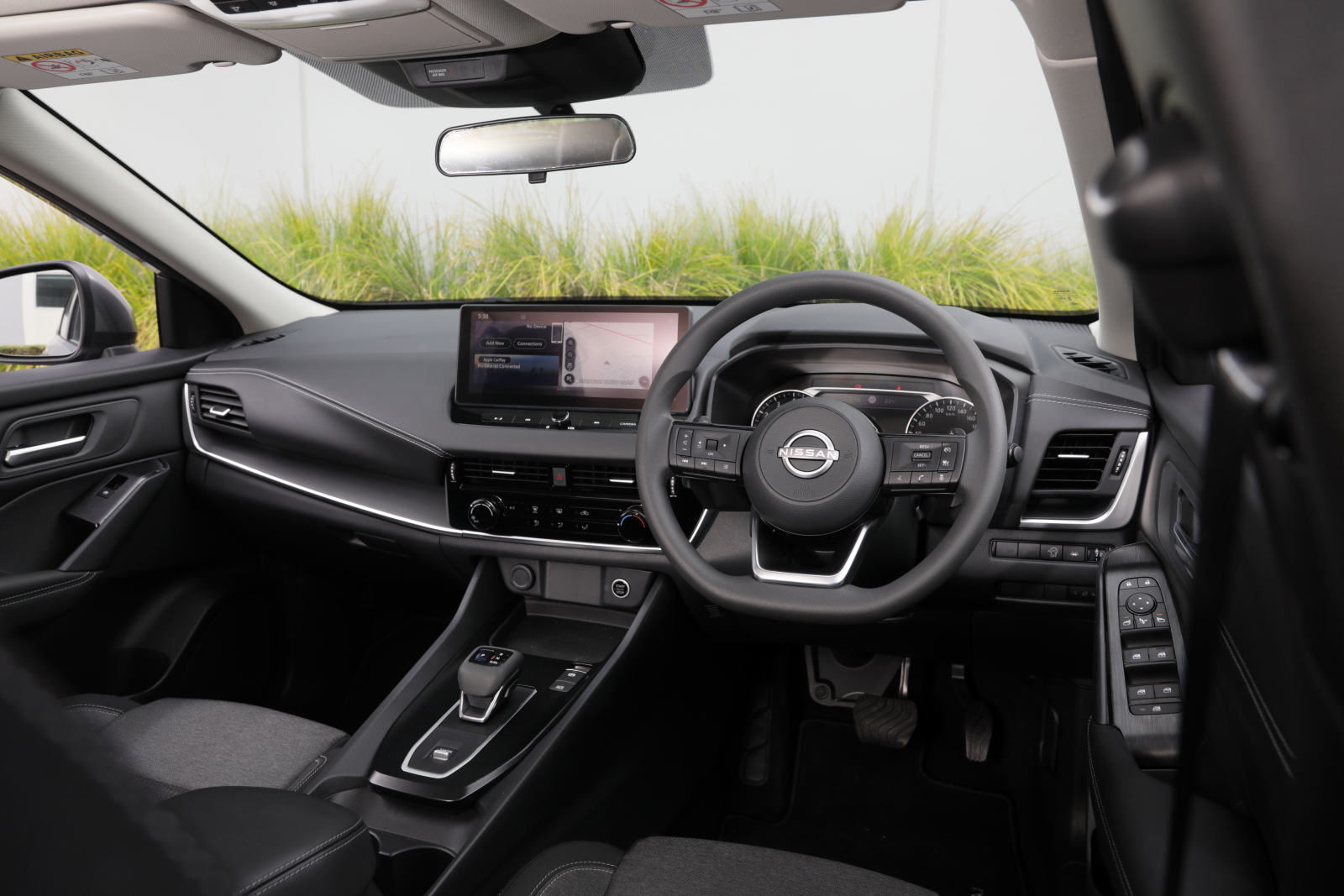
Touchpoints generally feel high-quality, although a leather-trimmed steering wheel would be a welcome fitment.
1
Touchpoints generally feel high-quality, although a leather-trimmed steering wheel would be a welcome fitment. The cloth seats are supportive laterally and feel hardwearing, although a little more under-thigh support wouldn’t go amiss.
Switchgear is unintimidating and Nissan has thankfully retained a decent array of buttons rather than burying many functions in the infotainment screen.
The brushed metal effect on the dashboard brightwork, the contoured and stitched leather-look dash roll top, the damped feel to the switchgear and the slick short-travel gear selector all combine to make the Qashqai’s interior feel a step above the norm.
1
Boot space
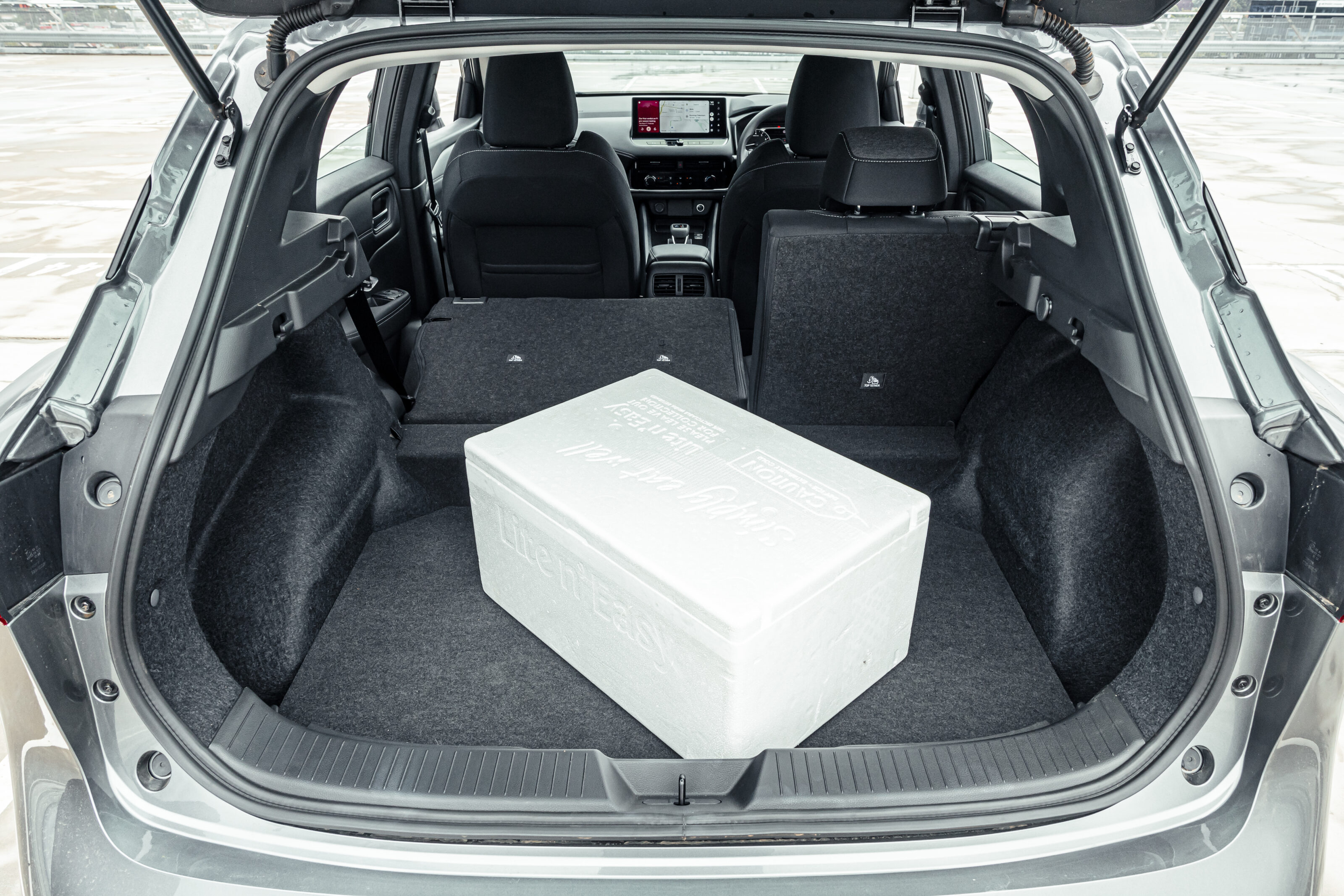
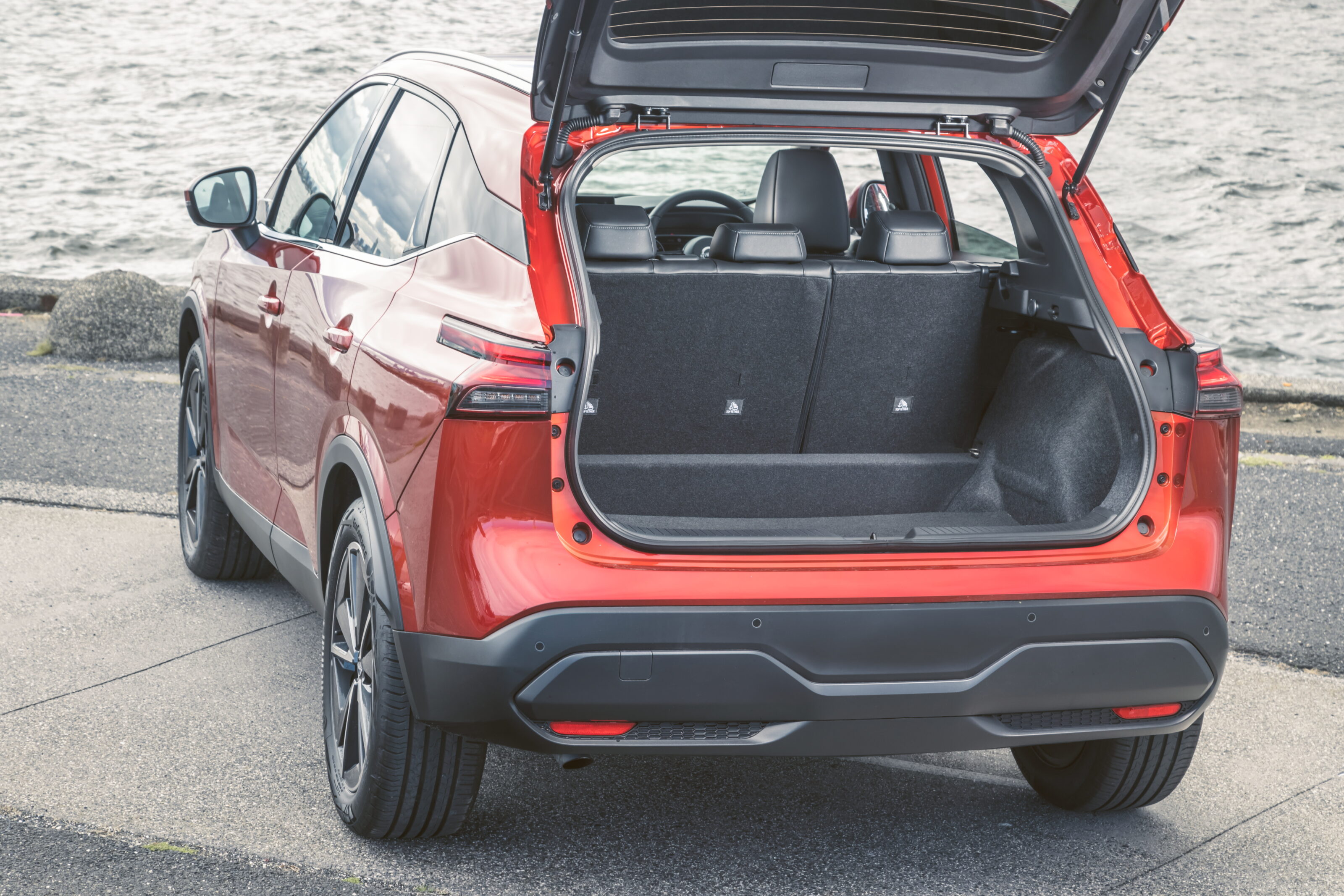
For a vehicle that packages high-quality multi-link rear suspension, the Qashqai offers a decent amount of rear boot space. The 2023 Qashqai’s boot holds 429 litres with the rear seats upright and 1524 litres with the 60:40 rear bench folded.
The boot floor is stepped, however, up-spec Qashqai Ti models feature a removable panel which makes the floor flat with the benefit of a little storage beneath it. This and the packaged subwoofer then limit the total space on offer to 418 litres with the seats in place.
Some intrusion from the suspension towers is evident but the sides of the luggage bay are flocked to prevent prams and strollers from scratching them. Those with families will find the lack of an electric tailgate tiresome if they’re laden down with gear. Beneath the boot floor is a space-saver spare measuring 155/90 R17. Sadly, the ST+ trim misses out on the clever ‘Divide and Hide’ boot organiser of ritzier Qashqais.
Mini matchup: Boot space
| MODEL | WHEELBASE | BOOT |
|---|---|---|
| Nissan Qashqai ST+ | 2666mm | 429/1524L |
| Kia Seltos Sport | 2630mm | 433/1393L |
| Mazda CX-30 Evolve | 2655mm | 317/-L |
| Skoda Kamiq Style | 2651mm | 400/1395L |
| Toyota Corolla Cross GXL | 2640mm | 436/-L |
| Hyundai Kona Elite | 2600mm | 374/1156L |
1
Technology in the cabin
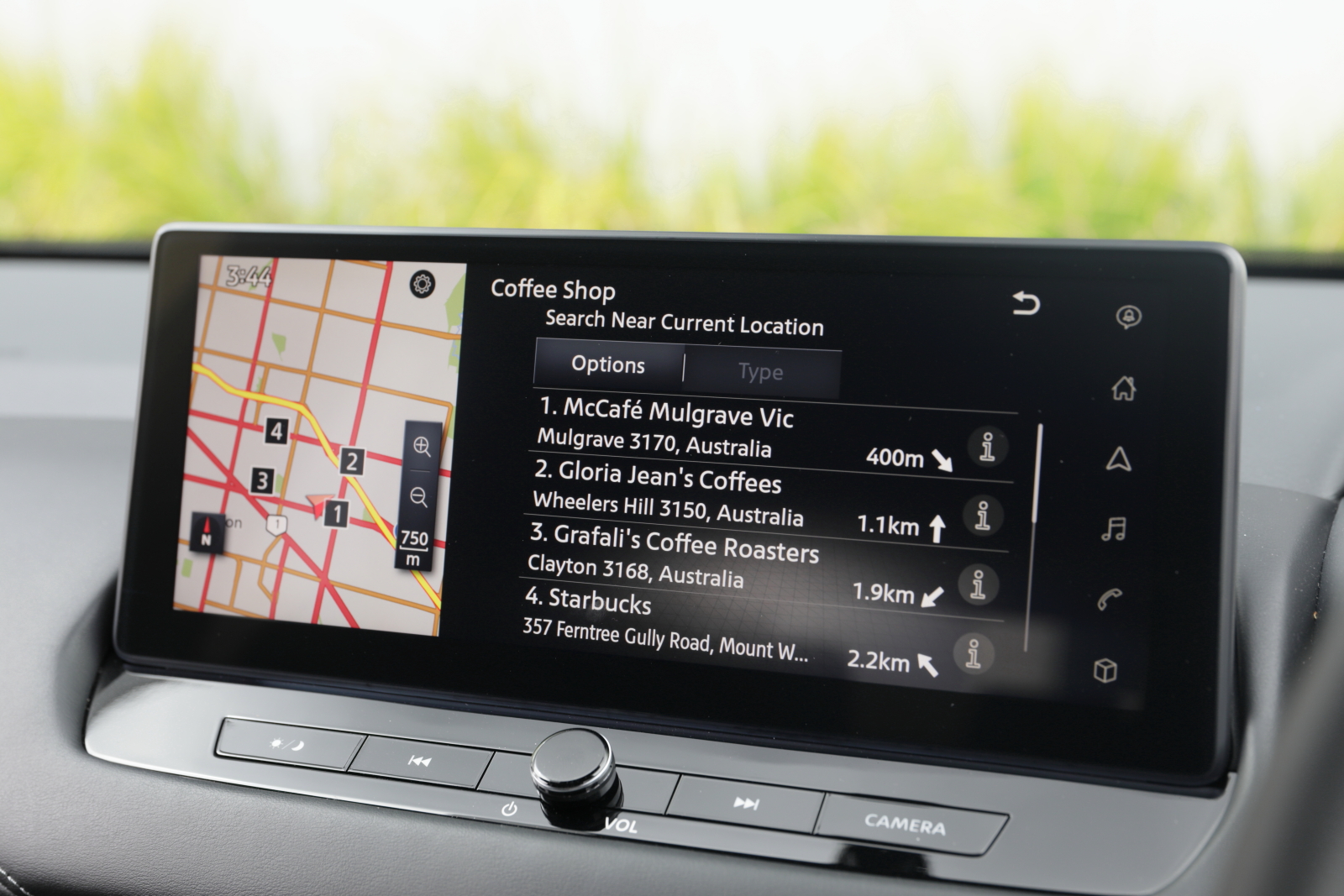
The big touchscreen is a standout. It looks as if it belongs in a far more expensive vehicle.
It’s responsive, navigation around it is fairly straightforward and once it’s figured out the ID of your phone, it’s not given to dropping the connection.
I’m an Android user so I didn’t get to sample the wireless Apple CarPlay connection, but the wired Android link was solid – which is more than can be said for some far more expensive vehicles.
Comparisons
Medium SUV comparison: 2023 Mega Test
Thinking of buying a new mid-size SUV this year? We test eight of the best and most popular contenders to see where you should spend your money
small SUV comparo coming
There’s no wireless charging pad in the ST+ model, which is no great irritant if you’re already plugging your Android handset into either the adjacent USB-A or USB-C port, but that could rankle if you have an iPhone because you may feel inclined to plug the phone in so it retains charge on a longer trip.
When you move beyond infotainment, the Qashqai ST+ is a little bare-bones. There’s no dual-zone air-conditioning or electric seat adjustment on the passenger side. You’ll search in vain for a head-up display or an over-the-air firmware update facility.
1
What is it like to drive?
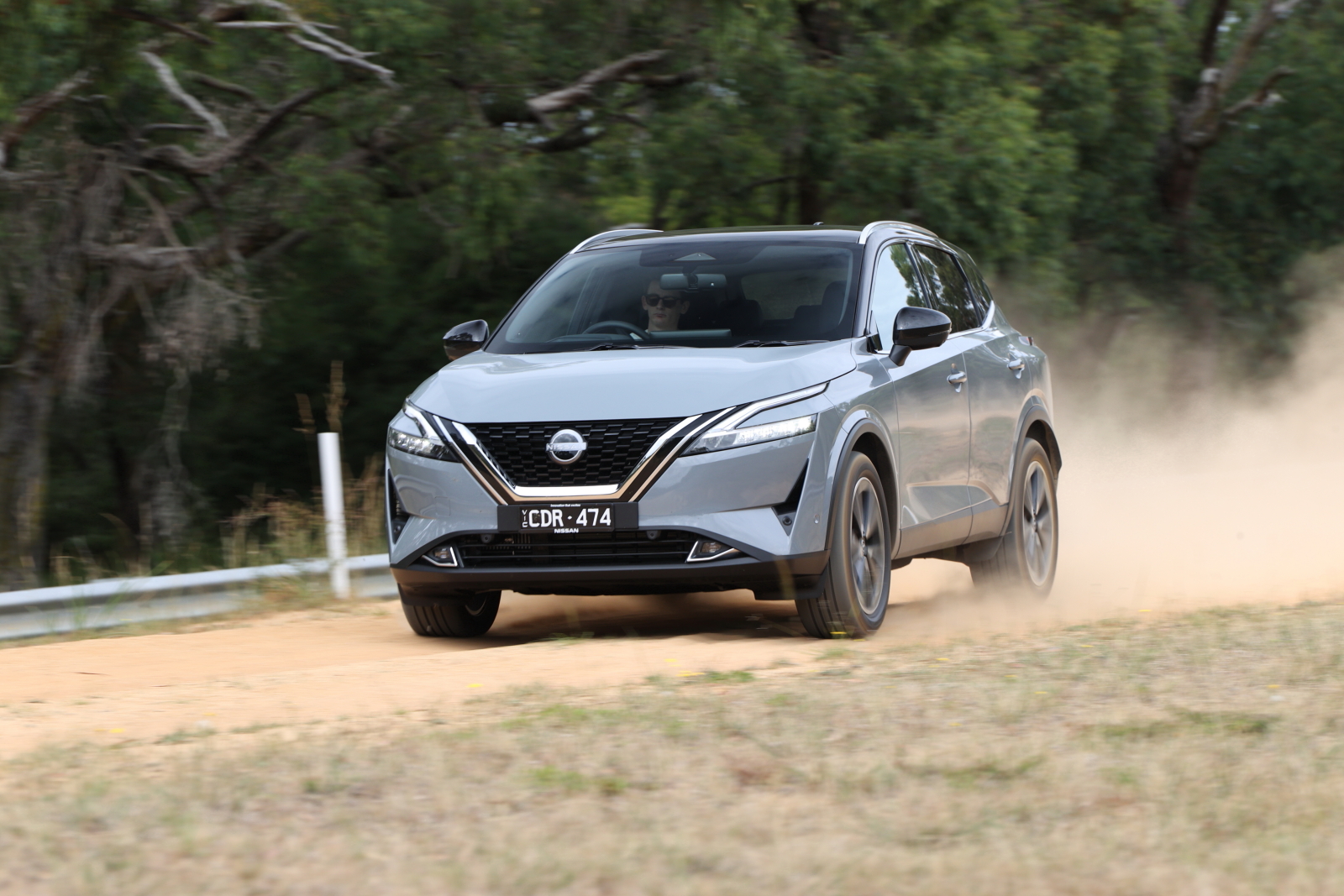
If you enjoy a bit of spirited driving, the Qashqai is undoubtedly the standout pick in its class.
Much of the Qashqai’s dynamics point to a seriously sharp steer. Body roll is well-contained, the calibration of the control weights is beautiful and the steering is accurate. While the ST+ is not particularly quick off the mark (100km/h arrives in 10 seconds) and lacks the all-weather traction of some all-wheel-drive rivals, it’ll leave them for dead down a twisty country road.
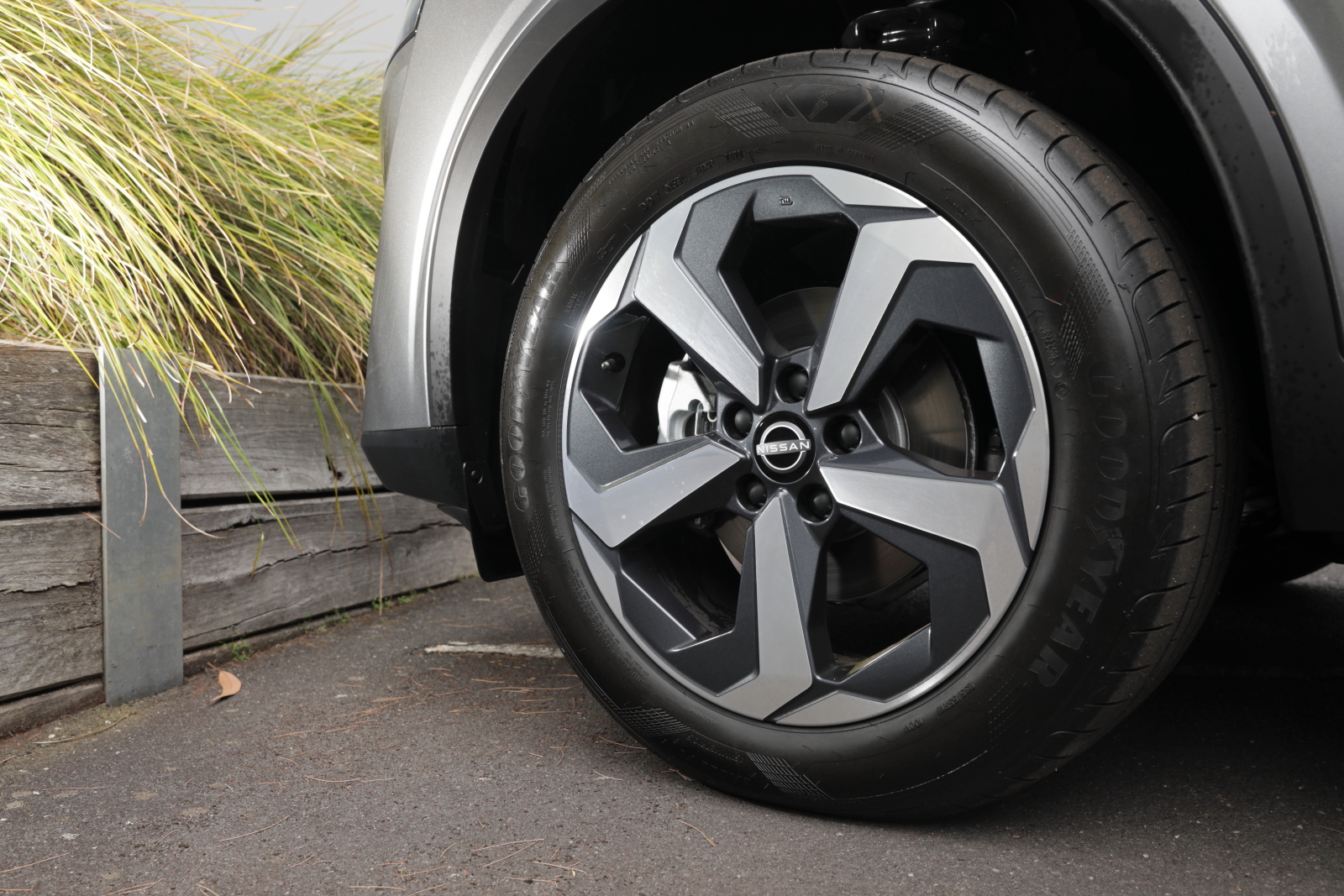
In short, it feels as if Brits, with their passion for jinky, keen-handling cars, have engineered it. You only have to look at the 235/55 R18 Goodyear Eagle F1 tyres fitted to our test car for evidence of that.
1
Much of the Qashqai’s dynamics point to a seriously sharp steer. Body roll is well-contained, the calibration of the control weights is beautiful and the steering is accurate.
There is a flip side to that, of course. If you’re a little less demanding when throwing it through some corners, you may well feel that the compromises inherent in giving it such a dynamic focus come back to bite you in the form of a firmish ride. It’s by no means harsh but compared to the pillowy friendliness of, say, a Toyota Corolla Cross, the Qashqai certainly feels a bit more involving.
You can pluck at gears yourself if you want by using the wheel-mounted paddles but, for the most part, the CVT does a decent job of squeezing the 1.3-litre four-pot engine for all of its 250Nm. The kerb weight is just 1472kg, so it never feels as if you’re battling that much inertia.
Should you want to switch the Qashqai into a more aggressive mode, flick the D-Mode switch on the centre console. But this has the effect of making the otherwise crisp steering response a little treacly. Towing? You’ll be limited to 1500kg with a braked trailer.
1
How is it on fuel?
The caveat here? You’ve got to give it 95 RON. After that, the news is largely good.
Because it utilises a fairly small turbocharged motor, the Qashqai likes its juice premium. Combined-cycle fuel economy is rated at 6.1L/100km, which is respectable if not exceptional. That figure is helped by the fitment of a CVT that generates 29 per cent less friction than its predecessor.
The 55-litre fuel tank means that you then have an effective 900km range, but in mixed use we saw 7.4L/100km.
Mini matchup: Fuel consumption
| MODEL | MIN RON | WLTP (COMBINED) |
|---|---|---|
| Nissan Qashqai ST+ | 95 RON | 6.1L/100km |
| Kia Seltos Sport | 91 RON | 6.2L/100km |
| Mazda CX-30 Evolve | 91 RON | 6.9L/100km |
| Skoda Kamiq Style | 95 RON | 5.4L/100km |
| Toyota Corolla Cross GXL | 91 RON | 6.0L/100km |
| Hyundai Kona Elite | 91 RON | 6.2L/100km |
1
How safe is it?
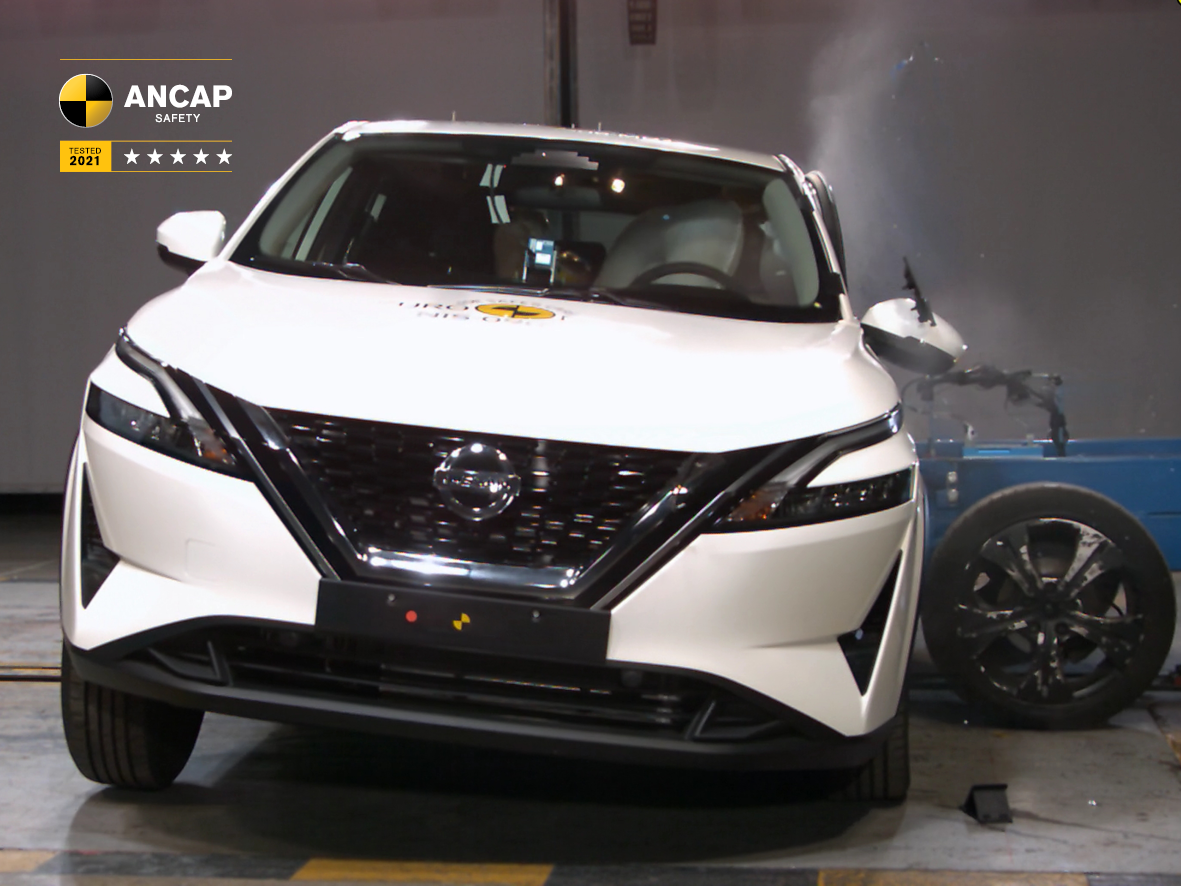
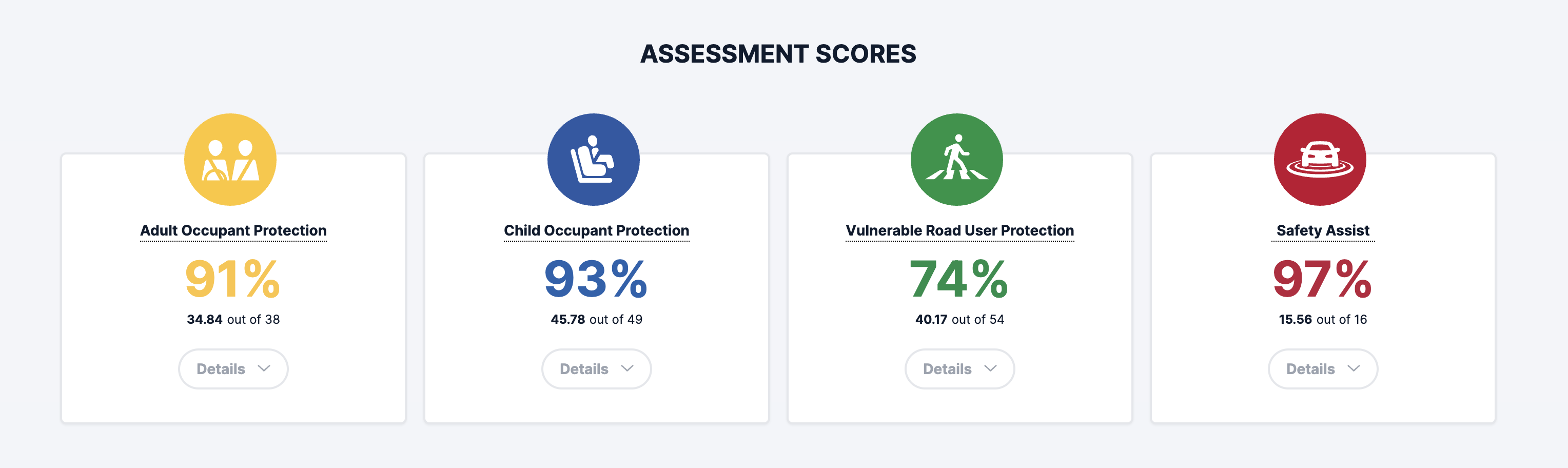
The 2023 Qashqai nets a five-star ANCAP rating. But the best thing? All trims get all the major items of safety gear.
Even the entry-level Qashqai gets seven airbags, autonomous emergency braking (AEB), junction assist, reverse AEB, an active speed limiter, adaptive cruise control, blind-spot monitoring and rear cross-traffic alert.
Beyond that is gear like forward collision warning, lane departure warning, lane-keep assist, rear parking sensors, a quality reversing camera, traffic sign recognition and tyre pressure monitoring.
This ST+ model adds Nissan’s 360-degree surround view camera and moving object detection. About the only significant thing you’ll miss out on with this trim level is the more sophisticated ‘ProPilot’ semi-autonomous driving tech, for which you’ll need to spend extra on the Qashqai ST-L.
1
MORE
ANCAP
Warranty and running costs
Just when you were starting to look for a dotted line to sign on, comes a big but – and we cannot lie.
Servicing for the Qashqai is relatively expensive. You’ll need to bring your Qashqai in for the once-over by Nissan every year or 15,000km, whichever arrives earlier. You can pay for each service as they arrive, or you can opt for pre-paid maintenance plans.
The three-year deal will set you back $1467, four years totals $2494 and a five-year arrangement will have you delving down the back of the sofa for $2916; all of these plans cover one service per annum. Compare that to a Toyota Corolla Cross which features a fixed-price five-year plan that costs $1150 and you can see that the bills start to add up.
Nissan’s warranty is a fairly standard five-year, unlimited-kilometre deal with the added bonus of a five-year, 24-hour roadside assistance program.
1
VERDICT
Sharp as a tack and feels well built, but the Qashqai is a little more focused than we’ve come to expect from its cuddly predecessors.
Nevertheless, there’s a great deal to commend the Qashqai. Here at Wheels, we like a vehicle that handles and the little Nissan certainly excels on that score. But there’s more to a small SUV’s remit than the ability to eviscerate your favourite hill route. Fortunately, the Qashqai is so likeable that its shortcomings seem relatively trivial.
It’s fairly expensive to service, the ride is a little more intrusive than some rivals and its outright power isn’t about to set your trousers on fire. Counter that with the fact that it’s safe, good-looking, spacious inside and refreshingly free of the petty annoyances that afflict many new cars and there’s an easy likeability about it.
The ST+ trim level is sure to be popular, as it’s the cheapest way to get the big 12.3-inch touchscreen display which really lifts the cabin. If you’re looking for better fuel economy or an all-wheel drive variant, keep your eyes peeled for the E-Power hybrid versions to follow.
1
MORE
Everything Nissan
MORE
SUV Buyers Guide
| 2023 Nissan Qashqai ST+ automatic specifications | ||
|---|---|---|
| Engine | 1.3-litre turbo-petrol, front-wheel drive | |
| Power @rpm | 110kW @ 5500rpm | |
| Torque @rpm | 250Nm @ 1600-3750rpm | |
| Transmission | continuously variable | |
| Body | 5-door, 5-seat small SUV | |
| L/W/H | 4425/1835/1625mm | |
| Wheelbase | 2666mm | |
| Boot space | 429/1524L | |
| Weight | 1472kg | |
| Fuel / tank | 95 RON / 55 litres | |
| Fuel use L/100km | 6.1L (claimed) | 7.4L (on test) |
| Suspension | Front: struts, coil springs, anti-roll bar / Rear: multi-link, anti-roll bar | |
| Steering | electric rack-and-pinion; 11.1m turning circle | |
| Wheels | 18-inch alloy | |
| Tyres | Goodyear Eagle F1 235/55 R18 | |
| Tyre size & spare | 155 90 R17 space-saver spare | |
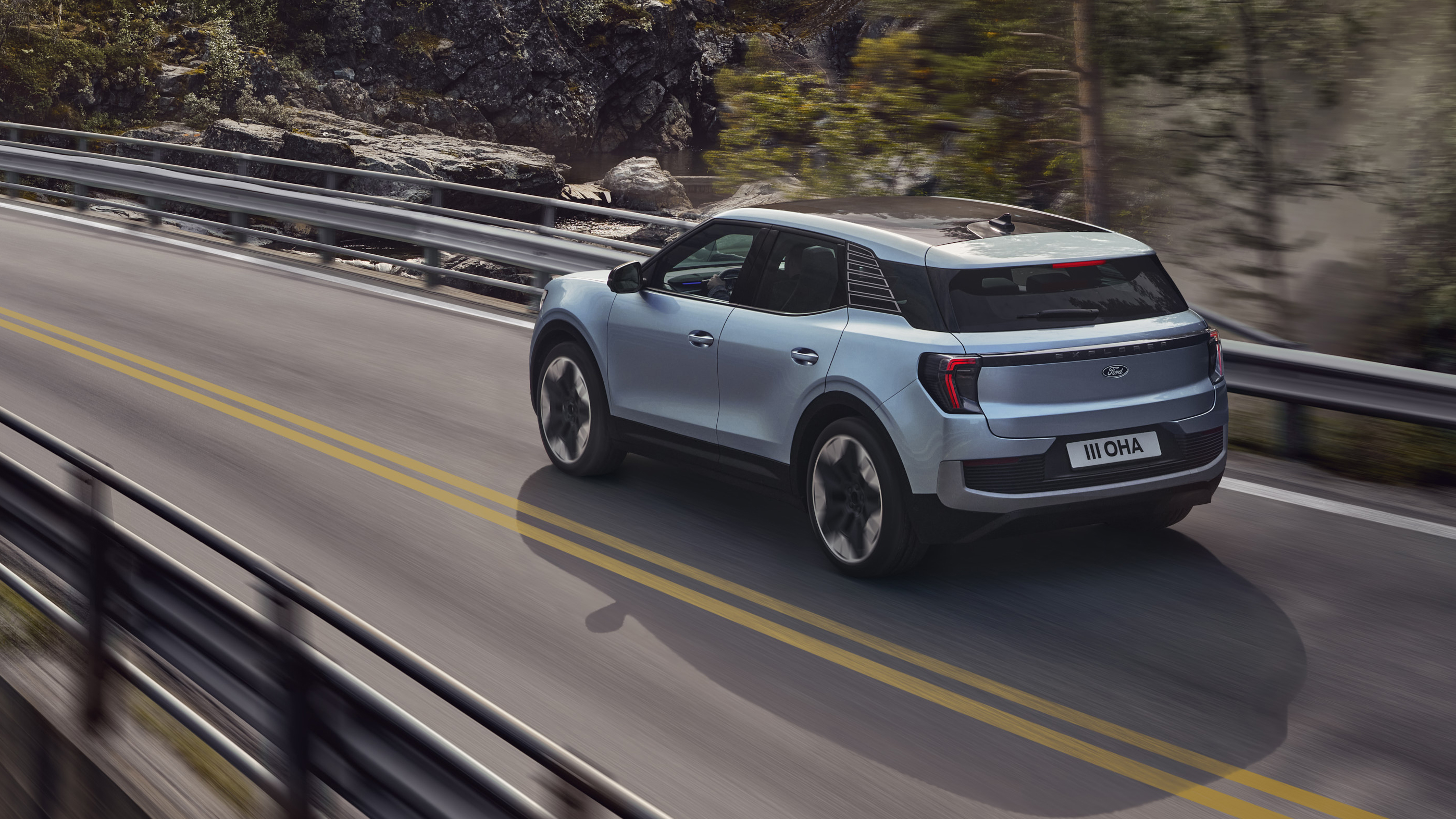
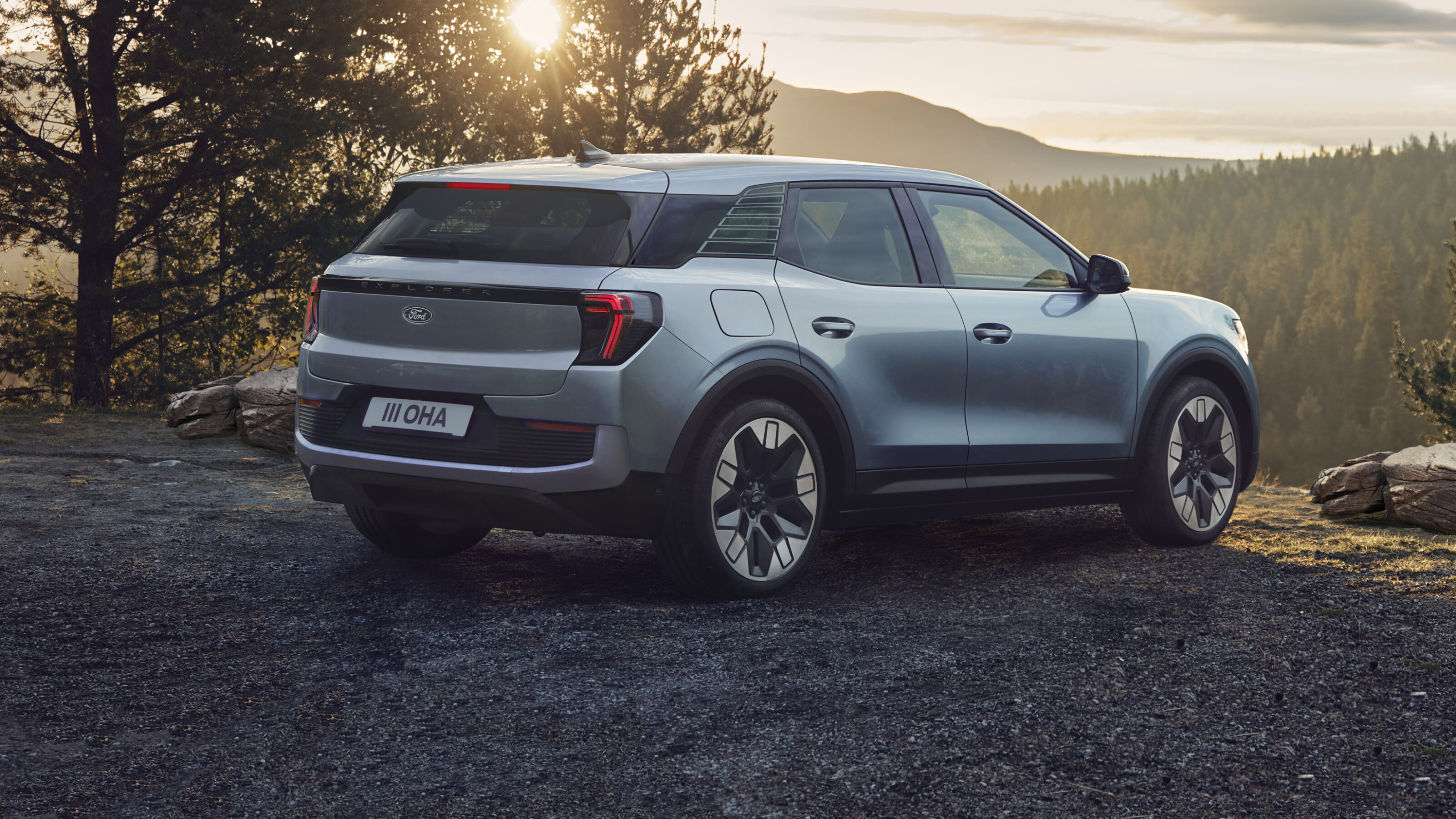
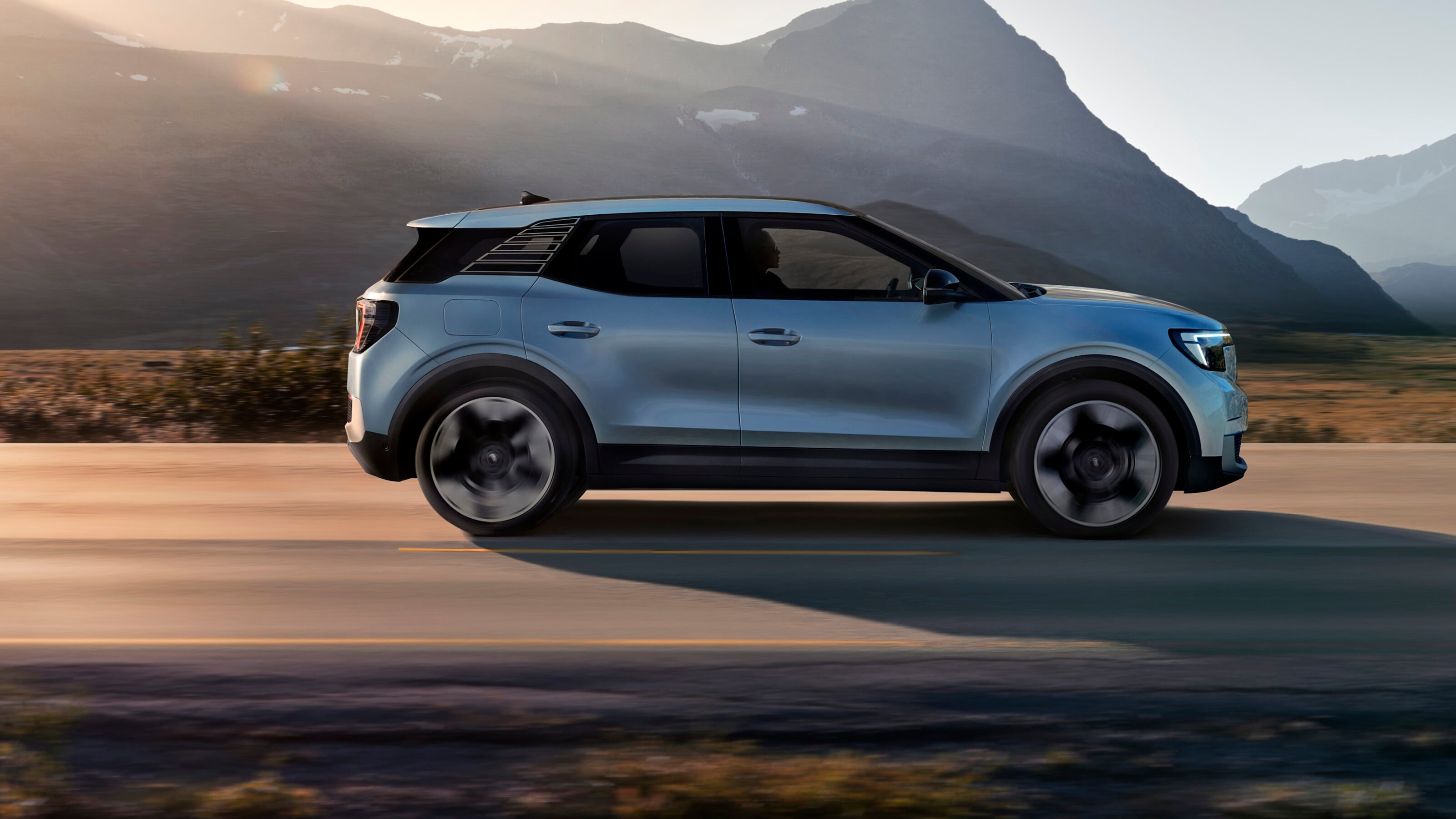
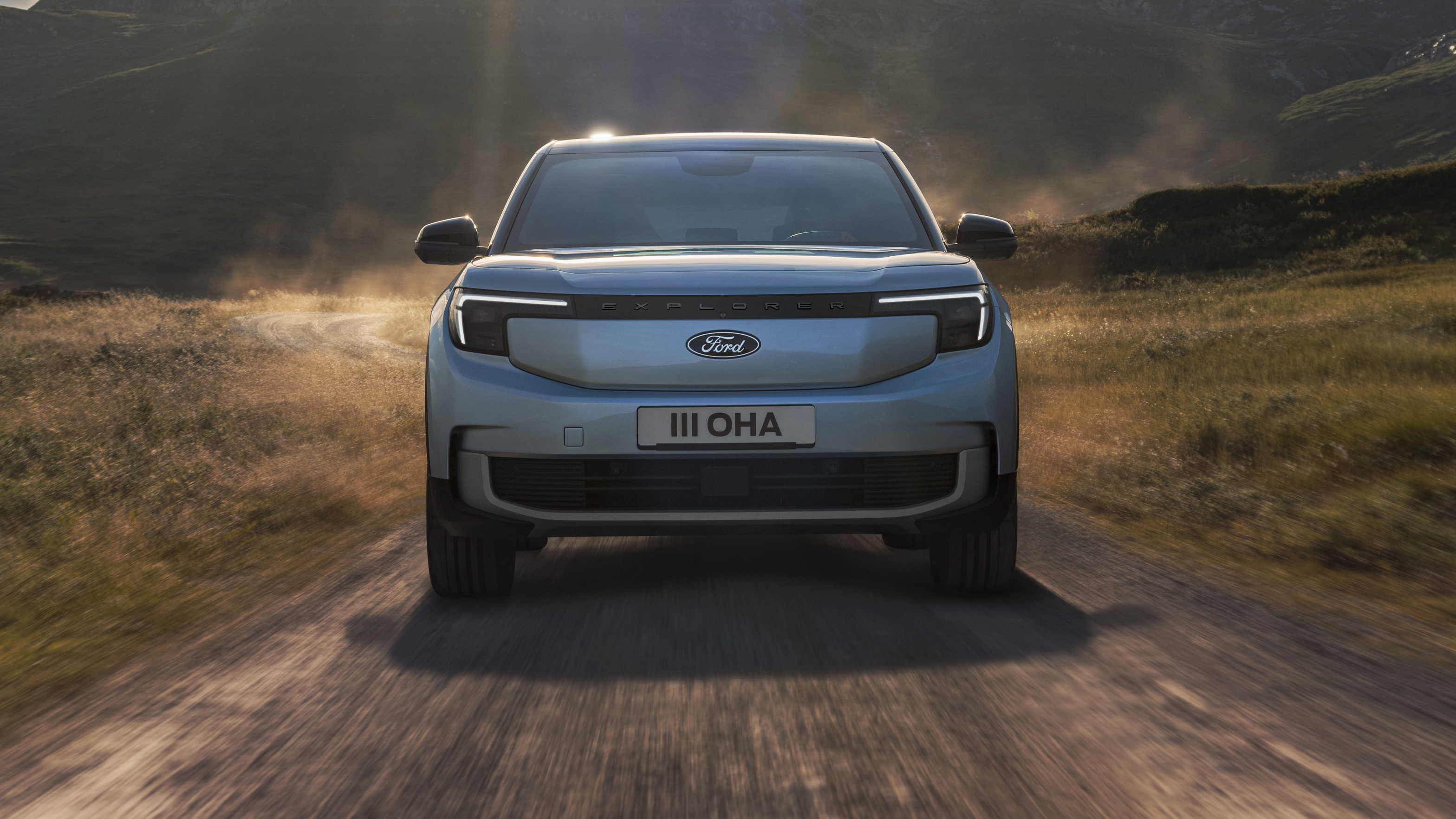
The new 2024 Ford Explorer EV has been unveiled overnight as the second model to apply a familiar badge to a new all-electric offering – following the more polarising decision to affix a Mustang badge to an electric SUV.
UPDATE, 9:15AM
Ford Australia has offered the following comment, pouring water on the Explorer EV’s potential for Australia. For now, at least…
?
“While we have no plans to introduce the all-electric Explorer in Australia, we’re looking forward to sharing the next phase of our EV journey very soon.”
Snapshot
- Europe-bound EV is based on the VW ID.4
- Three power/range variants expected at launch
- First passenger Ford EV in Oz likely to be the Mustang Mach E
As expected, the new electric Ford Explorer is built on Volkswagen’s flexible MEB electric architecture, forming part of the growing technology and platform alliance between Ford and VW.
The new Explorer enters Ford’s European line-up as a midsize SUV (smaller than the petrol model sold in North America), making it a cross-brand companion to the Volkswagen ID.4 that will reach Australia in the coming year.
1
Whether we’ll see this new Explorer EV in Australia is unclear – Ford’s local division offered no advance comment overnight, so we’ll have to wait for the work day to begin before we know more. It’s likely, however, that the Mustang Mach E will be the first electric Ford passenger car to reach Australia, given we were invited to drive the car in the US last year.
Ford, for its part, has yet to confirm we’ll see the Mustang Mach-E in Oz, but the fact it’s sold in New Zealand is another good sign for us – although its availability in NZ is rooted in that nation’s advanced emissions requirements.
1
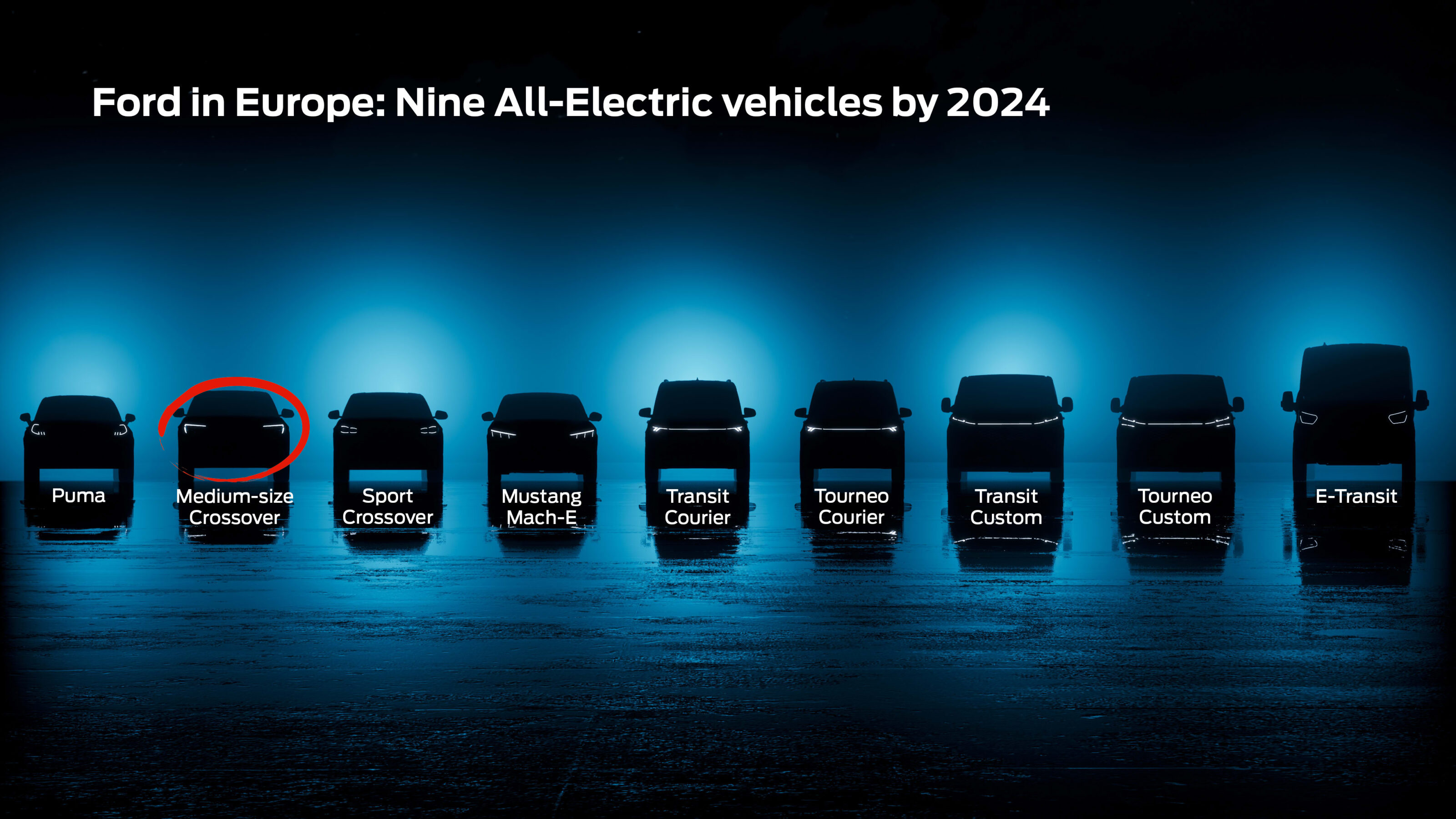
Today’s reveal of the Explorer EV was presaged in early 2022, when Ford confirmed it would launch seven new electric vehicles into Europe by 2024.
A shadowy teaser picture released at the time shows the Explorer EV as the second model from the left, between the coming Ford Puma EV and a new coupe-shaped electric SUV that will again ride on a VW platform. (The Mustang Mach E sits to the right of that model.)
Ford Europe has confirmed it will shift to an electric-only passenger vehicle lineup by 2030, with commercial vehicles to follow later.
Ford’s Australian arm previously confirmed it will introduce five electrified models to its range by 2025, with the E-Transit first among them. An entirely electric line-up is likely much further away.
1
Getting technical
The Explorer EV will be manufactured at Ford’s factory in Cologne, Germany, on the same production line as the Fiesta hatchback, which was recently retired after a 47-year run.
Technical details for the new electric Explorer are still to be revealed, but reports out of Europe suggest we can expect a 125kW single-motor configuration at the entry level, with a 52kWh battery pack and 351 kilometres of driving range.
A charging speed of 130kW is expected – well below the 230kW figure claimed for the Hyundai Ioniq 5 and Kia EV6 among others (although such claims are rarely achieved consistently).
1
Further into the range will reportedly sit a 170kW single-motor model with a larger 77kWh battery pack and a 539km range.
A hero dual-motor model will, again according to reports only, offer a dual-motor all-wheel-drive arrangement with 250kW and 491km of range (dual-motor models generally offer less range).
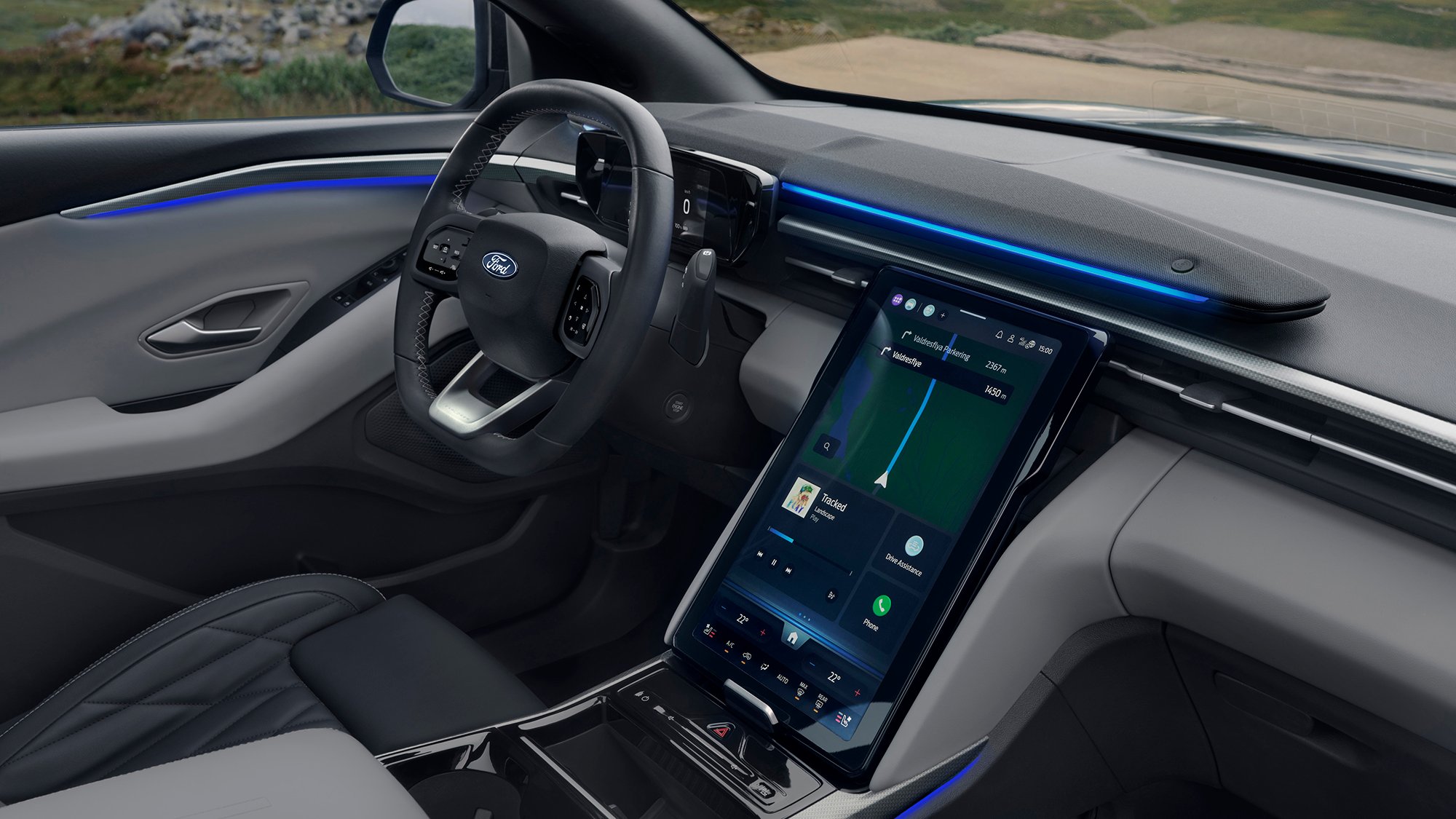
Other new features for a Ford model, at least in its European range, will include Assisted Lane Change and Clear Exit Assist, the latter alerting drivers to approaching cyclists when parked. Standard equipment encompasses a driver’s massage seat, dual-zone climate control, keyless entry, and a hands-free electric tailgate.
1
1
What will the Explorer EV cost?
More details about the Explorer are still to come, including its price when European orders begin later this year. However, we might be able to look to the related Volkswagen ID.4 as a clue.
When it reaches Australia, Volkswagen has said it will be targeting the price of a Tiguan 162TSI R-Line for its up-spec ID.4 model.
That car currently lists for $56,990 before on-road costs. If the ID.4 is that cheap, it’ll undercut almost all its rivals, including the Tesla Model Y, Hyundai Ioniq 5 and Kia EV6.
Watch for more on the electric Explorer to come in the months ahead.
UPDATE, 9:15AM
Ford Australia has offered the following comment, pouring water on the Explorer EV’s potential for Australia. For now, at least…
?
“While we have no plans to introduce the all-electric Explorer in Australia, we’re looking forward to sharing the next phase of our EV journey very soon.”
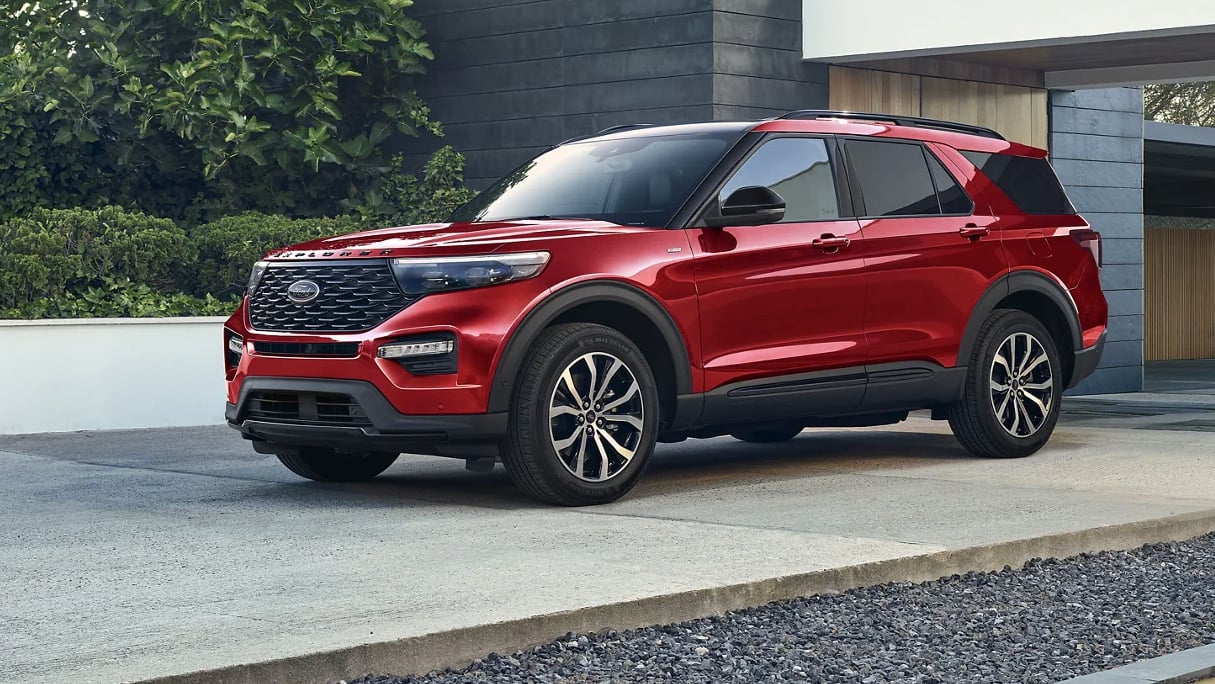
Below: the current US-built Ford Explorer
1
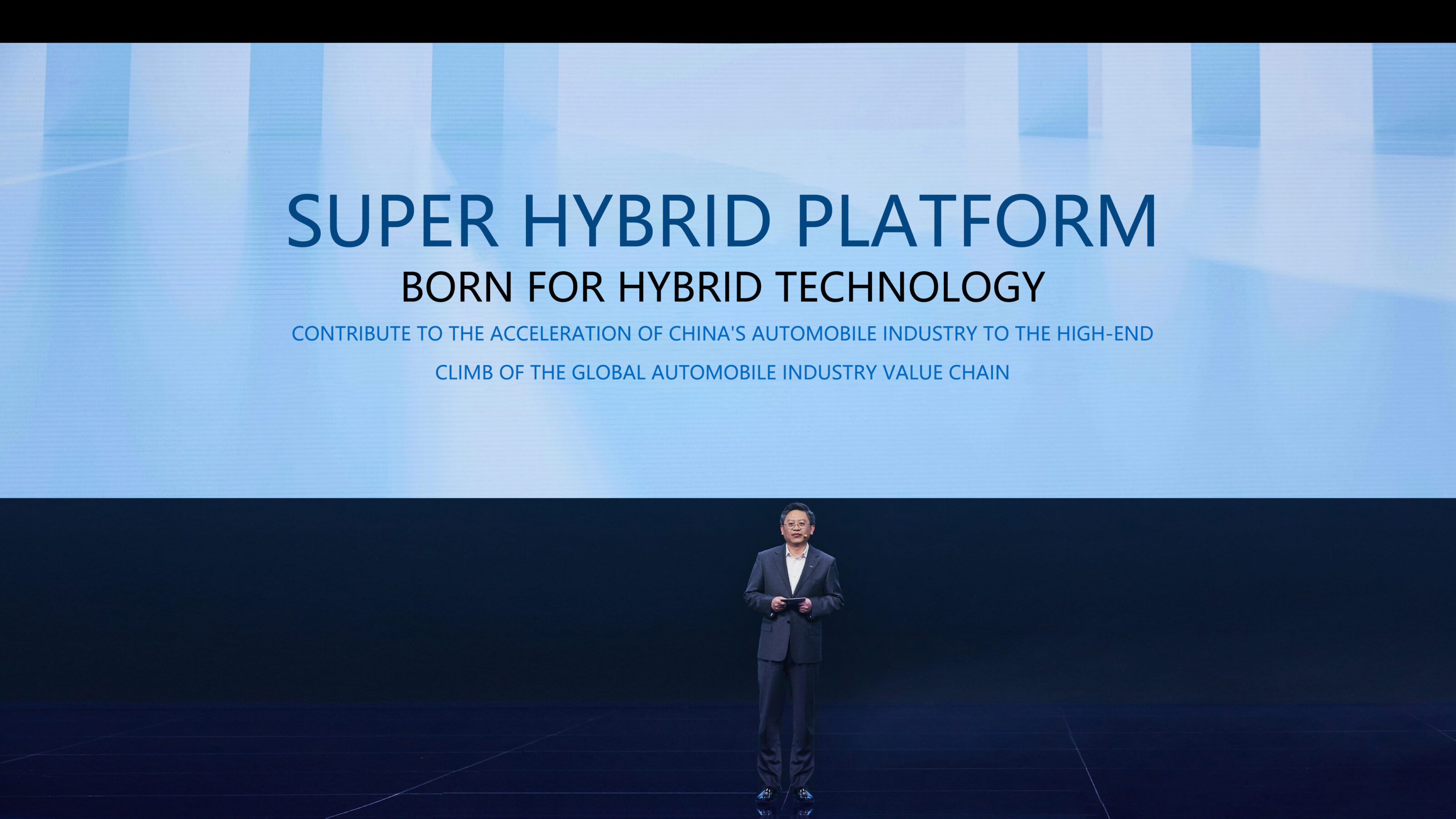
Chinese car brand Chery has unveiled a new hybrid-only vehicle platform.
The architecture, marketed as the “super hybrid power platform”, is explicitly developed for electrified internal-combustion vehicles.
While the brand has yet to detail which vehicles will be underpinned by the new platform, it is expected to feature underneath several new-generation cars due by 2025.
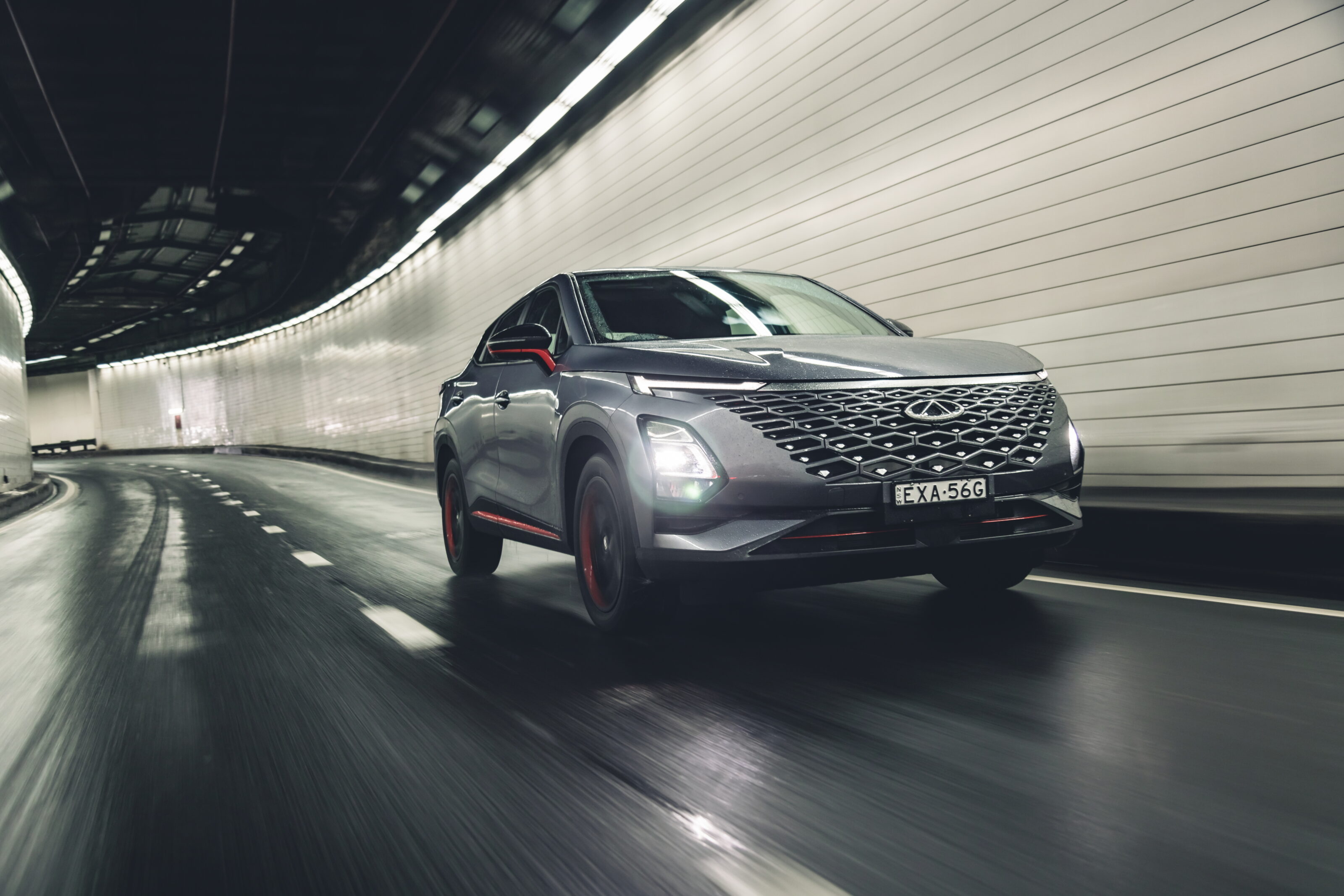
The recently-launched Chery Omoda 5 small SUV – the brand’s first new vehicle in Australia in eight years, following a tumultuous initial entrance to the market in 2011 – was launched globally in 2021.
It is underpinned by Chery’s existing monocoque T1X platform, with support for electrification – including an all-electric version due in 2024.
Chery claims the upcoming platform detailed this week will focus on “future intelligence, comprehensive comfort, efficient power and superior safety” with support for a 2.0-litre turbo petrol-hybrid powertrain up to 165kW and 400Nm.
Under the skin, each vehicle will feature a Qualcomm Snapdragon car-grade system on chip (SoC) and an electrical architecture with 5G and gigabit ethernet support.
1
An updated suspension system – dubbed “magnetic levitation” – is also said to be in development to improve comfort levels “by 30 per cent”, and all-wheel-drive vehicles will feature a “sense of flying-like maneuverability.”
We’re not entirely sure what that means, but perhaps Chery is referring to improving the turning circle of its four-wheel-drive vehicles.
For its next-generation vehicles, it plans to boost “comfort in the aspects of auditory (sound), olfactory (smell), tactile and visual sense through… co-development with world-top suppliers.”
Chery said it aims for a five-star Euro NCAP safety rating for its future vehicles on the platform, with the addition of a passive occupant protection system and up to 10 airbags.
1
While the Omoda 5 received a five-star Euro NCAP rating in 2022, this rating has yet to be applied by ANCAP; however, there’s no difference in active safety equipment between European and Australian examples.
Following the release of the Omoda 5 small SUV this month, Chery Australia claims the older, petrol-only Tiggo 7 and Tiggo 8 Pro will arrive locally in the third quarter of 2023.
These vehicles are based on the same T1X platform as the Omoda 5, not the “super hybrid power platform” detailed above.
It has promised a battery-electric version of the Omoda 5 will debut in early 2024 to rival the MG ZS EV, BYD Atto 3 and GWM Ora.
MORE
Everything Chery
UPDATE: Revuelto unveiled in full
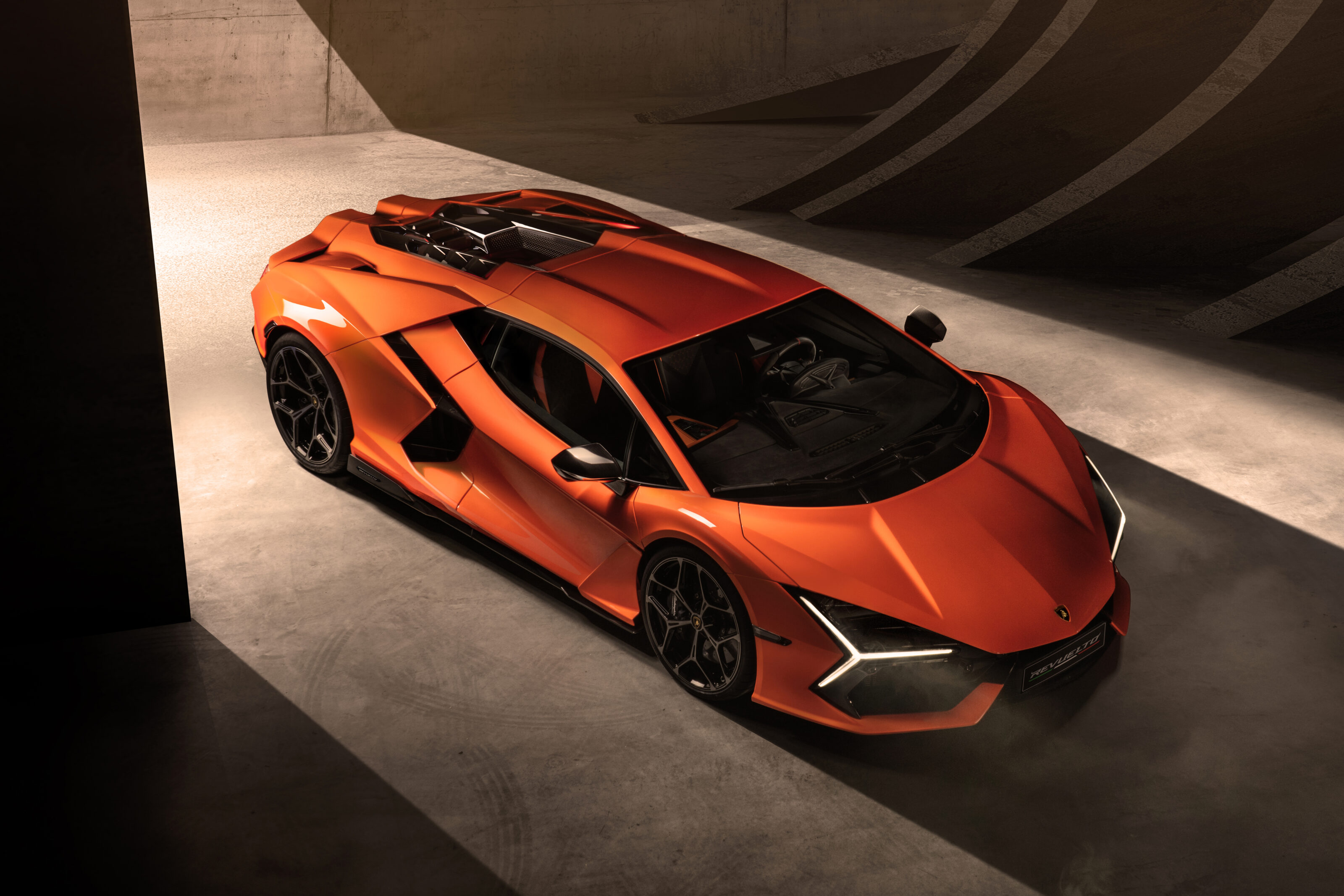
Lamborghini has taken the covers off its hybrid Aventador replacement that’s called Revuelto.
After teasing the ‘LB744’ powertrain, chassis, and drive mode details (which you can read below), the Sant’Agatha supercar specialist has unveiled the Revuelto in full.
A plug-in hybrid powertrain built around a 6.5-litre petrol V12 develops 746kW, is hooked up to a carbon fibre chassis, and revised eight-speed dual-clutch transmission without a reverse gear.
1
Further details, including Australian timing and pricing, will be confirmed in the coming months.
Our original story, below, continues unchanged
The story to here
UPDATE March 21: Lamborghini has revealed all 13 drive combinations set to feature in the ‘LB744’ – the internal codename for its Aventador’s successor.
Snapshot
- Full reveal March 30
- 13 drive modes to best harness EV/petrol power
- Aventador’s successor packs 746kW
- Features 9250rpm red line, bespoke gearbox
- Carbon-fibre construction sheds weight
As detailed below, the LB744 will feature a petrol V12 combustion engine and a trio of electric motors for 746kW, all bolted to a chassis constructed largely from carbon-fibre.
With four power sources onboard, the Aventador’s replacement is a complex beast, and Lamborghini has developed 13 different drive combinations to harness its best attributes.

1
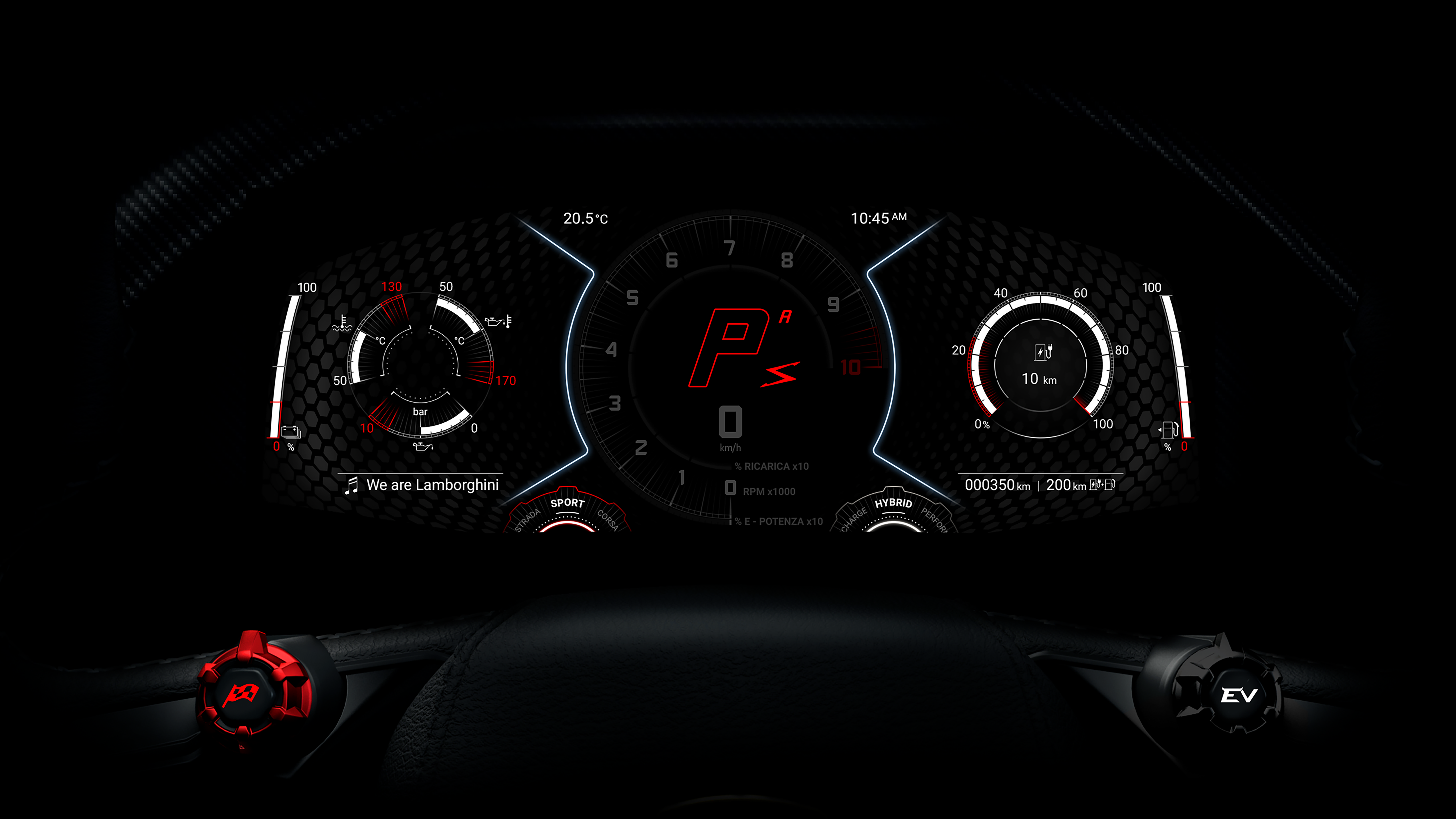
Recharge, Hybrid, and Performance are new for the LB744, and adjust how the powertrain works. The three new modes complement the existing Citta, Strada, Sport, and Corsa settings. That’s only seven modes on paper, but each car setting has multiple powertrain mode possibilities.
For example – Lamborghini says Citta (or City) has the chassis in a more cosseting mode and softer throttle. To prioritise low emissions, in Citta, the LB744 will run in either Hybrid mode – when there’s sufficient battery charge – or Recharge mode when electrons are running low.
Strada keeps the V12 engine putting away at all times, while Sport amps responses and tightens the chassis.
1
Only in Corsa mode, with the Performance powertrain selected, will the LB744 unleash all of its 746 kilowatts. Launch control features too, and drivers can disable ESC for track use.
On top of the drive modes, Lamborghini has released further details about the LB744. Its weight distribution has been optimised, resulting in a 44 per cent front/56 per cent rear balance.
Anti-roll bars have been stiffened by 11 per cent up front, and 50 per cent out back. There’s also a 10 per cent quicker ratio for the four-wheel-steer system than on the Aventador Ultimae, and even bigger OEM-spec Bridgestone rubber.
1
While the LB744’s rear ‘e-axle’ contributes to the braking force via battery regen, Lamborghini hasn’t forgotten about physical hardware.
Hiding behind the LB744’s rims are carbon-ceramic stoppers featuring ten-piston front calipers, which clamp vast 410 millimetre ventilated rotors. The rear calipers are four-piston units, which clamp 390mm rotors.
A stack of work has gone into the aerodynamics too, with Lamborghini claiming a 60 per cent improvement in efficiency, while brake-cooling has also been considered with NACA ducts to direct cooling air-flow over the stoppers.
Lamborghini will unveil the LB744 in full on March 30.
Our original story, below, continues unchanged.
The story to here
March 14: Ahead of the 746kW V12 hybrid ‘LB744’ reveal next month Lamborghini has dropped another teaser.
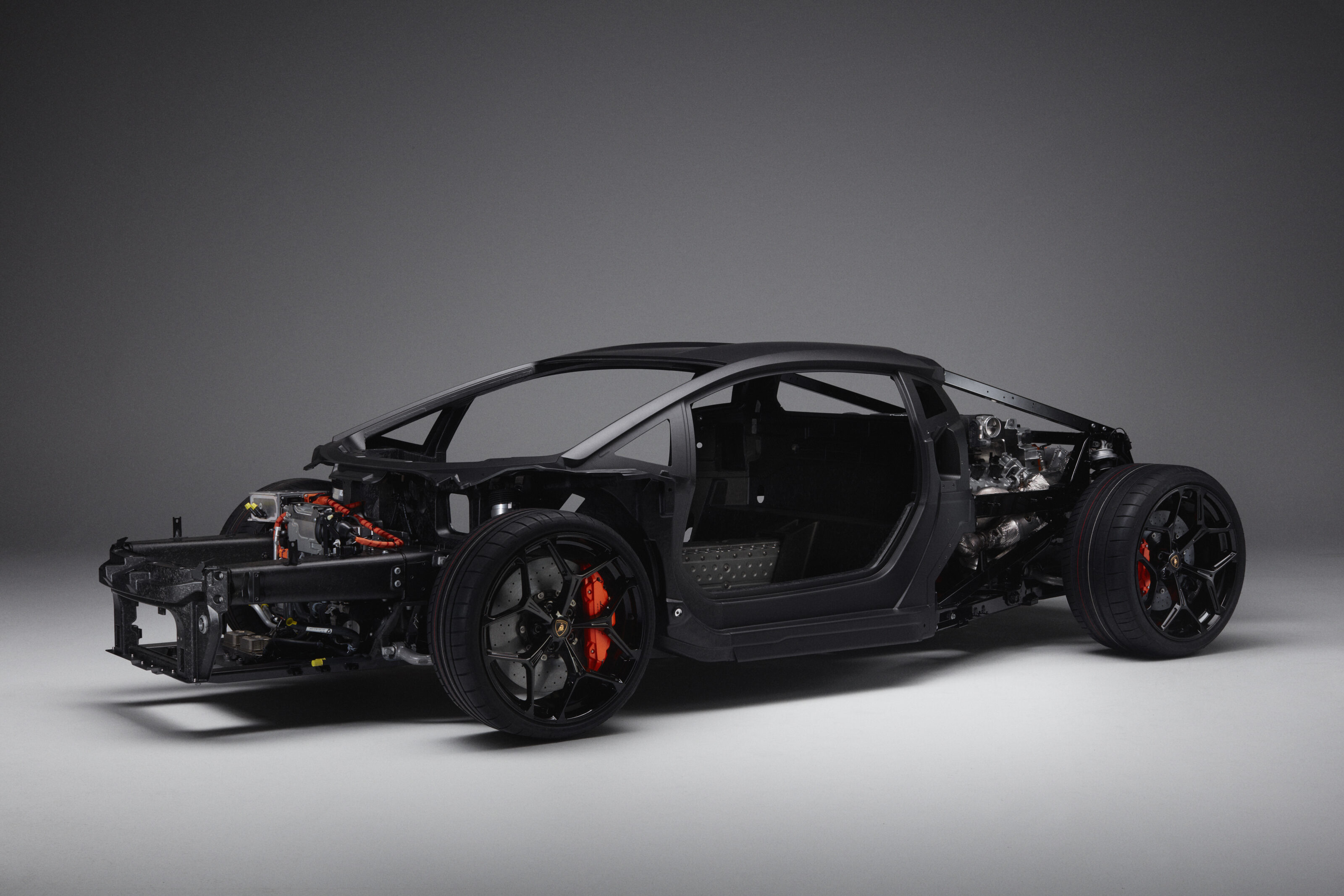
This time, the Aventador successor’s carbon fibre ‘monfuselage’ structure is on show – promising to cut weight and up stiffness.
Using innovative forged carbon-fibre construction in the frontal area, the LB744’s front structure is 20 per cent lighter and 25 per cent stiffer than the Aventador’s aluminium item.
Forged carbon fibre differs from the traditional pre-preg carbon sheets that are laid into a mould and baked in an autoclave, instead using shorter fibres soaked in resin for greater strength.
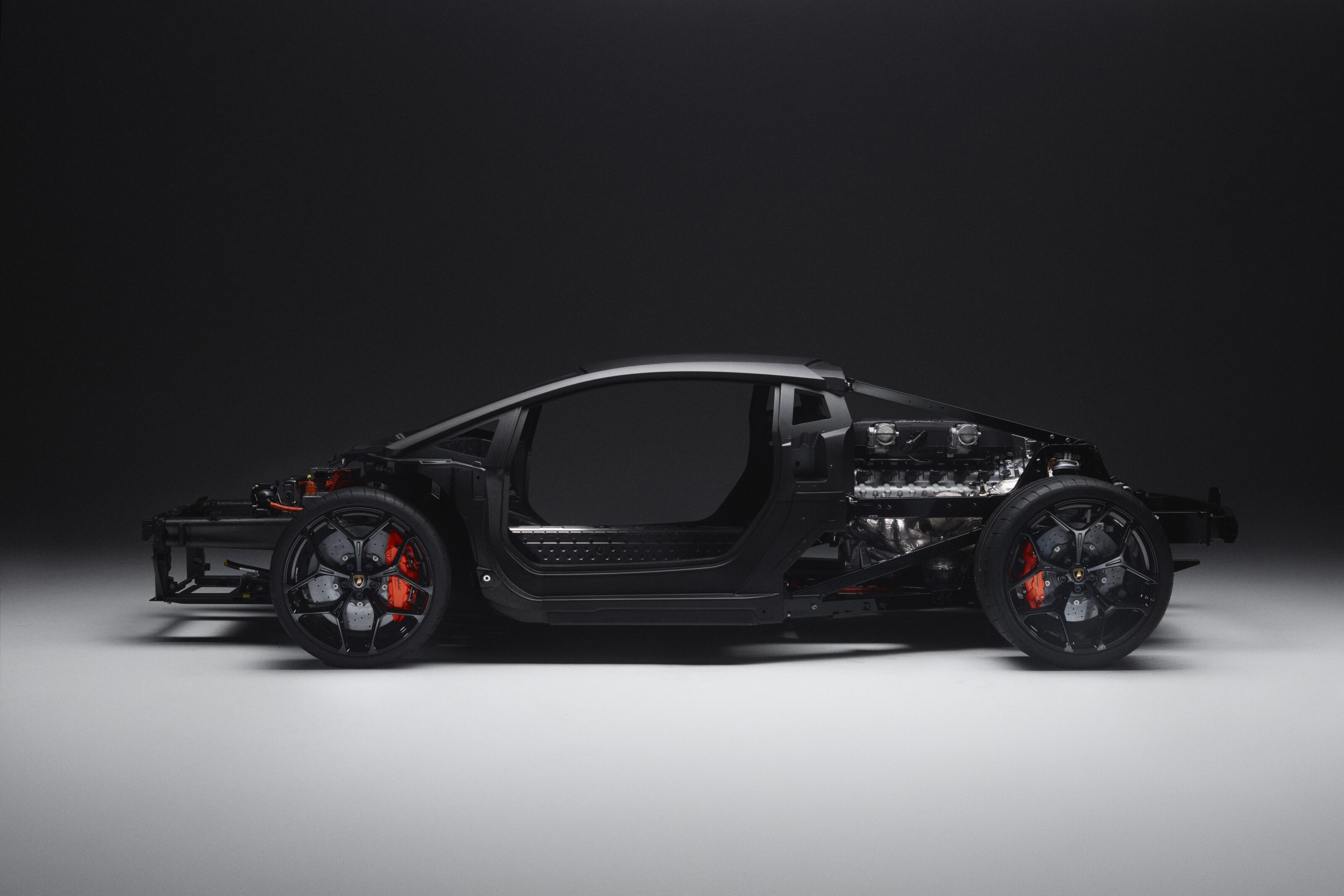
1
The rest of the chassis is made from exotic materials, too, with pre-preg carbon fibre used in the roof, and the ‘monolithic rocker ring’ (that connects the front structure, A-pillar and tub) fabricated from carbon-fibre reinforced plastic (CFRP).
The batteries for the V12 hybrid powertrain will run through the centre of the LB744, with aluminium alloy used for the rear structure. The powertrain and suspension hang off a pair of hollow-cast aluminium alloy domes for strength.
Lamborghini says that the heavy reliance on carbon-fibre will not only make the new chassis 10 per cent lighter overall but also make it more environmentally-friendly to produce than the Aventador.
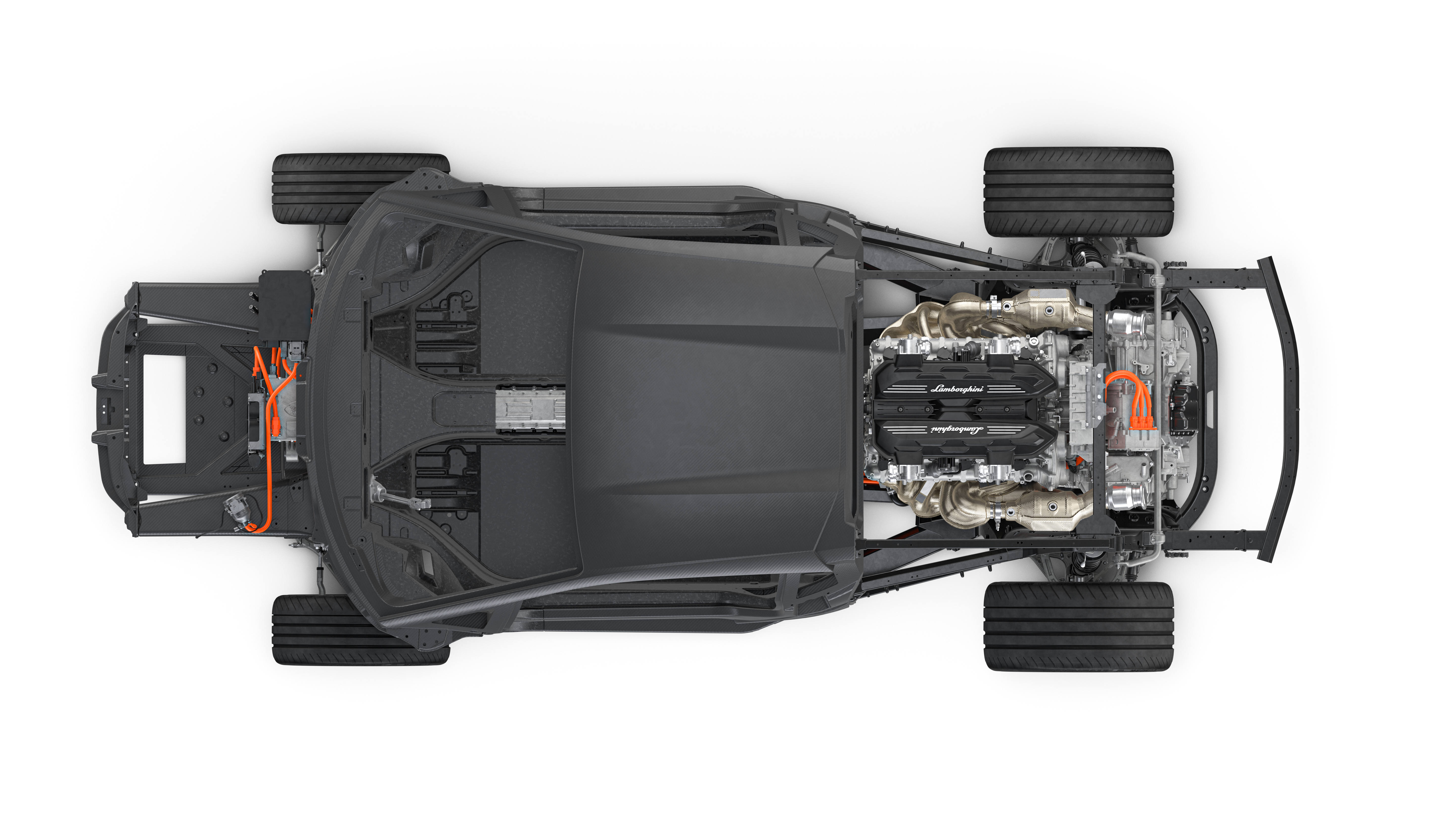
3
Our original story, below, continues unchanged.
The story to here
March 8: Lamborghini’s Aventador successor has been treated to a 746kW V12 hybrid engine that revs beyond 9000rpm.
A 746kW plug-in hybrid V12 is, on the surface, a peculiar concept. Taking an un-downsized petrol-slurping powertrain and mating it with electric motors sounds antithetical, but it’s something engine-lovers should celebrate. The V12 retains its crown in the motoring world.
One could argue that Ferrari’s Purosangue ‘SUV’ – a car you’d think would be tailor-made for a downsized V8 and electrification – picking up a V12 is what gave Lamborghini licence to develop a plug-in hybrid around an all-new 12-cylinder petrol engine.
Lamborghini has been here before, though, effectively using the Sián as a testbed when it mated the 6.5-litre V12 to a small 25kW electric motor.
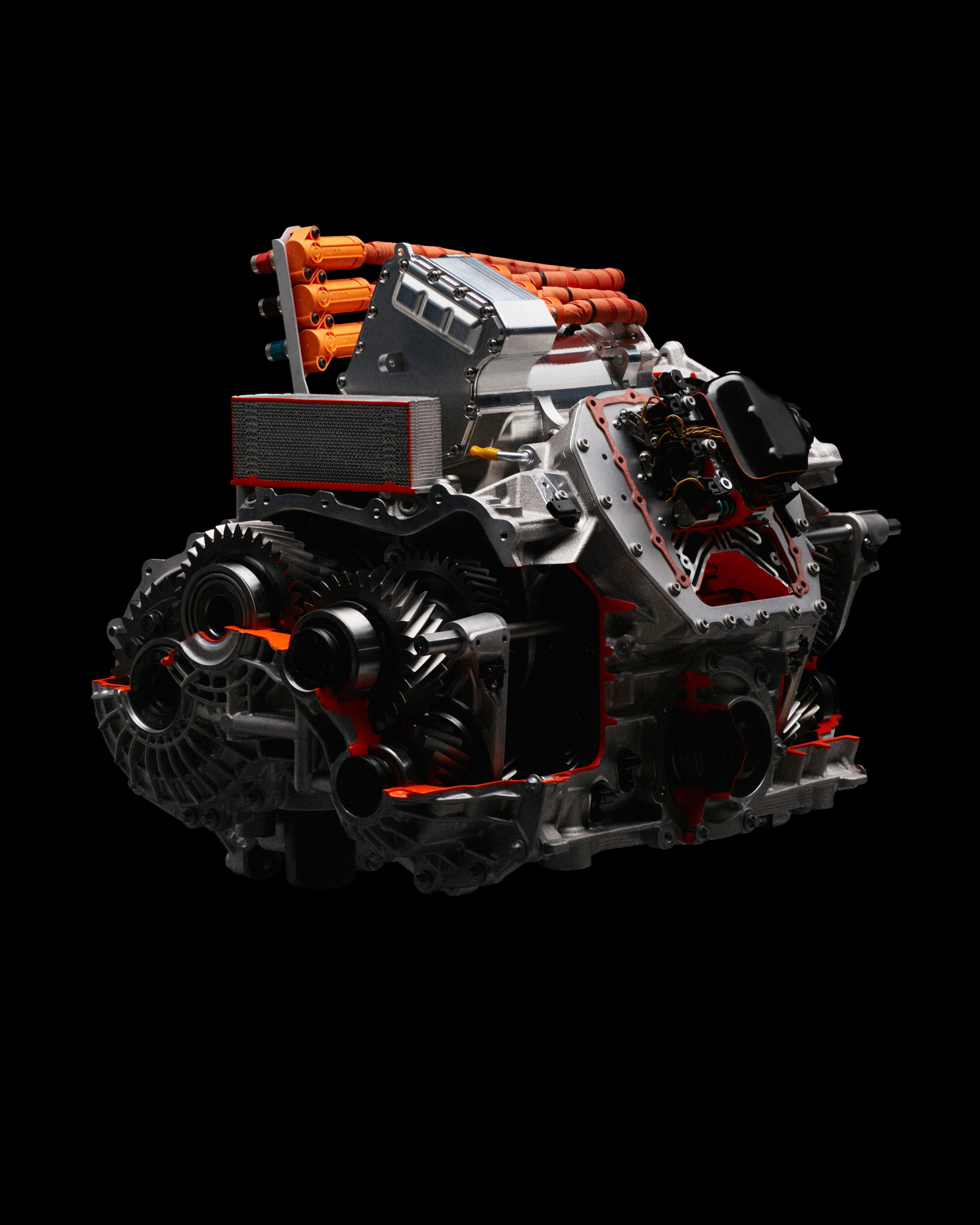
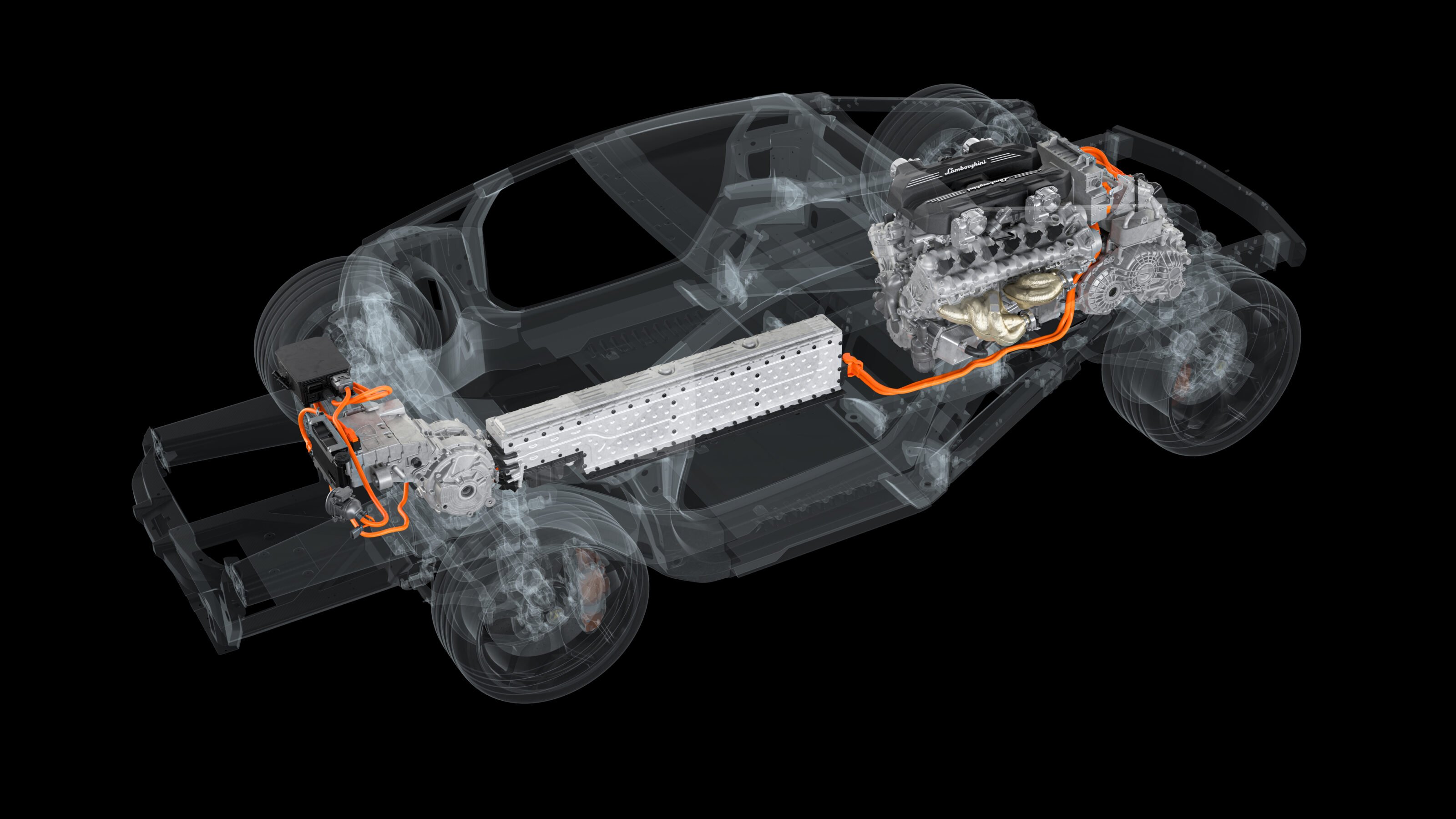
The plug-in powertrain in the Aventador replacement – codenamed ‘LB744’ for now – is a whole lot more complicated. It will pump out 746kW – that’s 1000hp – and use 30 per cent less fuel than Aventador. It’s built around a new ‘L545’ 6.5-litre V12 with three electric motors, and a bespoke dual-clutch transmission.
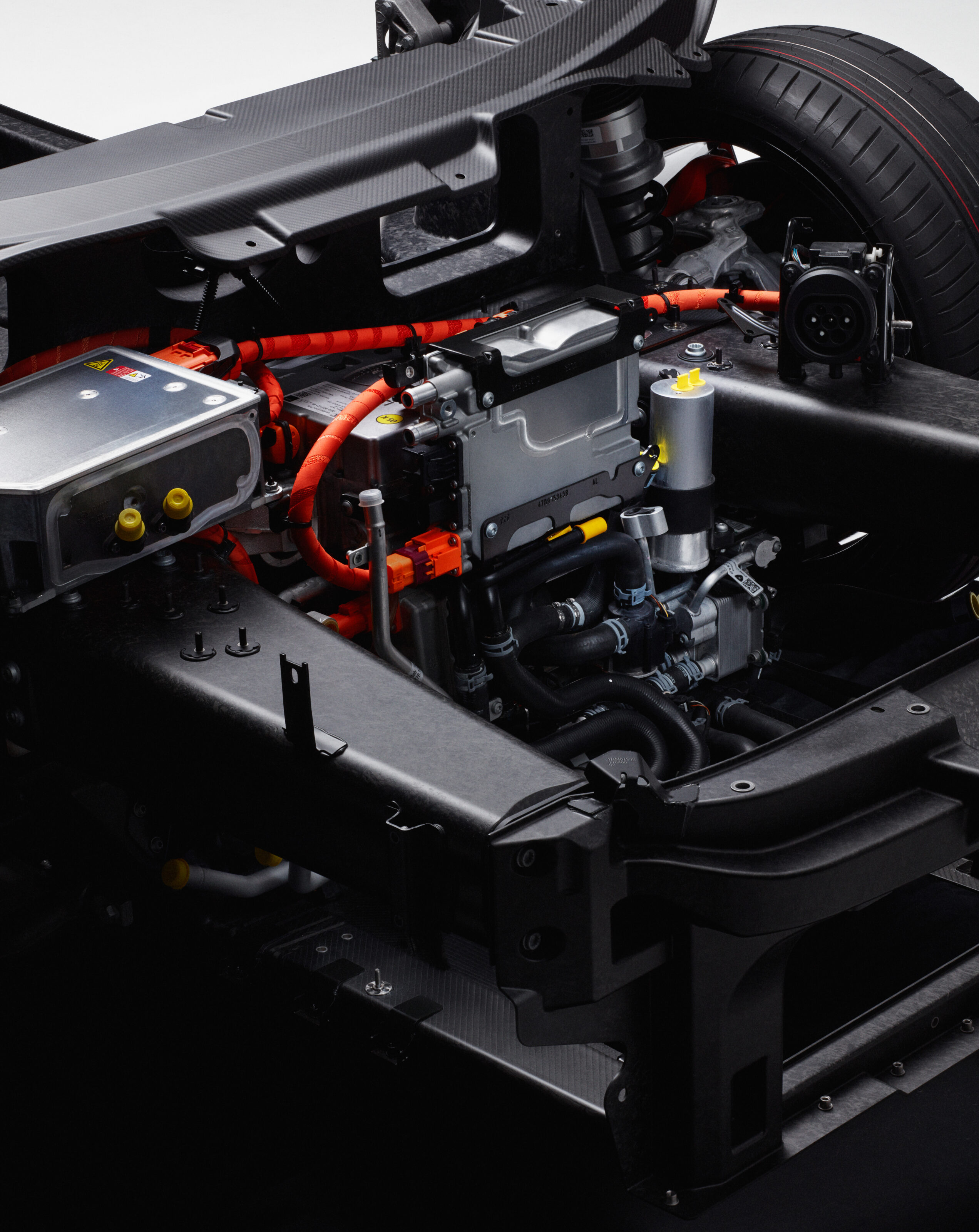
With a 3.8kWh lithium-ion battery, the LB744’s electric driving range will be limited. Lamborghini has not claimed a driving range yet, but expect between 10-20 kilometres. The supercar will be front-wheel-drive in EV mode by default, but when needed the rear electric motor can kick in to limit slip.
1
How does Lamborghini’s hybrid powertrain work?
Sure, the electronics are exciting, but Lamborghini isn’t just reusing any old V12 in its PHEV (unlike the Mitsubishi Outlander’s old 2.4), instead the new L545 mill drops 17 kilograms in weight compared to the Aventador’s dry sump unit, and is spun 180-degree in the chassis.
Alone, the V12 produces 607kW at 9250rpm – 33kW more than Aventador Ultimae – and 725Nm at 6750rpm. The new engine also runs a higher compressions ratio, now 12.6:1 instead of 11.8:1.
To reach the 746kW peak, the V12 needs to work in conjunction with three electric motors: a pair of 110kW/350Nm items are fitted on each front axle, and a third 110kW/150Nm item sits atop the new eight-speed dual-clutch transmission.
1
This should bestow finite torque vectoring capability on the front axle, which is powered exclusively by those two electric motors – there’s no physical connection between the front Pirellis and the V12.
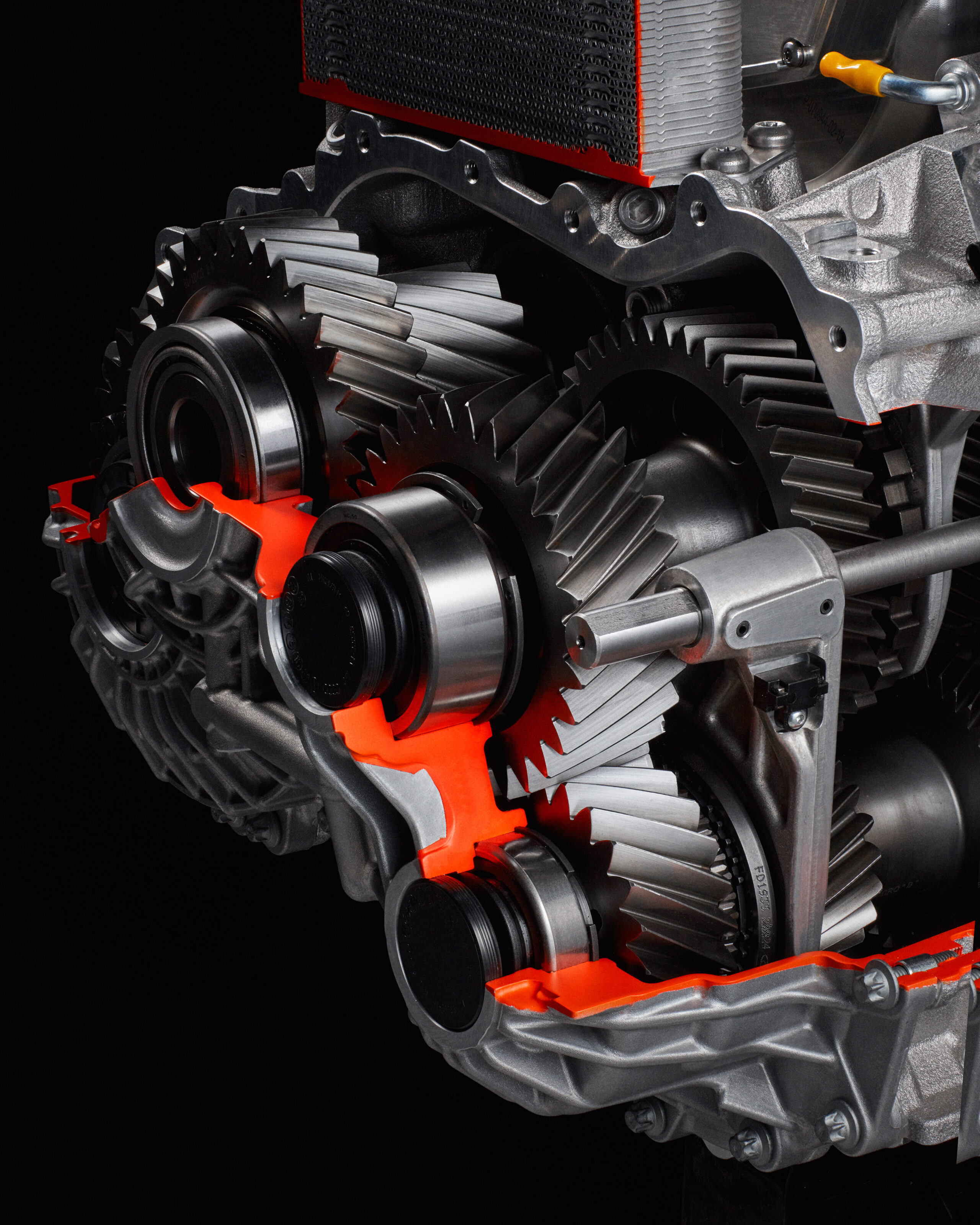
The transversely-mounted eight-speed dual-clutch transmission was developed to cope with the V12’s 725Nm torque figure. It’s also a rare packaging choice, with only two other Lamborghinis adopting a transverse ’box, the 1966 Lamborghini Miura and the 2020 Essenza SCV12.
With two gear shafts rather than the usual three, Lamborghini has managed to make the 193kg transmission lighter than the Huracan’s seven-speed ’box, too. Another trick to lower weight is the lack of physical reverse gear – the front electric motors power the LB744 when it needs to crawl backwards.
1
According to Lamborghini, the decision to develop a bespoke eight-speed ’box cam from “the desire to create a unit that provides everything needed for sporty driving such as fast gear shifts, while the inclusion of an eighth ratio helps optimise fuel consumption and drivability while cruising.”
A 3.8kWh lithium-ion battery pack is housed within the transmission tunnel, right in the centre of the LB744’s chassis. This helps distribute weight more naturally for a supercar, rather than having it all set low and wide in the chassis like a BEV would.
You can charge the battery using a home wall socket, or up to 7kW AC current. It’ll take 30 minutes for full recuperation. The V12 engine can also run as a generator for the battery under full acceleration, and the front electric motors provide regenerative braking.
1
What does this mean for the future of Lamborghini?
Lamborghini’s new plug-in hybrid powertrain will feature in the Aventador’s successor as the first of four new models by 2030.
The LB744 is expected to be followed up by a new Huracan – also utilising plug-in hybrid power – as well as a new electrified generation of Urus SUV.
By 2028, the Bologna-based sports car specialist will reveal its first ever fully-electric vehicle, but promises that the plug-in hybrid-augmented multi-cylinder engines will live onto at least 2030.
More than fifty environmental and climate change organisations have joined forces to call on the Government to stop the expansion of, or creation of any new, fossil-fuel projects in Australia.
An open letter has been published today calling on the Australian Government to pay closer mind to scientific evidence on climate change.
The letter coincides with the current Senate debate on proposed laws which are intended to reduce emissions from Australia’s biggest polluters.
1
Those behind the letter, along with the cross-bench, have raised concerns that the Safeguards Mechanism legislation, currently under debate, will do nothing in its current state to prevent the expansion and creation of more than 100 new gas and coal projects across the country.
In addition to those 50 climate organisations, which include the likes of Greenpeace Australia Pacific, the Australian Marine Conservation Society, the Wilderness Society, Oxfam and more, the open letter has been backed and signed by more than 100 individual Australian scientists and experts.
1
Among the signatories are Nobel Laureate Professor Peter Doherty and former Australian of the Year Professor Fiona Stanley.
Carmel Flint, Co-ordinator of the Lock the Gate Alliance, said: “Rural and regional communities across Australia are being forced to live with the devastating direct impacts of coal and gas projects on land and water.
“They are also at the mercy of fossil-fuel-driven and ever worsening climate extremes, including fires, floods and droughts. Rural Australia can’t survive new coal and gas projects. We need to act now.”
Leading think tank the Australia Institute added that “any serious climate policy must reduce fossil-fuel production and emissions, not expand them.”
1
The call follows similar ones from larger international bodies, including The International Energy Agency (IEA), the United Nations, the Intergovernmental Panel on Climate Change (IPCC) and many global scientists, who all want an end to new gas and coal projects.
You can add your name to the Australia Institute’s open letter here.
If you thought the Dodge Challenger SRT Demon couldn’t get wilder, think again.
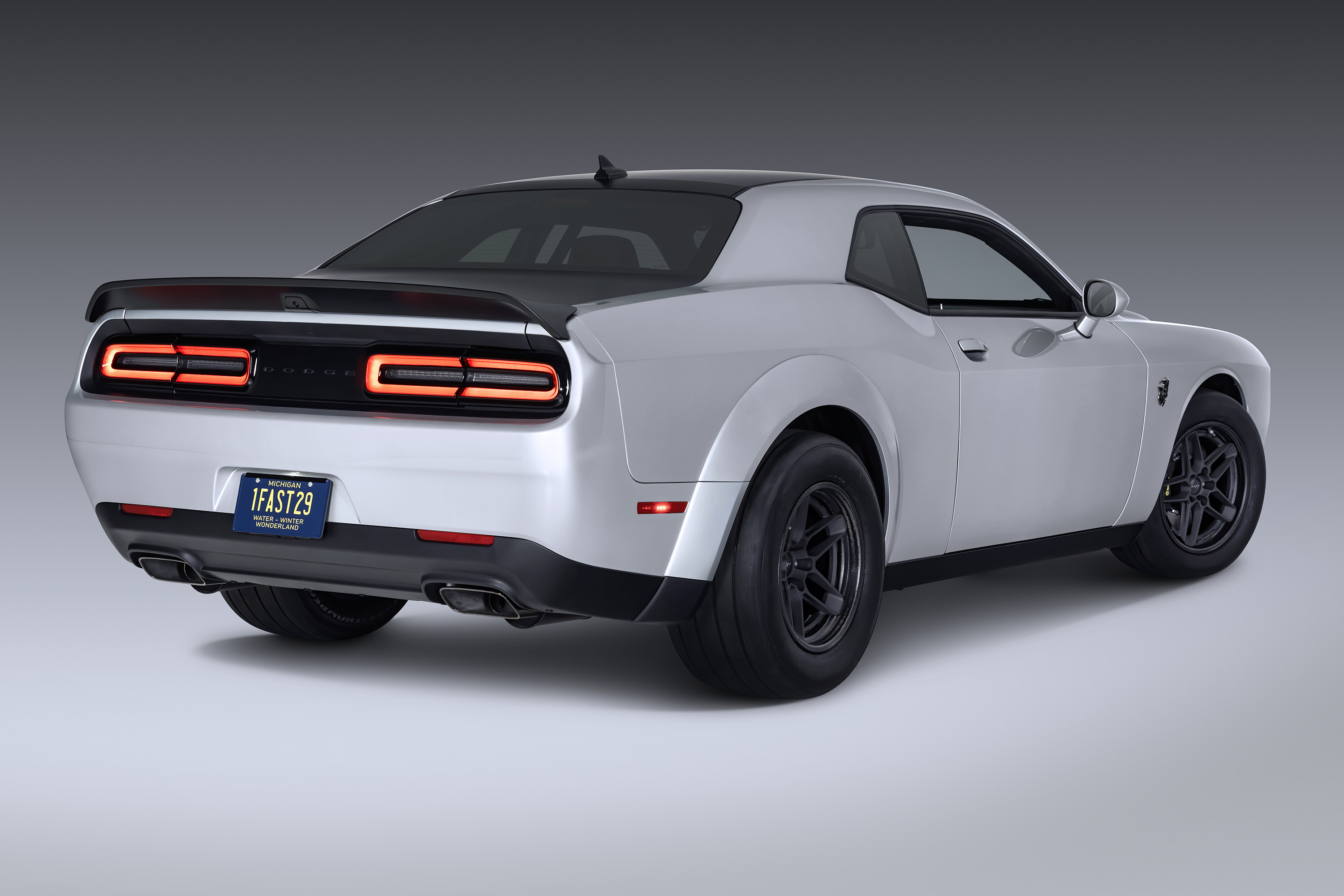
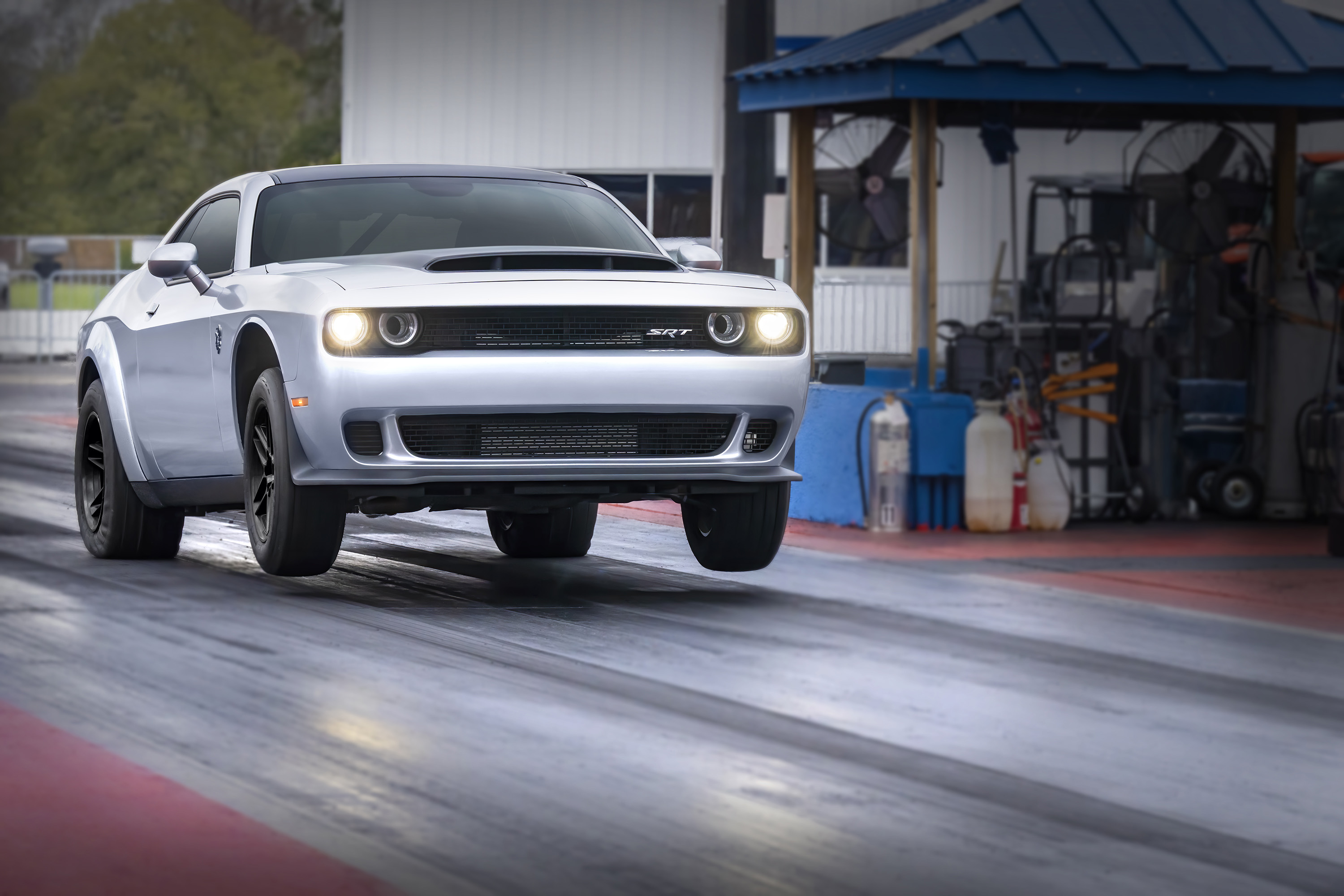
In a final salute to its classic V8-powered muscle cars, the 2024 Dodge Challenger SRT Demon 170 is the world’s most powerful and fastest.
Dodge claims it will complete the 0-60mph (0-97km/h) sprint in just 1.33 seconds (with roll-out, according to US media) – faster than the Bugatti Chiron’s 2.3-second claim – with record-breaking G-force acceleration at 2.004 gs.
It is powered by an overhauled 6.2-litre supercharged V8 producing 764kW and 1281Nm on E85 ethanol fuel.
WATCH: Dodge Challenger SRT Demon 170 at the drag strip
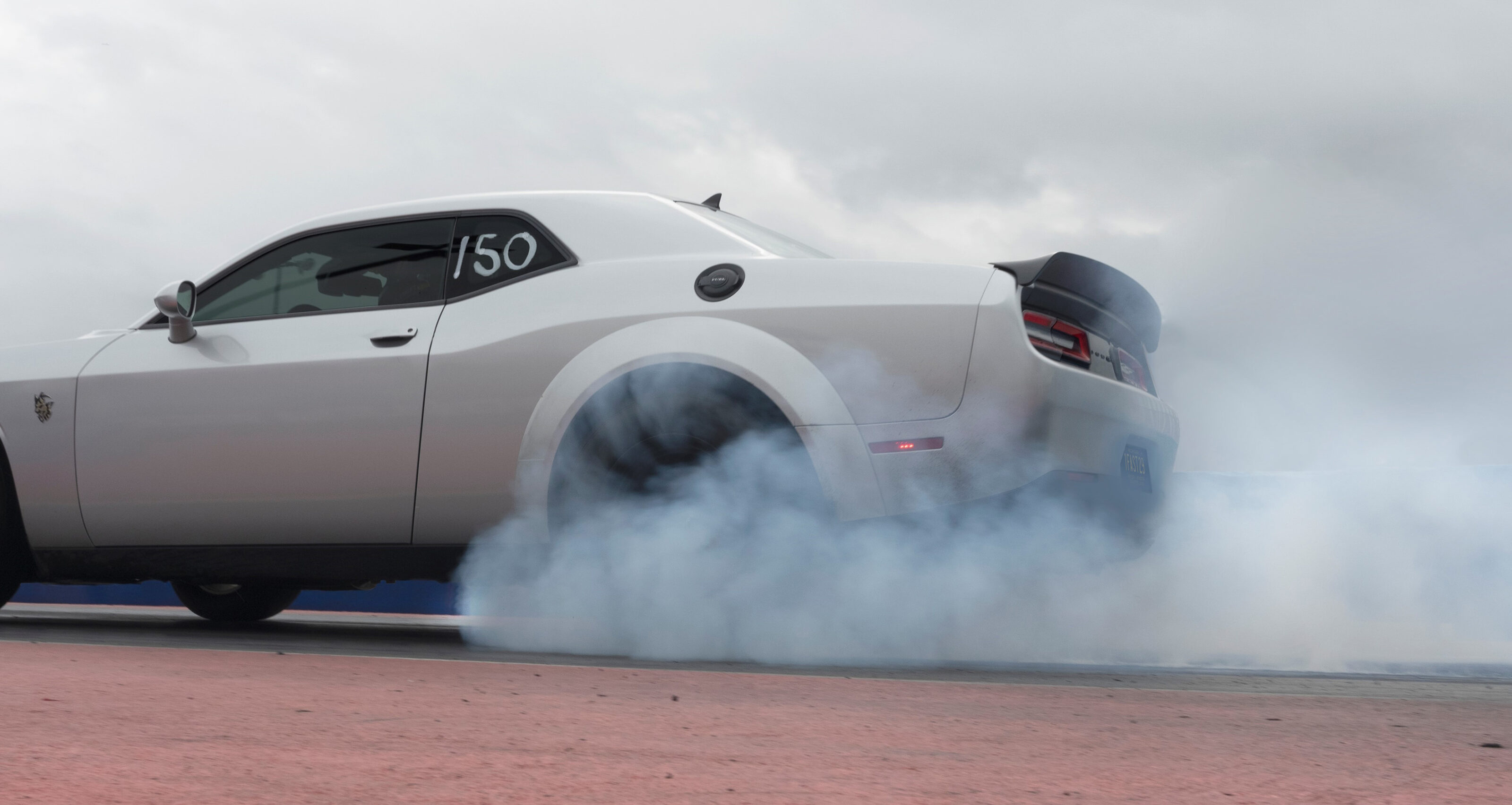
It will complete the quarter-mile (402-metre) sprint in 8.91 seconds at 151.17mph (243km/h), requiring a parachute and a roll-cage to launch at a National Hot Rod Association-regulated track.
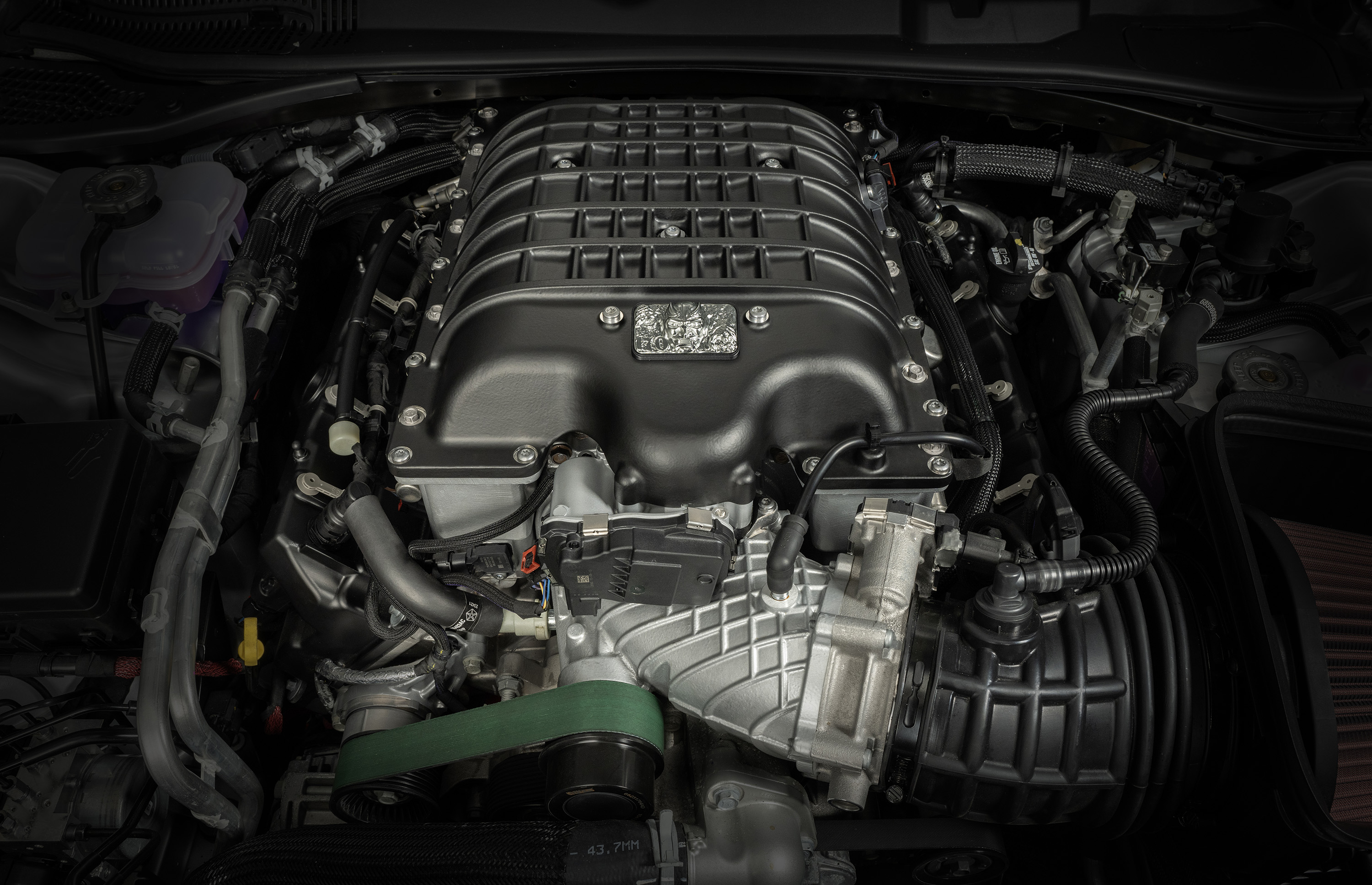
The overhauled engine is derived from the original SRT Demon and “shares DNA” with the cast-iron Hellephant C170 crate engine, with several improvements.
It is fitted with a 3.0-litre supercharger with 40 per cent more boost pressure (21.3 v 15.3 psi) than the Challenger SRT Hellcat Redeye Widebody, while the supercharger pulley delivers 14 per cent more overdrive and an updated 2.68 drive ratio.
1
Other improvements include; a larger diameter throttle body, nitride-covered intake valves, high-strength connecting rods, and upgraded spark plugs, valve guides and seat materials for ethanol compatibility.
Dodge claims the high-flow fuel injectors can provide 621 litres per hour, which it notes is “more than the average U.S. shower head.” Yikes.
Gas-guzzler indeed, with the United States federal ‘gas-guzzler tax’ and destination fees pushing its US$96,666 (AU$144,000) list price to US$100,361 (AU$150,000).
Under the skin, Dodge has recalibrated the powertrain control module to optimise fuelling and spark timing for premium and ethanol-blended fuels, and a sensor will determine the ethanol percentage and display it in the instrument cluster.
1
The amount of available power will depend on the ethanol percentage, with an ethanol content exceeding 65 per cent delivering the full 764kW.
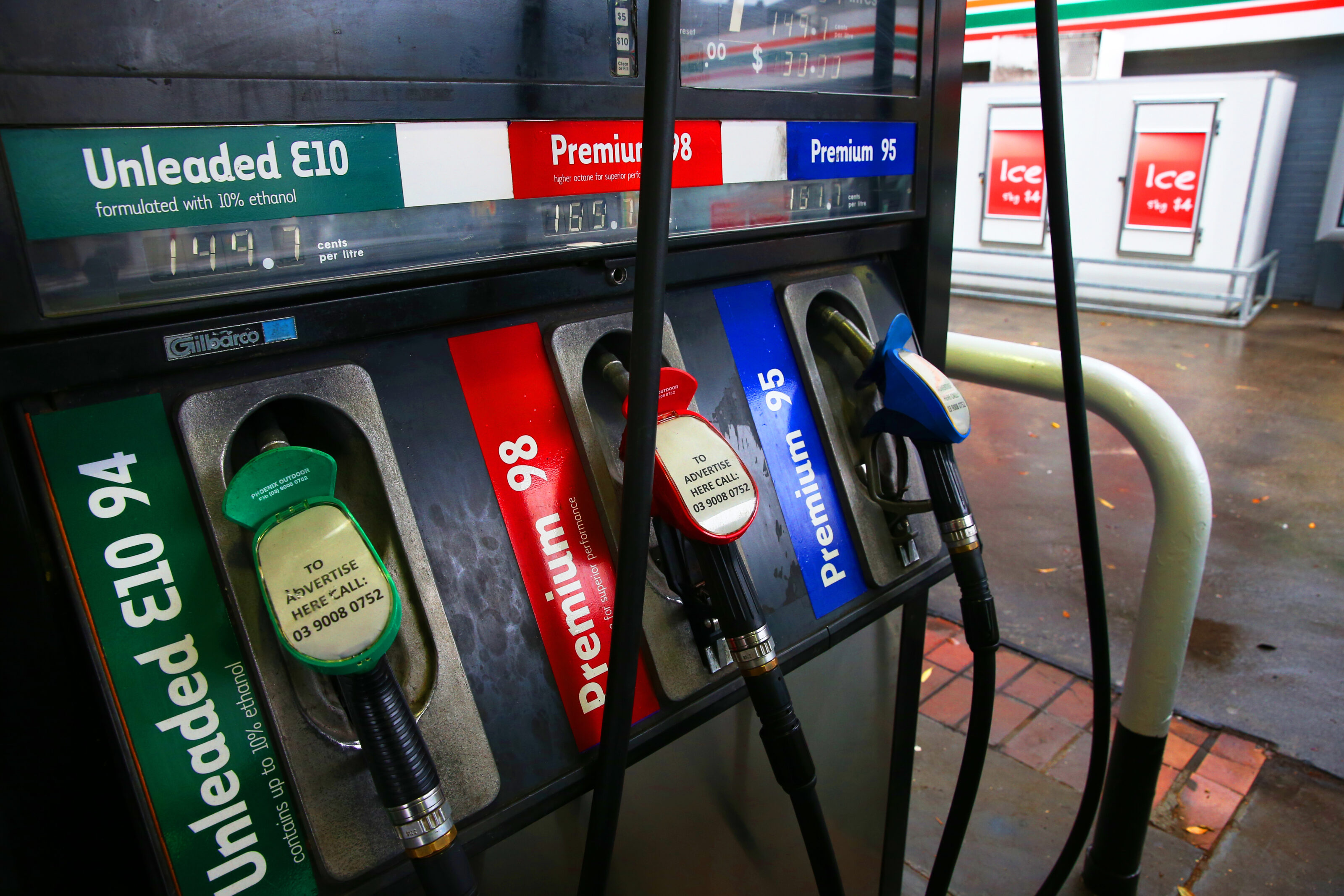
When topped up with E10 fuel, power is reduced to 671kW and 1098Nm.
Dodge has upgraded the ZF-sourced eight-speed torque-converter automatic to send all that power to the rear wheels, and fitted a 30 per cent stronger rear prop shaft.
In addition, the rear end has been strengthened with a stronger fortified axle and a revised heat treatment process for the half shafts for “optimized [sic] stiffness for acceleration performance.”
1
An improved TransBrake 2.0 allows the driver to hold the accelerator and then pull a shift paddle to launch at the drag strip, with the added power to set the torque output in tenth-of-a-second increments.
It sports drag-optimised 315/50R17 Mickey Thompson T Street R tyres at the rear, while there’s slimmer 245/55R18 rubber at the front, with an optional wheel-and-tyre for wet or colder weather.
A set of forged aluminium and carbon fibre wheels are available on the options list to shave 9.13 kilograms at the front and 5.43 kilograms at the rear.
1
While it looks similar to the 2017-vintage SRT Demon, the fender flares have been deleted to save weight, and there’s a unique Demon 170 badge.
It will be offered with 14 exterior colours – including the heritage B5 blue and plum crazy – and an optional two-tone black finish for the bonnet, roof and boot lid.
Inside, the SRT Demon 170 is a one-seater, with the passenger seat and rear bench deleted, while there’s a two-speaker audio system, lightweight interior carpet, and the removal of noise, vibration and harshness padding.
1
The 2024 Dodge Challenger SRT Demon 170 will be limited to 3330 units, with all likely to remain in the United States.
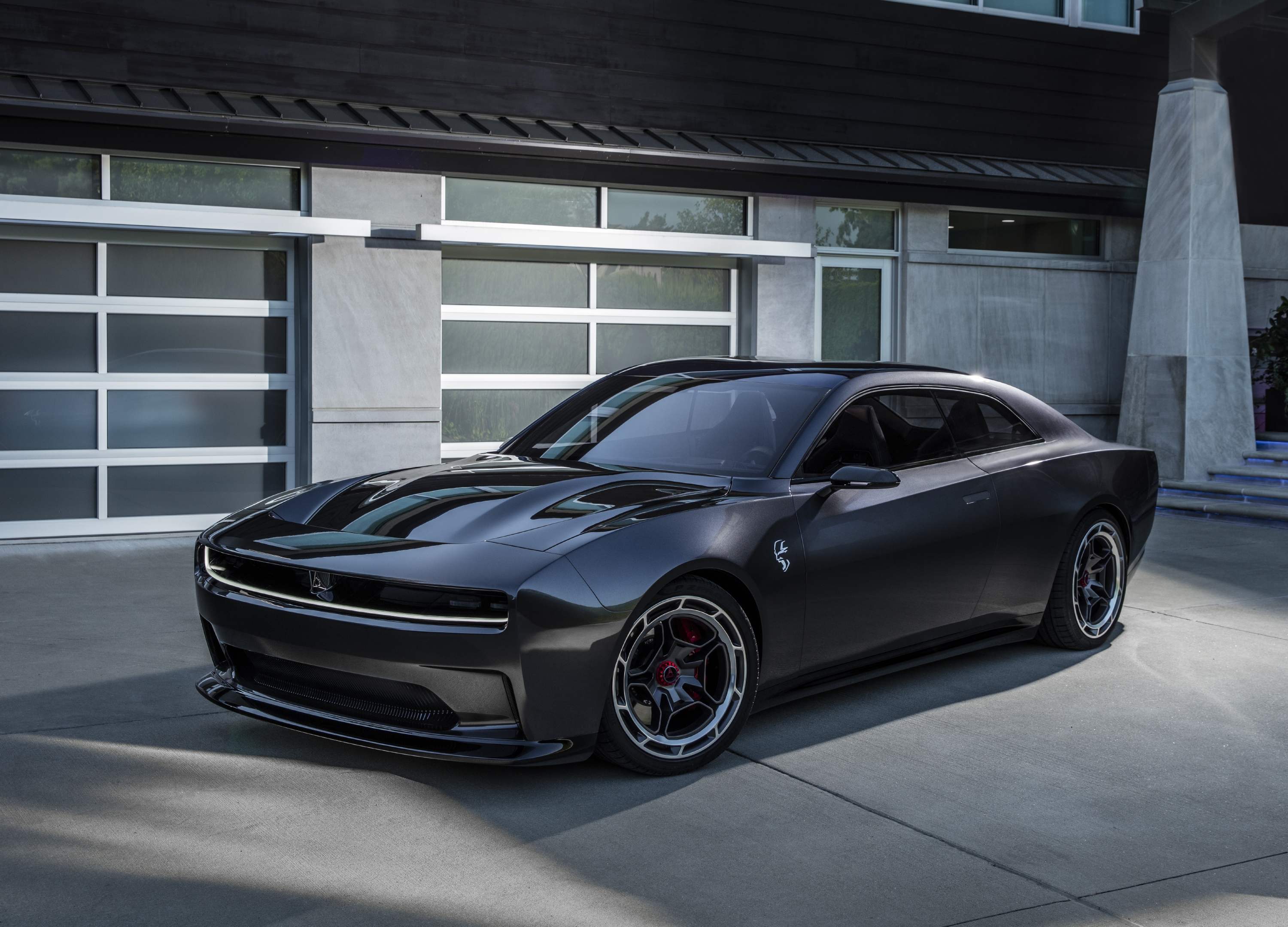
As the final call for Dodge’s HEMI V8 muscle cars, the brand will replace the Challenger with an all-new model in 2024, previewed by the all-electric Daytona SRT Concept revealed in mid-2022.
Mopar Insiders reports it will be fitted with the downsized Hurricane inline-six and electrified derivative, joining a four-door successor to the related Charger.
MORE
Everything Dodge
Kia has unveiled a surprise concept that previews a mid-sized electric SUV debuting later this year.
Snapshot
- Kia Concept EV5 revealed
- Electric mid-size SUV provides glimpse at production EV5
- Production EV5 to launch in China later this year ahead of global roll-out
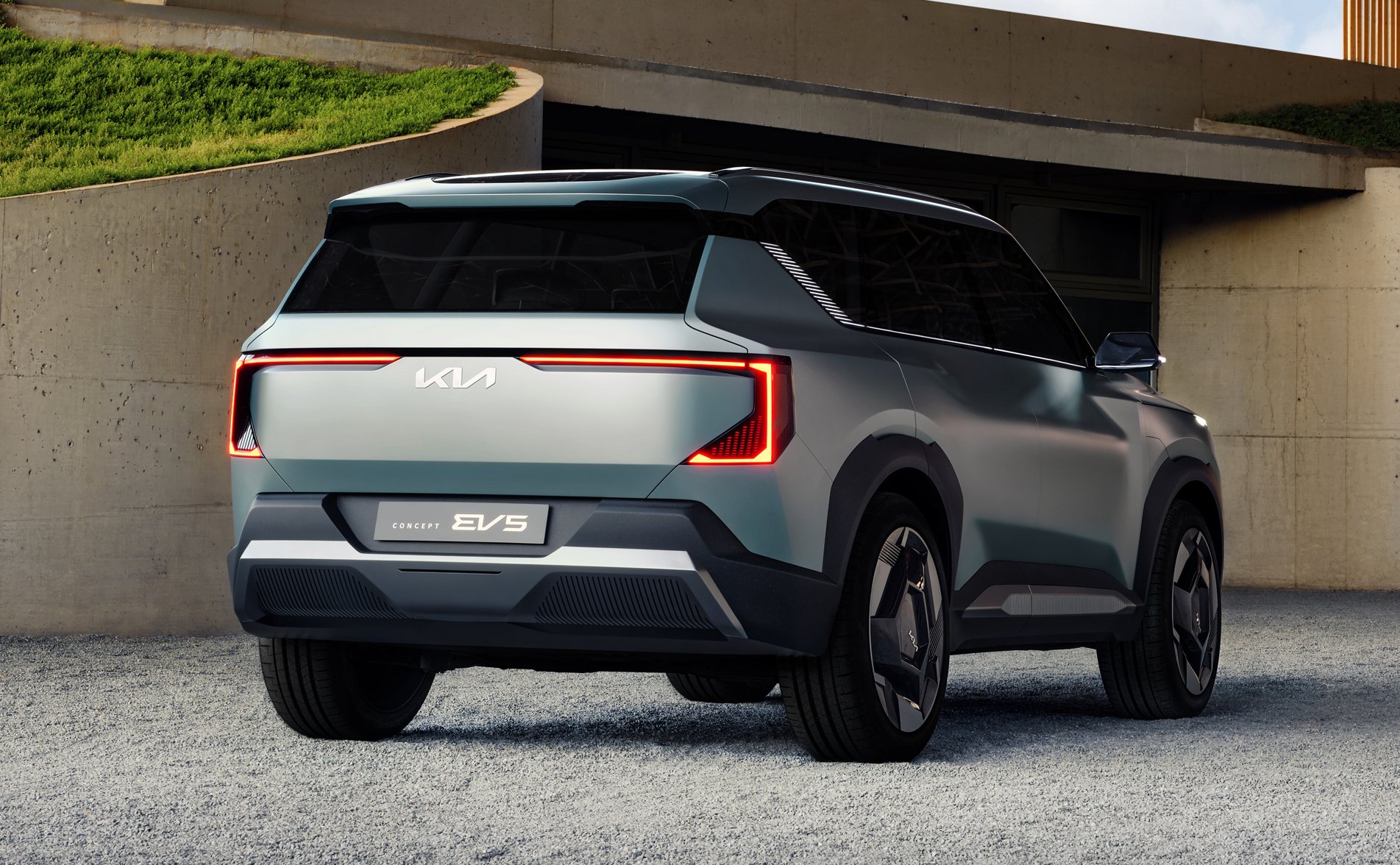
In many ways, the Kia Concept EV5 is a shrunken take on the EV9 large SUV revealed last week, with chunky styling and swivelling front and rear seats.
Kia has confirmed the production version of the EV5 will launch in China in late 2023 – but it won’t be limited to that market, with “details regarding any future plans for the other global markets [to] be made in due course.”
While Kia has yet to detail the EV5’s dimensions or technical specifications, the name suggests it’ll be positioned below the EV6, either in size or affordability – or both.
1
Up front, the Concept EV5 looks similar to the EV9, with the brand’s ‘Digital Tiger Nose’ design and vertical headlights, while its side profile is also reminiscent of the large electric SUV.
The boxy rear end features a full-width LED light strip, which connects the slim tail-lights, while 21-inch alloy wheels are also fitted.
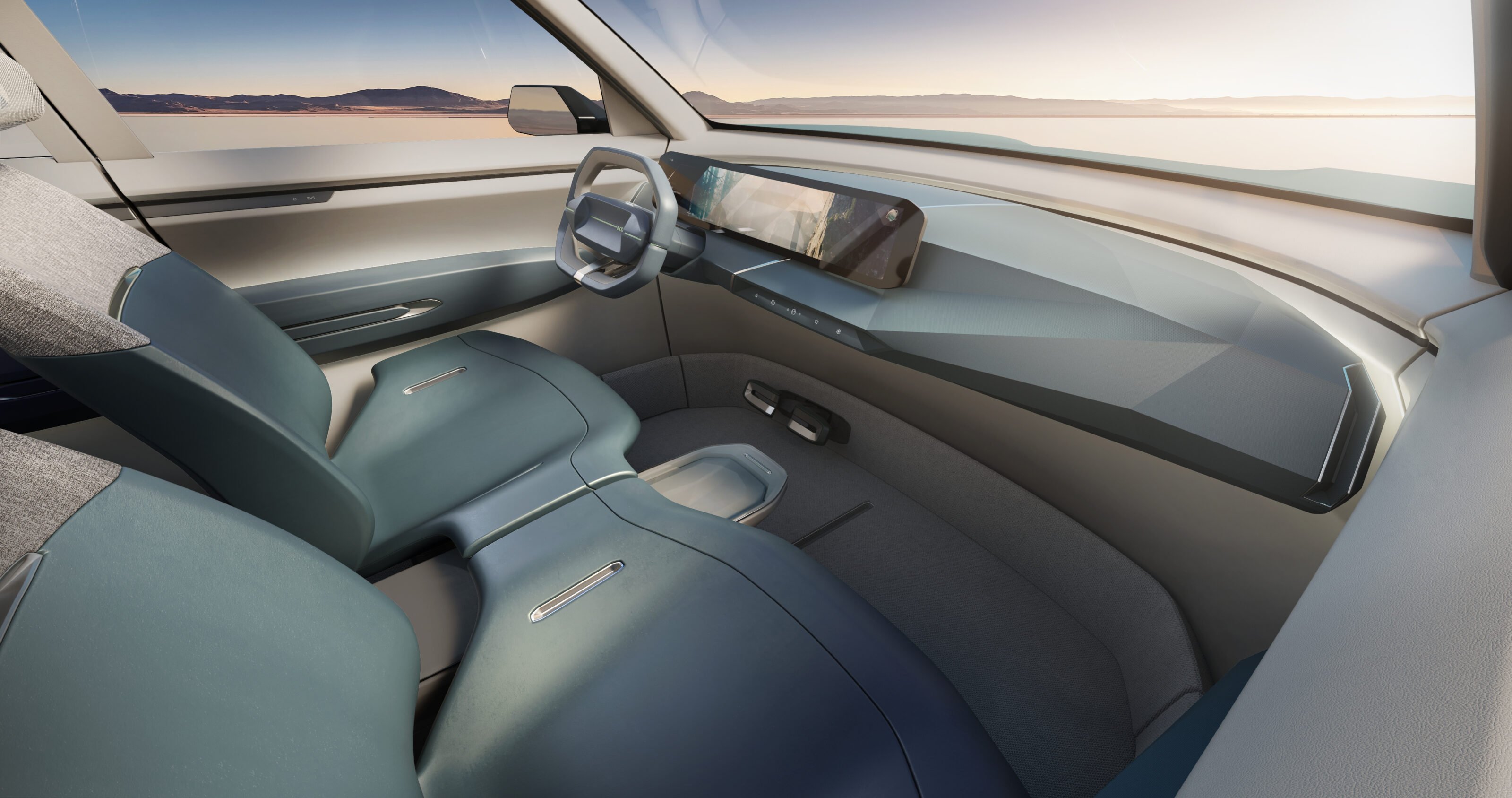
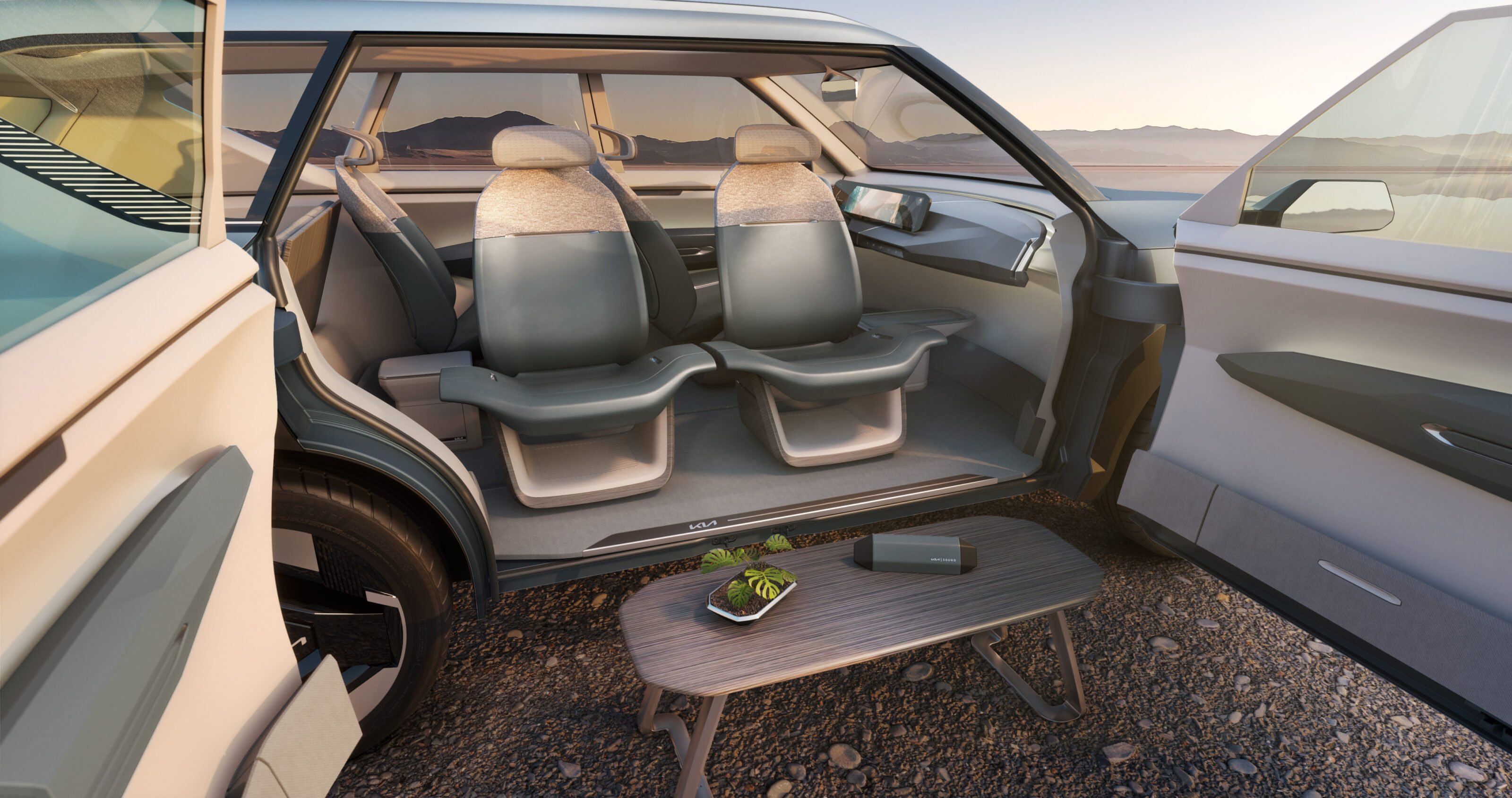
A pair of freestyle doors open to the front and rear seats that swivel to face outward – similar to in the production EV9 – and sustainable materials are used in the cabin, including plant-based ones and recycled plastic.
1
There’s also a large single-piece infotainment unit with haptic-touch buttons, a hexagonal steering wheel, a solar panoramic sunroof and a pop-up bench seat in the boot with an integrated portable speaker.
While the futuristic elements of the concept are unlikely to reach the production model, the Concept EV9 unveiled at the 2021 Los Angeles Auto Show was a close design preview to the production EV9.
This suggests it’ll be similar for the EV5 when it debuts later this year.
4
Advice
Australia’s best electric cars for 2023
We’ve tested nearly every EV below six figures in Australia to rank the best on sale today
Will the EV5 come to Australia?
The 2024 Kia EV5 will debut in China later this year, with a global launch expected to follow throughout 2024 – potentially including Australia.
It is expected to be underpinned by Hyundai-Kia’s dedicated E-GMP electric vehicle platform, with an 800-volt electric architecture, support for 350kW fast charging, and several battery and electric motor options.
Last year, Kia Australia product planning boss, Roland Rivero, said the firm has its hand up to receive as many EVs as possible, telling Wheels it hopes to soon launch at least two additional models in two completely different segments – one of which is the EV9 due by Christmas.
MORE
Everything Kia
UPDATE: Ford Bronco spied in Australia
A left-hand-drive Ford Bronco has been spotted in Australia again, creating fresh hope that the iconic off-roader might eventually be sold Down Under.
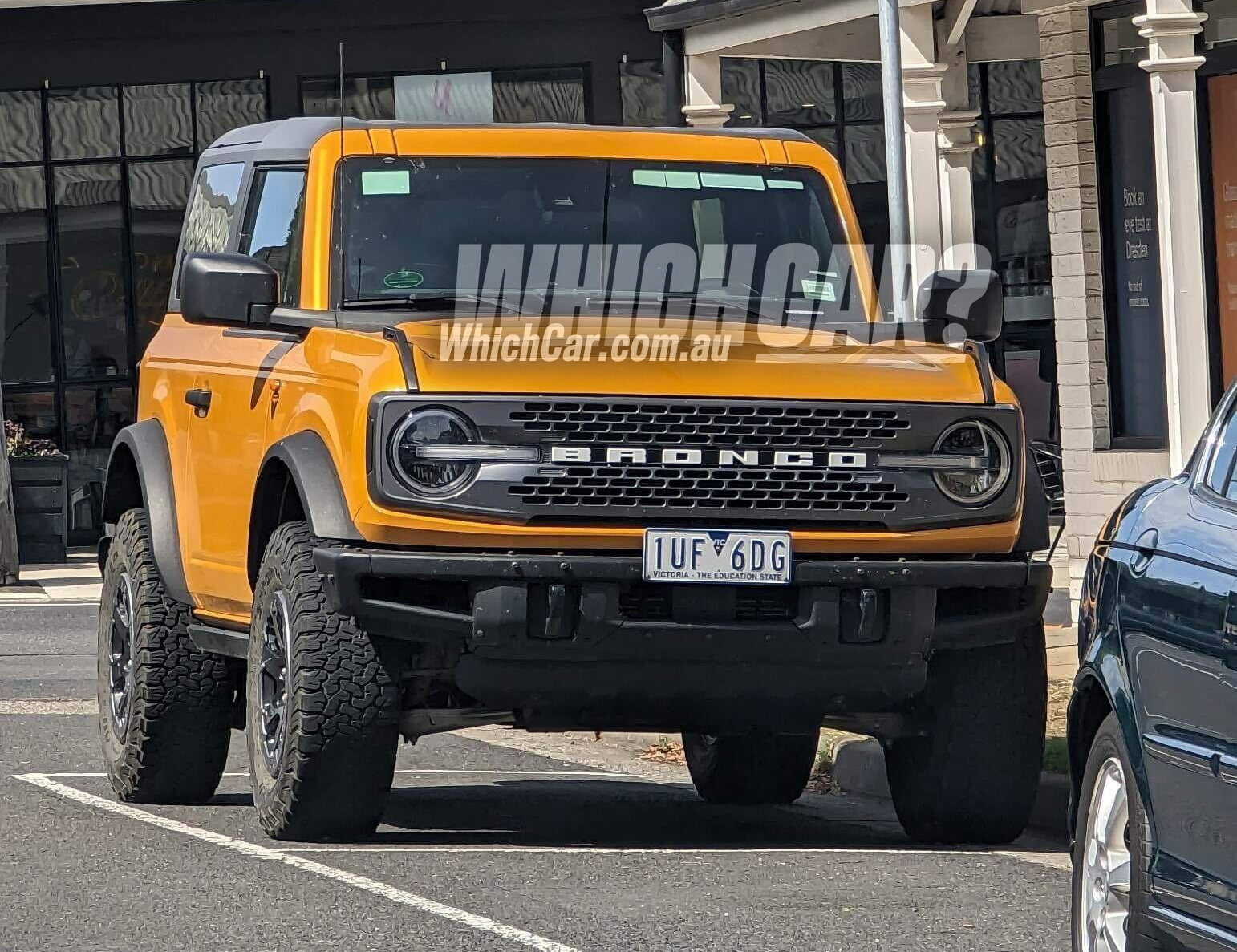
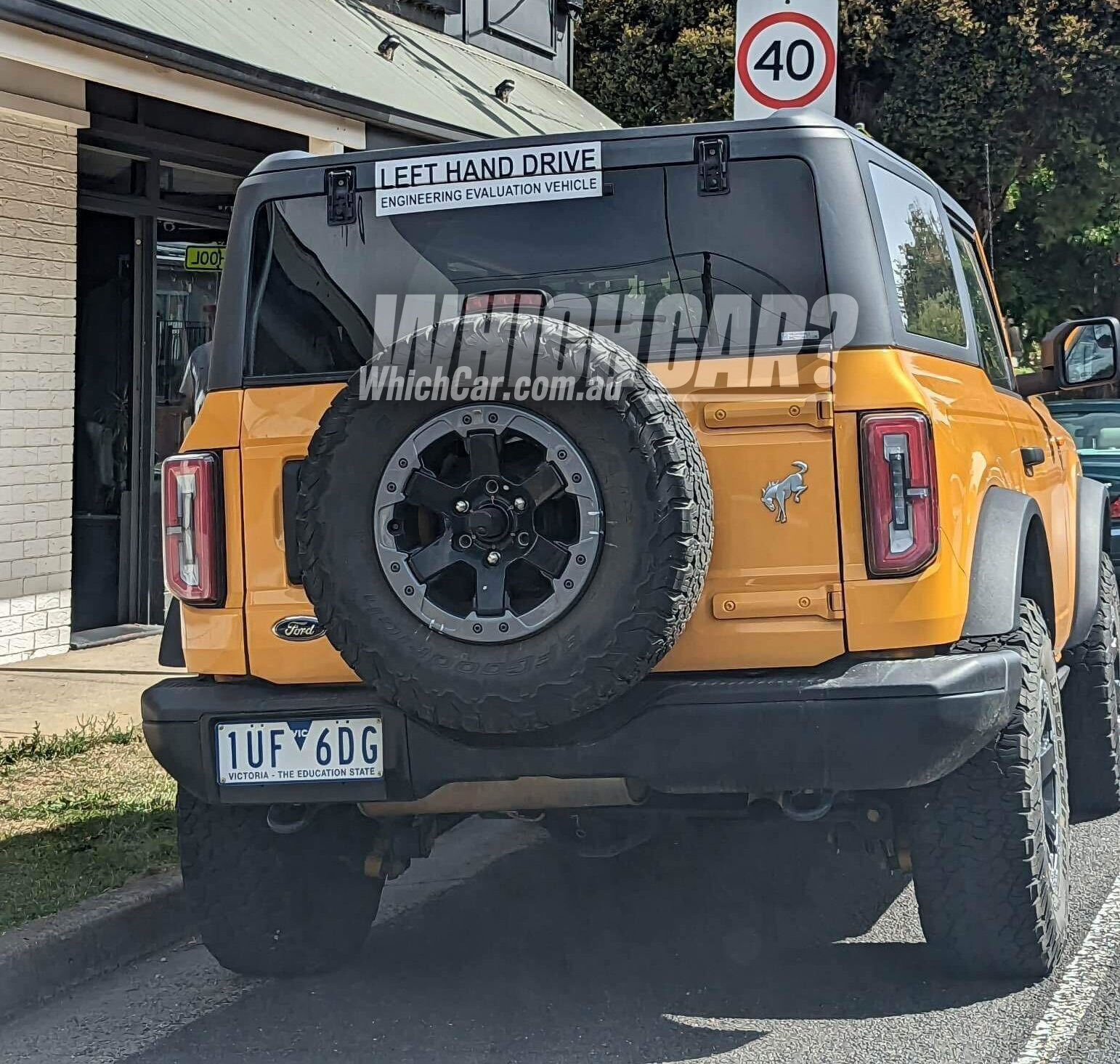
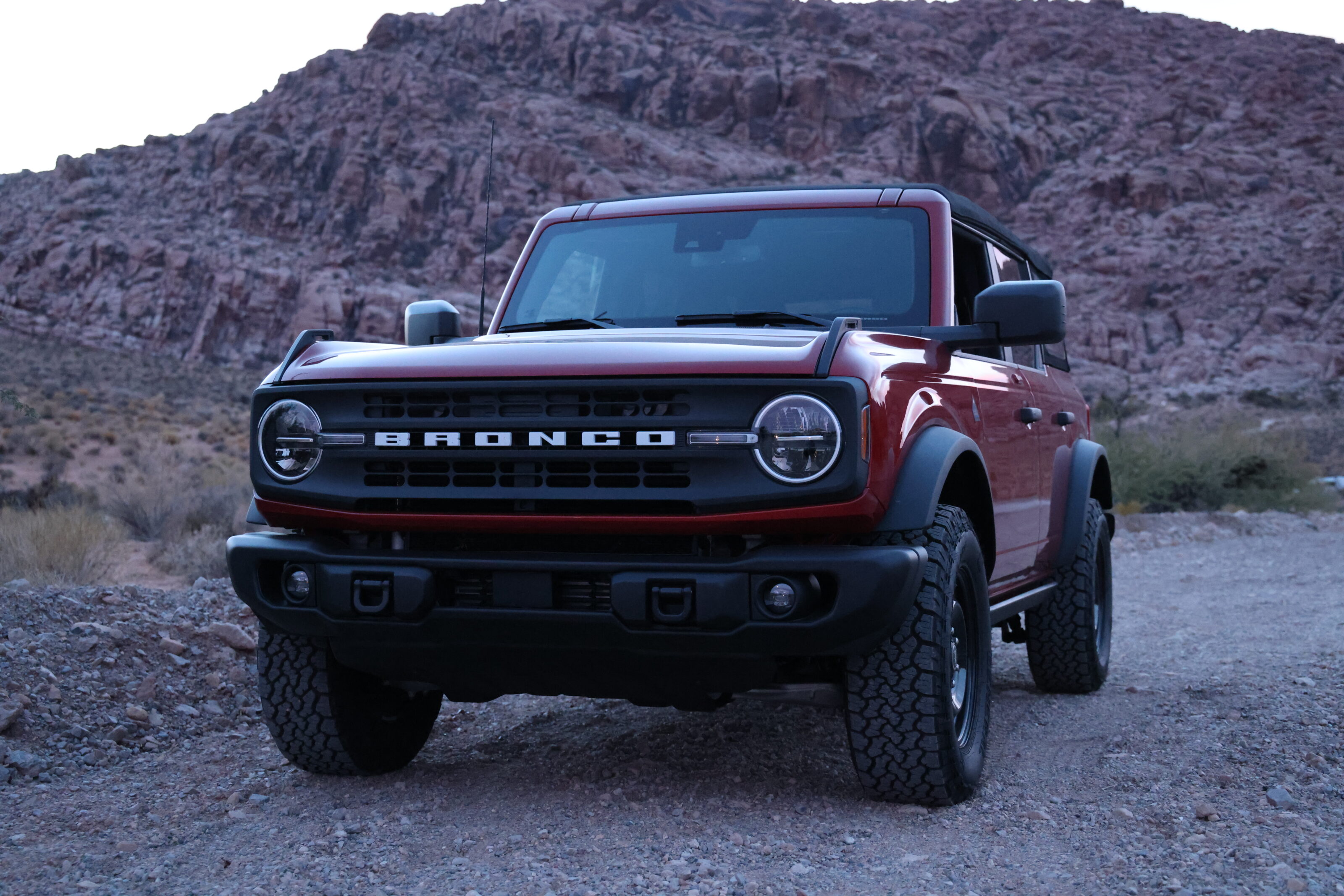
Snapped by Wheels reader Steve Rogers (no, not Captain America), the ‘Cyber Orange’ Bronco was parked in central Geelong over the weekend and is stickered up as a ‘left-hand-drive engineering evaluation vehicle’.
1
This particular Bronco is a short-wheelbase, two-door model and appears to be a Badlands variant fitted with the optional Sasquatch off-road package.
The Sasquatch packs adds several hardcore off-roading extras like larger 35-inch tyres, locking differentials front and rear with a 4.7:1 final drive ratio, Bilstein dampers and flared front quarter panels.
Despite the spot, Ford’s local arm has once again poured cold water on the Bronco’s Aussie prospects – saying that for now at least, it’s still officially off the table.
“We have no plans to introduce Bronco to Australia, and it is not available in right-hand drive,” said a Ford Australia spokesperson. “The vehicle spotted is a Ford development vehicle, being used by our Product Development team for ongoing Bronco development work.
As the engineering lead for vehicles on the T6 platform – including Ranger, Everest and Bronco – Ford Australia played a significant role in developing Bronco.”
1
That’s not to say it won’t happen in the future, however. Call us eternal optimists – Ford’s official line of “it’s not coming” is pretty clear, after all – but there have been hints that the Blue Oval is still considering it for our market.
Ford president and CEO, Jim Farley, sent tongues waggling late last year, for example, when he went against the company’s previous comments that the Bronco couldn’t be engineered for right-hand-drive production and said:
“We can do Bronco and Bronco Sport for the globe for sure, but we have, like, a year-or-two order bank, so we have a lot of work to do on our capacity before we can even consider something like that.”
Satiating high demand for the American market as a first priority means any official right-hand-drive program is still years away, but Farley’s comments at least show there’s no engineering barrier to producing the Bronco as a right hooker.

1
The other option Ford Australia might pursue is to add the Bronco to the right-hand-drive conversion program it is about to commence for the F-150, although that also has long lead times as the company is keen to prove the project’s worth before adding new models.
Plus, while seeing a Bronco is rare, it’s not that usual to see left-hand-drive test mules on our roads given Ford Australia’s position as the lead market for all T6 platform vehicles. Underneath its blocky exterior styling, the Bronco shares its T6.2 platform with the Ford Ranger and COTY-winning Everest.
The story to here
February: New Ford F-150 Raptor spied in Australia
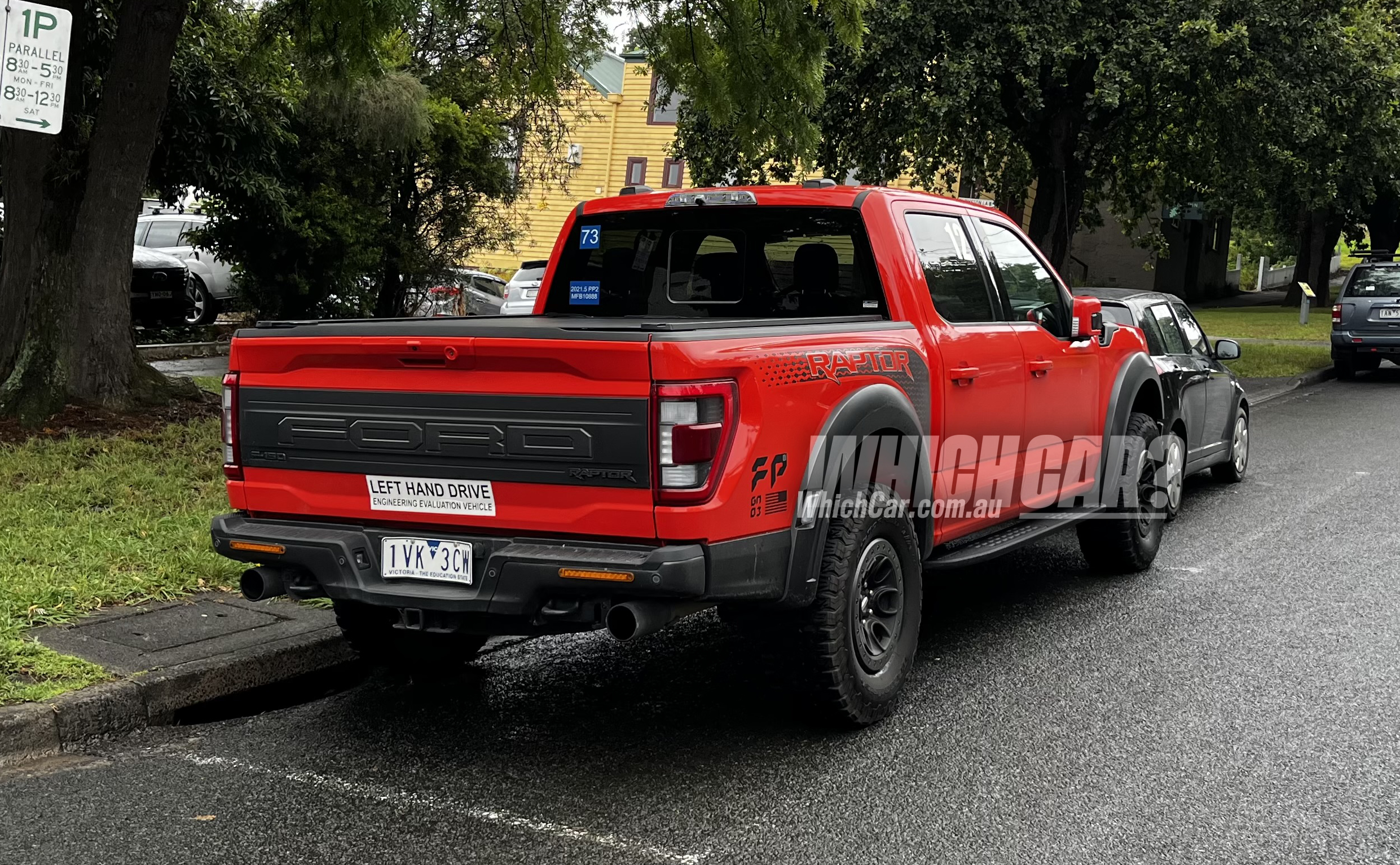
The 2023 Ford F-150 Raptor has been spotted in Australia.
A left-hand-drive prototype was spied parked in Healesville, just outside Melbourne in the Yarra Ranges – but there’s still no word on its local prospects.
A spokesperson for Ford Australia said the example was used for comparative purposes with the Ranger Raptor during its development, and has remained in Australia since.
They added there was “no news to share about F-150 Raptor” reaching local shores as part of its factory-backed conversion program.
As reported below, Ford Australia hasn’t ruled out the regular, twin-turbo V6 F-150 Raptor – or the Bronco off-roader – however, it remains focused on the launch of the F-150 XLT and Lariat in the second half of this year.
3
In December, the brand confirmed additional details about the F-150, which is set to be converted by RMA Automotive in Melbourne.
“When F-150 hits Australian showrooms, customers can rest assured it has been put through the same local durability program as the Ranger and Everest, which, of course, is the same program the left-hand-drive F-150 went through in the States,” said Ford Australia’s performance and customisation chief program engineer, Dave Burn.
“We’ve torture-tested, tuned and re-worked the right-hand-drive F-150 so that Aussie customers know they’re getting the full factory F-150 experience. We’re doing everything to make sure the truck will be right at home here in Australia.”
Our earlier story, below, continues unchanged.
1
April 1, 2022: Ford Bronco and F-150 Raptor possible for Australia
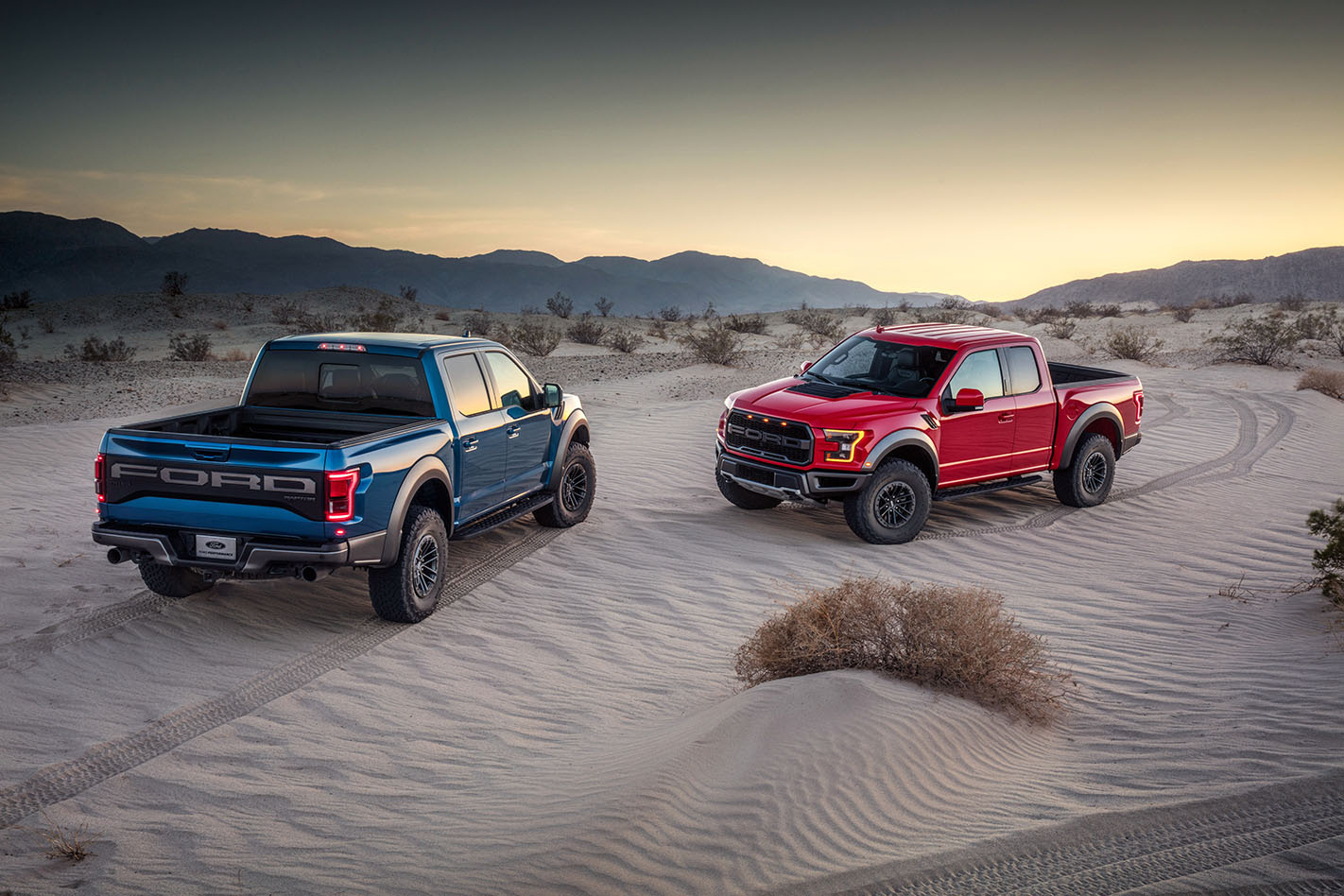
Aussies have been salivating over the prospect of the iconic Ford Bronco and hardcore F-150 Raptor for years, but they’ve long been ‘off limits’ as they’re only built in left-hand-drive.
Now though, the door may be opening slightly for both models to join the Australian range.
Ford’s official line on both models is a hard no, however the recent announcement that the carmaker will import the regular F-150 to Australia in 2023 and convert it locally to right-hand-drive offers the opportunity for other models to undergo a similar process.
The F-150 will be imported in two model grades, the twin-turbo V6 XLT and Lariat, with the conversion work to be carried out by engineering firm RMA Automotive at a facility near Ford’s old Broadmeadows assembly line. They’ll be sold in Ford dealers and carry an official, five-year factory-backed warranty.
1
Whether the conversion program will be expanded remains to be seen, although Ford has told Wheels it is open to adding more models.
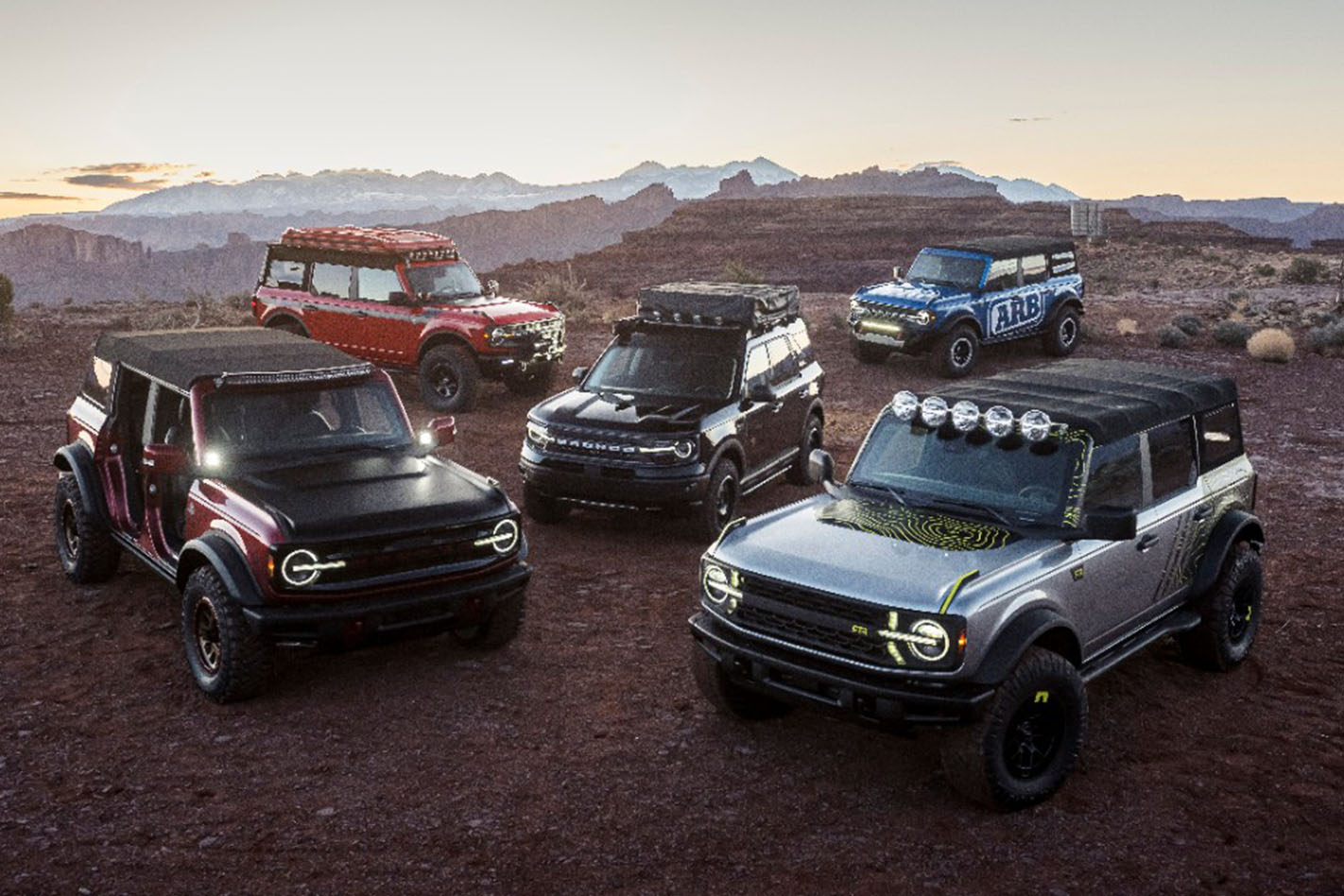
Ali Jammoul is Ford’s vehicle program director for Ford Performance and Icons, with the Bronco and F-150 falling under the ‘icon’ banner. He understands the importance of the Australian market to Ford globally from a sales and engineering perspective, and he didn’t rule out Bronco heading our way via the RMA arrangement.
“Never say never,” he said. “We have to look at the opportunities. Right now we are so focused and we have to get the Ranger into production, but hey, we’ll evaluate opportunities as they come.
“And like we did with F-150 for example, if the opportunity is there, we can make financial sense out of it, and it’s the right fit in the market strategically, we’ll do it. Right now we have no plans but hey, never say never.”
1
While far from a glowing endorsement, Jammoul’s comments may carry some hope for Bronco fans who have previously been told the nameplate had no chance of making its way Down Under, at least not officially. Ford has previously said it doesn’t make financial sense to offer the Bronco in right-hand-drive from the factory, even for 4X4-loving markets like Australia.
Interestingly, the Bronco was partly developed in Australia and it shares a proportion of its underpinnings with the new T6.2 Ford Ranger, which will go on sale this June.
It’s that commonality which originally sparked the hope we might see the Bronco join our line-up, and while it’s still a long-shot of heading our way, it’s good to know Ford hasn’t completely swept it off the table.
There’s the power of customer feedback to consider. One way a brand makes a business case is through market research, so if you want a Bronco or an F-150 Raptor, let your dealer know – and tell us too in the comments below.
MORE
Everything Ford
Isuzu Ute Australia (IUA) has appointed a new managing director as the former boss returns to Thailand to head up Mitsubishi’s operations there.
Snapshot
- Junta Matsui replacing Hiroyasu Sato
- Change effective as of March 20
- Started career at Mitsubishi in 2008
Junta Matsui took over the top job yesterday, taking over the reins from Hiroyasu Sato – who had occupied the role for four years.
Originally hailing from Yokohama City, Japan, Matsui joined the Isuzu Business Division of Mitsubishi Corporation in 2008, overseeing operations at Tri Petch Isuzu Sales Co., Ltd., until 2012, before assuming responsibility for new business developments across the Auto and Mobility divisions of Thailand, Indonesia, Russia, India and Africa.
Matsui will lead Isuzu’s board of directors, which includes; Takeshi Yasui (who oversees parts, aftersales and accessories), Koichiro Yoshida, (who is responsible for sales, marketing and product planning), and Reiko Sato (who leads finance, IT, HR and administration). Sato became IUA’s first female director in January 2022, taking over as deputy managing director from Takuji Ozawa.

1
Outgoing head Hiroyasu Sato said he was “sincerely thankful for the support over the years, proud of IUA’s resilience and tenacity during the last few turbulent years and is confident in Mr Matsui’s business development experience across numerous global markets the key to continuing to lead IUA to future success.”
“IUA’s position in the market has never been as strong as it is today, and we have our dealers and customers to thank for that. Undoubtedly, Mr Matsui’s extensive history of leading various global mobility divisions for Isuzu fills me with absolute confidence that, under his leadership, IUA will continue to go from strength to strength,” Sato added.

1
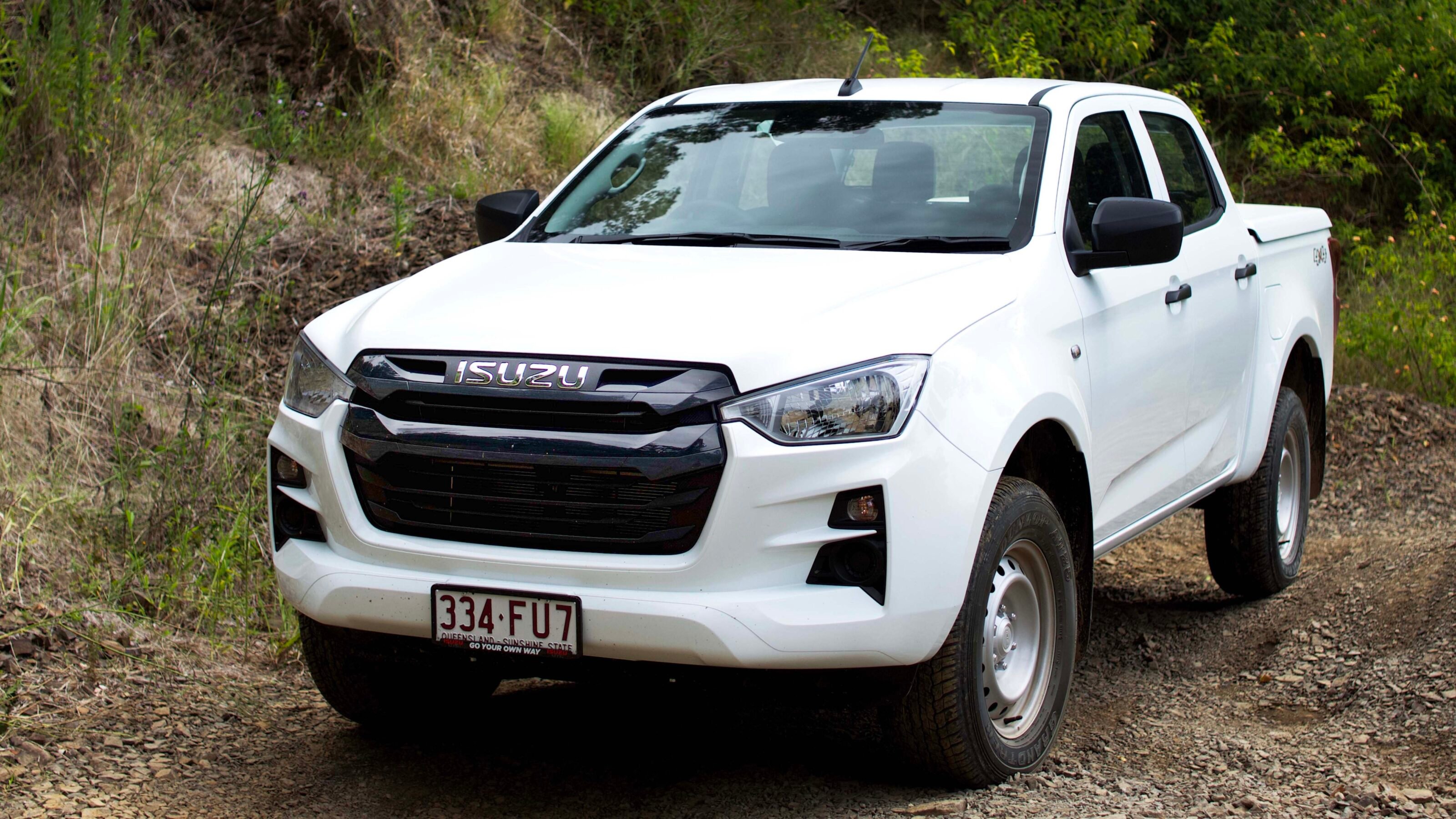
In 2022, Isuzu was one of Australia’s top 10 best-selling brands for the first time ever, with 35,323 vehicles sold and delivered.
IUA is currently positioned as Australia’s 10th best-selling automotive brand, with 1931 D-MAX utes and 2053 MU-X SUVs shifted so far across the first two months of 2023.
“Under Mr Sato’s watch, there have been clear results thanks to the continued to focus on sustainable sales growth, whilst also concentrating on customer satisfaction and retention—three crucial areas that I plan to continue driving forward,” Matsui said.
1
“With the market showing promising signs of recovery and both the D-Max and MU-X proving popular towards the top of their respective segments, I’m hopeful we can build on the momentum that Sato-san has set for IUA.”
In June last year, just hours after revealing it had won the 2021 Canstar Blue Customer Satisfaction Award for New Cars, Isuzu took the top gong with market research group Roy Morgan too, sharing top prize honours with Subaru.
To win the ‘Car Manufacturer of the Year’ award – the second consecutive year it had won – Isuzu topped the survey results with a score of 96.1 per cent for 2021.
MORE
Everything Isuzu
