
Small cars used to win COTY all the time.
Between 2009 and 2016, nothing bigger than a VW Golf occupied the top step of the podium. Since then, the humble hatch seems to have fallen on tough times. Ford has abandoned the sector, winding up sales of its Fiesta and Focus, while Hyundai doesn’t import the standard i20 and is about to pull the shutters down on i30 imports. Kia’s little Rio is also gone.
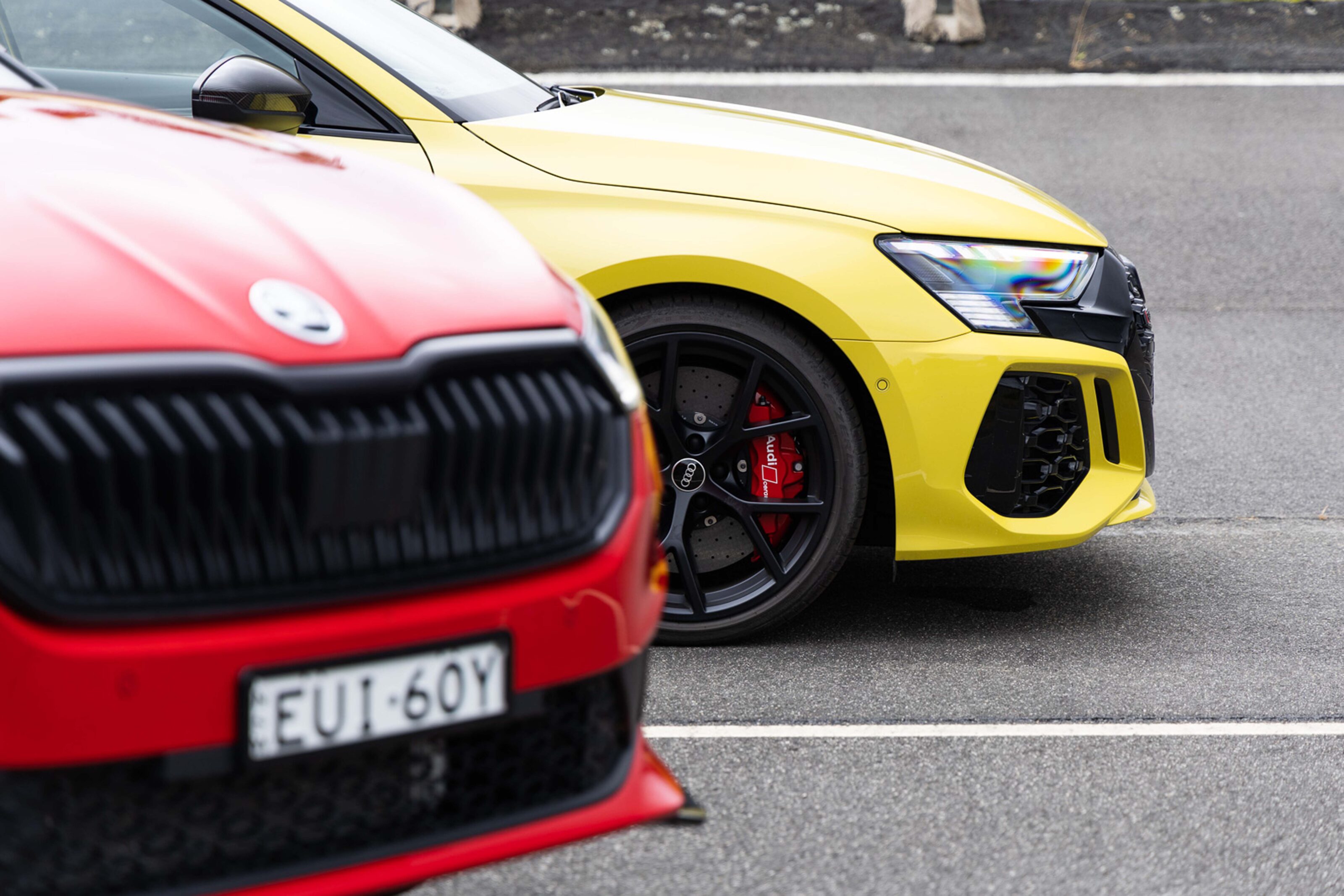
But while the mass market has suffered, there’s still breathing room for more premium players – so for COTY 2023, we assembled three of 2023’s best in the chiselled forms of the Audi A3, the Peugeot 308, and the Skoda Fabia Monte Carlo.
More: So impressed were we with the RS3 Sportback that managed to trump the Mercedes-AMG A45 S in a Wheels comparison that we thought we’d sweeten the pot to the tune of 294kW. In doing so, however, it threw into sharp focus the value proposition of the other cars present, which could muster up an average of just 103kW between them.
WHEELS CAR OF THE YEAR 2023
The Peugeot 308 arrived with big boots to fill, having previously been a runner-up at COTY.
It’s undeniably a good-looking thing with a sporty vibe that’s exciting, but there’s always that nagging question of how much you’re paying for style and how much for substance.
At $43,990 for the hatch and $50,490 for the wagon – both before on-road costs – it’s an expensive offering. The wagon has a few more frills for that extra five grand plus there’s the promise of some added versatility thanks to a longer wheelbase.
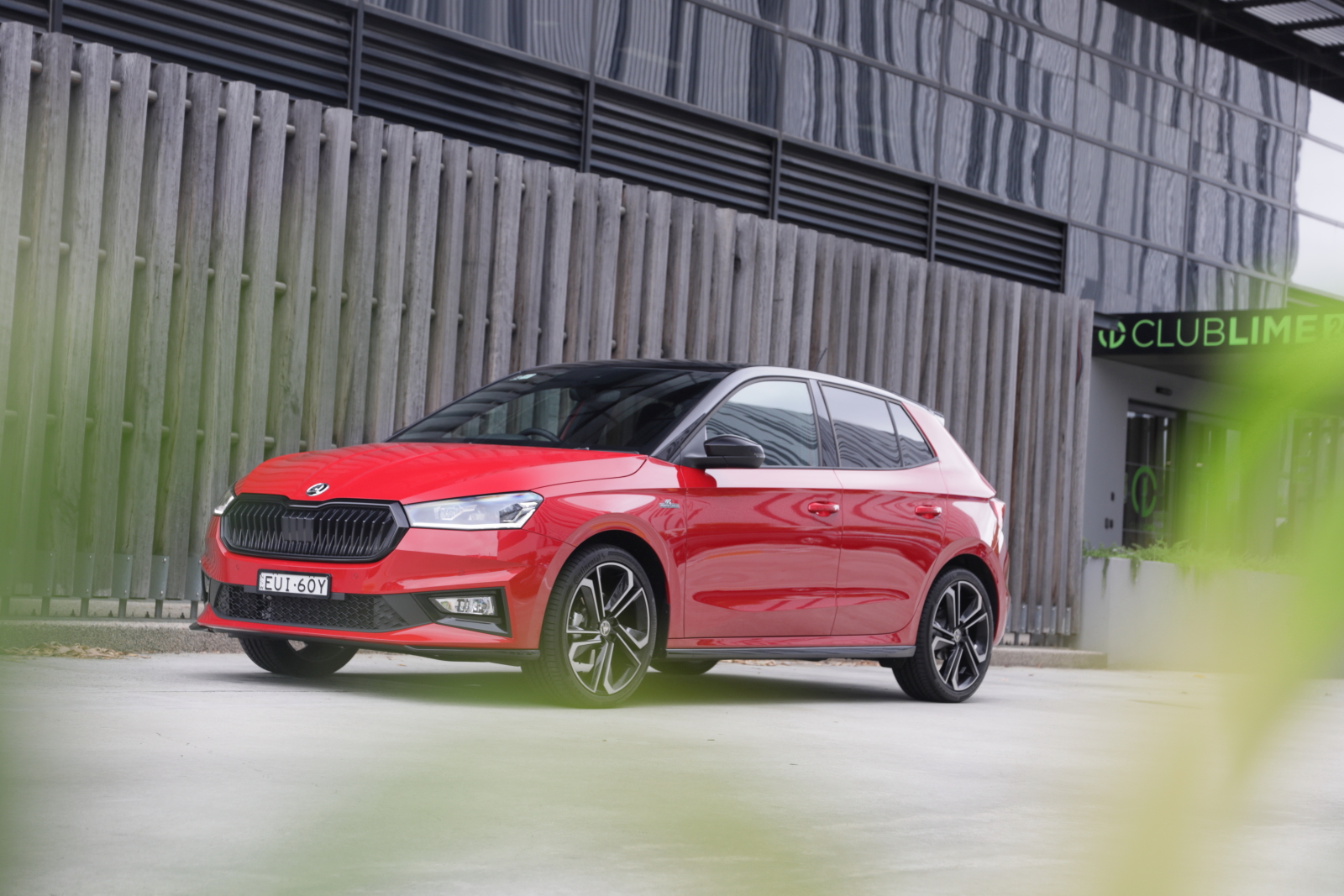
From the get-go, we all wanted to fall in love with Skoda’s richly equipped Fabia Monte Carlo hatchback, and to some extent we did. Things opened well with all the judges noting its clever packaging, striking interior execution and extensive list of standard equipment.
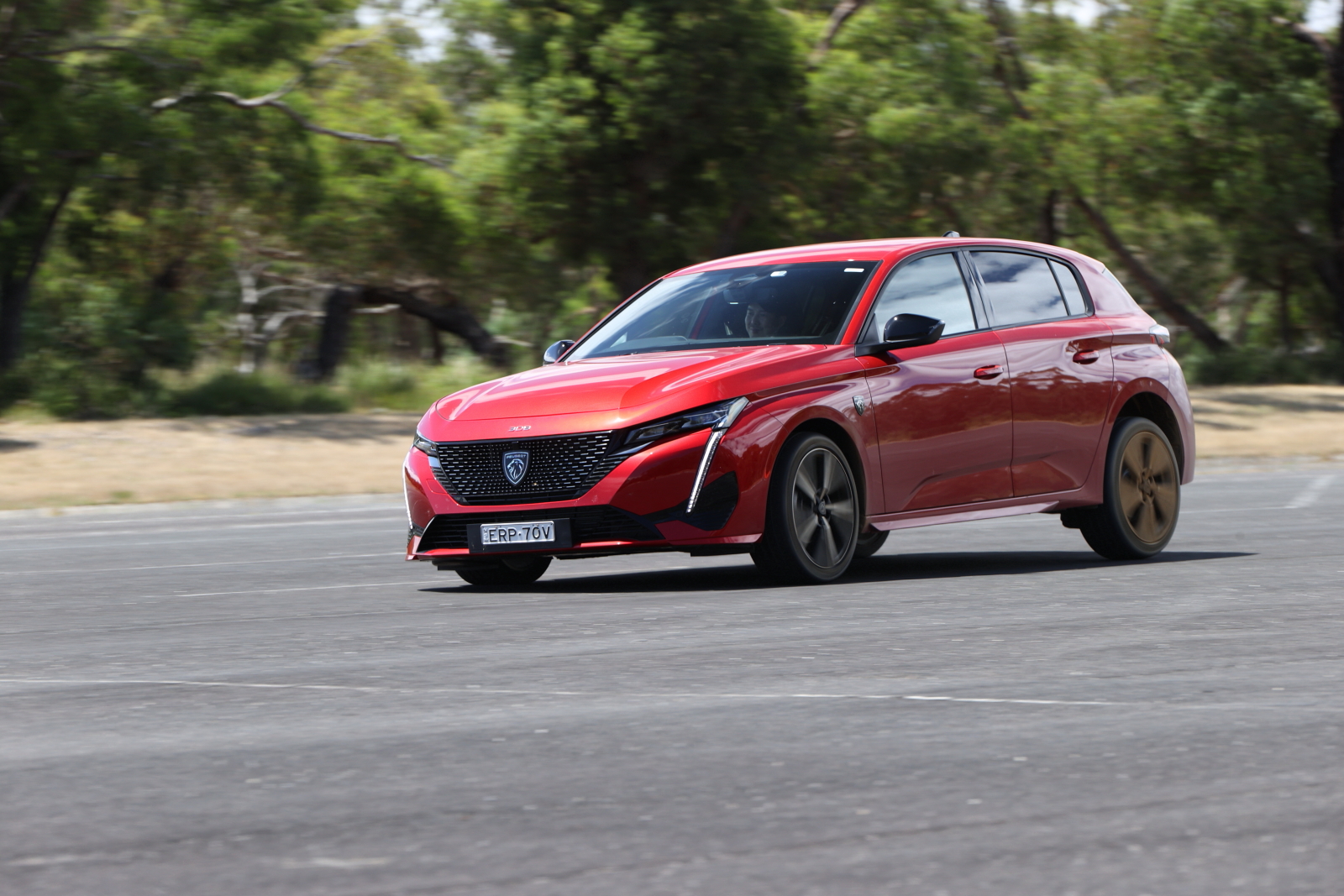
It looked the goods too, the latest generation delivering a more rakish profile and more attitude in its stance than its narrow and upright predecessors. Whispers of the Fabia being an outside bet started to circulate Lang Lang’s chalet, for the most part drowned out by the tortured Pirelli sounds of Campbell flinging the RS3 through the moose test.
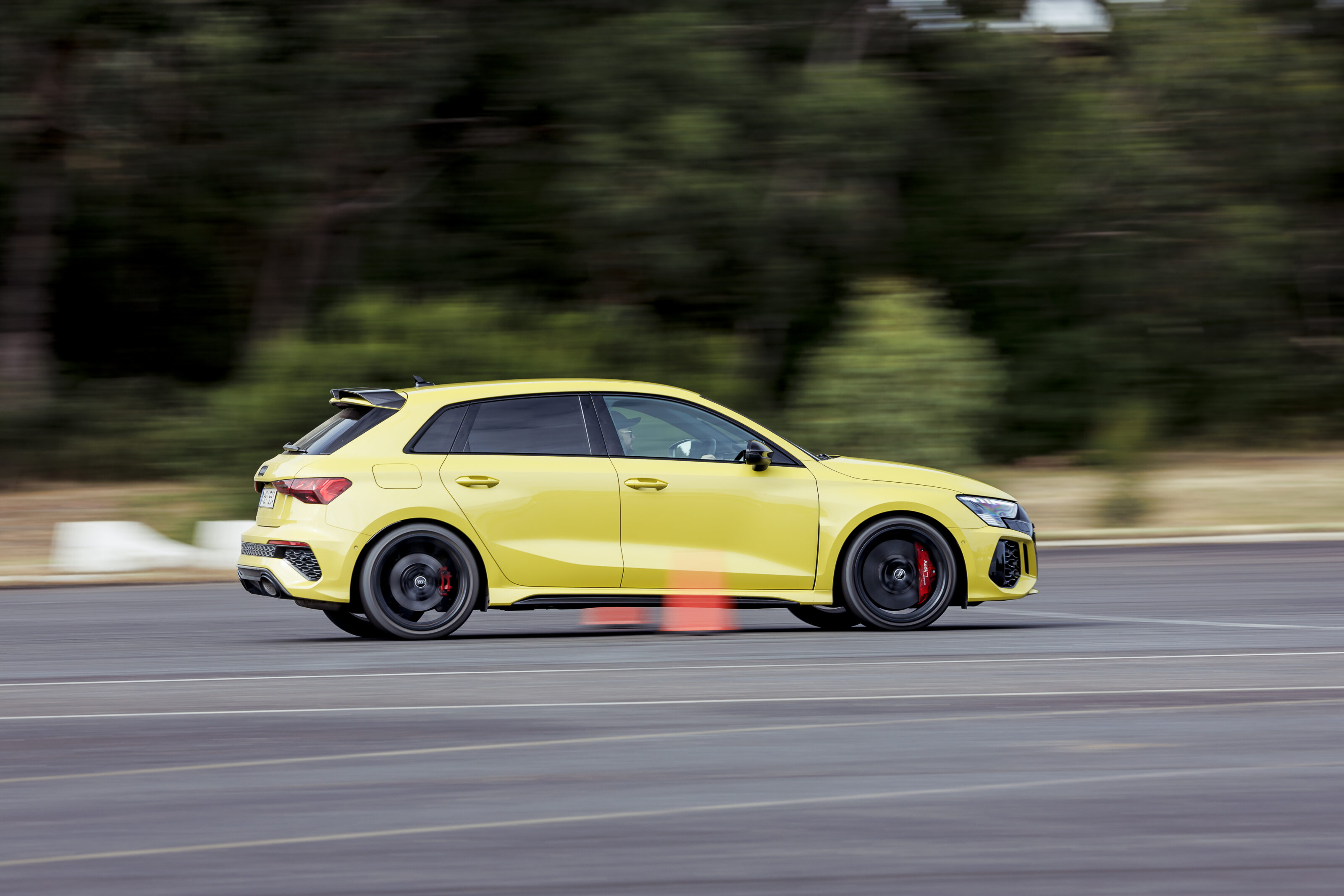
“The lane change in the RS3 was terrifying. Every nerve in my body screamed ‘brake’ as I approached the tiny-looking coned set-up at 110km/h – the quickest of any car – but it carved through like an Olympic slalom skier,” said Campbell.
“Audi has magically cured the old front-heavy feeling of the RS3. There’s a huge leap in dynamic ability with this new model.”
Inwood was similarly smitten. “The RS3 is a firecracker,” he enthused. “It has it all – noise, punch, grip, pace and genuine excitement. The ride is firm on the rough road section, but given it’s rolling on liquorice strips, it’s actually fairly composed.”
Wizened old head Enright injected a little perspective. “It goes and steers brilliantly as you’d expect,” he agreed, “though you have to ask, how much does it offer if you’re not driving it like an absolute berserker?”
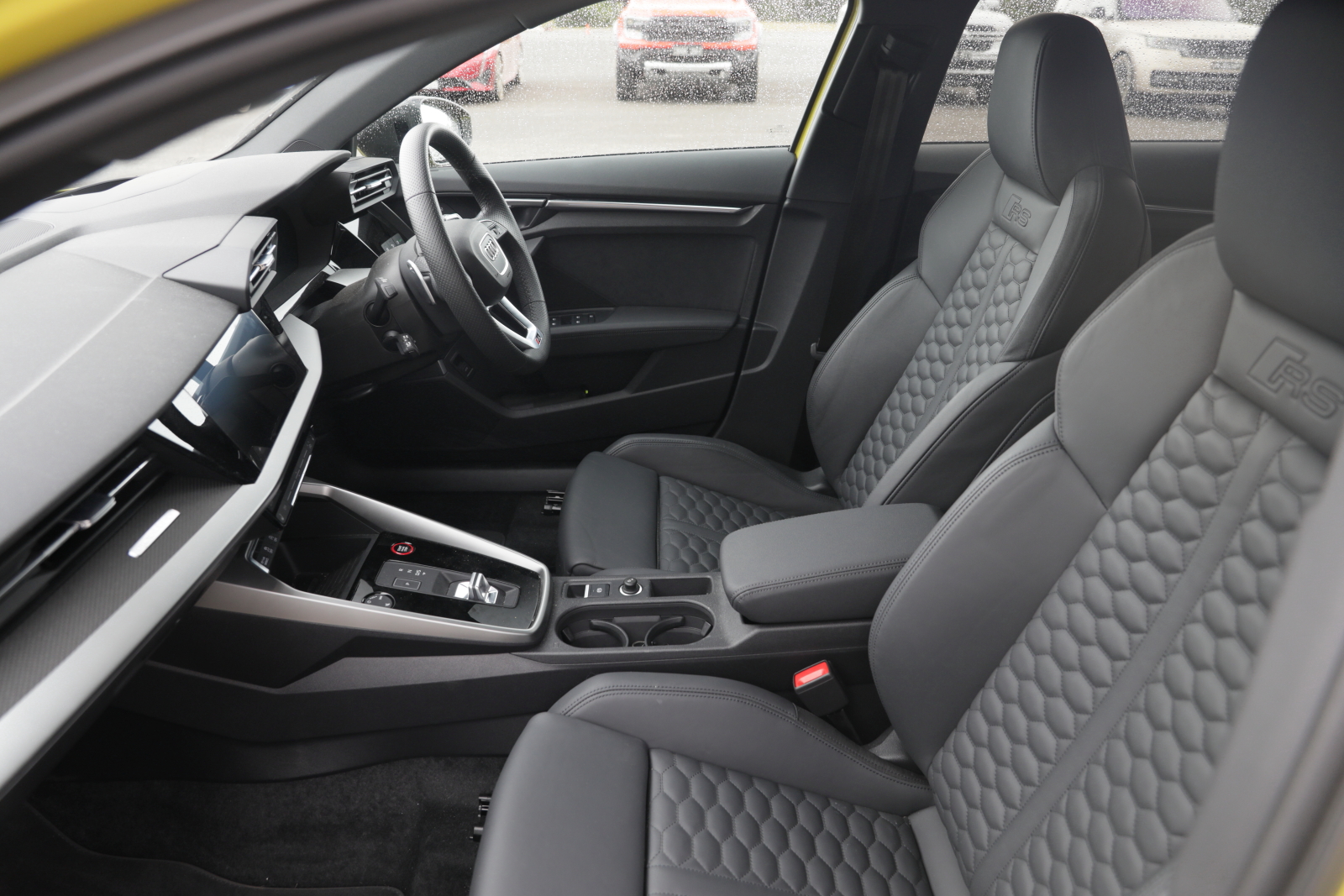
The optional carbon-ceramic brakes were almost universally disliked, part of a set of options that carried this RS3 well into six figures. “It carries a significant price jump for what is essentially a redesign of an existing MQB product,” said Affat.
While Fisk observed: “The cabin mixes class with a sporty edginess. There’s a lot to show for the money, but so there should be – $109K as-tested is a lot of money.”
“You wouldn’t have to go too far back in time to find 911 GT3s that would be dusted by this RS3” – Andy Enright
Should you prefer to spend significantly less, the A3 35 TFSI sedan weighs in at $49,400 before options or $54,860 as tested (all before on-road costs).
Under the bonnet, it’s powered by the same 110kW/250Nm turbo-petrol four as the Skoda, which became a point of contention for some judges.
Among the judges, Spinks was impressed by its genteel polish on road, noting that “it has much more on-road sophistication than an A-Class sedan or BMW 2 Series Gran Coupe.” Meanwhile, Affat noted: “The fixed-rate dampers strike a nice balance between dynamic control and comfort.”
Though striking from the outside, it’s clear that some expense has been spared in kitting out the interior – with certain features, that might otherwise be expected at this price point, only available as paid options.

“The whole package feels a tad cheap and unbecoming of an Audi,” said Fisk. “The doors only offer a small amount of space and the second row is let down by the absence of USB ports – not something you’d expect from a premium car-maker even in a relatively low-spec grade.”
Spinks agreed, noting that though the interior has some neat design touches, such as the boomerang-style door grips, it’s also full of plenty of hard, unconvincing plastics.
“It’s an undeniably handsome thing but it feels like this car lacks X-factor,” added Enright.
“At this price point, the interior is not special enough, the accommodation not generous enough, and it could use a little more engine,” Enright said. “The harsh reality is that the $13K-cheaper Fabia covers most of the A3’s bases pretty well and comes with a seven-year warranty versus Audi’s five.”
The A3 also carries the minor caveat that only the front-wheel drive variants are rated as five-star by ANCAP. Go for a Quattro model and that’s unrated. We can’t see that it should be materially different though.
Inwood summed the Audi up, noting that “the A3 35 TFSI underwhelms slightly. It’s lovely to look at and polished to drive – but feels short on grunt, has a pokey rear seat and is a touch pricey for what it’s offering.” If you’re willing to pay the premium for the badge and not expect fireworks when you mat the throttle, the A3 delivers. Is that enough to progress at COTY? Not this time round.
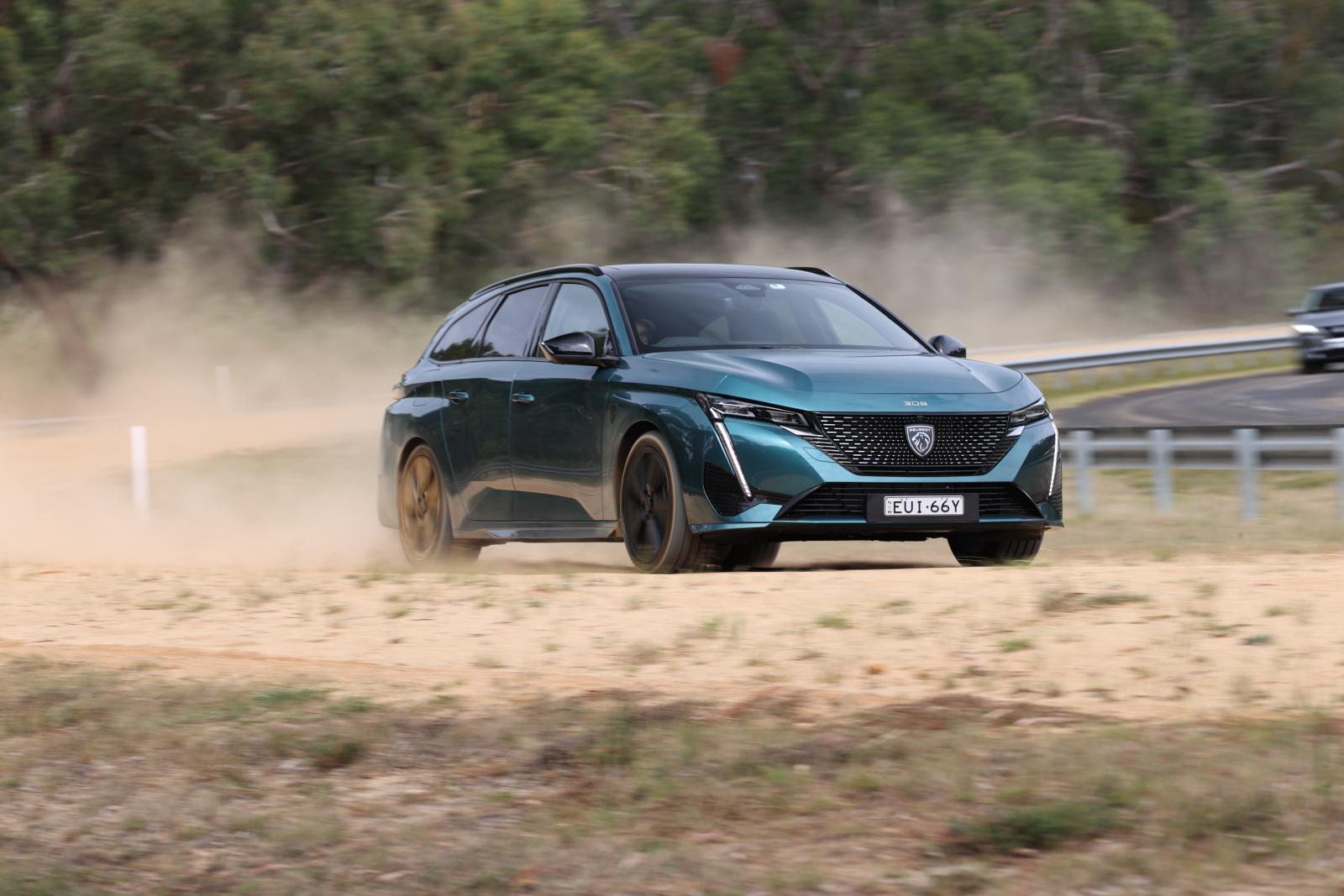
The Peugeot 308, on the other hand, knows a thing or two about going the distance at COTY. Unfortunately, its chances were torpedoed almost from the outset courtesy of a four-star ANCAP rating.
“It was the car I wanted to love the most at COTY. But its four-star ANCAP score and exorbitant pricing here in Australia mean it’s one of the first to fall,” said Law.
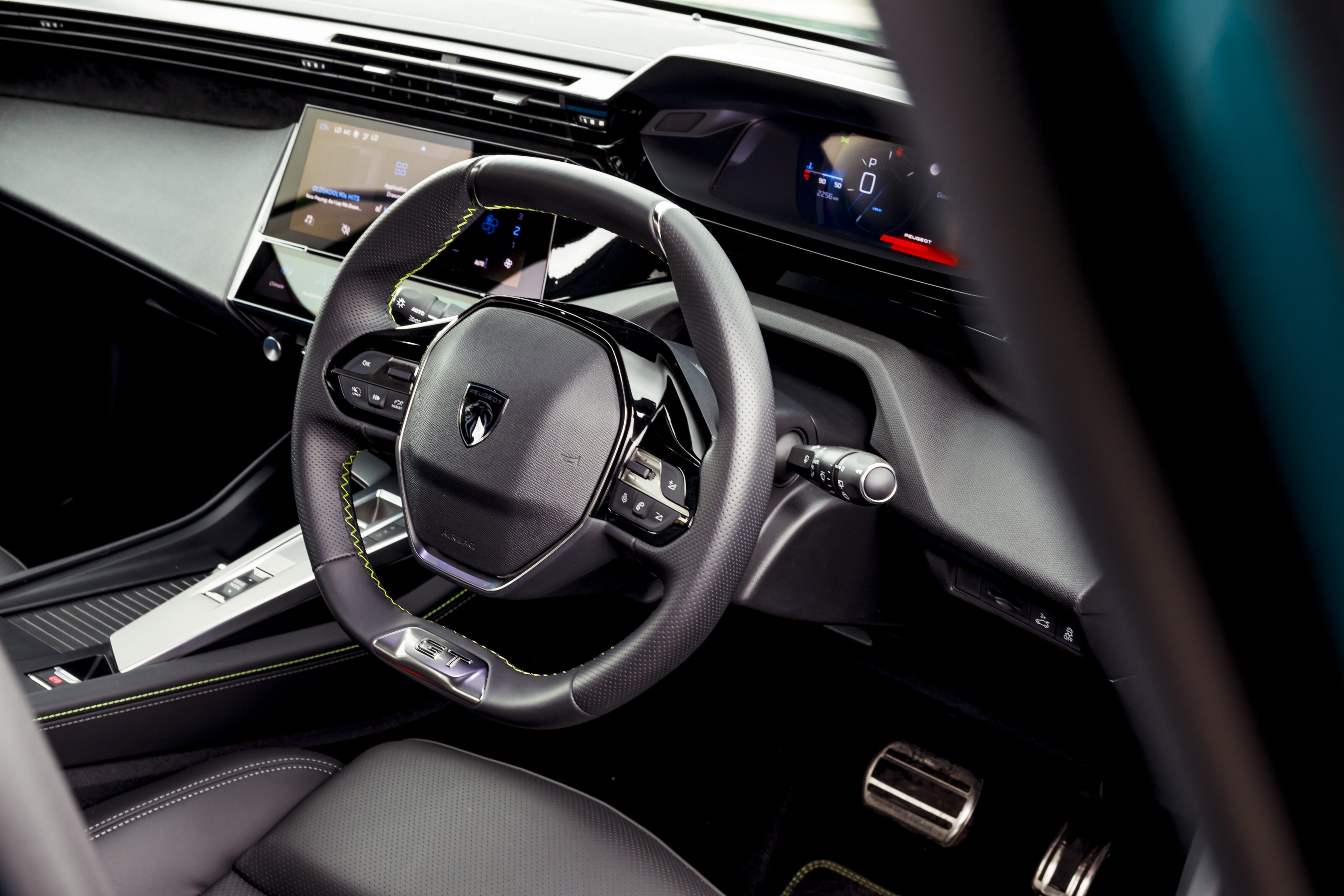
The cabin is adventurous and exciting, and very French in its styling, and we particularly liked the 3D effect on the digital cluster. But judges questioned the omission of some features for the asking price.
“It has a futuristic design, a nice mix of materials and well-bolstered suede seats. It feels special – until you discover the manual seat adjustment for the front passenger and no electric tailgate, which feels stingy in a $45K car,” remarked Inwood.
“Love the cabin execution of the Skoda. Plenty of personality and thoughtful design touches” – Alex Inwood
There are some useful pockets of space, and a decent-sized boot – especially in the wagon which offers 608L – but many judges felt the legroom in the second row was tight in both versions, with Law observing “its longer wheelbase fails to add any meaningful rear seat room”.
Some of our shorter judges also took umbrage with the steering wheel, with Fisk noting: “The size, shape and position of the wheel is badly designed, and no matter where you put it you can’t see all of the digital cluster.” Spinks added: “I just couldn’t find a natural driving position. i-Cockpit is a fail for drivers below six foot.”
The 1.2-litre turbo-petrol isn’t particularly eager. “It accelerates like a baguette is stuck in the airbox,” said Campbell. “It’s not a lot of power for a lot of money,” tutted Enright. “Sport mode sharpens the throttle, but you can only do so much with 96kW. That said, the ride and handling is exquisite.”
The judges found it fascinating and talented but were equally disappointed by the pricing and the lack of meaningful progression. “It’s a lot like the old car that almost won COTY in 2016. But the game has moved on dramatically since then,” Inwood concluded. “I’m frustrated because I want it to be better than it is.”
If the Peugeot disappointed, the same couldn’t be said of the Skoda. It impressed in the static poke and prod, with a large infotainment screen and low-down sports seats giving it a premium edge – though this is offset by a manual handbrake and traditional-style gear selector.
“The cabin is practical and stylish and succeeds in creating a semi-premium presentation despite almost exclusive use of hard plastics,” said Spinks. All judges were impressed by the space available, especially the rear headroom and legroom, as well as the 380-litre boot capacity. For safety, the Fabia scored well too, boasting five ANCAP stars and a lengthy equipment list as standard.
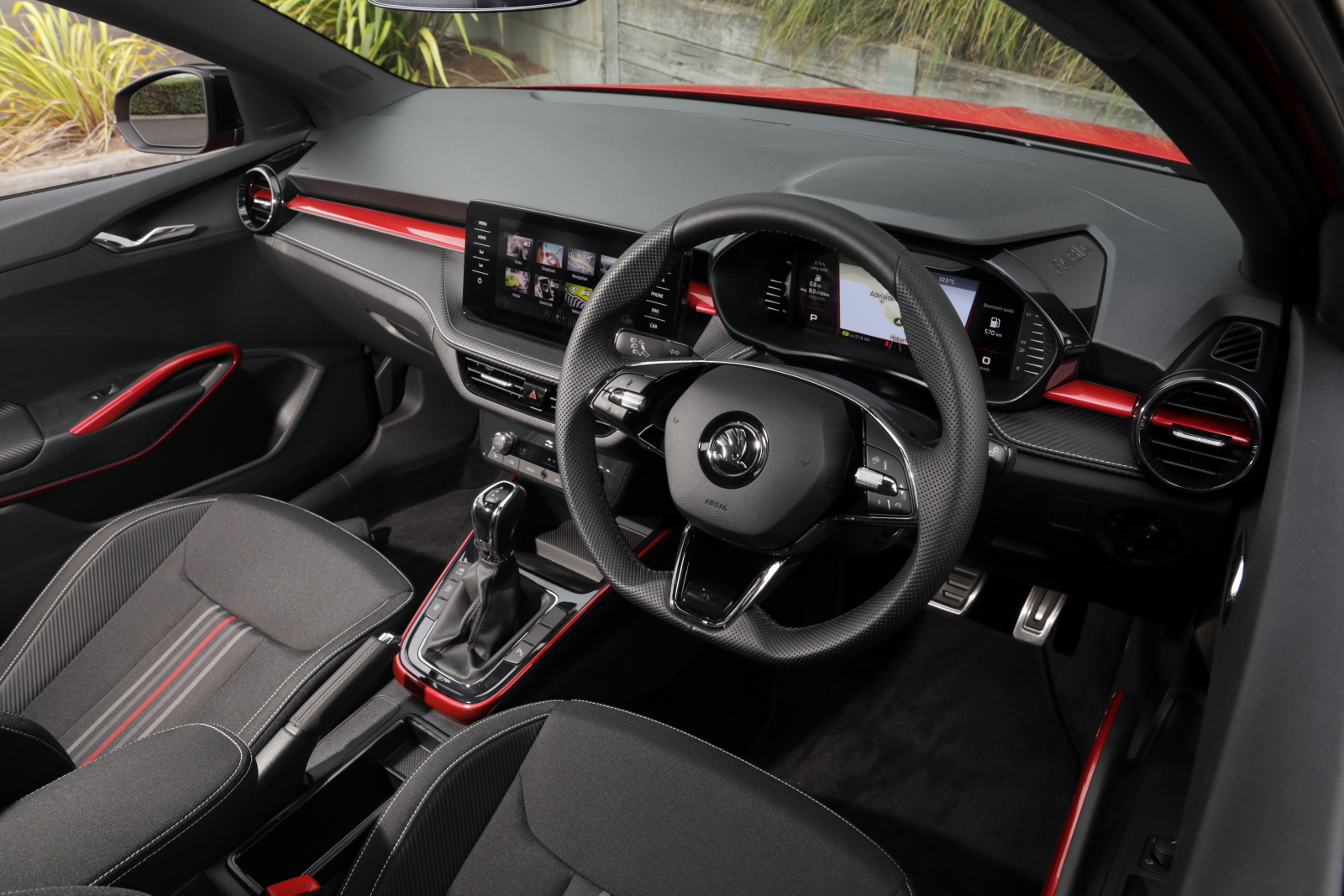
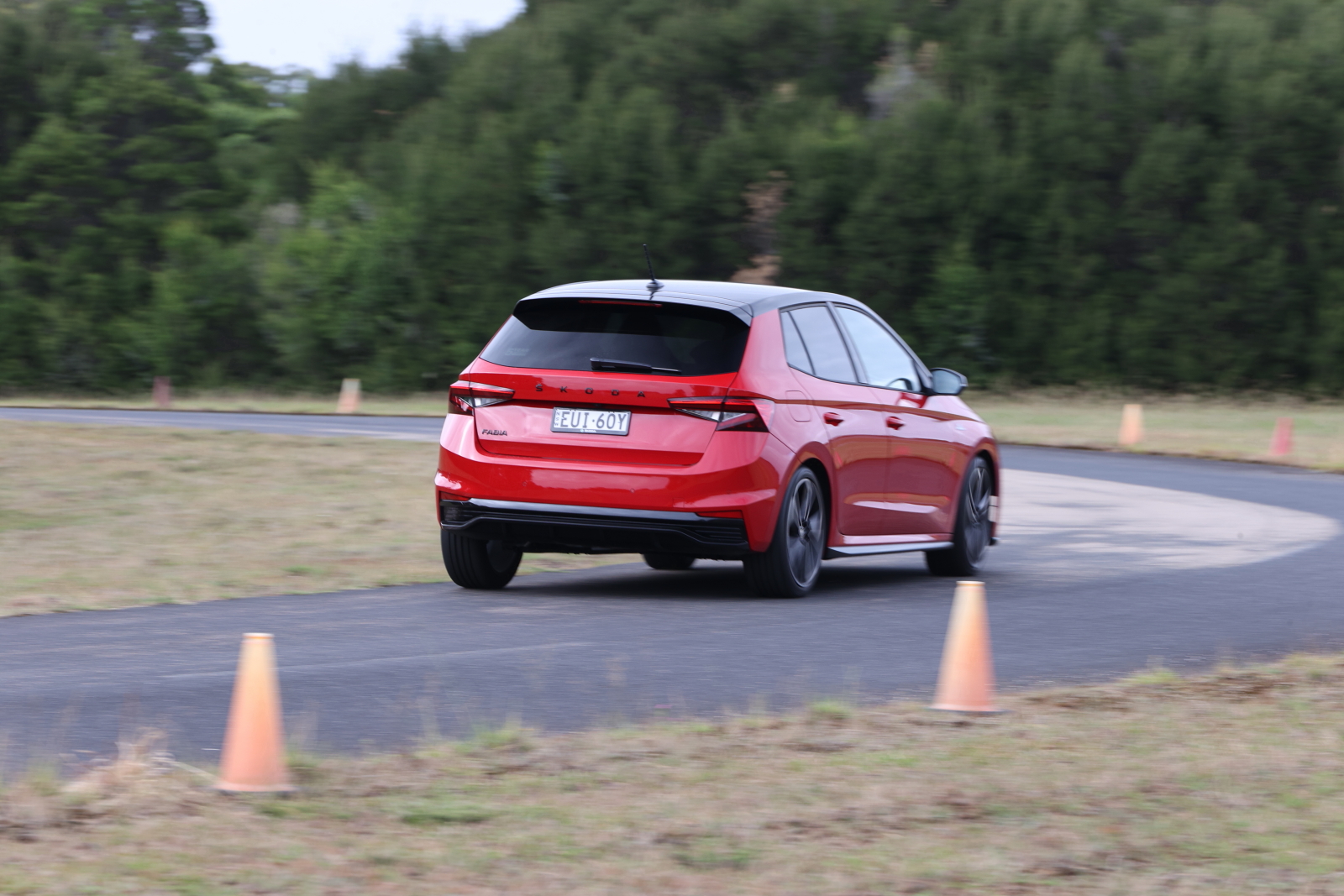
All felt the Fabia is reasonably good fun to drive, but largely agreed the ride is slightly firm and were disappointed in the lack of paddle-shifters given the Monte Carlo badging.
“There’s enough mid-range punch and chassis poise to make it feel sportier than the related VW Polo Style – it’s no GTI, though,” said Law.
Its Achilles heel is a $36,990 before on-road costs asking price, with Enright wondering “would an enthusiast pay that or $2K less for a Hyundai i20N? Or $750 less for a Polo GTI? It’s not quick enough to appeal to drivers, but it may be too firmly sprung for those who merely want a smartly-dressed VAG product.”
The Fabia does a lot right, it feels special and has a solid seven-year/unlimited-kilometre warranty. But it felt priced out of its comfort zone and the firm suspension appeared to write cheques the lukewarm engine couldn’t cash. Although well-liked, when the votes were tallied, it couldn’t lobby hard enough for a place in the next round.
| Peugeot 308 GT Hatch | Peugeot 308 GT Premium Hatch | Peugeot 308 GT Premium Wagon | Audi A3 35 TFSI sedan | Audi RS3 Sportback | Skoda Fabia 110TSI Monte Carlo Edition 150 | |
|---|---|---|---|---|---|---|
| Price | $43,990 + on-road costs | $48,990 + on-road costs | $50,490 + on-road costs | $49,400 + on-road costs | $91,391 + on-road costs | $36,990 + on-road costs |
| Body | 5-door, 5-seat small hatch | 5-door, 5-seat small hatch | 5-door, 5-seat small hatch | 5-door, 5-seat small hatch | 5-door, 5-seat small hatch | 5-door, 5-seat small hatch |
| Drive | front-wheel | front-wheel | front-wheel | front-wheel | all-wheel | front-wheel |
| Drivetrain | 1199cc inline-3, turbo-petrol | 1199cc inline-3, turbo-petrol | 1199cc inline-3, turbo-petrol | 1498cc inline-4, turbo-petrol | 2480cc inline-5, turbo-petrol | 1.5-litre inline-4 turbo-petrol |
| Power | 96kW @ 5500rpm | 96kW @ 5500rpm | 96kW @ 5500rpm | 110kW @ 5000rpm | 294kW @ 5600-7000rpm | 110kW @ 6000rpm |
| Torque | 230Nm @ 1750rpm | 230Nm @ 1750rpm | 230Nm @ 1750rpm | 250Nm @ 1500rpm | 500Nm @ 2250-5600rpm | 250Nm @ 1500-3500rpm |
| Transmission | 8-speed automatic | 8-speed automatic | 8-speed automatic | 7-speed dual-clutch | 7-speed dual-clutch | 7-speed dual-clutch |
| Fuel consumption | 5.3L/100km combined (claimed) | 5.3L/100km combined (claimed) | 5.3L/100km combined (claimed) | 5.0L/100km (WLTP) | 8.3L/100km (WLTP) | 4.9L/100km (as example) |
| Kerb weight | 1258kg | 1258kg | 1314kg | 1320kg | 1570kg | 1265kg |
| Towing capacity | 1400kg braked | 1400kg braked | 1400kg braked | 690kg (UB); 1500kg (B) | N/A | N/A |
| 0-100 | 9.7sec | 9.7sec | 9.9sec | 8.0sec (est.) | 3.8sec (claimed) | 8.0sec |
| L/W/H/W-B | 4365/2062/1465/2675mm | 4365/2062/1465/2675mm | 4635/2062/1475/2730mm | 4343/1816/1449/2636mm | 4389/1851/1463/2631mm | 4108/1780/1459/2564mm |
| Boot space | 412L | 384L | 608L | 425L | 281L | 380/1190L |
| Warranty | 5 years/unlimited km | 5 years/unlimited km | 5 years/unlimited km | 5 years/unlimited km | 5 years/unlimited km | 7 years/unlimited km |
| Safety rating | Not tested (ANCAP); 4-star Euro NCAP (2022) | Not tested (ANCAP); 4-star Euro NCAP (2022) | Not tested (ANCAP); 4-star Euro NCAP (2022) | 5 star ANCAP (2020) | 5 star ANCAP (2020) | 5 star ANCAP (2021) |
MORE READING
Now that you’re done reading about these COTY 2023 contenders, you should go back to catch up on anything you might’ve missed. Check out the links below, or find it all at our COTY page.
The swept-back Mercedes-Benz GLC Coupe has returned for a second generation.
Snapshot
- 2024 Mercedes-Benz GLC Coupe revealed
- Second-generation coupe SUV receives new look, more technology, and electrified powertrains
- Due in Australia in the fourth quarter of 2023
First launched in 2015, the coupe has been redesigned in line with the second-generation GLC medium SUV due in Australia in May.
Mercedes-Benz Australia has confirmed the second-generation GLC Coupe will arrive in the fourth quarter of this year (October to December inclusive).
As expected, the GLC Coupe adopts the front-half styling of the wagon, but trades its conventional SUV body for a sleeker, more aerodynamic shape.
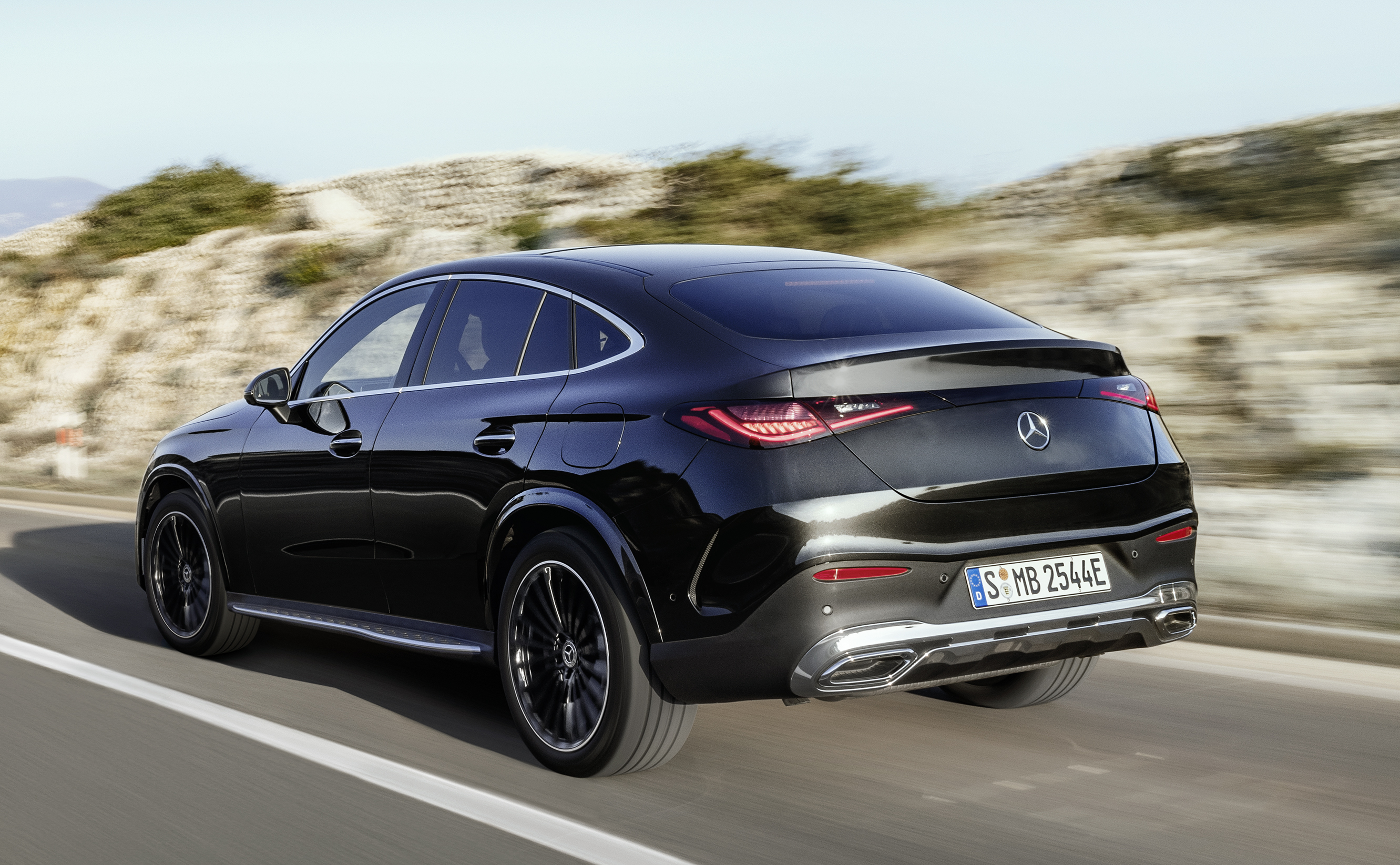
This has allowed for a drag coefficient of 0.27Cd, making it two hundredths better than the latest GLC (0.29Cd) and three hundredths than the previous GLC Coupe (0.30Cd).
The rear end is characterised by sleeker LED tail-lights inspired by the brand’s EQ electric and CL coupe lineups, and an integrated ducktail lip spoiler.
Under the bonnet, the GLC Coupe will be offered in Europe with mild-hybrid petrol and diesel engines, or three plug-in hybrid systems – including a diesel PHEV variant.
In Australia, the GLC Coupe is expected to be offered in mild-hybrid GLC 300 4Matic guise with a standard-fit AMG Line package, with hotter AMG 43 and 63 variants likely to follow later.
This specification aligns with what Mercedes-Benz Australia will initially offer for the GLC wagon, as diesel, entry-level petrol, and plug-in hybrid variants are currently on the back-burner.
Measuring 4763 millimetres long, it is 31mm longer and 5mm taller than the previous GLC Coupe, and width remains unchanged at 1890mm.
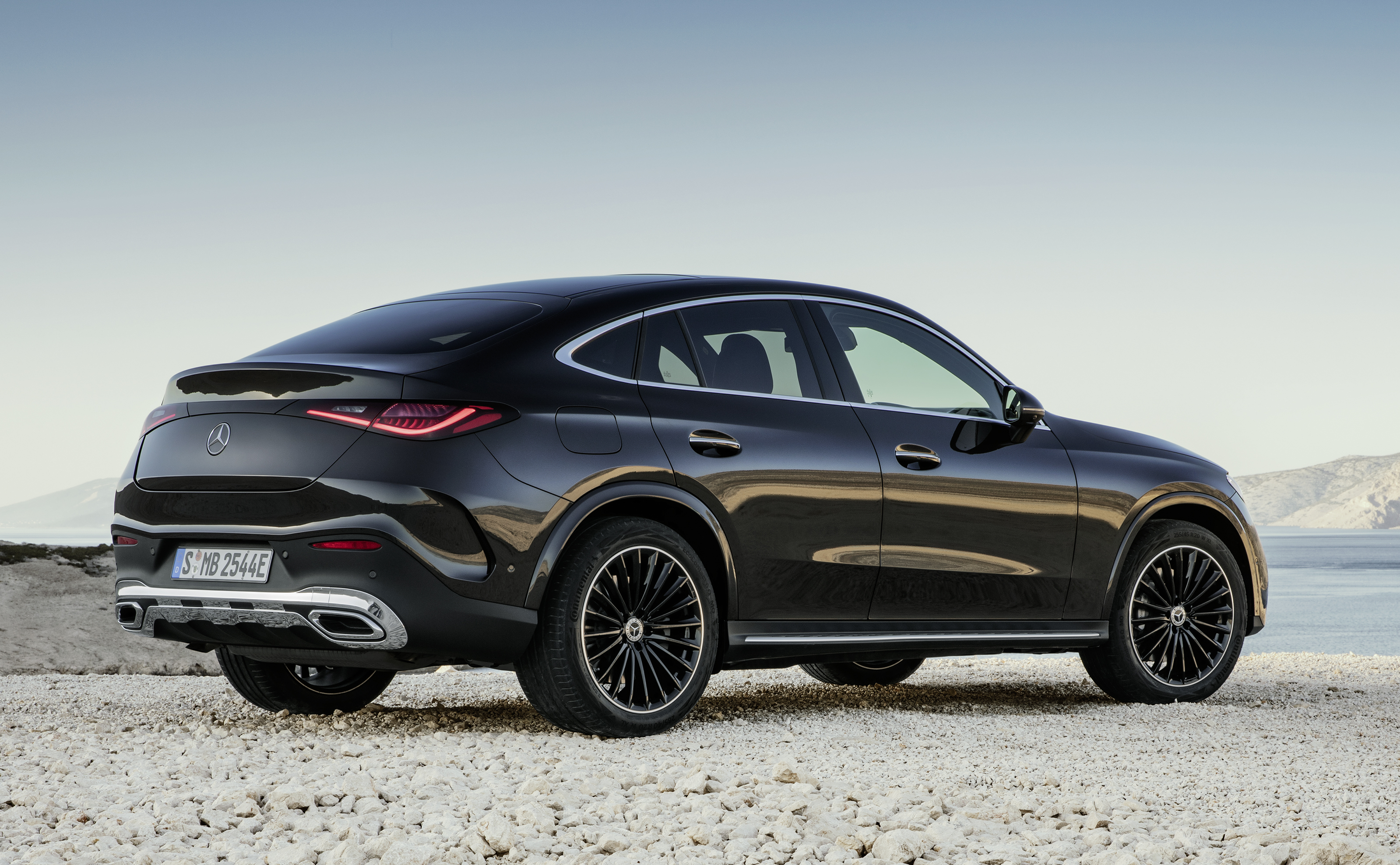
Built on the MRA2 architecture shared with the C-Class and S-Class, the GLC Coupe rides on the same 2888mm wheelbase as the regular GLC – 15mm longer than the previous model – for improved rear-seat legroom.
It has 545 litres of luggage space, expanding to 1490L with the rear seats folded – up 45 and 90 litres respectively over its predecessor, but down 55L compared to the GLC.
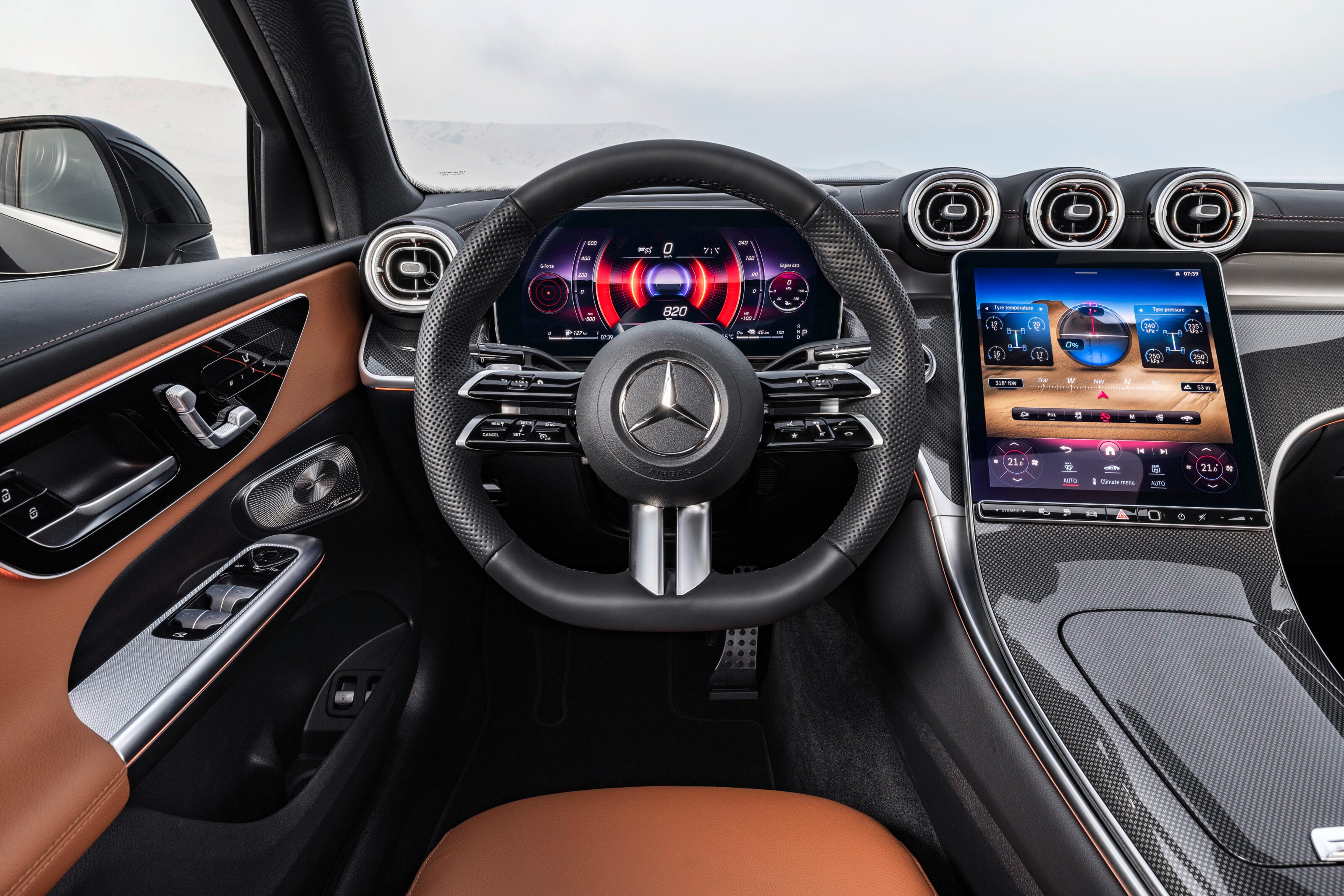
Inside, it is largely identical to the GLC, with a configurable 12.3-inch fully-digital instrument cluster, an 11.9-inch portrait-orientated MBUX infotainment system, and various available features, including a larger panoramic sunroof.
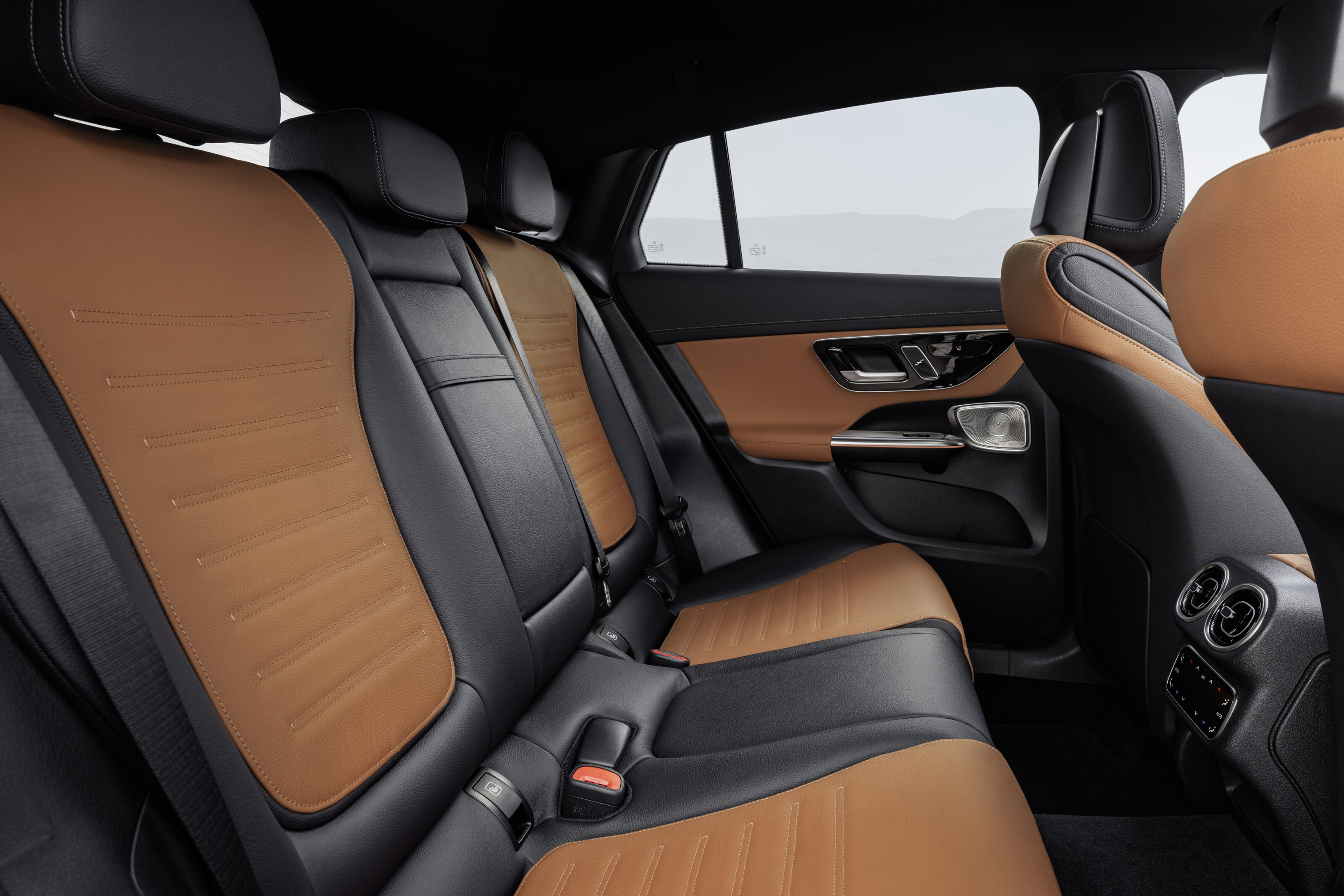
The second-generation Mercedes-Benz GLC acquires many elements from the latest C-Class, including the deletion of six- and eight-cylinder powertrains in favour of electrified four-cylinder engines.
This will extend to AMG models, with plug-in hybrid technology for the powerful 500kW GLC 63 based on the incoming C63.
As a whole, the Mercedes-Benz GLC is currently the brand’s highest-selling model globally, with 342,900 units sold in 2022.
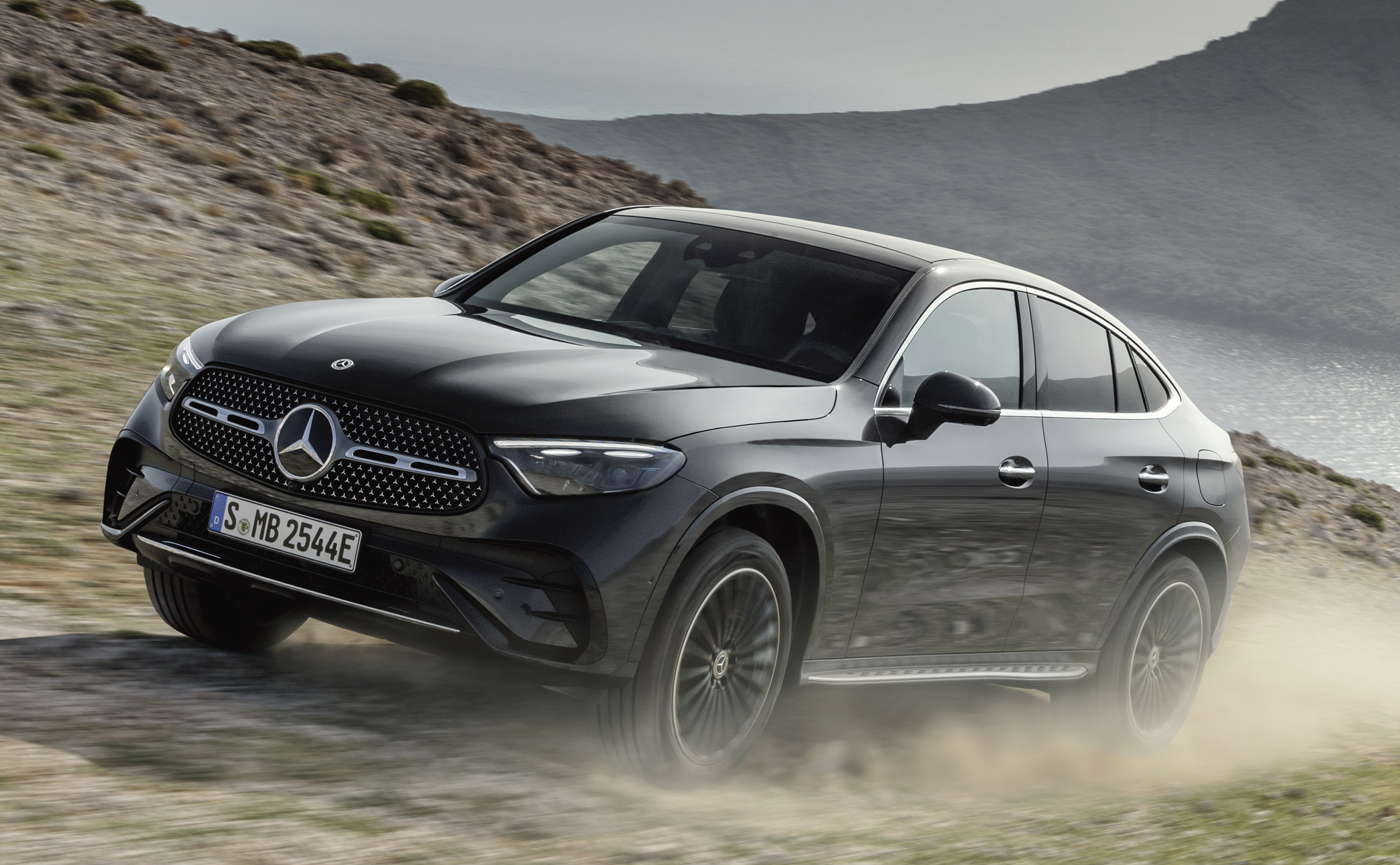
The 2024 Mercedes-Benz GLC Coupe will arrive in Australia between October and December 2023, with local pricing and features to be announced closer to its launch.
First pioneered in 2007 with the controversial BMW X6, the coupe SUV body style has grown to several vehicle models, including BMW’s own X2 and X4, and cars from rival marques Audi, Mercedes-Benz, Land Rover, Porsche and Volvo.
Mainstream brands – such as Volkswagen, Honda, Renault and Citröen – have also joined in on the action, with the Renault Arkana coupe SUV available in Australia for under $40,000.
Volkswagen’s Mk 8 Golf GTI continues to enjoy huge demand as the perennial, do-anything hot hatch. But what if we told you that you could buy into more, closer to Golf R power, with added all-wheel drive prowess, for less than that ubiquitous GTI?
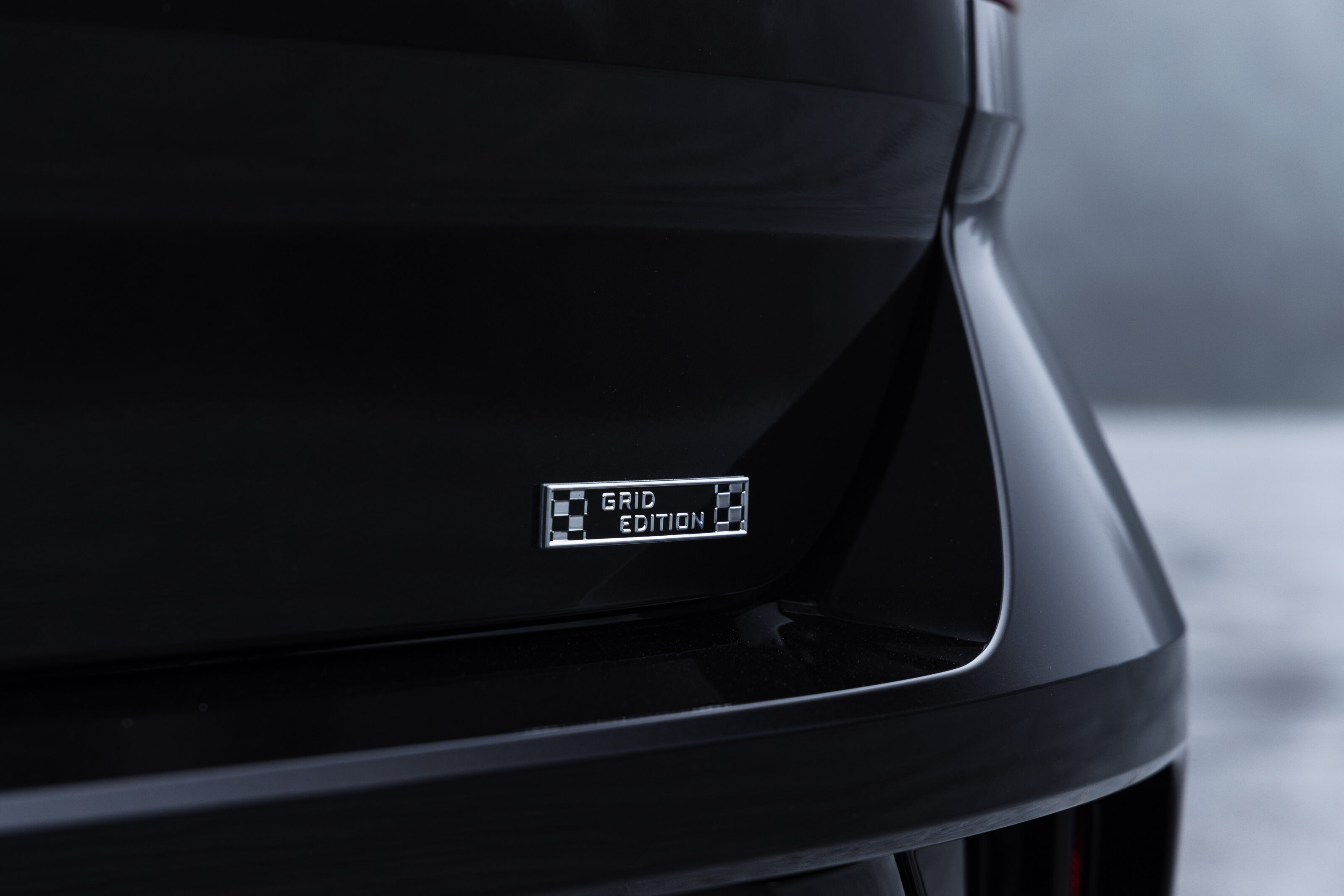
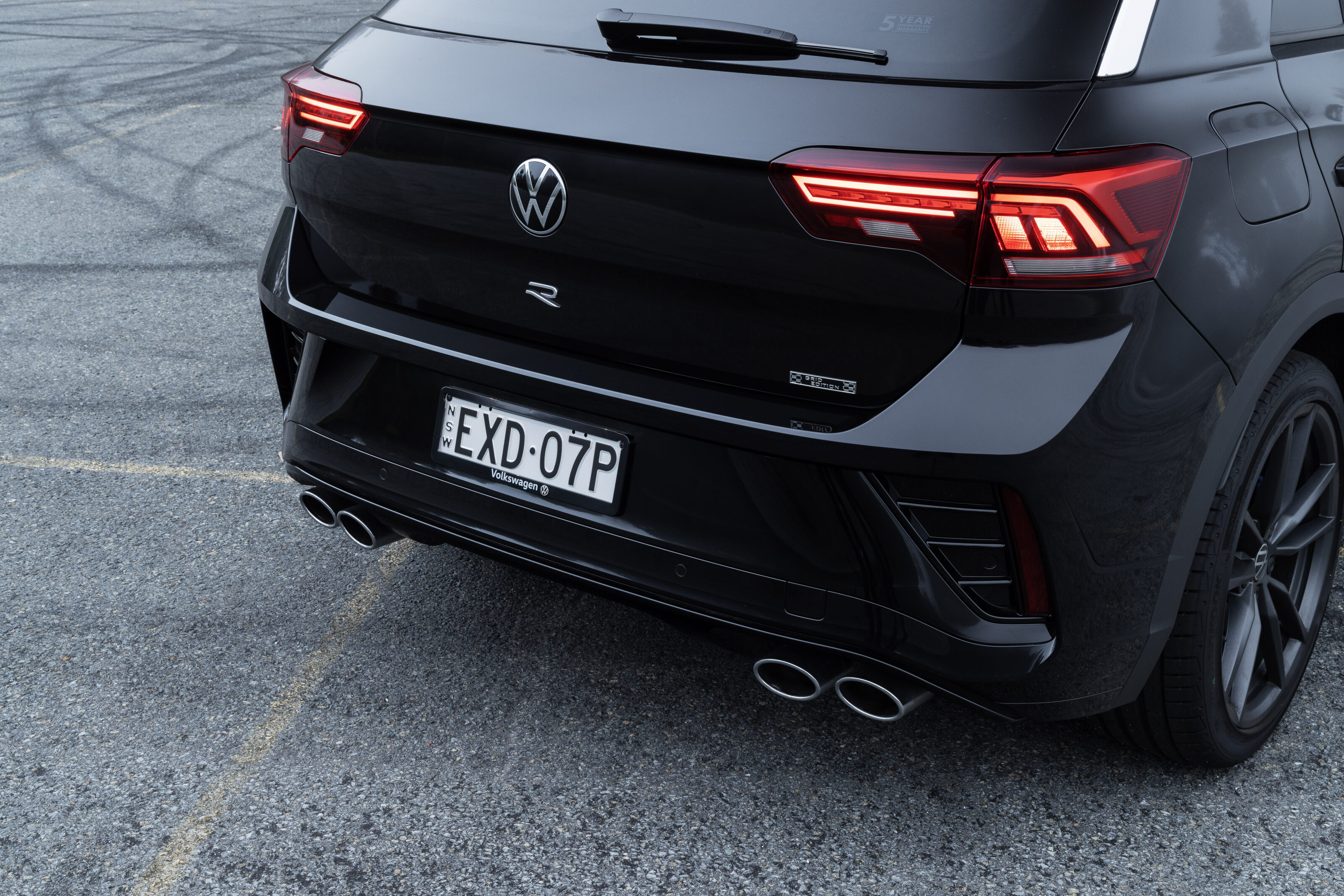
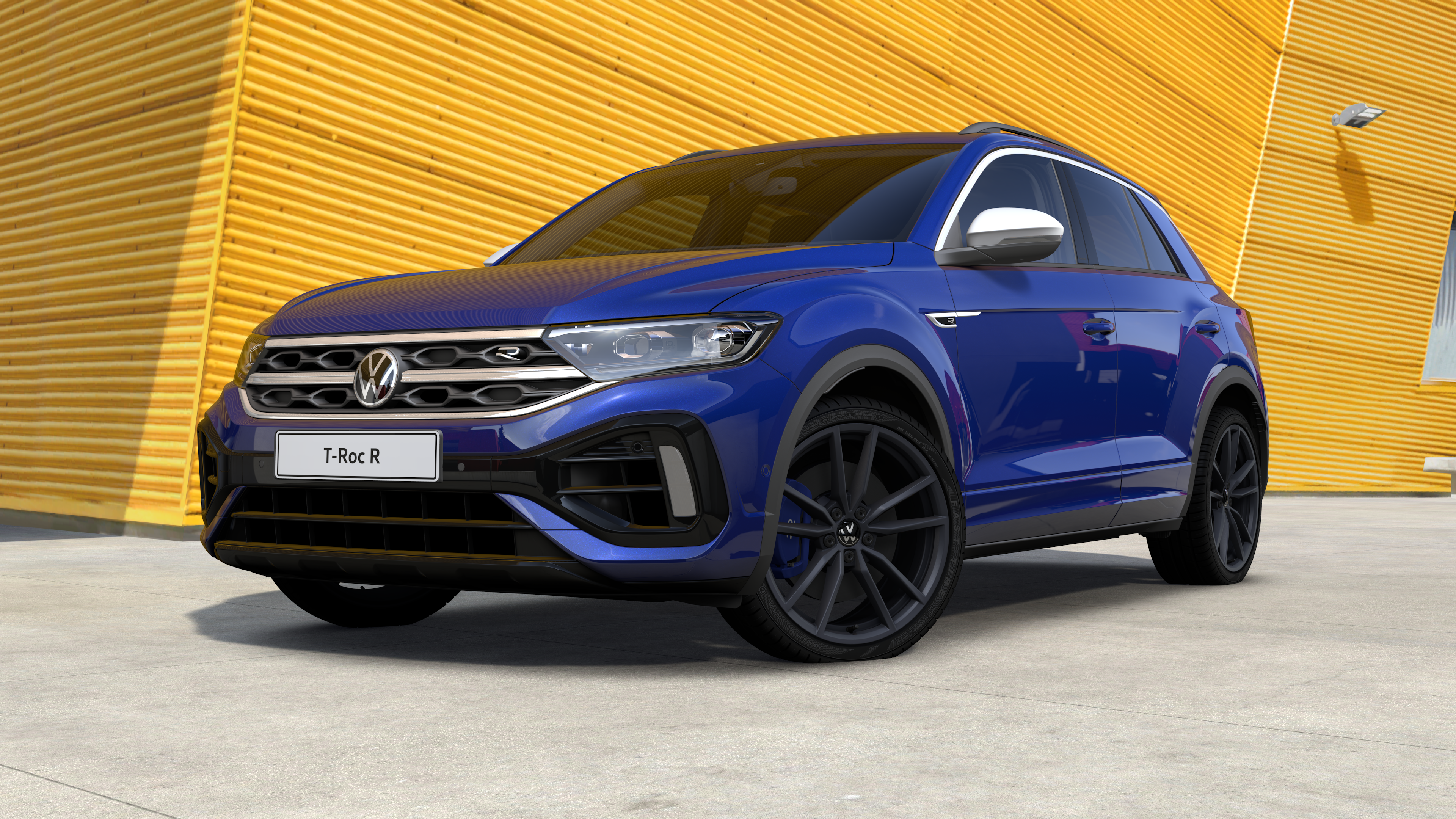
At $53,400 (before on-road costs), the 2023 Volkswagen T-Roc R Grid Edition revives a variant launched in the Mk 7.5 Golf R, trading big on driving dynamics and potent mechanicals while skimming on superfluous luxuries to keep the asking price accessible.
Of course, in the face of lingering semiconductor shortages, this is a win-win for manufacturers and buyers.
So is there real substance behind this fetching special edition? Let’s see how it all comes together.
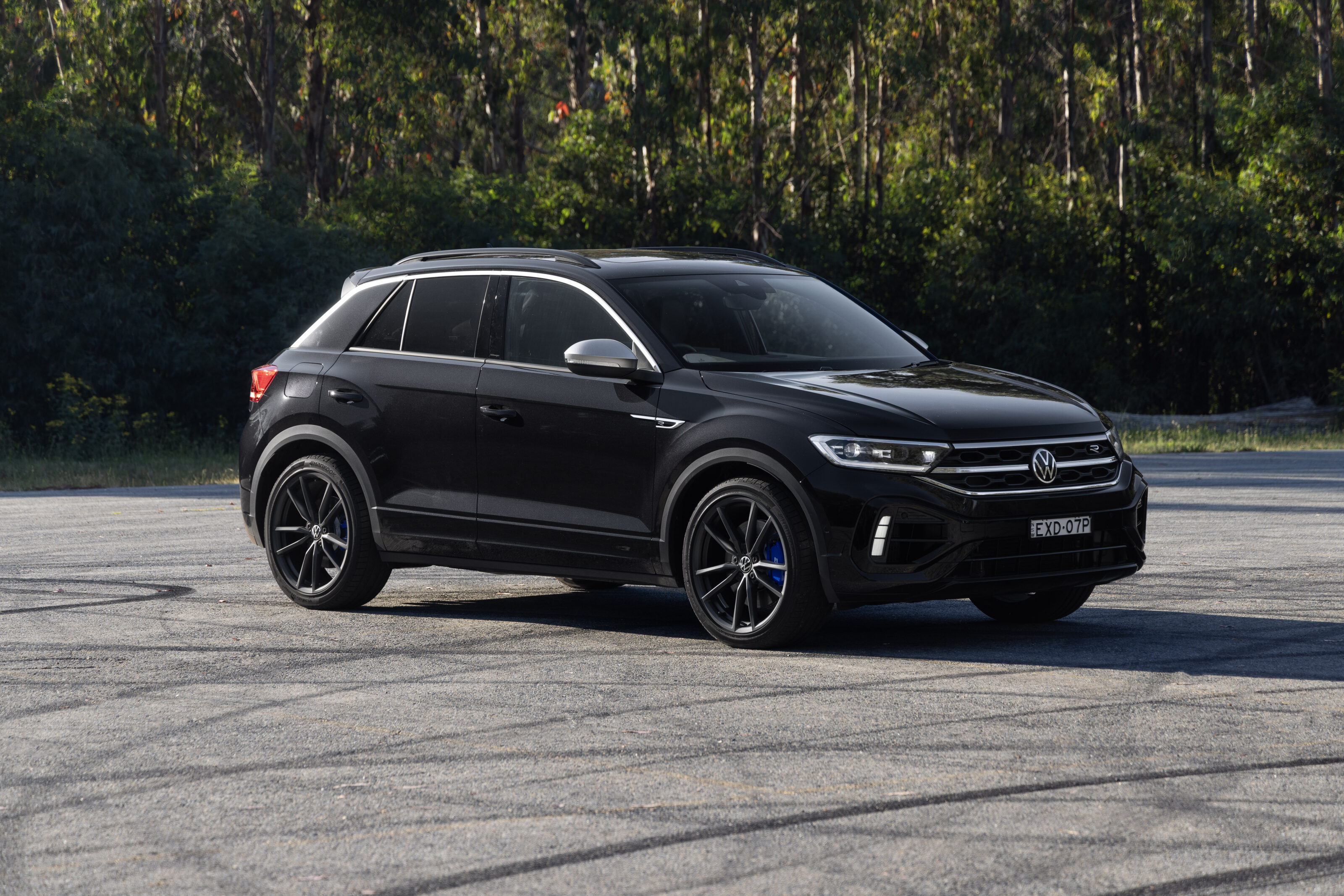
JUMP AHEAD
- How much is it, and what do you get?
- How do rivals compare on value?
- Interior comfort, space and storage
- What is it like to drive?
- How much fuel does it use?
- How safe is it?
- Warranty and running costs
- VERDICT
- Specifications
How much is it, and what do you get?
Compared to the standard fully-loaded Volkswagen T-Roc R, asking $60,300 before on-road costs after mid-2022 price adjustments, the T-Roc R Grid Edition commands $6900 less and delivers the same mechanical package comprising a 221kW/400Nm 2.0-litre turbocharged four-cylinder lifted from Volkswagen’s ubiquitous range of EA888 engines. As an R model, you also get 4Motion all-wheel drive shifting through a seven-speed dual-clutch transmission.
Elsewhere, the T-Roc Grid Edition trades some luxuries and standard specification in exchange for its attractive asking price.
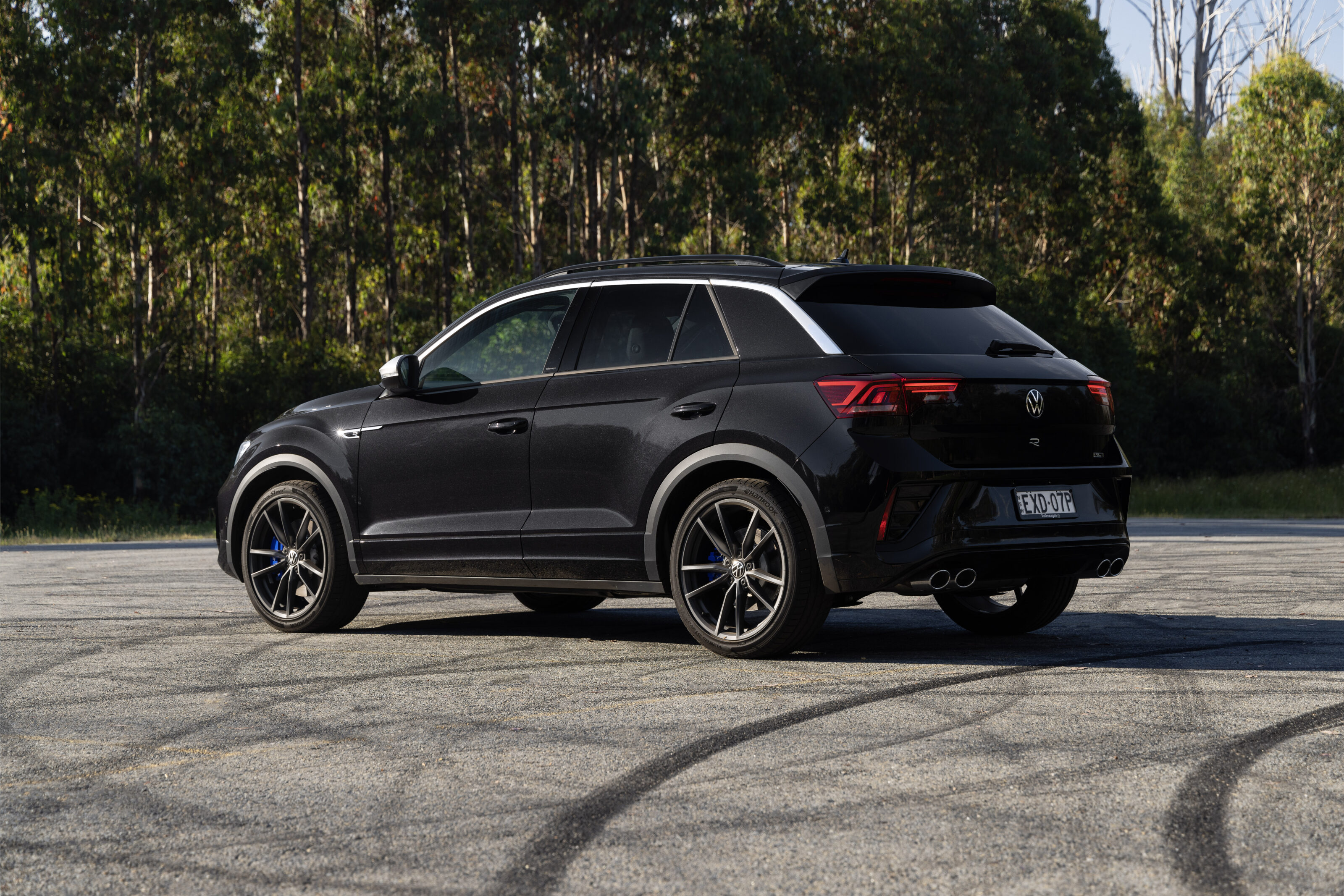
Grid Edition T-Rocs swap the standard T-Roc R’s matrix LED headlights for VW’s ‘Performance’ LED adaptive lighting units and downgrades from heated power-adjustable Nappa leather front seats to cloth/microfleece upholstery. It sits on 19-inch ‘Pretoria’ wheels finished in graphite, wears black roof rails, and loses out on rear LED tail lights, power tailgate, power driver’s seat adjustment, blind-spot monitoring and rear cross-traffic alert.
Elsewhere, standard carryover features for the T-Roc R Grid Edition include premium metallic paint, a 9.2-inch infotainment system with wired and wireless Apple CarPlay and Android Auto, a wireless phone charger, dual-zone climate control and satellite navigation.
The sole available option for the T-Roc R Grid Edition is a $2000 panoramic sunroof.
How do rivals compare on value?
Given its driver-focused positioning, Volkswagen’s T-Roc R Grid Edition represents good value when compared to more expensive all-wheel drive German crossovers.
The Mini Countryman JCW Sport similarly offers all-wheel drive traction and turbo-four power at $61,900, while Volkswagen Group’s own Cupra Formentor VZx harnesses the same mechanical powertrain, yours for $63,990 (both before on-road costs).
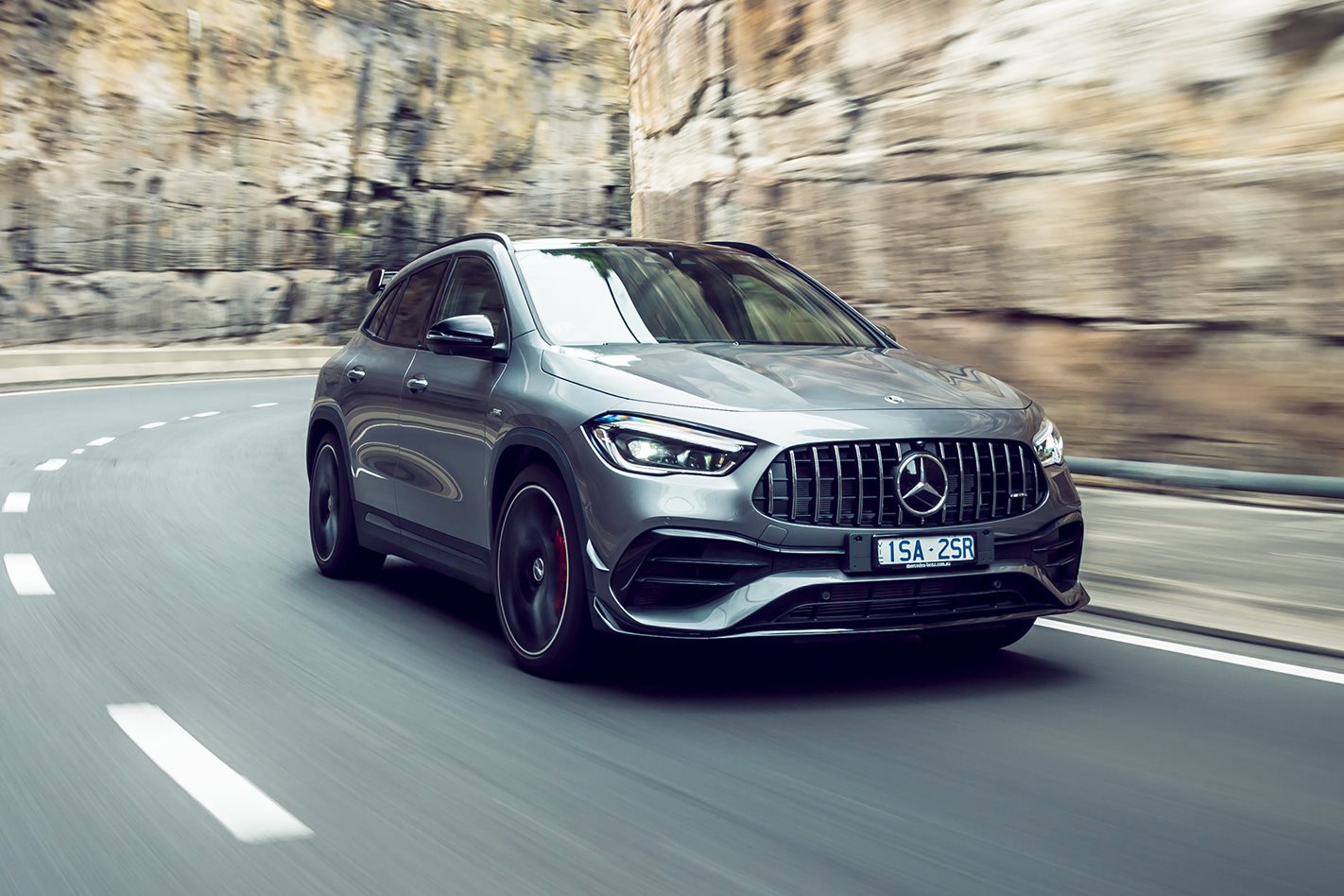
The BMW X2 M35i Pure swings in at $70,500, offering a similar 225kW/400Nm output, while the more powerful 319kW/500Nm Mercedes-AMG GLA45 commands a significant premium at $90,859 (both before on-road costs).
Interior comfort, space and storage
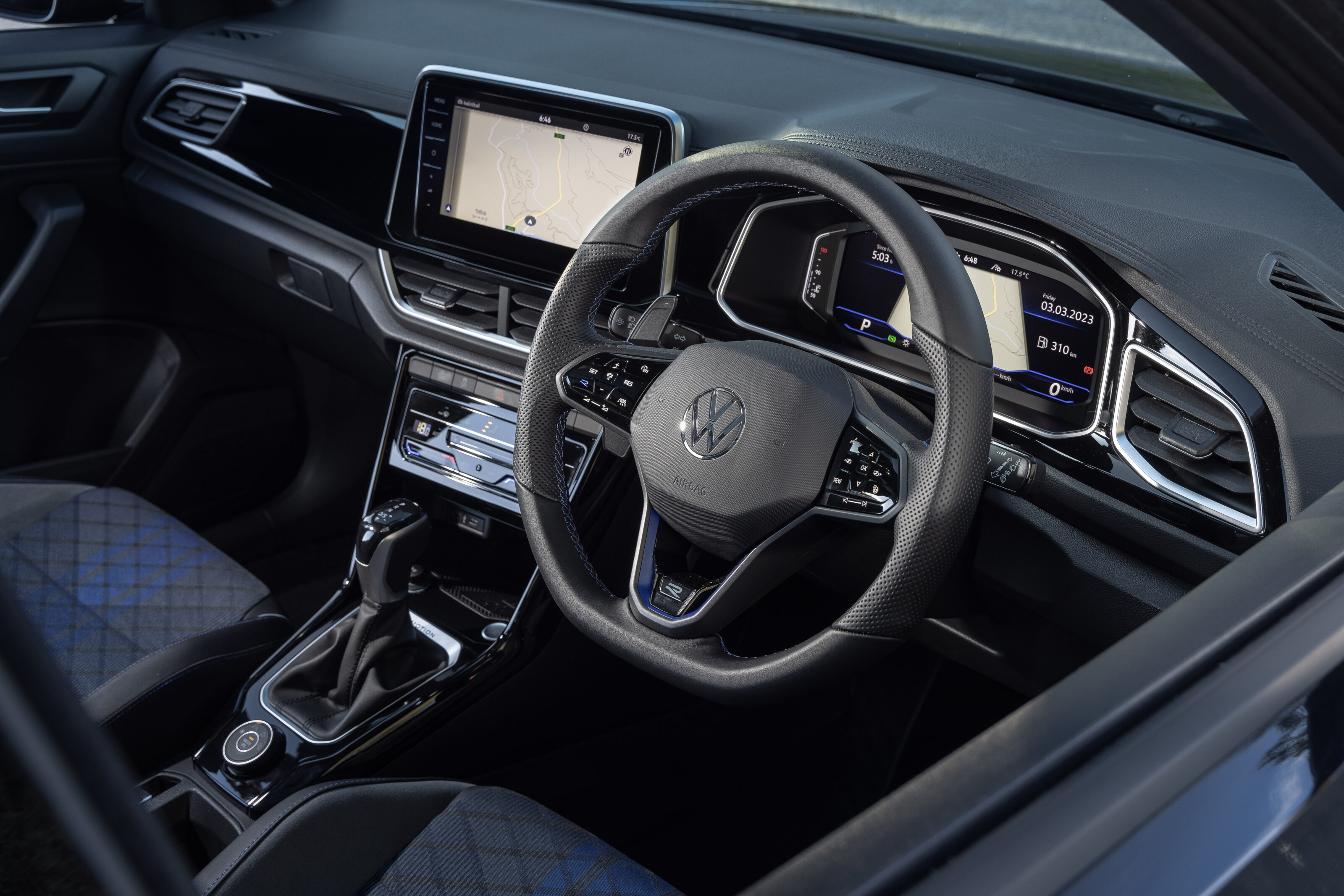
Hopping into the T-Roc’s cabin, we’re greeted by an instant feeling of solidity and a quality, premium build.
While relatively new to Australia, the T-Roc has been available overseas for some time and, as such, lifts many of its interior cues and architectural hardpoints with the previous-generation Golf.
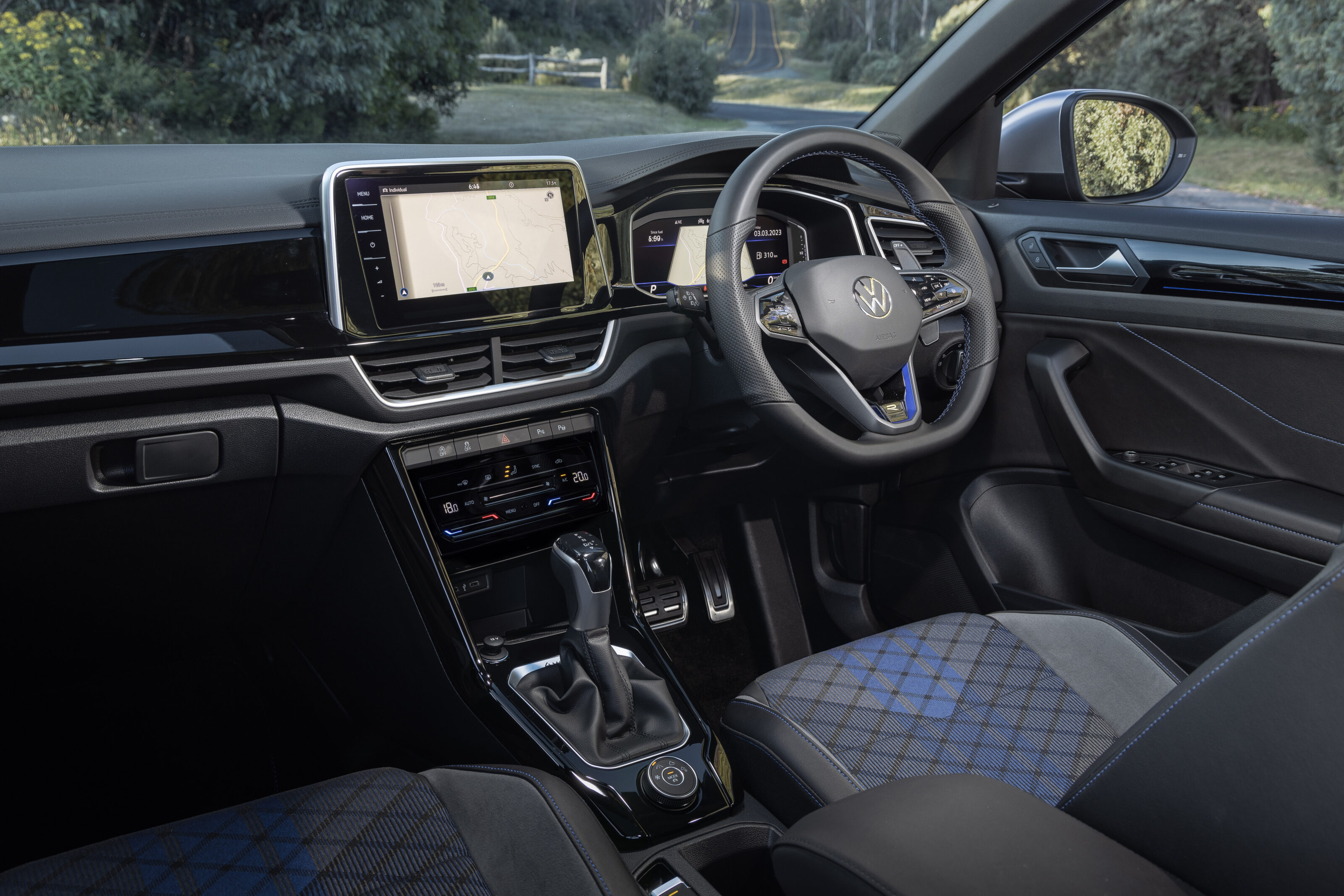
This means that visually, at least, the cabin is beginning to age in the face of younger competition, but it’s an intuitive and incredibly liveable place to be. There’s a familiar conventional gear selector and a dedicated HVAC control panel for ease of ergonomics.
Getting a Grid Edition means you miss out on the standard T-Roc R’s Nappa leather and powered-adjustable heated front seats, instead settling for the T-Roc R-Line’s cloth/microfleece upholstery, featuring manual adjustment and very fun tartan-like seat centres.
Beyond the sizeable door pockets, there are many storage nooks up front, with two USB-C ports to handle any device charging needs.
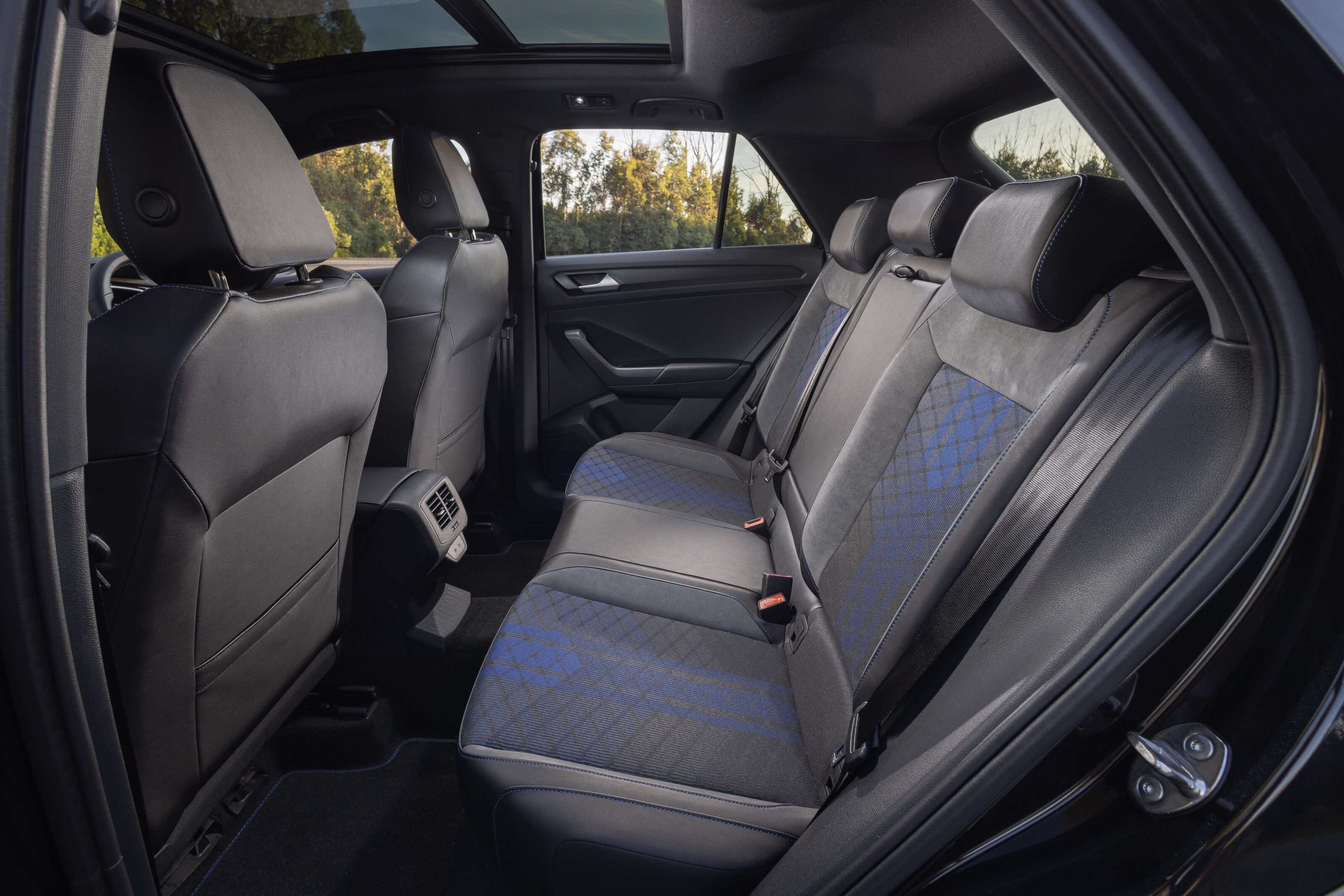
The back seats aren’t the biggest, but are comfortable and offer decent amounts of headroom and toe room under the unpowered front seats. Legroom, however, may become somewhat problematic for those above 180cm in height.
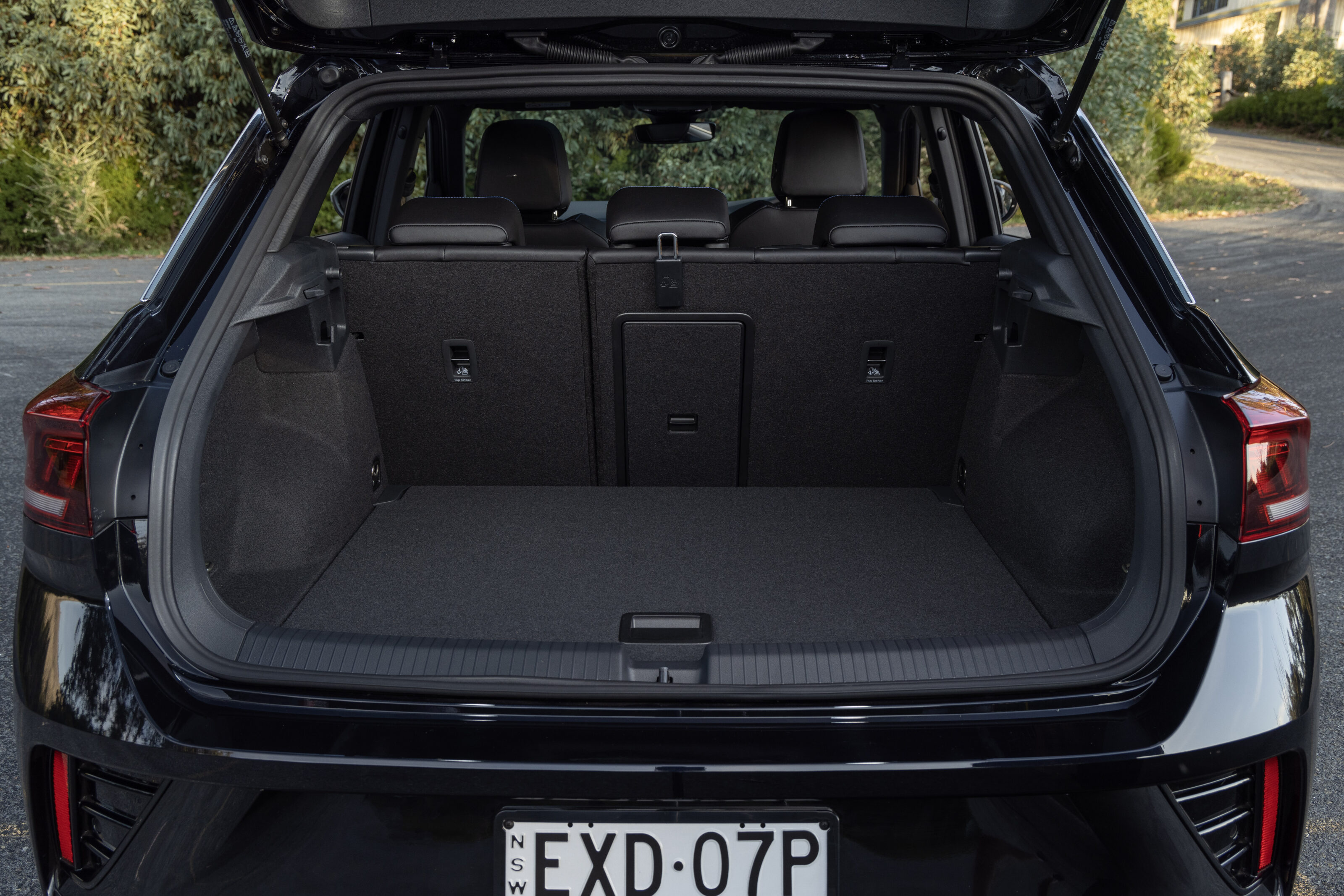
Behind those, the 392-litre boot is up slightly on the Golf hatch but is dwarfed by the Golf R Wagon’s 611-litre boot. The back seats fold 60:40, with a central ski port for added flexibility, and expand cargo capacity to 1237 litres when folded.
What is it like to drive?
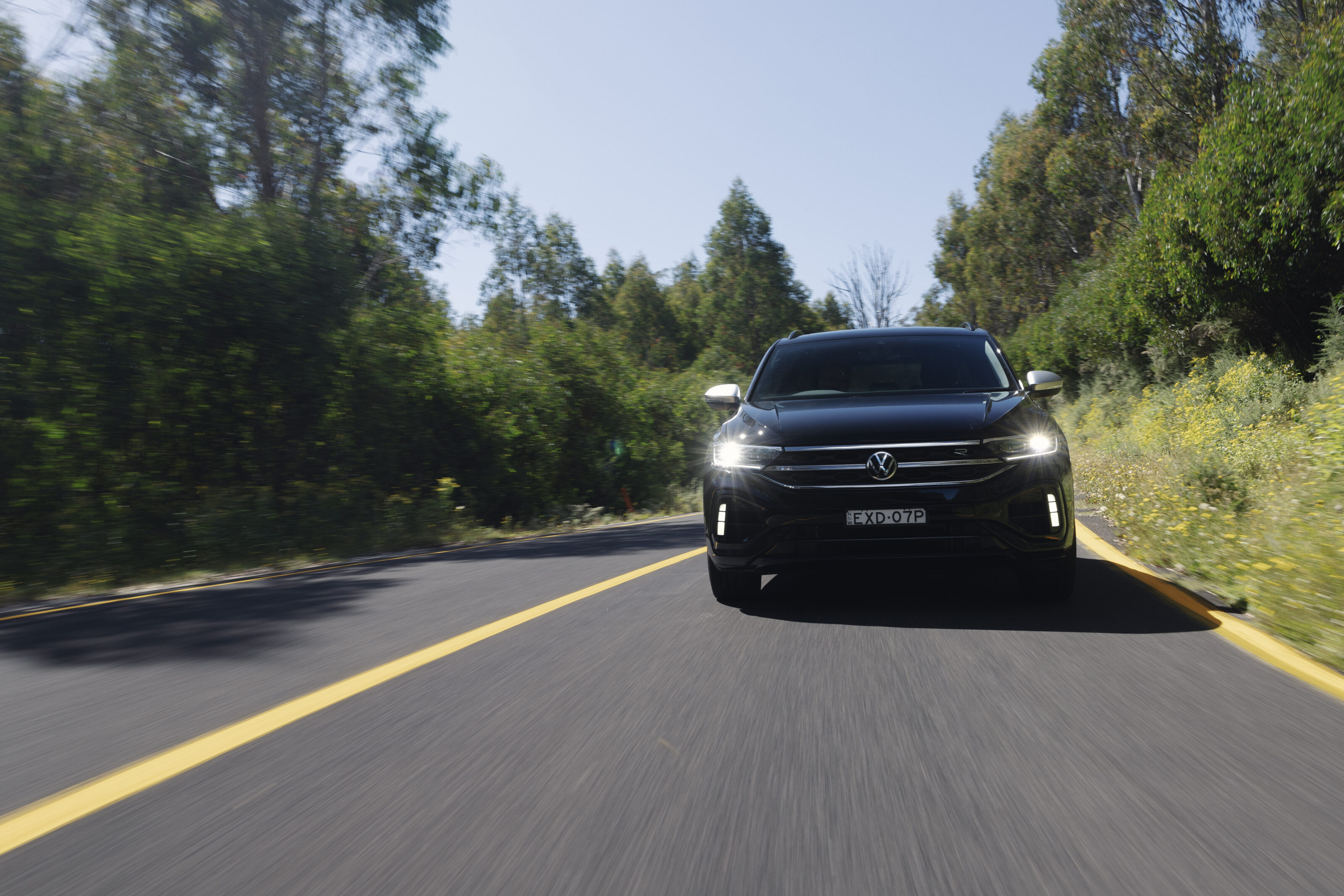
There’s a particular ‘hatchiness’ to the sporty T-Roc R Grid Edition, though that’s no surprise given its closely related Mk 7.5 Golf R roots. It’s an athletic, agile and, it must be said, very capable drive that covers daily liveability and a rewarding enthusiast experience.
In normal driving modes, there is an underlying firmness to the T-Roc, insofar as the damping action is quick and the short hatch-like wheelbase is naturally less bump-resistant than larger vehicles.
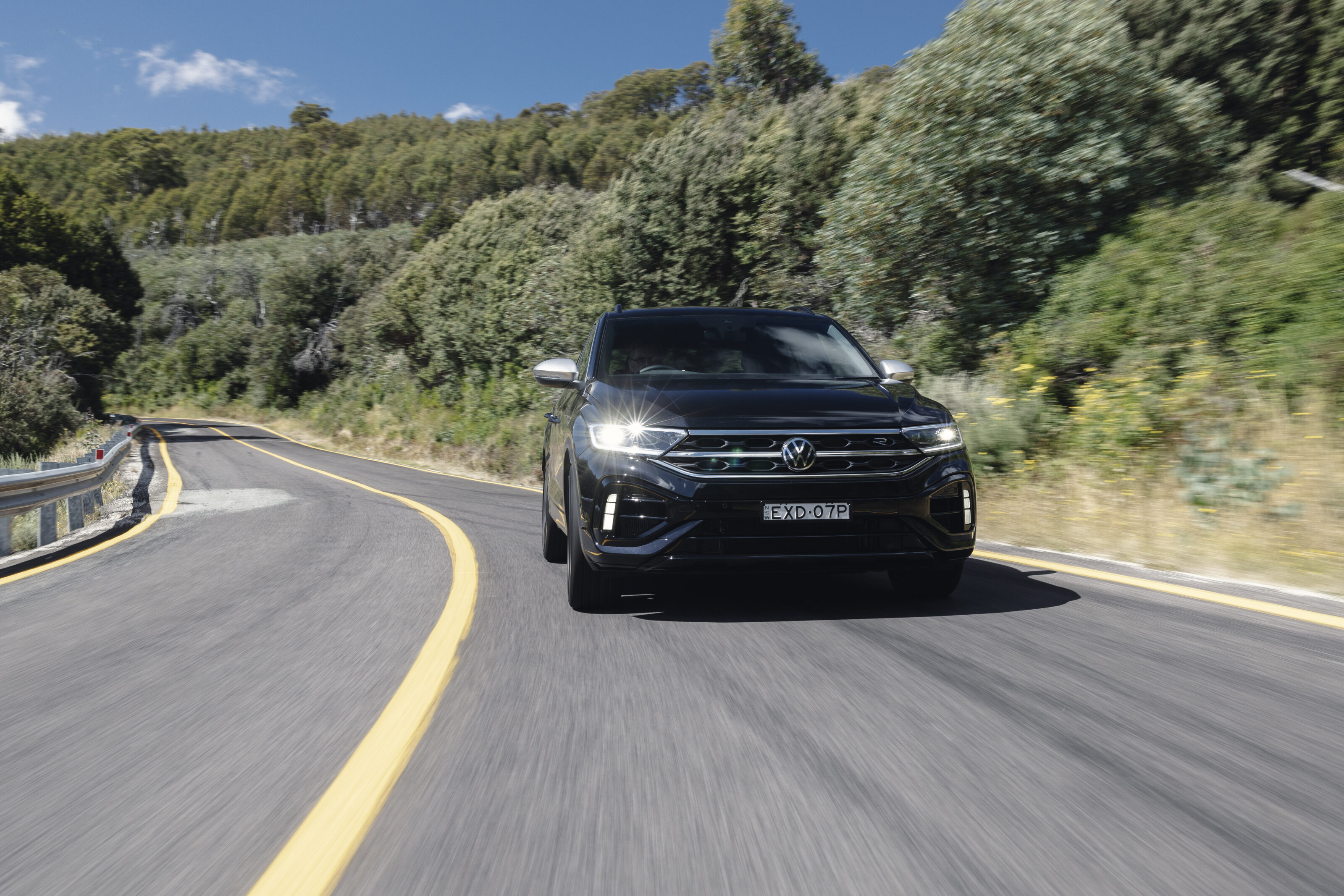
At its softest, it isn’t what you’d call plush, and is noticeably more tied down than its pedestrian T-Roc counterparts. However, this doesn’t at all feel out of step with its sporty pretence, especially in pared-back Grid guise – it always feels alert and ready to stun.
The T-Roc R’s slightly older bones mean it misses out on the latest Mk 8 Golf R’s trick torque-vectoring rear differential, but it’s tremendously willing to accept rapid changes in direction through a tight mountain switchback.
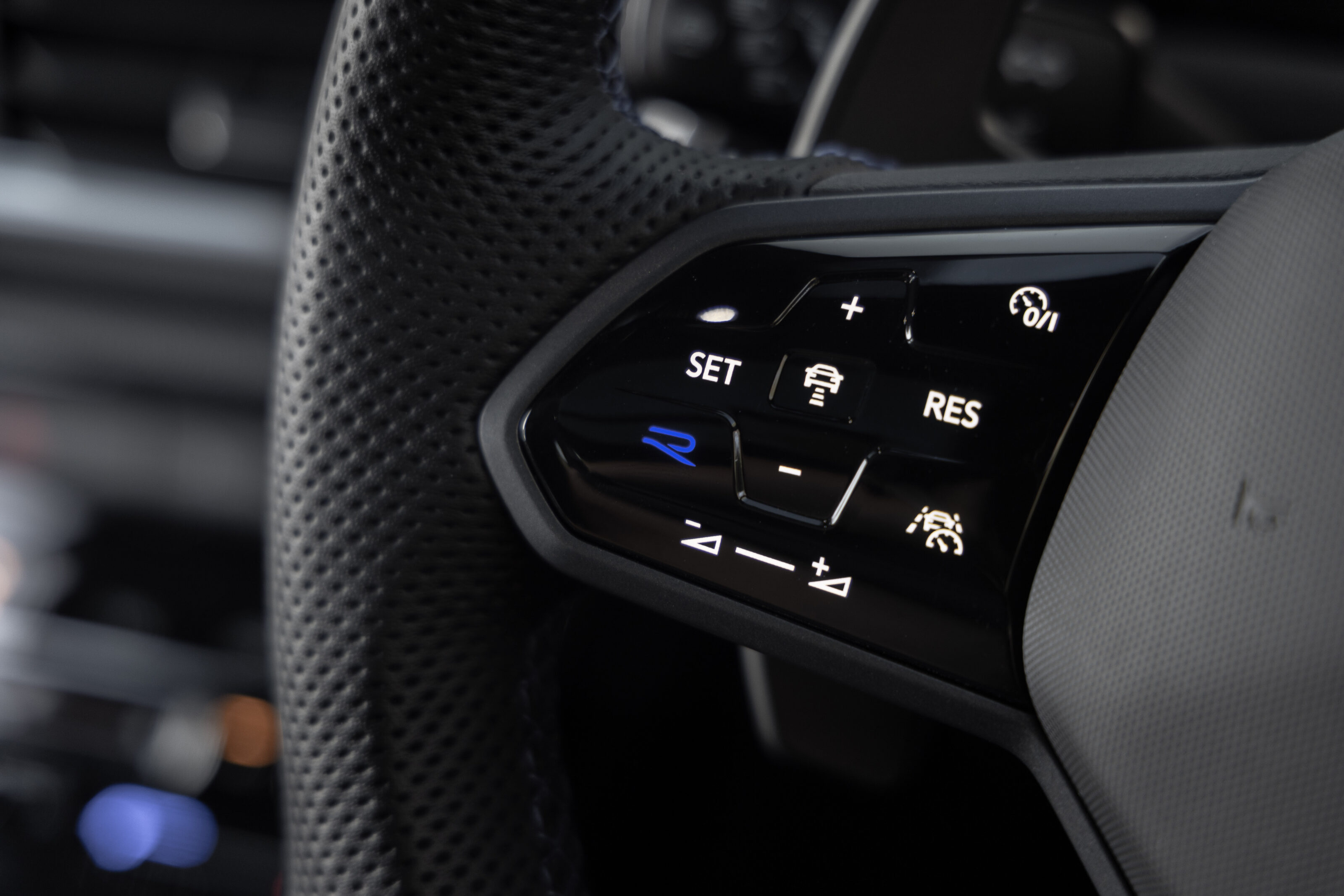
A handy catchall ‘R’ Mode haptic button on the steering wheel means on-the-fly changes are intuitively and rapidly engaged when approaching an attractive piece of tarmac, with a noticeable and agreeable spread between Normal and Race damping tunes.
The steering doesn’t vary wildly in load through the lock and speed envelope but, like most things VW, it’s incredibly intuitive, with a quick response off-centre, and accurate. Brakes are strong, consistent and confidence-inspiring.
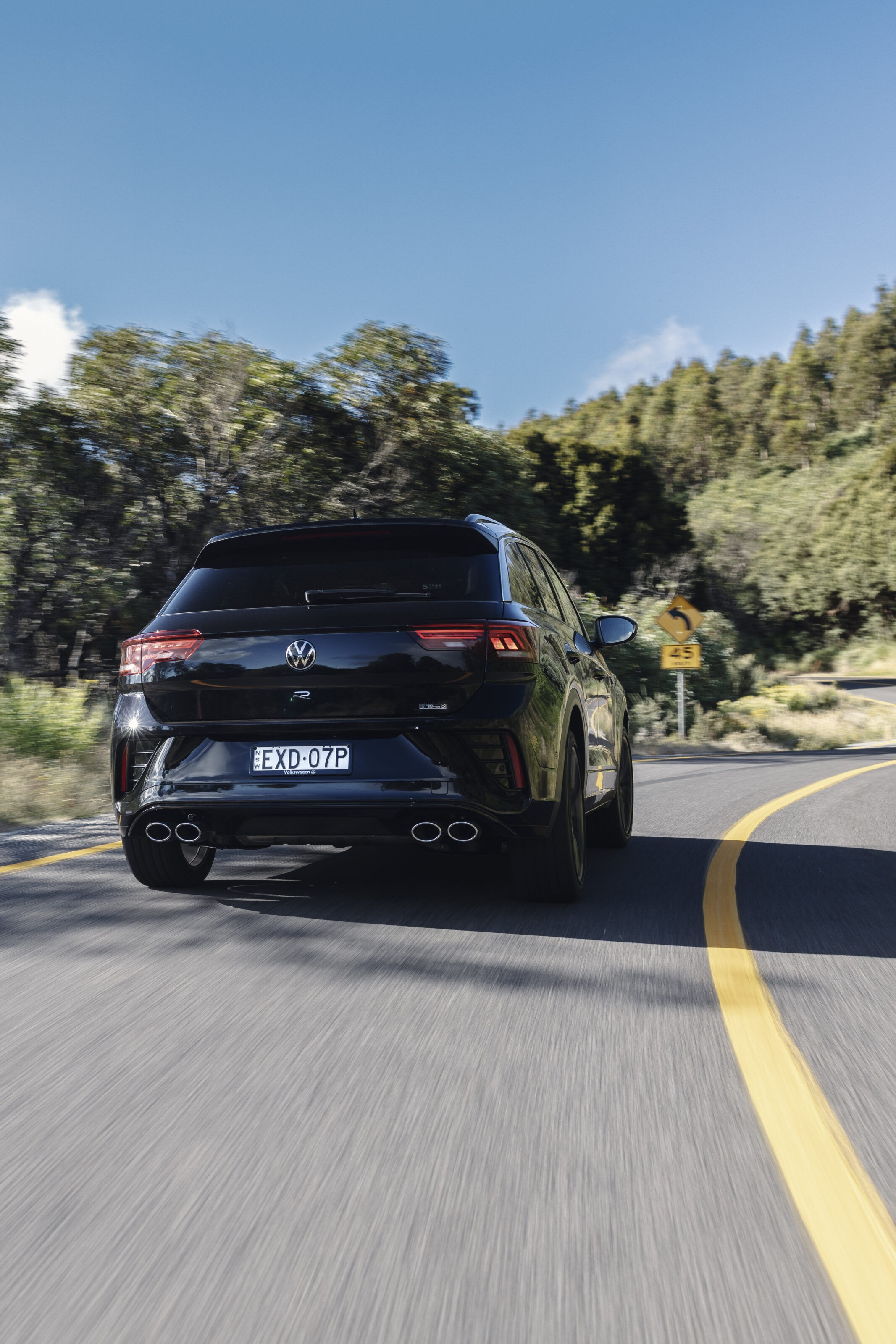
VW’s ubiquitous 2.0-litre turbocharged EA888 four-cylinder provides ample power and torque, peaking at 221kW at 5300rpm and 400Nm from 2000rpm.
At speed, it’s a muscular unit that builds speed with ease and has proven itself in a variety of use cases as a flexible and dependable unit. Overall, it’s a car that’s easy to drive, slow or fast, and fits its brief as an agile inner-city runabout to a tee.
How is it on fuel?
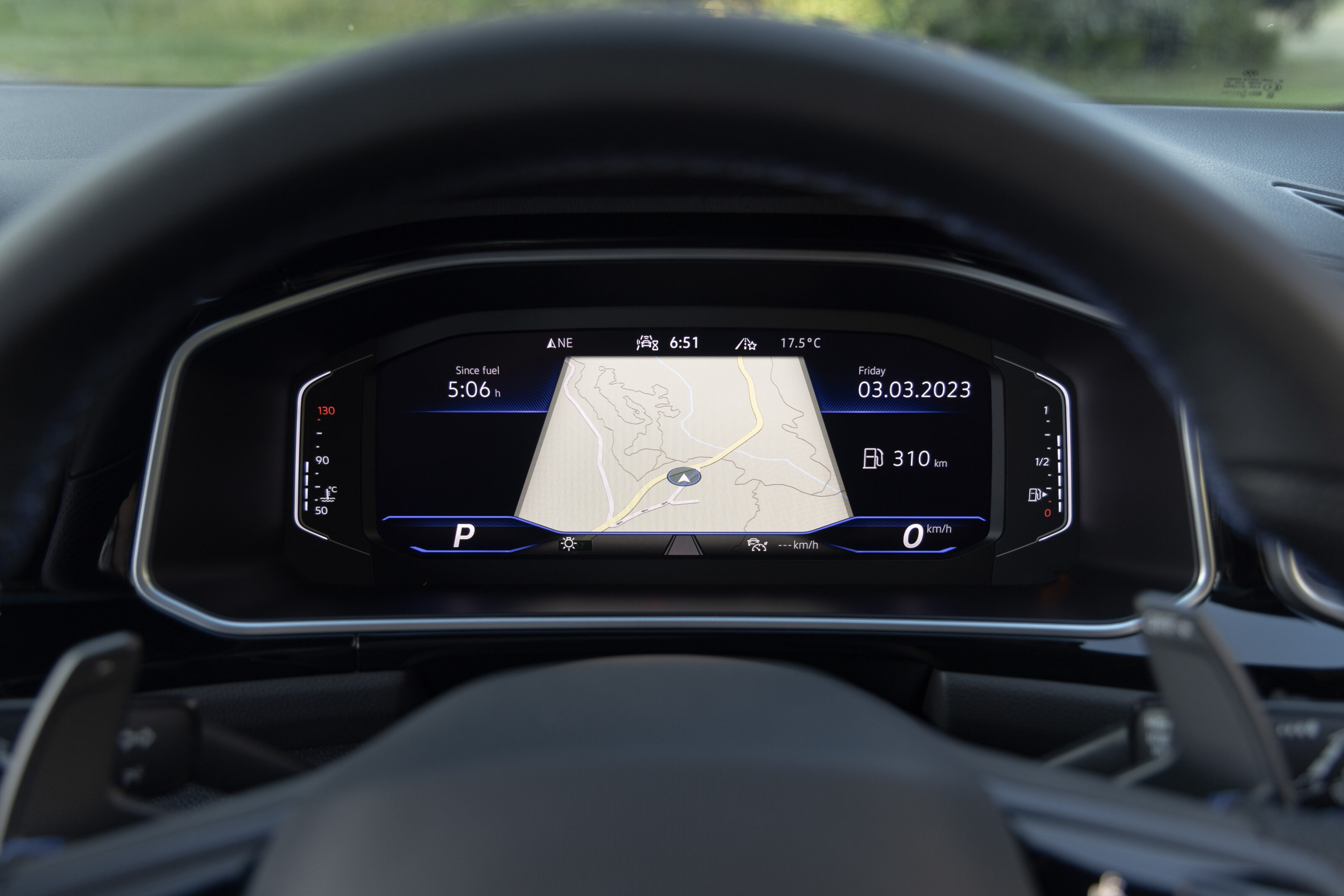
Volkswagen claims the T-Roc R Grid Edition consumes 8.3L/100km on the ADR combined cycle. It operates on a 95 RON (minimum) diet.
This particular launch program involved switching between various cars comprising two different models, so we were not able to gather accurate fuel use readings.
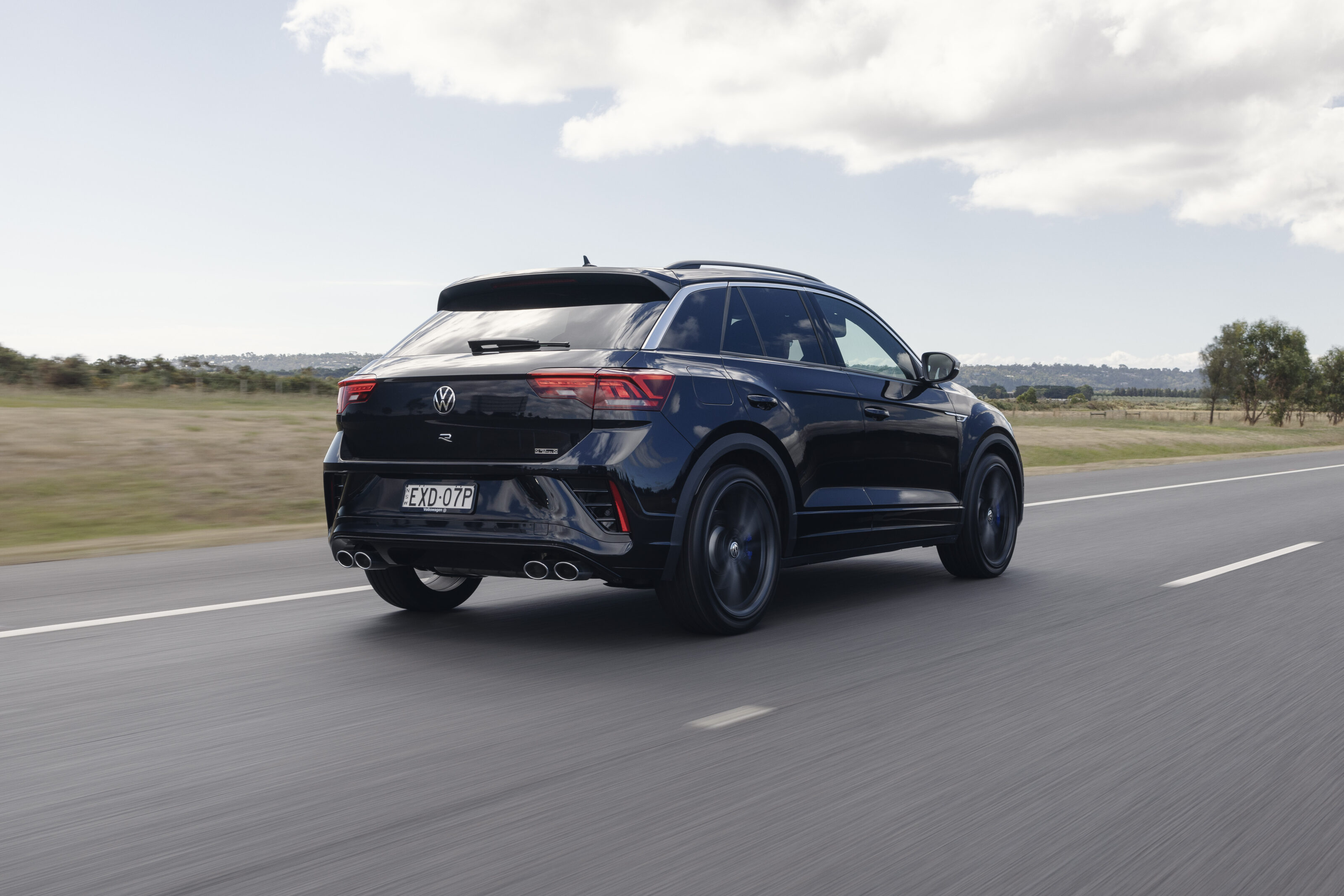
A highway jaunt from Sydney to Canberra on the prior T-Roc R launch, however, returned a highway cruising figure of 7.7L/100km on the trip computer. Expect closer to high nines in the real, urban world.
How safe is it?
The Volkswagen T-Roc R Grid Edition’s official safety rating is a little murky, with the mainstream range awarded five stars by ANCAP in 2017.
However, the T-Roc R is expressly excluded from such rating, so both the standard T-Roc R and T-Roc R Grid Edition are currently recognised as unrated by Australasia’s safety watchdog.
The T-Roc R comes fitted with dual front passenger airbags, dual front side airbags and front and rear curtain airbags.
Active safety features include adaptive cruise control with stop-and-go and lane-centring functions, driver fatigue monitoring, autonomous emergency braking with pedestrian detection, lane departure warning, lane-keep assist, front and rear low-speed AEB, semi-auto park assist and a reversing camera.
T-Roc R Grid Editions lose out on blind-spot monitoring, rear cross-traffic alert and Volkswagen’s ‘proactive occupant protection system’, which can pre-tension the seatbelts if an imminent unavoidable collision is detected, as well as automatically move the windows and sunroof (if optioned) to create a small gap for maximum airbag effectiveness, and trigger the hazard warning lights to maximise on-road visibility.
Warranty and running costs
All Australian-delivered Volkswagens are covered by a five-year, unlimited-kilometre manufacturer’s warranty.
Volkswagen offers pre-paid servicing programs, priced at $1600 for three years or $2800 for five years.
Medium SUV comparison: 2023 Mega Test
Thinking of buying a new mid-size SUV this year? We test eight of the best and most popular contenders to see where you should spend your money
VERDICT
The Volkswagen T-Roc is an impressive package and feels best suited for those inner-city young couples and families that spend most of the week navigating through the metropolitan area but like to break out of the city at weekends in search of a twisty road.
Small back seats prevent the T-Roc from filing any maturing family duties, the rear seats won’t fit the teenagers with comfort, and the boot will struggle with the Saturday morning sport haul; but it’s an athletic little street fighter that delivers a measure of restrained style, and a big dollop of performance for its class and price.
A slightly ageing cabin is arguably easier to navigate and live with than that of the latest Golf, and one has to imagine the lively little T-Roc would be an effortless thing to live with.
The lack of increasingly desired tech such as wireless phone mirroring and a head-up display, along with an uncertain safety rating, are the biggest struggles buyers may face.
If you can look past that, however, the T-Roc R Grid Edition is a considered driving enthusiast’s choice that pragmatically fills the needs of the mid-week grind and scratches that itch on an early Sunday morning, out somewhere like the Victorian High Country.
Specifications
| 2023 Volkswagen T-Roc R Grid Edition specifications: | |
|---|---|
| Body | 5-door, 5-seat small SUV |
| Boot min / max | 392L / 1237L |
| Drive | all-wheel |
| Engine | 1984cc 4cyl, dohc, 16v, turbo-petrol |
| Max power | 221kW @ 5200rpm |
| Max torque | 400Nm @ 2000rpm |
| Transmission | seven-speed dual-clutch |
| Weight | 1519kg |
| L/W/H/W-B (mm) | 4236/1819/1575/2595mm |
| 0-100km/h | 4.9sec (claimed) |
| Price | $53,400 + on-road costs |
| On sale | now |
Snapshot
- PPE-based electric Macan just around the corner
- Significant Cayenne facelift coming in 2024
- All-electric 718, Cayenne to follow
- u2018K1u2019 three-row SUV coming in 2027
UPDATE: At its annual general meeting (AGM), Porsche bosses handed out an update on how the brand’s electrification strategy is tracking.
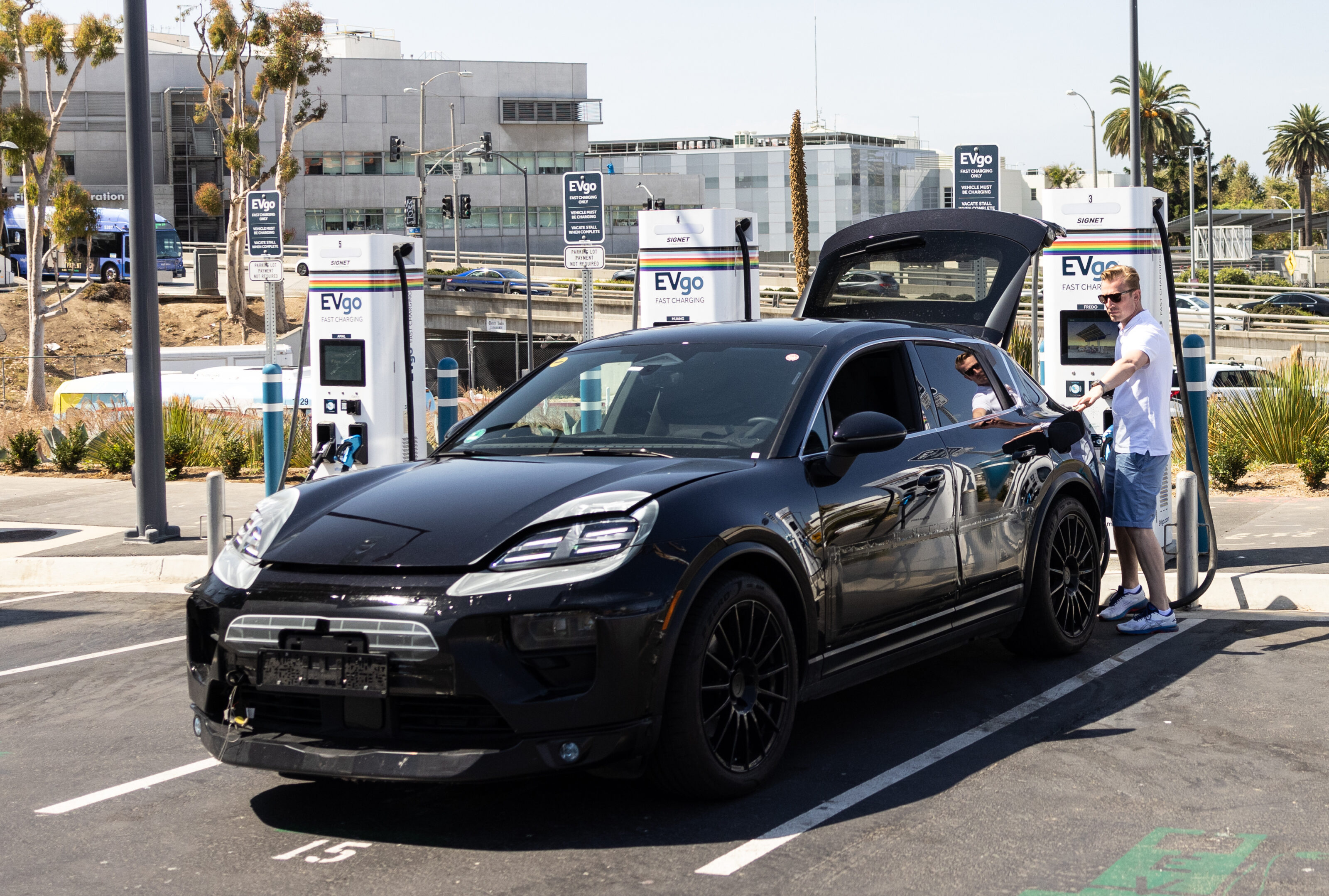
Following software-related delays, it appears the electric Macan SUV is on the home straight – gearing up for release later this year, or in early 2024. The electric Macan will usher in Porsche’s PPE architecture packing 450kW, 1000Nm, and a 100kWh-plus battery.
The Macan will be followed by a significant third-gen Cayenne update in 2024 – described by Porsche as one of the most comprehensive upgrades in the company’s history. Porsche says the Cayenne’s overhaul will include refreshed plug-in hybrid powertrains with greater battery-electric driving range.
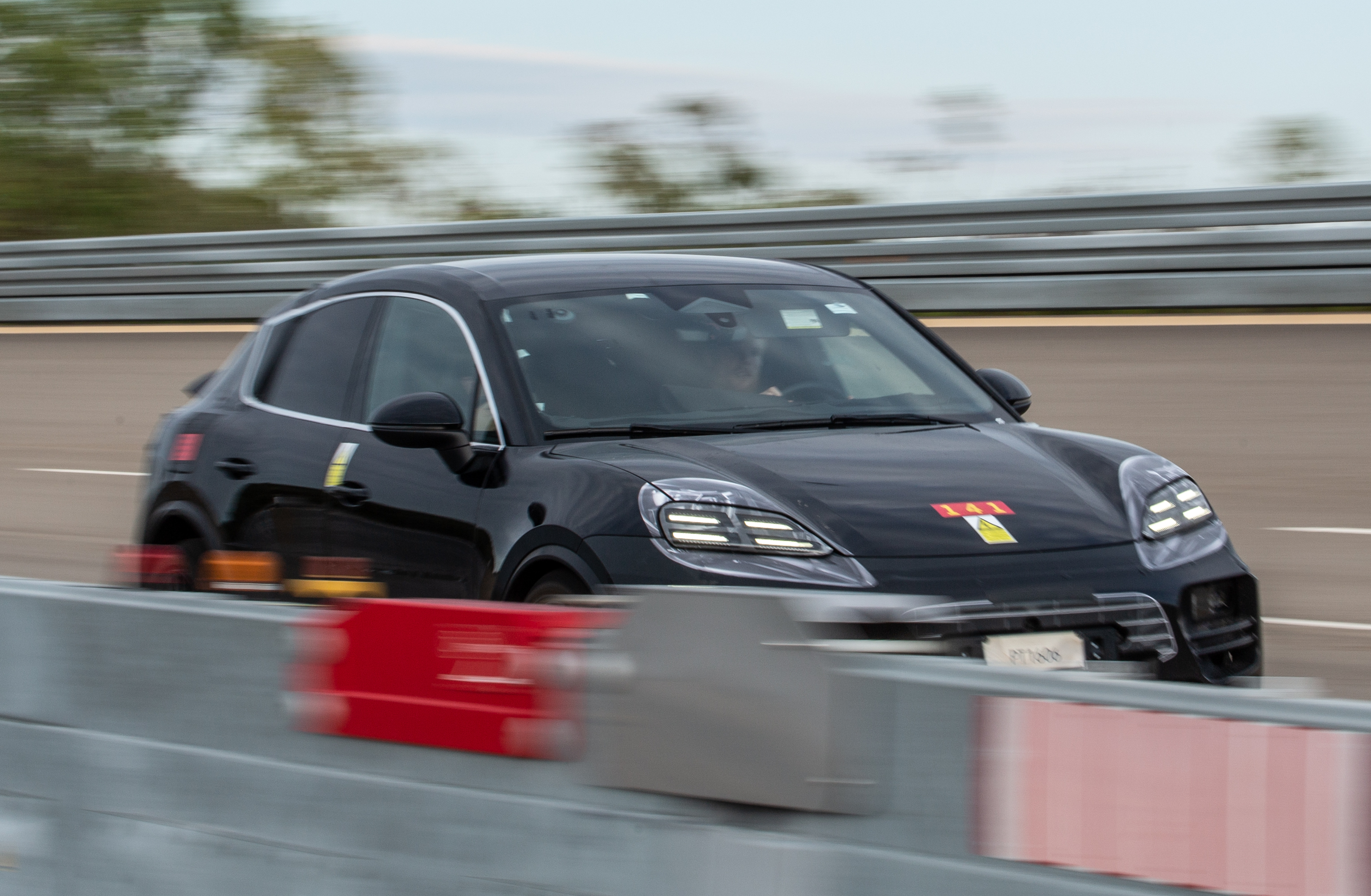
At Monday’s meeting, the brand also referenced “a new chassis”, though this is expected to mean suspension components, as the third-gen Cayenne will continue on the MLB Evo platform. But Porsche has promised more breadth, meaning on-road performance better balanced with comfort and improved off-road capability.
An all-electric 718 sports car range follows in 2025, and then an all-new generation of Cayenne will debut riding on the PPE platform, an 800-volt electric architecture that moves the game on from the Taycan’s J1 underpinnings. The fourth-gen Cayenne SUV will be available exclusively as an electric model.
The final model to be announced is the K1, a three-row SUV that will get another new architecture – this time Porsche’s SSP – likely in 2027.
Our original story, below, continues unchanged.
The story to here
February 23: New Cayenne ‘revealed’ in testing, pure-EV variant expected from 2026
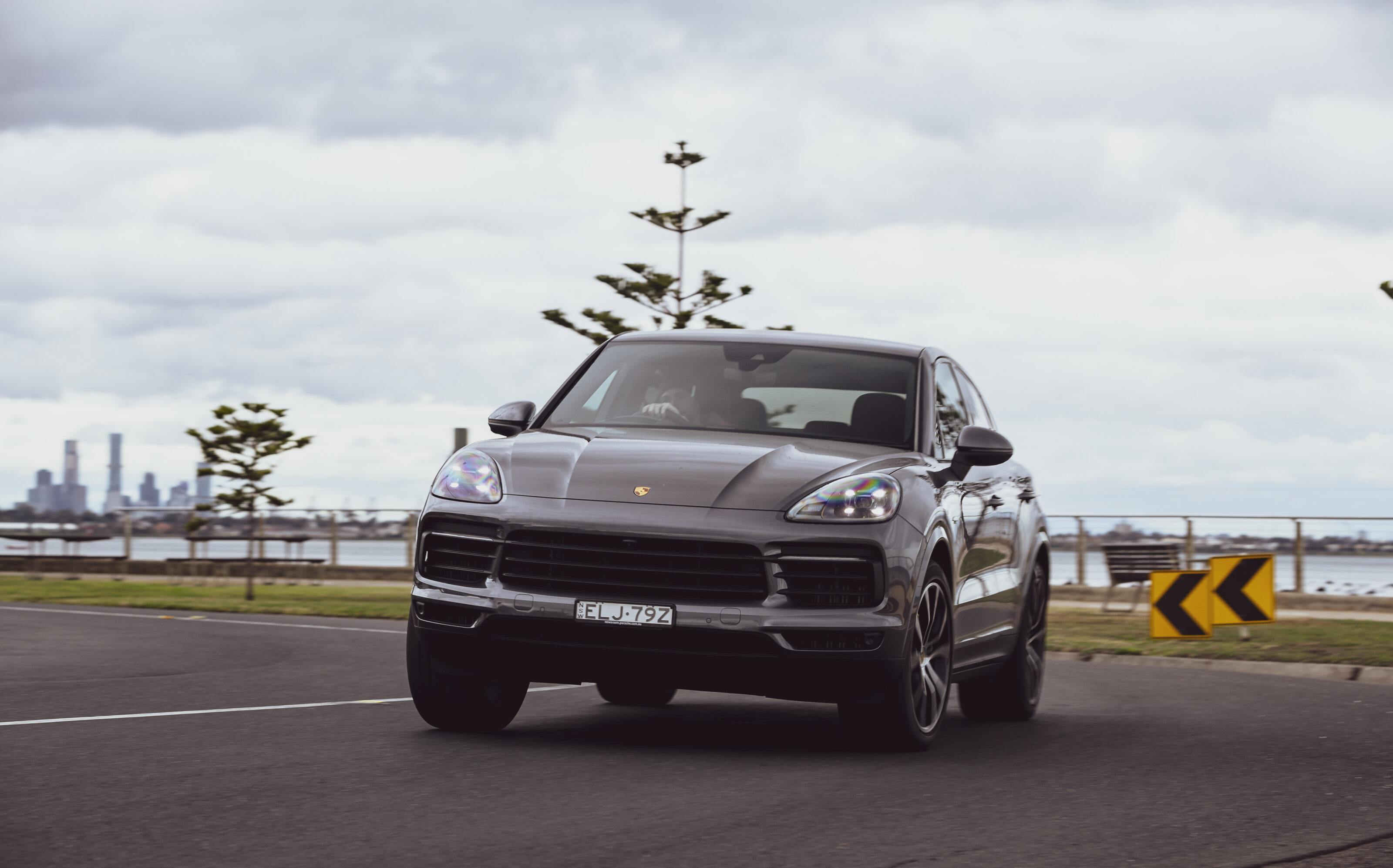
Following news last year that a flagship three-row SUV will soon top the Porsche range, the company has recently revealed details of its coming new Cayenne.
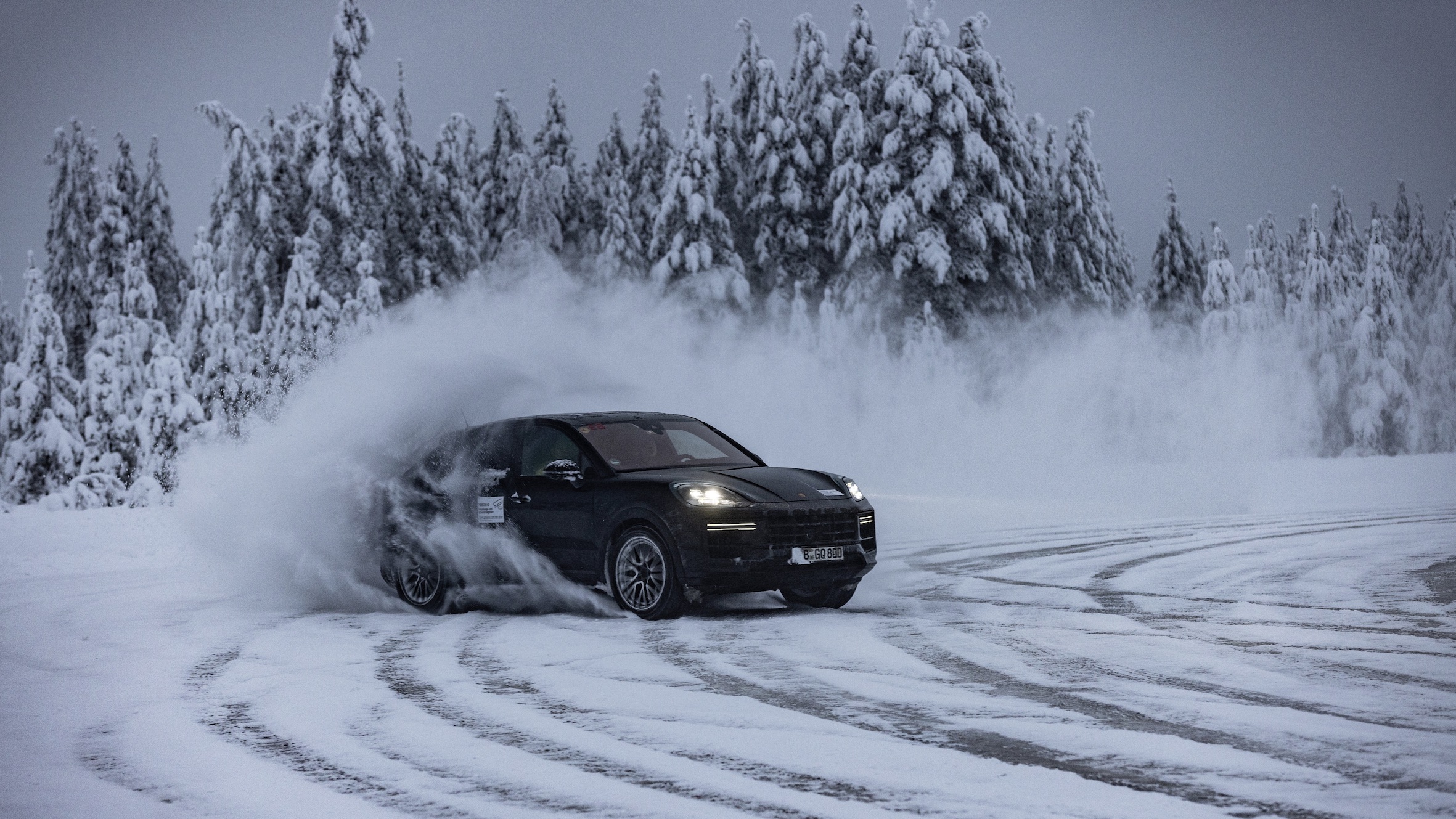
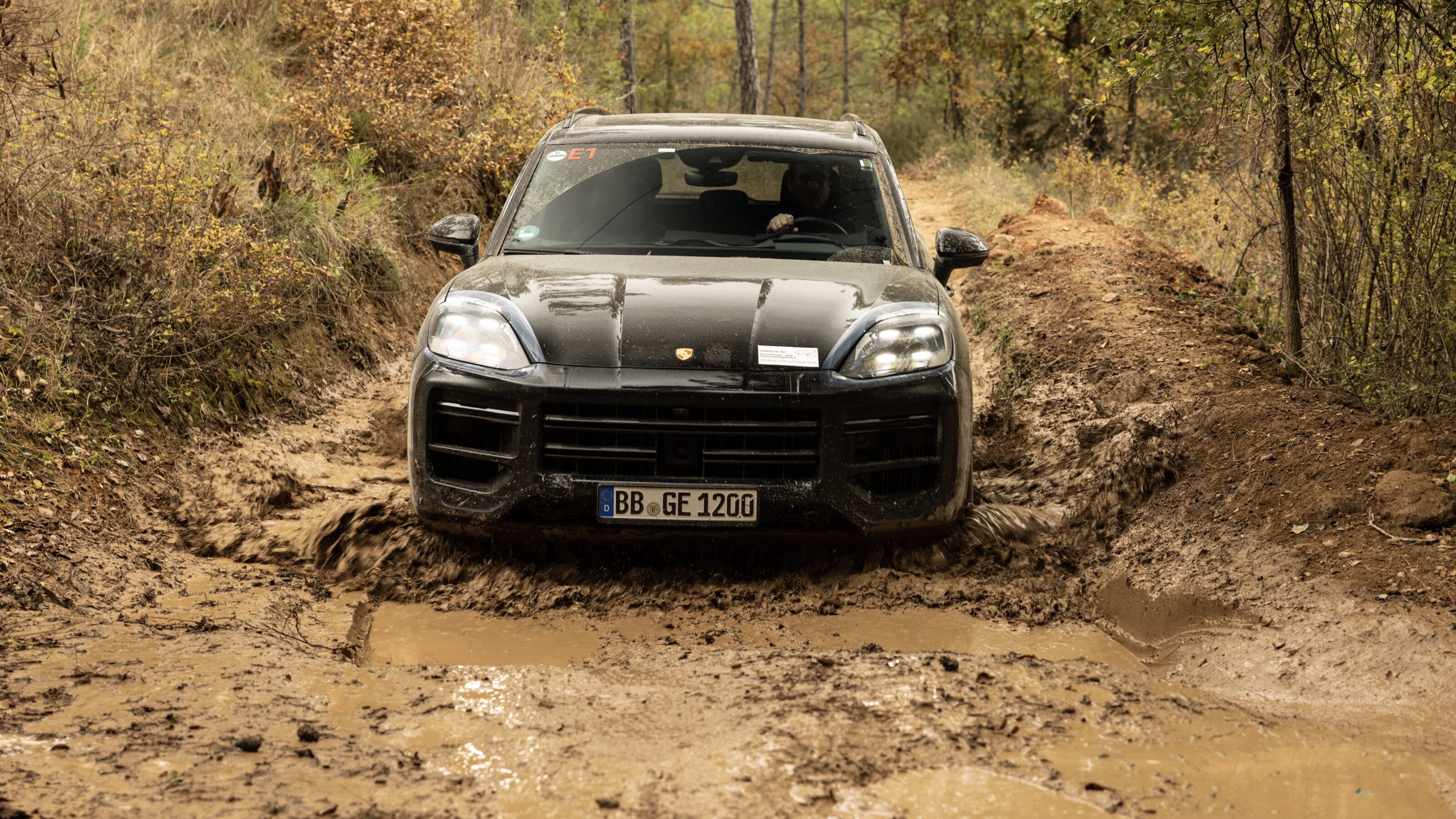
Interestingly, despite being so close to its big debut, the new Cayenne is shown in Porsche’s photos wearing not a heavily camouflaged prototype body, but rather the panels of its now seven-year-old third-generation predecessor.
While official word on its platform is still to be revealed, reports suggest the ‘new’ Cayenne will be a heavily revised version of the existing model, entering as a ‘transition’ car ahead of an all-new electric model’s debut sometime around 2026.
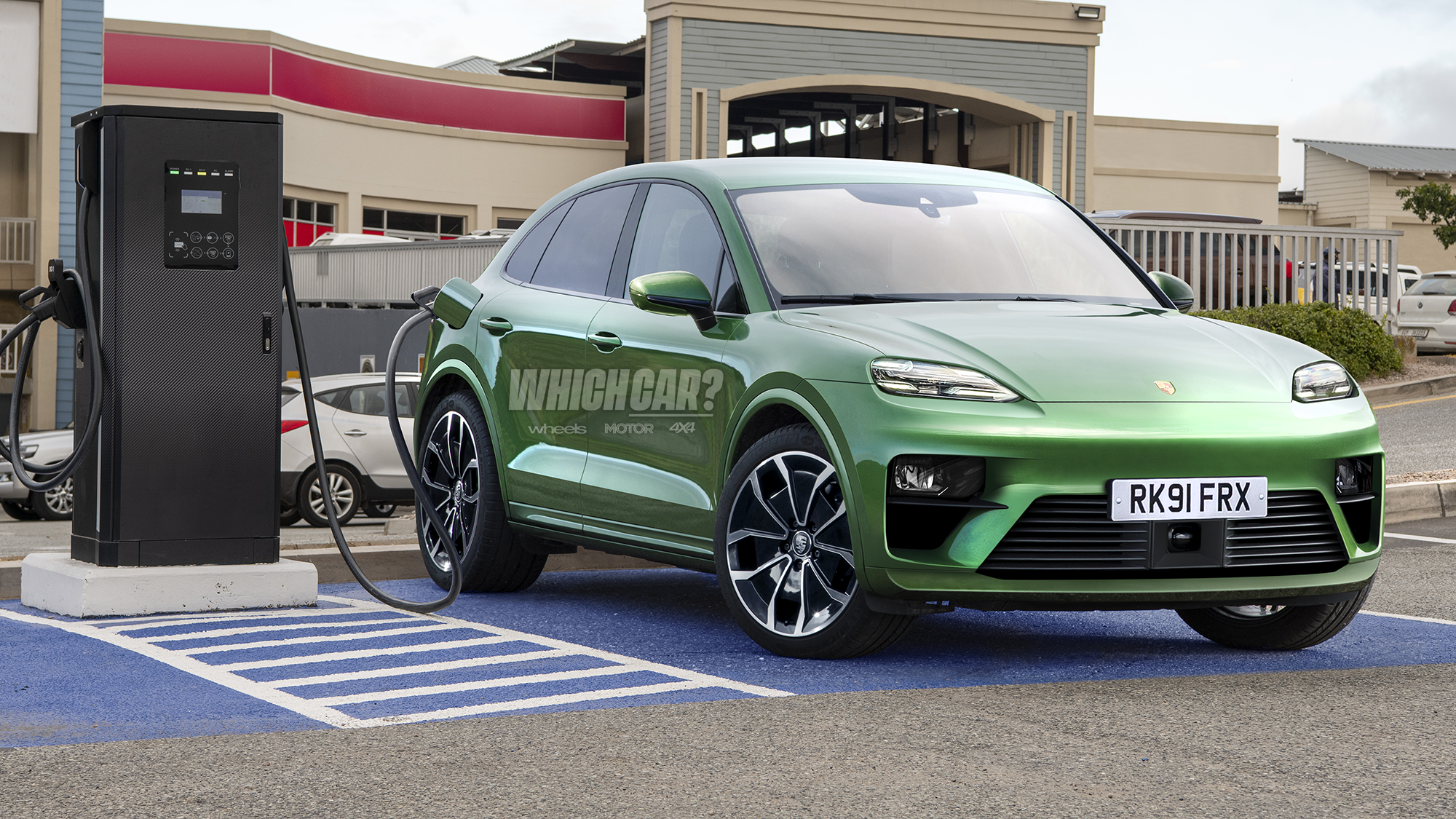
If true, this plan would follow in the treads of the new Macan, which will be offered both as an overhauled version of the current ICE car and as a new-generation electric car – which you can see in our speculative renderings below.
Indeed, Porsche’s own words hint more at an overhaul than a completely new platform: “We’re subjecting the new Cayenne to a complete and comprehensive testing program, just as if it we’d developed it from scratch,” said test manager Ralf Bosch.
Porsche says the new Cayenne will feature a new “semi-active” chassis, designed to emphasise a wider range of capabilities between on-road and off-road driving – although it’s unlikely we’ll see any sudden mountain-dominating, Range Rover-rivalling talents debut with what is primarily a road-focused luxury SUV.
According to the UK’s Autocar, a properly new pure-electric Cayenne will debut in 2026, giving Porsche another important model in advance of Europe’s 2035 ban on internal combustion vehicles.
Expect the electric Cayenne to ride on the same Premium Platform Electric (PPE) architecture that will underpin the new electric Macan and a number of new Audi models (but not, due to timing, the current Taycan).
All PPE models will be built around an 800V electric system, which should allow 0-80 per cent recharging to occur in “less than 25 minutes” – rivalling the 18-minute claim made with Hyundai’s Ioniq 5 and the related Kia EV6.
The story to here
September 2022: Macan EV delayed, large 3-row SUV confirmed
Snapshot
- 2024 Porsche Macan delayed by up to 12 months
- Three-row electric SUV in development
- Taycan facelift soon; updates coming to 911 and Cayenne
The 2024 Porsche Macan EV has been delayed by 12 months, according to a new report.
In a story outlining Porsche’s upcoming launches, Automotive News Europe states deliveries for the forthcoming Macan will commence in 2024 due to software-related supply issues.
This is around one year later than initially anticipated, likely due to the industry-wide semiconductor chip shortage.
As reported, the electric Macan will be underpinned by the Volkswagen Group’s new Premium Platform Electric (PPE) architecture shared with the upcoming Audi A6 E-Tron and Q6 E-Tron.
It will be sold alongside an updated version of the current petrol Macan, before eventually transitioning to an electric-only offering.
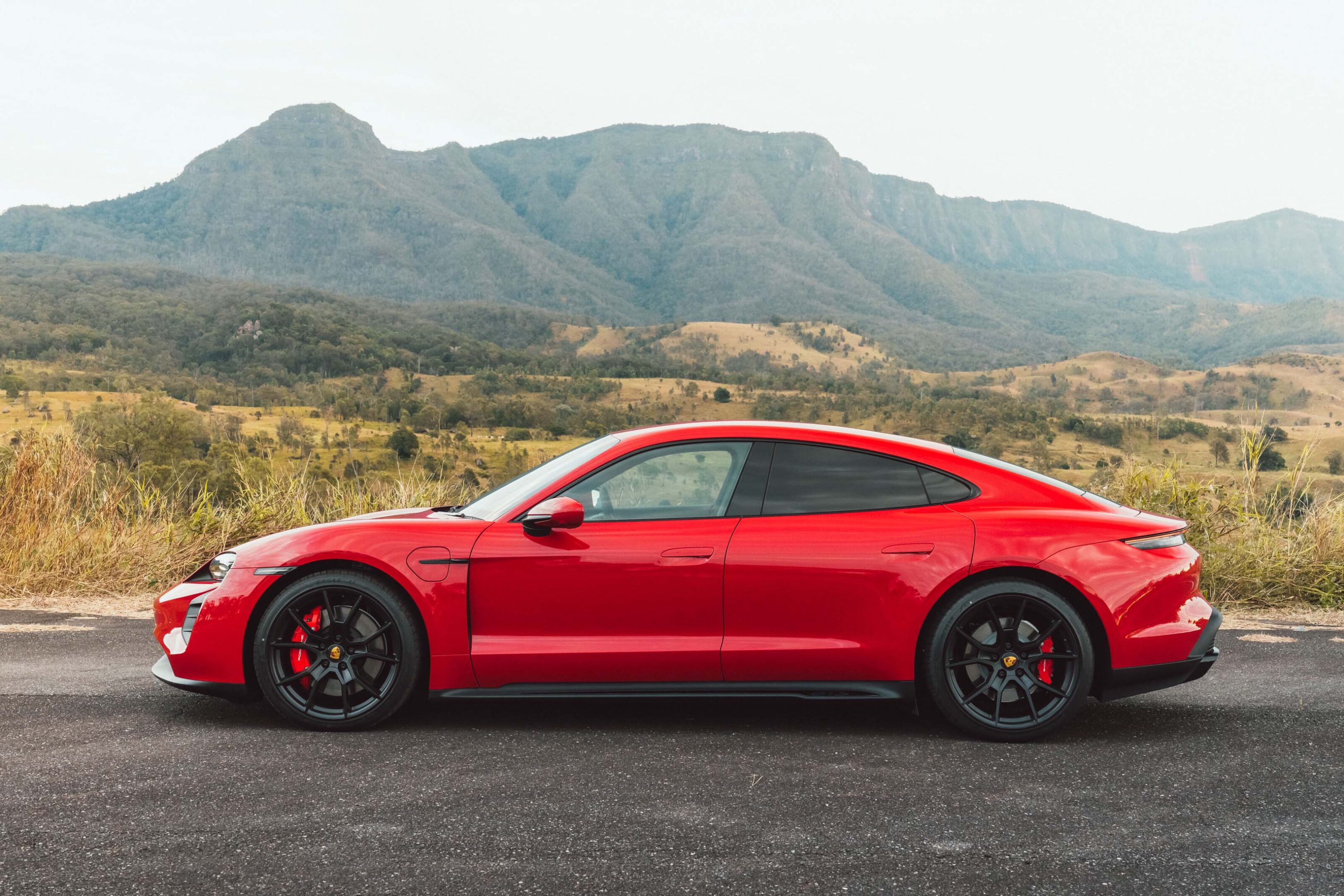
The electric Macan will take its design cues from the Taycan, with a slender headlight design and a streamlined rear lightbar design.
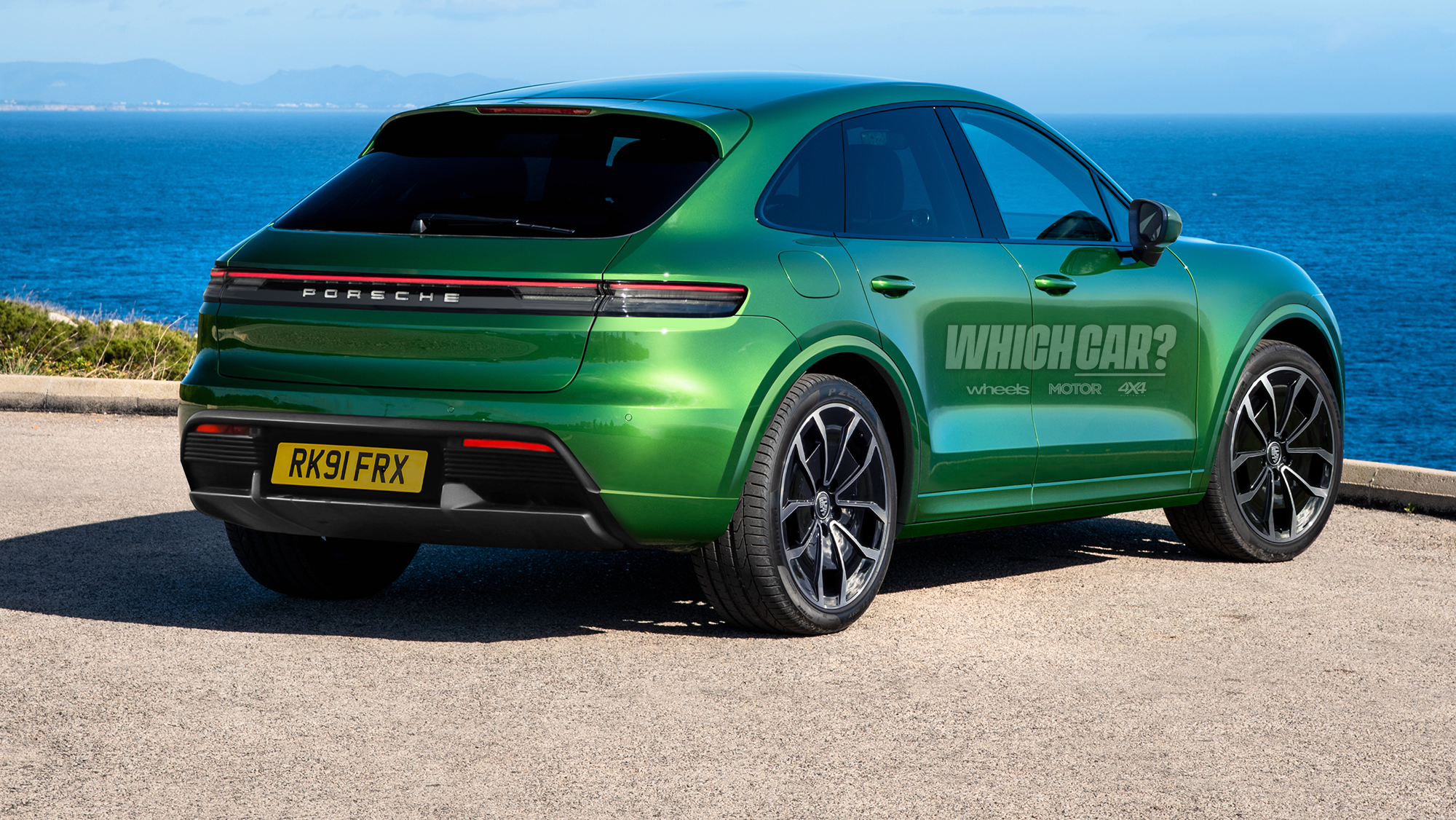
It will also debut a ‘coupe’ body style for the Macan, following in the treads of the larger Cayenne Coupe, along with hands-free driving capability and a camera-based driver monitoring system.
In addition, the report states the new Macan will be joined by a larger electric Porsche crossover in the coming years – plus the electric 718 Cayman and Boxster, and updates to the current range.
As first detailed late last year, the new three-row SUV – codenamed K1 – will be longer, wider, and taller than the Cayenne, with a sporty “part sedan, part crossover” look.
Porsche dealers in the United States were reportedly shown a rendering of the new crossover during a meeting, with one claiming the design was “very un-Porsche-like,” with a “flat rear design… not anything like the Macan and Cayenne”.
Further details surrounding the new crossover remain uncertain, however, it is likely to be electric-only – in line with Porsche’s plan for 80 per cent of its sales to be battery-powered vehicles by 2030.
Upcoming changes to the Porsche line-up are set to include updates to the current Taycan and 911 (including a hybrid 911), a facelift for the Cayenne ahead of an all-electric redesign in 2026, and battery-powered versions of the Panamera, Cayman and Boxster from mid-decade.
Porsche’s portfolio will expand with an electric SUV that’s even larger than its Cayenne.
Snapshot
- Known as u2018K1u2019 internally; SSP underpinnings
- Seven seats and three rows expected
- All-electric Range Rover, BMW X7 rival
The Porsche Cayenne is due a deep facelift next year, following which the Stuttgart-based marque will add a larger SUV to its portfolio. Expect a release in 2026/27.
We haven’t seen pictures of the new car, however, we do know it will be the first vehicle under the Volkswagen Group umbrella to ride on the ‘SSP’ electric sports car architecture – which’s more advanced than the Taycan’s 800-volt J1 platform.
Improvements in automated driving technology and excellent performance are promised for the new vehicle, all without sacrificing signature Porsche design language.
Inside, Porsche has promised the K1 will offer an all-new experience. The Taycan is a luxurious vehicle, but one more ultimately targeted at driver satisfaction.
With the K1, Porsche is looking to capitalise on emerging, luxury-driven markets that are clamouring for full-size Range Rovers, Bentley Bentaygas, and other ultra-luxury SUVs – as explained by Oliver Blume, Chairman of the Executive Board.
“We are thereby underlining and strengthening our sporty luxury positioning. We are observing growing profit pools in this segment, in particular in China and the US,” said Blume.
That would mean a vehicle longer (4.92 metres) and wider (1.98m) than the current Cayenne, potentially breaking the five-metre mark with a stretched wheelbase for greater occupant space.
The K1 is expected to be built in Leipzig and will form part of Porsche’s sustainability targets, those being carbon neutrality, and 80 per cent of its vehicle sales to be electric by 2030. Expect more news on the SSP platform and K1 SUV in the coming months.
UPDATE: 2024 Hyundai i30 Sedan facelift detailed further
Full details for the updated 2024 Hyundai i30 Sedan have been announced in South Korea.
Hyundai has yet to detail the facelifted i30 Sedan N Line and N Performance, but these variants are expected to debut in the coming weeks, with a local launch due in the second half of 2023.
Our earlier story, below, has been updated to reflect the latest information.
The facelifted Hyundai i30 Sedan small car has debuted in South Korea.
Snapshot
- 2024 Hyundai i30 Sedan facelift revealed
- Updated small car receives revised front end, other minor changes
- Hybrid option on the cards for Australia
Hyundai Australia has confirmed that the updated i30 Sedan – sold as the Elantra and Avante in other markets – will arrive here in the second half of the year.
Wheels understands that the current powertrain lineup will remain unchanged – a 2.0-litre naturally-aspirated, a 1.6-litre turbocharged petrol engine, and a 2.0-litre turbo-petrol in the flagship i30 Sedan N.
A 1.6-litre petrol-electric hybrid is also understood to be on the cards for Australia.
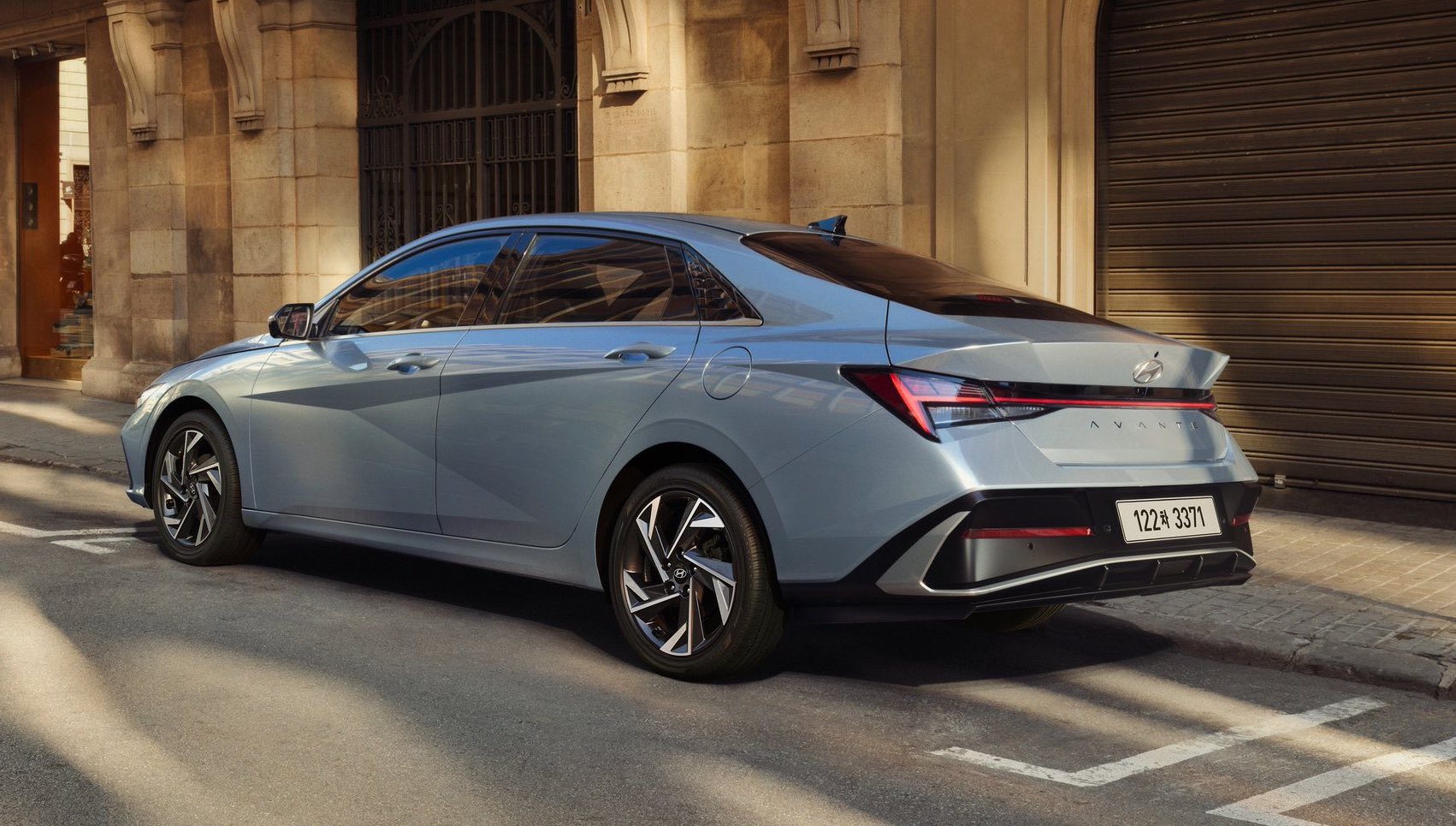
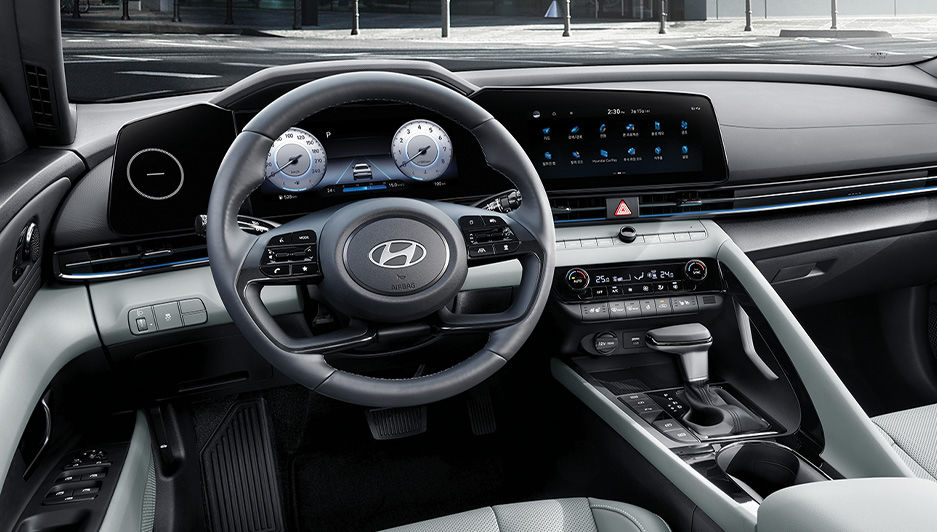
A revised front end with reshaped headlights, a wider grille, and a new lower bumper headlines the updated small car.
It also sports a new chrome beltline, redesigned alloy wheel designs, and a larger rear bumper.
Under the skin, Hyundai’s engineers have revised the suspension to improve ride quality by minimising shaking on irregular road surfaces, while the updated front bumper has air curtains for better aerodynamics.
While there are no significant interior changes, the i30 Sedan adopts a blind-spot view monitor, a 360-degree camera system, USB-C charge ports, an optional built-in dashcam, an odour-reducing climate control system, and digital key functionality.
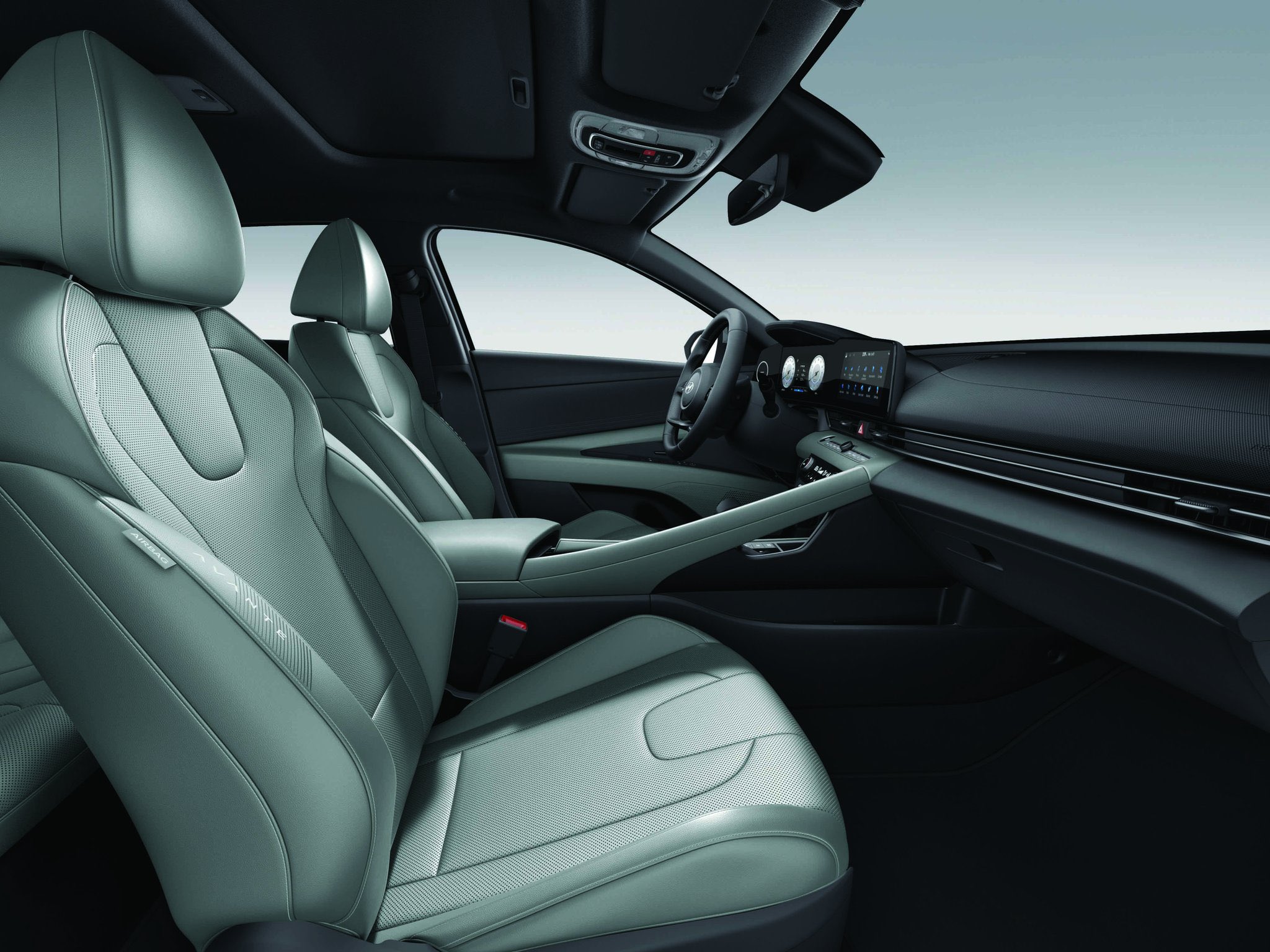
Second-row passengers are protected by a new rear-side airbag, taking the total airbag count to eight – but it continues to lack a front-centre airbag, meaning the i30 Sedan is unlikely to receive a five-star safety rating if it is tested by ANCAP.
In addition, the facelifted i30 Sedan should follow the Palisade, Venue, Tucson, Ioniq 6 and the next-generation Kona in gaining Hyundai’s Bluelink connected-car technology in Australia.
The hybrid engine, also found in the related Kia Niro small SUV, would compete with the popular Toyota Corolla Hybrid sedan. It produces 104kW and 265Nm, matched to a six-speed dual-clutch automatic transmission and a 1.3kWh lithium-ion battery.
A combined fuel consumption figure below 4.0L/100km and CO2 emissions below 100g/km are likely.
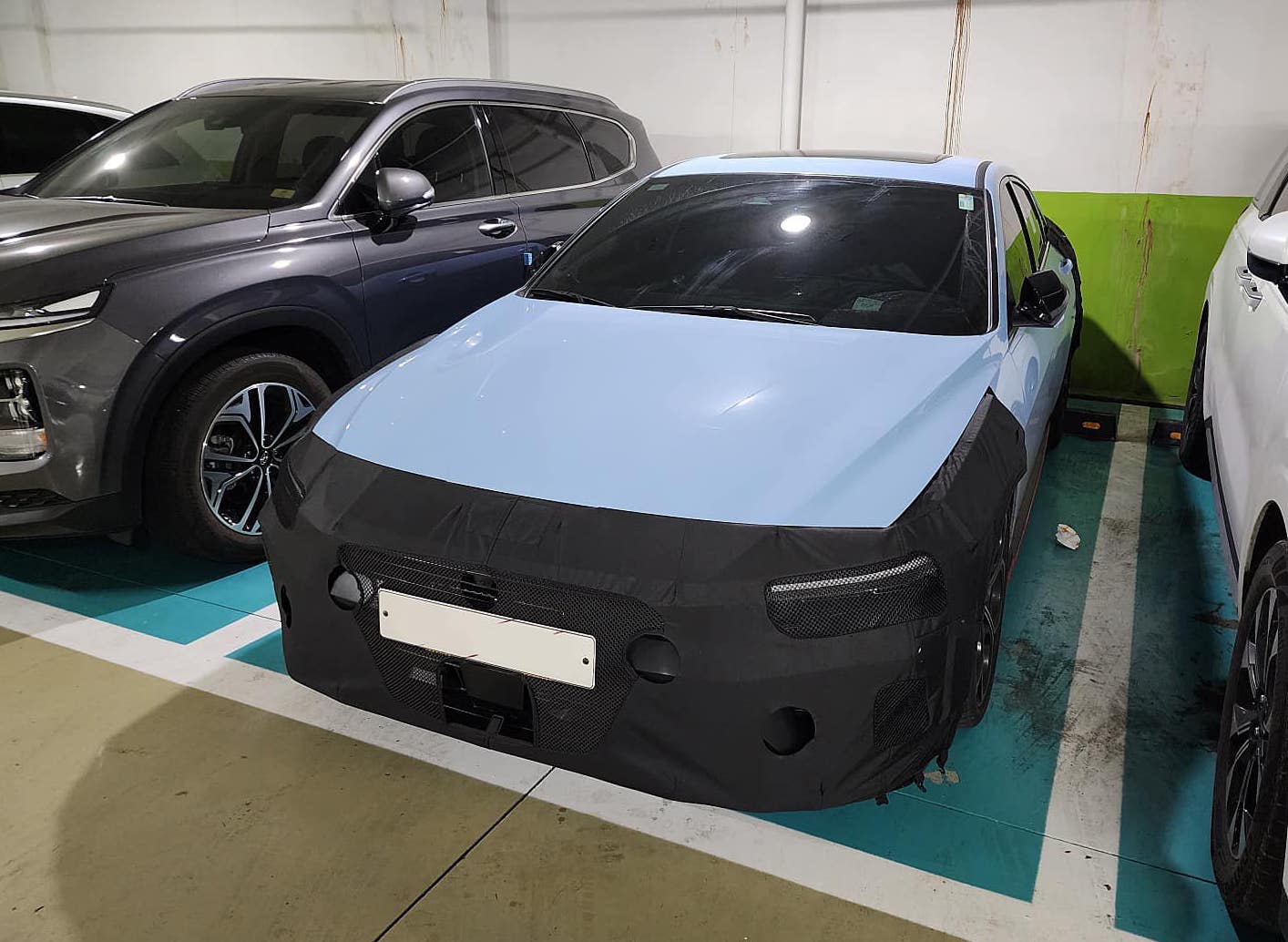
As for the i30 Sedan N performance sedan, it is expected to gain adaptive cruise control – at least for the dual-clutch automatic variant.
Adaptive cruise control is available on automatic versions of the regular i30 Sedan, but it is omitted from the current N as it features a camera-only system.
The updated 2024 Hyundai i30 Sedan N is expected to debut in the coming months, with a local arrival to follow the standard models later this year or early next.
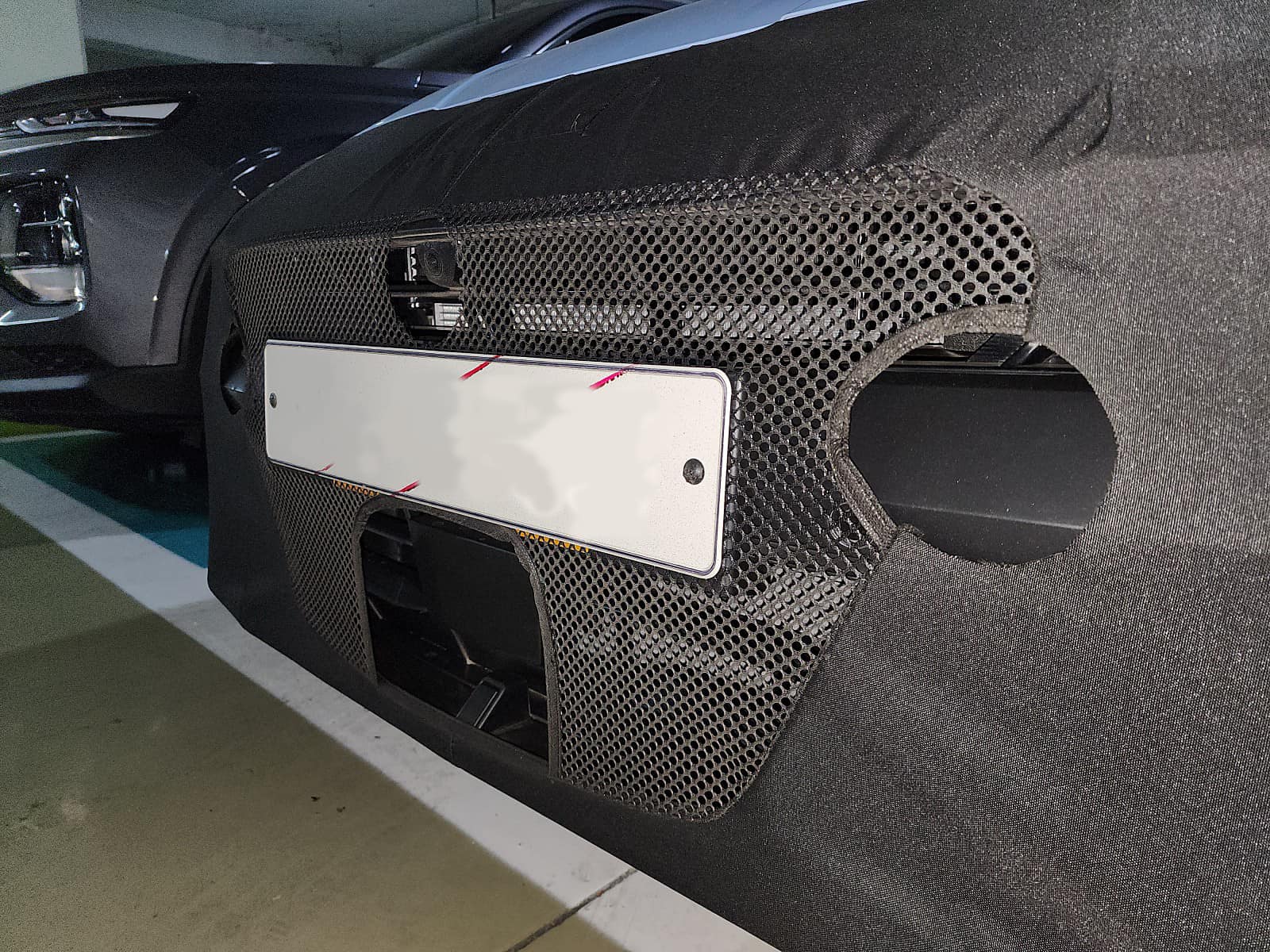
The facelifted 2024 Hyundai i30 Sedan will arrive in Australia in the second half of this year, with local pricing and features to be detailed closer to the time.
Currently, the i30 Sedan is priced from $25,690 before on-road costs for the entry-level Active manual, rising to $50,200 plus on-roads for the i30 Sedan N.
First revealed in March 2020, the i30 Sedan is rebadged specifically for Australia to capitalise on the success of the i30 nameplate – despite the i30 hatch sharing more in common with the previous-generation Elantra.
Below: The current Hyundai i30 Sedan, in N Line trim
Unveiled in New York way back in the ‘before times’ of 2019, the fourth-generation Toyota Kluger (also known as Highlander) will be due for a midlife makeover in the next year-or-so.
How the facelifted Kluger will look is unclear at this stage, and indeed there’s already a version sold in North America and China (where it’s the Toyota Crown Kluger) that wears a distinctly different grille to the model we have here in Australia – check it out at the bottom of this story.
If Australia’s updated Kluger doesn’t simply take on that overseas styling, it could follow the new Crown range and the new Prius (neither of which are offered in Australia) into Toyota’s new design language.
It remains to be seen if those new models are actually a hint at all future Toyota styling, although we know from a recent concept reveal that the new-gen C-HR compact SUV will be among them.
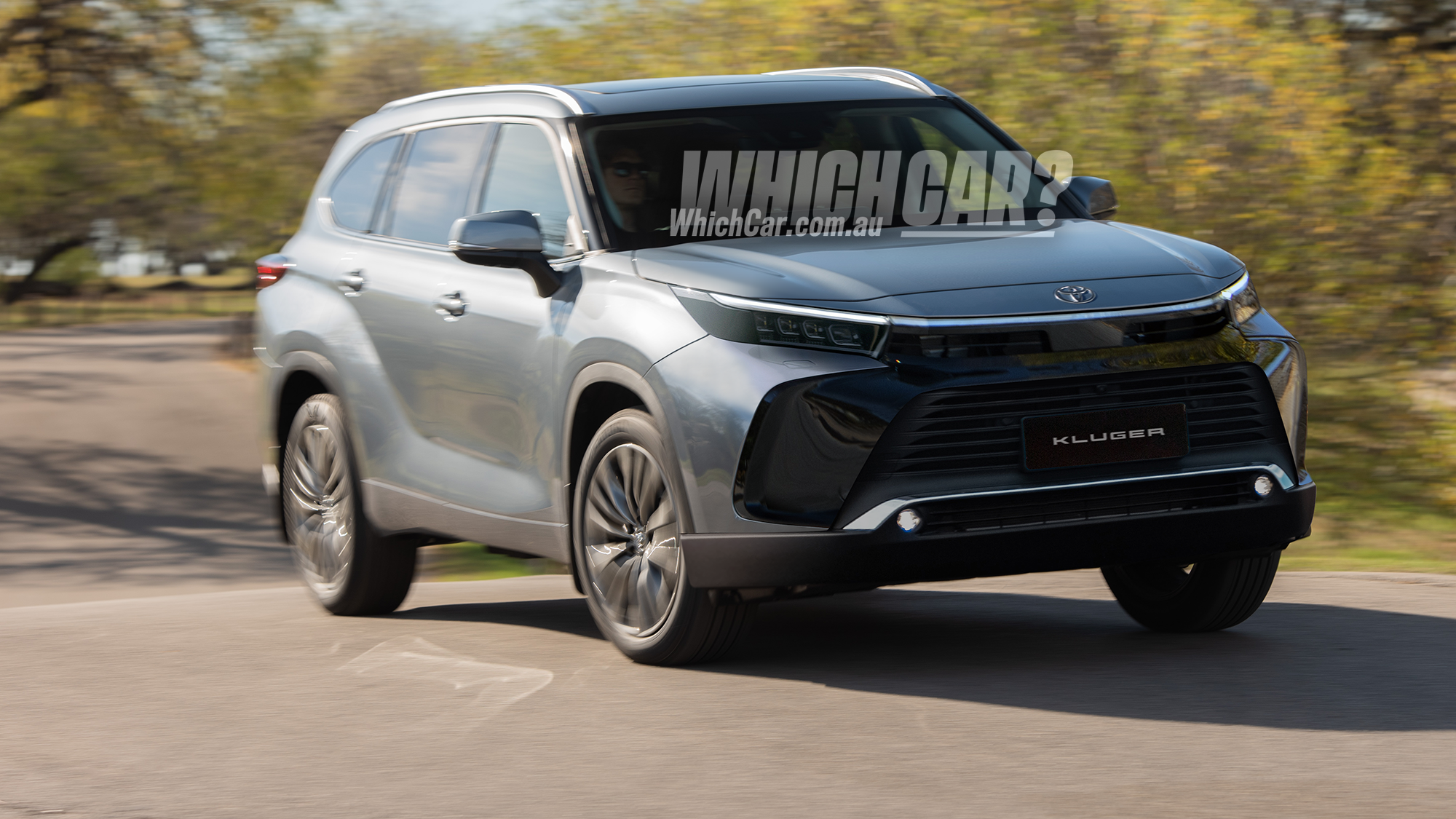
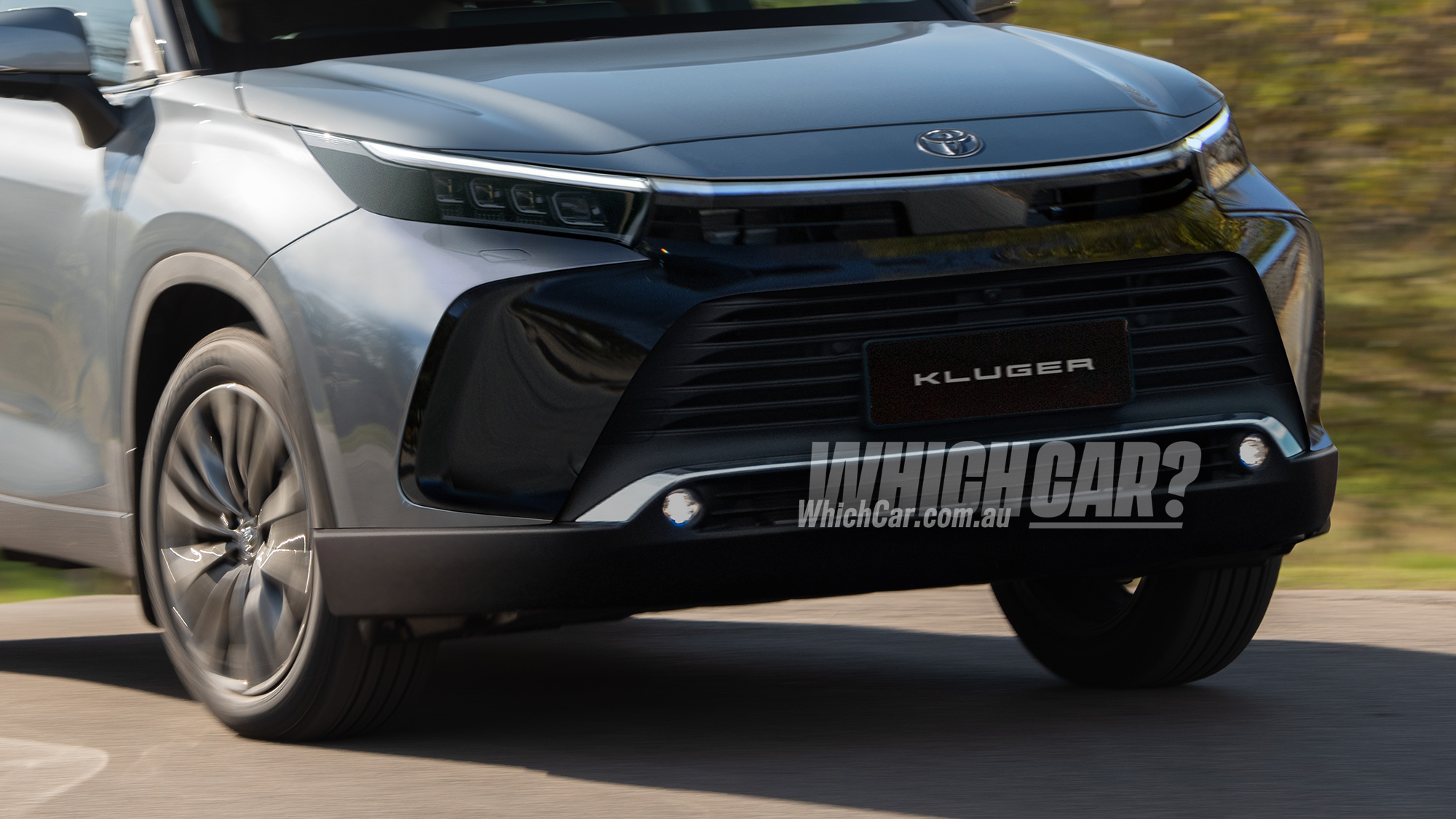
To see how the existing Kluger might look with Toyota’s new styling language, we’ve produced a pair of renders that adapt the Crown and Prius design cues to the front and rear ends.
If our speculative images prove accurate, it could go a long way towards properly tying the Kluger’s currently anonymous looks into the established Toyota look.
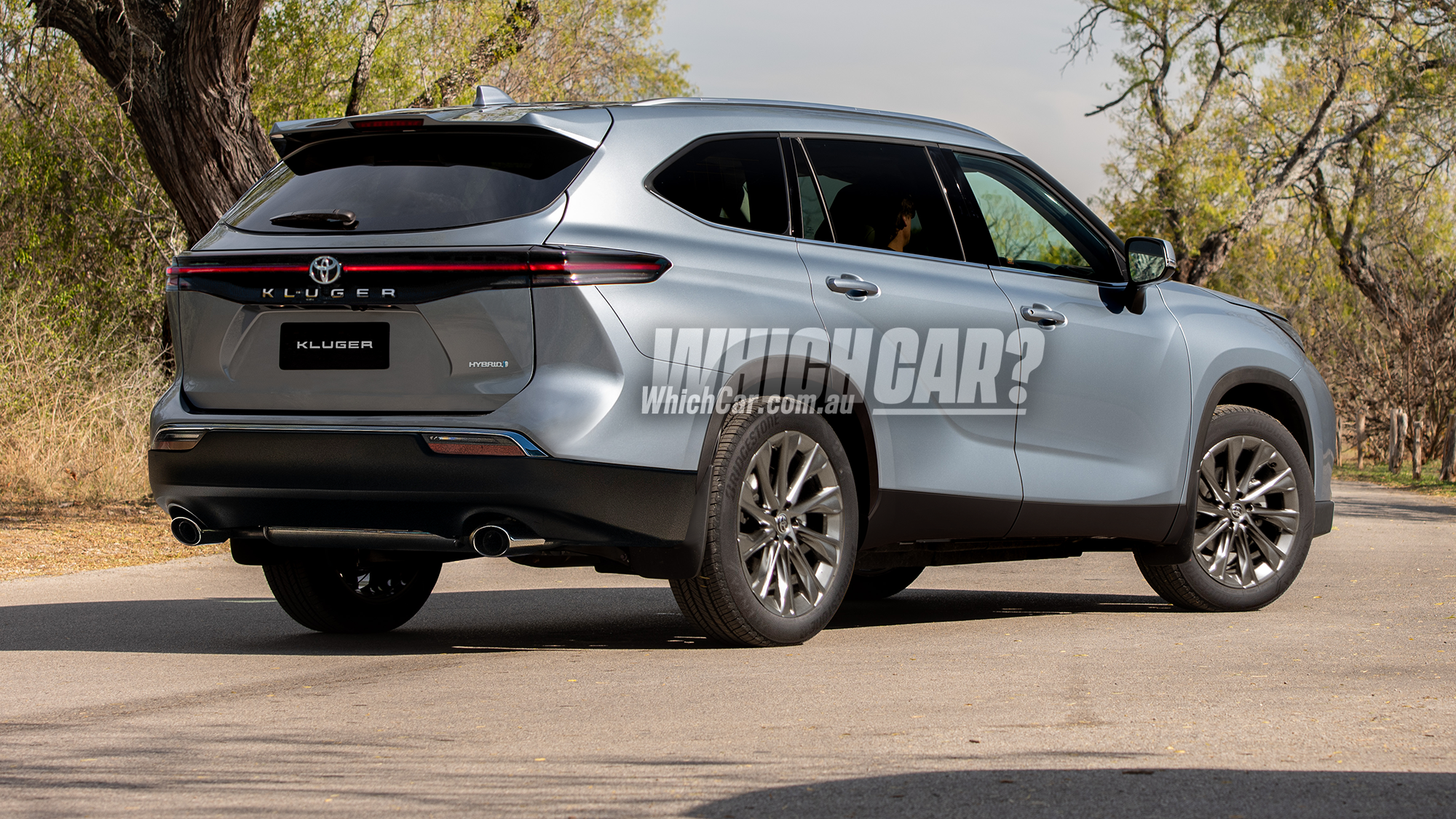
What do you think of the look shown here – a sporty improvement of the current model, or wide of the mark?
Grand… Highlander?
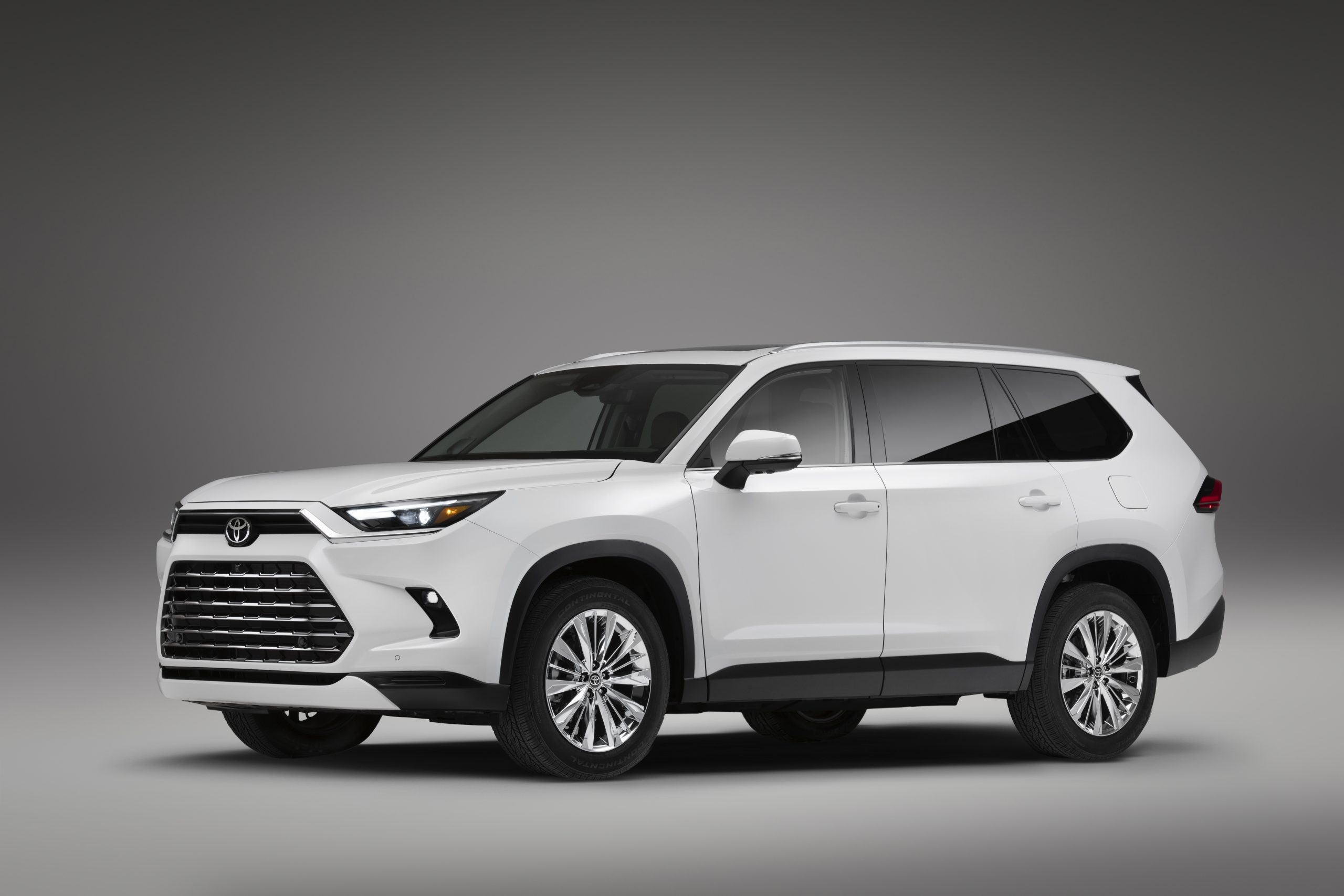
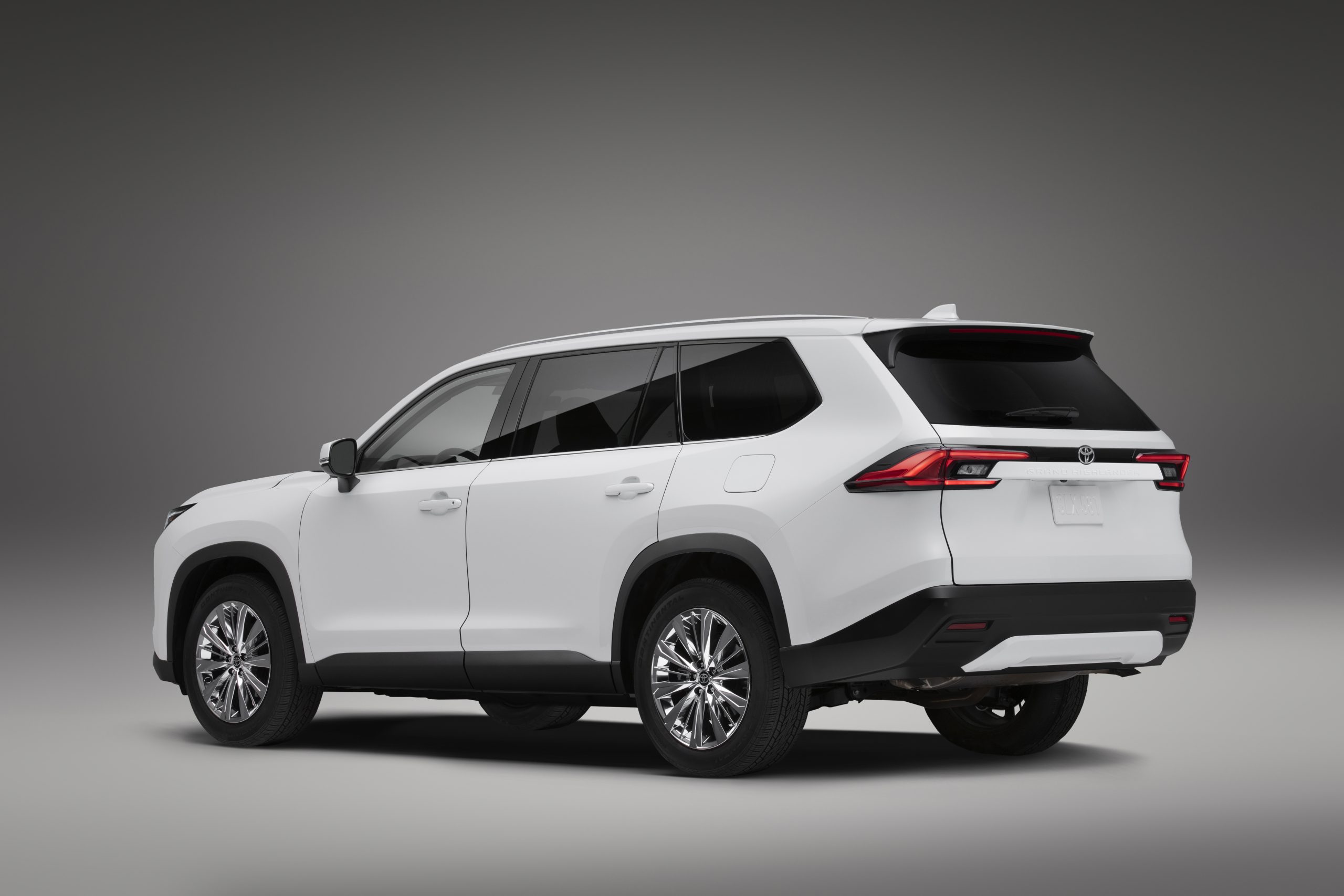
Of course, there’s also the newly revealed Grand Highlander (pictured at the bottom of this story), which will be sold in the US and has not yet been confirmed for Australia.
It’s important to note that the Grand Highlander is much larger than the regular model – and bigger even than a 300 Series LandCruiser – but its styling cues could nonetheless hint at a Kluger facelift.
Which look would you prefer?
Below: The Highlander XSE sold in North America and China (the latter as Crown Kluger)
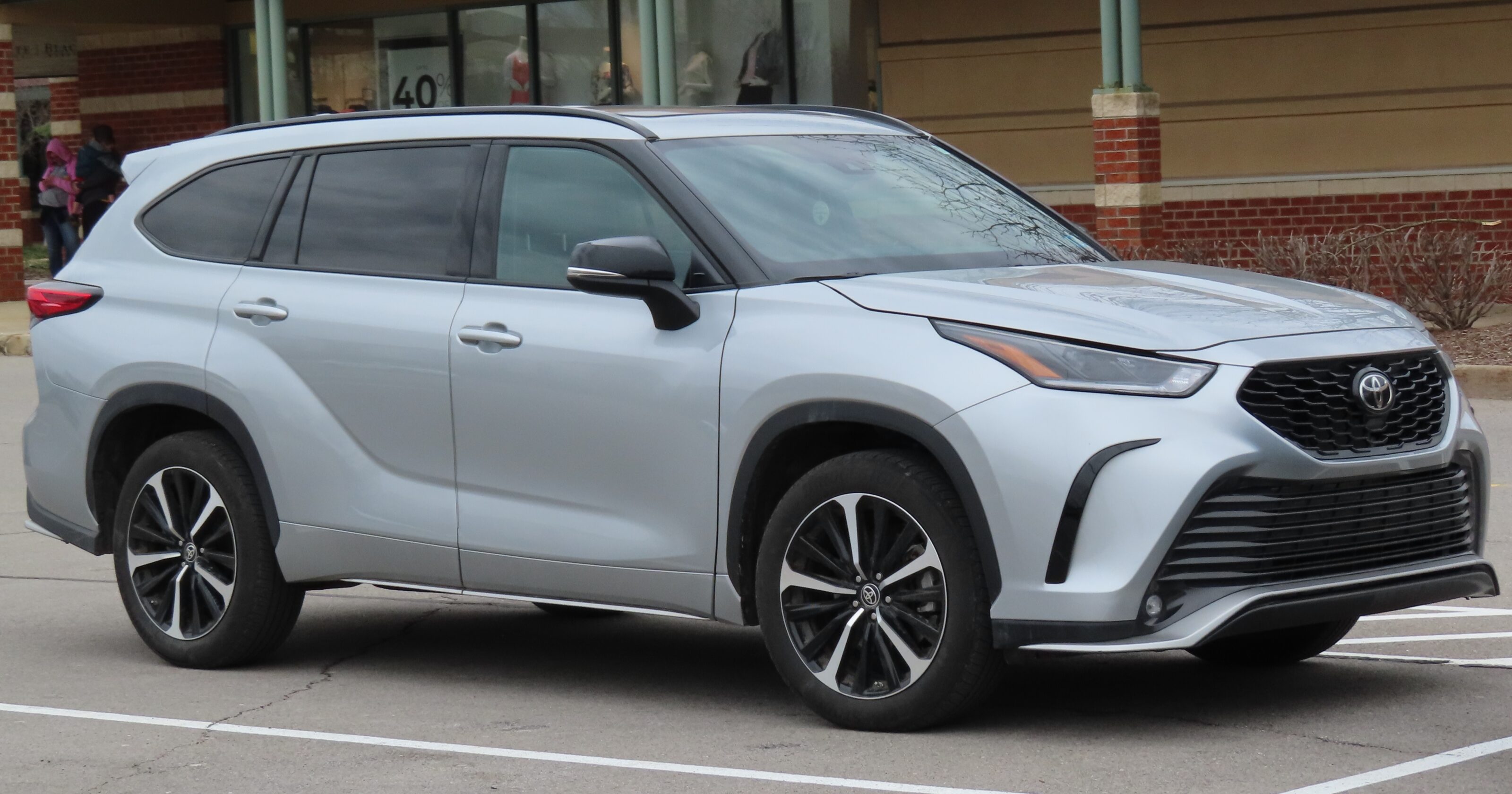
Below: The current Australian-market Kluger
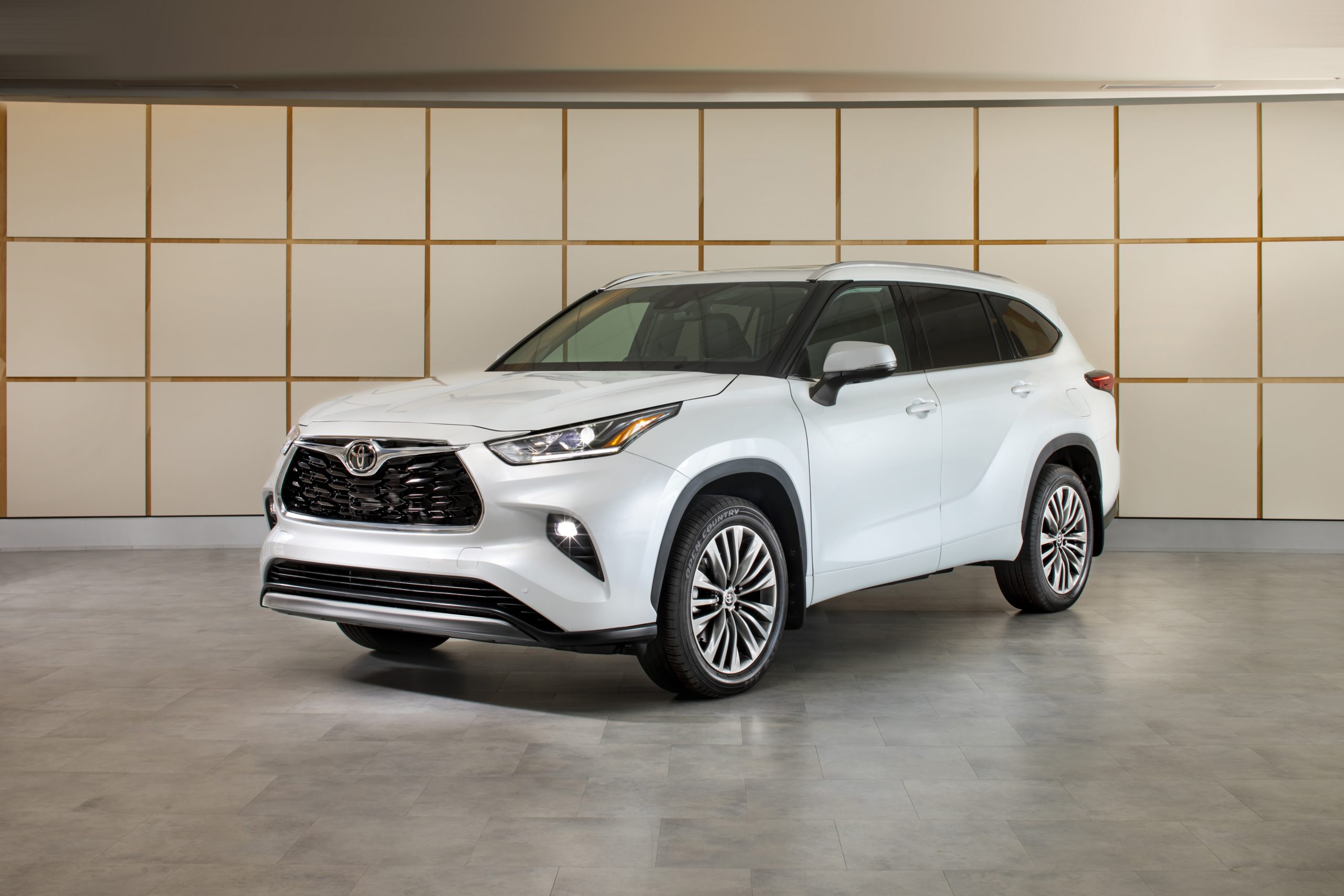
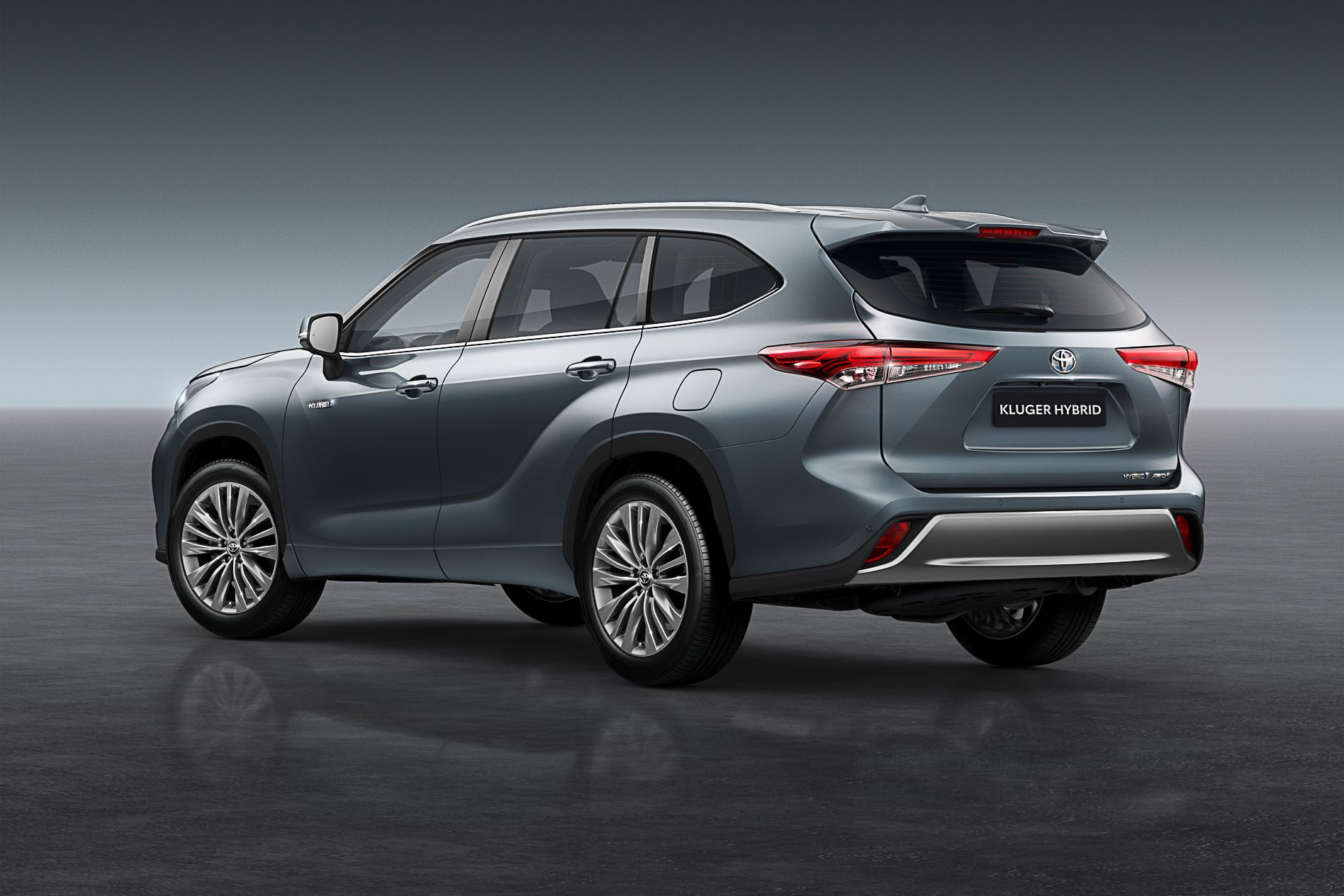
Below: The newly revealed Grand Highlander in America, which is much bigger than the regular Kluger, and bigger even than a 300 Series
Australians may not yet be switching from pumps to plugs en masse, but exponential growth has shifted electric car sales out of niche territory.
Even against a backdrop of limited charging infrastructure and a dearth of truly affordable options, more than 33,000 electric cars were sold last year – a 550 per cent annual increase that would be more staggering without the caveat of Tesla sales being counted officially for the first time.
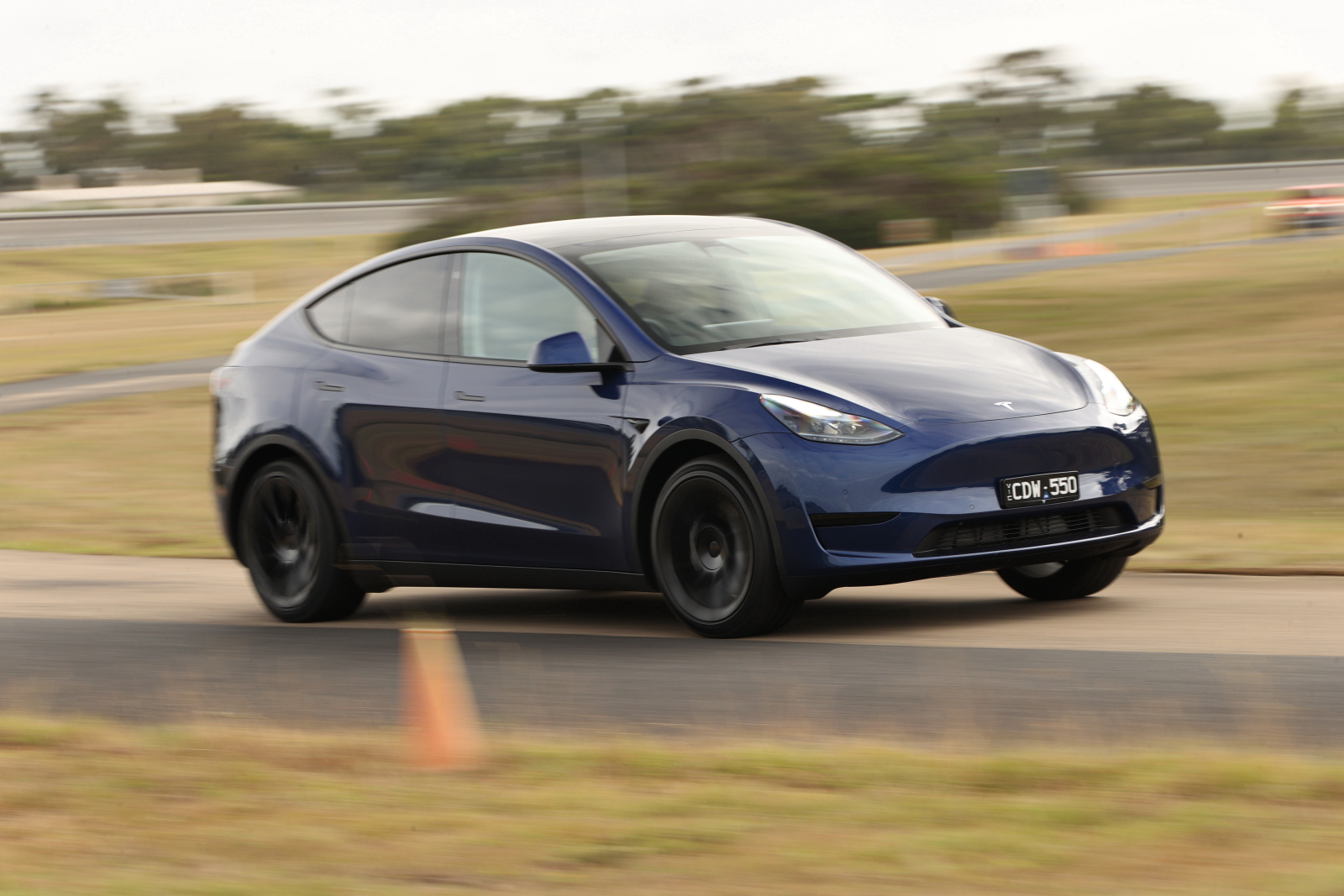
Three in every five EVs sold in 2022 was either a Model 3 sedan or Model Y SUV, and the latter is represented here as one of our favourite new electric cars from the past 12 months. It’s a potential COTY dark horse considering the Model 3 was a 2020 finalist.
WHEELS CAR OF THE YEAR 2023
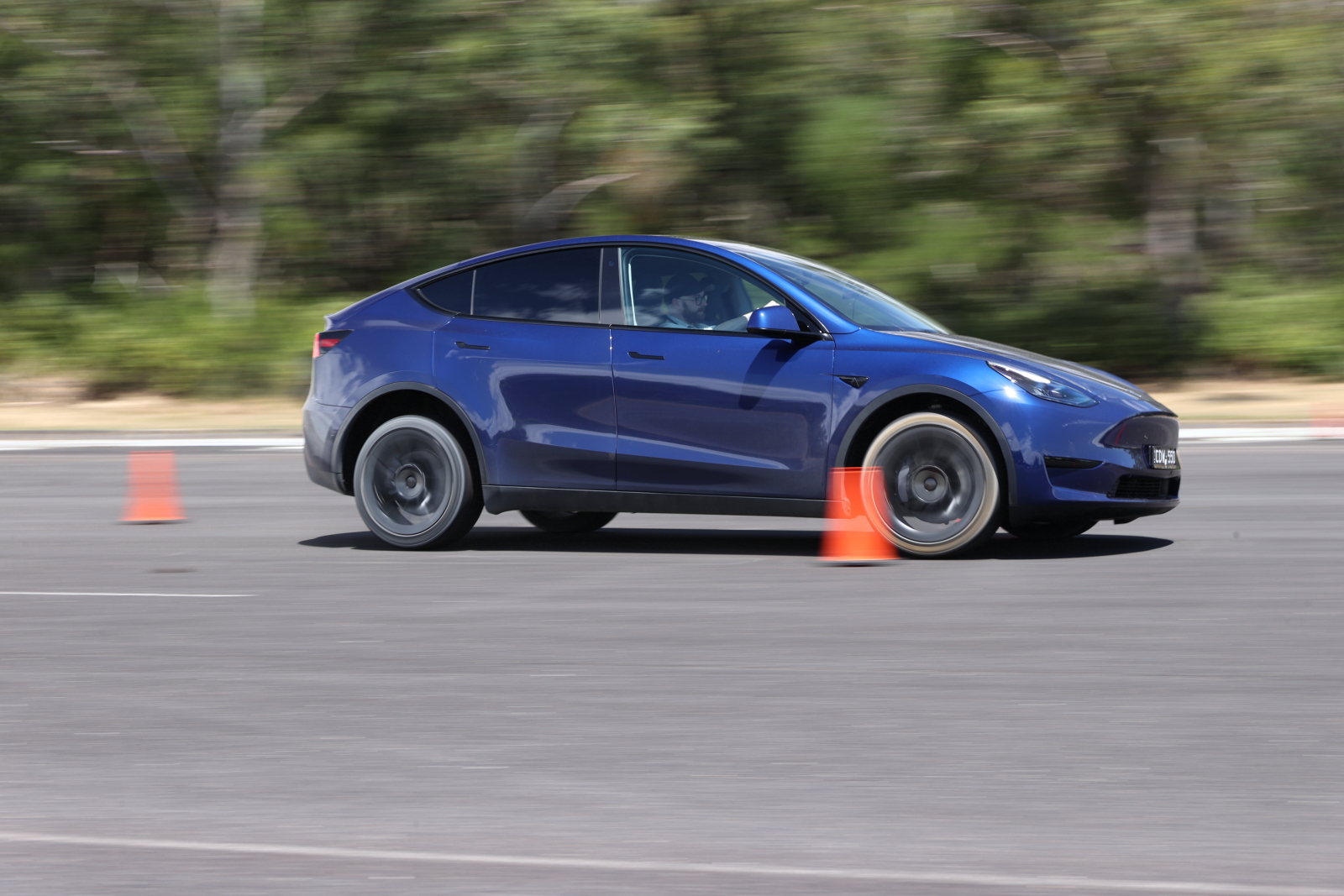
Reflecting the diverse offerings in this segment, the rest of our Best New EVs quintet – not including the BMW i4 that was sadly unavailable – covers a $200K cost spectrum.
Constructing our hopes for attainable electric motoring is the Atto 3 from China’s Build Your Dreams (BYD), an SUV that, in base form at the very least, will give buyers some meaningful change back from $50,000.
The top end features Audi’s twin to the Porsche Taycan, the RS E-Tron GT, while the middle ground is occupied by two models that can be considered direct rivals to the Model Y: Volvo’s coupe-style sibling to the XC40, the C40 Recharge, and the GV60 that is the first EV-only model from Hyundai‘s luxury arm Genesis (and a cousin to the Ioniq 5 and EV6).
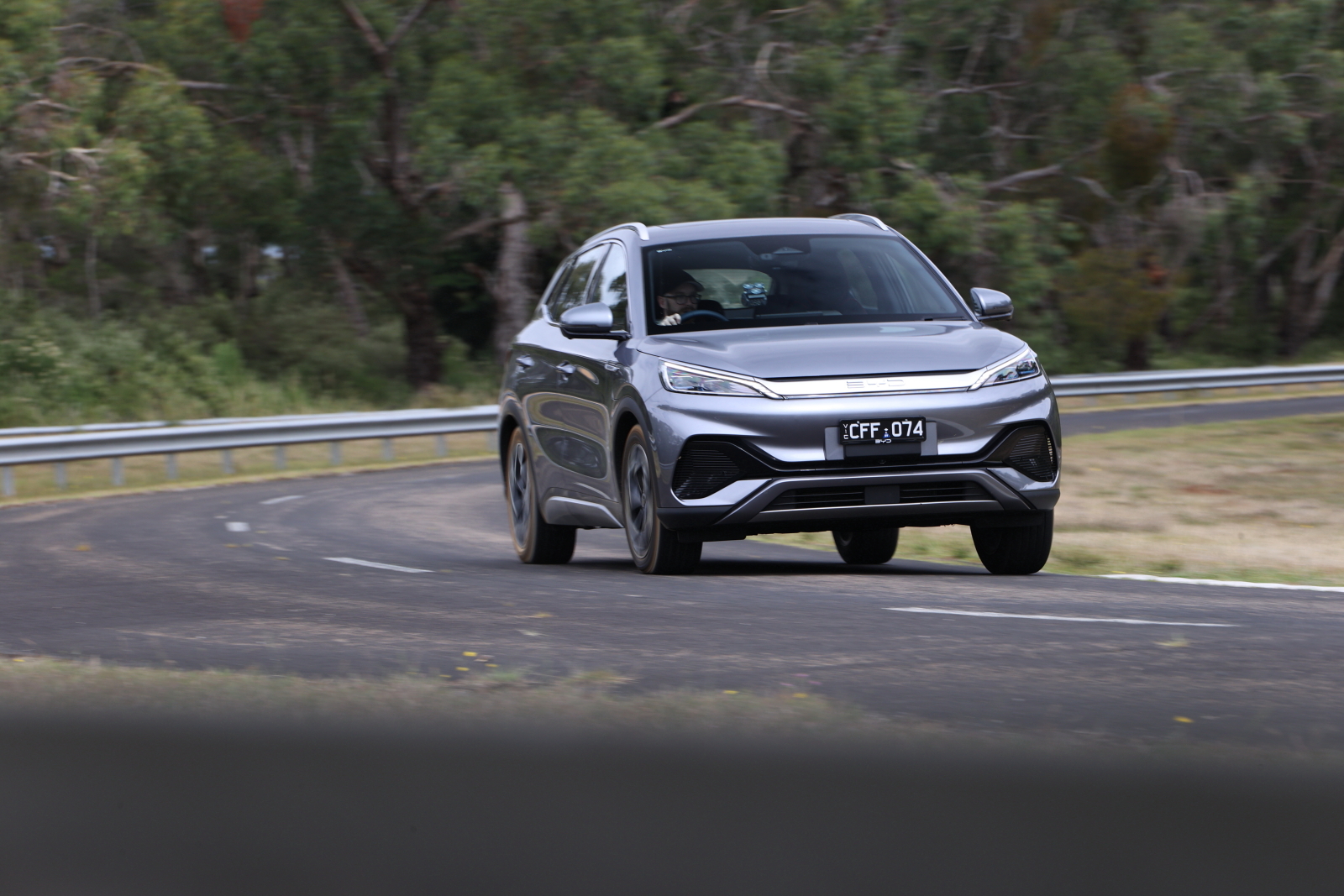
Some similar in concept, some very different – but a common theme was that none failed spectacularly when our COTY judges sat around on the first ‘Contender Presentations’ day to assess each EV against the Value criterion.
The Atto 3 and Model Y stood out especially. In each case, you’re getting a fair amount of SUV metal for your outlay. The 4.46m BYD verges on being a mid-sizer; the 4.75m Tesla straddles medium and large categorisations.
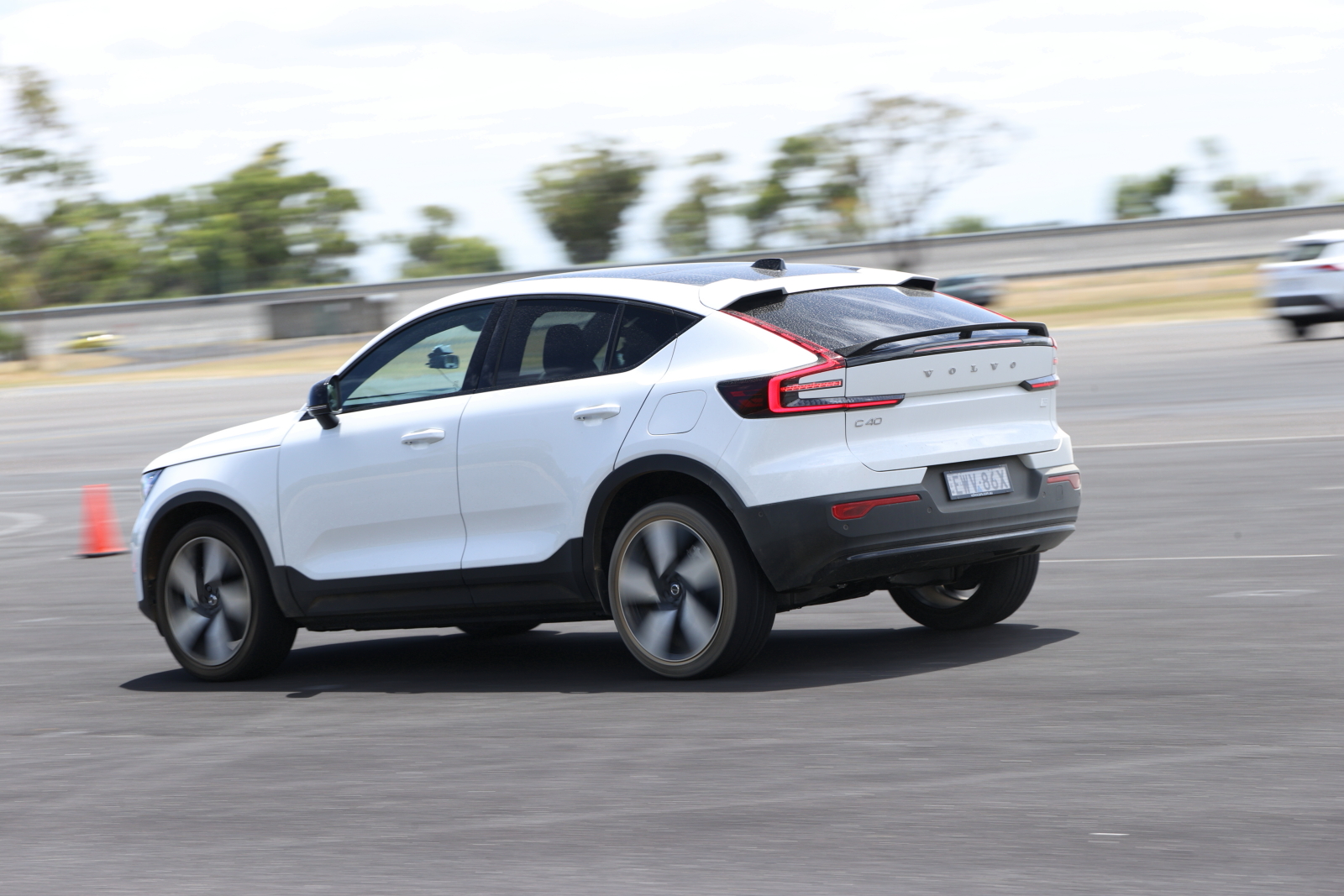
Volvo’s C40 Twin Motor variant tested here isn’t directly comparable to the single-motor Tesla, though at $83,490 before on-road costs it does take the ‘coupe’ approach to pricing.
“It’s costlier than an XC40 Recharge Twin Pure Electric [by $2000], yet with a smaller boot and less range,” said Affat.
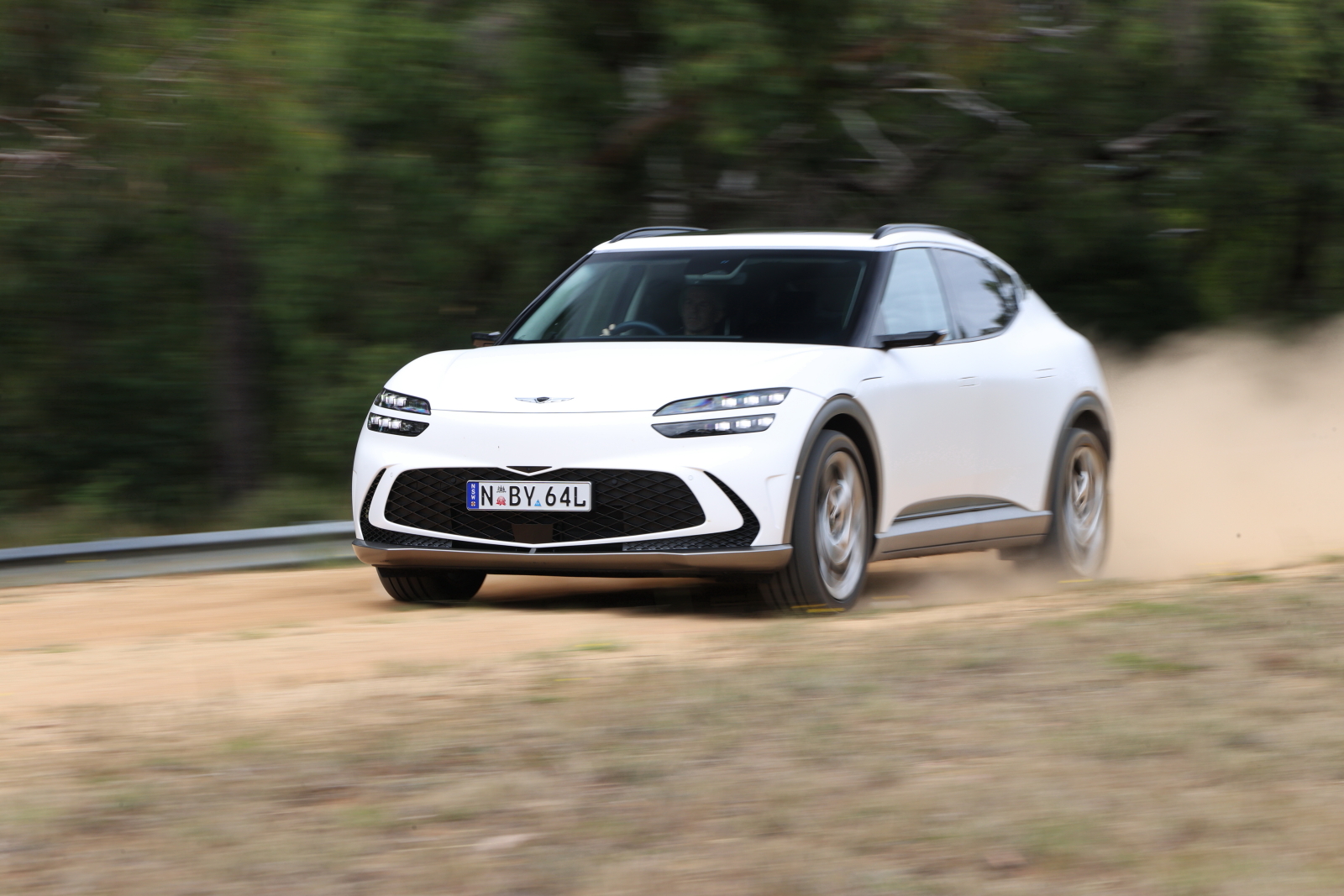
The Genesis interpretation of the E-GMP platform, the GV60, starts well above its Hyundai relative, the Ioniq 5. Although priced from $103,700 before on-road costs, a comprehensive Luxury Package is standard on both trim grades while owners are given the choice of free charging for five years (via Chargefox) or a free home charger (including installation).
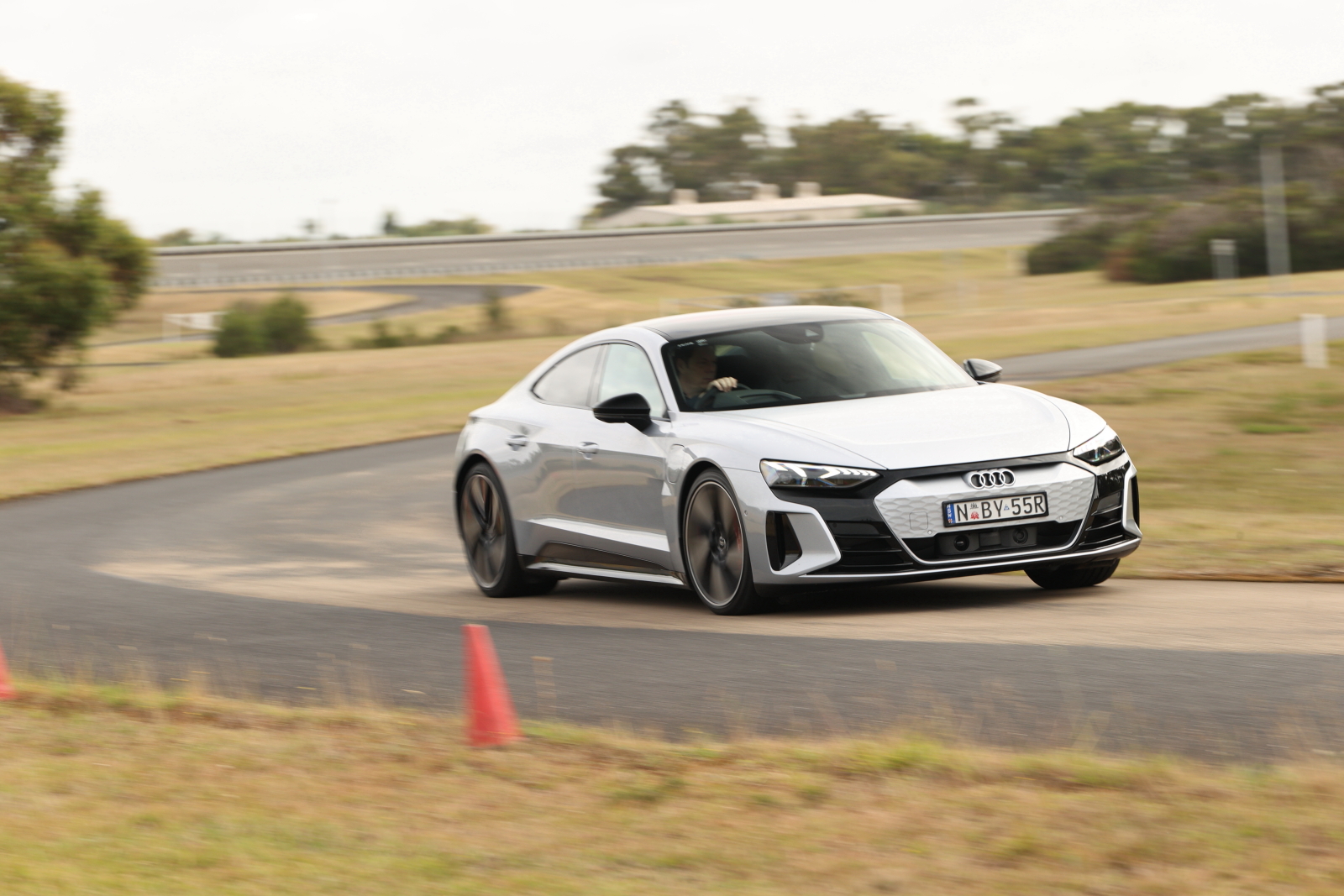
Even Audi’s RS E-Tron GT makes a case for relatively good value, undercutting the Porsche Taycan with which it shares the same bespoke J1 platform, 800-volt architecture, and battery and e-motor technology.
The main question is whether the $248K flagship RS we had on test is worth $68,000 more than the base version. Audi says most buyers will think it is; we’re not so sure.
Enough has been written about the accelerative delights of electric cars that it should come as no surprise that three occupied our top-five quickest vehicles in our 0-100km/h testing.
The C40 placed fifth with a 4.7sec run while the GV60 took third with a flat 4.0sec.
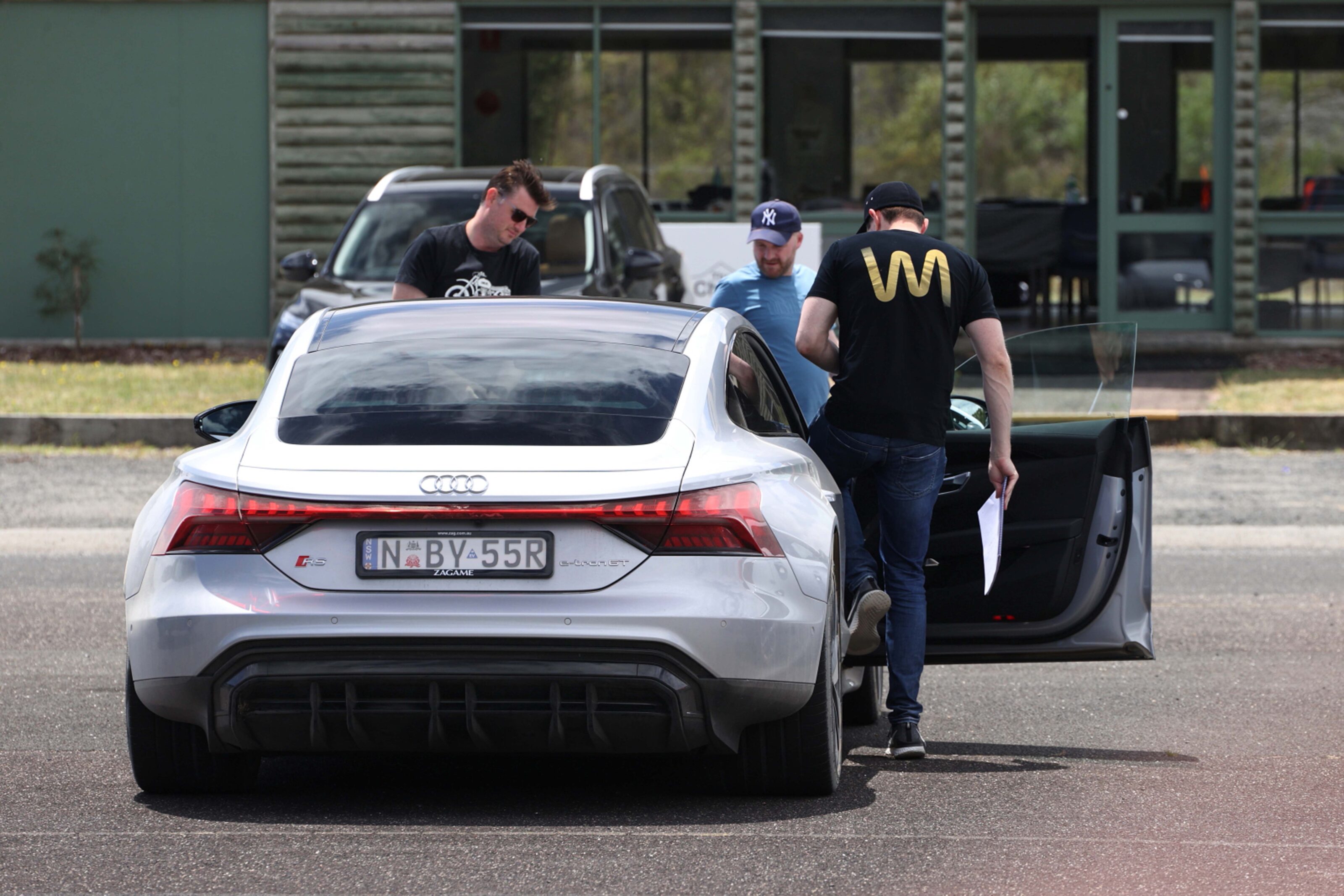
Both are quick, yet the E-Tron GT RS is seriously rapid – pinning the driver’s head into RS-embossed leather on its way to a stunning 3.2sec result.
“Could almost feel the blood sloshing to the back of my skull under full acceleration,” said Campbell. “RS E-Tron nails the EV acceleration party trick.”
Of the single-motor models, the Model Y RWD matched its 6.9sec claim and the Atto 3 was just a tenth shy of its 7.3sec quoted acceleration.
In the reverse, 100-0km/h discipline, the Model Y was the first of the late-brakers with the 229kg-lighter Atto 3 five metres – and 17 places – behind. Virtually all that distance difference can be put down to tyres: the Tesla wears surprisingly sporty (20-inch) Michelin Pilot Sports while the BYD features (18-inch) Atlas Batman rubber that struggles to generate strong grip.
“Above seven-tenths driving, mid-corner steering inputs simply become a tyre-squeal volume adjustment,” said Affat of the BYD.

“Dynamics are presentable for a car on tyres made of tofu,” remarked editor Enright, summing up the feeling from testers that the Atto 3 would benefit from a better set of boots yet was also unlikely to disappoint its target market despite mixed-bag steering and ride characteristics.
Judges were more surprised at the GV60’s soft yet easily flustered suspension, which somewhat detracted from the EV’s luxury pitch.
The Model Y was most noted for its effortless performance, strong braking and impressive lane-change result (7th), while the RS E-Tron GT was universally appreciated around the ride-handling circuit for its grand tourer vibes.
“(The Model Y) Fails to bend physics in the same way Taycan does, but it’s a stunning piece of equipment with a gorgeous air-suspended ride and sense of occasion to match,” said Law.
The driver’s pick of our motorised bunch, however, was a Volvo. And, yes, that’s the kind of sentence rarely written by Wheels over the decades.
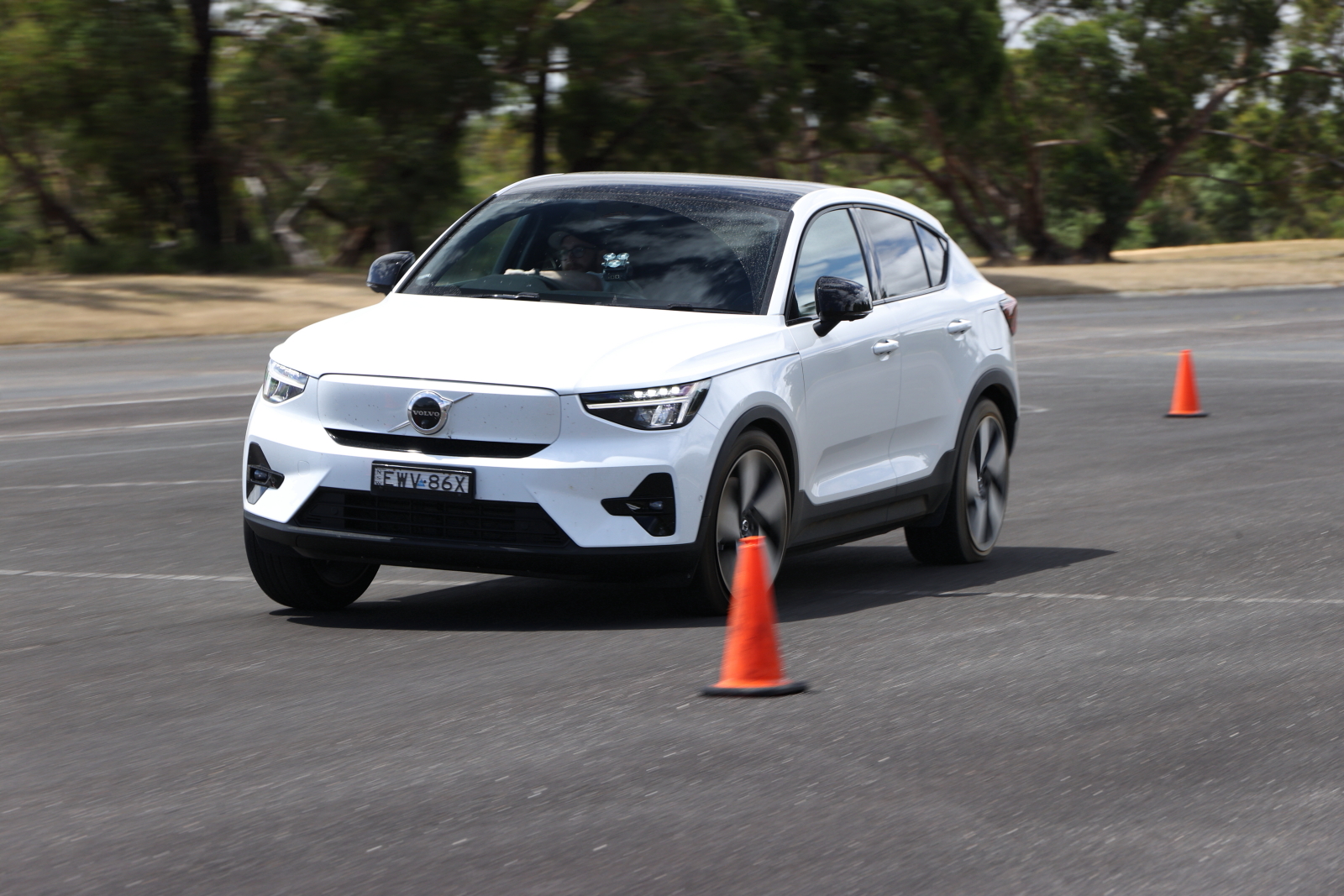
Alex Inwood led the chorus of praise for the C40 Recharge’s dynamics.
“An absolute hoot to drive. The steering is accurate and the ride quality is controlled and composed. Loads of grip to exploit, too.”
Our other Alex concurred: “Fundamentally sound and possibly one of the most widely talented cars here in terms of on-road dynamics.”
“No drive modes, no fuss, no FOMO,” quipped Enright, referencing the Volvo’s just-drive approach that offered no adjustments for steering weighting, regen braking or power delivery yet all felt just right.
“Six in every ten EVs sold here in 2022 were either a Tesla Model 3 sedan or Model Y SUV” – Jez Spinks
Battery efficiency, however, remains something of an Achilles heel for Volvo Group EVs (and, interestingly, the C40, XC40 and Polestar 2 will later this year all switch from front-drive to rear-drive in base spec, a move that helps boost range).
The C40’s exterior styling compromises rear vision, though not the cabin as much as might be expected. The sloping roof inevitably robs some rear headroom and boot space compared with the XC40 but interior space is largely similar.
Audi’s RS E-Tron GT was also noted for its slot-like rear window, while judges also felt the four-door’s grand touring credentials would have been stronger with more interior stowage, a bigger boot (just 350L in RS spec), and a driving range over 500km rather than below it.
Two blue-hue cabins polarised the group.

“Weirdburger cabin,” said Campbell of the BYD’s interior. “Like trying a weird new ice cream flavour at the gelato bar – takes a while to figure out if you actually like it, or it’s just different.”
Fisk found the BYD’s quirkiness kind of charming but “a bit whacky” for her tastes.
Its cabin quality and construction impressed across the judging board, though, and greater expectations for the more expensive Genesis interior led to greater criticism.
“Where its Hyundai Ioniq 5 and Kia EV6 cousins excel in design, the GV60 feels like it has had too much thrown at it and the result is more garish than luxurious,” said Fisk.
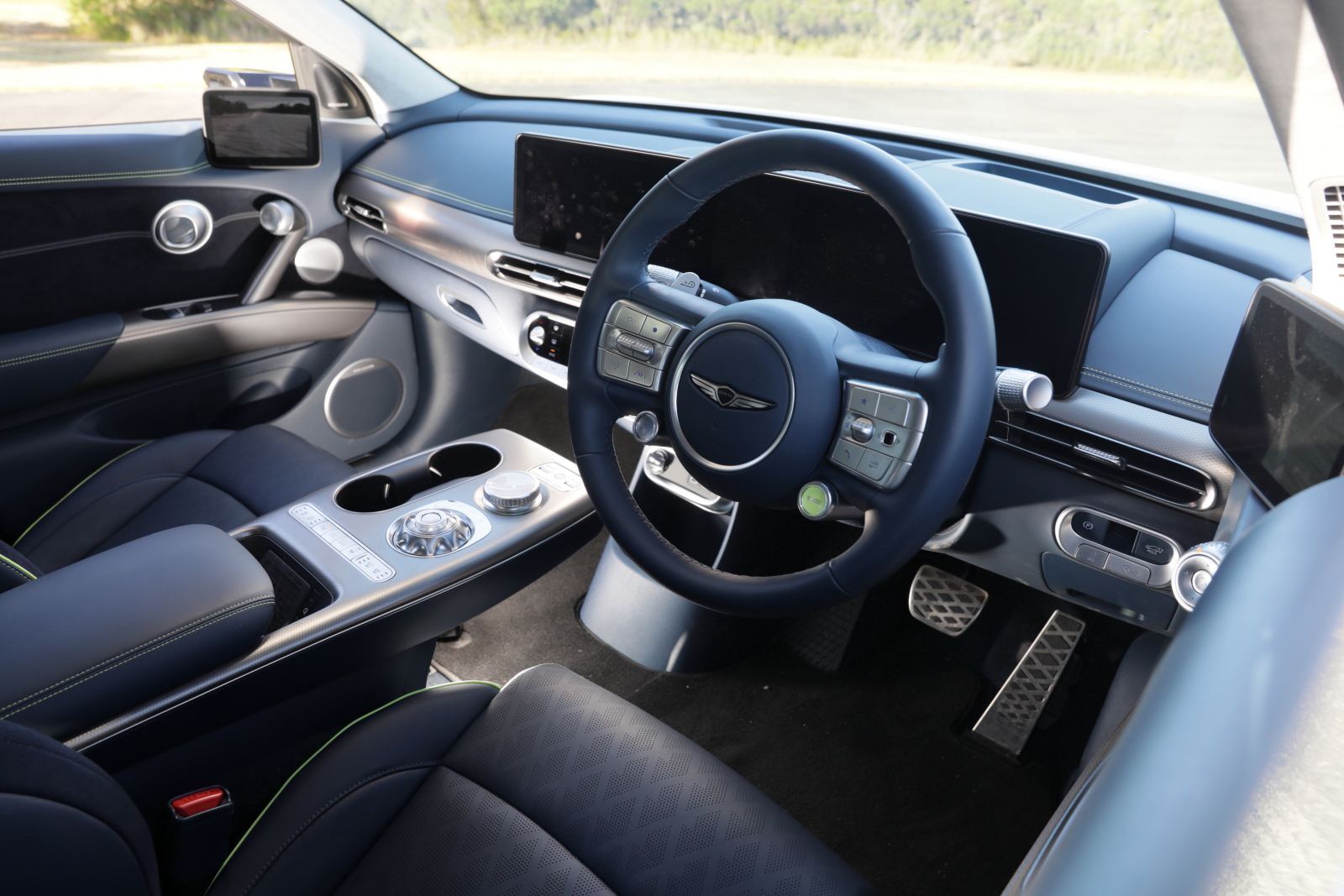
Rear-seat space was also considered surprisingly restrictive in a way the Ioniq 5 and EV6 aren’t, and the flagship GV60’s digital mirrors, while impressively high in resolution, didn’t convince anyone that they should become a widespread replacement for conventional mirrors.
The Model Y offers interior and boot space in abundance. And some clever storage solutions, such as the angled dual smartphone charging trays.
And with its solid showing around Lang Lang, Tesla’s bulbous SUV grabbed a bunch of votes to proceed to the Finalists stage.
The BYD received two votes and the C40 three, but the Model Y would be the only plug-in vehicle joining the fuel-pump brigade out on real-world roads.
Specifications
| Audi E-Tron GT | Audi RS E-Tron | BYD Atto 3 Standard | BYD Atto 3 Extended | Genesis GV60 AWD with Luxury Package | Genesis GV60 Performance AWD with Luxury Package | Tesla Model Y Rear-Wheel Drive | Tesla Model Y Performance | Volvo C40 Recharge twin Pure electric | |||||||||||||||||
|---|---|---|---|---|---|---|---|---|---|---|---|---|---|---|---|---|---|---|---|---|---|---|---|---|---|
| Price | $180,200 + on-road costs | $248,200 + on-road costs | $48,011 + on-road costs | $51,011+ on-road costs | $103,700 + on-road costs | $110,700 + on-road costs | $69,300 + on-road costs | $95,300 ($98,955 w/ LCT) + on-road costs | $83,490 | ||||||||||||||||
| Body | 5-door, 5-seat large sedan | 5-door, 5-seat large sedan | Five door, five seat SUV | Five door, five seat SUV | Five door, five seat SUV | Five door, five seat SUV | 5-door, 5-seat medium SUV | 5-door, 5-seat medium SUV | 5-door, 5-seat small SUV | ||||||||||||||||
| Drive | all-wheel | all-wheel | front-wheel | front-wheel | all-wheel | all-wheel | rear-wheel | all-wheel | all-wheel | ||||||||||||||||
| Drivetrain | 2 x electric motors + 93kWh (gross) battery | 2 x electric motors + 93kWh (gross) battery | single electric motor + 50kWh u2018bladeu2019 battery | single electric motor + 60kWh u2018bladeu2019 battery | dual motor + 77.4kWh battery | dual motor + 77.4kWh battery | single motor + u201c57.5kWhu201d battery | dual motor + u201c75kWhu201d battery | dual motor + 78kWh battery | ||||||||||||||||
| Power | 350kW (390kW in boost mode) | 440kW (475kW in boost mode) | 150kW | 150kW | 234kW | 360kW (with Boost mode; 320kW without) | 194kW (unofficial) | 413kW (unofficial) | 300kW | ||||||||||||||||
| Torque | 630Nm (640Nm in boost mode) | 830Nm | 310Nm | 310Nm | 605Nm | 700Nm (with Boost mode; 605Nm without) | 340Nm (unofficial) | 660Nm (unofficial) | 660Nm | ||||||||||||||||
| Transmission | 2-speed automatic | 2-speed automatic | Single-speed reduction | Single-speed reduction | Single-speed reduction | Single-speed reduction | single-speed reduction | single-speed reduction | Single-speed reduction | ||||||||||||||||
| Consumption | 19.2kWh/100km | 20.2kWh/100km | 16.0kWh/100km | 16.0kWh/100km | 18.8kWh/100km combined (claimed) | 19.1kWh/100km combined (claimed) | 14.6kWh/100km combined (claimed) | 15.4kWh/100km combined (claimed) | 434km (single); 420km (twin) | ||||||||||||||||
| Kerb weight | 2275kg | 2345kg | 1680kg | 1750kg | 2160kg | 2210kg | 1909kg | 1997kg | 2151kg | ||||||||||||||||
| Towing capacity | N/A | N/A | N/A | N/A | 1600kg braked | 1600kg braked | 1600kg braked | 1600kg braked | 1800kg braked | ||||||||||||||||
| 0-100 | 4.1sec (claimed in Boost mode) | 3.3sec (claimed in Boost mode) | 7.3sec | 7.3sec | 5.5sec | 4.0sec | 6.9sec | 3.7sec | 4.7sec | ||||||||||||||||
| L/W/H/W-B | 4989/1964/1396/2900mm | 4989/1964/1414/2900mm | 4455/1875/1615/2720mm | 4455/1875/1615/2720mm | 4515/1890/1595/2900mm | 4515/1890/1595/2900mm | 4751/1921/1624/2890mm | 4751/1921/1624/2890mm | 4440/1873/1591/2702mm | ||||||||||||||||
| Boot space | 405L | 350L | 440L | 440L | 432L | 432L | 854 litres | 854 litres | 413L | ||||||||||||||||
| Warranty | 5 years/unlimited km | 5 years/unlimited km | 6 years/150,000km | 6 years/150,000km | 5 years/unlimited km | 5 years/unlimited km | 4 years/80,000km (battery 8 years/160,000km) | 4 years/80,000km (battery 8 years/192,000km) | 5 years/unlimited km | ||||||||||||||||
| Safety rating | Not yet crash tested | Not yet crash tested | 5 star ANCAP (2022) | 5 star ANCAP (2022) | 5 star ANCAP (2022) | 5 star ANCAP (2022) | 5-star ANCAP (2022) | 5-star ANCAP (2022) | 5-star ANCAP (2022) |
MORE READING
Now that you’re done reading about these COTY 2023 contenders, you should go back to catch up on anything you might’ve missed. Check out the links below, or find it all at our COTY page.
A COTY winner in its previous form, the Toyota GR86’s pre-match sparkle was tempered by the Subaru BRZ’s performance last year – still an incredible drive, but the follow-up album rarely has the sledgehammer impact of the first.
As for the Nissan Z, its mere existence is cause for elation among the Wheels team.
On the first day, in a meeting room running through specification sheets, the writing was already on the wall for the pair of sports cars. Neither has a current, valid safety rating.
All is not lost, though, because we know the GR86 and Z ought to offer spectacular drives. After watching the other judges step out of the two-door sports cars wearing widescreen grins, I was excited to sample both.
I got my chance in the sports cars first thing in the morning. With an under-caffeinated brain, the mercury at 15ºC and damp patches around, I clambered into the 300kW Z with a touch of trepidation.
WHEELS CAR OF THE YEAR 2023
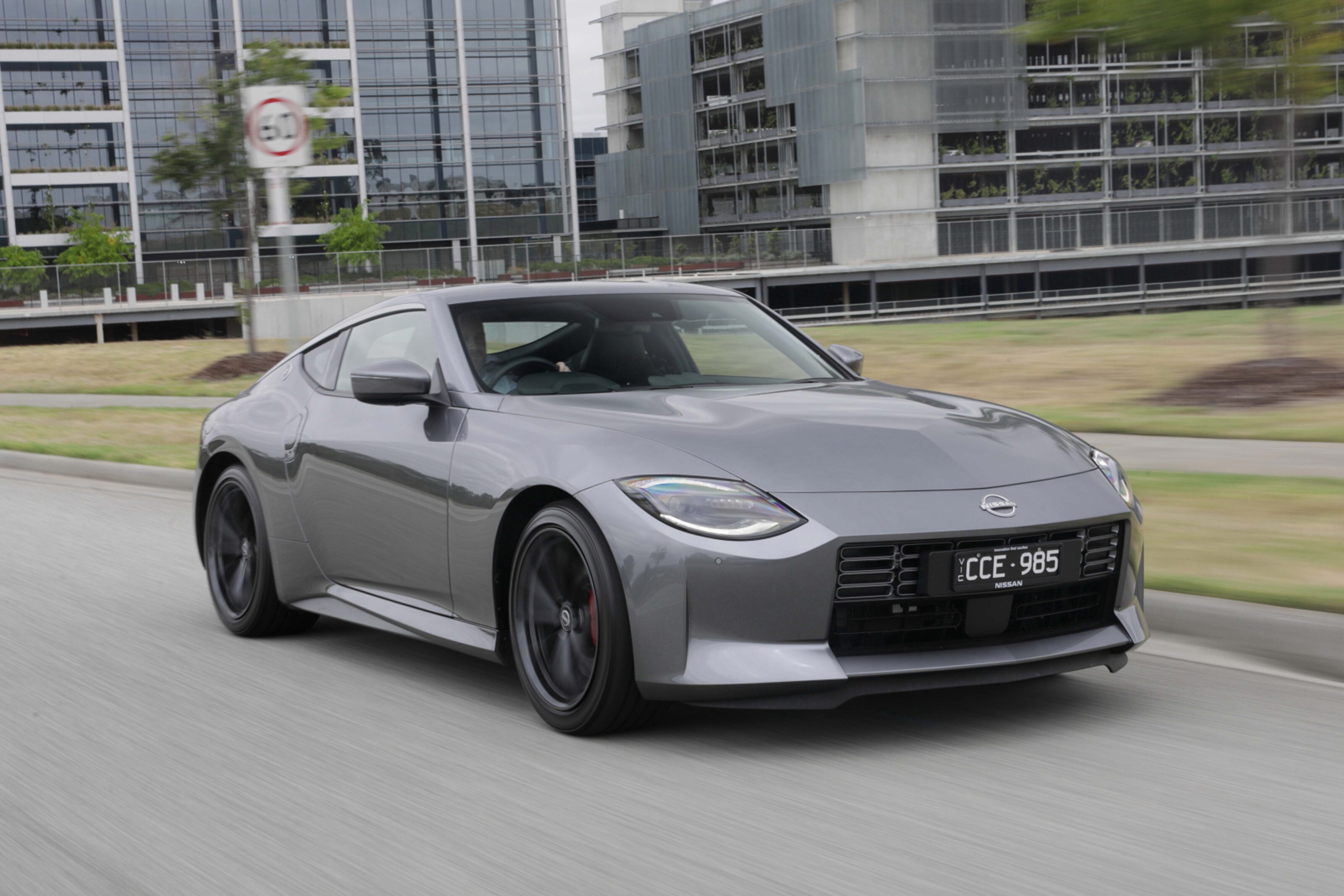
After thumbing the Z’s start button, I jumped out to watch the exhaust’s condensation whisper into the air as the 3.0-litre V6 warmed up – a perfect excuse to check vital signs.
How big is the boot? Good enough for a weekend’s worth of soft bags or weekly shop. No spare tyre though – bit of a shame for a grand tourer.
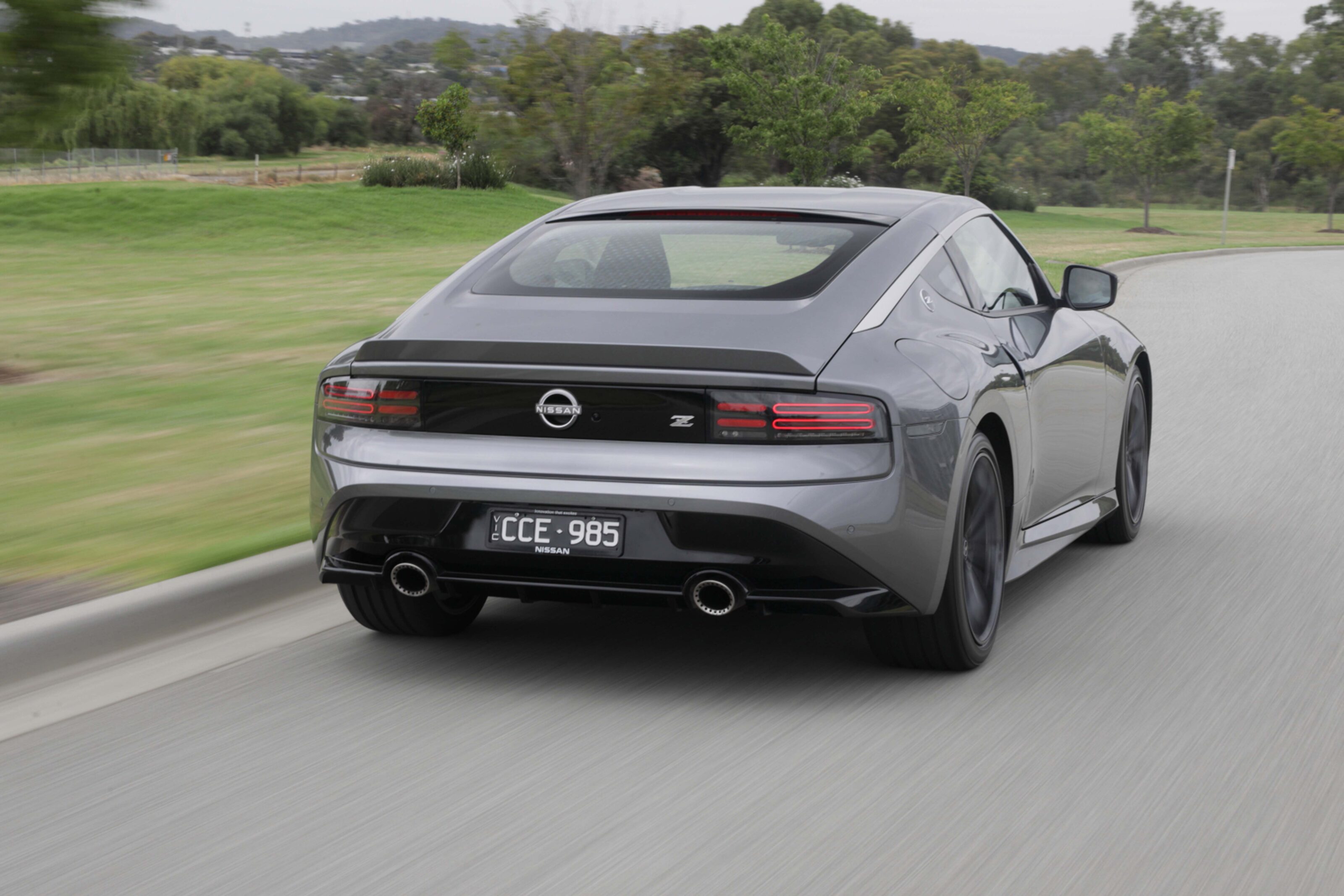
The Z is a design of two parts; its muscular sports car proportions enhanced by tasteful detailing like the 300ZX-inspired LED tail lights. The exterior is offset by mid-2000s-malaise-era pull handles and the door cards look very familiar (both are carry-over). Technology is, thankfully, leaps ahead of the 370Z that shares the new Z’s ‘Z34’ chassis code (do we call it a 34-2?), with a responsive 9.0-inch infotainment touchscreen and 12.3-inch digital cluster.
With the Z’s temp up, it’s time to go.
Start gently in first, trundle over the skid pan onto Lang Lang’s ride and handling loop, shift lazily into second through the long, heavy gate, ease out the clutch, and feed in a full serving of gas.
The Z happily spins its 275/35R19 Potenza S007s through second gear, even with ESC fully engaged. Pluck third – this time a quicker shift from redline – and it happens again. The Z has some serious snot!
“Rear tyres always seem incredibly surprised whenever you put your foot down” – wish Campbell had told me this before setting off.
The Z did manage the second-fastest rolling acceleration pace behind only the Audi E-Tron GT, though Dylan described it as “about as easy to performance-test as it would be knocking an apple off someone’s head with an RPG”. While getting it cleanly off the line was tricky, he managed to extract a 0-100km/h sprint of 5.8 seconds.
The drive is a little aloof, though, the Z’s loose-limbed suspension, large steering wheel and excitable rear end mean dishing out all the twin-turbo engine’s power demands a certain amount of respect. Z is not a track tool, rather a grand tourer with attitude. Affat likened it to an old-school tuner Nissan – “in a good way”.
“The Toyota GR86 is sharper, harder, and faster than before, all by a good margin” – John Law
Enright appreciated the ‘Japanese muscle car’ vibes, too: “Forget about those who complain about the manual shift. They’ve forgotten what a Z-car’s shift should feel like.”
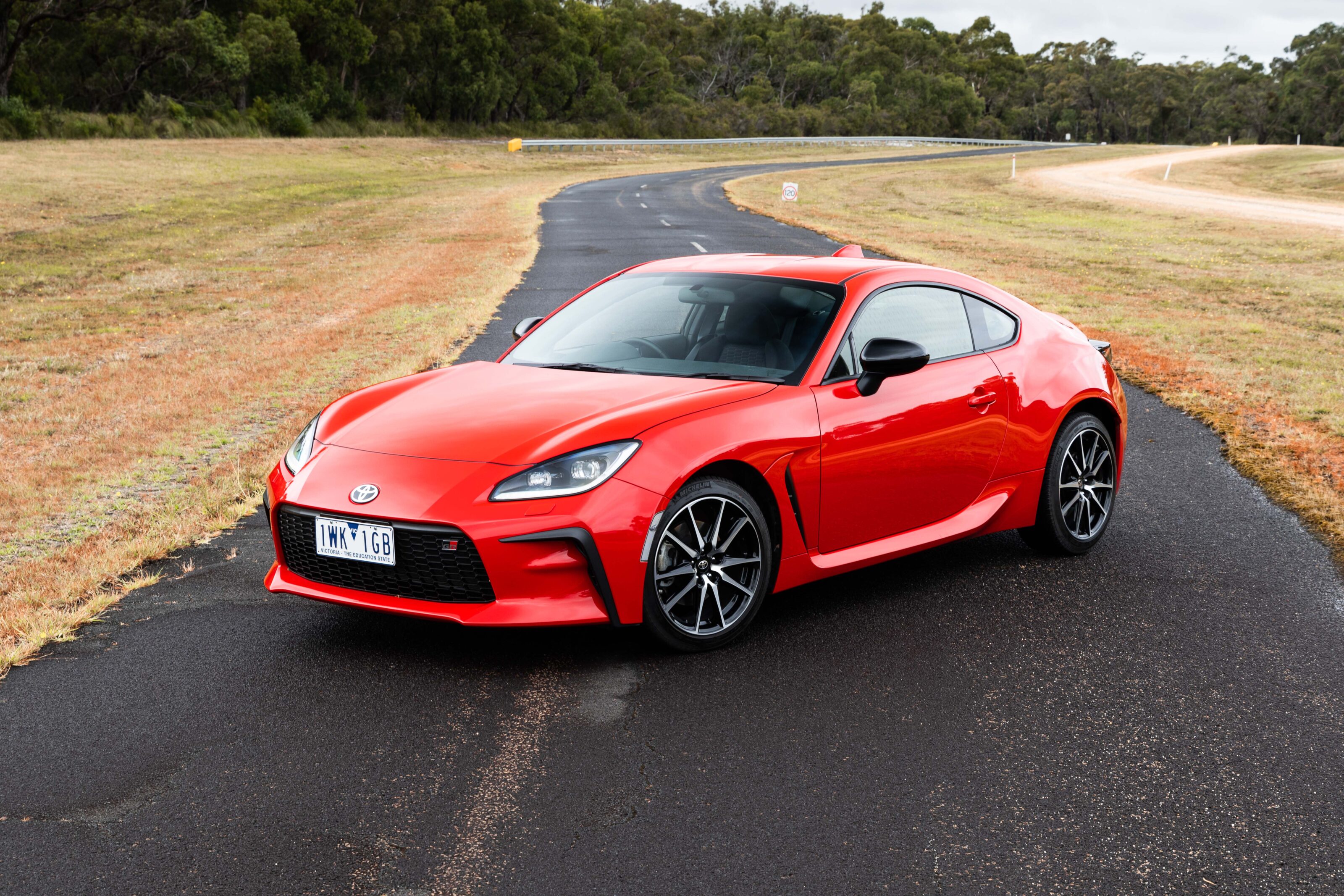
Another two-door Japanese sports car under $100K, the Toyota GR86, couldn’t be more different in its intent. Unlike the Z’s smooth V6, the GR86’s flat-four is positively van-like at start-up. The cloth upholstery of the base GT seats is abrasive and, as Fisk noted, the headrests are uncomfortably hard. It’s worth the extra for the GTS.
It takes a moment to acclimatise to the GR86’s sharp throttle and accurate 2.5-turns steering rack after the Z’s languid tiller – like the rest of the GR’s burgeoning line-up, there’s a seriousness to the GR86’s chassis.
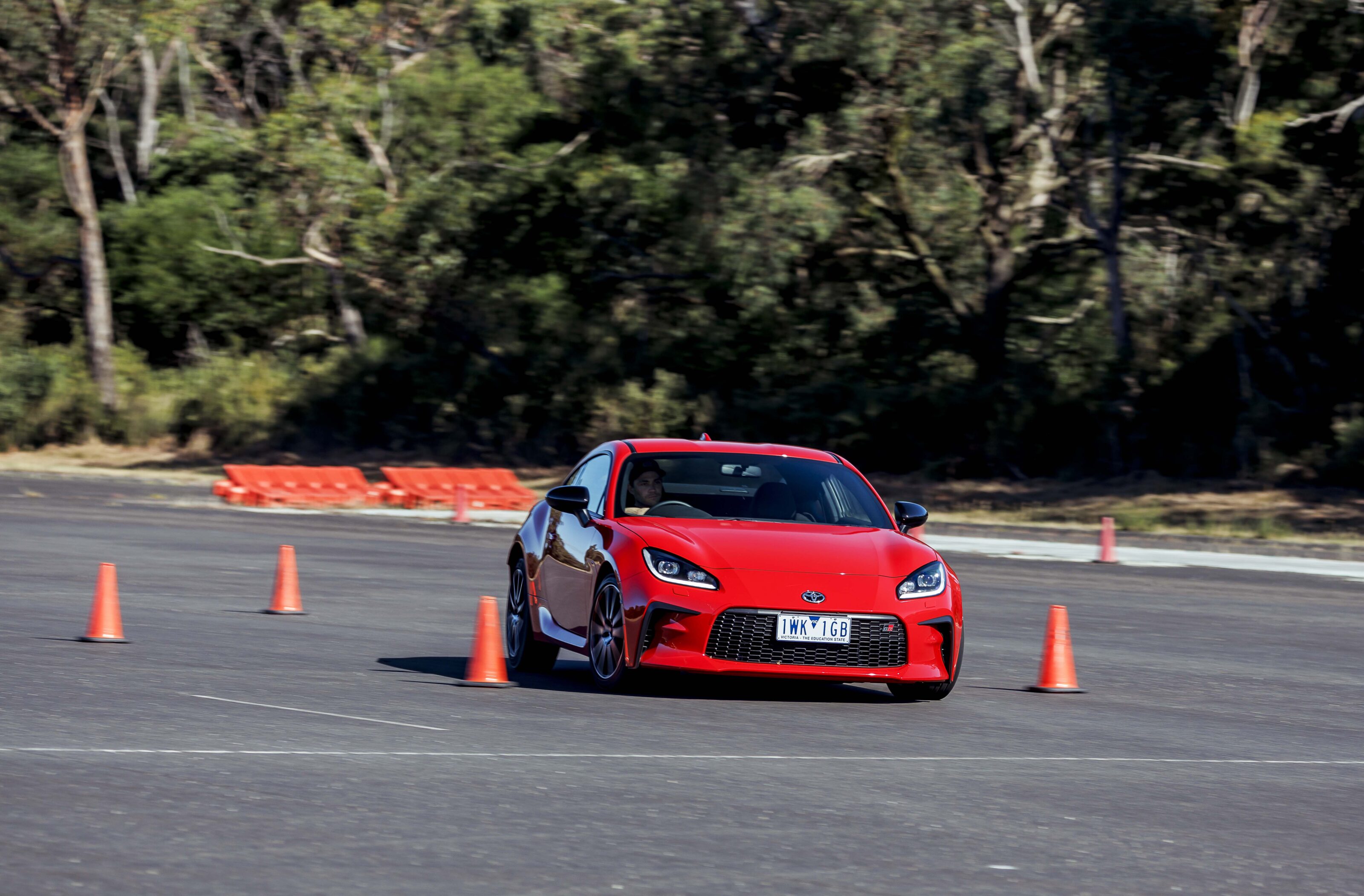
It’s firmer than before, with noticeably enhanced chassis stiffness (and a smaller boot aperture as a result).
Thankfully, Toyota has specified quality dampers for the GR86, so despite all that cornering support it’s comfortable enough to daily drive.
The Toyota is clearly a sharper tool, remaining stable mid-corner yet fighter-jet responsive through direction changes. The GR86 was (sadly) beaten by the Nissan Qashqai in the lane change, a symptom of drift-friendly 215/45R17 Michelin Primacy HP rubber.
Its new engine has genuine shove through the mid-range, that 250Nm torque figure propelling the 1287kg GR86 GT effortlessly; the 174kW punch just enough to over-rotate the rear in the dry and ESC Track Mode is a lot more liberal than the first gen’s. It’s perfectly balanced.
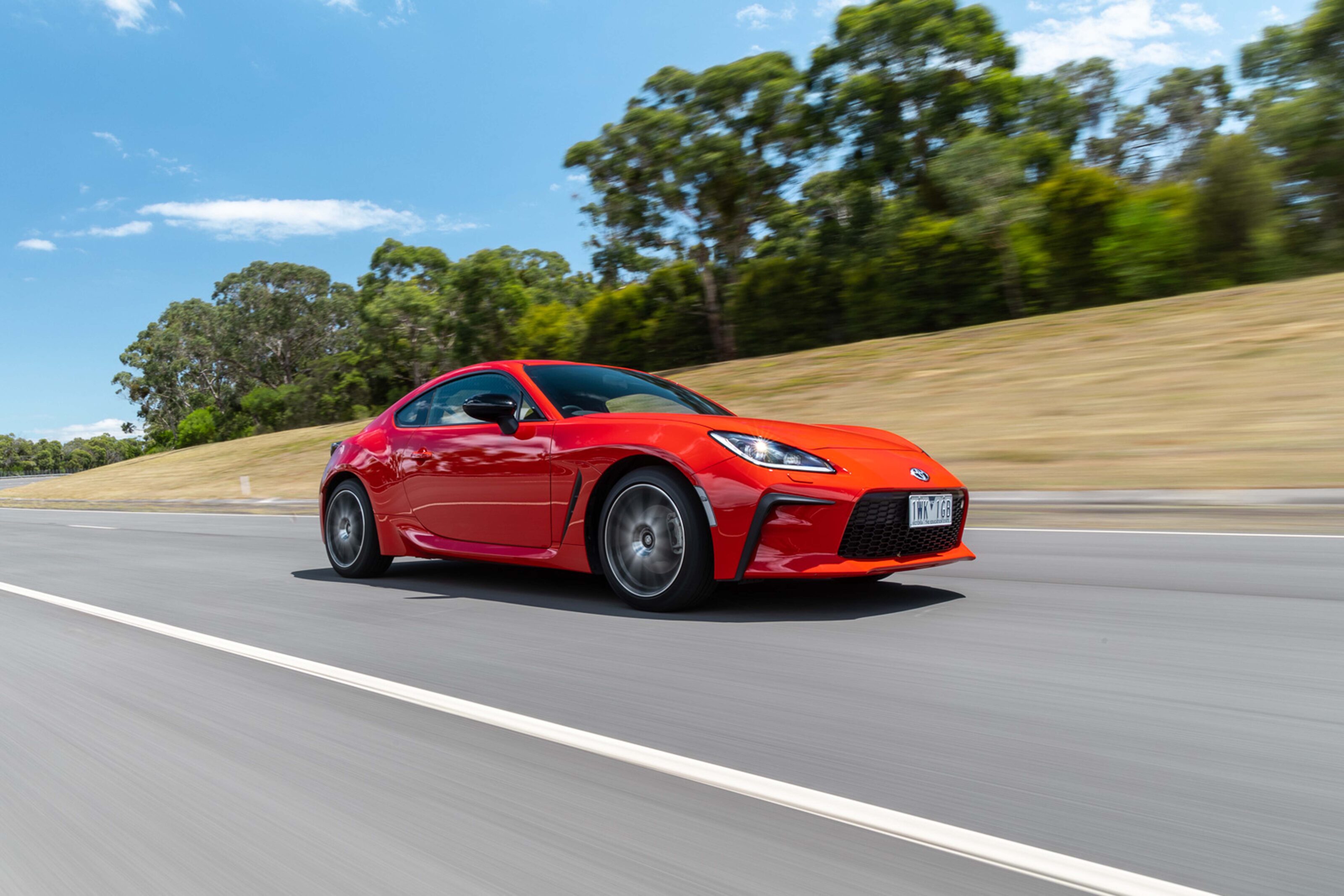
Whereas the Z is praised for just existing and making us all laugh, the GR86 truly found a place in the judge’s hearts.
Affat initially got all nerdy about the differences between it and the Subaru: “You notice that the rear end carries just a touch more lateral inertia as steering returns to centre on corner exit.” But he followed that up with simple praise: “It just makes you smile.”
The GR86 even offers a modicum of practicality with its plus-two seating and generous boot. But there are flaws for each of these contenders that, under strict COTY criteria, see them stumble.
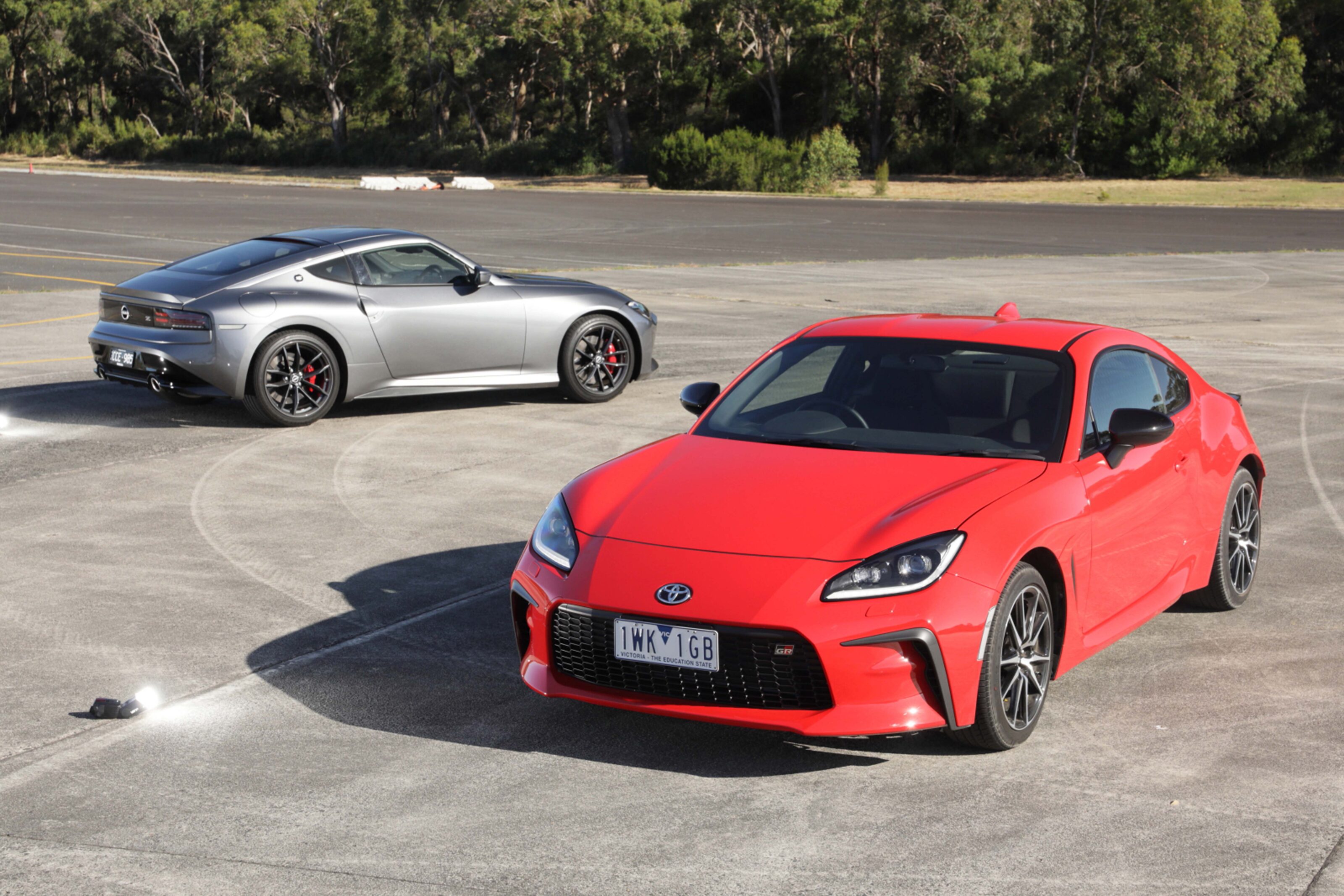
For the Z, it’s safety. With no IIHS, Euro NCAP, or ANCAP score, Nissan’s sports car sadly must bow out of the running. The GR86 suffers a similar fate, though being based on a previous five-star ANCAP-rated platform, it has a leg up on the Nissan.
No, the real problem for 86 is value. The manual GR86 GT costs $3800 more than an identically equipped Subaru BRZ, yet isn’t equipped with the automatic variant’s potentially life-saving autonomous emergency braking.
Despite the sports cars’ shortcomings against the criteria, both the Z and GR86 keys were near impossible to wrangle out of other judges’ hands. Driving enthusiasts remain mercifully well served in 2023.
| Nissan Z | Toyota GR86 GT manual | |
|---|---|---|
| Price | $73,300 / $74,000 (as-tested) + on-road costs | $43,240 + on-road costs |
| Body | 2-door, 2-seat coupe | 2-door, 4-seat coupe |
| Drive | rear-wheel | rear-wheel |
| Drivetrain | 2997cc V6; twin-turbo petrol | 2.4-litre boxer 4-cyl petrol |
| Power | 298kW @ 7000rpm | 174kW @ 7000rpm |
| Torque | 475Nm @ 1600-5600rpm | 250Nm @ 3700rpm |
| Transmission | 5-speed manual (w/ rev-match) | 6-speed manual |
| Fuel consumption | 10.8L/100km | 9.4L/100km |
| Kerb weight | 1602kg | 1287kg |
| Towing capacity | N/A | N/A |
| 0-100 | 5.8sec (tested) | 6.3 seconds |
| L/W/H/W-B | 4380/1845/1315/2550mm | 4265/1775/1310/2575mm |
| Suspension | Struts front, multi-link rear | Struts front, multi-link rear |
| Boot space | 241L | 237L |
| Warranty | 5yr/unlimited-km | 5yr/unlimited km |
| Safety rating | Not yet crash tested | Not yet crash tested |
MORE READING
Now that you’re done reading about these COTY 2023 contenders, you should go back to catch up on anything you might’ve missed. Check out the links below, or find it all at our COTY page.
The Ford Ranger is widely regarded as the nation’s one-tonne royalty, in what is consistently the most hotly contested vehicle segment in the country.
There’s a natural symbiosis at play here – the Ranger is important to Australians (just look at the sales data, where it accounted for 71 per cent of Ford’s total 2022 sales volume), but Australians are important to the Ranger, too.
Ford’s local engineering hub, the largest left in Australia in the wake of our local car-making industry’s manufacturing exit, played an integral role in developing the latest T6.2 platform. It underpins the esteemed Ranger XLT V6 and demented Raptor, as well as the pair of Everests we have here in attendance.
WHEELS CAR OF THE YEAR 2023
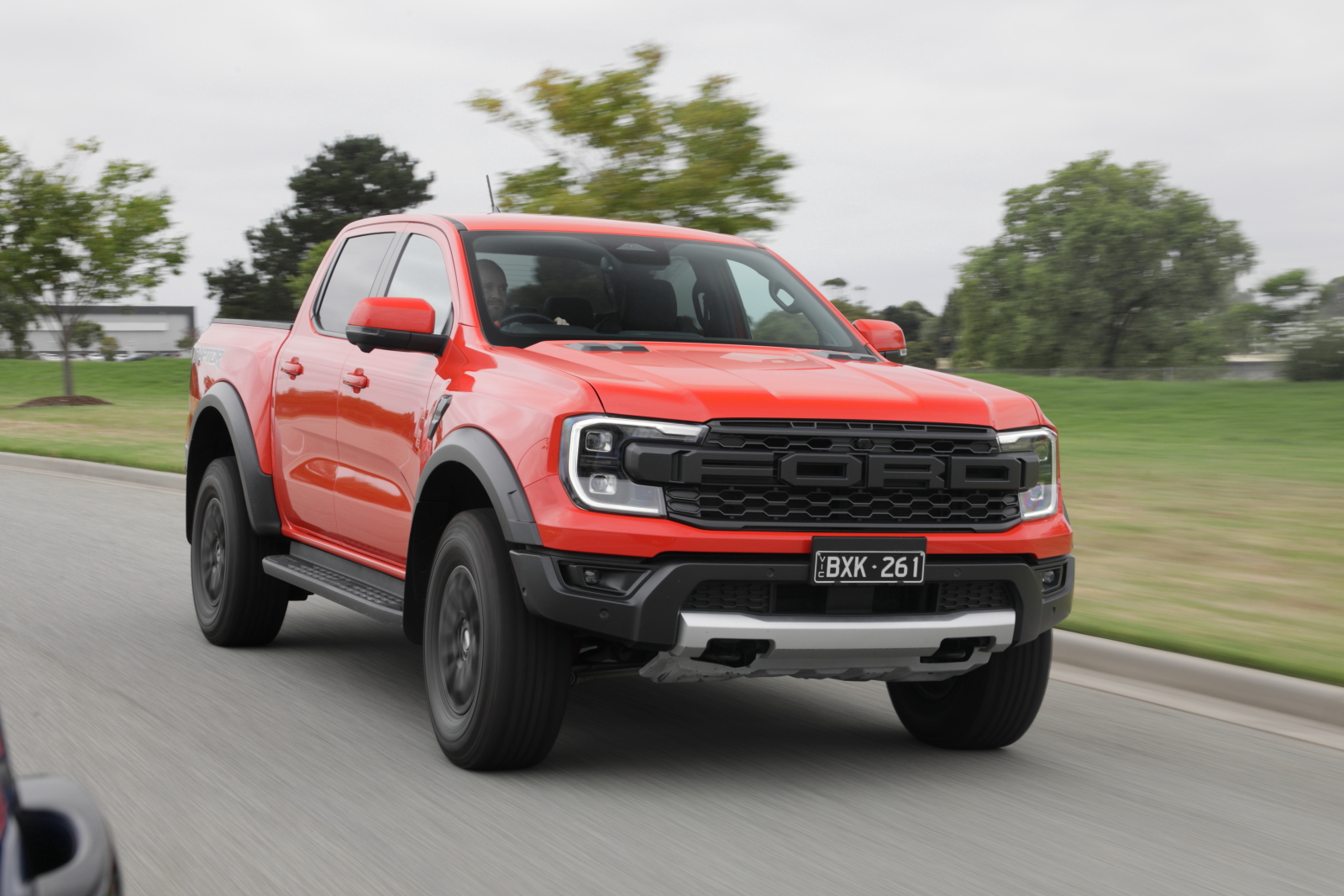
Developed in Australia and bound for 180 markets globally, it’s Ranger and Everest that arguably achieved what our homegrown heroes never could, as our local engineering talent finally finds success on the world stage.
Ladder-frame vehicles have not previously been eligible for COTY, but decades of popularity have seen real development put behind these once-humble workhorses. As Inwood put it, the latest Ranger “resets its own benchmark”.
“The best dual-cab ever by a long shot” echoed John Law, while the discerning ‘ride & handling Jez’ even conceded that this new and improved Ranger is “ridiculously likeable to drive for a ute”.
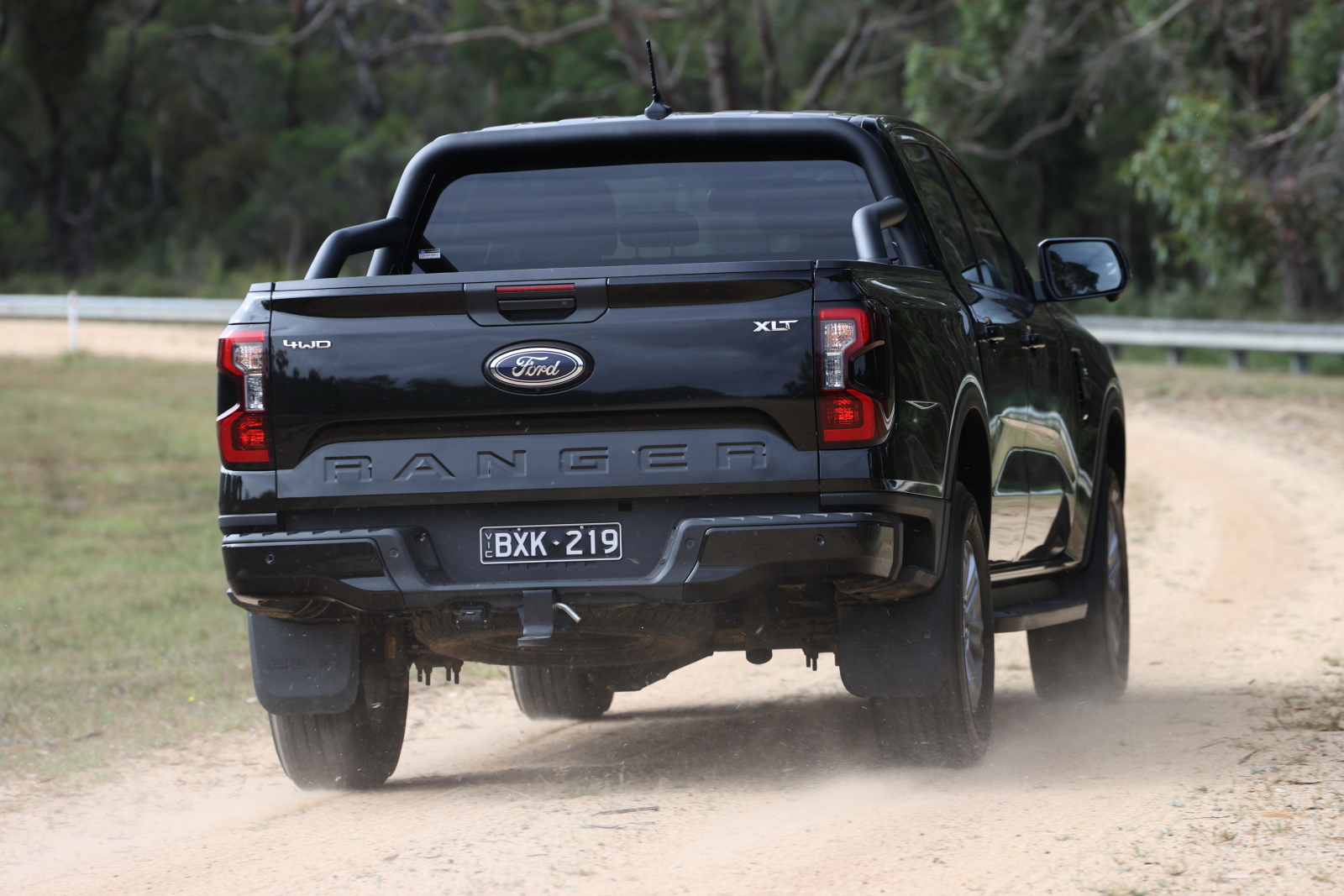
The Rangers kick further goals when you consider the sheer bandwidth the models are built to cover, with impressive body control and roadholding on bitumen, conceding little speed on Lang Lang’s ride and handling circuit in comparison to the more conventional unibody SUVs in attendance. Of course, the Ranger shines brighter again once it hits the dirt section, too.
Some caveats exist, however, those being simply unavoidable shortcomings inherent in this vehicle’s ladder-frame construction.
Over fast corrugations, the XLT’s ride becomes terse with moments of body shudder, while the pair’s all-terrain tyres did neither the XLT nor Raptor any favours in the dry-brake and emergency lane-change test where they consistently finished near the bottom of the pack.

The Raptor, too, is an oddity.
All judges agree that it’s a blast, but that fun is tinged with a sense of guilty indulgence in this day and age.
Everybody enjoyed it, but opinions differed. Editor Enright reckoned it “hugely fun but hugely profligate” while Inwood was more of a fan. “The Raptor is so childish and unnecessary but so bloody awesome!” he said.
“Took to the dirt like a bird does to air,” noted Campbell. “Shame the ride quality isn’t quite as plush as the old one though.” And that was a common refrain, many judges feeling that in giving the Ranger Raptor so much engine and having to tie it down accordingly, it had lost the inimitable magic carpet ride of the original.
Any model in the Ranger line-up, however, simply radiates an overwhelming feeling of Australian optimisation, offering huge value in terms of off-road ability, genuinely useful technology and admirable passenger packaging for its class.
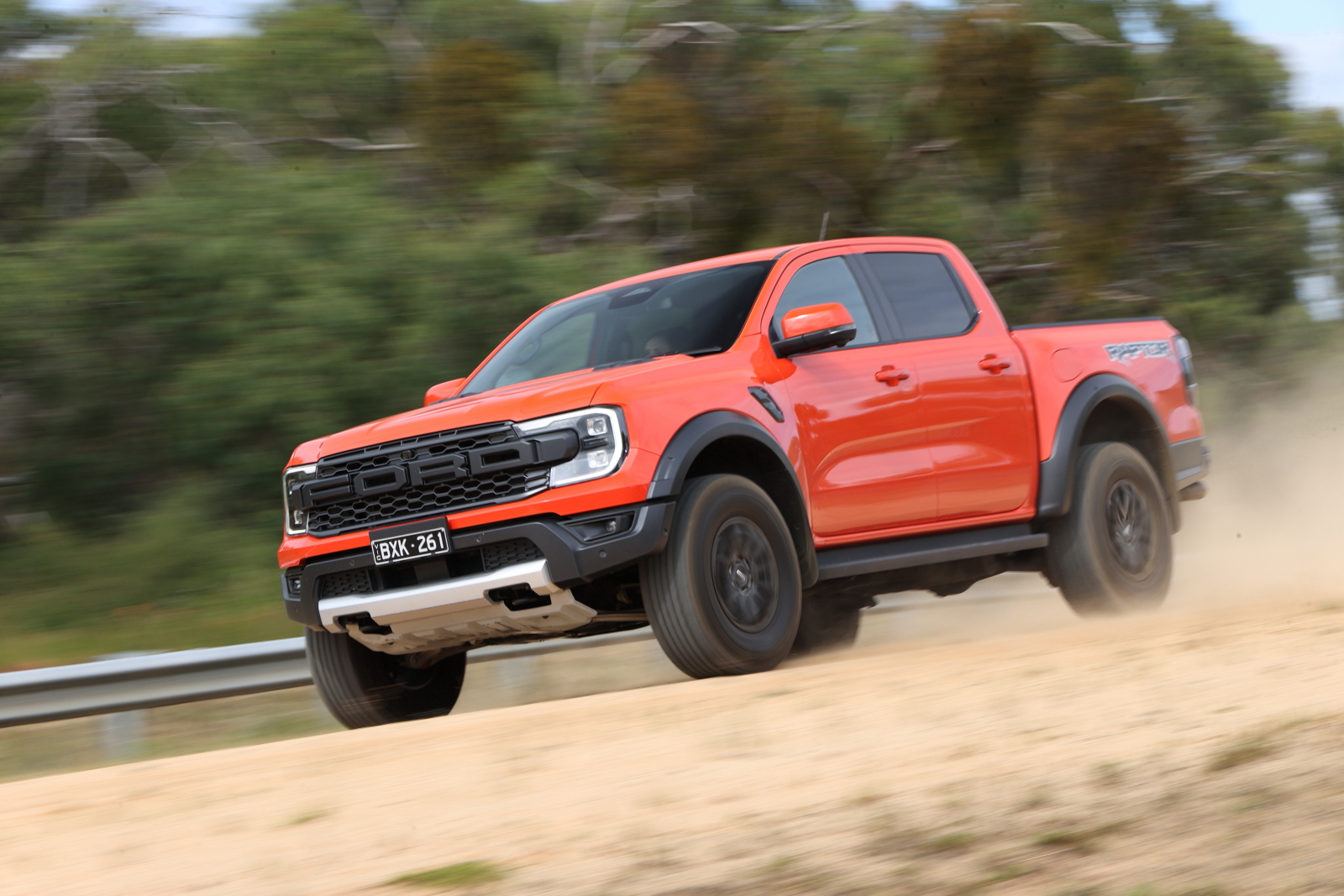
Considering how adept they are off the road, it’s a testament to Ford’s depth of engineering that these utes are as competent as they are while on it and it’s easy to see why they’re so aspirational.
But through the gruelling lens of Car of the Year, Ranger’s coil-sprung SUV sibling shone measurably brighter, and Ford’s utes were left honourably discharged at Lang Lang.
MORE READING
Now that you’re done reading about these COTY 2023 contenders, you should go back to catch up on anything you might’ve missed. Check out the links below, or find it all at our COTY page.
