
Nissan has announced development and manufacturing costs for its electrified components will drop by 30 per cent by 2026.
The cost savings will be achieved through a revised approach – ‘X-in-1’ – to share key powertrain components between its all-electric and E-Power series-hybrid vehicles.
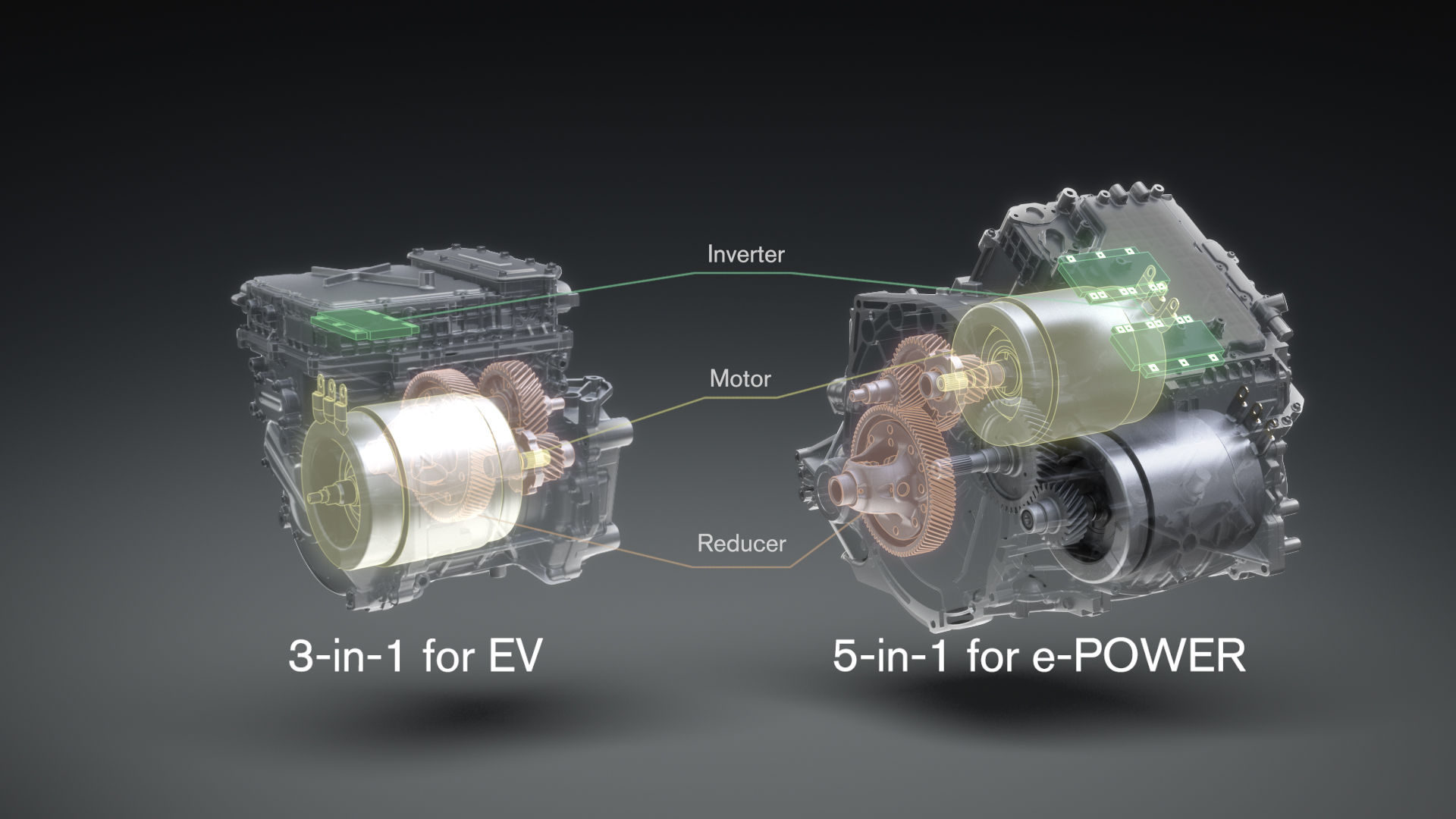
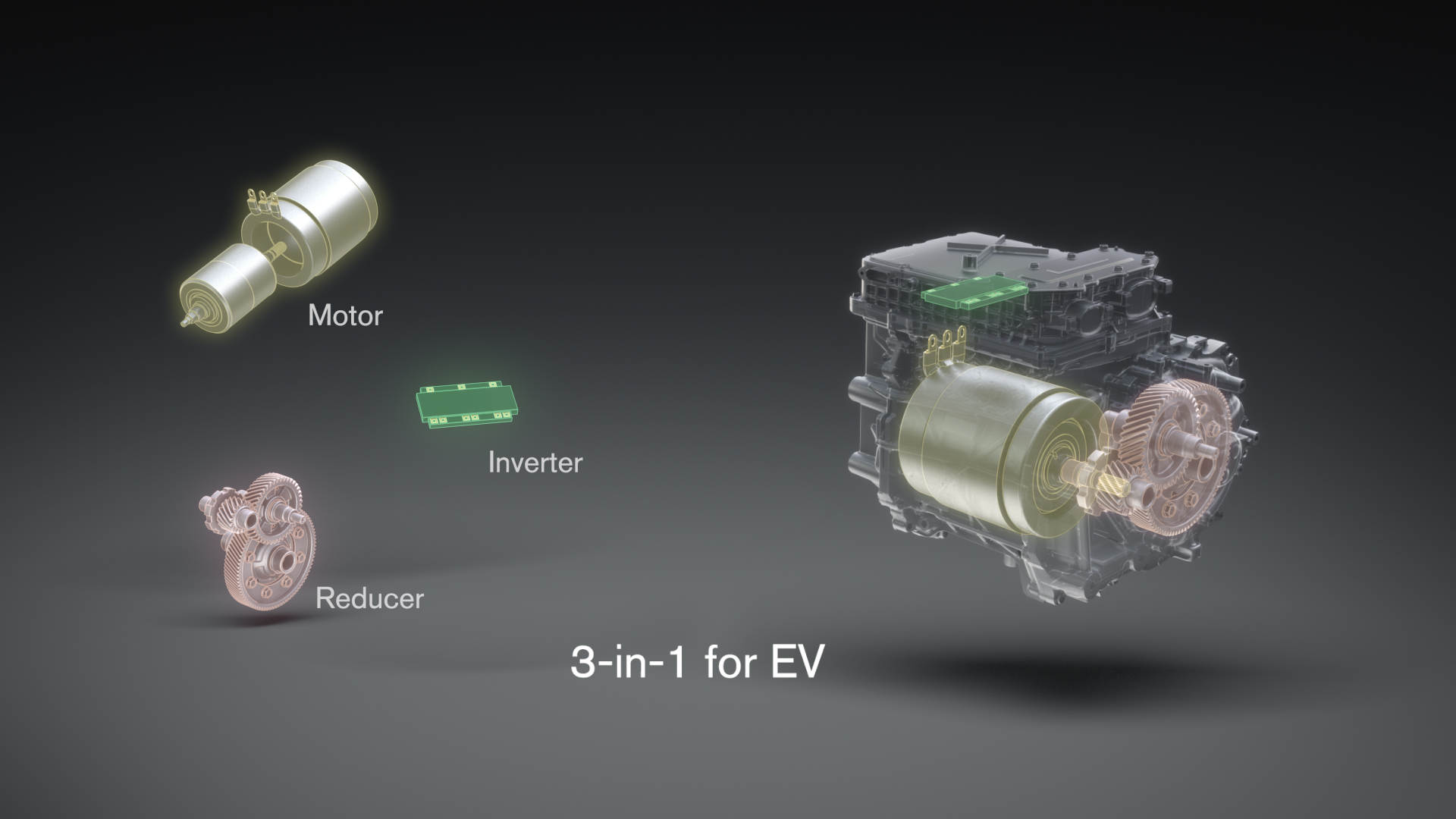
This will include newly-designed electric motors, with the debut of a ‘3-in-1’ prototype for electric vehicles that modularises the motor, inverter and reducer into one package.
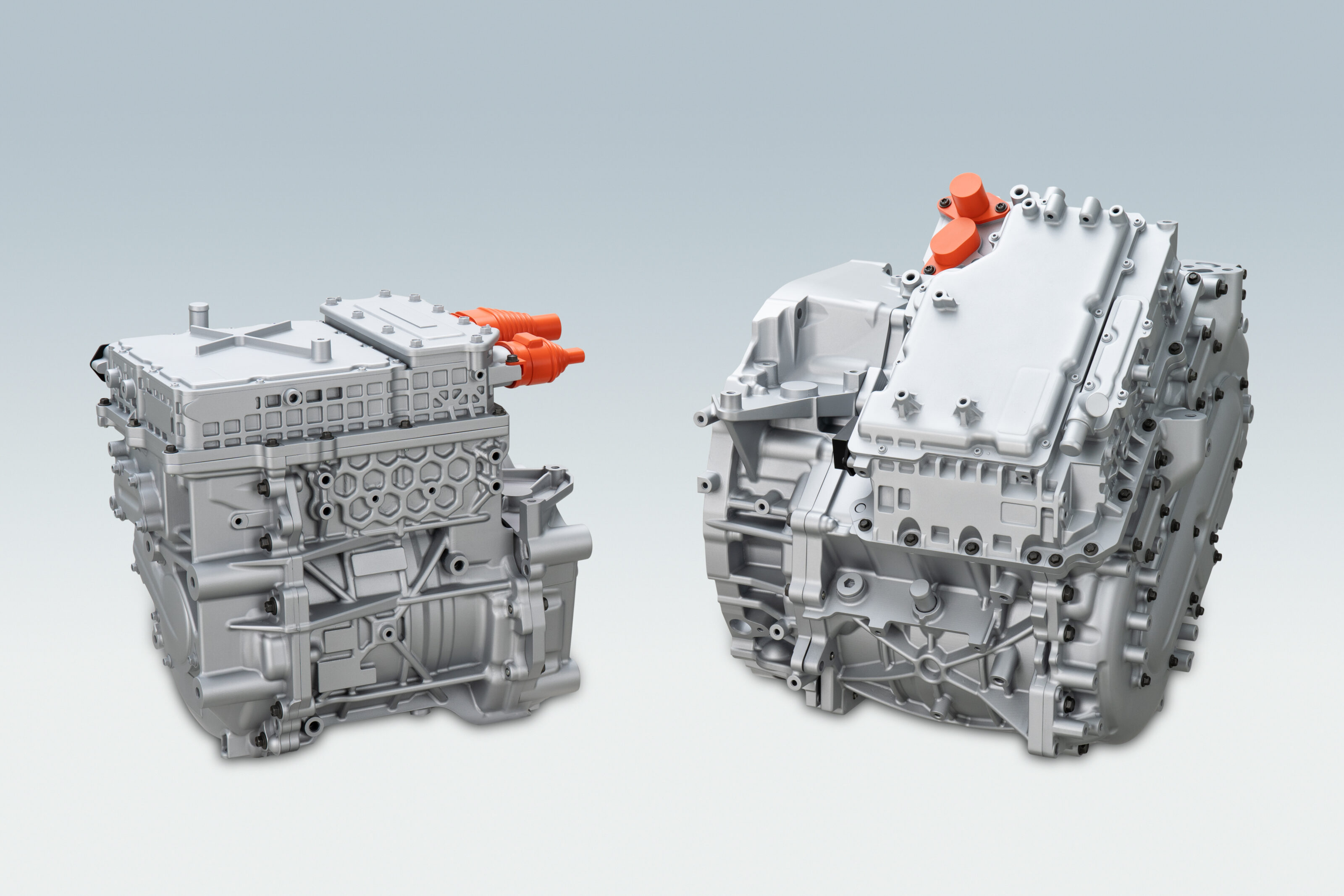
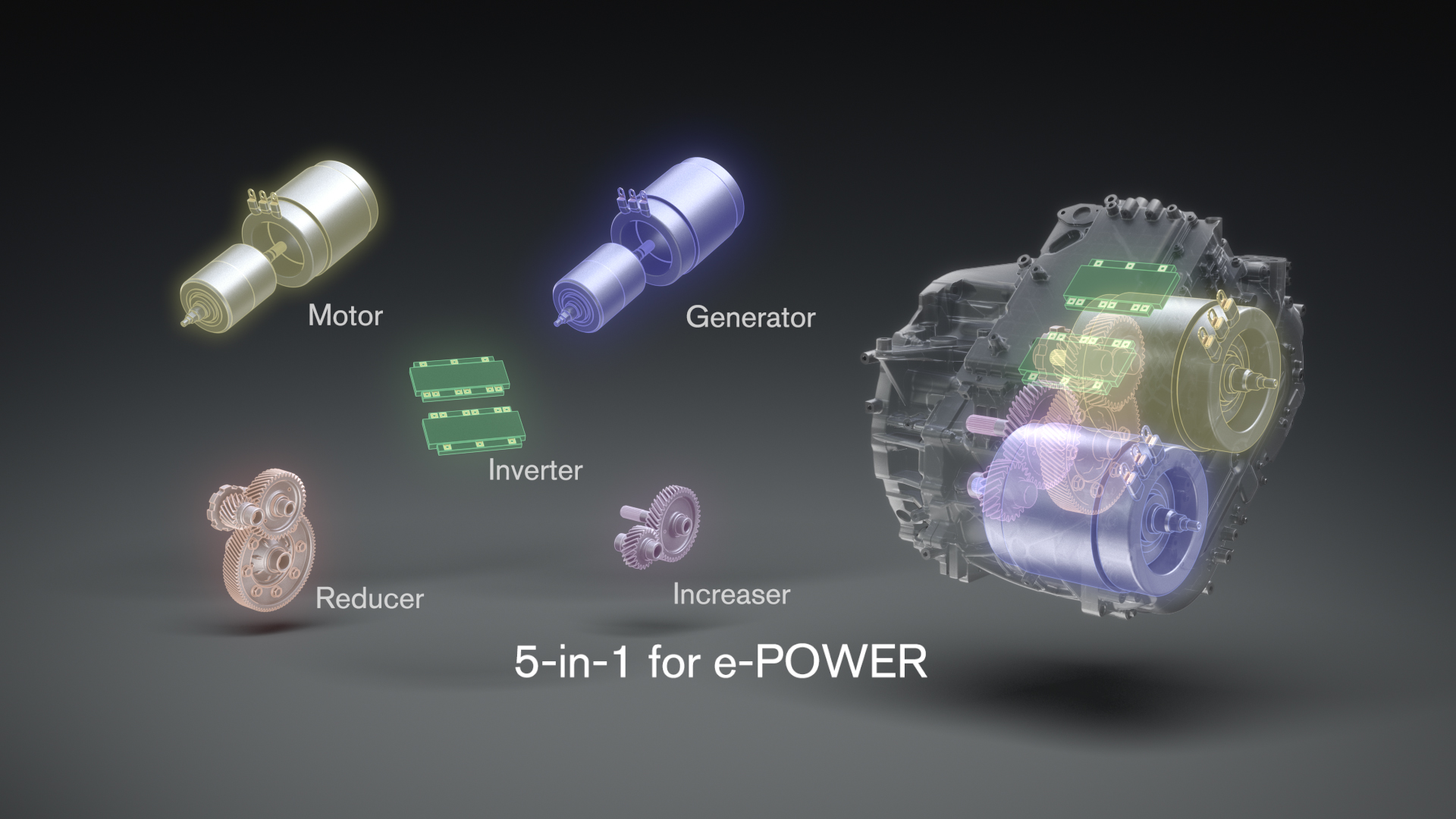
It has developed a ‘5-in-1’ electric motor for hybrid vehicles, which also combines the generator and increaser. It is said to reduce size and weight, allowing for performance improvements, as well as reduced noise and vibration levels.
Nissan claims this will allow electric and hybrid components to be manufactured on the same production line, allowing for a 30 per cent cost decrease compared to 2019 pricing.
The newly-developed motor will reduce the use of “heavy rare earth elements to one per cent or less by weight,” while the Japanese brand claims its E-Power hybrids will provide an improved EV-like driving experience.
Nissan aims for E-Power hybrid vehicles to reach price parity with internal combustion variants “by around 2026.”
Currently, a Nissan X-Trail E-Power costs $4200 more than an equivalent petrol AWD variant, while a Toyota RAV4 Hybrid costs around $2100 extra.
“We make the most of our expertise and know-how from our more-than-a-decade long development and production of electrified technologies,” said Nissan’s senior vice president for powertrain and EV engineering, Toshihiro Hirai.
“Through our innovations in electrified powertrain development, we’ll continue to create new value for customers and deliver 100 per cent motor-driven vehicles – EVs and E-Power – as widely as possible.”
“These improvements will ensure greater commonality between our [battery-electric vehicle] and E-Power [hybrid] model offerings and deliver significant cost savings, helping further accelerate mass consumer adoption of electrified vehicles,” said Nissan Australia.
Last week, Nissan announced it would accelerate its electric vehicle plans in response to increased customer demand, with four more EVs due by 2030.
With more than half of its sales expected to be made up of electrified vehicles by the end of the decade, Nissan claims it will retail 27 – split between 19 all-electric models and eight hybrids – up from the previous goal of 23, including 15 battery-powered EVs.
This includes both Nissan and Infiniti vehicles globally.
The boost in its forecasts is largely focused on Europe, with 98 per cent of its sales to be electrified vehicles by 2026 – up from a previous 75 per cent target.
It follows the European Union’s recent agreement to ban the sale of internal-combustion vehicles by 2035, while stricter Euro 7 emissions standards will be enforced from July 1, 2025.
Currently, Nissan offers two electric vehicles for the global market: the long-running Leaf hatchback and the newer Ariya crossover. It recently introduced E-Power hybrid versions of the latest-generation X-Trail and Qashqai SUVs.
UPDATE: 300 examples of both the Volkswagen T-Roc and Tiguan R Grid editions have landed in Australia, with the possibility of more to come.
Volkswagen Australia says roughly half the Grid editions of T-Roc and Tiguan R are already spoken for, but if demand remains strong it hasn’t ruled out bringing more to Oz.
The Grid editions of T-Roc and Tiguan R revive a badge first seen on the Mk 7.5 Golf R, and represent all the performance, with less luxury. It was a way to offer a cheaper golf R, but now the Grid editions free up supply with fewer semiconductors.
The T-Roc R Grid costs $53,400 before on-road costs, and the Tiguan R Grid $63,900. Those are $6000 and $6500 savings respectively compared to the full-fat models.
“Australia is now the number one market around the world for T-Roc R ordering. That’s the level of demand we’ve seen for what is a compact SUV, multiplied by performance SUV”, said Volkswagen’s product and PR manager, Dan DeGasperi.
Our original story, below, has been updated to reflect the changes above.
The story to here
August 31, 2022: Australia has revived its Grid badge for new, lower-priced versions of the 2023 VW T-Roc R and VW Tiguan R performance SUVs.
The $54,300 T-Roc R Grid and $63,990 Tiguan R Grid Editions cost $6000 and $6500 less respectively by deleting some key features to help overcome supply issues caused by the global semiconductor shortage.
VW’s R Grid models follow the concept of the 2017/2018 Golf R Grid, which was positioned just below $50,000 via a reduced equipment list compared with the standard model. That Grid model was also partly inspired by component shortages, in this case electric seats.
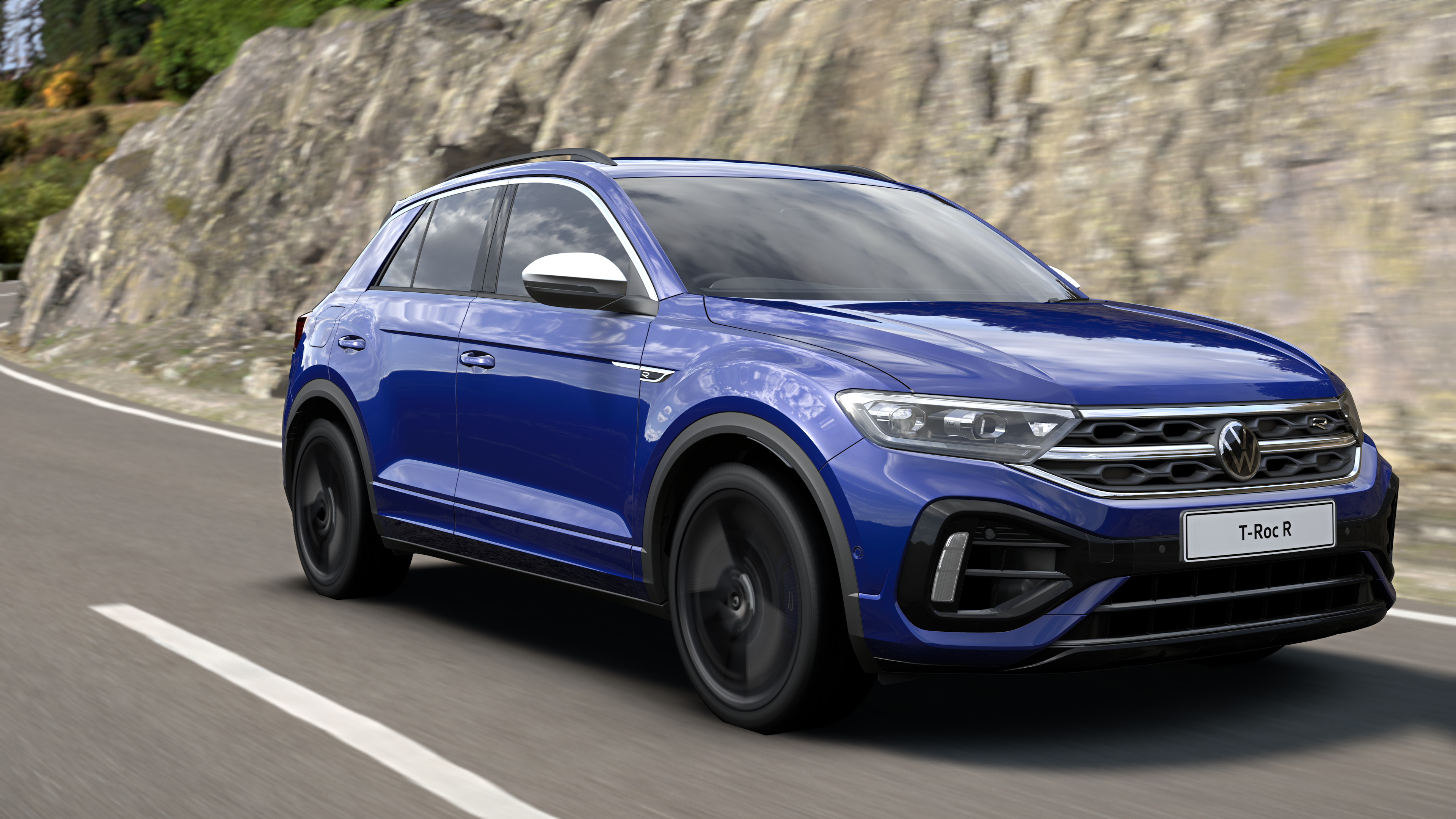
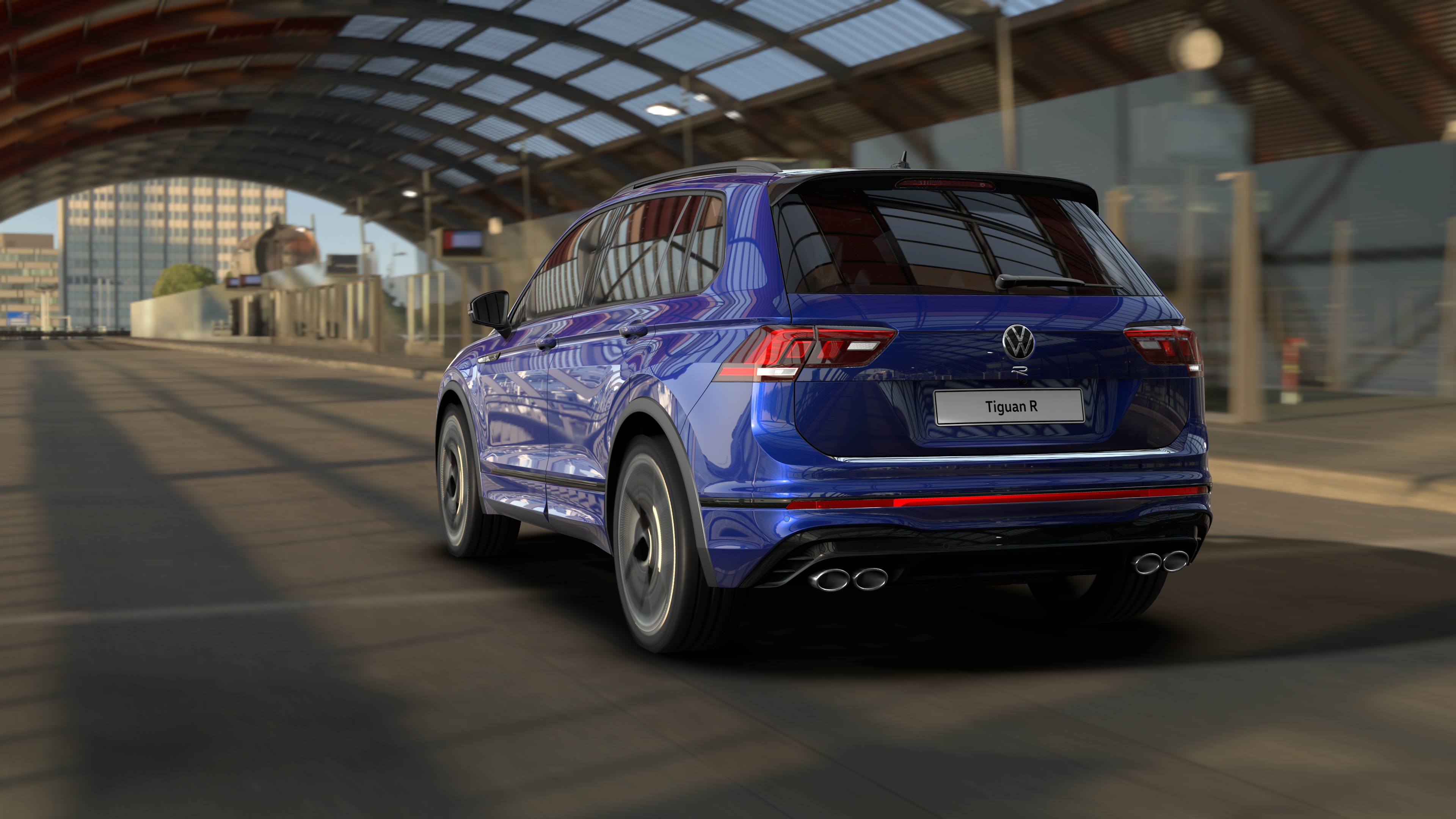
Grid Editions, which are due in December, drop premium LED tail-lights with dynamic indicators, side assist with rear traffic alert, and the proactive passenger protection system from the regular T-Roc R and Tiguan R. The Tiguan R Grid misses out on a head-up display standard in the regular Tiguan R too.
They also replace matrix LED headlights with performance LED headlights and ditch Nappa-leather seats for sports pews in cloth/microfleece. And electric seat adjustment makes way for manual adjustment – including front passenger seat in the Tiguan R Grid.
Grid Editions gain some visual distinction with ‘Pretoria’ 19-inch graphite alloy wheels and black roof rails fitted to the T-Roc R Grid, while the Tiguan R Grid’s door mirrors, roof rails, grille, and body elements are all swathed in black.
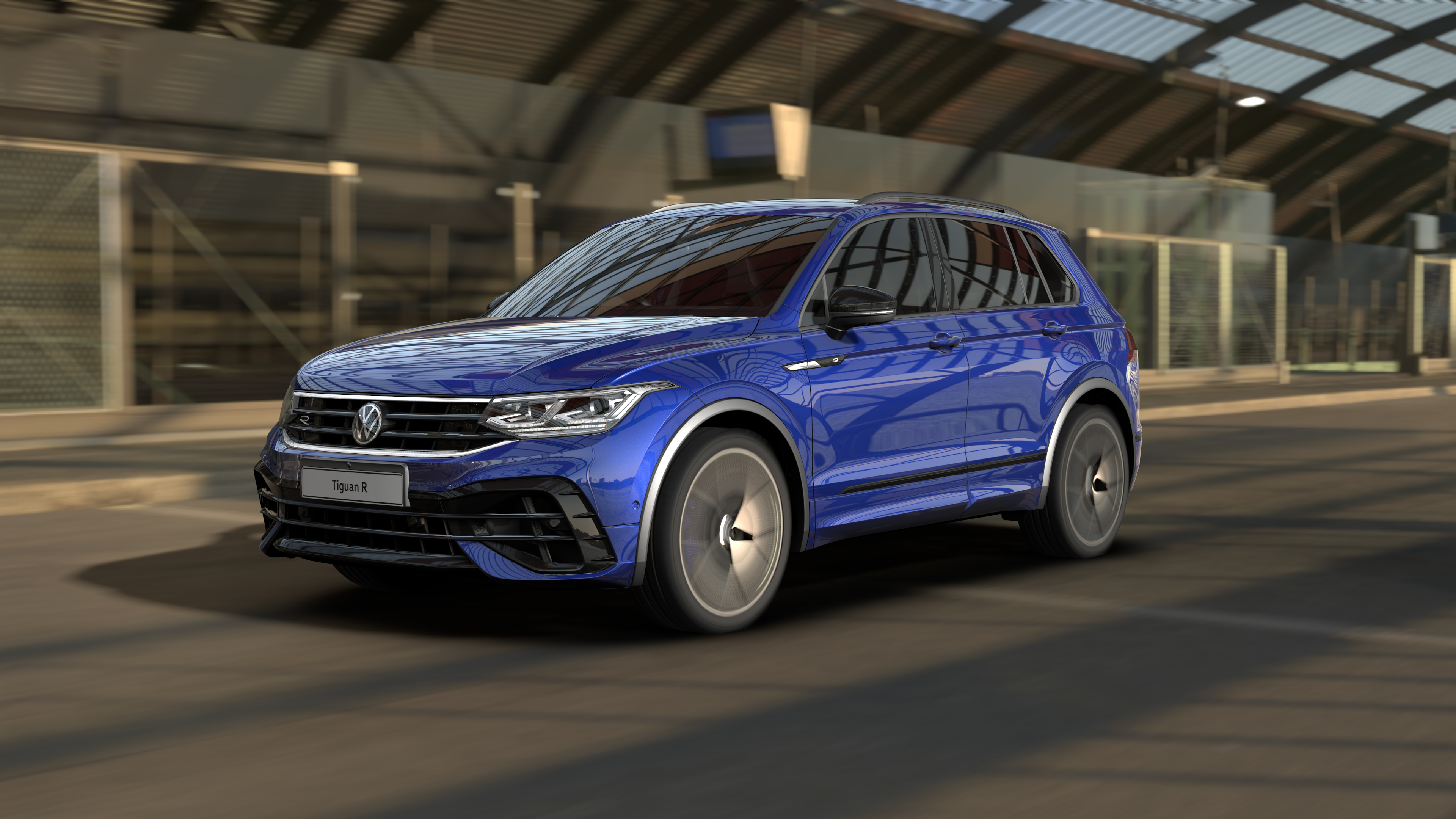
The sole option for both SUVs is a panoramic sunroof, which costs $2000 for the T-Roc R Grid and $2100 for the Tiguan R Grid.
VW Australia’s product manager for passenger vehicles Todd Ford described the Grid models as a “pre-emptive measure to counter supply issues and give people a choice”.
The standard VW T-Roc R has just been released in Australia, sitting atop an updated small SUV range with a $59,300 price tag. The regular and Grid versions are powered by a 221kW/400Nm 2.0-litre four-cylinder turbo and share all-wheel drive and a 0-100km/h claim of 4.9 seconds.
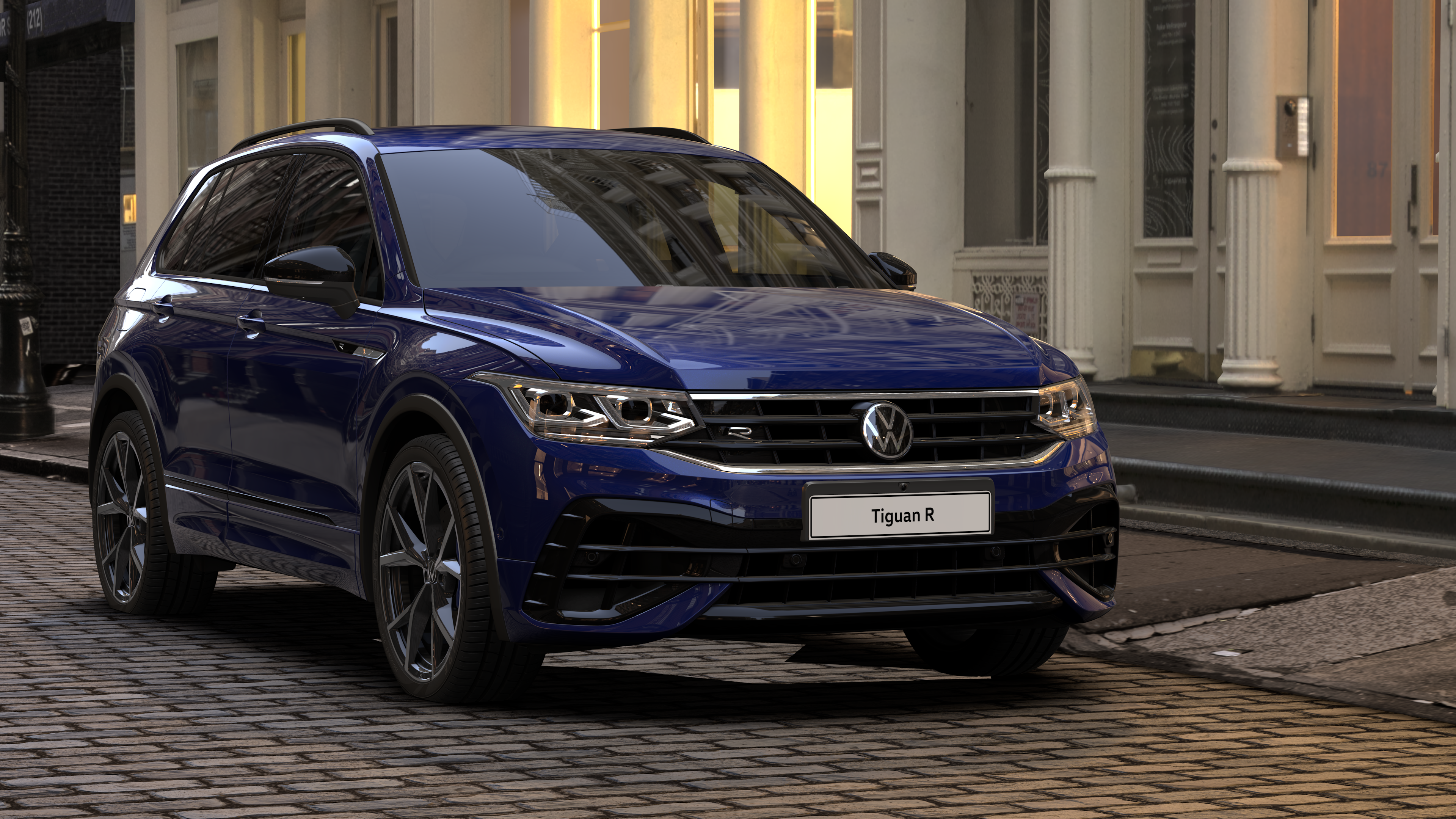
The standard VW Tiguan R was introduced earlier in 2022, priced from $63,990. Both the R and R Grid feature a 235kW/400Nm turbo engine, all-wheel drive and a common benchmark acceleration claim of 5.1 seconds.
“The return of the Grid Edition in two forms will help us increase supply from November and assist in fulfilling extremely strong T-Roc R and Tiguan R orders,” said VW Australia’s brand director of passenger vehicles, Michal Szaniecki.
“We thank customers of these high-performance SUVs for their patience and – as we did with securing 1000 extra Touaregs for this year – we are working tirelessly to improve our supply situation across several model lines.”
The Grid Editions are the most affordable R models offered. The Golf R hatch starts from $65,990.
Making the final four at COTY after vanquishing seven tough combatants in our medium SUV Megatest was enough to put away some early scepticism towards the T33 Nissan X-Trail.
Snapshot
- Fourth-generation X-Trail finished third at COTY 2023
- Excelled against the criteria for Value, Safety, How it Drives and Interior Execution
- Impressed at the proving ground but really shone on our country and urban road loops
- Offers traditional petrol power or the choice of a new hybrid powertrain
The new X-Trail shares its CMF-C platform with the Mitsubishi Outlander, a car that wasn’t invited when it was eligible in 2021 – having lost a key comparison, albeit barely – but Nissan’s family-friendly SUV has proved a more considered and well-rounded vehicle, sailing through static assessment and Proving Ground challenges.
That bold V-Motion grille, sharp LED headlights, squat proportions and near-premium cabin presentation make it a shoo-in for most improved. That’s not all. “It’s got one of the best new-car smells,” added Spinks. Boat floated.
WHEELS CAR OF THE YEAR 2023
When you start looking at the little things, the X-Trail really excels.
Key Points
- 5- and 7-seat options, depending on trim grade
- Rear doors open wide for easy access, gold for families
- Quality-focused materials, intuitive infotainment
- Huge boot with clever storage tricks
Take the door hinges; there’s no unsightly stamped steel here. Nissan has cast items that are unique and allow the doors to open 85 degrees, perfect for fitting baby seats and negotiating with two-foot terrorists. Soft-touch materials are everywhere, and the storage tray beneath the central console for bags or tissues enhances practical appeal.
Lower X-Trail trims are available with seven seats (even though the rearmost seats are really kids-only), though we wish they could be teamed with Ti and hybrid trims. The Ti-L’s 575L boot is generous, with flocking to minimise pram-scratching and clever ‘Divide-And-Hide’ cargo separators built in.
It’s not all pragmatism, though – our Ti-L tester had a bit of pizazz thanks to tan Nappa leather upholstery. “If I didn’t know what car I was in, you could almost think it’s a Ferrari cabin. Take note, Mitsubishi!” said an enthused Inwood, though Fisk didn’t love it: “I found the tan leather over the top and something I wouldn’t want to live with long-term.”
Black leather’s also available, thankfully.
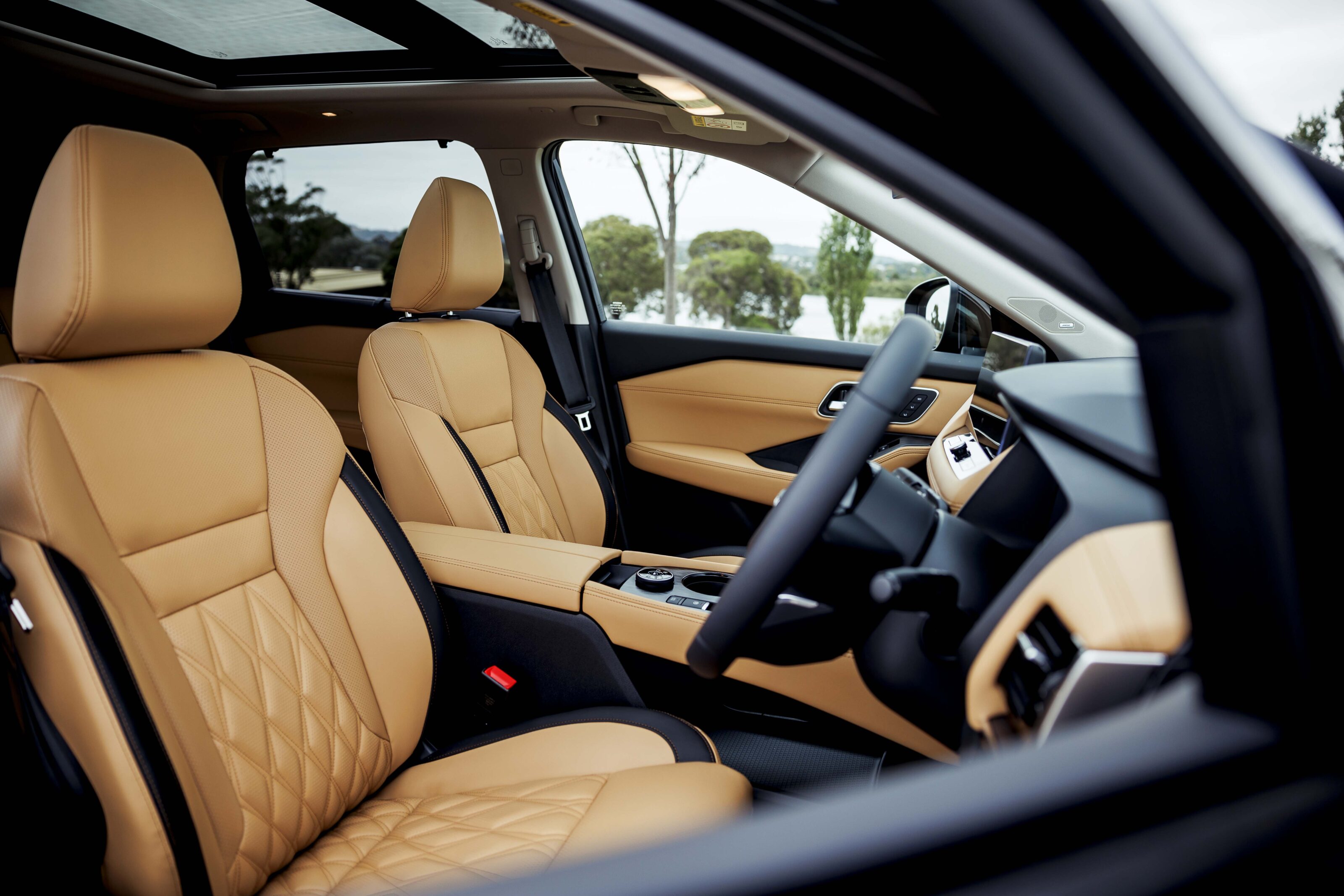
Consensus decreed that while the ST-L has almost everything you need, Ti is the sweet spot.
“The first question I had was: what’s the cheapest one that I can buy with the nice screen?” asked Andy. That’d be the Ti, Enright. You’re welcome. It also gets a powered tailgate. The richly equipped $57K Ti-L E-Power makes a case for itself too – it’s one helluva polished package.
At the proving ground, judges remarked on the ST-L’s excellent ride quality and enjoyable dirt experience in ‘Off-Road’ mode. The Ti-L E-Power’s 20-inch alloys added some fidget, but not enough to ruin the package – its clever electric AWD also added confidence on dirt.
“The E-Power exhibits a lovely cohesion between the ICE and the hybrid system” – Alex Affat
Not long after sampling the X-Trails, I noticed my fellow judges spending a lot of time on the emergency lane-change manoeuvre.
As I was chatting with Inwood about the Pug 308’s lovely ride, Campbell arrived and said, “Mate, the E-Power does something for me in the lane change; can you see if it does it for you?”
“What’s it do?” Inwood queried. “You’ll see,” Campbell yelled back while jogging to test his next victim.
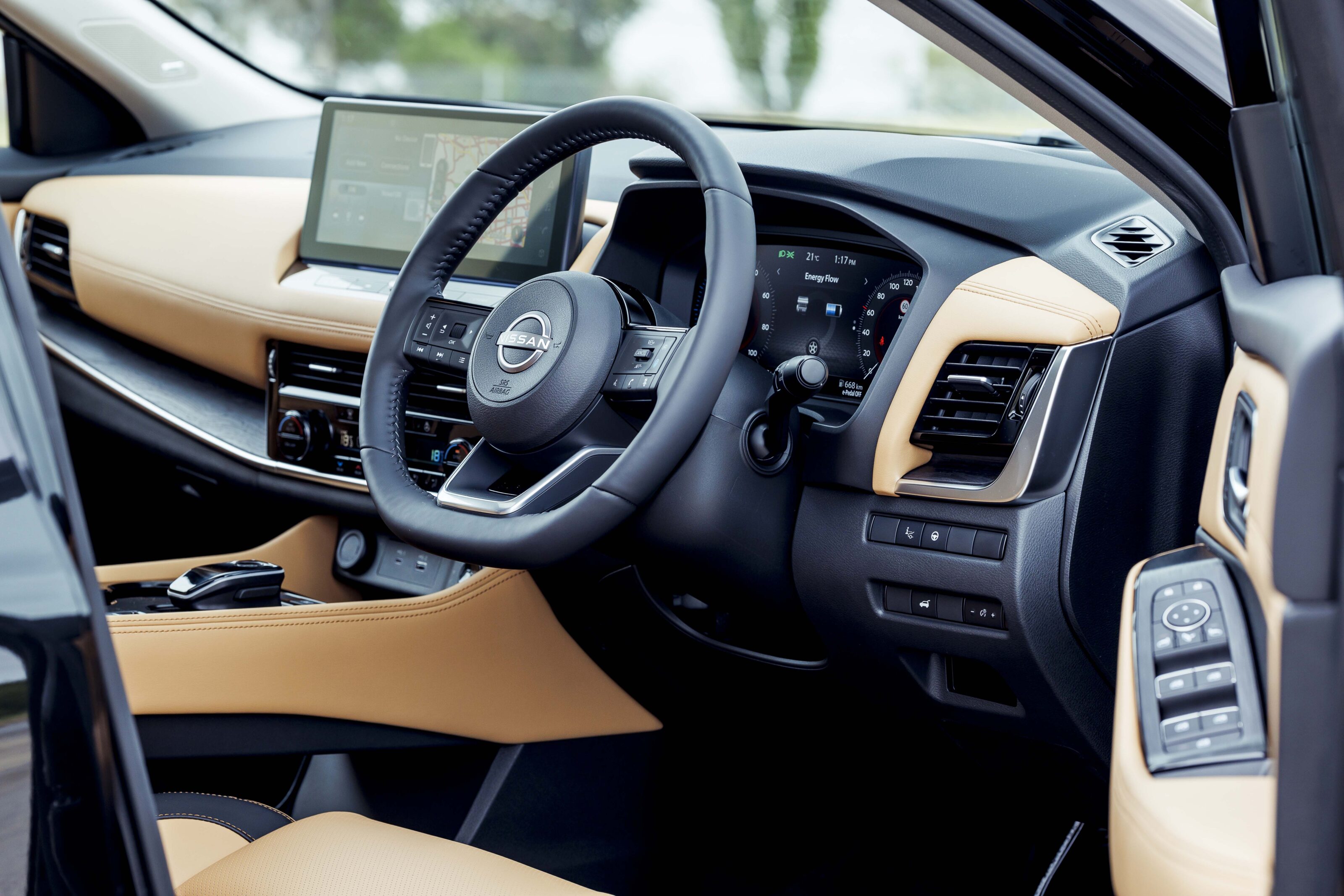
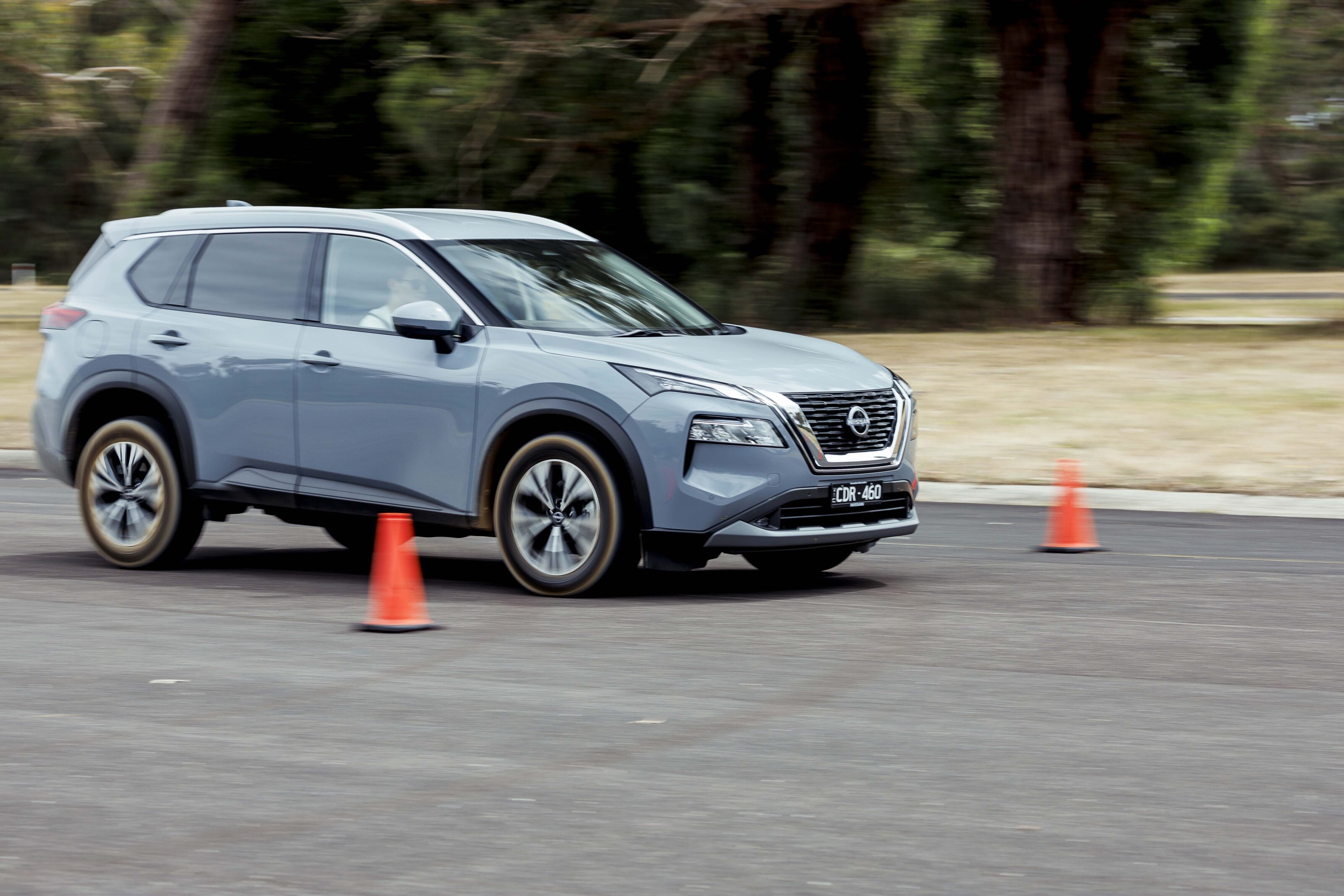
Both the X-Trails and Qashqais demonstrated “authoritative” ESC tunes on dirt, but as Inwood hurtled towards the lane change in the E-Power, the first steering input sent the Ti-L’s rear end slewing sideways into the cones at any speed faster than 90km/h – a totally different trait to the atmo ST-L. In fairness to the E-Power, its mid-pack performance is about what you’d expect for a medium SUV, but it was the first real chink in X-Trail’s armour.
Despite this, the decision to bring the X-Trail along to road loops in the final four was nearly unanimous, with the judges aligned on its overall excellence.
On road, the X-Trail made a case for itself with a wide-screen view out over the bonnet. The rear bench is set significantly higher than the front, too, for a stadium-seating setup. With the Ti-L’s pano roof letting plenty of light in, it was by far the most pleasant second row of the finalists.
What about those engines?
“The 2.5 is not a delight, but it’s certainly not a nail,” opined Enright, while it reminded Inwood of past hot hatches: “Does anyone else think the 2.5 sounds a bit like a Renaultsport Megane?”
The atmo ST-L’s powertrain is a mainstay in this segment, so the E-Power hybrid piqued the judges’ interest. Being a true series hybrid, all four wheels are driven by two e-motors exclusively, with the turbo-triple just there to keep electrons flowing. That means razor-sharp throttle response from a standstill and great roll-on punch.
Nissan’s way of keeping revs as low as possible and eliminating the dreaded RAV4 rubber-band effect is with a variable compression ratio (from 8:1-14:1). The E-Power even has active noise cancellation (how very Rolls-Royce!) so under full throttle, four-up applications it remains pleasantly muted.
“An intriguing technical proposition, but still E-Power uses more fuel than a RAV4 hybrid,” noted Enright. He’s right, of course, with a 6.1L/100km rating on the combined cycle to RAV’s 4.8L/100km.
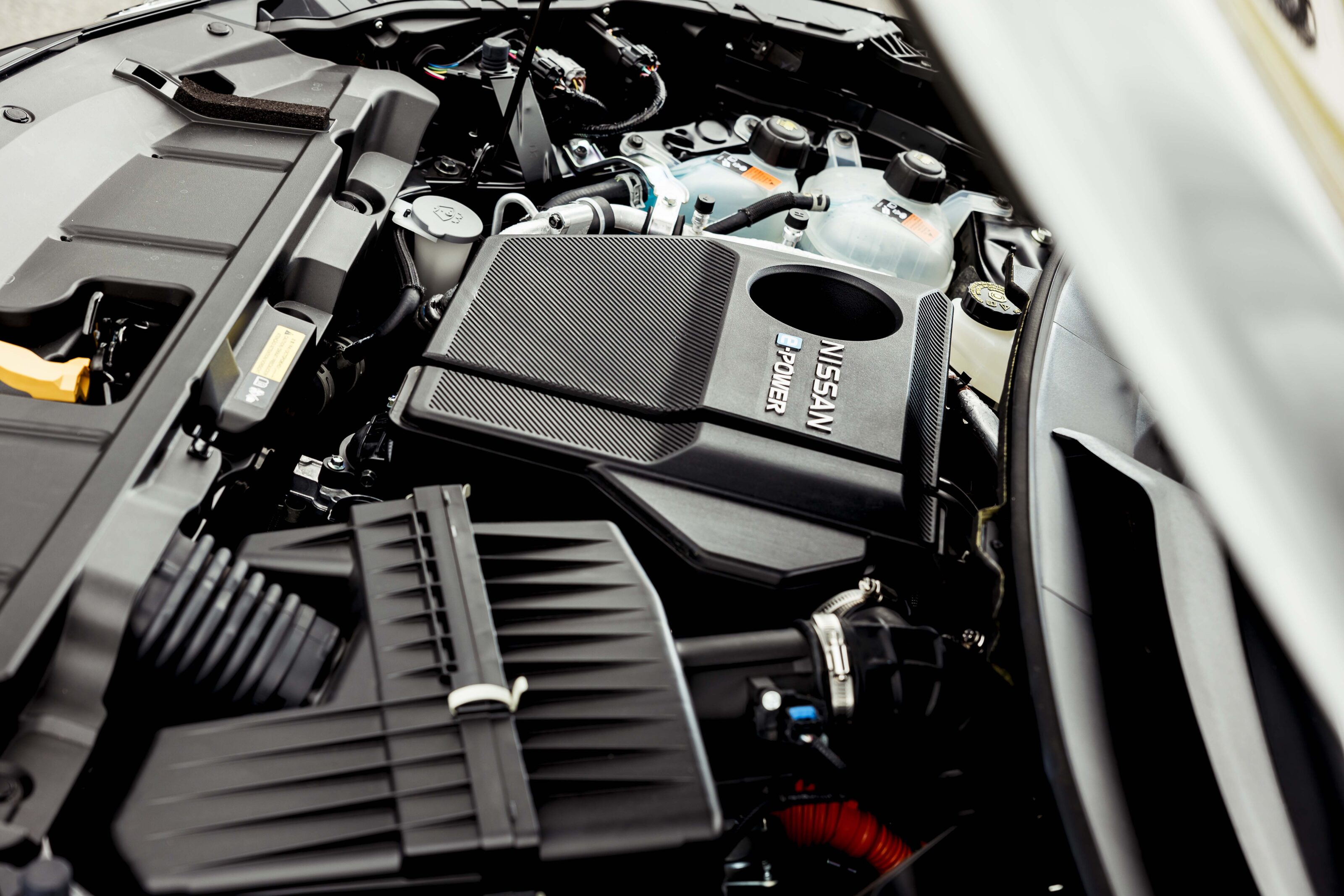
Although the E-Power returned the best fuel economy (9.2L/100km, besting the atmo X-Trail by 15 per cent), there’s no escaping that a RAV4 would have been more efficient on the same drive. The E-Pedal mode is engaging, at least, allowing one-pedal driving down to about 7km/h for an ‘EV-Lite’ experience.
The light steering had more consistent weighting than the Qashqai’s, and the X-Trail’s chassis preferences fluidity and neutrality over outright engagement, which is what most buyers want in a family SUV.
Spinks wasn’t enamoured by the E-Power’s unsettling float on one particularly vicious mid-corner compression, but overall we were convinced.
“Of all our finalists, the X-Trails surprised me most on the road loops. I thought they were good at the proving ground but on flowing country roads they’re truly excellent,” opined Inwood.
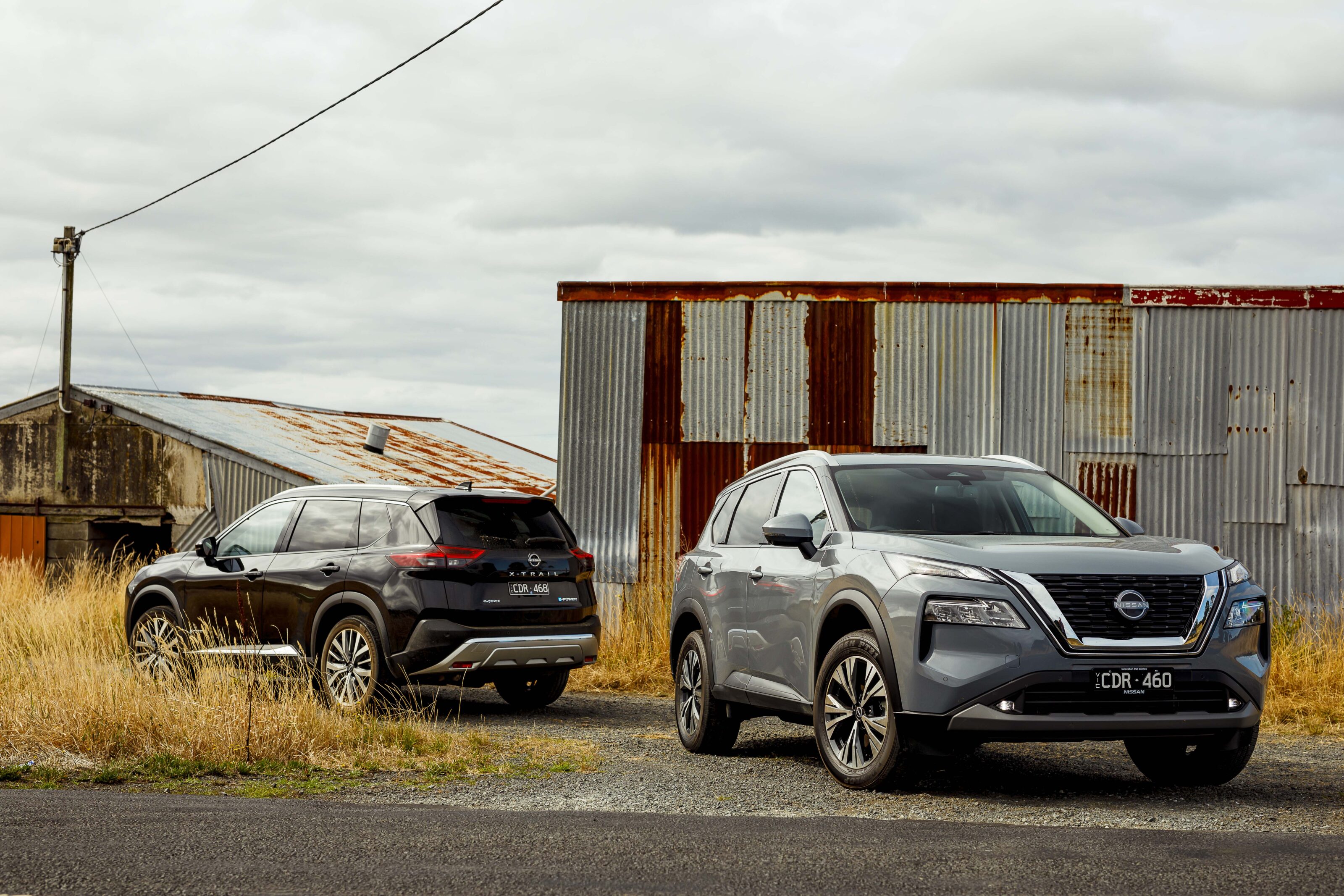
Its ProPilot active driver aids were also great in the real world. The lane-keep assist was helpful without being heavy-handed, and the adaptive cruise control adjusted speeds smoothly on the highway.
The X-Trail excels as a package. “It’s like Nissan has gone to somebody’s house, got the list of what a midsize SUV buyer wants, and just gone ‘tick tick, tick’… it would slip into your life so seamlessly, like a butler,” said Inwood.
Entering the final discussion I was confident that X-Trail had a 50:50 chance – and I wasn’t alone. But after fleshing out the expensive service costs, short service intervals and the E-Power’s lacklustre performance in the lane change, the tune changed in the room.
There’s an awful lot to love about the excellent, well-rounded X-Trail, but not quite enough to make it 2023’s Car of the Year.
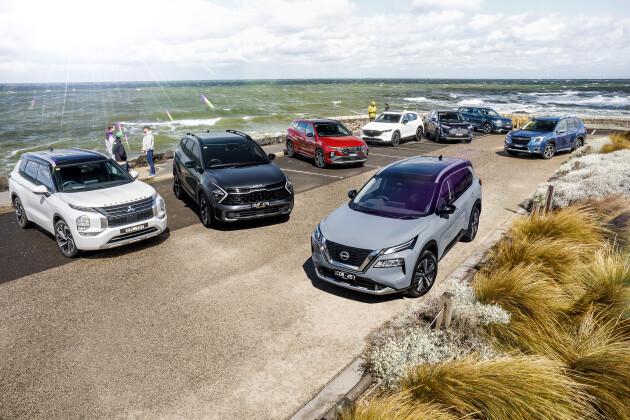
Medium SUV comparison: 2023 Mega Test
Thinking of buying a new mid-size SUV this year? We test eight of the best and most popular contenders to see where you should spend your money
MORE READING
Now that you’re done reading about this COTY 2023 contender, you should go back to catch up on anything you might’ve missed. Check out the links below, or find it all at our COTY page.
Snapshot
- Ford details collected data from E-Transit vans in the US and Canada
- Saved more than 2.8-litres of fuel and 4.3-million kilograms of CO2 in one year
- Large electric delivery van confirmed for Australia this year
The Ford E-Transit electric delivery van has saved more than 2.8-million litres worth of fuel from around 19.3 million kilometres driven – in just one year after its launch in the US and Canada.
The American carmaker shared data collected from its E-Transits as part of its internet-connected Ford Pro system – equating the fuel savings to preventing more than 4.3-million kilograms of carbon dioxide (CO2) being polluted into the air.
Ford also claims driving a low-roof E-Transit delivery van results in 57 per cent CO2 output reduction across its lifetime compared to a traditional combustion engine-powered van.
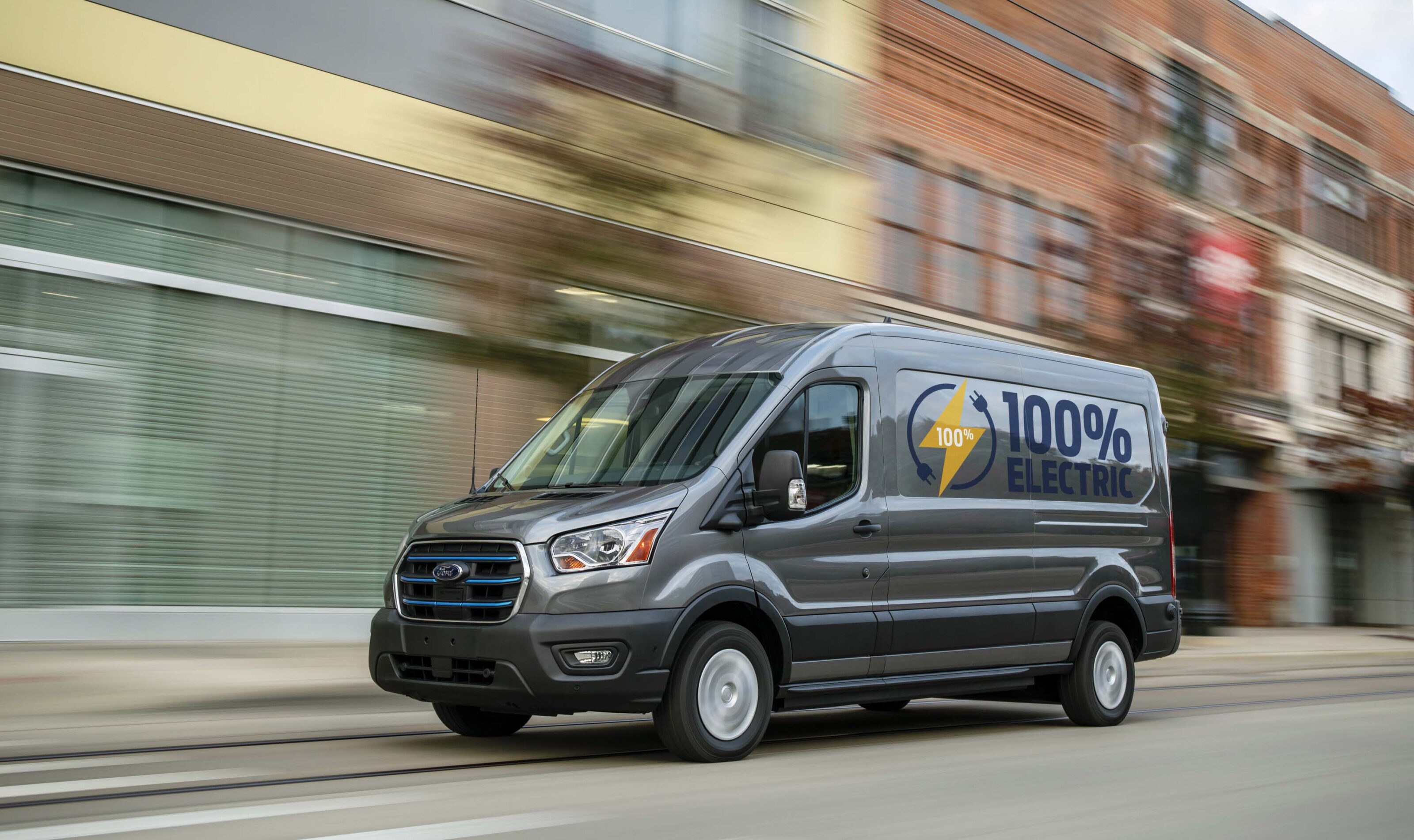
As the first mass-market large electric commercial van sold in North America, 6500 were sold last year and currently represents around 61 per cent of the continent’s electric van market.
In Australia, the Ford E-Transit was previously promised to land in 2022 as part of its electrification push, but has been delayed multiple times to at least April.
Only the long wheelbase mid-roof or high-roof variants have been earmarked locally, with a 67kWh usable battery delivering an estimated 317 kilometres of driving range on the WLTP test cycle.
The E-Transit’s only direct rival is the LDV eDeliver 9, while the Renault Master E-Tech and Mercedes-Benz eSprinter are slated to launch in 2024 or later.
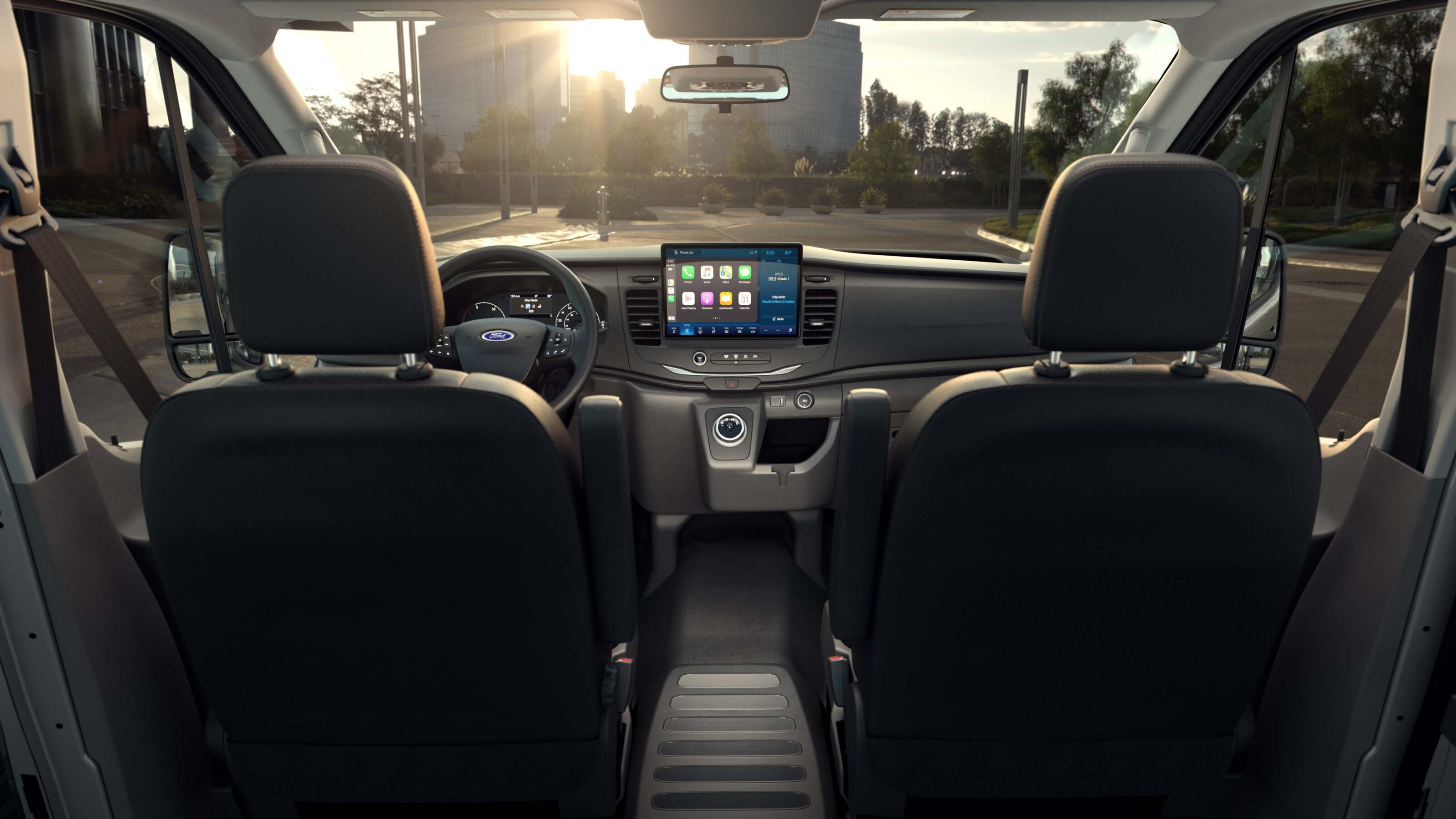
A US Department of Energy study last year revealed battery-electric vehicles in the States alone saved 1.8-billion litres of fuel in 2021 or equivalent to 72 Olympics-sized swimming pools.
While EVs do have a higher emissions footprint from the factory – due to environmentally unsustainable materials used to make large battery packs – the total lifetime carbon footprint is still lower than petrol and diesel cars, especially when recharged on renewable energy sources.
Ford of Europe is also deploying a FordLiive subscription service, which aims to increase the uptime of commercial vans by using 4000 in-vehicle data points to warn fleet operators of specific mechanical issues and have parts ready at Ford service centres before arriving at the dealership.
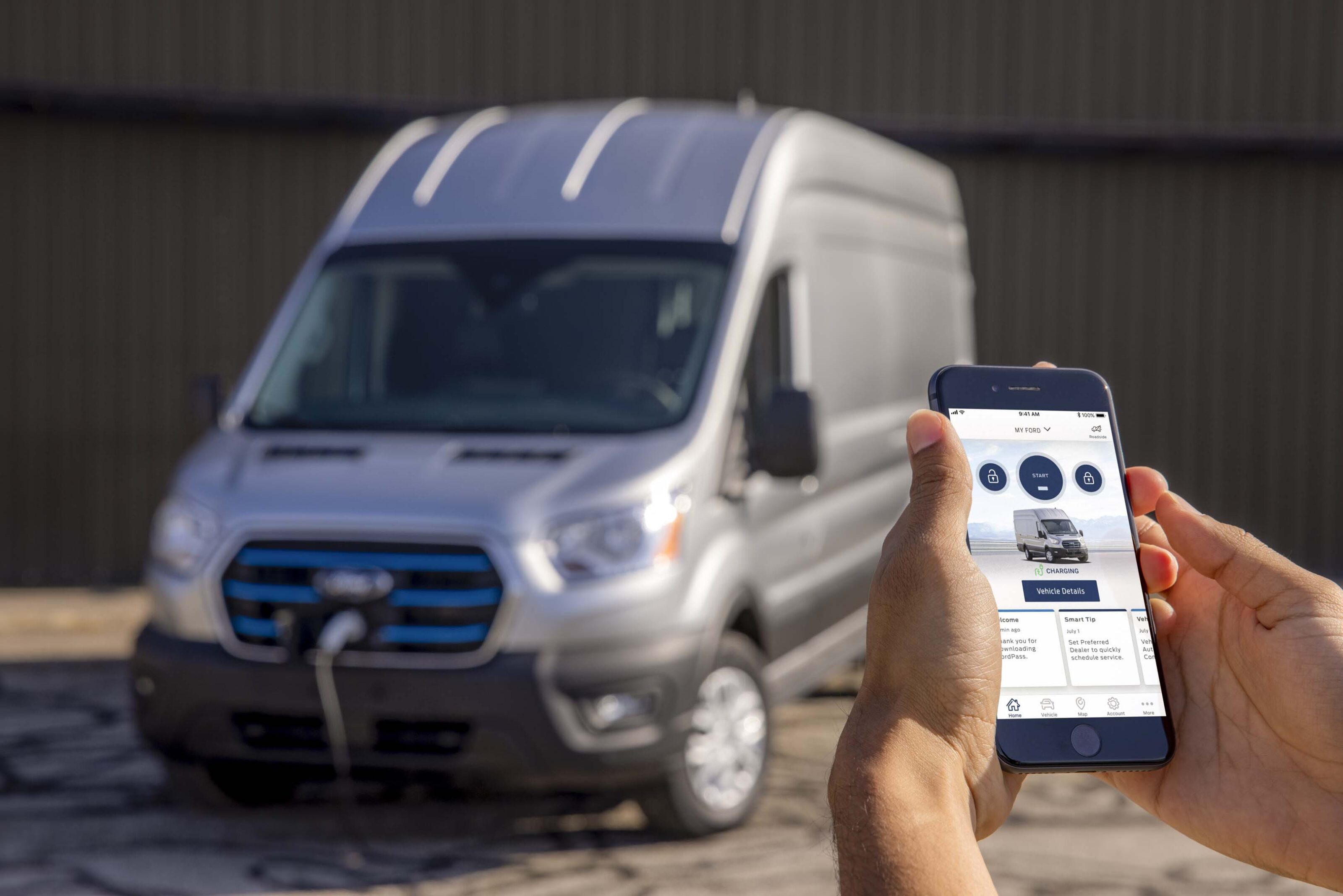
After a new Hyundai, but not sure how long you’ll have to wait?
Issues such as semiconductor chip shortages, shipping problems and sickness and isolation have affected the ability of manufacturers like Hyundai to keep their production lines going over the last three years.
As such, all of the Korean brand’s models are currently experiencing some delays.
However, some models are in greater supply than others, with flexibility around powertrains, specification and vehicle colour likely to see a vehicle in your driveway sooner.
Overall, according to Price My Car, the average wait time for a Hyundai is now 104 days – compared to 108 days in January 2022.
The worst affected is the brand’s European-sourced i20 N and i30 N hot hatches with new orders paused. Those with an existing order are also in for a wait of up to 12 months or longer, depending on when their deposit was placed.
The Hyundai Ioniq 5 and Ioniq 6 electric vehicles remain exclusively available online, with the most recent allocation opened on February 22.
Hyundai average model wait times 2023
NOTE: This information is current as of March 9, 2023. This article will be reviewed and amended as new details come to light.
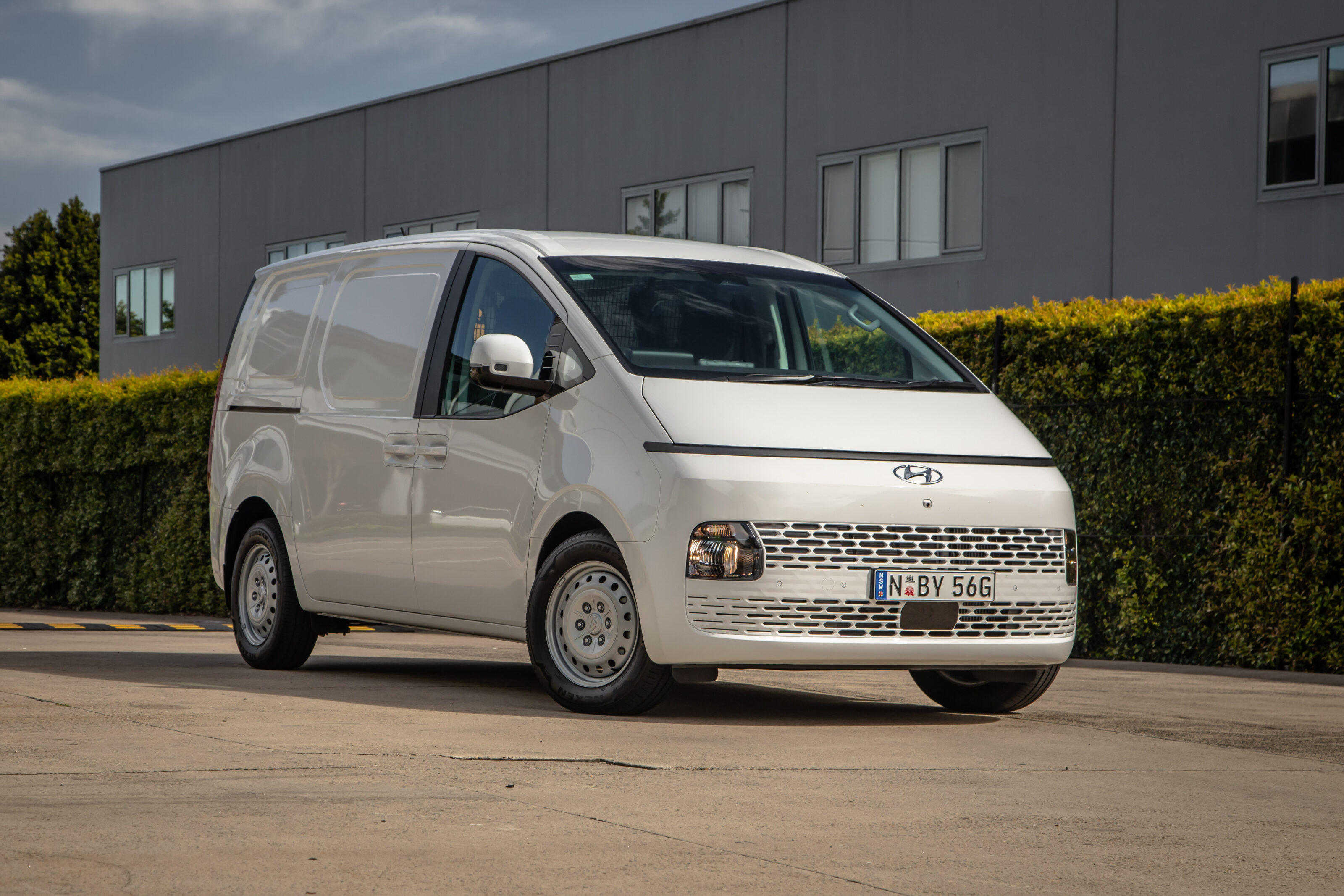
“[Hyundai Australia has] good, continuous supply of Hyundai models arriving the country, however given the increase in customer demand for our products, we have a large backlog of customer orders we need to fill,” a spokesperson told Wheels last year.
“We continually have around 20,000 vehicles that are deliverable within a two-month window (this includes vehicles in the country, in transit, in production and scheduled for production).
“Availability in dealerships will vary depending on model and variant (engine, trim grade, colour, region).”
In addition, Hyundai Australia said none of its models are being altered due to the chip shortage.
It added that the logistics team is “actively prioritising vehicle allocation to existing customer orders (ensuring we limit customer wait times as much as possible)”.
WIth all of the above in mind, it is important to consider this article a guide only.
Snapshot
- Hyundai developing air suspension benefits without the premium cost
- Raises to protect underbody, lowers to improve driving range, accessibility, performance
- Designed for EVs, high-performance cars, and autonomous taxis
Car parts supplier Hyundai Mobis and the Hyundai Motor Company have jointly developed a new Electronic Levelling Control (ELC) system to benefit electric vehicles.
Unlike costly air suspension systems, ELC adopts an electric hydraulic pump to adjust the height of the vehicle by up to six centimetres upwards or downwards from all four wheels.
When raised, the South Korean companies claim the feature can protect the large battery packs underneath EVs and prevent the underbody from being scratched while tackling rough roads, parking lots and speed bumps.
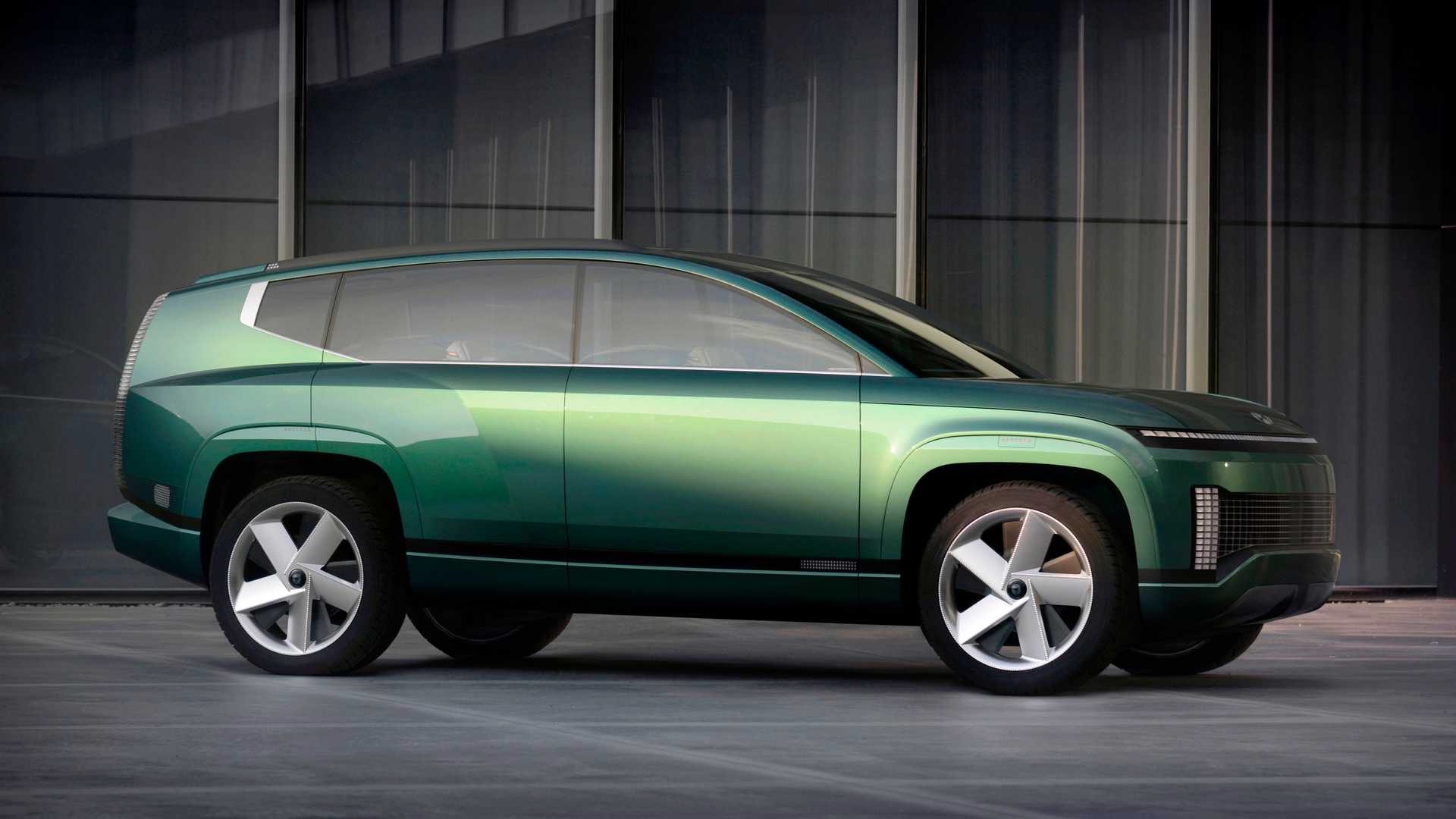
Meanwhile, when lowered it minimises air resistance at highway speeds to improve driving range and lower centre of gravity for better driving performance.
It’s also said to improve passenger access, loading and unloading items, and maintains the vehicle height with a full payload onboard.
The companies are currently “verifying the reliability of the technology using test vehicles” and said ELC’s also designed for high-performance cars (possibly Hyundai N?) and its future autonomous purpose built vehicle (PBV) taxi pods.
Australia’s best electric cars for 2023
We’ve tested nearly every EV below six figures in Australia to rank the best on sale today
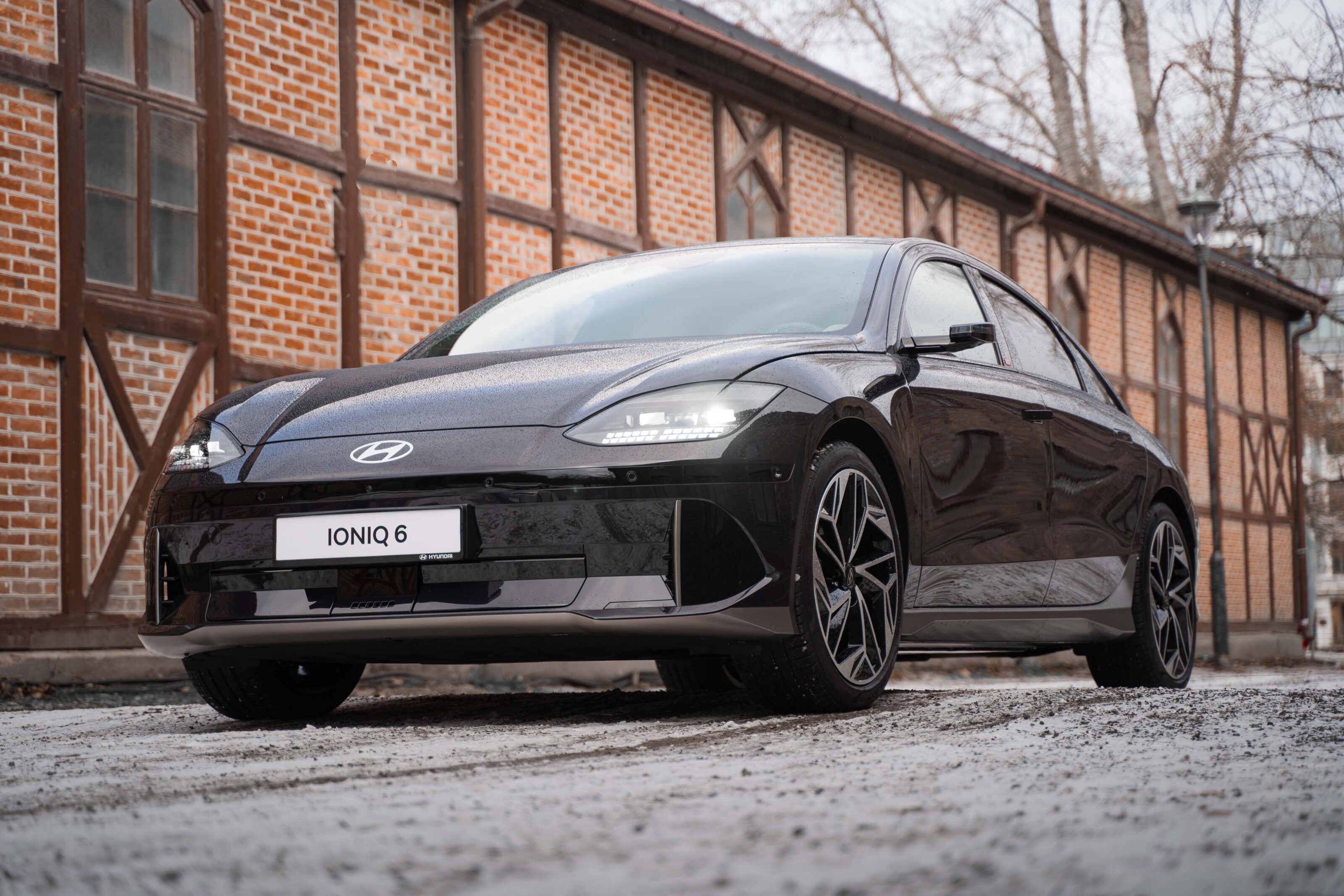
ELC adjusts automatically using built-in sensors detecting the driving speed and gross vehicle weight, but drivers can manually control it too.
Hyundai Mobis intends to connect the system to the forward-facing camera and navigation data in the future to pre-empt conditions and self-adjust accordingly.
Hyundai Motor aims to introduce 11 new Hyundai and six new Genesis battery-electric models by 2030.
In 2025, it will debut a new Integrated Modular Architecture (IMA), Genesis will only launch electrified models, and all of the group’s vehicles will feature over-the-air software update capability.
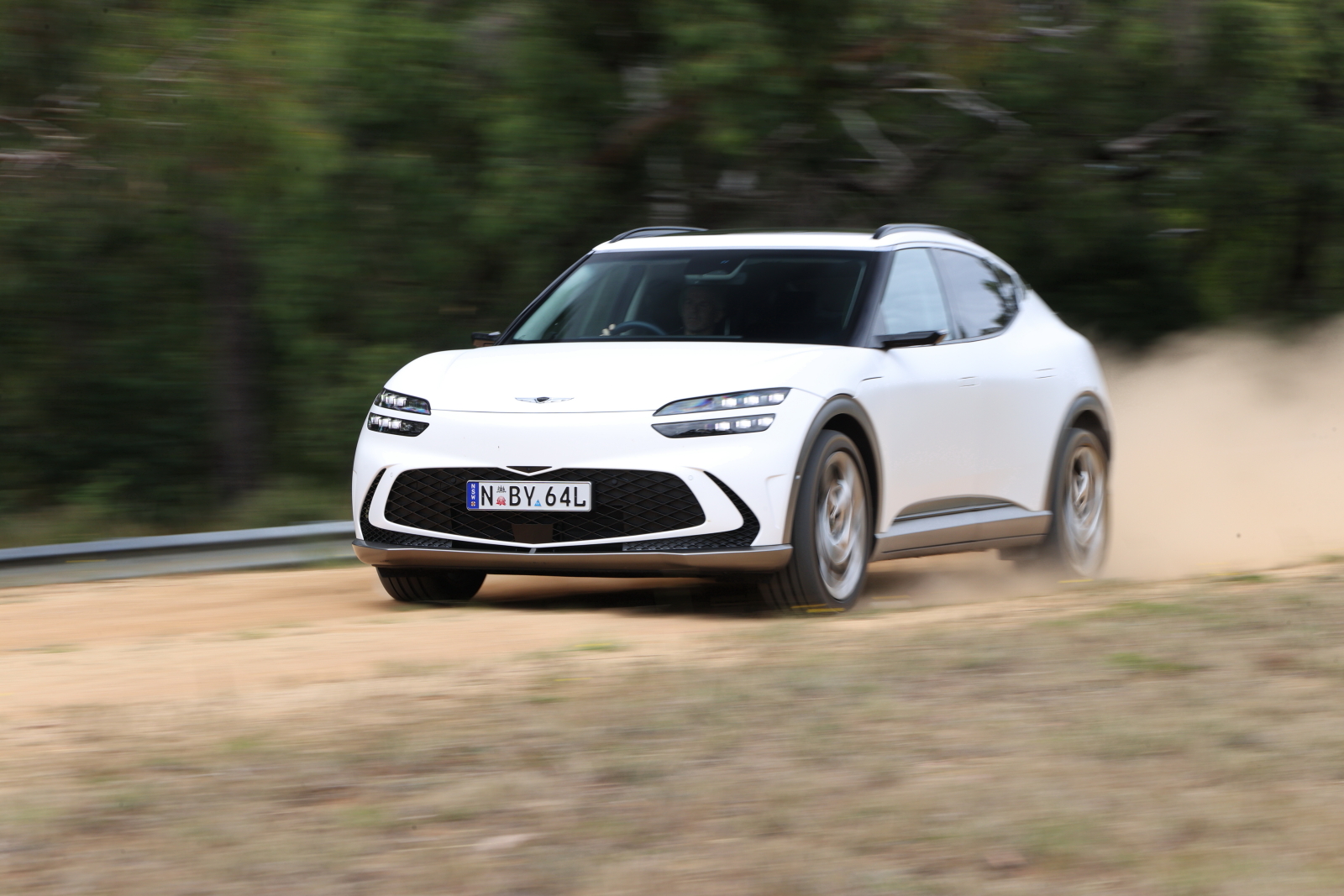
June: New C-HR unveiled!
Euro-built second-gen C-HR small SUV here next year with two hybrids – including an all-wheel-drive GR Sport flagship. Details at the story below.
The story to here
The 2024 Toyota C-HR will become the brand’s first vehicle to ditch petrol power in its next generation.
Snapshot
- 2024 Toyota C-HR to go hybrid-only in Australia
- Plug-in hybrid set to be offered in Europe, but unlikely for Australia
- Next-generation small SUV due here in the first half of 2024
While the Prius small car was a hybrid pioneer, the second-generation C-HR will become Toyota’s first ‘traditional’ vehicle to be offered without an internal combustion-only powertrain in Australia.
Toyota Australia has confirmed it will arrive in the first half of 2024, with a global debut expected in the coming months.
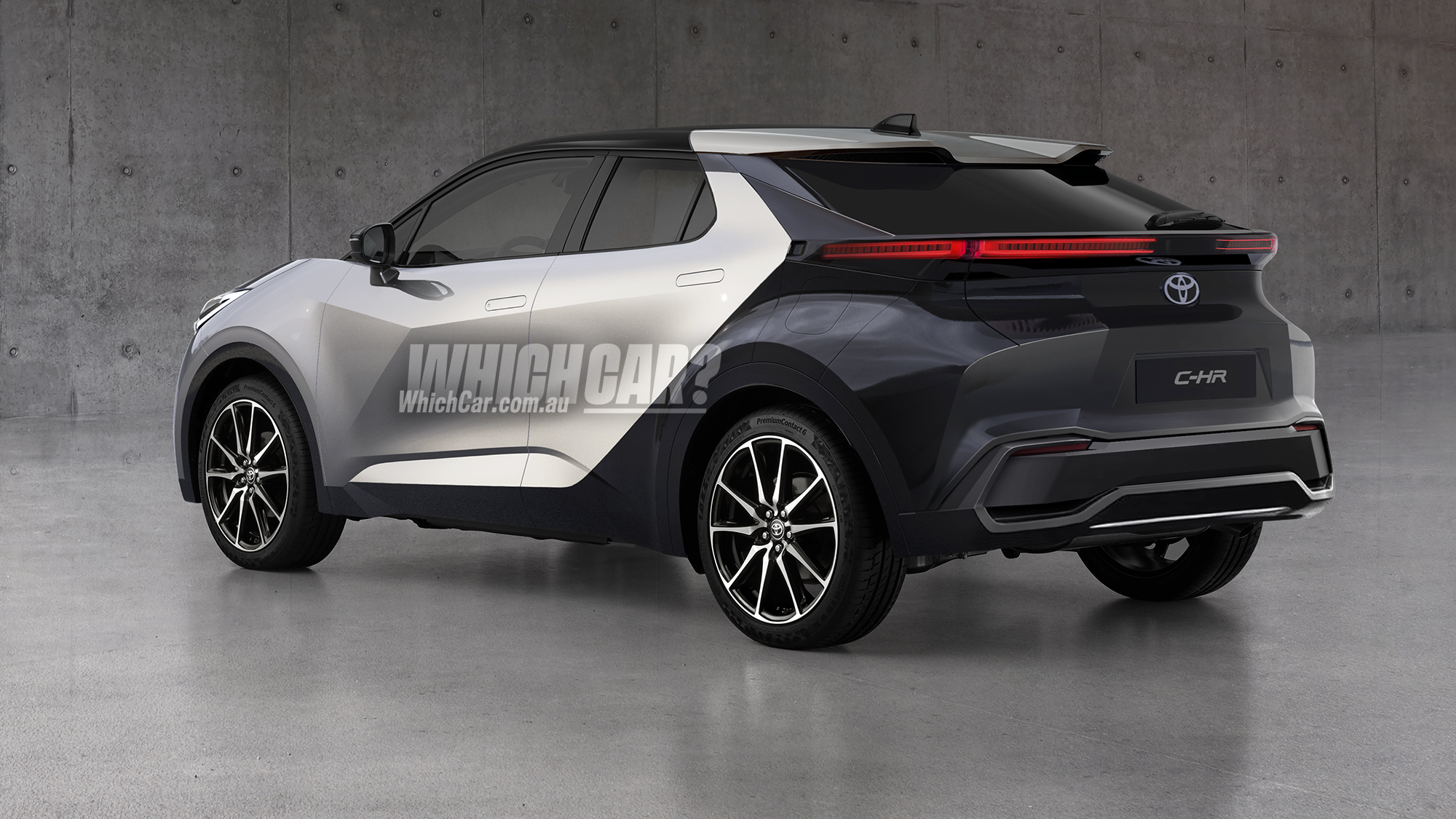
The first-generation C-HR – launched in Australia in 2017 – arrived with a 1.2-litre four-cylinder turbo-petrol engine, while a 1.8-litre petrol-electric hybrid system (borrowed from the Corolla) joined the range when it was facelifted in 2019.
It will follow the Sienna multi-purpose vehicle and Venza/Harrier medium SUV, which recently switched to hybrid-only powertrains – but neither is offered in Australia.
In Europe, the upcoming C-HR will be offered in regular parallel hybrid or plug-in hybrid form; however, only the former is confirmed for Australia, with the PHEV – a competitor to the Mitsubishi Eclipse Cross – looking unlikely.

“The decision also reflects the ever-increasing customer demand for hybrid vehicles, with Australian customers purchasing a record 72,815 electrified Toyotas in 2022, representing 31.5 per cent of the brand’s overall sales,” said Toyota Australia.
In late 2022, Toyota unveiled the Toyota C-HR Prologue concept to preview the second-generation model, showcasing an evolved design inspired by the latest Prius, BZ4x and Crown.
It debuted alongside the all-electric BZ Compact concept, which is expected to slot between the C-HR and BZ4x in Toyota’s lineup, potentially badged BZ3x.
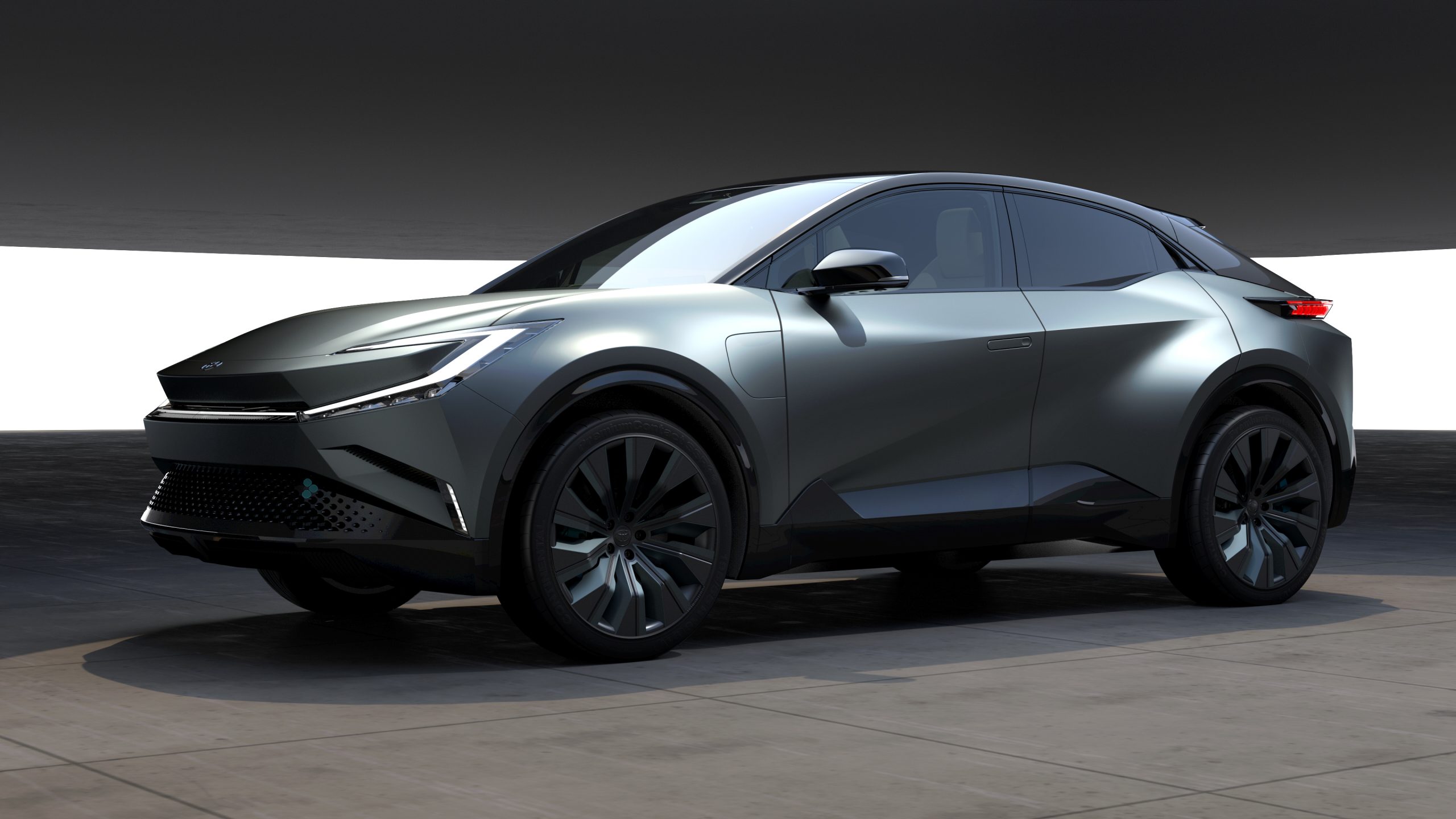
Toyota’s local arm has announced it will offer three all-electric vehicles in Australia in the next three years, including the soon-to-launch BZ4x medium SUV – but hybrid technology is still the main focus.
Following the BZ4x, Toyota Australia is tipped to confirm the production version of the BZ Compact SUV concept for our market, and another electric vehicle due within the next three years.
It forecasts more than half of its sales will be electrified by 2025, but – although no breakdown was offered with that forecast – this is expected to be made up mostly of hybrid options for popular vehicles, such as the RAV4, Corolla, Corolla Cross, Kluger, Camry and Yaris Cross – and the hybrid-only C-HR.
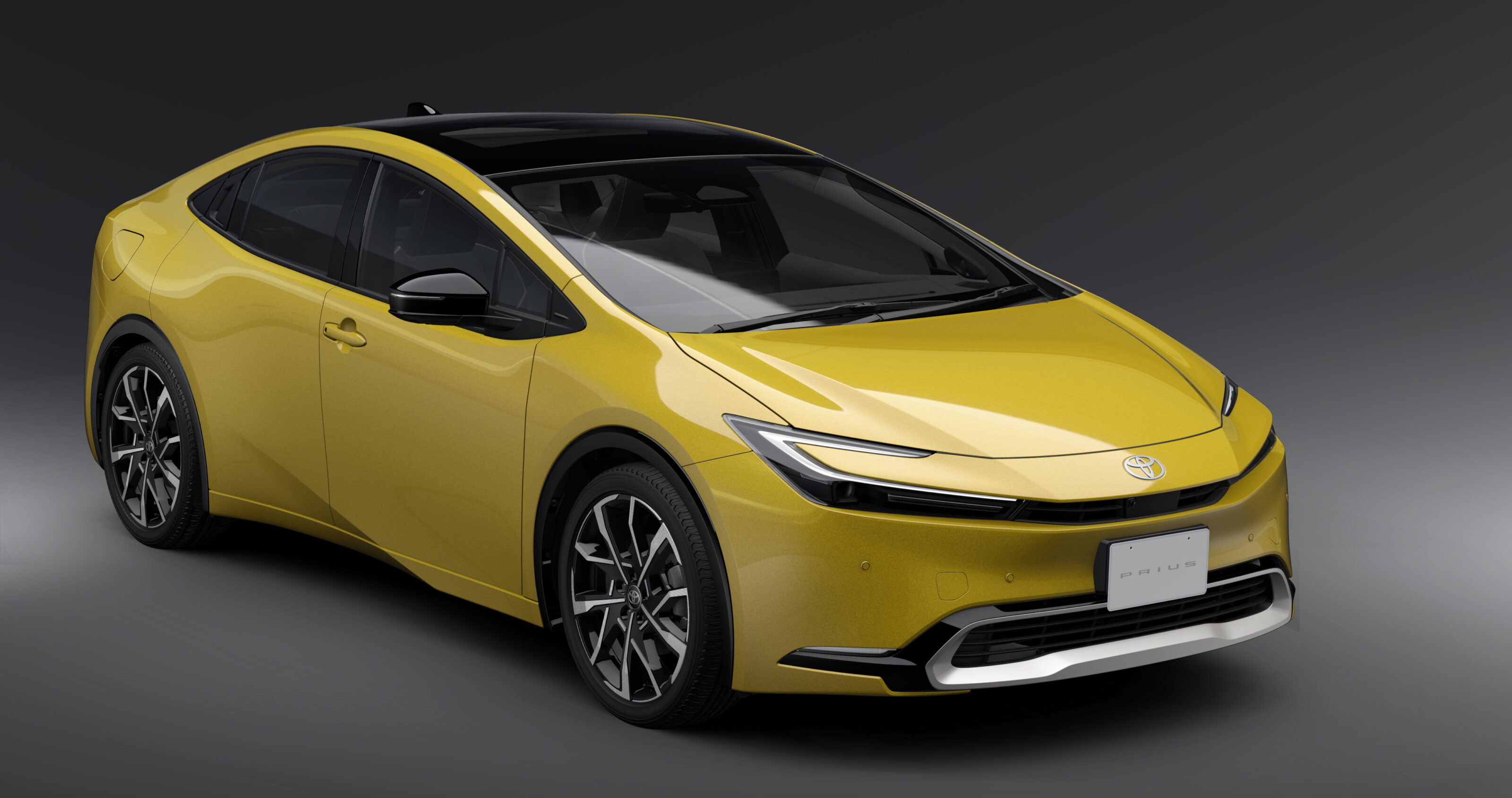
Under the skin, the second-generation C-HR is believed to be closely related to the next-generation Prius. It is underpinned by the latest version of the TNGA platform, with a more powerful 1.8-litre hybrid, a 2.0-litre hybrid from the Corolla Cross, and a newly-developed 2.0-litre plug-in hybrid.
The plug-in hybrid Prius features a 13.6kWh lithium-ion battery with an estimated 60-kilometre electric-only driving range.
The 2024 Toyota C-HR will arrive in Australia in the first half of 2024, with more details expected when it debuts later this year.

VFACTs new-car sales data reveals 7977 examples were sold in Australia in 2022, placing it eighth in the small SUV segment behind the MG ZS (22,466), Mazda CX-30 (13,891), Mitsubishi ASX (12,753), Hyundai Kona (11,538), Subaru XV (9090), Kia Seltos (8504) and GWM Haval Jolion (8217).
The hybrid powertrain accounted for 44.1 per cent of C-HR sales in 2022, split between the Koba (84 per cent) and GR Sport (16 per cent) grades.
It is forecasted to be outsold by the recently-launched Corolla Cross this year, with the larger vehicle offering greater practicality, a broader range of hybrid options, and conventional styling.
First launched in Australia in 2017, the Toyota C-HR range expanded in Australia with the addition of a hybrid powertrain in 2019, and a sportier hybrid-only GR Sport a year later.
The 2023 Peugeot 508 GT Plug-In Hybrid Sportswagon has been confirmed for Australia.
Snapshot
- 2023 Peugeot 508 GT Plug-In Hybrid Sportswagon confirmed for Australia
- Due in Australia between April and June
- Expect to incur a circa-$2500 premium over GT Plug-In Hybrid Fastback variant
It will join the electrified 508 Fastback which arrived locally 12 months ago, with the first deliveries of the wagon variant due in the second quarter of 2023 (April to June inclusive).
Peugeot Australia has yet to confirm local details for the new variant; however, it is expected to mirror the sedan – but with a circa-$2500 price increase, in line with the petrol GT Sportswagon.
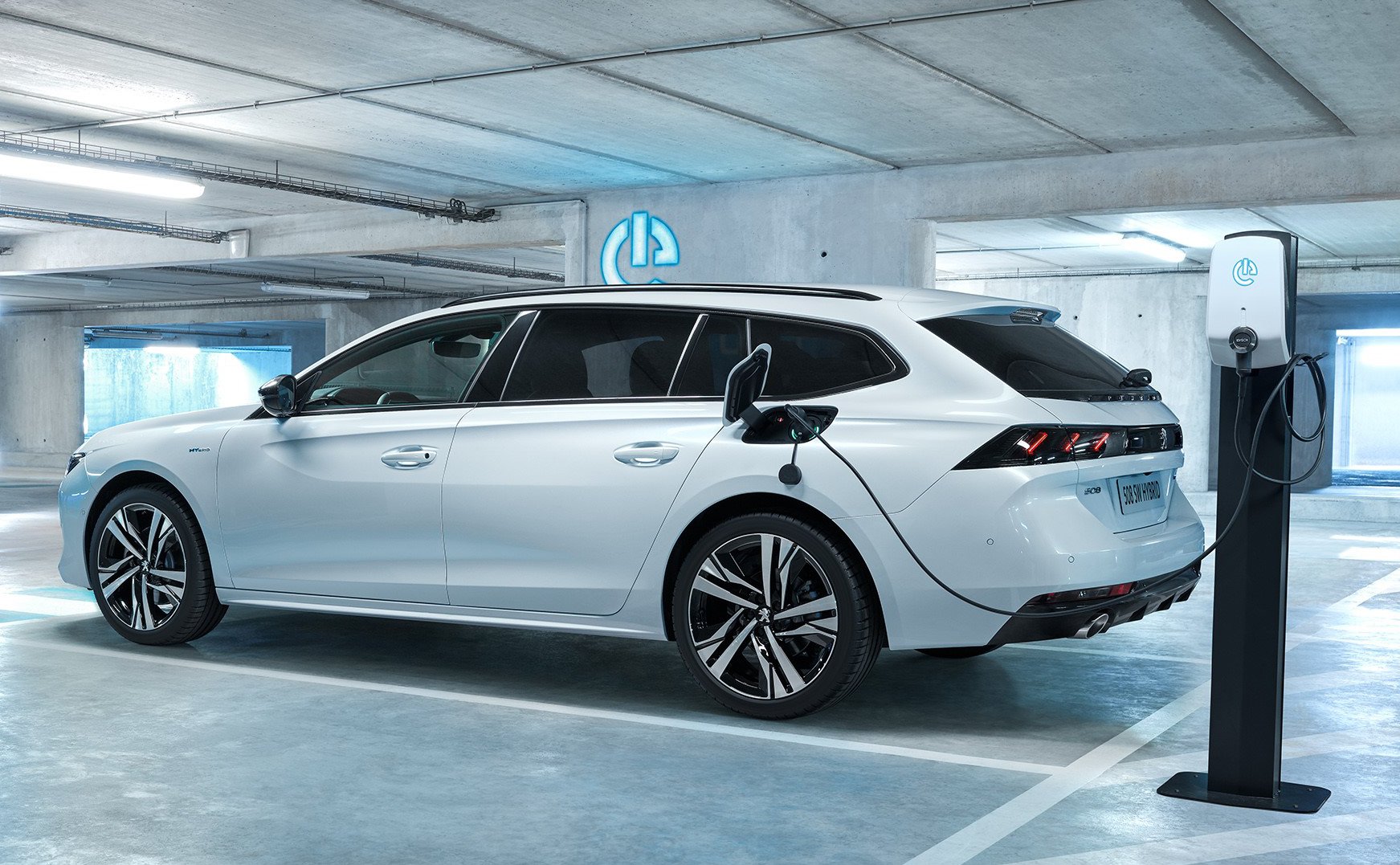
This would place the variant at around $84,000 before on-road costs – similar to the 3008 PHEV medium SUV – with the GT Plug-In Hybrid Fastback priced from $81,610 plus on-roads.
A panoramic sunroof is available for $2500 in the Fastback, while metallic and premium paint costs $690 and $1050, respectively.
The latest addition to Peugeot’s electrified lineup follows previous confirmation of the 308 and 408 plug-in hybrids – as well as the all-electric E-2008 small SUV and E-Partner small van, which will launch in Australia in 2023.
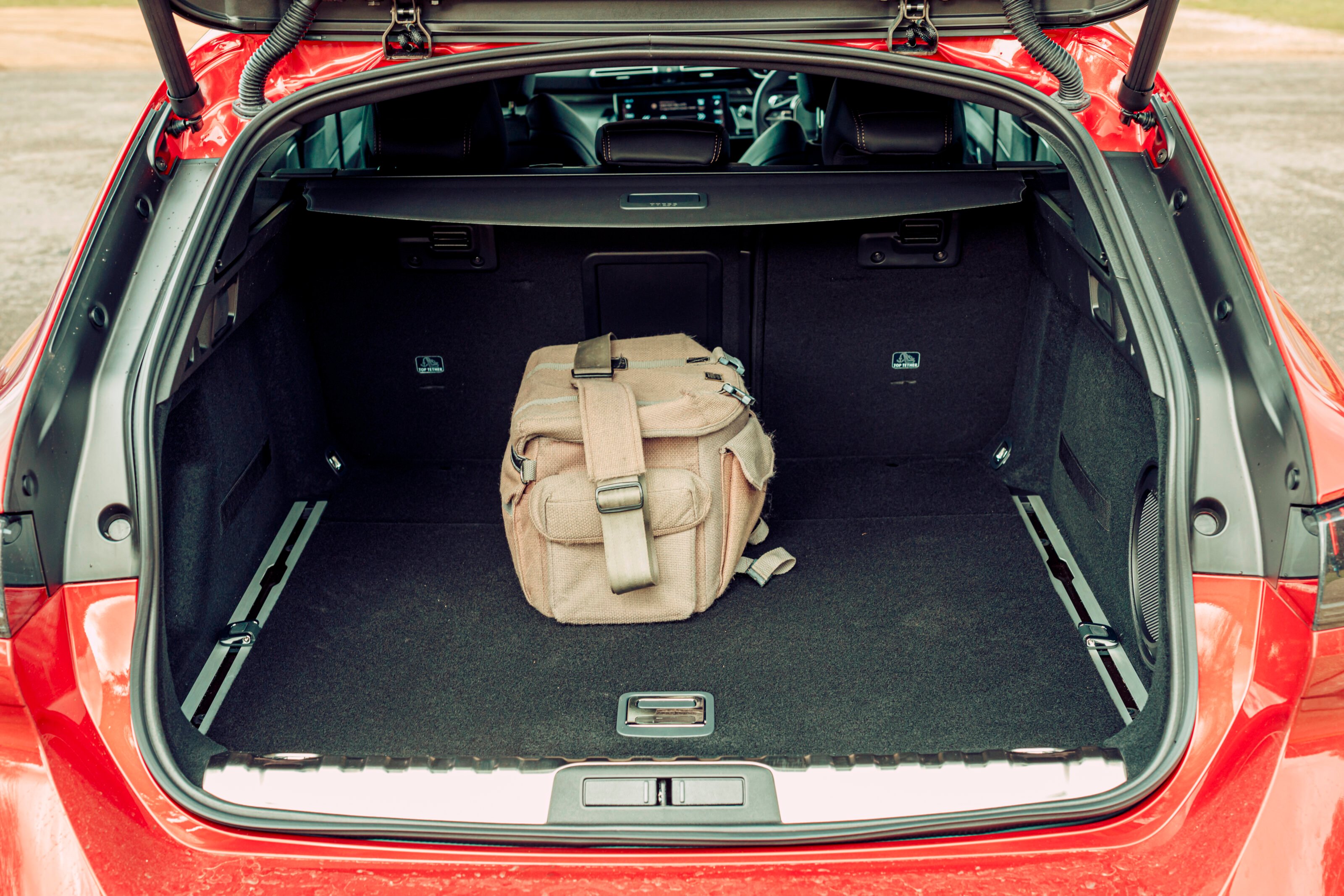
Under the bonnet, the Peugeot 508 GT Plug-In Hybrid pairs a 133kW 1.6-litre turbocharged four-cylinder petrol engine and eight-speed automatic transmission with an 81kW electric motor, for a 165kW and 360Nm total system output.
With an 11.8kWh lithium-ion battery, the 508 PHEV has an electric-only driving range of up to 55 kilometres.
Unlike the 3008 PHEV AWD, power is exclusively sent to the front wheels – but a more-powerful, all-wheel-drive 508 Sport Engineered (PSE) is available overseas.
Last month, Peugeot unveiled a facelifted version of the 508 in Europe, but local timing remains unclear.
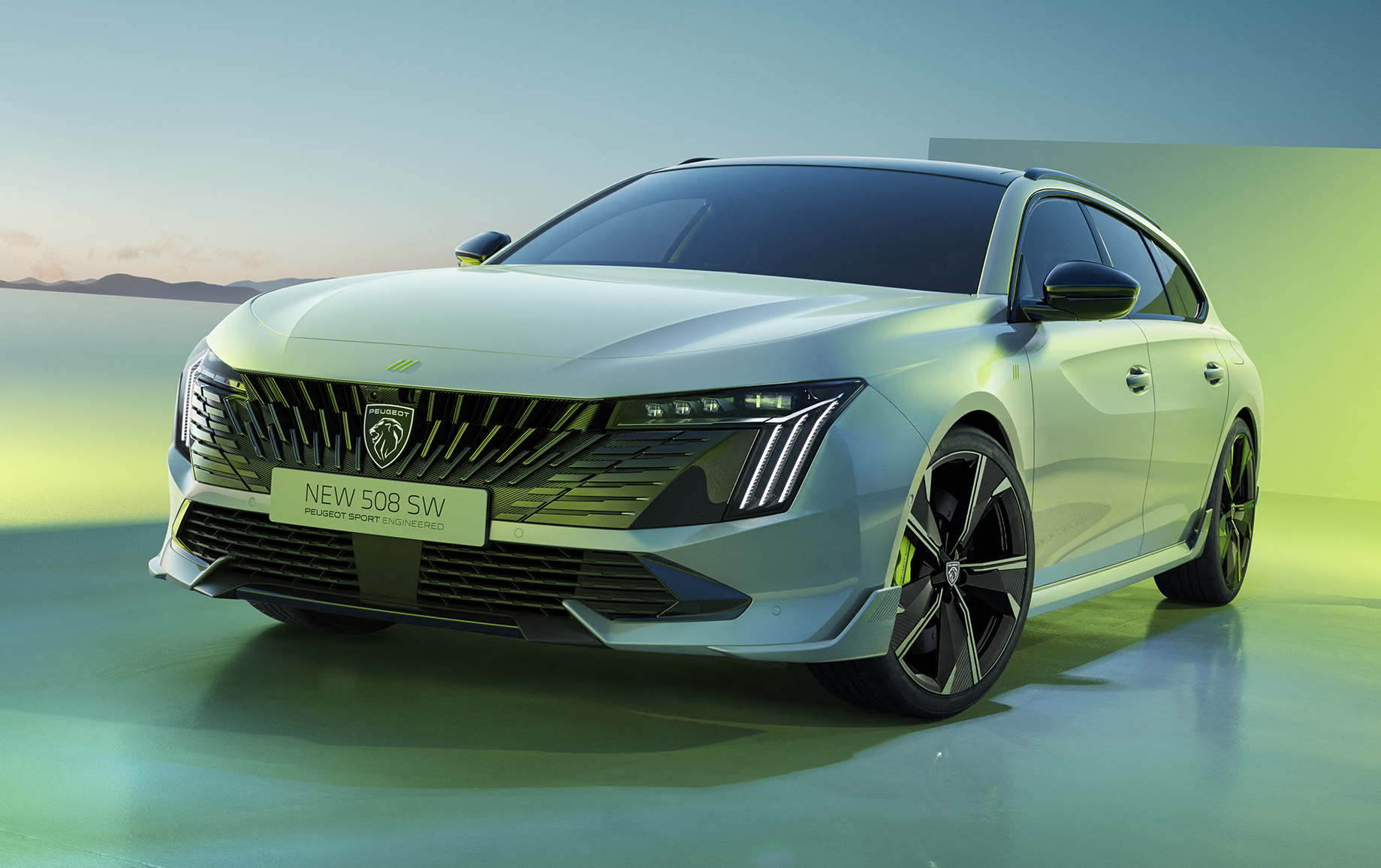
“Following the global reveal of the next iteration of 508, anticipated launch details, including arrival timings for the Australian market, will be confirmed in due course,” said a spokesperson for Peugeot Australia.
The updated sedan and wagon – a stylish French rival to the also-chic Volkswagen Arteon – debut Peugeot’s latest badging, updated styling, and new tech.
Unlike the latest 3008 and 5008, which feature new fuel-saving mild-hybrid technology, the 508 retains its previous engine lineup matched to an eight-speed automatic transmission.
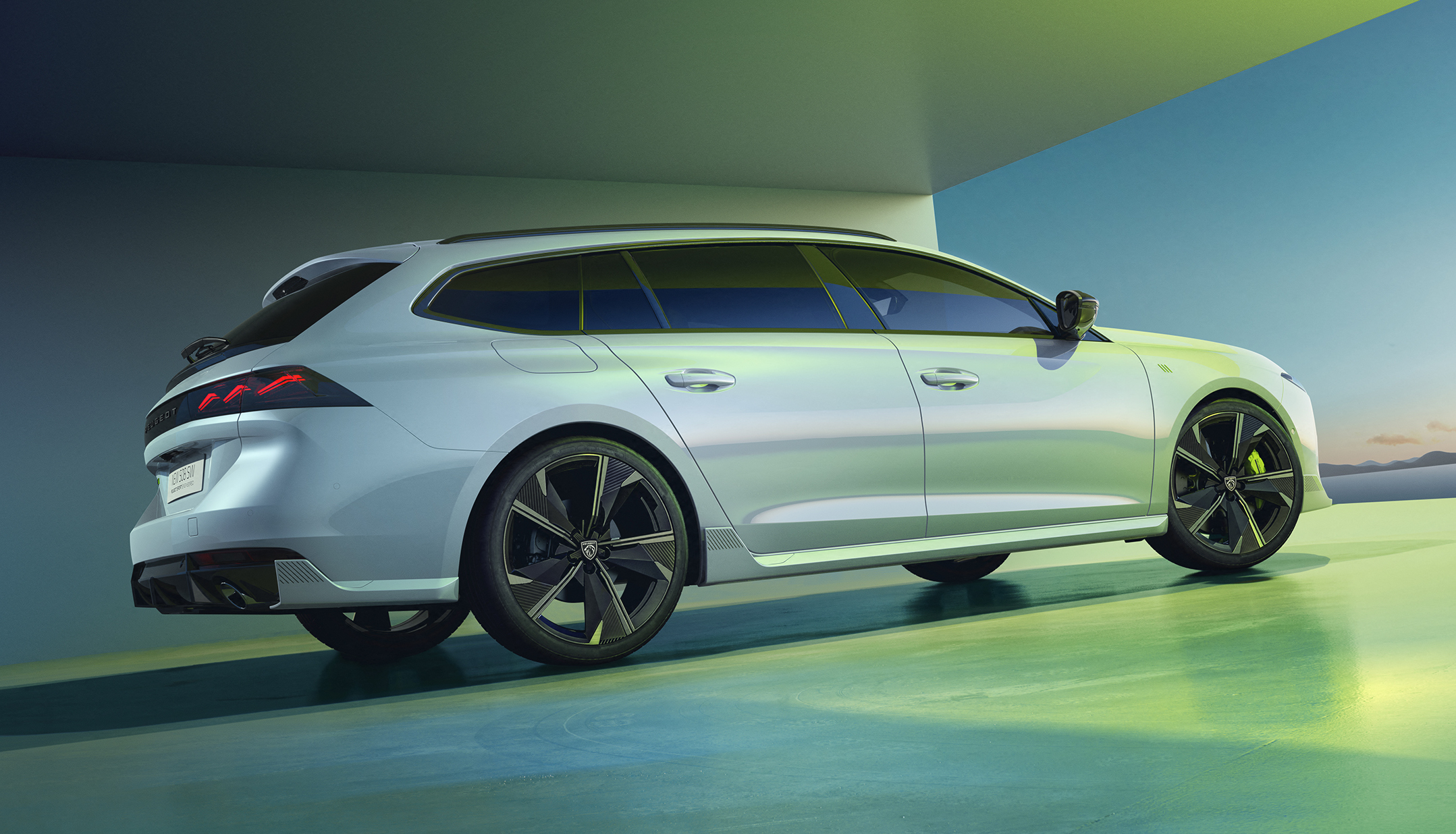
This means the standard-fit 165kW/300Nm 1.6-litre four-cylinder turbo-petrol in GT variants remains unchanged, while the 165kW/360Nm 1.6-litre plug-in hybrid system is also identical to the current model.
The top-spec 508 PSE plug-in hybrid has yet to be confirmed for Australia – but it could headline the facelifted range.
“At this stage, there is no information to share with regards to the 508 PSE, however, we continue to work with the factory to assess suitability for the local market,” the Peugeot Australia spokesperson added.
As before, the 508 PSE features a 147kW 1.6-litre turbocharged petrol engine, and two electric motors – 81kW front and 83kW rear – for a combined system output of 265kW and 520Nm. It is offered as a sedan or wagon.
No Ferrari before it has ever had so many doors, so much ground clearance, so much luggage space, or such a good audio system as the Purosangue. But the question of whether these attributes somehow sully the status of the prancing horse badge it wears isn’t bothering me right now. Not at all…
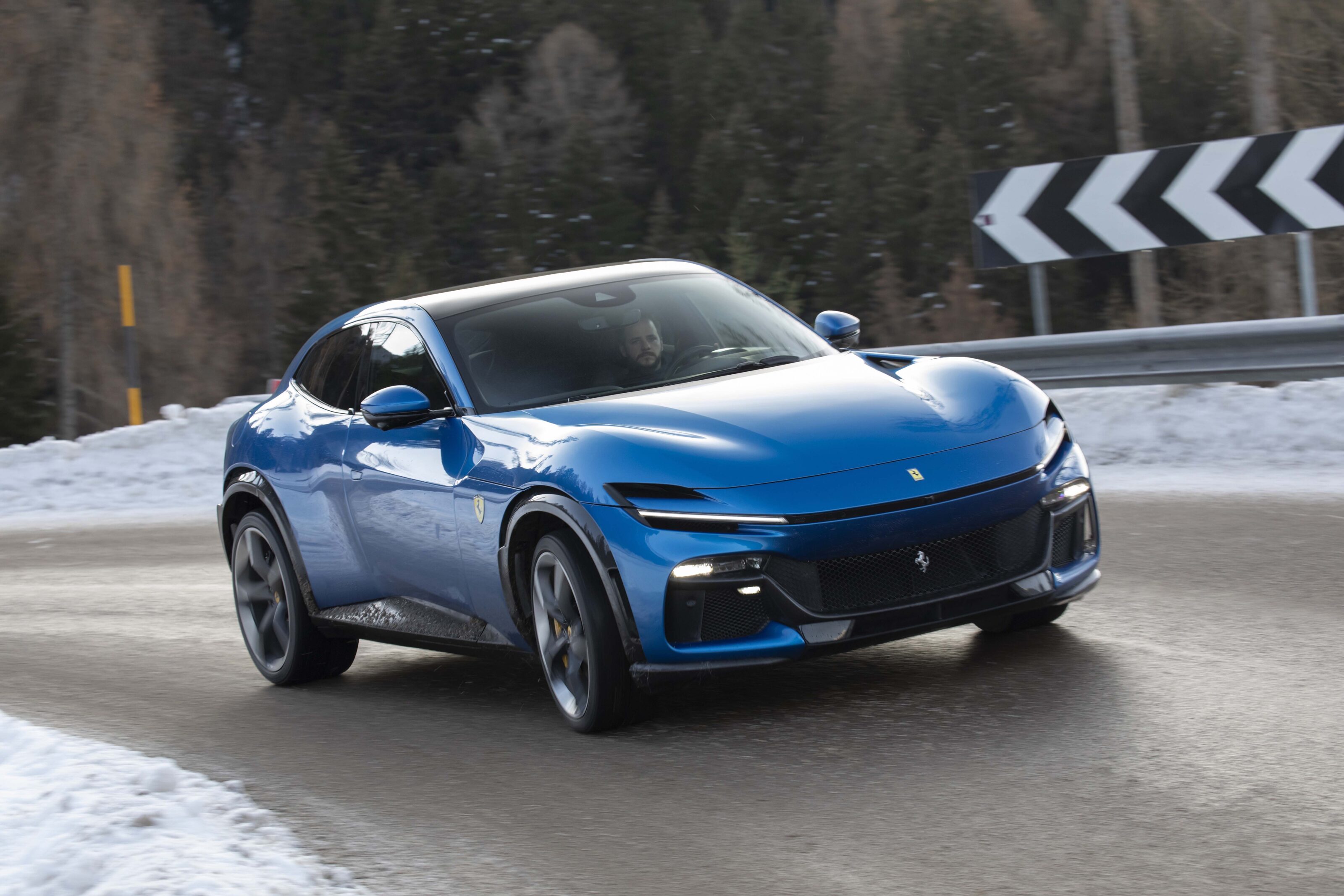
The Purosangue’s pipes bark twice as it blips down two gears while I brake for the looming hairpin on a road fringed by remnants of recent snow and liberally dusted with grit.
Almost five metres long and a little more than two metres wide, the Purosangue casts a hefty shadow. Even so, it doesn’t take too much turning of the perfectly weighted steering to point its haughty nose at the apex.
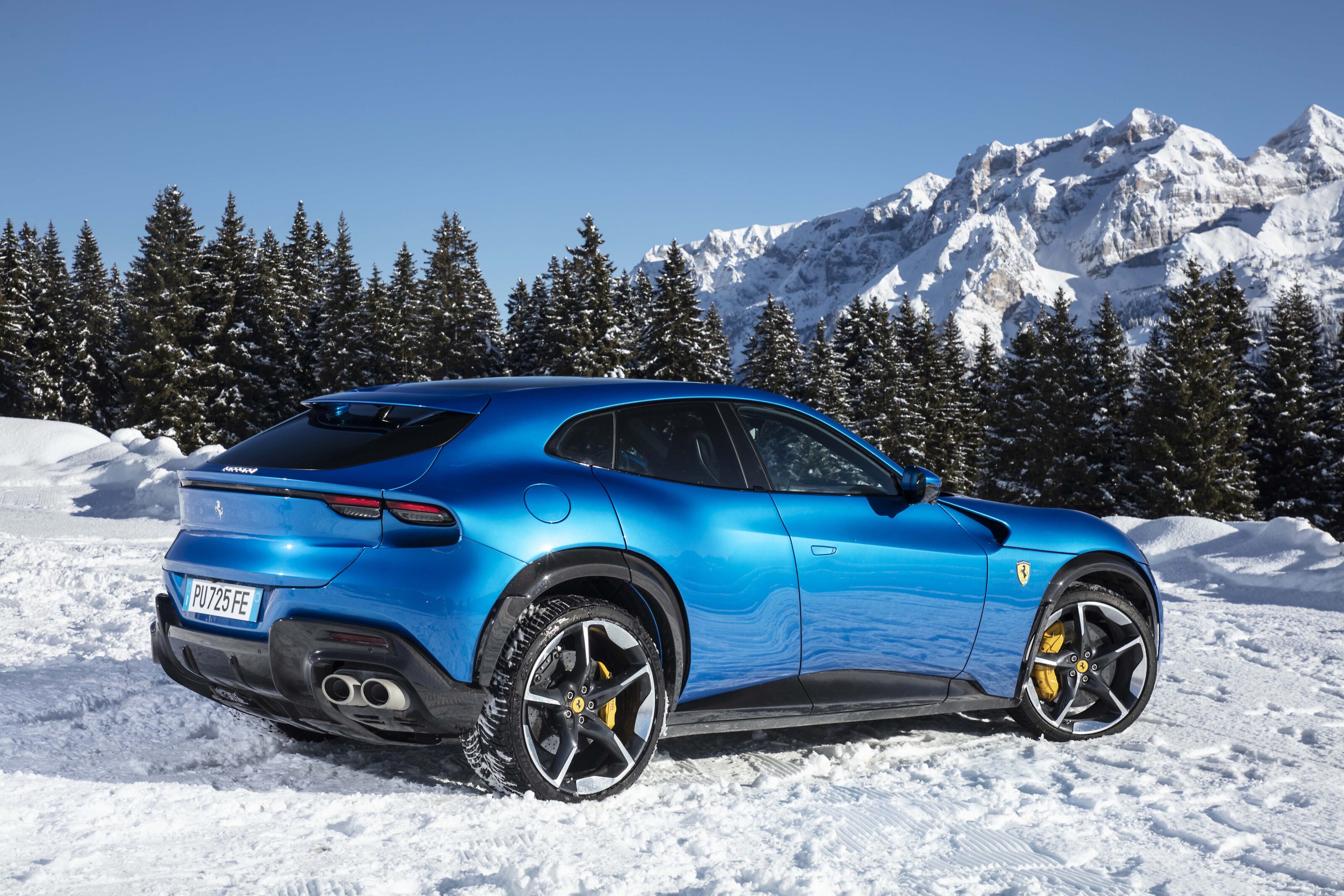
Winter tyres, like the massive Michelins the Purosangue is wearing, are never as grippy as summer rubber. The gritty surface of this road – snaking to the top of Monte Bondone, west of Trento in the Alpine north of Italy – is also, obviously, slippery. So driving out of the tight left-hander I’m prudent with pressure on the throttle pedal.
Not prudent enough, it turns out. Despite my caution, the Purosangue’s rear steps sideways. It’s not a total surprise, so I’m ready to dial in a delicate dab of opposite lock. But even as I do it, I sense the car’s chassis control electronics already reacting. Deftly and decisively. They’re subtle enough to make this minor moment quite graceful.
Accelerating uphill away from the hairpin the Purosangue’s V12 sings to somewhere in the middle of its very broad rev range before the double-clutch shifts up a gear. In Auto mode, the transmission seems clairvoyant, able to almost instantly sense every change in the driver’s mood.
The Purosangue is equipped with the latest iteration of Ferrari’s Side Slip Control software. SSC 8.0 is brain-bendingly complicated, monitoring and controlling every component of the drivetrain, steering, braking and suspension systems.
But the complexity is not obvious or intrusive. What the driver feels is simply the Purosangue’s readiness to make its athletic ability easy to access. In this, it’s like every other Ferrari of recent years.
Unsurprisingly, the Purosangue’s software bundle builds on work done for earlier models. The ABS controller and steering grip-estimation system are based on tech introduced in the 296 GTB, the control logic for its all-wheel-drive system is based on that developed for the SF90 Stradale, while the origins of its excellent drivetrain control software date back much further in time.
Some of the hardware, too, is familiar. The Purosangue’s eight-speed double-clutch is the same as that in the SF90 Stradale and 296 GTB. Its standard rear-wheel steering is from the 812 Competizione.
The dry-sumped 6.5-litre V12 is related to that in the 812 Competizione and uses basically the same cylinder heads. The Purosangue engine has different intake and exhaust systems, as well as cams profiled to deliver a broader spread of torque.
Although Ferrari says this was the aim, it cannot have escaped their notice that the Purosangue’s F140IA version of the V12 also produces power aplenty. And it happens that the engine’s 533kW is more than anything else that could be considered a rival.
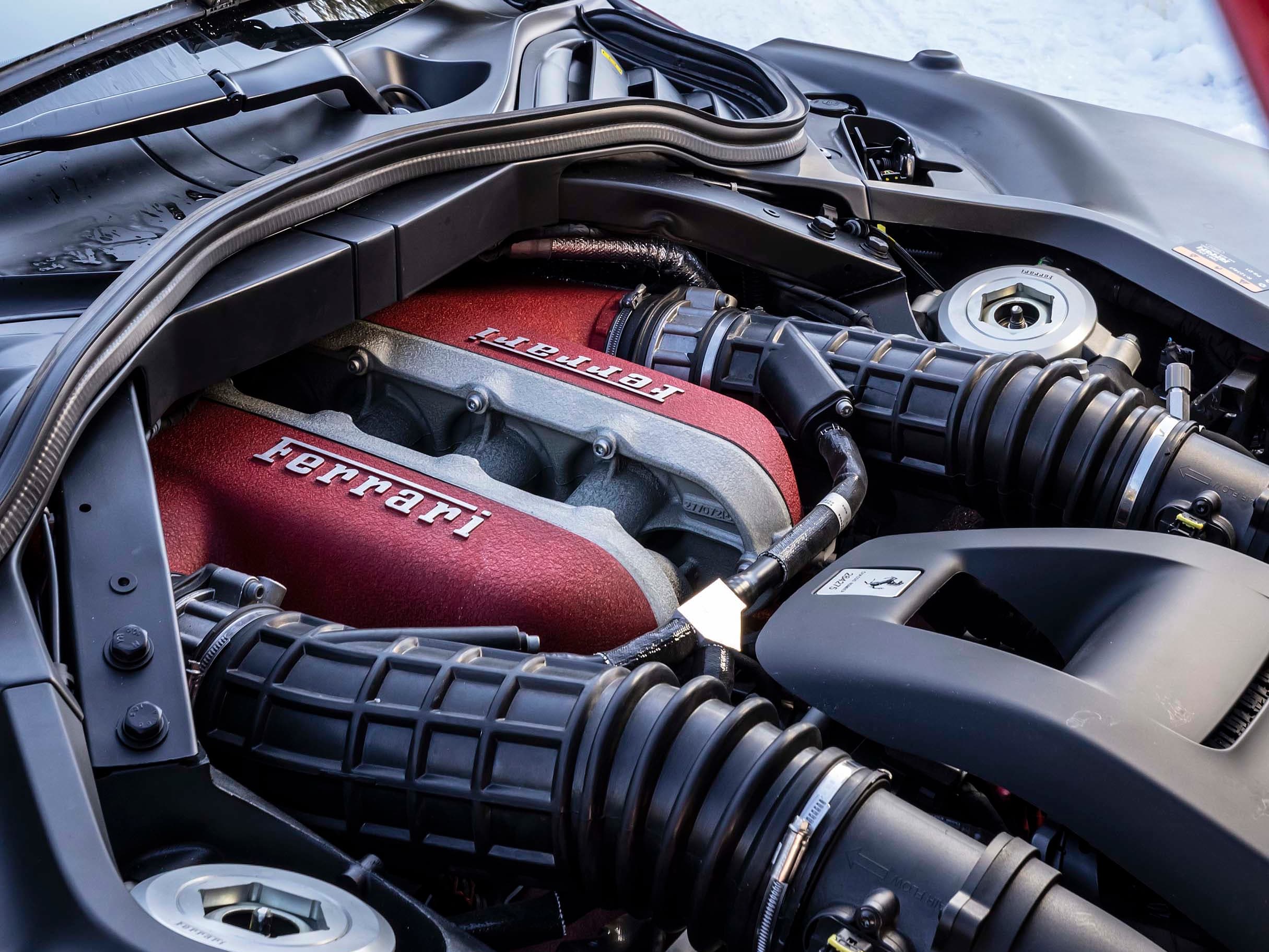
Which gets us to the big question? Should the Purosangue be compared with things like the Aston Martin DBX, Bentley Bentayga, Lamborghini Urus, Rolls-Royce Cullinan and perhaps even top-end versions of the much less costly Porsche Cayenne, or not?
Ferrari says not, but you can make up your own mind. I know I have…
One thing that does set the Purosangue apart is Maranello’s solemn promise that it will never be allowed to account for more than 20 per cent of the brand’s annual production. So there’s no chance of it becoming Ferrari’s biggest earner and therefore the car that defines the brand, as is the case with some of the models mentioned earlier.
Further, it’s no great leap to view the Purosangue as a sensibly versatile replacement for the line of all-wheel drive, three-door models that began in 2011 with the FF and continued until 2020 with the GTC4 Lusso.
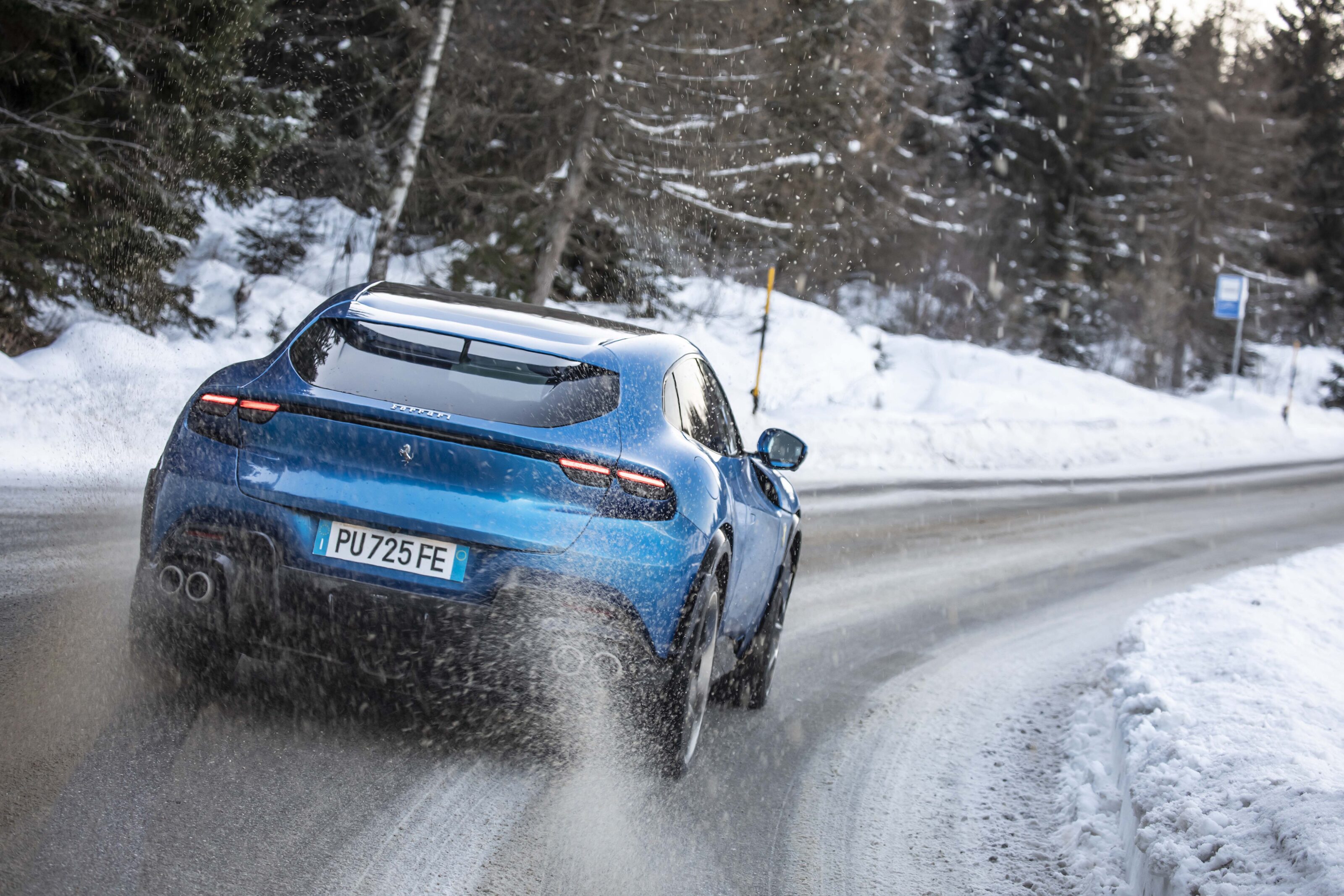
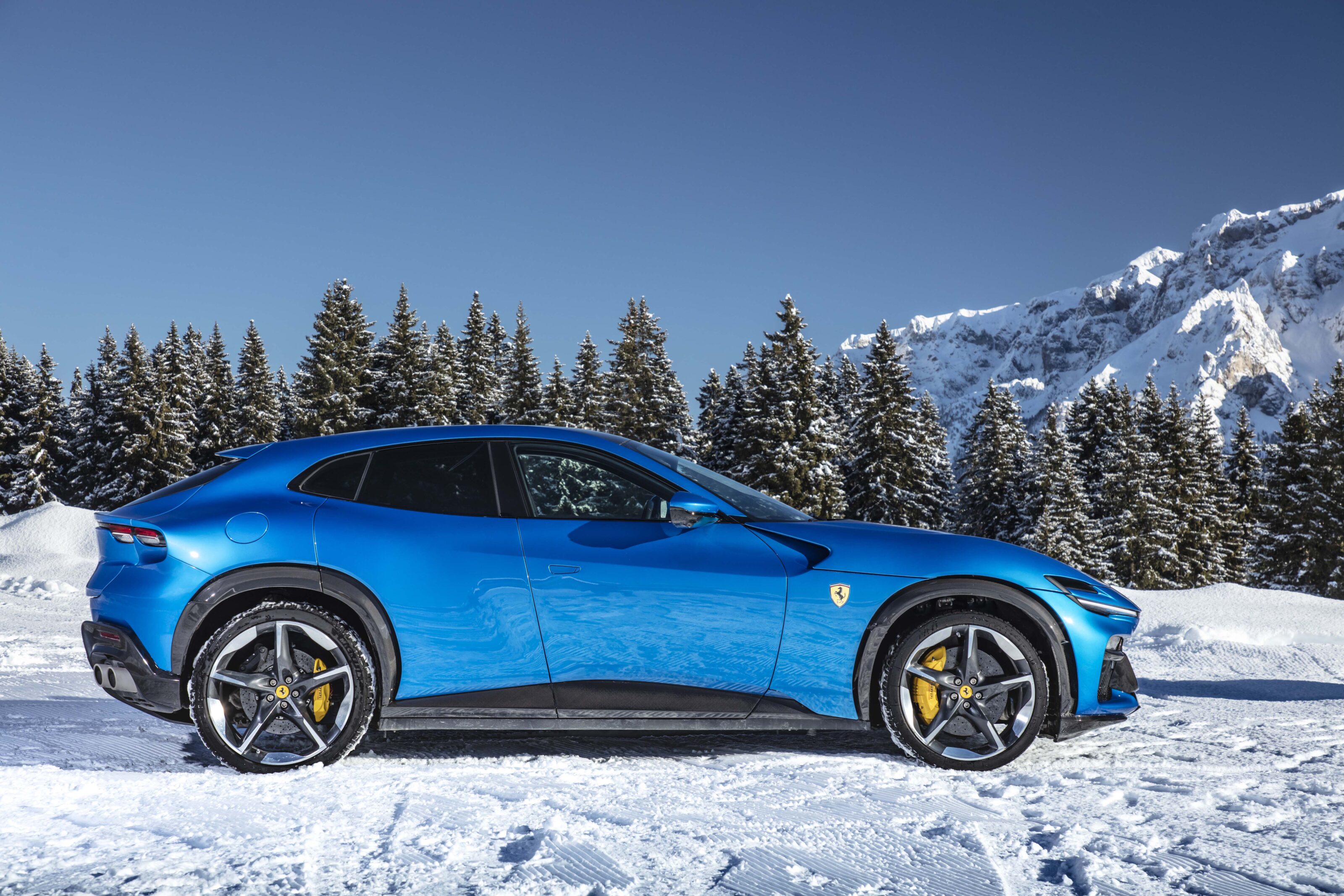
The Purosangue is also, arguably, in a higher class when it comes to looks. Ferrari Design Centre boss Flavio Manzoni and his team have created something that defies casual categorisation.
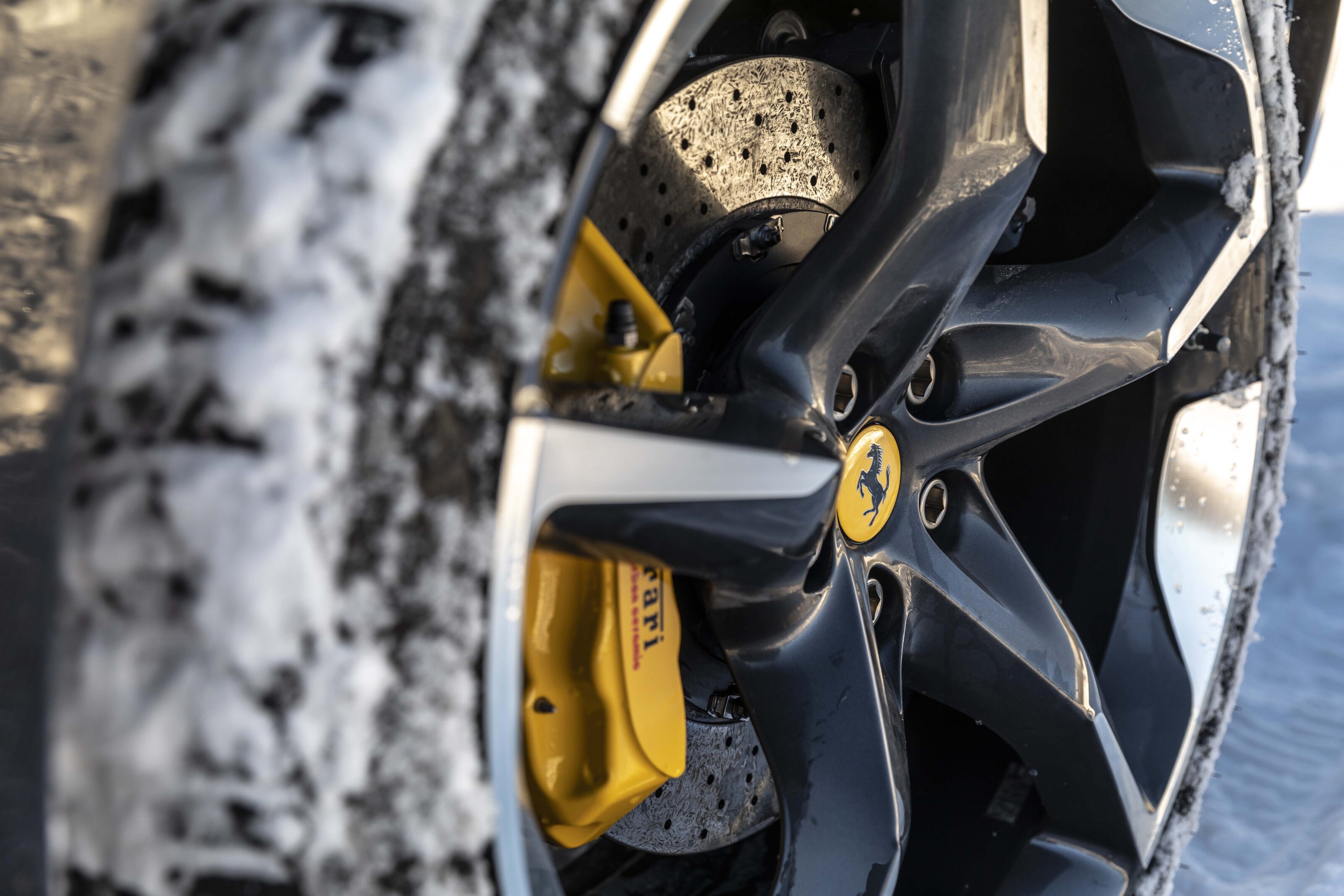
Curvily muscular, the overall shape is distinctive. Deceptive, too. The Purosangue’s massive wheels – 22-inch fronts and 23-inch rears – create an impression of compactness, at least from a distance.
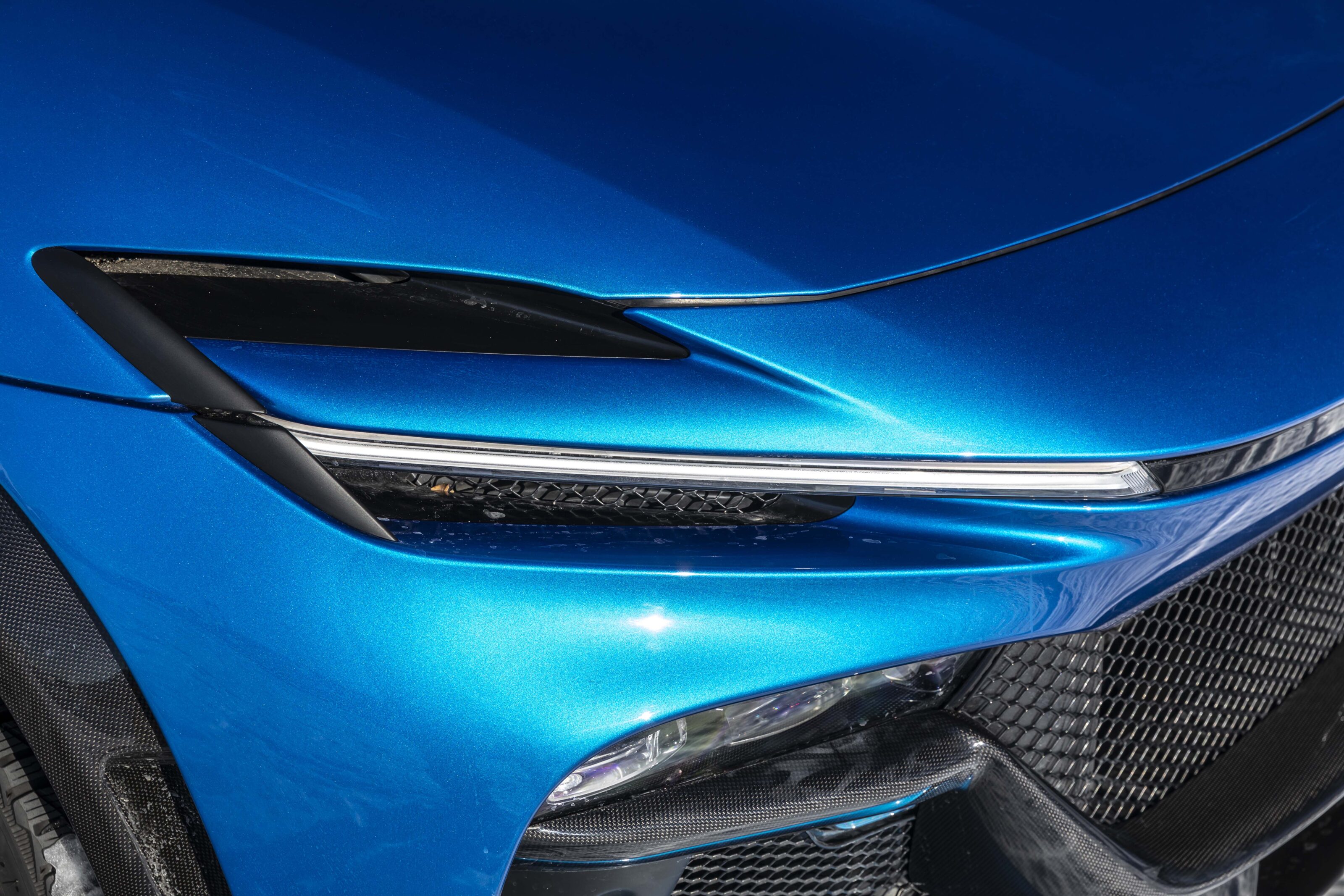
The details are something of a visual feast, too. Among them are echoes of past Ferraris, such as the F12 Berlinetta-like aerobridges sculpted into the bonnet, and there are futuristic elements, like the patented floating wheel arches.
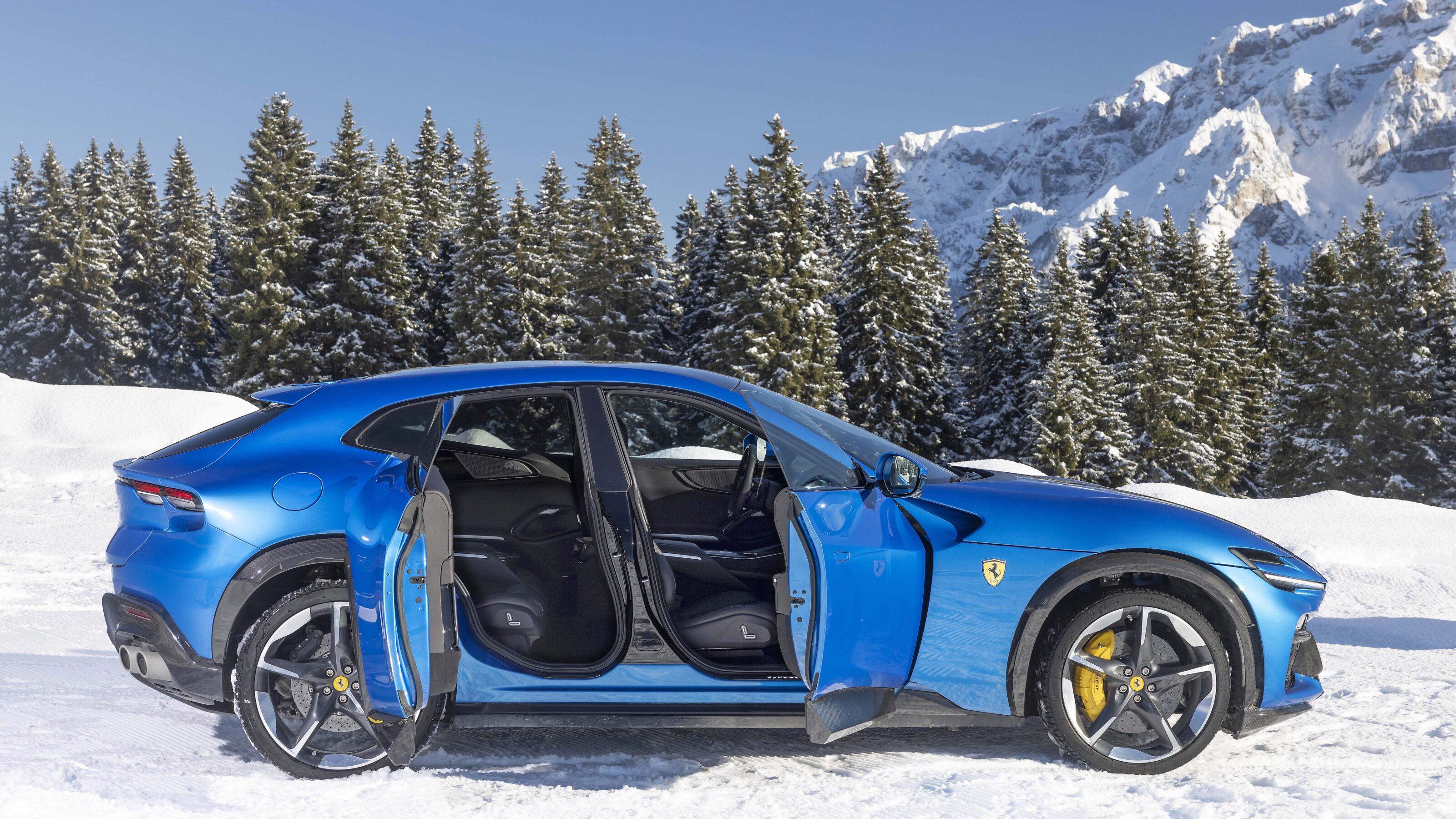
It isn’t immediately obvious how to open the Purosangue’s power-operated rear doors. They pivot on a massive rear-mounted single hinge. To see this you must first find the small tab projecting from the door’s skin adjacent to the B-pillar. It’s a switch; one tap cracks the door open, hold it for two seconds and the door glides open.
Ferrari designers admit their first thoughts for the Purosangue’s body didn’t include a B-pillar. The engineering department soon changed this, for several practical reasons. A pillarless design would have meant the leading edges of the rear doors would be overlapped by the trailing edges of the front doors, making it impossible to open them independently.
The rear door would also have to include a virtual B-pillar for crashworthiness, and it would have to latch securely into unacceptably bulky strong points in the body’s sills and header rails.
Finally, the Purosangue’s frameless side windows would also have been difficult to seal against rain and dust.
The car’s rear doors open very wide, easing access to its pair of rear seats. These are as firmly supportive as the front seats, and likewise feature electric fore-aft and backrest angle adjustment.
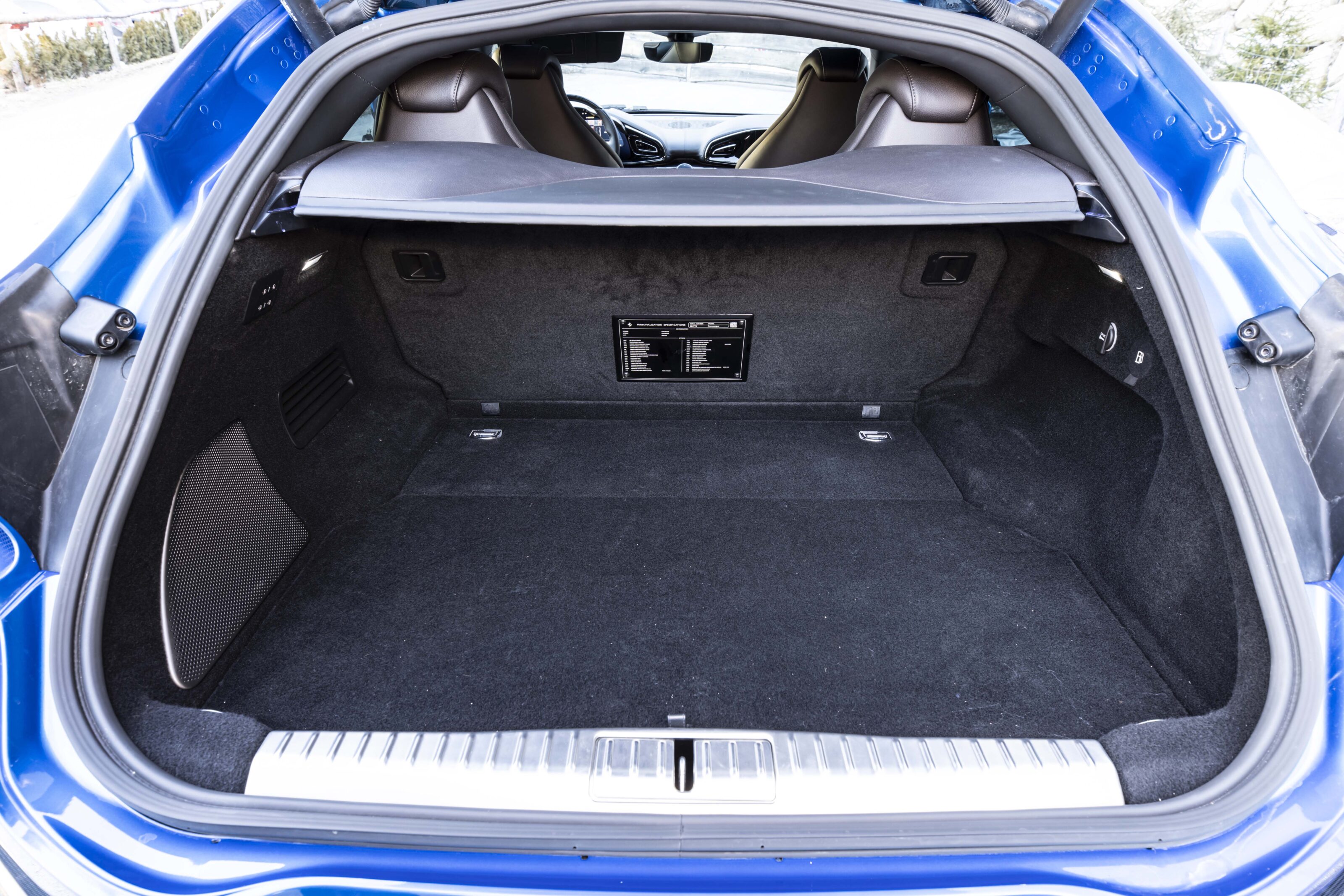
Aft of them is a 473-litre cargo compartment, the biggest ever in a Ferrari. When removed, its cover slots neatly into the floor. When the rear seats are power-folded flat, the Purosangue’s luggage capacity is massively increased. It’s truly hatchback versatile.
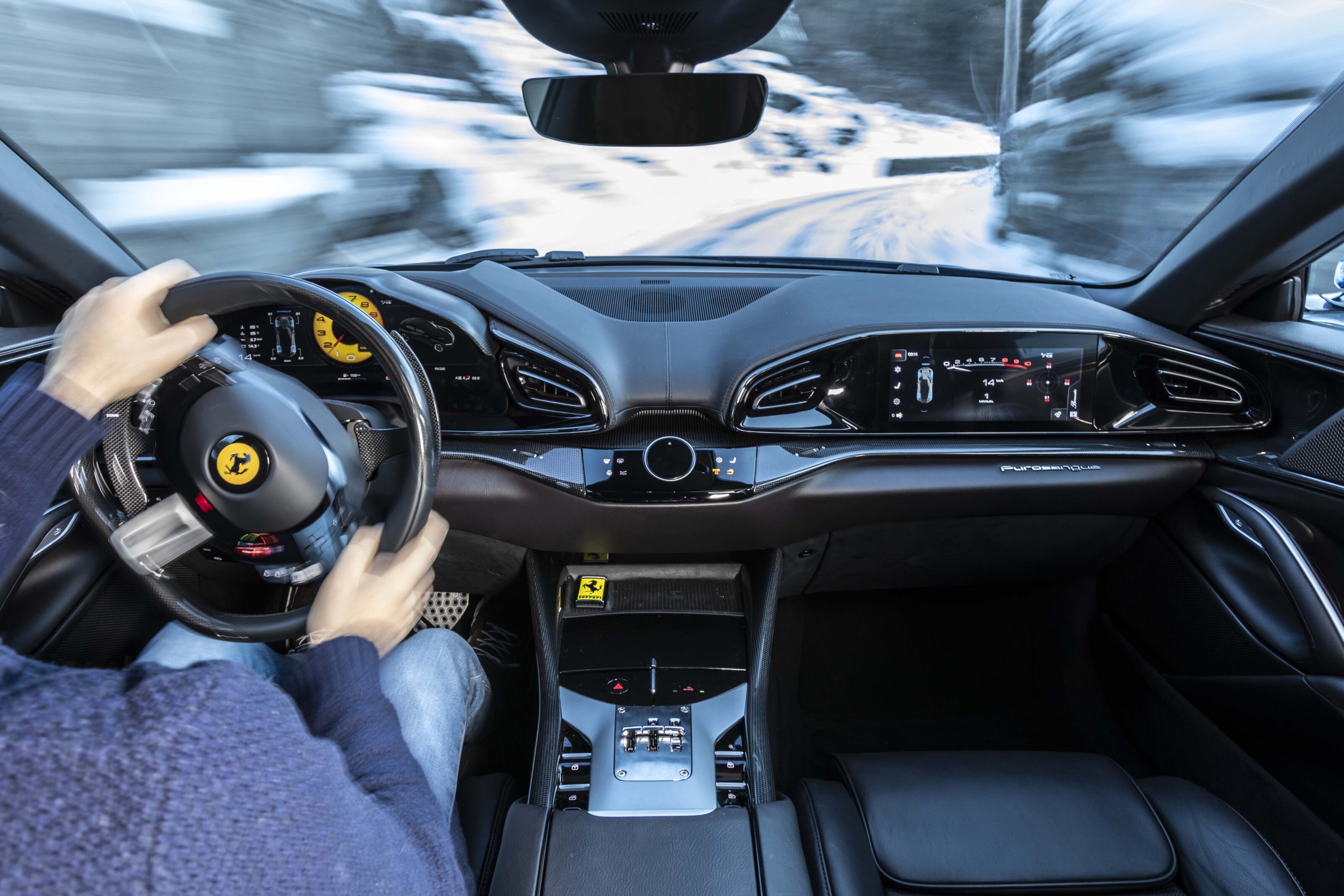
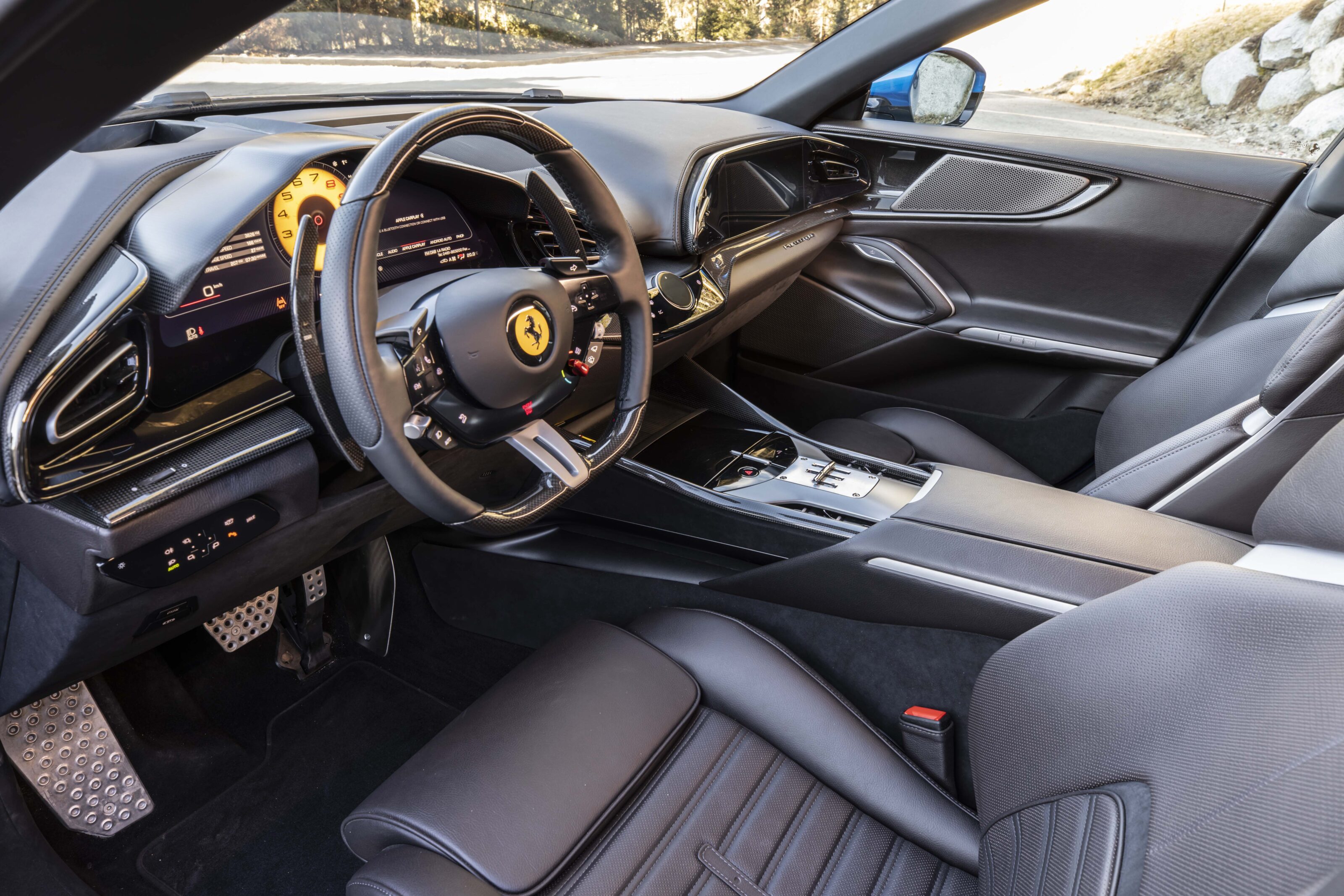
Those in the front seats are confronted by an expansive and immaculately crafted instrument panel. It’s unusual in not having a centre screen. Instead, there are individual screens for each of the occupants.
As well as the usual Ferrari gear selector, the centre tunnel has a combination dial and touchscreen to select ventilation and seat comfort options. There’s another in the rear.
While the seating position is higher than any other Ferrari, from behind the wheel the Purosangue doesn’t feel SUV tall. What makes the interior distinctive is that it’s more elegantly luxurious than anything ever produced by Maranello.
This impression of luxury isn’t diminished when driving. Cruising, the Purosangue is quieter and calmer than any other Ferrari. Noise and vibration levels are low. Even more striking is the suspension’s serene smoothness.
The Purosangue is the first car with innovative Canadian supplier Multimatic’s new True Active Spool Valve dampers. What sets them apart is their ability to create force, not simply absorb it. These dampers can push or pull. As well as making anti-roll bars redundant, they’re able to react almost instantly to bumps detected by their built-in accelerometers and position sensors. They’re speedy, precise… and tuneable.
A key component of the assembly is a compact and very responsive 48-volt three-phase electric motor, connected via gears and a spiral screw to the damper piston rod. This set-up enables the computer-controlled motor to extend or compress the damper, as ordered by quick-thinking software sucking data from accelerometers and position sensors on each corner of the Purosangue.
It’s intriguing tech, so during my day-long drive, I fiddled a lot with the Ferrari’s suspension options.
The Purosangue’s steering wheel has a five-position manettino. Twisting changes the drive mode, pressing it toggles through the damper settings. These are Medium and Soft in the Snow, Wet and Comfort modes, Hard, Medium and Soft in Sport and ESC off.
Earlier, a senior Ferrari chassis engineer told me that Multimatic’s TASV magic means damper settings don’t affect how much grip the Purosangue’s tyres can deliver. Sounds odd, but I don’t think he was fibbing…
Selecting Hard kills ride comfort, for no discernible handling benefit. Medium seems fine, at least on smooth surfaces. Soft, though, is the setting that works best most of the time. Ride comfort is outstanding, but pitch and roll are both beautifully controlled.
At the end of the drive, I can’t think of a single reason to not select Soft for every journey.
Or, for that matter, any reason why the Purosangue should not be considered worthy of the badge it wears.
It sounds like a Ferrari, accelerates like one, and handles like one too. It’s just that it brings more luxury, space, versatility, refinement and comfort to the masterful blend of desirability and sophistication routinely expected from Maranello these days. What’s not to like about that?
| 2023 Ferrari Purosangue specifications | |
|---|---|
| Engine | 6496cc V12 (65 degree), dohc, 48v |
| Max power | 533kW @ 7750rpm |
| Max torque | 716Nm @ 6250rpm |
| Transmission | 8-speed dual-clutch |
| Weight | 2033kg |
| 0-100km/h | 3.3sec (claimed) |
| Price | from $728,000 + on-road costs |
| On sale | Q4 2023 |
Fiat has confirmed specifications for its 2023 500e ahead of the model’s July release date.
Snapshot
- Single high-spec La Prima trim
- Priced from $52,500 before on-road costs
- 311km WLTP driving range, 87kW motor
Following the announcement of a $52,500 list price in February, Fiat has now locked in 500e specification for Australia.
The 500e will arrive in a single La Prima three-door variant powered by an 87kW/220Nm electric motor with a 37.3kWh lithium-ion battery pack.
The Fiat 500e’s outputs are enough to get it from rest to 100km/h in 9.0 seconds, and the battery big enough to bestow it a 311km driving range (WLTP).
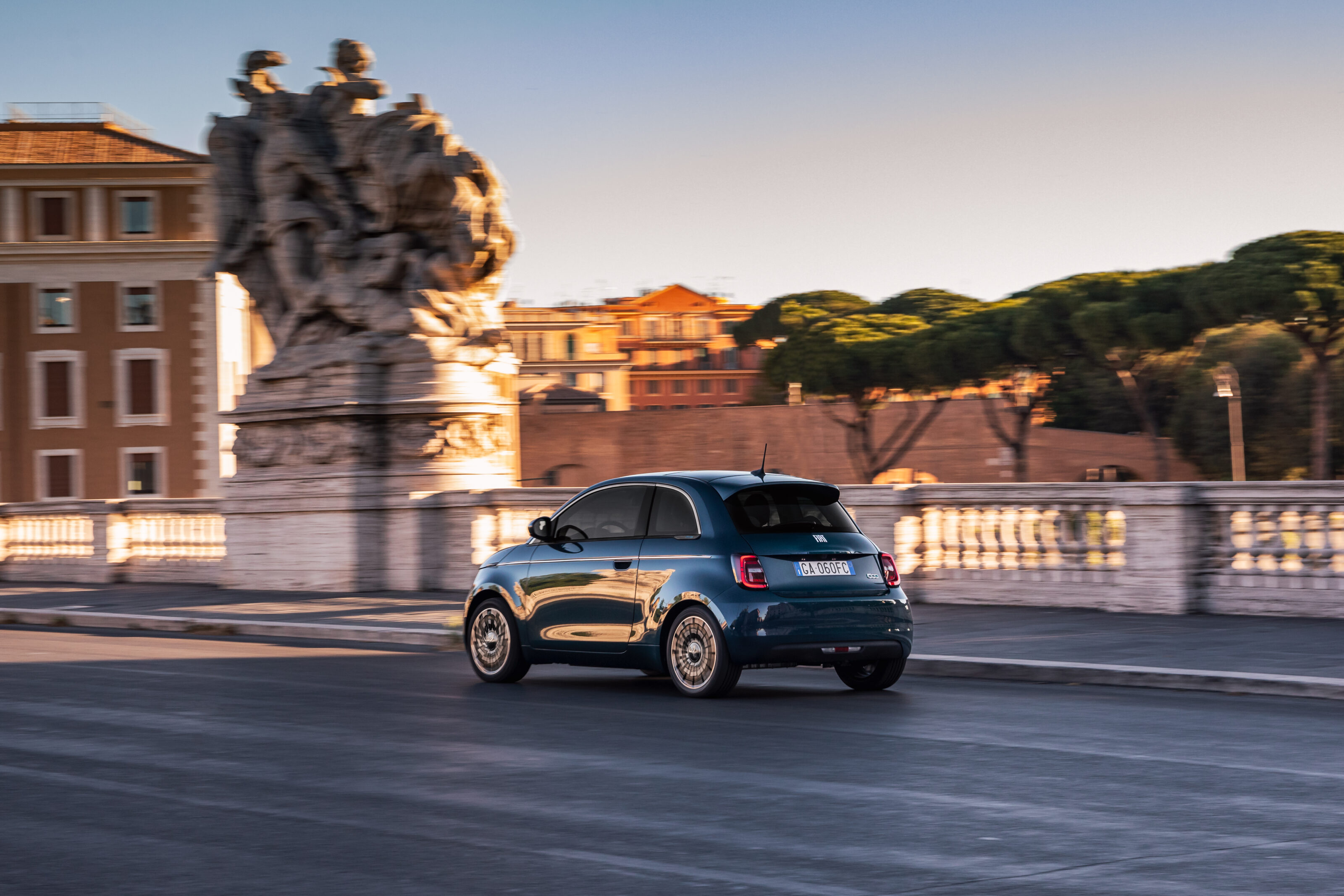
While the 500e is priced close to $50K, making it eligible for incentives in several Australian states and territories, this isn’t a car targeting the BYD Atto 3 or MG ZS EV. Instead, this stylish Italian supermini will be stealing sales from the Mini Cooper electric.
The 500e rides on an all-new platform compatible with both EV and internal-combustion powertrains – though the 500 will remain electric only. The car is 61 millimetres longer than its predecessor (which debuted way back in 2008) and its tracks have grown by 56mm to accommodate the battery and offer greater occupant space.
A sporty variant from Abarth is also expected to make it to Australia, but full details are yet to be confirmed.

Fiat 500e features
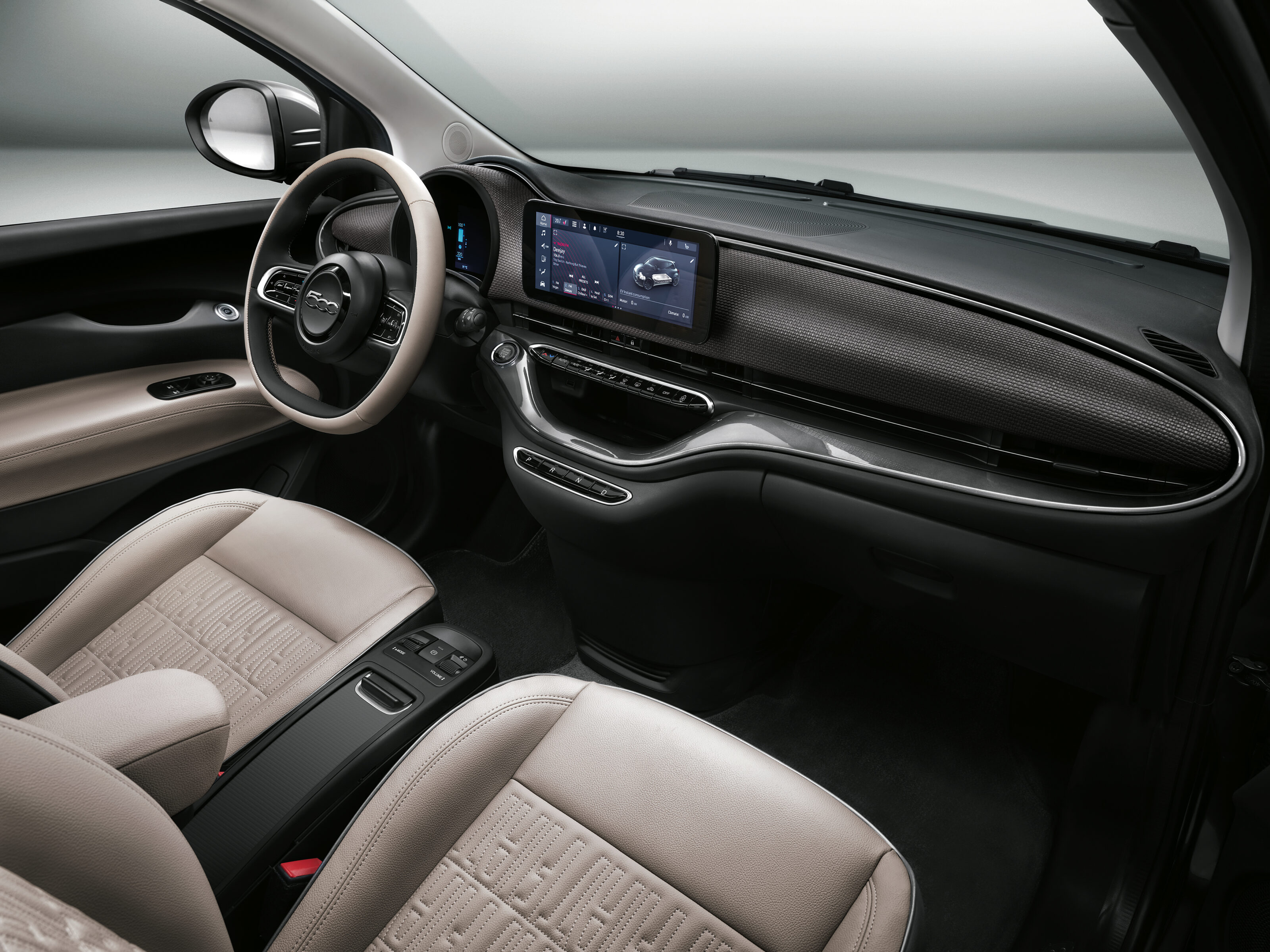
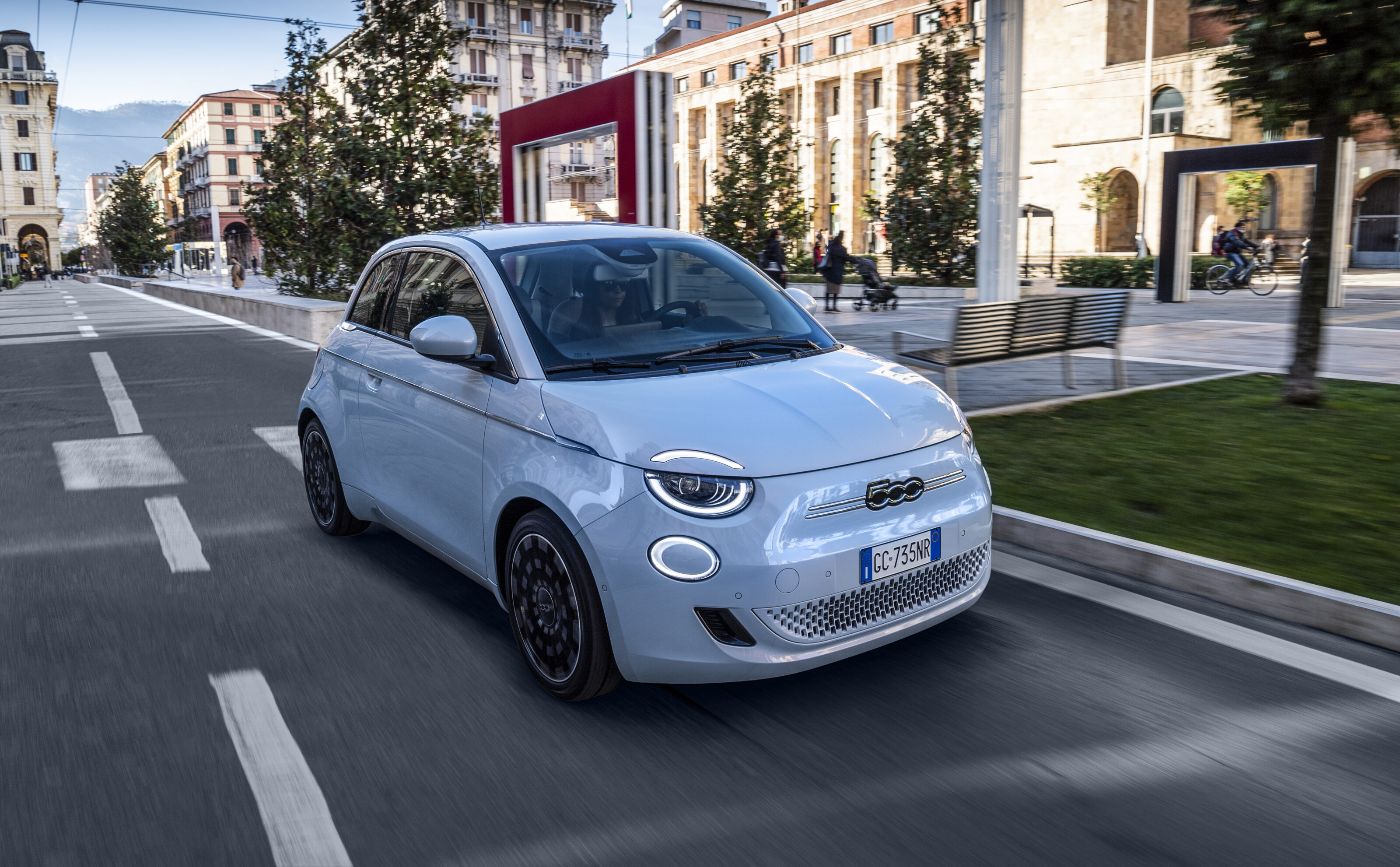
Outside, the 500e La Prima wears 17-inch diamond-cut alloy wheels and carries LED headlights and daytime running lights. Inside there are nods to the classic 500, including a two-spoke steering wheel and rounded digital instrument cluster.
Australia does miss out on the premium JBL stereo tuned by Bocelli, which is offered in UK market 500e models, and we won’t get the stylish convertible either.
| Fiat 500e La Prima features | |
|---|---|
| 17-inch alloy wheels | Panoramic glass roof |
| Chrome exterior trim | u2018Eco leatheru2019 upholstery |
| 6-way manually adjustable seat | 6-speaker sound system |
| Front and rear parking sensors | 7-inch digital driveru2019s display |
| 10.25-inch infotainment touchscreen | Wireless Apple CarPlay and Android Auto |
| Keyless entry | Tyre pressure monitoring |
| Wireless smartphone charging | Auto-dimming rearview mirror |
Fiat 500e colours
Being a style-forward car, the 500e is available in a host of configurations. Six paint colours are available, all teamed with ice beige upholstery.
| Fiat 500e paint colours | |
|---|---|
| Ice white | Rose gold ($700) |
| Mineral grey ($700) | Ocean green ($700) |
| Onyx black ($700) | Celestial blue ($1600) |
Fiat 500e safety
The 2023 Fiat 500e was awarded four stars in 2021 Euro NCAP safety testing. Its rating has not been converted by ANCAP, but expect it to carry over before going on sale in July.
| Fiat 500e active safety features | |
|---|---|
| Blind-spot monitoring | Rear cross-traffic alert |
| AEB with pedestrian and cyclist detection | Adaptive cruise control with stop & go |
| Lane-trace assist | Driver attention alert |
Fiat 500e range and charging
Available in Europe with a smaller battery pack and less powerful motor, Australian 500es will be fitted with the global most powerful items.
That means a single front-mounted electric motor producing 87kW/220Nm and a 37.3kWh usable (42kWh gross) lithium-ion battery pack.
In combined WLTP testing the 500e achieved a driving range of 311km using 11.8kWh/100km.
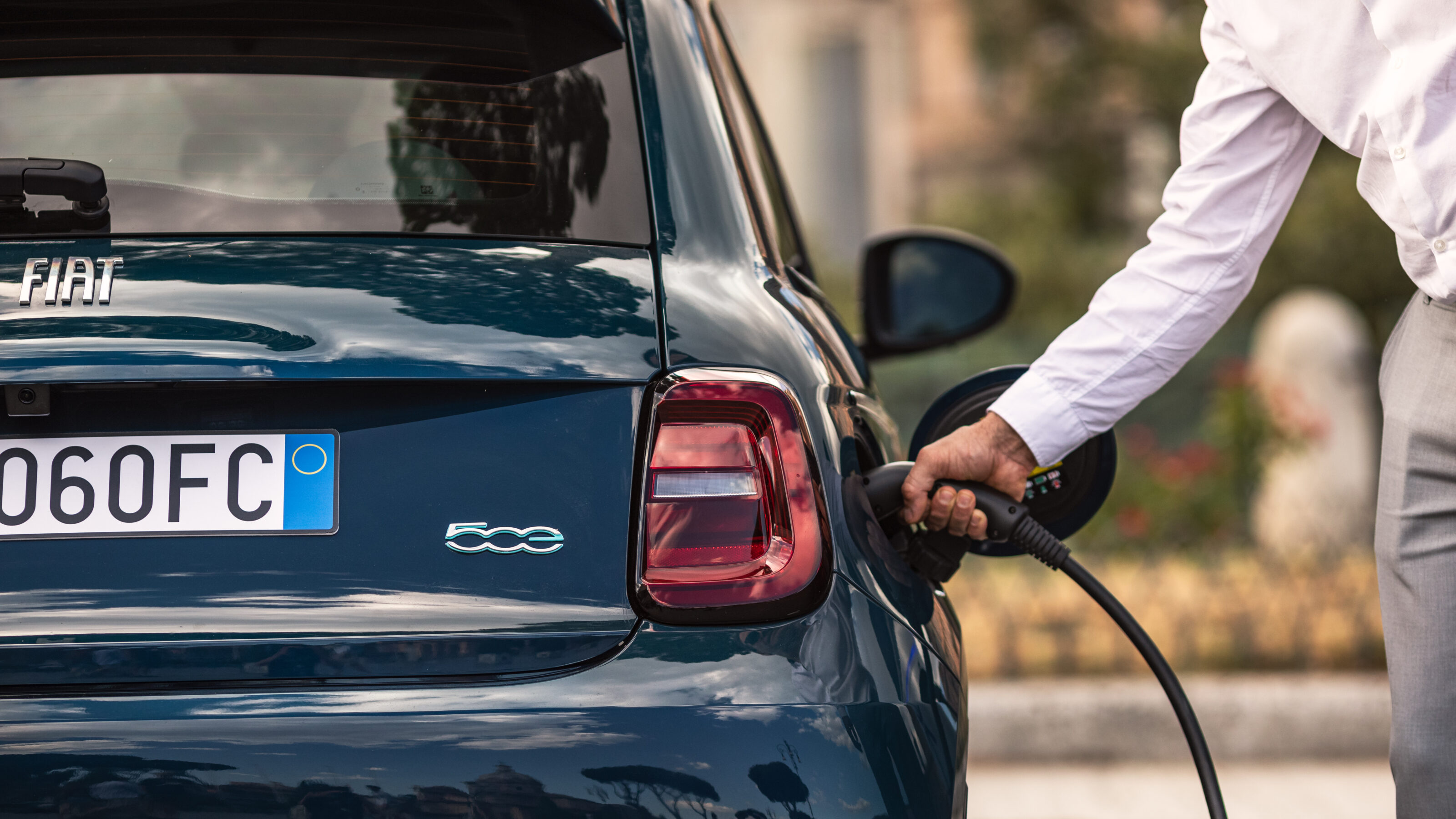
Fast charging using public DC infrastructure maxes out at 85kW, for a 10-80 per cent charge in 25 minutes. AC charging is limited to 11kW, so it’ll take four hours to go from 0-100 per cent.
Fiat 500e availability
The first Australian deliveries of the 500e are expected to start in July this year, and it will be priced from $52,500 before on-road costs.
