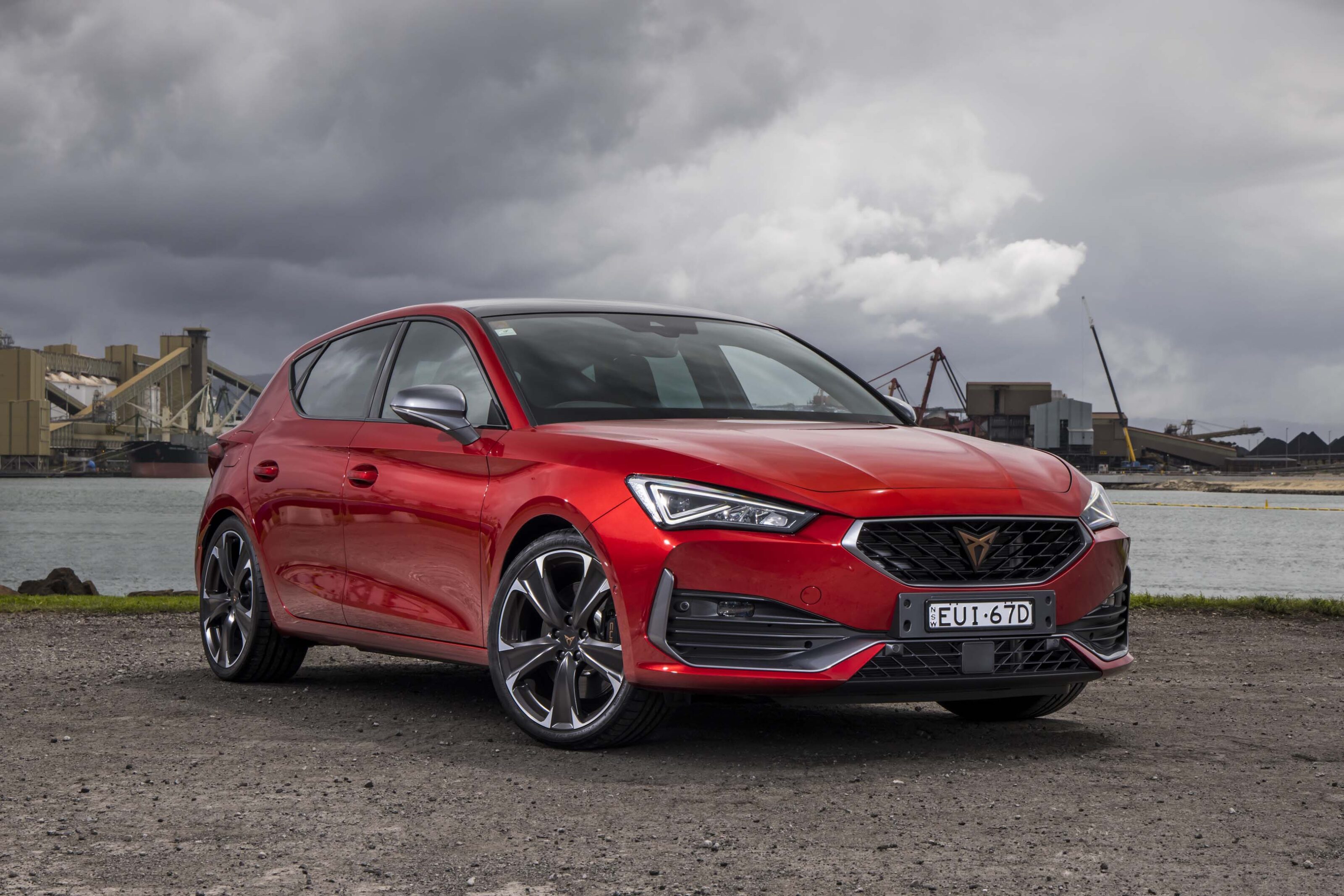
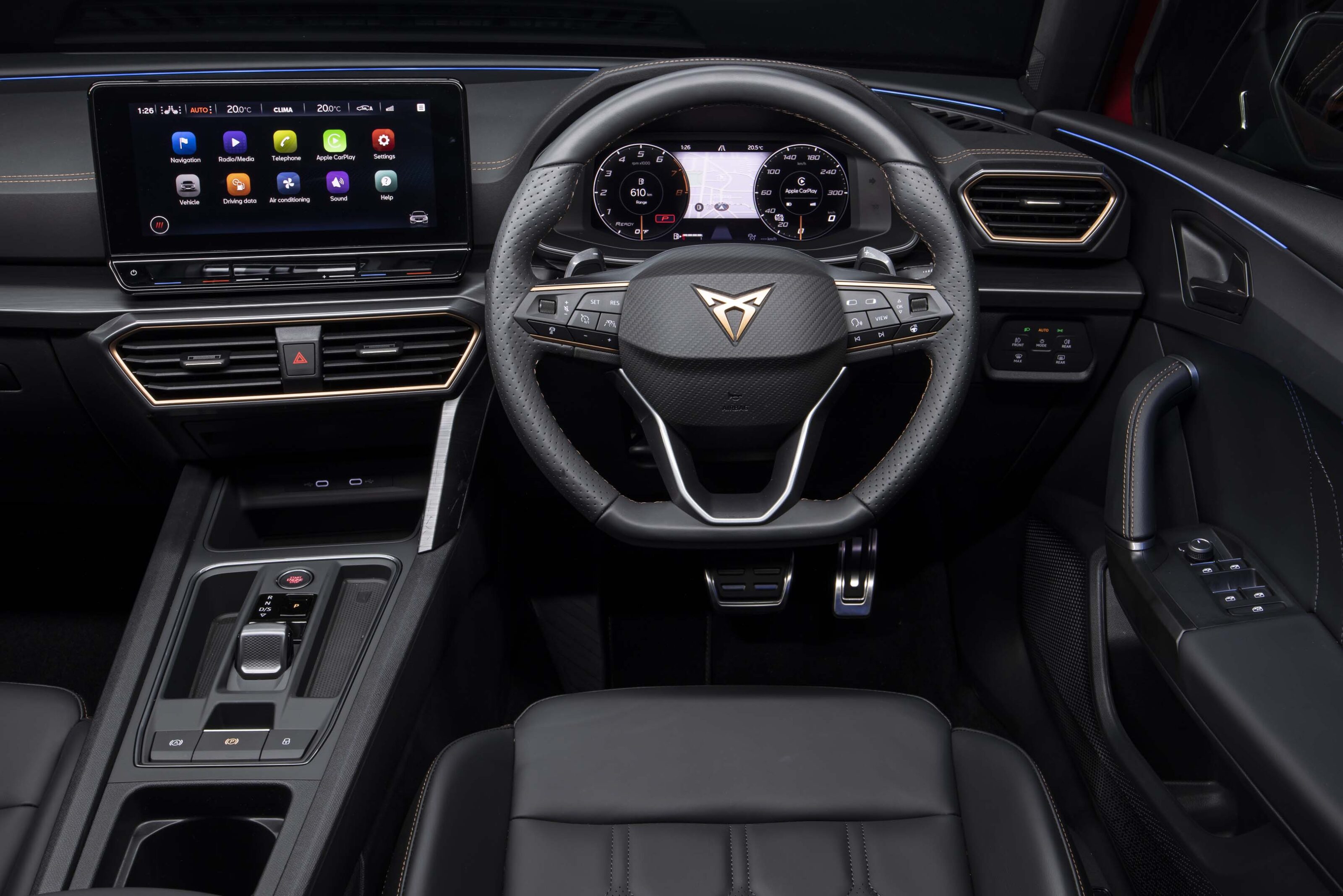
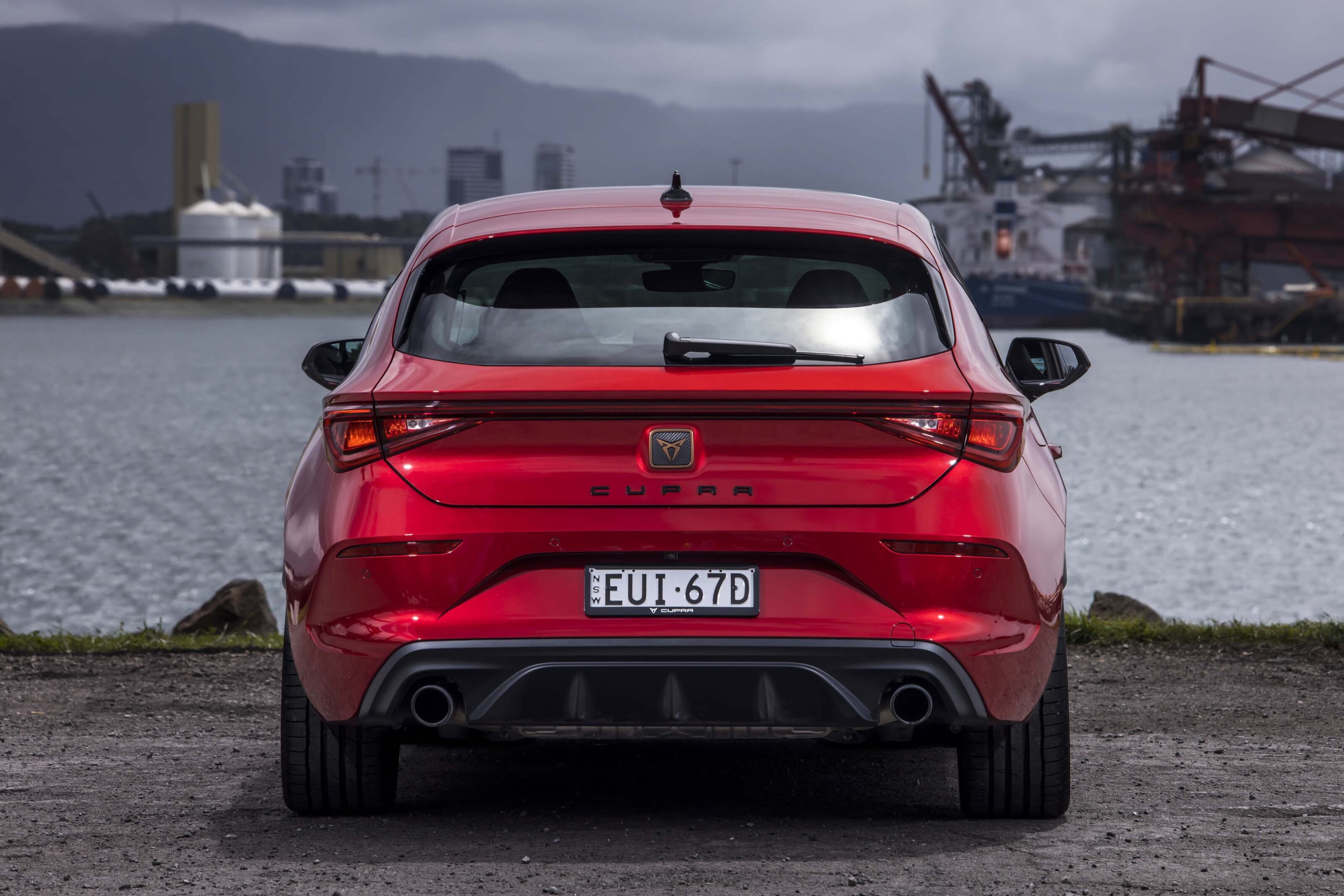

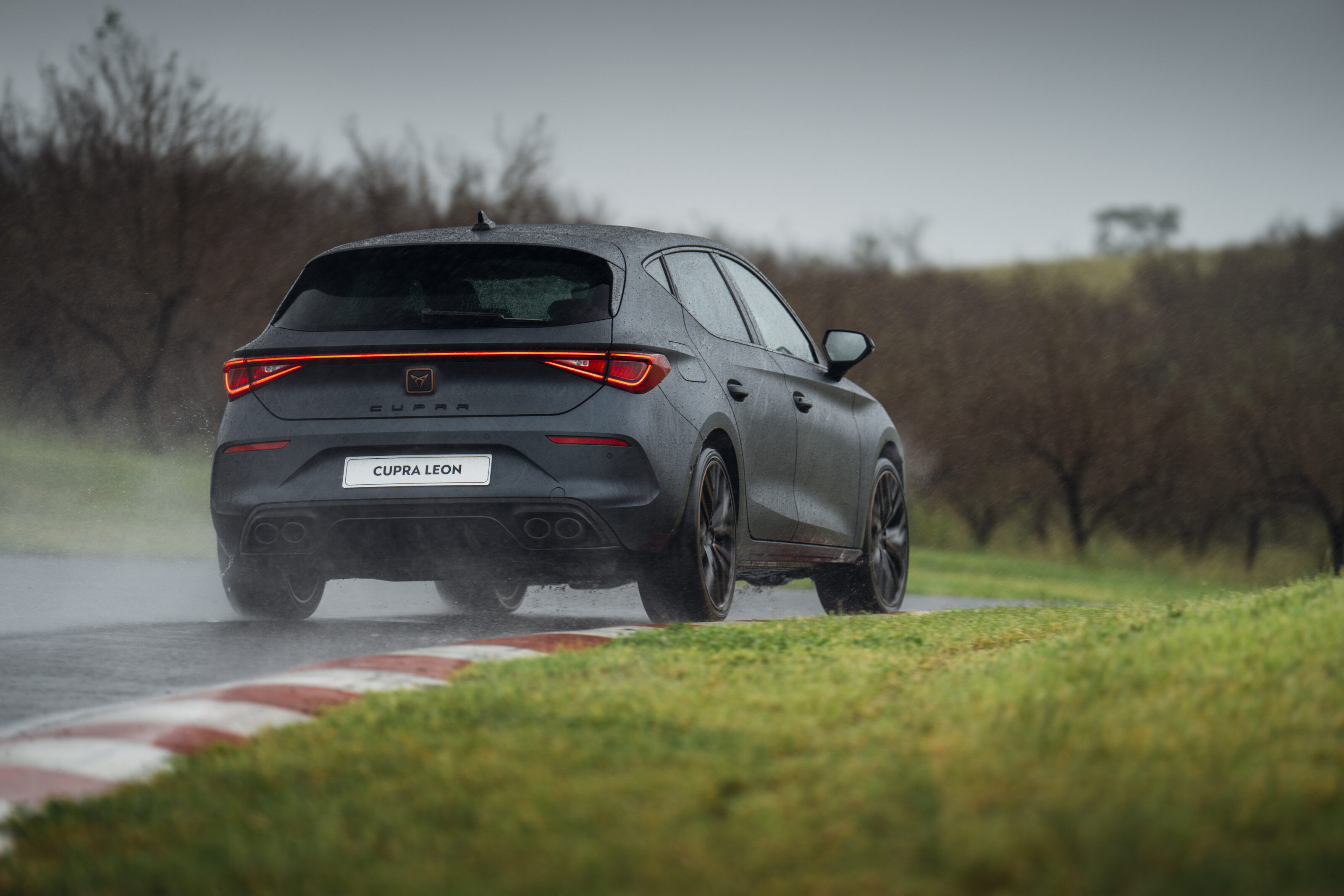
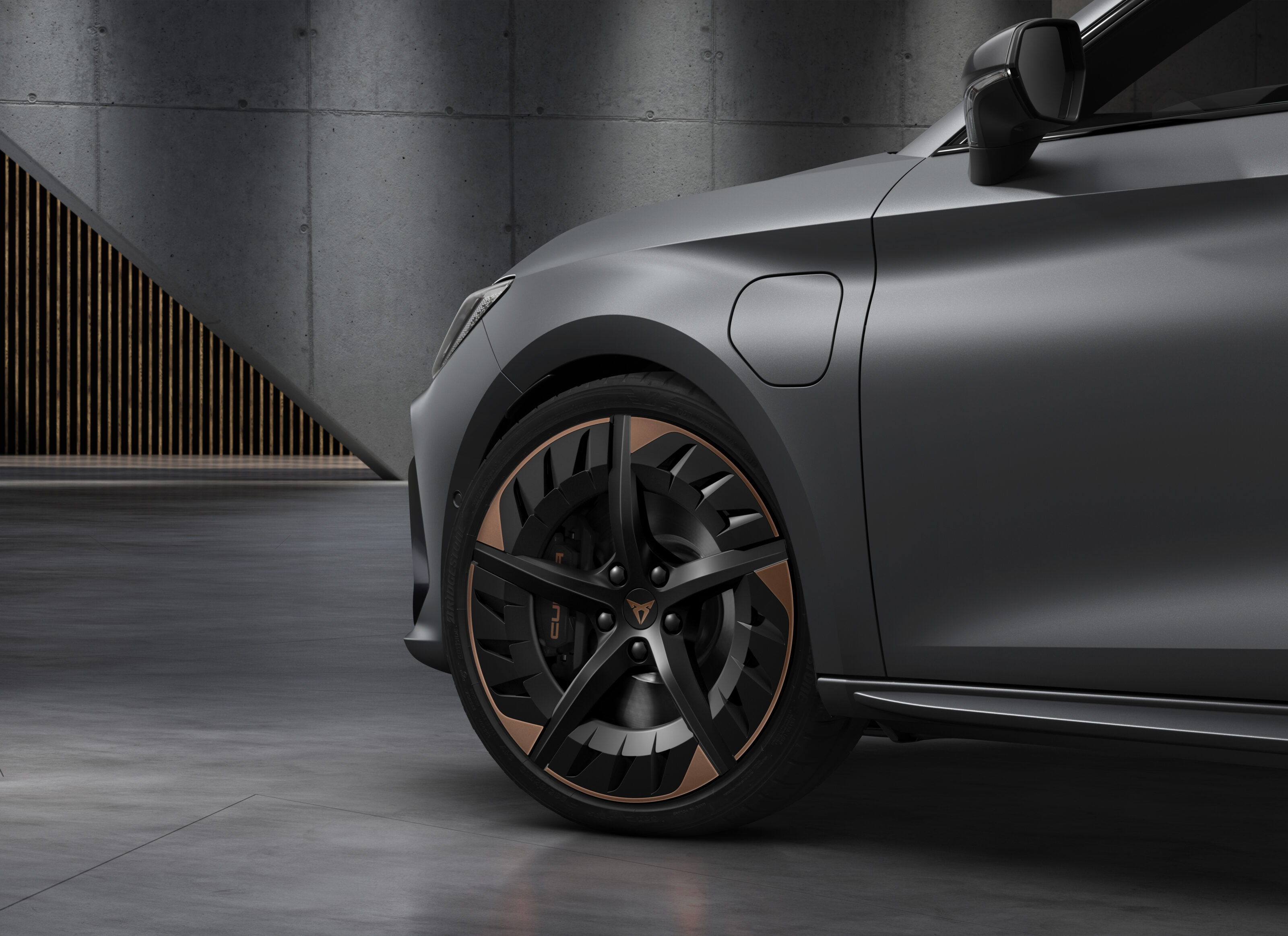
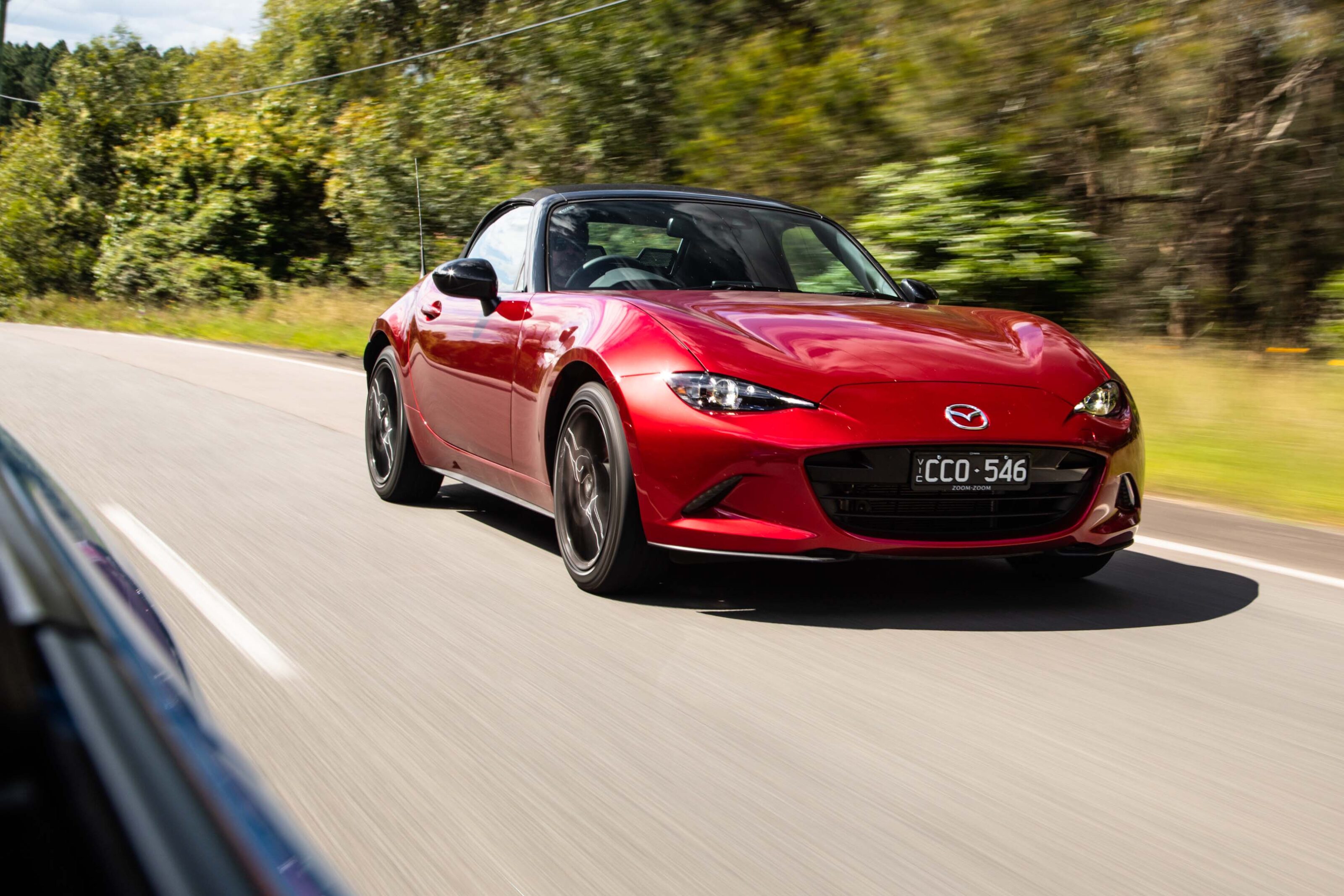
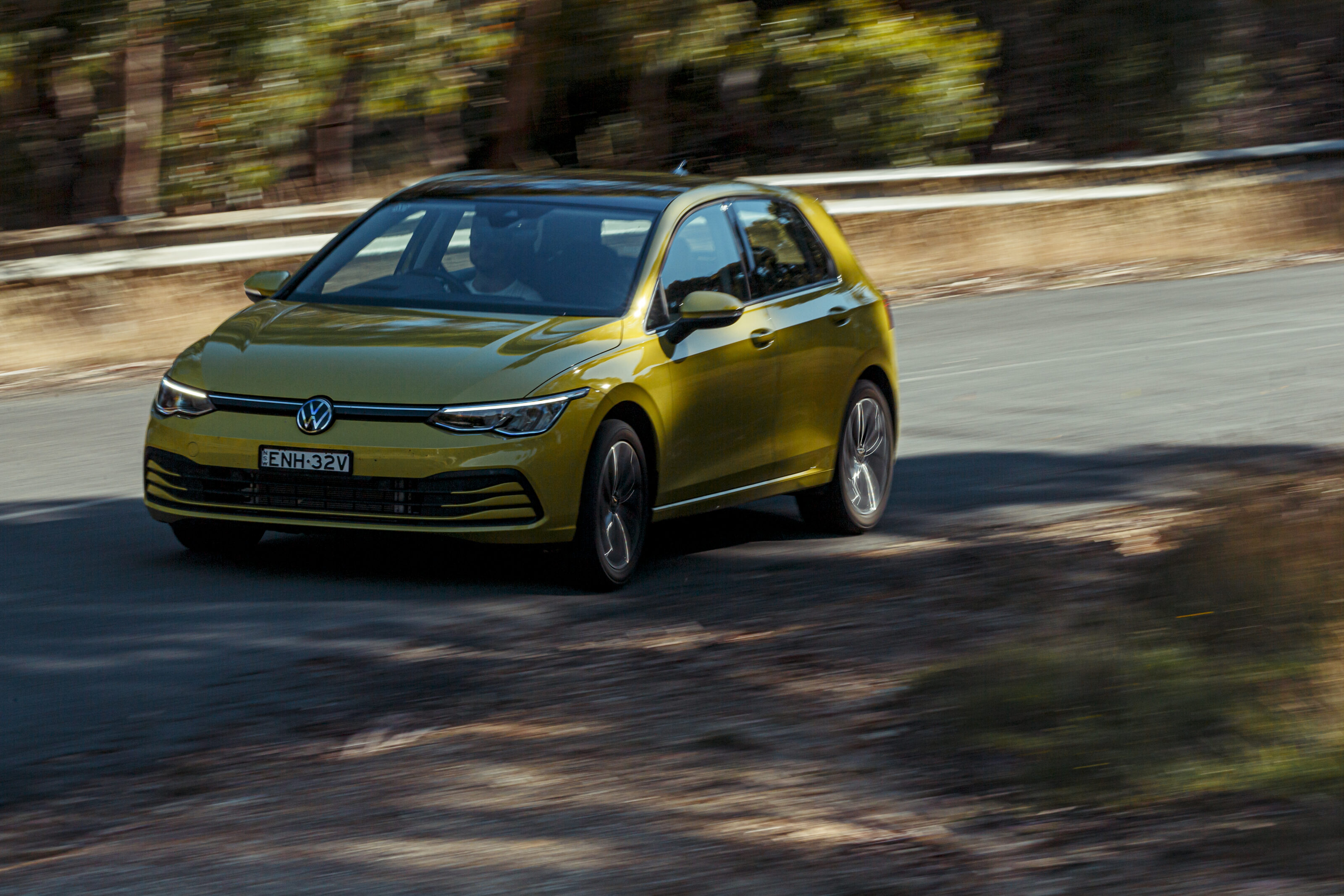
Cupra Australia has announced revisions for model-year 2024. Click on the story below for more information, or continue reading below to see more details about the Leon.
Base Leon V begins at $43,990, top-spec 221kW Leon VZx costs $65,490 drive-away
UPDATE: 2023 Cupra Leon V available; Leon pricing adjusted
The entry-level 2023 Cupra Leon V hatchbackis now available to pre-order.
Initially designed for the local market, the Leon V is the cheapest vehicle offered by Cupra Australia, priced from $43,990 before on-road costs – or $47,990 drive-away nationally.
It follows a price adjustment for the Cupra Leon in late January, with the flagship VZe plug-in hybrid and most-powerful VZx now in line with the all-electric Born at $59,990 plus on-roads.
December 16, 2022: 2023 Cupra Leon V due next year
The entry-level 2023 Cupra Leon V will be available for pre-order in January.
Cupra has confirmed the hatchback, priced from $43,990 before on-road costs – making it the brand’s most affordable vehicle – will arrive in Australian showrooms in the first half of 2023.
It will join the all-electric Born hatch, which is also due here in the first half of the year, which will start from $59,990 plus on-roads.
Pricing and features for the 2023 Cupra Leon have been announced.
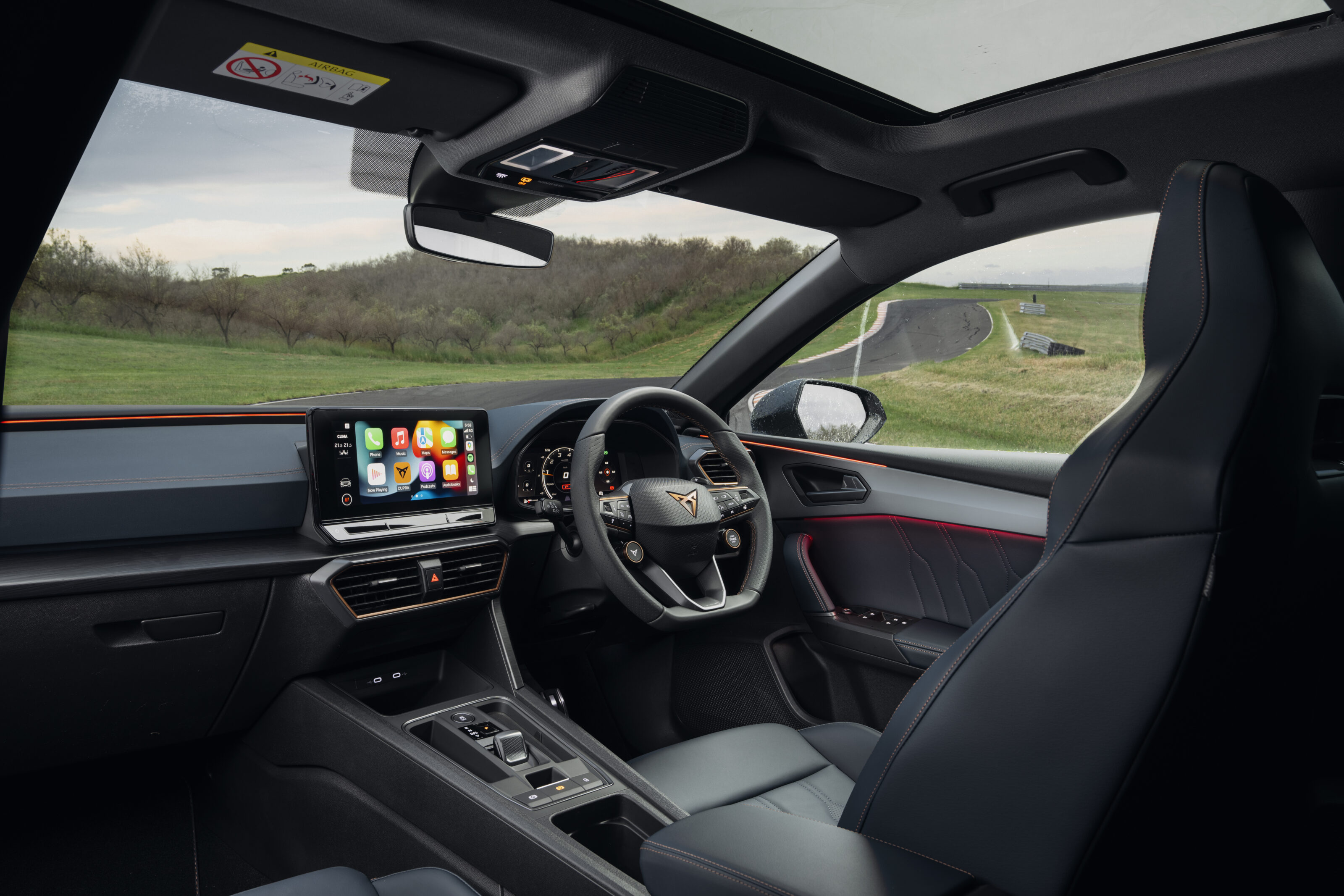
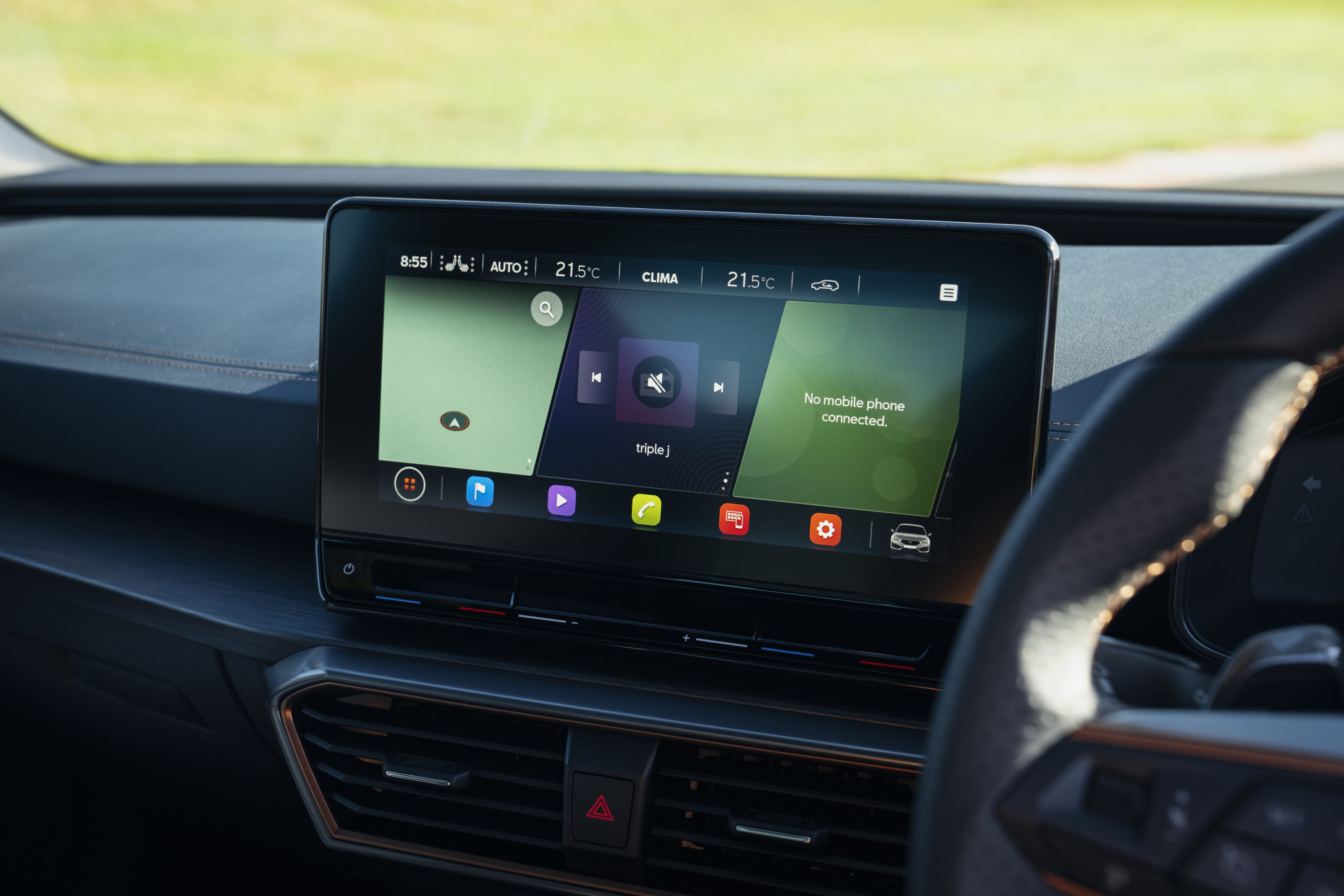
The updated Leon small hatchback gains a larger 12-inch infotainment system, while scrolling indicators have been replaced by static indicators in the tail-lights.
This upsized screen will replace a smaller 10-inch unit, set to feature on model-year 2022 examples available to order from today – July 8, for a month until MY23 sales commence.
1
It also sees the entry-level V and plug-in VZe and officially join the range, set to arrive in the first quarter of 2023 or later this year, respectively.
Pricing has increased by $400 on the VZ, and by $500 for the VZe and VZx.
Our original story, first published in April, has been updated to reflect this information and continues below.
April 2022: The Cupra Leon hatchback makes its Australian debut, with pricing beginning at $43,990 (before on-road costs).
Cupra has revealed local details surrounding its anticipated Leon hatchback. Deliveries are expected to commence from mid-2022, with four variants making up the range.
The range comprises of the base Leon V, the mid-spec VZ, a plug-in hybrid VZe, and top-spec VZx.
The newly launched Cupra brand isn’t pulling any punches with its market penetration strategy, offering high levels of specification along with a five-year, unlimited-kilometre warranty that includes three years of complimentary scheduled servicing.
The young Cupra brand is well supported by its Volkswagen Group parent, with much of the Leon range powered by the prolific and flexible EA888 turbo four-cylinder in various states of tune.
It’s a logical progression as you walk up through the range, with the basic Leon V comprising of the turbo-four and seven-speed DSG transmission, producing 140kW and 320Nm.
The VZ utilises the same mechanical package, with the wick turned up to 180kW and 370Nm.
The VZe breaks convention, harnessing a lower-capacity 1.4-litre turbo four-cylinder producing 110kW and 250Nm in conjunction with an 85kW/300Nm electric motor to produce a combined 180kW and 400Nm. It shifts through a six-speed wet-style dual-clutch.
The VZx tops the range, with its EA888 producing 221kW and 400Nm, and may prove an attractive front-drive stopgap model between the Golf GTI and incoming Golf R.
1
Dimensions
The Cupra Leon rides on a 2683mm wheelbase, and measures 4398mm in overall length and 1442mm in height.
Body width measures 1799mm, swelling to 1992mm at the widest point of the side mirrors.
Boot space is quoted at 380 litres, although the plug-in hybrid VZe loses some stowage space due to its battery pack, reducing capacity to 270 litres.
1
Safety
Warranty and servicing
In Australia, the Cupra Leon range is covered with a five-year, unlimited-kilometre warranty and three years of free scheduled servicing.
Availability
The 2023 Cupra Leon VZ, VZe and VZx are now available, while the entry-level V is slated to arrive in early 2023.
UPDATE: Golf facelift coming, Mk9 Golf likely to be EV only
Volkswagen CEO Thomas Schäfer has confirmed to Auto Bild Spain that the upcoming Mk 8.5 Golf facelift, which is due in 2024, may be the last with a conventional petrol engine.
“We are working on a portfolio to see what will be the successor to the current Volkswagen Golf.”
1
“From my point of view, it won’t be one with a combustion engine. It must be an electric vehicle,” Schäfer told the Spanish publication.
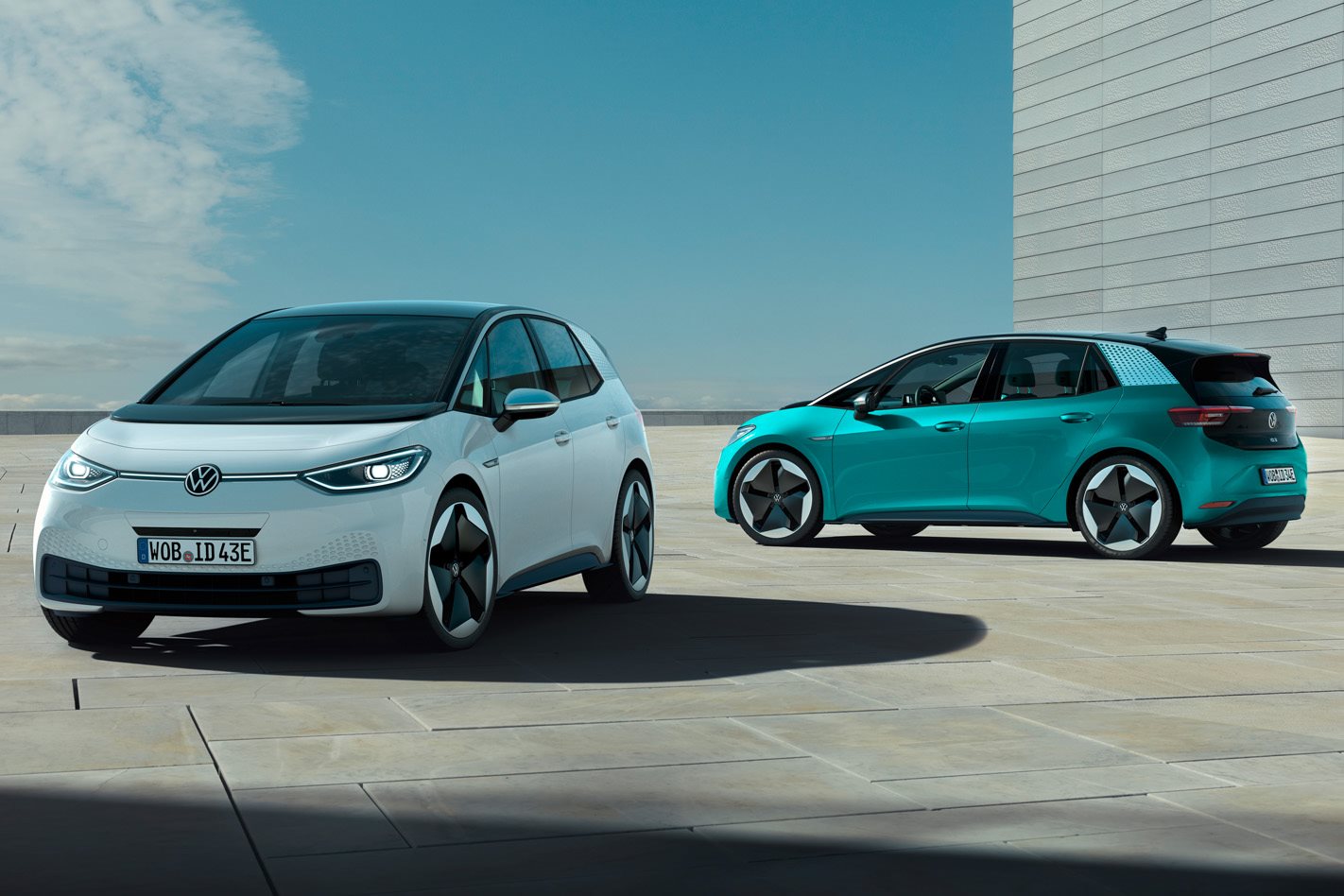
Schäfer’s comments support previous reports below that the next-generation Mk9 Golf will be electric and sit alongside the comparably-sized ID.3 EV hatchback.
However, it downplays hope that an all-electric Golf will be available in the current lifecycle prior to 2029.
The story to here
November 30: Further reports of all-electric Golf or Tiguan surface
Following Volkswagen CEO Thomas Schäfer’s comments at the LA Auto Show, company sources told German publication Handelsblatt that the car giant is considering either launching a new all-electric Golf hatchback by 2026 – prior to the release of Mk9 Golf.
Also floated was the idea of an electric version of the Tiguan medium SUV, after the carmaker’s Trinity concept’s release was delayed. It is understood Volkswagen is considering only one or the other, but not both electric Golf and Tiguan.
1
It’s reported that the electric Golf would be based on an updated version of the current Modular Electric Toolkit (MEB) platform that underpins Volkswagen Group electric vehicles such as the Volkswagen ID.3, Skoda Enyaq and Audi Q4 E-Tron.
It would be produced at Volkswagen’s main Wolfsburg factory to keep it running at capacity as more car buyers switch to EVs and move away from combustion engines over time.
This means we might not need to wait until the next-generation Mk9 Golf for a battery-electric version, which isn’t due until 2028. The report suggests either a Golf or Tiguan EV is being considered due to software development concerns delaying its long-range Trinity EV project to 2030.
The current Mk8 Golf uses an updated version of the MQB platform. Likewise, the third-generation Tiguan is expected to debut next year riding on the same updated MQB guise.
Our original story, below, continues unchanged
November 21: VW CEO confirms MK9 Golf will have all-electric variant
Snapshot
VW boss backs the iconic Golf nameplate
Maintains ID. badge as symbol of VW electric cars
Mk9 Golf will have EV option, but will continue selling ID.3
Volkswagen CEO Thomas Schäfer has confirmed the ninth-generation Golf hatchback will be offered with a fully-electric variant, but it won’t be replacing the current ID.3 EV.
Instead, Schäfer suggests the iconic 48-year-old Golf nameplate could merge with the current line-up of dedicated ID. branded electric vehicles at the end of the decade – potentially ID.Golf?
“There is a connection with VW and ID, and there is no need to cancel [ID.],” Schäfer told Autocar.
“We have iconic brand names, Golf and GTI. It would be crazy to let them die and slip away. We will stick with the ID. logic but iconic models will carry a name.
1
“The ID.3 has never been a successor to the Golf, it is more a Golf Plus.”
That’s despite the automaker stating that the ID.3 is the third-generation Volkswagen product after the Beetle and Golf when it first debuted globally in 2019.
When the current Mk8 Golf retires by 2028, the all-new Mk9 Golf is expected to still offer combustion and electric powertrains, and sit underneath the ID.3 – which will likely be in its second-generation form by then.
The German carmaker is set to debut its scalable Scalable Systems Platform (SSP) from 2026, which will underpin most of the group’s new vehicles and succeeds the Modular Transverse Matrix (MQB) and Modular Electric Toolkit (MEB) platforms currently used in the Mk8 Golf and similarly-sized ID.3 respectively.
1
Despite the Volkswagen ID.4 and ID.5 medium SUVs and ID.3 small hatchback, the ID.Buzz retro van and ID.Aero concept car sedan suggests the line-up won’t be limited to numerical nomenclatures.
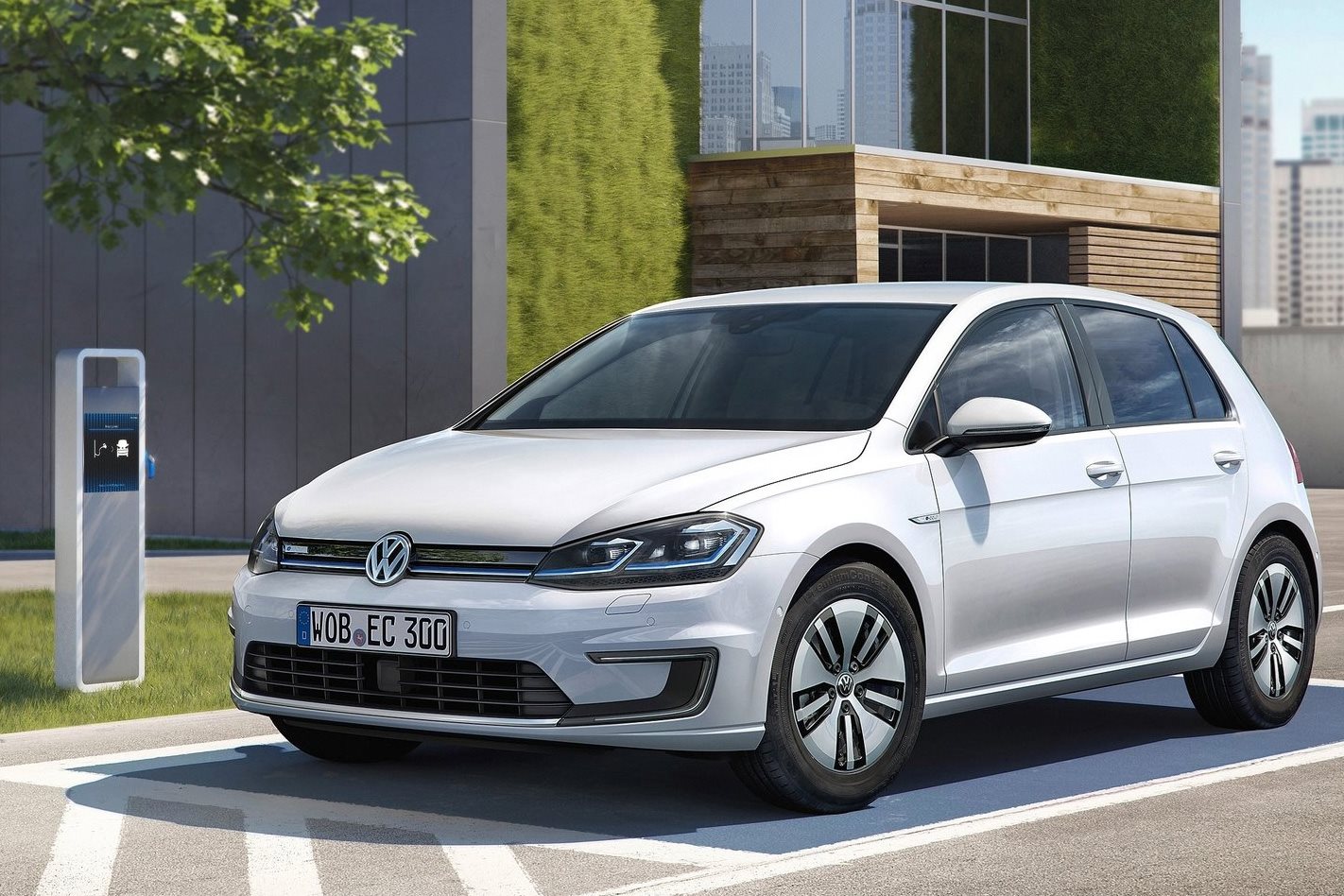
It seems like the ‘ID.Golf’ would be a similar approach to the Mk7 and Mk7.5 small car, which was offered in a pure-electric version called the e-Golf overseas. It was sold between 2015 to 2020 and featured an identical design to the standard petrol-powered Golf, bar more aerodynamic wheels, a tweaked front bumper and blue lines stretching from the headlights.
The ID.4 and ID.5 are due to land in Australia from late 2023, while a mid-life facelifted version of the ID.3 is expected in 2024. However, the latter will be ousted by the sportier-looking Cupra Born as the group’s first MEB-based small hatch to lob locally early next year.
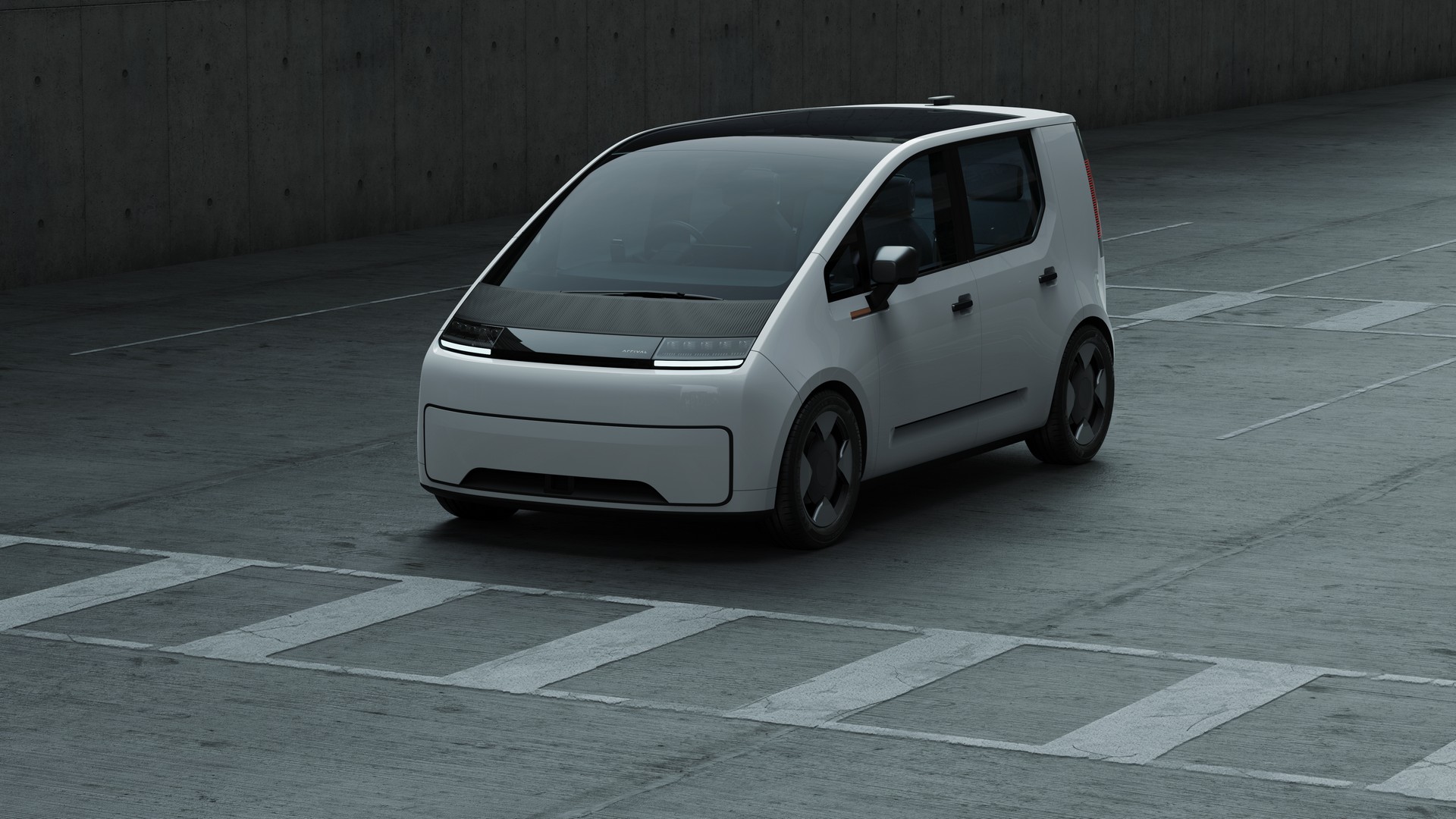
Volvo Cars has appointed Jeremy Offer as the global head of design – who previously led the design team for British electric vehicle startup Arrival.
Snapshot
Volvo Cars appoints former Arrival designer
Will lead luxury automaker into EV-only design world
Volvo aims to be fully electric by 2030
Offer will start in May, replacing Robin Page who will become senior advisor, as the luxury carmaker transitions to only offering full EVs by 2030.
The move comes as Arrival faces financial woes, cutting its workforce in half this week and appointing a new CEO, as it recently warned that it may not have enough money to keep going beyond September this year.
“[Offer] brings strong leadership and a wealth of design experience ranging from electric vehicles and industrial design to digital products and services – all key as Volvo Cars transitions into a future with safe, fully electric cars, defined by their software,” Volvo Cars CEO Jim Rowan said.
Volvo’s EV transition will be led by the forthcoming EX90 large three-row flagship SUV, which debuts a new design from the brand with split LED head- and tail-lights, incorporates lidar safety assistance sensors, and a slim driver instrument display.
1
A more affordable Volvo EX30 crossover is set to follow and is expected to be a similar size to the current XC40 and C40 Recharge EVs.
It didn’t take long, but EVs are now well and truly fashionable and desirable… although, they’re playing hard to get.
A combination of low supply and high prices have made battery-electric vehicles largely the preserve of the well-heeled; those who can not only afford the EV premium on the retail sticker but those who can also afford to wait a while for their car to arrive.
With supplies so tight, the used EV market – as minuscule as it is – offers little respite for those wanting to put an electron-chugger in their driveway, and buying new still requires at least $45K in your pocket if you aim for Australia’s most-affordable electric car, the MG ZS EV.
Does Mitsubishi even want the eK X EV for Australia?
Here’s a quote from local boss Shaun Westcott, to keep in mind: “We have to ask is it relevant? Could this work in Australia? But definitely one thing I’ve noticed at Mitsubishi is Japan takes our media’s feedback quite seriously, so watch this space.”
So, if you’re keen on this compact EV, you’d best make it known to your nearest dealer.
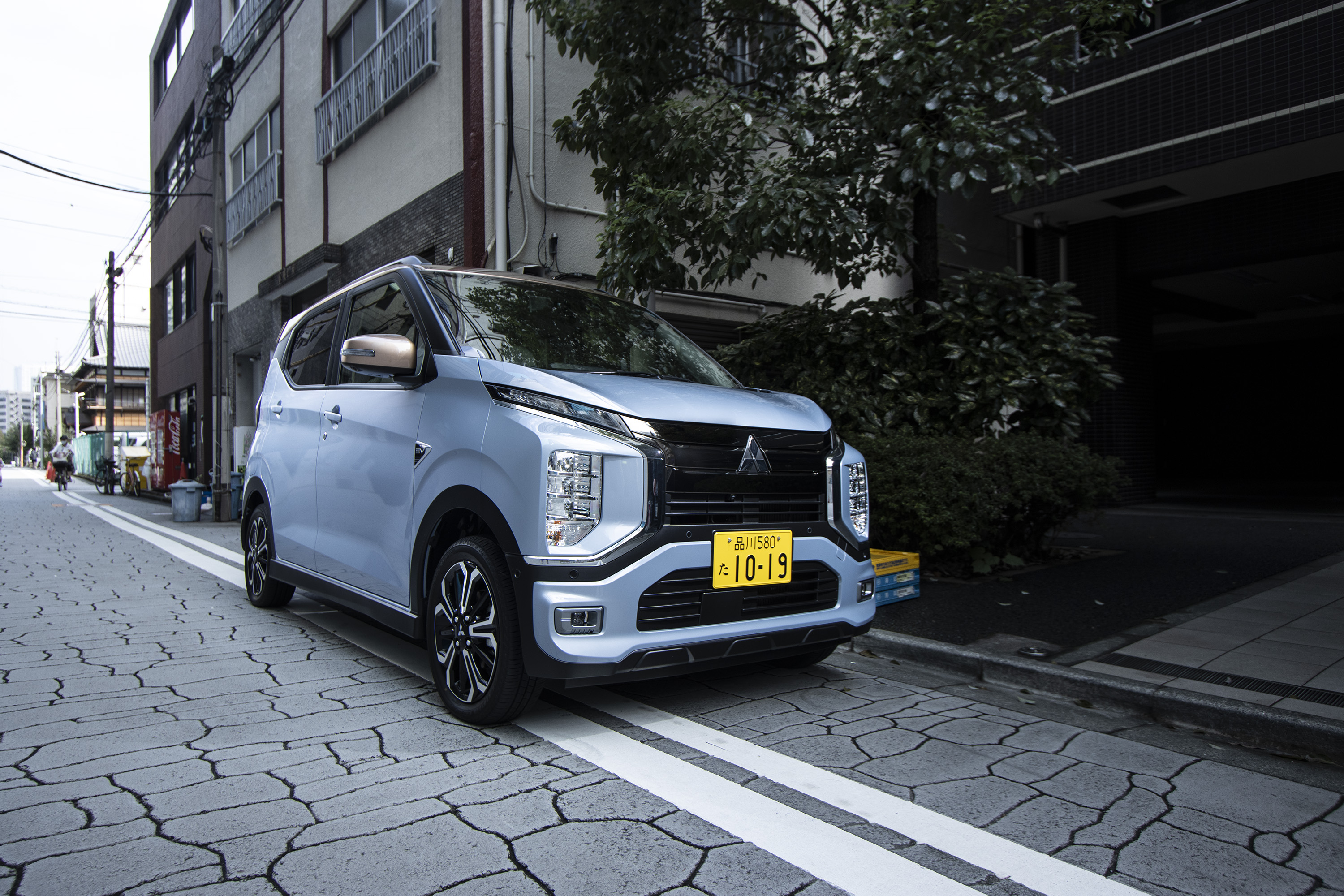
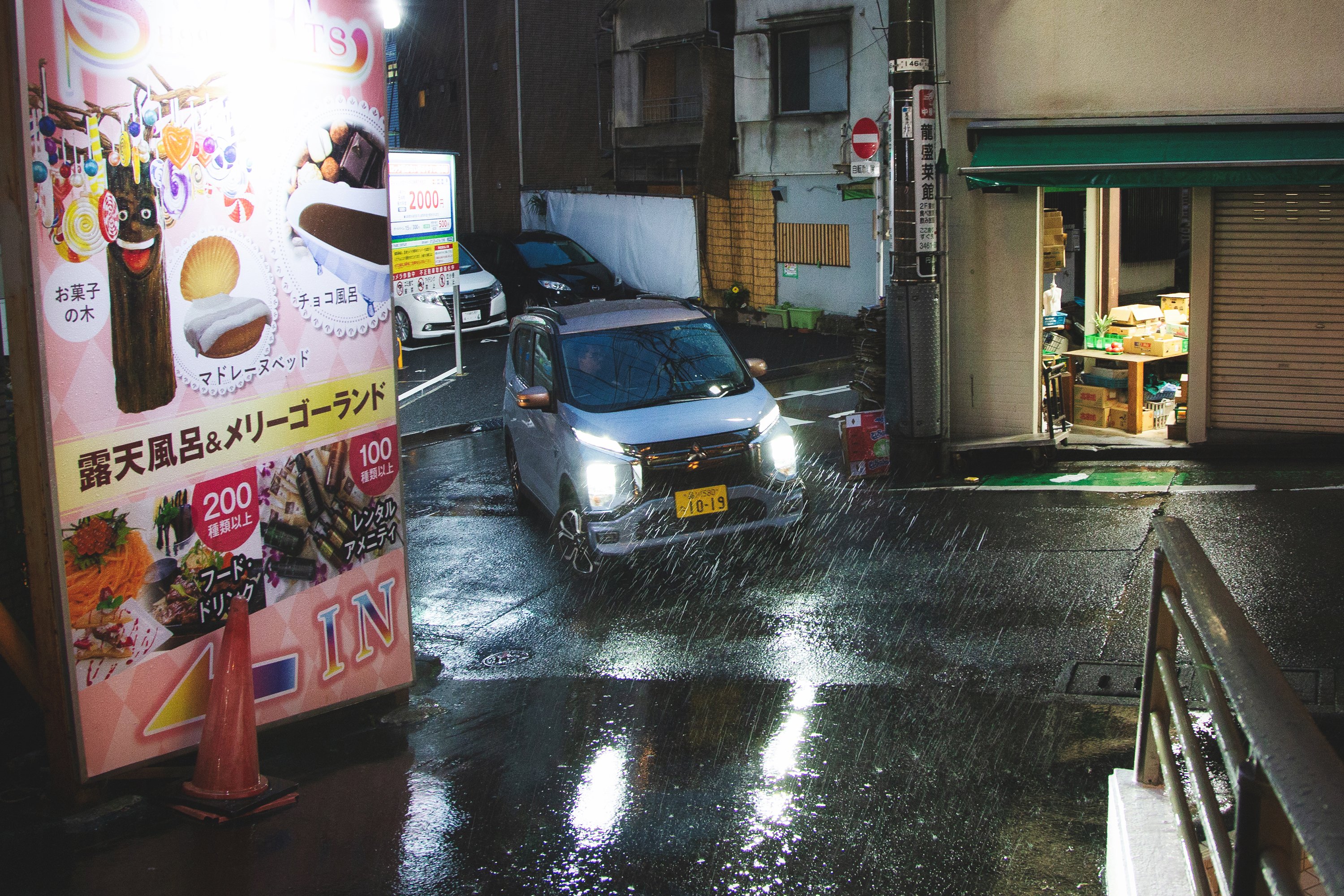
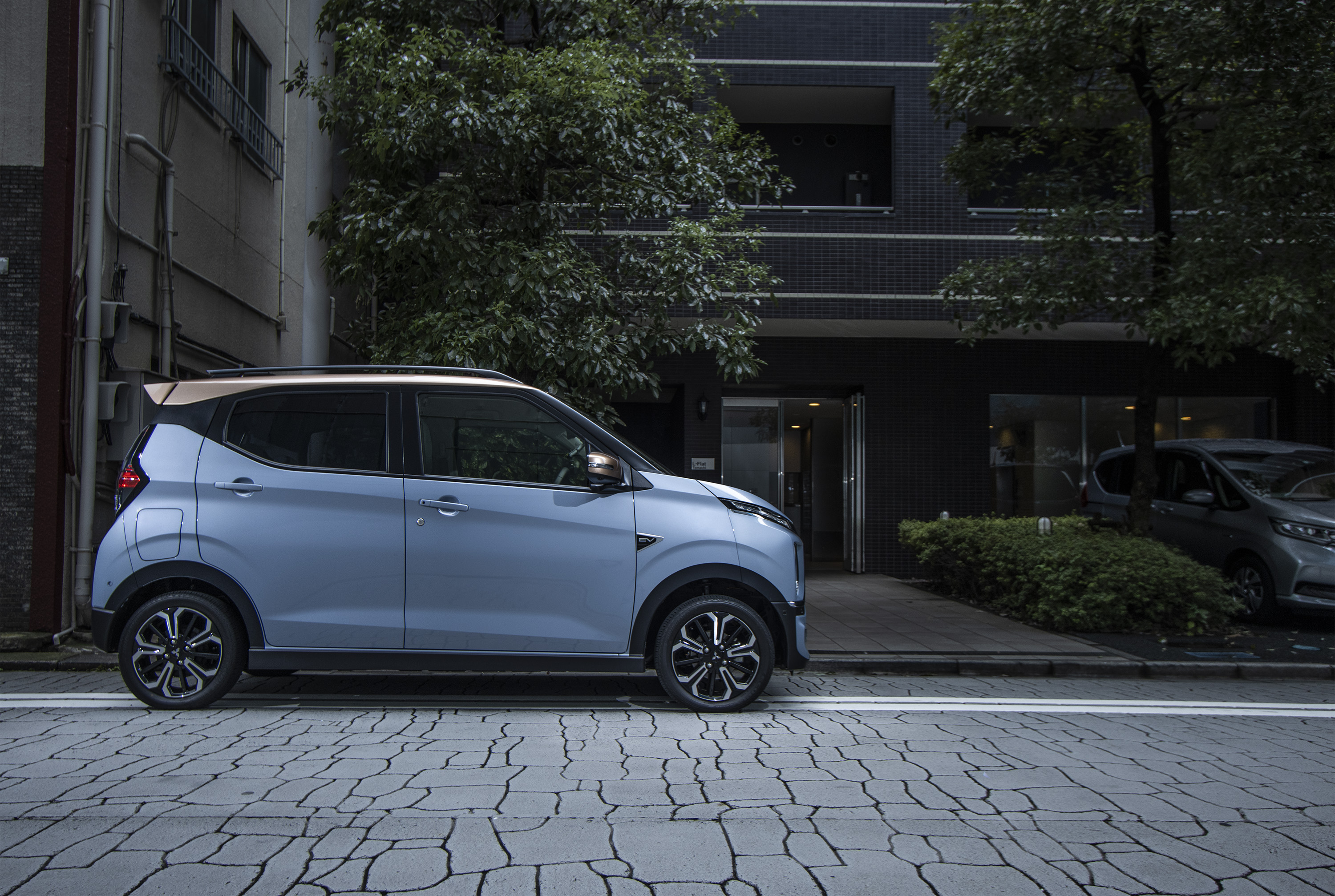
Business-minded individuals would naturally recognise that there’s an opportunity here, and it appears Mitsubishi Motors Australia is on that wavelength. Speaking to Wheels recently, Mitsubishi’s local boss Shaun Westcott indicated that the ek X EV, a sub-compact kei-class electric vehicle that launched in Japan last year, holds potential for Australia as a ‘starter’ EV – and it could be the most affordable all-electric option in the country by a wide margin.
But will the ek X EV translate well into the Australian environment when the company’s last EV, the i-MiEV (2009-2013) failed to get traction here? We hopped on a jet to Japan to take a first-hand look.
This section might as well be a big ol’ question mark, because right now, we have no idea what kind of dollar value Mitsubishi’s local product planners would put on an Australian-delivered ek X EV.
However, Japanese pricing offers some guidance.
In its homeland, the ek X EV’s two-grade range begins at the equivalent of roughly AU$27,000 and tops out at $33,020, with the Japanese government chipping in an incentive payment that ratchets those prices down by a few thousand more.
If Mitsubishi Australia can get close to those price tags, then the ek X EV would surely find an audience – albeit a quite specific one, as we’ll get into later.
1
If we use the high-grade ‘P’ spec variant as an example (Aussie tastes tend to favour feature-rich offerings, so it seems sensible to aim for the range-topper), then the standard equipment list is decent.
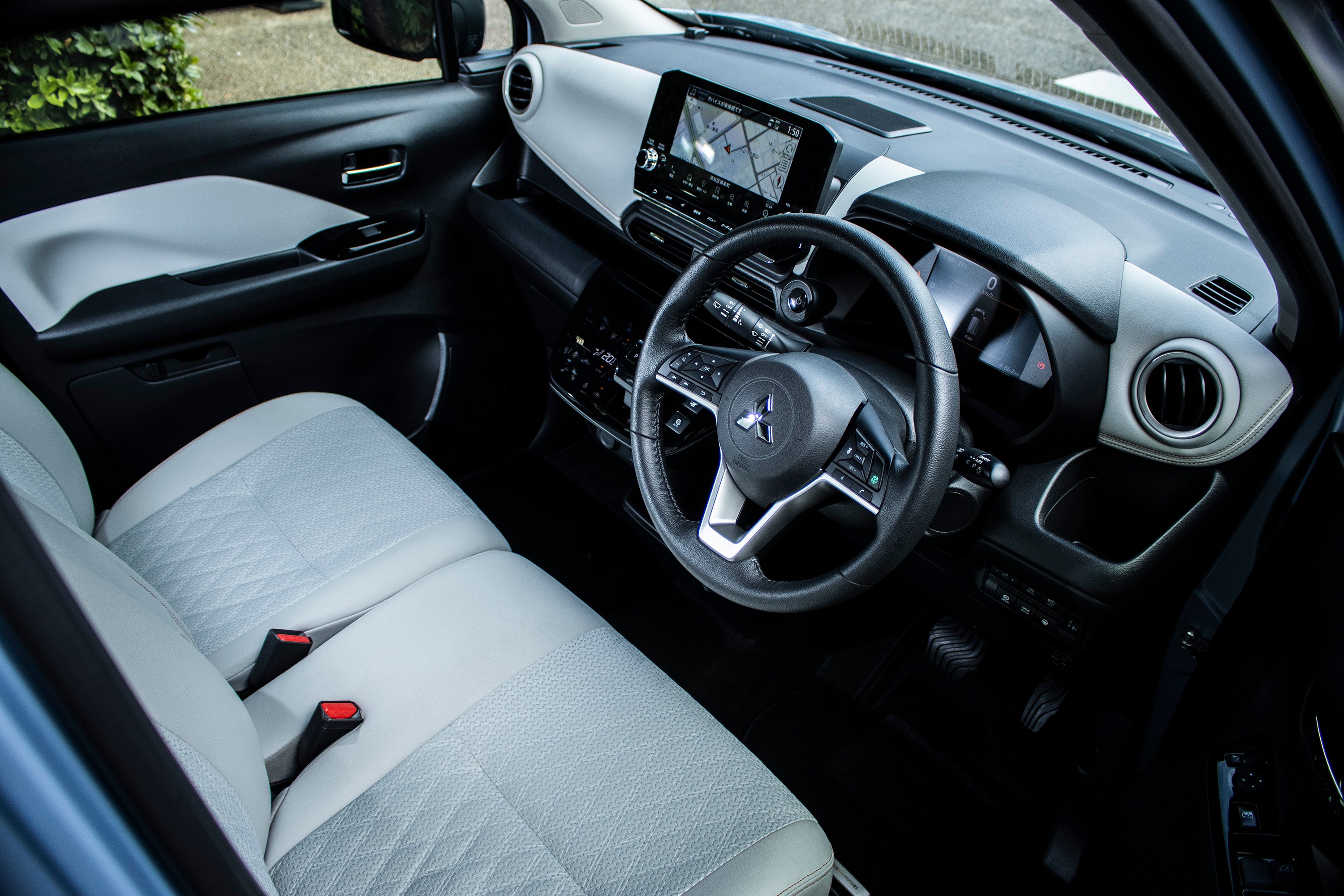
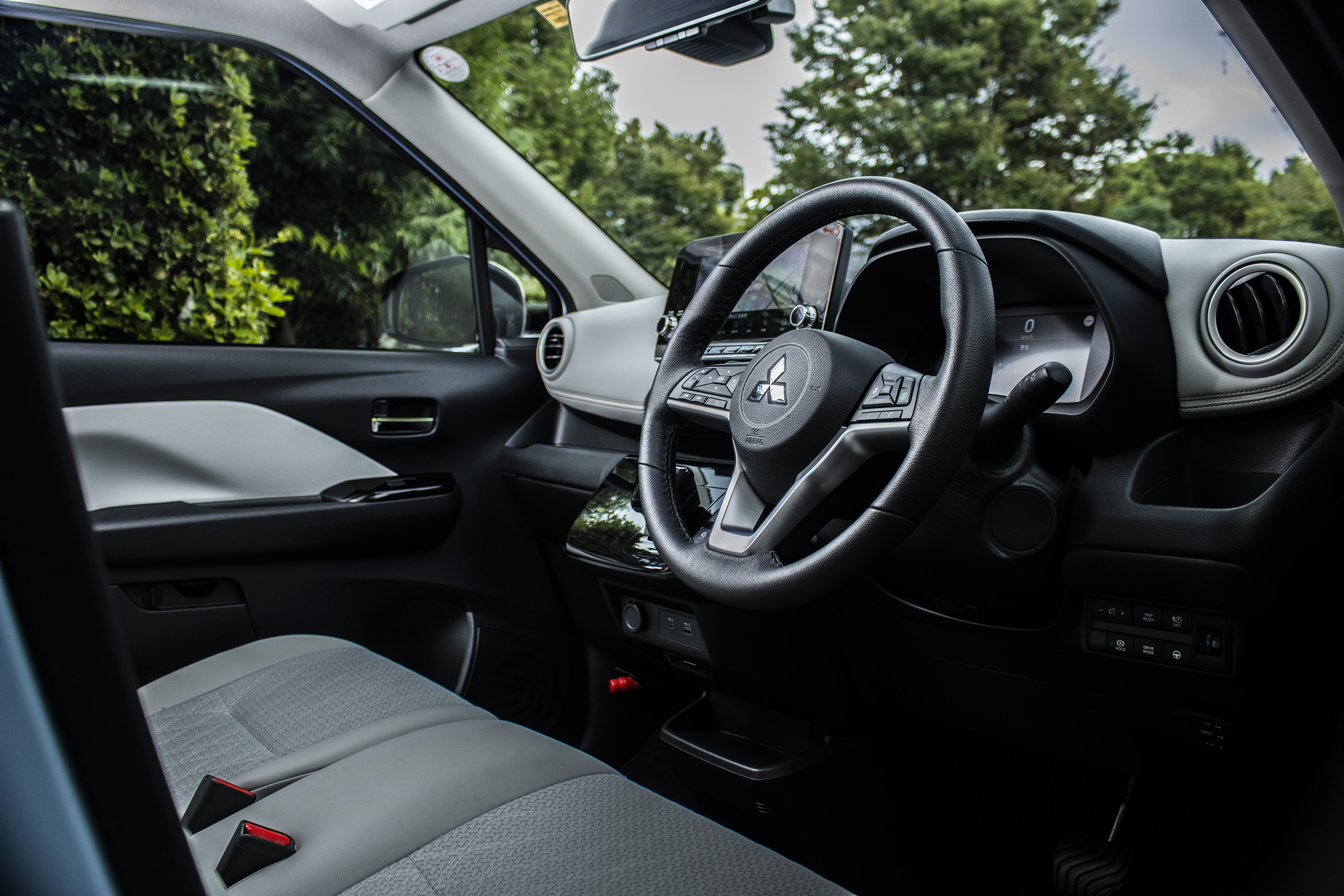
A 9.0-inch touchscreen is the centrepiece of the tiny cabin and packs in Android Auto and Apple CarPlay, while the driver’s instrument panel is a bright and clear 7.0-inch electronic display. Heated power-folding wing mirrors, LED headlights and SUV-style plastic body cladding are also standard-issue on the flagship ek X EV, as are 15-inch alloy wheels.
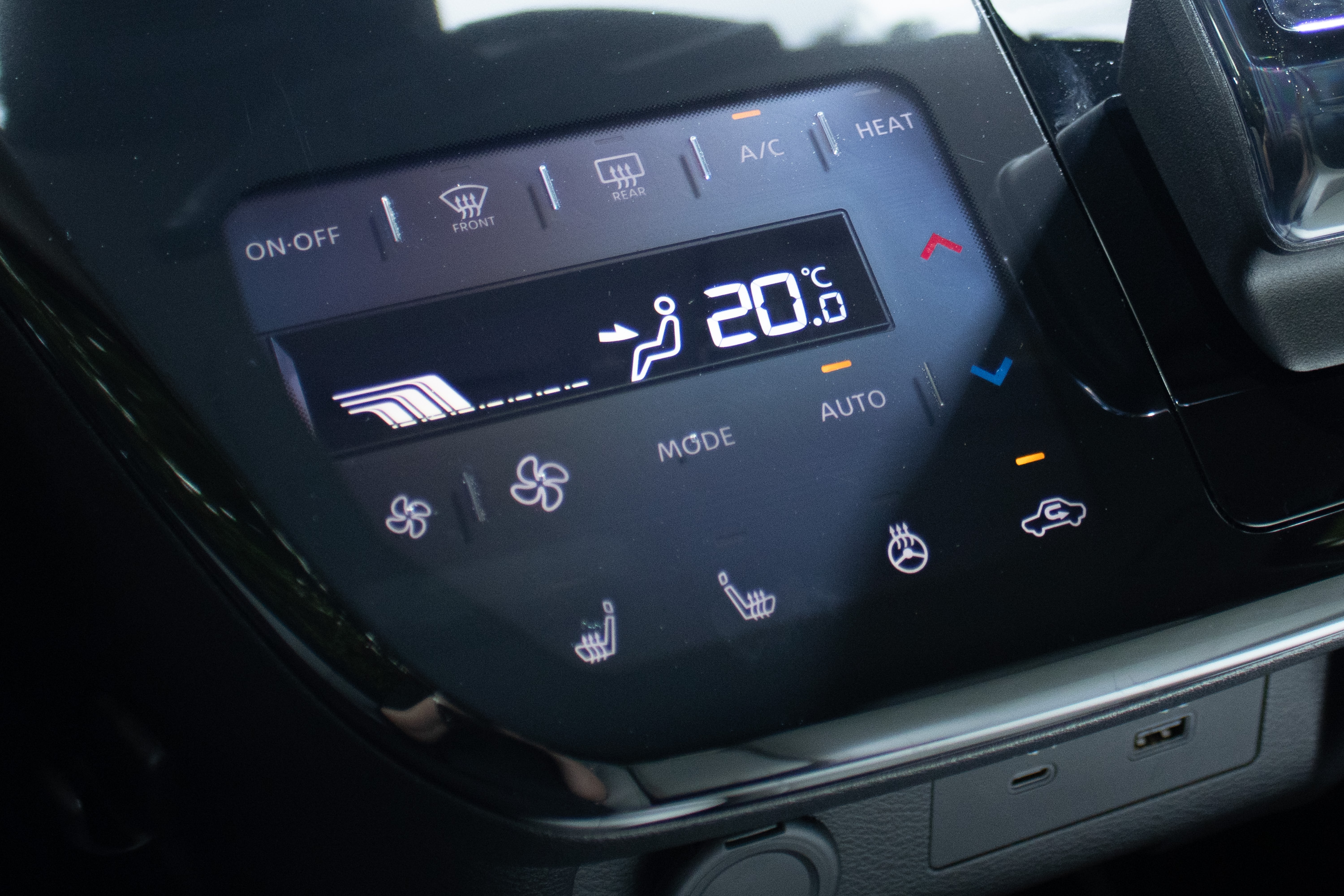
Single-zone climate control with heated front seats and a heated steering wheel are standard on the P-spec, and a self-parking function, top-down camera view, adaptive cruise control (normal cruise control is standard) and lane-keep assist are available in an optional bundle.
1
Cloth upholstery is standard, but an attractive quilted leather/fabric upholstery in light grey can be had for a little extra – and is what our P-spec tester came with.
The base model G-spec is more Spartan by comparison – it doesn’t actually include an infotainment screen as standard, it’s a cost option – but is mechanically identical. By Australian standards, however, it would probably be seen as a favourable option for food delivery operators, but not private owners.
Here’s the thing: there are no rivals in Australia to the ek X EV.
Apart from a used Nissan Leaf, there’s not much in the way of competition in the sub-$45k EV market – at least not right now.
Chinese automakers BYD and GWM’s Ora sub-brand are making noises about launching their own entry-level EVs at a circa-$35K price point later this year, but we’ve yet to see solid confirmation for either.
If Mitsubishi can sneak in under that number, then the ek X EV has a chance of staying relevant – though with just a 20kWh battery offering significantly less energy capacity than BYD’s Dolphin or the Ora Good Cat, Mitsubishi’s compact EV will likely have to rely on keen pricing to fend off incoming Chinese rivals.
Japan’s specialised kei class of vehicles is a fairly restrictive one. Vehicles in this class must fit within a 3.4-metre by 1.48-metre footprint, which results in an obvious shortfall in cabin space.
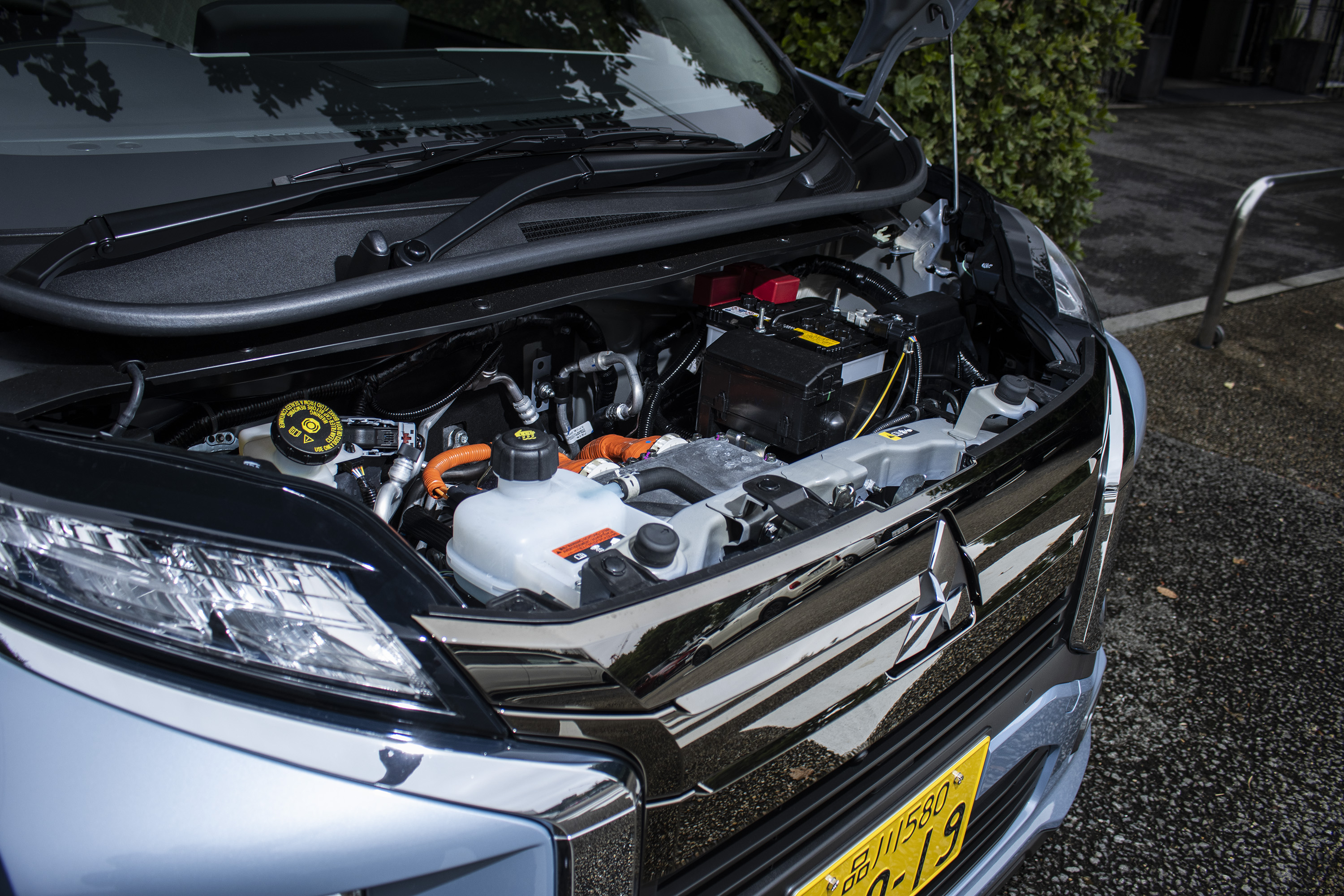
That said, with the ek’s axles being pushed right to the very edges of its platform and the mechanical stuff occupying just the slimmest of compartments right behind the front bumper, the vast majority of the ek X EV’s volume is dedicated to passengers (and a modest amount of cargo).
For those who often just drive themselves around, it’s plenty. For two people it’s perfectly adequate, and even four adults can comfortably sit inside thanks to the dinner-chair-like posture that the ek X’s high seat bases and tall roof encourages.
1
The seat cushions are pretty flat and low on lateral support, which is the norm for the one-box kei car segment. These are seats designed for easy entry and egress, not for long journeys. Even so, the driving position is a comfortable one, and outward vision through the big glasshouse is excellent.
It’s a surprisingly useful space too. The pleather-upholstered dashboard has an integrated shelf on the passenger side that’s good for perching wallets and phones, and a shin-level shelf at the bottom of the centre stack is perfect for whatever phone is being mirrored on the infotainment touchscreen, as a pair of USB ports are located just above it (one USB-A, one USB-C).
There’s also a twin-compartment glovebox, the upper portion of which pulls out like a kitchen drawer, and deep cup holders are inset into the dashboard and rear door cards.
1
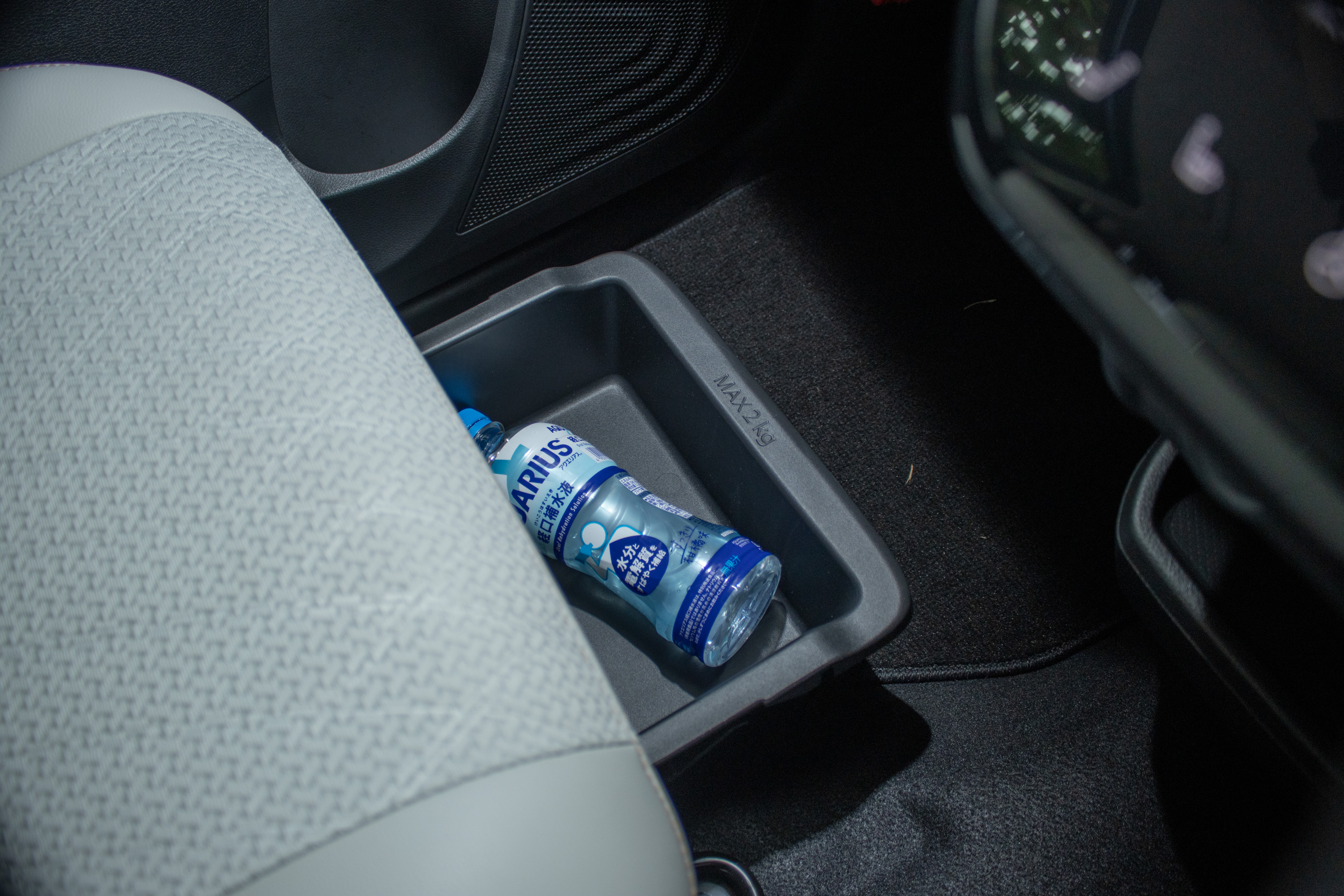
Under the front passenger seat you’ll find another pull-out drawer, good for storing a pair of shoes, a box of tissues or other small cargo, and a shopping bag hook is fitted to the side of the centre stack to hang a purse or takeaway bag on.
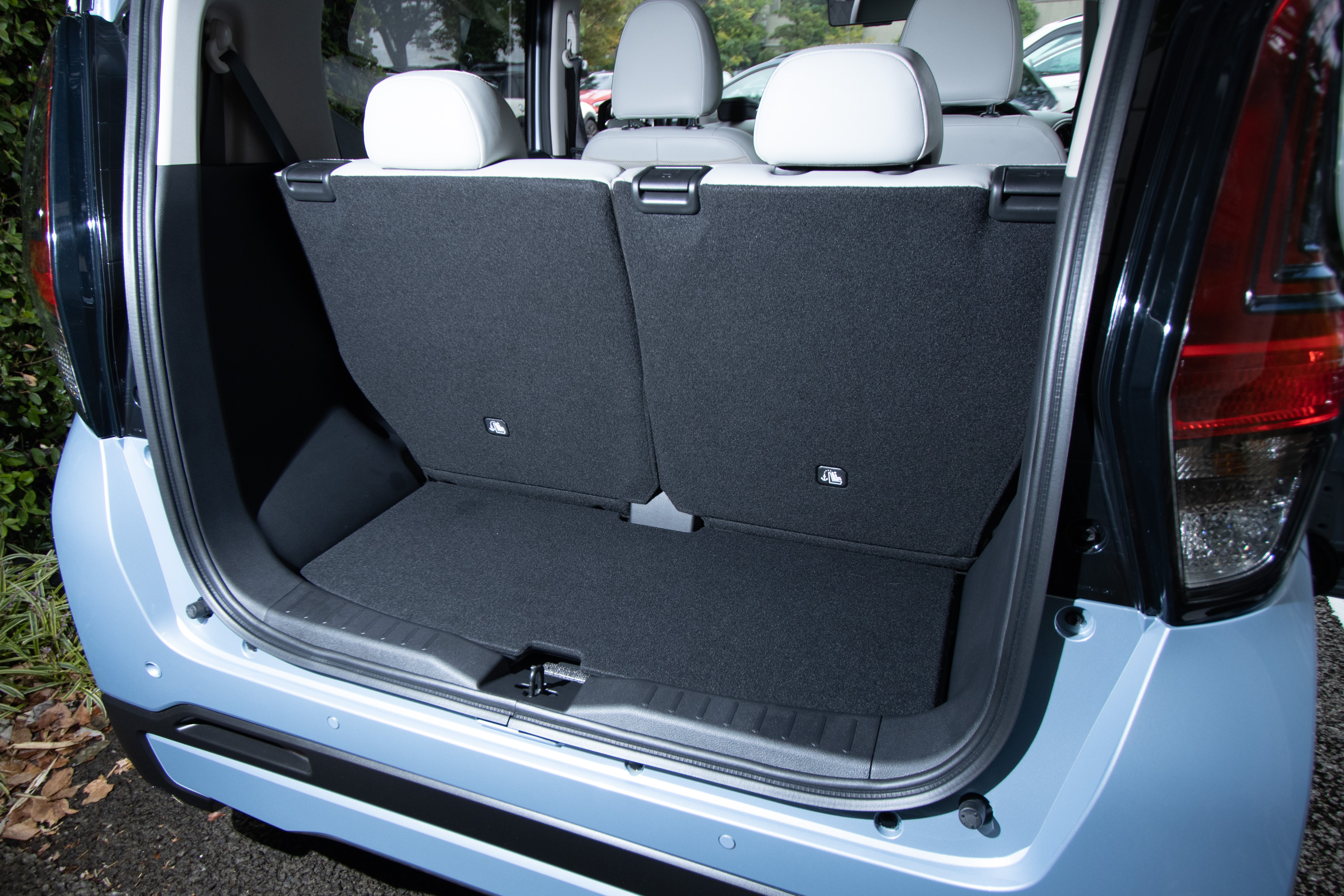
A boot volume figure is hard to pin down, but the ek X EV’s rear seat can be slid forward on rails to expand the otherwise slim cargo area when required. That was enough for us to be able to tote a large travel bag without dropping a seatback, and the ek X’s load bay becomes fairly cavernous when those 50:50 split seatbacks are lowered.
With a low boot floor and tall roof height – plus the ability to fold the front passenger seat down as well – the tiny ek X is able to carry a respectable volume of cargo if you need it to.
Kei cars are, by law, the opposite of powerful. The Japanese government mandates a maximum power output for all kei cars of a measly 47kW, and the ek X EV’s power figure from its single electric drive motor is exactly that.
However, the Japanese government says nothing about a torque limit.
With 195Nm at its disposal and a kerb weight of just 1080kg, the ek X EV has plenty of pep in its step. For the cut-and-thrust of Tokyo traffic it’s great, easily zipping to cruising speed without much trouble and chirping its front eco tyres should you give the throttle a little too much enthusiasm.
It can also be mostly driven using just the accelerator, with a one-pedal drive mode available that dials the brake energy recuperation to the max whenever you lift your right foot.
1
It’s not the most dynamic thing, but it’s pretty well suited for a dense inner-urban environment and staccato traffic flow.
The steering has a lot of lock to wind on but is also very light, the 9.6-metre turning circle ideal for tight backstreets and compact car parks.
The ek X EV is also a very quiet and calm thing to putt about town in. A bit like an overgrown golf cart? A bit, but we mean that in an endearing way and as a reflection of just how easy this thing is to drive.
It becomes noisier at highway-ish speeds. Our limited time with the ek X EV wasn’t enough to allow us to get properly out of Tokyo, but even on an 80km/h road it’s obvious that wind noise is the enemy of this car’s upright and blocky form.
A similar story emerges from the suspension set-up. Tokyo streets are famously smooth with little to challenge springs and dampers, but there’s enough pitch and roll to clearly hint that the ek X EV isn’t going to be a talented corner carver. Does it need to be? Again, if you’re considering something like this then performance isn’t likely to be a primary consideration.
What will be a primary consideration is energy efficiency and range – and here we find the biggest hurdles for the ek X EV’s Australian business case.
The official claim is average energy consumption of 12.4kWh/100km, or as low as 10.0kWh/100km depending on test cycle. With most EVs currently on the market delivering real-world consumption figures in the high teens and beyond, the little Mitsubishi’s figures are impressively frugal.
A claimed maximum range of 180km according to WLTC protocols is obviously substantially lower than most EVs, but should be more than sufficient for the inner-urban apartment-dwellers that we’d expect to be attracted to the ek X EV. More range would be nice, but there’s only so much a 20kWh battery pack can give.
The eK X EV offers a claimed driving range of just 180km – but it also has a particular type of commuter in mind, and buyers of the first-generation Leaf were clearly not deterred by a low driving range.
1
Except, it appears that the ek X EV can’t even deliver on that. To be fair, our drive of the car was short, encompassing just 30km, but it was also carried out in what should have been ideal conditions for the ek X EV’s efficiency – stop-start, low-speed traffic. Instead, our average energy consumption was 16.25kWh/100km, which would give a maximum range in the region of 123km before the battery ran out of juice.
Some will find that to be okay and others will find that to be unacceptably short-legged, but from our point of view we’re more disappointed that the lightweight ek X EV was so wide of its factory claim. Will it do better in Australian traffic?
We’d have to wait until Mitsubishi Australia commences a local trial, but even if it does, there’s still the issue that its maximum range in ideal conditions would still be considered marginal by a lot of potential customers.
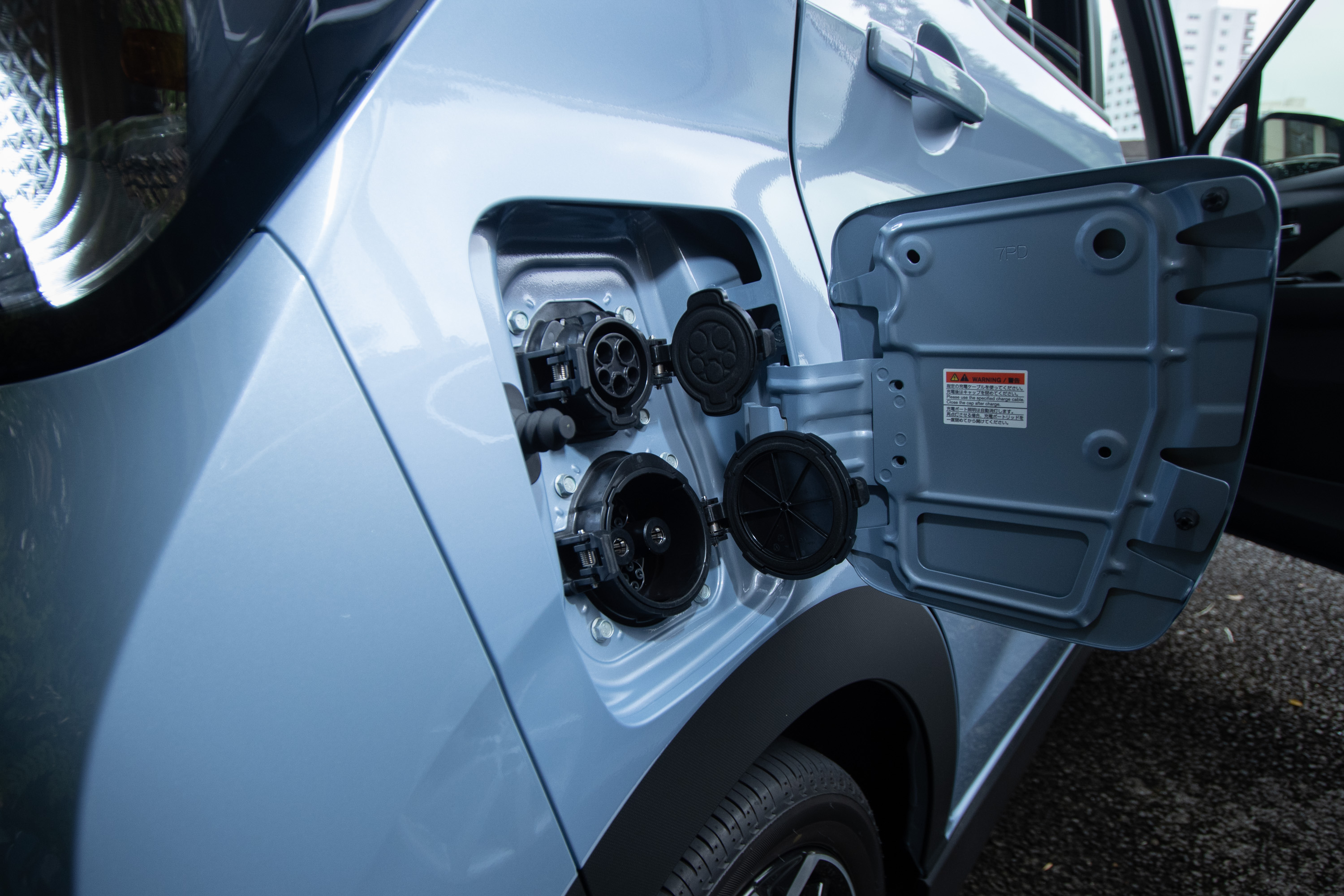
In Japan, there’s both a Type 1 connector (or J-1772) for low-speed charging and a huge CHAdeMO socket for high-speed (and bi-directional) charging. For Australia, a Type 2 CCS port would likely be needed in order to maximise compatibility with existing charging infrastructure.
Standard safety equipment in Japan includes auto emergency braking with pedestrian and cyclist detection (but curiously, not necessarily motorcyclists), stability control, traction control, lane departure warning, frontal collision alert, seven airbags (dual front, front-side, curtain and a driver’s knee bag), and front and rear parking sensors.
Whether current ANCAP test protocols would equal the five-star safety rating its Japanese counterpart JNCAP did for the ek X EV late last year, remains unknown.
While the ek X EV has yet to be confirmed for our market, it would be reasonable to expect it to carry the same 10-year, 200,000km vehicle warranty as the rest of its stablemates.
That said, EV battery warranty periods typically only cover an eight-year term, so that particular component’s aftersales coverage may be split out from the rest of the vehicle accordingly. This, however, is our speculation.
All too often, those on lower incomes are overlooked in the conversation about technological advancement.
New cars in general have become quite expensive, and EVs haven’t yet taken the trajectory that was expected of them. As models begin to proliferate and sales volumes increase, average prices are expected to fall – but we’re simply not there yet, and it may be that the only place EVs will ever be ‘affordable’ is in the used market.
When adjusting for specification and inflation, prices have indeed dropped, but by nowhere near the amount needed to put an all-electric product within reach of younger people, pensioners and other low-income demographics.
Although the i-MiEV was too far ahead of its time and too expensive for what it offered (a $1740 monthly lease with no opportunity to purchase), there now exists an opportunity for Mitsubishi to offer a fairly humble and comparatively affordable EV with the ek X – something that could get those who are struggling to save for a Model 3 or even an Atto 3 into the world of all-electric motoring far sooner.
1
Its range is obviously going to be a handicap, but one that could be sidestepped if Mitsubishi makes the right kind of pitch to the right kind of buyer.
The ek X EV clearly isn’t going to be for everyone. But, for some of us – maybe enough of us to help Mitsubishi Australia with a decision – it could make the difference between joining the march toward the future sooner, or remaining chained to the old ways for a while longer. Assuming, of course, that any EV suits your current needs.
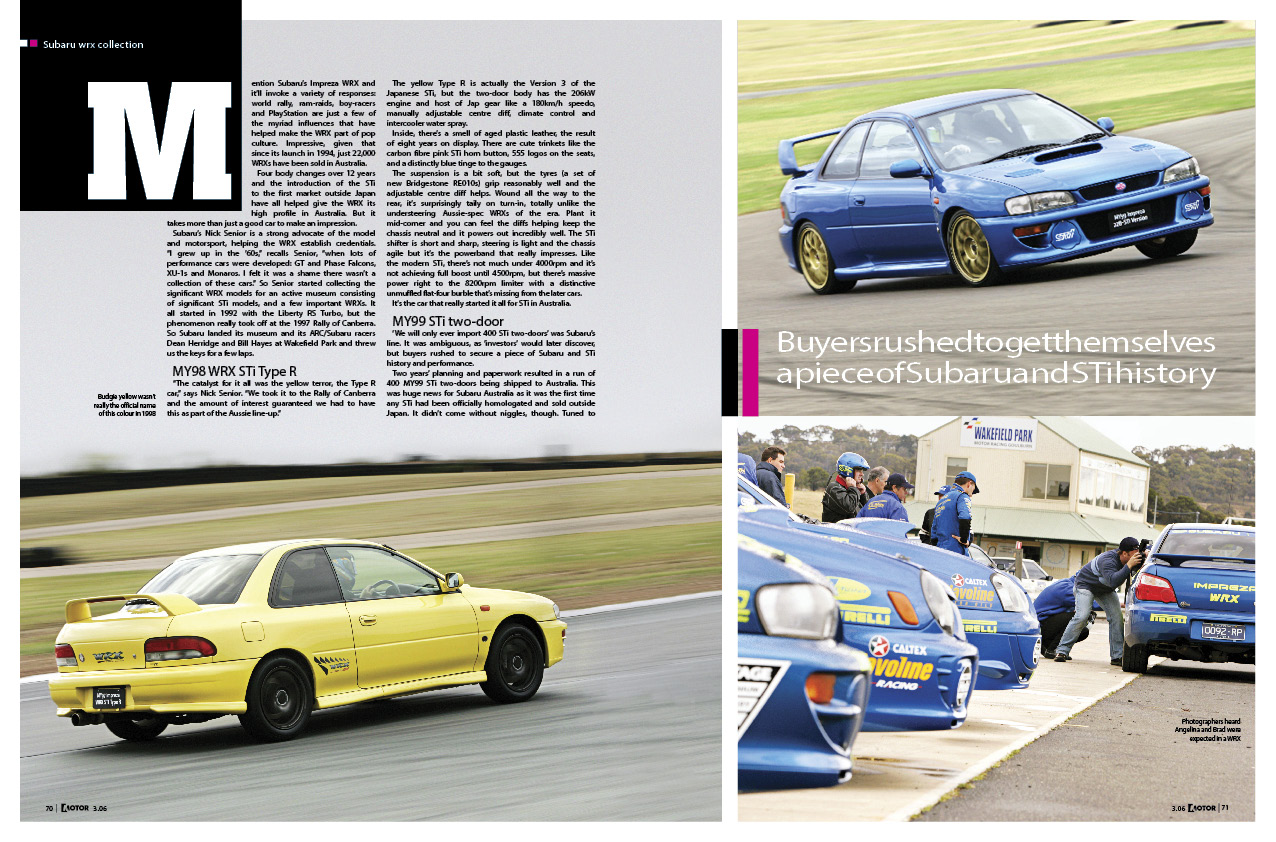
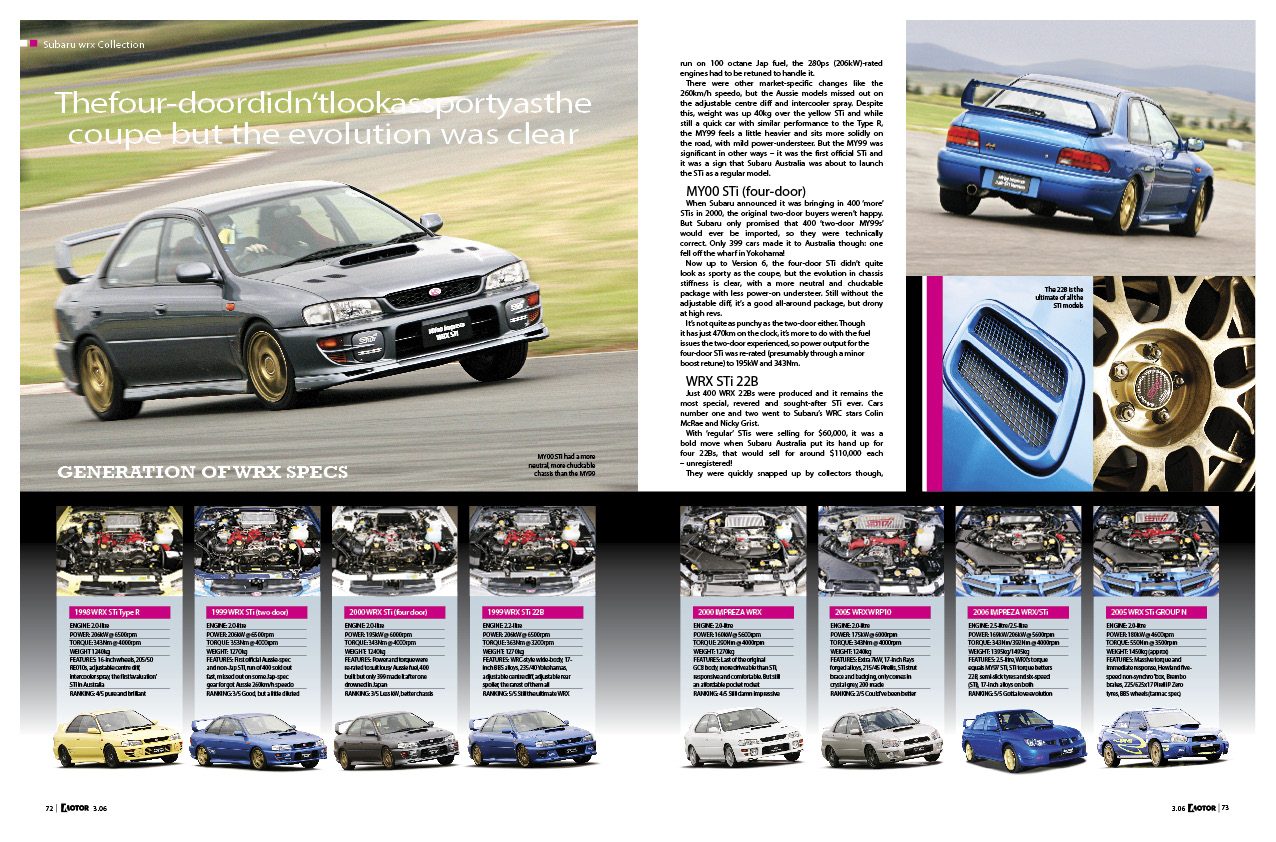
Mention Subaru’s Impreza WRX and it’ll invoke a variety of responses: world rally, ram-raids, boy-racers and PlayStation are just a few of the myriad influences that have helped make the WRX part of pop culture. Impressive, given that since its launch in 1994, just 22,000 WRXs have been sold in Australia.
This feature was first published in MOTOR Magazine’s March 2006 issue
Four body changes over 12 years and the introduction of the STi to the first market outside Japan have all helped give the WRX its high profile in Australia. But it takes more than just a good car to make an impression.
1
Subaru’s Nick Senior is a strong advocate of the model and motorsport, helping the WRX establish credentials. “I grew up in the ’60s,” recalls Senior, “when lots of performance cars were developed: GT and Phase Falcons, XU-1s and Monaros. I felt it was a shame there wasn’t a collection of these cars.”
So Senior started collecting the significant WRX models for an active museum consisting of significant STi models, and a few important WRXs. It all started in 1992 with the Liberty RS Turbo, but the phenomenon really took off at the 1997 Rally of Canberra. So Subaru landed its museum and its ARC/Subaru racers Dean Herridge and Bill Hayes at Wakefield Park and threw us the keys for a few laps.
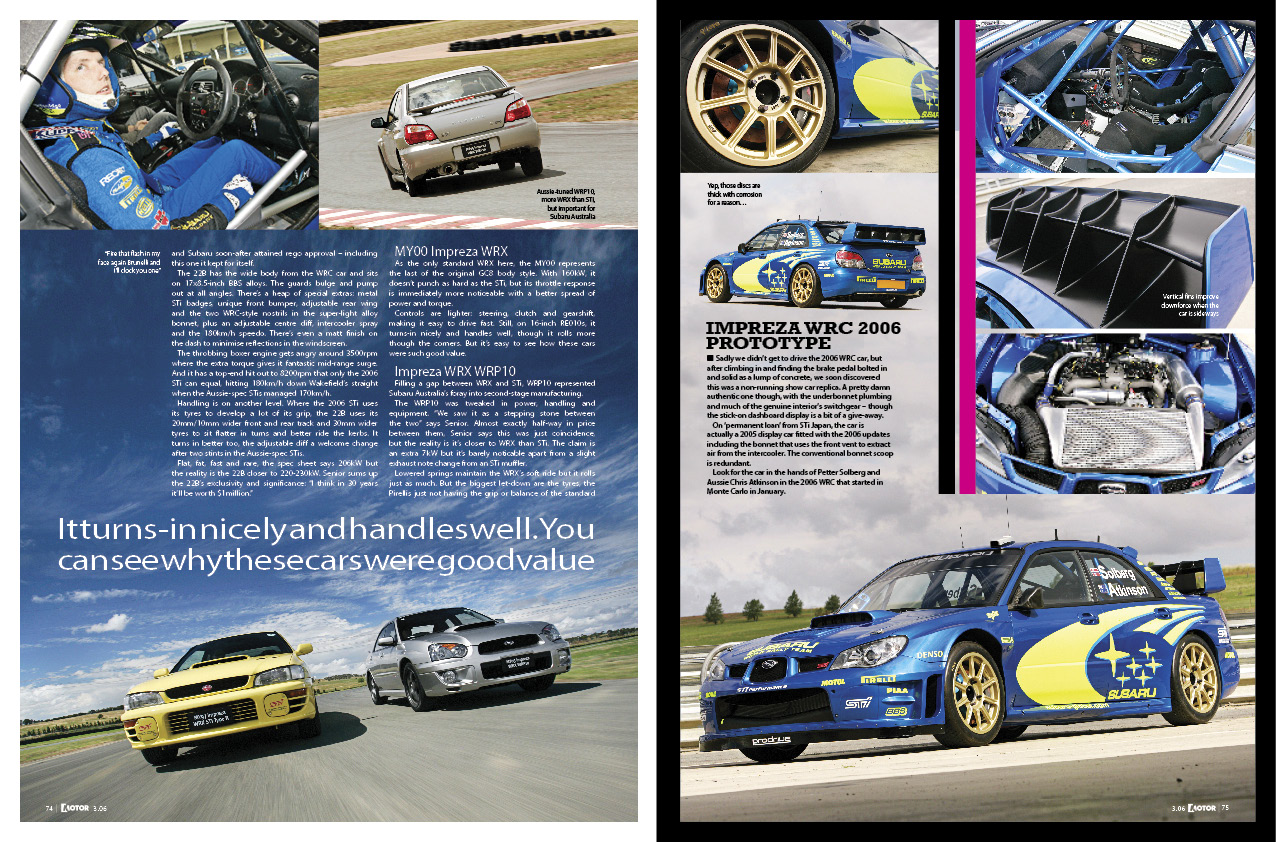
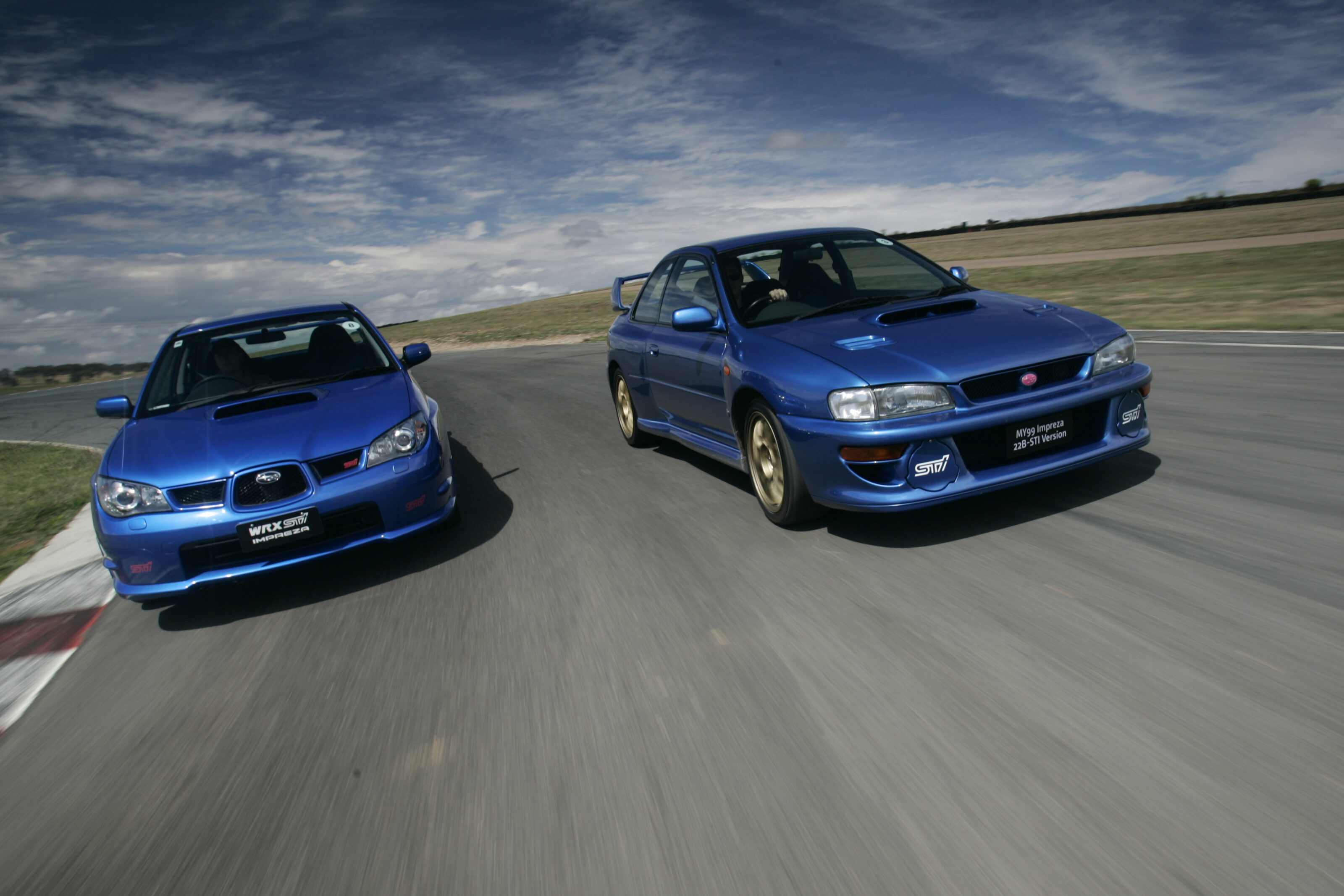
MY98 WRX STi Type R
“The catalyst for it all was the yellow terror, the Type R car,” says Nick Senior. “We took it to the Rally of Canberra and the amount of interest guaranteed we had to have this as part of the Aussie line-up.”
1
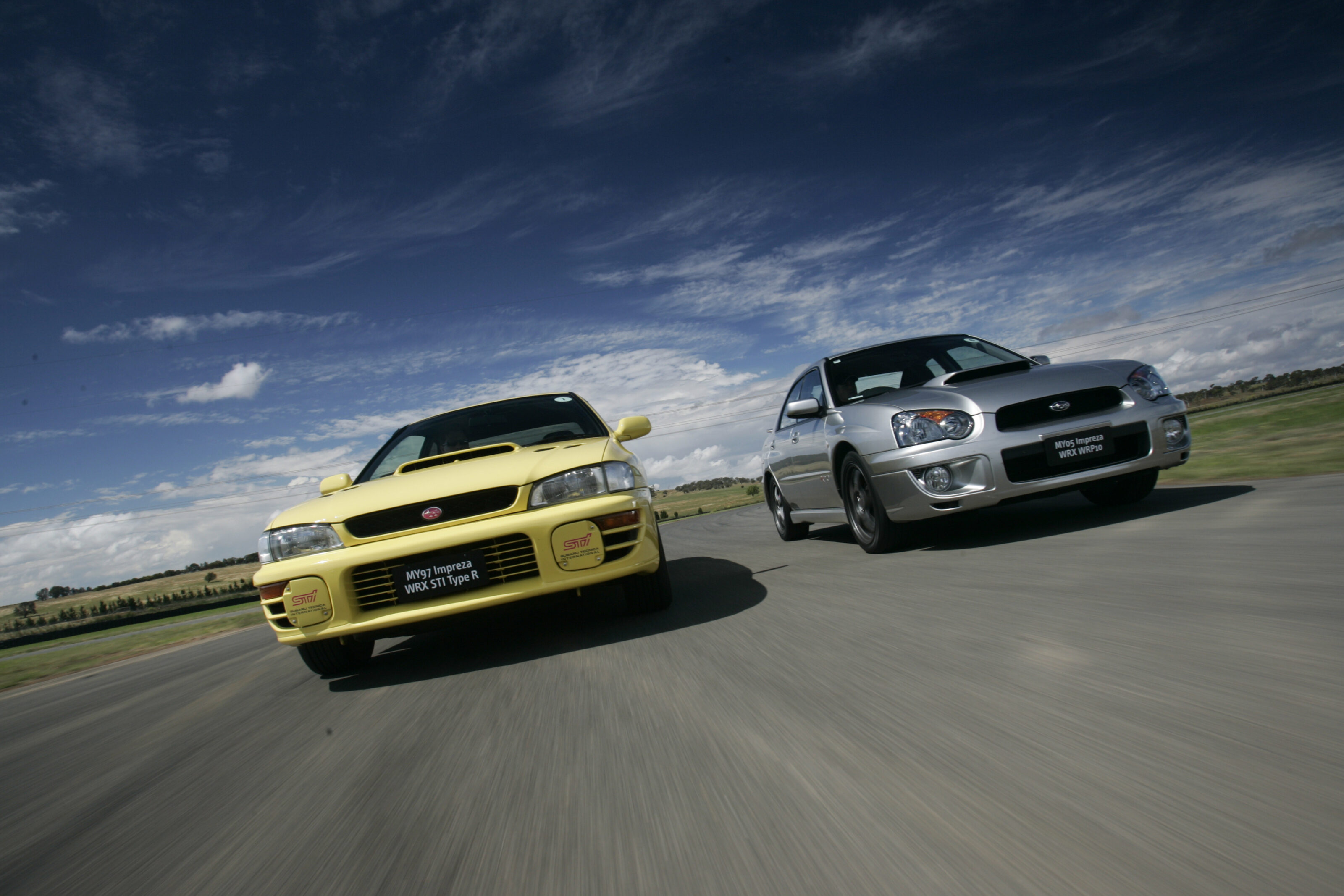
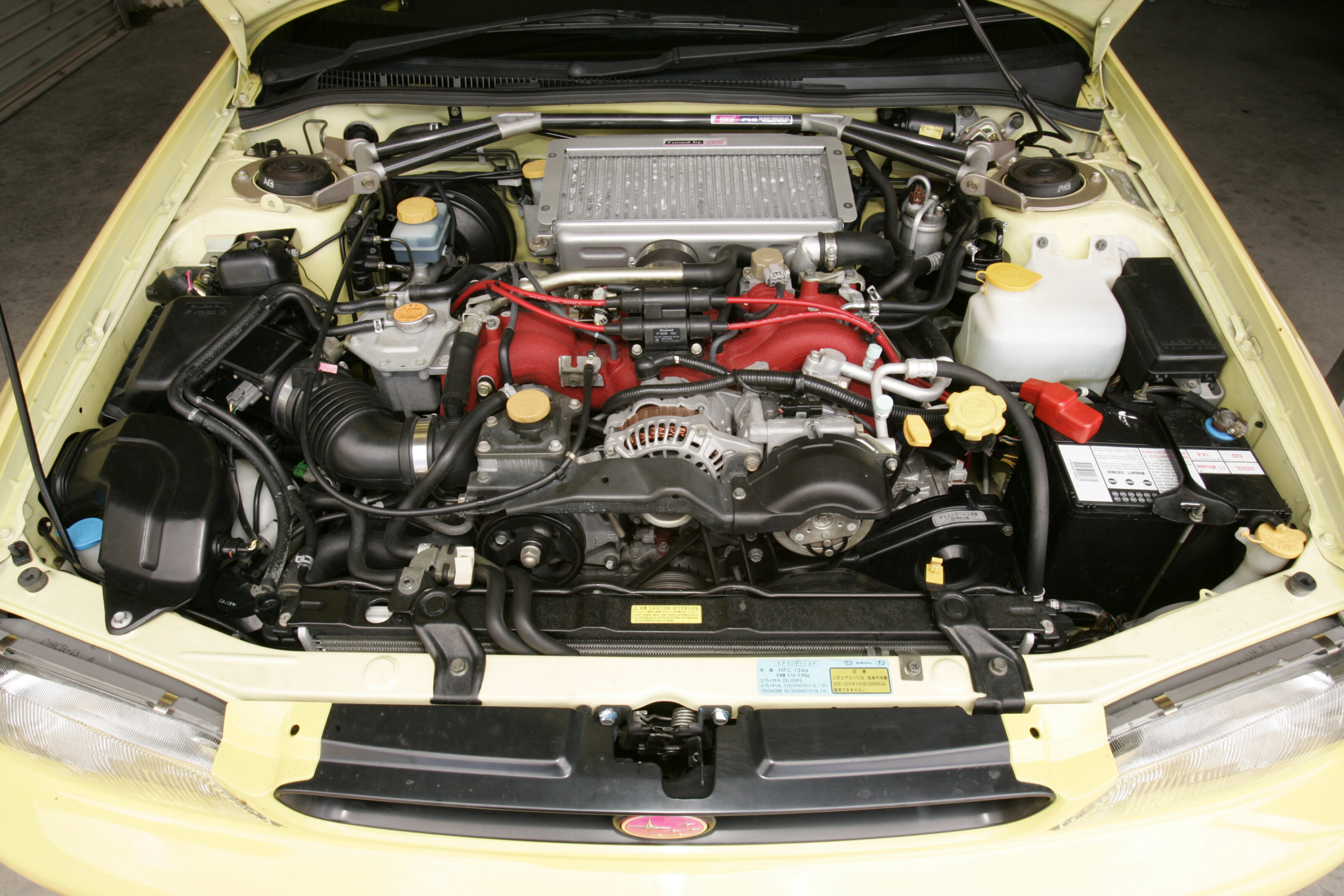
The yellow Type R is actually the Version 3 of the Japanese STi, but the two-door body has the 206kW engine and host of Jap gear like a 180km/h speedo, manually adjustable centre diff, climate control and intercooler water spray.
Inside, there’s a smell of aged plastic leather, the result of eight years on display. There are cute trinkets like the carbon fibre pink STi horn button, 555 logos on the seats, and a distinctly blue tinge to the gauges.
The suspension is a bit soft, but the tyres (a set of new Bridgestone RE010s) grip reasonably well and the adjustable centre diff helps. Wound all the way to the rear, it’s surprisingly taily on turn-in, totally unlike the understeering Aussie-spec WRXs of the era. Plant it mid-corner and you can feel the diffs helping keep the chassis neutral and it powers out incredibly well.
1
The STi shifter is short and sharp, steering is light and the chassis agile but it’s the powerband that really impresses. Like the modern STi, there’s not much under 4000rpm and it’s not achieving full boost until 4500rpm, but there’s massive power right to the 8200rpm limiter with a distinctive unmuffled flat-four burble that’s missing from the later cars.
It’s the car that really started it all for STi in Australia.
MY99 STi two-door
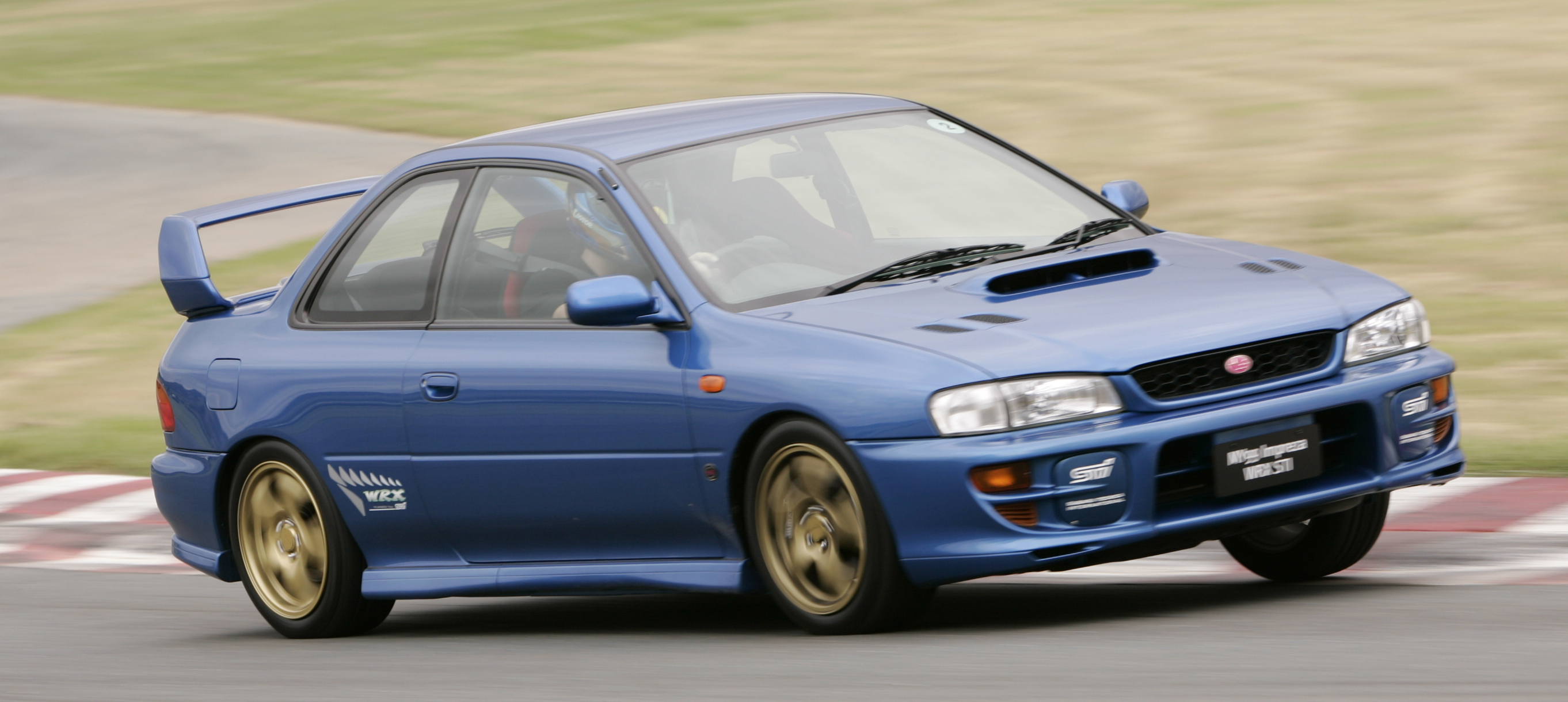
‘We will only ever import 400 STi two-doors’ was Subaru’s line. It was ambiguous, as ‘investors’ would later discover, but buyers rushed to secure a piece of Subaru and STi history and performance.
1
Two years’ planning and paperwork resulted in a run of 400 MY99 STi two-doors being shipped to Australia. This was huge news for Subaru Australia as it was the first time any STi had been officially homologated and sold outside Japan. It didn’t come without niggles, though. Tuned to run on 100 octane Jap fuel, the 280ps (206kW)-rated engines had to be retuned to handle it.
There were other market-specific changes like the 260km/h speedo, but the Aussie models missed out on the adjustable centre diff and intercooler spray. Despite this, weight was up 40kg over the yellow STi and while still a quick car with similar performance to the Type R, the MY99 feels a little heavier and sits more solidly on the road, with mild power-understeer. But the MY99 was significant in other ways – it was the first official STi and it was a sign that Subaru Australia was about to launch the STi as a regular model.
1
MY00 STi (four-door)
When Subaru announced it was bringing in 400 ‘more’ STis in 2000, the original two-door buyers weren’t happy. But Subaru only promised that 400 ‘two-door MY99s’ would ever be imported, so they were technically correct. Only 399 cars made it to Australia though: one fell off the wharf in Yokohama!
1
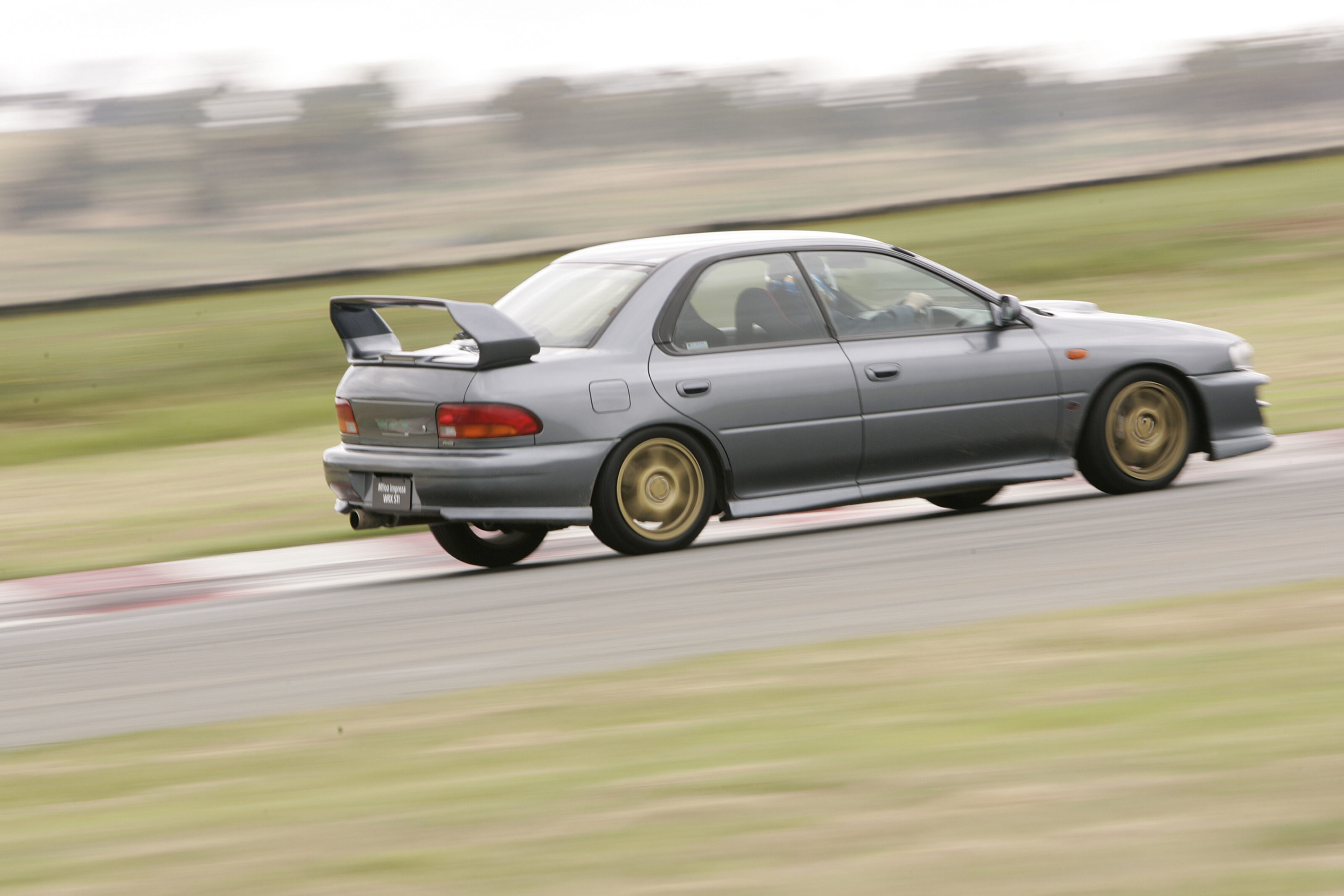
Now up to Version 6, the four-door STi didn’t quite look as sporty as the coupe, but the evolution in chassis stiffness is clear, with a more neutral and chuckable package with less power-on understeer. Still without the adjustable diff, it’s a good all-around package, but drony at high revs.
It’s not quite as punchy as the two-door either. Though it has just 470km on the clock, it’s more to do with the fuel issues the two-door experienced, so power output for the four-door STi was re-rated (presumably through a minor boost retune) to 195kW and 343Nm.
1
WRX STi 22B
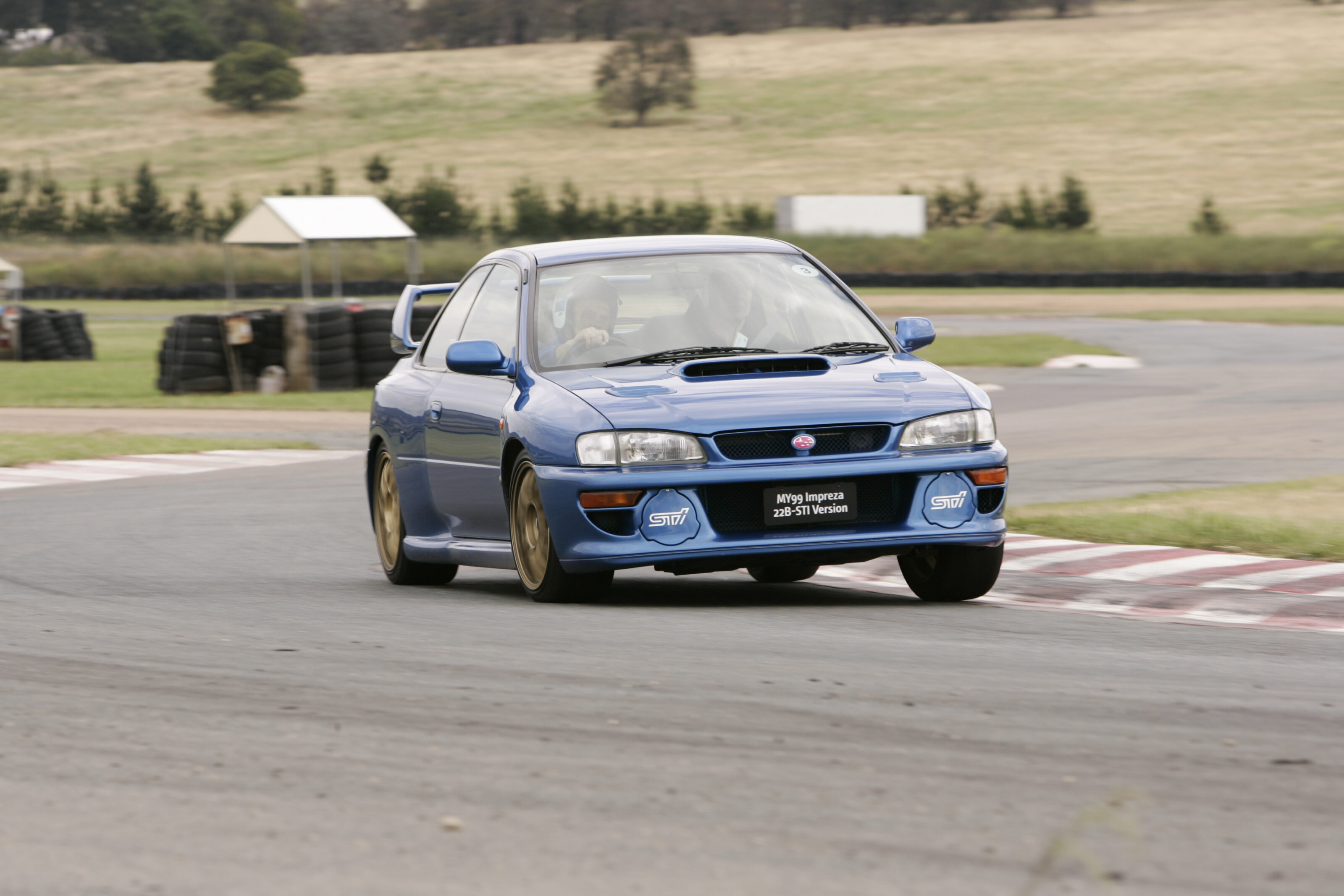
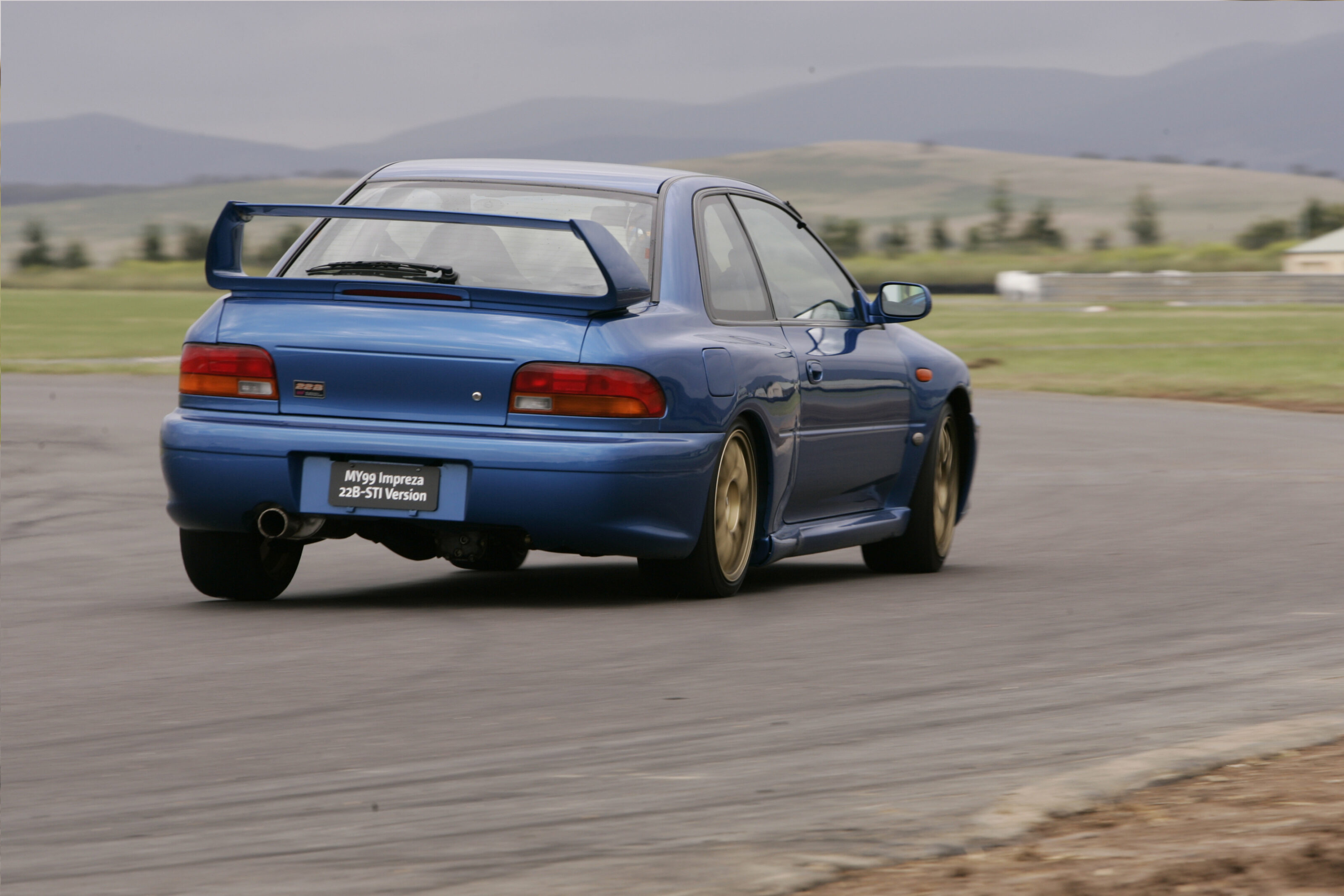
Just 400 WRX 22Bs were produced and it remains the most special, revered and sought-after STi ever. Cars number one and two went to Subaru’s WRC stars Colin McRae and Nicky Grist.
With ‘regular’ STis were selling for $60,000, it was a bold move when Subaru Australia put its hand up for four 22Bs, that would sell for around $110,000 each – unregistered!
1
They were quickly snapped up by collectors though, and Subaru soon-after attained rego approval – including this one it kept for itself.
The 22B has the wide body from the WRC car and sits on 17×8.5-inch BBS alloys. The guards bulge and pump out at all angles. There’s a heap of special extras: metal STi badges, unique front bumper, adjustable rear wing and the two WRC-style nostrils in the super-light alloy bonnet, plus an adjustable centre diff, intercooler spray and the 180km/h speedo. There’s even a matt finish on the dash to minimise reflections in the windscreen.
The throbbing boxer engine gets angry around 3500rpm where the extra torque gives it fantastic mid-range surge. And it has a top-end hit out to 8200rpm that only the 2006 STi can equal, hitting 180km/h down Wakefield’s straight when the Aussie-spec STis managed 170km/h.
1
Handling is on another level. Where the 2006 STi uses its tyres to develop a lot of its grip, the 22B uses its 20mm/10mm wider front and rear track and 30mm wider tyres to sit flatter in turns and better ride the kerbs. It turns in better too, the adjustable diff a welcome change after two stints in the Aussie-spec STis.
Flat, fat, fast and rare, the spec sheet says 206kW but the reality is the 22B closer to 220-230kW. Senior sums up the 22B’s exclusivity and significance: “I think in 30 years it’ll be worth $1million.”
MY00 Impreza WRX
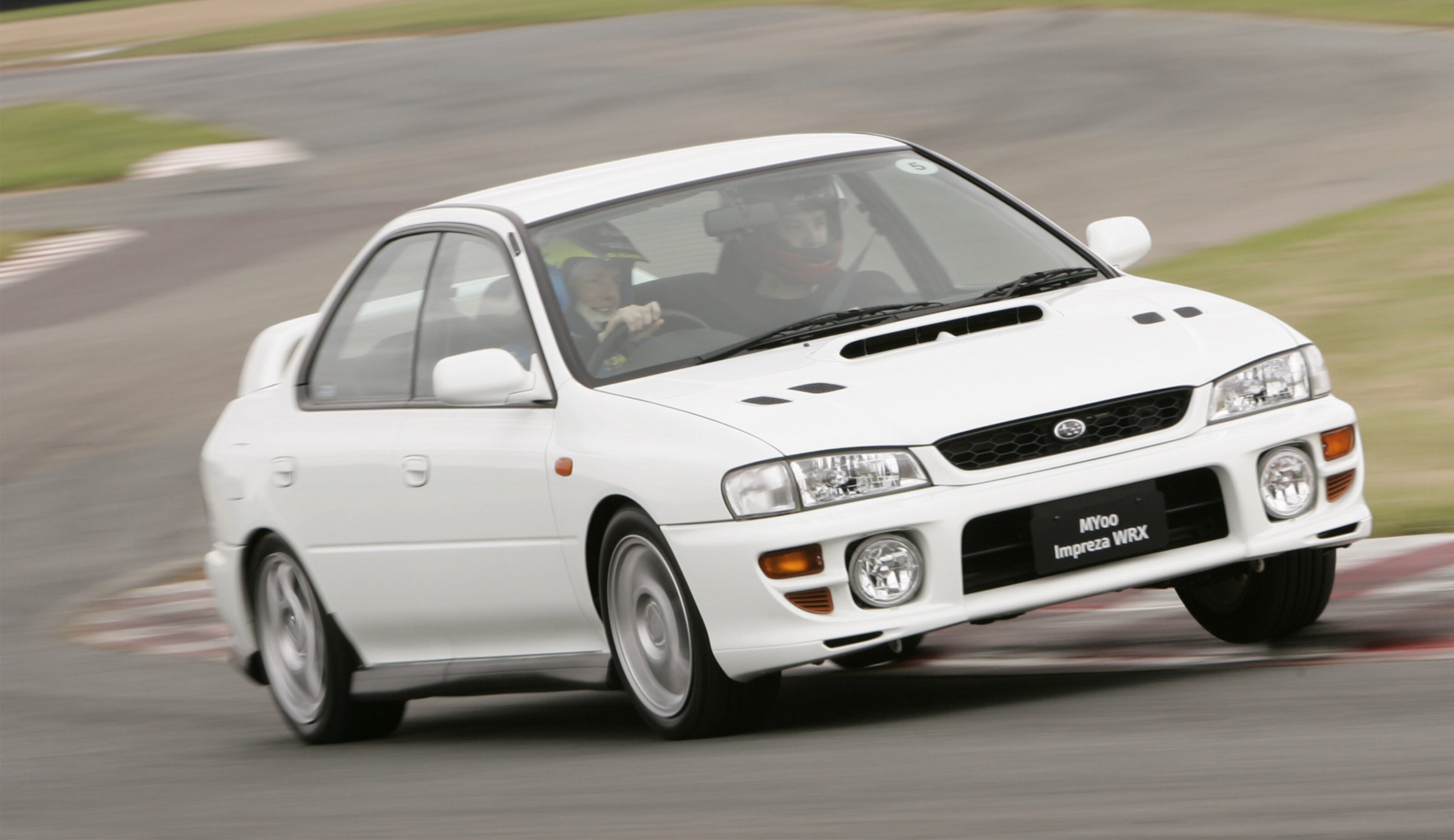
As the only standard WRX here, the MY00 represents the last of the original GC8 body style. With 160kW, it doesn’t punch as hard as the STi, but its throttle response is immediately more noticeable with a better spread of power and torque.
1
Controls are lighter: steering, clutch and gearshift, making it easy to drive fast. Still, on 16-inch RE010s, it turns-in nicely and handles well, though it rolls more though the corners. But it’s easy to see how these cars were such good value.
Impreza WRX WRP10
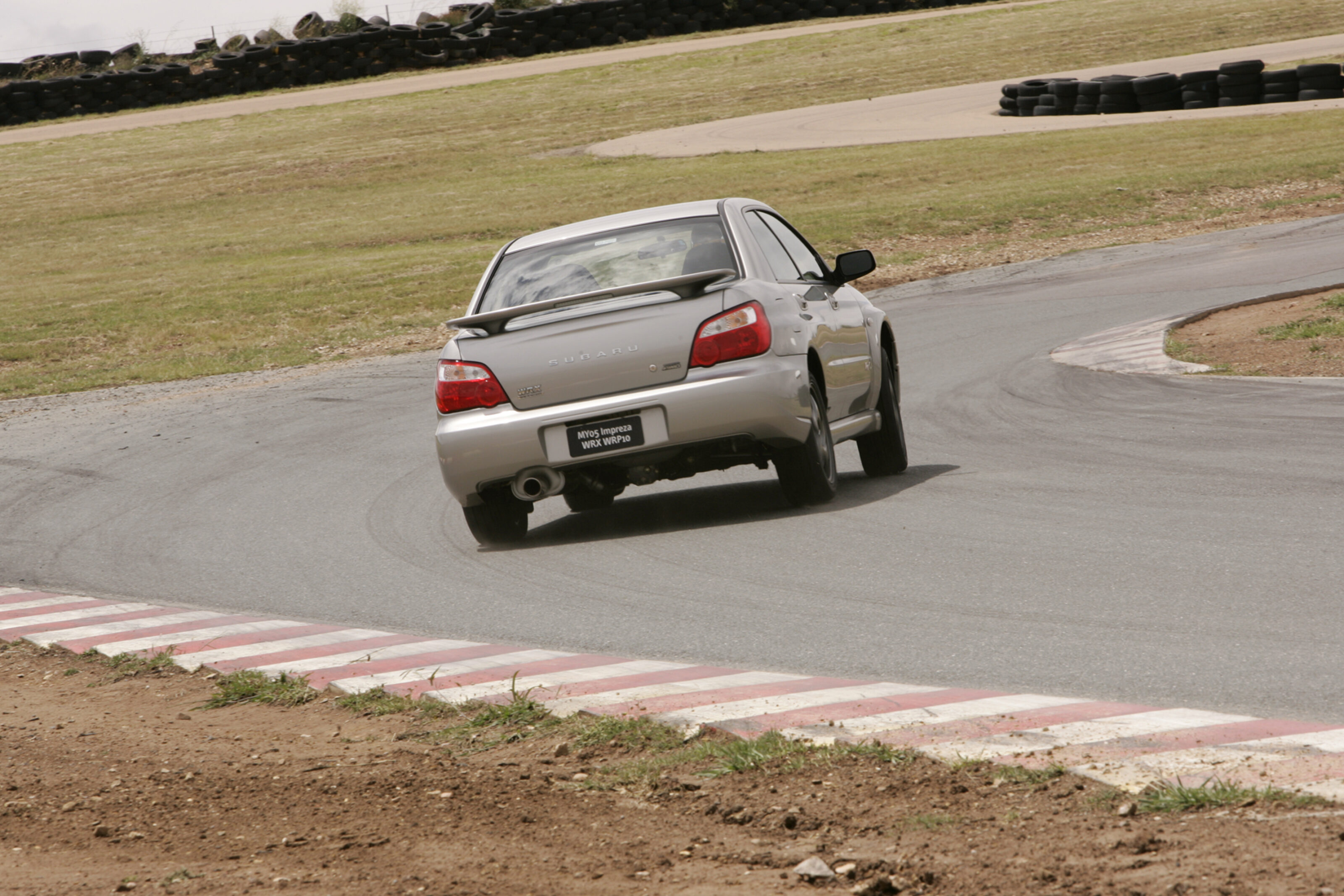
Filling a gap between WRX and STi, WRP10 represented Subaru Australia’s foray into second-stage manufacturing.
1
The WRP10 was tweaked in power, handling and equipment. “We saw it as a stepping stone between the two” says Senior. Almost exactly half-way in price between them, Senior says this was just coincidence, but the reality is it’s closer to WRX than STi. The claim is an extra 7kW but it’s barely noticable apart from a slight exhaust note change from an STi muffler.
Lowered springs maintain the WRX’s soft ride but it rolls just as much. But the biggest let-down are the tyres, the Pirellis just not having the grip or balance of the standard Bridgestones. “We learnt a lot from the WRP10,” adds Senior, “and we put that knowledge into the STi Liberty.”
1
2006 WRX/STi
The MY06 WRX and STi prove how far WRX has come. The WRX’s engine has outgrown the legendary 22B, and compared to the previous WRXs, it has a stiffer chassis, better spread of power, better brakes and suspension. In fact the 2006 WRX has the same torque as the ’97 STi.
The STi is, in performance terms, the best. Though it has the same 206kW as the 22B, it has 30Nm more torque. Its Bridgestone Potenza RE070 semi-slicks give it an advantage and it’s easily the fastest car here.
1
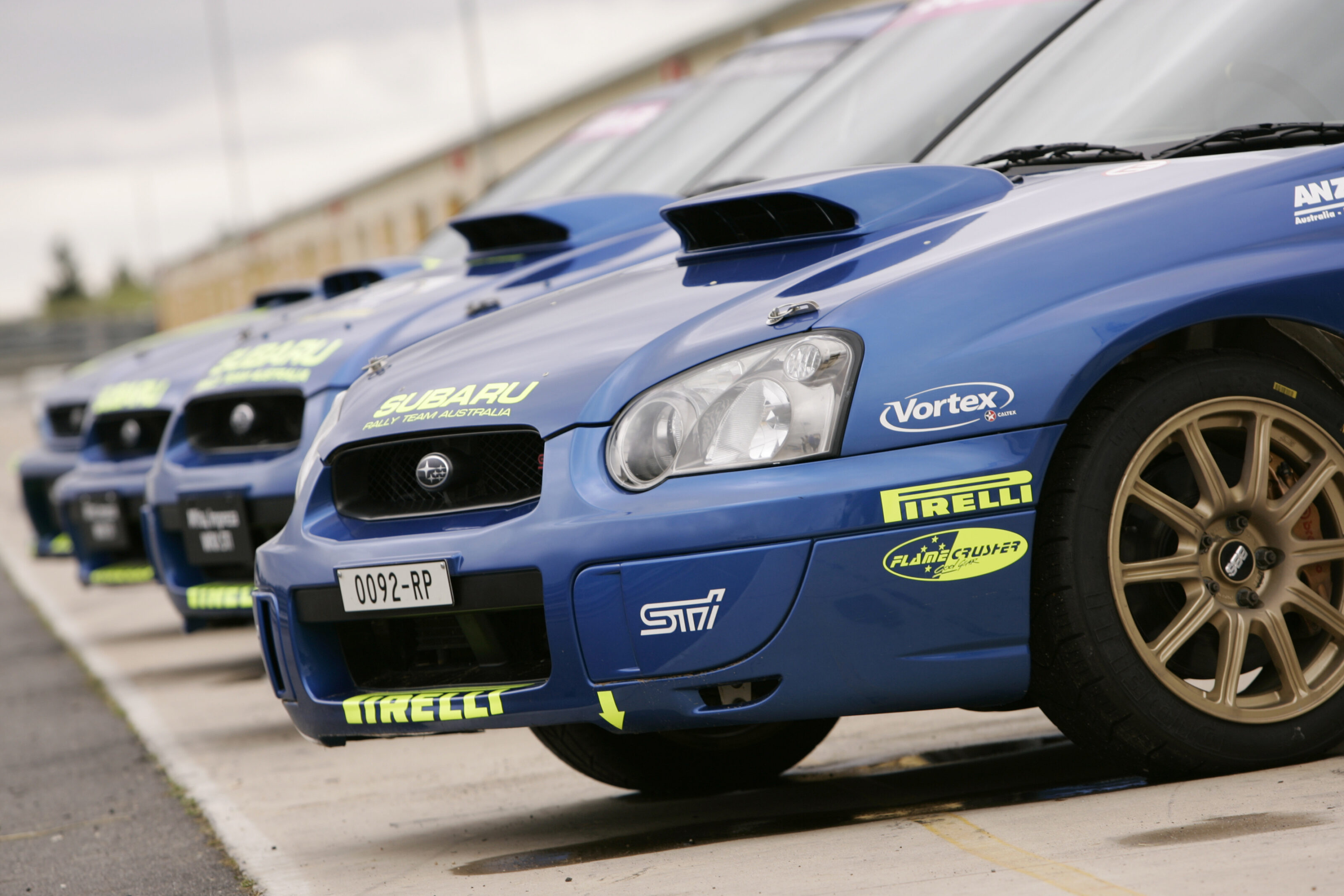
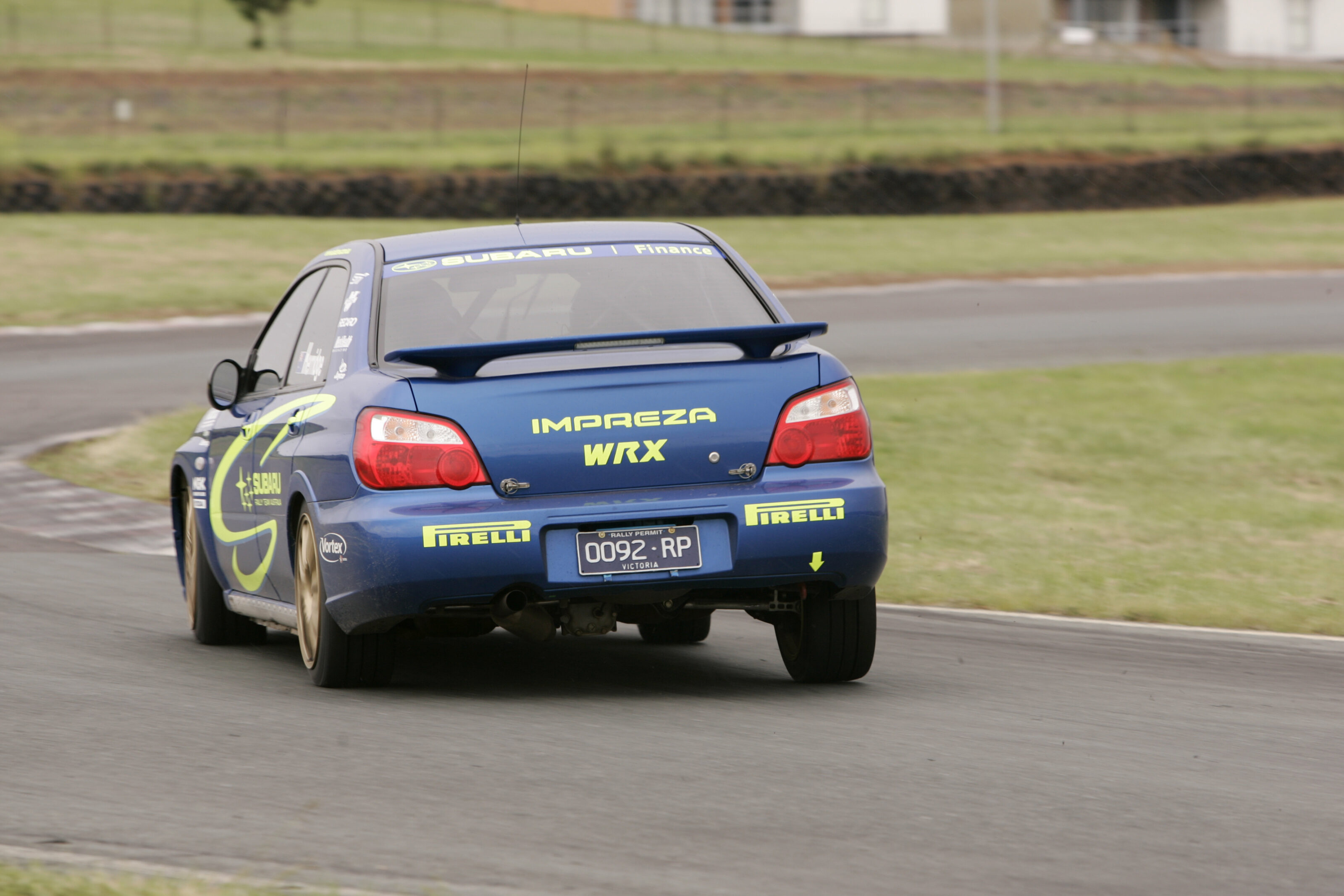
MY05 WRX STi Group N
“Just flat-shift up the gearbox,” says Dean Herridge, as we jump into his 2005 Group N Rally Australia car.
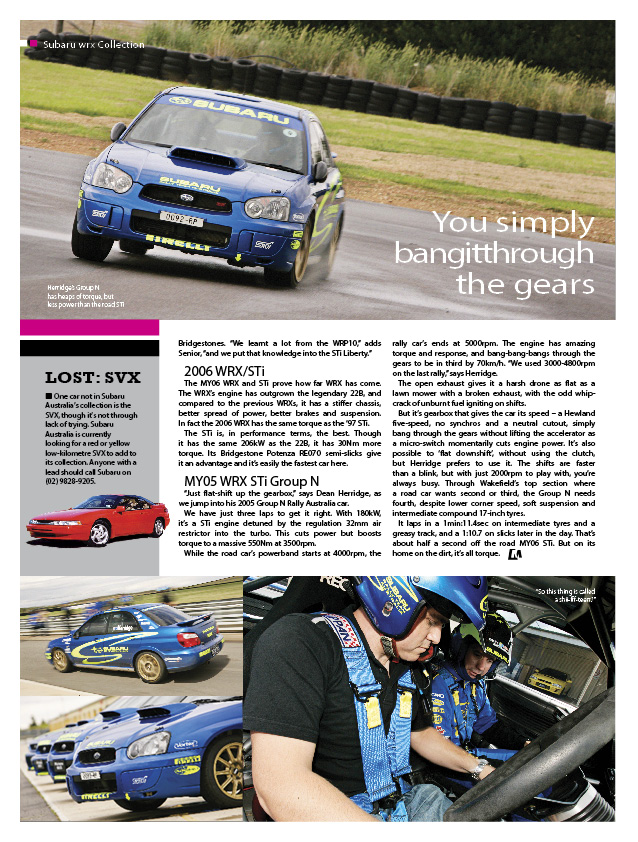
We have just three laps to get it right. With 180kW, it’s a STi engine detuned by the regulation 32mm air restrictor into the turbo. This cuts power but boosts torque to a massive 550Nm at 3500rpm.
1
While the road car’s powerband starts at 4000rpm, the rally car’s ends at 5000rpm. The engine has amazing torque and response, and bang-bang-bangs through the gears to be in third by 70km/h. “We used 3000-4800rpm on the last rally,” says Herridge.
The open exhaust gives it a harsh drone as flat as a lawn mower with a broken exhaust, with the odd whip-crack of unburnt fuel igniting on shifts.
But it’s the gearbox that gives the car its speed – a Hewland five-speed, no synchros and a neutral cutout, simply bang through the gears without lifting the accelerator as a micro-switch momentarily cuts engine power. It’s also possible to ‘flat downshift’, without using the clutch, but Herridge prefers to use it.
The shifts are faster than a blink, but with just 2000rpm to play with, you’re always busy. Through Wakefield’s top section where a road car wants second or third, the Group N needs fourth, despite lower corner speed, soft suspension and intermediate compound 17-inch tyres.
1
It laps in a 1min:11.4sec on intermediate tyres and a greasy track, and a 1:10.7 on slicks later in the day. That’s about half a second off the road MY06 STi. But on its home on the dirt, it’s all torque.
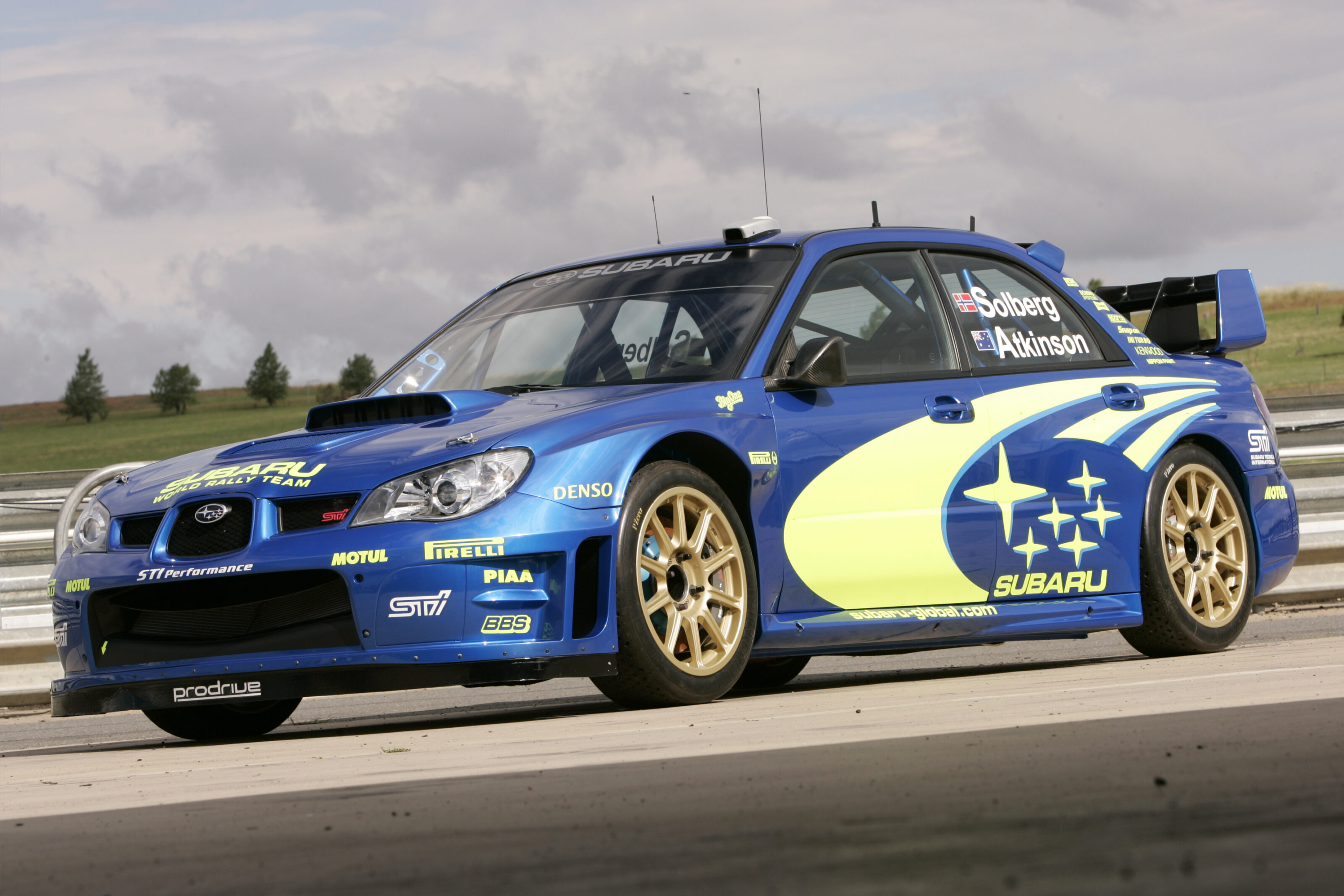
Impreza WRX 2006 Prototype
Sadly we didn’t get to drive the 2006 WRC car, but after climbing in and finding the brake pedal bolted in and solid as a lump of concrete, we soon discovered this was a non-running show car replica. A pretty damn authentic one though, with the underbonnet plumbing and much of the genuine interior’s switchgear – though the stick-on dashboard display is a bit of a give-away.
On ‘permanent loan’ from STi Japan, the car is actually a 2005 display car fitted with the 2006 updates including the bonnet that uses the front vent to extract air from the intercooler. The conventional bonnet scoop is redundant. Look for the car in the hands of Petter Solberg and Aussie Chris Atkinson in the 2006 WRC that started in Monte Carlo in January.
1
February 2023: Wheels magazine has always had a passionate audience, with a thriving letters section. Here’s the latest from our readers. And while we’re talking about the mag, have you subscribed?
I read the letter from Stuart Kennedy – ‘World’s Worst’ (Wheels, Dec ’22) – claiming that a drive from Melbourne to Sydney convinced him that Australians were the world’s worst drivers.
Sorry, matey, but I beg to differ. You try New Zealand roads, but register as an organ donor first. This is the land of the long white shroud, and we measure trips in killer metres. Understandably, an appalling road toll speaks for itself.
I’m a New Zealander, but lived 50 years in Melbourne. I motored up and down the Hume Highway many times. But here I am, back home, amid crazed road warriors. I think Mad Max and Mad Maxine moved here to breed.
To obey the speed limit here is to attract the world’s worst tailgaters. They’re like blowflies on a bullock’s backside. Any speed limit will be ignored, overtaking is just a sport for thrill seekers. Wet roads? No problem. Braking bad? Great name for a road safety campaign, but water off a Kiwi’s back.
Dean Donoghue, Papamoa Beach, NZ
Editor Andy
Interesting points, Dean. On the plus side, the safety benefits of hearing a Kiwi driver’s bridge-ported triple rotor from a kilometre out has to be worth something, right?
1
Dusted in NZ
Re the feature on Renault-badged Dacias for Australia (Wheels, Dec ’22). It would have been great if writer John Carey had mentioned Renault’s seemingly aborted attempt to sell the Duster here in NZ.
It’s gone from the company’s website but they pushed it in 2022 to a confused public who couldn’t see why something being promoted as premium was in fact budget.
I can’t help but feel it would have been better as a Dacia with a good marketing campaign promoting its simplicity and affordability. Renault badging and the marketing message just confused people.
Tim Monck-Mason, email
Editor Andy
The Renault Duster SUV still takes a lot of getting used to.
1
No stopping ICE
Electric vehicles are our future, apparently, and saving our planet is a pretty big incentive to go green.
From a motoring enthusiast’s perspective, however, I’ve been racking my brain trying to think of the positives to this ‘tectonic shift’ in our motoring culture. While fuel companies aren’t on my Christmas card list, a visit to a petrol station only takes five minutes or so compared with an hour or so to DC charge an EV.
So, what else is there? Finally, it’s come to me, at least in terms of a long road trip. An EV forces me to slow down and enjoy the journey instead of expecting to arrive at my destination on time. I currently do Brisbane to Sydney in one day with two drivers and one midway fuel stop. Not so in an EV that would require multiple, slow, stops.
Now, where will I lay my head for the night and find those beautiful roses to stop and smell along the way? “Sorry boss, I’ve gone EV, and here’s the bill for the overnight accommodation. But I do have a lovely bunch of roses for you.”
Perry Hembury, Upper Mt Gravatt, Qld
1
Lighten up
I’m reading the December issue, and totally agree with Editor Andy’s view in his column – nearly all cars are way too heavy now.
I drive a Mazda MX-5 ND, and previously owned a Lotus Elise SC – both great examples of lightweight cars. I blame too much technology, and manufacturers’ belief that buyers want all the latest gadgets and equipment; the Dacia news story in the same issue tells me that many others agree with me.
NCAP and ANCAP’s ever increasing ‘safety’ standards are also to blame; I’m sure that as Dacia’s Denis Le Vot says, many owners just turn off the excessive number of ‘safety’ features, if they can!
Ash Price, Mt Pleasant, WA
Editor Andy
It’s complex, but I believe a shift to electrification will eventually see a refocus on weight loss strategies.
1
Keying the car
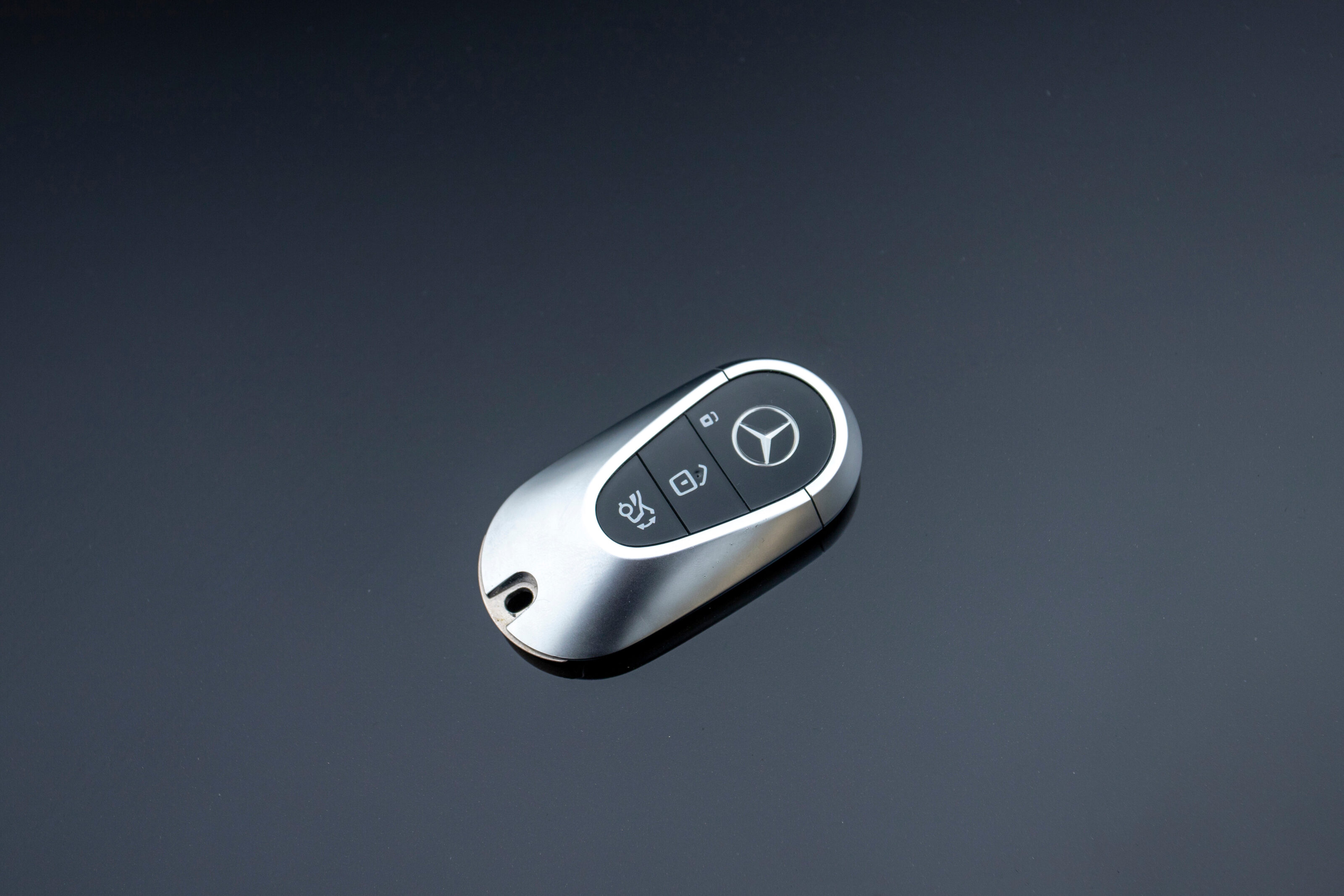
We recently lost a proximity car key. Being a Mercedes, I did not expect the replacement to be cheap, but was still ill-prepared for the $1450-$1650 quoted by three different M-B dealers.
All claimed the exorbitant price was no different to other premium brands. I decided to explore further, finding they were at least partly right, with Audi wanting a whopping $1800 for an A4’s key. But then arch rival BMW quoted just half that for a recent model of theirs.
A few other quotes showed that M-B and Audi are indeed in another league when it comes to key replacement cost. Ford, for instance, was a stand-out delight quoting just $450 for a 2022 Everest.
Since Mercedes ensured that non-OEM alternatives are impossible, I guess they are free to make hay while their monopoly shines. No thanks M-B (and Audi), my next car will probably be a Ford or BMW.
Elardus Mare, Manning, Perth
Editor Andy
There’s little justification for a car key costing more than an iPhone.
1
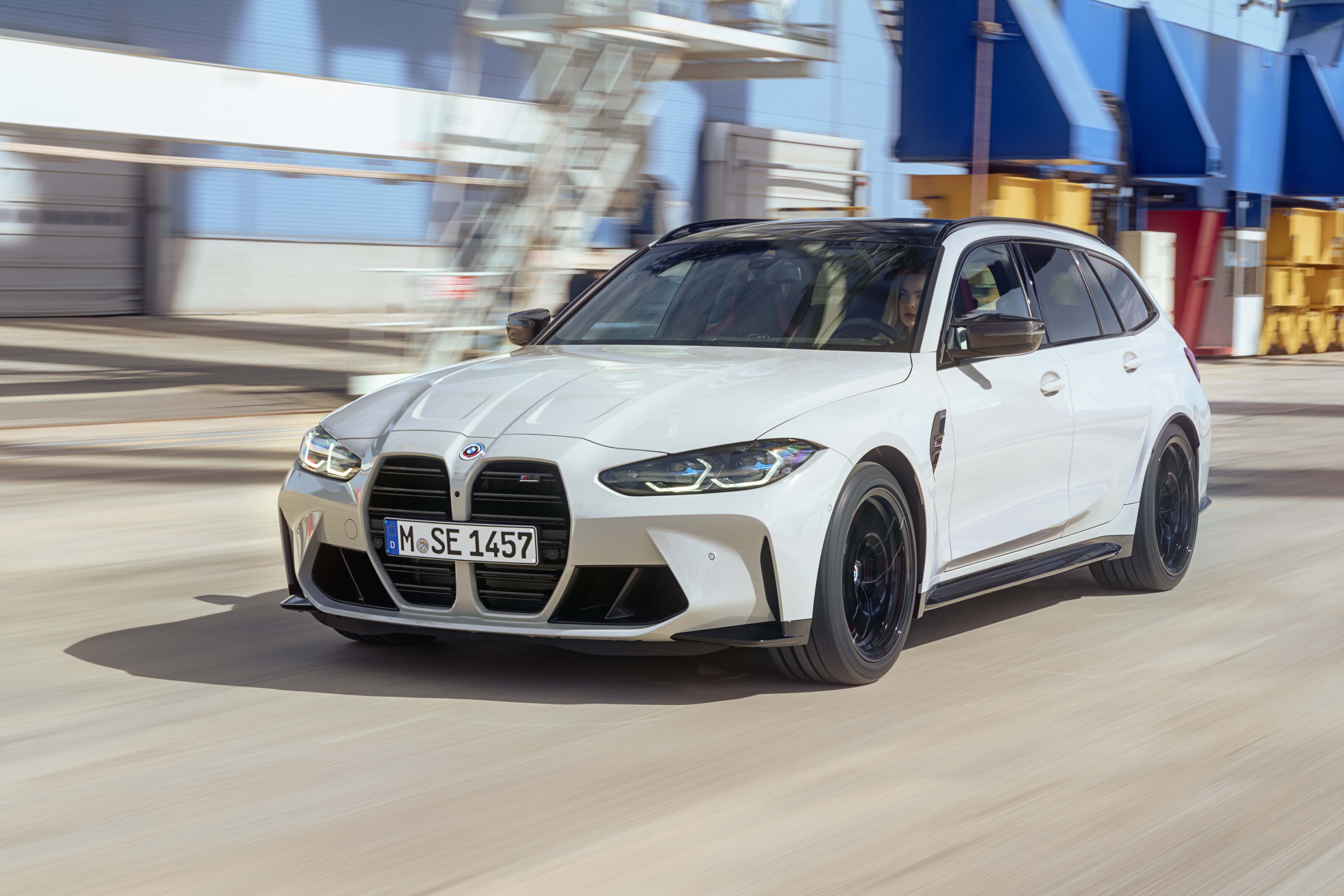
Our question to you: Will the BMW M3 Touring prove a sales success here?
Pro
We’ve waited so long for this car that there has to be some pent-up demand. Audi has never had any great issue shifting RS4 Avants and the BMW looks a way better car. Can’t think of anything cooler.
Alex Scott, Vic
Con
BMW Australia never even bothered importing the M340i xDrive wagon, so I think they know that the market for this one is tiny. I reckon bringing the M3 Touring here is just for halo effect.
Bryan Martin, SA
1
Porsche 911 Dakar operation manual, chapter one.
Open the Porsche 911 file inside your head. Hit the reset button and delete everything you know about the product. Scroll down to the Dakar icon. Hit it and brace yourself for the unexpected.
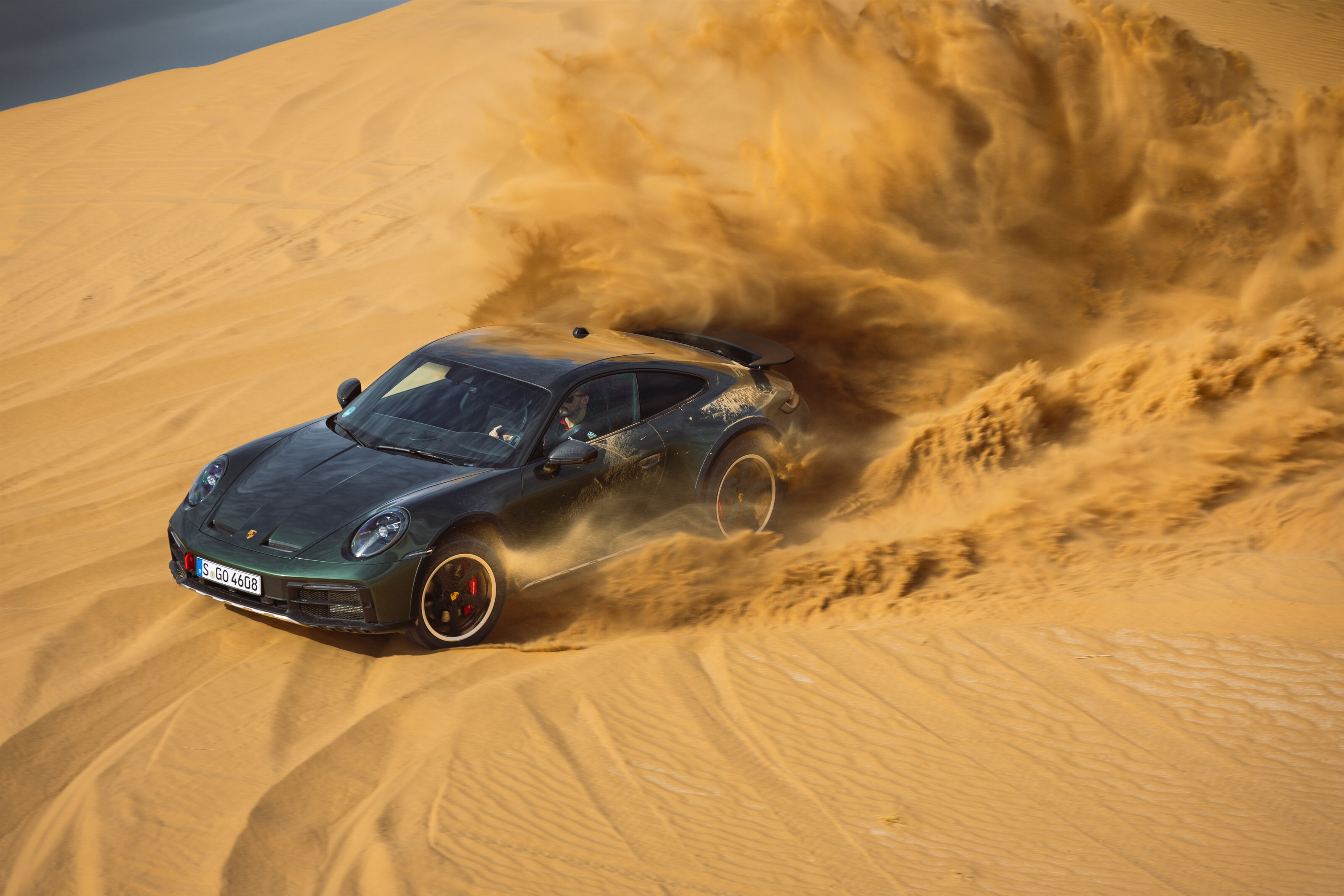
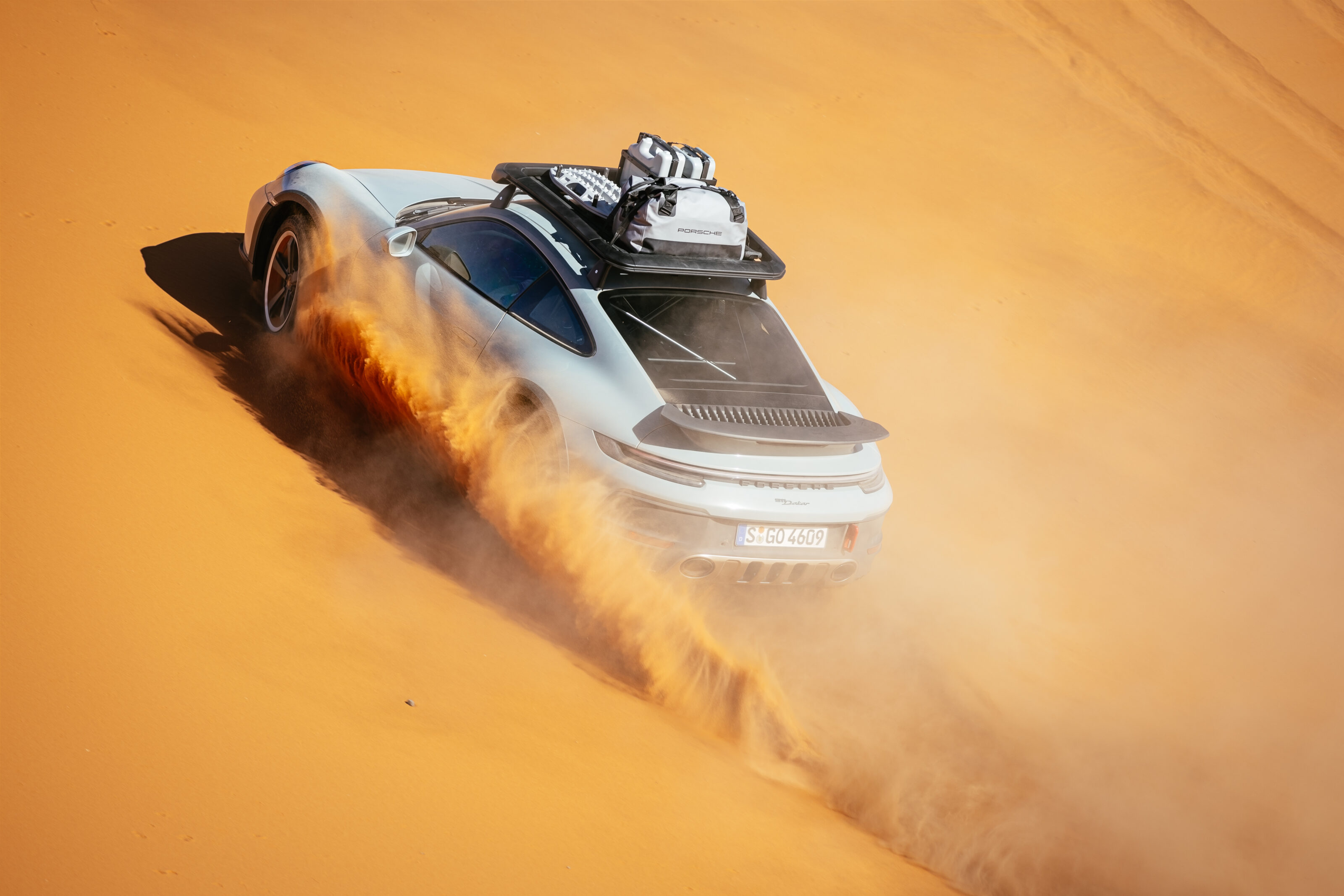
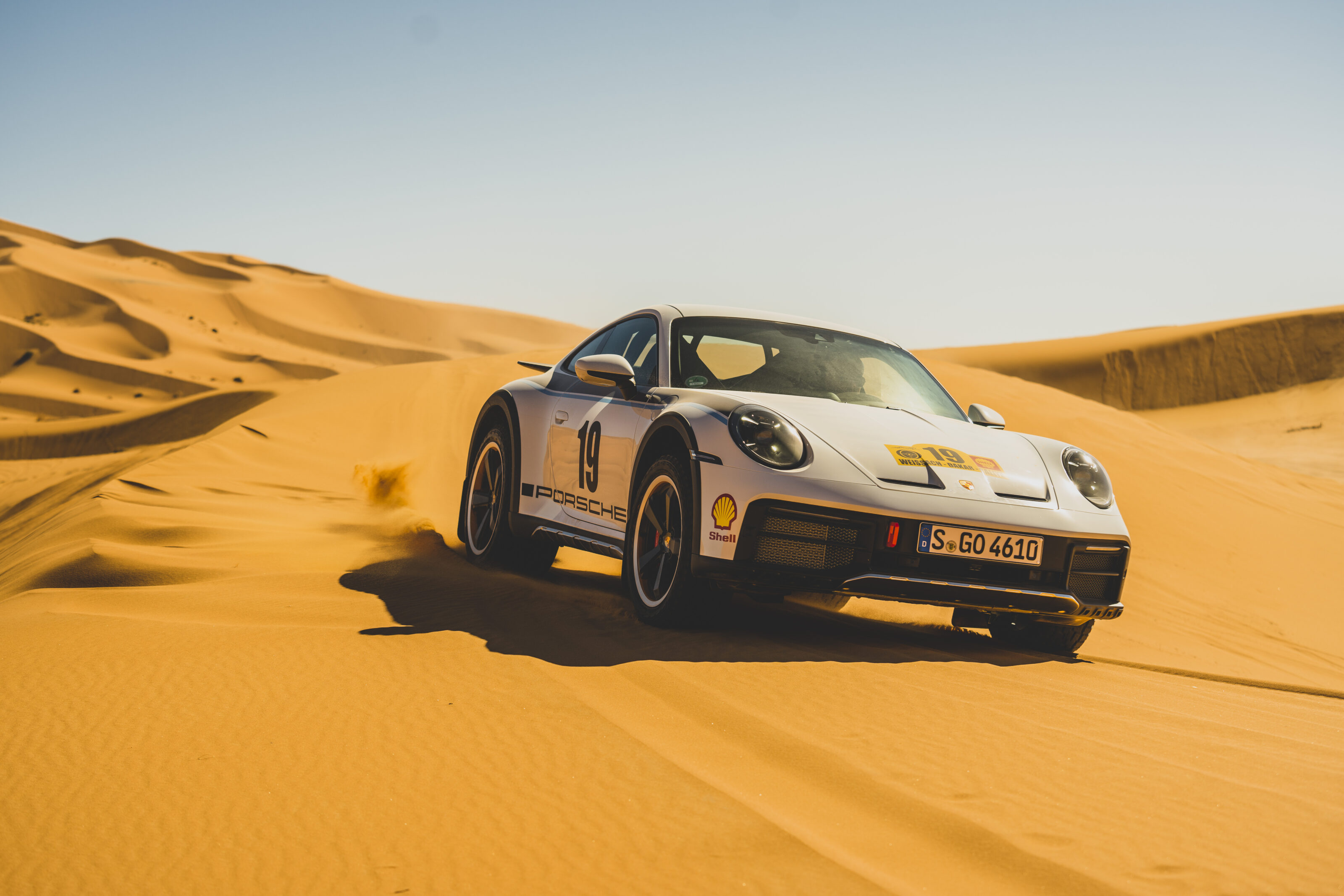
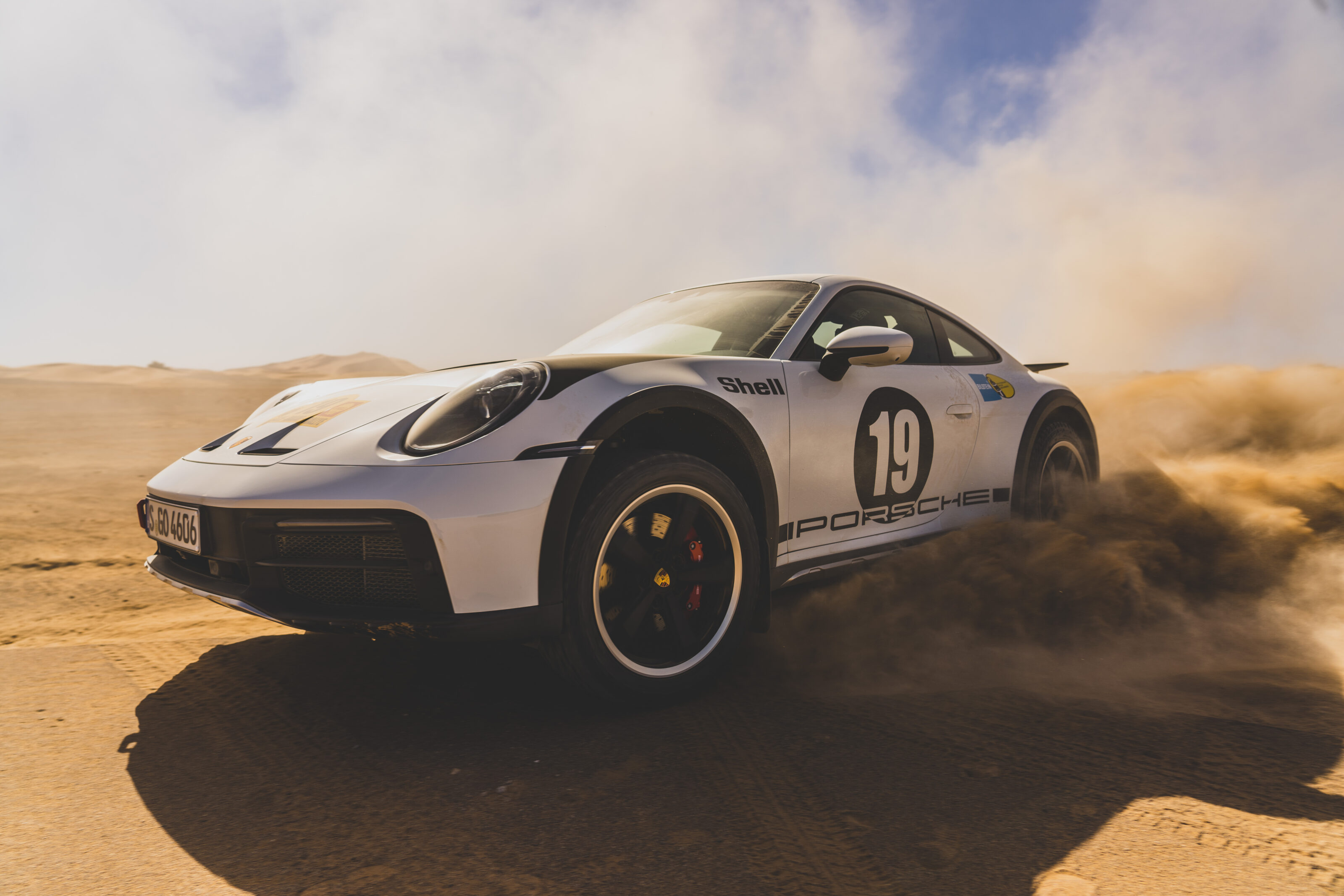
Your mind boggles in sync with the road that soon becomes a spine-shuddering trail. At the end of it beckons a prancing 180-degree dune which partly dissolves upon first impact. Next thing you notice, the car’s underside is peppered with virginal reddish rock-dotted soil.
The blink of an eye later, the sand turns into dust and engulfs the car like floating gauze. While the driver reaches for his X-ray glasses, the camera inside the head keeps registering new sightings like a solitary camel standing proud, a herd of grazing goats, and the silhouette of a stooped Bedouin.
1
Dominating the rest of the scenery is a vast mountain range worth a National Geographic cover, which merges in the distance with an equally epic wadi. Blurring the picture at random are fat clouds of beige powder that attack head-on, blast along the side windows and darken in fistfuls the rear-view mirrors.
All the while, the lead car is storming ahead no holds barred, airborne one moment and crash-landing the next.
Welcome to Morocco and two days of serious off-roading in Mother Nature’s own Dakar Rally lab, where Toyota, Audi, Prodrive, Ford, Century Racing and X-Raid Mini conducted their final shakedown tests for the 2022 event merely six weeks prior to the arrival of the big Porsche party.
1
It’s 8:30am and the temperature gauge still reads only 4ºC, but six hours later the sun will be pelting down again at an unfiltered 22ºC. It hasn’t rained for months in this remote corner of paradise, and the little water that did come down from the embarrassingly blue skies is nursed jealously in small private basins that form tiny oases in this huge sea of rolling sand.
“Switch to Rallye mode now,” is the first order that comes crackling through the intercom. “And watch out for what we call Titanic rocks – you may only see the tip of them, but they can be huge and scalpel-sharp.”
We drive in pairs: lead car followed by two 911s manned with two journos each who swap seats every hour or so. Passengering is notably less fun than hanging on the wheel. Why? Because legs, arms and torso are constantly preparing themselves for impromptu impacts which are either a lot worse than expected, or barely worth bothering.
1
The last thing you want to do in this unfathomable environment is slow down and grind to a halt. Walter Röhrl, two times World Rally champ and Porsche brand ambassador, duly got stuck on a crest. Daniel Abt, former Formula E racer and popular YouTuber, won the trip’s first fender bender award.
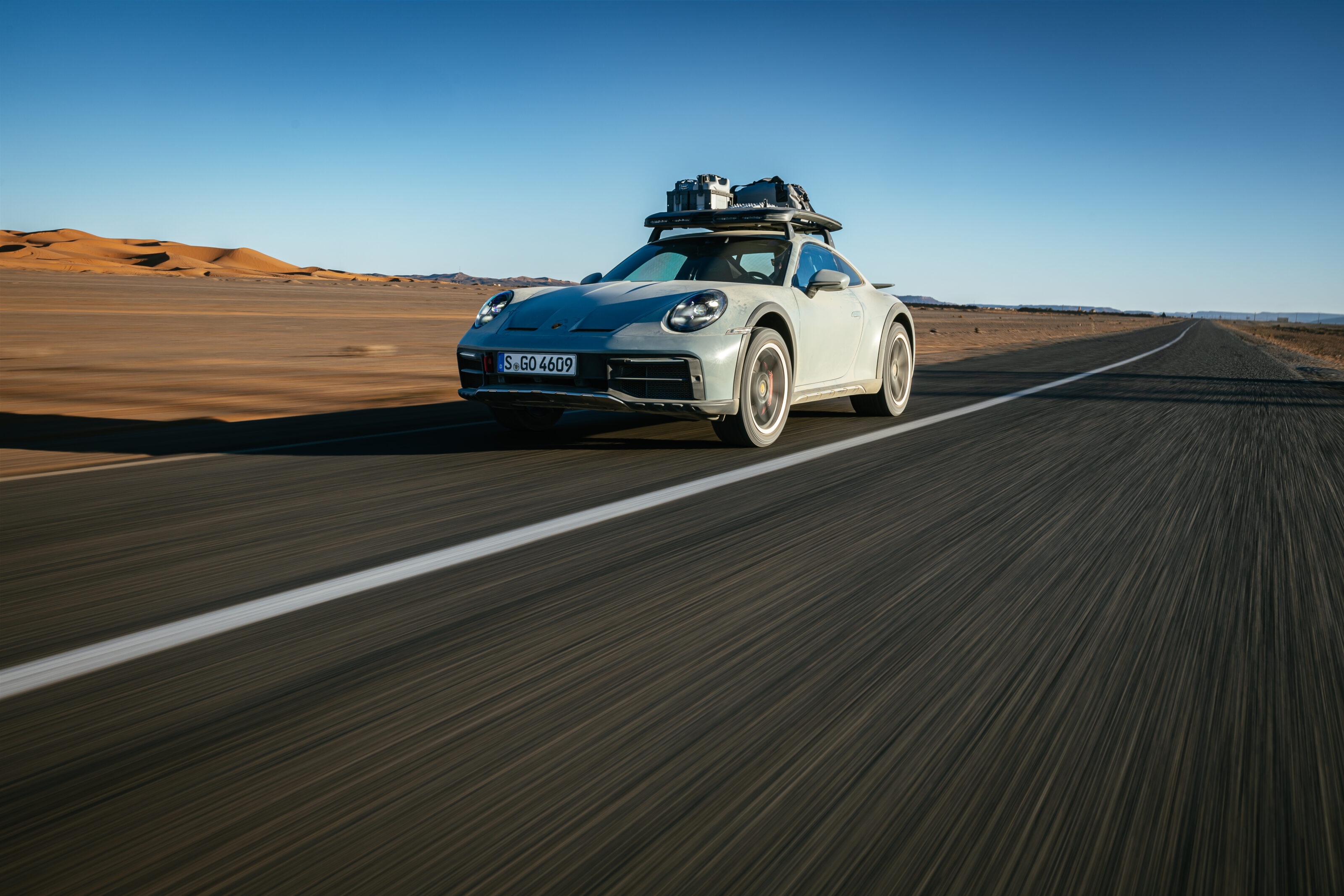
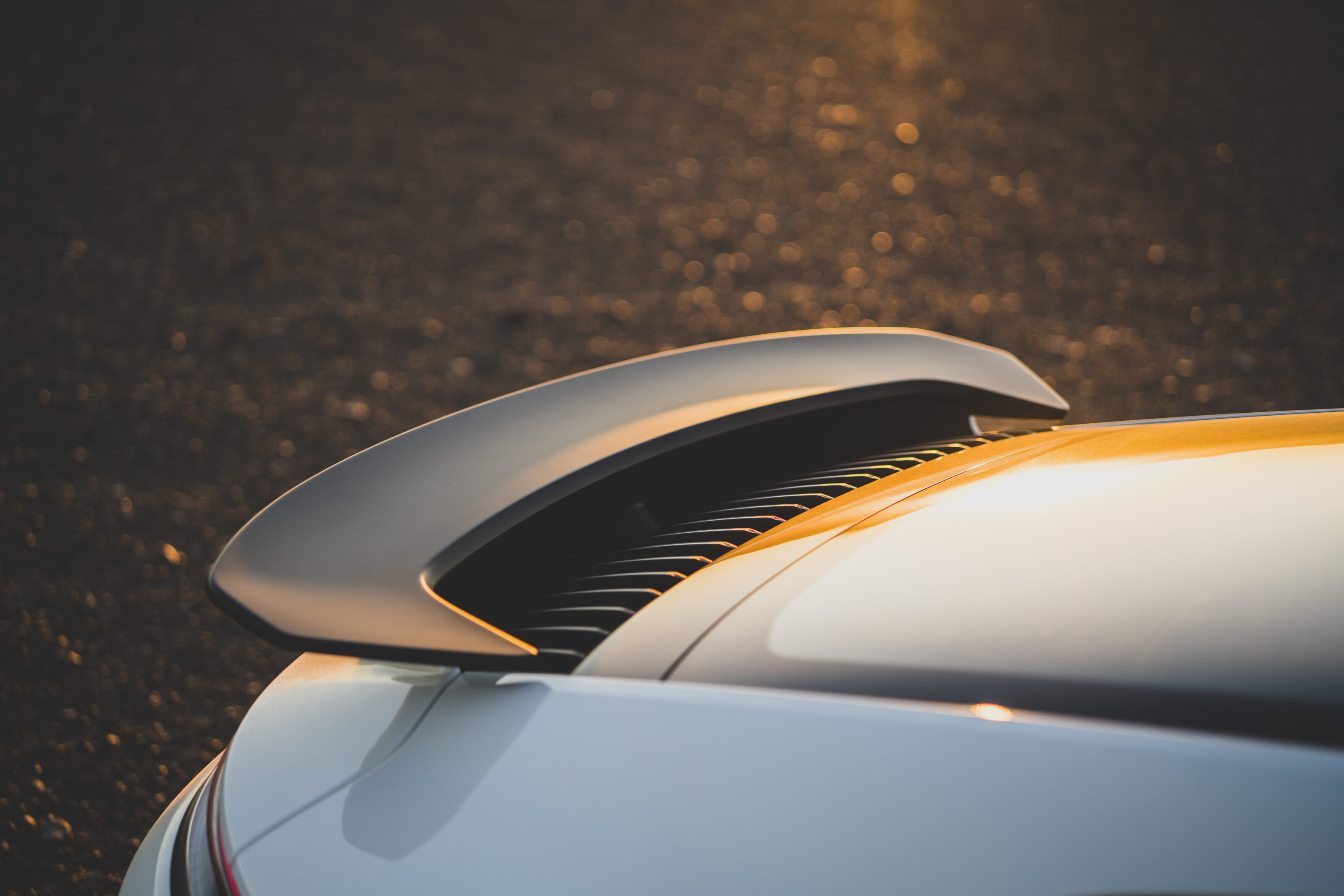
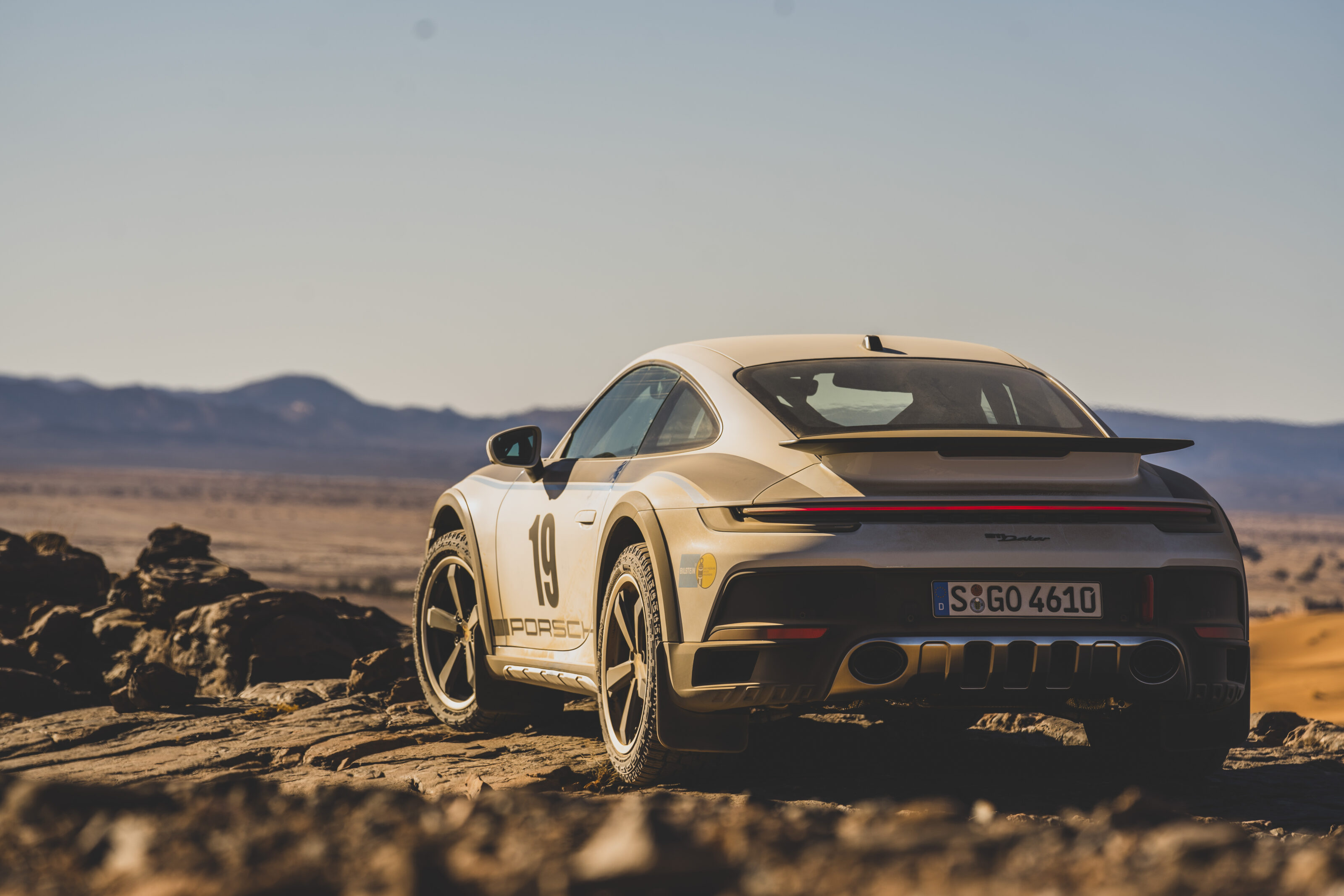
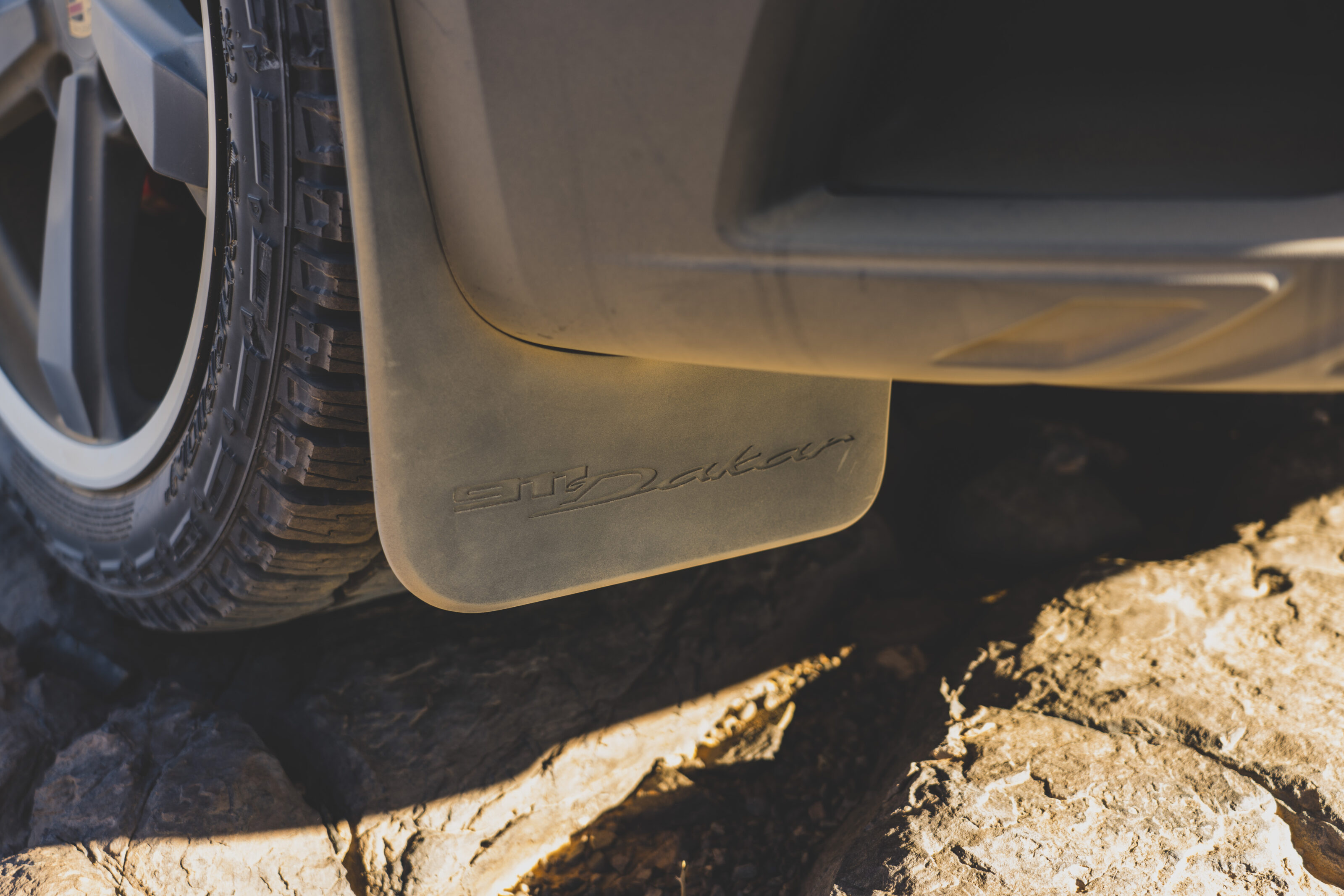
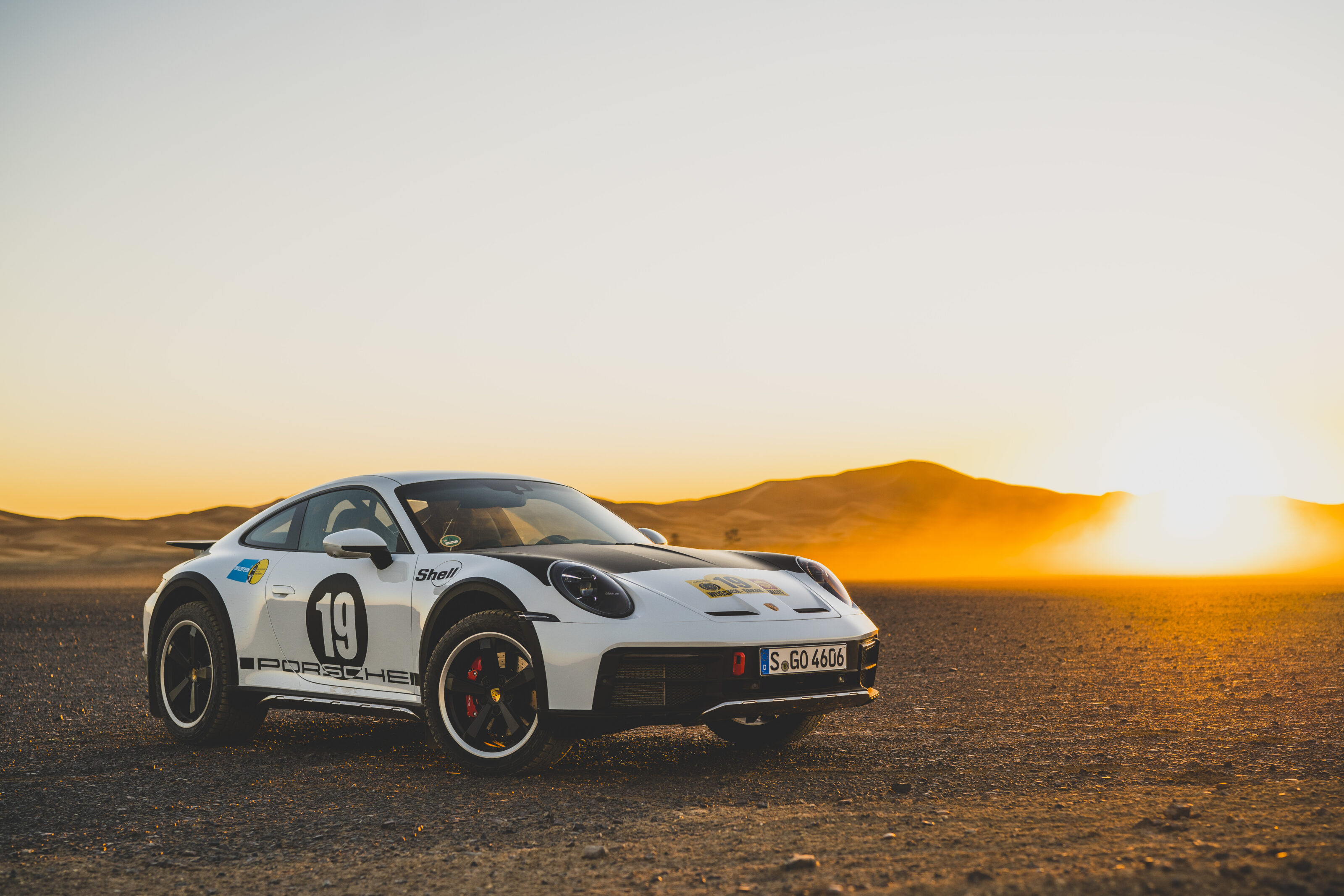
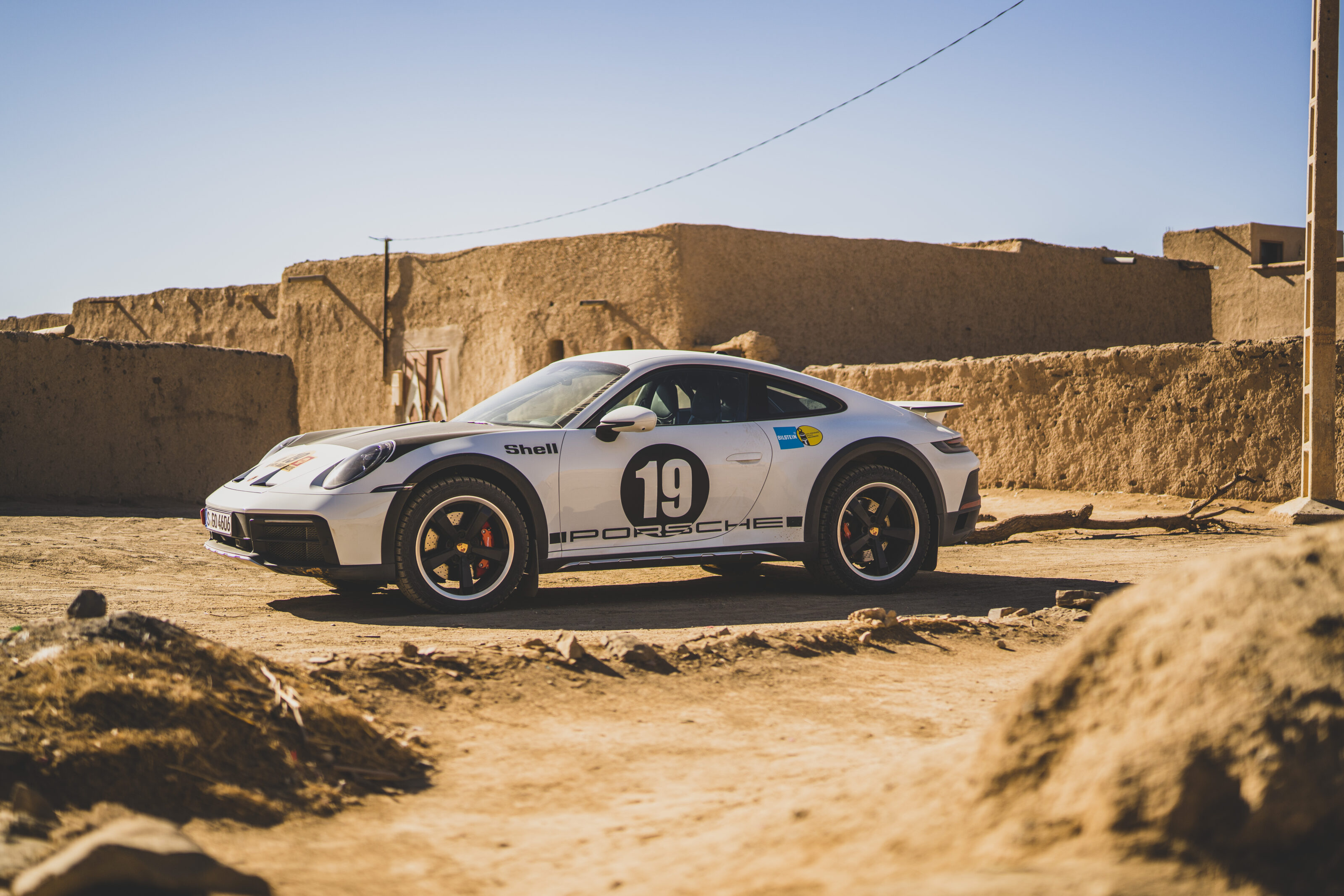
Although the Dakar is a proper 911, it looks, feels and performs differently. At 161mm, the baby whale tail model rides way (50mm) taller than a Carrera 2/4. In Off-Road mode the ground clearance increases even further to 191mm, which takes you – numerically at least – toward thoroughbred SUV territory.
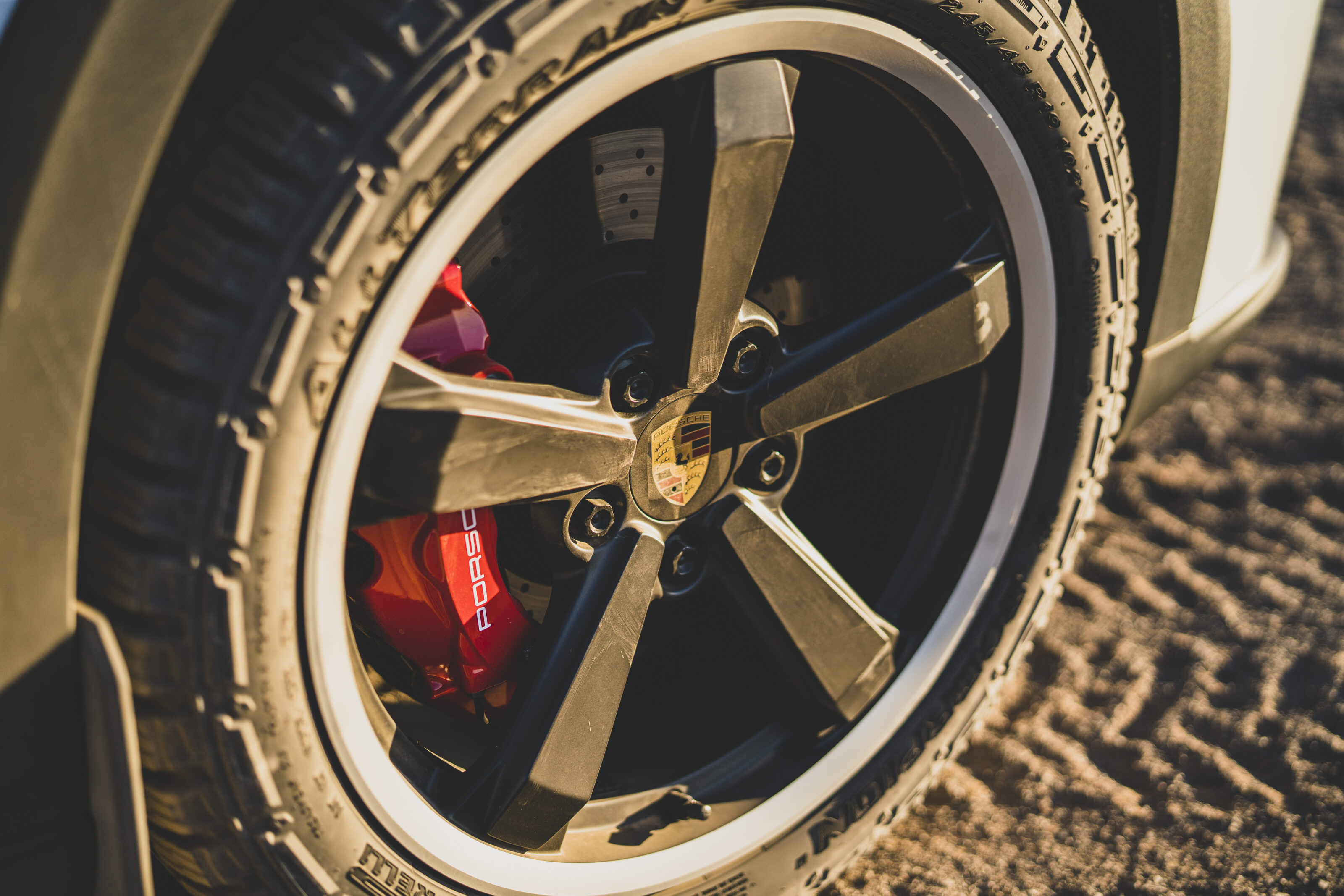
In combination with the comprehensive underbody protection, super-duty all-terrain tyres courtesy of Pirelli and a completely different set of dynamic algorithms compiled in the sand pit instead of on the race track, the stacked chassis renders this 911 almost invincible in the rough.
1
All you must do is go-go-go for it – keep up the momentum, don’t let the revs drop below 4000rpm, lock the transmission in manual to avoid optimistic upshifts, leave traction control in Sport or switch it off altogether.
Where dust, dirt and gravel morph into quicksand in the blink of an eye, you are going to need all 570Nm of torque.
It’s the tall bearded guy on the radio again. “Select Off-Road please for the next 20 minutes. Don’t follow the car in front of you religiously – on this relatively homogenous turf, fanning out can improve visibility and safety. And remember: no overtaking, no faster than 150km/h.”
After a brief blast down the arrow-straight dry lake stretch, the trek diverts from the marked route, and S-GO 4610 is duly back in hardworking order. There is notably more wheelspin required now to plough through with verve, the ruts are getting deeper, and what looks like a solid section could either be a vast knee-deep fake beach volleyball court or a large thinly veiled flagstone.
The lead car is fishtailing angrily on the optimistic approach to a rise, then quickly aborts the attempt before swerving back down to the wadi.
1
No experiments, please. All that matters now is to maintain the flow.
At the end of day one, the onboard computer signalled a consumption of 30L/100km at an average speed of 24km/h.
Quicker than goat and dromedary, but not nearly as frugal.
Allow me to interrupt this disc-juggling bouncy castle experience for an important message to all Porschephile collectors and investment-hungry millionaires. Sadly, the order books for the 911 Dakar are firmly closed, even though the production run was bumped up from 1984 units to 2500 at the last minute.
Trouble is, you can’t even use the saved $491,400 as down payment for the still rarer and pricier manual transmission 911 ST that is out later this year, since all 1963 items of the wingless GT3 RS have long been spoken for, too.
1
Do not despair. There is a good chance that the Dakar package will reappear on the facelifted 2024 model year Porsche 911.
Better still, the Dakar concept is also tipped to migrate in detuned form to the Panamera Sport Turismo and Taycan Cross Turismo.
Having passed the first off-road tests with flying colours, we are now eager to find out how the Dakar treatment changes the character of the 911 on weathered bitumen. Can leadfoots live with the 240km/h top speed imposed by the all-terrain tyres?
1
Alternatively, Porsche will fit standard P Zero or Sottozero rubber and you can go as fast as you like – except on gravel or rutted trails because the low-profile footwear is rather vulnerable. Another key question concerns the effect the extra ground clearance and the added kinematic compliance have on the car’s B- and C-road manners.
If our first impressions on the N10 and N13 freeway are anything to go by, the extra wheel and spring travel, the cushier calibration and the reduced sensitivity to wind-up and shock pay off on all surfaces. The same goes for the lift system being operational on all four wheels, not only the front axle, which also stalks over XXL speed bumps with aplomb.
Drive modes have been accordingly tweaked for the Dakar’s wider band of talents. Normal, Wet and Sport are in essence unchanged, but Sport Plus is replaced by Rallye geared for more dynamic leeway, wilder drift angles and extra wheelspin.
2
The Off-road mode automatically selects the tallest ride height, shifts more torque to the front wheels for better traction and locks the rear diff to further improve low-speed grip. Deactivating traction control in two steps (Sport and Off) frees even more momentum, which can help to dig the car out of deep sand or snow.
On top of all this, Rallye Launch Control warrants maximum take-off drama. Comments chief project engineer Thomas Krickelberg:
“Balanced active torque feed to all four wheels is essential because when it comes to the crunch in difficult terrain, forward thrust has priority over stability.”
1
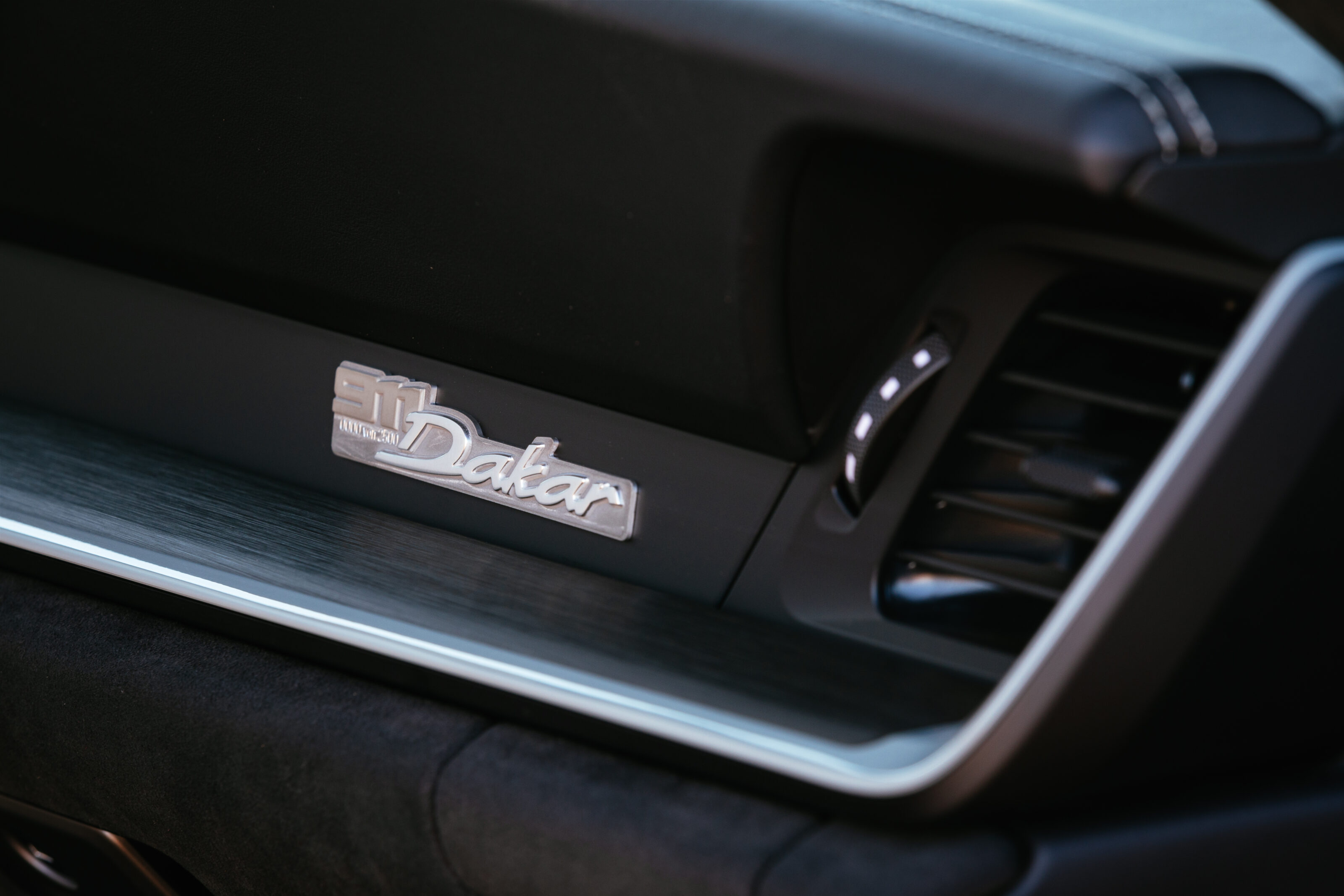
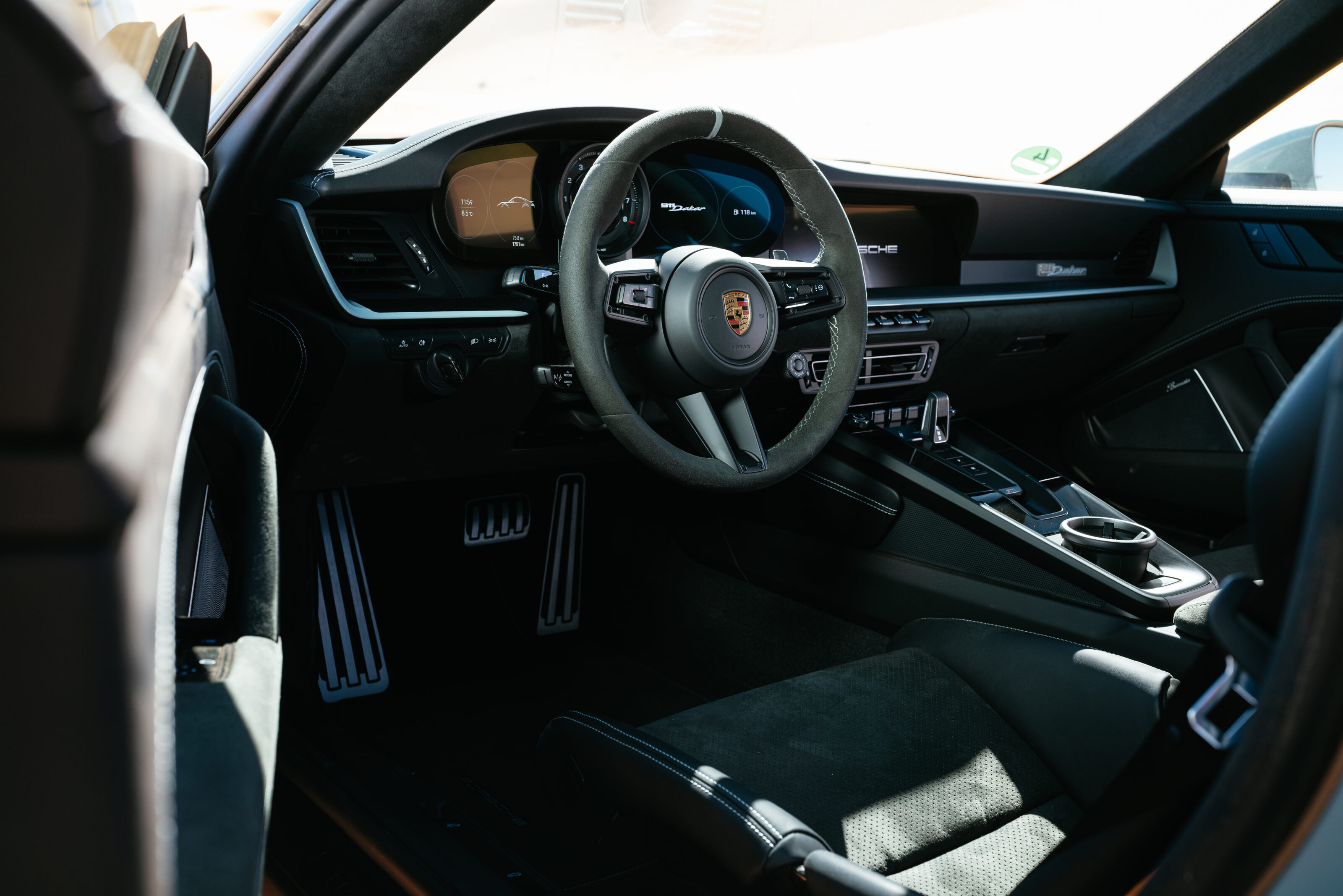
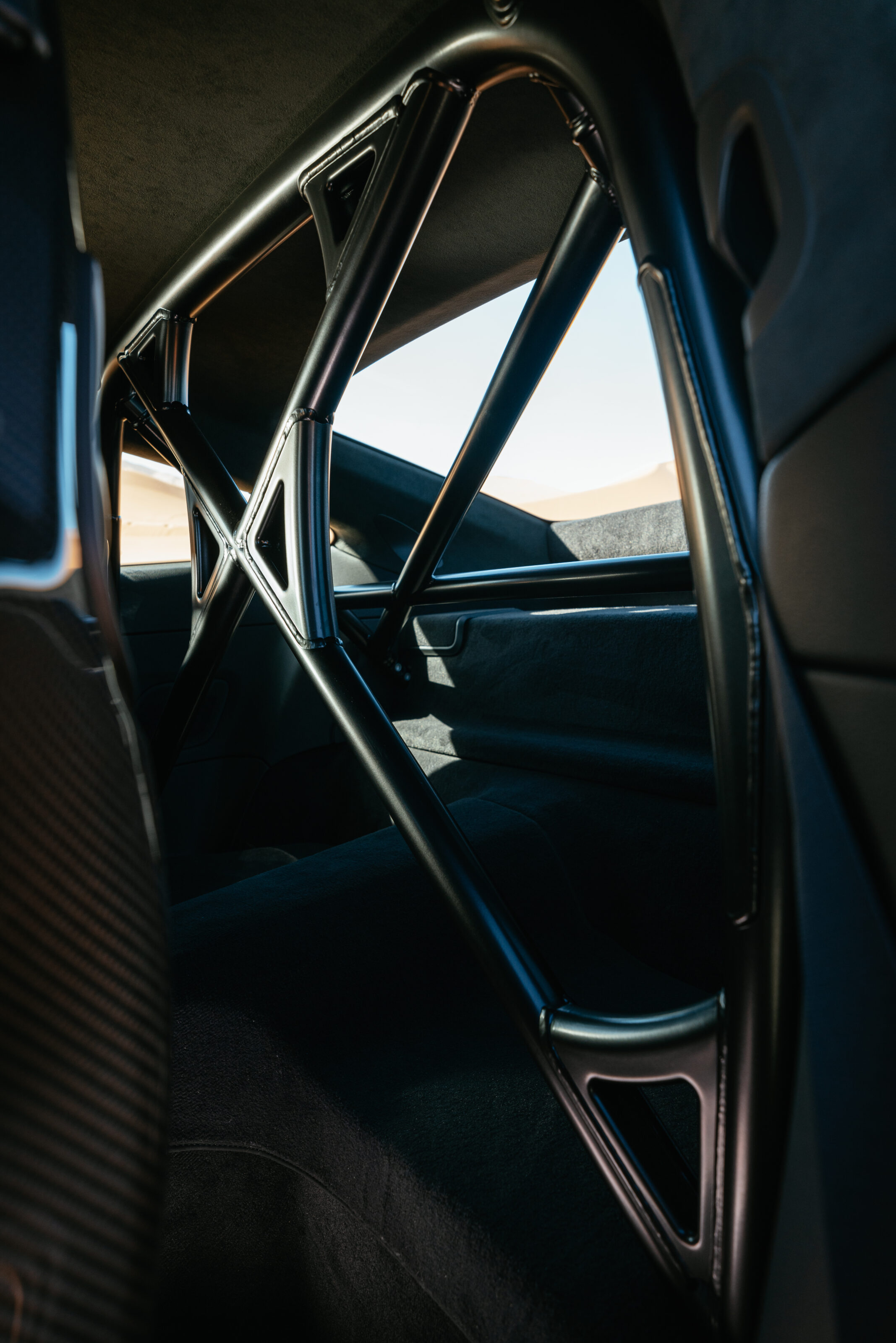
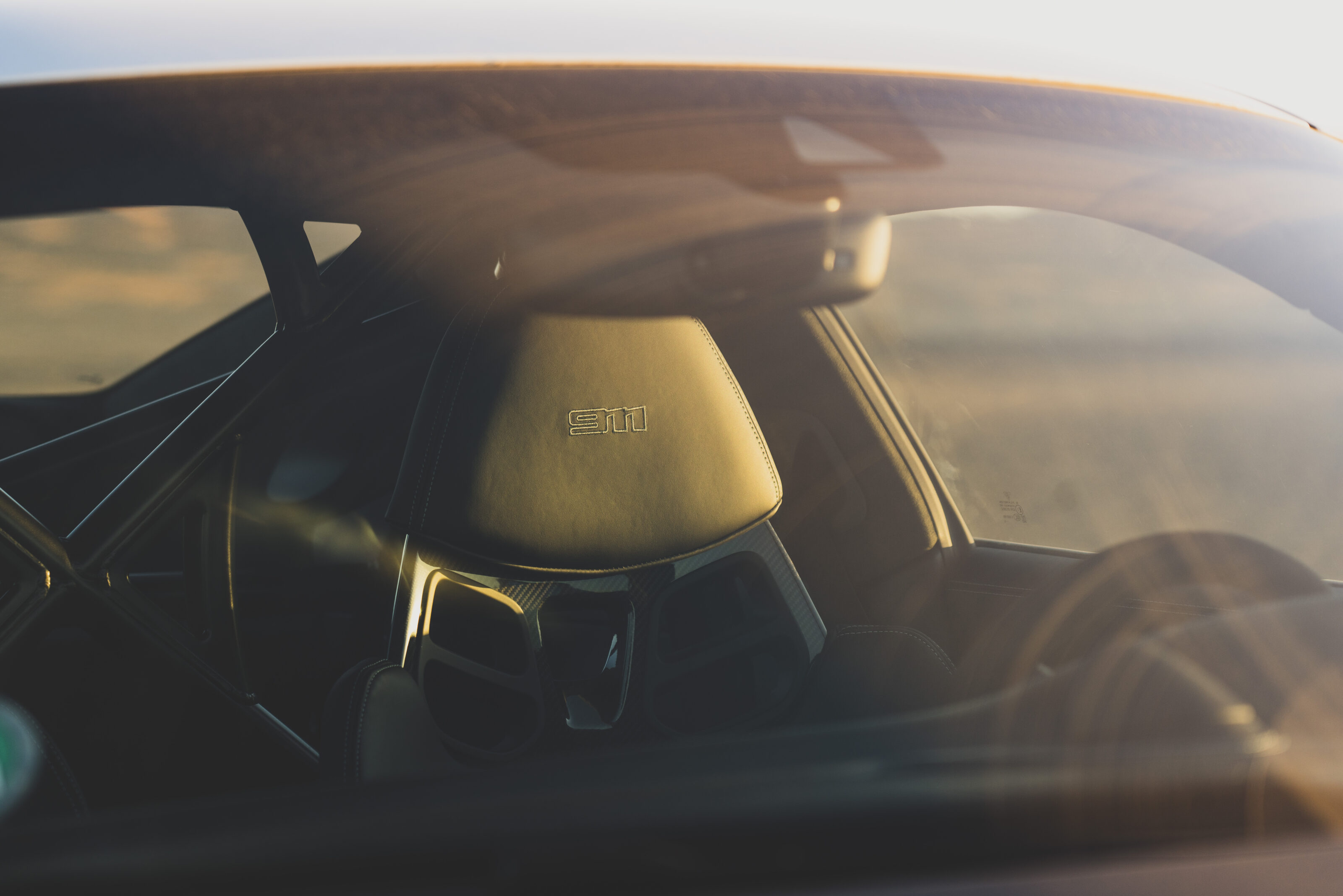
The Dakar shares the all-wheel-drive hardware, active anti-roll bars, eight-speed dual-clutch transmission and the 353kW 3.0-litre engine with the 911 GTS. Donations from the GT3 include stiffer dynamic engine mounts, rear-wheel steering, roll cage and bum-pinching race bucket seats.
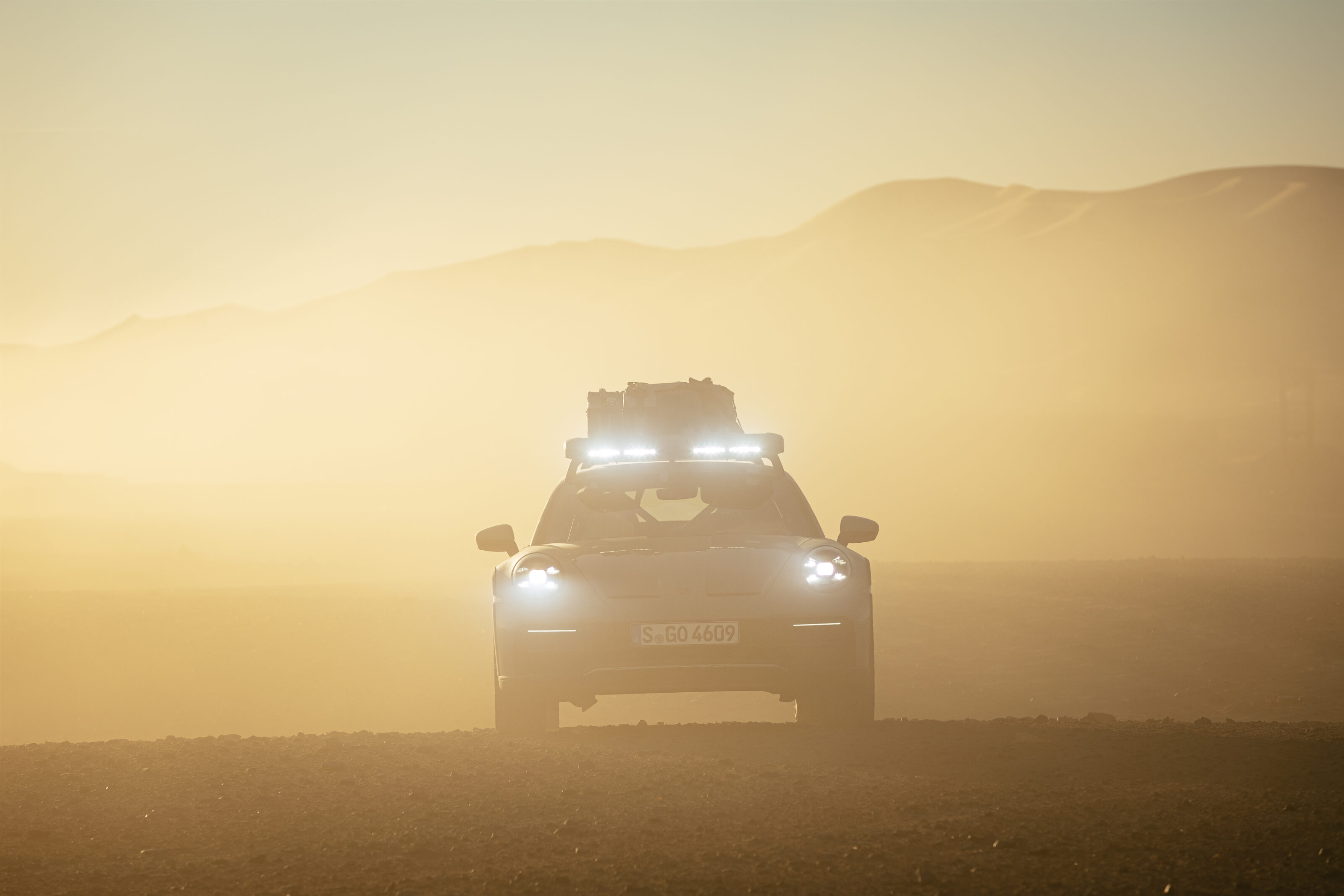
Rich night-time ‘roo hunters may want to add the optional lightweight roof rack equipped with water and petrol canisters, four auxiliary LED lights and a pair of Maxtrax. The bolt-on crow’s nest is incidentally big enough to pitch a tiny but sturdy one-man tent with a 140kg payload.
Measuring 203cm in height, I felt nonetheless more comfortable glamping at Erg Chebbi Camp Porsche, a minute morsel of the huge desert serving as temporary five-star stage for 30 tents complete with electricity, running water, toilets and sandflies.
1
Over mint tea, vegetable and beef tagine, date pudding and a glass of arak, the key individuals involved took us through the long-winded gestation process of the 911 Dakar which kicked off in 2013. As is so often the case, R&D pushed hard for the project while sales fought it by producing one low estimate after the other.
A production-ready 991-based version was called off at the eleventh hour, but in the end, CTO Michael Steiner and sportscar head honcho Frank Walliser convinced the board to sign off on what later turned out to be the fastest sell-out in corporate history.
When asked what he would have added if there had been no budget restraints, Krickelberg answered like a shot: “A bespoke Dakar cabin with different colours and materials and a more elaborate specification would have been nice to have.
“And of course, you can always spend more on less weight. We got there by removing the rear seats, substituting steel for aluminium, using CFK for most hang-on panels and fitting thinner windows.”
2
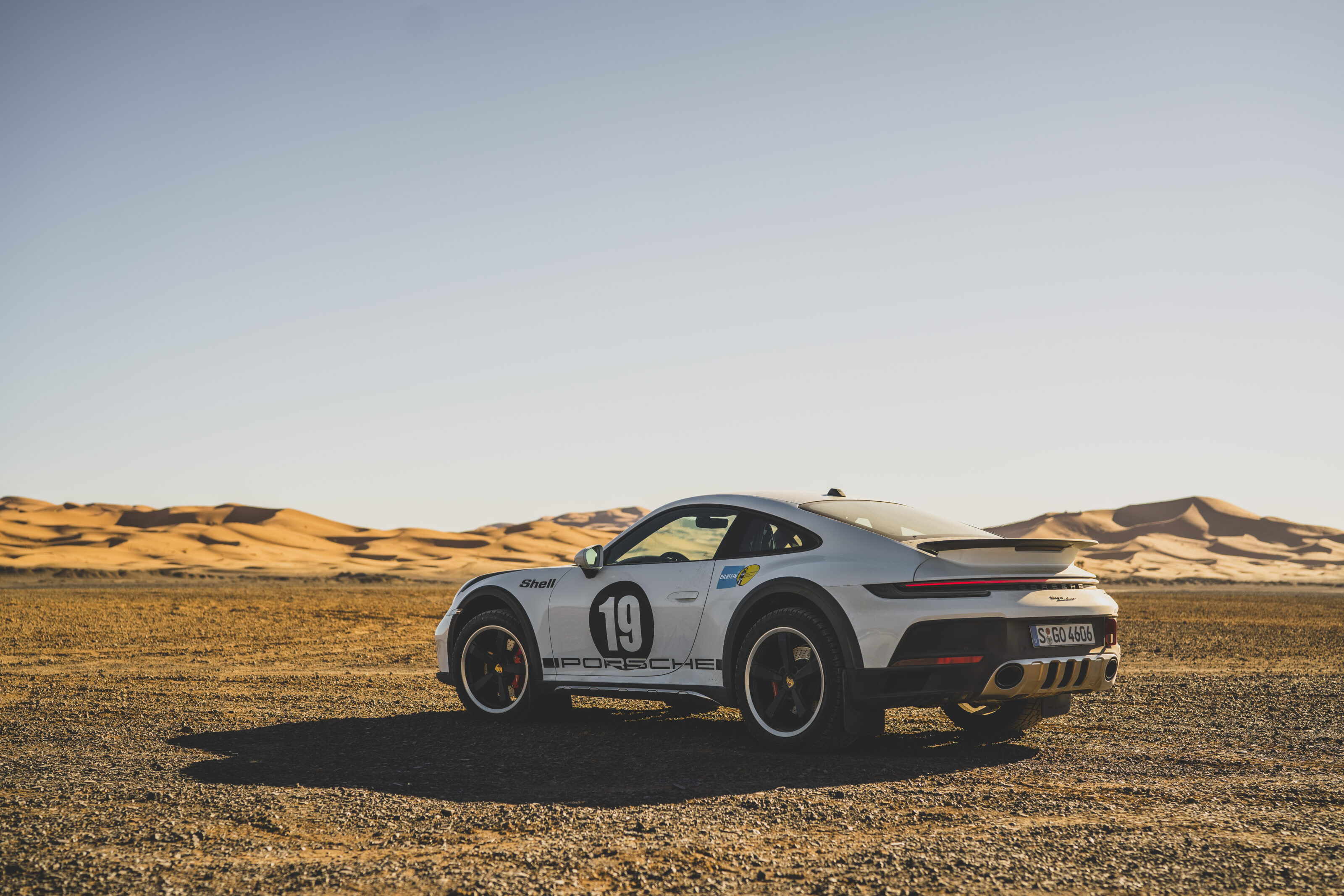
At 1605kg, our white Roughroads special aping the classic blue-red-and-yellow Rothmans livery weighed only ten kilos more than the base 911 GTS.
Because of the off-road-oriented AWD system, the bespoke engine and transmission software and the larger frontal area, the Dakar’s 3.4sec acceleration time from 0-100km/h misses the benchmark set by its low-riding stablemate by one token tenth.
Though there are eight forward ratios to choose from, fourth is the tallest gear you will ever use off the beaten track. Since the maximum torque of 570Nm straddles the rpm curve like a solid balance beam from 2300rpm all the way to 5000rpm, compulsory downshifts in search for even more grunt are the exception, not the rule.
As unique as the vehicle concept of the 911 Dakar is the specially composed soundtrack. Time and rhythm are still in sync with the forced-induction flat-six, but the tone travels at a brisker pace now and it feels more intense, the part-throttle background choir definitely bass-heavier, and the raspy vocalisation of the standard sports exhaust no longer softened by a comprehensive cabin insulation kit.
1
The deeper and hoarser pitch can also be put down to the larger 650W cooling fan, the big air box which is a resonance chamber in its own right, and the larger side-mounted nasal radiators.
As a result, the chainsaw shriek of a high-revving GT3 engine is superseded in the Dakar by a darker mid-range howl and a louder flat-out roar. The stairway to decibel heaven climaxes at 7500 physically dense high-mech revolutions.
What about steering and brakes, you ask? Off-road, the direction-finder feels almost eerily light at first, but the connectivity improves with time and practice.
The main haptic change agents are alien surfaces like dunes, drifts and debris. The almost twitchy low-speed effect of the busy rear-wheel steering is enhanced by the special-purpose tyres which feature much softer sidewalls and a virtually indestructible double-ply carcass.
1
While tyre inflation is 39psi all-round on sealed blacktop, the pressure must come down in two steps as soon as the sand and the wind shape the topography any way they want.
Letting air out is the easiest trick in the book, but those who cannot rely on the services of a Pirelli service truck should either bring an air compressor or a couple of Holy Rosaries.
“I’m going to get myself a Dakar in Oak Green metallic,” stated a poker-faced Walter Röhrl who already owns eleven rare Porsches and currently has a restomod 356 Speedster in the works.
“Dunes are thin on the ground in Bavaria, but we have plenty of dirt roads where this car is bound to shine.”
1
True enough, a couple of hours into the crisp but freezing second day, the special 911 finally found the habitat it was designed for: reasonably solid ground covered with an amorphous three-inch layer of shingle, caked mud, grainy sand and dust.
On the heavily patrolled trunk road from Moulay Ali Cherif to Et-Taous, the car still behaved pretty much like a softer-sprung GTS. Out in the wilds, however, on Walter’s imaginary dream circuit drawn into the sand with a stick, we were speed-waltzing in convoy through impromptu corners and fantasy esses like hopeful disciples of the late Ken Block.
Steering and throttle set the pace, determine the pattern and dictate the attitude. Touching the brakes isn’t even part of the script.
1
The child inside may clamour for the cop magnet bi-colour shrinkwrap Rallye Design pack complete with pseudo-historic decals, but older white men like me would rather have a stealth version in Shade Green with black chrome-rimmed five-spoke Fuchs-style alloy wheels.
Since the standard specification leaves little to be desired, just about the only factory options worth considering are said special paint job, a lightweight composite roof, the Burmester sound system and an extra patch of leather here or there.
Carbon-ceramic brakes, a popular extra on many high-performance Porsches, are off-limits for the Dakar because small stones would quickly destroy the delicate compound rotors. Instead, the Desert King boasts grooved discs designed to promptly grind or eject small stones and grime.
It takes forever before the belief finally sinks in that this 911 can do what a Cayenne can, and then some.
1
The only exceptions are the less extreme approach and departure angles that put big-air manoeuvres on the don’t list, make you slow down out of courtesy to fifteen grand worth of carbon-fibre skirting prior to steep climbs and descents, and rule out pedal-to-the-metal stunts over staggered transverse ripples that typically vary in depth and sequence.
In contrast, surfing the sands from dawn to dusk is this Porsche’s favourite pastime. Like a motorised kiteboard, the Dakar rides the neo-solid waves with a rare mix of acumen and aggression, always on the alert yet ever-playful, going all-in but never overstretching its dynamic mojo.
1
Porsche 911 Dakar operation manual, final chapter.
A near-identically equipped Carrera 4 GTS is almost $140,000 cheaper than the less fast and less universal Dakar. So why not democratise the essence of the Desert King by creating a 911 Allroad?
That would teach the boys at BMW M and Mercedes AMG a lesson while giving Audi Sport even more food for thought.
It’s good news for the Australian new car market this week, with January showing 84,873 sales – an 11.9 per cent jump over the same period in 2022 and an increase of 375.4 vehicle sales per day.
January 2019, despite being the ‘before times’ of a pre-COVID life, saw 81,994 sales, which the Federal Chamber of Automotive Industries (FCAI) attributed to “an imminent federal election, a declining real estate market and tighter lending practices”.
1
Australia’s Top 10 cars for January 2023
Guessing at the first- and second-place finishers is no challenge, so let’s start with the most impressive result first.
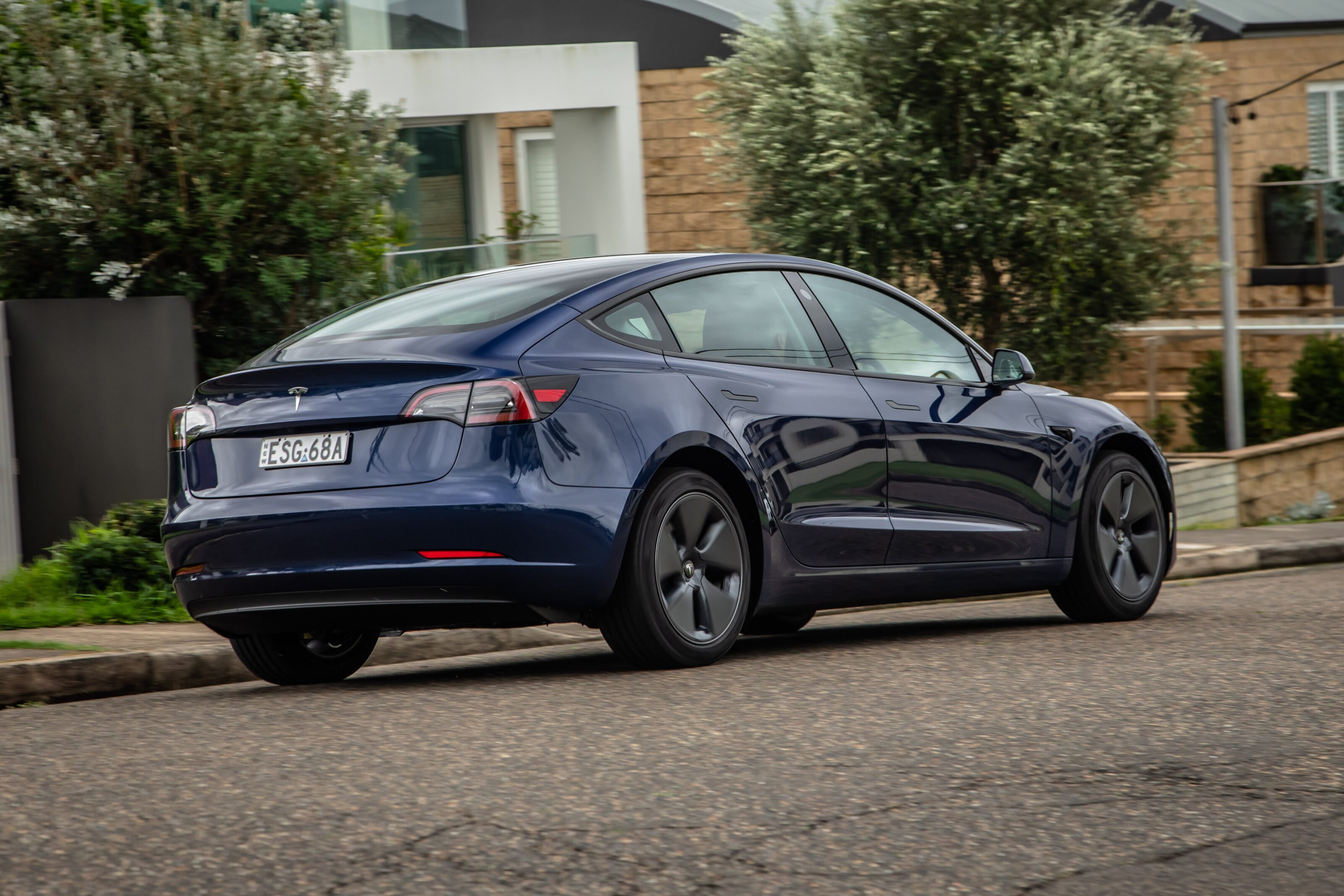
In this far-flung future of 2023, Tesla’s Model 3 continues its rapid growth as more and more buyers look to keep up with what they’re seeing in the Joneses’ driveway. Just as the Model Y SUV did in September last year, the Model 3 has rocketed into third on the January sales chart – its highest-ever result.
The Model Y’s September result was stronger than the Model 3’s January numbers, however, with the Y selling 4359 that month to the 3’s 2927 this past month. Tesla’s sales performance is often inconsistent, however, with the Y dropping out of the top 10 by October 2022.
Where the 3 will rank next month is anybody’s guess.
1
Utes & SUVs & utes & SUVs: Ranger and HiLux still on top
Mazda’s compact CX-3 had a surprising burst of energy in January, stealing fourth place behind the Model 3 with 2417 sales (▲from 905 in January 2022). Its big brother the CX-5 followed with 2189 sales (▼ from 3213), while the supply-constrained Toyota RAV4 held sixth with 1958 sales (▲ from 1425).
Isuzu’s popular new D-Max ranked seventh in January with 1843 sales (▼ from 1895), followed by the MG ZS on 1842 (▲ from 1588), the new Mitsubishi Outlander on 1674 (▲ from 1352) and the LandCruiser range rounding out the top 10 on 1631 (▲ from 1443).
1
Australia’s Top 10 car brands for January 2023
Ups and downs
Toyota has started the year strong with a huge 13,363 sales – although not so strong as in January 2022 when it sold 15,333 vehicles.
Mazda, more popular in Australia than in just about any other market, finished second with 9407 sales (▼ from 9805 in January 2022) and Ford – ‘The Ranger and Mustang Motor Company’ – took third with 6624 sales (▲ from 4528).
Kia, in fourth, registered 6006 AO-driven sales for January (▲ from 5520), again outselling its bigger-budgeted Hyundai stablemate, which took fifth with 5809 sales (▲ from 5128). Mitsubishi finished sixth again with 5276 sales (▼ from 6533), MG held onto its equal-best seventh place and jumped to 4015 sales (▲ from 3538), while Subaru ranked eighth with 3601 sales (▲ from 2722).
Tesla’s strong run with the Model 3, and its latest popular entrant the Model Y, gave it ninth spot with 3313 sales (no January 2022 figure recorded), and Isuzu closed the top 10 with 2671 sales (▼ from 2715).
1
And the rest…
Brand
Jan 2023
Jan 2022
Volkswagen
2,542
1,527
GWM
2,503
1,163
Nissan
2,448
2,334
Mercedes-Benz Cars
1,772
2,316
BMW
1,480
1,565
LDV
1,423
1,052
Suzuki
1,410
1,413
Audi
1,353
786
Honda
1,103
1,173
Isuzu
900
622
Volvo Car
862
726
Renault
716
645
Skoda
679
330
Lexus
502
528
SsangYong
464
253
RAM
409
196
Porsche
382
275
Mercedes-Benz Vans
339
240
Jeep
307
446
MINI
269
146
BYD
267
0
Hino
249
298
Chevrolet
241
120
Land Rover
180
339
Polestar
164
0
CUPRA
148
0
Peugeot
113
184
Genesis
106
80
Fiat
71
54
Mercedes-Benz Trucks
49
42
Jaguar
33
33
Alfa Romeo
29
45
Ferrari
17
20
Maserati
13
44
Lamborghini
10
1
Lotus
10
12
McLaren
10
4
Citroen
8
29
Aston Martin
3
7
Rolls-Royce
2
0
Alpine
0
1
Bentley
0
5
Chrysler
0
13
1
The size and the shape: Market segment results
Between them, SUVs and utes represented 76.9 per cent of all new-car sales in January.
SUVs widened their lead on the disappearing passenger-car class, selling 46,698 across size categories while passenger cars of any size represented just 16,602 sales in January. Utes and vans amounted to 18,546 sales in January.
1
In tables: New car sales by segment and size for January 2023
Class
Jan 2023
Jan 2022
SUV Light
5,669
3,915
SUV Small
11,006
10,884
SUV Medium
17,648
14,876
SUV Large
10,921
8,875
SUV Upper Large
1,454
1,047
Class
Jan 2023
Jan 2022
Micro
399
885
Light
3,456
4,111
Small
5,488
6,565
Medium
4,942
2,339
Large
314
235
Upper Large
48
64
People Movers
1,252
914
Sports
703
624
1
New-car sales by fuel type in January 2023
Petrol and diesel are still well ahead of electrified cars, if only because of lower prices and more needs met – but EVs nearly outsold hybrids in January… meaning that at least one tide might be turning soon.
Electrified vehicles continue to build interest with Australian motorists, although battery-electric vehicles (‘EVs’) are still well below 10 per cent of the market. For January 2023, EVs finished on 4852 sales.
Battery EVs almost outsold hybrids, however, with the latter taking a tiny lead with 5136 sales. The tiny Plug-in hybrid EV segment (PHEVs) showed just 438 sales in January.
Diesel models made up 26,589 of January sales, but petrol remains the most popular fuel for Australian buyers, with 44,831 examples sold.
1
In tables: New car sales by fuel type for January 2023
Type
Jan 2023
Jan 2022
PASSENGER
Diesel
1,034
630
Electric
3,231
120
Hybrid
1,276
2,298
Hydrogen
0
2
Petrol
11,036
12,663
Plug-in hybrid EV
25
24
SUV
Diesel
8,810
8,367
Electric
1,617
500
Hybrid
3,860
2,666
Hydrogen
0
1
Petrol
31,998
27,772
Plug-in hybrid EV
413
291
LIGHT COMMERCIAL
Diesel
16,745
17,088
Electric
4
0
Petrol
1,797
1,171
1
Passenger, SUV, LCV
Jan 2023
Jan 2022
Diesel
26,589
26,085
Electric
4,852
620
Hybrid
5,136
4,964
Hydrogen
0
3
Petrol
44,831
41,606
PHEV
438
315
State Country of Origin: Where Australia’s new cars came from in January 2023
Japan remains Australia’s favourite source of cars, followed as always by Thailand, Korea… and more recently, China.
Australian buyers preferred Japanese cars in January to the tune of 23,538 sales, although that number is down from 27,528 at the same time in 2022.
Thailand followed closely as the source of 20,441 of our new cars (▲ from 17,907), while Korea – home to the giant-slaying Hyundai and Kia brands – accounted for 12,606 sales (▲ from 11,162).
1
Chinese production is storming ahead, taking 12,486 sales away from the old guard in January – up from 6264 for the same period in 2022. Only one Chinese-owned brand is in the top 10, in the form of MG, but Tesla, Polestar and most Volvo models sold in Australia are now all sourced from China. Between them, they accounted for 8354 sales in January.
Chinese maker GWM sold 2503 vehicles, LDV accounted for 1423 sales, and all-electric brand BYD recorded 267 sales.
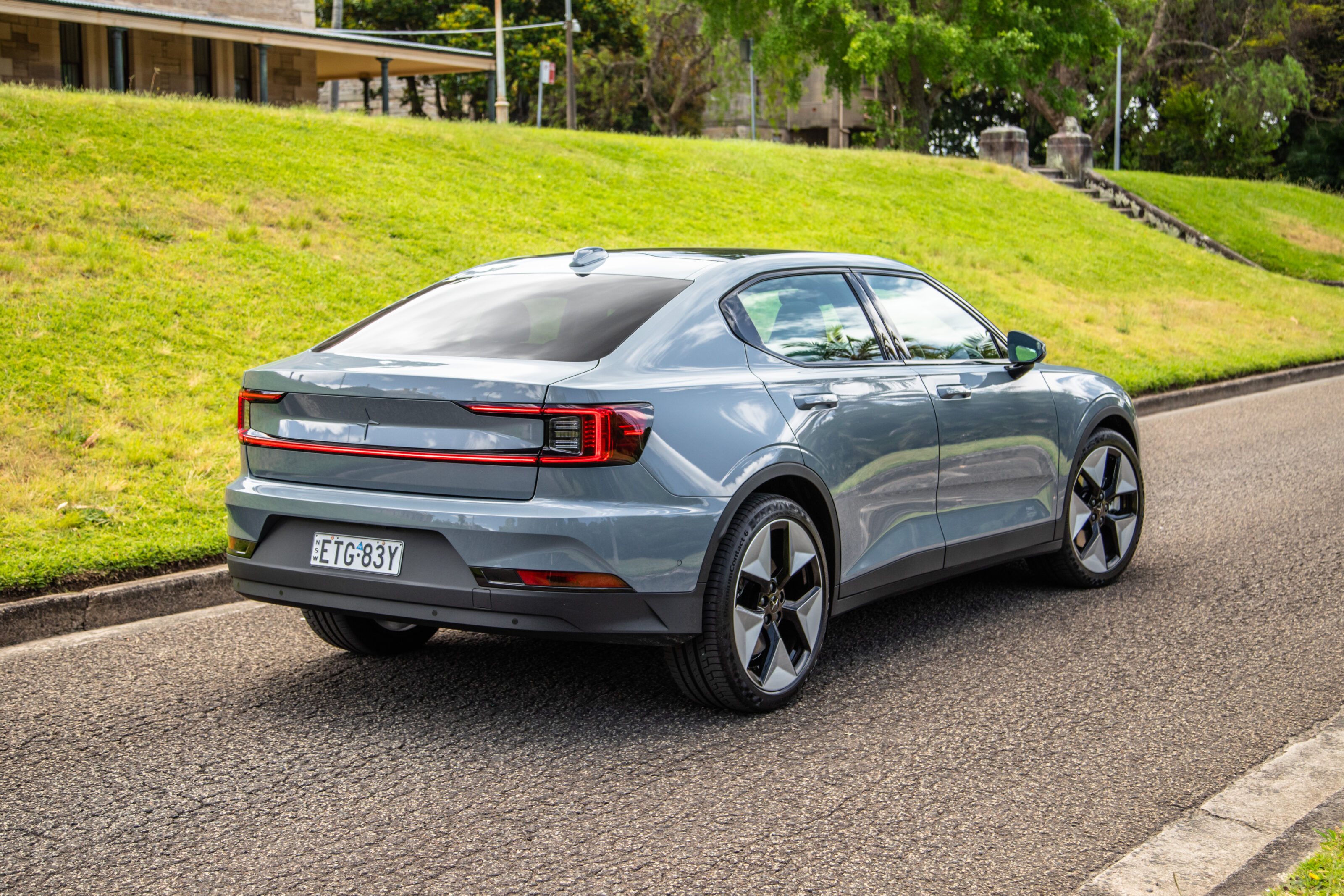
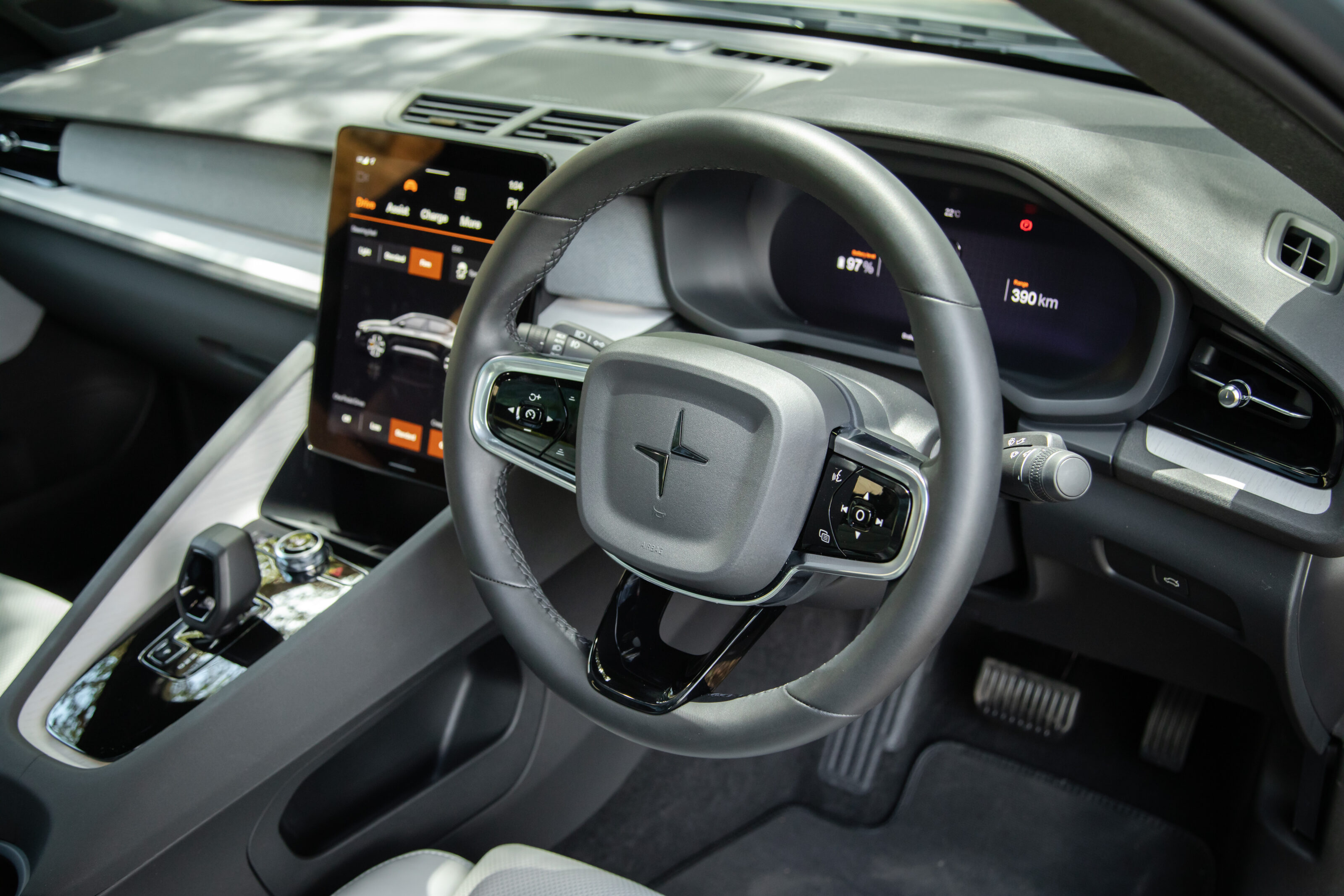
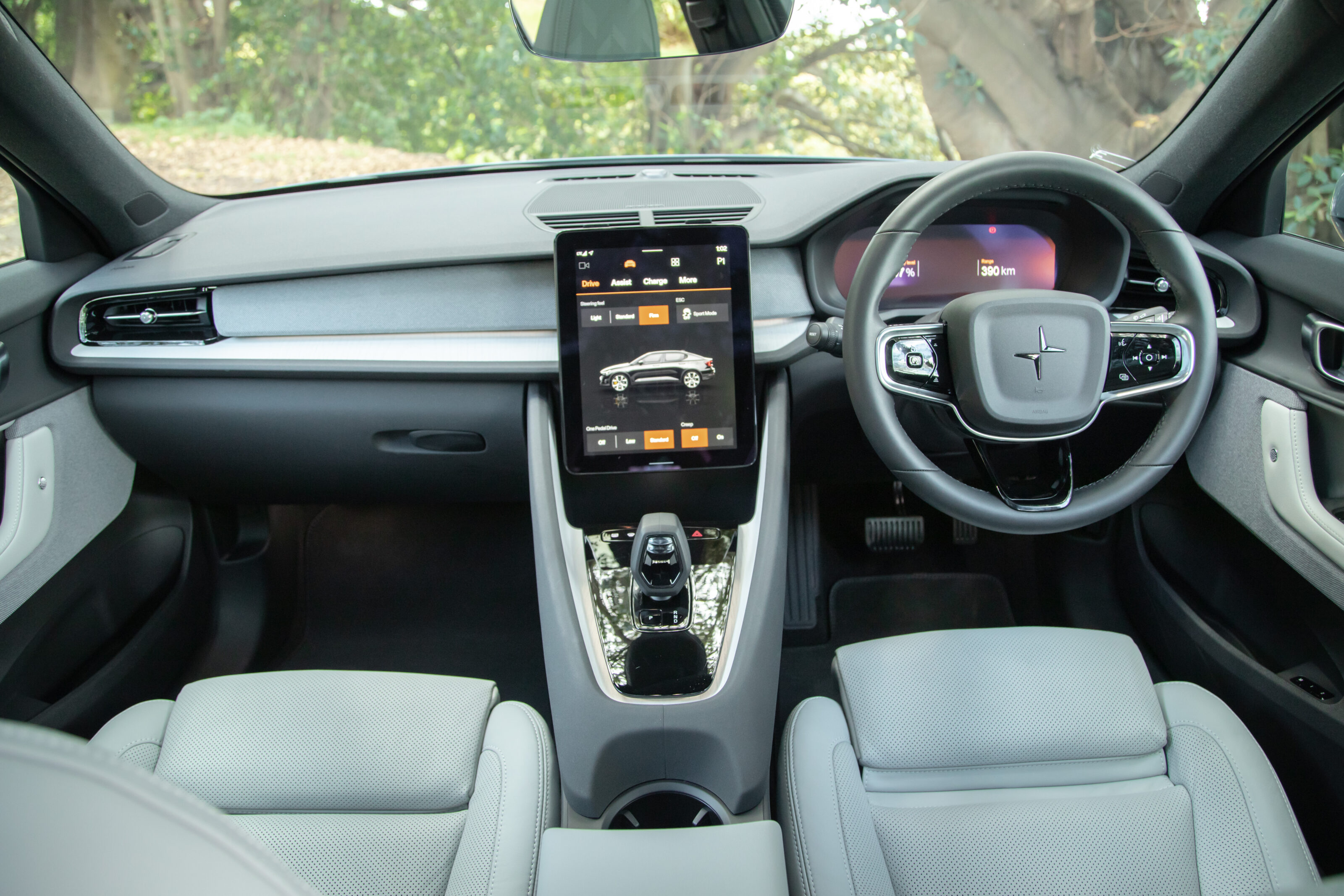
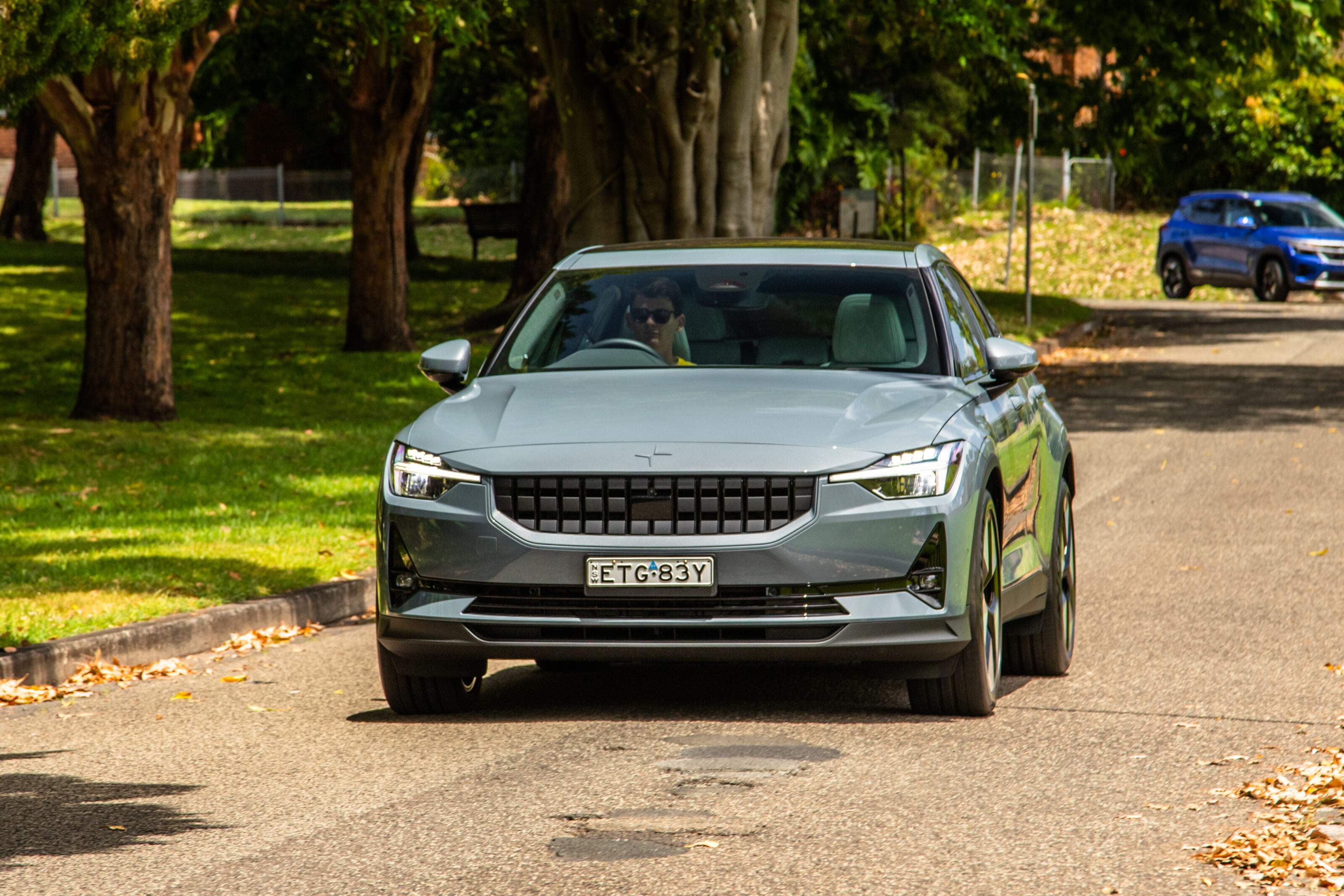
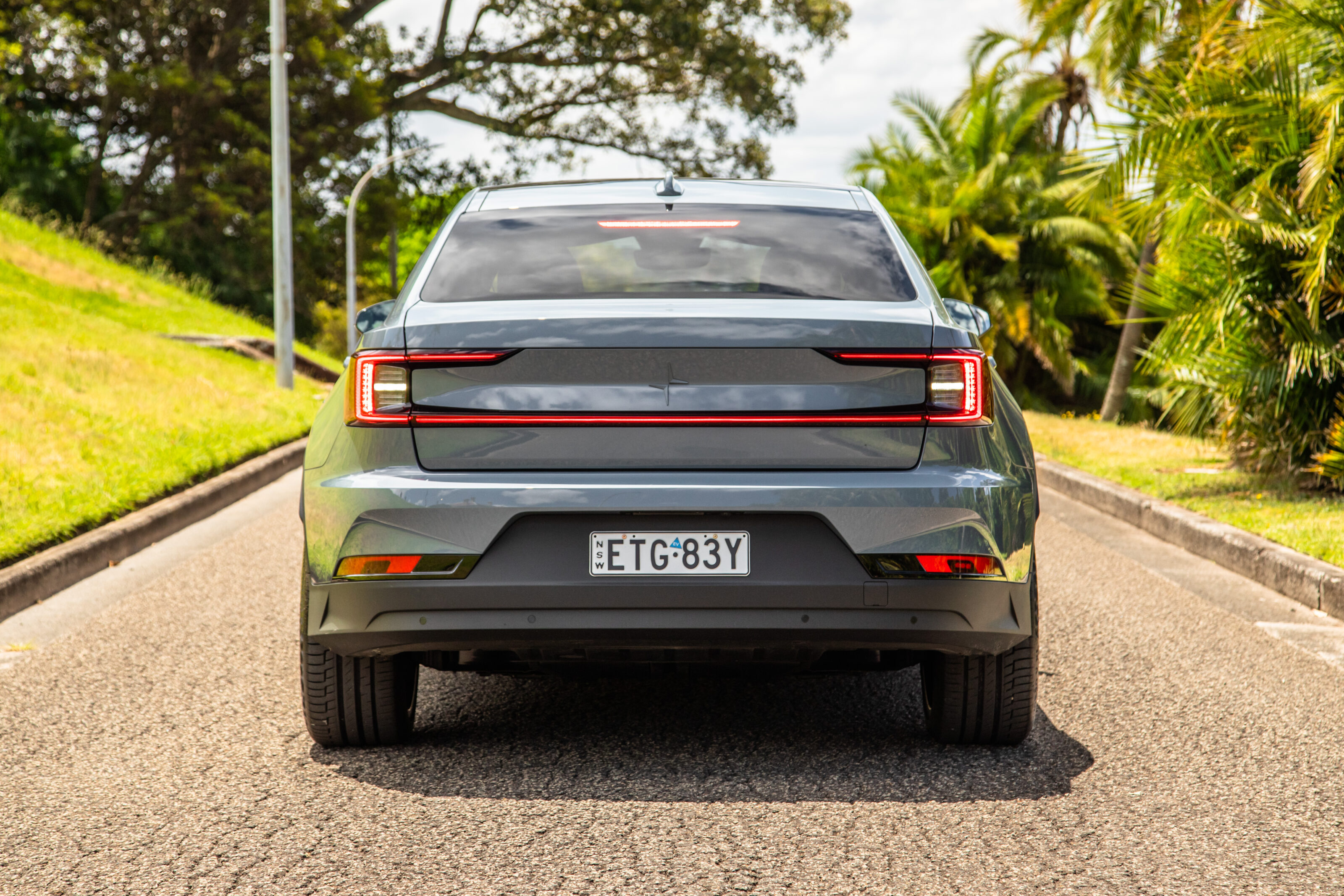
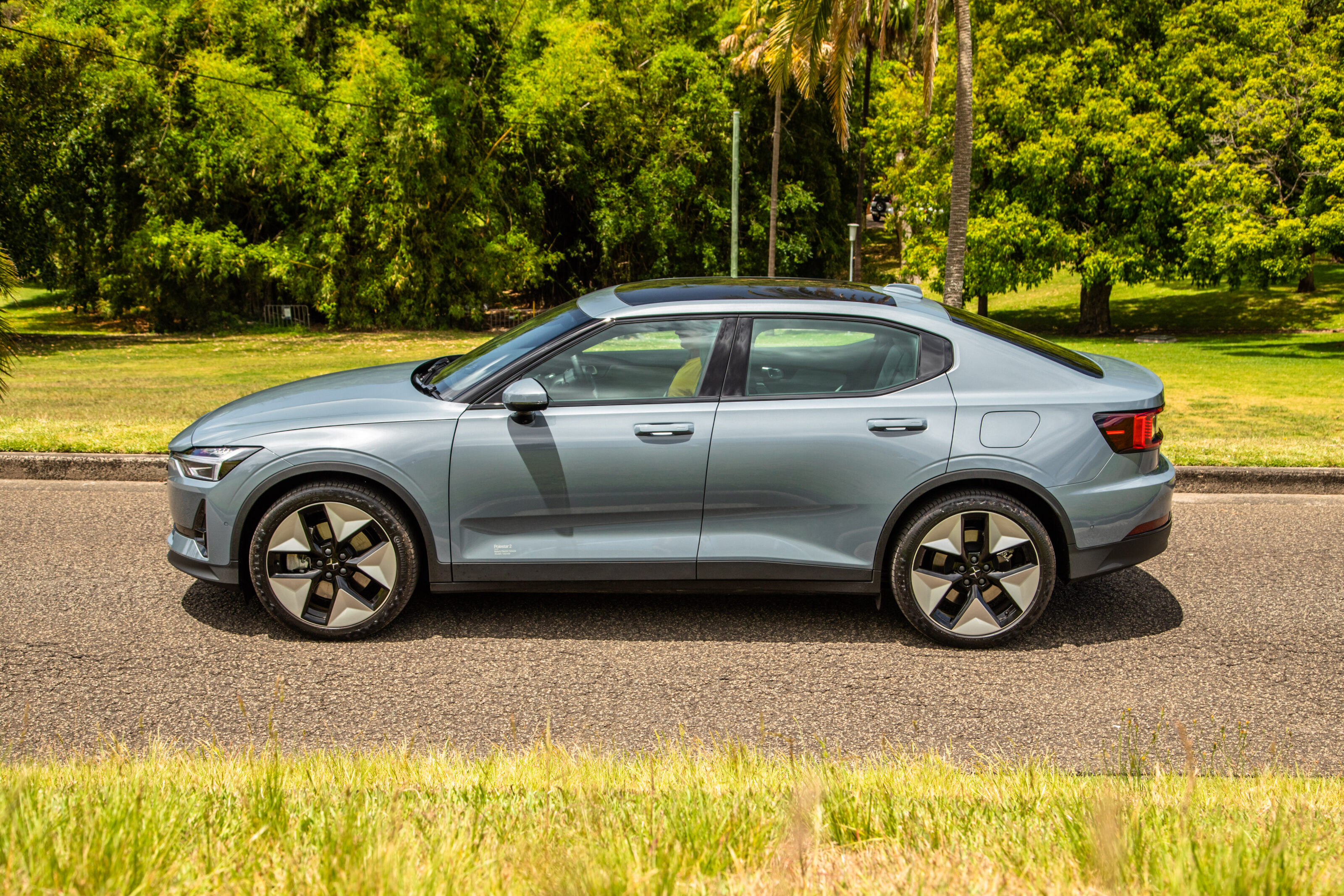
There’s a lot of chatter about the Polestar 2 in the Wheels office.
Not because it’s Australia’s best-selling car or even the country’s best-selling EV (it’s neither), but because this is a car you can really tailor to your needs with the careful ticking of options boxes.
And here’s the trick: you’ll want the Plus pack with the ventilated leather seats. Yeah, it will add a total of $12,000 to the purchase price of any Polestar 2 variant – Standard Range, Long Range or Dual Motor as tested here – but if you like staying cool and calm in your EV, it’s well worth the cash.
Polestar’s ordering system also strikes us as an honest way to sell a vehicle. There’s no “oh the nice seats are off-limits because you ordered the slow motor”. Instead, if you want it, you can have it.
Of course, it’s easy to say that when you’re a motoring journalist who isn’t about to splash the $91,700 (before on-road costs) tested price of this car, but don’t write the options off without reading this review.
The Polestar 2 range kicks off at $63,900 before on-road costs, but our tested Long Range Dual Motor (LRDM) starts life from a reasonable $73,400 (before on-road costs), considering you get a bigger battery and a lot more performance.
For that money you get:
2023 Polestar 2 features
11.2-inch portrait touchscreen
Front and rear parking sensors
12.3-inch digital driveru2019s display
Keyless entry and go
19-inch alloy wheels
Lane-keep assist
4G SIM card
LED headlights
8-speaker sound system
Power tailgate
Embossed textile cloth upholstery
Reversing camera
Four-way power-adjustable front seats with heating
Front auto emergency braking with pedestrian, cyclist and junction detection
1
Rarely is a Polestar sent on its way from Chengdu without some tasty extras, however.
Starting with the $1500 ‘Thunder’ metallic paintwork and $1400 20-inch five V-spoke alloy wheels, our test car is almost as loaded as Polestar will let you get it.
The $3400 Pilot Lite pack is an almost mandatory selection, adding:
Lane-trace assist
Adaptive cruise with stop & go
Blind-spot monitoring
Rear cross-traffic alert with braking
Then there’s the Plus pack, which is transformative to the cabin ambience.
The powerful, clear and balanced 10-speaker Harman Kardon system is almost worth the $6000 on its own but is also bundled with:
Steering wheel heating
Rear seat heating
Heated washer jets
12-way adjustable electric seats
u2018Weavetechu2019 sustainable upholstery
Wireless smartphone charging
PM2.5 cabin filtration
Air quality monitor
Fixed glass roof
10-speaker Harman Kardon stereo
1
There’s one extra option you can tick for the Plus pack, and that is gorgeous Zinc-coloured Nappa leather upholstery combined with matching Light Ash wood trim inserts and three-stage fan ventilation for both front seats. That’s the $6K mentioned at the start, and in the hot Australian sun it’s worth the extra cash.
For those chasing stratospheric performance (and a price tag to match) the $8000 Performance pack brings Brembo brakes, Öhlins adjustable suspension, gold seatbelts and lightweight 20-inch alloys wrapped in sporty Continental tyres.
The Polestar 2 LRDM measures up favourably against its performance-oriented rivals when in un-optioned $73,400 guise.
A Tesla Model 3 Performance will set you back $91,395, a Kia EV6 GT-Line AWD $87,590 and a Hyundai Ioniq 5 Epiq AWD $85,000, all before on-road costs.
Once you get into the meat of the options, though, the Polestar lives up to its premium price tag. At $91,700 before on-road costs, our tested car strikes reasonable value against the above rivals, but not quite as sharp as when devoid of options.
It’s also worth noting that all three of this rivals are considerably more spacious than the Polestar 2, so if that’s a priority for you, don’t forget that detail.
If you’ve read previous Polestar reviews by Wheels you might have caught criticism of its hot cabin.
It’s true, and something the lucky Swedes don’t have to deal with (or rather, when they do have to it’s ecstasy instead of misery).
This particular example suffered a lot less with its light-coloured upholstery and seat ventilation. Perhaps if there was a light-colour cloth option too, it would help. The 12-way adjustable seats with extendable under-thigh cushions and silky-smooth leather made this particular Polestar 2 a cool spot to whittle away the hours.
It’s ergonomic excellence that really sets Polestar apart. You sit low in the cabin, and that won’t be to the taste of loungey-Tesla lovers.
Even though Polestar’s Google Automotive interface software is excellent and customisable, it can’t quite compare with the American start-up’s processing power, but there are clever touches such as placing the flat-topped gear selector in just the right spot to rest your wrist.
1
Extra details like the tactility of the ash wood trim, smoothly-damped window switches and soothing indicator sound all help. Only the piano black gear selector surround looks cheap.
Because the Polestar 2 is built on a shared ICE and EV CMA platform, it has a high transmission tunnel that makes it hard to squeeze three across the back. Leg- and toe-room four outboard passengers are good, though tall folks will find headroom limiting.
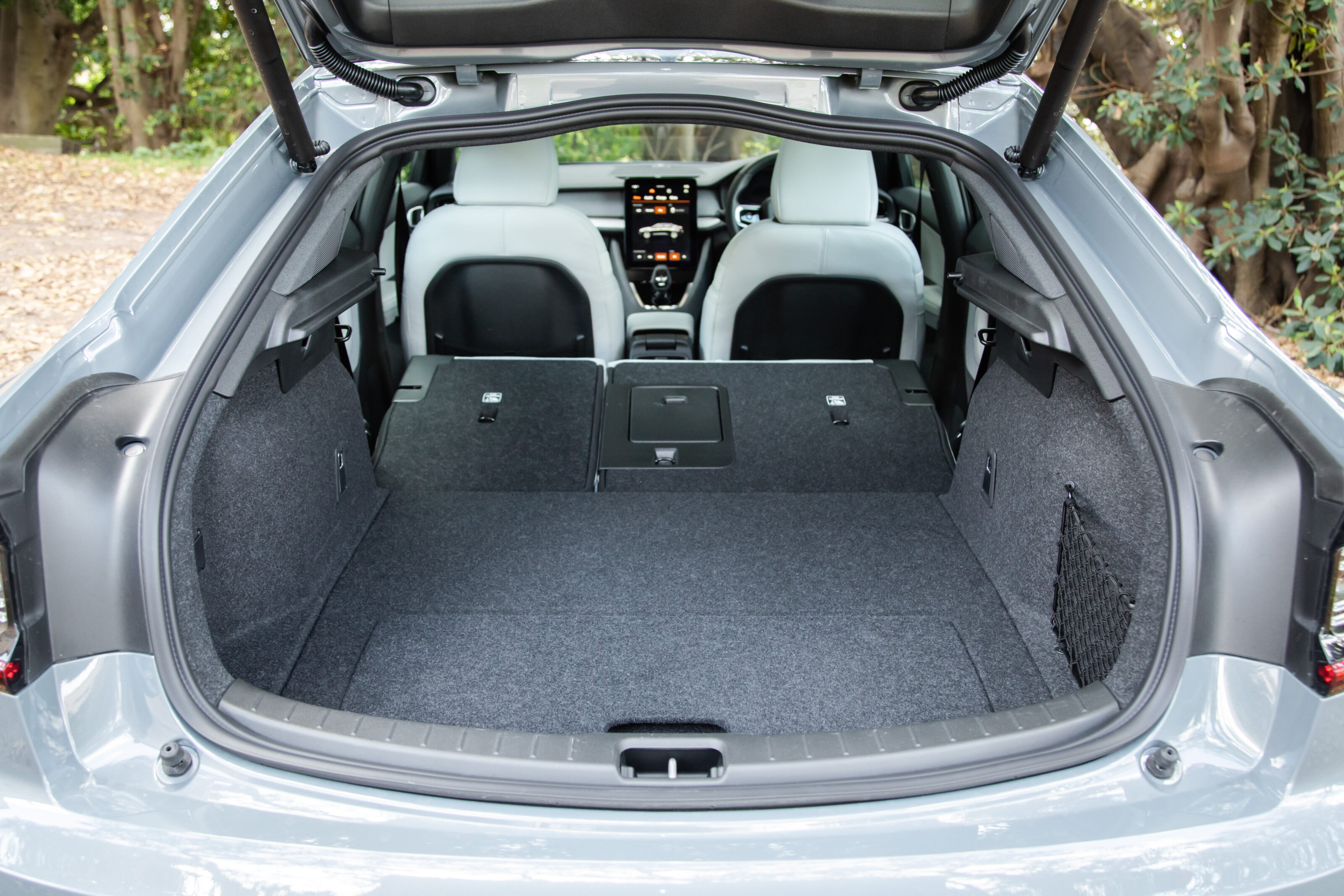
The Polestar 2’s boot is rated at 405L (VDA) and is easy to load bulky items, such as bicycles, thanks to the full-width hatch opening. A divider pops up from the floor with hooks to secure shopping bags and there’s a little extra free-form storage beneath the boot floor, but no spare tyre.
Under the bonnet, Polestar also includes 45 litres of storage. As with most EVs though, the ceremonious opening of the bonnet using a hefty pull tab to access such a small storage space feels cumbersome – we hope this will be solved in next-gen EVs.
Let’s get speed out of the way first, because it’s effortless.
The 300kW of power and 660Nm of torque is so easy to access; simply nail the throttle when the light turns green and the twin electric motors with AWD will churn you and your passengers’ stomachs inside out.
Polestar claims a 0-100km/h sprint of 4.7 seconds, but honestly, it feels quicker judging by the way the 2 rockets its 2113kg mass to 80km/h. Acceleration feels like it falls off a little over 100km/h, but that’s the case with most EVs.
Whether all that power is necessary is questionable, too. A 170kW/330Nm single-motor Polestar 2 is more than capable of carrying five passengers without struggling.
1
Of all the systems we’ve tried, Polestar’s regenerative braking feels the most natural.
There are three settings: Off, Low and Normal and the pedal’s linear progression helps make each mode usable, with a simple learning curve for the most powerful setting.
Polestar also provides options to adjust the steering weight, with Firm ending up as my preference. Oddly there’s no performance-oriented mode for the Polestar 2, just one setting, which is almost refreshing in an otherwise complex vehicle.
When you start pushing the Polestar 2’s chassis through corners, it’s evident just how much energy those two motors are capable of putting through its 245/40/R20 Continental Premium Contact 6 tyres. This generates roll, especially from the rear on corner exit.
1
There’s never a scary moment in the twin-motor Polestar as the chassis is ultimately very benign, but you can see where a little bit more rebound control and spring stiffness would help the fast EV corner with more confidence.
It is a trade-off from being much more agreeable in urban comfort terms than the very firm and linear Öhlins dampers that come with the Performance pack.
Not to say this car is ultra plush like a Mercedes-Benz EQA, but the regular Polestar offers adequate comfort. Visibility is also strong for a sedan, though it can’t match the widescreen view of the Volvo XC40 electric.
Here’s where the most powerful Polestar 2 starts to make a little less sense.
In Australian conditions and on high-speed roads, the heavy Polestar 2 Dual Motor doesn’t mind guzzling down some electrons.
The Long Range Dual Motor’s rated WLTP driving range is 487km from a 78kWh lithium-ion battery. Energy consumption is 19.3kWh/100km according to WLTP figures.
After 480km of driving over a week, we didn’t get that; the final figure was 20.5kWh/100km according to the onboard computer, for a tested driving range of 366km.
1
Partially this was down to the test loop; we did a pretty standard Sunday drive leaving Sydney and heading south on the Hume Highway following the 110km/h posted speed limit for an hour or so, before winding through the hilly Southern Highlands with the intention of stopping at the Mittagong RSL 50kW NRMA charger.
Except, on arrival, there was a queue of four cars waiting ahead. Uh oh, what to do?
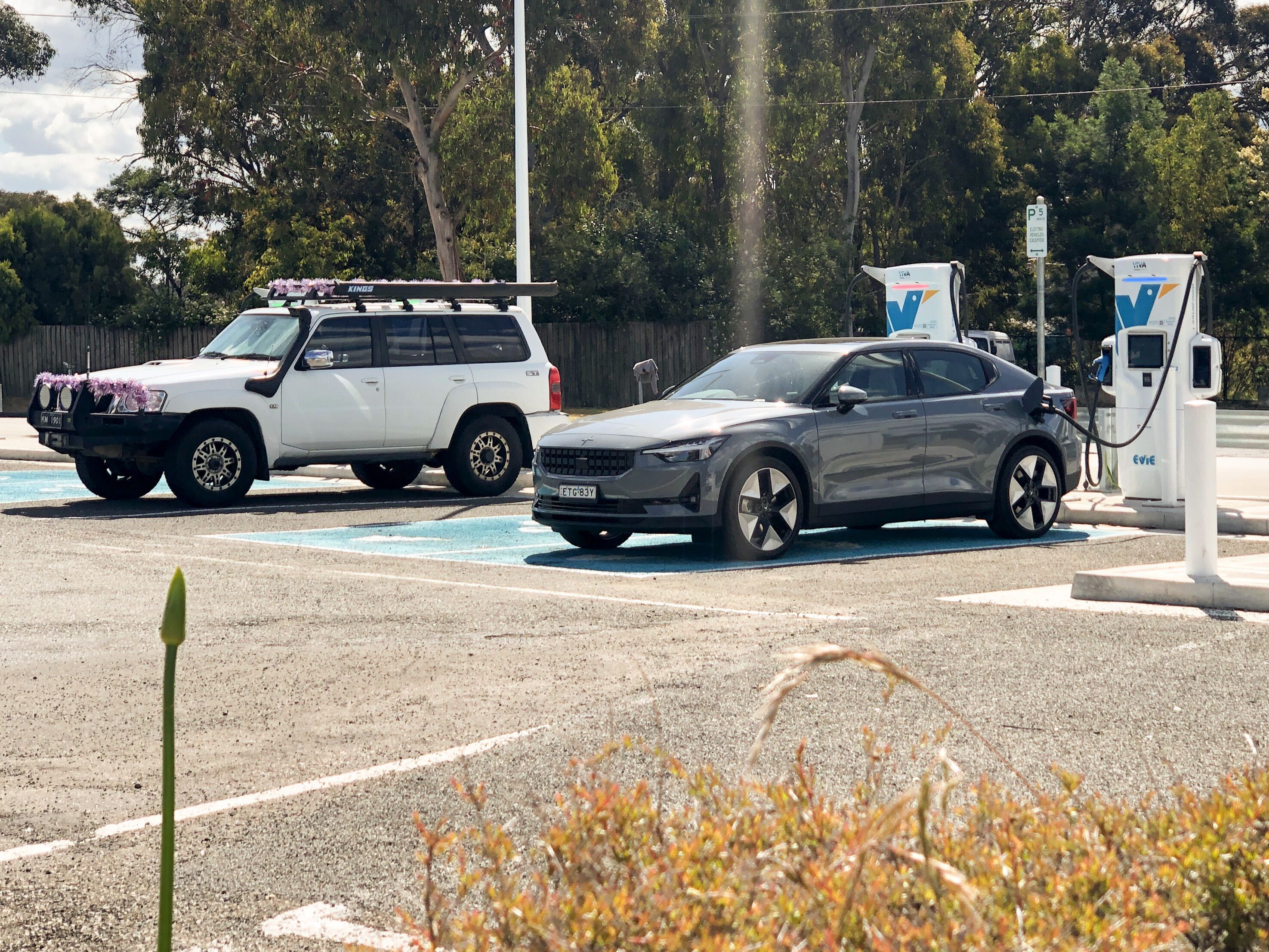
Hypermiling to Sutton Forest’s 350kW ultra-rapid Evie location was the answer where, instead of lemon lime and bitters, Sunday lunch and a wind-down, a new app had to be downloaded using McDonald’s free wifi in the stinging sun. We appreciate that there’ll be less hassle next time, now that the application is on the phone and an account is set up.
1
With so many disparate charging networks out there, it’s still more difficult to charge an EV than tapping a card at a register.
Once hooked up, the Polestar sucked electrons down like a champion. Starting from a seven per cent charge, it reached 90 per cent in 38 minutes, taking on 63kWh of juice. That’s very respectable, pretty much matching Polestar’s charging speed claim of 10-80 per cent in 31 minutes.
Home charging will take eight hours from 0-100 per cent using an 11kW three-phase wallbox, 12 hours on a 7kW single-phase unit and 38 hours from a three-pin socket.
ANCAP rated the Polestar 2 range five stars under the 2021 safety testing protocol.
The Polestar 2 is equipped with forward auto emergency braking including pedestrian, cyclist and junction detection, lane-departure warning, eight airbags and speed sign recognition.
As detailed above, the Pilot Lite pack adds rear cross-traffic alert, blind-spot monitoring and advanced highway travel assist programs. The adaptive cruise has a tendency to creep from the desired speed, sometimes up to 5km/h, though the lane-trace system worked well.
Polestar’s warranty is five years and unlimited kilometres on everything but the 27-module battery, which is warranted to stay above 70 per cent performance for eight years or 160,000km.
If segments of the battery fail in a Polestar, there are in-house battery service centres that will be able to individually replace faulty modules.
One of the great draws to electric vehicles is low maintenance. In Polestar’s case, a trip to the mechanic is due once every two years or 30,000km. Five years of free servicing is included with the purchase price, too.
It may not be the most efficient EV out there, but the Polestar 2 is a particularly suave choice.
The Dual Motor version tested here is overkill for most, because really, who needs to hit 100km/h in under five seconds?
Instead of getting the extra motor, then, the Long Range Single Motor fitted with the same options as our tested vehicle would be a spectacular choice for $85K.
It may not qualify for any incentives, but then the Polestar 2 specced up like this is an inspired and premium choice to rival the BMW 3 Series and Mercedes-Benz C-Class, not one for the masses.
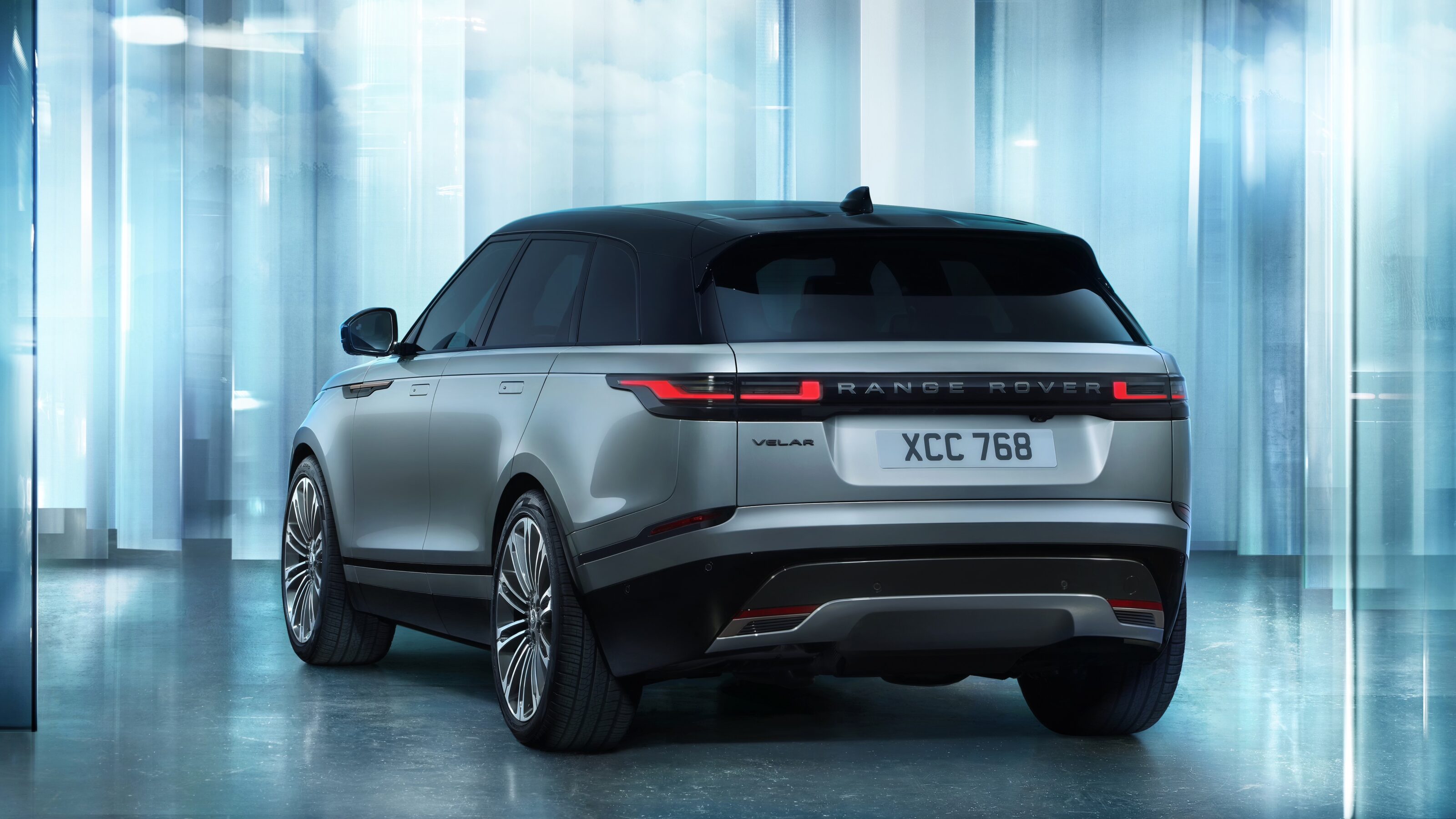
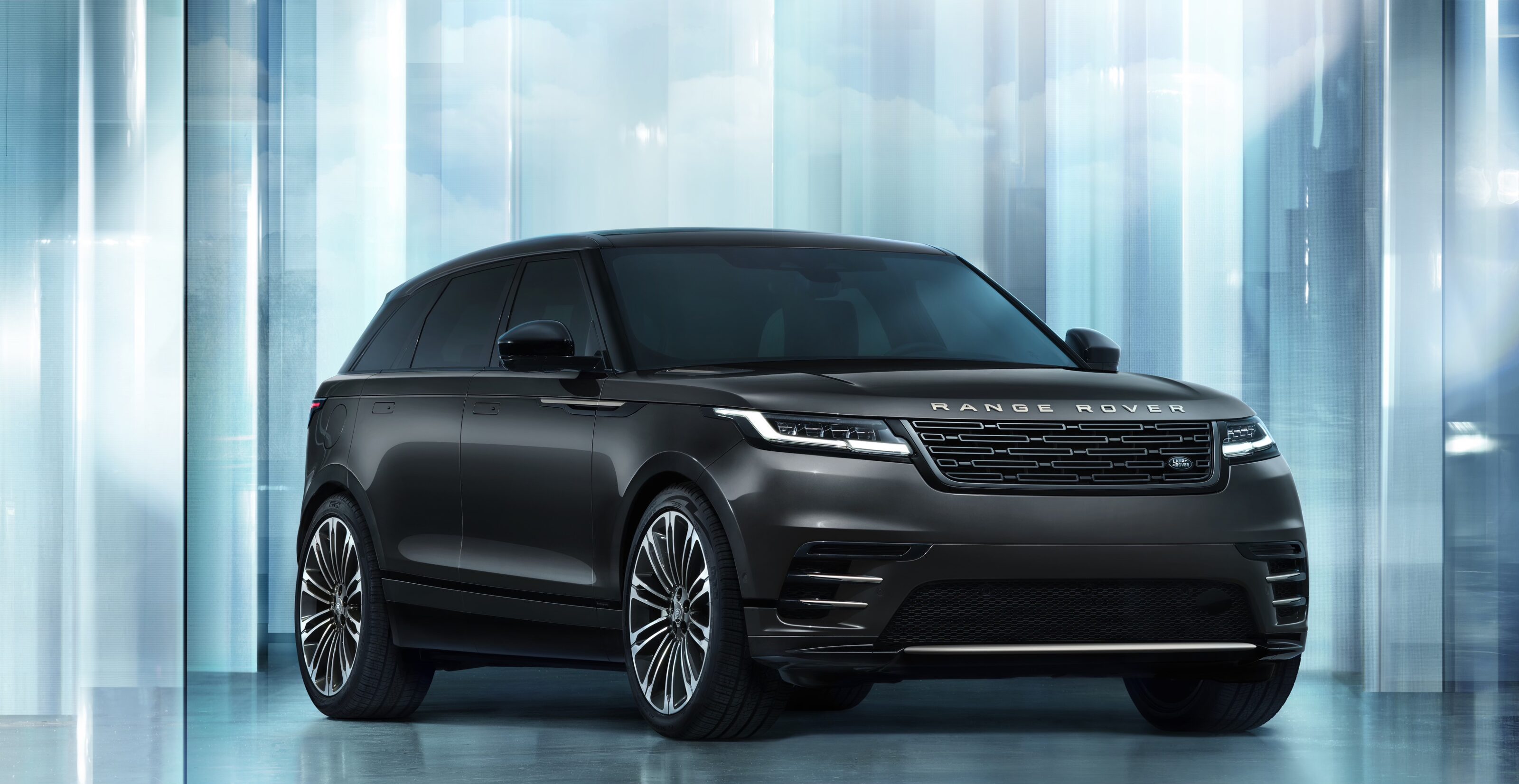
The updated 2024 Range Rover Velar has debuted with a revised look and additional technology.
Snapshot
2024 Range Rover Velar facelift revealed
Updated mid-size SUV gains revised look, more technology, and a larger battery for the PHEV
Entry-level R-Dynamic S deleted; priced from $106,150 before on-roads
Locally, the facelifted Velar line-up – on sale now – has shrunk, with the base R-Dynamic S deleted from the range, while the R-Dynamic styling pack is now simply known as Dynamic.
List pricing has increased between $700 and $7250, while the price of entry is up $9550.
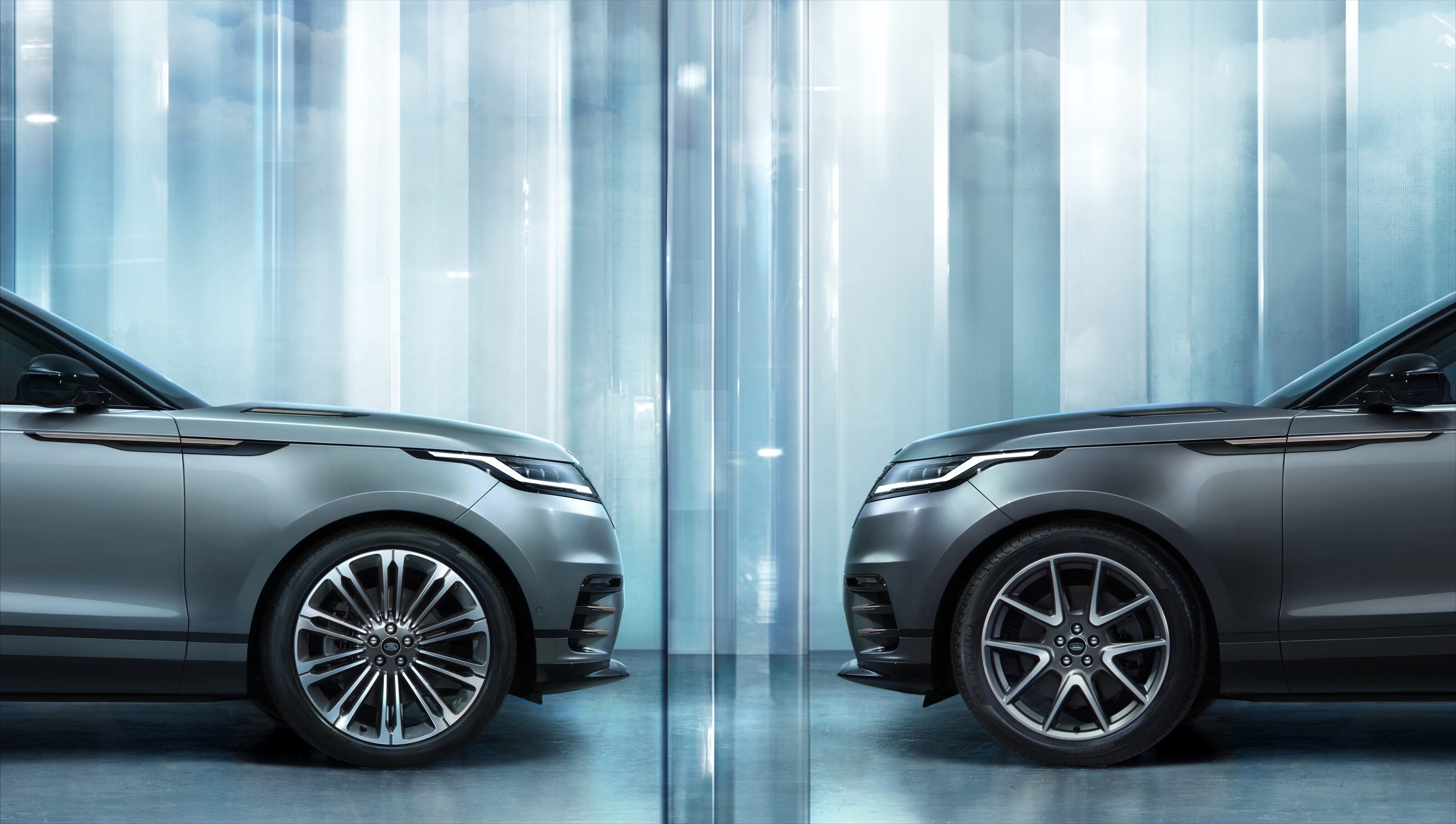
For model-year 2024, the Velar includes a minor exterior redesign inspired by the latest-generation Range Rover Sport and full-size Range Rover.
1
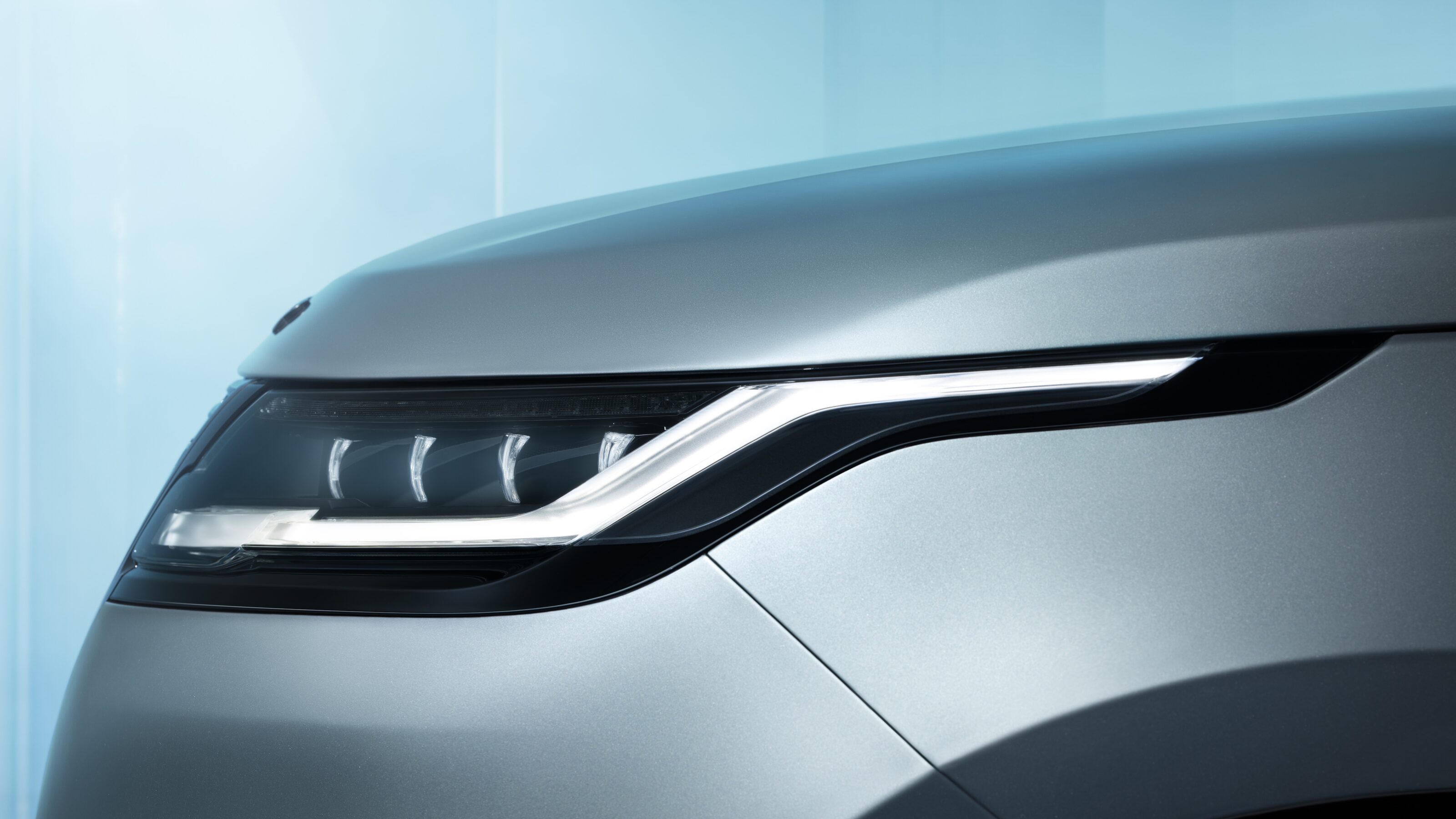
As such, it’s a slight evolution of the design language first introduced by the mid-size SUV six years ago, with changes including new-look, slimmer headlights with available pixel LED technology.
A redesigned lower rear bumper, brighter tail-lights with an updated lighting signature, and darker accents round out exterior revisions to the Velar.
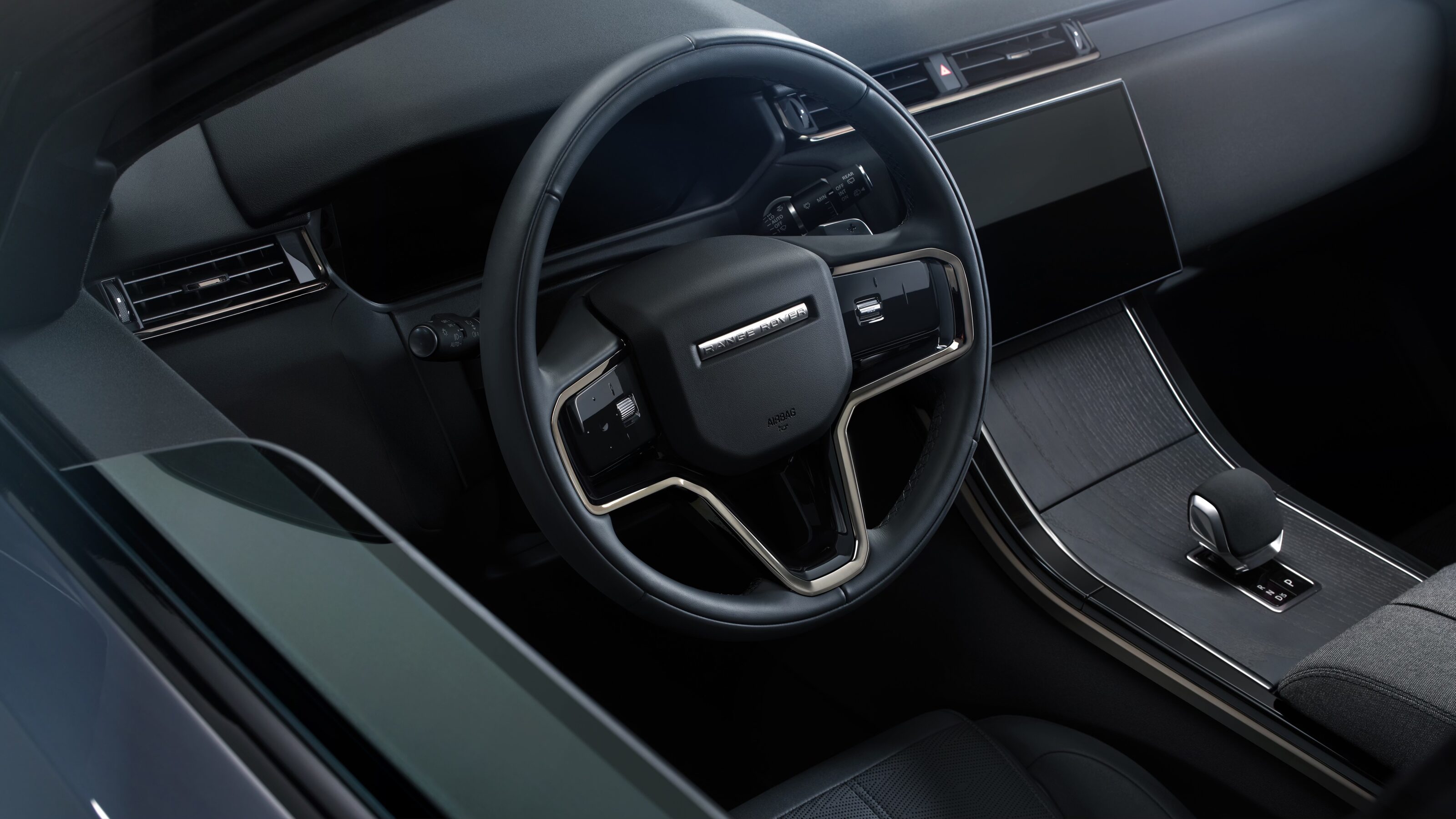
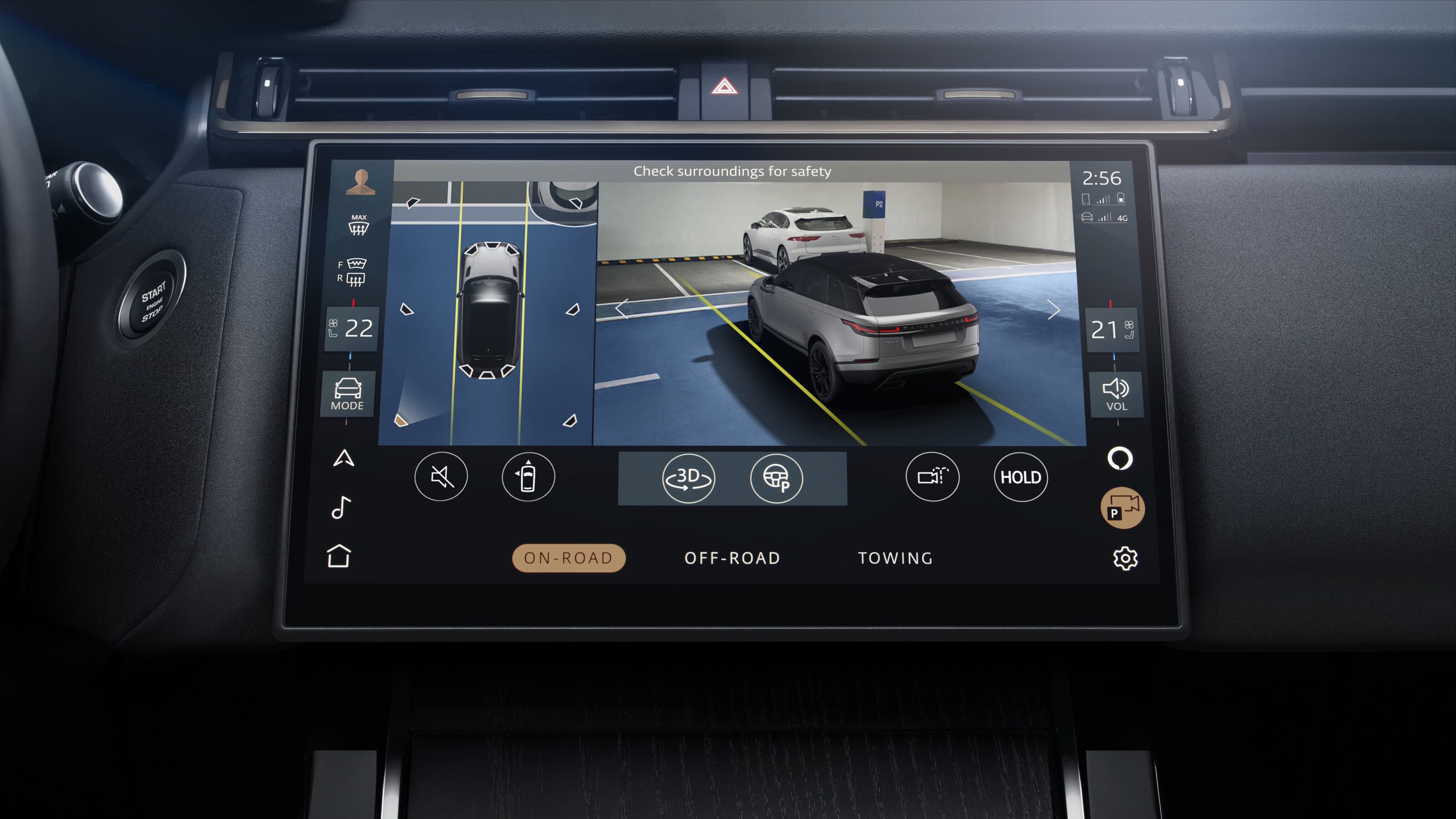
Instead, the cabin is the main focus for the facelift model, with a streamlined look derived from Range Rover’s newest vehicles – and some electric vehicles, including the Tesla Model 3.
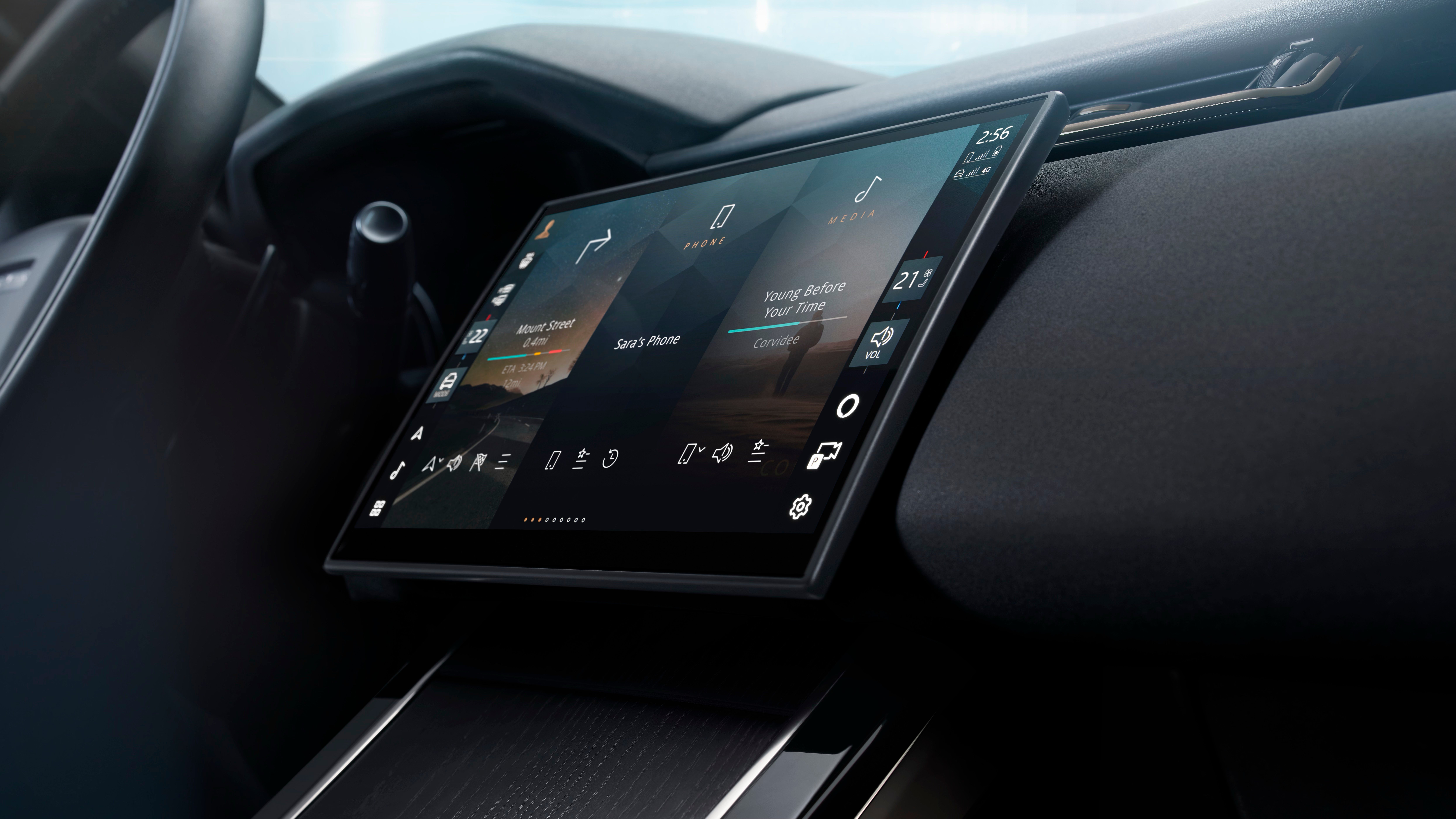
The most noticeable change is the addition of a larger, curved 11.4-inch infotainment screen, which debuts Jaguar Land Rover’s latest-generation Pivi Pro7 software.
1
This single-screen replaces the dual-screen setup found in the pre-facelift Velar, which featured a 10-inch central display and a 10-inch climate control unit.
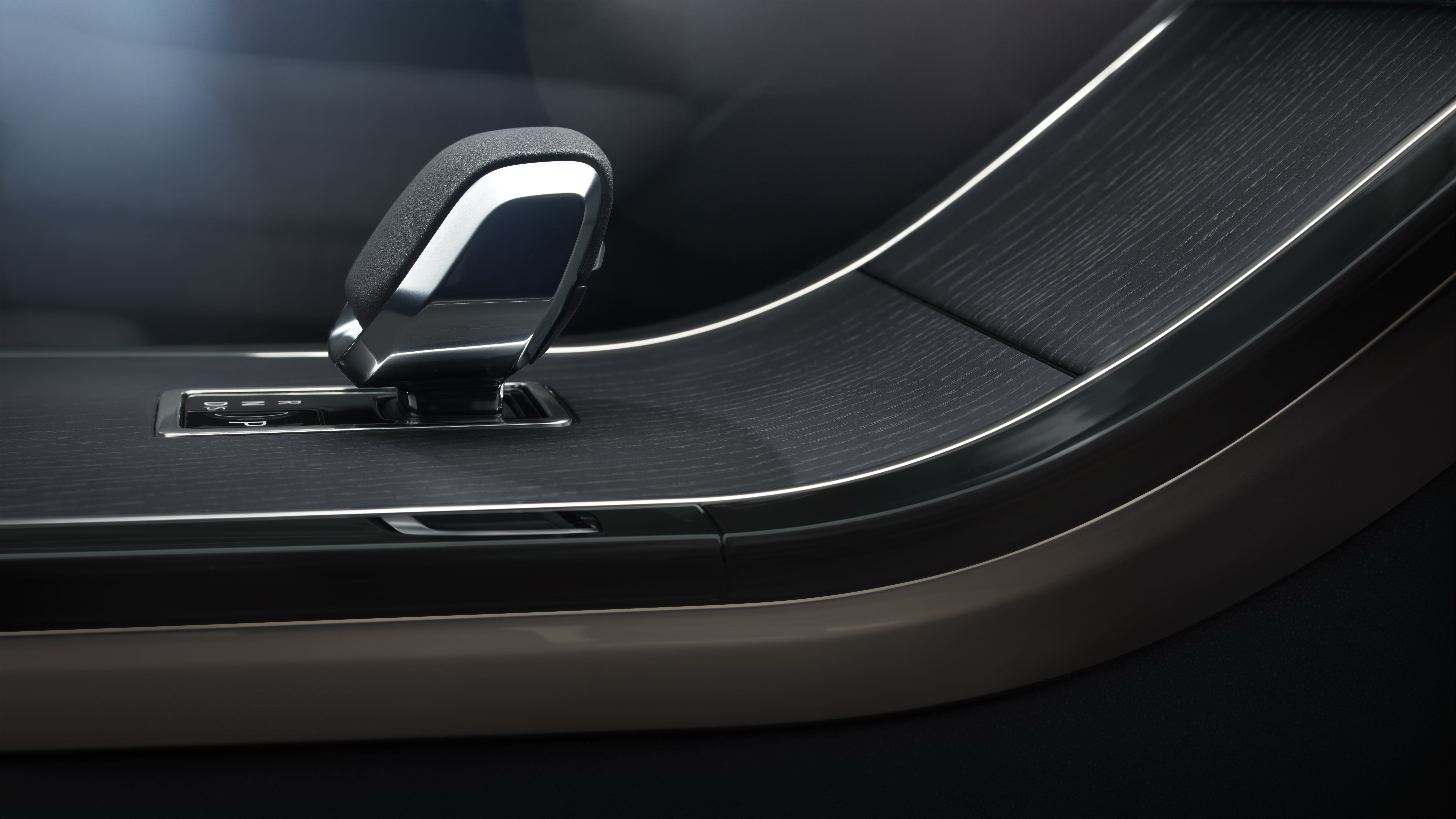
The simplified interior sees the deletion of all physical controls from the centre stack – except for the gear shifter – with climate, seating and audio settings now always visible on the infotainment screen.
A ‘pre-drive’ panel will appear at start-up to show frequently-used controls, such as heated seats or window demisters.
As before, the Pivi Pro system will support over-the-air software updates, with Land Rover claiming 80 per cent of the vehicle’s electronic control units – including the chassis and powertrain – can be updated without visiting a dealer.
1
For variants fitted with the 17-speaker Meridian surround-sound audio system, the Range Rover Velar will feature active noise cancellation, which is said to reduce noise by more than 4dB.
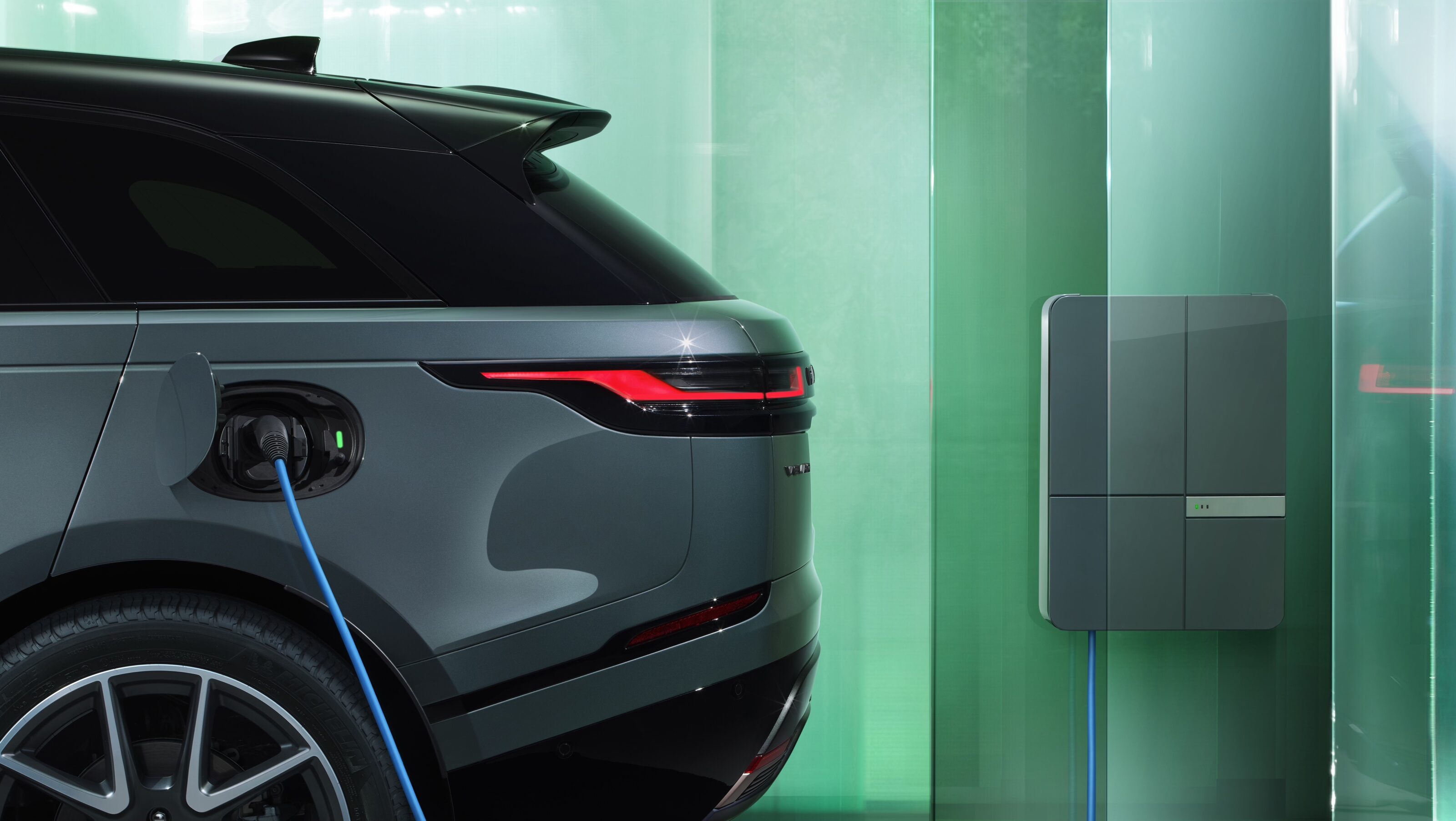
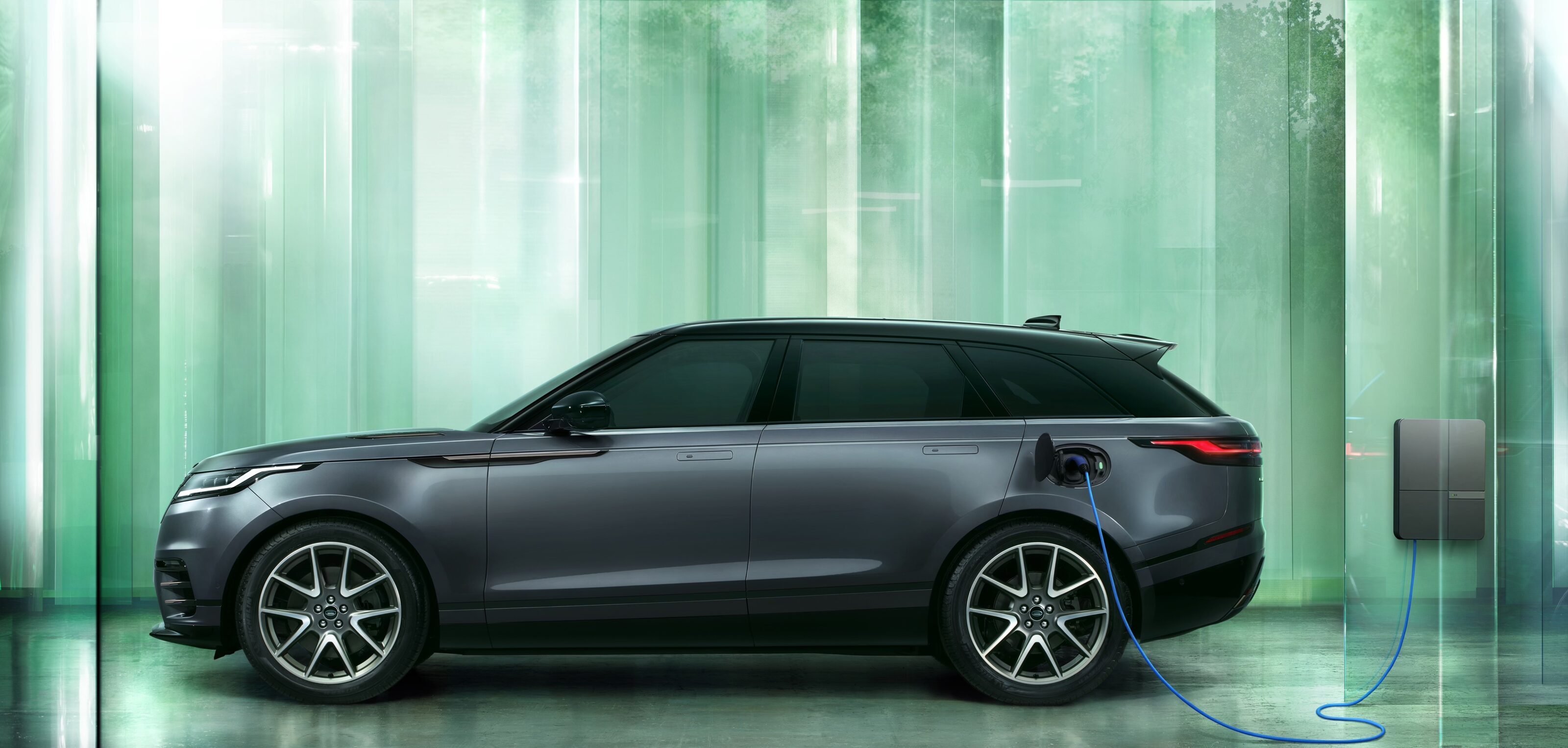
Land Rover has updated the Velar’s plug-in hybrid system, which is now available on the entry-level SE – in addition to the HSE.
It includes a larger 19.2kWh lithium-ion battery pack – up 2.1kWh – with an NEDC-rated electric-only driving range of 69 kilometres, up 18km.
Following in the footsteps of its larger siblings, the Velar has gained the range-topping Autobiography grade, complete with 22-inch alloy wheels, a cabin air purification system and copper trim.
In typical Land Rover fashion, a wide array of individual options, and bundled option packs, are available for the Range Rover Velar. The entire list can be found on the online configurator, available here.
Under the bonnet, the 2024 Range Rover Velar offers two turbo-petrol units, a turbo-diesel, and a plug-in hybrid.
The range opens with the ‘P250’ 2.0-litre four-cylinder turbo petrol producing 184kW and 365Nm. It is matched to an eight-speed torque-converter automatic transmission, sending power to all four wheels.
Stepping up to the ‘P400’ sees the addition of a 3.0-litre turbocharged inline-six petrol with 294kW and 500Nm. It gains a 48-volt mild-hybrid system, and larger front and rear brakes.
1
While the diesel was previously limited to the limited-run D300 Edition, it is now available for the SE and HSE. It is a 3.0-litre turbocharged inline-six unit, producing 221kW and 650Nm.
The plug-in hybrid reverts to a 2.0-litre turbo-petrol, as found in the P250, but gains an electric drive unit to boost its total system output to 297kW and 640Nm.
It has a claimed 69-kilometre electric-only driving range, based on the less-stringent NEDC standard.
The Range Rover Velar is covered by a five-star ANCAP safety rating, based on testing conducted in 2017. This score applies to all petrol and diesel variants, but excludes the plug-in hybrid.
It received a score of 93 per cent for adult occupant protection, 85 per cent for child occupant protection, 74 per cent for vulnerable road user protection, and 72 per cent for safety assist.
This rating will expire in December 2023, in line with ANCAP’s newly-introduced six-year datestamp limit.
Six airbags (dual front, side and curtain) are fitted across the range.
The Range Rover Velar has a 2874-millimetre wheelbase, and is 4797mm long, 2147mm wide and 1683mm (coil) to 1678mm (air) tall.
2024 Range Rover Velar boot space
The petrol and diesel 2024 Range Rover Velar has a 748-litre boot capacity, extending to 1811 litres with the second-row folded. The plug-in hybrid is slightly lower at 625L, or 1693L with the rear seats down.