
May 12: New Amarok driven in Australia!
Get the full story at the link below.
May 2023: Australian details
As the new Amarok creeps up on its Australian launch, new details have surfaced.
Get all of it at the links below, and then continue scrolling to read Jez’s international first-drive review.
Review: 2023 Volkswagen Amarok first drive
There’s a football World Cup, we’re in South Africa, and we’re driving a Volkswagen Amarok.
We could be writing about the German brand’s first ever dual-cab ute in 2010, except the sense of déjà vu is broken by more than the absence of fervent, multinational flag-waving.
While soccer’s quadrennial tournament is this time taking place in Qatar, we’re back in the nation of bakkies to drive the highly anticipated successor (where it will be built, switching from Argentina).
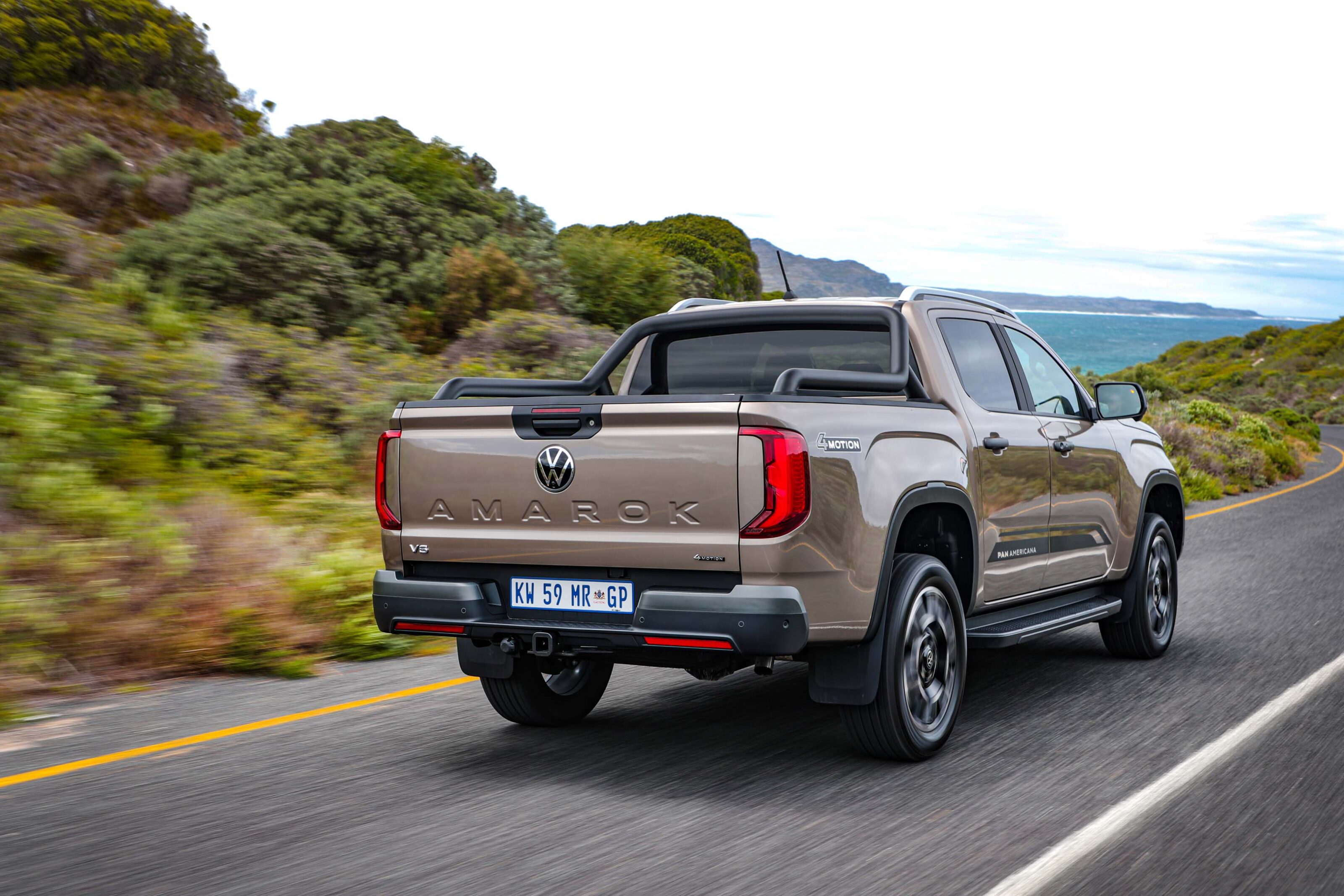
The European one-tonner, due here in April, once again enters a fray dominated by the Japanese, yet this time it’s not doing so quite so single-handedly – co-developing Amarok MkII with the latest version of the Aussie-American Ford Ranger.
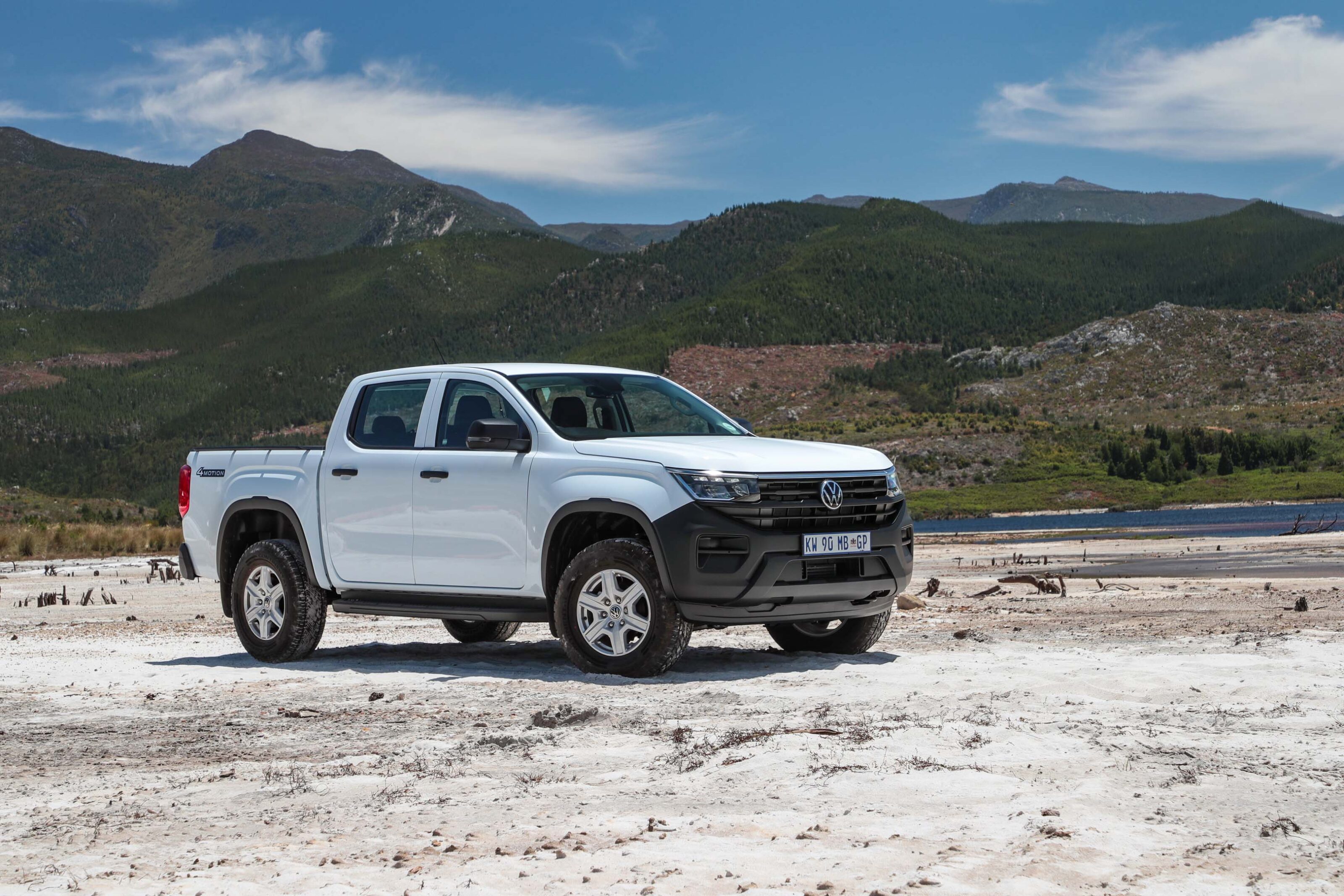
Shared platform, shared drivetrains, shared technology. And shared roof, glass area, doorhandles and side-mirror caps.
Shared sales might be trickier, simply because, unlike Ford and other key rivals, VW Australia has chosen to eschew cab-chassis, 4×2, and single-cab sub-segments – throwing its entire marketing payload into the dual-cab 4WD category. (4×2 and single-cab versions have been created for other markets.)
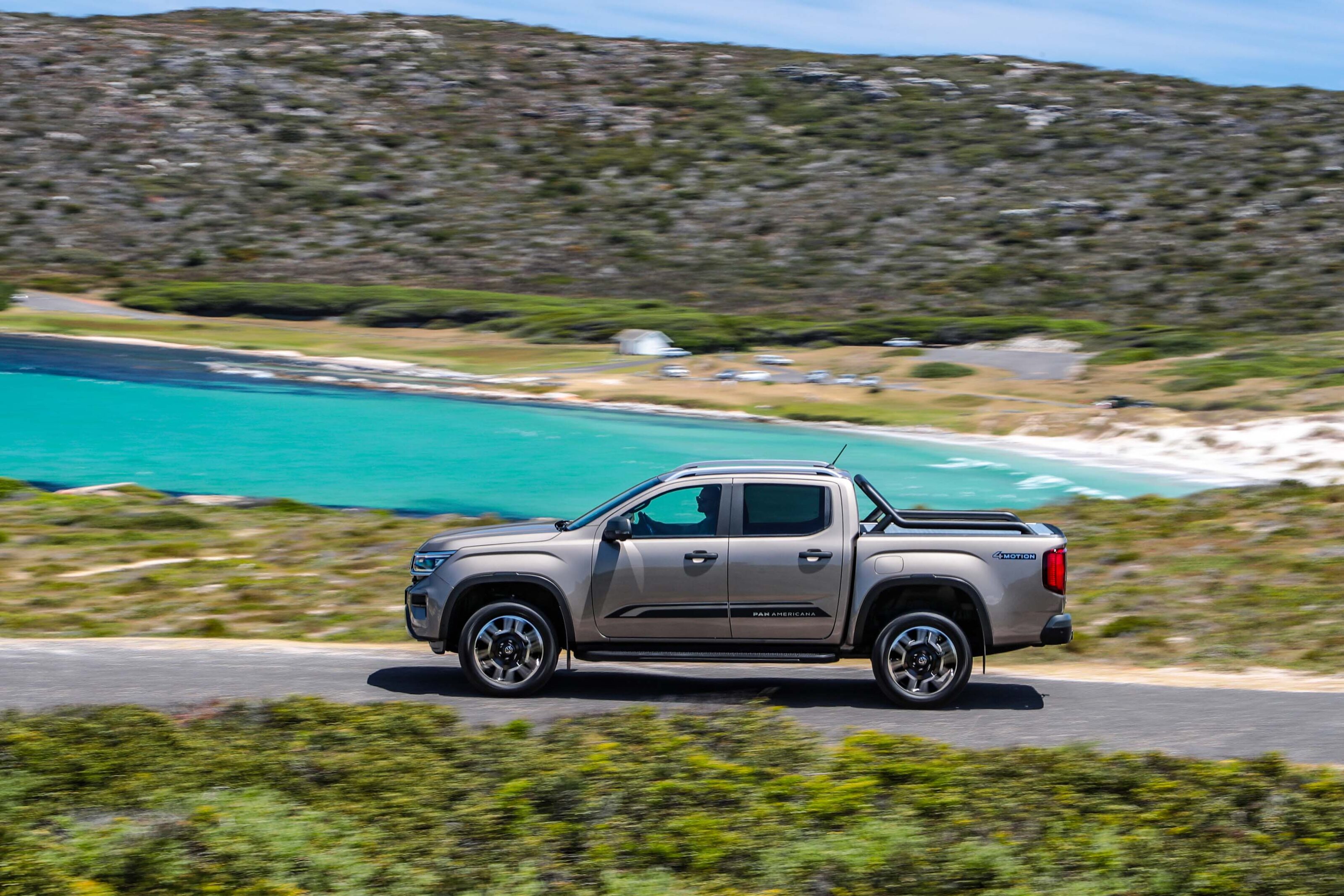
JUMP AHEAD
Amarok pricing has yet to be finalised, but we know it will be higher across the range.
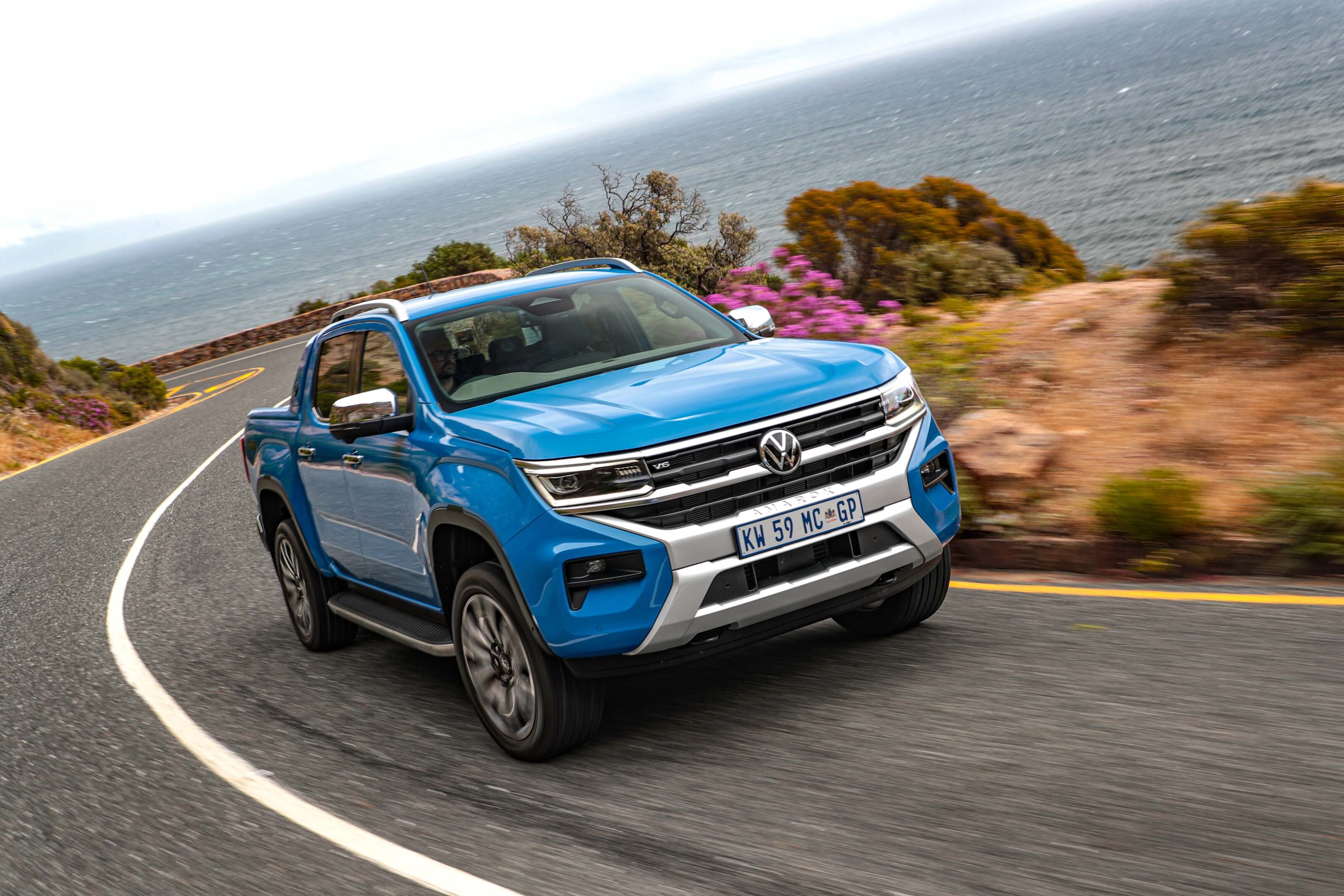
Volkswagen is pitching it as the segment’s “premium ute”, trading on a combination of upmarket interior and heavily loaded standard specification.
Five model grades have been confirmed for Australia, with the next set of Walkinshaw-badged specials not expected until 2024.
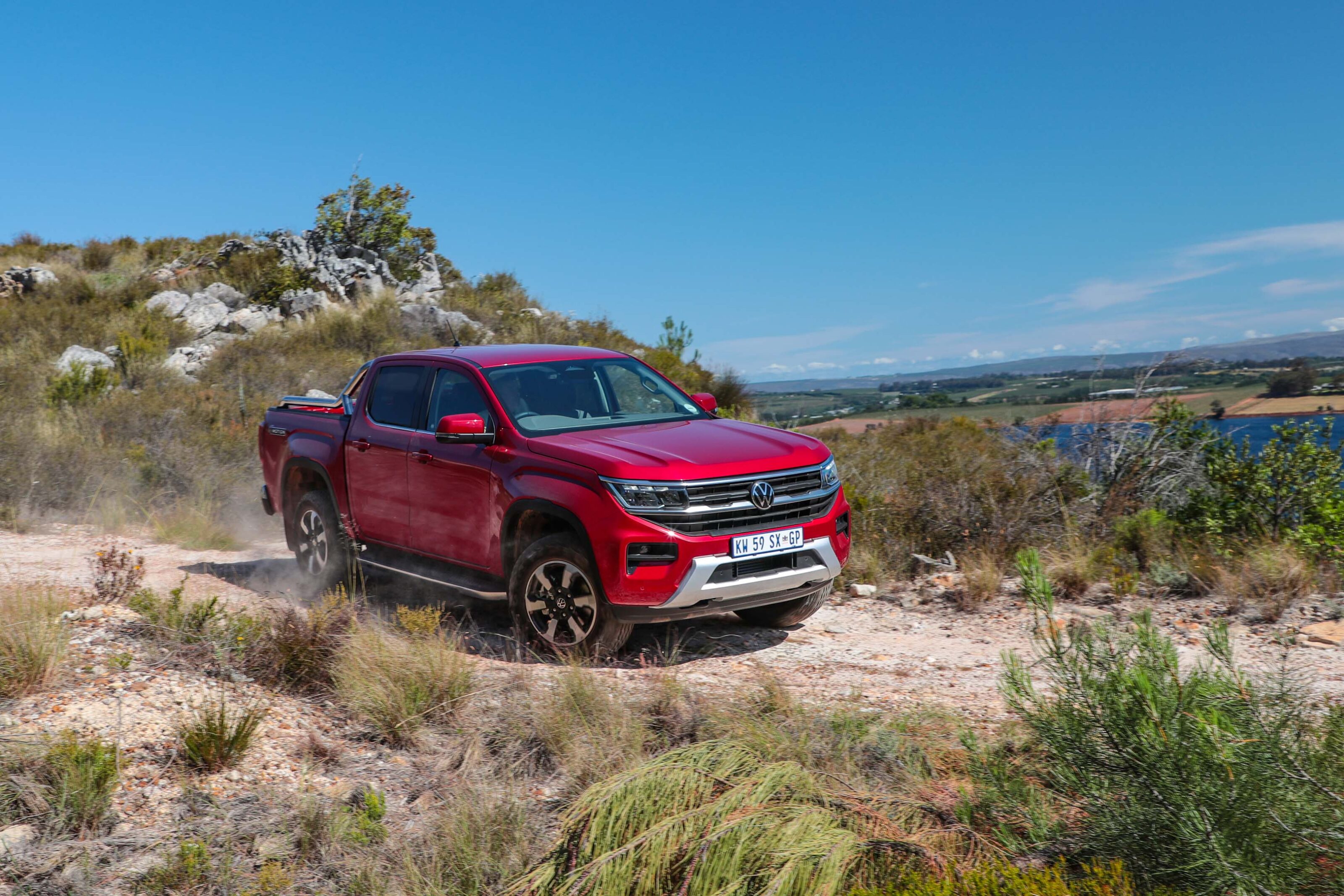
Every grade has, at a minimum, a large infotainment display (10 or 12 inches), wireless Apple CarPlay/Android Auto, wireless phone charging, LED headlights, adaptive cruise control, lane-keeping aids, rear parking sensors, speed-limit notification, and nine airbags (five more than the previous Amarok).
A vinyl-floored Core returns as the base model, and the Life adds some more niceties before the mid-pack Style – tipped to be the most popular variant and expected to cost from mid-to high-$60K before on-roads – ramps up the list of fancier features and exterior addendums.
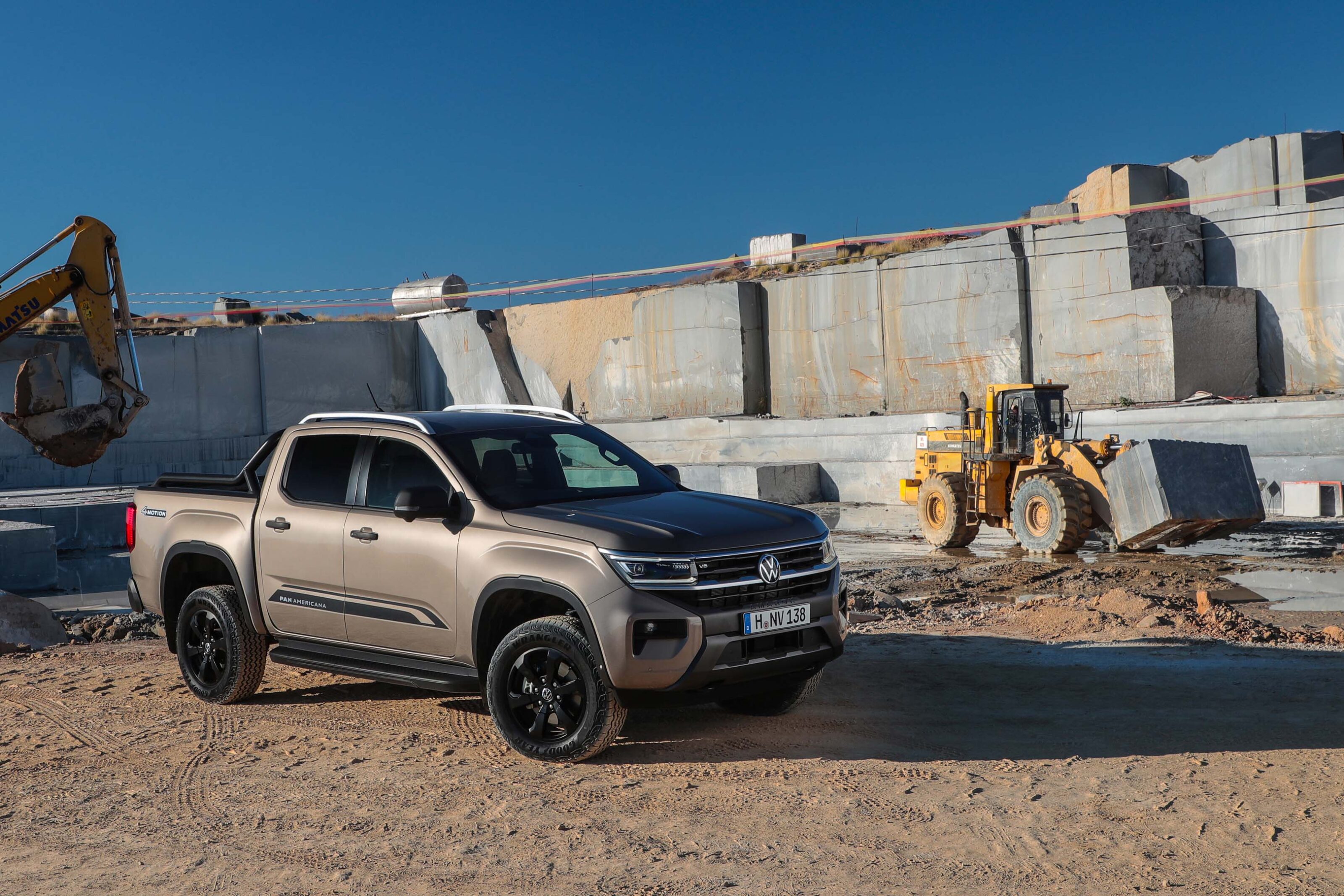
The new-to-VW PanAmericana badge marks where the Amarok puts a touch of extra emphasis on off-roading with all-terrain tyres and softer suspension, and introduces leather seating.
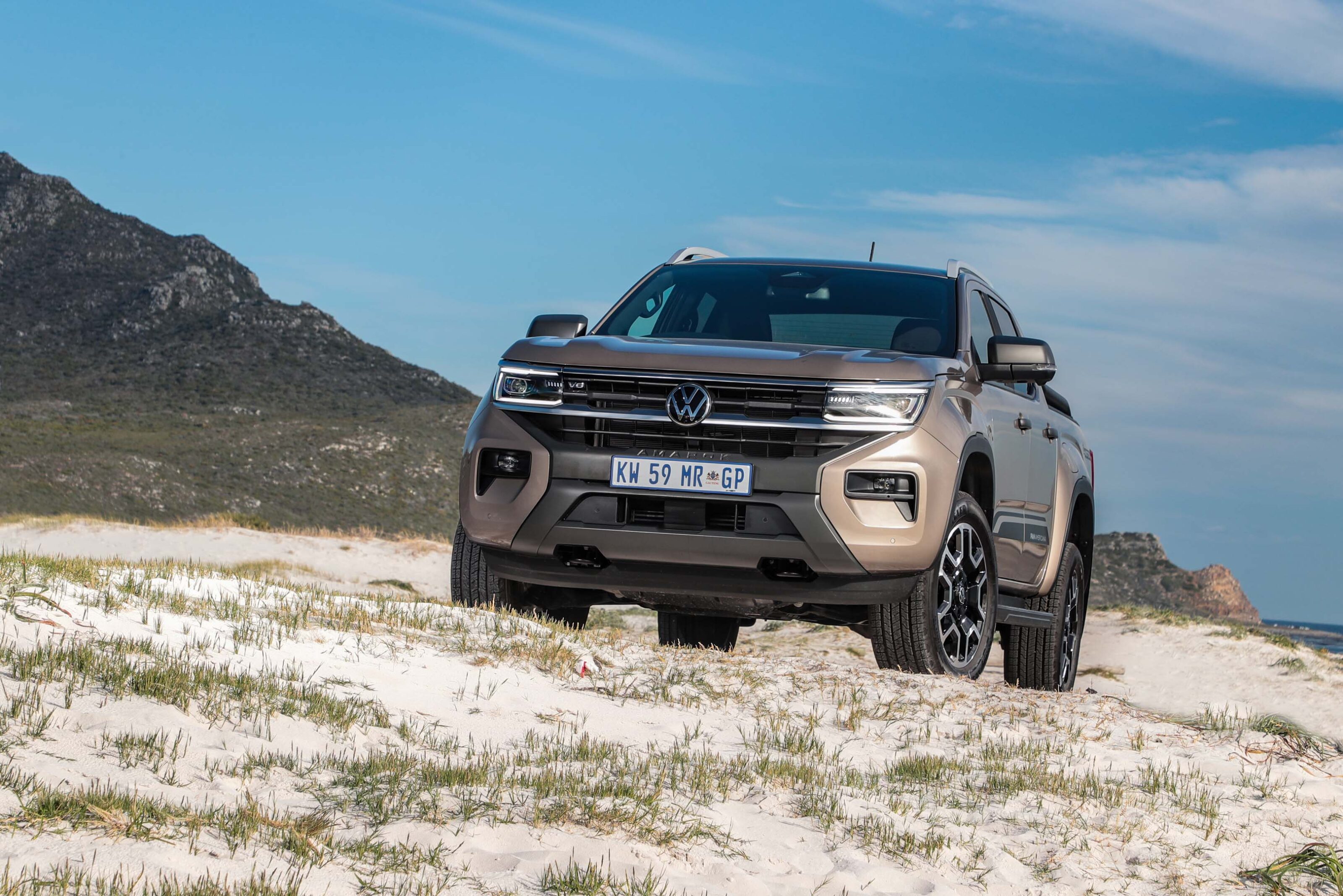
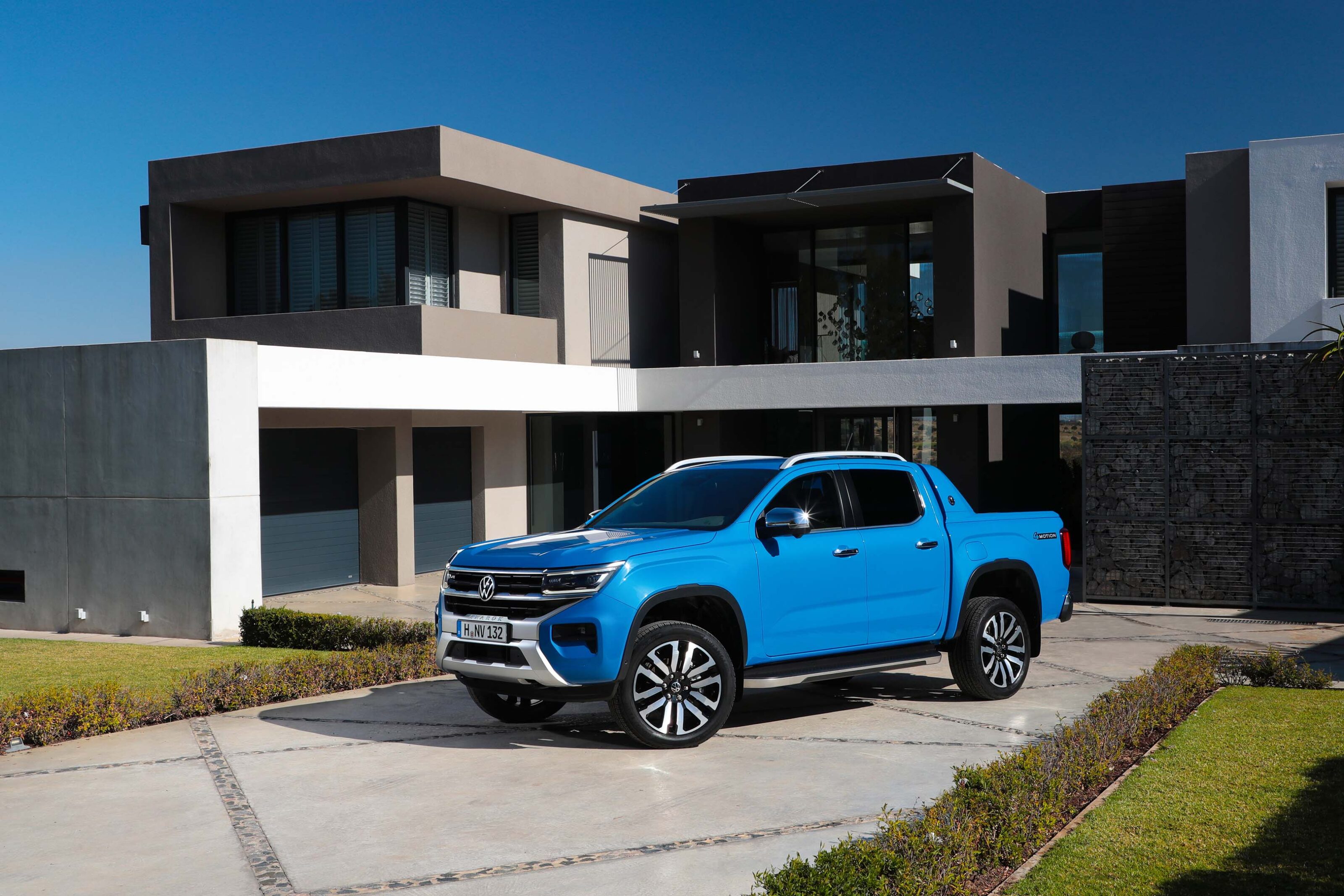
Aventura again denotes the flagship, fulfilling the road-biased brief with huge, 21-inch wheels – three inches up on the largest tyres currently available on the Ranger. (Next year’s Ranger Platinum will adopt 20s.)
PanAmericana could start somewhere in the $75-80K bracket; the Aventura is anticipated to start above $80,000 – very possibly above the $81,490 Walkinshaw W580S that was previously the most expensive Amarok.
2023 Volkswagen Amarok features
See the table below for a progressive list of each trim grade’s key features, plus drivetrain options.
| 2023 Volkswagen Amarok Core | |
|---|---|
| LED headlights | 10-inch infotainment display |
| 17-inch alloy wheels | Wireless Apple CarPlay and Android Auto |
| Towbar with brake controller | Digital radio |
| LED tray lighting | Wireless smartphone charging |
| Cloth upholstery | 8.0-inch digital driver display |
| Vinyl flooring | 2.0-litre turbo diesel with manual or automatic gearbox, part-time 4WD |
| 2023 Volkswagen Amarok Life | |
|---|---|
| LED foglights | Privacy glass |
| Electric tailgate lock (via central locking) | Carpet flooring |
| Front towing hooks | Front parking sensors |
| Leather steering wheel and gearshifter | 2.0-litre twin-turbo diesel with 10-speed auto, part-time 4WD |
| Auto-dimming rear view mirror | |
| 2023 Volkswagen Amarok Style | |
|---|---|
| Matrix LED headlights | 12.0-inch infotainment display |
| 18-inch alloy wheels | 12.0-inch digital driver display |
| Bedliner | Dual-zone climate control |
| Stainless-steel sports bar | Interior ambient lighting |
| Keyless entry and start | 360-degree camera |
| Artificial-suede seats (optional leather seats) | 2.0-litre twin-turbo diesel with 10-speed auto, part-time 4WD |
| Heated front seats | 3.0-litre V6 diesel with 10-speed auto, full-time 4WD |
| 10-way electric driveru2019s seat | |
| 2023 Volkswagen Amarok Panamericana | |
|---|---|
| All-terrain tyres | Black leather seats |
| LED tail-lights | Electric front seats |
| Roof rails | Black headlining |
| X-Design front bumper | Artificial Leather-covered dash and door inserts |
| Tonneau cover | Premium audio system |
| Spray-in bedliner | 3.0-litre V6 diesel with 10-speed auto, full-time 4WD |
| Black sports bar and rear step | |
| 2023 Volkswagen Amarok Aventura | |
|---|---|
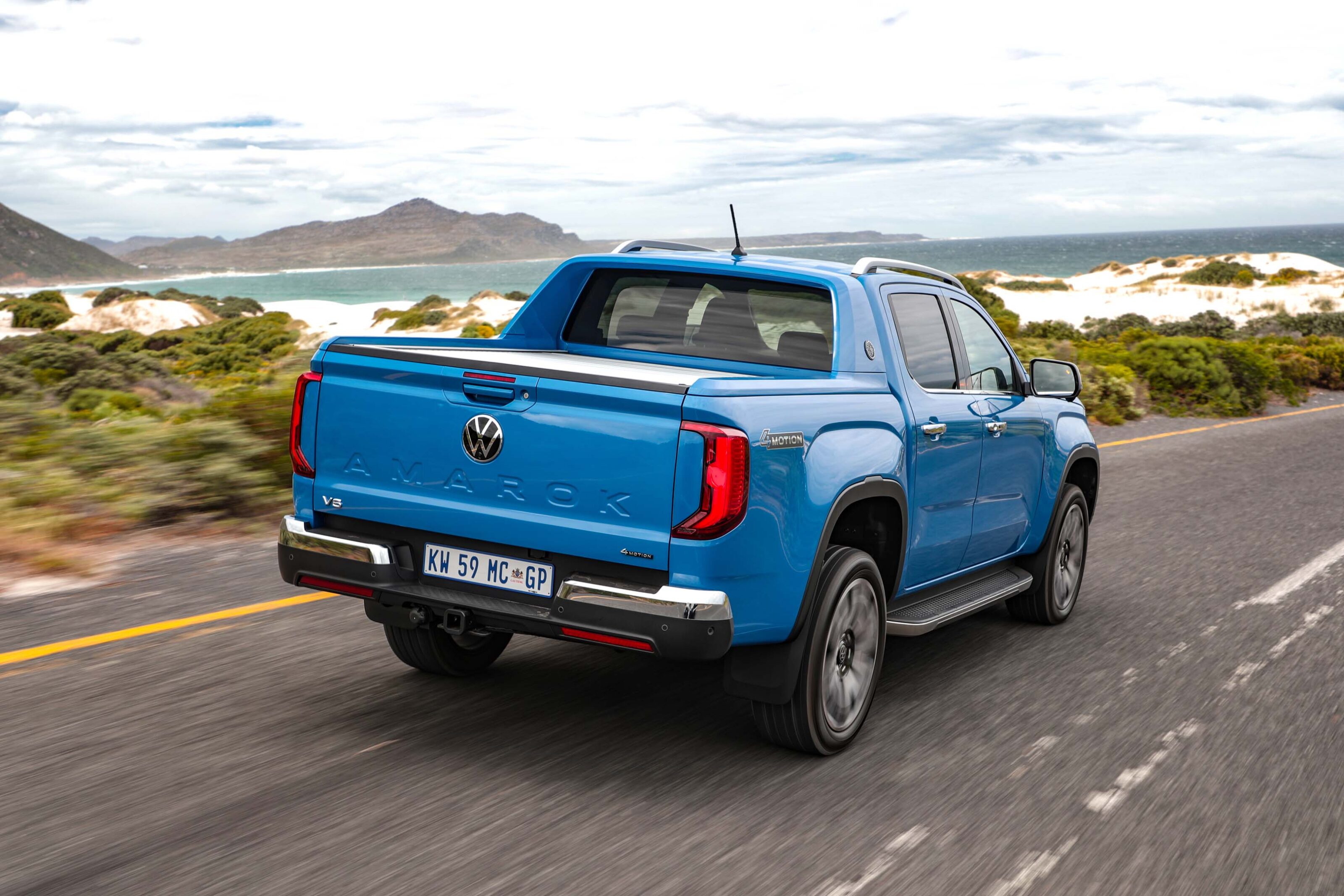
| 21-inch alloy wheels | Electronic roll cover |
| X-Design front bumper with chrome accents | Artificial Leather-covered dash and door inserts |
| Sailplane | Perforated-leather seats |
| Chrome side mirrors | 3.0-litre V6 diesel with 10-speed auto, full-time 4WD |
| Chrome rear step | 2.3-litre twin-turbo petrol with 10-speed auto, full-time 4WD |
2023 Amarok: Interior space, comfort, quality and tech
The 2023 Amarok once again pushes the envelope for upmarket ute interiors.
There are only a few elements of the Amarok’s interior that are obviously shared with the Ranger – the ergonomically brilliant squeeze-to-open doorhandles, chunky gearshift lever (though with VW’s own leather covering), portrait infotainment screen, and digital driver display (with some variations).
Various design elements – such as the T-shaped dash, 3D-style vents, and rugged infotainment/mode shortcut buttons – plus an assortment of smart finishes successfully achieve a distinctive look and for the Amarok’s cabin.
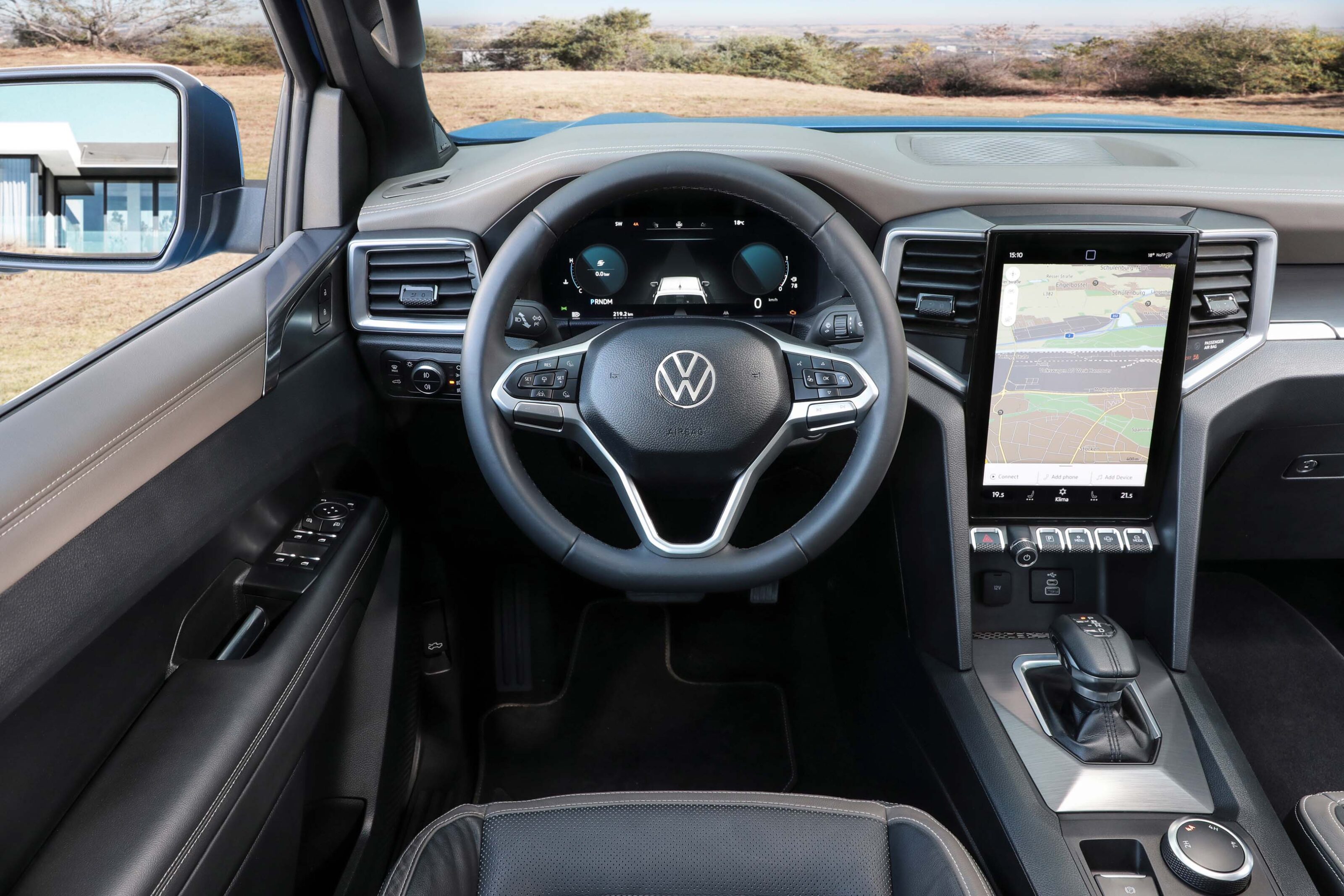
Style, PanAmericana and Aventura variants feature a dashboard plateau fully covered in artificial stitched leather – greyish brown in all our test cars – the same material of which is applied to the upper door cards.
PanAmericana adds material on the doors seemingly influenced reptile skin.
The middle sections of the doors, not just the armrests, yield to the touch, and smooth plastic inserts of various finishes are cleverly blended into the mix. The slightly rough black headliner is about the only notable disappointment.
The two-tone leather seats manage to feel both broad and supportive, offering an impressive level of sustained comfort over long distances.
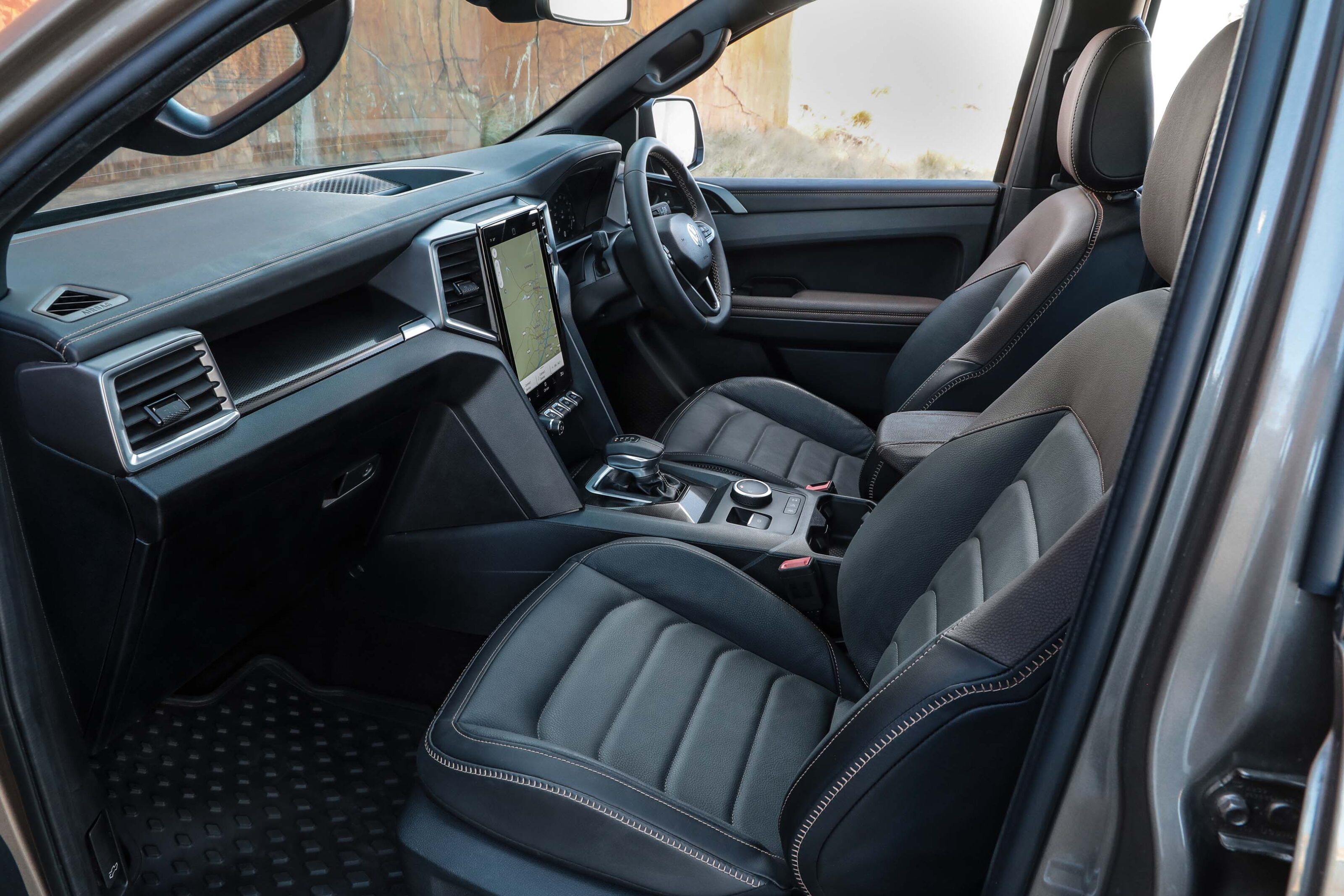
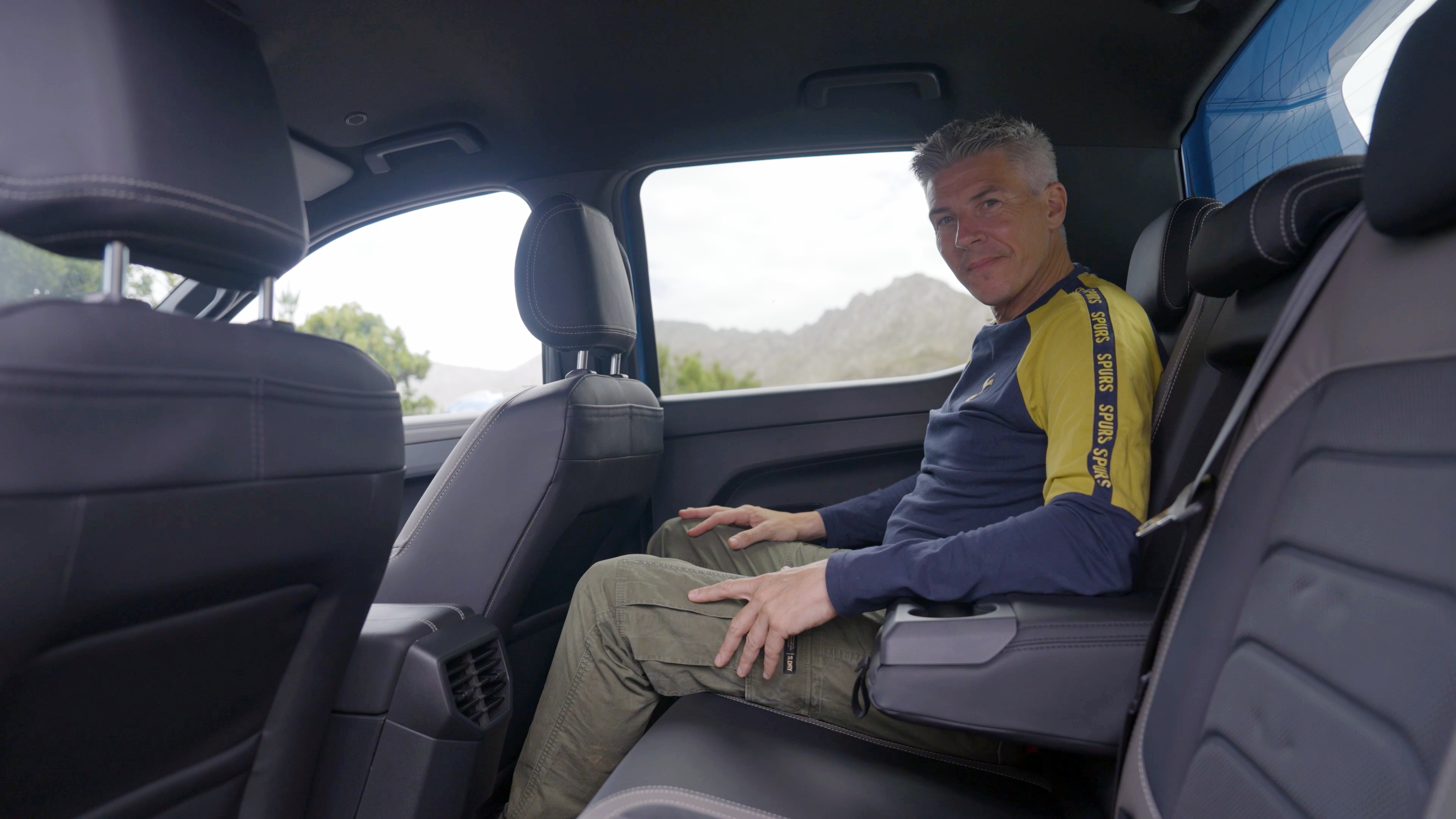
As with the Ranger, the Amarok’s rear seat isn’t the most commodious in the dual-cab ute class, but there is respectable space – and deeply scalloped seatbacks aid knee clearance. There’s decent foot space under the seats and plentiful headroom, while air vents are welcomed as a first for the Amarok.
Storage options include bottle-mould door compartments, seatback pouches, and cupholders in the centre armrest. The rear of the centre console featured 12V and 240V sockets, but the latter will be replaced by USB-C ports for Australia.
Back up front, the Amarok shares double bottle holders in the front doors but omits the push-out dash cup holders found in the Ranger.
2023 Amarok tray practicality and towing
| 2023 Volkswagen Amarok load and towing | |
|---|---|
| Tray length (mm) | 1624 |
| Tray width between wheel arches (mm) | 1227 |
| Load lashing rating (kg) | 400 |
| Load clamps rating (kg) | 250 |
| Payload (kg) | 1200 |
| Towing – braked (kg) | 3500 |
| GCM (kg) | 6000-6500 |
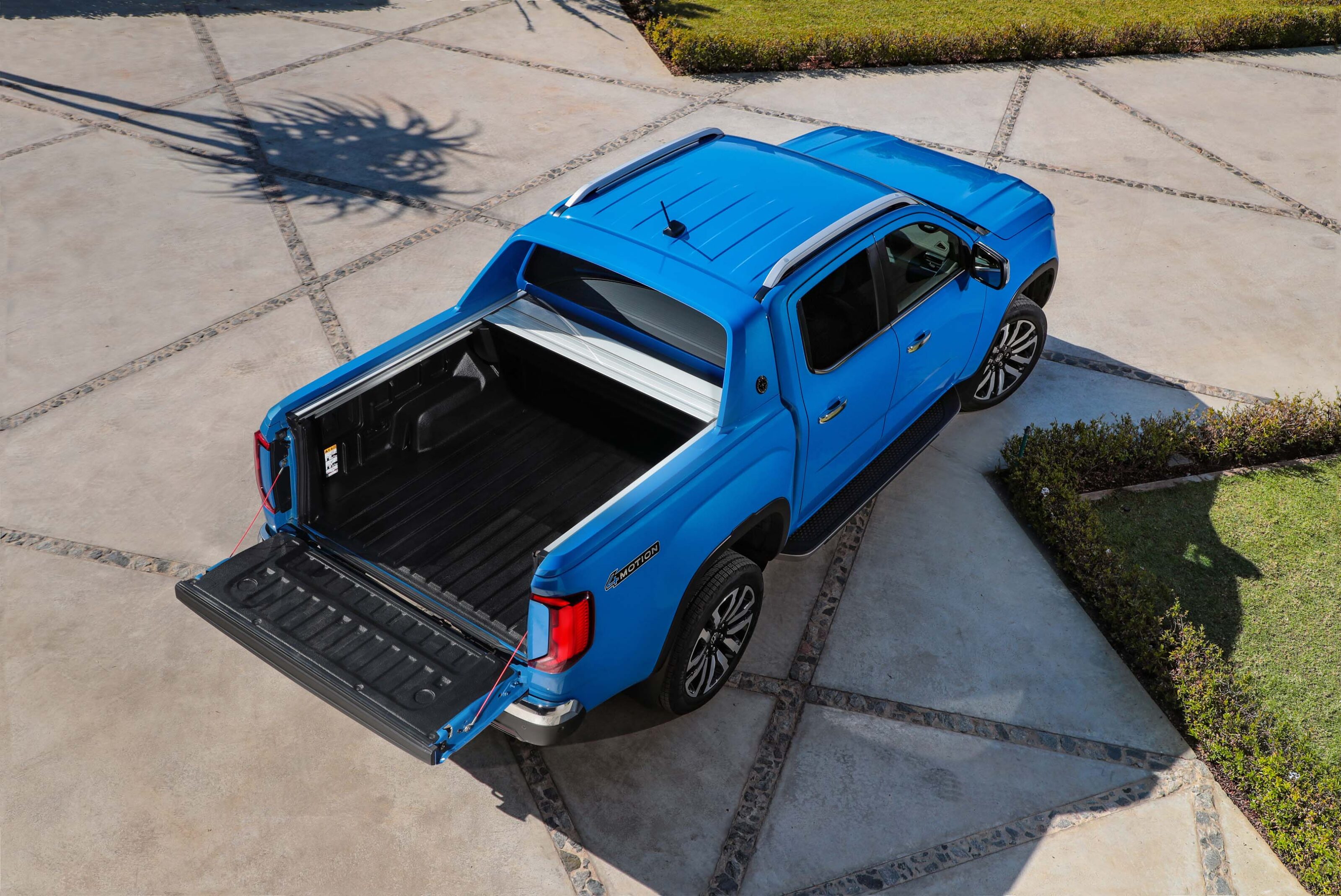
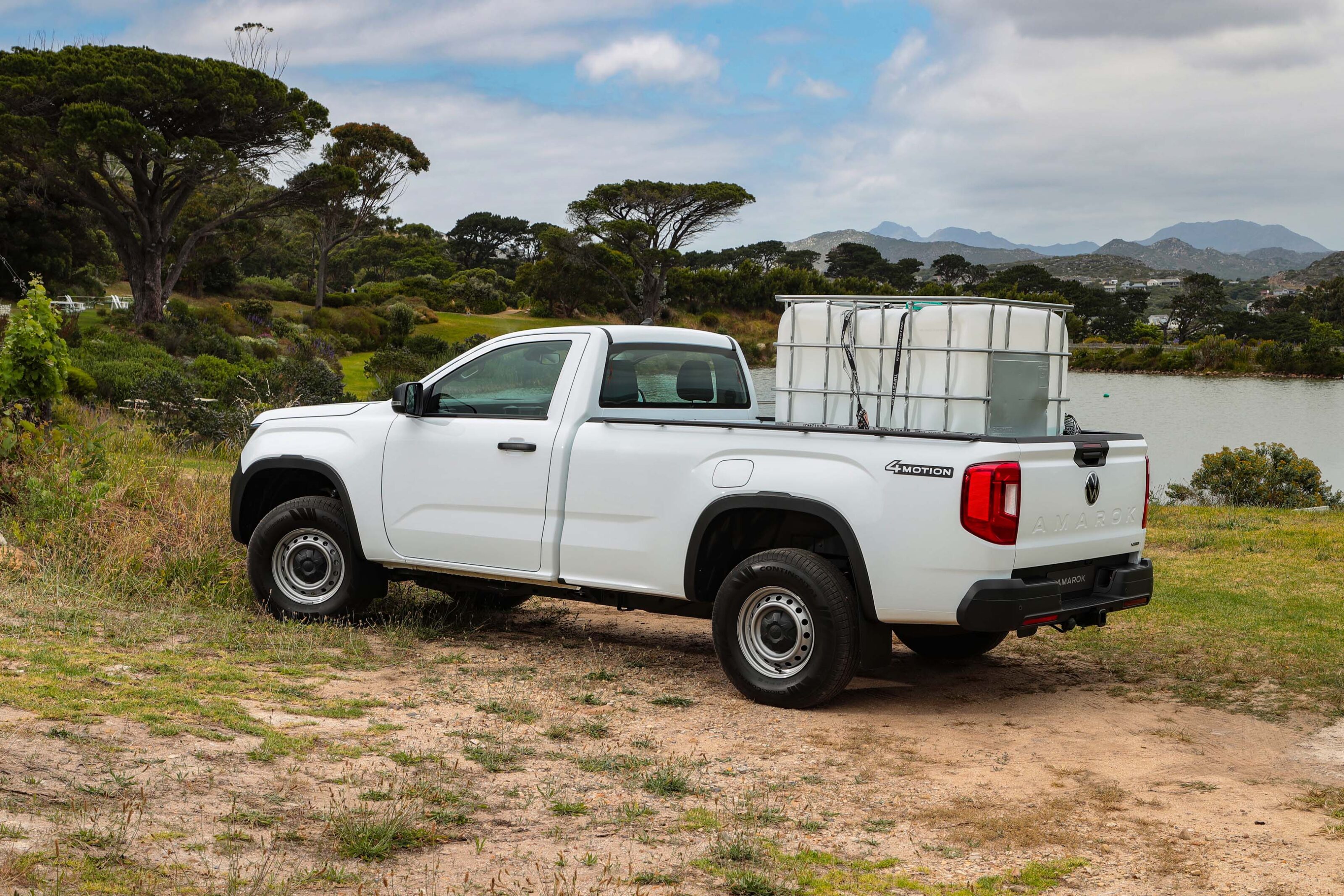
The Amarok’s tray continues to fit a Euro pallet courtesy of a 1624mm length and 1227mm between the wheel arches.
Six load-lashing rings have a tensile load rating of 400kg, while a track system incorporates four moveable clamps each with a 250kg limit.
LED tray lighting is standard on all Australian Amarok models.
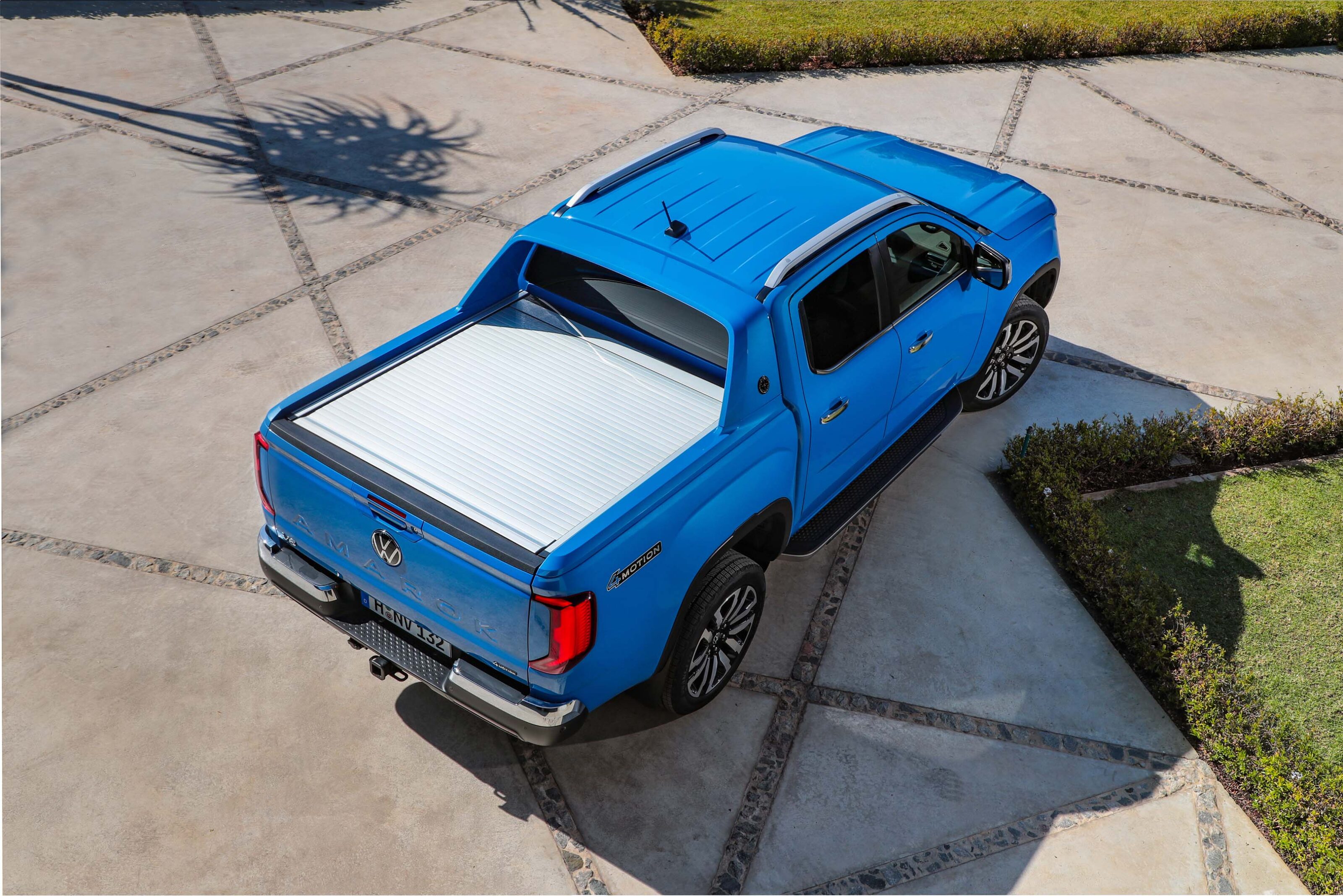
The PanAmericana comes with a tonneau cover; the Aventura features an electronic roll cover.
Maximum payload has also increased, from one tonne to just under 1.2 tonnes – one of the best figures in the segment.
There’s again a 3500kg braked towing capacity, while VW says the permissible total weight of vehicle and trailer has increased from 6 to 6.5 tonnes.
On the road
The original Amarok was a pioneer in many respects, including its car-like interior and driving position.
This aspect hasn’t just been retained but seems to have been further emphasised. The driver’s seat – powered from the Style upwards – can be adjusted surprisingly low.
The front seats feel like best-in-class contenders, with excellent shape, cushioning and bolstering from the entry Core up to the range-topping Aventura. The leathered PanAmericana and Aventura variants, in which we spent most of the two-day launch, proved immensely relaxing for hours behind the wheel.
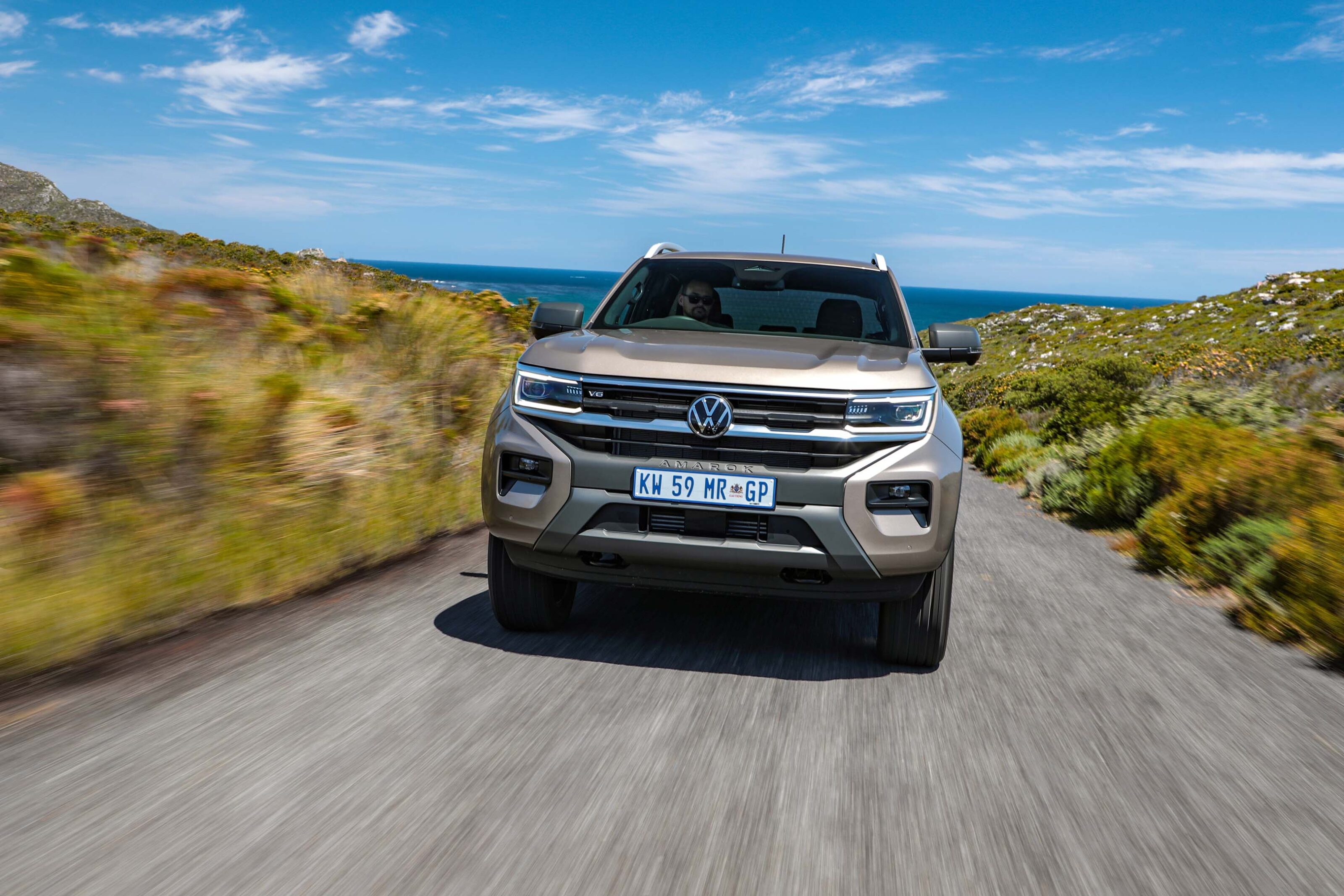
Aventura is a particularly intriguing model, as the only Amarok to get its own (stiffer) front dampers, its own (faster) steering tune, and a set of huge, 21-inch wheels that dwarf those of any other variant.
The negative result of the first and third elements is a ride that is always firm, mostly busy, and sometimes jiggly. It tends to smooth out with increased speeds but generally feels like a set-up that will struggle on Australian roads.
There was an obvious contrast to the PanAmericana, with its softest-in-range suspension tuning clear despite launch models being fitted with 20-inch wheels rather than the 18s that will be the standard Australian spec.
A brief drive of a Style on 18-inch wheels provided another indicator of the improved ride that can be found elsewhere in the range.
On the positive side, the Aventura will hold the most appeal for any keen drivers who are looking to migrate from a passenger car or SUV to a dual-cab ute.
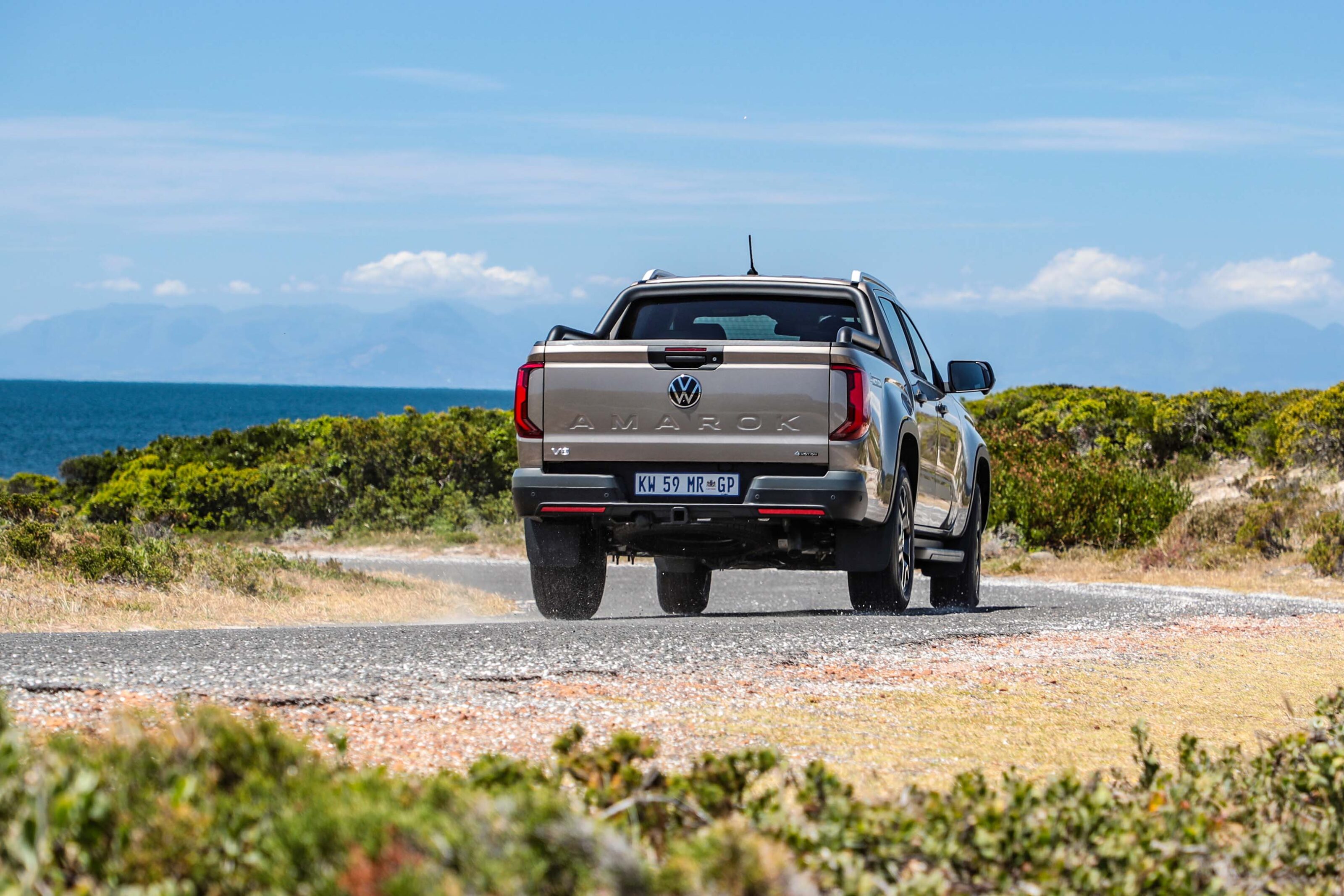
The flagship Amarok equips itself commendably well along curving country roads, keeping both lateral and vertical body movement in check.
The steering is quite superb, with an uncannily natural and meaty weighting and a responsiveness from the straight-ahead that makes it easy to point the Amarok exactly where you want.
As dynamically excellent as a well-engineered large SUV? Let’s not get carried away; there are still limitations to what can be done with a ladder-framed, leaf-sprung chassis.
The all-season Goodyear Wrangler HT 275/45R21 tyres also grip strongly, refusing to squeal even under load in hairpins and making less noise than the wind around the side mirrors (at least on the South African launch roads).
There’s not quite the same crispness off centre in the PanAmericana or Style, with their slightly slower racks and slightly smaller tyres compared with Aventura, but the steering is still otherwise excellent.
Our time in a mid-range Style twin-turbo four-cylinder diesel was limited to an off-road course and a very short on-road drive.
That was still long enough to mark another similarity with the Ranger. It’s well worth paying the relatively small premium for the V6 diesel.
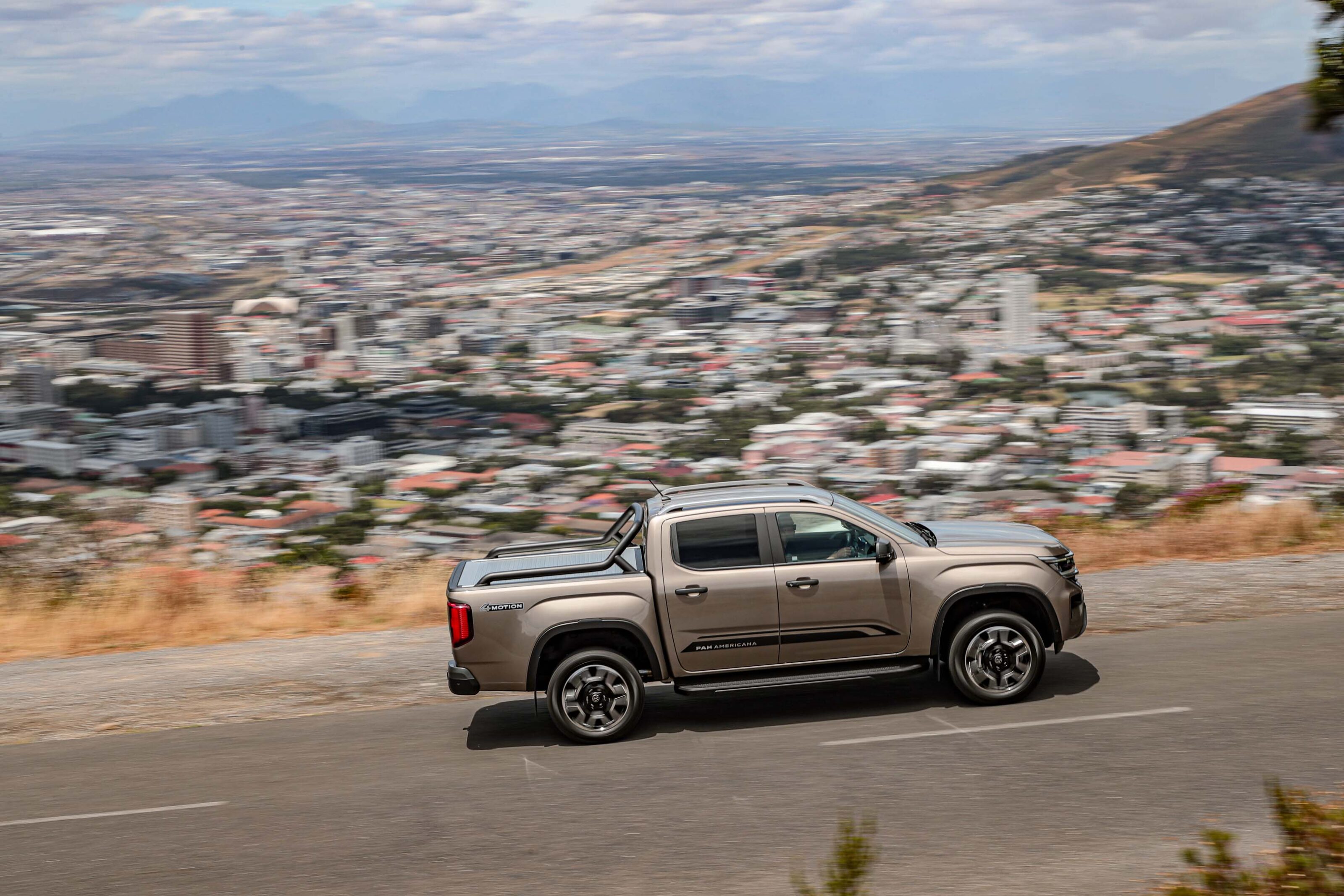
The smaller diesel is a good engine, no doubt, but the V6 is smoother, stronger and more responsive.
However, a Sport mode and paddleshift levers would have been desirable.
As in the Ford twin, the six-cylinder is also linked to a permanent all-wheel-drive system where the four-cylinder diesels feature electronically selectable part-time set-ups.
Disappointingly, a Mustang-sourced 2.3-litre twin-turbo petrol engine – the most powerful engine with 222kW and set to be a no-cost option on the Aventura – wasn’t available to test. This will be the Amarok’s only exclusive engine compared with the Ranger as Ford Australia opted against it.
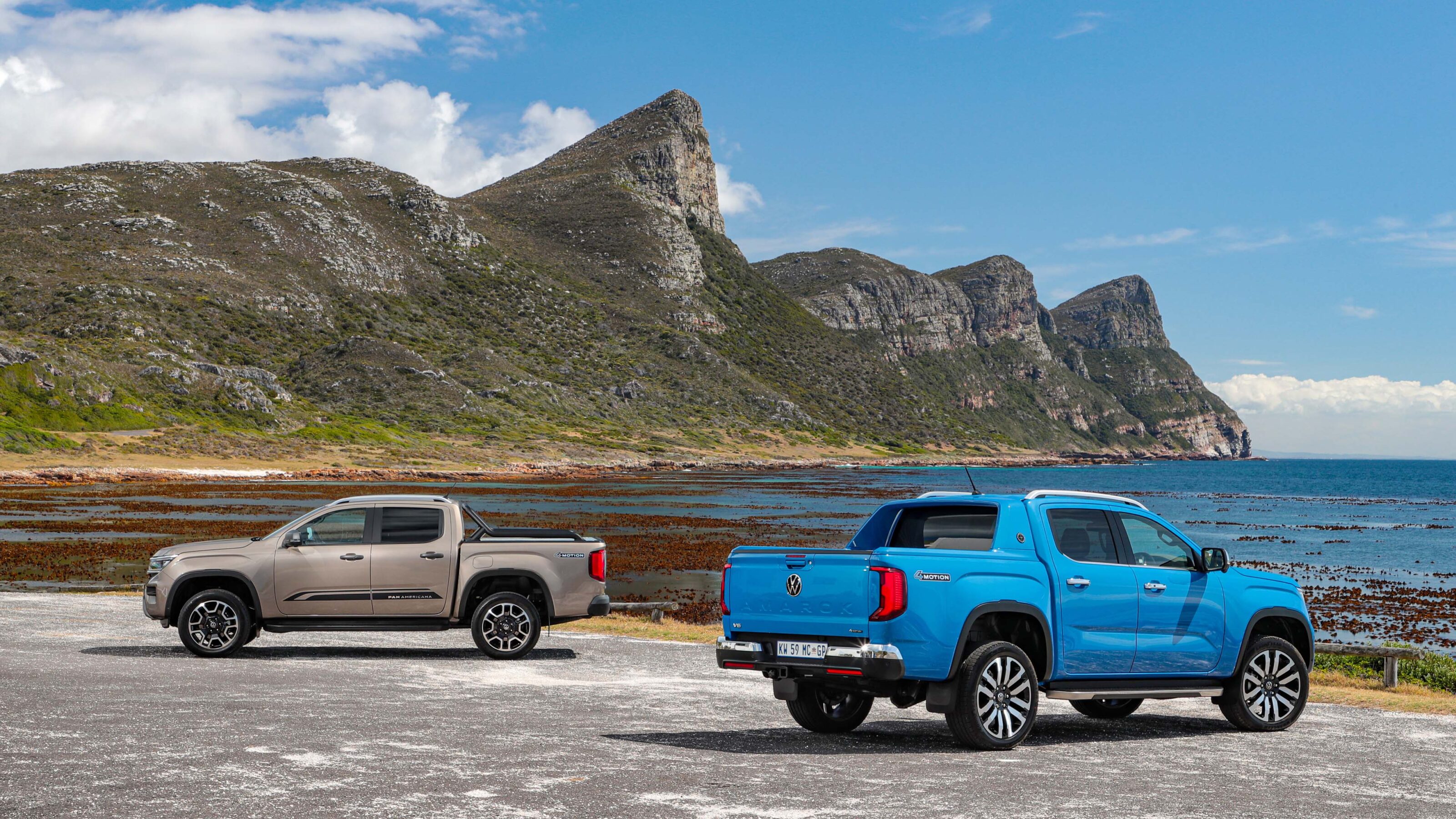
Off road
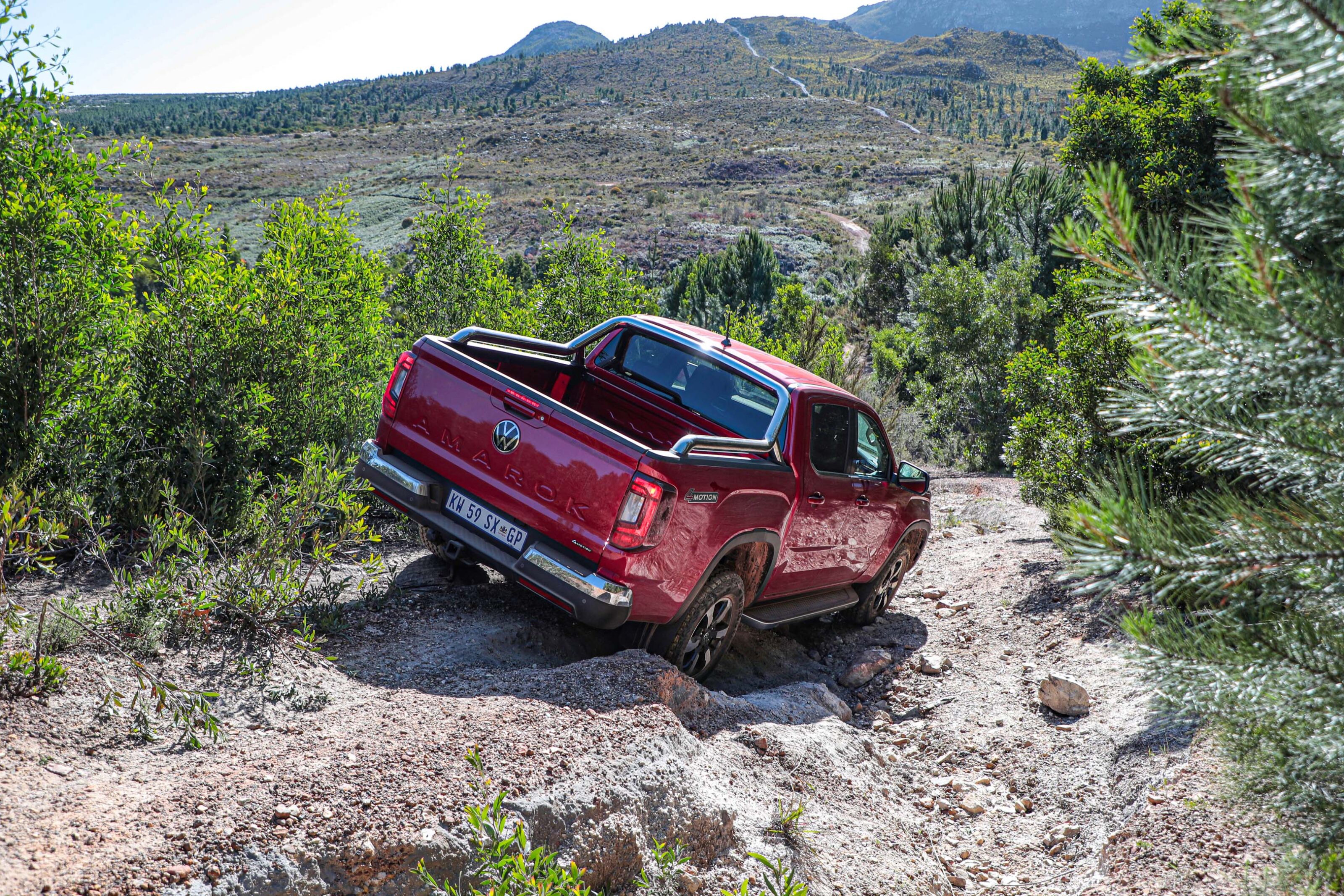
With about 95 per cent of the global launch drive spent on the road, there’s not a great deal we can report about the new Amarok’s off-roading capabilities.
From the one-hour scramble we did have around a mountainous wine region near Cape Town, the VW suggested – not surprisingly – similar capabilities to the Ranger.
Unlike the original Amarok that used specially calibrated eight-speed auto, the second generation features low range.
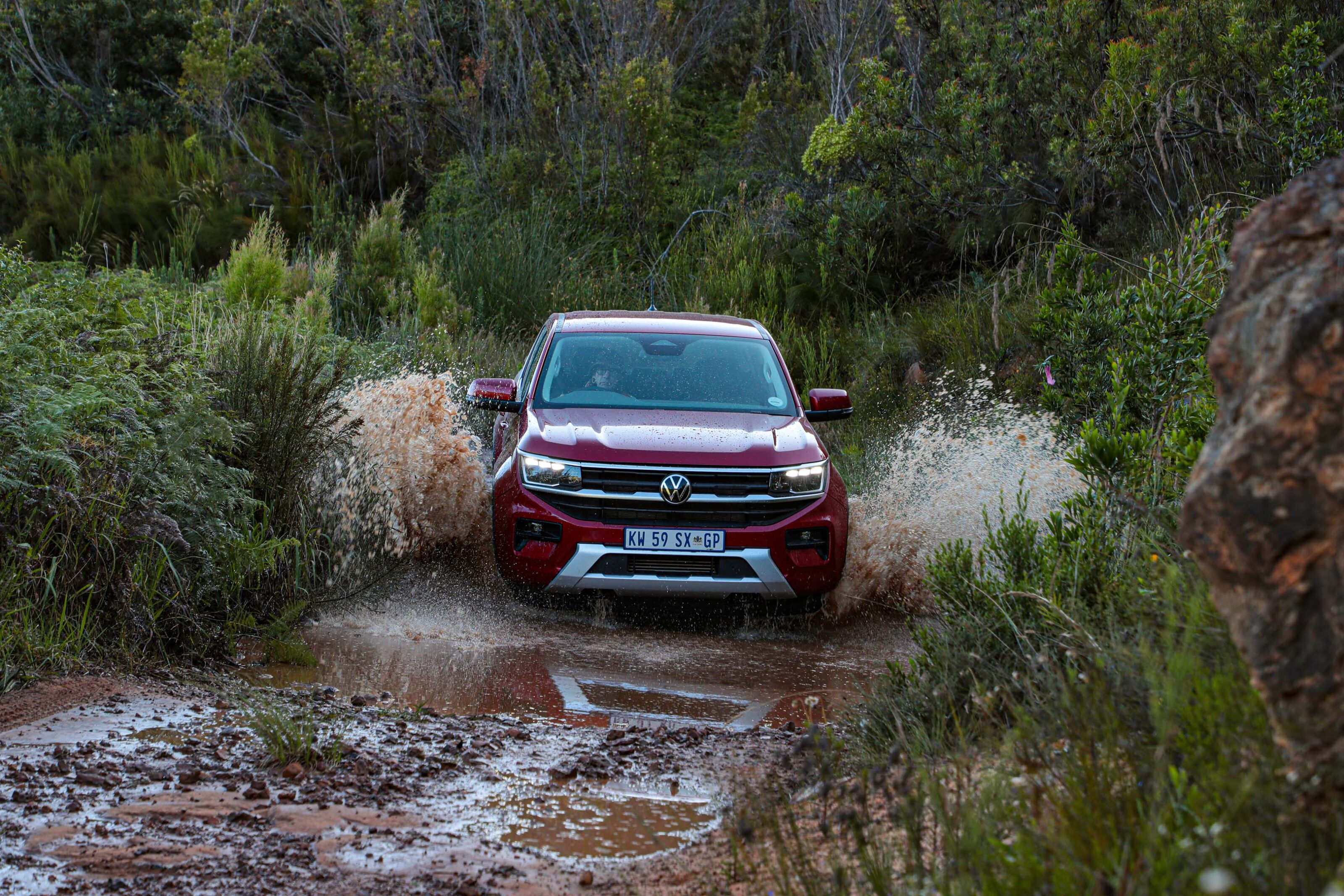
We were given an 18-inch-wheeled, twin-turbo four-cylinder diesel Style with part-time 4WD for the exercise rather than the more off-road-focused PanAmericana that features a softened suspension, all-terrain tyres, and comes standard with the V6 diesel and full-time AWD.
Our VW guide had us switching between 4 Low and 4 High, and occasionally employing the locking rear diff (to be standard on all Aussie Amaroks), though just 2 High (RWD) would probably have been sufficient for the vast majority of the dry, rocky trails.
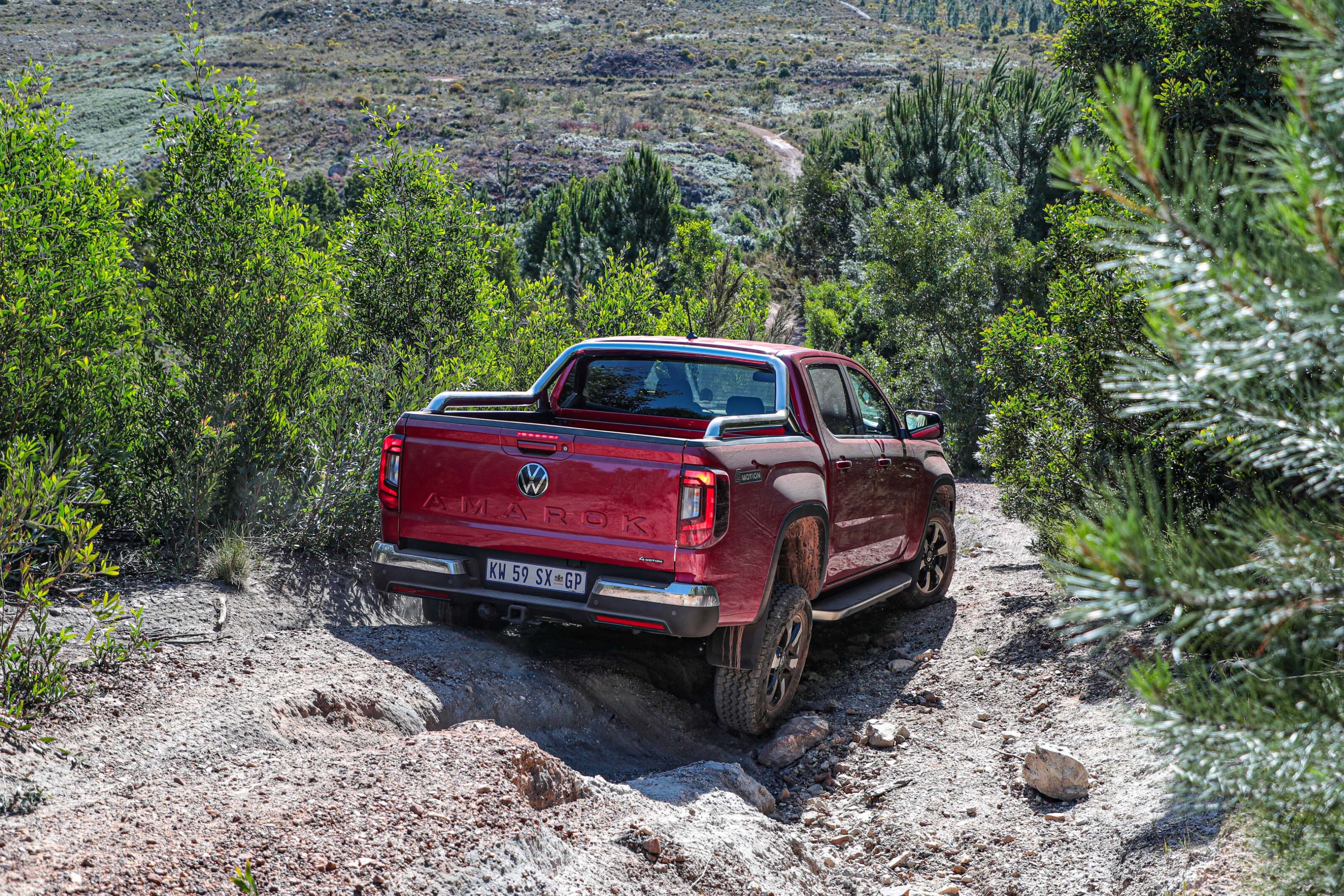
The Amarok’s approach and departure angles have improved slightly over the predecessor, while the ramp angle is marginally shallower.
Wading depth makes a big gain, from 500mm to 800mm – matching the Ranger.
VERDICT
First impressions are that the Amarok mostly delivers on its premium-ute promise.
It’s a shame the Amarok has lost its 100 per cent individuality, but it was either alliance or bust for the second generation.
The shrewd decision to partner with Ford, however, has allowed the Amarok to retain many of the virtues appreciated by fans of the original – while VW’s designers and engineers have ensured this is no cut-and-paste Ranger experience.
Comparisons with the Ford are inevitable and inescapable (and even the old Amarok), though first impressions – as we await to see how ride quality translates to Aussie roads – are that the Amarok mostly delivers on its premium-ute promise.
The other key question is exactly how much of a premium Volkswagen will charge for that.
? MORE 2023 AMAROK
Get all of our latest stories in one handy place, with our Everything You Need to Know article at the link below.
2023 Volkswagen Amarok specifications
| Model | 2023 Volkswagen Amarok Aventura |
|---|---|
| Body | Dual-cab ute |
| Drive | Full-time 4WD |
| Engine | 3.0-litre V6 turbo diesel |
| Transmission | 10-speed automatic |
| Power | 184kW @ 3250rpm |
| Torque | 600Nm @ 1750-2250rpm |
| 0-100km/h (claimed) | Not available |
| Fuel consumption (combined) | Not available |
| Weight | 2540kg |
| Suspension | Strut front, leaf-spring rear |
| Length/Width/Height | 5350/1910/1751-1884mm |
| Wheelbase | 3270mm |
| Maximum payload | 1.19 tonnes |
| Roof load | 85kg (static); 350kg (driving) |
| Maximum braked towing capacity | 3.5 tonnes |
| Approach/Ramp/Departure angles | 30/21/26 degrees |
| Ground clearance | 237mm |
| Wading depth | 800mm |
| Tyres | 275/45R21 |
| Wheels | 21-inch alloy |
| Price | $80-85,000 (estimated) |
Snapshot
- Skateboard battery fits between ladderframe chassis and frame
- VW targeting about 500km of driving range for Amarok EV
- Hydrogen power has potential for fourth-generation Amarok
An electric version of the Volkswagen Amarok is set to go into production in the second half of this decade, with a plug-in hybrid variant also possible.
Volkswagen confirmed its electrification plans at this week’s global launch of its second-generation Amarok, which was co-developed with the Ford Ranger.
Ford Australia is understood to be leading the development of the electrified version of the T6.2 platform shared by the Ranger and Amarok utes, as it did for the petrol and diesel models already released.
December 7: NEW AMAROK DRIVEN! Words & Video
We’ve finally driven the new-gen 2023 Volkswagen Amarok, with Jez jetting (Jet jezzing?) to South Africa for a world’s-first spin in the new ute. Get our full story below.
Story continues
Volkswagen Amarok: “Premium ute” set to cost $80,000+ in flagship form
Ford insiders have already confirmed a hybrid Ranger is due by 2024.
Volkswagen said an electric Amarok is possible because the T6.2 platform was future-proofed with the ability for a skateboard battery to be installed between the ladderframe chassis and floor.
Petr Sulc, a senior member of VW’s global product management team, admitted the first electrified versions of the Amarok would be a development challenge and likely to impose compromises on owners.
“You have two possibilities to do the PHEV [plug-in hybrid] and the [pure] electric vehicle, but of course you have some different kind of problems [to improving combustion engines for Euro 7],” said Sulc. “Because you need to think about the payload, think about the towing capacity, and think about the electric driving range – how many kilometres you would like to achieve [from the size of the battery].
“If you put in the big, big battery, you can achieve the [desirable] towing capacity but are losing 300 or 400 kilograms of the payload [capacity]. We really need to find the compromise between the electrical range and the payload.”
Sulc says his preference would be to sacrifice driving range, but agrees Ford’s decision to adopt a low-payload-high-towing approach for its F-150 Lightning electric ute is the right way to go – especially for markets such as Australia (the Amarok’s biggest volume market).
To achieve an ideal driving range of 500 kilometres for the electric Amarok, Sulc says a 100-110kWh battery (useable) would be necessary. He also confirmed this size of battery will feature in VW’s ID.Buzz, the electric people-mover that currently comes with a 77kWh battery delivering a WLTP driving range of 425km.
The recently launched LDV eT60, the first electric ute to be sold in Australia, has also given an indication of the compromises involved. Featuring an 88.5kWh battery, the eT60 offers a slightly higher payload than a diesel T60, but has a driving range of only 330km, its towing capacity of 1000 kilograms is less than a third of the segment average, and it’s rear-wheel drive.
Volkswagen says four-wheel drive is a must for an electric Amarok.
Sulc also said his personal view was that a petrol rather than diesel engine would be the more effective engine to team with an electric motor for a plug-in hybrid Amarok. Petrol offered obvious benefits for consumption and the balance of NOx and CO2.
The second-generation Amarok’s drivetrain lineup includes a twin-turbo four-cylinder diesel not being used by the Ranger in Australia. A 3.0-litre twin-turbo V6 petrol features in the Ranger Raptor.
The timing of an electrified Amarok depends on the official introduction of Euro 7. Sulc said the industry remains hopeful the European Commission will see its timeframe isn’t realistic for manufacturers and delay the introduction of the ultra-strict regulations.
If the EU refuses, Sulc said VW would have to find a relatively quick solution and work with its commercial-vehicles partner Ford.
“At that point of time [July 2025], we really have find this [trade-off]… what can be delivered at that point of time. But we are willing to make the Amarok for the next 10 years, so we have to [meet the regulations with an electrified version].”
Sulc said buyers may find an electrified/electric Amarok preferable once diesel engines are forced to be heavily detuned to meet emissions regulations.
Unlike Europe, Australia wouldn’t be affected by Euro 7 regulations for many years. The country has historically lagged well behind Europe and won’t even introduce the Euro 6 standard until November 2024 – nine years after Europe.
Volkswagen says the production location for any electrified Amarok would need to worked out with Ford.
The Amarok is being produced in South Africa while the Ranger is built in Thailand.
Sulc said hydrogen is a logical technology for commercial vehicles, but that it was at least 10 years away – with potential the fourth-generation Amarok.
? MORE 2023 AMAROK
Get all of our latest stories in one handy place, with our Everything You Need to Know article at the link below.
Snapshot
- Number of company’s diesel models said to be affected
- Could involve tens of thousands of customers
- Action follows similar large-scale Toyota case
A legal firm is preparing a class action case against Jaguar Land Rover on the basis it claims several of the carmaker’s vehicles are fitted with faulty diesel particulate filters (DPFs).
Tens of thousands of Land Rover, Range Rover and Jaguar diesel car owners could receive compensation if the legal action was successful.
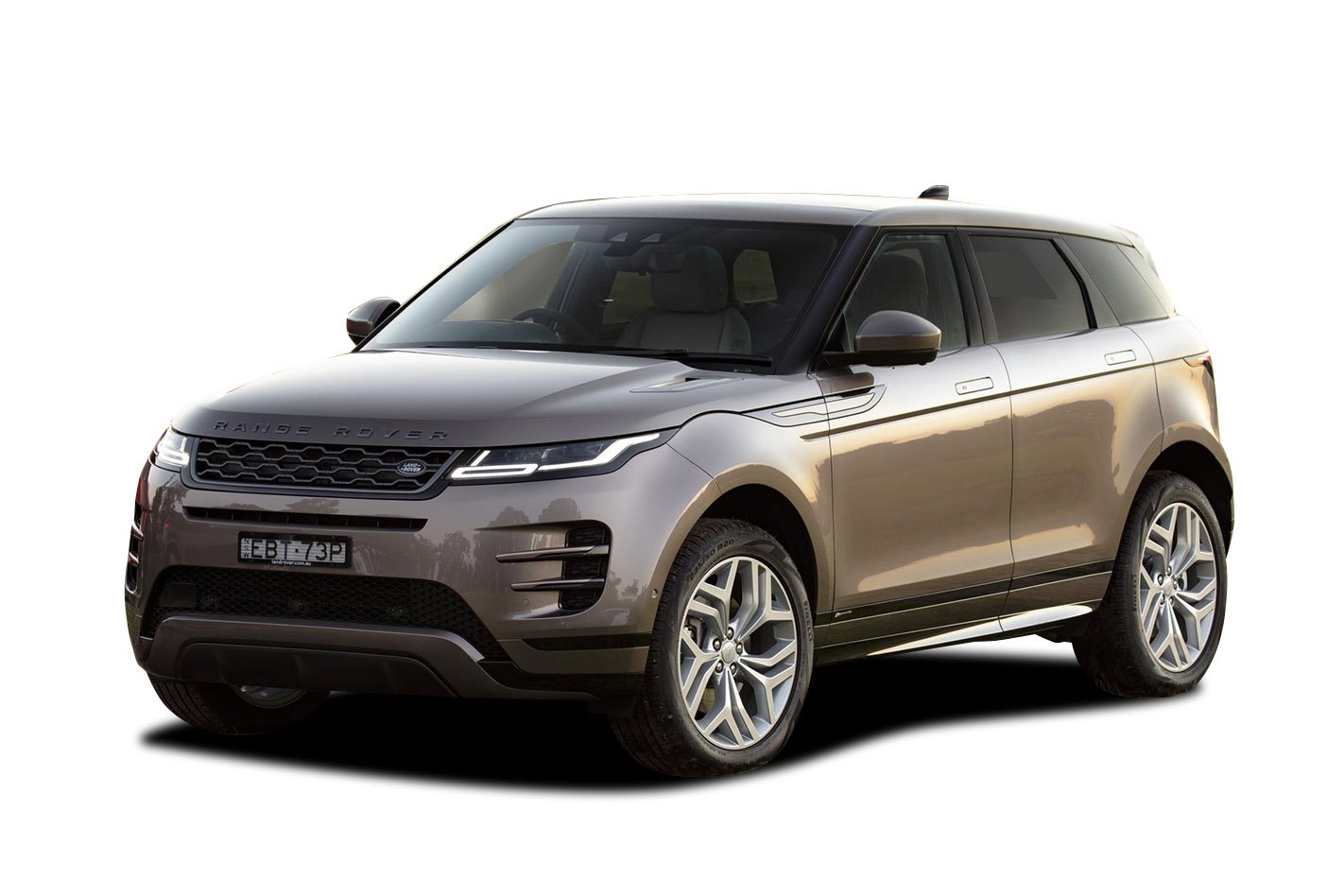
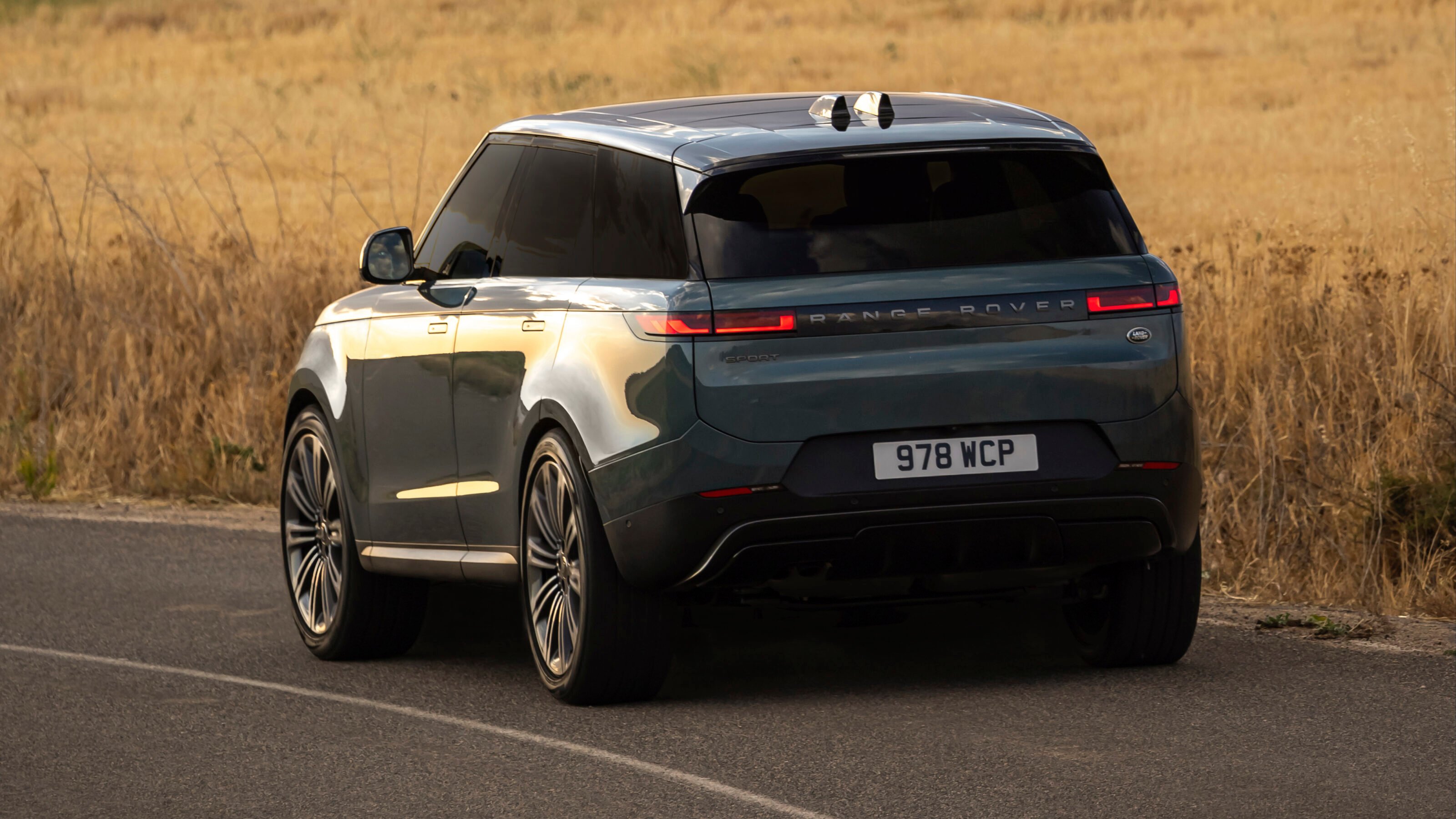
Jaguar and Land Rover supplies several popular diesel vehicle models in Australia, including the Land Rover Discovery Sport, Discovery, Range Rover Evoque, Range Rover Sport, Range Rover and Jaguar E-Pace.
The potential action, which is being investigated by Maurice Blackburn Lawyers on behalf of new or second-hand vehicles acquired after January 1, 2011, is said to allege that the DPF system is defective in Jaguar and Land Rover diesel vehicles as it is ‘prone to become blocked under regular driving conditions’.
The firm contends this poses a safety hazard to drivers, passengers, and pedestrians because a clogged DPF can ’cause the vehicle to lose power suddenly with little to no warning, severely inhibiting the performance of the vehicle and the safety of the vehicle on the road.’
The defective DPF system also causes ongoing mechanical issues, it says, and requires more frequent servicing and maintenance.
The purpose of the class action is to seek compensation on behalf of owners with affected vehicles who suffered loss and damage as a result of Jaguar Land Rover’s alleged failure to comply with the guarantee of acceptable quality under the Australian Consumer Law and what the law firm says is engaging in ‘misleading and deceptive conduct’.
Owners who have sold their vehicles or had them written-off are also eligible to join the class action investigation.
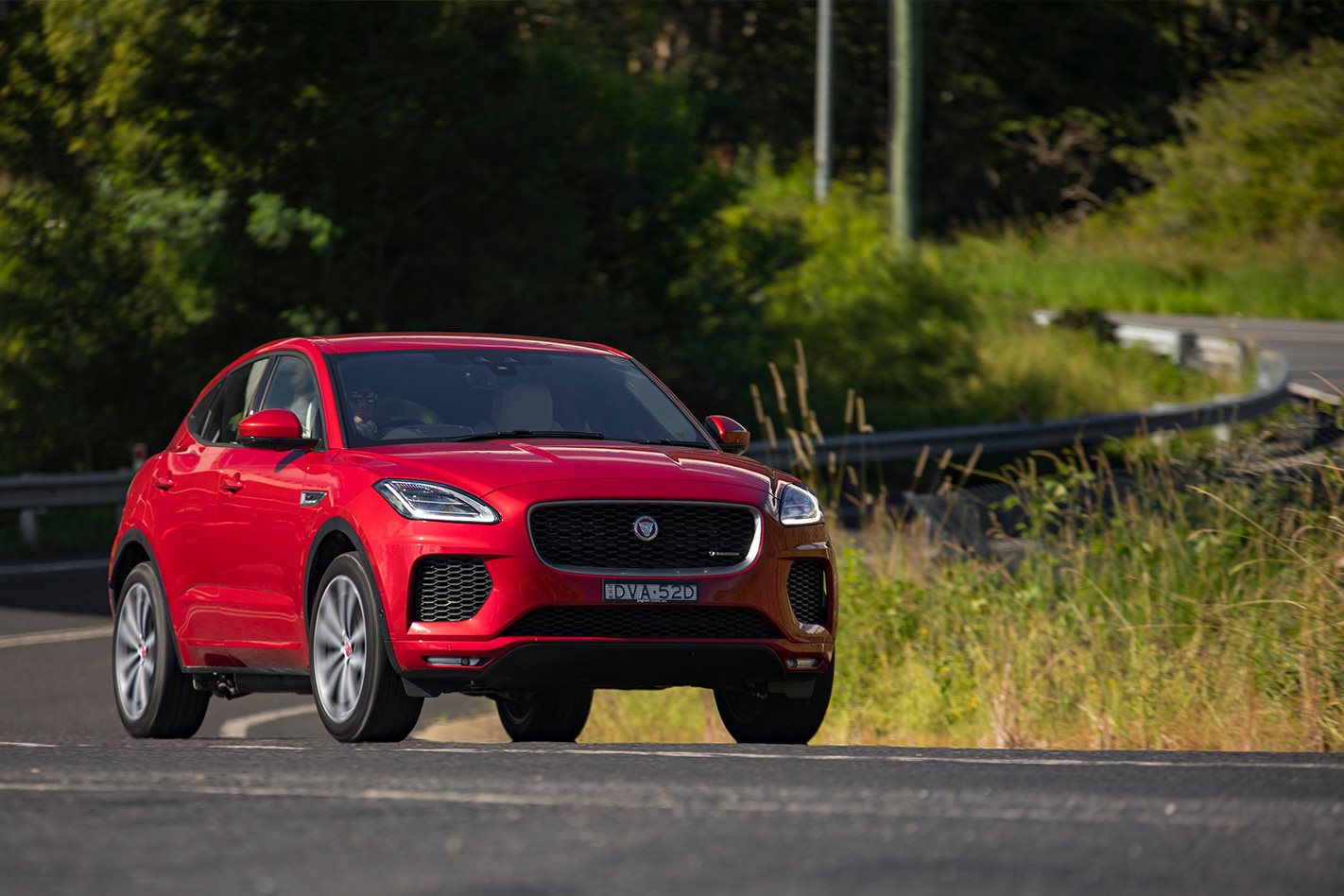
Maurice Blackburn Principal Vavaa Mawuli said the firm has received complaints from consumers about the alleged defect.
“Vehicles are a significant expense for many Australians and consumers have a right under the consumer laws to expect that the vehicle they are purchasing is free from defects, safe, durable and suitable for driving under every day conditions,” she said.
“Instead, many Jaguar and Land Rover owners are frustrated by the frequent servicing and maintenance required because of the alleged defect in the DPF system. We will be seeking to hold Jaguar Land Rover to account.”
Responding to the claims, Jaguar Land Rover Australia told us: “JLR has received and is considering the application and statement of claim filed in the Federal Court of Australia in relation to certain diesel engine vehicles supplied since 2015.
“Our products are of the highest quality and meet all regulations and standards of the markets in which they are purchased, and our highest priority is always to ensure that our customers enjoy the best possible experience with them.
“We are reviewing the statement of claim and will defend in accordance with the applicable court process.”
The potential action follows a similar case involving defective diesel particulate filters (DPFs) in 2015-2020 examples of the Toyota HiLux, Prado and Fortuner.
Toyota Australia is appealing a Federal Court decision which found it misled customers about vehicles fitted with defective diesel particulate filters (DPF).
If Toyota loses, the battle could cost the manufacturer more than $2 billion in compensation to 250,000 owners.
In April this year, the Federal Court found Toyota had misled customers about a defect with the DPF equipped to cars fitted with either a 2.4-litre ‘2GD-FTV’ or 2.8-litre ‘1GD-FTV’ turbo-diesel four-cylinder engine, impacting a total of 264,170 vehicles built between October 1, 2015, and April 23, 2020 across the HiLux, Fortuner, and LandCruiser Prado model ranges.
This class action is completely separate to another more recent legal case against Toyota in which the company is being sued over claims up to 500,000 of its diesel-powered vehicles were fitted with emissions defeat devices.
Maddens Lawyers, representing the plaintiff Adam Rowe, launched a class action in the Supreme Court of Victoria in October.
At this stage, Mr Rowe is the focus of the claim, but the firm has been in contact with a number of other owners and it is thought upwards of 400,000 people could end up involved.
The vehicles affected involve many of Toyota’s popular models using several variants of diesel engines between February 7, 2016, and the present day. Owners of brand-new and used cars could be affected if a vehicle was sold during that time.
Variants of the HiLux, Prado, Fortuner, Granvia, HiAce, LandCruiser and RAV4 are all referenced in the lawsuit.
Snapshot
- 2023 Mercedes-AMG S63 E Performance unveiled
- Plug-in hybrid system borrowed from the GT 4-Door 63 S E Performance
- Australian launch unlikely
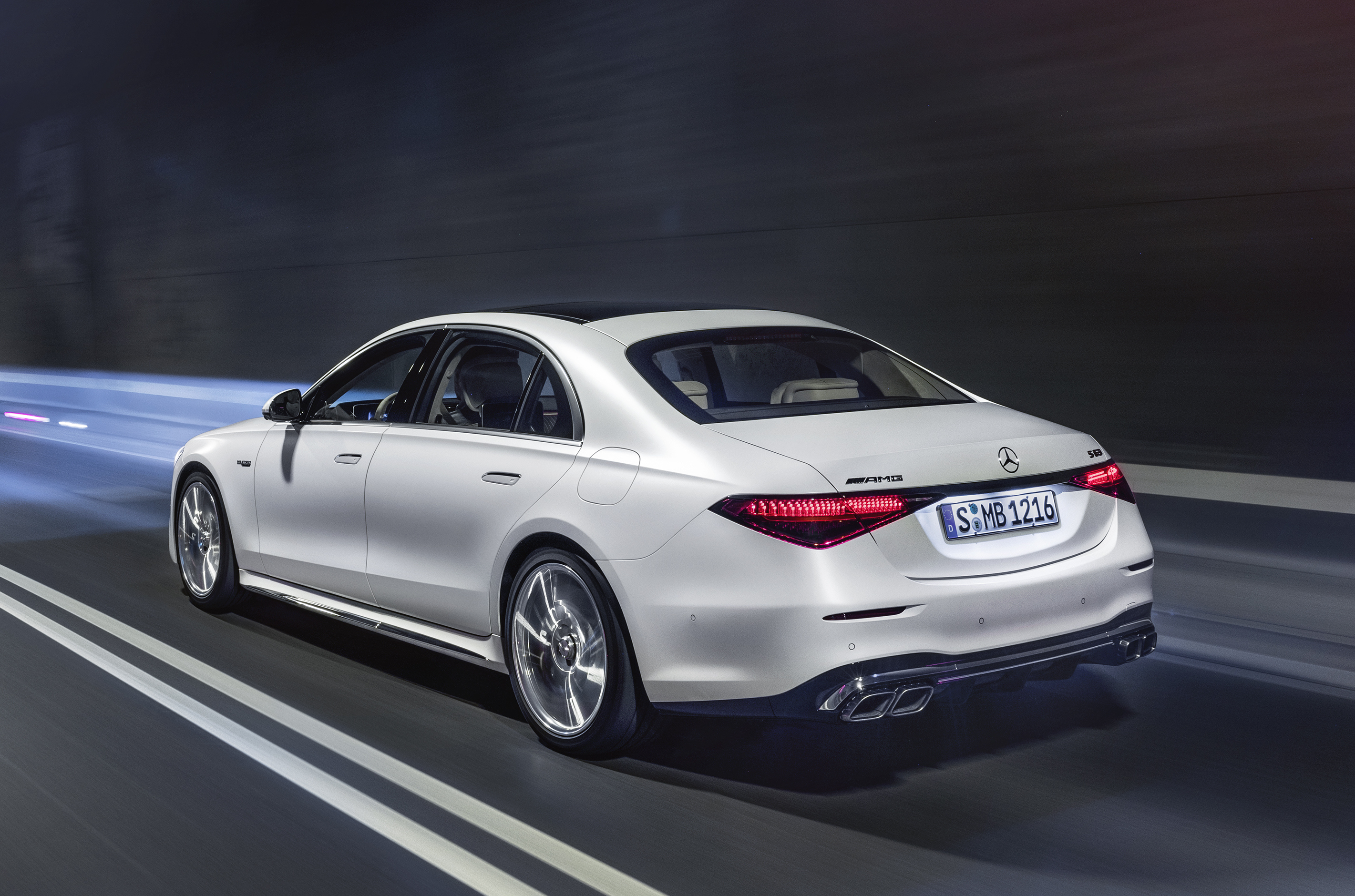
The latest-generation 2023 Mercedes-AMG S63 has been revealed, and it packs a punch.
It is the most powerful S-Class ever, with a plug-in hybrid system borrowed from the AMG GT 4-Door 63 S E Performance, albeit with slightly less power.
This means that while the smaller C63 S E-Performance has lost half of its displacement with a new four-cylinder setup, the S63 retains its 4.0-litre twin-turbocharged V8.
Unfortunately, at the recent media launch of the C63, a spokesperson for Mercedes-Benz Australia told Wheels the S63 is unlikely to reach local shores, with the luxurious, V12-powered S680 Maybach being a strong seller in its S-Class line-up.
The brand also sells the all-electric AMG EQS 53, which has achieved 67 reported sales since it launched in mid-2022, and the AMG GT 4-Door coupe.
It is complemented by a 13.1kWh lithium-ion battery pack, which provides power to an electric motor mounted to the rear axle.
While its 33-kilometre all-electric driving range seems low, Mercedes-AMG says this is by design as the plug-in hybrid system is intended to improve performance, not for efficiency gains.
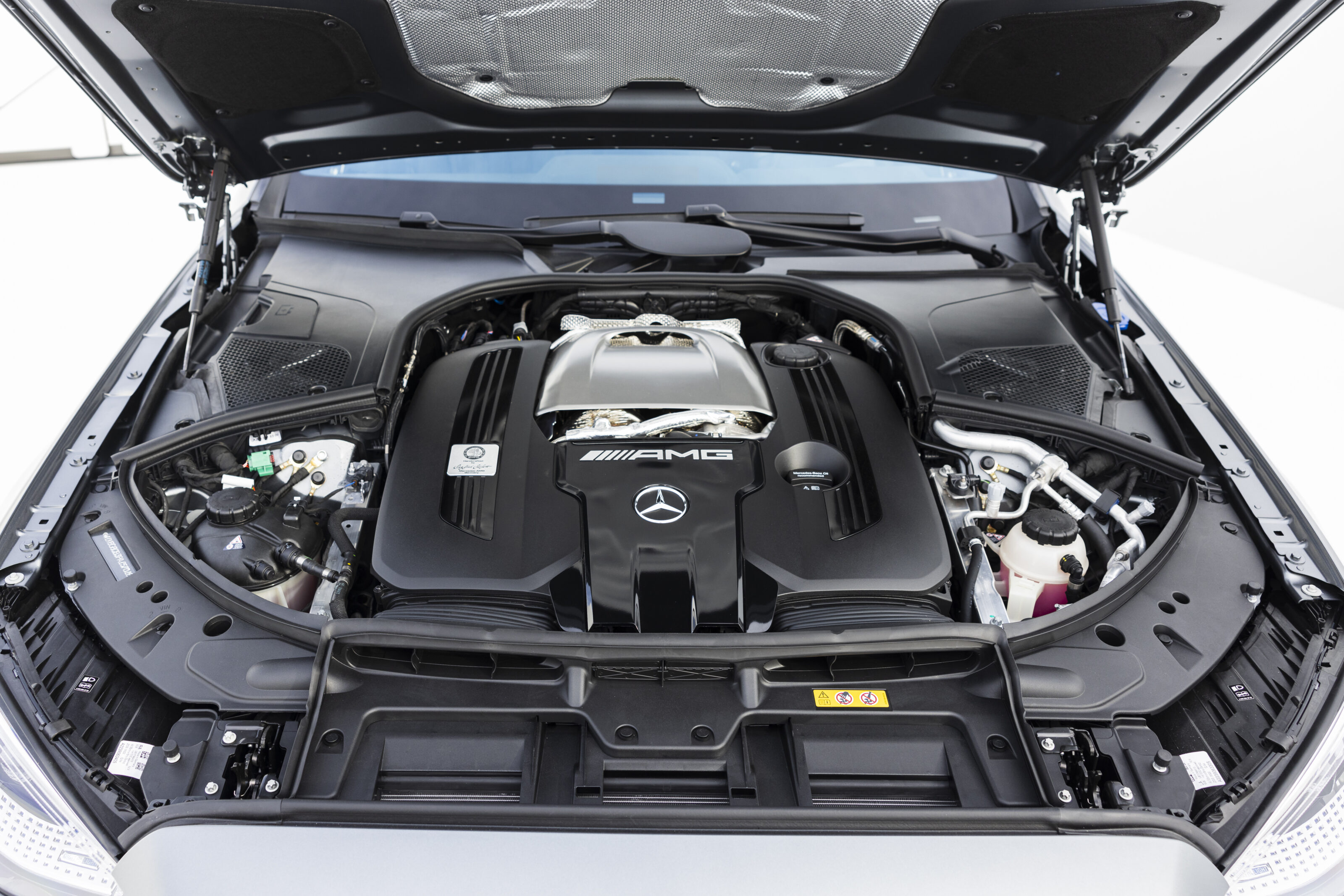
In total, it has 590kW and 1430Nm, with standard all-wheel drive. For reference, the outgoing S63 produced 450kW and 900Nm, with no major revisions to the V8 engine – meaning the extra power is courtesy of the electric motor, which adds 140kW.
Although the stonking V12 from the previous Mercedes-AMG S65 won’t feature in the latest S-Class line-up, the hybrid configuration could allow the marque to harness more power out of the V8-based model – but the S63 is the performance flagship, for now.
It has a claimed 0-100km/h time of 3.3 seconds – 0.2s quicker than the previous model, which was more than half a tonne lighter. The top speed is limited to 250km/h, but it can be raised to 290km/h with the optional AMG Driver’s Package.
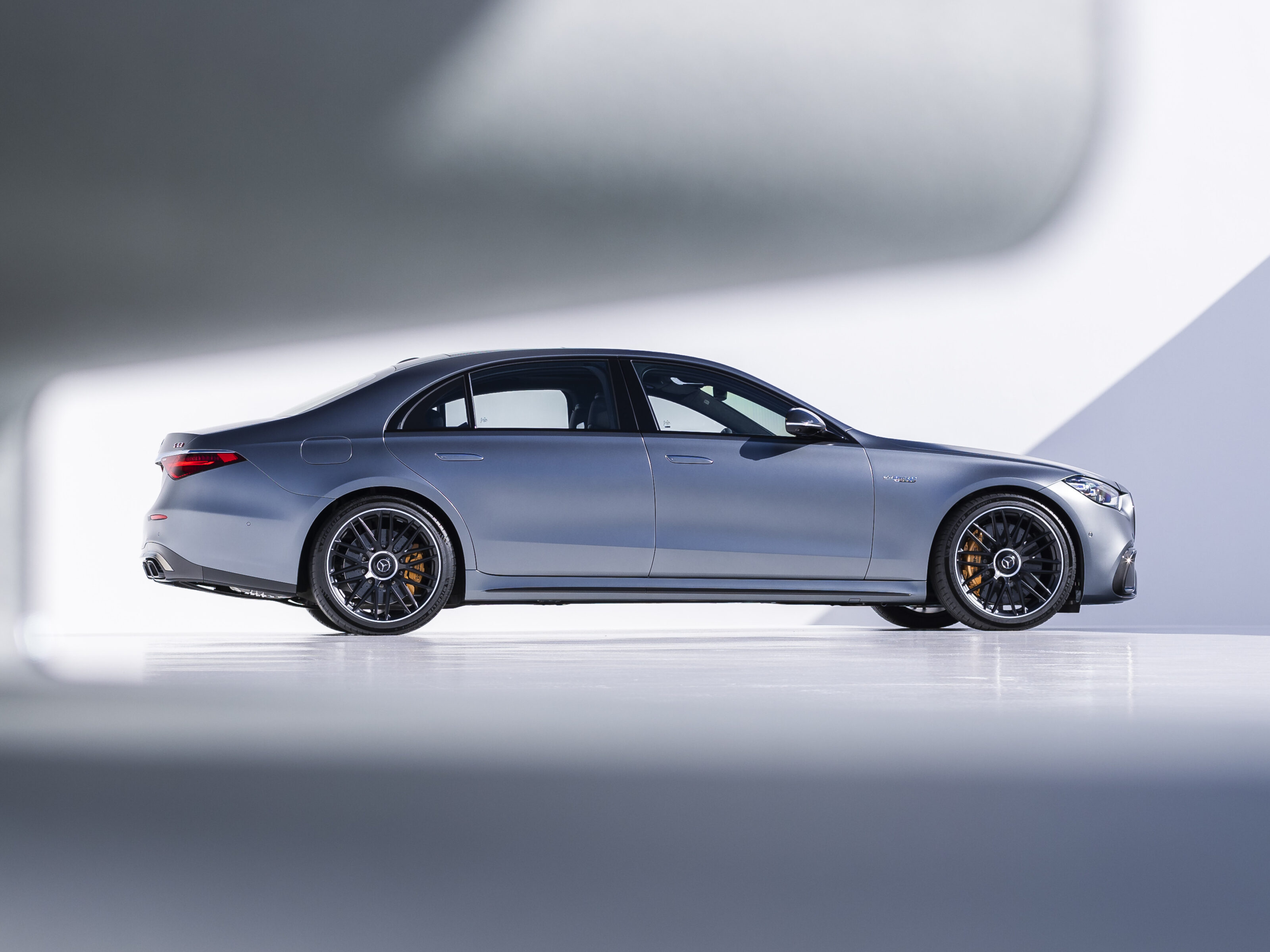
In fact, the latest S63 weighs as much as a Ford F-150 at 2520 kilograms, but the standard fitment of active air suspension and electromechanical anti-roll bars help to improve ride and handling, with the latter able to disconnect to improve smoothness on bumpy roads.
There are also adaptive dampers, rear-axle steering, carbon ceramic brakes and active engine mounts.
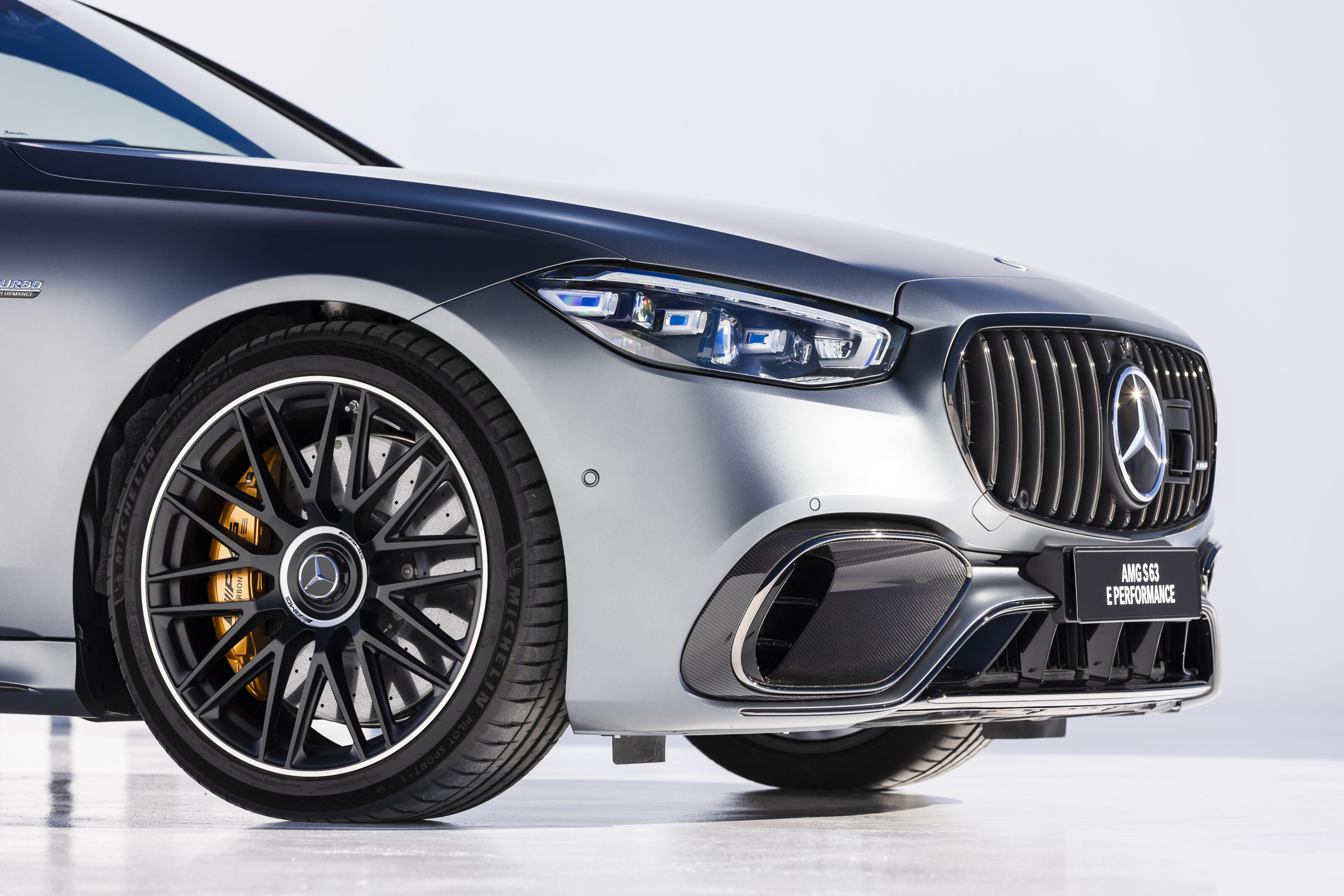
AMG-specific design tweaks include the Panamericana front grille, which features on the S-Class sedan for the first time, and a “jet-wing design” front bumper with large side intakes. It also sports forged alloy wheels up to 21 inches (20s are standard), trapezoidal quad tailpipes, and a red-accented S63 badge on the tailgate.
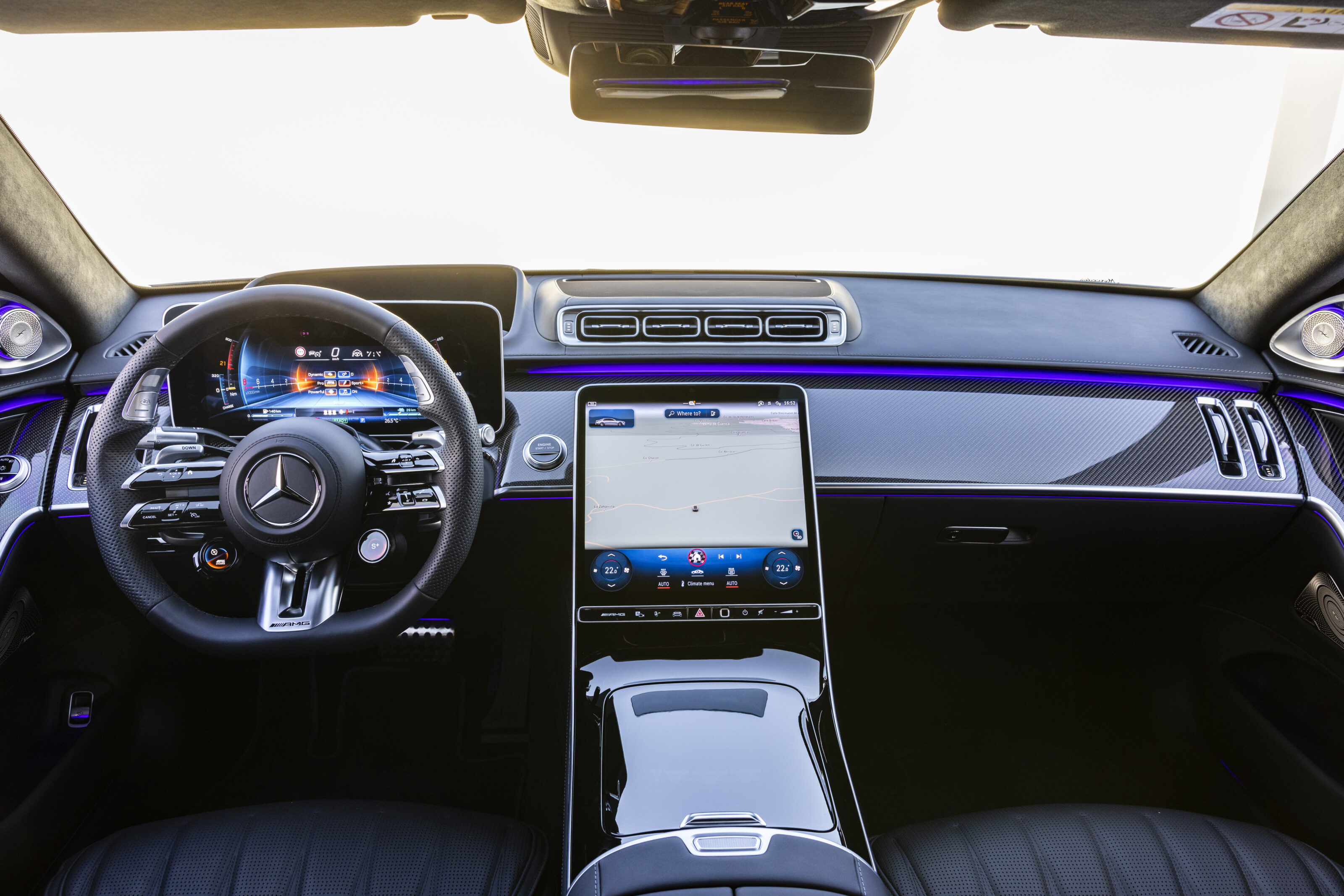
Inside, the four-seat cabin receives AMG exclusive upholstery and badging on the headrests, MBUX infotainment system and digital instrument cluster, with the latter including unique performance displays.
There’s also an AMG-specific two-spoke steering wheel with digital ‘dynamic select’ drive mode and regenerative braking controls, ranging from comfort, sport, sport+, race and individual to electric, which disengages the combustion engine and replaces its sound with a high-frequency artificial noise inside and out.
It is exclusively offered in long-wheelbase form, with all of the luxury, safety and comfort expected from an S-Class, including Mercedes-Benz’s level three ‘drive pilot’ semi-autonomous driving system in certain regions.
The 2023 Mercedes-Benz S63 E Performance will commence production in next year, with pricing yet to be detailed.
As mentioned, it is unlikely to be sold in Australia due to the availability of the S680 Maybach, priced at $573,192 before on-road costs.
For reference, the outgoing Mercedes-AMG S63 – last available in 2020 – was priced from $392,835 plus on-roads in Australia.
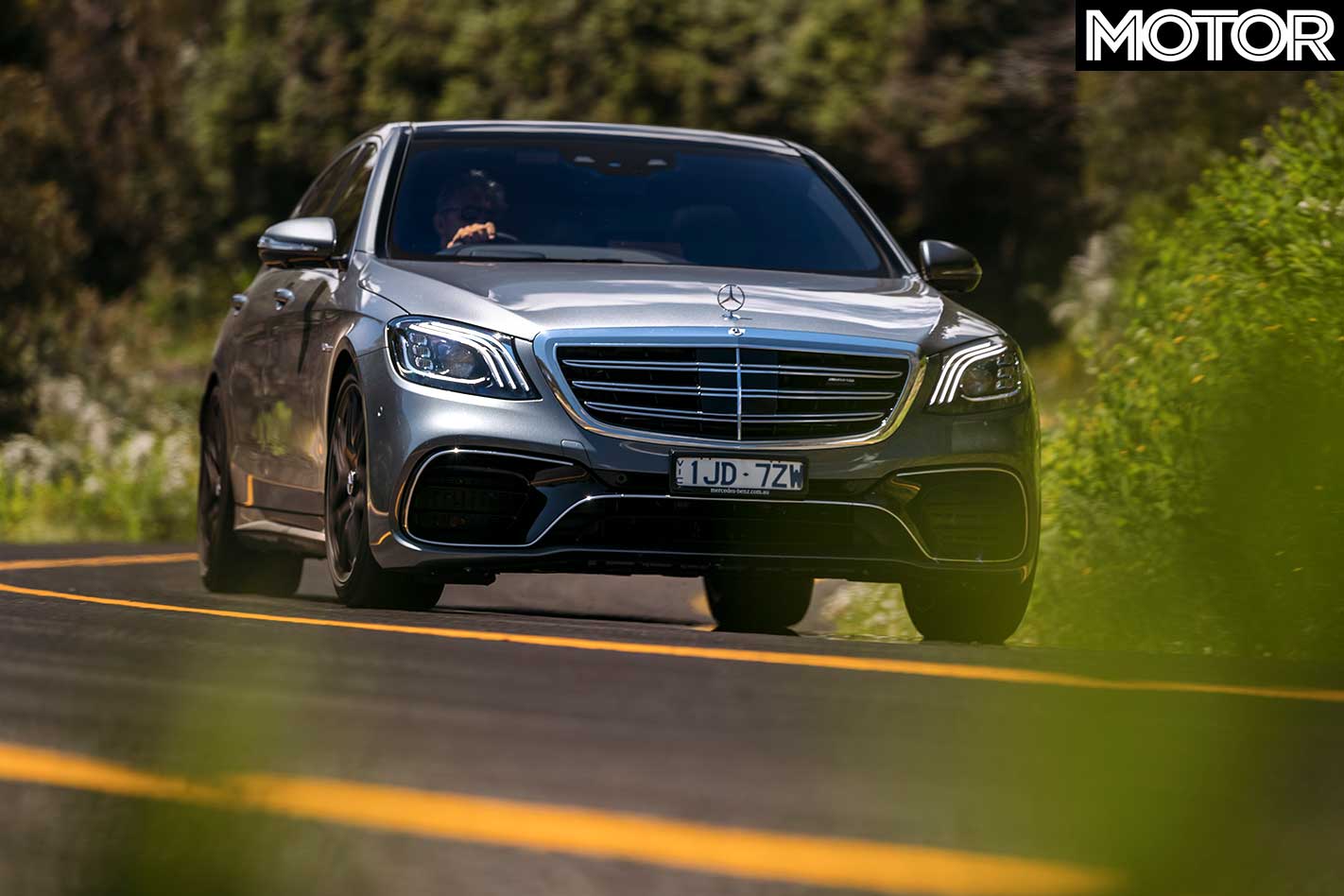
Below: The previous-generation Mercedes-AMG S63
UPDATE, December 8: For a limited time, our framed vintage Wheels covers are 50% off – that means they’re down to just $60.
Wheels has been on Australian shelves for decades, informing readers on the latest releases to reach our roads and offering comparisons to help buyers with their decisions.
Whether it’s covering the durability of Japanese cars in July 1968 or looking at the Goggo Sportster in 1959, each cover of Wheels has sought to entice readers to its pages with the most interesting content relevant to the Aussie enthusiast.
Now, readers can have a piece of this Australian automotive history with our new framed retro Wheels covers.
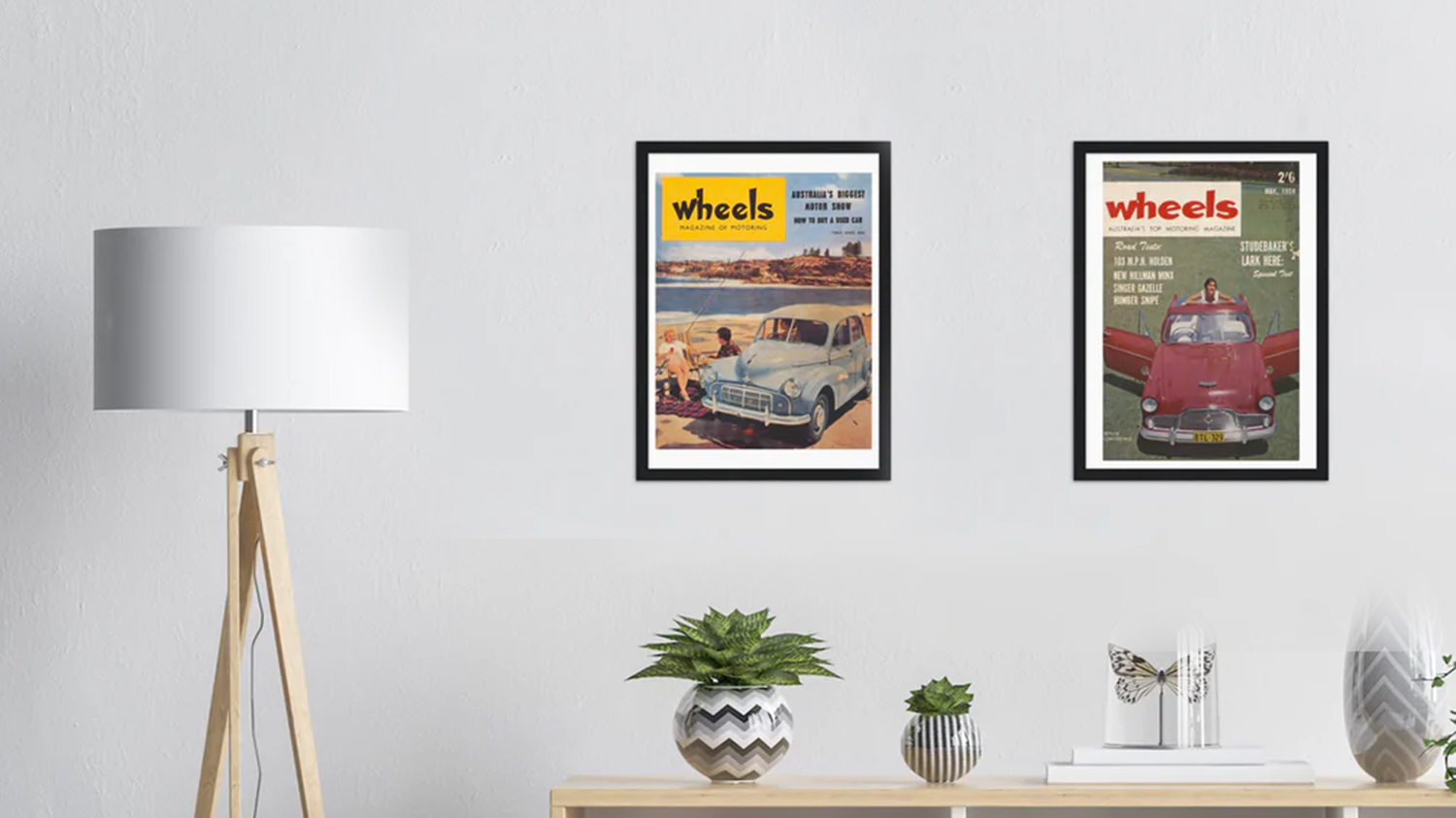
If you’re looking for that perfect addition to a games room or car cave, these retro Wheels posters will provide a distinctive and well-presented reminder of an age of Monaro GTS vs Falcon GT comparisons, classic Mazda rotaries, and Minis sliding on gravel roads.
Or maybe a friend needs that extra addition to their garage to really complete their grease-monkey abode. Whatever the need, these retro posters are sure to be a welcome addition to any enthusiast’s domain.
The print includes:
- Premium, 200gsm semi-glossy paper
- Wooden frame in a colour of your choosing
Dimensions
- 30 x 40 cm / 12 x 16 inch
- 20-25mm thickness
We’ve also got great deals on subscriptions to all of our magazines – hit the link below for all the details.
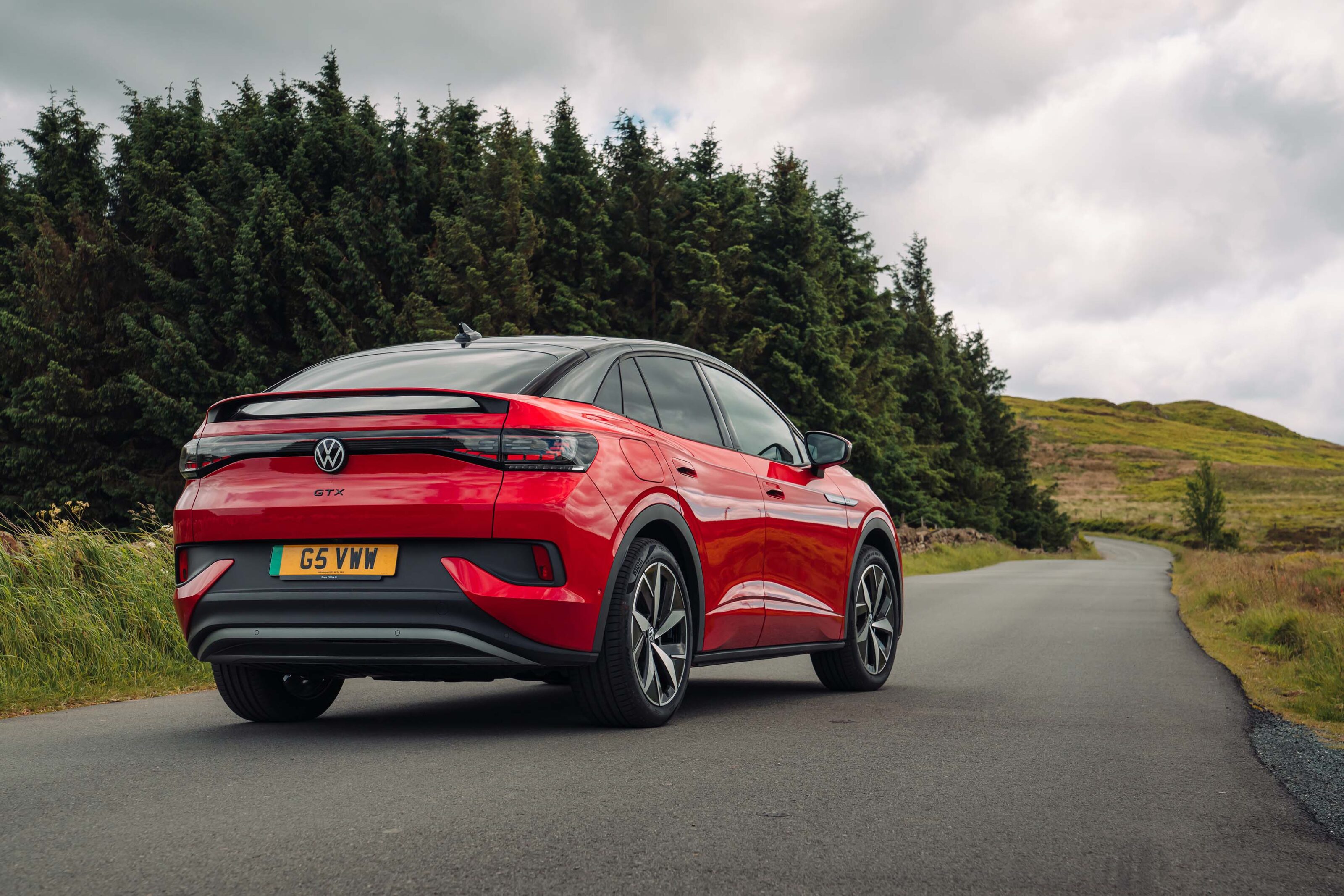
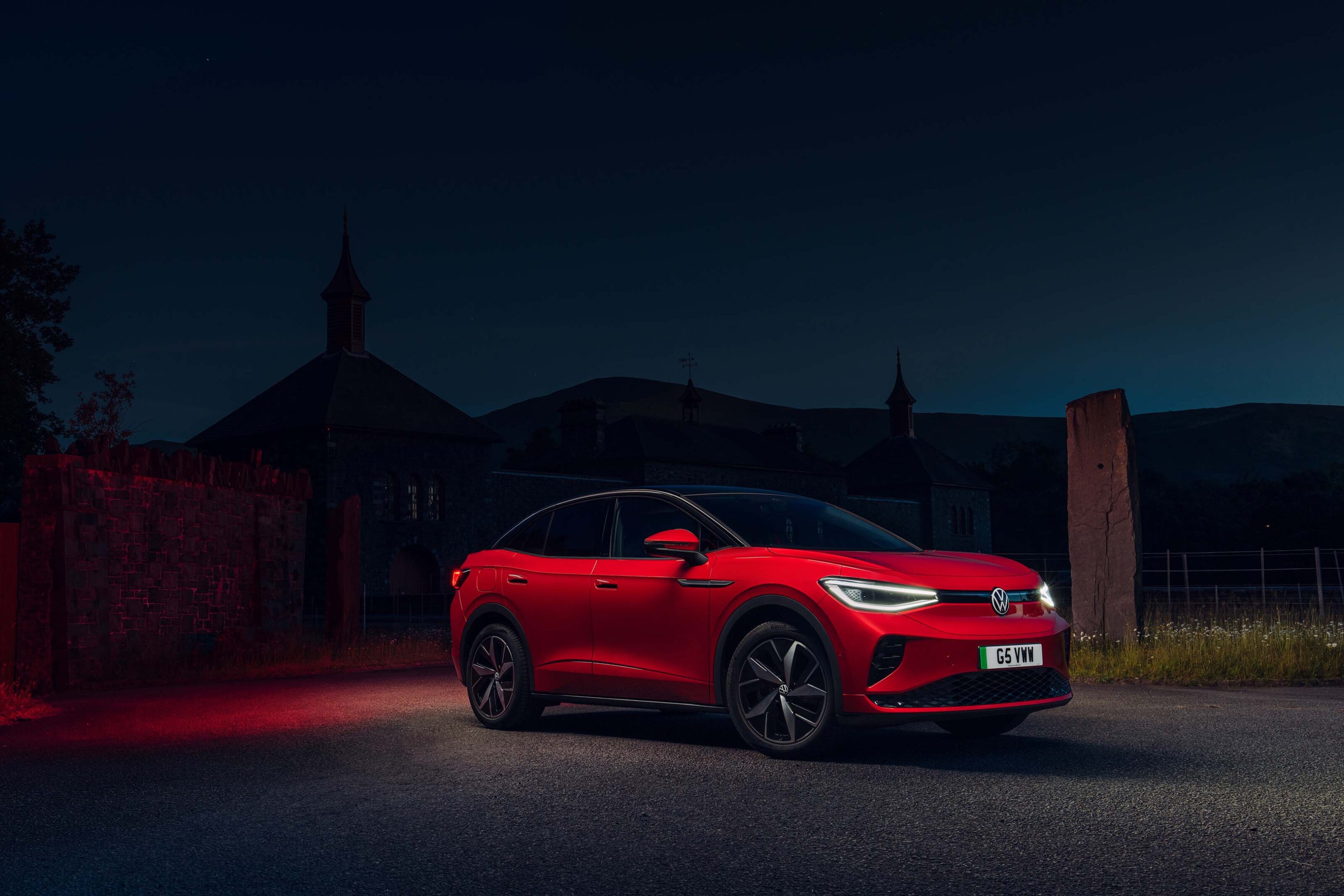
The Volkswagen ID.5 isn’t breaking any moulds, rather slotting into one of the most successful moulds right now: it’s one of those oh-so-fashionable crossover coupes but at least in the world of EVs they do bring aerodynamic benefits for a mite more range.
Like for like, an ID.5 will be several grand more than the VW ID.4 it’s based upon, though Australian prices are still to be confirmed.
People obviously love these things, otherwise, sensible brands like Skoda and Volvo wouldn’t have jumped aboard the trend with the Enyaq Coupe and C40.
And the ID.5 appears to be a likeable take on the formula. if a little bland in some of its detailing. A softer-edged car makes a change from the industry’s broader obsession with aesthetic aggression, though, so we’ll chalk up the smoother, friendlier lines of this car as a win.
JUMP AHEAD
- How much is it, and what do you get?
- How do rivals compare on value?
- Interior comfort, space and storage
- What is it like to drive?
- How is it on fuel?
- How safe is it?
- VERDICT
How much is it, and what do you get?
With the ID.4 expected to start around the $60,000 mark, the ID.5 will likely weigh in at around $70,000 or more, not least because it only comes with the larger 77kWh battery.
Its slipperier form and big battery mean claimed range figures don’t dip below 500km on any variant of the ID.5, allowing it to slip that bit easier into everyday life.
The line-up kicks off with a pair of rear-drive variants – the 128kW Pro and 150kW Pro Performance, both offering 310Nm with respective 10.4 and 8.4sec sprints to 100km/h – and is topped by the ID.5 GTX, a 220kW/460Nm all-wheel drive performance version that helps launch a new suffix for VW to slap on numerous sporty (well, sportier) EVs.
It’s almost as sprightly as VW’s hot hatchbacks, hitting 100km/h in 6.3sec. All will charge at 135kW, which is decent if far from the 350kW offered elsewhere in the class.
Australian specs are yet to be confirmed but you can expect them to be pretty generous; base Style models in the UK get 19i-inch diamond-turned alloy wheels, three-zone climate control, a 12-inch infotainment display, panoramic glass roof, Matrix LED lights and park assist as standard.
How do rivals compare on value?
Our two favourites in this class right now are the Wheels COTY winning Kia EV6 and the Hyundai Ioniq 5.
The EV6 will set you back $82,900 before on-road costs in 239kW trim, and the Ioniq 5 costs $75,900 before on-road costs with 225kW peak output. Both can hook up to ultra fast 350kW charging.
The Mercedes EQA 250 is $76,800 before on-road costs with just 140kW, making the Polestar 2 Long Range AWD look very good value indeed at $73,400 before on-road costs with 300kW, even if the Swede trailed its Korean rivals in a recent Wheels comparison. The Tesla Model Y starts at $72,300 before on-road costs in base RWD form.
Interior comfort, space and storage
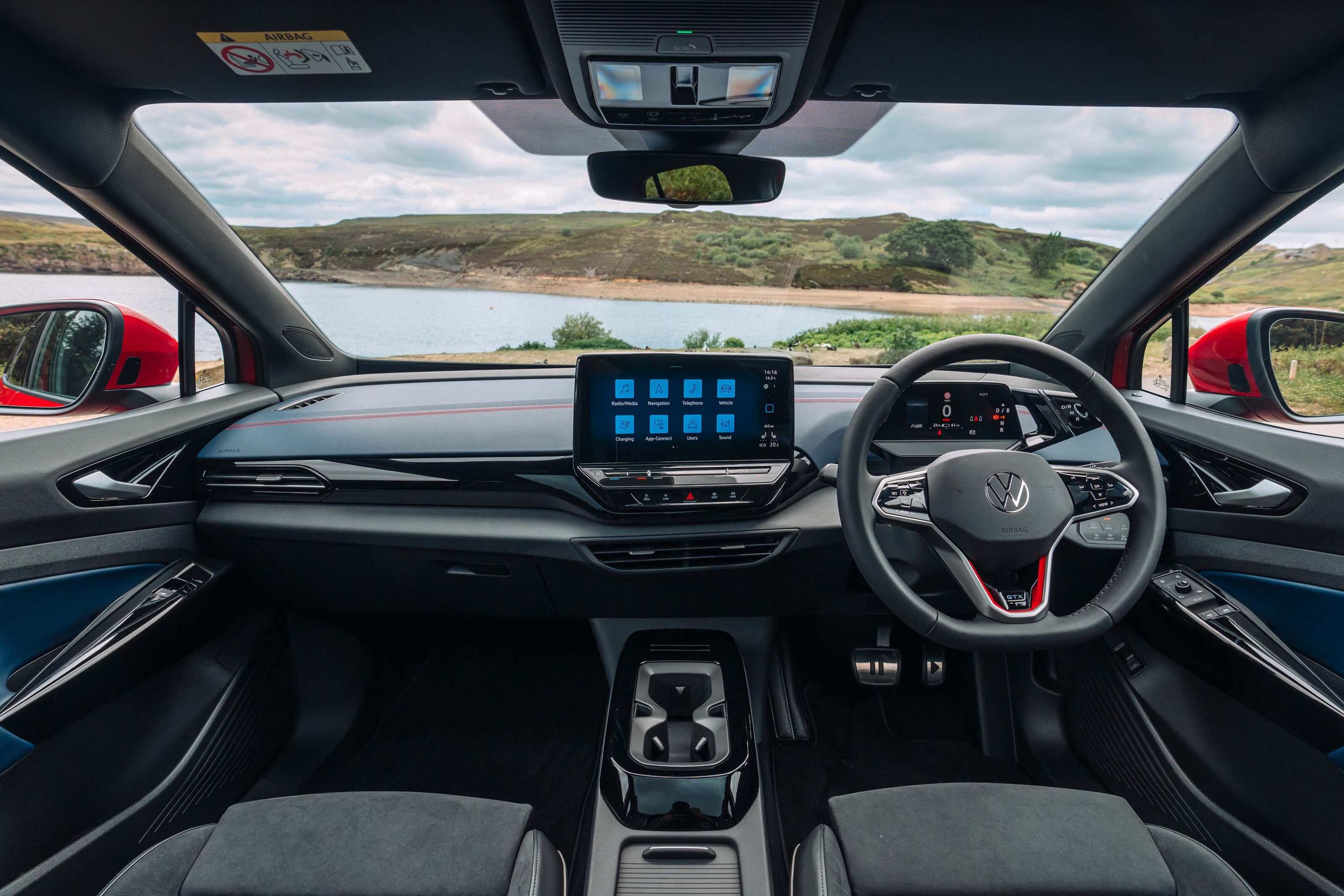
The ID.4 and 5 will be Australia’s first taste of Volkswagen’s ID models, hence this interior. It’s familiar from the ID.3 below and the ID.Buzz above, with the company’s famous scalable platform philosophy no more evident than in the screens and ergonomics of these cars.
Which isn’t all rosy; a decision to pop almost all major controls within the touchscreen or on touch-sensitive pads does make it all a bit mind-boggling when you first climb aboard. There are just two window switches for instance, and you’ll have to tap a button to switch them between operating the front and rear windows.
Although this declutters the place nicely, it does give you something new to suss out. VW used to be the master of ergonomics, so it’s a bit odd that these IDs might discombobulate their drivers. The company has already announced that real buttons will make a triumphant return in future facelifts, so we might not have to spend long acclimatising to the ID.5’s cabin quirks.
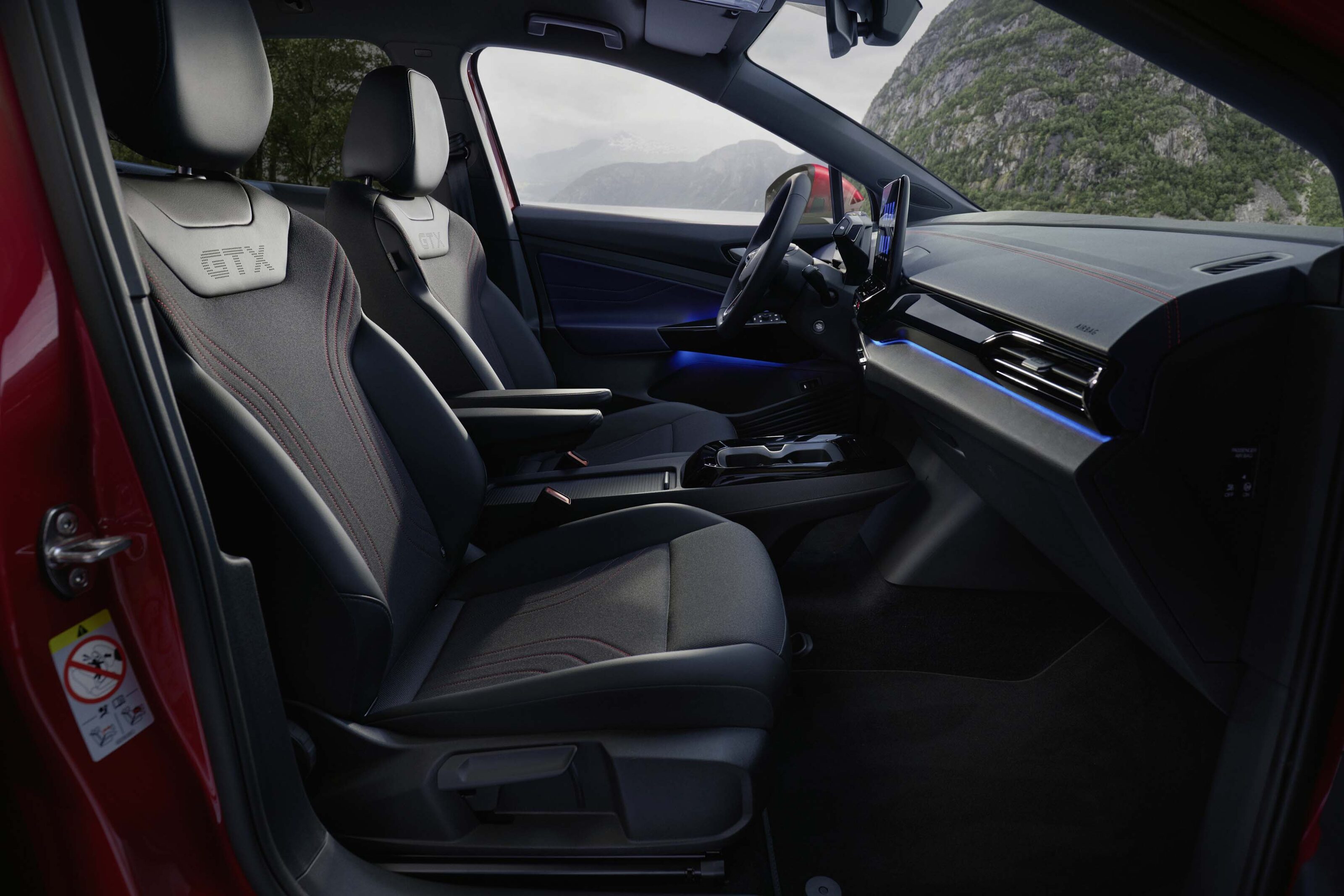
It’s very well made, though, and all materials are high quality save for the door bins, which are cheap, almost sacrificial plastic, so at least you won’t mind them getting scuffed.
The central 12-inch touchscreen is nicely high res (even with the absurd and distracting oversight of not illuminating the strip of climate controls at its base) and the small digital instrument gauge is neat and uncomplicated.
A big windscreen lends the interior an airy quality, one which continues rearwards, too.

This is very habitable for a crossover coupe.
While rear visibility is inevitably an unhelpful sliver – high waistlines and low rooflines rarely produce anything else together – the rest of its hindquarters are impressive, with plenty of legroom and headroom for most adults and a window line sympathetic to letting a decent amount of light in.
Real pernickety stuff, we’ll admit, but it’s curious how claustrophobic some of these cars can feel for those perched in the back. The ID.5 looks after them well, with a pair of USB-C ports the cherry on top of some very friendly hospitality.
Volkswagen ID.5 boot space
The boot in the VW ID.5 is marginally more commodious than an ID.4’s with the seats up, at 549 litres, though slightly smaller with them folded, at 1561 litres.

What’s it like to drive?
Given both rear-drive ID.5s share the same torque figure, they feel very similar in an urban environment, accelerating with the same modesty out of junctions and away from the lights – there are no jaw-dropping EV theatrics when you’ve got a single motor in a 2.1-tonne car – and handling with similar deftness.
While there’s little in the way of outright fun here, the steering is light, quick and easily read and the benefits of its RWD platform are clear.
It’s above 80km/h where the greater power-to-weight ratio of the Pro Performance comes to the fore. Its price premium ought to justify itself on sliproads and during overtakes, where there’s just a touch more urgency to proceedings.
And this is us comparing the pair with just a driver on board – fill your ID.5 with family and paraphernalia and the additional power will feel more starkly welcome.
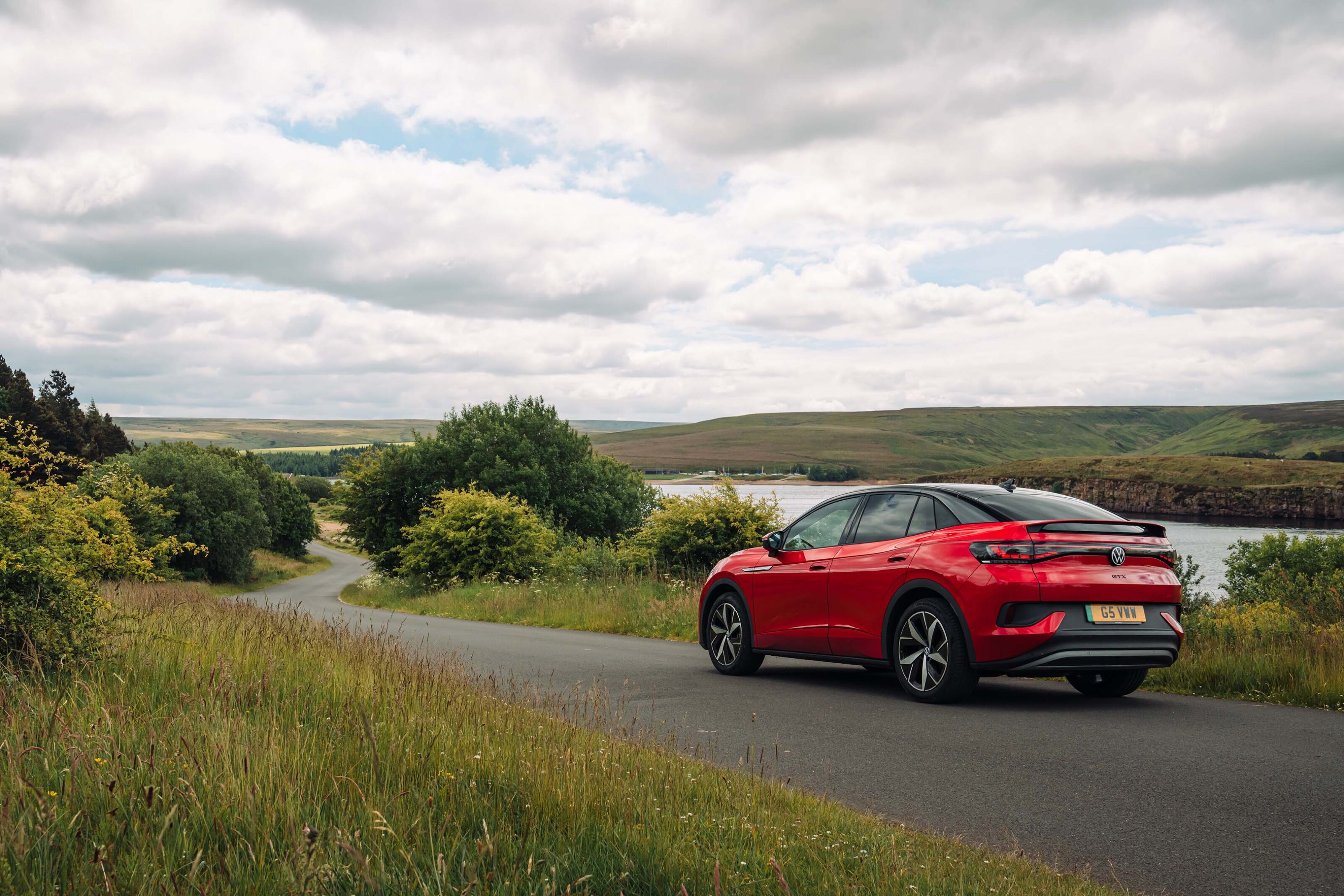
The GTX is a lot keener off the line and its acceleration never lets up.
If power is your chief concern, of course, there’s the dual-motor GTX. Without pricing, we can’t judge whether it’ll look good value, but in Europe, it costs 10 per cent more for what’s basically 50 per cent more power. An appealing prospect, especially considering its range figure isn’t dented too much.
Ride quality isn’t notably firmer in the GTX than the fairly rigid variants below it – 15-stage adaptive damping might even make it feel more habitable day-to-day – and its larger breadth of performance is immediately evident. It’s a lot keener off the line and its acceleration never lets up.
Although not gobsmacking like some electric cars (we’re looking at you, Tesla) but it’s much more in keeping with what we’ve come to expect from max torque at zero revs.
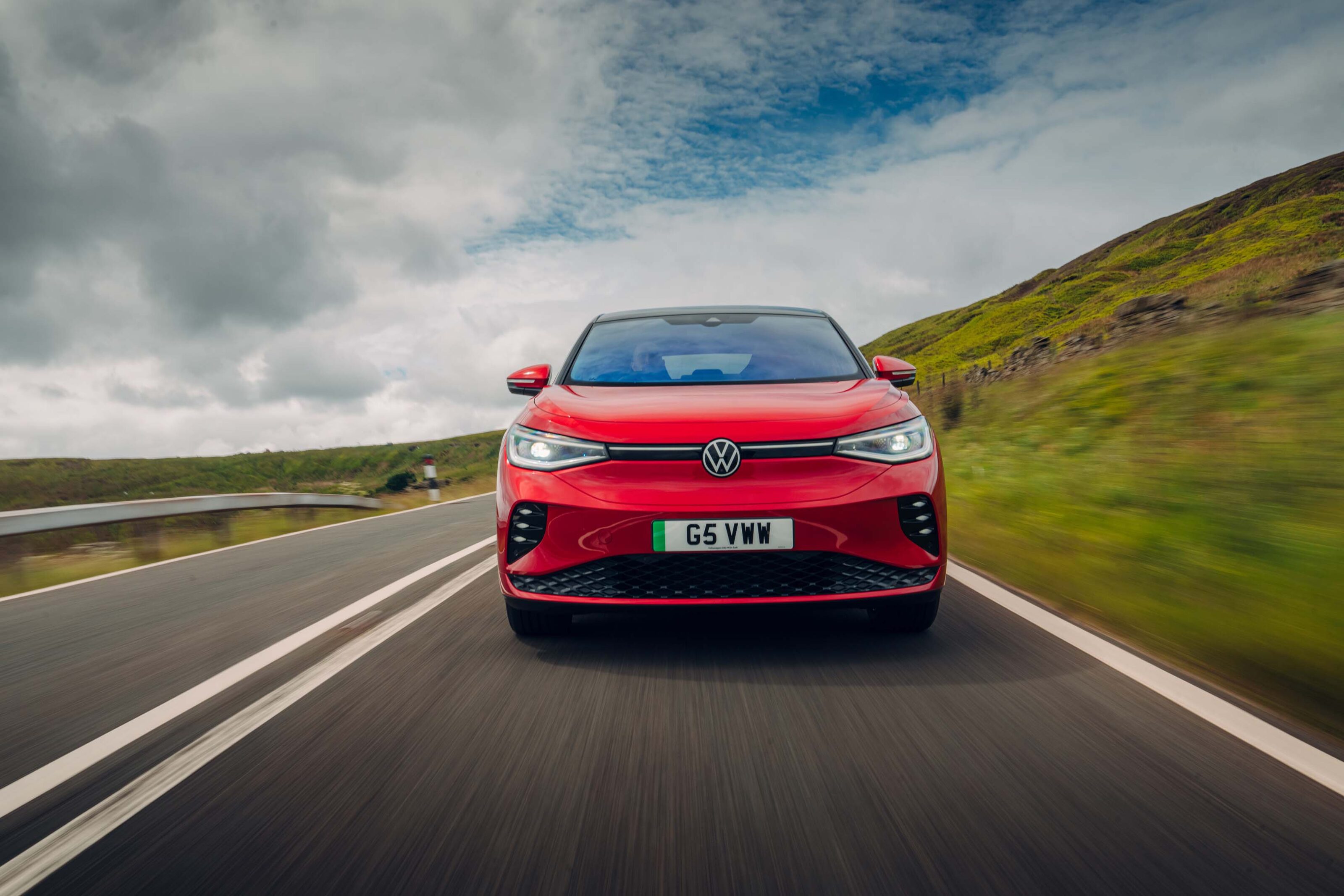
The GTX is easily the most charming version of the ID.5, though it’s not as fun to drive as its Tiguan R range-mate, for instance, while not having adjustable brake regen through steering wheel paddles – as some EV rivals offer – does give it a slightly aloof feel.
It’s worth noting that GTX isn’t a fully-fledged performance brand – it sits a rung below where a GTI would, being more closely aligned with the GTD and GTE badges we’ve previously seen applied to the Golf.
Think of it in those terms and the ID.5 GTX ought to be a quietly satisfying proposition.
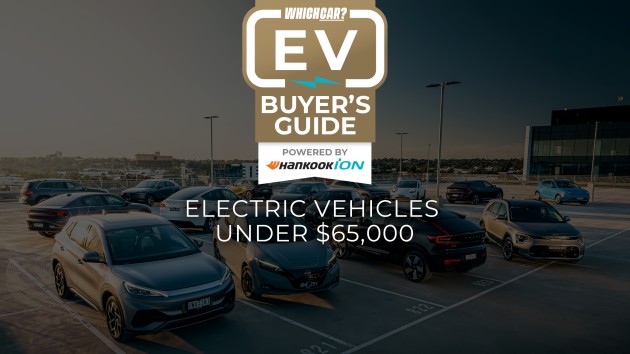
EV Buyer’s Guide: Electric Vehicles Under $65K Ranked – The Best and The Rest
Welcome to part one of three price-based EV buying guides, this one focused on the most affordable electric cars available in Australia today
How is its efficiency?
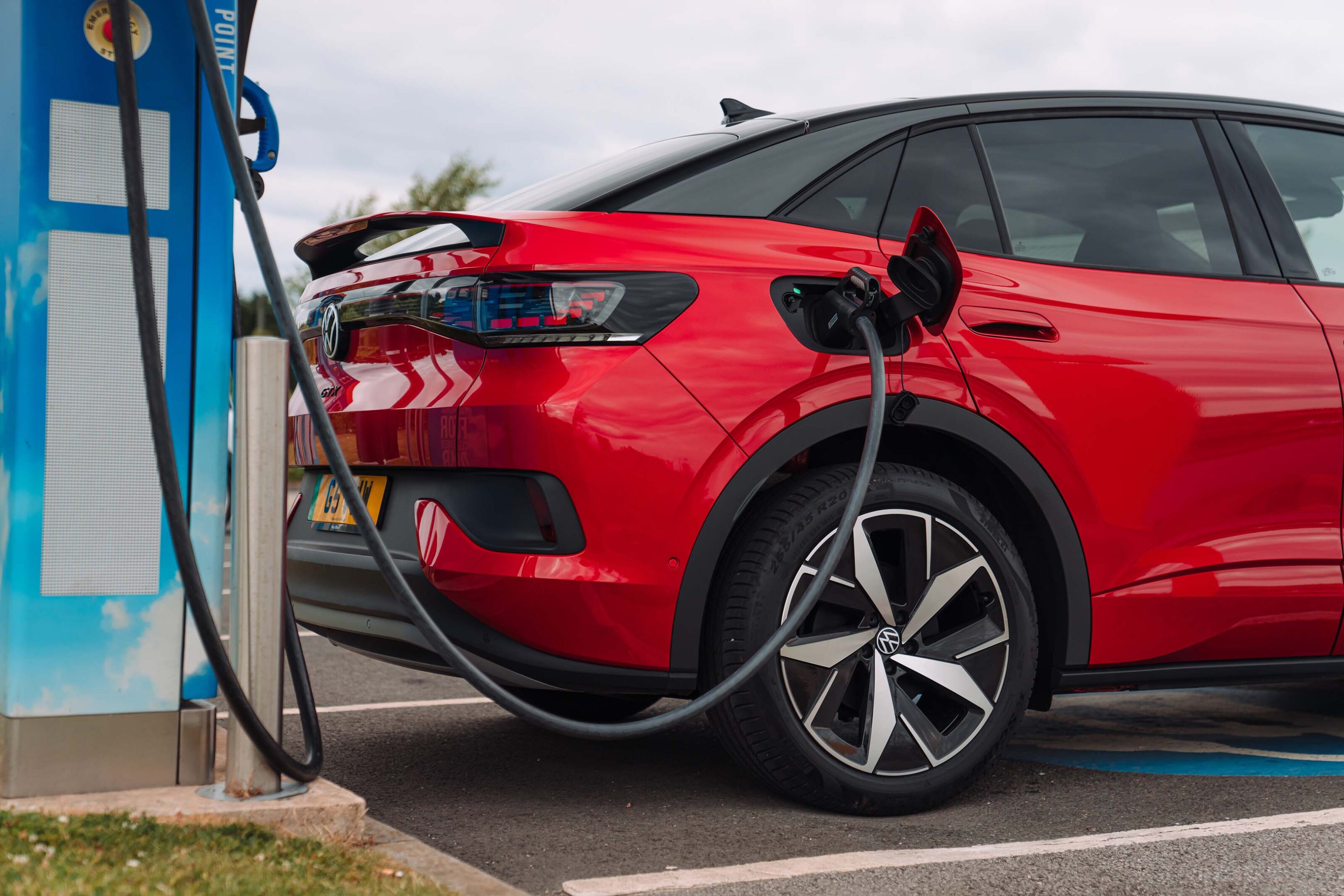
With all ID.5s packing a stocky 77kWh battery, range figures are good.
In European WLTP testing the Pro and Pro Performance offer up to 526km while the sportier GTX claims 505km, though each figure will incrementally fall if you start piling on options and fancier specs.
DC charging rates of up to 135kW are on offer (an improvement on the 125kW at the ID.4’s launch), so you’ll be able to go from 0-80 per cent in around 30 minutes.
Using the car’s native sat-nav can also help you plan a series of short stops at quick chargers on a long journey.
How safe is it?
Both the ID.4 and ID.5 are yet to be tested by ANCAP, though their five-star performances in the European NCAP tests promise much.
The ID.5 also hit the highest possible score for its assistance systems.
Forward collision avoidance and lane-keep assist are standard (the latter being devilishly hard to turn off if you dislike such things) while optional features include ‘Travel Assist with swarm data’, which helps keep the car neatly integrated within traffic on highways and assists the driver in changing lane safely.
The NCAP testers also highly rated how functional the ID.5’s augmented reality head-up display is.
VERDICT
This isn’t the most exciting EV on sale, nor do you likely need it to be. VW’s appeal has usually been its offer of a straight-laced, steadfast option among a sea of quirkier rivals. Which is exactly where the ID.5 sits among more aesthetically interesting or dynamically sharper rivals.
It’s just a shame its more sensible approach isn’t backed up by the quickest charging in the business. Choosing a Tesla, Kia or Hyundai will not only prove more convenient in that regard but is more likely to raise your pulse too.
That said, if you want your first EV to be an easily digested switch from internal combustion, the ID.5 is a strong bet.
More EV stories to help you choose the best car for your needs
June: New C-HR unveiled!
Euro-built second-gen C-HR small SUV here next year with two hybrids – including an all-wheel-drive GR Sport flagship. Details at the story below.
The story to here
March 2023: New C-HR will be hybrid-only, due in Australia in early 2024
While it is still to unveil the model’s final design, Toyota has confirmed its next-generation C-HR will be offered in hybrid form only – moving the brand one step closer to its plans to sell only electrified models in the coming years. Get the full story at the link below.
Story continues…
December 2022: Next-gen C-HR previewed with new concept
Snapshot
- Next-generation 2024 Toyota C-HR confirmed; previewed by new concept
- Second-gen small SUV set to feature in Toyota’s local line-up
- Hybrid and plug-in hybrid powertrains announced
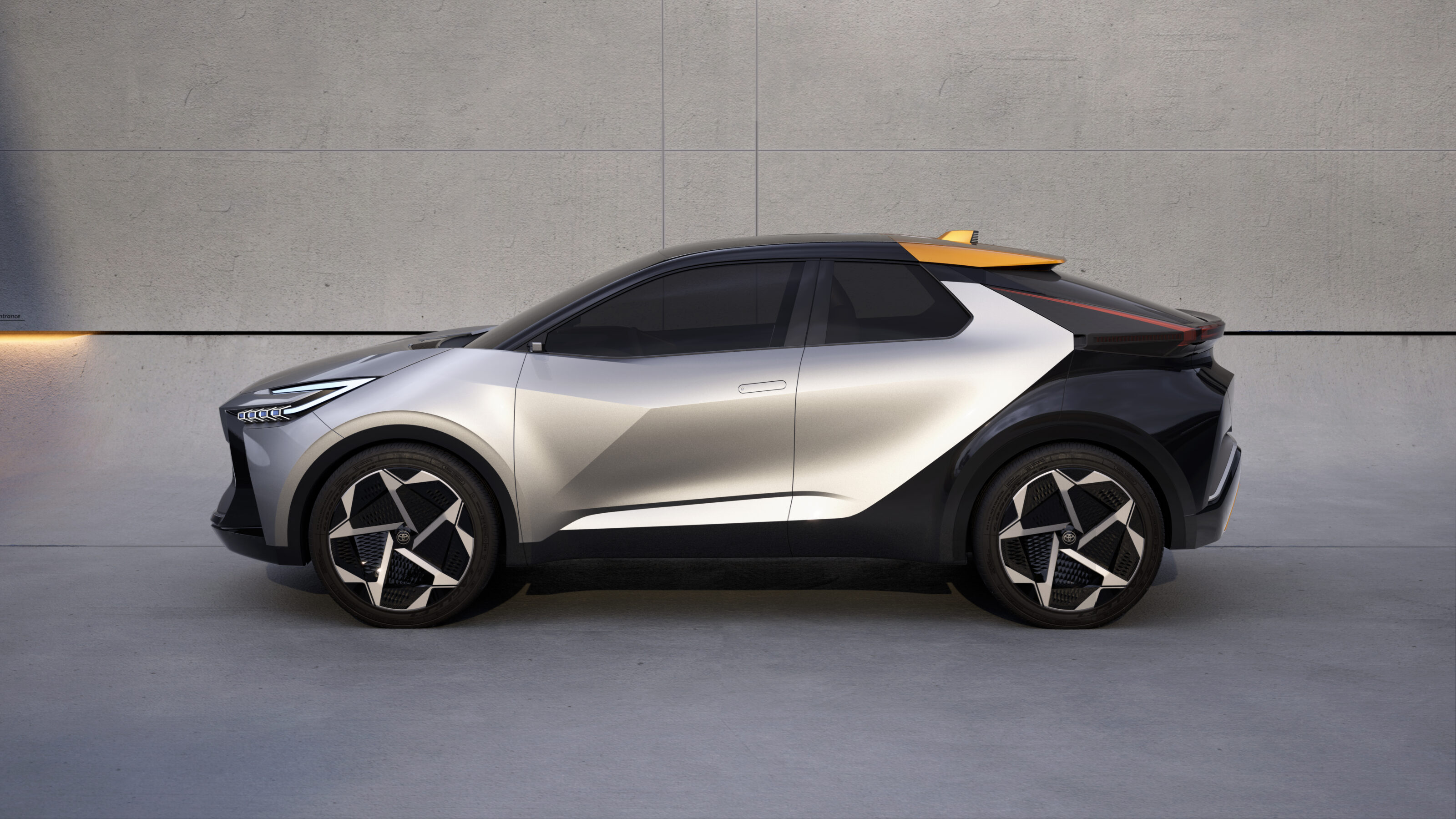
A new concept has provided our first official glimpse at the next-generation 2024 Toyota C-HR.
Revealed overnight, the Toyota C-HR Prologue concept is an early preview of the second-generation small SUV, which is set to replace the current model unveiled in 2016.
And it’s bound for Australia, with Toyota’s local arm confirming the next-generation C-HR will be sold in Australia, despite the existence of the larger and more conservative Corolla Cross.

“The current C-HR was embraced by customers for its bold styling and unique small SUV packaging and the concept vision for the next generation C-HR takes that to an even higher level,” said Toyota Australia vice president of sales, marketing and franchise operation, Sean Hanley.
“We are looking forward to the reveal of the final production version and introducing it to the Australian market in the coming years.”
While further details are expected in the coming months, Toyota has confirmed it will offer the next C-HR with a plug-in hybrid powertrain, alongside a regular hybrid.
It is currently unknown if petrol-only engines will continue into the next generation, but it seems unlikely – particularly as a European-focused model.
Under the skin, it is believed to be closely related to the next-generation Prius, which is underpinned by the latest version of Toyota’s TNGA platform, with a more powerful 1.8-litre hybrid, a 2.0-litre hybrid AWD from the Corolla Cross, and a newly-developed 2.0-litre plug-in hybrid.
The plug-in hybrid Prius features a 13.6kWh lithium-ion battery, allowing for an all-electric driving range of approximately 90 kilometres.
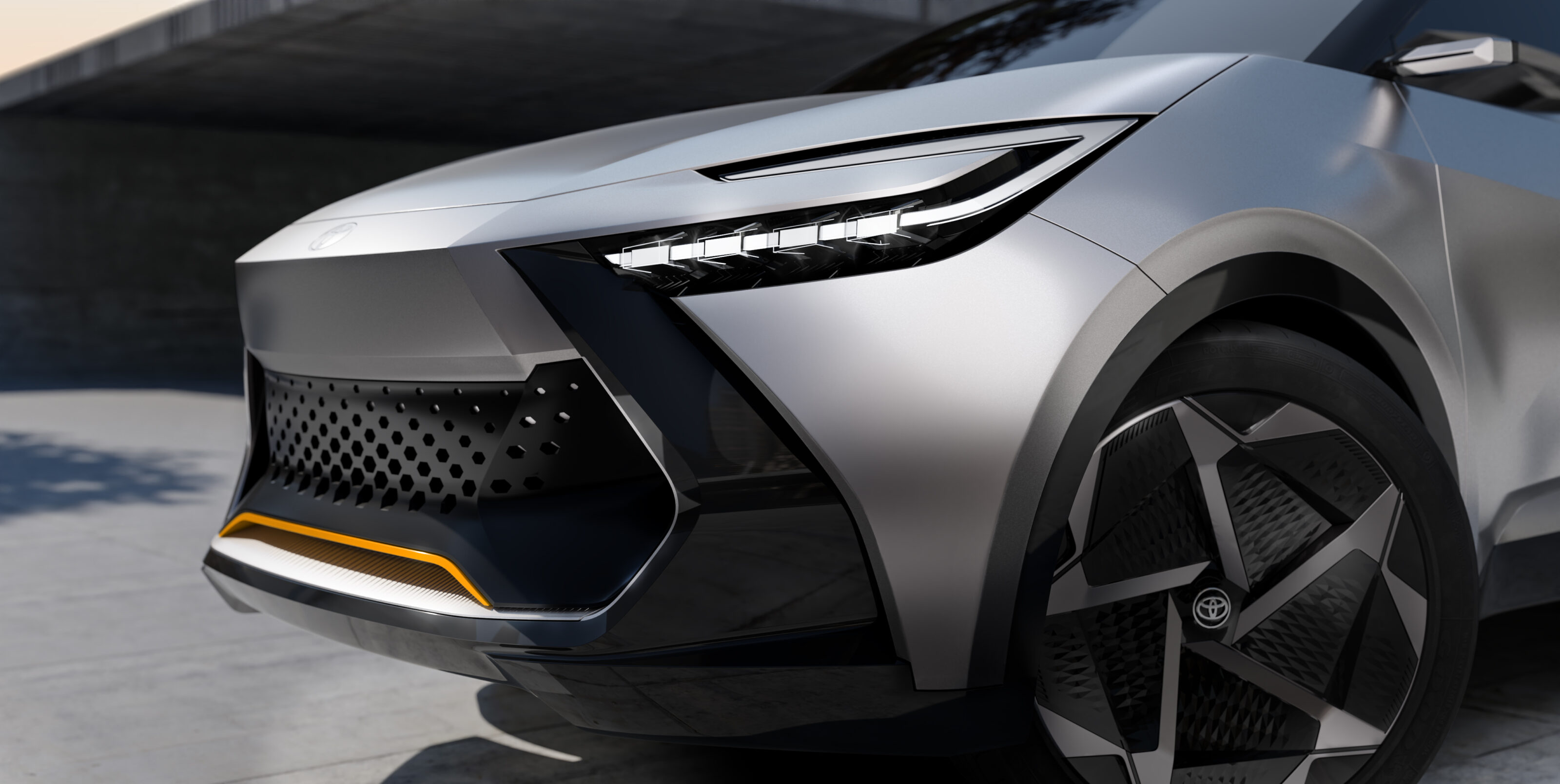
Designed and developed in France, the C-HR Prologue concept previews an evolved design direction for the upcoming model, inspired by the recently-launched Prius, BZ4x and Crown.
It was showcased alongside the European debut of the all-electric BZ Compact concept – first unveiled at last month’s LA Auto Show – which is expected to slot between the second-generation C-HR and BZ4x in Toyota’s lineup, potentially badged BZ3x.
The concept is believed to be as close to production as the Aygo X Prologue concept revealed in 2021, which preceded the Aygo X city car – slotting below the Yaris Cross in Europe – unveiled eight months later. This suggests a similar timeframe, with the production C-HR likely to debut in mid-2023 ahead of a 2024 market launch.
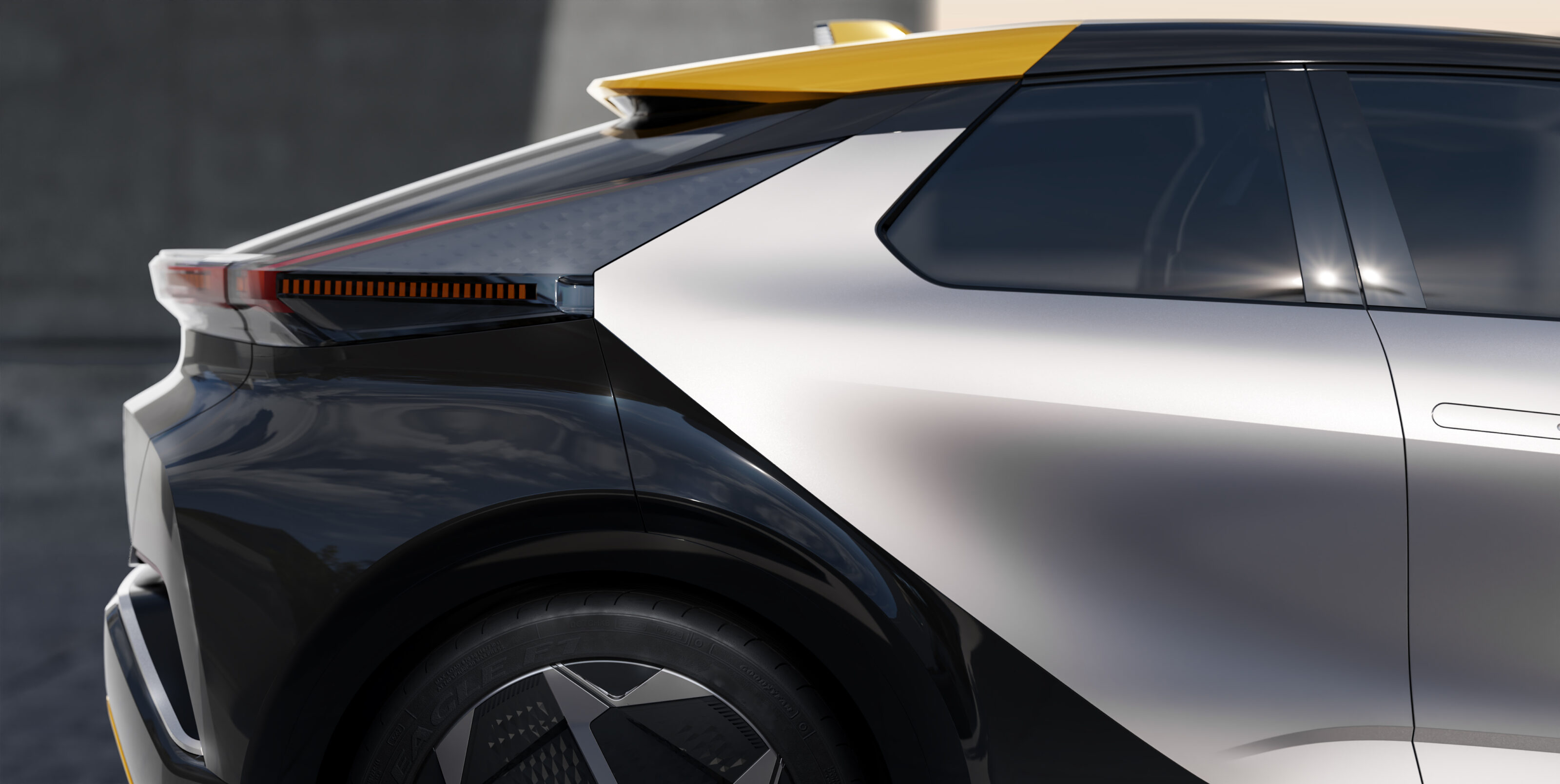
Up front, there’s a sharper design with a pair of slim headlights and a slimmer grille, while a more sloped roof flows into a light strip at the rear.
It appears the hidden rear door handles will continue into the next generation, while the oversized alloy wheels and pop-out front door handles are likely to be replaced by more conventional units.
VFACTS new-car sales data reveals 7409 examples have been sold in Australia to the end of November, placing it seventh in the small SUV segment behind the MG ZS (19,410), Mazda CX-30 (12,975), Mitsubishi ASX (11,976), Hyundai Kona (11,082), Kia Seltos (8198) and Subaru XV (8146).
It is forecasted to be outsold by the recently-launched Corolla Cross next year in its first full year of sale, with the larger vehicle offering greater practicality, a broader range of hybrid options, and conventional styling.
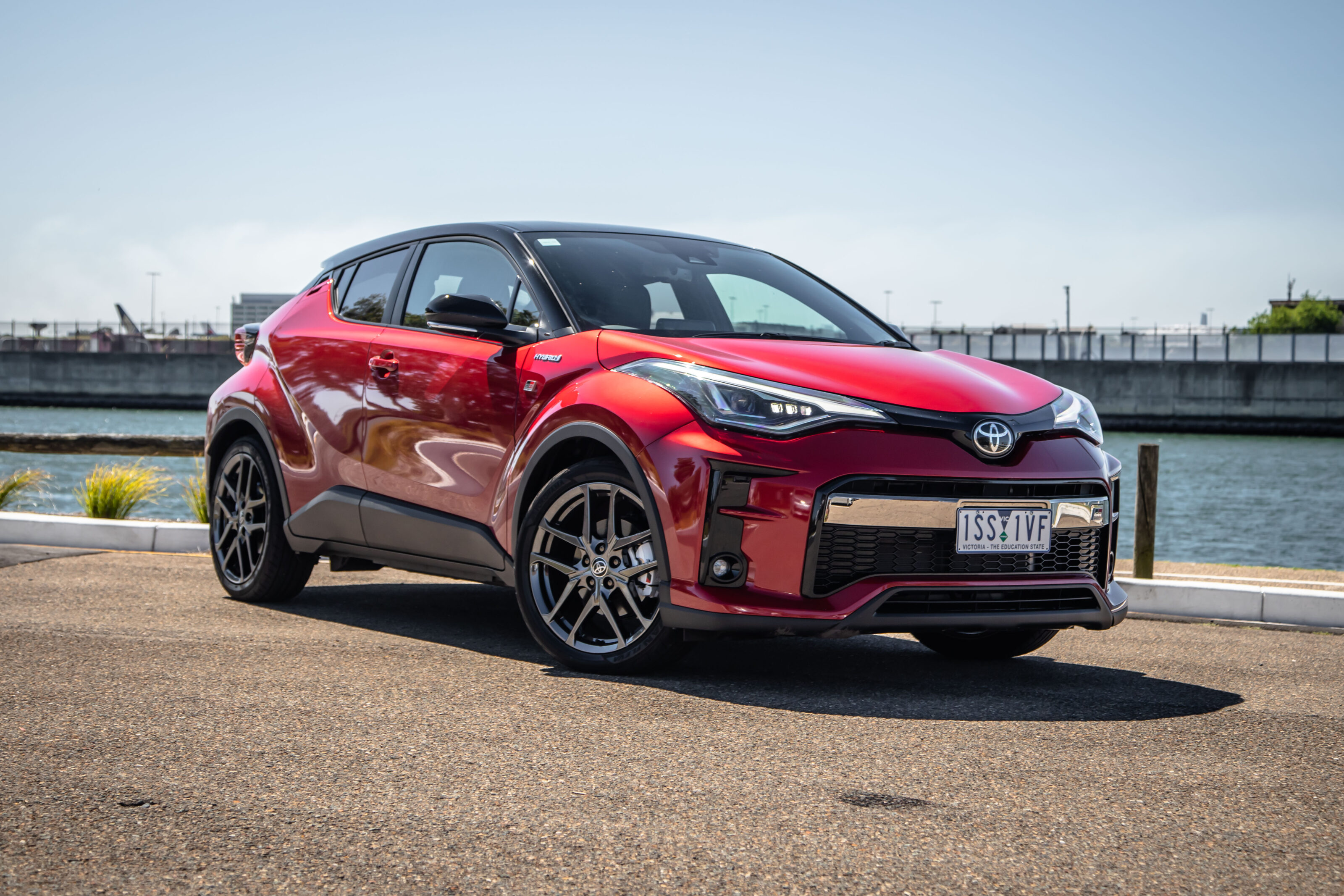
First launched in Australia in 2017, the Toyota C-HR range expanded in Australia with the addition of a hybrid powertrain in 2019, and a sportier hybrid-only GR Sport a year later.
Below: The current 2023 Toyota C-HR
An all-new Hyundai Santa Fe is expected to debut in late 2023 and Hyundai executives have told Wheels that sales results over the next 12 months will determine the forthcoming three-row SUV’s powertrain line-up.
This kind of forecasting isn’t new, but adding the 169kW/350Nm hybrid powertrain at this late stage in Santa Fe’s lifecycle is not a typical decision.
“I wouldn’t call [the hybrid’s late release] a beauty competition – but we get a chance to see how all-wheel-drive diesel, all-wheel-drive hybrid and V6 play off against each other, so we can finalise what that portfolio of powertrains would look like in 2024”, said Hyundai Australia COO, John Kett.
“I think the majority of our power trains will shift to AWD, and it’s either diesel all-wheel-drive, or performance all-wheel-drive [hybrid].”
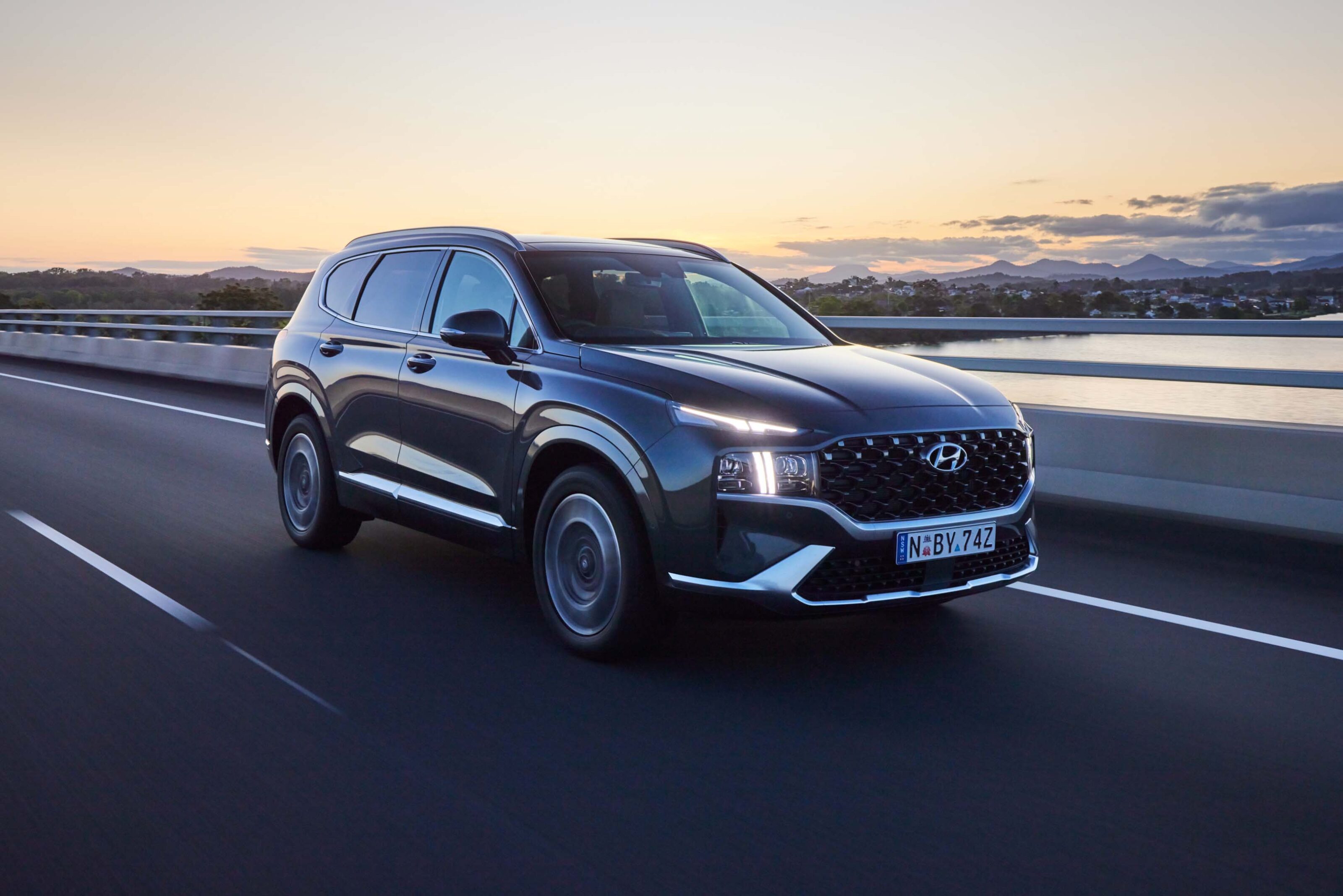
An all-electric version of Santa Fe was also ruled out, with the upcoming Ioniq 7 large SUV to offer Hyundai customers a BEV option in the three-row SUV space.
Kett added that the current Santa Fe recipe is likely to replicate over time across Hyundai’s other segments – likely including the much-anticipated Tucson hybrid, and even potentially Palisade.
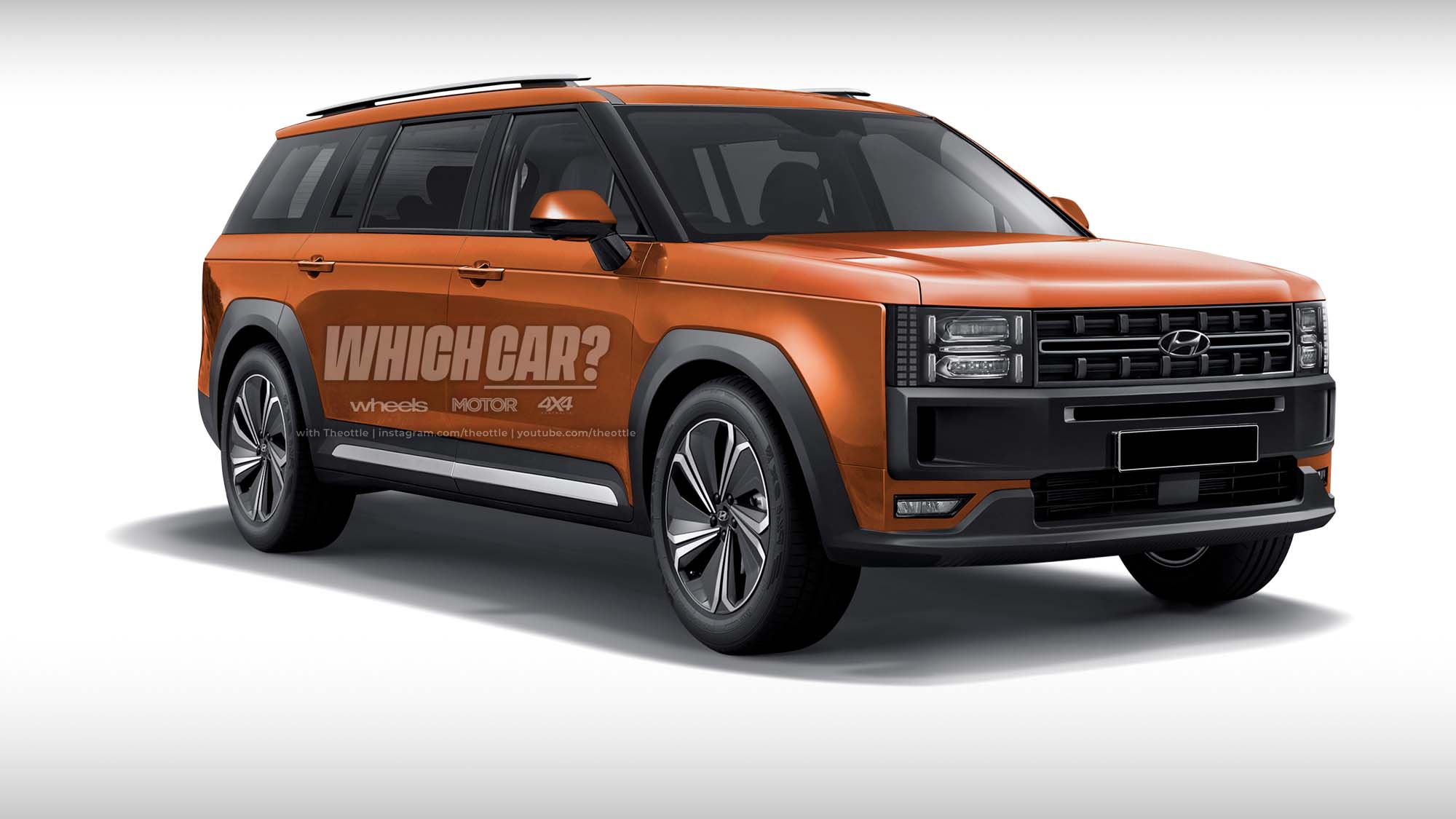
We’ve commissioned artist’s impressions of the 2024 Santa Fe from Theottle based on spy pictures, which you can check out in more detail here.
2023 Santa Fe hybrid supply
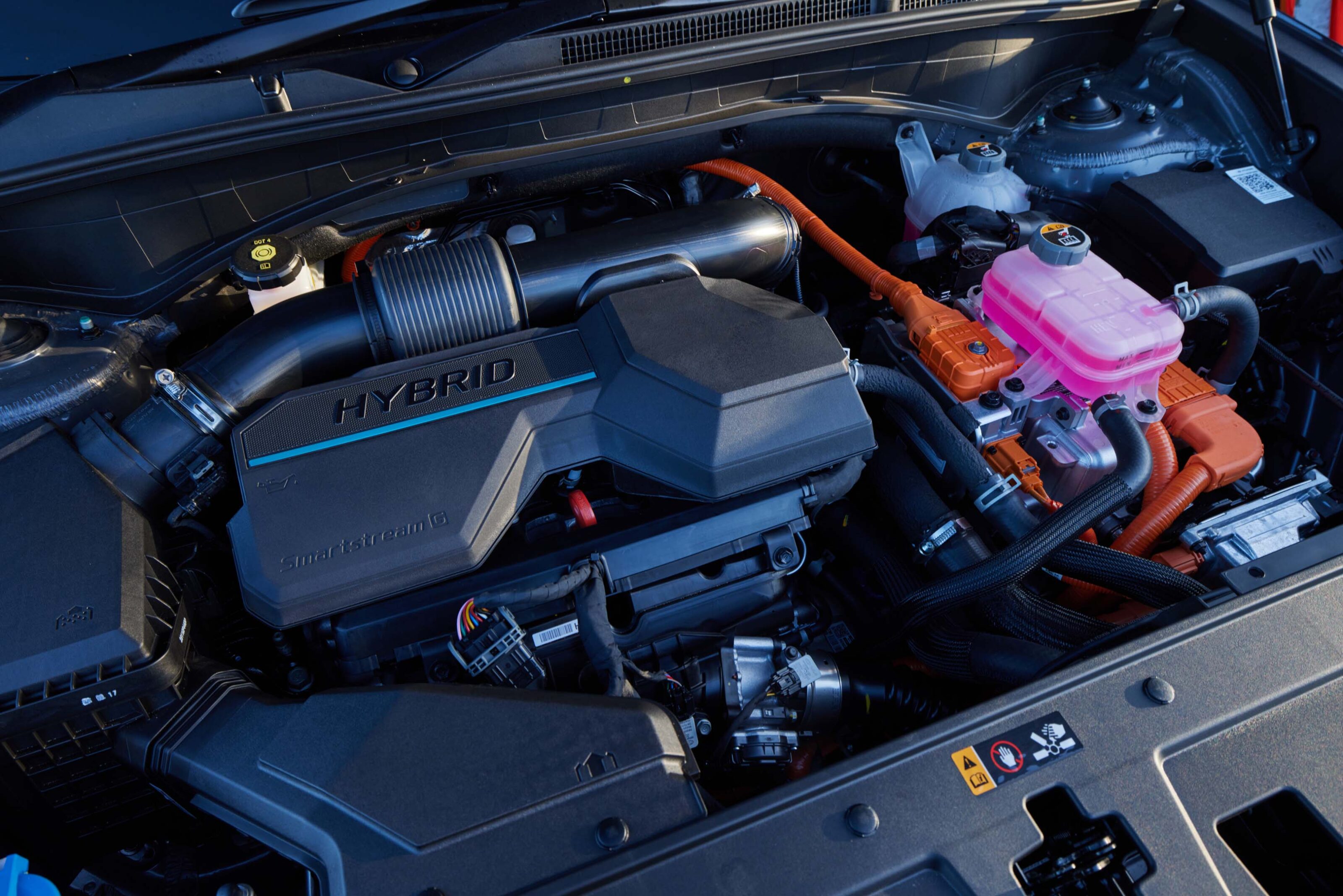
As for the expected mix over the current Santa Fe’s next 12-or-so months on sale, the hybrid will kick off with an initial drop of 400 units in Australia.
And while Kett was enthused about the success of Santa Fe hybrid, he declined to throw a dart at the board and predict monthly supply into next year.
“We’re still going through the machinations of what that looks like an absolute volume last year. I think what we did say during the meeting, is that we felt that the V6 petrol was a really low penetration for us, and we saw this hybrid as an opportunity for us to really augment the AWD diesel.
“So we feel like collectively, both those variants will deliver the majority of the volume over time, but we just haven’t put a number on it – we can’t put a number because we just can’t see the supply chain.”
Kia is currently able to secure around 20 related Sorento hybrids each month, both three-row SUVs share the same 169kW/350Nm powertrain with a 1.6-litre turbo-petrol four-cylinder and 44kW electric motor between engine and six-speed automatic transmission.
“I haven’t seen numbers similar to 20 [for Santa Fe], but I get really brave every so often when I see the production for one month”, Kett said encouragingly.
But again, Hyundai Australia was reluctant to pin-point any numbers at this point in time. More information will be on the way in 2023.
Snapshot
- 2023 Toyota Yaris Cross pricing and features
- GR Sport joins range
- Sports-focused grade receives lowered suspension and unique styling
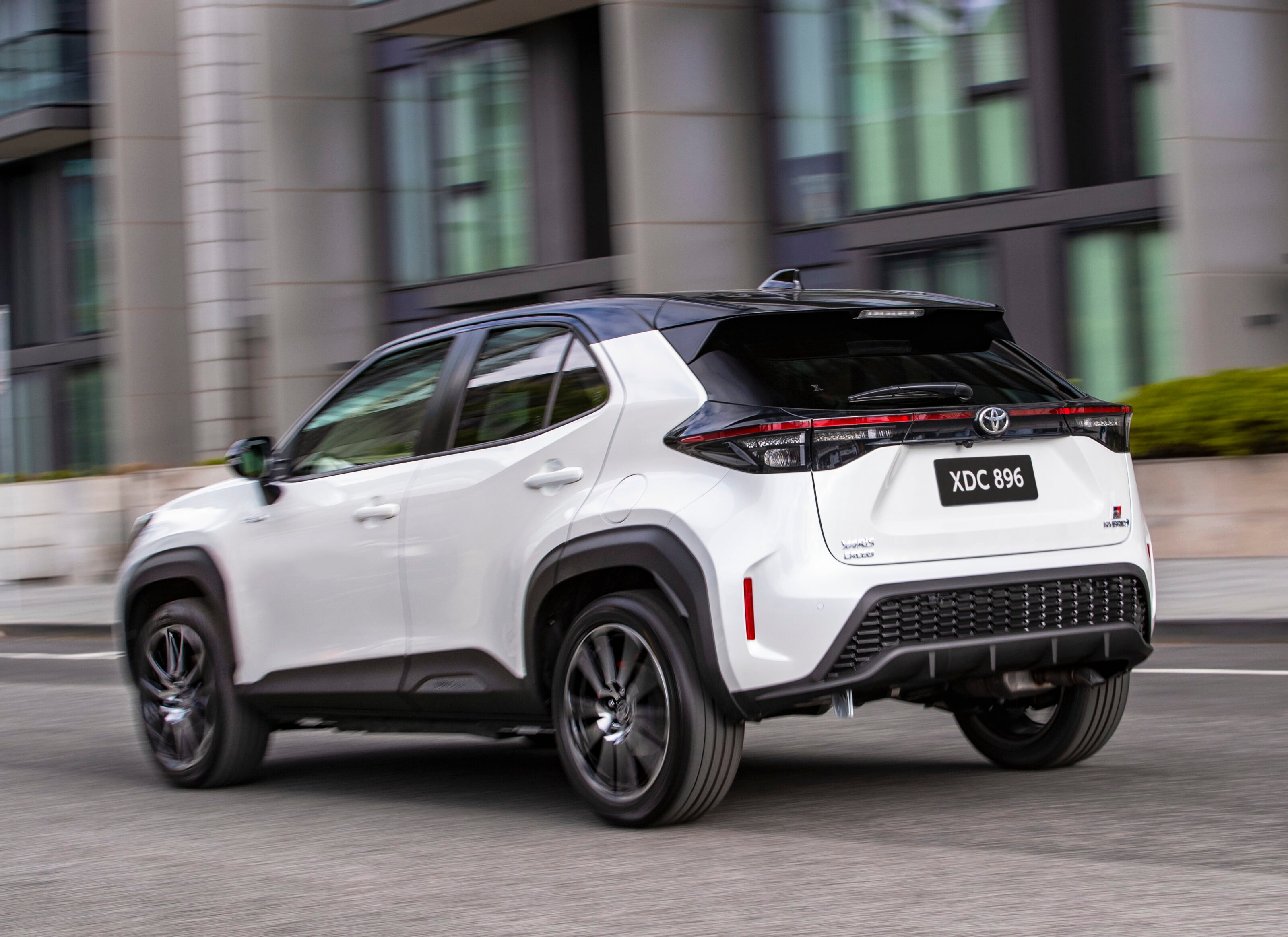
The 2023 Toyota Yaris Cross GR Sport has arrived in local showrooms, joining a minor update to one of Australia’s most popular light SUVs.
It is based on the mid-spec Yaris Cross GXL FWD hybrid, and is priced from $35,840 before on-road costs – making it $850 dearer than the flagship Urban FWD hybrid.
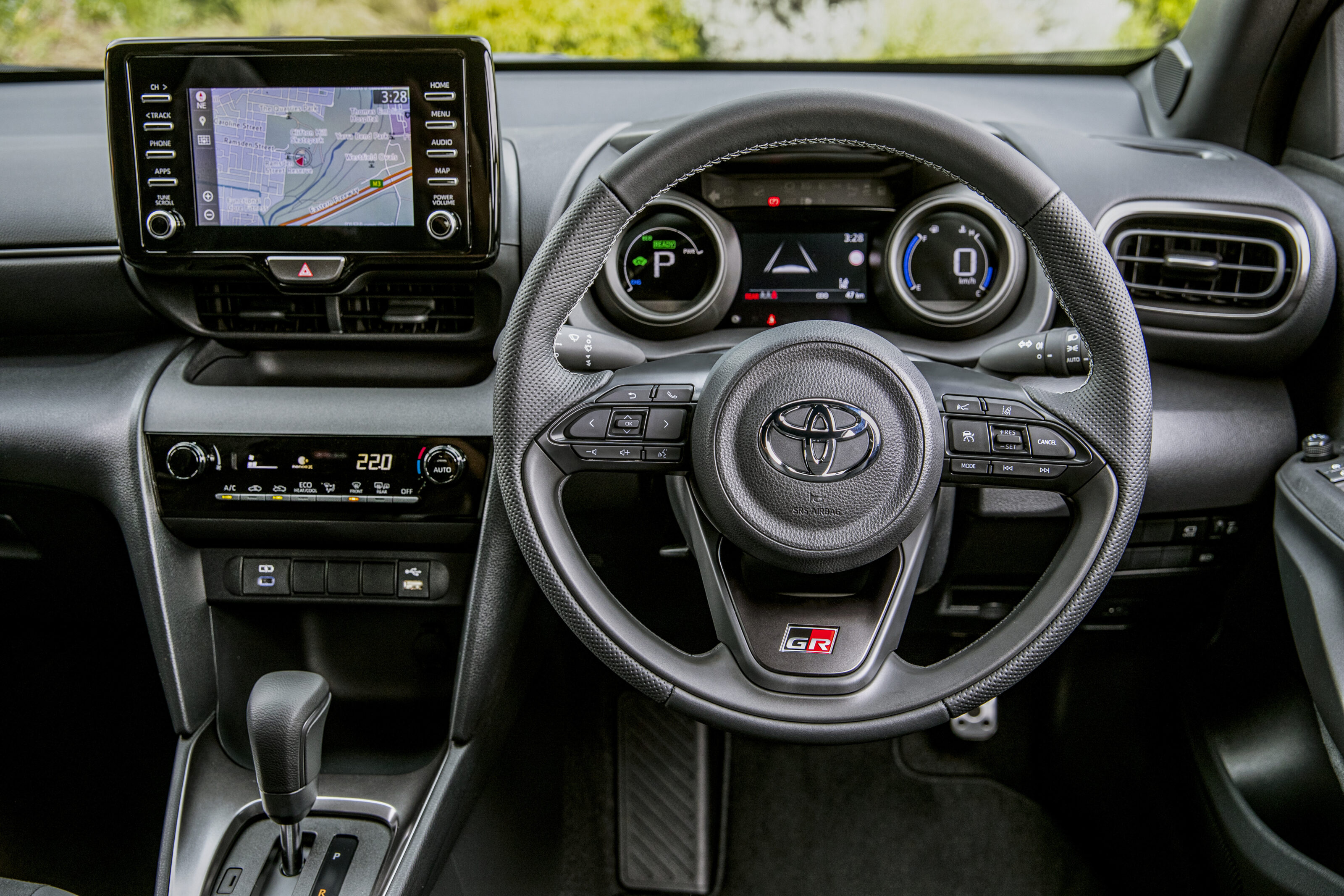
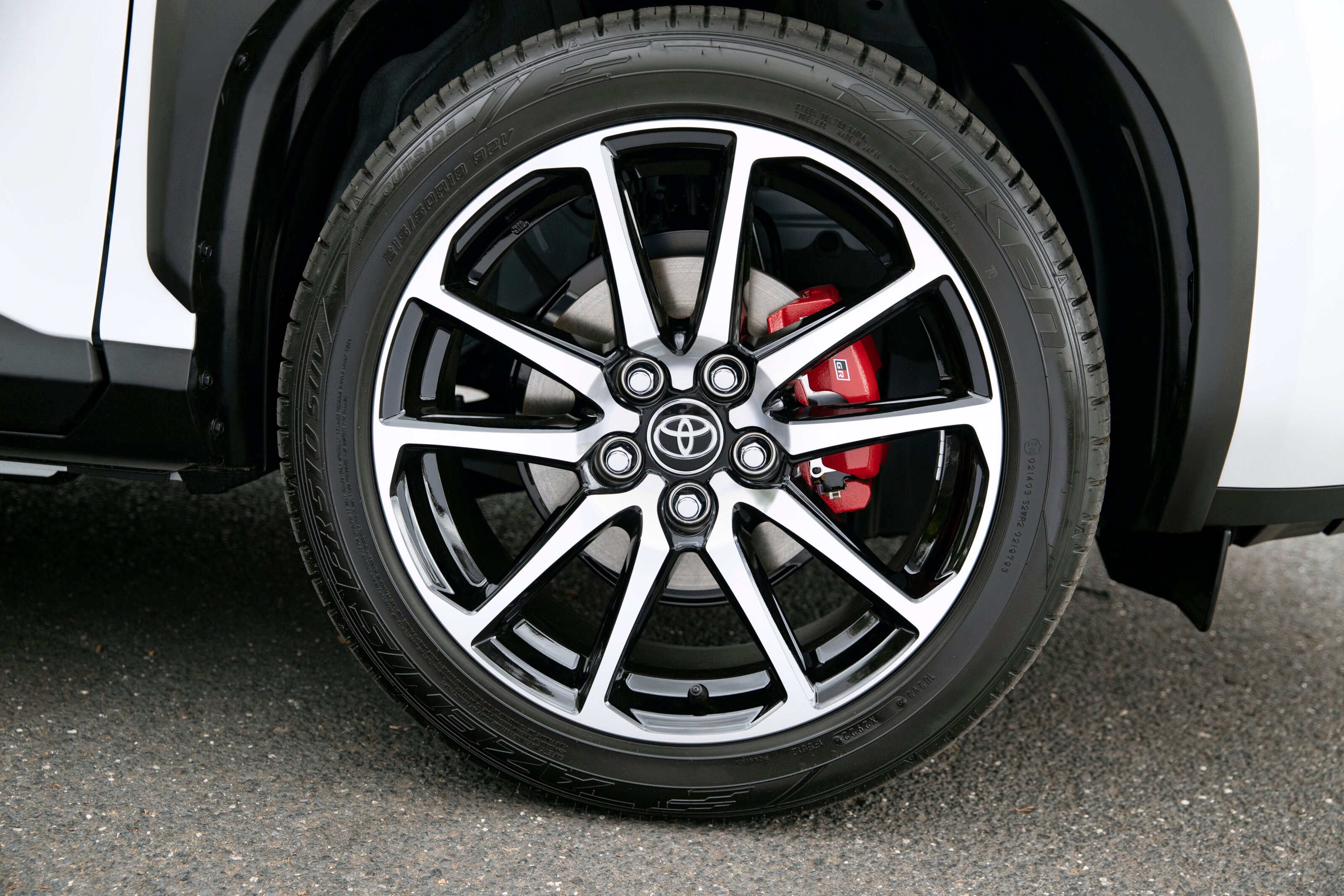
New additions include unique five-spoke 18-inch alloy wheels, 10-millimetre lower and retuned suspension, GR Sport badging inside and out, a unique front grille with a mesh pattern, and black side mirrors.
There’s also red brake calipers, black synthetic leather and suede upholstery, aluminium pedals, and an underfloor brace.
It also features a USB-C port on the dashboard and an air purification system, which is also new for the range-topping Urban.
As announced in May, the flagship grade receives black leather-accented upholstery, replacing its previous brown cloth/leather combination.
In addition, the efficiency-focused, no-cost steel wheel option has been deleted from the entry-level GX, while the Urban can no longer be specified with a bronze two-tone roof.
The wider Yaris Cross range is priced from $26,990, extending to $37,990 plus on-roads for the flagship all-wheel-drive hybrid variant.
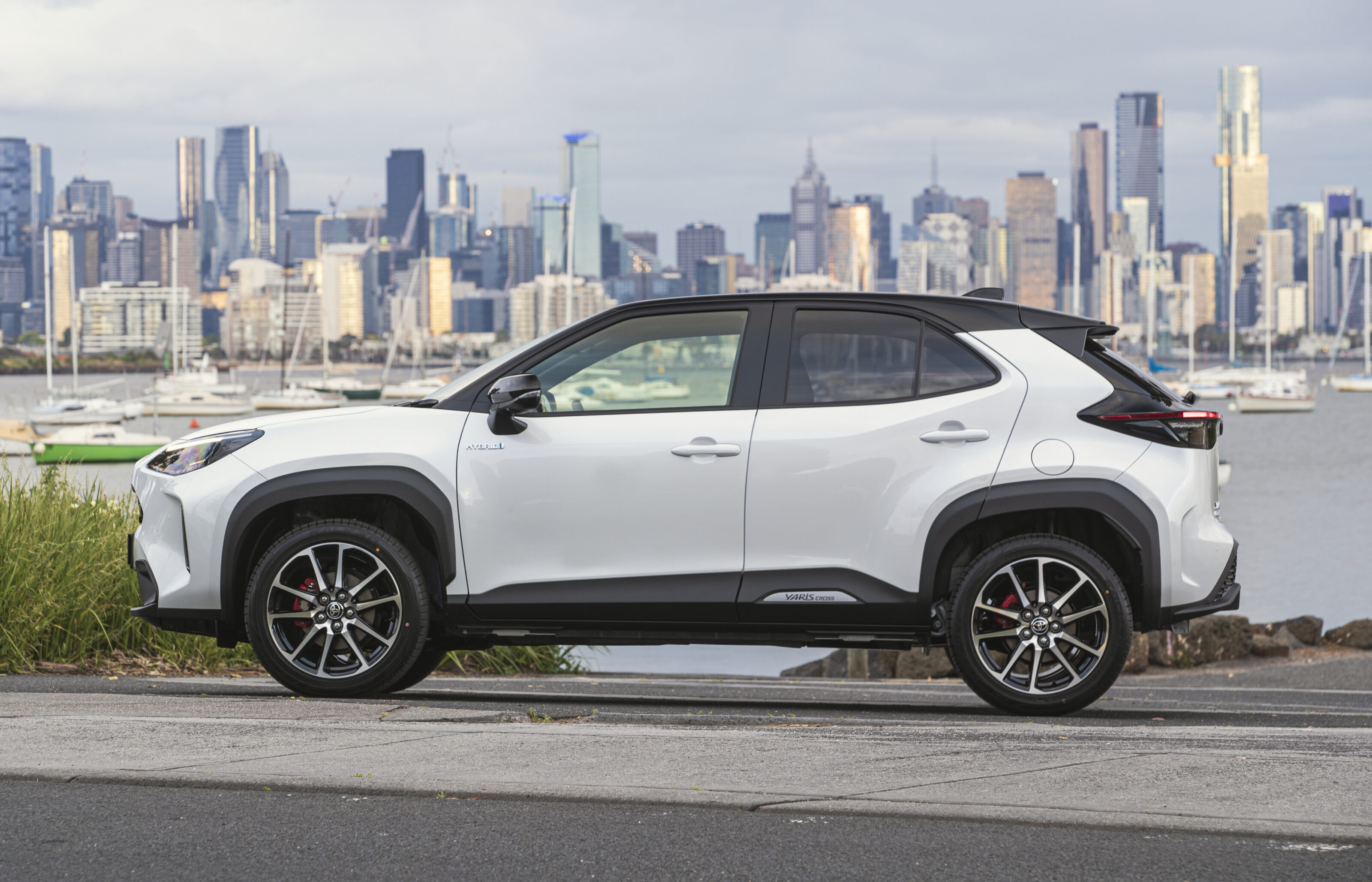
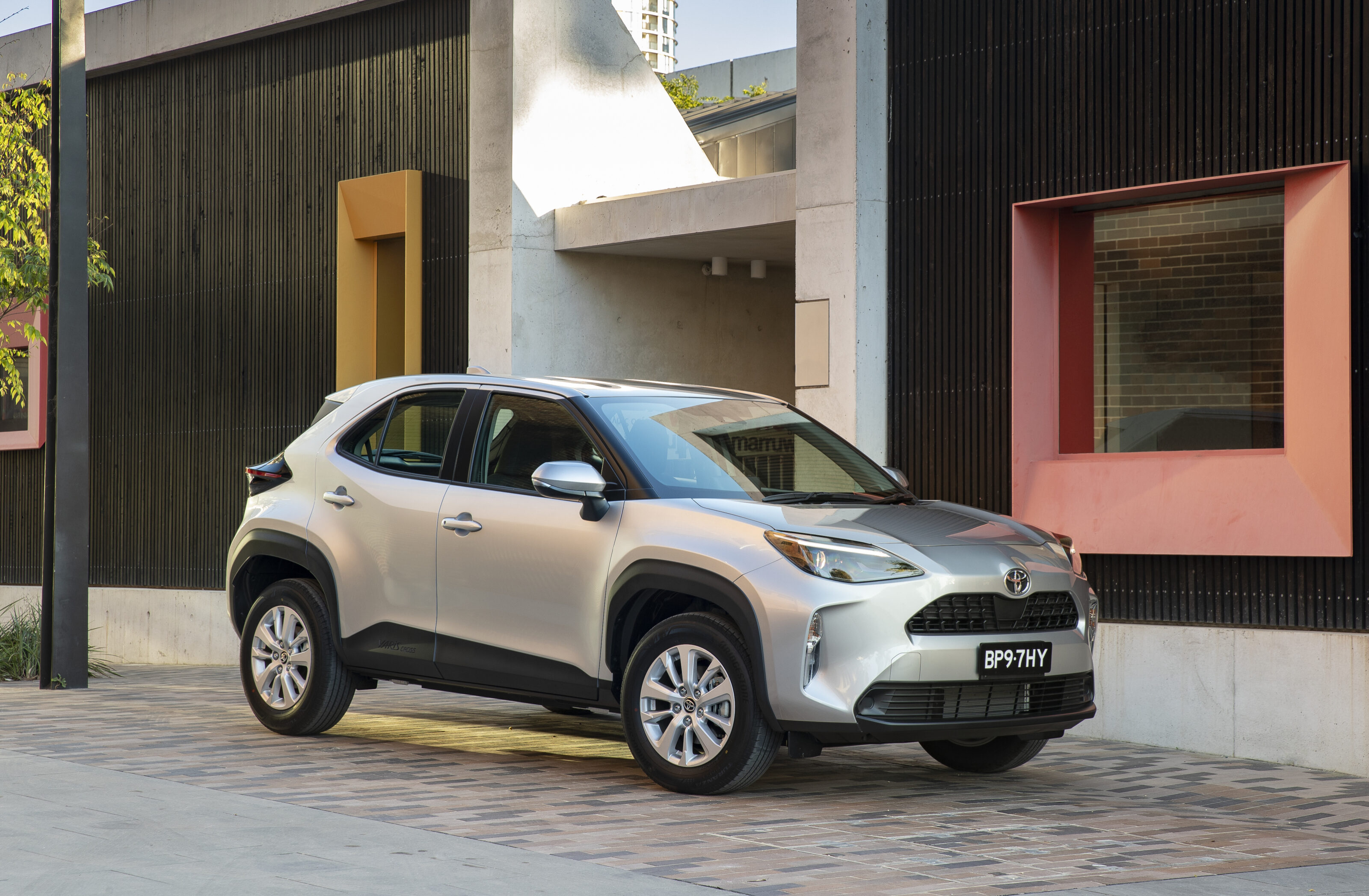
Four grades of Yaris Cross – GX, GXL, GR Sport and Urban – are available, with a trio of powertrain choices for a total of 10 variants.
Toyota Australia now offers a GR Sport variant for the LandCruiser 300, C-HR and Yaris Cross, with sportier versions of the RAV4 and Corolla offered in Europe.
A HiLux GR Sport – replacing the current Rugged X – will launch here in the second half of 2023.
In the light SUV class, the Toyota Yaris Cross competes against the Mazda CX-3, Kia Stonic, Hyundai Venue and Ford Puma, amongst others.
JUMP AHEAD
- Pricing
- Features
- Colours
- Engine, drivetrain, and fuel economy
- Safety
- Dimensions
- Warranty and servicing
- Availability
2023 Toyota Yaris Cross pricing
Prices exclude on-road costs.
2022 Toyota Yaris Cross features
GX
GXL
GR Sport
Urban

Toyota Connected Services
Toyota Connected Services is standard on the Yaris Cross, featuring; automatic collision notification, SOS emergency call, stolen vehicle tracking, guest driver settings, vehicle function statuses, and current vehicle location.
The SIM-based service is complimentary for three years from the date of vehicle delivery.

Colours
Metallic paint incurs a $575 premium across the Yaris Cross range.
Two-tone metallic paint is available for $1350 extra on GR Sport and Urban variants.
Engine, drivetrain, and fuel economy
Front-drive petrol variants are powered by a 1.5-litre three-cylinder engine producing 88kW of power and 145Nm of torque.
This powertrain is matched with a CVT automatic transmission.
Front-drive hybrids use a 67kW/120Nm 1.5-litre Atkinson cycle petrol engine paired with two electric motors, for a maximum combined 85kW power output.

All-wheel-drive versions use the same hybrid engine and battery set-up as the 2WD hybrid, but add an electric motor to the rear axle.
This variant can send up to 100 per cent of the power to the front wheels, or split delivery 40 per cent to the front and 60 per cent to the rear.
Torsion-beam rear suspension features in front-wheel-drive variants, while the all-wheel drive includes a multi-link setup.
| 1.5-litre three-cylinder petrol FWD | 5.4L/100km |
| 1.5-litre three-cylinder hybrid FWD | 3.8L/100km |
| 1.5-litre three-cylinder hybrid AWD | 4.0L/100km |
Safety
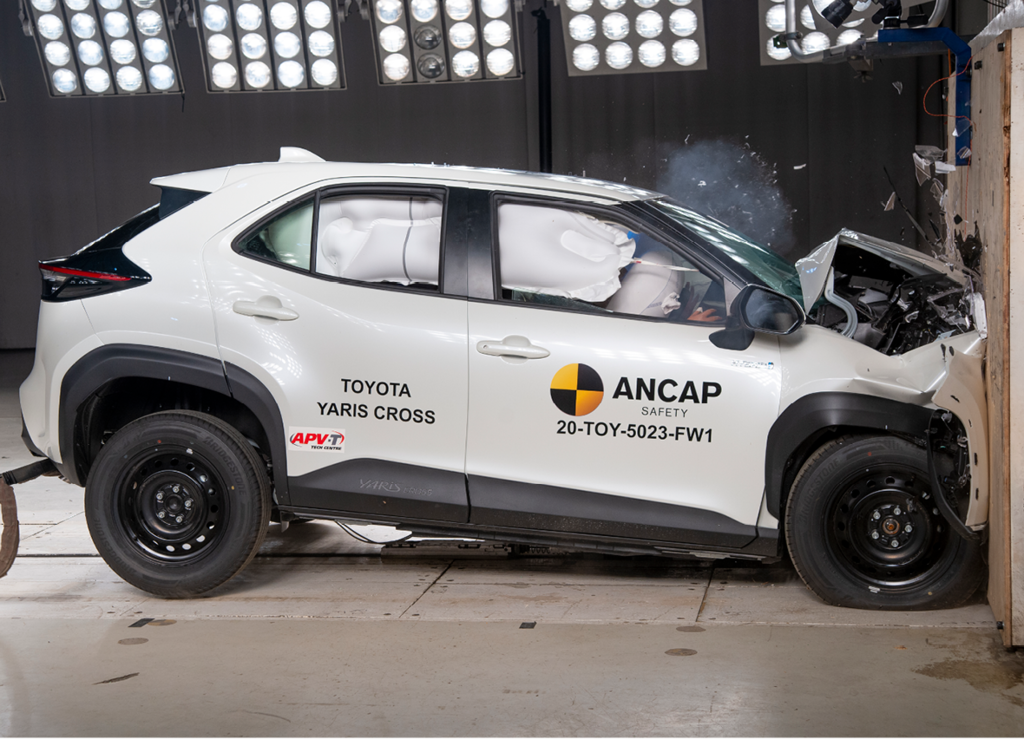
The Toyota Yaris Cross is covered by a five-star ANCAP safety rating, based on testing conducted under the latest 2020-22 criteria. This covers all variants sold in Australia.
For the full report, click here.
Eight airbags (dual front, side and curtain, driver’s knee, and front-centre) feature across the range.
Each variant includes the following active safety equipment as standard:
Blind-spot alert, rear cross-traffic alert, and front and rear parking sensors are available on GXL grades and above.

Dimensions
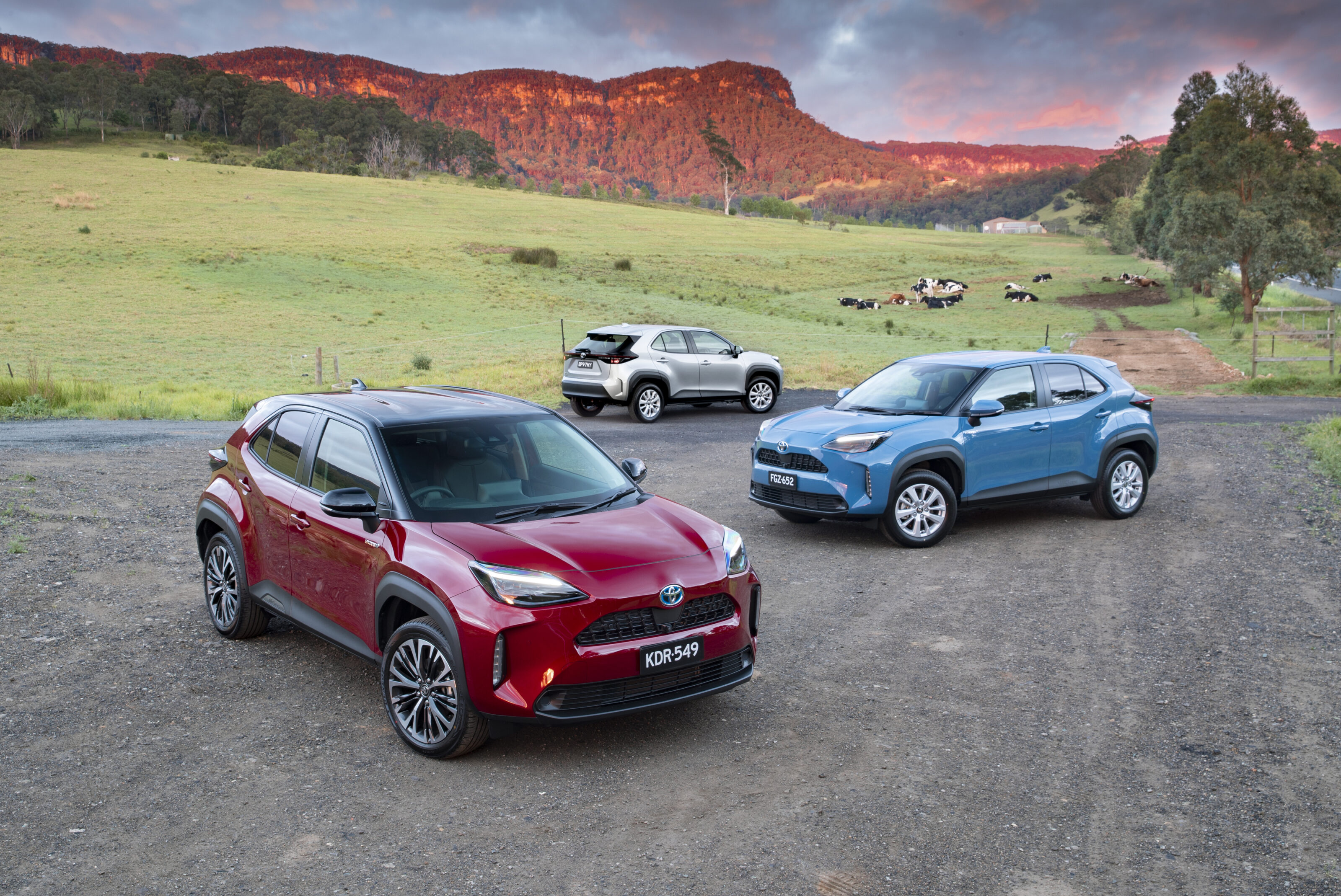
The Toyota Yaris Cross has a wheelbase of 2560 millimetres, and is 4180mm long, 1765mm wide and 1560mm high.
Despite sharing its name with the Yaris hatchback, the Yaris Cross is 240mm longer, 20mm wider and 85mm taller.
2023 Toyota Yaris Cross boot space
With the rear seats up, the front-wheel-drive Toyota Yaris Cross has a 390-litre boot capacity. This is reduced to 317 litres on all-wheel-drive variants.
Warranty and servicing
As per the wider Toyota range, the Yaris Cross includes a five-year, unlimited-kilometre vehicle warranty, a seven-year warranty on the engine and driveline, and a 10-year warranty on the hybrid battery.
The Japanese manufacturer also offers customers capped-price servicing, with the first five visits to a dealer for servicing set to cost $205.
Availability
The 2023 Toyota Yaris Cross range, including the GR Sport, is on sale now.
Chinese newcomer, BYD, has announced its first batch of sales data in Australia.
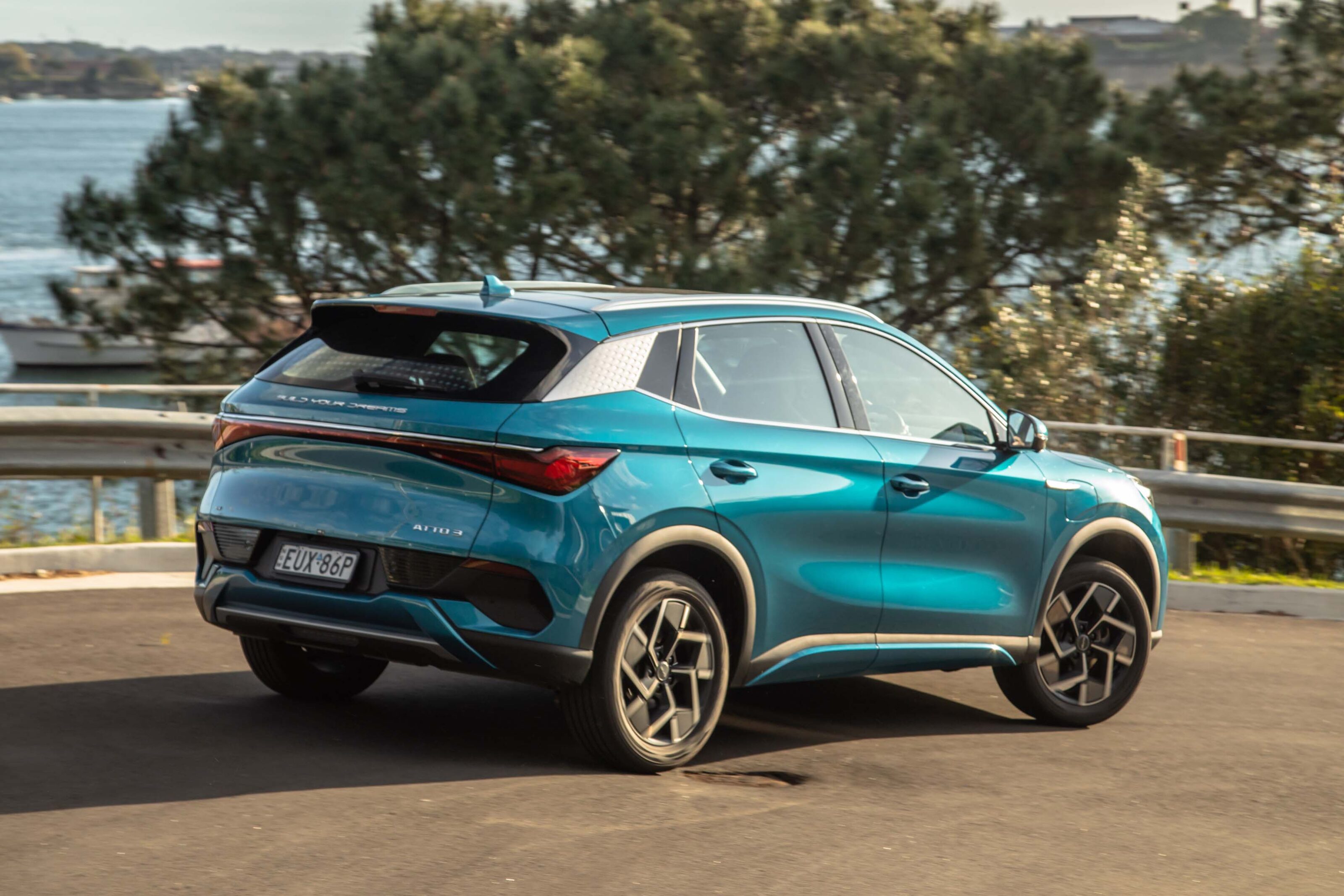
VFACTS sales figures released today by the Federal Chamber of Automotive Industries (FCAI) reveal 845 BYD Atto 3 electric SUVs were reported as sold in November.
This has placed the brand – which only sells the Atto 3 small SUV in Australia currently – behind Tesla as the nation’s second-highest-selling electric vehicle brand, and ahead of MG, Hyundai, Polestar, Volvo and Kia.
When comparing electric vehicle sales in November, the BYD Atto 3 placed second on the podium for the best-selling in Australia, behind the Tesla Model Y (1805), but in front of the Tesla Model 3 (391), MG ZS EV (361) and Volvo C40 Recharge (243).
Therefore, the Atto 3 accounted for approximately one-in-five electric vehicles sold last month.
This is despite local deliveries of many just-registered BYD Atto 3 vehicles being temporarily halted in late October due to an Australian Design Rule compliance issue surrounding its child restraint Isofix anchor points and passenger airbag ‘off’ switch. Deliveries resumed in mid-November.
Overall, electric vehicle sales totalled 4457 for the month, equating to a 4.7 per cent market share.
When excluding light commercial vehicles – limited to the newly-launched LDV eT60 ute (two units registered), and LDV eDeliver 9 and Mercedes-Benz eVito electric vans – this jumps to 6.5 per cent for passenger cars and SUVs.
As Tesla didn’t report its data in 2021, electric vehicle sales have risen by 685 per cent compared to the same month last year. When excluding the brand, this growth percentage drops to 298 per cent.

While dedicated EV nameplates are listed in the sales data, cars sold under the same banner as an internal-combustion vehicle are combined.
Hyundai Australia has confirmed it sold 71 examples of the Kona Electric in November, with year-to-date sales equalling 1028 examples. This is believed to make it the fourth best-selling electric vehicle so far in 2022, behind the Tesla Model 3, Model Y, and Polestar 2.
