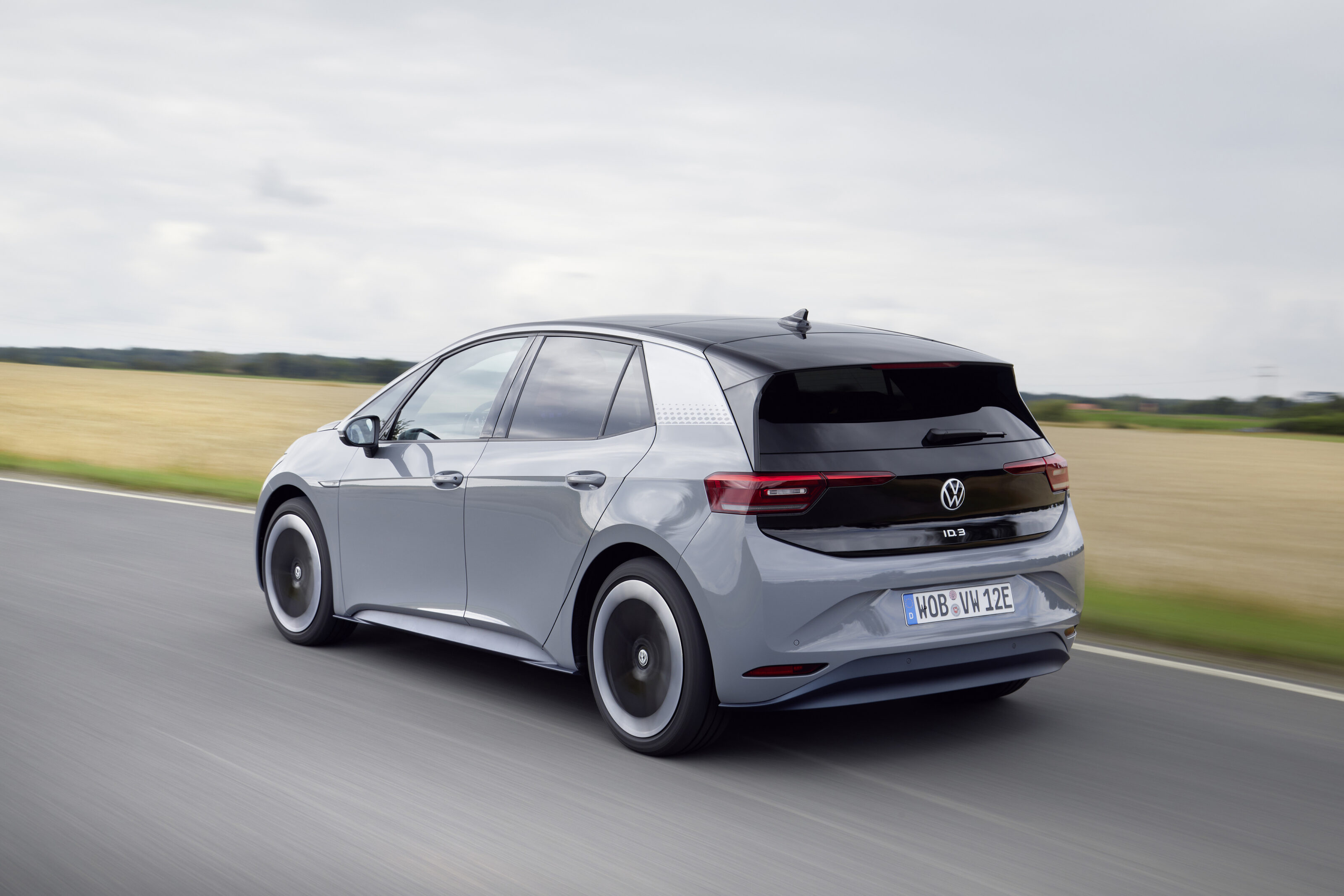
It’s often claimed that Land Rover invented the luxury SUV with the Range Rover. In truth, the original Rangie, launched back in 1970, would be seen by today’s standards as a grimly utilitarian piece of kit. It had vinyl seats, wind-up windows, rubber floor mats and painted metal inside, and air-conditioning was optional.
What made Range Rover’s reputation as a luxury vehicle was its magic carpet ride. Where every other 4×4 would rattle and crash and shake the fillings from your teeth, the Range Rover would glide imperiously, its long-travel coil springs and progressive dampers shrugging off the lumps and bumps with effortless disdain.
Land Rover only subsequently added luxury car accoutrements such as wood and leather, carpets and electric windows, and more, establishing a formula that’s since been copied by everyone from Toyota to Rolls-Royce.
Amidst all that, though, it also worked assiduously to ensure the Range Rover remained a benchmark in terms of its off-road capability and on-road manners.
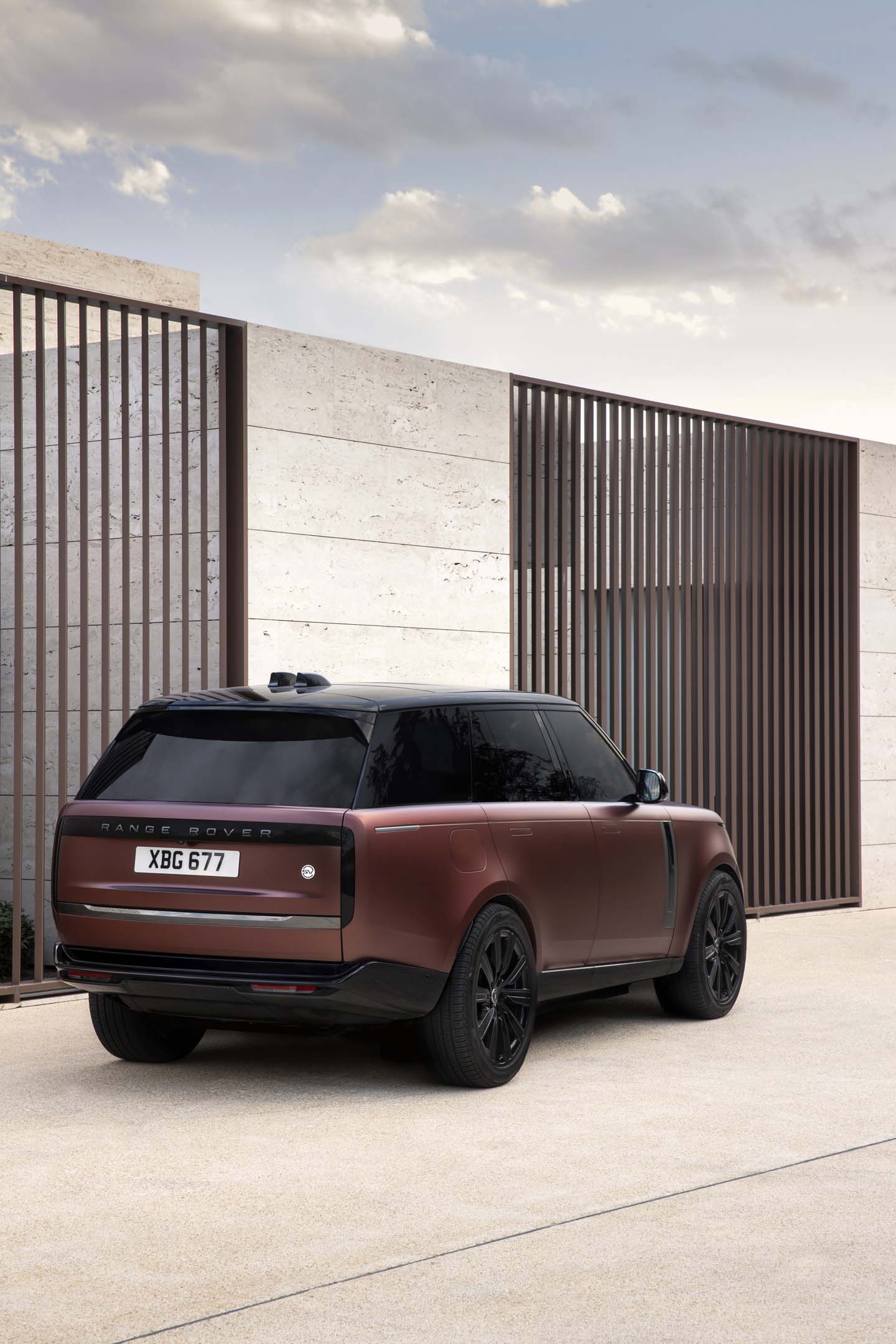
And so it is with the fifth-generation Range Rover. It’s the biggest, most luxurious Rangie in history. But it will still take you places that will challenge all but the most hardcore 4x4s. And that magic carpet ride? We’ll come to that.
We’ve already driven the new Range Rover, codenamed L460. But the PHEV 510 debuts JLR’s new plug-in hybrid powertrain in the Range Rover flagship.
The PHEV powertrain consists of the 296kW/550Nm version of the Ingenium 3.0-litre petrol straight six found in the P400-badged Range Rover and Range Rover Sport, combined with a 105kW e-motor mounted between the engine and the eight-speed automatic transmission.
Energy for the e-motor is drawn from a 38.2kWh lithium-ion battery mounted at the rear of the car.
Total system output is 375kW and 700Nm.
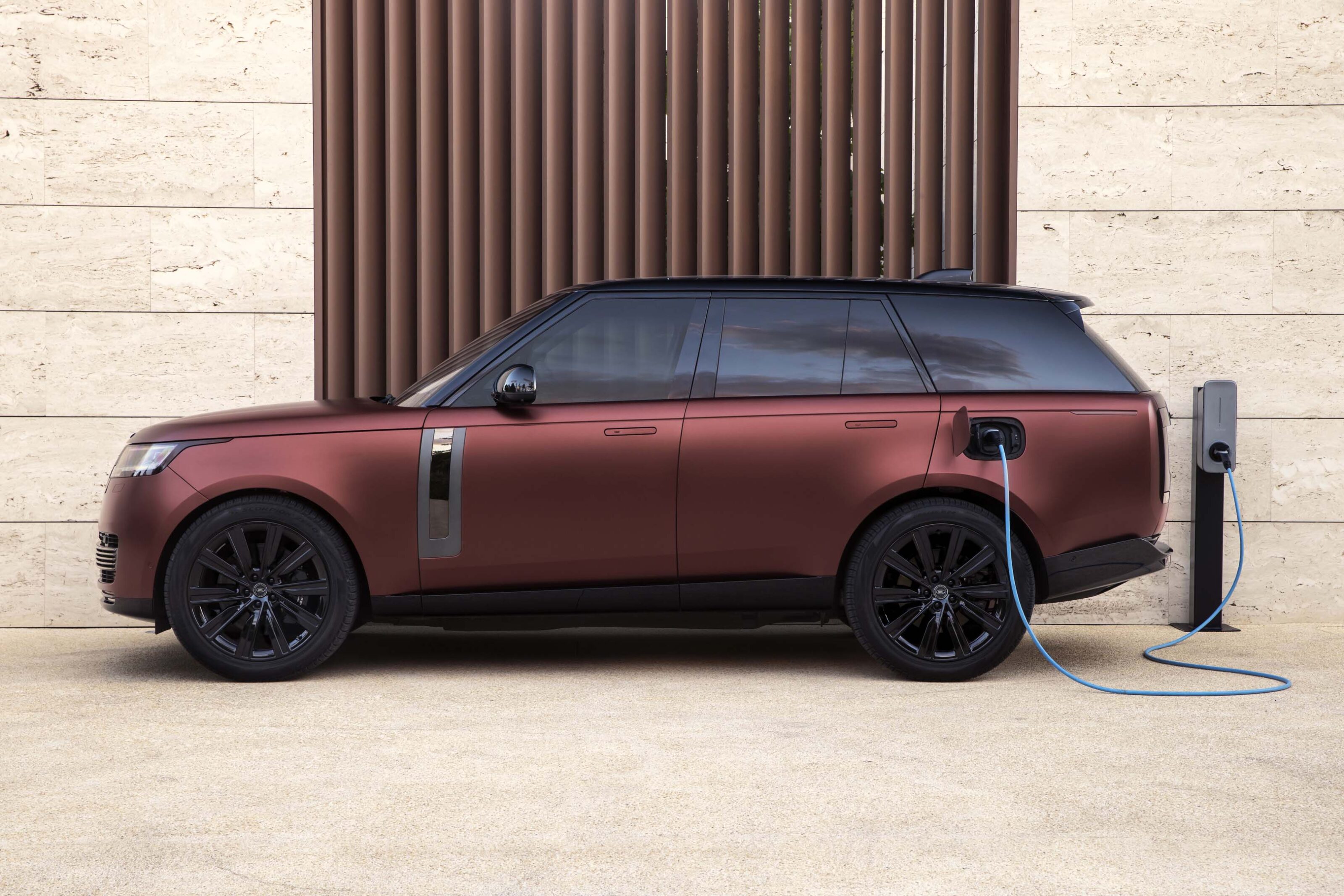
Land Rover says the Range Rover PHEV 510 will travel a WLTP-certified 113km on pure electric power at speeds up to 140km/h, and that the battery can be charged to 80 per cent in less than an hour using a 50kW DC fast charger.
Plug it in at home, and the 7.2kW onboard charger will top up the battery in no more than five hours.
Plug-in hybrids get a bad rap. The problem with PHEVs, say critics, is their electric driving range is poor compared with a proper EV, and when the battery’s done, the internal combustion engine uses more fuel than it should by lugging around the dead weight of a slumbering EV powertrain. PHEVs are the worst of both worlds, they insist.
The Range Rover PHEV 510 proves the critics wrong.
Left to its own devices in the default Hybrid mode, the powertrain’s electronic brain masterminds a seamless dance between internal combustion engine and e-motor to deliver an optimal balance of efficiency and performance, regardless of whether the PHEV 510 is mooching along in the Comfort drive mode or being hustled along in Dynamic mode, with the eight-speed automatic set to Sport and manual shift modes.
Land Rover says the Range Rover PHEV 510 will travel a WLTP-certified 113km on pure electric power at speeds up to 140km/h, and that the battery can be charged to 80 per cent in less than an hour using a 50kW DC fast charger.
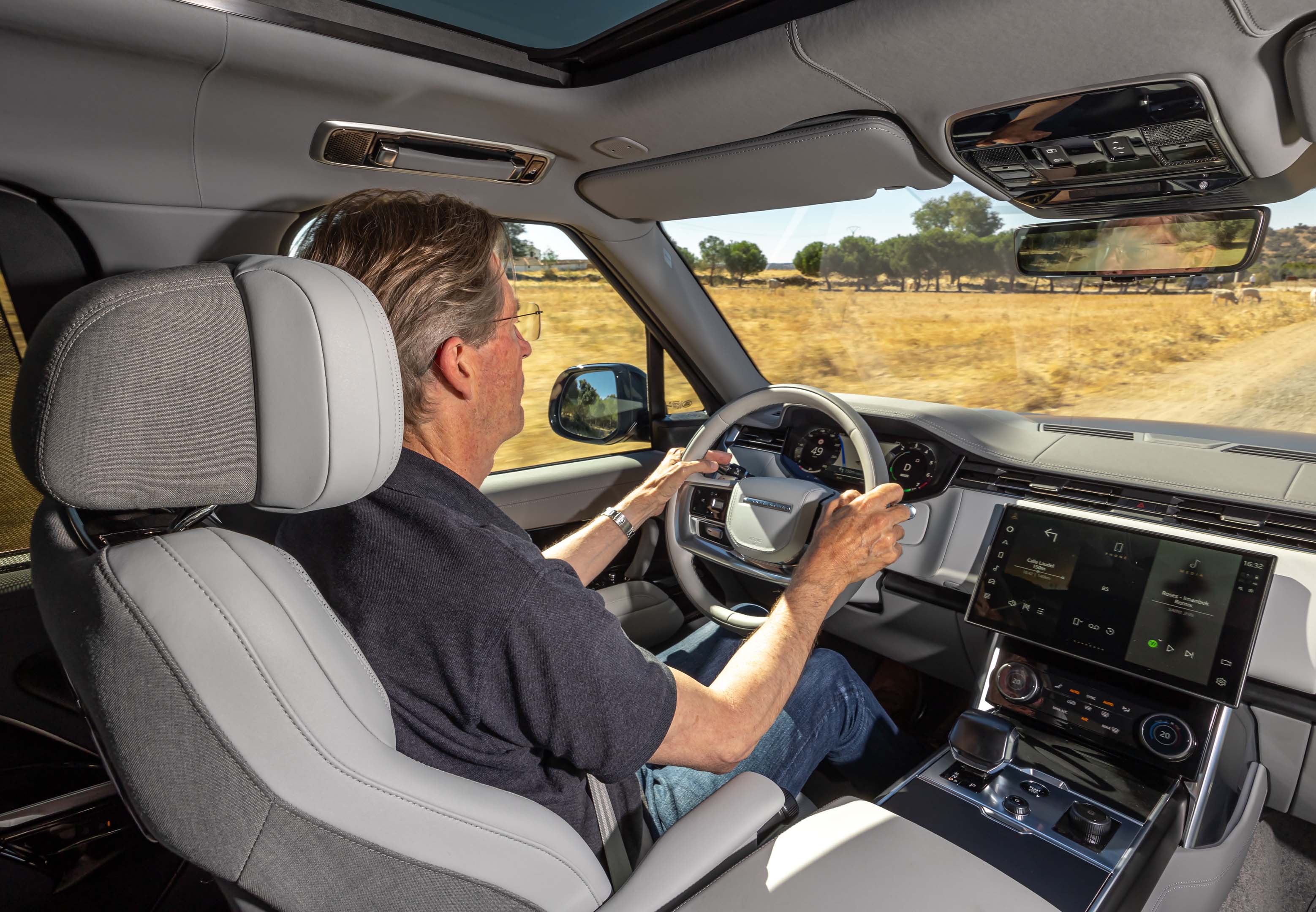
The system will also allow the driver to choose to maintain the battery’s state of charge to guarantee pure EV running at the end of a journey. Set a destination in the nav system, and the hybrid system will analyse advanced navigation data to optimise energy usage on the route, so you can travel through EV-only zones or arrive at your destination wafting along on smooth, silent electric power.
And because the e-motor drives through the eight-speed automatic transmission, the Range Rover PHEV 510 can even be driven off-road in low range on pure electric power.
The WLTP-certified 113km range means at least 75 per cent of the daily journeys undertaken by current Range Rover owners can now be completed without the internal combustion engine firing up, Land Rover says.
An all-electric version of the Range Rover is scheduled to debut in 2024. But for those who can’t wait, or those who demand a longer driving range than a BEV can provide, the PHEV 510 is the perfect halfway house.
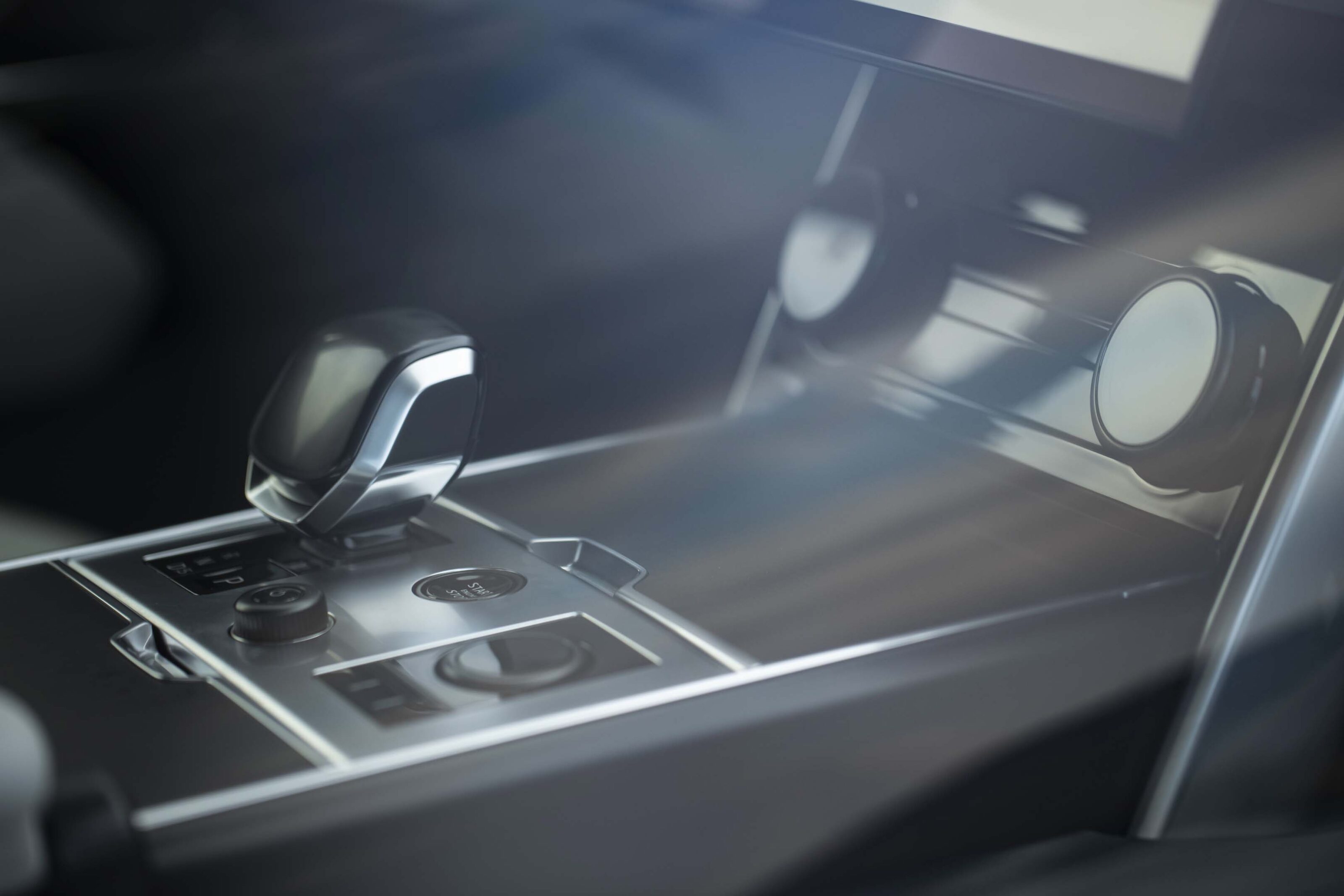
More importantly, it doesn’t feel like you’re driving a compromise. The PHEV 510’s claimed 5.6-second 0-100km/h acceleration time is a full second off that of a similarly-specced Range Rover P530, but the numbers don’t tell the whole story.
Though in outright terms it has less power and torque than the BMW-sourced 4.4-litre twin-turbo V8 that serves as the top engine of the current Range Rover line-up, the PHEV 510 powertrain doesn’t feel lacking on the road. If anything, the e-motor’s instant-on torque endows the Range Rover PHEV 510 with more authoritative throttle response than its P530-powered sibling.
And though the battery adds mass, it’s located towards the rear of the car and between the axles, which means the PHEV 510 feels slightly better balanced in corners.
The WLTP-certified 113km range means at least 75 per cent of the daily journeys undertaken by current Range Rover owners can now be completed without the internal combustion engine firing up, Land Rover says.
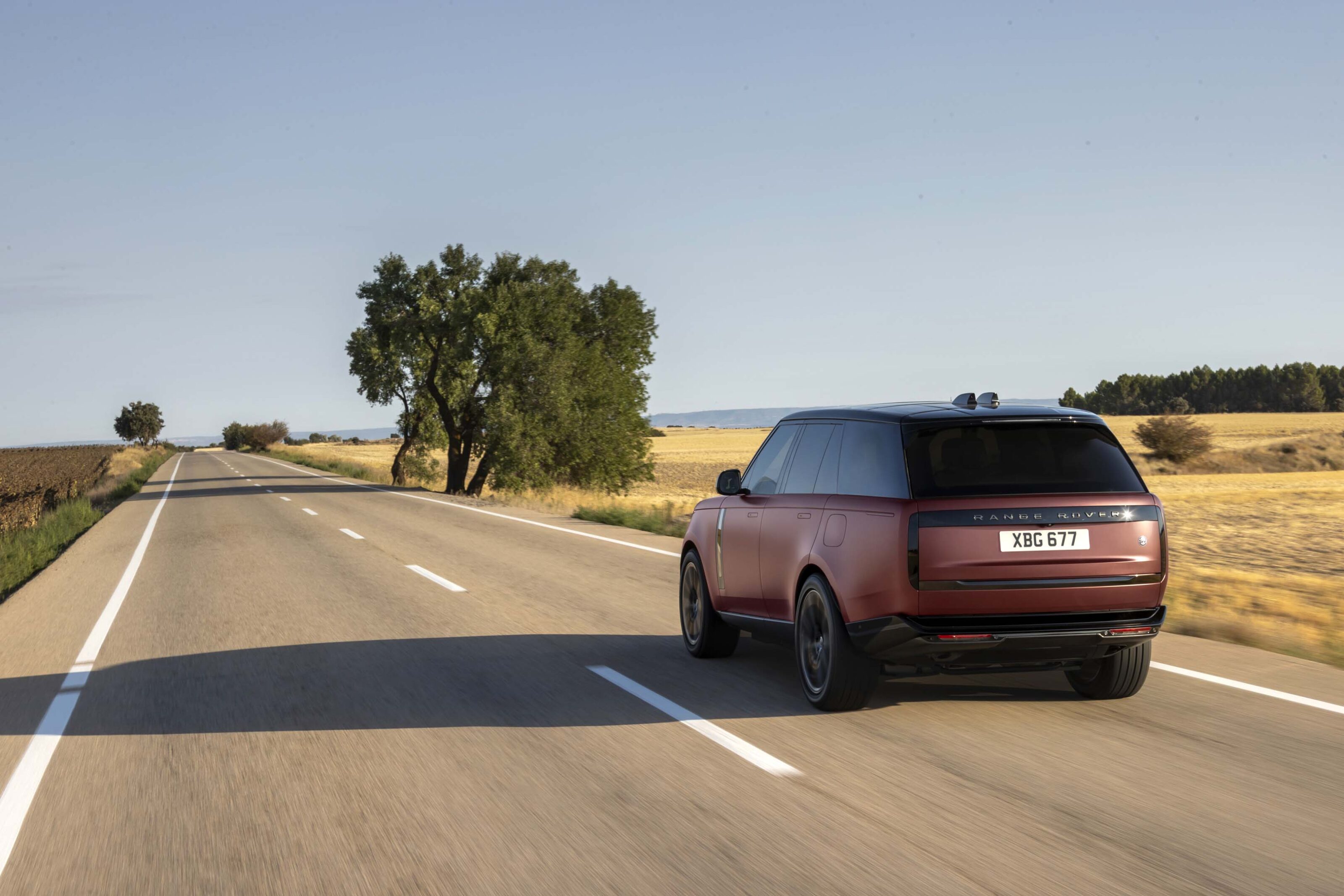
The standard rear-wheel steering system, which pivots the wheels up to 7.5 degrees in the opposite direction to the fronts at speeds up to 50km/h and in the same direction above 50km/h noticeably improves agility in tight corners while maintaining stability in high-speed manoeuvres.
Bilstein twin-valve active dampers and Land Rover’s first 48V active anti-roll system, with 900Nm of twist available within 200 milliseconds and up to 1400Nm in total, help keep the big Rangie’s body motions well controlled. The system can be decoupled for off-road work, and its actuators used to push down the wheels to better follow the terrain.
Our test cars were SV 510s, basically top-of-the-range Autobiography models with cosmetic tweaks by Land Rover Special Vehicles Operations, and they all rolled on 22-inch rims shod with 285/45 Pirelli Scorpion Zero tyres. And it’s here, where the rubber meets the road, where the battle for the heart and soul of Range Rover is taking place.
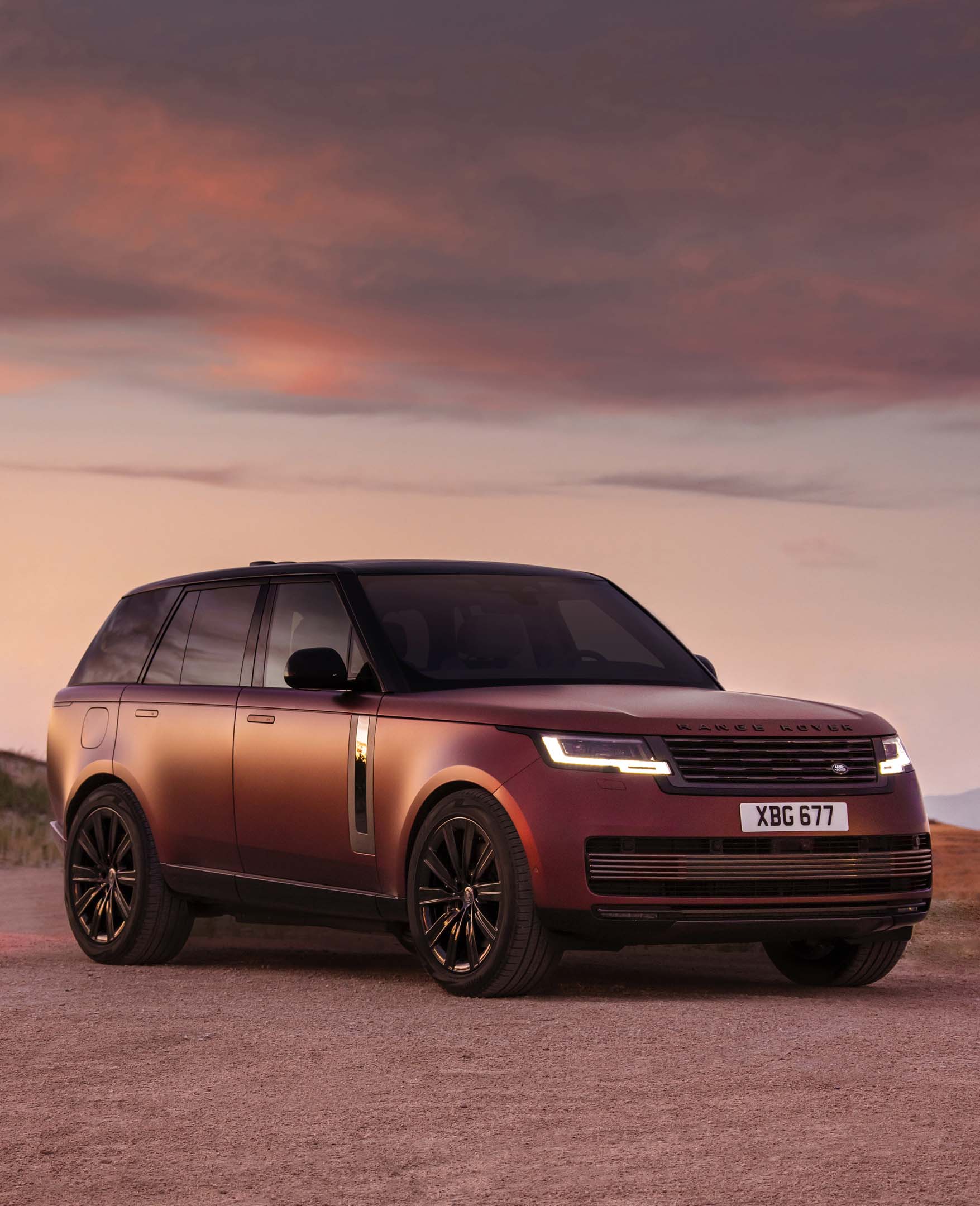
As we pointed out in our test of the new Range Rover Sport, designers love big wheels because they visually shrink the mass of the vehicle. But engineers hate them because they add unsprung mass, which makes precise management of wheel motions even more difficult. What’s more, big rims are invariably shod with low-profile tyres that have stiff sidewalls.
Big wheels and stiff-sidewall tyres are a nightmare for secondary ride quality and you can feel it, even in the PHEV 510, which at 2810kg is the heaviest of the new Range Rovers. The ride in the rear seat is, frankly, poor, with impact harshness transmitted directly through the seat squab. There’s more tyre noise, too. For a luxury vehicle, it’s not acceptable. For a Range Rover, even less so.
That’s our one real niggle with the Range Rover PHEV 510, which will be available in Australia in standard wheelbase HSE trim for $270,272 and standard wheelbase Autobiography spec for $301,687 (both before on-road costs).
In every other way, it’s a proper Range Rover.
“We have the (electric) Recon and Wagoneer S, which are secured for Australia.”
Snapshot
- Recon and Wagoneer S confirmed, Avenger TBC
- Grand Cherokee 4xe a fitting replacement for V8 power
- Petrol and diesel is done soon, Meunier says
Jeep has outlined its electric vision for the Australian market with not one, but two battery-powered models coming Down Under – and a third poised to join them.
The trio of seven-slot EVs will roll out globally over the next couple of years and while exact Australian arrival times are yet to be confirmed, the Recon and Wagoneer S are confirmed to lead Jeep’s local electric charge.
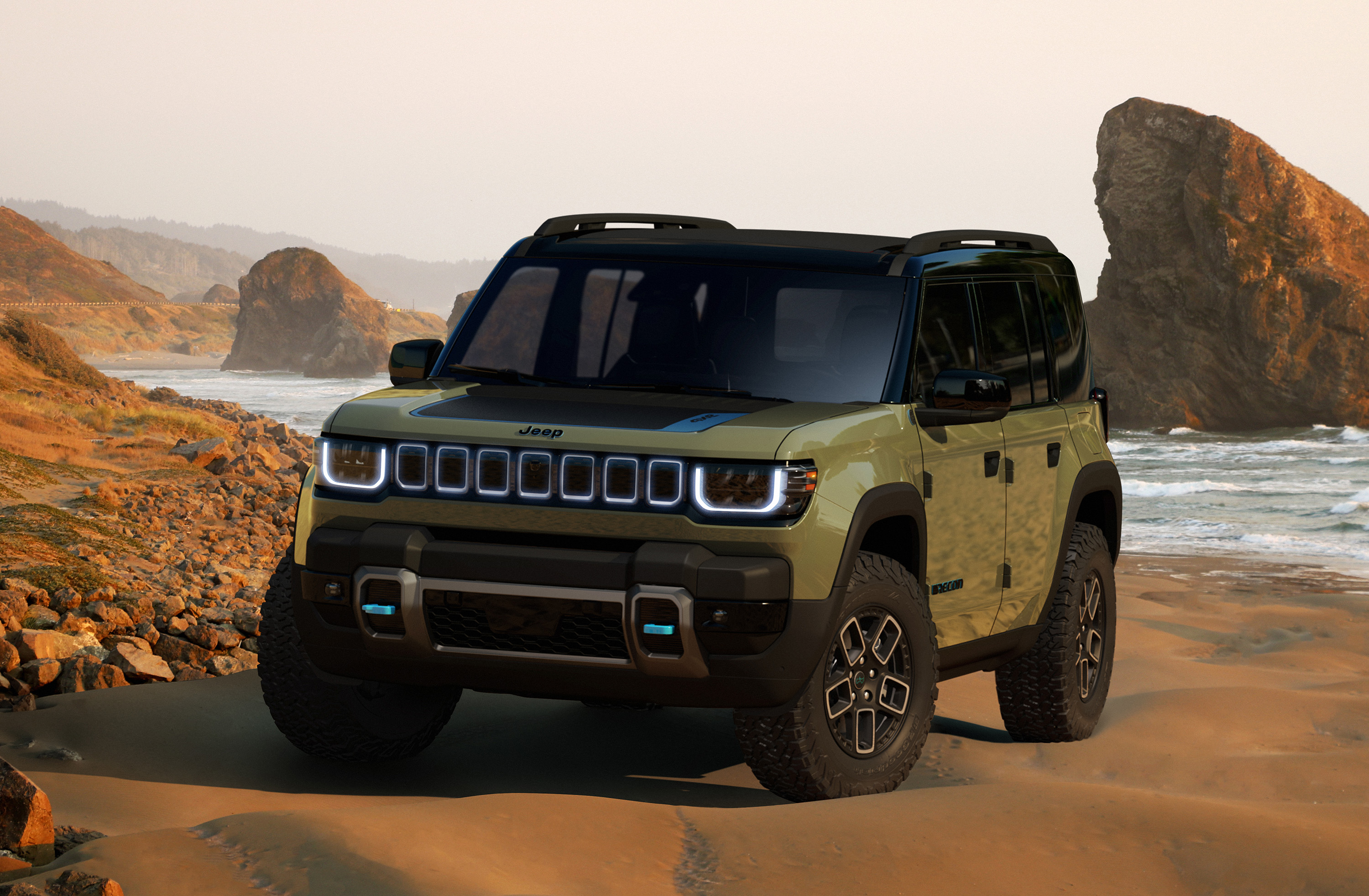
Speaking at the North American International Auto Show in Detroit, Jeep Brand CEO Christian Meunier said a pair of electric vehicles will form an important part of Jeep’s reformation in Australia.
“We have the Recon and Wagoneer S, which are secured for Australia,” he said.
“Australia was very much behind two or three years ago and electrification was not even talked about, but I kept questioning and questioning – and look at what happened in the meantime. New Zealand is going 100 per cent full speed ahead, and Australia is catching up, and it will get there.”
The arrival of electrified Jeeps aligns with the ‘promise’ component of Jeep Australia managing director Kevin Flynn’s three-part strategy which, he says, will grow local market share to 4.0 percent by earning back the trust of customers and the introduction of compelling new models.
“Now we’re moving into ‘promise’. We’ve got all of those things that we said we would change, packaged – and you can rely on it,” he said in March.
Until now, a plug-in hybrid Jeep has been the only electrified model spoken about for the Australian market, but Meunier’s confirmation means local dealers will have serious zero-emissions option to compete with growing EV offerings from rival brands.
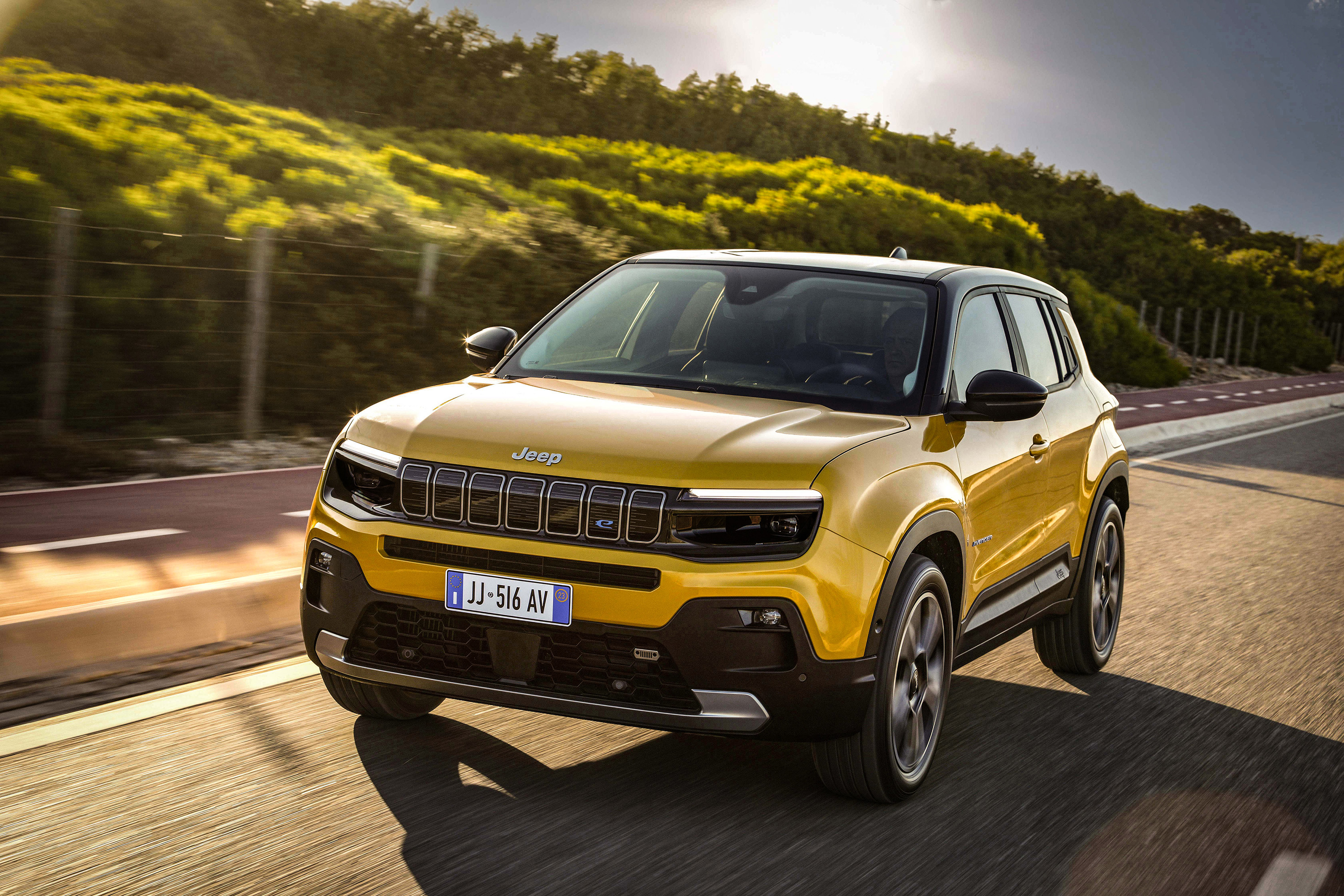
As for who Jeep regards as a direct rival?
Meunier offered an insight here too, explaining that the company was done with its strategy to lure customers in with bargain basement price-tags, instead choosing to compete with more premium offerings.
“One of the reasons Australia was struggling was that they were chasing volume and not achieving it. They were pushing the metal but were not brand focused, and the dealers were not making money.
“We’ve stopped all these entry versions, we’ve enriched the portfolio, we’ve made it more premium. We’re not going after the Koreans or the Chinese – we don’t sell transportation, we sell adventure, we sell lifestyle.”
With the Wagoneer S imminent for the line-up, Jeep’s Australian range will gain a coupe-profiled large SUV with 447kW to do battle with the likes of Mercedes EQE and EQS SUVs and Tesla Model X, for example.
While its smaller mid-sized Recon will represent a more lifestyle-focused Jeep offering with folding roof and removable door features and proportions similar to the Wrangler.
Details regarding both models are think on the ground at this stage but both models are expected to launch globally in 2024, with an Australian arrival date and more information expected to be announced soon after.
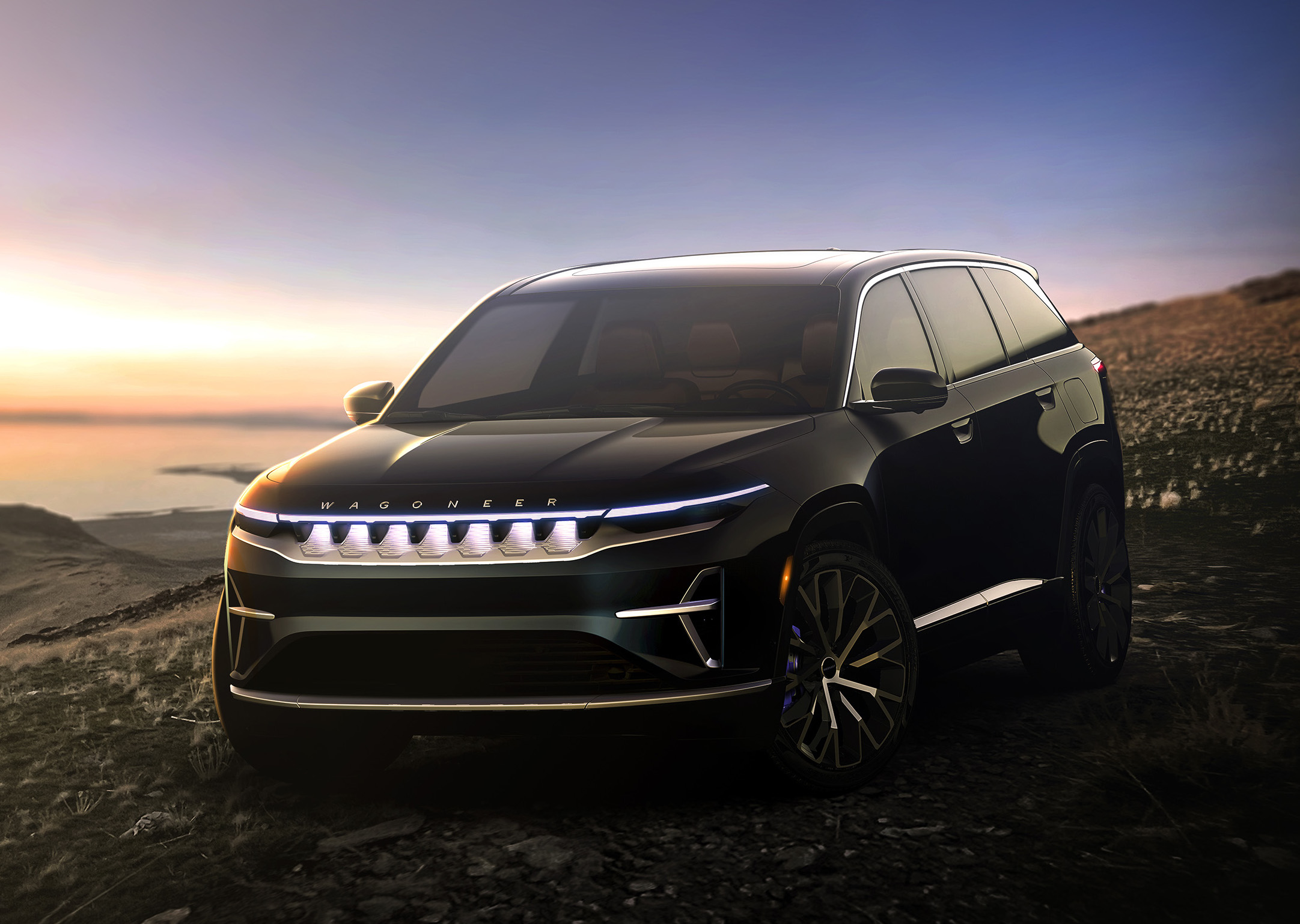
Yet to be confirmed is the Avenger small electric SUV, which would complete Jeep’s electric holy trinity. And while Meunier said the third model would be built in RHD, it’s still a “maybe” for Australia at the time of asking.
“Avenger is going to go to the UK, and Japan, and we’re looking at maybe Australia if there is a market for it. The future models for the vast majority of the product are going to be right-hand drive as well.”
That said, a 4Xe electric version of the Gladiator is not yet confirmed for right-hand-drive production, and therefore unlikely for Australia for now.
With relatively meager RHD pickings for the world’s manufacturers, many brands push markets such as the UK, Japan and Australia to the bottom of the production pile, but Meunier said that’s not how Jeep regards those markets – and used the success of Opel (in Europe) since being taken into the fold in 2019.
“GM had struggled for so many years with Opel in Europe, and Opel is now part of Stellantis and very profitable,” he said. “So I think there are a lot of things you can do differently. You can be profitable with RHD as long as you bring the right product with the right powertrains in the right segment.”
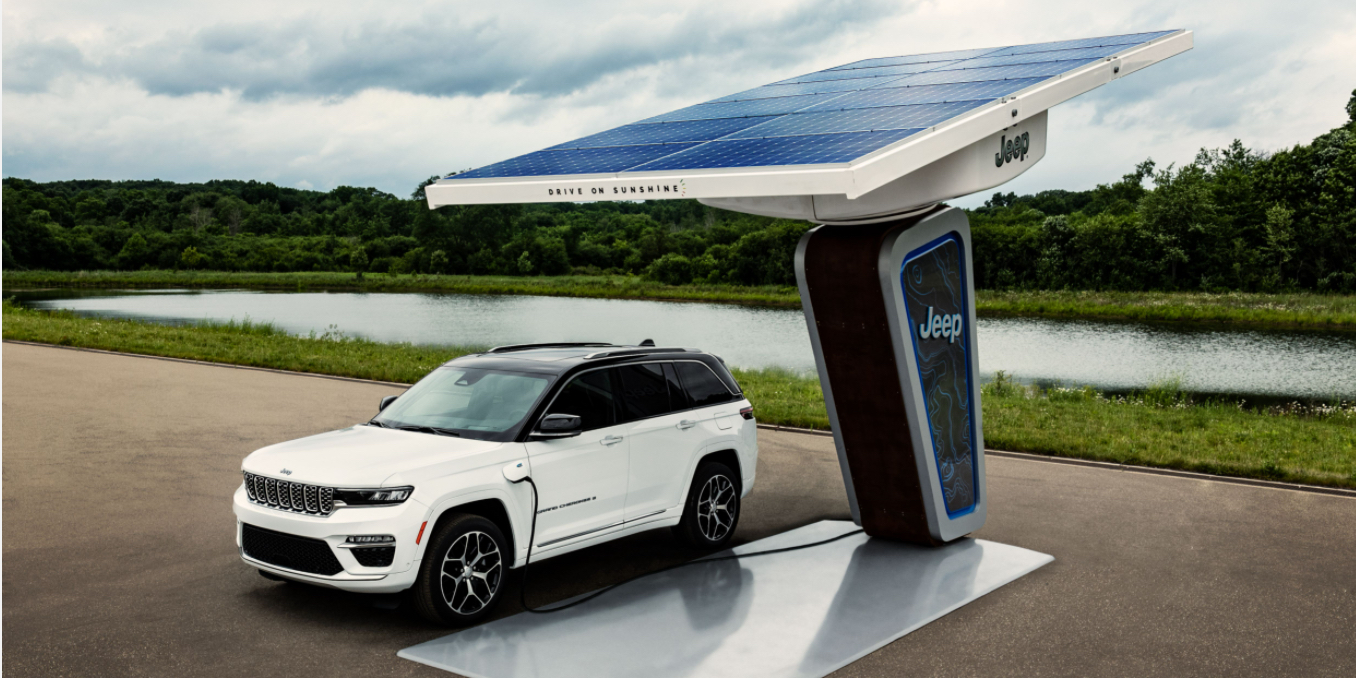
While Jeep is preparing the ground for an electric assault around the world and Australia, Meunier said thirsty V8s and torque diesels would “go away” as part of the transition, with many of their virtues satisfied by electric.
“Diesel is going to go away because it’s going to die in Europe and because a big volume was coming from Europe and the European manufacturers were really, really promoting diesel. Diesel is going to go away – it’s a matter of time.
“V8 is not the future either. I’m driving a Grand Cherokee 4Xe right now and this thing drives like a V8 or somewhat better”.
Snapshot
- Many markets will need the advantages of ICE engines
- Engineering boss confident of long-term development
- Mustang already confirmed to stick with Petrol in 8th gen
Ford has confirmed that, despite significant ventures and investment into electrification and a growing EV family, its line-up will continue to feature petrol and diesel engines – indefinitely.
With three purely electric models now wearing the Blue Oval in various markets around the world, and a fourth imminent, Ford has committed to an electric future, but says many of its key markets are far from ready to give up combustion power.
Until the corresponding charging infrastructure and power networks are available to support EVs in all global regions, Ford will continue to develop, build and sell petrol- and diesel-powered cars where the local legislation allows, it says.
Not only that, but Ford’s sales of combustion-powered cars are providing an essential flow of funds to continue making inroads to electrification and ensure more EVs will follow the Mustang Mach-E, F-150 Lightning and E-Transit trio.
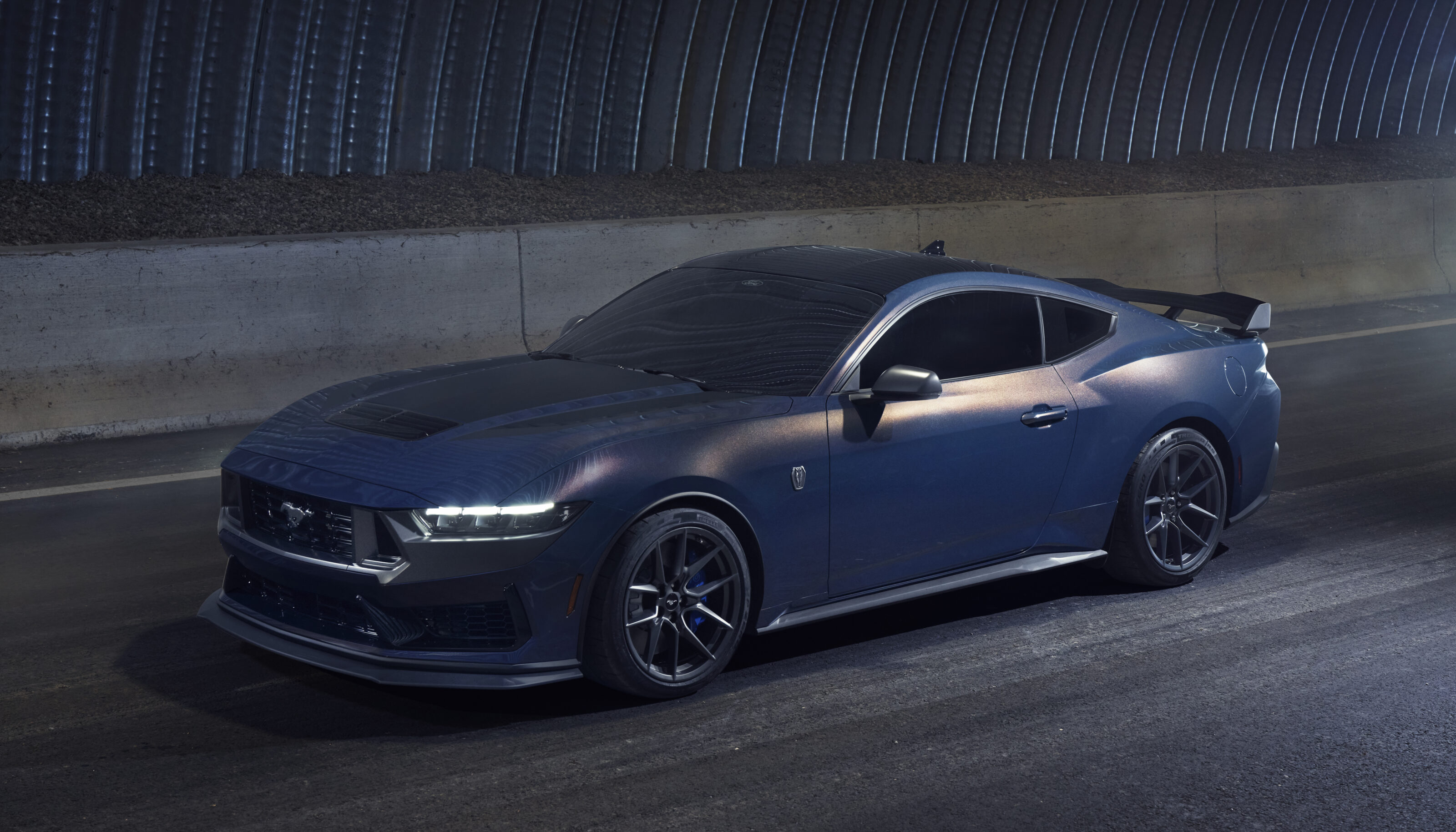
Speaking at the reveal of the petrol-only seventh-gen Mustang, Ford president and CEO Jim Farley said a complete transition into electric vehicles for all brands was simply not as straightforward as many brands were suggesting.
“Everyone wrote the story that EVs are the next cycle of our industry, but it’s not that simple really,” Farley said. “There are different customers who want different things, they have different duty cycles and there are 100 million vehicles sold in the world.”
As long as unique and specialised vehicle applications exist along with varying regional legislation and lagging infrastructure, petrol and diesel Fords are here to stay.
Speaking to media in Detroit, Ford global internal combustion engine (ICE) program vice president Trevor Worthington detailed the reasons Ford will not be closing the fossil fuel taps any time soon.
“For the longest time out into the future, there’s going to be a need for the ICE business,” he said. “ICE customers have very unique requirements, whether it’s off-road, whether it’s family travel over long distances, whether it’s commercial vehicles that tow. There’s always going to be these cases.
“But if you look at China, Europe and the US, outside of those three markets, ICE is going to run a lot longer. I can’t imagine a lot of those countries, governments are going to have the money or desire to put charging infrastructure (in) so we’re going to have to do other things.”
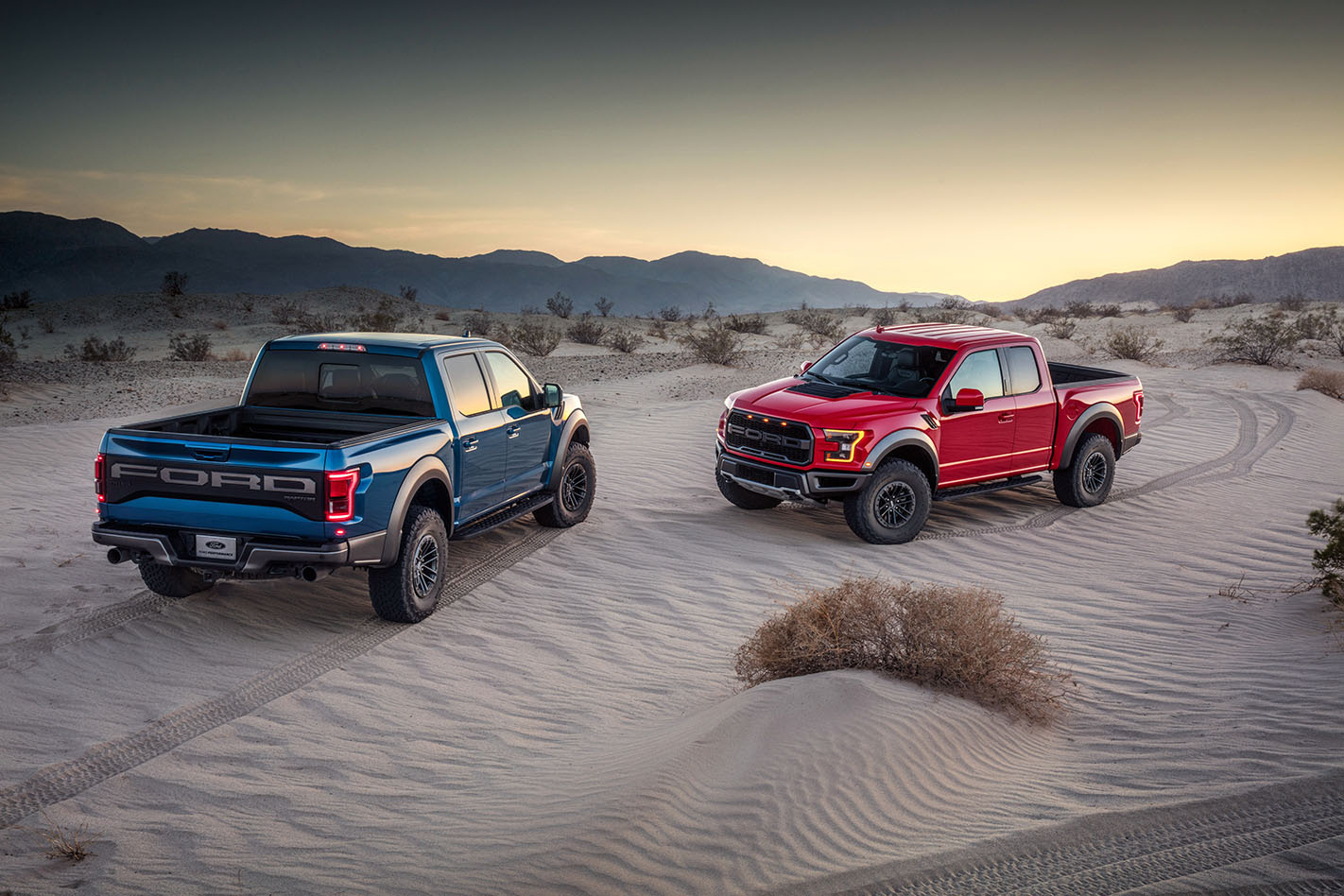
Aside from the various regional challenges preventing the widespread introduction of EVs, Worthington highlighted the fact that developing electric drivetrains and completely new models is an expensive business, and a significant source of revenue was critical for it to continue.
“The money that needs to pay for this transition, creating the BEV vehicles, we’re (ICE vehicles) the ones that are generating that money. Not only do we need to generate money to reinvest in the ICE business, we’re creating the ability to spend the 50 billion dollars that we’ve announced we’re spending on the BEV business.”
Ford’s distant preview of its future line-up differs greatly from some of the premium players, many of which have already slated end dates for combustion models – in many cases to coincide with government imposed bans on the sales of ICE cars in native markets.
Jaguar, for example, has committed to and electric-only vehicle line-up from 2025, while Rolls Royce, Mini and Bentley will do the same three years later.
“That’s going to continue for a lot of markets well beyond 2030 because different markets have different views of incentives, infrastructure and our customers have different views of how they use their vehicles.
“You’re going to see countries legislate for an end date and Europe is in the process for doing it in 2035. If you look at commitments that countries have made about the size of the carpark and what they would have to do to put a ban in to deliver it, it’s probably inevitable that more countries are going to drive towards an end date.”
As a statement of intent, earlier this year, Ford split the company into two halves with Ford Blue focusing on increasing efficiency of combustion engines, while Model e tracks the company’s path into electrification along with its Pro electric commercial vehicle branch.
But despite the sizeable investment in the EV chunk of the company, Worthington said Ford’s activity in the petrol and diesel space was far and away the biggest spend.
“A vast majority of the money we’re spending now is still in the ICE business. It is incredibly important to us and even with markets that are quite quickly transitioning to BEV, they’re transitioning in a way that still relies on an underpinning of ICE vehicles.”

That’s why, despite 30 years on the books, Worthington believes his role fronting Ford’s combustion engine initiatives has never been more relevant.
“The role I have now is, to some extent, even more important now than what it used to be. The focus now is A. how do we solidify what we’re doing but B. look to new opportunities to expand the business and make ICE more successful but also to generate the profits to do this.
“I won’t be working in this business in 2040, but I would expect there will still be lots of places that are still selling ICE vehicles.”
Snapshot
- It’s wait and see for now, but execs are positive
- Success with F-150 could lead to Maverick, Bronco
- Exports out of Australia could strengthen case
Ford’s recently announced right-hand drive local conversion program could pave the way for more models, with the Blue Oval considering adding future vehicles to the project if its F-150 foray is a success.
In March this year, Ford announced it would follow the lead of GMSV and Ram, converting its F Series plus-size ute to right-hand drive on home turf – but Ford has since revealed it’s already considering expanding the program if more cases stack up.
Speaking to media in Detroit, Ford Motor Company international markets group (IMG) and Ford Blue president Dianne Craig said it was monitoring the progress of the F-150 conversion project closely, but the company was already impressed with Melbourne-based partner RMA.
“The F-150 RHD conversion could really open up some possibilities for us,” she said. “I think we’ve got to crack the code on that one first and we feel really good about the partner we’ve chosen, so stay tuned.”
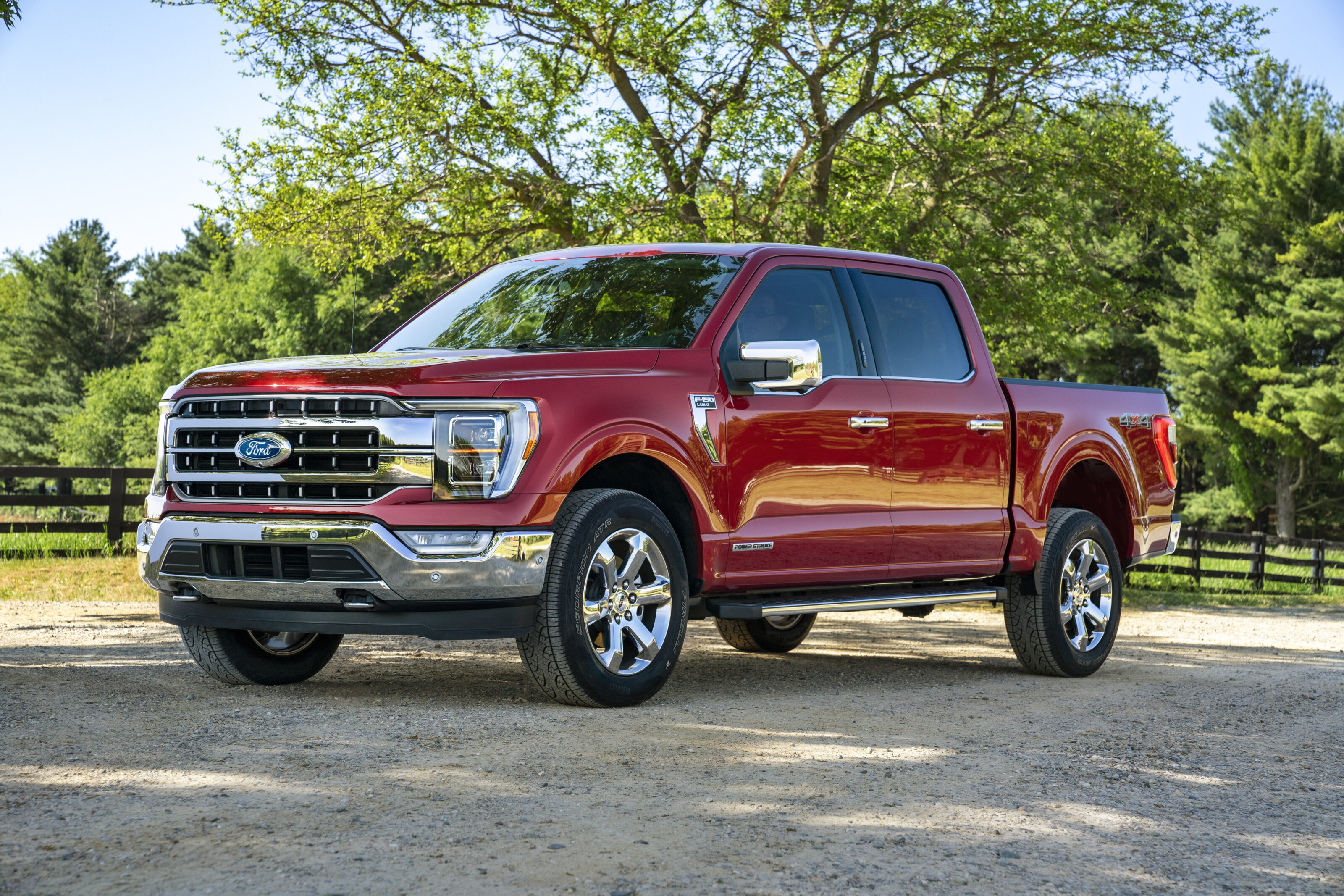
Exactly which models might work alongside the F-150 is far from confirmed at this stage, but a decision will almost certainly be determined by critical margins, which are narrowed by complex re-engineering processes.
According to Craig, a low-volume, high-value vehicle such as the F-150 is a relatively easy business case to make, but the task becomes harder for models considered more affordable (for consumers) and higher-volume.
“It gets trickier as you get more volume. The F-150 volume is relatively low so I think we’ve got to learn from this. Right now it would be very difficult (to offer those more affordable, high-volume models), because we couldn’t get the scale.”
When quizzed about the possibility of the Maverick ute potentially offering another re-engineered model for Australia, Craig confirmed “We have looked at it,” but reiterated that any future models would not be given the green light until the success of the current plan could be completely evaluated.
Another element that could increase the feasibility of future projects is the potential to locally remanufacture models for markets other than Australia, said Craig, which would boost production runs and build a healthier return on investment.
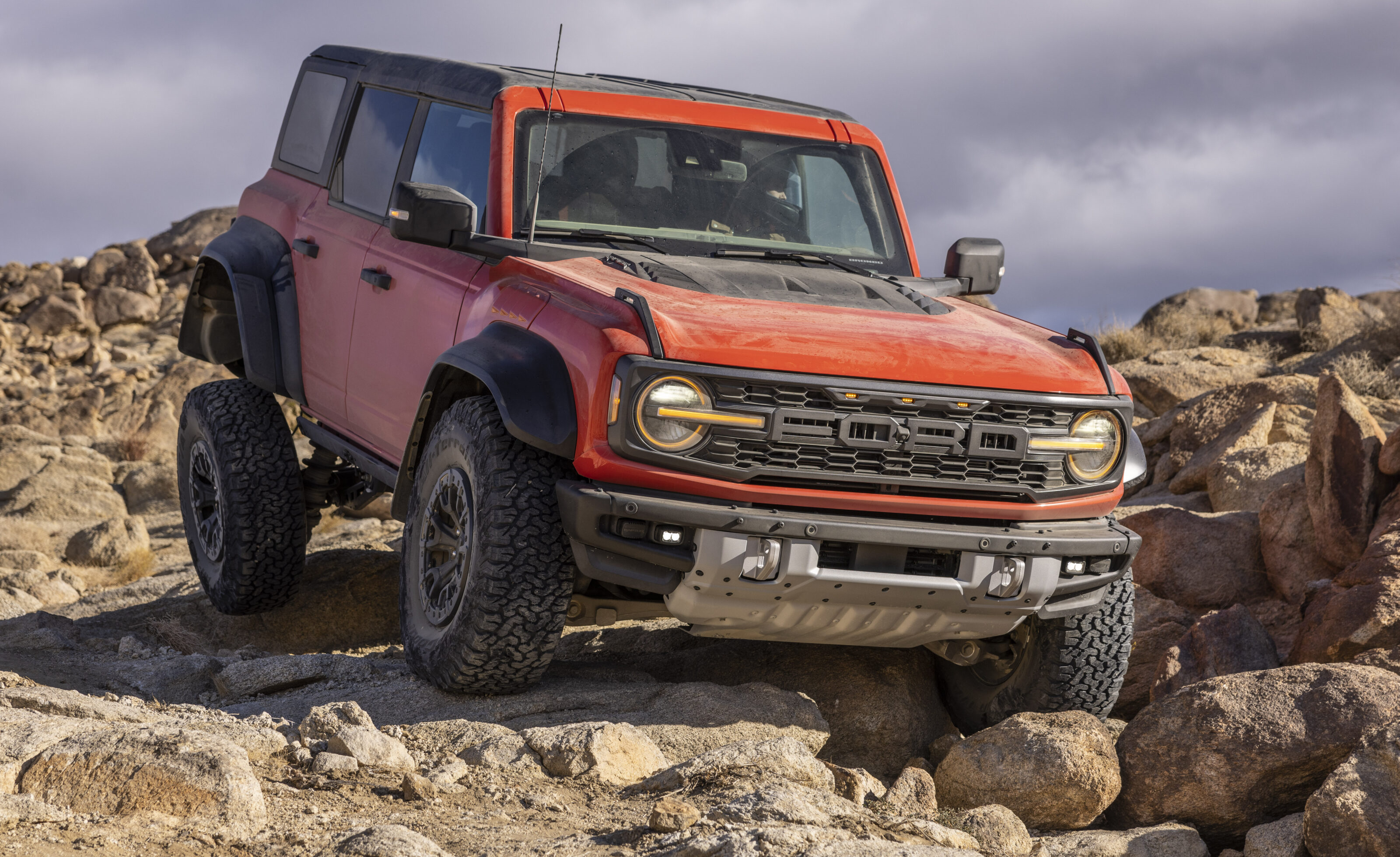
“Working with RMA can really provide some opportunity for us, not just for Australia but some of the other right-hand drive markets. It’s all about scale.
“We’re on the right path and this is the first time we’ve ever really done it, so we’ll see.”
With the arrival of the F-150 in Ford showrooms next year, the Blue Oval will have a model to do battle with heavy-duty utes from Ram and Silverado – and finding other underrepresented markets will be key to whether more models are added to the local operation in Melbourne’s north.
One such option would be the Ford Bronco which is, as yet, not chalked for factory RHD production, but would offer Ford a competitor to Jeep’s popular and capable Wrangler, while the Bronco Sport which takes the Ford Escape as its basis would fill a midsize SUV gap in the local line-up.
That said, Ford’s president and CEO has recently revealed that both cars could make it into factory RHD production if global supply into LHD markets can be satisfied first.
Ever since the Fairlane-based first-generation Ford Mustang‘s game-changing grand debut at the New York World’s Fair of 1964, whenever a new Ford Mustang comes along, it’s a big deal.
With the covers whipped off the seventh-generation 2023 Mustang’s for the first time just days ago, and the outgoing S550 Mustang having been on the market since 2014, expect this fresh new face from Ford to grow very familiar over the immediate future before it’s eventually replaced with a next-generation vehicle (V8 will remain if demand is there, says Ford CEO Jim Farley).
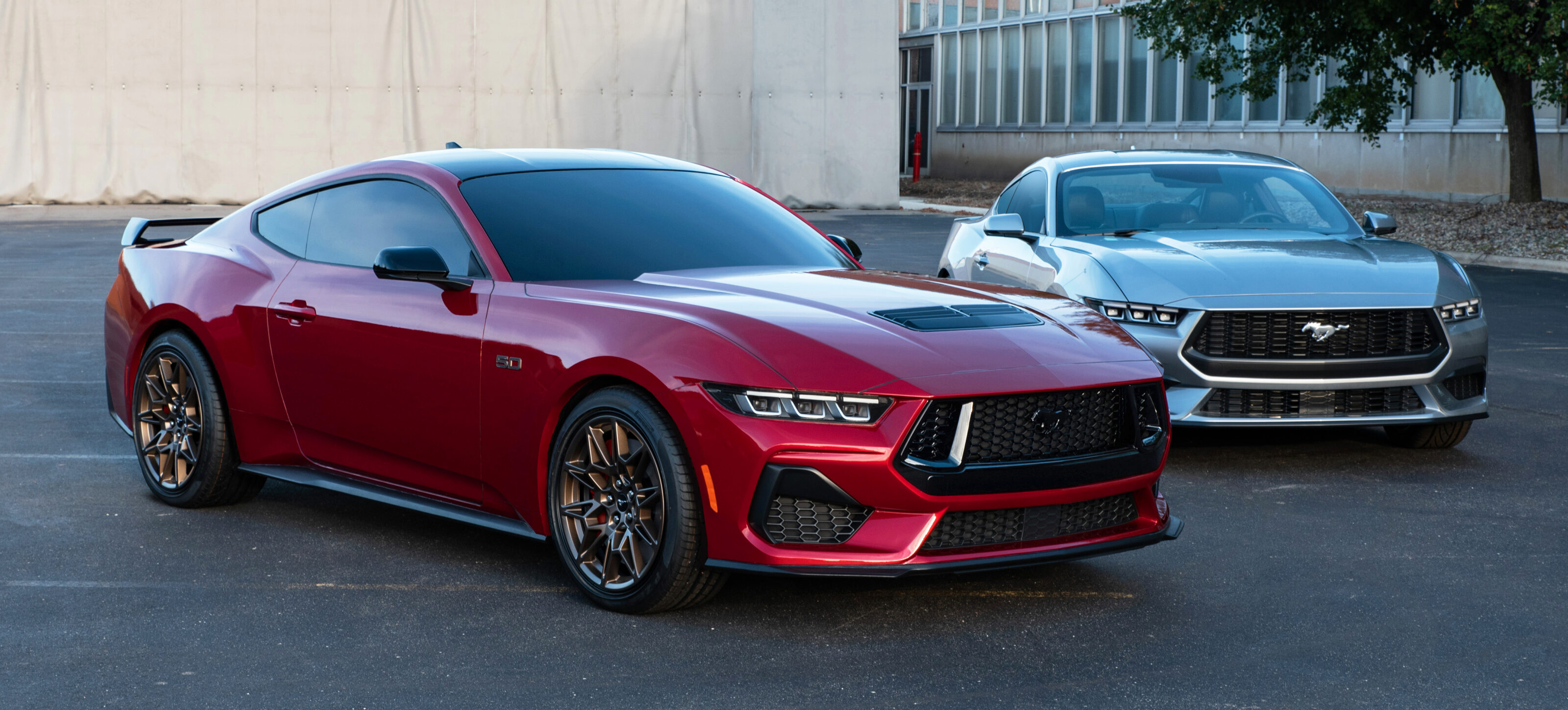
While Ford’s original pony car of the ‘60s launched into the baby boomer generation during a period of significant post-war economic expansion, ostensibly inventing its own vehicle segment for many first-time recreational sports car buyers, the 2023 Mustang targets a much younger demographic faced with a crowded, and globalised, sports car segment with a heavier emphasis on modern, inoffensive styling and technology.
The outgoing generation of Mustang is of particular Australian pertinence, having ruled the roost as Australia’s best-selling sports car ever since it first lobbed onto the scene. Ford Australia previously offered a limited production special 2001 Ford Mustang Cobra ‘officially converted’ by Tickford, but the sixth-gen S550 was the first factory-produced Mustang in history.
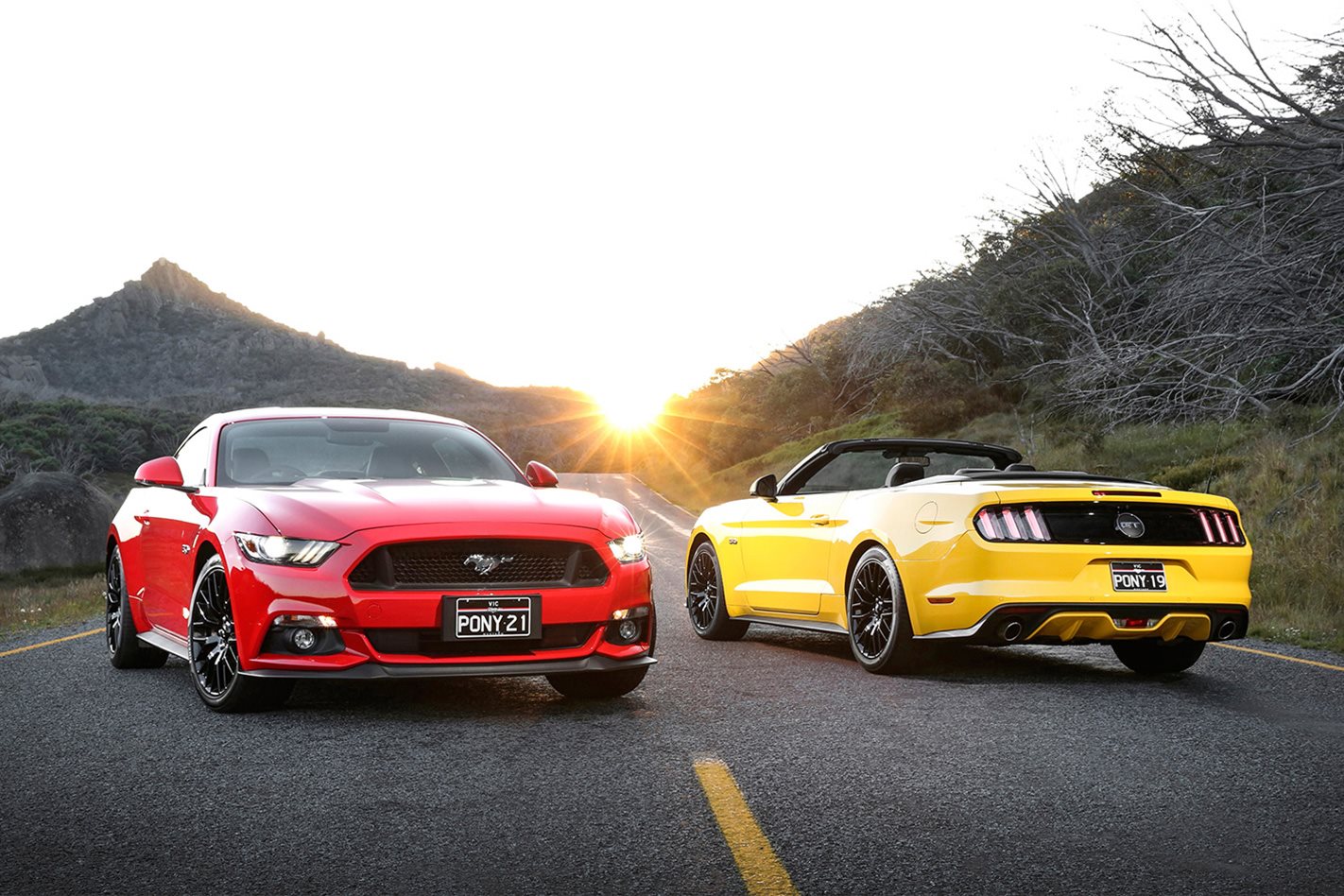
It’s an immensely popular car the instant local success of which was unforeseen even by Ford Australia. The new one will have to impress.
Read on below as we breakdown all the ways the new-look Mustang looks new.
Exterior
Ford’s taken a cautionary approach to 2023 Mustang, and looks about how you’d expect a modern facelift of the outgoing Mustang would look.
The front end now boasts a sharper horizontal leading edge, lending to the illusion of width and a lower bonnet.
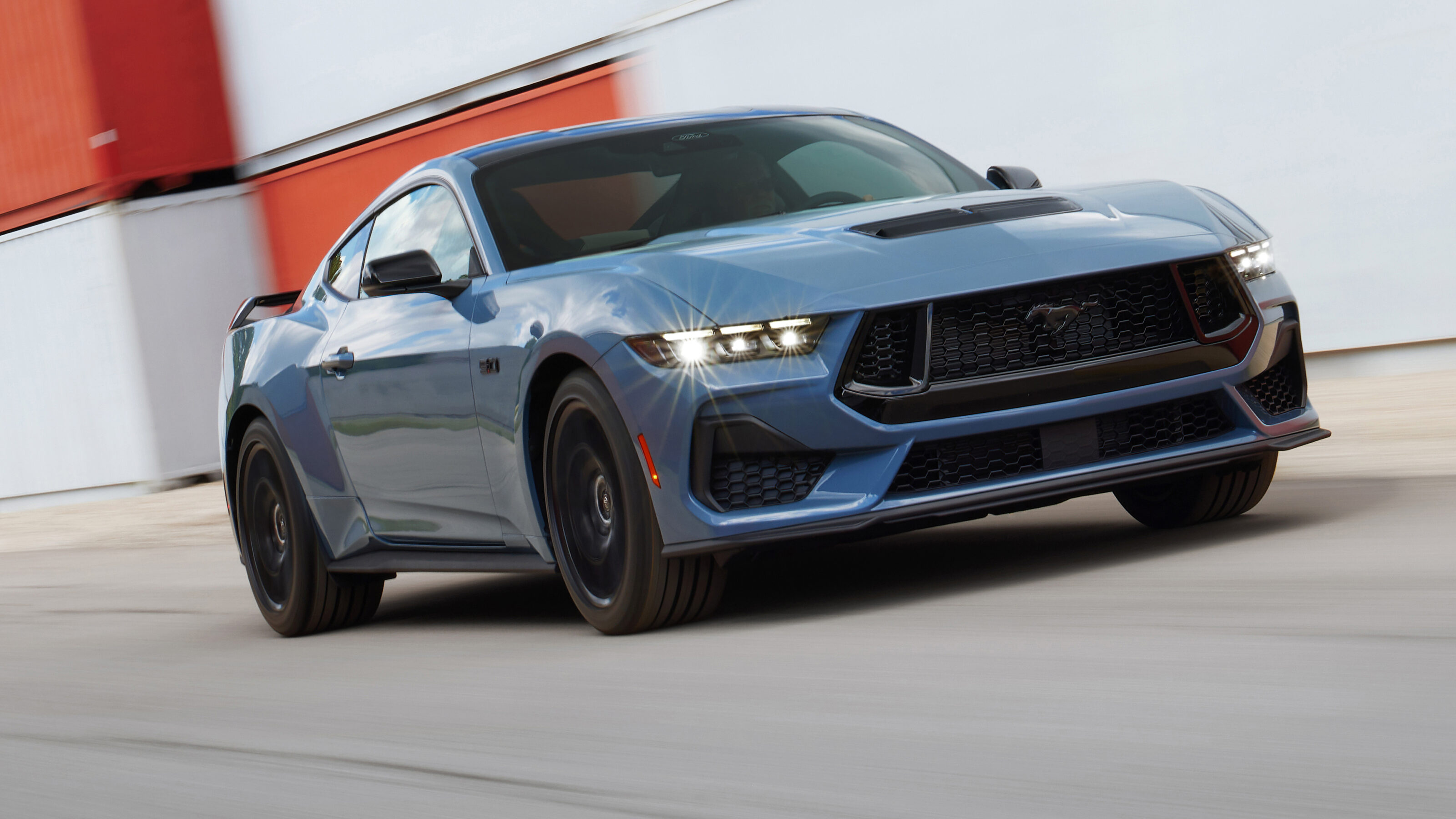

The new grille is larger, with a less bottom-weighted profile than the outgoing S550. The more symmetrical anchor points of the new grille evoke the softer curves of the original ‘60s Mustang. The headlights, like all new cars, are thinner.
At the rear, the tri-bar tail-lights mimic that of the US-only Mustang Mach-E, with the current car’s blacked out rear valance replaced with body colour paint. The integrated rear diffuser has also been reprofiled to visually swallow more bumper real estate.
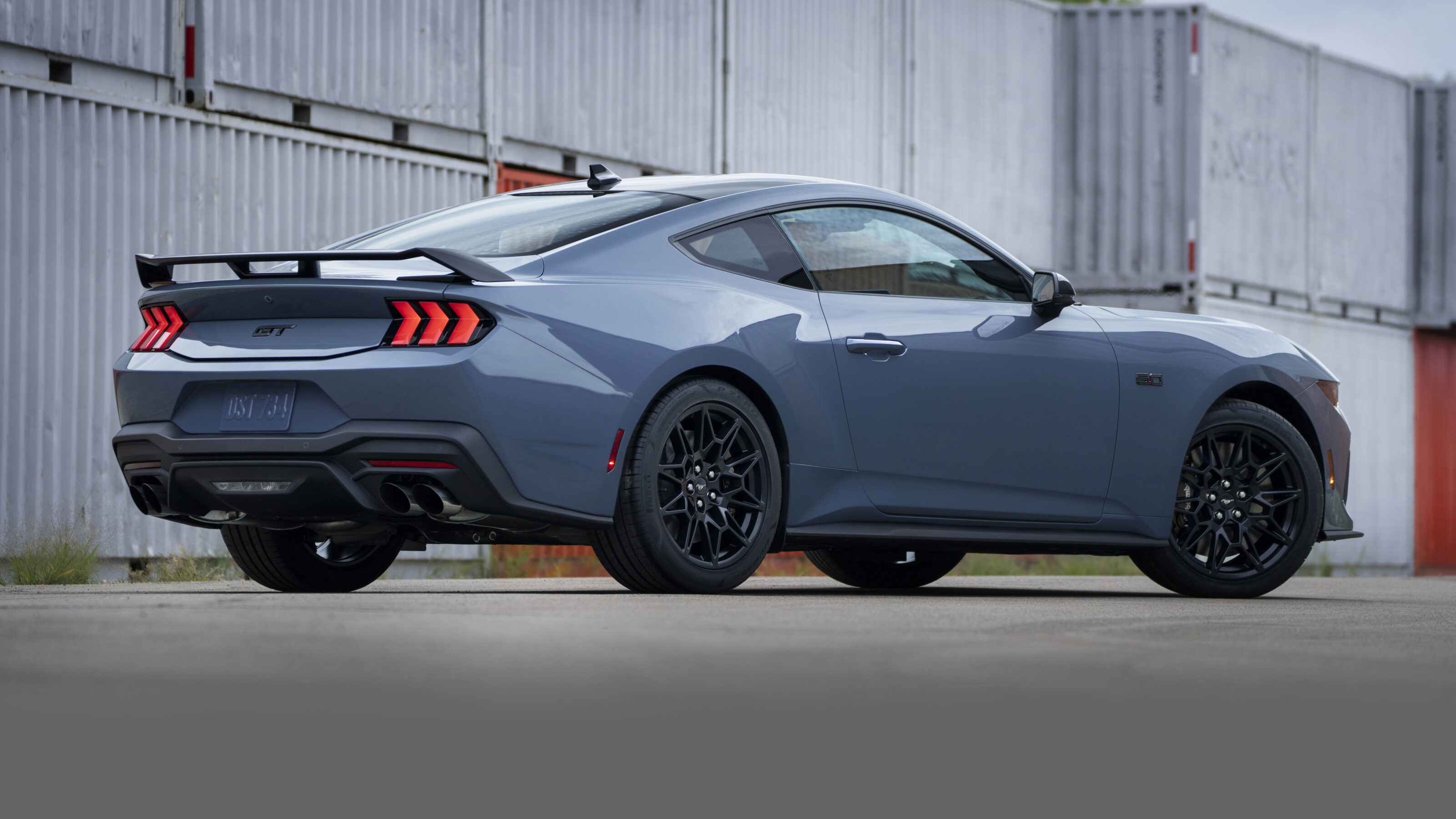
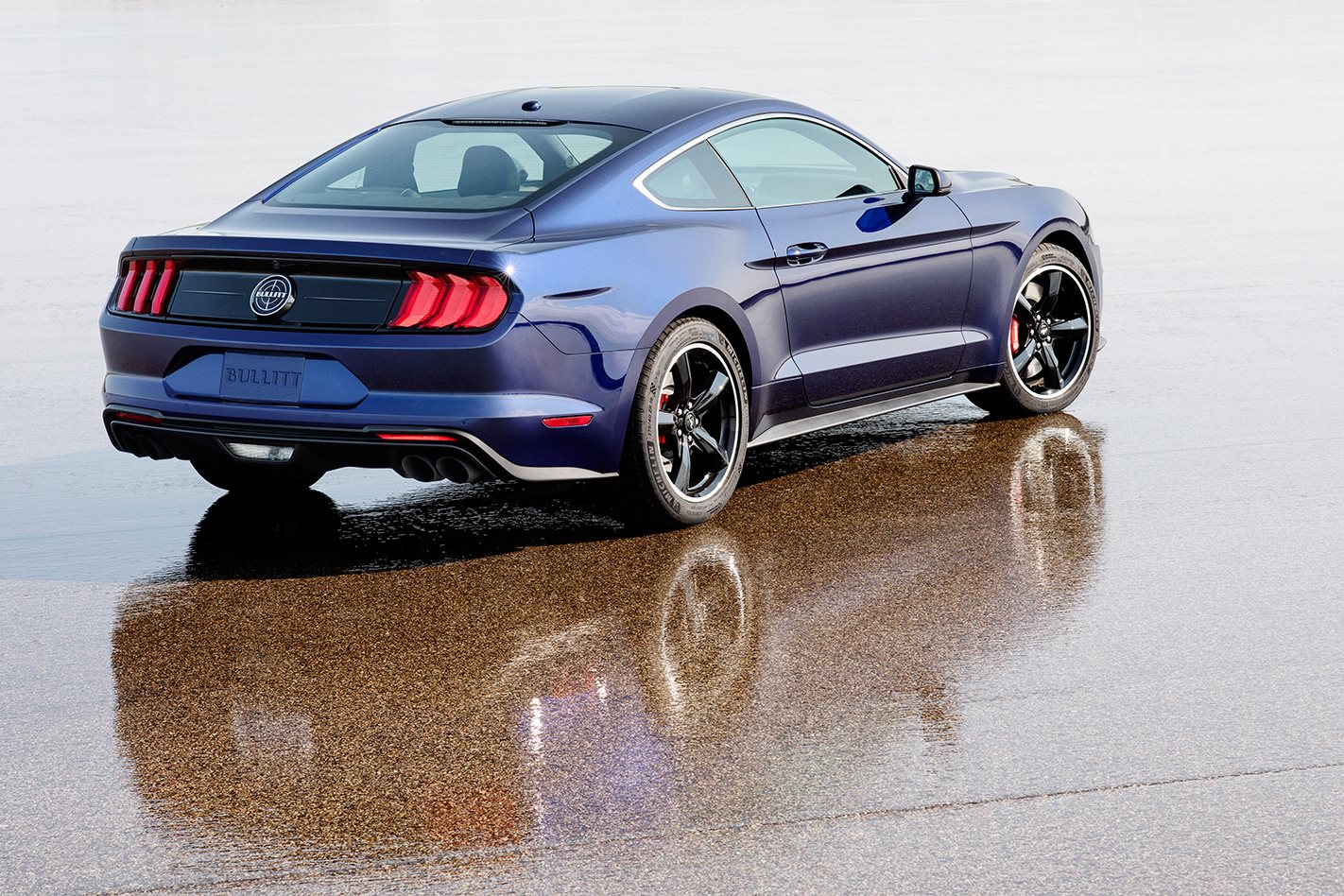
The new rear haunches have been dramatically blistered, giving the whole rear quarter view an edgy, almost Cyberpunk-like vibe.
Four-cylinder turbo Mustangs and V8 GTs can be newly distinguished by the GT’s more aggressive grille, bonnet vents and distinct front splitter.
Interior
The interior of the 2023 Ford Mustang makes more divergent strides from the familiar Mustang we know and love.
The cockpit-inspired cabin is headlined by a new 12.4-inch digital instrument cluster that seamlessly flows into the driver-oriented 13.2-inch central touchscreen. The new Mustang also introduces Ford’s latest Sync4 operating system
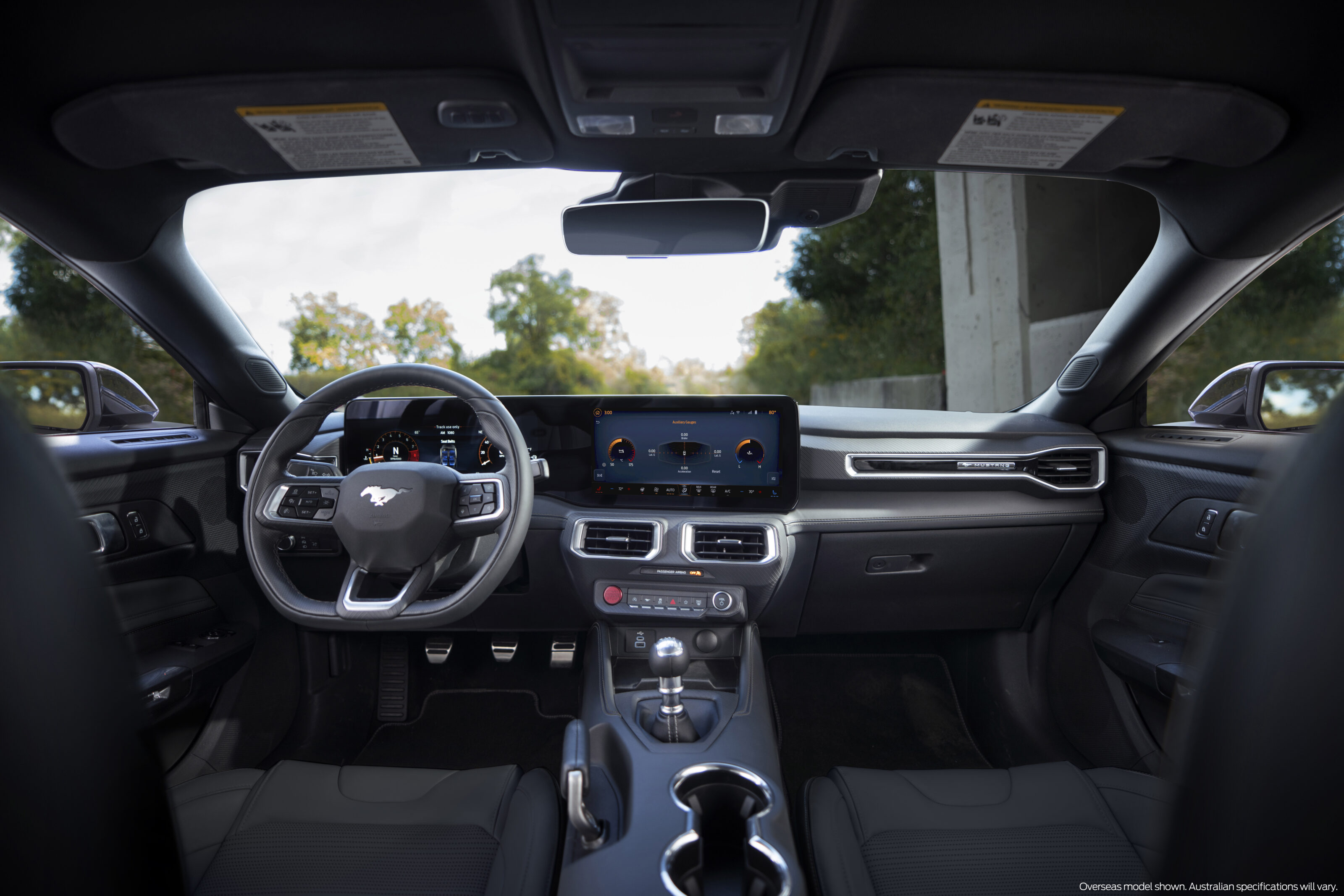
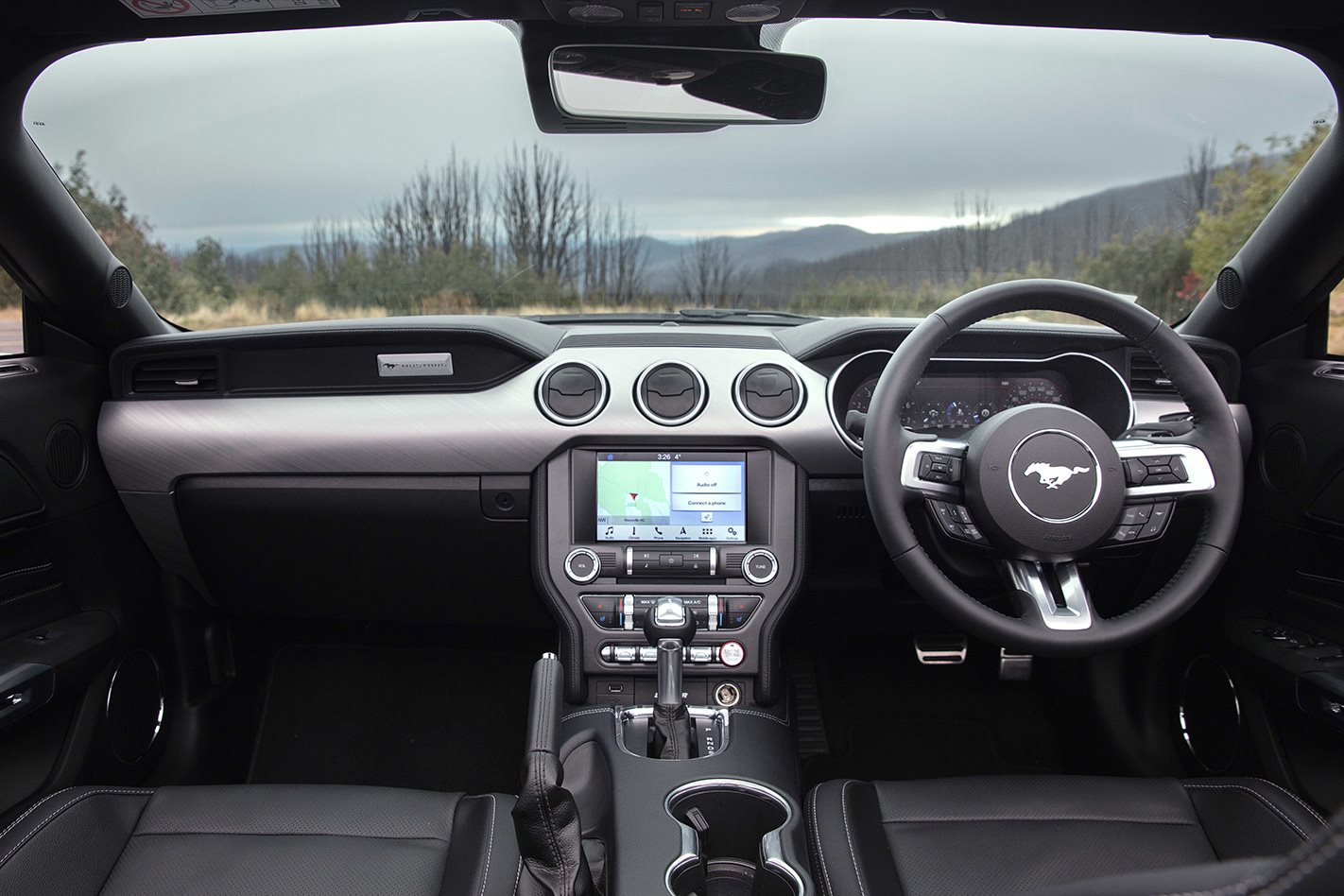
For us nerds out there, the graphics on the digital instrument cluster are powered by video game developer Epic’s Unreal Engine, just like Fortnite, Gears 5 and Borderlands 3.
The seventh-gen Mustang introduces a new flat-bottomed steering wheel with an octagonal centre pad, though with largely similar button layouts.
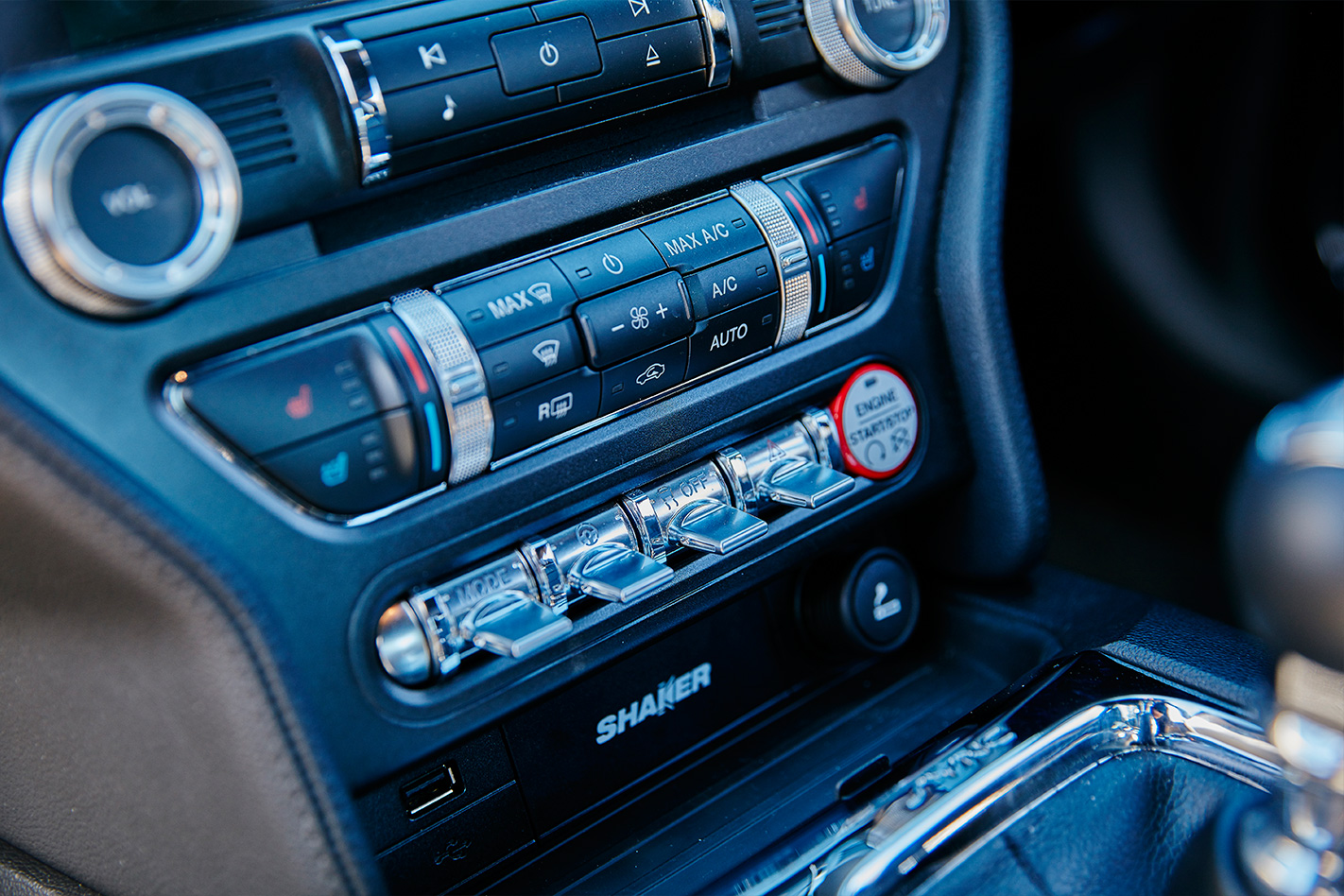
The existing Mustang’s three central air vents have been replaced by two larger horizontal units mounted below the central touchscreen, with a redesigned HVAC interface sitting atop similarly-placed USB ports, 12v plug and a redesigned mobile phone charger.
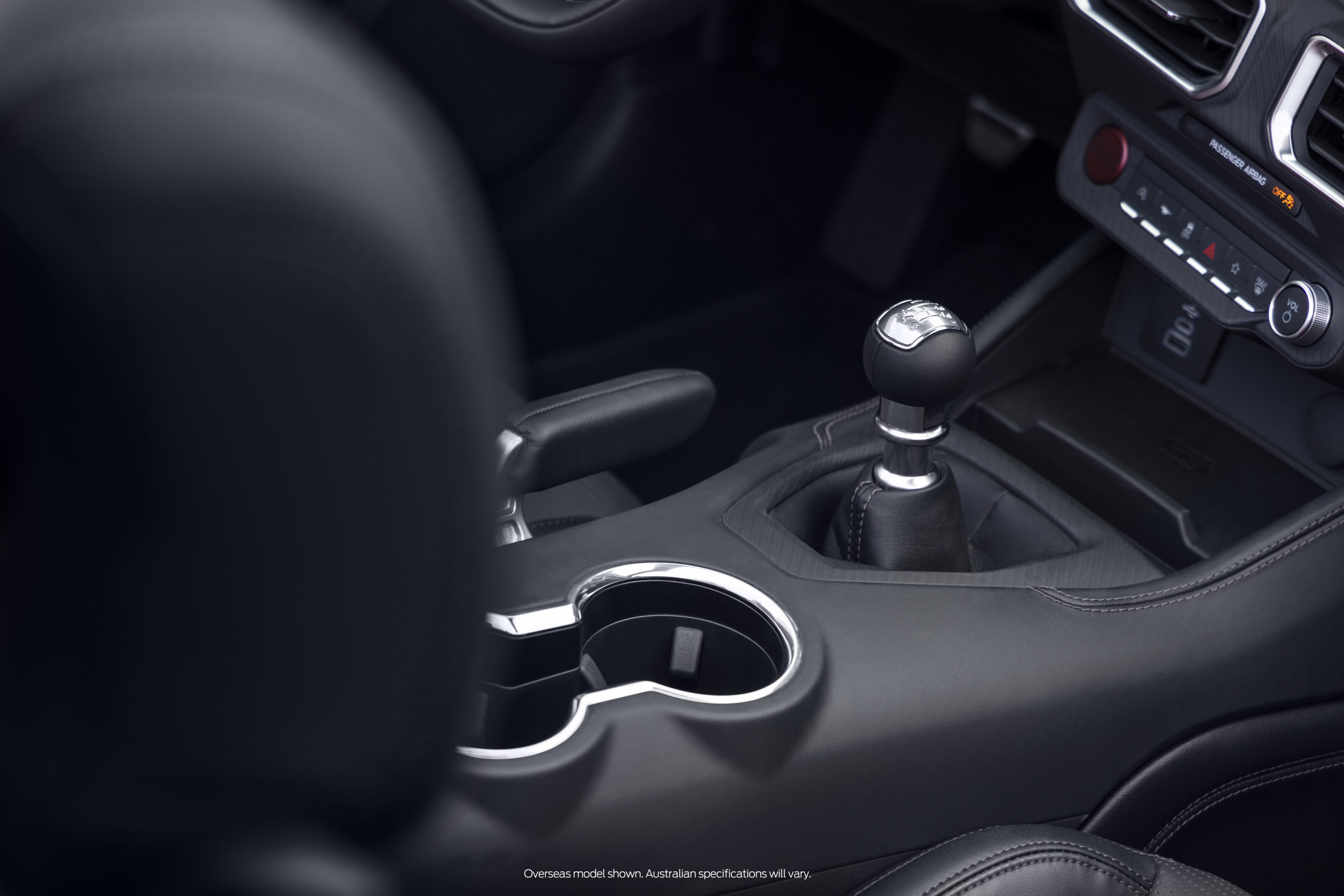
The 2023 Mustang also brings added active safety features as part of Ford’s newest CoPilot360 suite, including: Intelligent adaptive cruise control with stop-and-go, evasive steer assist and reverse brake assist.
Active Pothole Mitigation comes part of the US Performance Package, and enables the car to monitor the road, detects incoming potholes, and dynamically overdamps the system, effectively ‘catching’ the wheel before suspension travel allows it to fall into the hole.
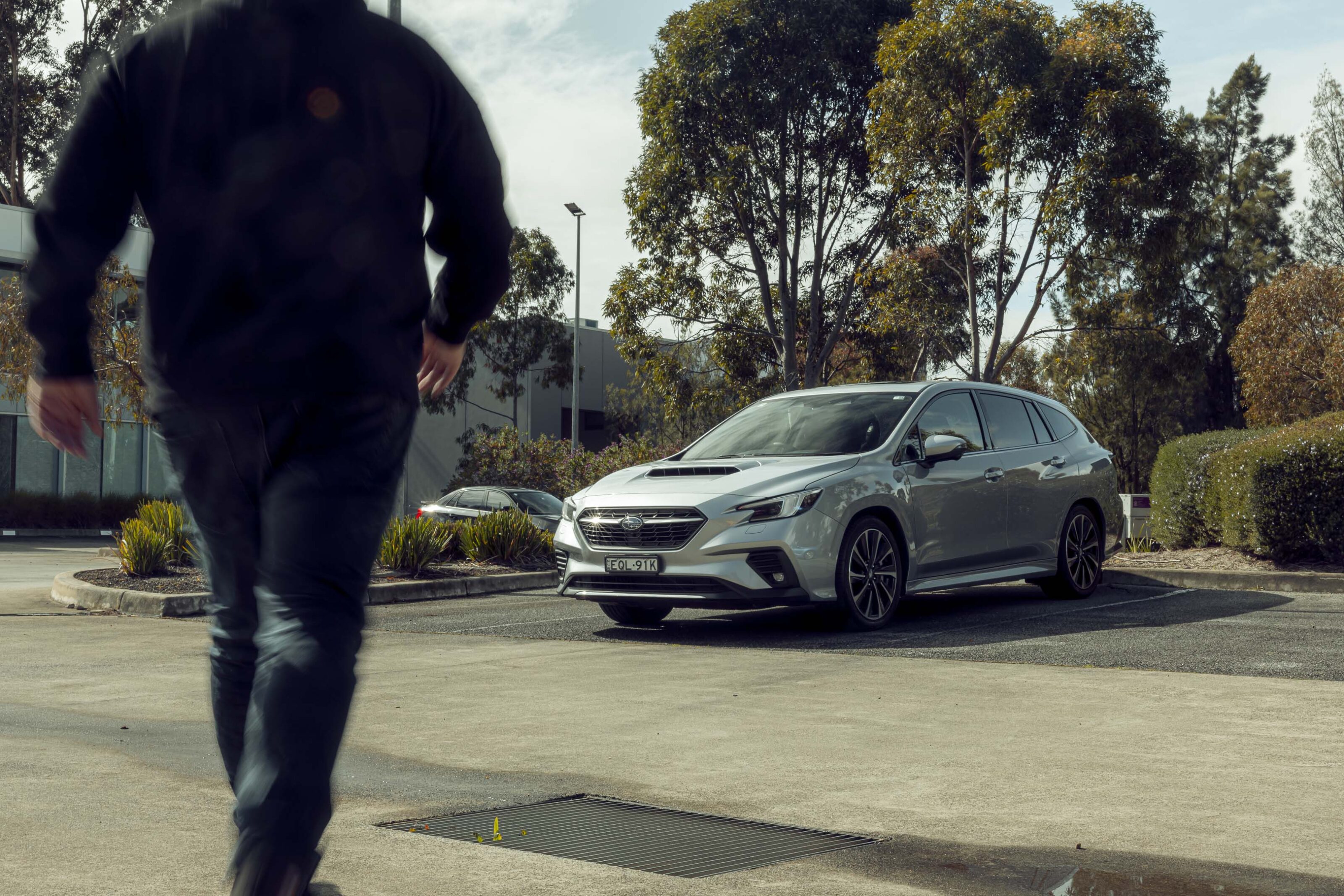
Wheels Media’s product manager Michael Fisher spends a few days with our 2022 Subaru WRX tS Sportswagon long-termer to give us his regular-bloke “I’m no journalist” take on the new model, and to see how it compares with his older-generation Kia Sportage.
Things I liked
- The cabin comfort for the driver and passengers.
- The smooth driving experience
- Safety options
Not so much
- Android Auto feels useless with the display available
- Took me 3 days to work out the driver modes
- Fuel economy even on basic mode
Before I start, I think it’s important to call out that I’m no automotive journalist, or even a car nut for that matter. I’m part of the big team working away in the background at Wheels Media.
I’m a father of a 13-year-old and a 10-year-old, I drive a 2016 Kia Sportage that fits my lifestyle of school pickups, never-ending kids’ sport sessions, Woolies runs and the occasional trip into the office (livin’ that hybrid life). It does what we need, and we’ve been super happy with it.
But when Stevo handed me the keys to the WRX Sportswagon for the weekend, I was pretty excited to try something new and different!
The Car
2022 Subaru WRX Sportswagon tS
$57,990 before on-road costs
First impressions
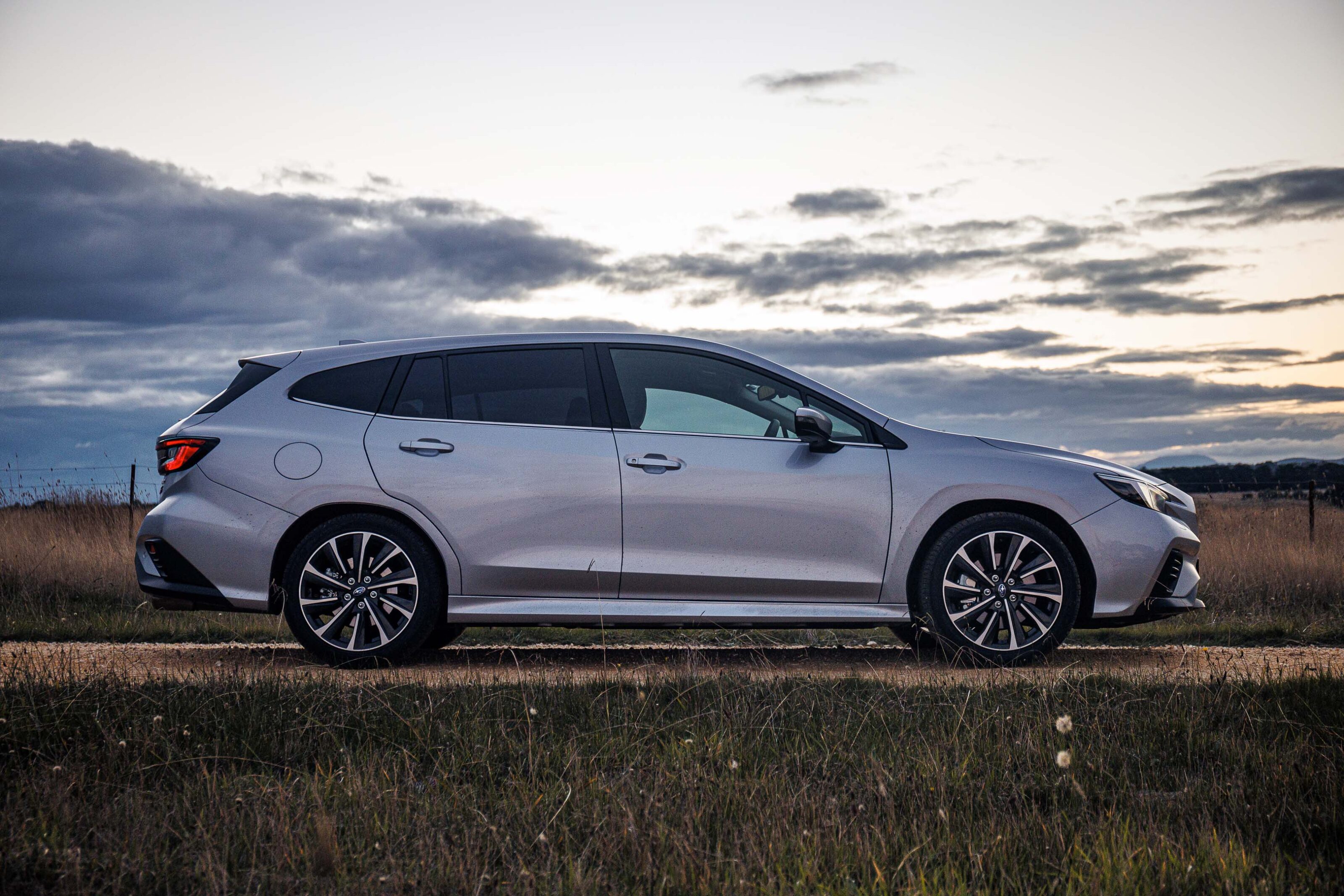
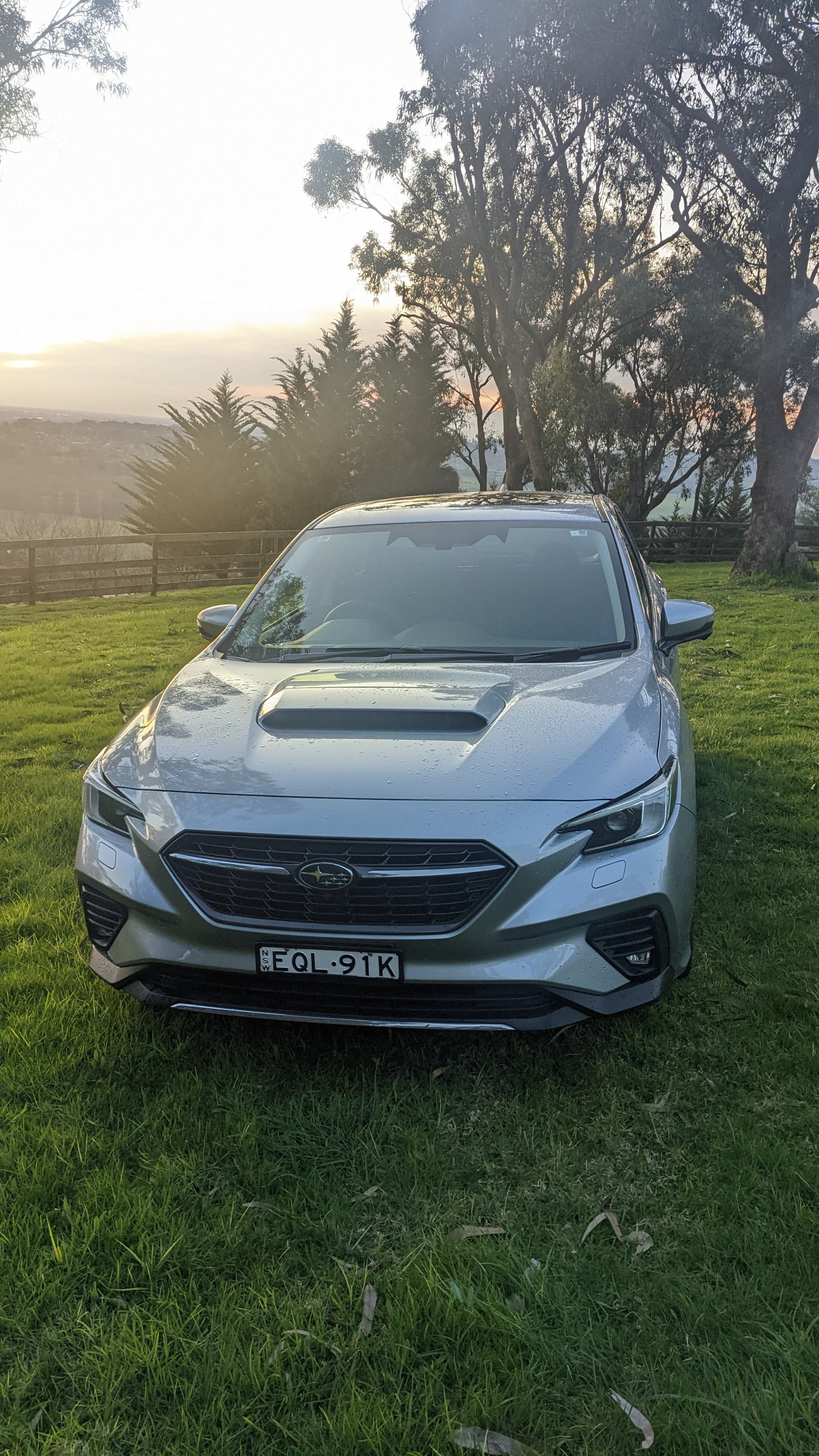
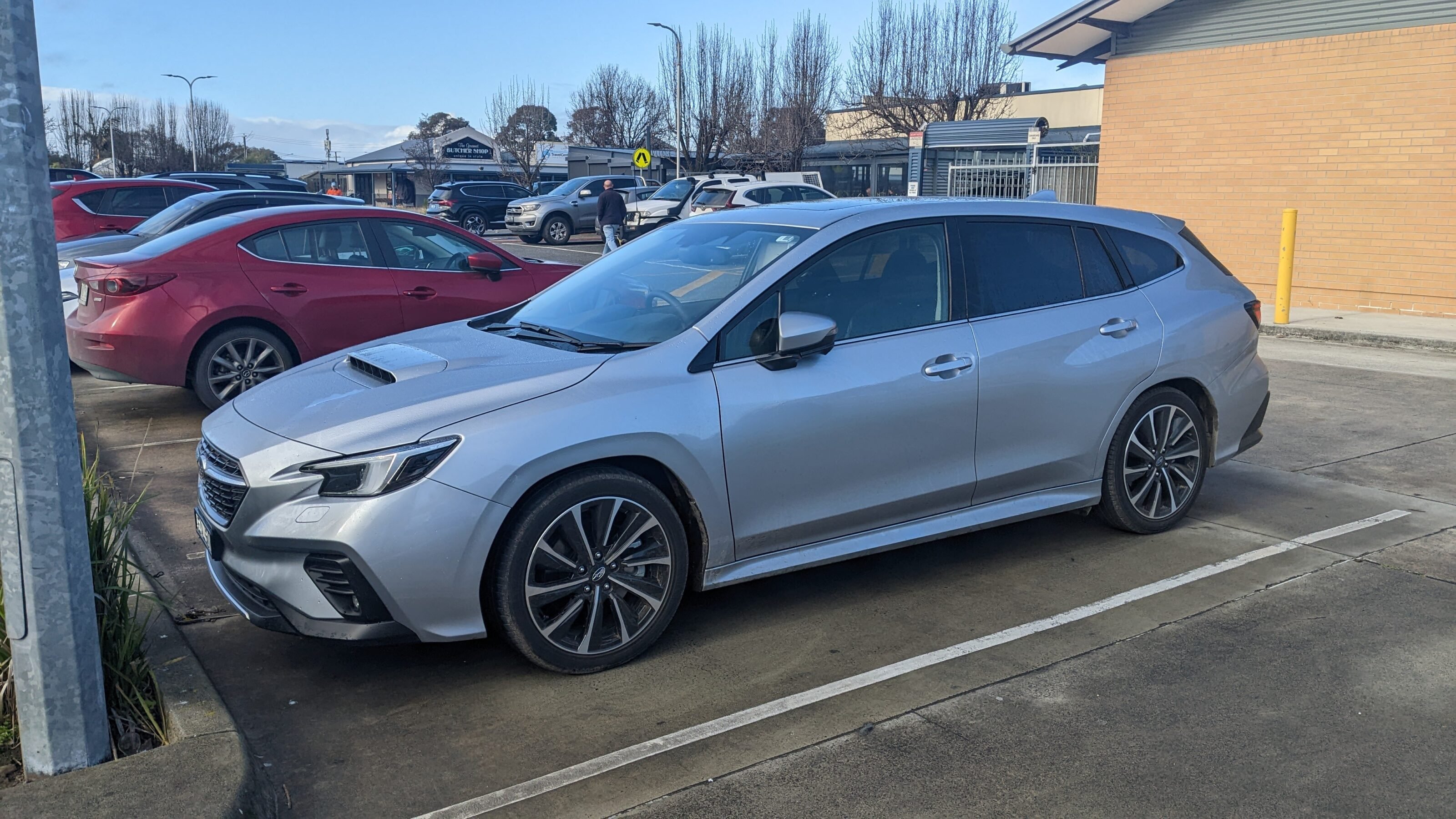
We see some pretty wicked cars roll in and out of the Wheels Media office, but this one I had seen for a couple of weeks parked out front most mornings. It had the distinctive WRX look to it, but in the shape of a wagon.
Jumping inside for the first time, there was a lot to take in – indeed, the difference of how low it sat compared to the SUV was noticeable. Then there was the amount of tech that now comes standard with a 2022 version of most vehicles; a huge display, and the amount of controls on the steering wheel was quite overawing.
After a few minutes of adjustments, I was ready to roll into the weekend – after the school pickups and a quick grocery run!
Comfort
The “Ultrasuede” seats are super snug and easy to adjust. A sports steering wheel added to the experience, I felt I had full control of the vehicle from the controls just on the wheel. This really set the tone for a comfortable sporty ride. It was hard going back to the Kia, to be honest.
A sunroof, along with heated seating throughout (including rear which the kids loved), and the ability to store configurations for a couple of drivers topped off the front cabin experience.
In the rear, the kids had plenty of legroom, even with the driver’s seat pushed as far back as it could go. The rear passengers get full control over their climate, and plenty of pockets for storage – and for them to stash their wrappers for me to clean up later. We comfortably fit three 13-year-olds in the back, and it was in no way squishy.
The boot is surprisingly large, and we could fit a full load of groceries as well as the school bags. The driver has the controls to open and close the boot automatically from the seat, which made school pickup and dropoff a little more lazy for me – which was great.
Entertainment and tech
The first thing I noticed when jumping in the WRX was the huge screen in the centre of the dash. With so many available features and configurations, don’t expect to go full expert mode on day one. After a few days, I had a good grip on most of the options and features available to me.
The interface for the climate settings is quite straightforward, and allows for both driver and passenger to set up to their liking.
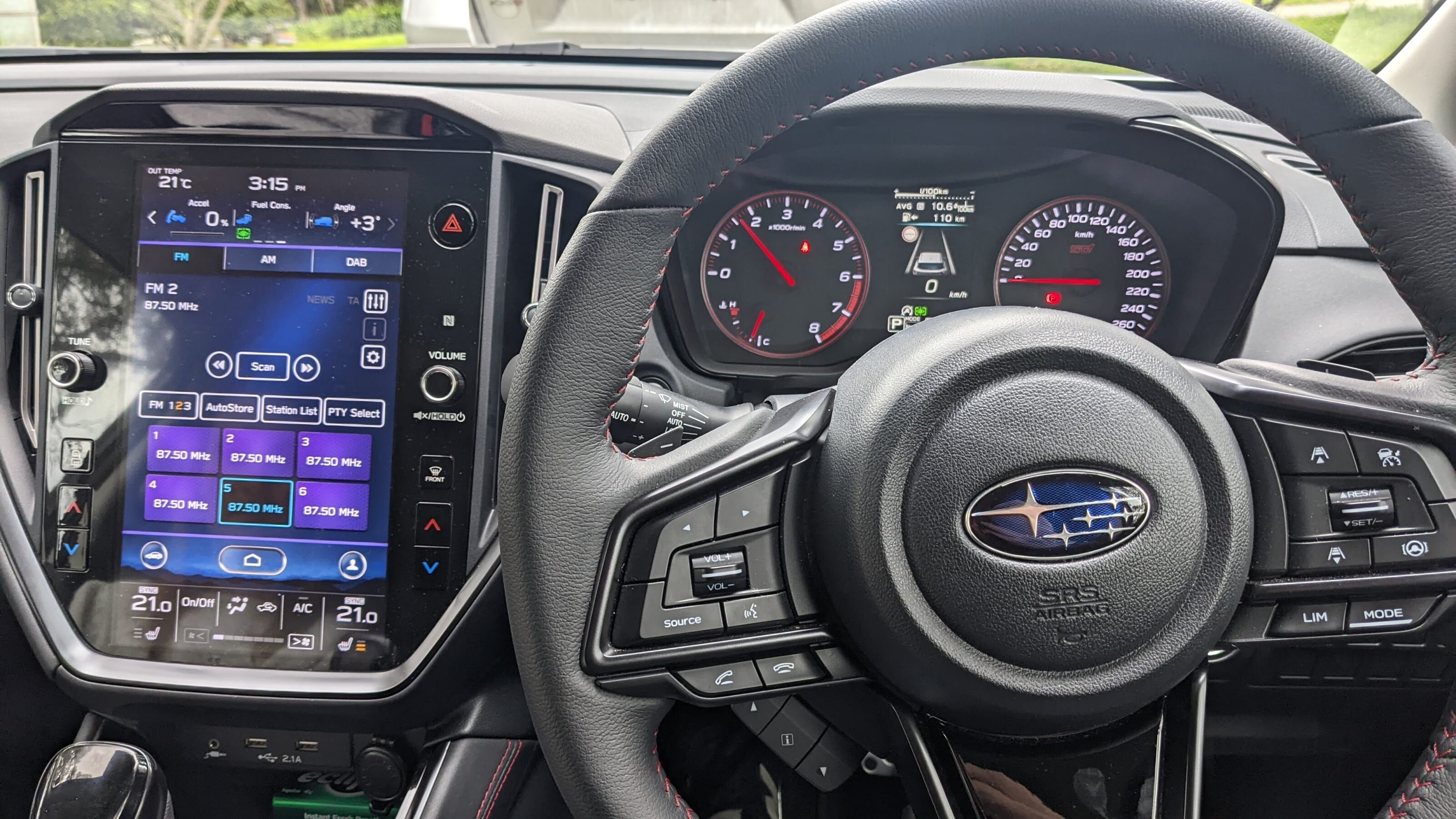
For Audio, I liked that it has DAB+ digital radio on top of the standard radio and Bluetooth streaming options. Again, the controls for these were fairly straightforward, including within the steering wheel. I did find the CD option when I opened the console later in the weekend, but didn’t test it out. (Who even has CDs anymore? – Ed.) The sound itself was rich, no complaints there.
The big disappointment, however, was with how the car handles Android Auto. For such a large display, you would hope that it fully utilises it for the Android Auto experience – instead only using just over a third of the display. For that reason I didn’t bother plugging it in over the weekend, and just stuck with the default apps.
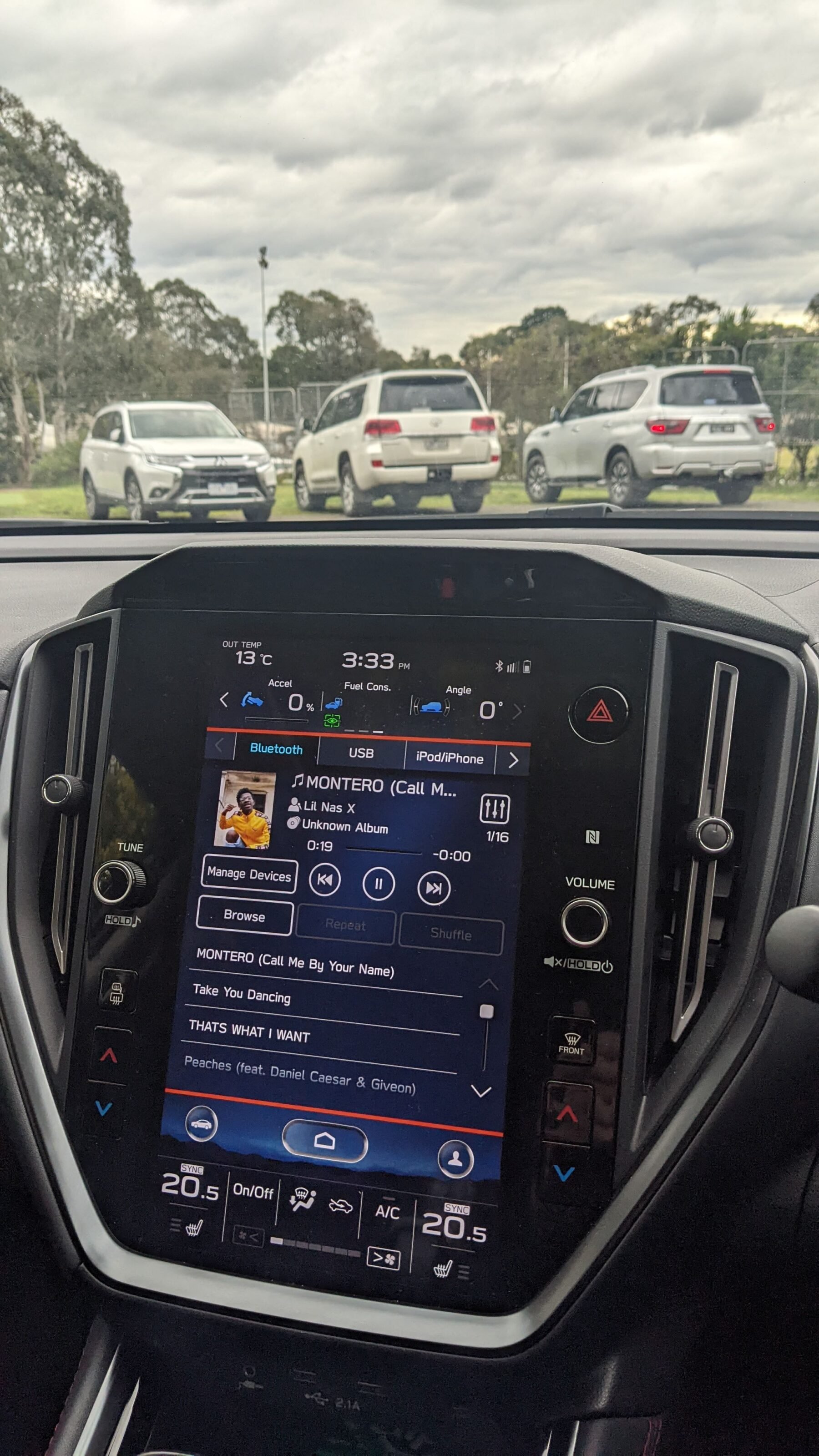
The standard navigation app provided in the WRX was generally my default screen throughout the weekend, with a full-screen display and providing a clean, simple-to-understand interface.
Drive
As I mentioned earlier, being an SUV driver, the first thing I found was how low I felt, and although this feeling didn’t change when on the road, it wasn’t long before I’d forgotten the difference.
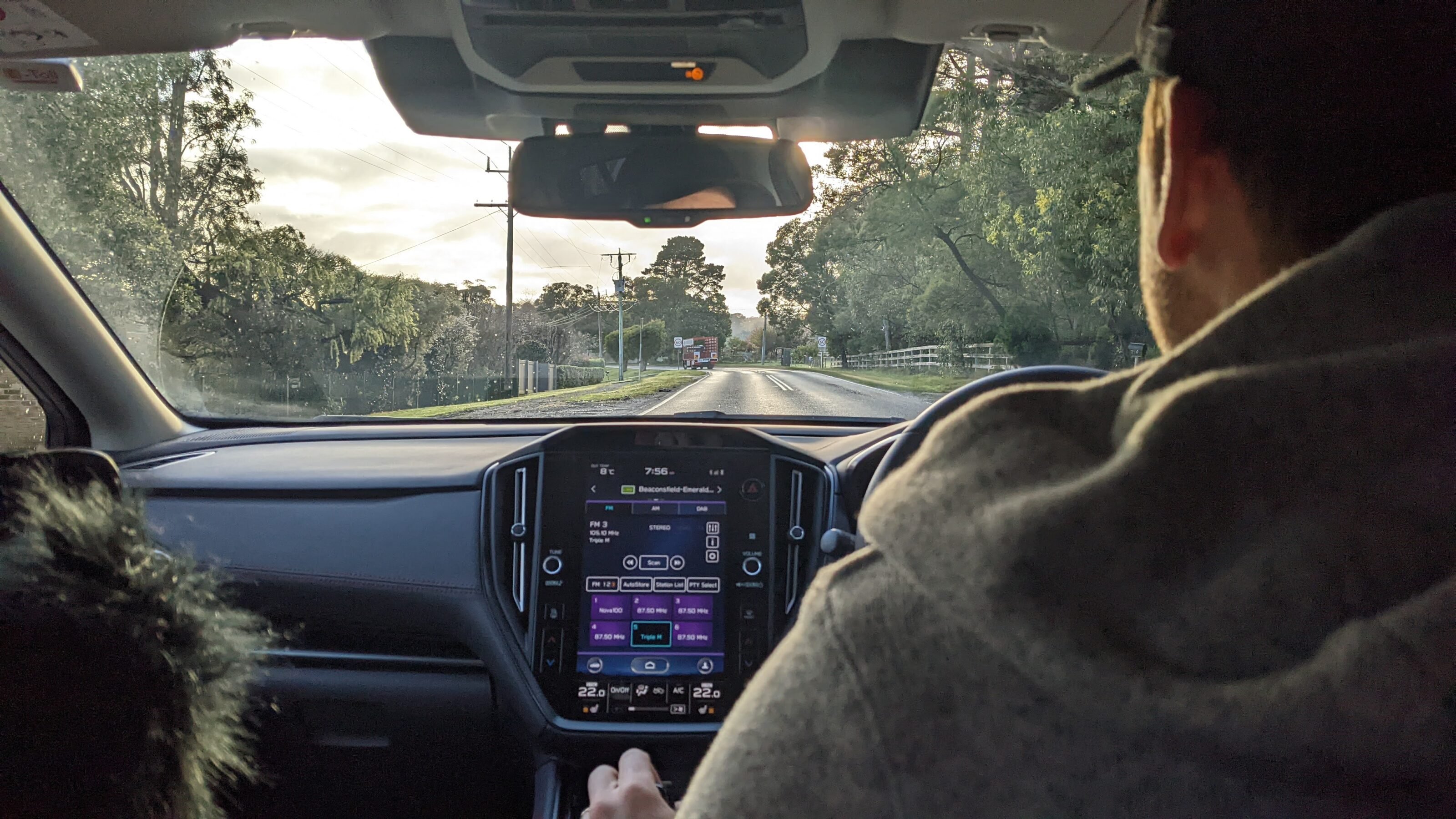
The WRX provides the driver with great visibility on the road; there isn’t too much that blocks the view or provides blind spots.
The steering is smooth and responsive, in all modes the WRX holds its ground around corners, and never feels like it’s chugging up steep roads. I especially felt the difference when cruising on the freeway, It really is a smooth driving experience.
Safety Features
The safety features are plentiful, once you get used to all of the beeping – the alerts are clear for the driver to let them know when the WRX thinks you aren’t driving safely. (They’re a little over the top, I reckon. – Stevo)
The lane assist has the added feature of LED indicators that reflect on the window ahead of you, with a slight pull on the steering wheel, so there’s really no excuses not to realise.
This was also the first time I had experienced a car with an “Eyesight driver assist” feature, and had mixed experiences with it. It would pick you up if you turned your head for too long chatting with the passenger – which is good – but it also caught me out when I was picking my nose, my eyes clearly still on the road! (TMI mate…)
Drive Modes
Something that really blew me away was the fact I had been driving the car for the first couple of days in “Comfort Mode”, which essentially scales back all of the performance features of the WRX.
I had found this mode to provide a nice smooth ride on all types of roads – I had enough power to enter freeways or overtake, as well as climb hills.
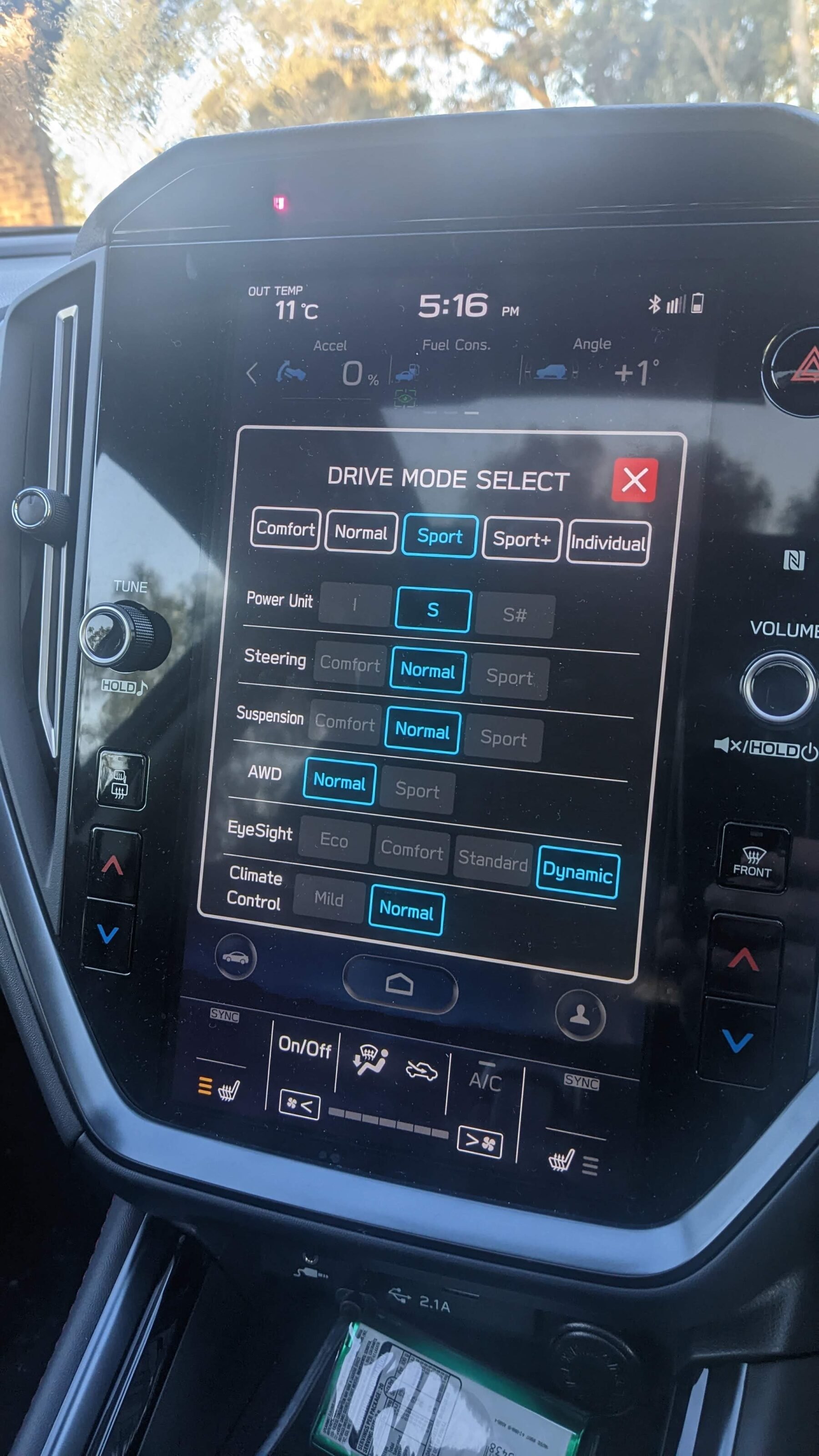
But, when I did work out there were different driving mode options (they’re easy to miss, Subaru makes very little effort to promote the sports driving modes in its sports wagon – Stevo), I immediately selected the Sport+ mode, which flicked all of the performance options to the top spec. Wowee.
What a totally different experience this gave the driver (and the kids). The pickup in power was noticeable as soon as I touched the accelerator, maybe a little too touchy for a normal drive down the road, but perfect for those that want to race around and enjoy. Responsibly, of course!
I found the happy medium in the basic Sports mode, and spent the last day cruising around in this.
Fuel Economy
There was a quick shift in fuel economy when in Sports or Sports+ mode, which is obviously going to happen. But, for the most part while in comfort mode, I’d averaged around 10.5L/100km, and this was mainly doing small trips in an area which is quite undulating.
For comparison, the 2016 Kia Sportage generally averages around 8.5L/100kmh for the same use.
Parking
Parking is an easy experience too, with all the sensors in play, rear-view camera with clear path indicators, and the added angles of side mirror and front available at the push of a button.
There really was no excuse to muck it up.
Last impressions
I was really impressed with the WRX, and it definitely ticks the boxes for what a young family needs in a reliable, safe and comfortable car.
The selling point though on this one, for me, is probably the ability to kick it into Sports or Sports+ mode and relish the power and performance it has on offer.
If you’re not into that, then there are probably other wagons or small SUVs out there in a similar price bracket that provide a similar experience.
Vehicle Specifications
It’s finally here, we’ve driven it, and the news is good.
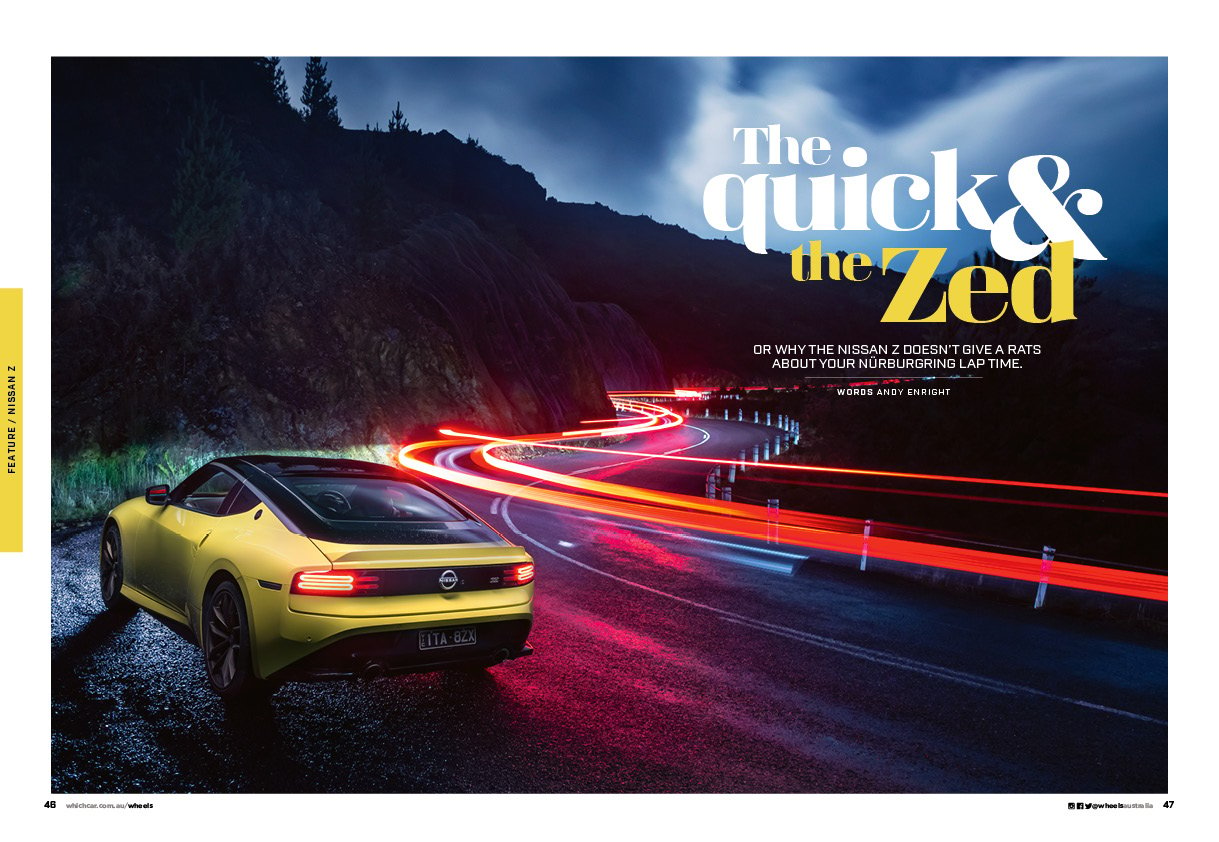
Nissan’s box-fresh 298kW Z coupe finally lands here in Australia and we get behind the wheel to deliver the early verdict on both the manual and the automatic versions of what could well be 2022’s most eagerly awaited sports car.
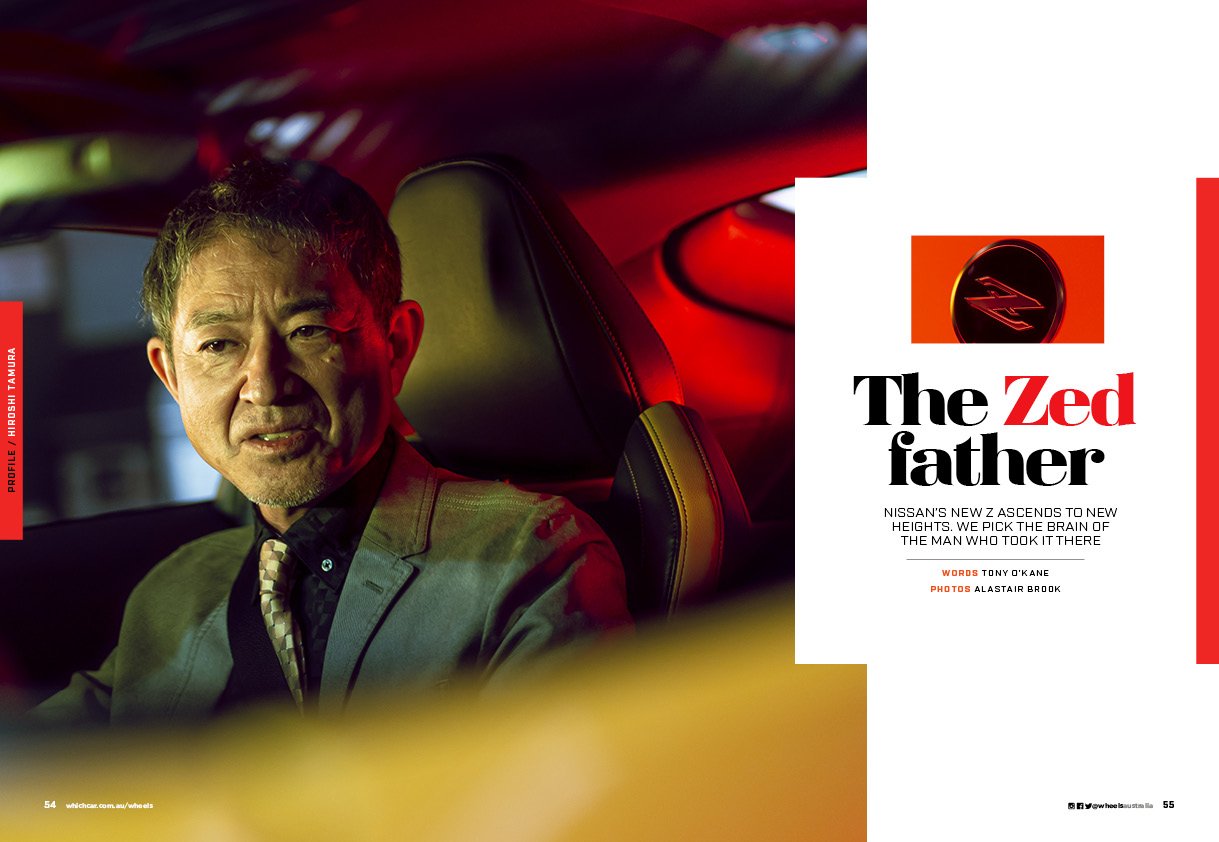
We also take Hiroshi Tamura, Nissan’s godfather of the Z and the GT-R, out for some terrible ramen and discuss how the new Z has been developed, why it’s never been flung around the Nordschleife in anger, and how telling a few alternative facts managed to get the Z project over the line with Nissan’s top brass.
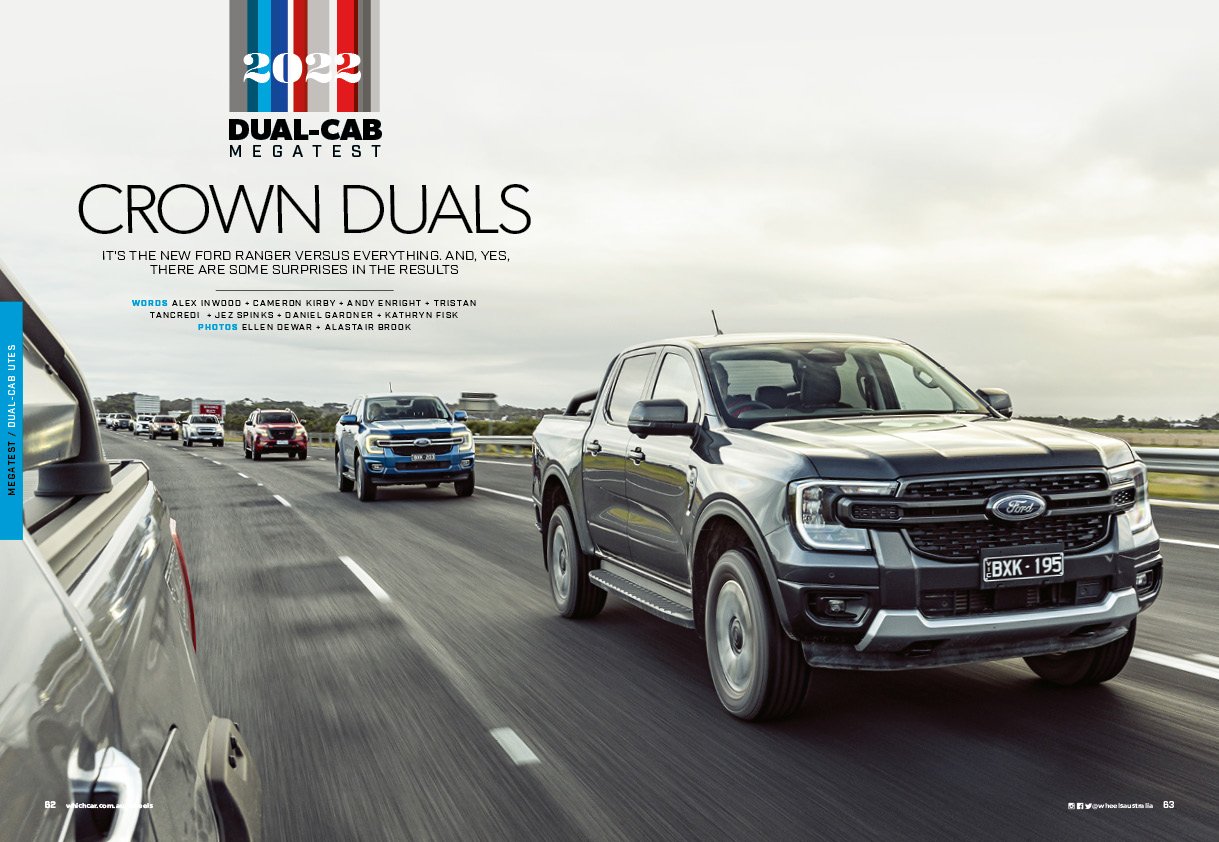
Elsewhere, we’ve lined up every dual-cab ute worth its salt and pitched them into a megatest for the ages.
Some of the results may well surprise you, but it’s fair to say this pretty much boils down to a tag contest between the V6 and biturbo versions of the new Ford Ranger versus everything else. Pick up a copy of the magazine to see which is the last ute standing.
We pitch the two hottest hatches in the world against each other.
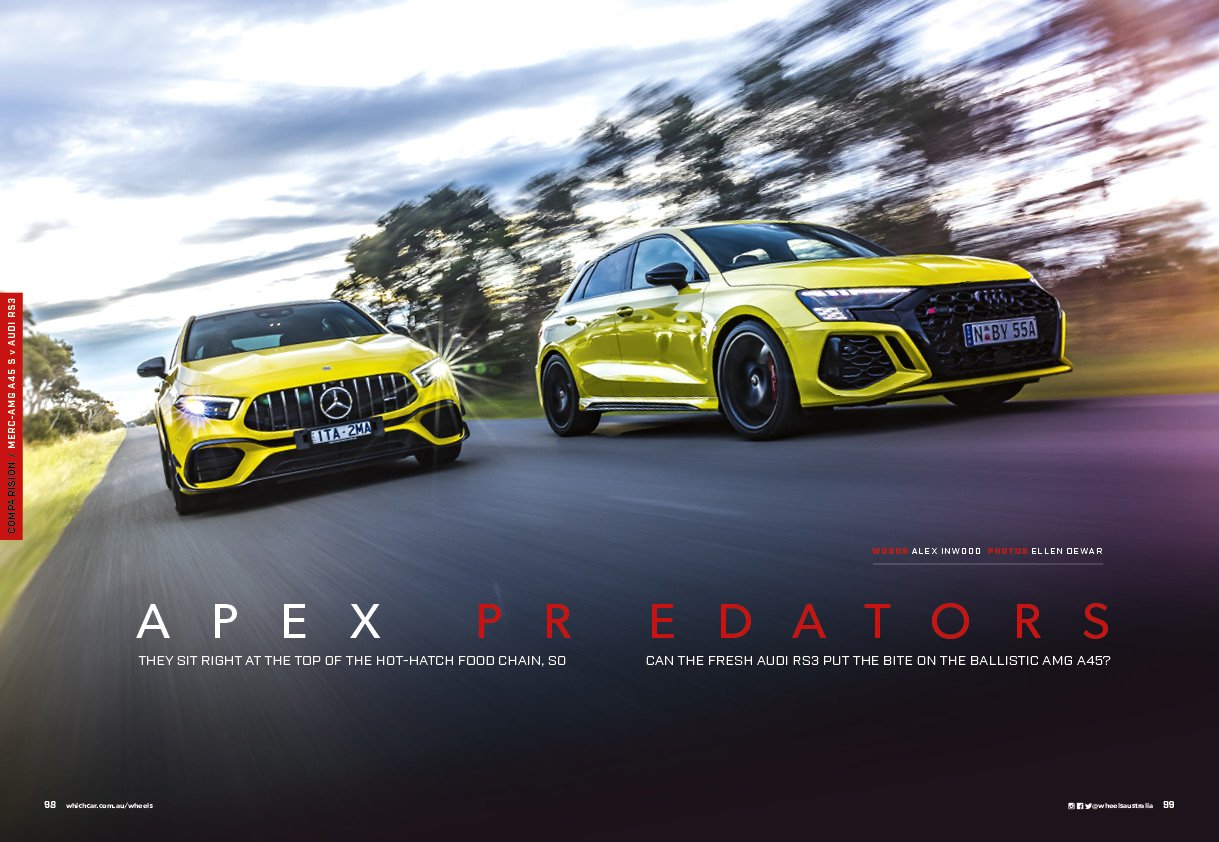
Does the new Audi RS3 have what it takes to knock a Wheels favourite, the Mercedes-AMG A45 S off its throne, or will it be advantage Affalterbach in a 595kW face-off?
Not sold on electric vehicles?
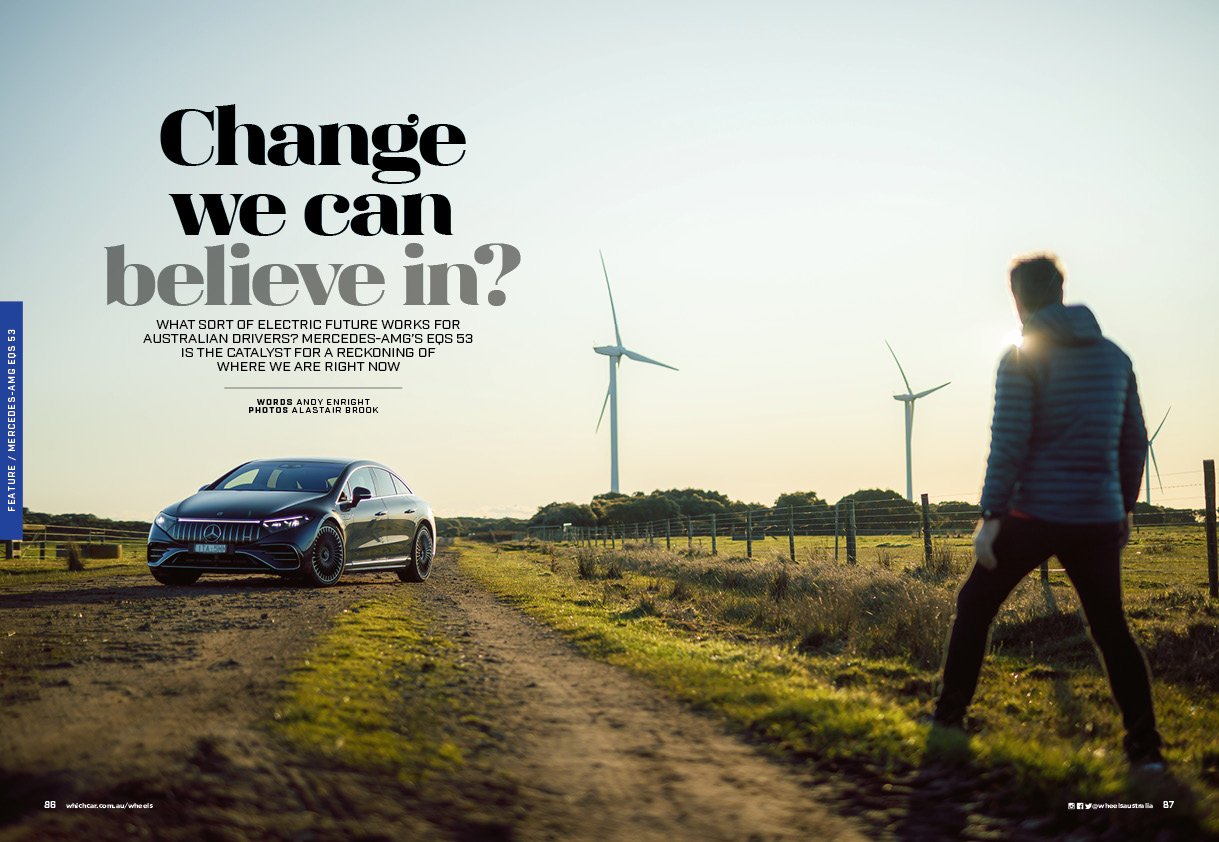
Andy Enright takes Mercedes-AMG’s EQS 53 and charges it on the juice from Australia’s filthiest power station, crunching the numbers to figure out whether juicing your EV up on brown coal is an environmental catastrophe.
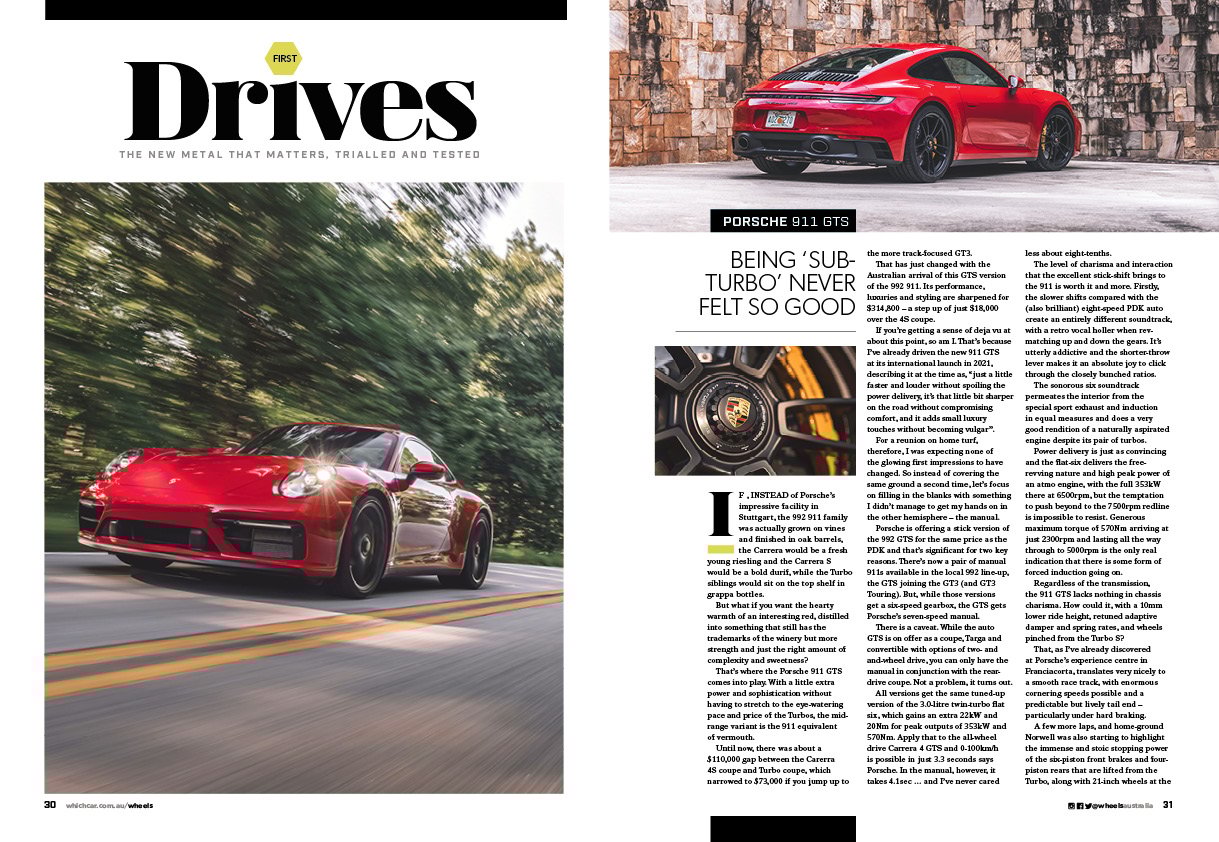
There’s all the beta on the behemoth Toyota Tundra monster ute that’s on its way Down Under, drives of the GWM Haval H6 GT, the Aston Martin DBX 707, the Cupra Formentor VZx and the Porsche 911 GTS.
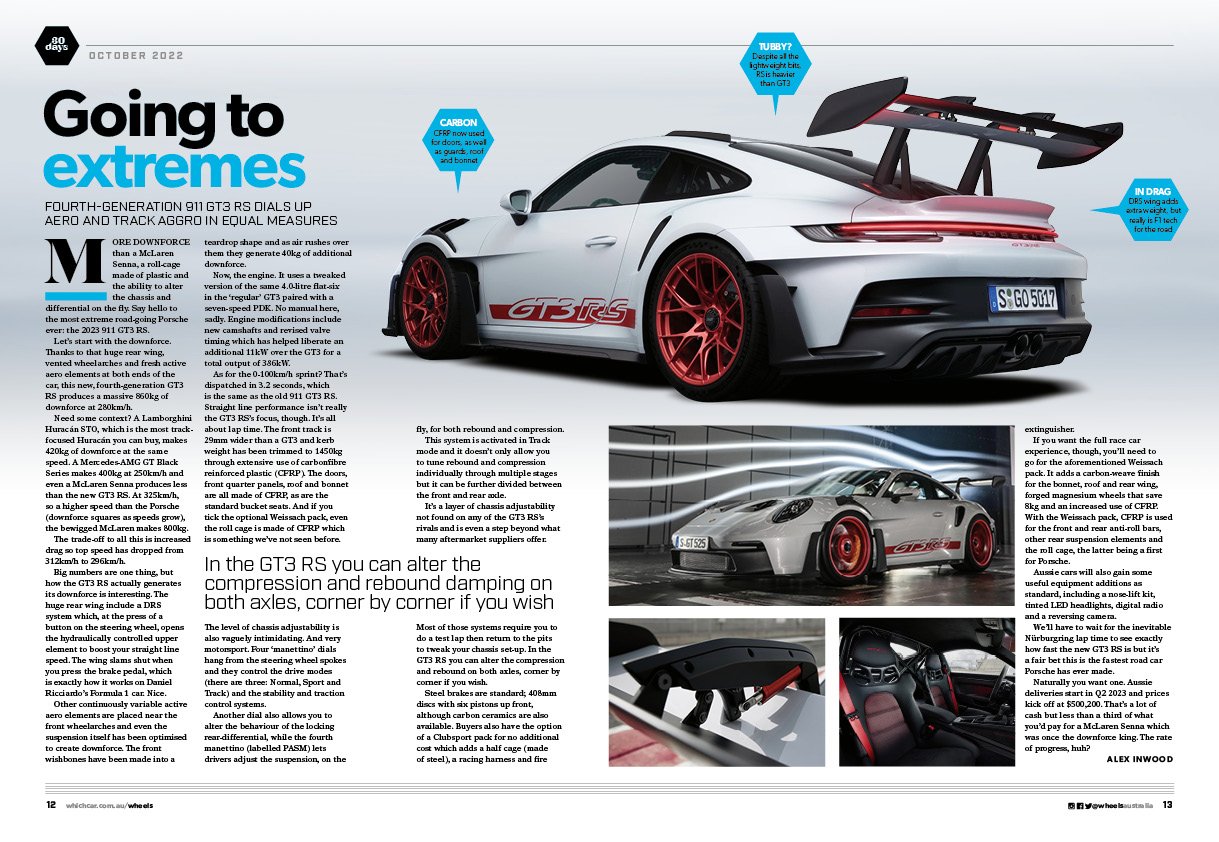
We wave goodbye to the Ford Focus ST, run the Lamborghini Gallardo under the Modern Classic lens and welcome a Ford Escape ST-Line PHEV into the Wheels garage.
There’s a stack more but we don’t want to issue too much in the way of spoilers.
Look for the Nissan Z on the cover of the October issue of Wheels, on shelves from September 19th – or you can subscribe here from just $59. Well, what are you waiting for?
Not yet a subscriber?
You can subscribe to Wheels magazine from only $59 and we’ll send you a copy of the current issue straight away.Subscriber benefits include:*
- Huge savings on the regular cover price• Free delivery to your doorstep
- Free digital access
- Browse the entire Wheels archive back to 1953
- Exclusive benefits and discounts
Is there a more talked-about brand in Australia right now than BYD? The Chinese car maker is one of Australia’s newest players and it’s making waves with its aggressive pricing, quirky interior styling and exciting-sounding ‘blade battery’ tech.
But it’s not just hype; Aussies are putting their cash where their mouths are. BYD already has more than 4000 orders for the Atto 3 and, during our day with the car we were approached by four people who were eagerly awaiting delivery of their own cars and stopped by many others.
The key attraction is obvious: price. For a while the Atto 3 held the title of Australia’s cheapest EV but MG swooped in earlier this month and stole the crown back with fresh driveway deals for the ZS EV.
Still, at $44,381 before on-road costs for the standard battery version, the BYD is easily one of the most attainable new EVs on the market.
So does its low price make the Atto 3 a bargain? Or does it feel and drive on the cheap side?
How much is it and what do you get?
Let’s start with arguably the biggest issue facing electric cars in Australia right now: they’re expensive. The number of EV sales are growing and incentives are on the rise but you’ll still need to fork out a lot of cash to buy one compared with a conventional petrol-powered equivalent.
Now, though, it feels like we’re reaching a tipping point and a number of new, more affordable models are becoming available. The BYD and the MG ZS EV, for example, are currently locked in an arm wrestle for the title of Australia’s cheapest EV. The prices change slightly depending on your state, but both are around $45K driveaway.
In the BYD’s case, that gets you one highly-specced variant that has loads of equipment and space and the choice of two battery sizes.
The standard car has a 50kWh battery pack and starts at $44,381 – but the car we’re driving today is the Extended range, which has a 60kWh battery and costs $3000 more, so $47,381 before on-road costs.
The Atto 3 is front-wheel drive, has a single electric motor that produces 150kW/310Nm regardless of which version you buy, and has a claimed WLTP driving range of 345km for the smaller battery version and 420km for models with the extended battery.
You also score an impressive list of standard equipment, but if you’re excited about personalising the spec of your Atto 3, prepare to be a touch disappointed.
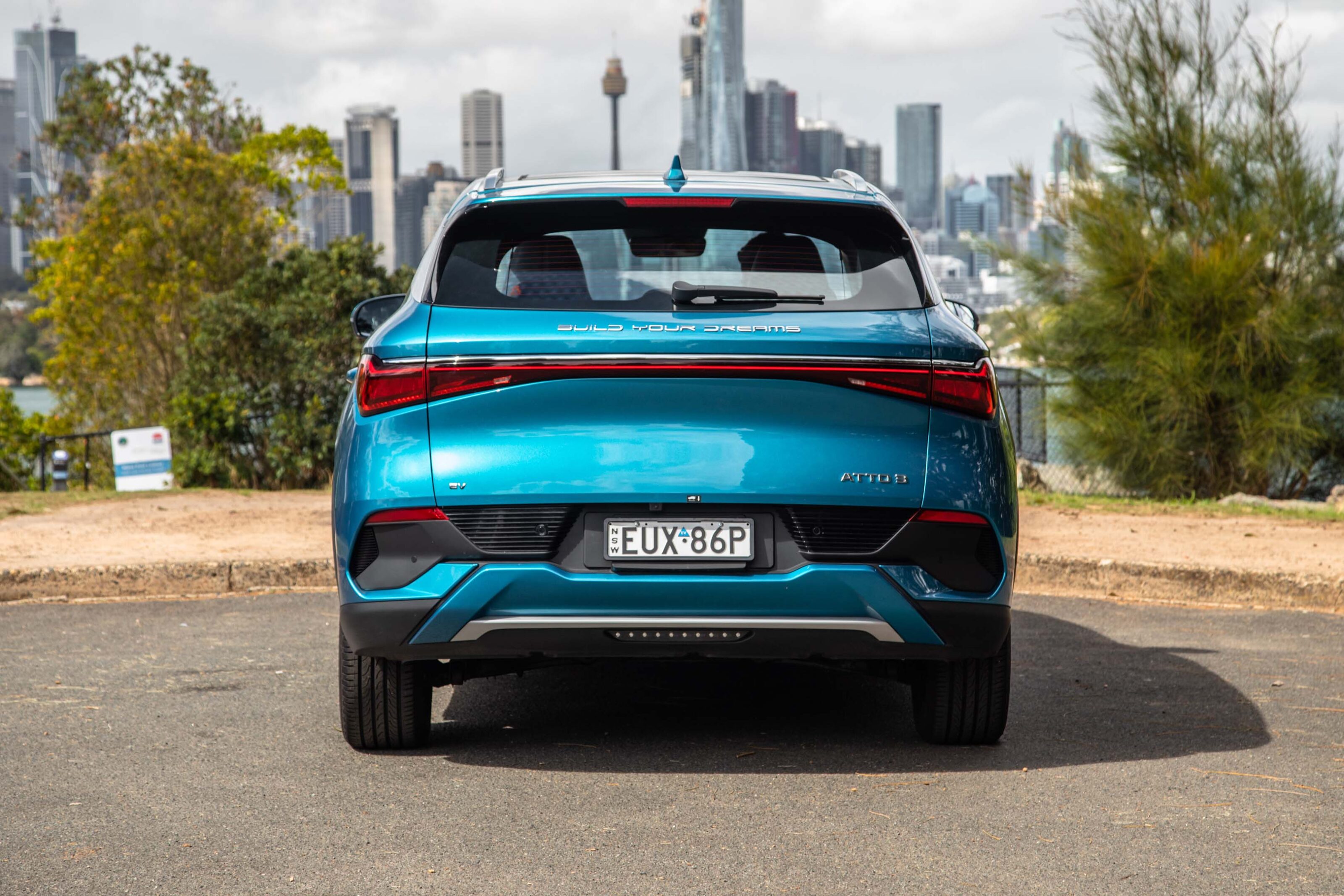
The only choices you can make while ordering are which battery size you want, and deciding between four exterior colours: white, grey, blue or red. Every colour except white costs $700 extra, and red is only available on cars with the extended battery.
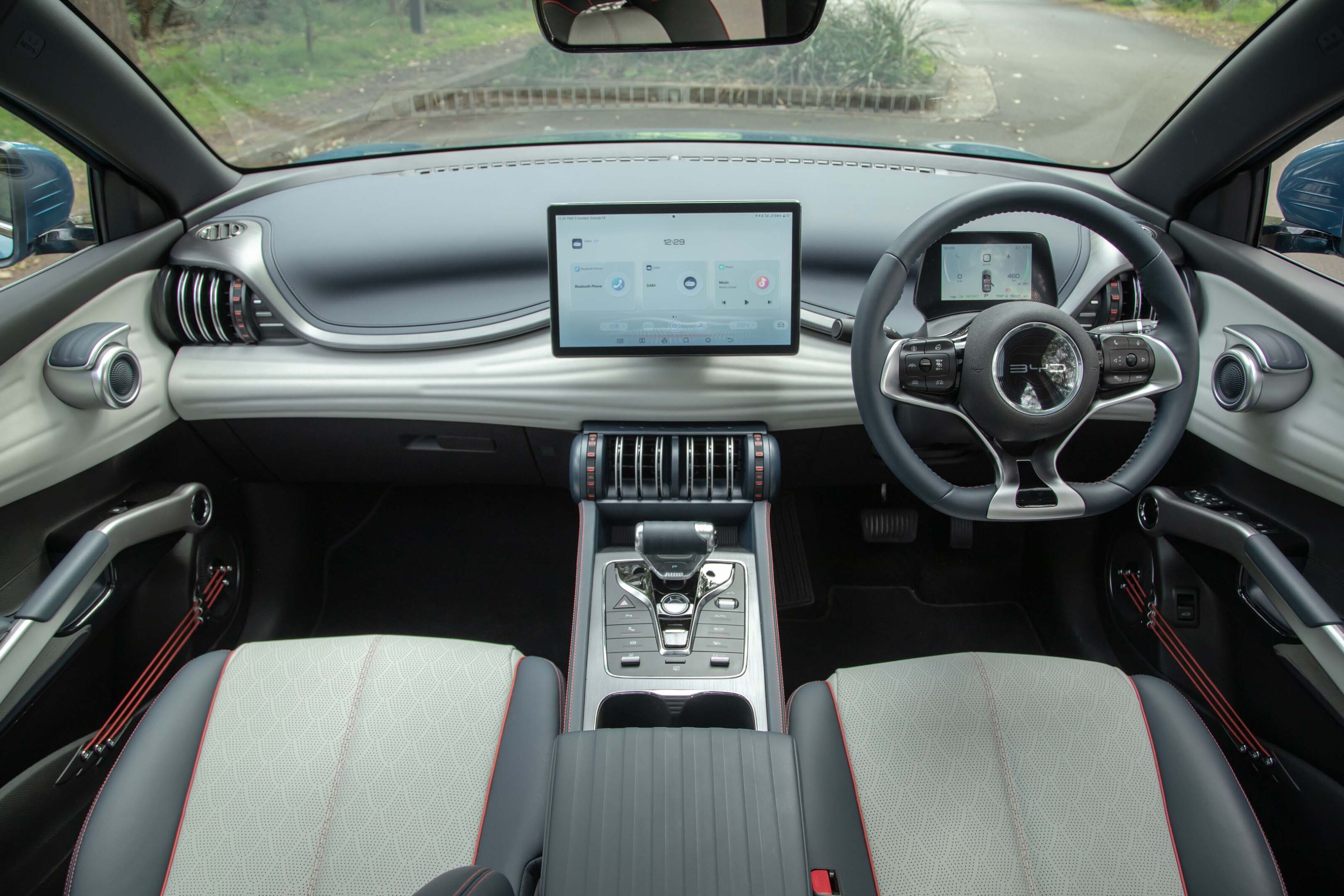
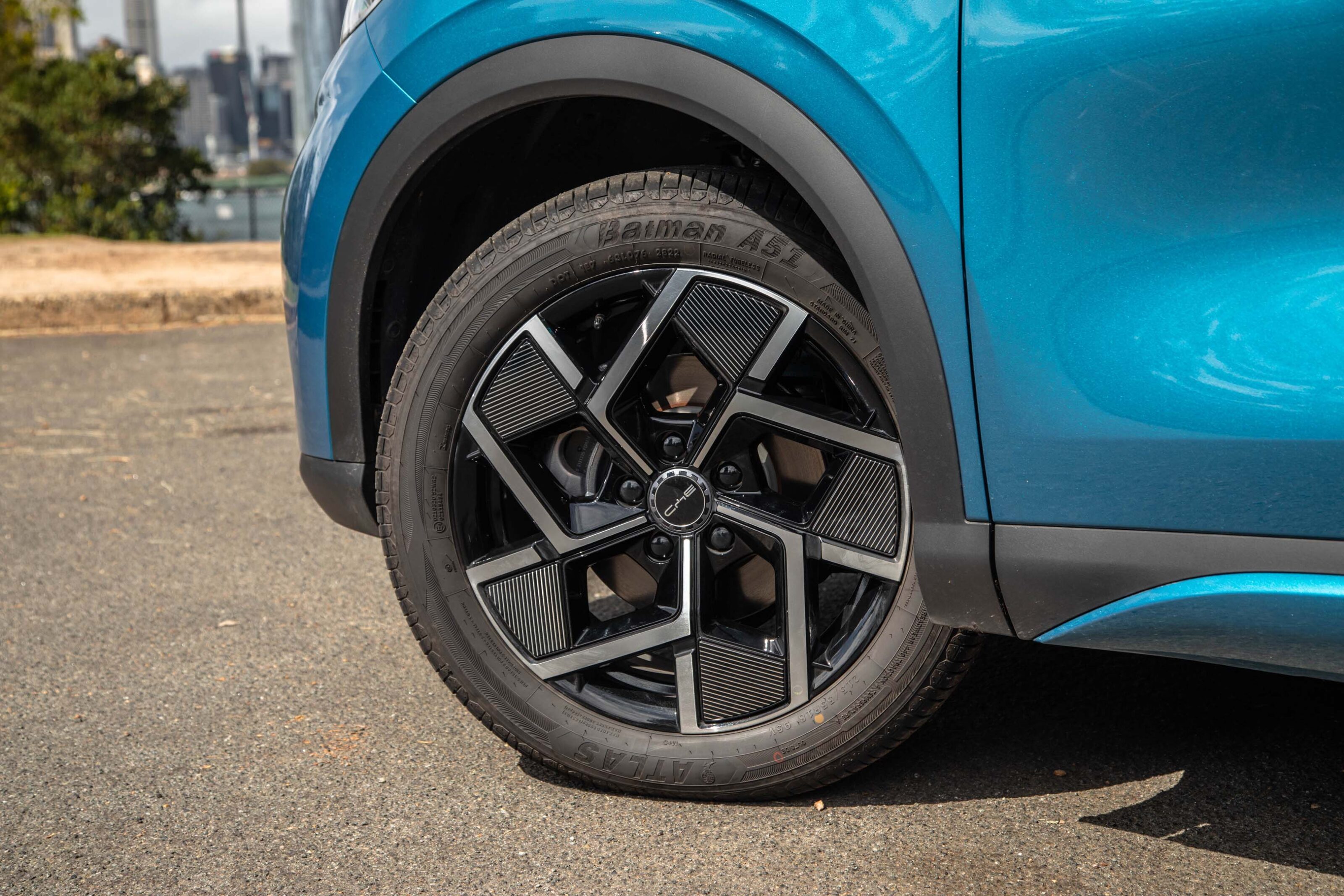
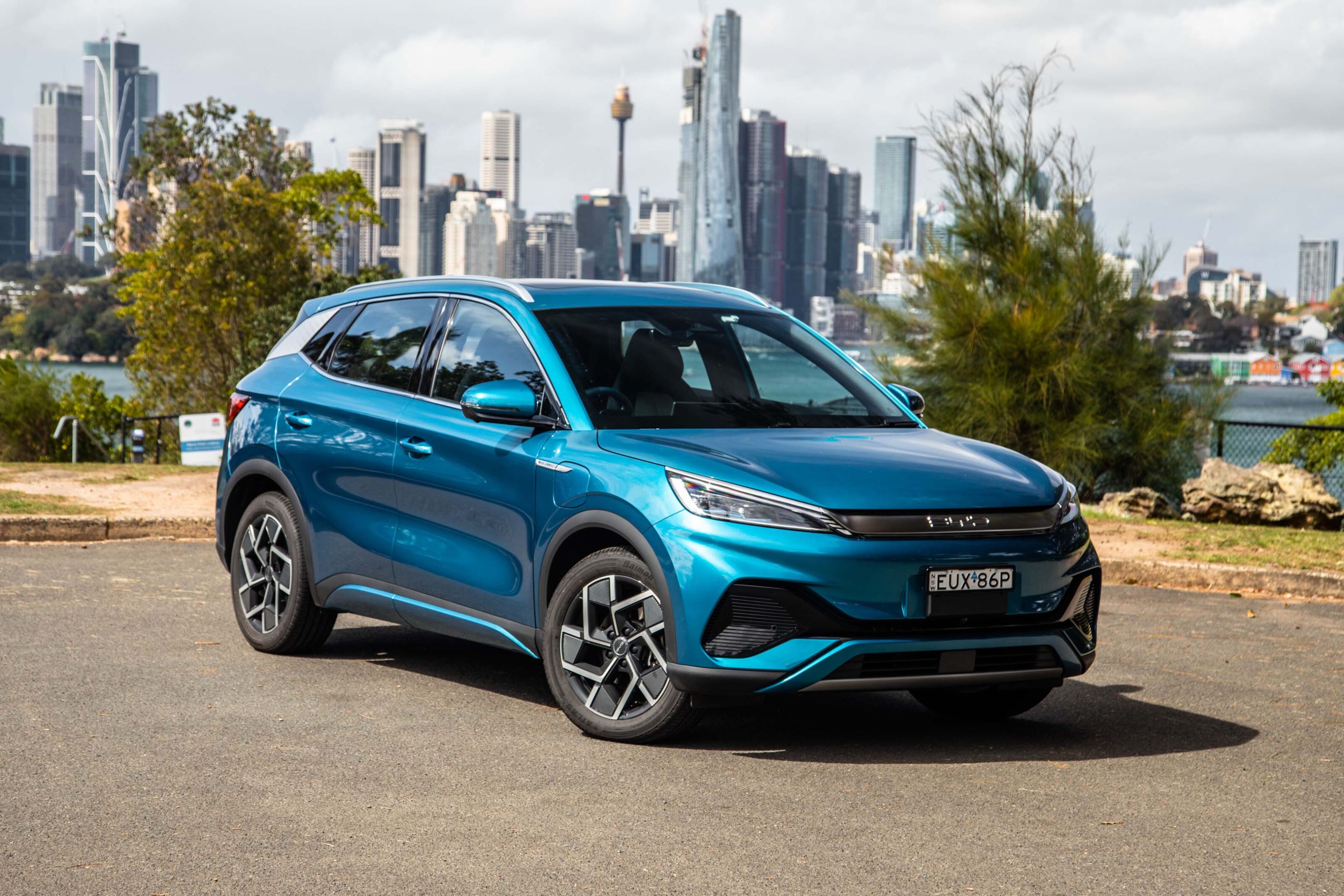
The rest of the equipment and spec are already locked in and includes 18-inch alloys (shod with truly terrible Atlas Batman rubber, but more on those later…), a huge 12.8-inch screen central display that rotates between landscape and portrait orientations, a healthy list of standard safety gear and a two-tone blue/white interior.
The overall design is clean and attractive and includes LED headlights, heated/retractable mirrors, a panoramic sunroof, roof racks and a power tailgate are all standard.
As for what’s missing? There’s no Apple CarPlay or Android Auto connectivity just yet, although BYD says they will be made available via an over-the-air update soon. There’s no native sat-nav system either.
ANCAP is also yet to release an official crash rating but, again, BYD says that’ll arrive in the coming months.
UPDATE, November 21: Following a resolution on a critical child-seat tethering issue, the Atto 3 now has a five-star ANCAP rating. Read about it here. |
How do rivals compare on value?
The BYD Atto 3 is a rival for the MG ZS EV, the Hyundai Kona EV, the Kia Niro and Nissan Leaf, and it measures up well for value.
It’s not only less expensive than its competitor set, aside from the aforementioned MG, but the BYD offers more interior space, a large boot and a more richly equipped cabin.
It also compares favourably for performance, range and charging times. See the table below for how the standard Atto 3, with the 50kWh battery, compares with the MG ZE EV and Hyundai Kona EV.
2023 BYD Atto 3 spec comparison: The basics
| BYD Atto 3 Standard | MG ZS EV Excite | Hyundai Kona EV 100kW | |
|---|---|---|---|
| Price | $44,381 | $44,990 (driveaway) | $54,500 |
| Power/torque | 150kW/310Nm | 130kW/280Nm | 100kW/395Nm |
| Battery size | 50kWh | 50.3kWh | 39.2kWh |
| Range (WLTP) | 345km | 320km | 305km |
| 0-100km/h | 7.3sec | 8.2sec | 9.9sec |
| AC charge rate/time | 7kW/12 hours | 7kW/8 hours | 7.2kW/6 hours |
| DC charge rate/time | 70kW/50 minutes (to 100%) | 50kW/54 minutes (to 80%) | 100kW/47 minutes (10-80%) |
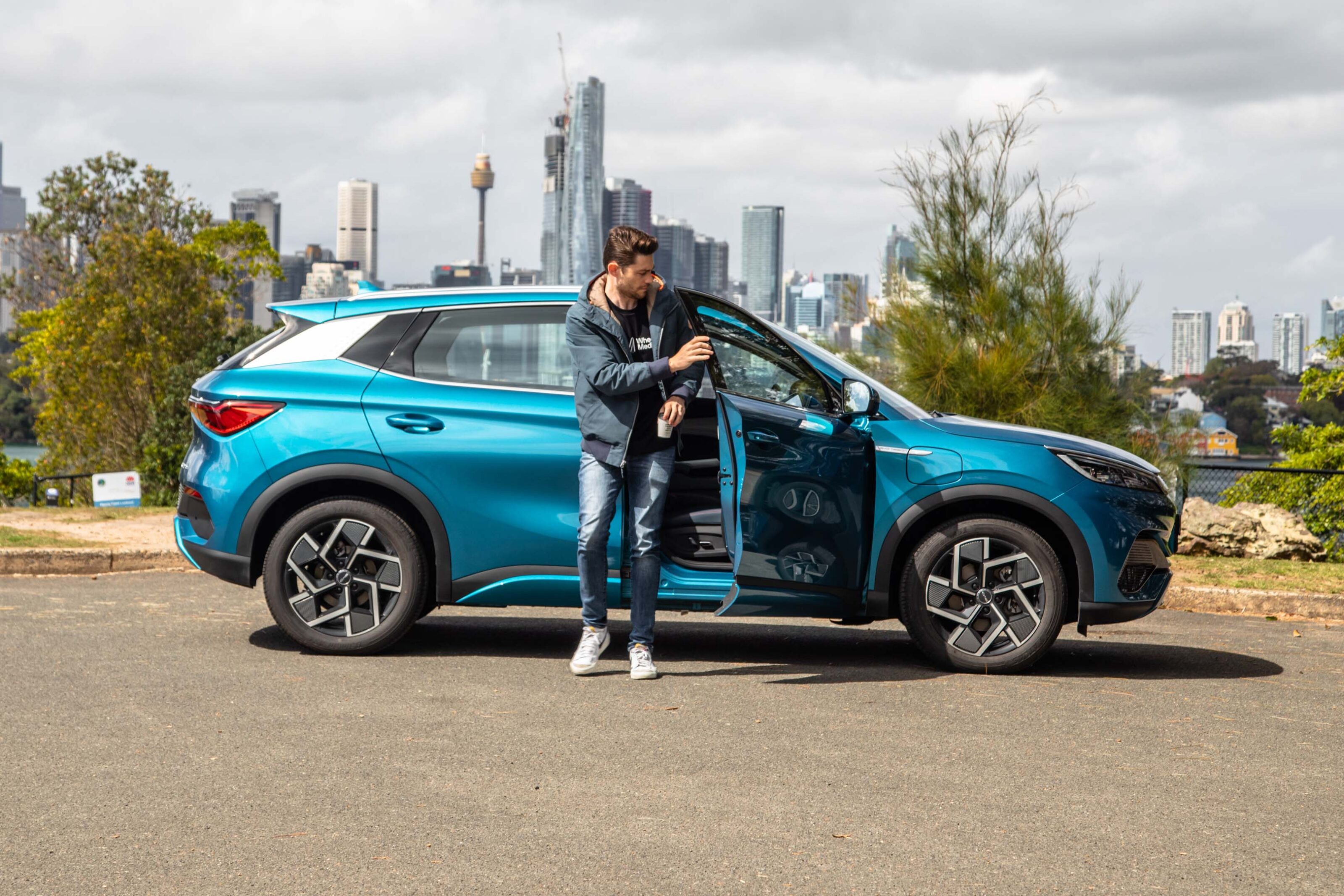
Interior comfort, space & storage
If the exterior design is simple and restrained, then the interior of the Atto 3 is the exact opposite.
It’s a riot of swooping lines, oddly shaped air vents and door bins enclosed by strings of red elastic pulled tight enough that they can be played like a guitar.
BYD says it designers were inspired by ‘fitness culture’ and the bulging centre section of the dash is meant to resemble a muscle, while the cylindrical air vents and chunky gear shifter are like dumbbells. Initially it verges on wacky, but take the time to explore the cabin in more detail and you’ll discover the fundamentals haven’t been overlooked.
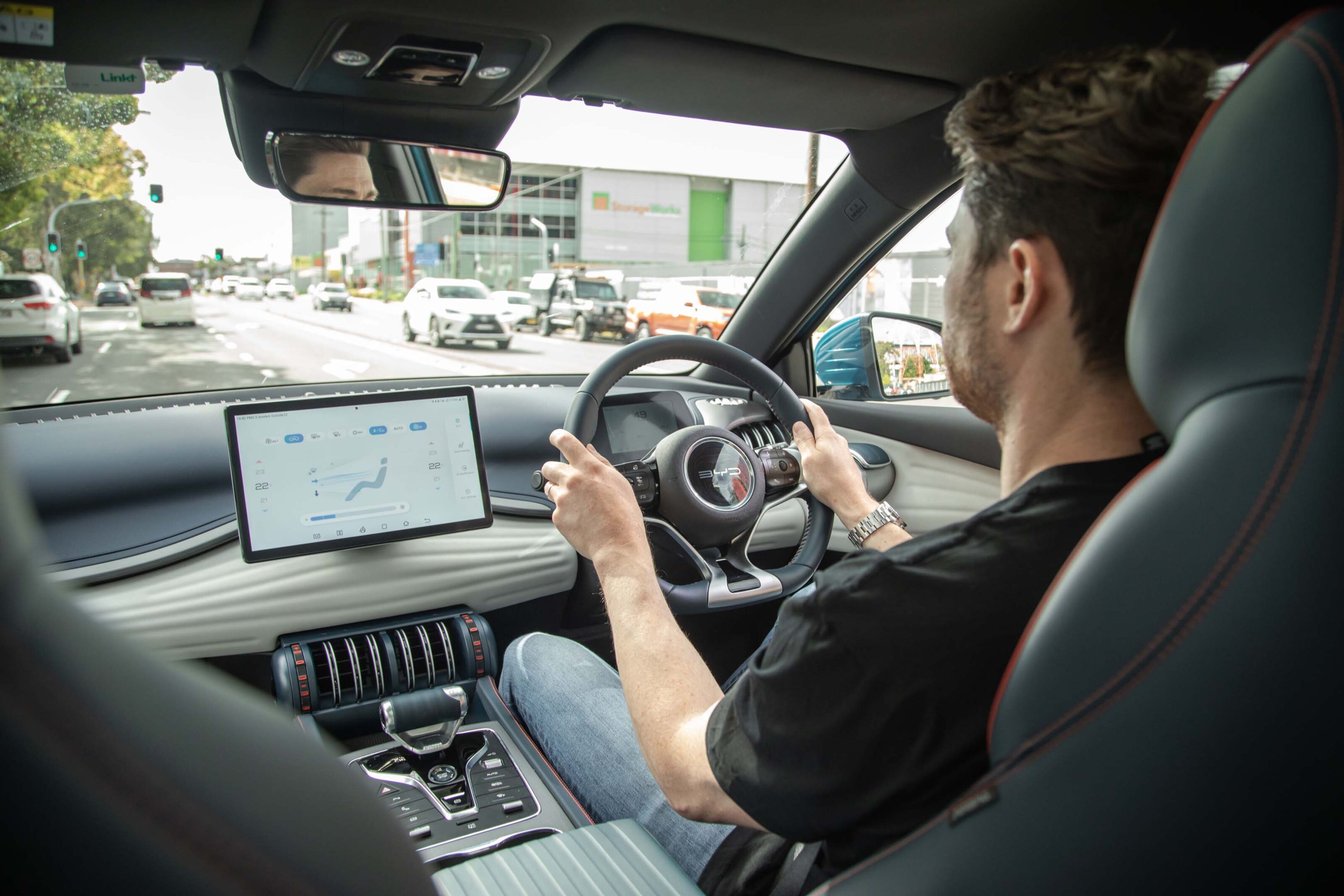
Both front seats are comfortable, electrically operated and are trimmed in soft-feeling synthetic leather. The driving position itself is spot on, and there’s loads of interior storage thanks to an enormous central bin at your elbow and another underneath the centre console. Big glovebox, too.
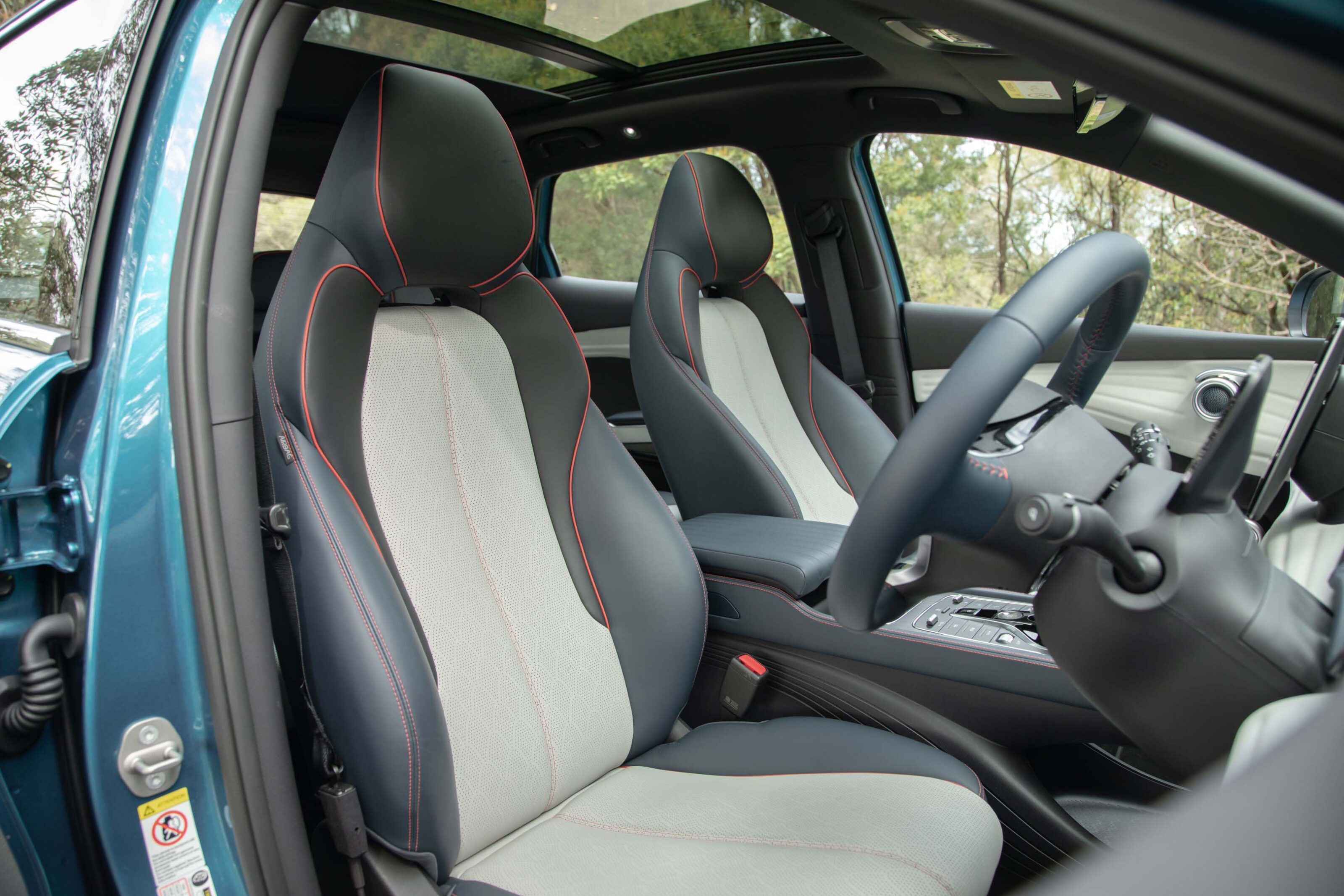
The steering wheel is on the chunky side and the column-mounted digital instrument cluster is easy to read, despite being on the small side at just 5.0 inches.
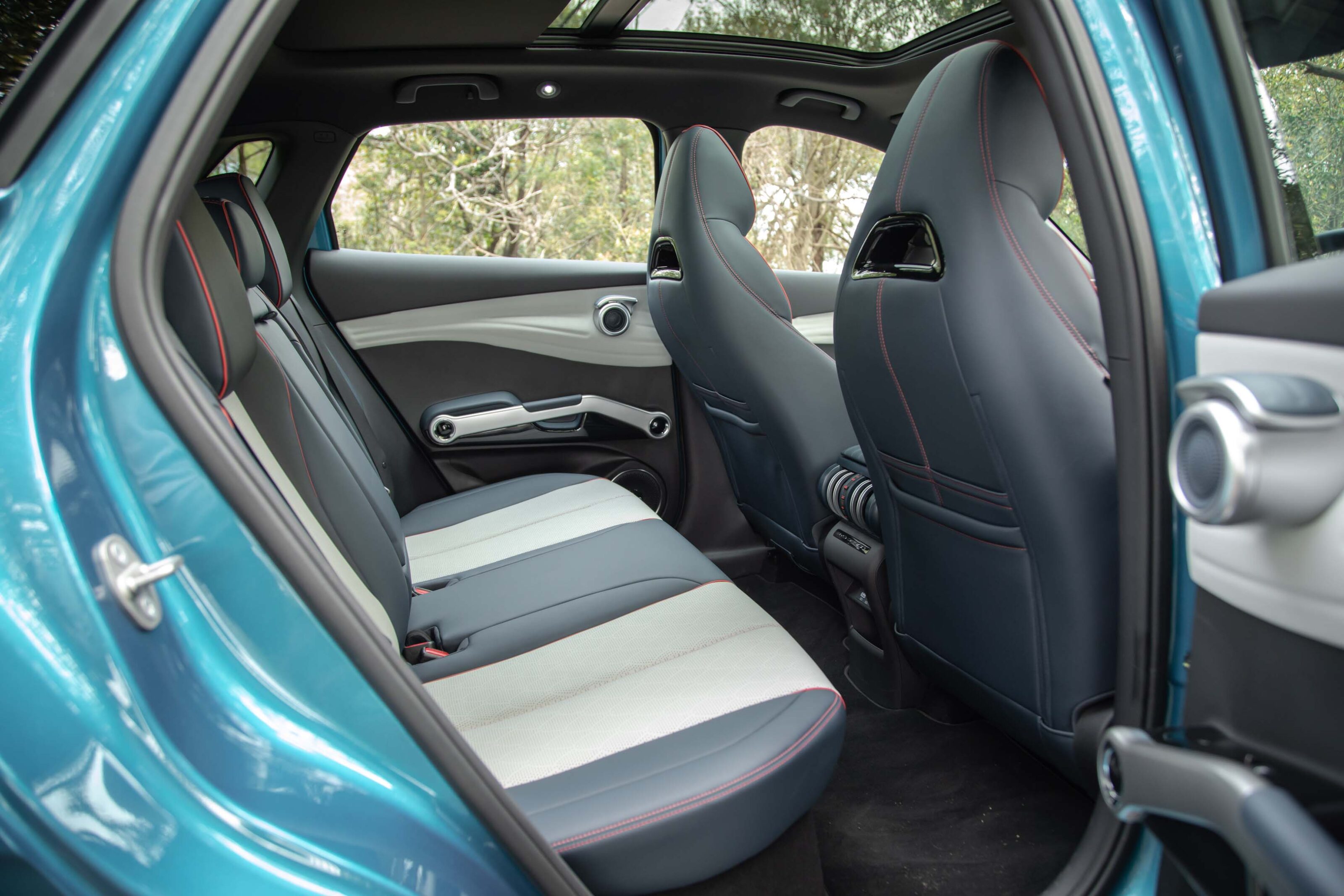
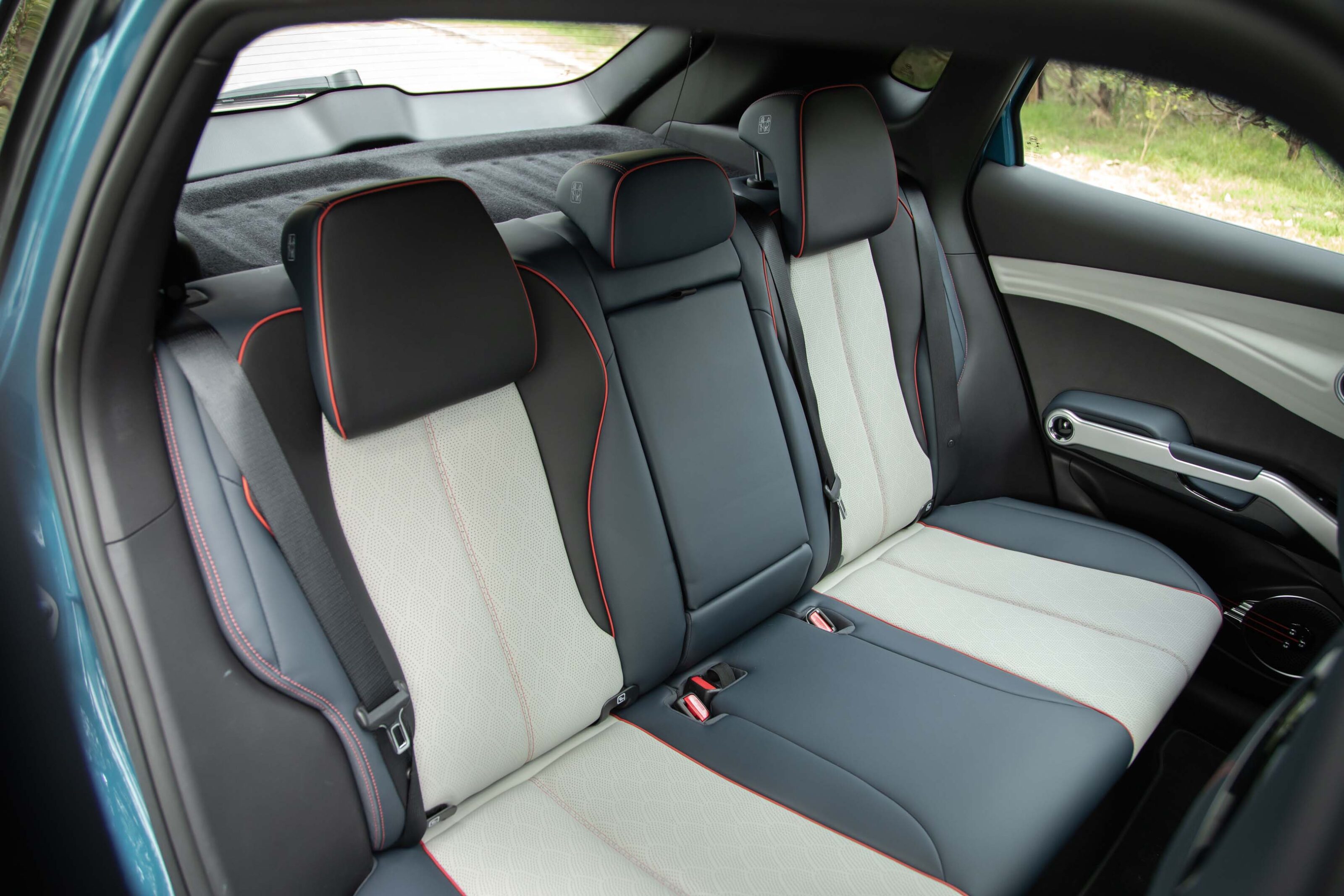
Things are slightly less full-on in the rear, but again the sense of space and comfort continue. There’s miles of knee room, the cushion is low-set (taller passenger might lack for under-thigh support) and because the Atto 3 is built on a dedicated EV platform, there’s no clunky transmission tunnel to contend with.
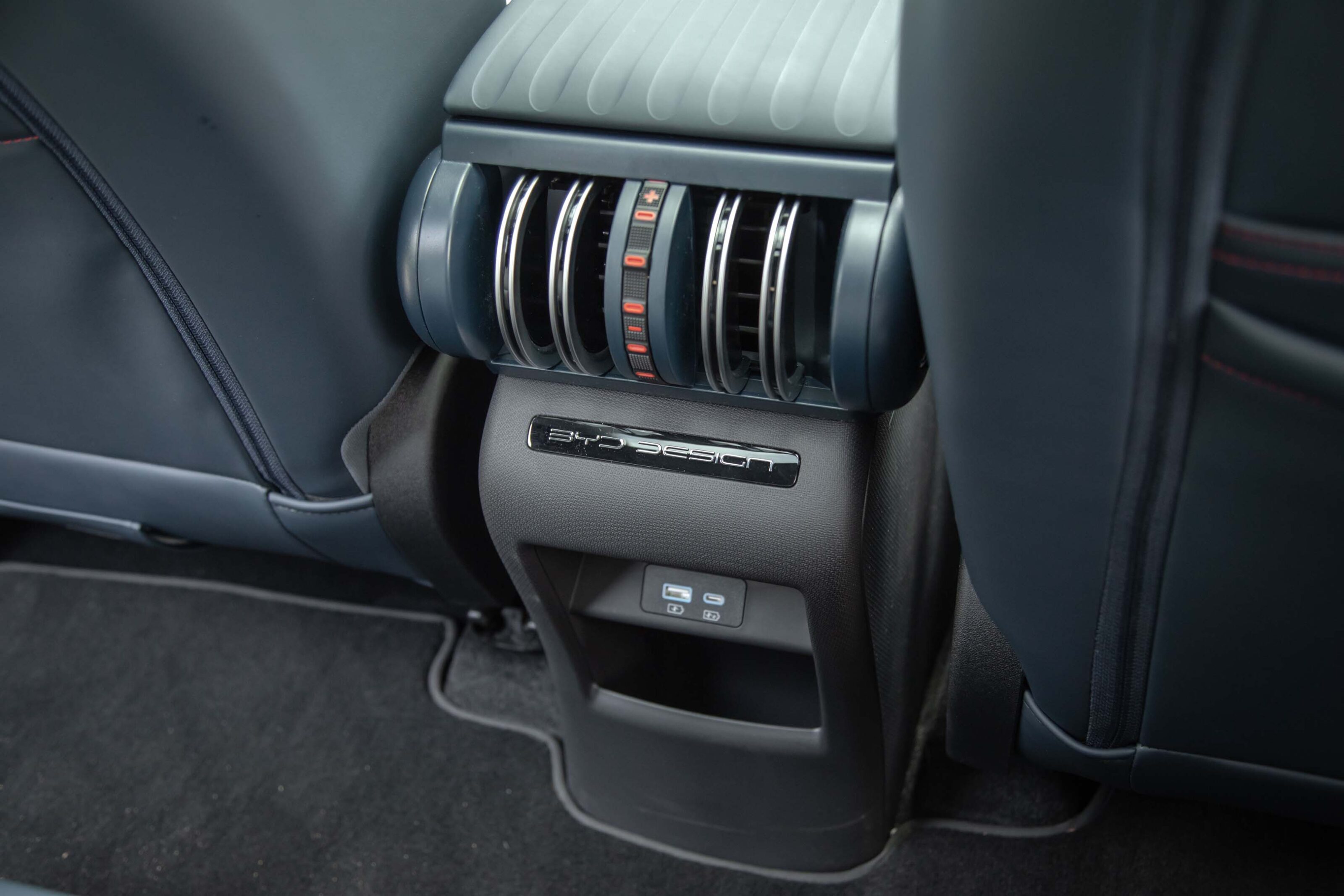
You also score rear air vents, and there are Isofix anchor points on each of the outboard seats. Another Isofix point is found on the front passenger seat, although we couldn’t spot a clip for a top tether on that one.
Connectivity is decent with two USB ports in the front and another two on the rear of the centre console. There’s also a wireless charging pad ahead of the gear shifter.
It all feels well screwed together, too. And the mix of materials, while slightly odd in some places (the curved white section in the middle of the dash feels like an old wetsuit), is also of an impressive quality. It’s certainly a rung above an MG ZS or a Nissan Leaf for interior presentation.
It’s space, though, that’s perhaps the biggest luxury. The cabin feels noticeably wider and roomier than an MG ZS, and in pretty much every dimension, the Atto 3 trumps its rivals.
It’s certainly a rung above an MG ZS or a Nissan Leaf for interior presentation and space
2023 BYD Atto 3 boot space
| BYD Atto 3 | MG ZS EV Excite | Hyundai Kona EV 100kW | |
|---|---|---|---|
| Boot size | 440L | 359L | 332L |
| Length | 4455mm | 4323mm | 4205mm |
| Width | 1875mm | 1809mm | 1800mm |
| Height | 1615mm | 1625mm | 1555mm |
| Wheelbase | 2720mm | 2585mm | 2600mm |
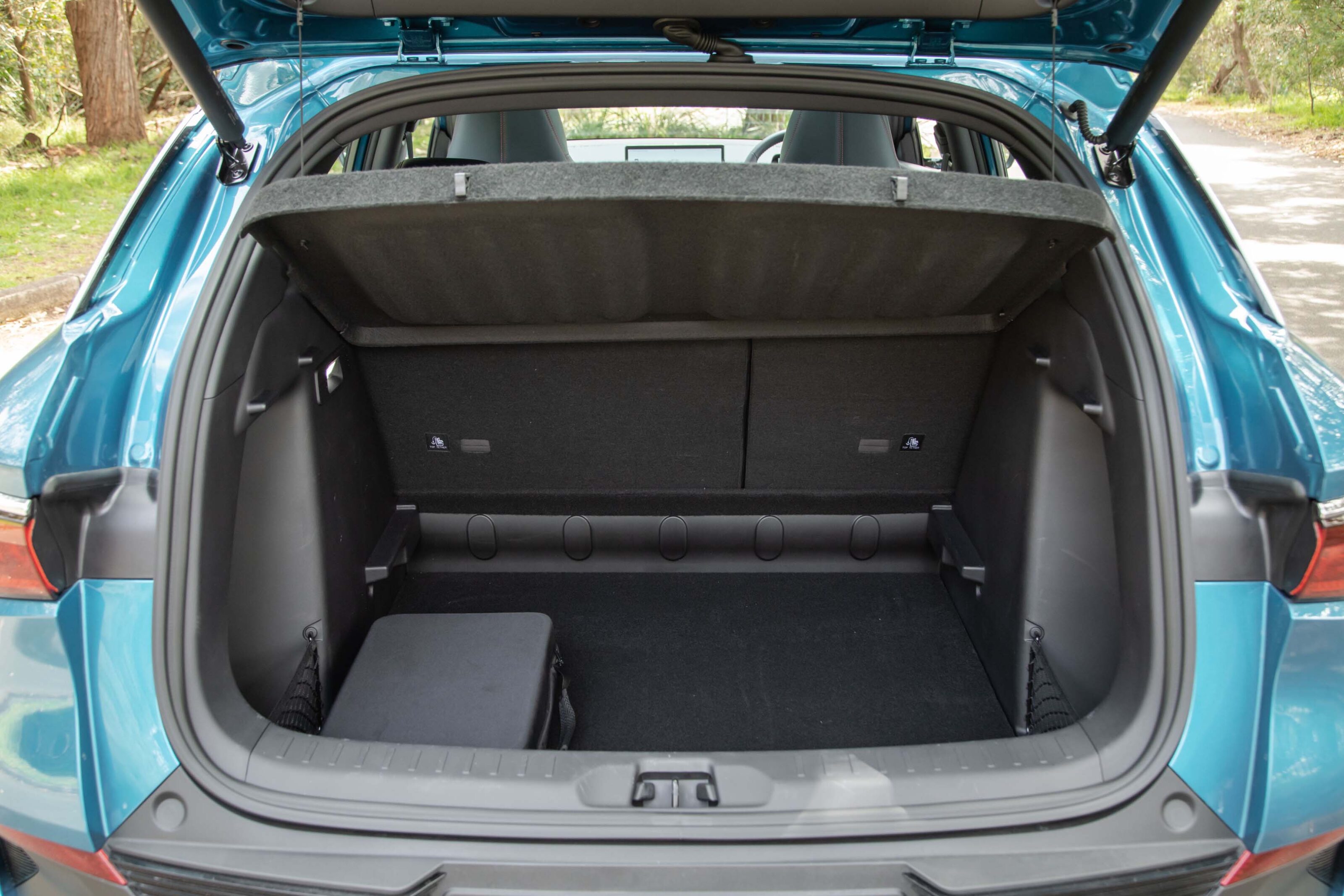
The BYD Atto 3 boot is also a decent size at 440 litres, and it offers two levels for the floor so you can maximise luggage space or raise it for a flat loading bay when you drop the back seats. No spare tyre, though, so prepare to make do with a compressor and a can of goo if you hit trouble.
A final feature worth mentioning in the boot is a four prong power board that can be plugged into the Atto 3’s charging point. Do that and the BYD offers vehicle-to-load capacity, meaning you can power a laptop, light, coffee machine, and so on.
Best Electric Cars Under $65k: Affordable EVs Rated
Welcome to part one of three price-based EV buying guides, this one focused on the most affordable electric cars available in Australia today
Speaking of charging, the BYD Atto 3 accepts both AC and DC fast charging.
On a 7kW AC wallbox, BYD says you can achieve a full charge in around 12 hours. The DC charge rates vary slightly depending on the size of your battery.
50kWh versions can accept up to 70kW of DC charging, while models fitted with the bigger extended battery can take 80kW. On DC charging, an extended Atto 3 can go from 0-100 percent in 50 minutes.
What’s it like to drive?
The last time we drove the Atto 3, it was a left-hand-drive China market car.
This is an Aussie production car, so what’s changed? Well, aside from sitting on the other side of the car, not much…
Originally, BYD promised Australian cars would get local chassis tuning and Continental tyres as standard – but to keep production from the factory in Thailand rolling as fast as possible, neither of those has materialised.
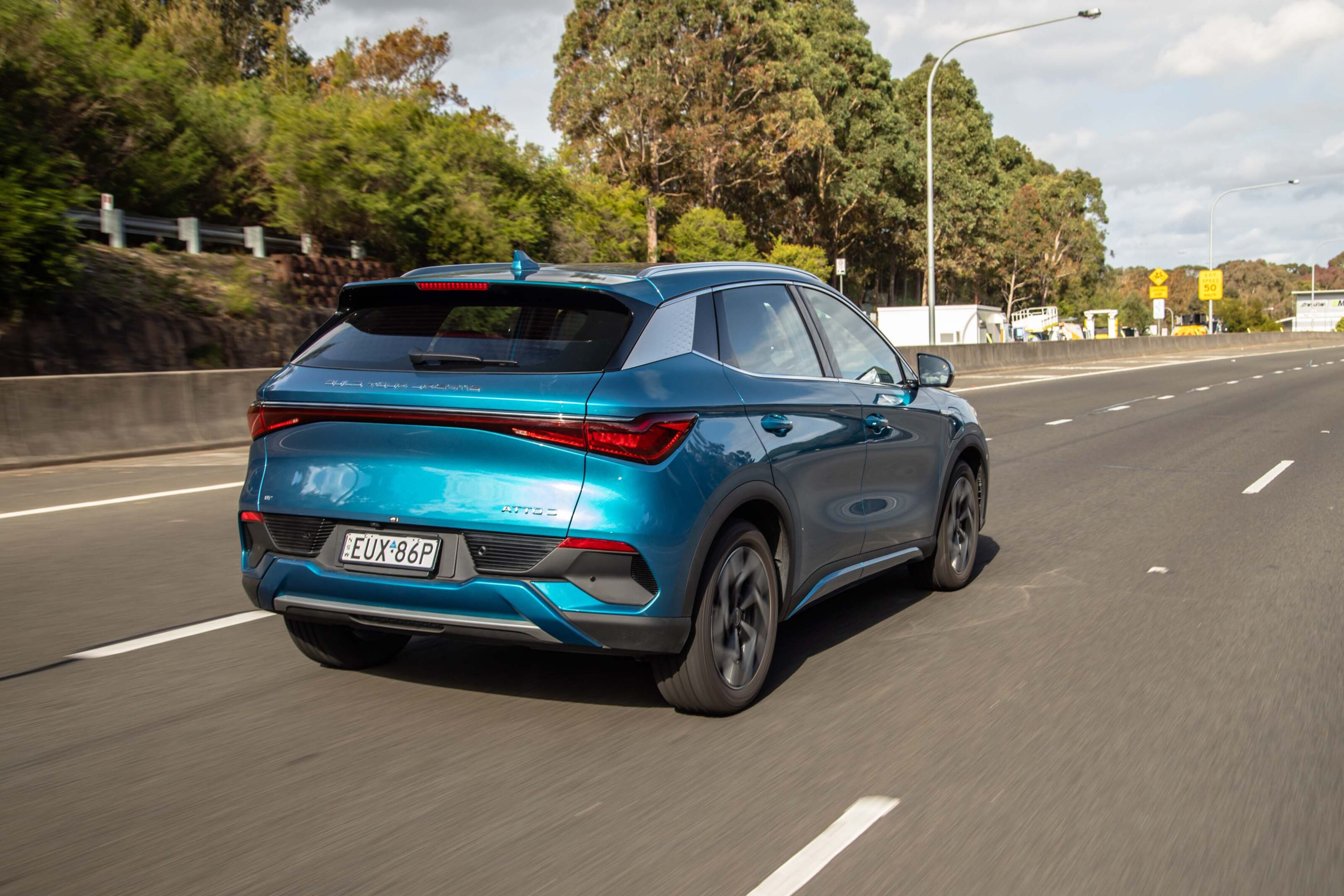
Surprisingly, though, the Atto 3 is remarkably polished to drive. It’s built on BYD’s fresh EV-dedicated platform, and while the ride and handling isn’t going to tickle the fancy of keen drivers, it won’t disappoint.
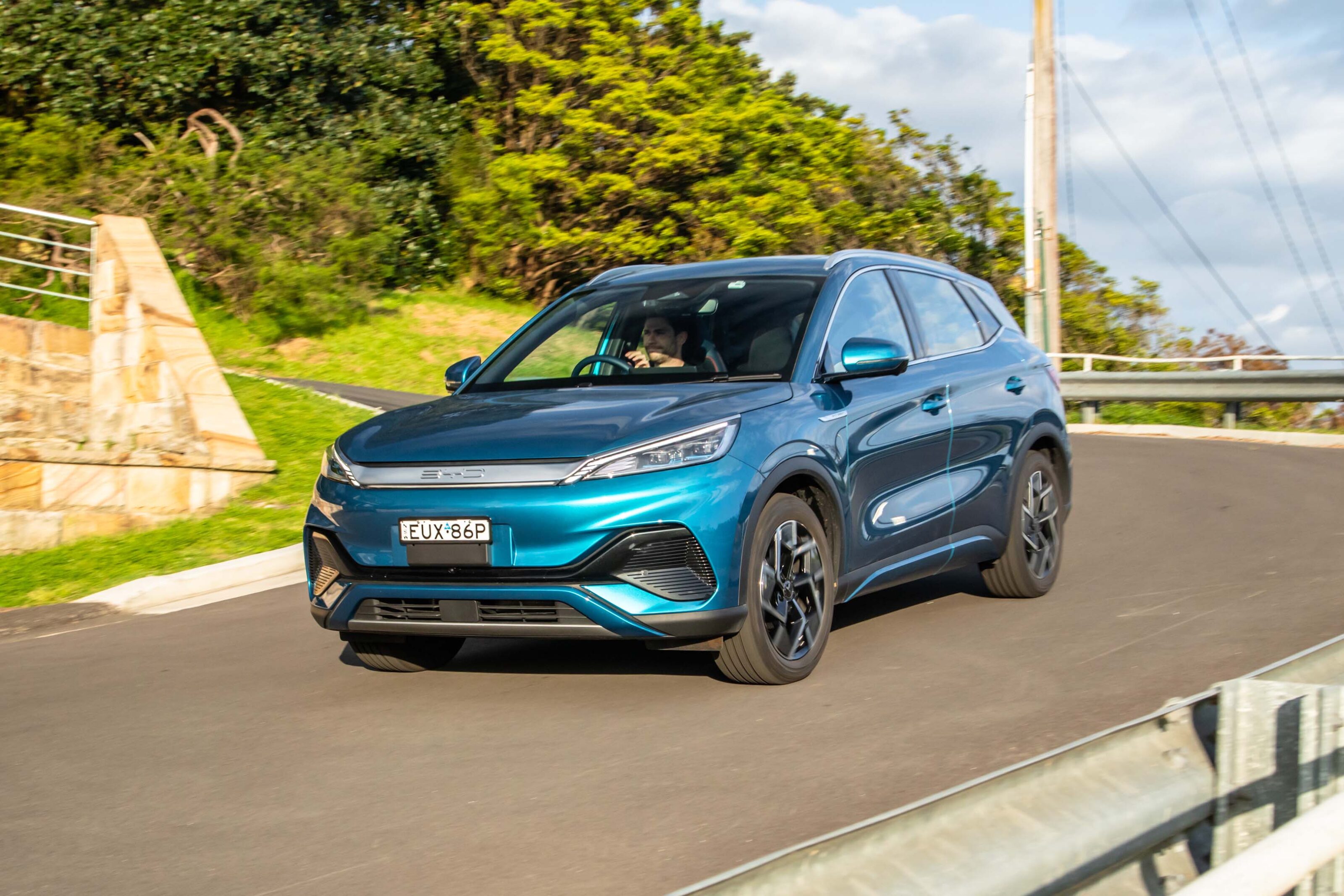
The Atto 3 is remarkably polished to drive. It’s built on BYD’s fresh EV-dedicated platform, and while the ride and handling isn’t going to tickle the fancy of keen drivers, it won’t disappoint.
The chassis tune is quite soft, so there’s decent compliance over bumps and the steering is light and accurate. It’s not what we’d call agile or nimble, though, which is probably a result of its long-ish wheelbase and relatively hefty kerb weight.
At 1680kg, the BYD is pretty heavy for a small electric SUV, and around 100kg portlier than an MG ZS EV.
It’s not going to win too many drag races away from the lights either. Officially, BYD says the 150kW/310Nm Atto 3 hits 0-100km/h in 7.3 seconds, which makes it the quickest car in its competitor set.
But, in practice, it doesn’t feel anywhere near that quick. The initial step-off is surprisingly sluggish for an electric car, and the throttle pedal feels doughy and snoozy, as though it’s stuck in an ultra-Eco mode. Once you’re up and moving, there’s enough thrust to push you back in your seat – but from a standstill, the Atto 3 is a little leisurely.
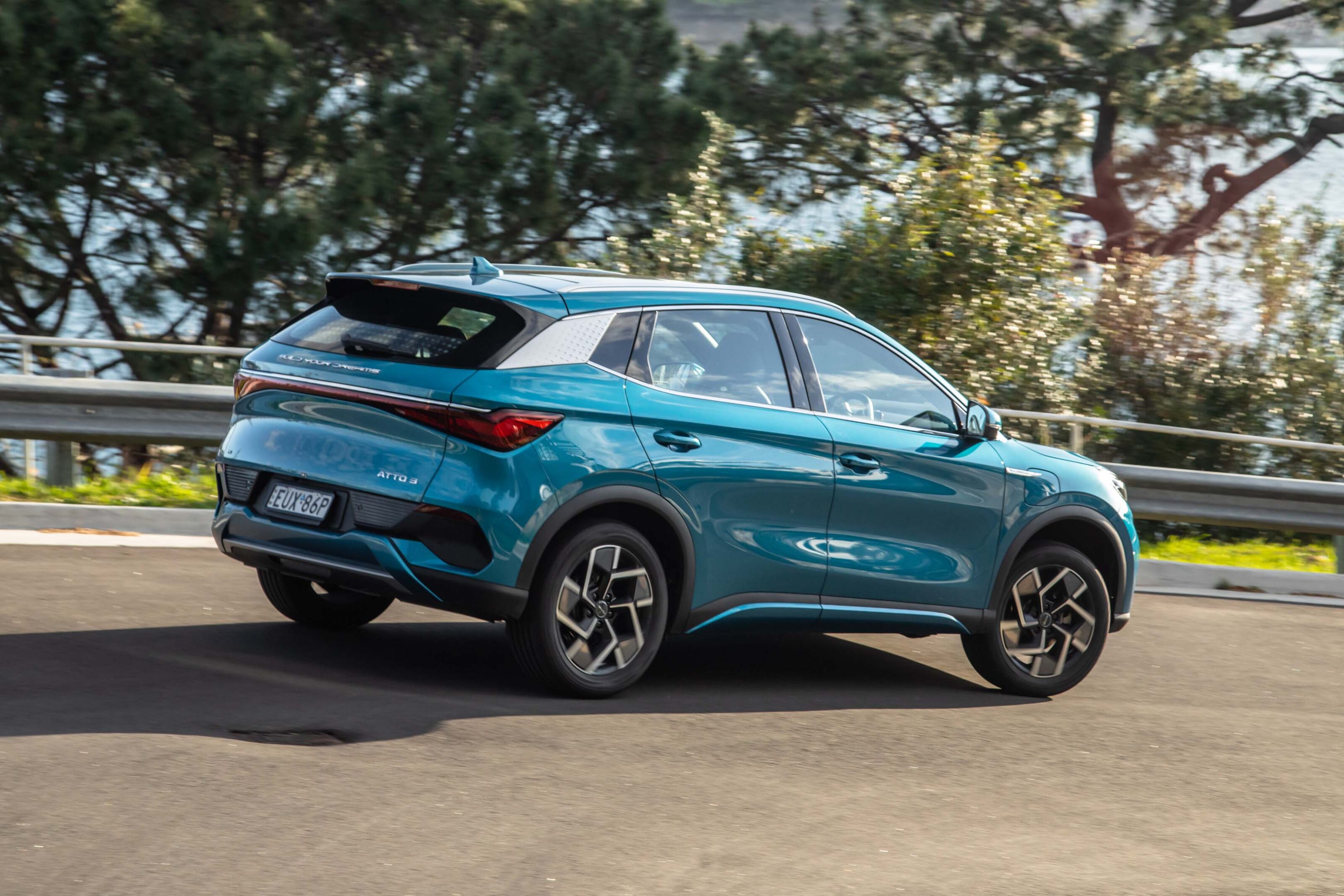
The weakest dynamic link, though, is the tyres.
Standard fitment are Atlas Batman A51 that measure 215/55 R18 and they lack both grip and traction. It’s easy to spin up the Atto 3’s inside front tyre when leaving an intersection, and on damp or wet roads they are a proper handful. We’d suggest swapping them out for a higher quality set of tyres as soon as possible.
The brakes are interesting. In the China-market car we drove earlier, we found the pedal to be overly sensitive and tricky to modulate, but those issues seem to have been ironed out for this production version.
There’s no one-pedal driving, though, and while there are two levels of regen-braking – which you engage via a switch behind the gear selector – both are weak and offer minimal retardation.
Right, time to talk about the battery.
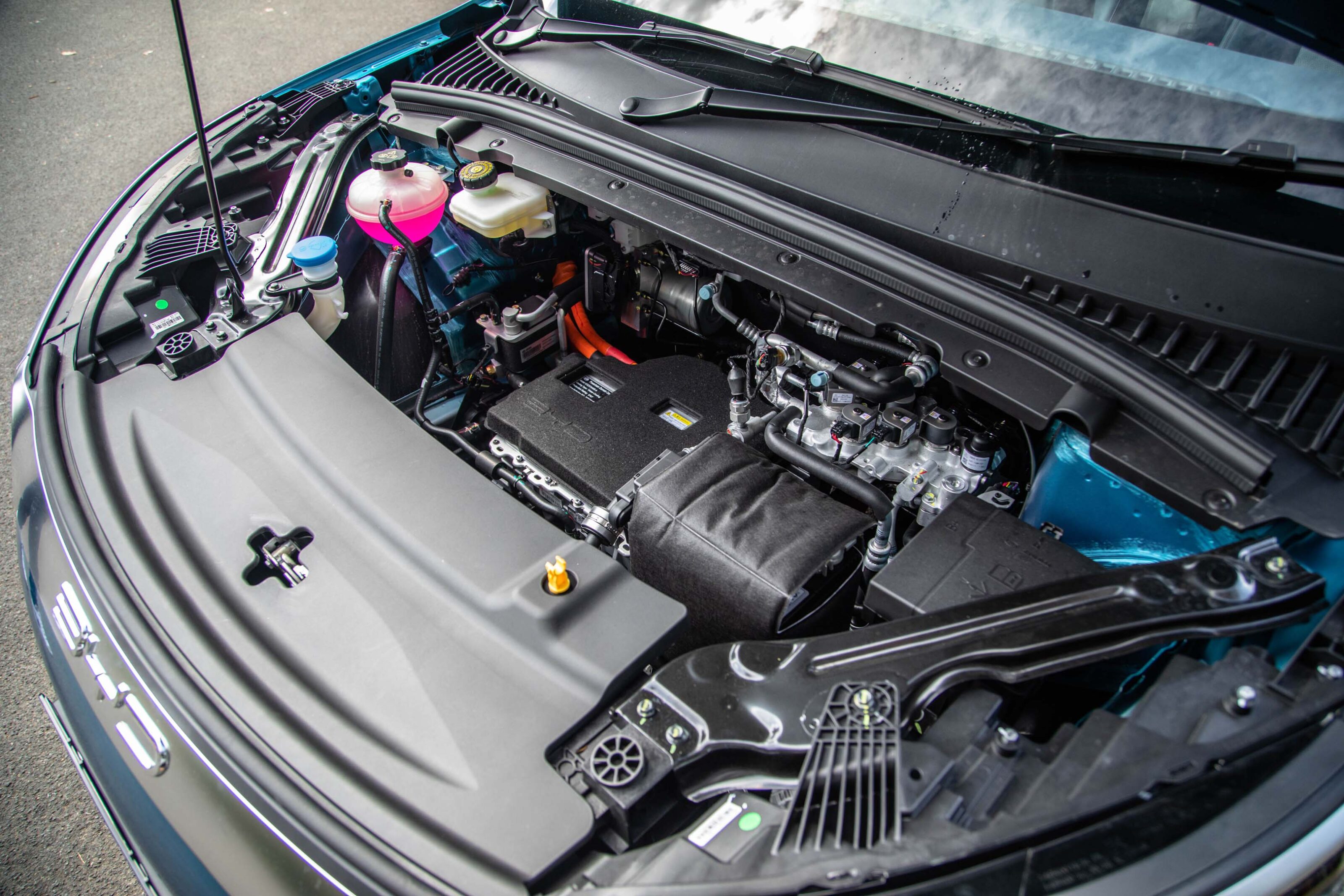
Powering that electric motor is BYD’s hugely hyped ‘blade battery’, which is different from the traditional lithium-ion batteries in most EVs.
We went into detail about the blade battery in our earlier BYD review, so give that a read if you want to know more, but the headline differences are that the BYD’s battery uses a slightly different chemical makeup (Lithium-iron phosphate instead of Lithium-ion) and it’s made up of a series of long and really thin ‘blades’ that have a positive and negative terminal at either end.
It’s cheaper to make, because it doesn’t have as many rare materials, and it’s said to be safer in an accident if the battery pack is pierced.
All of those are good things, but, in practice, the BYD feels exactly the same to drive as pretty much every other electric car. Just one with a slightly soft chassis tune and average tyres.
So, is it going to blow you away behind the wheel? No. Is it better to drive than we were expecting? Absolutely.
How safe is it?
The Atto 3 is current unrated by Australia’s official safety body, but BYD says crash testing is currently underway, in cooperation with ANCAP.
Pending any shock results, the Atto 3 presents a solid safety case on paper, with a high level of active and passive safety features across both models.
| BYD Atto 3: standard safety equipment |
|---|
| 7 airbags |
| Adaptive cruise control (with stop & go) |
| Autonomous emergency braking |
| Blind spot monitoring |
| Lane departure & assist |
| Rear cross traffic alert |
| Hill descent control |
| Tyre pressure monitor |
| 360 surround view camera |
| Front/rear parking sensors |
Warranty and running costs
This bit is important and probably the biggest question mark, given BYD is a new brand that doesn’t have any official dealers of its own.
Plus, BYD has backtracked on a few of its initial claims about its warranty and tow ratings, so we’ll understand if you’re feeling a little nervous about the level of customer support you’ll get if you buy an Atto 3.
Firstly, BYD’s model is online only. Nothing new or scary about that. Servicing is handled through select Eager Automotive sites or via a growing list of MyCar service centres, which used to be Kmart Tyre and Auto. BYD says 51 MyCar sites are already on board, and there are plans to add more, so accessing a suitable service centre shouldn’t be an issue.
There are two capped price servicing plans. A standard kilometre plan requires a visit to the dealer every 12 months or 20,000km, and includes eight years of coverage – which averages the service costs out to around $299 per visit or a total of $2390.
A low-km version is also offered, and if you can keep your BYD below 12,000km per year, services average out to be $189 per visit.
| BYD Atto 3 servicing schedule | |
|---|---|
| 1yr/20,000km | $189 |
| 2yr/40,000km | $370 |
| 3yr/60,000km | $189 |
| 4yr/80,000km | $447 |
| 5yr/100,00km | $189 |
| 6yr/120,000 | $370 |
| 7yr/140,000 | $189 |
| 8yr/160,000 | $447 |
| Total cost: | $2390 |
Now, warranty. This is a big one, given BYD’s quality and reliability is a bit of an unknown. Originally, BYD promised a seven-year/unlimited-km warranty (which was a match for MG’s warranty coverage) but that’s now been wound back to six-years/150,000km for the car itself.
The battery is covered for eight years or 160,000km, but unusually BYD’s Aussie importer, EVDirect, has specified different warranties for different components. Elements of the suspension and the infotainment system, for example, are only covered for three years or 60,000km.
VERDICT
It’s a surprisingly persuasive thing, the Atto 3.
It might be one of Australia’s cheapest EVs, but to answer my question at the beginning – in this case, cheap doesn’t mean nasty. It’s decent to drive, rammed with equipment, and feels a more polished and roomier electric SUV than its key rival, the MG ZS EV.
It’s certainly not perfect, though. The cabin won’t be to everyone’s taste, we’d replace the tyres ASAP, and BYD still has a way to go to prove itself from a customer service and reliability point of view. But, in terms of bang for your buck, there’s certainly lots to like about the Atto 3.
Frequently Asked Questions
2023 BYD Atto 3 specifications
| Body | Five door, five seat SUV |
|---|---|
| Drive | Front-wheel drive |
| Engine | Single electric motor |
| Battery | 50-60kWh |
| Power | 150kW |
| Torque | 310Nm |
| 0-100km/h | 7.3sec |
| Transmission | Single-speed reduction gear |
| Weight | 1680kg |
| Range (WLTP) | 345-420km |
| Front suspension | MacPherson struts, coil springs, anti-roll bar |
| Rear suspension | Multi-links, coil springs, anti-roll bar |
| L/W/H | 4455/1875/1615mm |
| Wheelbase | 2720mm |
| Brakes | Ventilated discs (f) solid discs (r) |
| Tyres | 215/55 R18 |
| Price | $44,381 |
Snapshot
- More advanced Level 2 autonomous driving systems to feature
- Wolfsburg plant to expand
- Over half of VW’s US and Chinese sales will come from EVs by 2030
UPDATE, September 16, 2022: Volkswagen creating EV and autonomous car division
Volkswagen is creating a “New Mobility” division specifically tasked with the development of its next generation of electric and autonomous vehicles.
The new department, which will be headed up by Thomas Ulbrich – the brand’s current development chief, will be responsible for VW’s current ID battery-electric vehicles and future models based on its new, highly scalable SSP platform – including the Trinity project.
Ulbrich will also join the supervisory board of Cariad, VW’s software unit.
VW brand CEO Thomas Schaefer said the move was aimed at “systematically driving forward the company’s transformation toward a software-oriented mobility provider,” according to Automotive News Europe.
Read more about the Trinity Project below.
The story to here
December 2021: Project Trinity to go into production by 2026
Volkswagen has confirmed that the Project Trinity electric car will go into production by 2026 and bring recharging that’s as quick as filling a car with petrol.
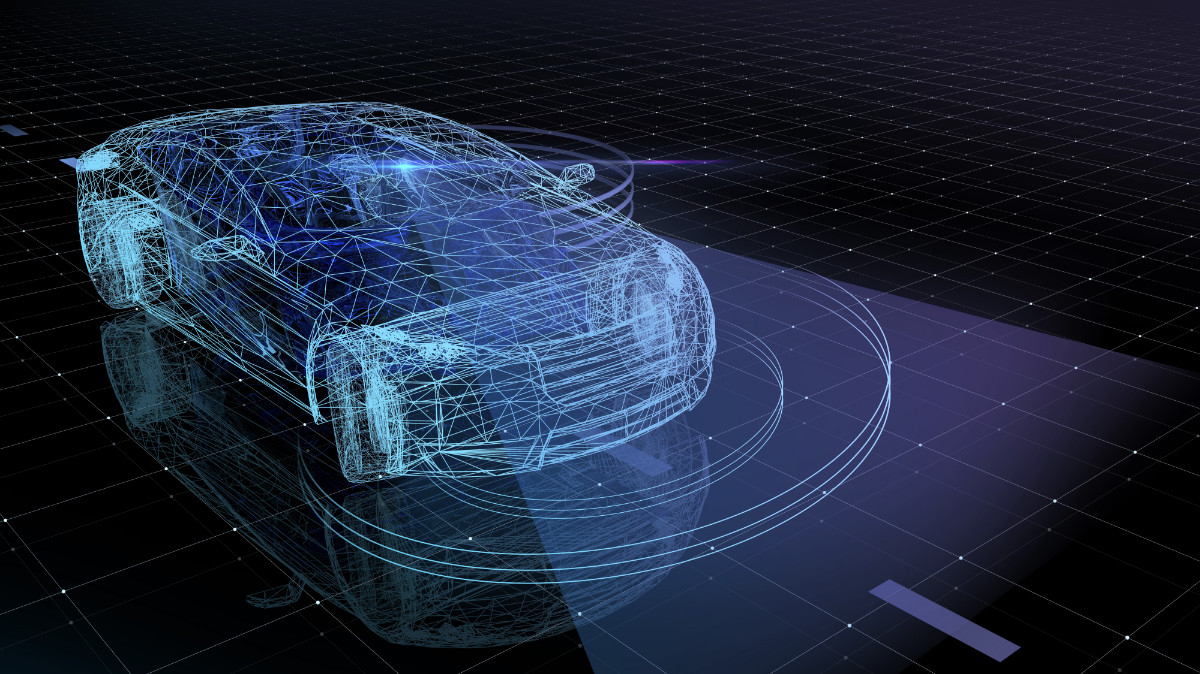
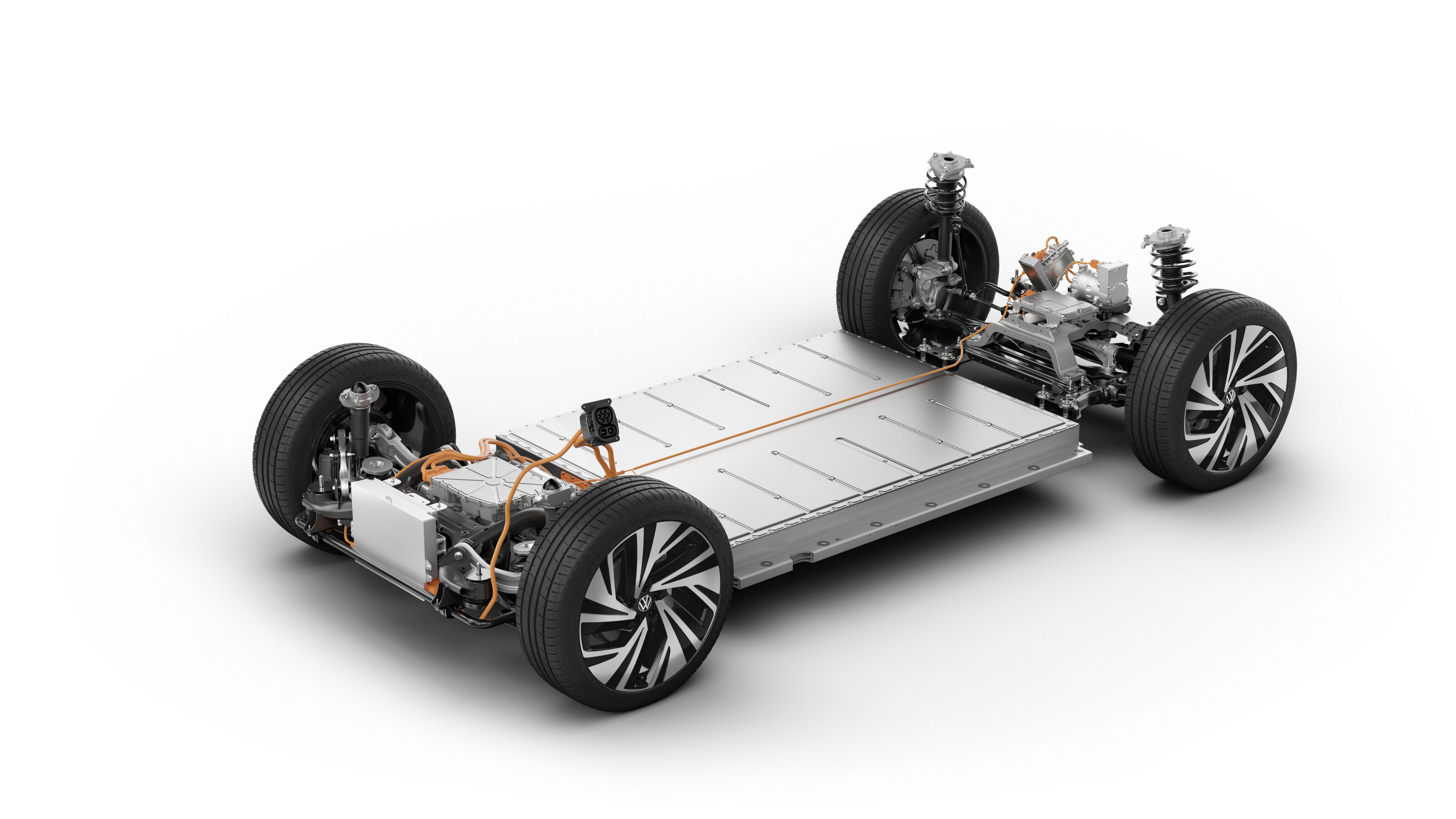
It will ride on an all-new architecture that changes the game in electric car charging and efficiency. Volkswagen will also advance autonomous driving technology with Level 2 driver assistance tech that is hands-off.
While that is not beyond current systems available today, the car will be built with the technology for Level 4 automated driving that can be unlocked as soon as regulations allow.
Level 4 means the car can drive itself within defined roads (usually mapped for Lidar), without the need for close human supervision or intervention. Mercedes-Benz has just been granted approval for Level 3 use on German roads next year.
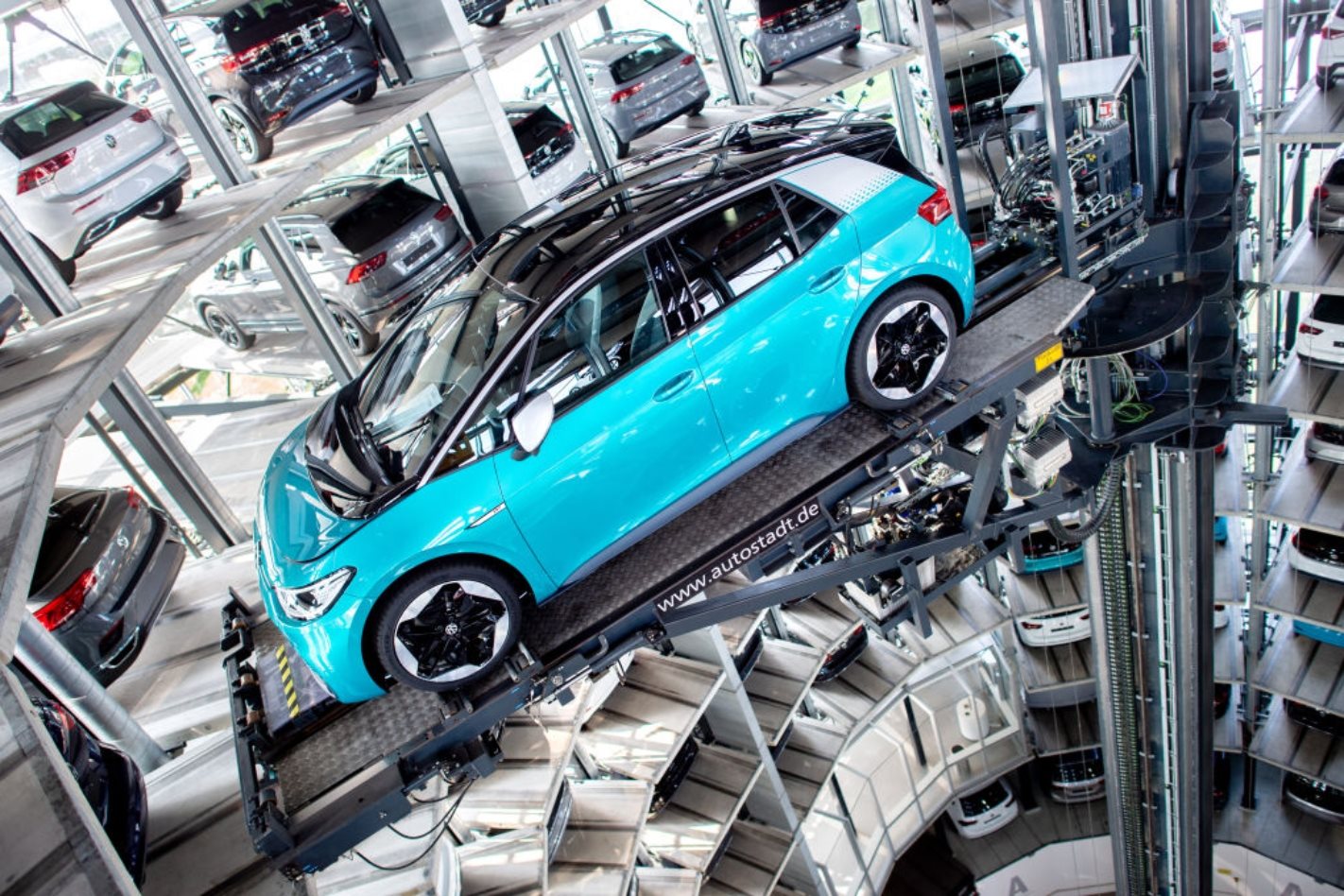
Project Trinity will be built at Volkswagen’s plant in Wolfsburg, which will soon be transformed into a new EV production centre.
“Our business model is undergoing radical change – Volkswagen is being transformed from a traditional automotive manufacturer to a vertically integrated group with strong brands and world-leading technology platforms,” said Herbert Diess, Volkswagen CEO.
“Wolfsburg, our Group’s long-established headquarters, will be central to the transformation, because we can only safeguard our strong position long term if Wolfsburg is successful. We will give the Wolfsburg site a new identity with our vision for 2030.
“Our goal is to create an internationally sustainable site with efficient Group steering, two electric manufacturing facilities, plus a state-of-the-art research and development centre, and to establish and expand other future-oriented fields.”
Ralf Brandstätter, CEO of the Volkswagen brand, has also described the car as “a highly efficient flat-seat concept with an iconic design – our innovation leader. Trinity is a sort of crystallisation point for our Accelerate strategy, a lighthouse project, our software dream car.”
Accelerate is VW’s goal to make more than 50 per cent of its sales in the US and China fully electric by 2030, while focusing more heavily on developing digital technology and software – both in its cars and its production methods.
Volkswagen’s previously published teaser image gives little away about Project Trinity’s styling, but it’s clear to see that it will be a sleek car with a large interior space. The car will be a halo model that drives VW into a new technology and digital future that sees significant changes from the last three decades.
By 2030, VW anticipates that one third of the revenues in the global mobility market will come from software-based services. So, the brand has set aside around $45 billion for the digitalisation of its services and sales.
“In the future, the individual configuration of the vehicle will no longer be determined by the hardware at the time of purchase.” says Brandstätter. “Instead, customers will be able to add functions on demand at any time via the digital ecosystem in the car.”
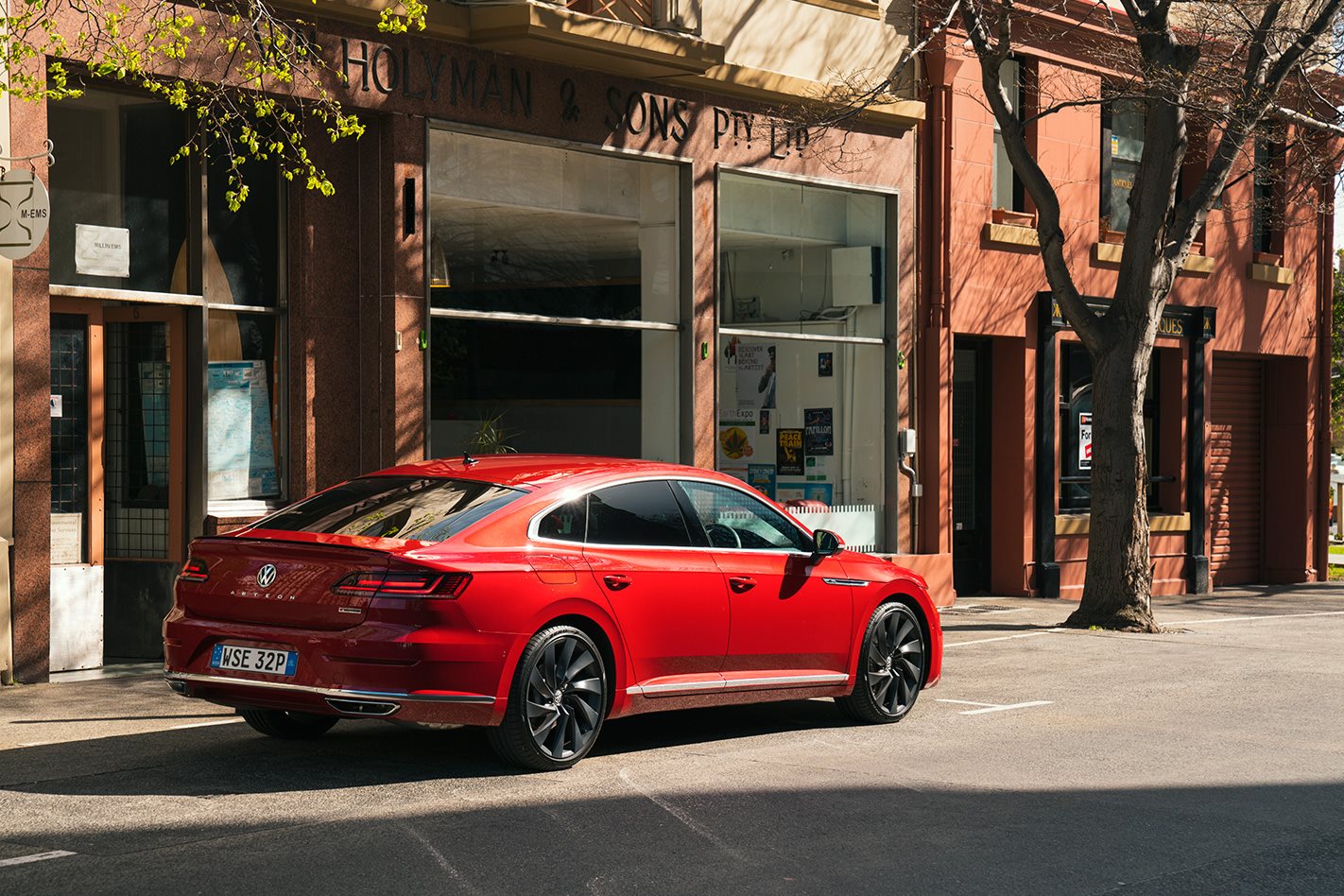
The US-spec Volkswagen Arteon will be replaced by the all-electric Volkswagen ID.Aero in 2024, according to new reports.
After the US-market Volkswagen Passat sedan ended US production at the beginning of the year, it’s now said that the Arteon sedan, which only launched locally this year, will also be discontinued in the US in two years’ time.
Australian Passat sedans were also withdrawn from private sale at the beginning of 2022.
According to reports by Automotive News out of America, Volkswagen’s combustion sedans are finding themselves in the firing line.
It’s no secret that medium sedan buyers are a global minority, with such products often the first to be vanquished when manufacturers need to rationalise their product ranges.
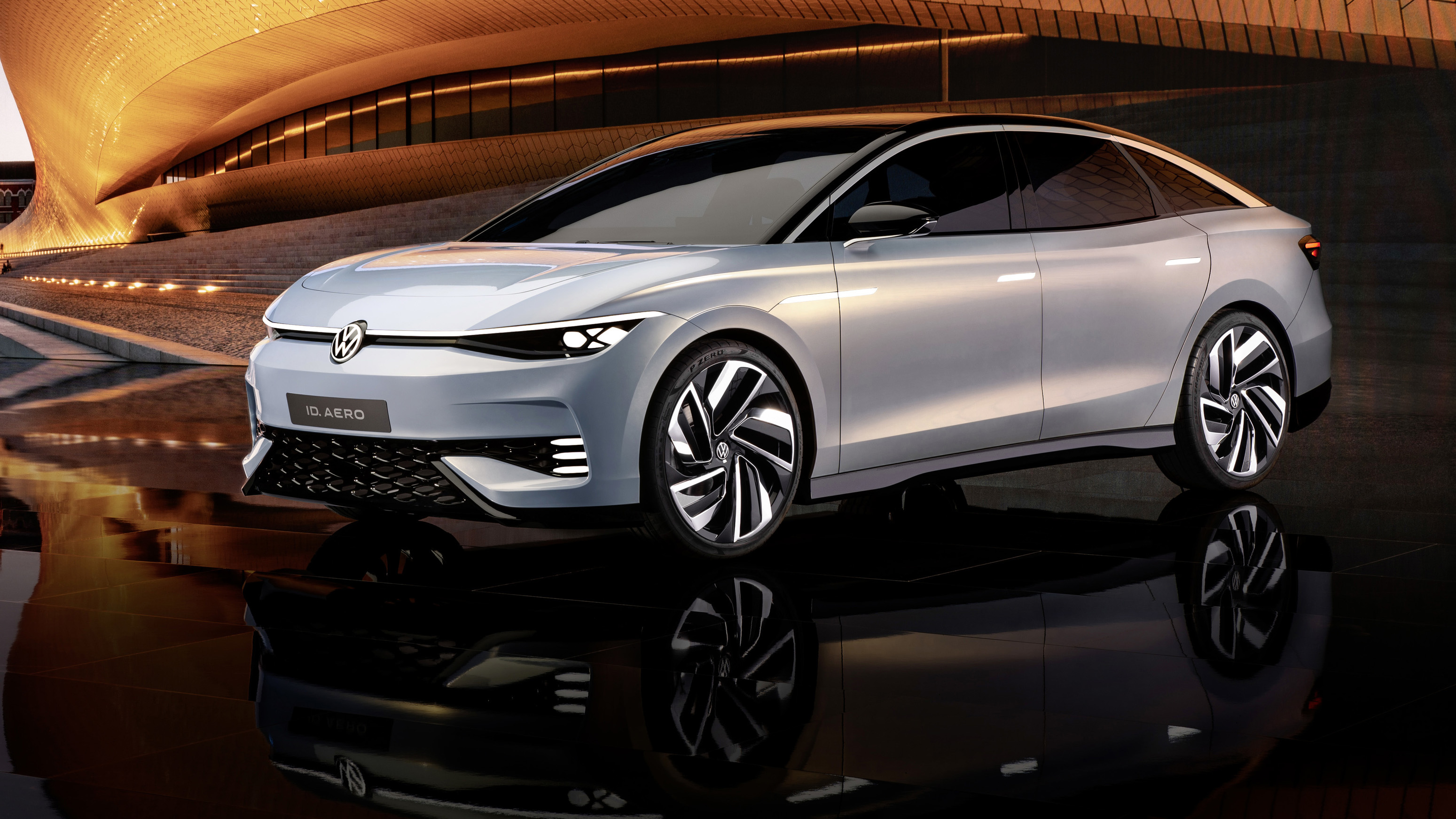
Previewed in concept form earlier this year, the ID.Aero spawns from Volkswagen’s growing family of ID. electric vehicles, built upon the MEB electric platform with the exterior and packaging of a mid-size premium sedan.
The concept boasted a 77kWh battery pack with a WLTP claimed driving range of 620 kilometres.
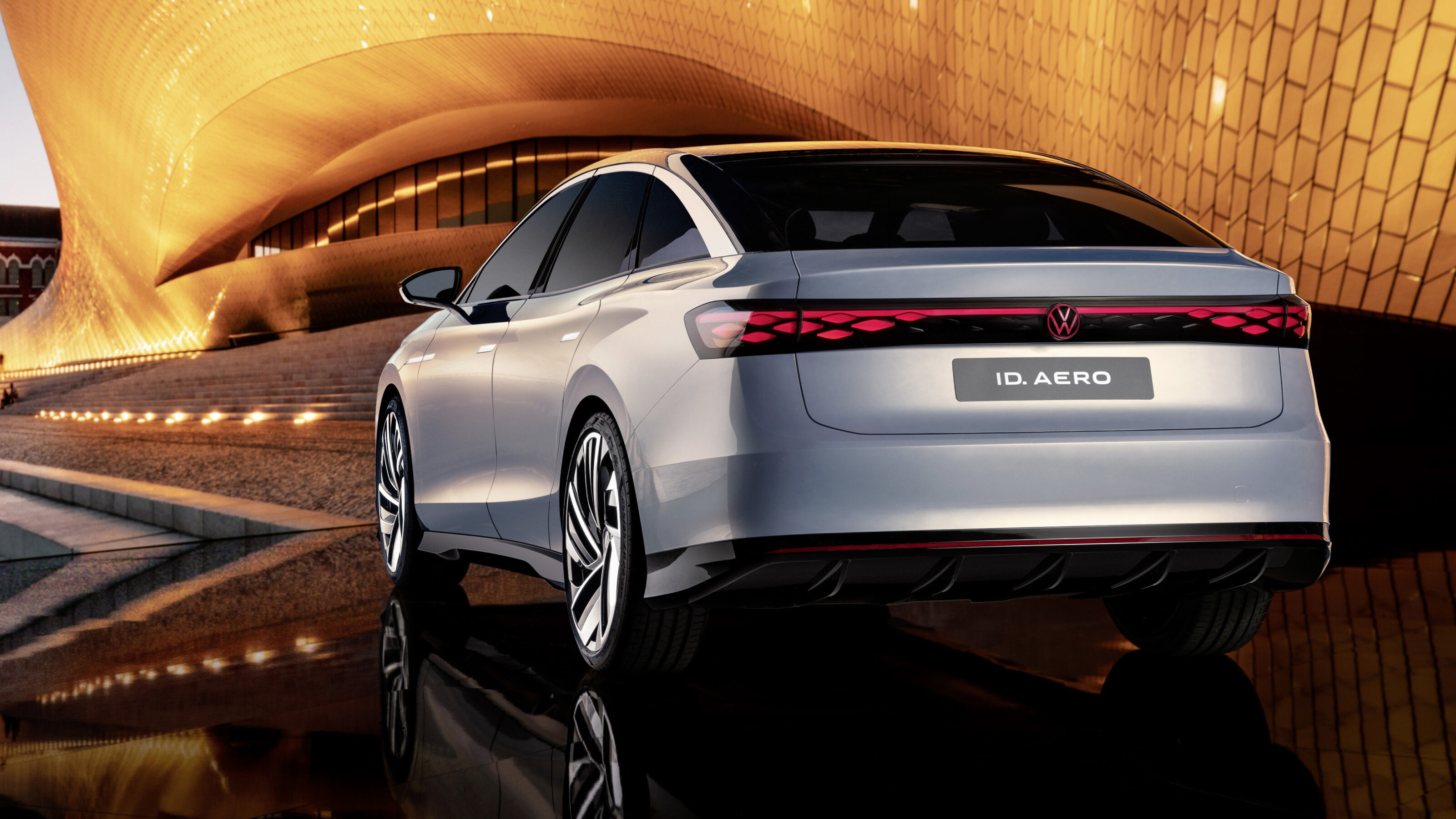
Volkswagen indicates that the ID. Aero will commence production in late-2023, after ID.4 and ID.5, and is confirmed for European, Chinese and North American markets.
An Australian launch remains unconfirmed, however Volkswagen’s local arm has already committed to a 2023 launch for its ID.4 and ID.5 electric SUVs, with the ‘Kombi’ ID.Buzz also expected to join the range at a later date.
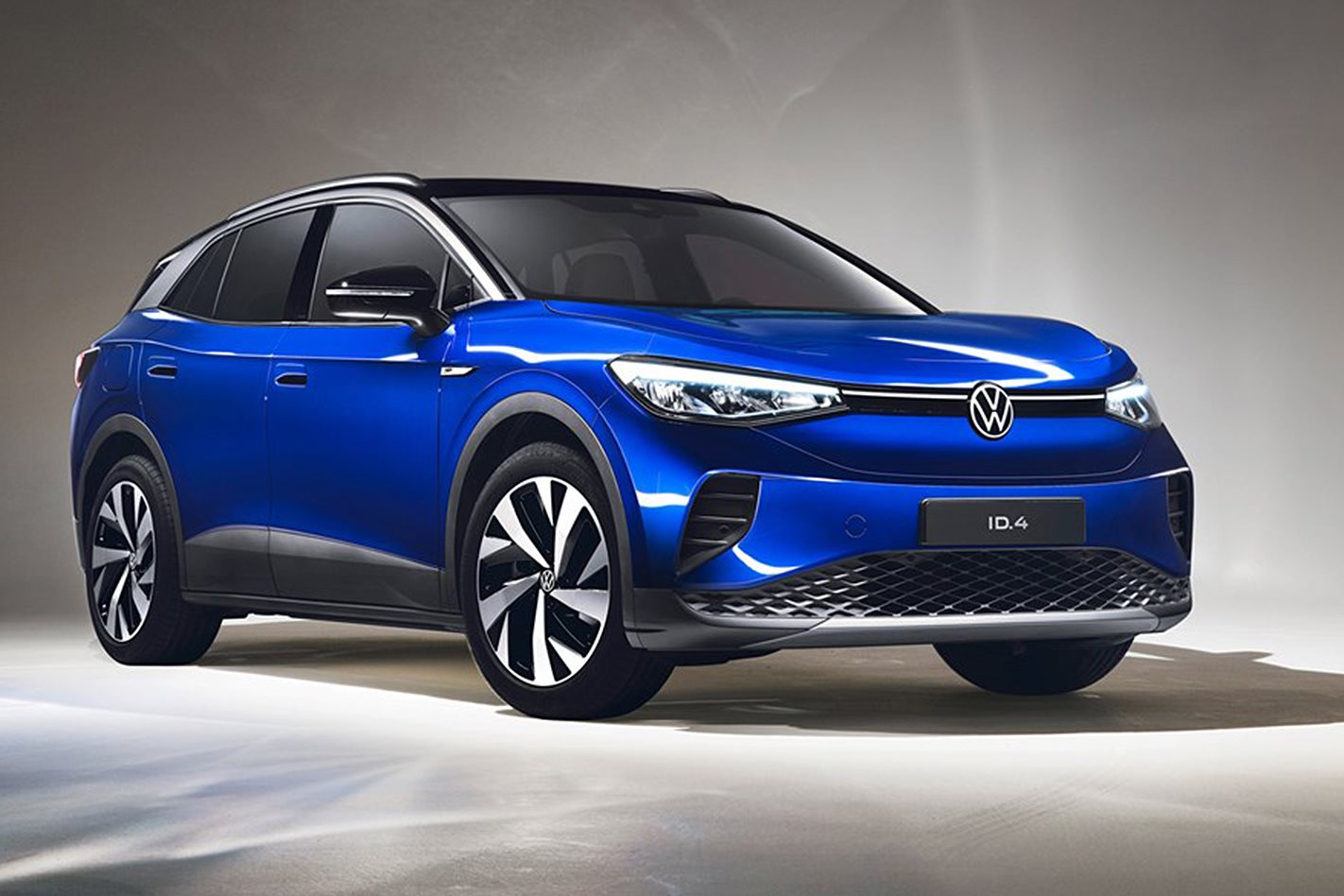
The weight of expectation rests heavy on the shoulders of Volkswagen’s growing ID. family of vehicles, providing the foundation of the brand’s future portfolio as a leading battery-electric carmaker. The pivot is happening quick, because it needs to.
The Jetta, absent from the Australian market since 2018, is suffering dwindling sales in its traditionally hot US market, selling 100,453 units in 2019, but just 23,791 in the first six months of this year.
Elsewhere in the range, increasingly stringent European regulations have thrown even the future of the next-generation Golf into doubt. Though Volkswagen’s existing ID.3 hatchback, or a future iteration, would be a logical effective replacement.