
General Motors has issued a recall for most examples of the Holden ZB Commodore due to a brake booster issue.
The issue affects 13,898 units of the ZB Commodore built between 2017 and 2020.
According to the recall notice issued by the Department of Infrastructure, the vehicle’s brake booster could fail due to a manufacturing defect.
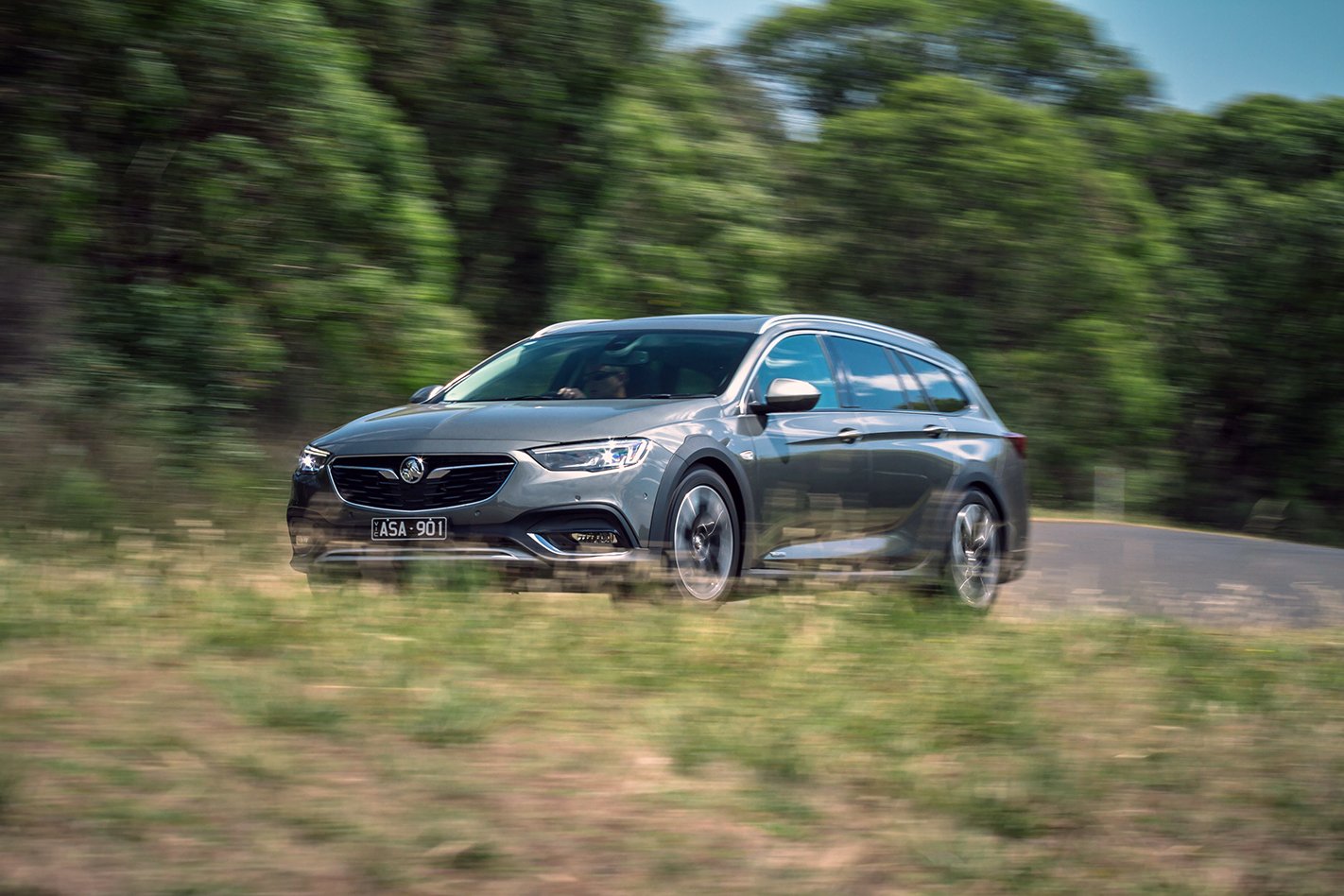
As a result, the company says the vehicle would exceed the maximum braking distance prescribed by the Australian Design Rule 31/03 in the un-boosted condition.
General Motors Australia and New Zealand says it will contact affected owners and rectify the issue with a free Electronic Brake Control Module software update at a service centre.
Affected customers can contact Holden Customer Care on 1800 46 465 336 or by visiting a dealership, found here.
A VIN list for the affected vehicles can be found here.
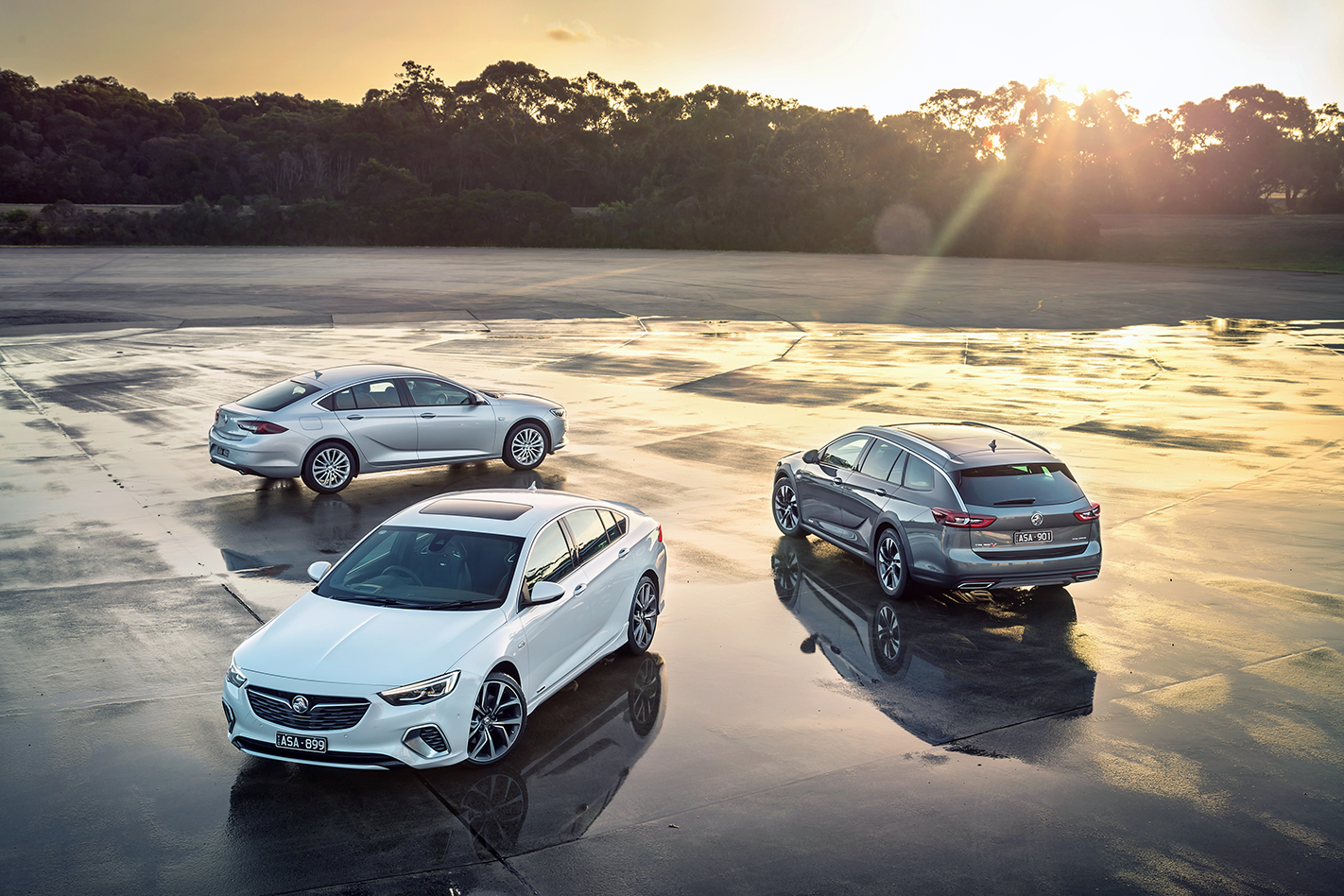
The recall notice covers the entire lifespan of the Holden ZB Commodore, with the front- and all-wheel drive liftback and wagon axed in December 2019, just under two years after it launched in Australia.
It was an identical twin to the Opel Insignia, sourced from the brand’s Rüsselsheim plant in Germany.
Two months later, General Motors announced it would end mainstream vehicle production for right-hand drive markets, leading to the retirement of the Holden brand altogether by the end of 2020.
A spokesperson for Stellantis, the current owner of Opel, recently said the carmaker would be axing the Insignia, leaving the Chinese-built Buick Regal four-door sedan as the only sibling that remains in production.
MG has teased a new flagship sedan for China ahead of its reveal on August 17, with no current plans for an Australian launch.
Instead, local buyers will receive the smaller MG 5 sedan and MG 4 electric hatch.
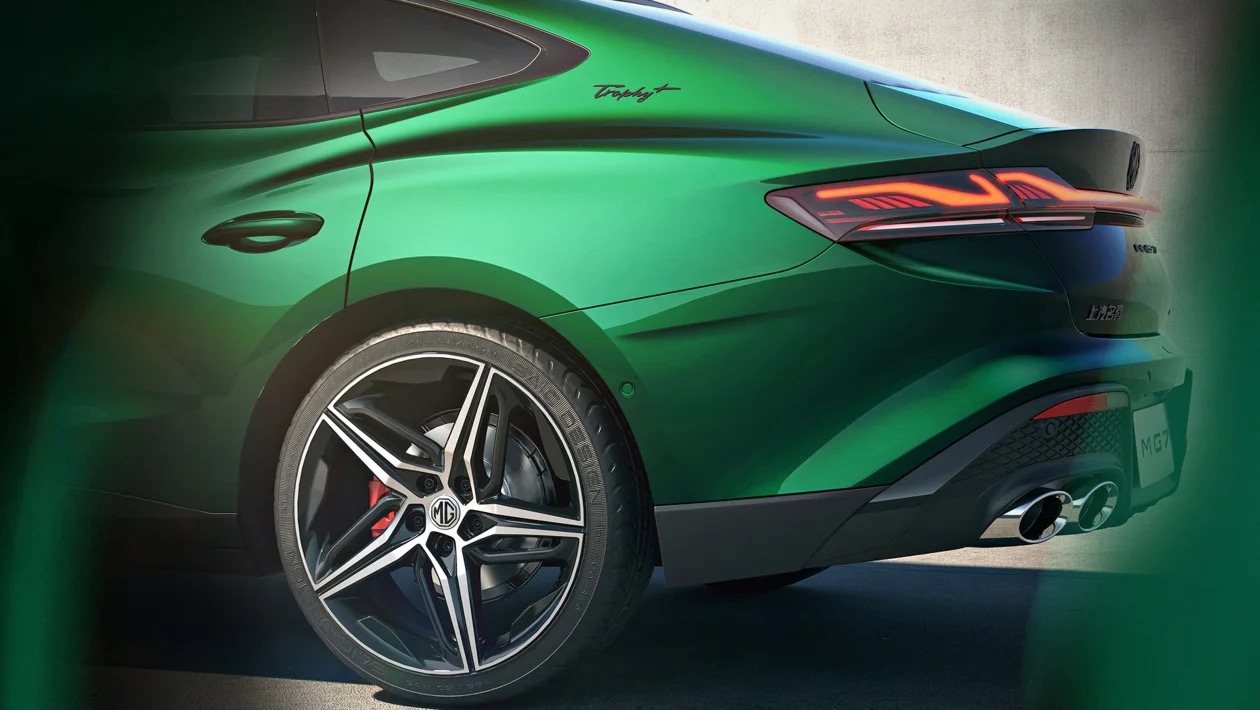
Slotting above the current MG 6, the 2023 MG 7 fastback sedan will become the Chinese brand’s flagship model, debuting the prestige ‘Black Label’ nameplate.
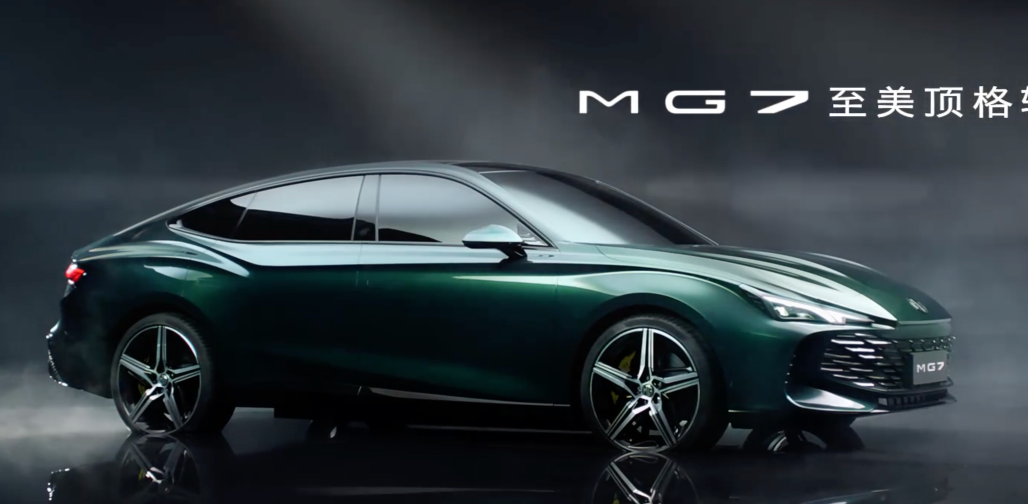
The internal-combustion model advances MG’s latest design language, first seen on the MG 4 electric hatchback, with a sharp front end, sweeping body and prominent shoulders, in a similar fashion to European vehicles, such as the Audi A7.
It also features quad exhaust pipes, an active ducktail spoiler akin to the Porsche Panamera, and a rear light bar.
Dimensionally, the MG 7 is around the same size as the mid-size Audi A5 Sportback, emphasising rear legroom and a traditional sedan boot lid for the Chinese market.
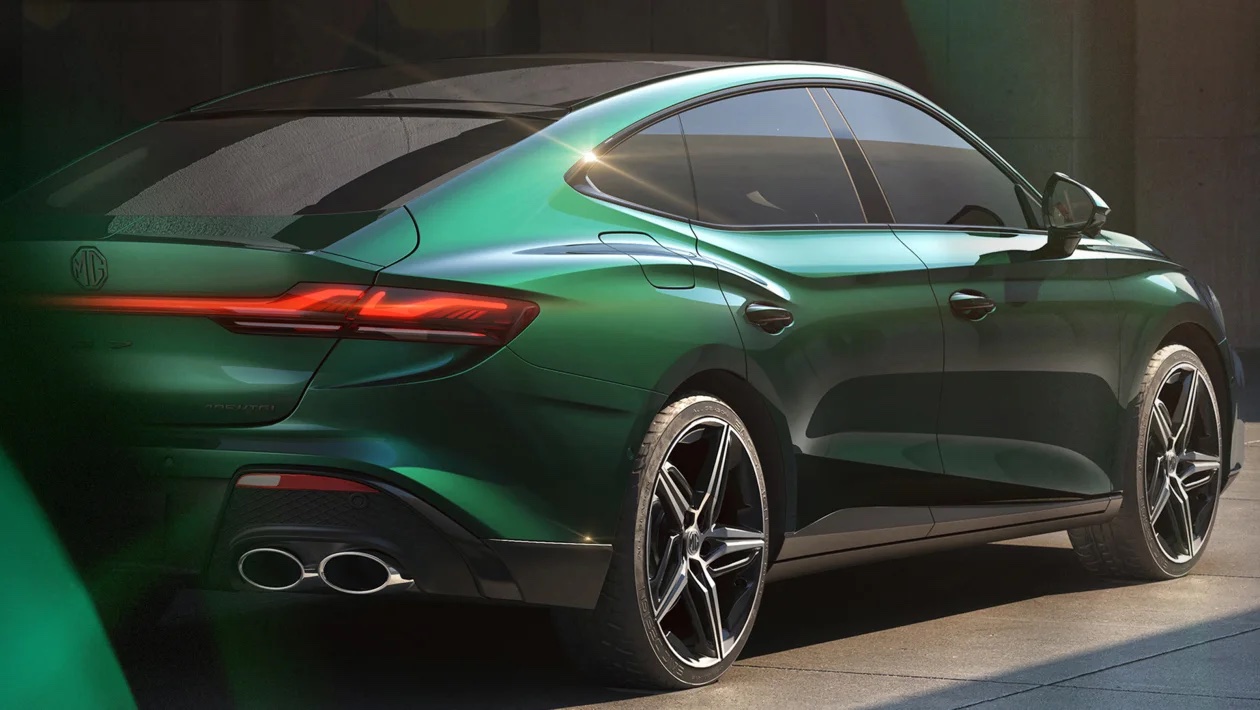
MG has yet to showcase the car’s interior; however, it is expected to feature a large centre infotainment display and a digital instrument cluster, as seen on the MG 4 and MG 5 Scorpio.
In addition, the marque has yet to detail technical specifications, but information published on social media site Weibo indicates a turbocharged 2.0-litre four-cylinder engine will be offered.
The 405 TGI rear badging suggests the petrol mill could be slightly more potent than the 168kW and 360Nm unit fitted to the HS medium SUV locally, which is badged 400 TGI in the domestic market.
A seven-speed dual-clutch automatic transmission is expected, with power likely to be exclusively sent to the front wheels.
Plug-in hybrid and less-powerful 1.5-litre turbo variants are tipped to feature alongside the flagship petrol grade, and no all-electric powertrain, at least initially.
While sedans remain popular in China, the mainstream mid-size segment is declining in Australia. Sales are down 15.3 per cent in 2022 compared to the same period last year.
Most manufacturers have departed the segment – including Subaru, Kia and Ford – with the Toyota Camry having a 73.2 per cent market share year-to-date.
MG Australia will instead launch the smaller, petrol-powered MG 5 sedan in 2023, with the 4675mm-long vehicle aimed at the more-popular Toyota Corolla, Hyundai i30, Mazda 3 and Skoda Octavia sedans.
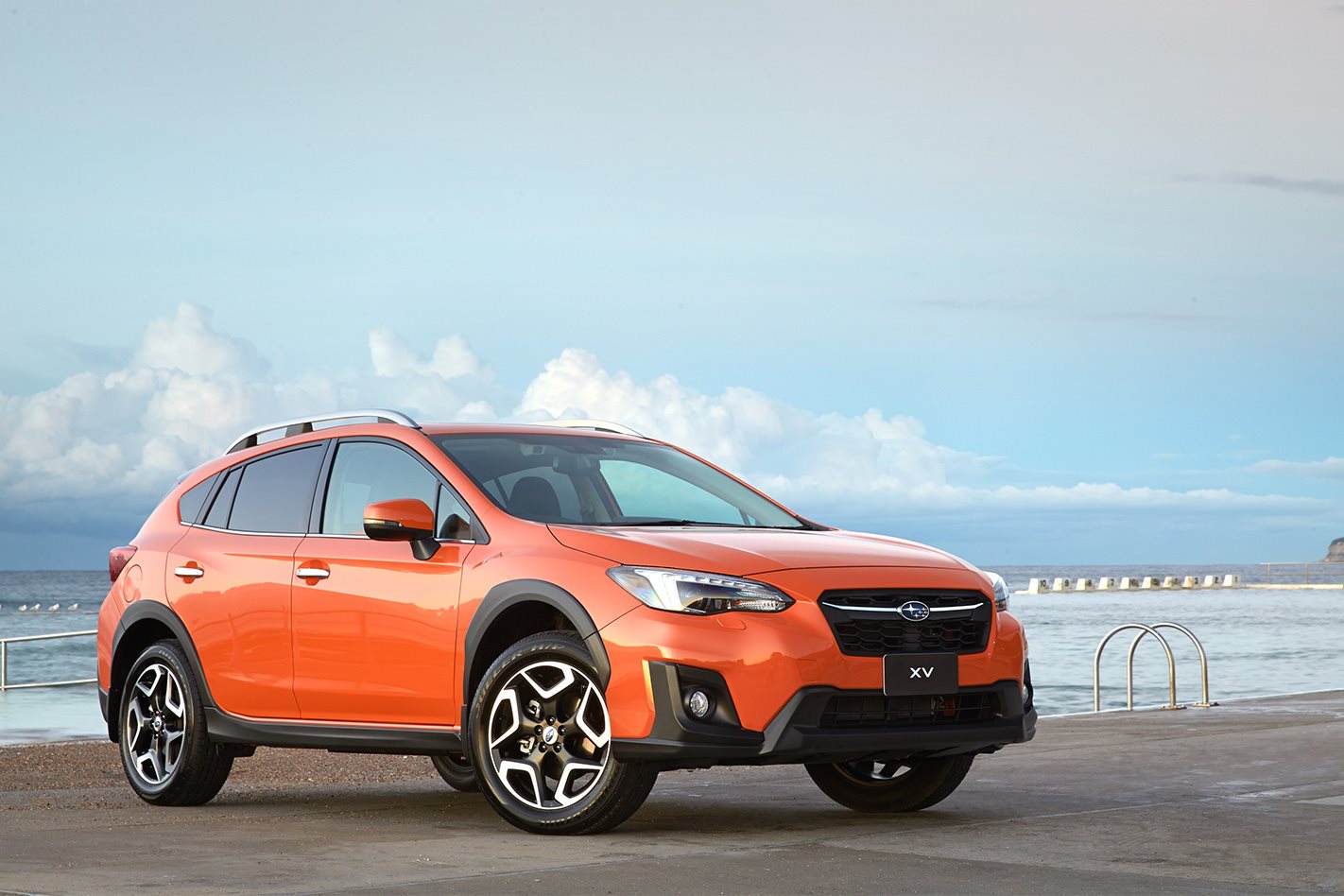
Subaru Australia is recalling almost 80,000 vehicles due to an electronic parking brake fault.
The issue affects 78,617 units of the Liberty, Outback, WRX and Levorg with model years between 2015 and 2018, and Impreza and XV between 2017 and 2019.
According to the recall notice issued by the Department of Infrastructure, the adaptor cord connector for the electronic park brake may not operate as intended due to a manufacturing issue.
As a result, Subaru says the vehicle could roll away or move when the park position is engaged, potentially resulting in an accident if the vehicle shifts while unattended.
Subaru says it will contact affected owners, and will rectify the issue free of charge at a dealership.
The company can be contacted directly by calling 1800 226 643 or by visiting a dealership, found here.
A VIN list for the affected vehicles can be found here.
Australians could have saved $5.9 billion in fuel costs if efficiency standards were adopted in 2015, according to new research.
A report produced by leading think tank The Australia Institute, found that almost two in three Australians support the introduction of national fuel efficiency standards in line with those in Europe, but as yet the Federal Government has yet to introduce such a target.
Fuel efficiency standards have been adopted in around 80 per cent of the global car market, but not in Australia, with the new research saying now – as the fuel excise cut nears an end – is the time for it to be introduced.
Such a measure, says the think tank, would save motorists money on fuel, reduce transport emissions, increase the availability of electric vehicle models, and reduce Australia’s reliance on foreign oil.

“Australians are being left behind simply because, as a nation, we are still accepting gas guzzling cars with no emissions standards. This is costing commuters money at the petrol pump and holding Australia back from reducing our emissions,” said Richie Merzian, Climate and Energy Program Director at The Australian Institute.
“As the fuel excise cut nears an end, policymakers have an opportunity to save motorists money at the petrol pump by introducing an average efficiency standard for new cars in Australia.
“Previous attempts to introduce fuel efficiency standards in Australia have been marred by disinformation and outright lies. Unfortunately it is everyday Australians bearing the cost. Australian motorists have paid billions more for expensive foreign oil to fuel gas guzzling cars which have been rejected by the rest of the world.
“The Albanese Government has a golden opportunity to implement robust fuel efficiency standards in line with Europe. The policy is popular, helps Australians with cost-of-living, and will help drive the uptake of cleaner vehicles.”
In 2018, the average carbon dioxide intensity for new passenger vehicles in Australia was 169.8gCO2/km compared to 129.9gCO2/km in the United States, 120.4gCO2/km in Europe and 114.6gCO2/km in Japan.
Later this month, Climate Change and Energy Minister Chris Bowen will speak at Australia’s inaugural National EV Summit in Canberra – addressing the issue of a nationally-mandated emissions target as well as other EV-related topics.
August 8: Car industry divided over EV stance
Carmakers have spoken out about the growing debate on whether an industry body’s electric vehicle position is the best way to go.
One manufacturer told Wheels that it supported the Federal Chamber of Automotive Industries’ (FCAI) stance on Australia transitioning to zero emissions through a range of technologies rather than full EVs – describing some climate campaigners’ rhetorics as “militant”.
“The FCAI introduced the voluntary standard just as something to get the conversation going,” they said. “We’re excited about what we can do, and will brief Government on that, but must be mindful of the difficulties in supply. Whether a new policy comes in or not, what we don’t want to do is rob Australians of cars because we can’t get access to the amount of EVs suddenly needed.”
Meanwhile, others were less in favour of the FCAI’s way forward, with Volkswagen saying it wants a full-EV push.
“Volkswagen Group Australia has been at the forefront of the public debates on the need for a first-world fuel standard and a federally mandated CO2 target,” a spokesperson told us.
“Our customers increasingly want to drive electric cars, so we encourage the Government to mandate an emission target for auto importers that will undoubtedly ensure a greater supply of affordable EV’s heading to Australia.
“We appreciate that the consensus across all the FCAI members on how these targets are implemented will be hard to achieve, which is why the responsibility sits squarely with the Government to set the targets and industry will adapt to them, just as they have in other areas of the world.”
The story to here
August 8: FCAI accused of slowing EV uptake
The car industry has been accused of “secretly” planning to block Australia’s uptake of electric vehicles – however, the claims may not be all they seem.
A report in the Sydney Morning Herald this morning says that the industry, led by peak body the Federal Chamber of Automotive Industries (FCAI), has been launching a campaign behind closed doors which would delay Australia’s transition to EVs.
According to the news article, the FCAI is lobbying policymakers to adopt rules that would preserve petrol and hybrid cars well into the future, and to adopt its existing, voluntary emissions scheme as the national standard.
However, the FCAI has long stated publicly that it believes in, and continues to advocate for, a nationally-mandated CO2 emissions target reached through a number of technologies – not just fully-electric – and has made no bones about its voluntary standard being less than ideal, but better than nothing in the face of no federal legal equivalent.
Speaking in June, shortly after the Albanese administration came to power, FCAI Chief Executive Tony Weber said: “We know that automotive manufacturers around the world respond to strong policy signals when allocating their limited supply of zero and low emission technologies. A technology neutral emissions reduction target for vehicles is the signal Australia needs to send.
“Our members recognise the need to combat climate change. In the absence of federal leadership in 2020 we established our own voluntary scheme that sends a message to manufacturers’ head offices that Australian motorists want the best low emission technologies.
“Any reduction target must be broad based and focused on reducing CO2, not picking certain technologies over others. Our zero-emissions future is ultimately full electrification.
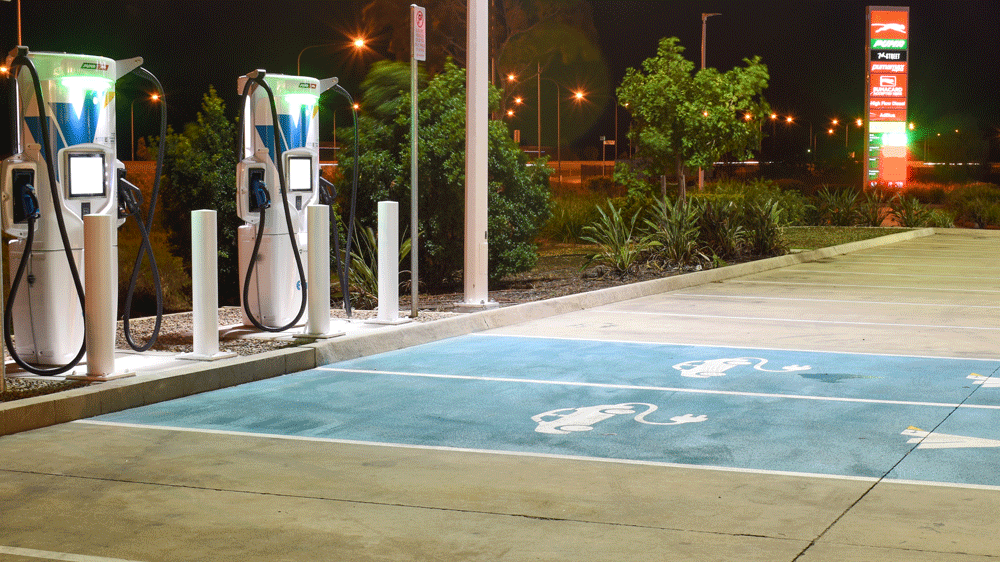
“Our short and medium term journey will require a mix of hybrid, plug in hybrid, battery-electric, hydrogen and efficient internal combustion to meet the varying needs of Australian motorists.
“Our message to Government is simple. You give us the target, and we will give you the technology to get there.”
Claims the entire auto industry is colluding secretly trying to hold back EV uptake also appear to be unfounded, with several brands stating in recent weeks and months, such as Kia and Cupra, that they back the need for a nationally-mandated CO2 target – and have been pushing even harder for more electrified models to come Down Under since Labor came into power.
And just last week the FCAI released a three-point plan aimed at pressuring the Federal Government to remove roadblocks to reducing carbon emissions.
Other peak bodies also rubbished claims the industry is holding back EV uptake, with the Australian Automotive Dealers Association (AADA) saying that the idea the Government should ignore the automotive sector while developing an emissions standard is “incredibly concerning and completely inappropriate”.
“The automotive industry supports the need for a vehicle emissions standard, but restricting the sale of internal combustion engine vehicles by 2035 is a risky approach for Australia and its unique circumstances,” said CEO James Voortman.
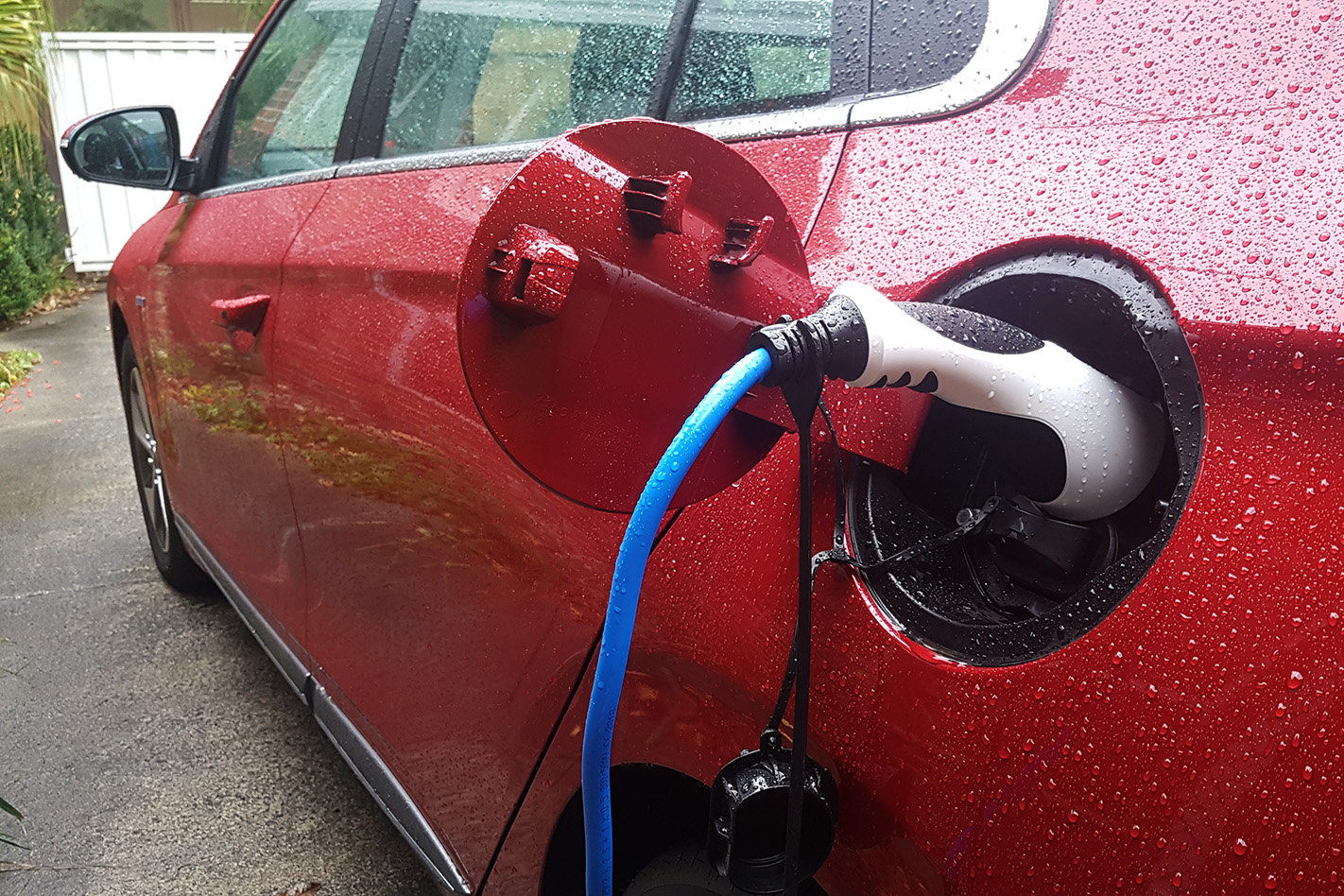
“Industry expertise will be crucial in informing Government policy which is achievable. A vehicle emissions standard needs to be one that is realistic and does not unduly punish consumers or result in motorists holding on to their older vehicles for longer.“We keep hearing calls for Australia to implement vehicle emissions standards which are in line with those that exist in the US and Europe. It is a fact that such standards have been in place in the US and the EU for well over a decade, allowing those countries an appropriate and achievable transition period,” said Voortman.“It is also a fact that in the US and the EU vehicle emissions standards are complemented by generous incentives for consumers. In a market like Germany, you can get up to AUD$13,000 in up-front incentives before tax benefits. This level of incentive is not available to consumers in Australia, and it does not appear to be on the horizon.“Australia is a very small right-hand-drive vehicle market in global terms, and it is situated at the end of a long and complex supply chain. These factors need to be taken into account when developing a vehicle emissions policy which is fit for purpose.”
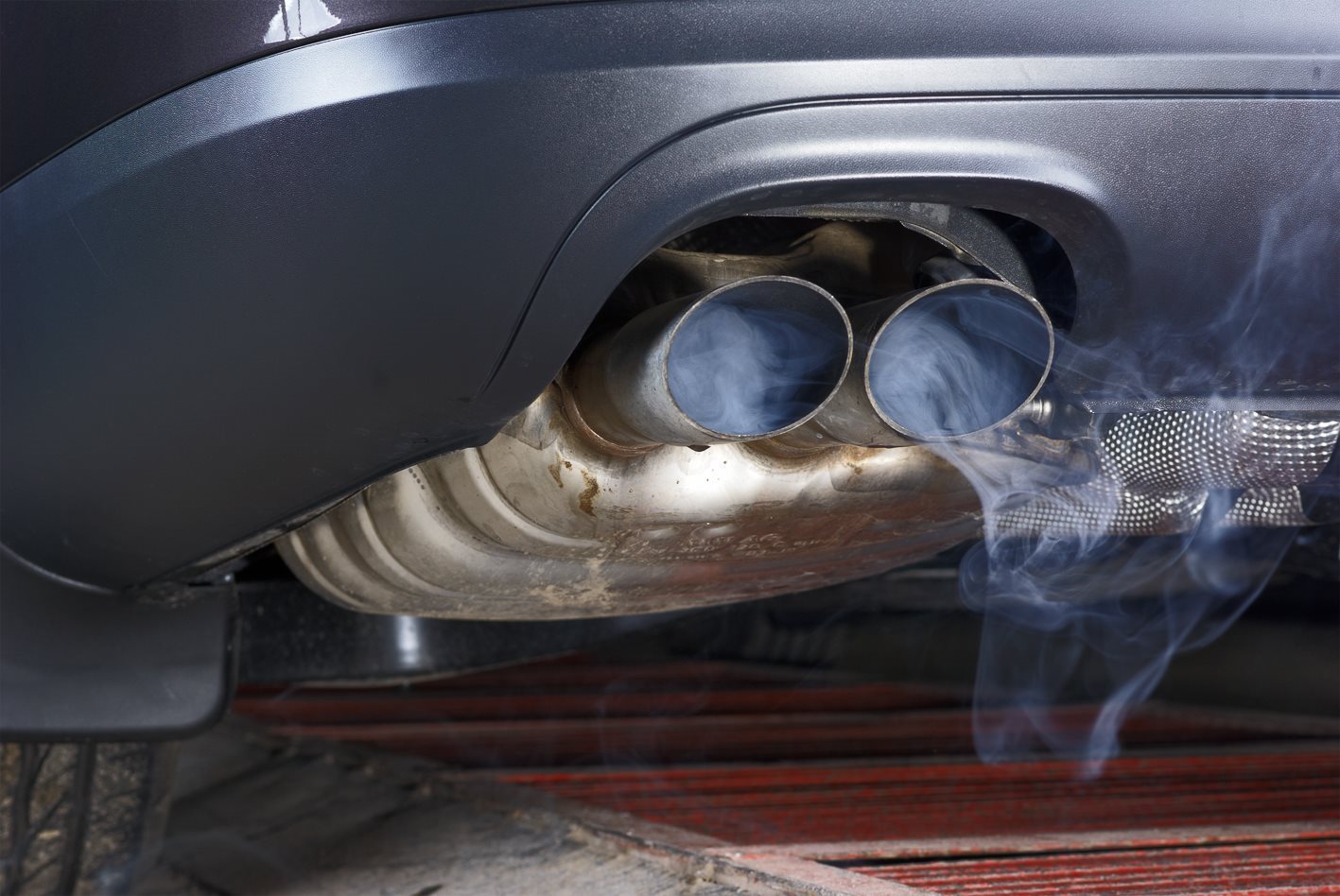
Meanwhile, Electric Vehicle Council and climate change experts say the FCAI’s voluntary scheme is a failure and should not be used as part of creating a mandated emissions target.
“The FCAI’s proposal to retain the existing voluntary emissions scheme will retain the status quo of Australia having the highest car CO2 emissions compared to the leading countries of Norway, Germany, the UK and the Netherlands – noting that Norway will ban the sale of new petrol and diesel cars in 2025, with the UK and the Netherlands in 2030,” said Dr Diane Kraal, Senior Lecturer in Business Law and Taxation at Monash Business School.
“We won’t be able to rely solely on improvements in car technology to lower CO2 emissions without taxation assistance to lower the upfront cost of EVs.
“The industry is focusing on its own EV supply issues, but we need to address consumer demand problems for EVs, including upfront costs and CO2 levels.”

The EV Council said that because Australia is one of the only OECD nations not to have fuel-efficiency standards, EVs are difficult to purchase and there are long wait times for delivery – with consumer demand significantly outpacing supply.Overseas, fuel-efficiency targets require manufacturers to pay a penalty for exceeding carbon emissions targets set for the average number of new vehicles they sell. This means there is an incentive for manufacturers to ensure they sell enough low-emission and zero-emission vehicles to avoid raising their average – as opposed to the voluntary standard which bears no penalties.
“The only fuel-efficiency standards that will make a difference are standards in line with those that exist in the US and Europe,” said EVC chief executive Behyad Jafari.“Australia missed the boat by 30 years in introducing fuel-efficiency standards, making us the world’s dumping ground for dirty vehicles today. If we finally get around to it and then introduce standards that don’t work that would be a tragedy.

“Car manufacturers sell the bulk of their vehicles into markets with fuel efficiency standards because that helps avoid penalty. There is currently no such incentive in Australia, which relegates this market to a lower order priority.“If we want to see larger and more frequent shipments of EVs to Australia, Government should ignore the weak standards some in industry are lobbying for.“There is no path to net zero by 2050 unless Australia stops selling emitting vehicles by 2035. Cars in Australia have a 15-year average life span. If we’re still selling a significant quantity of combustion engine vehicles in 2036 we fail on net zero. It’s that simple.”
In 2020, the FCAI introduced a voluntary emissions reporting scheme for the industry, with manufacturers each set individual targets, as well as overall ones for light SUVs and heavy SUVs/light commercial vehicles. However, in both 2020 and 2021 most carmakers did not meet said goals – only 12 out of 39 hit the 150g CO2/km target in the first category and nine achieved the 190g milestone in the latter.
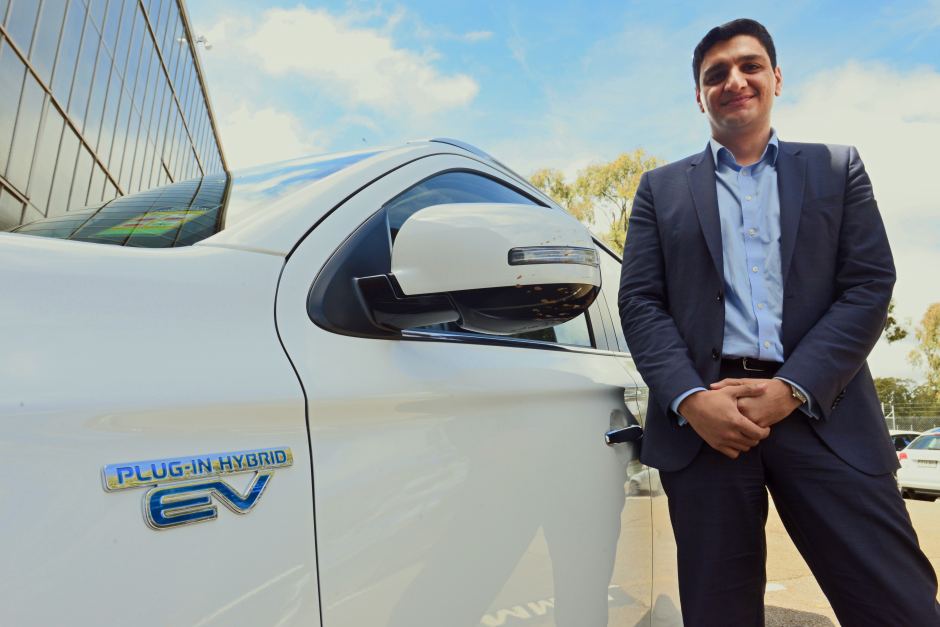
The FCAI standard is in line with the European Environment Agency’s, whereby carmakers are given credits to hit targets for reduction measures such as; introducing EVs, using safer air conditioning and adding fuel-saving tech such as stop/start, high efficiency headlights, solar panels, active aerodynamic improvements etc.
However, the results so far, and the fact there are no penalties for missing targets, have led some to criticise the self-reporting system, with one source telling Wheels back in June the method based on a sales-weighted average and mass per unit sold isn’t presenting consumers with the best picture of what our country’s emissions truly are.
Furthermore, they claim it is a concern that FCAI does not provide the National Transport Commission (NTC) with some of its information, with the statutory body only able to re-report FCAI’s adjusted figures.
“FCAI is responsible for handling it – but we shouldn’t be letting everybody self-report. Because they [the NTC] can’t get the credits and super credits data from FCAI, they are working on an alternative, but developing another system will take years.

“This may have a benefit in the long run that they [the NTC] can also report on emissions for all cars on the road, not just new sales, but it’s something they’ve now had to start the process of because of the hole that exists in their data – and it will be a significant task to get through.
“In fairness, FCAI is clear about how it has come up with the numbers, it just makes it look like the emissions are better than they actually are. It’s not an accurate representation of how Australia’s CO2 is performing.”
Defending the FCAI’s efforts, Chief Executive Tony Weber told us: “The NTC’s system was 20 years’ old, we’ve just updated it to make it more modern and in line with international best practice – it’s more rigorous. For 2020 and 2021 we gave the raw data, but not the credits or super credits, that’s what they wanted and that’s what they got. We recognise what we’re doing is sub-optimal, but really the Government should be doing this.”
The Australia Institute’s climate and energy director, Richie Merzian, told the ABC he is hopeful the new Government will soon move to implement an emissions standard, as the group prepares to co-host an electric vehicle summit being attended by the federal Climate Change and Energy Minister, Chris Bowen, next month.
The Institute has just published a new report which found that if an emissions cap on carmakers proposed by former prime minister Malcolm Turnbull had been implemented, it would have saved consumers $5.9 billion in fuel costs.
Key Points
- 2023 Genesis GV80 pricing and features
- Retuned adaptive suspension for petrol and diesel V6 variants
- Priced from $92,200 plus on-road costs
UPDATE, August 9: 2023 Genesis GV80 detailed
Genesis has announced a raft of minor updates across the GV80 large SUV range.
The 2023 Genesis GV80 is available now, with pricing increased by $200 across the board.
It is priced from $92,200 before on-road costs for the entry-level model, with the flagship variant available from $109,700 plus on-roads.
Headlining the changes is a modified adaptive suspension for the range-topping petrol and diesel V6 variants, with local tuning undertaken for a “more refined and comfortable drive.”
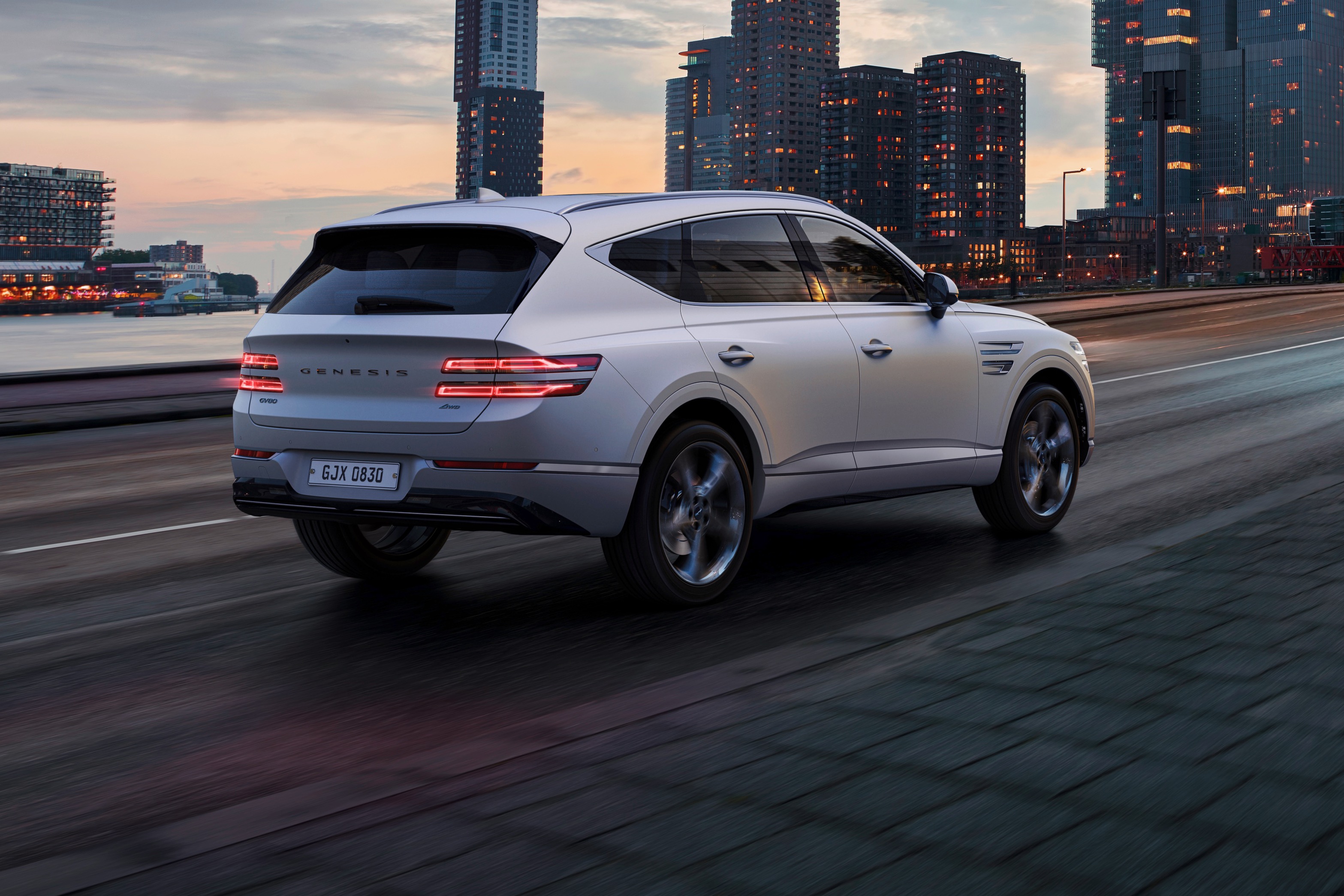
Tim Rodgers, product development manager for Hyundai and Genesis in Australia, said the revisions were aimed to improve wheel and body control.
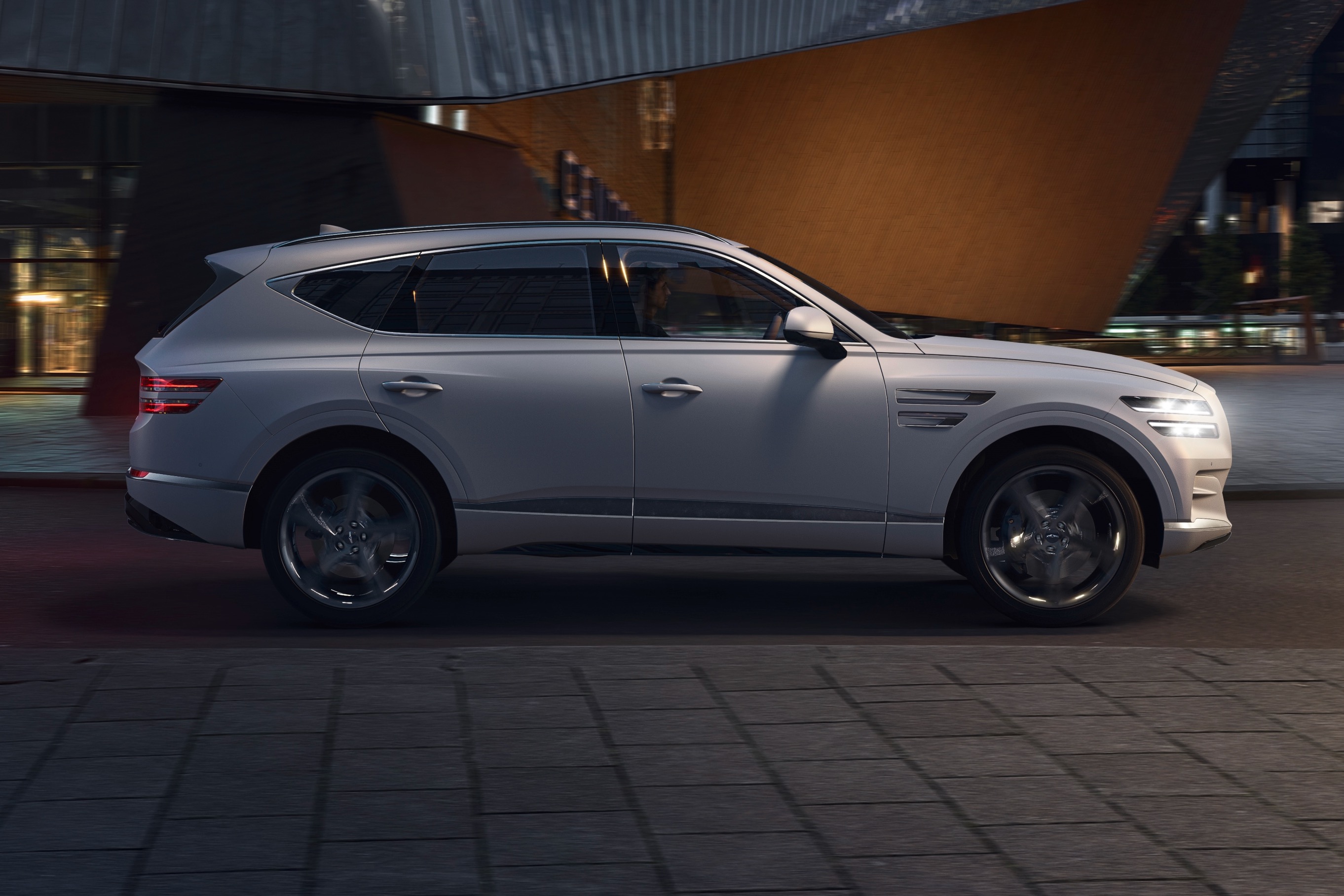
“The revisions don’t change the character of GV80, but in terms of body motion the SUV now feels a bit more tied down,” he said.
Meanwhile, the raised infotainment dial first seen in the electric GV60 and new-generation G90 now features on the GV80, replacing the previous concave setup, while the rear brake calipers are now colour-coded with Genesis branding.
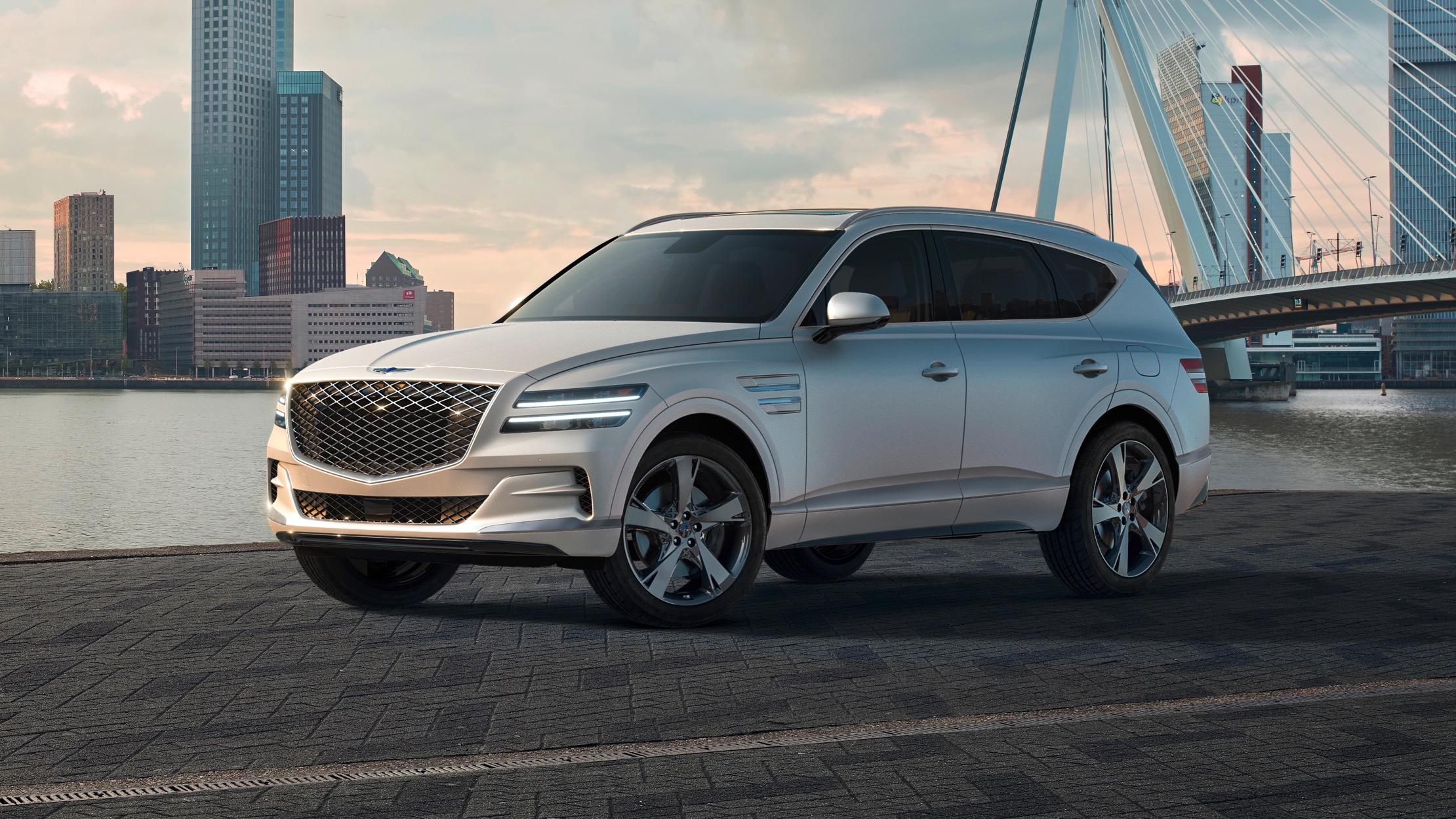
Our previous coverage of the Genesis GV80, which was last updated in January 2022, has been updated to reflect the latest information.
The revisions follow the outgoing model-year 2022 Genesis GV80, which added the option of a six-seater package.
Previously reserved for range-topping 3.5-litre model, every GV80 now features upgraded front brakes, featuring 380mm discs with four-piston calipers.
But the big news is the addition of a six-seater Luxury Package for all-wheel-drive GV80s, with powered captain’s chairs for the second row, accompanied by dual 9.2-inch high-definition rear seat entertainment touchscreens with dual headphone jacks, and a fixed armrest with wireless smartphone charging.
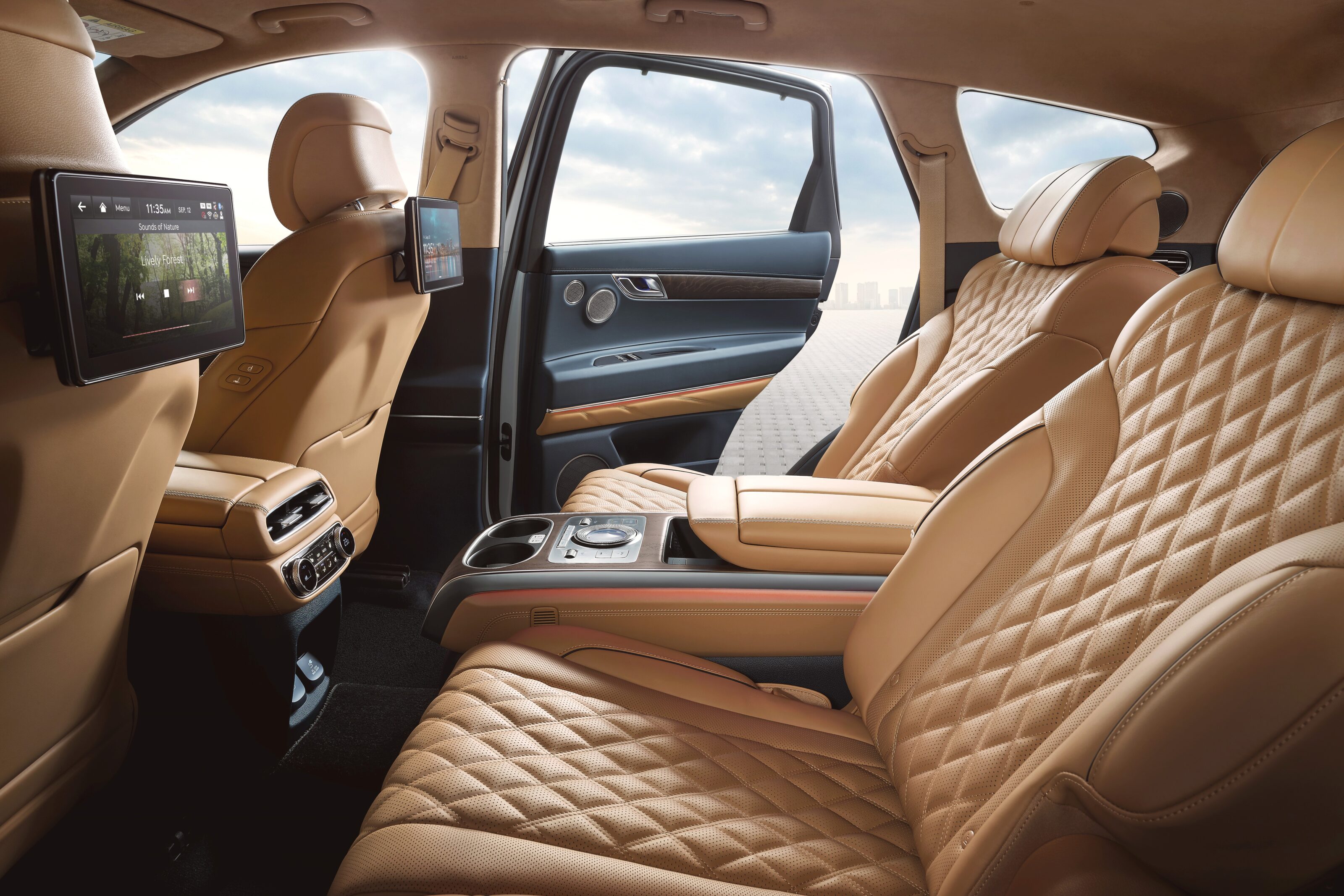
A new gloss Barossa Burgundy Metallic paint has been added, with three matte exterior colours reserved for Luxury Package versions with an additional cost of $6000.
2023 Genesis GV80 Australian pricing
Note: Prices exclude on-road costs.
Engine, drivetrain, and fuel economy
Buyers get a choice of three powertrains across the GV80 range, starting with the turbocharged 2.5-litre four-cylinder petrol engine, which sends 224kW and 422Nm to the rear wheels through an eight-speed automatic transmission.
Combined fuel economy is claimed at 9.8 litres per 100 kilometres, with combined CO2 emissions listed as 229 grams per kilometre.
The 2.5-litre can also be optioned with all-wheel drive, which increases fuel consumption to 10.4L/100km on the combined cycle and CO2 to 243g/km.
The mid-range GV80 is powered by a 3.0-litre turbo-diesel six-cylinder engine, producing 204kW and 588Nm, with an eight-speed auto and all-wheel drive as standard. Combined fuel consumption is a claimed 7.0L/100km, with emissions of 232g/km.
At the top of the GV80 range is the twin-turbo 3.5-litre petrol V6 engine, sending 279kW and 530Nm to all four wheels through an eight-speed auto. Fuel consumption is 11.7L/100km combined, with average emissions listed as 273g/km.
2023 Genesis GV80 features
GV80 2.5T 2WD
| Smart Cruise Control with Stop & Go function & Machine Learning |
| Paddle shifters |
| 360-degree cameras |
| 20-inch alloy wheels with Michelin tyres |
| Parking sensors |
| Multi-link front & rear suspension |
| Manual Speed Limit Assist (MSLA) |
| Panorama sunroof |
| LED headlights with LED daytime-running lights |
| LED tail-lights |
| Variable steering |
| Auto light control |
| Genesis logo puddle lights |
| Towbar pre-wiring package |
| Auto folding, heated, electro-chromatic side mirrors |
| Acoustic laminated windscreen & front door glass |
| Solar control glass |
| Roof rails |
| Metallic/Mica paint |
| Leather seating |
| Leather appointed dashboard, door trim & centre console package |
| Leather steering wheel |
| High-beam assist |
| Open pore real wood trim |
| Intelligent Speed Limit Assist |
| Adjustable ambient lighting |
| Multiple 12V power outlets |
| USB chargers |
| Heated & ventilated 12-way power front seats |
| Driveru2019s seat memory |
| 8.0-inch digital instrument cluster |
| 12.0-inch head-up display |
| Power tilt & telescopic steering column |
| Smart Key & push button start w/ capacitive touch |
| Remote Start |
| Sensor front door handles |
| Power tailgate |
| 14.5-inch infotainment screen with navigation and digital radio |
| Apple CarPlay & Android Auto capability |
| Genesis Integrated Controller |
| 21-speaker Lexicon premium audio |
| Remote folding for second row |
| Rear door manual sun-shades |
| 6.0-inch screen for dual zone front climate control |
| Electro-chromatic rear view mirror |
| Tyre Pressure Monitoring System (TPMS) |
| Separate second row temperature control zone |
| Electric Parking Brake (EPB) with Auto Hold |
| Premium micro cabin filter |
| Rain sensing wipers |
| Wireless smartphone charger |
GV80 2.5T AWD, in addition to 2.5T 2WD
| Seven seats |
| Multi-Terrain modes: snow/mud/sand |
| Third-row 50:50 split-fold seats |
| Tyre mobility kit (removes temporary spare) |
| Third-row Smart one-touch walk-in |
| Reversible cargo area mat |
| Third-row manual temperature control with air vents |
GV80 3.0D and 3.5T AWD, in addition to 2.5T AWD:
| Road Preview Electronic Control Suspension |
| Electromechanical limited-slip rear differential |
| 22-inch alloy wheels |
Options
For $10,500, the Luxury Package adds:
| Drivers seat switch change alert u2013 capacitive touch |
| Forward Attention Warning |
| Smart Parking Assist |
| Reverse Parking Collision-Avoidance Assist |
| Remote Smart Parking Assist |
| Intelligent-Front-Lighting System |
| Power door latch with soft close doors |
| Active Noise Control |
| Nappa Leather appointed interior with quilting |
| Power second-row seats |
| 12.3-inch digital instrument cluster with 3D function |
| Power rear door sunshades |
| Two-tone leather steering wheel |
| Second-row rear vanity mirrors |
| Power third-row seats (where fitted) |
| Suede headlining & pillar trims |
| Three-zone climate control |
| Heated & ventilated 18-way power front seats |
| Heated steering wheel |
| Ergo motion front seats (front passenger added) |
All-wheel-drive models can option the $13,500 Six-Seat Luxury Package, adding:
| Additional ambient lighting |
| Dual 9.2-inch HD touchscreens |
| Two individual second-row bucket seats with one-touch rest mode |
| Fixed second-row centre console with controls & storage |
| Rear wireless phone charger |
Safety
| 10 airbags |
| ABS, ESC, BAS, HAC, DBC, VSM |
| Safe Exist Assist |
| Rear Cross-Traffic Collision Avoidance-Assist |
| Rear Occupant Alert |
| Lane Following Assist |
| Lane Keeping Assist-Line/Road-Edge |
| Lane-Change Oncoming/Side function |
| Blind-Spot Collision Avoidance-Assist-Rear/Side |
| Forward Collision-Avoidance Assist, including; Car/Pedestrian/Cyclist detection |
| Active Bonnet |
| Junction Turning/Junction Crossing function |
| Driver Attention Warning |
| Multi Collision Brake |
| Emergency Stop Signal |
| Blind-Spot View Monitor |
| Evasive Steering Assist function |
Warranty and servicing
All GV80 models receive complimentary scheduled servicing for five years (or 50,000km for petrol engines, 75,000km for diesel engines).
Genesis offers a factory five-year/unlimited-kilometre warranty, together with Genesis To You, Valet Service, and 24/7 roadside assistance for the same period.
Availability
The 2023 Genesis GV80 range is available to order now.
JUNE 2023: We’ve driven the EV9!
Get our full written and video review at the linked story below.
STORY CONTINUES
March 2023: EV9 leaked!
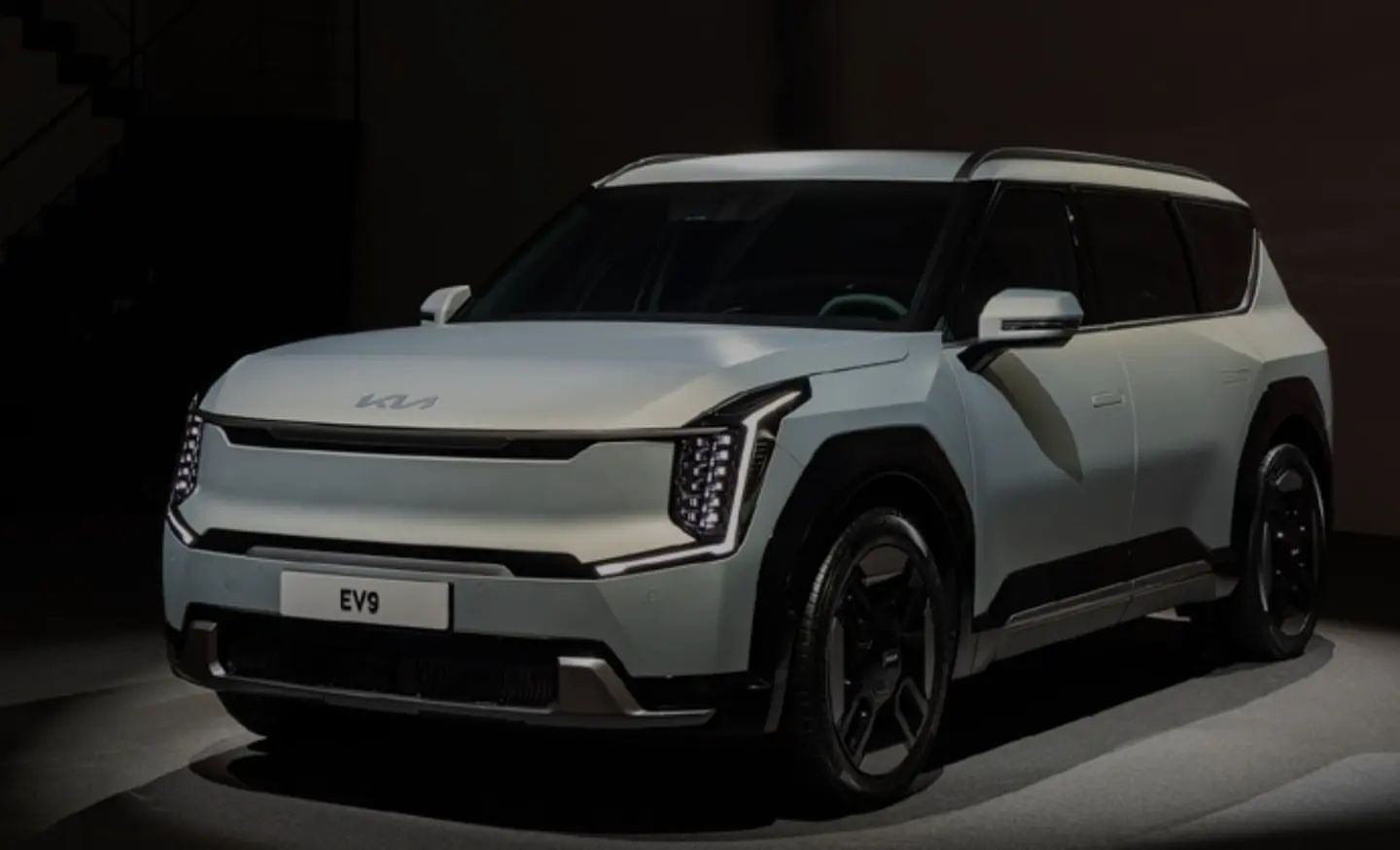
The upcoming Kia EV9 has surfaced in online social media, offering a first clear look at official marketing shots. Get the full story at the link below.
The story to here
The 2023 Kia EV9 electric large SUV has been spied testing at the Nürburgring this week.
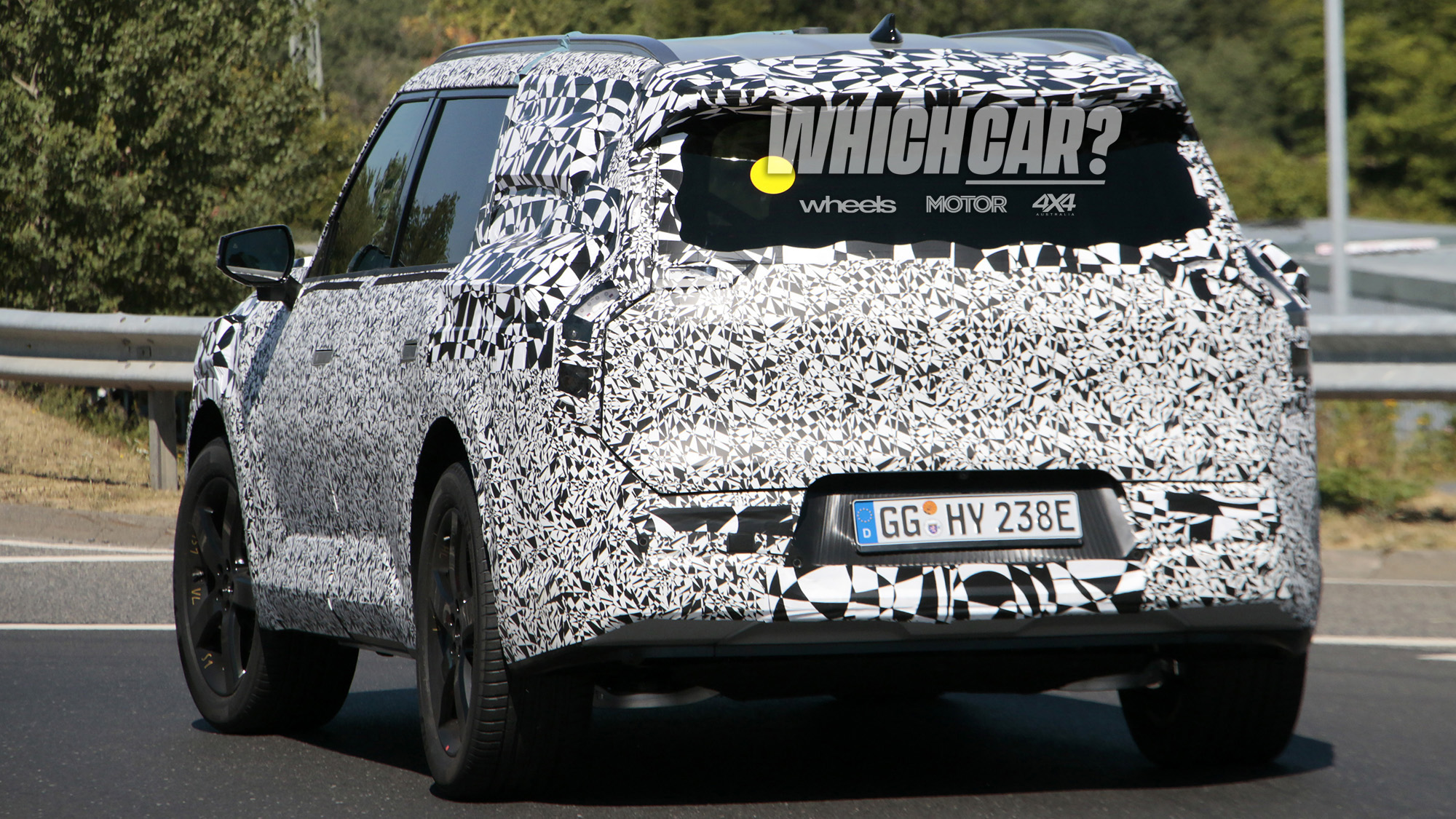
Revealing toned-down styling elements from the concept, the EV9 looks closer to being production-ready, with the latest example wearing less camouflage than before.
However, the exterior lumps, roll cage, Recaro race seats, and generic alloy wheels indicate the EV9 is still early in development, with an official unveiling not expected until early next year.
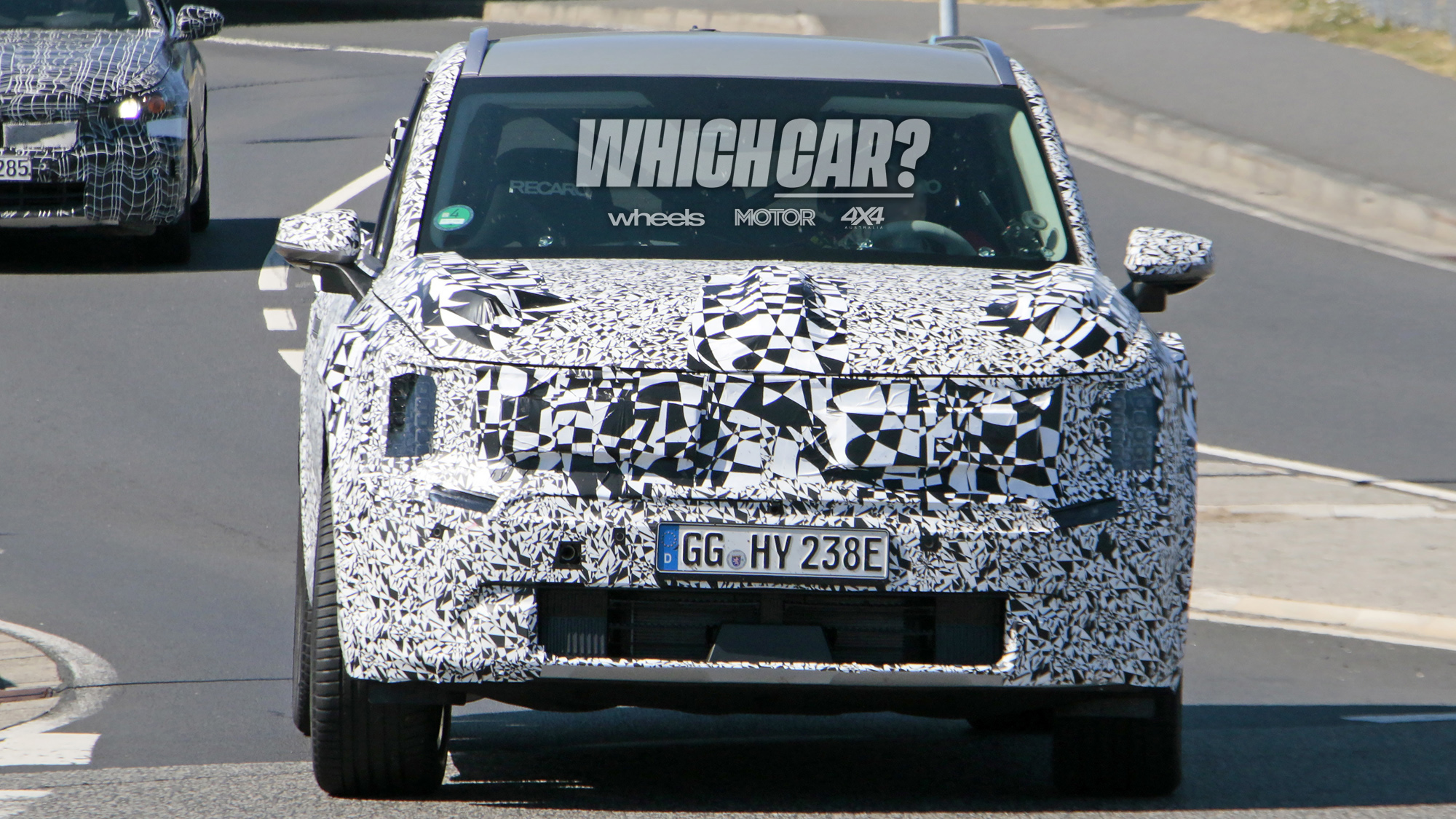
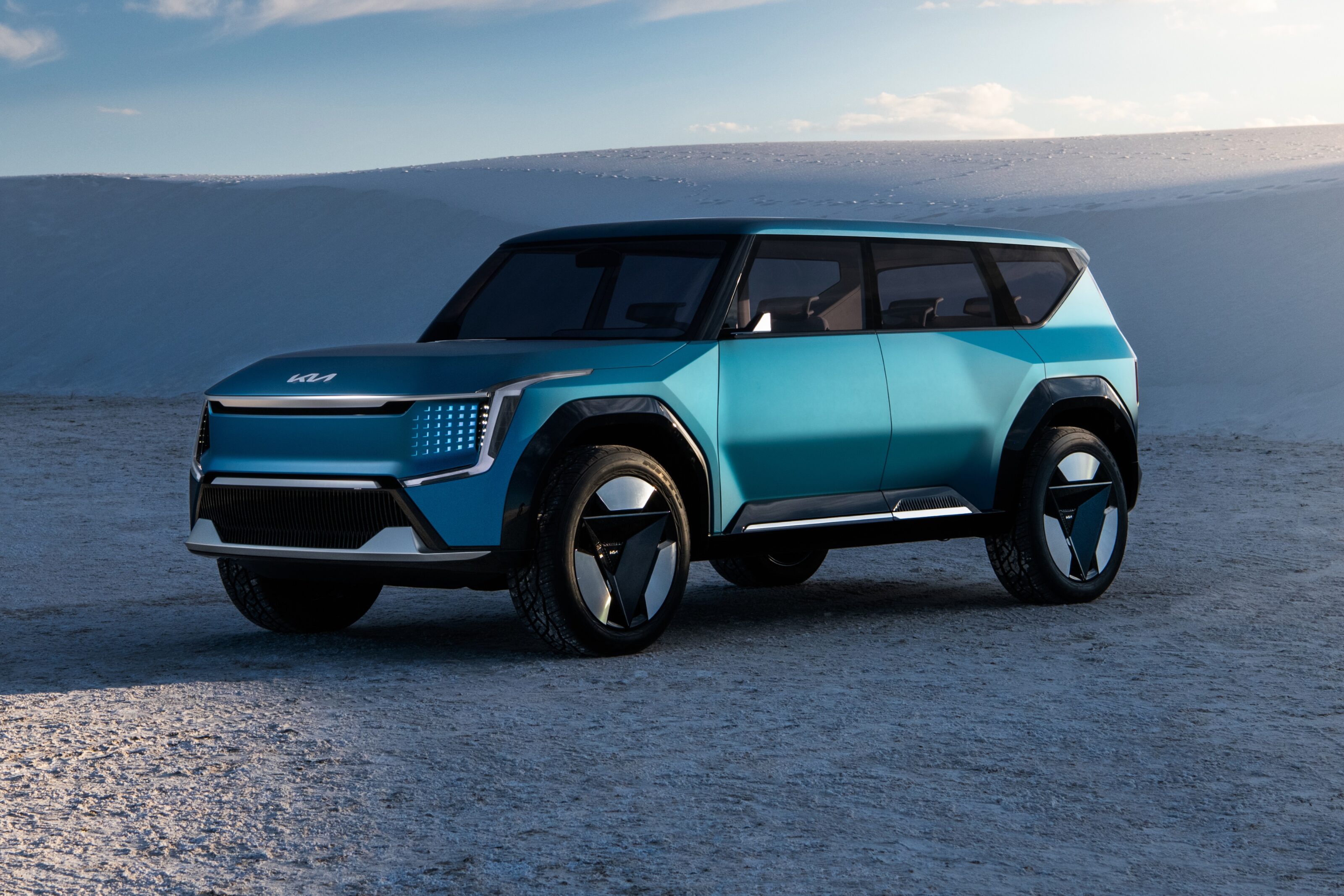
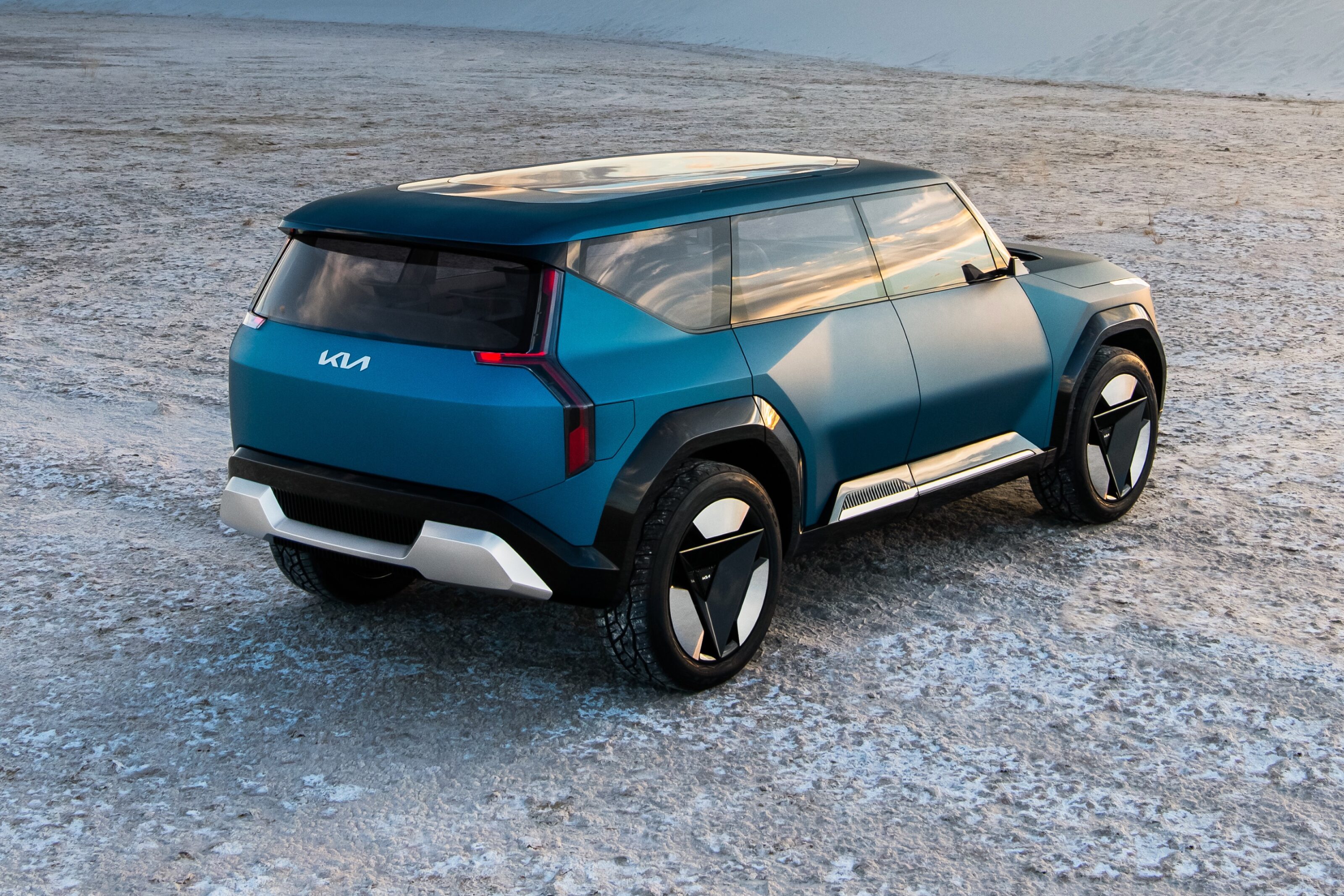
The overall silhouette and matrix LED headlights remain faithful to the Concept EV9 revealed at the 2021 Los Angeles Auto Show, while Kia has fitted pop-out electronic door handles and thin exterior mirrors.
It is currently unknown what technical specifications the EV9 will offer; however, the related six- or seven-seat Hyundai Ioniq 7 will feature a 100kWh battery pack and a 230kW dual-motor, all-wheel drive powertrain, according to Carscoops.
An electric driving range of around 500 kilometres is expected, likely matching the 482km claimed for the Concept EV9.
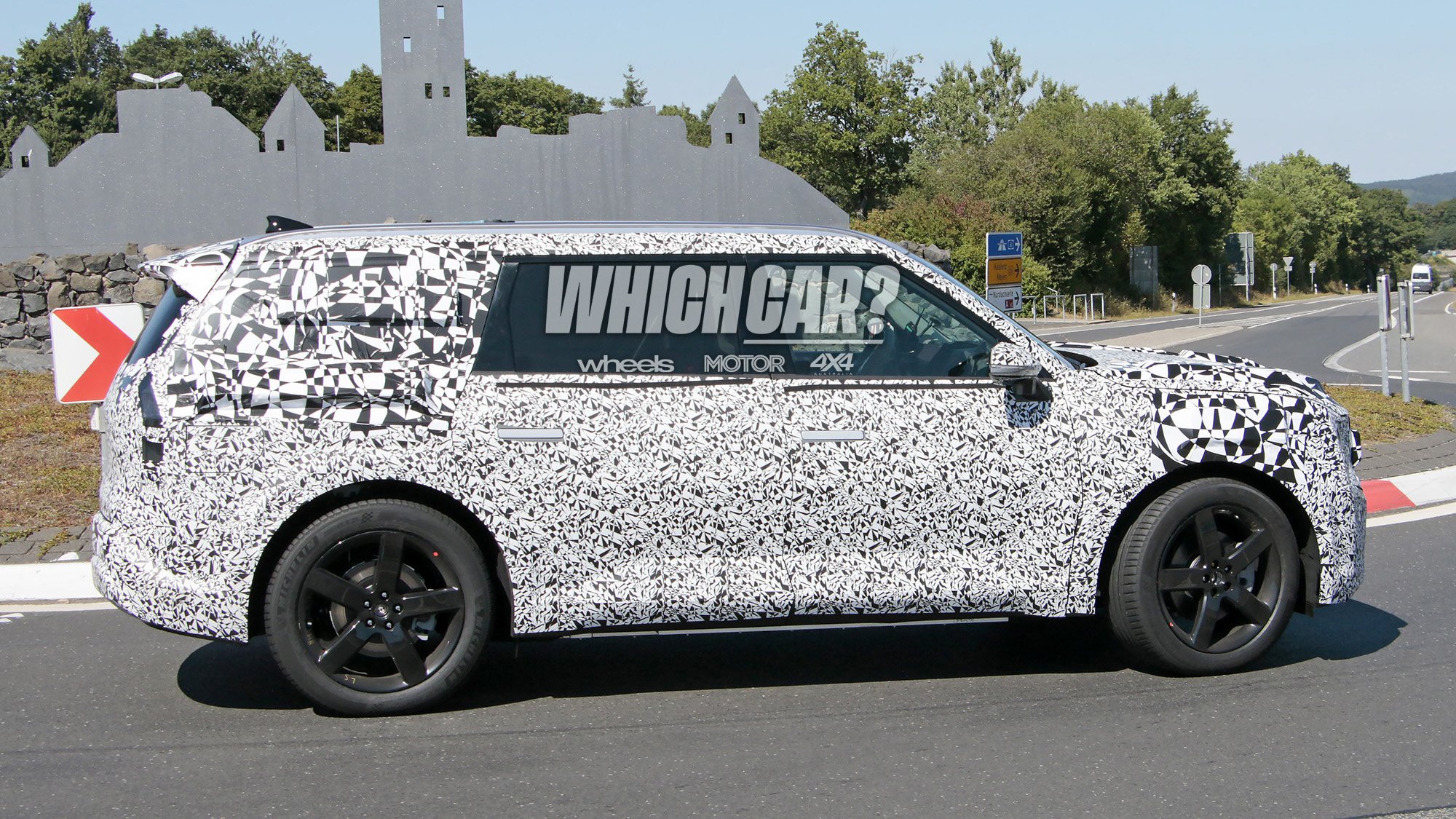
The upper-large electric SUV will ride on the modular E-GMP platform, which currently underpins the EV6, the Hyundai Ioniq 5 and Ioniq 6, and the Genesis GV60.
Set to become Kia’s flagship model, alongside the internal-combustion Telluride, the EV9 is expected to measure around 5000 millimetres long – roughly on par with the Toyota LandCruiser 300 Series and LandCruiser Prado.
The concept rides on a 3100mm wheelbase, and is 4930mm long, 2055mm wide and 1790mm tall.
While this is shorter than the Telluride and Hyundai Palisade, the Concept EV9 is substantially broader and taller, with a 200mm longer wheelbase for maximum interior space.
According to the Korean Car Blog, the interior of the seven-seat EV9 will be on par with the Carnival people-mover, with more legroom available for third-row passengers due to its electric architecture, which allows for a flat cabin floor.
Occupants can also expect an ultra-wide display similar to the EV6, along with over-the-air software updates and Level 3 autonomous driving technology, known as Highway Driving Pilot (HDP).
While the EV9 is yet to be officially locked in for the local market, Kia Australia’s general manager for product planning, Roland Rivero, told Wheels it has strong prospects in Australia.
“In the absence of Telluride, and I know there’s a lot of opinion on the lack of bringing that model to Australia, we think EV9 has got a lot of potential here,” he said.
“You look at that upper-large category – which is only a two-horse race between the Toyota LandCruiser and the Nissan Patrol – with the average price there being around $96k, and it tells us Australians aren’t afraid of a $90k upper-large SUV. There’s an opportunity there – we just need HQ to give us the green light.”
Kia plans to launch the EV9 in Europe, with confirmed right-hand drive production for the United Kingdom.
At a recent media briefing for the second-generation Niro, Kia Australia’s top boss, Damien Meredith, said the recent introduction of the EV6 “is proving to be more popular than [Kia] could have ever imagined” – another indicator that more electric models will soon be heading our way.
Leaked internal information from the company’s Sohari plant in South Korea has indicated production will begin in April, ahead of a potential Australian launch in late 2023 or early 2024.
A four-door sedan version of the 2023 Toyota GR Corolla could arrive in mid-2023, according to an overseas report.
The as yet unsubstantiated report from Japanese publication Goo-Net claims a go-fast GR Corolla sedan will be revealed next year, featuring the same 1.6-litre turbocharged three-cylinder engine as the hatch, producing 224kW with all-wheel drive.
With the GR Corolla being unveiled in recent months, there is a possibility the hot hatch could morph into a performance sedan to compete against the Hyundai i30 Sedan N (or Elantra N) and Subaru WRX, amongst others.
It would also revive the role of the now-discontinued Subaru WRX STI, offering a powerful circa-220kW turbocharged engine, all-wheel-drive and a six-speed manual gearbox.
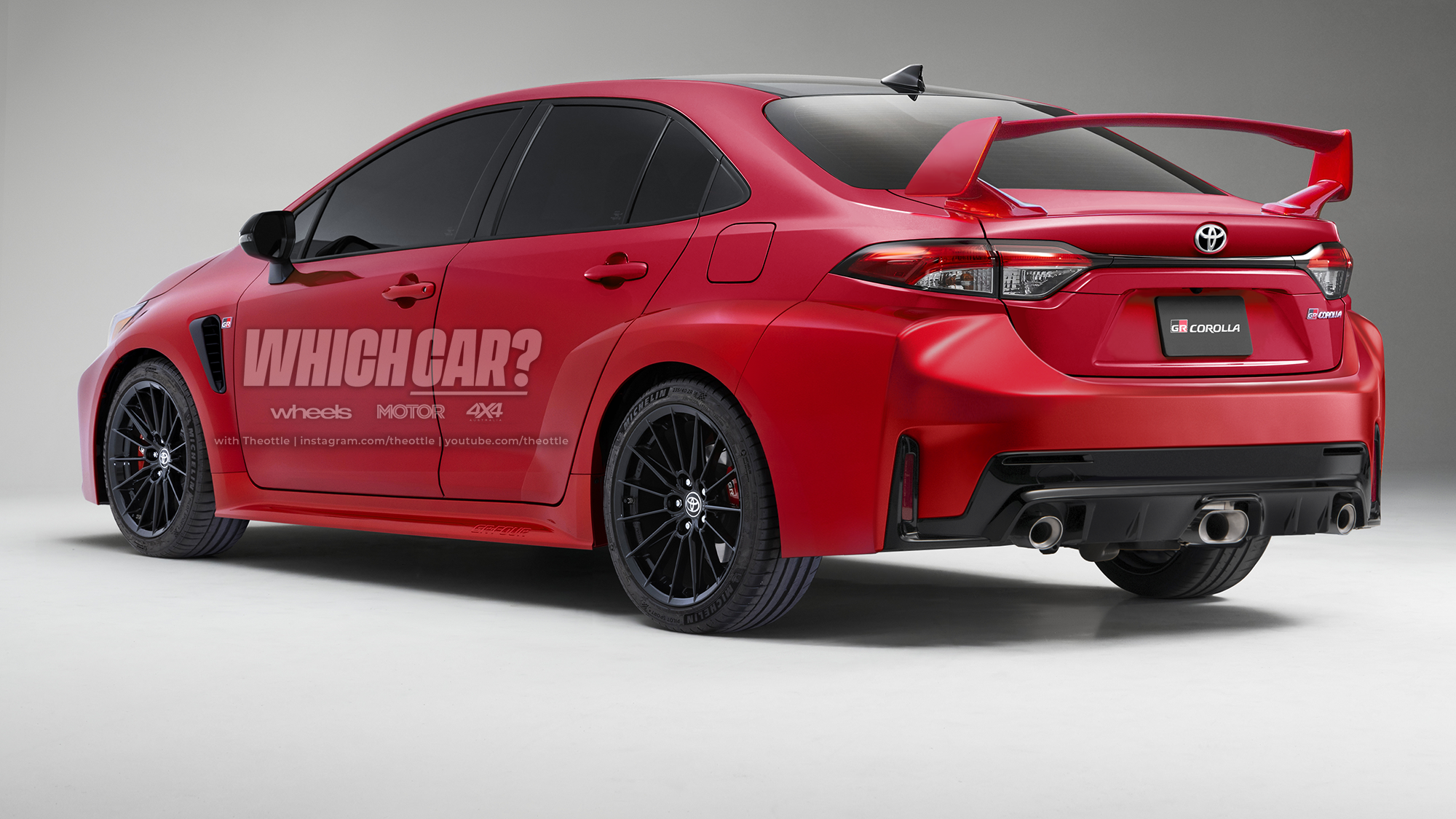
With this in mind, rendering artist Theottle has imagined the potential design of the GR Corolla sedan, should it reach production.
Drawing strong inspiration from the GR Corolla hatch, the sedan features identical design elements, including; the sportier front and rear bumpers, 18-inch black alloy wheels, air ducts, bulkier rear arches, a three-pipe exhaust system, and a large boot-mounted spoiler.

It is believed Toyota would tailor the GR Corolla sedan for the North American market, where the four-door body remains the top-selling Corolla variant.
However, Toyota has yet to officially confirm the sedan model for production – with differences between the hatch and sedan, despite both featuring the same GA-C platform and key components.
Three versions of the Corolla sedan are available globally: a smaller version for Japan, a larger model sold in Australia, the United States and other markets, and a prestige version for Europe and China.
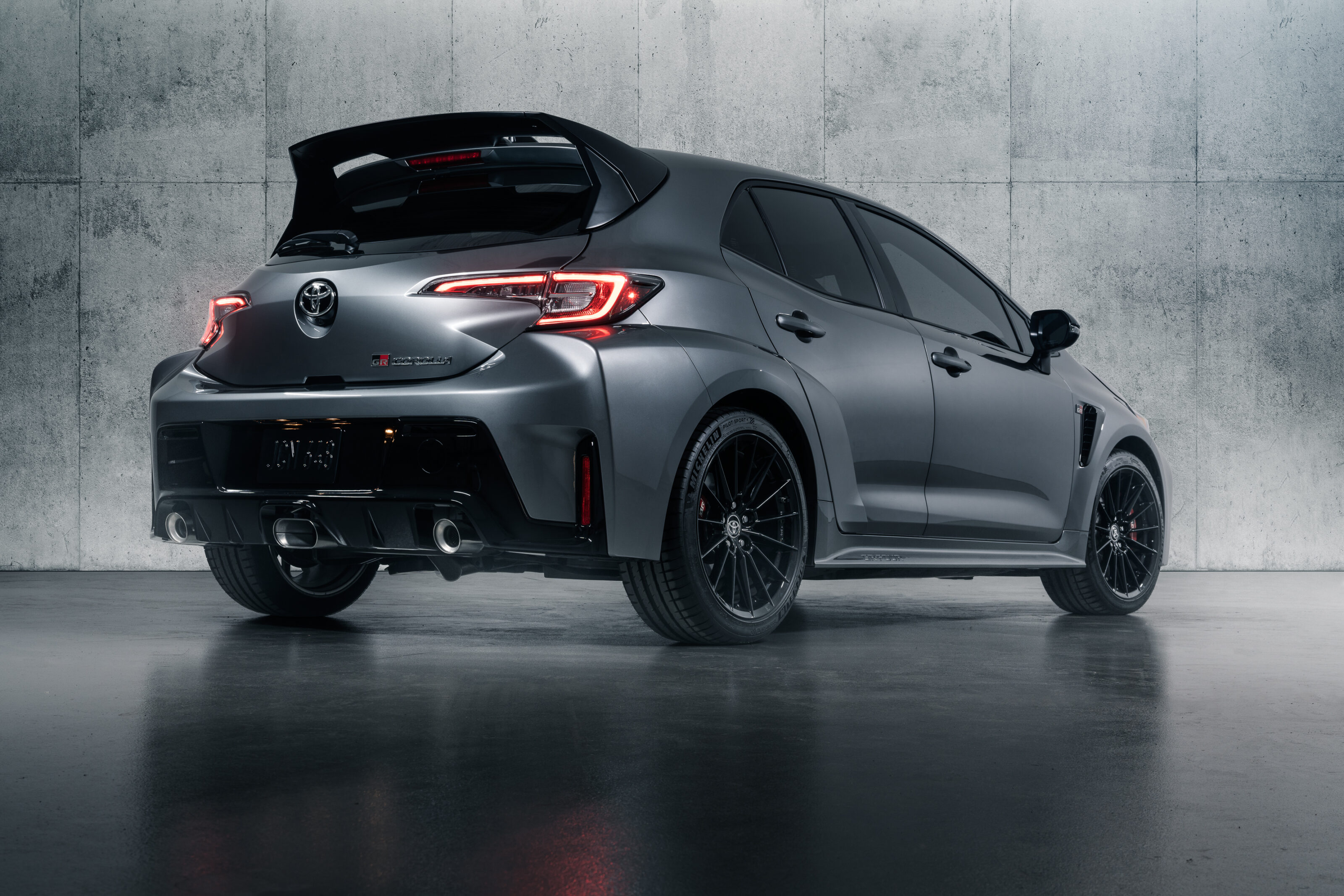
The two latter models have an identical 2700 millimetre wheelbase, while the Japanese version shares its 2640mm wheelbase with the Corolla hatch – and is 45mm narrower than the Corolla hatch and 10mm slimmer than the global sedan.
Given that it would be costly for Toyota to homologate the shorter body style in the United States, Goo-Net states a “high possibility” the rumoured sedan would be based on the wider North American model.
This would enable key components – such as suspension and front-end parts – from the GR Corolla hatch to be carried across to the possible GR Corolla sedan; however, further development work would still be necessary.

While the GR Corolla sedan remains speculation, the outgoing executive vice president of sales at Toyota Motor North America, Bob Carter, recently hinted at a performance GR sedan.
The official claimed customers would need to “stay tuned” concerning a performance sedan, while indicating an electrified GR car could “quite possibly” arrive within the next five years.
“When would we see the first electrified GR model, you may ask? “In five months? No. In five years? Quite possibly,” he said.
“Righto, mate, lift your elbows… NOW!” So comes the shouted command from the driver’s seat as the new 2023 Ford Ranger Raptor rushes at the base of the jump. There’s a jolt, a momentary pause as the suspension compresses and then… silence.
We fly through the air at 130km/h, like a house brick jettisoned into low orbit, the Raptor soaring flat and true before the ground rushes up. I wince and lift my arms clear of the bucket seat – we’re in an early Raptor prototype fitted with a roll-cage and race seats so smashing funny bones is a real risk – but then… nothing.
The Raptor lands with the grace and poise of a jungle cat.
“Nice, huh?” shouts my driver with what I assume is a grin behind his helmet. “It’s like a rally car!”
He emphasises the last point by hurling Ford’s all-new performance ute at another jump. I nod and lift my elbows.

Welcome to Loveday 4X4 Park, a sprawling off-road adventure destination in outback South Australia where Ford is giving the new Raptor its final engineering sign-off. By the time you read this, the new Raptor will be on sale, for the princely sum of $85,490 before on-road costs (we’ll get to why this is actually a positive thing later) but right now Ford’s Australian engineering team is busy making some last-minute tweaks before it enters full-scale production. And today, we’re tagging along for the ride.
Time is tight: we only have a few hours of seat time, but the day is full of promise. Loveday’s facility includes a deep sand section, a gnarly-looking off-road course and, finally, a high-speed rally circuit where we can assess the Raptor’s ‘on-limit handling’.
Ford also has two elbow-bashing development vehicles fitted with roll cages and racing harnesses for passenger laps around a ‘Finke-style’ track that includes, you guessed it, jumps.

Before we get airborne, though, let’s talk first impressions because they’re illuminating.
Clock the new Raptor in the car park alongside its predecessor and the family resemblance is obvious. But the new ute is burlier, more foursquare and more aggressive.
Width is the same as the old ute (Ford couldn’t go any wider because it wouldn’t fit down the production line in Thailand) and because the glasshouse now extends to the edge of the shoulder line instead of tapering in aggressively, the 2022 Raptor looks blockier and more substantial.
It’s a nice progression of the original’s chunky aesthetic but if the exterior is an evolution of the same recipe, the cabin feels entirely new. And significantly more premium.

The vehicles we’re driving aren’t the final product. They bear a codename roughly translating to Ford engineering speak for ‘almost complete’ so the fit and finish of the cabin is rough and some of the materials aren’t quite right.
But even with ill-fitting parts and a coating of fine red dust collected from Loveday’s tracks, the ambience is noticeably more upmarket. Huge, high-resolution screens dominate on the centre console and digital instrument cluster, measuring 12.0 and 12.4 inches respectively, but the fundamentals have been improved too.
The steering wheel seems to fit more snugly in your hands and it now adjusts for reach as well as rake (finally!), which does wonders for the driving position. And the seat itself, which is electrically adjustable and has been redesigned with heavy side bolsters and flashes of ‘code orange’ material, feels a micron lower.

Press the starter and the new twin-turbo V6 petrol fires with a flare of revs but, weirdly, the engine isn’t the first thing you notice about the new Raptor’s driving experience. You do register that the soundtrack is different – the diesel clatter is gone, replaced by a smoother backing track that sounds distinctly like an Alfa Romeo – but start to move and the thing that grabs your attention most is the steering.
The old Raptor’s tiller was good, but not great. It was a little too light and had a vague spot on either side of the straight ahead. This new model offers a much firmer initial handshake. It’s immediate off-centre and carries a more natural heft, which delivers an almost subconscious sense of confidence and connection.
You get the same feeling through the brake pedal. The braking hardware hasn’t changed from the old Raptor – it’s still disc brakes all round and rotor diameter remains at 332mm front and rear – but upgrading to an electric brake booster has transformed how the pedal feels.
Press the starter and the new twin-turbo V6 petrol fires with a flare of revs but, weirdly, the engine isn’t the first thing you notice about the new Raptor’s driving experience.

The old car’s vacuum-operated system had a dead zone, or ‘sneeze factor’, at the top of the pedal travel and the consistency of the pedal would change a little as the system warmed up. The new Raptor’s brake pedal is instantly firmer and more responsive.
In fact, it takes about 15 metres to realise this new ute is an entirely different animal. The whole vehicle is more alert and considerably more focused. Hit a bump, even at low speed as we transit to the deep sand section at Loveday, and there’s a surprising tautness to the suspension.
The old ute’s expensive feeling, semi-race suspension was incredibly capable and delivered a supple ride but the trade-off was body control that could be a little lax.
This new Raptor feels considerably more tied down thanks largely to new high-tech dampers from US supplier Fox. The dampers feature Fox’s ‘live valve’ technology and are adaptive for compression, which has given Ford’s engineers a much larger window to tune the ride and handling.

The new Raptor’s dampers feature Fox’s ‘live valve’ technology and are adaptive for compression, giving Ford’s engineers a much larger window to tune the ride and handling.
The differences are considerable. Where the old Raptor could float and take a beat to settle, the new ute returns to centre with real authority. And the way it deals with bigger bumps is seriously impressive. There’s no second stroke to recover; just unwavering control.
I wonder briefly how this newfound tautness will impact the ride comfort on normal sections of tarmac during day-to-day driving but at first blush, the new chassis set-up is a winner.
Right, time to open the taps.
With an extended section of deep sand ahead we twist the drive mode selector into ‘sand mode’ and flatten the throttle. Unleashing the new 3.0-litre twin-turbo for the first time is an event. The Raptor leaps onto the soft surface, its rear tyres flinging plumes of red sand into the ether behind us.

Power has almost doubled compared with the original Raptor to 292kW and the extra performance is instantly obvious.
Ford claims the 0-100km/h time has almost halved and while you don’t get the same rush of low-down torque as before (peak twist is now at 3500rpm compared with 2000rpm in the diesel donk), get the big 3.0-litre petrol into its mid-range and it feels seriously potent.
It delivers, in one throttle application, the type of performance and engagement the Raptor always deserved.
Sounds good, too, which is a relief. V6s can sound hollow and uninspiring but Ford has managed to produce a soundtrack that’s deep, purposeful and builds nicely through the rev range. There’s more than a whiff of Alfa Romeo about it, which Ford confirms is intentional.

“We actually used the Stelvio Q as our benchmark for the exhaust,” says David Burn, chief program engineer for Ford Performance Asia Pacific.
You can change the volume and timbre of the active exhaust by cycling through the Raptor’s many drive modes (Baja is the loudest, most anti-social and best) but that’s just the tip of the iceberg when it comes to configurability.
Owners have seven drive modes to play with (four dedicated to off-road driving, three to on-road) and Ford has placed a big focus on using them to broaden the Raptor’s skill set and personality.
High-speed bush bashing might be the Raptor’s headline party trick but it has to be equally capable when it comes to low-speed, technical four-wheel driving. And on that front, initial impressions are positive.
The deep sand section is dispatched with ease (Sand Mode locks the rear differential and adjusts the mapping for the engine and gearbox) but there are trickier obstacles for us to tackle. Loveday is littered with steep inclines, deep pits and offset moguls that give us a chance to explore the Mud/Ruts and Rock Crawl drive modes.

Throttle and ESC calibration of both modes is excellent and some of the terrain the Raptor clambers over and through is fairly intimidating. Is it a significant improvement over the original Raptor? And does the new ute’s move to a permanent four-wheel-drive system with lockable front and rear diffs deliver a night and day difference?
Not really, at least during this brief first taste. Ford had both generations of the Raptor on hand for a back-to-back comparison and I found them equally capable.
Approach and departure angles are unchanged across the two versions and I actually found the original Raptor’s more gradual brake pedal easier to modulate at the top of its travel while using the ‘brake over throttle’ technique on some of the trickier obstacles.

There are some tech advantages in the new ute, though. Crest a steep rise or dive into a deep pit and a forward-facing camera pops up on the central screen to give you a high-resolution view of what lies ahead. It’s genuinely useful and doesn’t just save you from craning desperately over the steering wheel to avoid rocks and obstacles, but lets you place the ute with confidence.
Another useful system is ‘Trail Control’, which Ford describes as “like cruise control for off-roading”. It’s a clever piece of tech and a boon for inexperienced off-roaders because once you’ve chosen your desired speed, the system then controls the throttle and brake. All the driver needs to worry about is steering.
We’ll have a more detailed analysis of how the Raptor performs off-road soon – and you can read the expert review from 4X4 Australia here to get their opinion – but for now it’s clear Ford’s new super ute is just as capable off-road, if not more so, than its predecessor.

If this new Raptor delivers incremental improvements when it comes to overlanding, however, then it’s truly transformational through the quick stuff.
Loveday’s high-speed track is essentially a rally course. Fast, slippery and peppered by jumps, yumps and heavy compressions, it’s a serious challenge for dedicated off-road racers let alone a production dual-cab ute.
Once again Ford has an original Raptor on hand for back-to-back loops and the difference between the pair is eye-opening. The new Raptor isn’t only quicker, by up to 20-30km/h through some sections, but it trounces the first-gen ute for grip, confidence and connection. It’s more fun, too.
Dial in Baja Mode and the Raptor allows a decent amount of yaw angle and wheel slip but it’s when you turn the electronic nannies off that Ford’s Baja beast really comes alive.

Suddenly it rotates more willingly and isn’t only fun to slew sideways on the brakes as you barrel into corners but it’s seriously addictive at corner exit, too, as you power out the other side in a flurry of dirt, corrective lock and V6 power.
Oh yes, the power. There’s no doubt this new Raptor is considerably more potent and exciting but I’m also pleased to report the new 3.0-litre V6 doesn’t dominate the dynamic experience. The risk with doubling the power is that everything else gets thrown out of balance, like loading your favourite cocktail with twice the vodka, but the chassis is equally up to the task.
Drive this new Raptor at the limit and it feels wonderfully rounded, which is testament to the countless hours of tuning and calibration put in by Ford’s Aussie engineering team.
The risk with doubling the power is that everything else gets thrown out of balance, like loading your favourite cocktail with twice the vodka, but the chassis is equally up to the task.

The suspension is amazingly capable. More than once I found myself wincing as we hurtled through deep washouts and over rocky potholes only for the Raptor to glide across them with barely a jostle. And because the body is now so tightly controlled, you can attack an off-road course in a way you just simply can’t in the first-gen ute.
The gearbox? The 10-speed auto is a revised and lightened version of the unit used in the first-gen Raptor and perhaps the biggest compliment I can give it is that I barely noticed it until the end of our high-speed lap.
Shifts are smooth, the titanium paddles behind the steering wheel are a delight to use and at full attack, the ’box was never caught between ratios.
So the new Raptor is seriously impressive and not just for its newfound agility and ability, but for the punishment it can withstand. We finish the day with another blat around Ford’s jump-infused ‘Baja course’ and the loads, forces and hits the chassis is able to withstand are genuinely remarkable for a vehicle built on a regular production line.

You get the sense Ford knows it’s made a good car. You can feel it in the quiet confidence of the engineers, the knowing smiles of the product managers and the assured voice of the driving instructor who tells you, no dares you, to “keep it flat through this next bit, mate” on the high-speed course even though you’re fairly sure you should lift.
It feels like more than a generational step forward, which is why it’s surprising Ford has priced it at $85,490.
Yes, that’s a lot of cash for a dual-cab ute – six grand more than its predecessor – but popularity of the first Raptor, as well as thousands of pre-orders for the new one, shows Aussies are more than willing to pay in excess of eighty large for a Baja-ready Ranger.
And given how far this new Raptor moves the game on for pace, engagement and ability, you could argue it’s something of a bargain.
Petrol, diesel and gas supplier Ampol has officially launched its energy expansion, with its electric vehicle charger opening in Sydney this week.
Ampol has commenced the roll-out of its fast chargers with five petrol stations – Alexandria and Northmead (NSW), Altona North (Victoria), Carseldine (Queensland) and Belmont (WA) – as part of its AmpCharge program, which also plans to sell EV chargers for business and home installations.
The five pilot sites represent the start of the 121-strong charging locations planned across Australia by December 2023, as thousands of electric vehicles begin hitting local roads.
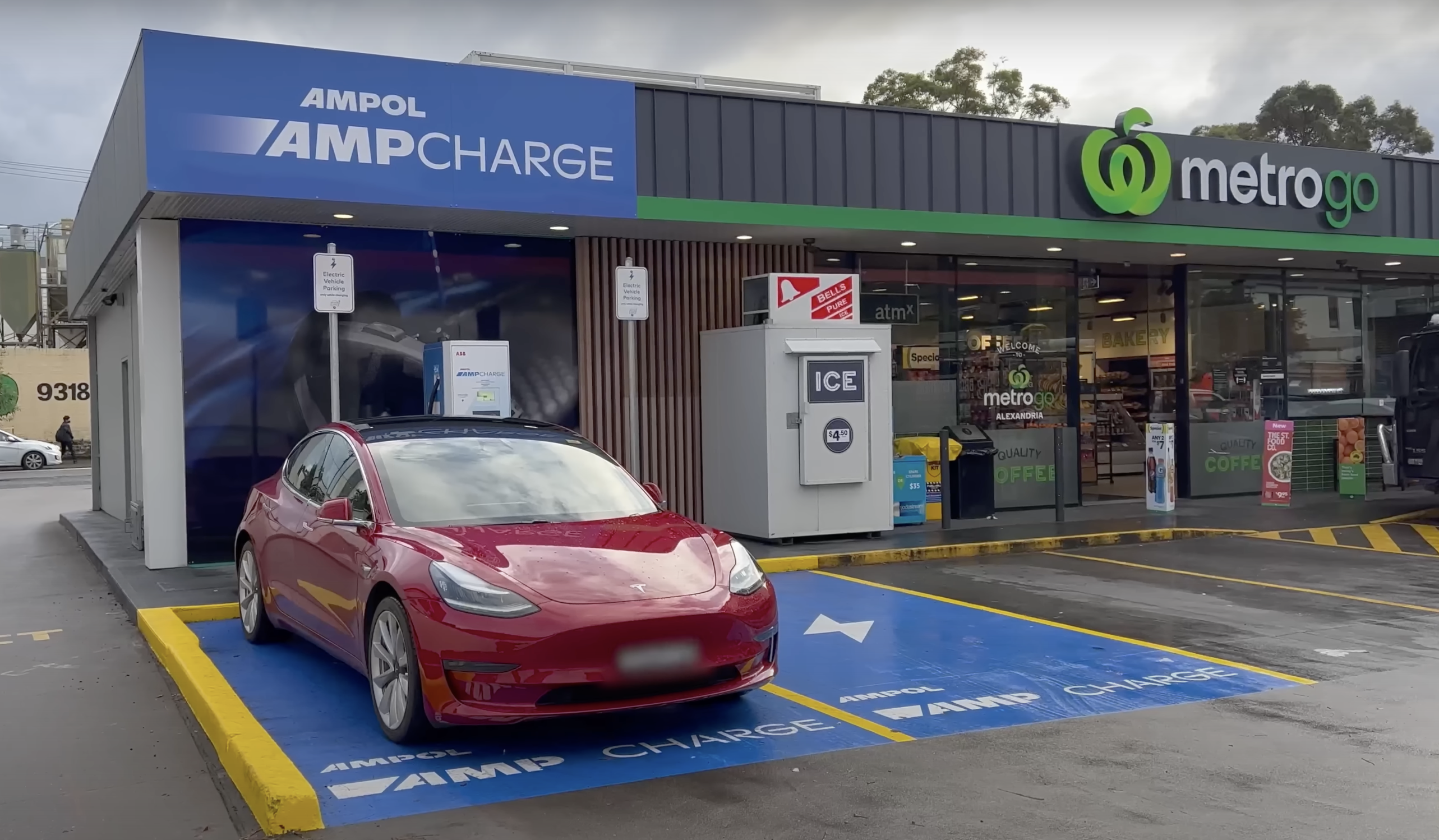
A full map is yet to be released, with the chain – previously known as Caltex – operating approximately 1900 service stations nationwide.
The petroleum company is yet to reveal the program’s overall cost; however, it is partly funded by $7.05 million from the Federal Government’s Australian Renewable Energy Agency (ARENA).
Each charger will be capable of delivering up to 150kW, with one charging unit and two plugs – CCS2 and CHAdeMO – offered at the flagship Alexandria site, which also features solar panels, battery storage, and a Woolworths convenience store.
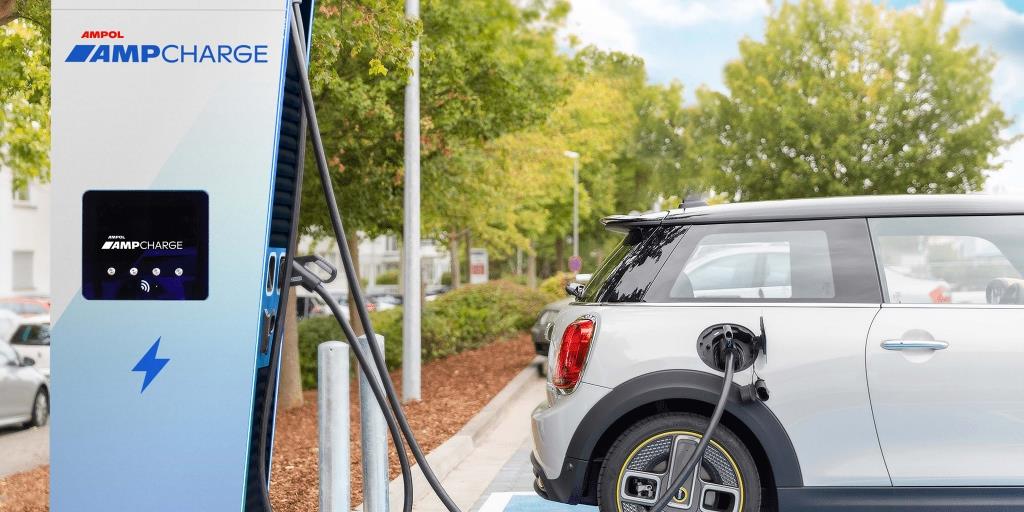
However, the current units are limited to 70kW – pending a further upgrade – while the latest models from Tesla, Kia, Hyundai and Porsche support maximum charge rates between 250kW and 350kW.
Earlier this year, Ampol managing director and CEO Matt Halliday said the announcement is “an important step forward in the execution of Ampol’s future energy and mobility strategy.”
“I’m pleased to today unveil our full-service electric vehicle fast charging ecosystem, AmpCharge, leveraging our existing network, skills and infrastructure to provide a diverse and comprehensive charging network that can minimise range anxiety and support the uptake of BEVs in Australia,” he said.
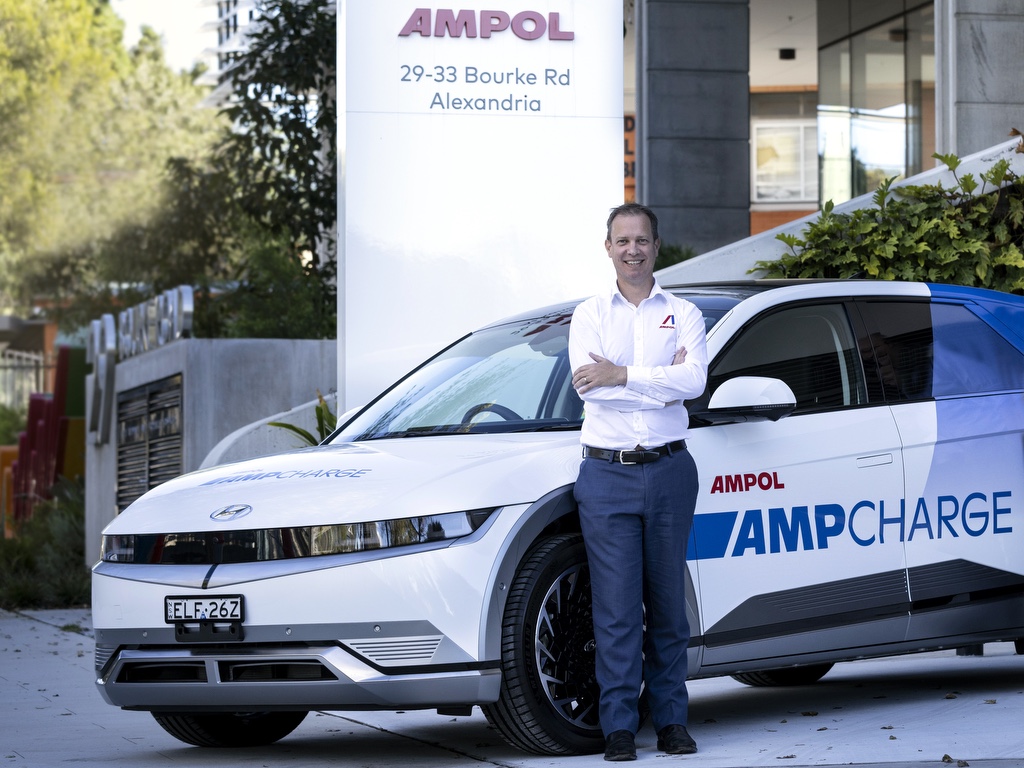
“We’ve been keeping Australians moving for over 120 years. Today, as energy needs evolve, our vision is to become Australia’s leading distributer [sic] of energy, providing mobility solutions for any of the vehicles our customers drive, anywhere and anytime they need it.
“As we begin to evolve our national network, consumers will see AmpCharge in Ampol service stations, depots and terminals right across the country. For the first time, we’ll also be entering homes, workplaces and shopping centres as we seek to deliver simple and efficient charging solutions at convenient locations to keep people moving.”
Ampol also operates 10 separate electric vehicle charging stations across seven petrol stations in Victoria, New South Wales and Western Australia, as part of a partnership with charging supplier Evie. It is currently unknown if these units will be replaced by the company’s own AmpCharge network.
