
Snapshot
- F-Pace SV Bespoke Edition 1988 to go on sale in Australia
- Local allocation capped at 20 units
- To be priced from $189,531 before on-road costs
Jaguar’s Special Vehicle Operations is paying homage to the brand’s 1988 24 Hours of Le Mans win by kitting out its hero F-Pace SVR, launching the SV Bespoke Edition 1988.
Debuting at $189,531 before on-road costs, the Edition 1988 wears a $44,385 premium over the F-Pace SVR it’s based on, but its exclusive equipment and highlights ensure the 20 local buyers get some value for their money.
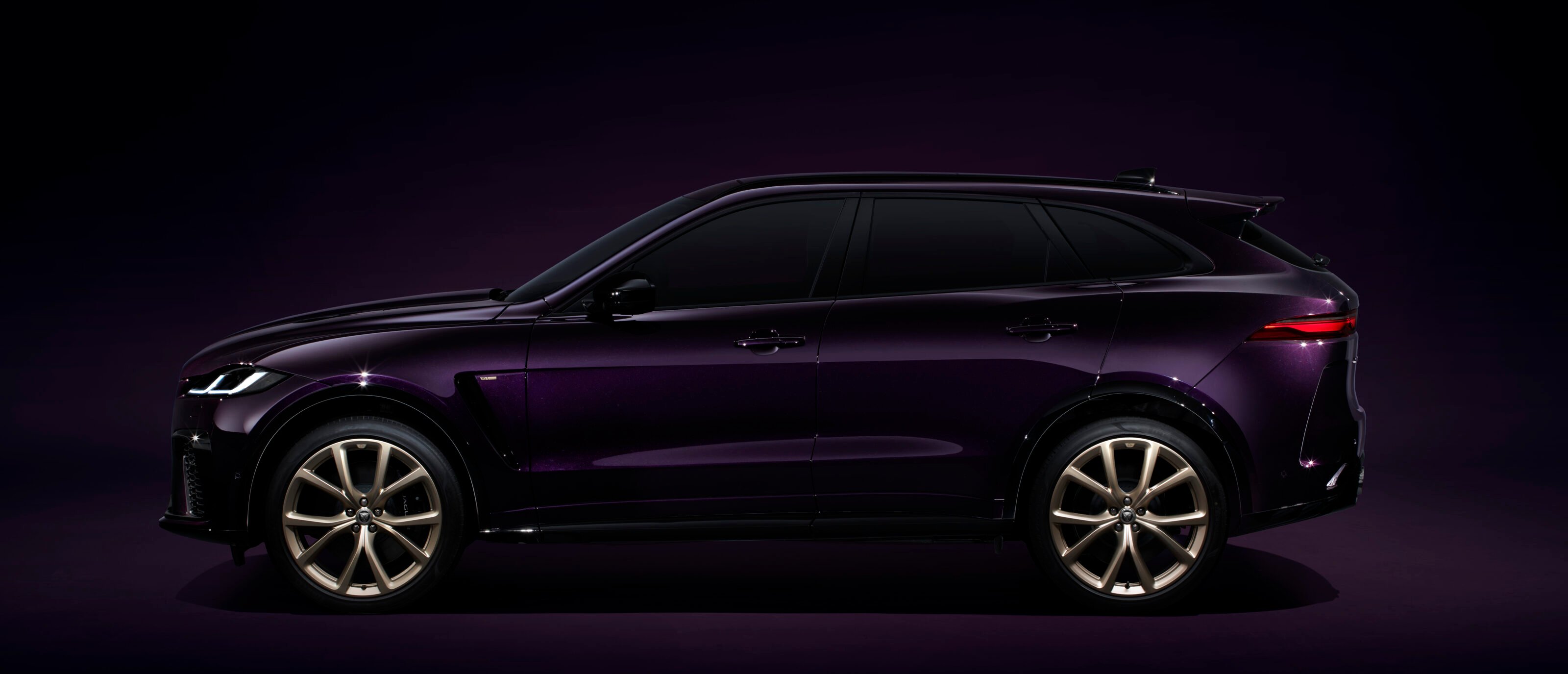
Harking back to the Jaguar XJR-9 Le Mans racer’s ‘Silk Cut’ livery – don’t smoke, kids – all Edition 1988s are finished in midnight amethyst paint with champagne gold 22-inch forged-alloy wheels and sunset gold accents, while an Edition 1988 logo is laser-etched into the front guards.
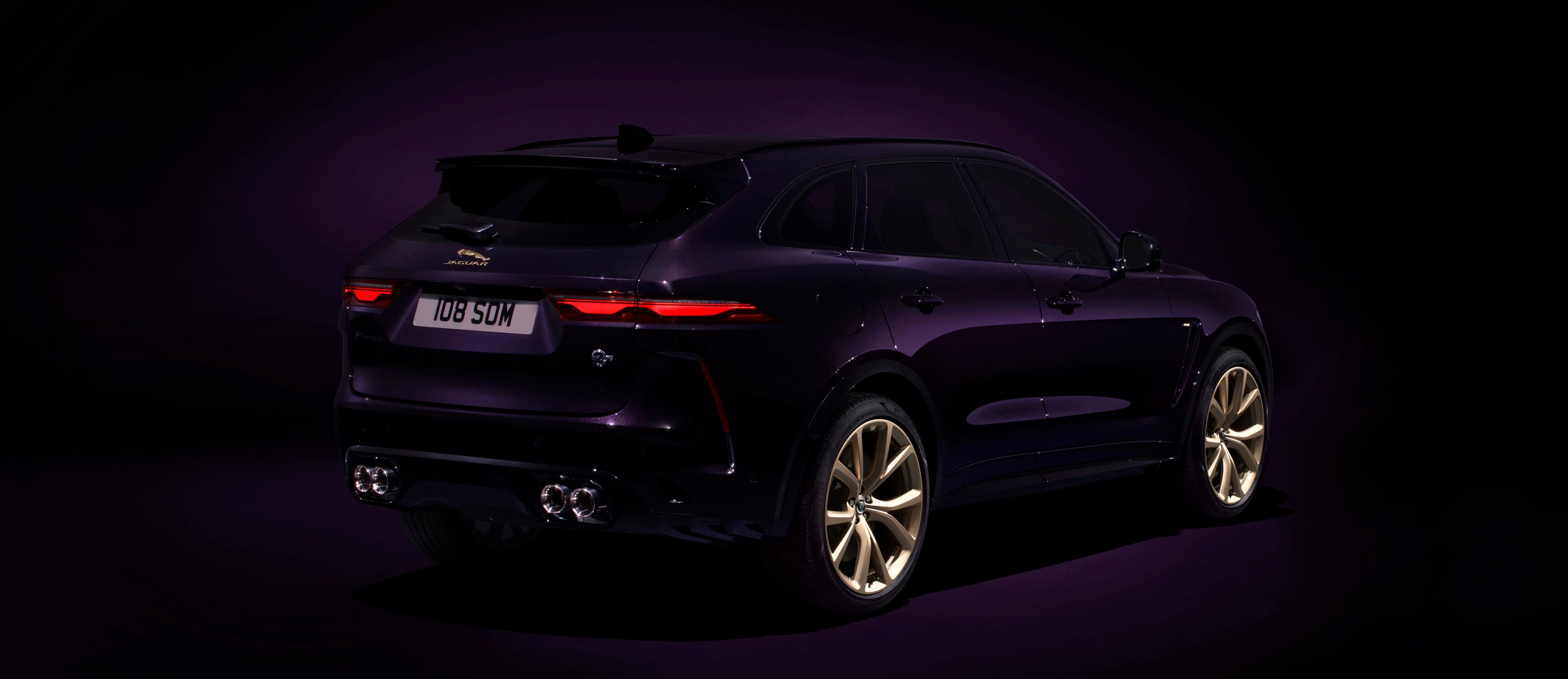
Other exterior additions over the SVR include gloss-black door mirror caps, brake calipers, wheel centre caps and ‘R’ lettering within the SVR badge.
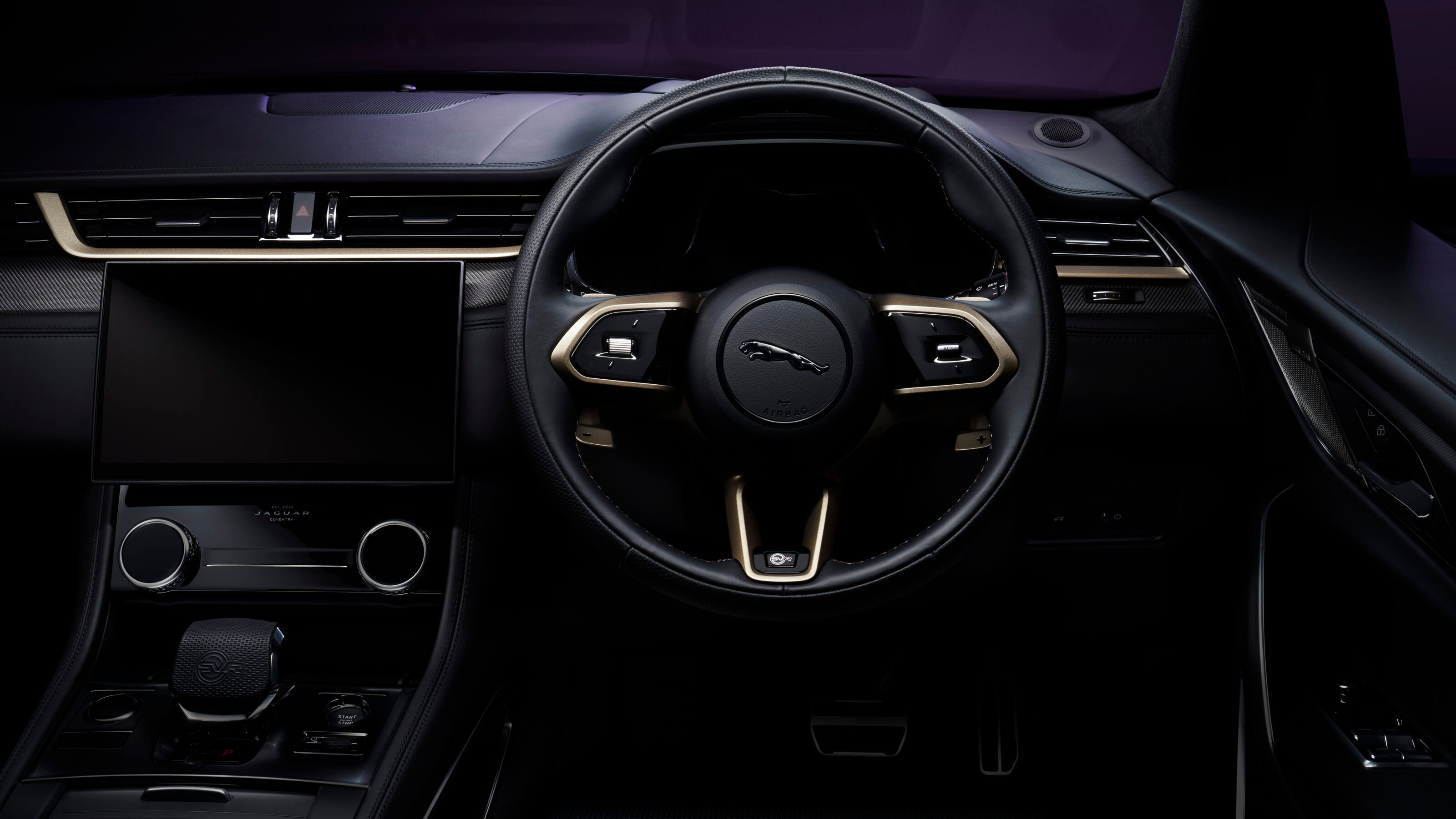
There are changes in the cabin too, with semi-aniline ebony leather upholstery and open-pore carbon fibre finishes matched with sunset-gold satin dashboard detailing, steering wheel spokes and gear shift paddles, as well as heated-and-cooled front performance seats.
Standard equipment continues to include a sliding panoramic roof, head-up display, wireless smartphone charging, integrated Amazon Alexa and the latest Pivi Pro infotainment system.
Under the bonnet, the F-Pace SVR’s 5.0-litre, supercharged V8 is unchanged, with its 405kW and 700Nm outputs still sent to all four wheels through an eight-speed, torque-converter automatic transmission.
Capped at a production of 394 units worldwide (acknowledging the number of laps completed en route to Jaguar’s Le Mans victory) just 20 examples will come to Australia in the fourth quarter of 2022, available to order at the Jaguar dealers below.
2022 Jaguar F-Pace SV Bespoke Edition 1988 dealers
| State | Dealer |
|---|---|
| New South Wales | Alto Jaguar, Artarmon; Parramatta Jaguar; Purnell Jaguar, Blakehurst; Sydney City Jaguar, Alexandria |
| Queensland | Gold Coast Jaguar, Southport |
| South Australia | Solitaire Jaguar, Hawthornu00a0 |
| Victoria | Brighton Jaguar, Brighton East |
| Westen Australia | Barbagallo Jaguar, Osborne Park |
It’s a big day for our Wheels Media team, announcing that veteran writer and presenter Jez Spinks has jumped across from contributor to full-time teammate, while long-time staffer Andy Enright has been named editor of Wheels.
Taking on the newly created role of Chief Content Officer for Wheels Media’s new-car brands, Jez will oversee the planning and production of online and print content for Wheels, WhichCar and 4X4 Australia – while still being busy writing news and reviews on his keyboard, of course!
In this position, Jez will work with Andy, along with 4X4 Australia editor Matt Raudonikis and publishing director of digital, Mike Stevens.
Joining Wheels Media marks a return to brands Jez has worked with in both a full-time and freelance capacity for nearly two decades, in between stints as the online head of Drive in its Fairfax era and as Editor-in-Chief of CarAdvice.
“My motoring career began on Wheels, so I recognise how much of a privilege it is to join Wheels Media and all its iconic brands,” said Jez.
“Wheels, WhichCar and 4X4 Australia cater to such an incredibly broad spectrum of car enthusiasts, buyers, and adventurists, and I’m truly excited about working with a highly passionate and multi-talented team to provide our readers and viewers with informative and engaging world-class content via their favourite medium – whether it’s online, video, print, or social media.”
Regular visitors to WhichCar.com.au have seen plenty of Jez here already, of course. You can check out his author page here, with a wealth of written and video pieces going back many years.
Our second piece of big team news today is the announcement that Andy Enright is the new editor of Wheels. In fact, Andy already has experience with our flagship new-car title, having worked as its deputy editor before being made editor of MOTOR.
“It feels like a bit of a homecoming returning to Wheels, but also a huge responsibility, given the reach of this internationally recognised brand,” Andy says. “I’m excited to be given the opportunity to deliver incisive, thought-provoking, premium quality journalism backed up by the industry’s best photography and video.”
Andy’s move to Wheels marks the latest step in a 24-year career, which has seen him contribute to The Times, Autocar, Car, Top Gear Australia and Edmunds.
Andy first joined the team that is now Wheels Media in 2014, starting with Unique Cars.
You can find Andy’s stories and videos at his author page here.
About Wheels Media
With the collective power of our five mastheads (Wheels, 4X4 Australia, Street Machine, Unique Cars and WhichCar?), Wheels Media boasts more than 30,000 paying subscribers, 60,000 monthly retail customers, a digital audience totalling 1.3 million monthly users, and a combined social media audience of 1.2 million.
Combined, Wheels Media’s brands now deliver Australia’s largest consumed and most authentic automotive media and is the only Australian automotive publisher with dedicated brands catering to specific auto niches and is experiencing strong growth since its distinction from parent company Are Media.
Snapshot
- Cupra UrbanRebel unveiled
- Latest concept to inspire production model
- MEB 21 architecture to underpin future small VW and Skoda EVs
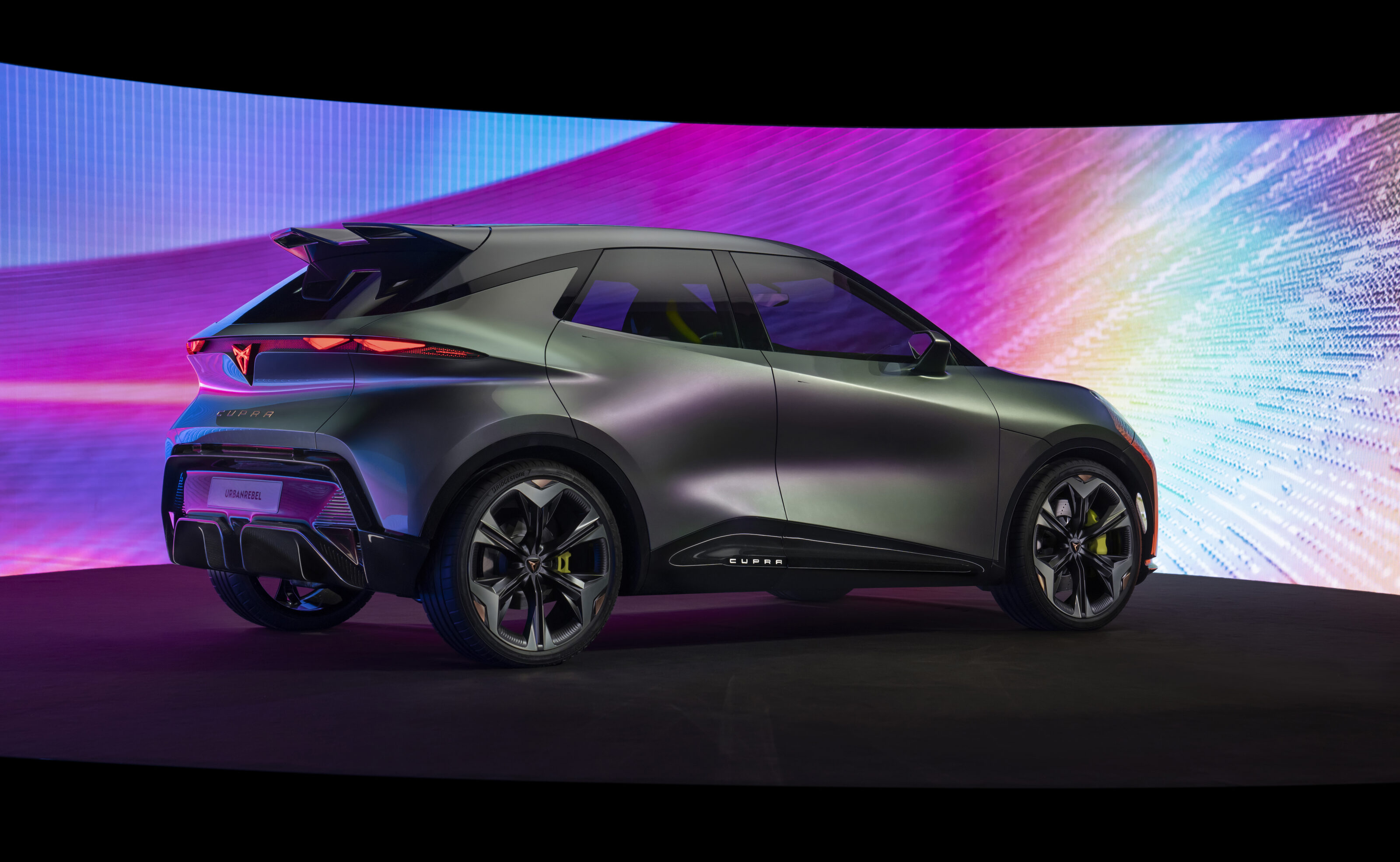
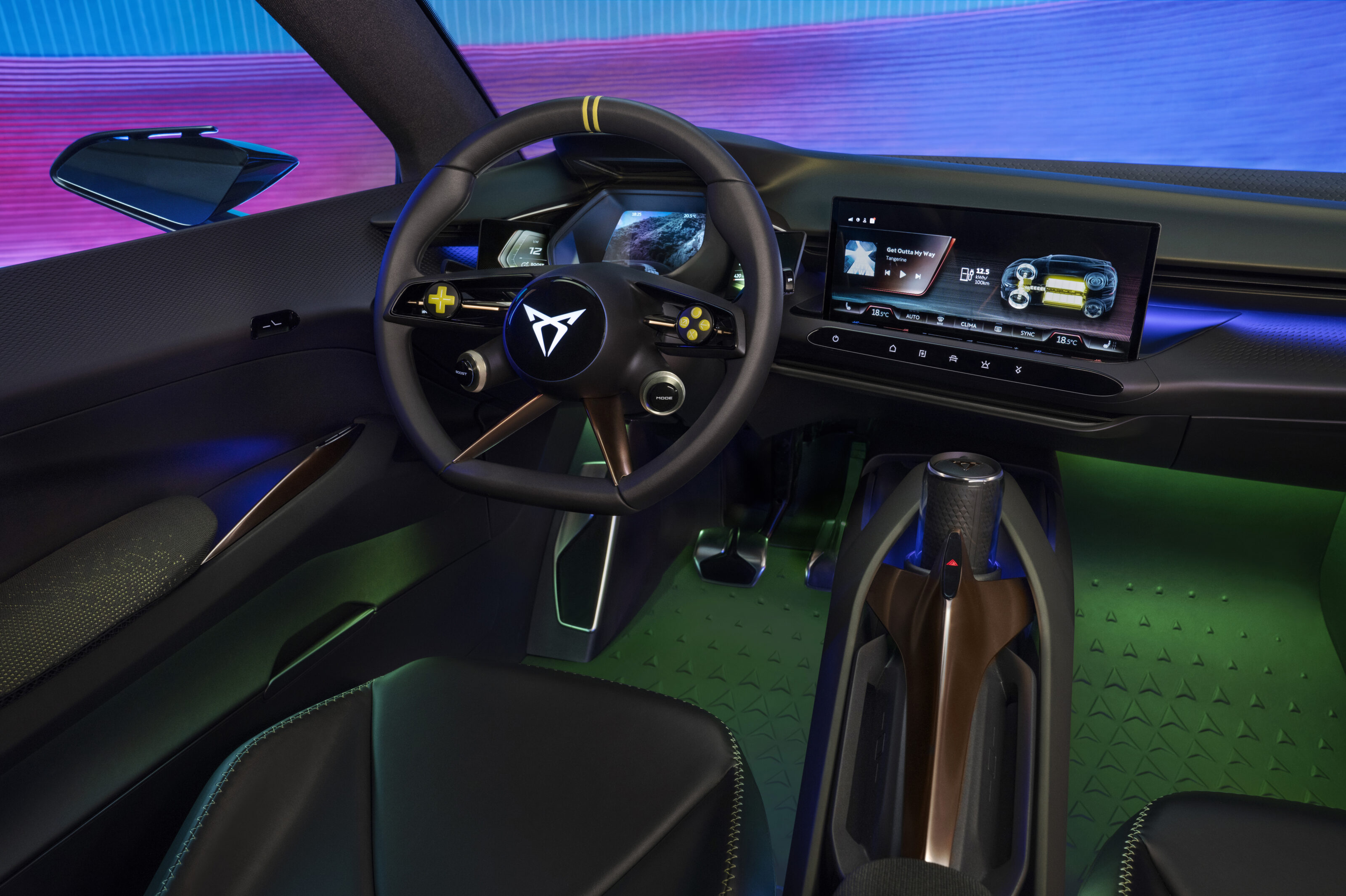
The Cupra UrbanRebel EV has been revealed in near production-ready form.
“This is the model that will democratise urban electric mobility,” said Cupra chief Wayne Griffith at an event to reveal new models the brand will launch by 2025.
Though the Spanish brand doesn’t go live in Australia until July, local Cupra director Ben Wilks confirms the UrbanRebel will be added to the line-up, with production of the small EV scheduled to begin in 2025 at a factory in Barcelona.
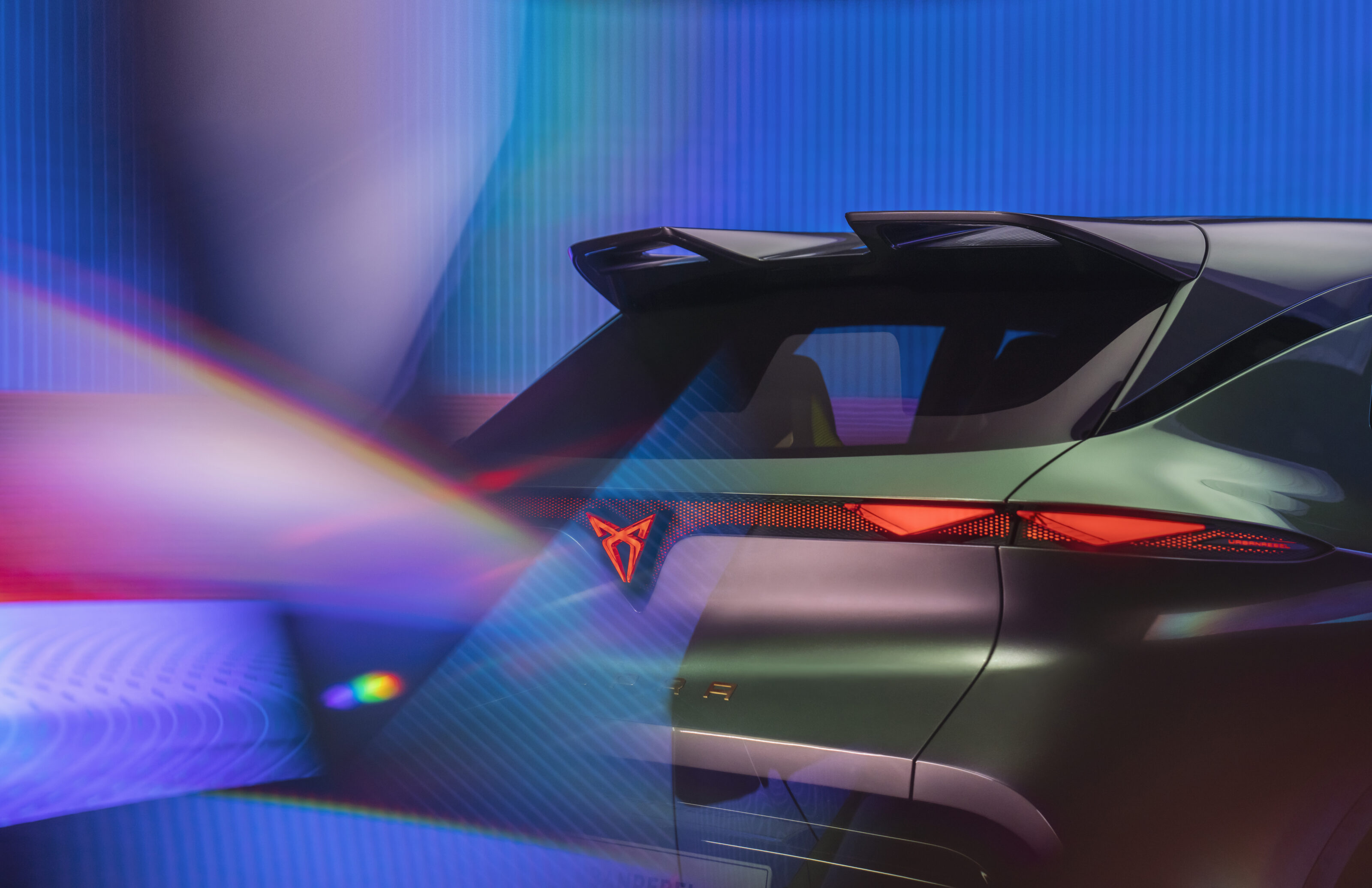
Last year Cupra presented the UrbanRebel concept at the Munich show. Wearing an oversized rear wing and huge front splitter it was more than a bit outlandish. The second concept is totally realistic.
“This is how the car will look, I promise, even in 2025,” said Cupra R&D chief Werner Tietz at the reveal. And the engineer is aiming to make it a real driver-pleaser.
“This car will drive like a go-kart, I promise you.”
Tietz says high-performance and long-range versions of the UrbanRebel are being developed.
The first will have a single 166kW electric motor, a 0-100km/h time of 6.9 seconds, and a driving range of around 400km.
For the second, which will have a less powerful motor (numbers still to be confirmed), the aim is a driving range of 440km.
Both will have the larger of the two battery packs. The smaller pack will use a less costly battery chemistry and will go into the most affordable variants in the UrbanRebel line-up, with Tietz saying the EVs will be capable of DC fast-charging at over 120kW.
What’s to come for Cupra
Beyond its significance for Cupra, the UrbanRebel also offers a first glimpse of what to expect from small EVs coming from Volkswagen and Skoda.
Cupra is part of the VW Group. Founded in 2018, the brand is an independent spin-off from VW’s long-established Spanish subsidiary Seat. Now Cupra has been put in charge of the core development of a family of models to be built on the VW Group’s new and purpose-designed platform for small EVs.
Though named ‘MEB 21’, this exclusively front-drive architecture is different from the larger MEB platform which forms the basis for VW’s ID.3, ID.4 and ID.5 as well as Skoda’s Enyaq and Cupra’s own, ID.3-based Born.
“With the UrbanRebel, we are leading the project for the Group,” explained Tietz. The packaging advantages of front-drive for a small EV were impossible to ignore, he said.
It means the electric motor, its inverter, power electronics and the battery-packs on-board charging hardware can be installed as a module. Weight and cost are reduced, and there’s more space for cargo above the motor-less rear axle.
Tietz says the UrbanRebel will have an overall length of a fraction more than 4.0 metres – around the length of the Volkswagen T-Cross – but will have a luggage compartment of around 400 litres.
VW’s MEB 21-based cousin of the UrbanRevel is expected to resemble the ID.Life concept presented at the Munich motor show last September. Skoda’s version is more of a mystery but both will be assembled alongside the UrbanRebel in Spain.
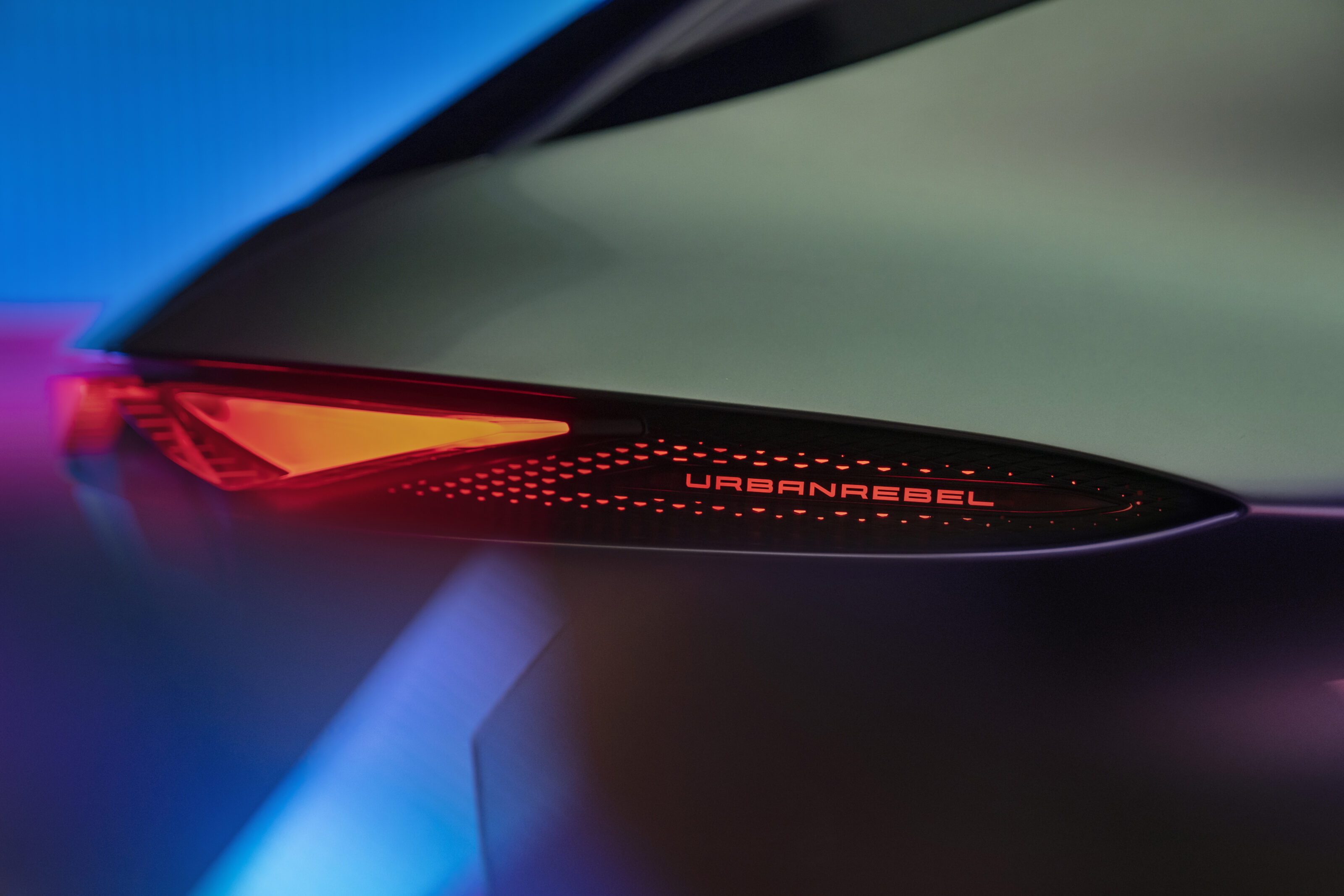
The big reveals from Cupra’s Impulse event
Mercedes-Benz is expected to launch the next-generation 2023 GLC Coupe in the coming months, with new designs showcasing the coupe SUV’s potential design.
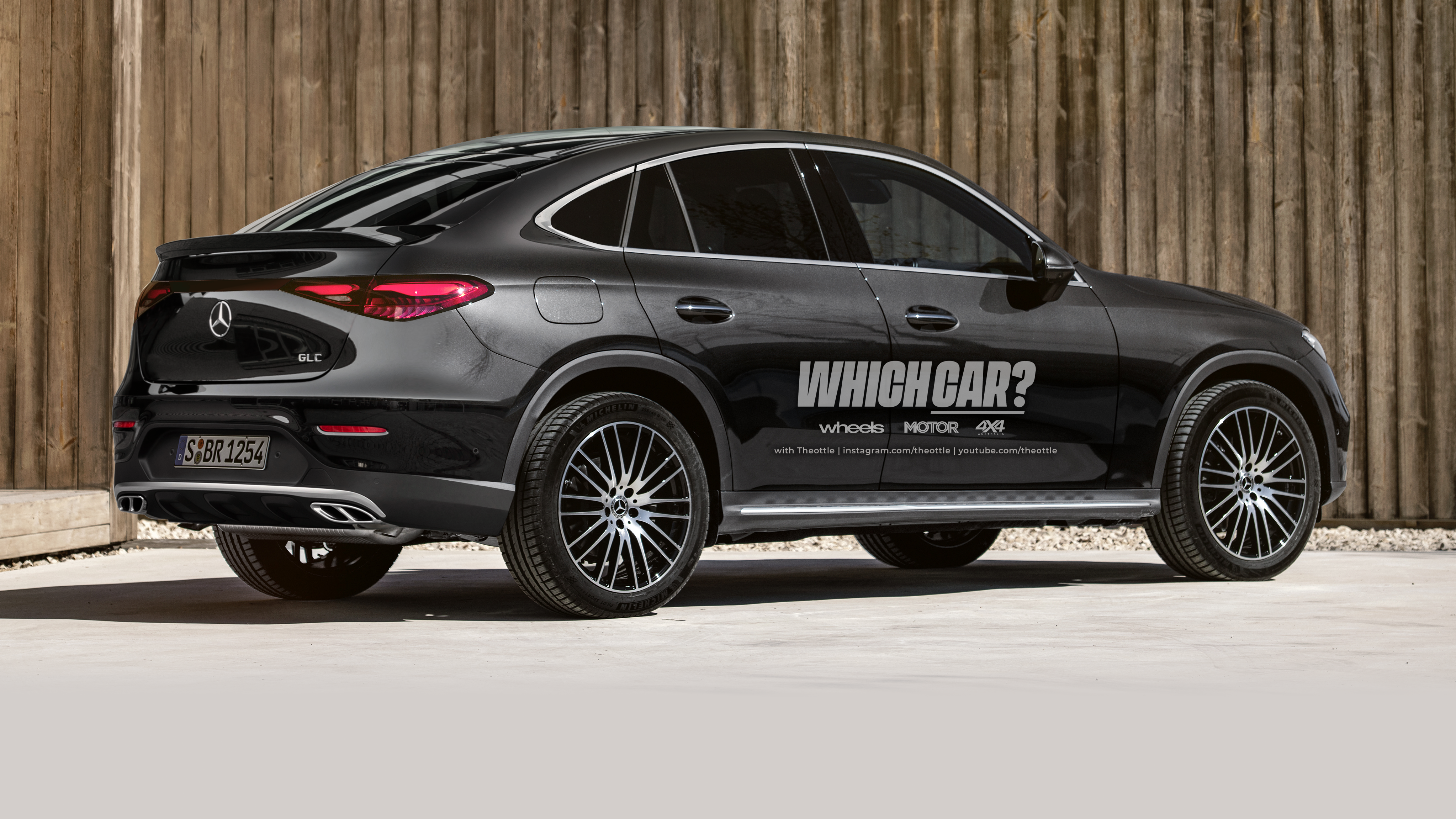
Following last week’s unveiling of the regular, next-generation GLC medium SUV, rendering artist Theottle has imagined what the forthcoming sloped-back iteration could look like.
Taking inspiration from the all-new GLC by adopting its front-end styling, the GLC Coupe trades its traditional SUV body for a sleeker, more-aerodynamic shape – as seen on the current-generation model, which sits alongside the larger GLE Coupe.
The controversial body style was pioneered in 2007, with the first-generation BMW X6 generally considered to be the world’s first coupe SUV.
It has since guided a countless stream of models, including BMW’s own X2 and X4, along with vehicles from rival marques Audi, Mercedes-Benz, Land Rover, Porsche and Volvo.
Mainstream brands – such as Volkswagen, Honda, Renault and Citröen – have also joined in on the action, with the Renault Arkana coupe SUV available in Australia for under $40,000.
Other design elements in the renderings include; a ducktail spoiler, fake exhaust tips and a reshaped window frame against the wagon body.
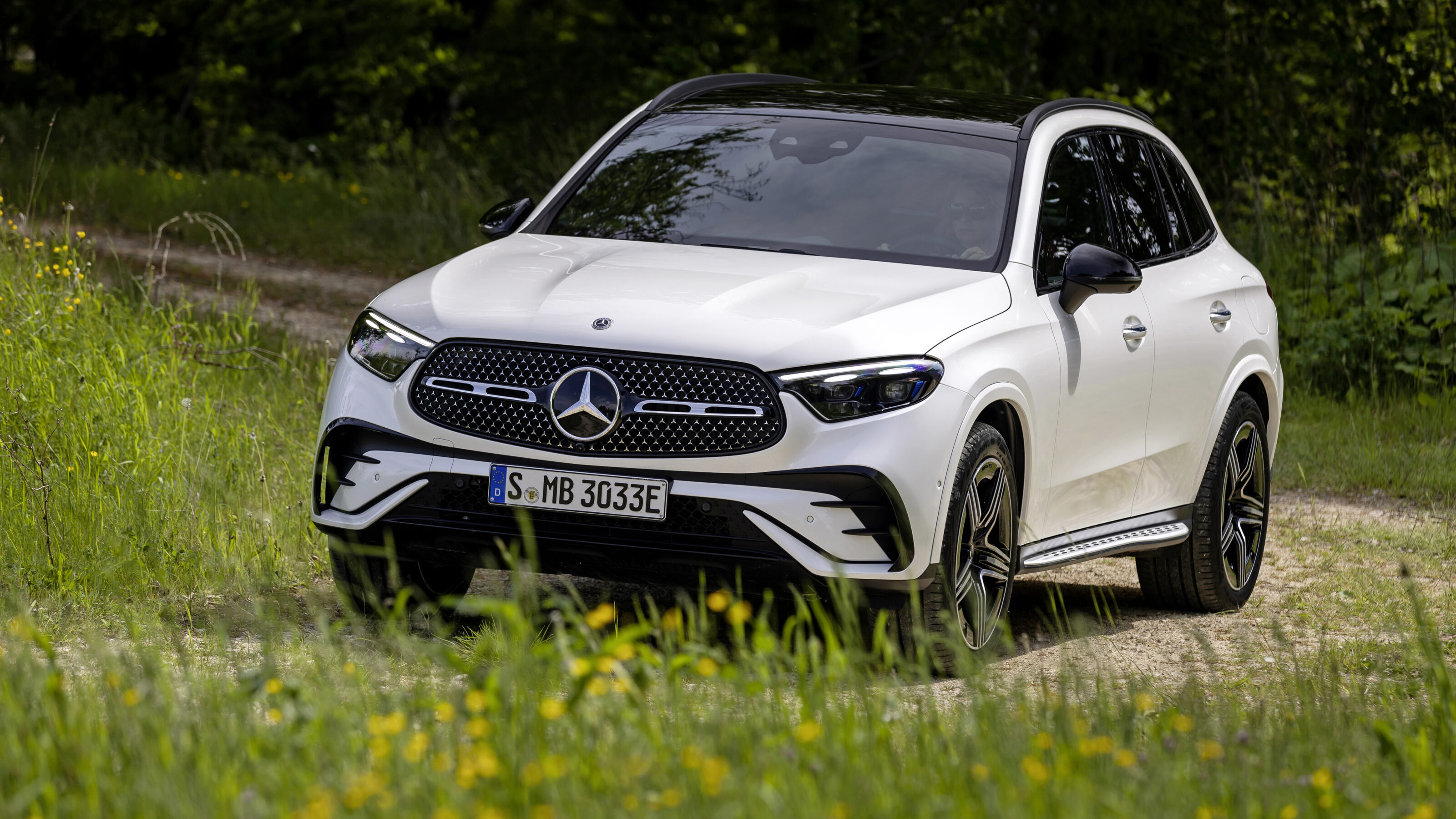
As a whole, the Mercedes-Benz GLC is currently the brand’s highest-selling model globally, with the revised version seeing evolution over the outgoing generation.
Despite this, the second-generation Mercedes-Benz GLC acquires many elements from the recently-launched C-Class, such as the ditching of six- and eight-cylinder powertrains in favour of electrified four-cylinder engines.
This will extend to AMG models, with plug-in hybrid technology likely for the powerful 500kW-plus GLC 63.
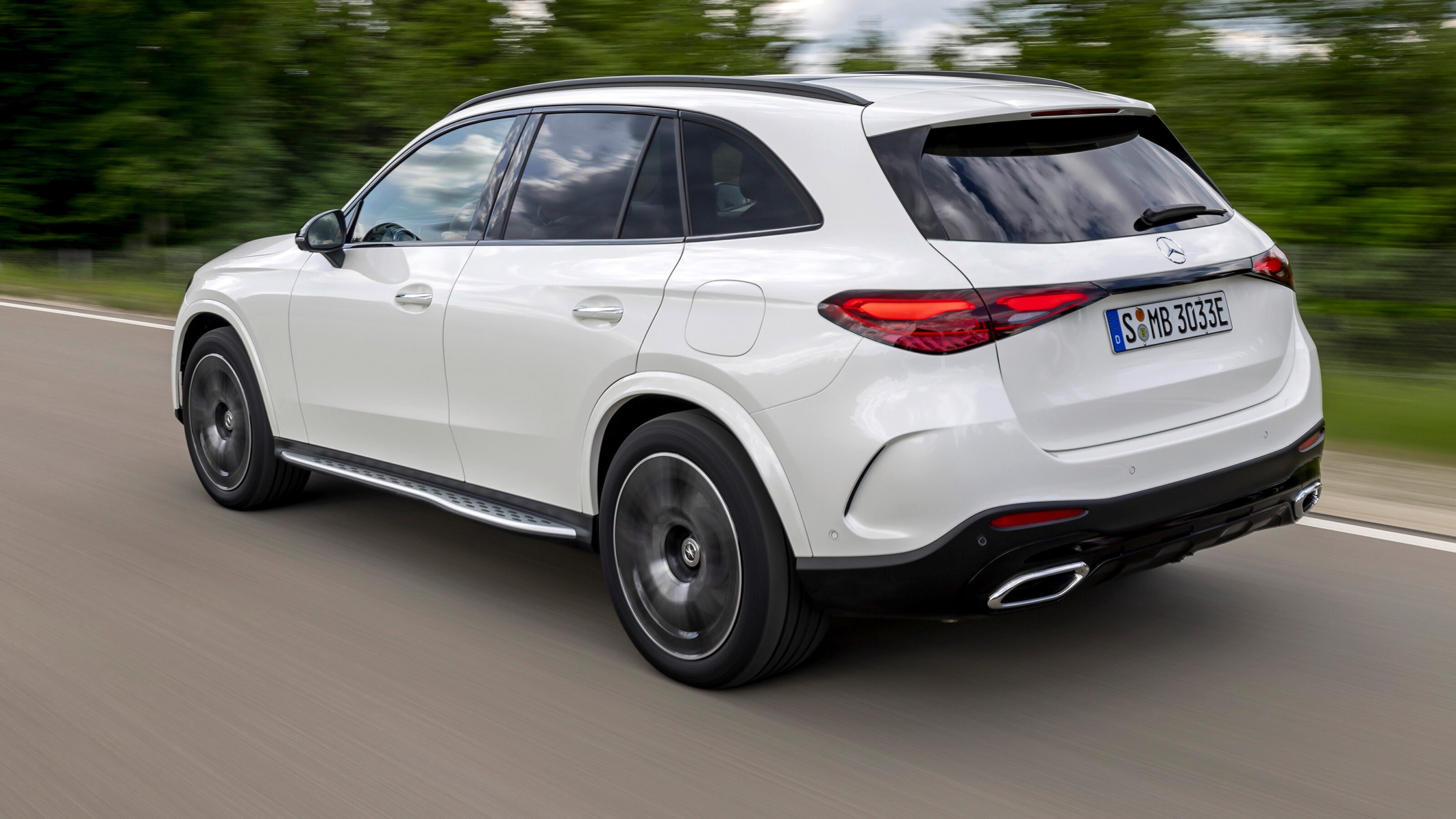
Built on the same MRA2 architecture as the C-Class and S-Class sedans, the GLC has grown across every dimension (except height) – with a 15-millimetre longer wheelbase for improved rear-seat legroom.
Inside, it adopts Mercedes-Benz’s latest technology, with a configurable 12.3-inch full-digital instrument cluster and an 11.9-inch portrait-orientated MBUX infotainment system.
VFACTS sales figures reveal 771 units of the Mercedes-Benz GLC Coupe were sold in 2021, against 3435 examples of the regular GLC wagon and 981 sales for its arch-rival, the BMW X4, over the same period.
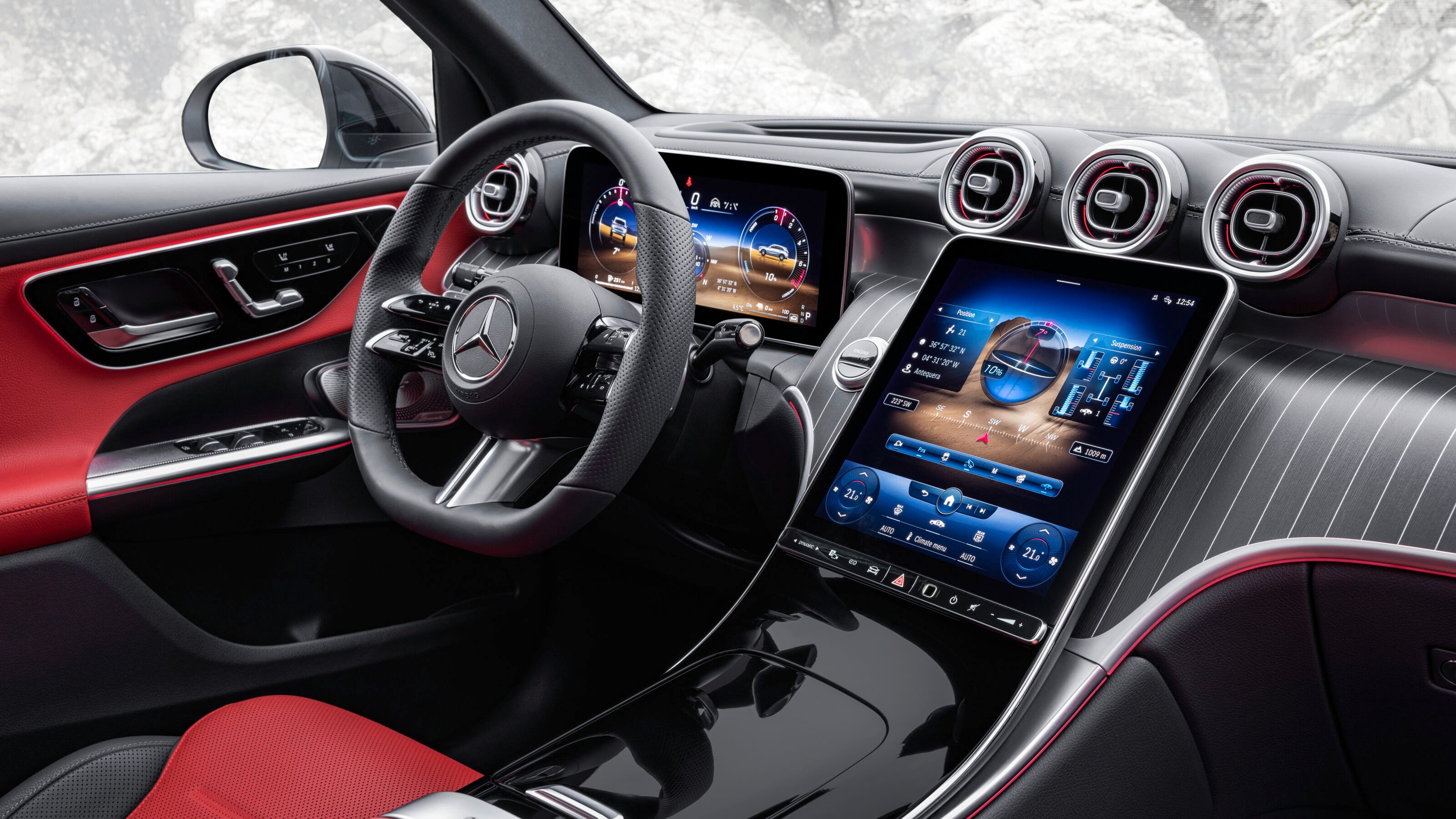
It is currently priced from $100,300 before on-roads for the entry-level GLC 300, with price increases between $10,000 and $15,000 likely across the next-generation range.
Although there has been little chatter from the brand so far about the next-generation 2023 Mercedes-Benz GLC Coupe, it is expected to debut early next year.
In the meantime, the latest 2023 Mercedes-Benz GLC wagon is scheduled to arrive in local showrooms in the first half of next year.
Snapshot
- Hyundai Venue pricing up by $300 for 2022
- No other changes for the light SUV
- Facelifted model tipped to arrive in Australia in early 2023
UPDATE, June 8, 2022: Hyundai Venue price increases by $300
This story, originally published in November 2020, has been updated to reflect latest pricing and features.
Pricing for the 2022 Hyundai Venue has increased by $300 in recent months.
The light SUV will now kick off from $21,240 before on-road costs.
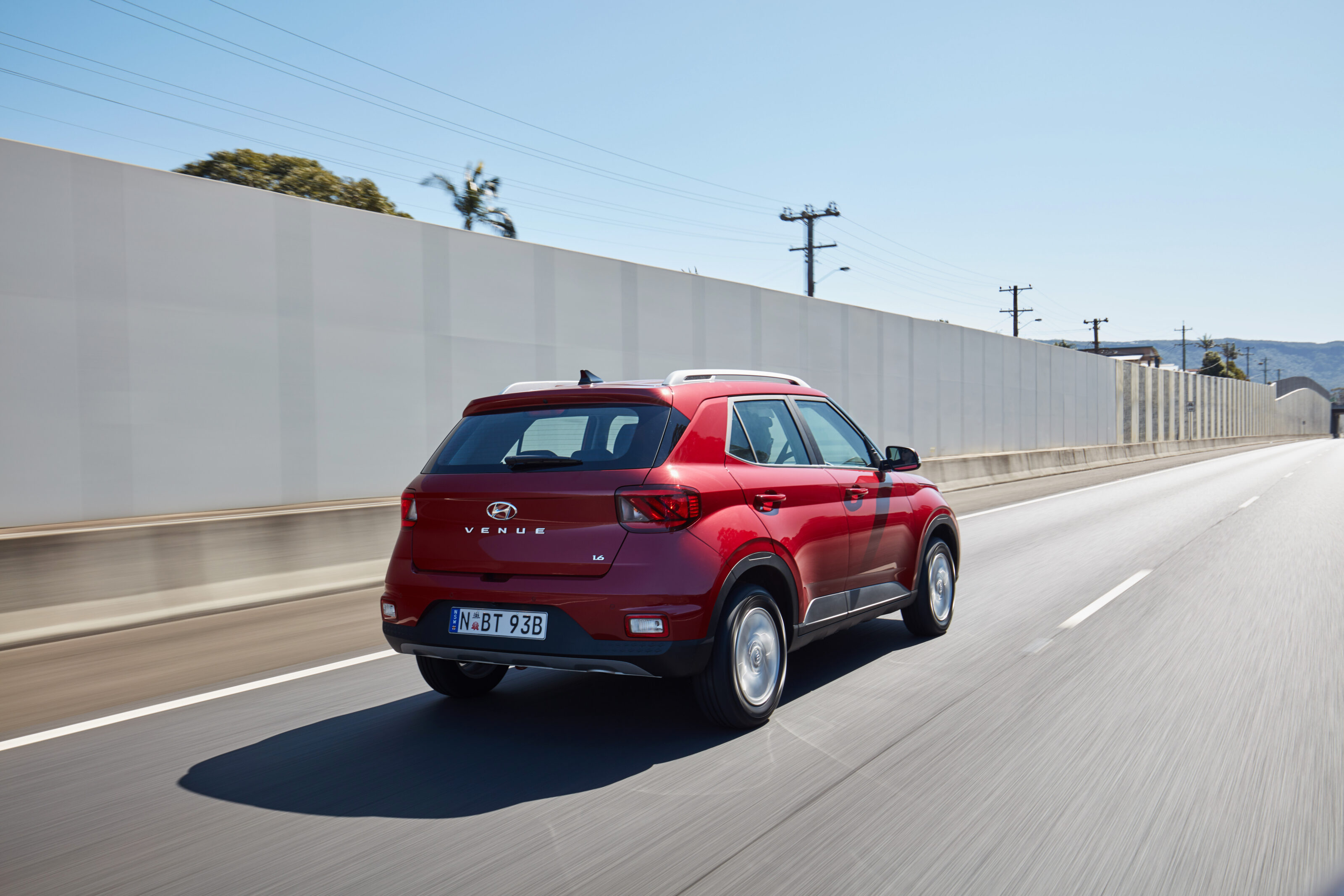
It previously launched locally in mid-2019 from $19,990 plus on-roads, although this ‘Go’ model featured less equipment than today’s entry-level Venue.
In November 2020, Hyundai added 15-inch alloy wheels to replace identically-sized steel items on the base variant, along with larger 17-inch alloys for the mid-spec Active and wireless connectivity for Apple CarPlay and Android Auto on all but the range-topping Elite.
There are no additional specification changes to the Venue for model-year 2022, however, a facelifted model is expected to arrive locally in 2023.
Set to be revealed for the Indian market in the coming days, changes for the 2023 Venue are set to include; a revised look inspired by the Tucson and refreshed Palisade, new alloy wheel and steering wheel designs, and potentially a 10.25-inch widescreen infotainment display.
The Hyundai Venue competes in the light SUV segment in Australia, with rivals including the Mazda CX-3, Kia Stonic, Toyota Yaris Cross and Volkswagen T-Cross.
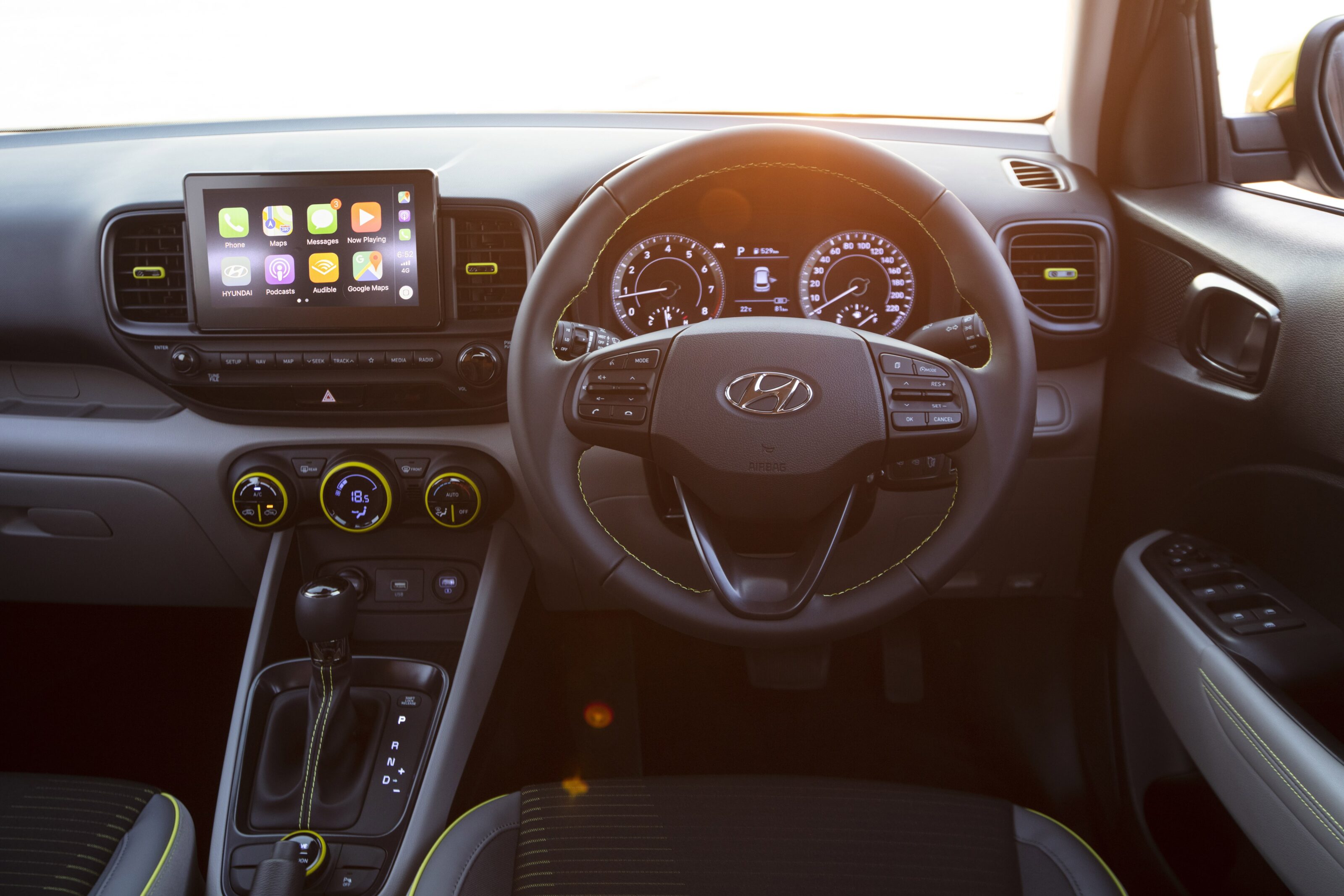
2022 Hyundai Venue pricing
Prices exclude on-road costs.
Metallic or mica paint is available for an additional $495 across the entire Venue line-up.
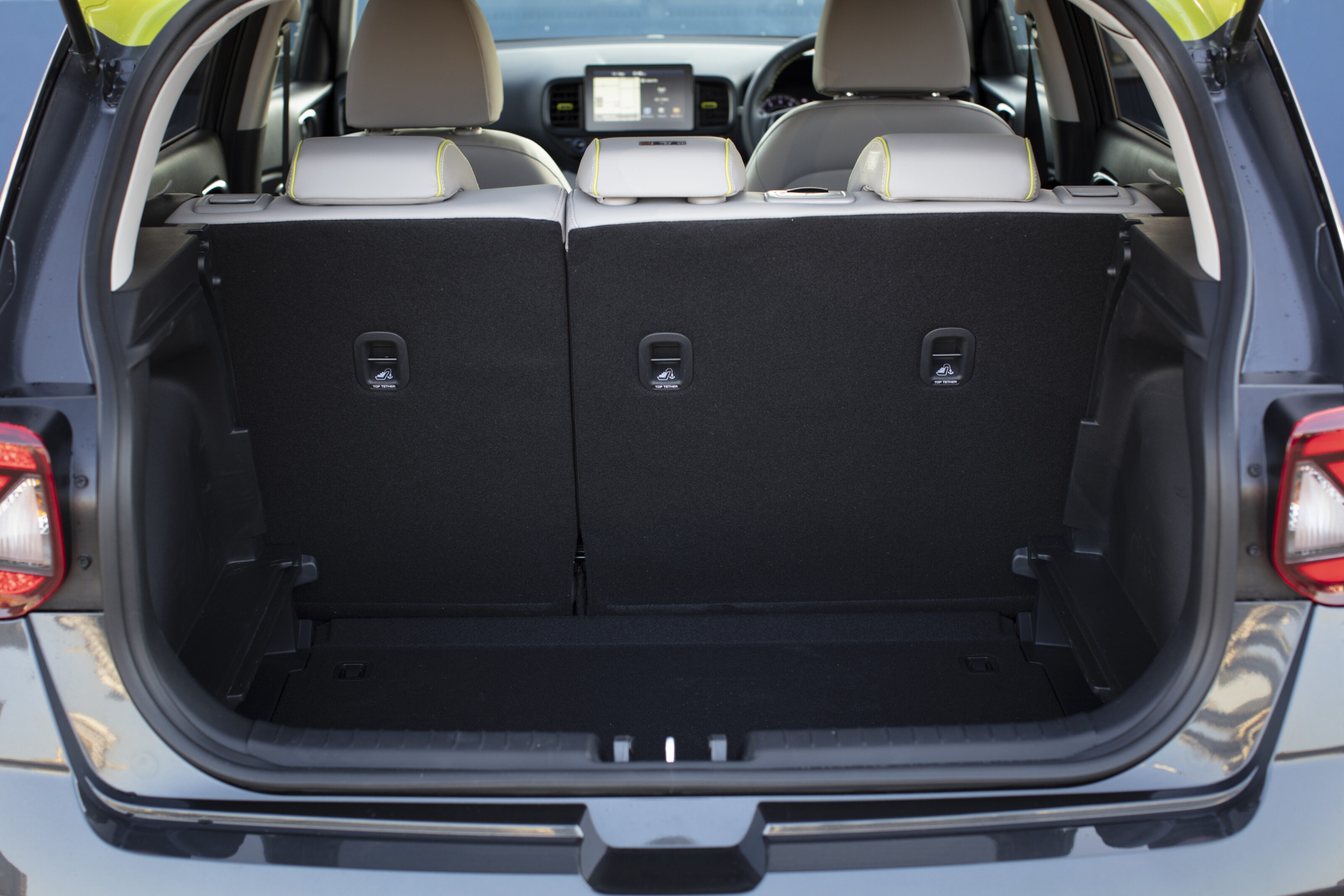
2022 Hyundai Venue features
Venue
Active
Elite
Engine, drivetrain and fuel economy
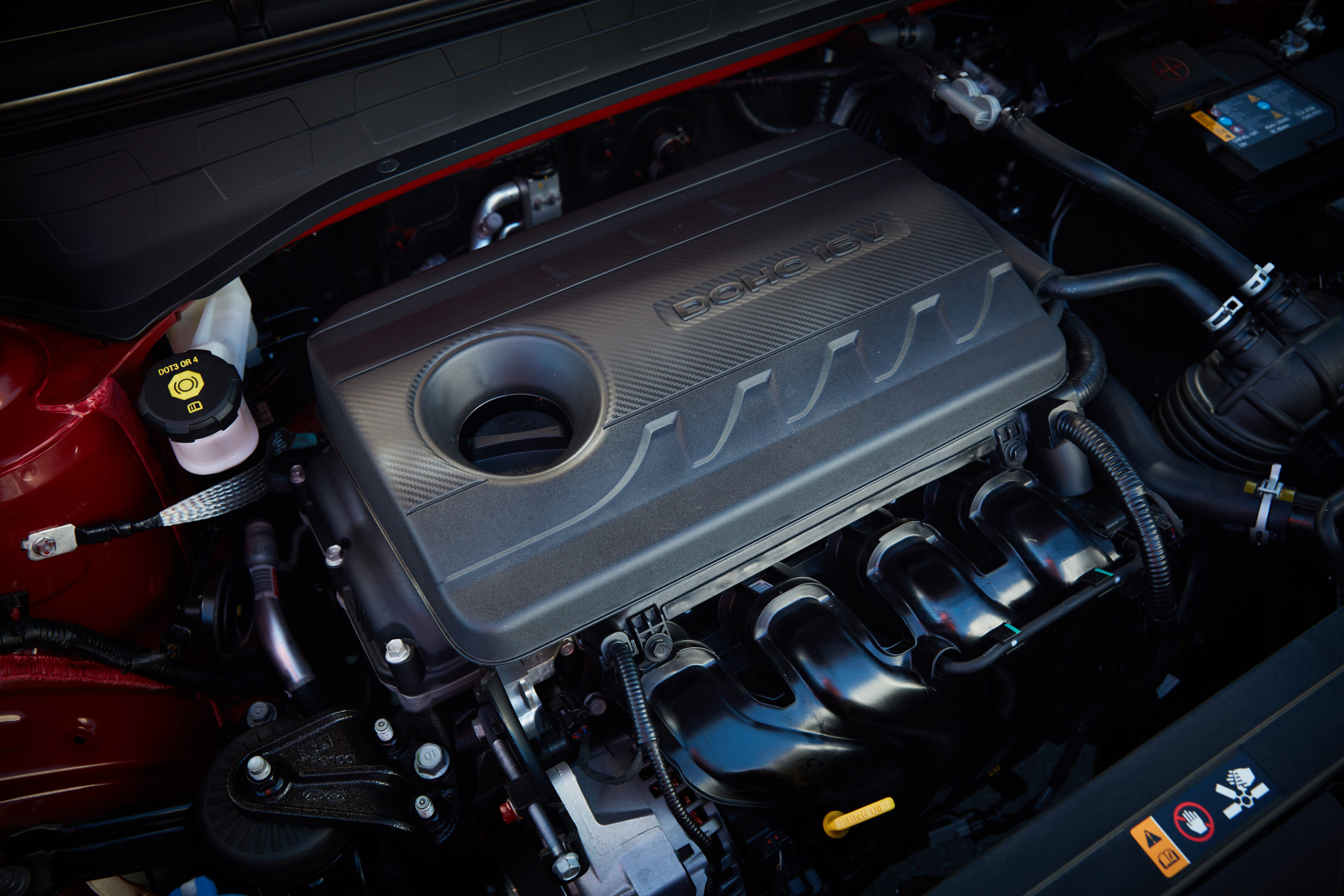
Under the bonnet, the Venue is powered by a 1.6-litre naturally-aspirated four-cylinder petrol engine.
It produces 90kW of power and 151Nm of torque, exclusively sending power to the front wheels only.
The Venue is available with a six-speed manual or six-speed automatic transmission, with the latter gearbox standard on the Elite and optional on lower grades.
Fuel economy figures can be found in the table below:
Safety
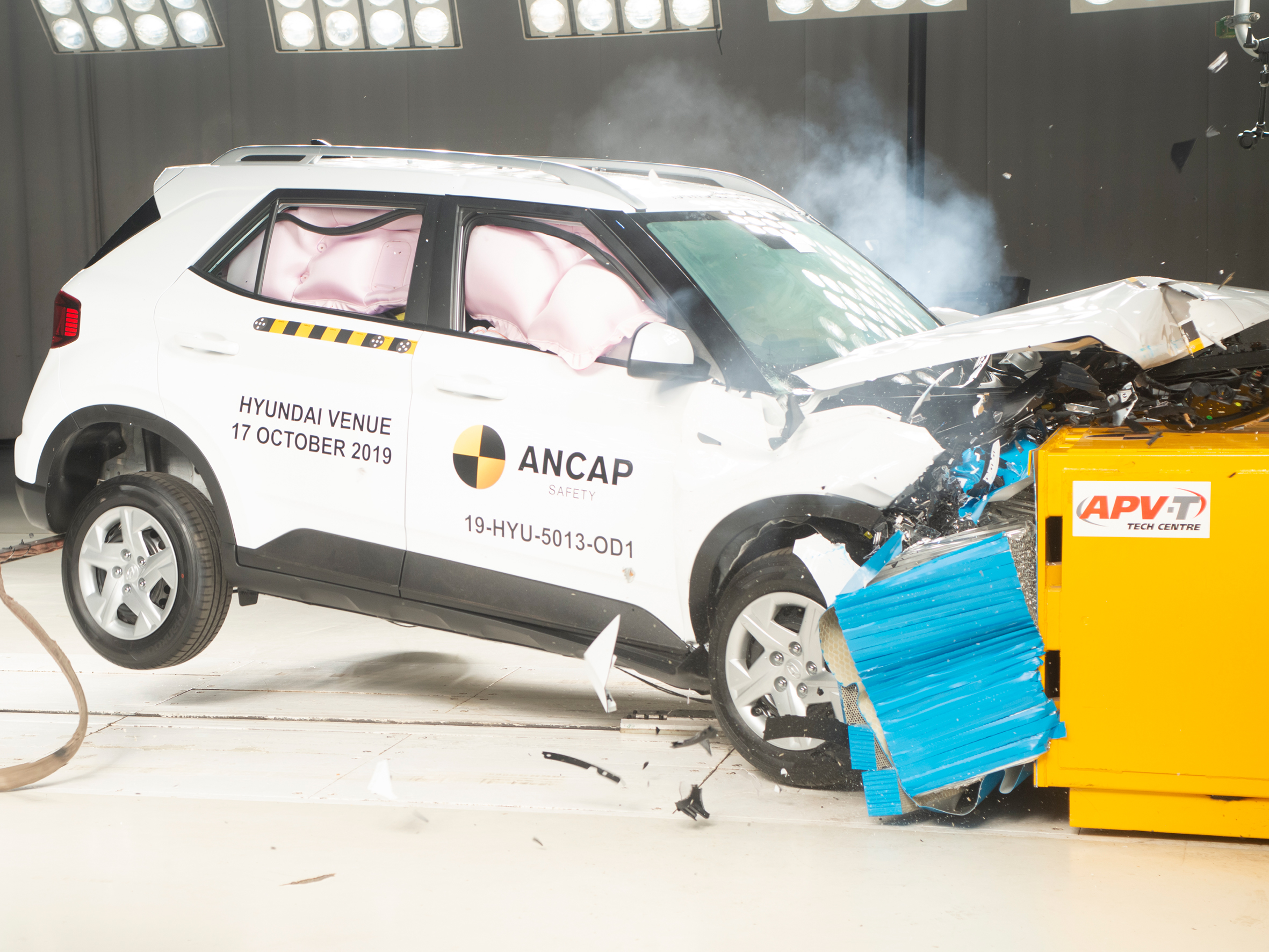
The Hyundai Venue is covered by a four-star ANCAP safety rating, based on testing conducted in 2019.
The crash-testing body said this result was caused by the autonomous emergency braking system in the Venue, which failed to adaquately prevent a rear-end collision during testing. It has not conducted further testing since the initial result was announced.
Six airbags (dual frontal, side chest and side curtain) feature across the Venue range.
Each variant includes the following active safety equipment as standard:
Blind-spot alert and rear-cross traffic alert are limited to the flagship Elite variant.
Dimensions
The Venue has a wheelbase of 2520 millimetres, and is 4040mm long, 1770mm wide and 1592mm high.
Warranty and servicing
As per the wider Hyundai range, the Venue is covered by the brand’s five-year/unlimited-kilometre warranty, along with a complimentary 12-month roadside assistance program.
This coverage extends for up to 10 years if the vehicle is exclusively serviced by the manufacturer.
Lifetime capped-price servicing is offered across the Venue range, however, this pricing will differ depending on the service interval.
Hyundai recommends servicing every 12 months or 15,000 kilometres, whichever occurs first.
Skoda believes it could have reached a record 15,000 sales in 2022 without the crippling effects of the global supply crisis.
The Volkswagen-owned Czech brand achieved its best result yet in Australia last year – though was on track to register five-figure sales before the semiconductor shortage curtailed progress in the second half of 2021.
Skoda’s Australian sales have nearly halved compared with this time last year as the issue continues.
The company’s head of sales, Kieran Merrigan, agreed 15,000 Skoda registrations could have been realistic in a normal year, without supply issues or a European war.
“Absolutely, yes. We would’ve looked at in excess of 15,000 [for 2022],” said Merrigan. “The demand is there for it.
“We were trending towards 12,000 plus [sales] last year before the semi-conductor shortage really impacted us. And our order bank is [still] great.”
Merrigan admits the company’s planning is currently looking at figures below last year’s lows in the second half of 2021.
With 2594 sales year to date, Skoda Australia is tracking for a 2022 result closer to the 6607 units of the COVID-19-hit 2020. That followed a 2019 in which the brand surpassed 7000 new-car registrations for the first time – just two years after passing 5000.
“The next question is, when does that [normal supply] return? It’s really uncertain at the moment. It almost seems like it’s where it was back in the start of COVID-19 [despite the fact] our factories are still in operation at the moment, if not at full capacity.”
Merrigan says despite the supply struggles, the Skoda brand is in a good place in Australia.
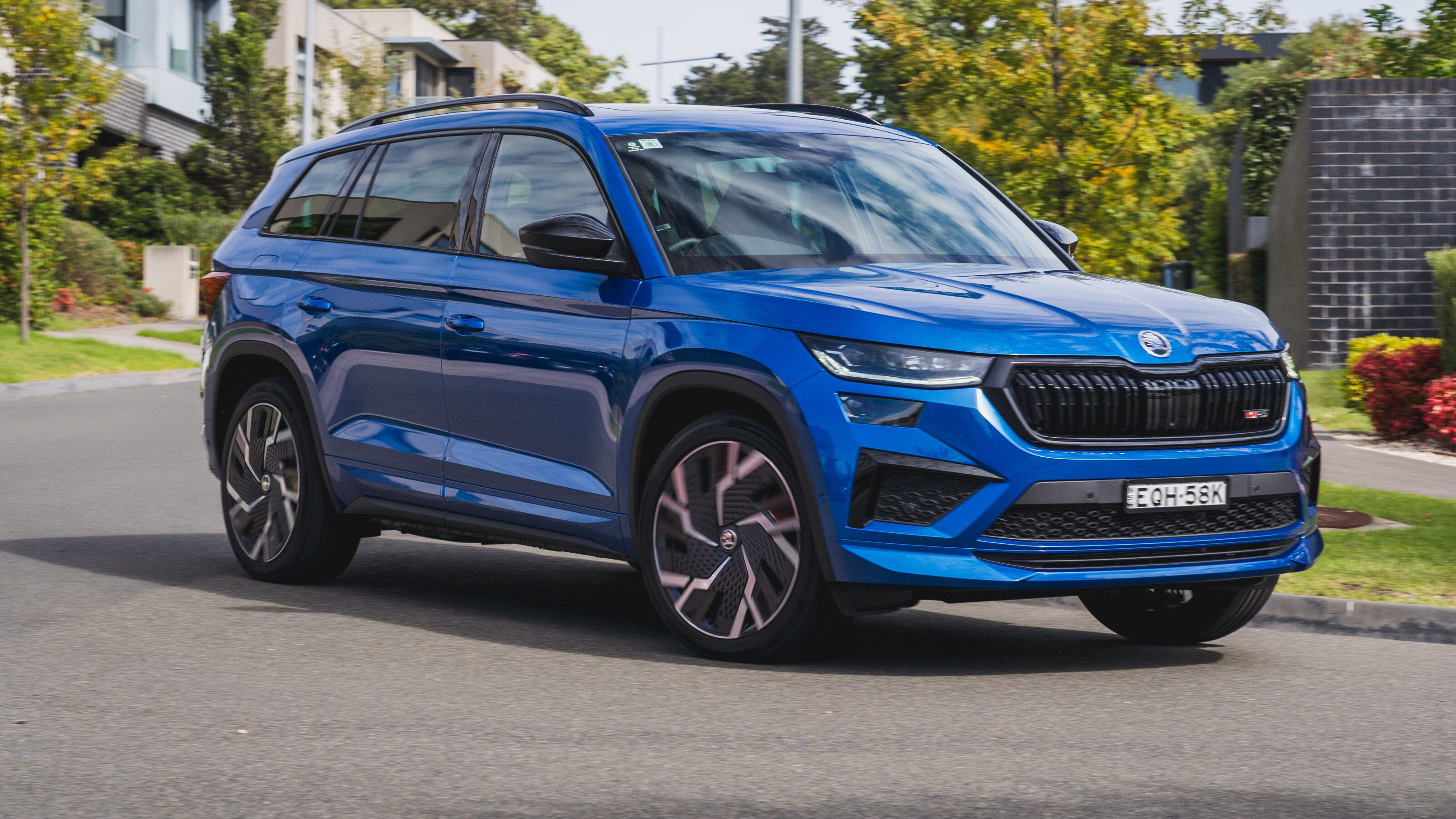
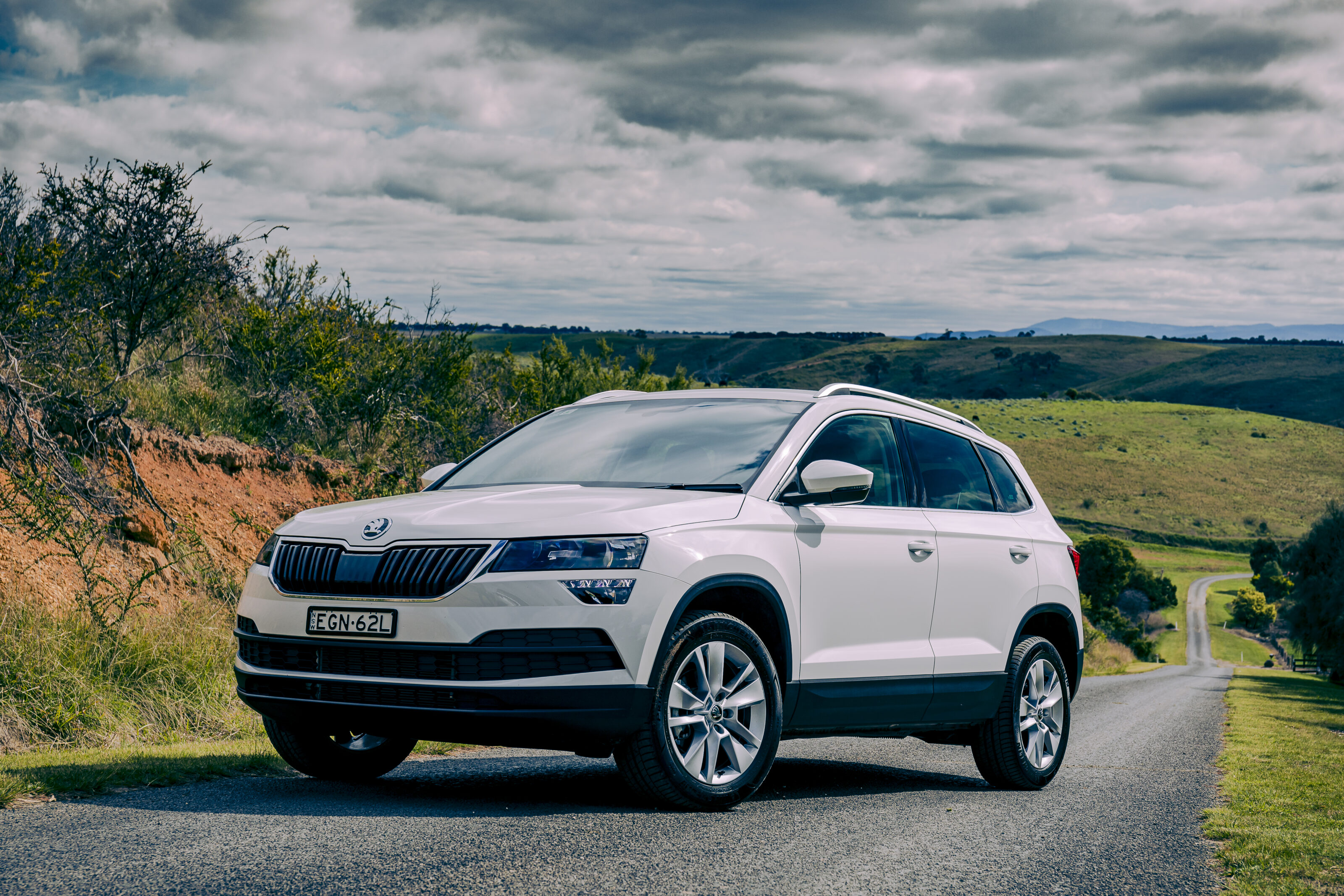
It has been a gradual progress since it relaunched locally in 2007 under the VW umbrella. Sales remained modest for a decade before being transformed by the arrival of a trio of SUVs – with 2017’s large, seven-seater Kodiaq joined by the mid-sized Karoq in 2018 and the compact Kamiq in 2020.
Previously, Skoda had only the quirkily-designed, Golf-based Yeti as its sole SUV, which was the brand’s most popular vehicle locally in 2012 in a rare displacement of the Octavia medium car.
“The SUVs came in and almost gave us a new level of awareness and acceptance,” says Merrigan.
“We had passenger cars only, other than the Yeti. The Superb, Fabia, Octavia, and Rapid were all in declining segments, and we still managed with the customer base and a really strong dealer network.
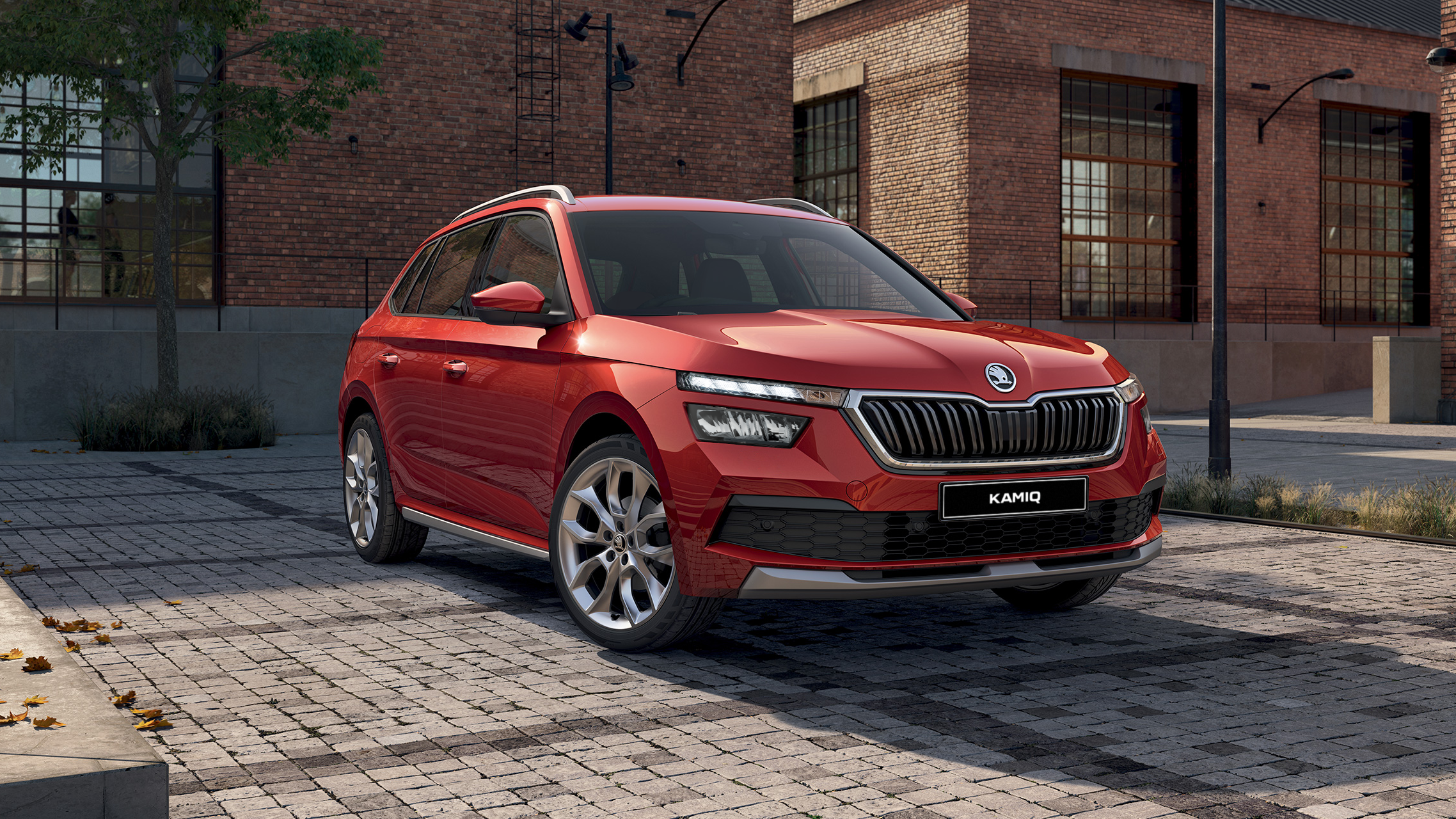
“And then the introduction of the Kodiaq…the audience in our dealerships changed overnight. Then we had the luxury of adding Karoq to the mix, and then Kamiq. And the reality is, with all those models, we’ve probably never had enough [supply]. We haven’t found a ceiling [for our SUV sales], so to speak.”
Skoda Australia says the SUVs were not only a game-changer for market volume, but also resale values.
“The reality is RVs [resale values] are based upon a couple of things…you’ve got to look at what [a car is] going to be worth in four years and ask where the market is going to be in four years.
“The used-car market follows the new-car market, so you can imagine there’s going to be fewer buyers for those [passenger] cars in four years’ time.
“And SUVs are, obviously, the opposite – the growth is there.”
Merrigan says the Kodiaq benefited from the developing trend towards seven-seater SUVs, which became an appealing alternative to people-movers and multi-seat vans.
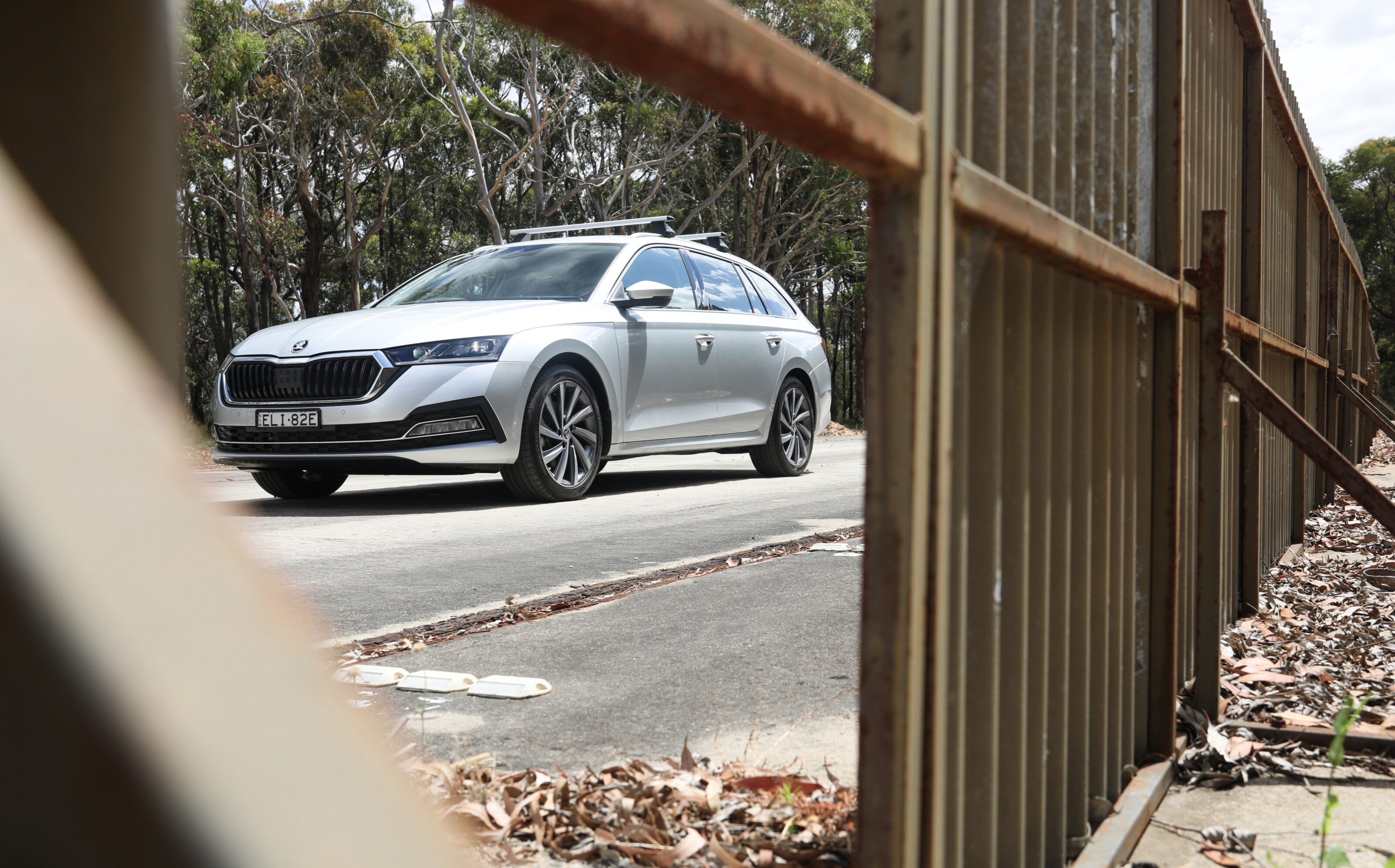
He also says Skoda is not focusing purely on volume, but the whole brand experience.
“We’re trying to build a brand on sustainability, and it’s why we’ve put so much emphasis now into the quality aspect of the business, trying to make sure we deliver a consistent product and after-sales experience.
“Hence the development and the investment into our service packs and service subscriptions. We’ve got now nearly two-thirds of customers buying service packs if they’re trying to buy a car. And the majority of them are seven-year service packs.
“It’s also brand acceptance [and] awareness, that plays a huge part. We’ve made a strategy around offering more car for your money, but then not giving things away, [such as] cash discounts. If we’ve got a campaign in the market where we want to shift more vehicles, it’s always been a value add.”
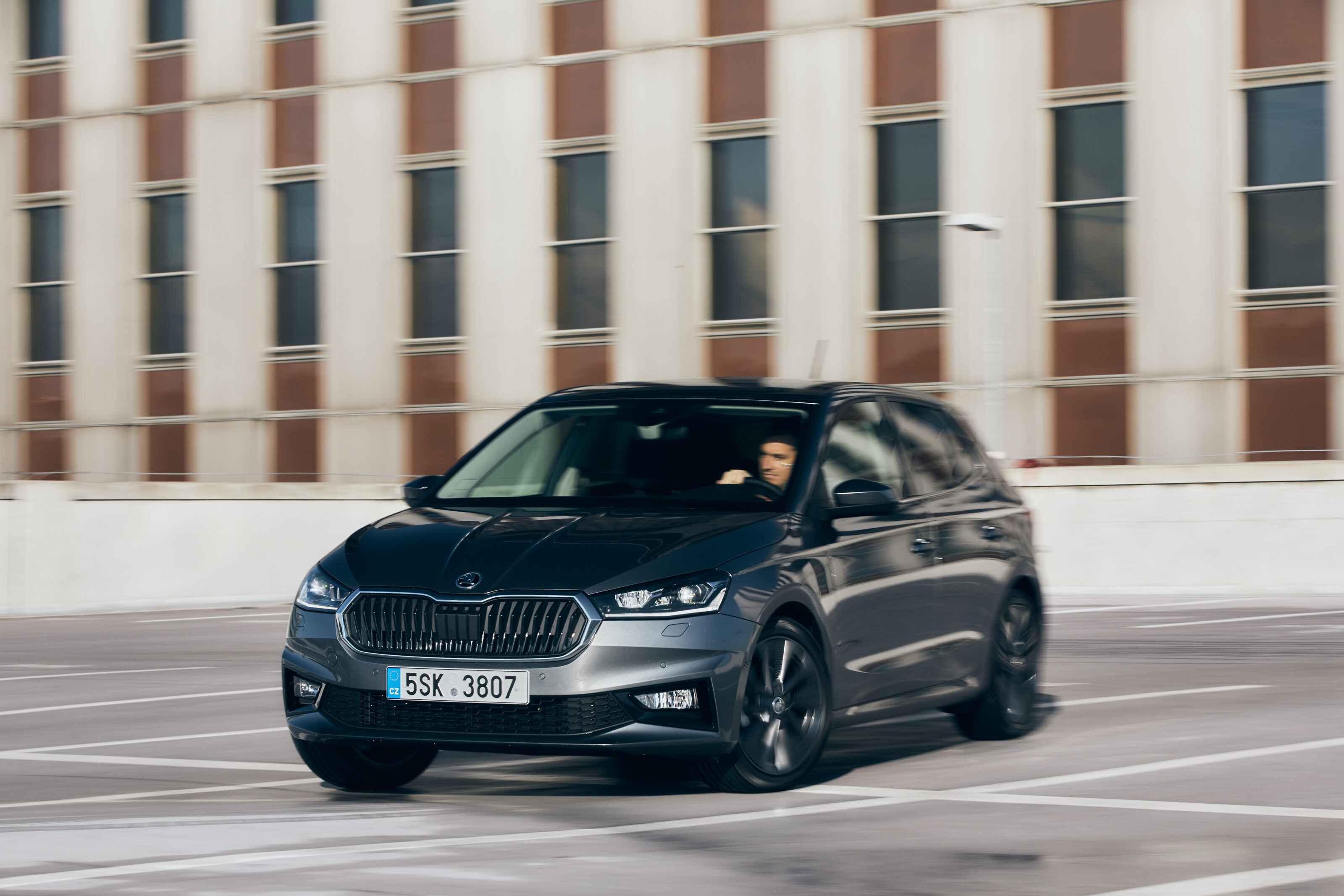
The Skoda Kodiaq was updated in March, the mid-sized Karoq SUV gains a facelift in July, and the compact Kamiq will soon see a return of the three-cylinder 85TSI entry model.
Upcoming next-generation vehicles for the brand are passenger cars. The fourth-generation Skoda Fabia is the first of two, due to arrive in the third quarter of this year.
In 2023, Skoda’s first dedicated electric cars will be launched locally – the Enyaq iV wagon and its four-door twin, the Coupe iV.
BMW has finally taken the covers off its Le Mans Daytona hybrid (LMDh) racer, revealing the BMW M Hybrid V8 overnight.
Featuring arguably the least imaginitive name possible – though at least you know what you’re getting – the BMW M Hybrid V8 will compete under LMDh regulations in next year’s IMSA GTP Championship in North America, making its debut at the 2024 Daytona 24 Hour event in January.
Shown off in a camouflage livery, which mixes BMW M’s iconic blues, red and white, the second-most obvious indication that this is a BMW is the car’s wide front nostrils, carrying over from the kidney design – which has been a mainstay on the marque’s cars since its inception.
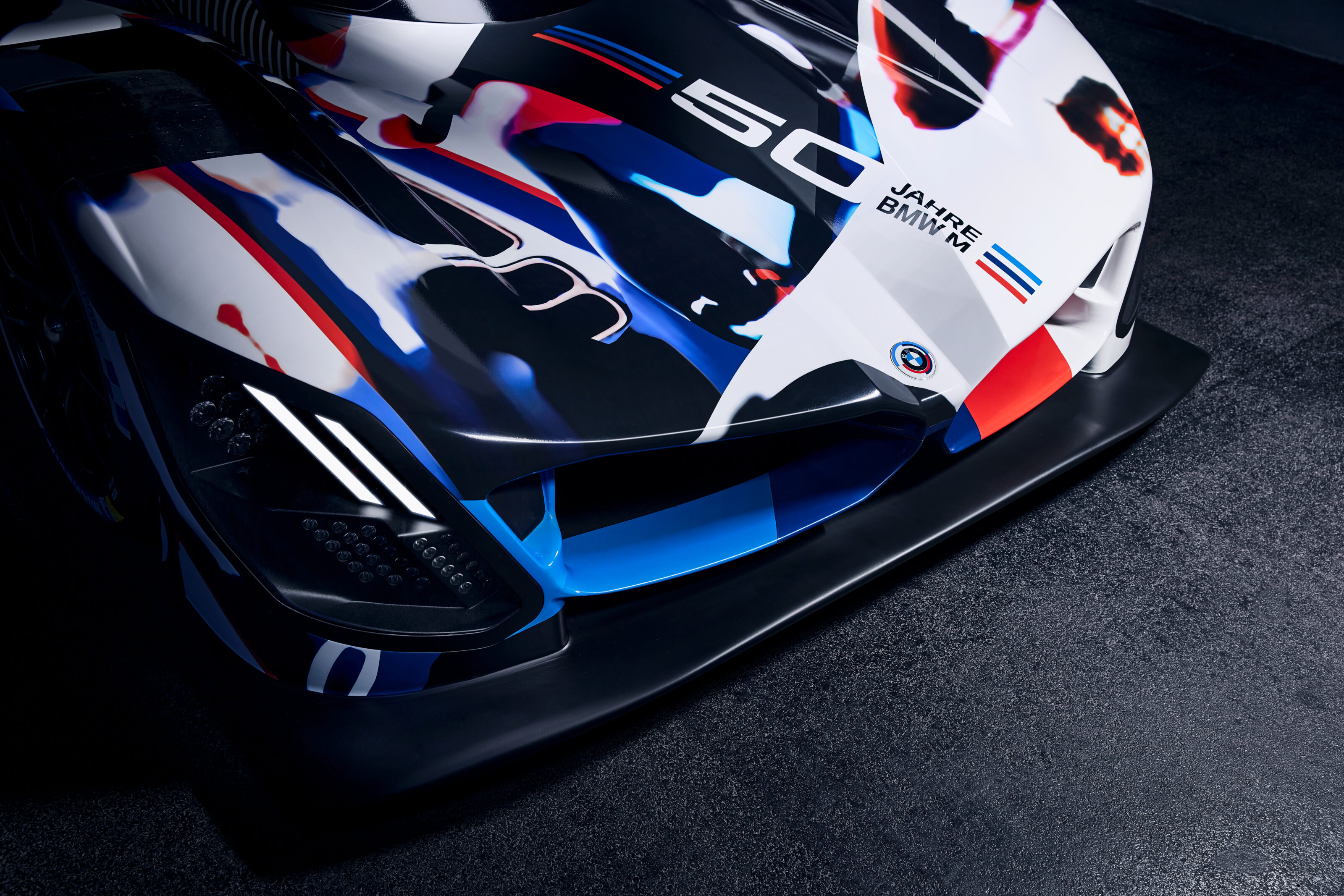
BMW M CEO Frank van Meel said the car had to have a distinct design to make it stand out – something which the Hybrid V8 has achieved.
“The most critical task and the greatest challenge for the design team in the LMDh programme design team was that the prototype must be clearly recognisable as a BMW M Motorsport car,” said van Meel.
“And I can say this to all the fans, just one look is enough to confirm that the BMW M Hybrid V8 is a BMW. It clearly carries the genes of BMW M. I also love the camouflage livery with its references to the great history of the brand in North America.”
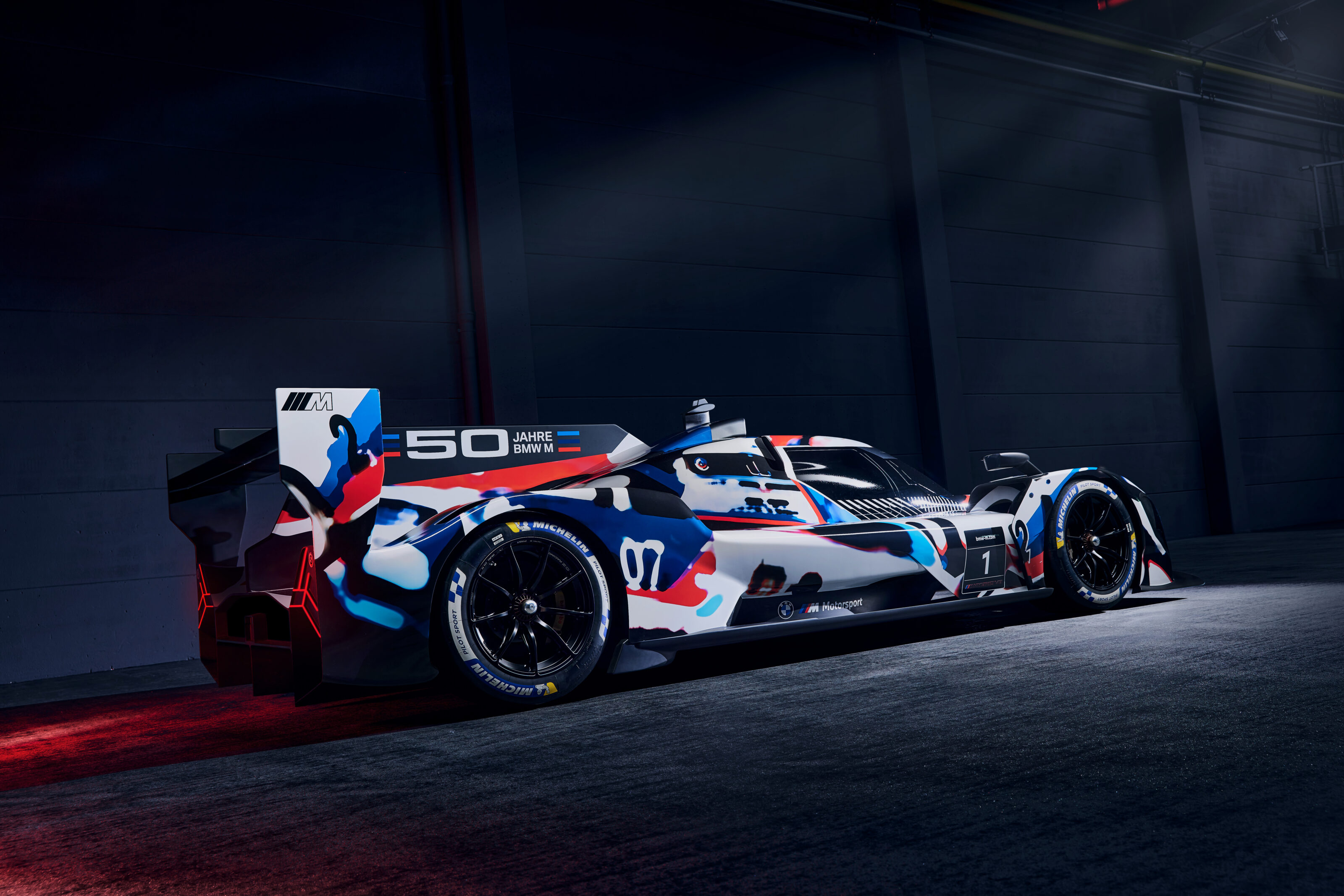
While the BMW M Hybrid V8’s main target will be success in the North American championship, the LMDh regs also allow it to compete in World Endurance Championship (WEC) events, such as the 24 Hours of Le Mans.
Although a debut at Le Mans hasn’t yet been locked in and is rumoured to happen in 2024, BMW has history at the race – having won the endurance classic outright in 1999 with the V12 LMR as well as being an engine supplier to the winning McLaren F1 GTR in 1995.
Despite using a spec hybrid power unit, lessons learned on the race track will influence future BMW hybrid and electric models, with van Meel telling MOTOR earlier this month BMW M develops cars “on the track to give you a little bit more M in your series production car.”
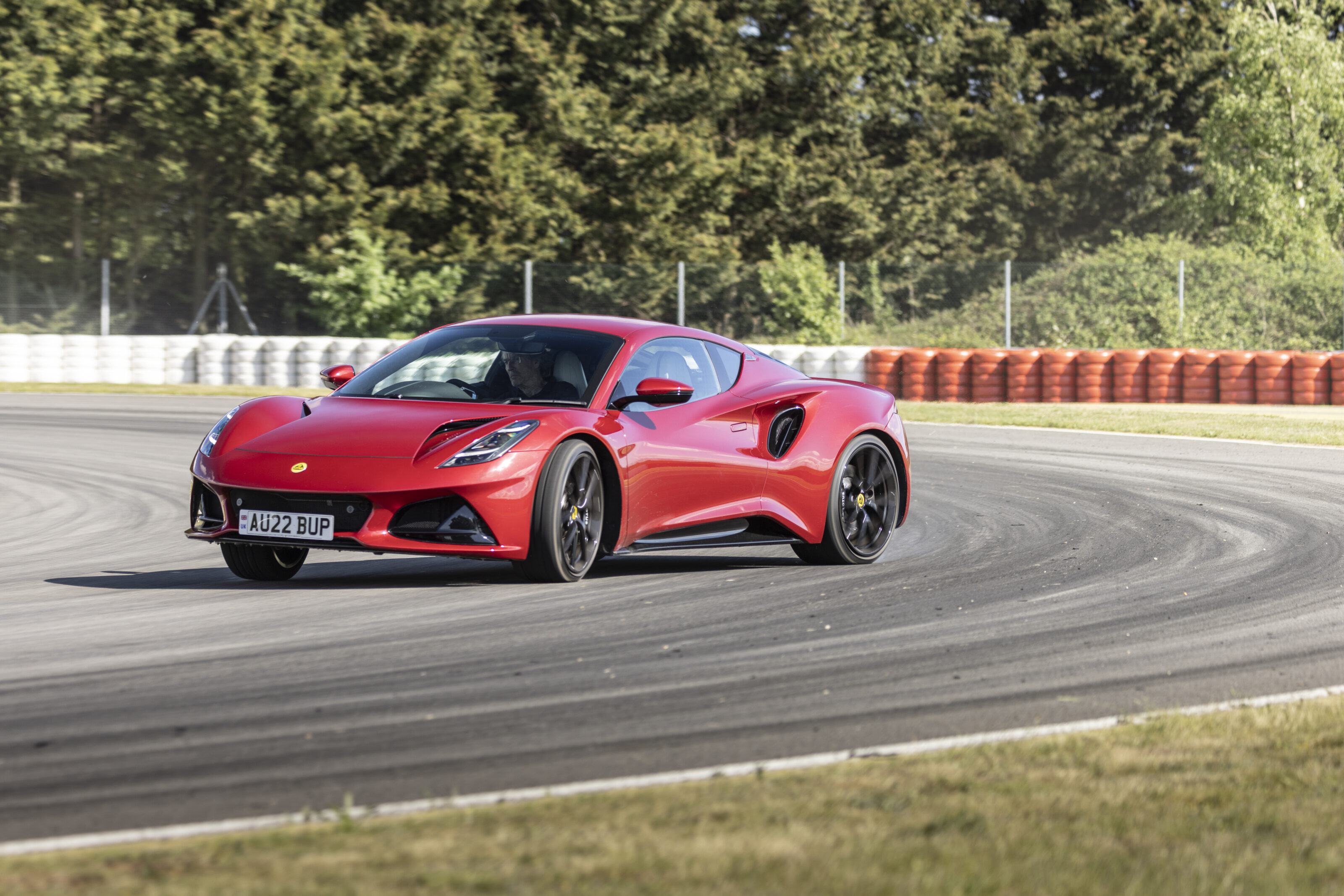
The Elise is the reason Lotus is here today and able to bring us the 2022 Emira V6 First Edition that is the subject of this test. Launched in 1996 when Lotus was owned by Italian businessman Romano Artioli and fighting for its life, the Elise re-introduced the world to the idea of a pure, ultra-light, driver-focused sportscar, the sort of sports car Lotus founder Colin Chapman himself might have conceived.
Although the Elise may have saved Lotus, it – and the closely-related Exige and Evora variants – also typecast Britain’s famously iconoclastic car-maker. For the best part of 30 years, Lotus cars have been regarded as brilliant to drive but spartan and cramped; cars that are best kept in the garage for sunny days when you have nowhere to go, and all day to get there.
The Lotus Emira V6 changes all that. The mid-engine Emira is designed to move Lotus out of the hardcore, hair-shirt enthusiast milieu of the Elise and its barely more hospitable Exige and Evora variants, and into the daily-driveable premium sportscar segment dominated by Porsche’s Cayman.
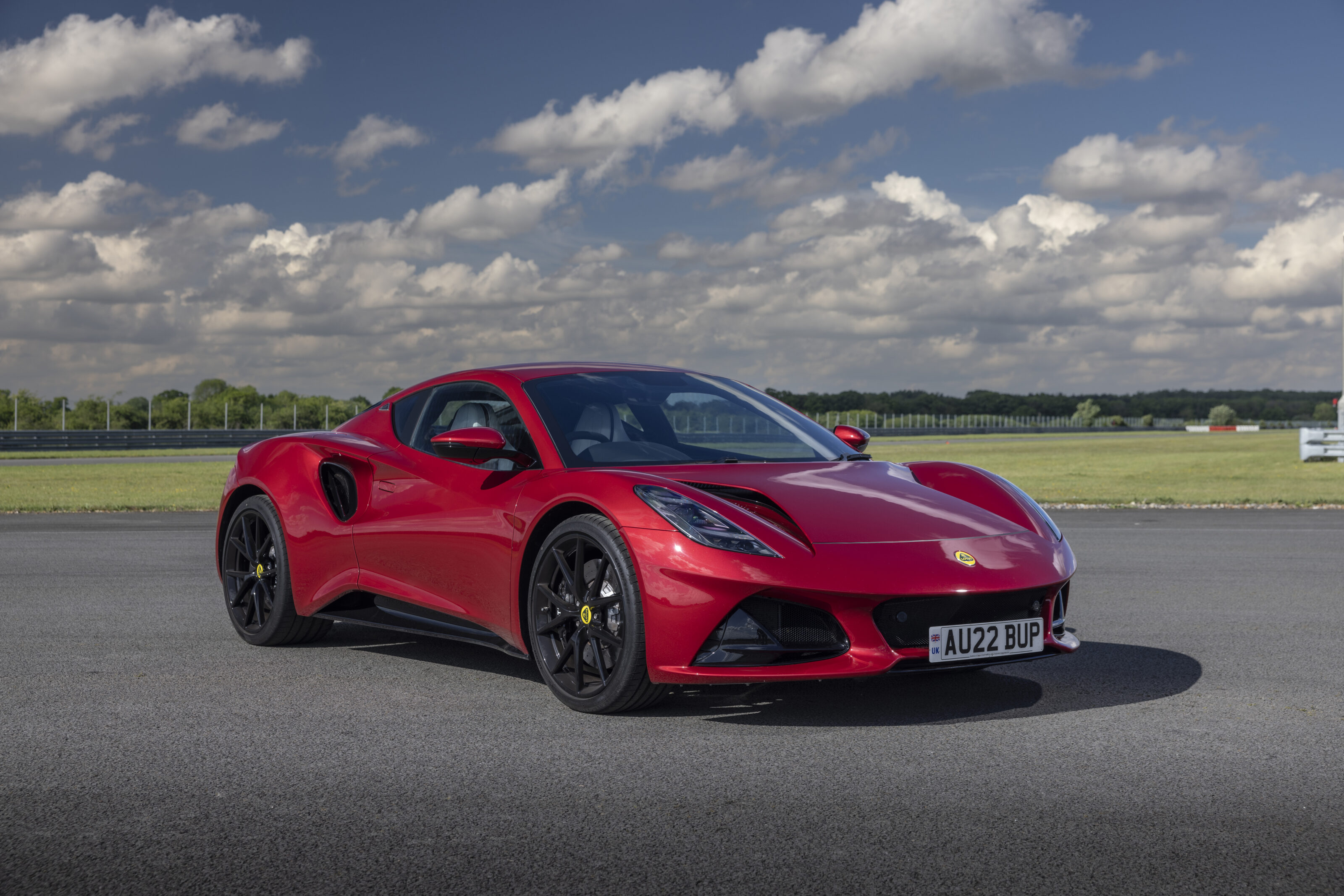
The Emira is key to plans to boost Lotus sales from 1500-1600 cars a year to 4800 cars a year, worldwide. And the Emira V6 First Edition shows how it will be done: This Lotus is bigger, plusher, quieter, more comfortable, and more lavishly equipped than any car from Hethel in decades. It’s a Lotus you could seriously consider using every day. But it’s still a hugely engaging drivers car with unique character and charisma.
In other words, it’s still a Lotus.
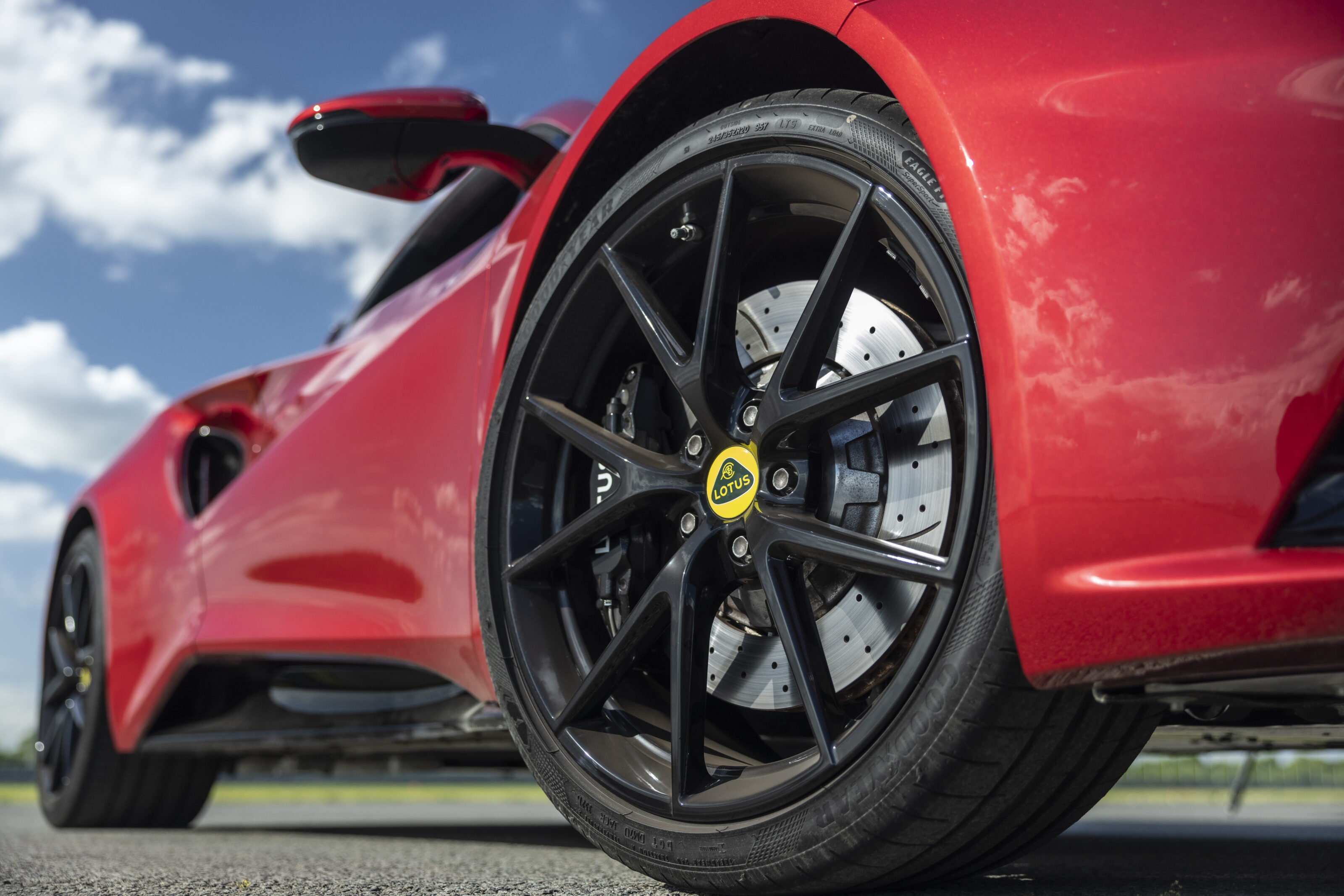
The Magma Red V6 First Edition shown here is one of the last pre-production Emiras off the new assembly line at Hethel. The First Edition badge means it comes fully equipped: Standard goodies include gloss black forged alloy wheels, black Alcantara roof lining, heated seats, and a KEF premium audio system.
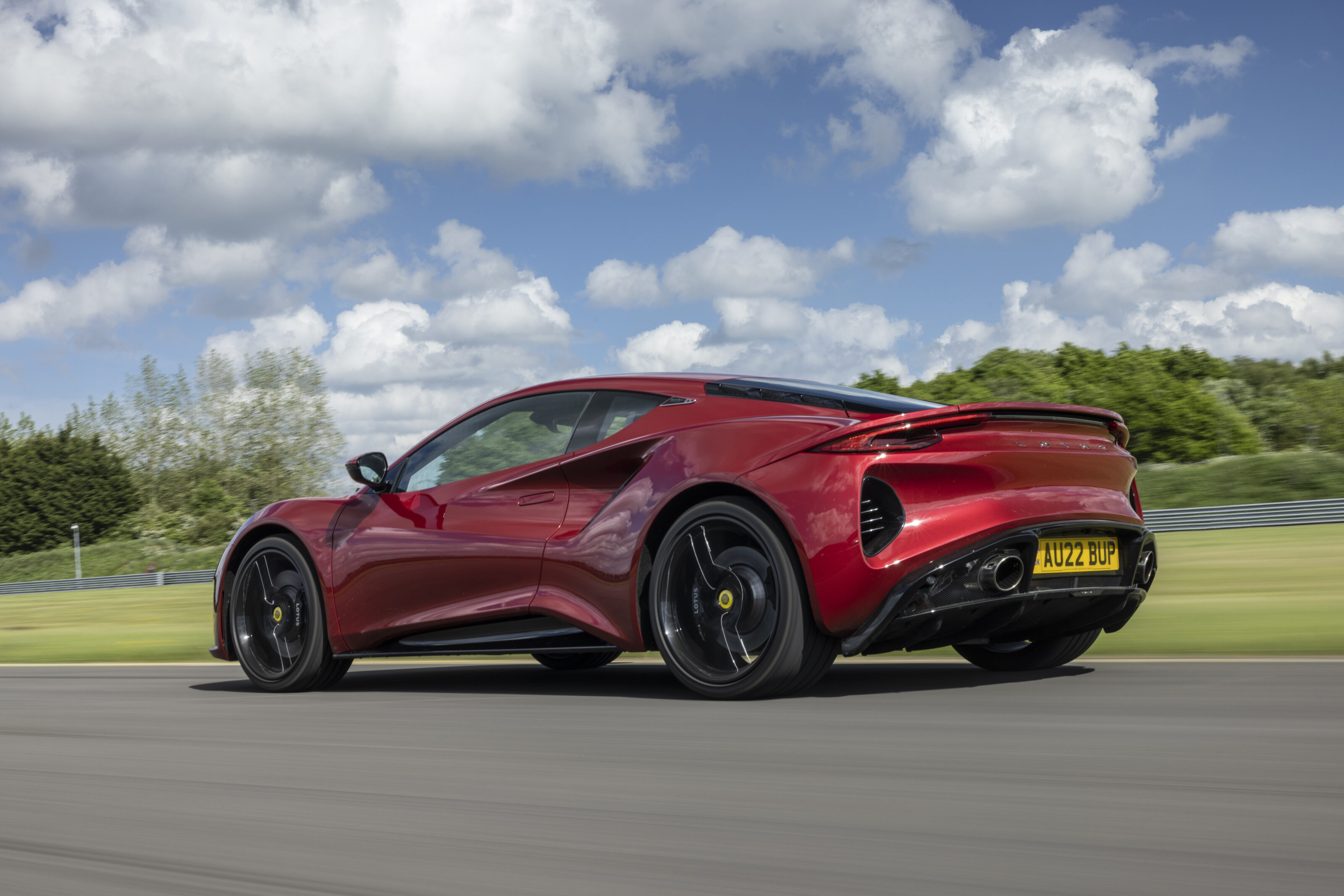
In addition to trim, convenience and styling upgrades that are optional on the regular Emira V6, the First Edition also gets the Lotus Drivers Pack, which includes a Track Mode setting for the ESP, a limited-slip differential and the choice of touring or sports suspension, the latter also available with grippier Michelin Pilot Sport Cup 2 tyres instead of the standard Goodyear Eagle F1s.
The First Edition V6 is powered by the same Toyota-sourced supercharged 3.5-litre V6 and six-speed manual transmission as used in the Evora (a six-speed automatic is available as an option), though the peak power output has been dialled back from 310kW to 298kW to meet tougher emissions regulations. Peak torque is 420Nm.
The first thing you notice when you slide behind the wheel of the Emira is the interior room. Unless you’re built like an AFL ruckman, you won’t need to run the seat all the way back to be comfortable behind the height- and reach-adjustable steering wheel. There’s even a small shelf behind the seats, wide enough for a couple of soft bags and some coats.
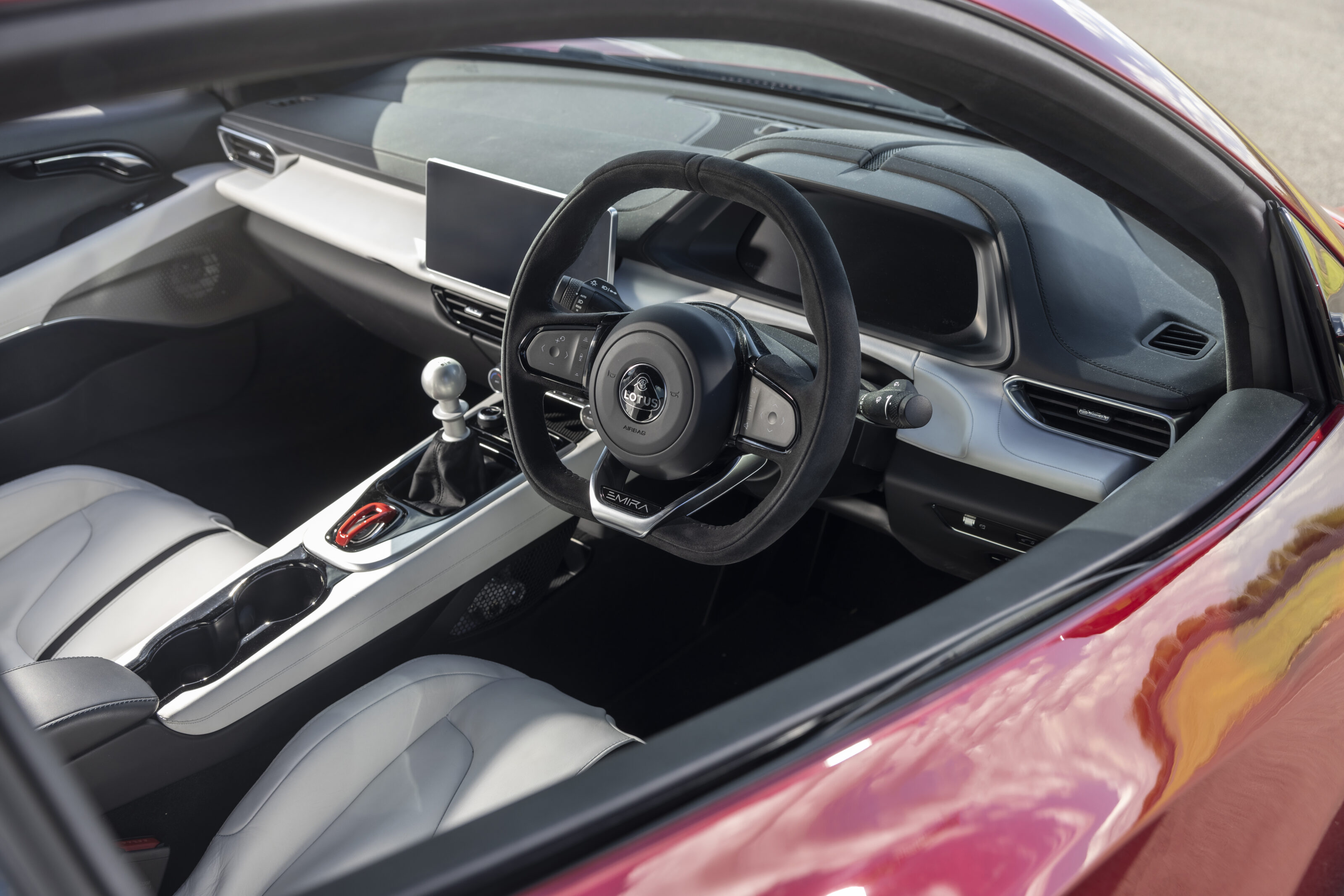
It’s also far from spartan. Almost every surface you can touch is covered in leather or Alcantara. There’s a digital dash and a decent-sized central touchscreen, both with crisp, clean graphics. The Emira also has air-conditioning, sat-nav, a sound system, drive modes, USB ports, cup holders and power windows. For today’s sportscar buyers, these are the basics.
The manual Emira is an immersive experience from the moment you fire up the supercharged V6. The clutch requires more muscle than in a manual Cayman, and the shift gate isn’t quite as concise, either, which makes it best not to rush second-third and fourth-fifth upshifts. The relationship between the brake and accelerator pedals is perfect, however. Snappy heel-and-toe downshifts are a breeze.
Lotus claims the manual Emira V6 will sprint from 0 to 100km/h in under 4.5 seconds on the way to its 290km/h top speed. And it doesn’t take many kilometres to appreciate that 3.5 litres and a supercharger are a good combination, delivering an abundance of mid-range torque and quick throttle response, useful tools in a car weighing less than 1500kg.
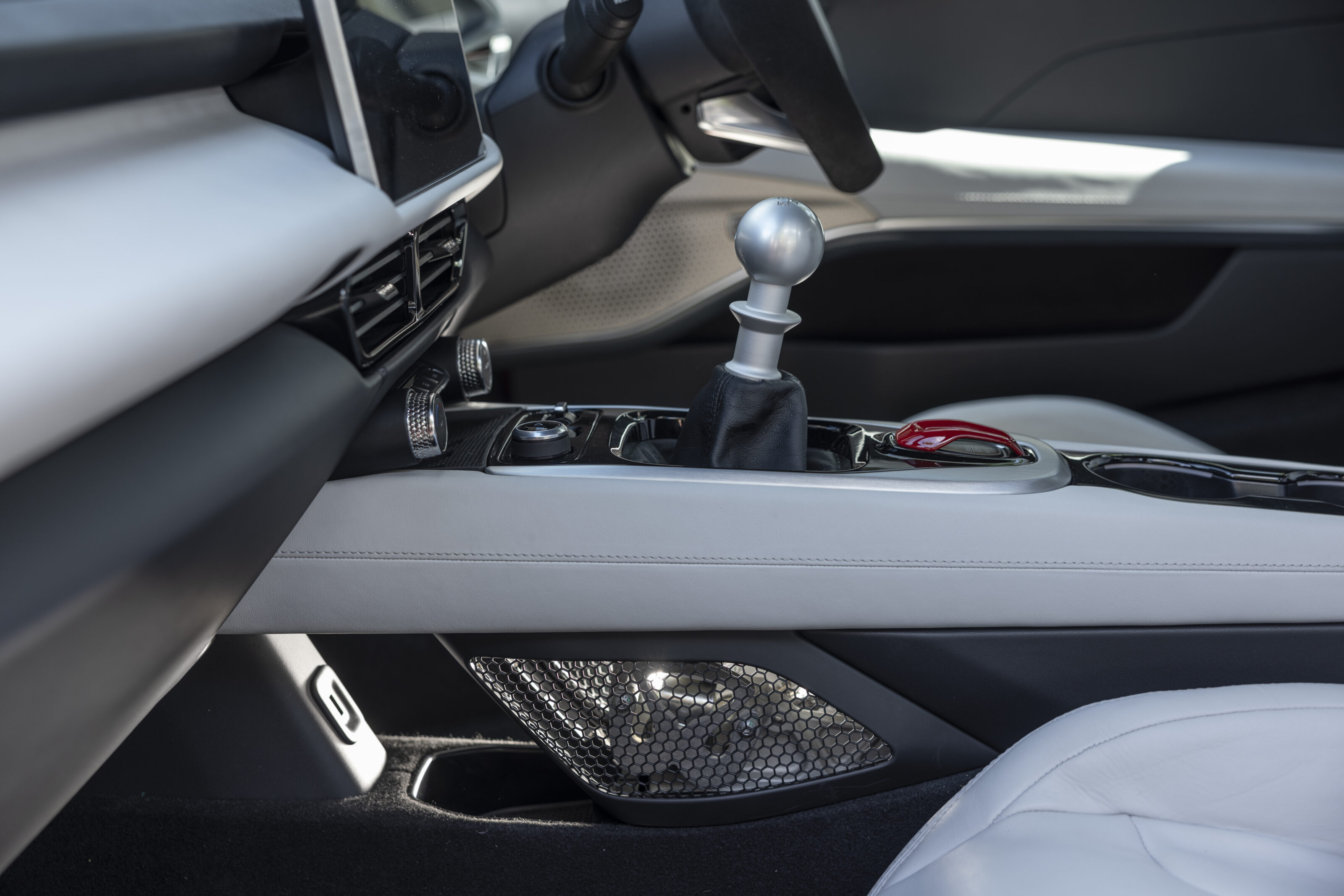
In third gear, the manual Emira will pull cleanly from 25km/h – little more than 1000rpm – all the way to 160km/h before hitting the 6750rpm rev limiter. Though the revs build with noticeably more urgency above 3500rpm, the power delivery is nonetheless smooth and linear, and precisely adjustable via your right foot. The result is a car that is effortlessly quick on any road.
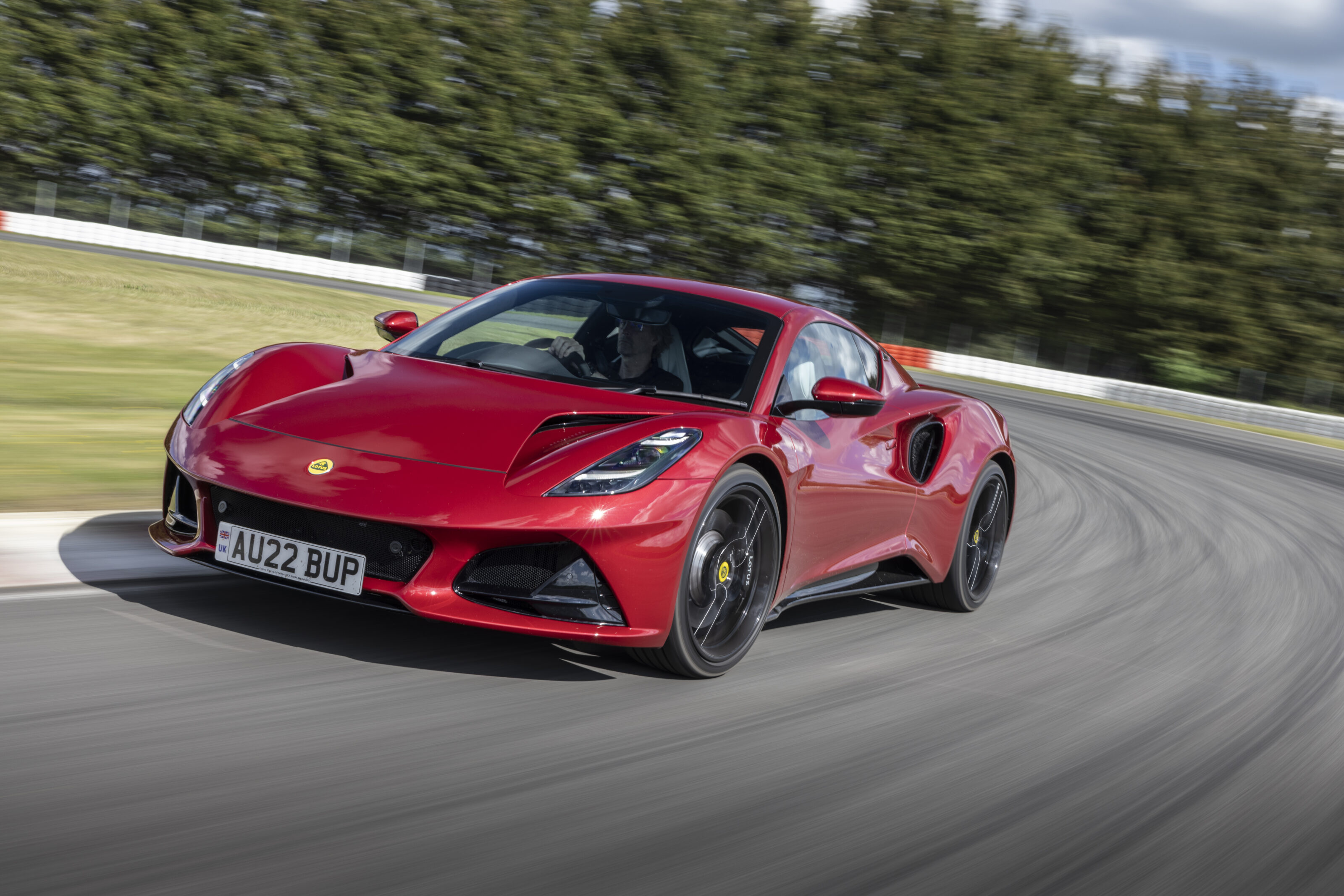
Turning into a corner requires little more effort than a roll of the wrists. The response from the front axle is immediate, and while there’s more body roll than in a Cayman, it’s much easier to sense the increase in loads through the tyres and into the suspension and thus understand how to adjust the chassis balance.
Torque and traction will initiate mild understeer if you go to power early. To tighten your arc, lift off and the weight transfer will make the front tyres bite again, initiating a smooth transition to mild oversteer that’s easily controlled with the throttle as the load comes off the rear axle. On the track, with the ESP turned off, the Emira V6 First Edition is as pure and playful a mid-engine sportscar as has ever been built.
The Emira V6 has that lovely lightness of being that’s long been the hallmark of the best Lotus sportscars. It dances down the road on suspension that’s much more supple than the taut set-up you find in a Cayman, and the dialogue through the hydraulically assisted power steering is richer and more meaningful.
A trio of drive modes – Tour, Sport, and Track – change only the throttle mapping, exhaust note, and the level of ESP intervention. The steering and suspension are, thankfully, left alone.
What’s most impressive about the way the Emira V6 First Edition drives, though, is that it doesn’t have to be pushed to be pleasurable. It’s alert and agile at low to medium speeds, but it’s also quiet and comfortable, with low levels of impact harshness and tyre noise penetrating the cabin.
Unless you plan to spend every day at the track, the standard touring suspension is a terrific all-round set-up.
Of course, great driving dynamics are not what will ultimately determine whether the Lotus Emira is a success. It’s the stuff that Lotus, frankly, hasn’t always been all that accomplished at – comfort and convenience, fit and finish, durability and useability.
The stuff consumers live with every day. And on first acquaintance, the Emira V6 First Edition is a big step in the right direction.
UPDATE, March 29 2023: Australian timing confirmed for ID models
Volkswagen Australia has today confirmed local launch timing for its ID.3, ID.4, ID.5 and ID.Buzz models – get all the details at the links below.
November 2022: ID.4 driven in Australia!
We’ve now had a chance to drive an overseas ID.4 car in Australia. Get our full story at the link below.
Story continues…
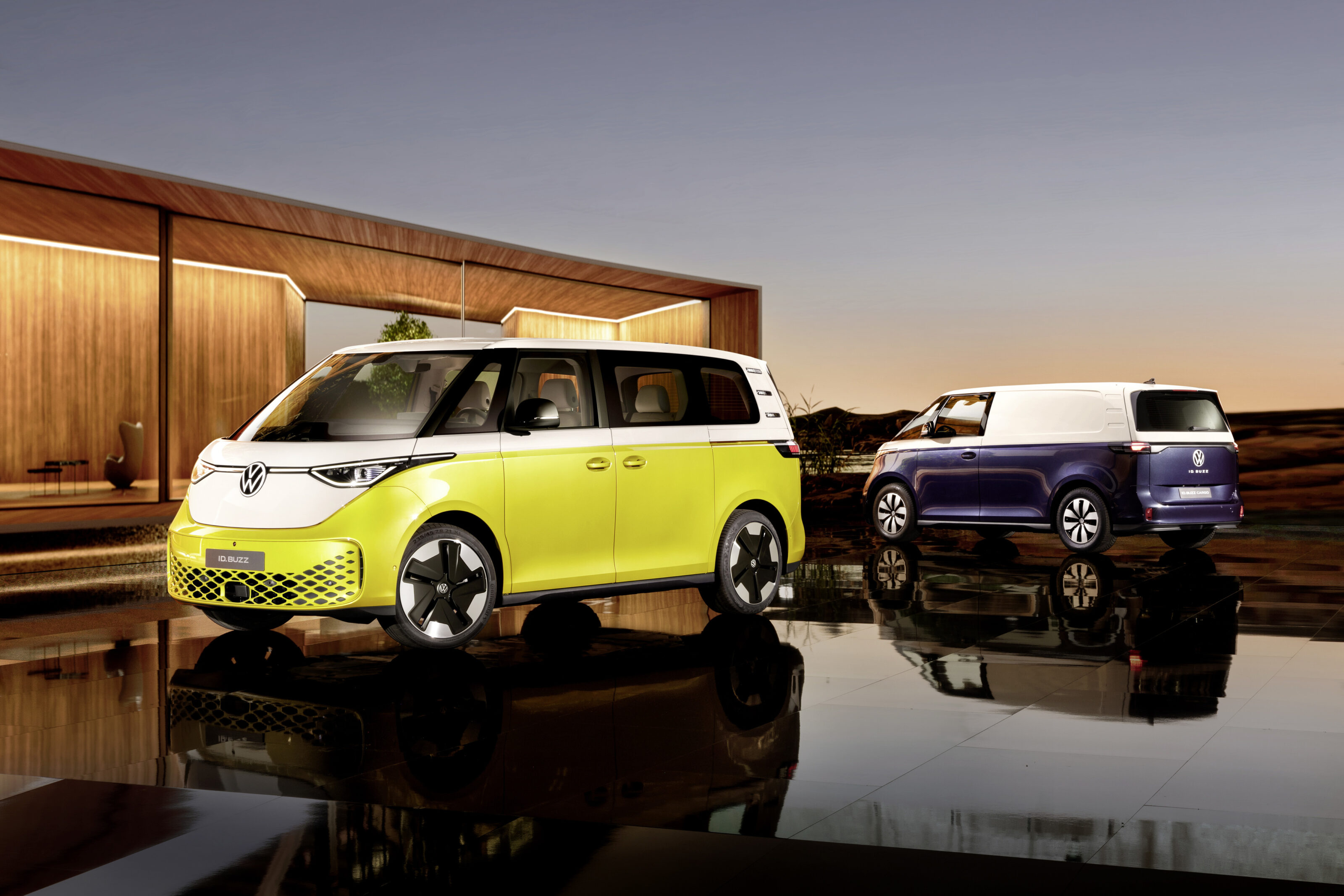
Volkswagen’s upcoming all-electric ID. Buzz has entered series production in Germany, with the first examples rolling off the Hannover line.
Steeped in history as Volkswagen Commercial Vehicle’s (VWCV) home factory, the Hannover plant will have produced seven generations of the Transporter van before the ID. Buzz’s arrival, with the electric vehicle joining the new Transporter T7 and Multivan at the facility.
Both the ID. Buzz and ID. Buzz Cargo are Hannover’s first fully-electric vehicles, following in the tracks of Zwickau and Emden. The preparation to build the EVs took roughly two years, according to Josef Baumert – VWCV’s board member for production and logistics.
“Over the last two years, the production facility has been continually prepared for the manufacture of the new all-electric vehicles, while the T6.1 and,since last year, the New Multivan, have simultaneously been made here in Hannover”, Baumert said.
“We are now manufacturing three ‘Bulli’ [Transporter/minibus] product lines with three different drive system concepts in our plant here. This means complexity makes huge demands of our workforce.”
With roughly 4000 staff on the books, preparing Hannover for electrification will allow Volkswagen to produce up to 15,000 units of the ID. Buzz family this year, and more than 130,000 annually in the future.
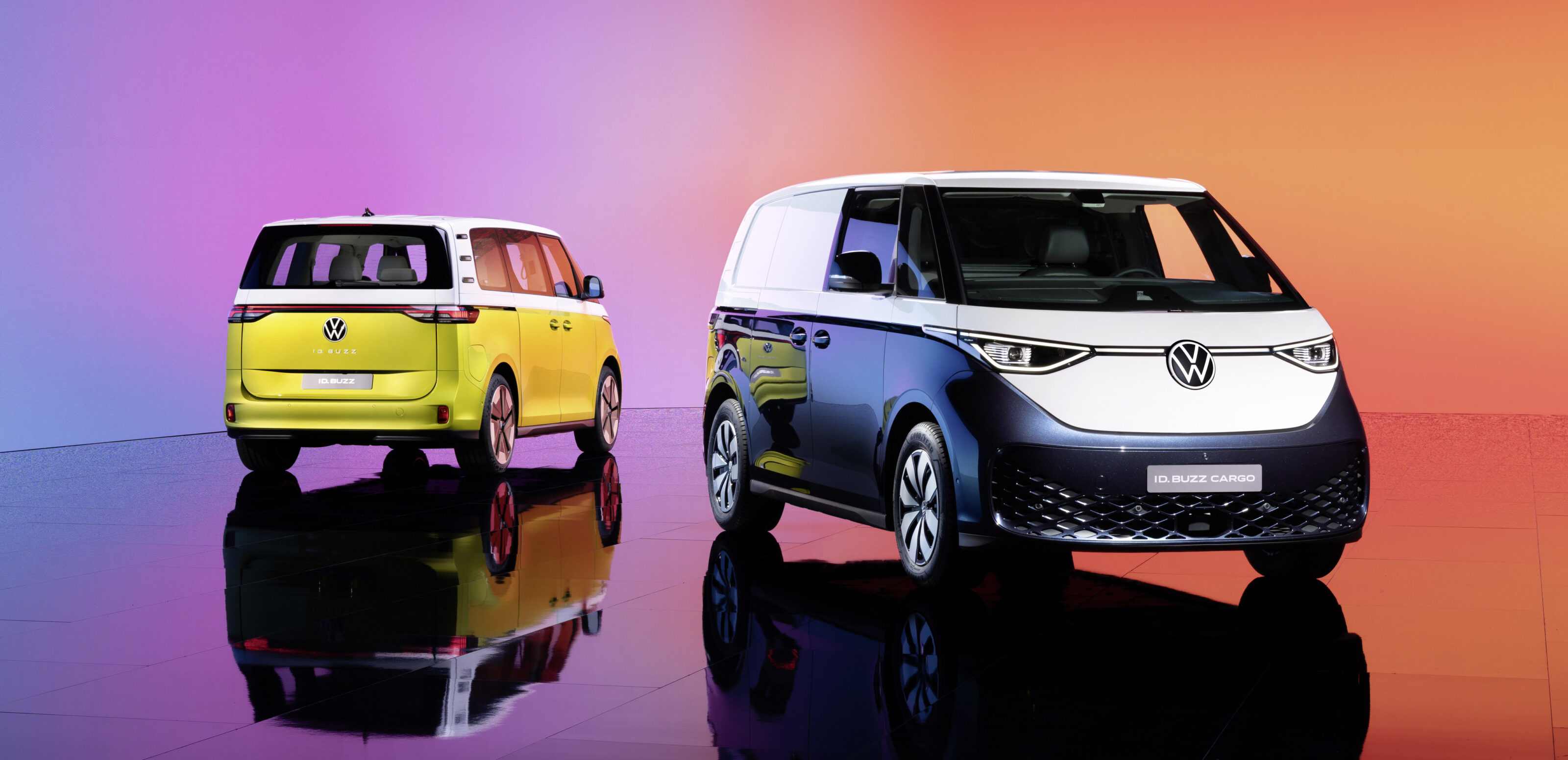
“The start of serial production of the all-electric ID. Buzz is an important milestone in the electrification of our fleet and for the manufacturing operation at the Hannover site,” said VWCV chairman Carsten Intra.
“The vehicle is a key pillar in the full utilisation of our factory and is thus safeguarding the future of the site. Now it’s finally here, a moment that the staff at VWCV have worked hard towards over the past years.”
It’s unclear as to whether the ID. Buzz will come to Australia, with Volkswagen currently not offering any of its MEB platform-based EVs to the local market.
Who would have expected Toyota to be the hero we all needed? By the time the mighty-sounding GR Corolla hatchback launches, the Japanese firm’s Gazoo Racing sub-brand will offer four different manual-transmission performance cars – including the Toyota GR Supra 3.0 manual tested here.
Even Porsche isn’t as committed to the art of DIY shifting nowadays.
The GR Supra 3.0 MT, added to the sportscar’s range alongside a mid-life update after overwhelming media and customer demand, is a bit of a surprise too. Let’s hope enough people buy them to justify the effort.
Because boy, has Toyota put the effort in. While the straight-six turbo engine up front still comes from BMW – it’s shared with the Z4 roadster and higher-tiered 3 Series models, among others – the team at Gazoo has decided to develop its own, unique manual gearbox for the Supra.
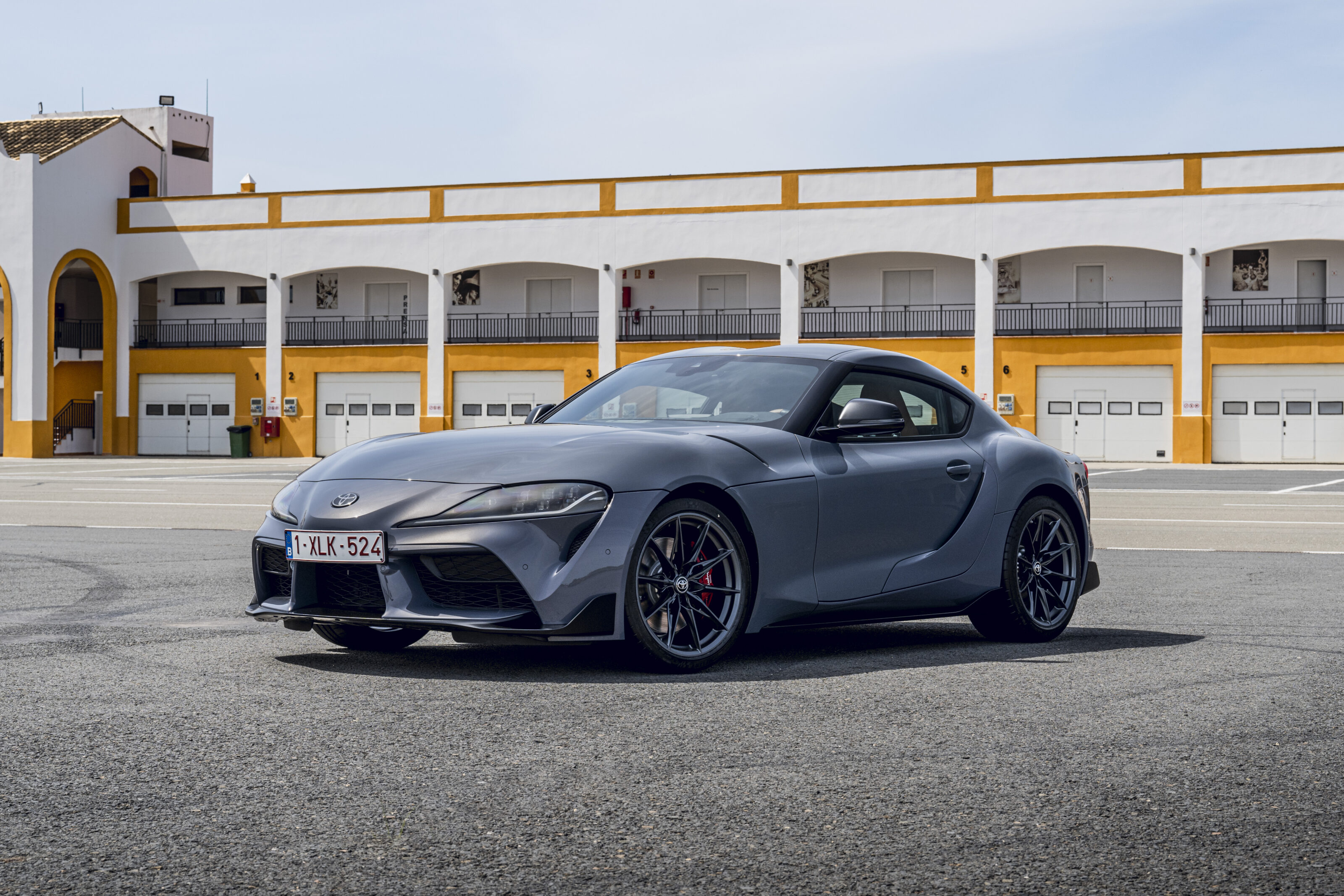
Bearing in mind less than a third of buyers are likely to go for it (in Europe, at least), it’s a level of engineering commitment that shows almost flagrant disregard for profit margins. That’s the beauty of having an enthusiast like Akio Toyoda running your company, though.
He appears to value the street cred of selling a bunch of bona fide drivers cars over accruing every last cent possible.
Why else would a whole new clutch have been developed to latch onto a six-speed manual used in no other product? The rest of the components themselves come from existing Toyota and ZF stock, but the end product is totally unique to the Supra 3.0 MT.
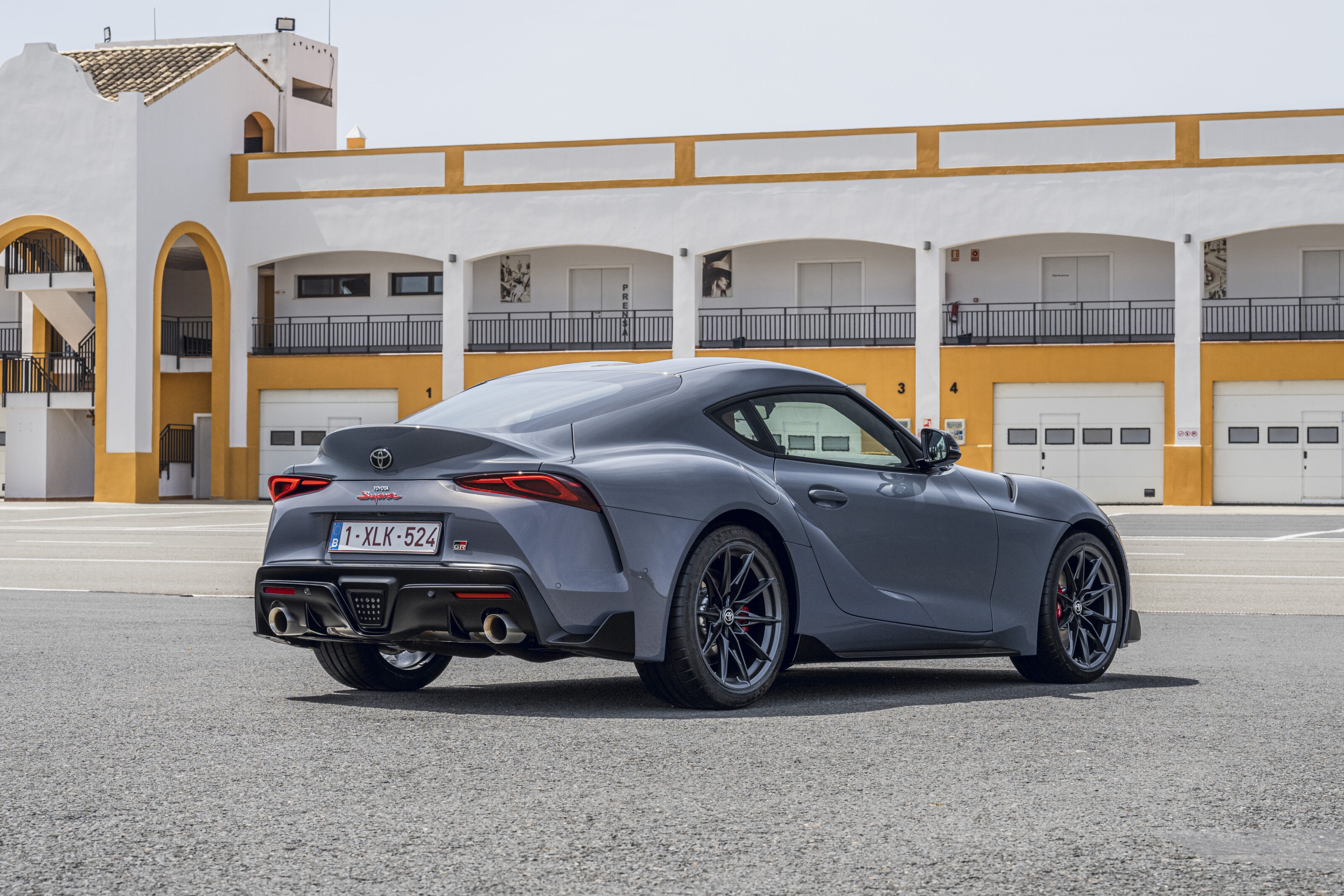
And to help integrate it into the driving experience of a car originally intended to use only an eight-speed auto, the limited-slip differential has been tweaked and the traction control retuned to account for clumsy clutch inputs.
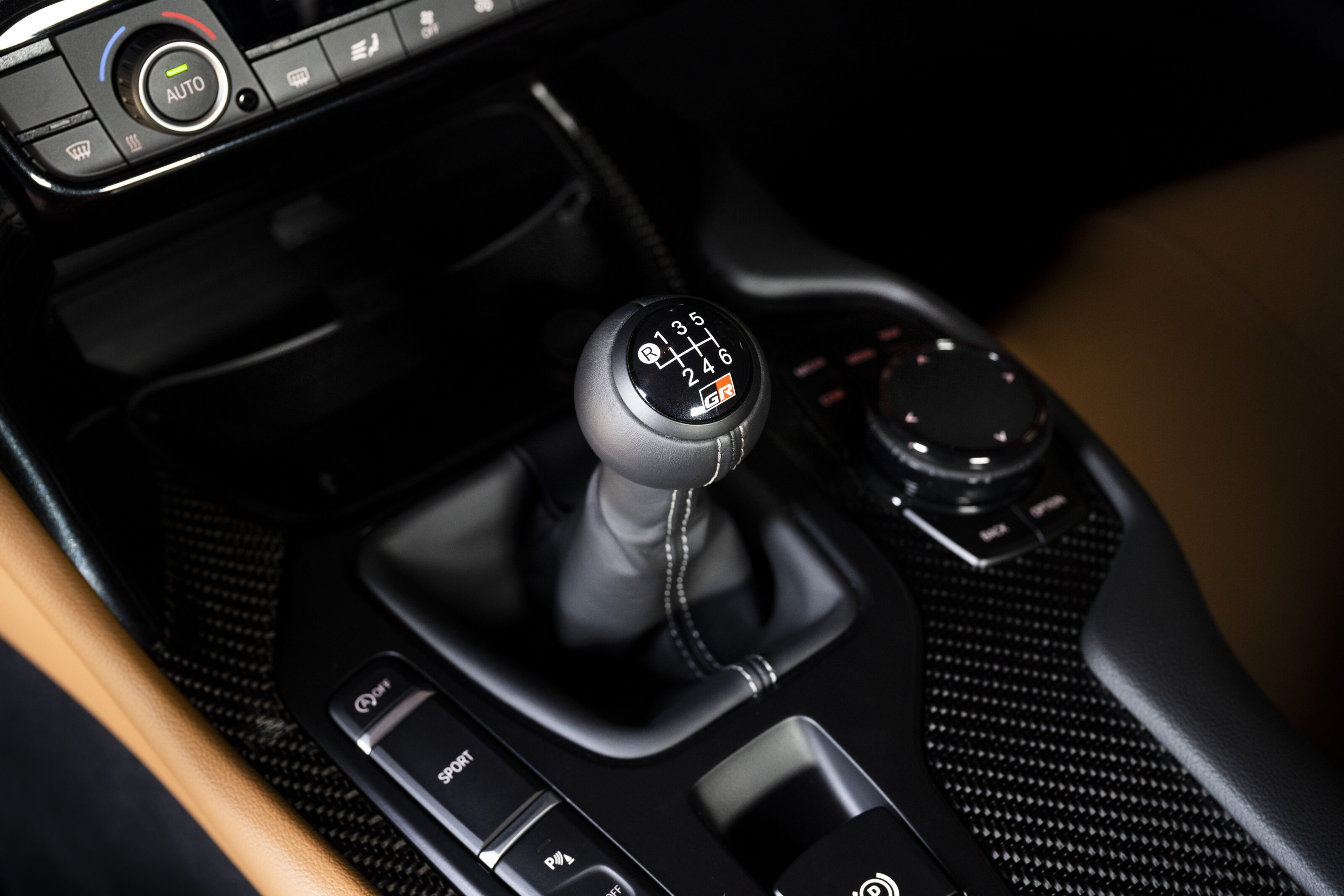
Perhaps the nerdiest bit we can see with our own eyes, though – and grab with our own hands. Toyota had to rejig the Supra’s centre console to allow enough clearance between the stick and the climate controls, lest you accidentally mash your hand into the demister during a particularly involved second-to-third upshift.
And the gear knob itself has been tweaked from the off-the-shelf part, its weight swelling from 68 to 200 grams to give the shift a more satisfying throw.
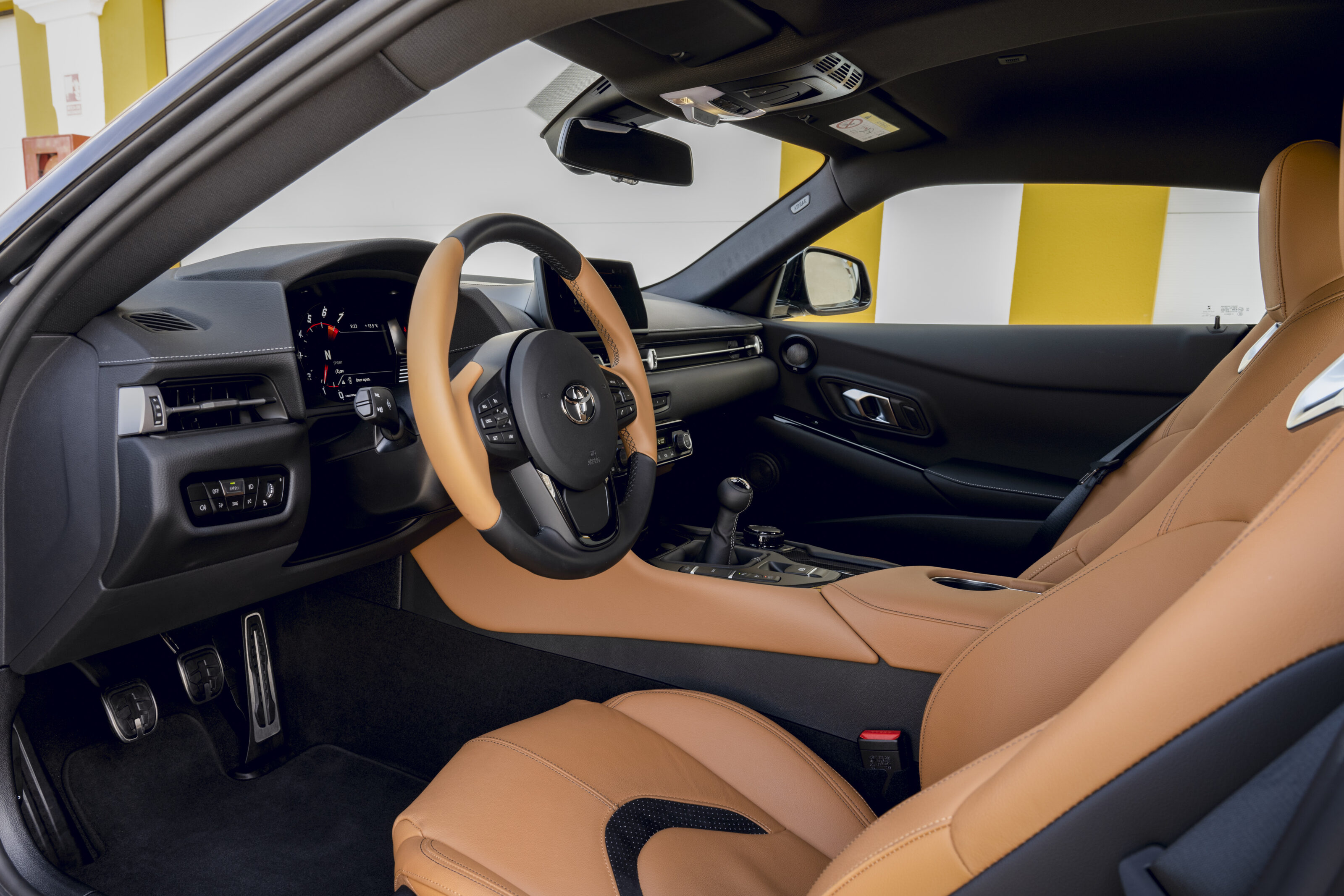
It’s unusual to hear a car-maker extol the virtues of adding weight, but rest assured that the rest of the manual conversion has saved enough kilos to compensate. Going from auto to manual sheds 17kg alone, while opting for the ‘lightweight’ base spec Supra – with manually adjustable fabric sports seats rather than electrically whirring leather ones – brings the grand total to 38kg.
Those seats also sit 1cm lower, benefiting both the sportiness of your driving position and headroom for taller drivers. The fact they’ll also save you several thousand dollars on your bill is just the icing on the cake.
The introduction of the MT comes with a minor mid-life refresh for the Supra as a whole, with retuned shocks and steering and a more intelligent stability control system that’s designed to allow for a little more freedom when the car senses uphill hairpins, allowing you to (theoretically, at least) feel the rear axle squirm without having to pre-empt the electronic aids into their more lenient settings.
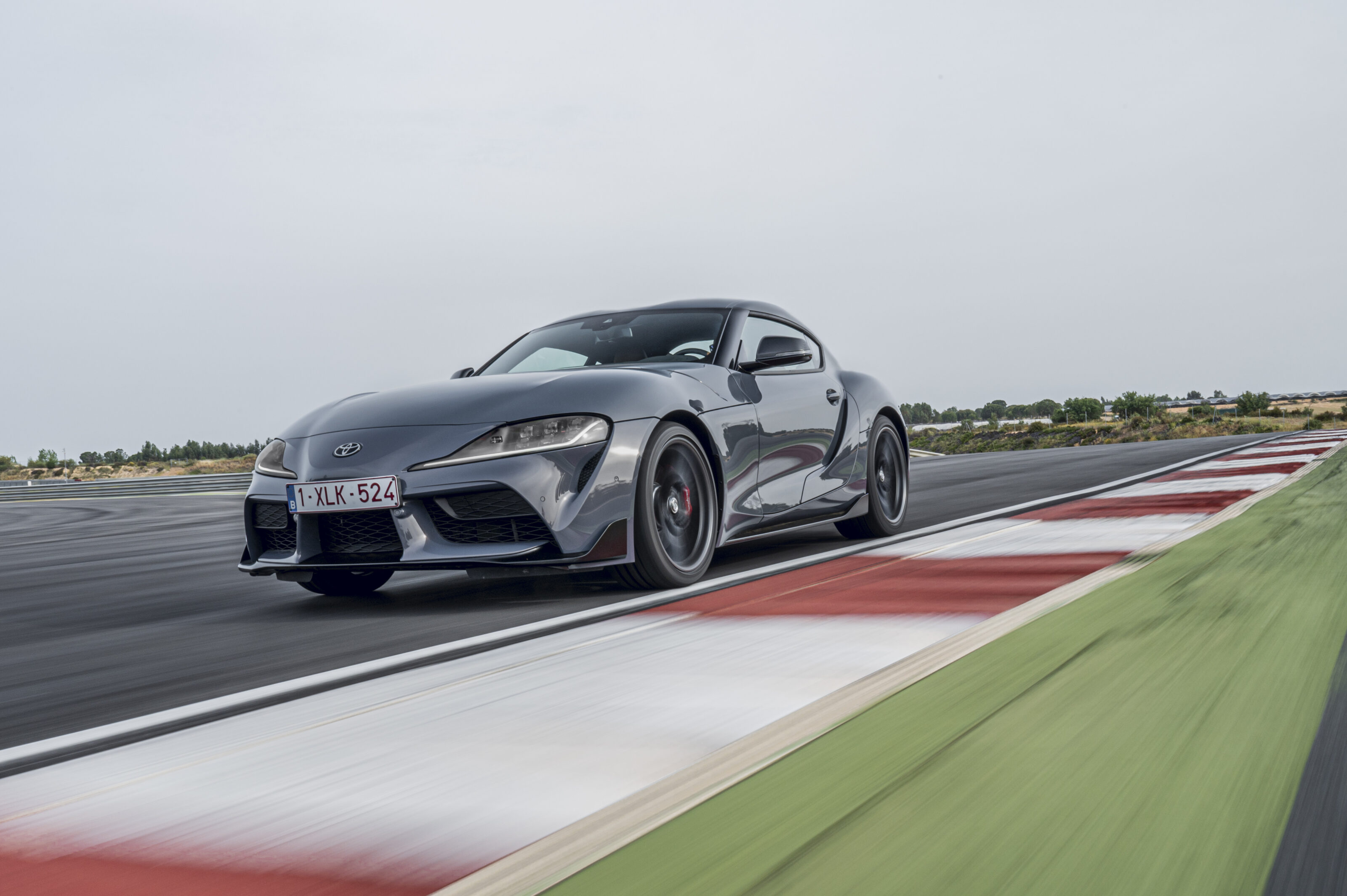
Sadly, our first drive of the car hasn’t taken in an appropriately twisty Alpine road to test Toyota’s claims. But a dozen or so laps of Circuito Monteblanco in Seville is among the better consolation prizes I’ve received.
It’s the perfect opportunity to flex the gearbox and retrain my right arm into shifting duties. Toyota launched this car at the same event as the Euro-spec GR86, and spending two days driving a pair of manual, rear-driven performance cars from the same manufacturer…well, that feels like something I’ll likely never do again. It’s fair to say I savoured every second.
Did I also enjoy every second? Pretty much. This isn’t a perfect manual ‘box, but it’s more than up to the task. A couple of times I shifted up to third and briefly lingered on the clutch, feeling like I might have found fifth. I hadn’t, and the vast majority of the time I had full confidence in my actions.
Just having that extra layer of interaction in a car of this level of power and luxury feels like a novelty these days. BMW has never bothered offering a manual option on the Supra’s Z4 cousin, after all.
Toyota has also fitted its ‘iMT’ rev-matching software for automated ‘heel and toe’ downshifts; it’s found in the Yaris but not the GR86 (a cost-saving issue, apparently) and it’s very good. You can turn it off too, of course, but in the Supra it’s courtesy of a sub-menu rather than a simple button. In truth, I was never unduly offended by its assistance.
It’s always meticulously judged in its blips of throttle and, I’ll be honest, does a better job than I usually muster. If Toyota is to tempt a few stick-shift sceptics into one of these, it’s a handy bit of tech to dangle in front of them.
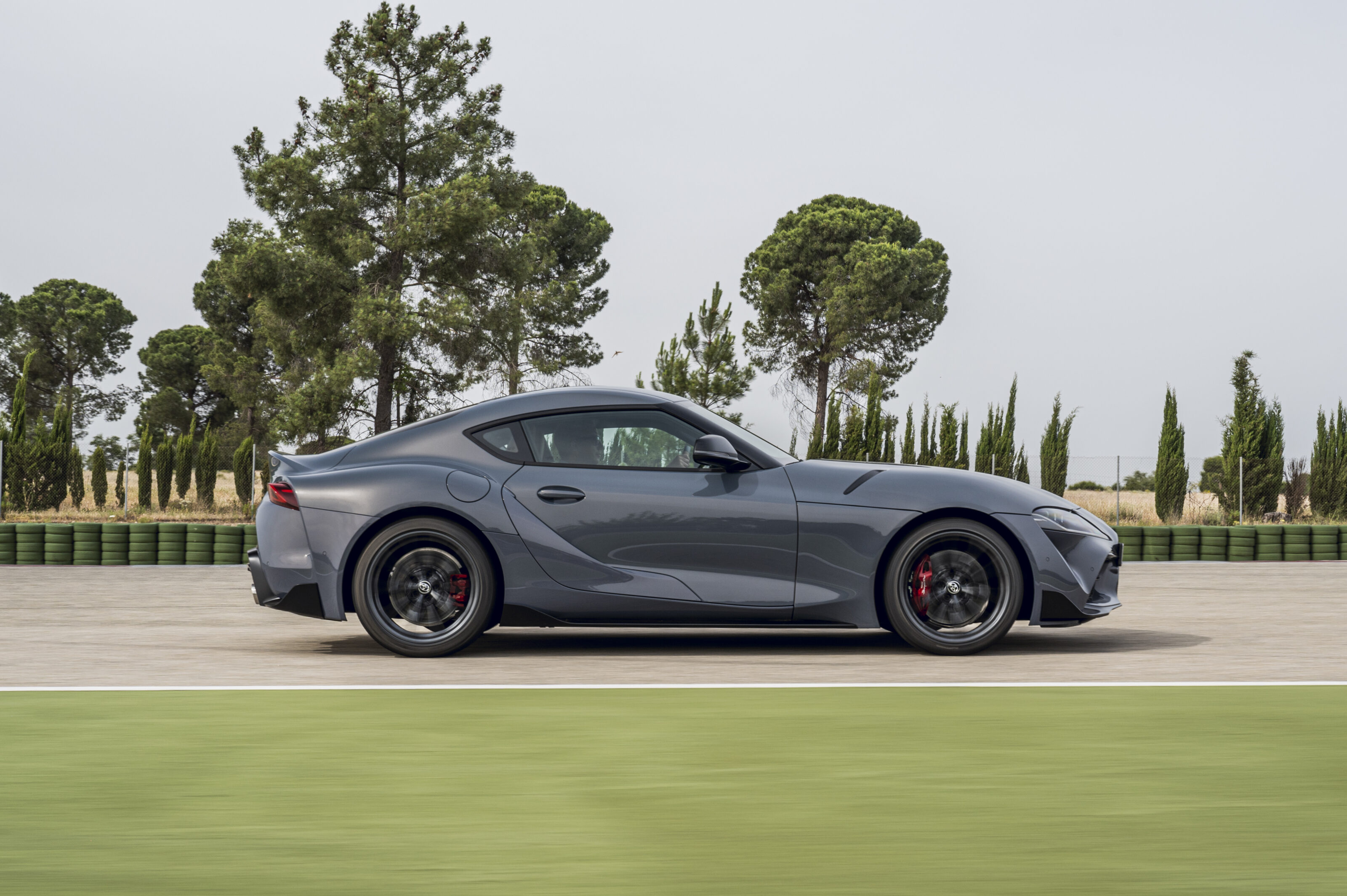
The rest of the handling feels like a decent step on from before, too. Whether it’s down to the more committed vibe of the new seats and the extra involvement brought on by the gearbox, I can’t fully say, but this feels categorically a better Supra, with alert, precise steering that allows you to really commit with the front end, the rear axle moving progressively behind it.
Its 38kg weight loss hardly represents a fad diet, and so this still feels pretty heavy under brakes at the end of Monteblanco’s pit straight. But there’s agility in the corners and – crucially – it’s fun. Though not as outright playful as its more rambunctious GR86 sibling (which is little more than half the price, I should add).
“Progressiveness and predictability at the limit is a GR family character,” says engineer – and Toyota Master Driver – Herwig Daenens.
“We want to have informative cars. You can have ‘grip grip grip’ easily but if the grip then suddenly falls off you’ll just be scaring your customers away.”
He tells me this as he’s sliding around the manual Supra – yes, masterfully – while I’m firing questions at him from the passenger seat.
The Supra MT is three-tenths of a second slower to 100km/h than the auto, but I’ve not revealed that little morsel until now because I’m hoping it’s as irrelevant to you as it is to me.
This car represents so much more, and as an emblem of how much Toyota wants to welcome keen drivers into its fold – when other car-makers appear to be bolting their doors shut to folk like us – it’s a very appealing proposition.
