
The Volkswagen Passat Alltrack is a problem solver. One that tries to distil the varied needs of adventurous urbanites into something with the extra ride height, packaging and all-wheel-drive traction of an SUV that also drives like a car.
Although Subaru deserves credit for creating the concept in the mid-90s with the Outback, Volkswagen offers buyers a premium alternative without the steep price climb attached to an Audi A6 Allroad.
Recently, a new Alltrack arrived in Australia. This facelifted sixth-generation of the Passat’s outdoorsy variant brings a fresh powertrain, tweaked exterior styling and an updated interior. It’s somewhat late, though, given production schedule changes in Germany delayed the range’s arrival by more than a year.

As for what’s changed, VW replaced the Alltrack’s long-standing sole 140TDI diesel powertrain with a petrol 162TSI version. It retains a layout consisting of an east-west 2.0-litre inline four-cylinder engine and dual-clutch transmission, supplying all wheels with drive.
Buyers are offered the choice of two trim levels: the base 162TSI and the more richly equipped 162TSI Premium.
Visually, the Alltrack sports updated headlights and taillights to complement a redesigned lower grille in the front bumper. Inside it scores a new climate control pad with touch function and an updated steering wheel design.
Although Subaru deserves credit for the concept, Volkswagen offers buyers a premium alternative without the steep price to an Audi A6 Allroad.

Choosing the base 162TSI sees pricing start at $48,990 before on-road costs, while the 162TSI Premium commands a $12,000 jump, totalling $60,990. Quite the leap, but it comes with a lot of extra equipment.
Alltrack Premiums wear exclusive Albertville 19-inch rims (up from 18s on the base) and their windows behind the B-pillar are tinted. The Premium also scores different LED taillights, shared with Elegance and R-Line Passats, and Matrix LED headlights with cornering and self-levelling functions.
Security-wise, the central locking system incorporates VW’s Safelock mechanism, rendering the handles inoperable if activated – complemented by an alarm system that monitors the interior and the car’s tilt angle. Premiums also come with an automatic tailgate.

Once inside, drivers are greeted by heated and ventilated front seats. They also boast 14-way power adjustability with massage, easy access and memory functions. Vienna leather replaces cloth trim in both rows, as well.
Matte chrome inserts make way for brushed aluminium, while chrome highlights finish the window control switches. The ambient cabin lighting can also display up to 30 colour combinations.
Technology is upgraded as well. Take the 10.25-inch digital cluster with customisable displays, for instance, or the centre 9.2-inch touchscreen loaded with a surround-view camera function and Harman Kardon audio.

Given the exhaustive list of standard features, the optional extras list is thin. Our Premium variant wears Aquamarine blue metallic paint, adding another $800 to its price before on-roads, coming in at $61,790 before on-road costs.
You’re also backed by a five-year unlimited-kilometre warranty and fixed-price servicing for the same period. VW also offers the chance to bundle the service schedules into three- or five-year service plans that can save almost $1100 off the fixed-price servicing fee when you pay upfront.
Despite riding 30mm higher than regular Passat wagons, the difference doesn’t make the process of sitting inside easier, as someone cross-shopping an SUV might hope.

Day-to-day, Volkswagen wants the 162TSI Premium’s fuel tank filled with 95 RON or better. Based on the ADR combined fuel consumption test cycle, the 162TSI officially consumes 8.1L/100km.
Our 162TSI Premium chugged down 9.1L/100km after covering 229km with us in one week but we suspect some performance testing involving timed 0-100km/h acceleration runs and hard cornering spiked the consumption figure beyond the ADR claim.
As a result, the Alltrack’s true thirst might lie somewhere near the middle of the claimed and tested consumption figure at around 8.6L/100km. Equipped with a 66L tank, that should equal around 690km of range if you’re filling up with a 10 per cent fuel reserve left.

Despite the Alltrack sitting 30mm higher than regular Passat wagons or 69mm higher than Passat sedans, the difference doesn’t make the process of sitting inside notably easier, as someone cross-shopping the Alltrack against an SUV might hope.
Once inside, however, the seating position is incredibly comfortable. The wide footwell hosting dead pedals on either side speaks to the room on offer. With the driver’s seat in its lowest position, I had almost a hand’s width of headroom, suggesting it would easily accommodate drivers beyond my 178cm height.
Room in the second row is impressive, with almost a hand’s width of knee room behind my own driving position. The rear seat cushions are a touch firmer than the front items, but adjustable climate control, large door bins, window blinds and a panoramic sunroof go some way to softening the blow of pulling the short straw and sitting up back.

As for the boot, the Alltrack boasts 650L of cargo space and a 1.17m-long floor while the rear seats are upright, no matter what variant. That’s 64L more than the Passat sedan but 0.1m shorter on floor length. However, drop the rear seats with the remote release levers and the Alltrack can swallow 1780L with a floor extended to 2.01m long (or 628L over the sedan, but still 0.1m shorter).
Cabin useability is further boosted by three top-mounted child seat tether points and ISOFIX anchors on the outboard rear seats. An added benefit is the Premium’s rear row can split with a 40:20:40 ratio, opposed to the base car’s 60:40 ratio.
But the cabin’s real draw is the 9.2-inch central touchscreen and 10.25-inch instrument cluster (Digital Cockpit Pro) combination. Clear graphics on either screen present Volkswagen’s software with intuitive menu structures and responsive functionality.

Volkswagen’s Passat earned a five-star ANCAP rating when the current generation debuted in 2015. Since then, the range has been upgraded with the brand’s IQ Drive active safety tech on all variants, adding lane-keep assist for low-level autonomous driving.
Up front, the Passat body structure’s narrow front pillars promote excellent forward vision, especially around the wing mirrors, where the gap between the post and mirror is notably wide. Good over-shoulder vision and a wide rear windscreen help, too.
This outward vision contributes to the Passat Alltrack’s manoeuvrability around town, even though it’s a big car. At 4780mm long, the Alltrack is nearing large segment territory while its plastic body cladding widens the car’s dimensions by 21mm, from 1832mm to 1853mm.

The electric steering is accurate and lightly weighted, and the Alltrack responds keenly to inputs off-centre. And while the all-wheel-drive system is biased towards the front wheels, the Haldex centre coupling diff can react instantly to ensure the Alltrack never wheel spins when powering out of tight turns.
Adaptive damping comes on both Alltrack trims, but in the Premium’s case, it insulates you from the way the Premium’s 19-inch wheels deflect over broken surfaces. There is a downside to the Alltrack’s pliancy, though. Driven aggressively, it can struggle to rein its 1700kg-plus kerb weight in corners. But it’s friendly natured as you approach the limit.
While the AWD system is biased towards the front, the Haldex centre diff can react instantly to ensure the Alltrack never wheel spins when powering out of tight turns.

There’s plenty of grunt on offer. With 162kW and 350Nm, the petrol Alltrack boasts 22kW on top of the old diesel version while delivering 50Nm less. It’s a punchy, flexible engine that provides smooth performance when matched with the seven-speed dual-clutch transmission.
On a roll, it accelerates from 80km/h to 120km/h in 4.75sec, smoothly revving out in-gear past the 6500rpm soft redline and upshifting in a blink just short of its 7000rpm hard redline. From a dig, it’ll also reliably blast to 100km/h in 6.86sec when you use launch control (and switch off ESP).
Ultimately, plenty will consider the VW Passat Alltrack 162TSI Premium and the closely priced and more powerful Volvo V60 B5 Cross Country ($64,990 before on-roads and with 192kW/400Nm) based on their refined appearance and premium vibe alone.

The Subaru Outback Touring, for $48,990 before on-road costs, is a compelling alternative for someone less worried about pretensions. Still, the Alltrack offers the classy driving experience to back up its upmarket interior and exterior.
Of course, paying $12K on top of a base Alltrack is hard to justify when you already get the same cushioned ride, sharp steering and punchy performance, but the Premium wants for little in terms of equipment and technology.
And we suspect that full-fruit appeal suits a model trying to please more types of people, like couples and families who value luxury without excess and practicality without compromise but have a single driveway spot.
And it’s that all-around goodness for which Volkswagen is known that shines in the Alltrack.
2021 Volkswagen Passat 162TSI Alltrack Premium specifications
| Body | 5-door, 5-seats wagon |
|---|---|
| Engine | 4cyl, DOHC, 16v, turbo |
| Layout | front engine (east-west) FWD |
| Capacity | 1984cc |
| Power | 162kW @ 4500-6200rpm |
| Torque | 350Nm @ 1500-4400rpm |
| Gearbox | 7-speed dual clutch |
| L/W/h | 4780/1855/1530mm |
| Wheelbase | 2790mm |
| Track (F/R) | 1580/1563mm |
| Weight | 1681kg (tare) |
| Boot | 650-1780L |
| Fuel/tank | petrol/66 litres |
| Economy | 9.1L/100km (tested) |
| Front suspension | struts, adaptive dampers, coil springs, anti-roll bar |
| Rear suspension | multi-links, adaptive dampers, coil springs anti-roll bar |
| Steering | electric rack-and-pinion |
| Front brakes | ventilated discs |
| Rear brakes | solid discs |
| Tyre size | 245/40 R19 |
| Wheels | 17 x 7-inch (f/r) |
| Tyres | 215/65R17 (f/r) |
| Price | $60,990 + on-road costs |
Mercedes-Benz bought AMG and revived Maybach; Mini bought Cooper; Audi bought Lamborghini, and now BMW has bought Alpina.
Not lock, stock and barrel, but the brand name did change hands, and so will the specialist know-how in terms of engine and chassis development, and perhaps even the wood and leather shop which is claimed to be among the finest in the business.
The new arrangement may not be an instant licence to print money for either side, but it certainly is a pragmatic goodwill gesture which may evolve into win-win deal.
Alpina should win because it cannot fund the transformation from internal combustion engines to electric vehicles out of its own pocket. BMW should win because there is a big gap between the highest-end 7 and 8 Series and the no-longer entry-level Rolls-Royce Ghost.
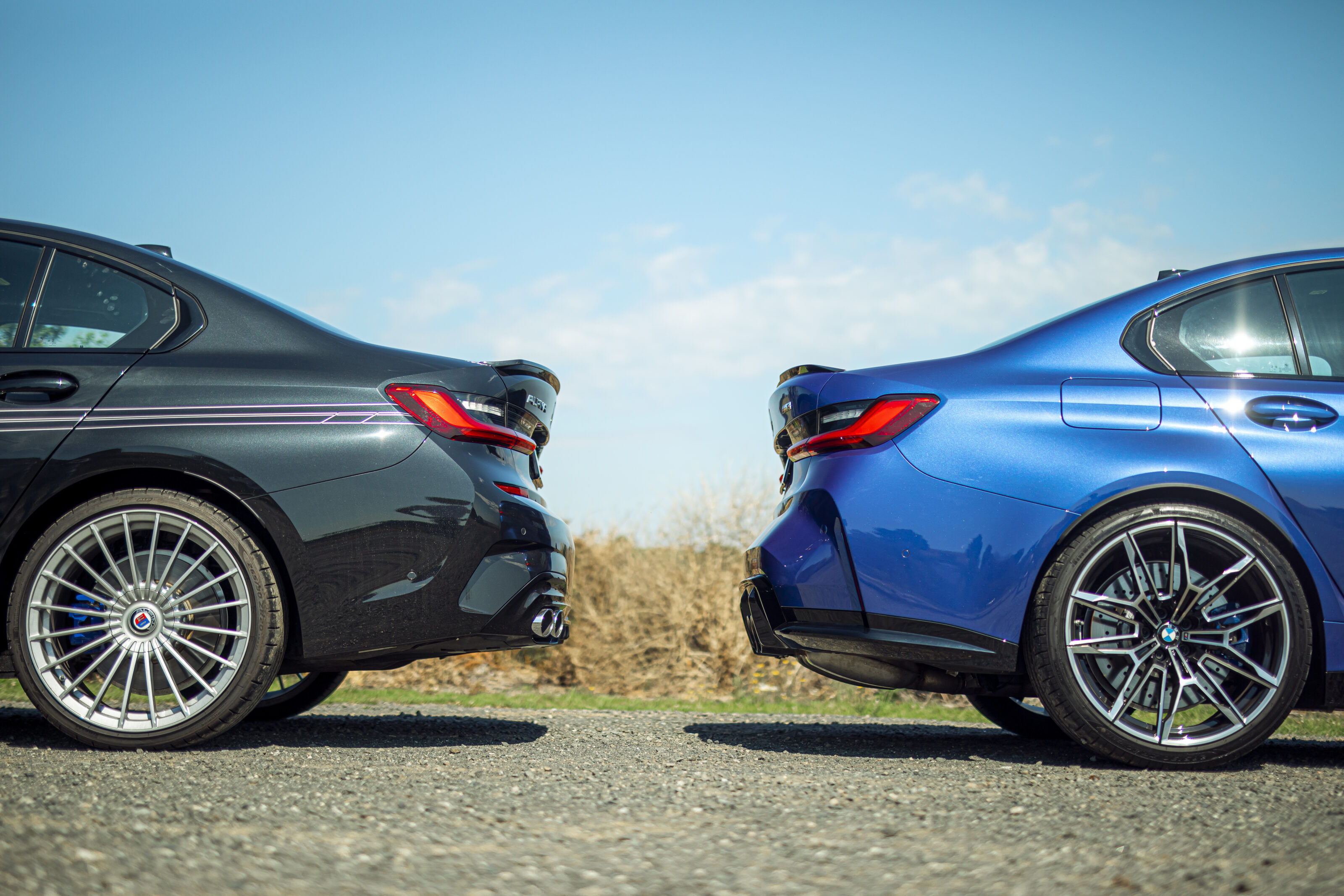
We’re talking about the increasingly popular €150,000 to €300,000 bracket. That’s where the money is, the fat margins loom, the bespoke business flourishes and a finely honed brand image can make all the difference. Just ask Bentley or Maybach.
It is common knowledge Rolls-Royce will go fully electric, starting next year with the Spectre coupé. An electric Dawn will follow suit, and so will battery-powered replacements for Ghost and Phantom. The next Cullinan must be a zero-emission vehicle, too.
On the BMW side of the equation, the 8 Series coupé and convertible will not be replaced, sources say. This move reduces the number of protected line-toppers to three: 7 Series, 8 Series Gran Coupé and X7.
That’s probably good enough to match Audi, Lexus and Genesis, but what about Maybach, who are reportedly preparing a full-size coupé and convertible along with a luxury four-door coupé?
Not to mention Bentley, where four EVs priced between €300,000 and €450,000 are allegedly under development.
Although BMW M could easily conceive its own one megawatt halo car – picture a reimagined M1 – the parent brand also needs credible fresh fare for environment-conscious high net-worth individuals, aka the super rich.
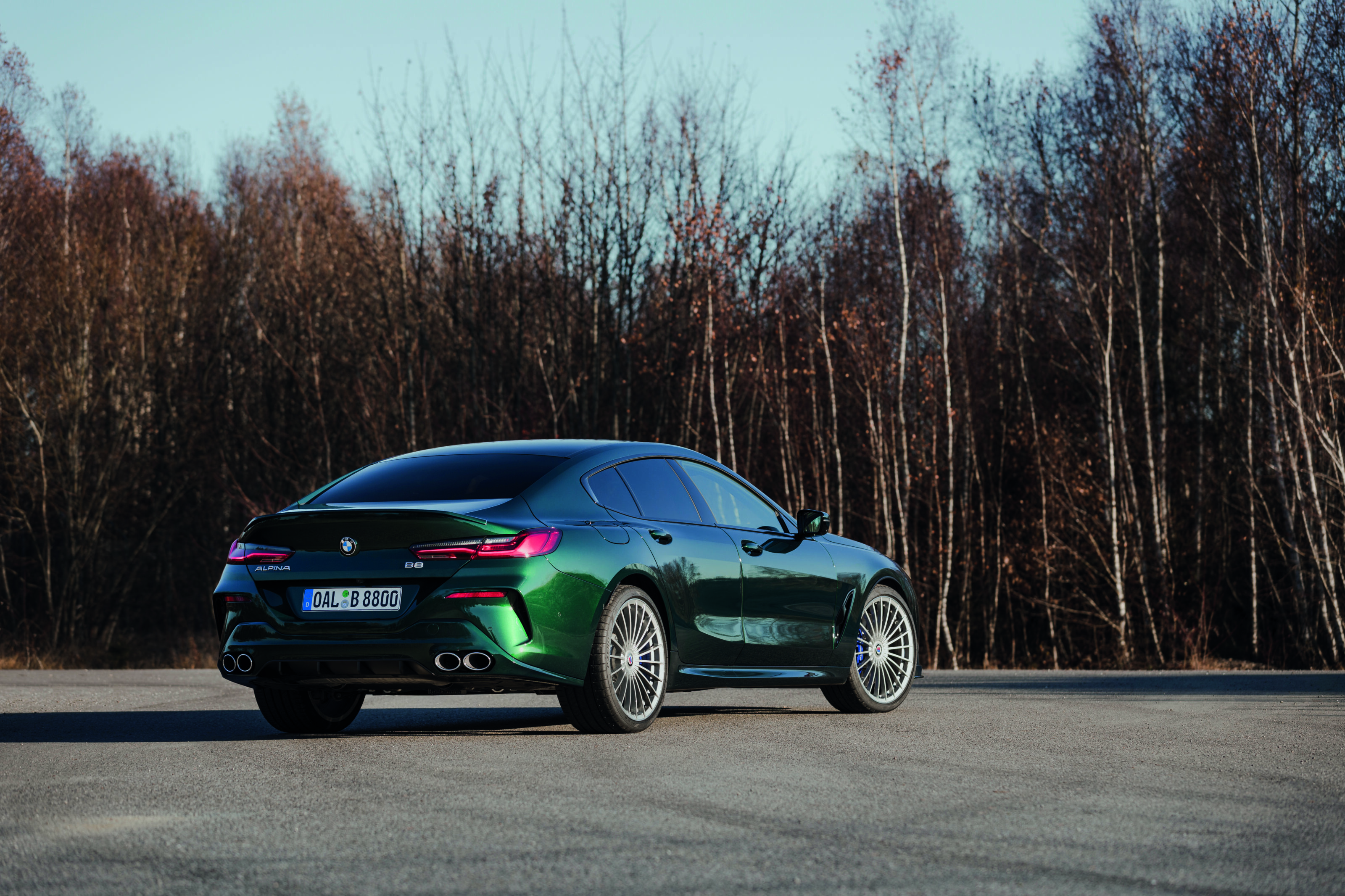
This is where Alpina comes into the picture. Of course it’s still very early days, but imagining a lavish extended-wheelbase 9 Series Alpina in saloon and Gran Coupé guise flanked by a stretched three-row X9 LUV (luxury utility vehicle) is not rocket science.
While BMW would provide the relevant architectures, Alpina would tune the chassis, create bespoke performance packages and cater for the growing demand of personalised colour, trim and equipment options.
True, that’s exactly what the elite conversion specialists have been doing for the last 20 or 30 years. But the rules are about to change because starting in 2025, every new BMW model will be based on the brand-new next-generation Neue Klasse architecture.
The Neue Klasse is electric first, but not yet electric only. It is in other words still capable to accommodate the six- and eight-cylinder engines that made Alpina famous, albeit most likely only in petrol-fed form.
It certainly helps in this context that BMW decided early on in the game to prepare its powerplants for the upcoming Euro 7 emission norm. On their own, Alpina would have been hard pressed to finance this imperative upgrade, just as they could not afford their own unique EV componentry.
As far as combustion engines go, however, coveted Alpina fortes like even more low-end torque and extra refinement can safely prevail through the end of the 2020s.
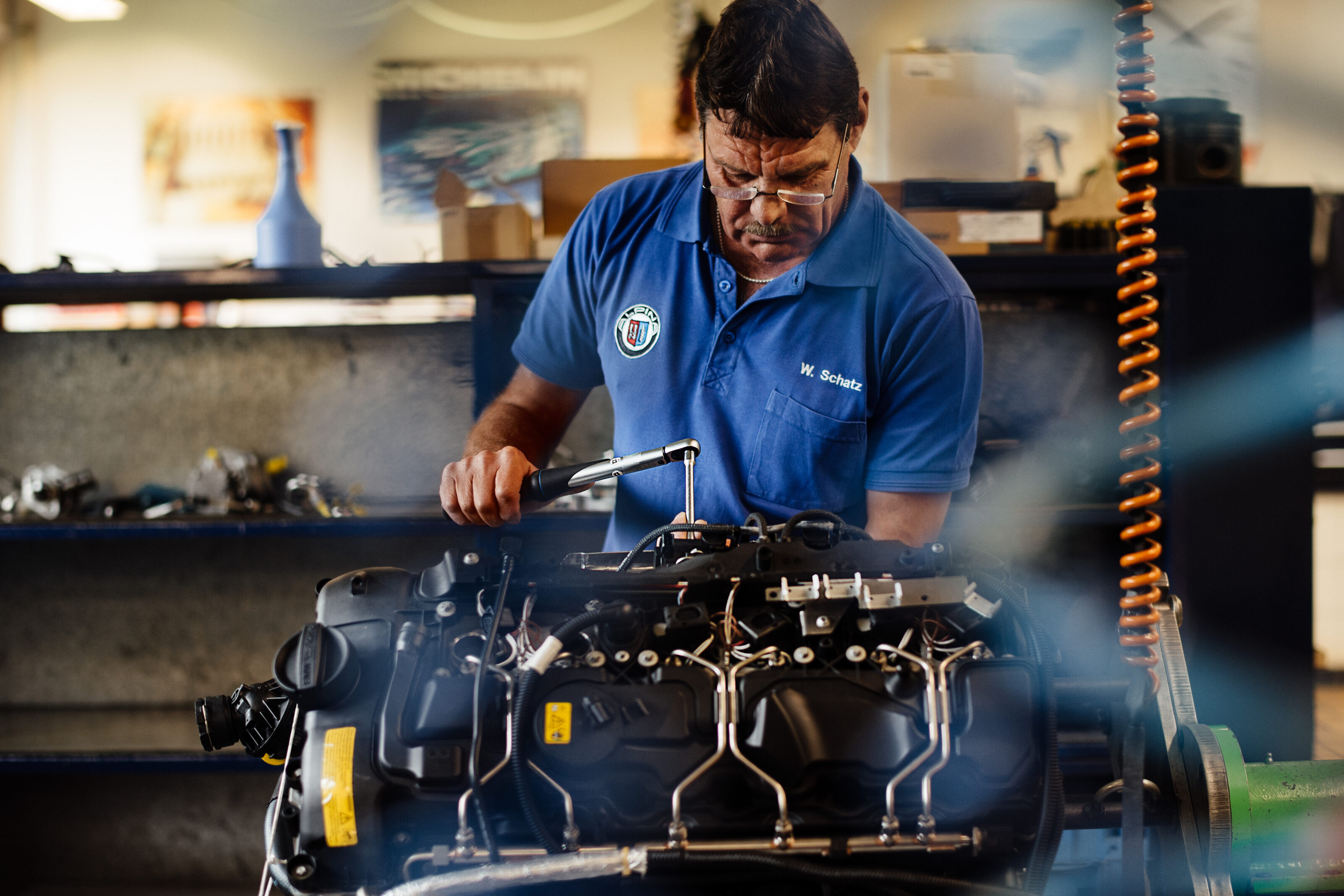
On the EV front, BMW will simultaneously generate a set of tweaked e-motors, inverters and batteries for its in-house Alpina branch.
The M division has nothing at all to do with the parent company’s new acquisition. In contrast to the performance-oriented Garching power brokers, Alpina is seen as provider of luxury mobility as a service. Assets are to include faster priority charging, extended user benefits and tailormade on-demand software upgrades.
2021 was Alpina’s best-ever year, and almost the entire output scheduled for 2022 is already spoken for, too.
But let’s face it: between now and the end of 2025, the niche capacity-restricted manufacturer from Buchloe near Munich can build no more than 5000 units.
To sweeten the good-bye from treasured independence, BMW agreed to pay for Alpina’s engineering services at least through 2030. In addition, big brother will hire 50 of the 280 Alpina workers, a number which includes 100 production and assembly specialists who can expect golden handshakes.
According to the managing director Andreas Bovensiepen, the company founded by his father will in the future concentrate on restoring and dealing with classic Alpinas.
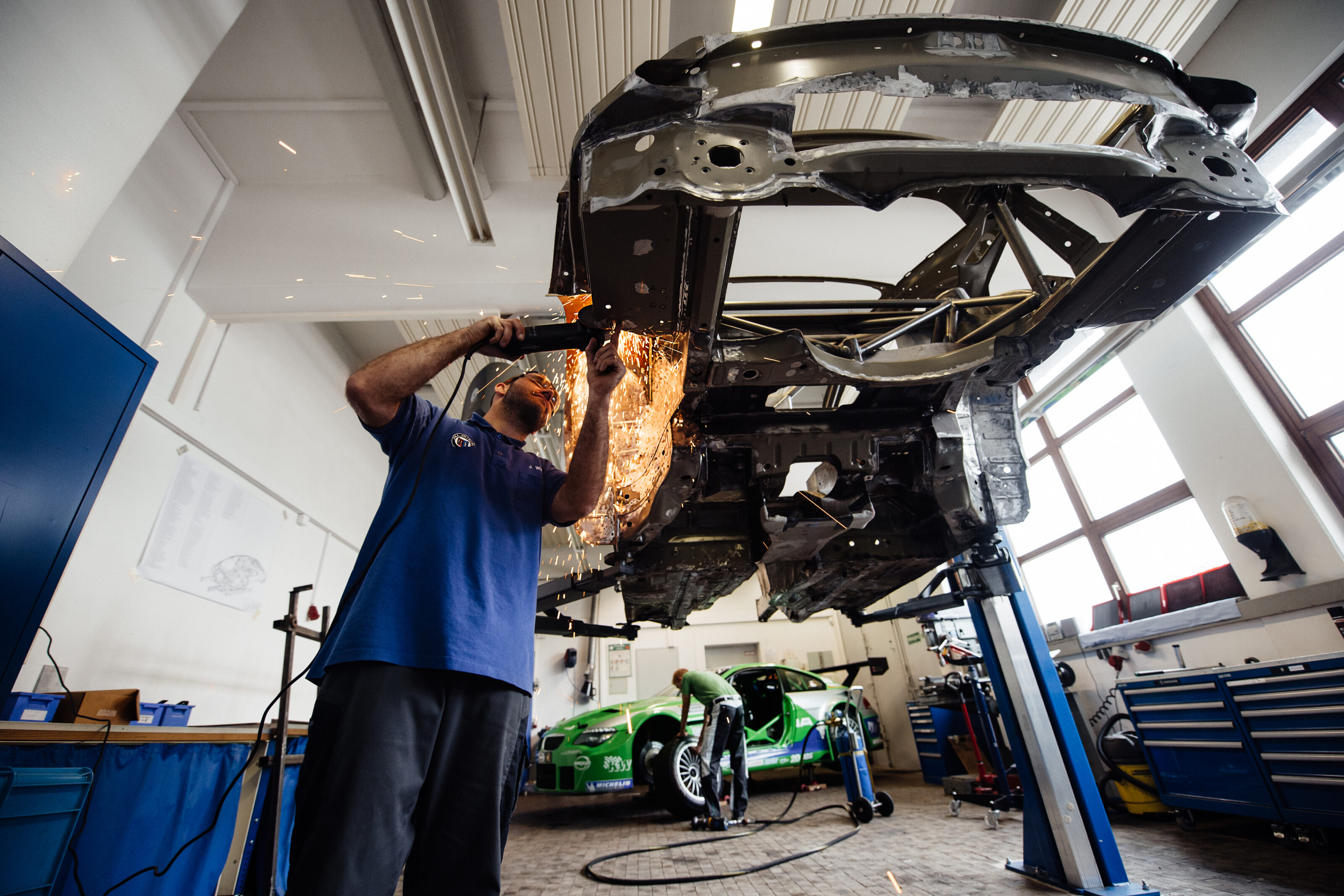
The main factory is to be converted into an experience center for owners, fans and prospective customers.
Customers of exactly what? “There is always the option to do a one-off car or a small batch of few-offs in line with the brand’s long-running tradition,” says Bovensiepen.
“The scope of activities is however strictly limited by the mounting regulation and homologation restrictions.”
The iconic Geneva International Motor Show is set to return in 2023 after the coronavirus pandemic forced the event to be cancelled for three years running.
Having last opened in 2019, the past three iterations of the Geneva International Motor Show (GIMS) in 2020, 2021 and 2022 were dashed by various waves of COVID-19 not only across Europe, but the rest of the world.
Taking to Facebook, the show’s organisers set a date for next year’s return, slated to run from February 14 to 19, 2023.
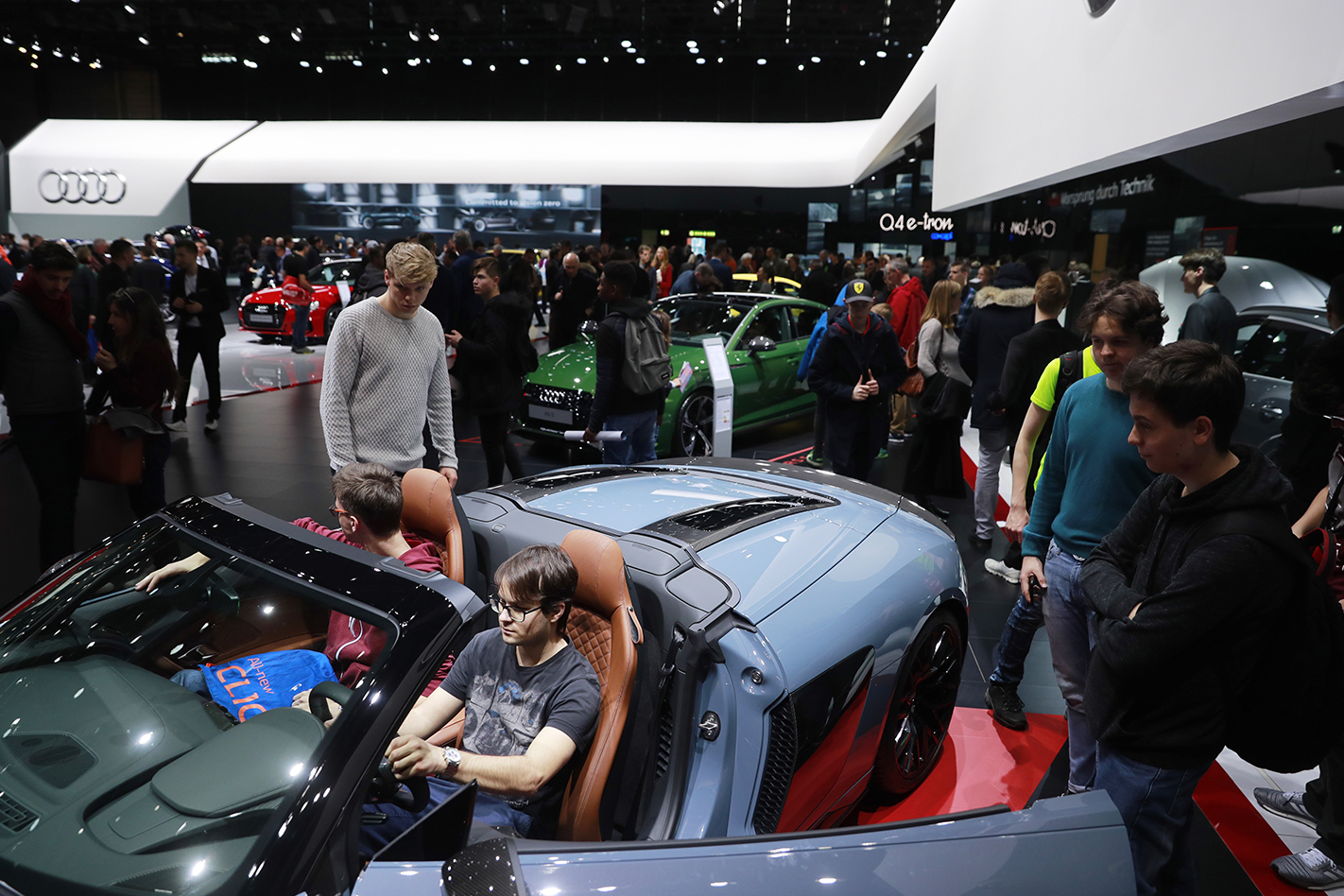
“We are happy to confirm that the 91st edition of the Geneva International Motor Show is on for 2023,” said the post.
“From Tuesday, February 14 to Sunday, February 19, 2023. We look forward to seeing you all during this exciting week!”
It’s likely the GMIS’s second project will also get the green light either this year or next, with the organisers signing a deal with Qatar Tourism last year for the Middle Eastern nation to host its own spin-off show.
Slated to be held in Doha, the Qatar Geneva International Motor Show was tipped to get off the ground this year, although no official dates have been set at the time of writing.
The Ford Mustang Mach 1 is the first of Blue Oval’s iconic muscle cars to ever finish MOTOR’s Performance Car of the Year testing without going into a transmission overheating induced limp mode.
We aren’t saying this to put the elbow into Ford, but to point out that they have been working hard on an issue that is important to their customers.
So, what changed to allow the Mach 1 to withstand 80km of hard running at Australia’s fastest permanent race track – the Phillip Island Grand Prix Circuit – without having to limp back to the pits? It is all to do with the transmission.
As the venue for the track testing portion of our Sports Car of the Year award, Phillip Island was always going to be a challenge for the Mach 1. Previous V8-powered Mustangs have struggled on track when having to conduct sustained full-throttle applications. Something there is plenty of at Phillip Island.
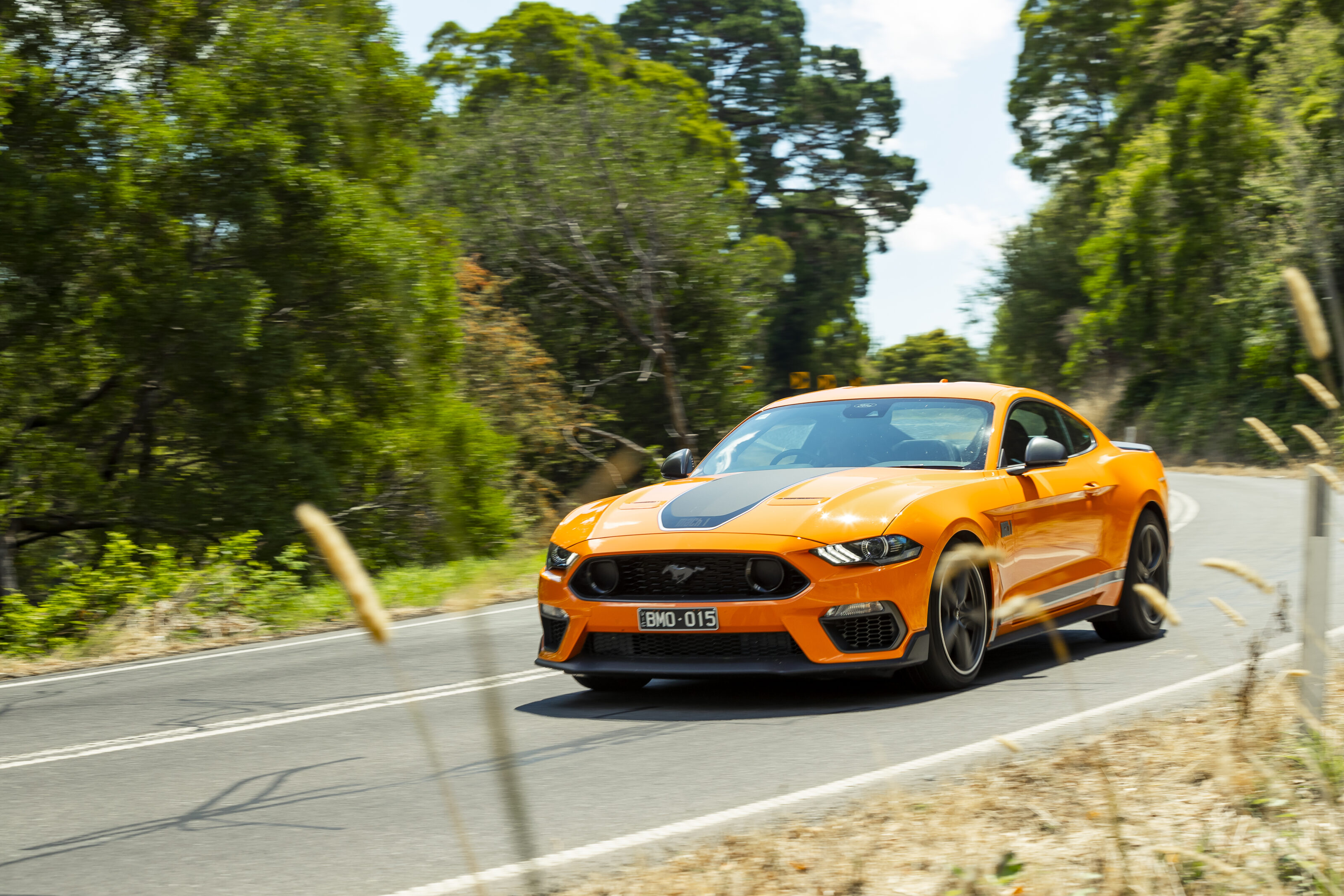
Mustangs fitted with the 10-speed automatic have been harder hit by track use than the manual variants.
The first change made for the Mach 1 to survive our track testing, and it’s a major one, is an entirely new manual ‘box compared to the standard GT.
Gone is the Getrag MT-82 gearbox, with the Tremec TR-3160 from the Shelby GT350 stepping in its place. Both units have six ratios, and while the Tremec runs to a higher speed in first gear (86km/h plays 82km/h), the new unit will have drivers shifting at lower speeds in all subsequent gears. This is a good thing.
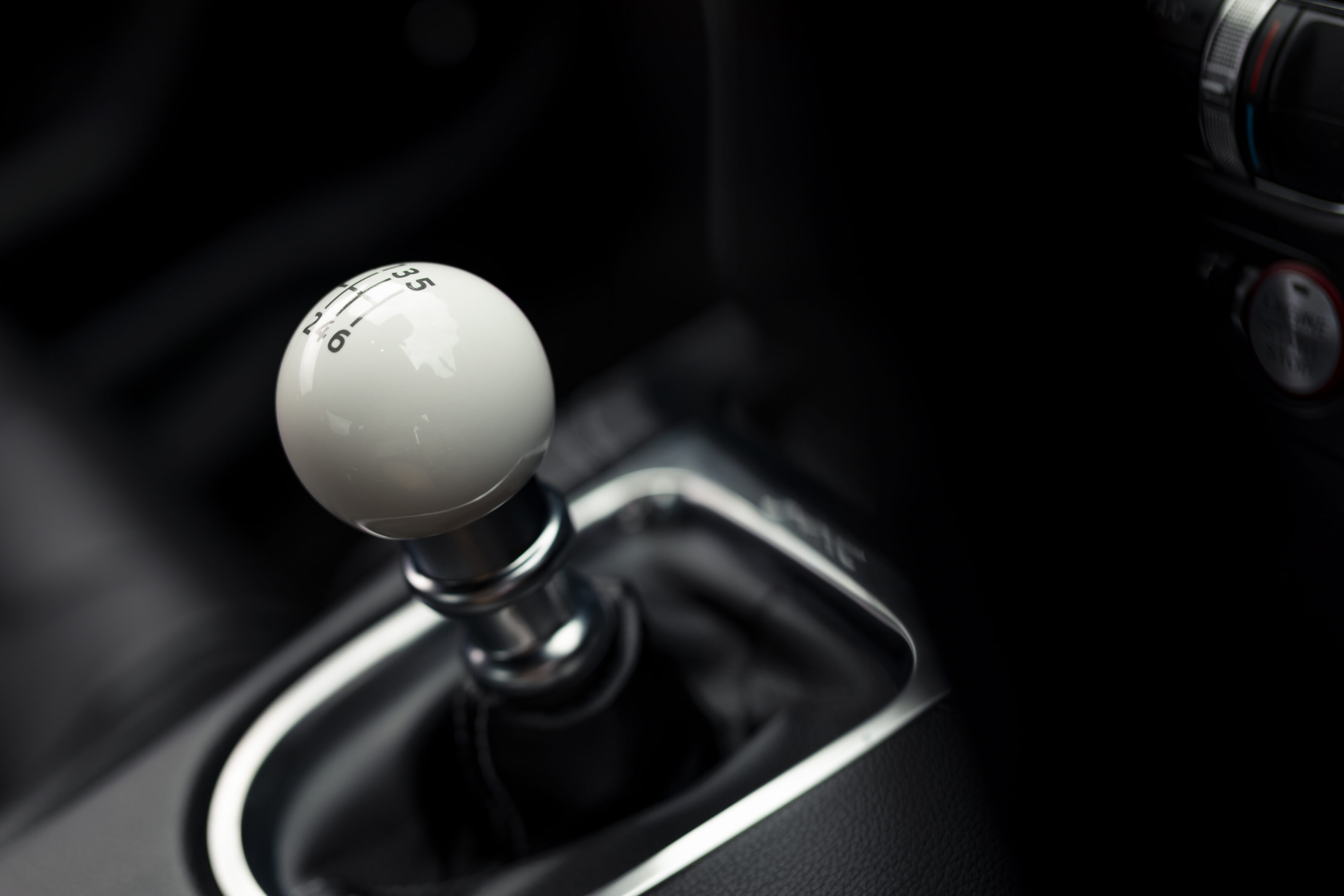
Tremec’s TR-3160 has built itself a solid reputation in the Shelby, being fitted with high strength steel gears and shafts, along with high-capacity tapered bearings and synchronizers. It has been built with circuit use in mind.
The naturally aspirated GT350 also donates its oil cooler to the cause, helping the Mach 1 remain composed on track.
In the Mach 1, Ford has also given the Tremec gearbox rev-matching for the first time as an added bonus.
Going a step further, Ford has also fitted a ‘No Lift Shift’ function to the Mach 1 as standard, backed by a factory warranty.
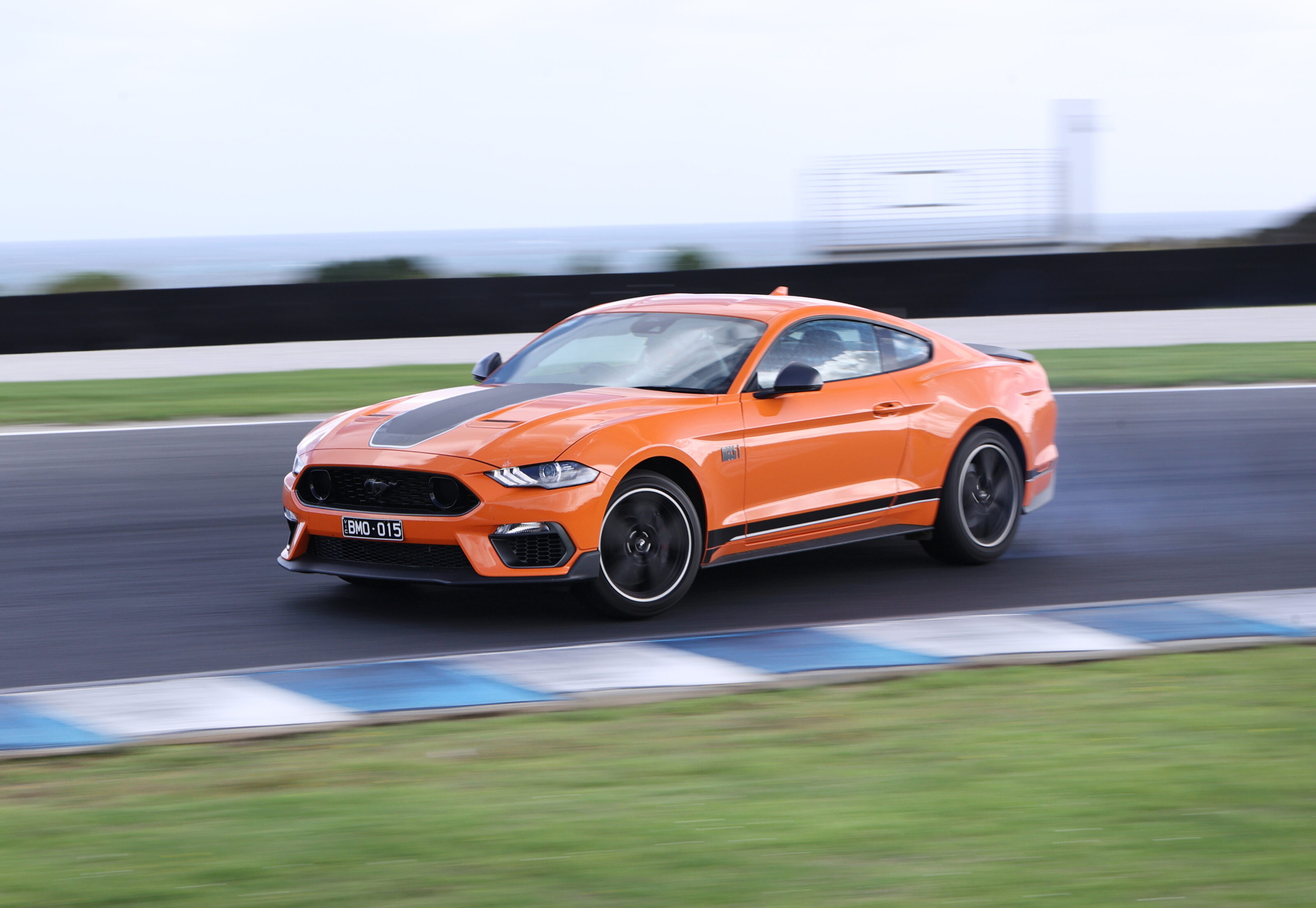
The system allows users to ‘Power Shift’ – a drag racing technique that is cringe-inducing for those of us with some mechanical sympathy built into our personal character. Essentially a technique of maintaining maximum throttle application all the way through an upshift.
Making this possible is the ECU is now capable of detecting when both the throttle and clutch are applied at the same time, cutting ignition for the briefest of moments to allow for the next gear to be selected.
This all adds up to create a Mustang that Australians can finally take to a track day without having to worry about how they are going to get it home again.
I was working in the fabled GM Design Studios in Detroit just before the release of the GM EV1 electric car in 1996. I recall seeing this new ground-breaking vehicle and thinking, “That’s cool, but does it really need to look like that?”
Well, yes and no. Electric vehicles (EVs) go back to the earliest days of motoring in the late 1800s but with the first EVs of the modern era, there were two main factors dictating their appearance: aero-efficiency and marketing.
The Achilles-heel of EVs has always been driving range, and one key enabler is aero-efficiency. Accordingly, designs were optimised in the wind-tunnel to deliver the slipperiest possible shape to reduce drag. Glass and mouldings were flushed out to the jelly-bean body surface, apertures were minimised and wheels looked like trash-can lids. We even saw the re-emergence of rear wheel spats.
Many people believe that electric vehicles will liberate car designers, unshackled from conventional drivetrain packaging constraints
Separately, marketing departments needed EVs to look different, in order to showcase the new technology and stroke the egos of early-adopter customers wanting to make a social statement. The overtly futuristic “look at me” styling was often forced and the result was polarising; some early Toyota Prius designs looked like transistorised cockroaches.
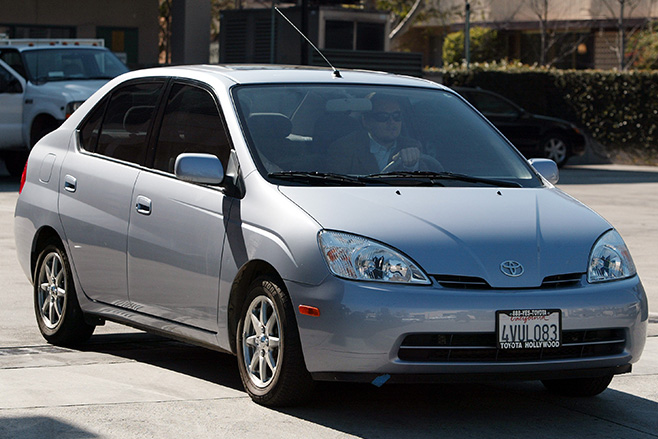
Now that we have a few decades of experience under our belt, what will electric cars of the future look like and will they be easier to design? Many people believe that electric vehicles will liberate car designers, unshackled from conventional drivetrain packaging constraints. Well, once again, yes and no.
There are certainly many styling advantages that come with modern EVs. The most obvious one is the more compact drivetrain packaging, reducing the size of the engine compartment. The size and location of the motors offers more freedom in front-end profile and shorter front overhang, high on every designer’s wish list. At this point it is worth mentioning that EVs tend to be a bit hefty on the scales and consequently the wheel and tyre size is often upscaled to handle the greater mass.
So, from an exterior perspective, we now have more packaging freedom to explore new proportions, shorter overhang and bigger wheels; designers rejoice in accord! But it’s not all beer and skittles.
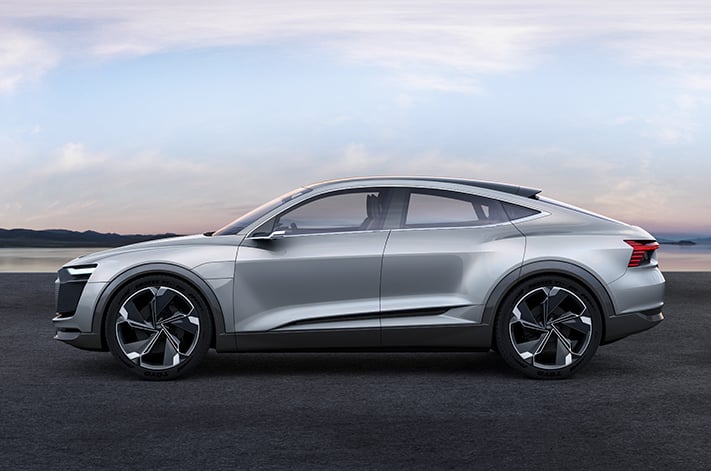
Whenever we talk about car design, we must also consider safety and regulations. Cars will always need crumple zones and pedestrian protection measures, so in many ways this will continue to have a greater influence than the propulsion system. However, it should be easier to achieve with EVs given there is more ‘air’ under the bonnet. Indeed, there is so much more space that it has given rise to a new term in automotive vernacular: the ‘frunk’ or front-trunk.
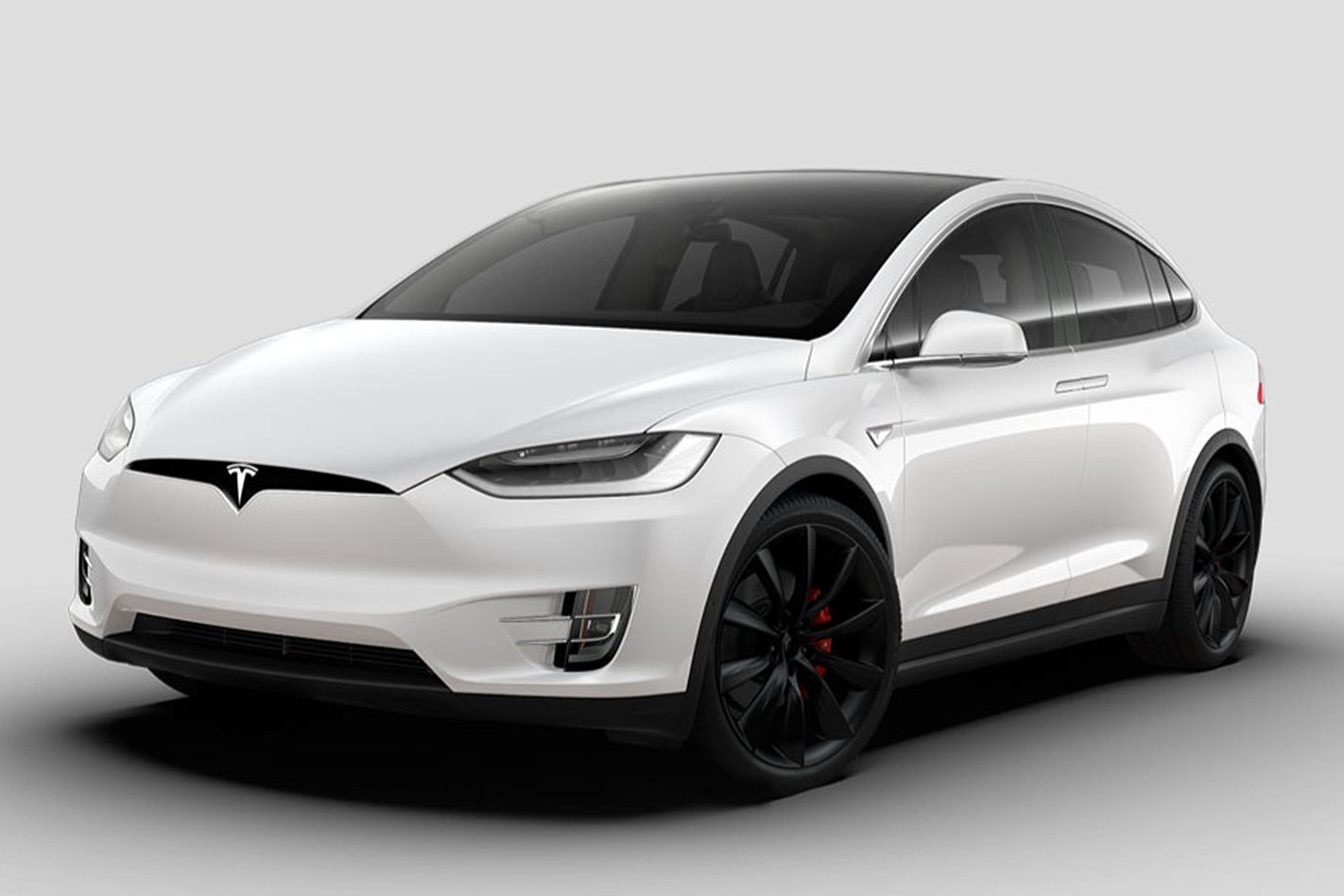
Still on the topic of front-end design, people are often surprised to hear that electric cars need cooling. Indeed, electric motors and batteries also need thermal management so an air-intake opening is usually required, albeit smaller.
But even if they could be eliminated, designers will continue with grille-like embellishment to maintain brand identity and provide the jewellery effect. Low-slung sports cars can get away without prominent grilles, but upright sedans, trucks and SUVs look bland and anonymous without a face; white Teslas remind me of hockey-goalie masks.
Modern EVs also deliver tangible benefits to interior space. Early EVs stacked the batteries down the centre tunnel of the car, but the new best practice is a shallow, battery-pack platform under the floor. Commonly known as the skateboard, this modular system allows for different ‘top-hat’ body designs to be applied.
The completely flat floor eliminates the tunnel and offers better packaging of the lower dash components, like the heating/cooling module, glovebox and knee airbags.
It’s very likely that most manufacturers will arrive at a range of similar-sized platforms delivering similar performance, making styling an even more important differentiator between brands. While there will always be boundaries for car designers, battery power will provide more positives than negatives.
Richard Ferlazzo is the former GM Holden Design Director
Key Points
- Tesla is Australia’s 15th most popular vehicle brand
- It sold 4417 cars in the first quarter u2013 more than Honda and Audi
- Model 3 by far the most popular medium car
Tesla has sold more cars so far this year than more traditional mainstream rivals such as Honda and Audi, new sales figures have revealed.
The US brand’s monthly sales are now included in the Federal Chamber of Automotive Industries’ VFACTS sales figures, meaning this is the first time it has been possible to directly compare it with the legacy brands since the first Model S sedans were delivered to Australian customers in December 2014.
The VFACTS debut doesn’t yet include a monthly breakdown, but we know it started the first quarter of 2022 well with 4417 sales, all of which were Model 3 medium sedans.
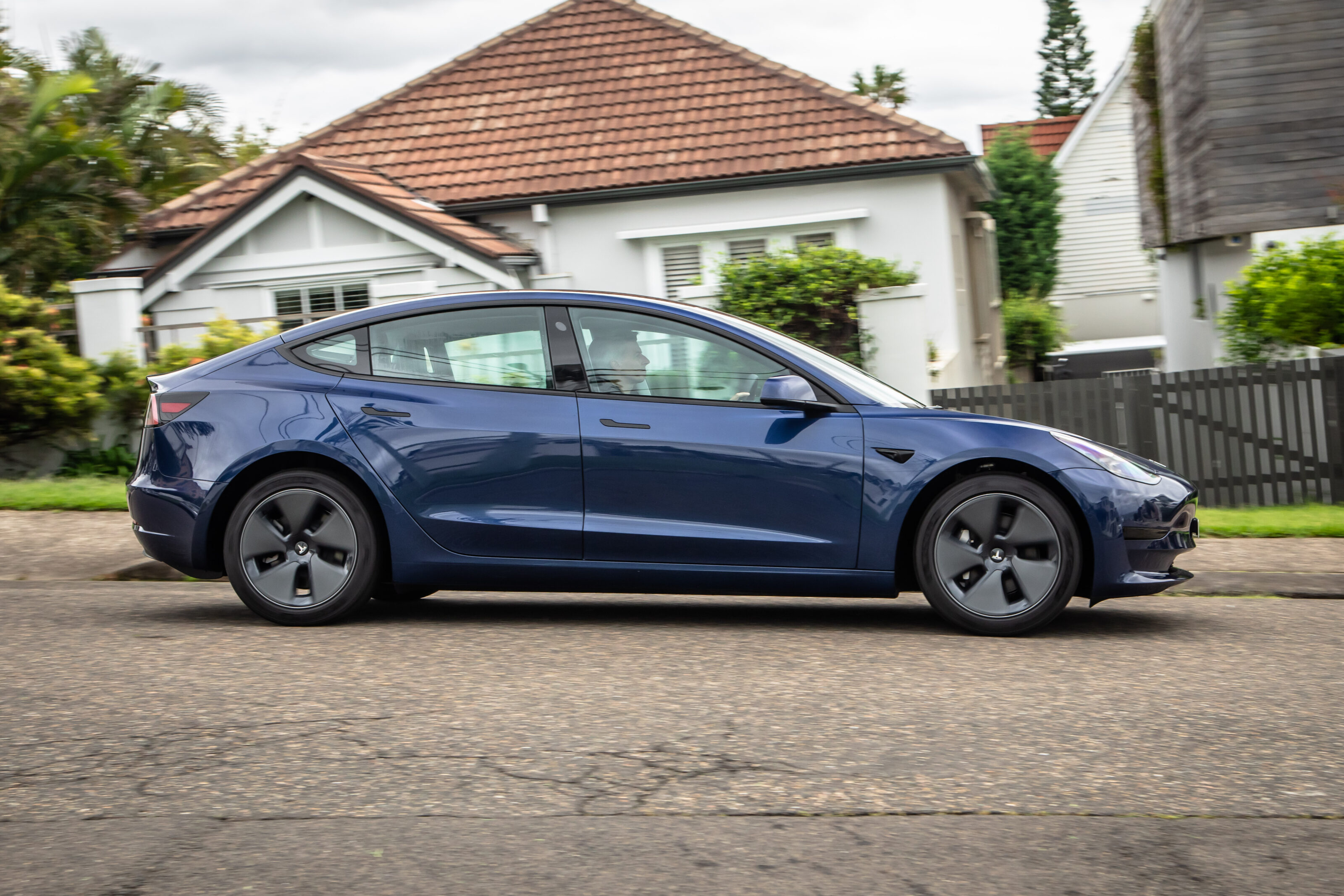
This puts it on target to exceed the 12,094 sales it achieved in 2021, though this could be hampered by a blowout in delivery times.
Even so, Tesla’s year-to-date sales see it sit as the 15th most popular brand in Australia, ahead of Honda, LDV and Audi, which have sold 4089, 3553 and 2713 vehicles respectively.
That’s a fair effort for a brand with one model, which, as you’d expect, is blitzing not just the luxury medium passenger car segment – of which it has a 61.4 per cent market share – but medium-car sales overall.

Its 4417 units sold so far in 2022 eclipsed the Toyota Camry (3359), BMW 3 Series, (788) and Mercedes-Benz C-Class (414).
The Model 3 also accounts for 86.5 per cent of battery-electric vehicle (BEV) sales in Australia.
Accompanying the arrival of this BYD Atto 3 –a new Chinese EV on our shores – is something akin to the hysteria surrounding the iPhone fifteen years ago. Not when I got one, handed to me by a colleague who’d just arrived home from the US with a suitcase full of the original one, but the first official one you could actually buy here.
Social media is ablaze with fanboys as well as curious normal people asking questions and, let’s be honest, wondering what the hell is going on with BYD in Australia.
It’s an ever-changing story, with new bits of information coming through all the time, sometimes giving you whiplash. The new bits of information are often positive but the impression of confusion and constant change isn’t a good one.
We’ve talked with EVDirect’s CEO Luke Todd about that and he says things will eventually settle. Let’s hope so, because even given the short time I had with this car, it looks very promising.
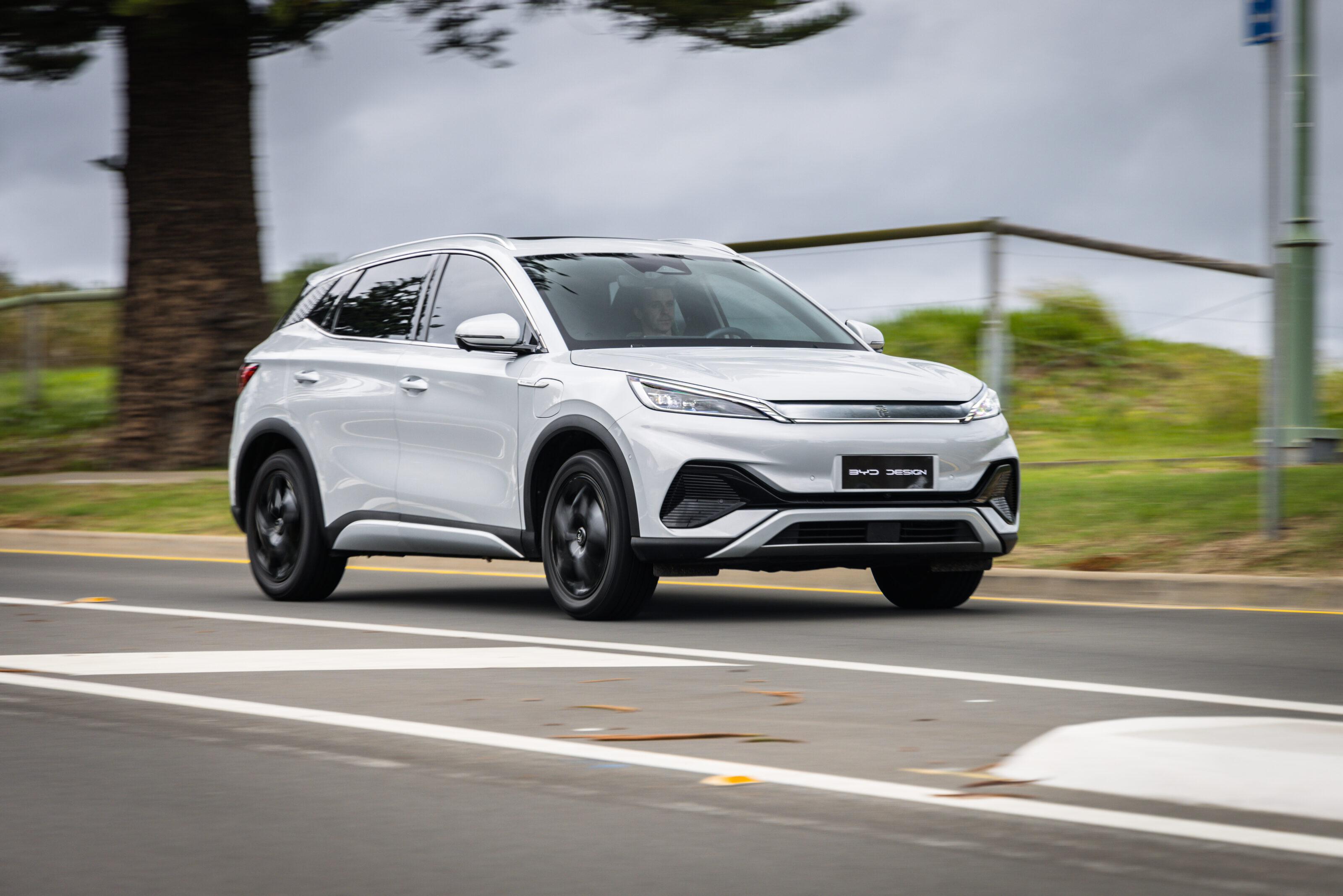
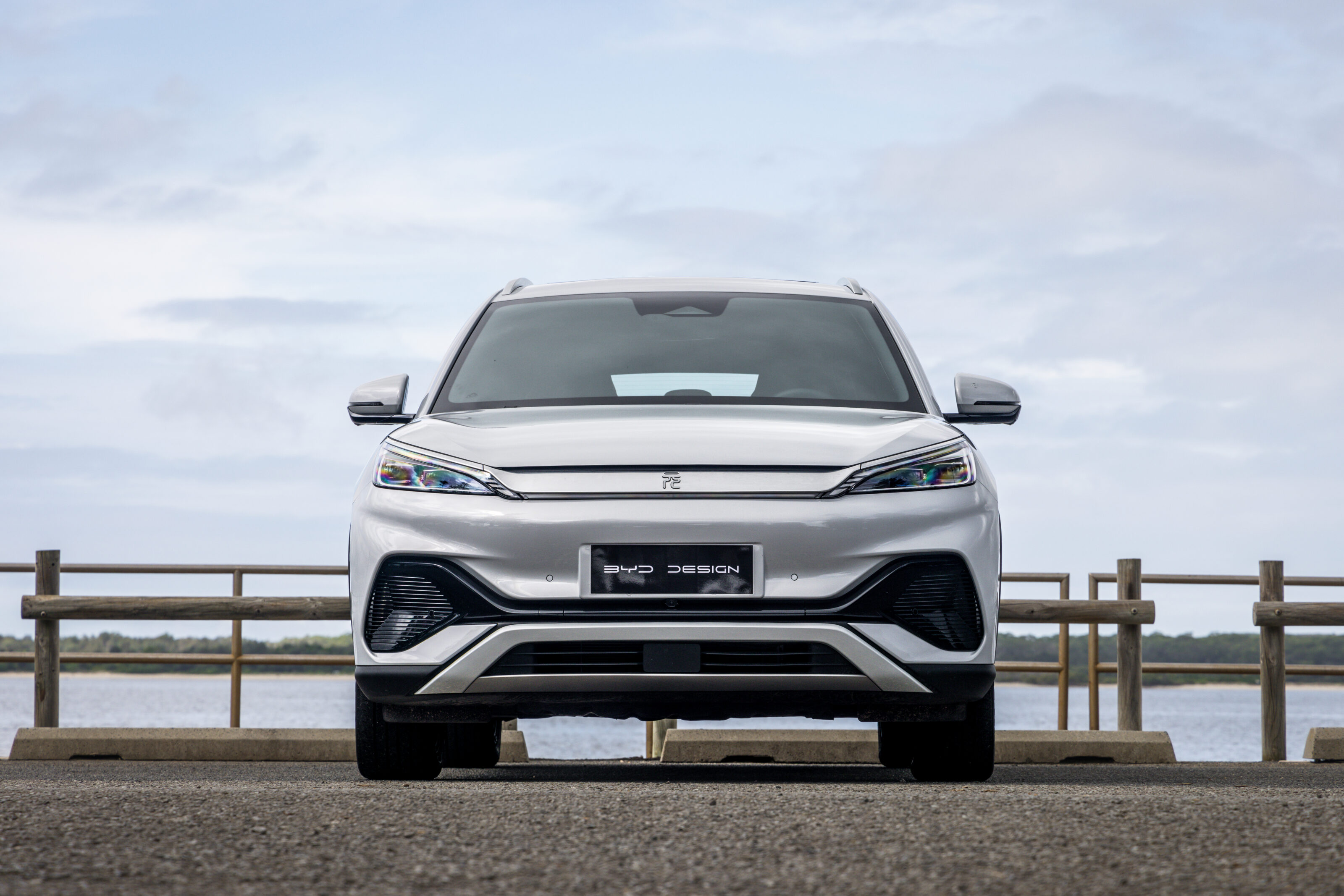
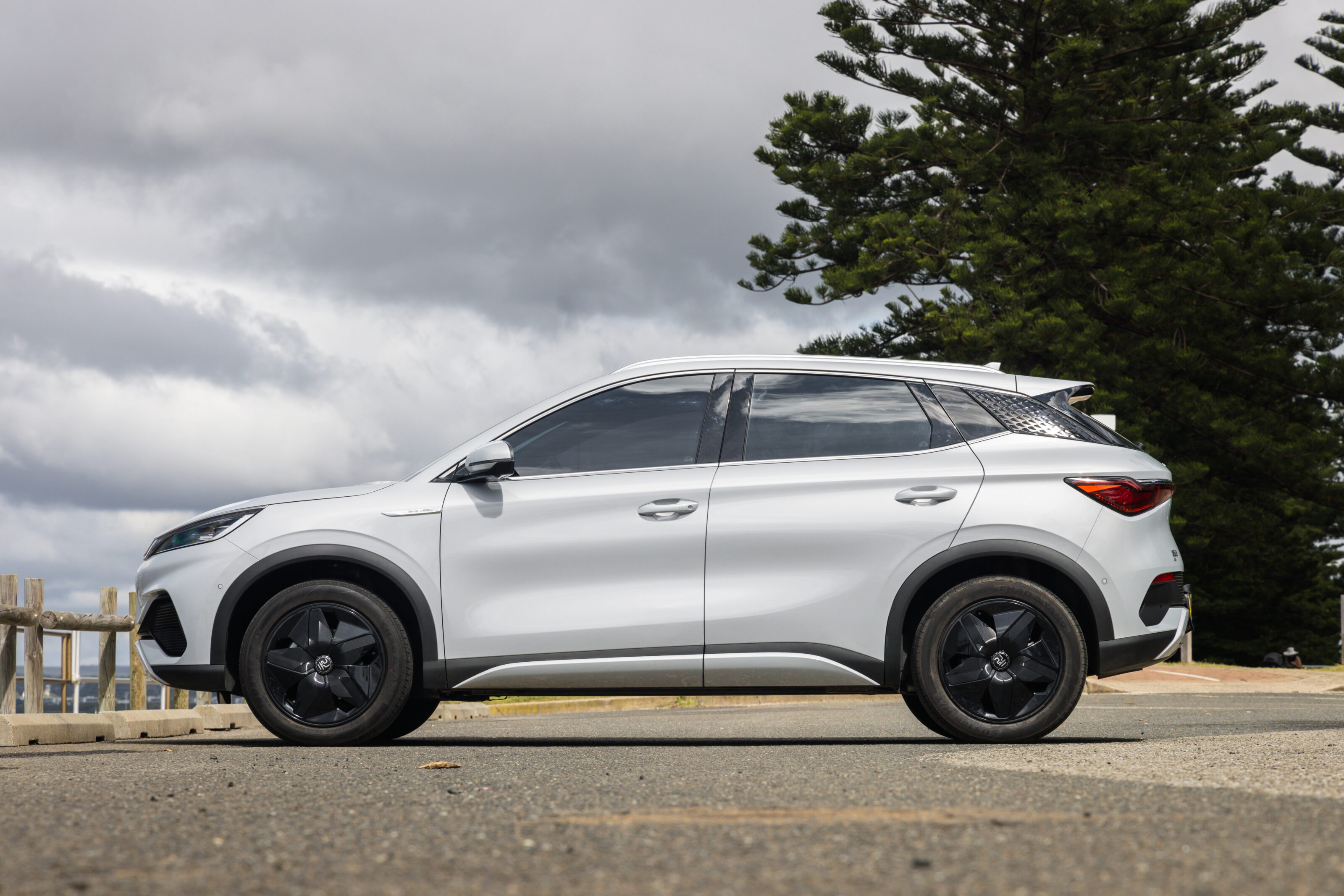
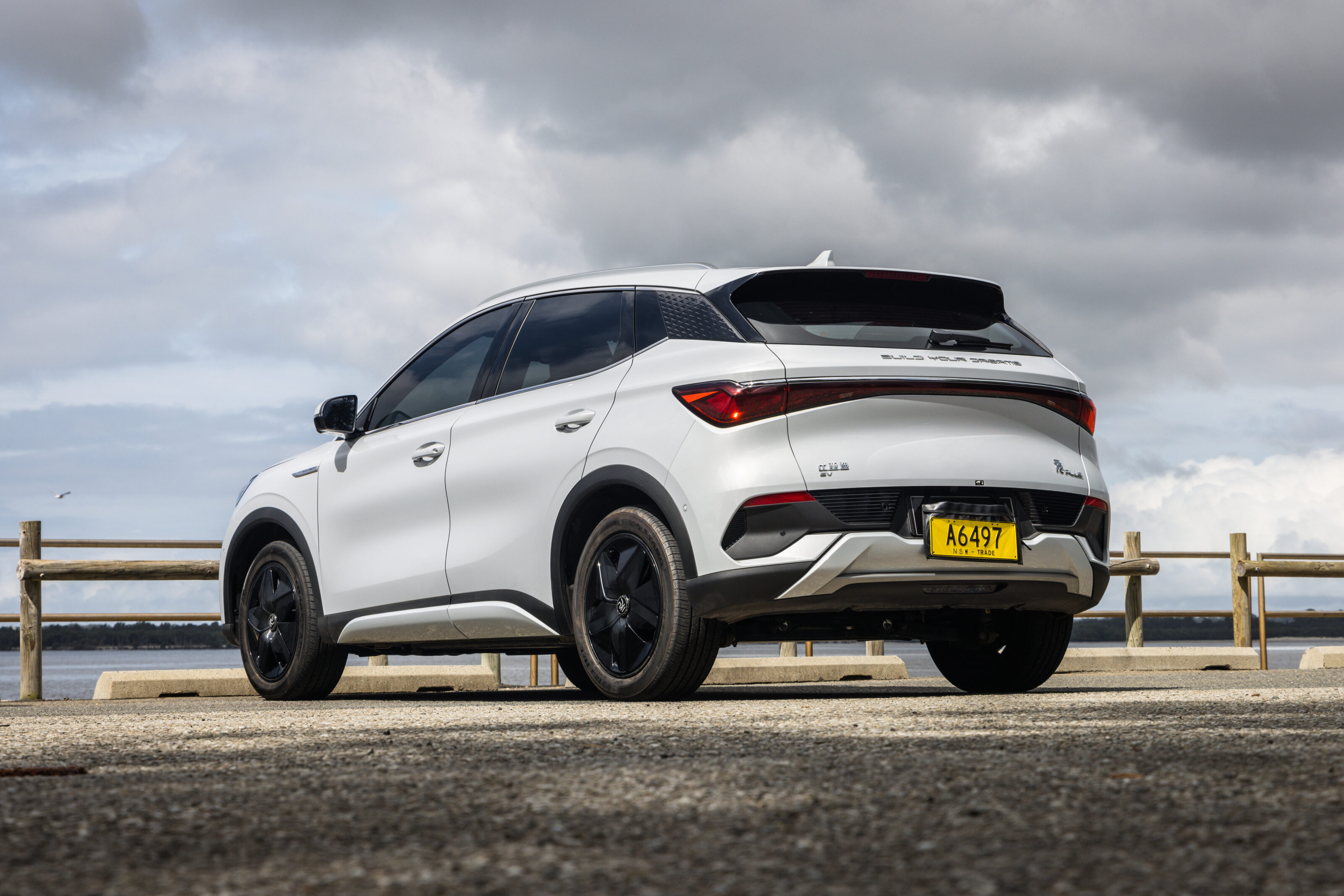
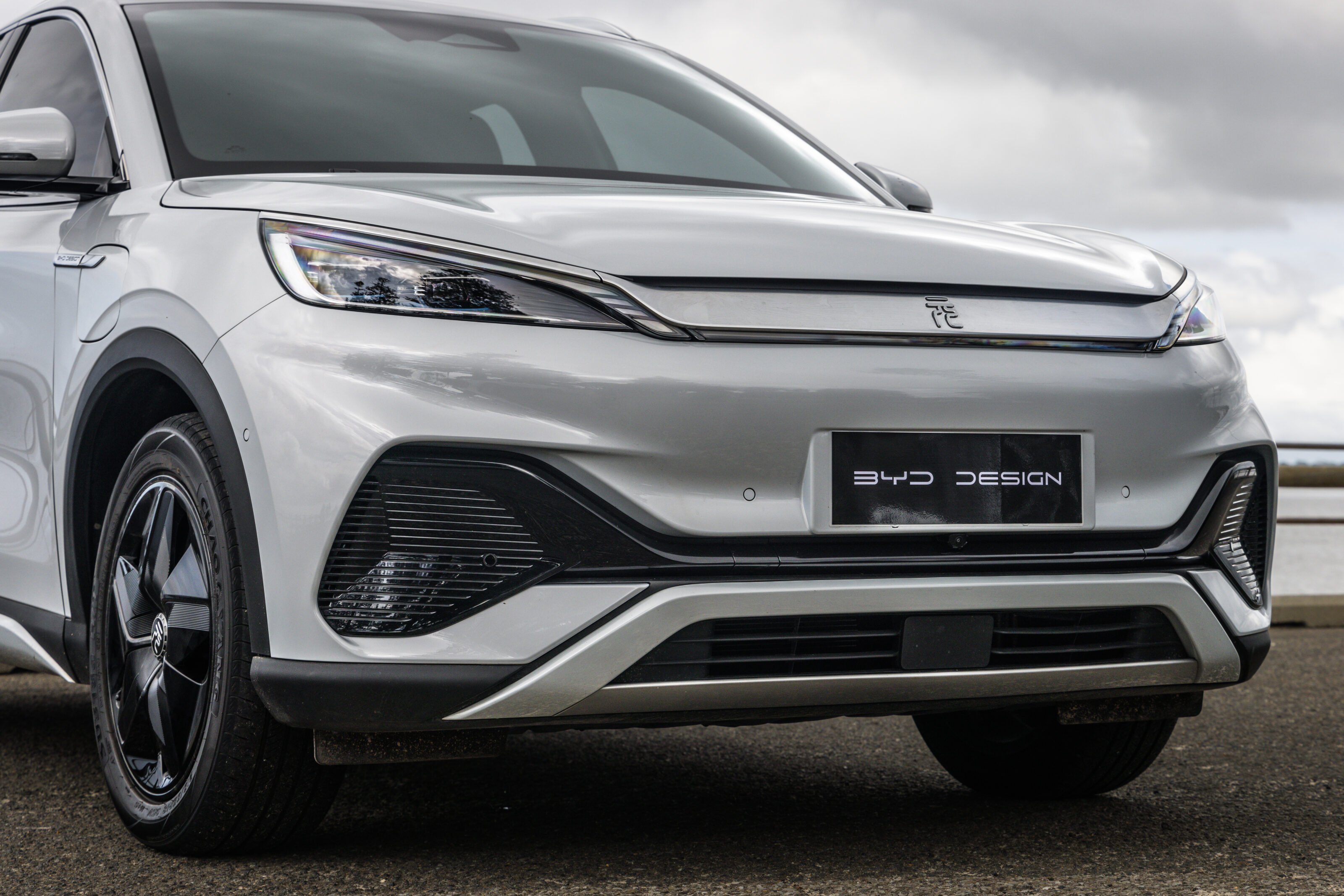
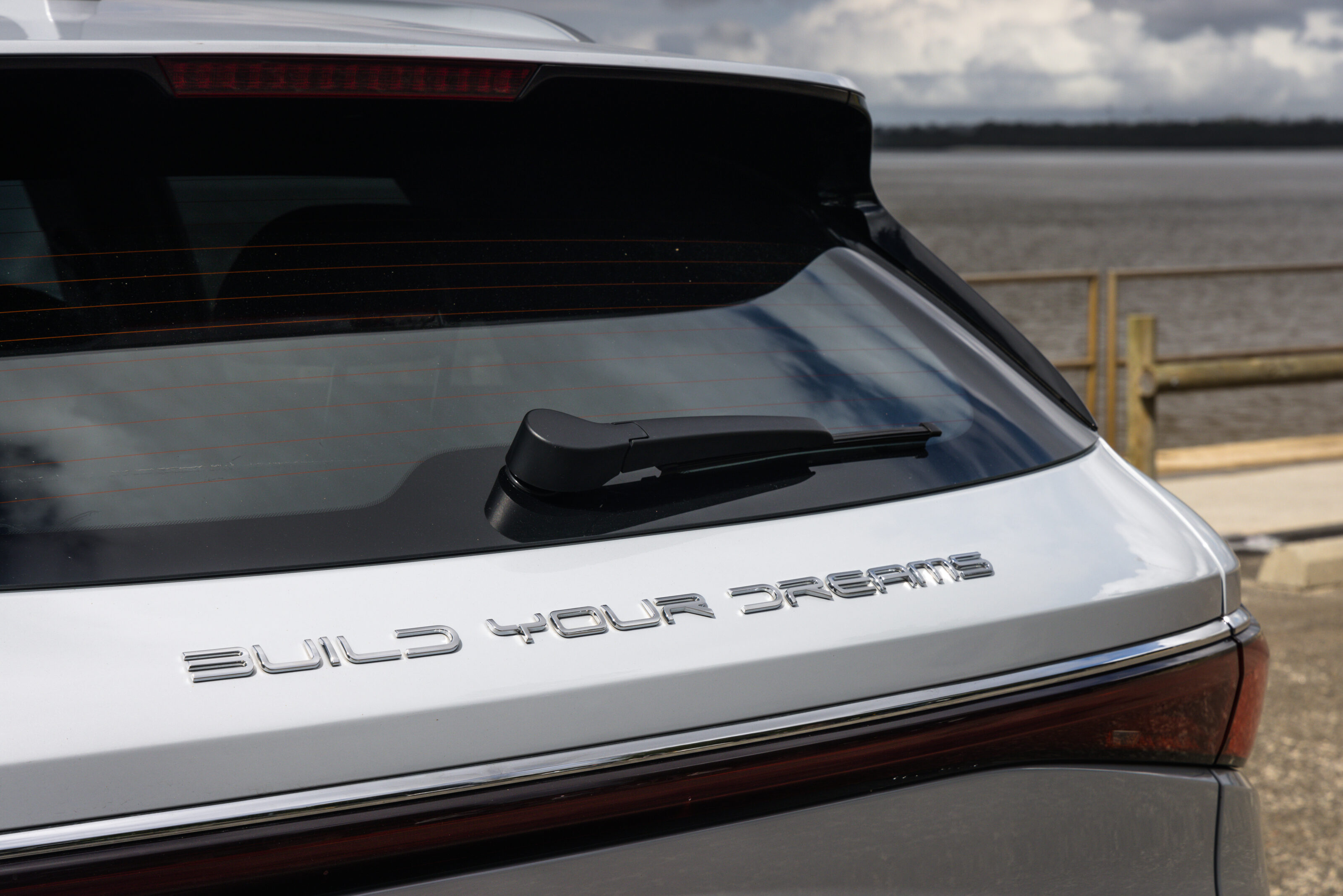
The Atto 3 isn’t here yet but we got one for a couple of days. Well, we got a Yuan Plus, a left-hand drive Chinese market car with a trade plate hanging off the back and the doors removed from the Darlinghurst showroom so we can drive it out on a rainy Monday morning. Atto 3 is the Australian market name as BYD’s (or Build Your Dreams) home market names aren’t always completely right for us.
Apart from just a tweak here and a crimp there, the car we drove is essentially what we’ll be getting here in Australia, so it’s a more representative test than I was expecting – which means this very detailed review won’t be too far off what we’ll be saying about it in a few months.
Pricing and Features
You can choose from two Atto 3s (I still don’t know why it’s called Atto 3, just Atto would do) and they’re the same specification. The 50kWh with its 320km range starts at $44,381 and the 60kWh at $47,381. Both these prices are before on-road costs, which vary by state and but are all laid out on the EVDirect website.
Of course, you variously get rebates and stamp duty exemptions in some states and territories, so you’ll be able to wind about $4000 off in NSW and Victoria, bringing the car down to about $43,000 on the road give or take.
EVDirect claims that the Atto is the most affordable EV on the market, but as you probably already know, it’s only cheaper than the MG ZS EV on the road before incentives in Tasmania at $44,990. So it’s not wrong to say that but also not quite right because the entry-level ZS EV is $46,990 drive-away nationwide.
The BYD is better equipped than the MG and has a much bigger battery as well as a more powerful electric motor. I’m yet to drive or even see the upgraded ZS EV so I’ll reserve judgement on the quality. The Atto 3 is better built than the outgoing ZS EV, though, as well as more spacious and comfortable. And solid-feeling.
For your money, you get 18-inch alloys, an eight-speaker Dirac-branded stereo, panoramic sunroof, fake leather trim, wireless charging pad, climate control, huge 12.3-inch central touchscreen, five-inch digital dash, keyless entry and start, card key (which wasn’t with the car we drove), power tailgate, powered front seats and a tyre repair kit.
The Atto 3 is better built than the outgoing ZS EV, though, as well as more spacious and comfortable. And solid-feeling
The entertainment system is spread across several different apps but works reasonably well. Called DiLink, BYD is convinced you don’t need Apple CarPlay and Android Auto and to that I say, “You mock me, sir/madam!” The BYD system isn’t especially coherent and despite me not having any Queen on my phone, it would play a track by Australian indie icons The Clouds but display Queen artwork.
Cheeringly, Android Auto and Apple CarPlay will arrive on an over-the-air (OTA) update in September and that lovely big rotating screen will become far more useful. Admittedly, I don’t know what kind of clean-up will happen on the screen software but hopefully it’s brutal and well-curated.
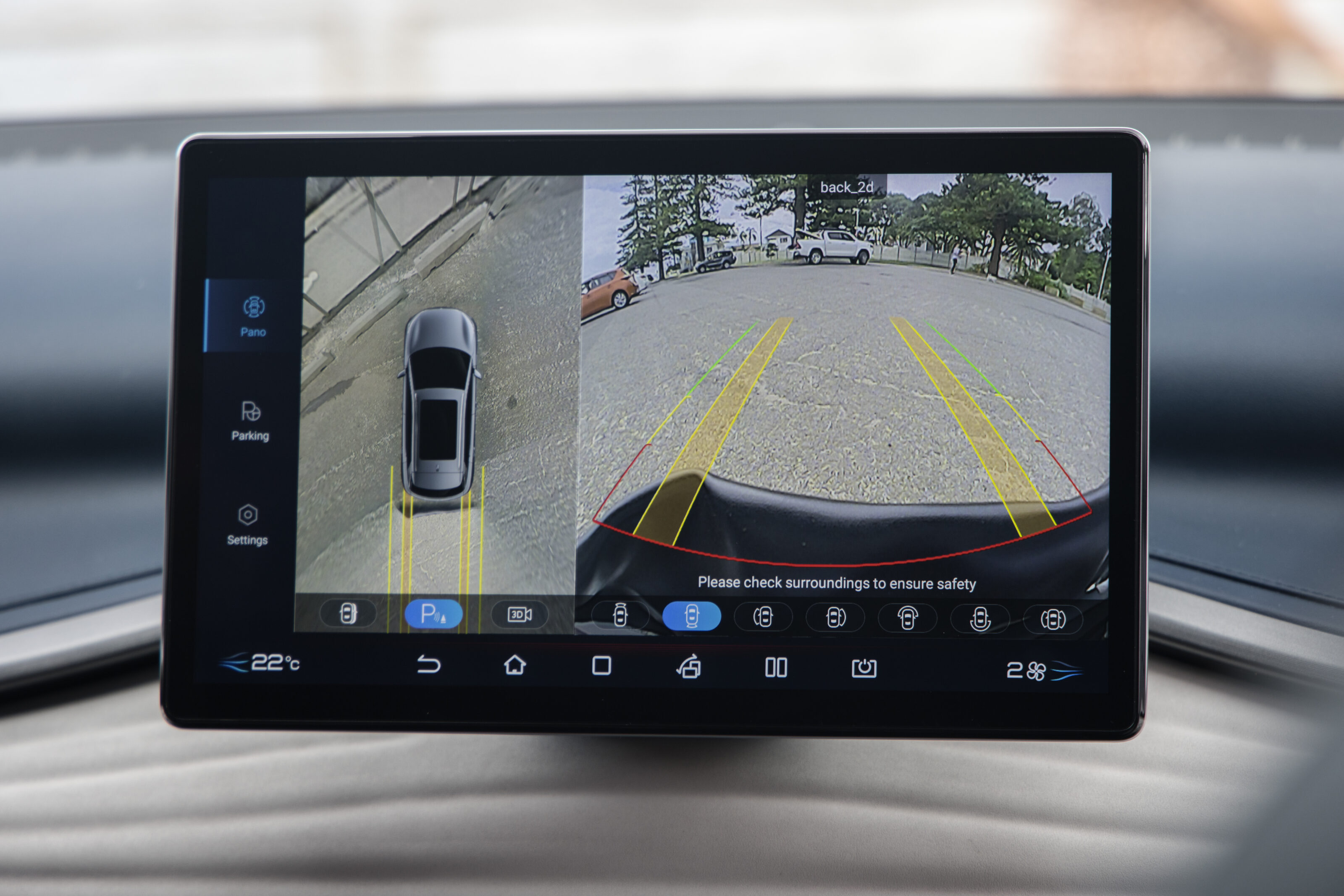
The safety package consists of seven airbags (including a centre airbag) front and rear auto emergency braking, front and rear collision warning, lane departure warning, lane-keep assist and rear cross-traffic alert.
Two ISOFIX points are listed in the spec sheet and one imagines there will be three top-tether points once the pen-pushers have had their way.
It hasn’t yet been tested by ANCAP, so we don’t know the star rating and we won’t know for a while, I imagine.
UPDATE, November 21: Following a resolution on a critical child-seat tethering issue, the Atto 3 now has a five-star ANCAP rating. Read about it here. |
Comfort and Space
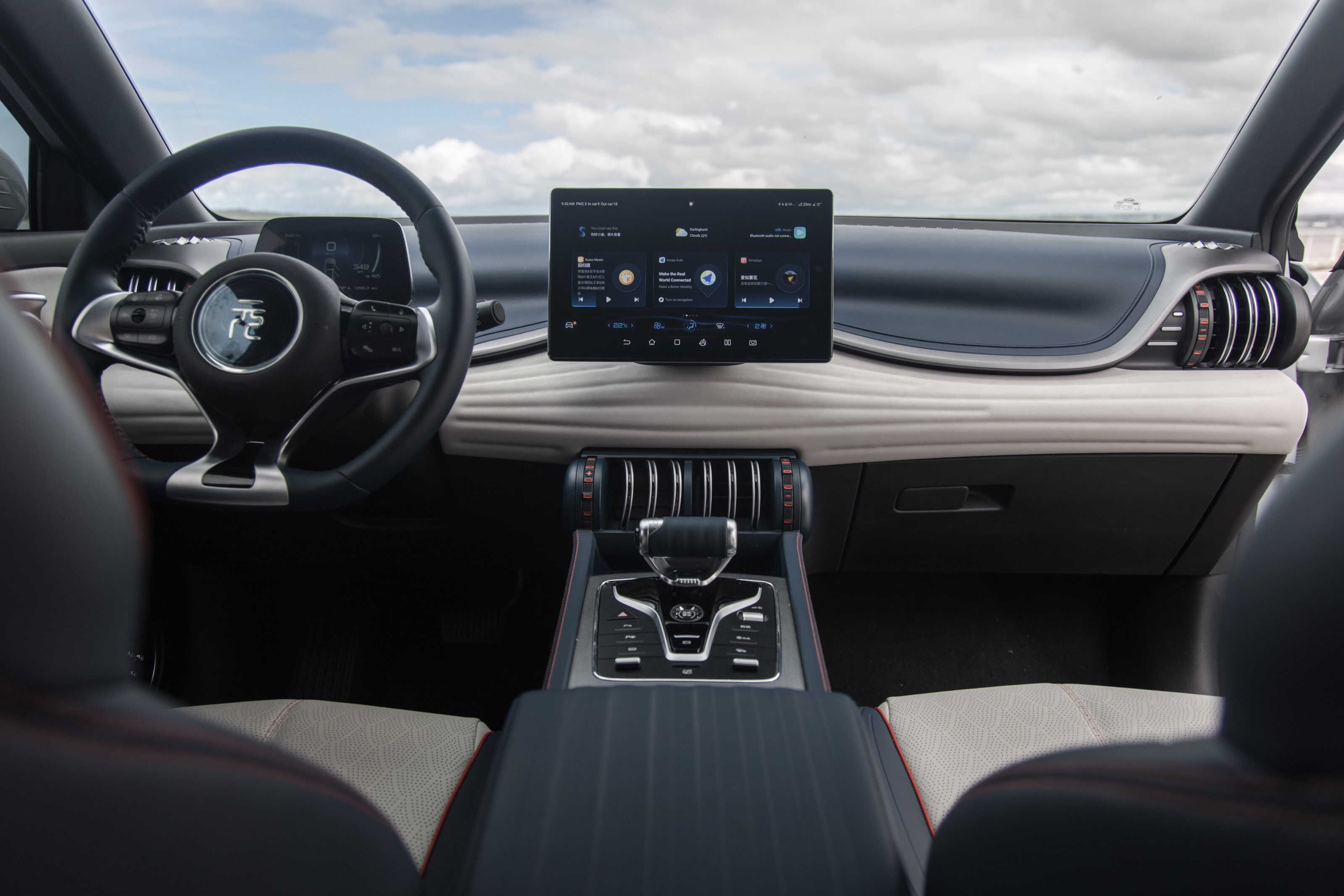
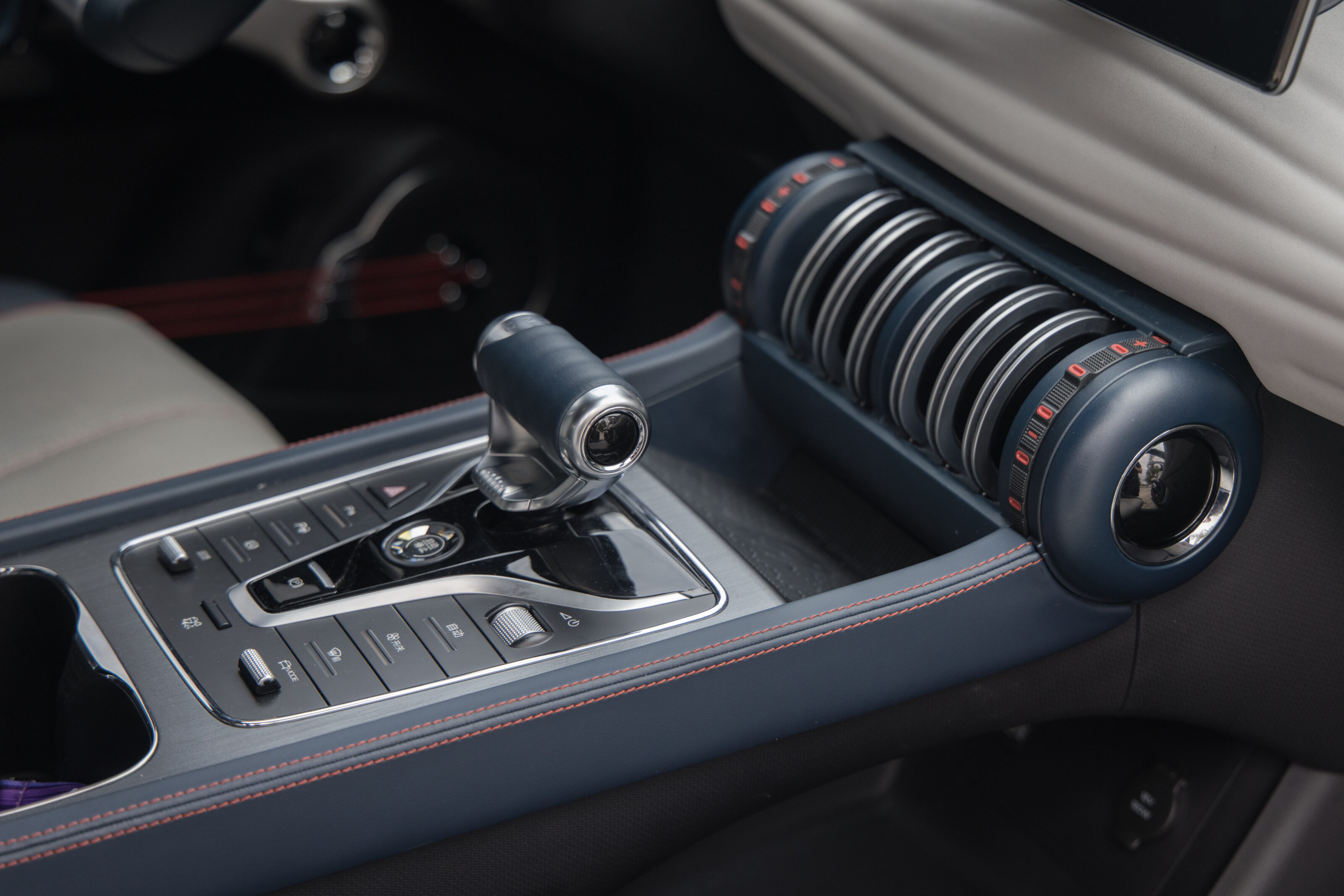
The interior of the Atto 3 is, er, individual. The designers have taken inspiration from exercise equipment and seem to have spent a lot of time watching Avatar and taking colour inspiration from that. The quite vivid blue of the fake leather is a bit much for me personally but I can absolutely see what’s happening here: get people talking.
The blue aside, it’s a very well built cabin. Everything fits together very nicely and it all looked and felt high quality. There are some absurd touches like the dumbbell-shaped air vents and the exercise band stays for the door pockets, which also play a basic tune if you want. The touches verge on ludicrous when you discover a slot in the deep centre console bin for a karaoke microphone that some rogue has nicked.
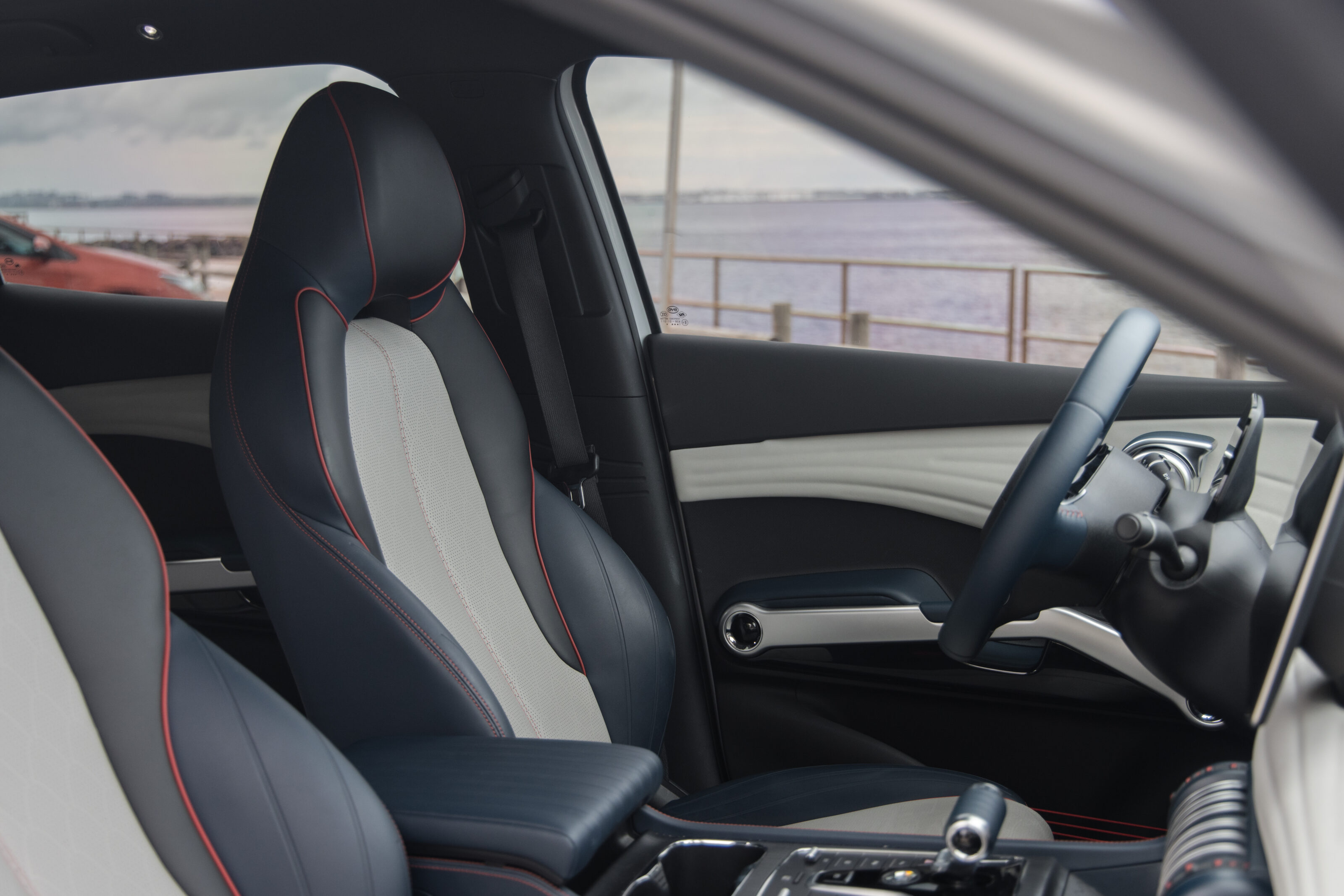
The seats look pretty sporty but are more comfortable than they are supportive. As you’ll discover, you won’t be hurling this car through corners if you know what’s good for you, so it won’t matter. The giant centre screen rotates through 90 degrees to switch between portrait and landscape and it’s a lovely piece of hardware.
It’s fundamentally an Android tablet you can buy from JB Hi-Fi and it was full of largely useless or incomprehensible apps as well as some useful ones like weather and sat-nav, although that looked to be web-based from a company I’m not familiar with.
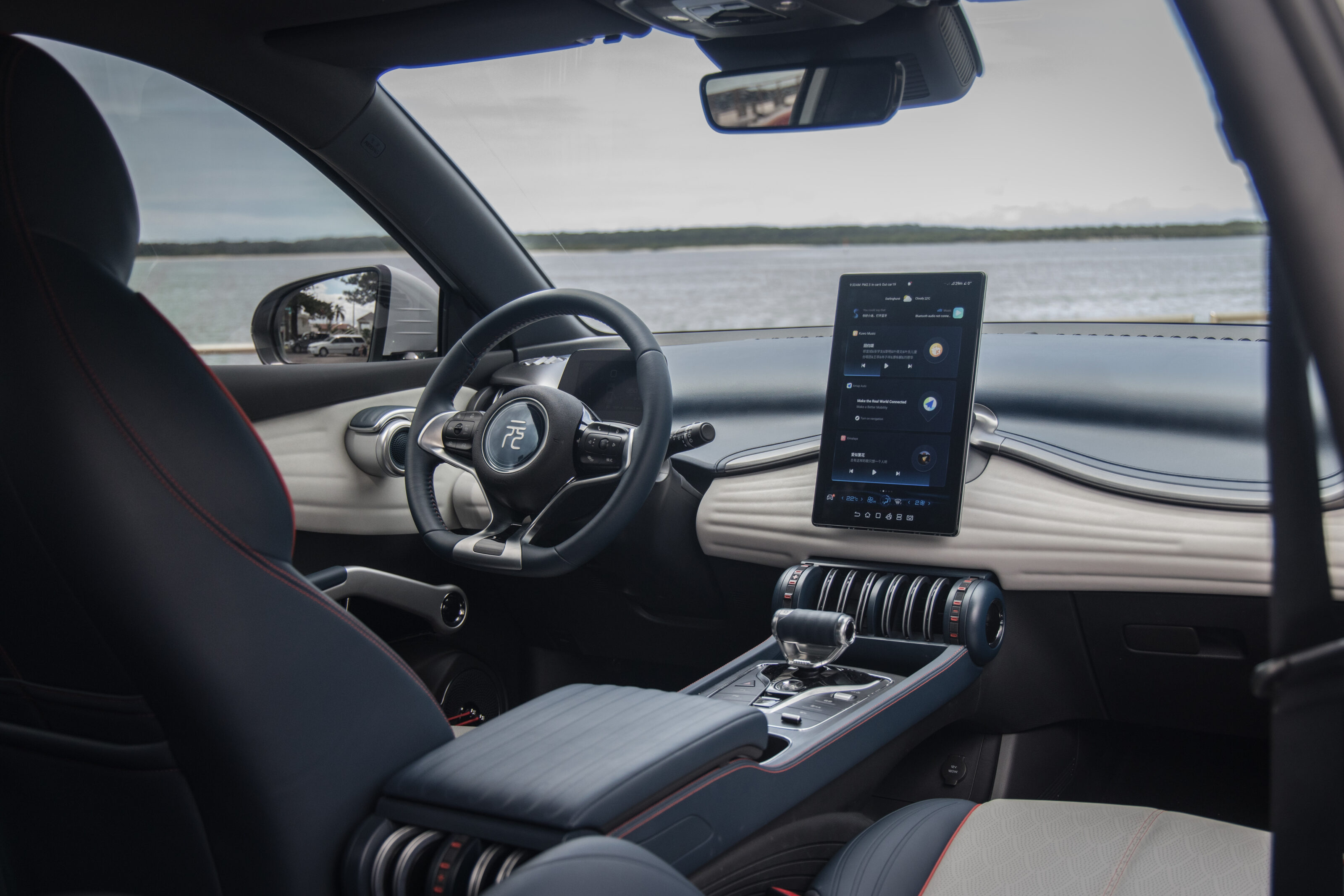
The software is going to need a good clean-up before it lands here but the important stuff was largely pretty good to use, if sometimes a good idea not completely thought through, like the climate controls.
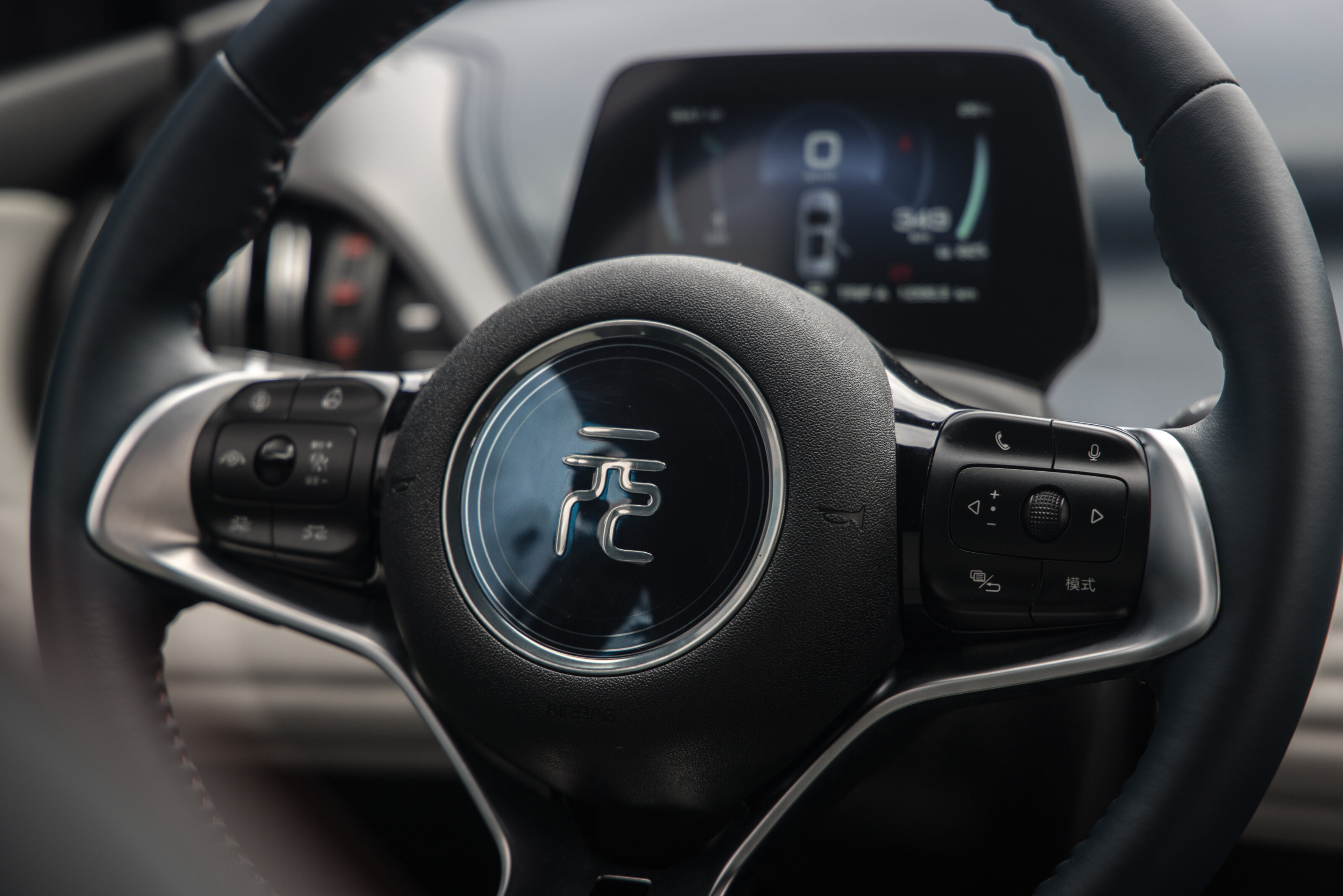
Also not thought through is the size of the instrument screen. It’s way too small at just five inches (12.7cm) but thankfully the speed and range readouts are clear and obvious. It’s everything else that’s too small, although it’s another nice piece of hardware. Part of the reason it’s so tiny is because the steering wheel is quite small but also fat-rimmed, so the space to peer through the wheel is limited. Every millimetre counts here.
This is an excellent interior for the money and it’s things like poorly translated information messages that remind you that this is a Chinese car not sold in English-speaking markets
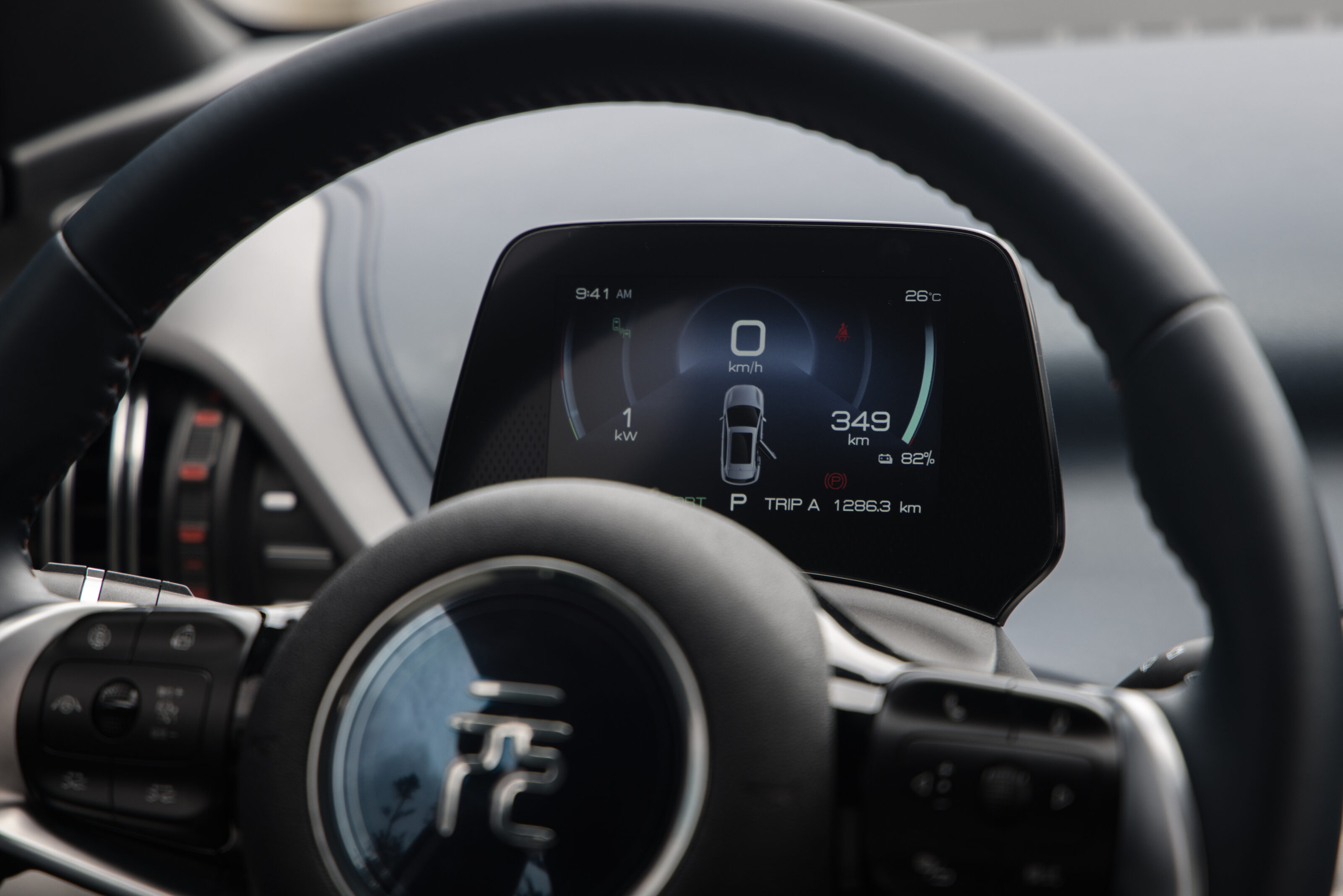
I sound like I’m grizzling and picking on details, but I’m not really grizzling and yes, I am picking on details. You know why I’m picking on details? Because this is an excellent interior for the money and it’s things like poorly translated warning and information messages that remind you that this is a Chinese car not sold in English-speaking markets yet. Oh, and the buttons on the centre console, but there aren’t too many of those. And most of these things will likely be fixed by the time they arrive here.
There’s great space in the front and the driving position is adjustable and comfortable. The huge sunroof doesn’t ruin the headroom, either. The centre console houses two cup holders, the already-mentioned karaoke mic bin and a wireless charging pad. Under the console is an open-sided storage area and the doors will take small bottles.
In the back, you’ve got two further USB-A ports but the spring-loaded thin plastic covers are a hazard to fingertips. There are air vents, though, which is terrific. The rear floor is completely flat and you can fit three across the back in relative comfort as a result. Headroom is good, again without the sunroof ruining everything. Legroom is impressive even though the front seats look really chunky.
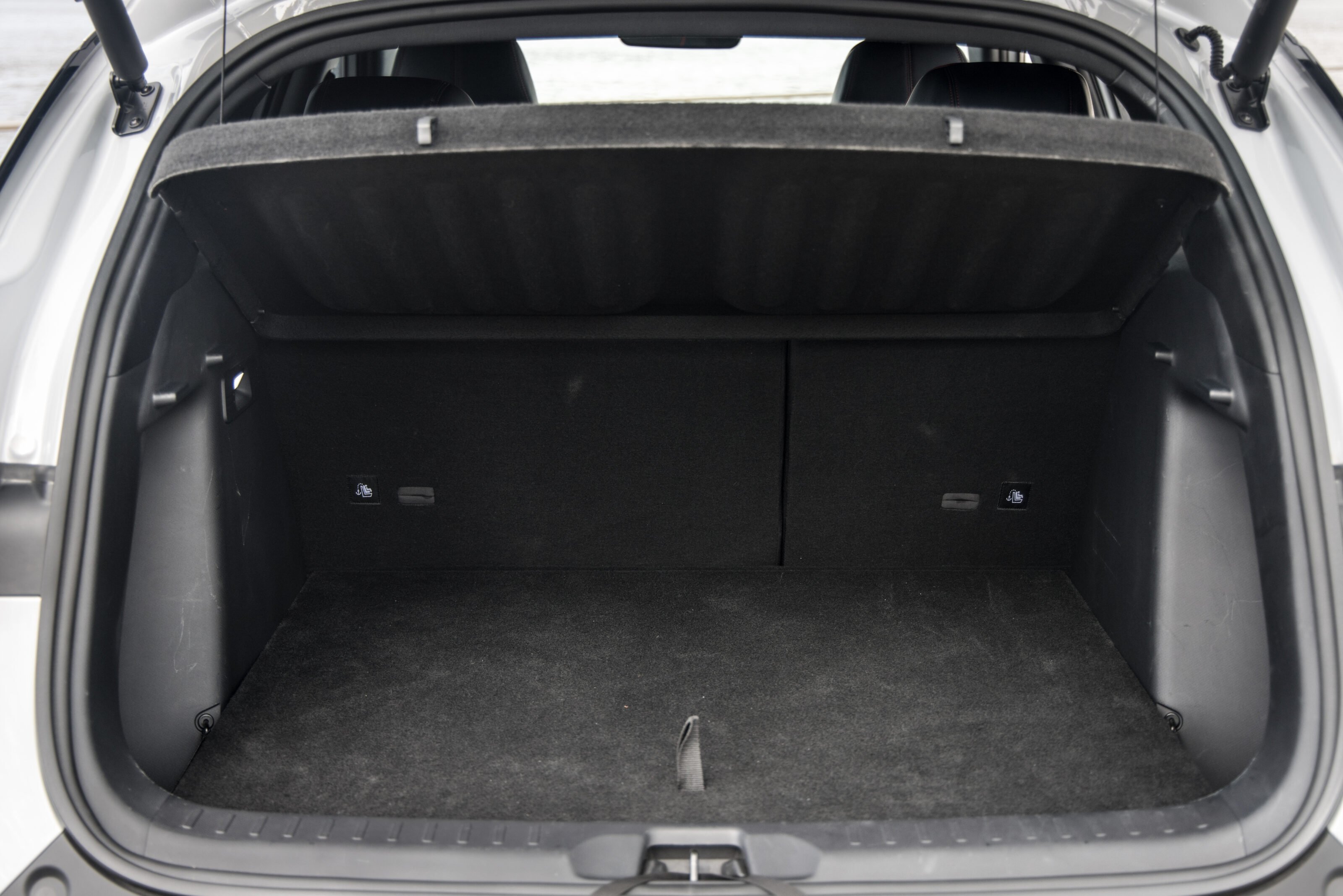
Boot space is a fairly normal-for-the-class 430 litres with 1330 litres available with the 60:40 split-fold seats dropped.
The Blade Battery
Here we go. This is the bit that will upset a few folks. This car had the 60.4kWh battery and I left the BYD Experience Centre with a chunky range of about 400km. When I returned it with 65 per cent battery, it still read 274km and that seems bang-on for the WLTP range of 420km. But that’s not the bit that’s going to make me unpopular.
Tightly integrated into the Atto’s chassis is the Blade battery. I’ve had a lot of people on various forms of media shouting at me about this, telling me it’s the game-changer and that I need to get with the program. Standard EV fanboy stuff. RIP Tesla, that kind of thing. It must be amazing, right?
Now, I am not a chemist or a physicist or a battery expert but I have done a lot of reading about this and so I’m going to do my best to boil it down to something digestible. That means the details may not be exactly scientifically correct but you should get the idea.
There are a couple of advantages to this battery. First, it’s cheaper to make because of its chemistry, Lithium Ferrophosphate or LFP. You might also hear it referred to as Lithium Iron Phosphate because ferrous and iron are the same thing.
LFP batteries are cheaper to make because they have fewer rare metals, notably the absence of nickel and cobalt. I’ve seen figures of about 20 per cent cheaper per kilowatt-hour or roughly $80 for LFP versus $100 for NMC. Given a significant proportion of the cost of an EV is the battery, every little bit helps. There are other cost-saving measures, but the metals are a big cost. Also, the less nickel and cobalt we’re dragging out of the earth, the better.
Where the Blade has done well is the effective arrangement of battery cells to improve power density over some other LFP constructions
The trade-off with LFP is a reduction in power density compared to other batteries commonly used in EVs of between a fifth and a third (depending on how you measure power density). Not a big deal, especially when you consider the price of this car and the available range.
Tesla is also investing in LFP batteries for standard range cars where power density is less of an issue. Where the Blade has done well is the effective arrangement of battery cells to improve power density over some other LFP constructions. There is a lot of internet talk that Tesla is in fact dealing with BYD on the Blade battery but BYD rubbished that rumour late in 2021.
All of that is probably not important to you, but it’s basically not the messiah. In practice, you won’t notice much difference between this and batteries of another type. It’s not like it’s a quarter of the size or costs ten cents to make or has more energy storage than a nuclear reactor.
The second advantage is the overall safety of the Blade. As the name suggests, the pack is made of a series of blades. These blades have a much greater surface area than the commonly used battery architecture, which is effectively a bunch of AA batteries crammed into a pack and then installed in a larger housing with a few more packs and yes, I know it’s more complicated than that.
When a battery is punctured (say, in an accident), the inevitable cause is a chunk of metal moving at great speed. It pushes through the material of the battery and creates a series of shorts. That means a lot of energy – usually released over a few hours of driving – suddenly has nothing to do but make its escape, generating a lot of heat and, in some cases, causing a fire that takes forever to stop burning. Some just get really hot and stay hot.
The chemistry itself doesn’t generate the kind of heat that some other batteries do. From a safety standpoint, it’s a big step forward
In BYD’s battery, each blade has a much greater surface area and therefore the sudden heat spike – known as thermal runaway, if you’re interested – doesn’t happen because it dissipates across the long metal casing.
Rather than trying to keep all that heat inside like a cartoon character that’s swallowed a stick of dynamite, it spreads out slowly and the chemistry itself doesn’t generate the kind of heat that some other batteries do. From a safety standpoint, it’s a big step forward.
After all I’ve read, it seems to be a very good battery and there are lots of whispers, probably started by BYD, that it’s capable of a million kilometres with minimal degradation, which is also a good thing if it even does half of that. We’ve seen recent stories of newer Tesla batteries having vastly longer and more effective lives than earlier efforts, so it’s not out of the question for that figure to be about right.
Bottom line: EVs are more than just the battery. The BYD Blade Battery seems pretty good but we’re not going to know just how good until it’s been in real customers’ hands for a number of years. It does, however, show how hard companies are working on making better and cheaper batteries to get EVs down to more affordable prices and make them safer at the same time. And less destructive to make, even if it’s a small amount less.
Charging
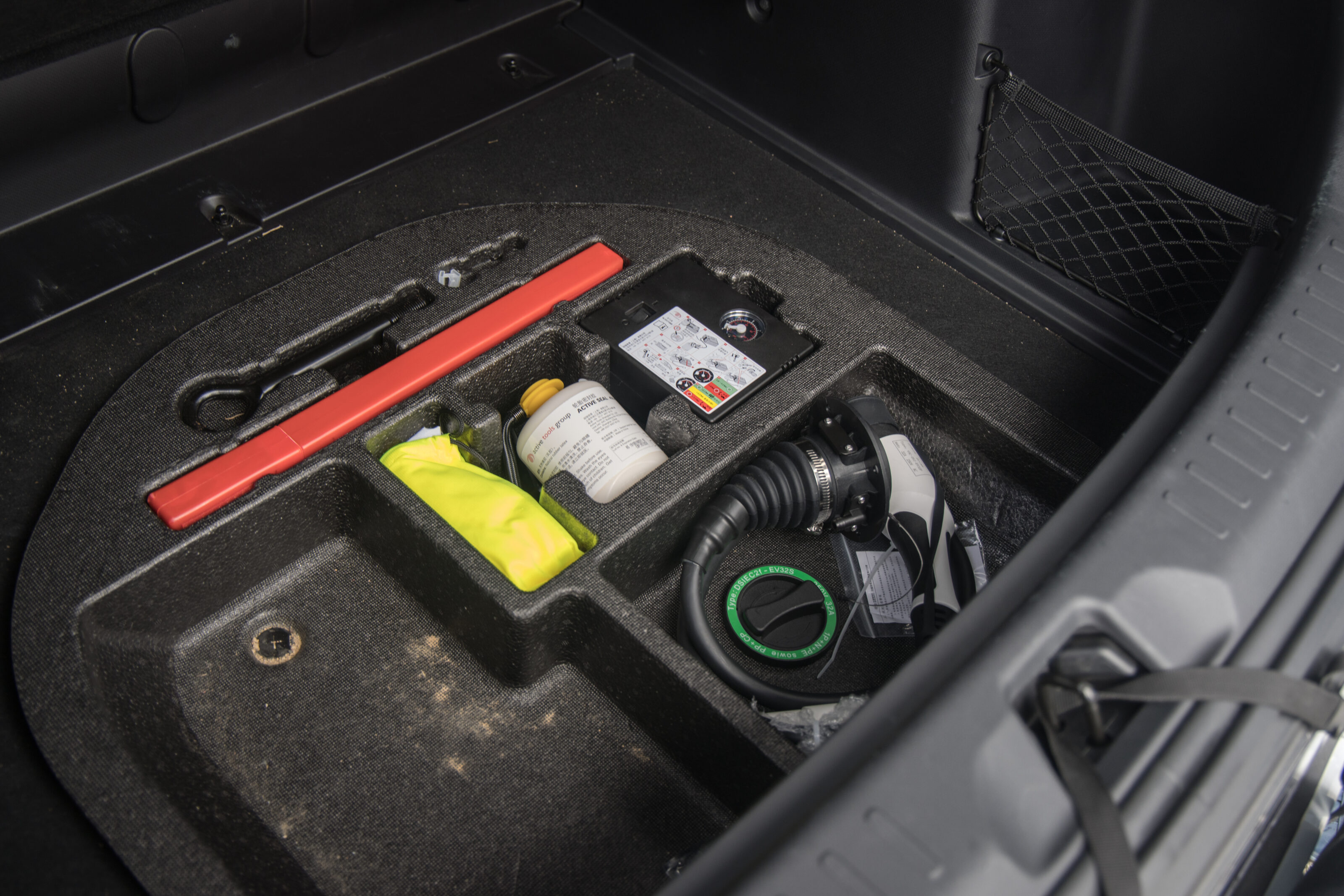
The Atto 3 offers both AC charging through a domestic socket and DC charging through a CCS2 port.
The latter is capped at 80kW, which means you won’t be seeing headline fast-charging numbers like the Tesla, Ioniq 5, Kia EV6 and Porsche Taycan. In practice, of course, fast-charging is hard to find and even if you do find one, it may not give you the stick you’re looking for. I know my adventures with fast charging have been less than impressive.
All going well, the BYD will charge to full in about 45 minutes on the DC plug.
With AC charging, you can wait up to 12 hours for the battery to be fully replenished, with two choices of wallbox at 7kW and 11kW, the latter requiring three-phase power. Using the wallbox will reduce the time by up to half and they’re not particularly expensive items if you’ve got an easily-accessible garage and appropriate power supply.
On the Road
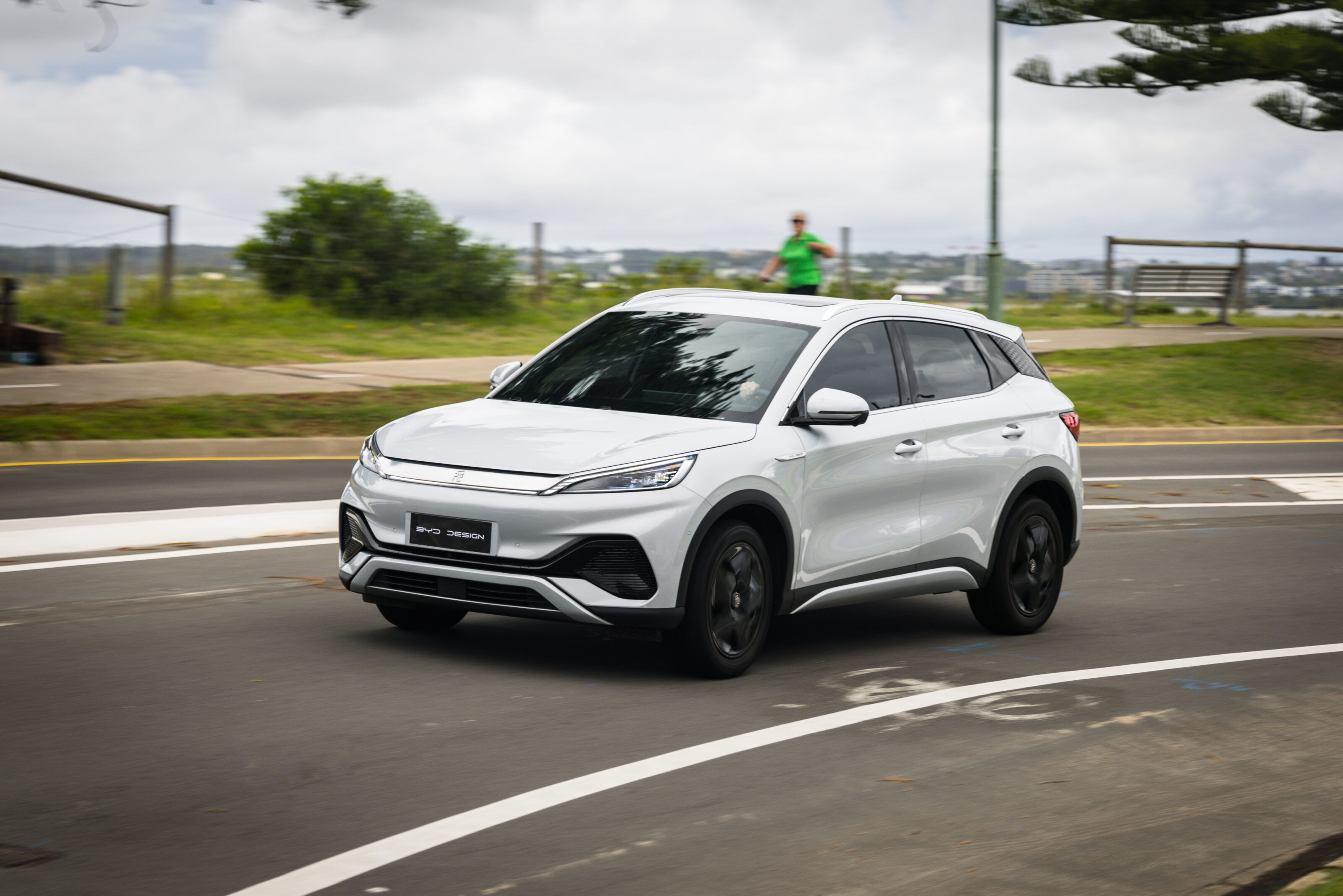
The Blade provides juice to a 150kW/320Nm motor driving the front wheels through a single-speed reduction gear, a pretty common set-up in the EV world. There are two levels of energy recovery, weak and less weak. Probably the biggest missed opportunity in the Atto 3 is the lack of one-pedal driving and a more aggressive energy recovery program. While further aggression might not necessarily add a ton of range, when done right, one-pedal driving is really good.
Having said that – and without me having the opportunity to really test the range – the numbers appeared to stack up to the WLTP figure, which is excellent news.
An extra three grand for the 60kWh version appears worth it if range anxiety is your jam, which I totally understand. It’s not that you’ll always need 420km in one go, but recharging is still a chore if you don’t have ready access either to fast-charging or, at worst, a garage with a power socket.
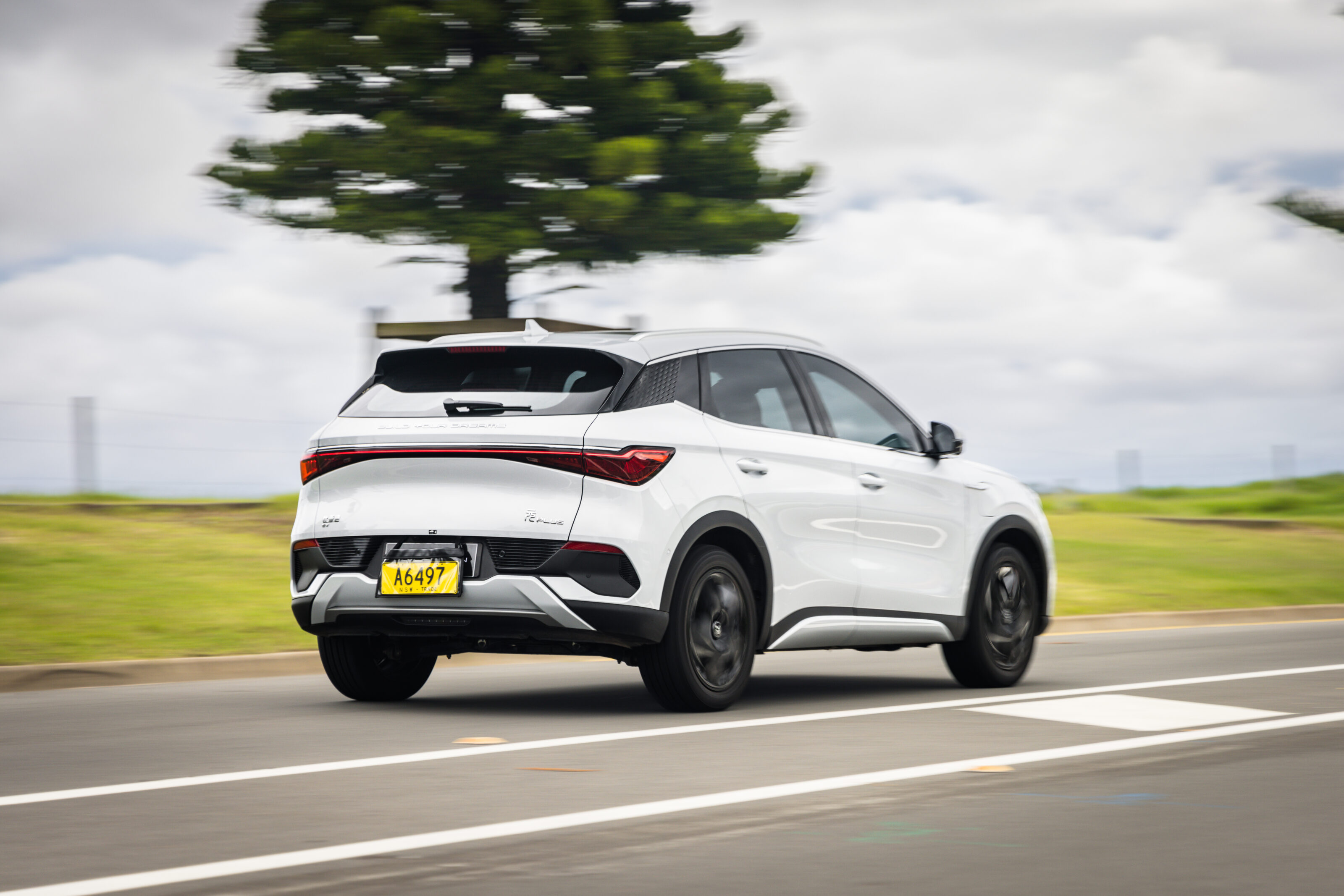
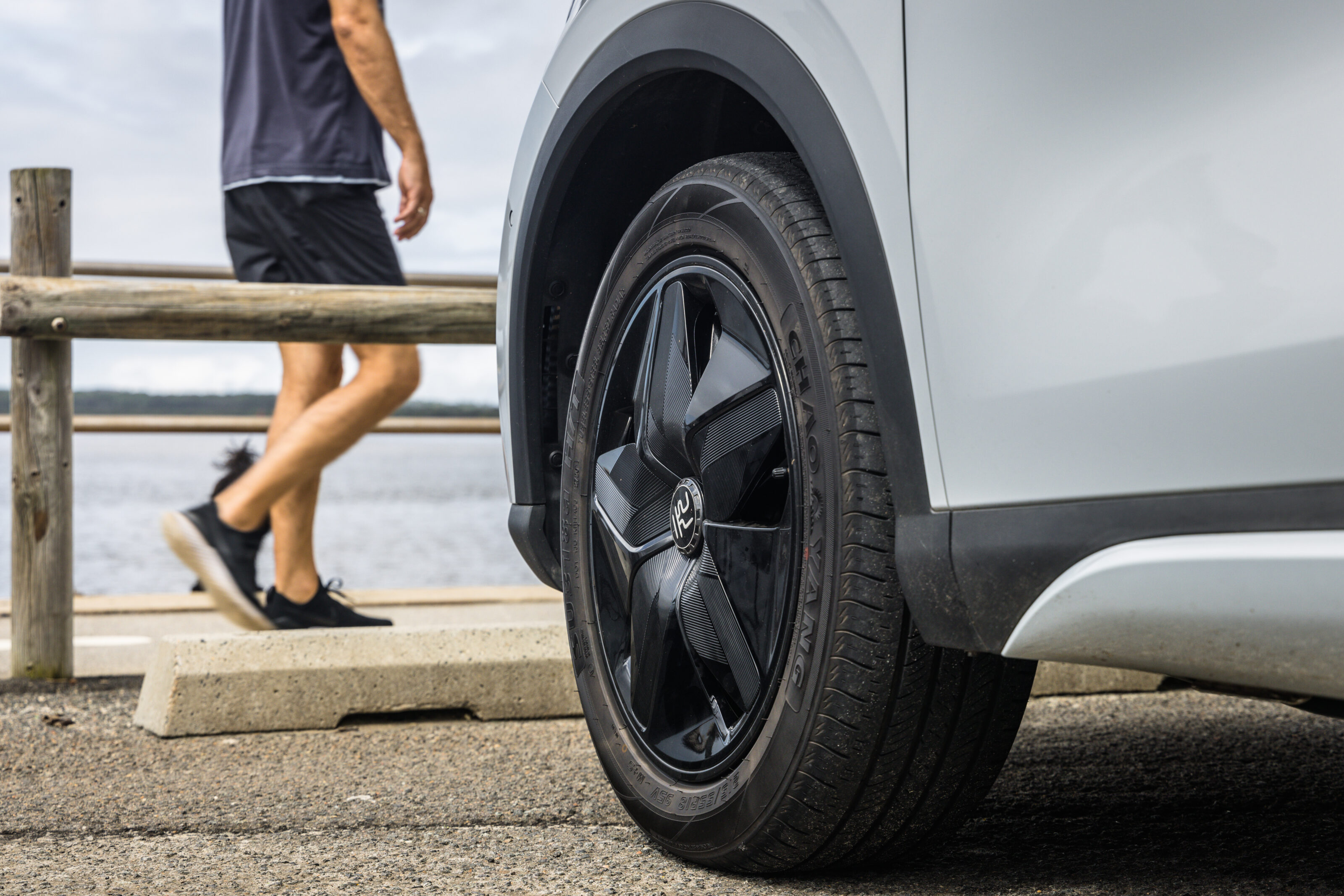
The chassis is pretty much what you might expect for a Chinese-developed car straight off the factory line. Soft, squidgy and not really built for speed. It doesn’t help that the Atto is shod with some pretty ordinary tyres and all those rumours that the Australian-delivered cars will have better Continental tyres are sadly just that – rumours.
Both BYD and EVDirect confirmed that in the interests of getting the cars here and into customers’ hands, the cheap tyres are staying. Also not happening are the rumoured Australian-spec suspension, steering and braking changes.
The chassis is pretty much what you might expect for a Chinese-developed car straight off the factory line. Soft, squidgy and not really built for speed
EVDirect CEO Luke Todd did say that the Australian cars will have a slightly tighter feel but it’s not going to be a transformational tune, again to avoid hold-ups in production.
The vast majority of buyers are probably not going to care too much about the tyres or the suspension. It is a little floaty and the shocks aren’t particularly adept at keeping the tyres on the road over sharp bumps, but it feels secure enough overall.
Direction changes are a bit lazy and the body does move around a fair bit, but the trade-off is a generally comfortable and quiet ride that won’t upset you or your passengers if you drive like a normal person. Having said that, get a set of better tyres on it as soon as possible, because the standard items weren’t too flash in the wet, with plenty of understeer in the slippery conditions.
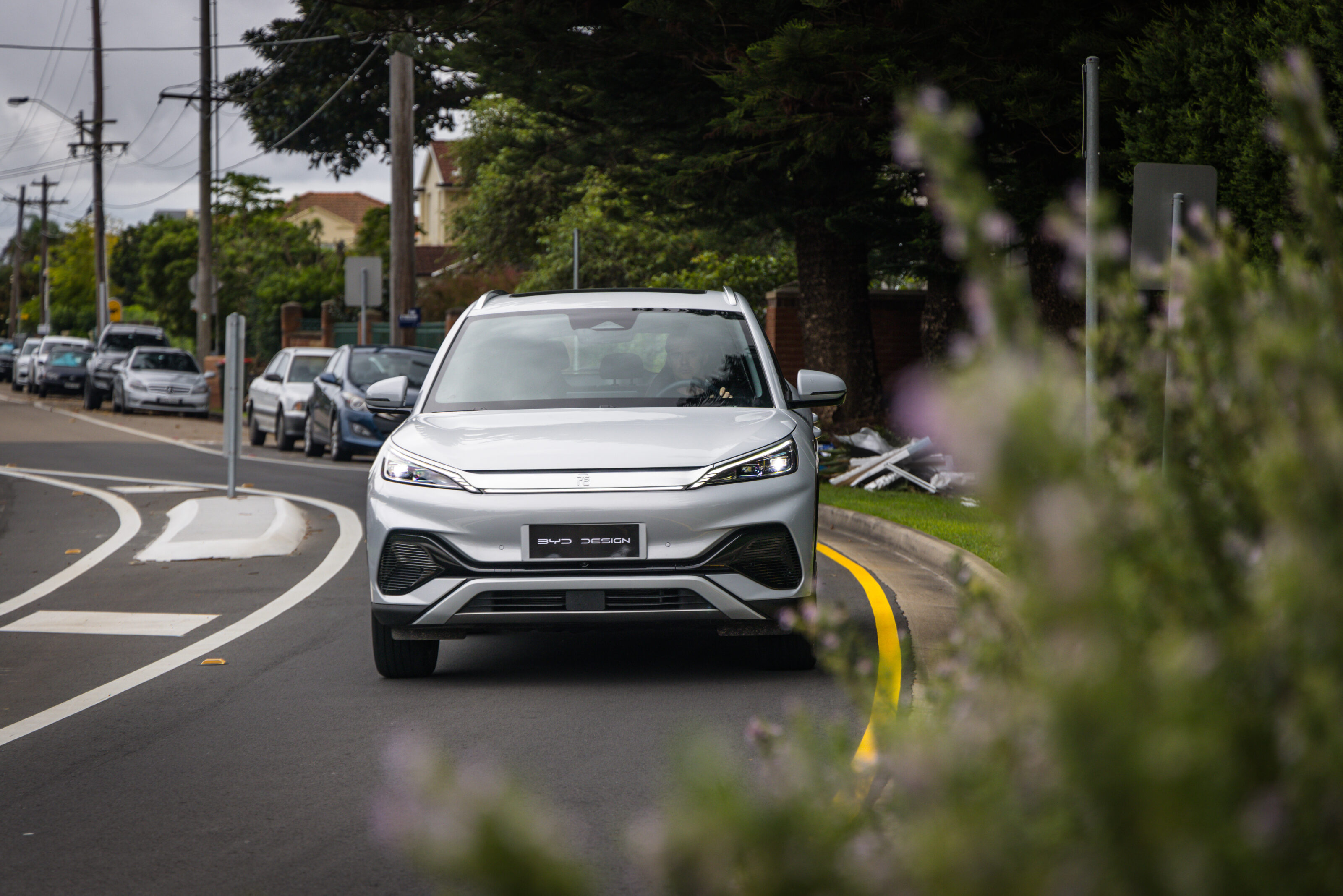
The electric motor responds quickly to the throttle and the strong stream of torque gets the 1690kg 60kWh car moving as smartly as the tyres and BYD’s fairly brutal traction control system will allow. This in particular could do with more finesse, the power coming in and out until the system is satisfied there’s enough grip.
Other safety systems were unobtrusive, with only one false alarm from the forward collision warning in my ridiculously narrow and parked-out street.
Direction changes are a bit lazy and the body does move around a fair bit, but the trade-off is a generally comfortable and quiet ride
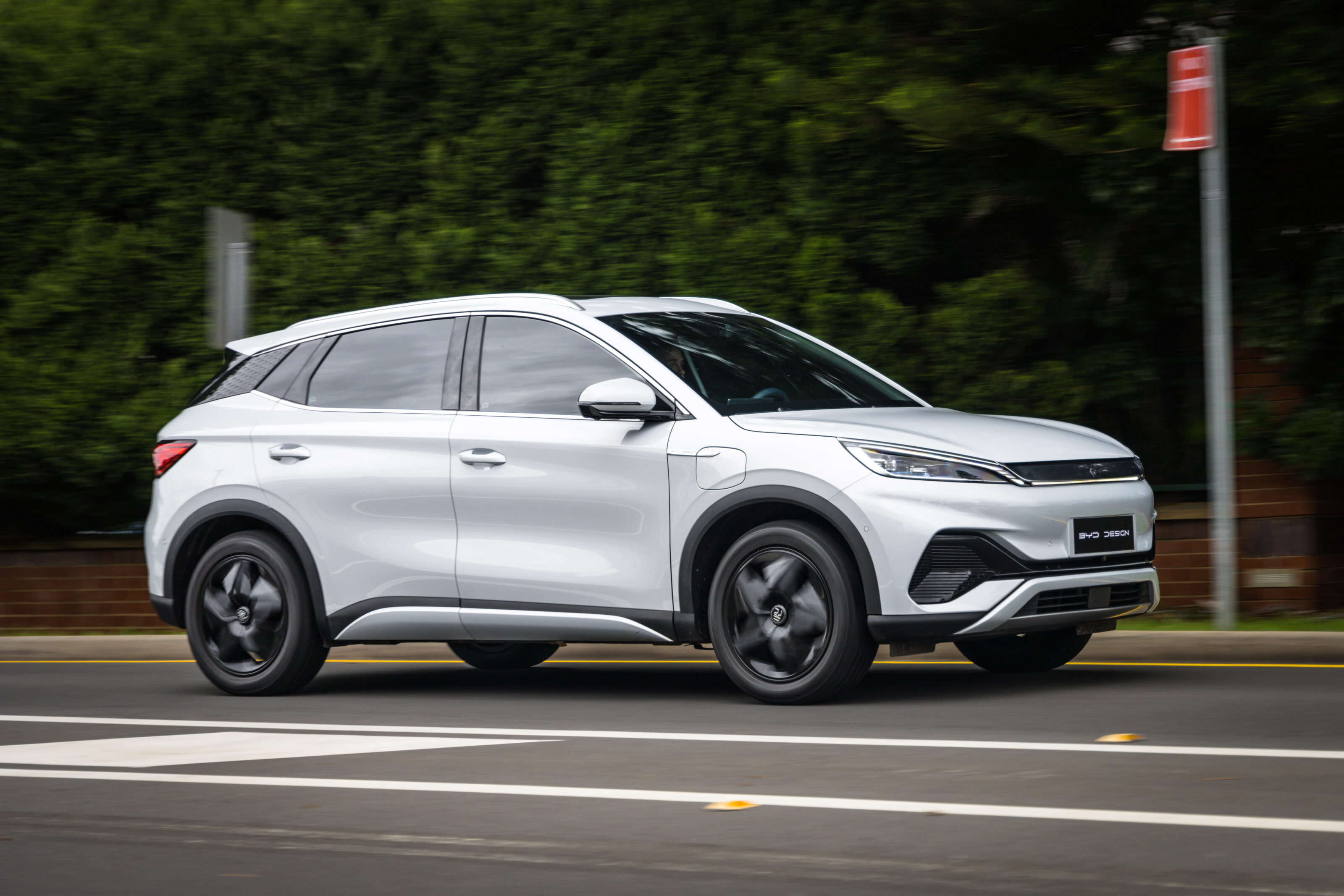
Possibly the only other area of real concern – and this is more about usability – are the brakes. At low speeds you look like a complete tool as merely waving your foot at the brake pedal produces a strong reaction from the braking system, presumably because the car has brake-by-wire.
As speed builds, the brakes become more consistent but have almost no feel, a common EV bugbear. When one clown sailed through a roundabout without looking and nearly wiped me out, the pedal was not confidence-inspiring when I jammed it down as hard as I could. The fact the internet is not full of jeering posts about a dumb journalist crashing BYD Australia’s only car means I survived unscathed. There is some in-car footage of me saying bad words and wishing the Megane CC driver a nasty bout of…never mind.
Ownership
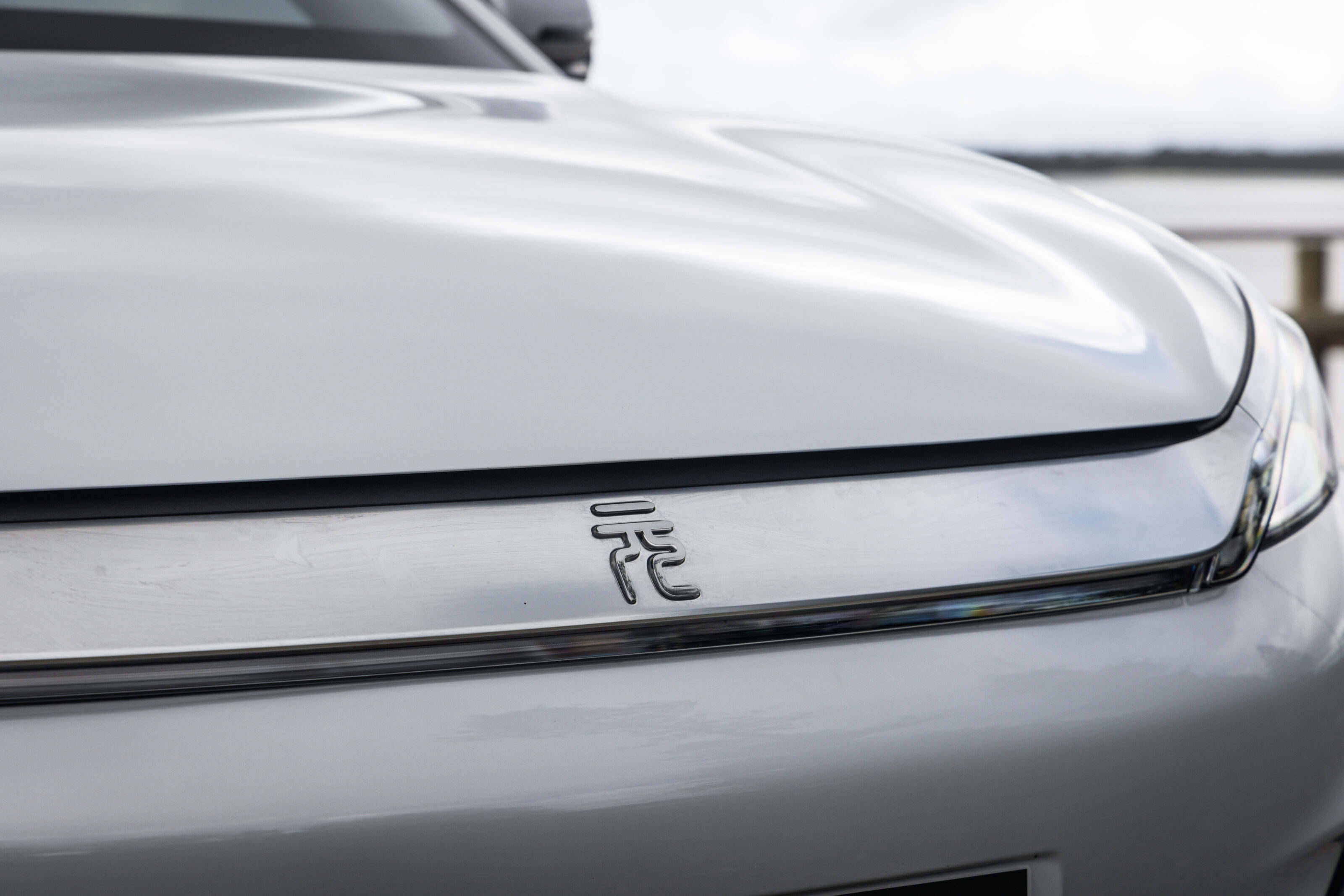
BYD’s local distributor is offering a seven-year, unlimited-kilometre warranty while the battery’s warranty is the same length in years but only good for 160,000km or just under 23,000km per year. Although that is high for the average Australian motorist, I’d like to see BYD put its money where its mouth is and offer a few more miles on the battery warranty.
UPDATE, August 24, 2022: BYD warranty detailed
BYD’s Australian distributor has finally offered a full breakdown on what its warranty and servicing plan will entail. It’s not as long as originally described, and a number of items on the vehicle have an even shorter warranty.
Get the details at the link below, and watch our video below.
Story continues
As with delivery and handover, you’ll be relying on MyCar (formerly known as Kmart Tyre & Auto) for your servicing. It’s not yet clear what the service intervals will be, how much each service will cost or exactly how many MyCar sites will talk to you about your BYD.
Another important ownership point is how you buy the Atto 3. At the moment the only way to buy one is by putting down a deposit on EVDirect’s website and waiting patiently for your number to come up. The first 1500 cars will be here in July, with that number to continue flowing each month provided all goes well.
EVDirect is in talks with Eagers Automotive to act as more traditional dealers but can only say there’s an MOU and because Eagers is a listed company, can’t even say how those talks are going.
VERDICT
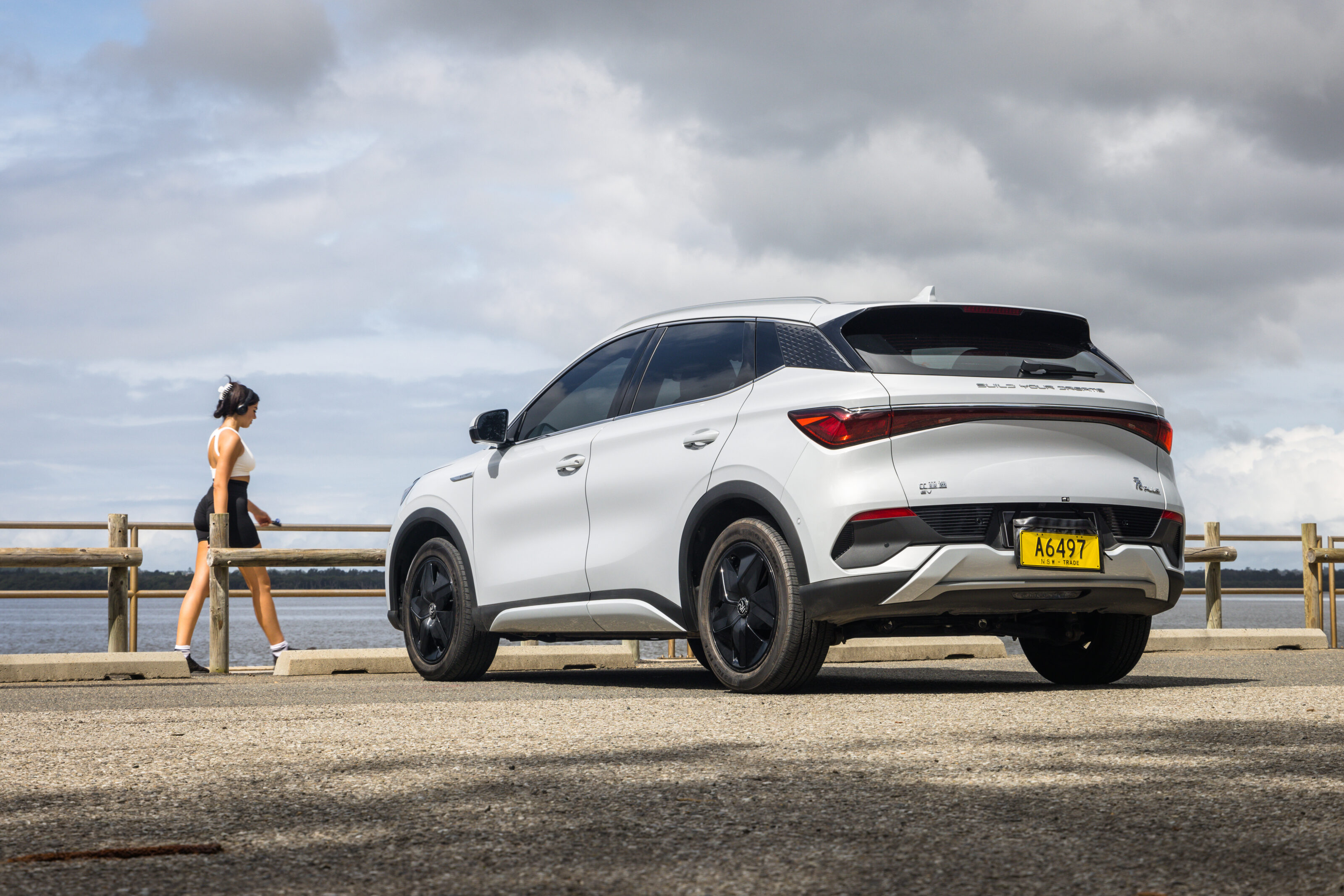
I will admit to being pretty sceptical about the Atto 3. The interior seemed a bit silly in the photos and the brief look I got at the glitzy Sydney unveiling. In the following week, the information flow was a wild ride. But the car is good, really good. Its obvious competition can’t match the range or equipment levels and is only $200 cheaper with a shorter warranty.
The BYD is a strong contender for your EV money. It’s the size of a Kia Seltos, well-built, reasonably good to drive and looks pretty okay too. Once EVDirect gets a right-hand drive car we’ll be driving it and will be able to deliver the definitive verdict on the Atto 3.
It’s not an EV for fans of fun driving but if you’re looking for a city car powered by electricity, the Atto 3 nails the brief. It proves BYD knows how to make a solid EV and the platform itself underpins further new models coming in the next year or so. If EVDirect gets it right, the Atto 3 will be the start of a very fast-growing automotive brand in this hyper-competitive market.
2022 BYD Atto 3 specifications
| Body: | 5-door, 5-seat compact SUV |
|---|---|
| Drive: | front wheel |
| Transmission: | single speed |
| Power: | 150kW |
| Torque: | 320Nm |
| 50kWh range | 320km (WLTP) |
| 60kWh range | 420km (WLTP) |
| 0-100km/h: | 7.3 sec (claimed) |
| Power consumption: | 157Wh/km / 144Wh/km |
| Weight: | 1615kg/1690kg |
| Suspension: | MacPherson strut front/multi-link rear |
| L/W/H: | 4455mm/1875mm/1615mm |
| Wheelbase: | 2720mm |
| Tyres: | 215/55 R18 |
| Wheels: | 18-inch alloy wheels (tyre repair kit) |
| Price: | $43,381 (50kWh) / $47,381 (60kWh) u2013 both before on-road costs |
UPDATE, April 5, 2022: Kia Niro PHEV and EV models get spec boost
Powertrain details of the 2022 Kia Niro PHEV (plug-in hybrid) and EV (electric vehicle) variants have been unveiled by the company’s UK arm.
While earlier reports suggested the Niro would carry over everything from the outgoing model, Kia has updated some of its electrified versions with new batteries and electric motors.
The Niro PHEV will continue with the same 1.6-litre four-cylinder petrol engine as the conventional hybrid (HEV) detailed below, but the battery has been upgraded from 8.9kWh to 11.1kWh, increasing its electric-only driving range from 50 kilometres to 65km (WLTP cycle).
The increased driving range is in part thanks to a new 5.5kWh Positive Temperature Coefficient (PTC) heater, which helps improve the battery’s performance in colder temperatures.
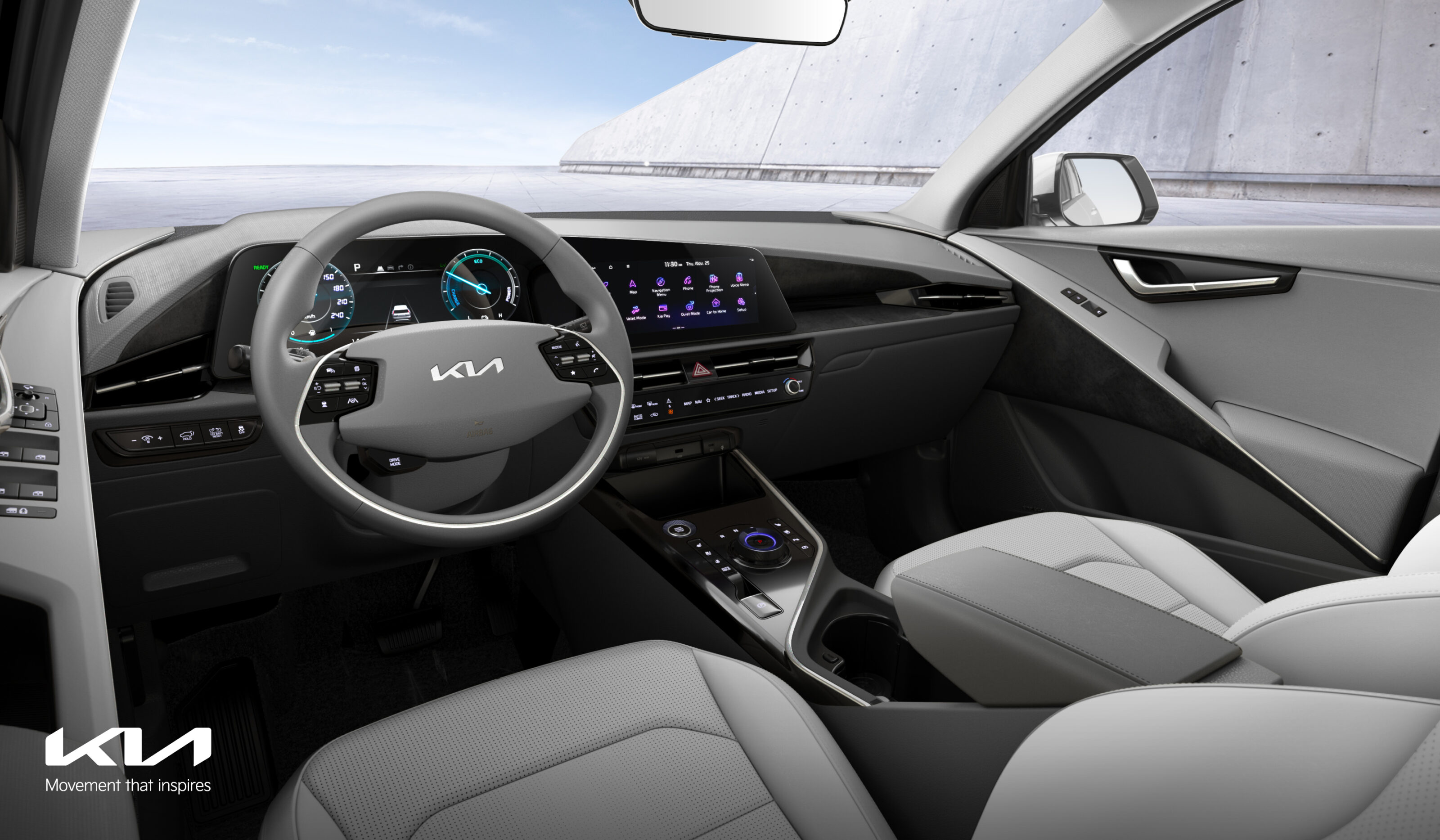
Kia has also removed the reverse gear from the transmission, relegating all reverse driving to the electric motor, while saving 2.3 kilograms of weight.
Power is also improved in the PHEV, with the previous car’s 44.5kW electric motor swapped out for a 62kW unit, accounting for a healthy increase from a combined 104kW to a total of 135kW.
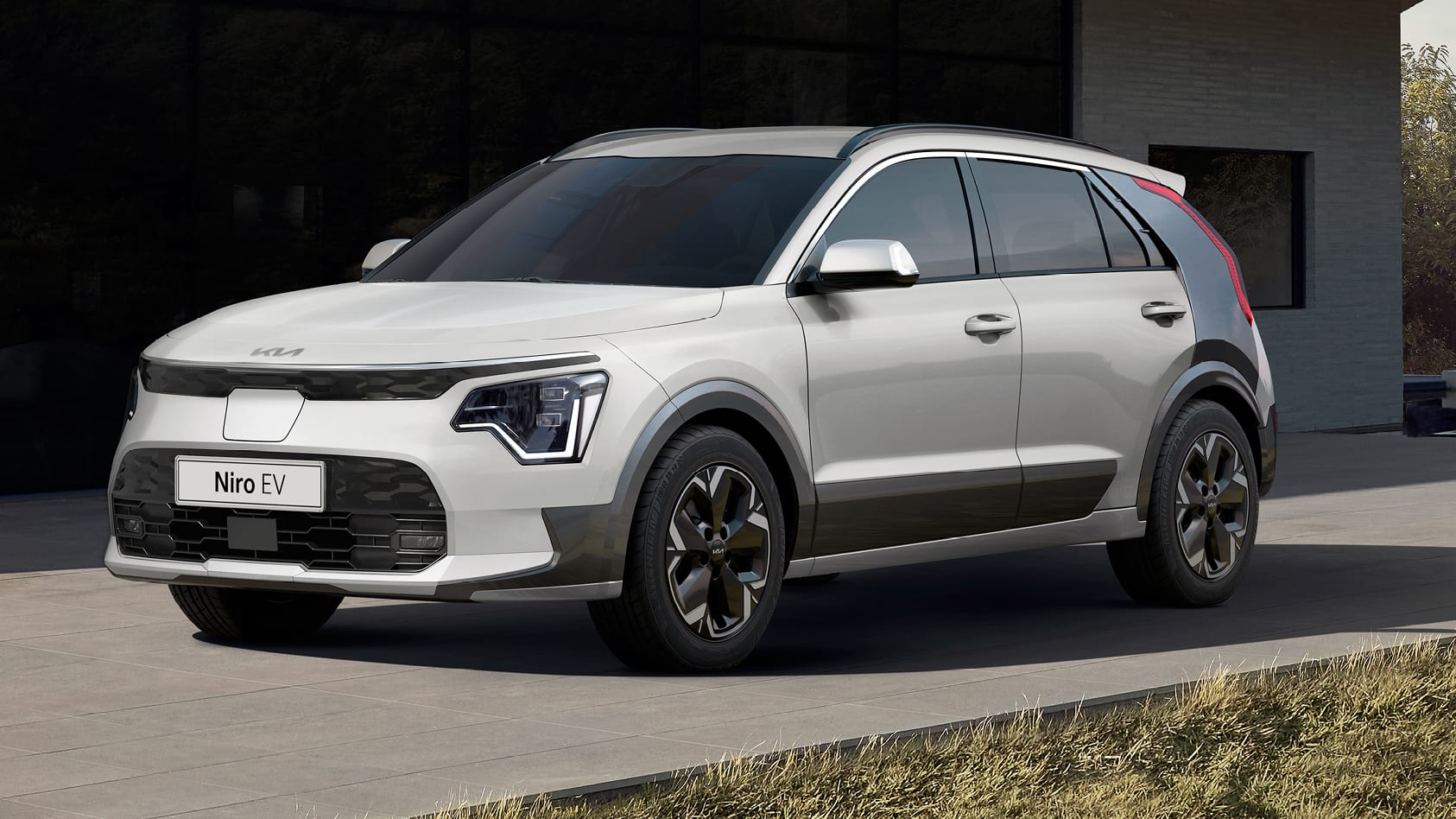
While the zero-emissions Niro EV has retained its 64kWh battery pack and 150kW electric motor, its claimed driving range has increased from 455km to 463km (WLTP).
Kia Australia has confirmed the Niro HEV, PHEV, and EV versions will be arriving early in the third quarter (July to September inclusive), with local pricing and final specifications expected closer to launch.
The story to here
January 17, 2022: Electric and hybrid power confirmed
Some specifications for the 2022 Kia Niro have been confirmed, with the company announcing it will offer a conventional hybrid (HEV), plug-in hybrid (PHEV), and fully-electric (BEV) variants.
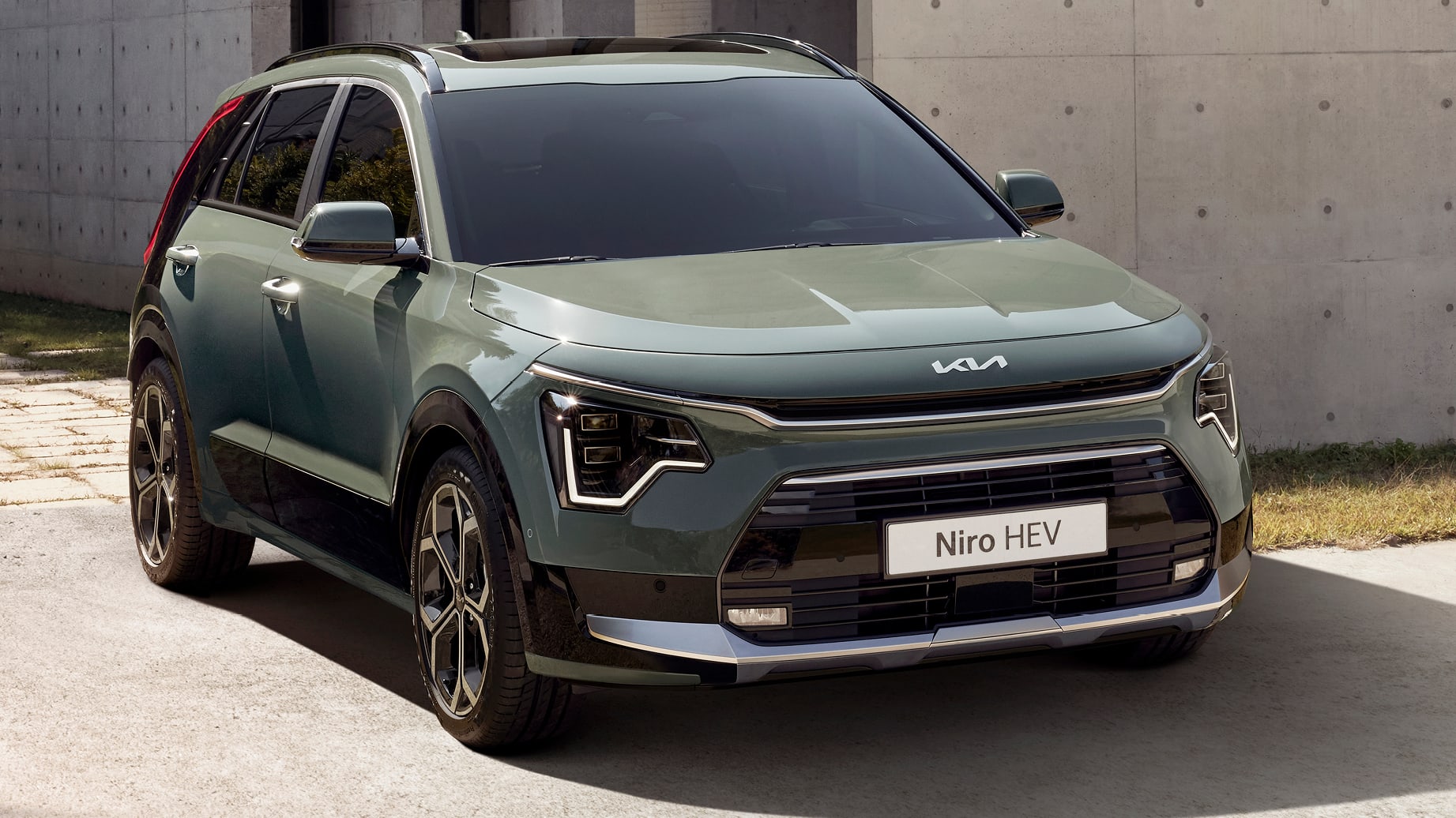
Kia will open the Niro range with the HEV, which mates a 77kkW/144Nm 1.6-litre four-cylinder petrol engine with a 32kW electric motor for a combined output of 104kW and 265Nm, all while helping to improve fuel economy and reduce emissions.
As with the vehicle it replaces, the Niro HEV will send power to the front wheels through a six-speed dual-clutch automatic transmission, with the carmaker quoting fuel economy figures as low as 4.8L/100km.
Key Points
- New Niro features significant styling update over existing model
- Only hybrid, plug-in hybrid and fully-electric powertrains to be available from launch
- First examples expected in showrooms this year
Kia has yet to detail the PHEV and BEV variants for Australia, but as reported in November, it’s expected the outgoing model’s powertrains will carry over, though possibly with some minor improvements.
The 2022 Kia Niro is due to launch “later this year” according to the brand, with more detailed pricing and specification to be announced in the coming months.
A report out of South Korea suggests the new-generation Kia Niro will see powertrains carried over from the outgoing model.
While yet to be confirmed by the carmaker, the report points to a 1.6-litre four-cylinder petrol engine accompanying a traditional hybrid-electric system (HEV), as well as a plug-in (PHEV) version, which offers up to 58 kilometres of electric-only driving in the current model.
An all-electric (BEV) version is also likely, which allows 455km of driving from a single charge from a 150kW/395Nm electric motor powering the front wheels.
Click on the link below to read the report in detail.
November 25, 2021: Next-gen Niro revealed
Kia has finally taken the covers off its second-generation Niro, revealing the crossover which will aid its transition from internal combustion engines to total electrification.
Based on the 2019 HabaNiro concept, we’ve seen multiple leaks of the 2022 Kia Niro, from its unique front daytime-running light design to the rear boomerang lights – culminating in renders which closely reflect the finished product.
The updated looks bring an interesting choice for buyers with the D-pillar featuring a contrast colour to the rest of the body – although it’s understood this can be deleted in favour of a more traditional look.
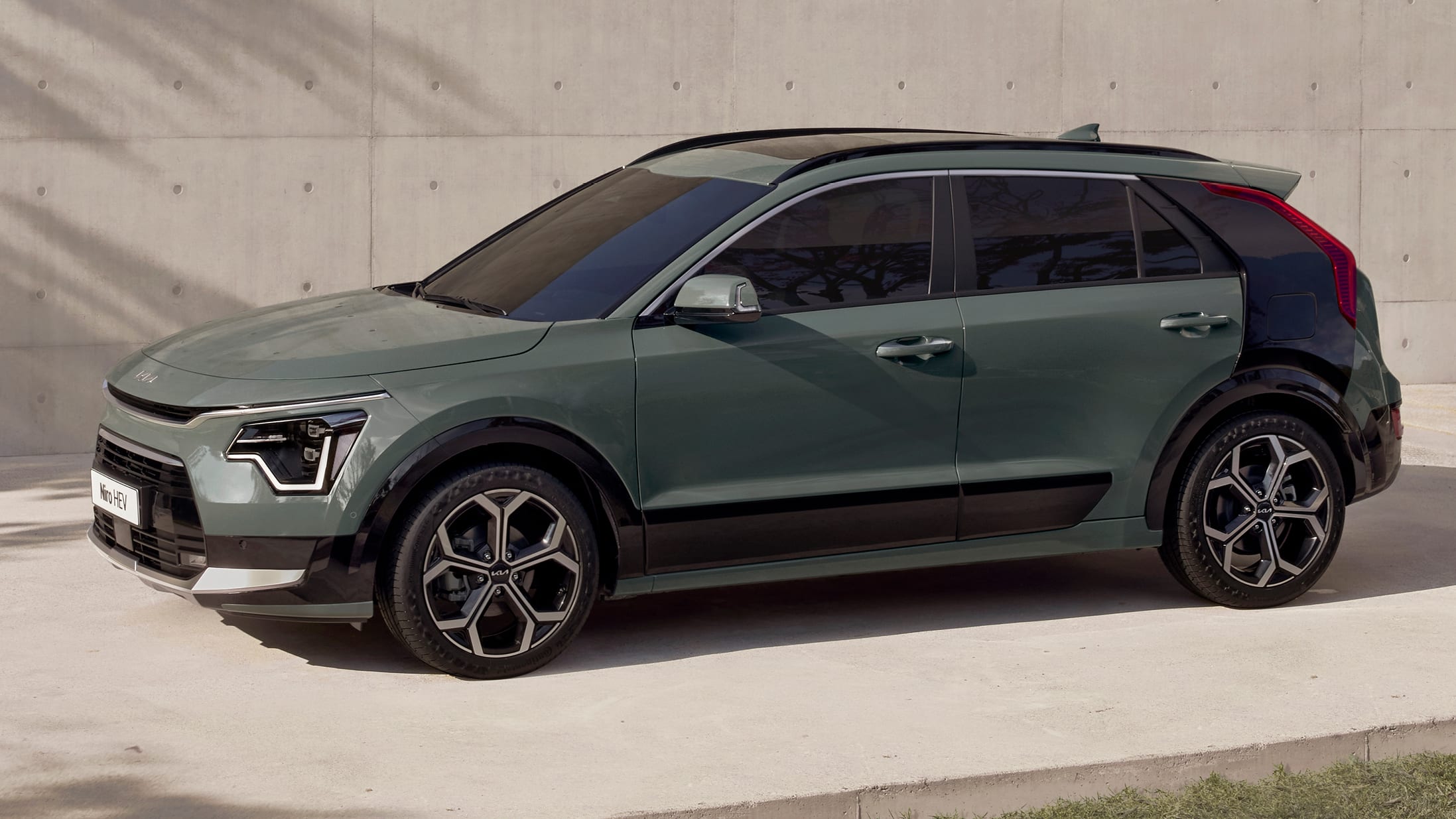
Moving in line with the rest of Kia’s current model range, you can see the influence of cars such as the Sportage and EV6 on the new Niro, from the fresh ‘tiger-face’ grille design to the ‘heartbeat’ daytime-running lights.
Despite the heavy styling revisions over the current Niro, it’s understood the 2022 model will ride on the same platform and provide the identical powertrain options as its predecessor, with tweaks to the deployment of its power being the key difference.
In plug-in hybrid variants, Kia has introduced its new ‘Greenzone Drive Mode’ – a system which automatically assesses the driving environment to either utilise the internal combustion engine and electric motor power together, or just the latter for a pure-electric experience in certain situations.
In residential and urban areas, the satellite navigation provides information to the power unit systems to provide the most efficient power delivery, also learning from previous journeys to ultimately deliver lower fuel consumption.
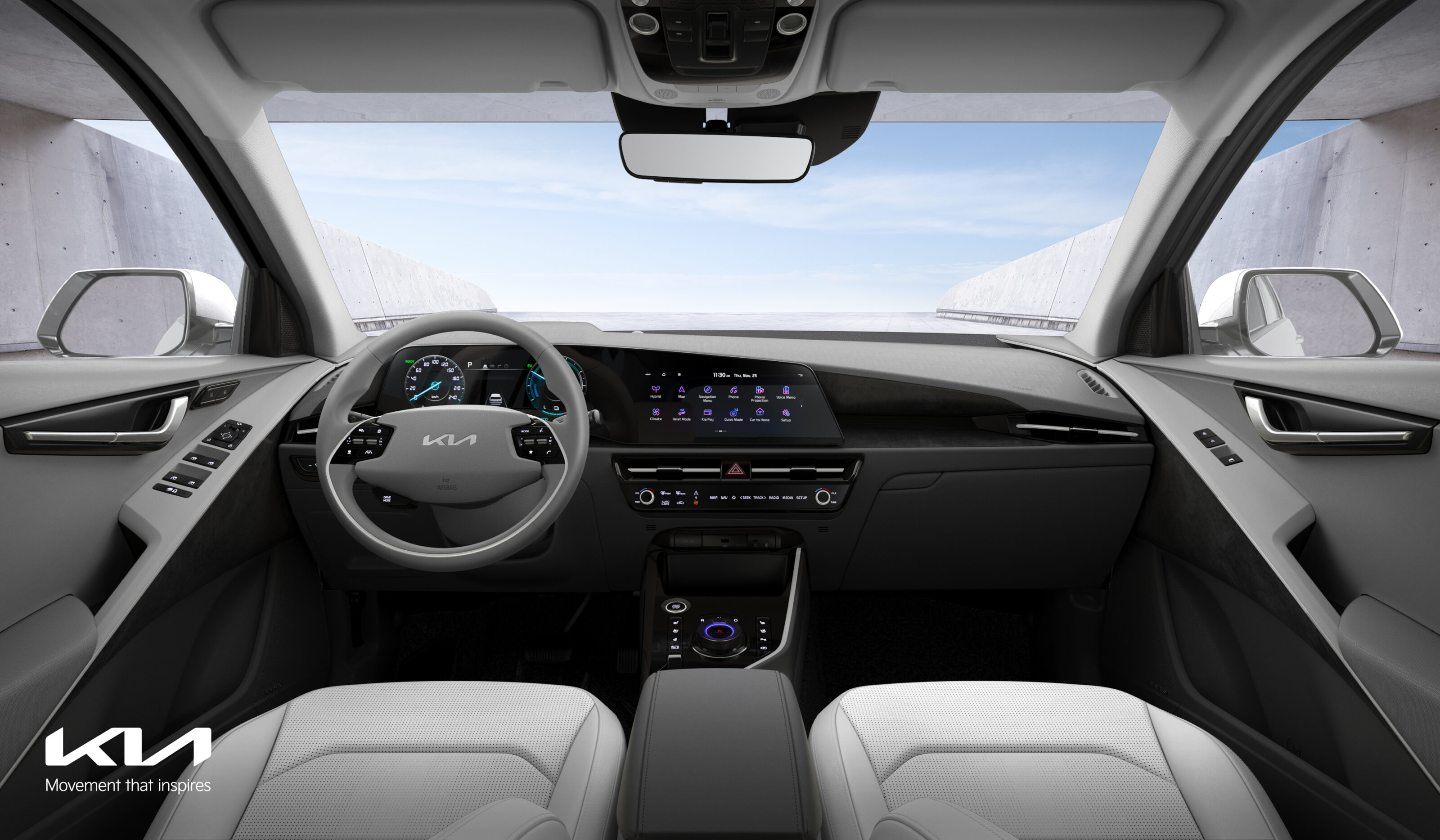
The eco-friendly theme continues with how the Niro is produced – the BTX paint on its door panels is water-based and free from benzene, toluene, and xylene isomers. Meanwhile, the interior is made of recycled wallpaper, bio polyurethane and Tencel, which is made from eucalyptus leaves.
Continuing with the cabin, the infotainment screen is horizontally-mounted and deliberately off centre, flanked by air vents on either side, while the rotary gear selector frees up space in the central portion of the dash.
On the back side of the first-row head rests, rear occupants will find a coat hanger hook, moving it from the traditional spot underneath the rear grab handles.
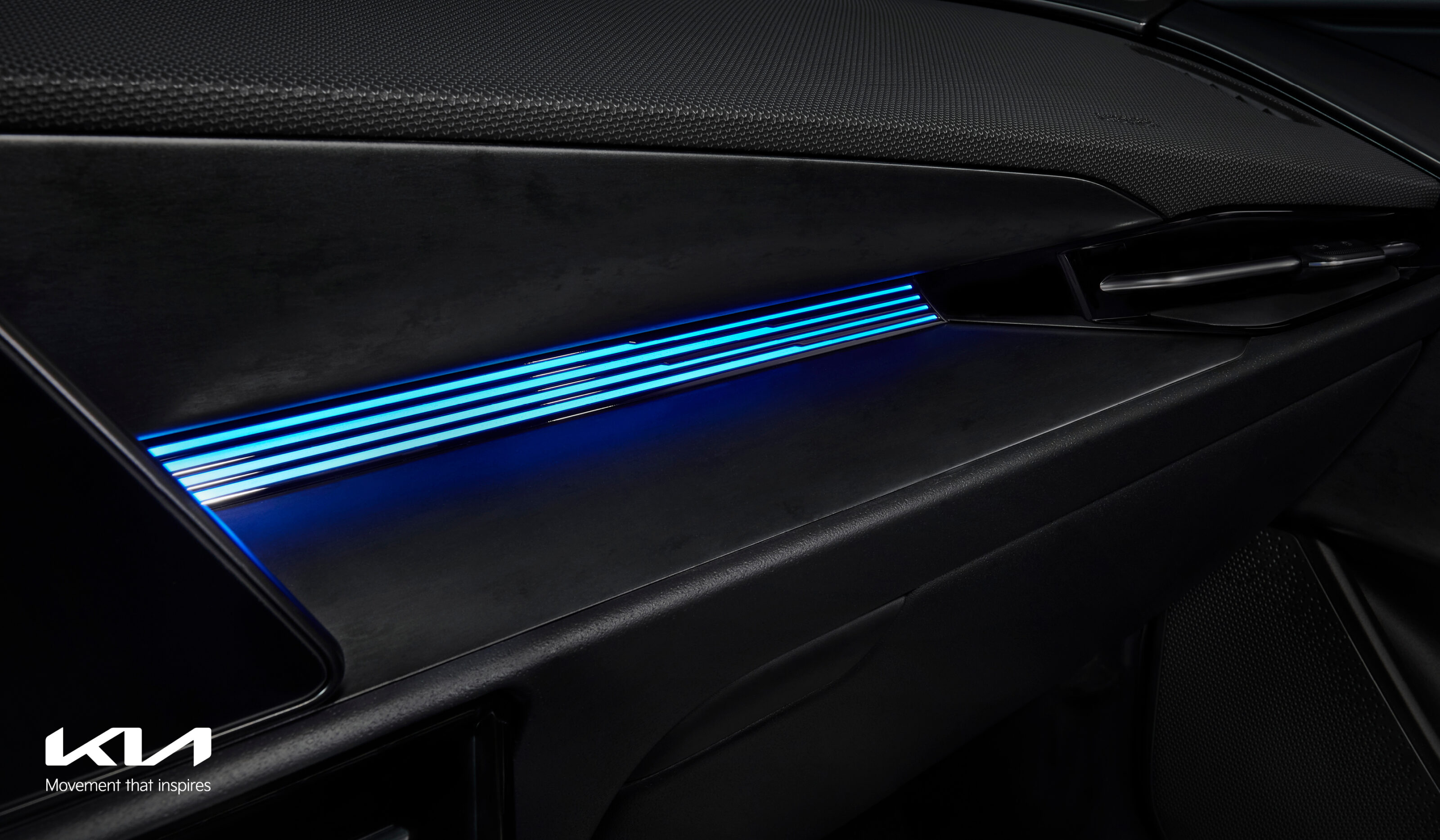
Kia is yet to confirm the official specifications of the Niro, both for the global market and Australia, but it’s expected the first versions of the Niro will be released worldwide in the second half of 2022.
UPDATE, April 5, 2022: It turns out the 2022 Polestar 2 Standard Range has better specifications than were originally reported.
Shortly after this story was first published, Polestar quietly upgraded the 2 Standard Range, increasing its battery pack for the Australian market from 64kWh to 69kWh before production commenced.
Power has also gone up by 5kW, and driving range has improved from 440 kilometres to a maximum of 470km on the WLTP standard.
Figures within the article have been updated to reflect the changes.
The story to here
February 21, 2022: The Polestar 2 is now finally available in Australia, going on sale today. Story at the link below.
Snapshot
- Polestar 2 Standard Range matches Tesla Model 3u2019s sub-$60K pricing
- Three variants: single or dual electric motors; 470km to 540km driving range
- Polestar brand and 2 debut in January 2022
Volvo’s sister performance brand Polestar has put the Tesla Model 3 in its sights with a $59,900 starting price for its first ever vehicle in Australia.
The Polestar 2 electric fastback goes on sale in January 2022 with a line-up comprising three variants offering varying performance and range.
The Standard Range Single Motor costs the same as the entry-level Model 3 that was given a significant price cut earlier this year. The Polestar produces 170kW and 330Nm from its 69kWh battery, with a quoted driving range of up to 470km (WLTP cycle).
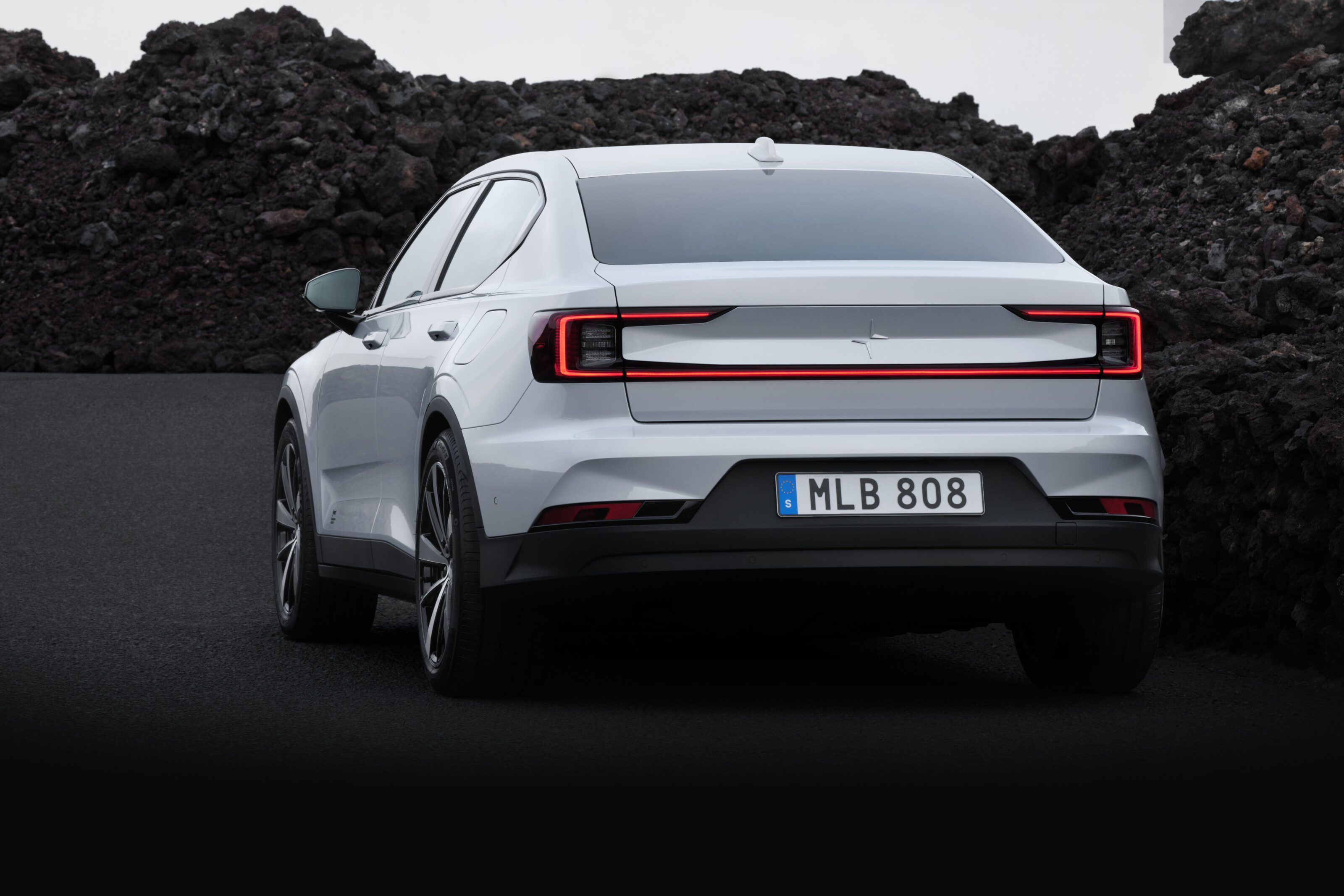
A mid-range Polestar 2 Long Range Single Motor costs $64,990 before on-road costs and is capable of travelling up to 540km with its 78kWh battery and 170kW/330Nm electric motor.
The $69,900 Long Range Dual Motor features an electric motor on each axle to produce 300kW and 660Nm. It has a quoted driving range of up to 480km and is the fastest Polestar 2 model with a claimed 0-100km/h time of 4.7 seconds. This compares with 7.4 seconds for the Single Motor variants.
Tesla’s Model 3 offers 190kW, a driving range of up to 448km (WLTP), and 0-100km/h acceleration of 5.6 seconds in entry-level Standard Range guise. The $73,400 Long Range variant can travel up to 580km and the $84,900 flagship Performance can accelerate from standstill to 100km/h in 3.3 seconds.
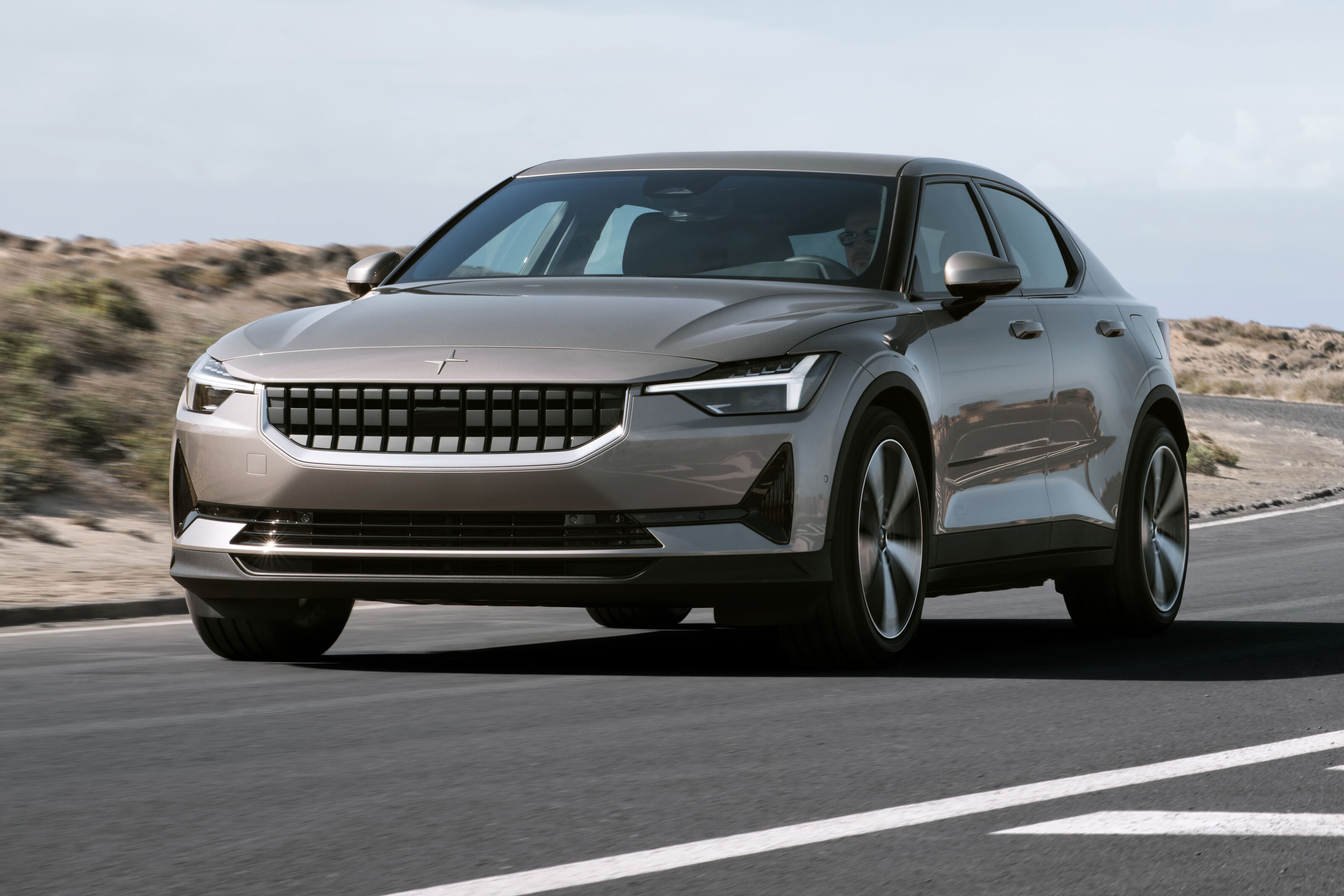
Polestar’s most expensive 2 undercuts Volvo’s first ever fully electric production car, the just-released XC40 Recharge Pure Electric priced from $76,990.
However, the Polestar 2 Long Range Dual Motor has significantly less equipment than the Volvo with which it shares its platform and electric drivetrain.
A $5000 Pilot Pack and $6000 Plus Pack are both needed to match the electric XC40, which for now is offered only as a single, high-spec variant.
The Pilot Pack includes key active safety aids such as adaptive cruise control, surround view camera and blind-spot monitoring – a move which has drawn some criticism from car enthusiasts for such features not being fitted as standard.
The Plus Pack includes a full-length panoramic sunroof, 13-speaker Harman Kardon audio system, fully electric heated front seats, heated rear seats and heated steering wheel.
Posting on the Wheels Facebook page, a number of readers criticised the brand for making many features optional.
“It doesn’t have heat pump and adaptive cruise control as standard,” one reader said.
“They[‘ve] stripped out all the good stuff and selling it as option packs… $6000 for heat pump pack and $5000 for adaptive cruise pack,” another added.
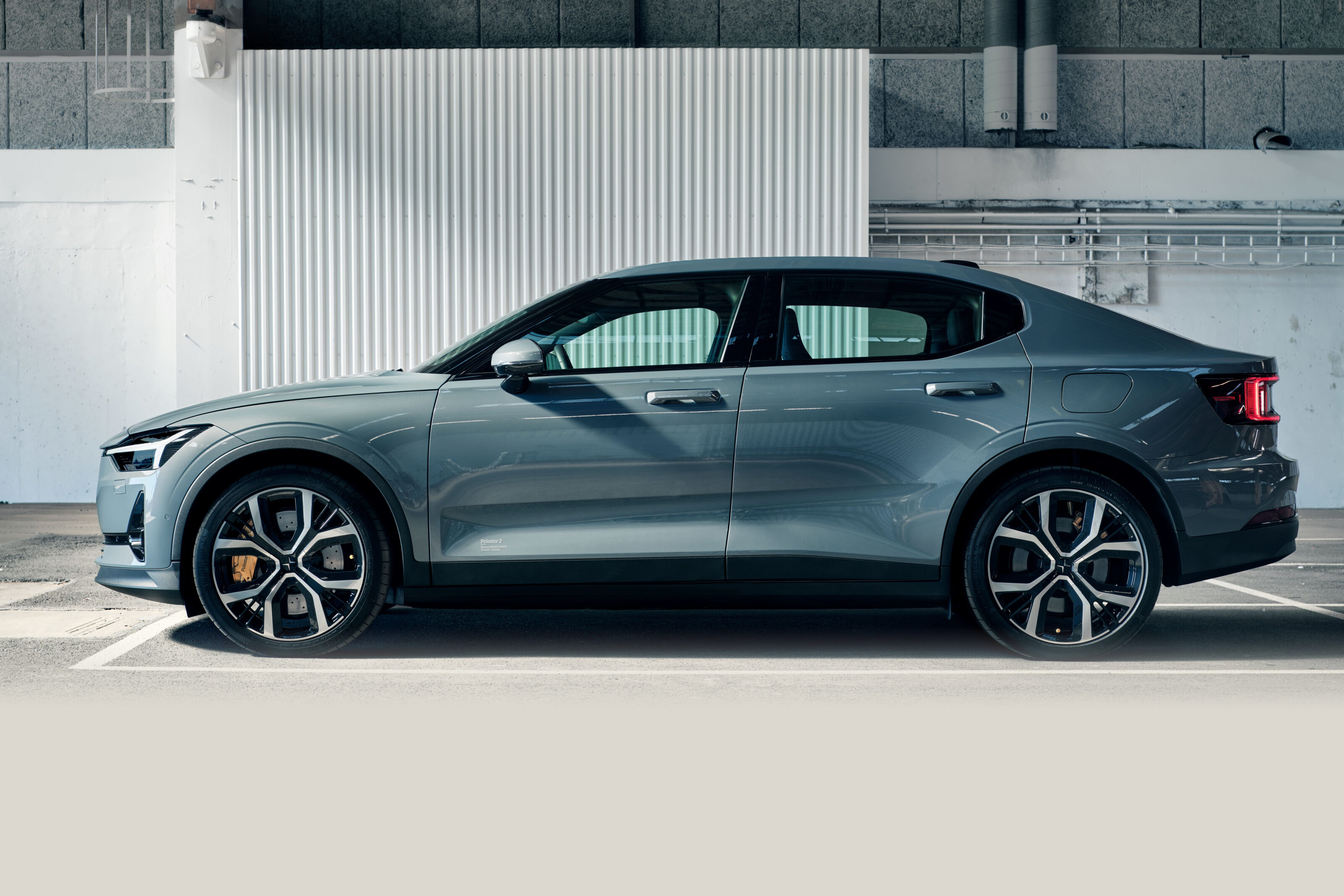
An $8000 Performance Pack is exclusive to the Polestar 2, available on the Dual Motor only. Features include forged 20-inch alloy wheels, Brembo brakes, adjustable Öhlins dampers, and ‘Swedish gold’ trim embellishments for the interior and exterior.
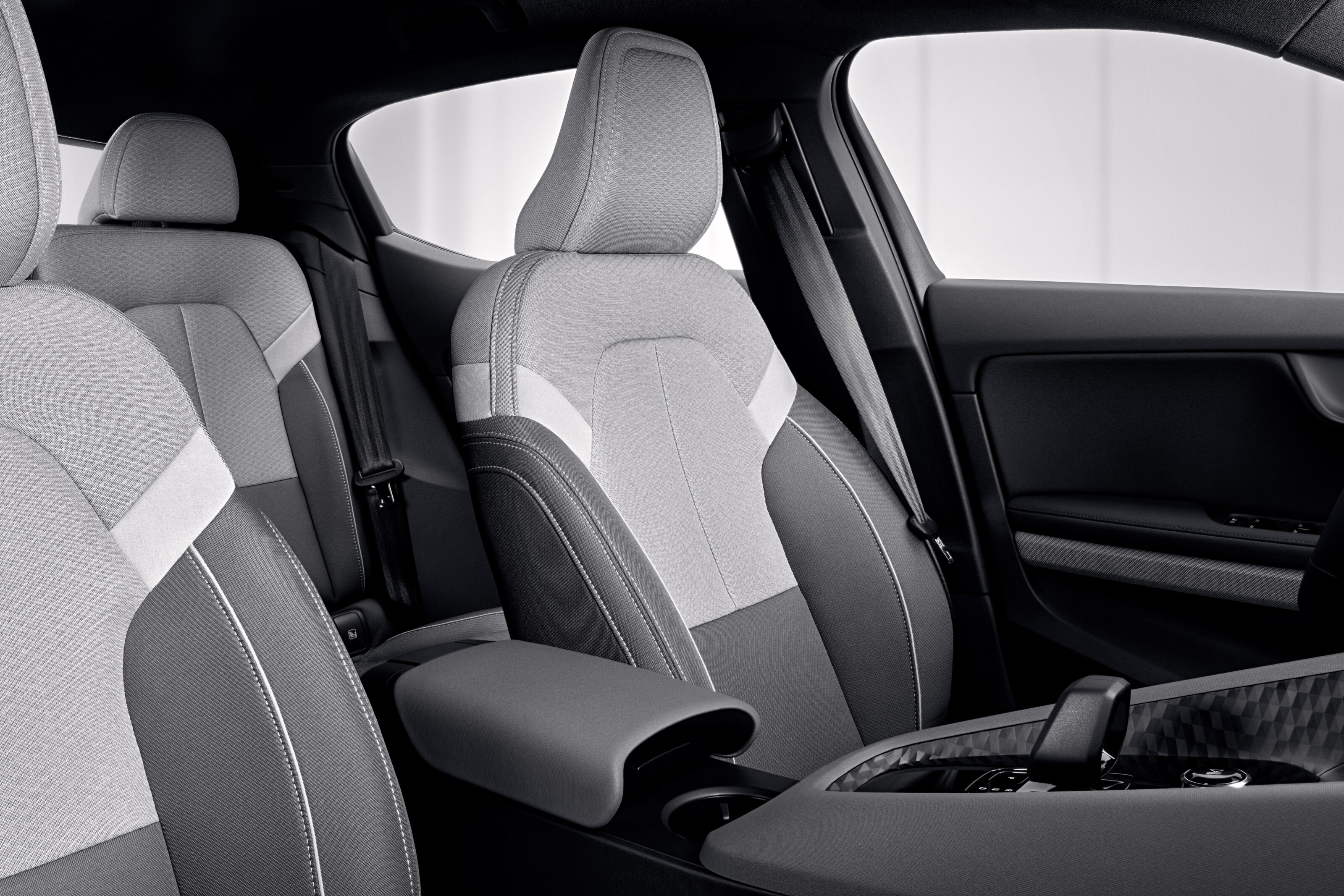
Individual options for all models include metallic paint and 20-inch alloy wheels. Nappa leather upholstery with ventilated front seats are available in conjunction with the Plus Pack.
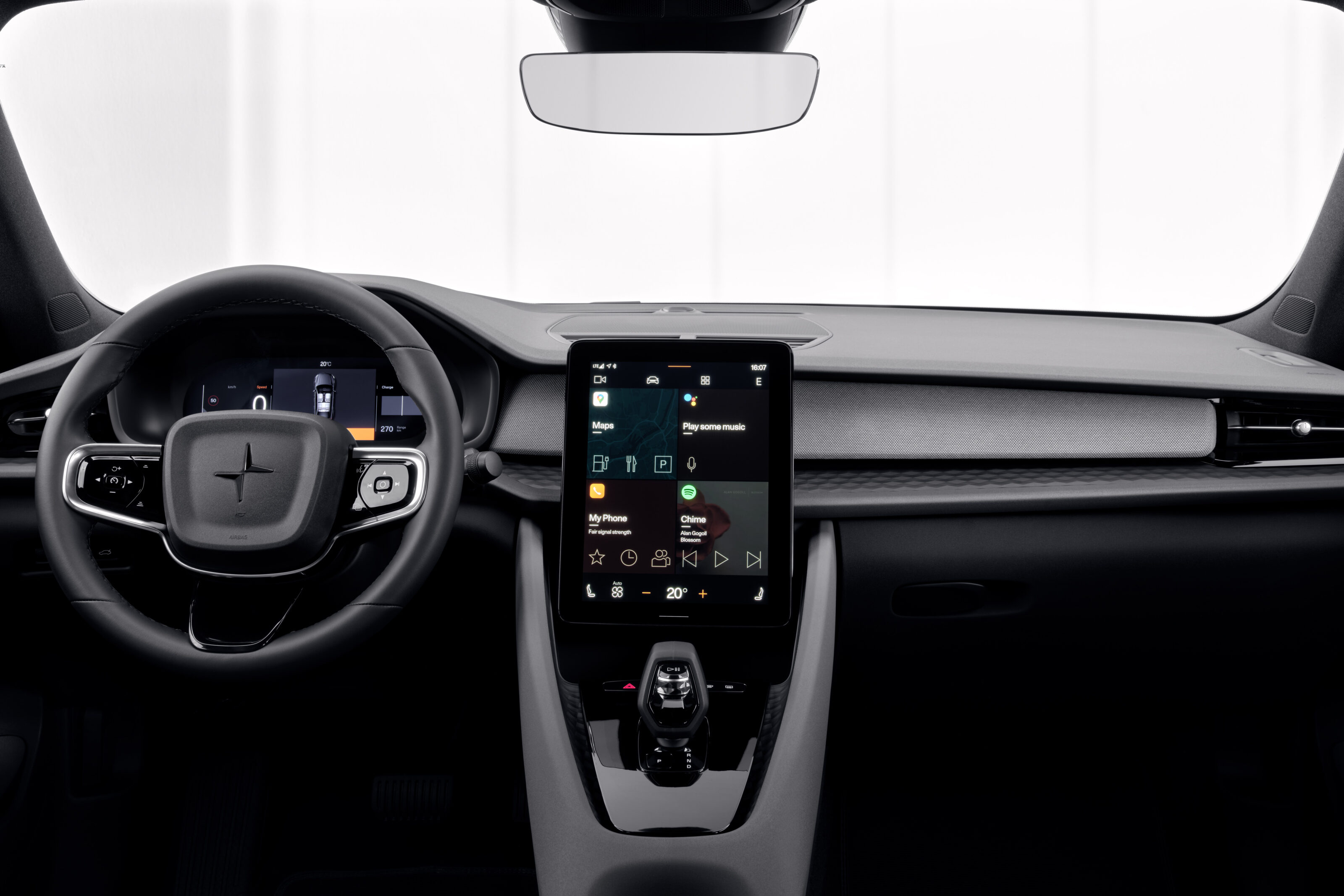
Vegan upholstery is standard along with a new Android/Google infotainment system that’s also shared with the XC40 Pure Electric.
Polestar vehicles come with a five-year warranty as well as five years of complimentary roadside assistance and servicing. The inclusive five-year maintenance plan is another point of differentiation from its parent brand.
Single-motor versions of the Polestar 2 are eligible for $3000 EV rebates being offered by New South Wales and Victoria for electric cars costing less than $68,750/$68,740. NSW will also reimburse stamp duty.
Polestar is being established as a separate entity to Volvo, with vehicles to be sold online in Australia with eventual retail stores to be deployed in various cities. These Polestar Spaces will follow the Tesla concept by providing a browsing opportunity for prospective buyers, with specialists on hand to assist with enquiries.
The Polestar 2 started life as a 2016 Volvo concept vehicle called the 40.2, unveiled alongside the 40.1 which became the Volvo XC40. In 2017, Volvo and its Chinese parent company Geely announced Polestar would transition from representing sportier Volvo variants to become a standalone performance brand.
The Polestar 2, first revealed in 2019, is built at a Volvo/Geely plant in China.
Polestar will expand its product range in the next few years with a sedan based on its 2020 Precept concept and mid-sized and large SUVs.
The brand’s first vehicle, the 2019 Polestar 1 hybrid, was a limited-volume, left-hand-drive model that ruled it out for Australia.
2022 Polestar 2 pricing for Australia
Excludes on-road costs.
| Standard Range Single Motor | $ 59,900 |
| Long Range Single Motor | $ 64,900 |
| Long Range Dual Motor | $ 69,900 |
Features
Standard Range Single Motor
| Battery | 69kWh |
| Power | 170kW |
| Torque | 330Nm |
| Range | Up to 470km |
| 0-100km/h (claim) | 7.4 seconds |
Long Range Single Motor
| Battery | 78kWh |
| Power | 170kW |
| Torque | 330Nm |
| Range | Up to 540km |
| 0-100km/h (claim) | 7.4 seconds |
Long Range Dual Motor
| Battery | 78kWh |
| Power | 300kW |
| Torque | 660Nm |
| Range | Up to 480km |
| 0-100km/h (claim) | 4.7 seconds |
Key Points
- Tesla now included in official sales figures
- Toyota continues to lead sales race with HiLux
- Overall monthly sales jump over 2021 levels
Electric vehicle popularity gained momentum in March, with both Tesla and new-kid-on-the-block Polestar contributing to a healthy overall sales total for the month in Australia.
Today was the first time both the American and Swedish brands’ sales figures were reported as part of the monthly results provided by the Federal Chamber of Automotive Industries (FCAI), and showed the EV boom is just beginning.
In March, there were 5532 electric vehicles sold compared to 600 in February and 411 last March – though the numbers will be slightly skewed for last month as Tesla’s year-to-date 4417 sales are all grouped in the one month, so we’ll need to wait to see April’s postings to get a more accurate representation. There were 6752 EVs sold year-to-date.
It follows a “human error” blamed for a misreporting of Tesla’s 2021 sales figures – the true number being 12,094 compared to the roughly 15,000 first claimed.

Although the number of hybrids remained relatively stable with 7474 shifted versus 8143 in February and 6549 in March last year, plug-in hybrid numbers were up with 427 sold (compared to 305 last month and 286 this time in 2021).
Rising petrol prices are partly responsible for the electric boom, though state-based incentives, such as those in NSW, VIC and recently announced in QLD, have also played a part.
Overall it was the best March since 2018, with 101,233 units registered according to official industry figures. It leaves the market up 1.2 per cent, or 1228 vehicles, compared with March 2021, but down 0.5 per cent year-to-date.
As expected, New South Wales sold the most vehicles with 32,224 units shifted, followed by Victoria with 27,155 and Queensland on 21,214 – with supply issues easing for the second month in a row.
“This is historically a unique time in which supply rather than demand is determining the size of the market,” said FCAI chief executive Tony Weber.
“This is due to manufacturers recovering from the pandemic-related shutdowns and the ongoing global shortage of micro processing (semiconductor) units. Consumer inquiries and demand for new cars remains strong. Manufacturers are working hard to match this demand with supply.”
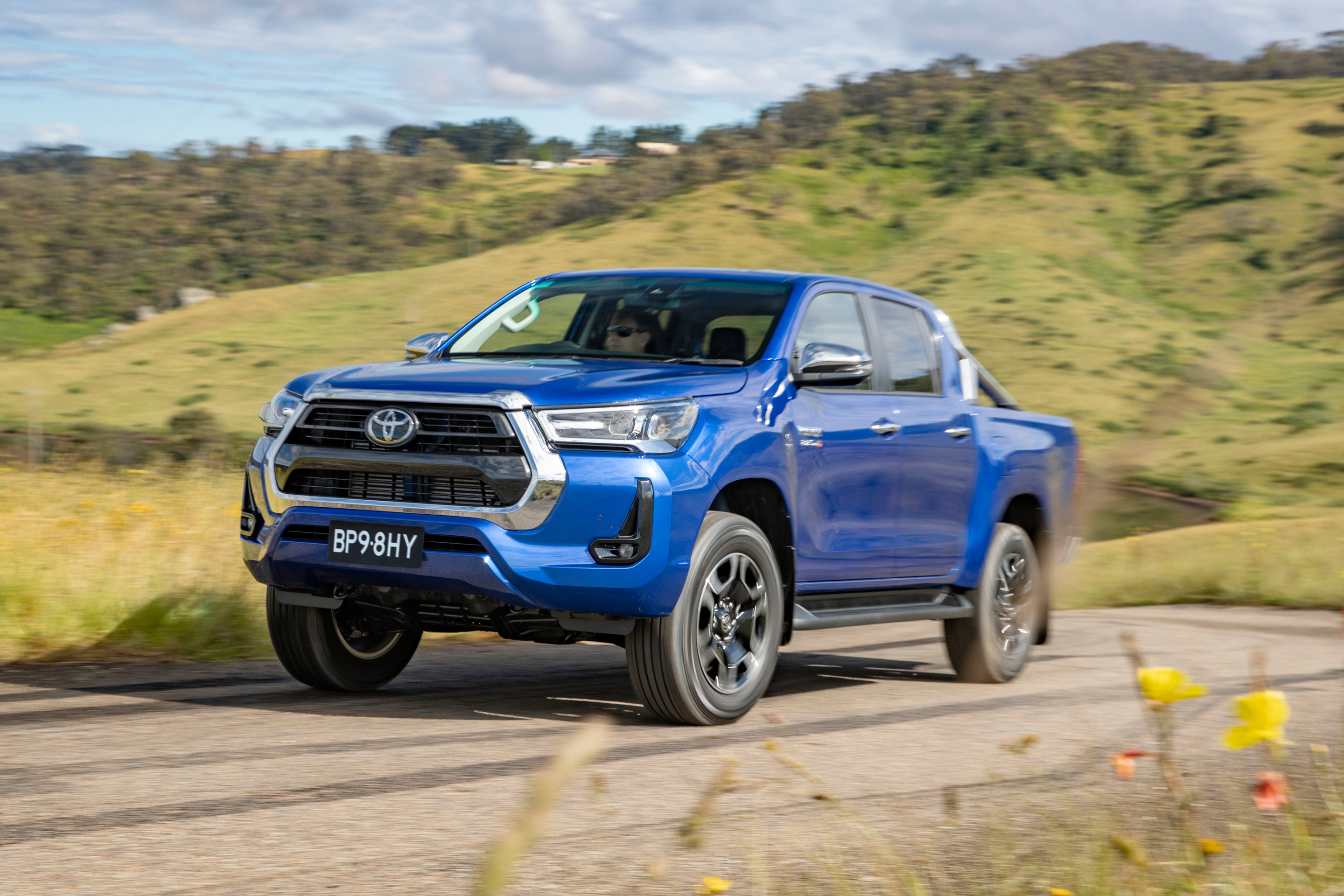
Toyota continued to hold top spot among all the carmakers, followed by Mazda and Mitsubishi rounding out the top three. However, sister companies Hyundai and Kia swapped positions in fourth and fifth respectively.
Outside the top 10, Subaru (down 46 per cent), Honda (down 37 per cent), Skoda (down 31 per cent), Audi (down 33 per cent) and BMW/Mini (down 28 and 44 per cent), struggled the most amongst mainstream brands.
Though Jaguar and sister firm Land Rover both struggled in February, posting significant drops, in March they both rebounded – rising 35 and 21 per cent.
Successes came for other household names too, Fiat (up 32 per cent), Citroën (up 209 per cent), Porsche (up 27 per cent), Ram (up 25 per cent) and Suzuki (up 31 per cent) all posting large increases in March.
Bad news came for Peugeot however with a decline of 21 per cent, despite doing well in February.
Utes were the country’s most popular vehicle type again last month when combining 4×4 and 4×2 variants, with the former accounting for 21,345 units of a 56,618 total.
There were 18,512 medium SUVs that left showrooms compared to 18,133 in March 2021. Large and light SUVs both showed growth with 7 and 5 per cent increases, as the overall SUV share of the market barely changed – down by just 0.3 per cent year-on-year with 50,893 sales for March and 135,425 for 2022 so far (versus 51,705 and 135,900).
Light-commercial vehicles grew its share by four per cent in March and 7 per cent YTD, again at the expense of passenger cars that though up 3 per cent of the market last month were still down 10 per cent YTD.
Small cars, micro cars, upper large cars and sports cars lost the most last month, each down 25, 25, 30 and 27 per cent respectively, followed by large cars down 18 per cent. Medium car sales however boomed, up 176 per cent for March and 68 per cent for the year.
Top 10 models
The Toyota HiLux ute kept the top spot with 6324 compared to 2960 for regular rival, the Ford Ranger – which came in sixth place for the month, but came in fourth year-to-date with 9660 sales.
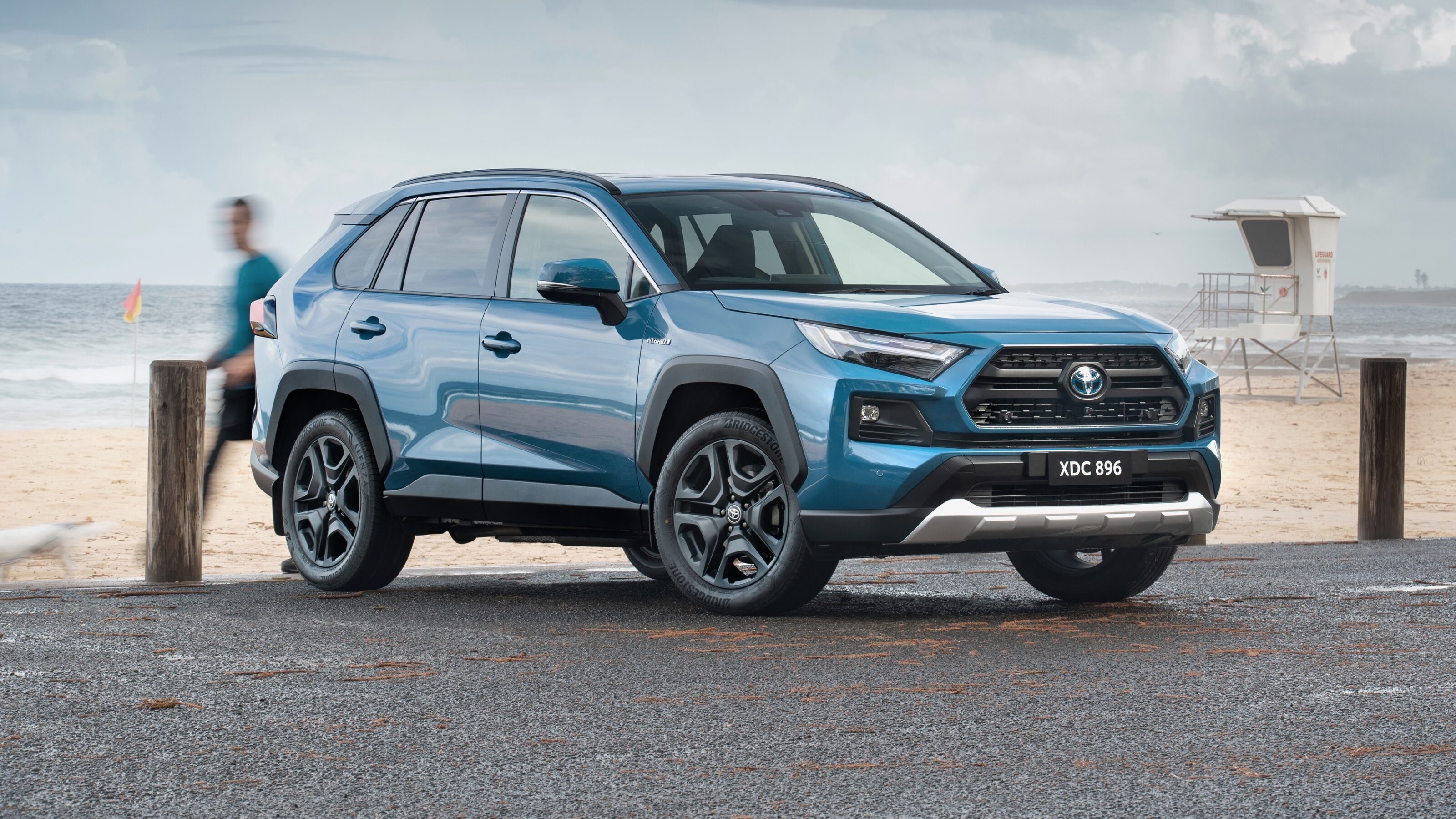
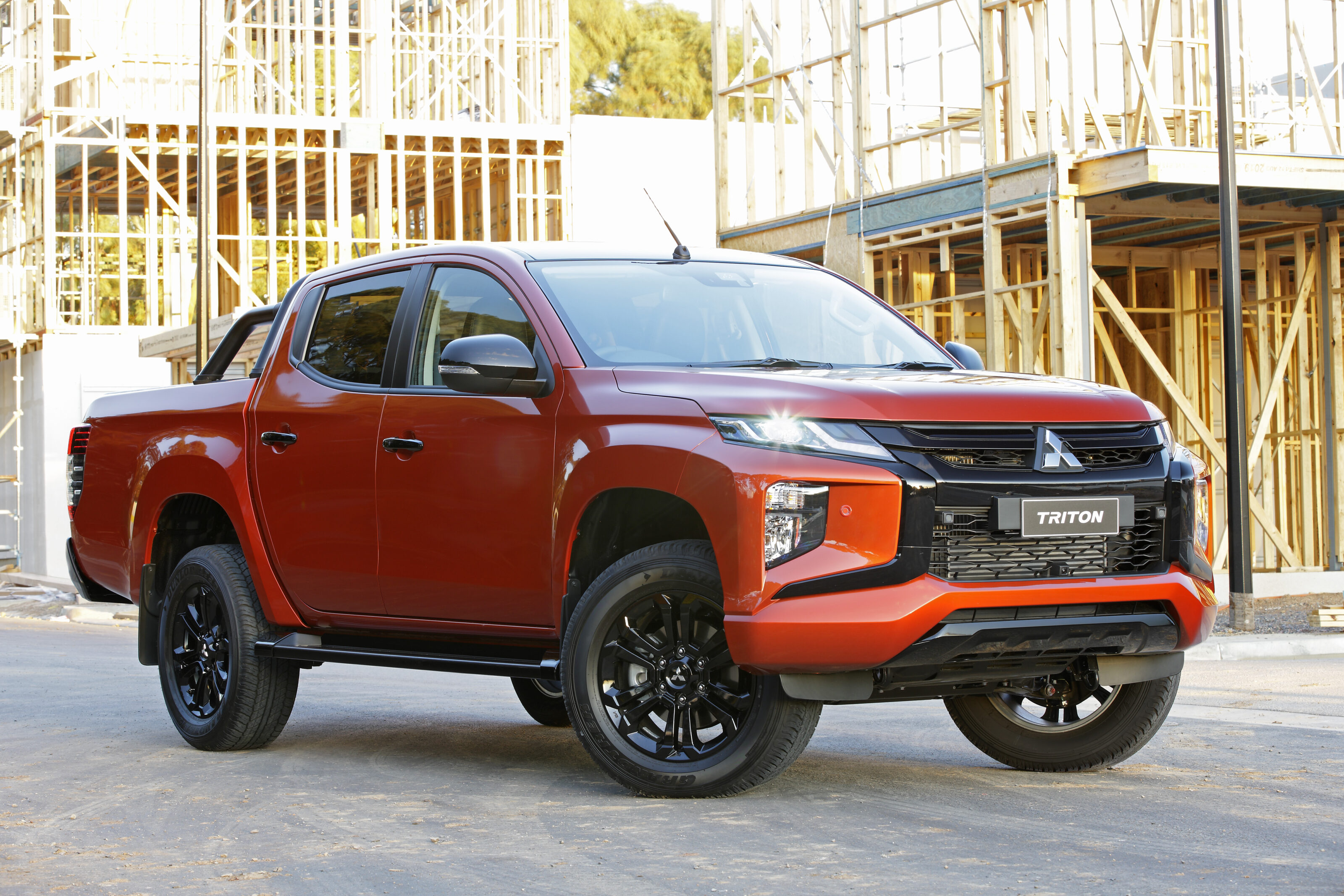
Sneaking in between the HiLux and Ranger were Australia’s most popular SUV, the Toyota RAV4 – taking another month in second with 4610 units registered (10,489 and third YTD) after it dropped from the top 10 in January – and fellow ute, Mitsubishi’s Triton in fourth with 3808 (10,495 but second YTD).
Confusing matters due to Tesla reporting the first quarter of sales all at once in March, the Tesla Model 3 came in third by default with 4417 cars sold, but as a result did of course not make the top 10 for the year so far.
After a bad month in February for the Mazda CX-5, it bounced back with 3772 cars shifted thanks to the launch of the new model, coming in fifth place. Due to the inclusion of the Model 3, its stablemate the Mazda CX-30, which placed eighth in February, fell out of the top 10 with 1829 units. Looking at the year-to-date results, the CX-5 was also fifth with 8250 cars sold, up from sixth the month before.
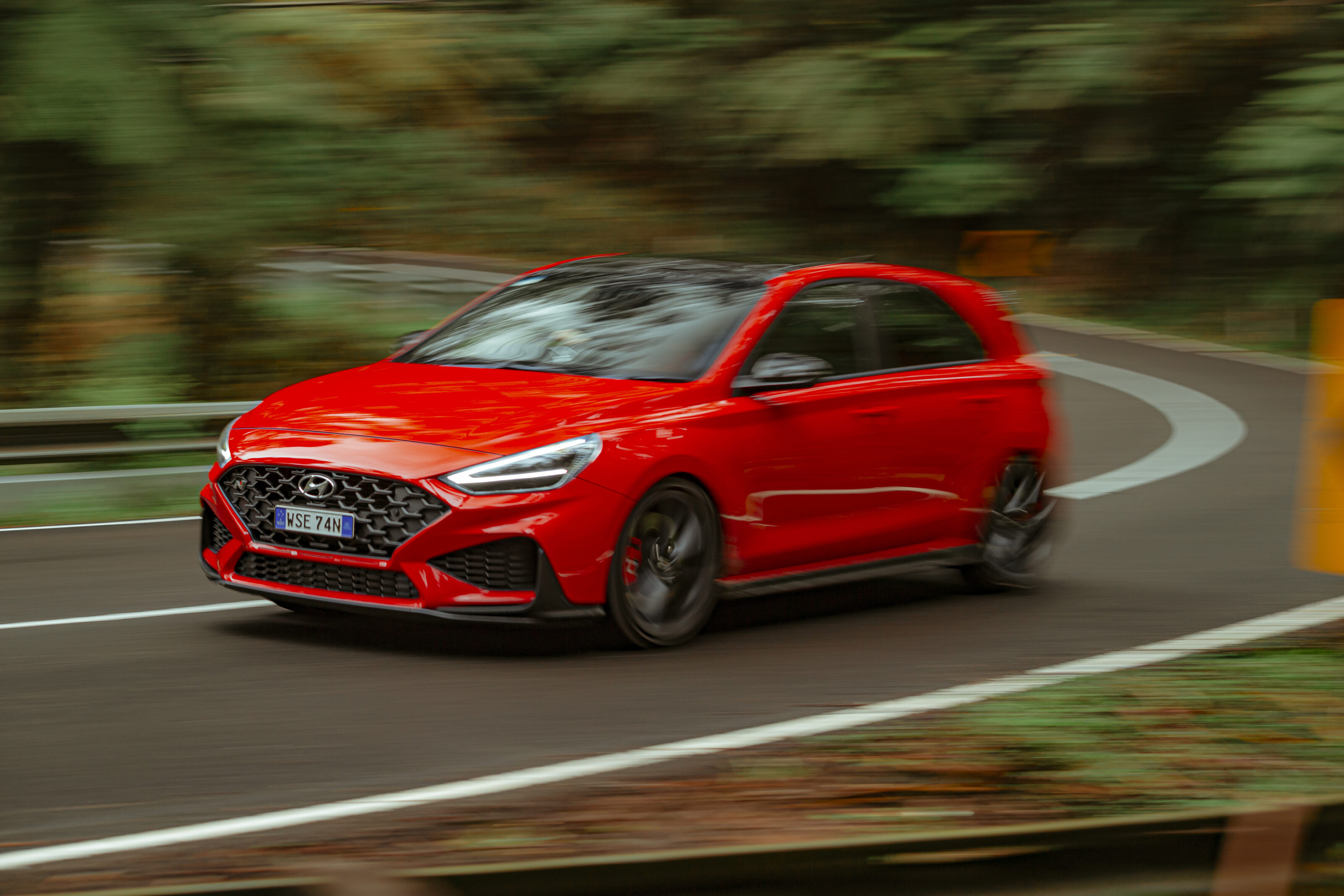
The sole passenger car offering in the top 10 remained the Hyundai i30, with 2455 finding homes last month (5853 YTD), coming in seventh for March and eighth for the year to this point.
Despite a couple of recent price rises, Isuzu’s D-Max continued to be popular with 2447 registrations in March and 6272 year-to-date, ranking eighth and seventh respectively.
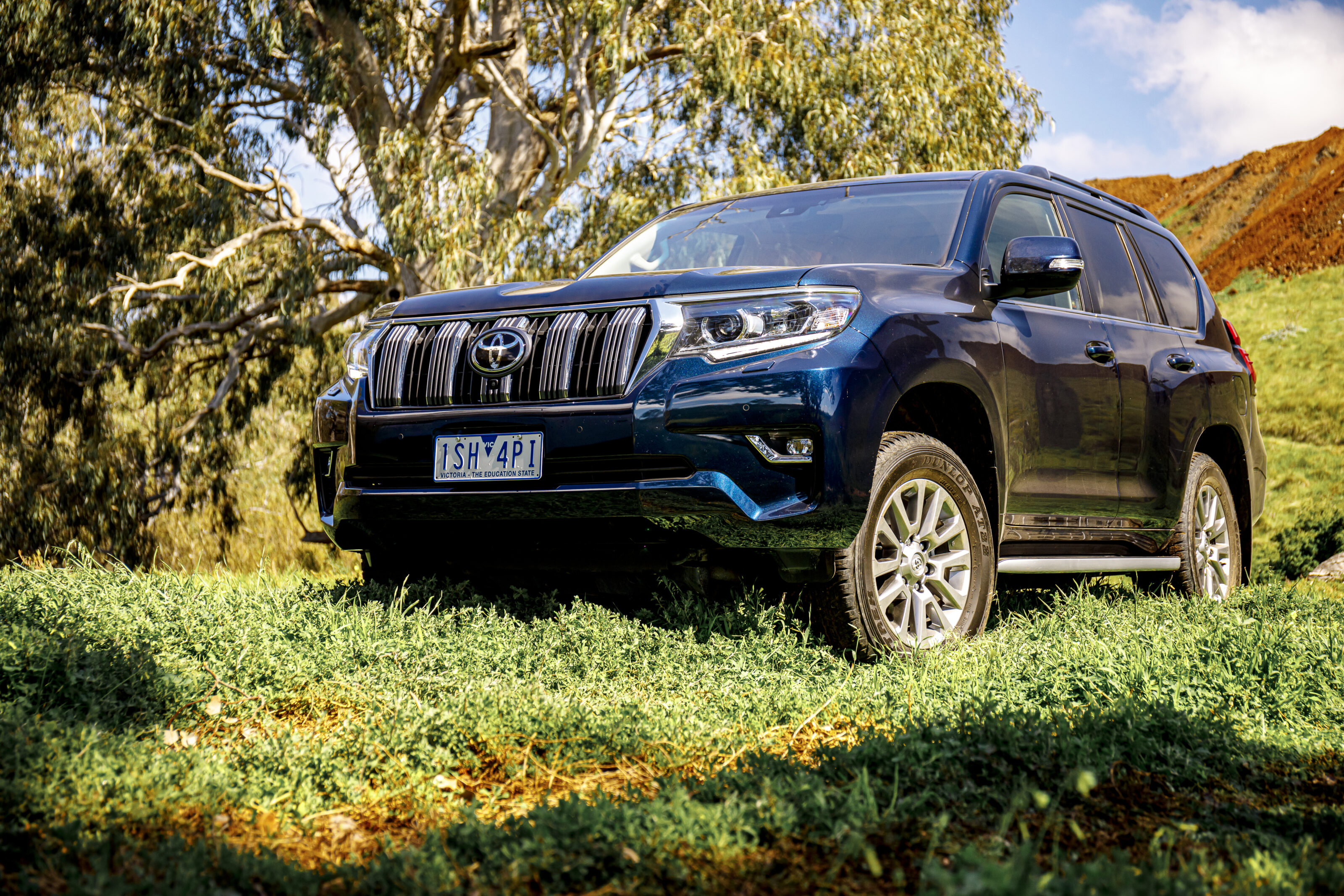
After falling out of the top 10 multiple times since December last year, Toyota’s Corolla made a comeback in March with 1924 sales (5037 YTD) and put it in tenth place both for the month and year, meanwhile its Prado sibling just pipped it to ninth spot with 2230 units (7574 YTD but rose to fifth position).
Narrowly missing out on a spot in the top 10 after appearances in February were the Mitsubishi Outlander with 1619 and the MG ZS with 1756 – the first time the latter has not appeared for several months after booming in popularity in 2021, possibly due to a new model expected later this year.
The new Kia Sportage also continued to do well with 1530 units shifted and a surprise top 20 contender included the Mitsubishi Pajero Sport on 1669.

Elsewhere, EV sales have been bolstered this year by the recent arrival of the Kia EV6, Polestar 2, Peugeot 508 GT PHEV, Jaguar I-Pace and Porsche Taycan to name a few.
With Spanish brand Cupra also set to descend on our market in the second half of the year with its own EV offerings, Chinese carmaker BYD bringing us its Atto 3 SUV, and companies such as Kia and MG delivering new versions of the Niro and ZS EV, expect sales to climb even further.
Posting its first VFACTS result, 115 examples of the Polestar 2 found homes in March.
Top 10 models: March 2022
| Rank | Model | Sales | vs March 21 |
|---|---|---|---|
| 1 | Toyota HiLuxu00a0 | 6324 | +19% |
| 2 | Toyota RAV4 | 4610 | +31% |
| 3 | Tesla Model 3* | 4417 | N/A |
| 4 | Mitsubishi Triton | 3808 | +52% |
| 5 | Mazda CX-5 | 3772 | +25% |
| 6 | Ford Ranger | 2960 | u201326% |
| 7 | Hyundai i30 | 2455 | u20132% |
| 8 | Isuzu D-Max | 2447 | +23% |
| 9 | Toyota Prado | 2230 | +84% |
| 10 | Toyota Corolla | 1924 | u201334% |
Top 10 models: YTD 2022
| Rank | Model | Sales | vs March 21 |
|---|---|---|---|
| 1 | Toyota HiLuxu00a0 | 14,718 | +0% |
| 2 | Mitsubishi Triton | 10,495 | +70% |
| 3 | Toyota RAV4 | 10,489 | +12% |
| 4 | Ford Ranger | 9660 | u20133% |
| 5 | Mazda CX-5 | 8250 | +15% |
| 6 | Toyota Prado | 7574 | +90% |
| 7 | Isuzu D-Max | 6272 | +12% |
| 8 | Hyundai i30 | 5853 | u201312% |
| 9 | MG ZS | 5297 | +30% |
| 10 | Toyota Corolla | 5037 | u201332% |

Top 10 brands
March was a slightly better month for the market’s dominant brand Toyota with 21,828 sales, up two per cent compared to this time last year when it shifted 21,319 vehicles, despite suffering a nine per cent loss in January versus January 2021 – mostly down to COVID-19 related production problems. Year-to-date it has notched up 58,047 units, up three per cent.
Mazda followed in second place with 11,248 units sold last month and 29,835 year-to-date, followed by Mitsubishi, which has been climbing up the ladder due to boosted sales of its new Outlander SUV, with 9007 cars shifted in March and 23,353 this year so far.
Hyundai and Kia continued to battle it out for the higher spot of fourth place, with the former winning this time around with 6516 sales in March versus Kia’s 6051, but was knocked down to fifth for the year with 17,293 compared to Kia’s 17,452.
Though Tesla snuck into the top 10 with 4417 sales in March, placing sixth, it strictly needs to be discounted for grouping three months of sales in just one. As a result, Ford was pushed down to seventh spot last month with 4245 units, but regained sixth year-to-date with 13,383 sold.
Tesla bumped Subaru from the monthly top 10 by default, putting the Japanese marque down in 12th place with 2279 units sold, behind Mercedes-Benz with 2761. Year-to-date however Subie retained its top 10 spot with 8152 sales. For the year at this point Mercedes has sold 6799 vehicles.

MG equalled its seventh position for the year with 11,267 registrations, with a rise of 29 per cent YTD, but for the month appeared in eighth place with 3962 units sold.
Isuzu and Nissan rounded out the top 10 in ninth and tenth position with 3306 and 3168 sales, registering a four per cent increase and 31 per cent decrease respectively over March 2021. For 2022 so far the two companies have shifted 8806 units and 8322, up nine and down 31 per cent.
Top 10 brands: March 2022
| Rank | Brand | Sales | Vs. March 2021 |
|---|---|---|---|
| 1 | Toyota | 21,828 | +2% |
| 2 | Mazda | 11,248 | +4% |
| 3 | Mitsubishi | 9007 | +40% |
| 4 | Hyundai | 6516 | u20135% |
| 5 | Kia | 6051 | +4% |
| 6 | Tesla* | 4417 | N/A |
| 7 | Ford | 4245 | u201329% |
| 8 | MG | 3962 | +20% |
| 9 | Isuzu | 3306 | +4% |
| 10 | Nissan | 3168 | u201331% |
Top 10 brands: YTD 2022
| Rank | Brand | Sales | Vs. March 2021 |
|---|---|---|---|
| 1 | Toyota | 58,047 | +3% |
| 2 | Mazda | 29,835 | +8% |
| 3 | Mitsubishi | 23,353 | +31% |
| 4 | Kia | 17,452 | +2% |
| 5 | Hyundai | 17,293 | u20139% |
| 6 | Ford | 13,383 | u201315% |
| 7 | MG | 11,267 | +29% |
| 8 | Isuzu | 8806 | +9% |
| 9 | Nissan | 8322 | u201331% |
| 10 | Subaru | 8152 | u201319% |
