
Snapshot
- Refreshed S60/V60 Cross Country to go on sale around July
- Tech updates and minor visual changes to come
- Combined sales less than 100 units for 2022
Volvo will look to introduce a mid-life update to its S60 and V60 Cross Country in the middle of the year, bringing mild tweaks to the sedan and wagon.
The most notable change is the inclusion of Google’s Android Automotive infotainment system, still on Volvo’s 9.0-inch vertically-oriented screen but now featuring integrated connectivity without the need for a smartphone.
Although this comes at the cost of Apple CarPlay, the system now allows for native functions such as maps, voice assistant and Google’s app store.
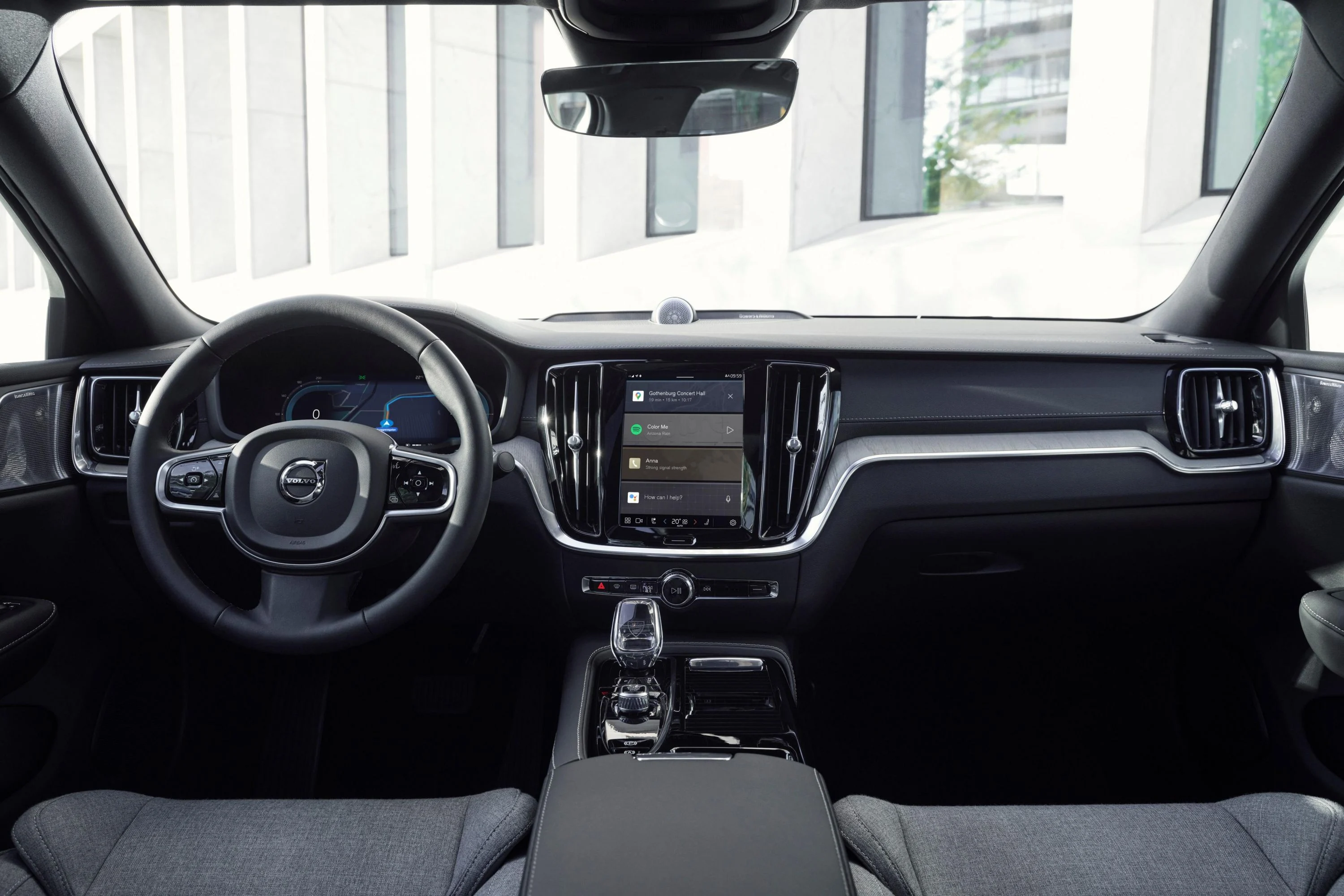
On top of this, a host of minor visual changes will also come, with each model’s exhaust pipe now hidden behind the rear bumper, while certain overseas grades score new design wheels and a seven-speed dual-clutch automatic gearbox – however, this is only available on the B3 and B4, neither of which are sold locally.
Australian-delivered models will retain the current 2.0-litre turbocharged four-cylinder petrol engine which features across both the S60 and V60 Cross Country ranges, all of which are mated to an eight-speed conventional automatic transmission with on-demand all-wheel drive.
The internal-combustion engine in Australian models is paired with a 48-volt mild-hybrid system, producing combined outputs of 183kW and 350Nm with a claimed combined fuel economy of 7.4L/100km in V60 Cross Country guise.
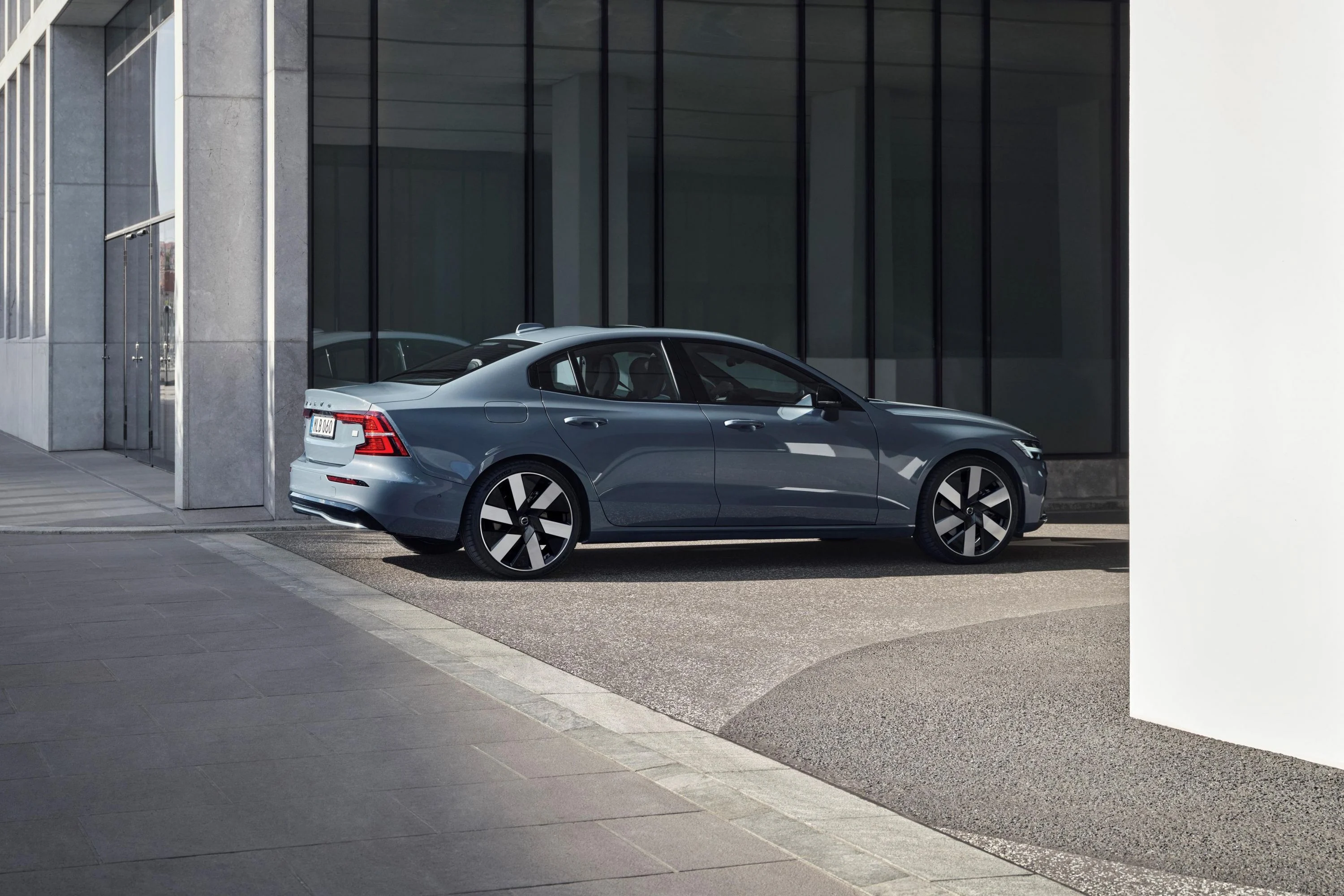
Year to date, Volvo has shifted just 44 S60s and 25 examples of the V60 Cross Country – both considerably less than the popular SUV range which includes the XC40 (817 units), XC60 (573 units) and XC90 (121 units).
The first locally-delivered examples of the 2024 refresh are expected to arrive around July this year, barring any stock delays.
Further pricing and features will be announced closer to launch.
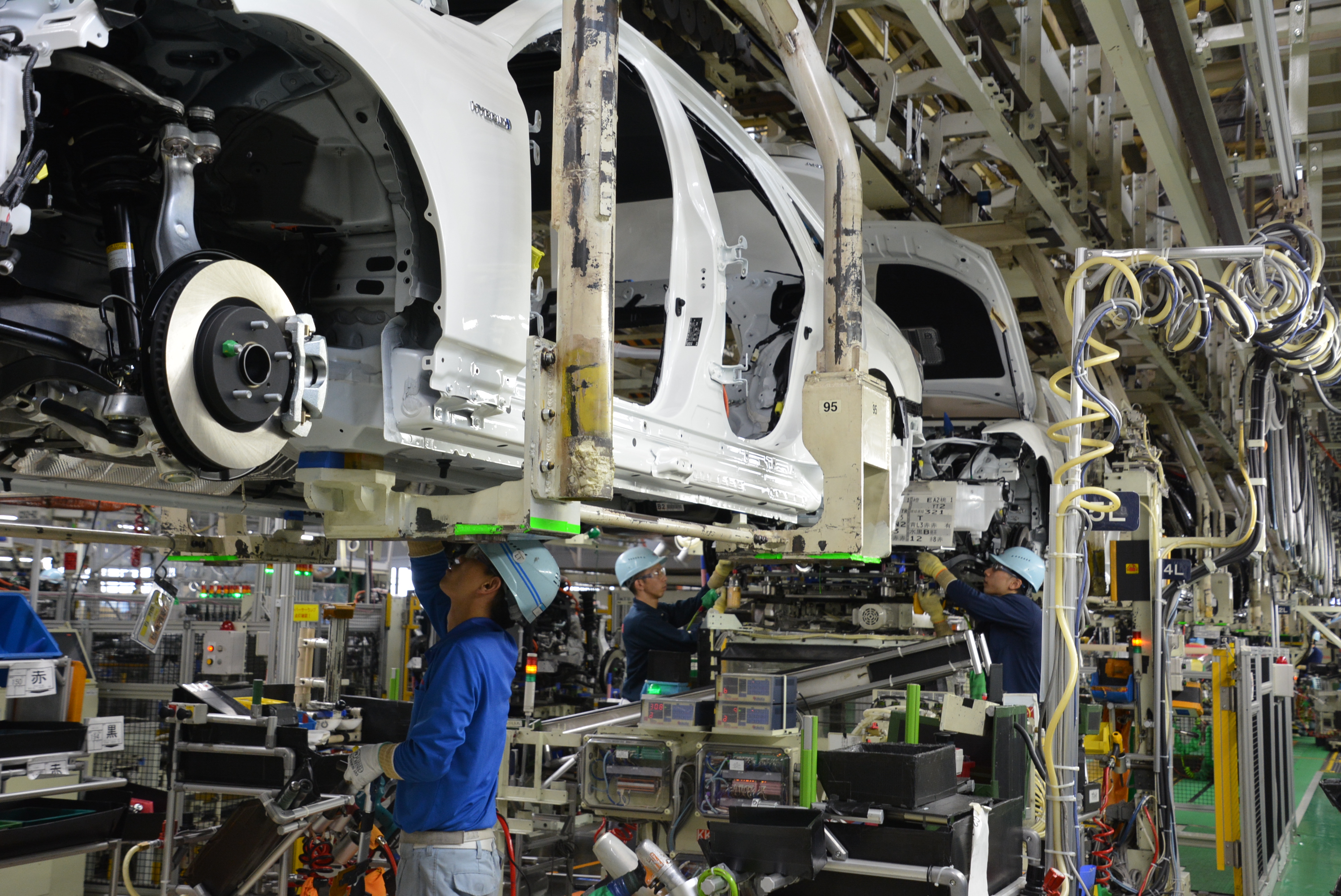
Toyota has confirmed it will reduce its Japanese production by as much as 20 per cent in the second quarter of 2022 (April to June inclusive).
According to Reuters, the move is an attempt to reduce the ongoing strain on Toyota’s supply-chain, with suppliers struggling to meet demand over the past two years thanks to the COVID-19 pandemic, semiconductor chip shortages, and now further issues caused by the crisis in Ukraine.
The car giant says it will reduce production at its factories in Japan by approximately 20 per cent in April, 10 per cent in May, and five per cent in June.
Toyota-owned supplier Denso is also understood to have suffered from a ransomware attack last week at its German offices, Automotive News Europe reports, just a week after another key parts manufacturer suffered from a cyber attack. The incident forced Toyota to shut down its domestic production for 24 hours.
A Toyota spokesperson was confident its annual output would remain high, though it’s not known whether the company’s forecast of 11 million vehicles for the 2022 financial year will be upheld.
Toyota isn’t the only carmaker struggling with supply-chain issues. BMW, Mercedes-Benz, and Volkswagen Group brands have all been forced to reduce production across Europe, while Honda announced last month its Japanese manufacturing would be running at 90 per cent capacity throughout March.
Snapshot
- More teasers of new V12 Vantage released
- Set to be the final V12 fitted to a Vantage
- Launch locked in for March 16
UPDATE, March 14, 2022: The covers are set to come off the new Aston Martin V12 Vantage this week, with the British marque confirming a March 16 reveal for its end-of-line model.
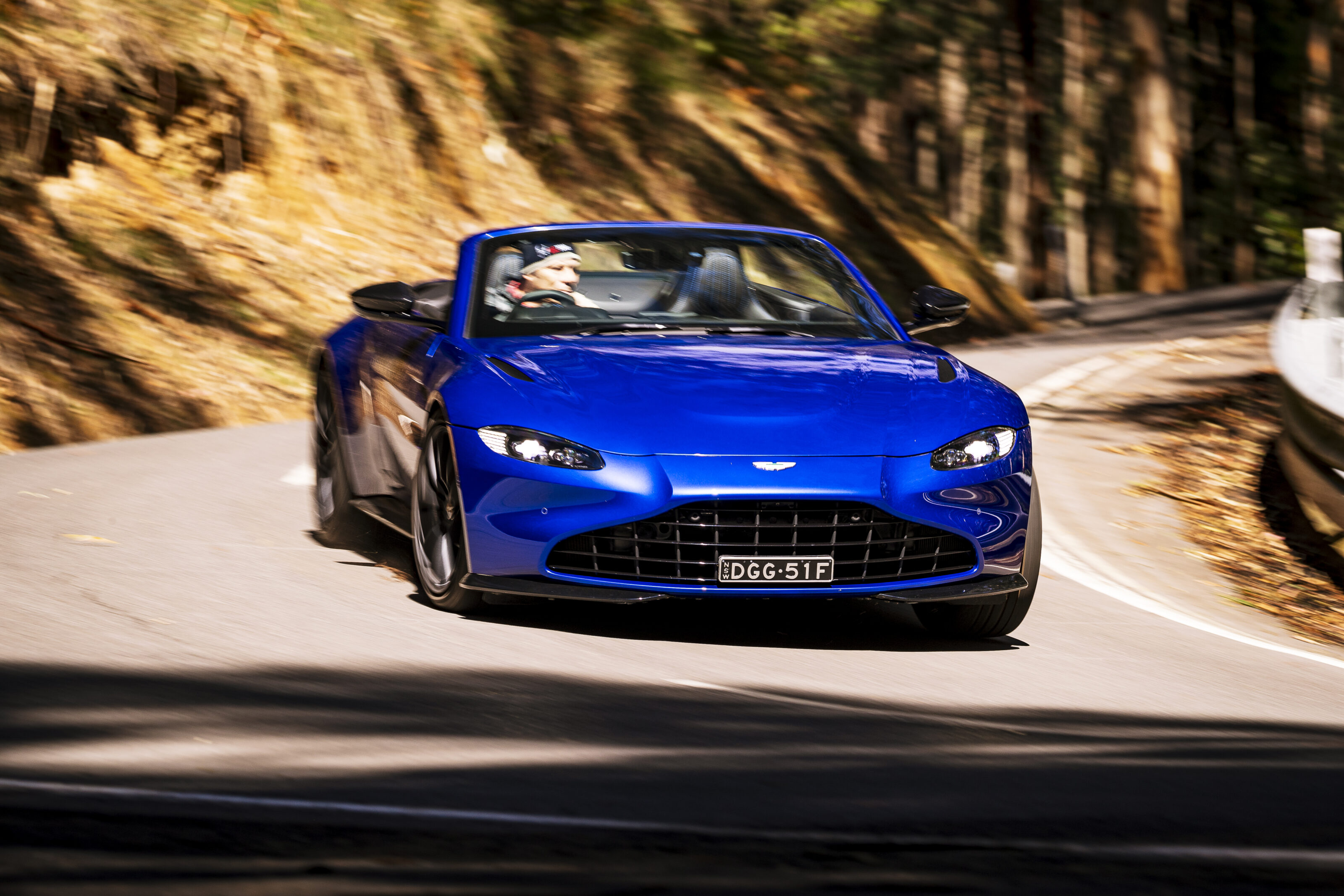
Tipped to be the final new V12 Aston to roll down the Gaydon production line, Aston Martin has previously shown off teasers of the Vantage with a larger front splitter as well as a more aggressive front bumper.
Although the days of Aston Martin’s naturally-aspirated V12s are long gone, it’s likely the engine fitted to the flagship Vantage will be the same 5.2-litre, twin-turbo unit found in the DBS Superleggera, making 533kW and 900Nm in its current guise – quite a bit more than the 4.0-litre, twin-turbo V8 Vantage’s 375kW/685Nm.
The story to here
December 15, 2021: Aston Martin is continuing to ramp up anticipation of the V12 Vantage’s return, this time releasing a teaser of the upcoming two-door which gives us a glimpse of the car’s design.
Set to be the last 12-cylinder Aston Martin Vantage ever produced, the teaser shows a blurred shot of the front of the new V12 Vantage next to the original 2009 model. While not the clearest shot, the new model appears to have a different grille compared to the current V8 Vantage.
If we go off previous spy shots, we’ve seen a large front grille flanked by air intakes that will help for increased cooling demand, along with new cooling cut-outs in the bonnet for that thumping V12 heat.
As before, we can also hear the new model from the video Aston Martin posted on social media, sounding a lot like the 5.2-litre twin-turbo V12 used elsewhere in Aston’s stable.
With the standard Vantage housing Mercedes-Benz’s ubiquitous bi-turbo V8, the new V12 will likely be the most powerful non-electrified Vantage ever, producing north of 500kW.
Previously, Aston Martin published a short statement beneath the V12 Vantage logo which read: “You’ve heard about it. You will certainly hear it coming. V12 Vantage. It’s not just a Limited Edition, it’s a Final Edition. Returning in 2022”.
It is all but confirmed this will be Aston’s last V12 Vantage and it should be fully revealed early next year, with the manufacturer beginning its wind down into electrification and hybrid cars to meet tightening emissions regulations.
Beyond the new V12 model, the Vantage is due for a facelift in 2022. The updated model will be part of Aston’s ‘Project Horizon’ going forwards, which includes a DBX Coupe and the Valhalla supercar.
Three-row SUVs have replaced the station wagon as the ultimate family vehicle. However, some models that call themselves seven-seaters soon become redundant once the youngest offspring grow legs. Then there’s the issue of limited boot space when they’re being used as a bus.
Enter the Hyundai Palisade, the Korean’s car-maker’s biggest SUV to date, which brings everything good about the popular Hyundai Santa Fe but in a longer, roomier package that can seat up to eight people, including three down the back.
We jumped into the mid-priced Palisade Elite seven-seater with the 2.2-litre diesel all-wheel-drive powertrain to see if this American-centric SUV is worth the additional cost and parking space.
? You’re reading about an older model, here’s something newer
STORY CONTINUES
Pricing and ownership
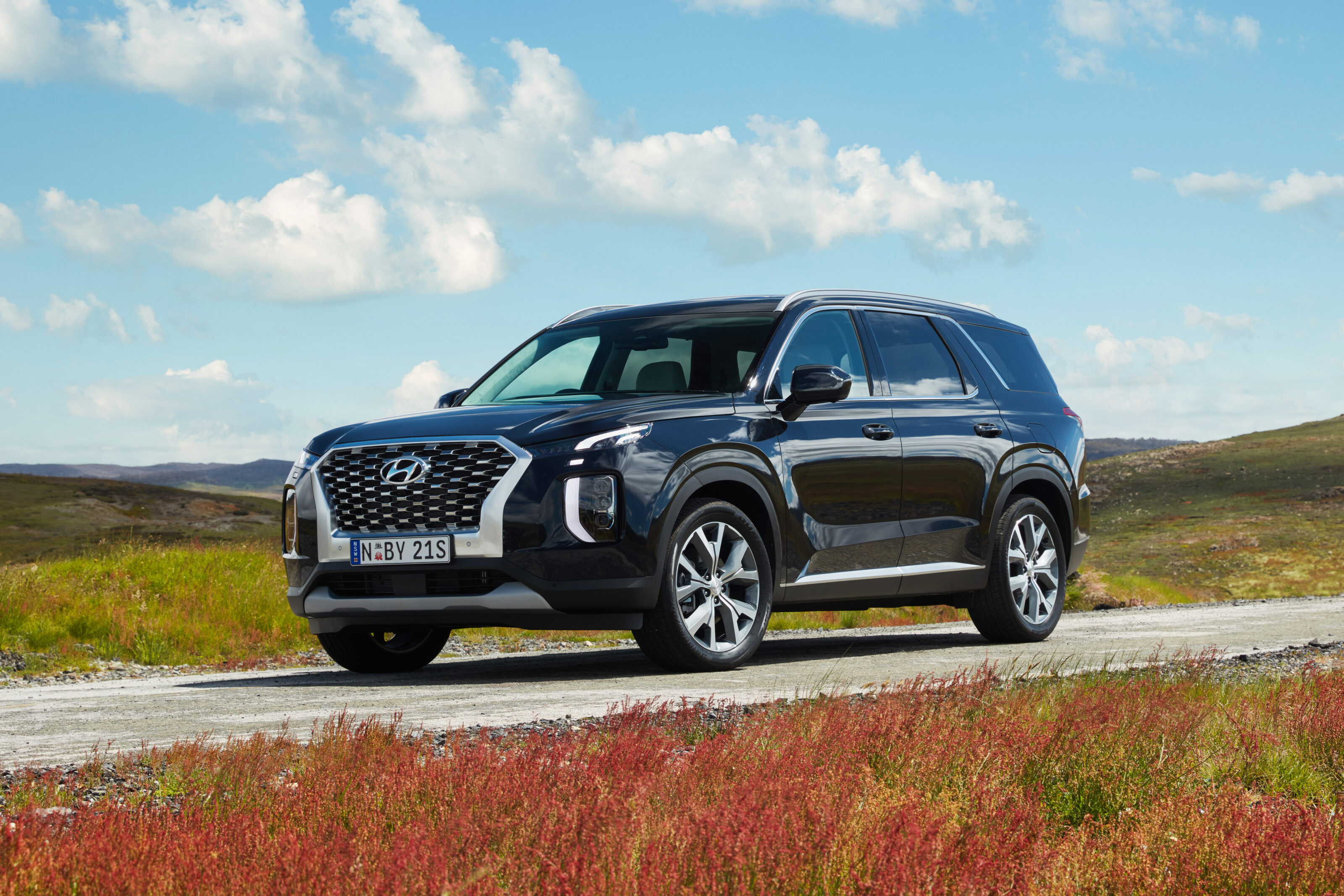
The Palisade consists of three spec grades, the eponymous Palisade, Palisade Elite and Palisade Highlander, with each costing about $8000 more than their Santa Fe counterpart.
As with the Santa Fe, each Palisade variant comes with a choice of V6 petrol with front-wheel drive or a four-cylinder turbo-diesel with AWD. You also get the option of seven or eight seats, the seven-seaters coming with two fancy captain’s chairs in the middle row for the same price.
Retail pricing starts at $55,000 before on-road costs for the entry-level 3.8-litre V6 petrol Palisade, with the AWD diesel powertrain attracting a $4000 premium.
The Elite, which joined the local Palisade range in August 2021, starts at $61,500 for the V6 petrol, with the diesel priced from $65,500 before selecting options such as premium paint ($695) while the range-topping petrol and diesel Highlander variants are priced from $71,000 and $75,000 respectively, which means they attract the Luxury Car Tax (prices before on-road costs).
As far as our test vehicle’s running costs go, the 2.2-litre diesel engine has an official combined fuel economy of 7.3L/100km, which is quite good for a vehicle this size and considerably more frugal than the 3.8-litre V6 petrol’s 10.7L/100km thirst.
Service costs are also reasonable. After a free 1500km check, the Palisade is due for a service every 12 months or 15,000km, whichever comes first. Each scheduled visit to the Hyundai service centre will cost $469 for the first five years or 75,000km.
Hyundai also offers pre-paid servicing, with three, four, or five-year packages respectively priced at $1187, $1596, and $1995. This will save you $350 over five years.
The Palisade is covered by Hyundai Australia’s five-year/unlimited-kilometre warranty.
Features
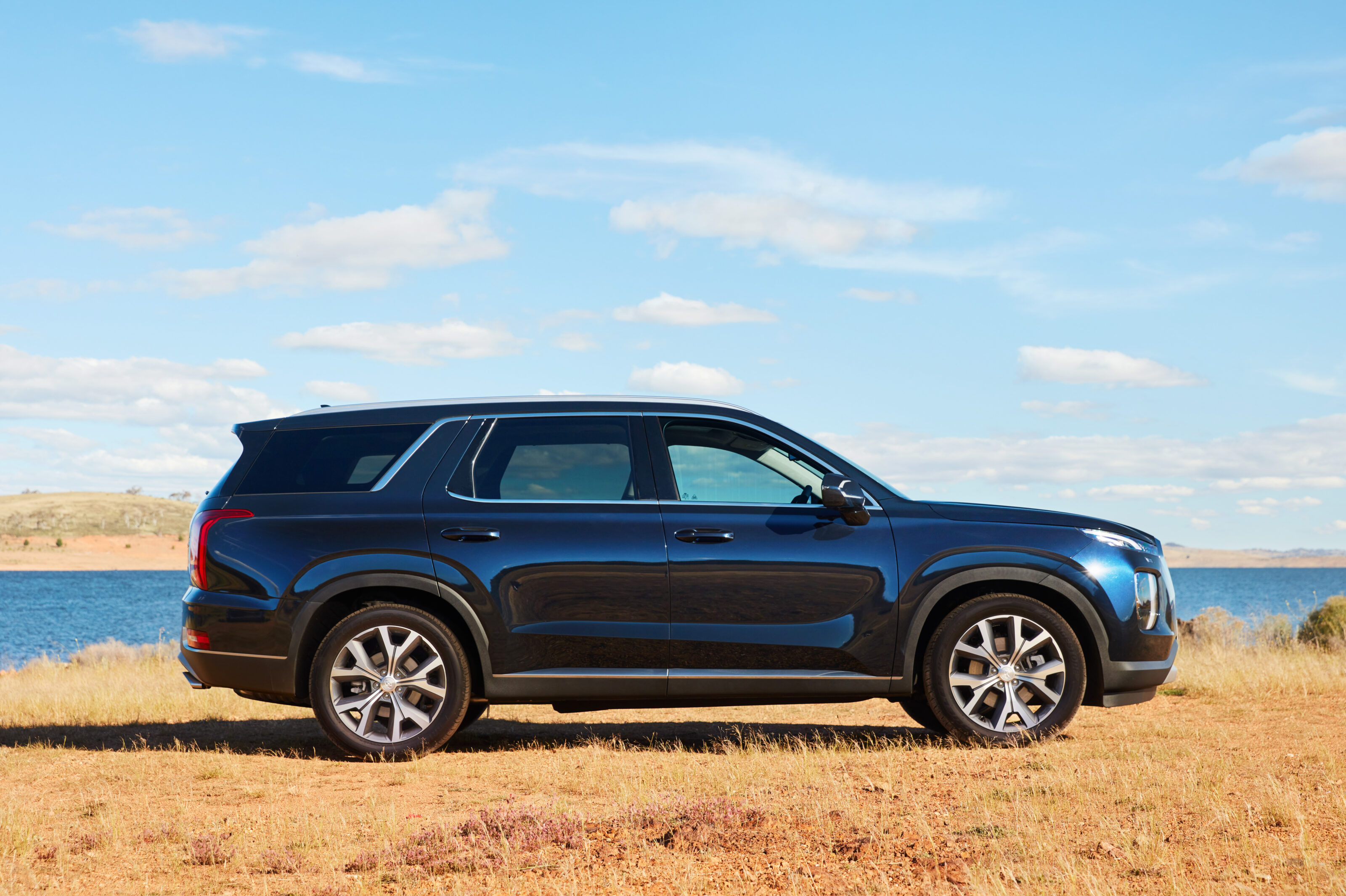
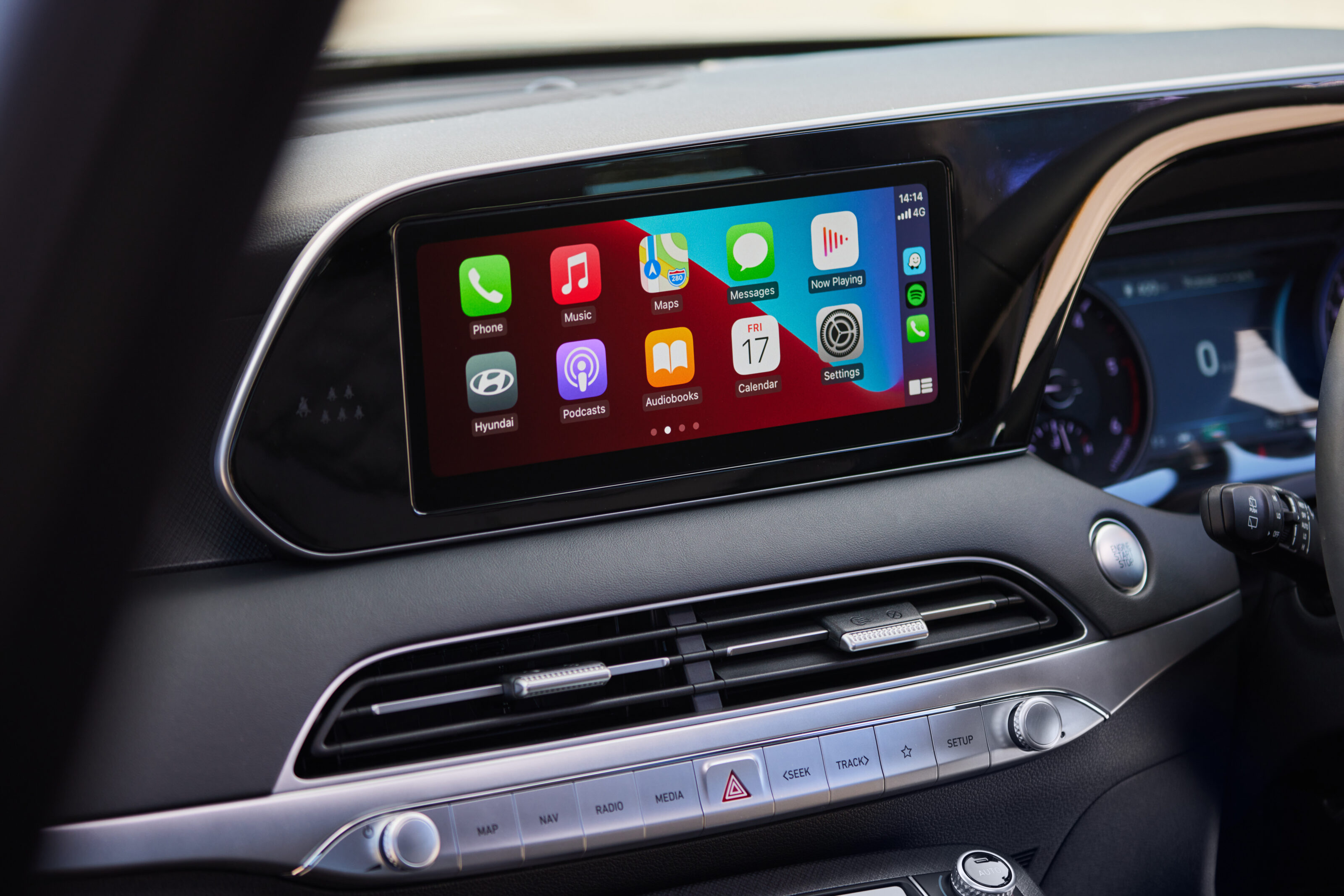
The rather handsome-looking Palisade Elite comes with a decent mid-spec standard features list, which includes black leather upholstery, a 10.25-inch infotainment screen, Apple CarPlay/Android Auto, satellite navigation, 12-speaker Infinity audio system, 7.0-inch digital gauge cluster, powered driver’s seat adjustment, heated front seats, three-zone air-conditioning, wireless charging pad, keyless entry, push-button start, power-operated tailgate, single-pane sunroof, dual-LED headlights, rear LED combination lamps, and 20-inch alloy wheels.
Like the rest of the range, it also comes with the Hyundai SmartSense active safety suite, which we’ll take a look at in the Safety section below.
If you fancy extra bling, opt for the Urban X pack that brings integrated side steps and gloss-black wheels. Or opt for the Urban X Plus pack that adds roof racks and tinted style visors
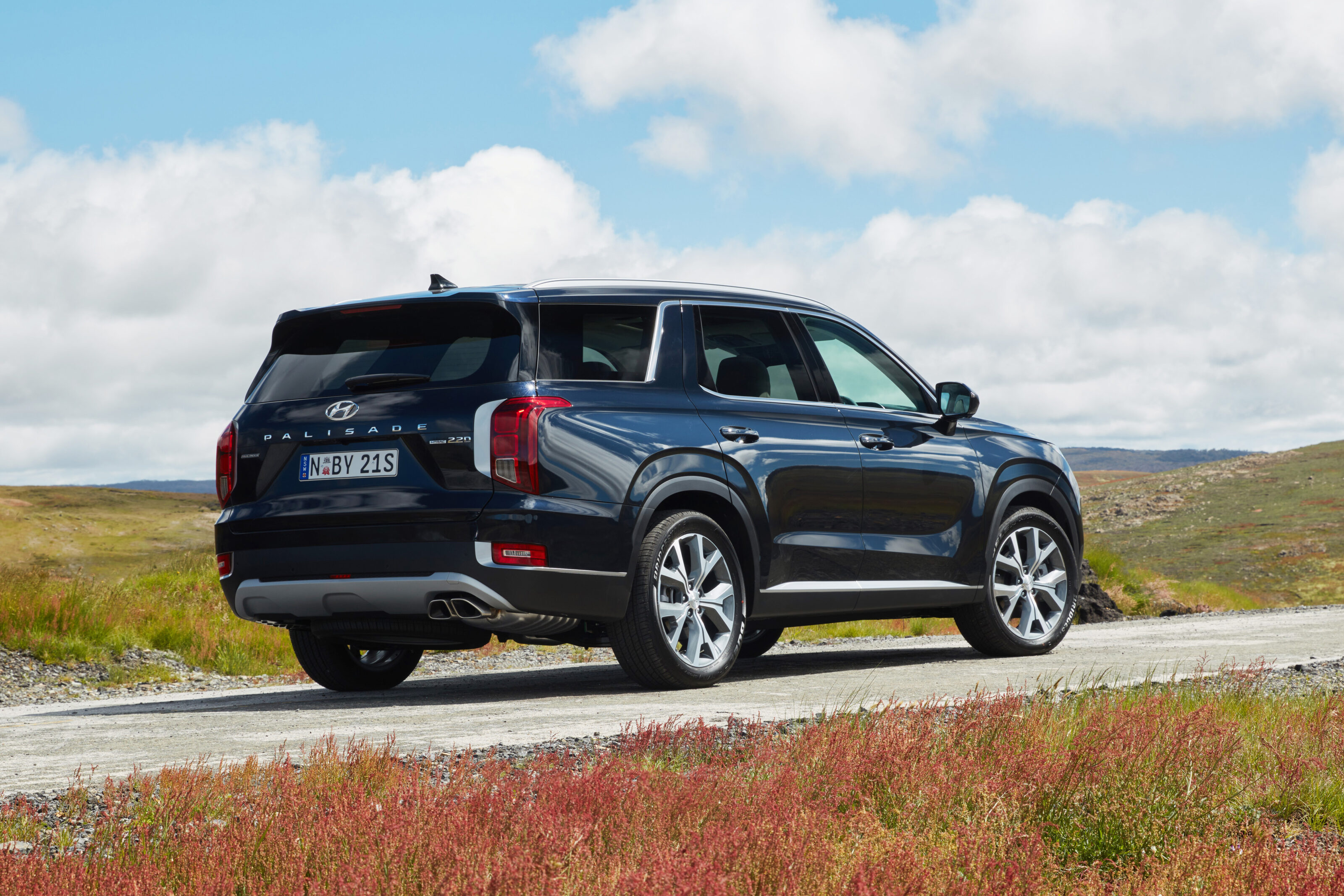
There are five external colours to choose from, including the standard White Cream that’s part of the price, or for an extra $695 you can choose from Abyss Black, Sierra Burgandy, Steel Graphite and Rain Forest.
If you fancy a little extra bling you can opt for the Urban X accessory pack that for $3562.22 brings integrated side steps and fancy gloss-black alloy wheels. Or, for $4043.96, you can opt for the Urban X Plus pack that adds flush roof racks and tinted style visors to the Urban X extras.
Space and Comfort
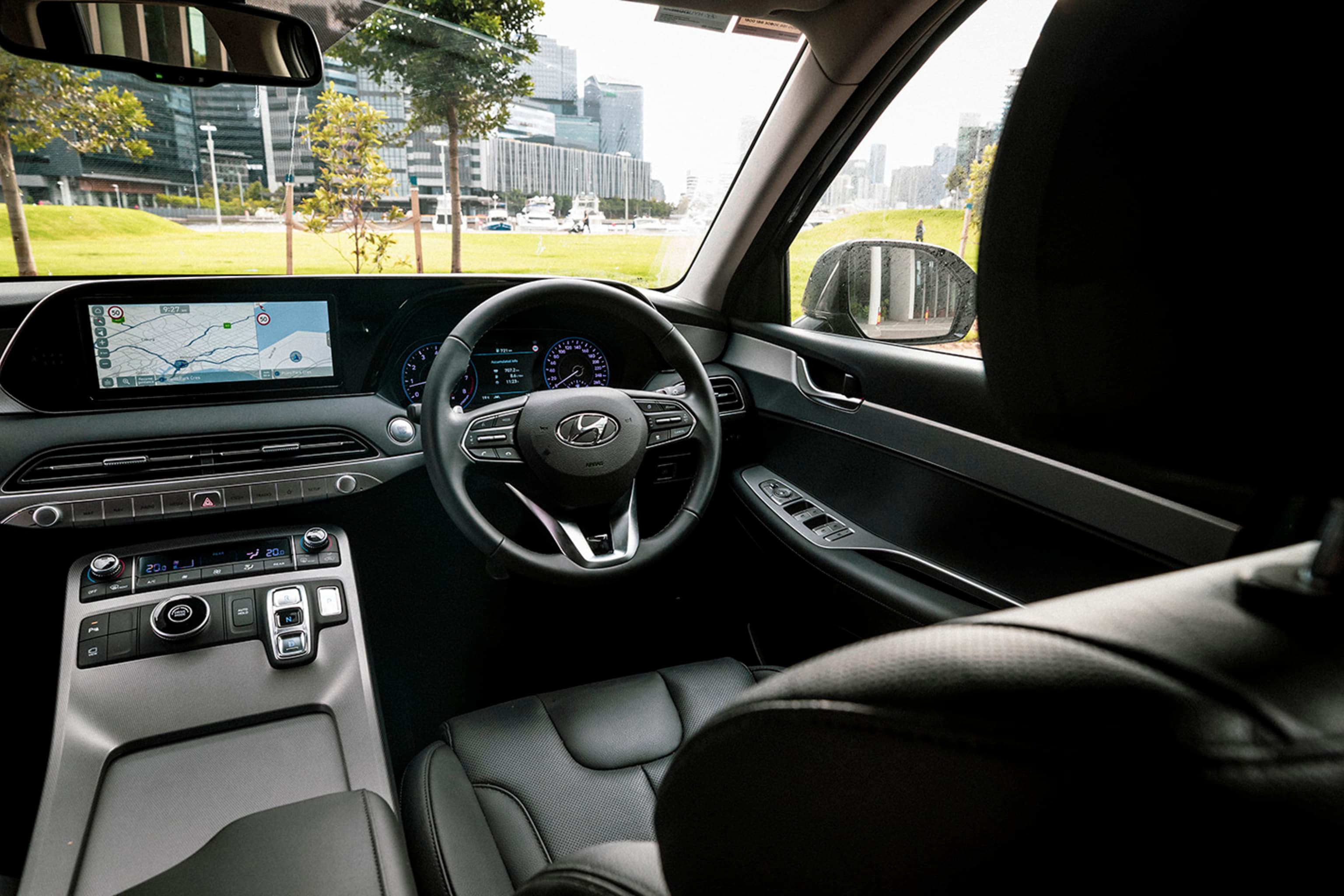
Needless to say, any SUV about the size of a Kia Carnival people mover won’t be lacking when it comes to space and comfort, even in the third row.
Stepping into the spacious cabin provides a great first impression. The fit and finish seem to be of a high standard with an elegant mix of soft touchpoints, stitched upholstery and contrasting metallic trim.
The heated leather front seats are comfortable, with the driver’s side benefiting from 10-way power adjustment including lumbar support.
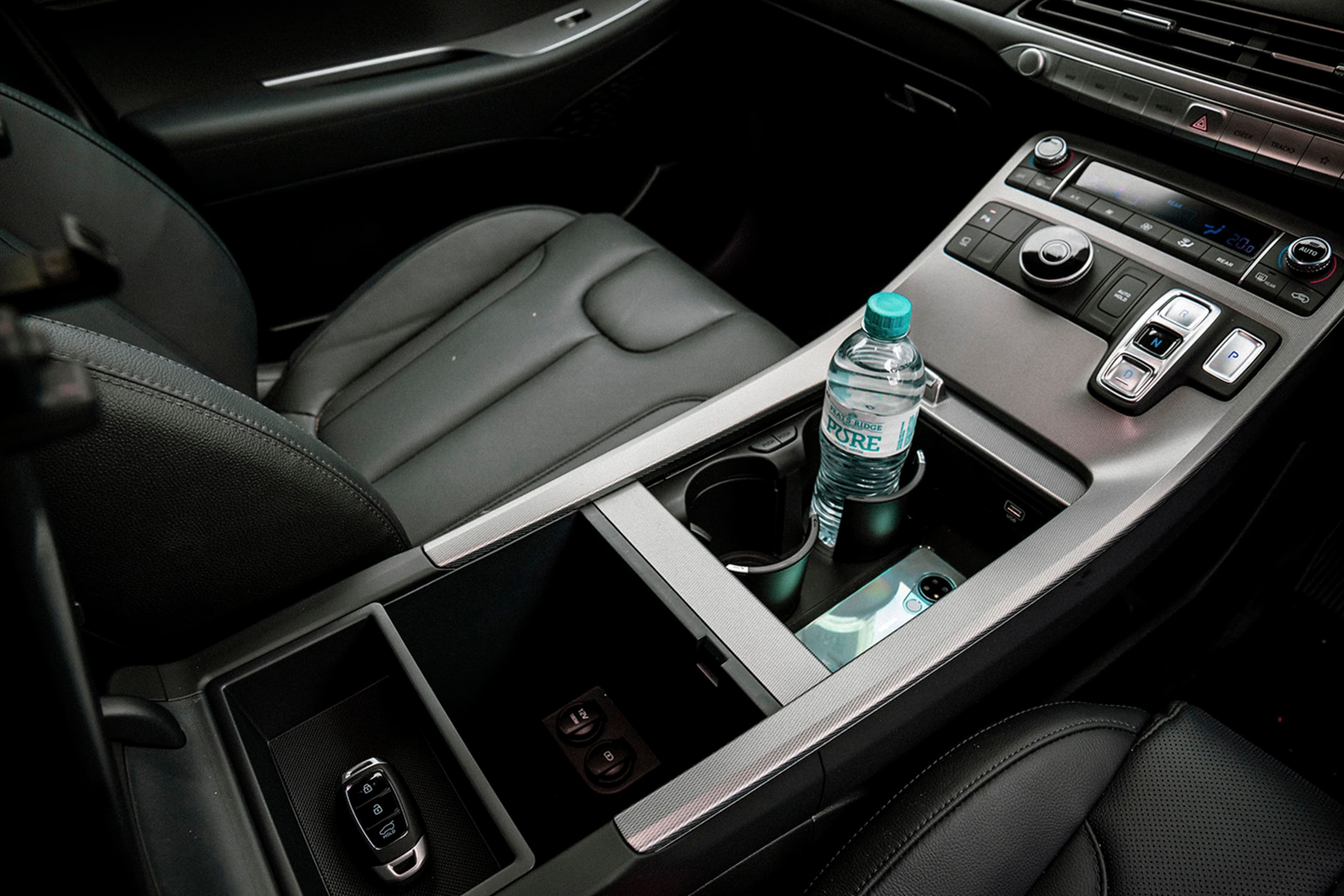
Plenty of elbow room is provided up front, where the occupants are separated by a broad double-deck centre console that provides plenty of storage space including a deep tub beneath the padded centre armrest and upper and lower storage trays. It also houses two cup holders, two USB charging ports, another USB socket to connect your phone to the infotainment system, and two 12-volt sockets. It’s also clutter-free thanks to the push-button gear shifter that takes up little space.
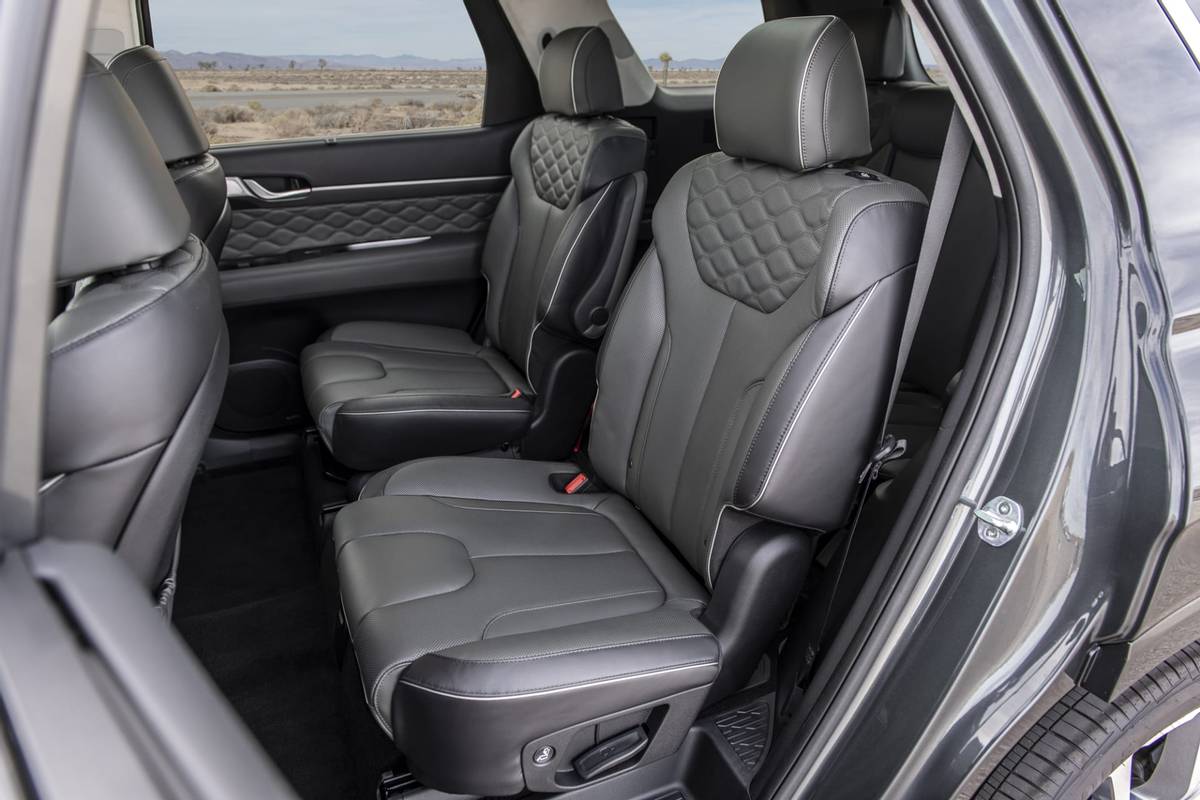
The second row is very spacious, especially in this seven-seat version that has just the two captain’s chairs instead of a three-seat bench. The airliner-like seats have fold-down centre armrests and there is a wide enough gap between them to access the third row.
Second-row passengers get their own climate control buttons, ceiling-mounted air vents, two USB ports, a 12-volt socket and cup holders in the door armrests.
The third row is one of the roomiest of any large SUV with great leg and headroom. But while the rear bench can seat three people, it can be quite a squeeze even for older children. Two adults will be comfortable here, even on longer journeys. The two USB ports, four cup holders and ceiling mounted air vents won’t make them feel like they’ve drawn the short straw, either.
I reckon it is best thinking of the seven-seat Palisade as a six-seater plus. If I really needed seven seats, for say five growing children, I’d choose the eight-seater to comfortably accommodate three in the middle and two at the rear. And if you only seat two people in the second row, the centre backrest folds down to create a handy table that you don’t get with the captain’s chairs.
The third row offers a more pleasant experience than most other seven-seaters, while the ‘driver talk intercom’ allows communication with those in the front for better inclusivity
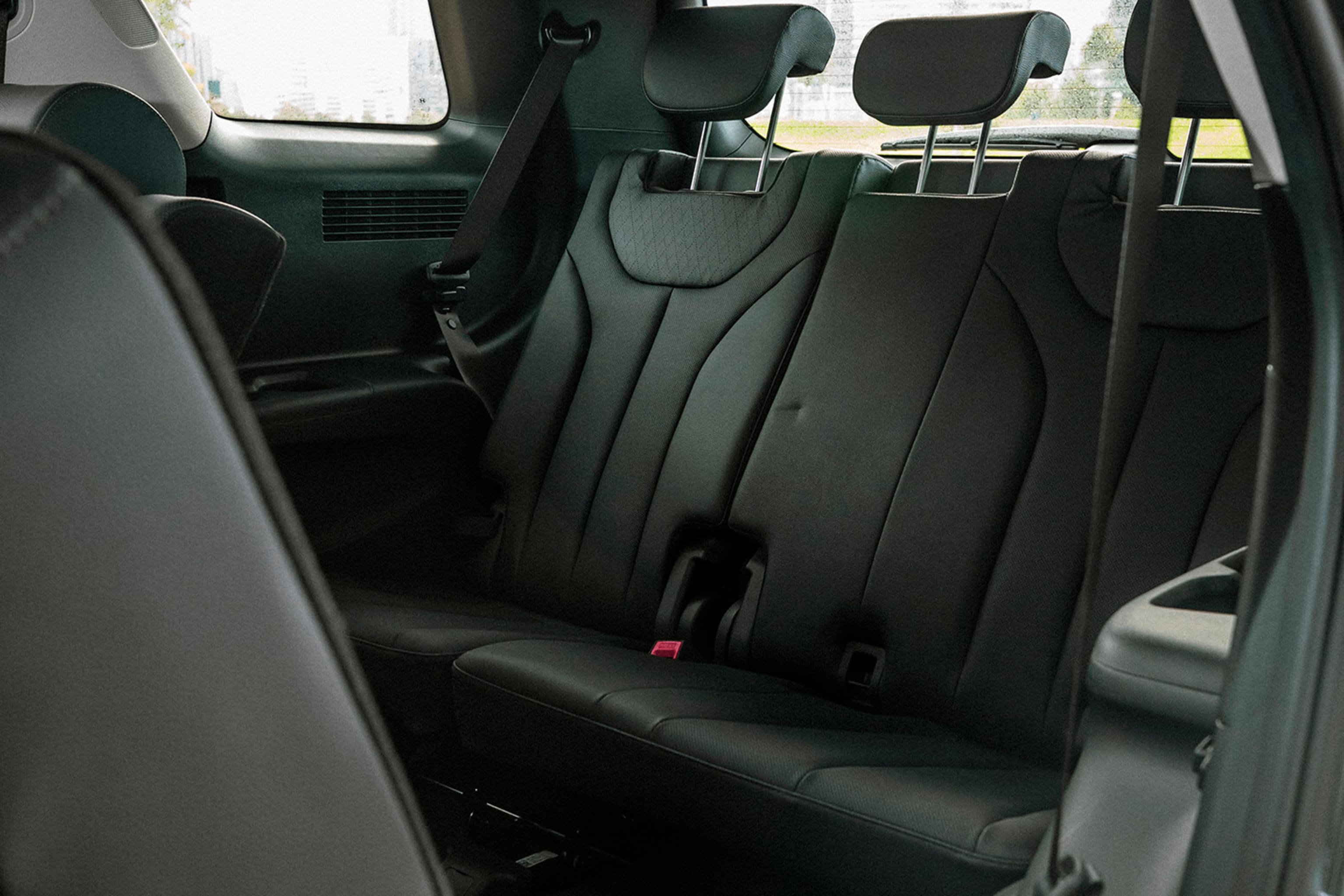
Whichever layout you choose, the third row offers a more pleasant experience than most other seven-seaters, with good forward and side vision, while the ‘driver talk intercom’ system allows communication with those in the front for better inclusivity.
Entering the third row is done by moving the passenger rear seat forward and folding the backrest down, which is all done with the push of a single button. This provides plenty of space to make entering and exiting a bit more of an elegant affair compared to most other seven-seaters.
Once seated, the third-row seatbacks recline up to 10 degrees and spilt 60:40 for versatile cargo-carrying capacity, which is another ace up the Palisade’s sleeve. While most seven-seaters have tight boot space behind the third row, the big Hyundai can carry a hatchback-like 311 litres. By comparison, the Santa Fe holds just 130-litres of stuff while its Kia Sorento cousin and the Mazda CX-9 hold 230 and 187 litres respectively.

With five seats in play, the Palisade holds a capacious 704 litres, which again is considerably more than the Santa Fe’s 547 litres. However, it is smaller than the CX-9 (810 litres) and Sorento (821 litres) due to its extra length mostly catering for more space from the third row and back.
Fold the middle row seats down and you’ll easily fit a single bed and then some.
Should you need to carry more, the Palisade has roof rails on which to install roof racks. Both the diesel and petrol variants come with a 2200kg braked towing capacity and up to 750kg unbraked.
On the Road
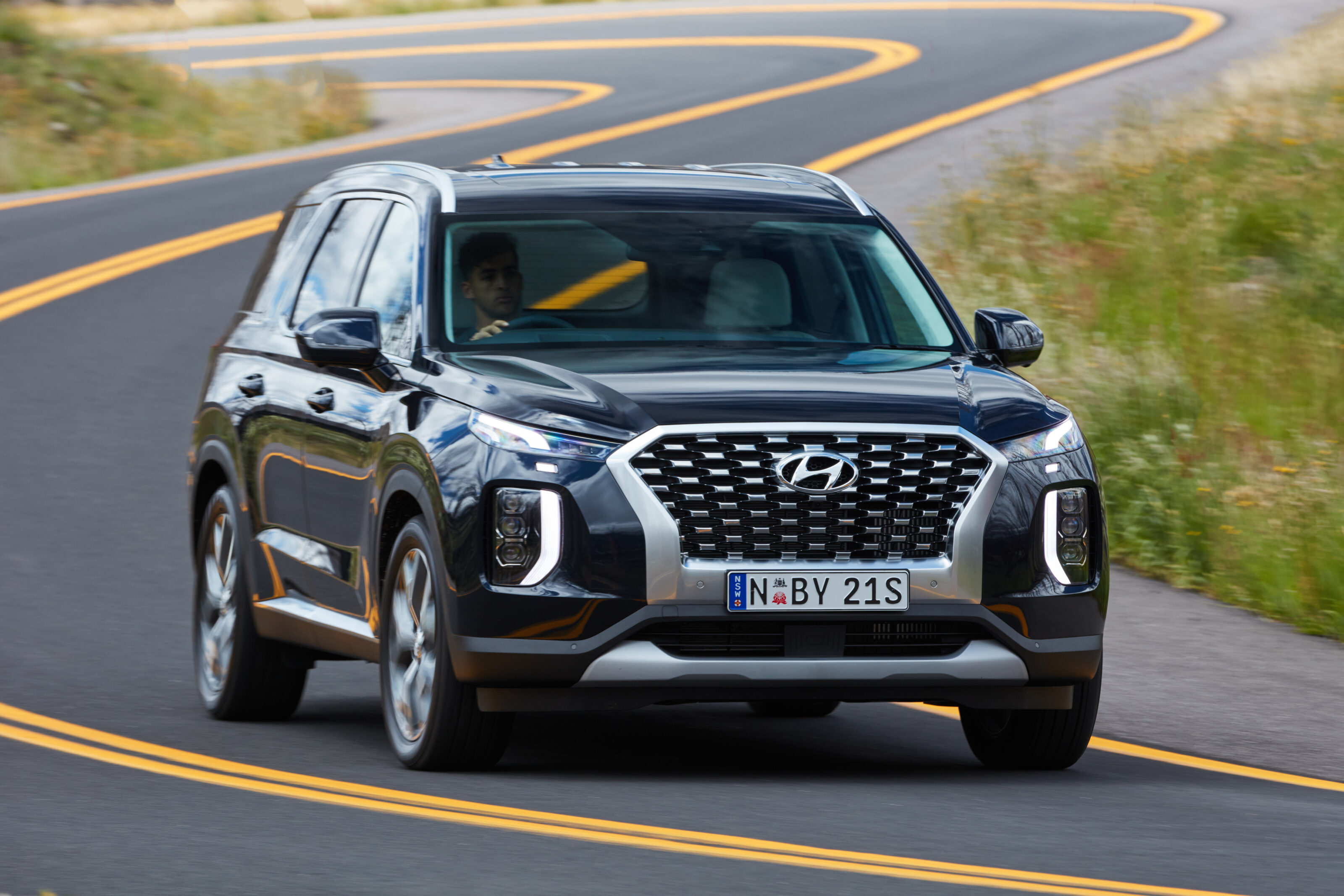
Buyers looking for an SUV this size often turn to ute-based models such as the Ford Everest, Mitsubishi Pajero Sport and Isuzu MU-X, which ride on ladder-frame chassis that make them feel rather agricultural compared to soft-roaders.
Which makes the Palisade rather unique in that it has all the space they offer and more, but with excellent road manners. This is a very comfortable SUV to drive and in which to be a passenger wherever you’re sitting, with multi-link rear suspension providing a firm and composed ride without being harsh, even on the Elite’s bigger 245/50 R20 tyres.
And while it lacks its 4X4 rivals’ genuine off-road capability, a handy 203mm of ground clearance and AWD traction allow the Palisade to tackle a range of unkempt roads, assisted by Snow, Mud and Sand driving modes that set the traction control and torque delivery to suit each surface accordingly.

Other drive modes, controlled on a dial next to the push-button gear selector, include Comfort, Sport and Eco, while Smart mode switches between the different modes based on driving style and conditions.
Handling wise, the Palisade feels quite nimble for an SUV that takes up about 10 square metres of real estate. The electric power steering feels light but direct and tightens up in Sport mode so there is less play at higher speeds. Selecting Comfort modes slackens it for slower speeds and parking.
At 1750mm high, you’d expect some body roll on sharper turns, but its huge footprint helps negate that so it always feels well planted to the road.
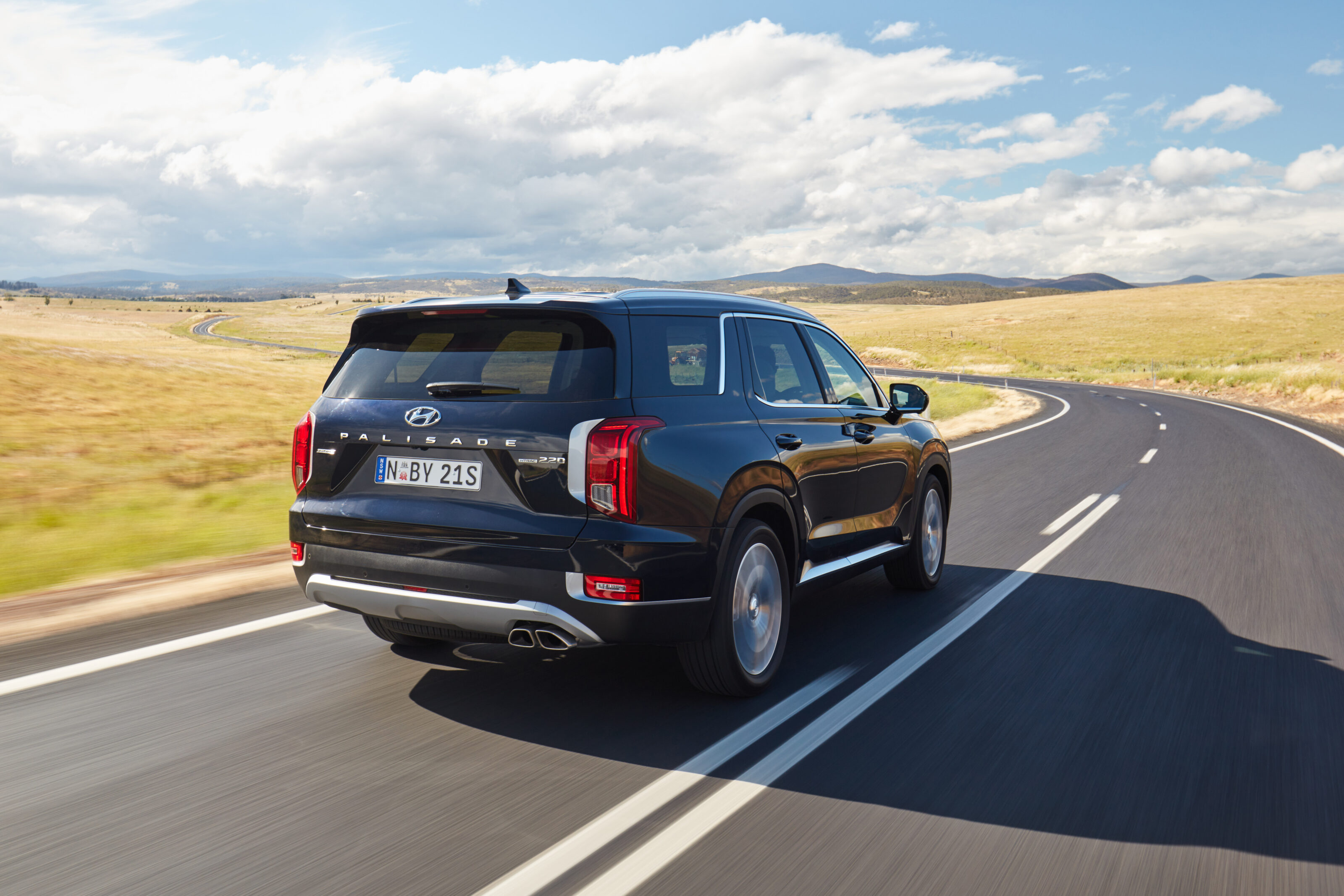
The Palisade’s refined ride is backed up by a notably hushed cabin even at highway speeds. You’d be forgiven for thinking you’re driving a petrol vehicle such is the lack of rattle from the 147kW/440Nm 2.2-litre four-cylinder turbo-diesel engine.
Coupled with an eight-speed automatic transmission, it feels lively from the get-go, with peak torque coming in at just 1750 rpm. Unlike the FWD V6 petrol, the diesel Palisade doesn’t suffer from a lack of traction at the front end, which can result in wheel chirping when you set off from the traffic lights without even trying.
This is a very comfortable SUV to drive and in which to be a passenger, with multi-link rear suspension providing a firm and composed ride without being harsh
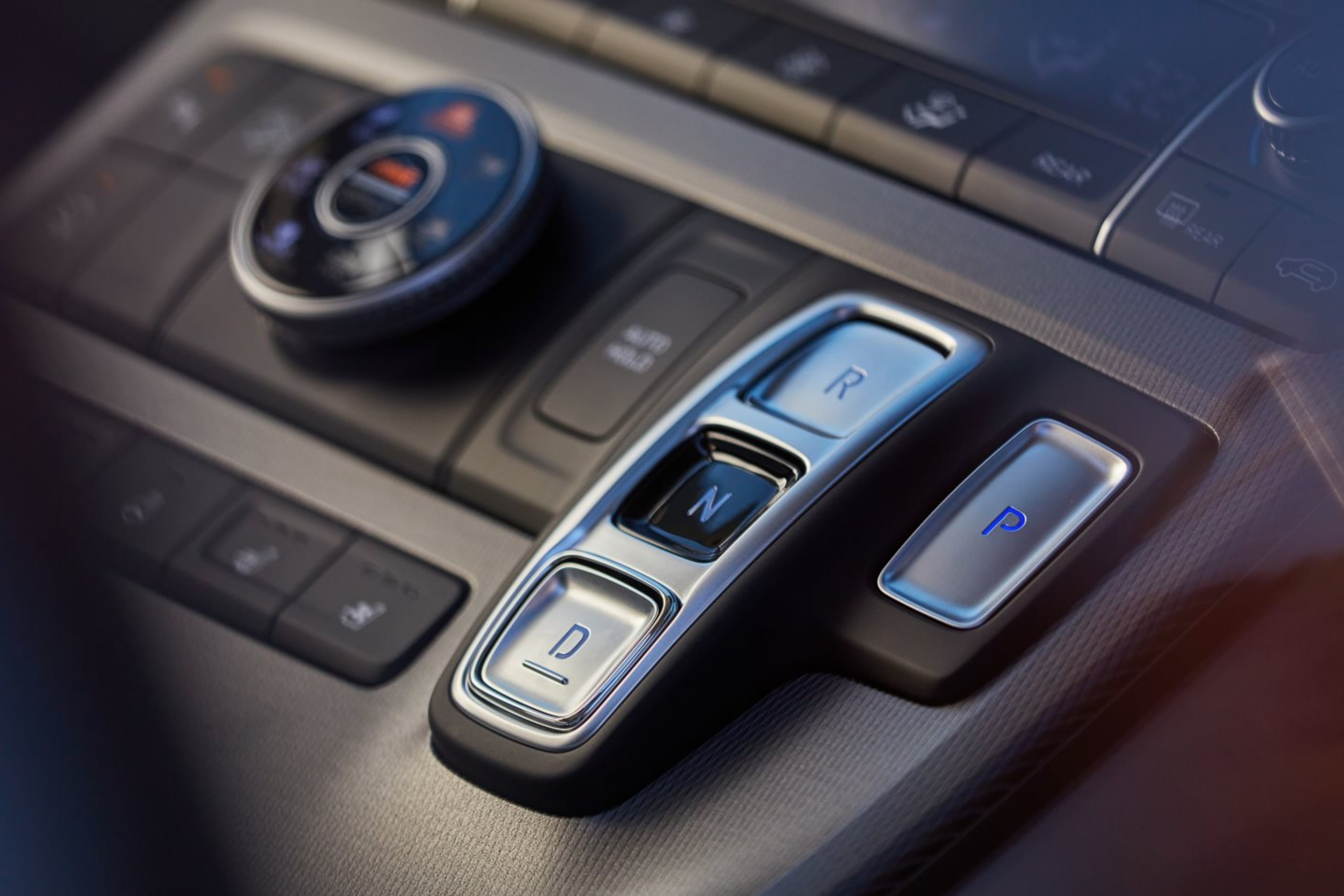
The eight-speed auto usually has no trouble finding the right gear when responding to pedal inputs, but there were occasions when using the active cruise control where it took time to settle whenever a speed change was required.
Otherwise, there isn’t much to complain about, though I can’t say I’m a fan of the push-button gear shifter, which is a little fiddly when parking.
In short, the Palisade offers a good mix of ride comfort and driver enjoyment with the diesel’s AWD traction, fuel economy and extra torque making it the superior of the two powertrains.
Safety
The Palisade is equipped with Hyundai’s SmartSense advanced driver assistance system that includes autonomous emergency braking with cyclist and pedestrian detection and will even brake if it detects another vehicle approaching from the side while you’re reversing.
It also has blind-spot monitoring, driver attention alert, lane following assist and lane departure warning, high-beam assist, rear occupant alert, and smart adaptive cruise control.
Rain-sensing windscreen wipers, which are more a convenience than a safety feature, are a notable omission for a vehicle at this price point.
Parking this five-metre behemoth is made easier with front and rear parking sensors with audio and radar-like visual display, and a reversing camera with guidelines and front and side view monitors.
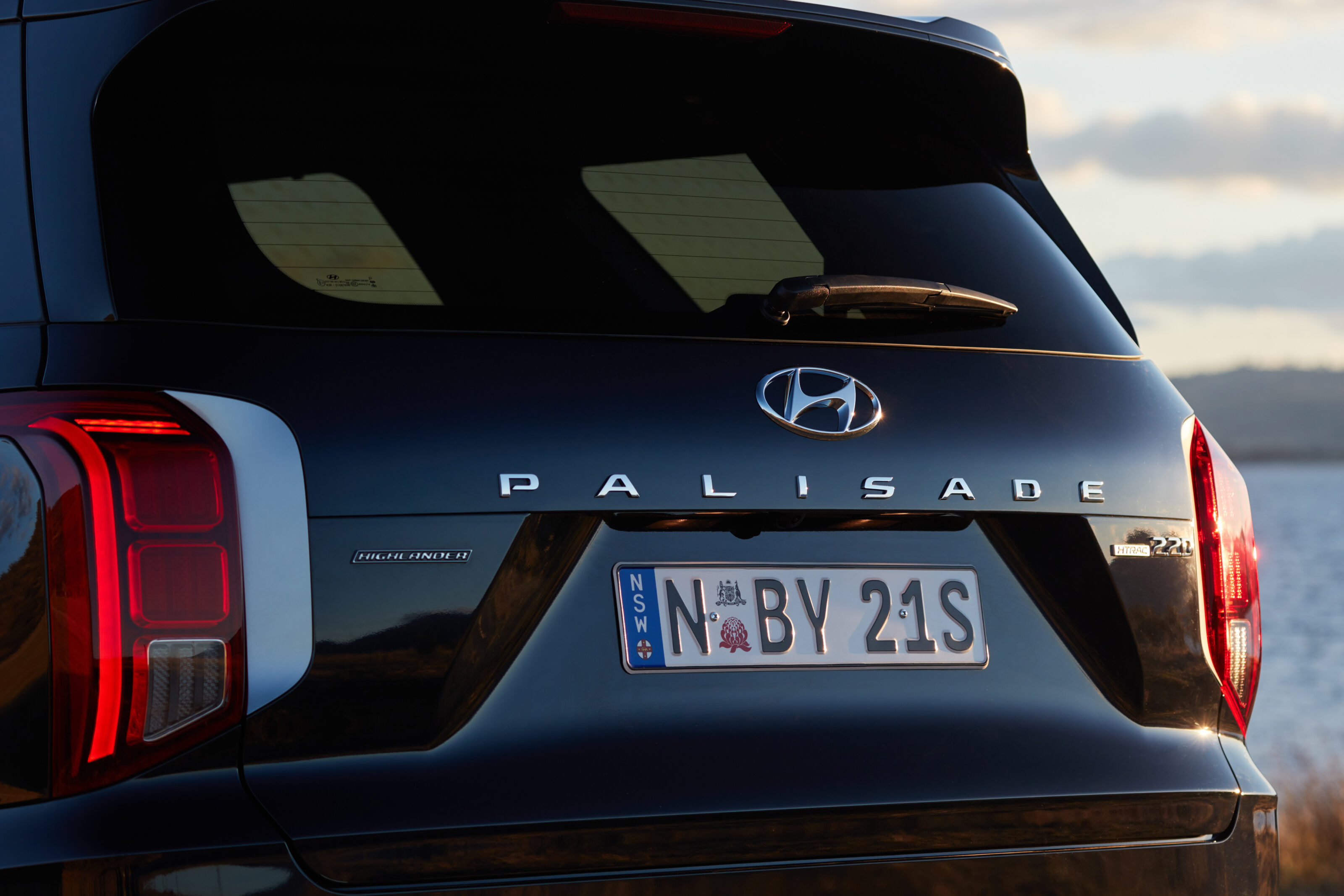
The Palisade has six airbags; driver and front passenger front and side; and curtain bags across all three rows.
There are also three sets of ISOFIX child seat anchor points (two in the second row and one in the third), three second-row top tethers, two third-row top tethers, child-proof rear door locks and a door-open warning.
At the time of writing, the Hyundai Palisade had yet to receive an ANCAP safety rating but it did receive a five-star crash test rating by the National Highway Traffic and Safety Administration (NHTSA), which is the US government’s version of the New Car Assessment Program (NCAP).
VERDICT
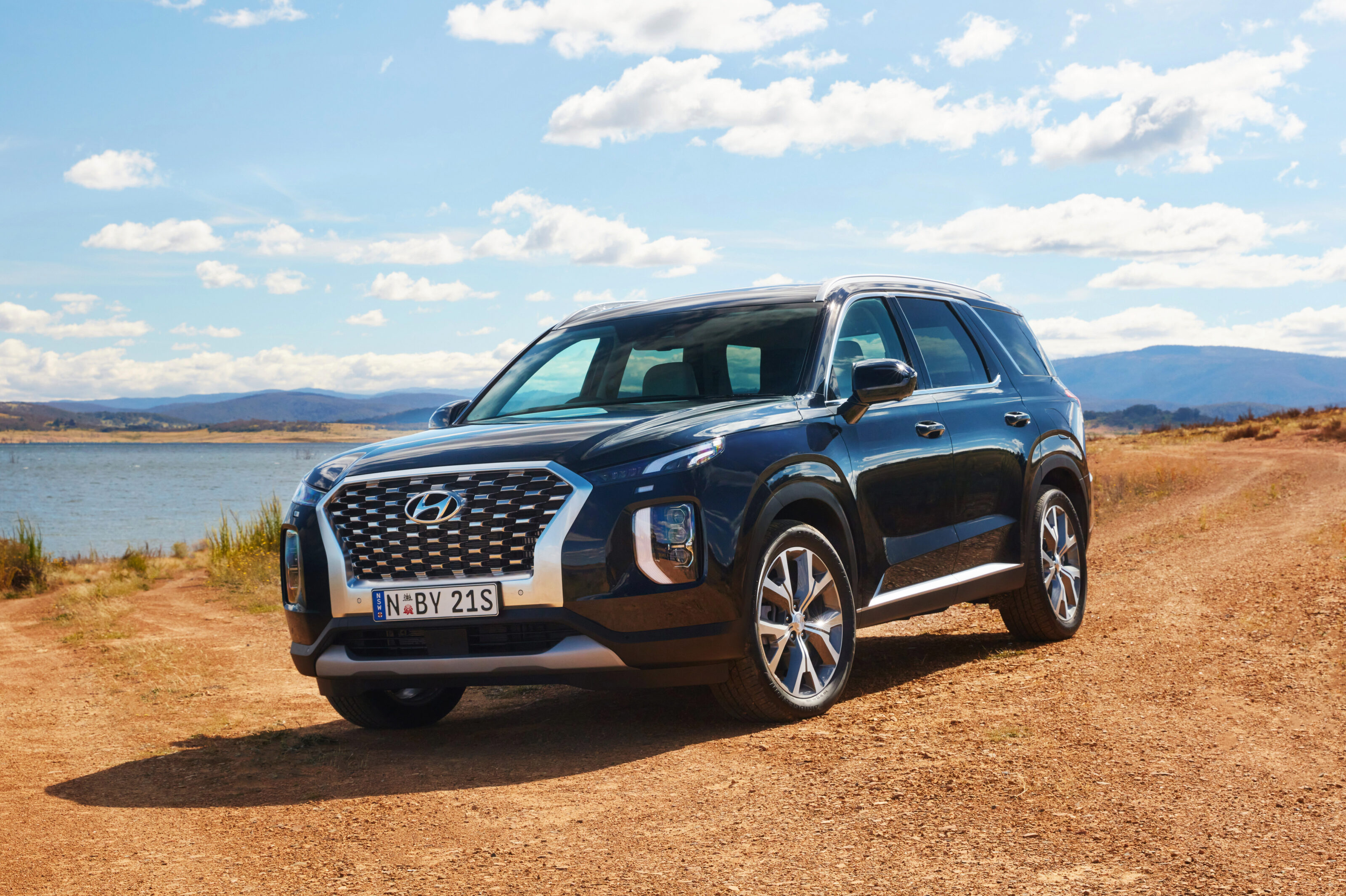
I remember driving the Kia Carnival and thinking it would be a great vehicle to own if I had a big family or needed something to regularly haul a few bodies around. But, while the Palisade is about the same size, it wouldn’t take such a caveat for me to purchase one.
Fact is, I like big SUVs and I cannot lie. Their huge footprint makes gives them wagon-like proportions and a stately feel and presence on the road. The Palisade is no different.
I’d happily have one as a two-row SUV with a big 704-litre boot space and spacious pop-up third row when needed.
And, while I like the captain’s chairs in the seven-seater, I reckon I’d choose the eight-seater just in case…
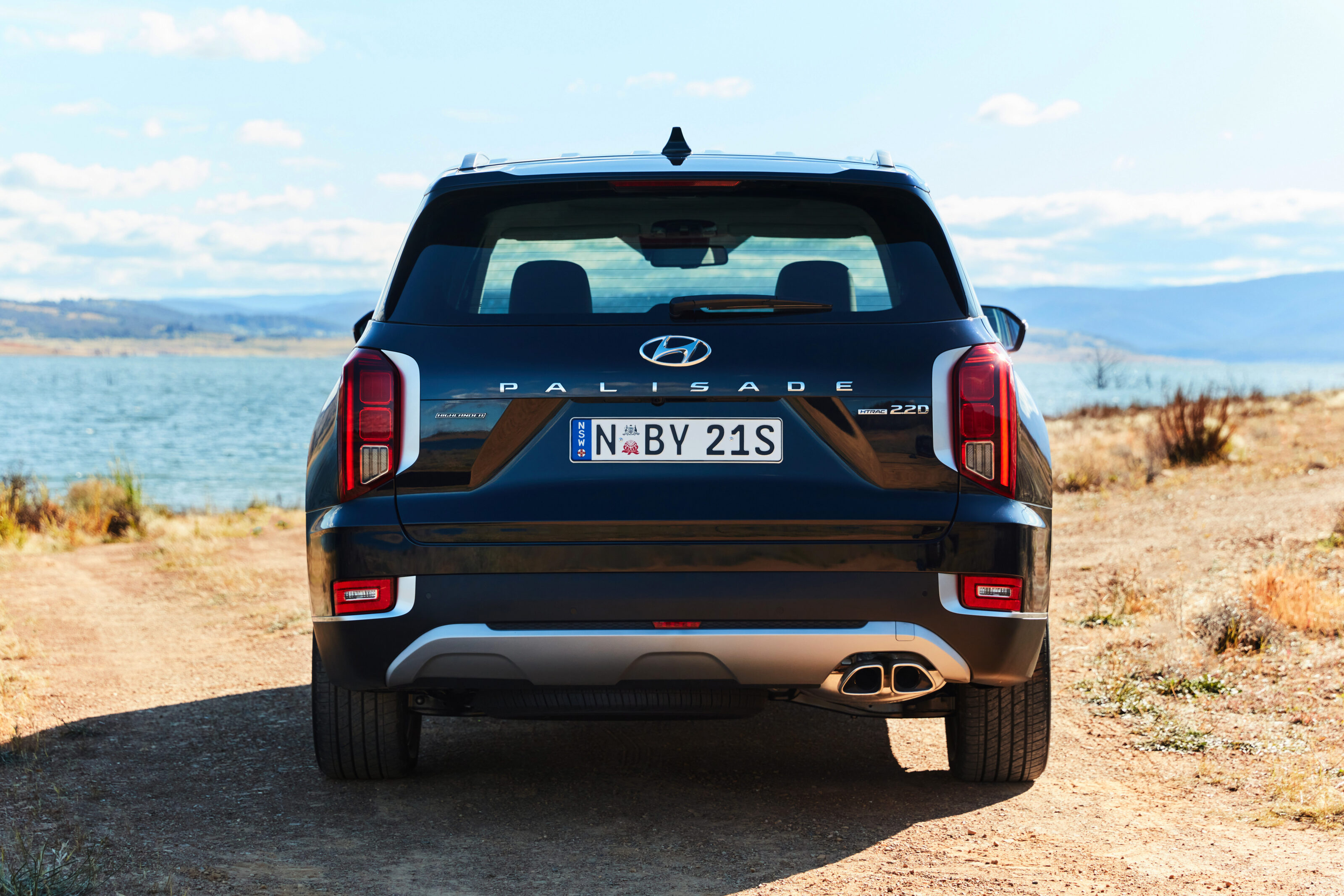
In what is a recurring theme whenever we review the bigger Hyundai and Kia SUVs, the diesel AWD is the pick of the Palisade powertrains and worth the additional $4000 due to its superior economy and refinement over the V6 petrol.
Spec wise, each variant represents good value when it comes to equipment levels, which makes it easy to declare this mid-spec Palisade Elite Diesel AWD the sweet spot of the range.
2022 Hyundai Palisade Elite 2.2L AWD specifications
| Body | 5-door large SUV |
|---|---|
| Drive | all-wheel drive |
| Engine | 2.2-litre four-cylinder turbo-diesel |
| Transmission | 8-speed auto |
| Power | 147kW @ 3800rpm |
| Torque | 240Nm @ 1750-2750rpm |
| Bore x stroke | 85.4mm x 96.0mm |
| Compression ratio | 16:1 |
| 0-100km/h | N/A |
| Fuel consumption | 7.3L/100km |
| Weight (7 seats) | 1983kg (tare mass) |
| Suspension | MacPherson strut (front); multi-link (rear) |
| L/W/H | 4980/1975/1750mm |
| Wheelbase | 2900mm |
| Brakes | 340 x 30mm/314 x 18mm ventilated front/rear discs, |
| Tyres | 245/50 R20 Bridgestone Dueler H/P Sport |
| Wheels | 20 x 7.5J + 49.5 alloys |
| Price | $65,500 plus on-road costs |
If hype were a power source, the Hyundai IONIQ 5 and Kia EV6 would be fully charged before getting anywhere near a plug point.
While the Korean brands’ first electrified efforts – the (unrelated) IONIQ sedan and Niro SUV, respectively – flew somewhat under the radar, their first vehicles to sit on a dedicated EV platform are stylistically driven, head-turning blips that have stirred the internet.
The IONIQ 5 landed last year in a blaze of retro-futuristic glory and its limited allocation sold out within hours. It’s no easier to get your hands on Kia’s swoopier, curvier version, with Australia’s 2022 EV6 supply currently limited to 500 against a backdrop of consumer eagerness that saw expressions of interest thrash those of the company’s previous halo model, the Stinger sedan.

UPDATE, January 2023: Kia EV6 GT driven in Australia
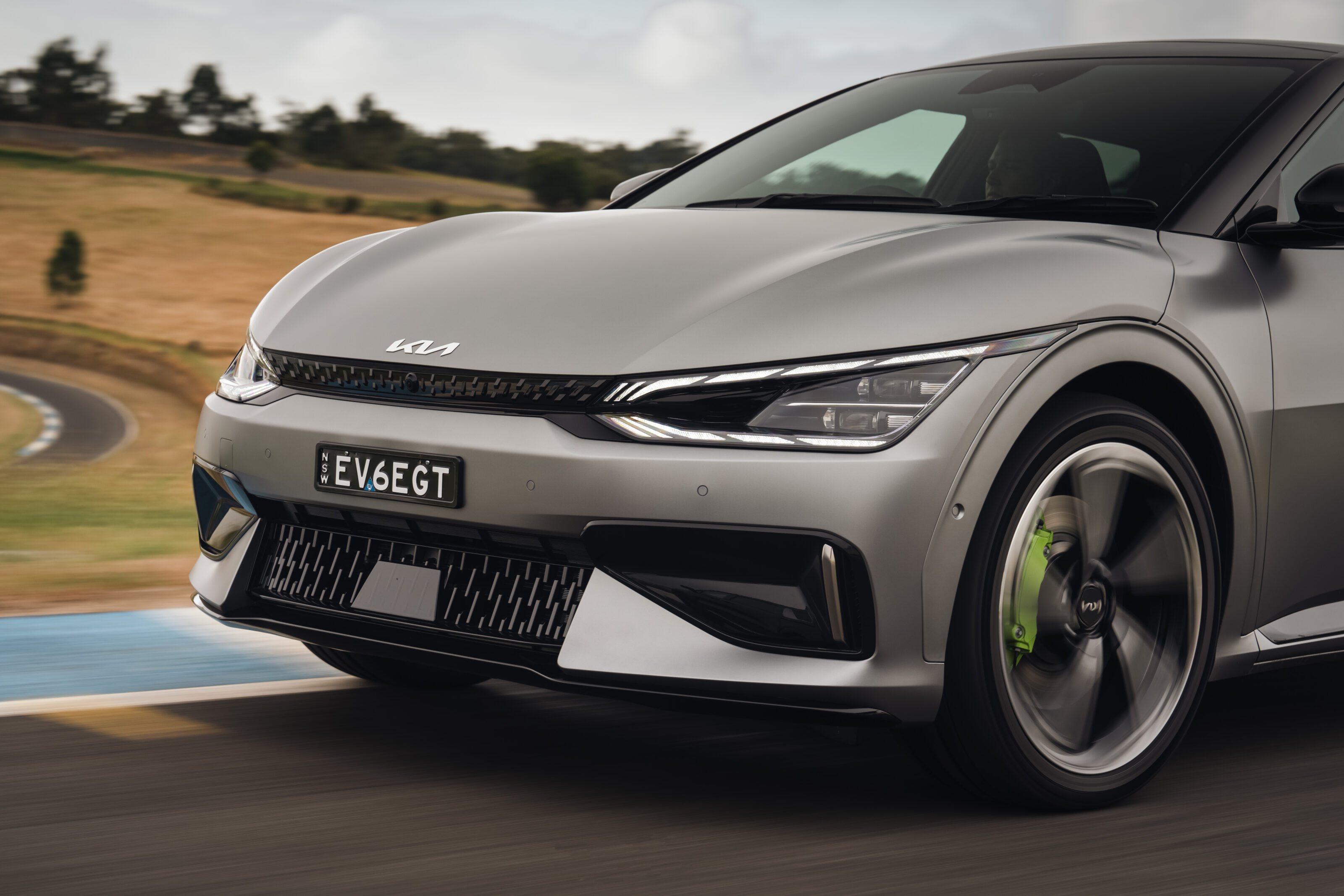
“This isn’t even my final form”, chuckled the 239kW & 605Nm EV6 GT-Line last year. Now we understand… see our first drive review of the flagship EV6 GT, including a track test, at the link below.
Story continues…
Pricing and Features
Context is also needed for pricing. Both EVs are much bigger than pictures suggest – closer to large than mid-sized – and, in the current industry climate, demonstrating technological credentials and achieving healthy margins is a greater focus for manufacturers than volume. So, if any hopes had been held out that the brand once renowned for budget-priced motoring might lead the way for affordable electric cars, the EV6 dashes those with a starting cost of $67,990 before on-road costs.
The base Air undercuts the $71,900 (before on-road costs) entry fee to the IONIQ 5, at least – crucially making it eligible for the generous $3000 rebates offered on top of stamp duty exemptions in New South Wales and Victoria.
Our variants here, though, are the EV6 GT-Line AWD and IONIQ 5 AWD that are holding fort as range flagships until the arrival of performance versions that will be respectively badged GT and N.

A straight fight between this desirable duo would have been fascinating alone, yet there’s another highly intriguing battery electric vehicle that has just arrived in Australia with similar ambitions to woo the tech crowd away from the industry’s Other Big T.
Not just a new car; a new brand. Polestar was originally a motorsport skunkworks outfit for Volvo and less than a decade ago was being developed as Volvo’s answer to BMW M and Mercedes-AMG, but it has since been upgraded to standalone-brand status.
Polestar was originally a motorsport skunkworks outfit for Volvo, but has since been upgraded to standalone-brand status

With Australia forced to skip the left-field, limited-volume and left-hand-drive Polestar 1 GT that will also forever be the odd model out as a hybrid vehicle, the Polestar 2 fastback arrives as the first proper global model for the company co-owned by Volvo and its own parent, China’s Geely.
Volvo’s sub-brand is pointing to expressive design, innovation and driving dynamics as key differentiators for its models. Contentiously, perhaps, Polestar is taking a different approach to safety.
To achieve price parity with the $59,900 Tesla Model 3 base model, the 2’s standard equipment misses driver-assistance systems standard on its more expensive technical twin, the XC40 Pure Electric.
In a global approach, Polestar instead groups assistance systems (including adaptive cruise control, blind-spot monitoring, cross-traffic alert and a surround-view camera) in a $3400 Pilot Lite Pack. Our $64,900 mid-grade Long Range Single Motor test vehicle included this pack along with a $6000 Plus Pack that adds a raft of luxury and convenience features. Again, all these prices exclude on-road costs.

Both packs are needed to get the Swedish EV up to equipment speed with its Korean rivals; for actual performance parity as well, buyers need a minimum of $69,900 plus on-road costs for the Dual Motor Long Range.
That gives the dual-motor IONIQ 5 a value head-start, with the $75,900 (before on-road costs) Hyundai bringing all-wheel drive for just $1600 more than our as-tested front-drive Polestar 2.
The Kia, perhaps surprisingly, also needs to make up ground because while the EV6 GT-Line AWD is (almost) technically identical to the Hyundai, it’s priced at $82,990 before on-road costs.

The important numbers
| Hyundai IONIQ 5 AWD | Kia EV6 GT-Line AWD | Polestar 2 Long Range Single Motor | |
|---|---|---|---|
| Price (before on-road costs) | $75,900 | $82,990 | $64,900 (+$6000 Optional Plus Pack) |
| Body | 5-door hatchback | 5-door hatchback | 5-door hatchback |
| Drive | all-wheel | all-wheel | front-wheel |
| Front motor output | 70kW/255Nm | 74kW/255Nm | 170kW/330Nm |
| Rear motor output | 155kW/350Nm | 165kW/350Nm | N/A |
| Combined power | 225kW | 239kW | 170kW |
| Combined torque | 605Nm | 605Nm | 330Nm |
| Transmission | single-speed reduction gear | single-speed reduction gear | single-speed reduction gear |
| Range | 430km (WLTP) | 484km | 510-542km (WLTP) |
| Battery capacity | 72.6kWh | 77.4kWh | 78kWh |
| Energy usage (WLTP) | 19kWh/100km (WLTP) | 18kWh/100km | 17.1kWh/100km (WLTP) |
| Charging capacity | 350kW @ 800V | 350kW @ 800V | 150kW @ 400V |
| 0-100km/h (tested) | 5.3sec | 5.1sec | 7.5sec |
| Top speed (claimed) | 185km/h | 188km/h | 160km/h |
The Polestar 2’s liftback-sedan body style is the obvious odd-one-out here. Exuding executive-style handsomeness, it’s the narrowest, lowest and shortest vehicle in our group. All three fall within a length spectrum spanning just 89mm, however, and the Polestar’s high-riding stance is influenced by the world’s obsession with SUVs as much as Korea’s elevated crossovers.
Also clear, when viewing the IONIQ 5 and EV6 side by side, is the freedom a skateboard battery architecture gives designers. They are twins under profoundly different skins.
The Hyundai sports taut angles, a steeply raked C-pillar, and pixelated light graphics that suggest the chief designer was suffering from a bout of Atari Pong nostalgia. The Kia opts for a sleek, dynamic aesthetic with sweeping curves, a gently declining roofline, and a ducktail-lidded rear that does a neat impersonation of an Aston Martin DBX. What they do share are relatively stubby bonnets (with clamshell lids) and short overhangs.

Comfort and Space
It’s lightness and darkness when comparing interiors, too – quite literally. Hyundai equips the IONIQ 5 with a panoramic sunroof, which, with the blinds parted, beams light into a cabin already brightened by an off-white trim complemented by varying shades of greys (with darker tones optional). Combined with the wide, spacious interior, it’s possibly as close as you can get to an alfresco experience in a fully enclosed car; you half expect someone to come and serve you a coffee.
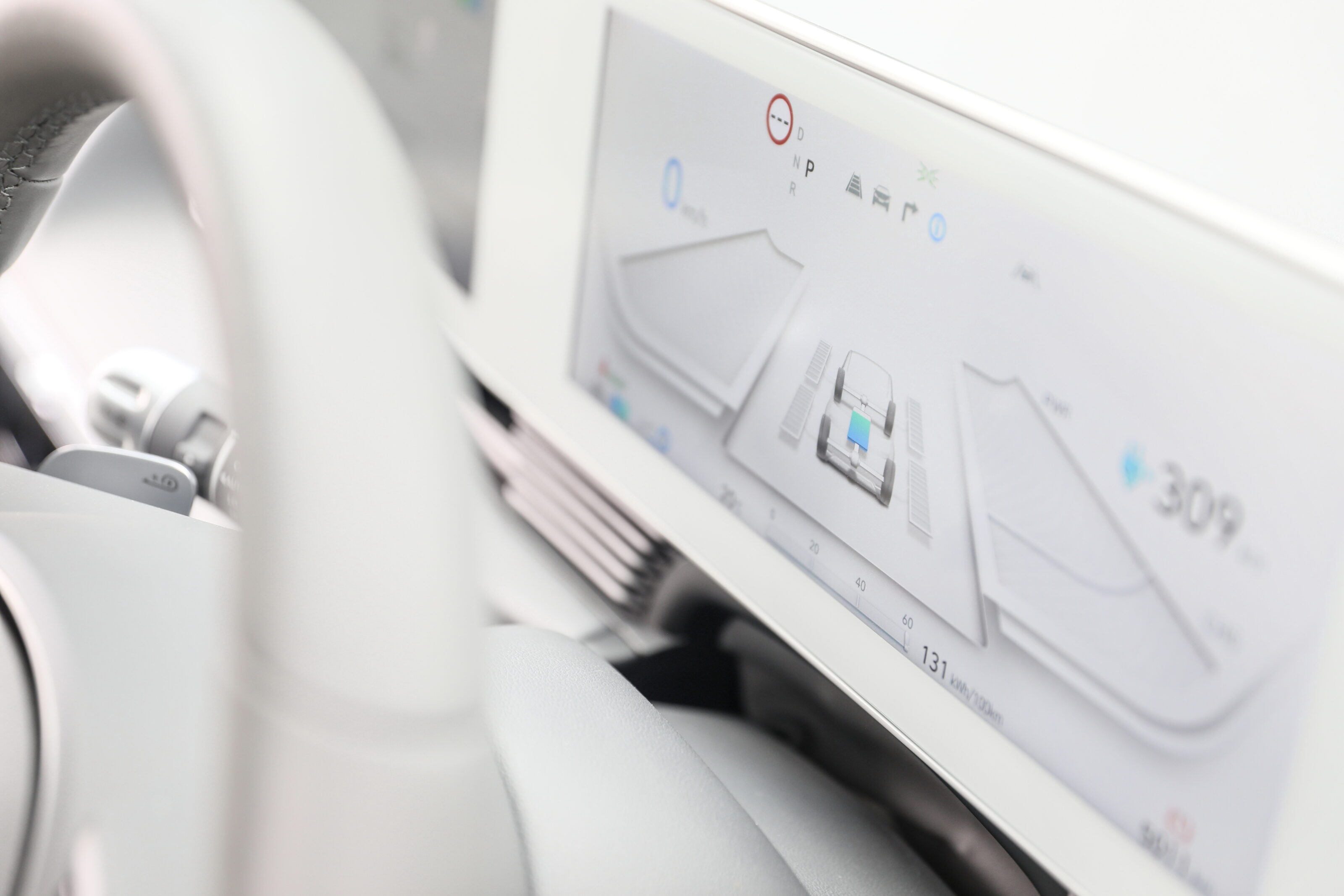
A low, horizontal dash architecture contributes to the sense of roominess – almost shelf-like in the way it seems to serve only to support the dual digital displays (and a conjoining pinboard). The walk-through front cabin is divided by a sliding centre console, which frees up more space between the front occupants if its upper armrest section is lifted upwards. This also allows easier access to the lower section that can hold small bags and incorporates a wireless phone charging tray. A 9.0-litre pull-out glovebox competes for the honour of standout storage feature.
The IONIQ 5’s panoramic sunroof beams light into a cabin already brightened by an off-white trim … it’s possibly as close as you can get to an alfresco experience in a fully enclosed car
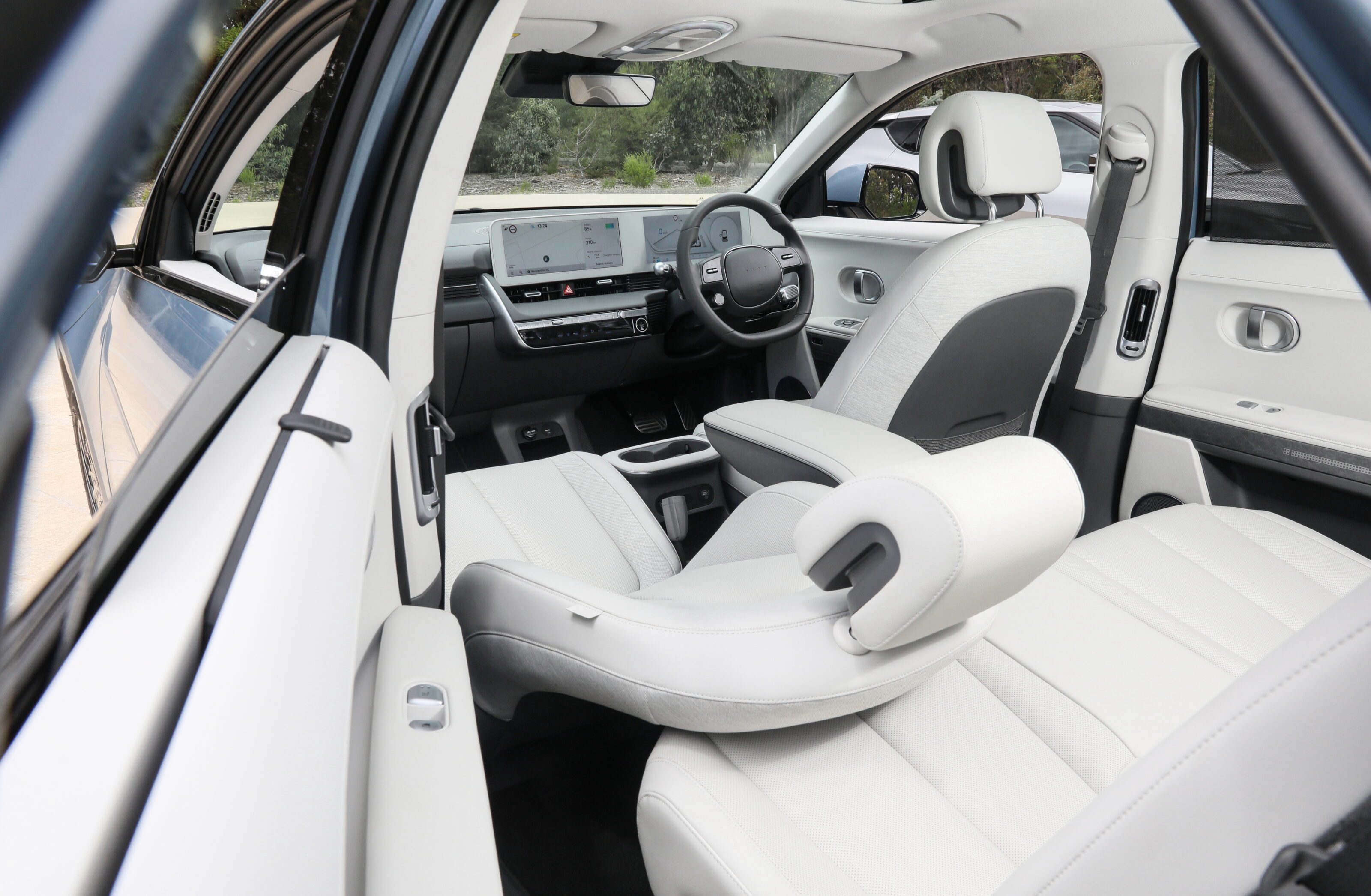
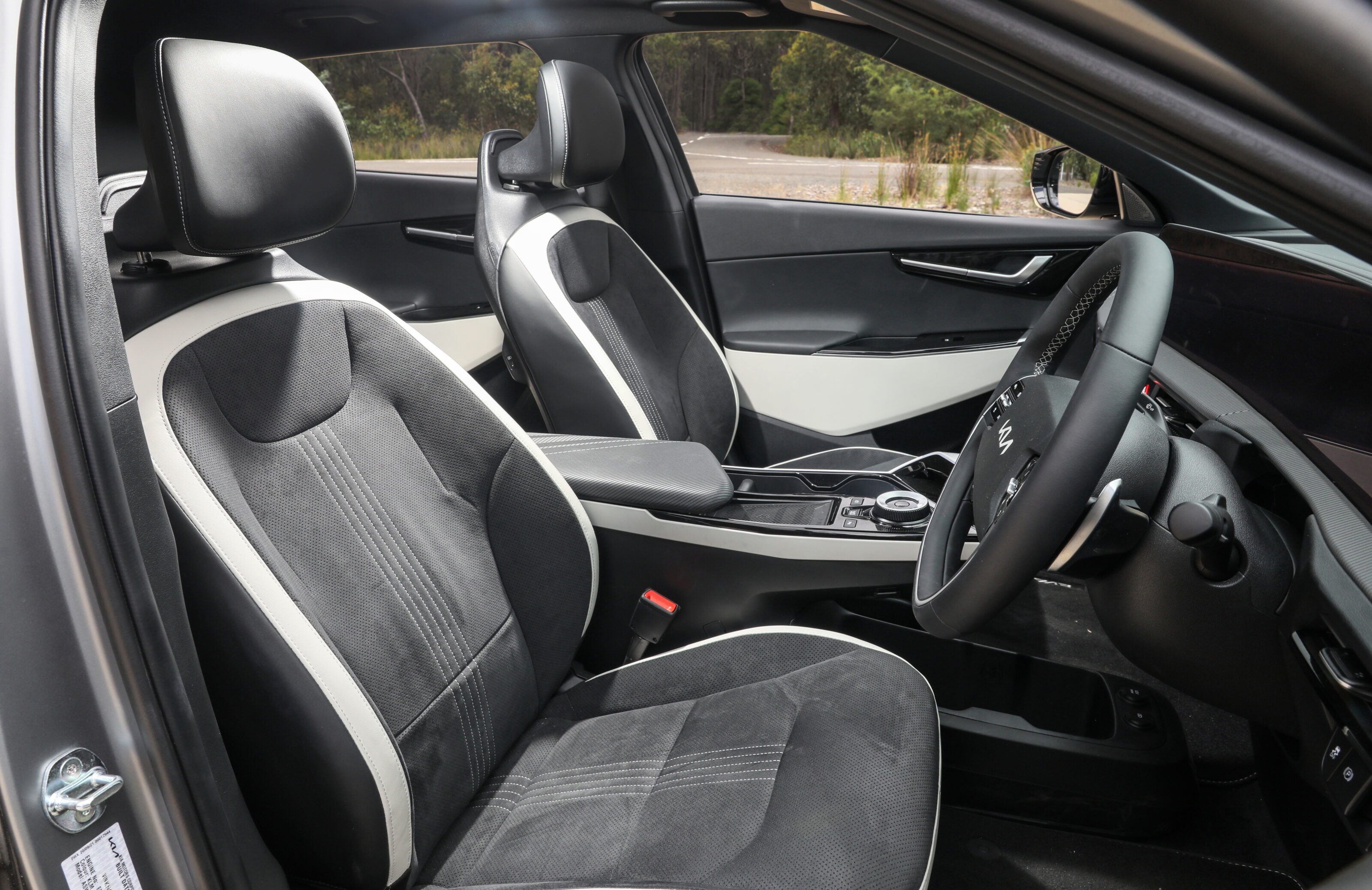
The no-alternative blackness of the EV6’s interior is particularly palpable after moving across from the Hyundai; it’s compounded by a regular-size sunroof that’s enforced by the sloping roof (but at least openable). Yet rather than depressing sombreness, a sporty vibe resonates throughout the cabin.
Kia’s interior designers have taken a notably more driver-oriented approach compared with their Hyundai counterparts, with the infotainment section of the curved dual display, digital climate/infotainment control panel, and even the starter button all angled towards the EV6’s hot seat. The distinctive, stapler-shaped centre console similarly doesn’t intersect with the dash but it’s immovable, creating a more traditional cockpit arrangement.
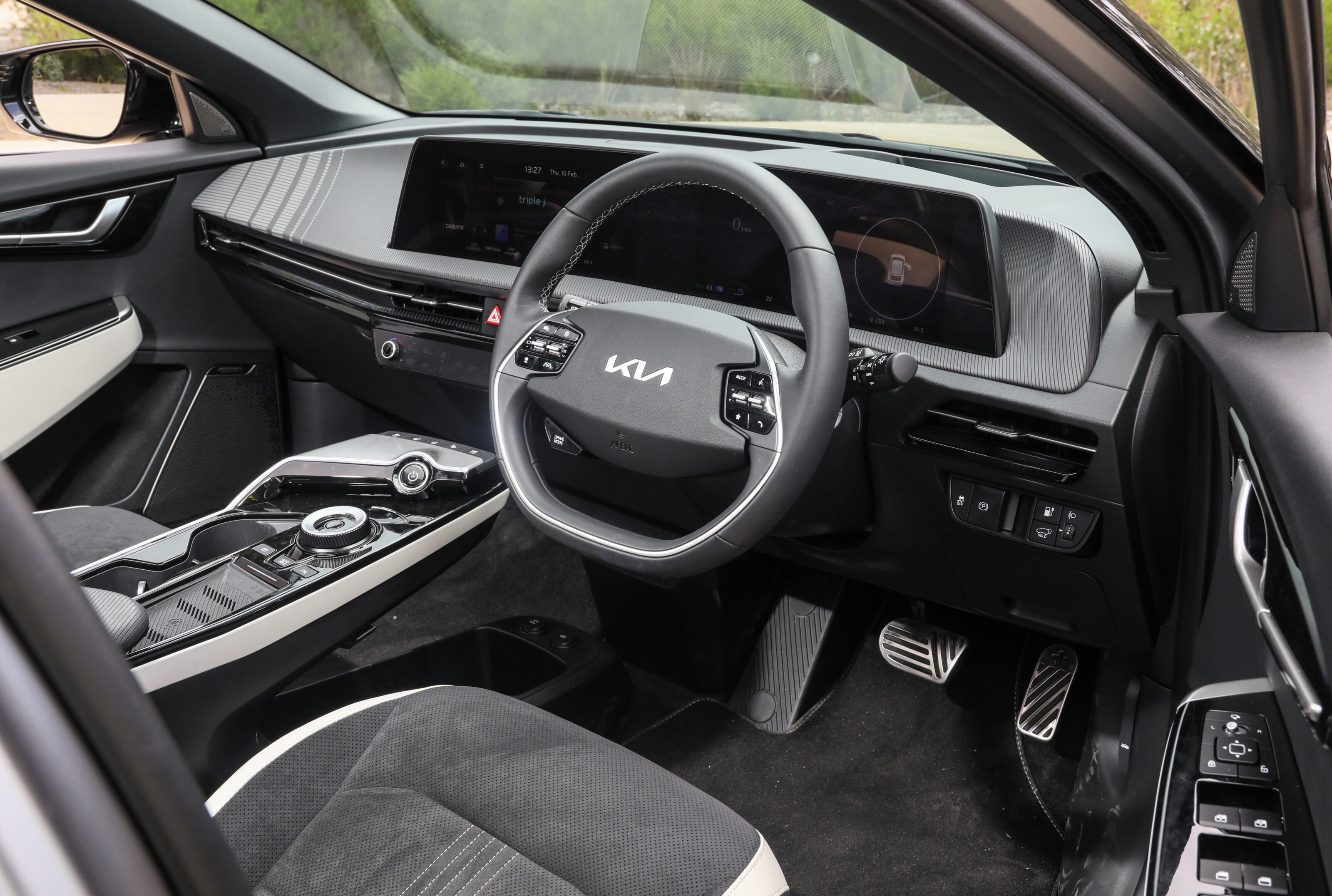
Storage is equally handy; just differently presented. Cup holders are integrated longitudinally into the centre console, for example, whereas the IONIQ 5 pairs them side by side in the front portion of the lower console. The EV6 has a more conventional glovebox hatch opening but there is still a large space inside.
Kia’s interior designers have taken a notably more driver-oriented approach compared with their Hyundai counterparts
There’s an understated classiness to the Polestar’s interior – typically Scandinavian in its uncomplicated yet stylish design, logical layout, and application of complementary, tactile materials. Impressive build quality gives the Polestar at least one key advantage over a Tesla Model 3.
The high and prominent centre console may shrink space psychologically in a cabin that is already physically narrowest here, but front occupants are hardly cramped and the Plus Pack’s vegan-friendly fabric seats tick off support and comfort. The pack also adds a full-length glass roof, though with no blind/shade option the cabin is permanently exposed – something for owners to consider on scorching days.

Polestar follows Volvo’s penchant for portrait touchscreens but presents a larger, 11.2-inch screen in a floating tablet design rather than the integrated 9.0-inch displays found in its parent brand’s models. It houses an Android operating system co-developed by Volvo Group and Google that, while having the potential to alienate Apple diehards, offers an interface with crisp graphics, a simple main menu split into quadrants and built-in Google services courtesy of an embedded sim. Those services are complimentary for the first three years of ownership before fees kick in.
The high centre console may shrink space psychologically in a cabin that is already physically narrowest here, but front occupants are hardly cramped

It’s a slightly more sophisticated presentation than the identical interfaces used by Hyundai and Kia, and intuitive (at least once it’s been discovered that the climate controls are accessed by swiping upwards).
Future Polestars will also utilise space-friendly battery floors; in the interim, the Polestar 2’s cabin can’t escape the compromises brought by the multi-drivetrain CMA platform shared with the Volvo XC40 compact SUV (and upcoming Volvo C40 Recharge).
A transmission tunnel, while not wasted as it packages part of the battery, realistically makes the Polestar a four-seater. The shortest wheelbase by some margin in this test predictably results in the least rear legroom of the group, if far from being a no-go zone for adults.
If the Polestar’s rear space is about on par for mid-sized vehicles, the back seats of the IONIQ 5 and EV6 are from a whole segment up in terms of roominess.

The Hyundai, with its limo-rivalling three-metre wheelbase, slightly leads the Kia on legroom. Both have fully flat floors and will fit three adults across, if necessary, while their rear seatbacks also feature recline adjust. The Hyundai’s rear bench adds an electric sliding function, though the Kia scores an arguably bigger convenience: an under-bench 240V socket that allows larger devices such as laptops to be charged on the move. It’s curiously missing from the Hyundai as it’s available on the IONIQ 5 in other markets.
Both Korean crossovers share exterior vehicle-to-load capability, whereby the charging port can double as a portable power source via an adaptor. Owners can set a limit on battery usage via the central touchscreen to ensure they’re not left stranded with insufficient range.
The Hyundai, with its limo-rivalling three-metre wheelbase, slightly leads the Kia on legroom

Vehicle dimensions and practicality
| Hyundai IONIQ 5 AWD | Kia EV6 GT-Line AWD | Polestar 2 Long Range Single Motor | |
|---|---|---|---|
| L/W/h | 4635/1890/1605mm | 4695/1890/1550mm | 4606/1985/1479mm |
| Wheelbase | 3000mm | 2900mm | 2735mm |
| Front trunk space | 24L | 20L | 35L |
| Boot space | 527L (min)/1587L (max) | 480L (min)/1260L (max) | 405L (min) |
| Weight | 2100kg | 2105kg | 1994kg |
| Braked towing capacity | 1600kg | 1600kg | 1500kg |
Theoretically, the Polestar 2 Long Range Single Motor – the most efficient of the line-up and owning the biggest battery here, just, at 78kWh – offers the most range to work with: up to 515km based on the same WLTP ‘High’ test cycle quoted by Hyundai and Kia.
Kia’s EV6 is next with a respectable figure of 484km, which – through its slightly larger, 77.4kWh battery – gives it a handy 54km advantage over its 72.4kWh twin.
Rear-drive versions of the Kia and Hyundai are rated with higher WLTP ranges: up to 528km for the base EV6, labelled Air, and up to 451km for the entry IONIQ 5.
The real-world rule of thumb is to treat EV WLTP figures with a pinch of salt, and for longer drives to carefully assess routes for the presence of charging stations.
Find a 350kW DC ultra-rapid charger, though, and the IONIQ 5 and EV6 battery packs can be replenished faster than any other EV currently available. That – in theory – includes the Porsche Taycan, the only other electric car in the world to front-up with high-voltage charging capability: 800V to the industry standard 400V.

AC charging specifications
| Hyundai IONIQ 5 AWD | Kia EV6 GT-Line AWD | Polestar 2 Long Range Single Motor | |
|---|---|---|---|
| AC charger port | Type 2 | Type 2 | Type 2 |
| AC charging capacity | 10.5kW | 10.5kW | 11kW |
| Charging time (11kW, up to 100%) | Approx 6hr 6min | Approx 7hr 20min | Approx 8hrs |
Halving recharging time as quick mathematics suggest, the Korean EVs can jump from 10 to 80 per cent battery state of charge in 18 minutes. Polestar quotes 35 minutes for the same increase. The catch is that while ultra-rapid chargers are starting to expand in Europe, they’re still thin on the ground in Australia.
The Kia and Hyundai share a great power-nap feature for passing recharging time, though: “relaxation” front seats that recline extensively like the airline industry’s 1990s precursors to fully flat business class beds.
DC charging specifications
| Hyundai IONIQ 5 AWD | Kia EV6 GT-Line AWD | Polestar 2 Long Range Single Motor | |
|---|---|---|---|
| DC fast charger port | CCS | CCS | CCS |
| DC fast charging capacity | 350kW | 350kW | 155kW |
| Charging time (50kW, up to 80%) | Approx 62min | Approx 73min | Approx 72min |
| Charging time (115kW, up to 80%) | Approx 29min | Approx 31min | Approx 35min |
| Charging time (350kW, up to 80%) | Approx 18min | Approx 18min | N/A |
On the Road
While EVs are predominantly charged at home, every model here is worth enjoying beyond city limits and daily commutes. Some elements of the IONIQ 5 and EV6 driving experiences are as chalk and limestone as might be anticipated with two platform pals.
The levels of regenerative braking are adjusted identically via paddles and both include a one-pedal-driving setting called i-Pedal.
Steering is identically geared at 2.7 turns lock to lock and the dual motors operate in the same manner – focusing on one electric motor in regular driving to maximise efficiency; combining both when extra traction is needed or demanded.
Both have Sport modes – selected by a convenient steering wheel button – that engage both motors for maximum, all-wheel-drive thrust.

But there are nuanced differences; all favouring the Kia. Aside from a local suspension tuning program that overcame COVID-19 complications more successfully than Hyundai Australia’s version, the EV6 is said to be the first vehicle from a mainstream maker to be fitted with sophisticated, variable-force dampers from ZF Sachs.
While the dampers bring a firmer low-speed ride than the IONIQ 5 (also shod with 20-inch wheels), the EV6’s suspension never becomes crashy and brings benefits at higher speeds – a generally more settled ride and slightly more disciplined body control all round.
The IONIQ 5 can exhibit vertical fidgetiness when trying to deal with bumpier country roads and is less successful at absorbing bigger hits than the Kia. The Hyundai carves through corners confidently with an abundance of grip and traction; the Kia matches that while bringing extra composure in fast directional changes and over mid-corner bumps.
The EV6 is said to be the first vehicle from a mainstream maker to be fitted with sophisticated, variable-force dampers from ZF Sachs

It also feels that bit more involving, a sense enhanced by the fact you sit in the EV6’s driver’s seat rather than on it, as is the case with its platform pal. The Kia is also the only EV here to provide a head-up display and it’s complemented by augmented-reality navigation featuring active directional chevrons.
Driver appeal is also found in the Polestar, where the engagement level succeeds in being higher than that of the XC40 electric SUV and on a par with the EV6.
The Swedish sedan’s steering is the most direct here, complementing the taut chassis set-up. Its weighting can be adjusted via the central touchscreen, though the default setting feels more linear than Light or Firm.
And in another departure from your regular Volvo, there’s an ESC Sport mode. Lift-off regen force can also be changed via the same driving modes menu, catering to varying preferences. We found the default setting best for one-pedal driving around town; Low is good for tourist roads, still making the brake pedal largely redundant; Off – essentially a coasting mode – is ideal for freeways.

If performance feels relatively slow after driving the Hyundai and Kia, the Polestar is enjoyably effortless in isolation, and opting for the faster Dual Motor model doesn’t force buyers outside the boundaries of this comparison’s price bracket even with key option packs included.
The Dual Motor’s claimed 4.7-second 0-100km/h time would make it the quickest car here, too, half a second clear of the IONIQ 5 and EV6 and well ahead of the Single Motor Polestar 2’s claimed 7.4 seconds.
Our performance testing revealed the Kia to be faster than its claim, however, achieving 5.1 seconds against 5.3sec for the Hyundai and 7.5sec for the Polestar.
Performance and handling specifications
| Hyundai IONIQ 5 AWD | Kia EV6 GT-Line AWD | Polestar 2 Long Range Single Motor | |
|---|---|---|---|
| 0-100km/h (claimed) | 5.2sec | 5.2sec | 7.4sec |
| 0-100km/h (tested) | 5.1sec | 5.3sec | 7.5sec |
| Top speed (claimed) | 185km/h | 188km/h | 160km/h |
| Suspension | MacPherson strut (f) / multi-link (r) | MacPherson strut (f) / multi-link (r) | MacPherson strut (f) / multi-link (r) |
| Front brakes | 345mm ventilated disc | 325mm ventilated disc | 345mm ventilated disc |
| Rear brakes | 345mm ventilated disc | 325mm solid disc | 320mm ventilated disc |
| Tyres | 255/45 R20 105W (f & r); Michelin Pilot Sport EV | 255/45 R20 105H (f & r); Continental Premium Contact | 245/45 R19 (f & r); Michelin Primacy 4 |
The Polestar’s ride joins the Kia in the firm-yet-comfortable camp, though road noise is quite excessive – certainly when compared with its quiet-natured rivals. There were no surprises when our decibel-meter registered 71.00dB versus 68.05dB and 67.25dB for the IONIQ 5 and EV6, respectively.
Let’s hope Hyundai and Kia find ways to increase supply, because the IONIQ 5 and EV6 are worthy of attention for more than head-turning design

The ownership numbers
| Hyundai IONIQ 5 AWD | Kia EV6 GT-Line AWD | Polestar 2 Long Range Single Motor | |
|---|---|---|---|
| Warranty | 5-year/unlimited km | 7-year/unlimited km | 5-year/unlimited km |
| Battery Warranty | 8-year/160,000km | 7-year | 8-year/160,000km |
| Servicing | $220-$804 per visit (every 12 months/15,000km) | $87-$343 per visit (every 12 months/15,000km) | Complimentary for 5 years/100,000km (every 24 months/30,000km) |
VERDICT
Showrooms are where Polestar needs to make the biggest noise, and the brand can’t be accused of lacking confidence with its first shot at the all-electric segment. It’s also a bold move to make certain driver aids optional when safety has been the parent company’s key pillar for more than 90 years. That helps deliver the most affordable EV in this group, however, and there are attractions beyond pricing – such as the Polestar 2’s elegantly designed interior, intuitive Android infotainment system, or its Tesla-matching app functionality and over-the-air update capability. It’s also the only choice of this trio if you want your new EV immediately, avoiding indefinite waiting lists.
Let’s hope Hyundai and Kia’s Australian arms can find ways to increase supply, because the IONIQ 5 and EV6 are worthy of attention for much more than head-turning exterior design. They bring industry-leading fast-charging capability as well as clever and genuinely useful bi-directional charging technology, while the scale and ambition of their cabins – within similar dimensions to the Polestar – showcase the clear advantages of a dedicated battery vehicle platform.

The EV6 GT-Line AWD’s premium over the equivalent IONIQ 5 is larger than may have been anticipated, though conversely, only the EV6 range offers a variant eligible for the country’s best electric vehicle incentives.
Stick to comparing the most expensive versions, however, and the Kia builds its case for victory. Edging the Hyundai with its additional tech, a bigger audio system, longer range, slightly quicker pace, a longer factory warranty and more sophisticated suspension, the EV6 also throws in the bonus of a more immersive driving experience.
Sometimes hype is justified.
SCORING
- Kia EV6 GT-Line AWD: 9/10
- Hyundai IONIQ 5 AWD: 8.5/10
- Polestar 2 Long Range Single Motor: 8.0/10
We buy high-performance cars for all sorts of reasons. If there’s only one space on the driveway, something like a Subaru WRX wagon might provide the perfect commuter machine for the week but a mountain-road muncher on the weekend. If you want to know what it’s like having your eardrums licked by angels then 10 cylinders will do the trick, and if you want to feel like a recently departed howitzer shell, something with a McLaren badge is key. But I recently drove the Hyundai i20 N and I now realise there’s another reason to yearn for a high-performance car.
Up front, the smallest member of Hyundai’s Namyang Proving Ground-inspired performance family has a 1.6-litre turbo four-cylinder that produces 150kW and it needs 6.7 seconds to get to 100km/h, so it’s not especially fast. Practical? It will accommodate five people if you insist but those people won’t like you when the journey is over and the 310-litre boot is not exactly cavernous.
Yet hit the go button in this little hatch and something unusually joyous happens. With a kerb weight less than 1200kg, a six-speed manual gearbox, proper mechanical LSD managing the front wheels and a little WRC blood the i20 N is a motoring masterpiece. There’s an immediate sense of confidence to chuck yourself at corners and, at the limit, instead of spitting you into a tree it’ll cock a rear wheel like it’s having an excitement pee.
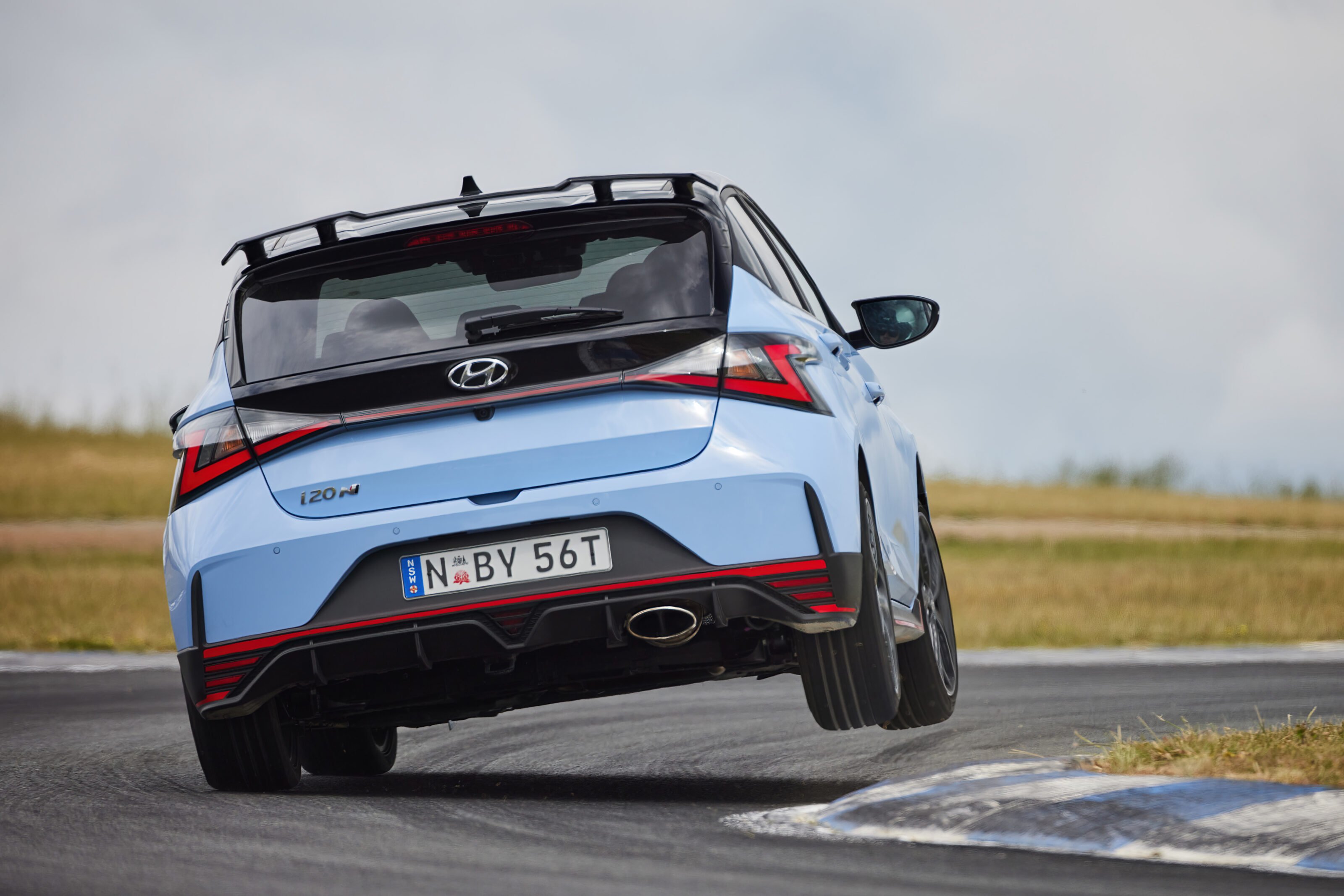
The steering is beautiful, the brakes are strong, its ride isn’t horrendous, the engine is vocal, it has a proper handbrake and a lovely chassis. I am in love with the i20 N. From the first steer of this car, there was a strange sense of familiarity. Something about its turbo power delivery, the jaunty upright driving position, its ability to make slow feel fast and its raw, slightly compromised, approach to speed. And then it clicked. The i20 N is the first car in years that reminds me of the mental turbo hatches I grew up with.
In the late 1980s, a glorious hot hatch era dawned when manufacturers realised tiny shopping carts could liberate performance gains with forced induction. We’re not talking extensively developed, homologated specials like the mid-engined Renault 5 Turbo but quick and nasty bolt-on performance that was often deeply flawed and hilariously entertaining.
The MG Metro Turbo had a 1.3-litre four-cylinder and 69kW but even that was too much for its almost unchanged transmission with so much torque-steer it felt like it had factory fitted bent steering arms. The MG purportedly rolled on a Lotus-tuned chassis, but let’s just say it was no Esprit. Renault’s 5 GT Turbo had a 1.4-litre 85kW engine but employed a cheap blow-through carburettor turbo system which had a tendency to condense fuel in the inlet manifold, lean-out under load and promptly self-destruct – if you could get it started at all.
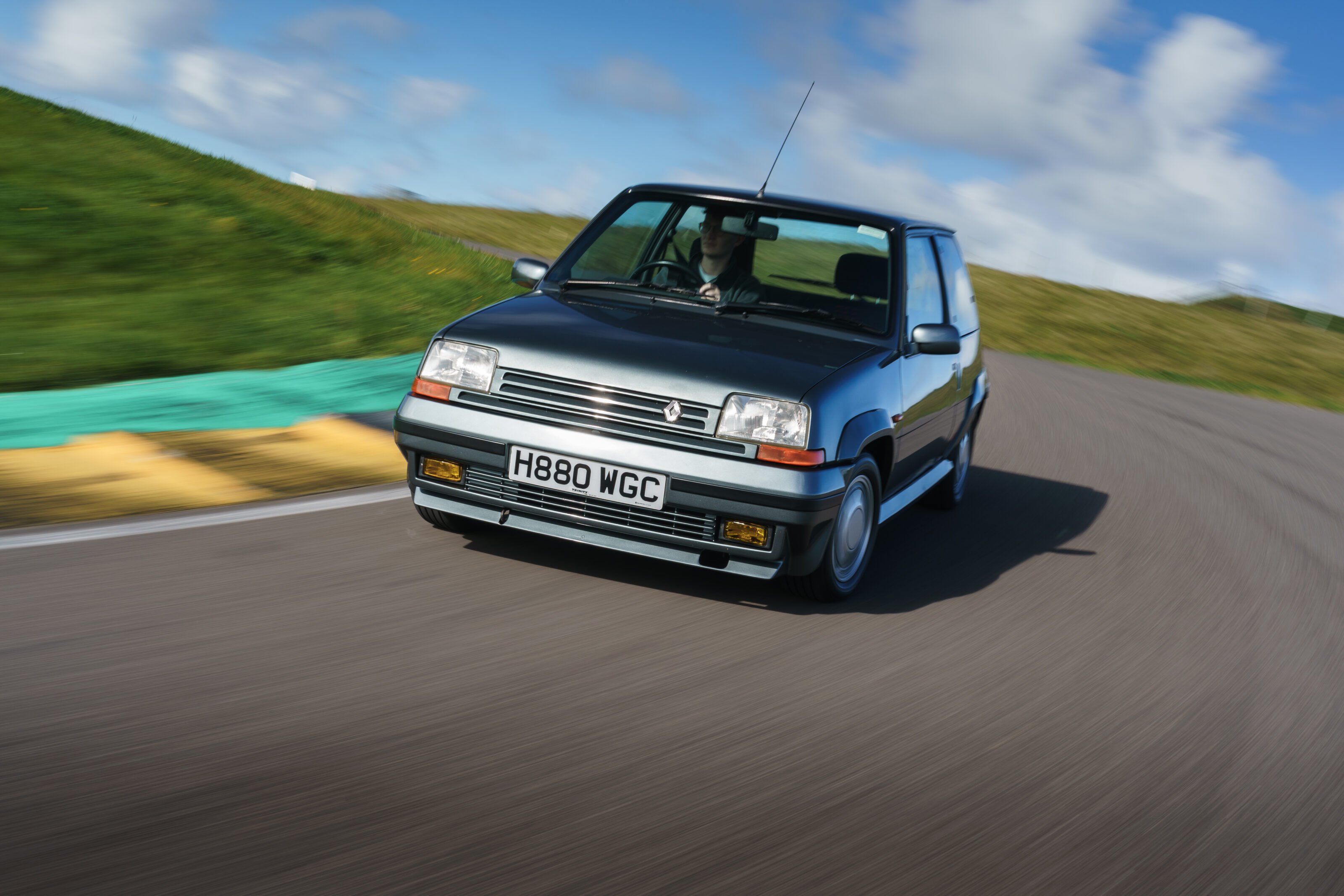
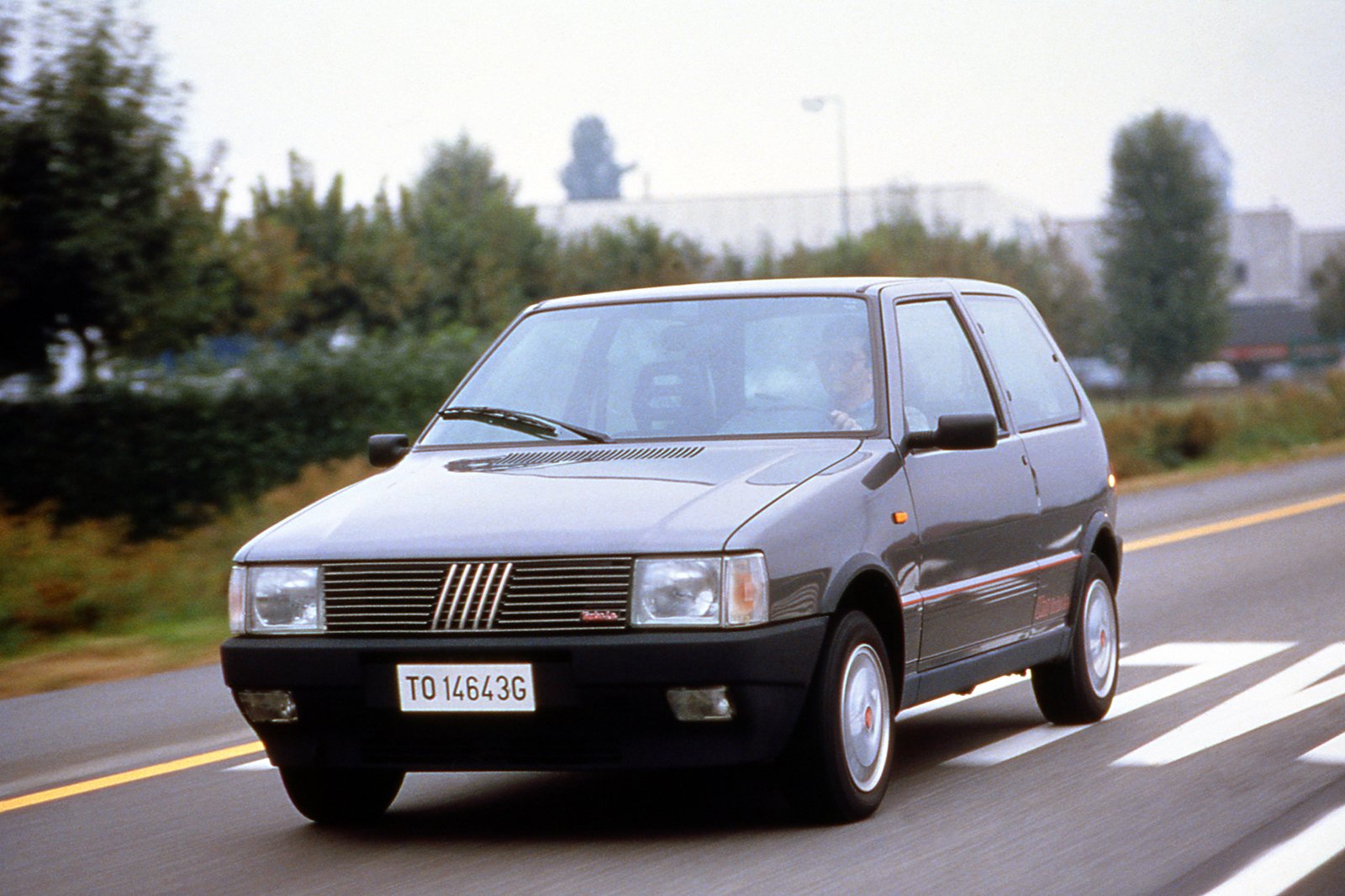
Then there was my own beloved Mk1 Fiat Uno Turbo ie. The Italian maker claimed Ferrari developed its 1.3-litre engine but in reality the prancing horse’s contribution was to suggest an oil jet under each piston. Nonetheless, its fuel-injected and intercooled four-pot produced 77kW and in a car that weighed just 845kg it was a sensation. Unlike its rivals, the Italian’s engine was a cracker. However, it wasn’t without flaw and its recycled bean-tin body would shed a red haze of oxidized metal every time full boost was applied. Its ABS could also only function once per drive and needed resetting by cycling the ignition.
None of this mattered and I can still recall the excitement of hopping into a car and seeing a boost gauge mounted in the middle of all the dials. I would give almost anything to have one more laggy, whistling full-noise blast in my Fiat. Turbo hatches in the late ’80s and ’90s were not fast, unreliable, inefficient and downright unsafe – so it’s about now Hyundai will be fashioning a voodoo doll of me for comparing its i20 N to some of history’s most shoddily built hot hatches.
What makes the Hyundai so special is that it captures the mechanical purity of early turbo hatches and packages it into something that’s essentially uncompromised. Of all the reasons I thought I might want to one day own a reasonably priced South Korean compact hatchback I never thought it would be the best motive of all – pure unadulterated nostalgia.
A replica 1992 Ferrari F92A Formula 1 car has been listed for auction after it was discovered in a barn in Italy last year.
The racer, which is being auctioned through Collecting Cars, was built by Italian enthusiast Gianni Pascal, who reportedly crafted it with the assistance of Ferrari engineers that worked on the real F29A.
Assembled in the small Italian village of Perosa Argentina, the development of the replica was assisted through the use of genuine spare parts – including the front and rear carbon fibre wings.
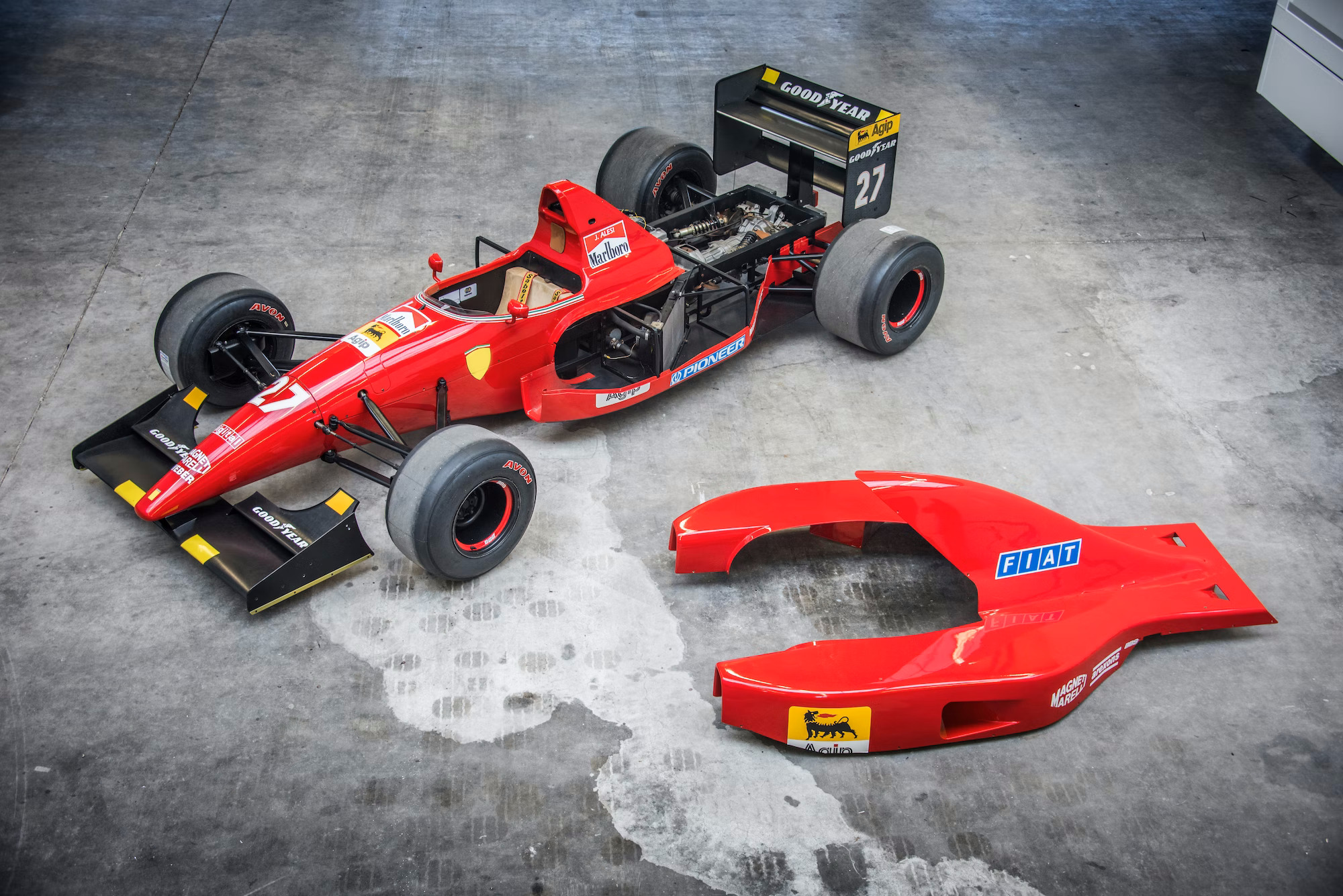
The car was completed in 1996, following four years of construction, but was quickly placed in long-term storage after Pascal fell ill. It was discovered in an Italian barn in 2021.
Powered by a 2.0-litre ‘Twin Cam’ engine sourced from Alfa Romeo, it is matched with a manual transmission. The vehicle also includes a replica dashboard, Momo steering wheel, suede-trimmed seats with a genuine Sabelt four-point harness, and Avon Historic F1 tyres.
To prepare the replica for sale, the drivetrain was recommissioned, and the body was cleaned and inspected to ensure it can start and run.
The original Rosso Corsa paintwork has remained in place with minor damage, while the listing claims the engine is running and the clutch not working.
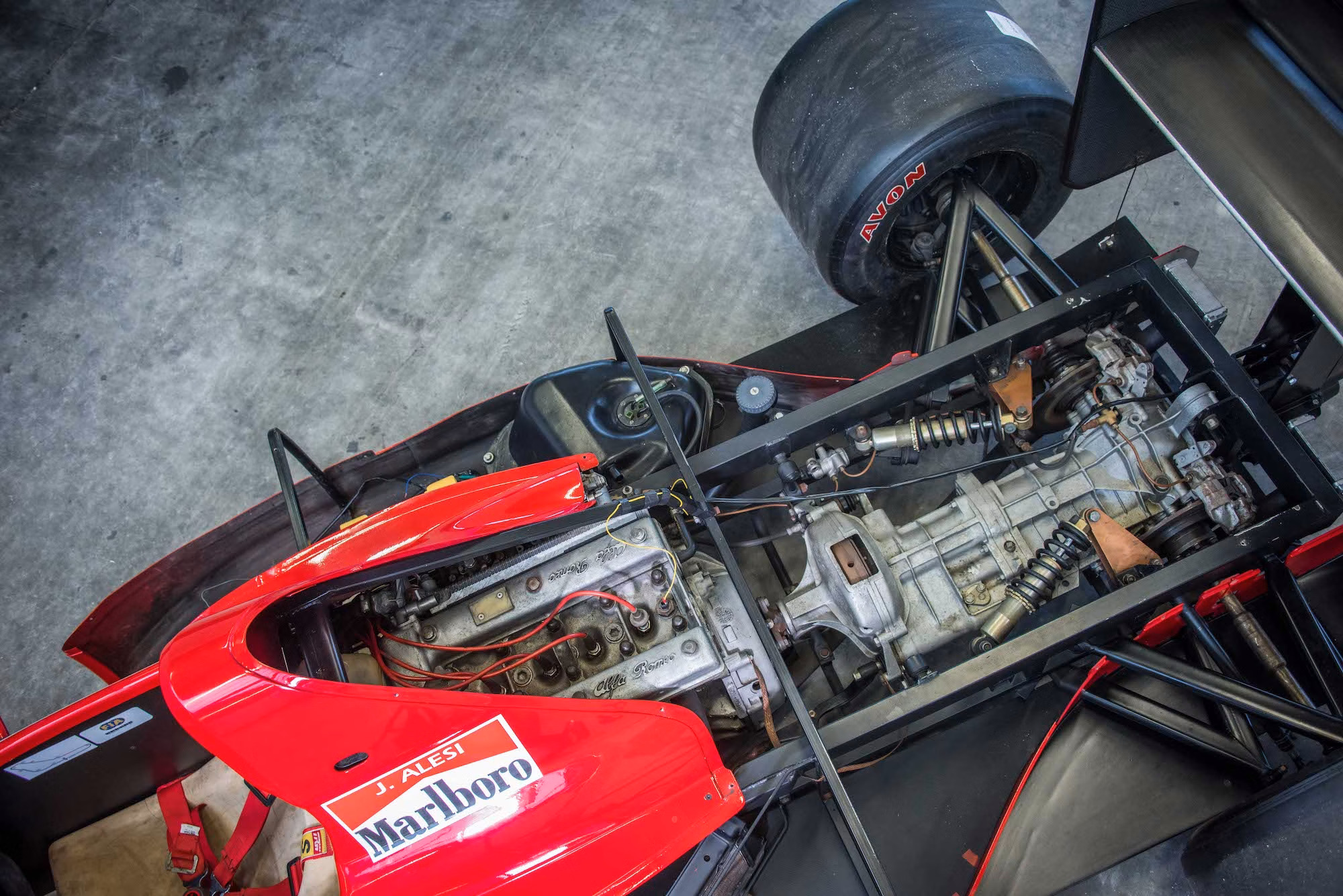
Developed for use in the 1992 Formula 1 season, the Ferrari F92A was designed by Jean-Claude Migeot, a French aerodynamicist and aeronautical engineer. It featured a unique double-floored design, which enabled it to produce a competitive level of downforce.
However, this advantage was compounded by the Ferrari V12 engine that suffered from excessive blow-by.
The Ferrari F92A was replaced by the F93A for the 1993 Formula 1 season.
In an era when carmakers discontinue sedans in favour of cutesy crossovers, it’s refreshing when one introduces a four-door that has the punch of a moon rocket and the looks of a crisply tailored suit. The Cadillac CT4-V Blackwing builds on the marque’s entry-level sedan and adds every trick in the GM Performance handbook.
Motivating this Caddy is a development of the all-aluminium, 3.6-litre, twin-turbocharged, 24-valve V6 that we experienced in the previous ATS-V. It’s been refined for 2022 and now makes a formidable 352kW at 5750rpm and 603Nm from 3500 to 5000rpm. Engines paired with the manual gearbox are fitted with titanium connecting rods.
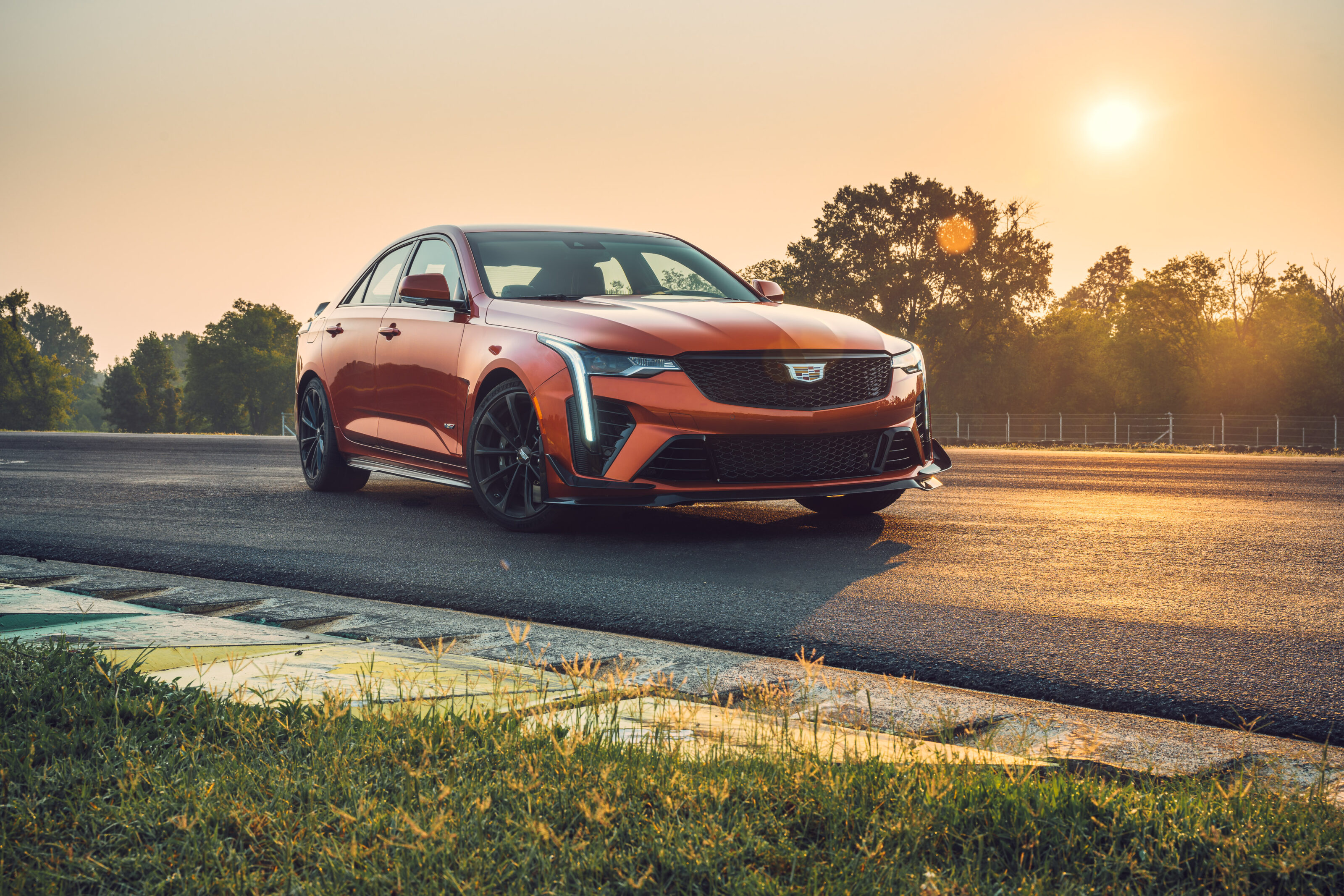
Gearbox choices are either a quick-shifting ten-speed automatic or a Tremec-supplied six-speed manual with no-lift shifting and rev-matching. Rear-drive only, the Blackwing puts power to the ground through an electronically-controlled limited-slip differential.
The front suspension uses MacPherson struts and the rear has a five-link setup. Key to its suspension performance are the latest-generation magnetic ride dampers, enhanced by accelerometers at each wheel, new damper fluid and updated software.
These cutting-edge dampers now include transient roll control, as well as active dive and pitch control, and are integrated with the Blackwing’s drive mode, traction management, and limited-slip differential systems. They’ve minimised one of the key challenges with magnetorheological dampers, which tend to run hotter than the conventional kind, by programmed alternative mapping for those higher operating temperatures.
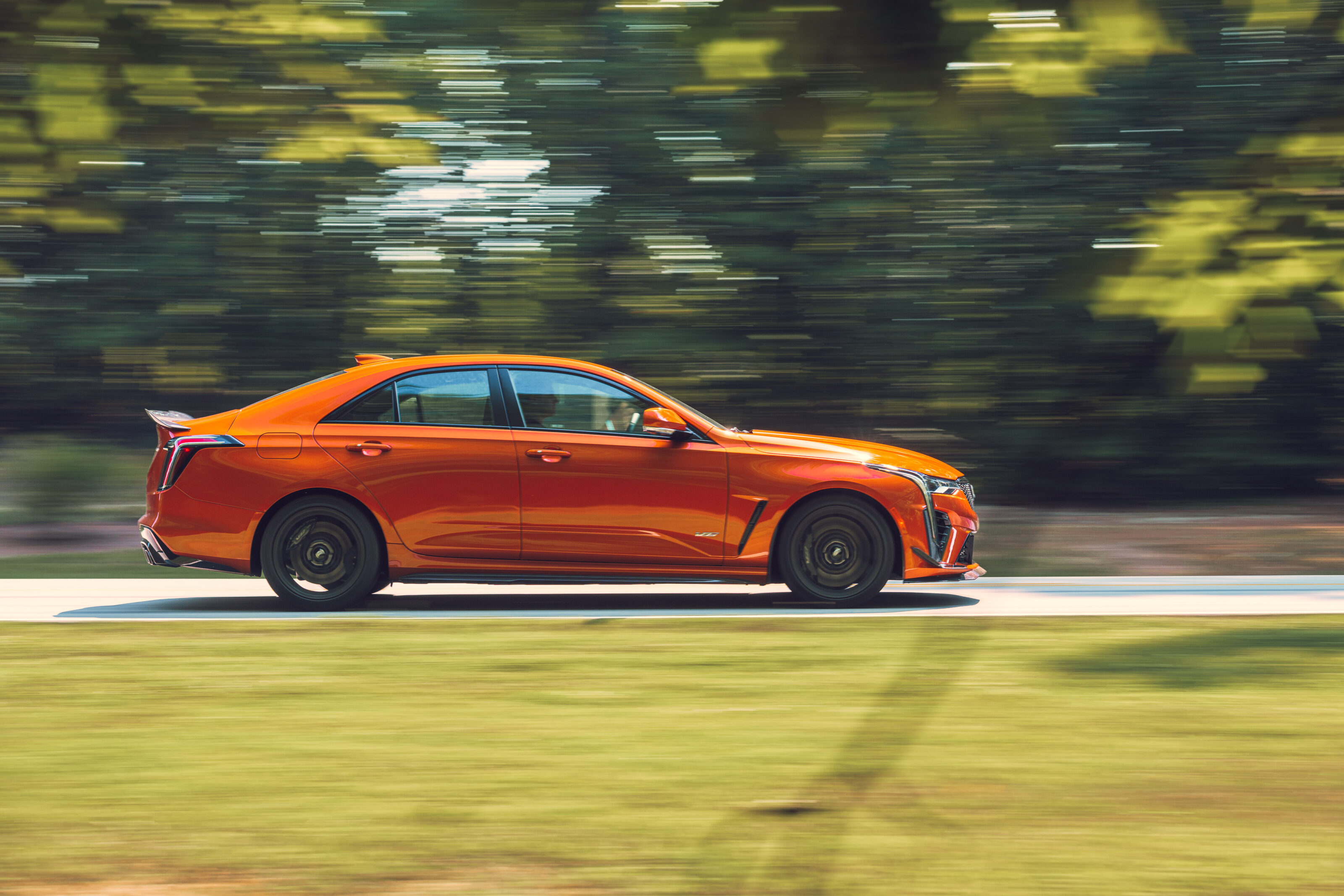
Brakes are a serious affair with 380mm cast iron rotors up front clamped by six-piston Brembo calipers, along with four-piston Brembos and 340.5mm rotors at the back, and even the pads are bespoke for the Blackwing. Unlike its CT5-V bigger brother, carbon-ceramics aren’t available. Power steering is electric with a rack-mounted assist unit, and like most electric systems, features variable levels of assist.
Standard wheels are 18-inch diameter forged aluminium pieces, measuring nine inches wide at the front and nine-and-a-half at the rear. Cadillac did announce the option of a magnesium wheel, but they remain unavailable, even several months following the Blackwing’s launch. Tyres are bespoke Michelin Pilot Sport 4S measuring 255/35 front and 275/35 rear.
Key to its suspension performance are the latest-generation magnetic ride dampers, enhanced by accelerometers at each wheel, new damper fluid and updated software
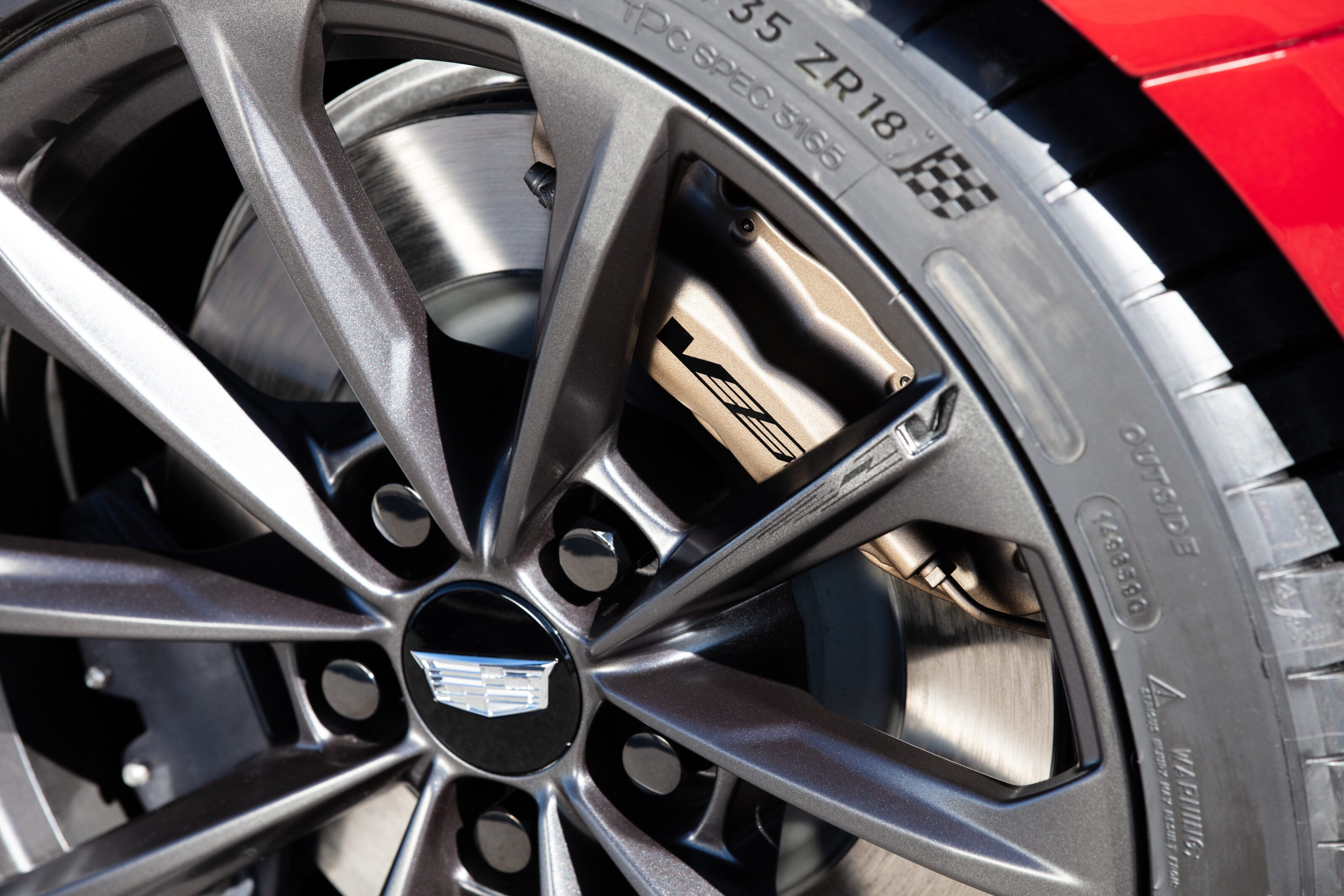
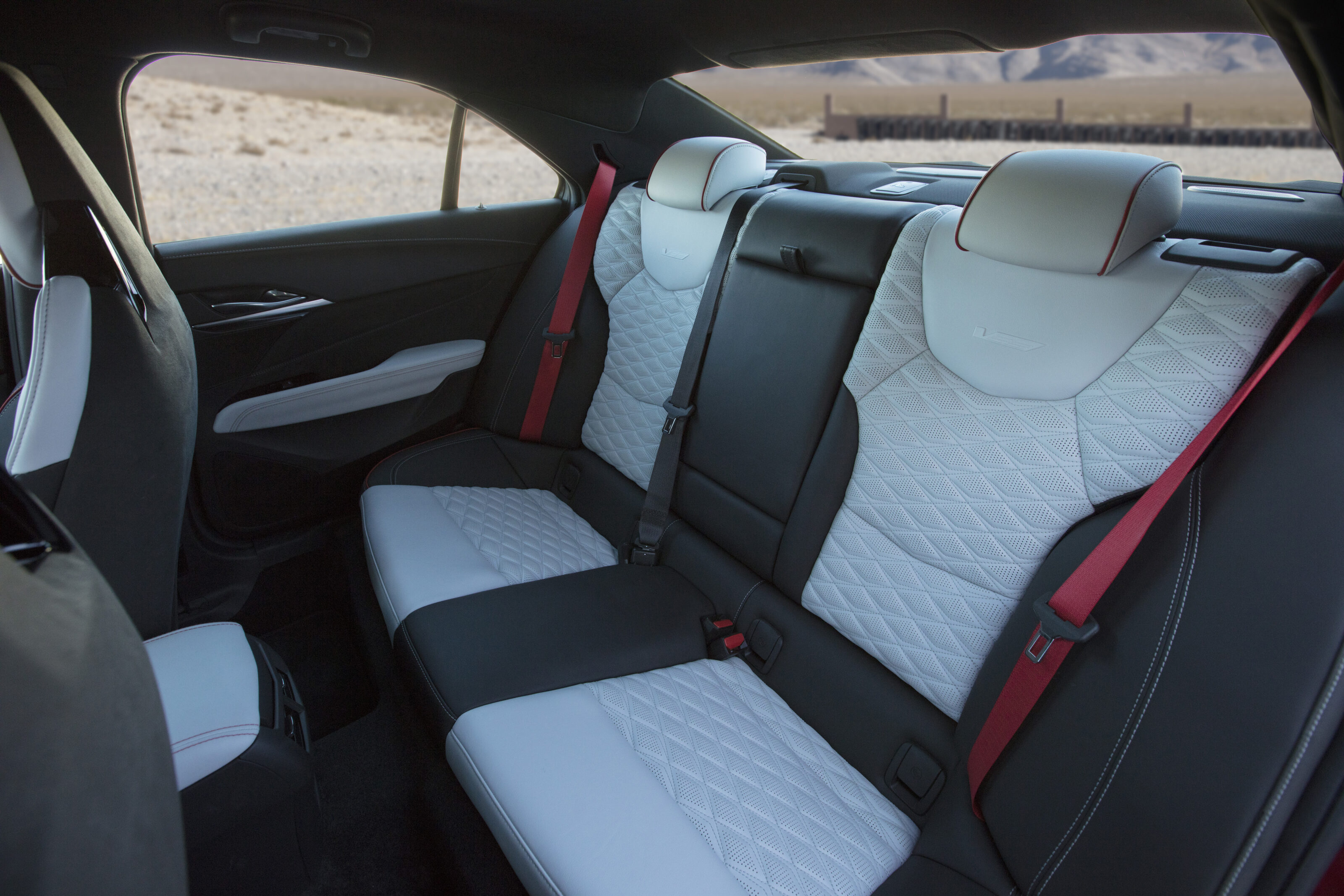
The most significant changes inside have everything to do with supporting the driver, starting with the seat. In the Blackwing, the front seats are two-piece, deeply sculpted buckets with the fashionable-yet-ever-underutilised racing harness shoulder belt pass-throughs in the upper seatback.
Given the performance focus of the Blackwing, aerodynamics play an important role in high speed, on-track driving. The standard aero program offers a reduction in lift, while the optional carbonfibre exterior packages that include everything from a functional splitter, dive planes, rear spoiler, and rocker extensions actually add downforce, to the tune of a maximum 77 kilograms at 290km/h.
While most owners won’t get out and play on track days, the CT4-V Blackwing looks all of the business when it’s kitted out with the full carbonfibre aero package, particularly against a contrasting paint colour.
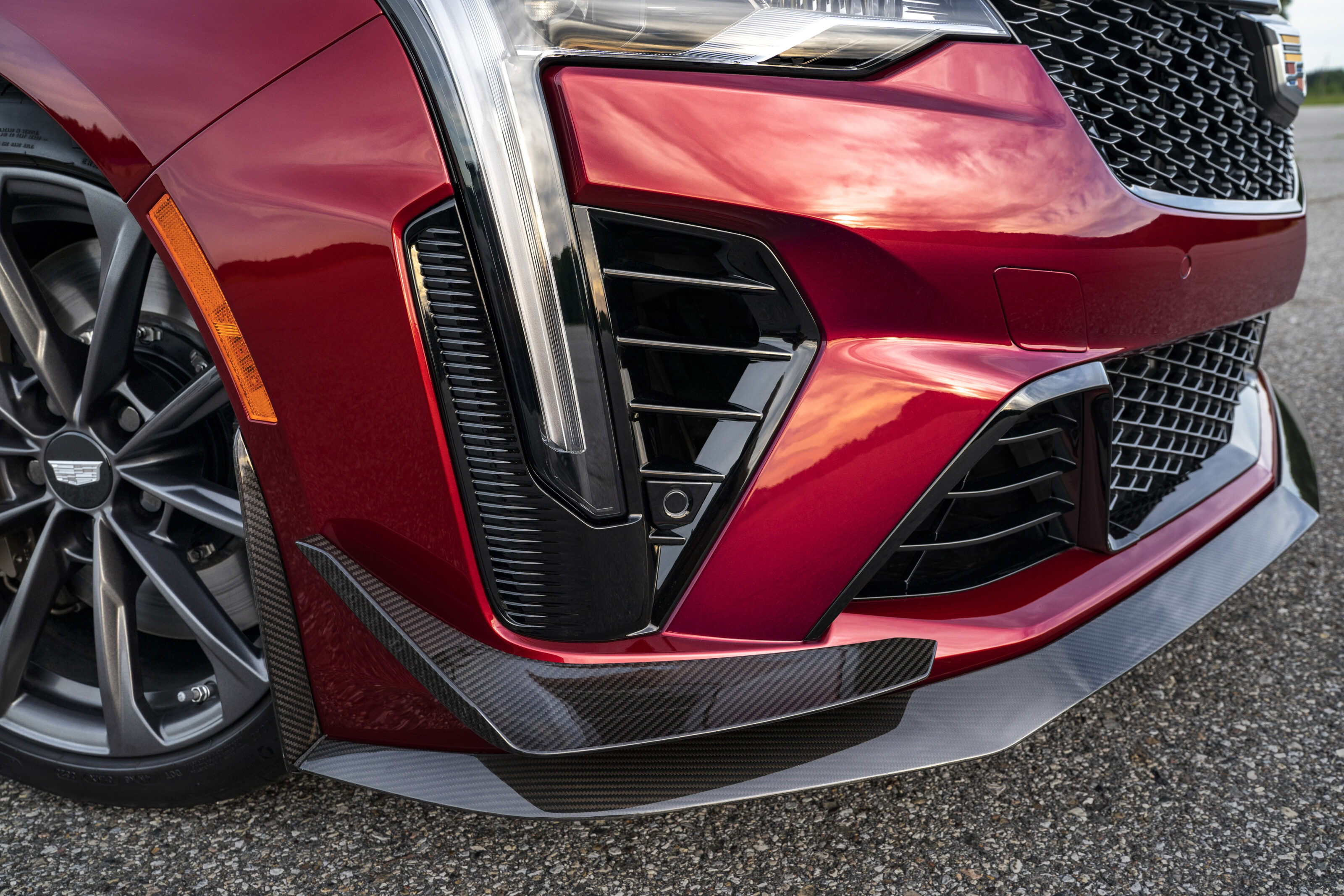
The standard car is a formidable thing in its own right, but it takes all of the optional components to make it the ultimate Blackwing. After adding the performance bucket seats, the faux suede upholstery, performance steering wheel, GM’s trick Performance Data Recorder, head-up display and the functional carbonfibre exterior trim, you’ve added several thousand dollars to the price of the sedan.
Altogether, these important and desirable performance-oriented options add US$16,000 to the Blackwing’s US$58,995 base price. Even the ten-speed automatic is an additional US$3,000.
Alas, adding Cadillac’s advanced driver-assist tech, including their excellent adaptive cruise control as well as automatic emergency braking is only available on Blackwings equipped with the automatic transmission.
This Blackwing is meant to be driven quickly and if you participate in track days, the Performance Data Recorder is a couple of clicks away via the infotainment screen
The Blackwing treatment adds muscularity to the CT-4’s unmistakable American design. Taut, crisp lines give way to the wider wings, more aggressive grille openings, functional vents, and a bonnet reshaped to hint at the power made underneath.
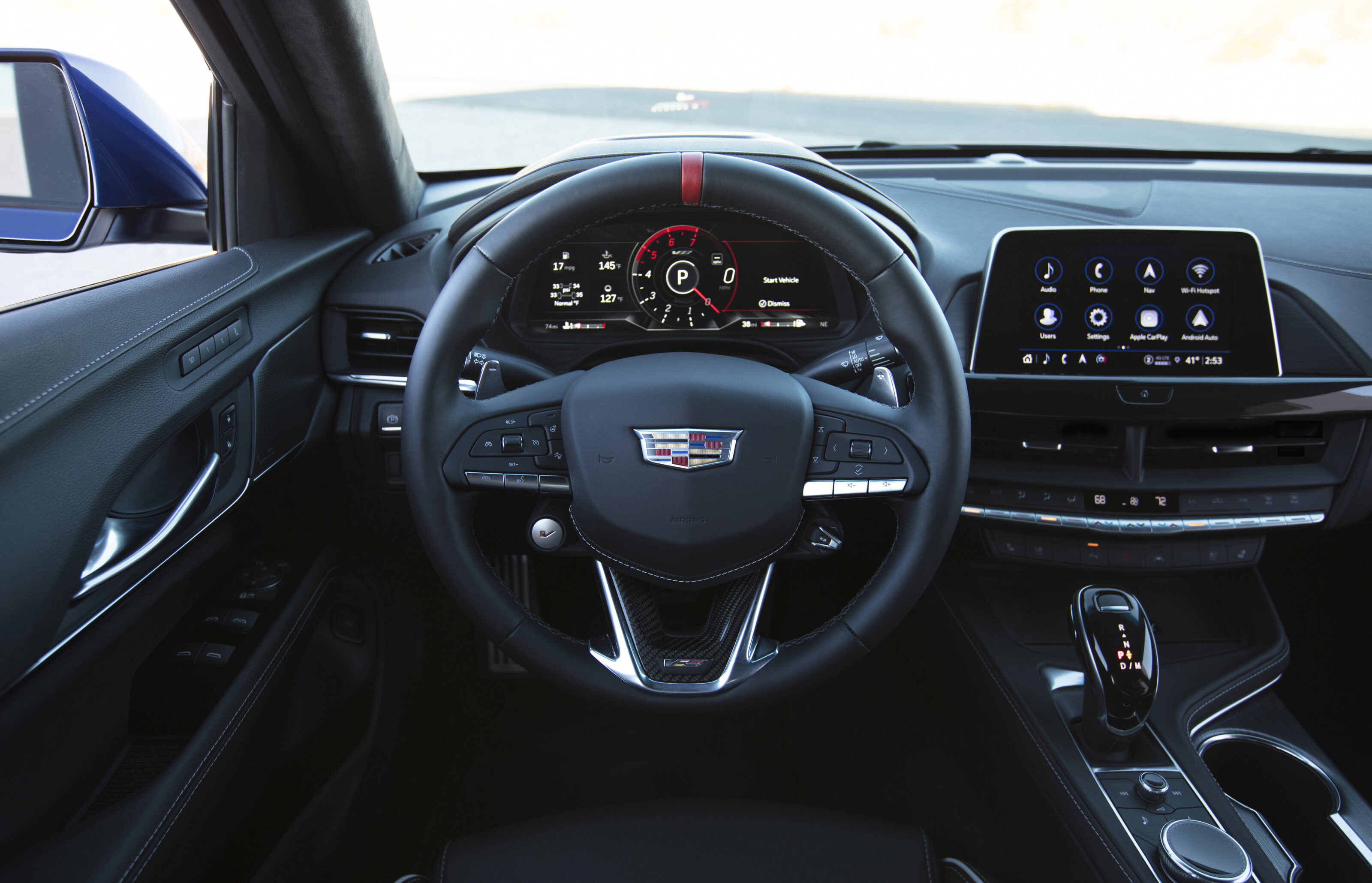
As expected in a modern performance sedan, it’s equipped with a suite of active and passive safety systems, but the best feature is Cadillac’s safety seat that the brand pioneered several years ago. Rather than filling the cabin with aural interruptions like chimes, bongs, and dings, the seat will vibrate to warn the driver of things like parking obstacles or blind-spot alerts. The Blackwing’s interior tech doesn’t stray too far from the CT4-V and the fully digital instrument cluster is a welcome upgrade.
From the driver’s seat, the cabin feels cosier than it does spacious, but that’s perfectly acceptable because the driver is perfectly supported. The optional bucket seats are an excellent compromise between support and comfort, not to mention notably easier to slide in and out of than BMW’s optional buckets for the M3 and M4.
The wheel, pedals, and shifter are all within easy reach, while generous adjustments available in both the seat and steering column allow the driver to get set up perfectly. GM’s head-up displays are among the best in the business because they’re simple, effective, and have enough brightness to be seen through polarised sunglasses.
This Blackwing is meant to be driven quickly and if you decide to participate in some track days, the onboard Performance Data Recorder is a couple of clicks away via the infotainment screen. Simply start recording before you roll out of the pit lane and the system will record several data points directly from the car’s systems along with visuals from a forward-facing camera as well as audio from the interior microphone.
GM’s PDR was originally launched with the C7 Corvette Stingray and the Blackwing uses a second-generation system with a higher resolution camera plus several other improvements. Once you’ve finished recording a track session, pull the SD card from the Cadillac and download the files to your computer. It’s your choice whether you’ll analyse your on-track performance through the Cosworth Toolbox analytics software or simply post your hot laps online to impress your mates down at the pub.
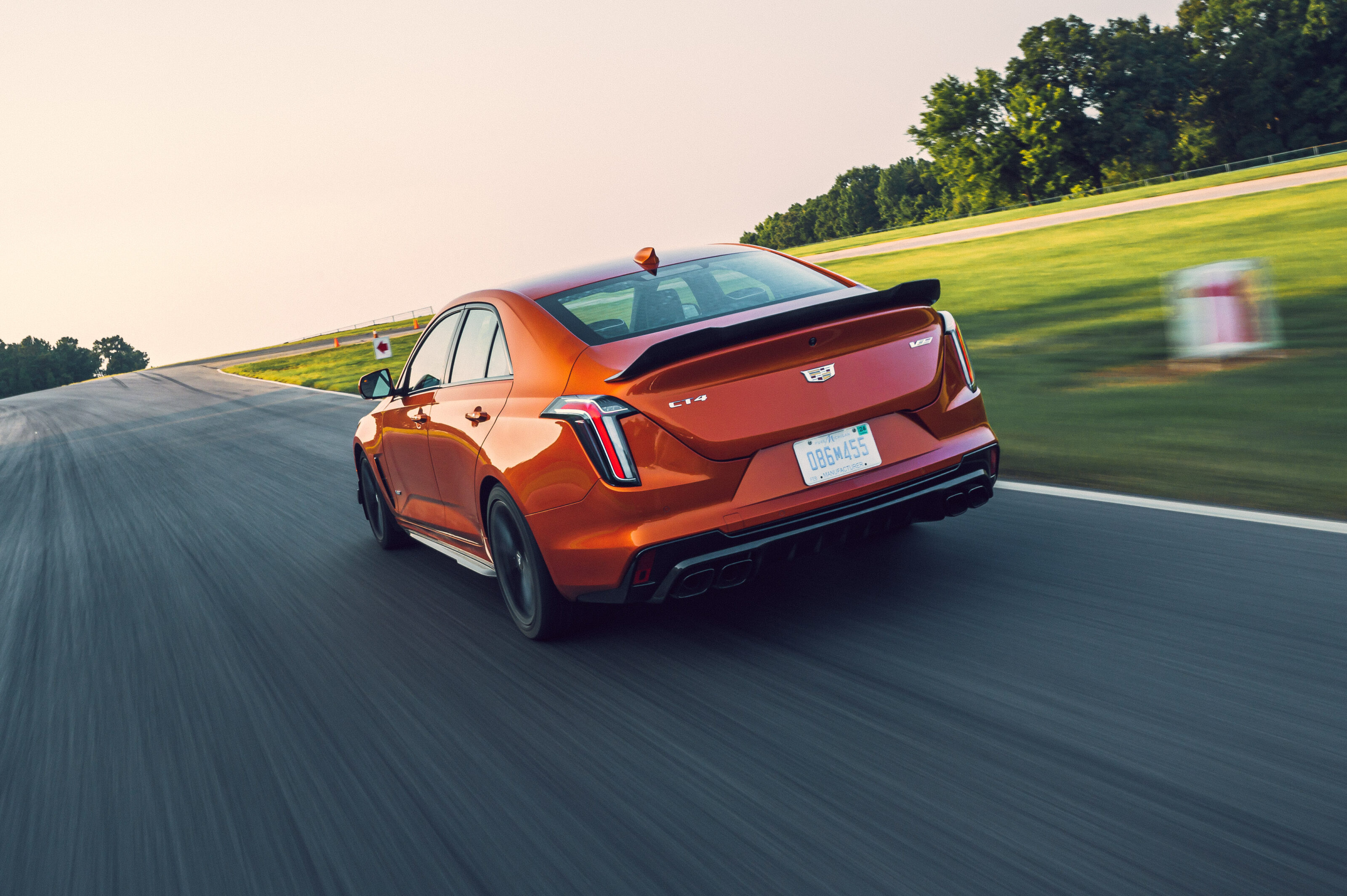
Although the Blackwing puts down its power through the rear wheels only, it is remarkably quick. With the automatic gearbox, it’ll go from rest to 100 km/h in less than four seconds and turn the quarter-mile in a tick over twelve seconds.
The automatic is thoroughly resolved for this Cadillac and offers quick, full-throttle upshifts as well as hasty, rev-matched downshifts. In regular driving, it’s smooth-shifting and never seems to be lost for gears, which comes as no surprise given the engine’s abundant mid-range torque.
While we saw a comfortable and relaxed 220 km/h on Canadian Tire Motorsport Park’s back straight, this little Blackwing will top out at more than three hundred kilometres per hour if given the runway. With the additional downforce of the optional carbon aero kit, no doubt it’s stable at those speeds as well.
Throttle progression is linear and precise throughout, leaving no mystery between what your right foot’s asked for and what the V6 is delivering
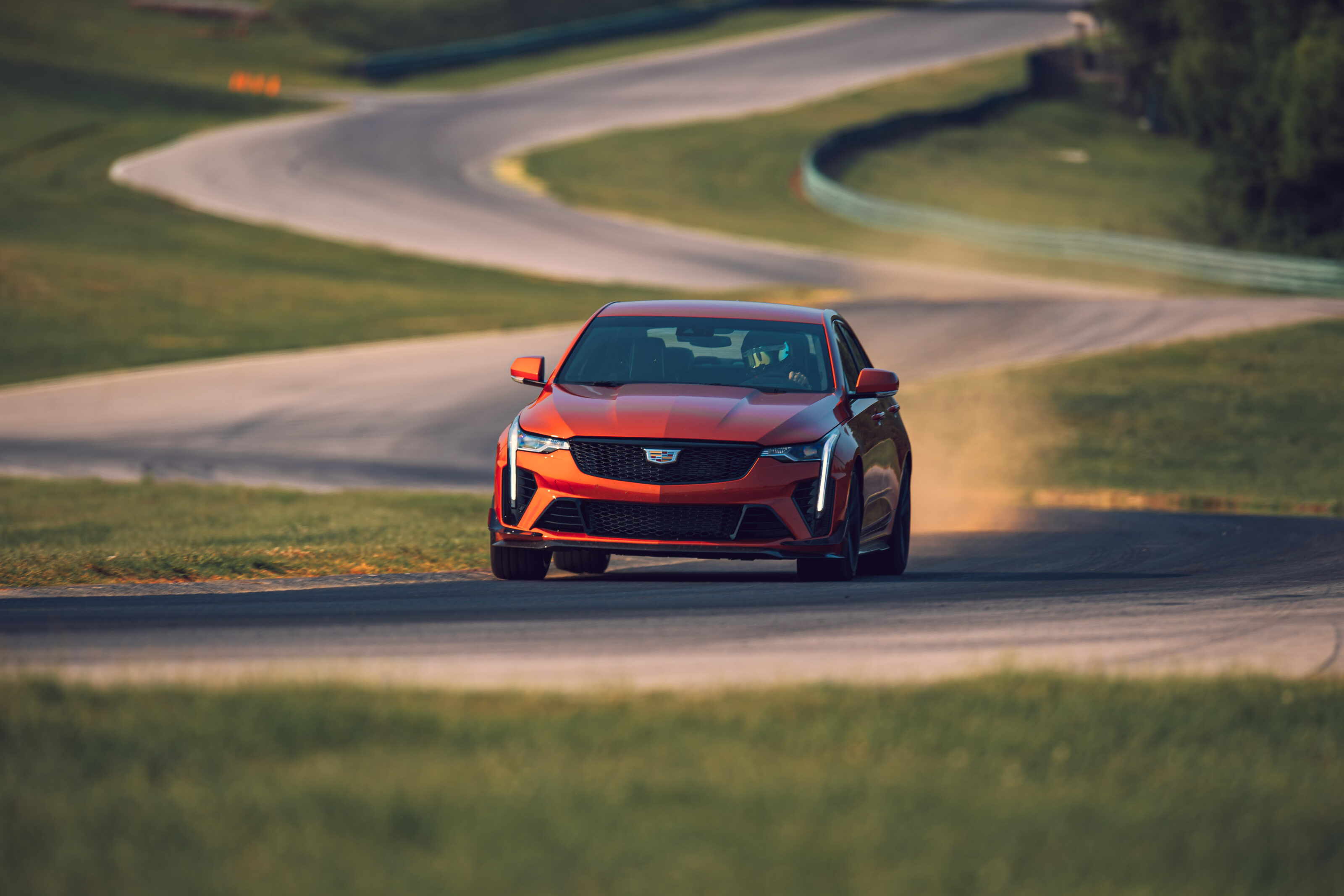
The character of the twin-turbo V6 is that of a modern forced-induction engine, making peak power high in the rev range combined with a broad and flat torque curve, giving the driver the best of both worlds. Accessing maximum torque doesn’t take much effort with its peak 603Nm available from 3500 to 5000rpm.
Should you run it even further, the engine makes maximum power of 352kW at 5750rpm. Throttle progression is linear and precise throughout the operating range, leaving no mystery between what your right foot’s asked for and what the V6 is delivering.
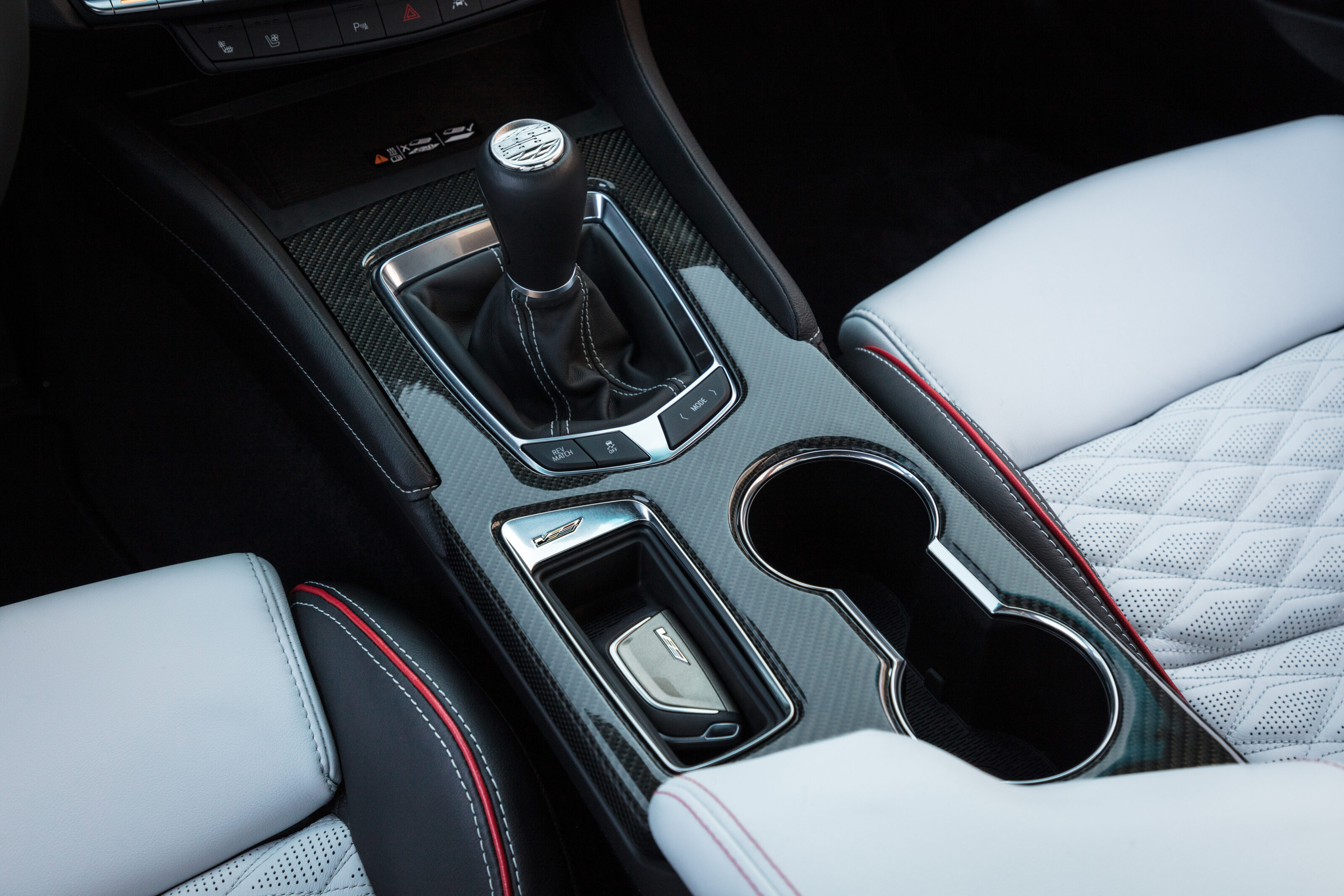
It’s especially rewarding when paired with the manual gearbox and for those of us who prefer to shift for ourselves, this is the transmission of choice. Ratios are well-spaced and perfectly matched for the engine’s power and torque curves.
Greatly improved over the ATS-V, shift action is much more positive, with clearly defined gates and an exceptionally satisfying feel. Even clutch feel is superb. In fact, the six-speed is so well resolved that it makes BMW’s manual gearbox in the M3 and M4 appear to be an afterthought.
Of course, active rev-matching for smooth downshifts is available and is thankfully switchable for heel-and-toe aficionados. Trouble is, these rev-matching systems have gotten so good that it’s easier to let the system do the work for you.
This Blackwing adds one more manual gearbox trick; no-lift shifting, for quicker upshifts. It’s a counter-intuitive feature for those among us who regularly drive manual, but once accustomed to keeping your right foot fixed against the firewall, upshifts are indeed a touch quicker without any perceptible loss of power or acceleration.
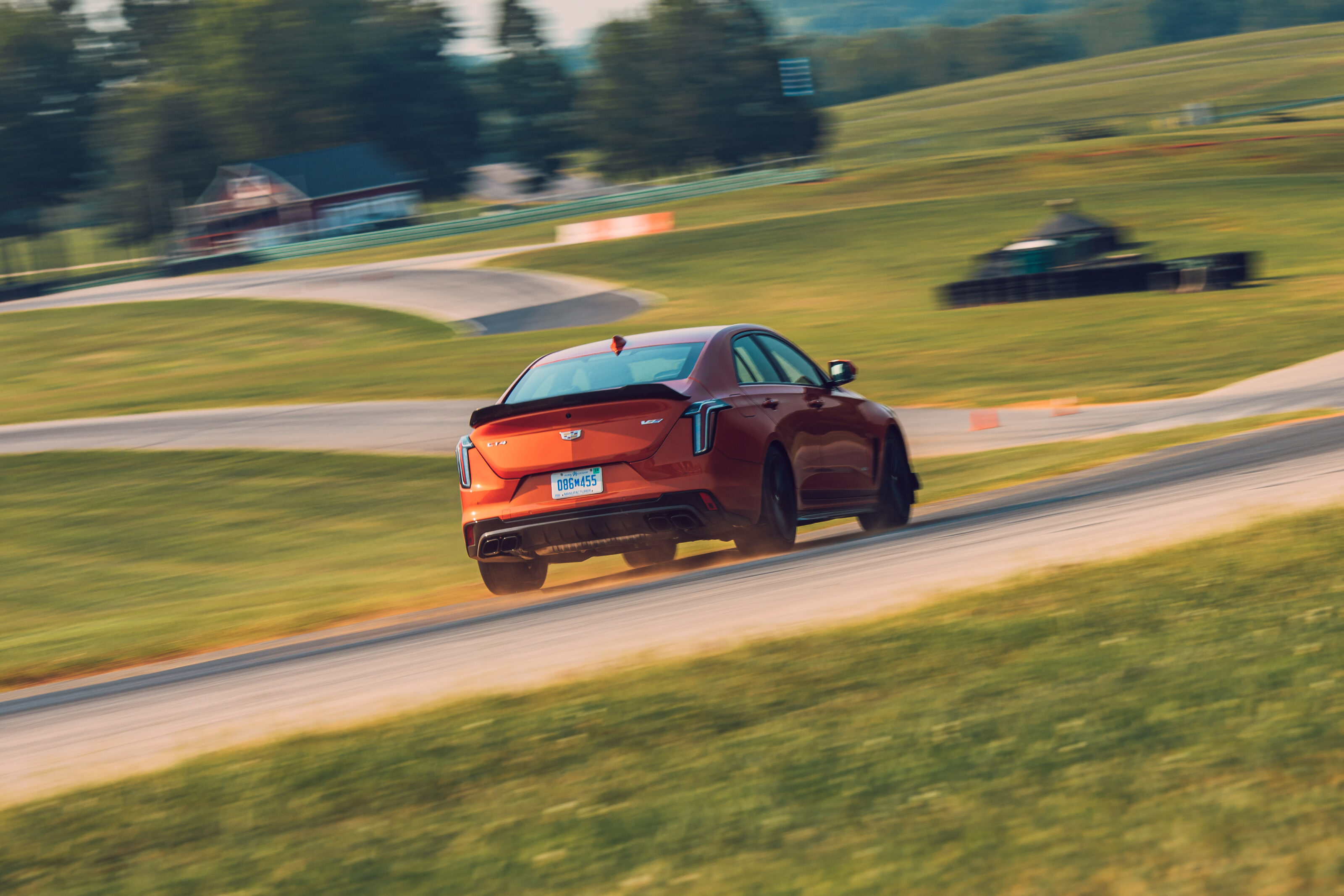
Suspension settings are calibrated on the firmer side and the Blackwing is perfectly at home on the racing circuit. The next-generation Magnetic Ride dampers are the key to this little Cadillac’s handling.
With built-in roll control, as well as active pitch and dive control plus integration to the car’s drive modes, traction control, and e-diff, the dampers are constantly adjusting for optimal performance.
That translates into maximising each tyre’s contact with the road surface, which gives the driver incredible confidence to explore the Blackwing’s limits. With roll control, the sedan corners flatter than expected and demonstrates excellent poise in every possible cornering attitude, even when bouncing off the kerbs at Canadian Tire Motorsport Park. What’s more, chassis feel is superb.
The brakes are near perfection for a performance sedan, with a very positive pedal that offers the driver excellent control, modulation, and feel
Unlike its CT5-V Blackwing big brother, this little Cadillac doesn’t offer a carbon-ceramic brake option, but that’s no matter. The cast-iron rotors, high-performance pads and Brembo calipers offer more than adequate stopping power, even on high-speed circuits.
The brakes are near perfection for a performance sedan, with a very positive pedal that offers the driver excellent control, modulation, and feel. When enjoying the Blackwing near its limits, trail braking pays off because between precise brake and steering inputs, the driver has every bit of control and confidence for maximum performance.
A highlight of the Blackwing’s steering is that the quick ratio is suited to both canyon carving and track work. Considering that it’s electrically assisted, it can be excused for not offering much feedback, as feel tends to get filtered out through non-hydraulic systems. It does offer different levels of assist, but none of them give the driver any more feel than another, and the heavier settings simply make the driver work harder.
One of the most impressive features of this Cadillac is the electronically-controlled limited-slip differential. Not only does it optimise the amount of lock for any possible corner exit permutation, but it will switch to fully open for excellent stability under braking. GM has been producing these for several years and it shows. It’s one of the key elements behind the Blackwing’s satisfying performance.
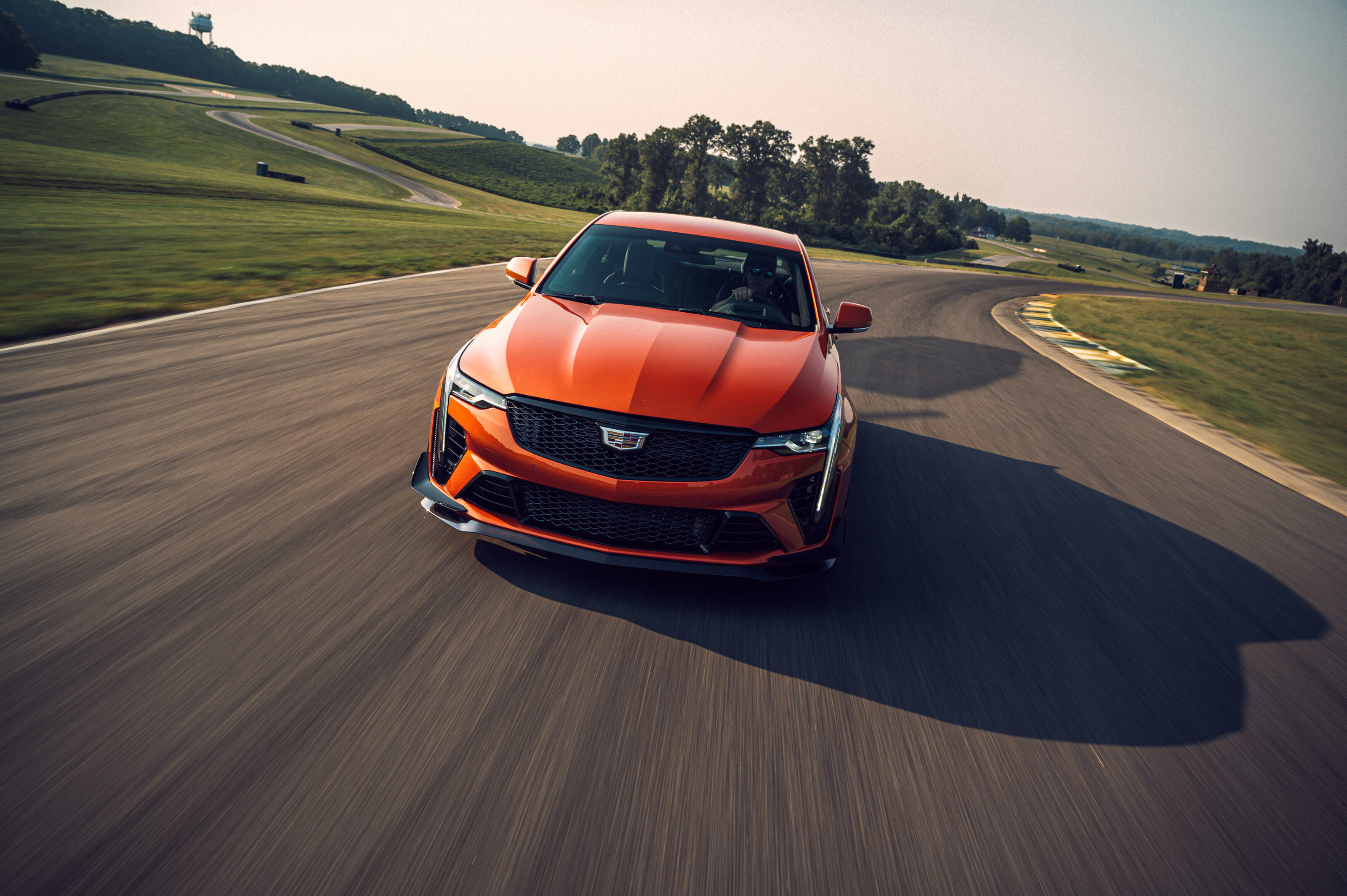
All told, Cadillac’s engineers have delivered a proper performance sedan that is incredibly satisfying to drive. While the go-fast, mid-sized four-door segment is getting smaller, this Cadillac takes top marks across several indicators and, in particular, is by far the best choice for those who desire a manual gearbox.
Its dynamics are so satisfying, so well-rounded and wonderfully resolved that it’s certainly the best Cadillac of its kind.
With marque’s impending transition to electrification, it’ll be a shame if it’s also the last Cadillac of its kind.
2022 Cadillac CT4-V Blackwing specifications
An independent rendering has provided our best look yet at the 2023 BMW i7 electric sedan.
The illustration, courtesy of TheSketchMonkey, takes inspiration from the forthcoming XM performance SUV, which is expected to share its design elements with the i7.
This includes the controversial split headlight design and a large ‘kidney’ grille – albeit with a more subtle frame over what is expected on the XM, previewed by last year’s Concept XM.
While the i7 will be a direct competitor to the all-electric Mercedes-Benz EQS, it has a boxy and traditional sedan body reminiscent of current internal-combustion limos – rather than the swoopy design of the Mercedes.
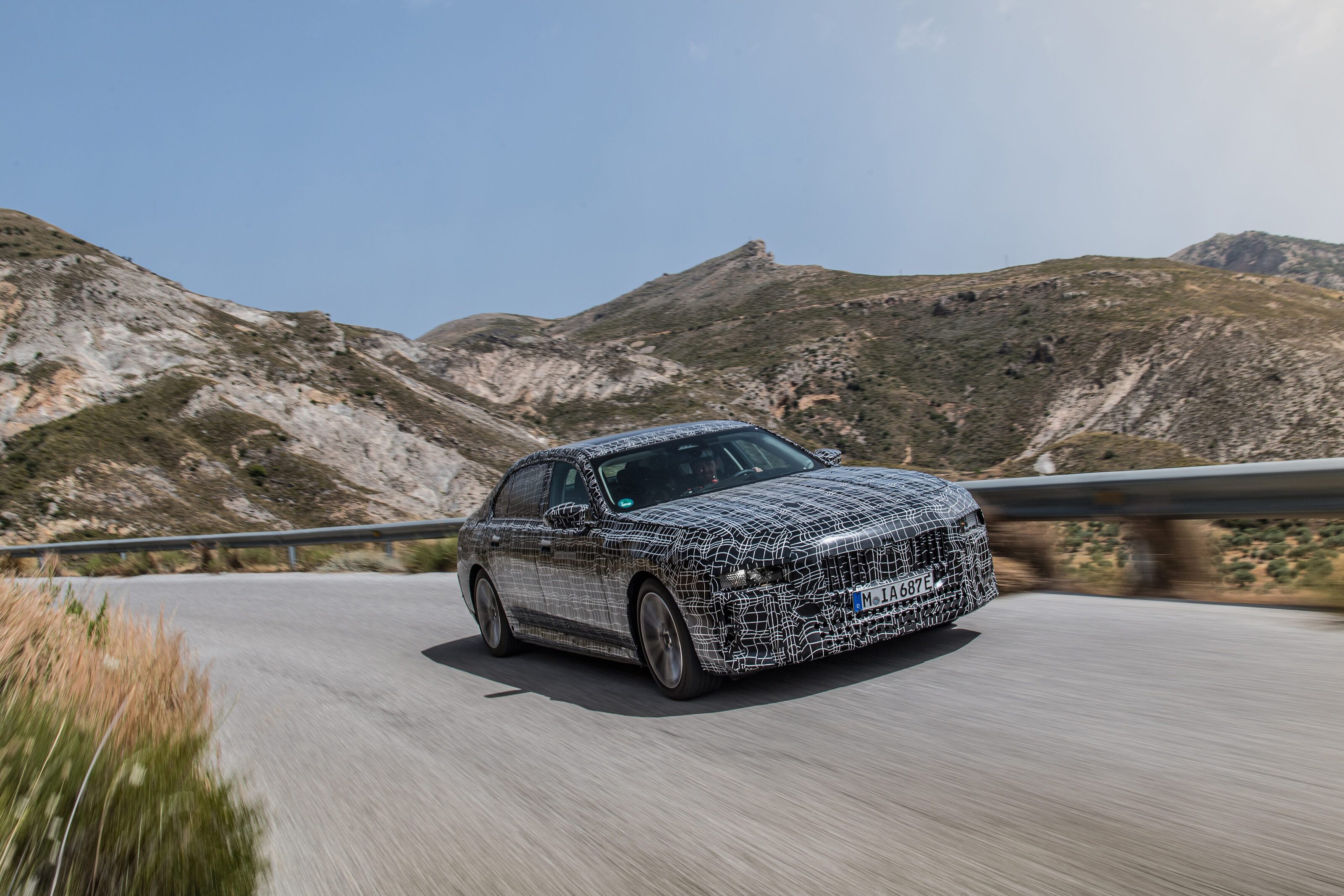
This is due to the relation between the next-generation 7 Series and the i7, as both will ride on the same CLAR platform with an identical body – much like the difference between the smaller 4 Series Gran Coupe and i4 – whereas the S-Class and EQS are separate vehicles.
It will also rival the Audi E-Tron GT, Mercedes-Benz EQE, Porsche Taycan and Tesla Model S electric sedans.
In the lead-up to the i7’s unveiling, BMW has published a series of teasers as it undergoes testing in Europe.
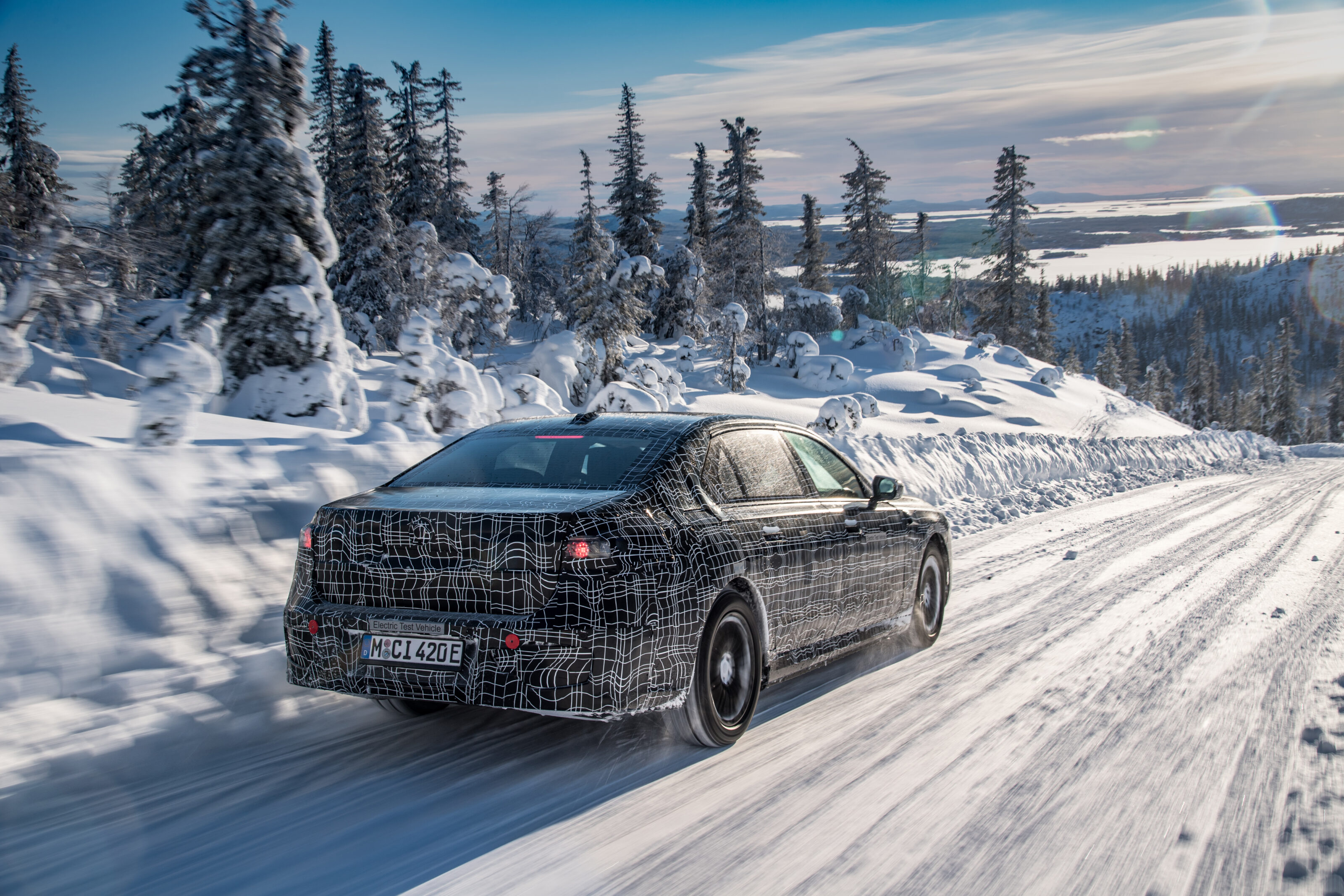
Finer details are yet to be confirmed, although the powertrains offered on the i7 are unlikely to stray far from the iX crossover.
BMW says the i7 will utilise the fifth-generation version of the brand’s eDrive technology as seen in the iX, which is offered in xDrive40, xDrive50 and flagship M60 guise.
In mid-range xDrive50 configuration, the iX produces 385kW of power and 765Nm of torque, allowing for a 0-100km/h time of 4.6 seconds and a claimed driving range of around 630 kilometres.
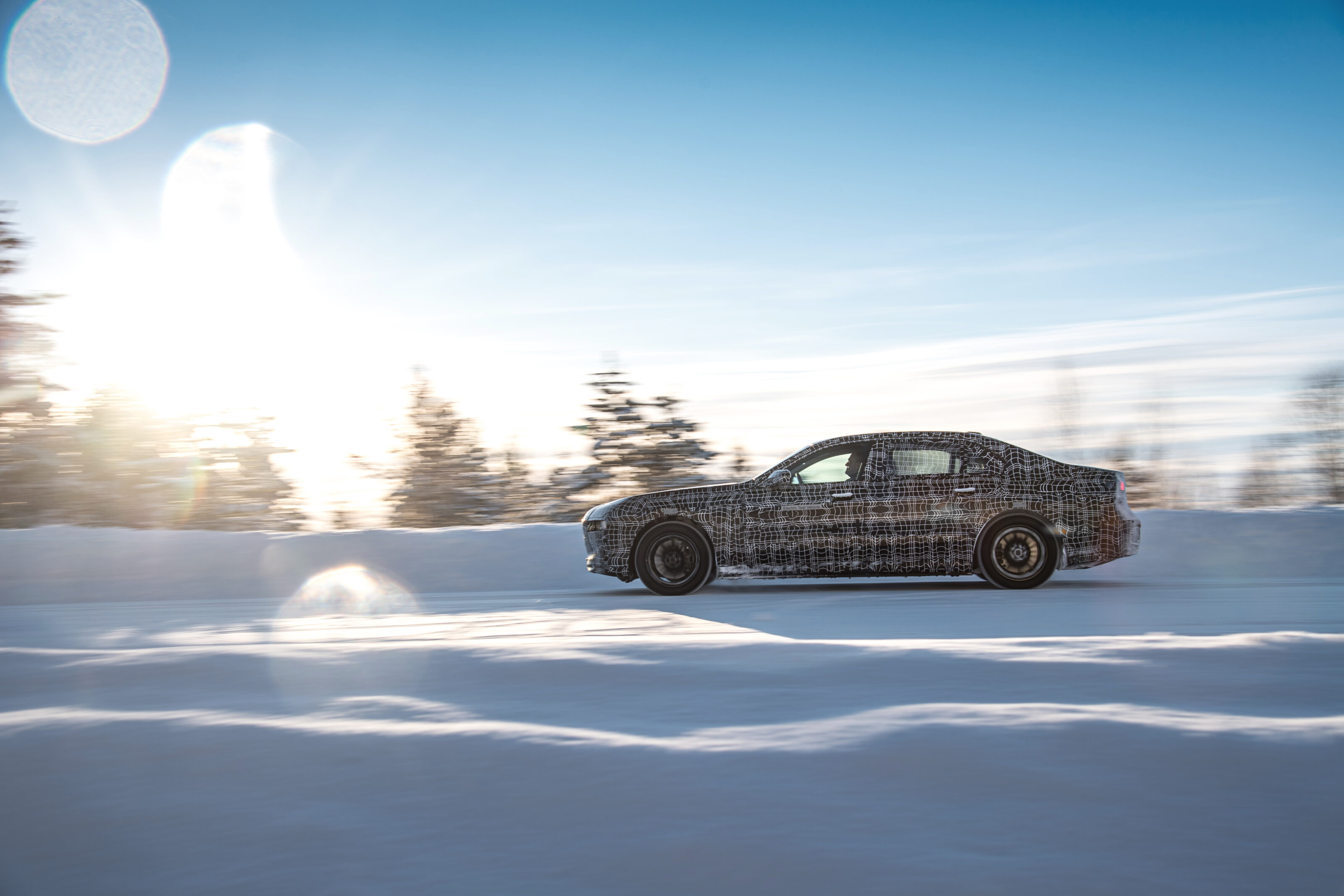
Stepping up to the flagship performance-orientated iX M60 boosts outputs to 455kW/1100Nm in a 10-second burst, with a lower claimed driving range of approximately 566 kilometres.
Inside, the i7 is expected to pick up a curved dash featuring a 12.3-inch digital instrument cluster and a 14.9-inch infotainment system running BMW’s latest iDrive 8 user interface.
The 2023 BMW i7 will be unveiled in the coming months, with the flagship electric sedan likely to enter production before the end of the year, alongside its internal-combustion 7 Series twin.
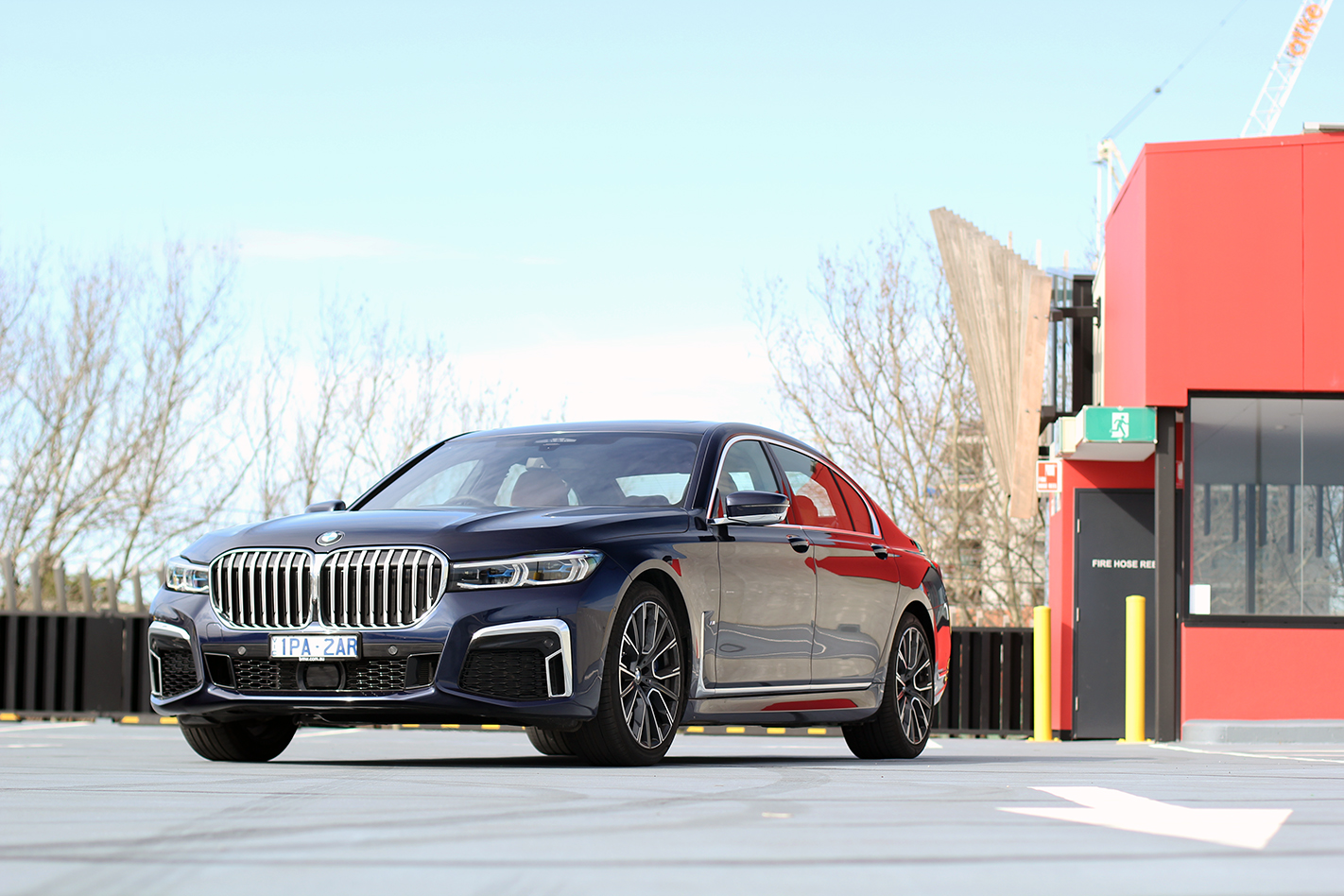
Below: The current internal-combustion 2022 BMW 7 Series
Snapshot
- Citrou00ebn records a 170 per cent year-to-date increase in sales over 2021
- French cousin Peugeot is enjoying a 64 per cent bounceback
- Only the Peugeot Boxer and Partner have dropped sales compared to last year
Citroën’s Australian arm is enjoying a resurgence to begin 2022 after a torrid 2021, while its fellow Stellantis-owned sibling brand Peugeot is building on its success from the year prior.
Despite 2020 being the worst year in over a decade of the local new car market, Citroën experienced a significant dip in sales last year, shifting just 175 units throughout the 12 months – a 14 per cent drop to the pandemic-hit 2020.
Had it not been for the late introduction of the new C4 in November bringing an extra 26 sales, Citroën would have closed out the year with under 150 deliveries, as it hadn’t even cracked double-figures by the end of the third quarter.
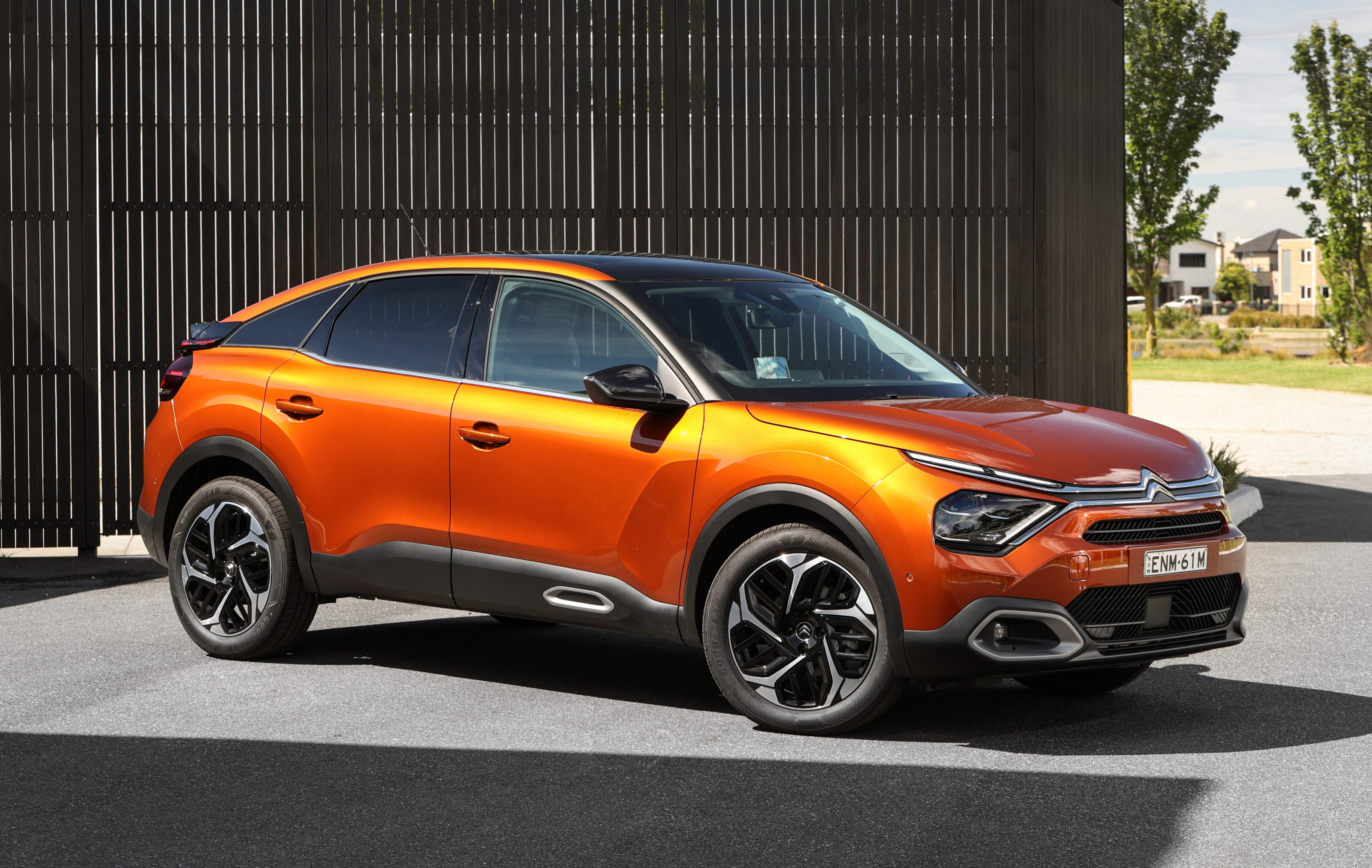
However, thanks to its best-selling C4, Citroën has bounced back to start 2022, with its 62 sales for the year so far representing an increase of 170 per cent over the same point 12 months ago.
While 33 deliveries in February might not sound like much, in comparison to the six sales throughout Feb 2021, the 450 per cent year-on-year increase is one of the biggest improvements of any manufacturer, aided mainly by the 13 C4 units shifted through the month.
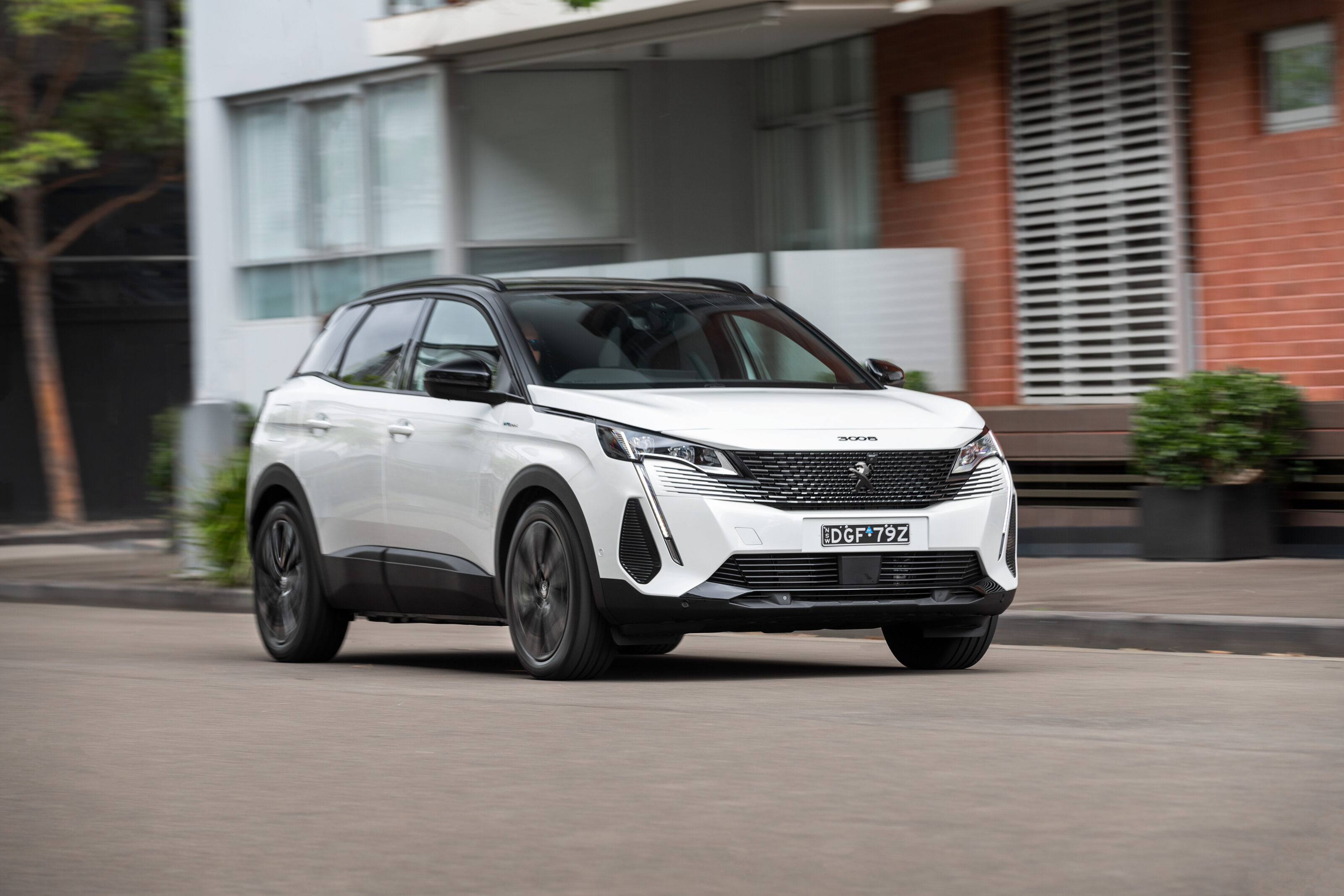
Peugeot is also enjoying a strong start to the year off a solid recovery in 2021, having recorded a sales percentage increase of 32 per cent over 2020.
To the end of February, 367 Pugs have been registered across Australia – 143 more than the same period last year, helping it to record a 64 per cent increase in sales.
Its line-up has been buoyed by the arrival of its updated 3008 crossover, accounting for over one-third of the brand’s sales, with 130 units shifted so far – 80 of which came through the month of February alone.
Across the two brands, only Peugeot’s Boxer and Partner commercial vans have dropped sales compared to 2021 figures, although both are also the smallest players in their segments, holding just 1.1 per cent and 10.5 per cent of the market share respectively.
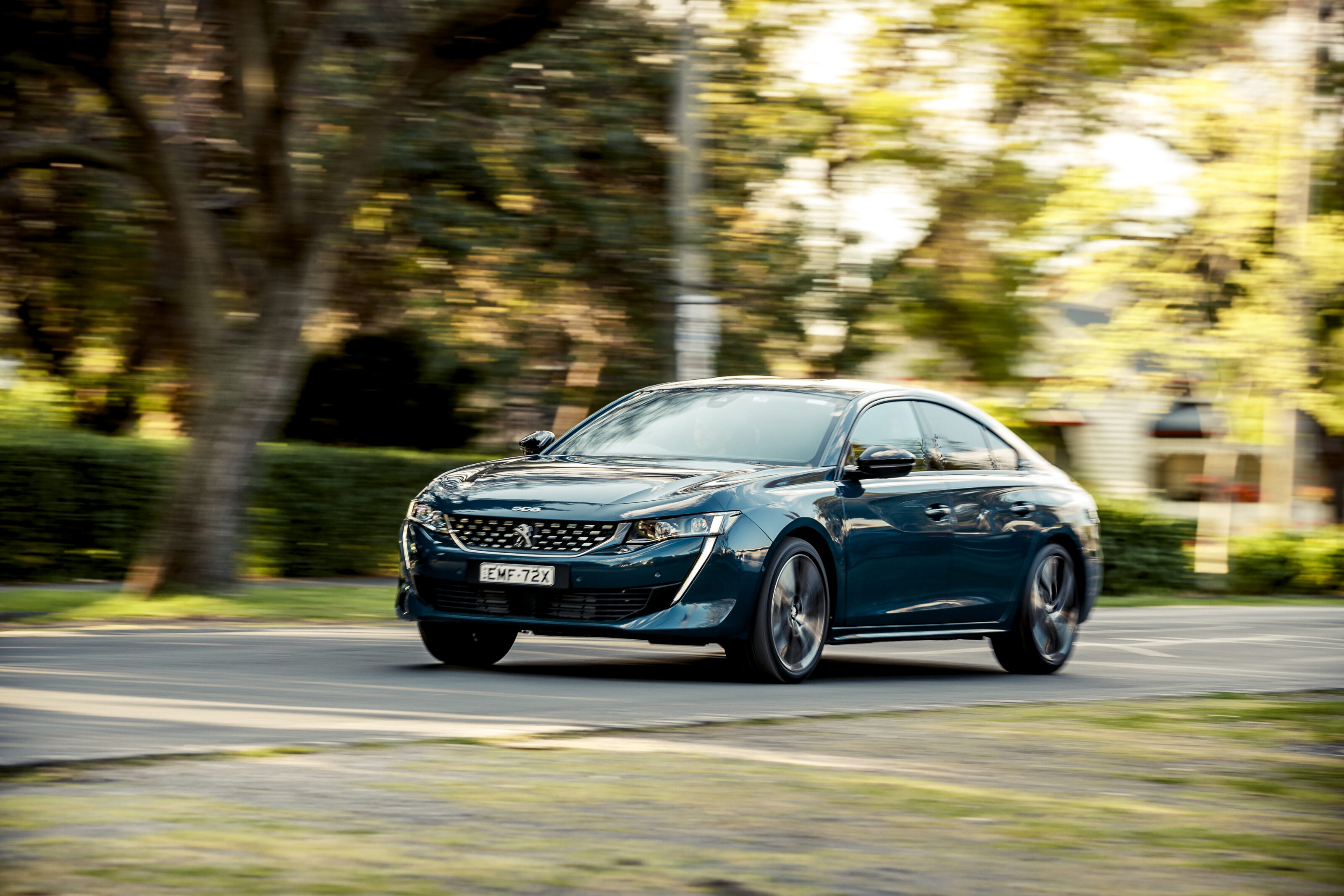
A spokesperson for Citroën and Peugeot’s importer Inchcape told Wheels it was encouraged by the renewed popularity of its model ranges, with the upcoming arrival of Citroën’s C5 X and Peugeot’s newest 308 set to further broaden the model line-up.
“For both the Peugeot and Citroën brands, we remain committed to bringing the right product into the market to serve our customer’s needs,” they said.
“The unrivalled comfort and original design of the Citroën C4 has strengthened the Citroën product portfolio in Australia and we hope that the C5 X will also resonate with the discerning Australian consumer and provide a new avenue of growth for the brand in [the second half of] 2022.
“The launch of the refreshed Peugeot 2008, 3008 and 5008 SUV ranges last year combined with the recent arrival of the plug-in hybrid models and updated LCV range in [the first quarter] provides a continued and broad offering locally for Peugeot.
“We also look forward to introducing the Peugeot 308 in [the second half of] this year and are hopeful the next-generation offering will further elevate and bolster Peugeot’s unique appeal here in Australia.”
