
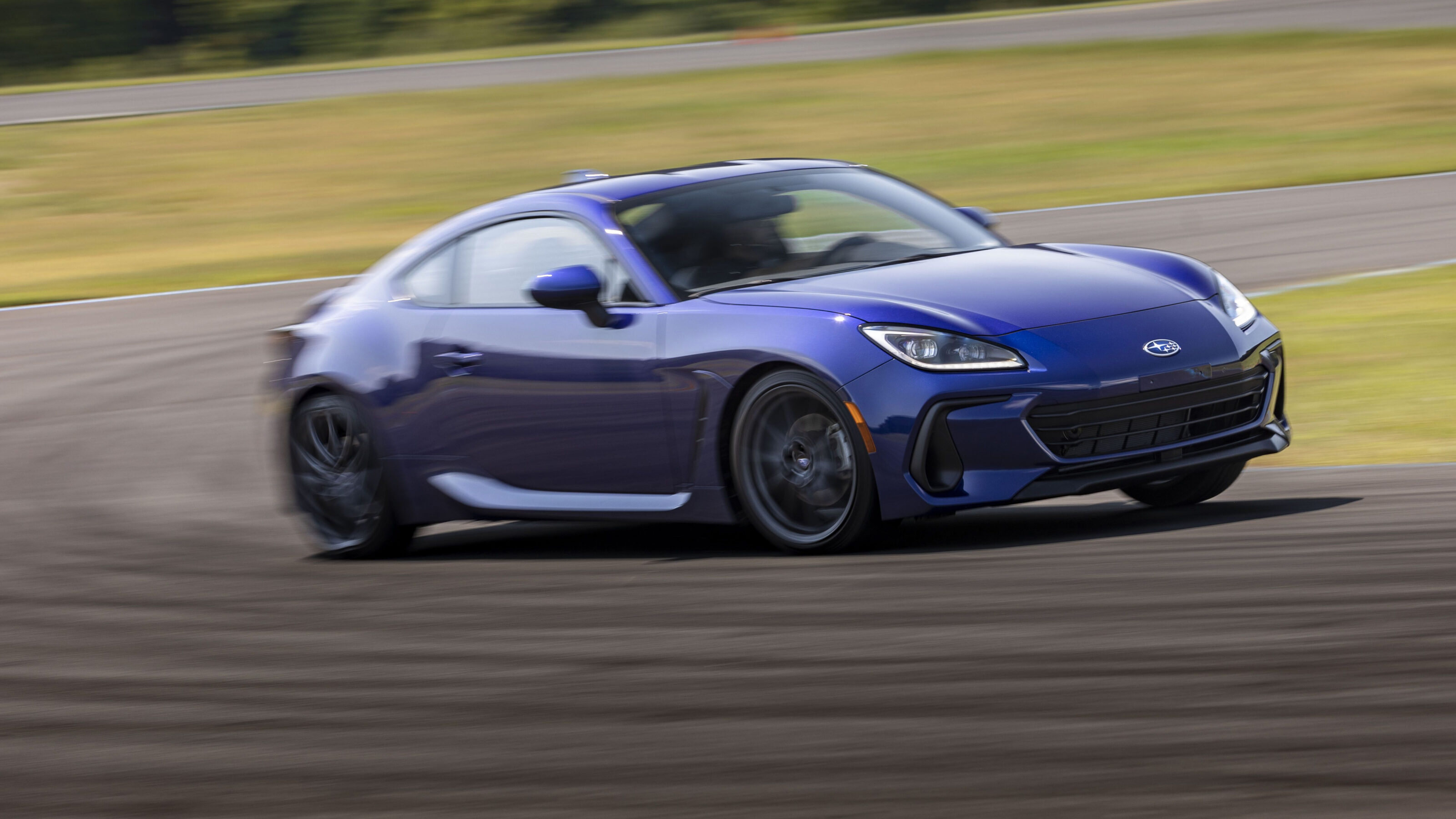
Light rain has been falling steadily over Sydney Motorsport Park for the launch of the new 2022 Subaru BRZ, so I figure it may be pertinent not to attack the South Circuit like a tubby kid at a confectionary buffet. Still, I’m a bit startled by how relative caution and a modest entry speed bring a big oversteer moment through the fast downhill left-hander flanking Corporate Hill.
The quick steering and innate chassis feedback make tidying things up pretty straightforward, so I mash the throttle for the exit down to the tight left. The flat-four whirrs and thrums, but beyond 6000rpm the power is tailing off and the tacho needle is in no rush to look the limiter in the eye at 7200rpm.
Doesn’t sound like an especially auspicious opening lap for one of the most hotly anticipated sports coupes of 2022, does it?
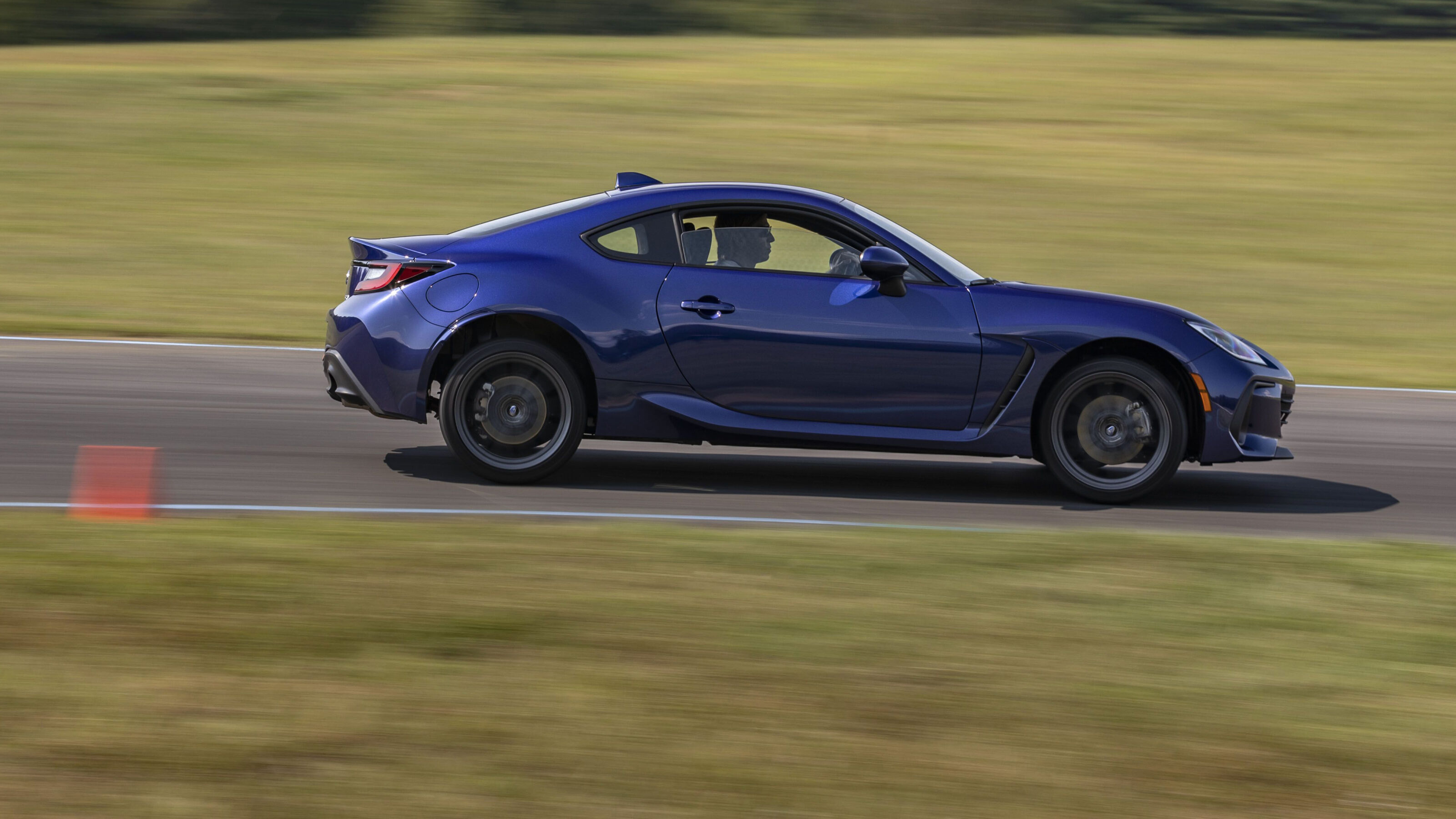
EDITOR’S NOTE: Subaru Australia could not provide event photography for the on-track component of this week’s launch review, so we’ve thrown in some North American track photos. We reckon you’ll know which is which.

Well, you can relax, because I actually started the day in the original BRZ, complete with low-grip 17-inch Michelin Primacy 3 tyres and its 2.0-litre flat-four pushing out 147kW and 205Nm. Yes, Subaru Australia took the uncommon step of bringing a couple of original-generation cars to the Australian launch of the new model, and let’s just say the back-to-back experience was enlightening.
When the original car was co-developed with Toyota, engineers agreed that the best way for drivers to exploit the chassis balance via the modest outputs of the flat-four was to fit eco-biased rubber with early and benign breakaway characteristics.
And while the overall greatness of the BRZ and 86 twins was sufficient for the pair to take Wheels Car of the Year victory in 2012, the judges never shied away from the fact the beautifully balanced chassis was not a ripper gripper, nor the fact that the 2.0-litre engine, while smooth and reasonably flexible, lacked a dash of top-end sparkle.
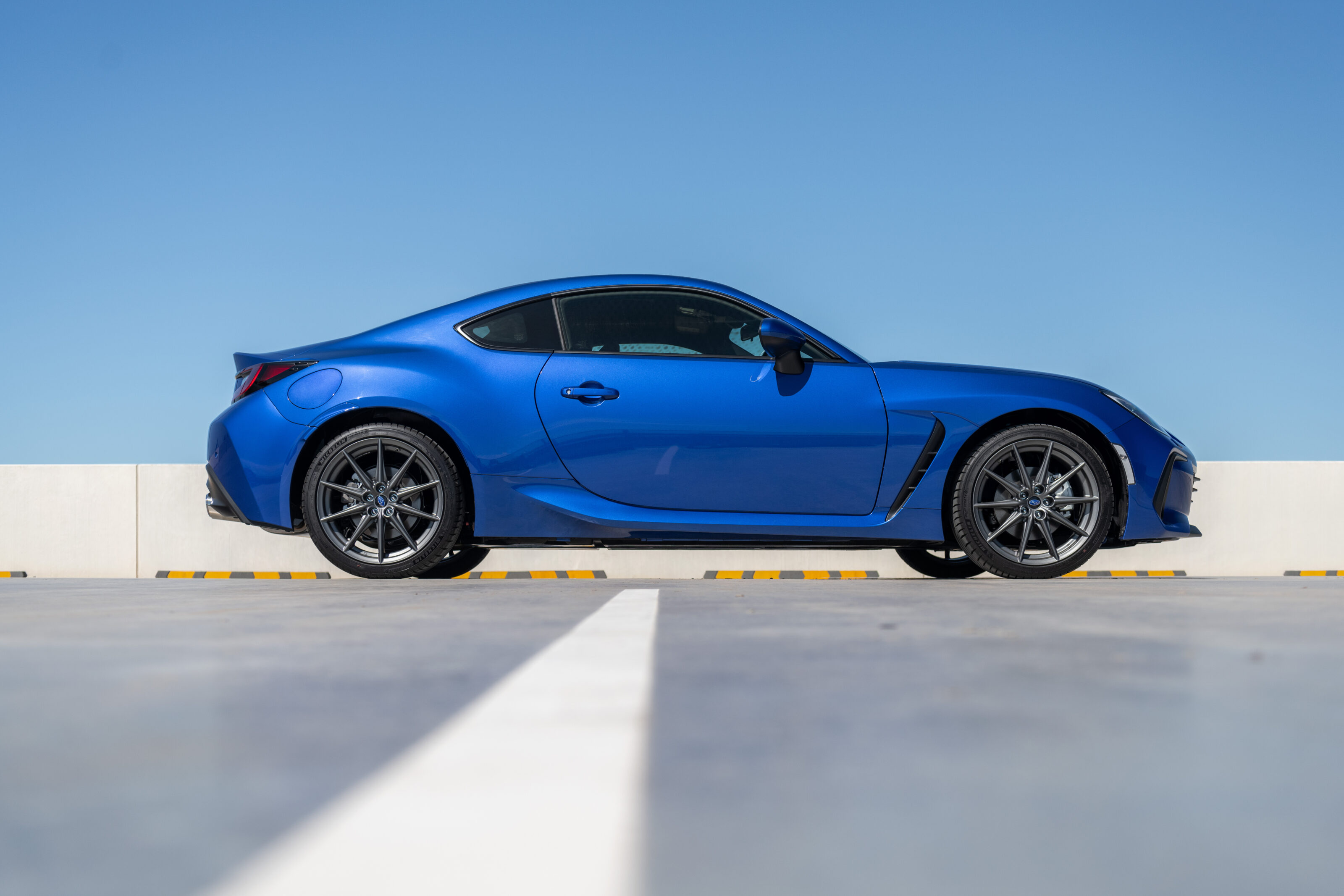
If you’re impatiently wanting a verdict on the new car, let us just assure you that the issues of modest grip and upper-rev reticence have been more than just addressed; they’ve been bundled in a small box labelled ‘fixed’ and whacked clean out of the proving ground.
By doing so, engineers have shifted the character of the BRZ from soft-rimmed frisbee to case-hardened throwing star. All without diluting the affordability, accessibility of performance … or, crucially, driver involvement.
For starters, that typical bane of second-generation sportscars – weight gain – has been brilliantly contained here, despite the mandatory lift in tech and safety equipment. In terms of structure, this second-get car is a reskin of the original, not an all-new platform. But aluminium is now used for the roof, bonnet and front guards, and the wheelbase has increased by a negligible 5mm while overall length grows by just 25mm.
The rear track is wider by a modest 10mm, and overall height is 15mm lower, while the car’s centre of gravity is claimed to be slightly lower, despite unchanged hard points.
Let us assure you that the issues of modest grip and upper-rev reticence have been more than just addressed

According to Subaru, knowledge from the development of the Subaru Global Platform (SGP) that underpins the Forester and XV, among others, has been directed to the BRZ’s rear-drive architecture in an effort to increase stiffness.
The numbers pointing to success aren’t small: a 50 per cent increase in torsional stiffness and a 60 per cent improvement to lateral rigidity are claimed. Kerb weight for the base manual is 1286kg, topping out at 1310kg for the top-spec auto.
Despite the fact the fundamental exterior design isn’t radically transformed – the new car has more functional aero features, slightly more muscular haunches and pronounced side sills for a less petite stance – there are zero carry-over panels or glass.
Likewise, the plus-two rear seats continue (figure on very occasional kiddie or small-person occupancy only). Most owners will likely keep the rear seats folded flat for extra load practicality as the boot is tiny at 201 litres, and an aperture more like an ovoid manhole cover limits the size of anything that can be put in there. Weirdly, the full size-spare juts out of a recess not sufficiently deep to fully swallow it.

But enough of the practicalities, because apart from the move to 18-inch wheels and sticky Michelin Pilot Sport 4 rubber, the biggest shift to the BRZ’s driving character comes with what’s now under the bonnet. The new flat-four displaces 2.4 litres (up from 2.0) but is not a simple bore and stroke of the original engine.
This is a box-fresh unit (codenamed FA24) that Subaru says shares very few components with the old FA20 engine. It features a new block, revised internals, and a new induction system that combines both port and direct fuel injection.
Max power and torque are now identical for both manual and auto models: 174kW at 7000rpm and 250Nm at 3700rpm. For comparison with the old car, that’s a bump of 27kW and 45Nm for the auto, and a boost of 22kW/38Nm for the manual.
Where the original could feel flaccid out of corners, the new engine has the muscle to climb quickly into the meat of the power curve. It’s no turbo grunter, but it is far more responsive

Healthier numbers, for sure, and immediately apparent from behind the wheel. Where the original car could feel flaccid out of second-gear corners, the new engine has the muscle to climb quickly into the meat of the power curve.
Of course, it’s still no turbo-boosted grunter, but it is far more responsive and doesn’t need to be wrung as hard if you’re just trying to hustle along in normal driving. But when the opportunity does present itself, it’s now an engine that you’ll be keen to wind out, mainly because it actually sounds and feels as though it’s relishing the work. But even that doesn’t adequately define the change in character.
The old engine was a bit of a chaff-cutter, with that distinctive flat-four chuntering whirr. The new one is a band-saw by comparison. In fact, I’d argue that once it’s off idle – say, from 2500rpm and above – if you didn’t know what was under the bonnet, you’d be hard-pressed to pick it as a flat-four.
Subaru’s addition of ‘Active Sound Control’ (a synthesised engine note delivered via a speaker behind the dash) surely has plenty to do with it. Whoever developed it presumably wasn’t a fan of the typical flat-four soundtrack; in the upper reaches, it’s now more reminiscent of a thoroughbred, light-flywheel inline-four. (And no, the ASC can’t be turned off, which may bother some owners, and some colleagues thought it was a bit intrusive in hard road driving.)
But the point is, the speed at which the new engine spins up, the lack of the old ‘torque hole’ and comparative willingness with which it stretches for the 7600rpm cutout, really defines the car’s edgier, more invigorated personality.
Of course, the BRZ is a car best enjoyed with the six-speed manual (and 60 per cent of buyers who snapped up the sold-out initial batch of 500 cars agreed), but both transmissions have been upgraded. The manual has harder gears and a stronger clutch, while the six-speed auto has an upgraded torque converter to allow it to absorb the full 250Nm and is controlled by more sophisticated sensors and software.
The manual’s clutch is light but decisive at the take-up point, and the shift action of the box itself has been revised for beautifully short throws with a nice oily, mechanical feel.
As for brakes, the front (internally ventilated) discs are slightly larger (now 294mm), but still gripped by carry-over twin-piston sliding calipers. The rear discs and single-piston calipers are unchanged.
The pedal initially feels a bit dead, but you quickly realise that’s just reduced servo assistance, and it actually feels better for requiring solid pressure in hard driving. We weren’t given sufficient laps to test the brakes’ fade resistance on the circuit, but for hard road driving they’re likely strong enough.
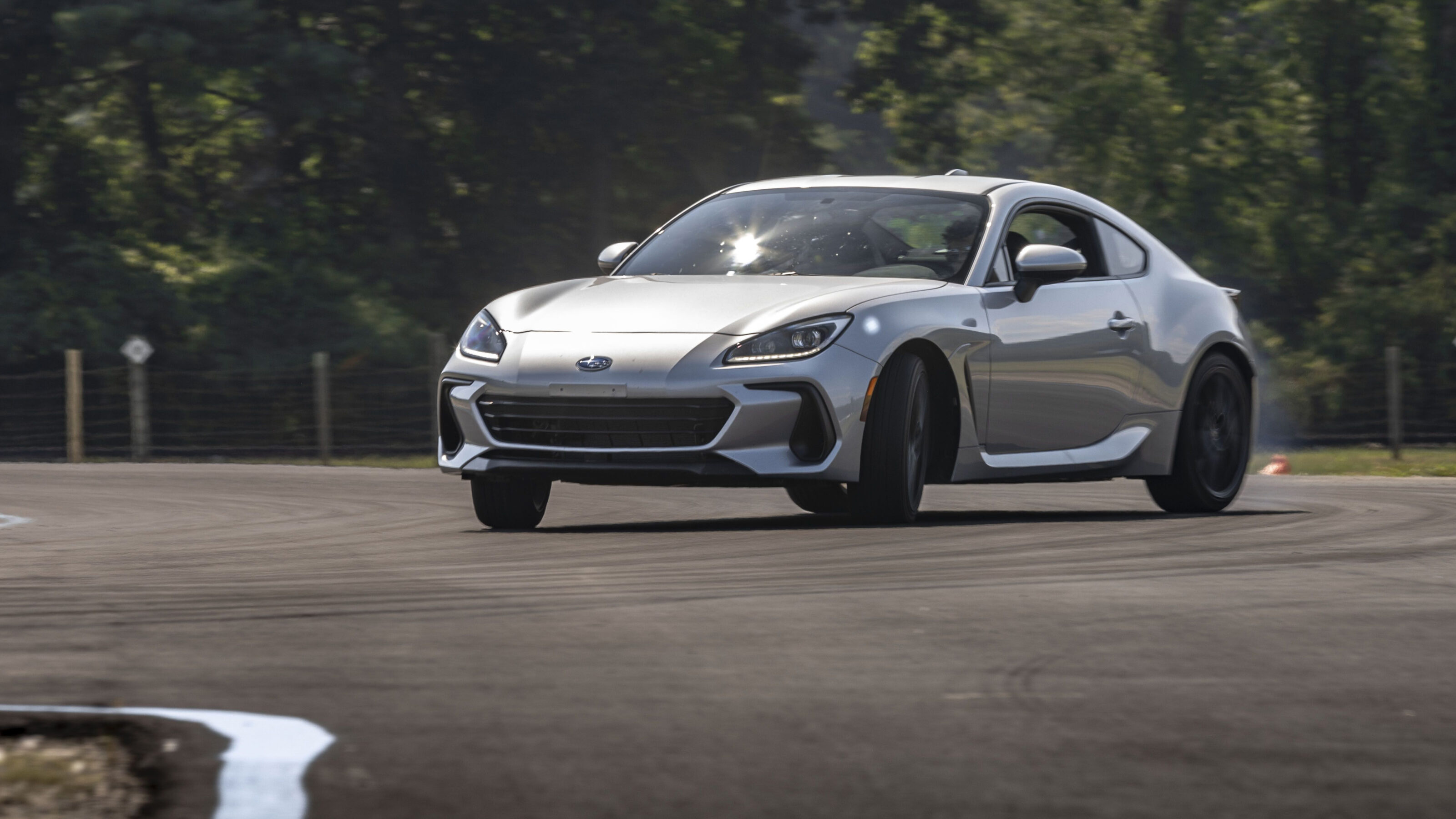
Dynamically, everything that was brilliant about the first-generation car is further improved here. Fast, slick-feeling steering, (just 2.5 turns lock to lock) is directionally stable at the straight-ahead, with natural weighting as lock is wound on.
The front end is eager and grippy, the mid-corner balance sweetly adjustable between neutral and tail out. ESC Off does exactly what it says, and the Torsen LSD never wastes even a half revolution of the unweighted rear tyre, making the BRZ an oversteering delight if you want to drive it like that.
Our road drive was too short to tell us everything we want to know about the car, but its overall liveability factor feels pretty good. Yes, there’s a fair bit of road noise, and yes, the ride is firm, but the chassis set-up doesn’t jostle you relentlessly and there’s decent resistance to crash-through on rough stuff.
Dynamically, everything that was brilliant about the first car is further improved here. The front end is eager and grippy, the mid-corner balance sweetly adjustable between neutral and tail out
But tell ’em the price, son! Good news is that prices of the two-model line-up (both available as auto or manual) haven’t moved significantly from when the car was first introduced, given inflation.
The entry-level coupe (manual) is $38,990, while the auto adds $3800 for a tag of $42,790 (both before on-road costs). Sounds like a hefty premium for the automatic, but the auto does add a suite of safety and assistance features not available in the manual car, including AEB, adaptive cruise control, lane-departure warning and lead vehicle start alert.
Manual versions do get blind-spot monitoring and rear cross-traffic alert, however, and both models have seven airbags.
All the usual comfort and convenience stuff is on both models – auto LED headlights, dual-zone climate control, navigation, Apple CarPlay and Android Auto, digital radio and so on – with the only addition to the top-spec Coupe S model being natural and synthetic leather trim and Ultrasuede for its seat material, plus front seat heating. The BRZ Coupe S (manual) is $40,190, while a Coupe S auto is $43,990 (both before on-road costs).
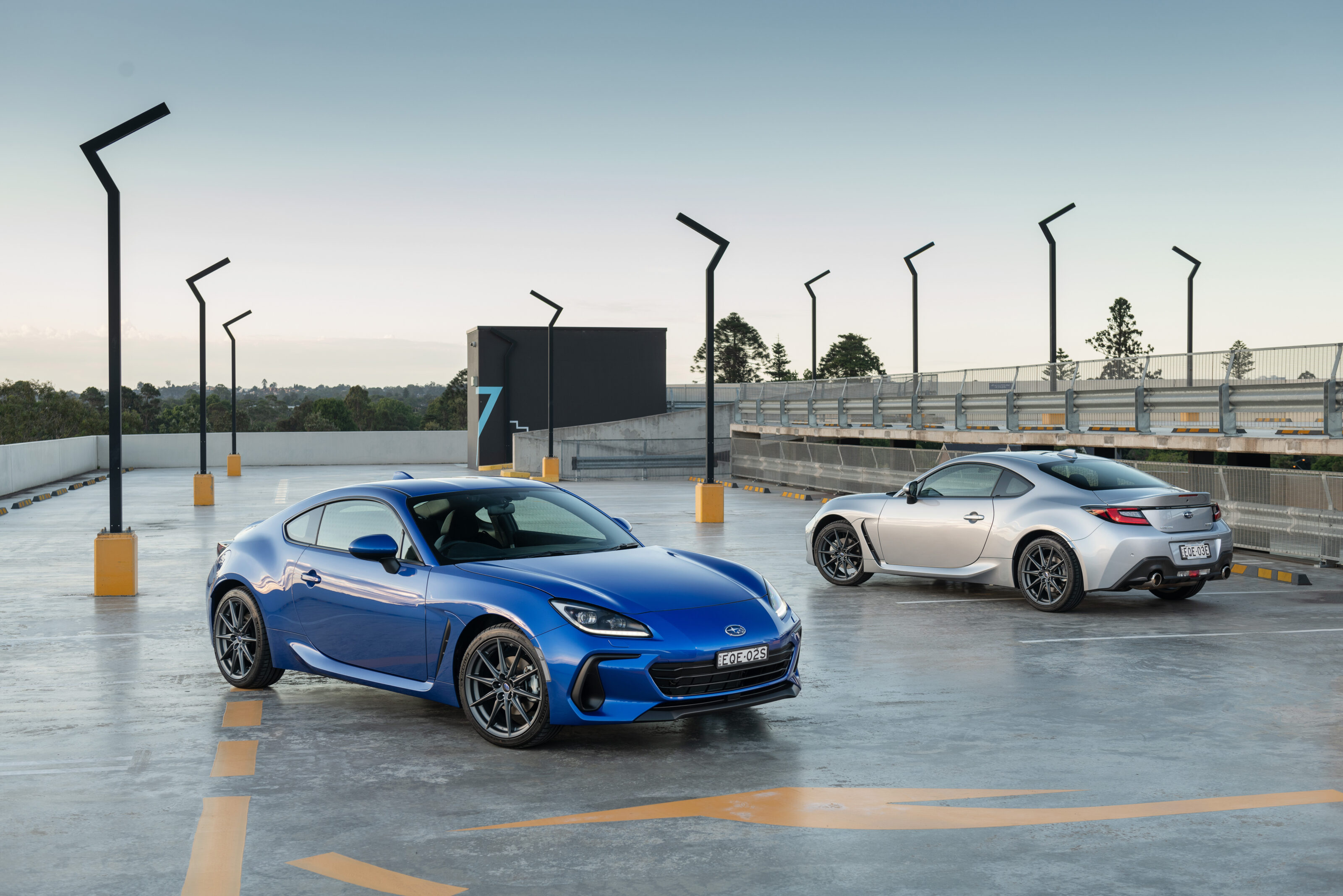
So are you tempted? Fact is, until the twinned Toyota GR86 arrives later this year, the BRZ occupies a unique niche. You could cross-shop it against a Hyundai i30 N hatch (faster, but front-drive) or a Mazda MX-5 (strictly a two-seater) but nothing else offers the Subaru’s brilliant rear-drive dynamics with the plus-two cabin at this price.
No wonder the first 500 were snapped up. This is a reboot that retains everything great about the original while addressing its weaknesses, and arrives as a sweet internal-combustion antidote to the anodyne EV wave.
2022 Subaru BRZ specifications
| Body | 2-door sports coupe |
| Drive | Rear |
| Engine | 2.4-litre flat four-cylinder |
| Transmission | 6-speed manual/6-speed auto |
| Power | 174kW @ 7000rpm |
| Torque | 250Nm @ 3700rpm |
| Bore/Stroke | 94mm x 86mm |
| Compression ratio | 12.5:1 |
| 0-100km/h | 7.2sec (estimated) |
| Fuel consumption | 9.5L/100km (combined, manual) |
| Weight | 1286kg (kerb; manual) |
| Front Suspension | MacPherson struts with lower A-arms, anti-roll bar |
| Rear Suspension | Double A-arms with coil springs, anti-roll bar |
| L/W/h | 4265/1775/1310mm |
| Wheelbase | 2575mm |
| Brakes | ventilated discs (front); solid discs (rear) |
| Tyres | 215/40 R18 Michelin Pilot Sports |
| Wheels | 18-inch alloy wheels |
| Price | $38,990 plus on-road costs (base manual) |
Snapshot
- Price increases vary between $750 to $3000
- Commercial vehicles impacted as well as passenger vehicles
- A total of seven models have undergone a price rise
The Australian arm of Peugeot has handed down a variety of price increases for its 2022 range, impacting all seven models for sale.
Pinning the jump on an increase in production costs, the higher premiums range from between four to five per cent above the previous prices before on-roads, while a handful of incoming plug-in hybrids push up the manufacturer’s average price even higher.
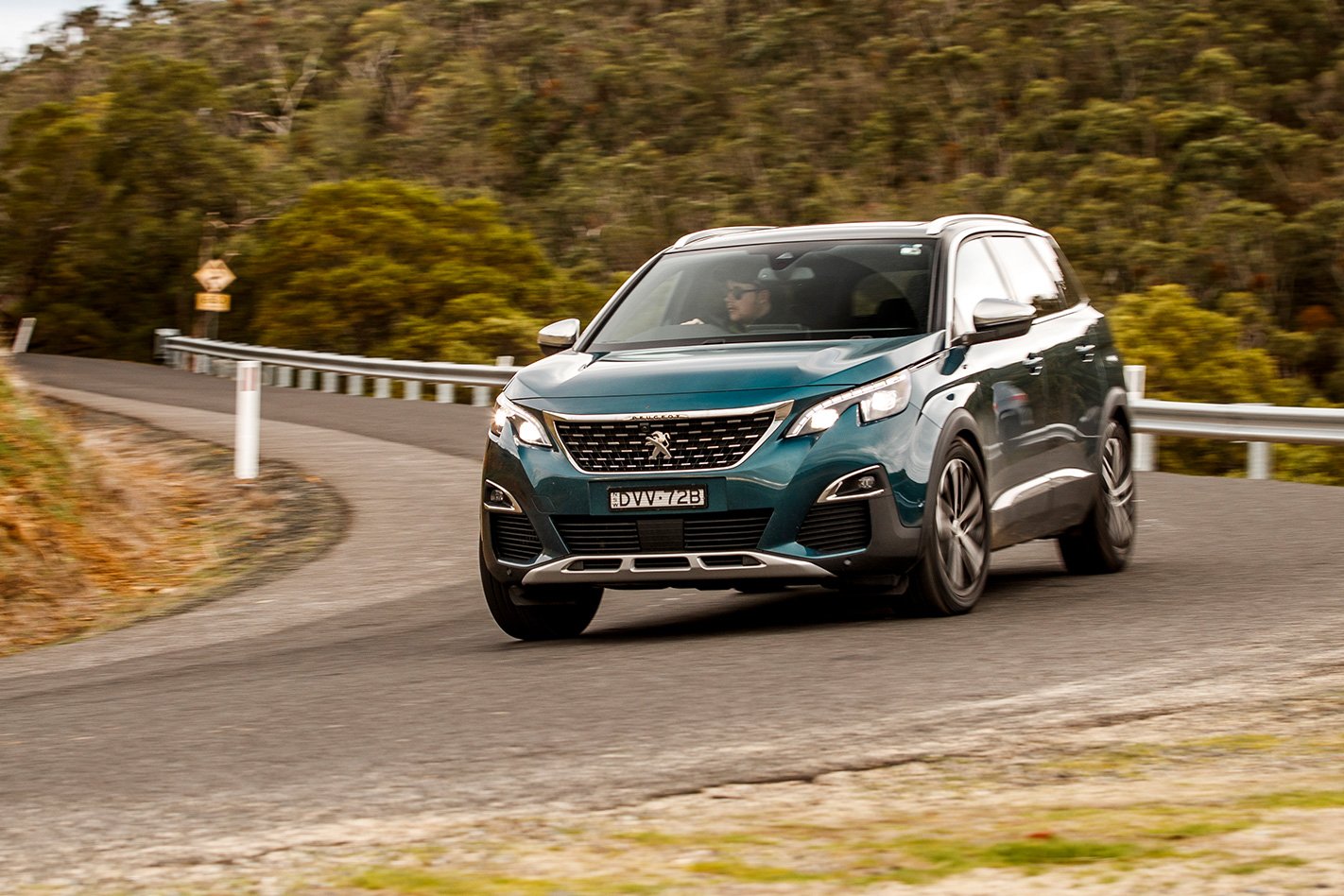
Having announced today it would drop the 5008 GT Petrol in favour of the new GT Sport – at a $9000 premium – Peugeot also announced the GT Sport variants of its 2008 and 3008 will now come with a panoramic opening glass sunroof as a standard feature.
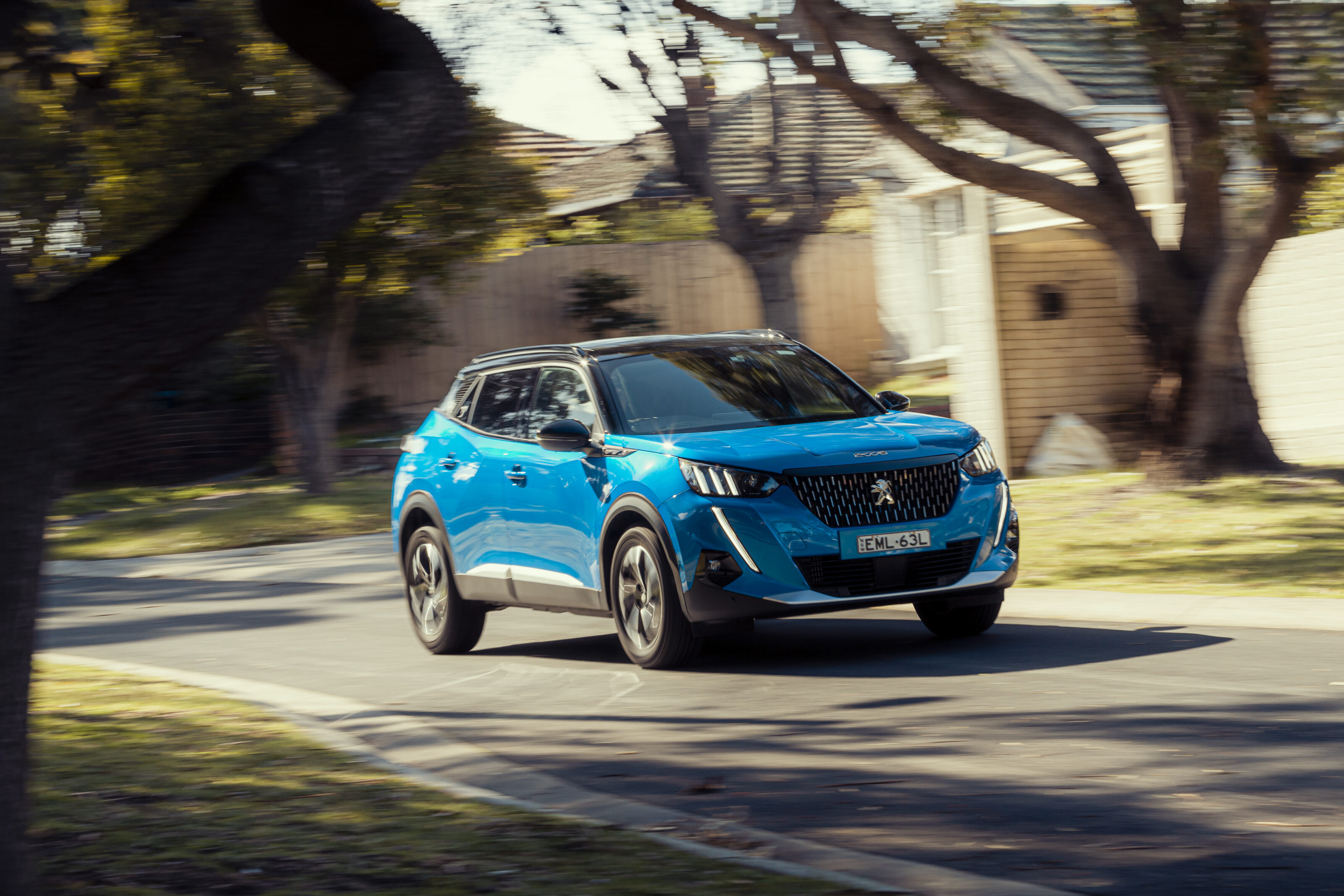
2022 Peugeot 2008 pricing
Prices exclude on-road costs.
| 2008 Allure | $36,740 (+$750) |
| 2008 GT | $40,940 (+$950) |
| 2008 GT Sport | $48,290 (+$2290, now includes panoramic sunroof) |
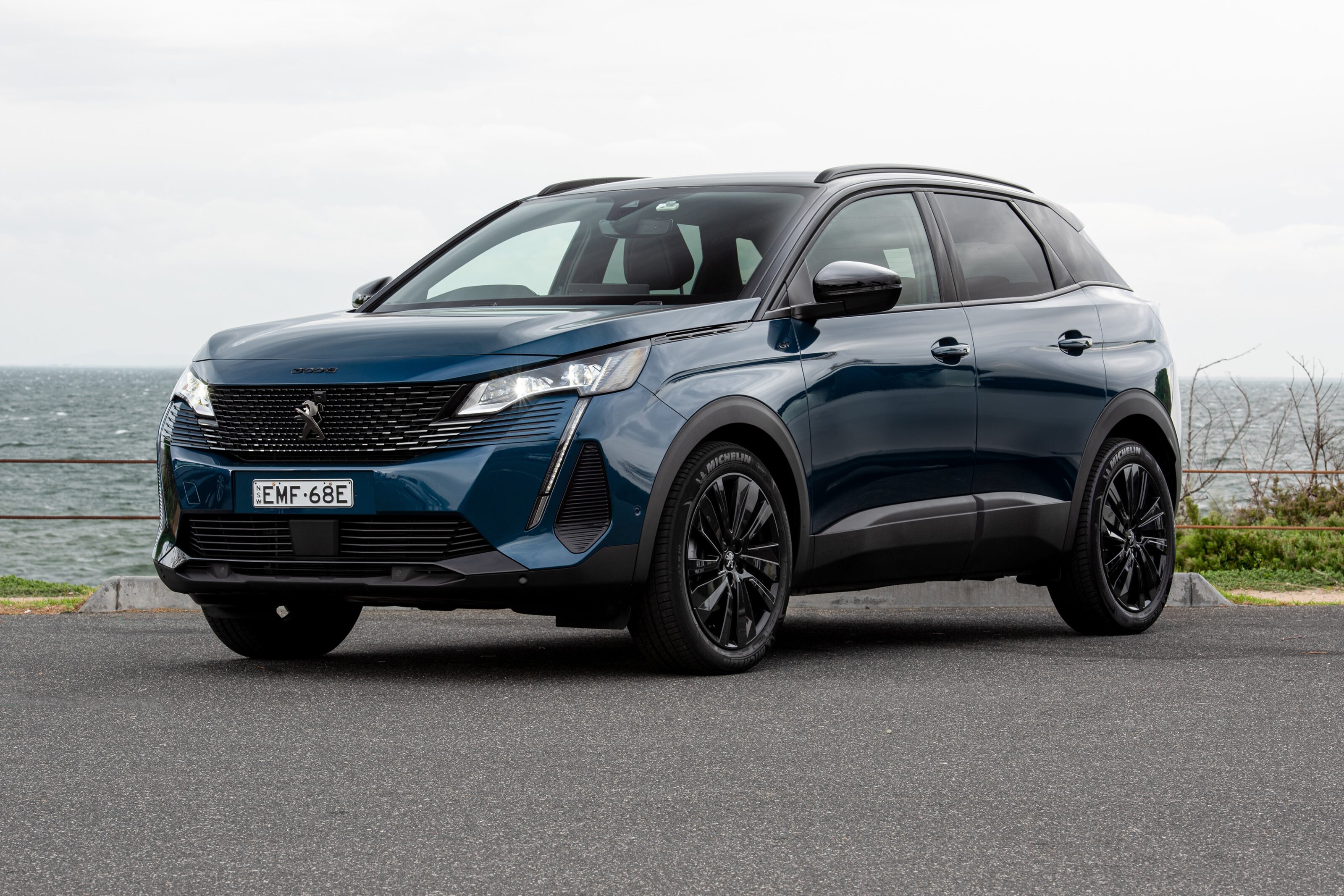
2022 Peugeot 3008 pricing
Prices exclude on-road costs.
| 3008 Allure | $47,240 (+$2250) |
| 3008 GT petrol | $50,390 (+$2400) |
| 3008 GT diesel | $53,540 (+$2550) |
| 3008 GT Sport | $59,840 (+$2850, now includes panoramic sunroof) |
| 3008 GT Sport Plug-In Hybrid AWD | $79,990 (new) |
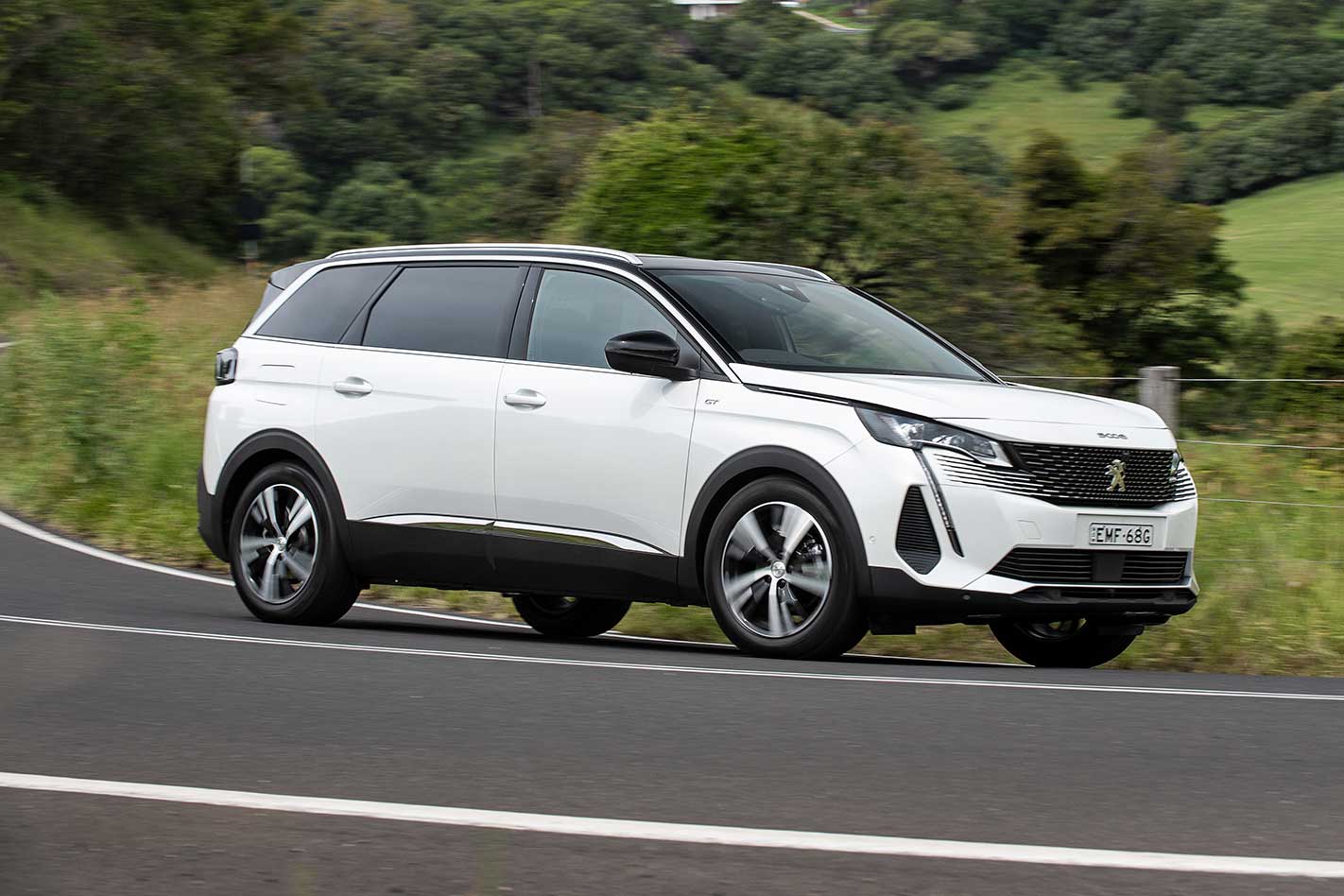
2022 Peugeot 5008 pricing
Prices exclude on-road costs.
| 5008 GT Sport | $61,940 (new) |
| 5008 GT diesel | $62,990 (+$3000) |
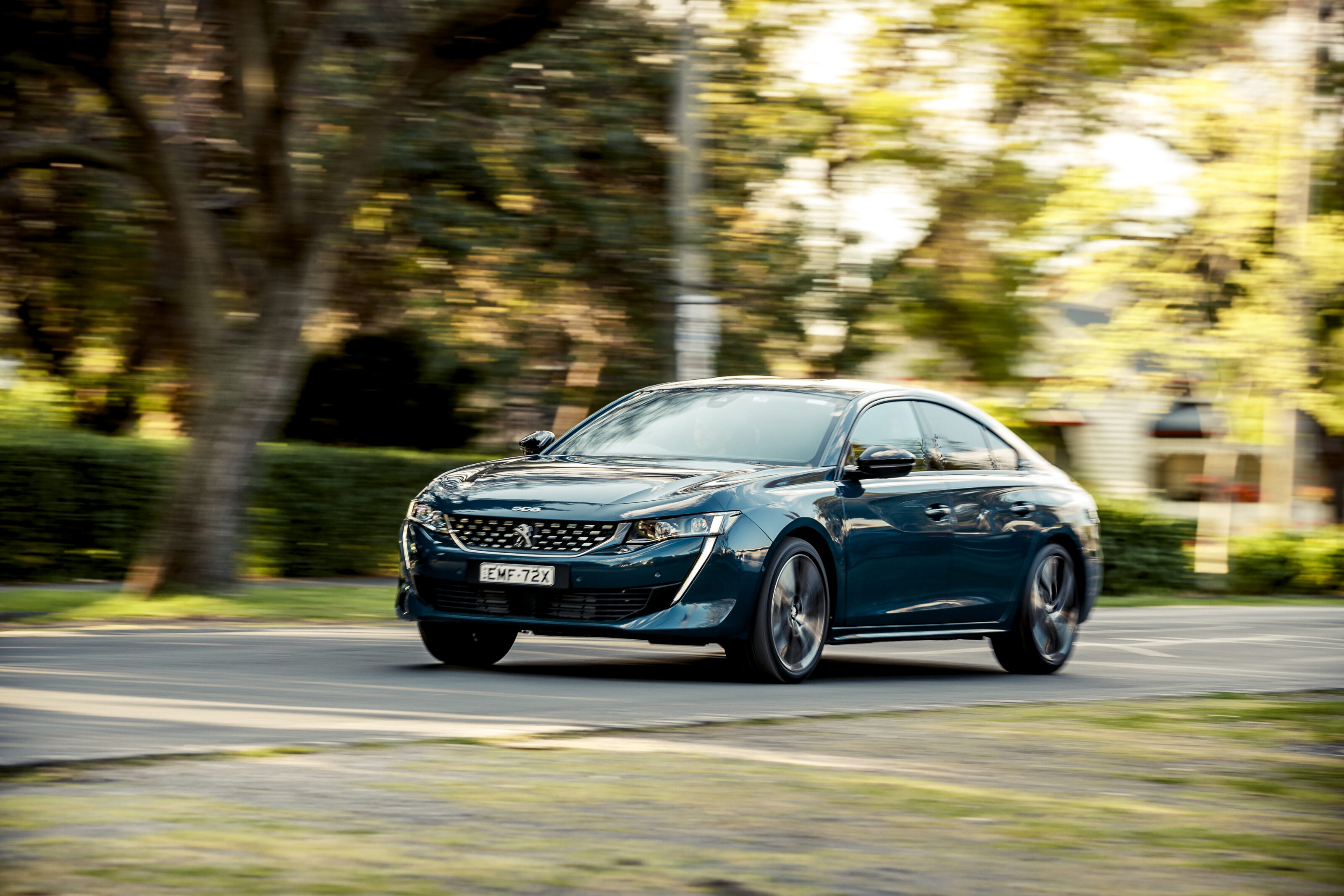
2022 Peugeot 508 pricing
Prices exclude on-road costs.
| 508 GT Fastback | $59,840 (+$3850) |
| 508 GT Sportswagon | $61,940 (+$2950) |
| 508 GT Fastback Plug-In Hybrid | $76,990 (new) |
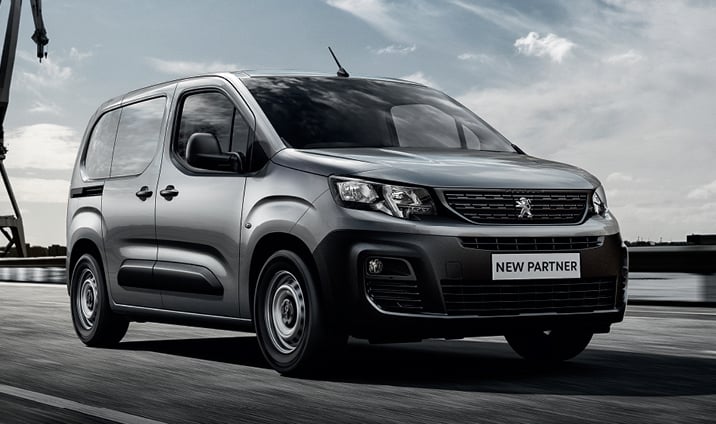
2022 Peugeot Partner pricing
Prices exclude on-road costs.
| Partner City Short manual | $28,340 (+$1550) |
| Partner City Short auto | $31,490 (+$1550) |
| Partner City Long auto | $34,115 (+$1625) |
| Partner Pro Short auto | $33,590 (+$1600) |
| Partner Pro Long auto | $36,215 (+$1725) |
| Partner Premium Short auto | $36,080 (+$1600) |
| Partner Premium Long auto | $38,705 (+$1725) |
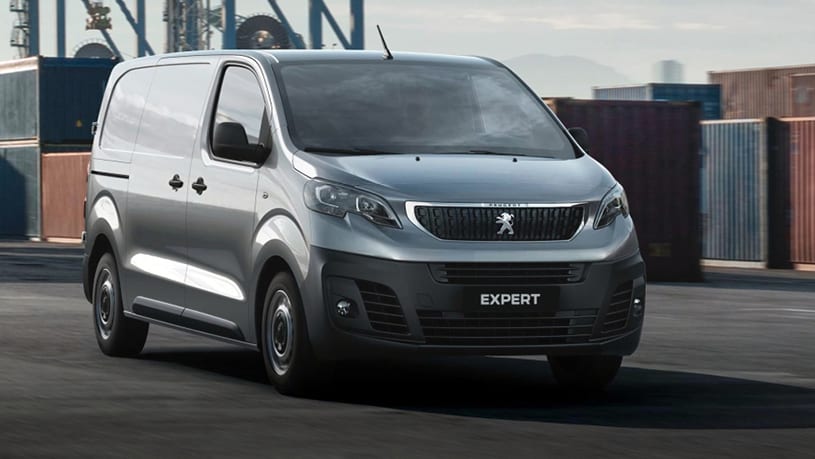
2022 Peugeot Expert pricing
Prices exclude on-road costs.
| Expert City Short manual | $40,940 (+$1950) |
| Expert Pro Short auto | $45,140 (+$2150) |
| Expert Pro Long manual | $44,090 (+$3000) |
| Expert Pro Long auto | $47,240 (+$2250) |
| Expert Premium Short auto | $48,330 (+$2150) |
| Expert Premium Long auto | $50,430 (+$2250) |
| Expert Sport Short auto | $49,990u00a0 |
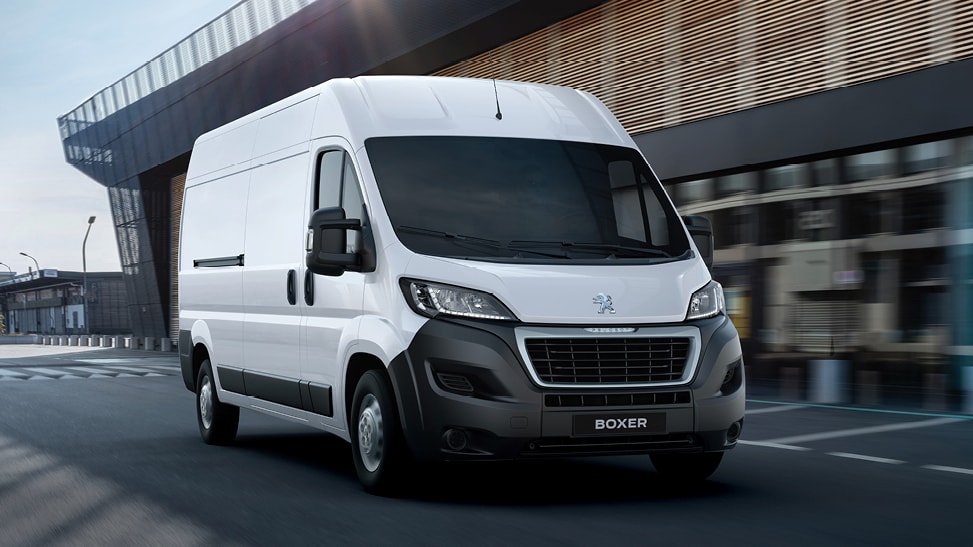
2022 Peugeot Boxer pricing
Prices exclude on-road costs.
| Boxer Pro Long manual | $51,440 (+$2450) |
Snapshot
- 2022 Hyundai Ioniq 5 to go on sale for select buyers this month
- Open to those in Victoria, Queensland, and Western Australia
- Priced from $71,900 before on-road costs
A second release of the 2022 Hyundai Ioniq 5 is set to become available for buyers in Victoria, Queensland, and Western Australia from next Thursday, January 27.
The second allocation will go on sale from 12pm in Victoria (AEDT), 11am in Queensland (AEST) and 9am in Western Australia (AWST).
Those who missed out on the first haul of 240 Ioniq 5s, which sold out on the Hyundai website in two hours, will get another chance in the coming weeks.
To help avoid another website crash, Hyundai Australia has been rolling out the second release based on buyers’ locations. Those in New South Wales and the ACT were given their opportunity last month.
“We are staggering the ordering process across the other states [and territories] in the coming weeks to assist in managing order processing timeframes,” a spokesperson for the brand told Wheels in December.
“Note that this will not affect delivery timing – that is, even though NSW and ACT have ordered first, they will not receive their cars before other states.”
Prospective customers have been warned the second allocation “could take six months or more,” with stock allocated based on a first-come-first-serve basis.
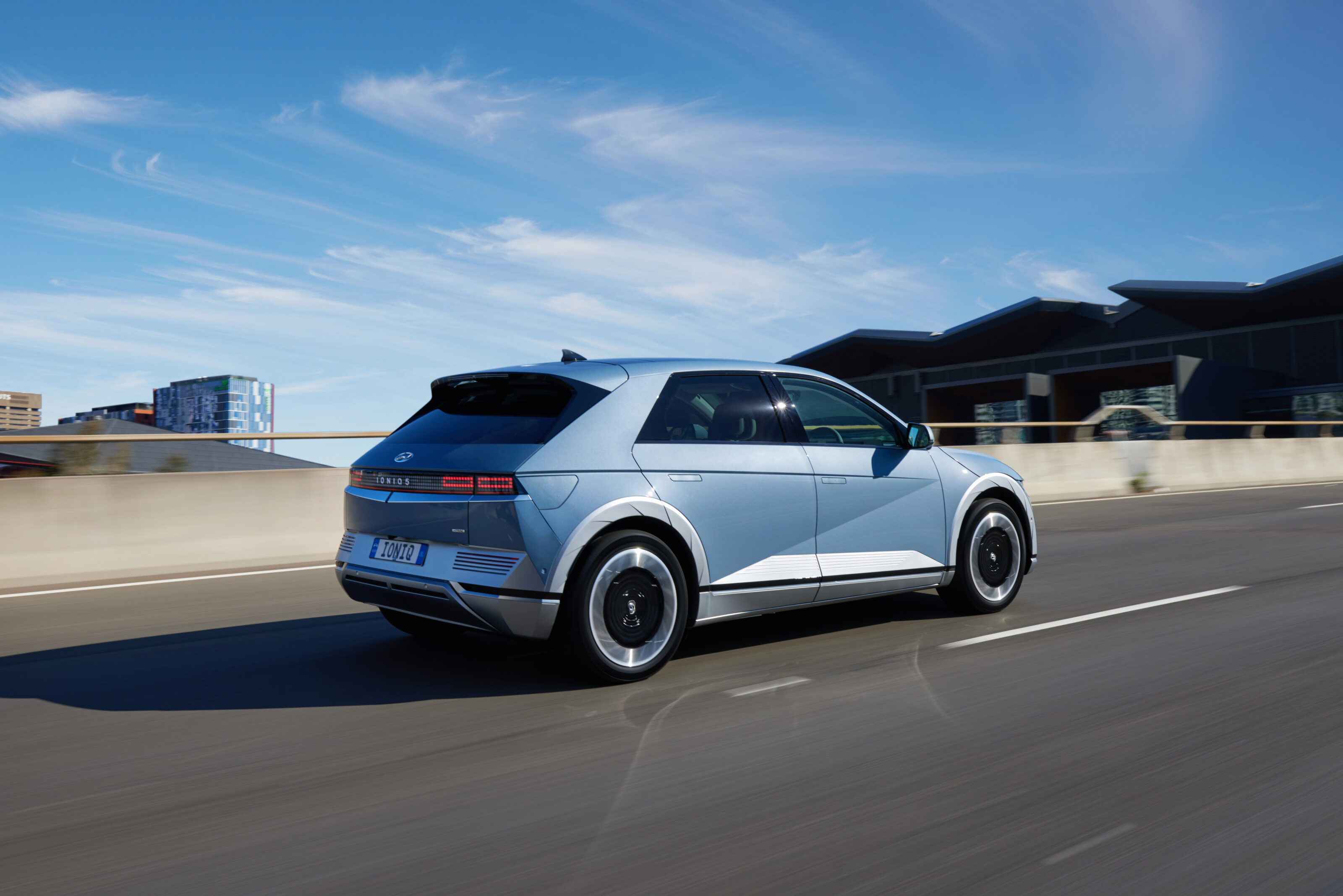
As with the NSW/ACT release, the Korean carmaker has not disclosed how many vehicles will be available to order at this allocation.
The fully-electric Ioniq 5 starts from $71,900 before on-road costs for the rear-wheel-drive model, or $75,900 plus on-road costs for the all-wheel-drive variant.
The second release of the 2022 Hyundai Ioniq 5 goes on sale for the selected buyers at 12pm AEDT on January 27 on the Hyundai website.
Key Points
- 58kWh and 72.6kWh battery sizes
- 470-480km driving range in RWD, 72.6kWh form
- Starting price of $71,900 before on-road costs
UPDATE, January 20, 2022: Vic, QLD and WA buyers set for second allocation to open
A second release of the 2022 Hyundai Ioniq 5 is set to become available for buyers in Victoria, Queensland, and Western Australia from Thursday, January 27.
Following on from NSW and ACT customers getting their shot in December, the ordering platform will be opened up for buyers from other states, with all cars expected to arrive in the first half of the year.
Read the full story below.
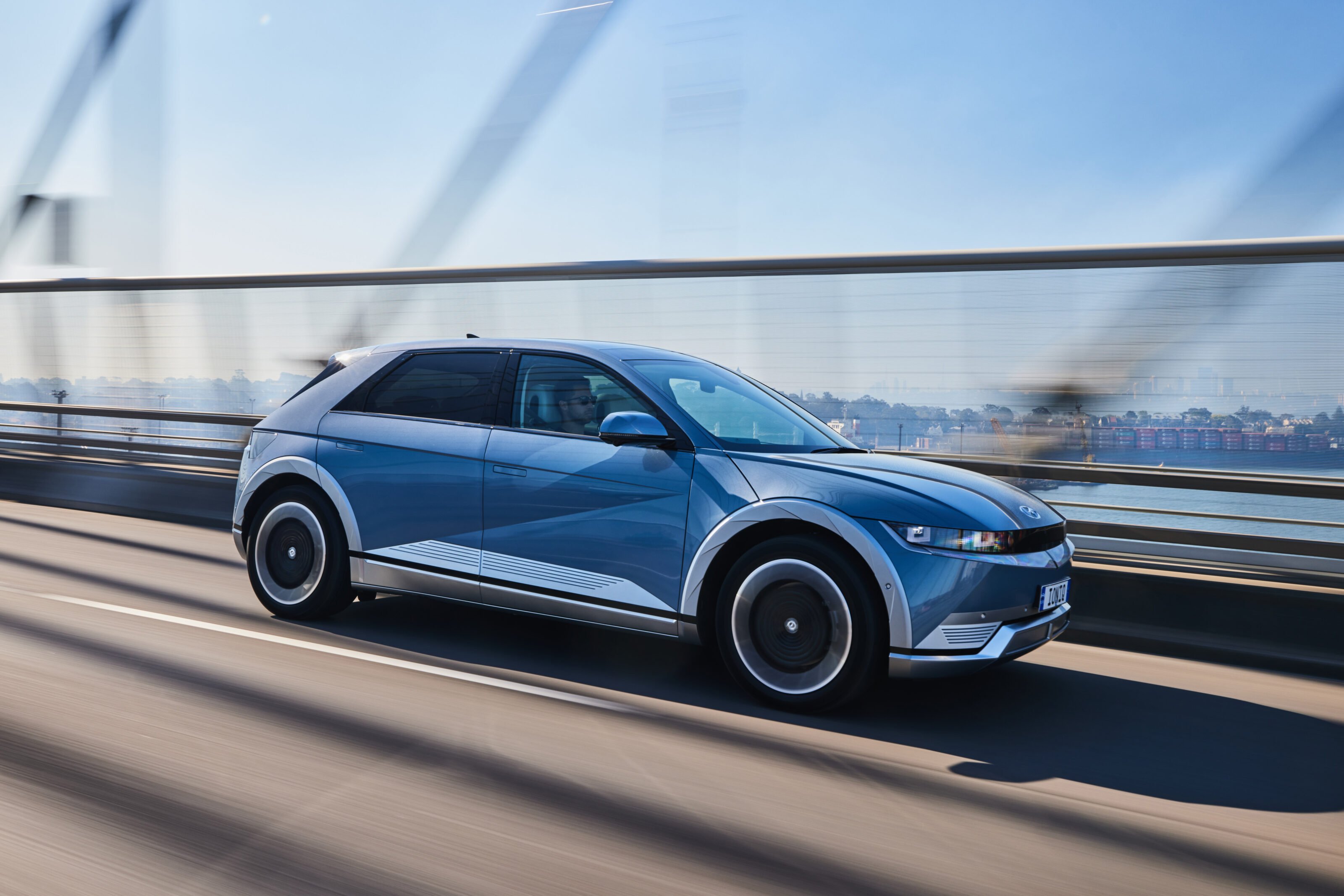
December 16, 2021: Second allocation opens to ACT and NSW buyers
The second allocation of Hyundai’s Ioniq 5 has opened to buyers from the ACT and NSW, as the expected demand nationwide would potentially cause another website crash.
Hyundai has been quick to clarify buyers from other states and territories won’t receive their cars later than those in the ACT and NSW, with the second allocation all set to launch around the same time in the first half of 2022.
Read more in the report below.

October 27, 2021: ANCAP awards Ioniq 5 five-star safety rating
Ahead of going on sale in Australia, the Ioniq 5 has scored flying colours in an important test, taking five stars from ANCAP.
Scoring particularly well in the adult and child occupant protection tests, the Ioniq 5 solidified itself as one of the safest EVs on Australian roads.
Read more about the Ioniq 5’s safety here.
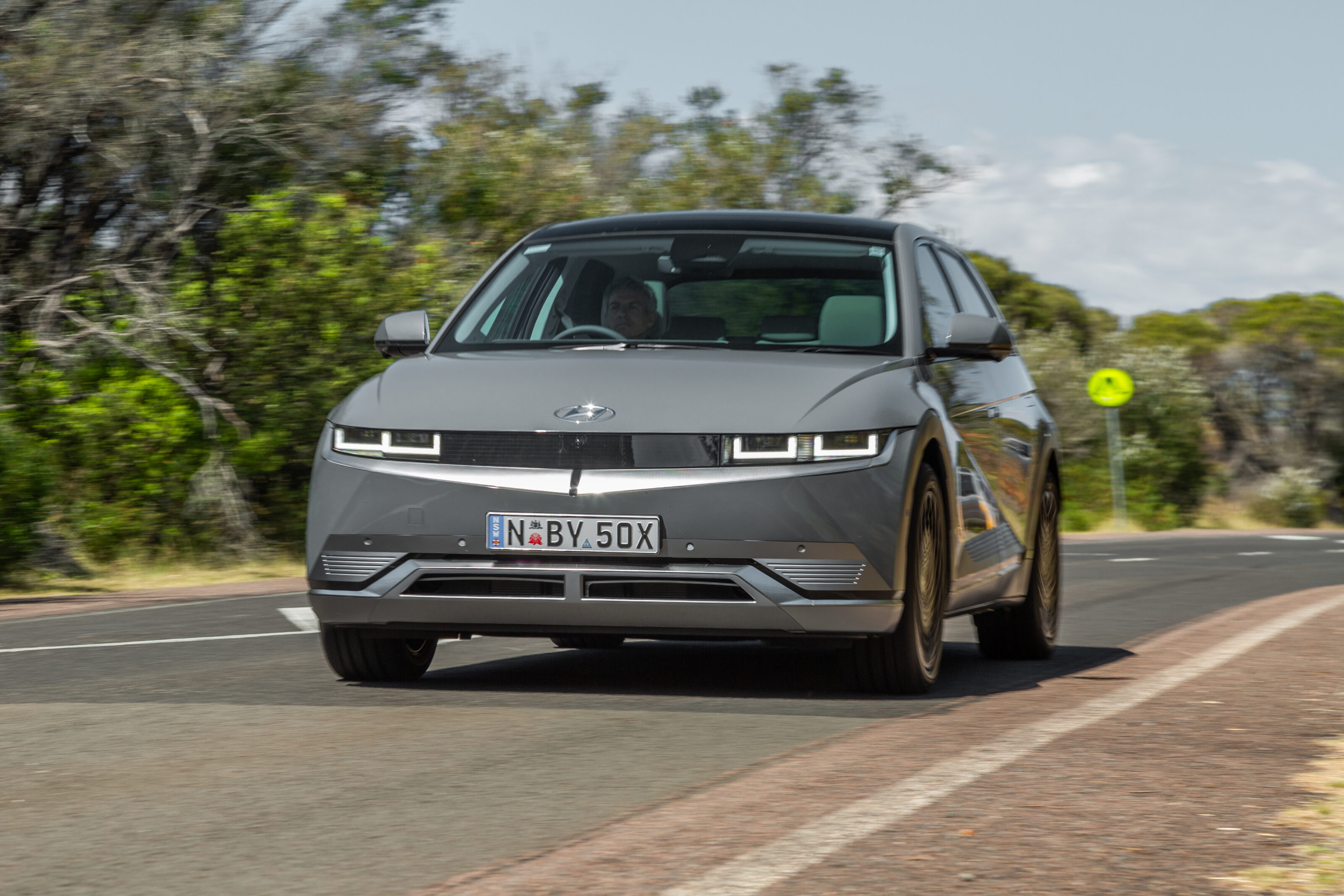
October 22, 2021: Jez Spinks takes Ioniq 5 for its first Australian drive
The first examples of the Hyundai Ioniq 5 have arrived in Australia, and our man Jez Spinks has sampled the in-demand EV for the first time.
Want to know what he thinks of Hyundai’s new flagship on Australian roads? Read below to find out.
October 12, 2021: First Ioniq 5 allocation sells out within two hours
Demand for the Ioniq 5 has resulted in the incoming electric vehicle selling out within two hours, as buyers snapped up the first 240 examples.
The rush of customers for the Ioniq 5 caused the ordering site to crash, with Hyundai resuming service later on in the day before the 240 built slots had disappeared.
Hyundai expects all cars sold would arrive before 2022, with an extra allocation to be released early next year.
Read the full report below.

September 20, 2021: Australian pricing and features revealed
After months of waiting and speculation, Hyundai has set a price for its Ioniq 5, starting at $71,900 for the rear-wheel drive variant while the dual-motor sets buyers back another $4000, going on sale from $75,900 before on-road costs.
Buyers will have the option to choose either a single electric motor sending 160kW/350Nm to the rear wheels, or a dual-motor version with 225kW/605Nm and all-wheel drive.
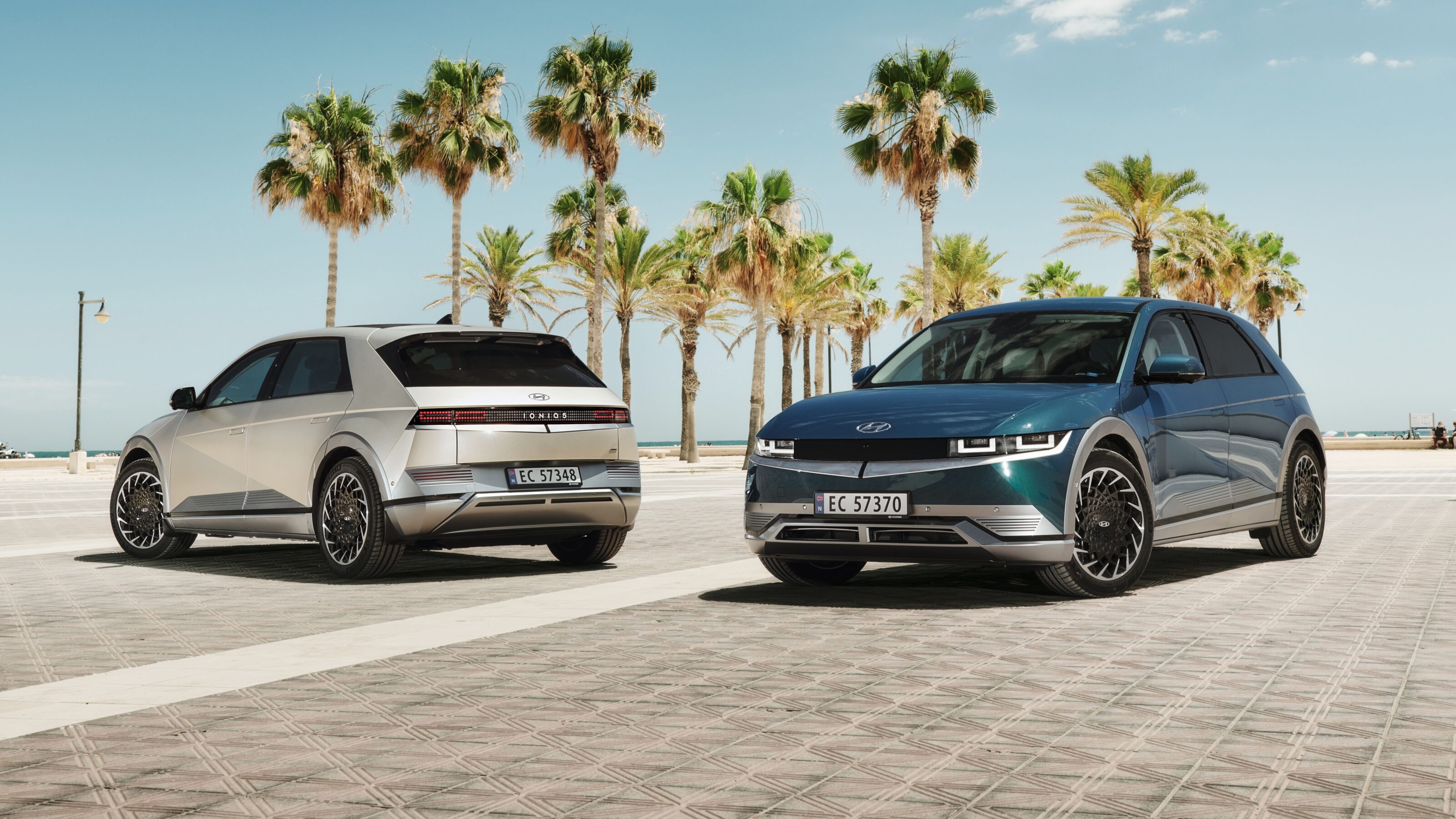
April 21, 2021: Early walk-around videos emerge
As the Australian launch of the Ioniq 5 draws closer, a number of walk-around videos have been published.
This week, however, a video has surfaced out of Korea showing the Ioniq 5 alongside Tesla’s Model 3 – a car the Ioniq 5 is likely to be priced below, but not by much.
If you skip ahead to 04:25, you’ll see the angular Ioniq 5 is markedly larger than the Model 3, despite its hatch-like, Pony-inspired styling.
Catch the rest of our expansive Ioniq 5 coverage below, and be sure to watch our video at the top of this story.
April 3, 2021: WhichCar video tour
This week, WhichCar was given the opportunity to go hands-on with the 2022 Hyundai Ioniq 5 in Sydney.
Watch our video above to see our tour of Hyundai’s new electric family car, and catch our earlier coverage in the story below.
February 23, 2021: Hyundai Ioniq 5 revealed
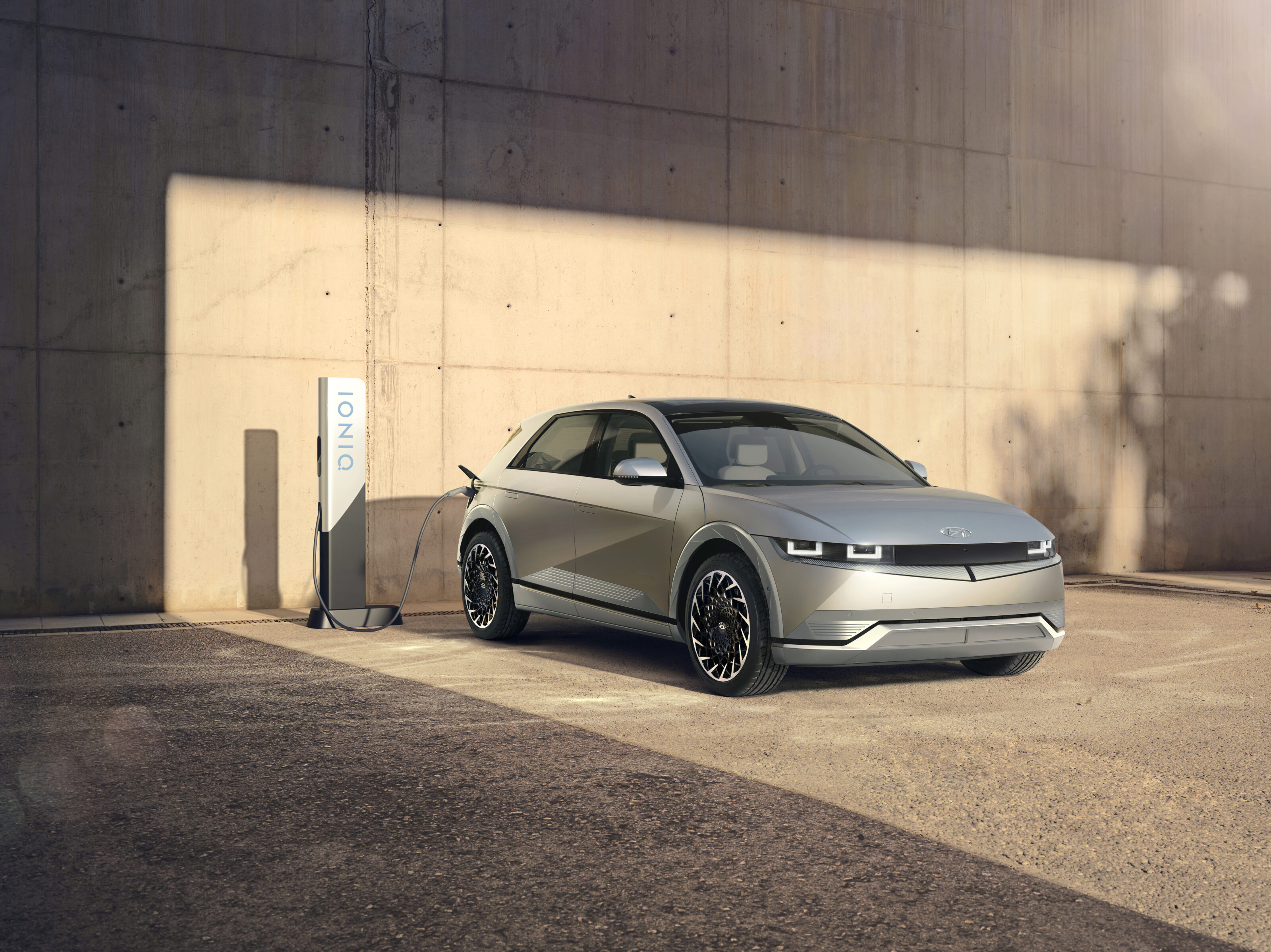
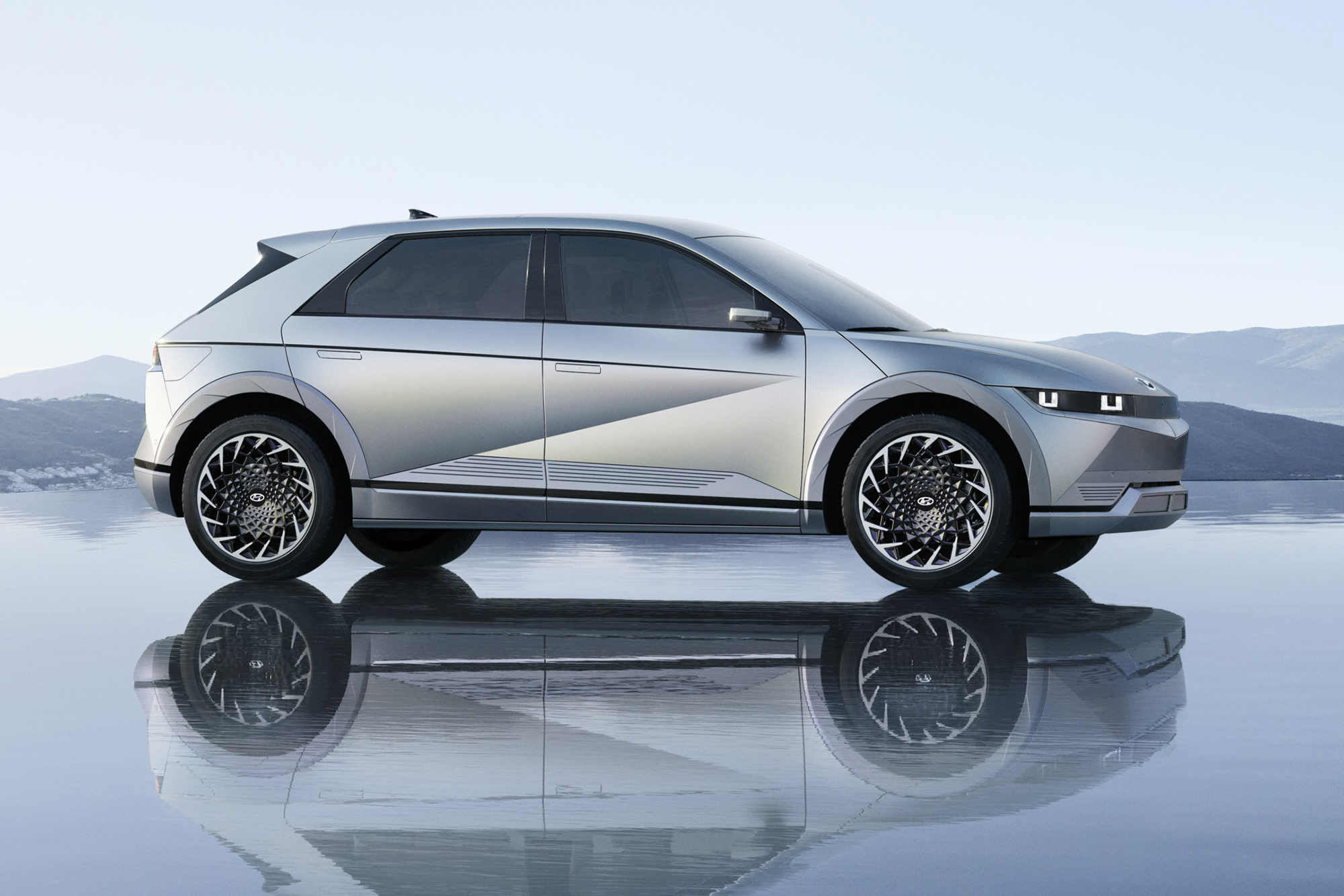
It’s a rare event when a new model is unveiled with styling so loyal to the show-car concept that came before it. In the Ioniq 5 revealed today, Hyundai has managed just that.
The 2022 Hyundai Ioniq 5 follows the 2019 debut of a ‘modern retro’ concept known as the 45 – a tribute to the Giorgetto Giugiaro-penned 1974 Pony Coupe Concept that loosely previewed the important but decidedly more pedestrian 1975 Pony hatch.
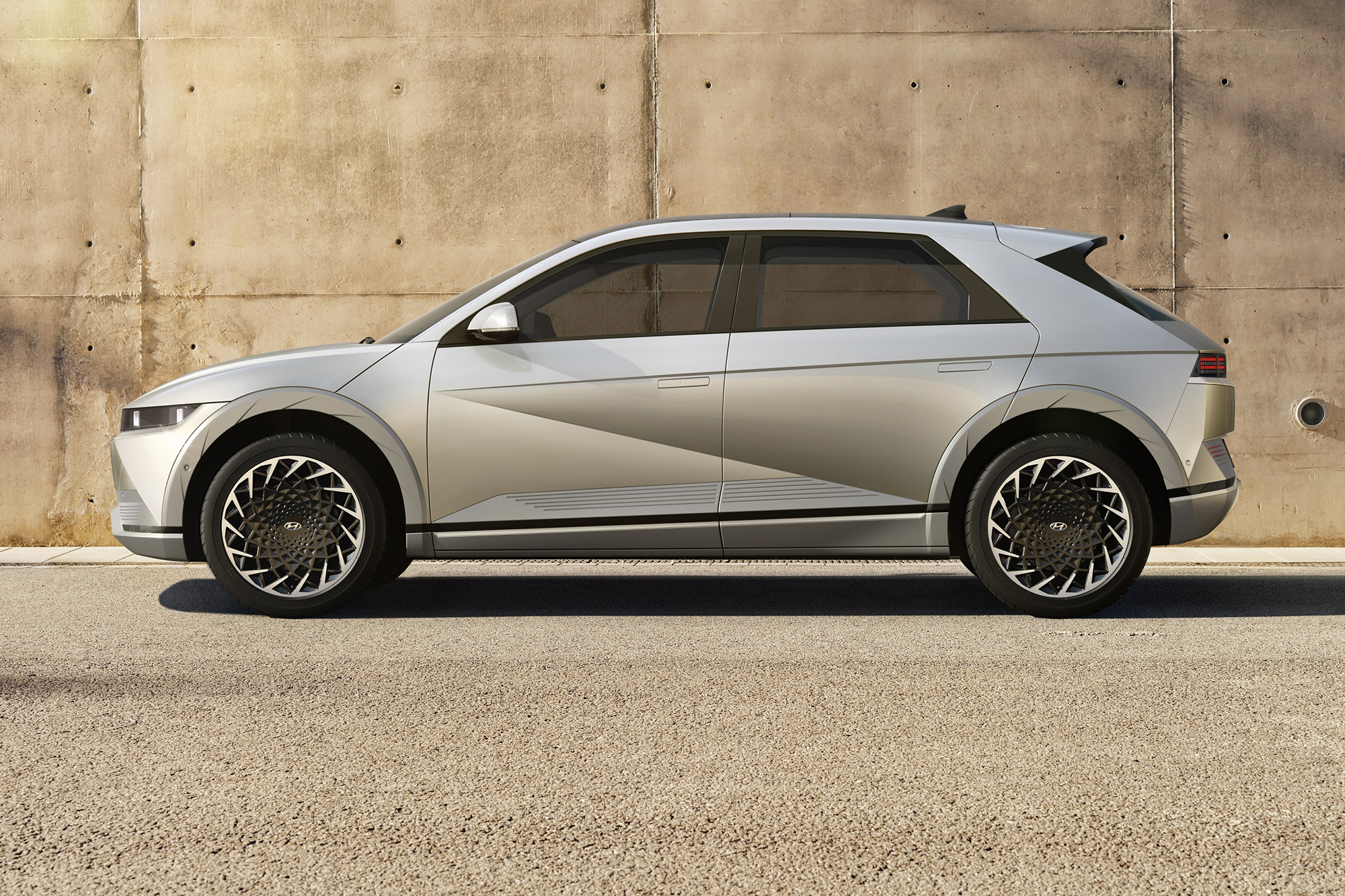
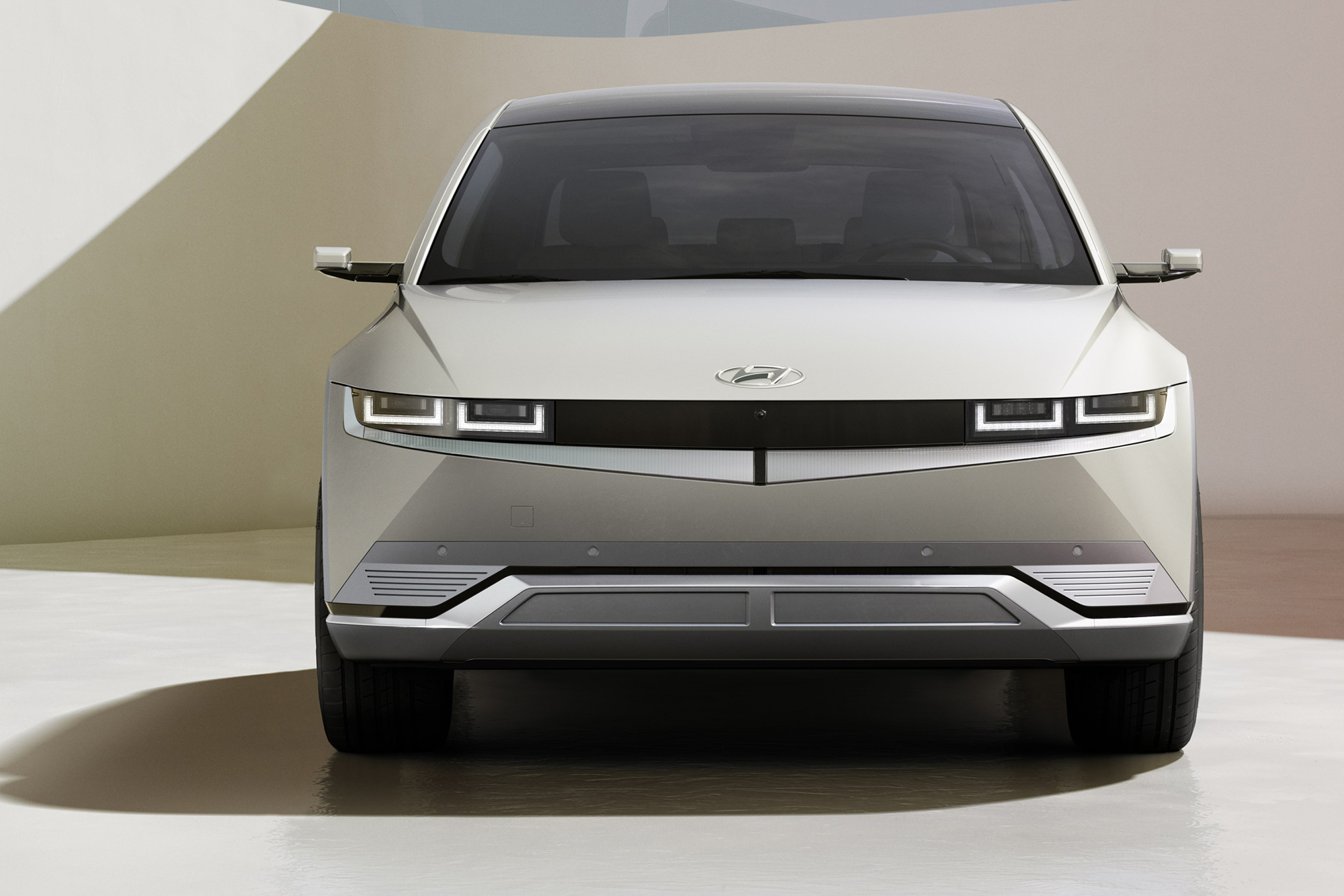
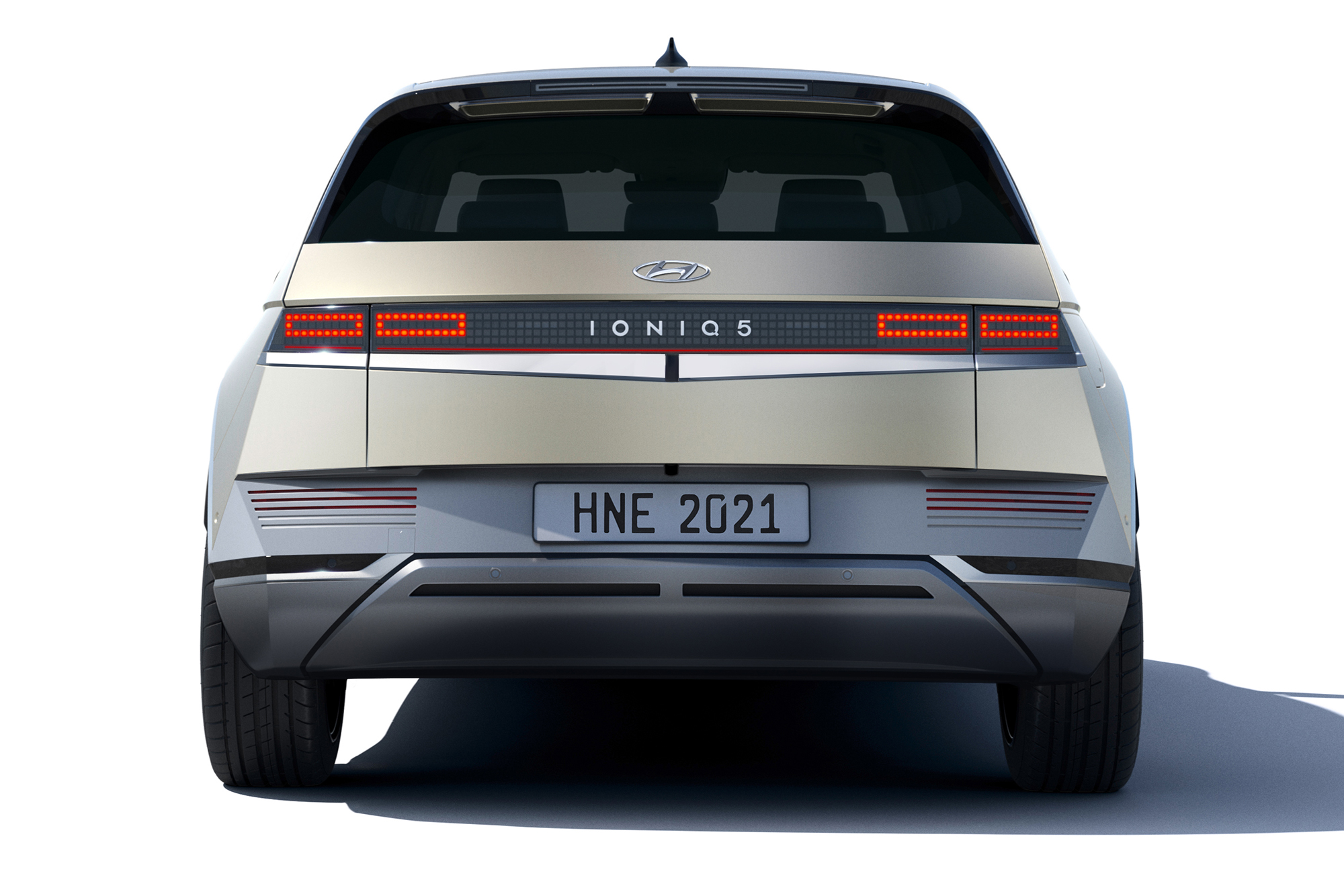
The Ioniq 5 brings the same boxy and angular lines that were common to most models in the Pony’s day, while adding bold character lines and details for futuristic flair.
Importantly, the Ioniq 5 stands apart from the Hyundai brand’s familiar styling at the front and rear, although the sharply geometric lines through the doors share a theme with the new Tucson and i30 Sedan (née Elantra) models.
Electric drive: Ioniq 5 performance, range and charging
Built on Hyundai’s new EV-focused E-GMP architecture, the Ioniq 5 will be offered with three battery and motor configurations – although it is unclear for now if we’ll see each in the Australian line-up.
At the top of the range is an all-wheel-drive (AWD) setup with an electric motor at each end of the car, producing a combined 225kW and 605Nm.
An entry-level rear-wheel-drive model will also be offered with just one motor (350Nm torque, power figure unannounced).
Both can be had with either a 72.6kWh or 58kWh battery pack.
Hyundai claims the 72.6kWh AWD model will sprint to 100km/h in a hot 5.2 seconds, while the 58kWh AWD model is limited to a perfectly adequate 6.1-second time.
Opting for the 72.6kWh RWD model will deliver a claimed 7.4-second 0-100km/h time, with the 58kWh RWD model listing an 8.5-second run.
The 72.6kWh RWD model lists a WLTP-tested driving range of “around” 470 to 480 kilometres.
Driving range for the other configurations is still to be revealed.
The Ioniq 5 will support both 400V and 800V charging infrastructures as standard without the need for adapters – a feat which Hyundai is declaring a patented world-first system, thanks to its ability to run the motor and inverter to boost 400V to 800V for stable charging.

Hyundai claims a 350kW fast charger will bump the Ioniq from 10 per cent to 80 per cent charge in 18 minutes, and a full 100 kilometres of driving range will be available after five minutes of 350kW charging.
Charging times for slower systems are still to be revealed.
In Vehicle-to-Load mode, the Ioniq 5 can supply up to 3.6kW of power, allowing it to charge electric devices like personal transportation gear, camping equipment or power tools.
Feeling generous? That power output will also let you lend some charge to something like a Nissan Leaf, if you’ve got the hours to spare – its 40kWh battery pack leaving you some to spare. In a pinch, you’ll give the Leaf around 15km of driving off one hour of loaned charging.
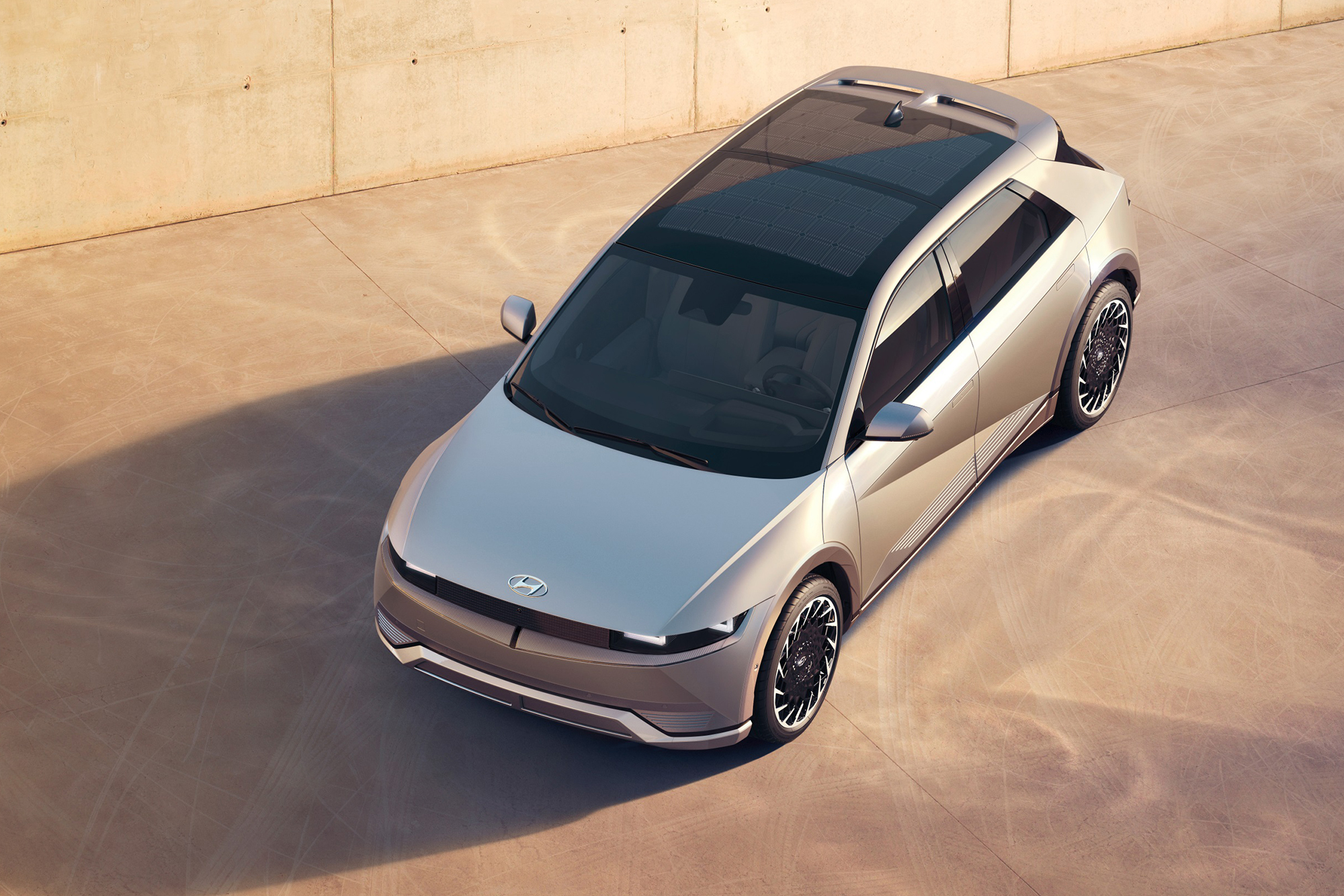
A neat feature of the Ioniq 5 is the availability of a solar roof, allowing the vehicle’s power system to feed energy back into its battery pack.
Design and dimensions
The angular 45 concept was anything but dull, and to its credit, Hyundai has bravely retained its essence and key design details in developing the final production car.
The Ioniq 5 is the first offering in a new line-up of electric vehicles, with an Ioniq 6 electric sedan and Ioniq 7 electric large SUV to follow in the coming years.
In that range, the Ioniq 5 is well-positioned as the first to launch, thanks to a design perfectly suited to one of the world’s strongest-selling market segments – the midsize SUV.
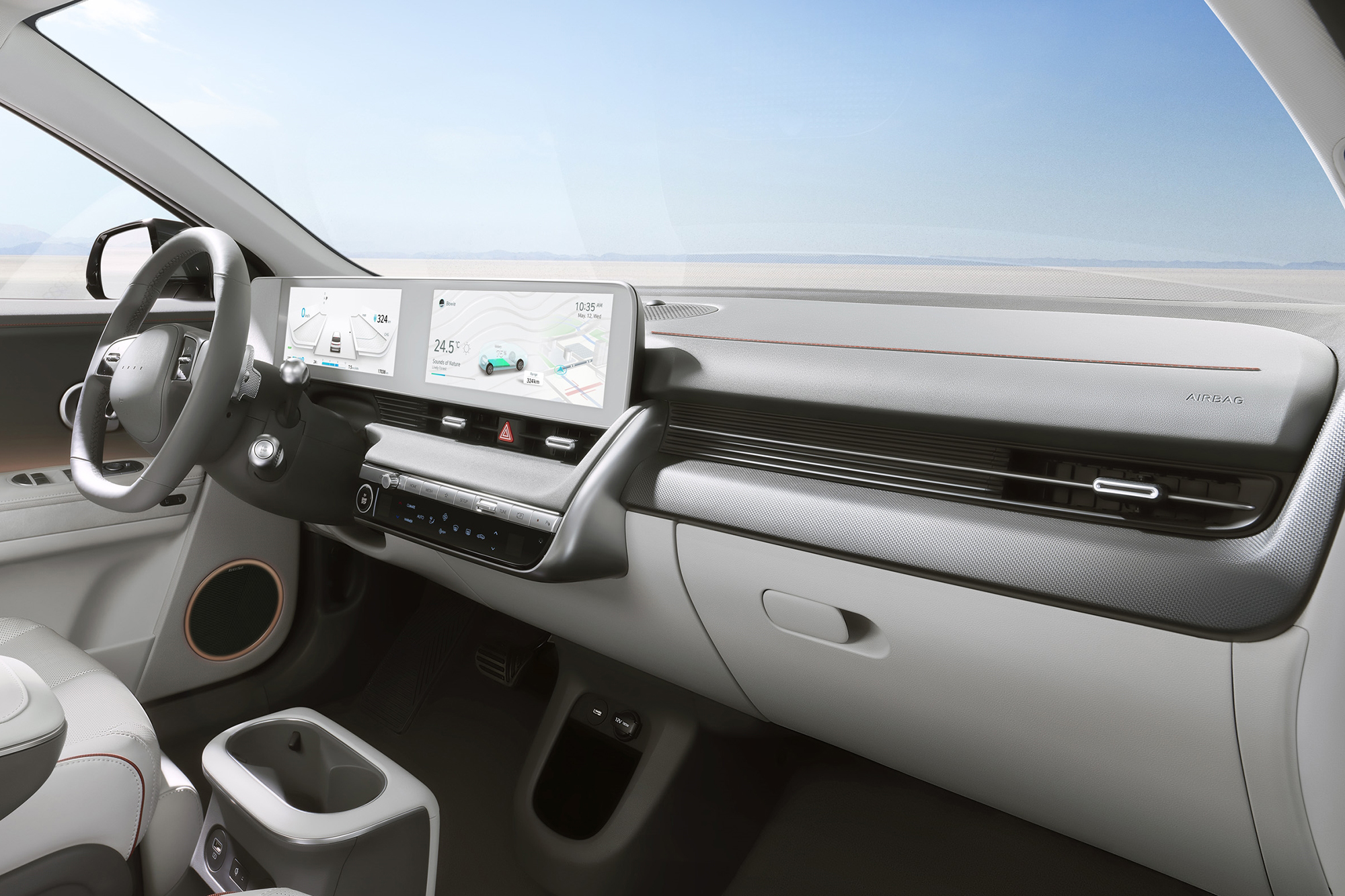
Despite its compact looks, the Ioniq 5 rides on a 3000mm wheelbase, which outdoes the huge Palisade SUV’s 2900mm footprint.
It’s a configuration made possible by its electric architecture, allowing the wheels to be positioned far into each corner of the car, with very short overhangs. All of this should make for a spacious cabin.
Overall, the Ioniq 5 measures 4635mm long and 1890mm wide, making it more of a match for the new long-wheelbase Tucson we’ll get in Australia, which measures 4670mm long and 1895mm wide. Its wheelbase is much shorter than in the Ioniq 5, however, at 2755mm.
The Ioniq 5’s proportionally wider design is further emphasised by its shorter height, coming in at 1605mm tall – compared to 1665mm for the new Tucson.
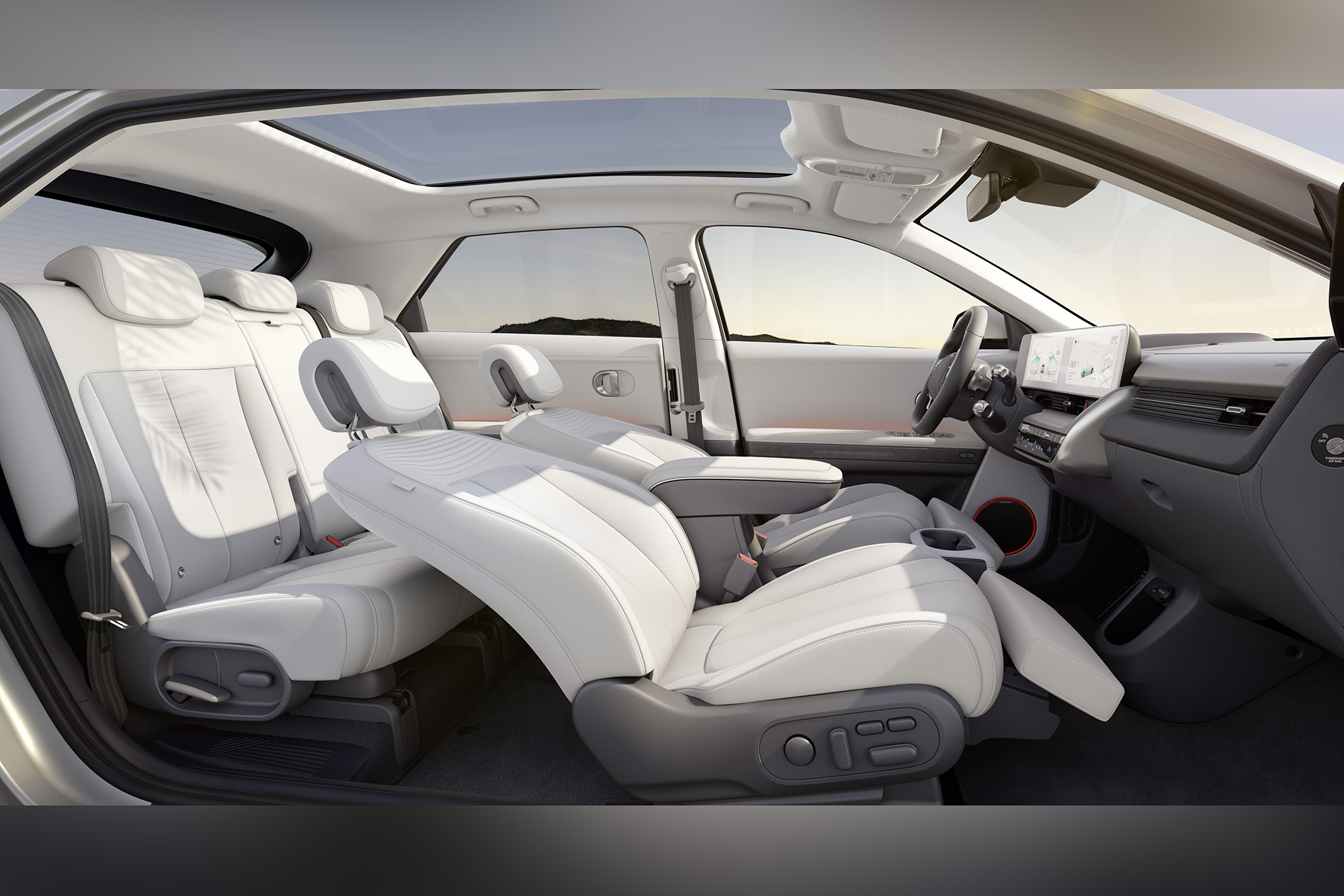
Seats-up cargo space in the rear of the Ioniq 5 is listed at 531 litres, growing to 1591 litres with the 6:4-split second row folded to the floor. The second-row seats can also slide forward for additional cargo space.
Hyundai’s newest EV also boasts a feature many new EVs still lack: a front storage space, known colloquially as a ‘frunk’ (although ‘froot’ might be more appropriate in Australia). This space offers an additional 57 litres of storage capacity in RWD models, while the presence of a front motor in the AWD model drops its capacity to 24 litres.
If even more carrying space is required, the Ioniq 5 lists a towing braked towing capacity of “up to” 1600kg – a number which will likely vary depending on the model selected.
Interior features and technology
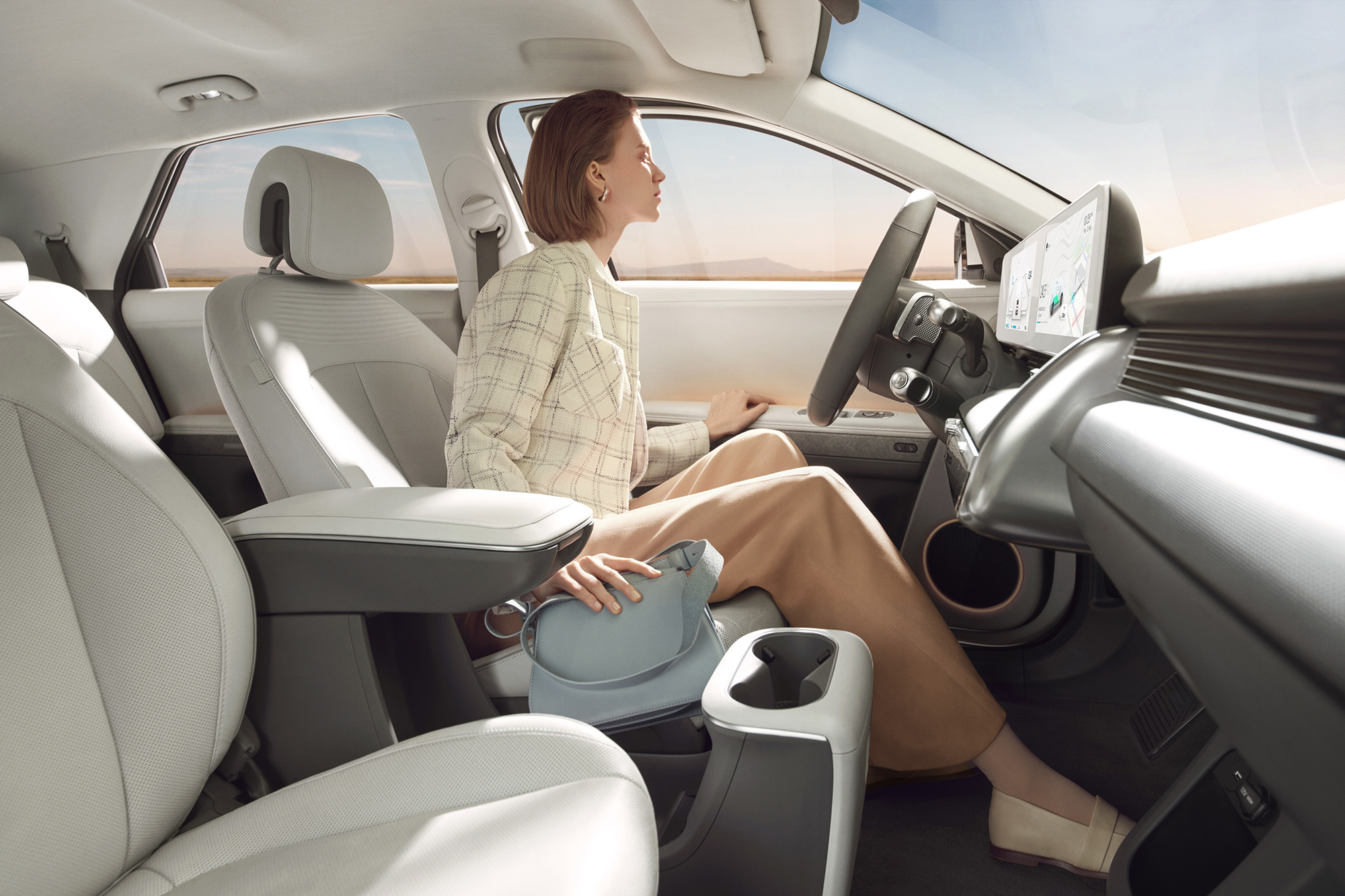
All of this culminates in what Hyundai has termed a ‘Living Space’ interior theme, with a movable centre console and a long slide for the front seats to enable a resting position akin to the business-class comfort offered in airliners – assuming there are no passengers in the second row.
The Ioniq 5’s dash is dominated by two 12.0-inch displays, butted together to form a single unit that shows driver details on one and shared infotainment features on the other.
Infotainment is properly new in the Ioniq 5, too, launching a design theme called ‘Jong-e’ with a new look and new features such as interior ambience settings.
This is joined by an Augmented Reality Head-Up Display (AR HUD). Images and footage of this system are still to be released, but Hyundai says drivers will be able to project relevant information “to their line of sight across the windshield”. This wording suggests all or large sections of the windscreen will be able to display information, although it is unclear how this would be enabled in production form.
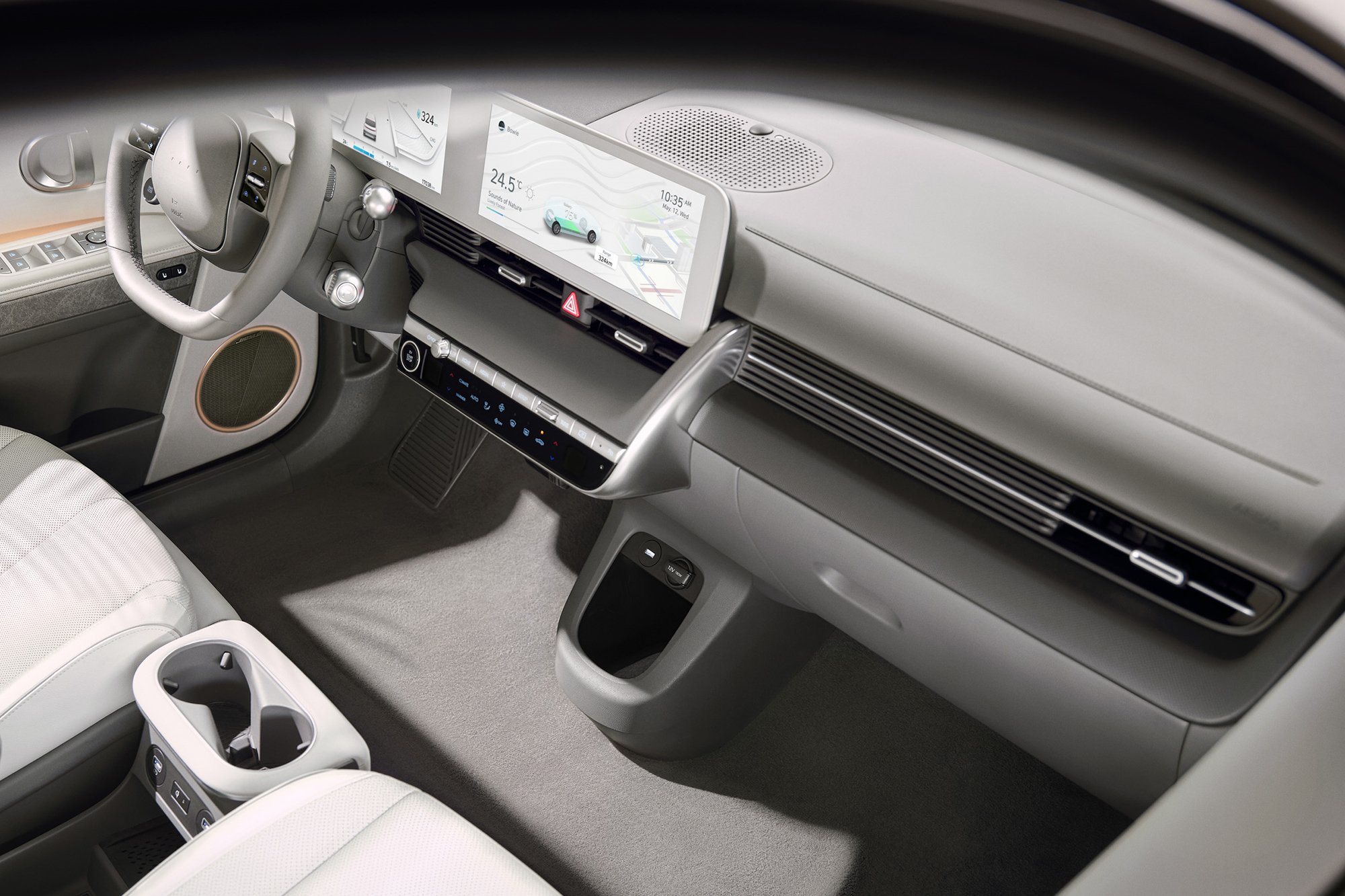
Hyundai’s Bluelink connectivity system features in its latest form, offering mobile phone access to details like driving range, battery state and charging times when plugged in, along with remote control over various vehicle settings.
The vehicle can also be started remotely to allow for pre-conditioning of interior temperature and preferred driver settings. Likewise, if the vehicle is left unattended with its doors unlocked or windows open, the driver can be alerted automatically.
The Korean car maker is also trumpeting its sustainability efforts here, with interior items like the seats, headliner, door trim, floor and armrests all made with PET bottles, plant-based yarns and natural wool yarns, along with “eco-processed leather with plant-based extracts and bio paint with plant extracts”. Details on any sustainability-focused measures taken in the Ioniq 5’s production, however, have not been offered.
Safety
Other driver assistance safety systems include the Highway Driving Assist 2 (HDA 2) suite. Using a front-view camera, radar sensors, and navigation data, HDA 2 works to control the vehicle speed and following distance, while keeping the vehicle centred in its lane. It can also assist the driver when changing a lane.
There’s also Forward Collision-Avoidance Assist with Junction Turning, Junction Crossing and Lane-Changing Oncoming – each designed to detect advancing traffic that could unexpectedly move into the Ioniq 5’s path. This is matched to Blindspot Collision Avoidance and Blindspot View Monitor, the latter using cameras to show the driver a view of the vehicle’s left and right as needed.
Intelligent Speed Limit Assist is featured, along with High Beam Assist.
The list goes on, with Driver Attention Warning – featuring a display of the driver’s measured attention, with warning indicators if inattentiveness is detected.
Finally, there is also Safe Exit Assist for the second row that monitors oncoming traffic, Remote Smart Parking Assist that allows parking to be controlled from outside the car, Reverse Parking Collision Avoidance, Rear Cross-Traffic Collision Avoidance, and Surround View Monitor for a 360-degree vehicle view from the dash.
When is the Ioniq 5 coming to Australia, and what will it cost?
The 2022 Hyundai Ioniq 5 is confirmed to launch in Australia sometime in the third quarter of 2021.
Australian models and pricing is still to be detailed, although the local division has confirmed we will get both rear- and all-wheel-drive versions. Still to be locked in is whether we’ll get both battery packs, and in which drive configuration.
A starting price for the Ioniq 5 is difficult to speculate on, with the more compact Kona Electric already starting at just over $60,000.
We could see the Ioniq 5 come in at a suitably higher price point, or the Kona Electric’s price could be dropped – or a little of both might occur.
Could Australian buyers stomach a $70,000-plus electric Hyundai that improves on the Kona Electric’s already impressive driving range and performance while rivalling the midsize Tucson and giant Palisade in dimensions and interior space?
Hyundai also has a more affordable Kona Electric model available overseas, which offers a smaller 39kWh battery pack instead of the 64kWh system that offers 450km of driving range in the current Australian-delivered model.
If that 39kWh model were to become available to the Australian division, it could conceivably drop the larger-capacity model and cut the Kona Electric’s price in the process.
Of course, with the Kona Electric having hit the stage in early 2018, it could feasibly be retired in the near future – at least in Australia, leaving the Ioniq 5 to take over its price point with a more compelling package.
Whatever the case, we’ll be able to stop speculating sometime in the months ahead when local Ioniq 5 details are revealed.
What do you think about the Ioniq 5? Tell us in the comments below!
Snapshot
- GT Sport replaces GT as sole petrol variant
- New trim comes standard with Peugeot’s Black Pack
- List price starts at $61,940
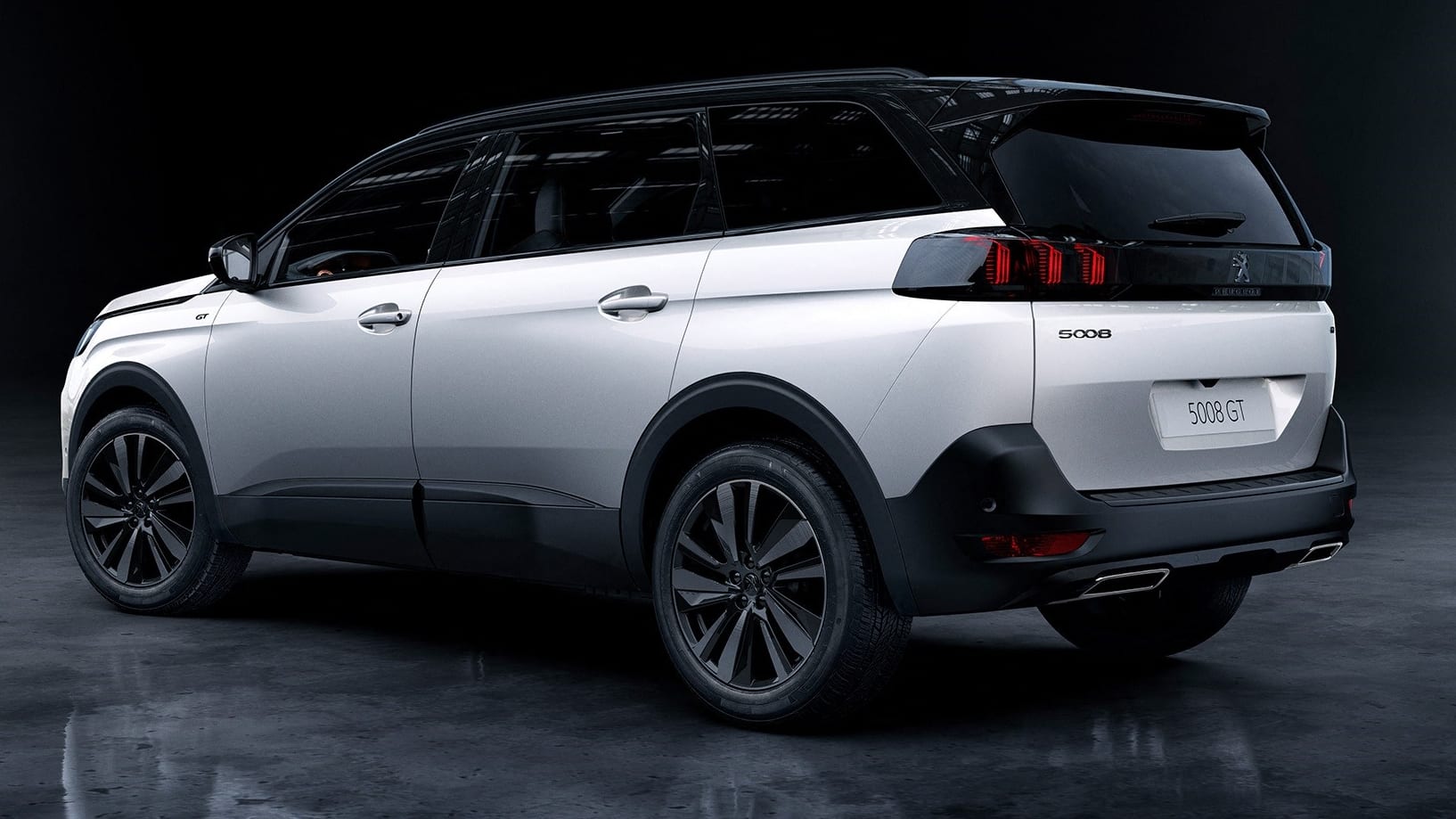
Peugeot has announced an update for its MY22 5008 range, dropping the GT in favour of the more powerful GT Sport as its only petrol-powered option.
Although it is powered by the same 1.6-litre turbocharged petrol engine as the GT, the GT Sport boasts a 7kW and 10Nm boost over the outgoing variant, developing 133kW and 250Nm with power sent to the front wheels through an eight-speed torque converter automatic transmission.
Despite sacrificing 150Nm compared to the 2.0-litre GT Diesel, the GT Sport is $1050 less than its diesel-powered sibling, being launched at a list price of $61,940 before on-road costs while the GT Diesel has gone up by $3000, now starting at $62,990.
Pricing
Prices exclude on-road costs:
| 5008 GT Sport | $61,940 (+$9950 over outgoing GT) |
| 5008 GT Diesel | $62,990 (+$3000) |
Options
| Metallic paint | $690 |
| Premium paint | $1050 |
| Premium pack u2013 sunroof, black Nappa leather seats (GT Diesel only) | $4990 |
Features
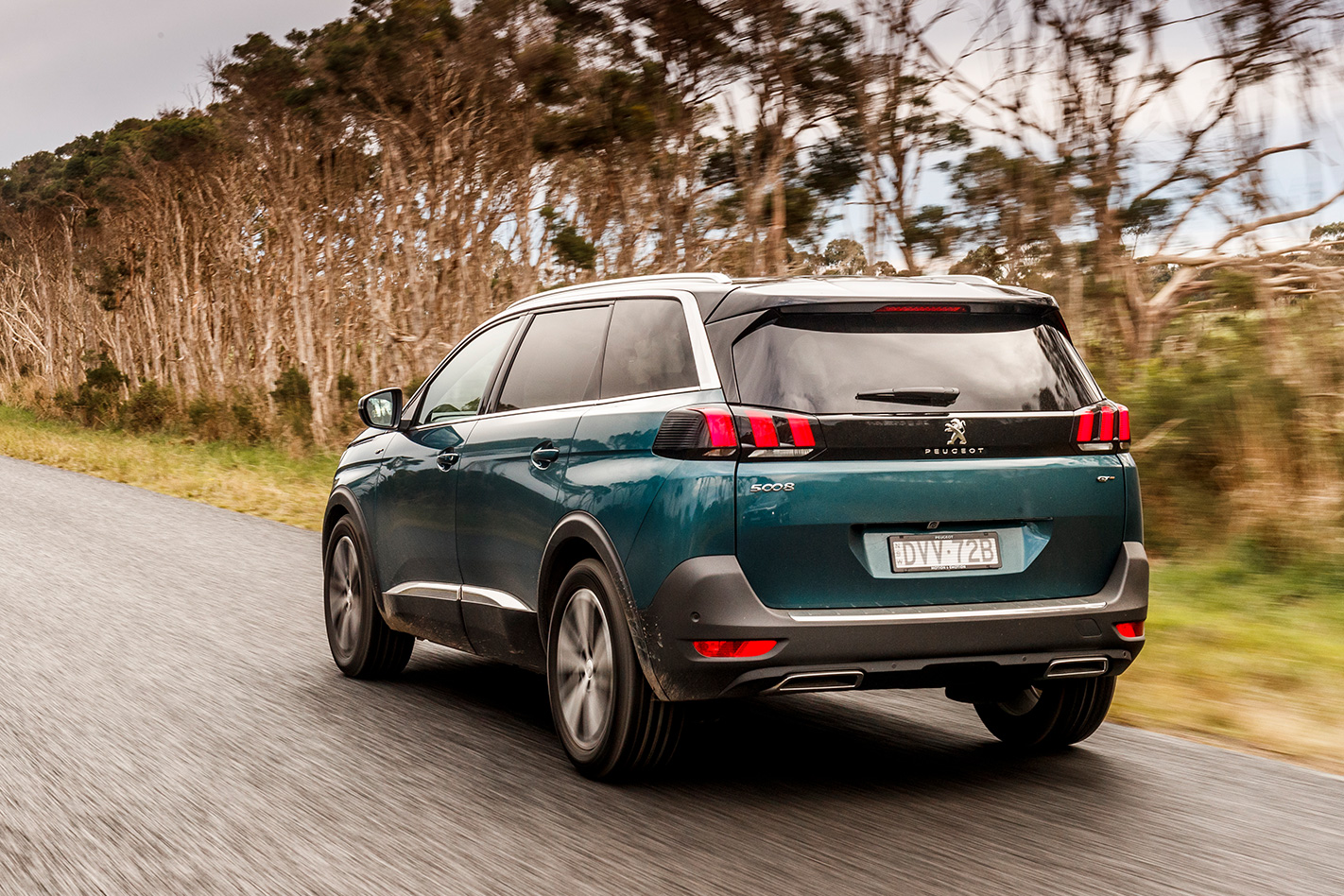
Available as standard with Peugeot’s ‘Black Pack’ – also available on the GT diesel – the 5008 includes a wide range of equipment as standard, such as:
| 19-inch ‘Washington’ diamond-cut alloy wheels |
| FOCAL premium hi-fi speaker system |
| Lime wood dash and door trims |
| Full grain Nappa leather appointed seats |
| Heated front seats and eight-way electronic adjustment and massage function for the driver |
| Panoramic opening sunroof |
| Peugeot i-Cockpit with configurable 12.3-inch digital instrument panel |
| High definition 10-inch touchscreen with multi-function trip computer |
| Apple CarPlay, Android Auto and MirrorScreen plus two second seat row USB sockets |
| Automatic dual-zone, climate-control air-conditioning with rear ventilation |
| Hands-free tailgate with foot operation. |
Safety
As with the 5008 GT, the GT Sport gains a full suite of safety technology, including:
| Front, side and curtain airbags |
| Anti-lock braking with electronic braking distribution |
| Emergency braking assistance |
| Autonomous emergency braking, detects pedestrians and cyclists at night (active from 5km/h-140km/h) |
| Active blind-spot detection |
| Active lane keeping assist with trajectory correction |
| Lane positioning assist |
| Lane departure warning |
| Electronic stability program |
| Distance warning alert |
| High beam assist u2013 automatic high-beam dip |
| Isofix child seat fittings on all three second-row seats |
| 360u00b0 front and rear cameras |
| Park assist |
| Active driver attention alert |
| Speed sign recognition and recommendation |
| Adaptive cruise control (ACC) with stop and go |
| Remote central lockingu00a0 |
| Electric park brake. |
Availability
The 2022 Peugeot 5008 range is on sale now.
Multinational automotive conglomerate Stellantis might be preparing to electrify all of its brands over the next decade, but that hasn’t stopped its boss questioning the motive.
Stellantis was formed after PSA and FCA merged at the beginning of 2021, creating a new powerhouse for automotive manufacturing which has 14 brands under its umbrella, all of which have committed to some form of electric vehicle strategy before the EU bans internal combustion engine production from 2035.
However, CEO Carlos Tavares believes it is politicians and not the industry driving the change towards electrification – a move which will see his company invest around €30 billion (AU$47bn) over the next few years.

“What is clear is that electrification is a technology chosen by politicians, not by industry,” said Tavares in an interview with Les Echos, Handelsblatt, Corriere della Sera and El Mundo, via Automotive News.
“Given the current European energy mix, an electric car needs to drive 70,000 kilometres to compensate for the carbon footprint of manufacturing the battery and to start catching up with a light hybrid vehicle, which costs half as much as an EV.”
He also warned about the seismic change manufacturers will need to go through to be geared up for EV production, potentially leading to the loss of jobs within the industry.
“The brutality of this change creates social risk.”
Out of its 14 brands, Fiat is set to be the first subsidiary of Stellantis to go fully-electric, planning to do so by 2022, followed by its in-house tuning brand Abarth in 2024.
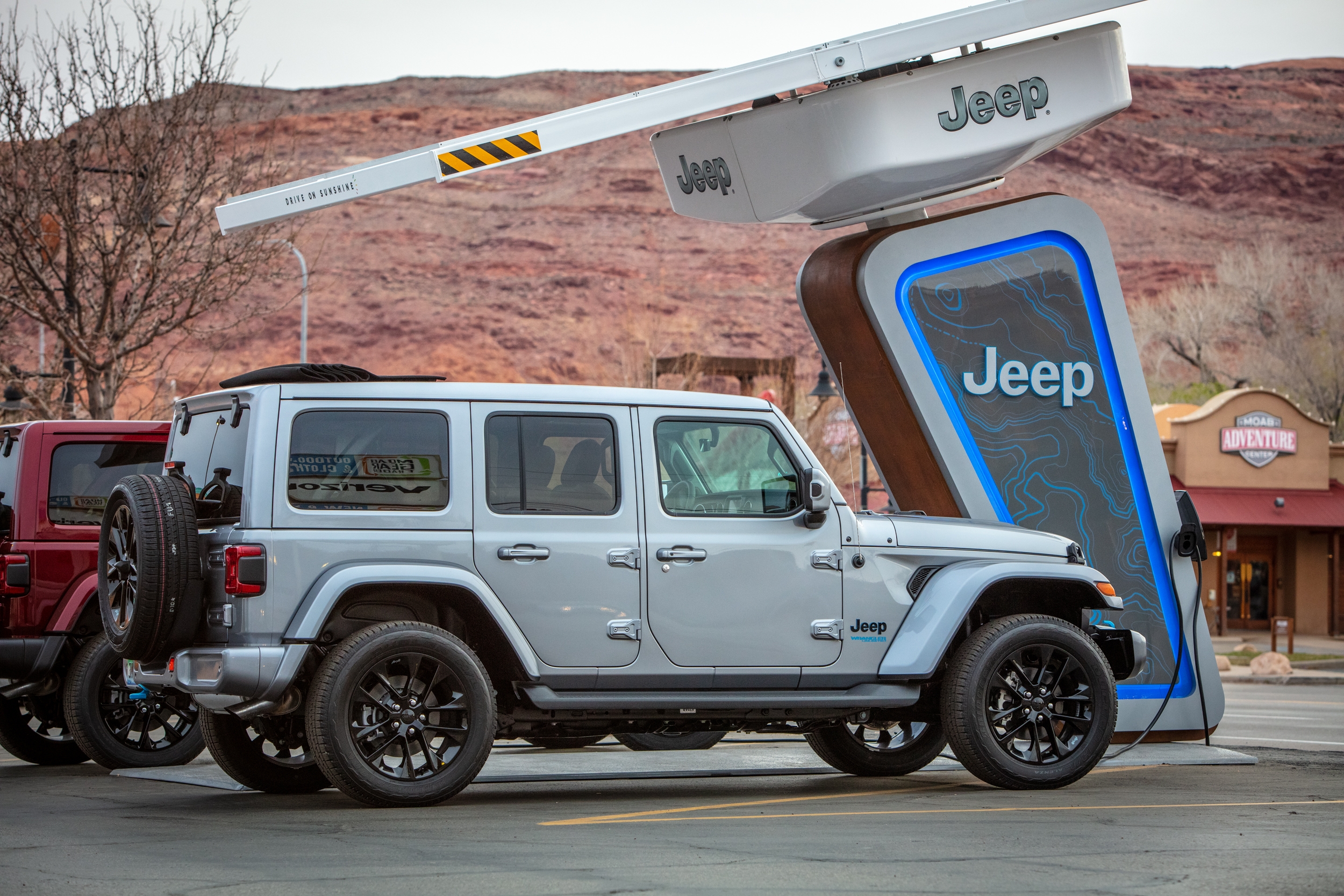
A majority of the European-based manufacturers such as Peugeot, Opel and Alfa Romeo will transition between 2024 to 2030, while the North American-based Jeep and Dodge are going to take a bit longer, beginning their EV rollouts from 2024 and 2025 respectively.
We don’t have to take boot photos, but they want you to explain in the story why everything is so damn wet”, said a very soggy photographer Alastair Brook through the driver’s window of my MG.
This shoot had started so well. Kicking off on the south bank of the Yarra in Melbourne with patches of blue sky and shafts of warm sunlight, it had ended here, 50km to the south-east at a bleak Cardinia Reservoir, in relentless precipitation and dim greyness.
Credit to Brook for his commitment to snapping the images you see before you, and credit to Canon for making cameras that seemingly function underwater. Originally I figured we’d let the town-and-country theme be a visual metaphor for the dual nature of these cars, but I guess the bipolar Melbourne weather works too.

I should elaborate. This ain’t your average three-SUV battle royale, because these ain’t your average SUVs. Beneath cardigan exteriors, these cars boast both a battery-electric and petrol powertrain, with the ability to either charge their lithium-ion cells from a wall outlet, or travel independently of the power grid by burning a few hydrocarbons. These are plug-in hybrid electric vehicles, or PHEVs, and depending on who you ask they’re either a waste of time, or the best option for getting Australians to transition toward an electrified future.
But with ecological imperatives to ‘go green’ being balanced out by real-world qualms like range anxiety, are PHEVs the panacea? They’ve been in our market for a while now, with the Holden Volt being the first way back in 2012, but it’s only recently that consumers have attained some diversity of choice.
Let’s start with the newest arrival, Mitsubishi’s Eclipse Cross PHEV. Following on from the extensive mid-cycle facelift that rectified the unfortunate rump of Mitsu’s small SUV, the PHEV’s introduction brings a new powertrain alternative to the existing 1.5-litre turbocharged petrol and expands Mitsubishi’s electrically-enhanced line-up to two distinct models.

Mitsubishi is something of the incumbent expert in the PHEV field. The triple-diamond brand has had a plug-in hybrid SUV in its showrooms since 2013, in the form of the Outlander PHEV. Sure, to date it’s only accounted for a measly two percent of total Outlander sales in this country, but it could be argued that the overlooked Outlander plug-in was way too early to the PHEV party – it’s only now that the rest of the guests are arriving.
And speaking of, we’ve got a Chinese and a South Korean to provide some competition for the Japanese-made Eclipse Cross.
If the MG HS Plus EV Essence could talk, it would say ‘ni hao’ these days instead of ’allo guvnor. Sourced from China, the MG HS EV actually has one of the most intriguing mechanical packages here, with a 1.5-litre turbocharged inline four (the other two make do with simple naturally-aspirated engines) and electric motor combo sandwiching a six-speed dual-clutch auto and a four-speed epicyclic auto. Complex, but does it work? We’ll find out.
The MG also has the benefit of being the biggest of our three contenders (it’s actually classed as a medium SUV), with the highest power output, the biggest battery and the most affordable pricetag. Those trump cards will be hard to overcome for the other two.

Lastly, it’s the Kia Niro PHEV, here in base-model S trim. The Niro is a Johnny-come-lately, the PHEV version of which launched overseas in 2018 but which only arrived here in mid-2021. An all-new replacement is due by the end of next year so this car’s time in market will be brief, but is it worth a look despite the fact it’s fast approaching retirement?
In terms of price, the MG holds a big advantage. At $47,990 inclusive of on-road costs, it’s exactly two grand cheaper than the much smaller Niro S PHEV, which also boasts a driveaway price. The Mitsubishi sneaks in under the $50K barrier with a $49,990 sticker, but that’s retail – add your relevant on-roads to that, and it becomes a mid-$50K vehicle.
To be fair, though, the Niro is a base model while the Mitsubishi is the mid-spec Aspire – the base Eclipse Cross ES PHEV lobs with a $46,490 retail price that puts it on a more even footing with the Niro S, but one wasn’t available for us to test. The MG, meanwhile, is only available in a single highly specified variant. The MG HS Plus EV Essence wins the value battle before even turning a wheel.

With efficiency in real-world conditions being so central to the PHEV appeal, testing these three requires a fairly rigid methodology to extract meaningful numbers. Each car will start their drive loop with a freshly-charged battery from the same location, then complete a course measuring 98km long that takes in the most even mix possible of suburban 60km/h roads, low-speed inner-city streets, outer-urban cruising and, finally, a continuous stint of steady-state highway driving at 100km/h.
The order of that regime is deliberate, by the way. PHEVs are billed as being a better option for long distance driving than an EV, but odds are if you’re subjecting one to such journeys you’re going to have a depleted battery most of the time. To that end, the highway part of our loop doesn’t commence until a point where every car’s battery should be well and truly at zero percent.
Were the highway portion to be right at the start, it could be dispatched entirely using stored battery energy, with the more sedate urban stuff allowing the cars to avoid aerodynamic drag and lean more heavily on regenerative braking – two things which might artificially sweeten their fuel economy numbers. We can’t allow that.

The first car to come off the plug is the MG. Sitting in the driver’s seat, one thing becomes apparent: this feels substantially larger than the Eclipse Cross and Niro. Were this a normal SUV comparo it might seem unfair to put this big boy against rivals from a size class below, but this is more about testing PHEV credentials, not counting cupholders. Time to hit the road.
Crawling out of the driveway, the MG is noisier than expected. At speeds under 25km/h it emits a low moan to warn pedestrians of its presence, but while an audible alert on the outside is a good idea for an otherwise silent SUV, it’s a sound that doesn’t need to be on the inside of the car.
Motor noise is also apparent once you get going, the higher-pitched soft whining a clear signal that you’re consuming electrons, not petrol. However, it’s not an irritating frequency and it’s only really noticeable because everything else – road noise, wind noise, cabin creaks – are virtually nonexistent at urban speed.

There are other pleasant surprises, too. Flex your ankle and you’ll discover a total system output of 189kW and 370Nm, along with a 0-100km/h sprint of 6.9 seconds – numbers that would have qualified the MG for hot-hatch status not that long ago. It’ll overpower the front wheels at maximum throttle, especially in the wet, and there’s naturally some torque steer to contend with as well, but you wouldn’t expect a mid-size SUV from China to move this swiftly.
It corners smartly, too, thanks to decent suspension geometry and respectable grip from its Michelin Primacy tyres. The HS is the only one to forgo low-resistance eco tyres, and given the torque on offer and the fact that it’s a front-driver only, that’s probably for the best.
But this is an efficiency exercise, and burning rubber isn’t efficient. Locking the MG into electric mode, there’s still 90kW and 230Nm of EV power to play with – more than enough for the suburban grind.

Driven sedately, the MG settles in to commuter duty. Its long-travel suspension has just the right amount of vertical squishiness to cancel out lumpy bits, without being underdamped or roll-happy at speed. The suspension engineers hit the mark with this one.
Steering weight is on the heavy side for a commuter car, but otherwise it steers directly with a strong self-centring feel. Combining all that with the tractability and power of its electric powertrain, and the MG does well on the urban section of the loop.
And while it would readily disregard our desire to keep it in EV mode if it thought we wanted too much acceleration or turned the cabin heat up, it had the longest legs when it came to all-electric driving range. At 66km, mere metres from the onramp to the highway leg, the battery finally clicked over to zero percent and the engine started up. MG claims a battery-only range of 63km, and if we tally up the brief moments that the petrol engine kicked in earlier in the drive, that claim seems to be a very honest one – and possibly even understated.

On the highway, some cracks in the facade appear. Its convoluted ‘10 speed’ transmission (shouldn’t a four-speed feeding into a six-speed give you 24 gears?) seems restless, always shifting ratio with minor changes in road gradient. Every few minutes it’ll have banked enough charge in the battery to go back to electric mode, but the handover from the petrol engine to the electric motor is clunky and unrefined.
The petrol engine is also noisy, but at these speeds it’s balanced by road and wind noise, and not really any worse than your typical petrol SUV. Still, there are definitely some smaller details that could do with some finessing.
Rolling back into the driveway where we started, the MG’s trip computer showed an average fuel burn of 2.3L/100km. With nearly all of that petrol being consumed on the 32km highway stretch, its highway-only average comes in around 7.0L/100km. Not bad, but only on par with most conventional SUVs. As for its electrical efficiency, the MG showed an average of 18.6kWh/100km just before the battery ran out.

The Kia is next, and boy does it feel like a different animal. A smaller, less muscular, less interesting animal. Like the MG, it’s reluctant to stay in EV mode, tipping us into hybrid mode constantly, my left index finger threatening to scratch the paint off its drive mode button through constant re-engagement. What’s even more irritating is that EV mode doesn’t actually feel all that different to the regular mode, with the conditions for petrol engine start-up being seemingly identical.
Keeping it electric becomes a matter of carefully nursing the throttle, trying to avoid the invisible tip-over point. Having grown used to the fairly grunty MG, it’s a bit of a challenge, but with a total system output of 104kW and 265Nm the Niro needs its petrol engine running to feel like the MG does with its petrol engine switched off.
That translates to less sprightly performance around town – at least when you’re trying to rely on the battery. That’s not the only point of difference to the MG’s experience either, with the smaller, lighter and lower Niro feeling more like a biggish hatchback than a true SUV. Its steering is more naturally weighted and a better partner for easy daily driving, but the ride is surprisingly firm given the tiny 16-inch alloys and chubby 60-profile sidewalls. It’s almost the inverse of the HS PHEV, actually, with a stiffer ride yet more body roll – and significantly less grip.

More happily, its fusion of electric and petrol motivation has fewer rough edges. Like the HS PHEV, the Kia sends electric power to its front wheels via a gearbox, but with just a six-speed dual-clutch and better phasing between the petrol engine and electric motor, it’s a smoother thing when running as a hybrid. Feeling it step through the ratios when in pure electric mode is a little odd, but it’s definitely a more refined drivetrain than that of the MG.
However, the Niro’s 8.9kWh battery is almost half the capacity of the MG’s and only 64 percent of the Mitsubishi’s, and it finally refused to re-engage EV mode at the 59.2km mark. Still, that’s appreciably close to the MG’s electric-only distance. How? The Niro weighs more than 200kg less, allowing it to stretch those battery cells further.
On the highway, it’s easy-going, its 1.6-litre petrol humming quietly and cutting in and out as required. Smaller and lighter, it spends more time coasting with the engine off than the other two, and it’s little surprise that it delivered the best overall fuel consumption: 1.9L/100km.

Onward to the Eclipse Cross. Mitsubishi has basically transplanted the electrified gubbins of the Outlander PHEV into the Eclipse Cross, but it’s yielded a respectable result. For starters, this is the only all-wheel drive model here, boasting one motor per axle and enjoying an extra degree of sure-footedness in poor weather or on gravel as a result. After all, what good is a car with go-anywhere styling if it gets stranded on wet grass?
It also has DC fast-charging capability, able to zip to 80 percent charge in just 25 minutes rather than the seven-plus hours for a full charge from a regular wall outlet. Its vehicle-to-grid reverse charging capability (see breakout) has yet to be exploited in Australia, but that feature is at least baked into the car for when our infrastructure catches up. Neither the Kia or the MG have these features.
But it’s also obscenely heavy. At 1890kg with nobody aboard it’s heavier than the MG despite being markedly smaller and having less battery capacity, and we’re willing to bet it’s largely a result of that extra motor and driveline.

Yet here’s the thing. By default, the Eclipse Cross prefers to be an electric car, not a hybrid. It takes a lot of pedal travel to rouse the 2.4-litre Atkinson-cycle engine, and if you lock it in EV mode it’ll keep that engine quiet all the way up to 135km/h – unless you smash the accelerator through its kickdown switch.
As such, it’s a breeze around town. Its dual electric motors are plenty tractable and drive the wheels directly via a reduction gear, so there’s no transmission shifting to sully the smoothness of the experience, and its steering and ride comfort are well suited to Melbourne’s city streets. With the shortest wheelbase in the group there’s a bit of head-toss as it pitches over things like speed bumps, but otherwise the Eclipse Cross is an agreeable urban partner.
Like the other two, the Mitsubishi also exceeded its factory EV range claim, delivering 58km of (tailpipe) emissions-free motoring. What’s more remarkable is that despite being heavier and having two motors to feed, its average energy consumption in EV mode was significantly lower than the MG, and at 14.5kWh/100km it even undercut the Kia’s 15.01kWh/100km average. It’s less impressive on the highway though, burning around 10.0L/100km when the generator is running, which is most of the time when the battery is depleted. In all, the Mitsubishi averaged 2.8L/100km across the whole loop.

So how does the finishing order look? The MG puts in a very strong showing, with peerless power, heaps of space, the most premium-looking cabin and the most standard equipment at the lowest price point. It rides well, too, an important attribute for a city-bound SUV, but it lacks sophistication when it comes to driveline refinement and noise suppression, and its energy consumption in EV mode was higher than expected. It gets the silver medal.
The Kia Niro is unfortunately outclassed. It feels the smallest yet isn’t the cheapest, the suspension is both too harsh yet not taut enough, its feature set is nothing special and its constant refusal to obey our requests for EV-only driving was frustrating. Here’s hoping that gen-two hits closer to the mark, because gen-one only gets the bronze medal here.
And that leaves the Eclipse Cross PHEV as the winner. As a car that can help you save money while lessening your impact on the environment (subject to your electricity source), the Mitsubishi simply does a better job.

Sure, its on-test fuel consumption was the highest, but with more than enough battery range for the average Aussie’s daily commute, hearing the petrol engine should be an uncommon event. Its preference for electrons over petrol also sets it apart from the MG and Kia, and its very reasonable electricity consumption in EV mode was a pleasant surprise given its weight.
The provision of a DC fast-charging port and vehicle-to-grid capability are arguably the Eclipse Cross PHEV’s ‘killer apps’, boosting both its convenience factor and making it ready for when this country’s power grid catches up to the cutting edge. Its ability to drive all four wheels can’t be ignored either, and the sum of all these advantages gives it a leg-up against the MG.
PHEVs aren’t sexy, but as cars that could potentially make your life that little bit easier and that little bit more affordable, this trio are more than just a halfway point between combustion and full electrification. Life’s full of compromises after all, and sometimes a compromise can be the best thing for you.

Imperfect solutions
IS A PLUG-IN HYBRID A COMPROMISE WORTH MAKING?
The PHEV premise is simple: plug them in frequently and use cheap electricity to do the bulk of your commuting, while the onboard engine plays the role of a glorified generator – there to keep the volts flowing in the instances you need to venture beyond the battery’s range.
On the other hand, a PHEV’s battery is not as big as what you’d get in a dedicated electric car, thanks to the need to package other heavy components like the combustion engine, transmission, exhaust and fuel tank.
As a result, stated electric ranges are in the double-digit region only, but for the commutes where battery power is sufficient, that engine and its ancillaries are just dead weight. So PHEVs are a compromise, but one that might be more palatable than a full EV for many people who regularly drive significant distances each trip.

Interiors in detail
THE CHEAP, CHEERFUL AND COMPROMISED
1. MG HS PLUS EV ESSENCE
MG brand still favours its, er, ‘VW-inspired’ steering wheel and Audi A3-style gimbal air vents, but material quality and seat comfort on those sporty-looking front seats is actually pretty good. The driver’s seat is mounted quite high, even at its lowest setting, but outward vision is commanding and that panoramic sunroof and electronic instrument panel are standard-issue.
2. KIA NIRO S PHEV
Niro has the most demure cabin here, with too much piano black plastic, ordinary cloth/pleather upholstery and cabin styling that no longer matches up with its more modern stablemates in the Kia showroom. That rear seat is acceptable, though the boot is rather small for an SUV.
3. MITSUBISHI ECLIPSE CROSS PHEV ASPIRE
There’s good accommodation up front, but an unsupportive back seat and a short wheelbase – that penalises interior room – means the Eclipse Cross is better suited as a car for couples, not families. Funky gear selector handle and PHEV-specific instruments are your only clues that you aren’t in a regular Eclipse Cross Aspire.

V2G explained: The new reverse charge
V2G, or vehicle-to-grid charging, might seem like a bizarre idea, but by feeding energy stored in vehicle batteries back into the power grid, privately-owned electric cars and PHEVs could help electricity suppliers deliver a more reliable service by using vehicular energy during periods of peak demand – which could provide car owners with a little bit of passive income whenever their cars are parked.
It could be utilised at the residential level, too, with residual battery power used to power your home during the evening before cheaper off-peak power is used to charge it back up again. If widespread EV adoption is going to ever happen, the power grid is going to need all the help it can get, and V2G tech is one way of doing exactly that.
Scoring and specs
MITSU. ECLIPSE CROSS PHEV: 8/10
MG HS PLUS EV ESSENCE: 7/10
KIA NIRO S: 6/10
| MITSU. ECLIPSE CROSS PHEV | MG HS PLUS EV ESSENCE | KIA NIRO S | |
|---|---|---|---|
| $49,990 / Tested $49,990 | $47,990 (DA, as tested) | $49,990 (DA, as tested) | |
| DRIVETRAIN | |||
| Engine | 4cyl, dohc, 16v | 4cyl, dohc, 16v, turbo | 4cyl, dohc, 16v |
| Layout | front engine (east-west) AWD | front engine (east-west) FWD | front engine (east-west) FWD |
| Capacity | 2360cc | 1984cc | 1580cc |
| Power | 94kW @ 4500rpm (ICE) | 189kW @ NA | 104kW @ 5700rpm |
| Torque | 199Nm @ 4500rpm (ICE) | 370Nm @ NA | 265Nm @ 4000rpm |
| Gearbox | Single-speed reduction | 6-speed DCT, 4-speed auto | 6-speed dual-clutch |
| CHASSIS | |||
| Body | steel, 5 doors, 5 seats | steel, 5 doors, 5 seats | steel, 5 doors, 5 seats |
| L/W/H/W–B | 4545/1805/1685/2670mm | 4574/1876/1685/2720mm | 4355/1805/1545/2700mm |
| Track (F/R) | 1540/1540mm | 1541/1550mm | 1565/1579mm |
| Weight | 1890kg | 1775kg | 1564kg |
| Boot | 359L | 451L | 324L |
| Fuel | petrol/45 litres | petrol/50 litres | petrol/43 litres |
| Economy | 2.8L/100km (as tested) | 2.3L/100km (as tested) | 1.9L/100km (as tested) |
| Suspension | Front: struts, coil springs, anti-roll bar. Rear: multi-links, coil springs, anti-roll bar | Front: struts, coil springs, anti-roll bar. Rear: multi-links, coil springs anti-roll bar | Front: struts, coil springs, anti-roll bar. Rear: multi-links, coil springs, anti-roll bar |
| Steering | electric rack-and-pinion | electric rack-and-pinion | electric rack-and-pinion |
| Front brakes | 310mm ventilated discs | 312mm ventilated discs | 280mm ventilated discs |
| Rear brakes | 290mm solid discs | 304mm solid discs | 284mm solid discs |
| Tyres | Bridgestone Ecopia H/L 422 Plus | Michelin Primacy 35T | Michelin Energysaver |
| Tyre size | 225/55 R18 | 235/50 R18 | 205/60 R16 |
| SAFETY | |||
| ANCAP rating | 5 stars (2017) | NA | 5 stars (2021) |
| PERFORMANCE | |||
| EV Range | 55km (claimed), 58km (tested) | 63km (claimed), 66km (tested) | 56km (claimed), 59.2km (tested) |
| Battery | 13.8kWh | 16.6kWh | 8.9kWh |
| Motor | 60kW/137Nm (f); 70kW/195Nm (r) | 90kW/230Nm | 44.5kW/170Nm |
| 0-100km/h | 10.9sec (claimed) | 6.9sec (claimed) | NA |
| Warranty: 5yr/100,000km. Service interval: 12 months/10,000km. Glass’s 3-year resale: NA. AAMI Insurance: $1020/yr | Warranty: 7yr/unlimited km. Service interval: 12 months/10,000km. Glass’s 3-year resale: NA. AAMI Insurance: $1063/yr | Warranty: 7yr/150,000km. Service interval: 12 months/15,000km. Glass’s 3-year resale: NA. AAMI Insurance: $963/yr | |
Reigning Nitro Rallycross champion and action sports legend Travis Pastrana has unveiled the most unexpected gymkhana vehicle to come from Hoonigan’s stable yet – a 1983 Subaru GL Wagon.
Built by Subaru USA’s motorsports partner, Vermont SportsCar, the GL Wagon is essentially all-new, with its boxy, retro styling blended in with carbonfibre and engineering nous from AirSlayer, builders of the WRX STI which featured in Gymkhana 2020 and now holds the Mount Washington Hillclimb record.
Starting with an already boxy-looking GL Wagon, the VSC and Hoonigan crew have given it massively flared arches, wide bronze wheels shod in Yokohama tyres, a revised grille, front and rear bumpers as well as roof racks – just in case you need to go sideways on the way to the beach or the alps.
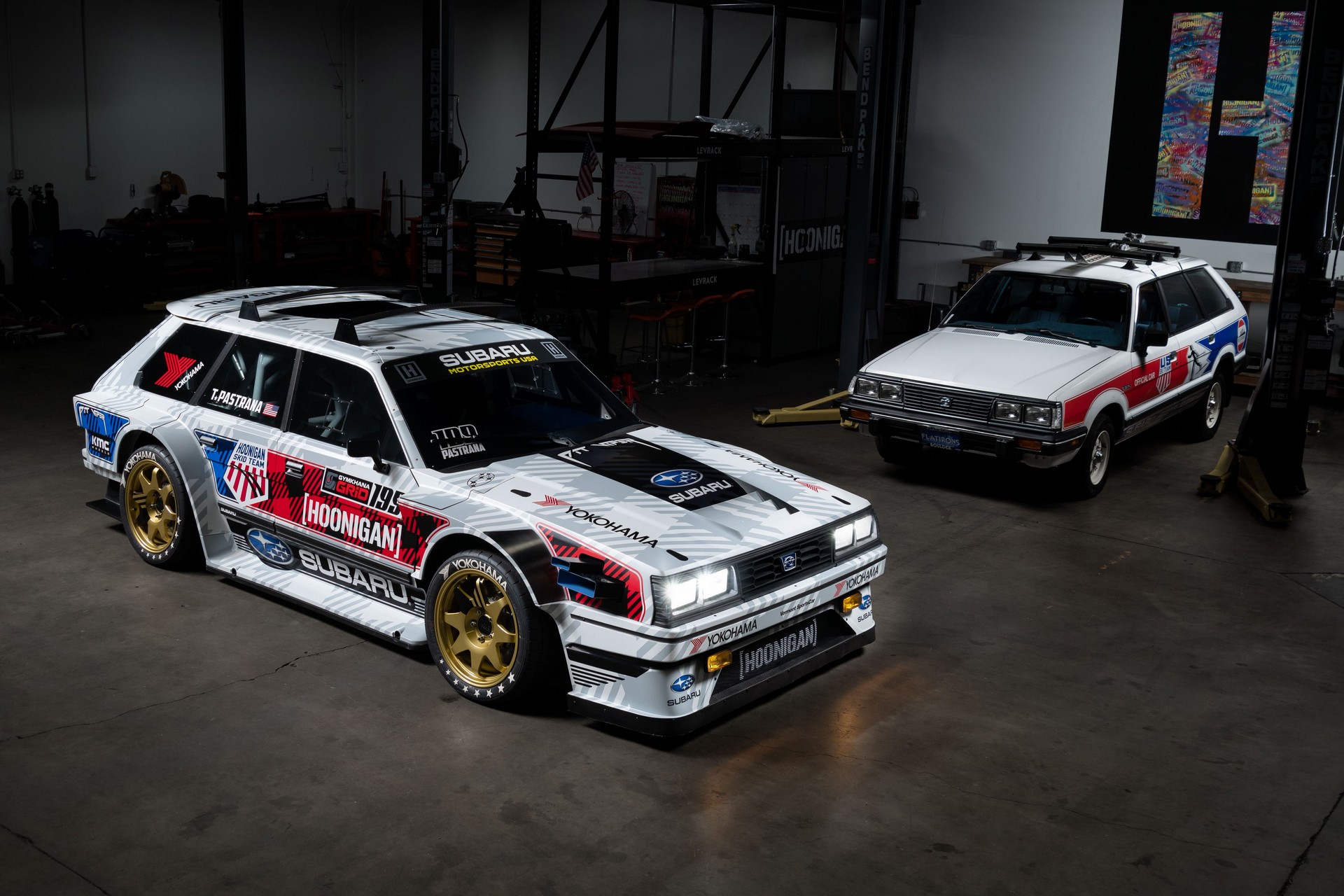
Plaid stickers down each side show this is definitely a Pastrana car, although it only features a small number of his iconic #199 on the doors and windscreen – subtle for the man who is all about taking things to the extreme.
When it was new, the GL Wagon’s 1.8-litre, naturally-aspirated flat-four produced just 53kW and 127Nm – enough to get the 1050kg car moving but not enough to do so in an inspiring manner.
Although Subaru hasn’t revealed specifics about the new wagon, it’s tipped to be developing a touch under 700kW, all while retaining the design of a flying brick.
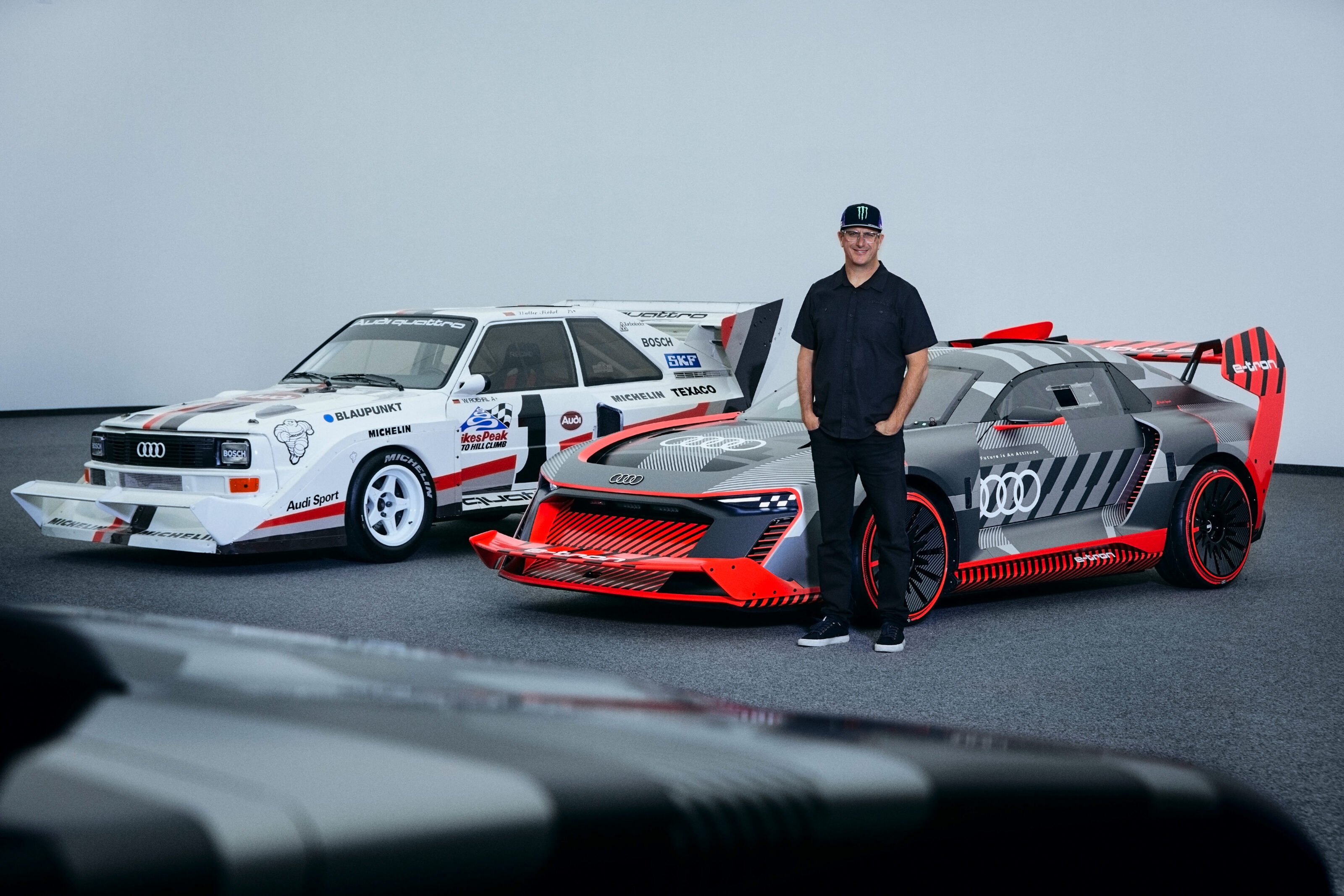
Ahead of the 12th Gymkhana video installment, Pastrana said he’ll need to up his game to match the boss, as Ken Block is set to make a return to the series he made popular aboard an all-electric Audi Hoonitron.
“Far and away the coolest car I’ve ever driven,” said Pastrana on Instagram.
“Ken Block is giving me another shot and I’ll be making the next Gymkhana video with this 83 Subaru GL Wagon. It’s faster and way easier to stay in control while sending it sideways than the Airslayer STI. Shorter wheelbase makes it more agile and the boxy body makes it easier for proximity driving.
“This car should allow me to some higher speed proximity drifts while upping my slower speed technical driving to the bar Ken expects from the Gymkhana Series.. oh, and the Black Rifle Coffee crew will be calling in some friends to help me take this to a 12. Can’t wait to show you more.”
The 2023 Audi A4 has been caught undergoing winter testing ahead of its unveiling later this year.
Audi has previously announced it will debut its last internal-combustion engine car in 2025 (excluding the Chinese market), meaning this all-new B10 A4 will be the last model to be powered by petrol and diesel.
Despite the camouflage wrap, the upcoming A4 appears to feature a smaller grille than the outgoing vehicle, with sharper, more aggressive LED headlights located within the front facia, while the Avant’s wagon body gets a more rakish angle at the rear – echoing the sleek look of the Mercedes-Benz CLA Shooting Brake.
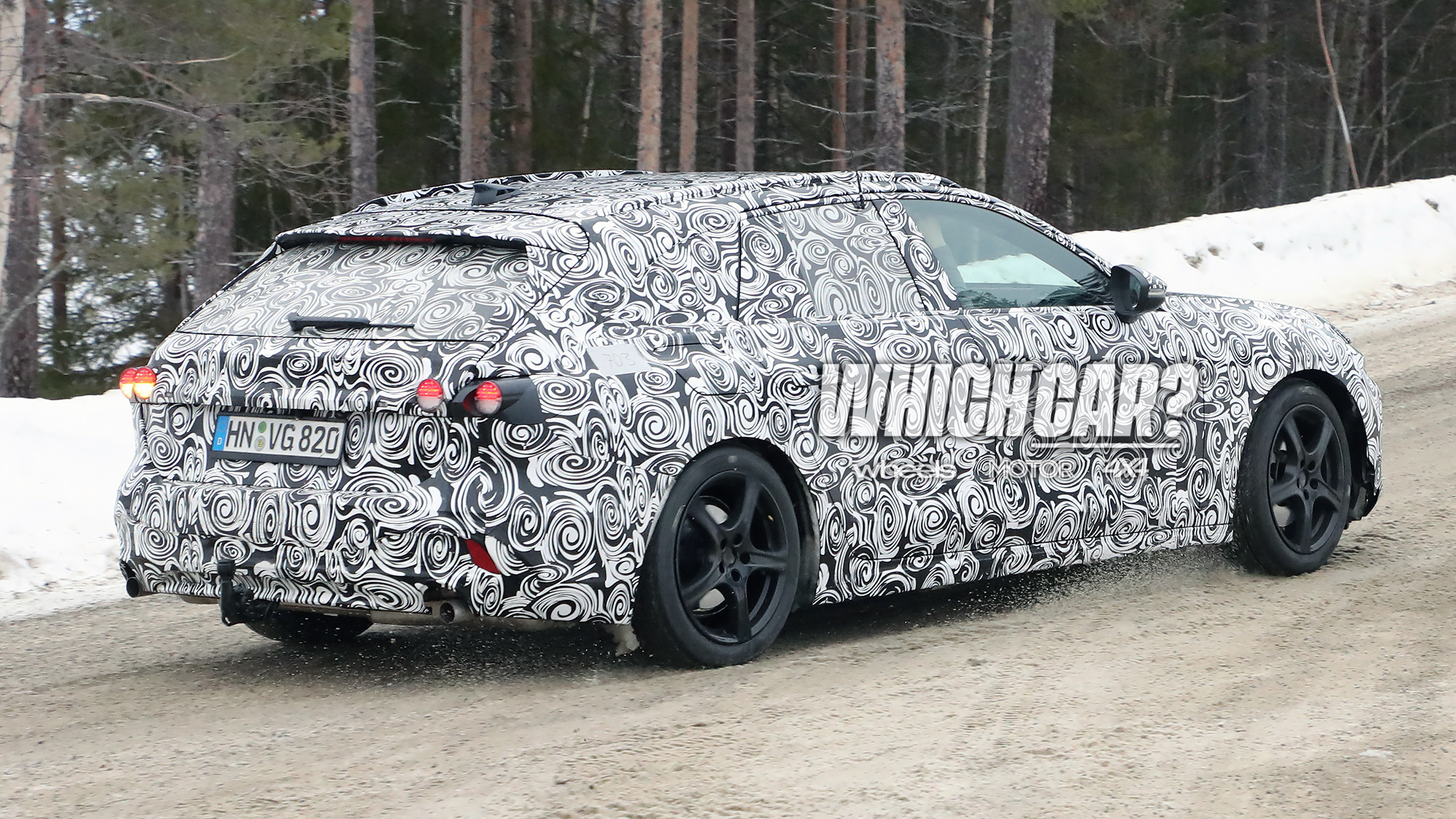
In a departure from modern automotive design, the new car looks to have a flat bonnet panel, rather than hiding the shut lines where shapes and angles meet as is typical.
At the rear, the quarter panels above the wheel arches are quite wide compared to the glasshouse, with the petrol flap almost pointing skyward.
Audi’s engineers have wired in some trailer tail-lights to help disguise the final look, but it’s possible we could see an LED lamp running the full width of the tailgate, as with other recent models from the German carmaker.
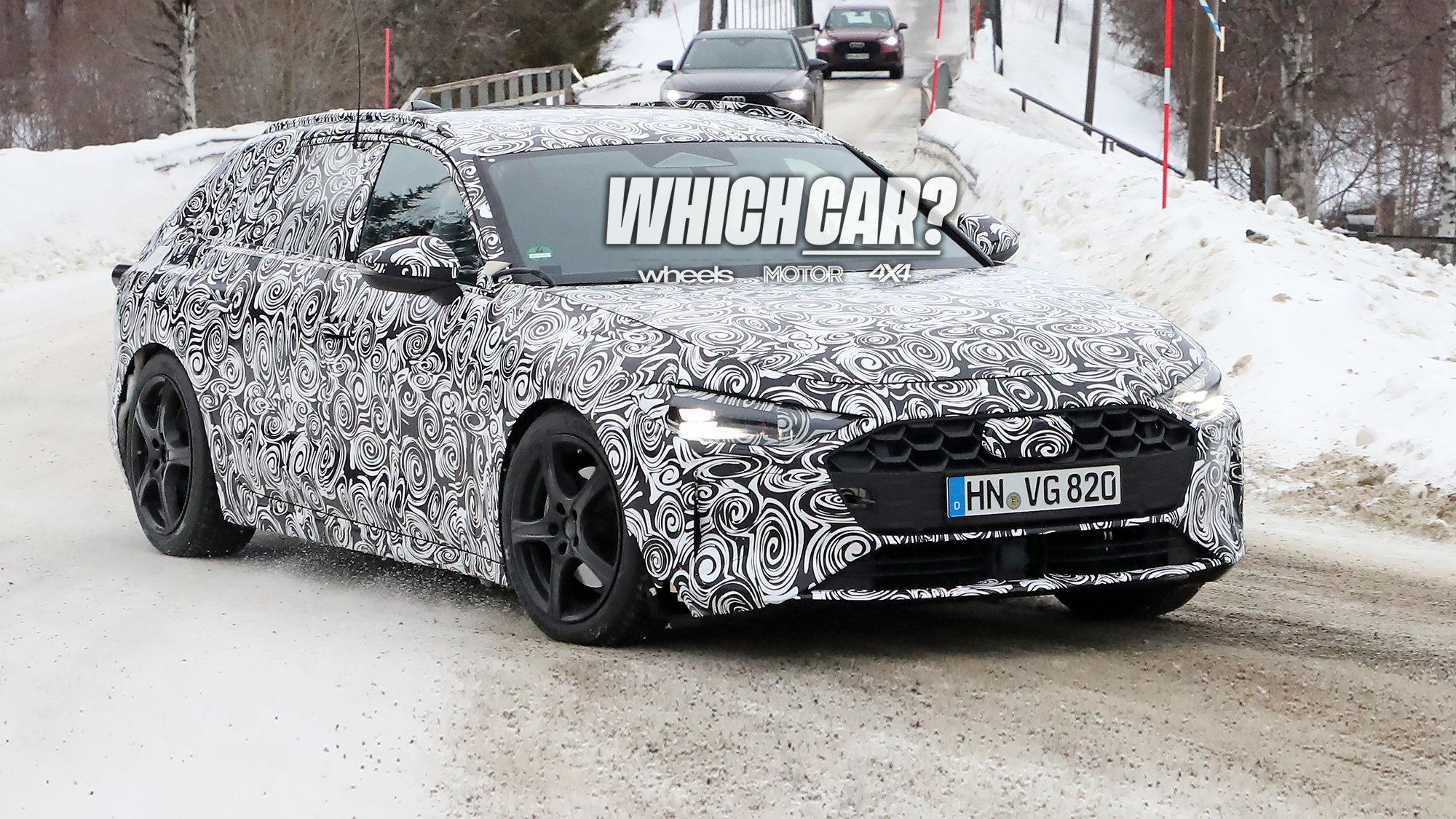
While both petrol and diesel engines are expected, based on MLB chassis architecture shared across the Volkswagen Group, the battery-powered A4 E-Tron is said to be underpinned by the all-electric PPE platform, with the Tesla Model 3 firmly in Audi’s sights.
Two different Audi RS4 versions are also rumoured: the first will use the current car’s 2.9-litre twin-turbo V6 mated with plug-in hybrid technology, while an RS4 E-Tron will use dual electric motors.
The 2023 Audi A4 will likely be unveiled in late 2022 ahead of a European launch the following year.
Snapshot
- New car sales rose by between 8.6 to 27.2 per cent across seven states and territories
- Australian Capital Territory registrations dropped by 18.7 per cent
- ACT had the second-lowest number of new cars purchased last year
Sales of new cars might have gone up overall last year, but one particular area experienced a drop compared to 2020.
The Australian Capital Territory was the only one of Australia’s eight states and territories to go through a year-on-year decline in new vehicle registrations, dropping by 18.7 per cent from the year prior to record just 16,002 units sold in 2021.
This ranks the national’s capital second-lowest on the list – ahead of the less-populated Northern Territory but also just behind the similarly-sized Tasmania, despite having a significantly higher median annual income than those from the Apple Isle.
While Canberra was locked down last year for longer than it had been in 2020, this is one of a handful of factors as to why its new car sales dropped so much over the course of 12 months.
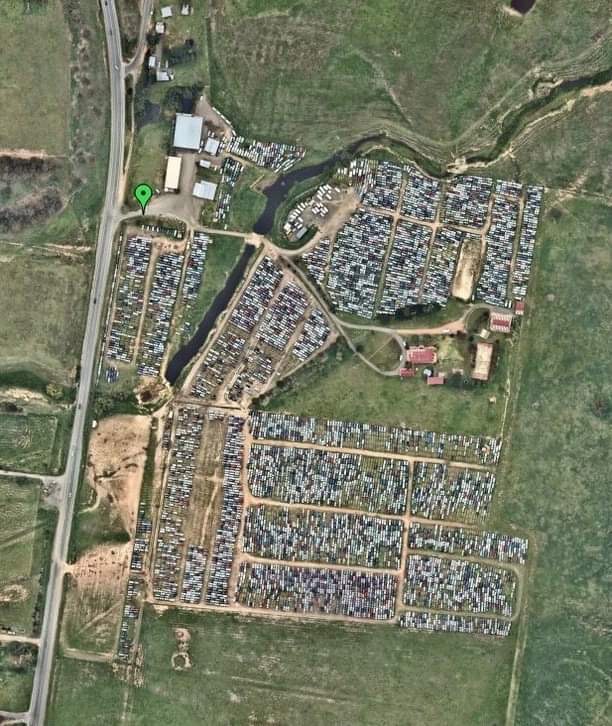
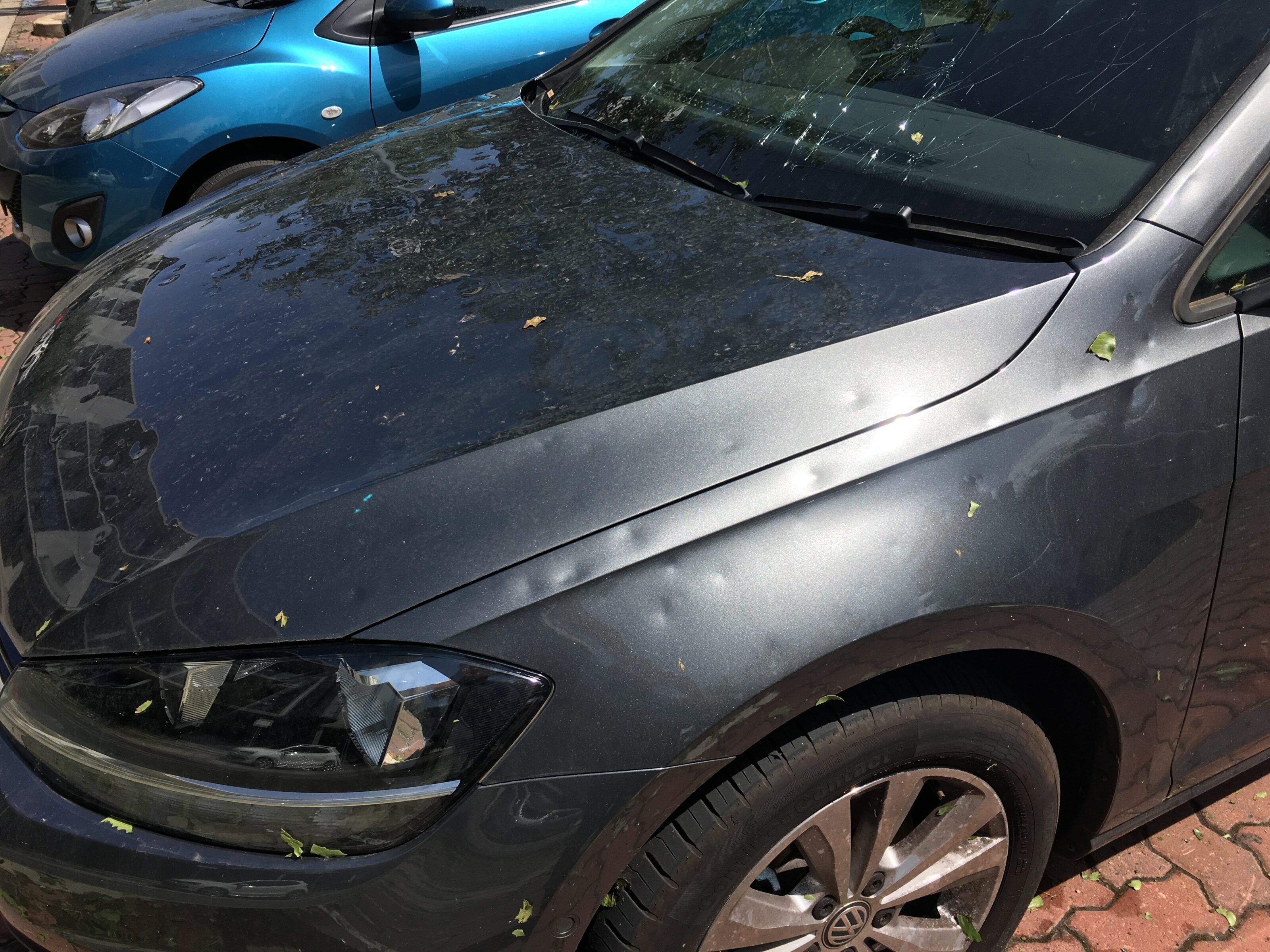
On January 20, 2020, a massive hail storm swept over Canberra, damaging thousands of cars within the city which were unable to be parked undercover.
Over the next few months, a total of 15,882 vehicles ended up at Pickles and Manheim auctions, affecting around five per cent of the ACT’s registered vehicles.
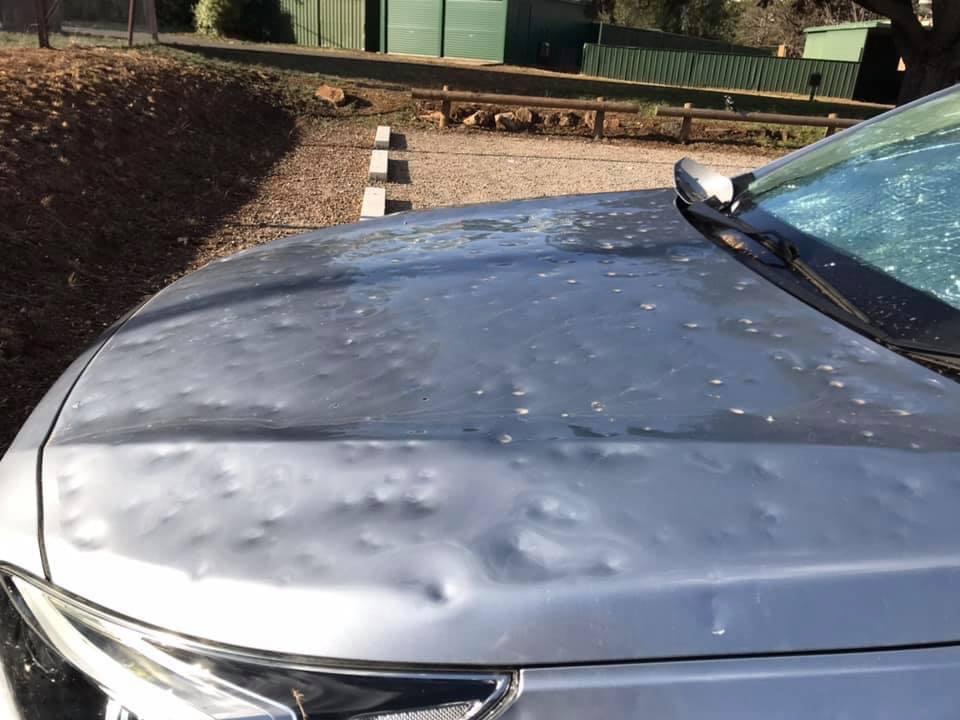
Although not all written-off cars would have been able to receive a pay-out which led to purchasing a new car, sources from inside the Canberran automotive dealership network have said there was a large number of people who were looking to buy new off the back of the hail storm.
This is backed up by sales data which showed the 19,693 new vehicle registrations in the ACT throughout 2020 was 22.6 per cent higher than the year prior, and the only state or territory to show an increase in sales throughout the first year of the pandemic.
While Canberra was also impacted by the first COVID lockdown at the start of 2020, it wasn’t until August last year until the ACT went through its second lockdown, lasting for just over two months which hindered dealer trade.
As previously reported, electric vehicle manufacturer Tesla also doesn’t submit its vehicle registrations to the Federal Chamber of Automotive Industries, meaning there’s a 10,000+ unit black hole in Australia’s registration data.
Home to just over 400,000 residents, a short drive around Canberra will show Teslas are a very popular option – unsurprising given the median income in the ACT makes it the only state or territory above the drive-away price of a standard-range Model 3 ($62,245).
In addition to this, the ACT Government offers some of the most competitive incentives in Australia for EV buyers, including no stamp duty, two years’ free registration and interest-free loans up to $15,000 to support an EV purchase.
Combine these factors together and it’s easy to understand why there was a dip in registrations last year. We’ll have to wait and see if the trend continues over the next 12 months.
| State/territory | 2021 sales | 2020 sales | Year-on-year difference (per cent) |
|---|---|---|---|
| New South Wales | 328,185 | 302,117 | +8.6 |
| Victoria | 272,733 | 226,467 | +20.4 |
| Queensland | 229,775 | 195,769 | +17.4 |
| Western Australia | 106,134 | 89,434 | +18.7 |
| South Australia | 68,605 | 60,084 | +14.2 |
| Tasmania | 18,564 | 15,673 | +18.4 |
| Australian Capital Territory | 16,002 | 19,693 | -18.7 |
| Northern Territory | 9,833 | 7,731 | 27.2 |
| Total | 1,049,831 | 916,968 | +14.5 |
