
The Zeekr 8X has been revealed as a new plug-in hybrid large SUV that will sit near the top of the Zeekr range above the existing 7X electric mid-size SUV. Using the same platform as the Lotus Eletre, a choice of battery sizes will be available in the 8X for up to a claimed 328km of electric driving range and combined with a 2.0-litre turbocharged petrol engine, a combined range of over 1000km.
Measuring 5100mm long and just under 2000mm wide, the Zeekr 8X is a large SUV that’s sized 30mm longer the Audi Q7 and both five- and six-seat layouts will be available. The 8X’s wheelbase measures over 3000mm and its claimed kerb weight measures from 2660kg to 2820kg.
Under the body of the 8X are a choice of two battery sizes: either 55.1kWh or 70kWh, with either 256km or 328km of electric range (under more lenient CLTC standards). That sort of range gives the 8X an almost-EV like range which is longer than most other PHEVs available today.
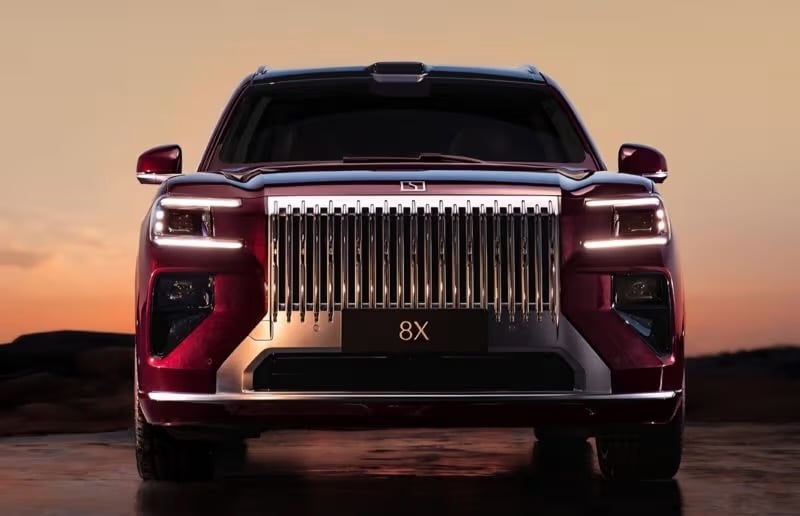
Aside from the petrol engine’s 205kW peak power output, full performance figures are yet to be revealed for the 8X. In the larger 9X SUV, a tri-motor set up making 1030kW of power features, as well as ‘6C’ or ultra-fast 420kW charging capability.
The Zeekr 8X will go on sale in its native Chinese market later in 2026, with export plans yet to be announced. Given how well SUVs sell in Australia, and with plug-in hybrid sales booming, the local arm of the brand will likely have its hand up for the 8X. Zeekr sold just shy of 2000 units (1994) in Australia for the whole of 2025, including 1206 units of the 7X, which was only released in November.
With over 157,000 sold in Australia in 2025, gone are the days when electric vehicles (EVs) were only for the well heeled. Thanks to the proliferation of cheaper models from various brands in the market, price – typically the most obvious barrier to wider adoption – is no longer such an issue for those wanting to buy an EV. There are now plenty of options below the $50,000 driveaway mark, including from many mainstream brands.
With SUVs all the rage currently the world over, here are five electric SUV models that we think should be on your shopping list if you’re after a new family car.
Geely EX5
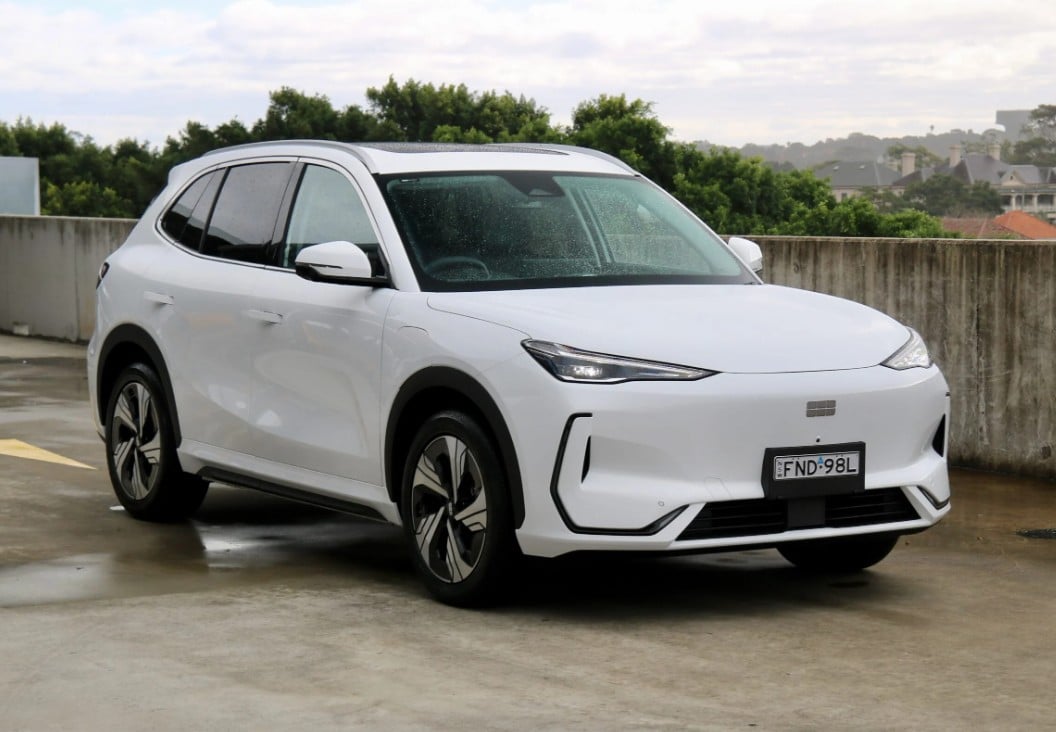
Price: $40,990 plus on-road costs
Battery size: 60.2kWh
Peak DC charge speed: 100kW
Claimed WLTP range: 410km – 430km
Power/torque: 160kW/320Nm
Bootspace: 410 litres (rear seats up, including sub-boot floor storage) –1877 litres (rear seats folded)
Geely has only arrived on Australian shores within the last 12 months but is starting to make sales waves with its range of mid-size SUVs: the plug-in hybrid and electric EX5. Here we’re focusing on the EX5, which is priced from $40,990 plus on-road costs for the entry-level Complete and $44,990 for the upper-spec Inspire. Both versions use a 60.2kWh battery for a claimed WLTP range of up to 430km for the Complete (the Inspire’s larger wheels make it less efficient and its range is slightly less at 410km).
Even the Inspire model in the EX5 range is quite well equipped, with features such as 18-inch alloy wheels, LED lighting, a huge 15.4-inch touchscreen with live services and wireless Apple CarPlay, synthetic leather upholstery and a lot of safety kit like automatic emergency braking, adaptive cruise control, lane keeping assistance and a 360-degree camera. Geely’s seven-year/unlimited km warranty is long and seven years of pre-paid servicing costs $1642 ($234 per year).
BYD Atto 2

Price: $31,990 plus on-road costs
Battery size: 51.3kWh
Peak DC charge speed: 82kW
Claimed WLTP range: 345km
Power/torque: 130kW/290Nm
Bootspace: 380 litres (rear seats up) – 1320 litres (rear seats folded)
BYD made waves when it launched its new electric Atto 1 hatchback and Atto 2 small SUV models in late 2025 thanks to their very keen pricing. Starting from just $31,990 plus on-road costs for the entry-level Dynamic ($35,990 +ORC for the top-spec Premium), the Atto 2 is the cheapest electric SUV in Australia, and undercuts many petrol-powered rivals as well. BYD’s six-year/150,000km warranty is actually the shortest on this list, and the company is yet to announce service pricing too, but it’s still longer than the average in Australia currently.
Both variants in the Atto 2 range are well equipped, especially considering that a heat pump and vehicle-to-load (V2L) functionality is standard. The Premium especially is loaded with kit, including 17-inch alloy wheels, a panoramic sunroof, heated and ventilated front seats, electric front seats and a 360-degree camera but it’s difficult to overlook the Dynamic’s $31,990 plus on-roads entry price, and it’s still well equipped for the money.
Skoda Elroq
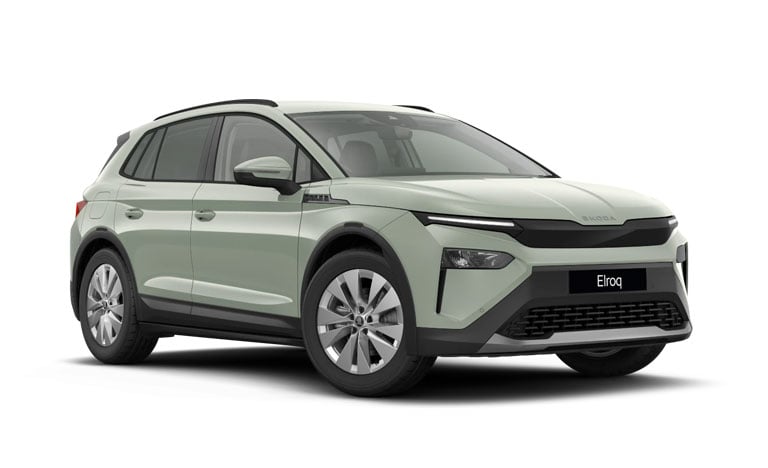
Price: From $49,990 driveaway
Battery size: 63kWh
Peak DC charge speed: 165kW
Claimed WLTP range: 395km (504km in the city)
Power/torque: 150kW/310Nm
Bootspace: 470 litres (rear seats up) – 1580 litres (rear seats folded)
It may be a surprise to see a European car on a best value list, but Skoda launched the entry-level version of its Elroq electric small-to-medium SUV priced at a surprisingly low $49,990 drive away. More expensive versions are available, but we think the base Select 60 makes most sense in the Elroq range. Skoda’s seven-year/unlimited km warranty is the longest on the new car market for a European manufacturer and is competitive with rivals here. Adding further value is that a 10-year/150,000km service pack costs $1950, or just $195 per year.
Using a 63kWh battery, the Elroq is capable of a 395km claimed WLTP range, while its rear-mounted 150kW/310Nm motor provides punchy performance. Despite being a base model, it’s well equipped with features such as 19-inch alloy wheels, automatic LED lighting, heated front seats and steering wheel, a 13.0-inch touchscreen with wireless smartphone mirroring and a full suite of safety features, including automatic emergency braking, adaptive cruise control with adaptive lane guidance, blind-spot monitoring, rear cross-traffic alert and a reversing camera.
Kia EV3
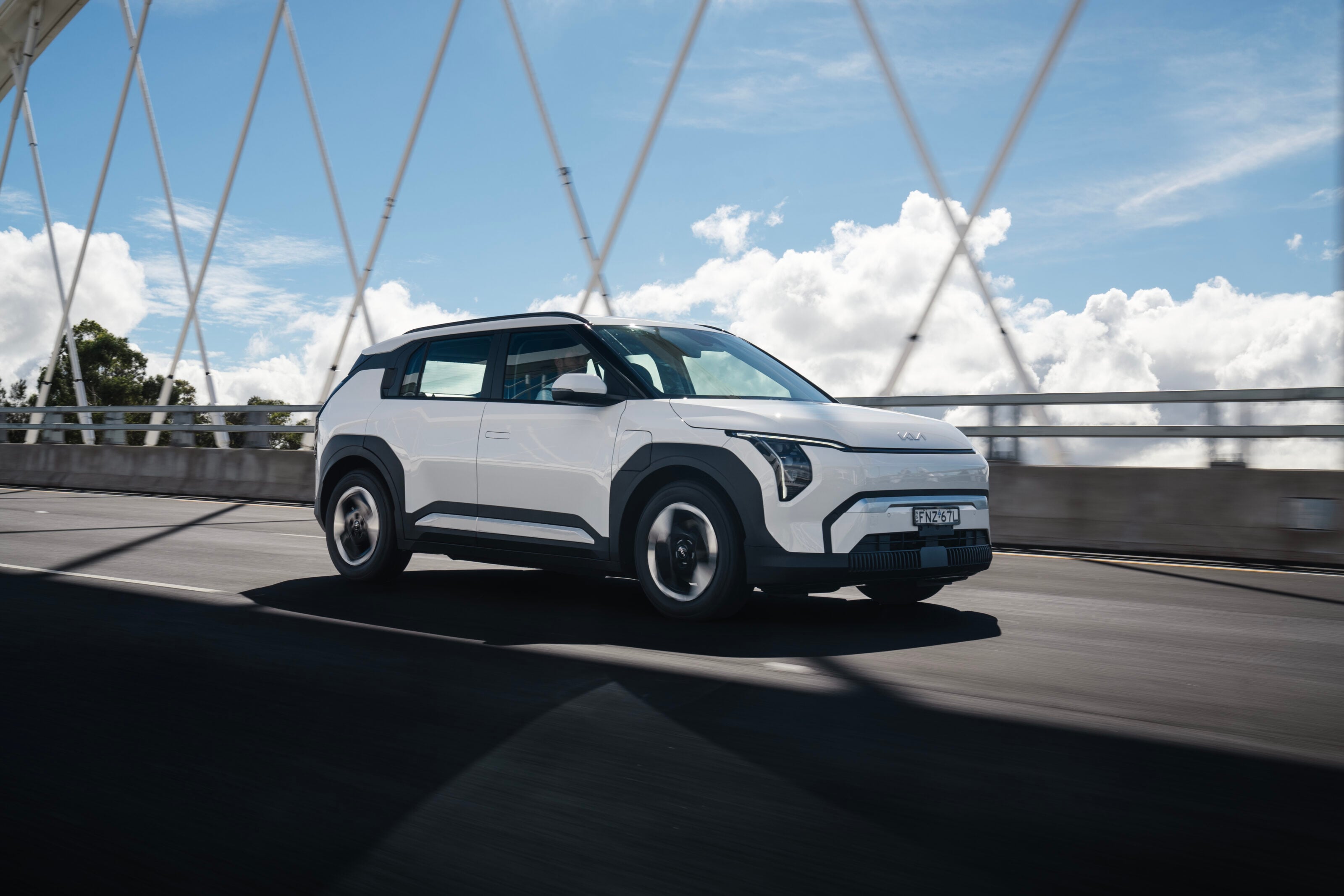
Price: From $48,990 driveaway
Battery size: 58.3kWh – 81.4kWh
Peak DC charge speed: 100kW
Claimed WLTP range: 436km (Air Standard Range) – 604km (Air Long Range)
Power/torque: 150kW/283Nm
Bootspace: 460 litres (rear seats up) – 1250 litres (rear seats folded)
The Kia EV3 is the brand’s cheapest electric vehicle in Australia, but it’s also one of its best. Prices start at $48,990 driveaway for the entry-level Air, and we think that’s the EV3 to buy as the upper-spec models are more expensive and can hit almost $70,000 once on-road costs are included. The Air’s 58.3kWh battery gives it a claimed WLTP range of 436km, which is more than enough for city driving, though the Air Long Range’s 604km rating is a lot more.
Kia’s seven-year/unlimited km warranty is fairly standard on this list and a pre-paid seven-year service plan is available for $1929 ($275 per year). Despite being the base model, the EV3 Air is equipped with features such as 17-inch alloy wheels, automatic LED lighting, dual-zone automatic climate control, dual 12.3-inch screens, live services, wireless Apple CarPlay and Android Auto and a long list of safety features.
MGS5 EV
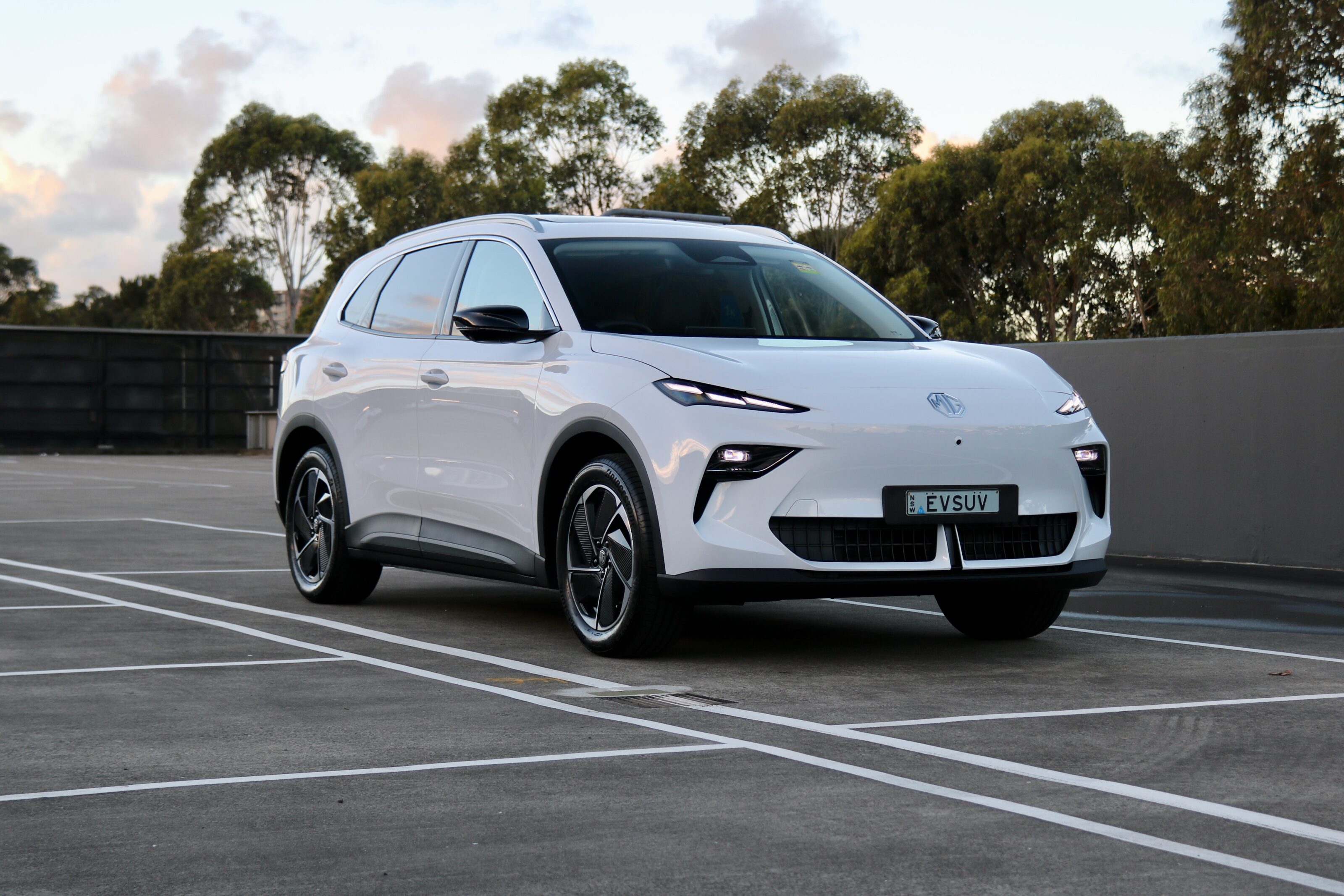
Price: From $40,990 driveaway
Battery size: 49kWh – 62kWh
Peak DC charge speed: 120kW (49kWh battery) – 150kW (62kWh battery)
Claimed WLTP range: 335km – 430km
Power/torque: 125kW/250Nm
Bootspace: 453 litres (rear seats up) – 1441 litres (rear seats folded)
The MGS5 EV launched in Australia in 2025 and we were immediately impressed by it. Based on the same platform as the lovely MG4 hatchback, the MGS5 EV takes the 4’s impressive dynamics and adds a good dose of practicality and a more modern interior with more tech and higher quality materials. MG’s seven-year/unlimited km warranty is extendable to 10 years/250,000km in total if serviced through an MG dealership, which is the best new car warranty coverage in Australia.
Two models of MGS5 EV are available: Excite and Essence, and both can be had with either a 49kWh or 62kWh battery, while the 125kW/250Nm rear-mounted electric motor is the only powertrain option for now. Standard kit on the Excite includes 17-inch wheels, a 12.8-inch touchscreen with wireless Apple CarPlay and Android Auto, vehicle-to-load functionality and a long list of safety features, with the Essence adding larger wheels, synthetic leather upholstery, heated front seats and steering wheel, a 360-degree camera and a panoramic sunroof.
First published in the October 1968 issue of Wheels magazine, Australia’s best car mag since 1953. Subscribe here and gain access to 12 issues for $109 plus online access to every Wheels issue since 1953.
With the possible exception of the Alfas, outright victory in this year’s Battle of Bathurst should be a duel between the fighting GTs.
We tested the Big Beast on GM-H’s top security torture track at Lang Lang where it lost its gearbox all over the road in a very oily and most embarrassing way. We tested it at Lakeside race circuit, where it impressed us with the brute force needed to control it. But we still weren’t sure. So we took it up to Bathurst to drive it on the battlefield.
Here we would surely find out what the Monaro GTS 327 was really like on the road for which it was designed to end the Ford domination of the 500 mile classic. For good measure, we took along the rival it’s tipped to dethrone – the Ford Falcon XT GT.
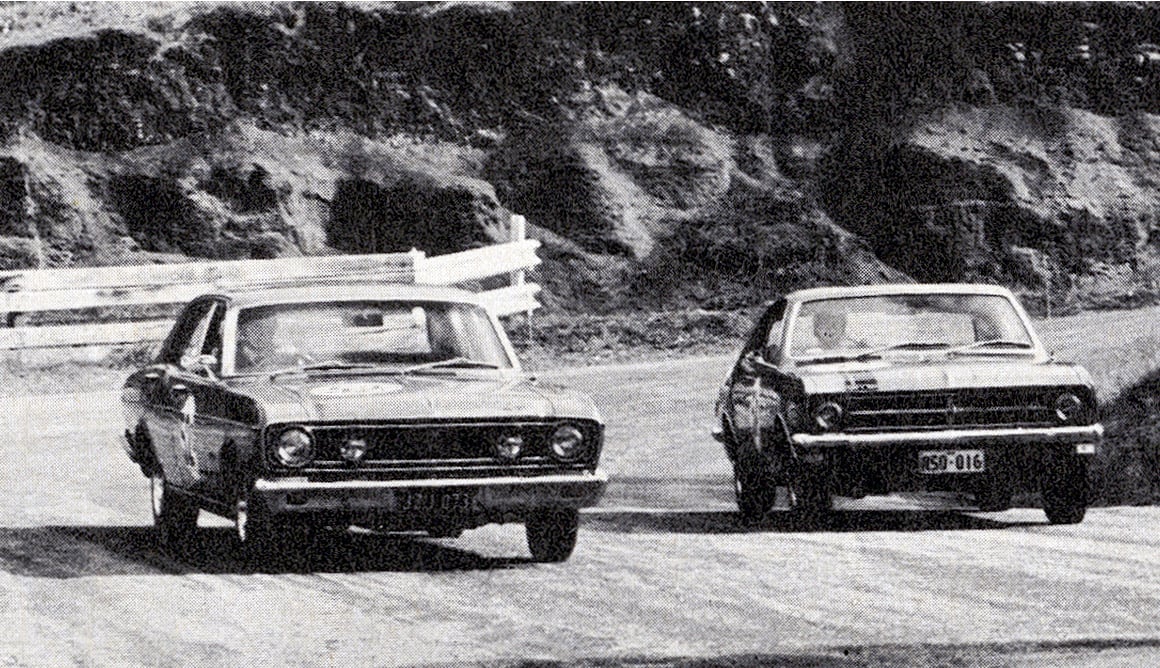
For three days we put them through the most exhausting series of handling, braking and acceleration tests. It was too much for the Falcon in the end. The linkages on the gearbox gave up in disgust and refused to let us into any gears except reverse and top without a lot of coaxing and swearing.
Then we asked our three test drivers: “Who will win?” Driver A picked the Falcon, Driver B the Monaro. And at the time of writing. Driver C was still picking the petals off daisies. And all this despite the fact that the Monaro IS faster. But one thing they all agreed on…
Provided the Holdens can hold together and unlike the Falcons they have yet to prove they can, they have great potential for taking outright honours in the 500 and for a number of reasons. With a 24 gallon capacity they have bigger fuel tanks and with only “seven-tenths” driving could run the distance with just one fuel stop, certainly no more than two. The Falcons will have to make two and almost certainly three pit stops for fuel. And pit stops are extremely hard to make up.
The Holdens will be able to run to the old formula of run slow to preserve tyres and brakes and save fuel. This is a formula which often wins endurance races.
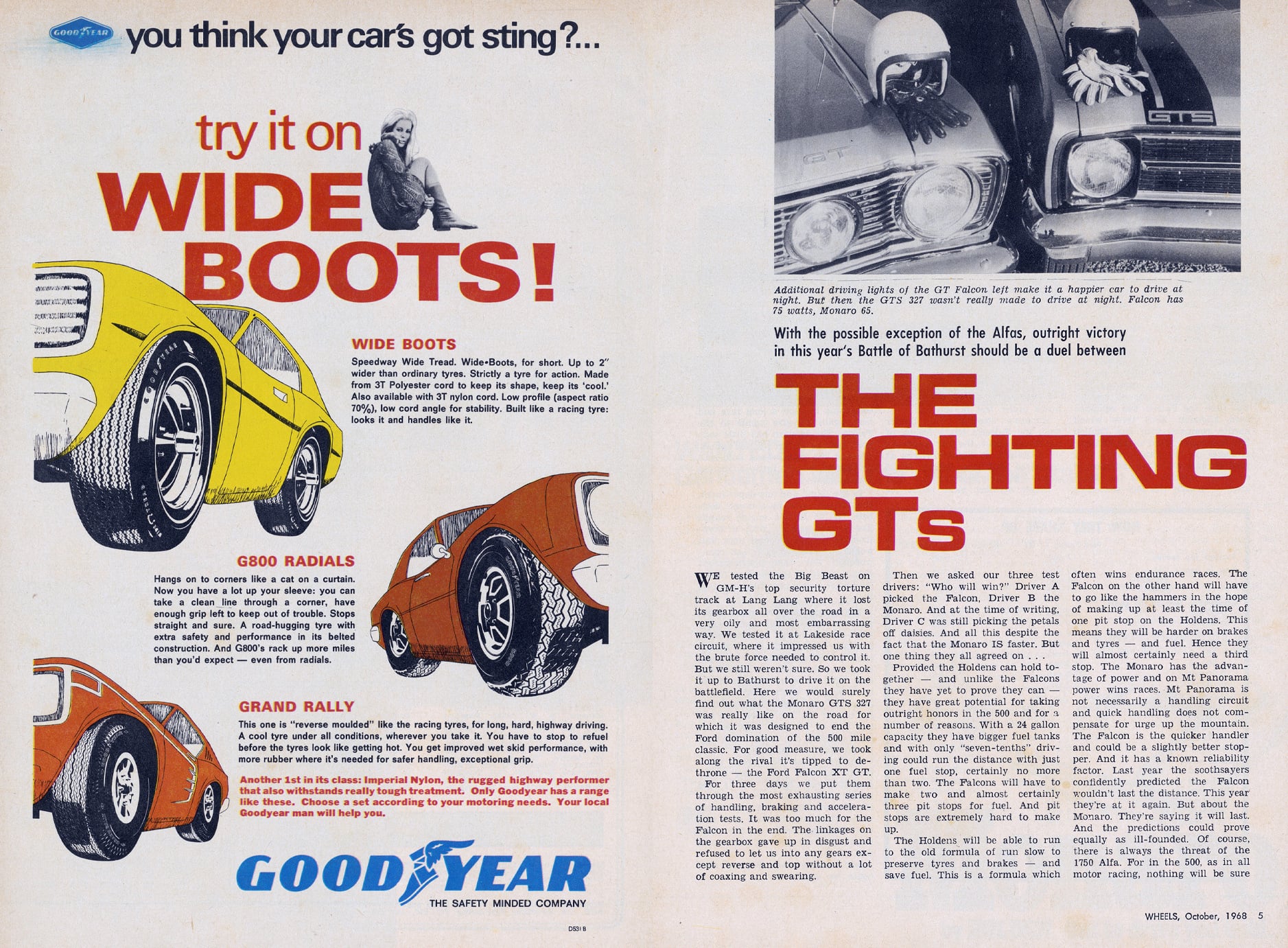
The Falcon on the other hand will have to go like the hammers in the hope of making up at least the time of one pit stop on the Holdens. This means they will be harder on brakes and tyres and fuel. Hence they will almost certainly need a third stop.
The Monaro has the advantage of power and on Mt Panorama power wins races. Mt Panorama is not necessarily a handling circuit and quick handling does not compensate for urge up the mountain. The Falcon is the quicker handler and could be a slightly better stopper. And it has a known reliability factor.
Last year the soothsayers confidently predicted the Falcon wouldn’t last the distance. This year they’re at it again. But about the Monaro. They’re saying it will last. And the predictions could prove equally as ill-founded. Of course, there is always the threat of the 1750 Alfa. For in the 500 as in all motor racing, nothing will be sure until the flag drops at around 4.30pm on. October 6.
For consumer use, the Falcon wins in comfort and ease of control. The Holden’s harsh ride, clunky gearshift and heavy steering make it a none-too-desirable everyday car. But then perhaps this comparison is a little unfair to the Monaro as a range. The GTS 327 is a beast. But then it is built for one thing – to win the Bathurst 500. Its smaller brother – the GTS with the 186S motor – is a darling car – tractable, comfortable, easy to fling around and still with enough oomph to delight the boy-racers-at-heart.
In the handling department there was a marked contrast between the Falcon GT and the Monaro GTS 327. The Monaro was skittish but eminently controllable and could be thrown about quite safely. The Falcon was very predictable. Hard cornering, however, produced front-wheel understeer. On a corner in the wet, or on the dirt, a boot on the accelerator easily flicked the tail sideways and quick steering was necessary to keep out of trouble. But then the Falcon was equipped with Michelin XAS tyres which hardly compare with the Dunlop D70 Sovereigns fitted to the Monaro.
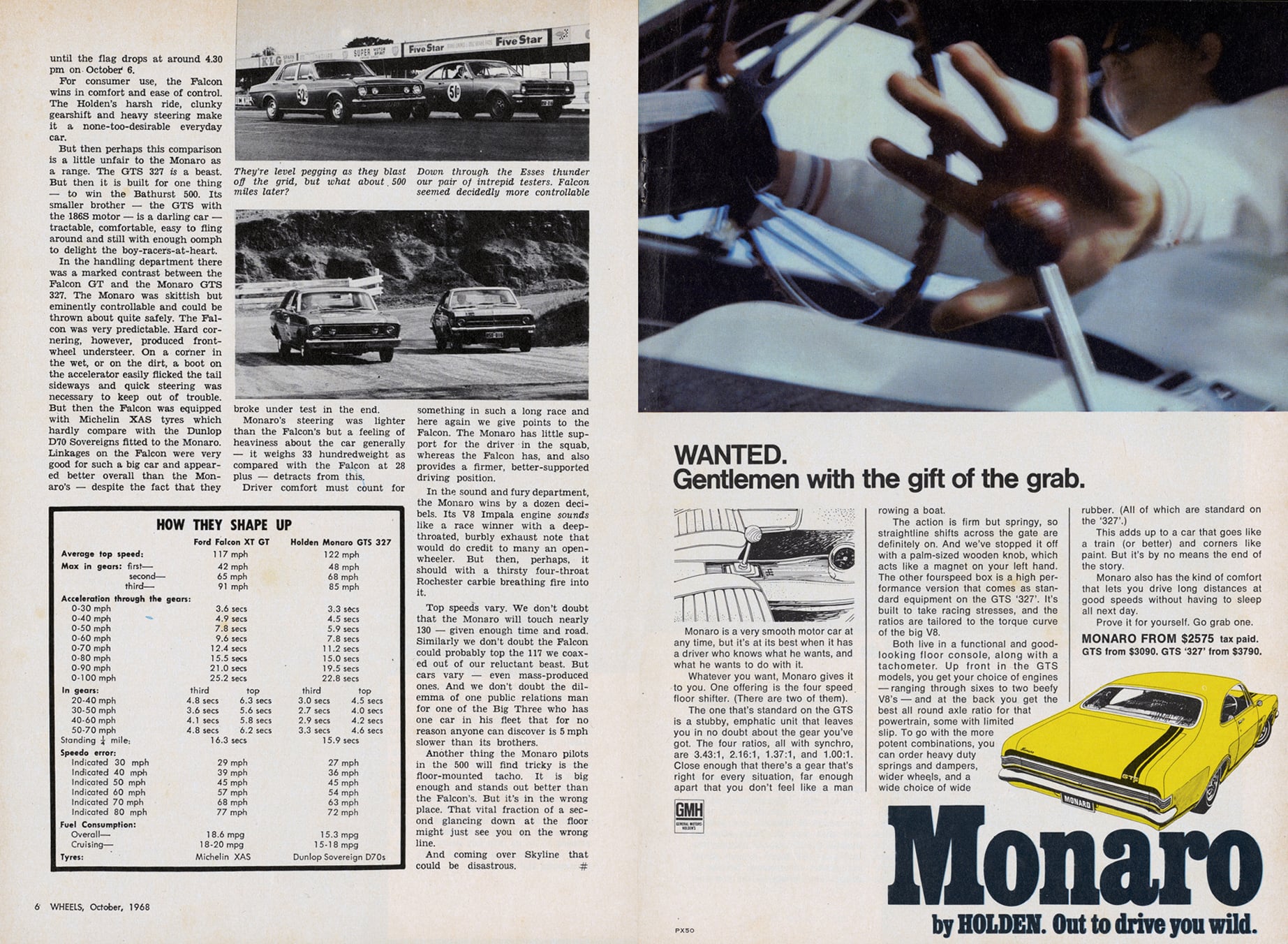
Linkages on the Falcon were very good for such a big car and appeared better overall than the Monaro’s – despite the fact that they broke under test in the end. Monaro’s steering was lighter than the Falcon’s but a feeling of heaviness about the car generally – it weighs 33 hundredweight compared with the Falcon at 28 plus – detracts from this.
Driver comfort must count for something in such a long race and here again we give points to the Falcon. The Monaro has little support for the driver in the squab, whereas the Falcon has, and also provides a firmer, better-supported driving position.
In the sound and fury department, the Monaro wins by a dozen decibels. Its V8 Impala engine sounds like a race winner with a deep-throated, burbly exhaust note that would do credit to many an open-wheeler. But then, perhaps it should with a thirsty four-throat Rochester carbie breathing fire into it.
Top speeds vary. We don’t doubt that the Monaro will touch nearly 130 – given enough time and road. Similarly we don’t doubt the Falcon could probably top the 117 we coaxed out of our reluctant beast. But cars vary – even mass-produced ones. And we don’t doubt the dilemma of one public relations man for one of the Big Three who has one car in his fleet that for no reason anyone can discover is 5mph slower than its brothers.
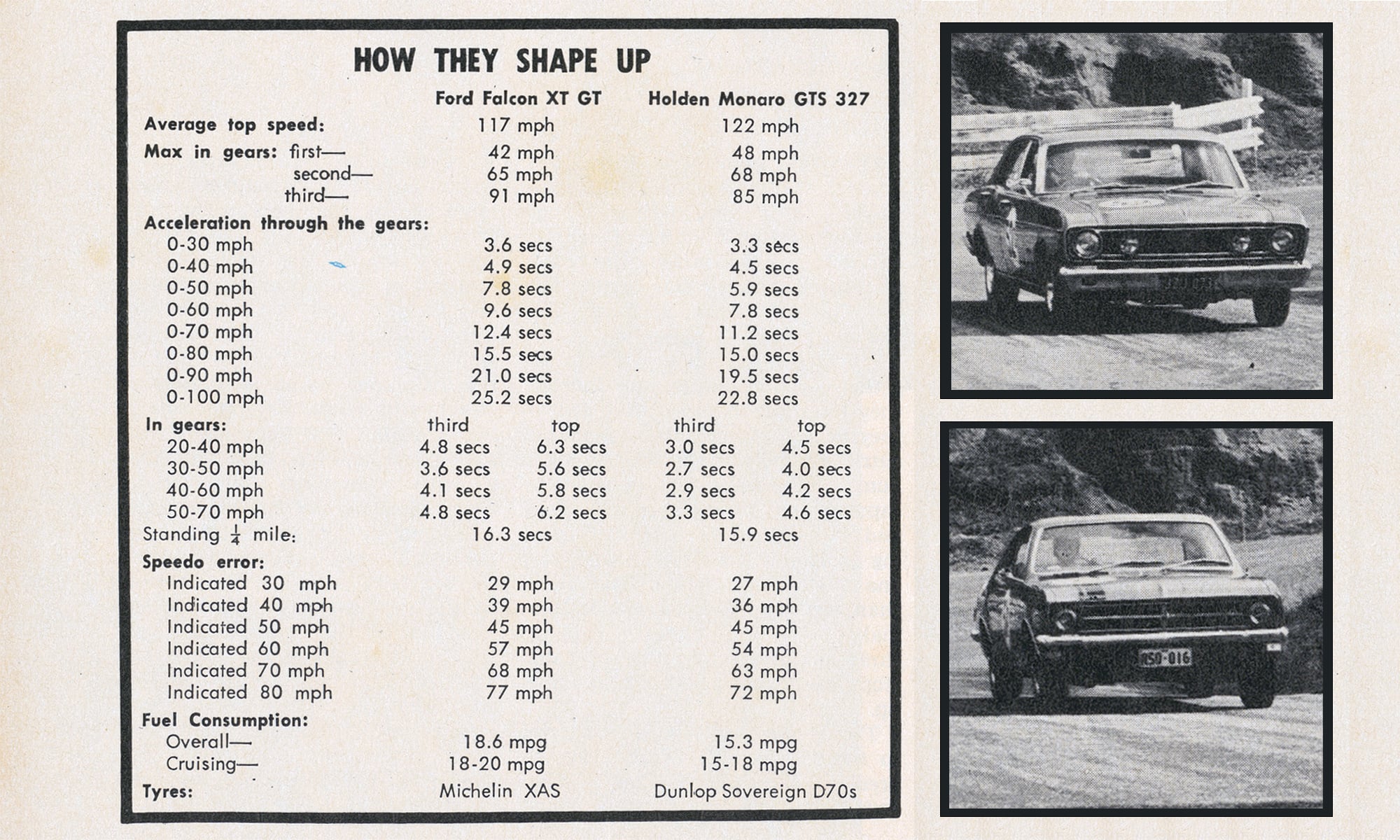
Another thing the Monaro pilots in the 500 will find tricky is the floor-mounted tacho. It is big enough and stands out better than the Falcon’s. But it’s in the wrong place. That vital fraction of a second glancing down at the floor might just see you on the wrong line.
And coming over Skyline that could be disastrous.
Postscript: A historic win for Holden in 1968
Holden etched itself into the Bathurst record books with its first-ever win in the Mt Panorama enduro classic.
The General dominated the podium, with Bruce McPhee and Barry Mulholland winning in their privately-entered Monaro GTS. In second place, the first of the ‘factory’ Monaros, driven by Jim Palmer and Phil West ahead of the third-placed Tony Roberts/Bob Watson Monaro.
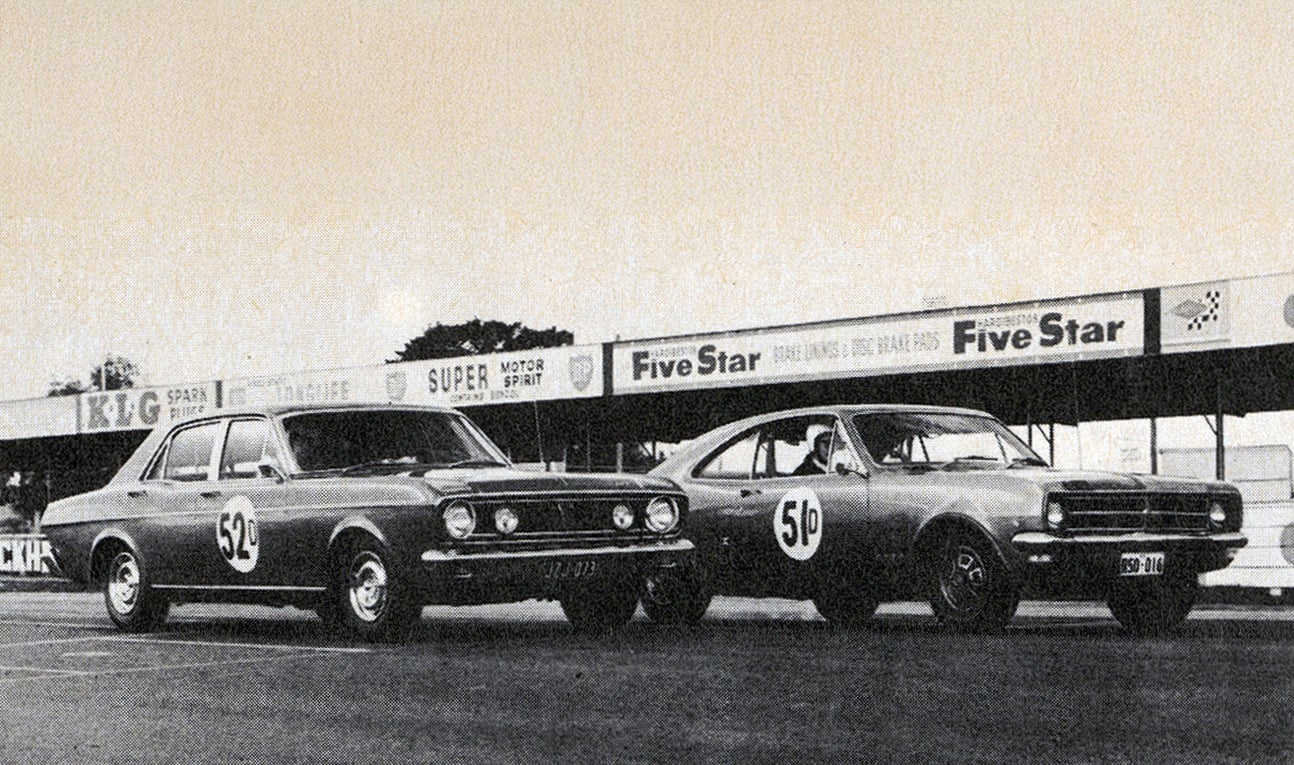
The best of the Fords? That would be Bruce McIntyre and Ken Stacey in their older model Falcon XR GT in seventh place while the best-placed factory-entered Falcon XT GT of Barry Arentz and Mike Champion could only muster 11th place, some seven laps adrift of the winning Holden and one spot ahead of the star Ford pairing of Leo and Ian Geoghegan in another XT GT.
The victory for Holden set a blueprint for the following decades, establishing a fierce rivalry between Australia’s two largest manufacturers. In the red corner, Holden which notched up 36 Great Race wins from its first in 1968 to its last as in 2020.
In the blue, Ford has 22 winning trophies on its book shelf, the most recent in 2025 when Kiwi Matt Payne and one-time Holden wunderkind, Garth Tander, crossed the line first in their Mustang. It was a first win for Payne, and a sixth for Tander, drawing him level with Larry Perkins and Mark Skaife on the all-time winners list, and behind only Jim Richards and Craig Lowndes (seven wins apiece) and the King of the Mountain, Peter Brock (9 victories).
Unbelievably, it’s been more than 20 years since the Bugatti Veyron started production. It was 2005 when the fastest car the world had ever seen was released, notching astounding automotive engineering feats including a quad-turbocharged W16 engine and 407km/h top speed.
Now, the company is celebrating the Veyron and its visionary Ferdinand Piech with the Bugatti F.K.P. Hommage, a one-off creation commissioned by an unknown customer.
The centrepiece of the Bugatti F.K.P. Hommage – and indeed, the Veyron as well – is the company’s iconic 8.0-litre quad-turbocharged W16 engine that was originally sketched by Piech in the 1990s. In the Veyron, it made 1001hp (746kW) of power, but the F.K.P. Hommage uses the tune from the Chiron Super Sport 300+ and makes 1600hp, or 1193kW.
Bugatti hasn’t released performance figures for the F.K.P. Hommage, but the Chiron Super Sport 300+ broke the 300mph (482km/h) mark so it’s not short of grunt.
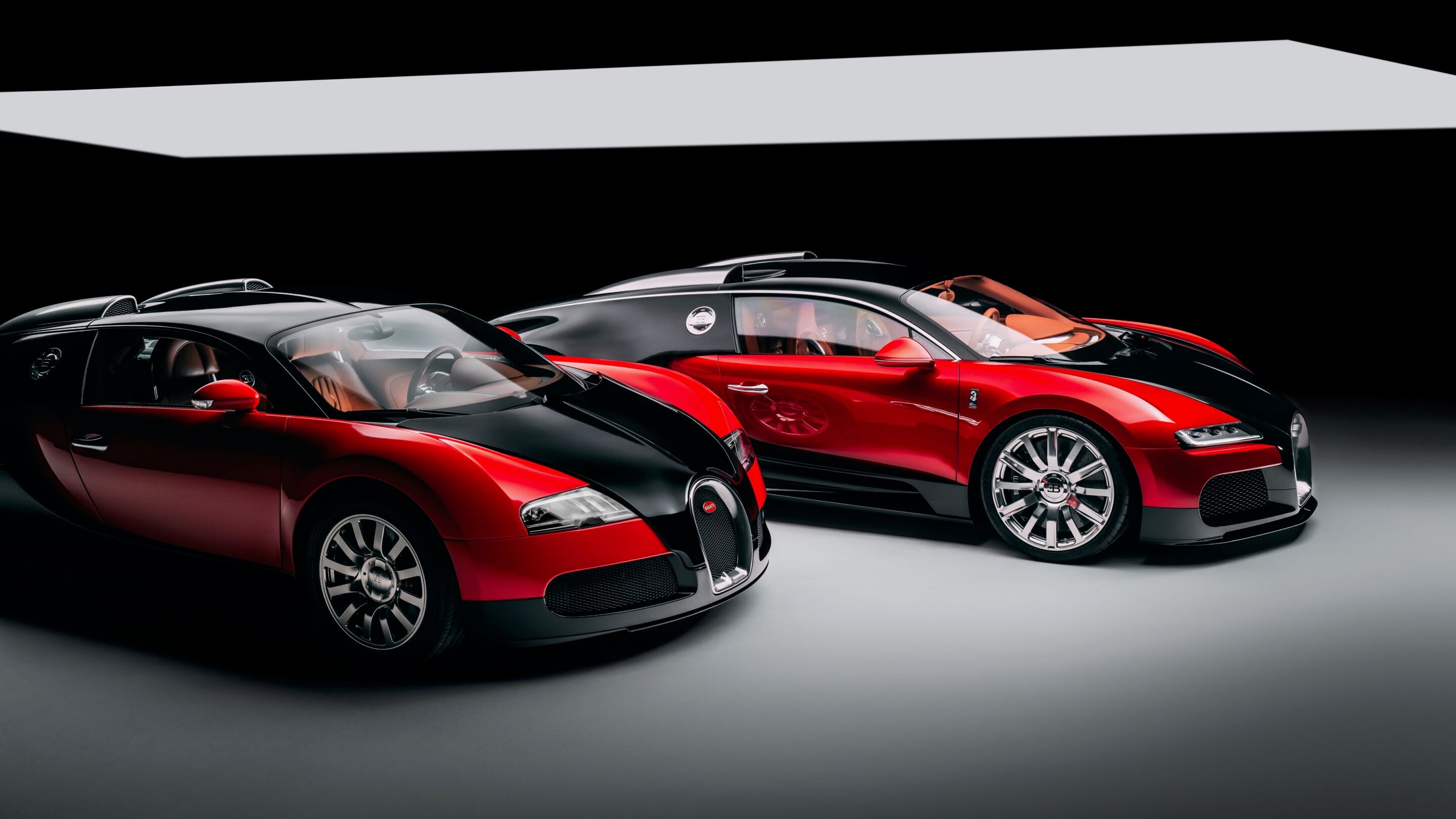
While Bugatti is gearing up to launch the Tourbillion – its next generation of hypercar – its Solitaire special one-off arm created the F.K.P. Hommage as as reimagined version of the Veyron for 2026. While it looks similar to the Veyron, the body is entirely new and made from carbon fibre.
The lights now use LEDs and are more aggressive looking, larger air intakes feed the more powerful W16 engine and the company’s ‘horseshoe’ grille now flows more elegantly into the body.
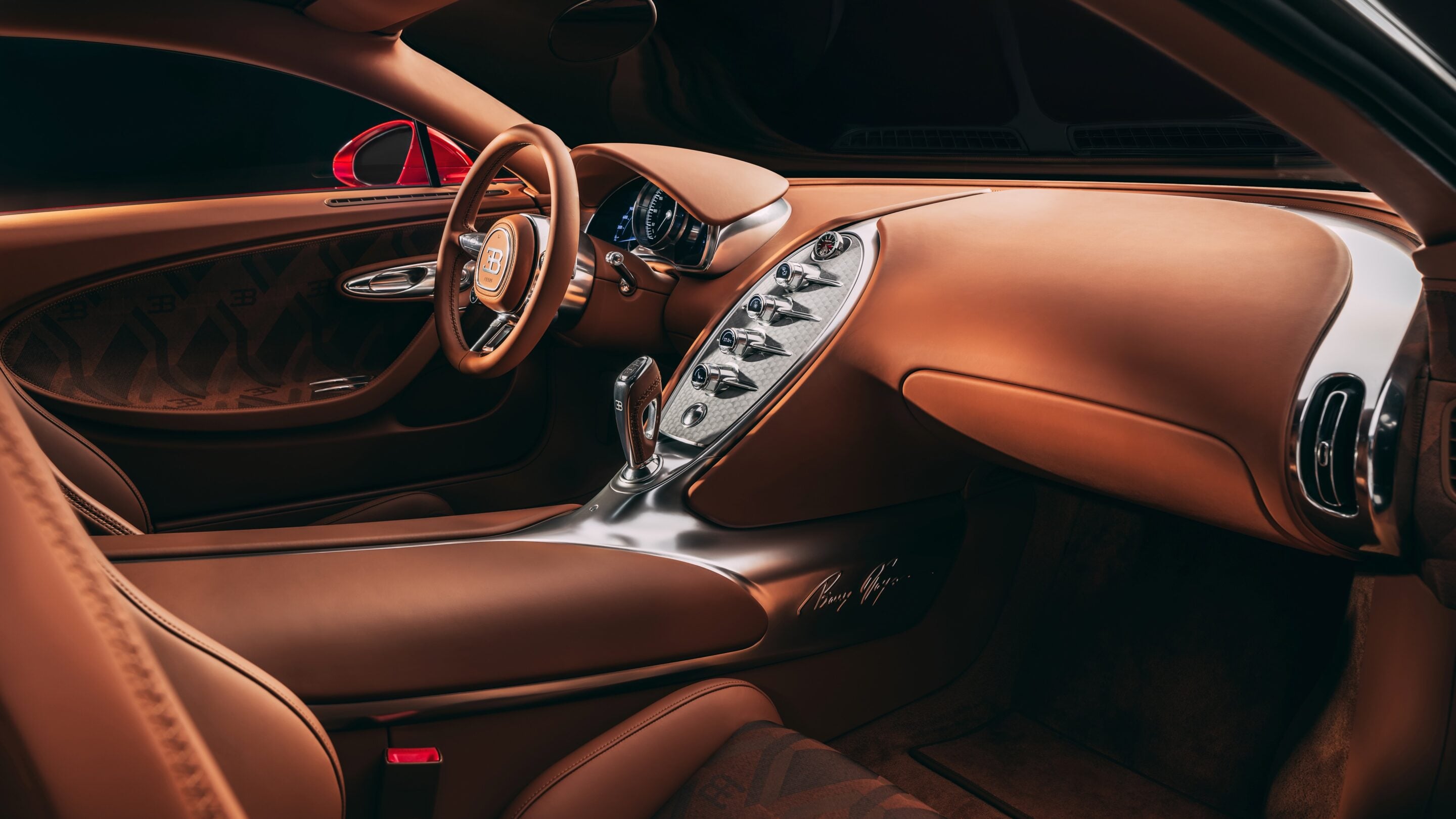
Inside, the Veyron has been modernised with new upholsteries and a 41mm Audemars Piguet Royal Oak Tourbillon watch that sits atop the dashboard as a request from the car’s owner. It also features a unique steering wheel and centre console that were machined from blocks of solid aluminium.
To be physically revealed at Ultimate Supercar Garage in the frame of Rétromobile Paris from January 29 to February 1 2026, the F.K.P. Hommage is the second creation from Bugatti’s Solitaire programme, which will only produce two bespoke creations each year.
The Volkswagen Amarok W600 has been almost-fully revealed as the next step in the relationship between Volkswagen and high-profile Aussie tuner, Walkinshaw.
Details of the Amarok W600, including its tuned suspension for enhanced handling, revised front fascia for more aggressive styling and new interior details such as Walkinshaw logos on the front seat headrest, have been confirmed. Like previous Walkinshaw Amaroks, the W600 does not receive a boost in outputs compared to regular Amarok V6s.
But while the Ford-sourced 3.0-litre V6 turbo-diesel engine is no more powerful and still making 184kW/600Nm outputs, the Amarok W600’s chassis has received a comprehensive update aimed at increasing its handling ability and steering feel.
The biggest change are new shock frequency-select dampers from Dutch company Koni, tuned by Walkinshaw for the Amarok W600, while a new 22mm rear sway bar has also been fitted to boost handling ability. Both the new shocks and sway bar are painted in Volkswagen’s ‘Lapiz Blue’ colour, which is available on its R models like the Golf and Touareg.
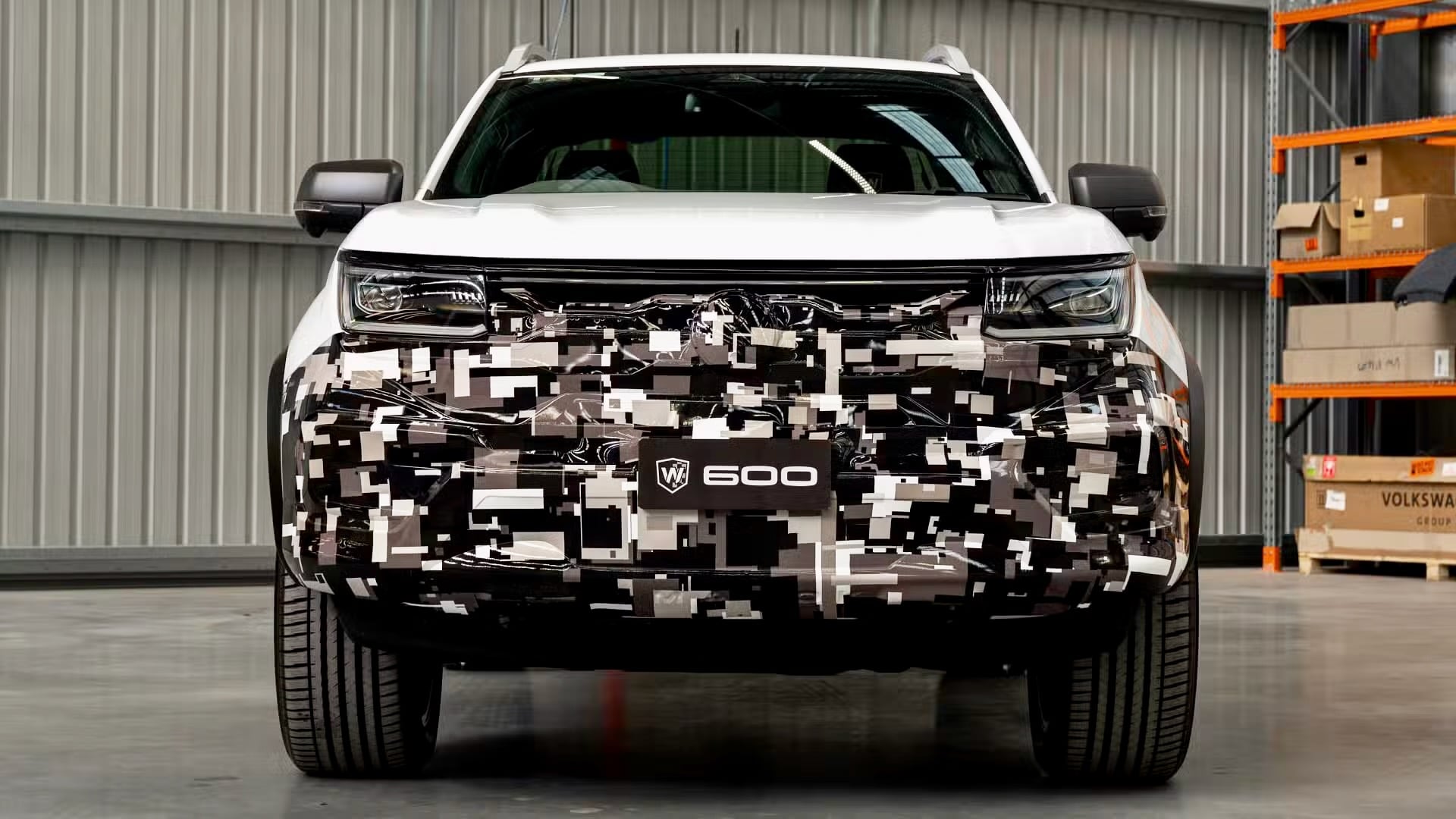
There are new 20-inch alloy wheels for the W600, which are wider than standard Amarok wheels and add 51mm of width to each side and are fitted with Michelin Pilot Sport 4 SUV tyres. Finally, new dual exhaust pipes sit at the rear, and don’t interfere with the W600’s full-size spare wheel.
The design of the Amarok W600 has also been altered compared to a regular Amarok thanks to a new yet-to-be-revealed front bumper with an integrated LED light bar, black wheel arch flares and wider mud flaps, new power-deployable side steps and black badging.
Inside, changes are limited to Walkinshaw logos on the headrests, new floor mats with W600 branding, silver pedals and Walkinshaw door sills.
The Volkswagen Amarok W600 is due in showrooms in the third quarter of 2026, with pricing and full specifications to be announced before then.
Audi may be almost two years away from launching a new sports car, but the Concept C suggests the brand is preparing a decisive shift in direction. An open-top electric two-seater is a brave move for a company that has leaned heavily into safe, familiar designs in recent years, with Audi appearing serious about seeing the idea through to production by 2027.
For long-time Audi fans, the Concept C taps into powerful nostalgia. More than two decades after the original Audi TT redefined the brand’s image, this new concept promises a similar moment of reinvention. The TT’s mix of radical design, engaging dynamics and relative affordability made it a landmark car in the late 1990s. Since then, Audi’s line-up has become broader and more successful, but also more conservative, with the TT discontinued in 2023 and the halo R8 fading away at the same time.
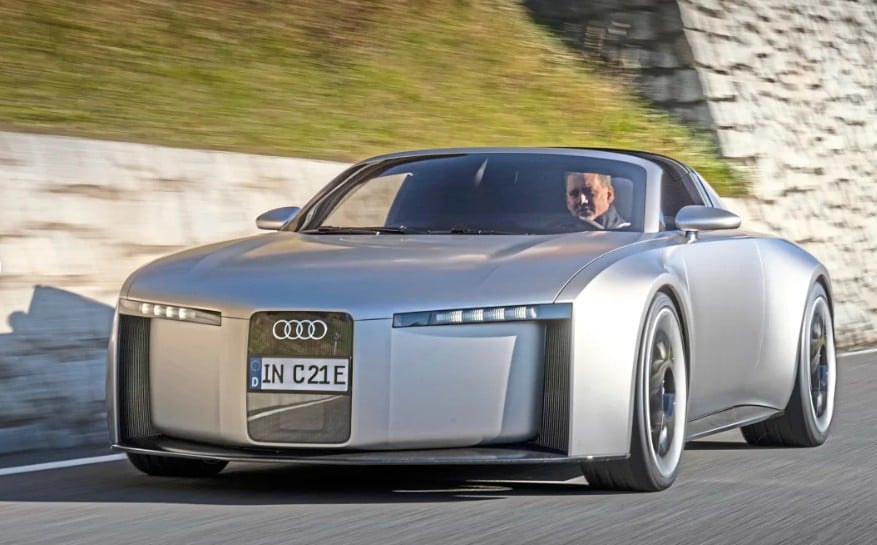
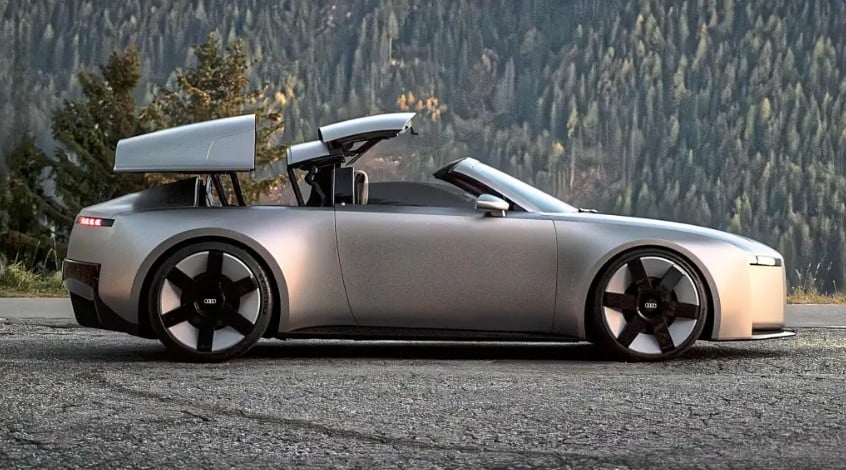
Audi CEO Gernot Döllner is determined to change that trajectory. Rather than serving as a direct replacement for either the TT or R8, the Concept C is positioned as a spiritual successor to both. It’s a compact two-seat sports car with a folding hard-top, designed to deliver a similarly awakening experience for the electric era.
Visually, the Concept C introduces a new design language under recently appointed design chief Massimo Frascella. Clean, uncluttered surfaces echo the purity of the original TT, while softer, more organic shapes give the car a modern edge. Subtle references to pre-war “Silver Arrow” racers add historical depth, most notably through the slim, upright front badge known as the new “Vertical Frame”, set to replace Audi’s long-running Single Frame grille across future models.
Inside, the shift is even more dramatic. Physical controls are kept to a minimum but feel deliberate and tactile, while screens retreat into the dashboard when not needed. A single press opens the roof, reinforcing the idea that driving enjoyment, not digital distraction, is the priority.
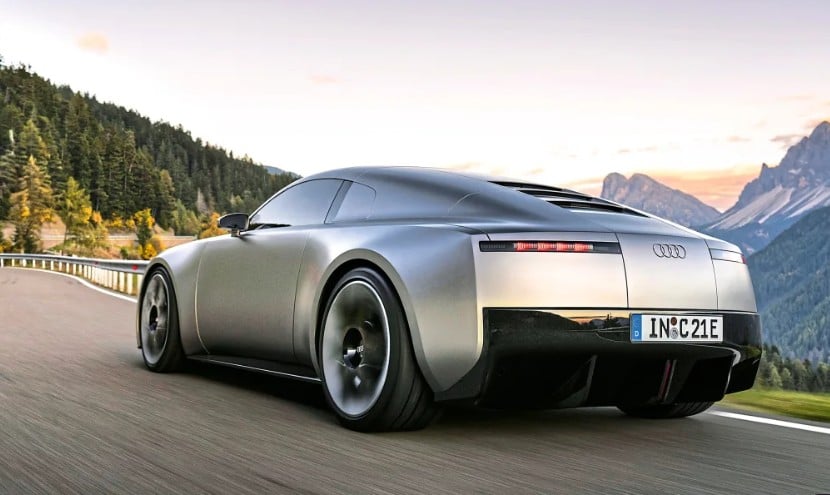
Crucially, this concept isn’t just a static showpiece. The electric powertrain delivers instant torque that easily eclipses even the old TT RS, and while official figures remain under wraps, outputs of around 370kW wouldn’t be unexpected given Audi’s recent EV benchmarks. Despite its electric hardware, the Concept C tips the scales at a relatively modest 1,700kg, helped by a battery mounted behind the seats rather than under the floor, centralising mass like a mid-engined sports car.
Rear-wheel drive replaces Audi’s traditional quattro layout, sharpening agility and steering feel. The silence of electric propulsion may divide opinion, but the sense of balance, immediacy and driver connection suggests Audi has rediscovered something it once did better than almost anyone.
If the production version lives up to this promise, Audi’s electric future could be far more exciting than expected.
The electric future may be locked in, but Volvo has no intention of abandoning buyers who aren’t ready to go fully battery-powered just yet. Speaking with Auto Express, Volvo’s recently reinstated CEO Håkan Samuelsson confirmed the brand will continue building hybrid vehicles “for as long as customers keep asking for them”.
Crucially, this isn’t about keeping older technology on life support. Volvo’s existing internal combustion engine (ICE) SUVs are set for significant updates, drawing heavily on the design language and technology already seen in the brand’s latest all-electric models.
That includes the hugely popular XC60 and flagship XC90, both of which are expected to receive far more comprehensive revamps than the relatively minor updates introduced last year. Volvo has already confirmed it will work more closely with parent company Geely on future hybrid systems, though it’s not yet clear whether the XC60 and XC90 will remain on Volvo’s in-house SPA architecture or migrate to a shared Geely platform.
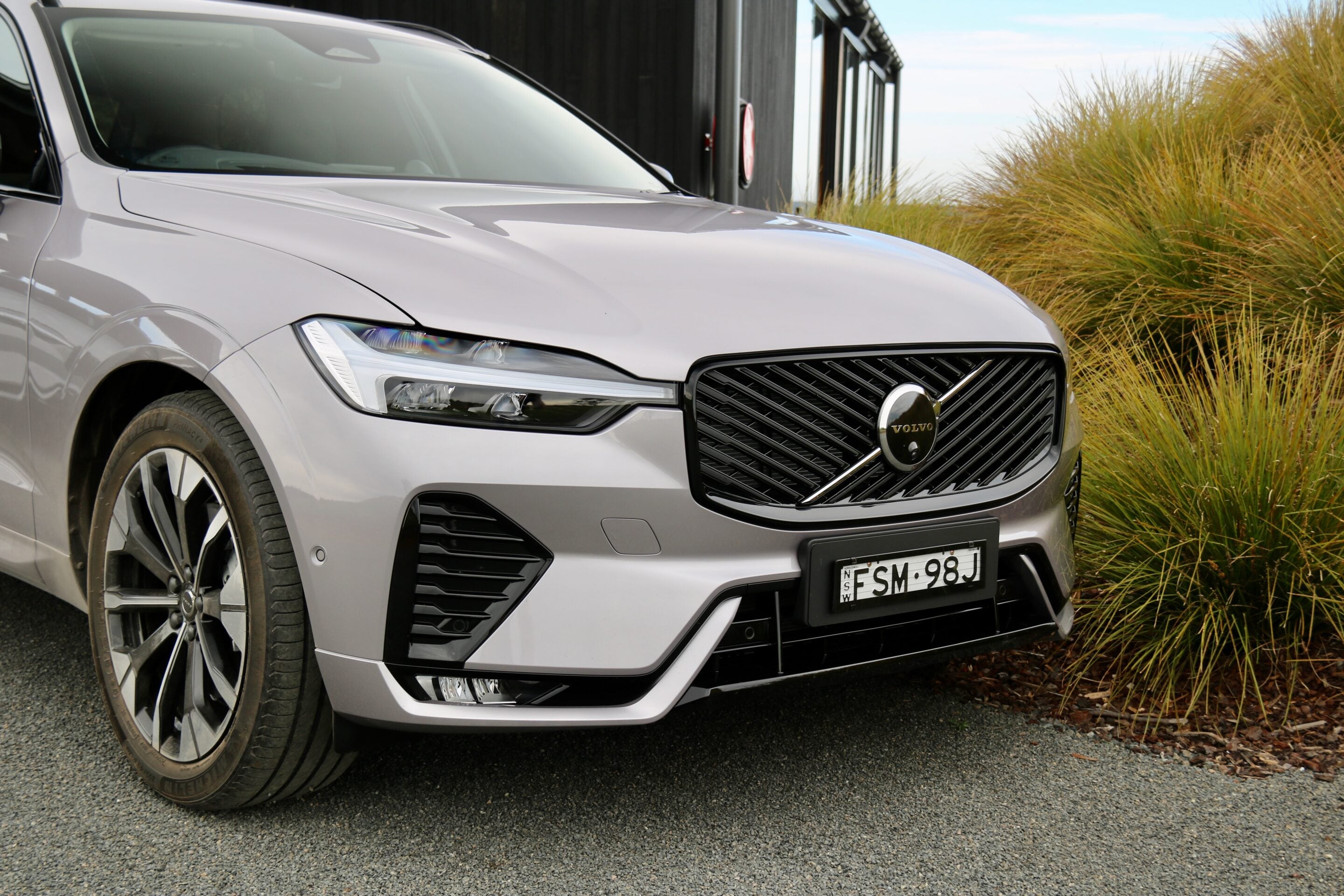
What is confirmed is the introduction of a new ‘Gen 2’ plug-in hybrid system. Drawing on experience from both Volvo and Geely, this next-generation setup is expected to feature larger batteries, allowing the electric motor to do more of the driving and reducing reliance on the petrol engine.
While Samuelsson stopped short of calling the new system a full range-extender, he told Auto Express it’s heading in that direction. Using the China-only XC70 as a preview, Volvo expects electric-only driving ranges to stretch to roughly 160–240km, supported by more powerful electric motors.
As part of this shift, Volvo may also rethink its familiar turbocharged 2.0-litre four-cylinder engine. More efficient solutions are on the table, including Miller-cycle combustion, smaller turbochargers and reduced engine capacity. In setups where the engine primarily charges the battery rather than driving the wheels, it can operate in a much narrower and more efficient window.
The XC40 also remains firmly in Volvo’s hybrid plans. Already built on a shared SEA platform, the next-generation model is likely to continue using group architecture, although packaging constraints may limit it to a more traditional plug-in hybrid layout.
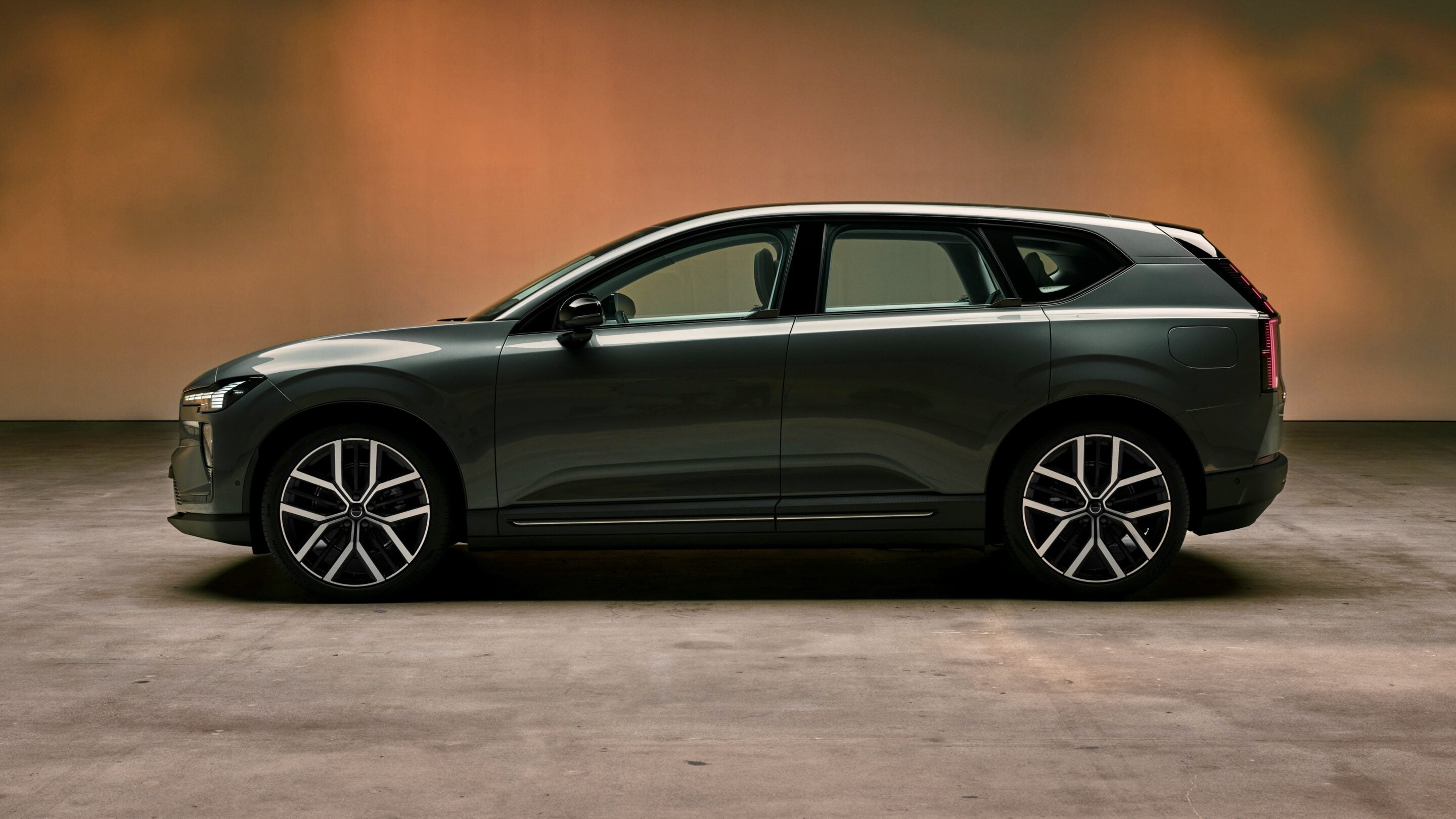
Despite deeper collaboration with Geely, Volvo insists its global models will retain their Swedish DNA. All non-China-market vehicles will continue to be engineered in Sweden, ensuring they still feel unmistakably like Volvos.
As for timing, with the new EX60 (above) about to enter production, the XC40 is expected to be first in line for a hybrid refresh. Larger updates for the XC60 and XC90 are still likely two to three years away.
Fiat has brought back the Scudo nameplate to Australia with the reintroduction of the latest version, which is twinned to the Peugeot Expert. Priced from $48,490 plus on-road costs, the Scudo will be offered in two wheelbase lengths and two models. A 2.0-litre turbo-diesel will be the only engine offered in Australia for now, though an electric E-Scudo is offered in other markets.
Due in local Fiat showrooms from next month, the Fiat Scudo is the latest offering in the mid-size van segment and will compete against rivals such as the Hyundai Staria Load, Volkswagen ID.Buzz Cargo, Ford Transit Custom, Toyota HiAce and its Peugeot Expert twin. It joins the Fiat Professional range in Australia after a year of record sales where the brand sold 1541 units of the larger Ducato van.
Measuring 4983mm for the short wheelbase and 5333mm for the long wheelbase variant, the Fiat Scudo offers between 5.3 and 6.6 square metres of cargo volume, a payload of between 1304kg (LWB) and 1347kg (SWB) and a width of 1258mm between wheel arches to accommodate both Australian and European standard pallets.
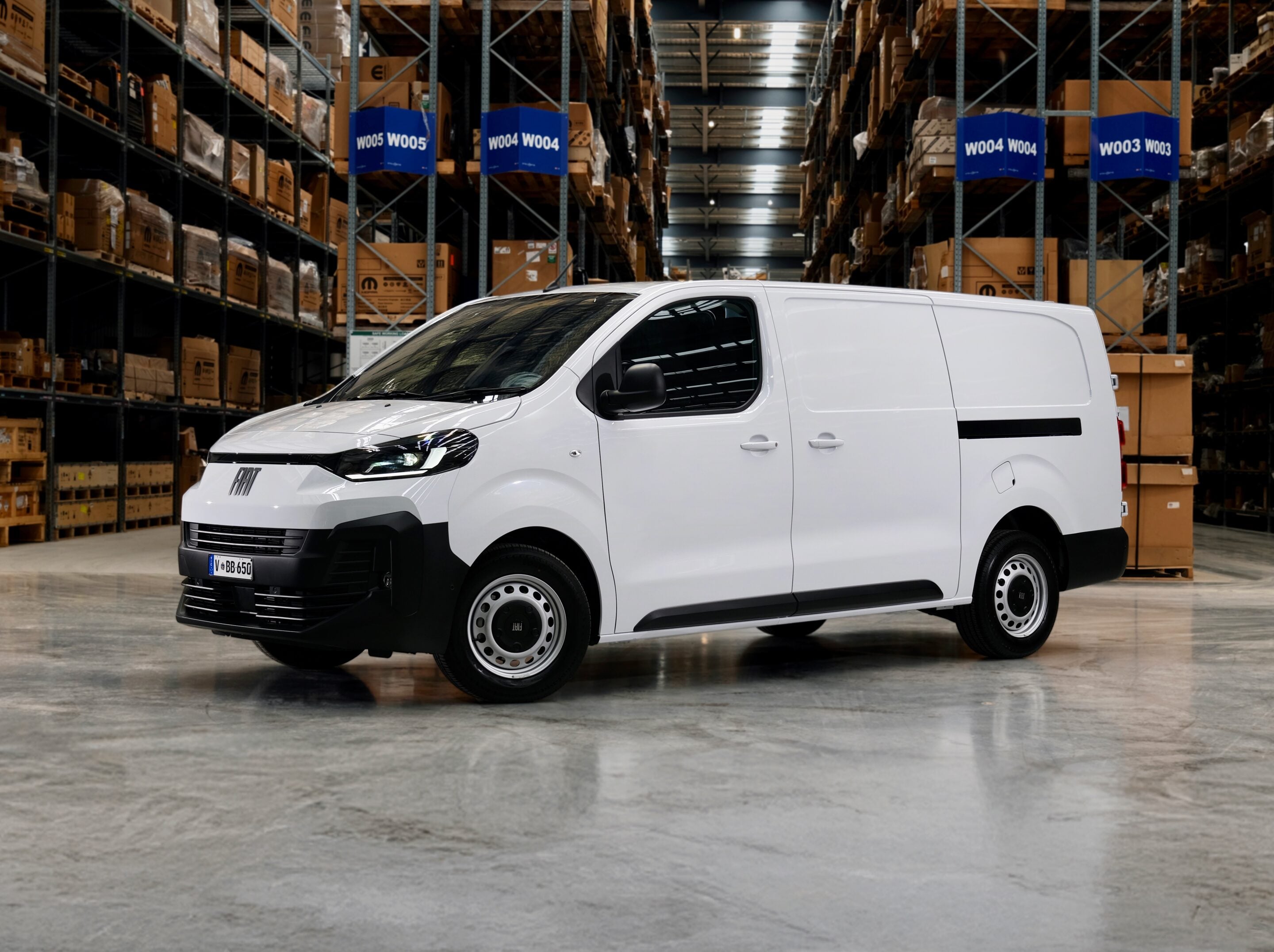
The Australian Fiat Scudo range uses a 2.0-litre four-cylinder turbo-diesel engine making 110kW of power (at 4000rpm) and 370Nm of torque (at 2000rpm). It drives the front wheels through an eight-speed torque converter automatic transmission, and regardless of wheelbase length and weight, is rated at 6.3L/100km for combined fuel consumption and 165g/km for CO2 emissions.
Fiat Professional vehicles are covered by a five-year/200,000km warranty with five years of roadside assistance.
2026 Fiat Scudo pricing (plus on-road costs):
| SWB | $48,490 |
|---|---|
| Primo SWB | $50,490 |
| LWB | $50,990 |
| Primo LWB | $52,990 |
2026 Fiat Scudo standard features:
- Glazed bulkhead
- Load compartment wall protection
- Glazed rear doors (270-degree opening)
- Dual sliding side-access doors
- Reverse camera
- 10-inch digital instrument cluster
- 10-inch touchscreen
- Wireless Apple CarPlay & Android Auto
- DAB+ digital radio
- Heated driver seat
- Heated leather-wrapped steering wheel
- Heated electric folding mirrors
- Cruise control
- 2x USB-C charging ports
- Automatic rain-sensing wipers
- Automatic halogen headlamps
- Front fog lamps
- Autonomous emergency braking with cyclist and pedestrian detection
- Auto high beam
- Lane keep assist
- Traffic sign recognition
- Intelligent speed assist
- Driver attention assist
- Blind-spot monitoring
- Front and rear parking sensors
- 6x airbags
- Full-size spare wheel
Scudo Primo adds to Scudo:
- Keyless entry with keyless start
- Liquid Palladium interior trim highlights
- Body colour exterior door handles
- Automatic LED headlights
- Wireless phone charger
- Dual-zone automatic climate control
- Load-through flap in bulkhead
- Mobile Office functionality with Moduwork adjustable workstation
- LED Lighting in load compartment
Within the Ford fanbase in Australia the nameplate ‘Super Duty’ might not have the same weight and recognition it does in the States. Over there, it’s a serious sub-segment for the most hardcore segment of the market – full-size trucks.
Affix the words Super Duty to an F-Truck and it’s an admission that the truck is ready to get to work in a heavy-duty sense. Uprated chassis strength, uprated carrying capacity, capability and tow ratings.
Now, Ford Australia has decided to unleash the same Super Duty capability in its widely successful Ranger – a 4WD medium-size truck that shows absolutely no sign of slowing down anytime soon. And, according to Ford, it means big business here, too. In a sign of what Ford can still do in this country, this is very much an Australian designed Super Duty. One that had to make a serious business case to get the tick of approval from head office.
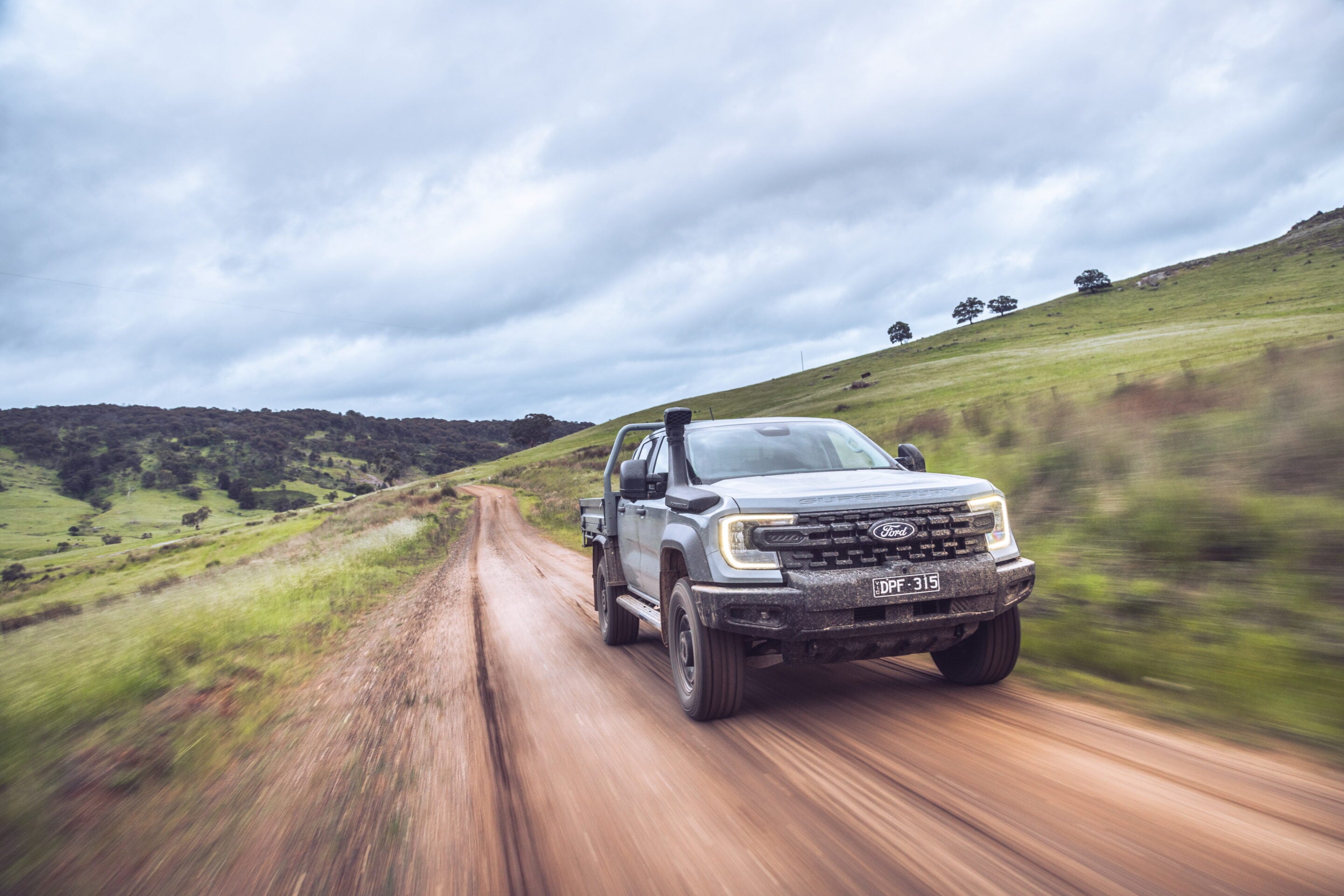
In short, what Super Duty means is more capability. It comes with a gross vehicle mass of 4500kg, a gross combined mass of 8000kg and a braked tow capacity of 4500kg. Factor in payload ratings of 1982kg for the Single-Cab, 1885kg for the Super-Cab and 1825kg for the Double-Cab (based on minimum kerb weight for the vehicle) and you’ve got a bona fide workhorse.
Ranger Super Duty will ford deeper water, climb harder, descend easier and lug weight around better than any other Ranger in the model range. It’s unashamedly targeted at fleet buyers and rural workers, with Toyota’s ageing 70 Series in its sights. On that score, when it comes to technology and driveability, Ranger Super Duty leaves the venerable LandCruiser in a cloud of outback dust.
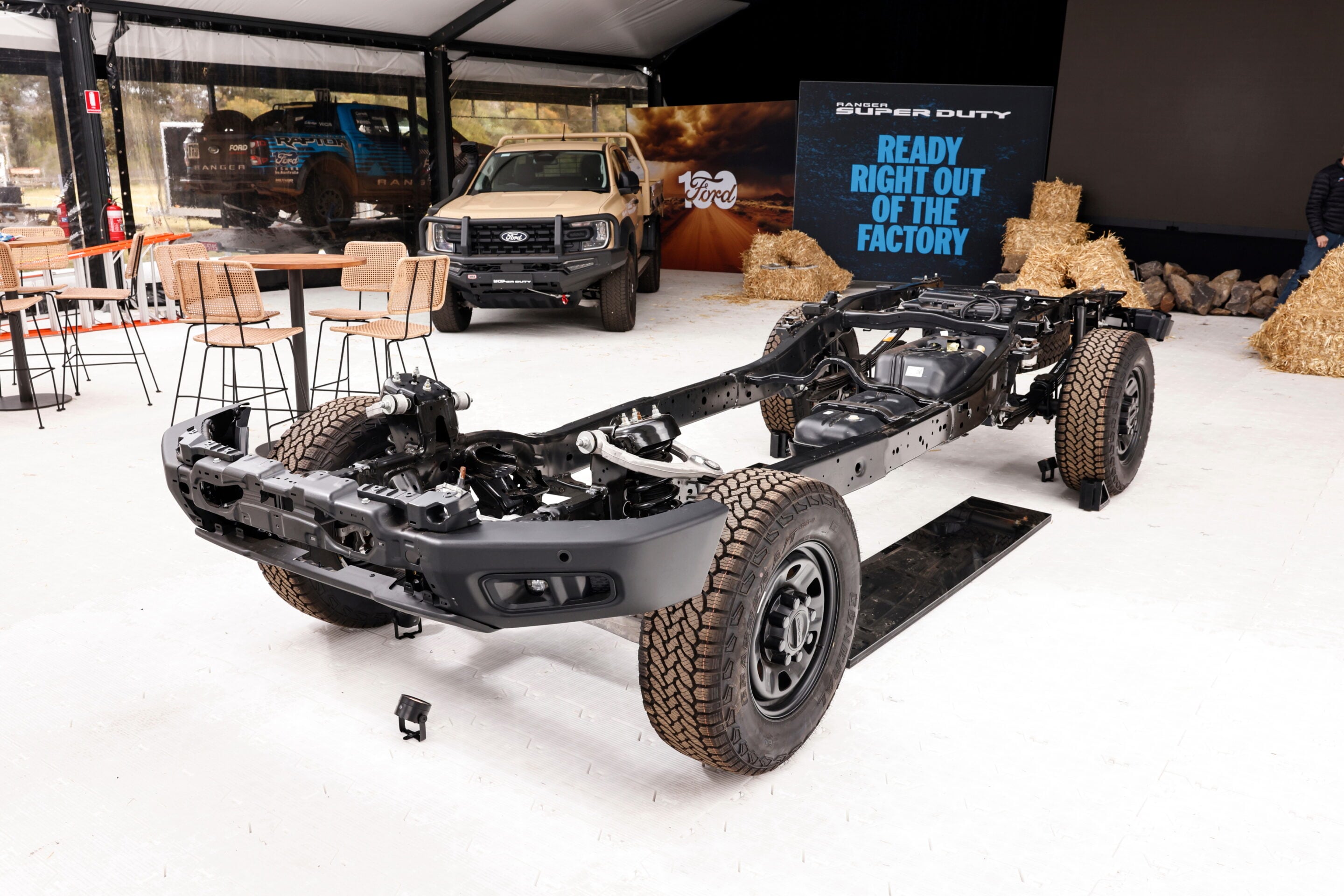
If you’re buying a 4WD for work, looks should be irrelevant, but it’s worth noting the Super Duty looks tough – really tough. It’s fatter, wider, and more formidable on the road than a regular Ranger of any kind, and only six per cent of the chassis is carryover from the regular Ranger, such is the level of engineering involved. The higher ride height, hefty steel wheels, General Grabber all-terrain rubber and snorkel all bring the kind of aftermarket appeal so many buyers in this segment go looking for – usually at great expense, and without the factory warranty.
That element is reinforced by Ford involving the aftermarket in the planning and execution of the finished product. As such, you’ll be able to access a variety of high-quality canopies from the likes of Norweld (a Wheels favourite), for example, at the time of purchase. The same goes for work equipment, bull bars and other customisation options. It means if you buy a Super Duty for a specific purpose, you’ll be able to set it up to do exactly what you need it to do from the get-go.
As the name indicates, the spec sheet is very much focused on robust work for Super Duty and one of the changes is a hefty 130L fuel tank. The single-cab we drove had 1021.7km on the odometer, which included running in and plenty of decent off-road work, for an indicated average consumption of 12.9L/100km. That’s actually sharp, especially with so much low-range work under its belt. It means you’re likely to get at least 1000km from a tank of diesel on an easy cruise.
The 3.0-litre, turbo-diesel V6 has been de-tuned a little to deliver 154kW at 3250rpm and 600Nm at 1750rpm across the range. Interestingly, the Super Duty never feels fast, in the way a Ranger Raptor does, rather it feels lazy and effortless. When towing, you’ll need an enthusiastic right boot on the freeway when you’re facing a long uphill grade, and it does need to work up near the redline to keep the road speed up. Around town, off-road, or unladen though, it’s an effortless cruiser, with clear shifting through the 10-speed auto with full-time 4WD available.
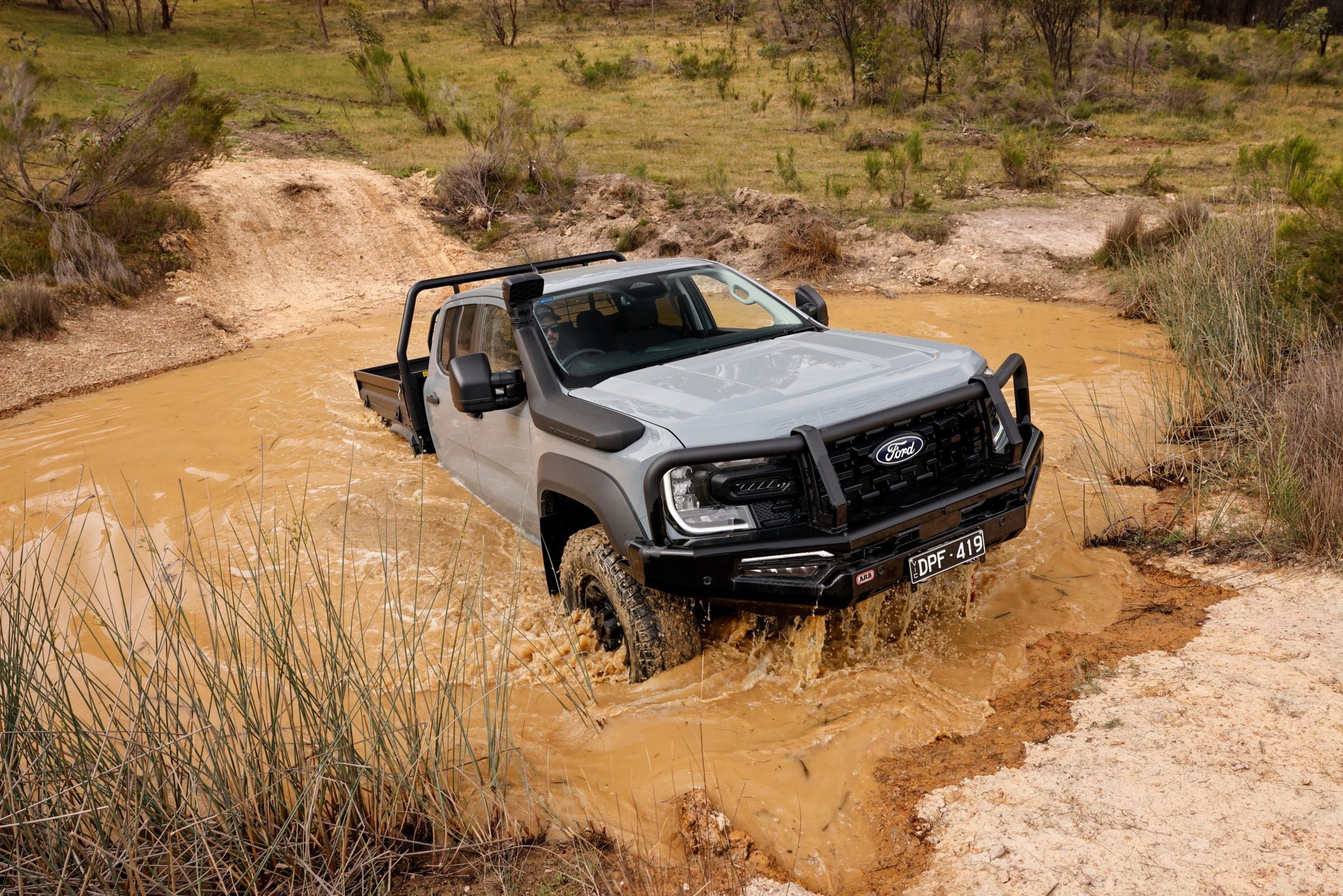
You do get selectable driving modes, and low-range of course, and off-road we did notice some shunting through the driveline in low-range when crawling down a gnarly decline. It didn’t seem to upset the Ranger, but the noise was a little disconcerting.
As to how Ranger Super Duty behaves off-road, it will do way more than anything the average owner will ever ask of it, with ease. Its wading depth of 850mm would have most of you turning around looking for another alternative.
Without a doubt, the most impressive aspect of the Super Duty’s broad skillset, for us, is the quality of the unladen ride. That remains the case across single, super and dual cabs. We tested all three variants on-road, off-road, laden, unladen and even while towing. Raptor aside, most dual cabs need some weight in the tray to settle the ride down, but not the Super Duty. Given what it is capable of carrying, the unladen bump absorption, body control, insulation and ability to settle quickly after a big impact are as good as any in the segment.
Behind the wheel of a single-cab for a run down one of Victoria’s great twisty roads – the kind of road that would unsettle even the best luxury sedan or SUV – and I’m genuinely staggered at the way in which the Super Duty can handle mid corner bumps, ruts, and potholes, with barely a register into the cabin. You can tip it into a corner (4WD auto for the win) with precision and know that it will stay on the line you’re asking of it, without any difficulty whatsoever. No one will ever drive their work truck like this, but the fact you can is quite staggering.
The comfort level inside the cabin – even the lack of wind noise given the snorkel whistling away at your right ear, and all-terrains – is impressive. There’s some noise there, for sure, but it’s a lot quieter than we expected it to be.
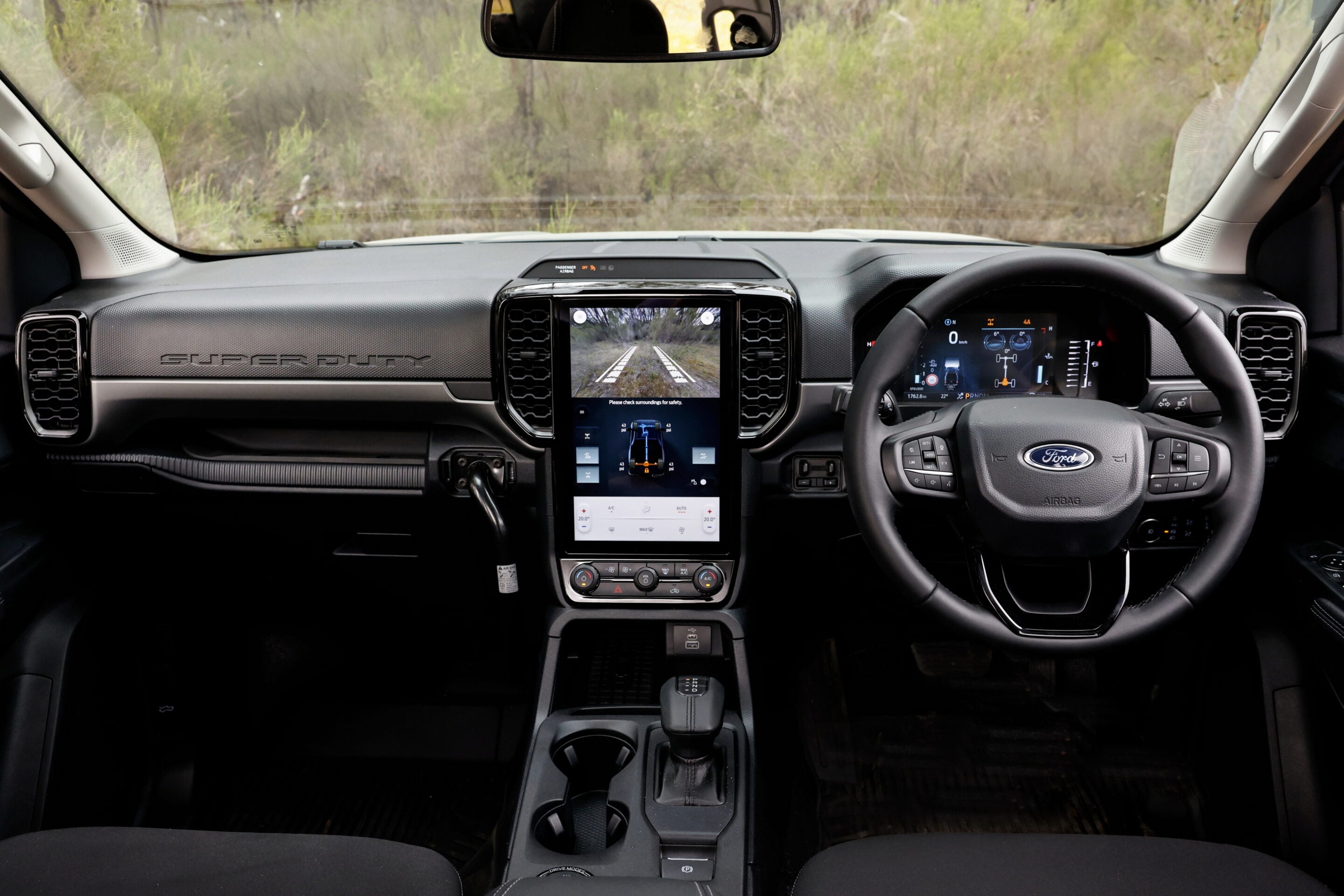
The technology inside the cabin, connectivity, comfort, space and storage, are all significantly better than the rudimentary nature of a regular truck offering. Even the seats and the level of adjustment you can get (even inside the single cab) make a mockery of that offered by competitors. Those of you in rural areas, who cover long distances, will do it with ease in the Super Duty.
You might wonder about Ford’s motivation for offering the Super Duty – given the amount of time, money and engineering that needs to go into producing a bespoke variant within an already broad model range. It’s a good question. Especially when you factor in the availability of the F150. According to Ford, it has had a lot of interest in a smaller truck – smaller than the full-size US trucks – that will do what the bigger trucks can do. Smaller means it’s easier to park, easier to drive, and cheaper to run. That’s certainly the case for the tens of thousands of Aussies now looking to hitch up a large van and hit the road. And why not attack a gap in the market if you see one? Can’t criticise Ford Australia for that.
Who will buy a Super Duty? Certainly fleet managers will look at it, as will those working the land. However, we at Wheels reckon plenty of city buyers will want one because it looks tough as nails. And it’s capable – really capable.
This article first appeared in the 2025 Yearbook issue of Wheels. Subscribe here and gain access to 12 issues for $109 plus online access to every Wheels issue since 1953.
Medium SUVs remain a critical battleground for just about every manufacturer in Australia and one of the original entrants to the segment was Toyota with the RAV4. Along with Honda’s CR-V, you could credit Toyota’s volume seller for building the segment, such is the enduring popularity of the now legendary RAV4.
There’s plenty for potential buyers to research with this new model, too, so before we get into this brief first drive – undertaken on a closed test facility rather than open roads – let’s take a look at the model structure.
The table included here below details the range, including the addition for the first time of a plug-in hybrid (PHEV) variant.
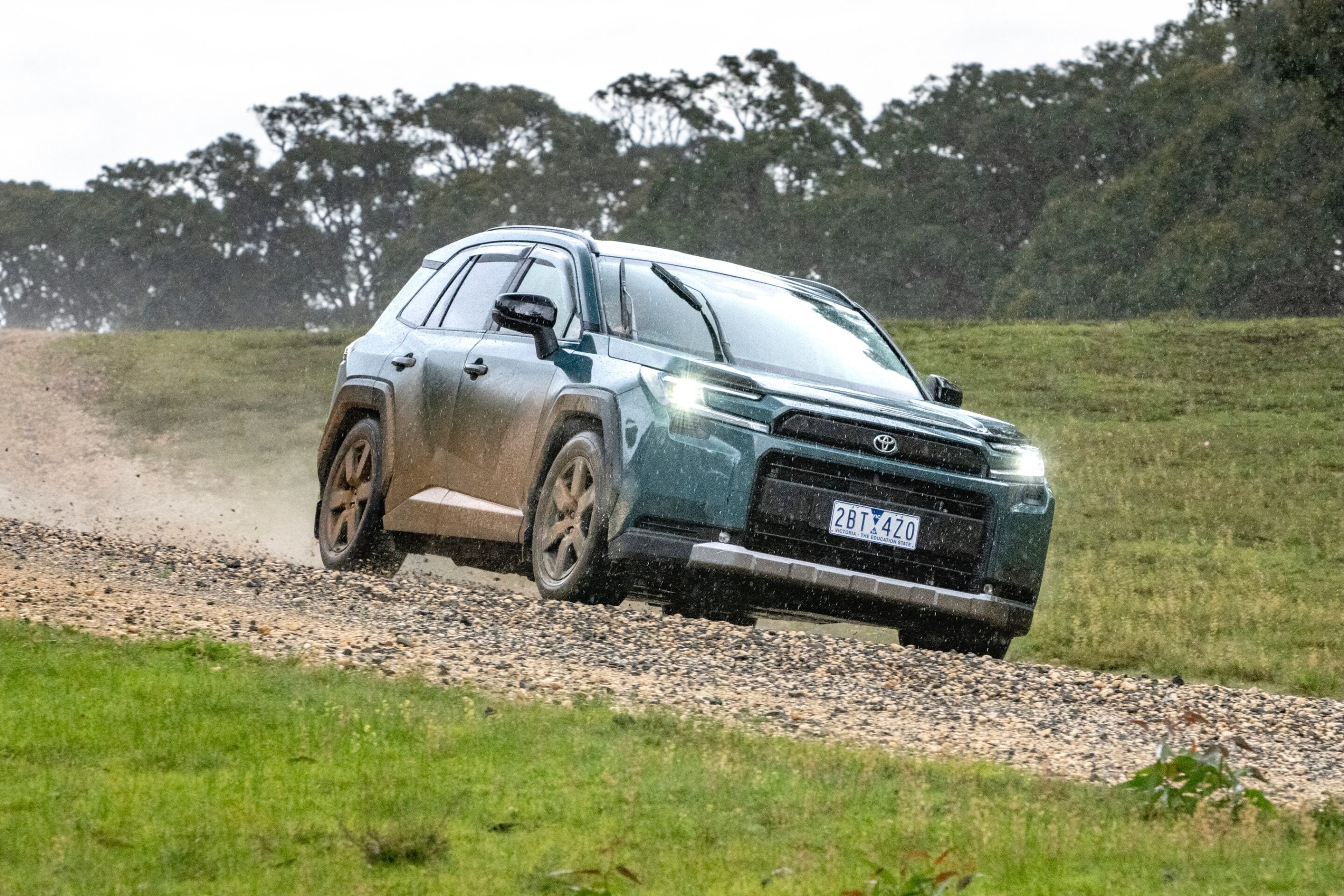
Five model grades make up the hybrid model range, with both 2WD and AWD available, while the PHEV range gets two grades, also with 2WD or AWD available. In total, there are 11 different permutations across the range. The prices listed are before on-road costs.
The key option beyond this basic pricing, for us at Wheels anyway, is the $300 full-size spare for GX 2WD and AWD. Spend that money and add it to your purchase. Our advice is pretty simple in regard to the usefulness of (indeed, non-negotiable presence of) a full-size spare tyre where available. Those of you with a passion for road trips and longer driving know exactly how vital one can be. Other models get a space-saver spare.
The new model we’re sampling here, believe it or not, is the sixth generation of RAV4 to go on sale Down Under. The main improvements include a heavy revision of technology, safety, general cabin amenity and comfort. Key to this new model, though, is the availability of a hybrid powertrain across the range. Toyota’s customers, more than most, have gravitated heavily toward hybrid in every segment where it is available and as such, it’s a central focus of this new model.
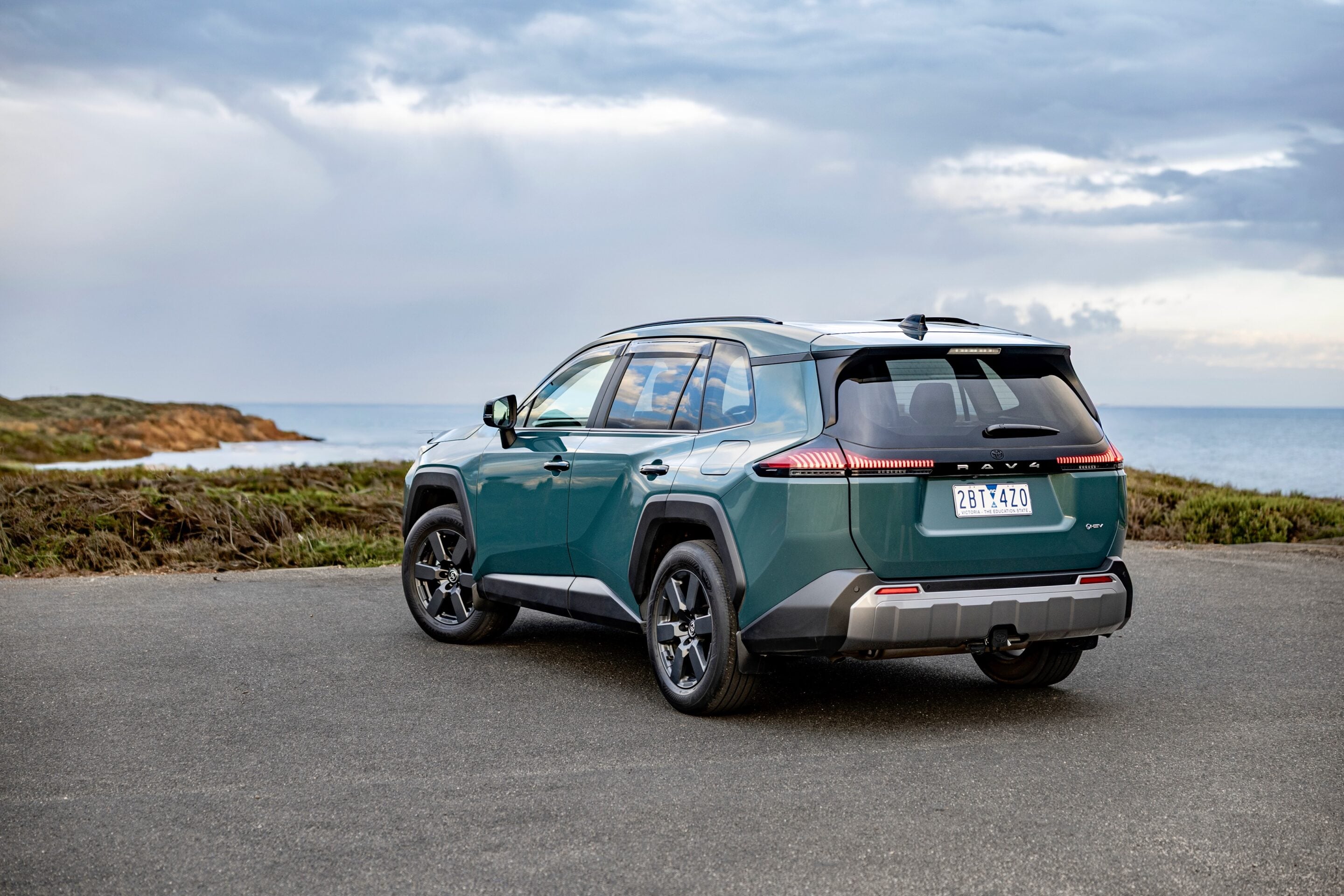
That means you can access hybrid power from the base GX 2WD all the way through the range, and you won’t feel like you’re missing out if your budget doesn’t stretch to the more expensive models.
Standard equipment on the base model includes 17-inch grey metallic alloy wheels, LED headlights, roof rails, rear spoiler, acoustic windscreen glass, a 10.5-inch infotainment touchscreen, new user experience and functionality, enhanced suite of Toyota Connected Services, wireless Apple CarPlay and Android Auto, dual-zone climate control, 12.3-inch digital driver’s display, six-way manual adjustable front seats, rear-view camera, six-speaker audio system and five USB-C ports.
Pricing
Hybrid-Electric
| GX 2WD | $45,990 |
|---|---|
| GX AWD | $49,340 |
| GXL 2WD | $48,990 |
| GXL AWD | $52,340 |
| Edge AWD | $55,340 |
| XSE AWD | $58,340 |
| Cruiser 2WD | $56,990 |
| Cruiser AWD | $60,340 |
PHEV
| XSE 2WD | $58,840 |
|---|---|
| XSE AWD | $63,340 |
| GR Sport AWD | $66,340 |
Opt for the regular hybrid system and you get the fifth-generation version of Toyota’s 2.5-litre series parallel hybrid system, with both 2WD and 4WD making peak power of 143kW. Toyota’s sales pitch for the hybrid will once again be seamless driving dynamics and real-world efficiency, as it has been for more than a decade now.
Interestingly, the PHEV model isn’t just about electric efficiency, it’s also the most powerful RAV4 ever offered. The 2.5-litre petrol engine gets twin electric motors (for AWD models) and a 22.7kWh lithium-ion battery pack, for a total power output of 227kW. Even the 2WD PHEV, with its single electric motor at the rear axle, makes a system total of 200kW. The battery pack supports 50kW DC charging, and 11kW three-phase AC charging.
Toyota Australia hasn’t yet quoted the electric-only range for the PHEV, but European specs claim up to 100km on the WLTP cycle. Even if that translates to 80km in the real world, average Aussie drivers will be able to commute to and from work in pure EV form.
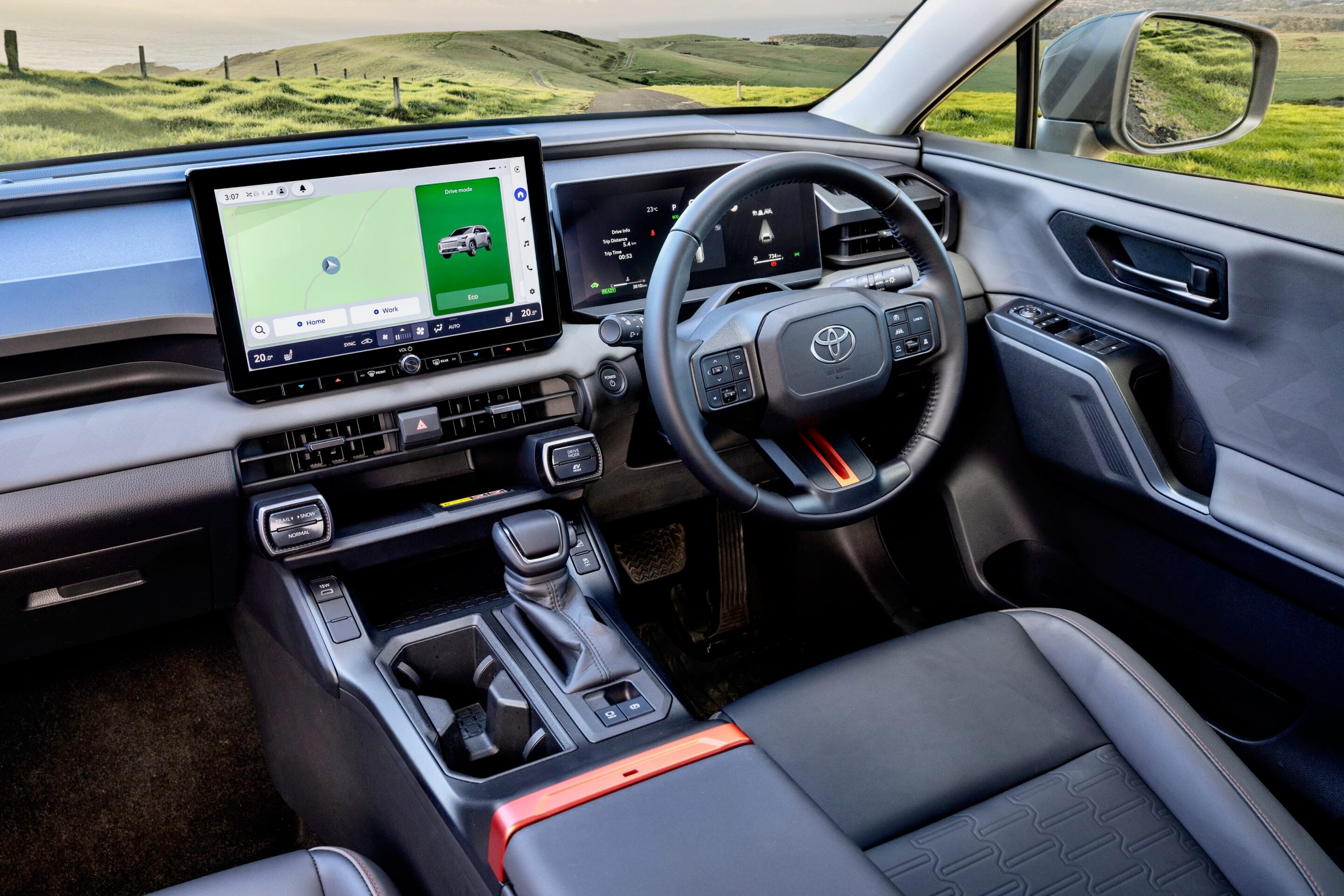
The good news, if you’re holding out for the new RAV4 to launch, is twofold. It looks like a new RAV4 and it feels like a new RAV4. The latter fact is perhaps even more important than the former. In the face of newer, more modern and more technologically advanced competition, RAV4 has felt off the pace for some time now. Especially inside the cabin, where the tech progress of key competitors has left Toyota lagging.
That’s not to detract from RAV4’s strong points. Robust build quality, cabin ergonomics and comfort, and genuine efficiency in the real world, mean it’s remained a strong seller despite newer, shinier objects being available. However, the new model is a significant leap forward.
During our brief test drive, we sampled the Edge on a typical dirt/gravel course, and the Cruiser on a twisty, highway-style course. Wheels is asked often whether you ‘need’ an AWD, and the answer these days (unless you live in rural areas) is not really. So, unless you really need or want AWD, a 2WD RAV4 will do everything you need in safety. The fact you can climb as high as the Cruiser variant and still access 2WD is a smart move from Toyota.
We didn’t get to spend enough time in the RAV4 to truly dig into its driving chops, but it certainly feels like a familiar old jacket in the way that any new iteration of a Toyota does. The ride quality, cabin insulation, steering, braking and general feedback all feel very much like the model it replaces, but with the caveat that you’re experiencing it from a vastly more modern cabin.
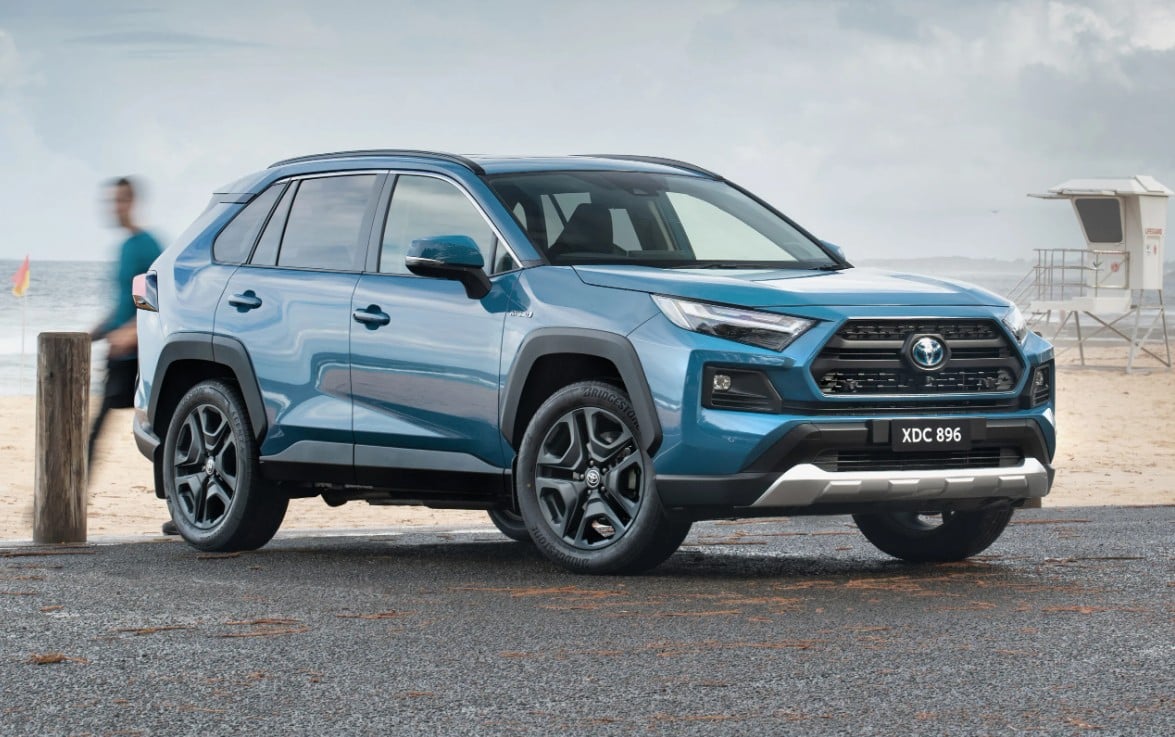
The interior changes make for a vastly improved experience, and it’s amazing the effect more modern infotainment, better screens, and improved functionality can have. In the same way that moving to a new phone or computer feels like a whole new ballgame, so too does driving a vehicle that’s had its tech markedly improved. From the steering wheel to the screens and choice of materials, the new RAV4 is now a different proposition inside.
RAV4’s centre screen is clear and concise, and the driver display is likewise excellent. Both are sized just-right, and the centre screen is placed in the right spot so as not to be too high up in your eye line. Toyota has listened to feedback from existing owners, and features like buttons and switches for crucial controls remain, but the centre console is also quite clean with space for cupholders and wireless phone charging.
The execution is neat without being too austere. It’s an easy cabin to get comfortable in.
Visibility and seat adjustment are also excellent, and general comfort – although we haven’t yet spent hours behind the wheel – looks to be good also. Medium SUVs, given their family popularity, need to be the Swiss Army knife of vehicles now, and the new RAV4 is primed to take the fight up to the best in segment.
We’re looking forward to the launch proper and the opportunity to spend more time behind the wheel, but at first glance the new RAV4 is more competent, better equipped, modernised and revised in exactly the way it needed to be to move back to the head of the segment. Comparison testing awaits to see if it has done exactly that.
Specs
| Model | 2026 Toyota RAV4 |
|---|---|
| Drive type | Front or all-wheel drive |
| Electric | Regular hybrid or plug-in hybrid |
| Battery pack | 22kWh for both hybrid and PHEV |
| Engine | 2.5-litre, four-cylinder petrol engine |
| Gearbox | CVT |
| Power | 143kW (hybrid) 200kW (single motor PHEV) 227kW (dual motor PHEV) |
| Claimed electric range | Up to 100km |
This article first appeared in the 2025 Yearbook issue of Wheels. Subscribe here and gain access to 12 issues for $109 plus online access to every Wheels issue since 1953.
