
Volkswagen may be set to offer a comprehensive range of R-badged performance SUVS from next year, but the German brand isn’t yet willing to abandon sporty estates.
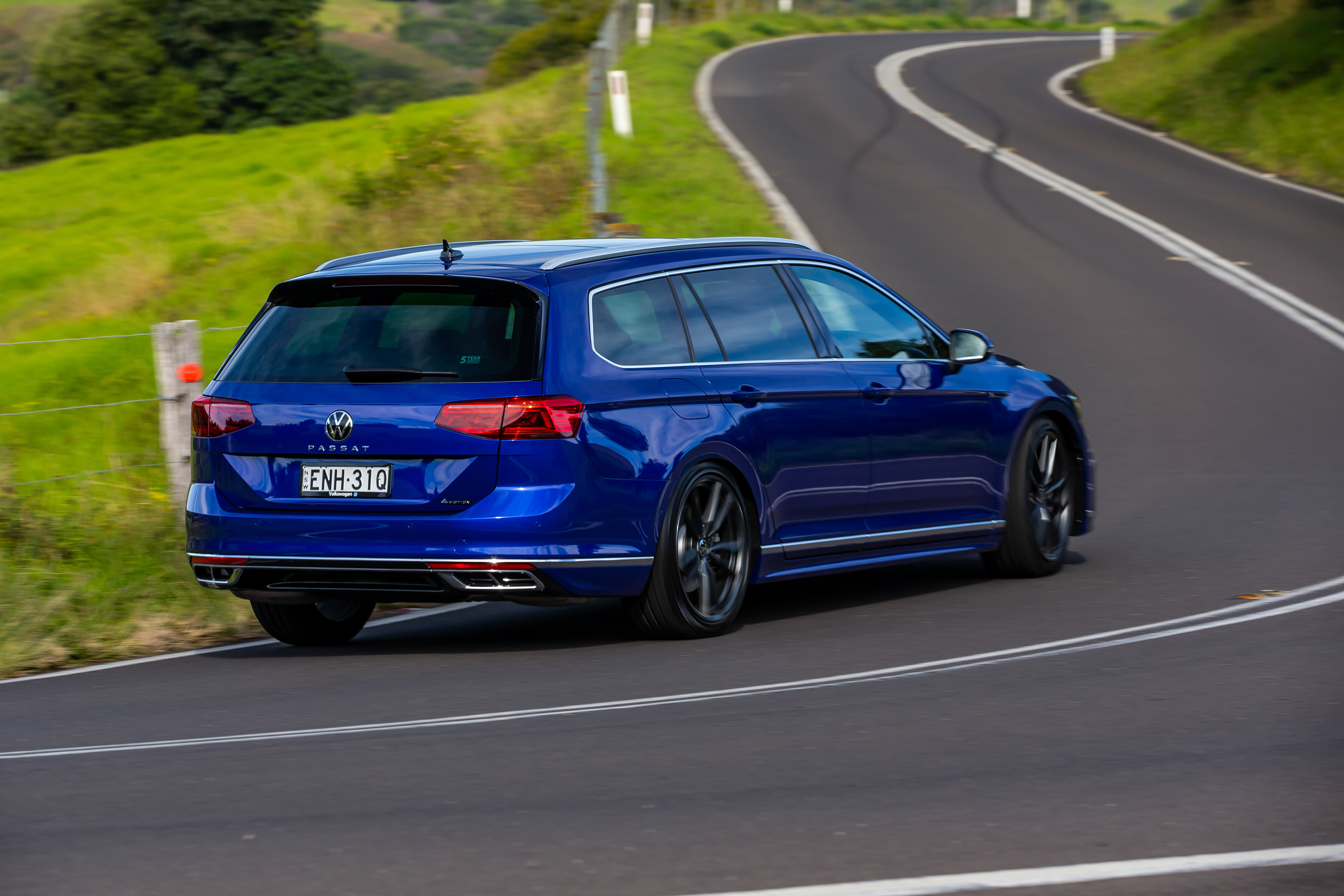
Ahead of the next-generation Golf R wagon due in early 2022, the Volkswagen Passat 206TSI R-Line has returned from a WLTP-enforced two-year sabbatical to again headline the company’s large car line-up.
It will be joined later this year by the Passat-based Arteon Shooting Brake 206TSI R-Line, forming a double-act of temptations for Australians pining for a contemporary version of the Passat R36 last sold more than a decade ago.
The Arteon R, a closer spiritual successor, has been ruled out for Australia, though the 206TSI at least matches the maximum torque and all-wheel-drive layout of the R36.
Priced from $63,790 before on-roads, it’s slightly cheaper, too, while also undercutting both the equivalent sloping-roofed Arteon Shooting Brake (by just over $5000) and closely related Skoda Superb 206TSI Sportline 4×4 (by just over $2000).
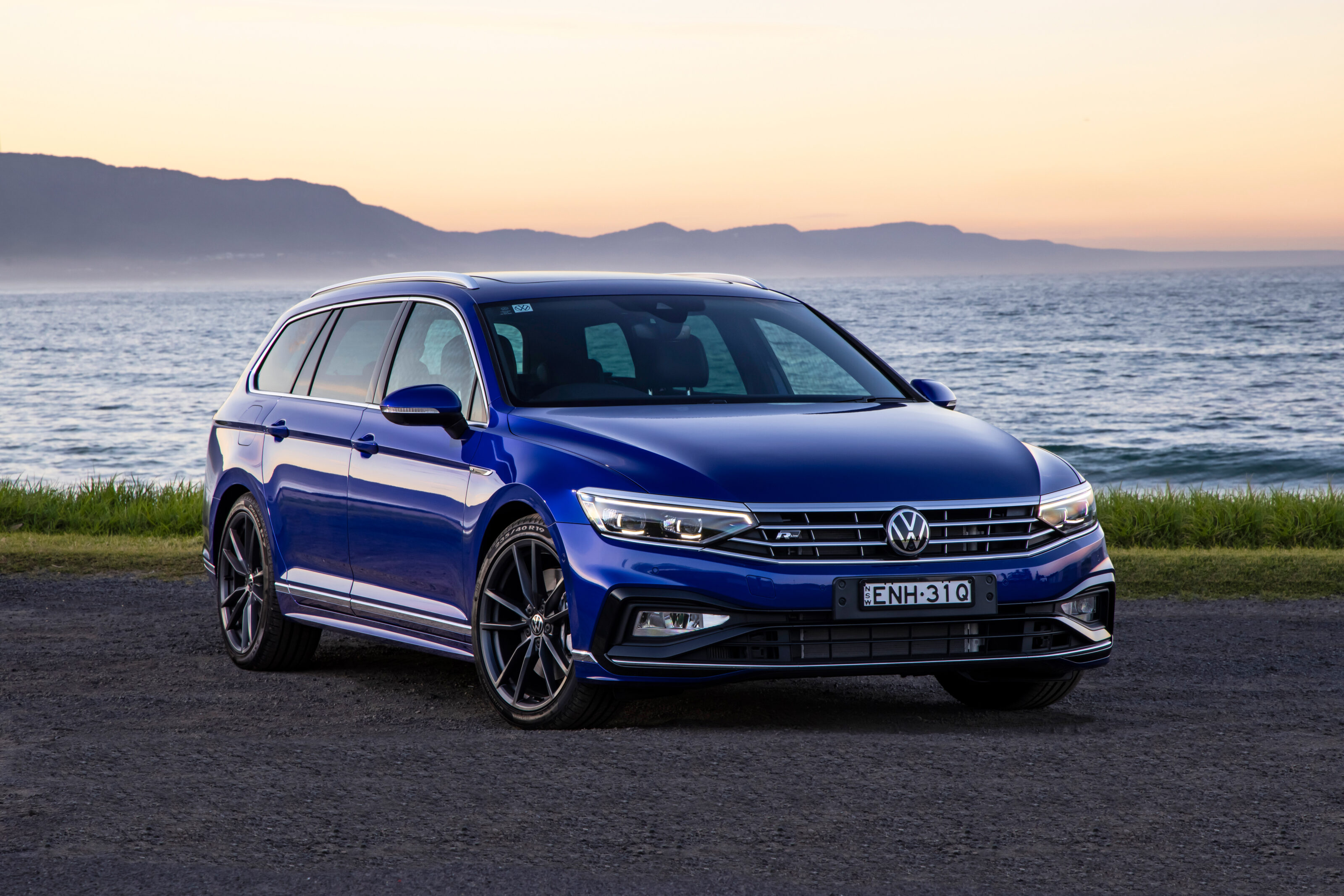
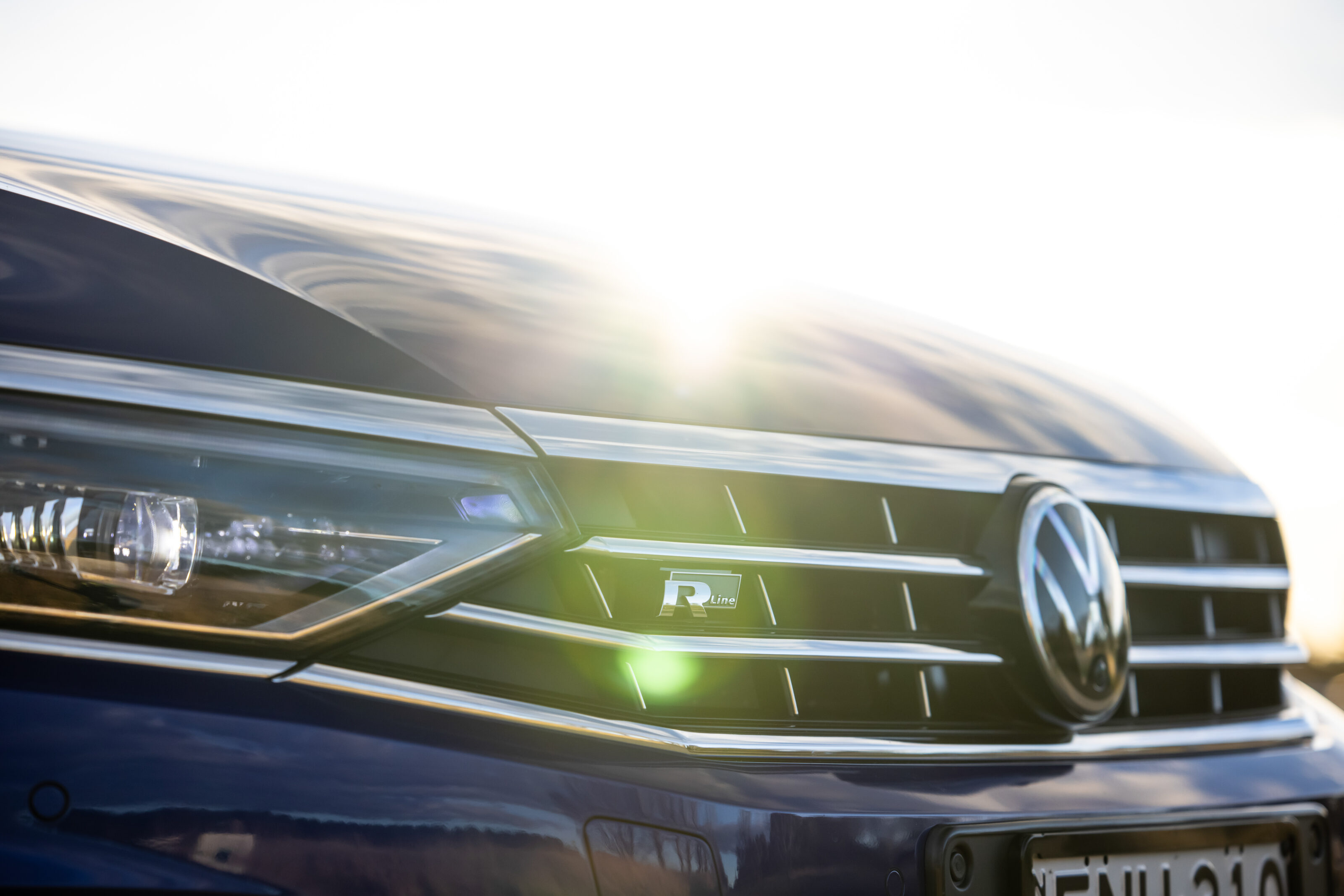
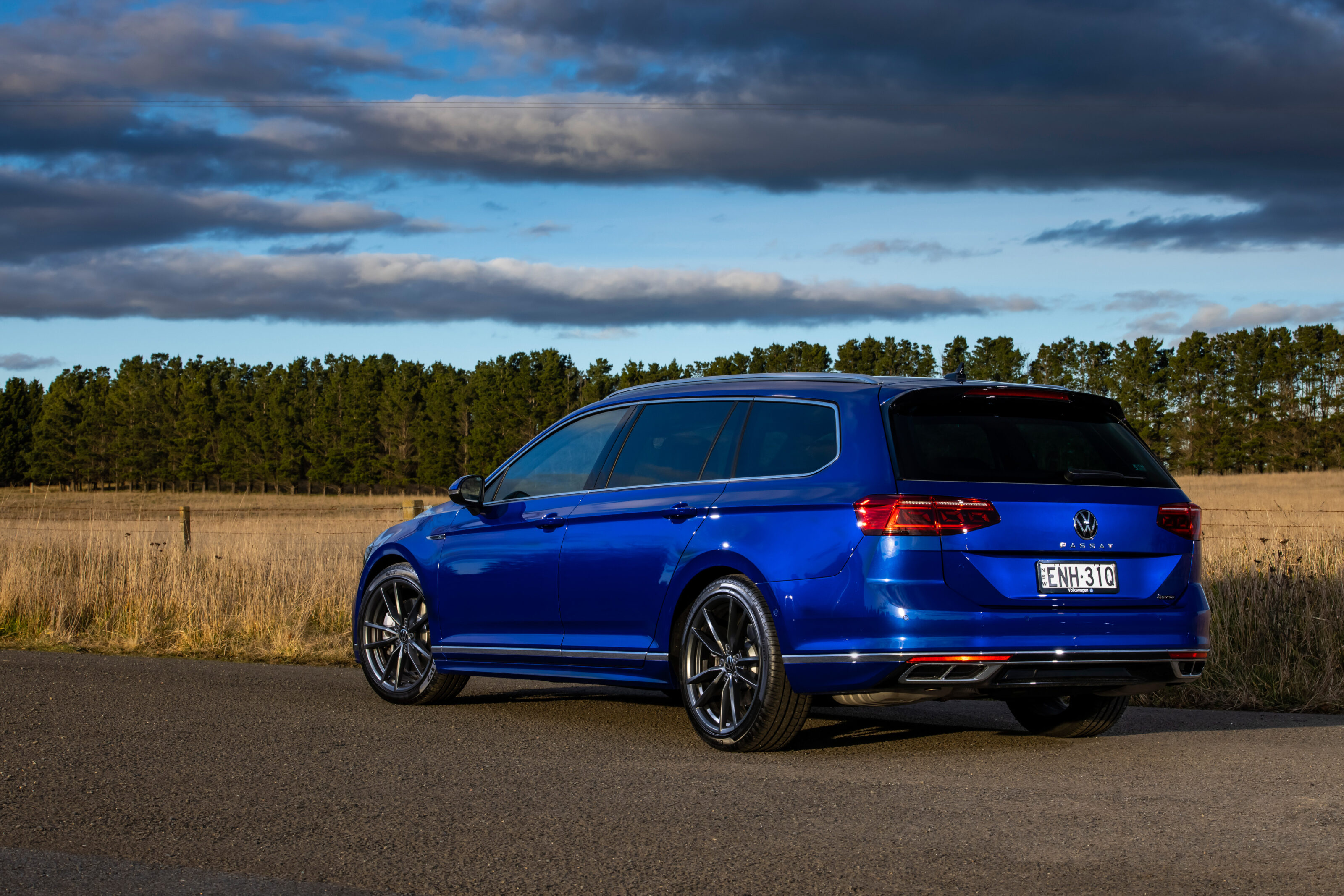
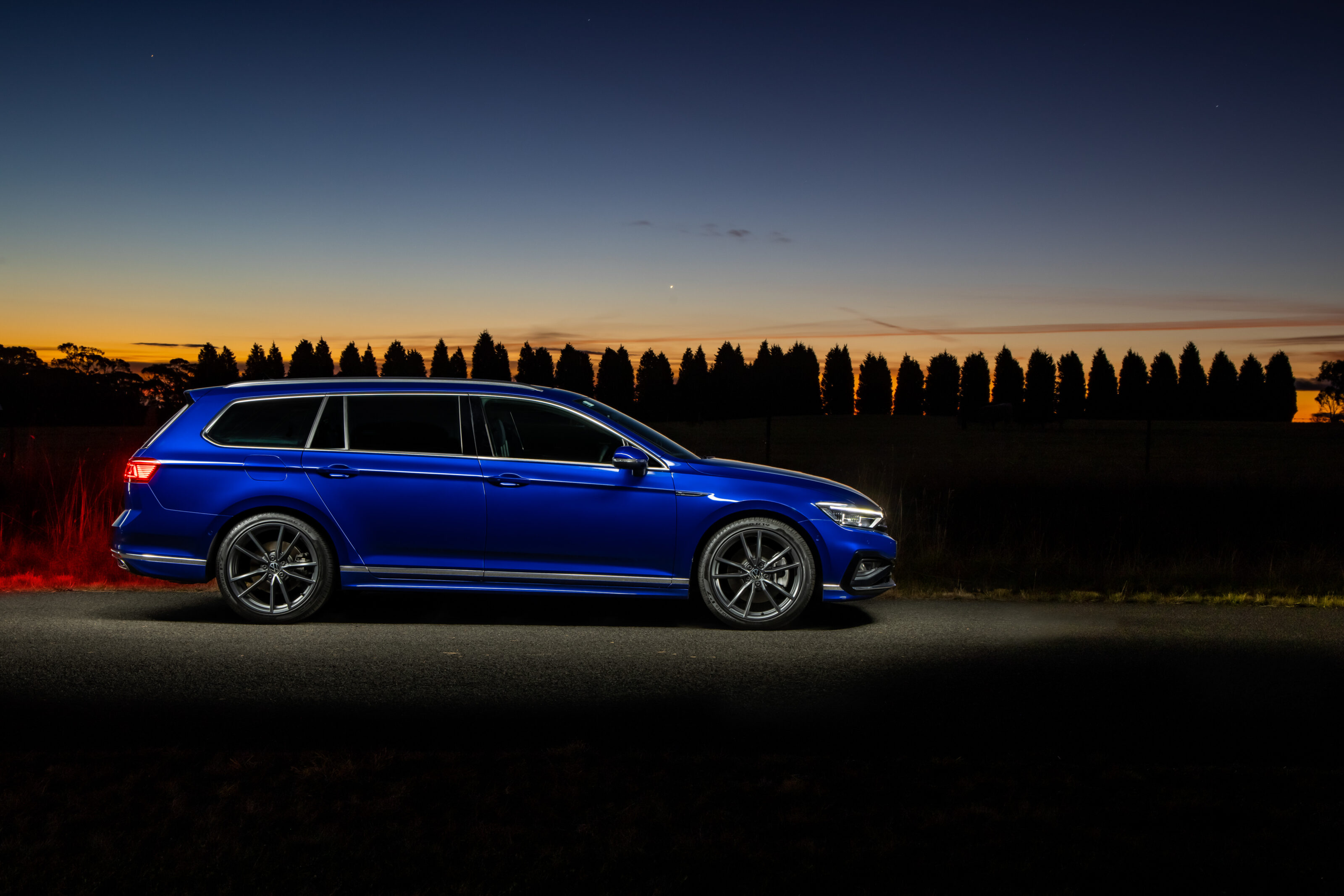
Within the Passat range, the R-Line brings a more athletic aesthetic over the Elegance and Alltrack wagons with its bodykit bumpers and sills, rear roof spoiler, tinted glass (from B-pillar backwards) and larger, 19-inch five-twin-spoke matte-graphite wheels.
An R-Line option pack is available for the Elegance, though while it also shares Matrix LED headlights it misses out on the 206TSI R-Line’s larger wheels and exclusive Lapiz Blue hero colour (pictured). In case that’s not your shade of choice, there are five other paint finish options as well as the standard white.
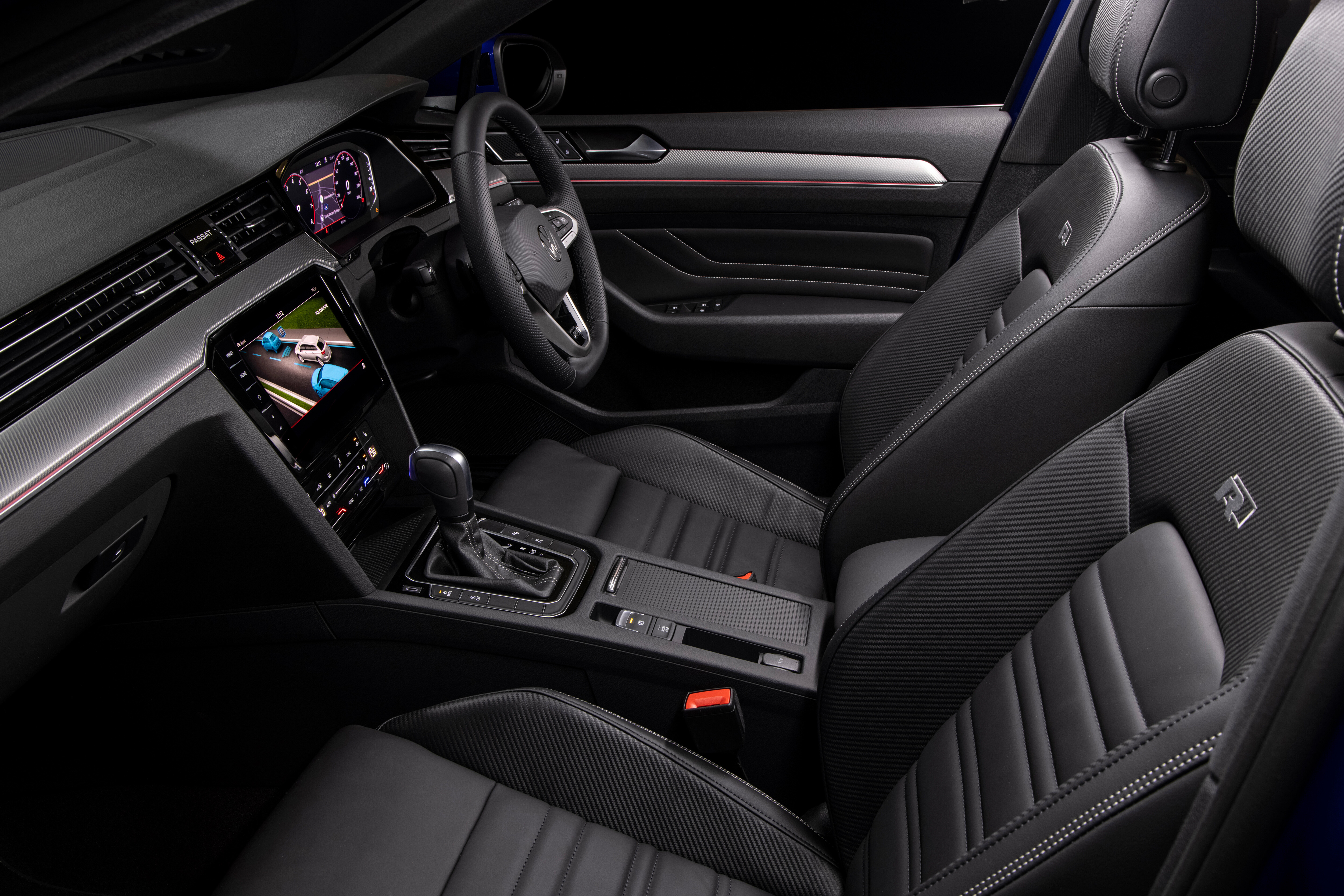
R badging for the dimpled-leather steering wheel and thickly bolstered, black leather-appointed seats lend the interior some sporting flavour without allowing the cabin to stray too far from the Passat’s executive ethos.
There’s a greater consistency to materials quality compared with the new Mark 8 Golf, while this generation of Passat – now into its sixth year – avoids the small car’s slightly controversial, minimalist approach to buttons.
A climate control panel remains in sight rather than, as with the Golf, being secreted in the infotainment touchscreen. It’s just a shame the modern touch-style buttons for adjusting temperature and fan speed feel so numb.
The Volkswagen Passat 206TSI R-Line matches the maximum torque and all-wheel-drive layout of the Passat R36 last sold more than a decade ago.
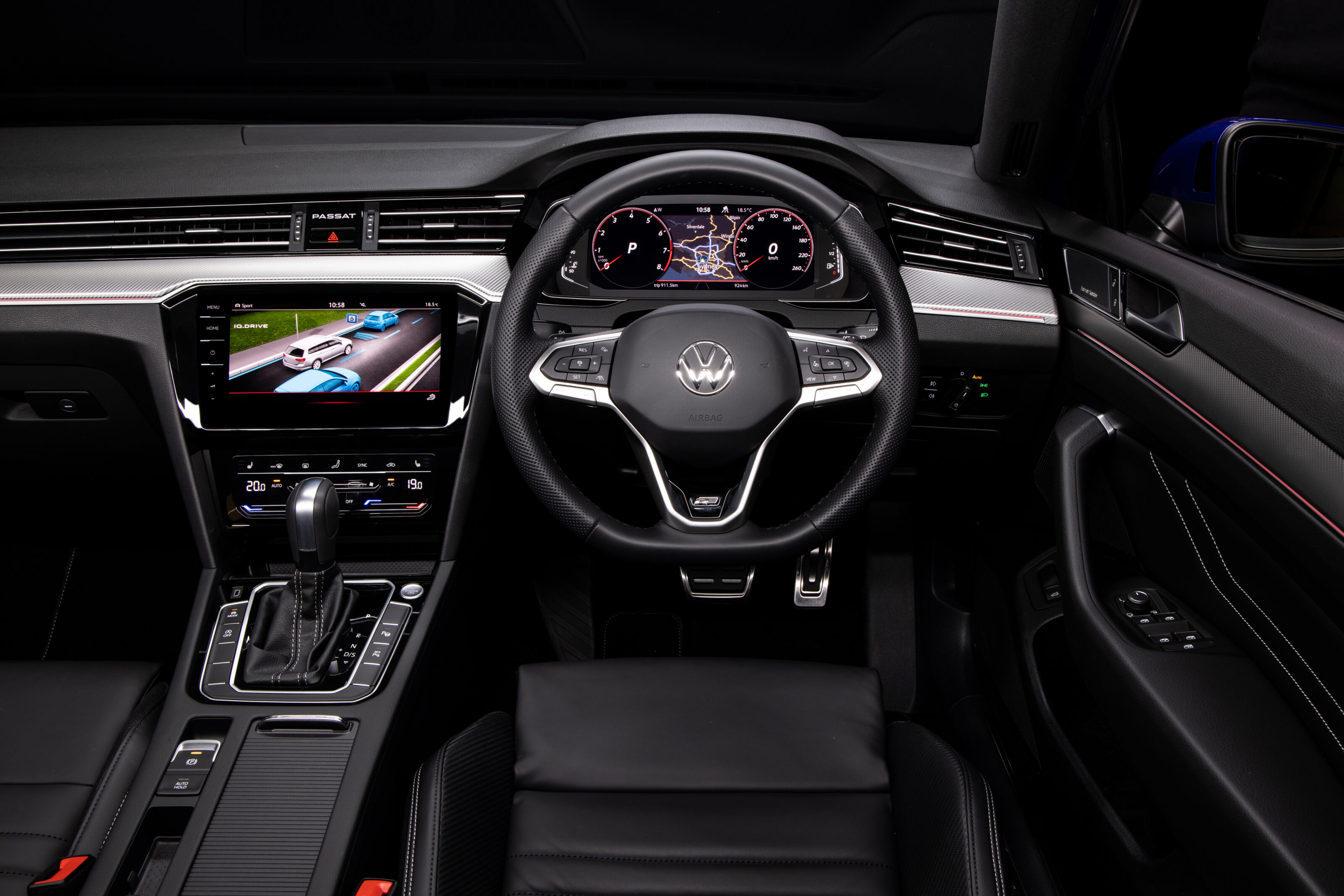
Depressing more conventional buttons elsewhere is a more tactile experience, including the steering wheel where the driver can adjust the layout and information on the excellent digital driver display. Speed limit notification technology is just one notable omission.
Wireless Apple CarPlay and Android Auto are a plus for owners who hate cables, though one will be needed to charge your phone as the Passat shows its age with the absence of an inductive-charging smartphone tray and digital radio. The ports are also the USB-C type, so some owners will need adaptors.
The Harman Kardon audio system is one that will encourage occupants to crank up the volume.

In VW tradition, storage options are plentiful – including generously sized (flocked) door cubbies.
Rear-seat passengers have places to store tablets, books or drinks bottles, and also have access to a single USB-C port.
Dedicated ventilation keeps them warmed or cooled, and the panoramic glass sunroof provides extra light throughout the entire cabin when the blind is retracted.
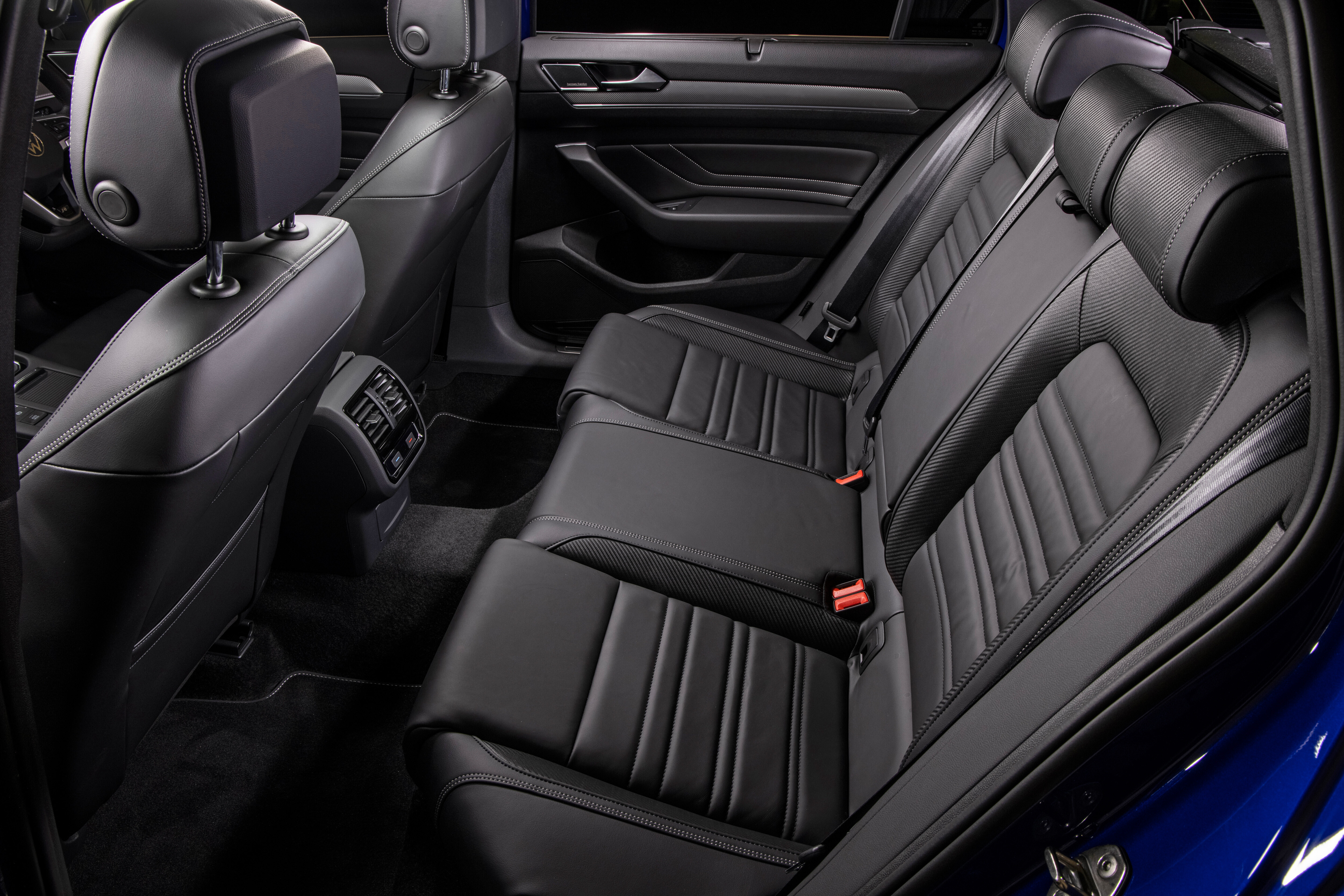
The wide rear windows also provide excellent vision, while most adults will appreciate the amount of legroom and headroom on offer.
If the ISOFIX-equipped outboard seats aren’t being used for child seats, older family members, friends or colleagues are treated to supportively scalloped seats.
The Passat wagon continues to be practical beyond its volumetric advantage over the sedan version.
As with the Elegance variant, the boot includes a two-stage cargo blind, net partition, flip-out and integrated shopping bag hooks, 12-volt socket and side storage areas, plus release levers for folding the rear seatbacks flat.
The ideal 40-20-40 configuration allows just the centre portion to be collapsed and allow for longer items to be loaded even when the outer rear seats are in use. A gesture-operated automatic tailgate is standard, too.
It doesn’t feel scintillatingly quick, yet the R-Line builds pace in a satisfying, linear fashion, with the strongest of throttle applications accompanied by a rousing snarl that’s borrowed from the Golf R.
Boot space is quoted at 650 litres, or 1780 litres – with a two-metre-plus load length – with the rear seats folded. And there’s a full-size spare under the floor.
There’s a presumption that 206TSI R-Line buyers are seeking more than practicality, otherwise they could simply choose the Elegance wagon and pocket about $12,000 in savings.
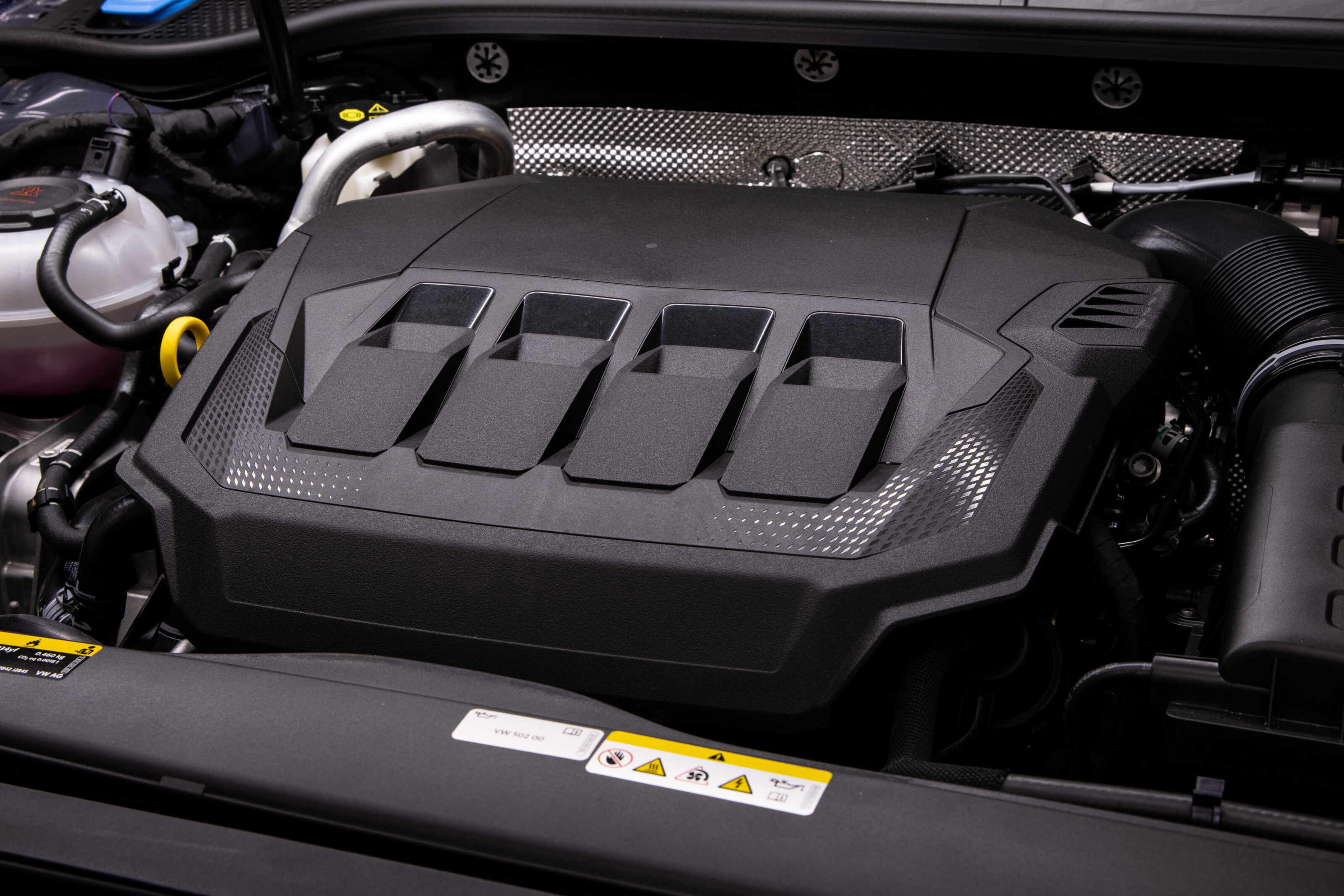
The flagship duly delivers extra performance with the bonuses of 4Motion traction and an extra 44kW (though a 350Nm peak torque is shared).
Volkswagen isn’t quoting 0-100km/h times for the latest Passat range, though the 206TSI had a previous claim of 5.7 seconds.
It doesn’t feel scintillatingly quick, yet the R-Line builds pace in a satisfying, linear fashion, with the strongest of throttle applications accompanied by a rousing snarl from the turbo four that’s again borrowed from the Golf R.
For drivers looking to revive memories of the Passat R36 last sold a decade ago, popping the Passat into Sport mode to stiffen the dampers improves body control noticeably over either the Comfort or Normal settings for those enjoyably circuitous routes.
Sport also brings some invaluable extra weighting, if no extra meaningful communication, to the steering.
It’s this factor more than anything that limits this wagon’s level of driver involvement, though it’s arguably less crucial in the context of a model badged R-Line rather than R.
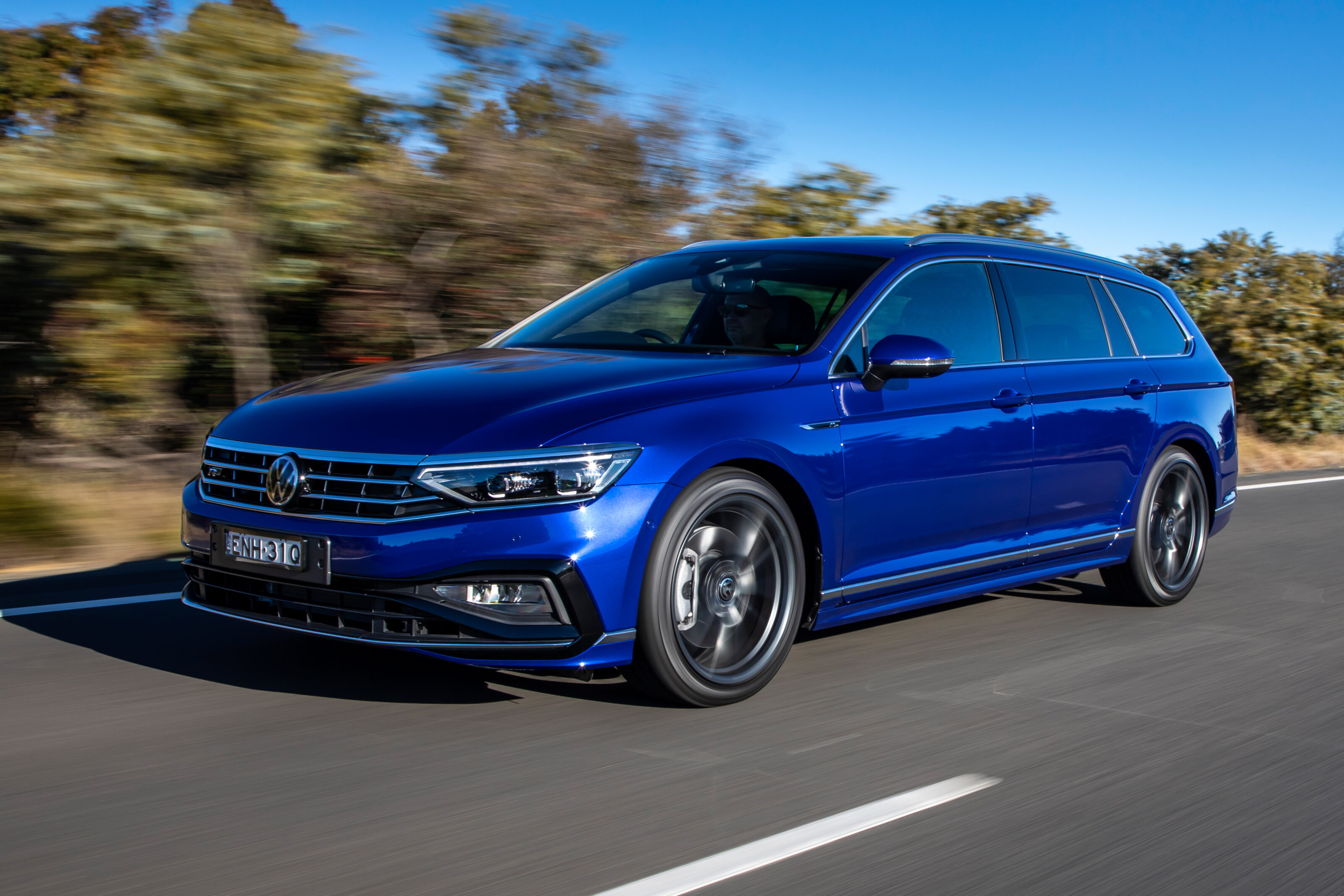
Consider the 206TSI as a GT wagon rather than a performance estate and it excels. With the softer damping forces of either Comfort or Normal, the Passat’s ride is thoroughly relaxing – operating in tandem with the effortless engine to reel off hundreds of kilometres of countryside.
The Individual profile enables varying settings, and we favoured Sport for steering with the drivetrain and suspension set to Comfort.
It’s also possible to fine-tune the damping via a touchscreen slider, even if most owners should find Comfort a shortcut setting that lives up to its labelling more than sufficiently.
The R-Line seats also help reduce driver fatigue with excellent all-round support and comfort.
Tyre rumble from the 235/40R19 Pirelli Cinturato P7 tyres is the only obvious blemish on the Passat 206TSI’s rolling refinement.
The six-speed DSG auto can take a moment to react when the driver tries to accelerate away normally from a stationary position but is only a minor quibble for all but the most eager of Traffic Light GP contenders.
An Auto Hold function is worth keeping engaged, as this is a transmission that will otherwise allow the vehicle to roll back if trying to drive off from an uphill parking spot. It’s also a set-and-forget function, remaining activated for every time you use the car until the driver chooses to disengage it.
The 206TSI has a useful braked towing capacity of 2000kg – same as the Elegance wagon though 200kg more than the Alltrack.
New technology for 2021 includes temporary autonomous steering that VW dubs Travel Assist.
Consider the Passat 206TSI R-Line as a GT wagon rather than a performance estate and it excels with a thoroughly relaxing ride – operating in tandem with the effortless engine to reel off hundreds of kilometres of countryside.
Although VW provides a five year/unlimited-kilometre warranty these days, it is worth noting a couple of points about this Passat’s running costs.
Servicing fees are higher than average (and higher than for the Skoda Superb), with a particularly brutal $1349 charge at the 60,000km mark or fourth year. Some money can be saved by paying upfront for three- or five-year service plans that cost $1600 and $2500 respectively. Intervals are 12 months or 15,000km.
And the 206TSI engine has a distaste for Australia’s lower-quality fuel, requiring the highest premium (98RON) fuel. Our test drive indicated an average of 9.0 litres for every 100km, with the official consumption set at 8.1L/100km.
If neither of those are dealbreakers and you’re not setting expectations for a cut-price Audi RS4 Avant, then the VW Passat 206TSI R-Line wagon delivers a well-judged blend of practicality and upmarket feel with a modicum of sportiness.
2021 Volkswagen Passat 206TSI R-Line Wagon specifications
| Engine | 1984cc 4cyl, dohc, 16V, turbo |
|---|---|
| Max power | 206kW @ 5600-6500rpm |
| Max torque | 350Nm @ 1700-5600rpm |
| Transmission | 6-speed dual-clutch auto |
| Weight | 1655kg |
| 0-100km/h | 5.7sec (est) |
| Fuel Economy | 8.1L/100km |
| Price | $63,790 + ORC |
When you think AMG, a Mitsubishi or Honda doesn’t naturally come to mind. But, at the same time the German tuning house was cranking up the volume on Mercedes-Benz in the late ‘80s and early ’90s, it decided to dip its toes in the Japanese (and technically, South African) market. The end result was three equally bizarre creations.
How did this happen? Well, AMG hasn’t always been wholly owned by Mercedes-Benz. That process started in 1999 with Daimler-Chrysler AG taking a controlling interest before Mercedes bought the tuning arm outright in 2005.
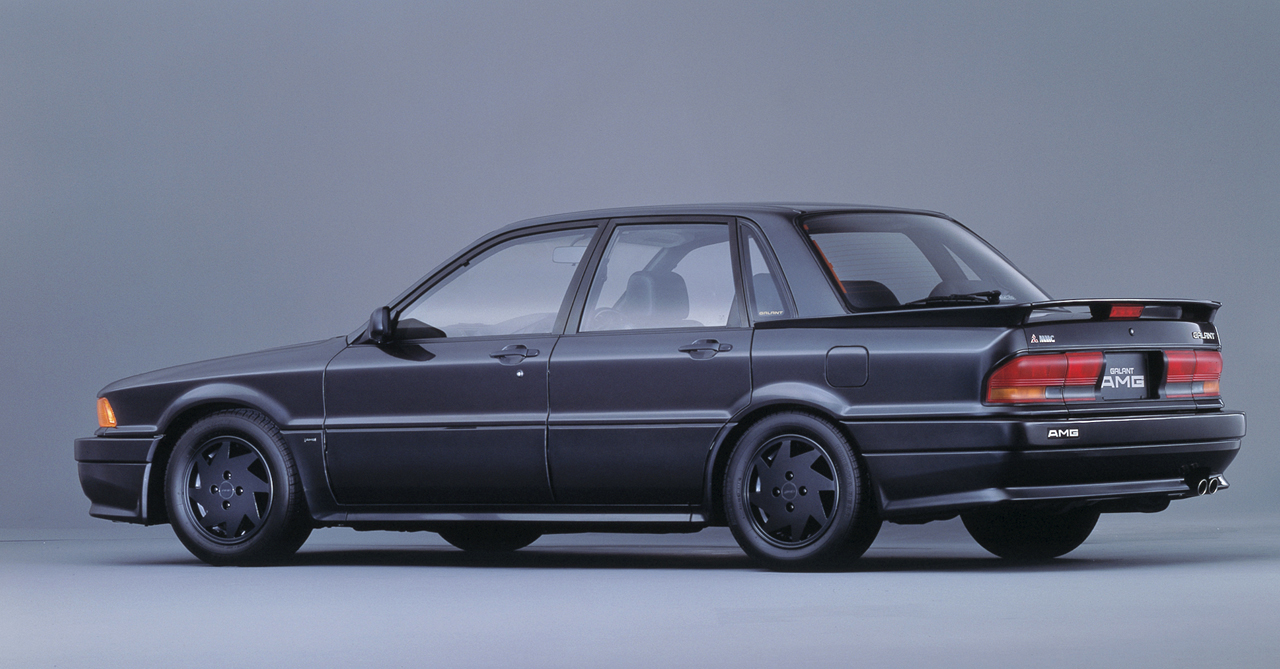
Kicking off this trio is the Mitsubishi Galant AMG – based off the sixth-generation four-door sedan with production running from 1989 to 1991. Around 500 were produced for the Japanese domestic market only and it offers a very different flavour to the rally-inspired VR-4.
For a start, the Galant AMG is front-wheel drive – not all-wheel drive – and uses a naturally aspirated version of the venerable 4G63 engine. AMG tweaked the 2.0-litre unit with reinforced internals, high-flow exhaust, more aggressive camshafts and new pistons.
It revs to 8000rpm, has a five-speed manual gearbox, and weighs just 1250kg, which makes it sound far tastier than the figures of 125kW and 191Nm would suggest.
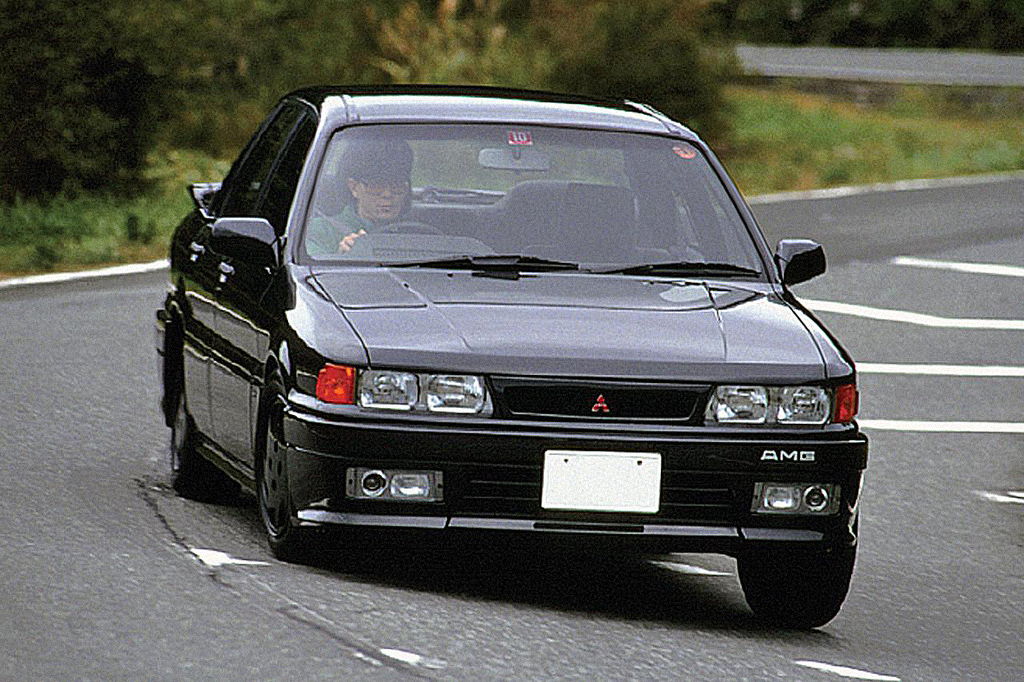
Yet, for an atmo four-pot of the late ’80s, that’s not exactly shabby either. Especially when you consider its power-to-weight ratio of 100kW/tonne. Yes, it is 26kW/103Nm down on the VR-4 but reports reference it as an engaging drive.
Aesthetically the German-fettled Galant scores 15-inch alloys (a minor update offered a different design), a body kit as well as the AMG badging – which stands for Aufrecht, Melcher and Großaspach if you were curious.
On the inside there’s an AMG steering wheel, wood shift knob and trim as well as leather upholstery for an added level of luxury.
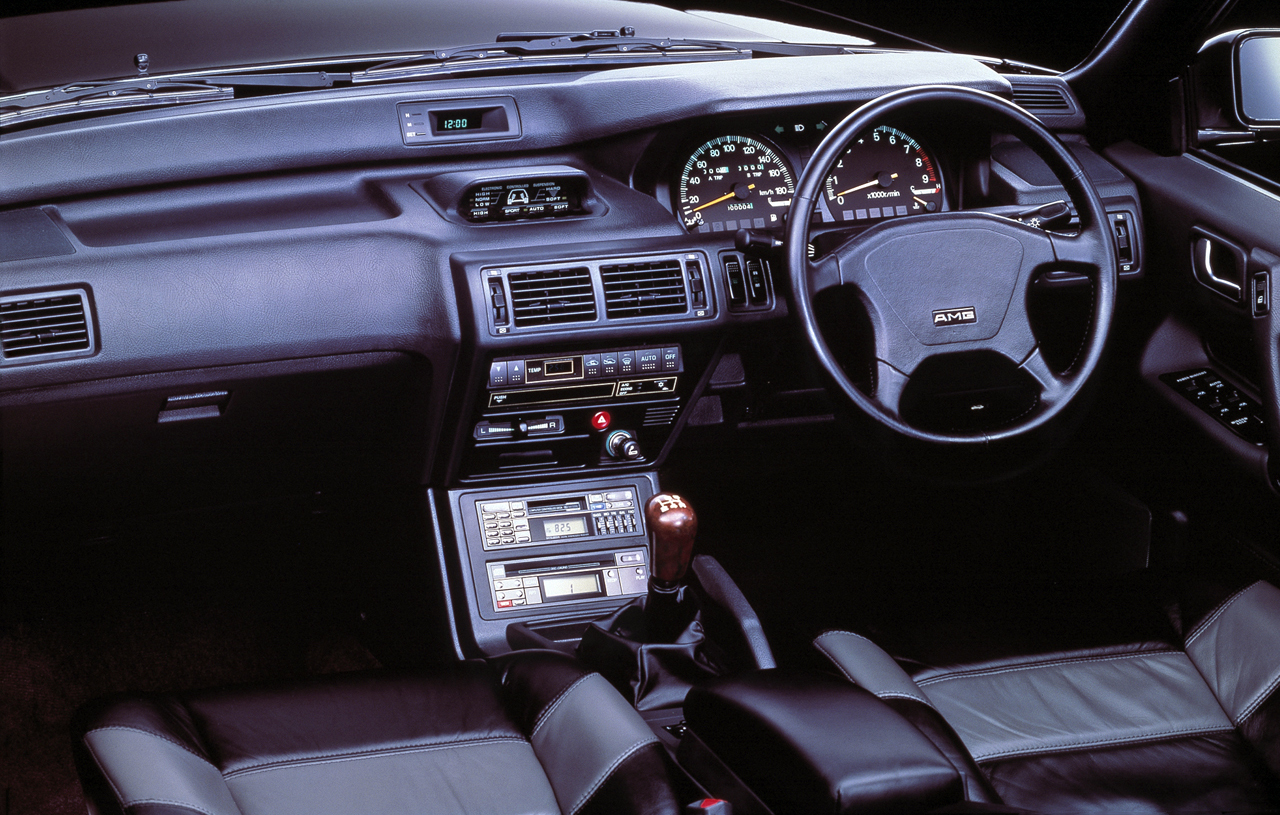
However, if luxe is what you’re after then you might be pleased to know that the Galant is one of two Mitsubishis bestowed with the honour of an AMG badge. Admittedly, the original “tuned by AMG” Mitsubishi is a little more lacklustre – and harder to look at.
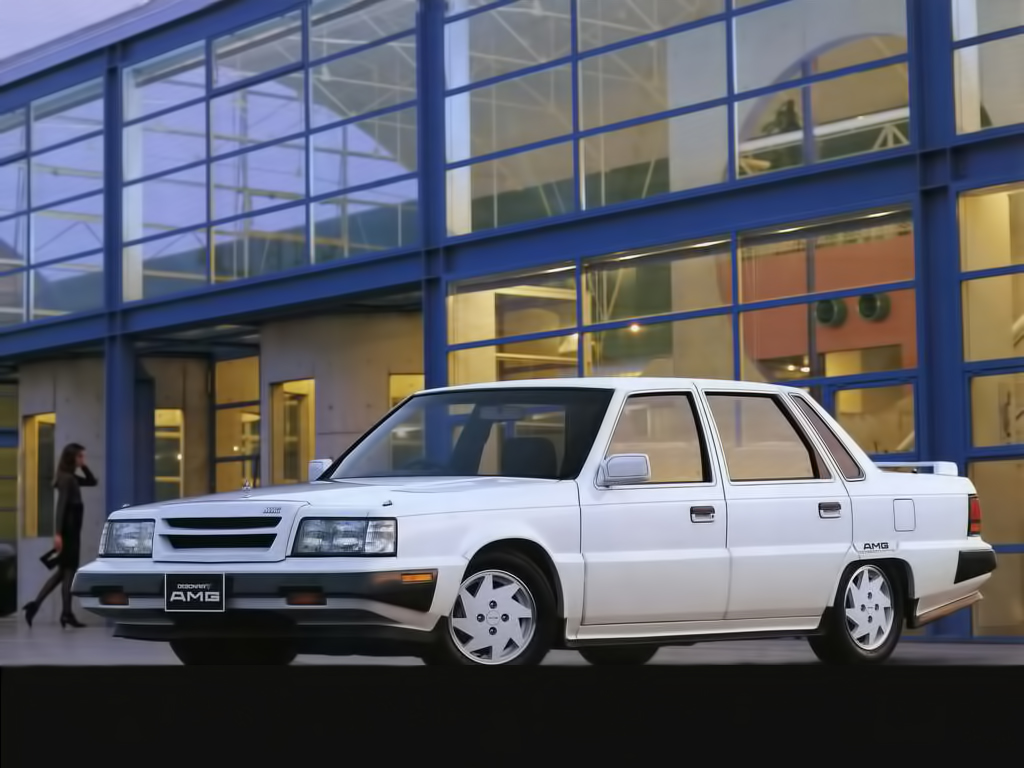
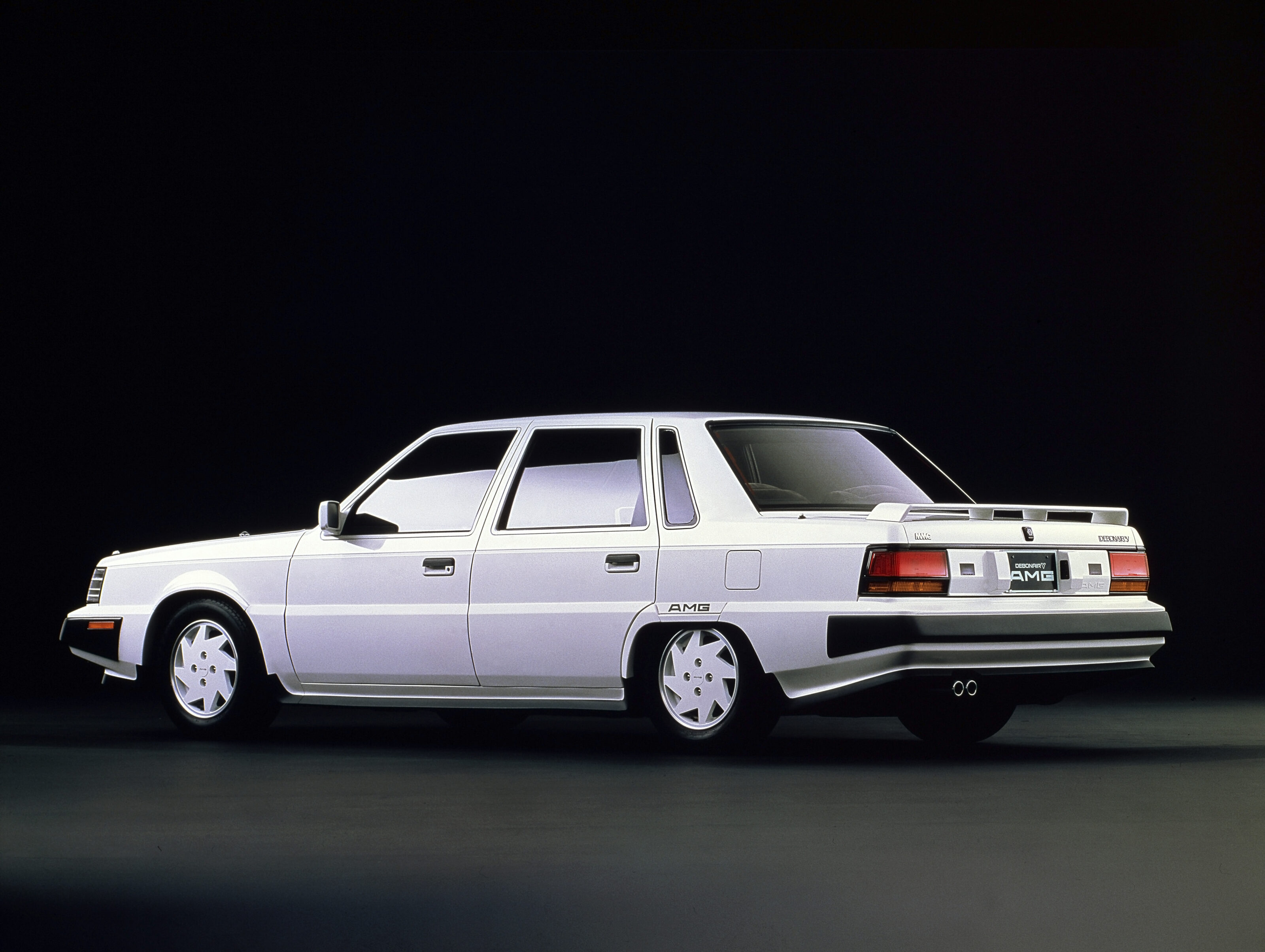
Enter the 1987 Mitsubishi Debonair V3000 Royal AMG. And to think of it as a hotted-up version of the existing car is to give it too much praise. Performance gains for the large front-wheel-drive sedan wasn’t the goal here; luxury was.
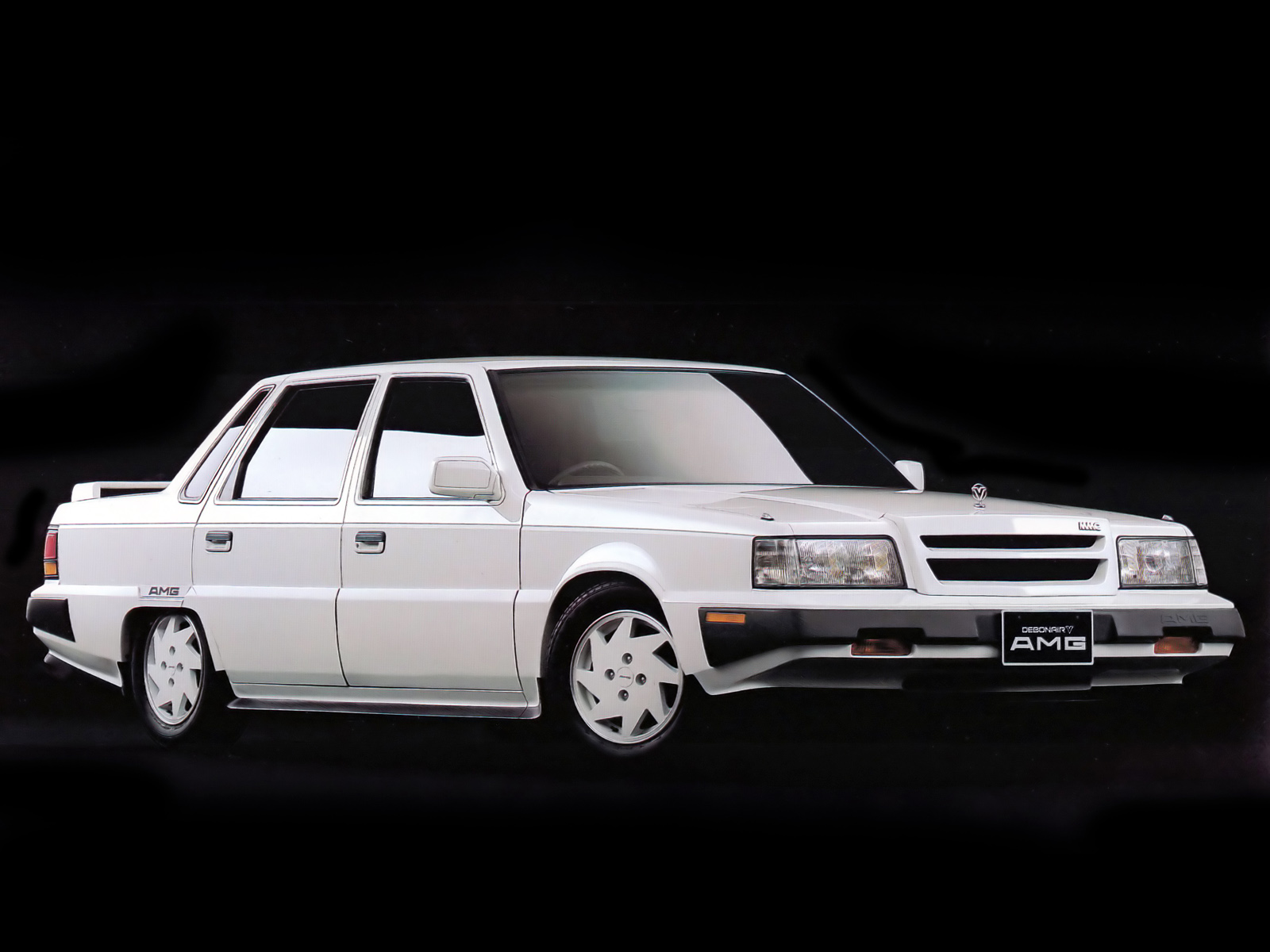
Therefore the 3.0-litre V6 produces no extra power, but it did gain an AMG steering wheel, body kit, wheels and the all-important badging. Inside the seats look more like plush recliners. Later in the four-year production cycle a long-wheelbase version launched for extra rear legroom.
Mitsubishi’s alliance with AMG is a by-product of the booming late ’80s and ’90s JDM scene where companies were willing to splash the cash. After all, this is the era where Toyota launched Lexus, Nissan released Infiniti and Mazda tried Eunos. So maybe MMC (Mitsubishi Motors Corportation) thought it was onto a winner at the time.
Although there is a third way. South Africa has a habit of one-off specials for its own market. And this Honda/AMG mash-up must be one of the rarest. Enter the Honda Ballade AMG (known Down Under as the Civic).
It’s a weird manufacture tie-up which started with Honda wanting to sell cars to the South African market and Mercedes-Benz having the means. This partnership ended in 2001, but not before and AMG badge was slapped on a Honda in the ’90s.
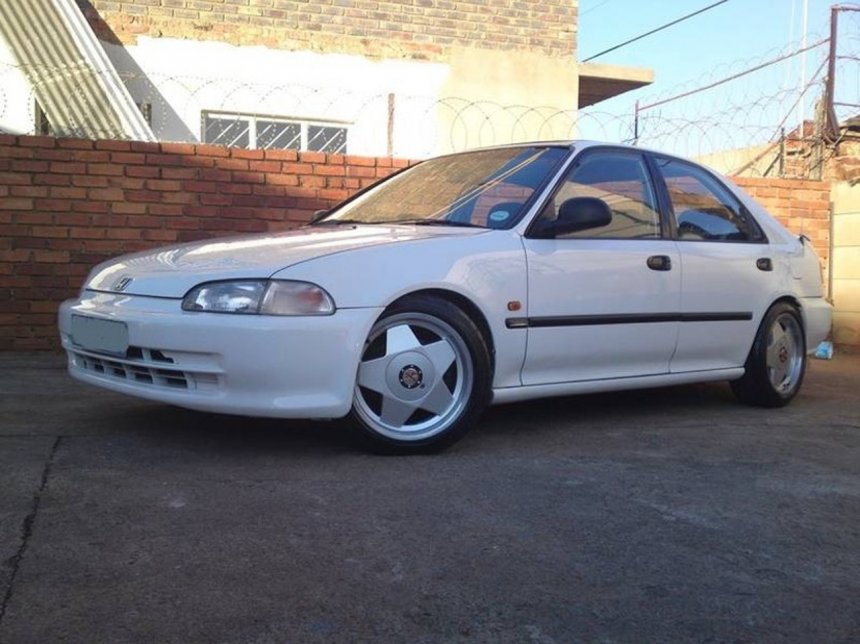
Sold as either a 160i or 180i, the AMG Ballade four-door sedans used versions of the B16 and B18 Honda engines with lowered Eibach suspension. Cosmetic enhancements were limited to either 15- or 16-inch wheels and a boot spoiler. Details are scarce and it’s not known how many were produced.
While there is a plethora of accomplished Mercedes-AMG products from the A-Class to the G Wagen, we can’t help but wonder what other creations AMG might have been able to come up with if it still had brand freedom.
What would you like to see gain the AMG touch?
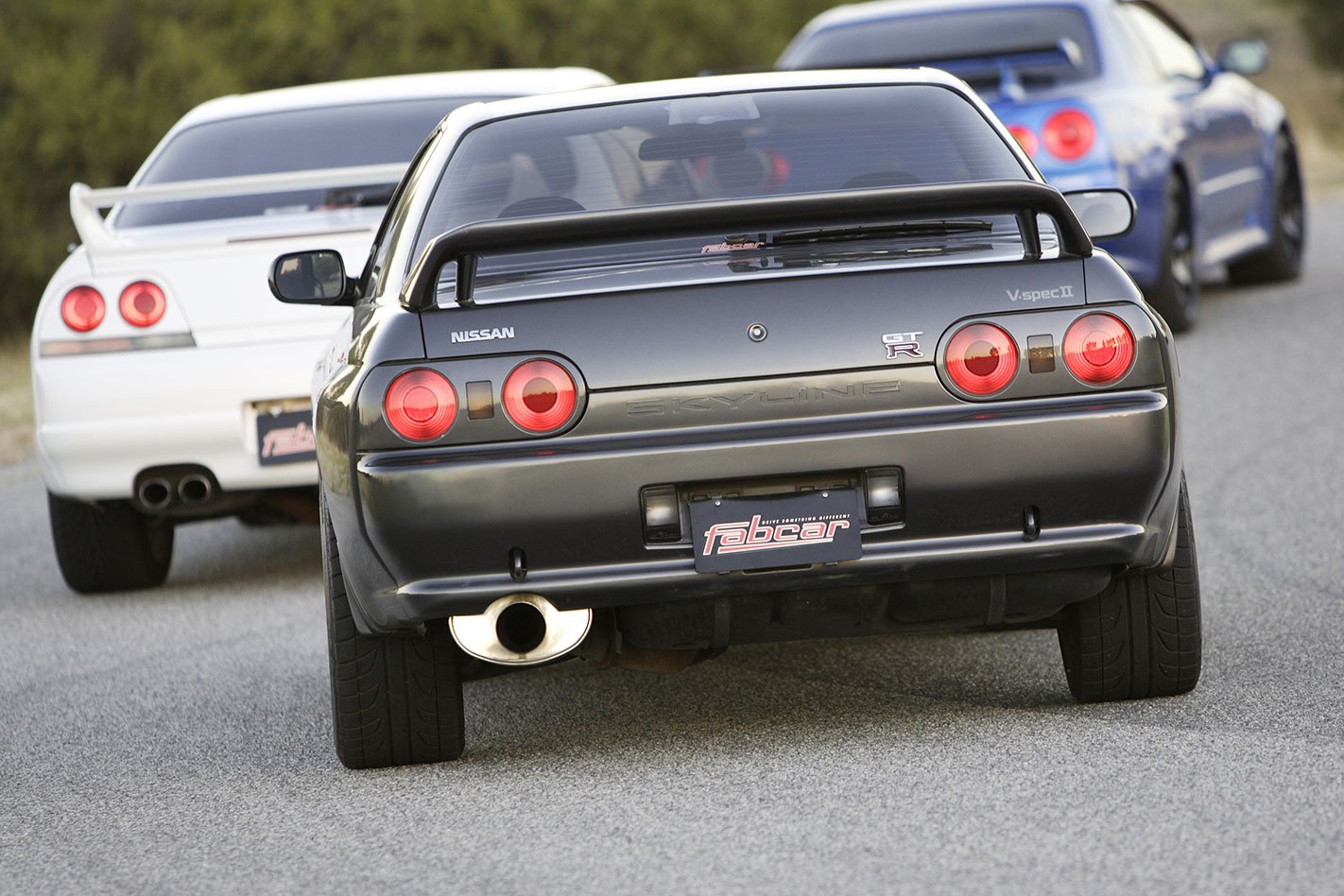
The GT-R legend has now reached demi-god status. And you can pretty much thank its third generation – the turbocharged and all-wheel-drive and R32, R33 and R34 series released between 1989 and 2002 – for all of the kudos.
This feature was first published in MOTOR magazine’s May 2008 issue.
The R32, the original Godzilla, created and engineered for a hugely and successfully dominant Group A touring car campaign, set the legend rolling. But the entire last generation – with its Skyline DNA and singularly devoted and potent combination of twin-turbocharged straight-six power and bleeding-edge all-wheel-drive technology – propelled the GT-R enigma into the stratosphere. Well before the reinvented R35 figured on the horizon, the halo around the GT-R brand had become thermonuclear bomb-proof.
For two decades, raves and plaudits flowed for the third-generation stuff from those who’d driven them. Few have doubted the GT-R’s prowess, but as the old breed sold almost exclusively in Japan new – bar the 100 that slipped into Aussie new-car obscurity in 1991 – very few petrolheads ever had a chance to form an unbiased appraisal of these cars.
By nature of its existence, the GT-R has remained pretty much elusive to real-world critique and the everyday, everyman driving experience.
Instead, the measure of GT-R’s prowess has been gauged largely by its initial on-track successes and, later, by its often outrageous yet eye-opening potential derived through aftermarket fettling.
Much of the fuel for the legend’s fire has come from hype, fanned along by starry-eyed enthusiast owners and brand loyalists largely involved with second-hand grey/private import examples, mystical modified horsepower figures and claimed Nordschleife lap times. Where’s the truth when, as is now widely accepted, Nissan Japan fudged something as cut-and-dried as the GT-R’s output figures.
The GT-R legend is unique, and has been allowed to grow and prosper to a level almost beyond reproach. That is, until a GT-R successor arrives. In other words, until now.
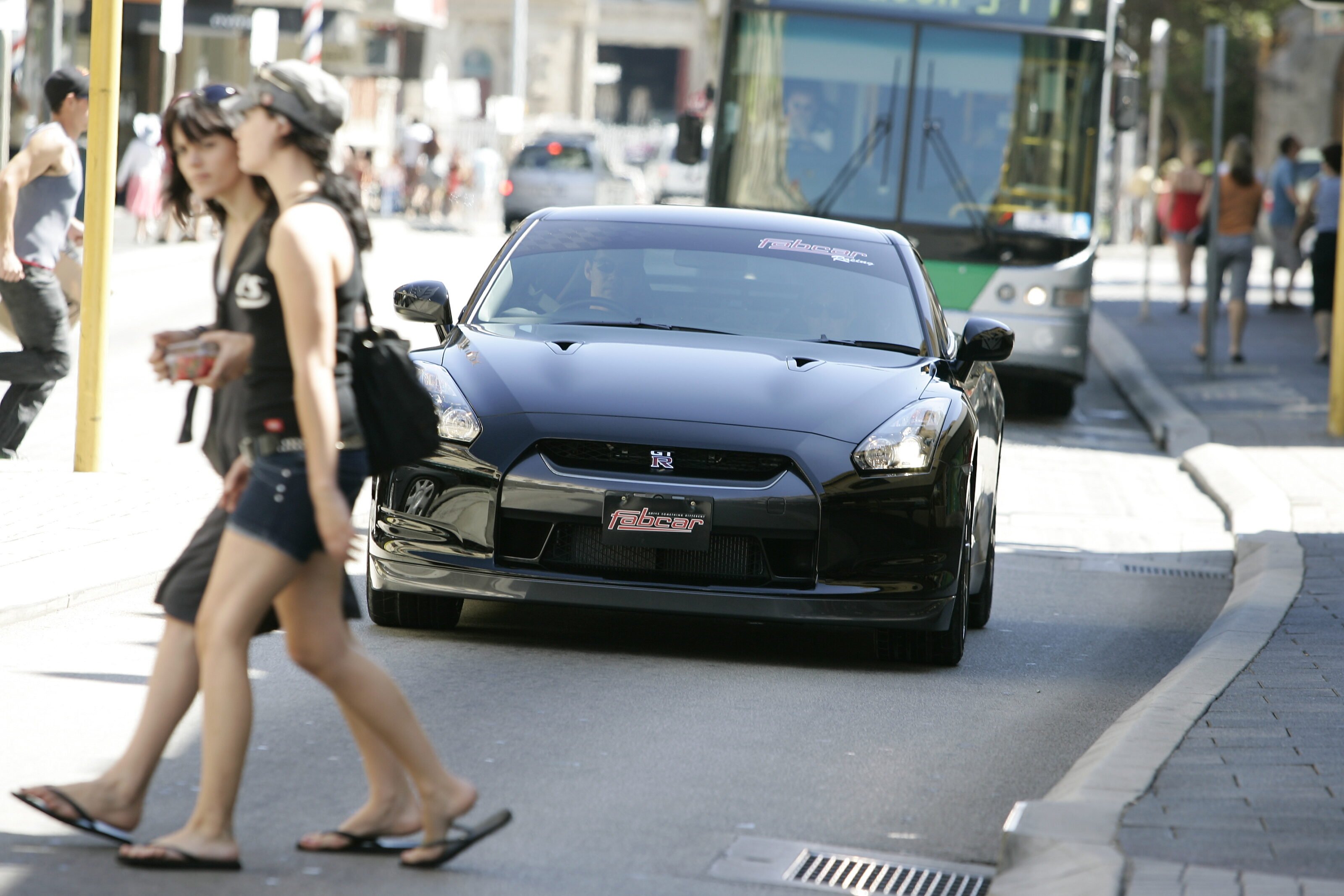
So it’s game on. In what is, to our knowledge, a world exclusive, we’ve pitted the new and completely reinvented R35 GT-R against its third-generation Skyline-based forefathers.
Of course, you can’t expect to compare two decades of motoring history and expect a photo finish. And some die-hard GT-R fans may cry foul. But how else could you measure the hyper-anticipated new boy against The GT-R Legend? And as the original R32 is still widely considered the benchmark, even now, how do its successors rank against the originator?
No one was brave enough to pick the outcome. But no one in the crew, or the extremely generous and accommodating guys from Perth’s Fabcar who supplied our Godzilla fleet, expected the bombshell result that came once the dust settled.
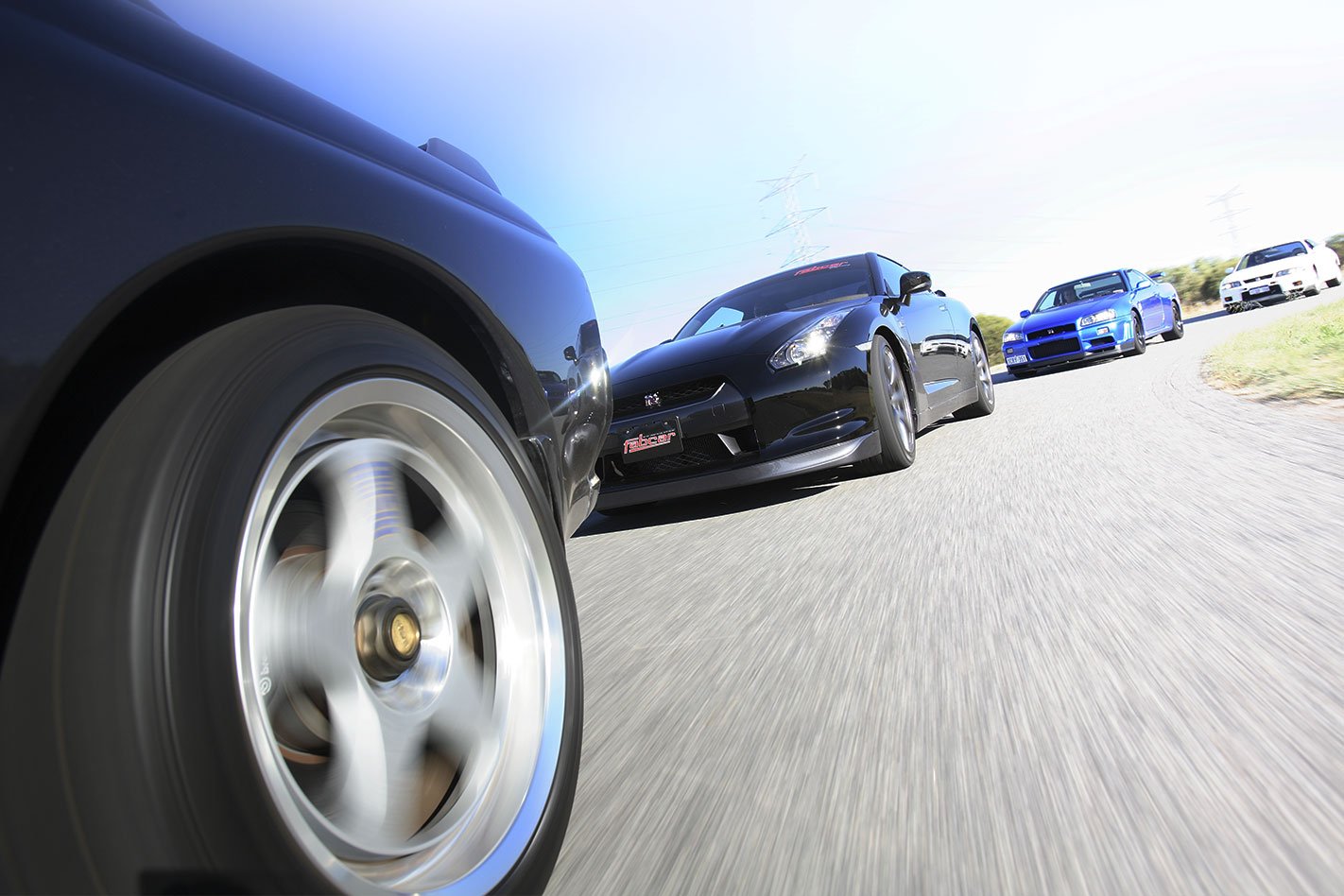
All models were put through subjective driving impressions by two judges (Dupriez and Pearce). For objectivity, all cars were sent for two timed fliers around a test course at Perth’s SpeedDome in Midvale, which is commonly used for WA sprint events. (We’ve published the quickest time for each car.)
Our test cars varied in age (obviously) and accumulated mileage. But for the purposes of accuracy, we opted for the cleanest and least-modified examples of the older stuff that was available. Bar specifically listed enhancements mentioned in each review, these cars are completely standard.
The Test Track
It ain’t the Nordschleife. Or Mount Panorama. But SpeedDome, a popular venue in Midvale, Perth used for local sprint and targa events, was selected for pitting two decades of Nissan heroes against each other.
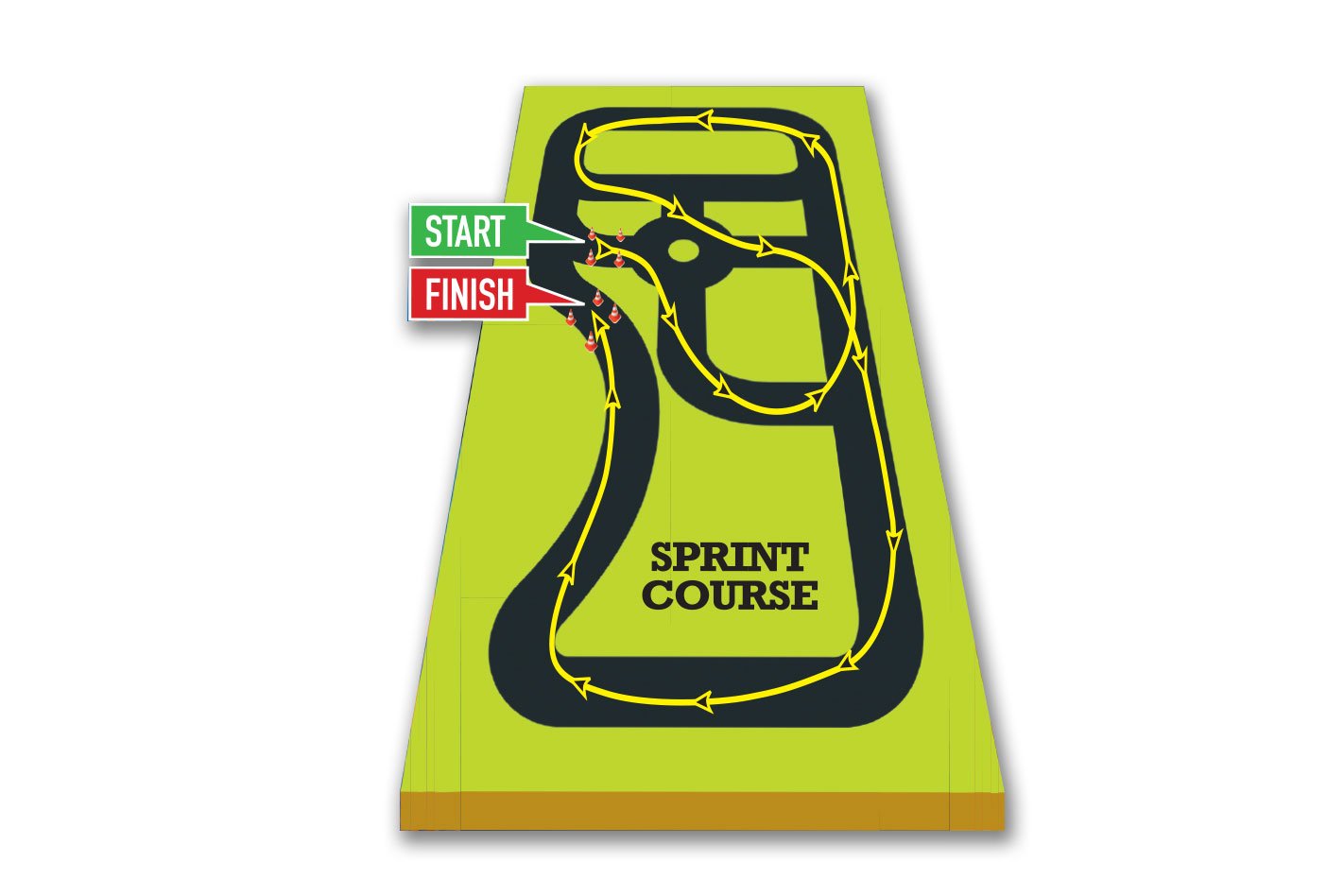
A tight course would also reveal whether R35’s weight is a genuine handicap or not, and give some of the older GT-Rs a genuine chance to shine without them enduring the mechanical punishment a full-sized circuit dishes out on brakes and tyres.
Six Appeal
The original third-gen GT-R, the R32, (1989-1994) was initially intended to have a 2350cc engine capacity to compete in under 4000cc racing class, as under the era’s FIA Group A touring car rules, turbo cars had their capacity multiplied by 1.7 for classification. However, once the added weight of the all-wheel-drive system was factored in, it was decided to increase capacity to 2568cc, lifting the GT-R into the 4500cc racing class which allowed fitment of huge 11-inch-wide racing tyres.
The RB26DETT quickly gained a reputation as the benchmark engine of Japan’s 90s turbo era. In road-going form, using meagre parallel-style low-mounted twin turbochargers for brisk boost response, it offered exceptional mid-range and a heady top-end delivery for its modest 2.6-litre capacity. But, engineering-wise, the straight six was bred for motorsport. And in race form (approx 400kW), or when modified (700kW-plus), it’s lofty output and outright potential almost defied belief.
The RB26’s short-stroke design allowed engine speeds exceeding 8000rpm, even in standard trim. The iron block was sturdier than most production rivals (followed later by thicker-cast enduro-spec N1 blocks).
Up top, the alloy-head and valvetrain design were race-bred, with six individual throttle bodies fed charged air from a large, front-mounted intercooler. All cutting-edge stuff for ’80s tech.
Nissan’s claim of 280PS (206kW) for all road-going RB26DETTs has long been considered, er, conservative.
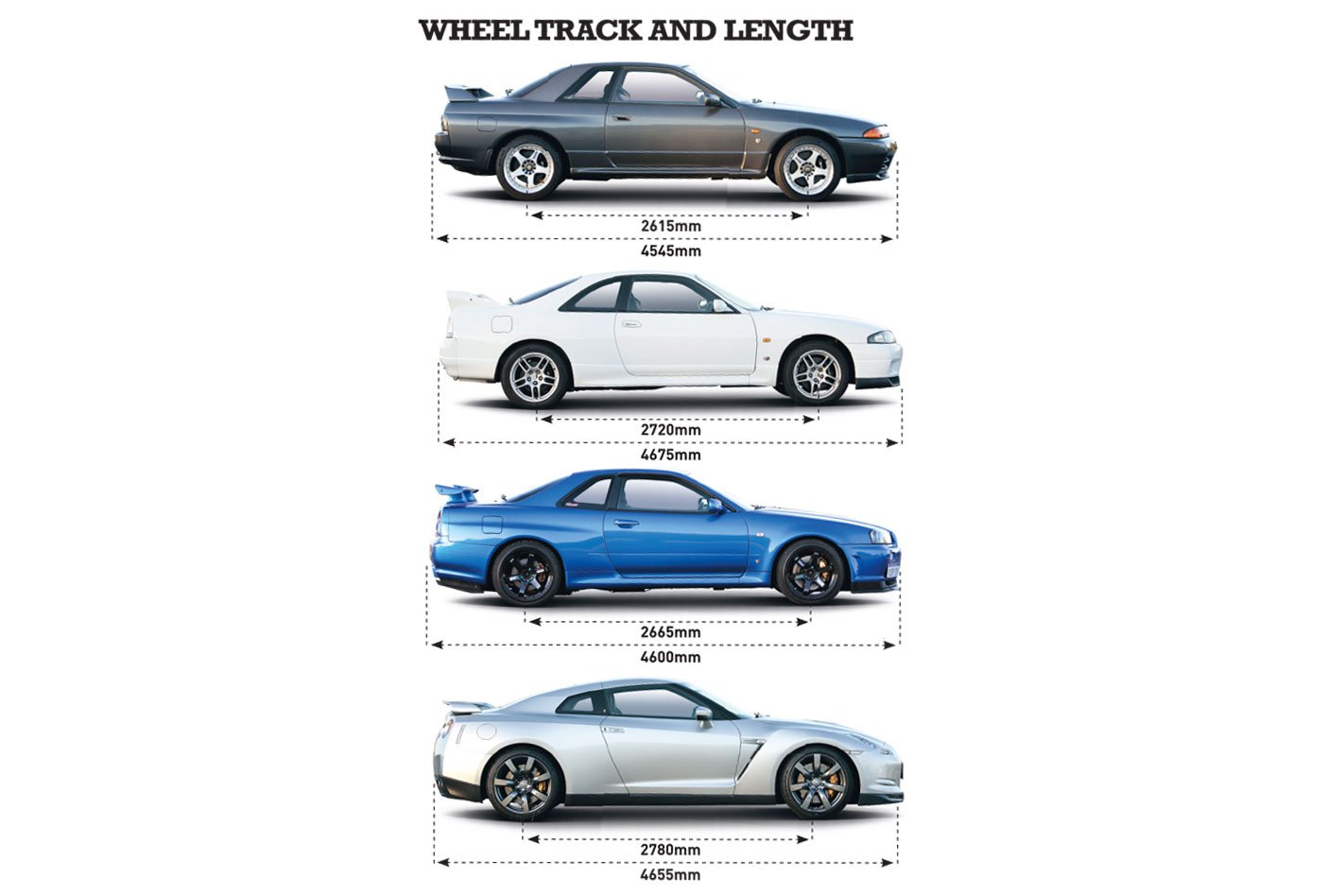
Size Matters
| u00a0 | R32 | R33 | R34 | R35 |
| Length | 4545mm | 4675mm | 4600mm | 4655mm |
| Width | 1755mm | 1780mm | 1785mm | 1895mm |
| Wheelbase | 2615mm | 2720mm | 2665mm | 2780mm |
| Front Track | 1480mm | 1480mm | 1480mm | 1590mm |
| Rear Track | 1480mm | 1490mm | 1490mm | 1600mm |
| Weight | 1430kg | 1530kg | 1540kg | 1750kg |
| kW/Tonne | 144kW | 135kW | 134kW | 202kW |
1994 R32 V-Spec II
The R32 GT-R is still considered the purest and most hardcore of the breed. It decimated touring-car racing globally, particularly at home in Japan and in Oz, and was outlawed shortly thereafter. Our test car is the last and perhaps finest of the R32 breed – a 1994 full-fruit V-Spec II, sporting factory Brembos, with juicy Nismo 17s in lieu of the original BBS wheels, super-wide 255mm Bridgestone RE010s, Nismo exhaust and instrumentation.
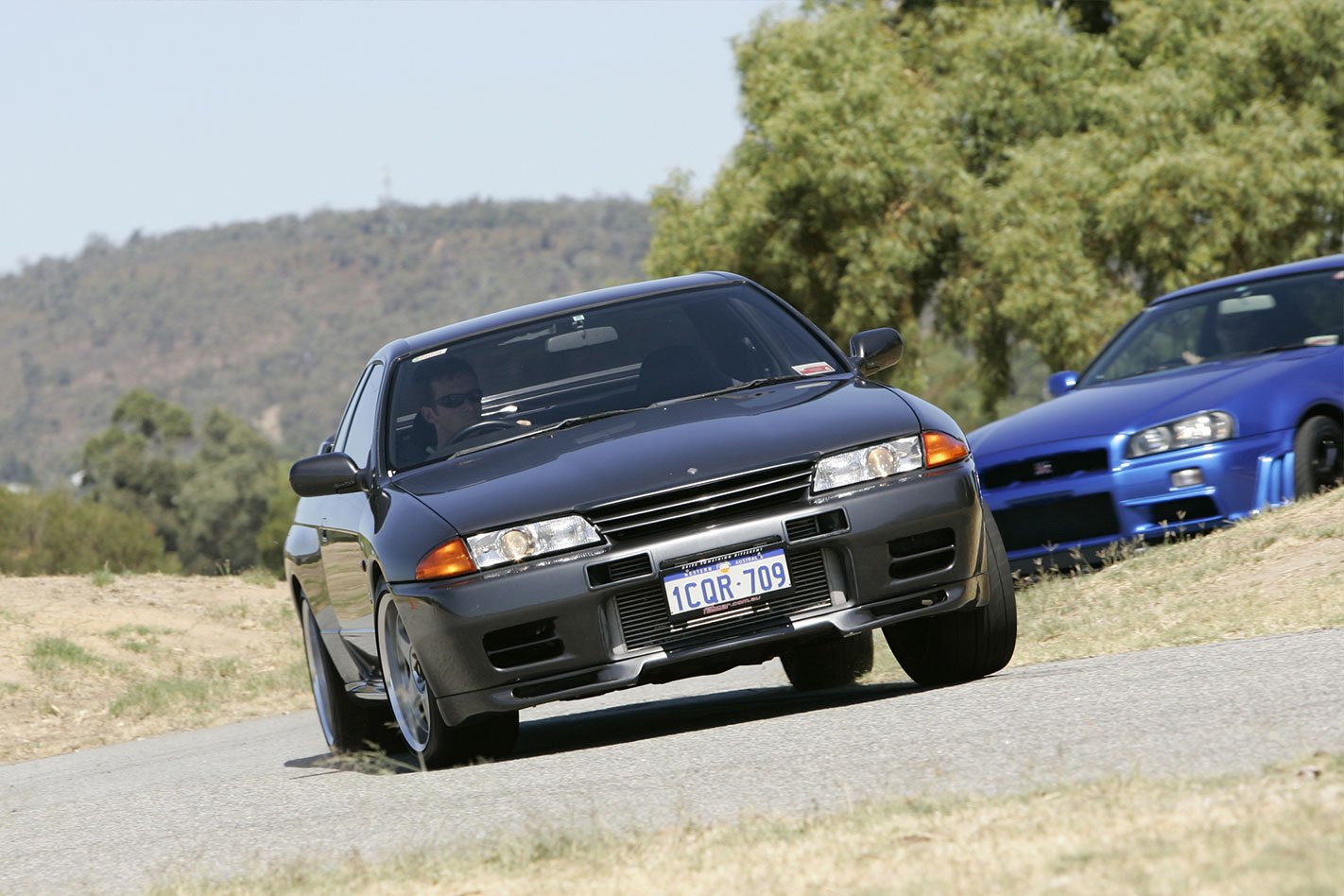
It’s the smallest and lightest here, yet the R32’s interior is reasonably spacious, if basic, with that now-retro mouse-fur trim Nissan once loved. The bolstered seats lack support, and grabbing the bus-sized tiller, you don’t exactly feel cocooned in comfort. Still, it all gels, and it’s simple and functional, and looks and feels pretty good considering Australia was cranking out EA to ED Falcons at the time and Billy Ray Cyrus was inspiring hairstyles. The odo says 36,000 kays but, to be honest, it feels longer in tooth; 15 years sitting around will do that.
Hitting the track, the original Godzilla’s steering feels light and direct, the five-speed shifts tightly (if a bit long in the throw) and the clutch is effortless.
But it’s the right foot that’s not generating much response. It’s clearly not an explosive car and needs concentrated and serious provocation to inspire the RB26DETT to soar above 5500rpm, up where momentum and keeping the turbos singing is crucial. There’s bugger-all torque down low, with an almost elastic delivery that never comes on boil with the ferocity you’d hoped for.
It’s brisk enough and lively enough, but start upping the pace and its limits are quickly exposed. While the R32 is light-footed and manoeuvrable in nature, it lacks the level of crispness and road-holding ability that you’d expect from Japan’s king-hitter, and has a strong tendency towards understeer. It requires plenty of pre-planning to place accurately, and all with your arms flailing around like a windmill. Despite this car’s wheel/tyre package, front-end bite falls off if you lean on the nose into a corner, significantly limiting entry pace.
The chassis also feels slightly unbalanced, as if the much-trumpeted RB26 and ATTESSA/ETS couple aren’t quite on intimate terms. There’s plenty of pitch and roll, and the R32 changes direction with little finesse or confidence, inconsistent at the rear at times, particularly under hard acceleration on exit. Needless to say, this example is an unpredictable beast.
The brakes lack bite, though it’s mainly a pedal feedback thing, or lack thereof, but once you give them a proper workout they pull things up well.
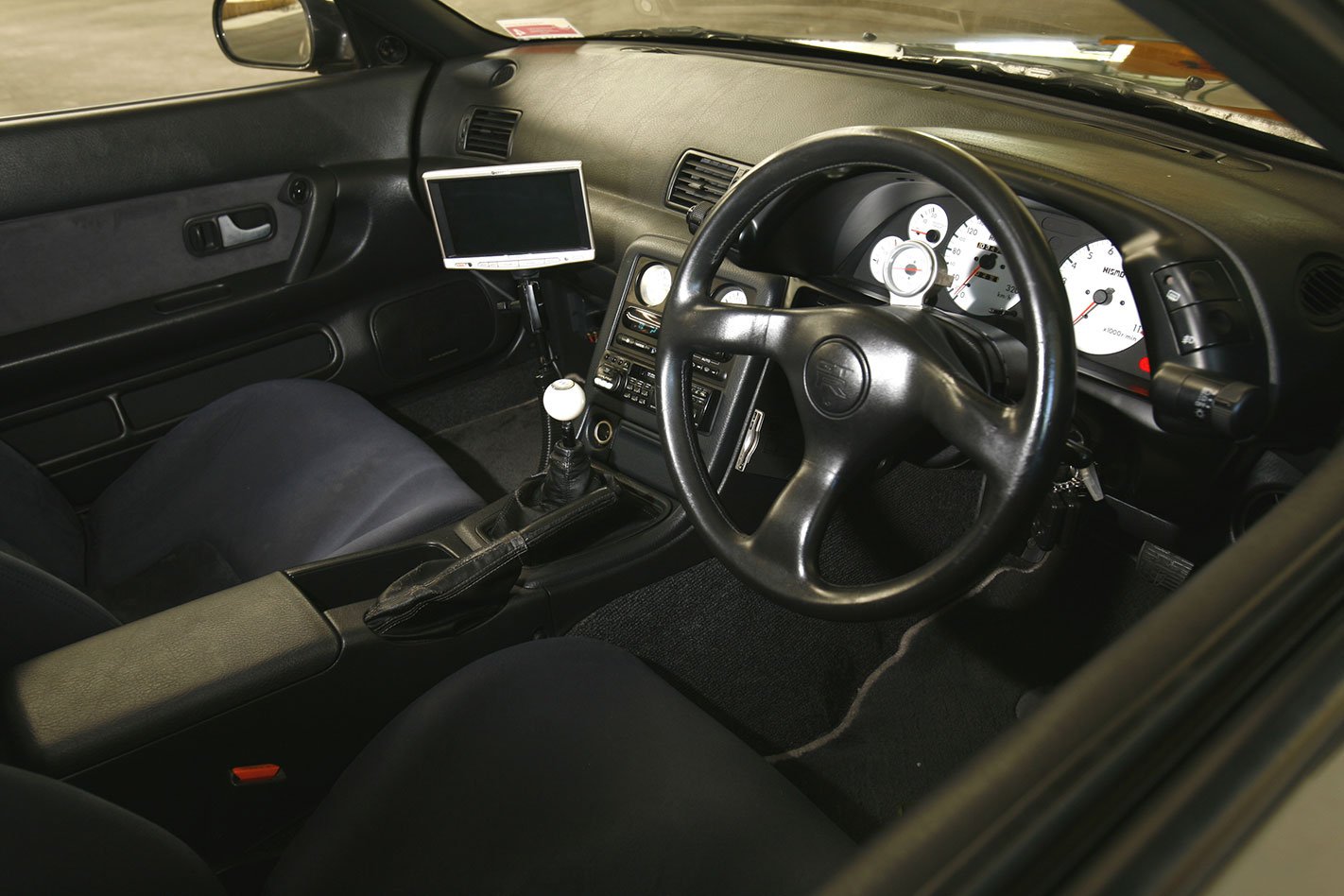
It’s true that you need to give old GT-Rs their legs, and maybe the course’s tight layout is hampering its inner God. Around our test track, it clocked a best of 52.27sec; slowest of the lot by over a full second. On an open-road, where you can rev it and let it carry more speed, the R32 might be happier and more in its element. Past Targa results over the last two decades reinforce this.
The R32 was a big tech shift and the start of a serious performance era. But I exited the car a bit confused. Glimpses of greatness were there and it’s obviously a cut above the Liberty RS Turbos and Galant VR-4s of its era. But you’d have to be wearing some pretty large blinkers and rose-coloured glasses to believe that the R32 is the all-time greatest, and that the world hasn’t moved on.
Original God
Launched in May 1989, the R32 GT-R was a wider-tracked version of the regular Skyline coupe, with pumped front and rear guards, an aluminium bonnet, and a new bodykit to aid cooling and improve down force. It also scored race-oriented seats and wheel, plus gauges for oil temp, AWD torque bias and turbo boost pressure.
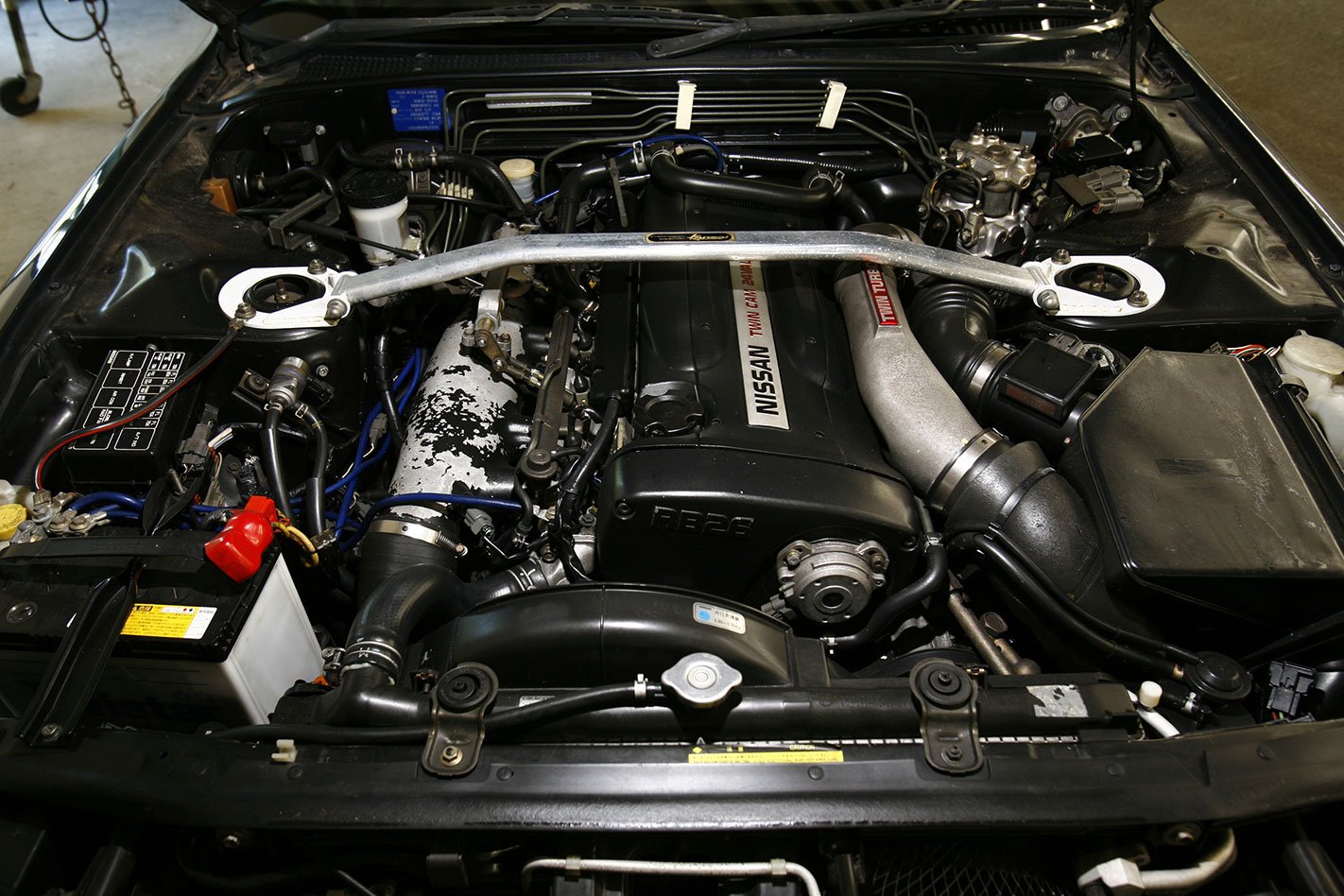
The 206kW twin-turbo RB26DETT six was mated to a five-speed gearbox and computer-controlled ATTESSA-ETS all-wheel-drive and HICAS four-wheel-steering systems. While essentially a rear-wheel-drive car, up 50 percent of engine torque can transfer to the front wheels when required; the hydraulically activated system using the ABS sensors to detect rear-wheel slip.
The ‘Victory Specification’ V-Spec and V-Spec II editions arrived in February ’93 and 1994, both with Brembo calipers, tweaked ATTESSA-ETS systems and larger 17-inch BBS rims. A lightweight N1 was also offered. In total, Nissan sold 43,934 R32 GT-Rs between 1989 and December ’94, all in Japan bar one batch of 100 officially sent to Australia in 1991.
And it’s those 100 GT-Rs you have to thank for the current two-make V8 series. In ’91 alone, the R32 won 9 of 11 races, including seven ATCC rounds, Sandown and Bathurst. After ‘92, they banned it.
1997 R33 V-Spec
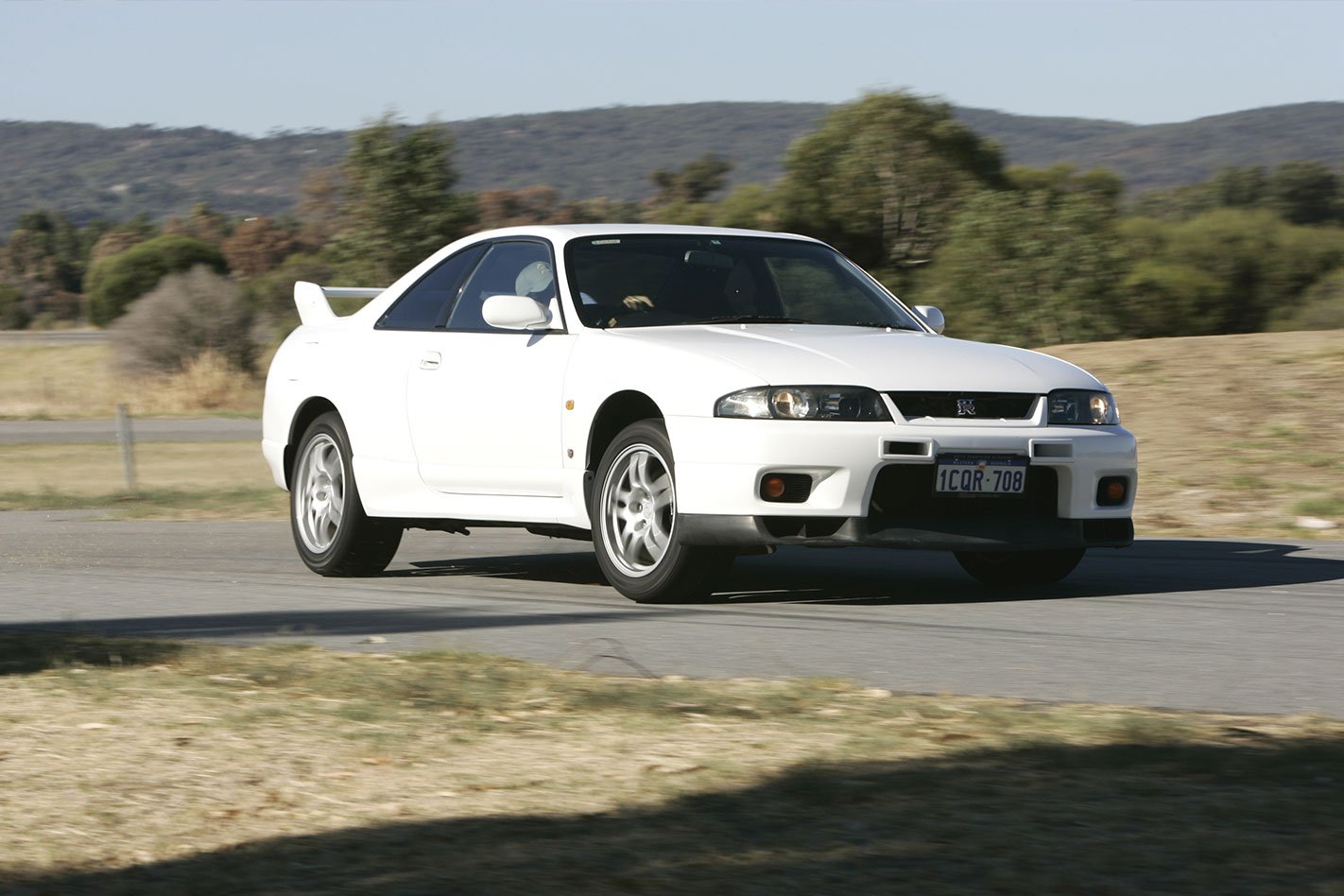
With the R32 hardly setting things on fire, it’s up to the R33 GT-R to step up to the plate. The larger R33 is considered the biggest and fattest of the breed, both softer in styling and lacking the R32’s race-bred kudos. The upshot, though, is that it’s immensely popular and potentially capable in its own right, and scored an updated ATTESSA/ETS Pro system in V-Spec trim (which adds torque splitting between the rear wheels). The odo says 109,000 kays, but it feels as fresh as the R32. Bar questionable Chinese rubber, she’s a stock R33 GT-R V-Spec.
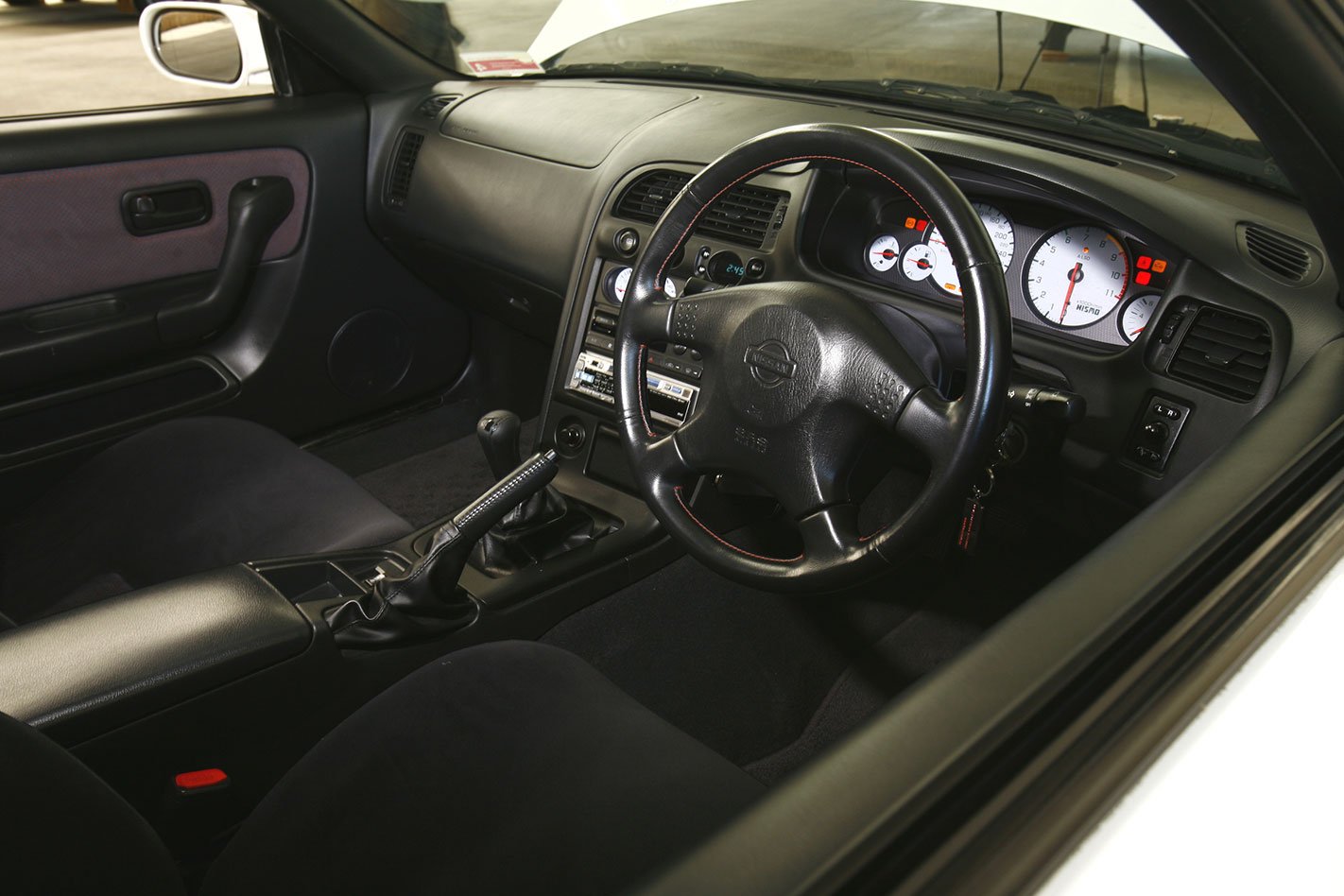
The R33’s cabin feels far fresher and more cohesive than its predecessor, reflecting more contemporary 90s styling: hard, dark plastic but very functional, if a bit lacklustre. The driving position is superior to the R32 and the seats are both tighter and comfier. As in its predecessor, the five-speed’s gearshift is precise and positive, and the clutch feels nice and progressive, if heavy.
Let’s be frank: our V-spec looks like a boat against the other three. It’s the least aggressive in its styling and more closely cut from the generic Skyline cloth. However, pull the anchor, attack the course and it only takes a few corners to discover it’s a more accomplished performer than the R32.
The RB26 copped little in the way changes over the prior model, but this one seems to breathe easier, with a little more energy everywhere between idle and redline. It still requires a heavy boot – and, admittedly, lots of swearing – to wind the six up, and it lacks the mid-range torque and throttle sharpness us 21st-century blokes have become accustomed to from newer turbo gear.
Like the R32, there’s plenty of pitch and roll, and yet the longer wheelbase makes it’s more predictable and less snappy. Steering, though, is no more or less precise in terms of feel and accuracy. You can position the car with greater confidence and less effort, but grip falls off quickly – it feels under-tyred – so you use more of the available real estate getting corner-entry right.
Turn-in and initial bite is a bit how’s-yer-father. Peg the throttle hard on corner exit and the rear always wants to wander, but without grace or focused power-down ability. However, it all functions more cohesively than the R32; despite the moving, pitching, and squirming, its chassis is consistent and predicable, and better balanced.
That said, it just ain’t that sharp, planted or responsive. The R33 also had the lowest stability under hard braking. Despite strong anchors, the chassis desperately tries to unglue the rear end on corner entry and you spend much of the corner manhandling it to keep it off the scenery.
It polarised the judges a bit (Pearce ranked it, Dupriez didn’t), but consensus is that the R33 is reasonably impressive, if far from awe-inspiring. It’s a decently balanced jigger yearning for greater chassis control and more stonk. Still, it’s a superior car to the R32 in feel, dynamics and performance, and proved it against the stopwatch. Call it a theatric yet reasonably brisk 51.12sec. You could feel Godzilla was in there somewhere…dozing.
Second Coming
The larger R33-generation Skyline GT-R (1995-1998) was offered in both base and V-Spec variants. The mechanical layout differed only slightly from that of the R32, with minor revisions in the five-speed gearbox and engine oil pump (for reliability). Brembo brakes and 17-inch alloy wheels are standard, while the V-Spec added improvements such as lower and stiffer suspension, and the ATTESSA-ETS Pro all-paw system (with individual rear-wheel torque control).
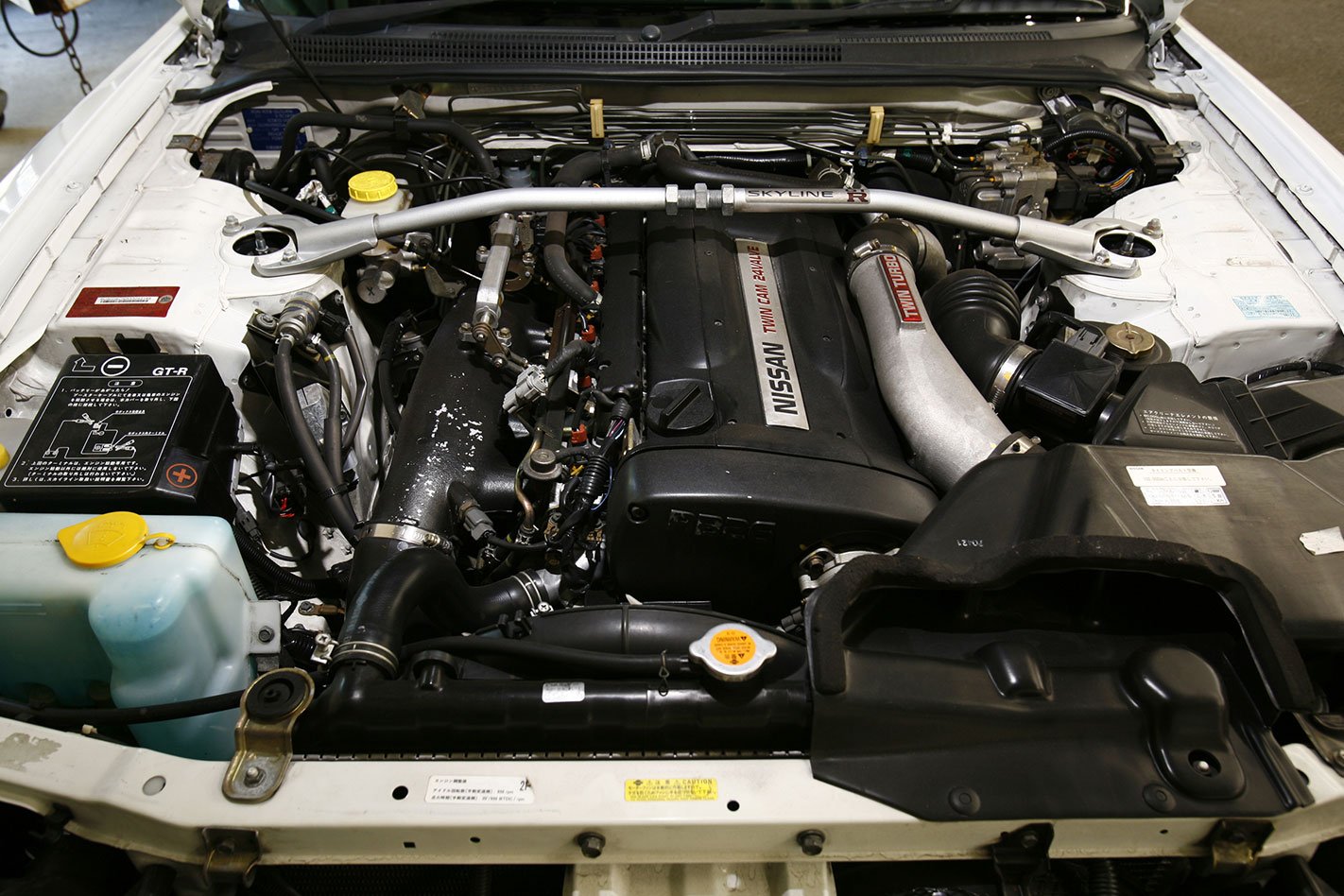
Performance was still outstanding despite the R33 GT-R weighing in a full 100kg more than the R32. Nissan claimed that the V-Spec lapped the Nordschleife circuit in under eight minutes in the hands of Dirk Schoysmans (albeit with the 180km/h speed limiter removed).
The Japan-only R33 GT-R sold in far smaller volumes than the R32, with sales totalling a mere 16,522 – 40 percent of which were V-Spec models (‘V’ variants account for just five percent of R32s).
2000 R34 V-Spec
Right here the story takes a twist. Y’see, lap times were cut late in the day, oldest to newest. Up to that point we’d spent hours playing musical chairs with the four, collecting our impressions and doing photography. And Blind Freddie could see that the R35 was not so much beating the old stuff for pace, it was butchering them.
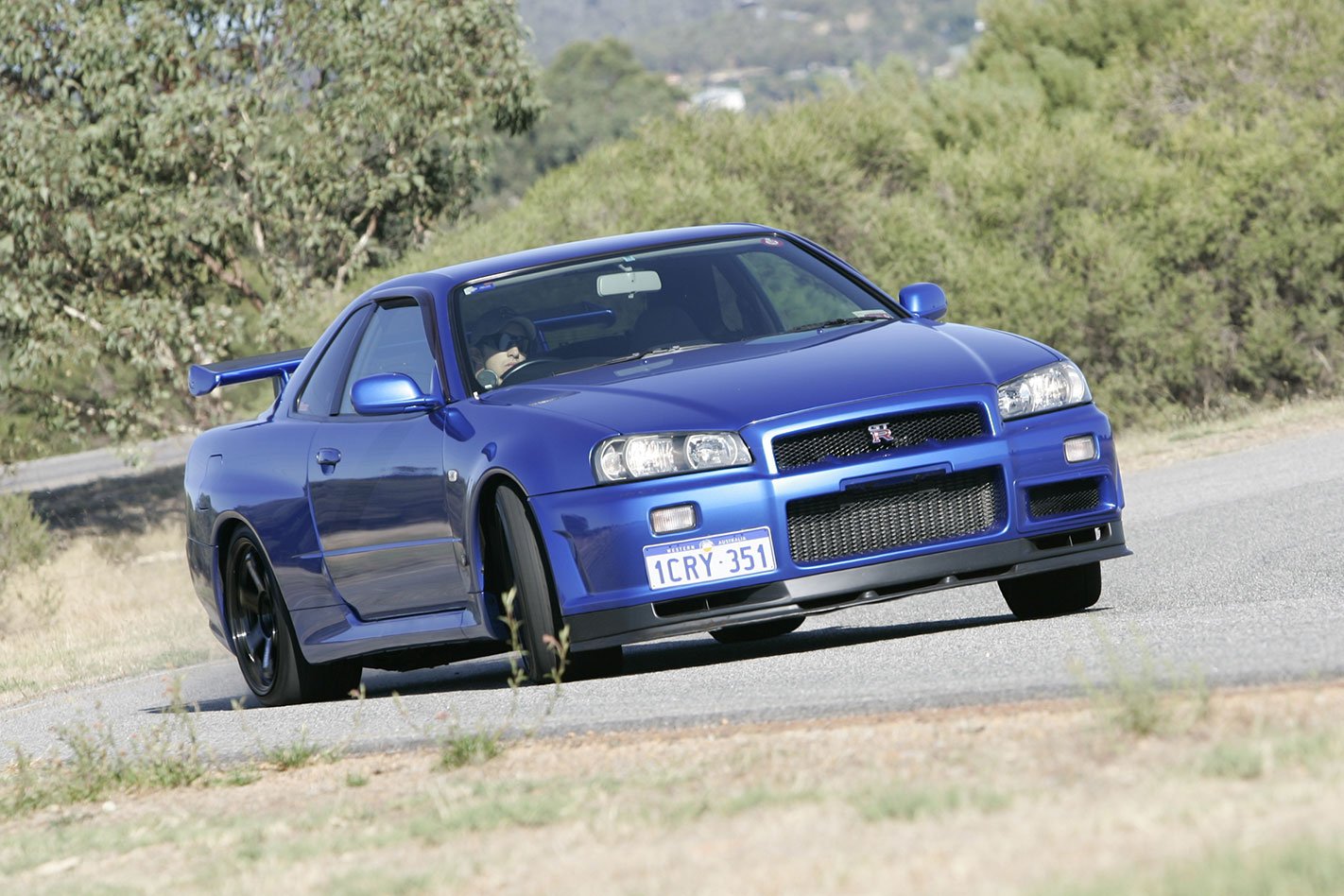
Decision time. We have two R34s. Would we use the mint, limited-run R34 V-Spec Nur or the blue R34 V-Spec enhanced with stiffer Bilstein coil-overs and huge Rays TE37 rims shod with 265mm track-savvy rubber? To give the old girls a fighting chance on our ‘handling course’, we chose the latter.
The newest, freshest and priciest, the R34 should be the best of the early GT-Rs. The first impression from inside is a progression from understated function to a high-tech gadget perfect for today’s Attention Deficit Disorder (or whatever the PC term is nowadays). The telemetry-style dash screen (displaying lap time, g-meters, temps and pressures gauges) dominates the cabin. And like its predecessors, there are no driver adjustable chassis smarts. It all works, with the best seats and tiller, the best driving position. The manual also gets an extra cog and, like the steering and clutch, feels crisp and mechanical. It’s wider than the R33, and roomier than the R35, but feels intimate and hardly porky.
Out on our course, the R34 instantly pulls harder everywhere and feels the most responsive, by far. Name the situation and it’s shining. Turn-in and front-end grip is sharp and consistent, and for the first time I’m not feeling the car pitching or rolling on entry. Sure, the coil-overs and rubber are doing no harm, but it’s more than that: this thing is much better balanced, especially on corner exits. The ATTESSA/ETS Pro and turbo six are well in sync; you squeeze the throttle, the bum cocks out a few degrees and there’s perfect, hard-pinning oversteer.
Despite the punchiness and grip, the chassis squirms and the torque transfer below is less than seamless. Steering is nicely sharp (though not quite Evo-like in its accuracy), it’s easy to place and adjust, and is surprisingly brisk on direction changes. You can attack harder in this than the R32 or R33.
The R34 is the perkiest, up to a point, but there’s no denying its RB26 roots. The linear and elastic torque and power still applies and it needs a wind up, though it’s plenty tractable and urgent.
Of the third-gen stuff, it stops with the least fuss, making the spongy pedal of the R32 a distant memory. The blue stunner is the first car with real balance, with more seat-of-the-pants feedback that yields fewer nasty surprises.
The R34 restores my faith in Skyline GT-Rs. It’s the best thus far, and yet in some ways it doesn’t go far enough. Its 49.79sec lap, just 1.3sec quicker than R33, wasn’t the quantum leap we expected.
Last In Line
The R34 Skyline GT-R (1999-2002) offered numerous improvements including a new close-ratio Getrag six-speed manual gearbox, 18-inch wheels, and its slightly shorter (yet broader) body and bolder styling addresses criticism that the R33 model was too bulky.
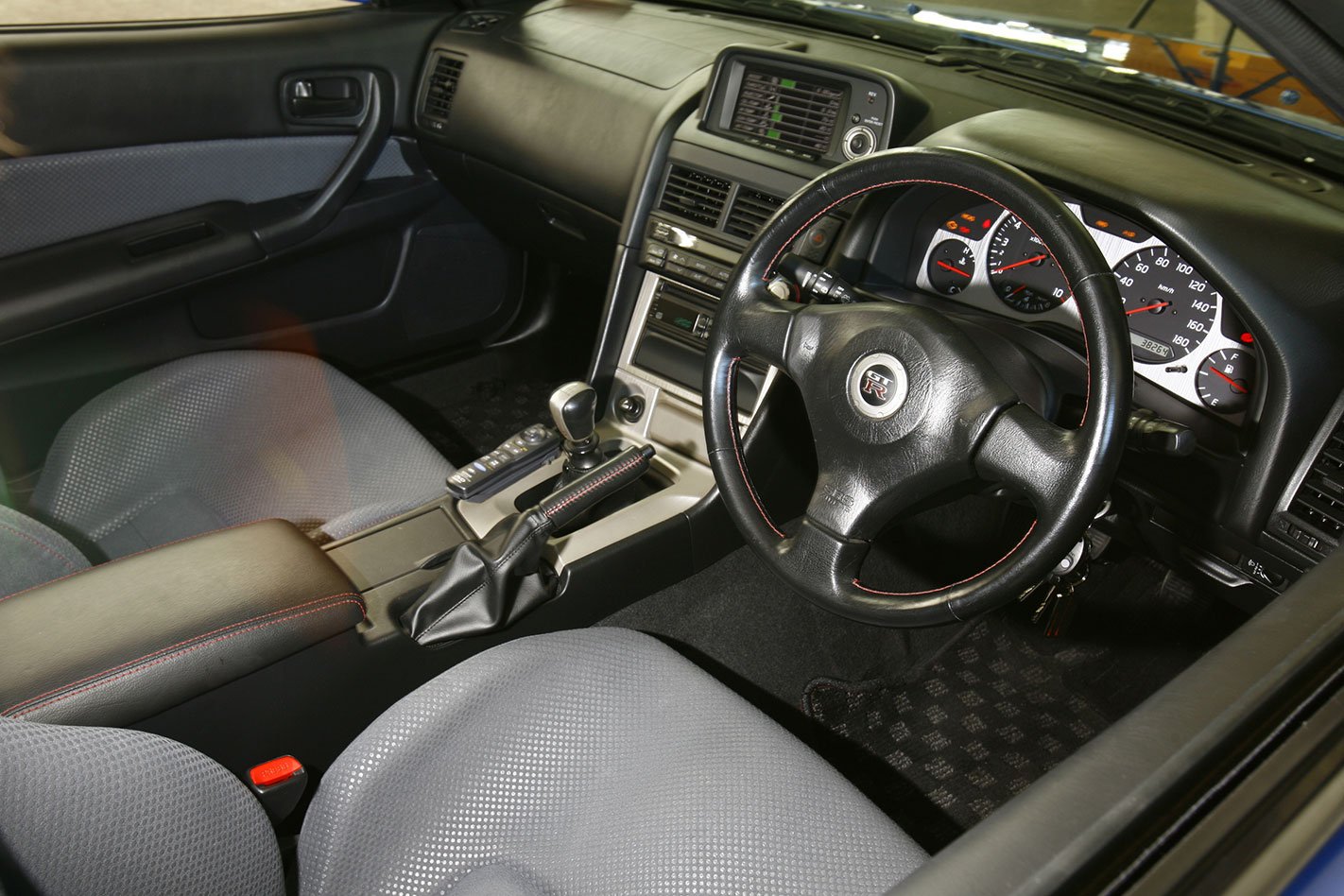
New is the 5.8-inch, dash-integrated LCD display, providing real-time information of engine (injector duty cycle, throttle position, etc) and ATTESSA-PRO vitals. Nissan still claimed 206kW, although turbo boost pressure could now be varied between 0.7bar and 1.0bar.
A softer, leather trimmed M-Spec variant is offered alongside the popular V-Spec I and II models, which are equipped with front and (carbonfibre) rear diffusers, an adjustable rear wing, and enhanced functionality for the dash-mounted display. A limited run of lightweight N1s were released, as were Nur variants to commemorate R34’s 24-hour production car enduro racing at Nurburgring.
In 2004, factory motorsport arm Nismo ‘remanufactured’ used R34s to create 20 monstrous 368kW 2.8-litre Z-tune models.
2008 R35 Black Edition
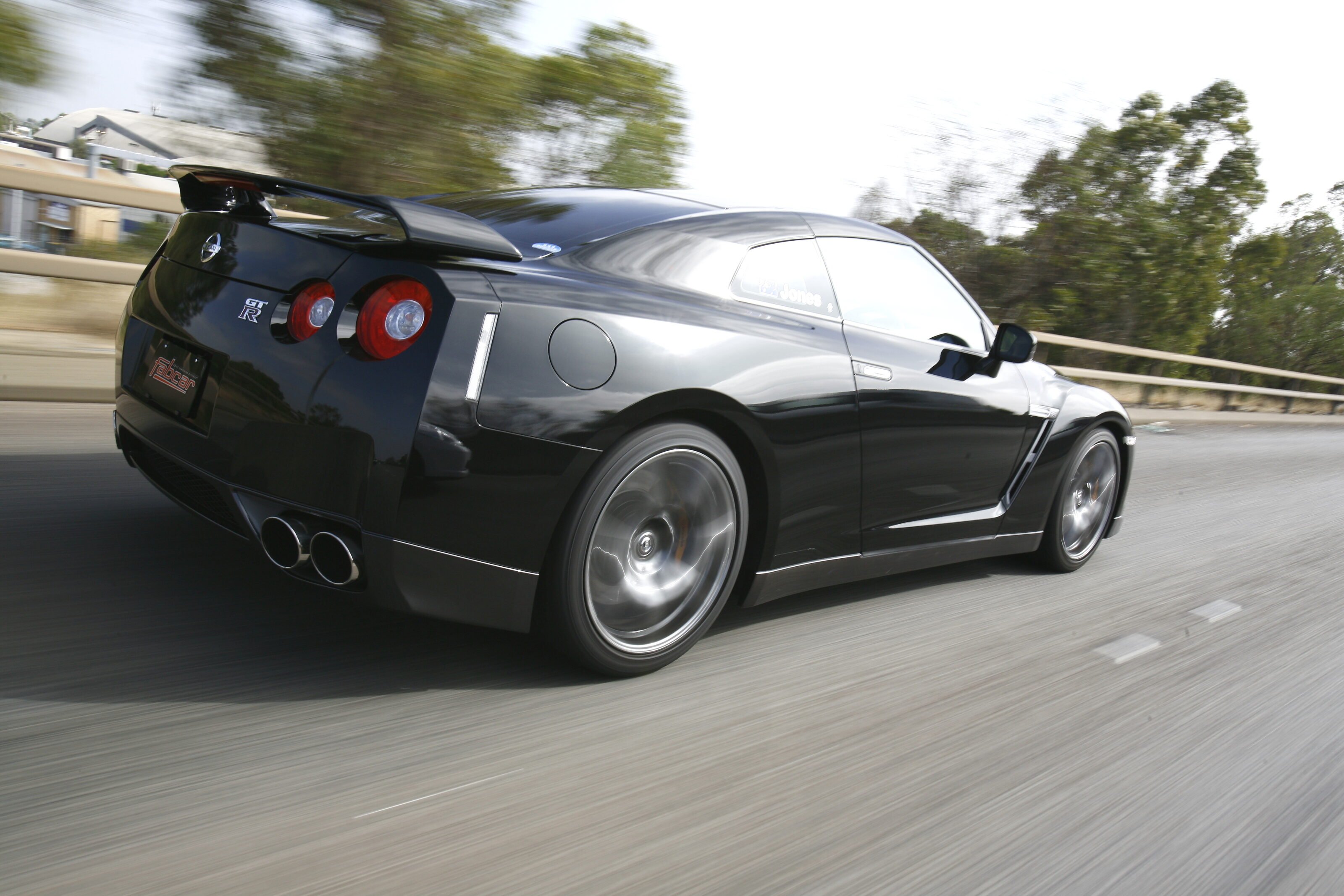
Lucky last is the R35. The whole afternoon was a build-up of anticipation, yet we don’t have to wait for the stopwatch for the answer to The Big Question. Run one, the black beast (sans launch control) blasts off, zips right past the roundabout, jinks through the 90-degree left-hander and just simply unleashes. In this exact instant, the spectators on the grass hill let out a collective gasp that starts with “F” and ends with “aaaark!” Soon it screams to a furious halt in the final braking area, I’m not even game to ask the time, my heart sinking for the old girls. And their reputations.
“What’d it do?” The walkie-talkie crackles and pauses. “Erm … 46.18sec.”
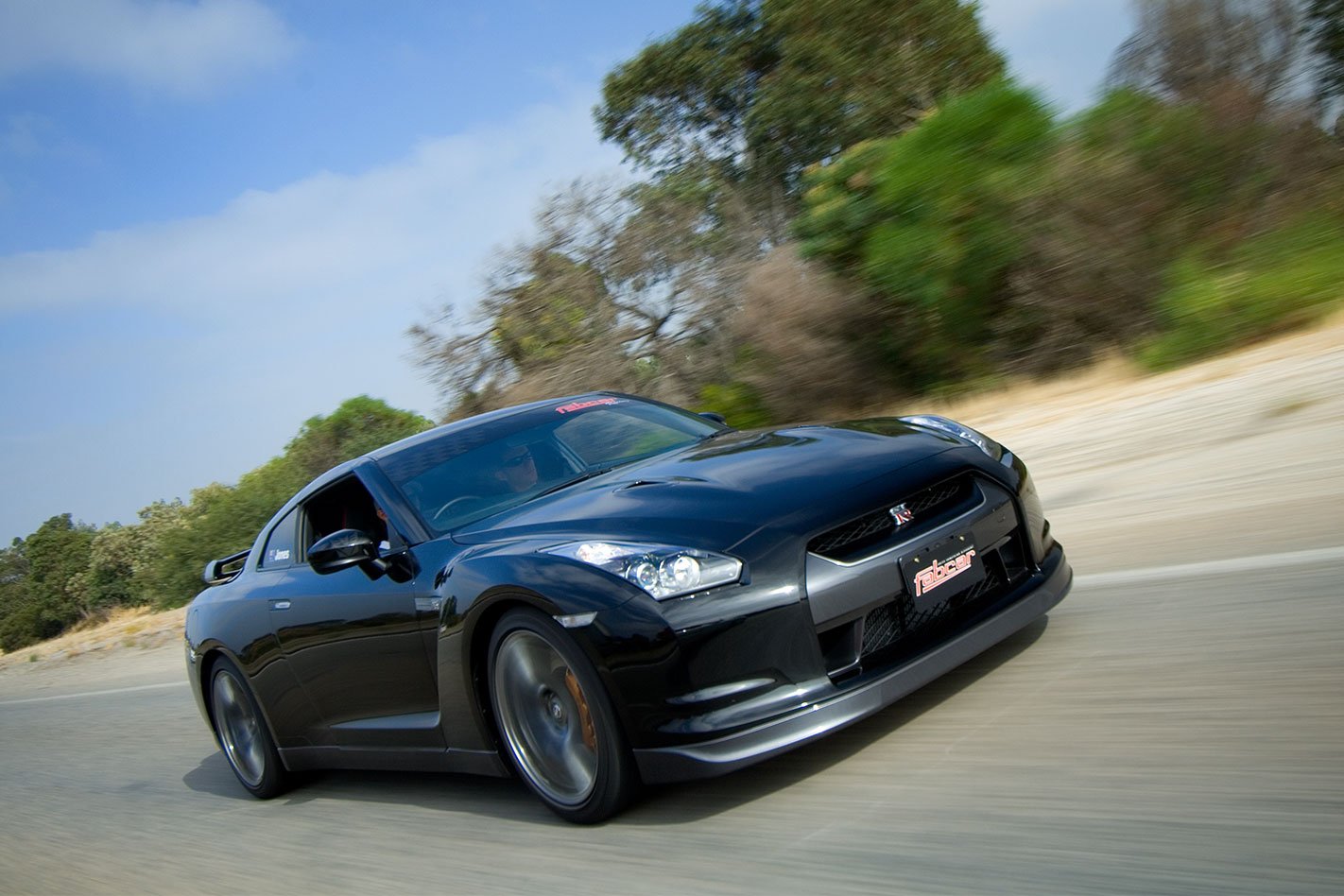
Bloody heck! That’s 3.6 quicker than the R34, five brisker than R33, and over six seconds faster than the original Godzilla. And it’s a very short track.
The biggest and heaviest car here (by 210kg!), the tight course should’ve handicapped the R35. And yet it devours the confines effortlessly.
It feels fuss-free, too: the best (if heaviest) steering, fantastic seats, clear instrumentation and the feeling that you’re in something truly special. Sure, the tech factor’s gone off the scale. But while you can ignore the gizmo fetishes, you can’t ignore the tangible advantages from switchable traction control, suspension and transmission smarts.
Set to ‘On’, ‘R’ and ‘R’ respectively, turn-in is razor sharp, with little sign of any push until things start getting way hot or ambitious. And even with blinding torque available mid-corner, the new four-wheel-drive system just channels it to earth without bother and with barely any attitude change to the chassis. Corner-exit grip and power-down is astonishing. For the first time today there’s a beast that simply has more on tap – power, handling and braking – than you really need, everywhere.
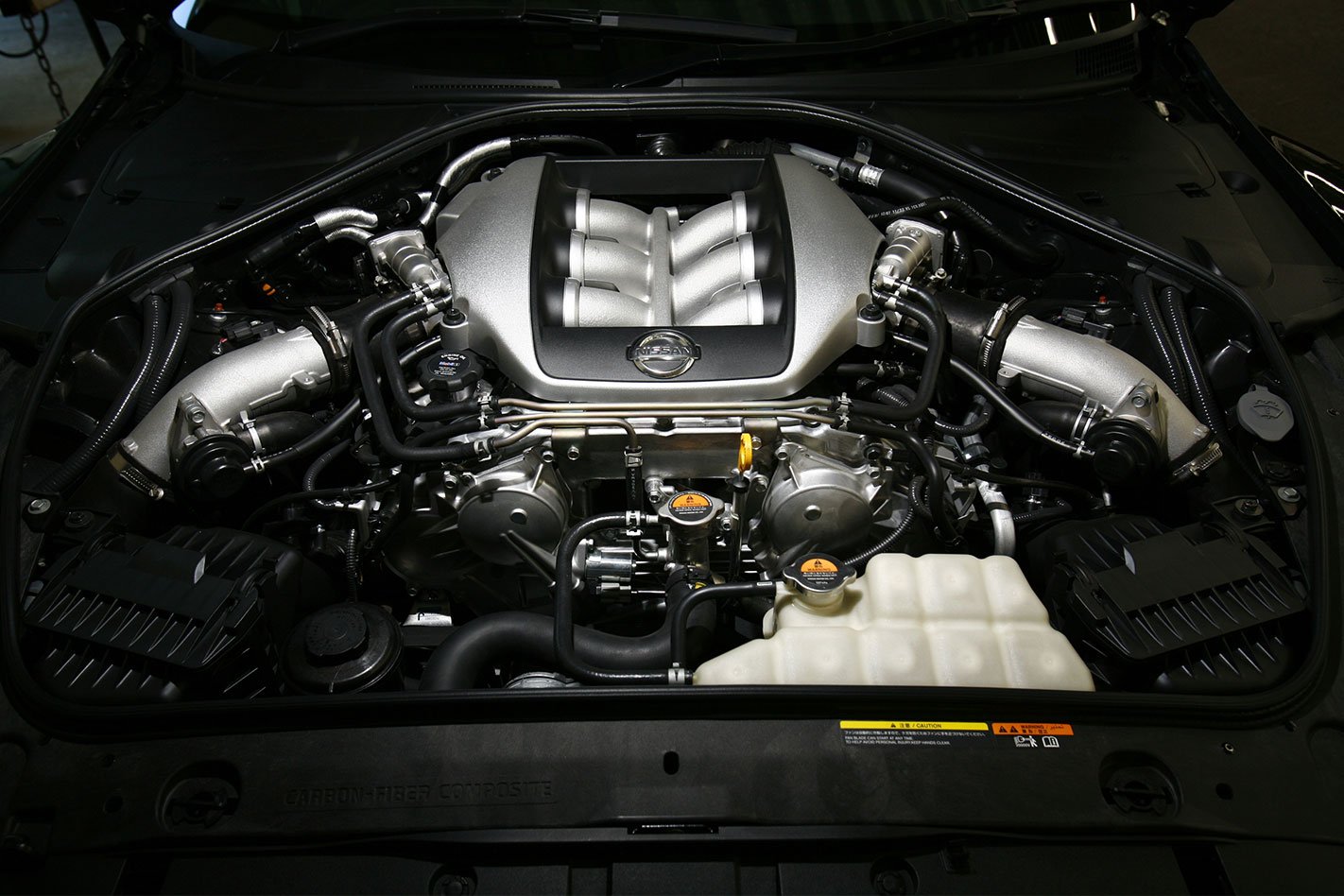
The power is not only heady and dizzying, but with the gearbox (in manual Race mode) that seamlessly makes use of every Newton. Yet, as this course is bereft of exploitable straight bits (see map) all the grunt gains are being tapped in the corners and under brakes. Even after the R34 you need to reprogram your brain as to just how deep and hard you can get on its anchors.
It sits so much flatter and firmer than the others, and body control is so much tighter, but it’s the R35’s willingness to change direction that defies physics. The car is a paradox: despite its size and weight it’s easily the most agile, most responsive, the grippiest, best-behaved and by far the most controllable and rewarding. At a pace where even the R34 is squirming around on its limits, the R35 just grips and goes at what feels like seven-tenths.
Gripes against its kindred rivals are pretty few and far between. It’s less playful at sane speeds – particularly against the R34 – because, well, it’s so freaking fast and composed. It also gets whiffy and tinks away after a hard punt. Hardly condemning criticism, eh? And, yes, it’s more expensive (duh) and hard to get hold of (double duh). We expected greatness, but we’re a bit stunned by the caning it gave the others on a course where it shouldn’t have.
The Fab Four
A massive thanks goes out to Steve Jones, Frank Bempasciuto Jr. and Snr., and all of the lads from Perth specialist importer, Fabcar, who generously supplied six GT-Rs for the shootout and graciously let us have our way with them.
The Bempasciutos have been in the import business for 35 years now, starting with Italian exotics in 1971, later moving into the 90s Japanese high-performance gear in which they now specialises.
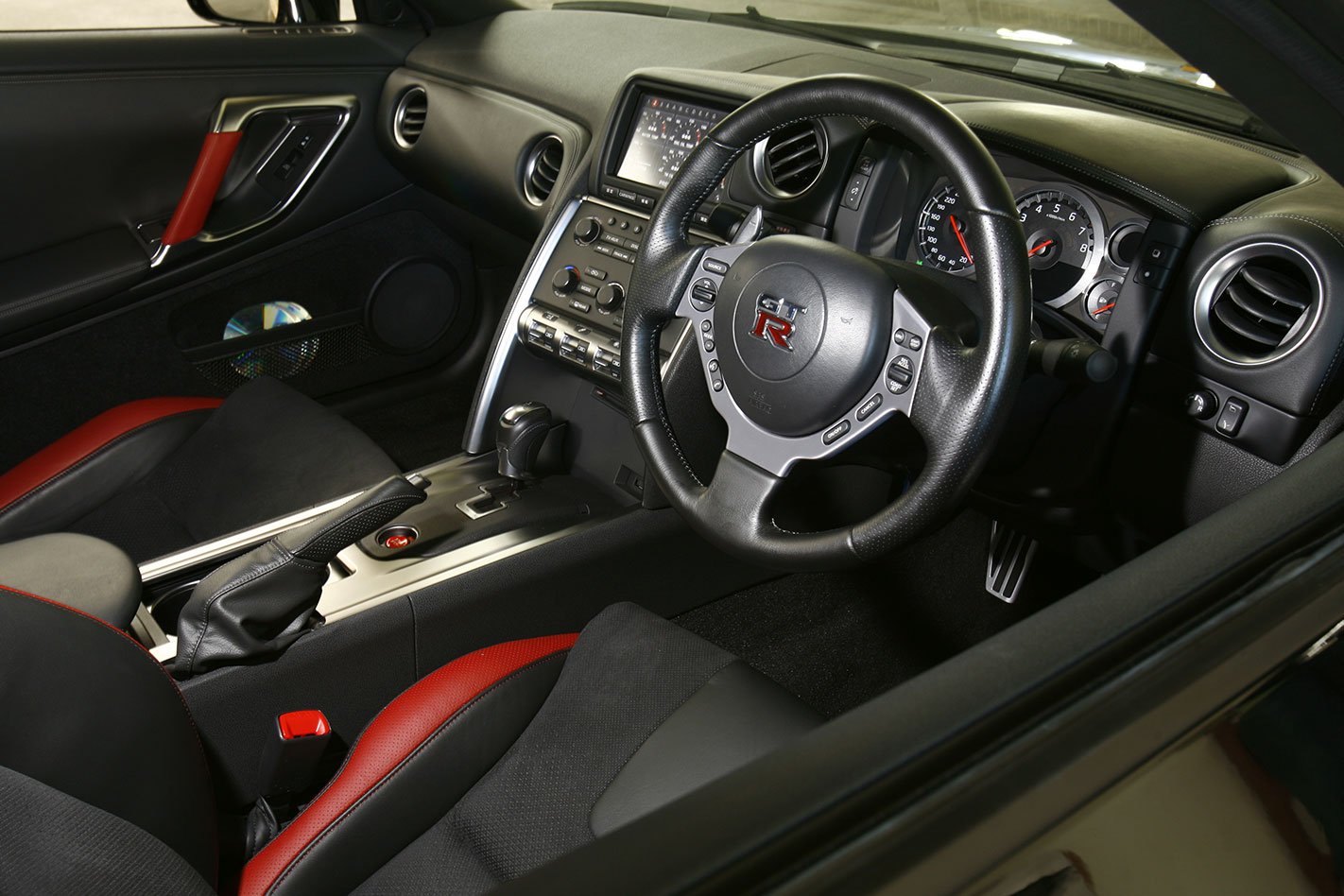
The company has imported and sold three R35s to date, all Black Editions, and all intended for race/rally use. Price is on application, mainly due to limited availability of cars out of Japan, but don’t expect any change from about $150,000 for a race-only R35.
Owned by Jones, our black test car will become Fabcar Racing 2008’s entrant in this years Targa West, and the crew is a long-time supporter of its local motorsport scene.
Conclusion
Regardless of age, condition and the degree of (light) modification, the older Skyline GT-Rs didn’t present any surprises in their pecking order, although we did expect the R32 to push the R33 a bit harder around the tight course. Their RB26DETT engines’ performance didn’t progress in leaps and bounds, and all felt a bit elastic in delivery and in need of more tractability. The new V6, though, was a standout, light years ahead for power, torque and response, which combined pays dividends on both track and road.
In truth, the degree to which R35 was quicker and more capable than its predecessors doesn’t come as a big surprise. We’re talking two decades of evolution here.
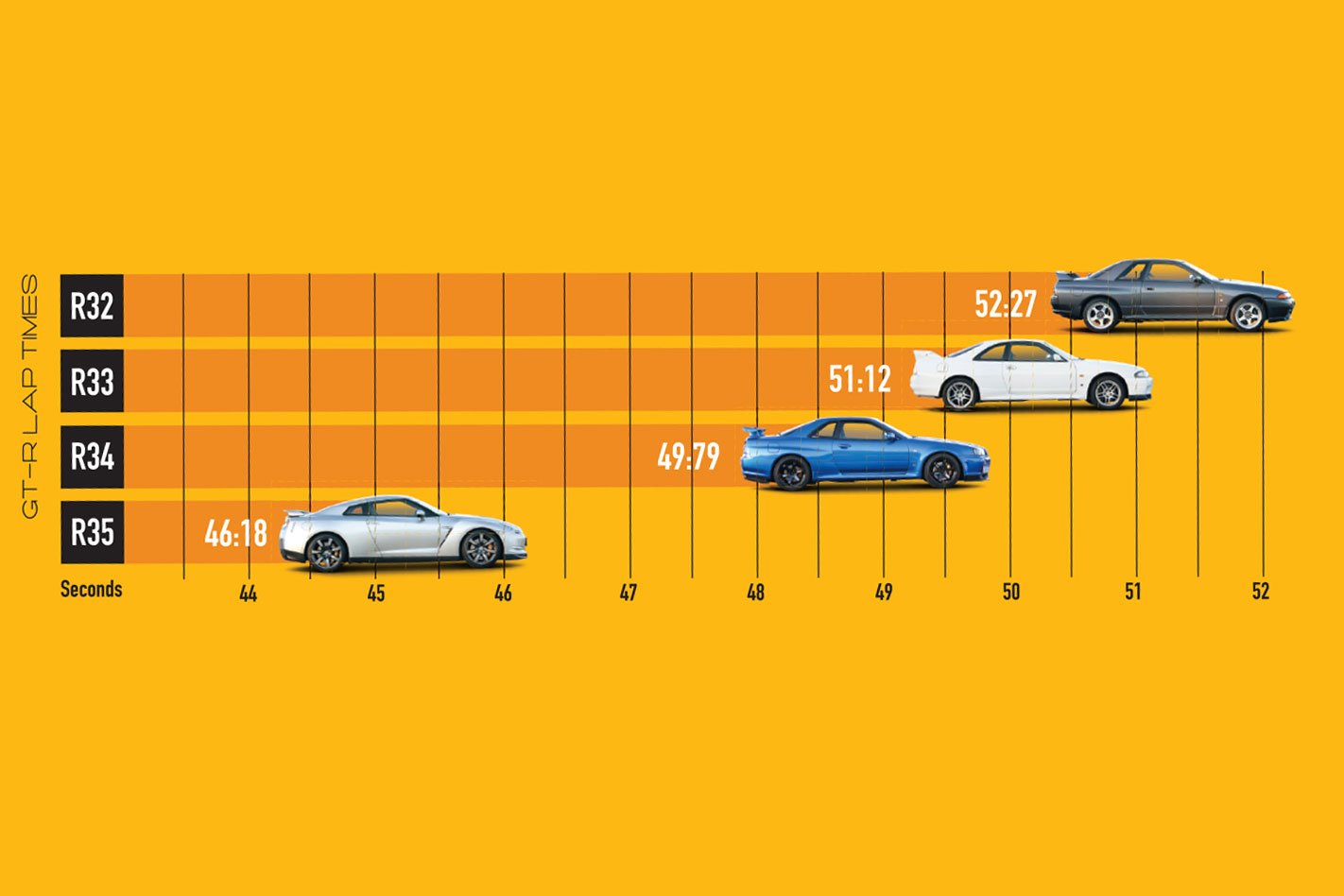
That doesn’t change the fact that if you were to extrapolate R35’s eight- to ten-percent quicker pace around a larger circuit – say, Eastern Creek – it’d pummel the R34 to the tune of around 10 seconds per lap! And about 18 seconds quicker than the R32 (if you lifted R35’s speed limiter).
Yes, the R34 proved that a few modification goes a long way with the Skylines. And with a truckload of cash you could build a military-spec Skyline to match R35’s immense pace and agility. But match New Boy’s estimated $150K ask and a wieldy, hand grenade-spec racer wouldn’t be nearly as useable, flexible or liveable in the real world as the stock R35 GT-R.
There is kinship between generations. The R32, R33 and R34 are all very Japanese; the R35 even more so. All deserve to be celebrated for their overt technology and imposing lines. And would we happily spend our own money on any of them? Sure.
But there’s an alternative and rather sobering reality. Nissan claims a direct lineage from old to new. And, with all respect to the old stuff and their consummate legend, the R35 is technically and dynamically unrelated. Similarities end with the tail lights and badge.
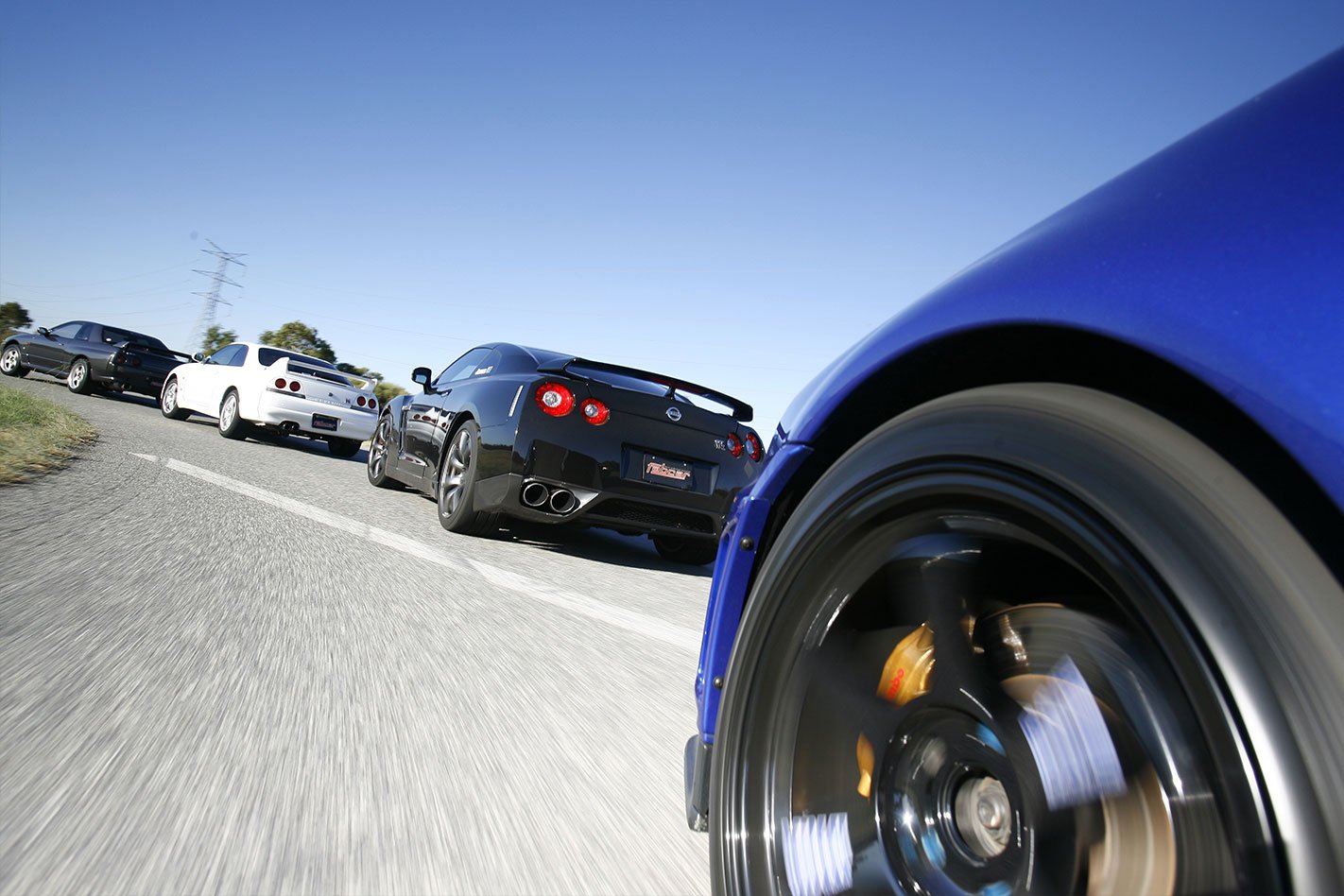
The R35 is not just a big step forward, it’s a pole vault. It doesn’t feel a generation improved, it feels more like two or three. The new car not only lives up to the legend, it surpasses it to a point where Nissan could’ve called it something else.
Nostalgia buffs who mourn the loss of the Skyline name and the straight-six might reject the R35 as somehow being unfaithful. But the newie ain’t looking back, in sympathy.
Nissan Skyline GT-R specs
| u00a0 | 1994 R32 GT-R V-Spec II | 1997 R33 GT-R V-Spec | 2000 R34 GT-R V-Spec | 2008 R35 GT-R black edition |
|---|---|---|---|---|
| BODY | 2-door, 4-seat coupe | 2-door, 4-seat coupe | 2-door, 4-seat coupe | 2-door, 4-seat coupe |
| DRIVE | all-wheel; 5-speed manual | all-wheel; 5-speed manual | all-wheel; 6-speed manual | all-wheel; 6-speed dual-clutch |
| ENGINE | 2568cc inline-6cyl, DOHC, 24v, twin-turbocharged; alloy head/iron block | 2568cc inline-6cyl, DOHC, 24v, twin-turbocharged; alloy head/iron block | 2568cc inline-6cyl, DOHC, 24v, twin-turbocharged; alloy head/iron block | 3799cc 60-degree V6, DOHC, 24v, twin turbocharged; alloy head/alloy block |
| BORE/STROKE | 86.0 x 73.8mm | 86.0 x 73.8mm | 86.0 x 73.8mm | 95.5 x 88.4mm |
| COMPRESSION | 8.5:1 | 8.5:1 | 8.5:1 | 9.0:1 |
| POWER | 206kW @ 6800rpm | 206kW @ 6800rpm | 206kW @ 6800rpm | 353kW @ 6400rpm |
| TORQUE | 353Nm @ 4400rpm | 367Nm @ 4000rpm | 400Nm @ 4400rpm | 588Nm @ 3200-5200rpm |
| FUEL/TANK | 98 octane/72 litres | 98 octane/65 litres | 98 octane/65 litres | 98 octane/71 litres |
| KERB WEIGHT | 1430kg | 1530kg | 1540kg | 1750kg |
| POWER-TO-WEIGHT | 144kW/tonne | 135kW/tonne | 134kW/tonne | 202kW/tonne |
| SUSPENSION | struts, A-arms, anti-roll bar (f); multi-links, coil springs, anti-roll bar (r) | struts, A-arms, anti-roll bar (f); multi-links, coil springs, anti-roll bar (r) | coil-over struts, A-arms, anti-roll bar (f); multi-links, coil springs, anti-roll bar (r) | double A-arms, coil springs, anti-roll bar (f); multi-links, coil springs, anti-roll bar (r) |
| STEERING | power rack and pinion (f), hydraulic (r) | power rack and pinion (f), hydraulic (r) | power rack and pinion (f), hydraulic (r) | power rack and pinion (f) |
| BRAKES | 324mm ventilated discs, four-piston calipers (f); 300mm ventilated discs, two-piston calipers (r), ABS | 324mm ventilated discs, four-piston calipers (f); 300mm ventilated discs, two-piston calipers (r), ABS | 324mm ventilated discs, four-piston calipers (f); 300mm ventilated discs, two-piston calipers (r), ABS | 380mm ventilated discs, six-piston calipers (f); 380mm ventilated discs, four-piston calipers (r), ABS |
| TYRES | Bridgestone RE01 | Roadstone N3000 | Toyo Proxes T1R | Bridgestone Potenza RE070R |
| WHEELS | 255/40ZR17 (f&r) | 245/45R17 (f&r) | 265/35ZR18 (f&r) | 255/40ZRF20 (f), 285/35ZRF20 (r) |
| PRICE | $80,000+ | $100,000+u00a0 | $200,000+ | $150,000 (est, as tested) |
| LIKE | Visionary tech, tons of cred, cheap as chips, massive tuning potential | Great balance, roomy, affordable, huge tuning potential | Sharp chassis, excellent steering and brakes, responsive AWD | Weapons-grade all-round performance and dynamics |
| DISLIKE | Power, handling and braking less then legendary, feels dated | Bland styling, poor grip, soft chassis, needs revs, lacks torque | Import-only buying prospect. Needs a wind-up, firm ride | No Oz-spec yet, no rego, huge bucks for a weekend racer |
Snapshot
- Marque hits 25 per cent share, first time since 2008 (COVID-hit 2020 excluded)
- Shifted almost 20,000 units in August
- Previous best August was 23.7 per cent in 2007
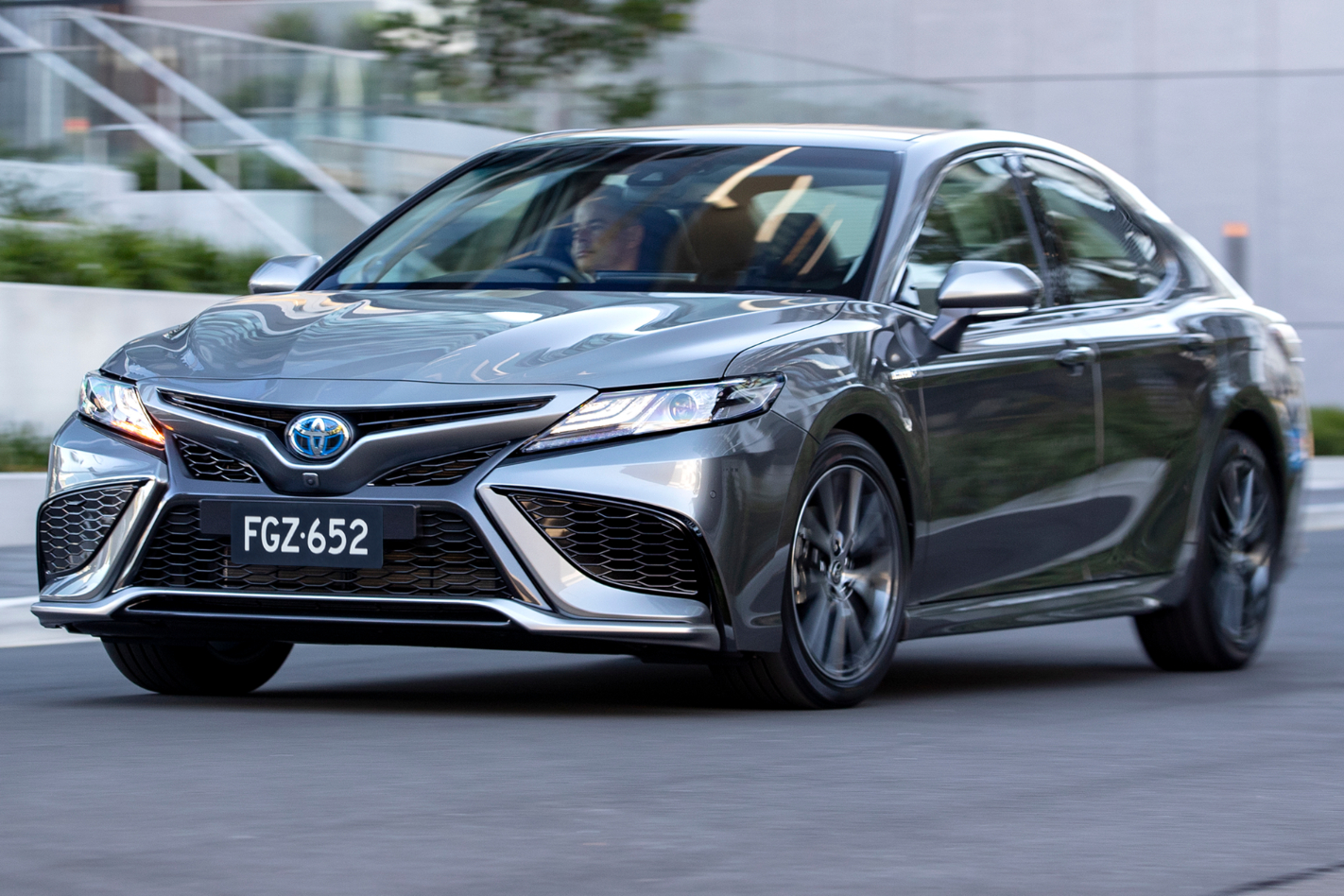
Nearly one in four new-car buyers purchased a Toyota last month in Australia, as the Japanese brand achieved an August record for market share.
Toyota sales of nearly 20,000 units accounted for 24.6 per cent of new-vehicle registrations, according to the latest official industry figures.
This is Toyota’s biggest chunk in a relatively normal month since the 24.8 per cent it achieved in December 2008.
While the company recorded a 26.5 per cent share in April 2020, industry sales were devastated that month by the initial outbreak of the COVID-19 pandemic.
Toyota’s 24.6 per cent portion for August 2021 was a significant increase over its 20.4 per cent for the same month last year.
It surpasses the marque’s previous best August of 23.7 per cent in 2007, as well as the 21.9 per cent achieved in both February and April this year.
Mazda sold 7645 vehicles last month in comparison to Toyota’s 19,959 sales. Toyota outsold Kia (5065 units), Ford (5058) and Hyundai (5016) almost four-fold.
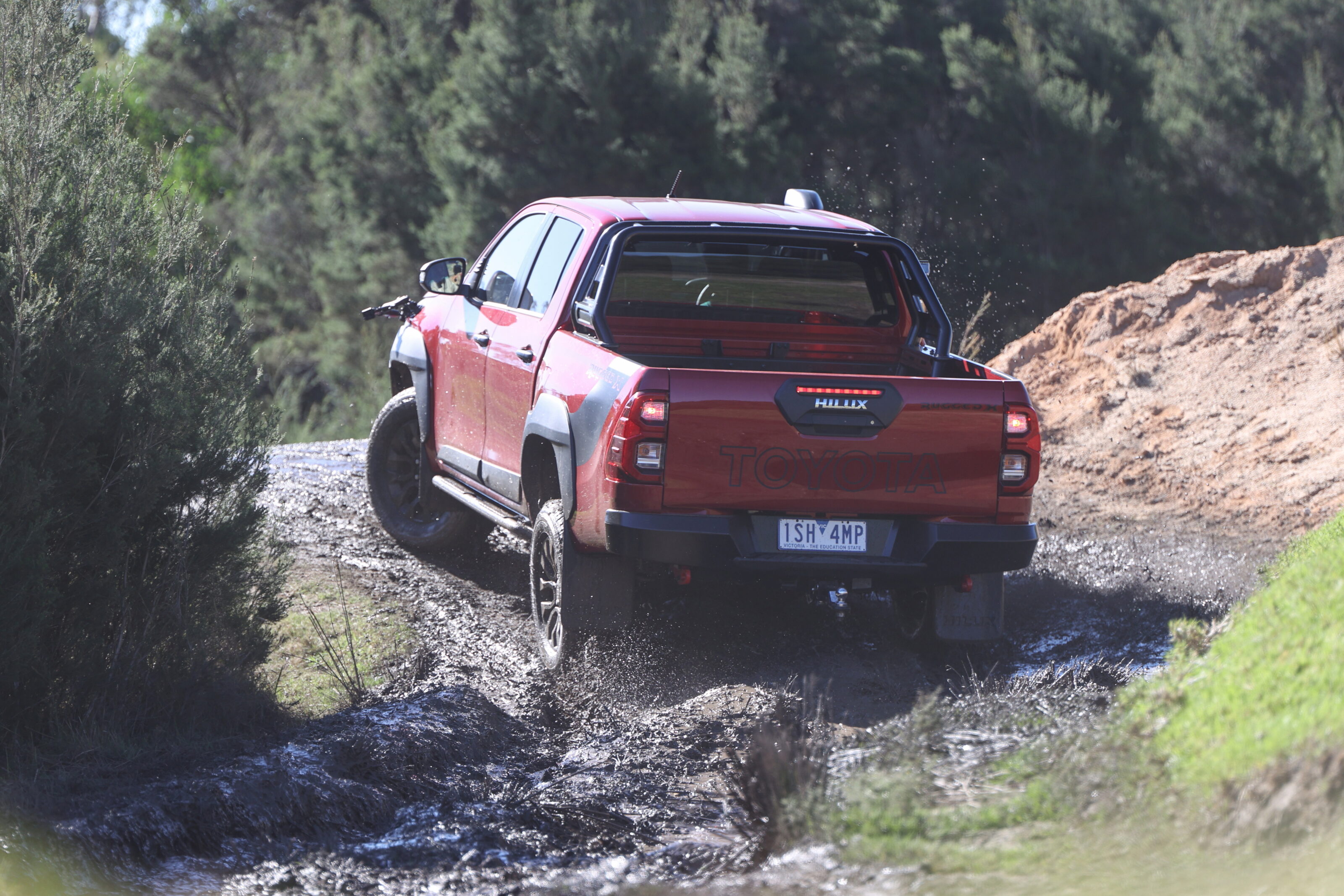
Four Toyota models occupied the top five places in the best-selling vehicles list for August. The HiLux ute was the most popular vehicle overall, and it was joined by the Corolla small car, RAV4 mid-sized SUV and Prado 4WD.
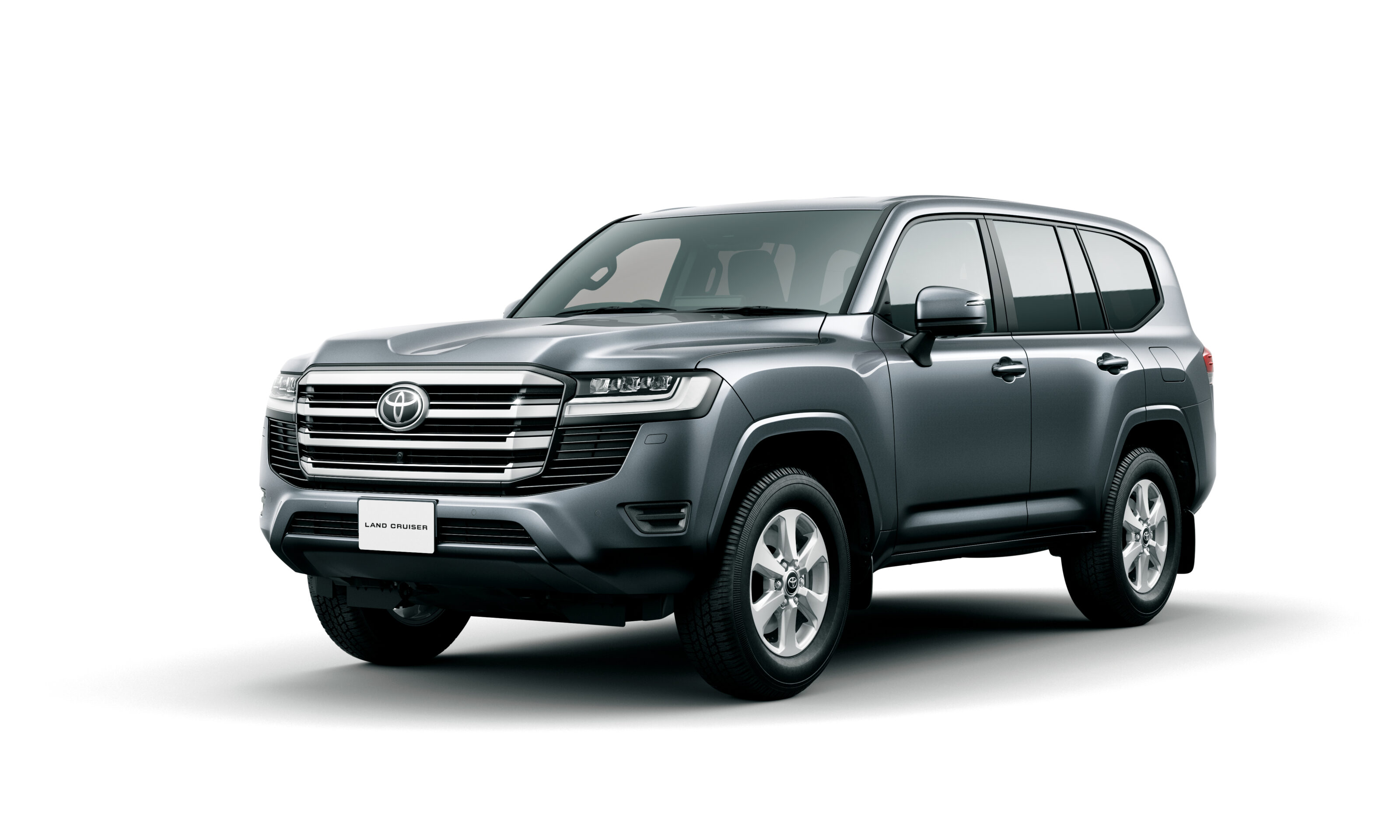
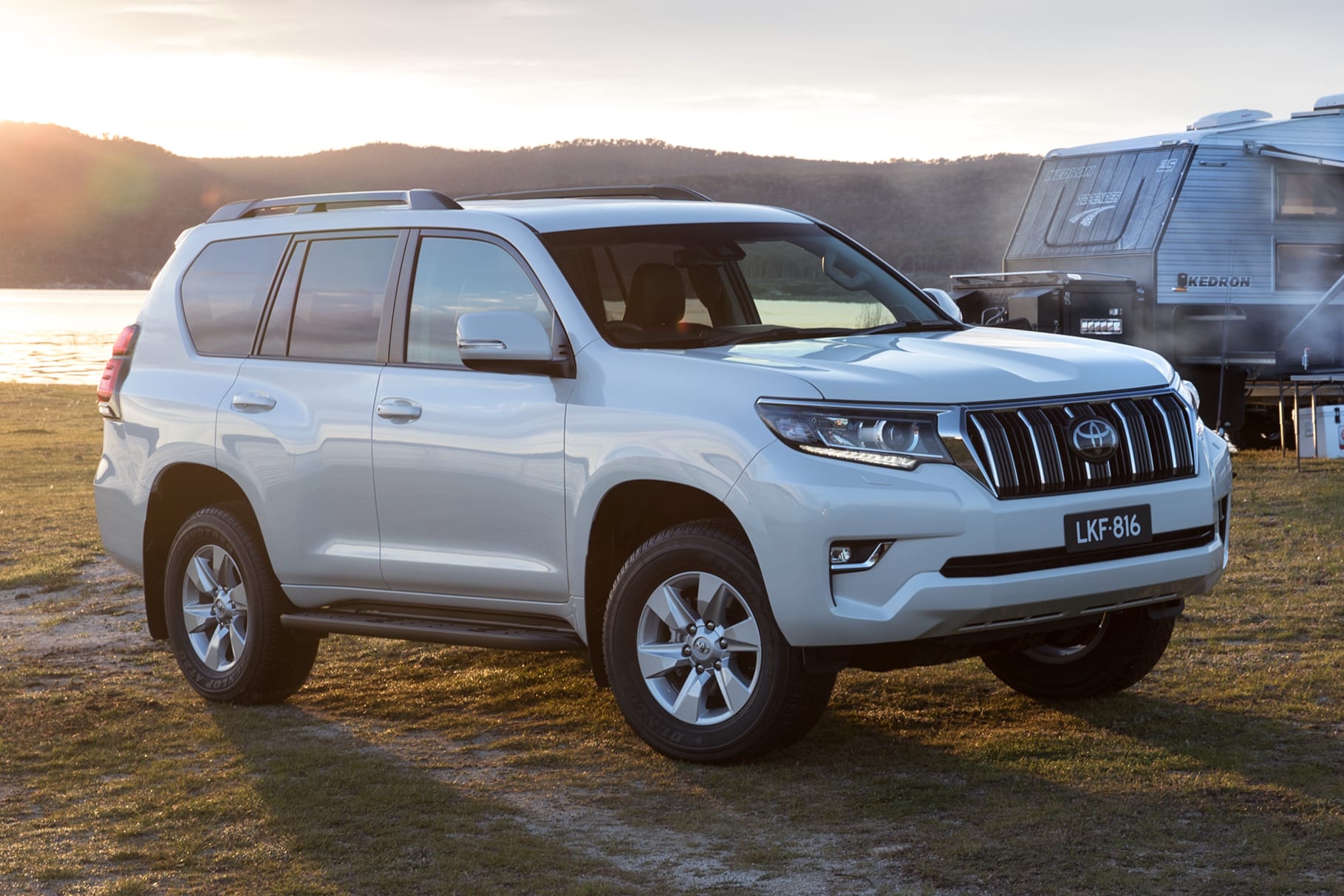
The Prado has been one of Toyota’s surprise performers in 2021, alongside the LandCruiser wagon, as Australians turn to family off-roaders in lieu of the ability to travel overseas.
Toyota Australia can’t get enough RAV4s to satisfy demand, and the model is currently the country’s most popular SUV.
The carmaker’s year-to-date share has increased to 21.4 per cent, which is down slightly on the 21.8 per cent held at the same time last year. That figure rose to 22.3 per cent by the end of the year.
After Toyota became the first brand to sell more than 200,000 vehicles annually here in 2004, the company targeted 25 per cent.
It came closest in 2008 with 23.6 per cent, before its market share slipped below 20 per cent from 2011.
Current Toyota Australia boss Sean Hanley told Wheels at the mid-year launch of the Kluger SUV that the company was no longer focused on securing a quarter and was instead comfortable being above the 20 per cent mark.
“We had an ambition to get over 20 per cent by 2020,” says Hanley. “It was an ambitious target a few years ago, though we were actually above 20 per cent market share pre-COVID.
“We’re still going through COVID, of course, but we’ve seen [it] go up exponentially. But there’s lots of influences around that [number], so we have to be careful benchmarking last year’s [portion] against this year’s.
“For example, because of [production] schedule changes [owing to the pandemic], the market’s quite difficult to forecast.
“We think we can stay above 20 per cent but also do it while providing a great customer experience. We’re incredibly proud of our results, but we don’t take them for granted.”
TOYOTA AUSTRALIA MARKET SHARE: 1999 to 2021*
2021 (*YTD August) 21.4%
2020 22.3%
2019 19.4%
2018 18.8%
2017 18.2%
2016 17.8%
2015 17.8%
2014 18.3%
2013 18.9%
2012 19.6%
2011 18.0%
2010 20.7%
2009 21.4%
2008 23.6% (Highest market share to date)
2007 22.5%
2006 22.2%
2005 20.5%
2004 21.1%
2003 20.5%
2002 19.2%
2001 18.3%
2000 20.2%
1999 19.5%
The Range Rover Sport was a bit of a watershed moment for the venerable British brand, breaking the single model business plan and paving the way for more lifestyle-focused Rangies like the Evoque and Velar. And a 2005 Greenpeace protest.
This is the second-generation RR Sport and it must surely be nearing its swansong, entering its eighth year on sale having been around since 2013.
Its advancing age hasn’t stopped the company from slapping in a brand new Ingenium turbodiesel, replacing the old Ford-derived diesels. While the car itself is starting to look and feel old – despite some efforts to keep it on the pace – sometimes a fresh engine can afford a new lease of life.
Pricing and Features
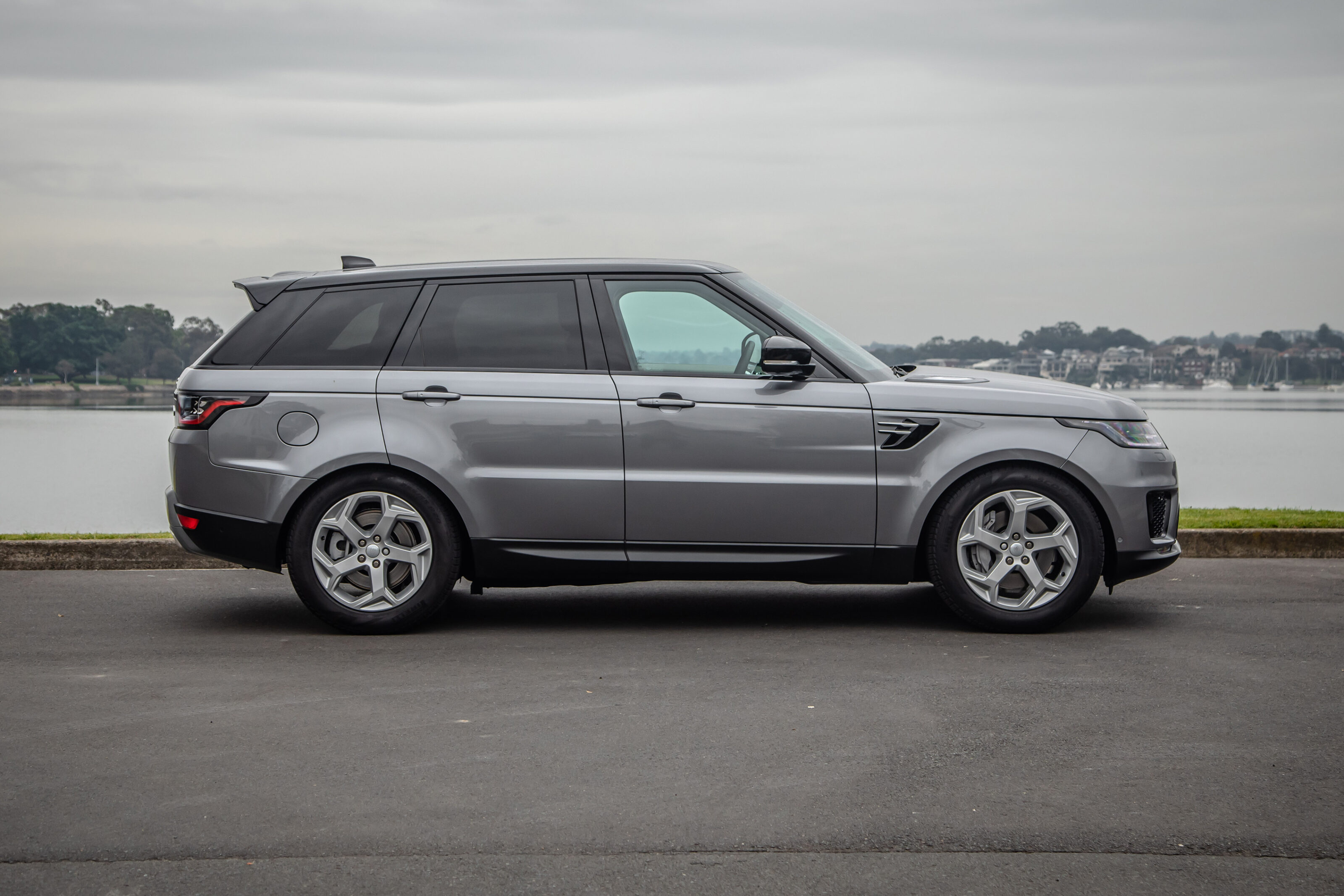
As with most Range Rovers, the Sport comes in a variety of drivetrains and specification levels, so prices vary pretty wildly. This mid-spec SE starts at $115,506 before on-road costs when paired with the new Ingenium straight-six in D250 spec.
For that you get 19-inch alloys, an eight-speaker stereo, power everything, leather interior, dual-zone climate control, cameras in four directions, keyless entry and start, active cruise control, sat-nav, active LED headlights, heated seats front and rear, auto wipers and a full-size alloy spare wheel slung under the car.
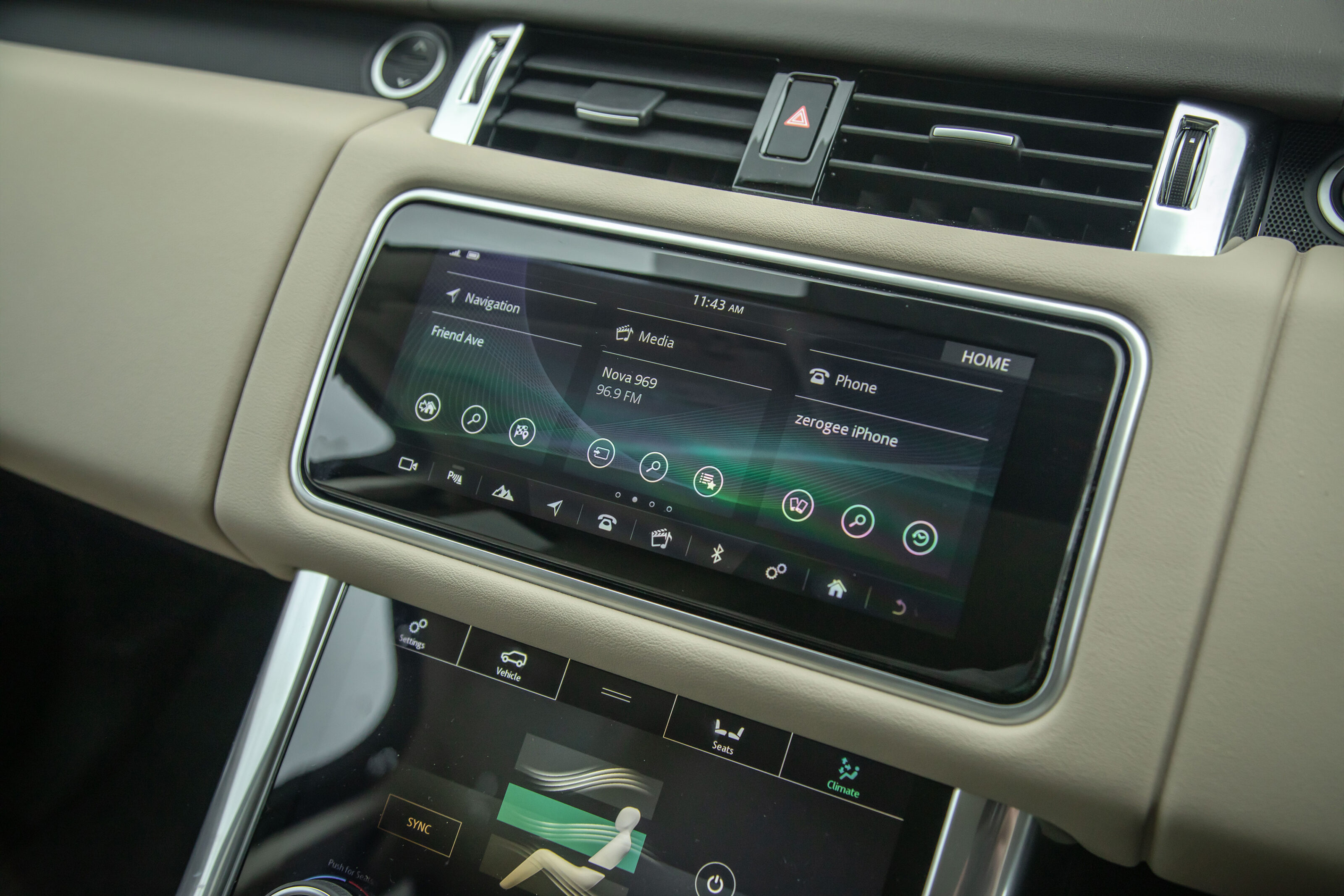
The ageing InControl Pro software runs the 10-inch touchscreen and in this car, you get the Touch Pro duo screen setup that provides another display for various functions, including climate control. Once you get your head around that, it’s quite good and is one of the few “clear the cabin of buttons” setups that really works because there are still physical dials for setting temperatures, which is a nice balance.
It’s not a Range Rover without a few options. This car had 20-inch alloys that looked suspiciously like a Ford Focus ST’s ($2520), Eiger Grey metallic paint ($2200, oof!), a black-painted roof ($2000!), Park Pack with clear exit monitor, rear cross-traffic alert and 360-degree parking sensors ($1310), privacy glass ($800), electrically adjustable steering column ($860) and a 12-speaker Meridian sound system for $800.
All told you’re up for $126,416 before on-roads, and that’s a restrained approach to scaling the Mount Everest-like options list.
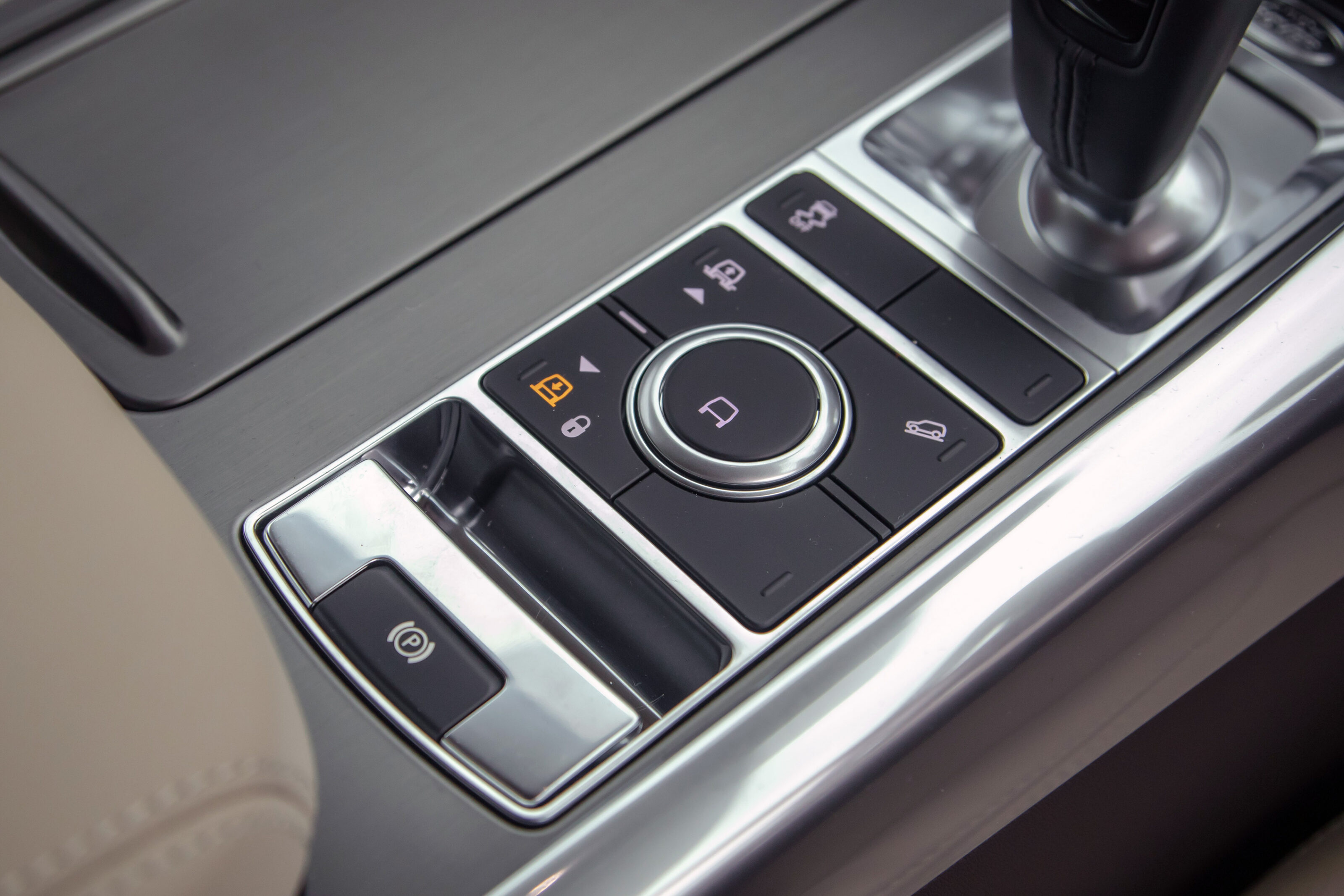
You can add some extra off-road gubbins in the form of the $5530 OffRoad Pack, which throws in a twin-speed transfer case, all-terrain progress control, adaptive dynamics and Terrain Response 2.
It’s not a Range Rover without a few options. All told you’re up for $126,416 before on-roads, and that’s a restrained approach to scaling the Mount Everest-like options list.
Safety equipment includes six airbags, ABS, stability and traction controls, blind-spot monitoring with active assist, front, side and reversing cameras, forward collision warning, front and rear parking sensors, lane departure warning, lane-keep assist, driver fatigue warning and road sign recognition.
The AEB works at low, medium and high speeds, which is nice, but it’s missing rear AEB and cross-traffic alert, which would be most handy on such a big unit. Rear cross-traffic alert, safe exit warning, park assist and 360-degree sensors are part of a $2840 option pack.
Kids and baby seats are looked after with two ISOFIX points and three top-tether anchors.
There is no ANCAP, EuroNCAP or even a US IIHS based safety score.
Comfort and Space
Despite being known as the baby Range Rover for a while, this is a big beast at nearly 4.9 metres. The boot space starts at a massive 780 litres. If you drop all three back seat sections, you have 1686 litres available, which I think you’ll agree is a lot. On top of that you can drag 3500kg with a braked trailer.
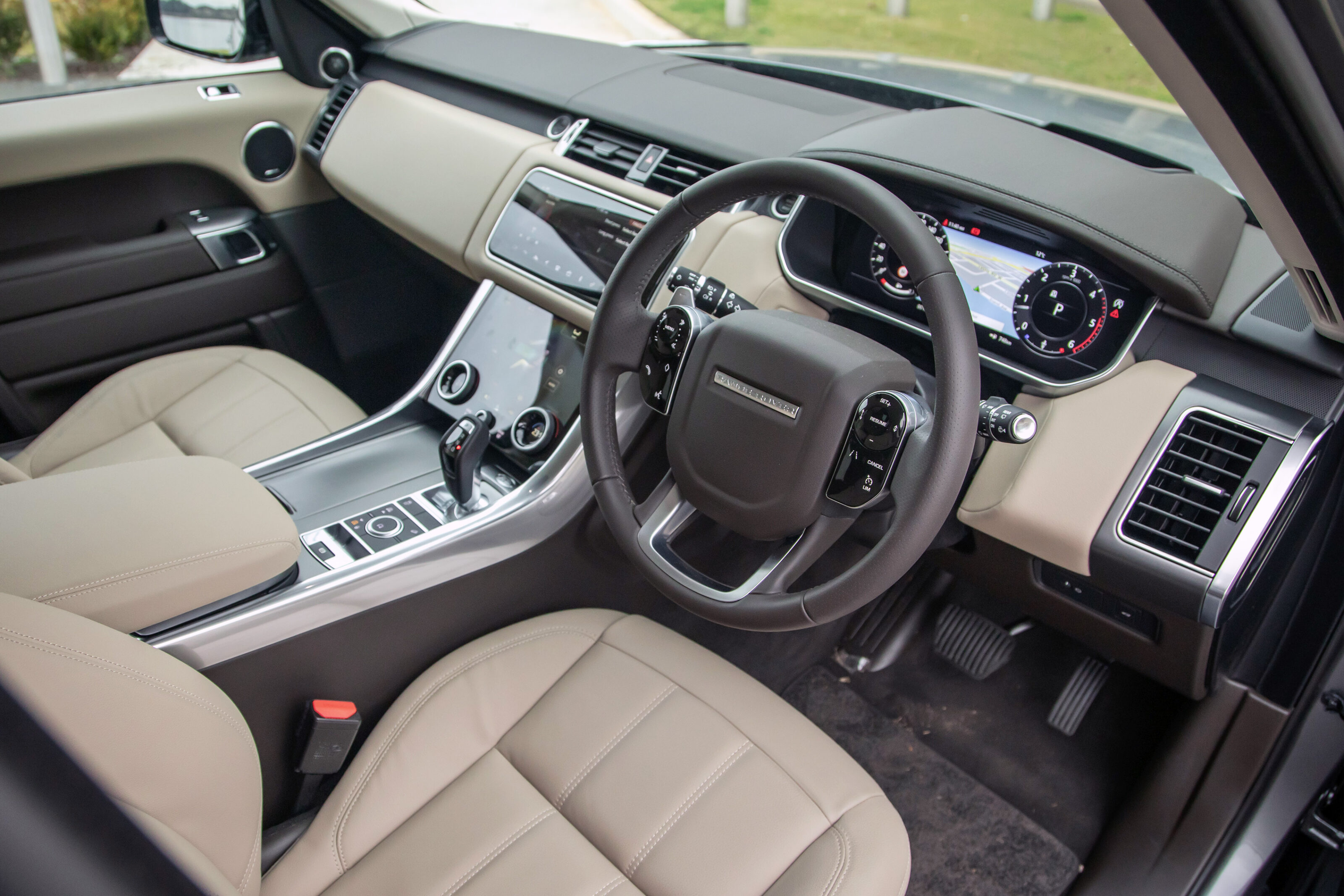
The almost three-metre wheelbase delivers a monster rear seat. You get in through a massive, wide-opening door into a lofty space with tons of leg, knee and shoulder room along with a big armrest featuring two cupholders.
The doors also have deep pockets and bottle holders. You almost need an intercom to talk to the front seat and it’s not even a seven-seater.
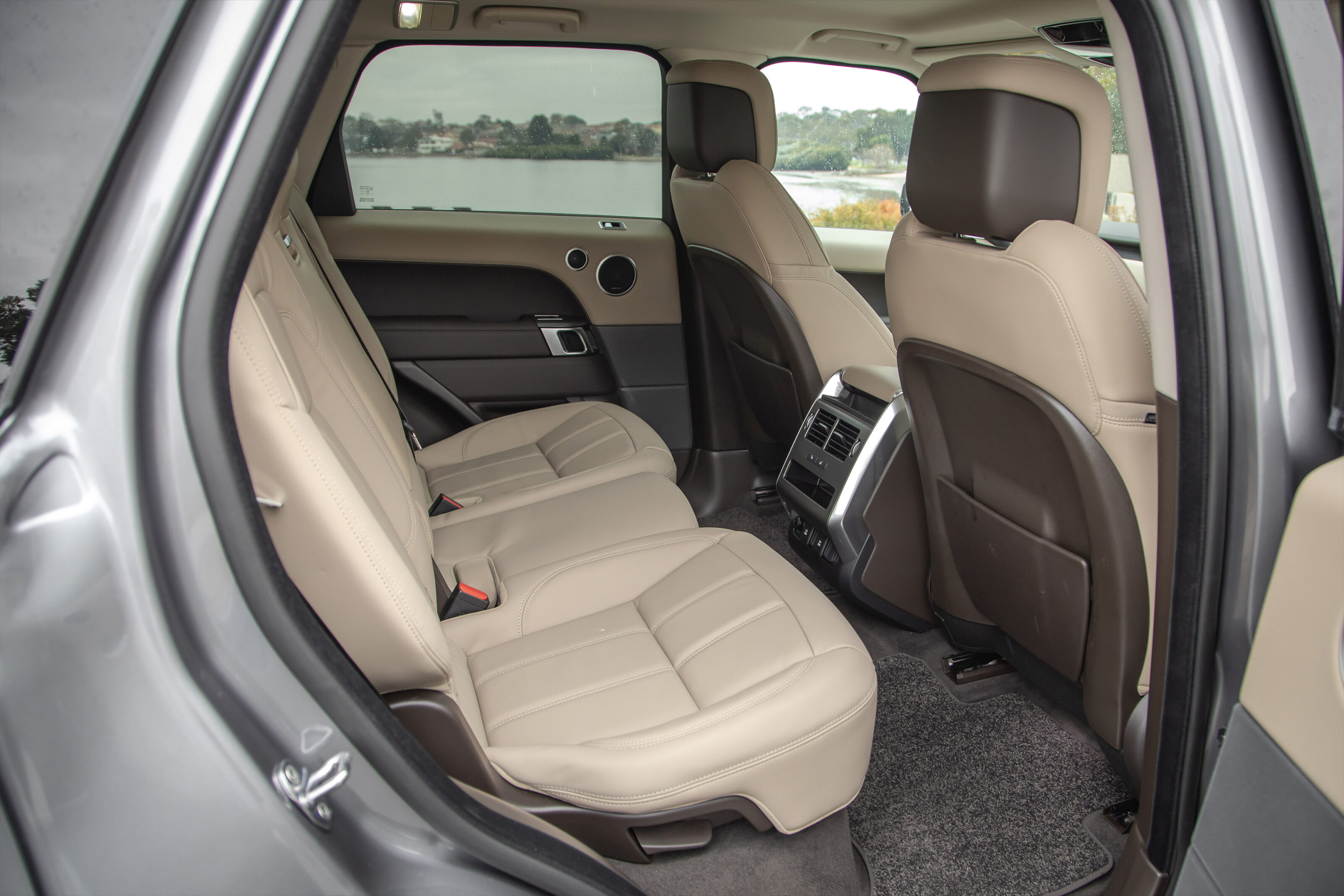
Front seat passengers sit high and have a clear view in all directions because this car has a lot of glass. The seats are classic comfortable armchairs, with a big wide console and plenty of nice places to put elbows and hands.
They’re also just lovely to sit in, have tons of adjustment and are heated and cooled. Few front seats are this comfortable and I commend them to the House.
The air suspension also means the car can lower from its dizzying heights to ease entry, exit and loading.
Few front seats are this comfortable and I commend them to the House.
On the Road
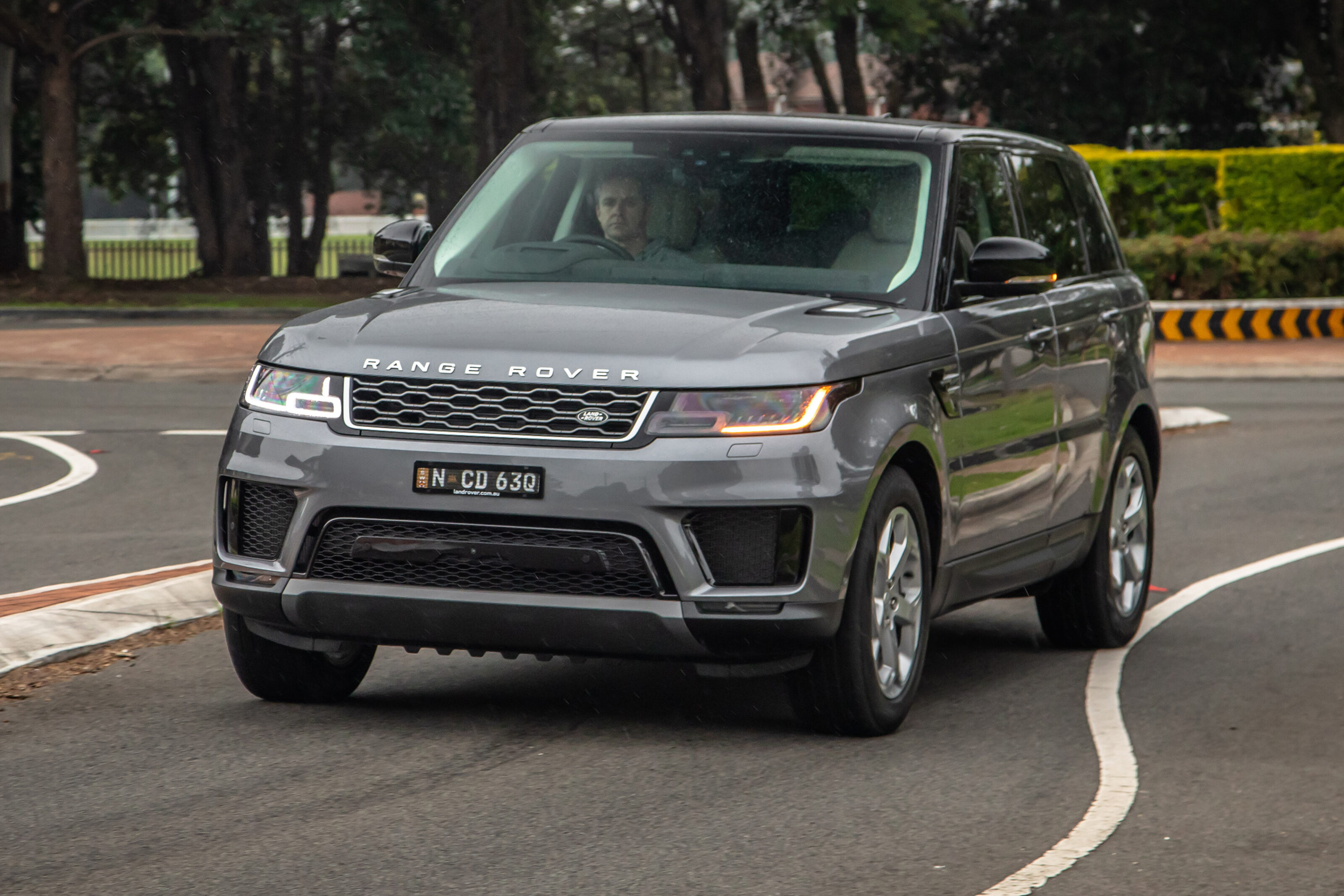
Despite an obvious focus on the road, there’s still plenty of inbuilt off-road capability in the Sport. Folks dismiss these cars as soccer mum cars, but I can tell you right now even an Audi Q5 will tackle a reasonably challenging off-road course, so the bar for soccer mum cars is pretty high these days.
The 3.0-litre Ingenium turbodiesel six develops 183kW at 4000rpm (high for a diesel) and a thumping 600Nm between 1250rpm and 2250rpm.
Being brand-spanking-new, it also has a 48-volt mild hybrid system. Running off a belt-integrated alternator starter, it can shut off the engine as you brake, taking over at 17km/h and using excess energy to charge the 200Wh battery pack. Under power you’ll get up to 140Nm of electric torque, which provides a nice torque fill effect for a few seconds while the turbo spins up.
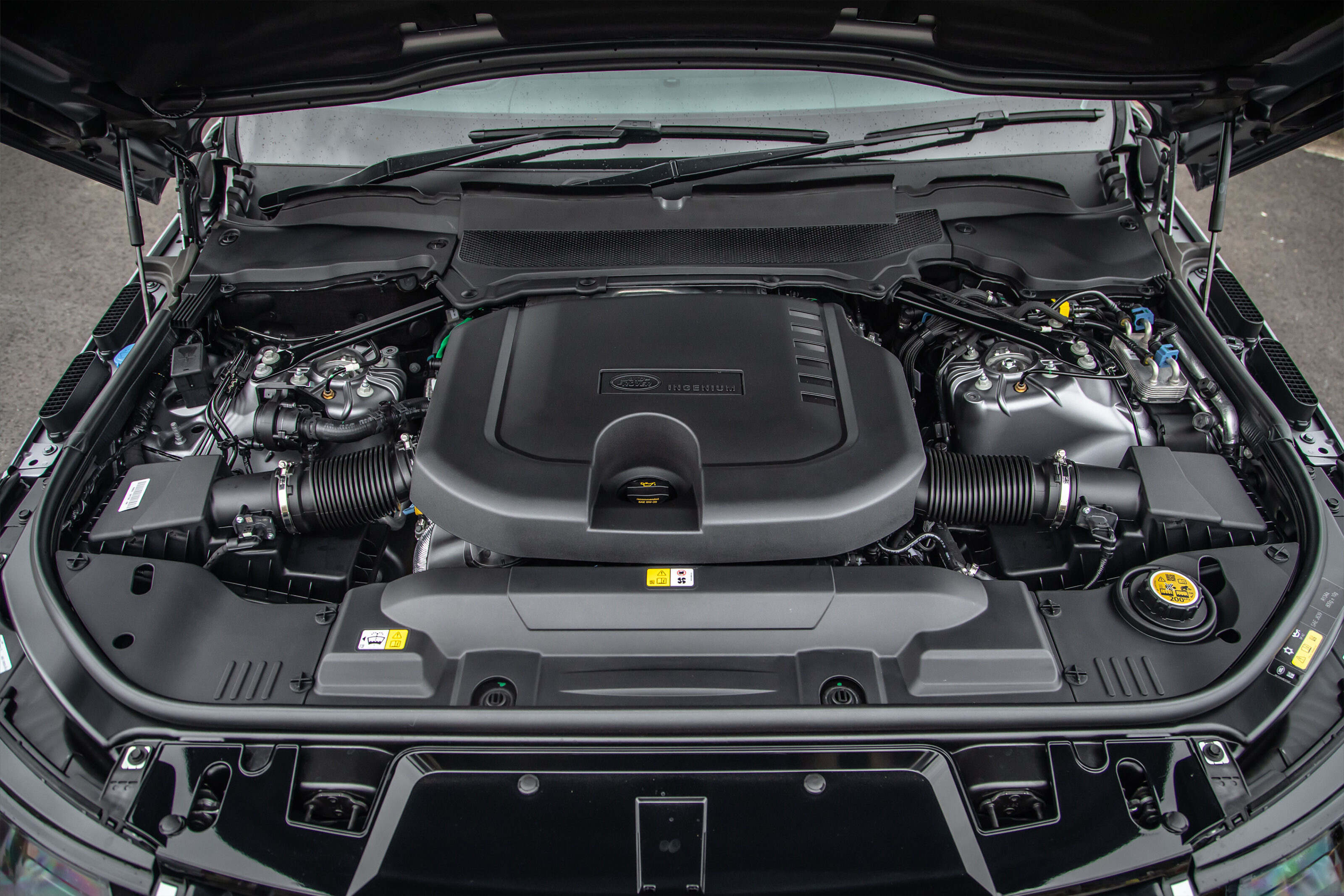
An eight-speed transmission sends it to the all-wheel-drive system, which features a serious set of electronic and mechanical gear for proper off-roading.
This isn’t an off-road review, sadly, though there are few things I like more than taking other people’s cars down muddy tracks and through rivers.
The new engine is the real focus here and it’s a belter. Super smooth and powerful from the off, the mild hybrid setup is seamless and delivers a pretty decent off-the-mark jump, helping shrink the car around you in urban cut and thrust.
You’ll barely hear it, even under full throttle, and with the mild-hybrid torque fill, there’s virtually no lag. Throttle response is impressive for a diesel, too, without the usual off-roader wait between ankle flex and actual shove.
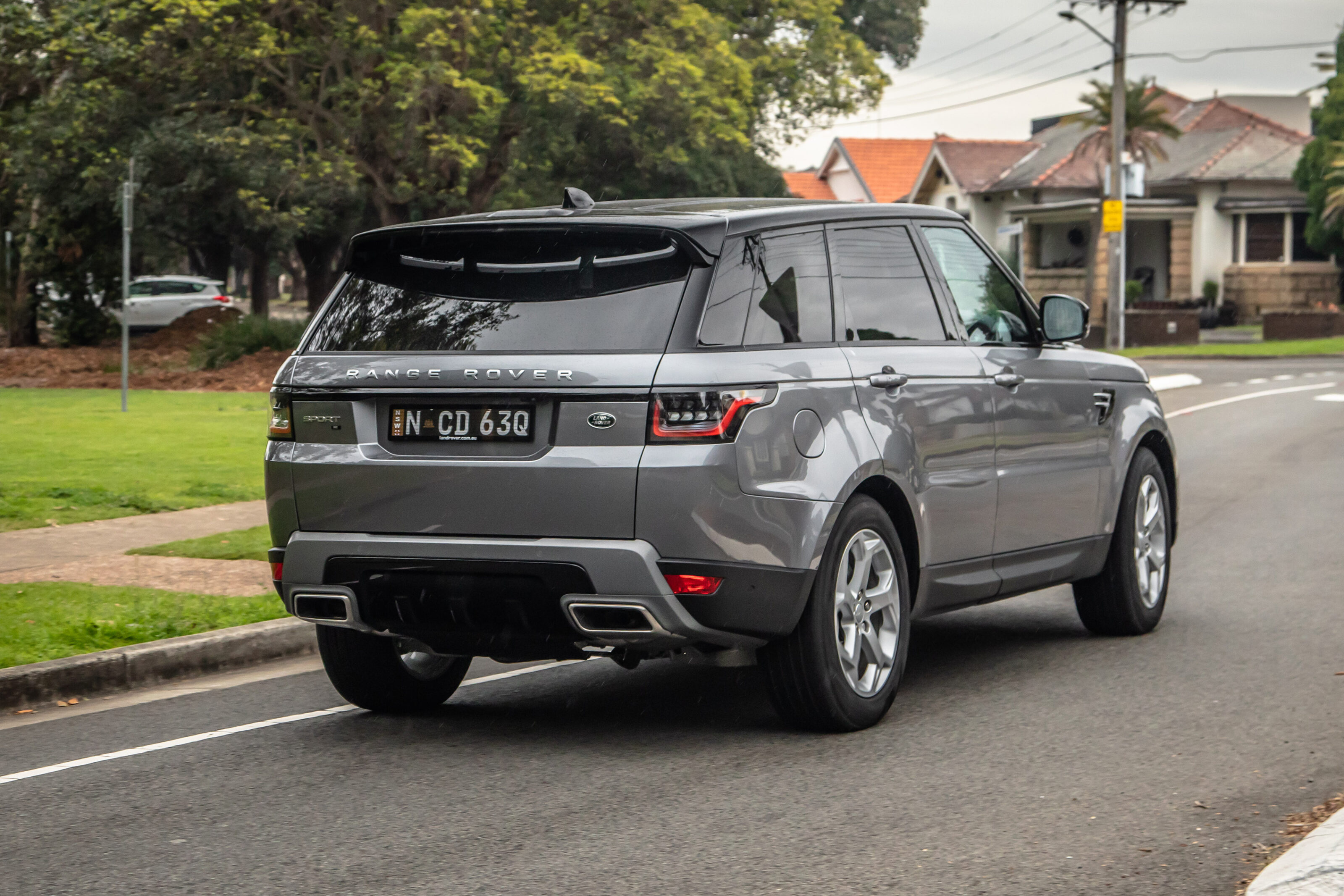
The steering is typically Range Rover, with a bit of artificial weight around town and a slow-ish rack to balance against its off-road capability. It’s still very tall but the active anti-roll stuff keeps things in check while big chunky tyres ensure the nose follows your wishes.
Its ride can fidget a little bit on rough concrete roads but is very comfortable at other times. It’s an interesting setup given the air suspension can pretty much do anything, but true to the ‘Sport’ monicker, you can feel the potential underneath you. There’s no wallow or body roll and the trade-off is that occasionally firm feel. Which I reckon is deliberate.
My sense of comfort is also catered to by the fact it really does handle impressively for a car of this size and weight. Yes it has ‘Sport’ in the name but we’ve seen a lot of that on cars over the years and been left feeling very disappointed.
But what it’s best at is carrying four people in quiet comfort and covering long distances, with the fact it can do so over pretty much any type of road is the added bonus.
Ownership
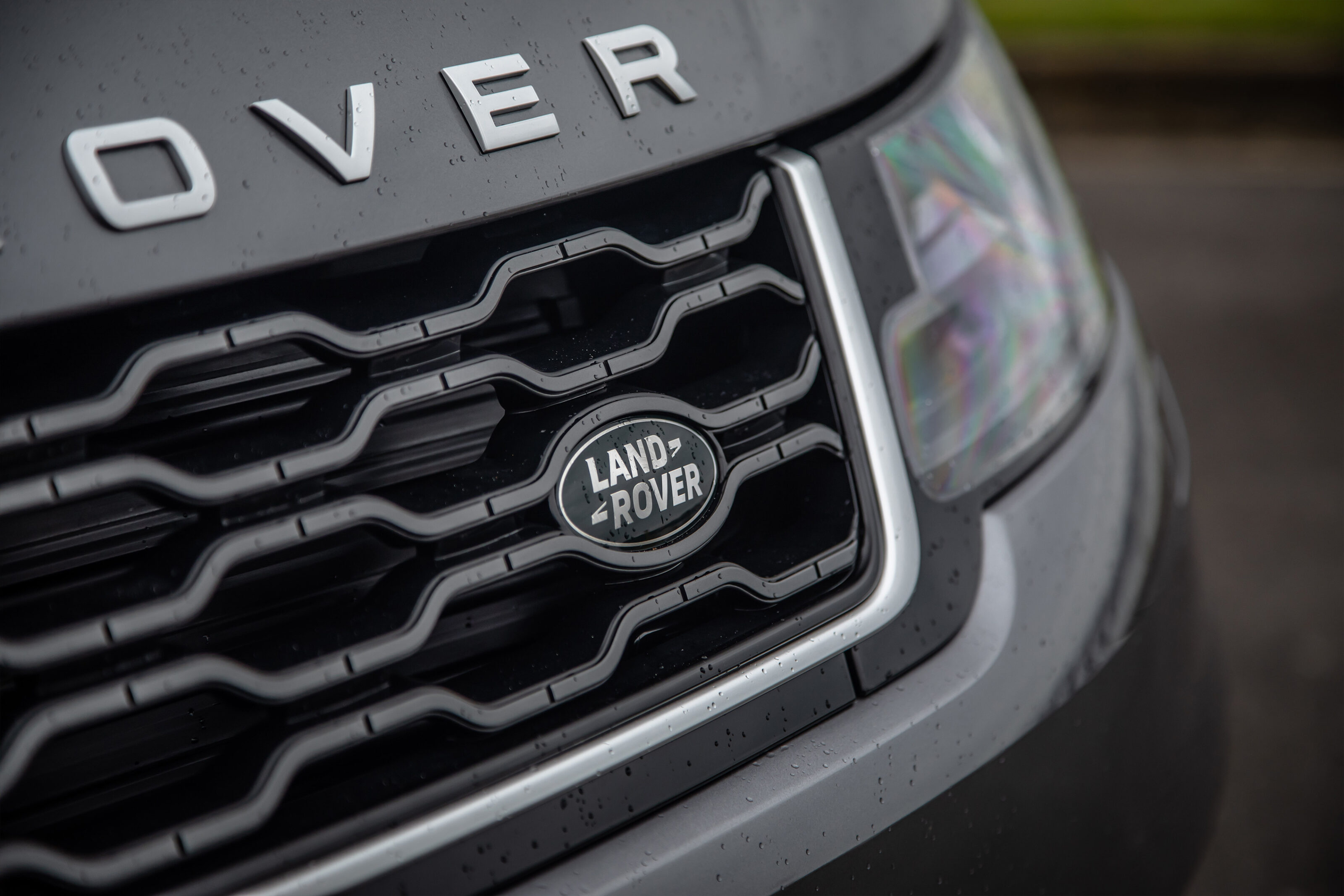
Land Rover offers a five-year/unlimited-kilometre warranty with five years roadside assist, matching fellow luxury brand Mercedes and putting most of the rest of its competitors in the rear-vision mirror.
You can purchase a five-year/130,000km service plan that costs $2250 for an average of $450 per year, which isn’t bad at all. If you’re a high-miler it works out well because the Ingenium engine – somehow – will cover 26,000km between services. I can’t think of a more generous mileage limit in any other package.
VERDICT
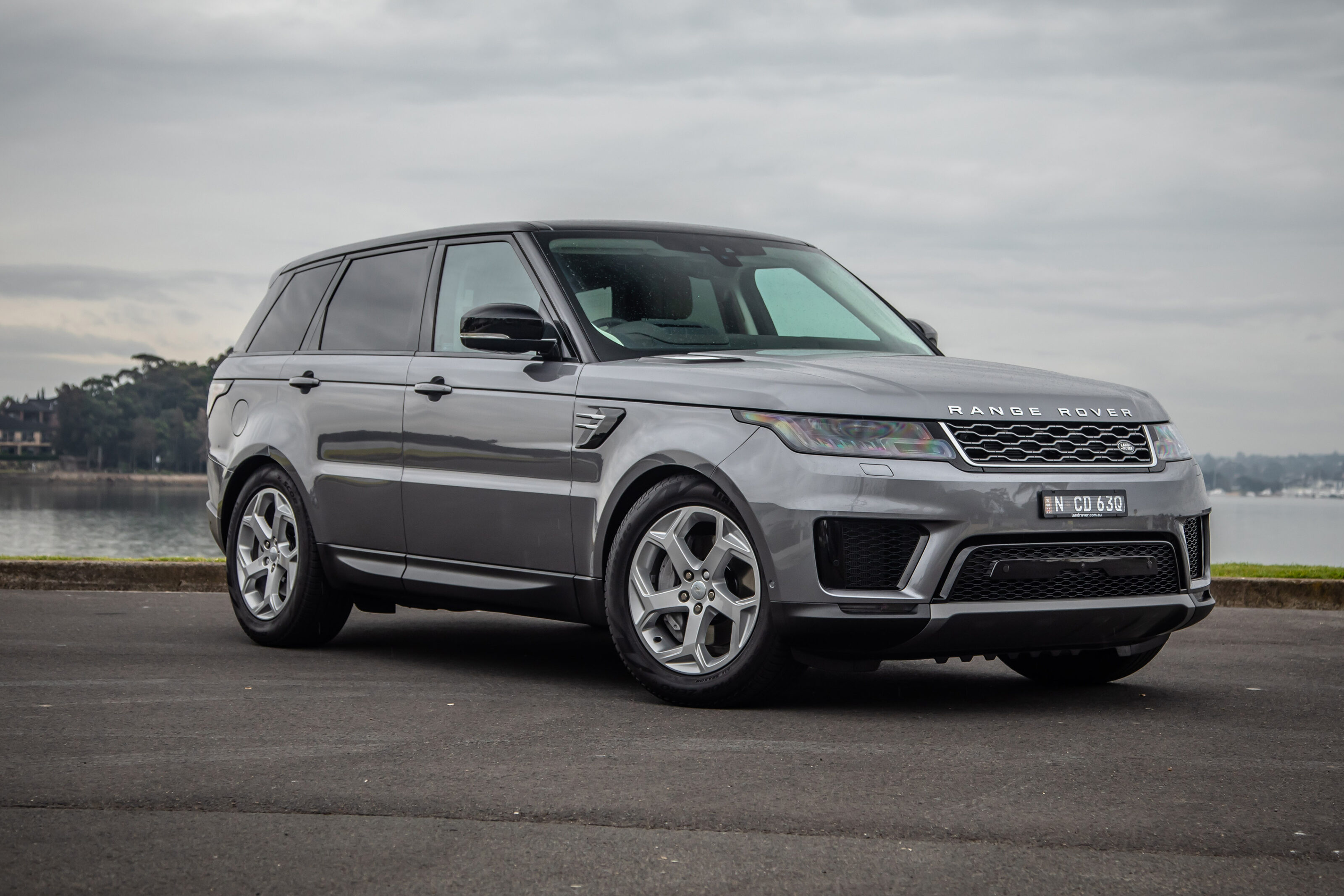
The Range Rover Sport might be getting on a bit, but the new engine is right in the now with mild-hybrid tech and the eight-speed automatic. It’s a terrific unit and streets ahead of the old donk it replaces.
The Sport is starting to look a little out of place in the Range Rover pantheon, with its slightly slabby sides, but there’s only so much you can do with what was an effective facelift a year or so back.
For a five-seater, though, you’d have to think about the Velar, with its new everything, smaller footprint and sleeker looks, unless you’re really keen to drive through rivers. Maybe a seven-seater Sport makes more sense.
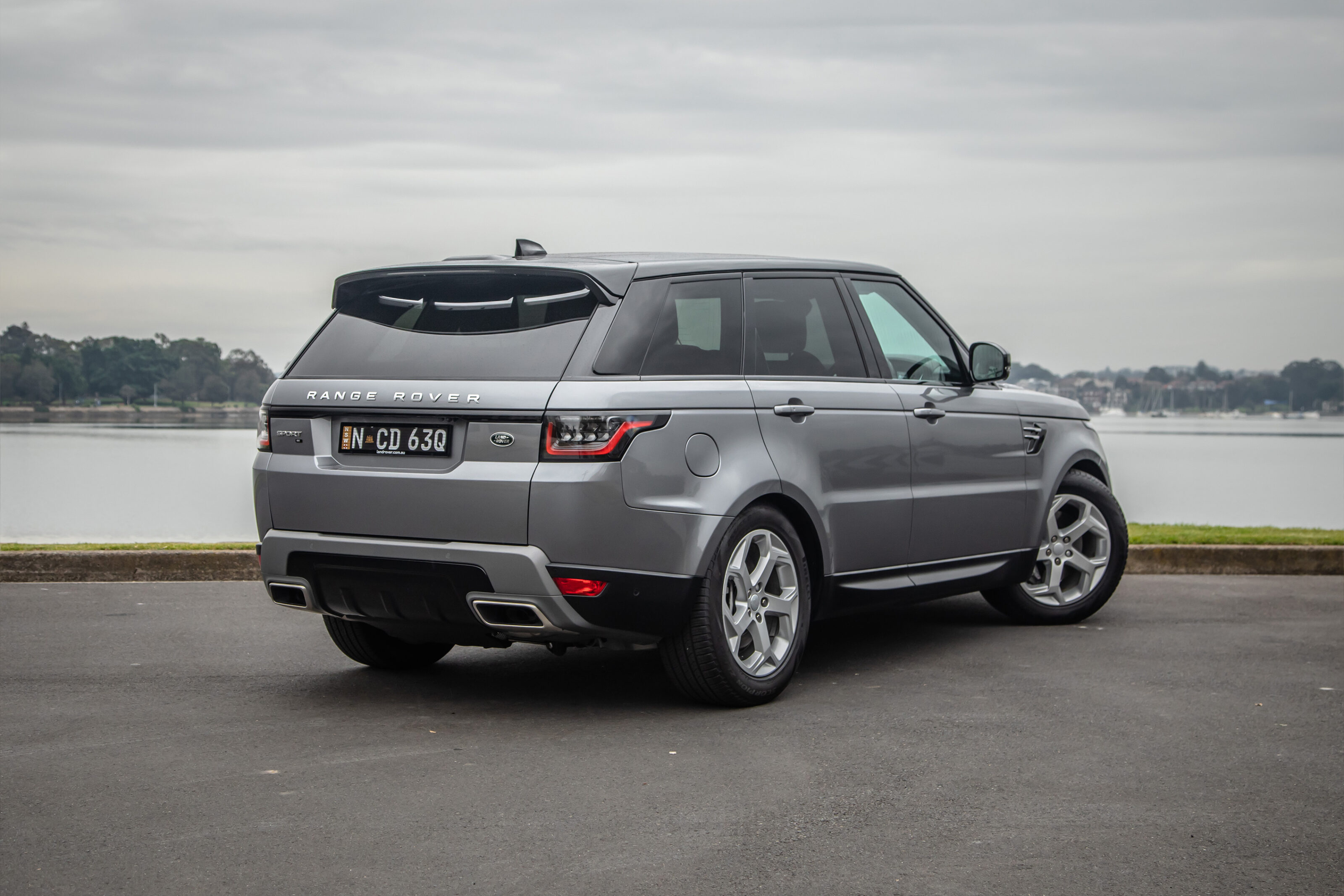
2021 Range Rover Sport D250 specifications
| Body: | five-door large SUV |
|---|---|
| Drive: | AWD |
| Engine: | 3.0-litre six-cylinder turbodiesel |
| Transmission: | eight-speed automatic |
| Power: | 183kW @ 4000rpm |
| Torque: | 600Nm @ 1250rpm-2250rpm |
| Bore stroke (mm): | 83 x 92.3 |
| Compression ratio: | 15.5 : 1.0 |
| 0-100km/h: | 8.5sec (claimed) |
| Fuel consumption: | 8.0L/100km (combined) |
| Weight: | 2278kg |
| Suspension: | air suspension |
| L/W/H: | 4879mm/1983mm/1780mm |
| Wheelbase: | 2923mm |
| Brakes: | mm ventilated disc (front); mm solid disc (rear) |
| Tyres: | 235/65 R19 (optional 255/55 R20) |
| Wheels: | 19-inch alloy wheels (full-size alloy spare) |
| Price: | $115,506 + ORC |
We love a good fantasy render. It’s a great way to imagine cool ideas, especially when there’s a slim-to-none chance of them becoming a reality.
The latest photo-realistic render from Instagram-based artist Sugar Design is a gorgeous shooting brake version of Toyota’s freshly-released GR 86.
https://www.instagram.com/p/CTWHsvXphgE/
Replacing the factory coupe sheet metal is an extended roof and handy tailgate – perfect for hauling the dog along to a family beach day.
https://www.instagram.com/p/CTRKpEfpoCa/
With a tweaked and lengthened quarter window, the design almost becomes reminiscent of Ferrari’s FF grand tourer.
While the production GR 86 coupe is a spiritual successor to the famed AE86, this shooting brake version shares more DNA with Toyota’s Corolla panel vans of yesteryear. Sadly, that utilitarian three-door body style perished with the KE70 in 1987.
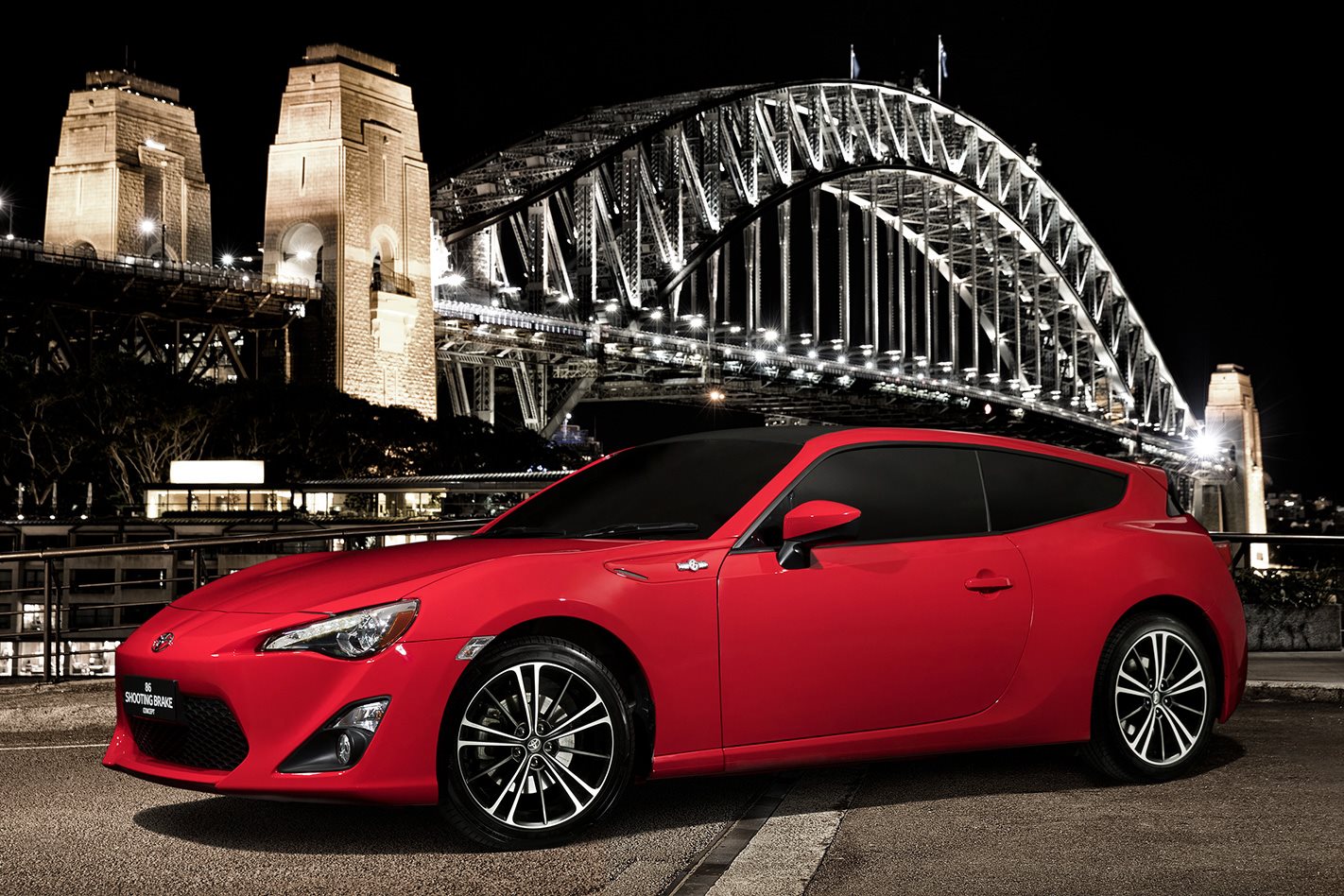
Interestingly, a one-off shooting brake version of the last-generation 86 was actually built by Toyota Australia’s design division in 2016. Sadly, the company said it had no plans to bring the bodystyle to showrooms, leaving it to the same fate as the convertible 86 concept.
Check out Sugar Design’s instagram for a wide range of imaginative renderings, ranging from a cool widebody T2 Kombi to a targa-top Porsche 911 limo.
Snapshot
- Iconic Jaguar Le Mans racer to be reborn
- Entirely hand-built using era-correct methods and materials
- Just a handful of vehicles to be produced initially
The 1953 Jaguar C-Type will live again, with the British marque announcing a small number of new hand-built vehicles to be made under its continuation program.
To celebrate the C-Type’s 70th anniversary, Jaguar will remake the iconic Le Mans racer, complete with period-correct materials and a 3.4-litre straight-six and triple Weber carburettors.
The engine – also built by hand over a period of nine months – will send 164kW (or 220bhp in the old money) to the skinny rear tyres through a four-speed manual transmission.
The C-Type was one of the most notable racing cars of its generation, being among the first to adopt aerospace design principles to its bodywork – as well as introducing innovations such as disc brakes in 1953.
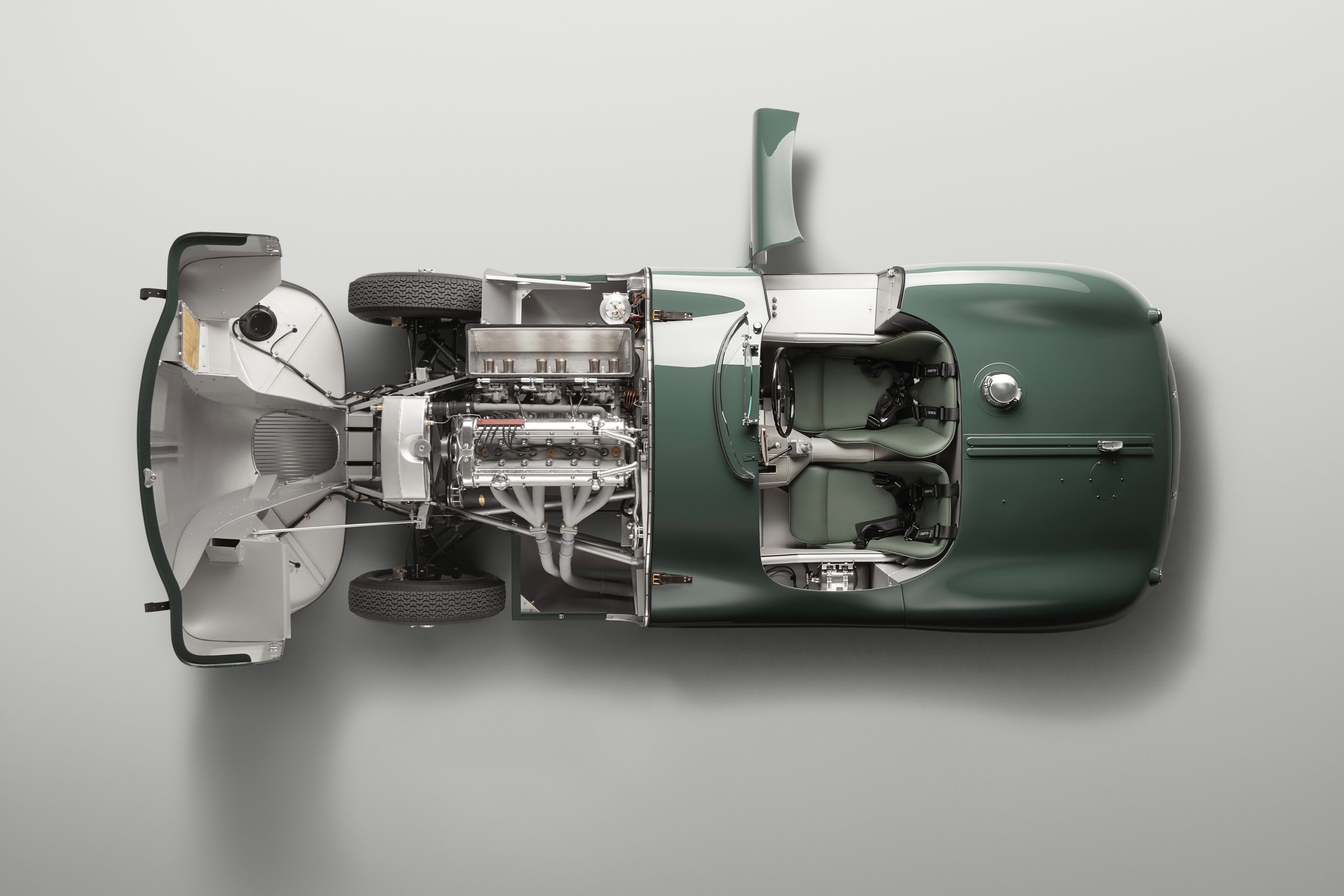
Thanks to its new braking system, the Jag became the first Le Mans car to average more than 160km/h (100mph) over the famous 24 hour endurance race.
Jaguar Classic will initially build eight C-Types to its 1953 race specification, which the company says has been painstakingly researched over two years to ensure the utmost accuracy – including the adoption of authentic materials and era-correct build methods.
While the C-Type is the fourth continuation car from Jaguar Classic – following the D-Type, XKSS, and Lightweight E-Type – it’s the first to adopt modern AutoCAD computer software to model the vehicle in detail.
“The C-type Continuation keeps Malcolm Sayers’s iconic and advanced design alive, thanks to the first application of 3D CAD drawings by Jaguar Classic – marrying design and motorsport heritage with the very latest engineering tools,” says Jaguar Classic Director Dan Pink.
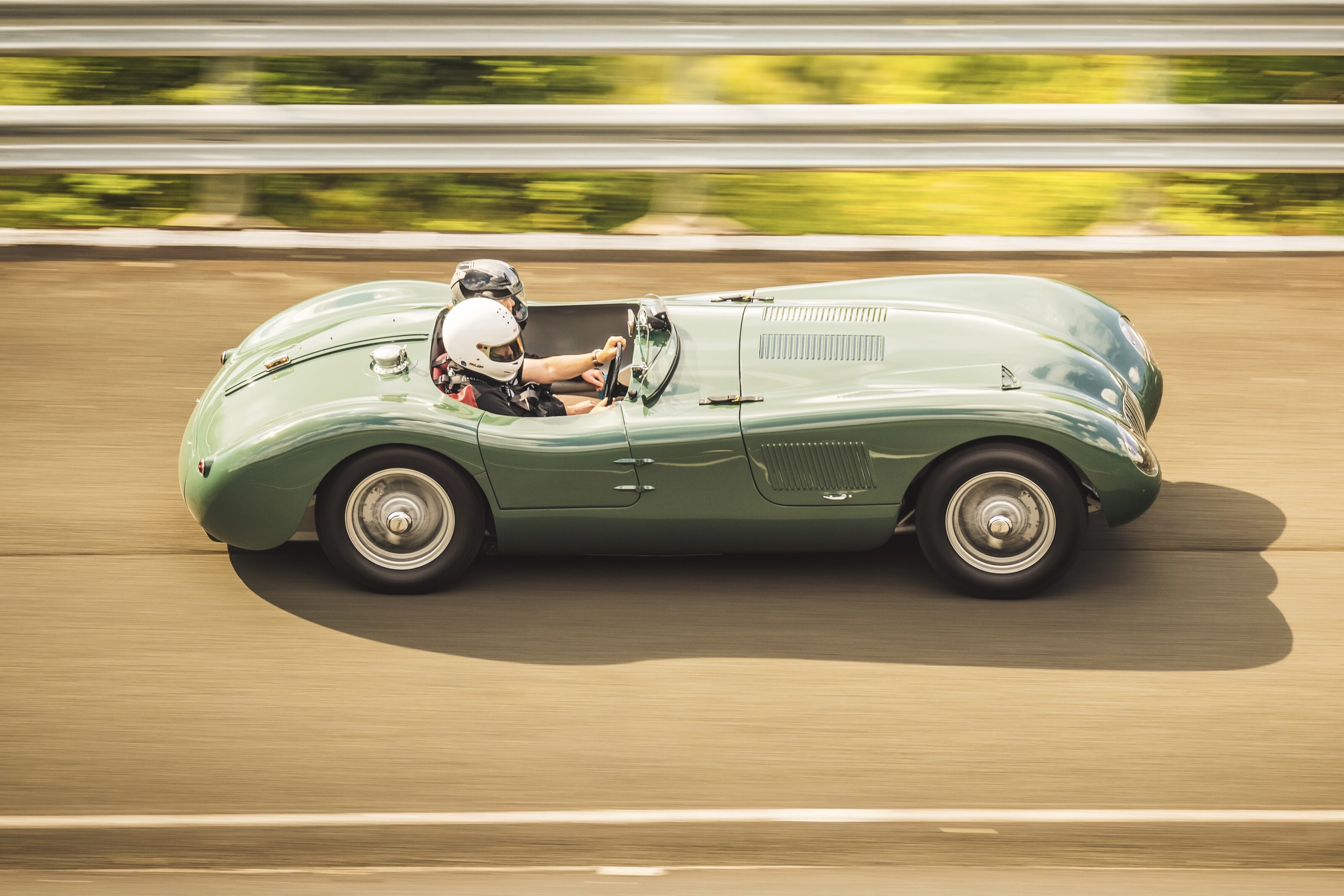
Using the XK120 as a base, designer and engineer Malcolm Sayers penned the flowing shape of the C-Type in 1950, helping the vehicle break speed records and win its debut outing at the 1951 Le Mans 24-Hour.
Despite just eight examples slated for initial production, Jaguar Classic is offering owners eight different leather interiors to choose from and 12 exterior paint options.
The Jaguar C-Type Continuation will make its public debut at the Concours of Elegance at Hampton Court Palace in the UK this weekend.
The Citroen C3 Aircross will no longer be a part of the French manufacturer’s Australian line-up as the brand’s local arm has decided to axe the crossover due to slow sales.
Only 127 units of the C3 Aircross have been sold in total locally, having first been introduced in 2018. Just three have been shifted from dealers this year so far – considerably less than the 28 C5 Aircross units and 57 C3s, Citroen’s two remaining models in Australia.
A spokesperson for Citroen Australia told Wheels it was axing the C3 Aircross to prepare for the new C4’s arrival towards the end of 2021, as well as possibly bringing the C5 X to local market.
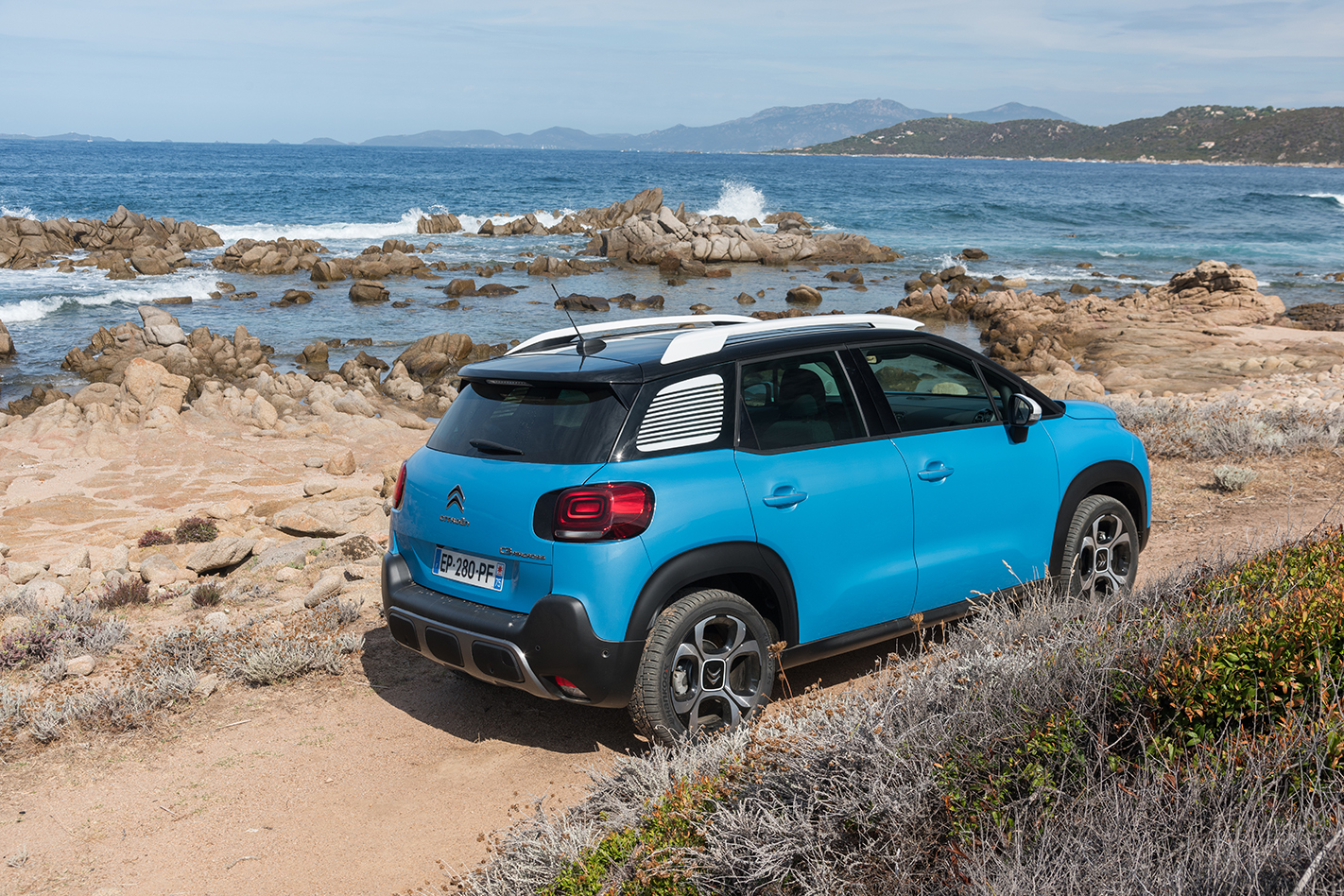
“The Citroen C3 Aircross has been removed from the Australian line-up as we re-evaluate our range to ensure our product offering closely aligns with consumer expectations,” said Citroen’s spokesperson.
“We look forward to strengthening and complementing the existing Citroen range with the introduction of the Citroen C4 later this year and we continue to work closely with the factory regarding evaluating the new Citroen C5 X for local introduction.”
The C3 Aircross had only recently undergone a facelift in Europe earlier this year, but the refresh never made it Down Under – with the last 2020 model year examples of the 1.2-litre, three-cylinder turbo currently retailing for $34,990 before on-road costs.
The United States arm of Volkswagen has agreed to a US$42million (AU$56.75m) settlement for owners whose vehicles were equipped with faulty Takata airbags.
As reported by Reuters, documents filed with a District Court in Miami show the German manufacturer’s settlement covered at least 1.35million vehicles in the United States alone, although there are no reports of Takata’s airbag defects injuring or killing in any Volkswagens worldwide.
It is understood the settlement covers out-of-pocket costs for owners, rental car firms for example, lost wages and childcare costs – small change compared to the US$605m (AU$816m) which Honda has had to pay in a civil settlement to its owners, as well as those who have been injured or killed due to the failure.
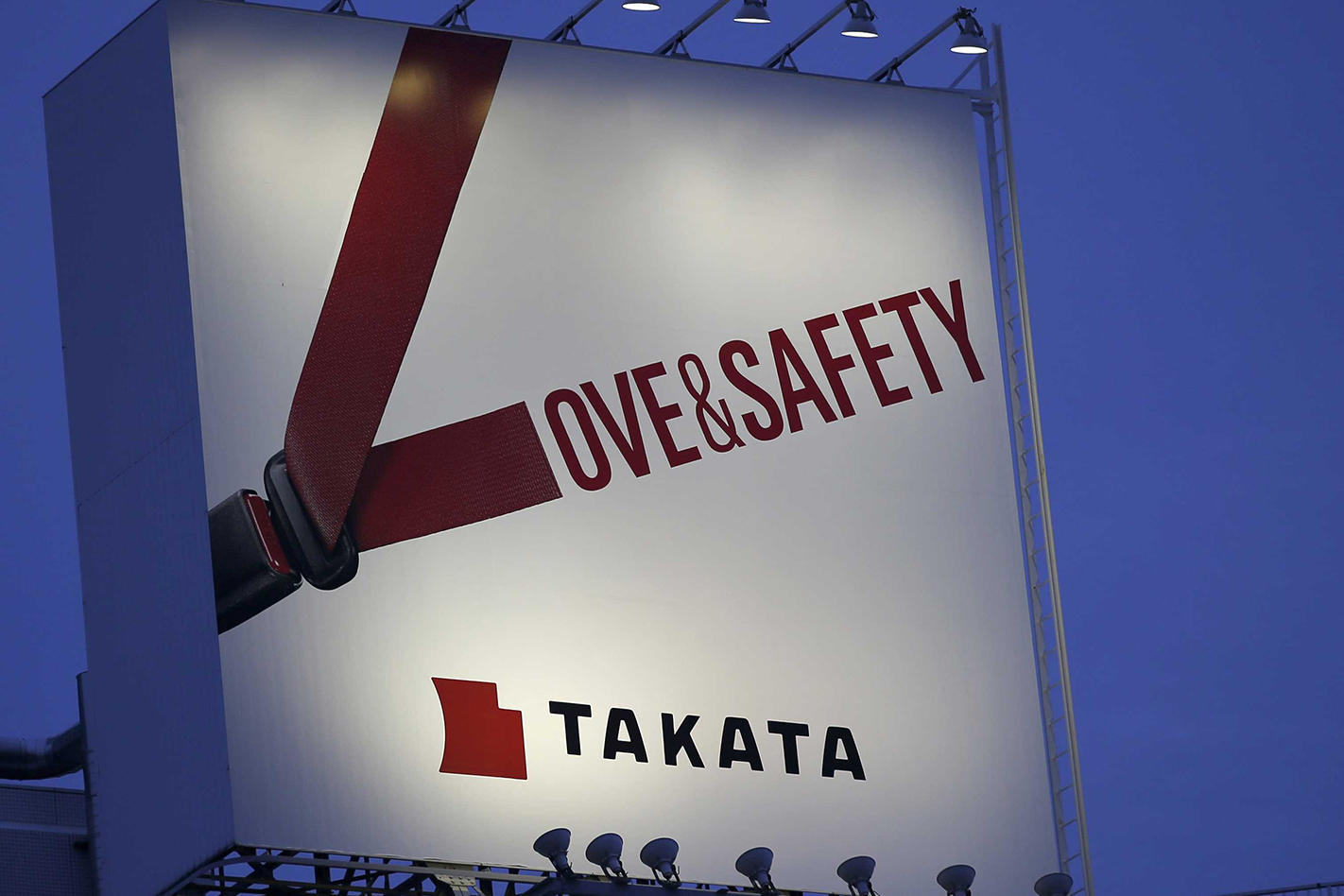
In the United States alone, at least 19 people have died due to faulty Takata airbags – with 16 of those occurring in Honda vehicles. Meanwhile two have been attributed to Fords – the Blue Oval has previously reached a US$299.1m (AU$403m) settlement with its customers.
Earlier this year, Volkswagen Australia won its Supreme Court case over a Takata airbag recall saga, initially brought up over the plaintiff believing the propellent chemical in his vehicle’s airbags would degrade over time, causing them to malfunction or explode.
The court found the plaintiff could not prove his Volkswagen Passat was not of an acceptable quality when he purchased it, and he’d not suffered any actual loss or damage because a Takata airbag had originally been fitted in his vehicle.
Tesla recently updated its mobile application for Apple iPhones – offering users improved management, new features, and real-time animations.
Acting like a remote control for your Tesla, the app allows users direct access to a car’s climate control, doors and windows, and even the horn – and owners can also check out information such as their vehicle’s location and its driving range.
Australian YouTuber Tesla Tom has given a walkthrough of the new Version 4.0.1 update while in the seat of this Model 3, giving our best look yet at the updated interface.
Perhaps the party trick of the new Tesla app is the image of the car shown from the top, which provides a real-time visual representation of the owner’s actual vehicle. In Tom’s case, he’s able to show the doors open and close on the app as he does it.
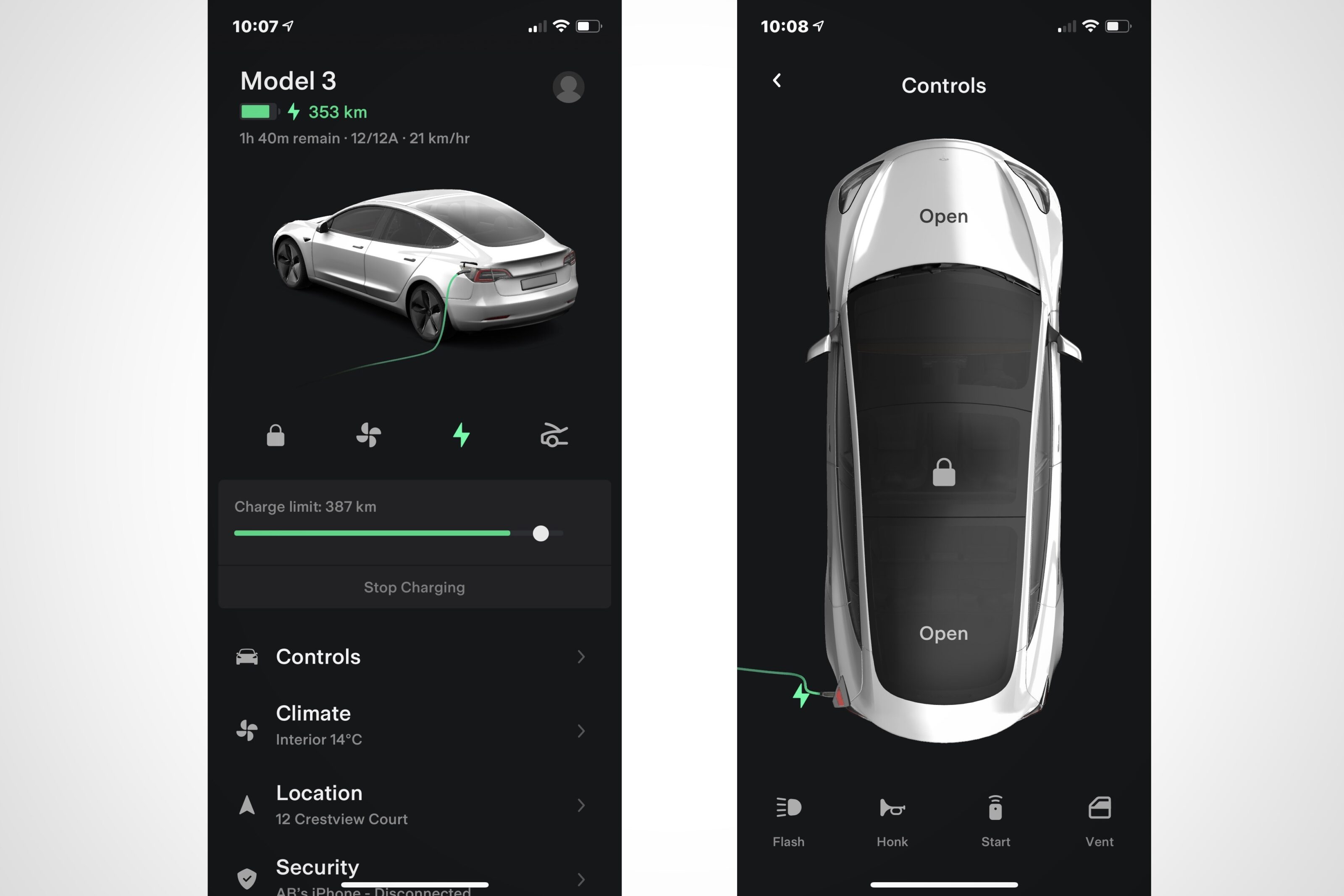
But it’s not just electric cars – Tom also demonstrates how he can check his home’s electricity usage through his Tesla Powerwall battery system, giving a current display of where his household energy is being sourced from – as well as providing historical data.
One Tesla owner told WhichCar the improvements are welcome: “It’s a significant update – the screen is a vast improvement over the previous version.
“The fact, that I can unlock and start my car from my phone means I can loan it to a family member or a colleague – even if I’m in a different location or stuck in a meeting. And the animated green charging cable also means I can check to make sure it’s been plugged-in correctly.”
Are you a Tesla owner? Let us know what you think about the updated app in the comments section below.
