
Snapshot
- First Dodge ‘eMuscle’ car will be shown in 2022
- US$40,000 – $50,000 price likely for production muscle EV
- Debut plug-in hybrid will also be launched
Dodge has announced it will pull the cover off an electric muscle car concept next year, alongside the launch of its first plug-in hybrid.
Speaking to Automotive News, Dodge CEO Tim Kuniskis said the company will lay out its electrification plans in the coming months, before publicly showing the EV concept in 2022.

It’s expected the concept will relate to Dodge’s first production electric muscle car, which is due in 2024.
The bodystyle of that car remains unknown, though a July teaser reel for the concept showed a full-size grille reminiscent of a 1968 Charger.
The brand’s 1960s and 70s-era Fratzog badge was also shown in the footage, before the car performed a four-wheel burnout.
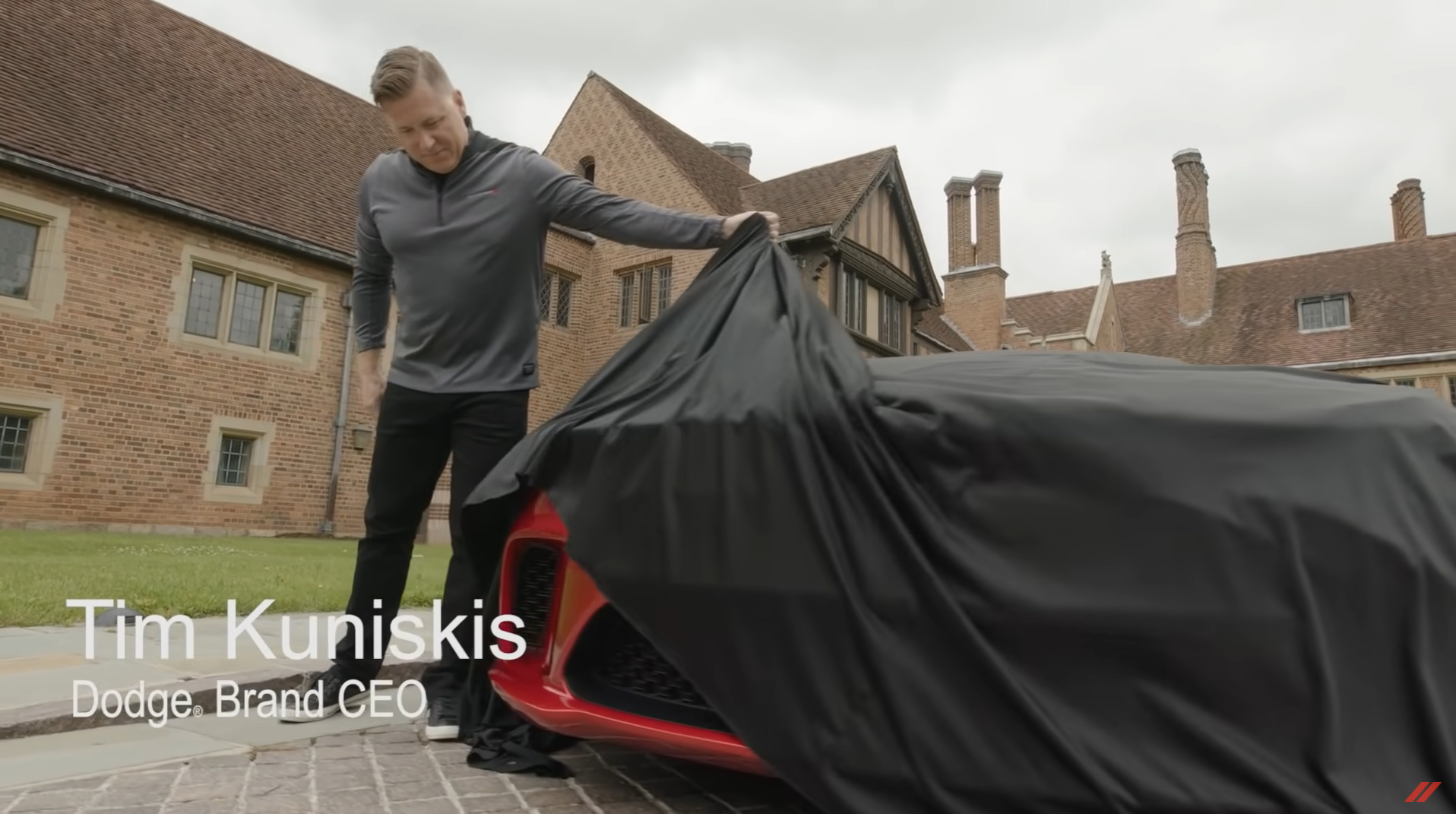
While Kuniskis didn’t explicitly mention the ‘eMuscle’ car’s price tag, he told Automotive News the key US muscle market is the $40,000 – $50,000 range — well below the pricing of Tesla’s high-performance Model S Plaid.
He also told Muscle Cars and Trucks the EV’s arrival won’t necessarily mark the end of internal combustion muscle, suggesting the Charger and Challenger could be sold alongside the new car for a while.
“The new car comes in 2024. We didn’t say that the current cars are going to die in 2024.
“There might be a little overlap, but you’re not going to have years and years and years of the classic and the new one at the same time.”
Before the electric muscle car hits the road, we’ll see the first Dodge plug-in hybrid.
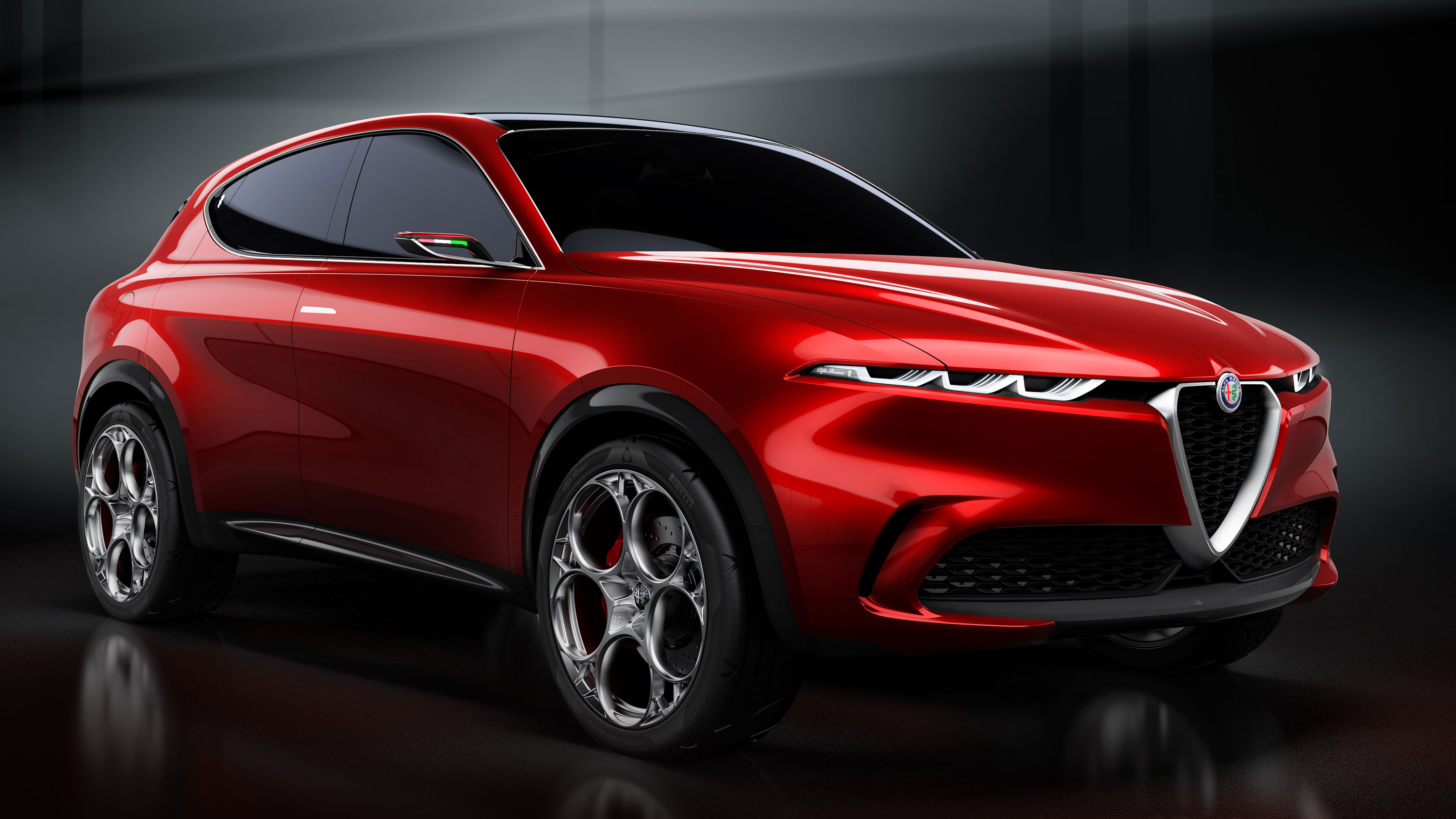
It’s slated to be a compact crossover, sharing its platform with Alfa Romeo’s upcoming Tonale and likely to be named the Hornet.
The badge last appeared on a 2006 Dodge concept, and was renewed last year for use in US, Canadian and Mexican markets.
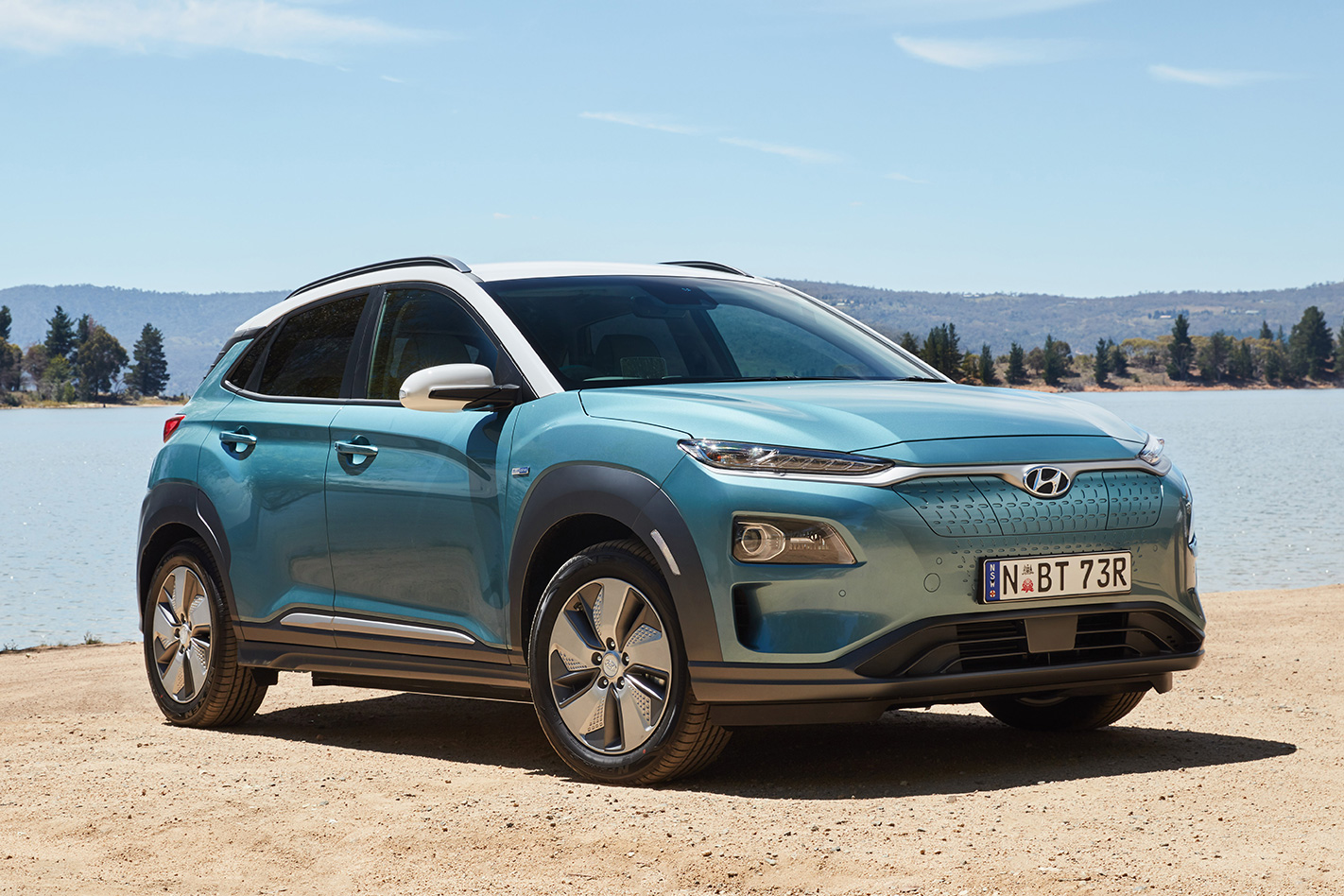
Hyundai Australia is recalling its electrified Kona for a second time due to a fire risk associated with its battery.
The problem affects 615 Kona EVs made between 2018 and 2020.
According to the Department for Infrastructure, due to a manufacturing defect, the battery does not meet specifications and may lead to an electrical short which could start a fire.
A list of VINs for affected vehicles can be found here.
Kona EV owners involved have been contacted by Hyundai to arrange a battery replacement.
For further information, call Hyundai on: 1800 186 306.
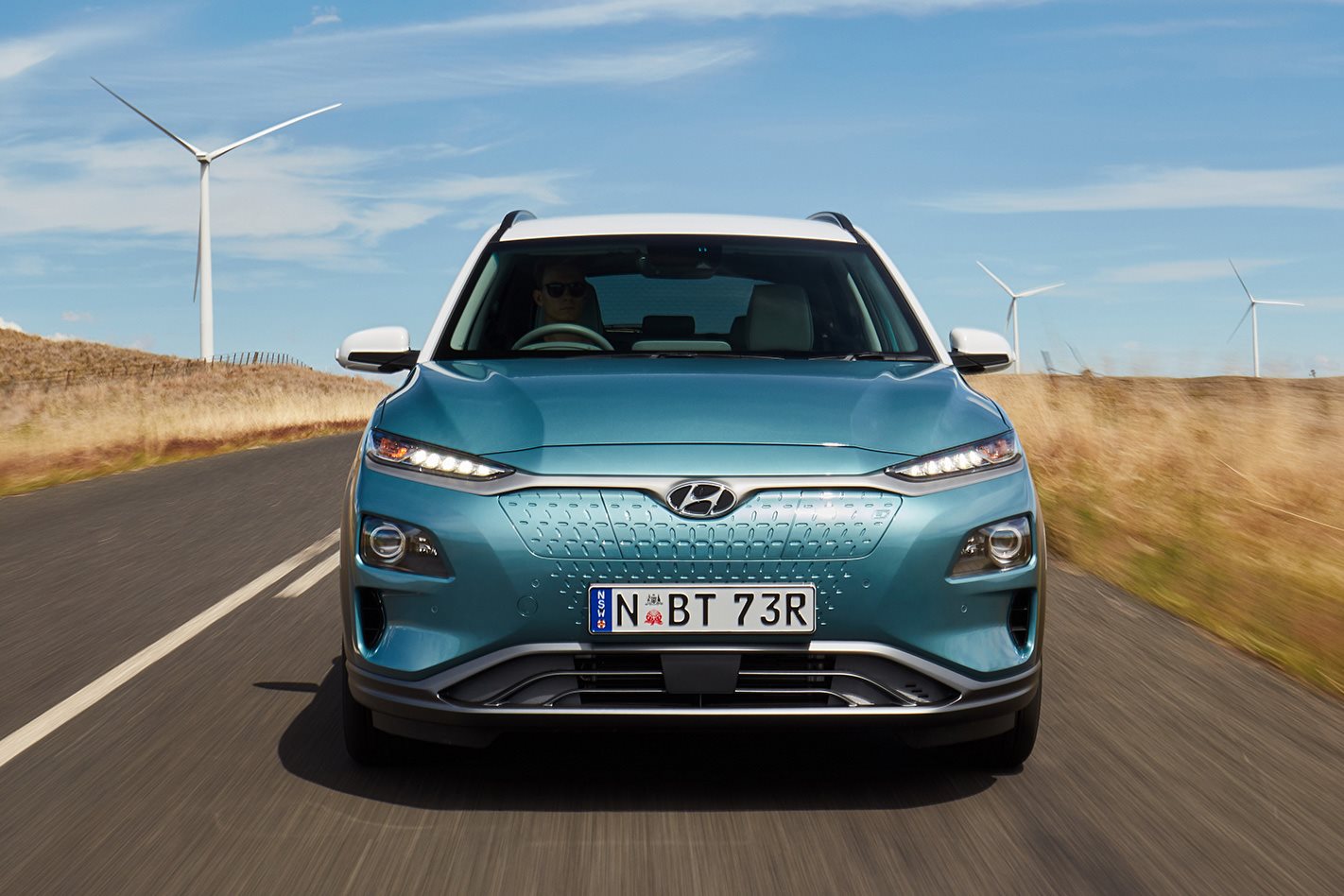
Late last year, Hyundai recalled almost 800 Kona Electric small SUVs in Australia over a similar, potentially deadly, fire risk.
Under the previous recall, the Kona’s 65kW lithium-ion battery was said to possibly have internal damage, or the battery management system (BMS) control software may cause an electrical short circuit after charging.
The issue, which affected 77,000 cars worldwide at the time, is believed to be the cause of at least nine Kona Electric fires reported globally, though at this stage no such issues have been reported in Australia.
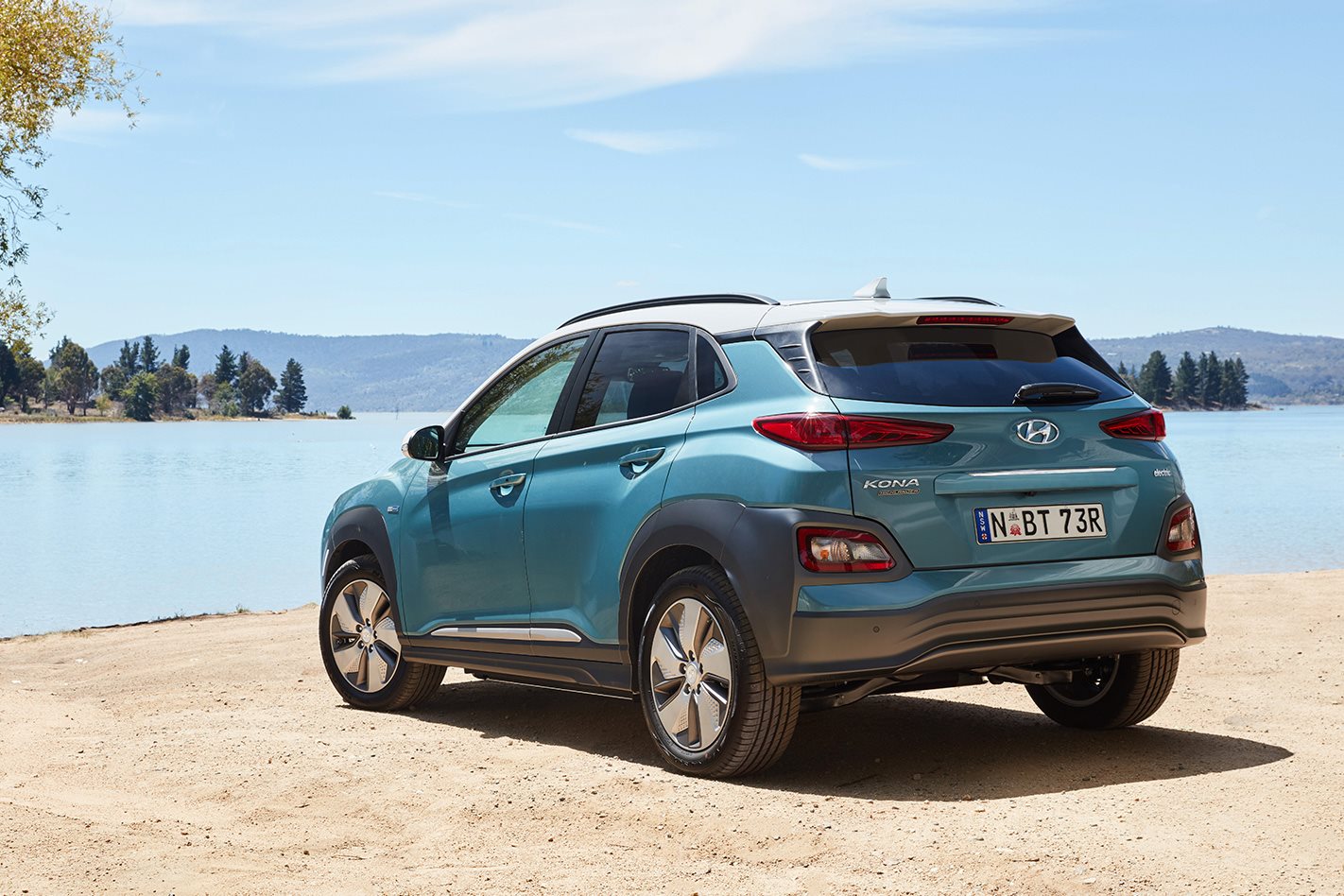
A spokesperson for Hyundai told WhichCar the issue is part of a wider problem identified globally, but the two recalls are linked.”The first recall was for a software check. This is different software check, linked to a potential hardware issue, and it applies to a smaller number of vehicles,” they said.”There have been no incidents in Australia related to this issue.”
Australia is set to benefit from the rollout of 5000 electric vehicle charging stations, as local company JOLT Charge announced it will invest $500million to expand its network.
Looking to build on its existing network, which is currently exclusive to Adelaide but set to expand Australia-wide, JOLT’s business model is unique as its chargers use integrated advertising to bring money back into the company – something which enticed new investor BlackRock.
According to the Australian Financial Review, the United States investment firm was drawn to JOLT due to its combination of outdoor advertising in vehicle charging stations, leading to a $100m boost of capital funds towards the company’s continued rollout.

Aiming to build an extra 1000 stations across the next two to three years, JOLT will also stand out from the crowd as it offers the first 7kWh of power for free – with users only being financially charged after the initial hit.
BlackRock Renewable Power managing director, Charlie Reid, told the AFR it had bought a minority interest in JOLT, not only due to the Australian company’s business model, but to also help give EVs a boost in Australia.
“We think that their business model, combined with the scale of capital we can bring to bear, creates a pretty interesting opportunity for us, but also will help accelerate the transition to electric vehicles in Australia,” said Reid.
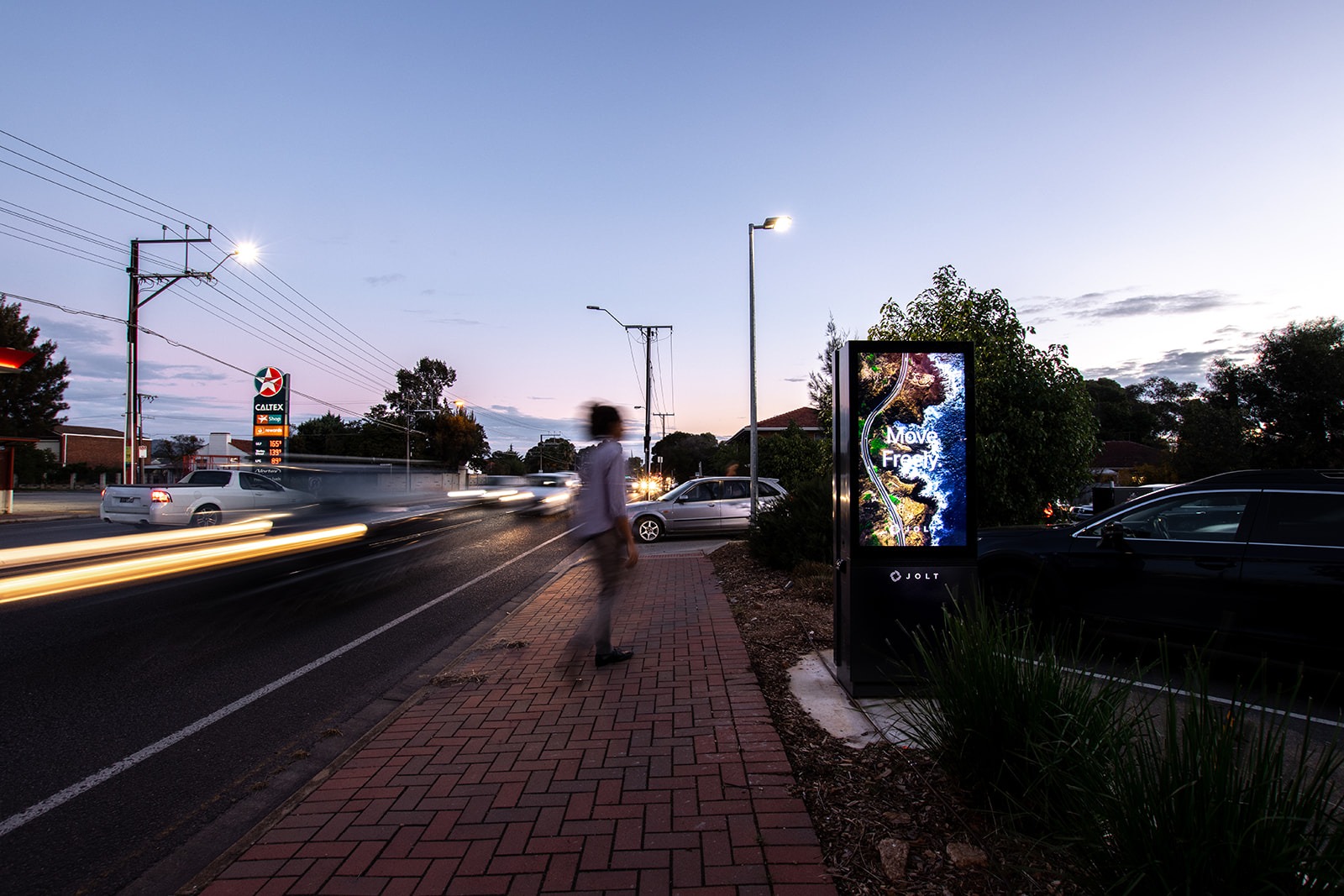
JOLT’s $500m investment in its charging network is over 20 times more than the Australian Government’s commitment to EV chargers through its Future Fuels Fund – recently announcing a $25m subsidy to multiple companies for 400 stations.
While other countries have announced plans to ban the production and sale of internal combustion engine-powered vehicles, with the target of reaching net zero emissions by 2050, Australia has not committed to any such targets and its EV policy also lags behind the rest of the world.
The days of the sub-$20K small hatchback seem to be well and truly gone. Of course, inflation and technological progression are key factors in this, but so is safety. And, quite rightly, it’s something that means a lot to buyers in this segment. It’s a scenario that consequently means it’s not unusual to see a humble hatch stacked with more active and passive safety kit than a larger luxury car.
This seems to be the philosophy at Volkswagen with its eighth-generation Golf. Even the press paraphernalia has “Safety and Security” listed first on the spec sheet. It’s an important move to include the company’s IQ.DRIVE package as standard in the base model, too.
As a result, the price starts at $31,950 (excluding on-road costs) for the eight-speed automatic version we have here – a $2600 premium over the six-speed manual. You can read reviews on the Golf Life ($34,250) and R-Line ($37,450) to see what we think of the other models in the range.
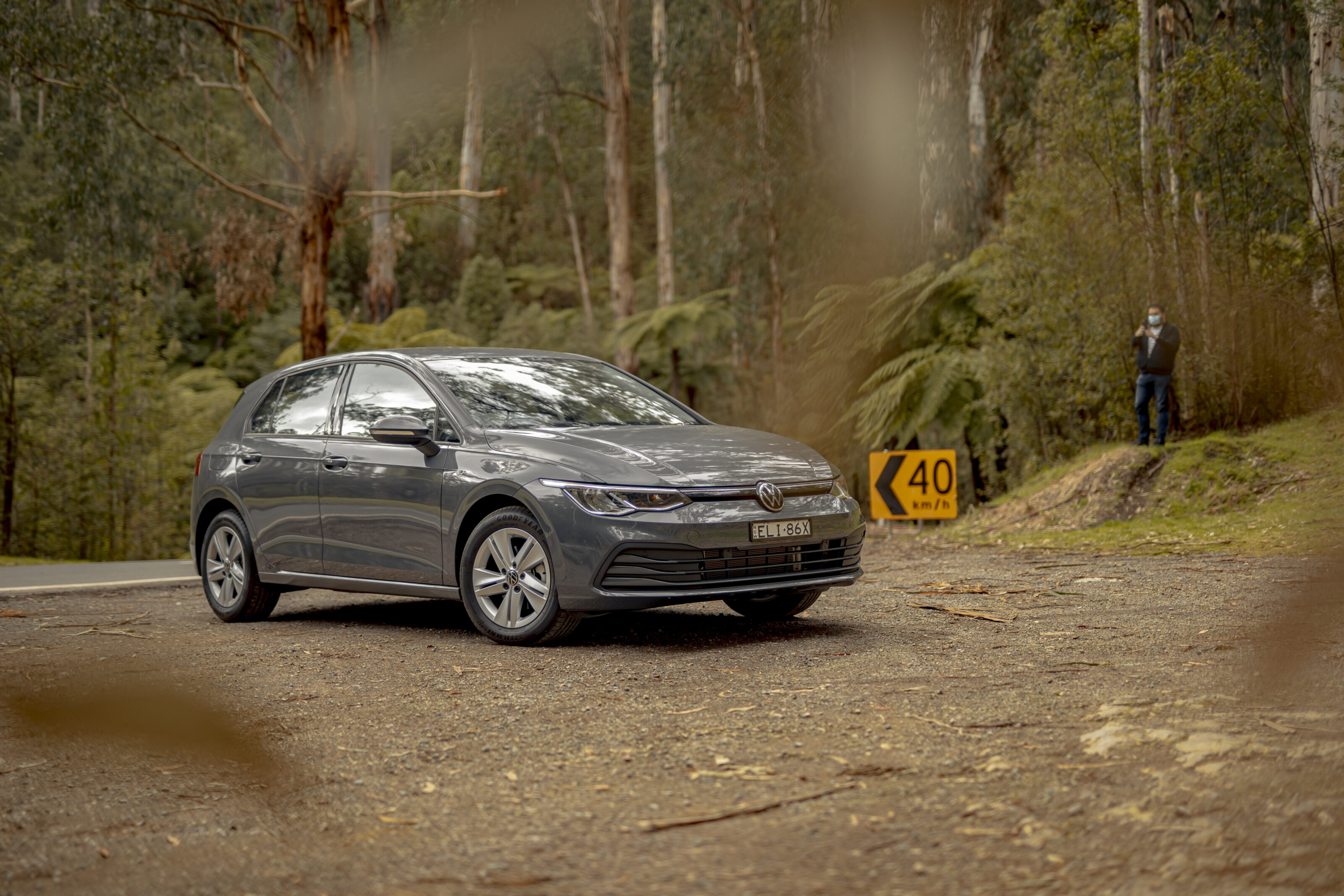
So what does IQ.DRIVE suite come with? In truth, it’s a very long list, but the highlights include: Travel assist (which also controls steering inputs), AEB with pedestrian and cyclist detection, adaptive cruise control with stop/go function, lane assist, driver fatigue alert, rear traffic alert, park assist (self-parking) as well as parking sensors and a reversing camera – which pops out from under the VW badge.
Basically, the entry-level Golf now has more active safety as standard than some of the Volkswagen Group’s more fancied marques. Emergency assist, exit warning system and automatic high-beam assist are the only active systems you must pay more for by buying the Life or R-Line. Eight airbags and two rear ISOFIX points account for the passive measures and the range is covered by a five-star Euro NCAP safety rating.
Basically, the entry-level Golf now has more active safety as standard than some of the Volkswagen Group’s more fancied marques.
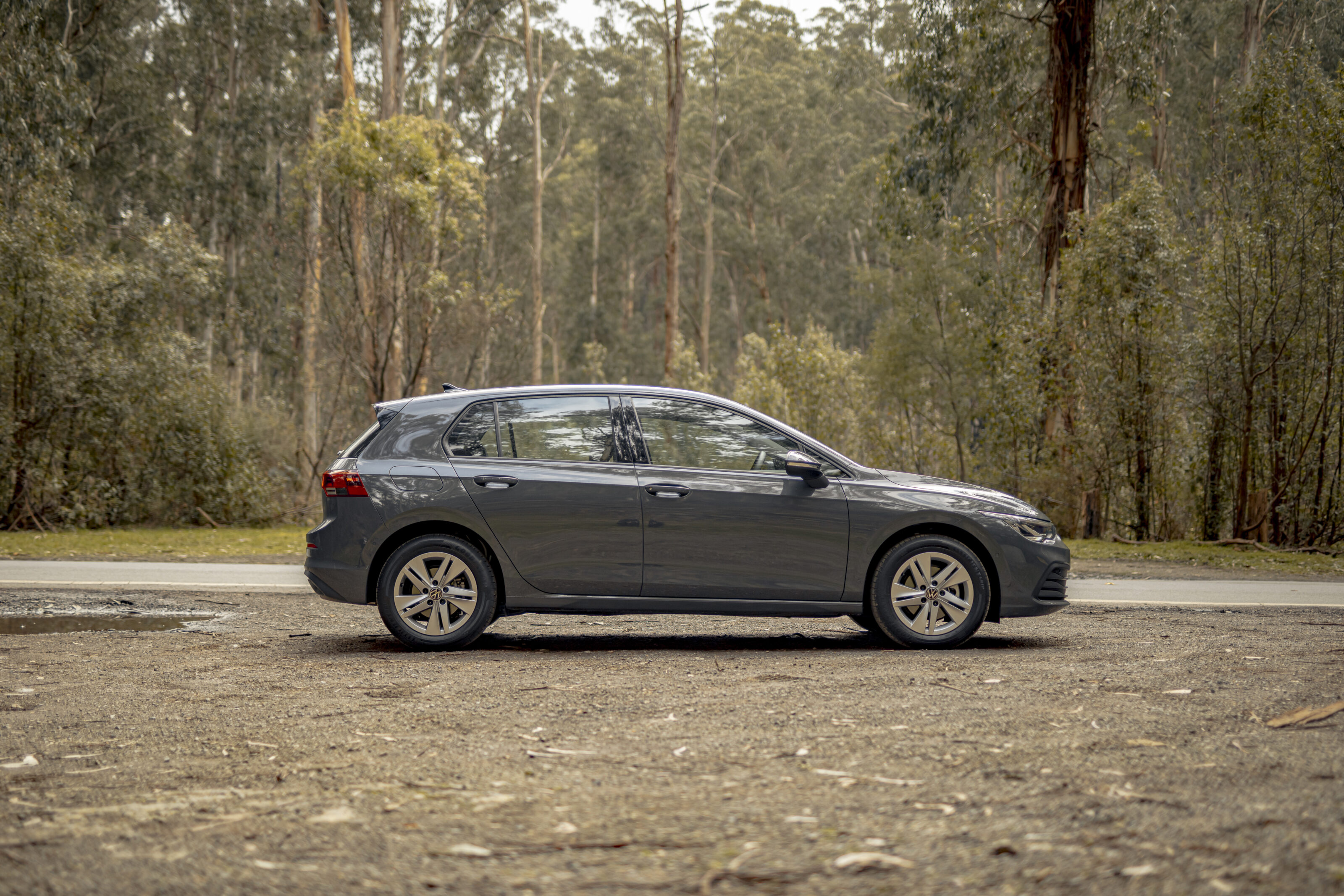
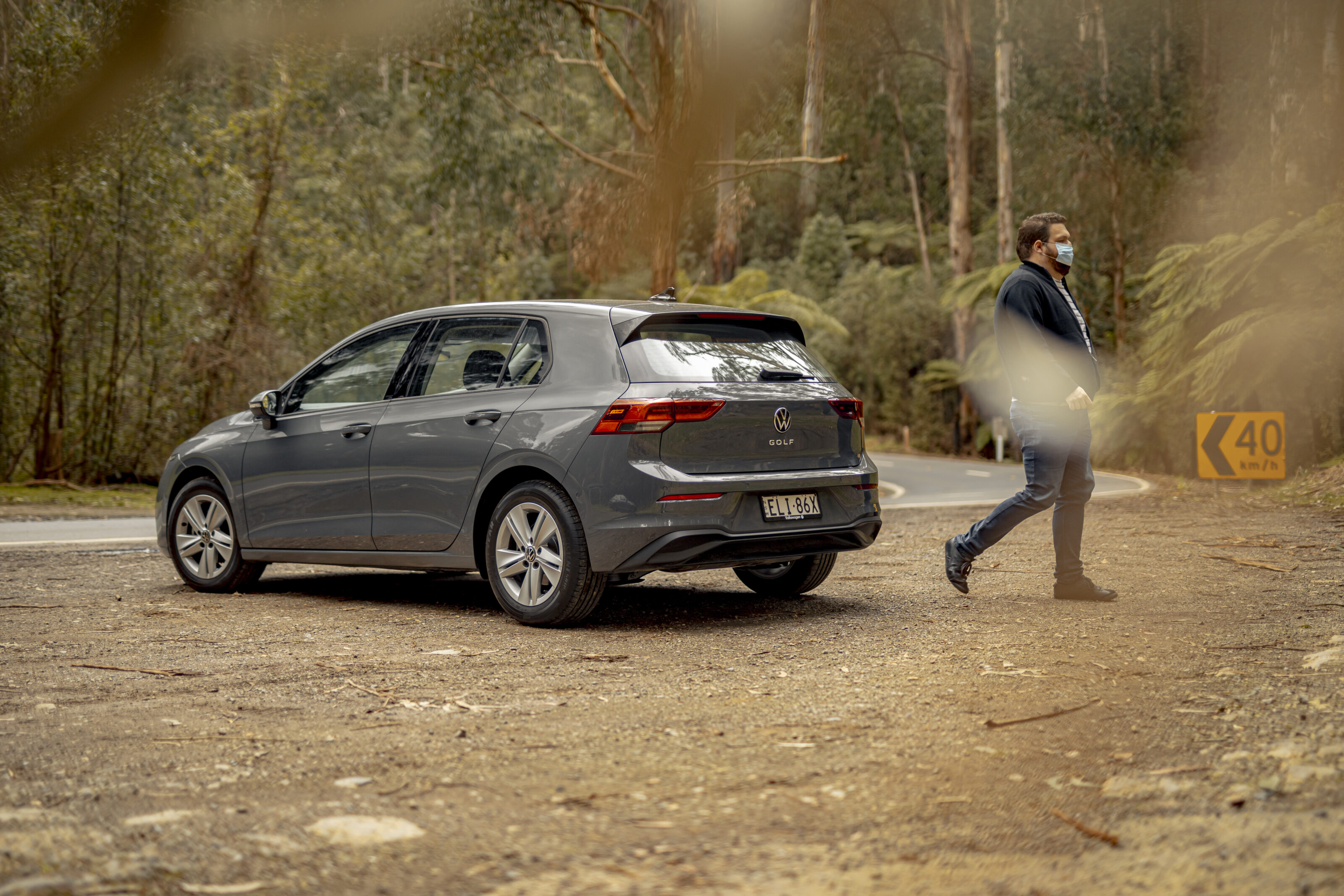
It’s a bit of a revolution in terms of the approach to safety, then. But for the eighth generation, aesthetics are more evolutionary. Hence, those familiar with a Golf aren’t going to mistake it for anything else. And ‘Golf’ is even spelt out in big letters on the boot (under the new VW logo) for anyone unawares.
The conservative styling is handsome and inoffensive, especially in the test car’s Dolfin Grey metallic hue (a $600 option), while LED headlights and taillights are standard. The 16-inch Norfolk wheels are fitted with chubby Goodyear rubber.
Where the bold moves appear are within the cabin. Yes, the doors still ‘thunk’ and the perceived build quality remains. It still looks and, for the most part, feels like a premium product with high-grade materials used where it matters – this is a Golf, after all.
Storage areas are rubber-lined, which only adds to the up-market ambience, while there are several points to stow items around the cabin. However, the pragmatic ergonomics of old have been replaced with VW’s take on the buttonless cabin. And there are some snags.
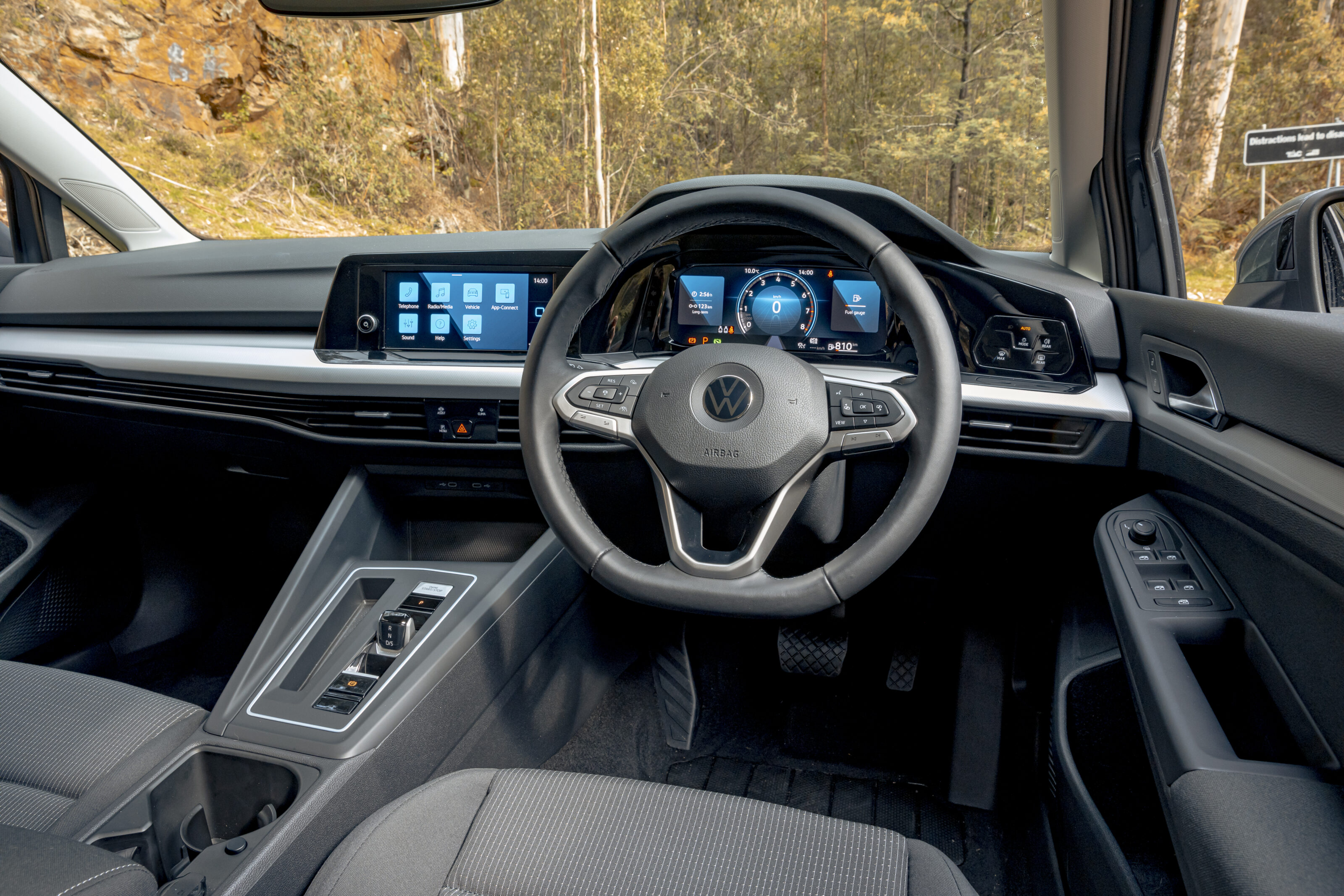
In terms of design, it checks out. However, in practice, menial adjustments like changing the climate control now become tasks requiring multiple inputs. Sans three shortcuts on the dash to the assistance systems, climate controls and park assist, most functions are manipulated via the 8.25-inch touchscreen. And there is no haptic feedback to give any assurance you’ve touched icons correctly. ‘If it ain’t broke, don’t fix it’ must not translate well into German.
Opting for the base model offers a surprising advantage when it comes to the steering wheel – physical buttons. All are clear and concise with a positive, old-school feel to them. In fact, it’s a tactile steering wheel with rake and reach adjustment, too. Controls for the auto headlights and demister reside in another touch-sensitive panel beside the instrument panel.

The 10.25-inch digital instrument cluster is a nicety, given it is standard fit. While not configurable for this model grade, the legibility is high and the information available is detailed. The graphics used are crisp and modern, while the central infotainment display is responsive. It’s easy to navigate the various folders and menus.
Apple CarPlay and Android Auto are standard, but you’ll need to spend more within the Golf range to use those features without connecting via the USB-C ports (four in total). There is no wireless charge pad either and, at this price point, it seems a little cruel not to include these features.
Opting for the base model offers a surprising advantage on the steering wheel – physical buttons with a positive, old-school feel to them

Given the 1789mm height and 2636mm wheelbase, the Golf is spacious and airy inside. Headroom in the back is generous, even for adults, while toe and legroom is generous. Visibility is also a strong point and easily outpaces some rivals – especially for rear three-quarter vision. It certainly makes car parks and general city driving less taxing with minimal blind spots.
A delight for rear-seat passengers is the surprise inclusion of not only air vents, but tri-zone climate control. And like up front, the door cards gain felt-lined bins so that the items they hold don’t cause rattles. However, there is no central armrest with extra cup holders, no map pockets and no cubby hole through to the boot.
Yet, there are small design touches that make you smile; like the lip on the 60:40-split rear seats to stop the seatbelt from moving when you have the pews stowed. In that configuration, there’s 1230 litres of cargo capacity and 374 litres when the rear seats are in place. A moveable floor creates a flat load bay and hides a space-saver spare wheel should you need it on the open road.

With the tried and tested MQB underpinnings, that’s somewhere you should take the Golf. Utilising a multi-link rear axle suspension setup (instead of a cheaper torsion beam) and MacPherson struts up front, the ride quality is impressive. It dispels city potholes with aplomb and has big-car waft at speed. The chunky sidewalls of the 205/55 Goodyear Efficient Grip tyres help here, too, and offer decent roadholding.
It feels like VW has chosen relaxation over engagement, so the damping doesn’t always quell mid-corner rebound movements as deftly as you’d expect. However, there is a GTI in the range for a reason. The dynamics are safe and confidence-inspiring, which is matched by steering that is light with a pleasing level of natural tactility. If you’re after something a little racier, the R-Line gains 15mm lowered suspension.

Opting for the R-Line doesn’t afford more grunt, though. All non-GTI Golfs are powered by a 1395cc four-cylinder turbo petrol engine with 110kW (5000rpm) and a meaty 250Nm. The Newton count is important as it endows the Golf with plenty of pulling power – and from as low as 1500rpm (to 4000rpm). It’s a very enjoyable powertrain.
The 1.4-litre turbo aids real-world driving in the sense that you don’t have to go searching for the redline to get meaningful performance. It’ll reach 100km/h in 8.5 seconds, which isn’t shabby for the class, while overtaking grunt isn’t left wanting. It’s a refined unit and doesn’t sound stressed, with overall NVH levels well suppressed.
What is new for the eighth-gen Golf is a move away from a dual-clutch transmission to an eight-speed torque-converter automatic. And fans of German engineering brace yourself because it’s a Japanese-built Aisin unit. You also operate it through a new lever that takes a lot of inspiration from the 992 Porsche 911.
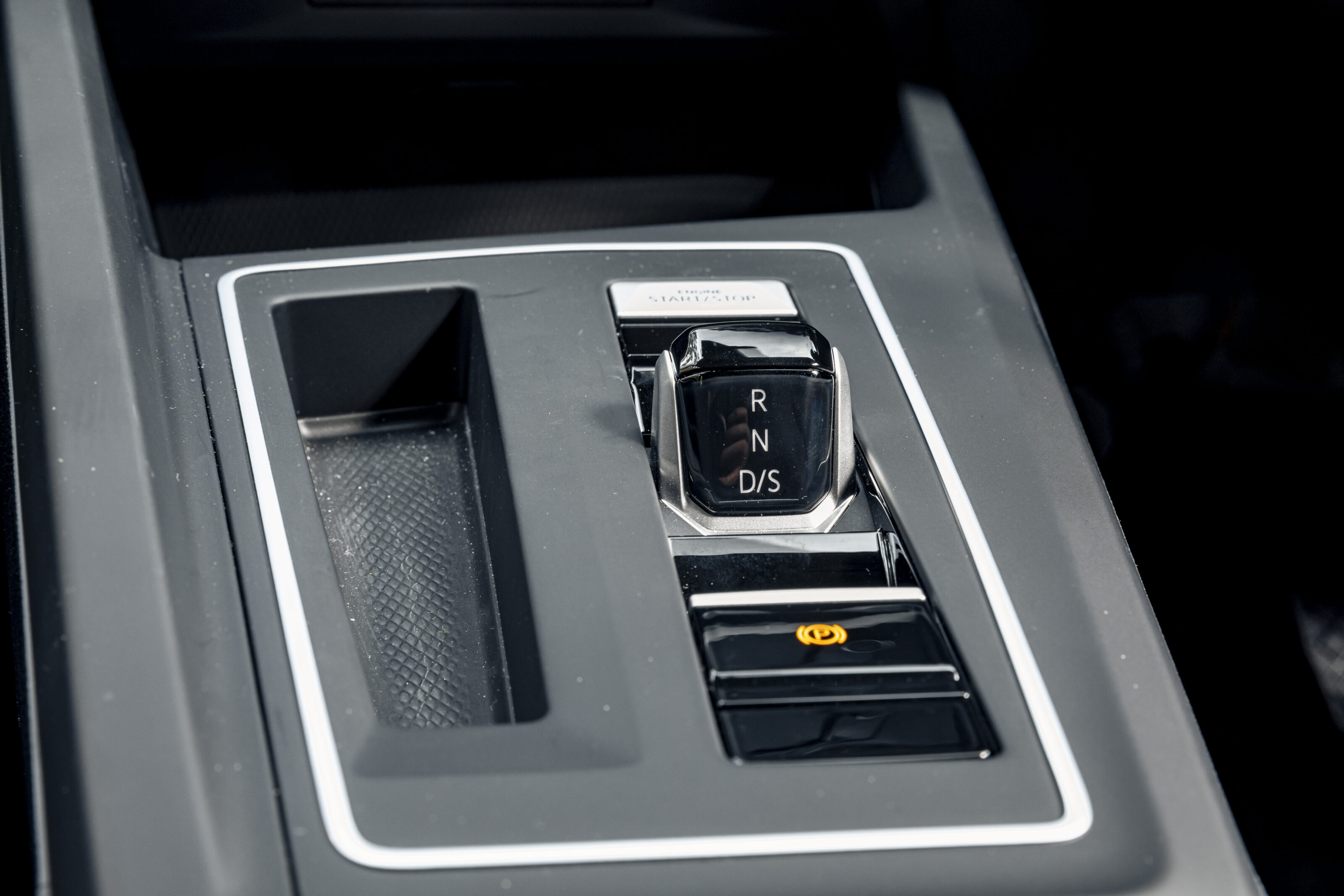
Ironically, the aggressive start/stop system almost mimics the old DSG moving into first gear as it jolts eagerly into life, but from there it’s a smooth unit – especially when left to its own devices. A Sport mode is available, as are steering wheel-mounted paddles, but it doesn’t really match the calming nature of the Golf. Best to avoid it.
An added benefit to the eight-speed auto (over the six-speed manual) is lower combined fuel consumption. The auto ’box achieves an impressive 5.8L/100km (0.2 litres better than the three-pedal option). And it’s a realistic marker, too, with our road testing returning 6.7L/100km without focusing on efficiency at all.
What is new for the eighth-gen Golf is a move away from a dual-clutch transmission to an eight-speed torque-converter automatic – a Japanese-built Aisin unit
In terms of running costs, Volkswagen offers either a five-year ($2100) or three-year ($1200) capped-price servicing plan. Choosing the former also includes the first scheduled visit for free. As for the warranty, it’s an industry standard five-year, unlimited kilometre deal.
In trying to surpass its own high watermark by introducing touch-sensitive tech, VW has taken a step back in ergonomics. Keep your eyes peeled for the Mk8.5 because it’ll be interesting to see if this path remains. Some also won’t stomach the base model’s price rise, either.
However, the abundant standard safety kit should be thoroughly applauded. That, as well as the fact the new generation retains its premium edge, pragmatism and assuring dynamics. The fact there’s enough ‘Golfness’ still in the mix means the Mk8 Golf hits its, ahem, mark.
- Introduction: Standing Out
- Month 2: Inside Job
- Month 3: Peeling Out
- Month 4: Hello, Good Thanks
- Month 5: Over and Out – Farewell
Introduction: Standing Out
Newman’s new Kia Stinger GT is hard to miss
I have been known to lose cars in carparks. Not going shopping or anything hare-brained like that, but the long-term airport parking is a killer. Obviously it hasn’t been a particular problem in recent times, but nevertheless as the world returns to normal it’s a comfort that a lime green Mustang has been replaced by something equally vivid.
I haven’t seen anything quite as orange as ‘my’ new Kia Stinger GT since dear Donny T was a regular fixture on the evening news, but I find the sight of this Neon Orange Kia much more appealing.
The Stinger GT has always been a good looking car in my opinion, albeit better suited to some colours than others, but the facelift applied as part of its recent mid-life update has ratcheted up its desirability.
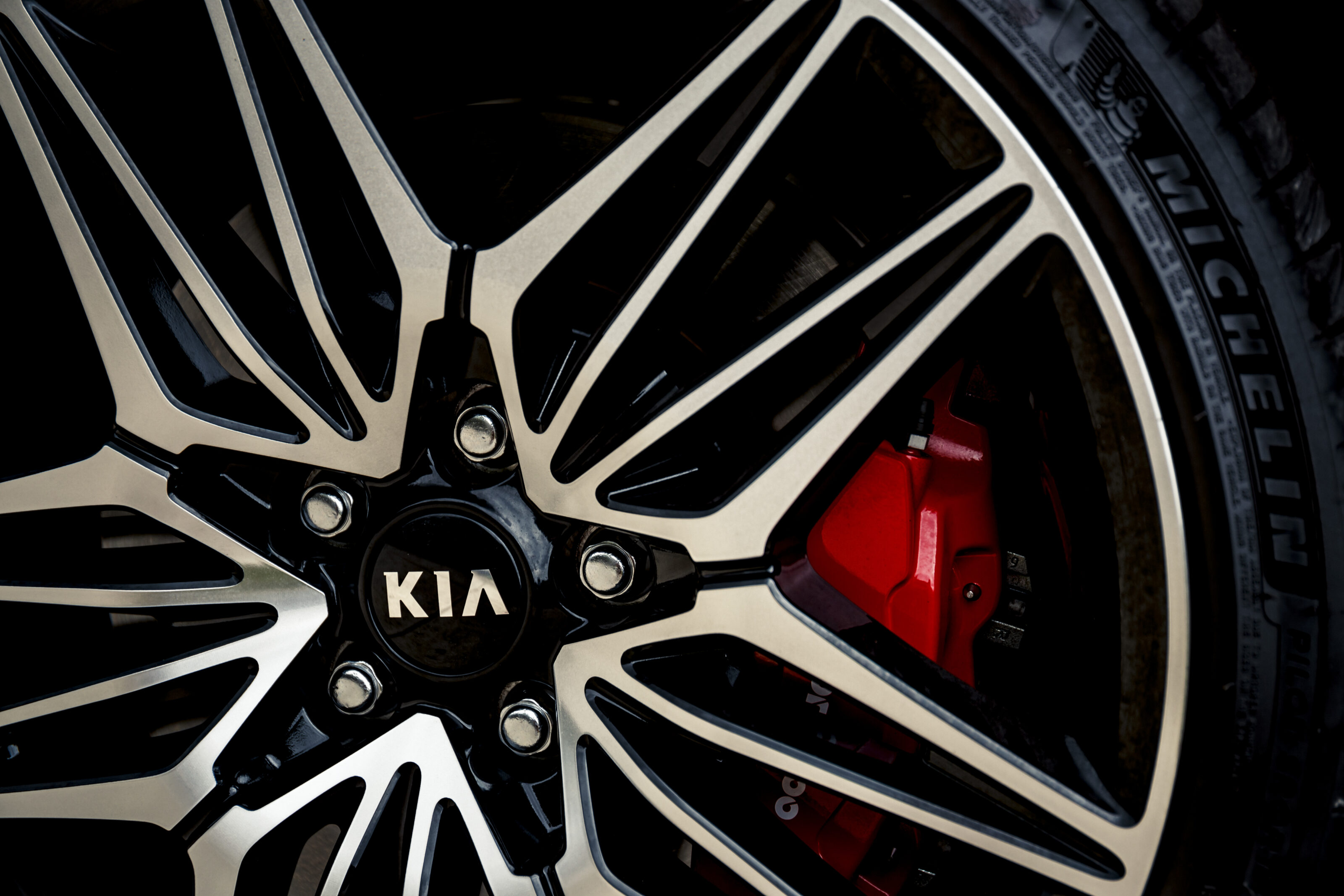
The changes have been relatively subtle, but the new slimmer-spoked wheel design suits the car well and the full-length LED strip at the rear will fool plenty into thinking they are following an Audi A7 at night.
Although the GT needs all the help it can get; since its introduction in 2017 just 6350 examples have been sold (as of the end of February 2021) though sales have been pleasingly steady, the three full years accounting for 1957, 1773 and 1778 sales from 2018-2020 respectively.
It’s a mark of how buyers have abandoned the large, rear-wheel drive performance segment that these figures are considered reasonable. By way of comparison, Kia sold more than 20,000 Carnivals. Granted, quite a few of those will be fleet sales, but around four times as many people want a Kia with eight seats than with a twin-turbocharged V6 and rear-wheel drive.
Kia is not discouraged. According to Thomas Schemera, head of product division at Hyundai Motor Group: “The Stinger remains the standard-bearer for the Kia brand. It remains our most driver-focused car and is capable of covering great distances in comfort and style.”
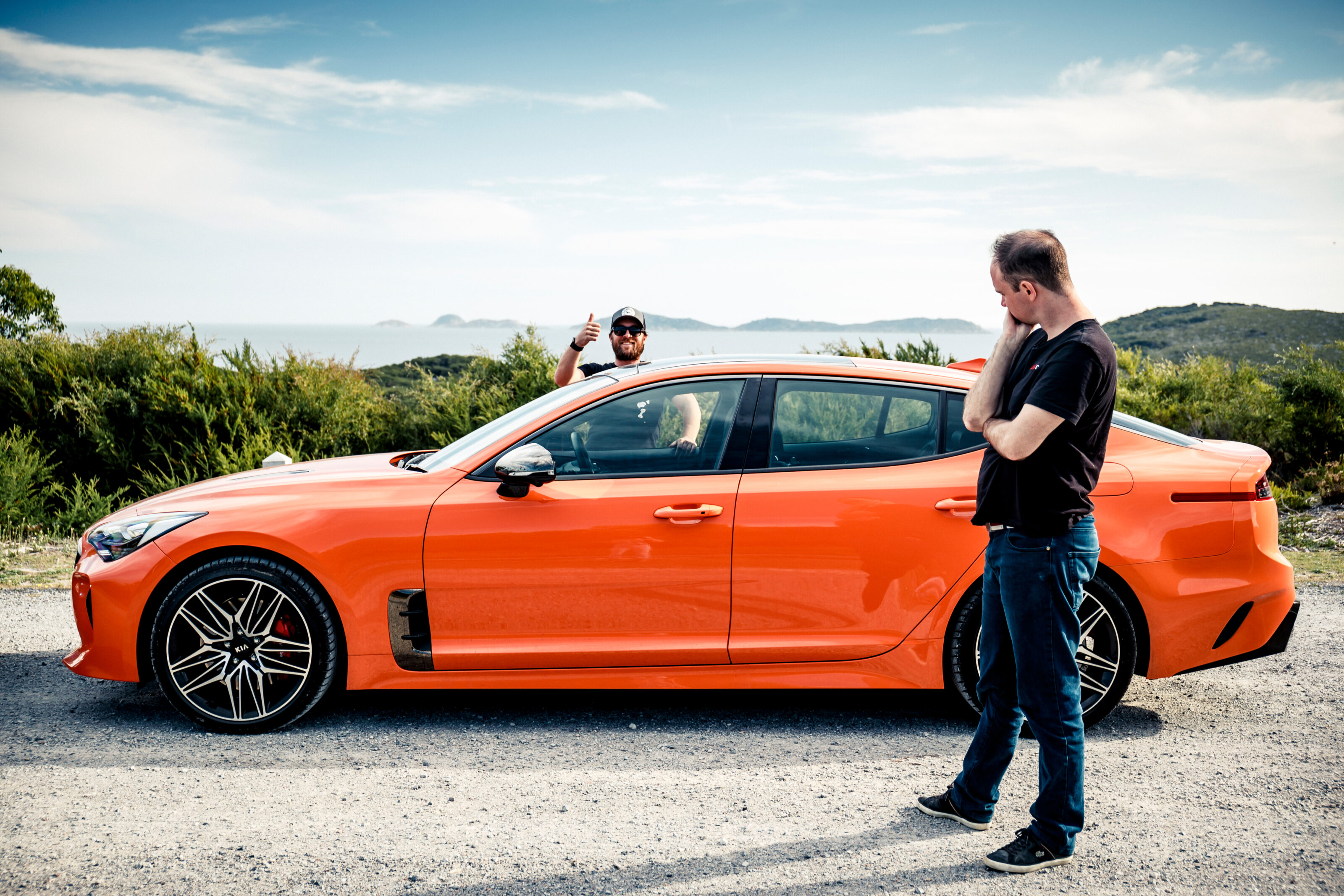
“The Stinger GT has always been a good looking car”
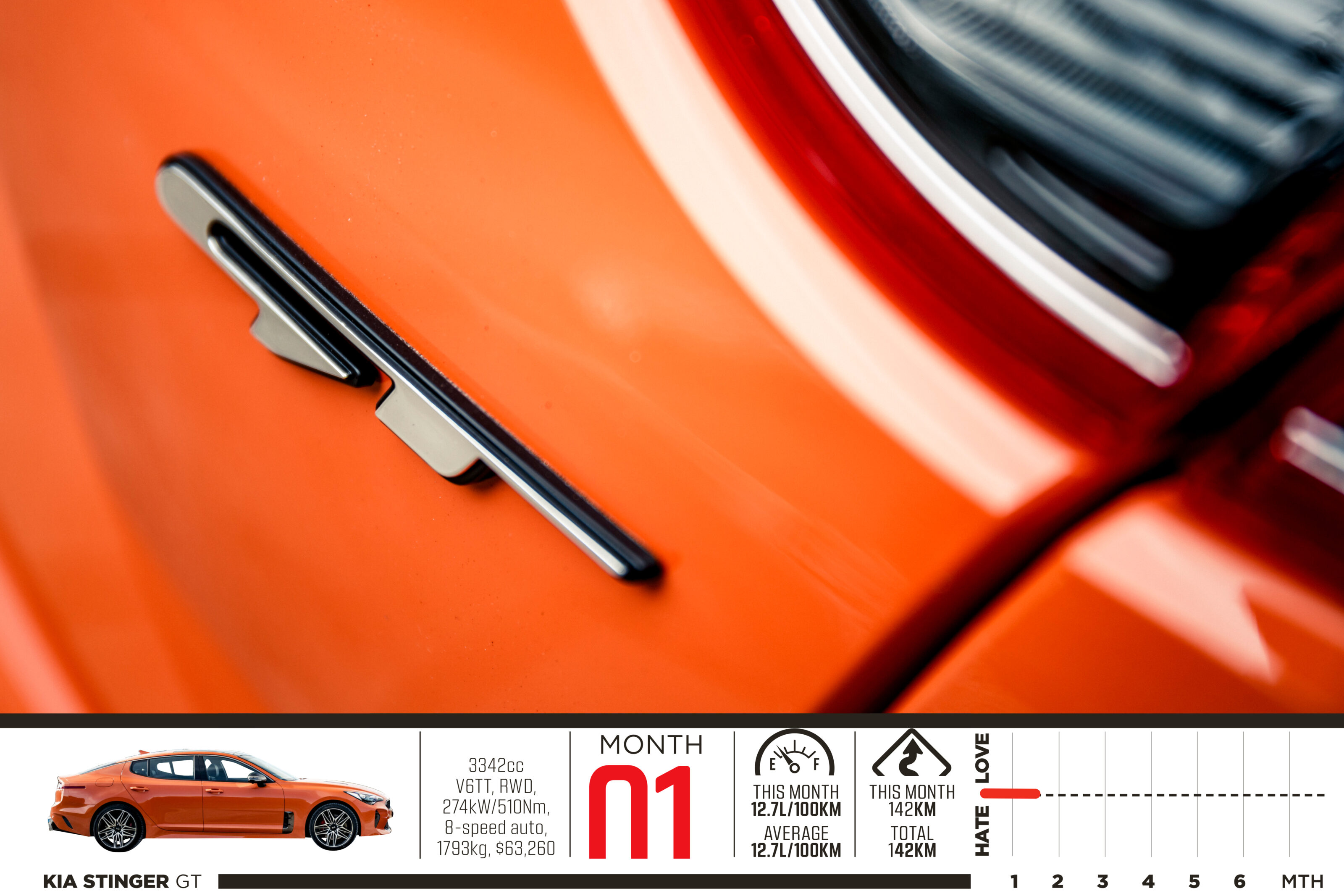
The range has shrunk slightly from six variants to four, both the unchained 182kW/353Nm 2.0-litre four-cylinder and 274kW/510Nm 3.3-litre V6 models available in an entry-level ’S’ and fully loaded GT-Line (I4T) and GT (V6TT) specification. The latter scores an extra 2kW thanks to the introduction as standard of an electronically actuated bi-modal exhaust.
Nine colours are available across the range, with a 10th – Aurora Black Pearl – limited to the top-spec variants at a cost of $695. Prices have lifted slightly, the GT now $63,260 or $66,690 driveaway. Kia’s excellent seven-year, umlimited-kilometre warranty applies and a seven-year capped price servicing program is also available at a cost of $4243 over the seven years, though the services themselves range in price from $350 for the first and $952 for the seventh. Servicing intervals are 12 months or 10,000km, whichever occurs first.
Kia has pushed all its active safety chips in with the new Stinger. As well as the usual auto-emergency braking (AEB), active cruise control, blind spot warning etc. there is now cyclist detection and junction assist, which detects oncoming traffic when turning, improved lane keeping assist with road edge detection, lane follow assist to keep the vehicle centred, blind spot collision avoidance, rear cross-traffic assist and a blind-spot view monitor, which shows the side of the car in the 7.0-inch TFT digital instrument display when the indicator is activated.
Safe exit warning also uses a sound and display to warn if a vehicle is approaching when exiting the car, but whether this cornucopia of systems is subtly helpful or intrusive remains to be discovered.
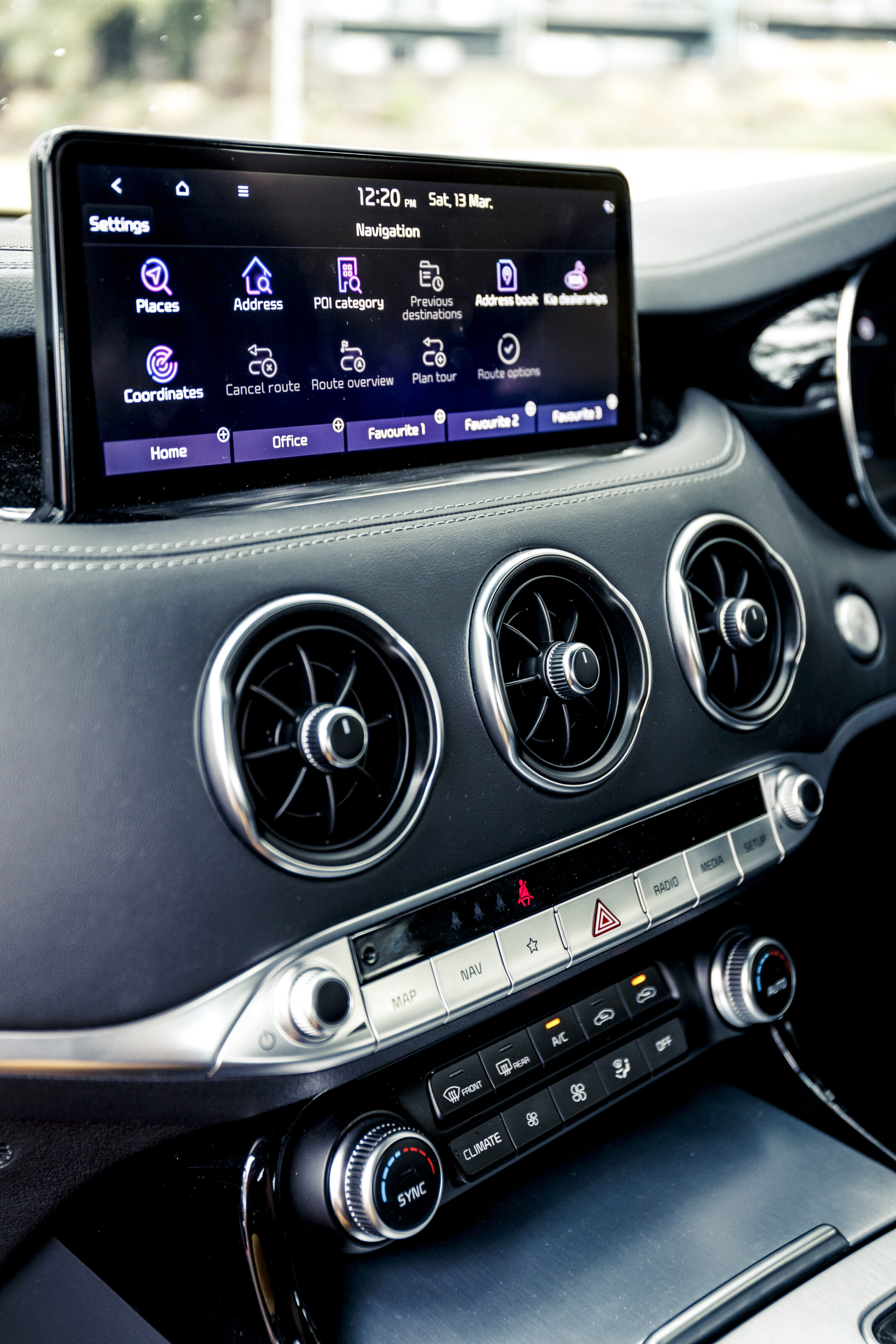
Inside there’s a larger 10.25-inch infotainment touchscreen with smartphone mirroring and multi-connection Bluetooth, allowing one device to be used for music and another for phone calls, 64 mood lighting colours, remote engine start using the new smart key, a frameless rear-vision mirror, power tailgate that can be set to four different heights while the eight-way adjustable front seats are covered in Nappa leather and heated/cooled.
Mechanically it’s basically all as before, but there’s plenty of good stuff including Brembo brakes (350mm front discs and four-piston calipers with 340mm rear discs and two-potters), adaptive dampers and a limited-slip diff, but there’s been a tyre upgrade to Michelin Pilot Sport 4s.
However, these tyres are the reason that I haven’t had much time behind the wheel, as a shop mix-up left the car with three Pilot Sport 4s and one 4 S. With that rectified, next month it’s time to drive. – SN
Things we love
- Rear-drive fun
- Bold colour
- V6 twin-turbo
- Wrong tyres
- Lack of kays
- Conspicuous
Update One: Inside Job
Does the Stinger tick the daily-driver box?
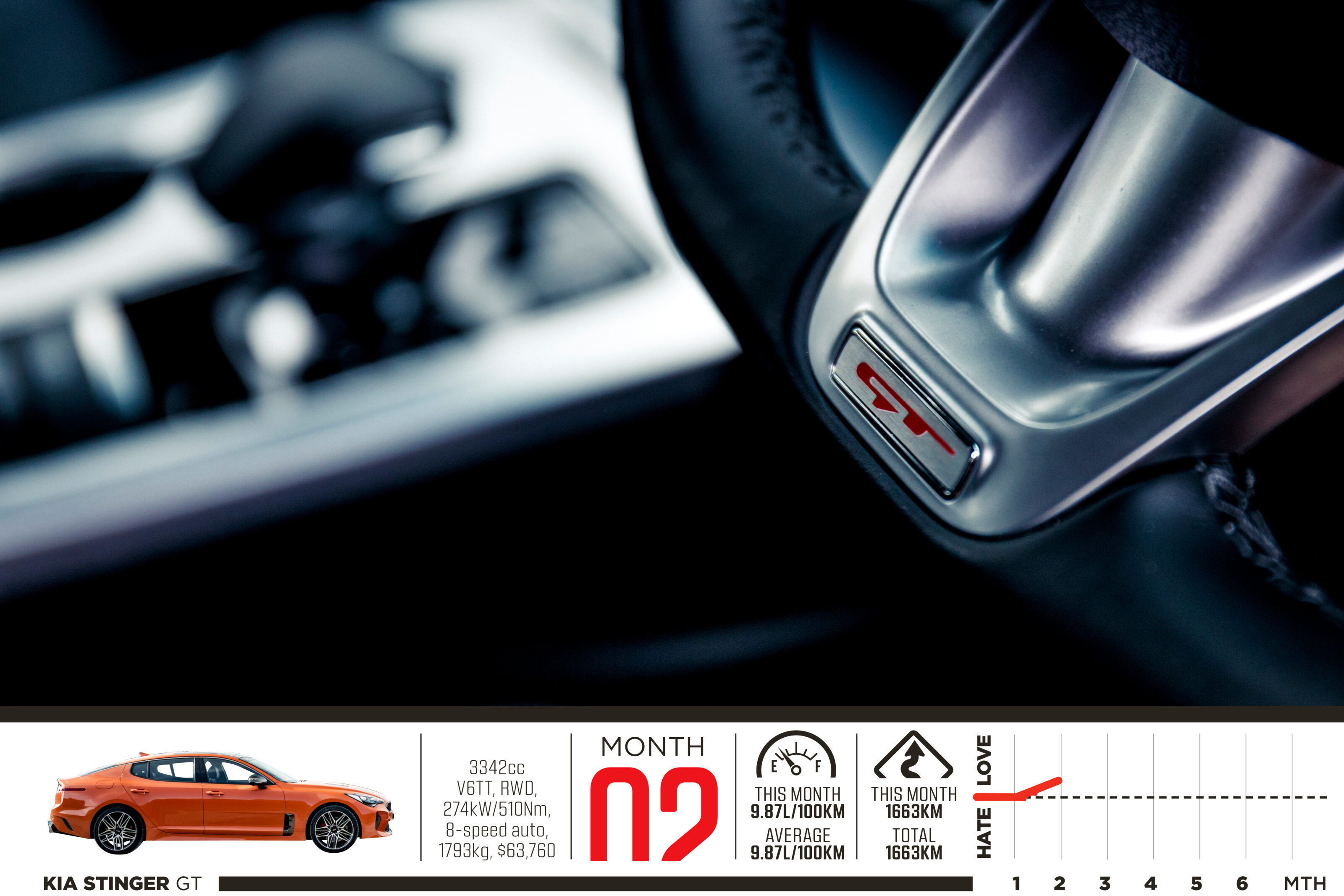
with last month’s mix-up rectified, plenty of kilometres have passed beneath the now-matching tyres of the Stinger GT. None of them have been particularly exciting, but that’s the point of a long-term test, to live with a car day-to-day, and Kia’s sports sedan-cum-hatch has passed, though not necessarily with flying colours.
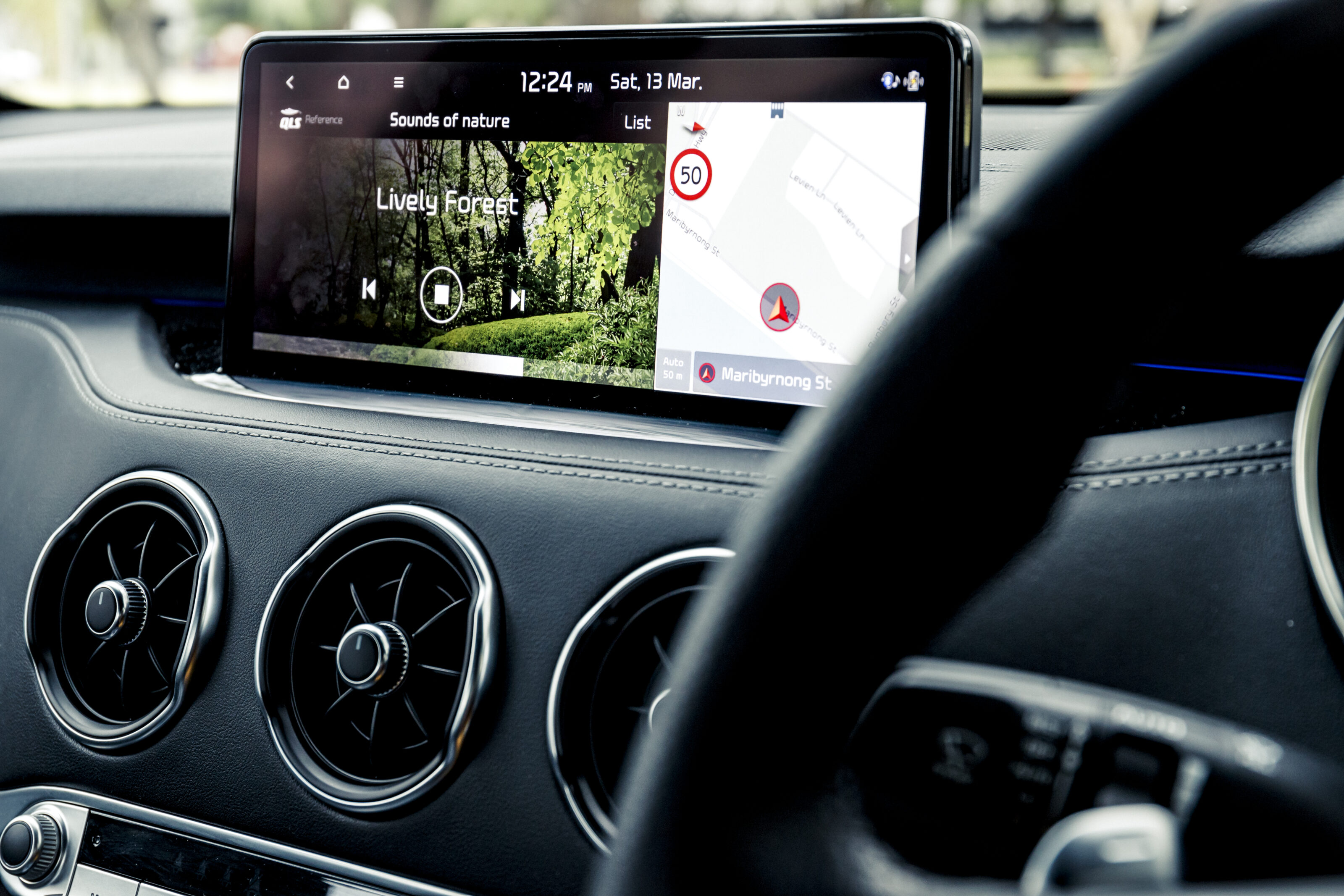
Let’s start with the good stuff first. I’m a big fan of the new 10.25-inch infotainment touchscreen. It’s a bit of a stretch if you’re choosing functions on the left-hand side of the screen, but the fact it can split the display and use two-thirds for smartphone mirroring and the remaining third to show a car function is helpful.
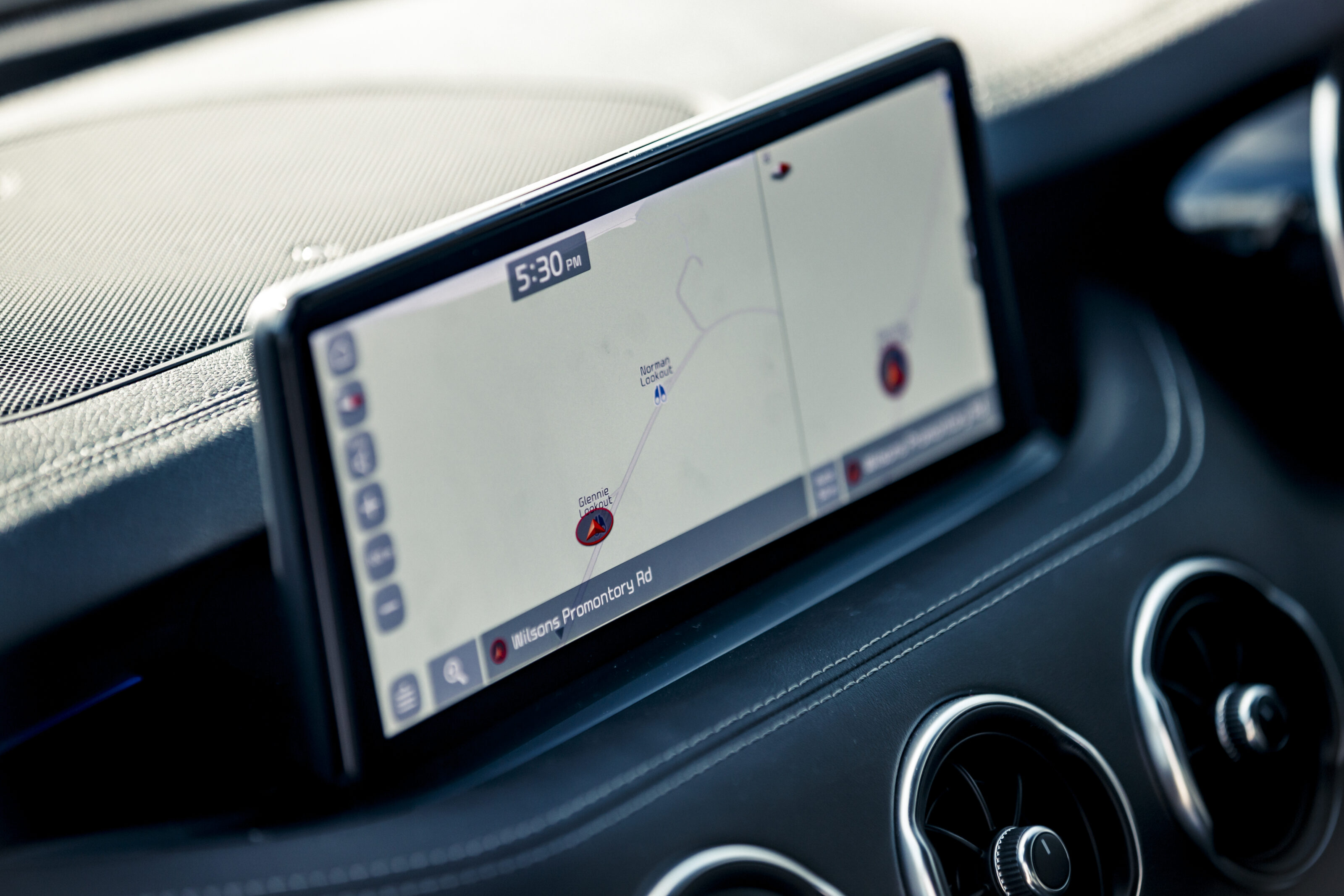
The on-board sat-nav is also very good, even when it’s not being used. Let me explain. The map is three-dimensional and the screen resolution is good enough that street names are displayed clearly, which really helps and allows you to find a destination without necessarily going to the effort of inputting the exact address.
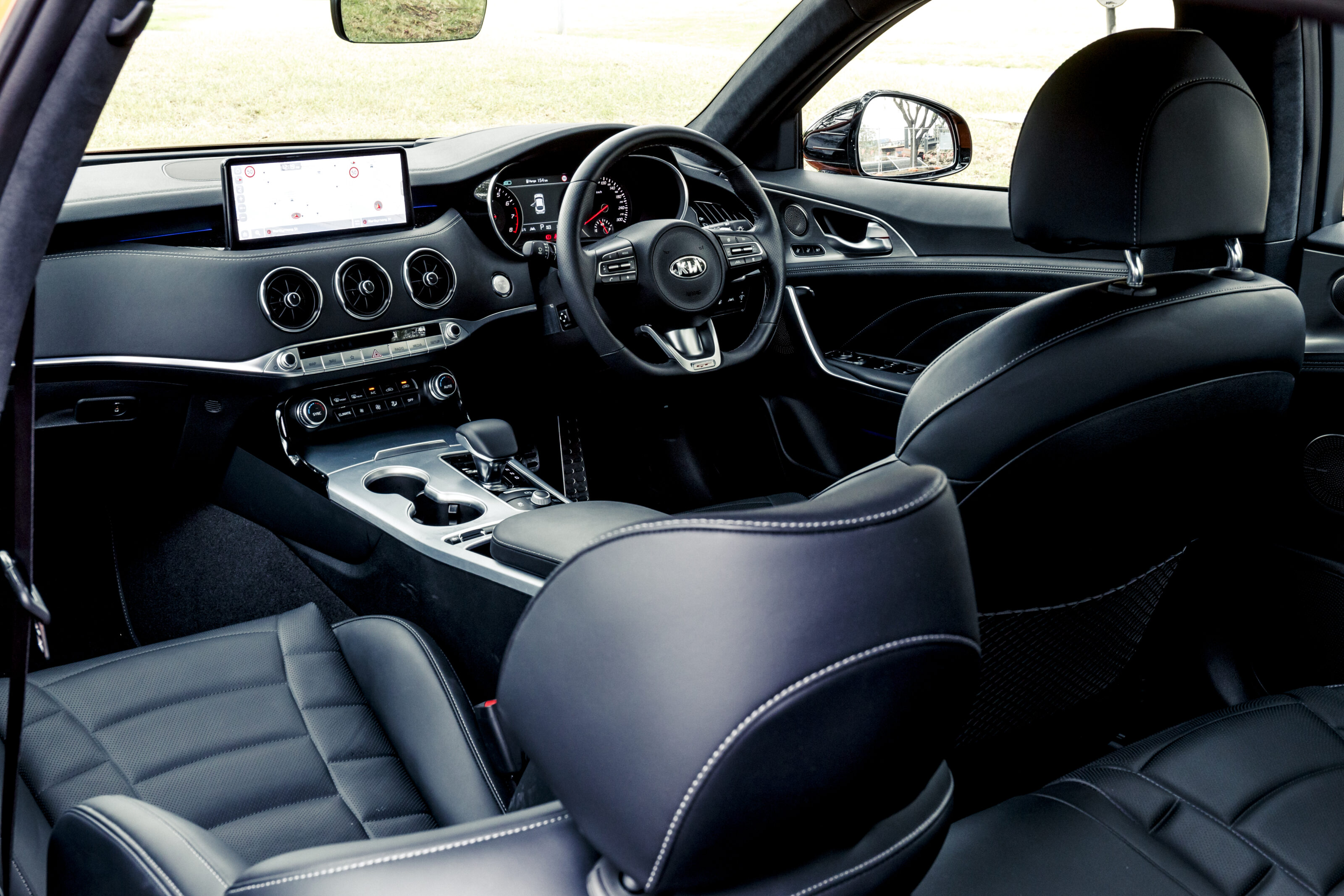
But wait, there’s more. The driver’s seat can be set very low and the position is widely adjustable for all shapes and sizes. I’m still making minute adjustments, partly because the electrically adjustable steering column comes out a long way which means the seat can be reclined more than in most cars.
The seats are heated and ventilated and both features have been utilised in consecutive weekends thanks to Melbourne’s up-and-down autumnal temperatures. Heated seats are surprisingly difficult to get right – Honda’s, for instance, are like sitting on a BBQ grille – but the Stinger’s max setting is beautifully toasty.
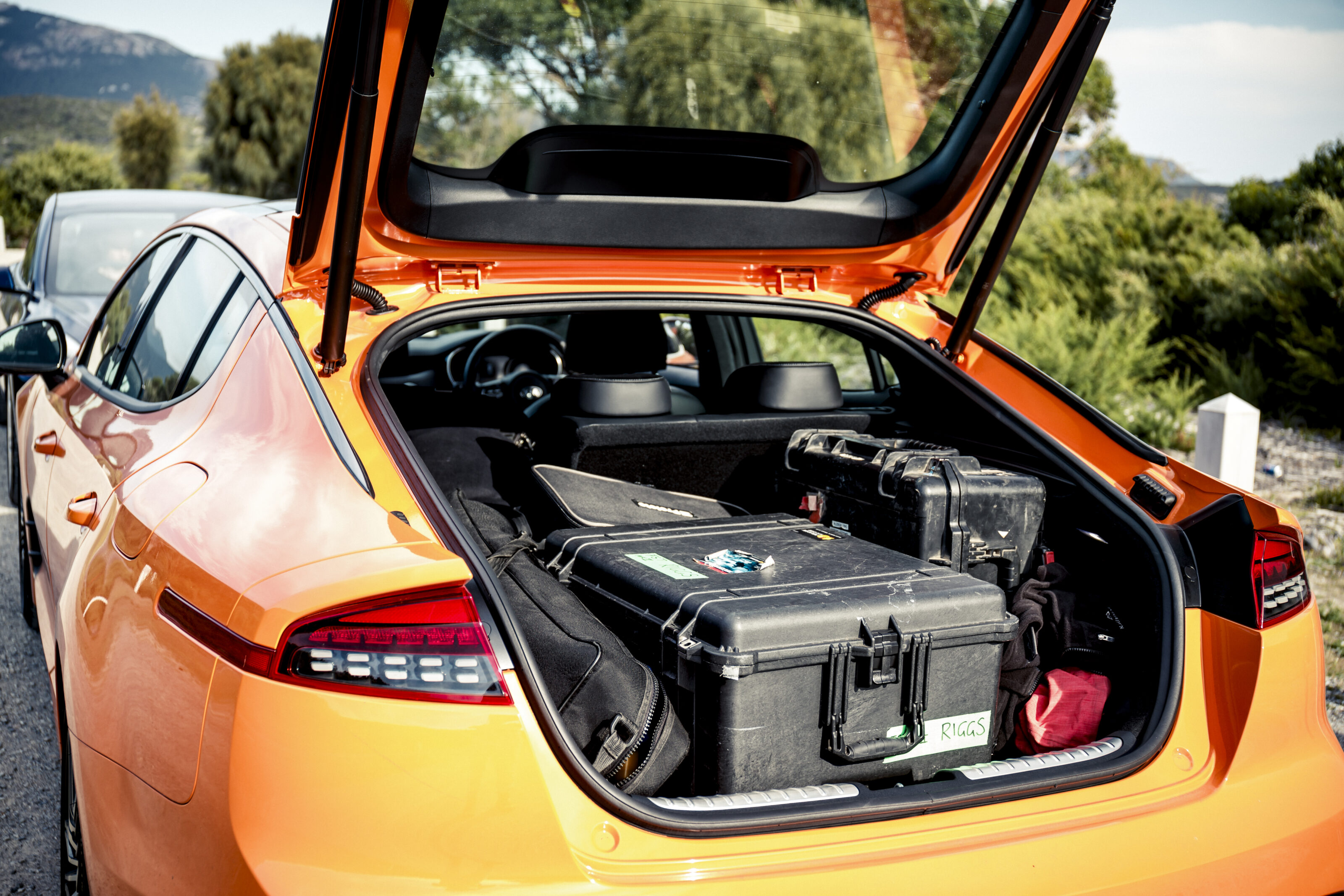
Another neat feature was discovered by accident. With arms full of dog the tailgate suddenly opened of its own accord; I assumed it must have the foot-operated remote opening that’s increasingly commonplace, but further experimentation – consisting of waving my leg around behind the Stinger like an attempt at a drunken chicken dance – proved futile.
Digging into what is possibly the world’s thickest instruction manual revealed that the leg-wiggling isn’t necessary; simply stand behind the locked car for three seconds or so and the tailgate will open on its own, which is a very handy feature if your arms are full of shopping (or dog). The 406-litre boot isn’t as big as you might expect, but dropping down the 60:40-split rear seats is the work of a moment to expand the capacity to a cavernous 1114 litres.
Now for not so much a complaint as an observation. The trouble with Kia’s rapid ascension is that within a model cycle its previous best can look a little second-hand. When the Stinger first landed it was rightly lauded as a significant step forward for Kia interior design, with its improved surfaces and premium touches like the Mercedes-esque trio of circular vents in the centre of the dash. Trouble is, sit inside the latest Sorento or Carnival – let alone the forthcoming electric EV6 – and you’ll see that Kia continues to take massive strides forward in both design and material quality.
On the move ride comfort is good but not great, the suspension struggling to cope with choppier surfaces and feeding this back to the occupants. The auto ’box can be slightly lurchy, particularly on upshifts, though this is really a nitpick, but there’s always plenty of grunt on tap – this is a fast car.
Display some restraint, however, and the 3.3-litre twin-turbo V6 is impressively economical, this month’s 9.87L/100km average including one tank at 9.0L/100km and highway running saw figures in the mid-8s. That’s impressive.
The biggest bugbear by far, something that’s been commented on by everyone who drives the Stinger, is the lane-keep assist. It’s extremely aggressive and easily triggered, which technically means it’s doing its job but the calibration isn’t conducive to how most cars are driven. It’s turned off at the start of every journey (because it annoyingly turns on each time, which is presumably a requirement of various regulations) which defeats the purpose of having it.
A larger issue is the fact that enthusiasts like you or I understand the technology and therefore what’s happening, but what does the average driver think when the steering wheel starts wrestling with them and steering the car with a mind of its own? A fairly significant cause for alarm, I would’ve thought. Next month we’ll up the tempo and throw the Stinger around some corners. Stay tuned. – SN
Update Three: Peeling Out
With four matching tyres, Newman does his best to destroy the rears
I’ve been seeing Kia Stingers everywhere. As far as I’m aware there’s not a term for this phenomenon, though there should be as it undoubtedly exists. Whenever a car enters your life that particular model suddenly becomes particularly prevalent; I reckon I’ve probably seen maybe a dozen Stingers over the past few years, perhaps a couple more, but ever since I’ve had this long-termer you’d swear it was one of Australia’s best-selling cars. It’s not.
It might be part of some clever manufacturer scheme. Once you’ve bought a car (or blagged a free one in this case) the manufacturer sends out a fleet of similar variants to follow you around and make you feel special, like you’ve become part of some sort of club. So far there’s only been one acknowledgement from a fellow Stinger driver, though, a middle-aged gentleman raising a finger of recognition, thankfully not the middle one.
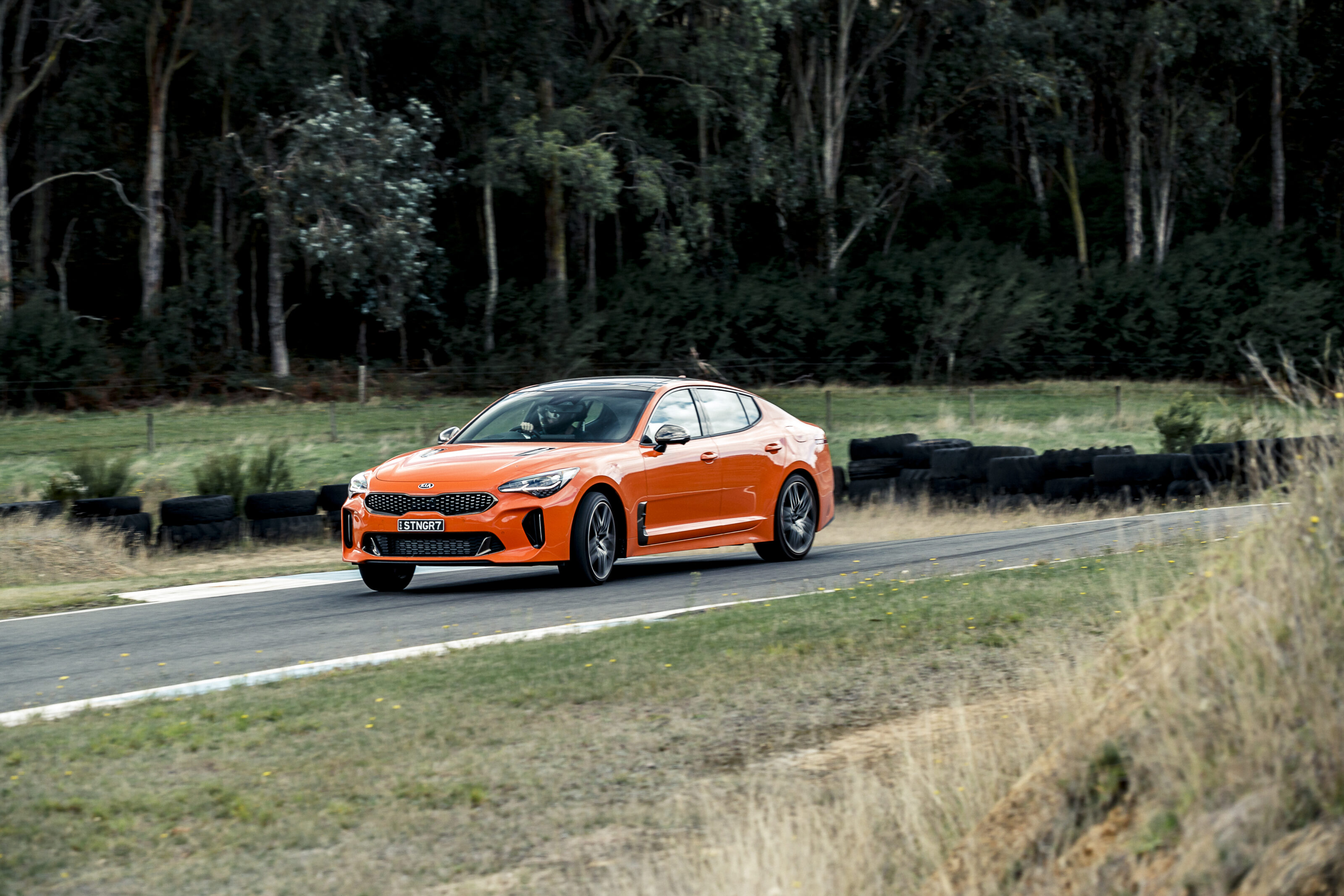
Anyhow, I digress. The Stinger’s USP is its rear-wheel drive layout. Theoretically, it should be the perfect candidate for satiating Aussies’ thirst for a practical, powerful machine that subscribes to the ‘two turnin’, two burnin’ mantra. To test this hypothesis we have the Bryant Park hillclimb circuit (Haunted Hills) which should tell us everything we need to know about the Stinger’s behaviour at the limit.
Why not Winton or such? To be honest, the Stinger GT is not a track car. Nor was it designed to be, so that’s fine, but given the brakes aren’t overly fond of circuit work there’s no point toasting them to find out what we already know! Being slower, tighter and twistier, Haunted Hills is much closer in character to a typical road and also easier on the gear.
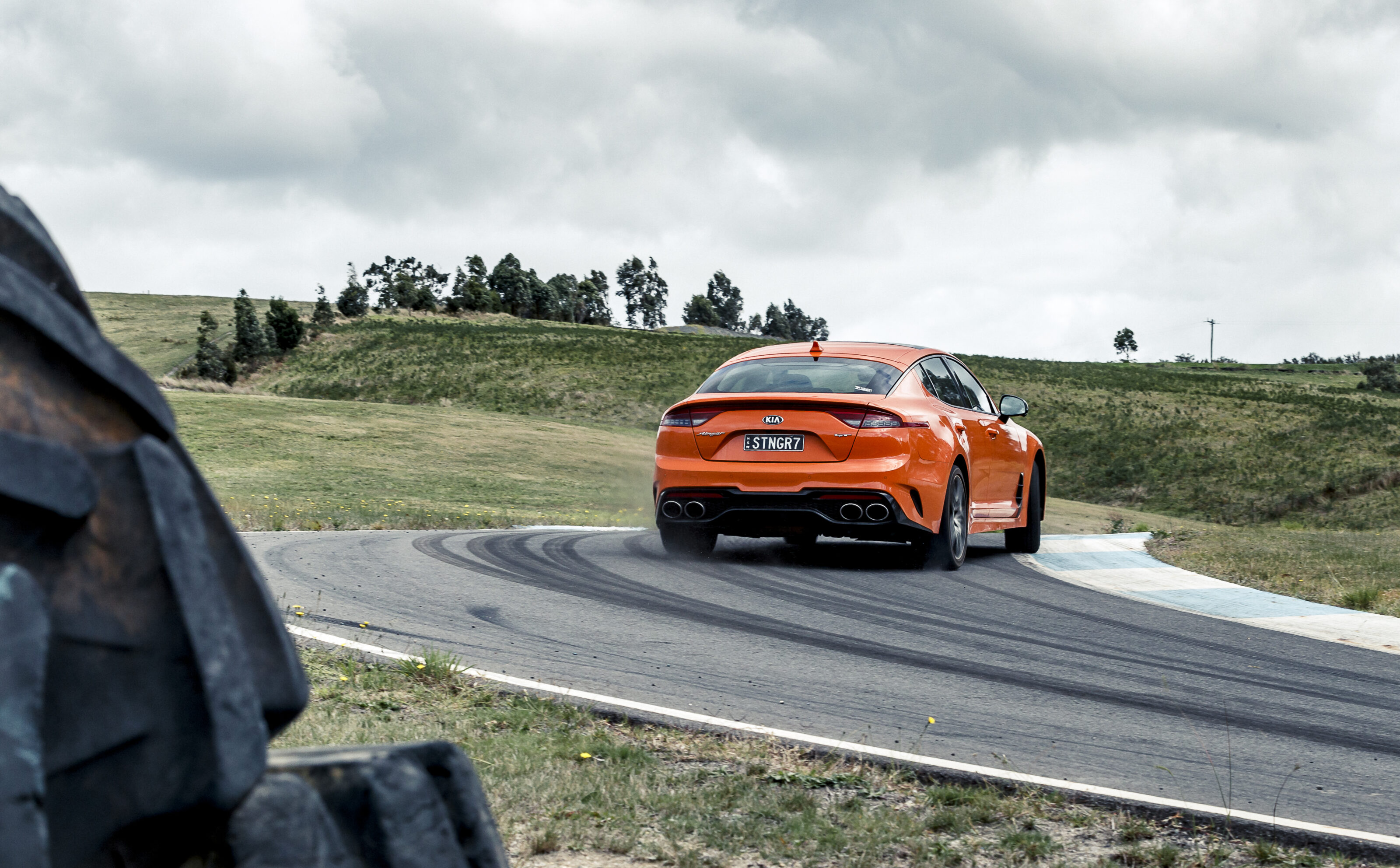
To have any fun at all in a Stinger you need to select Sport mode, the car signalling its approval by having the driver’s seat give you a hug as it tightens the active bolsters. Sport mode allows the deactivation of the stability control, which is necessary for Kia’s sport sedan/hot hatch (it’s technically a five-door…) to show its true colours, as in other modes it’s very restrictive.
The Stinger has a custom mode that allows the driver to mix ’n’ match different settings, but because the stability control is linked to Sport chassis instead of Sport engine you might as well select the do-it-all Sport mode. This also livens up the throttle response, adds some unwelcome weight to the steering – though in reality it’s not too bad – and firms up the adaptive dampers quite significantly.
I set off for a lap time because, well, why not? The end result is a 1min4.4sec lap which is pretty handy. An HSV Clubsport Track Edition managed a very similar time a few years back, though more recently it’s about a second quicker than the base GR Yaris. Given Haunted Hills is heavily biased towards handling over power, that’s a pretty good result.
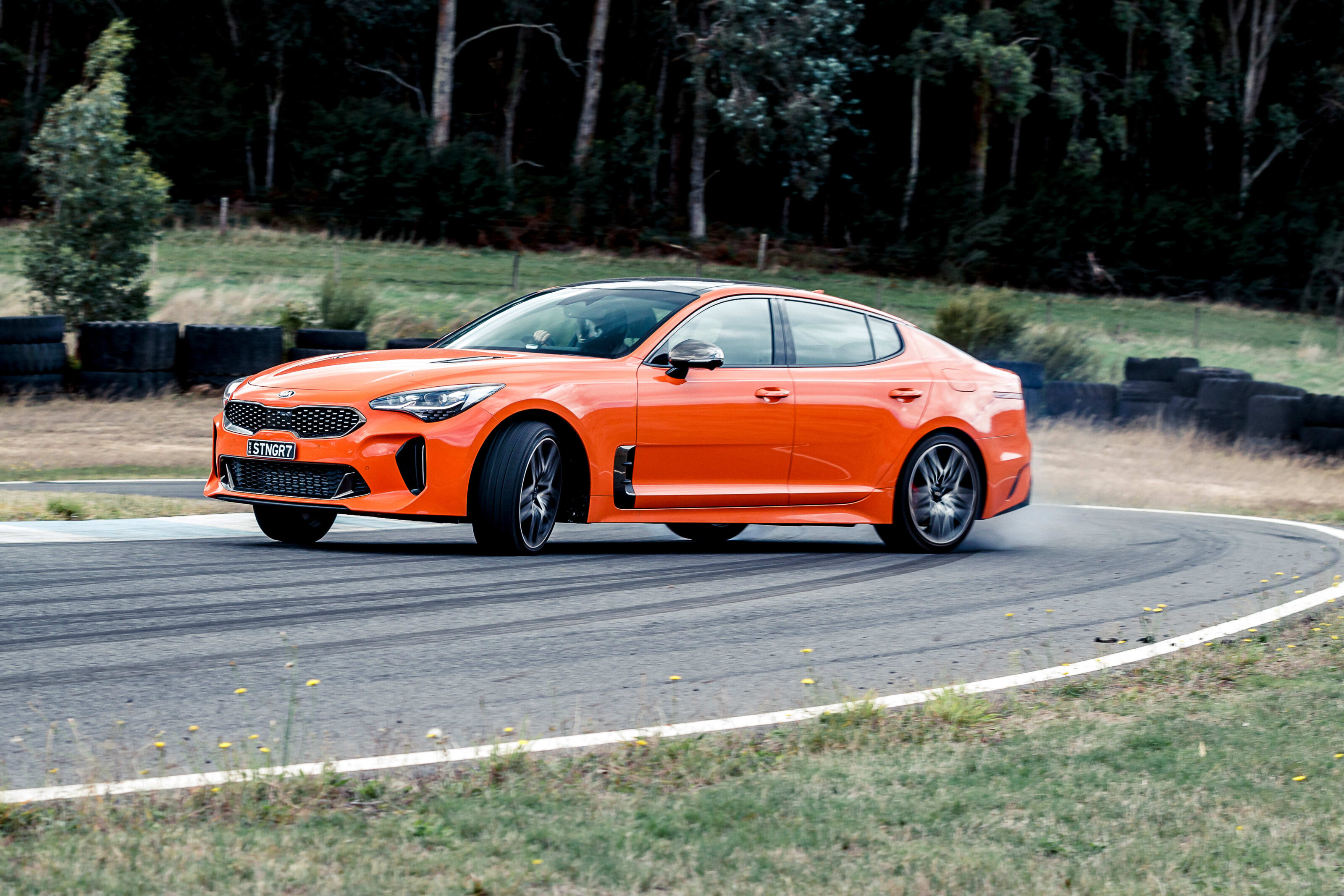
Power is certainly something the V6-powered Stinger isn’t short of. When the massive hit of twin-turbo torque arrives it’ll vaporise its rear tyres at will, which is hilarious fun, though certainly not the fastest way. Happily, when you do want to drive neatly the facelifted GT is now more happy to accommodate.
The original V6 could be a wild and wayward ride, with a looser rear end than a twerking Tik Tok addict. It’s an inherent trait, but it was exacerbated by the Continental Conti 5P tyres, which were an older design and struggled to contain the power and weight of the Stinger.
Kia cheekily replaced the Contis with Michelins for the original press launch, but happily Pilot Sport 4s have made their way onto the standard-fit list for updated V6 Stingers. The sportier ‘S’ specification would be even better, but let’s not look a gift horse in the mouth. The Michelins give the car a more stable, trustworthy base and grip no longer just disappears.
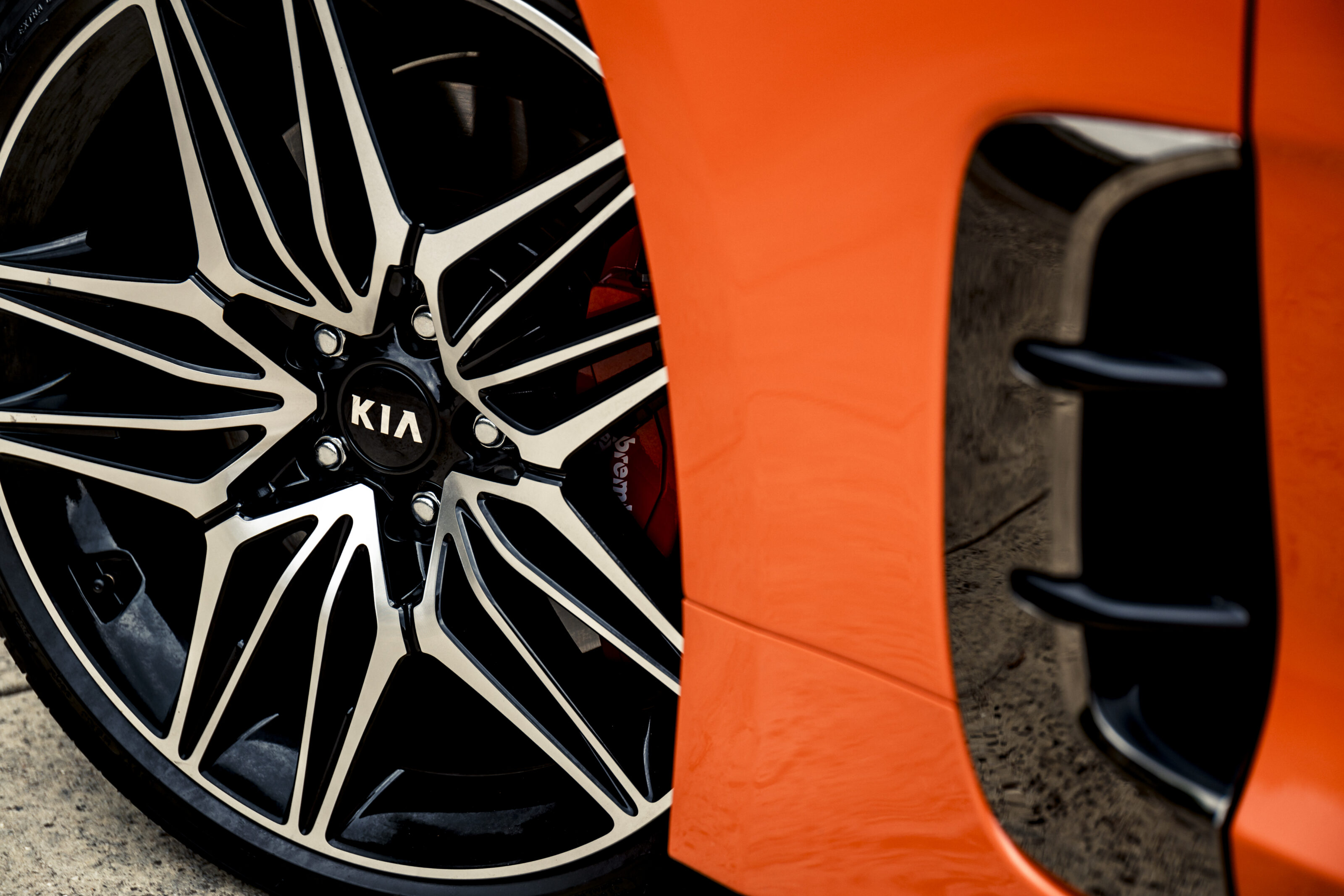
Selecting Sport for the dampers makes them extremely stiff; even on the smooth circuit surface the Stinger hops and skips over small imperfections, but overall it controls body movements well enough.
Small tweaks haven’t turned the big five-door Kia into a natural track athlete but they have undoubtedly improved its composure and it’s plenty of fun in an environment such as this, especially for those who have traditionally coveted powerful rear-wheel drives.
Next month a long road trip is on the agenda, which may provide a chance to think up a term for the Stinger’s sudden proliferation. – SN
Things we love:
- Bulk grunt
- Rear-driveness
- More grip
- Non ‘S’ tyres
- Brakes just ok
- Too-firm damping
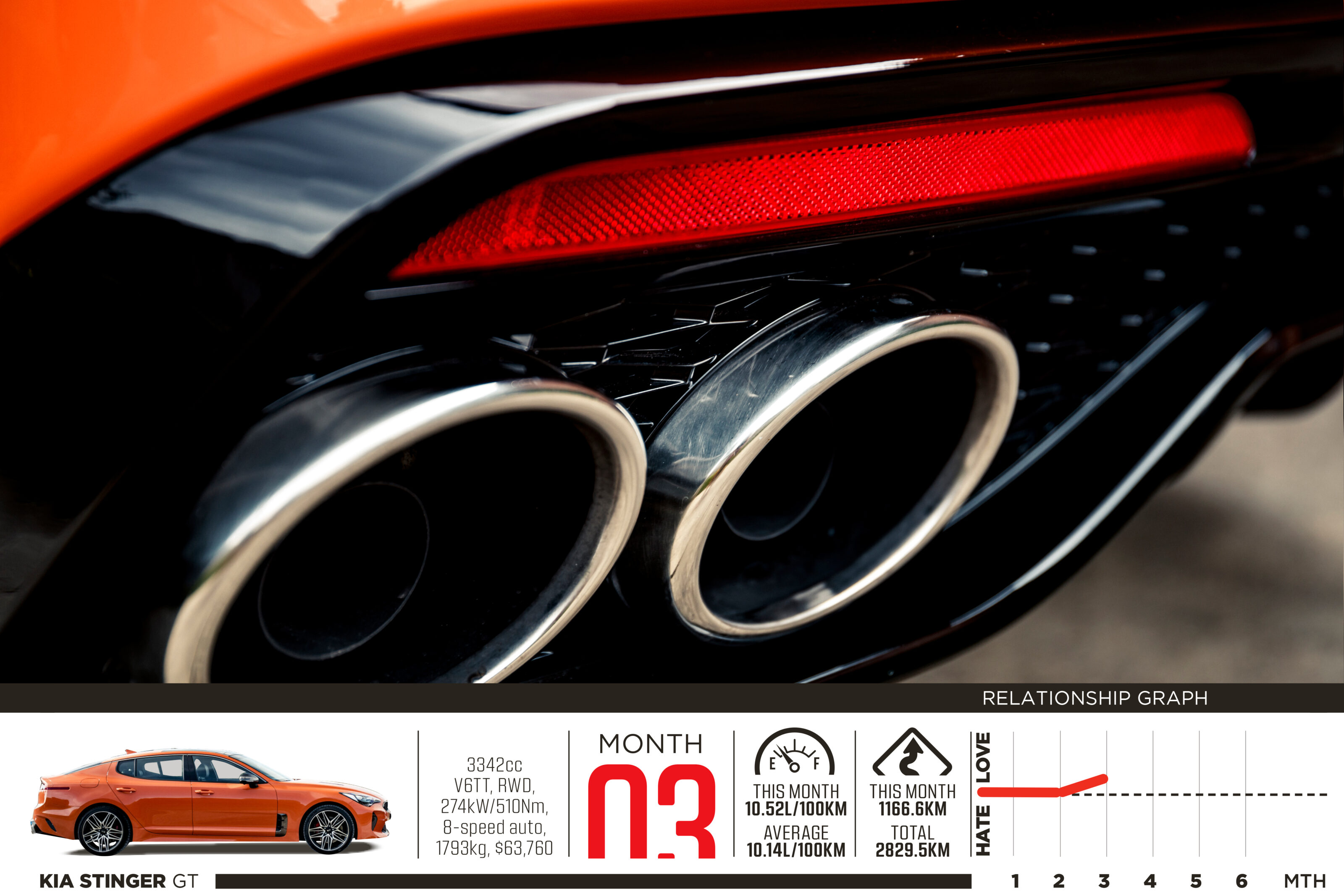
Update Four: Hello, Good Thanks
Ubiquitous question gains a rather apt response
“So, what’s it like?” It’s been a common question during my time with the Kia Stinger and it’s easily answered.
“It’s good…” I say, but it’s a reply that is usually met with a somewhat crestfallen look – it seems the enquirer is usually expecting something better than ‘good’.
There’s nothing wrong with good, for the Stinger has plenty of attractive qualities, but what’s holding it back from being excellent or even truly great? Stay tuned.
Last month’s brief circuit outing was instructive in examining how the Stinger behaves at the limit, but it’s not a car intended for track use so its road manners are far more important. I covered off its everyday abilities in update two, but some longer trips on more interesting roads have played to the Stinger’s strengths in some regards and exposed its weaknesses in others.
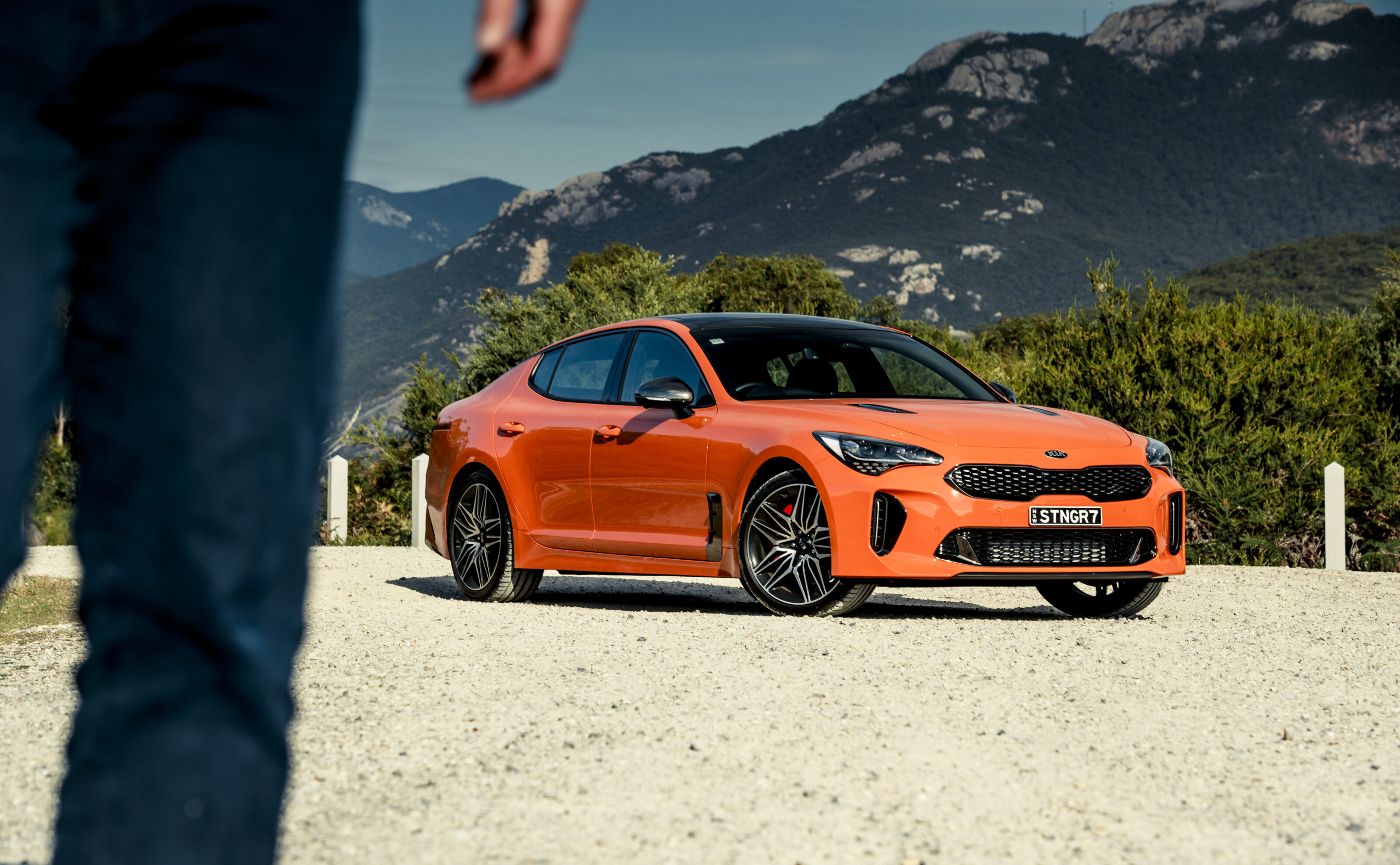
In its standard Comfort mode Kia’s hi-po sedan-hatch does a fine job of picking up the baton dropped by our now-departed Aussie performance cars like the Ford Falcon and Holden Commodore. It’s able to dispatch long drives in a relaxing manner, the adaptive dampers successfully soaking up most bumps in a controlled fashion, the widely adjustable ergonomics providing a comfortable driving position and the twin-turbo V6 happy to tick along in eighth gear or dispatch overtaking manoeuvres in short order when kicked down to third or fourth.
The engine is the heart of the Stinger. It would be nice if it had a little more aural personality; despite the fitment of the sports exhaust, full-throttle results in plenty of induction whoosh but not much in the way of actual noise, from the inside at least. Spectators are treated to a bit more smooth bent-six growl. Nevertheless, when those 510 Newtons hit – available from just 1300rpm! – and forcefully push you down the road you can’t help but smile.
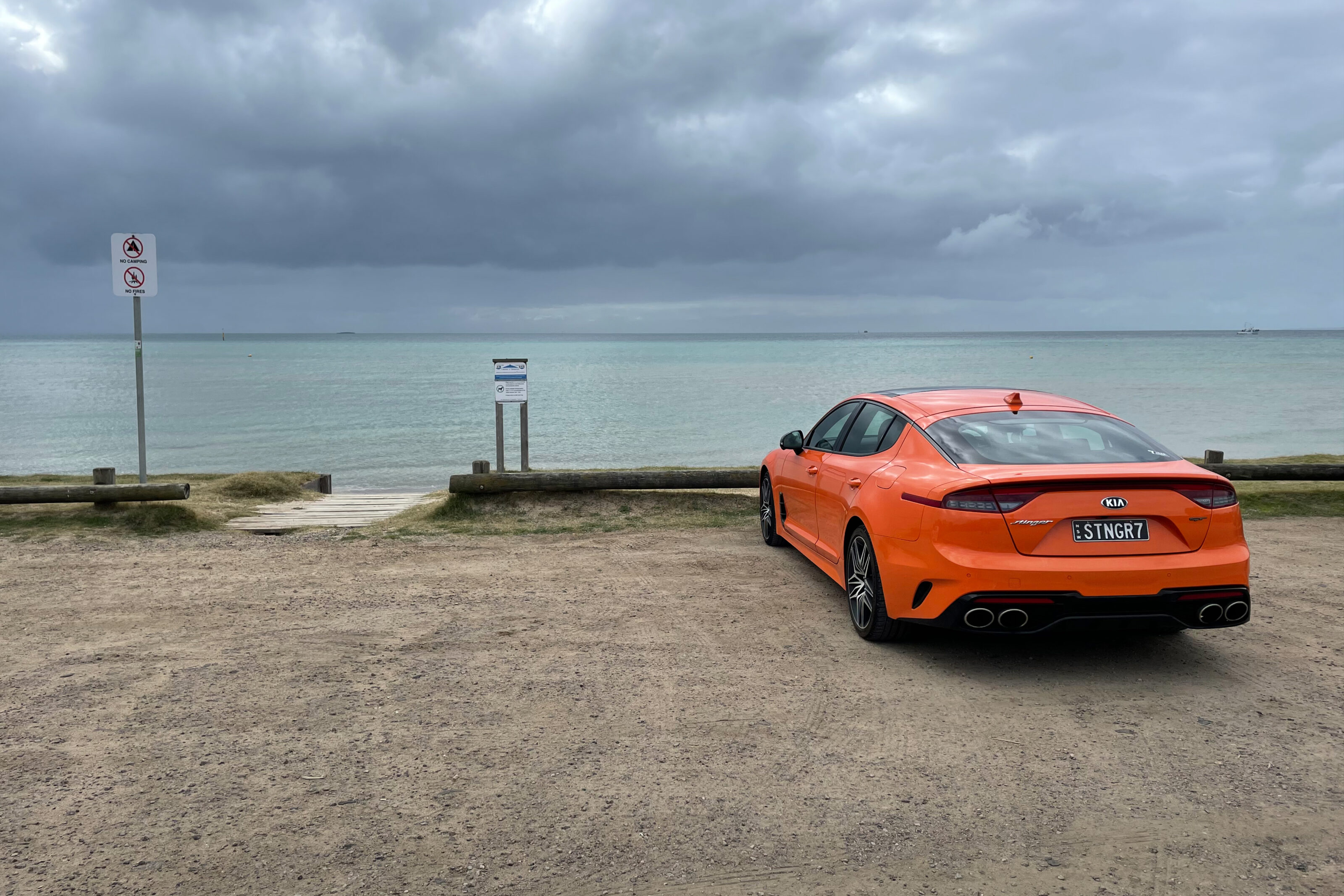
This is a fast, fast car, especially as 255-section rear tyres aren’t particularly wide for something with this much power. At any speed up to around 80km/h the rear end will squirm under hard acceleration, which is a key part of the appeal of cars like these. It seems Kia has updated the gearbox software, too, as the eight-speed auto will now hold gears when flicked into manual mode using the paddles.
Pre-facelift it would upshift at the limiter but now it won’t shift unless you tell it to. Excellent.
Where things get a little shaky is in the bends. As mentioned in last month’s update, the fitment of Michelin Pilot Sport 4 tyres has improved the Stinger’s handling both in terms of outright grip and predictability, but they are in a sense masking some of the GT’s inherent dynamic shortcomings.
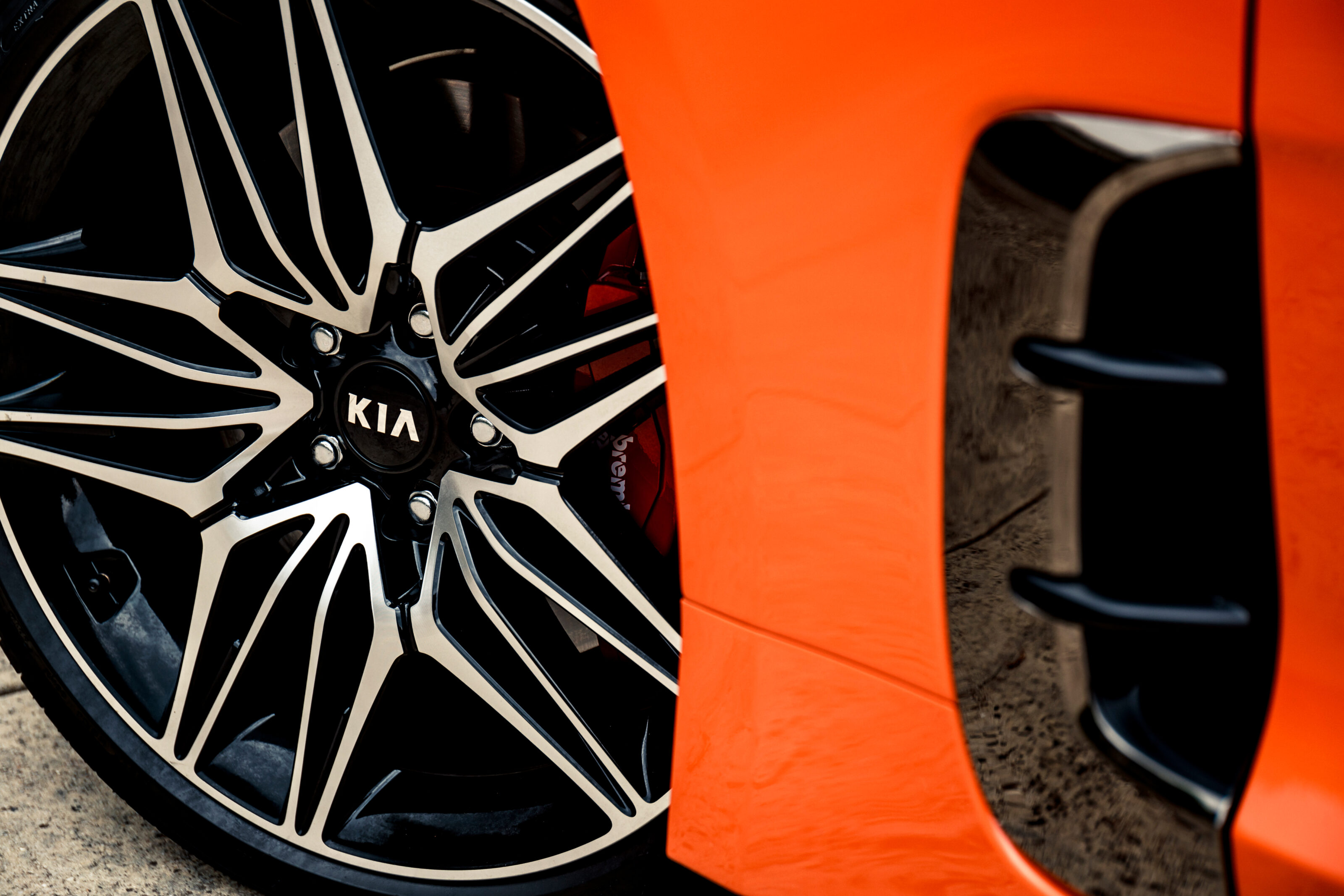
There are plenty of positives – quick, accurate steering controlling an obedient front end, an adjustable chassis and the traction of a limited-slip diff – but overall it lacks cohesion, particularly if you start to push the limits of what it can do. It’s one thing to say the Stinger can be a handful when driven hard, with a propensity to roll into fairly sudden oversteer, but it’s taken a while to put my finger on what’s holding the car back dynamically at more moderate speeds.
Just recently, a light bulb went off: despite the Stinger’s independent multi-link rear end, it feels like it has a live axle. The rear end feels quite clumsy, especially when asked to deal with multiple inputs, such as hard cornering and hard acceleration.
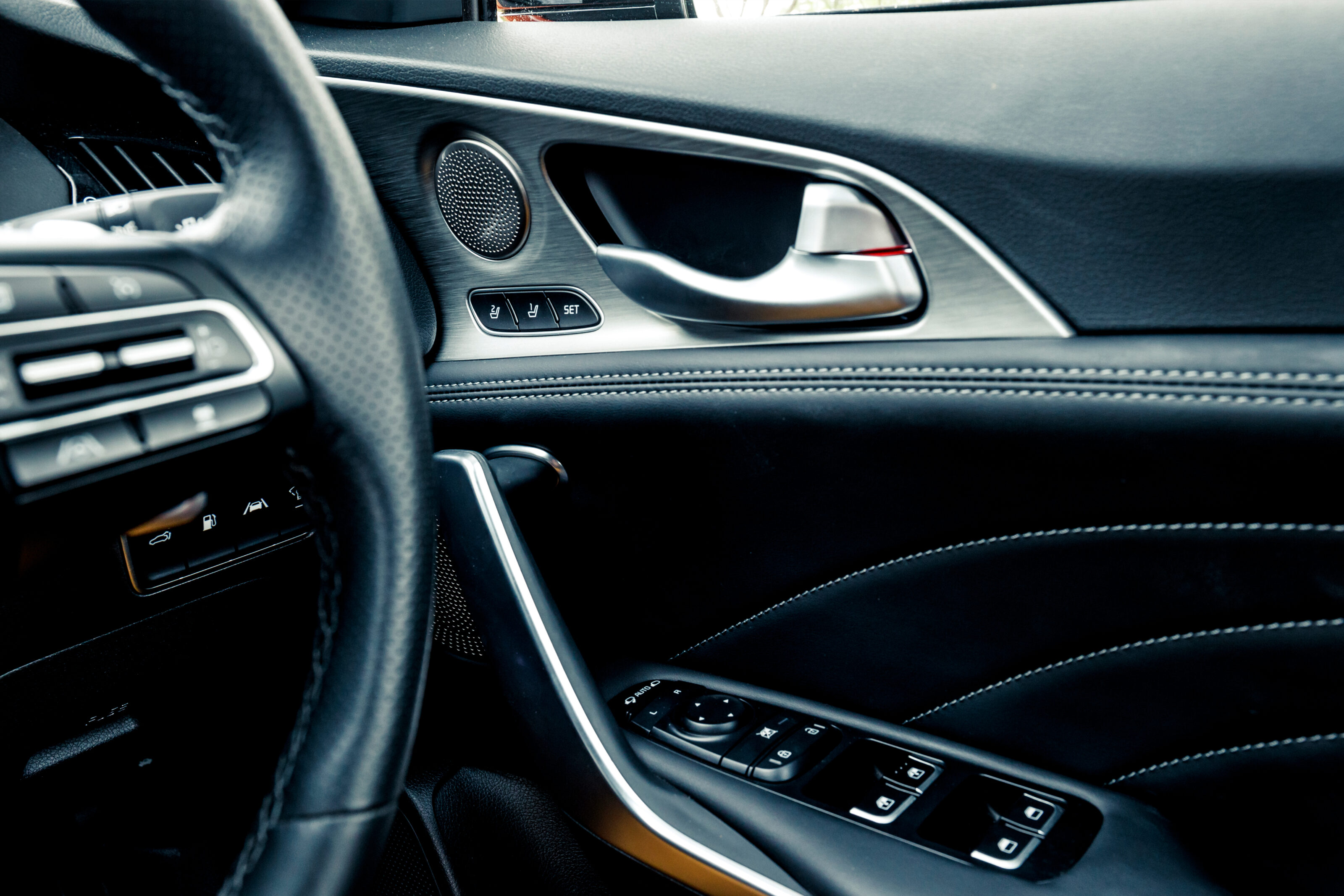
Hence the ‘good not great’ assessment. It’s fundamentally an enjoyable car to drive, particularly if you’re someone who stops at the seven-tenths mark rather than pushing to nine-tenths, but it could do with just a little more polish.
My personal benchmark for affordable four-door dynamics is the Holden VF II Commodore Redline and I don’t think it’s unreasonable to expect a performance sedan from a global manufacturer like Kia to match if not exceed this level. As it stands, there’s a little more work to do.
Next month, a wrap up of the Stinger GT experience. – SN
Things we love:
- 7/10ths balance
- Manual mode
- Torque galore
- Limit handling
- Lacks cohesion
- Engine noise
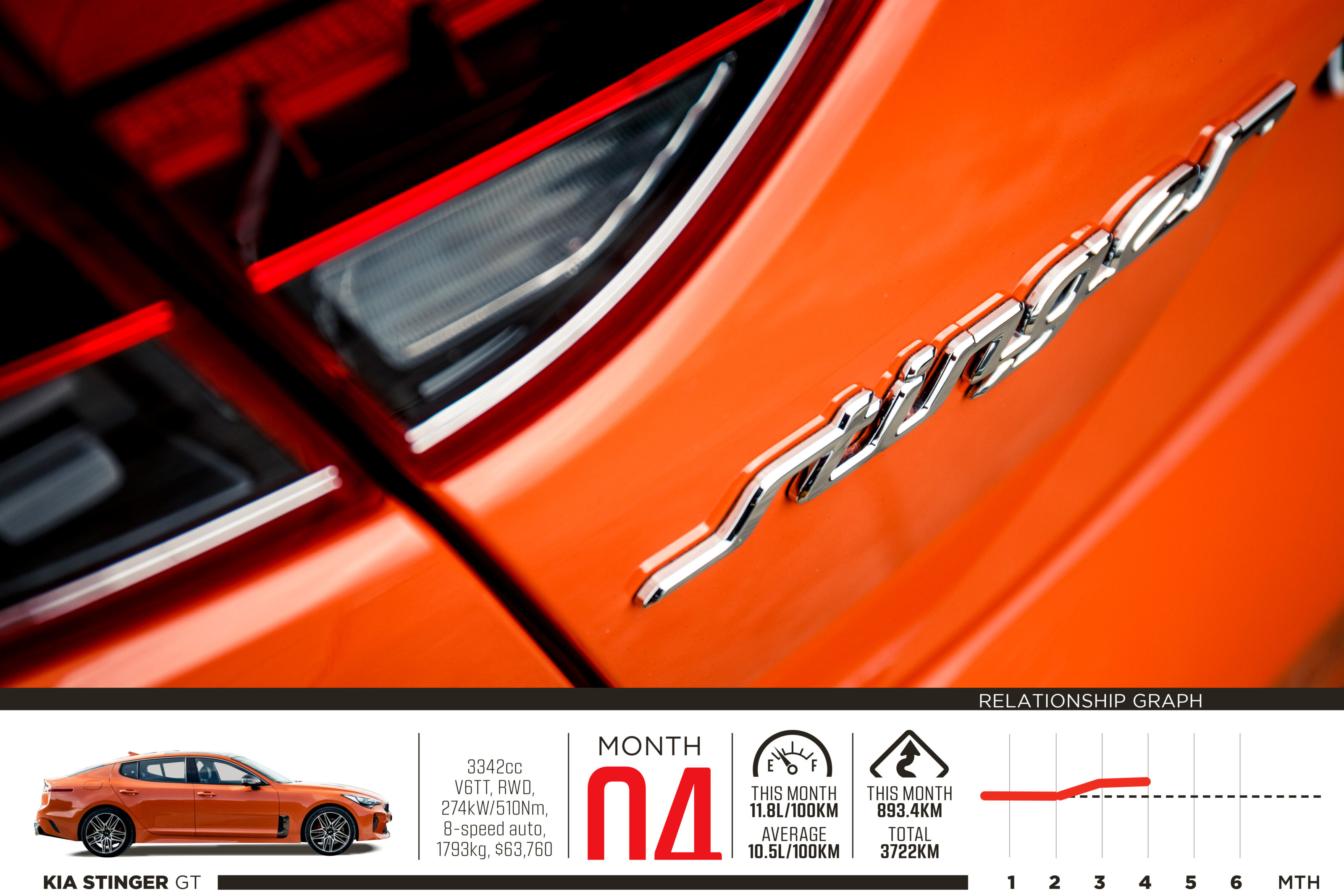
Update Five: Over and Out
Newman fails to gel with Kia’s performance halo
Ask and ye shall receive. A big tip of the ol’ hat to reader Rob Wills, who wrote in to inform me that the phenomenon of seeing Kia Stingers everywhere after I’d taken possession of this long-termer does indeed have a name.
It’s called the Baader-Meinhoff phenomenon, or frequency illusion, a form of cognitive bias that makes you notice something more often once you become aware of it. Every day’s a school day.
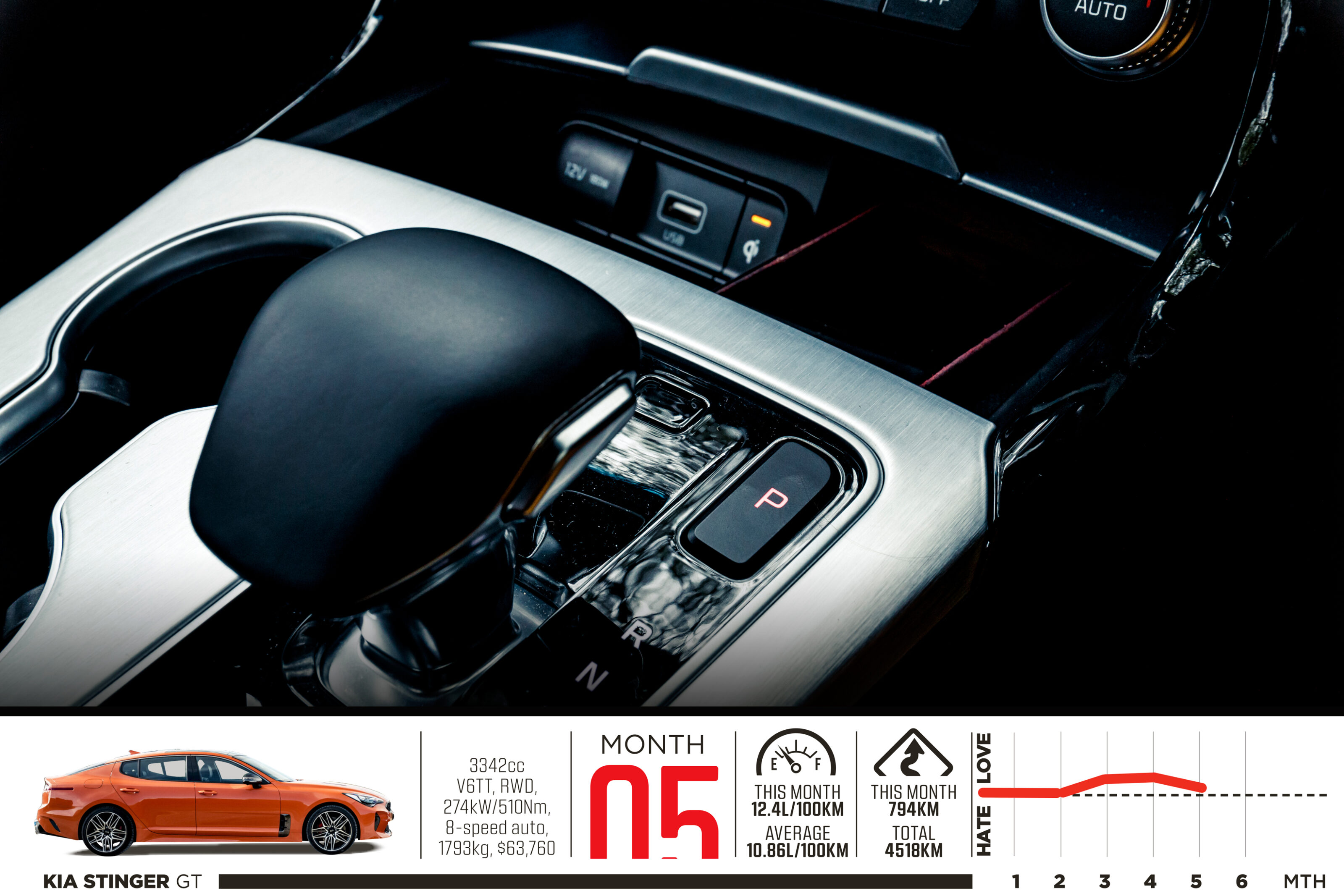
On that note, what have I learned about the Kia Stinger GT over the past four months? Well, everything, really, and I will do my best to summarise those findings for you here! A simple pros and cons list is probably the easiest way to do so and let’s start with the good stuff.
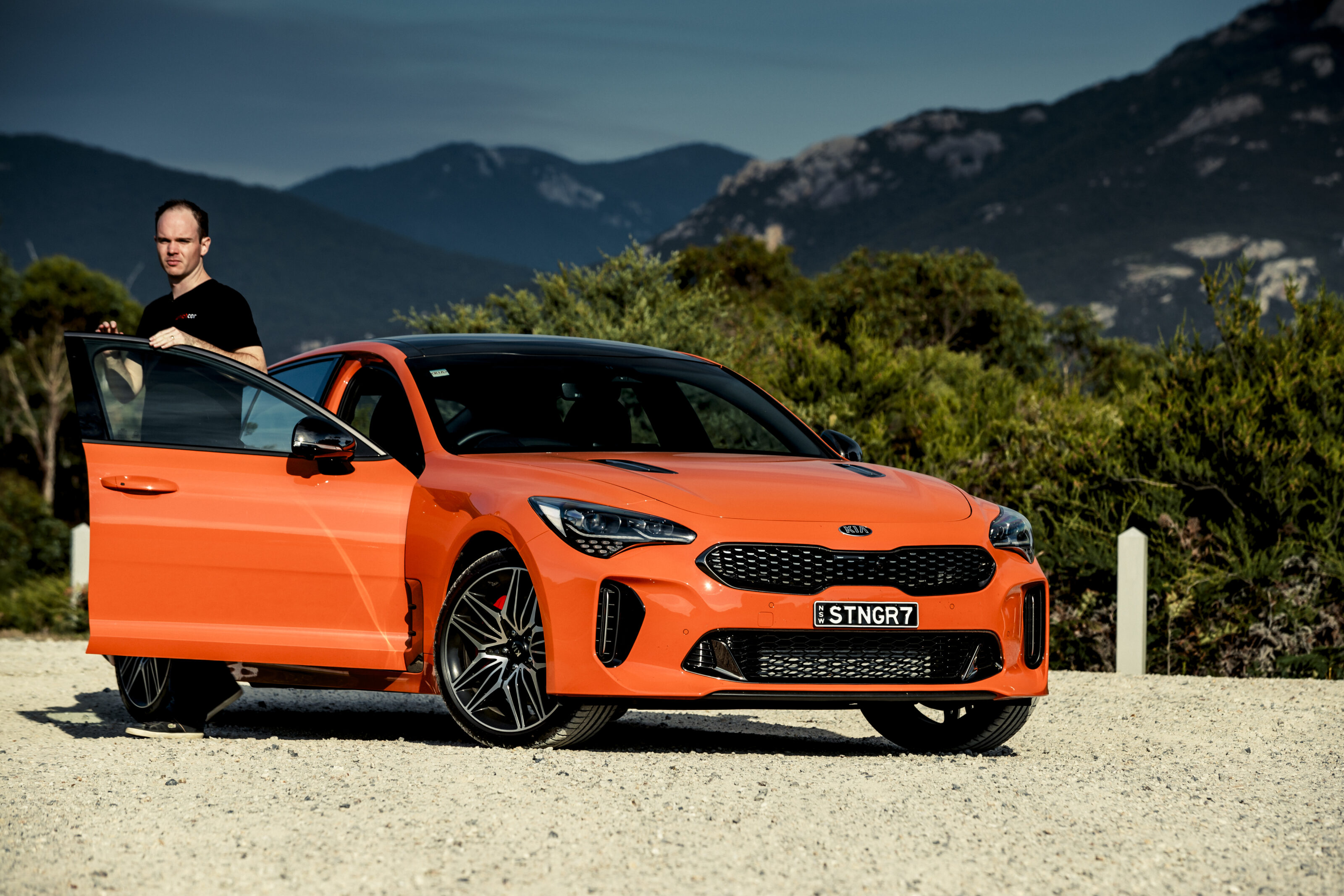
The heart of the Stinger GT is the engine. You can buy a Stinger with a 2.0-litre turbo four-cylinder, but for me the powerful 3.3-litre twin-turbo V6 is just such an inherent part of the car’s appeal.
Figures of 274kW and 510Nm might not rock the socks as they once did but the powerband is just ridiculous – peak torque from 1300rpm, peak power at 6500rpm – so the Kia always feels plenty brisk, especially given it wears just 255mm-wide rear tyres. Sticking with the drivetrain, the eight-speed auto now has a proper manual mode which is a big plus and the limited-slip diff improves traction and the handling predictability.
Speaking of handling, the facelifted Stinger has taken a step forward in that regard with the fitment of Michelin Pilot Sport 4 tyres, which provide more grip (in the dry at least, the previous Continentals were very good in the wet), greater progression at the limit and better resistance to wear, too. The quick steering – a shade over two turns lock to lock – is accurate and provides a feeling of agility, too.
I never grew tired of looking back at the Stinger. No doubt the Neon Orange paint helped but the midlife nip and tuck has enhanced its looks to my eyes. Inside there is every conceivable feature and all were used frequently: heated steering wheel, wireless phone charging, heated and ventilated seats, hands-free tailgate, strip lighting with 64 different colours. It might sound all a bit silly, but sometimes all it takes is changing the ambient lighting from orange to green to blue to freshen up a long day.
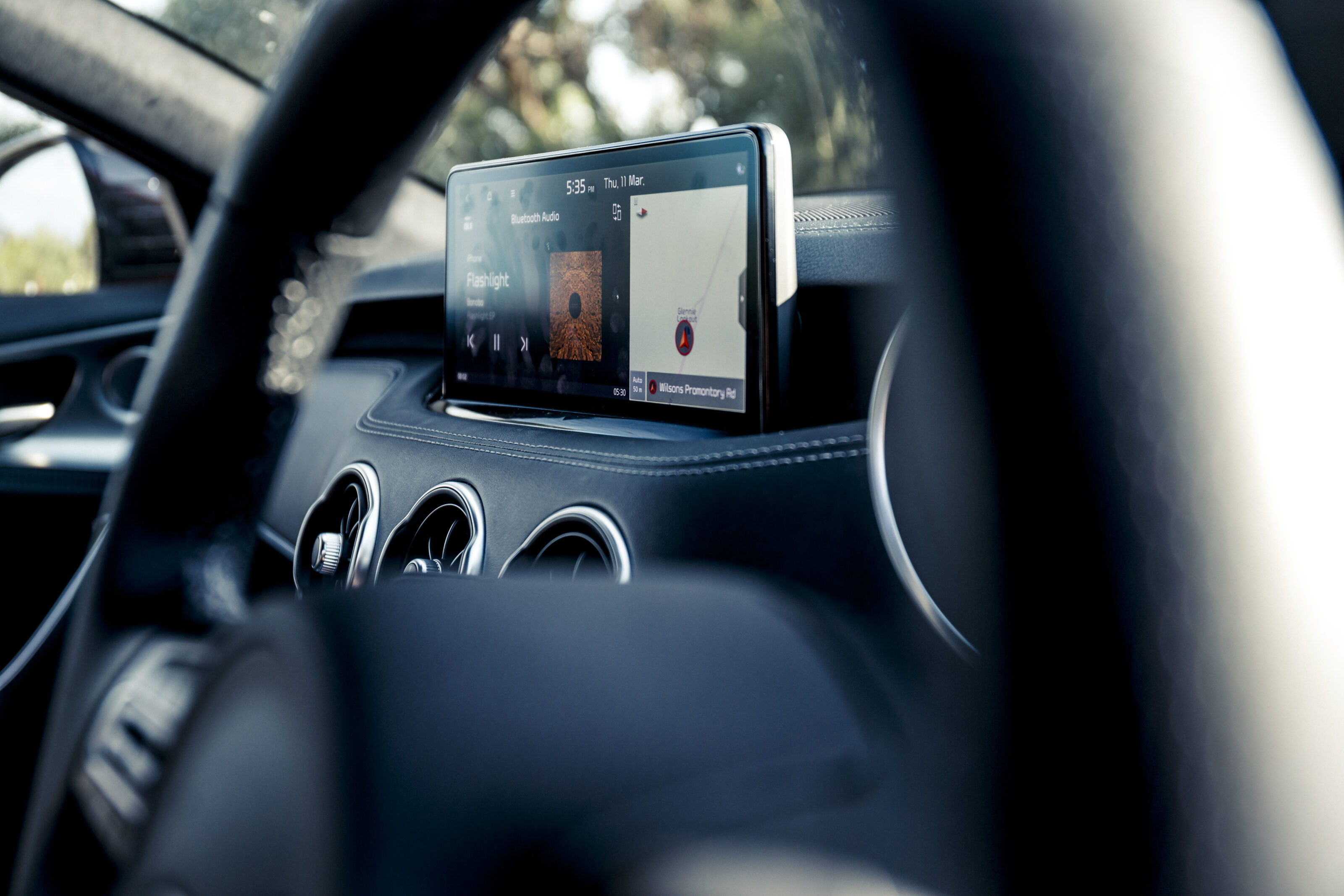
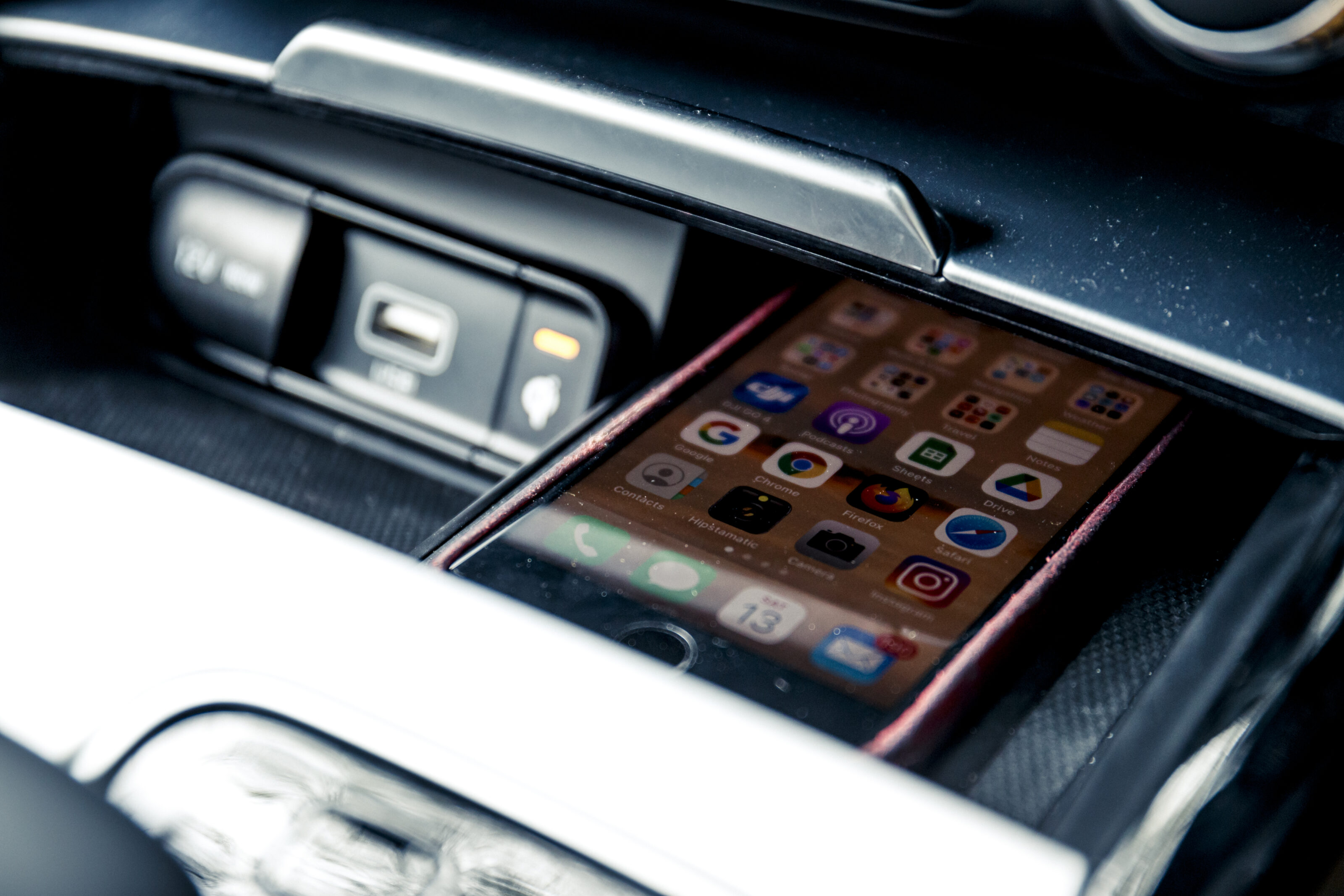
Now for some cons, in reverse order. The new 10.25-inch infotainment screen works well but sometimes doesn’t work at all. On multiple occasions the system would be ‘on’ – music playing and so forth – but the screen would be black and unresponsive. A simple ‘hard restart’ – which means you have to stop, turn off the car and open a door – fixed the issue every time.
On the road the overzealous lane-keep assist was a constant irritant and quickly turned off at the start of every drive, though an online commenter wisely and accurately noted the sensitivity of the system can be altered. I still maintain it needs better calibration, however. The secondary ride could also be a little better, the car fidgeting slightly on poorer surfaces. It’s not bad at all – the ride is generally well sorted – but it would be less of an issue if the Stinger was a razor-sharp handler. But it’s not.
As noted in the ‘pros’ there is plenty to like but so too are there shortcomings. The Stinger has a certain over-powered charm, but ‘4 S’ tyres wouldn’t go astray, nor would wider rubber, particularly at the rear. It’s this end that lets go first which can make for exciting progress if you’re attempting to drive at pace in wet conditions.
When grip runs out it still does so fairly rapidly. Excellence isn’t far away but more dynamic cohesion is required. Doing that without sacrificing the car’s grand-touring credentials is possibly the challenge, as the Sport damping is very stiff.
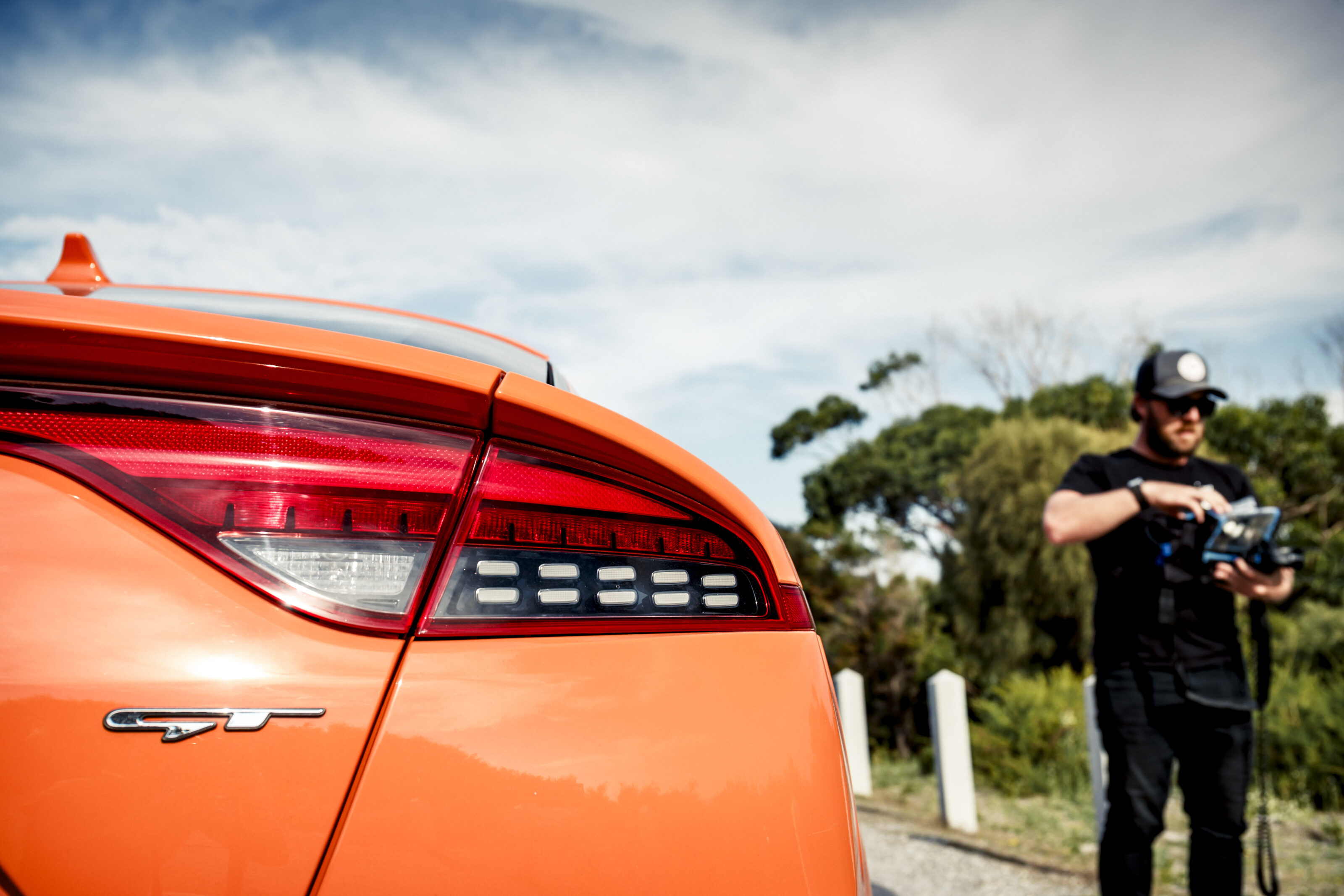
Finally, while there’s nothing wrong with the way the Stinger goes it could do more to shout about it. The previously optional sports exhaust adds an extra 2kW but sadly little noise. There’s actually a decent, if muted, note from outside but from behind the wheel there’s a lot of induction roar and not much else. Granted, a forced-induction V6 is never going to give a V12 a run for its money, but a little more music would be appreciated.
All in all, the range-topping Stinger is an impressive car that’s well worth investigating if you’re a fan of powerful rear-wheel drives. However, its shortcomings meant I never quite clicked with it like you do with the greats. – SN
Shannons is gearing up to sell a range of performance cars at its Spring Timed Online Auction. Here’s some of our favourite cars set to go under the hammer from August 31.
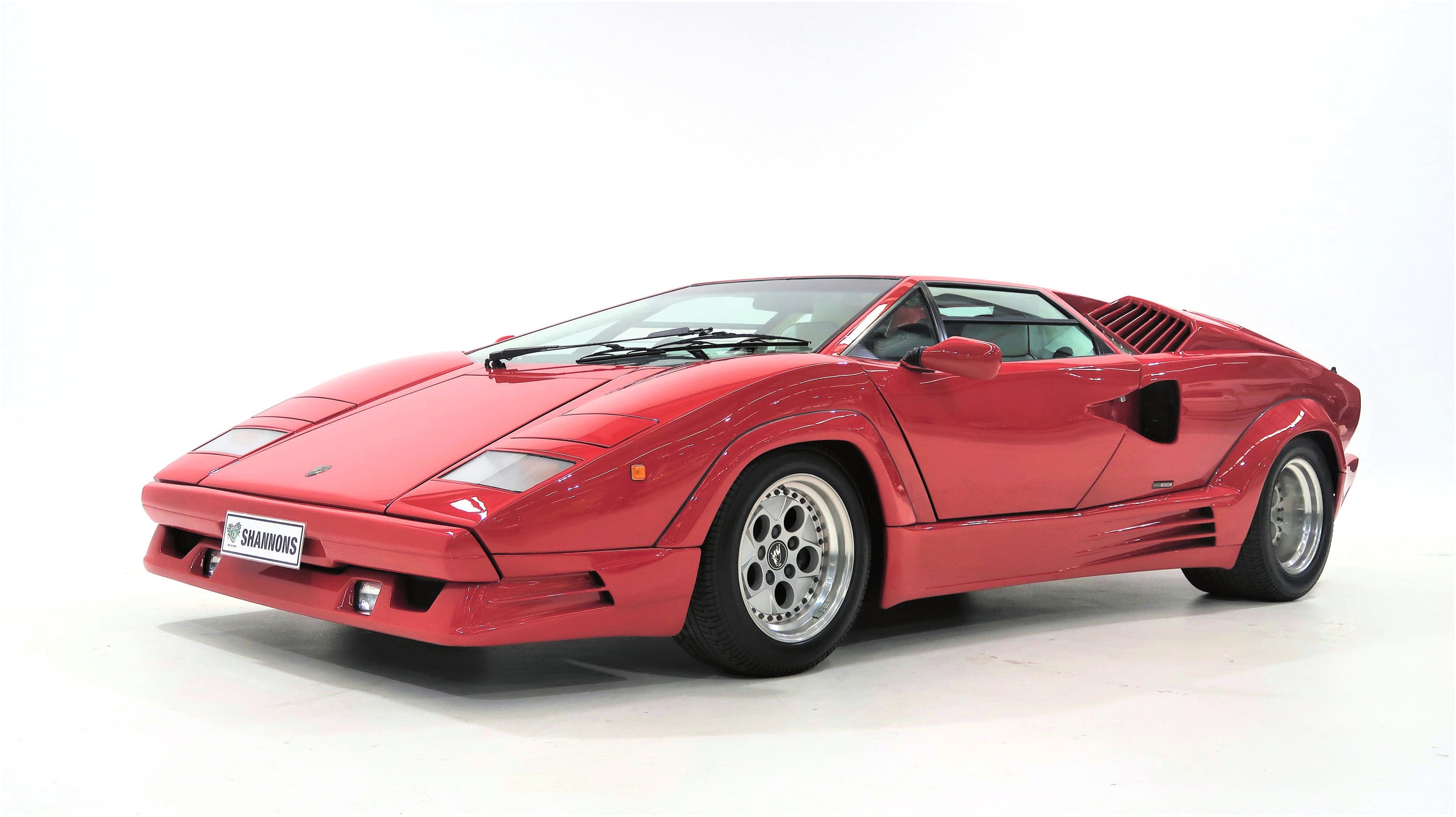
The first is the subject of countless bedroom posters – the Lamborghini Countach.
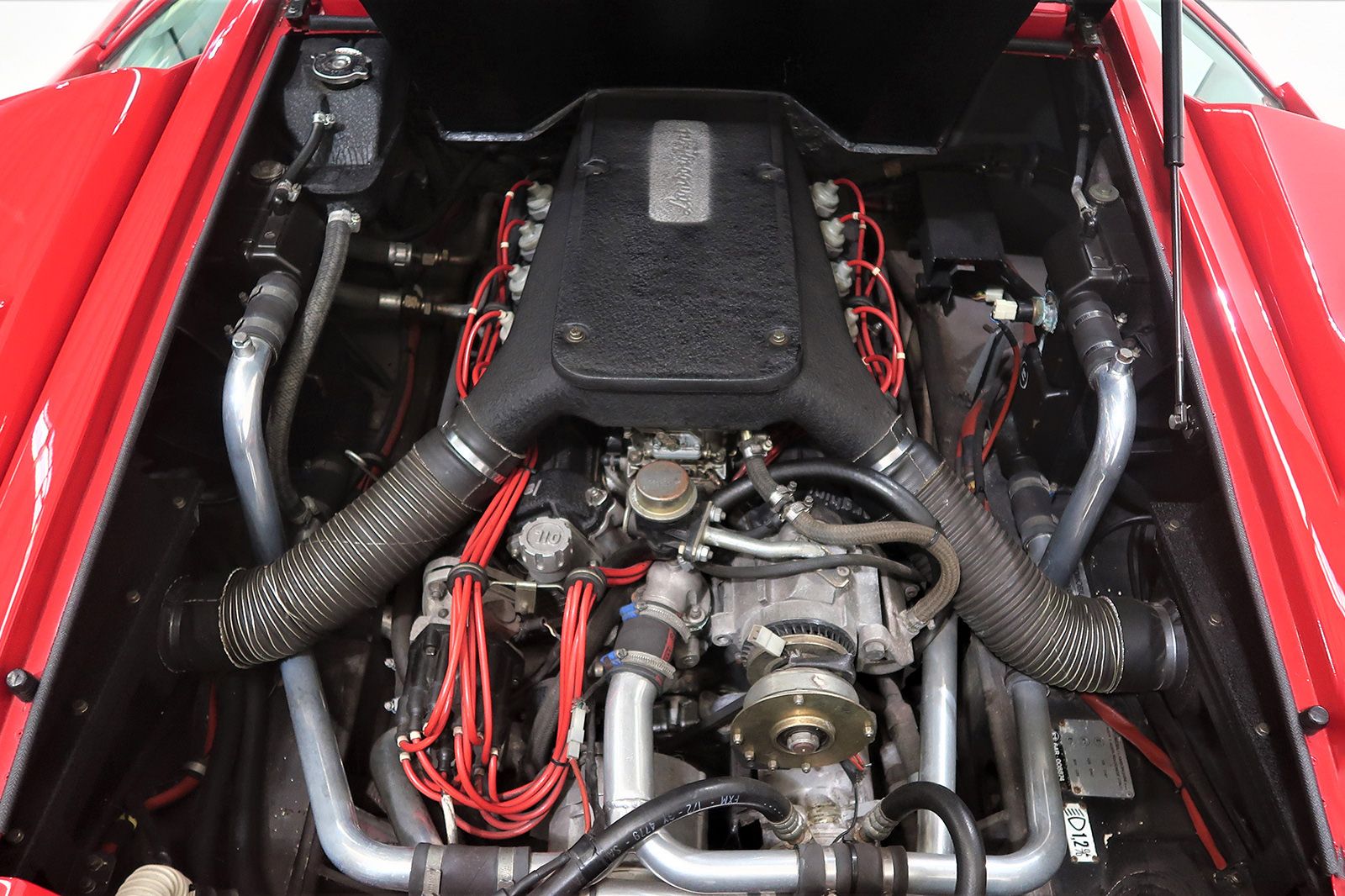
Between the 50th birthday of the original Countach and Lamborghini’s new effort, there’s been a lot of talk around the iconic Italian wedge lately. This example is a 25th Anniversary Edition, placing it towards the end of the supercar’s run.
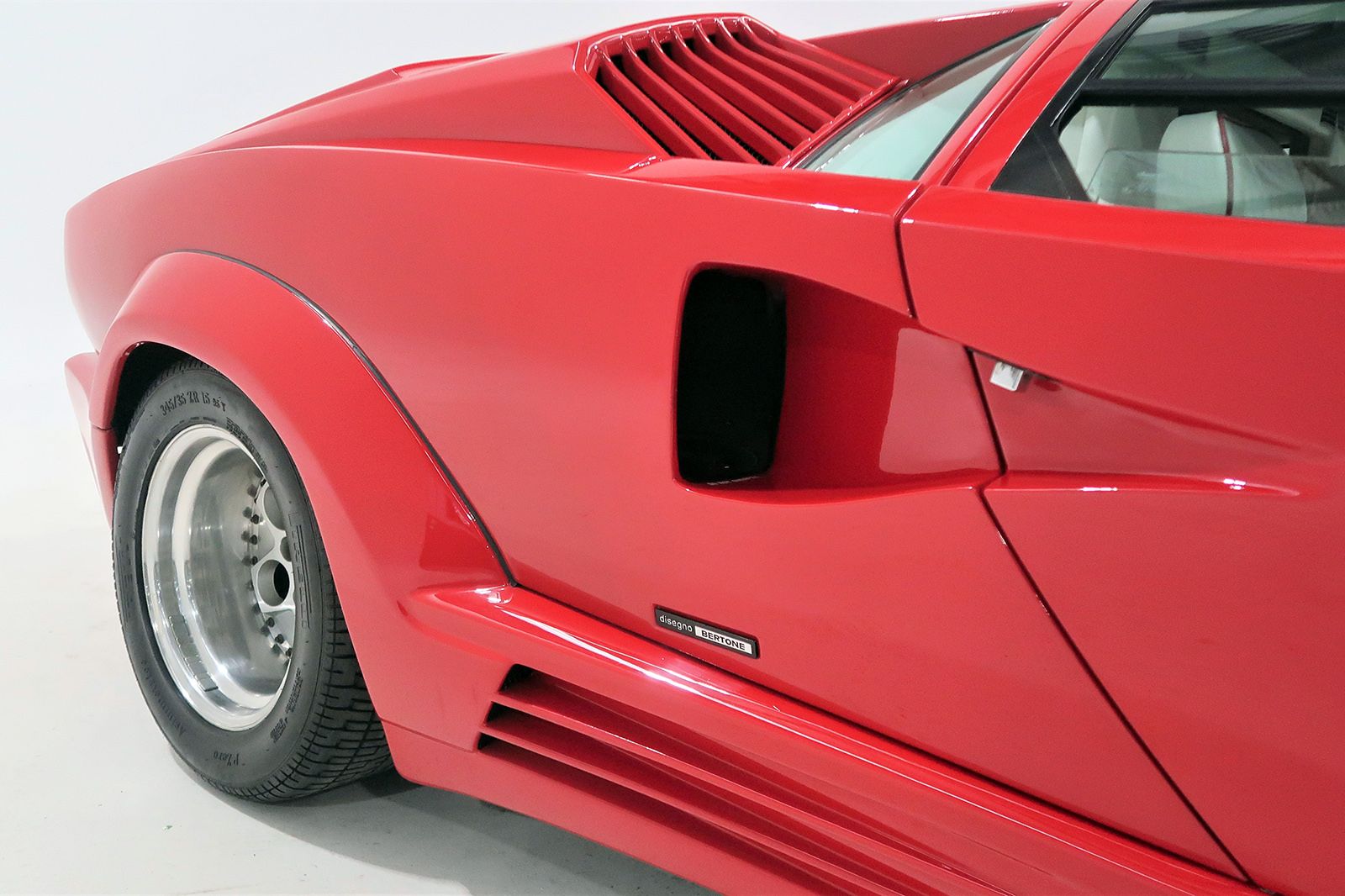
The special variant got more aggressive spoilers front and rear, and enlarged side vents courtesy of Horacio Pagani. According to Shannons, 657 were built, while just a handful have made their way to Australia.
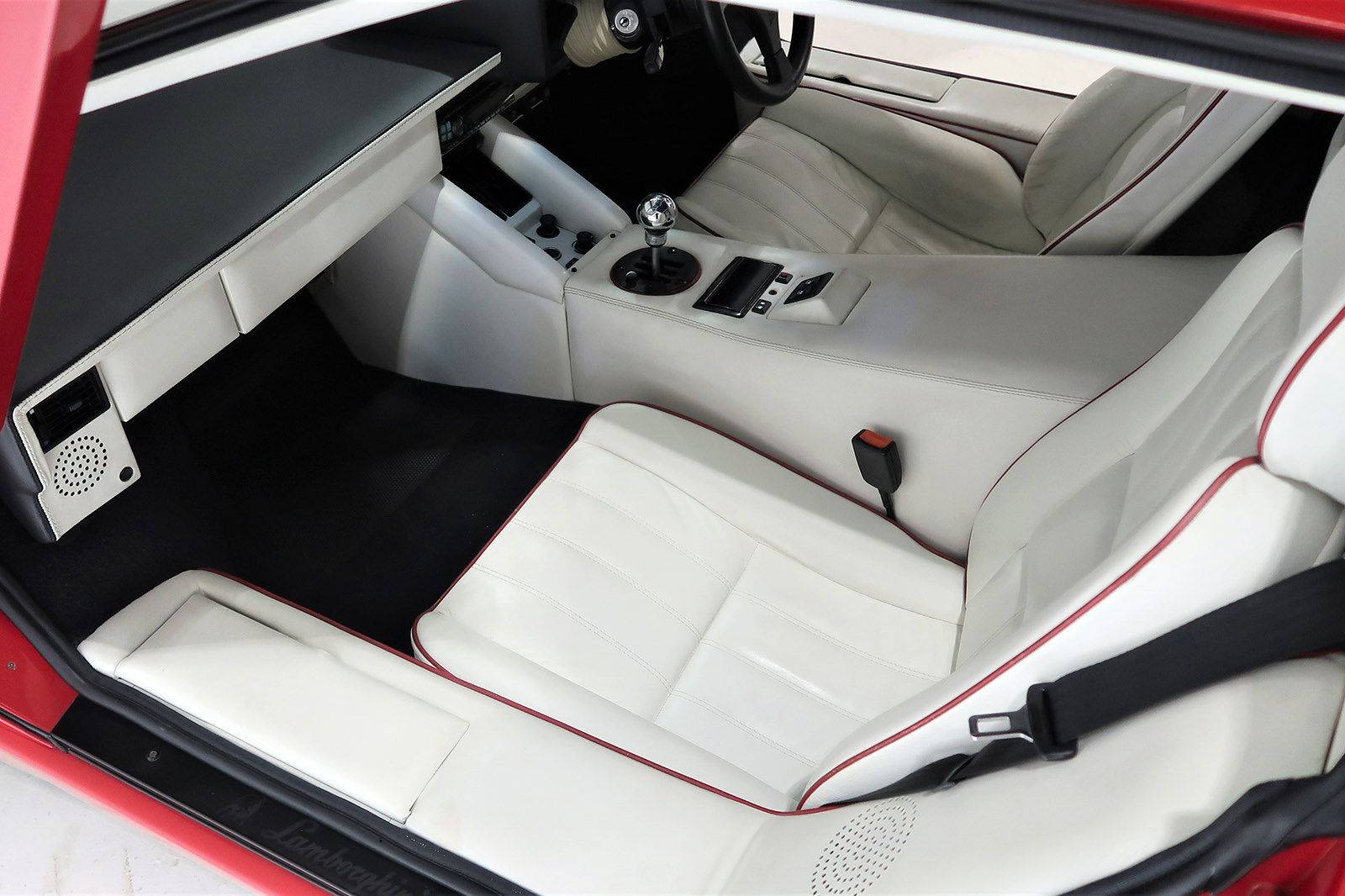
This UK-delivered, right-hand-drive example shows 32,279kms on the clock and was assessed to be in exceptional condition, aside from a backfiring engine that’s part of suspected ignition woes. As a result, the car hasn’t been road-tested. It did, however, get a full service and tune in August 2020, meaning the problem shouldn’t be especially dire. The Shannons guiding range suggests a $490,000 – $550,000 price tag.
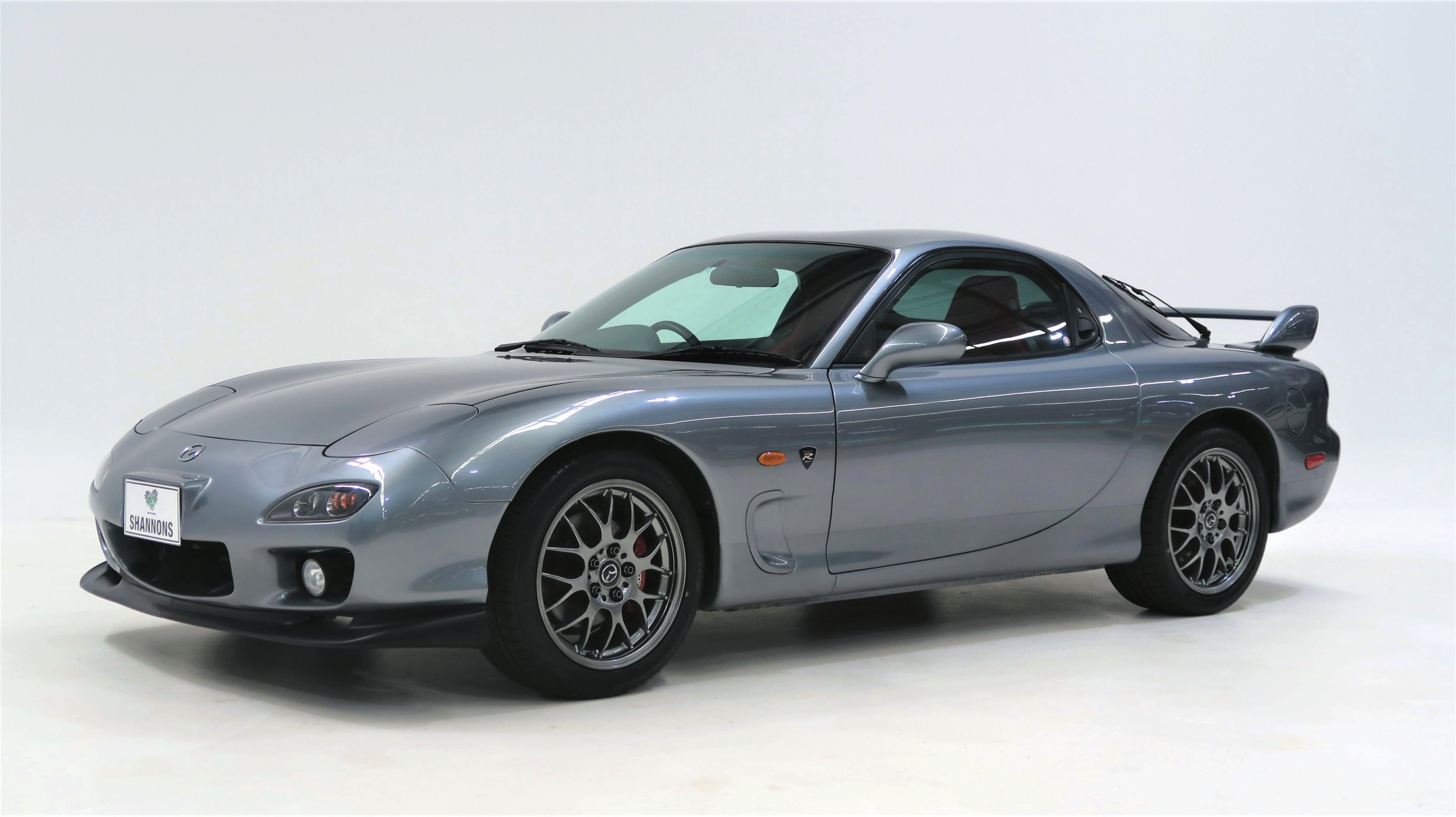
Shannons’ Winter Auction saw an excellent Mazda FD RX-7 SP sell for a huge $166,000. This time around there’s a more common (but still highly sought-after) Spirit R Type A on the block, with a guiding range of $80,000 – $90,000. Sold only in Japan, all Type As were kitted out with BBS 17-inch wheels, Bilstein shocks, a limited-slip diff and bigger brakes among other tweaks. Type B and C cars were also sold, featuring a 2+2 seating layout and automatic transmission respectively.
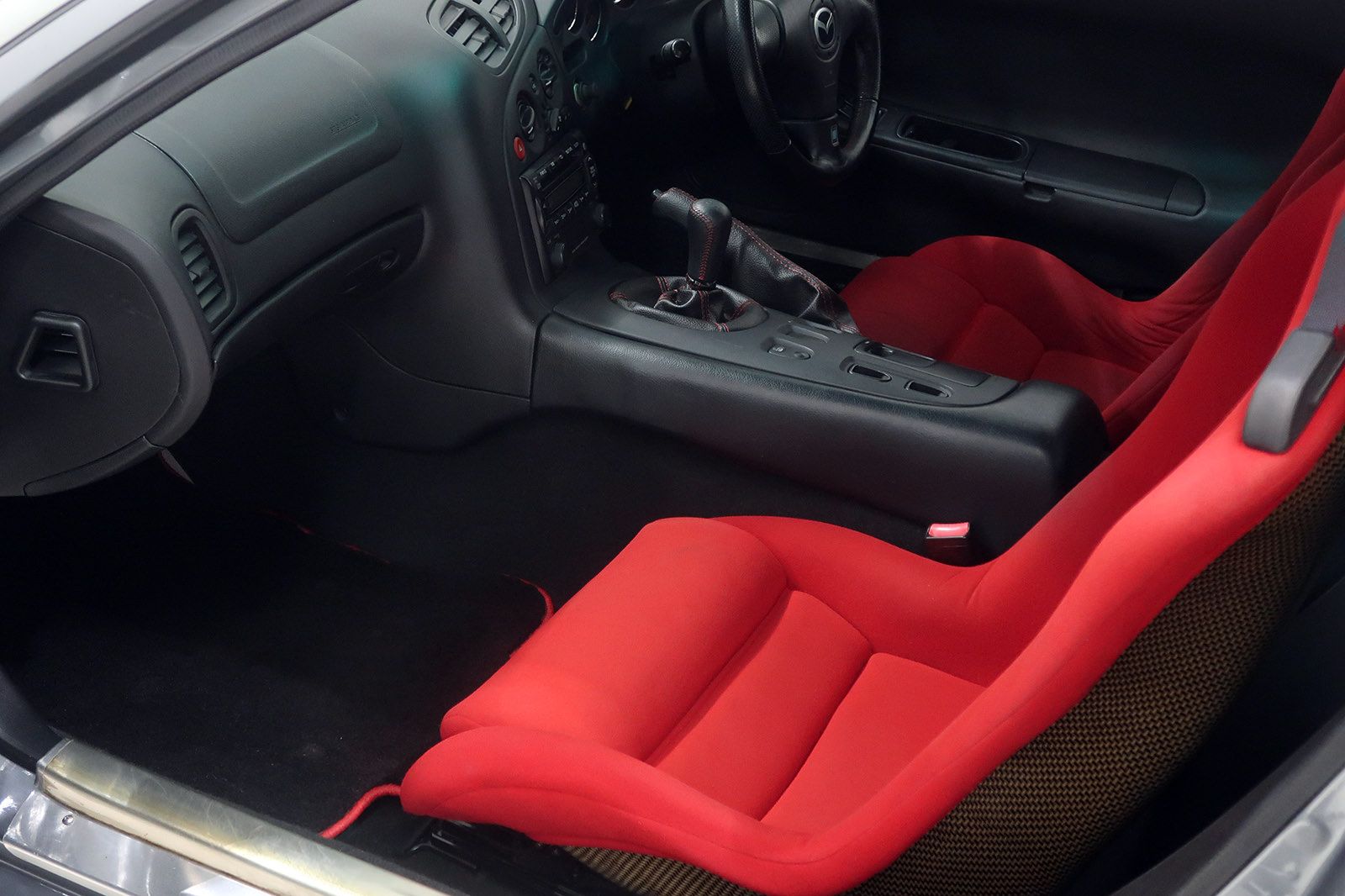
This Type A is build number 15 of 1500. It was apparently imported from Japan in 2018 and kept mostly in dry storage since. It’s got 36,523km on the clock, with the driver’s Recaro Kevlar seat beginning to show some wear and tear. A few other electrical gremlins are mentioned alongside a transmission whine.
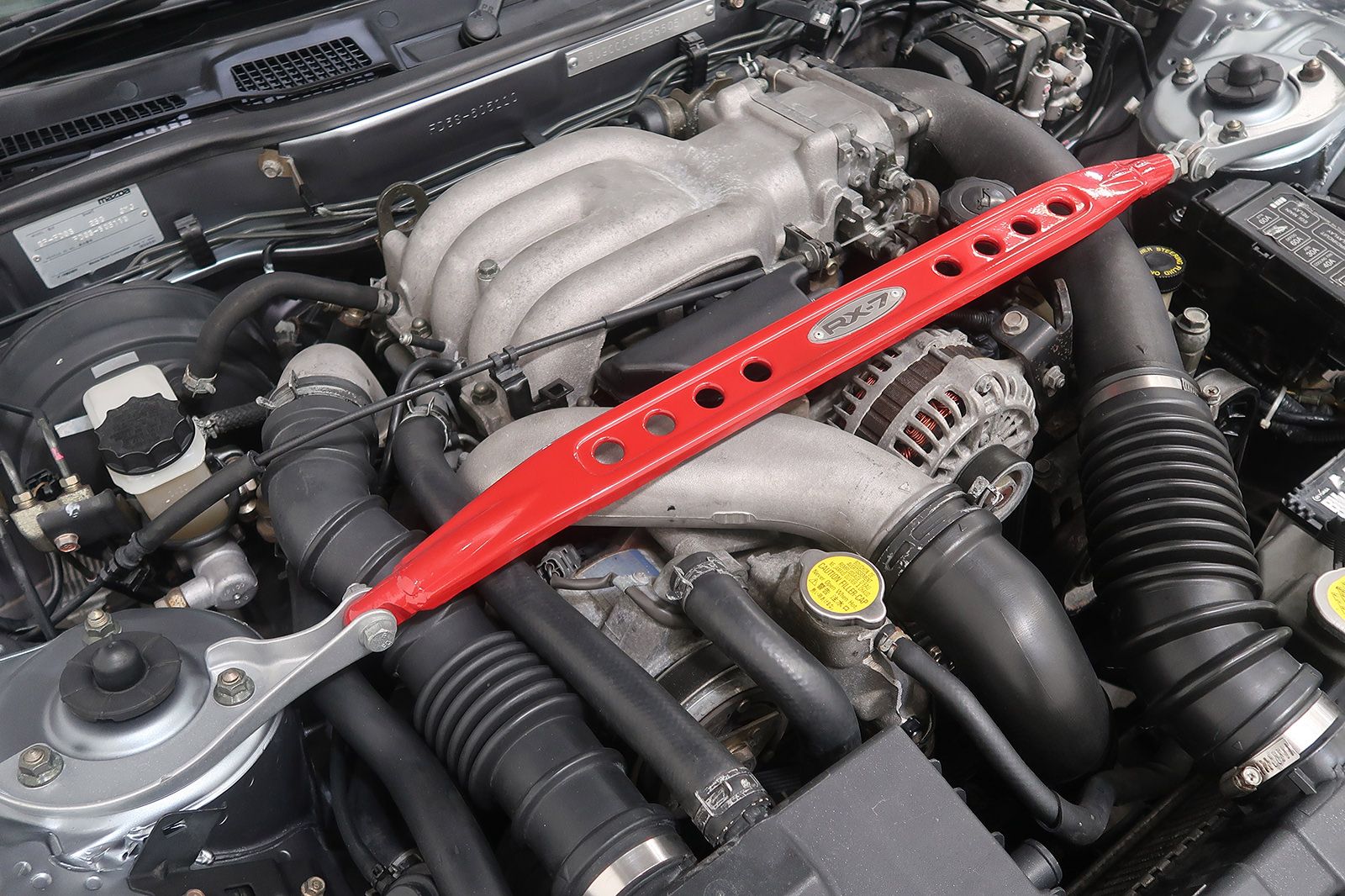
Despite this, the engine bay and exterior both present well. For reference, another Type A finished in the same colour sold at Shannons in 2018 for $73,000.
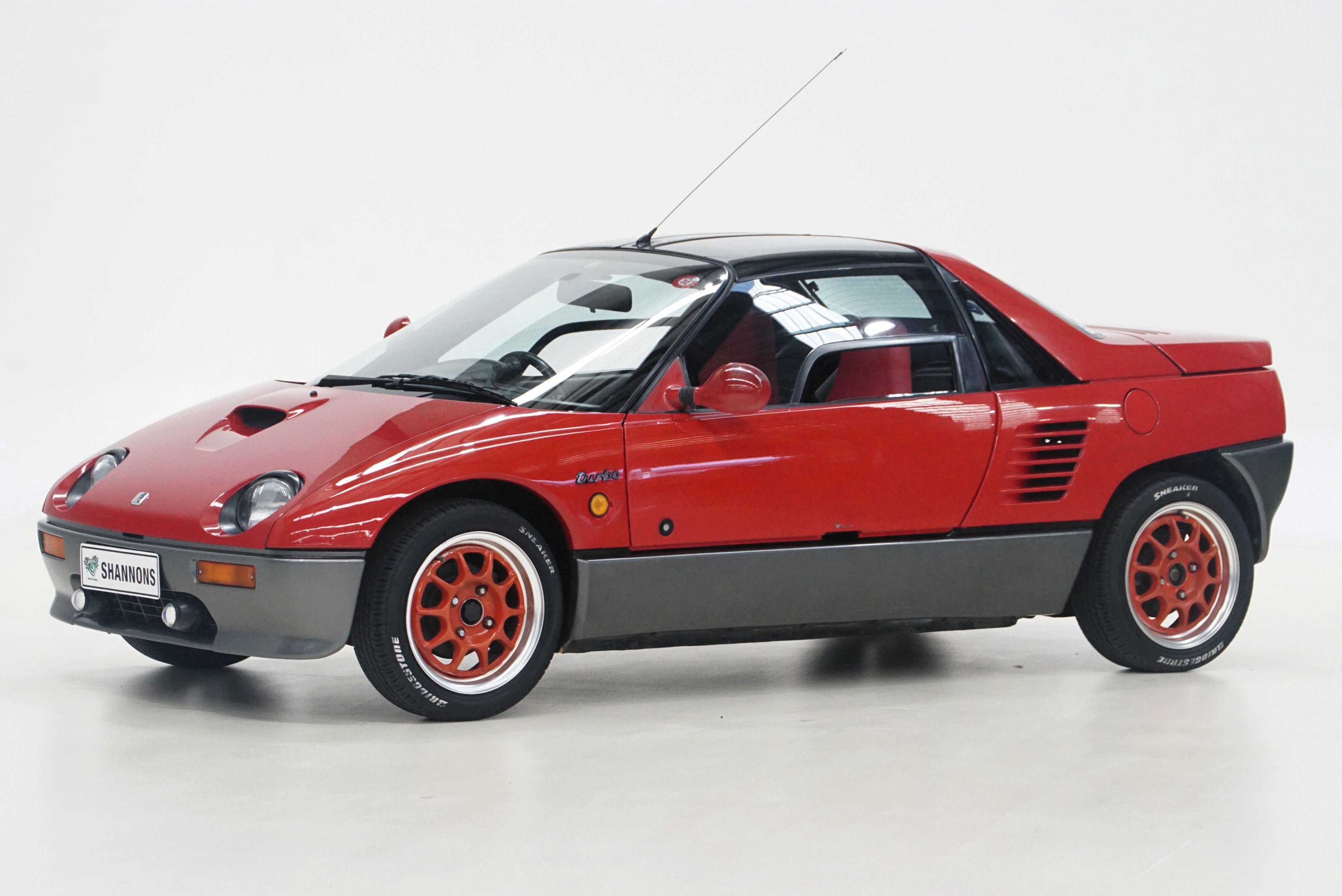
If you’re looking for a smaller Mazda on a tighter budget, it doesn’t get much better than this Autozam AZ-1. Built between 1992 and 1994 for Mazda’s domestic Autozam brand, the Kei cars were powered by a rear-mounted, turbocharged 657cc three-cylinder that made 47kW.
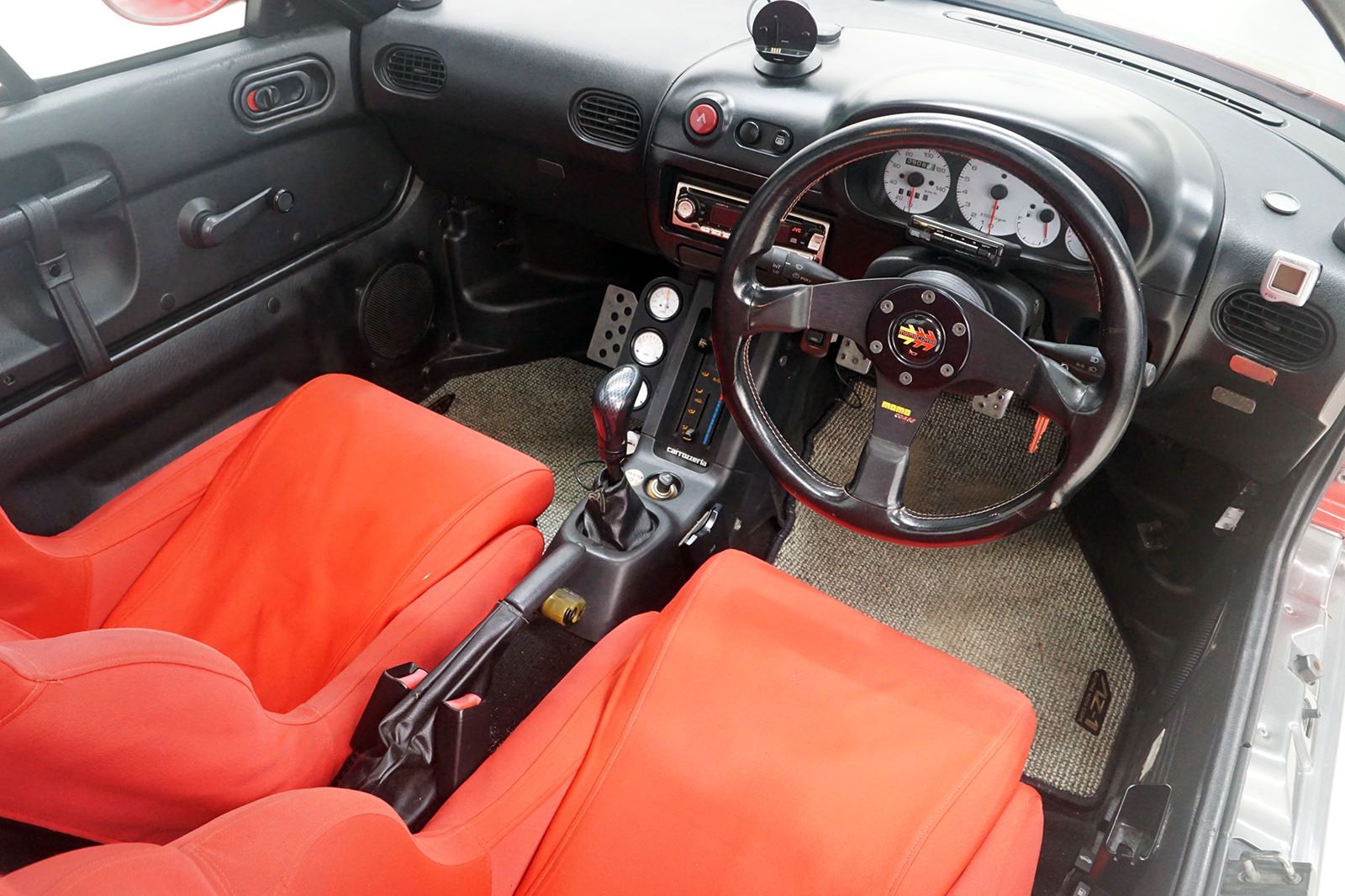
These cars are thin on the ground here, with few having gone to auction. One failed to meet reserve at Grays last year after attracting a high bid of $27,409, but Shannons expects this AZ-1 in all-round good condition to fetch between $16,000 and $22,000.
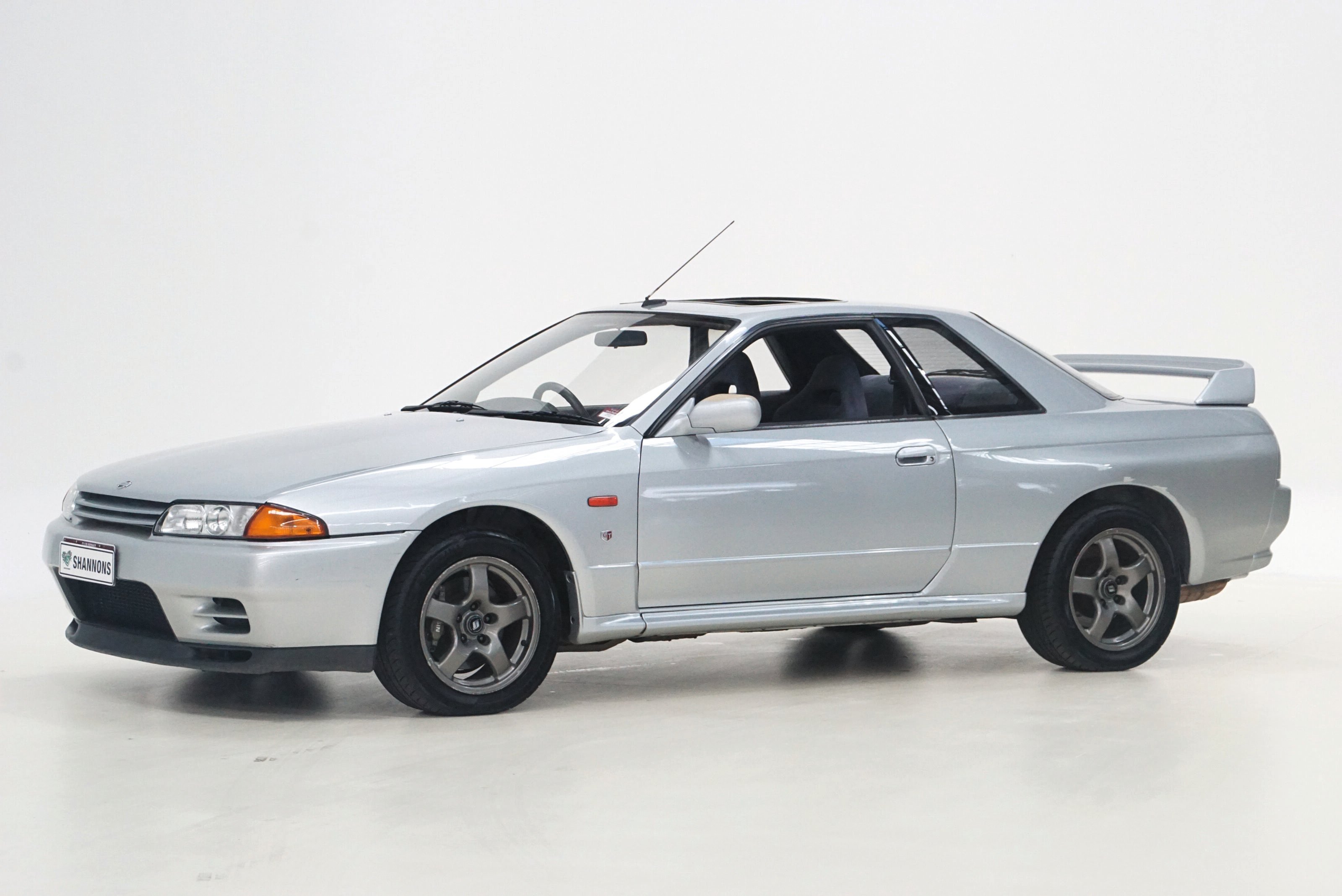
This Nissan R32 Skyline is one of 100 GT-Rs delivered new to Australia. Having travelled almost 170,000kms in its life, it bears a few battle scars, plus an aftermarket sunroof. However, everything is reported to work as it should.
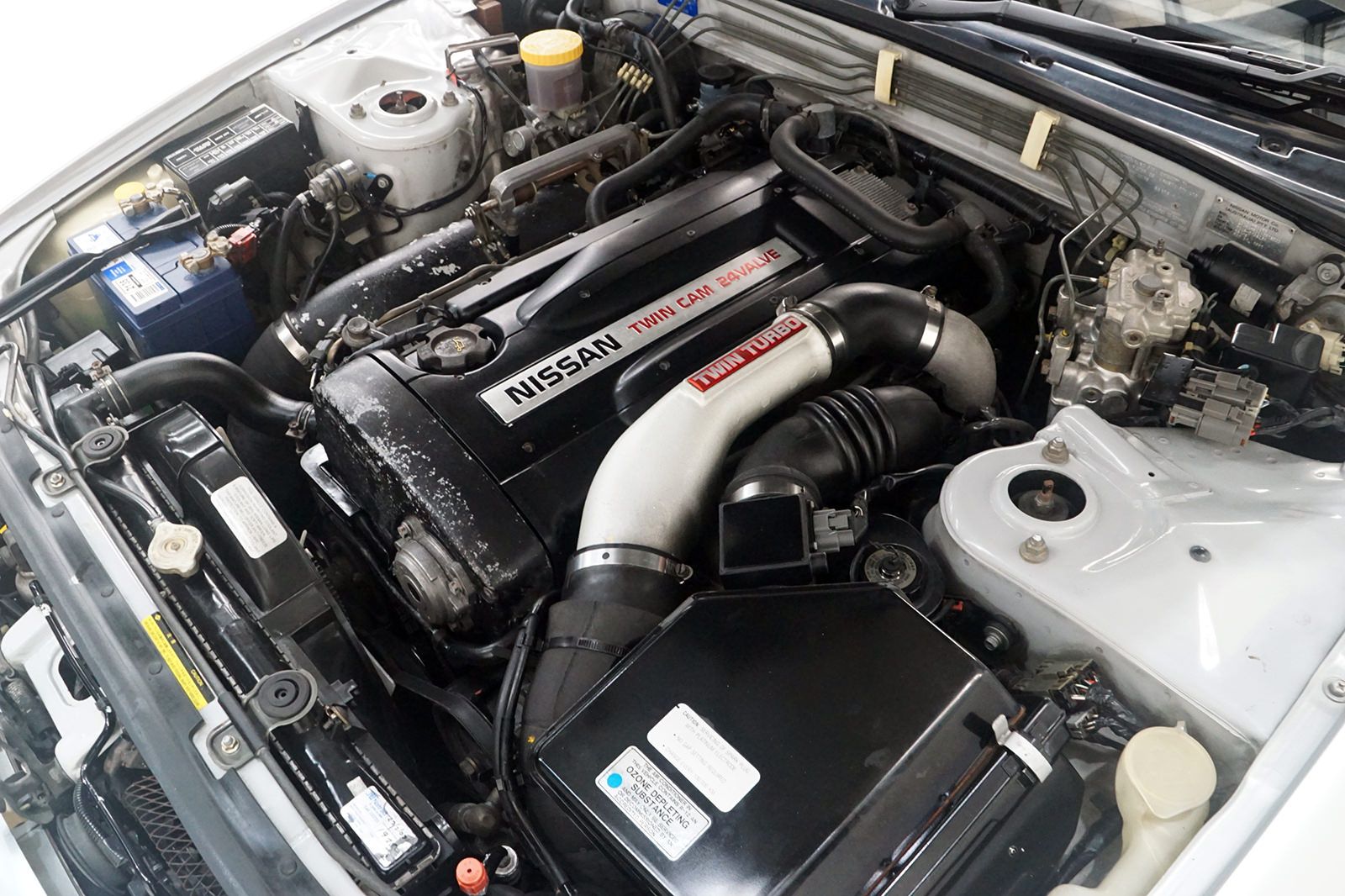
Another GT-R sold at Shannons during its Winter Auction, taking in a huge $142,500. Shannons expects this one to sell for $80,000 – $100,000, which is slightly lower than its $110,000 price tag when first launched locally.
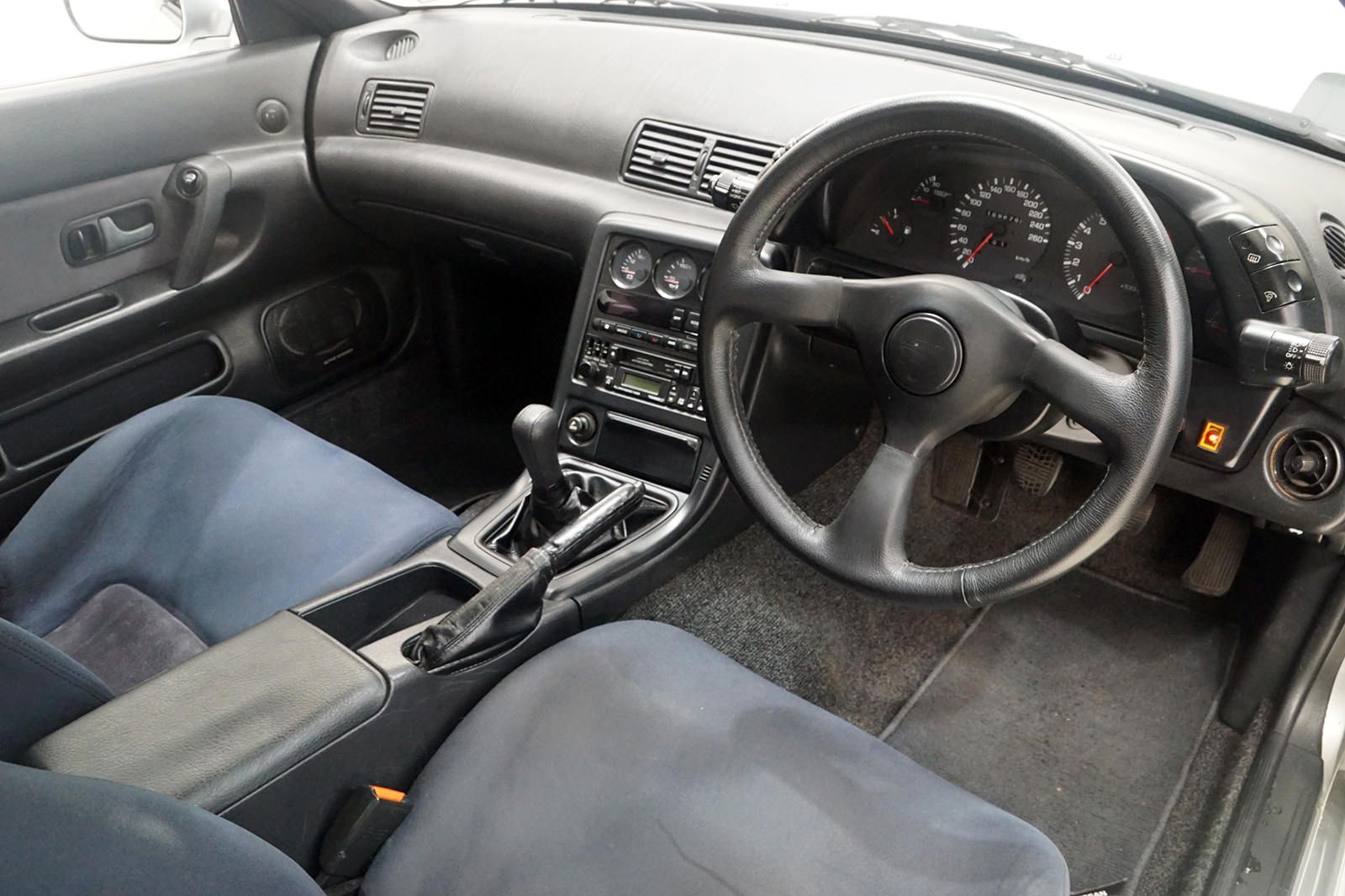
Interestingly, the GT-R’s vendor is said to have managed Holden’s motorsport division during the early ‘90s — a period when R32 GT-Rs dominated locally-built offerings in the ATCC.
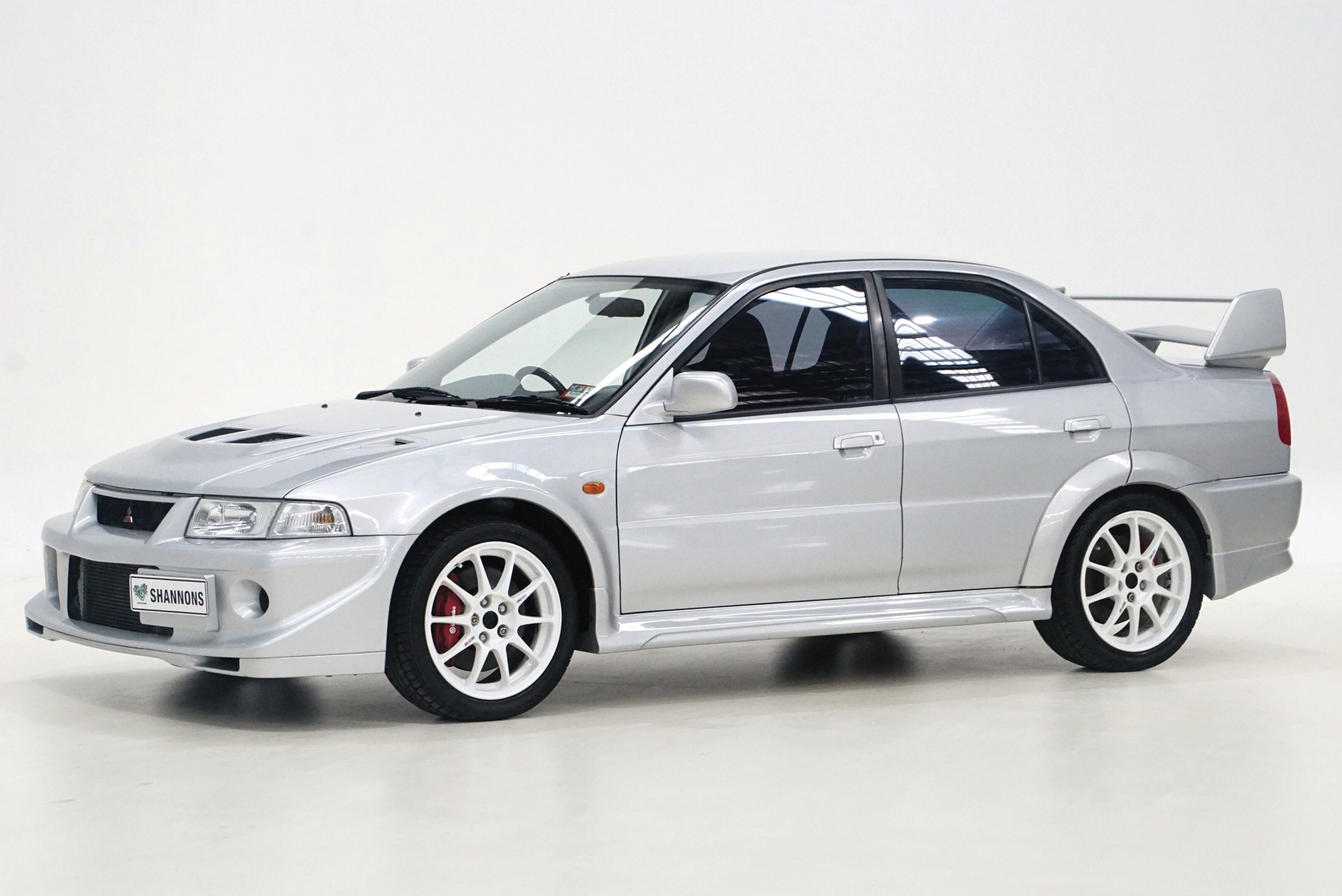
Here’s another Aussie-delivered Japanese hero. It’s a 2000 Mitsubishi Lancer Evolution VI Tommi Makinen Edition, described as being in immaculate condition despite the 114,500kms travelled.
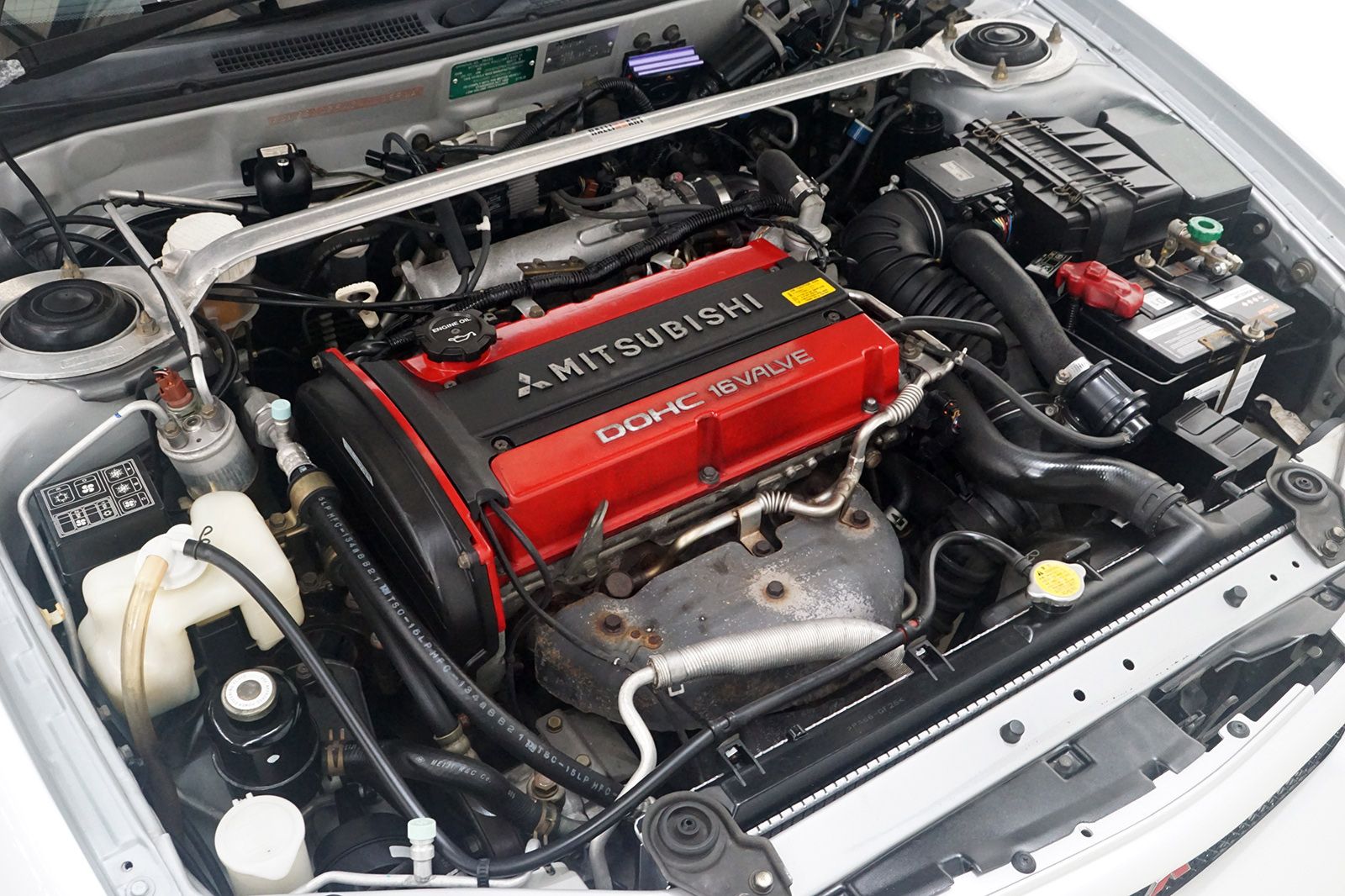
Locally sold cars got ABS brakes, a Yaw Control diff and 10-speaker sound system. The car has apparently undergone a full inspection at Ralliart successor TMR Performance, with Shannons expecting it to sell for $75,000 – $90,000. That seems something of a bargain compared to an overseas example, which took almost AU$300,000 at a UK auction two weeks ago.
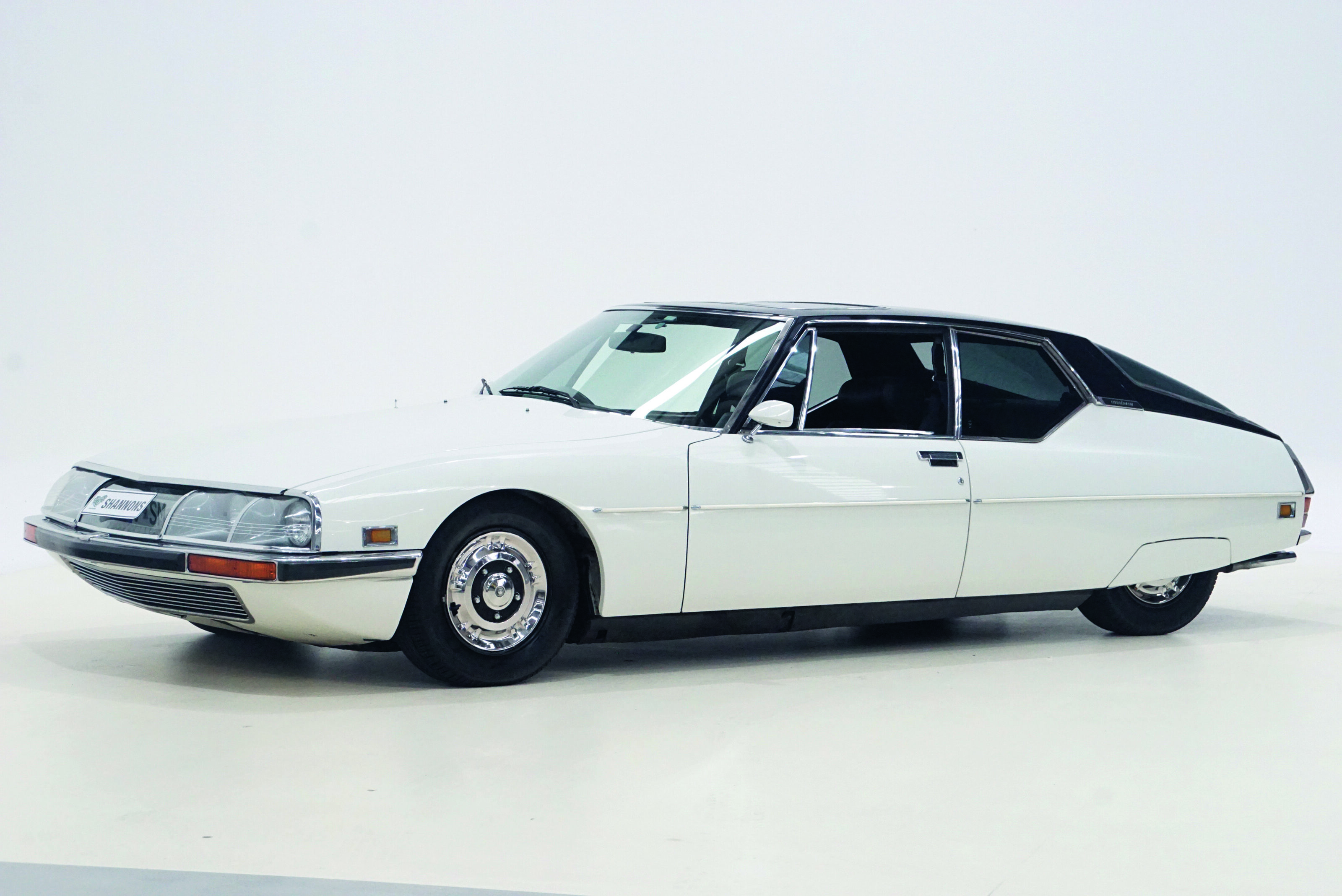
It’s probably not the first thing that comes to mind when somebody says ‘GT car’, but Citroen’s SM coupe ticks all the boxes.
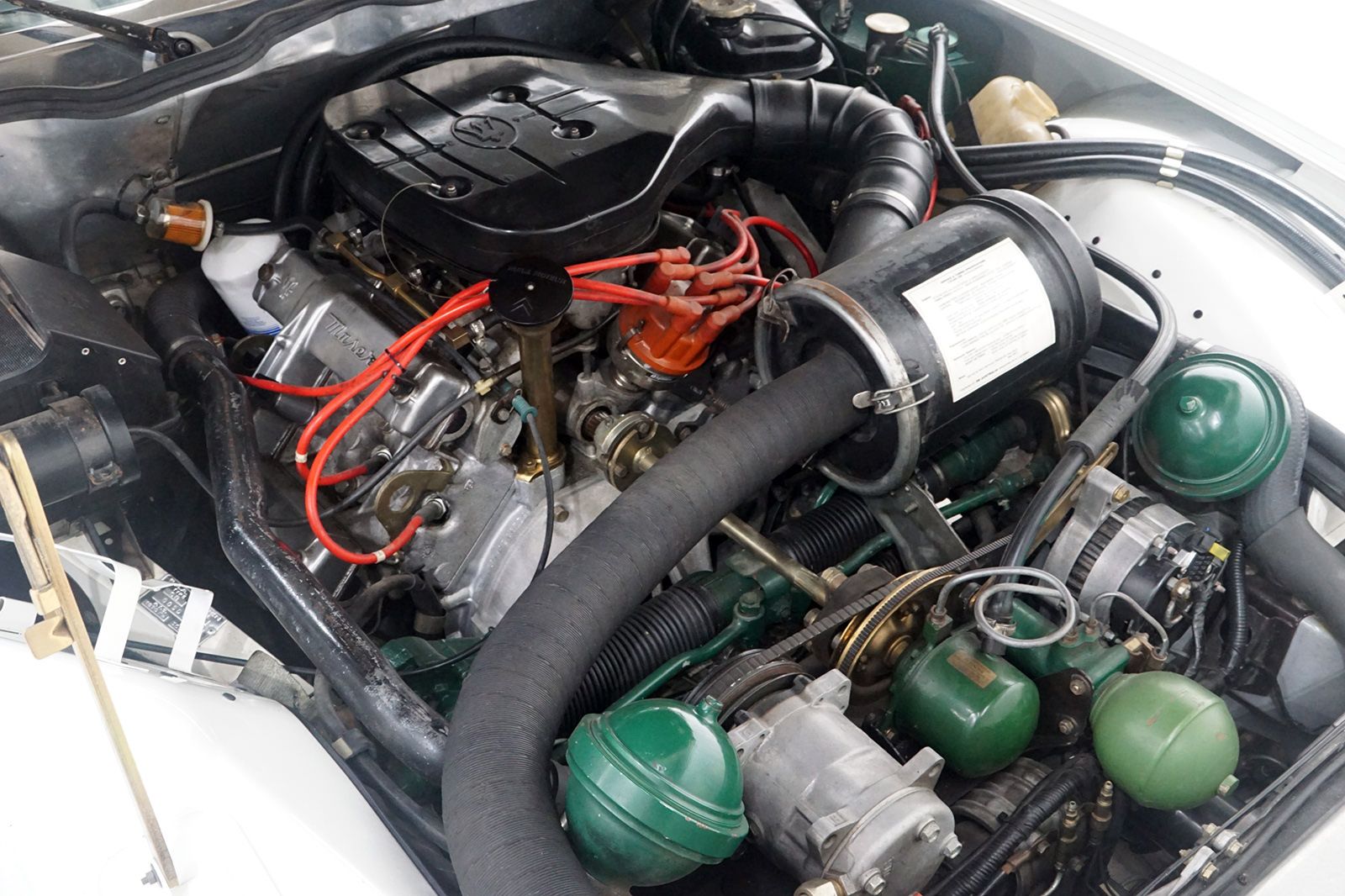
Earlier models like this 1973-built car packed a 2.7-litre V6 and five-speed manual gearbox underneath an unmistakable bodyshell, which gave it a 225km/h top speed.
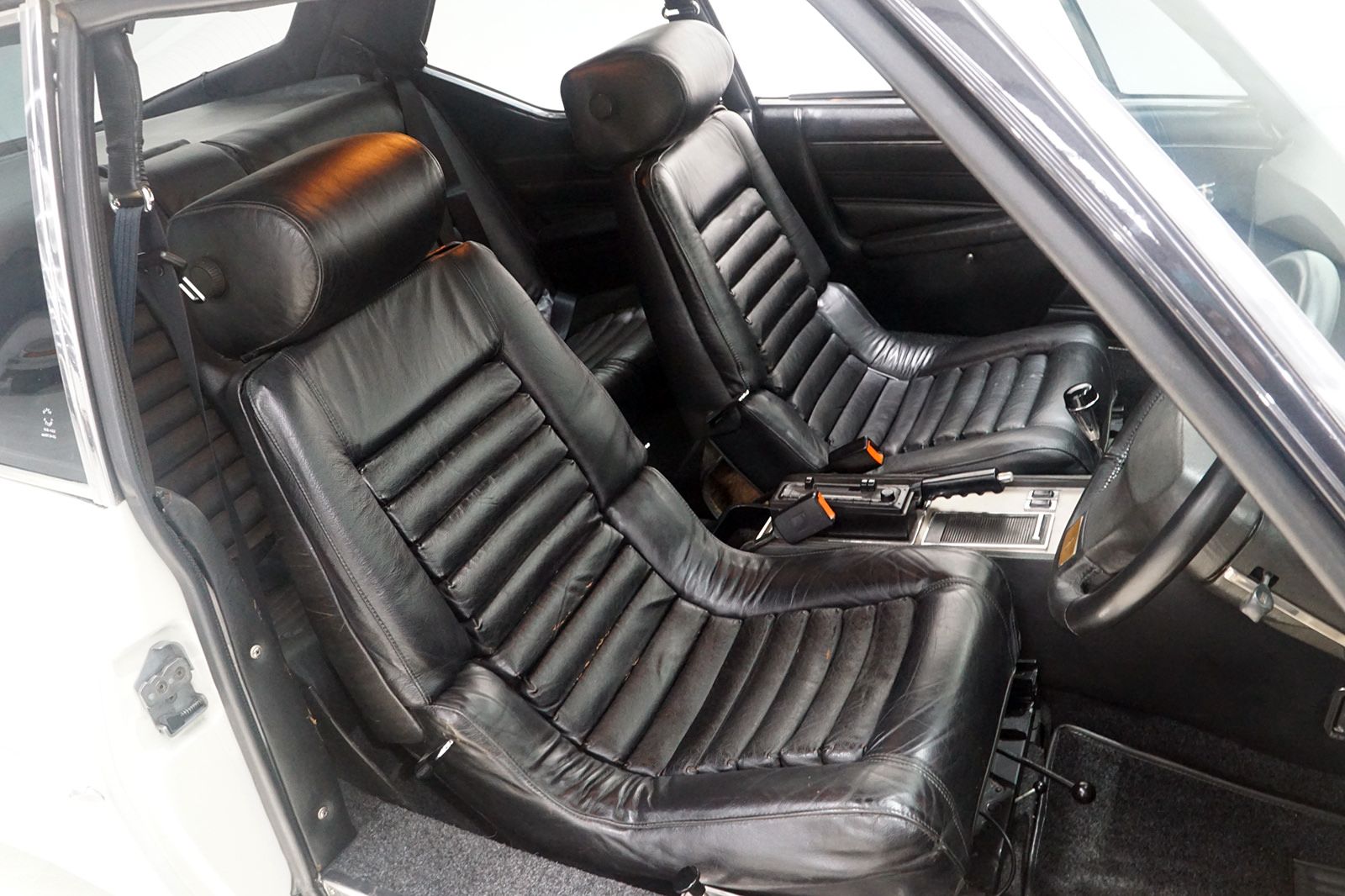
It was imported to Australia and fully rebuilt in 2000, undergoing a right-hand drive conversion at the same time. It’s showing just 68,000 miles on the odo, and the restoration job has seemingly held up very well aside from some scrapes to the lower front panel. Shannons expects it to take fetch between $70,000 and $80,000.
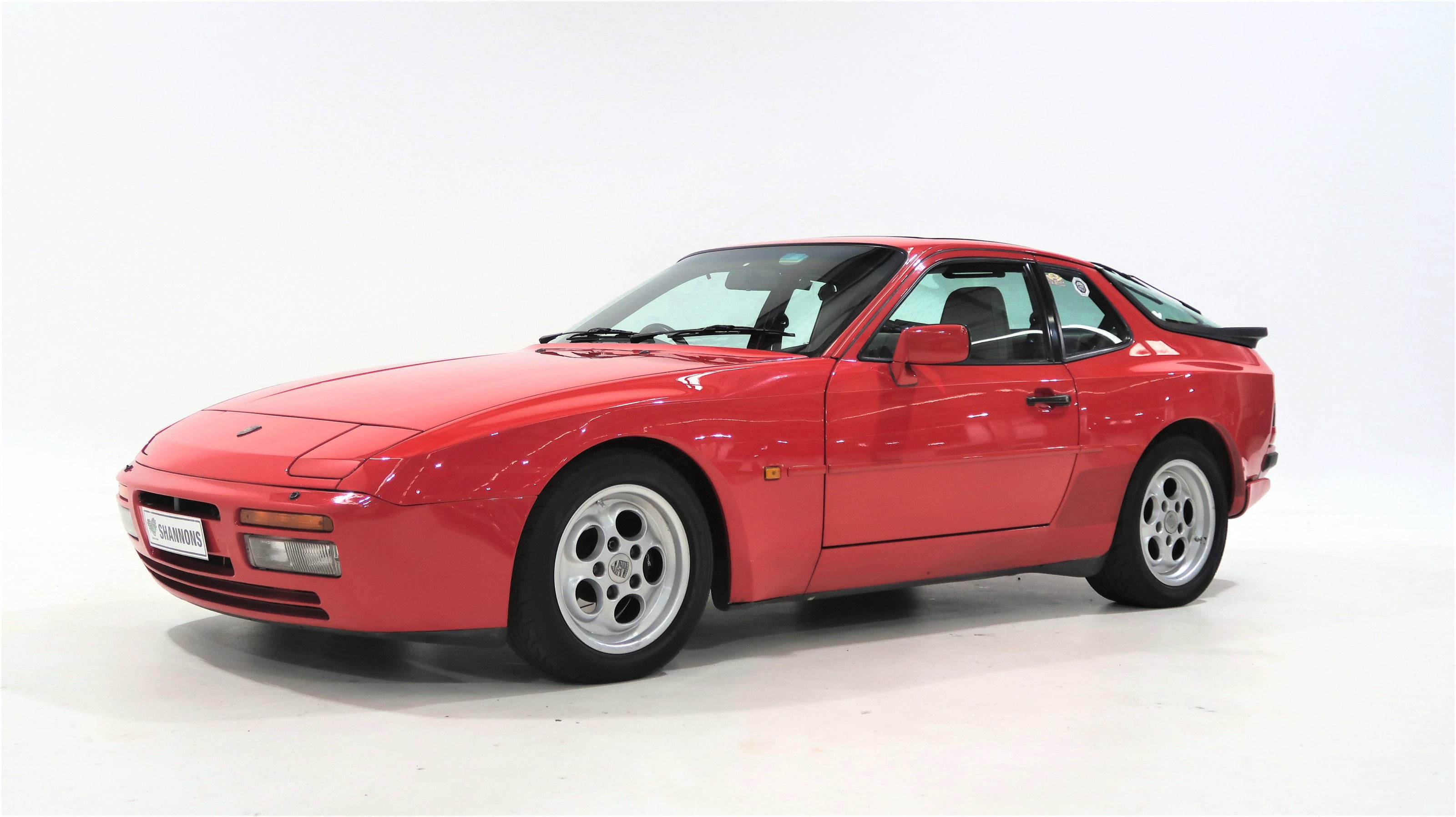
Front-engine Porsches are still affordable machines, as proven by the $35,000 – $45,000 range on this 944.
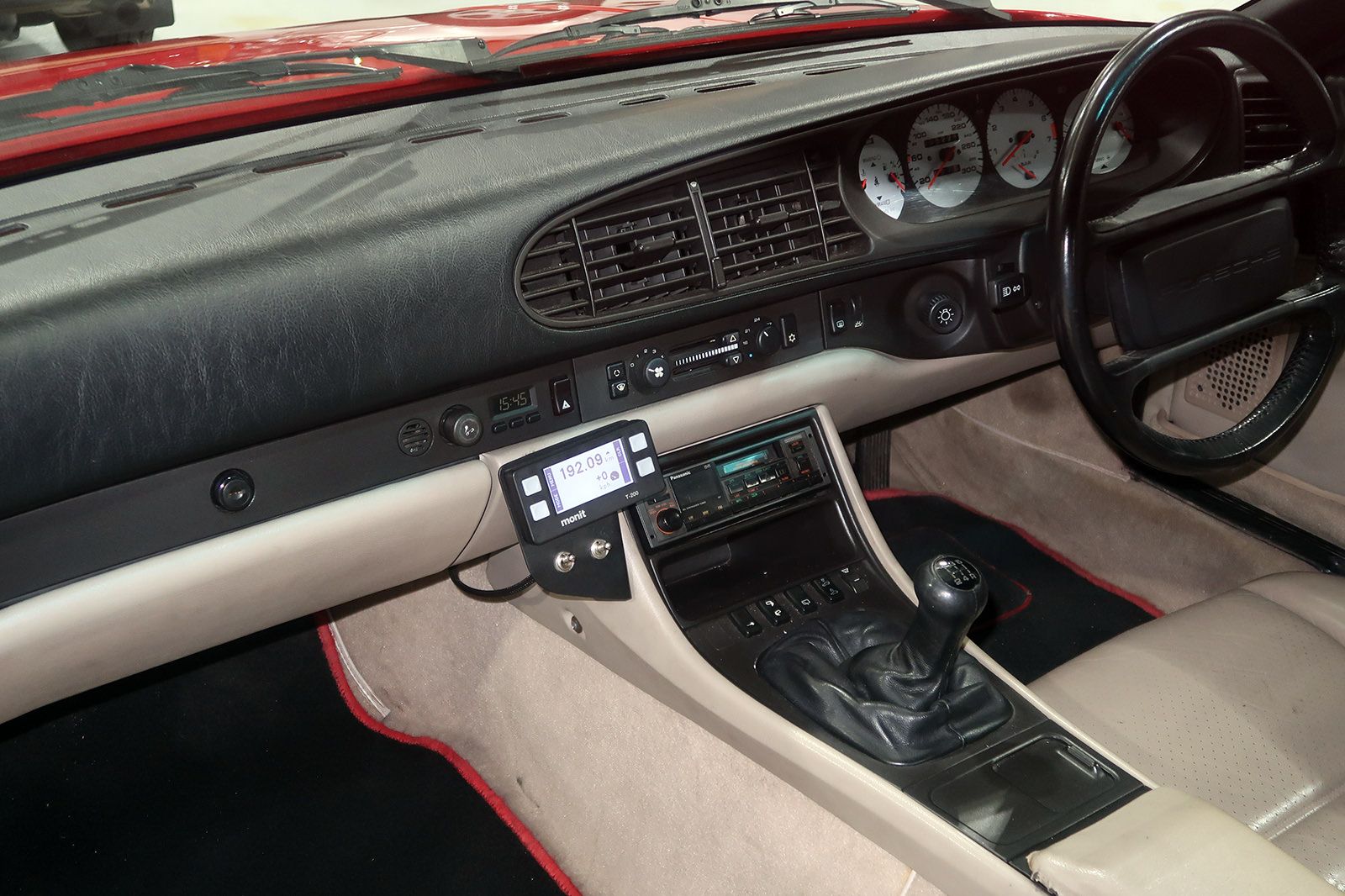
Import papers show it reached Australian shores in 2013. It’s a well-optioned car that’s seen plenty of replacement parts, though it’s described as suffering from an engine rattle when cold.
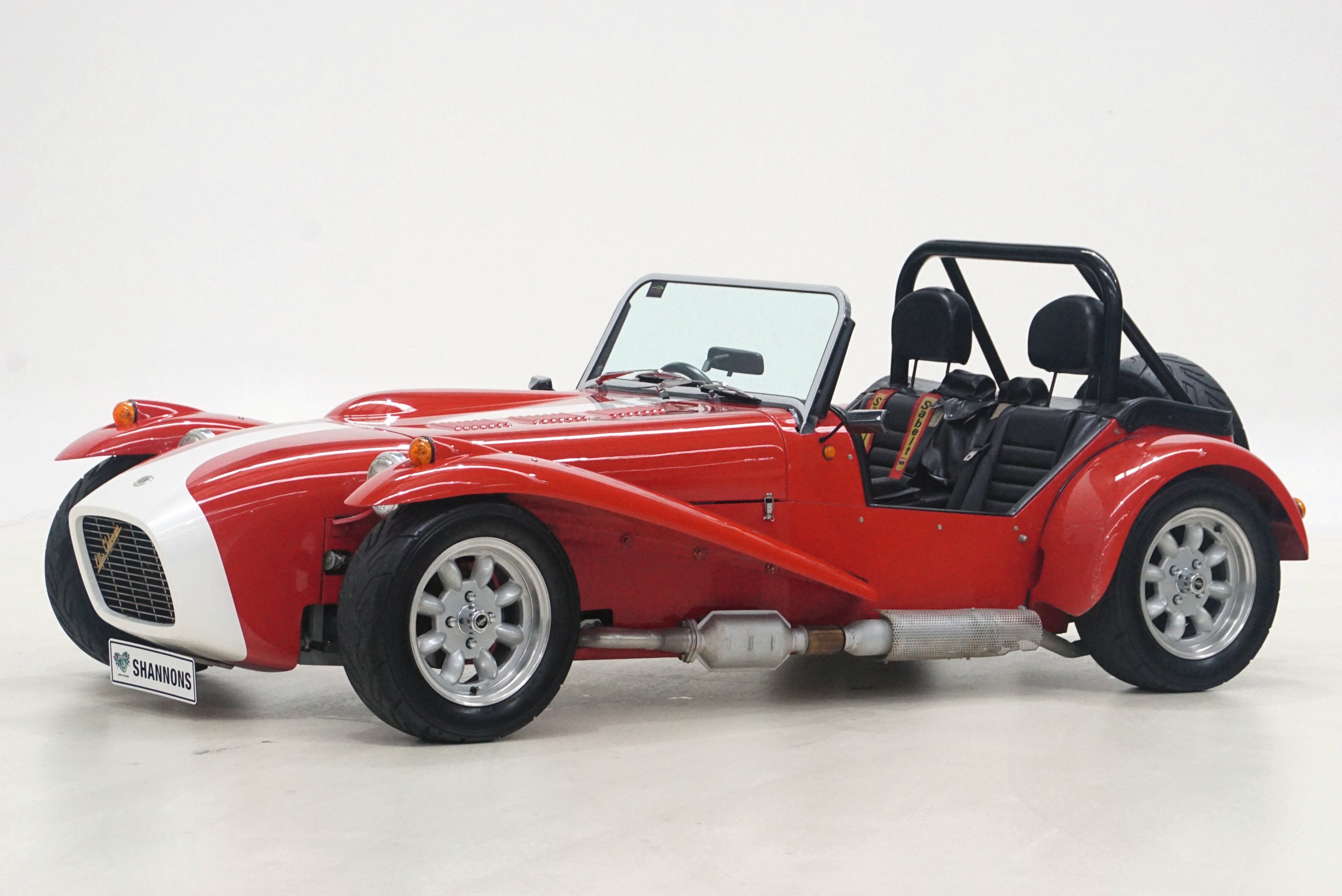
Elfin Sports Cars built the Type 3 Clubman in both turn-key and kit car form from 1998 to 2007. The late Tom Walkinshaw bought the company in 2006, though it’s sat dormant since his death in 2010.
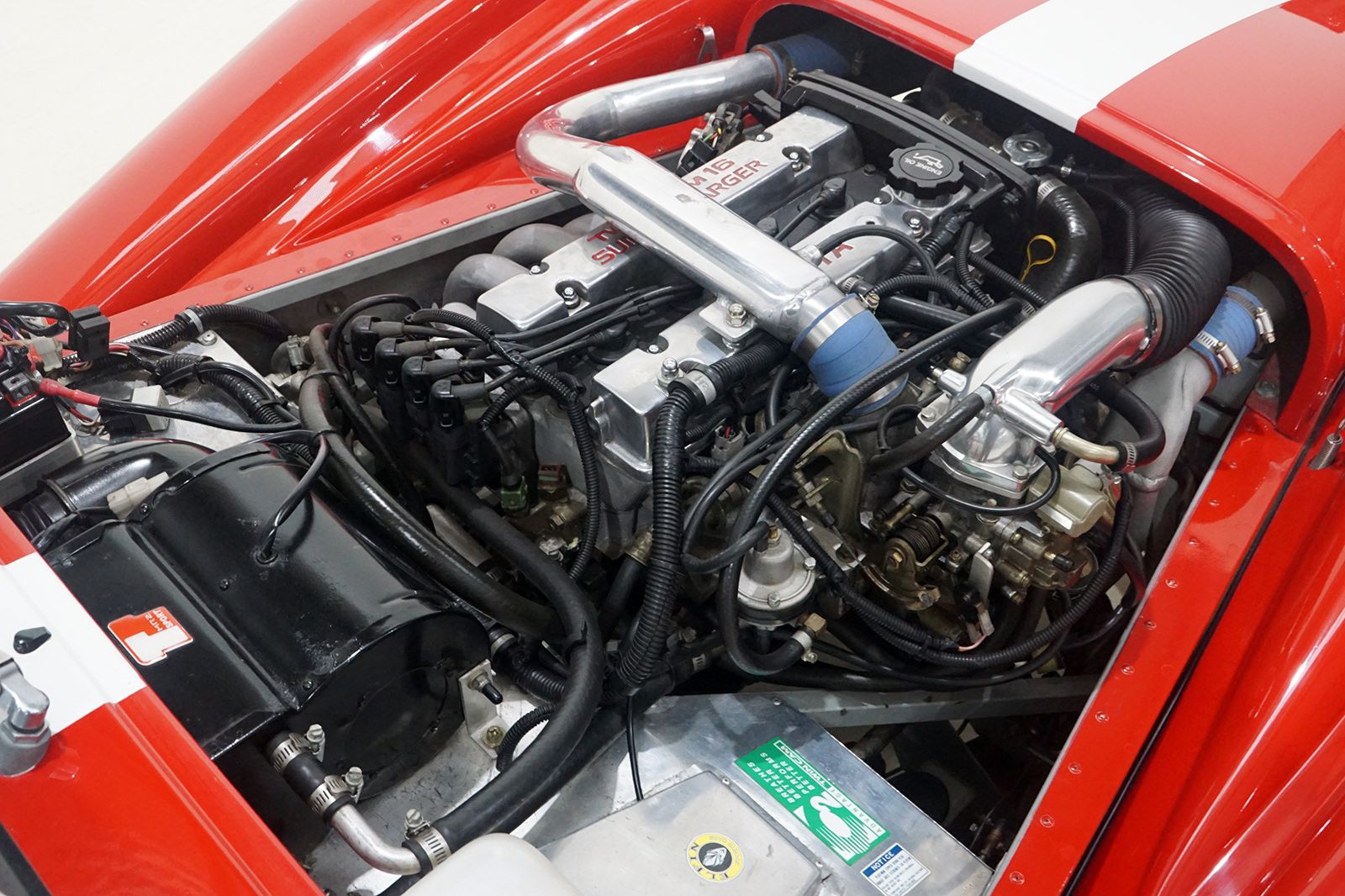
The Clubman was powered by a supercharged Toyota 4AGZE four-pot, and tipped the scales at a scant 600kg, allowing for a claimed 0-100km/h sprint in just 4.8 seconds.
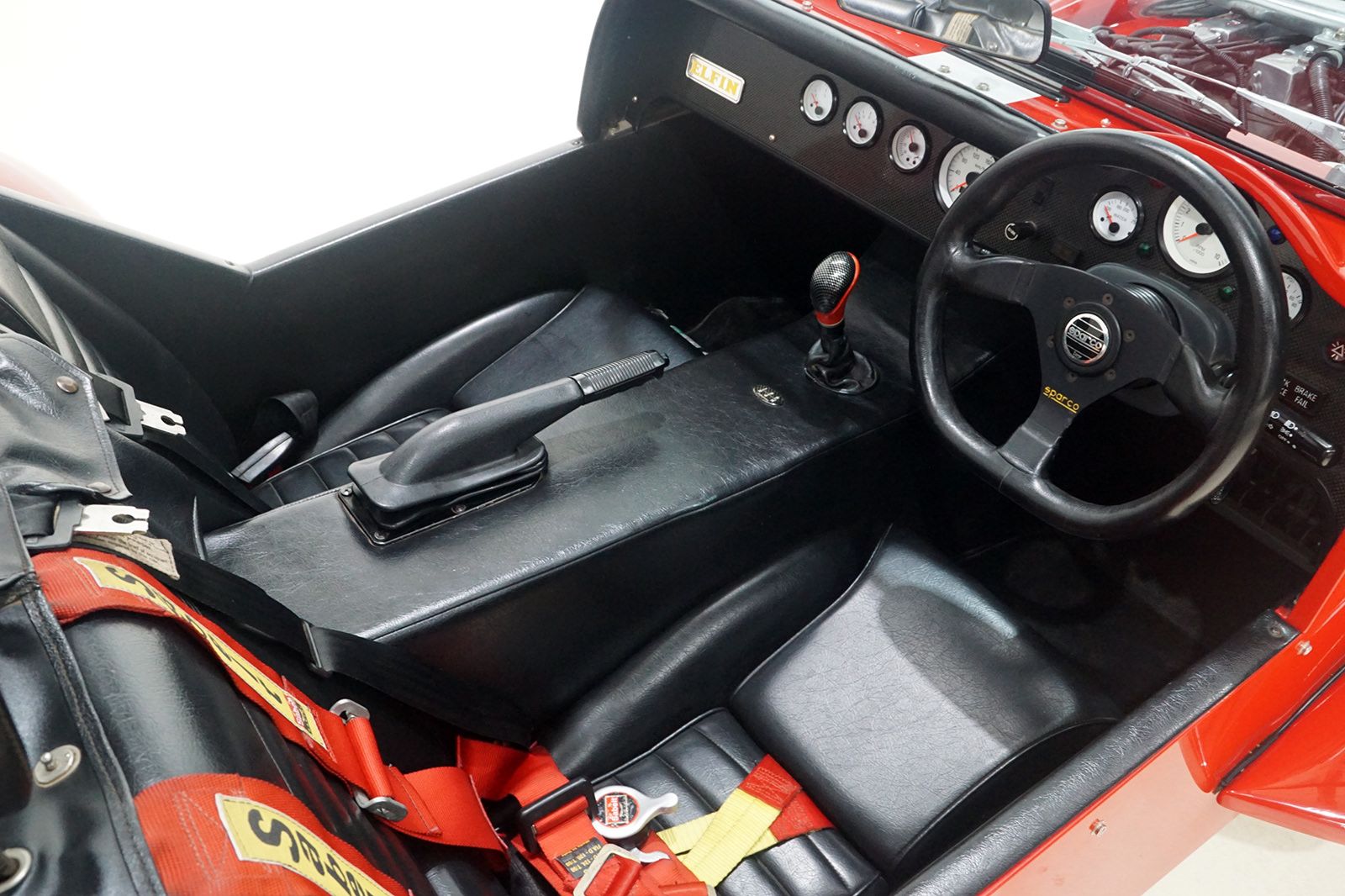
Save for non-functional wipers, this Clubman’s in good condition. Shannons’ guiding range is $30,000 – $35,000.
You’ll find the full list of cars at the Shannons Spring Auction here. Online bidding opens on August 31 at 10am, and ends on September 7 at 7pm.
The steady and measured upmarket march of Volkswagen’s Golf and its associated pricing creep won’t surprise many a key observer. Yet it’s still easy to forgive a double take at the sixty-five-thousand-dollar reality that is parking a nicely optioned version of the latest, Mk8 GTI in your car space.
This isn’t some special edition, spec fettled for exclusivity with skunkworks credentials, blessed by the bishop of Wolfsburg or as driven by the captain of Germany’s national football team. This is the regular GTI. In red. With leather.
Through a fairer lens, the $53,100 list price appears a much more palatable entry point for Mk8, replacing its like-for-like Mk7.5 ‘performance-enhanced’ 180kW DCT forebear which was put to pasture at a fiscal high of $47,190.
But as my fully loaded tester’s electric comfort access draws my ventilated Vienna leather pew closer to the fuchsia-mood-lit and bedazzling, digitised dash fascia, I do wonder: what has happened to Volkswagen’s frill-free, everyman’s fun hatchback?
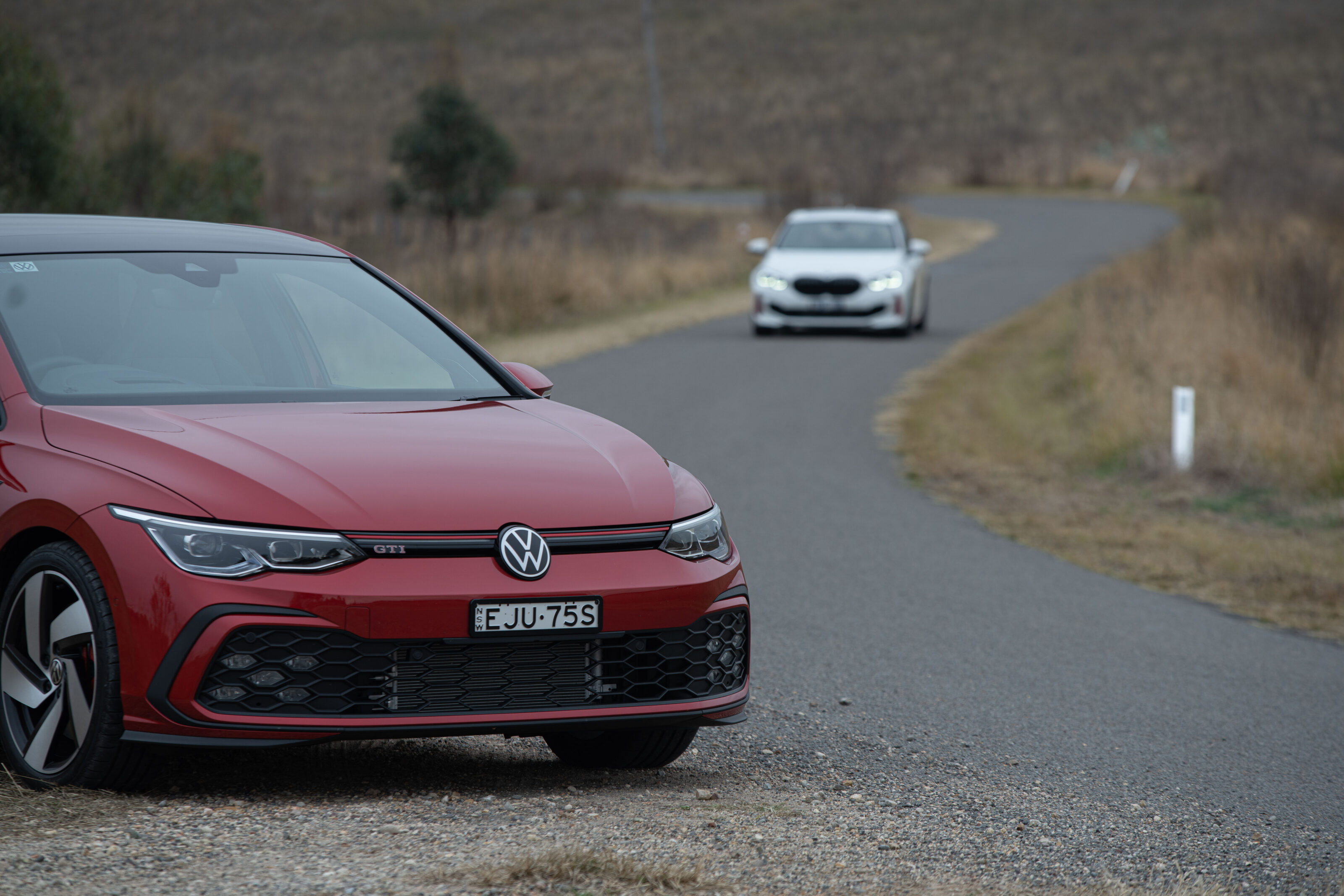
Golf GTI once symbolised something different, its seminal mould minted in the Mk5 of the mid-Noughties in basic, three-door, manual, Tartan-trimmed form. That version’s most authentic extrapolation was the Original, arguably Mk7 at its purest, mirroring its most basic forebear’s door, ’box and trim recipe, if utmost importantly its spirit. It was $37,490 list. Just three years ago.
Now, the GTI is auto and five-door only. So less choice, but a package injected with frills and newfound fanciness to justify its fiscal climb, or vice versa. Despite carrying over much of DNA under the skin, this new Mk8 feels like something of a watershed moment for the nameplate, with aims to shed its working class hot-hatch ethos for aspirations of grandeur.
The BMW 128ti’s arrival arguably carries more gravitas. It’s the company’s first front-driven hot hatch – at least wearing its own branding – reviving an enthusiast nameplate that sat dormant for two decades. Off the tail of the 1 Series’ technical paradigm shift from a rear-driven platform, and courting backlash and controversy, infamously captured in one official line that owners of an ‘ultimate driving machine’ mightn’t be aware which axle provides motivation, there’s a lot riding on this newcomer’s strut tops.
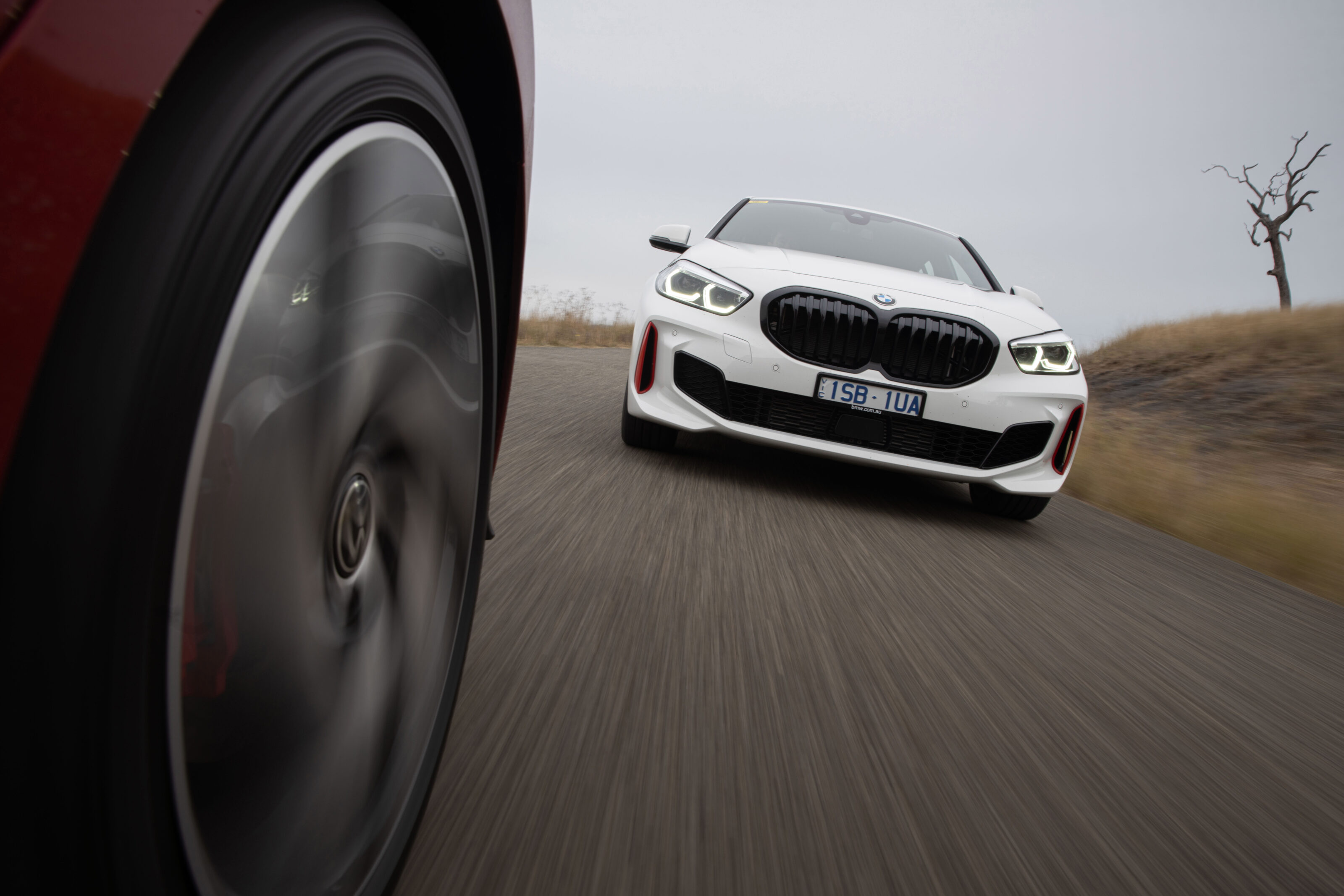
Neither is as fit in local spec as they are as offered in other markets. For the BMW, our version is 15kW and 20Nm down on the car available in Europe. For the Volkswagen, our version carries over the Mk7 ‘Performance’ third-gen EA888.
The potential trap for Munich’s sporty new five-door is appearing as a downmarket move. At $56,900 before on-roads it parks itself right in the GTI’s lane, even if it’s pricier than both the Wolfsburg machine and its own 125i M forebear that came in at less than $50K.
Yet the move to FWD does present BMW with a clean enough sheet for a fair degree of freedom of expression with the 128ti. But rather than applying a heavy hand, its maker appears to have prudently melded sportiness with maturity, a grown-up’s machine that, in the flesh, comes across less as some M-lite proposition and more its own distinctive prospect in the broader BMW line-up.
The GTI’s uninterrupted lineage is both a virtue and a trap. Make no mistake: neat conservatism is utmost to the Golf’s tremendous appeal and ongoing success, its GTI nameplate one of motoring’s greatest icons up there with the Porsche 911. Thus, its applied design is microscopically strategic.
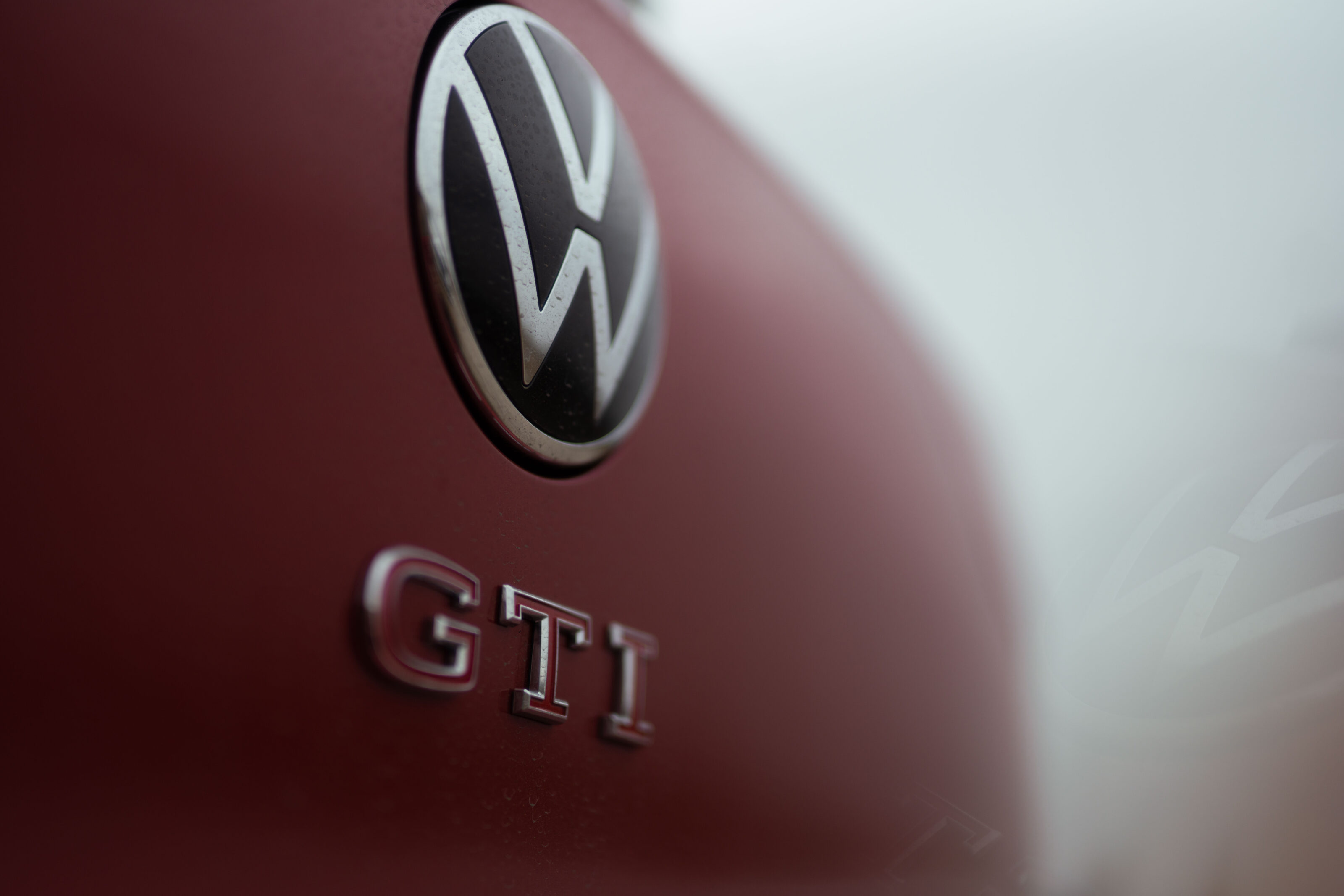
It’s unsurprising, then, that what few Mk8 stylisms do flirt with adventure – eyelash headlights, its mono-brow DRL, omnidirectional Richmond wheels – cause such a big stir. The rest of the GTI exterior form is, beyond anything else, utterly predictable. Then you climb inside…
The new cabin doesn’t so much break the Golf mould – formed through the natural evolution of the three prior generations – as it seems intent on setting it on fire and throwing it off a cliff. And it’s clear that the new cabin aesthetic is primarily tasked with rallying the small hatchback’s march further into upmarket territory.
As pleasingly contemporary as its presentation may be, moving so many minor controls to the new interface is distracting to use, particularly on the move. The digital window dressing bedazzles as intended but it does take a while before it feels intuitive. And importantly, this new theme is a hard departure from GTI’s traditionally classic and somewhat sportier leanings.
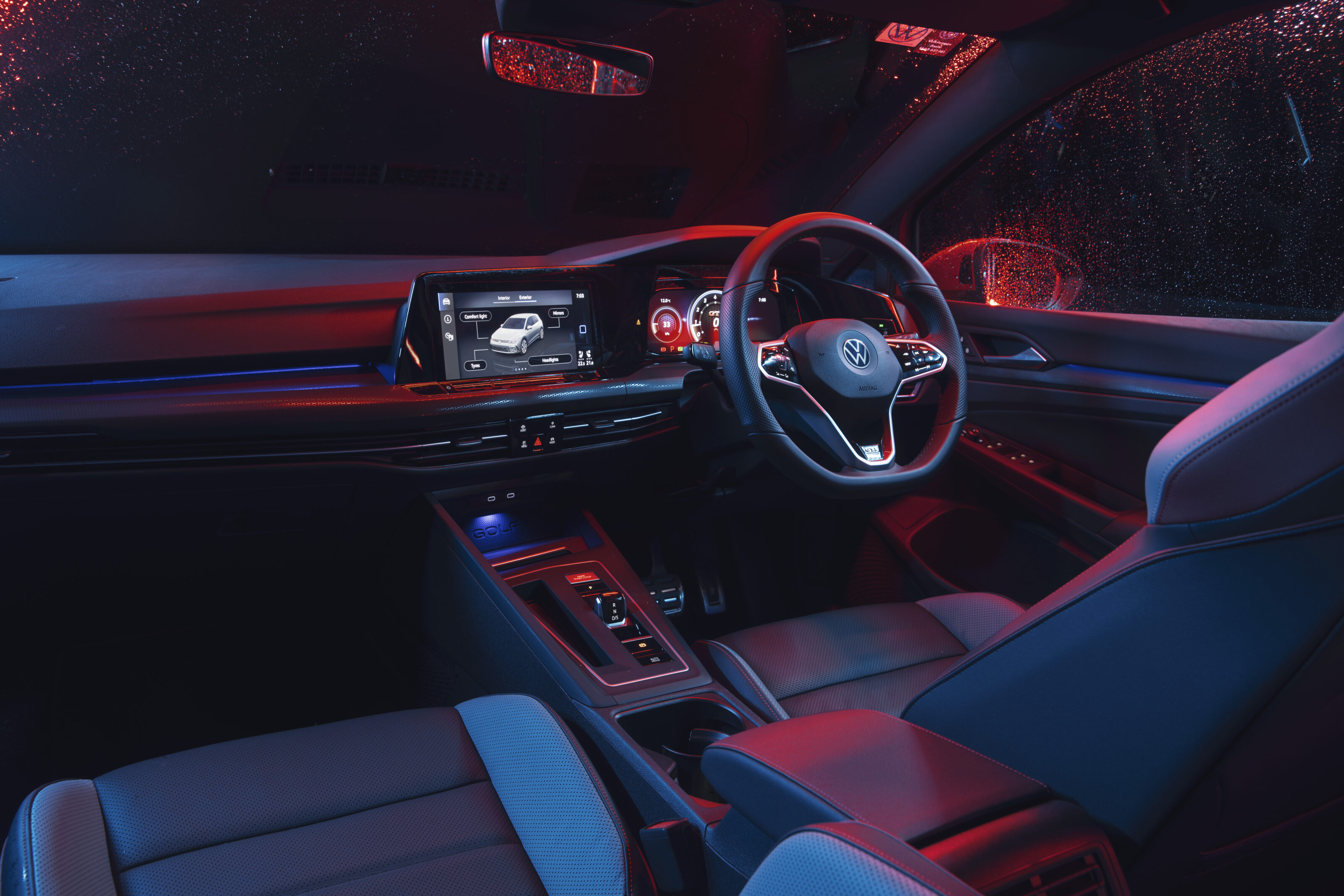
Nor is it some prestigious seachange. The large expanses of door-trim plastic, the switchgear, and the workmanlike Vienna leather, is familiar, middle-grade Volkswagen stuff. However, even those mid-spec bones present well-above the average mainstream hatchback for quality.

The BMW’s cabin brings its own frills, particularly the funky ‘crosshatched’ mood lighting, but overall it’s an interior that’s easier and more intuitive to use while still piling in forward-thinking technical showboating.
In many ways, these protagonists are equals for glitzy cabin features, it’s just the Munich machine is more resolved in execution and offers fewer functionality foibles: traditional volume knob, conventional climate controls, convenient shortcut buttons for the majority of features that need them.
Working against BMW’s favour is the spiralling upcharge for niceties: lumbar and seat/wheel heating adds $1023, the sunroof a further $3000, both as fitted to our test car that’s on the fast track to $70k on-road. For both cars, avoiding expensive options seems far more sensible and compelling given the hot-hatch space they aim to occupy.
The pair level nicely under their bonnets. Both turbocharged 2.0-litre four-pot engines produce 180kW from 5000rpm, the BMW maintaining its peak a little higher in the top end (6500rpm plays 6200rpm). Of the two, the BMW plies an extra 10Nm for a 380Nm total, though in similar peak bands: 1500-4400rpm for the 128ti, 1600-4300rpm for the GTI.
Equally, neither is as fit in local spec as they are as offered in other markets. For the BMW, our version is 15kW and 20Nm down on the particulate-filter-equipped car available in Europe. For the Volkswagen, our version carries over the Mk7 ‘Performance’ third-gen EA888 rather than the newer Evo4 development now fitted to the Euro GTI, offering identical 180kW and 370Nm peaks, if with cleaner credentials and a freer-revving nature.
Performance penalties? A marginal adjustment on advertised claims, the 128ti 0.2sec slower to 6.3sec and the GTI nipped 0.1sec to 6.4sec for the 0-100km/h measures in transition to Oz spec. Given both protagonists related engines offer higher outputs elsewhere – 225kW in M135i, 213kW in Mk7.5 Golf R – suggests headroom is available for future enhancement.
Seat of the pants, they’re equally strident on the march. Loaded up on the pedals, the GTI holds 3000rpm, its ‘wet’ dual-clutch dipping rpm to just above 2000rpm when stepping off the brake pedal, swinging into maximum thrust of an engine seeming sweeter in its top end.
The electro-mechanical LSD plies traction well from the 225mm Bridgestone Potenzas, with just a modicum of traction loss, the Golf shooting straight and true with barely a hint of torque-steer.
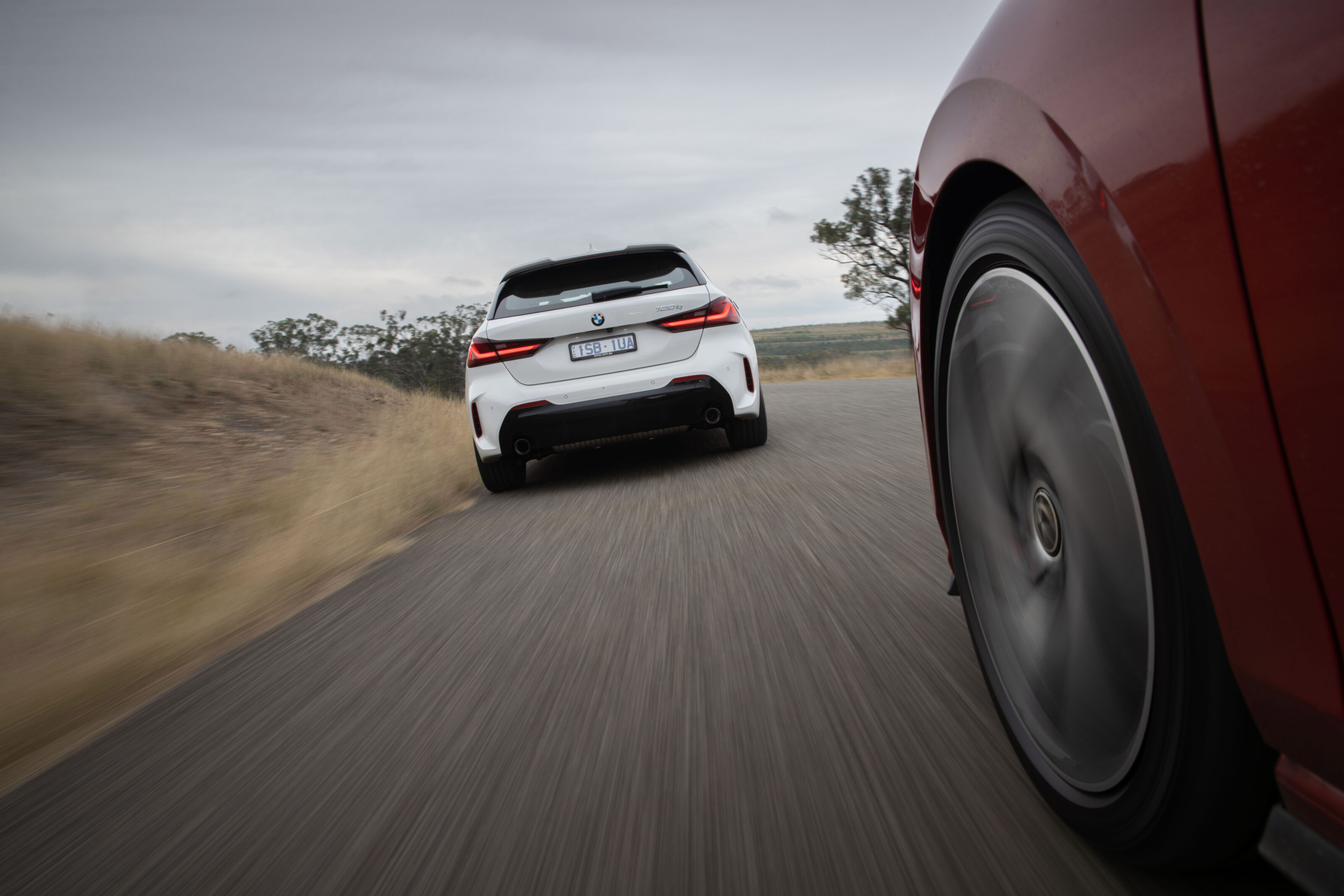
The 128ti is more eager out of the hole, its eight-speed auto less mechanically sympathetic, the turbo four manning battle stations more swiftly and assertively in the mid-range. Both hatches are supremely linear in acceleration, their transmissions crisp and precise in upshifting, though it’s the BMW that tugs more eagerly at the tiller feeding torque across its axle, more in liveliness than sheer struggle, its own mechanical LSD keeping those 225 Michelin Pilot Sport 4s drilled to the hot-mix.
The BMW’s punch does have to contend with more mass, its 1445kg kerb weight heftier than the 1409kg Volkswagen. They’re equally and satisfyingly swift, neither seemingly stealing the march for real-world pace. But in most every other respect, they’re distinctly different animals on road.
Characteristically, the GTI doesn’t fall far from the family tree. Its measured character is so evenly tempered that it almost comes off as being bland, but lean into it and its dynamic talent swells to the surface confidently.
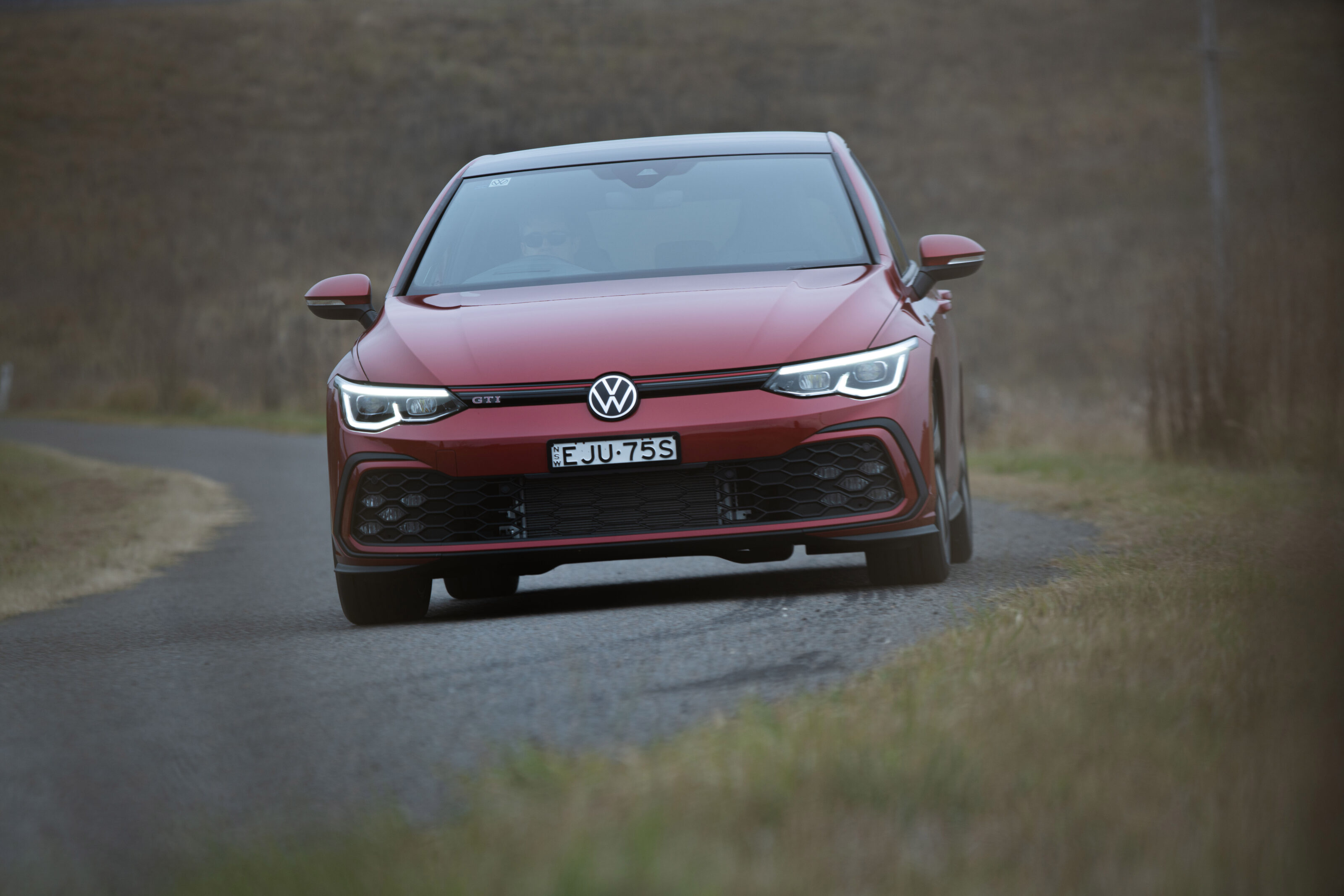
The steering is pure GTI, rounded and linear, an ally of detailed accuracy. It’s married to a chassis that’s clear and connected without tipping too far towards unruly pointiness or languishing into benign lethargy. It feels trustworthy and eminently friendly in its organic nature despite the newfound electronic talent injection, which goes some way in justifying the hot Golf’s price rise.
The chassis’ key update is the Vehicle Dynamics Manager system that governs the electronic ‘XDL’ brake-based wheel control and Adaptive Chassis Control smarts in cahoots with the electro-mechanical limited-slip differential. Volkswagen claims this “in effect entirely eliminates understeer” and the GTI may well demonstrate clear improvement let off the chain on a racetrack, but on road, cutting curves at a dull roar, it’s so transparent that what benefit it brings goes largely unnoticed.
The more conspicuous party trick is the 15-stage damper tuning, from softer than Comfort to tauter than Sport, distractingly accessible via submenus in the touchscreen, if thankfully adjustable on the fly. Its ride comfort scope covers middling to sharp in fine increments, but it’s well executed and allows tuning fine enough to appease the fussiest whims.
GTI’s new talents are so subtly effective that, in practice, fast-flowing back roads that are both smooth or lumpy are best tackled with a Comfort chassis setting, which strikes a fine blend of pliant ride with deft wheel and body control without sacrificing engagement and accuracy. In this setting, this really is the Golf GTI at its grand touring finest.
As innocuous as it may look, the 128ti lays on the mojo much thicker, but not in some flippant or ham-fisted manner. It delivers its pulse-raising hot-hatch pitch without apology while maintaining a strong sense of premium maturity.
At the helm, the BMW feels cosier and more compact than the airy and measured Volkswagen, where you feel pinned into the control of its heightened responses. It’s more hard-wired into the driving experience, more analogue and mechanical in connecting the driver to the road.
The 128ti’s steering is more instantly reactive off centre, and it pairs with a front end that is more alert than its rival, with a hair more granular feedback that blends beautifully with the bite of those excellent, tenacious Michelins. Despite its weight disadvantage, the BMW is keener to change direction and it dances about more eagerly than the comparatively sure-footed and almost-benign Volkswagen, at least at a spirited clip that won’t threaten your driver’s licence.
Each has the measure of the other for point-to-point pace and engagement while doing so. But it’s the BMW that brings a larger sense of enthusiasm, seducing you more into pushing on and exploring its lively dynamic talents, compounded by the turbo four’s eagerness to punch quickly out of corners, the chassis’ consummate traction harnessed with aplomb by the limited-slip hardware.
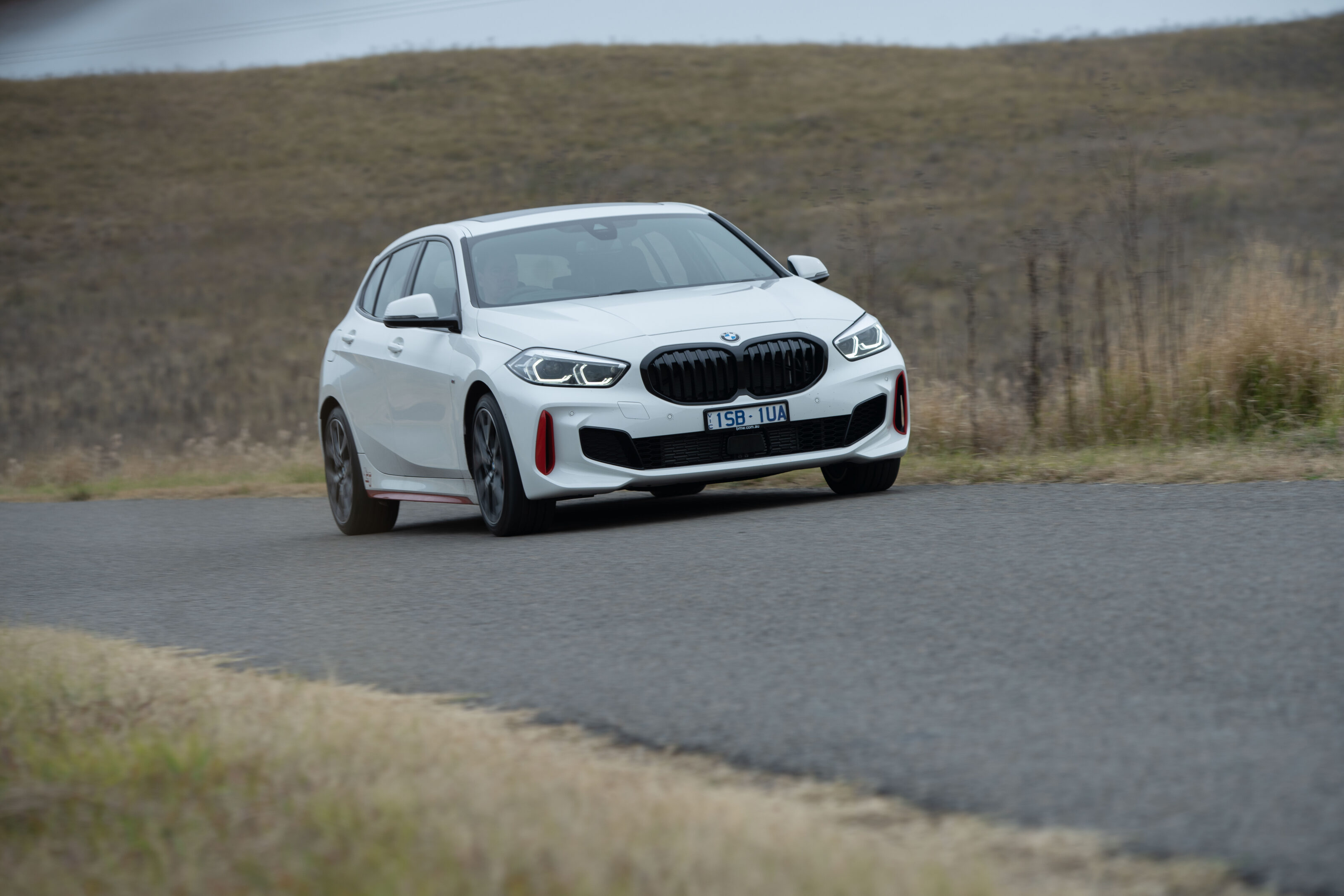
What the BMW lacks for a more fully rounded dynamic character is adaptive or switchable damping. It makes do with a particularly firm fixed setting that, at least with its scruff grabbed firmly in the thick of the twisties, yields just enough compliance to ply strident tyre adhesion across sharp mid-corner bumps while maintaining fire for the frisky dynamics.
The 128ti is something of a surprise, mostly because experiences of the brittle and inert 118i or the decent if dynamically underbaked M135i xDrive soften expectations. The 128ti is a huge improvement on either stablemate, the 1 Series finally finding properly impressive form. And while the jury is out for on-track talent, just quite how lean, crisp and thoroughly resolved BMW’s first properly hot front-driver is out of the box is quite the eye-opener.
Yes, the BMW’s ride quality is terse around town, incessantly jiggly at low speed, slappy across square hits and expansion joints. But it’s not entirely out of place for the sort of charisma it confidently owns. The flipside, however, is that for the sort of money the 128ti asks for and as the premium proposition it wants to be considered, switchable ride comfort should be standard issue.
The GTI’s multifaceted suspension smarts is the key area where it asserts itself as an incredibly accomplished all-rounder. And it lays on the cabin pizazz and brings newfound smarts to its resolved driving experience. It’s certainly equally as capable of covering ground in fine and suitably hot form as its BMW nemesis does. But in attempting to cover more bases more emphatically, it’s a little less complete. It’s here, more than anywhere, that the Golf hands the narrow win to the 1 Series.
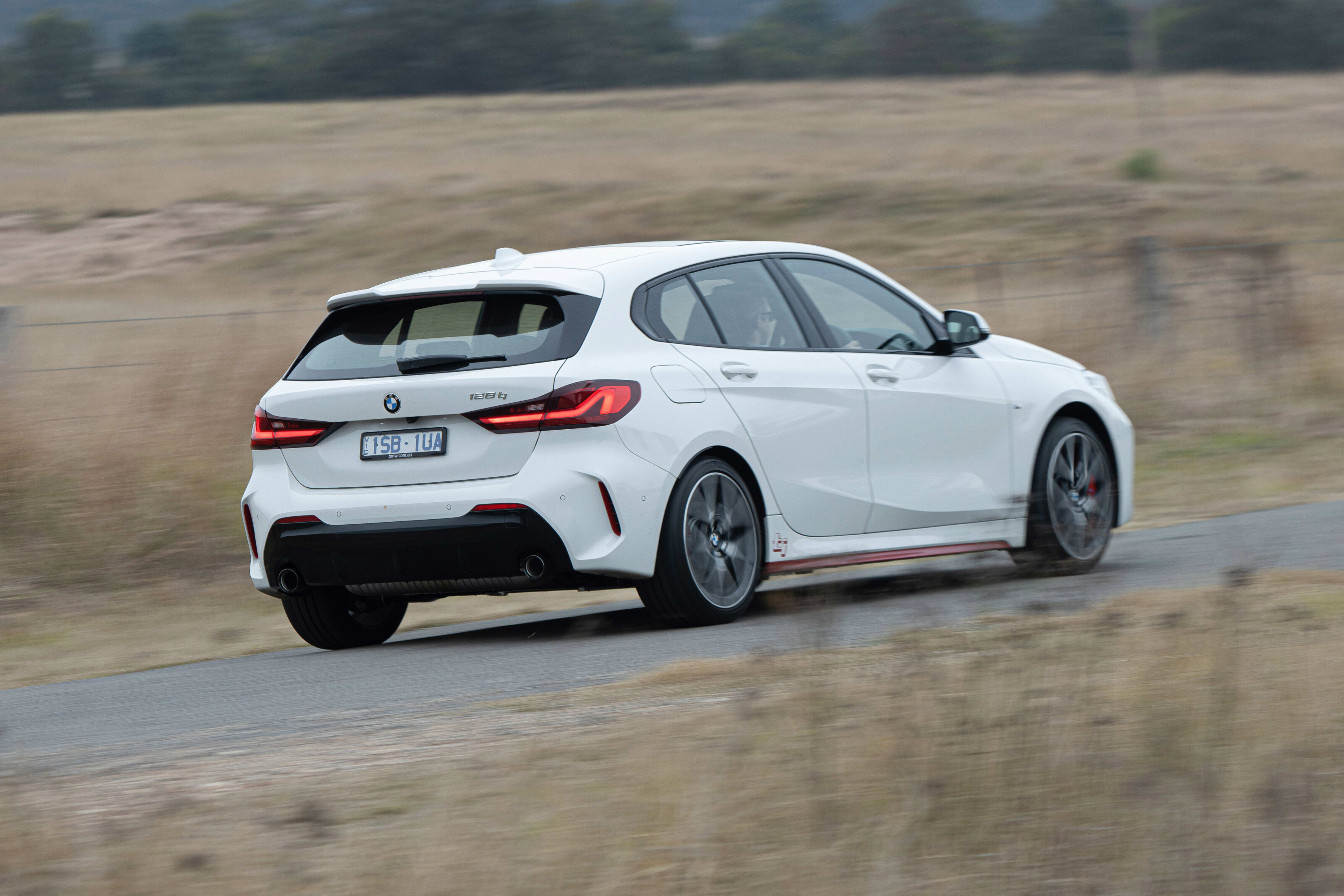
Our test VW misses the mark on its home stretch: an exhaust with an irritating resonant boom at a light-throttle cruise, an inductive charge unit that sent your author’s iPhone into meltdown, as well as the approach to user interface that makes the Volkswagen a little frustrating to live with. There’s room for improvement in the GTI’s execution and this does impact its upmarket aspirations.
The 128ti is simply better executed, as if it graduated finishing school with slightly higher honours. And that its athletic streak is clearer and more accessible across a broader range of driving situations demonstrates a stronger conviction to nailing its hot-hatch intent to the mast.
In what it does, perhaps moreso than how it looks, the BMW brings an X-factor in the drive that’s a little lacking in its rival. And it does so without detriment to genuine premiumness and maturity. On these alone, Munich’s fledgling hot hatch goes a fair way in justifying the steeper ask than that of its rival.
Rebooting BMW’s long-dormant ti suffix wasn’t a move that added pressure or an expectation that there was something to prove. That the marque’s new front-driven offering carves a fresh and inimitable niche in its line-up, and enriches the broader hot-hatch gene pool with a compelling new spin, adds a little extra weight to win here against Volkswagen’s iconic stalwart.
VERDICT
BMW 128ti: 8.5/10
Volkswagen Golf GTI: 8/10
| Make/Model | BMW 128ti | Volkswagen Golf GTI |
|---|---|---|
| u00a0Price | $56,900 / As tested $63,473* | $53,100 / As tested $58,700* |
| Drivetrain | u00a0 | u00a0 |
| Engine | 4cyl, dohc, 16v, turbo | 4cyl, dohc, 16v, turbo |
| Layout | front-engine (east-west), front drive | front engine (east-west) front-drive |
| Capacity | 1998cc | 1984cc |
| u00a0Power | 180kW @ 4750-6500rpm | 180kW @ 5000-6200rpm |
| Torque | 380Nm @ 1750-4500rpm | 370Nm @ 1600-4300rpm |
| Gearbox | 8-speed automatic | 7-speed dual-clutch |
| Chassis | u00a0 | u00a0 |
| Bodyu00a0 | steel, 5 doors, 5 seats | steel, 5 doors, 5 seats |
| L/W/H/Wu2013B | 4319/1799/1434/2670 | 4287/1789/1463/2631mm |
| Track (F/R) | 1560/1563mm | 1535/1513mm |
| Weight | 1445kg | 1409kg |
| Boot | 380L | 374L |
| Fuel/Tank | petrol/50 litres | petrol/50 litres |
| Economy | 6.8L/100km (ADR combined) | 7.0L/100km (ADR combined) |
| Suspension | Front: struts, A-arms, anti-roll bar. Rear: multi-links, coil springs, anti-roll bars | Front: struts, A-arms, adaptive dampers, anti-roll bar. Rear: multi-links, coil springs, adaptive dampers, anti-roll bars |
| Steeringu00a0 | electrically assisted rack-and-pinion | electrically assisted rack-and-pinion |
| Front Brakesu00a0 | 360mm ventilated discs | 340mm ventilated discs |
| Rear Brakes | 330mm ventilated discs | 310mm ventilated discs |
| Tyresu00a0 | Michelin Pilot Sport 4 | Bridgestone Potenza S005 |
| Tyre Size | 225/40 R18 (f/r) | 225/40 R18 (f/r) |
| Safety | u00a0 | u00a0 |
| ANCAP Rating | Five stars | Five stars |
| u00a0 | Performance | u00a0 |
| 0-100km/h | 6.3 (claimed) | 6.4sec (claimed) |
| u00a0 | u00a0 | u00a0 |
| u00a0 | ** Comfort package ($1023); u2018Dakotau2019 leather ($2200); glass sunroof ($2000); Harman/Kardon audio ($1350) | ** includes metallic paint ($300); Sound & Vision Package ($1500); Luxury Package ($3800) |
Snapshot
- First of 12 Bacalars completed
- Each listed at a base price of $2.9m
- Bentley Blower recreated after more than 90 years
Building bespoke vehicles is one of the main pillars of Bentley’s Mulliner division, creating products for its customers which are limited and unlikely to ever be replicated.
Established in 2020 with the reveal of the Bacalar roadster, Mulliner has completed its first production spec vehicles, ready to be delivered to its customers.
The first of the two vehicles is the aforementioned Bacalar, a V12 two-seater which will be limited to just 12 units, each at a base price of $2.9million although Bentley believes owners could fork out in excess of $4m for the completed, customised vehicle.
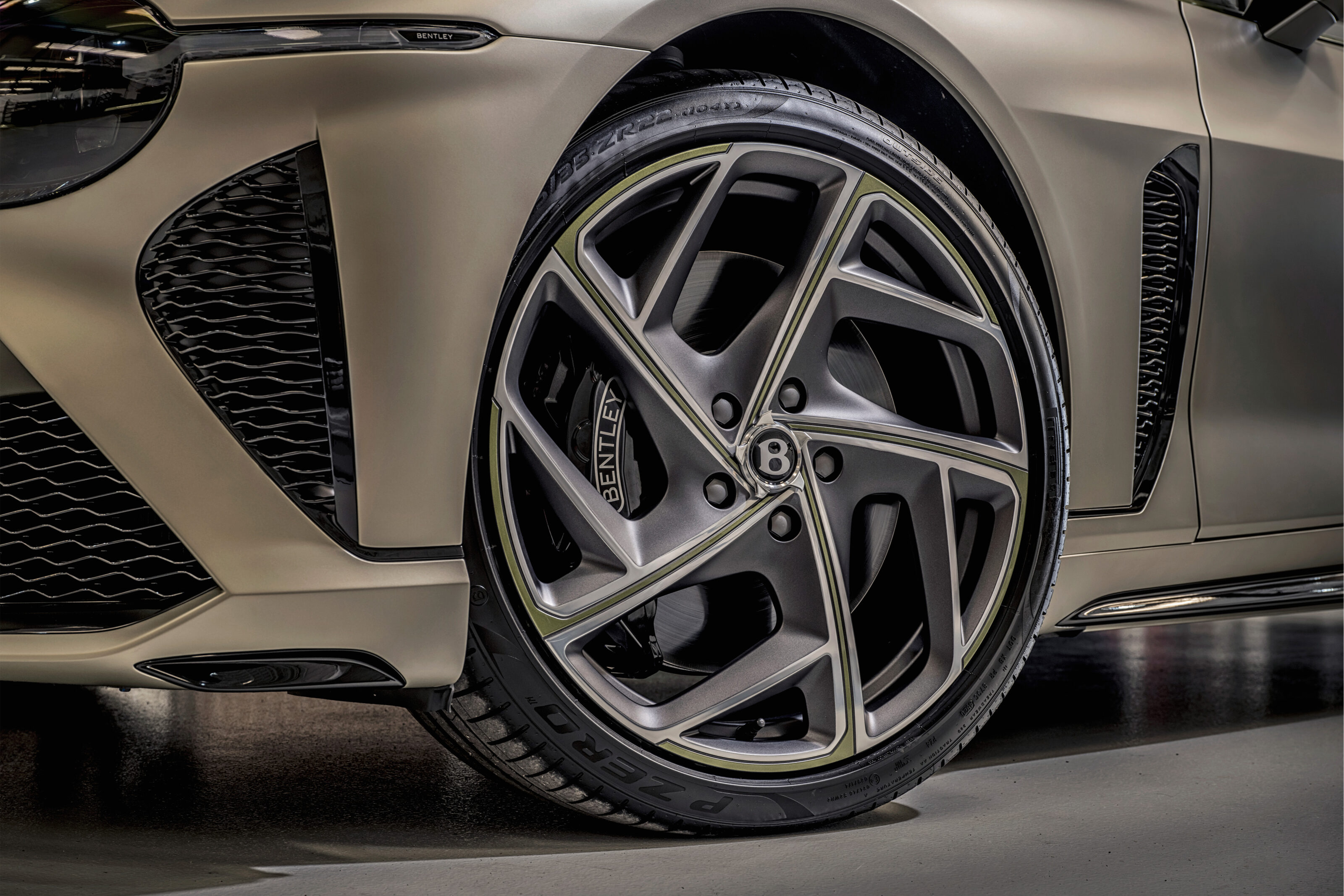
This particular example has been finished in a colour called atom silver – a champagne-tinted satin silver – with dark grey satin and gloss moss green 22-inch wheels, featuring polished faces which complements the exterior paint.
Those moss green highlights also feature on; the grille centre bar, headlight surrounds, the upper body chrome surround, its “power humps” at the rear of the car and the exhaust tip inserts.
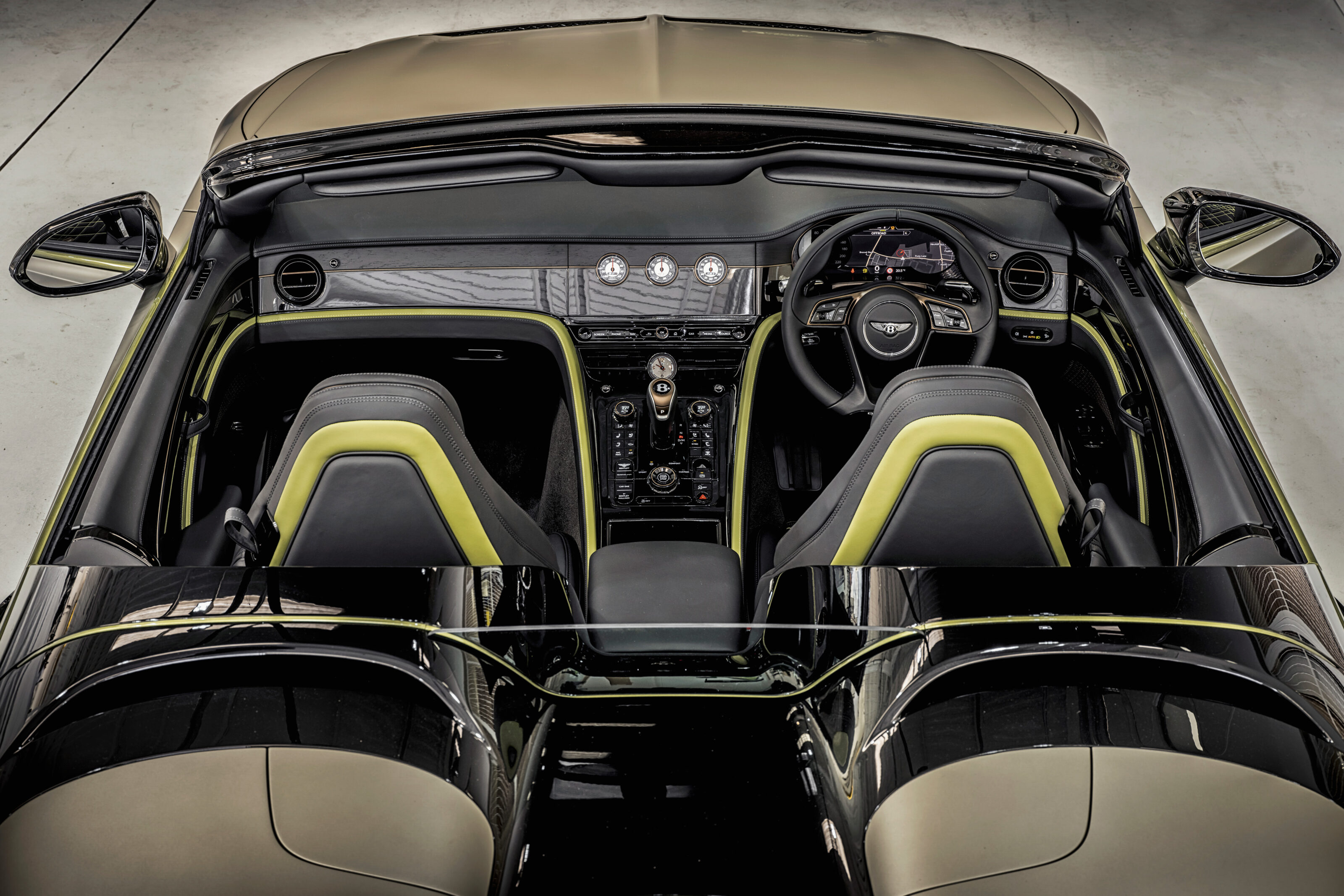
Its interior has dark Nappa leather seats which are accented with moss green stitching, combining with Moss Green highlights on the console wings and outer seat backs.
The rest of the cabin is covered in Beluga leather as well as Open Pore Riverwood trim, the latter finished with a gloss black veneer and satin bronze detailing across the cockpit.
Other bespoke features to this particular Bacalar include a satin nickel clock and Bentley rotating dials, matching Bacalar luggage and bright chrome Bentley wings.
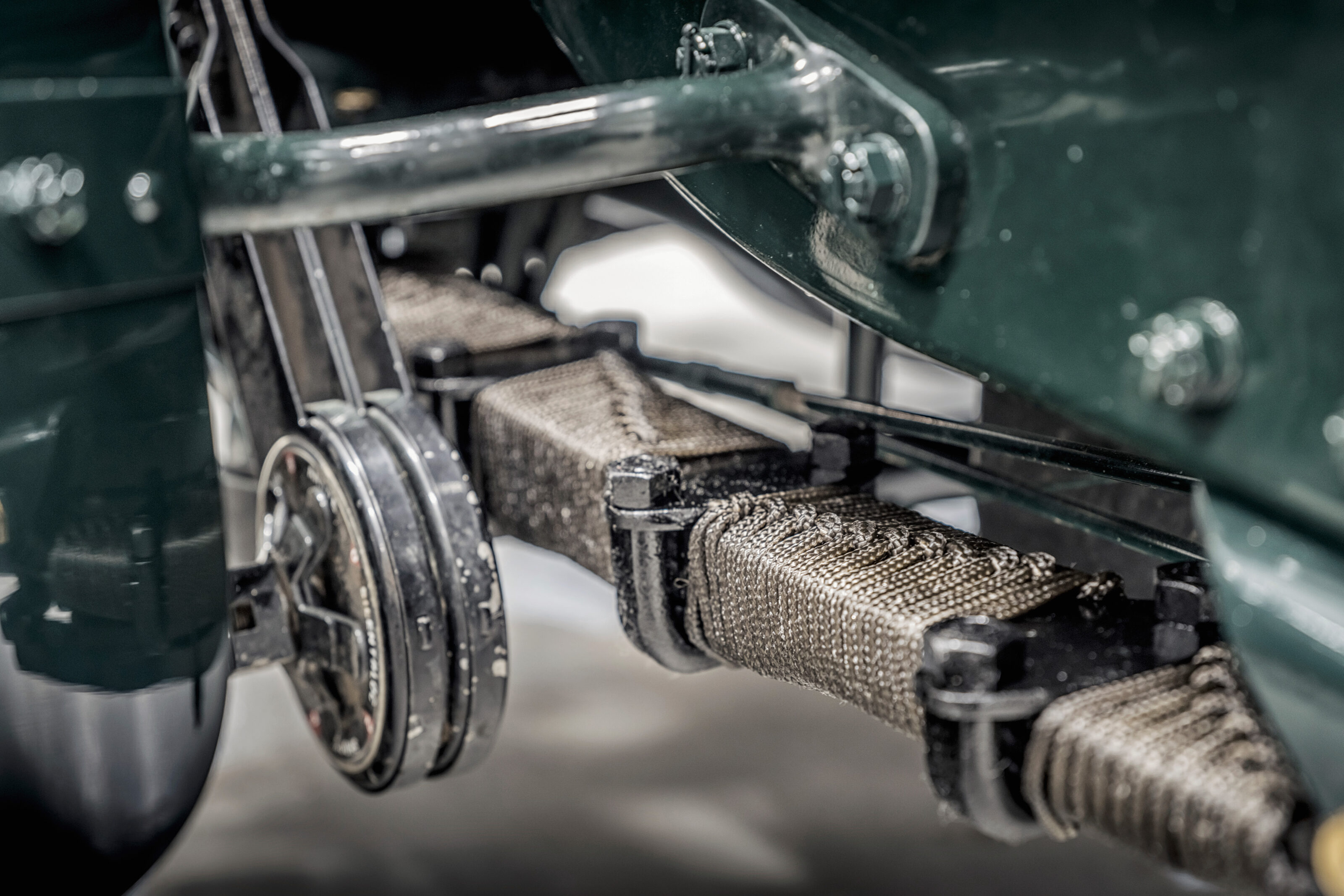
The second car to come from the Mulliner workshop is the first from its Continuation Series – a recreation of a 1929 Blower Bentley, as originally raced by Sir Tim Birkin.
In period correct Birkin green, the recreated vehicle is an identical replica to the Bentley Team Car No. 2 upon which it is based, right down to its leather interior trim and wire wheels.
While it still retains a 4.5-litre engine, this modern remake has just a few 21st century features to help make it slightly safer and more reliable – an electric fuel pump, a foam baffle in the fuel tank and a dynator charging system, replacing the standard dynamo.
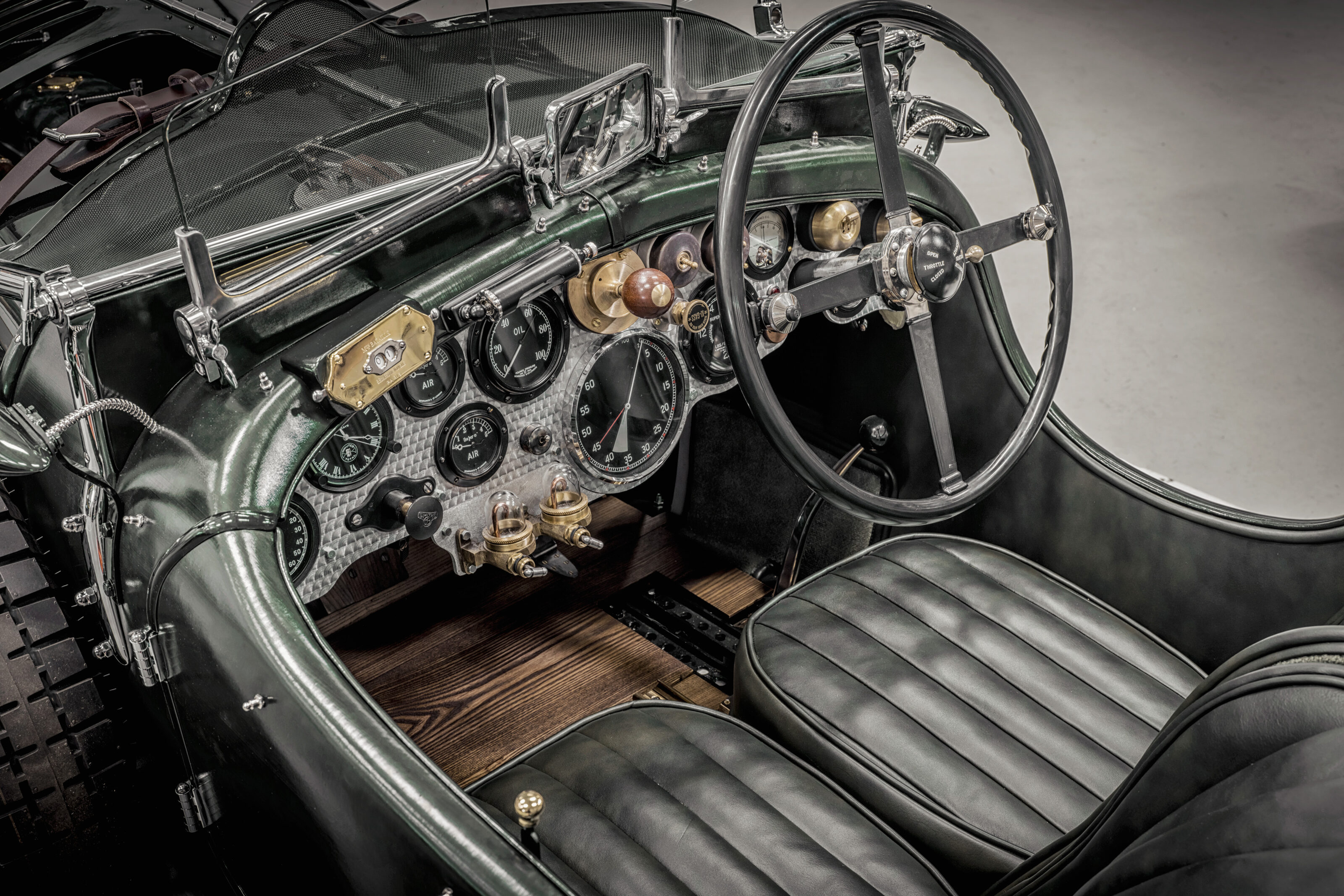
The Mulliner crew are busy completing the remaining 12 Bacalars as well as other vehicles for its Continuation Series, although prices of the modern classics aren’t disclosed.
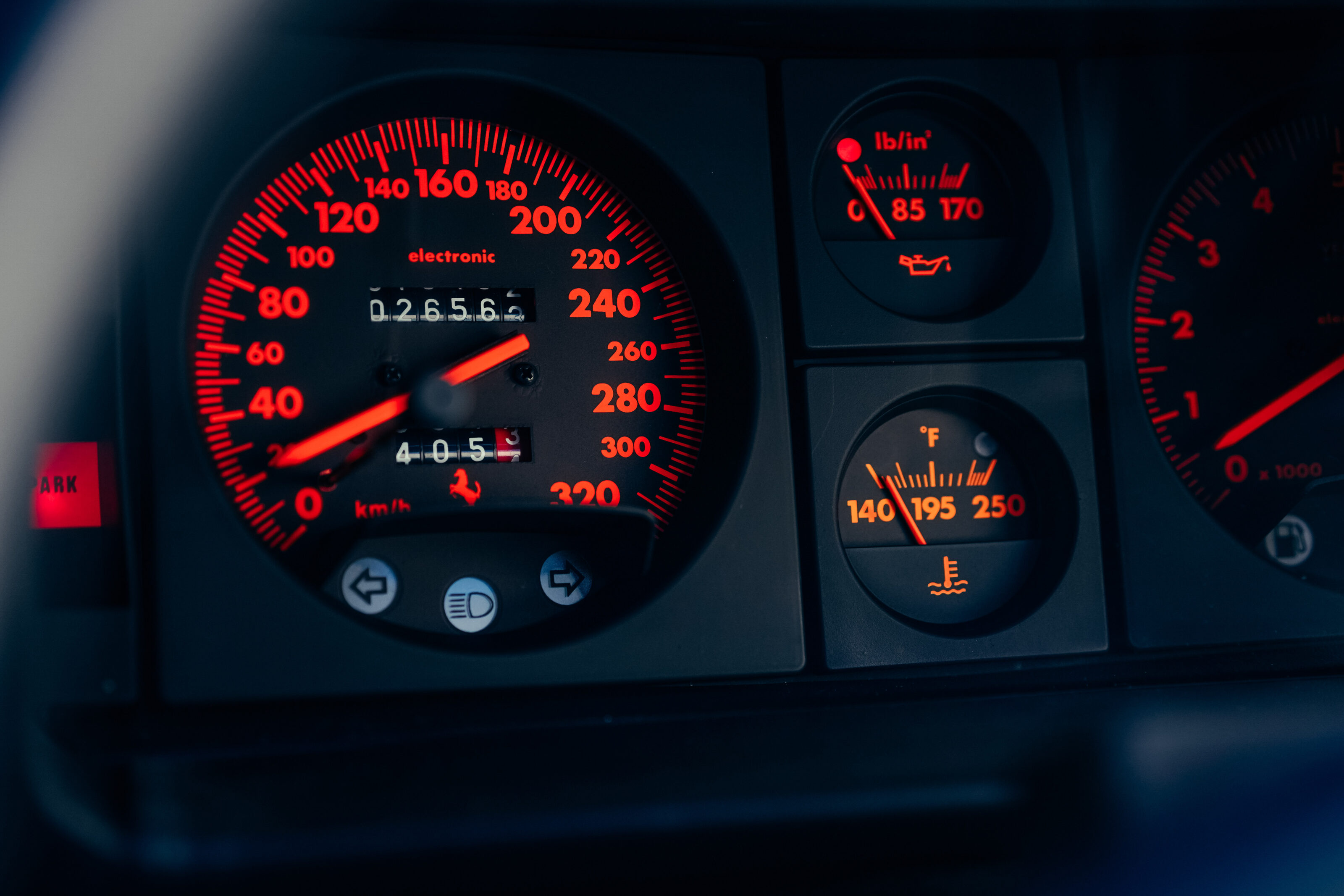
For a decade that gave birth to MTV, games consoles and blockbuster movies, it’s only fitting the 1980s spawned a dramatically styled and evocatively named Ferrari that would become deeply entrenched in popular culture.
The strikingly straked, wedge-shaped Testarossa was given its glamorous unveiling on the eve of the 1984 Paris motor show at a famous nightclub on the Champ Elysees, announcing itself as the successor to the 512 BB.
High-gloss Testarossa posters would soon be Blu-tacked to millions of bedroom walls (probably alongside a print of the Lamborghini Countach as well as Madonna), while millions more would drive one – albeit a red pixelated Spider version in Sega’s addictive driving game, Outrun.
And perhaps most famously, a gleaming-white example took to the dark streets of Florida as the hero of heavily stylised TV detective drama Miami Vice (replacing a fake Daytona convertible in that equally well-known off-screen sub-plot).
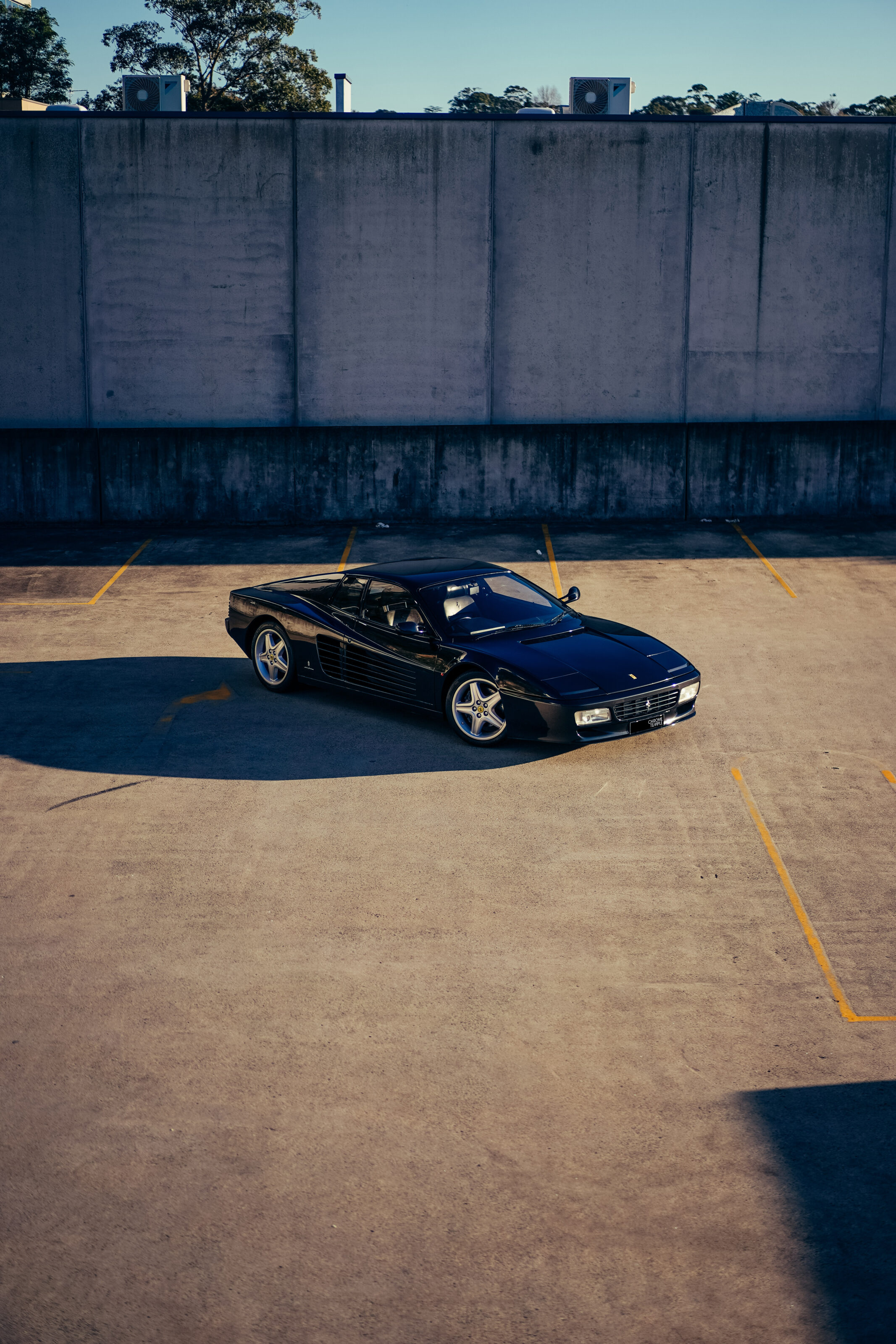
By the start of the 1990s, however, Lamborghini had moved ahead in the pin-up performance wars with its devilish replacement for the legendary Countach – the Diablo.
Ferrari’s response was to give the Testarossa a thorough update for 1992. And a new name.
The 512 designation returned to indicate the engine capacity and cylinder count, and Testarossa was abbreviated to TR.
Yet with only subtle design changes to the Pininfarina-penned original, the 512 TR could (and can) be easily confused with the Testarossa.
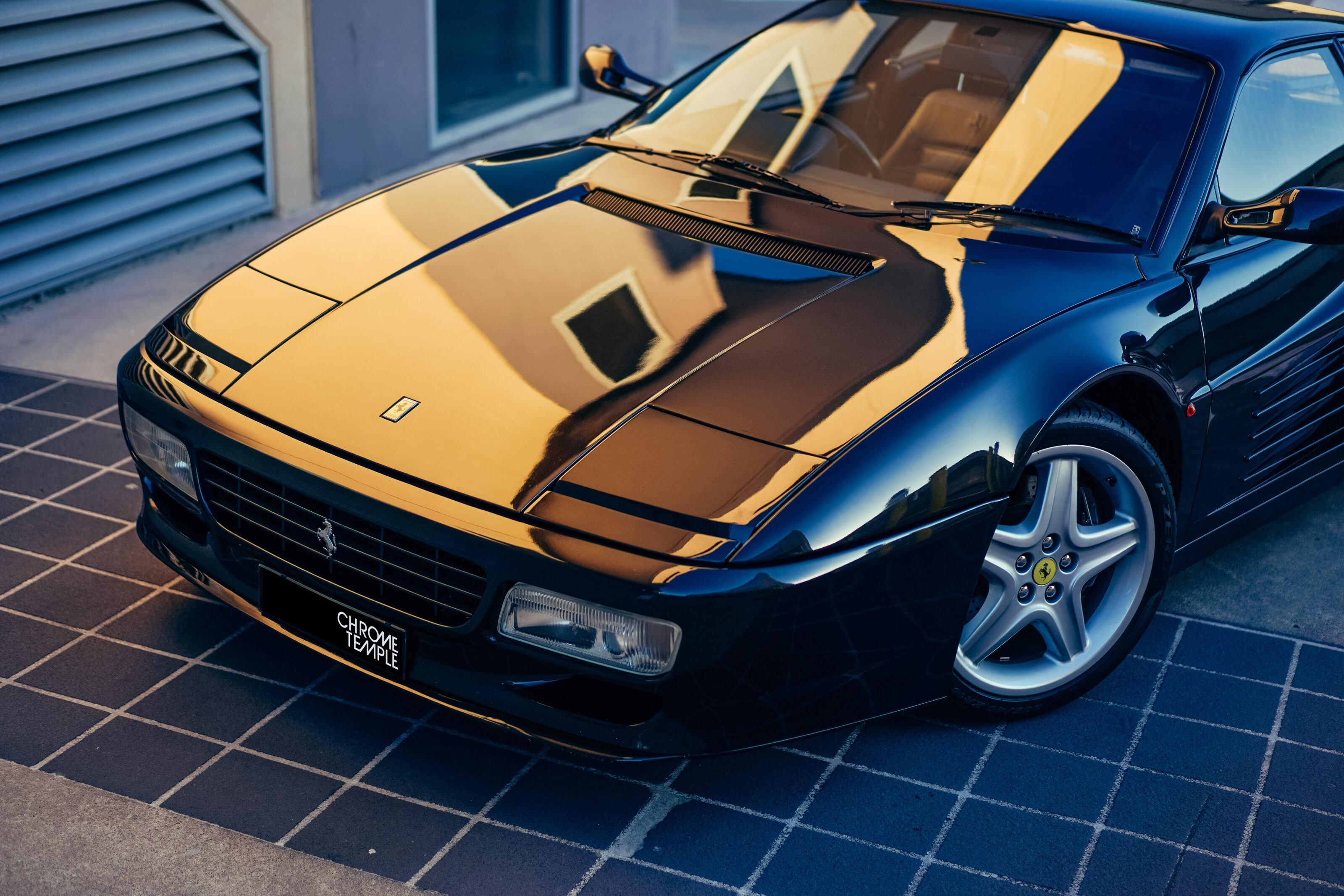
The wedge shape, pop-up headlights, slatted tail-lights, squared-off rear end and the especially distinctive side strakes – guarding the side-mounted radiators – were all largely untouched.
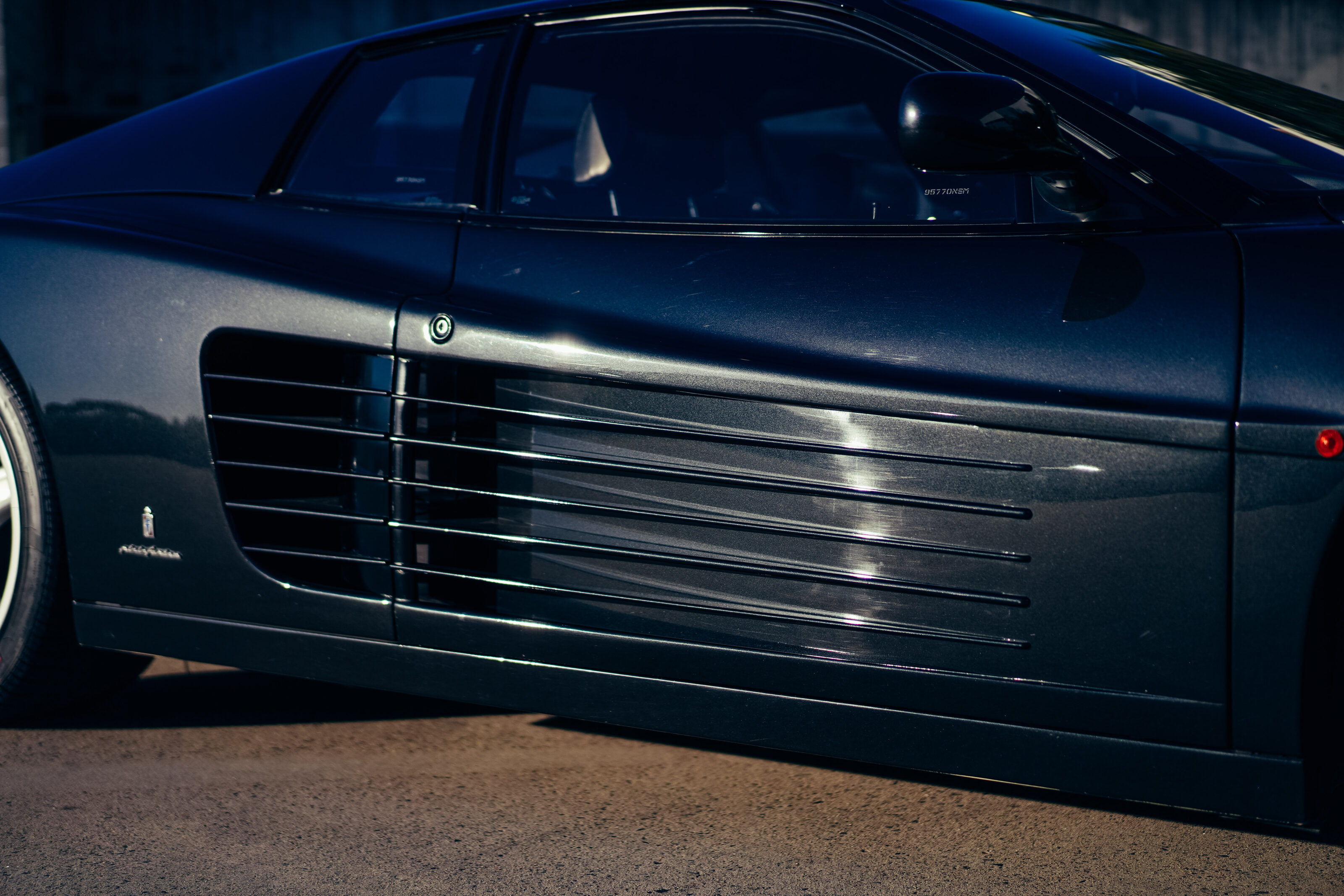
Spot-the-differences to circle included a front apron and sills that now matched colour of main body, sail-plane buttresses that now extended right to the edge of the rear deck, and a curvier, standalone grille that now mirrored the face of Ferrari’s V8-powered 348.
The wheels were also now 18 rather than 16 inches in size, and featured a five-bolt design rather than the single nut, though the five-spoke rims otherwise kept faithful to the ‘star’ rims of the original Testarossa.
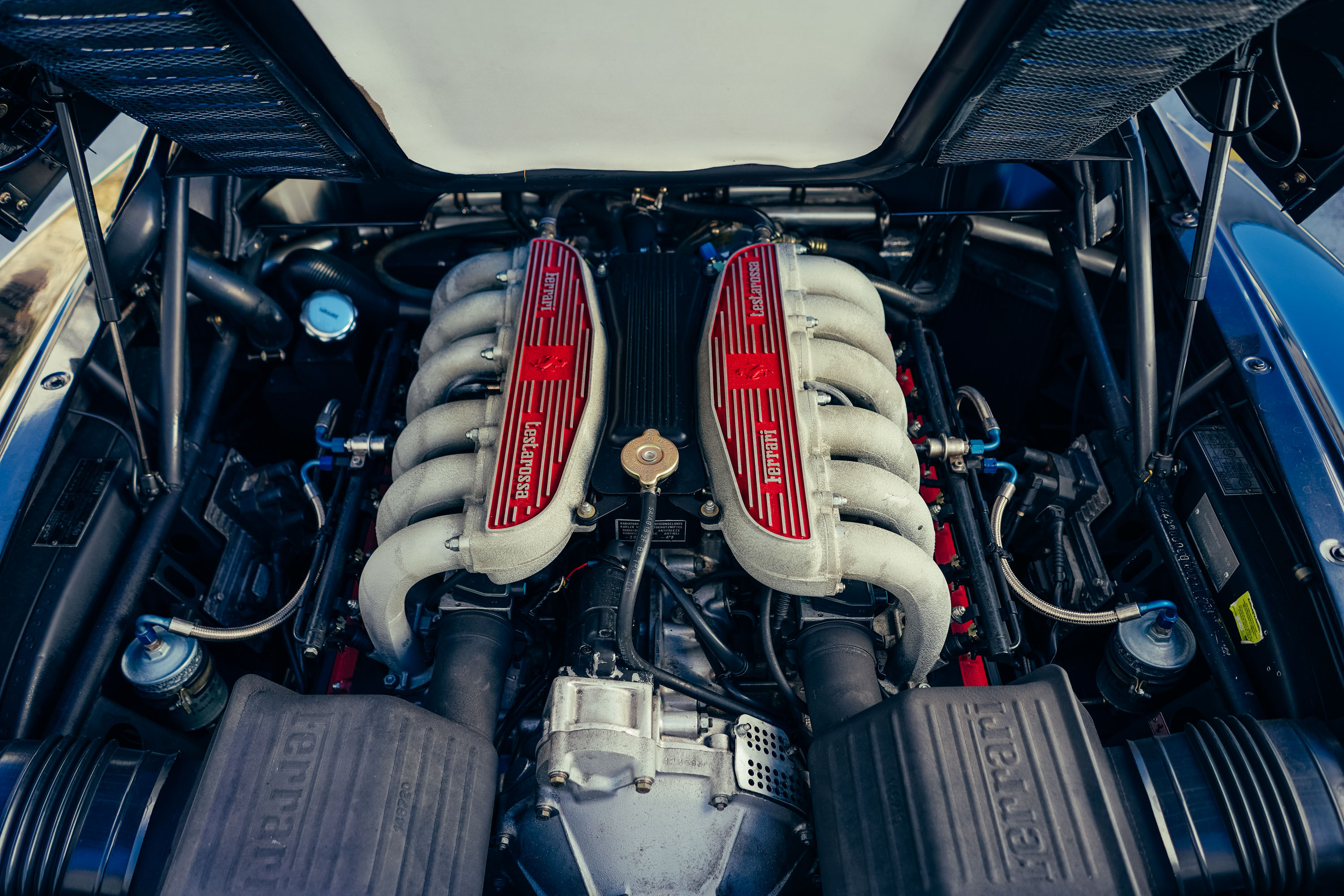
The flat-12 engine was still technically a spread-eagled (180-degree) V12. And it still featured the red-coated cylinder heads that gave the Testarossa – Italian for ‘red head’ – its name, just as it had on various Ferrari racing sports cars of the late 1950s and early 1960s.
However, the engine was given more power with substantial revisions and lowered a further 30mm to improve the car’s centre of gravity (which was still paradoxically high considering the horizontal layout). Engineers also improved the five-speed manual gearbox, and the suspension was also lowered and tweaked.
Inside, there was also little about the 512 TR’s interior to convince a Testarossa owner they had got into a different car. The centre stack was exchanged for a compact panel of gauges, and the centre console lost its cassette-tapes holder for what was now a compact-disc world.
The dash otherwise retained its unpretentious design, as well as the audio player and vanity mirror hidden behind dash panels.
We’re about to experience the 512 TR for ourselves – courtesy of online automotive auction specialists Chrome Temple Motors (see details at the end of the article).
The TR’s doors don’t feel heavy despite being constructed from steel where every other body panel bar the roof is made from aluminium.
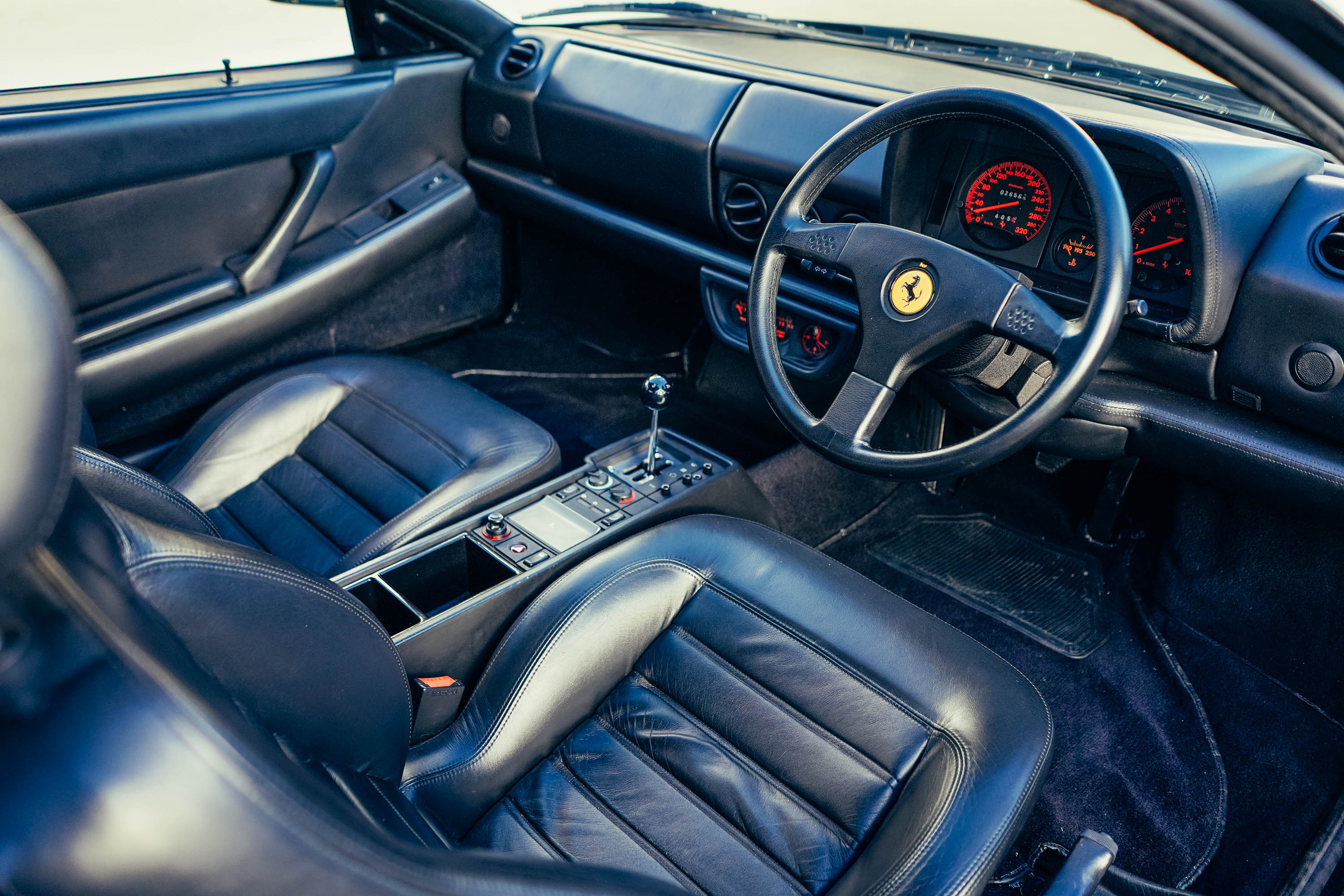
Easing into the driver’s seat is relatively dignified, at least with my 5ft 8in frame, with no Countach/Diablo-style scissor doors on which to potentially bump your head, and wide doors sills that are virtually flush with the cabin floor.
En route to the seat, you bypass the handbrake and chrome latches for the engine hatch and bonnet.
However, there’s also confirmation that, in 1992, Italian supercar builders had still yet to get a handle on great ergonomics.
The footwell is cramped, with the encroaching wheelarch and a left footrest that’s a near-impossible option for anyone with feet larger than a size 5.
En route to the seat, you bypass the handbrake and chrome latches for the engine hatch and bonnet.
However, there’s also confirmation that, in 1992, Italian supercar builders had still yet to get a handle on great ergonomics.
The footwell is cramped, with the encroaching wheelarch and a left footrest that’s a near-impossible option for anyone with feet larger than a size 5.
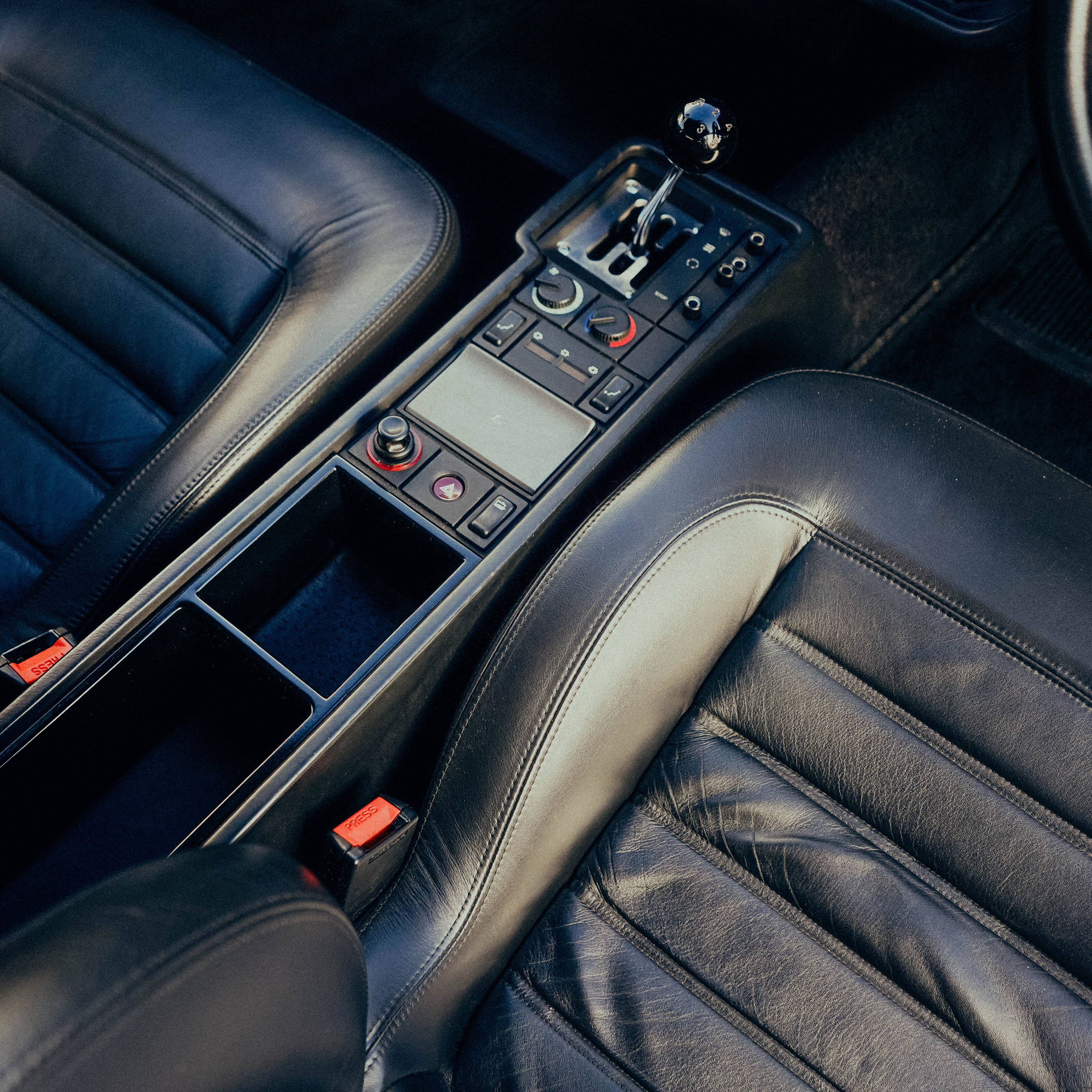
You otherwise nestle relaxingly into the ribbed-leather seats with their plump bolstering.
Vision out is surprisingly good, helped by dual electrically adjustable side mirrors (the Testarossa originally featured just one, high on the A-pillar, before Ferrari added a second in 1987).
The rear haunches are conspicuous in the side mirrors, yet you’re not overly conscious of the TR’s two-metre width. The Testarossa was said to have been the widest production car on the road at the time of its launch, but by today’s standard of vehicle sizes it’s not particularly intimidating to drive in traffic.
The clutch pedal feels calf-strainingly heavy when being used regularly to engage first gear around town, compounded by steering that lacks power steering and a turning circle that is anything but tight.
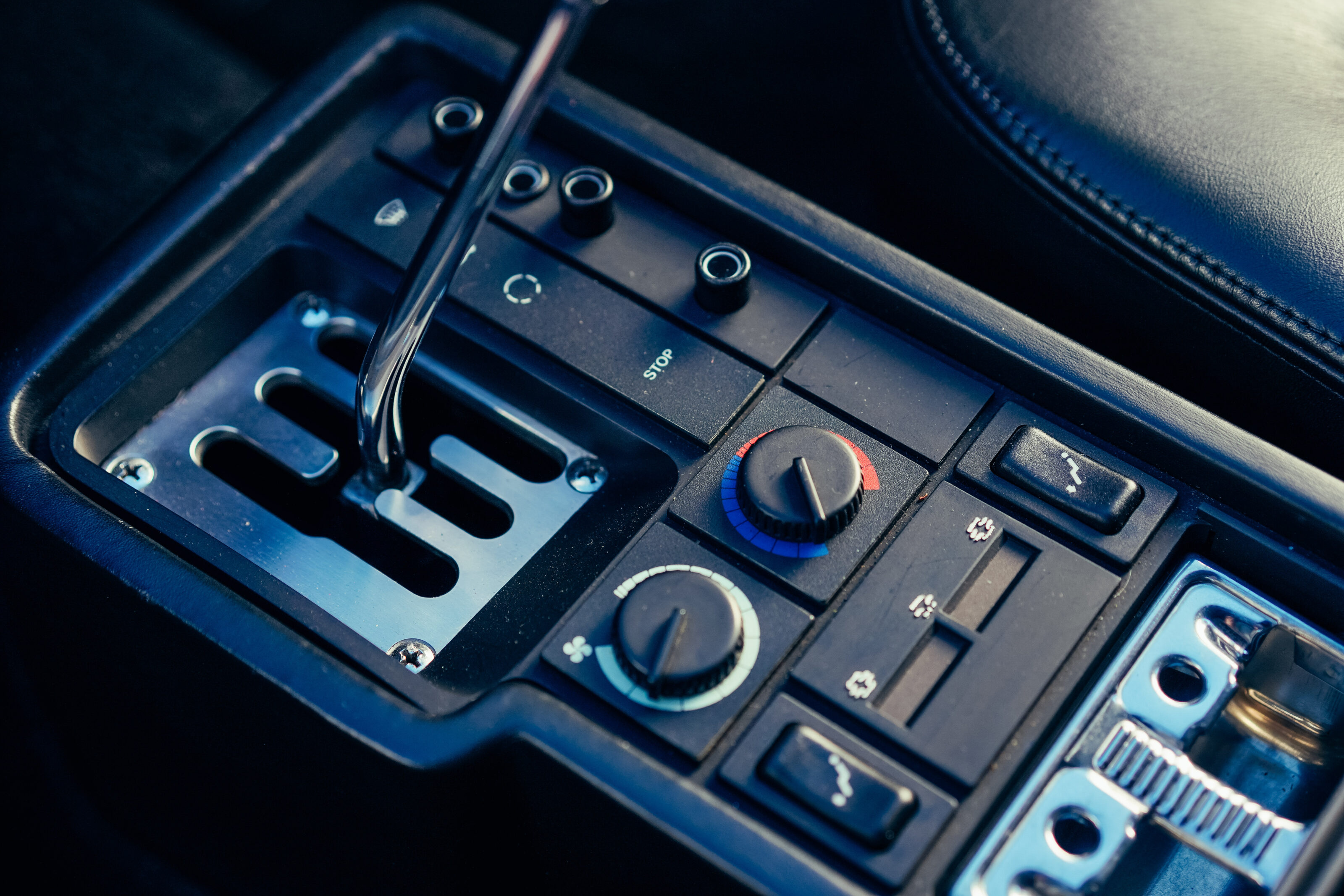
The thickly grooved, alloy open-gate shifter and its thin, alloy lever – topped with a black ball of a gearknob that becomes fully enveloped by your palm – look like a work of art.
It also shares a dog-leg H pattern with the V12 Lambos (and a handful of other sporty cars of the era), with first gear positioned bottom left immediately below reverse.
Once past the upwardly angled first-to-second shift that takes the most conscious effort, the gearbox becomes a thoroughly tactile, mechanical delight. The clutch feels more effortless and the lever slots reassuringly and rewardingly into each gate with the need to be strong-armed.
Neither does the shifter need to be overworked, such is the flexibility of the 512 TR’s 4.9-litre 12-cylinder.
Updates including a more sophisticated Bosch engine management system extracted some extra power and torque over the original Testarossa. Power jumped from about 290kW to 315kW, with torque increased from 491Nm to 498Nm – though produced 1000rpm earlier at 4500rpm.
All the revisions cut a whole second from the Testarossa’s 0-100km/h claim, with the TR quoted at 4.8 seconds.
In 1992, the TR was still slower than a Diablo but was quicker than Honda’s NSX, even if the Japanese supercar did operate on half of the Italian duo’s cylinder count.
Today’s 812 Superfast inevitably pulverises the 512 TR for acceleration, yet the 1990s supercar still feels tremendously quick. And it sounds glorious as the flat-12 howls on its way towards the 7300rpm redline.
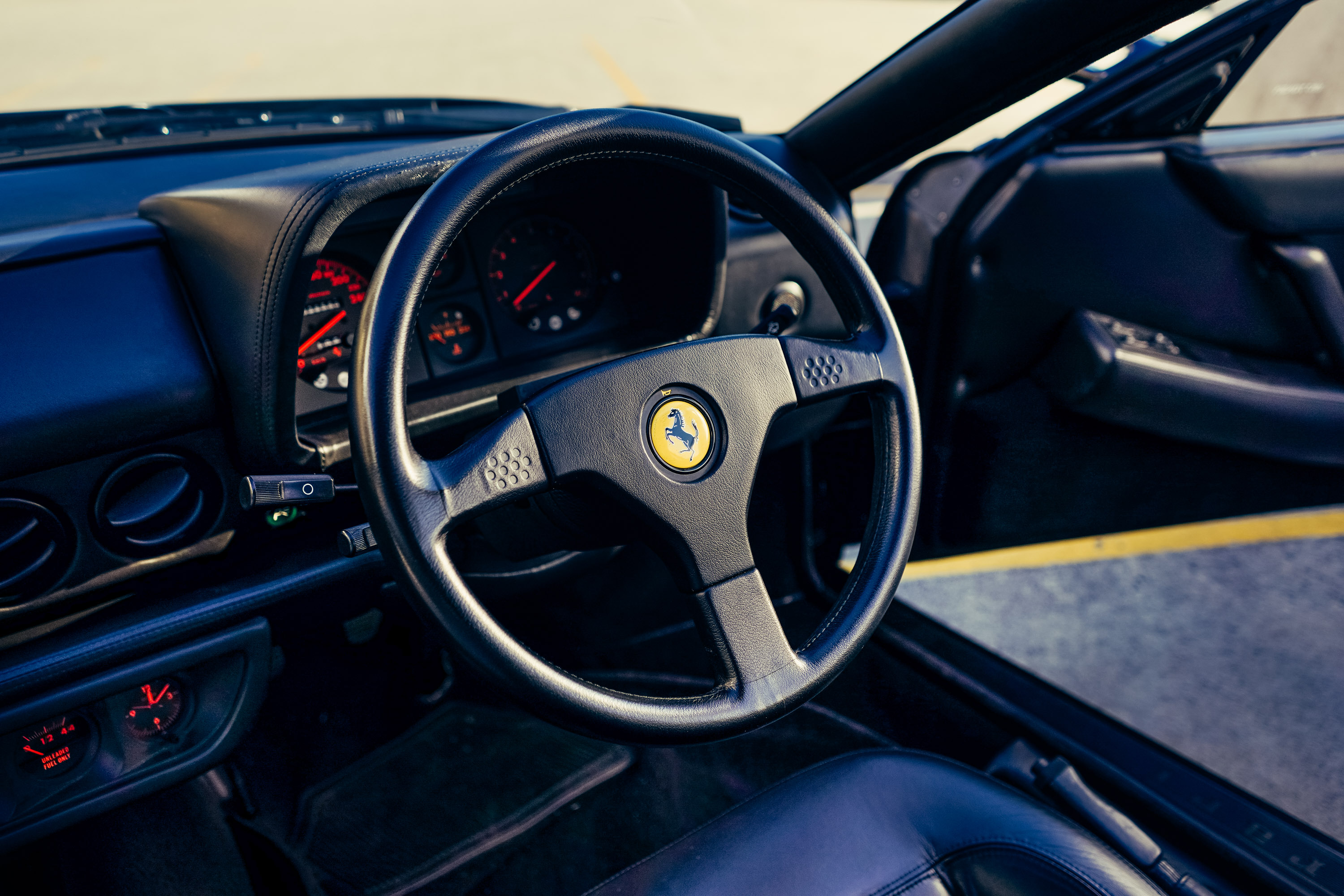
The throttle pedal is long-ish in travel but rewardingly linear in its response. For a legendary engine, the 4.9-litre absolutely doesn’t disappoint.
While being respectful of the fact we don’t own this particular 512 TR, we’re blessed with bone-dry roads under a warm winter sun to encourage us to push cornering speeds to a point where the TR’s nice, trustworthy handling balance can be appreciated.
The steering feels utterly natural and significantly lighter at speed, guiding the front end with accuracy.
And while the driving position is partially compromised, the ride comfort of this supercar is impressive – delivering a compliance over some particularly bumpy country roads that was unexpected.
It’s easy to understand how the Testarossa and its evolutions were positioned more as a GT car than Ferrari’s other 1980s hero – the turbocharged V8 F40 that was far more hardcore and very much a racing car for the road.
Although all Testarossas were a two-seater rather than a 2+2, it’s a surprisingly practical car.
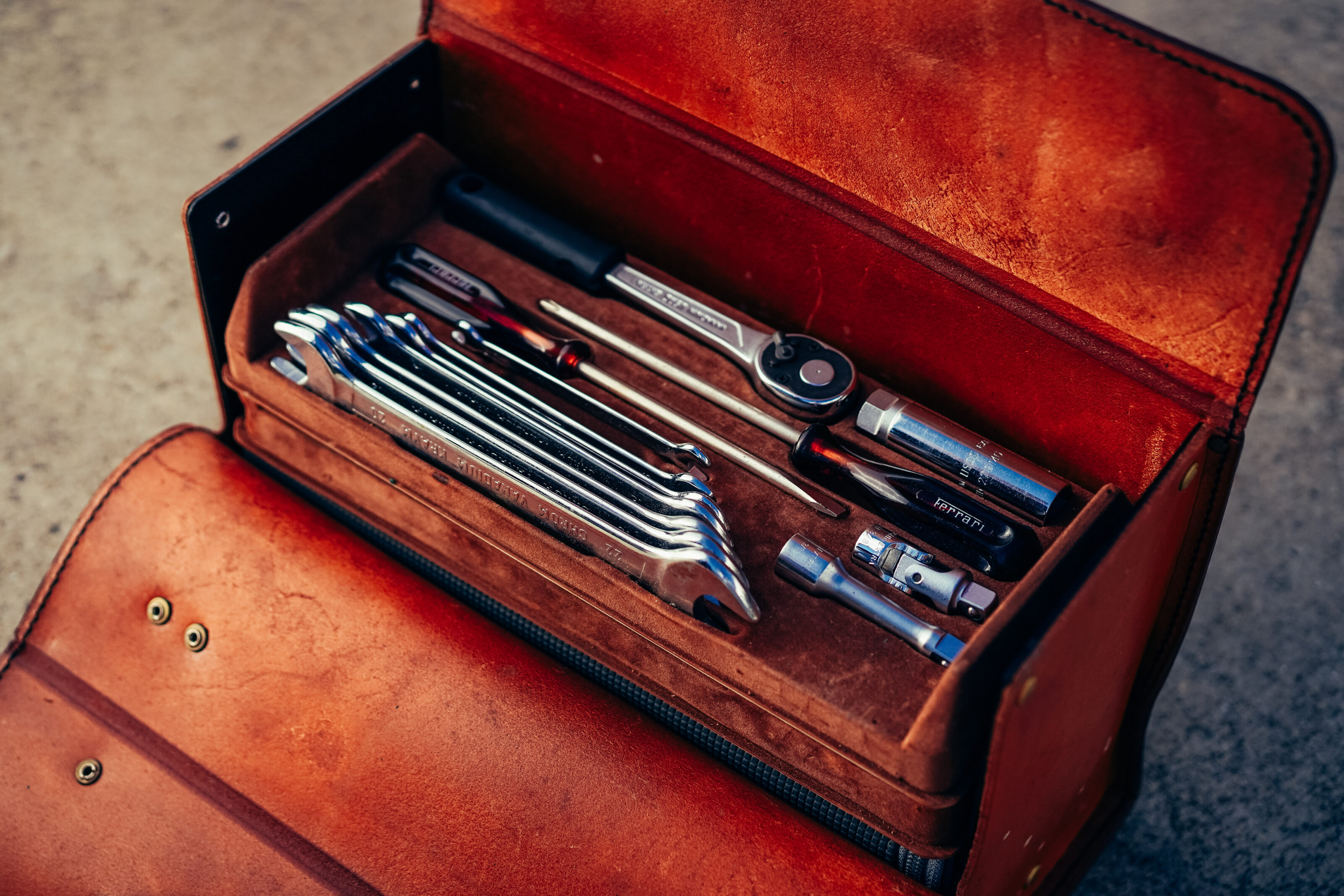
A set of Italian leather holdalls were available and could secured behind the seats via straps. And the rest of the set could be stored under the front bonnet, where there was significantly more room compared with the 512BB after Ferrari moved the radiators from the nose to the side (to also resolve cabin-overheating issues).
In 1994, the 512 TR transitioned into the F512 M as Ferrari reintroduced its favoured F (for Ferrari) prefix while adding M for modificata.
The word ‘modified’ has never sounded so poetic, though it was also relevant.
Aerodynamics, performance, suspension and braking were among key areas of improvement, though many – including this author – lamented design changes that included a move to faired-in headlights and a return to more traditional circular tail-lights.
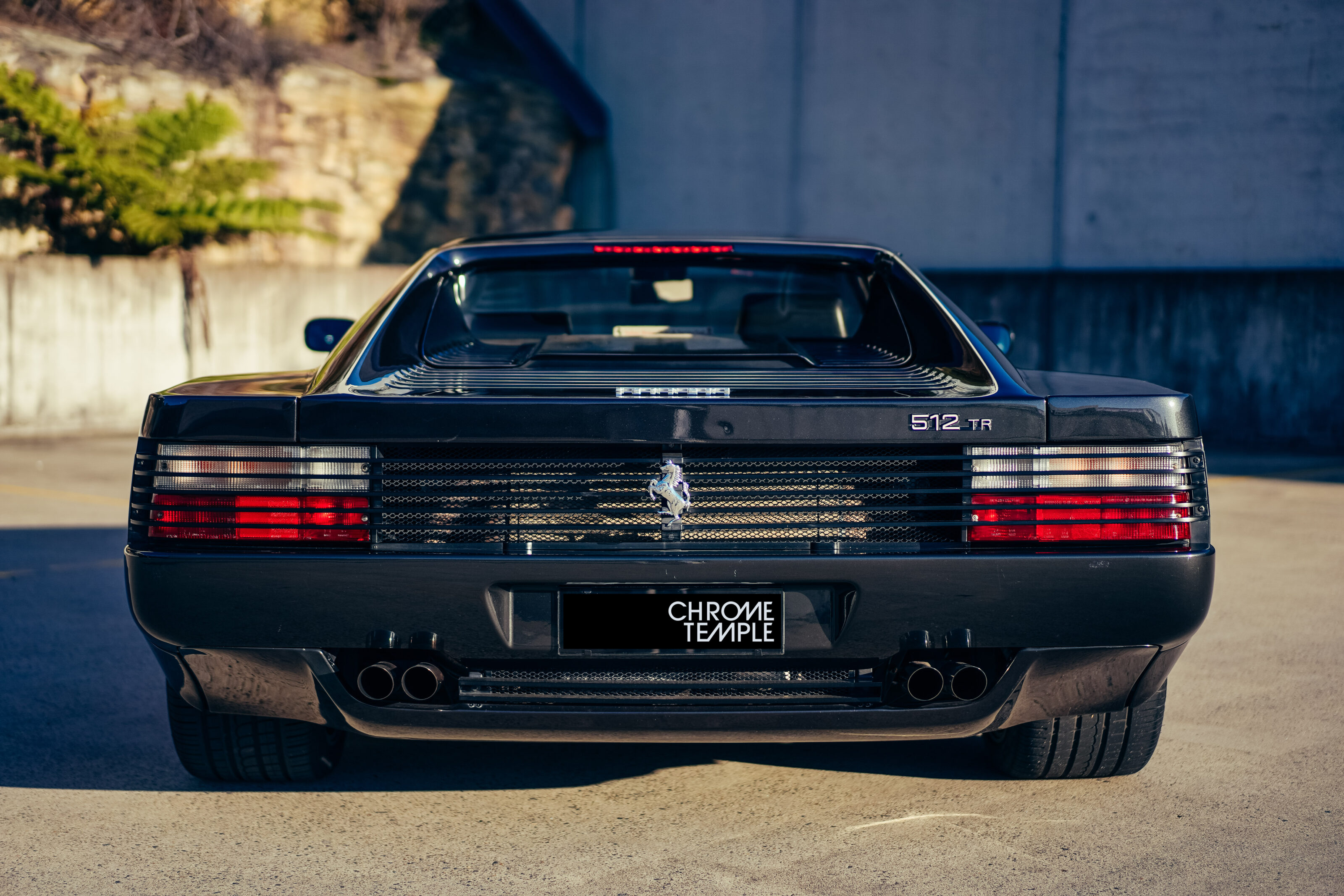
The F512 M is the rarest Testarossa with only 501 were built. Replaced after just two years by the front-engined V12 550 Maranello, it ended nearly a quarter of a century of mid-engined flat-12 production Ferraris.
In total, nearly 10,000 units of the ‘Redhead’ series were built – making it a hugely successful model in Ferrari’s 12-cylinder lineage.
The Testarossa – in any of its generations – isn’t generally regarded as one of the greatest Ferraris of all time. Yet it remains one of the coolest.
BID FOR THIS 1992 FERRARI 512 TR
This stunning example from Ferrari’s legendary Testarossa series is headlining Chrome Temple Motor’s Vehicle of Distinctions online auction event, running from 18th August to 2nd September.
Presented in a particularly rare black-on-black specification, this right-hand-drive, Australian-delivered model also has less than 27,000km on the clock.
Equipment includes fully working air-conditioning, electric windows and electric mirrors.
Head to chrometemple.com/motors for more details on how to bid on the 512 TR, as well as other enticing models among an impressive auction catalogue.
The North American arm of South Korean manufacturer Kia has announced it will be adding a plug-in hybrid variant to its Sorento line-up – with the ability to drive over 50km on electric power.
To be sold alongside the existing 2.5-litre, four-cylinder petrol options, the PHEV will be powered by a 1.6-litre turbocharged petrol engine with a 66.9kW electric motor mated to it, achieving a combined economy of 3L/100km with a driving range of up to 740km.
Available as an automatic only, the four-wheel drive SUV produces 194kW, which is just 6kW less than the Australian-spec petrol Sorento – making 200kW from its 3.5-litre naturally-aspirated V6 – but 46kW more than the 2.2-litre turbo diesel.
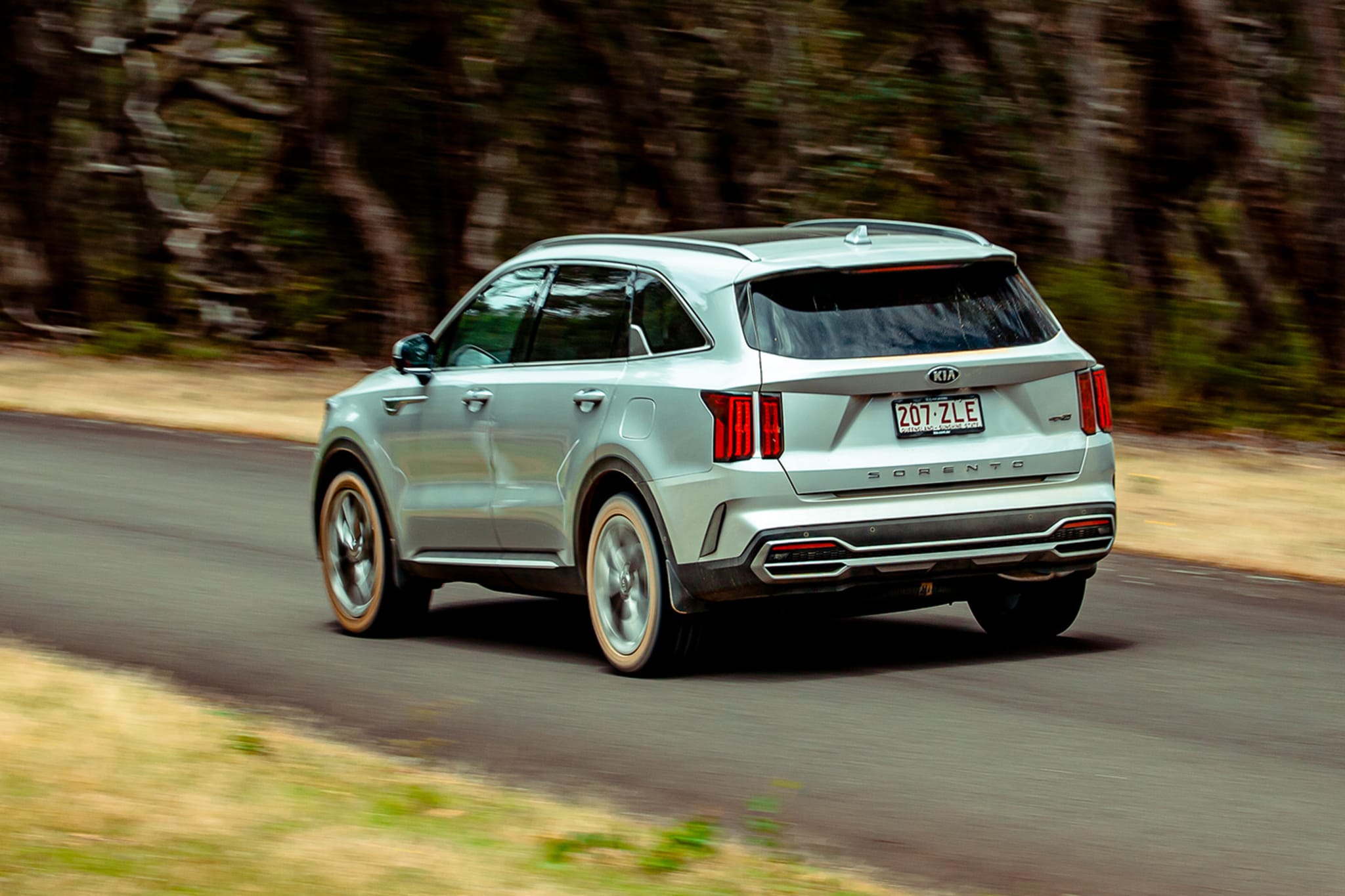
Kia says the Sorento Turbo PHEV will be able to run for up to 50km on electric power only, coming from its 13.8kWh battery pack, although this remains as a target rather than a tested figure.
A spokesperson for Kia Australia confirmed the plug-in hybrid variant of the Sorento will be arriving locally towards the end of September, while a conventional mild-hybrid powertrain will also go on sale in the first quarter of next year.
The fourth-generation Sorento was launched locally in 2020, making its way to the Wheels Car of the Year competition thanks to its safety tech, impressive range of features and sleek design.
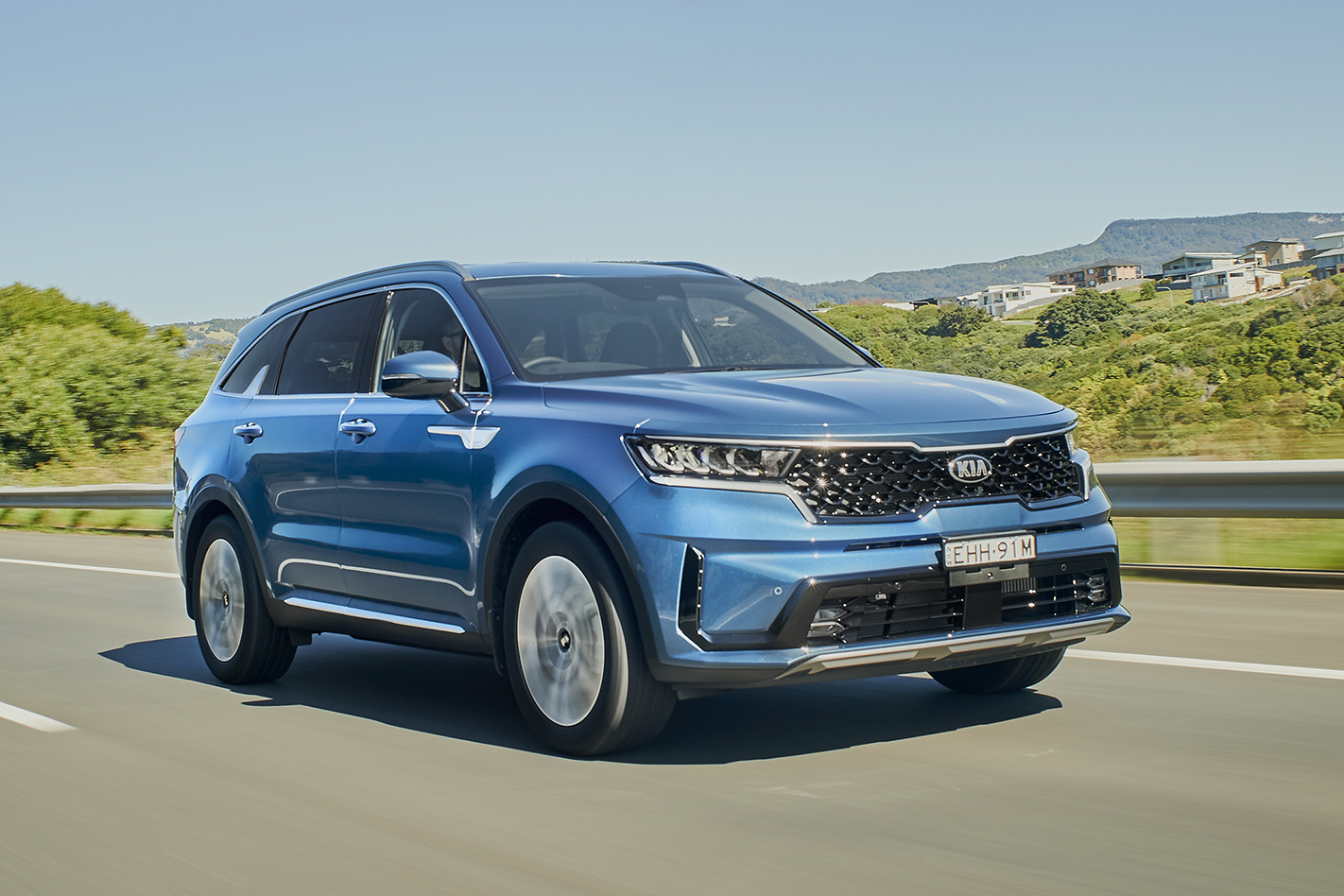
2021 Kia Sorento pricing for Australia
| Sorento S 3.5 Petrol | $46,850 |
| Sorento S 2.2 Diesel | $49,850 |
| Sorento Sport 3.5 Petrol | $49,480 |
| Sorento Sport 2.2 Diesel | $52,470 |
| Sorento Sport+ 3.5 Petrol | $53,850 |
| Sorento Sport+ 2.2 Diesel | $56,850 |
| Sorento GT-Line 3.5 Petrol | $61,070 |
| Sorento GT-Line 2.2 Diesel | $64,070 |
