A wise cove once suggested you don’t break perfectly fixed things, or words to that general effect. And motoring is as crafty as any industry at presenting a new spin in pursuit of freshness while essentially leaving familiar things largely alone, whether it’s warranted or not.
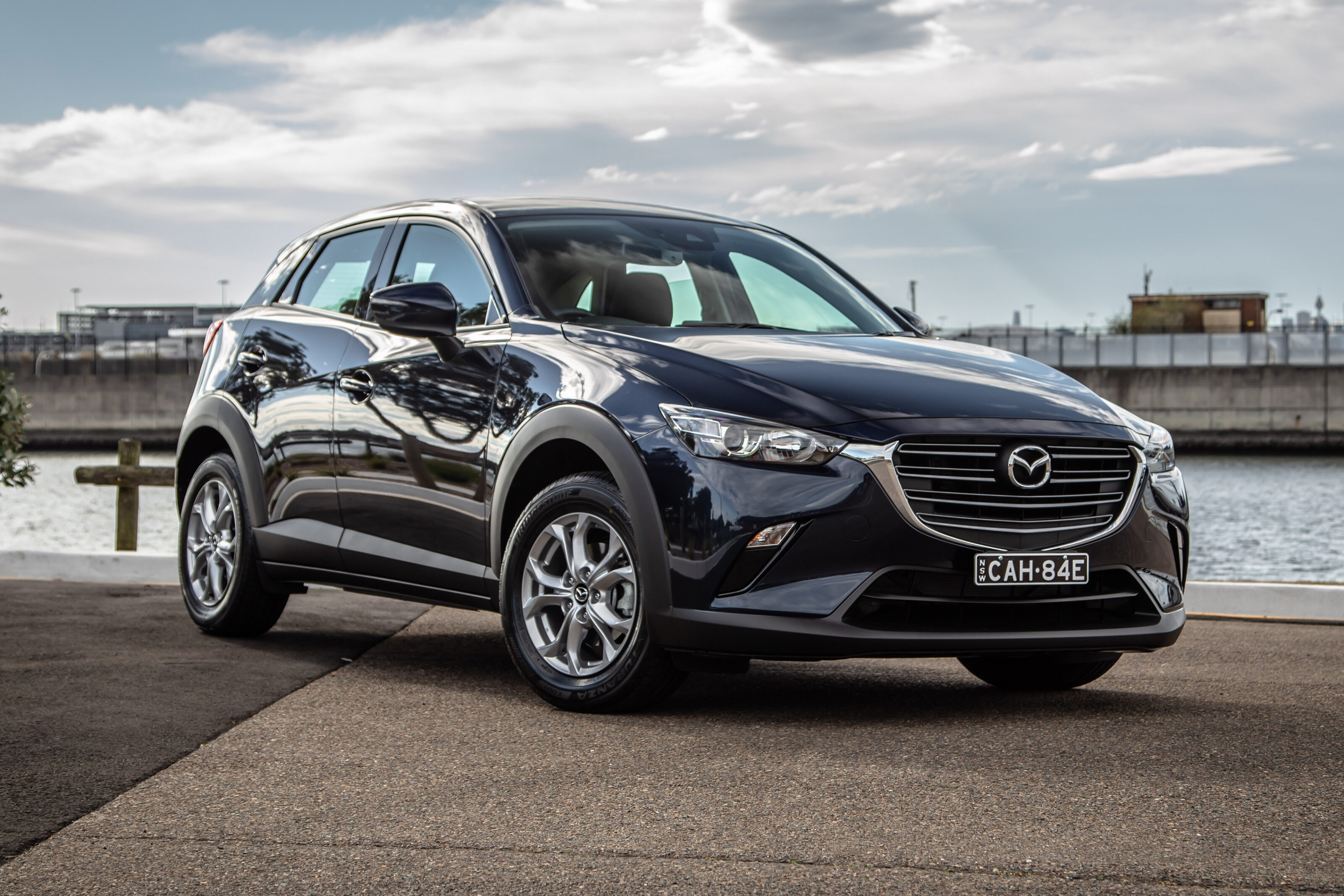
Does the current Mazda CX-3 generation, six years in its local innings and still hitting boundaries and lining Aussie driveways, warrant breaking, let alone fixing? As its compact SUV segment’s golden calf, most certainly not (quite yet). But here it is, the “new” CX-3 according to Mazda marketeers: newer, it seems, than the conspicuously fresher faced and more contemporary CX-30 sibling.
Are you squinting as hard as I am…?
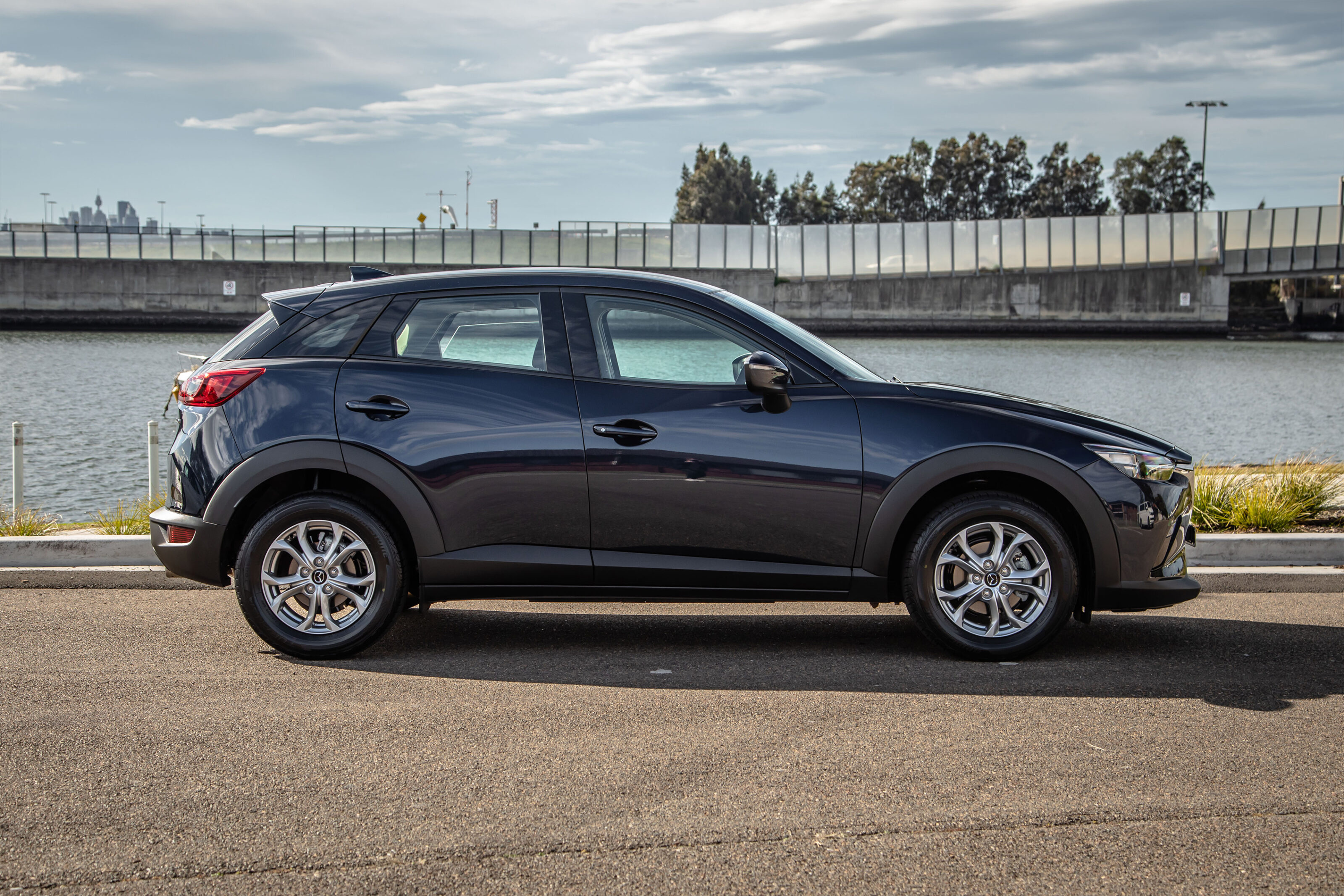
The CX-3 range has been refreshed for 2021, the latest of a good many, including 2019’s facial nip and tuck, which giveth in the form of a new, fancier ‘LE’ version of the Maxx Sport and taketh from the powertrain menu, with diesel options being axed. There are detail changes too, of course, but in the case of staple variants such as our Maxx Sport FWD auto tester, arguably the anchorpoint for the CX-3’s cheapish and mostly cheerful pitch, owners past and present might find the latest iteration nigh on indistinguishably familiar.
Familiarity is most surely a big CX-3 drawcard. That’s because against the likes of Skoda Kamiq and Volkswagen T-Cross it’s a technical luddite, it doesn’t play the efficiency card like Toyota’s hybrid Yaris Cross does, nor is it as rewarding to drive as Ford’s Puma, as fresh as Kia’s Stonic or as funky as Hyundai’s Venue. And yet Mazda’s glacially evolved stalwart still dominates all relative newcomers by planting more Aussie bums in seats.
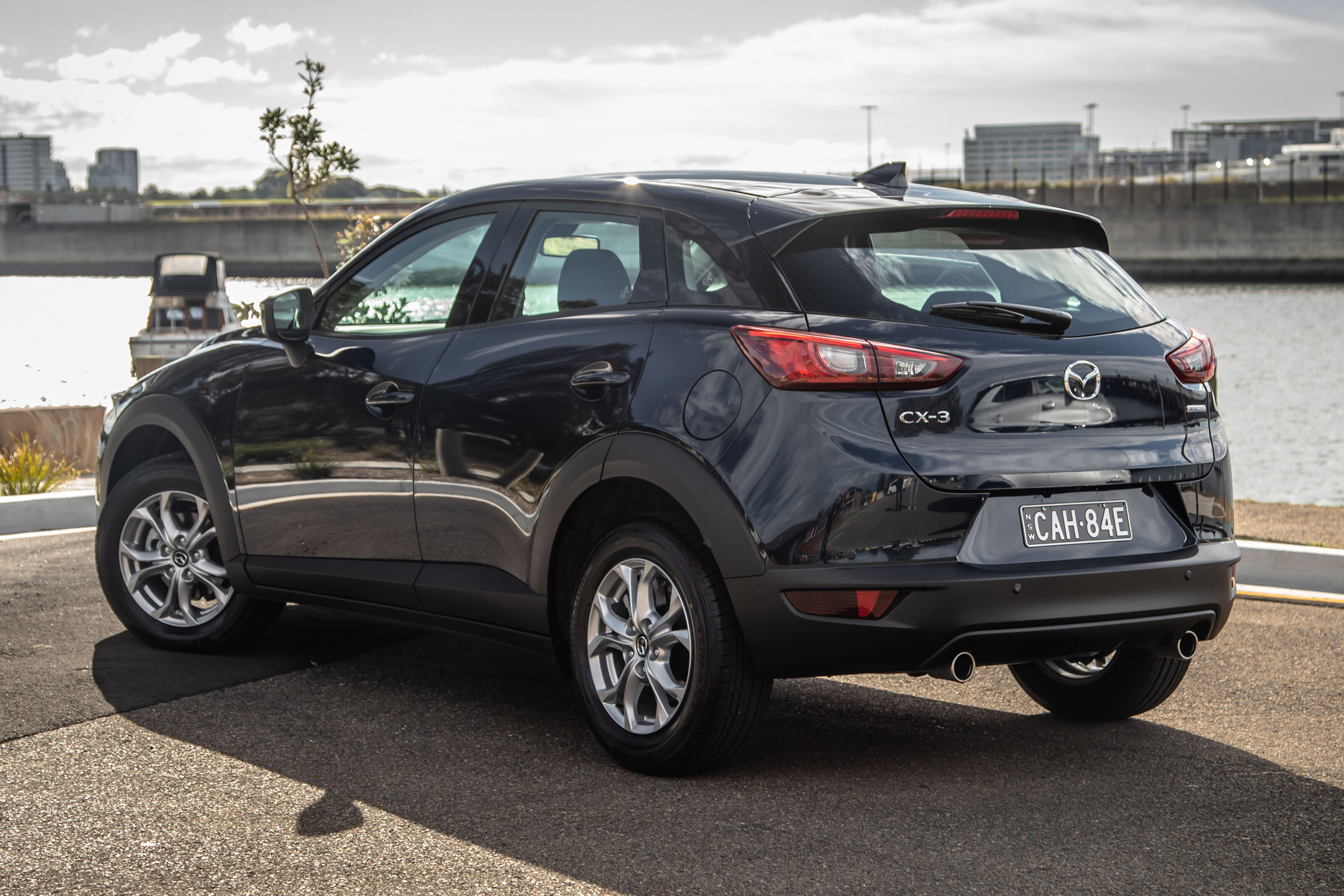
Perhaps the biggest change for CX-3 is that it now ought to sit comfortably under the slightly larger, more modernistic CX-30 as My First Mazda SUV/Crossover or thrifty runabout, matching what’s – let’s face it – a humbler manner for what ought to be a suitably less pretentious price point. And so it does: the CX-3 advertises from $22,890 before on-road costs for the Neo Sport manual, the CX-30 kicking off at $28,990 plus costs for the G20 Pure manual. Driven away, the walk-up for the latter is almost eight grand ($24,990 versus $32,960), a fortune at this pricing tier.
But the front-driven Maxx Sport, with auto, is more staple CX-3 fare, elevated above the base-model doldrums with a broader safety assistance net, if sidestepping pricier and arguably superfluous all-wheel drive and another four nameplate grades of extravagance that, if you include the 100th Anniversary limited edition, makes for 11 pricier CX-3 variants.
Mazda’s glacially evolved stalwart still dominates all relative newcomers by planting more Aussie bums in seats.
Thing is, the Maxx Sport FWD auto’s $26,890 list becomes a tenner under $30K parked in your car space and this sort of coin brings a dizzying array of alternatives, not just in compact SUV/crossover terms but in the plus-sized small SUV segment, too. And right where volatile drive-away offer pricing is notoriously rife.
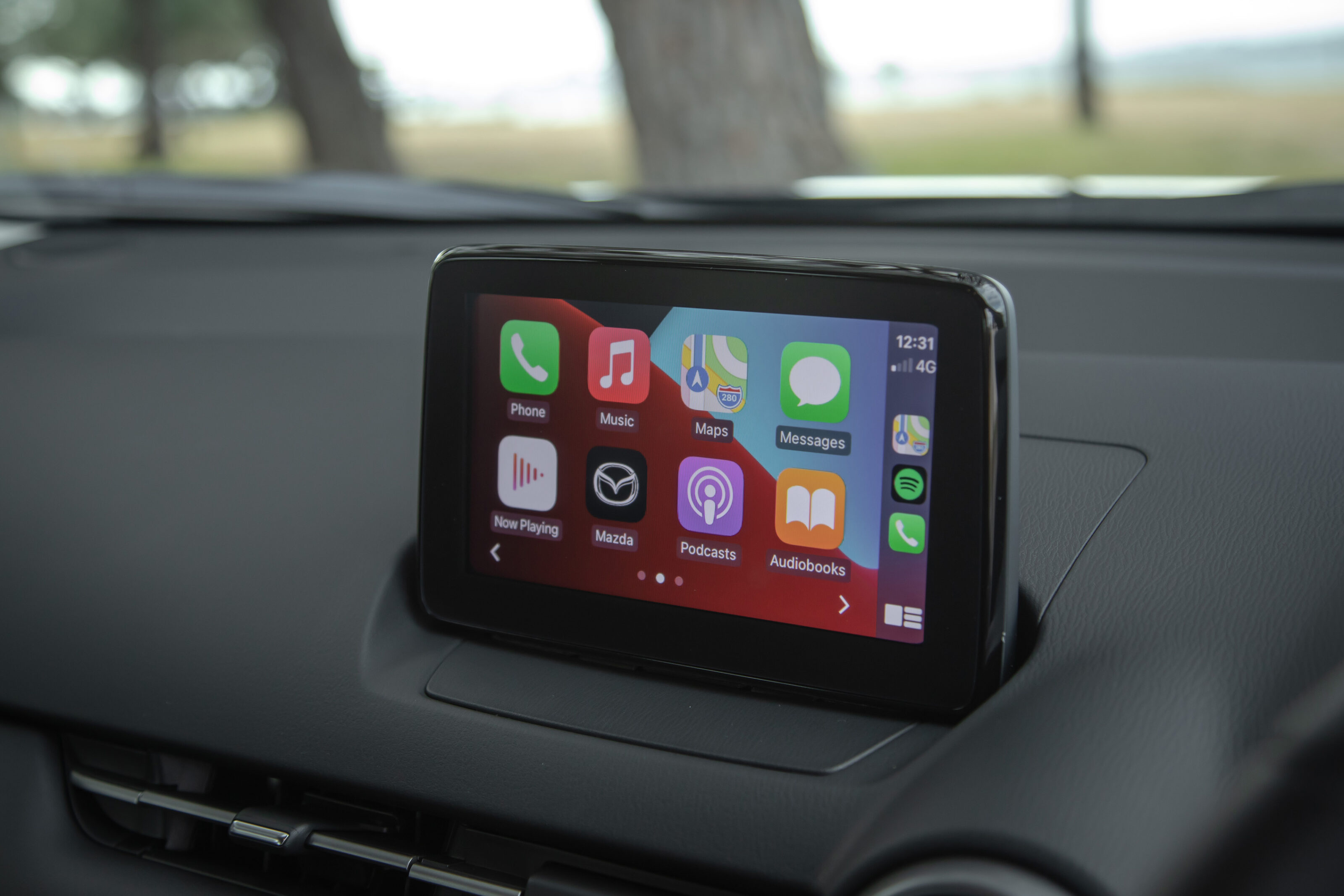
So what does MY21 bring to shore up the CX-3’s dominant position in Maxx Sport guise? Its AEB system gains night-time pedestrian detection, the seats have been redesigned for extra comfort, the rearview mirror now dims automatically, and the once optional Apple CarPlay and Android Auto smartphone mirroring pulls the ageing 7.0-inch MZD Connect infotainment system back from the brink of obsolescence. Revised badging, a new ($495) Polymetal Grey paint finish choice, a new key fob… that’s about it.
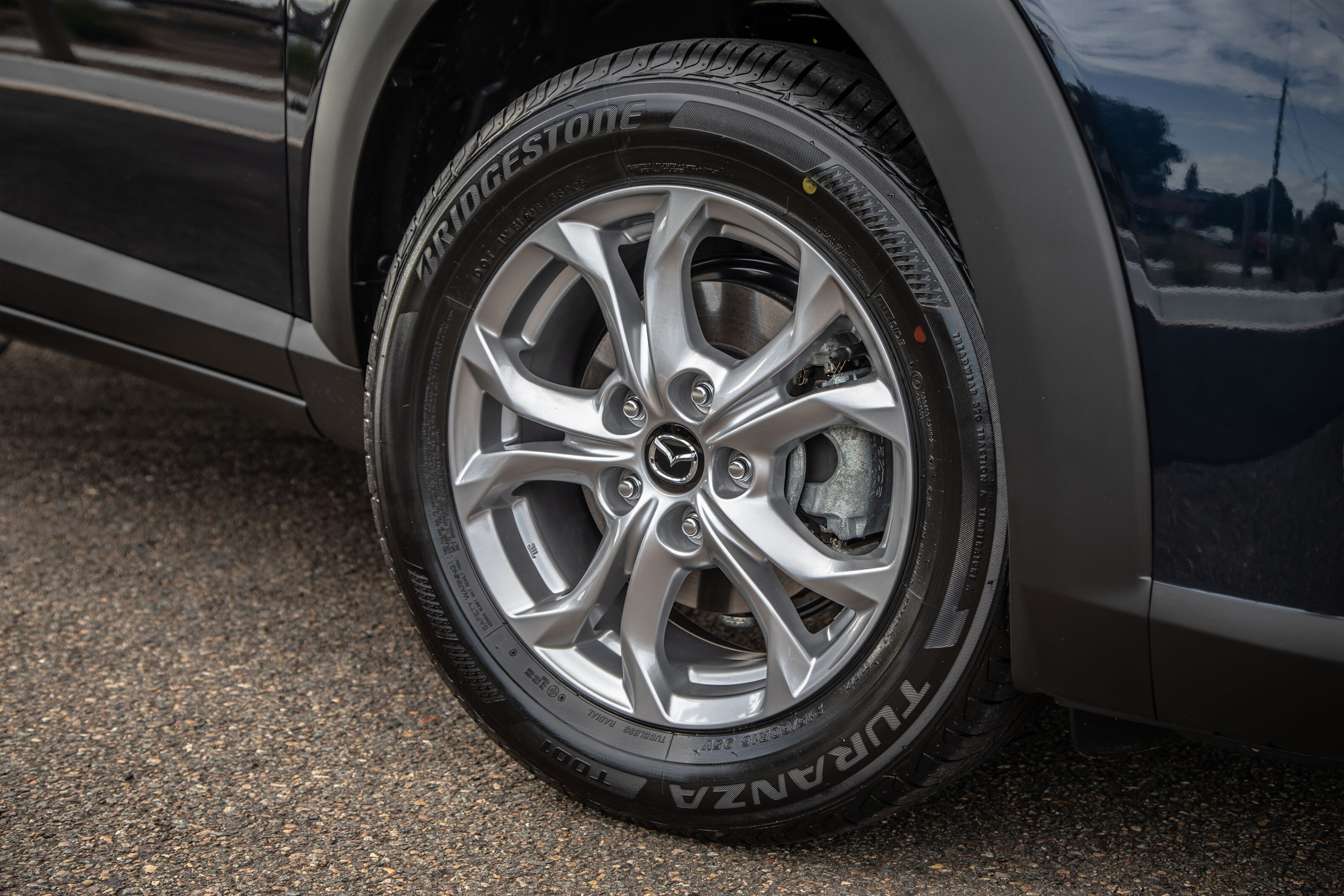
For your extra two-grand investment over Neo Sport, the Maxx Sport essentially adds 16-inch alloy wheels, auto functionality for the halogen headlights, rain-sensing wipers, a centre armrest (yes, really), leather steering wheel and shifter trim, climate control and proprietary sat-nav. Importantly, it also upgrades the safety fit-out to include the blind-spot monitoring and rear cross-traffic alert functions absent on the base CX-3, though you need to reach further up the range tree for active lane-keeping and niceties such as adaptive cruise control.
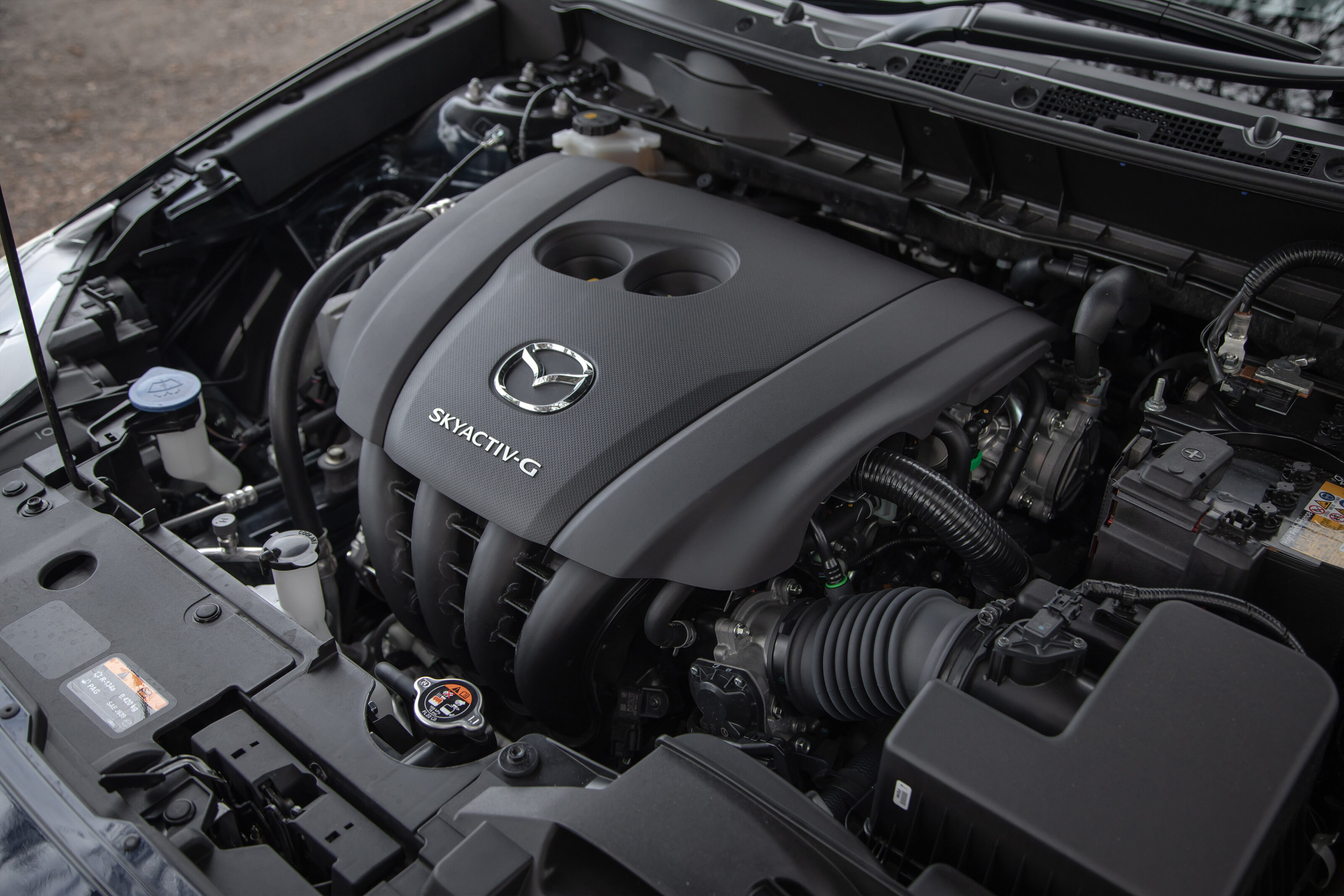
With the gate shut on the unpopular diesel, all CX-3s are powered by a single-spec 2.0-litre petrol four outputting 110kW at 6000rpm and 195Nm from 2850rpm, which is handily low in the rpm band for a naturally aspirated unit. Mazda’s preference for a conventional six-speed torque converter automatic is, in many opines, preferable to a CVT design that often makes for an unhappy marriage with the absence of forced induction, while opting for the six-speed manual saves two grand to the hip pocket. On-demand all-wheel drive, offered only in auto guise, commands a two-grand premium over our test subject’s configuration.
All-paw traction – though not necessarily ‘grip’ – brings a couple of stances, one being that SUVs should come with it. The counterpoint is that any benefit an on-demand, Tarmac-centric format brings to what’s ostensibly an urban runabout at its core is foisting perilously slim all-terrain credentials and unnecessary complexity that only really add to outlay and running costs.
On this, the Sport Maxx bum-dragger advertises 6.3L/100km combined consumption with our on-test figure firmly pinned at eight litres neat, while the same variant that spends the lion’s share of road time lugging around unused mechanical complexity and parasitic drag is, at a claimed best, a 6.7L prospect. Unless you live at the end of a nicely graded dirt or gravel road, which is about as formidable an off-road challenge the little Mazda might confidently tackle, really, why bother?
The CX-3’s plastic-cladding-as-fashion serves its Car Design Trick 101 by delivering an aesthetic sense of extended ride-height where there otherwise isn’t any. Despite its chunky 60-series Bridgestone Turanzas, the little five-door won’t negotiate off-road adventure with any extra aptitude than your average Mazda 2, with which it is largely technically common.
But as a road-goer, and a crossover in the sheer spirit of the term, there’s quite a bit of zoom-zoom in its nature, if almost all of it baked into the chassis and little of it rising to the occasion up through the engine bay.
Dynamics surely aren’t what many owners buy into with the CX-3 experience, but its sound and somewhat engaging character certainly charm, making for an endearing and highly cooperative urban punt if one that stops short at the gateway into genuine fun factor. Some compact and light offerings treat on-road competency as a distant afterthought and the Mazda transcends the humdrum by a fair measure.
Its on-road enthusiasm centres around a chassis with firm body control and just enough purpose to mirror the CX-3’s sporty stylisms, not to mention the Maxx Sport namesake. There’s some clarity to its engagement, a decent sense of connection with the road and the steering is direct and satisfyingly even. Its predictable and somewhat surefooted nature, regardless of the prevailing conditions, is welcoming.
The CX-3 is also fundamentally decent in its approach to comfort, its slightly firm nature on the move tempered by a fairly accomplished primary ride quality that does a fine job of filtering out the small stuff. Where the underpinnings come a little unstuck is in suspension noise across bigger hits such as potholes and speed bumps.
As decent as it is to drive, the little five-door does feel a little old and down-market compared with some of Mazda’s more contemporary stock. It’s really a refinement issue, the CX-3 feeling a little cheap in areas of execution not found in the Mazda 3 and the CX-9, a compact SUV that doesn’t quite live up to the premium-ness the Japanese marque spruiks. It’s particularly evident in the average insulation from ambient and tyre noise – that is, when you actually can hear any of that over the engine whine…
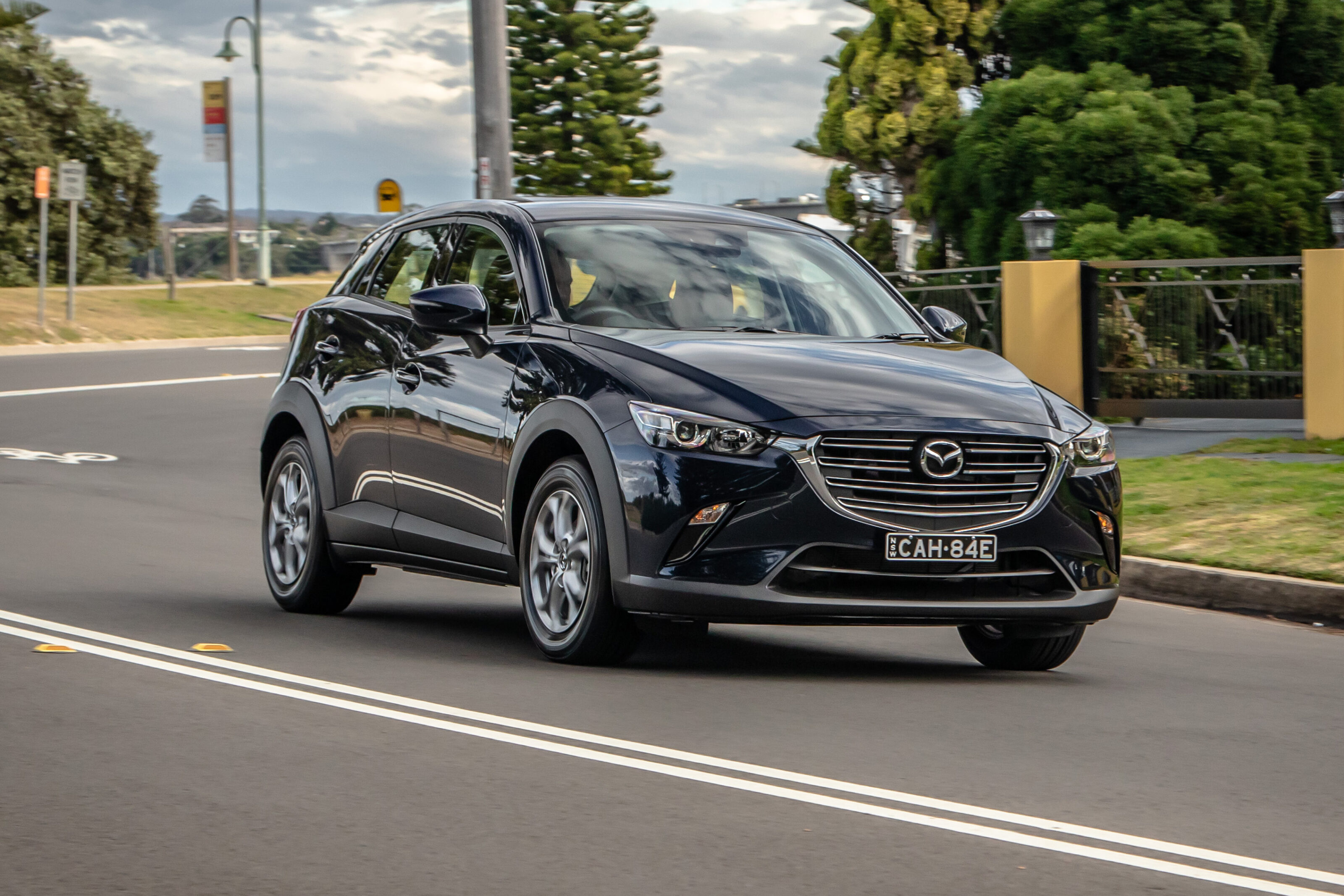
There’s a particular, bold metallic buzz to the engine that dominates a cold idle and just never dissipates regardless of how far you venture or how loudly you turn up the stereo attempting to drown it out. It’s unruly and quite the buzzkill.
It’s a workmanlike powertrain, the engine’s brisk (normal mode) or overly peaky (Sport mode) response following through with decent if flat mid-range that simply drums up a terrible ruckus if you squeeze the throttle and request any measure of enthusiasm. It’s not necessarily short on poke once you whip it up a bit, but the four-pot feels and sounds overly strained when tasked with acceleration and offers none of the dignity and relative effortlessness you get from small-capacity turbo engines that are fast becoming the preference for modestly sized SUVs and crossovers.
The CX-3 is also fundamentally decent in its approach to comfort, its slightly firm nature on the move tempered by a fairly accomplished primary ride quality.
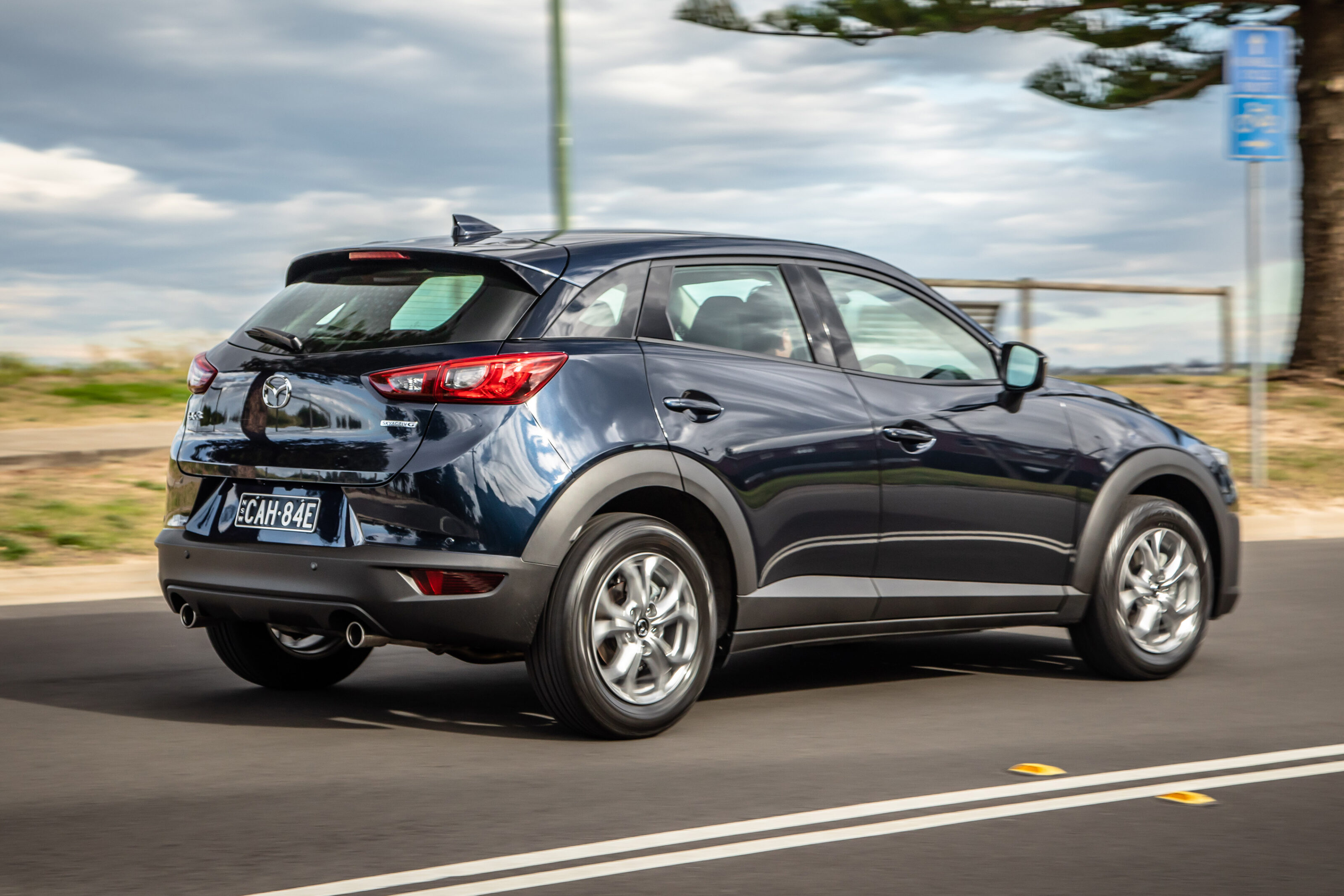
Not helping matters is the automatic transmission that faintly shunts on the upshifts, or the din the Mazda makes out on the open road at a cruising velocity on anything other than the smoothest of road surfaces. While the CX-3 isn’t exactly fatiguing on a long haul, its slightly unruffled nature makes it just a bit more tiresome than it ought to be.
None of this brings any sense of daisy freshness to this “new” CX-3, though the unchanged Maxx Sport styling has weathered time well. MY21 does bring a revised – and different – LE version based on this variant, with a new alloy wheel style, unique paintwork and multi-toned synthetic suede and leather cabin trim. It does want for an extra $500 over the regular Maxx Sport, so if you want some sense of newness and freshness you have to dig a little deeper for it.
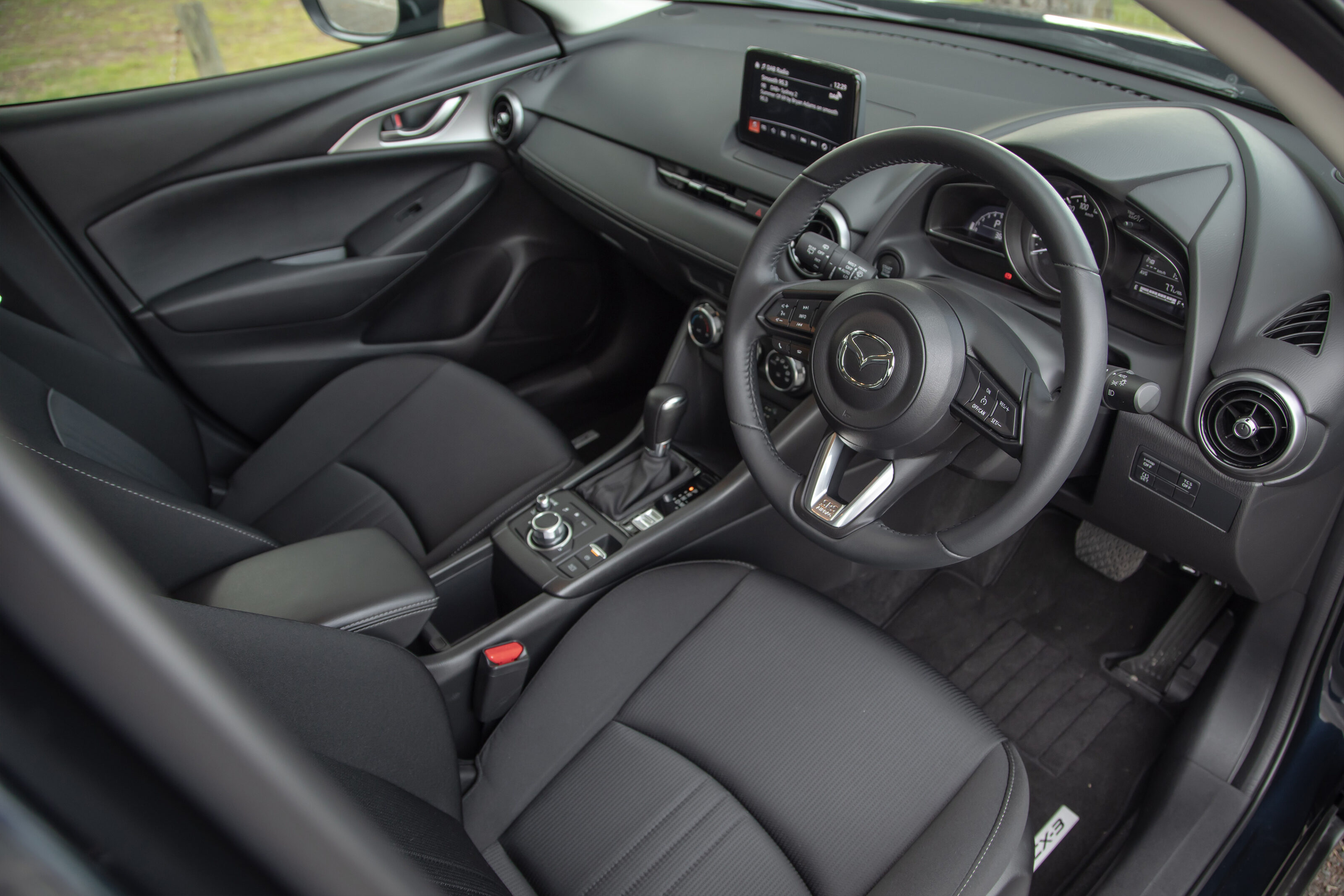
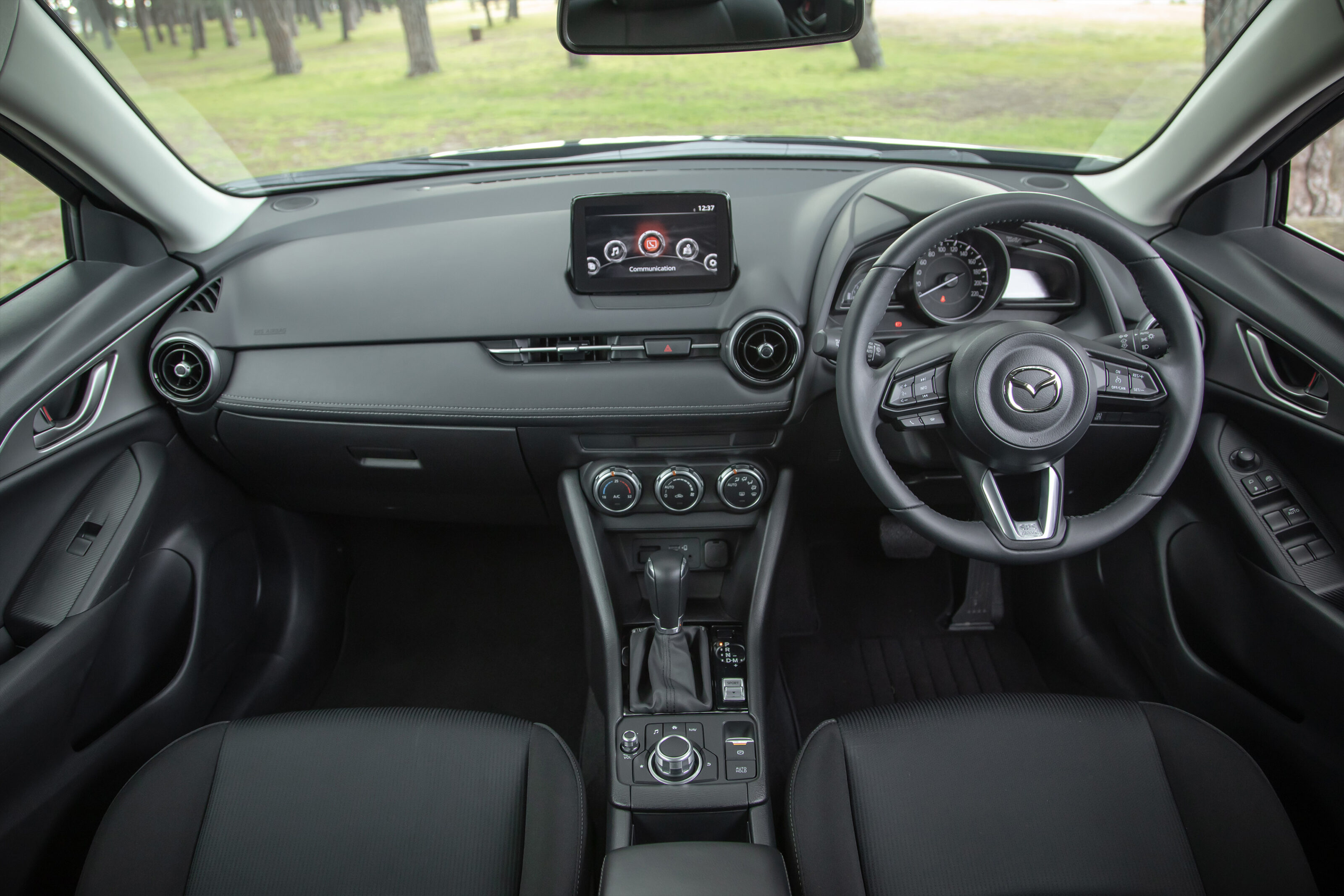
The adoption of an MX-5-style steering wheel, as part of the 2019 facelift, brought a conspicuous lift to a cabin design that’s been pleasingly sporty and stylistically mature since the CX-3 first arrived half a dozen years back. Bar some light console remodelling, not much has changed in the interim. While it still charms, the interior, like much of the rest of the package, isn’t quite as fresh as it once was.
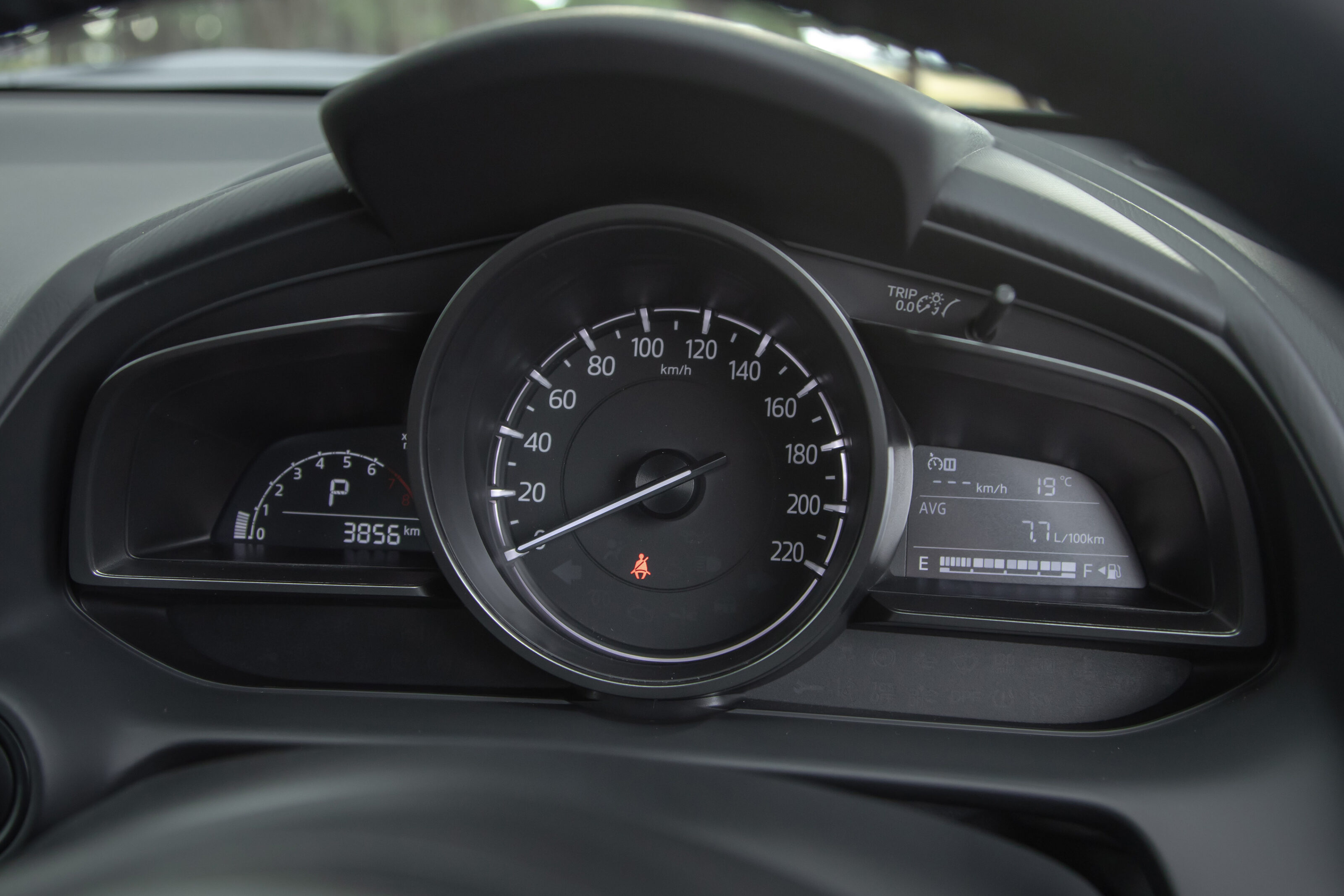
It still retains its clean appearance, with fetching Euro-style circular air vents anchored by the pleasing instrumentation with its central analogue speedo roundel, if flanked by LCD screens with graphic content that could be lifted from a 1980s calculator.
Much of the cabin is minted in mostly monochromatic grey cloth and hardy plastic that is as bland as it is inoffensive. It does, though, feel solid and well put together, with a quality feel to the materials used and a pleasing tactility to the switchgear and controls. For clarity and basic functionality, it’s a nicely resolved cabin design, for the most part.
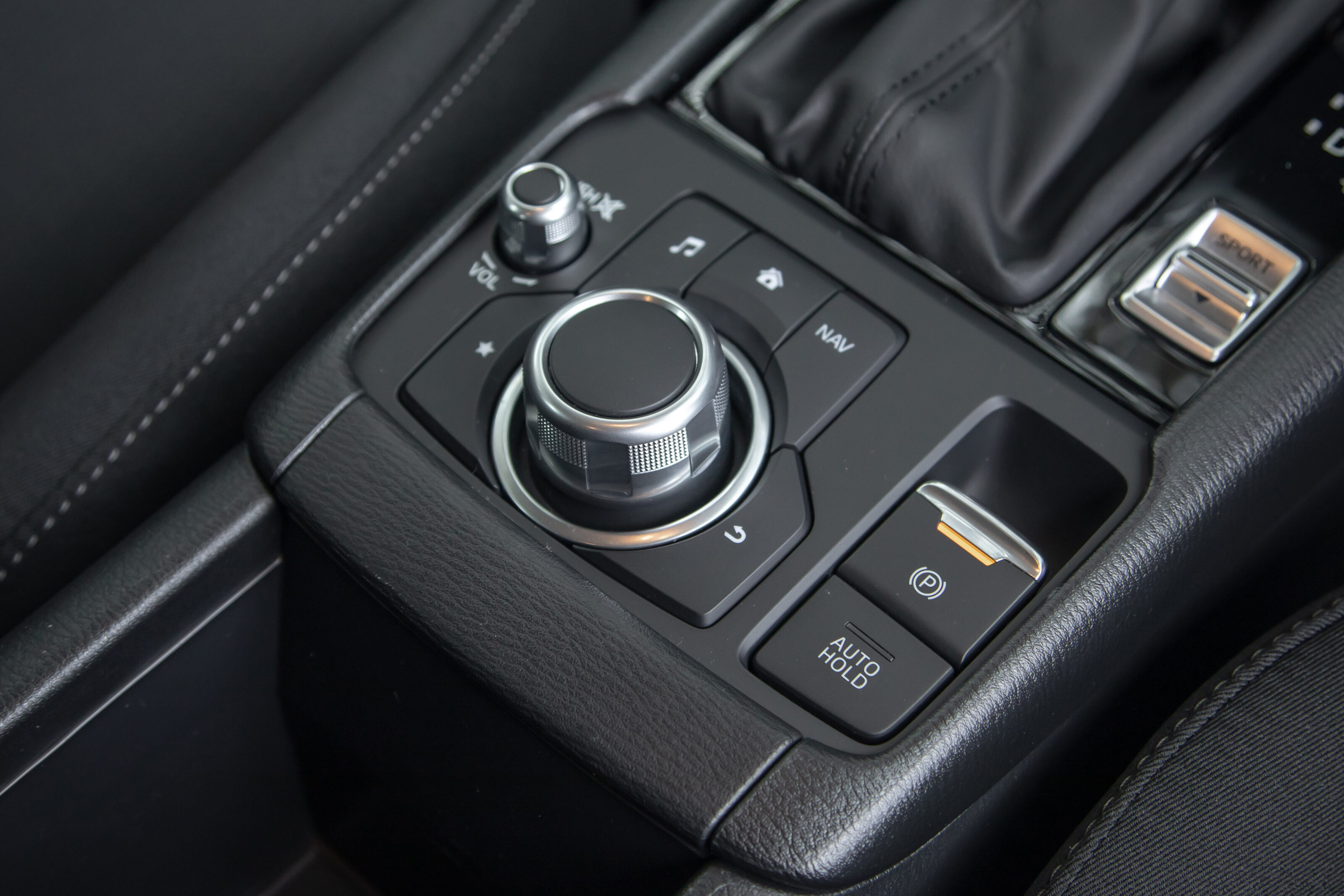
The inclusion of the previously optional Apple CarPlay and Android Auto is basic box-ticking for what is Mazda’s older touchscreen infotainment format. When you’re on the move, the smartphone mirroring is tied to Mazda’s time-honoured MZD rotary controller array and, frankly, it’s not the happiest technical marriage.
Smartphone mirroring functions well and as intended when using a touchscreen interface. Navigating app functionality using a remote rotary dial, as Mazda’s system forces you to do while the vehicle is in motion as it locks out the screen’s touchscreen access, is a clumsy and distracting mess.
When you’re on the move, the smartphone mirroring is tied to Mazda’s MZD rotary controller array and, frankly, it’s not the happiest technical marriage.
Packaging wise, the CX-3 plays a more convincing role as a crossover runabout than it does as a genuine SUV tasked with moving more than two adults. The first row is fine, with space enough to feel compact without a sense of claustrophobia, with a pair of decent enough seats that are now structurally closer to those of the current Mazda 3 than they once were.
Row two, however, is cramped. The short cabin affords precious little legroom for adults and the seatback forces an upright posture that’s less than ideal for extended accommodation. It’s not much chop for kids, either, given the lack of air ventilation and absence of device power, or the fact that the upswept window line obscures outward viewing for smaller children.
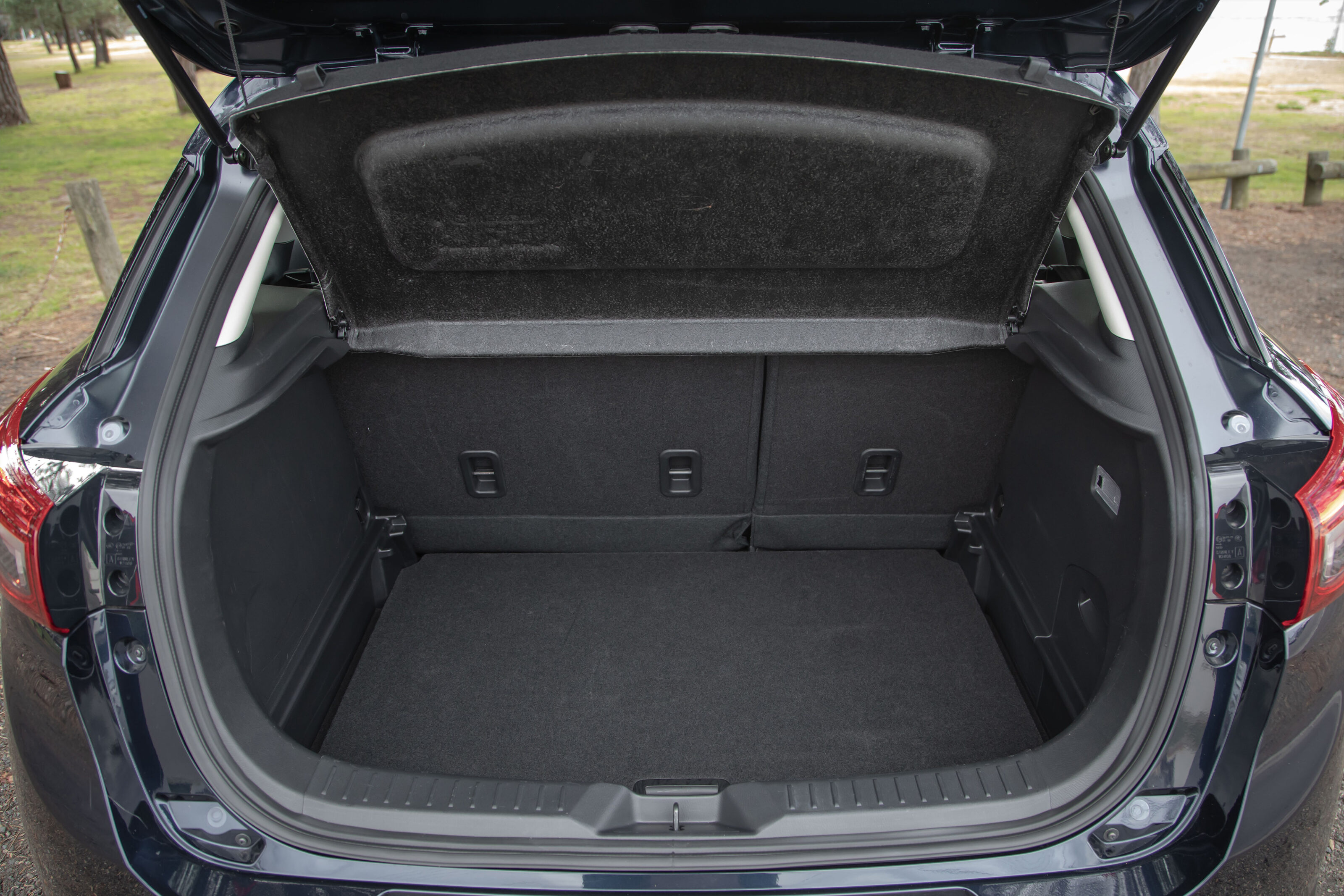
It’s a similar story in the boot space, which at 264 litres is small even by compact SUV measures and while perfectly fine for the weekly groceries, will struggle with some of the bulky addenda required to be lugged around for babies and toddlers.
Safety wise, the CX-3 range has a five-star ANCAP rating, assessed back in 2015, though as mentioned above not all variants are specified equally, the Maxx Sport missing out on lane departure warning and traffic sign recognition found further up the range.
In terms of ownership, Mazda offers a five-year, unlimited-kilometre warranty with roadside assistance. Servicing is every 12 months or an unusually short 10,000 kilometres – some rivals have much friendlier 15,000km intervals – and at an average of $355 per year across the first five years of capped priced servicing, it’s pricier to keep on the road than many competitors.
Packaging wise, the CX-3 plays a more convincing role as a crossover runabout that it does as a genuine SUV tasked with moving more than two adults.
VERDICT
The CX-3 continues to charm Aussie buyers and perhaps because of this evolution, even in lifecycle maturity, has become somewhat stagnant. And while MY21 brings a smattering of rolling changes, the culmination barely rates as an update let alone anything like certifiably ‘new’.
Sure, it’s unrealistic to expect much shake-up in what’s ostensibly a periodic touch-up, but without addressing powertrain refinement issues and merely applying Band-Aid fixes to infotainment are just two areas that suggest the little Mazda is happy to ride its sustained success into the sunset while barely rolling its arm over.
That’s fine for the business of motoring, but under a critical lens viewed from the buyers’ end of the equation, alternatives in the segment are becoming more and more compelling in what is a fast-moving landscape.
2021 Mazda CX-3 Maxx Sport FWD specifications
Snapshot
- Landmark reached by Australia’s number one car seller
- Australia was the first export market
- Local assembly began in 1968
Toyota has sold its 50 millionth Corolla worldwide – 54 years after it first rolled off the production line in Japan.
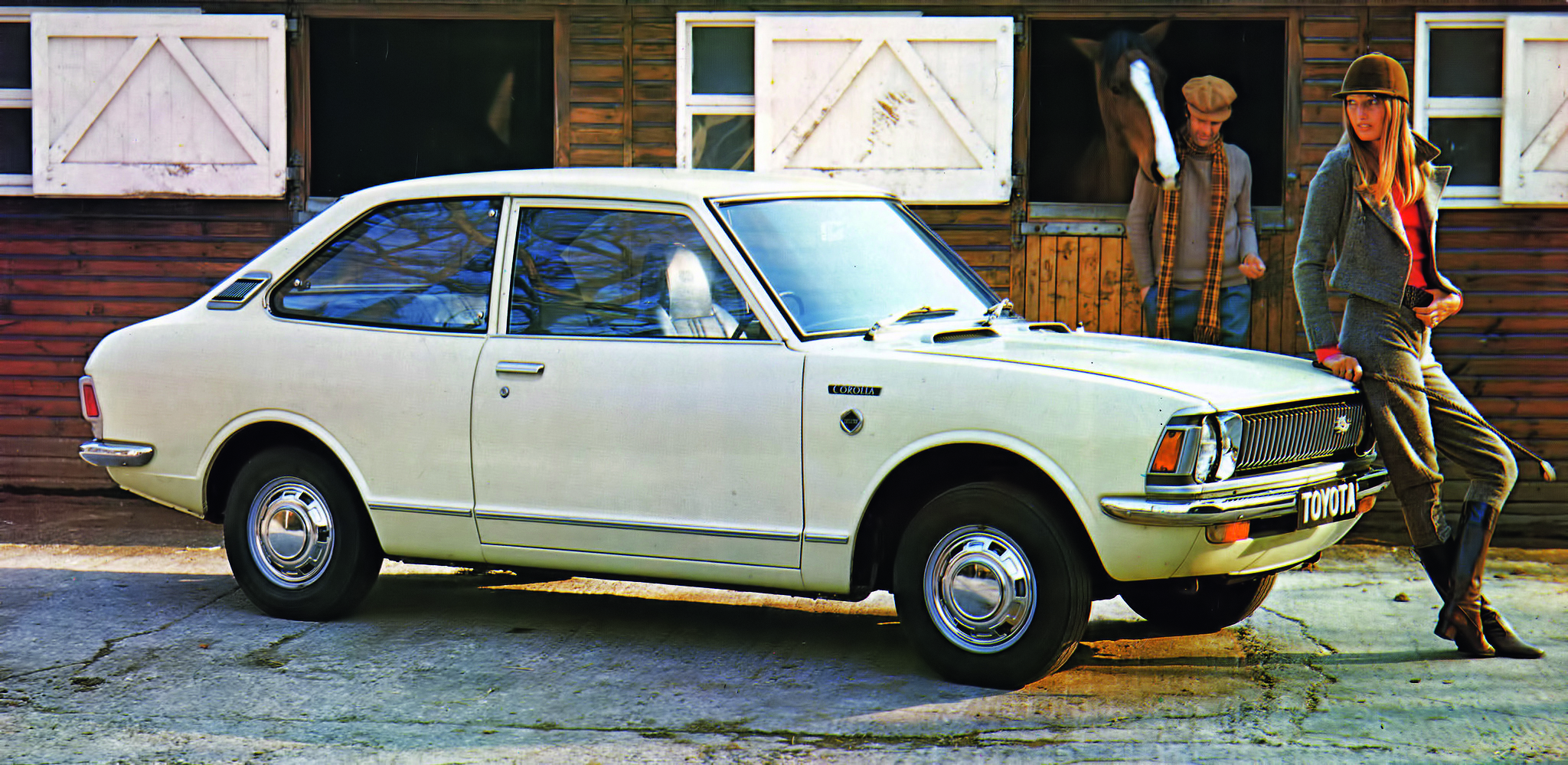
Australia was the first export market for Corolla when 15 examples of the small 1.1-litre KE10 two-door sedan left the factory in Japan in November 1966.
Since arriving in coupe-like two-door configuration on our shores the following year, 1.5 million have been sold here.
Such was the appeal of Japan’s “people’s car” in Australia that in 1968, Toyota started local assembly of the Corolla at a factory in Port Melbourne – the first such operation outside of its home nation.
Toyota Australia went on to build more than 666,000 Corollas until 1999 at factories in Port Melbourne, Dandenong and Altona. It ceased local production of all vehicles in 2017.
Australia was also the scene for Corolla’s first win in international motorsport with a class victory in the 1968 Hardi-Ferodo 500 at Bathurst.
This began a strong motorsport career for Corolla in Australian motorsport, which included winning the 2008 Australian Rally Championship in the hands of Neal Bates and Coral Taylor.
In September 2007, 40 years after the original Corolla went on sale, it notched up its millionth sale.
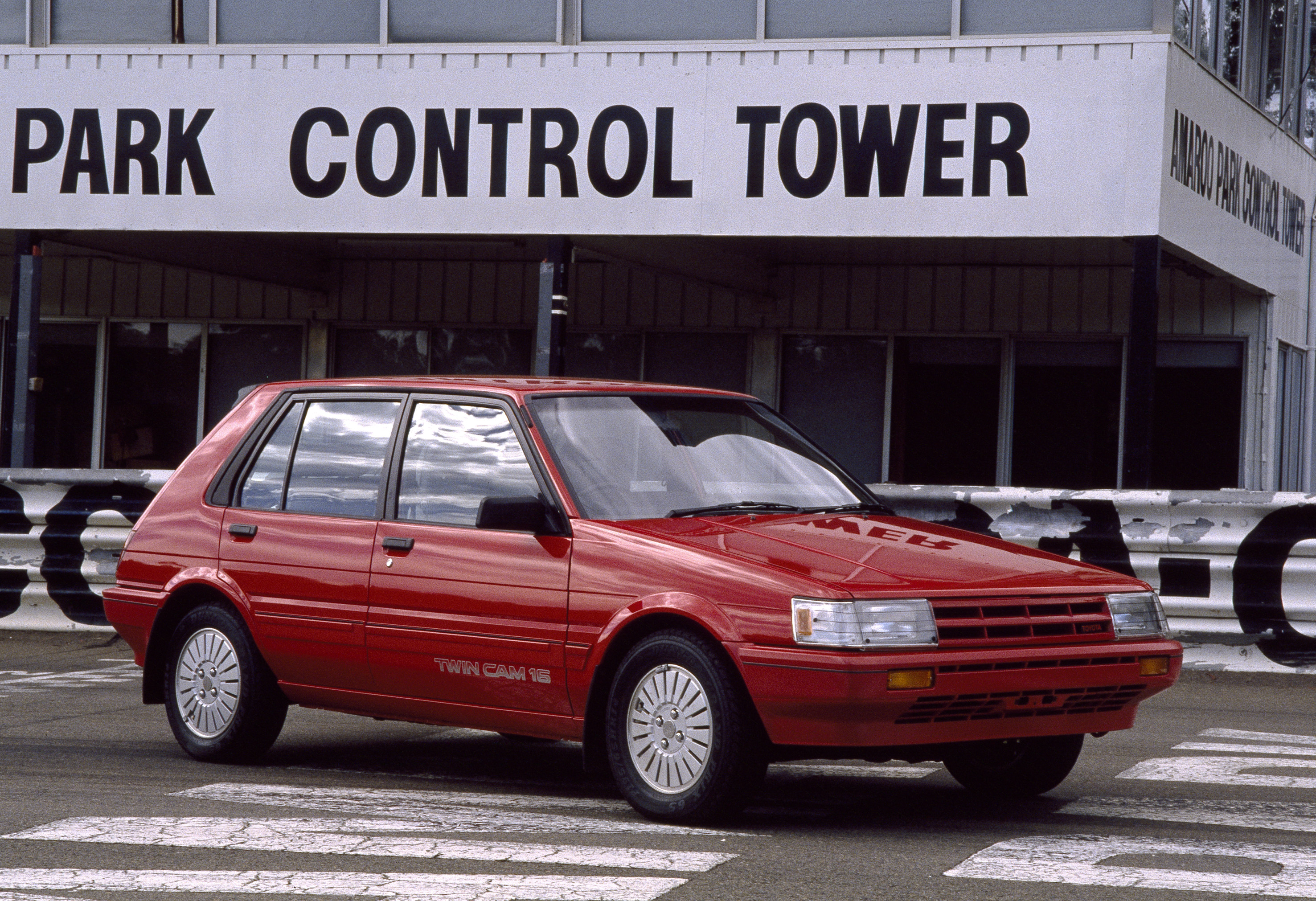
Since then, a further 500,000 Australian customers have bought a new Corolla with the car being the most popular passenger car in Australia for the past eight years.
“For many people, the affordability, efficiency and fun-to-drive attitude that Corolla has always epitomised meant it was often a first car,” said Toyota Australia’s Vice President Sales, Marketing and Franchise Operations, Sean Hanley.
“Among the millions of owners, there are more than a few fond memories, and here in Australia it has been so warmly received that it has become part of our cultural landscape.
“We would like to thank those millions of people that have put their trust in Toyota and made Corolla the world’s most popular nameplate,” he said.
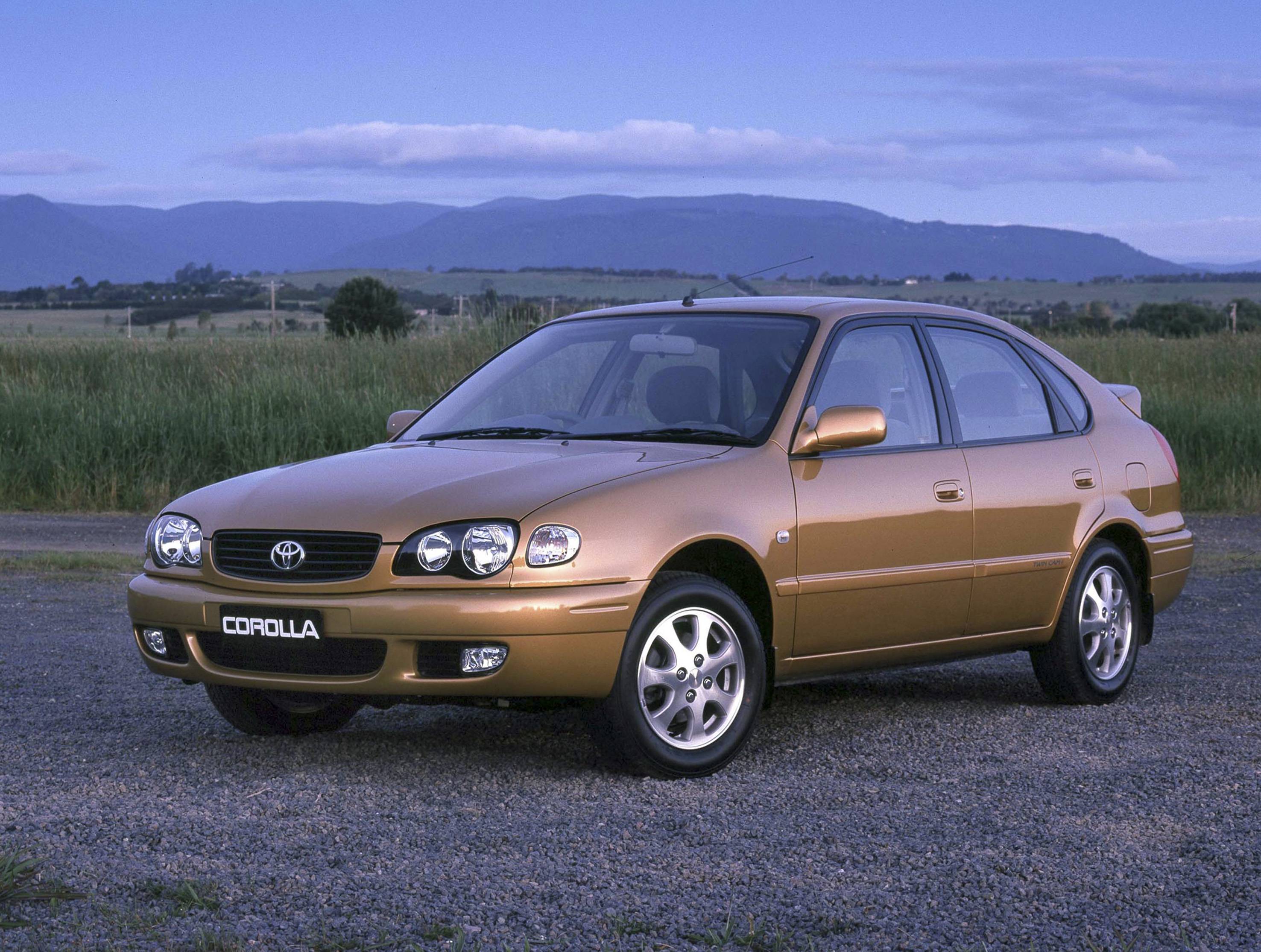
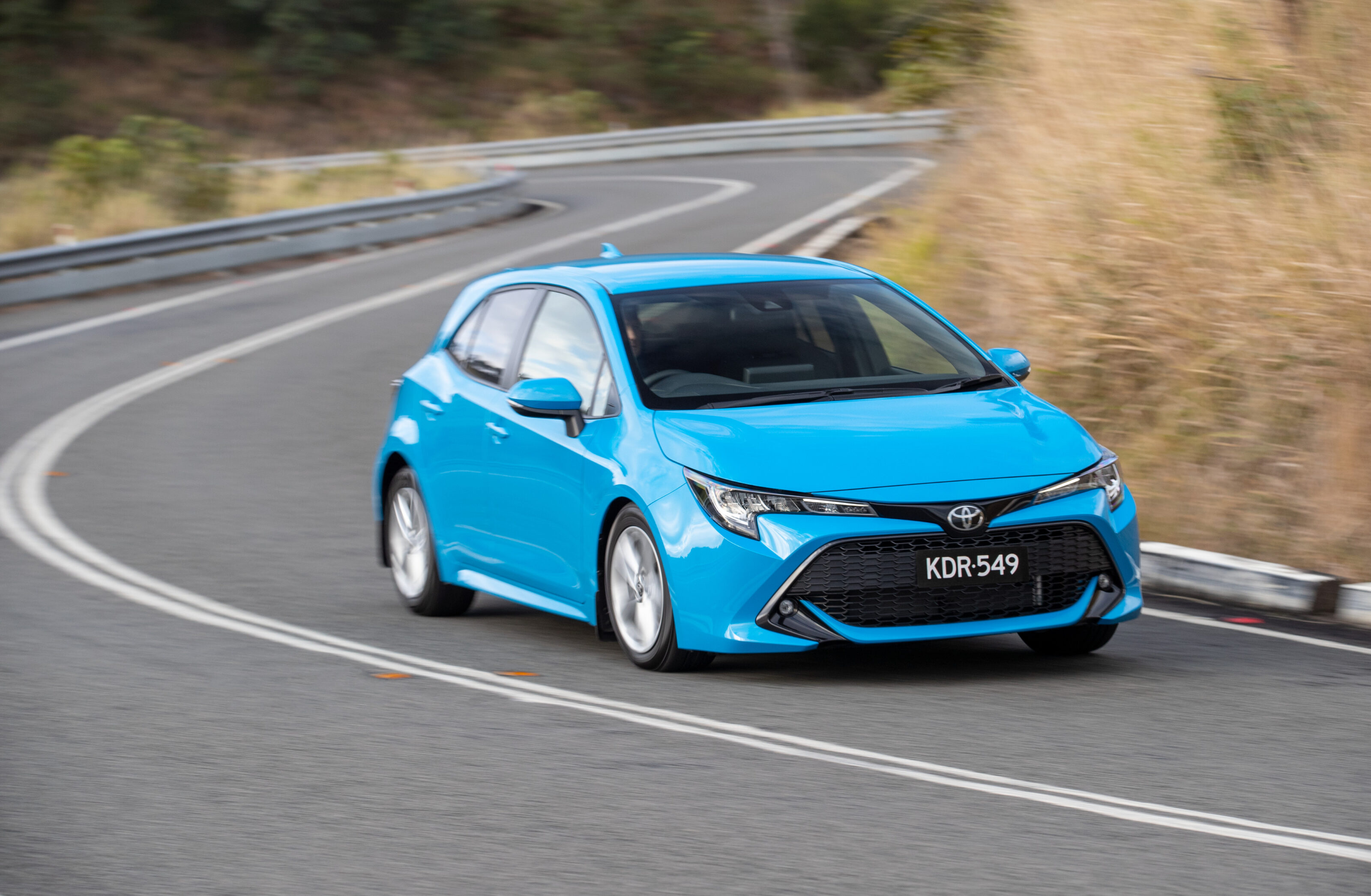
The success of Corolla in Australia has been replicated across the globe. In 1997, it became the world’s most popular nameplate and last year, it was bought by more than 1.1 million customers.
It is sold in more than 150 countries and regions at the rate of approximately one every 28 seconds over the past year and is produced at 12 plants across the world in Japan, Brazil, Venezuela, China, Pakistan, South Africa, Taiwan, Thailand, Vietnam, Turkey, US and the UK.
Acura Integra set for 2022 return
- Teaser image reveals headlight of incoming Acura Integra
- Ends the nameplate’s 20-year-old hiatus from Acura portfolio
- Brand Vice President Jon Ikeda promises same fun-to-drive spirit of the original
Honda’s luxury American brand Acura has confirmed it will dust off the Integra nameplate in mid-2022, announcing the news at Monterey Car Week in California with a teaser image of the new model.
The teaser previews a headlight of the “new compact premium entrant”, situated against a trapezoidal grille seen on other models across the Acura range and embossed lettering of the name Integra on the front bumper.
The Integra’s arrival will end a 20-year-hiatus from Acura’s portfolio. The Integra was renamed RSX in 2001 when the model entered its fourth generation in America.

Even though Honda Australia sold the Integra from 1986 to 2006, including both a Type S and Type R variant, there’s so far nothing to suggest that the new generation Integra will be sold in Australia, or even built in right-hand drive.
Honda Australia would not comment on the news, which pointedly has come from Acura, rather than Honda Japan.
What form the Integra will take is also speculated, after reports on a leaked product planning document suggest it will be a sedan.
But this contradicts clues revealed at the Monterey Car Week, where American journalists shared images of a drone show which hinted at the vehicle’s fast-back silhouette.
Even so, the hype for a new-generation Integra is reaching fever pitch, after fan renderings of an Honda Integra Type R released earlier this week whipped the internet into a frenzy over the idea of a two-door coupe’s return.
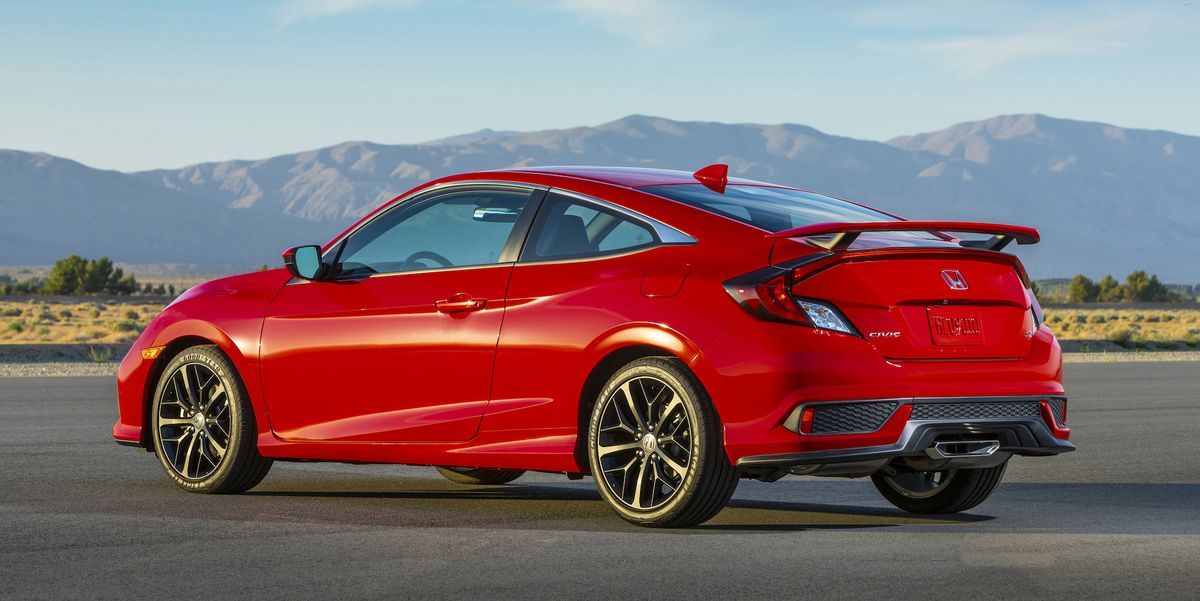
The American-market Honda Civic SI is the closest thing to an Integra spiritual successor in recent years, given it was based on a Civic, offered as a coupe, and put 153kW/260Nm through a six-speed manual.
Perhaps what is most assuring for Integra fans is that Acura’s Vice President Jon Ikeda has promised it will honour the original faithfully.
“I’m thrilled to say Integra is returning to the Acura line-up with the same fun-to-drive spirit and DNA of the original,” he said in a statement, “fulfilling our commitment to Precision Crafted Performance in every way—design, performance and the overall driving experience.”
Snapshot
- Just 350 Type S variants will be made
- Updated bodywork has increased downforce
- Turbos from the GT3 racer bump power up to 447kW
After a five-year production run, the Acura/Honda NSX is set to be farewelled but not without the Japanese manufacturer giving the sportscar one last hurrah.
To celebrate the end of the mid-engined coupe’s lifecycle, the NSX has been given the Type S treatment, receiving more than just a few little tweaks and a special badge.
First of all, power and torque from its 3.5-litre, twin-turbo V6 has been increased thanks to the standard turbos being replaced with units used in the GT3 race car, bumping boost up by 5.6 per cent to deliver 447kW and 667Nm – 20kW/22Nm more than the base NSX.
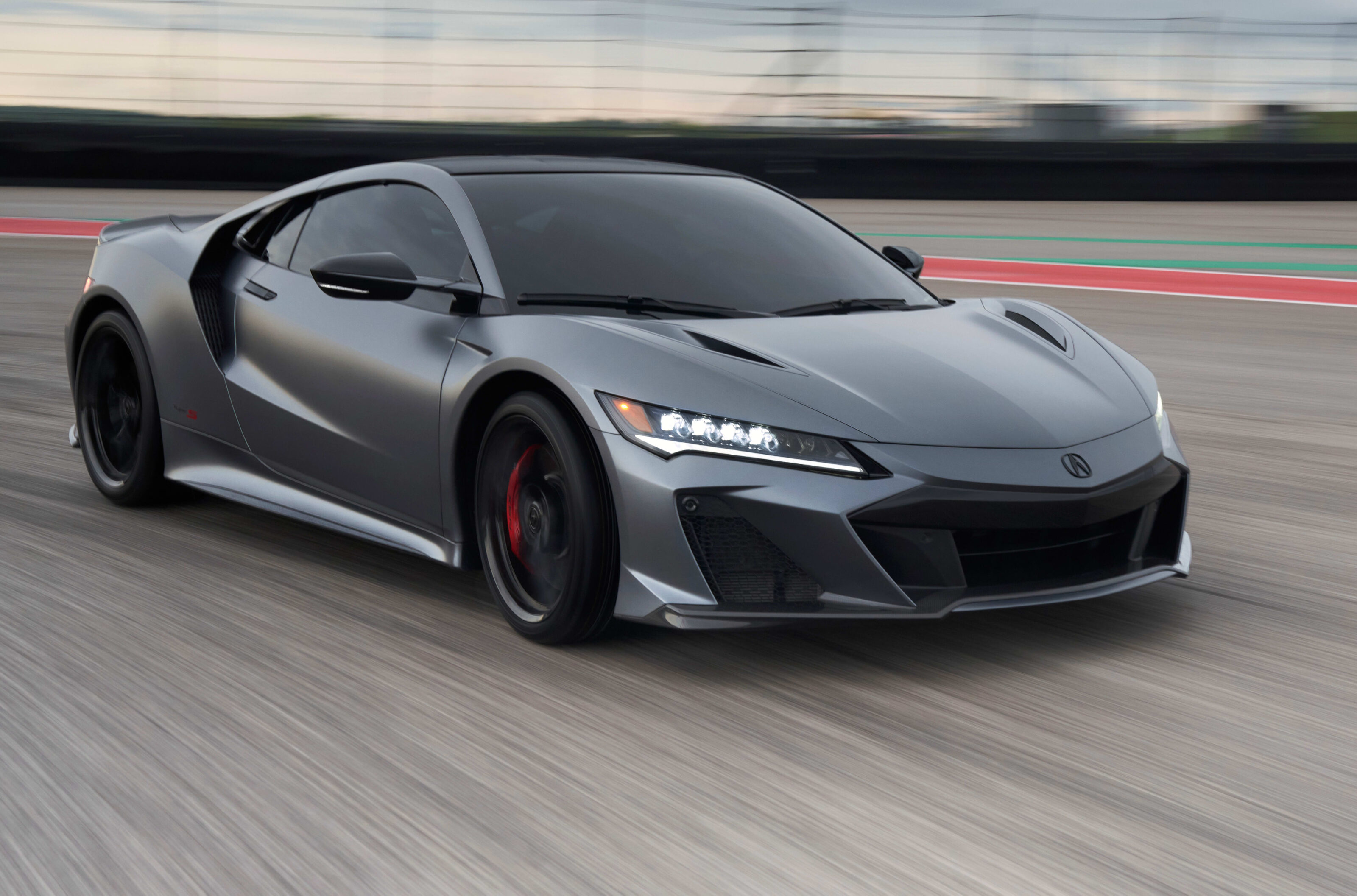
It’s not just the internal combustion engine which has been tweaked, as the battery was given a tune-up to feature 20 per cent greater capacity and 10 per cent higher output – undoubtedly aiding the increased torque figures while also helping fill gaps when the turbos are off boost.
A revised software map for the NSX’s nine-speed dual-clutch gearbox includes a new rapid downshift mode, allowing the transmission’s computer to skip through gears rather than click down through the sets sequentially when the paddle is held for 0.6 seconds.
In sport and sport+ modes, shift times are now down by 50 per cent from the time the paddles are pulled, with the ‘box now down-changing almost instantly when brake pressure is applied – allowing the car to go down the cogs while still in a straight line for greater stability.
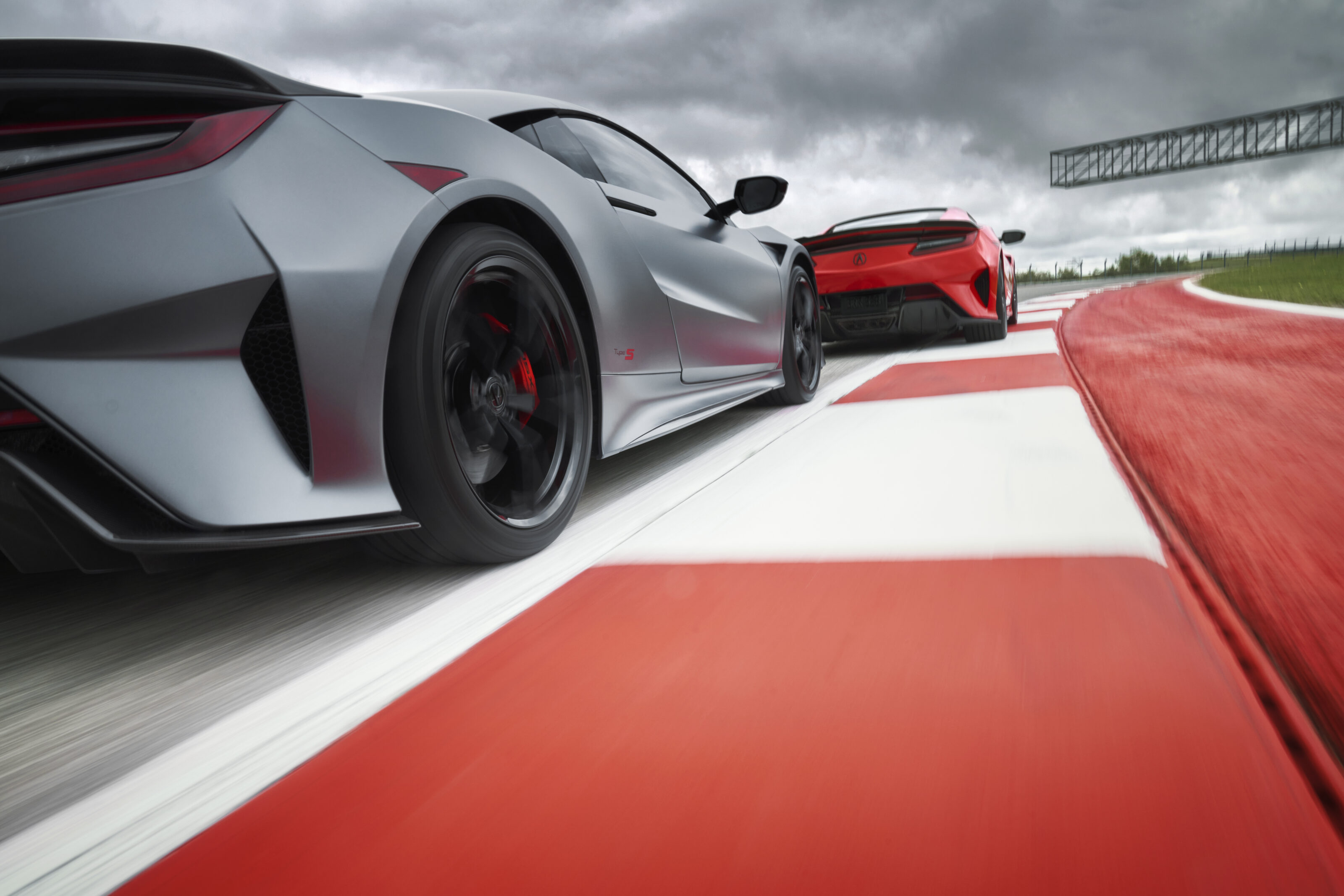
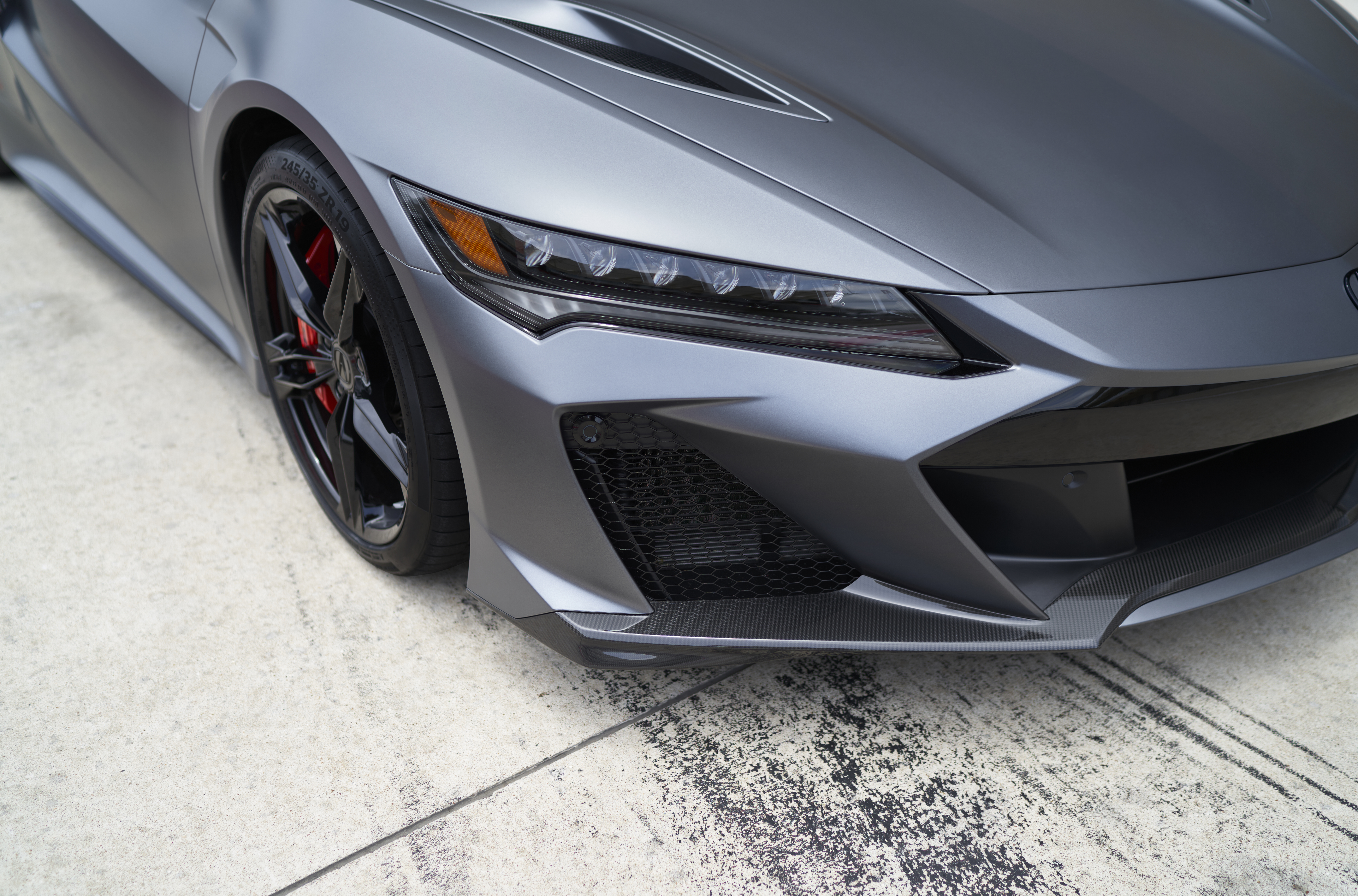
To help keep everything cool, Acura has revised the front intakes on the NSX Type S, aiding the control of engine temperatures by sending more air to the larger radiators, while also increasing downforce in tandem with the GT3-inspired rear diffuser.
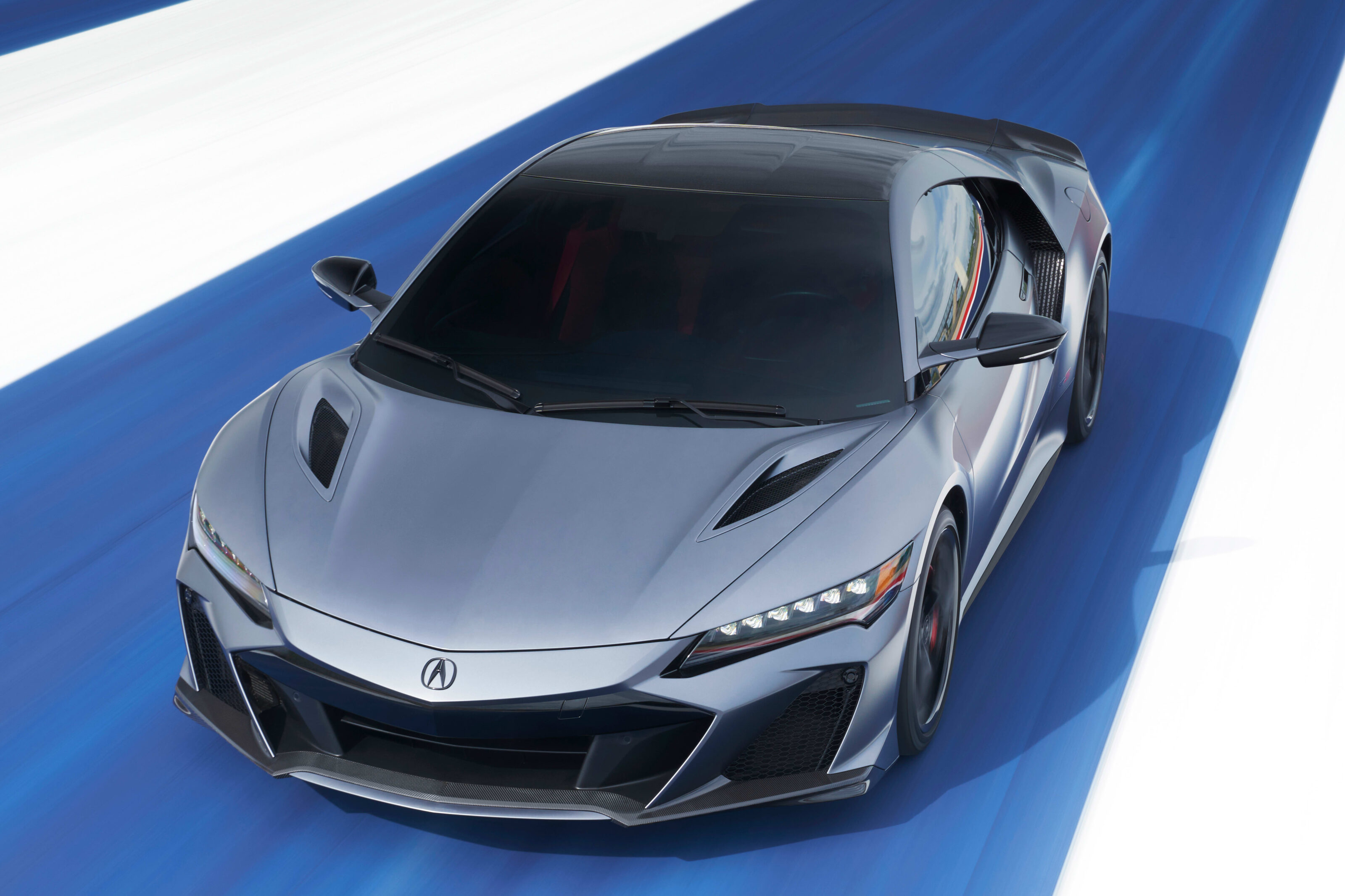
The carbon fibre theme doesn’t stop with the diffuser, as the front splitter, side skirts, rear spoiler and roof also get the lightweight treatment – however Acura also offers a Lightweight Package which includes carbon ceramic brakes and a high-gloss carbon fibre bonnet, taking 26kg off the Type S’s curb weight.
All of these changes, plus the addition of five-spoke wheels shod in Pirelli PZero rubber, have resulted in the Type S recording a lap time two seconds faster than the standard NSX around Honda’s Suzuka test track – although no times have been released comparing the normal Type S with the Lightweight Package.
Unfortunately, if you want a Type S in Australia, you’re out of luck. Honda stopped bringing the NSX Down Under last year.
Limited to just 350 units, with 300 ending up in the garages of United States buyers, the Type S goes on sale with a price tag of US$169,500 (AU$231,000) – while the Lightweight Package incurs a premium, bumping its value up to US$182,500 (AU$249,000).
Snapshot
- Original GT was assembled in Slough by Ford Advanced Vehicles
- GT40 swept Le Mans wins from 1966 to 1969
- Prototype Heritage Edition tribute debuts alongside GT/105
As production of the Ford GT nears an end, the Blue Oval has paid homage to the original racers which influenced its conception with a run of Heritage Edition tribute vehicles.
Reflecting the colours of the only surviving original GT prototype – the GT/105 – the Heritage Edition is finished in Wimbledon white and paired with antimatter blue graphics, –including a singular over-the-roof stripe as well as blue wheels.
While it doesn’t retain the GT prototype’s wire wheels, Ford focused on showing off more of the carbon fibre parts on the Heritage Edition – leaving the front splitter, side sills, mirror stalks, engine louvers and rear diffuser exposed with a gloss finish.

The white and blue colour theme continues in the cabin, with lightspeed blue Alcantara wrapping the seats and instrument panel, teaming up with Ebony leather on the dash, while the pillars and headliner receive ebony Alcantara.
There’s no carbon fibre shortage in the interior either, as it adorns the door sills, lower A-pillars and console – reminding its occupants this is a modern supercar which has conquered Le Mans in racing trim.
Ford’s GT program manager, Mike Severson, said paying homage to the original GT racers was important for the history of the nameplate, despite the early cars struggling to find success on track.
“This is the first Ford GT Heritage Edition that goes beyond celebrating race wins – this one goes deep, and honours the earliest of Ford supercar heritage,” said Severson.

“The Ford GT ’64 Prototype Heritage Edition is a modern interpretation of the original, with no mistaking what this car is paying tribute to.
“There are a lot of milestone moments in the history of Ford GT that we’ve celebrated, but the team was unanimous in believing the original prototype was the right vehicle this time around.
“That 1964 prototype unleashed the creative genius of the Ford Advanced Vehicles team and paved the way for the Ford GT program. It put all of this in motion.”

Popularised in the 2019 film Ford v Ferrari, the first GTs were designed to beat Ferrari’s sportscars at Le Mans, but ultimately suffered reliability issues – leading to the race program moving from the John Wyer-led Ford Advanced Vehicles in the UK to Shelby American, headed up by Carroll Shelby.
Under the control of Shelby’s team, and with the help of development driver Ken Miles, the GT40 was crafted into a race winner, taking victory at Le Mans in 1966 and 1967 with Shelby American, before John Wyer operations moved back into Wyer’s hands and led to further success at the 1968 and 1969 runnings of the endurance classic.
Reintroduced in 2016 with a twin-turbo V6 engine, the new Ford GT won its class at Le Mans in its debut year, 50 years after Bruce McLaren and Chris Amon took the marque’s first win.
The prototype Heritage Edition marks the fourth tribute car Ford has commissioned to honour the original GT – from its first Le Mans win to the second victory in 1967, the ironic Gulf-liveried 1968 and ’69 winners and the lesser-known 1966 Daytona 24 Hours winner, as driven by Ken Miles.

The sales charts suggest that Australians have gone dual-cab mad! But does that mean you have to give up hot hatch performance at the traffic lights?
To find out, we’ve brought along a couple of Volkswagens to line up at the drag strip: a box-fresh 2021 Golf GTI and an Amarok.
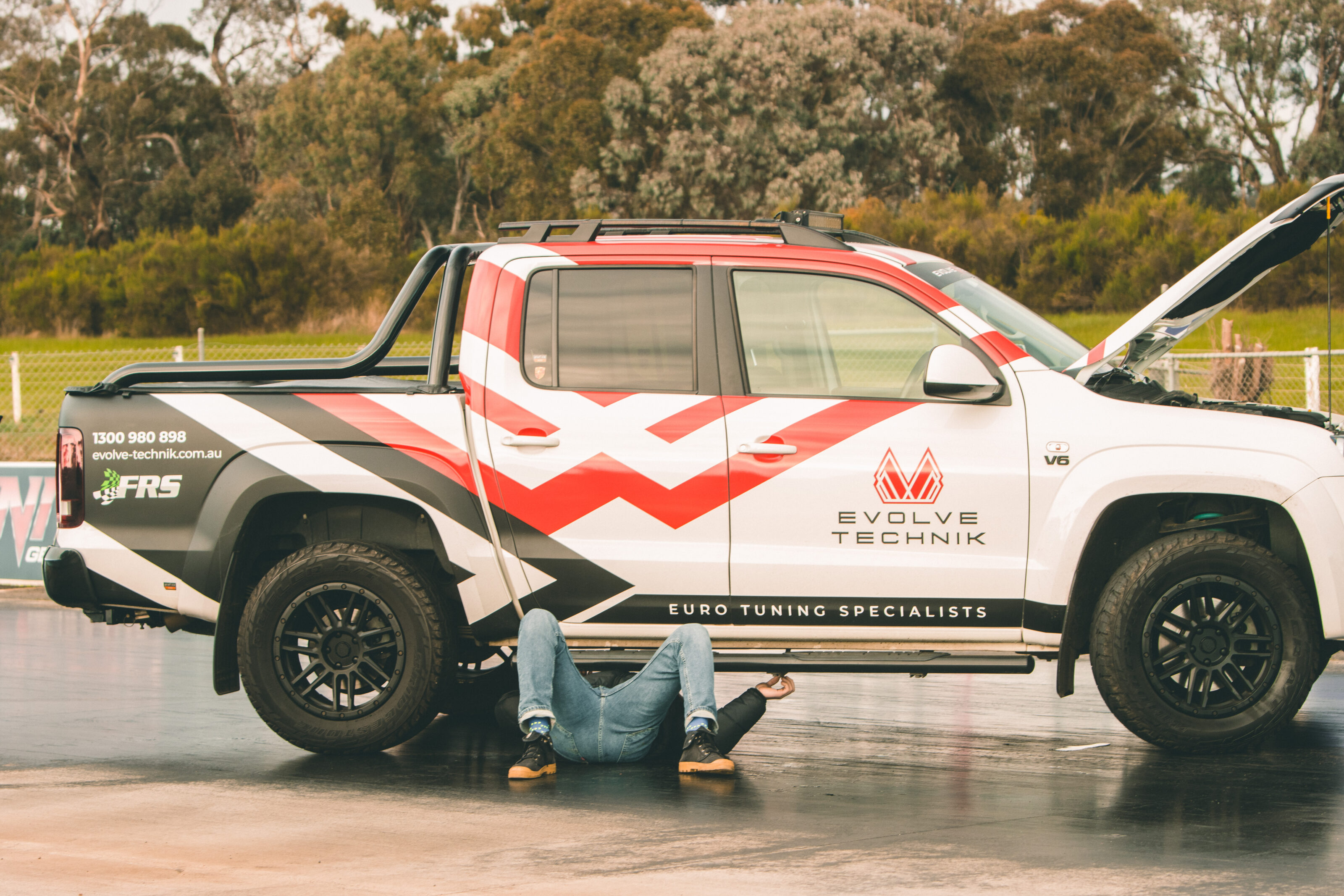
It’s not your normal Amarok, though. This one’s had the ‘Stage 2’ magic wand dusted over it thanks to Evolve Technik in Melbourne, and now pumps out a stout 240kW/700Nm which – they say – is good for about 6.5-seconds 0-100km/h.
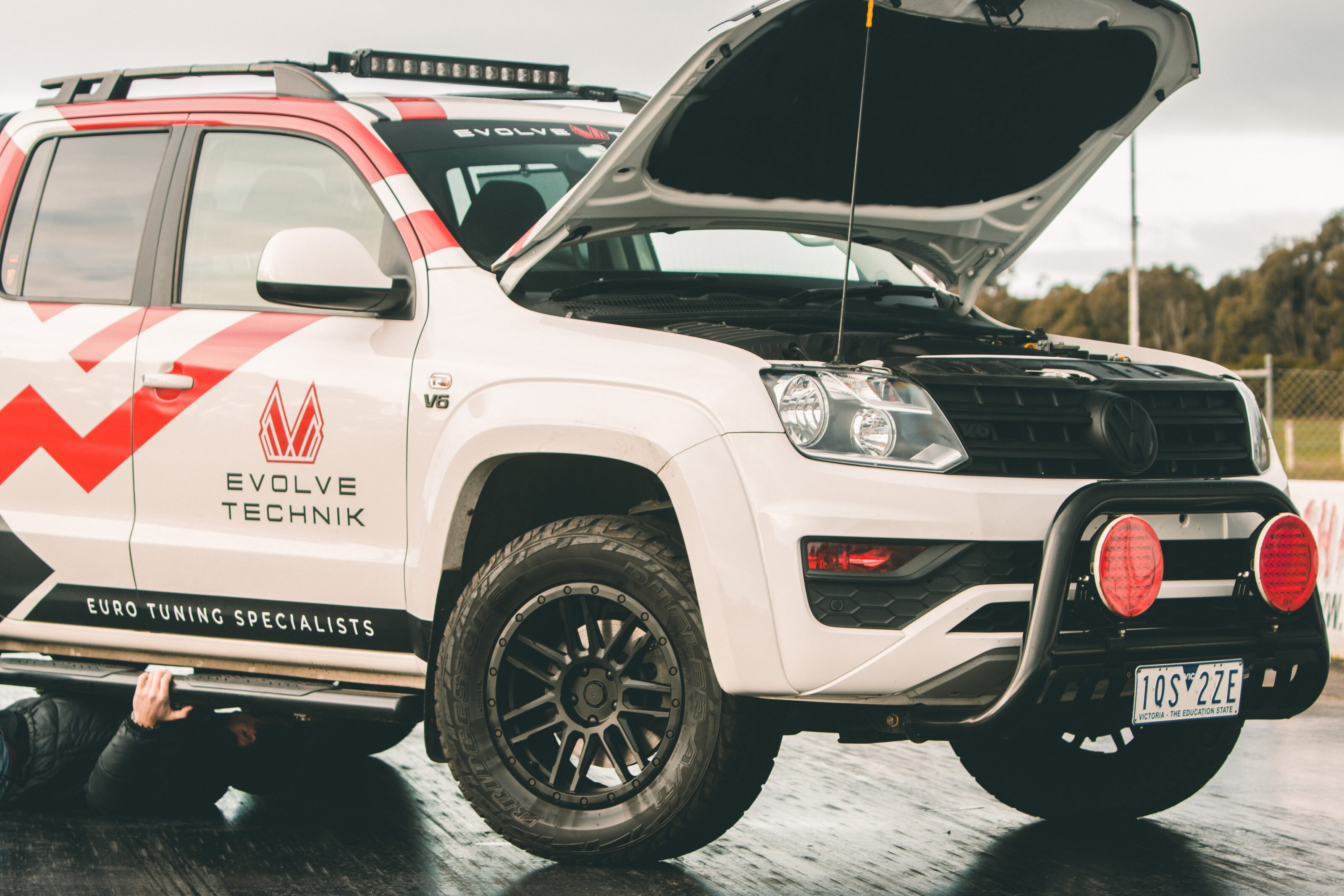
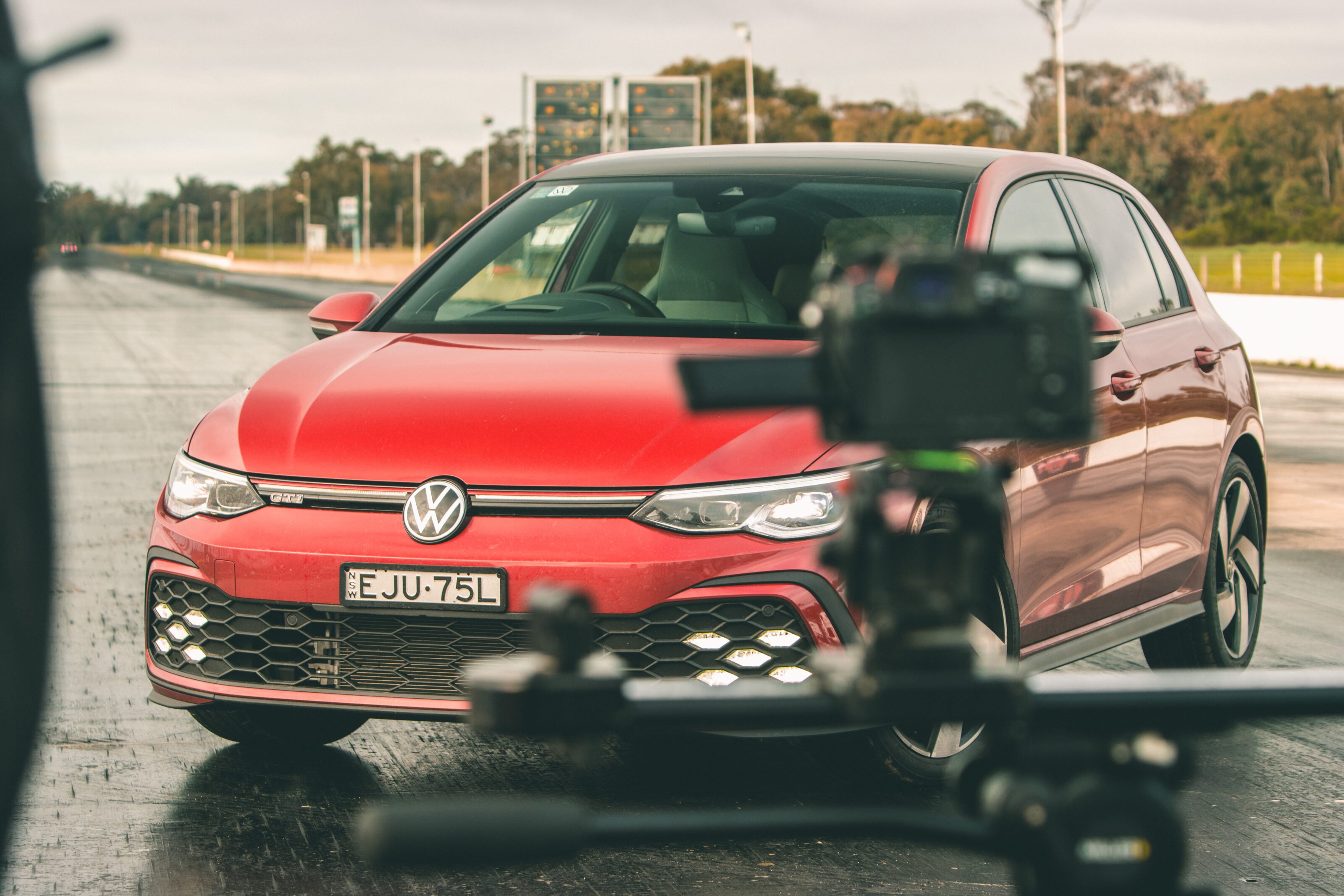
That puts it squarely in the sights of the brand-new eighth-generation Golf GTI. Rated at 180kW/370Nm, the hot hatch is down significantly on power and torque. Crucially, however, it’s also down on kilos. 887kgs, to be exact; weighing in at a lithe 1463kgs compared to the dual-cab’s lumbering 2350kg kerb weight. Volkswagen claim it’ll do 0-100km/h in 6.4-seconds.
Sounds like the two should be close, then. To make the most of our curious comparison, we teed up a number of scenarios to throw at our two class-crossing contenders. First up would be a maximum attack launch control start, followed by a conventional comfort mode street start, closed out by a roll race.
Race Start
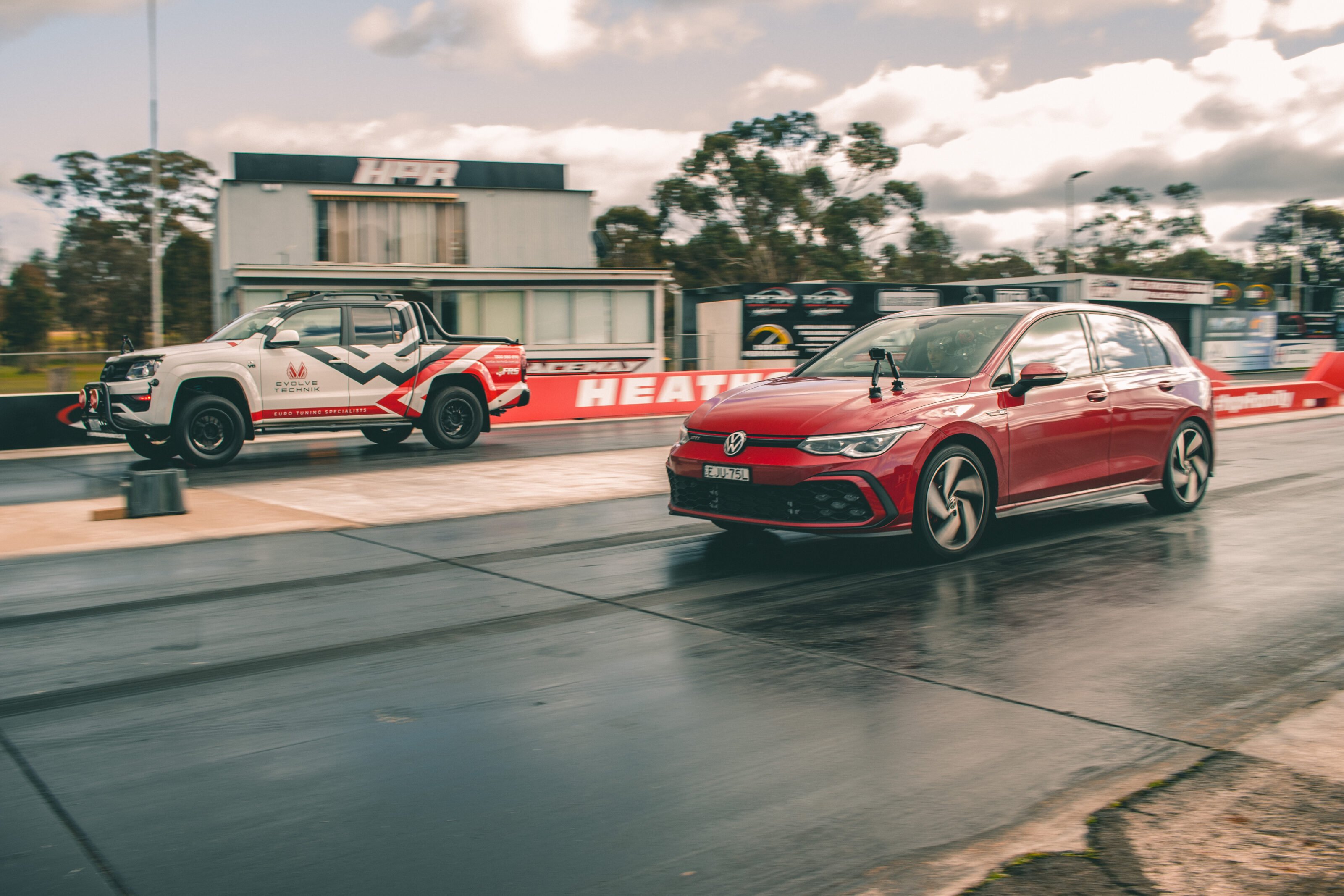
The first contest saw the Amarok’s mountain of torque and superior traction rocket the dual-cab away from the front-pawing hatch on launch, quickly establishing a significant multi-car lead.
Once the scampering hatch found its footing, however, the chase was on. Past the halfway mark and the Golf is making ground fast as the heavily-tuned diesel V6 began running out of breath.
The Golf scurried past the dual-cab as the finish line loomed, registering a 14.4-second pass compared to the dual-cab’s impressive 14.6-second timeslip.
A second run was performed as Alex Inwood in the Golf experimented with his launching methods. It didn’t pay off as the Golf bogged down off the line, leaving more time on the table as the Amarok began to run away. The Golf’s top-end stamina saw it make up for lost time, with the two cars virtually lineball as they crossed the finish line. A true photo finish win for the hatch, by a whisker.
Street Start
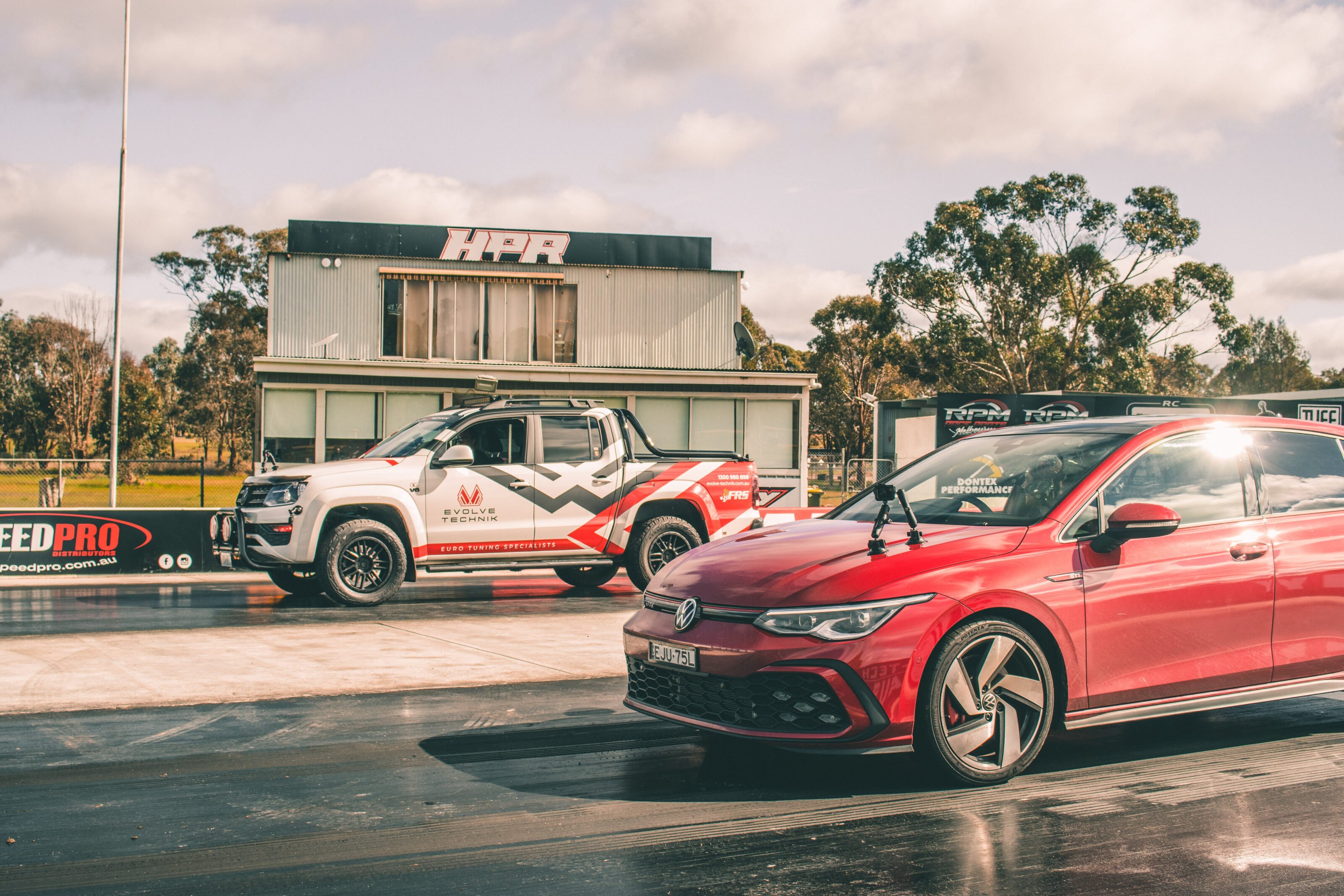
Flicking both cars back into their default/comfort modes, our street start race replicates the impromptu traffic light grand prix. With no time to engage launch control or switch driving modes, we simply want to know: when the lights go green, and the pedal is flattened, which car gets to the end first?
This scenario plays well into the lighter and smaller Golf’s hands, as the heavier Amarok is slow to set off with no boost pressure to lean on. The Golf, although prone to wheelspin, quickly sniffs out traction and is gone and away by the time the Amarok’s meaty torque band comes into play.
Roll Race
The final roll race exercise may provide some redemption for the big workhorse, with pre-established rules of engagement stipulating chassis modes were to be set in sport and gearboxes in manual – allowing the Amarok to stay plugged in to its comparatively-narrow torque band.
Again, the Amarok lunges ahead from the starting marker thanks to its monstrous outputs; however, any ground advantage is quickly recouped by the lighter Golf which has an easier time putting its power down on the move.
The lighter hatch quickly displaced the lumbering dual-cab, convincingly crossing the line victorious.
Results
In the end, the hot hatch won – as you probably expected it to. By the day’s end, the Golf GTI actually bested its factory 0-100km/h claim of 6.4-seconds, with a best sprint time of 6.2-seconds registered.
It cleared the quarter-mile strip in 14.3-seconds at 164.0km/h.
Evolve Technik’s Stage 2-tuned Amarok boasted an impressive initial launch phase, and actually beats the Golf to 80km/h. But a best time of 6.7-seconds from 0-100km/h, and 14.9-seconds across the quarter-mile see the big work ute trail the smaller and more agile Golf by half a second.
Did the Amarok surprise you? Watch all the action up top and let us know in the comments below!
Snapshot
- 2022 i30N gets Hyundai’s eight-speed N-DCT transmission
- 0-100km/h in 5.4 seconds
- Customer deliveries expected to begin in July
Australian pricing for the updated 2022 Hyundai i30 N has been announced, finally bringing availability of an automatic transmission.
Yes, Hyundai’s very own N-DCT eight-speed wet-style dual-clutch transmission is, at long last, available on the i30 N Down Under.
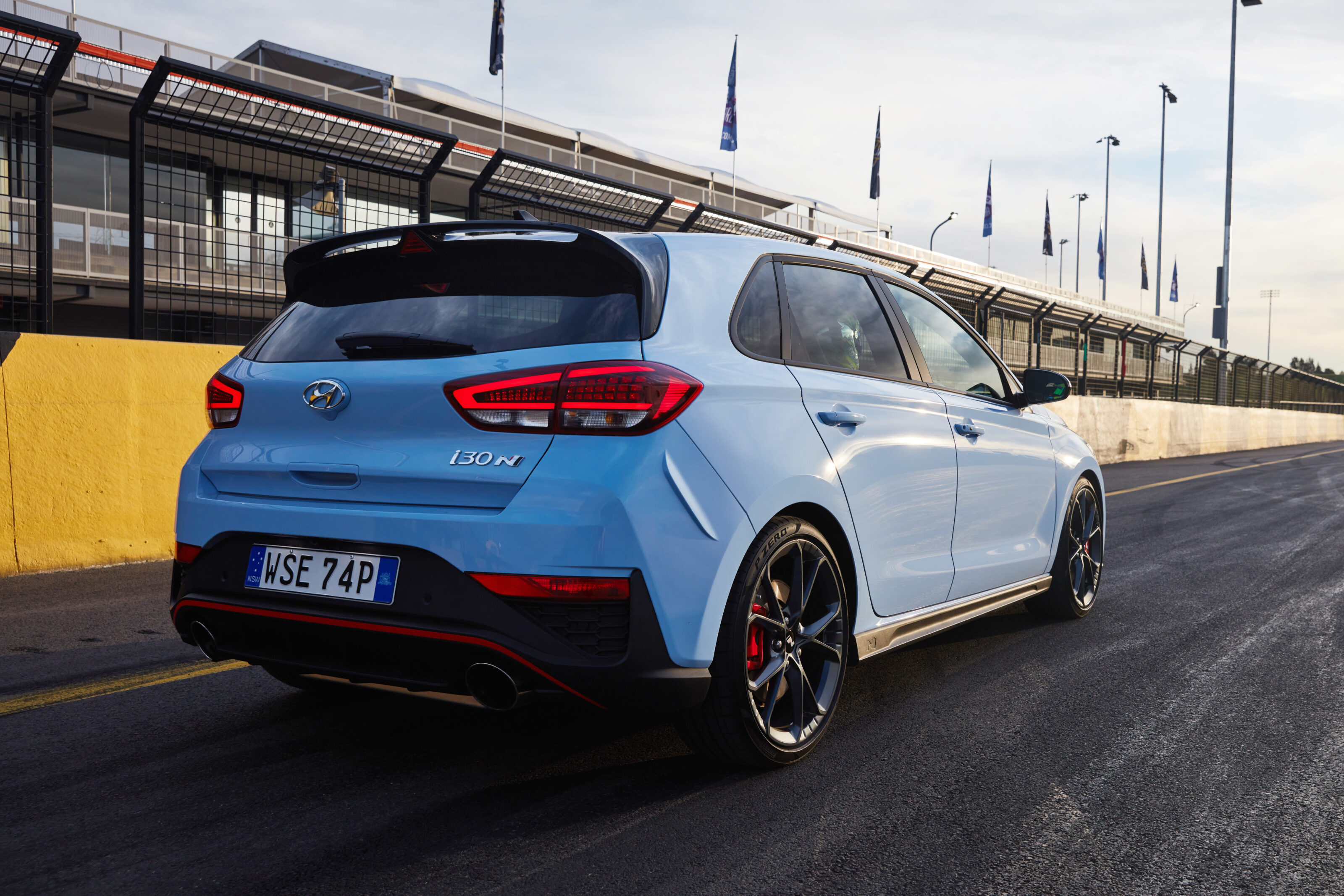
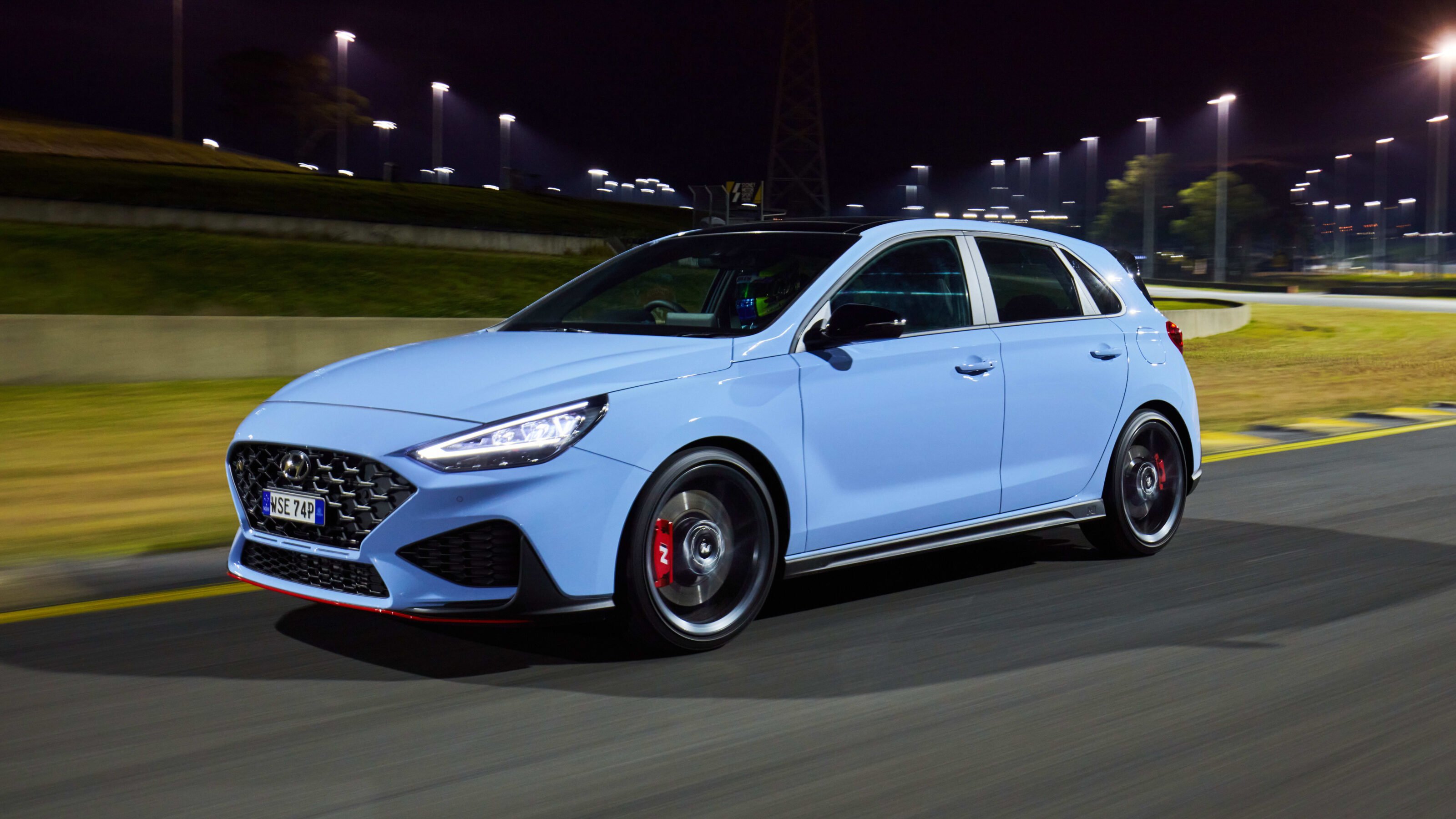
Priced from $44,500 in manual form and $47,500 for the auto, the new i30 N has also scored a raft of visual upgrades over its predecessor, giving it a sharper and more aggressive look.
A host of new lightweight features inside and outside of the performance car are now available too, improving dynamic response significantly.
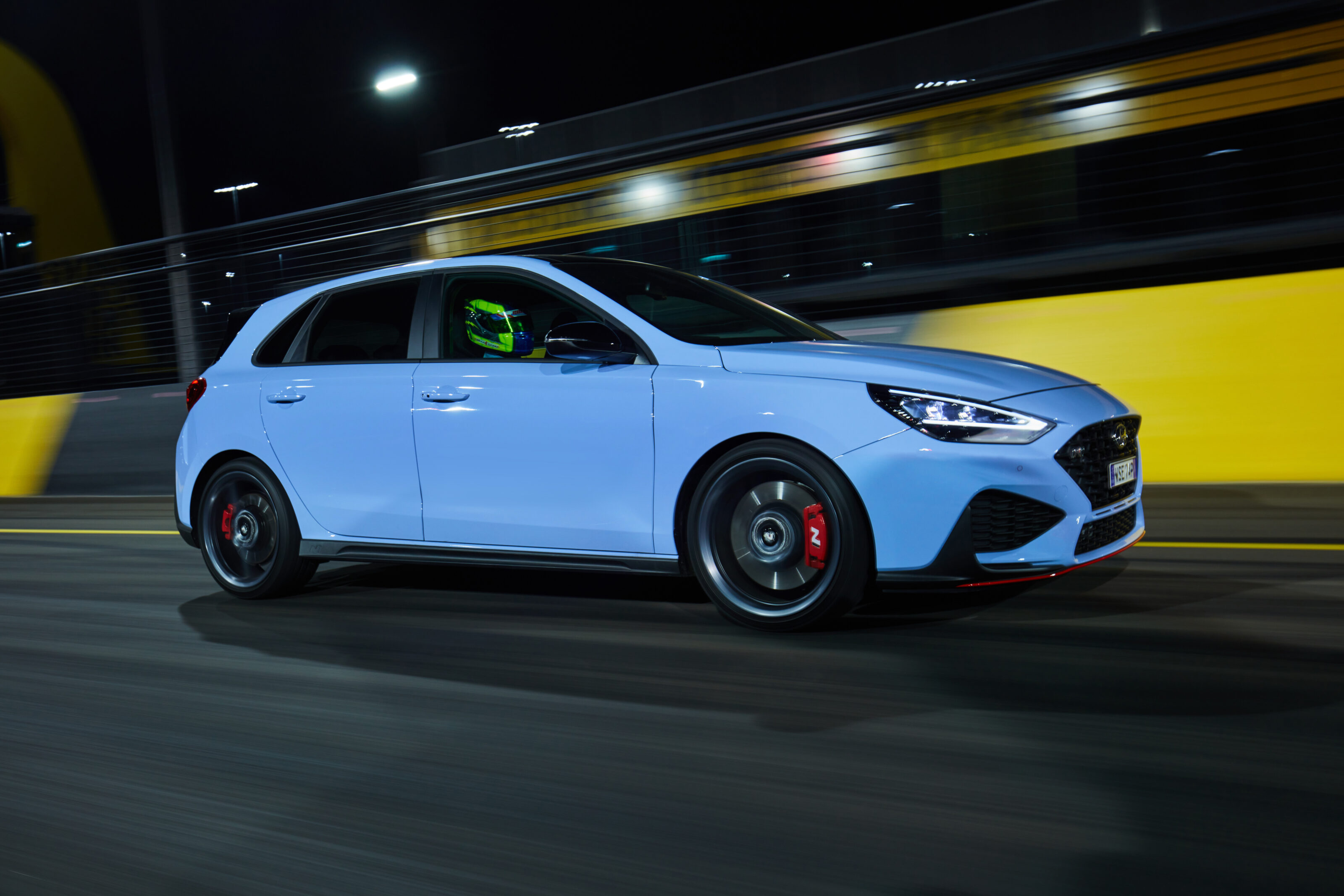
This includes 19-inch, five double-spoke, alloy wheels wrapped in Pirelli P-Zero tyres, which remove an impressive 14.4kg of unsprung mass compared to its forebearer.
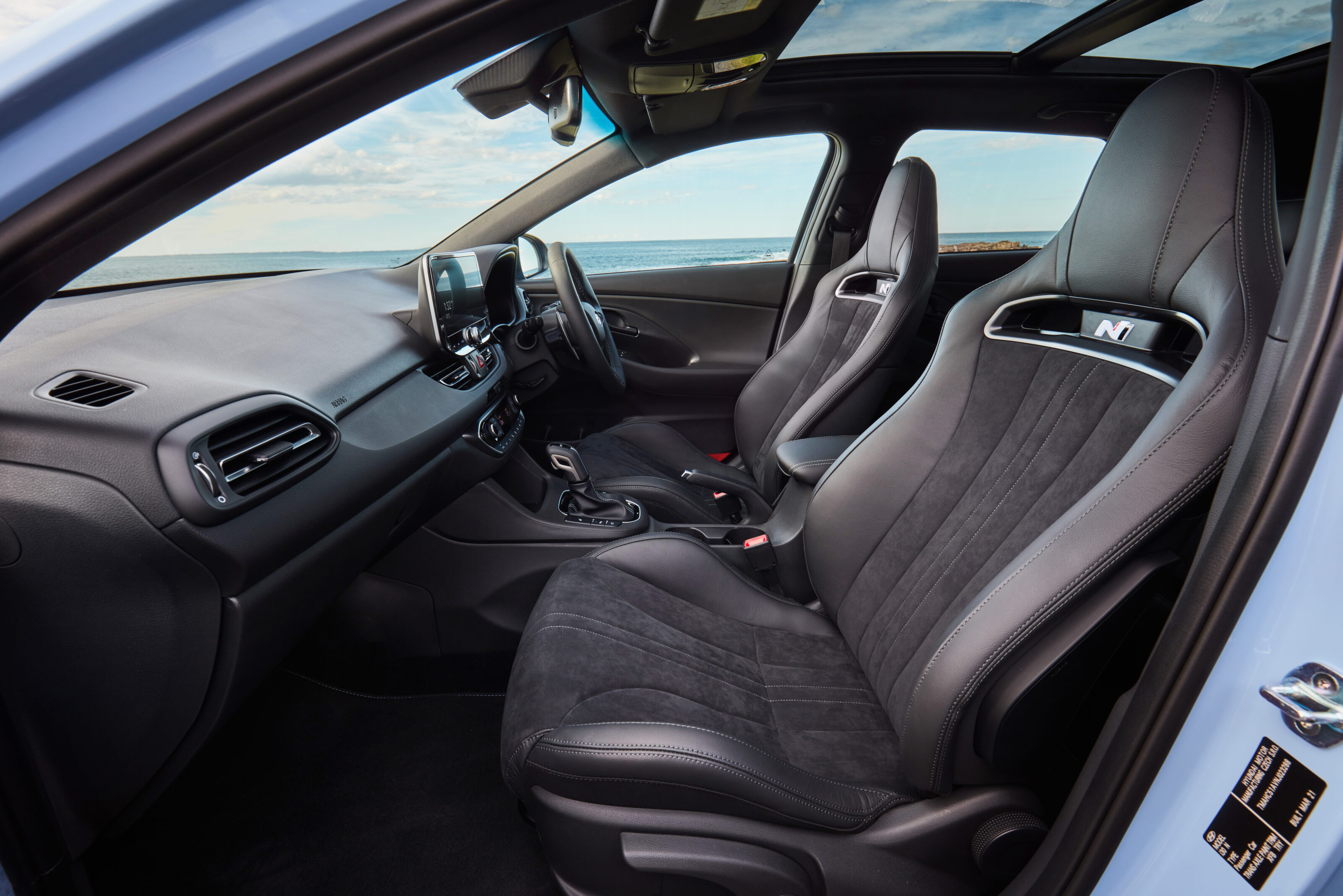
The i30 N is also fitted (Premium variant) with lightweight, one-piece sports bucket seats adorned in leather and Alcantara for the first time.
The electronically adjustable suspension and steering have also been recalibrated, which Hyundai claims results in a car with better ride and handling characteristics.
And the i30 N’s front brake disc size has been increased from 345mm to 360mm for better performance on and off the track.
Pricing and model range
The 2022 Hyundai i30 N can be had in two model variants – i30 N and the i30 N Premium.
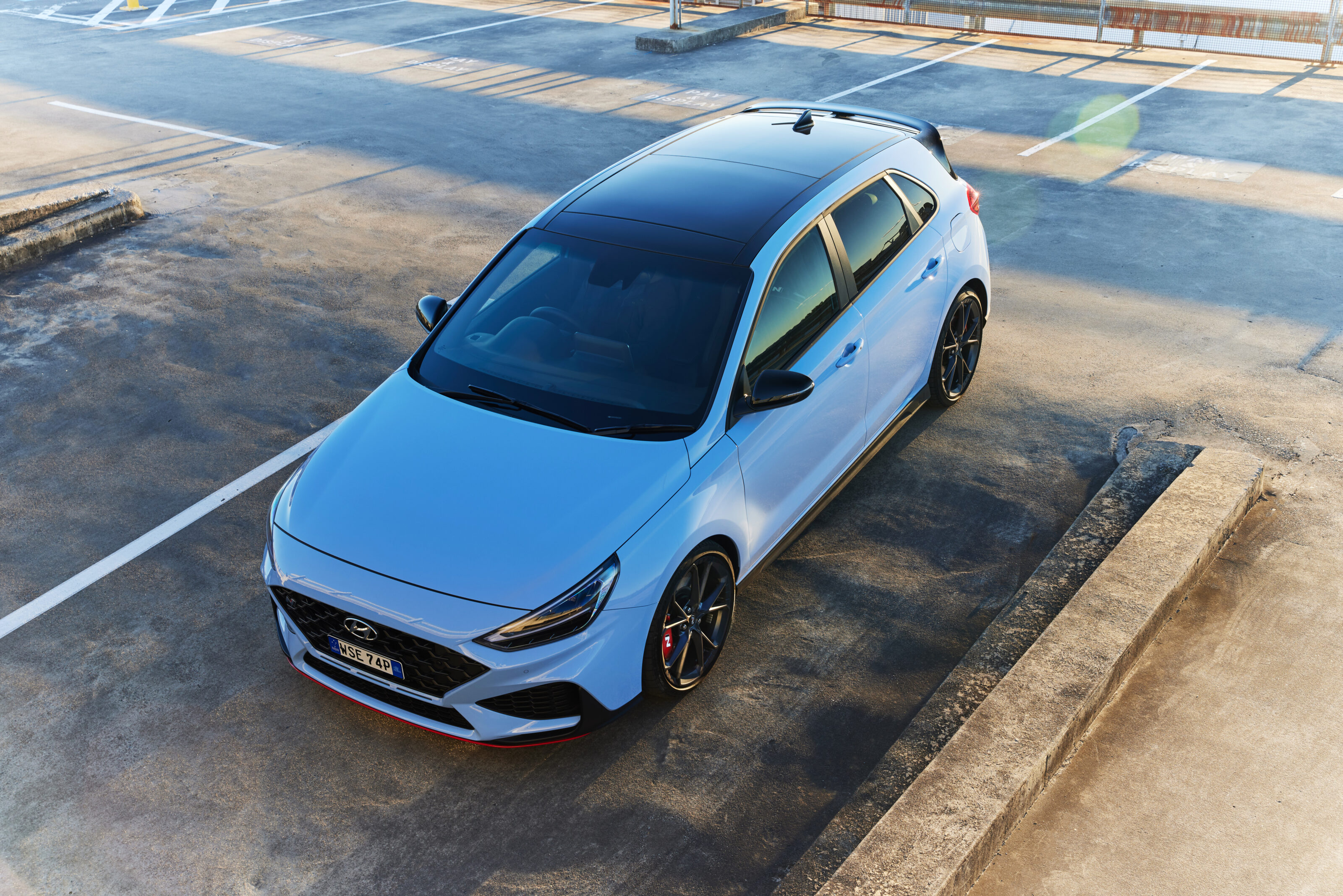
Premium-spec cars can also be optioned with a sunroof.
Prices before on-road costs are:
| i30 N 6sp | $44,500 |
| i30 N 8sp | $47,500 |
| i30 N Premium 6sp | $47,500 |
| i30 N Premium with sunroof 6sp | $49,000 |
| i30 N Premium with sunroof 8sp | $52,000 |
Engine, transmission, and 0-100km/h
The i30 N is once again fitted with the Korean automaker’s T-GDI turbocharged 2.0-litre four-cylinder petrol motor.
However, Hyundai has squeezed four more kilowatts and 39 more Newton-metres from the punchy four-pot, bringing total power outputs to 206kW and 392Nm.
It has also received a new tune, which flattens the power band, providing a more linear and progressive response across the rev-range, producing maximum torque between 2100 and 4700rpm.
The torque is exclusively sent to the front wheels through either the familiar six-speed manual transmission or the aforementioned eight-speed DCT.
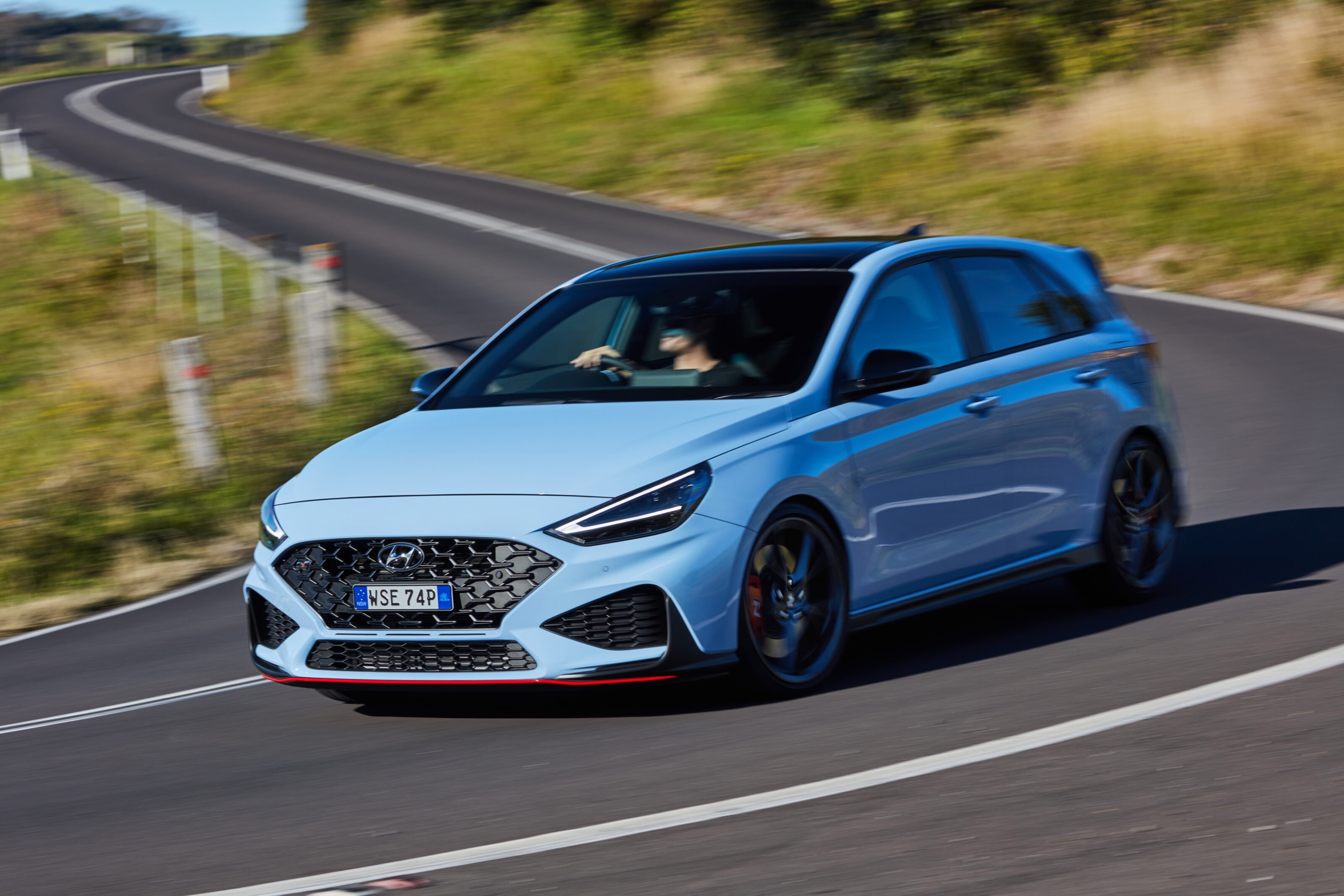
The three-pedalled example can sprint from 0-100km/h in 5.9 seconds (0.2 seconds quicker than its predecessor), while the dual-clutch i30 N slashes another 0.5 seconds off the dash, achieving claimed a 0-100km/h time of 5.4 seconds.
To put that in perspective, Volkswagen’s Golf 8 GTI, the perennial benchmark of what a hot hatch should be, is nearly one second slower to the tonne, with a claimed 0-100km/h of 6.3 seconds.
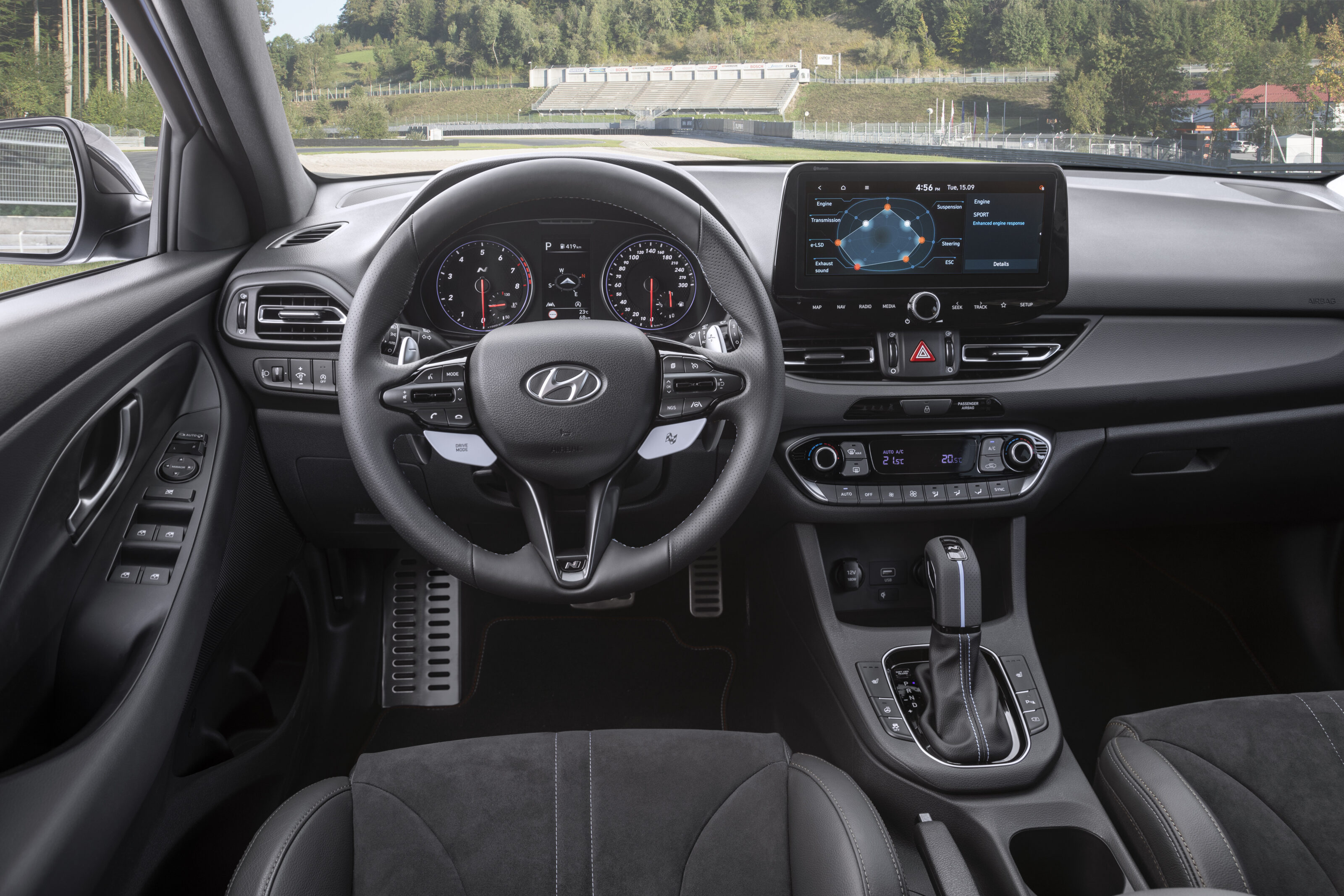
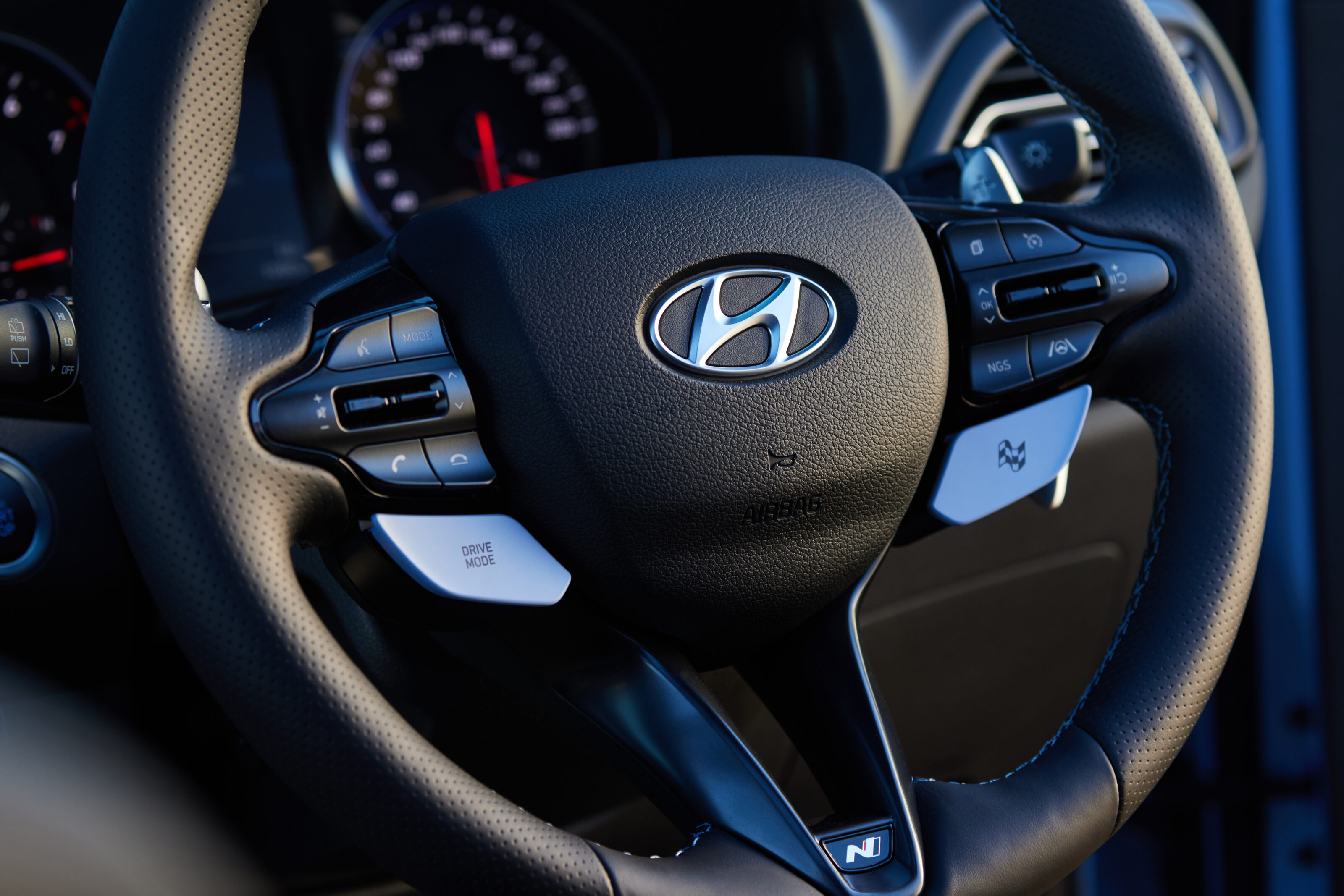
The new N-DCT has brought with it three N Performance functions – N Grin Shift (NGS), N Power Shift (NPS), and N Track Sense Shift (NTS).
NGS gives the driver maximum power from the engine and transmission for a short 20 second burst, which is activated by pressing a button mounted on the sports steering wheel.
NPS is engaged when the driver applies more than 90 per cent throttle, providing aggressive, discernable gear shifts with a minimal drop in torque.
Finally, NTS enables the car to automatically recognise when the driver is in a dynamic situation or on the racetrack, and it will make adjustments to the powertrain and gearbox accordingly.
There’s also an N Grin Control System, which lets the driver choose from five distinct driving modes: eco, normal, sport, N and N custom.
All versions of the i30 N also come equipped with an electronically controlled limited-slip differential (eLSD), which should help to get all the power down to the ground and provide superlative traction out of the corners.
Finally, thanks to the powertrain not meeting the harshest new EU emissions regulations, there’s no petrol particulate filter (PPF) in the exhaust, which means the i30 N’s celebrated ‘snap, crackle, and pop’ exhaust note is still present.
Features
The entry-level i30 N comes with features including:
| N-exclusive interior styling |
| LED daytime running lights |
| LED headlights and front indicators |
| LED taillights |
| LED side repeaters in mirrors |
| Alloy sports pedals |
| Active variable exhaust |
| Sports front bucket seats |
| Electronic controlled suspension |
| Leather-appointed steering wheel |
| 4.2-inch TFT colour supervision cluster |
| Temporary space saver spare wheel |
| 10.25-inch infotainment system with satellite navigation system |
| N performance Driving data system |
| DAB+ digital radio |
| Performance brake package |
| Apple CarPlay and Android Auto |
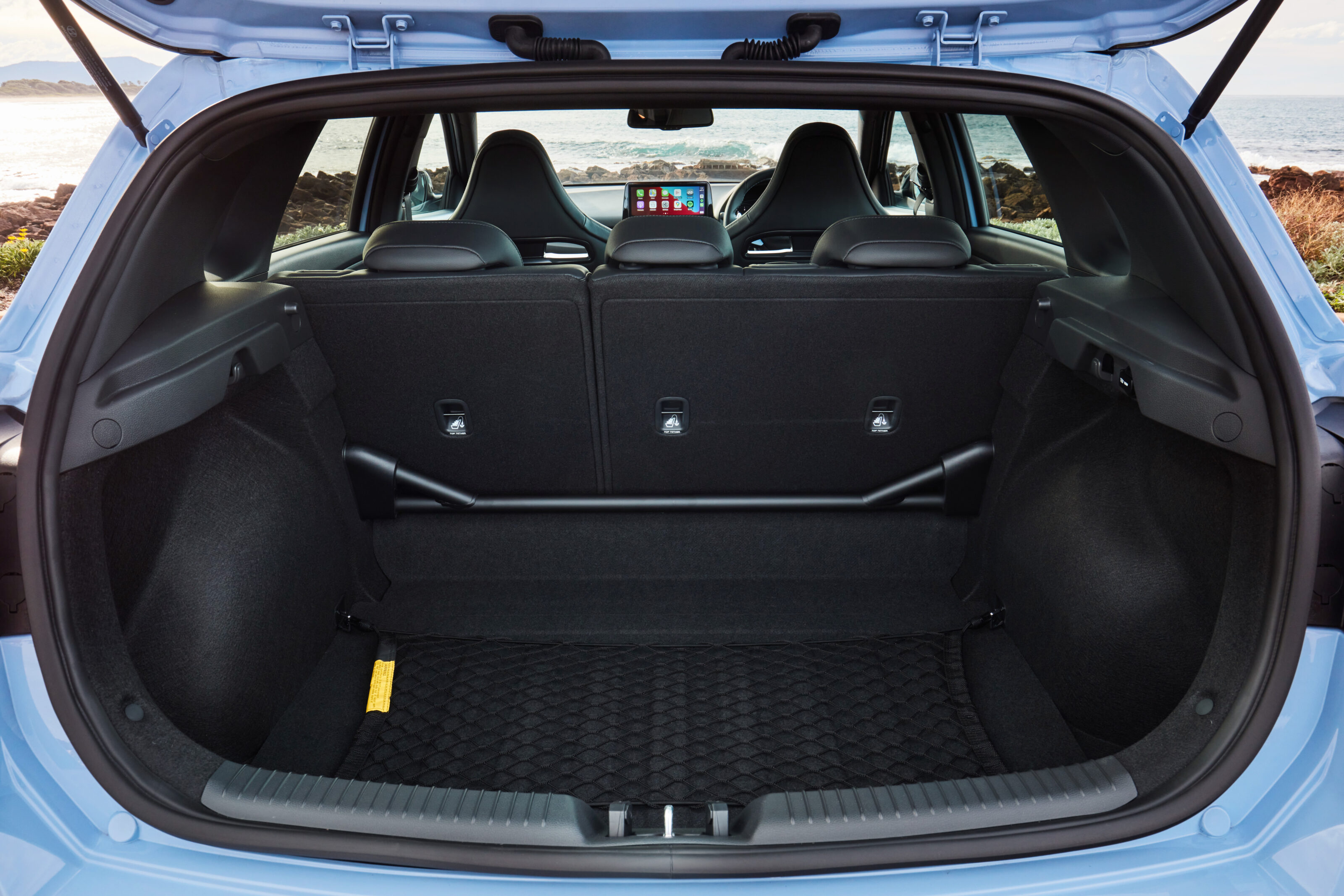
| Rear stiffness bar |
| Cruise control |
| Rev matching function |
| Dual-zone climate control |
| Power folding exterior mirrors |
| Smart key and push-button start |
| Wireless charging pad |
| Rear spoiler. |
The i30 N Premium adds:
| Parking distance warning u2013 front |
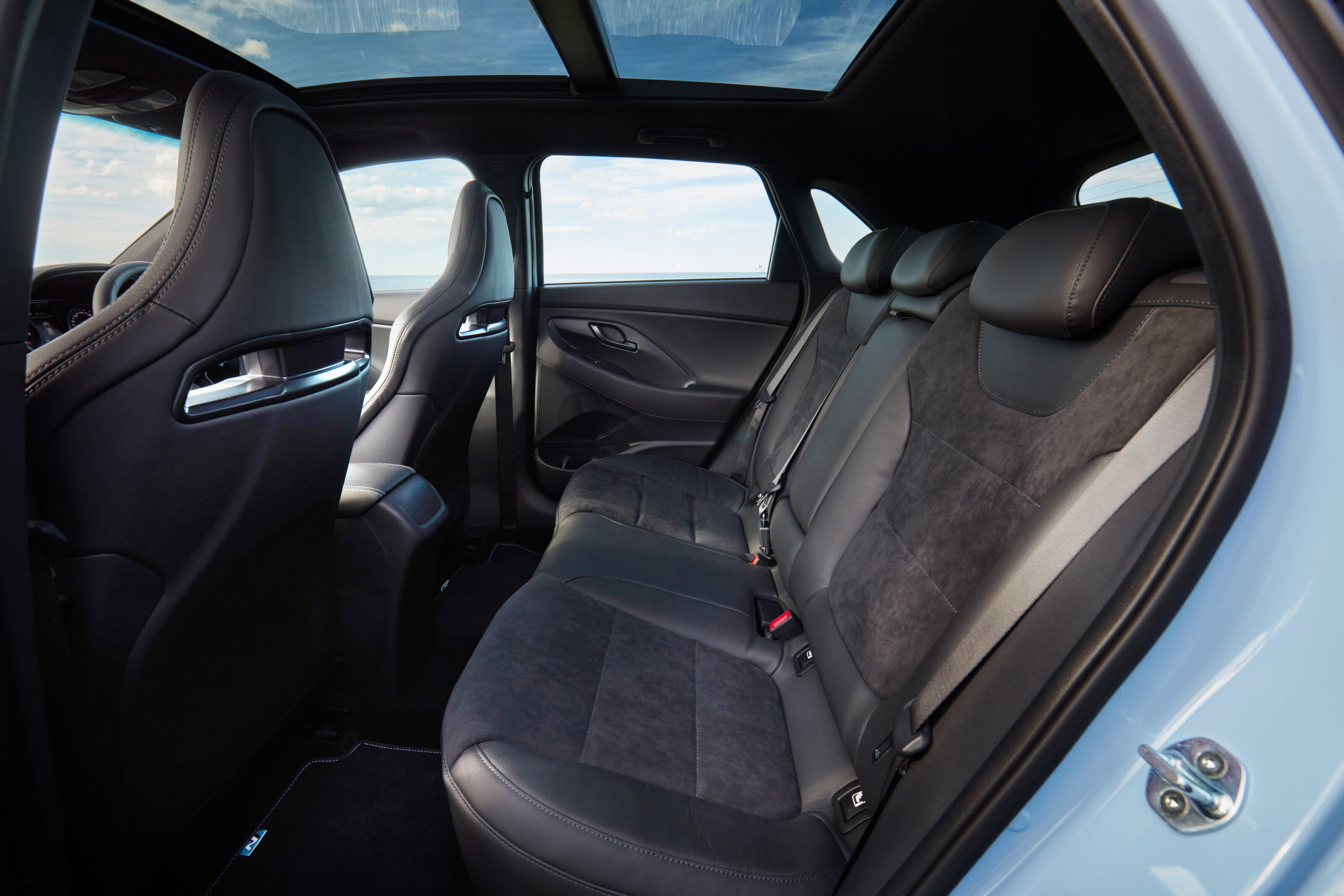
| N light seats u2013 fixed headrest bucket seats |
| Electro-chromatic interior mirror |
| Rain sensing wipers |
| Heated front seats/steering wheel |
| Rear privacy glass |
| Alcantara/leather-appointed interior. |
Safety
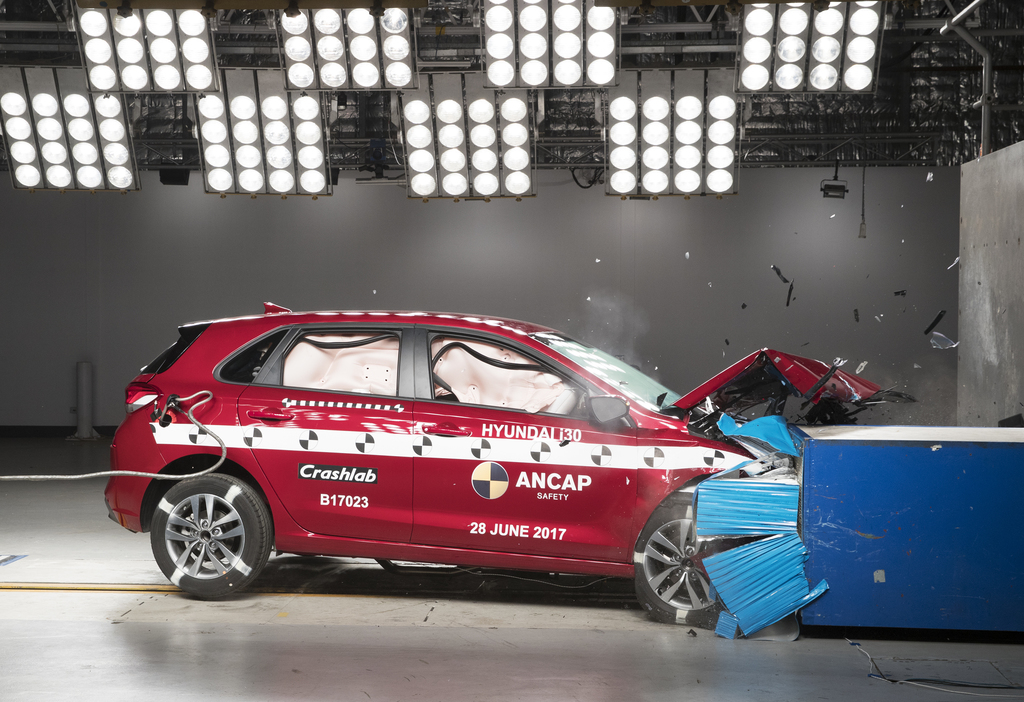
When the current generation Hyundai i30 was first tested back in 2018, it achieved a five-star ANCAP safety rating.
Standard safety features include:
| Blindspot collision warning |
| Driver attention warning |
| Lane keep assist |
| Lane following assist |
| Parking distance warning u2013 rear |
| Rearview camera |
| Rear cross-traffic collision |
| Forward collision-avoidance assist with city/urban/pedestrian detection. |
Dimensions
The Hyundai i30 N is 4455mm long, 1795mm wide, 1419mm tall, and has a wheelbase measuring 2650mm.
Warranty and Servicing
Like all Hyundai’s, the i30 N comes with a five-year/unlimited-kilometre warranty, which also covers non-competition track driving, including the fitment of performance-oriented tyres.
Hyundai offers both lifetime and pre-paid servicing plans.
Availability
Deliveries of the i30 N Hatch have begun with Hyundai taking orders ahead of further stock arrivals.
Snapshot
- 1.5 degree celsius rise u201clocked inu201d
- Governments need to get serious on decarbonisation
- Vehicle manufacturers are heavily influenced by the IPCCu2019s findings
Whether you believe in climate change or not or you are sceptical about the human impact, the latest Intergovernmental Panel on Climate Change (IPCC) report is important reading because it will affect the things you like – in this case, electricity and cars.
The latest report is the IPCC’s sixth and has a distinctly grave tone. Previous incarnations have not been nearly as direct as this one. Valérie Masson-Delmotte, co-chairwoman of the working group behind this report, said: “It has been clear for decades that the Earth’s climate is changing and the role of human influence on the climate system is undisputed.”
Fellow co-chairman Panmao Zhai is quoted as saying: “Stabilising the climate will require strong, rapid, and sustained reductions in greenhouse gas emissions and reaching net-zero CO2 emissions.”
The report itself states: “Human activities are estimated to have caused approximately 1.0°C of global warming above pre-industrial levels, with a likely range of 0.8°C to 1.2°C. Global warming is likely to reach 1.5°C between 2030 and 2052 if it continues to increase at the current rate.”
To bring you up to speed on the IPCC, its main aim is to assess the science of climate change and to examine the various lines of evidence as to the causes. From there, the body then releases reports on its “implications and potential future risks, as well as to put forward adaptation and mitigation options”.
The panel is made up of 195 member countries, Australia being one of them.
In short, the IPCC looks at the evidence, provides policymakers with information on climate change, what it means and what they can do about it.
Volunteer scientists trawl through the thousands of pieces of academia on the subject to gain a global picture of what information scientists are uncovering. Once the report is collated and handed over, most governments then turn to industries such as energy and transport and negotiate with and/or regulate them.
The IPCC’s first report was produced more than 30 years ago in 1990, predicting temperatures would rise at the rate of 0.3 degrees per decade if no action was taken at a global level to curb emissions. The IPCC now expects the rate to be almost half a degree per decade with an expected rise in global temperatures of 1.5 degrees – no matter what happens.
A 1.5 degree rise in global temperatures is expected to have a catastrophic impact on a number of lower-lying countries, especially in the Pacific, as this seemingly small rise in temperature will melt polar ice caps – leading to a rise in sea levels.
On top of that, the increased heat soak into the world’s oceans will cause a higher number of extreme weather events, according to the prevailing scientific theories.
The Australian Government’s latest response however is at odds with its actual policy.
“Australia is committed to achieving net zero emissions as soon as possible, and preferably by 2050, and to meeting and exceeding our 2030 commitment, as we already have with our 2020 targets,” said Minister for Energy and Emissions Reduction Angus Taylor in a statement.
There is currently no federally legislated target for net zero emissions by 2050 and its modest 2030 targets are currently unreachable based on the Government’s own figures.
Taylor is also an architect of the “gas-led” recovery and has held the view it is critical in reducing CO2 emissions. In his time in government, Taylor has attempted to scrap the clean energy investment fund ARENA, and more recently directed the agency to invest in fossil fuels – a direct contradiction to its original charter for funding renewable energy projects.
NSW Minister for Energy and the Environment, Matt Kean, fronted the ABC’s 7:30 Report with a rather different view from his federal counterpart. “The science is very clear, if we want to protect our planet and protect our way of life, we are going to need to reduce our emissions to net zero by 2050 and preferably well before that.”
Kean echoed much of what almost every state and territory government is saying about net zero by 2050, a rare bipartisan approach from warring parties and states.
For fans of cars, the impact on Government policy is likely to be twofold. As we’ve already seen in many European countries, ICE sales will be banned during the 2030s and the spiralling costs of emissions regulations will almost certainly kill the ICE engine – at scale, anyway – around the same time. But that’s only part of the solution.
As the reports suggest, many governments will also look to rapid decarbonisation of the energy industry, replacing (as much as possible) coal, oil and gas-fired generation with wind, solar and other renewable energy sources – as well as a possible resurgence in nuclear energy where it is politically expedient.
With decarbonisation comes the inevitable and obvious risks, and so with it must come storage to ensure a stable energy grid. If nothing else, that has to happen because politicians lose their jobs when the lights don’t come on.
The car industry’s fortunes are now bound inextricably with the IPCC report because of its undoubted influence. The great challenge of decarbonisation in Australia and other industrialised countries is transitioning the jobs of those currently employed by legacy power generation – to fail to do so is immoral and placing the burden of the actions of others.
Snapshot
- New Nissan Z to debut on August 17
- Twin-turbo V6 likely to provide 331kW
- Chassis will be 40kg lighter than 370Z
UPDATE, August 13: Just a handful of days ahead of its unveiling, Nissan USA has released three short teaser videos of the new Z coupe on its Instagram page, providing the first official look at the sportscar.
While not revealing enough to undermine next week’s reveal, the shots confirm previous spy photos of the Z are an accurate indicator of its finished design (see below).
The rear three-quarter panel design is reminiscent of the original 240Z while the eyelid-style daytime running lights give it a sharp, modern look to bring the Z nameplate into its seventh generation of production.


The story to here
June 11: Nissan fans can rejoice and mark down August 17 in their calendars – when the new Z car is to finally be revealed, nearly a year after the release of the Z Proto.
The date (and accompanying image above) was revealed by the Japanese carmaker on its social media channels this morning.
The idea of a new Z car was first revealed by Motor in a 2018 interview with Alfonso Albaisa, Nissan’s Senior Vice President for Global Design, and details about the forthcoming sports car have been gaining momentum since the Z Proto was unveiled.
Initially thought to be called the 400Z, Nissan looks to have dropped the 400 moniker while keeping the Z title, which has been in circulation since the 240Z was released in 1969.
Speculation surrounding the details of the Z has been coming thick and fast since the Proto was shown off in September last year, but Nissan has ‘unintentionally’ released possible specs in the meantime.

The Z Proto featured in the Project Cars 3 video game, with claimed power at 331kW – an achievable feat given the rumoured VR30DDTT powerplant produces 298kW in the Infiniti Q50/Q60 Red Sport.
Weight was also reduced to 1475kg from the 1515kg of its 370Z predecessor through the use of more lightweight materials throughout the chassis, bringing the power-to-weight ratio up to 224kW per tonne from the 370Z’s 162kW per tonne.
Power will be delivered to the rear wheels through a choice of either a six-speed manual or a Mercedes-Benz developed nine-speed torque converter auto, as opposed to the seven-speed auto found in the Q50 and Q60.
Leaked photos of the Z showed it bearing much the same styling as the Proto – exterior dimensions leading it to sit 117mm longer, 5mm wider and 5mm lower than the 370Z, while front and rear tyre size increased by 30mm and 40mm respectively to 255/40 and 285/35.
Watch for more on the new Z to come in the weeks ahead.
Snapshot
- Comfort and tech upgrades headline minor update
- Wireless Apple CarPlay and Android Auto now available
- Prices range from $76,050 to $142,300
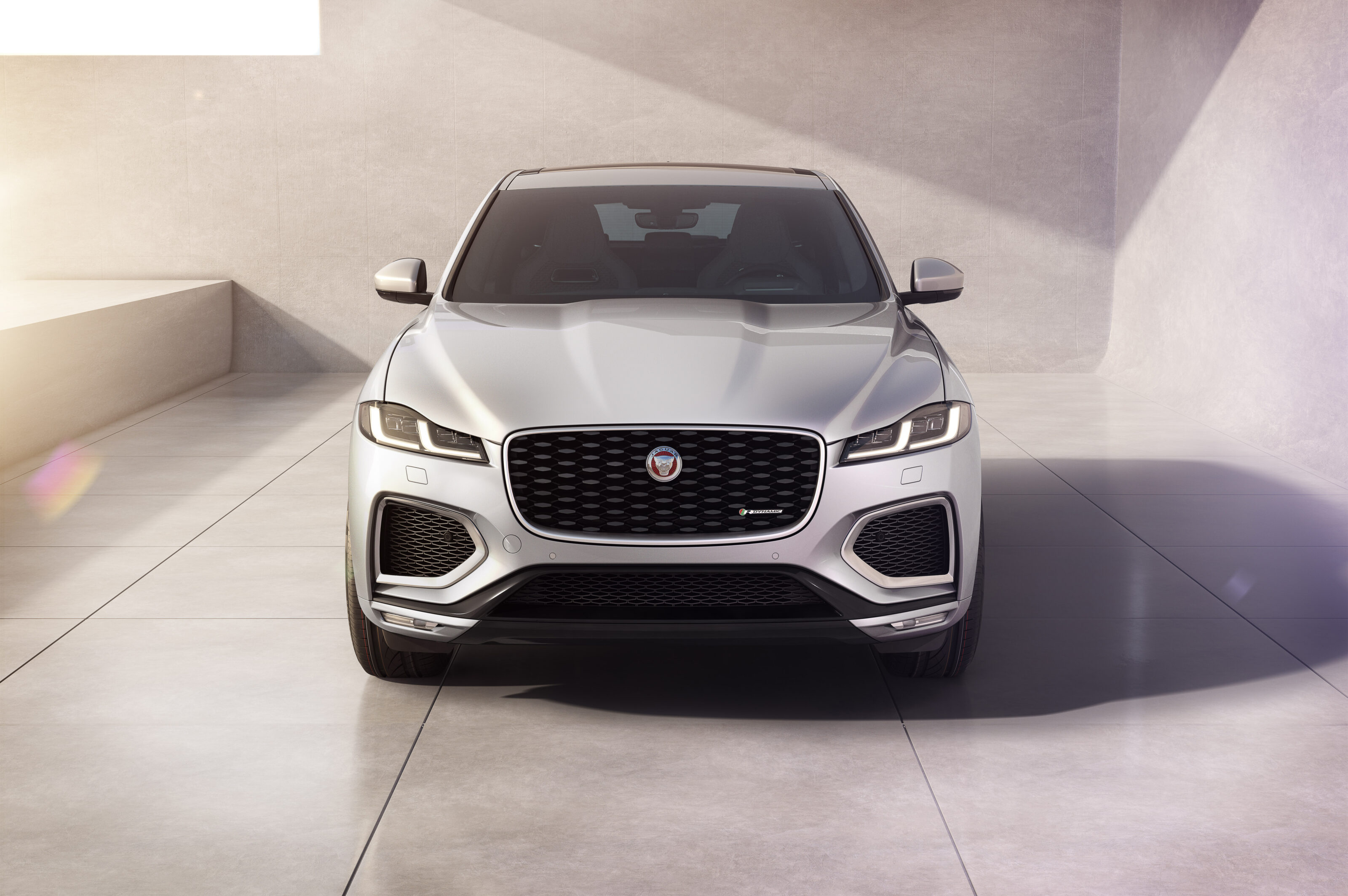
The Jaguar F-Pace has received an update for 2022, following the launch of the recently facelifted model earlier this year.
Set to arrive in local showrooms from January 2022, the revised F-Pace range is headlined by the addition of wireless Apple CarPlay and Android Auto – a change that will also be available as an over-the-air software update to existing F-Pace models with the Pivi Pro infotainment system in coming months.
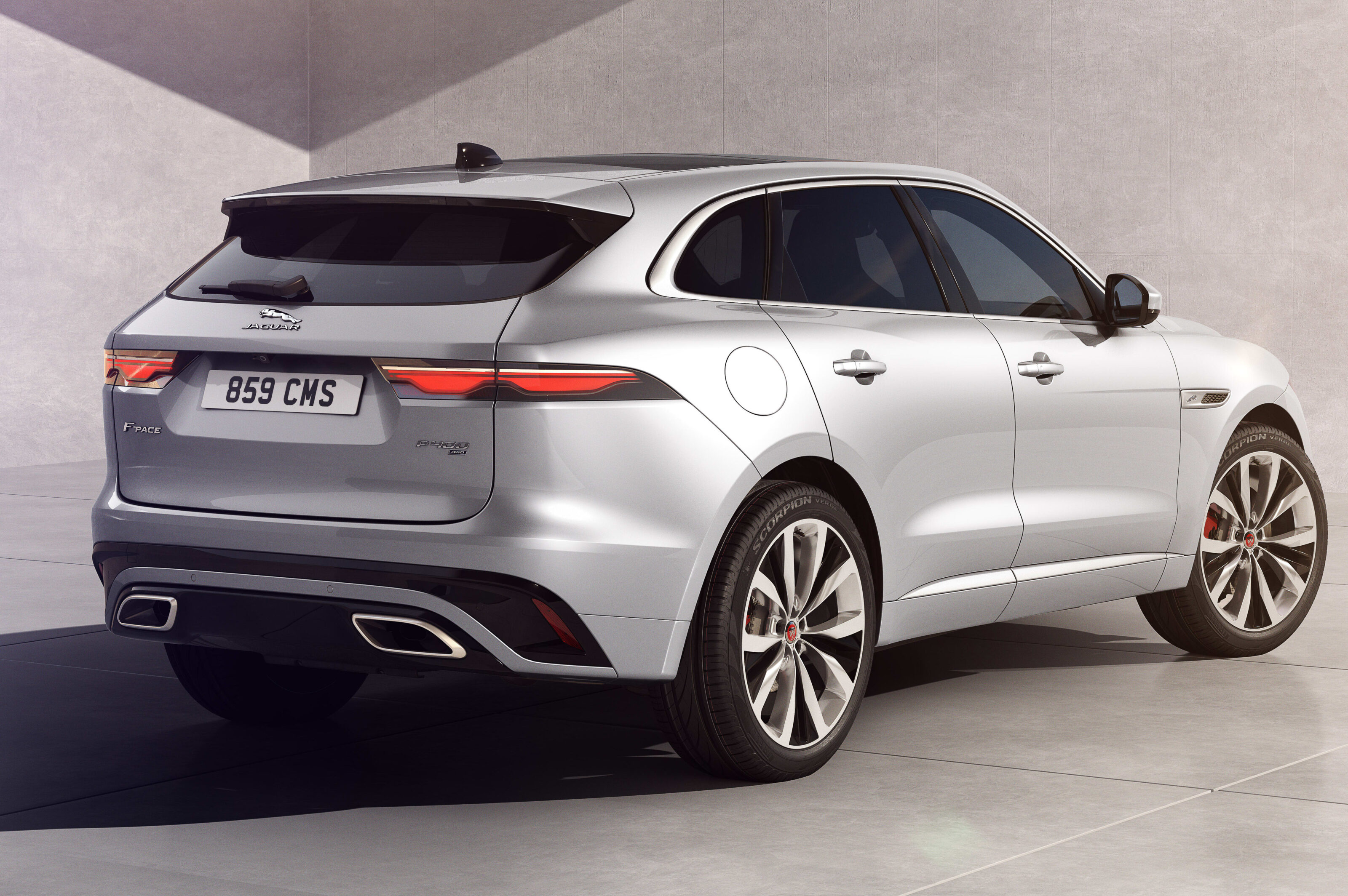
Joining standard-fit Adaptive Cruise Control, a new semi-autonomous Steering Assist feature works in conjunction with the lane-keep assist system to control steering, acceleration and braking on long highway journeys.
Optional across the range is a fresh ‘Cabin Air Purification Plus’ system, which works to ‘purge’ poor air quality within the cabin through remote climate control operation – accessible through the infotainment system prior to leaving the vehicle or the Jaguar Remote smartphone application.
A new carbon dioxide sensor is also offered with the package, automatically switching recirculation mode off when driving through polluted areas. The system will also measure particulate levels inside and outside the vehicle, accessible through the infotainment system.

Models fitted with all-season 19-inch, 20-inch and 21-inch alloy wheels pick up self-sealing tyres for model-year 2022, integrating a sealant layer within the tyre cavity that aims to isolate any object which penetrates the thread in order to maintain air pressure. Despite the new addition, a range of tyre repair options – including a full-size spare wheel – remain on the table.
A new R-Dynamic Black model was also announced for the UK market alongside the updates, with a slew of blacked-out styling elements complemented by red brake calipers.
Speaking with Wheels, a spokesperson for Jaguar Land Rover Australia confirmed the local division will not be offering the Black model – although a Black Exterior package remains available, with the flagship SVR picking up the darkened option for the first time.
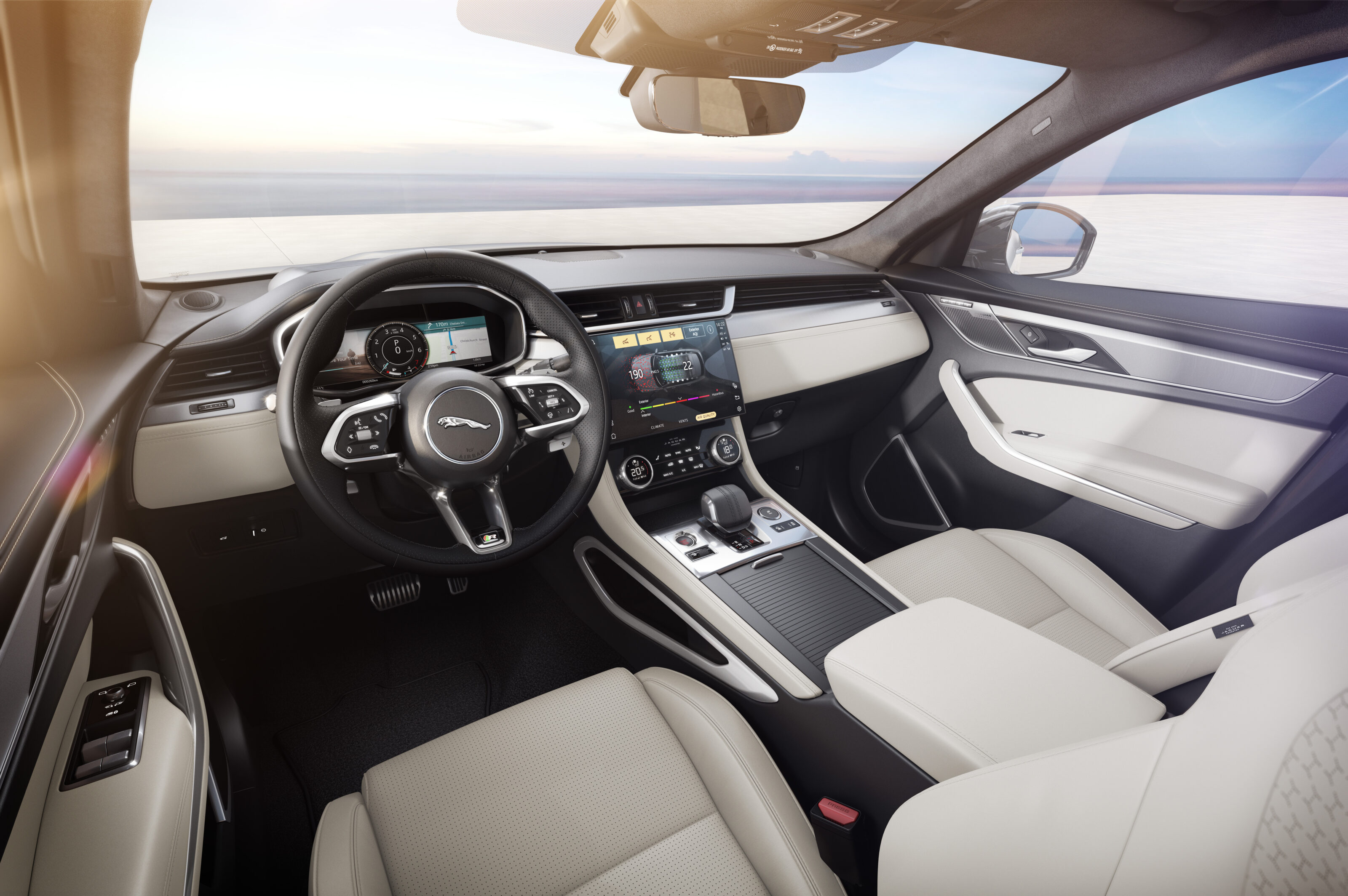
The updated F-Pace is priced from $76,050 before on-road costs for the R-Dynamic SE P250 – a minor price cut over the facelifted model launched Down Under in April.
Available in four trim levels with a choice of petrol and diesel engines, the F-Pace reaches $142,300 in SVR guise.
2022 Jaguar F-Pace pricing (excluding on-road costs):
| F-Pace R-Dynamic S P250 | $76,050 | down $70 |
| F-Pace R-Dynamic SE P250 | $80,640 | down $90 |
| F-Pace R-Dynamic SE D300 | $95,980 | up $414 |
| F-Pace R-Dynamic SE P400 | $98,440 | down $90 |
| F-Pace R-Dynamic HSE P400 | $110,950 | up $670 |
| F-Pace SVR | $142,300 | up $130 |